We started our trip visiting my youngest brother Thomas and his family in Esslingen Switzerland, just east of Zuerich. From there we drove east, via the tiny country of Lichtenstein, passing through the almost 7 mile long Arlberg Tunnel, and further east down the valley of the Inn river, passing by Innsbruck, to the town of Kramsach in Tirol, Austria.
Kramsach – Brandenberg, Austria:
Revisiting Kramsach was a trip down memory lane for Lauri and me. Here, we’d first stayed in 1985 when I was whitewater kayaking the Brandenberger Ache river and we fled a rain soaked campground to spend a night in a quaint affordable Pension. In fact, we ended up liking that Pension so much that a year later we spent part of our honeymoon there after our wedding in the US. And since then we had stayed there three more times, including once with our children.
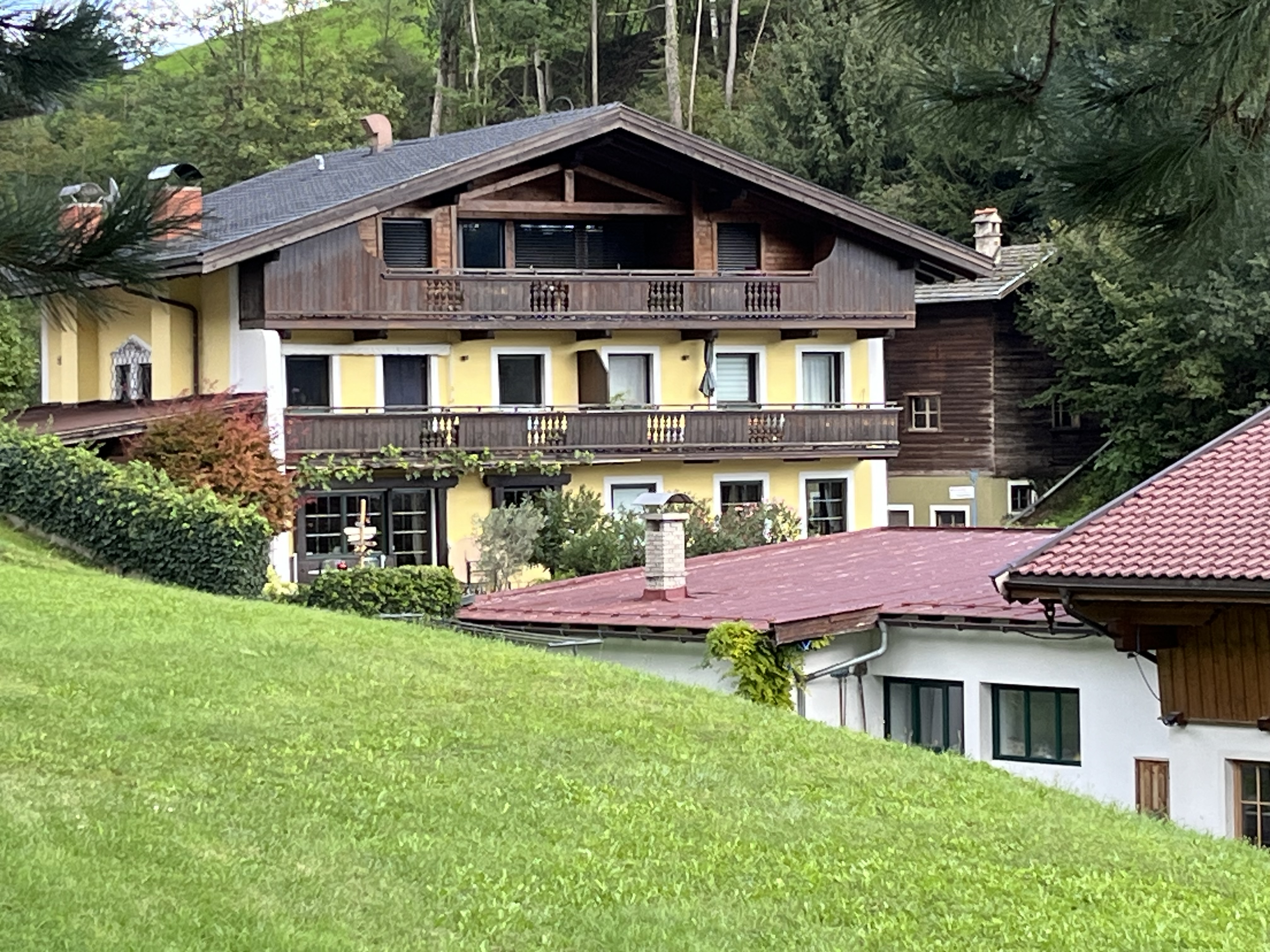
Unfortunately, the couple running the Pension was unable to convince any of their children to continue their business and so they closed. Here is a picture of the house our beloved Pension was located in:
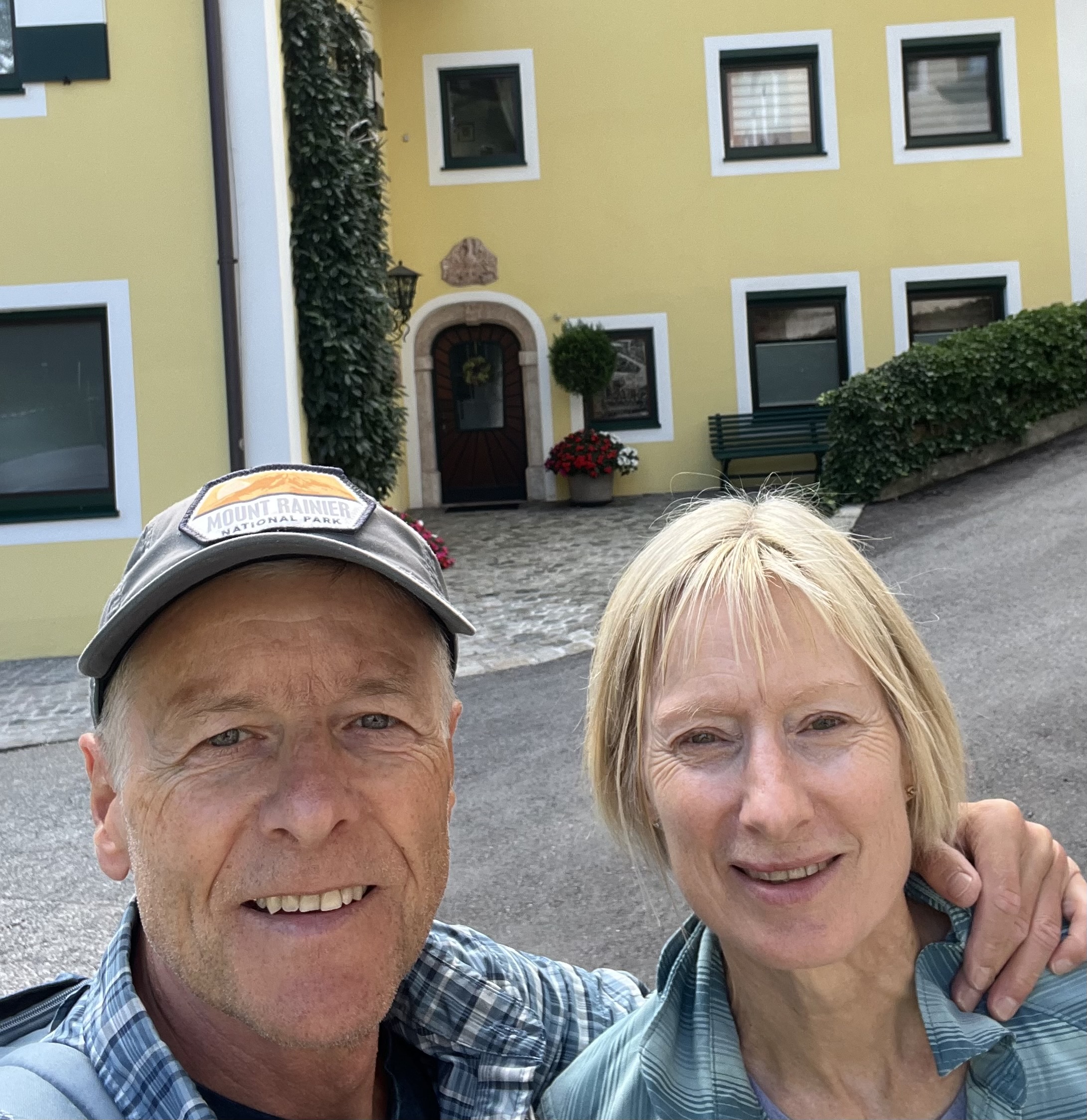
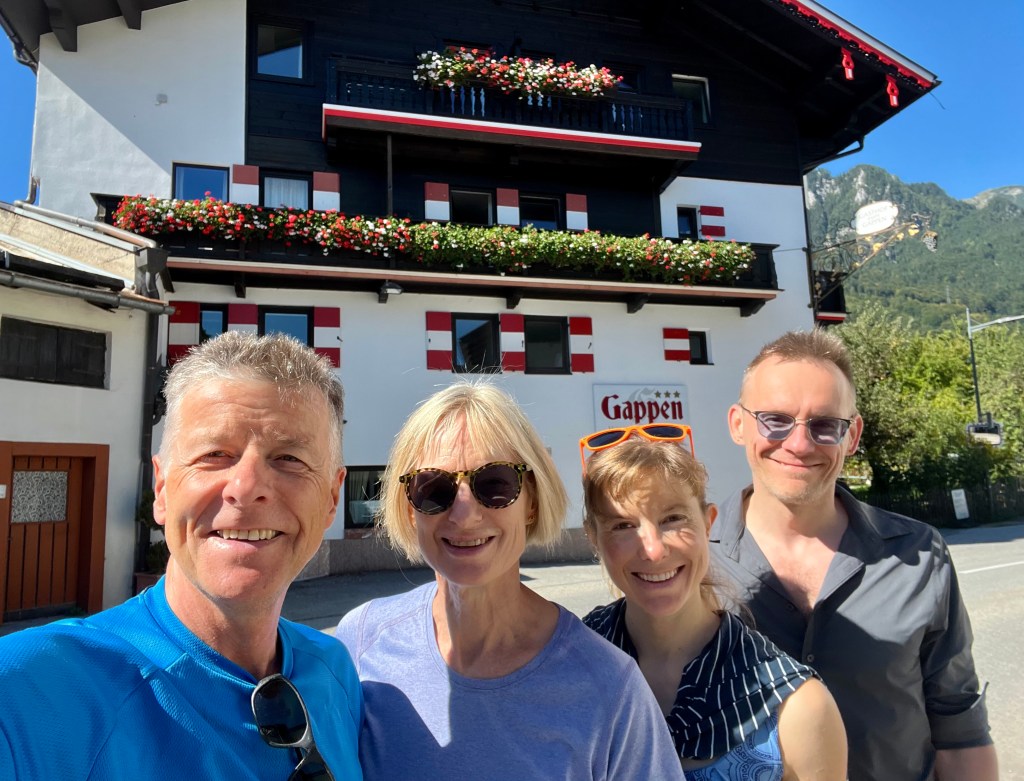
It turned out that our daughter Anna, with husband Vladi, were driving by the town of Kramsach on the day of our stay. They were heading from Munich, through the Inn Valley and the Brenner Pass to South Tirol in Italy. It was a fun coincidence that we were able to visit with them for an hour before they continued on their journey. Here we are standing in front of the Gasthaus/Hotel Restaurant where we used eat every night, just a 5 minute walk from the former Pension:
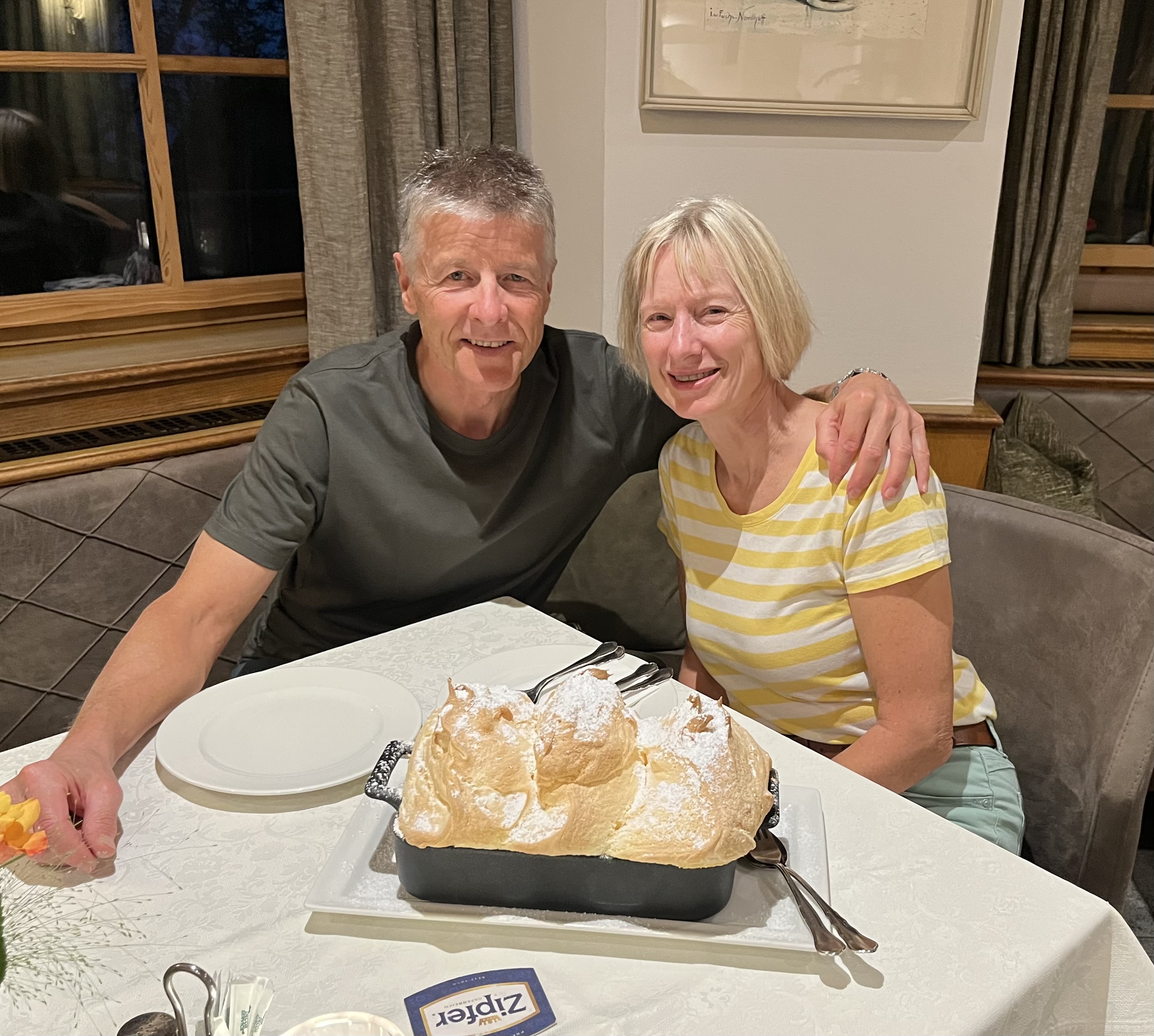
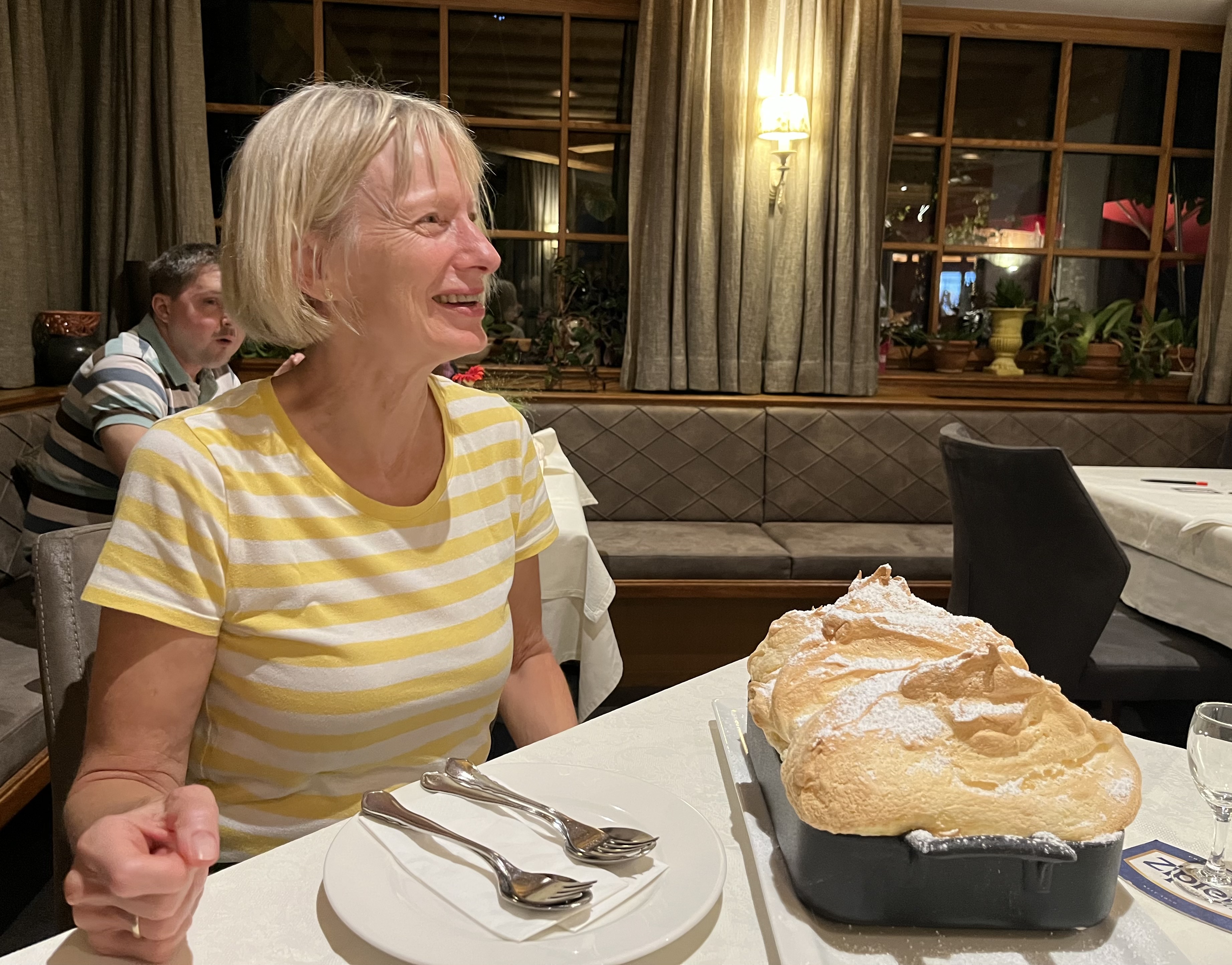
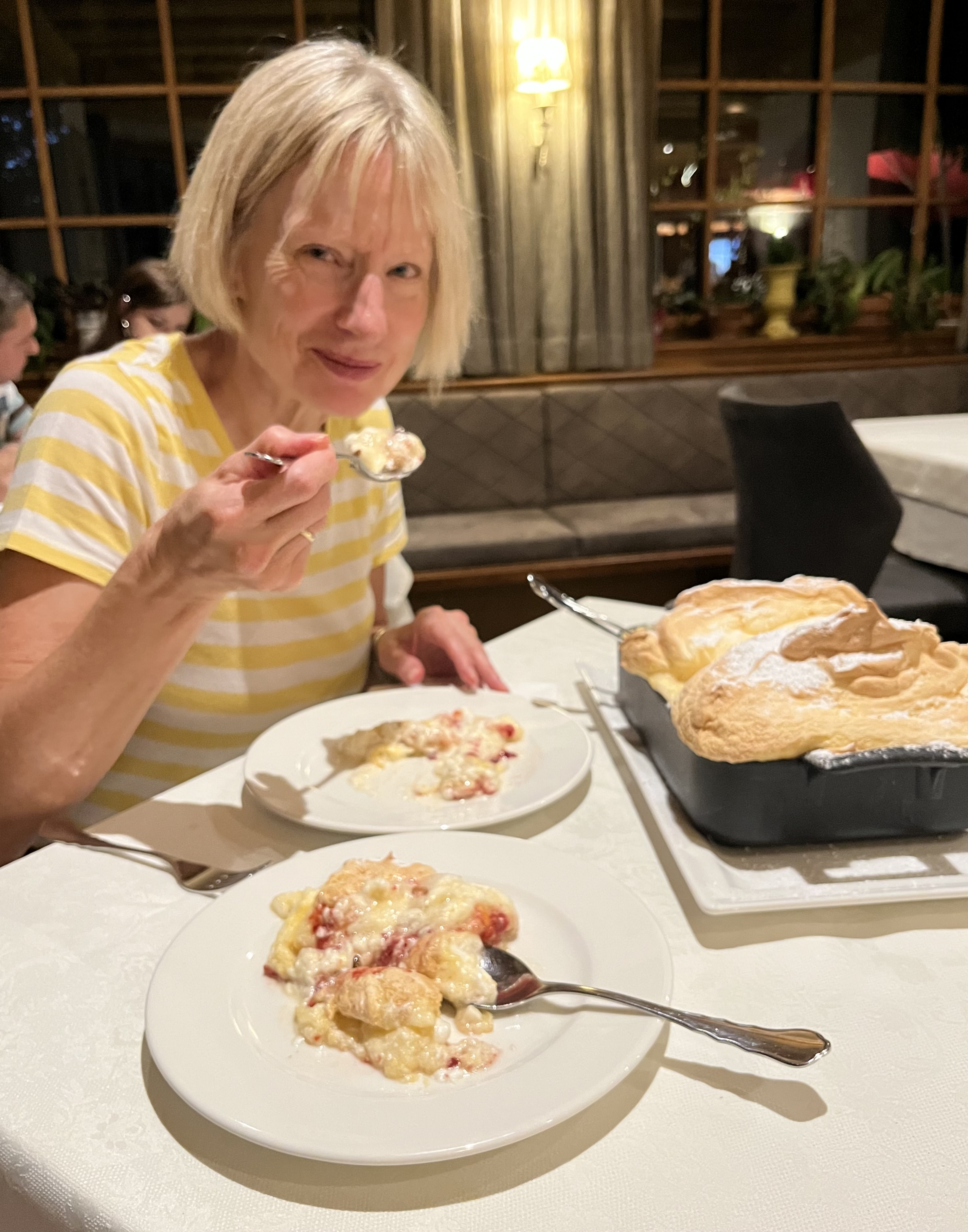
It turned out that this Gasthaus still had our favorite dishes on the menu, – well except one, the Salzburger Nockerl dessert. Sharing our dissapointment with the restaurant staff, they promised to make the Salzburger Nockerl just for us on the second night. When the waitress brought it to our table freshly out of the oven, the size of this special dessert was even bigger than I remembered. Done correctly, this light and fluffy dessert with mostly egg white, some whipped cream, butter, flour, and sugar mix over a raspberry base tastes simply delicious, and amazingly enough we didn’t feel sick eating it all up and leaving nothing on the plate!
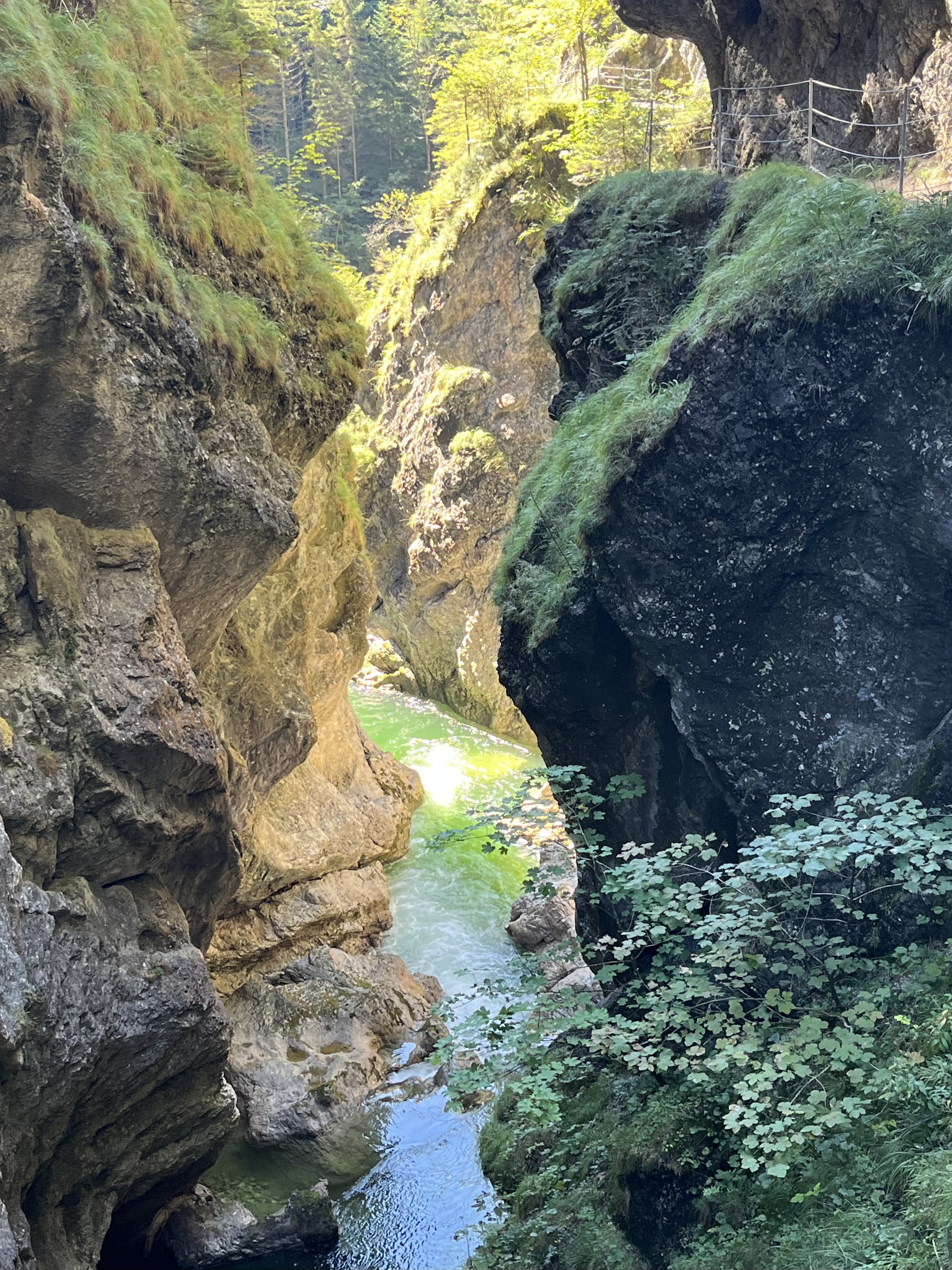
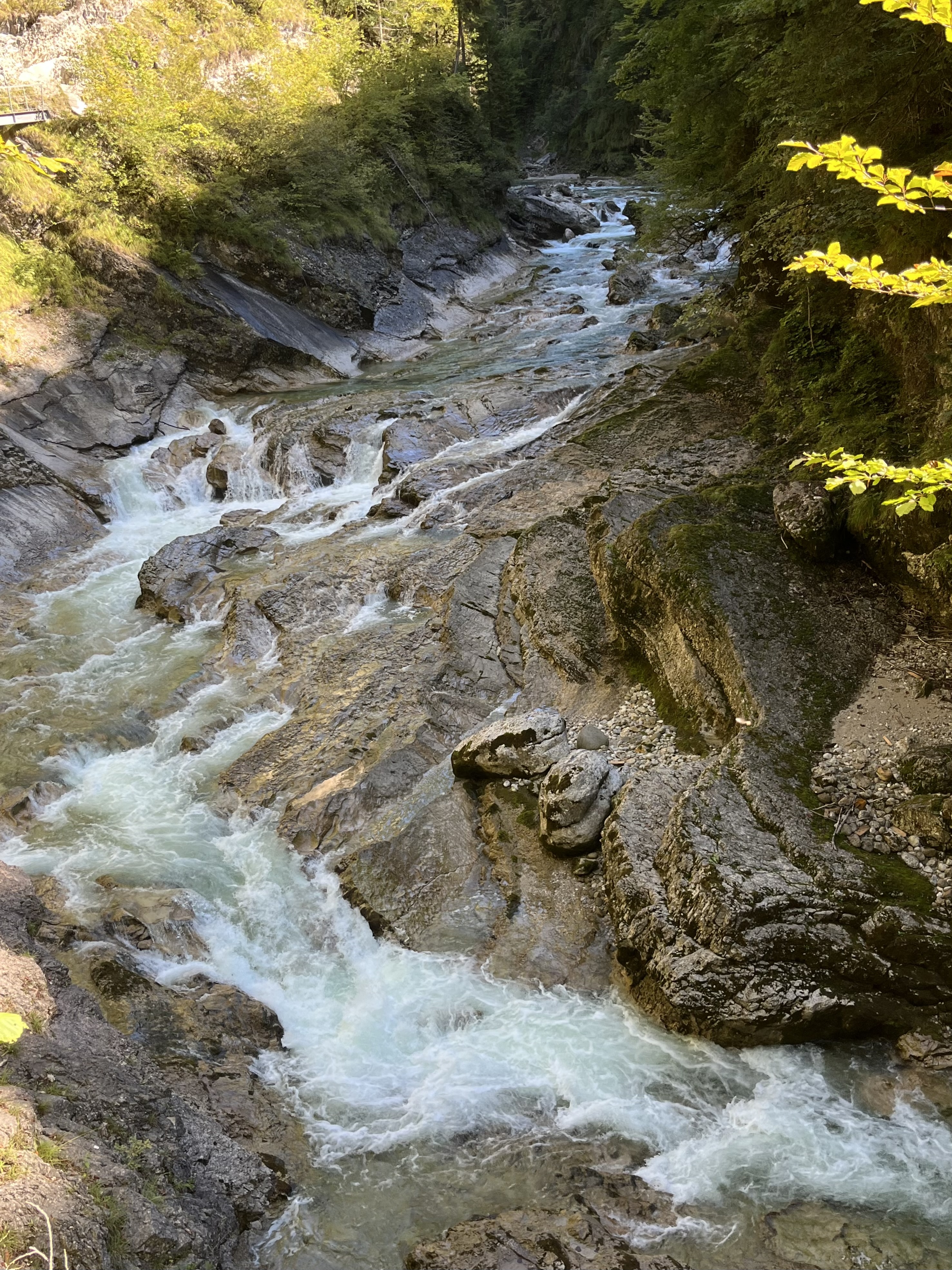
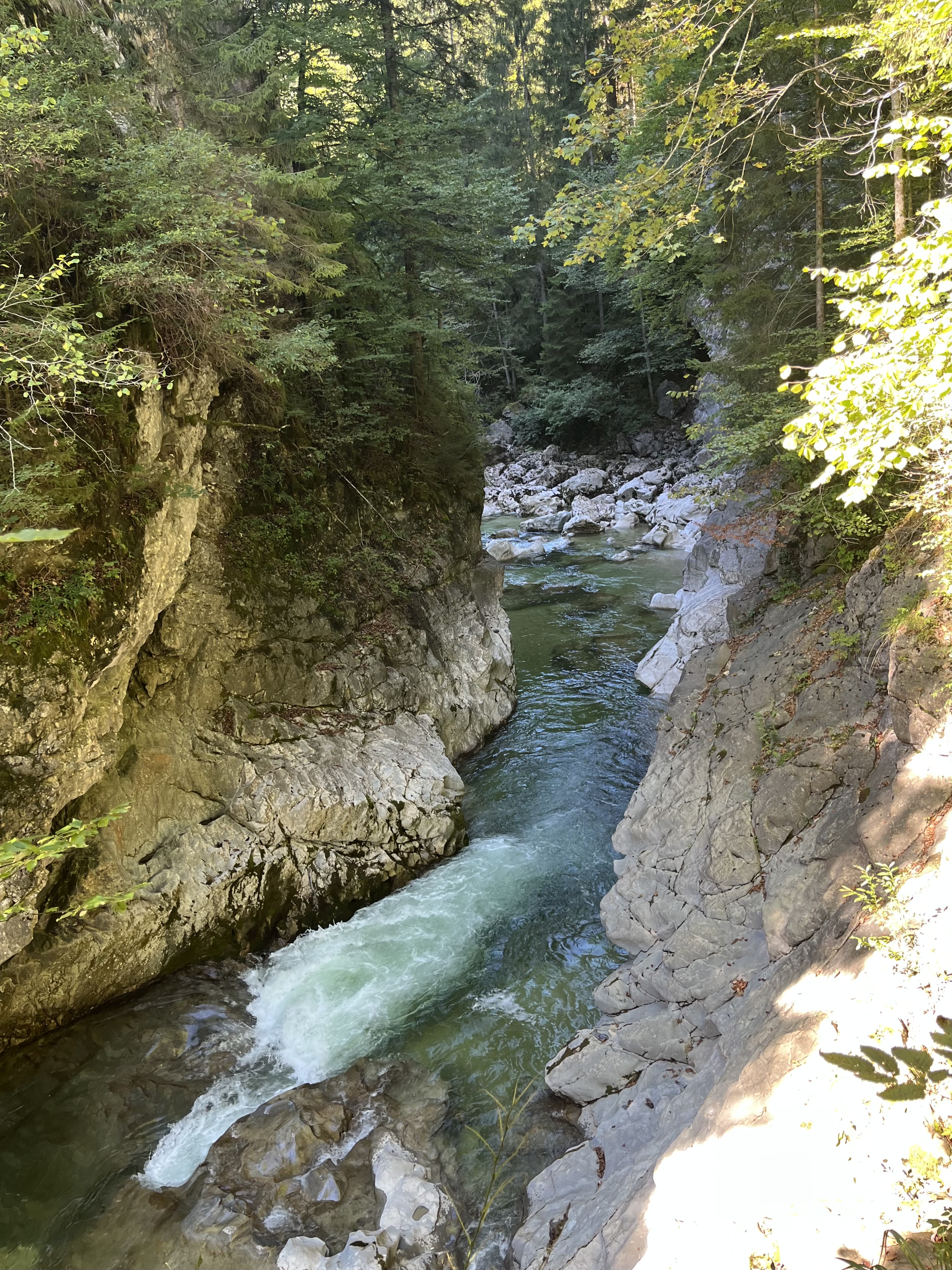
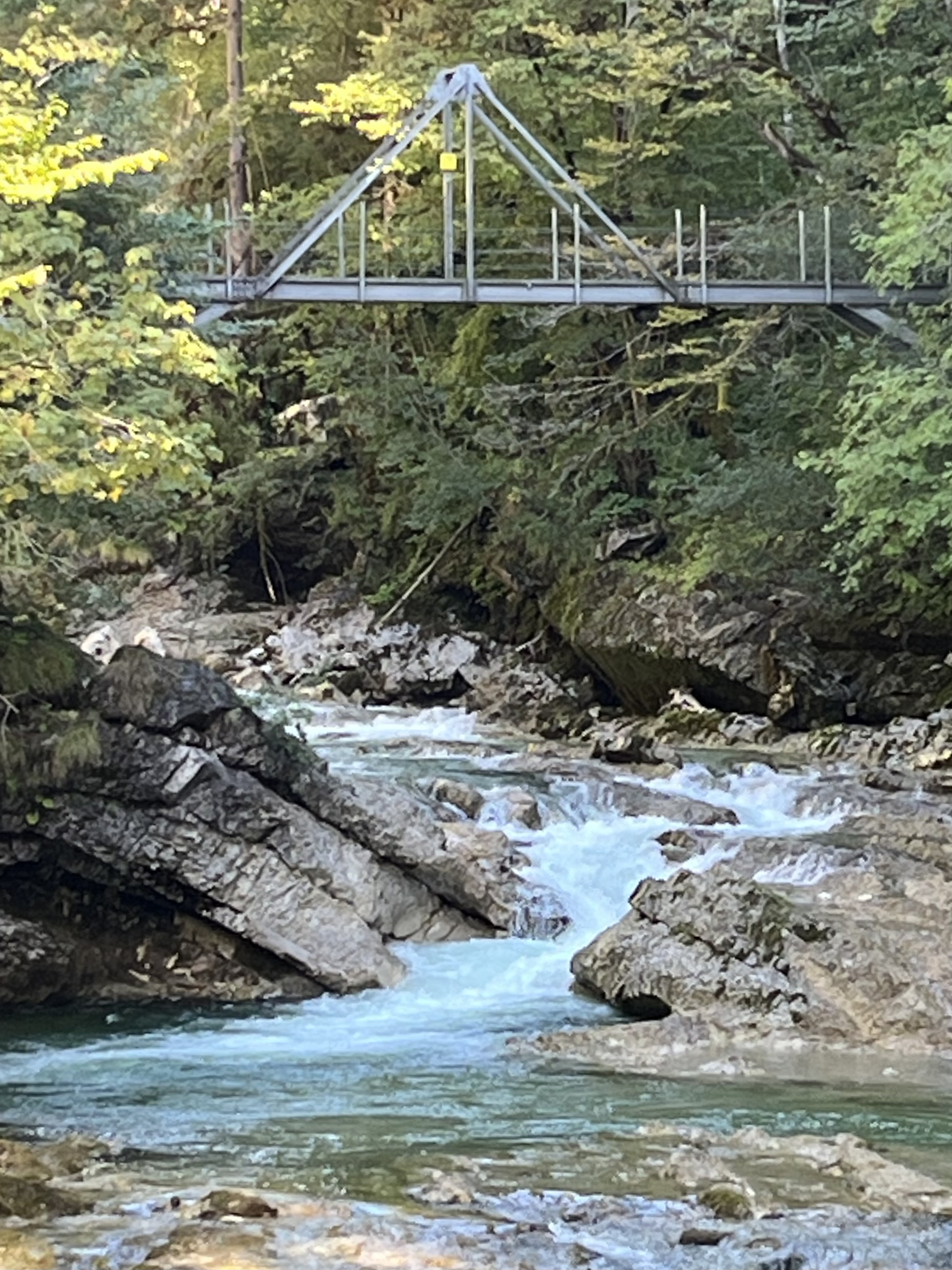
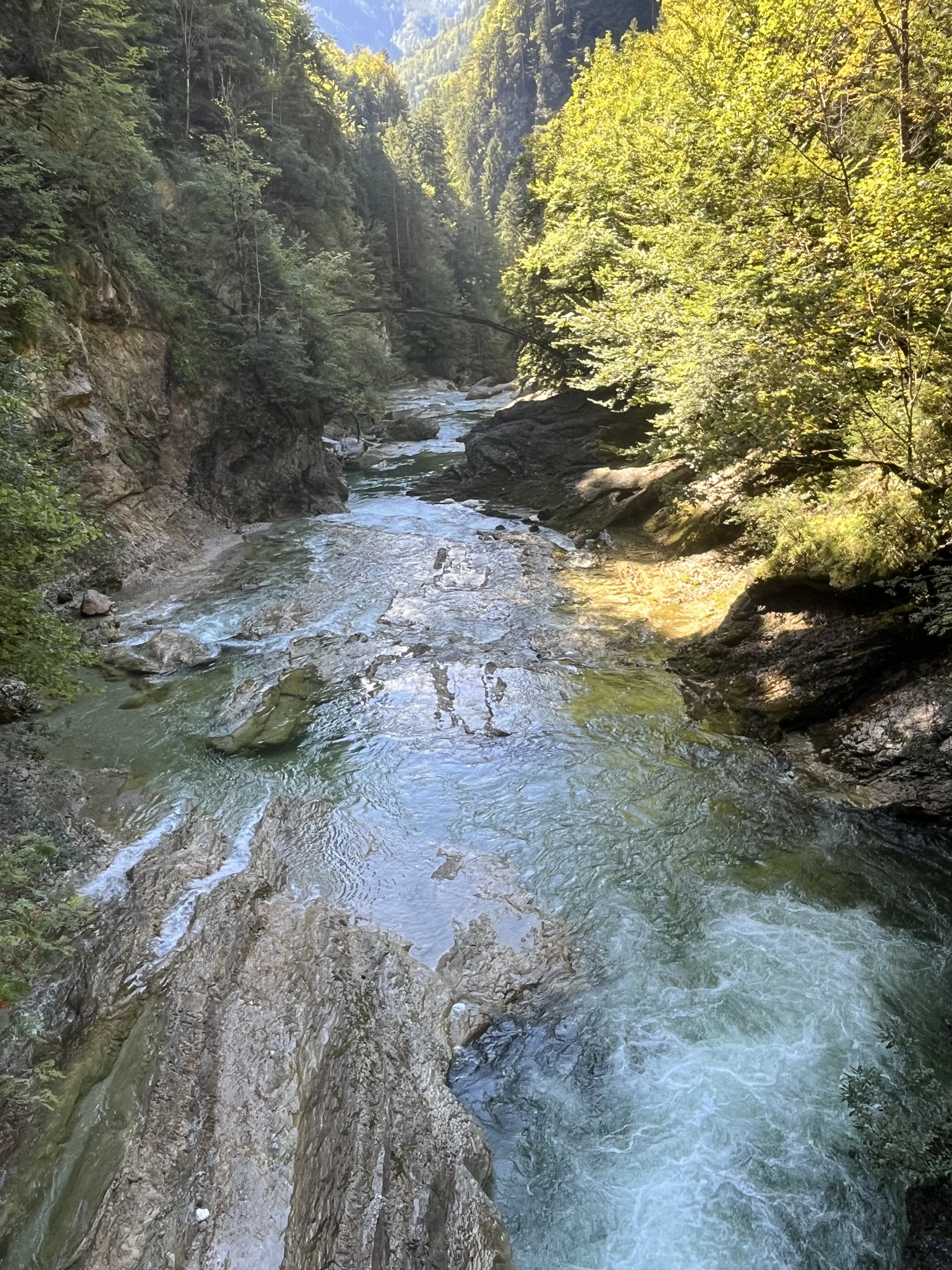
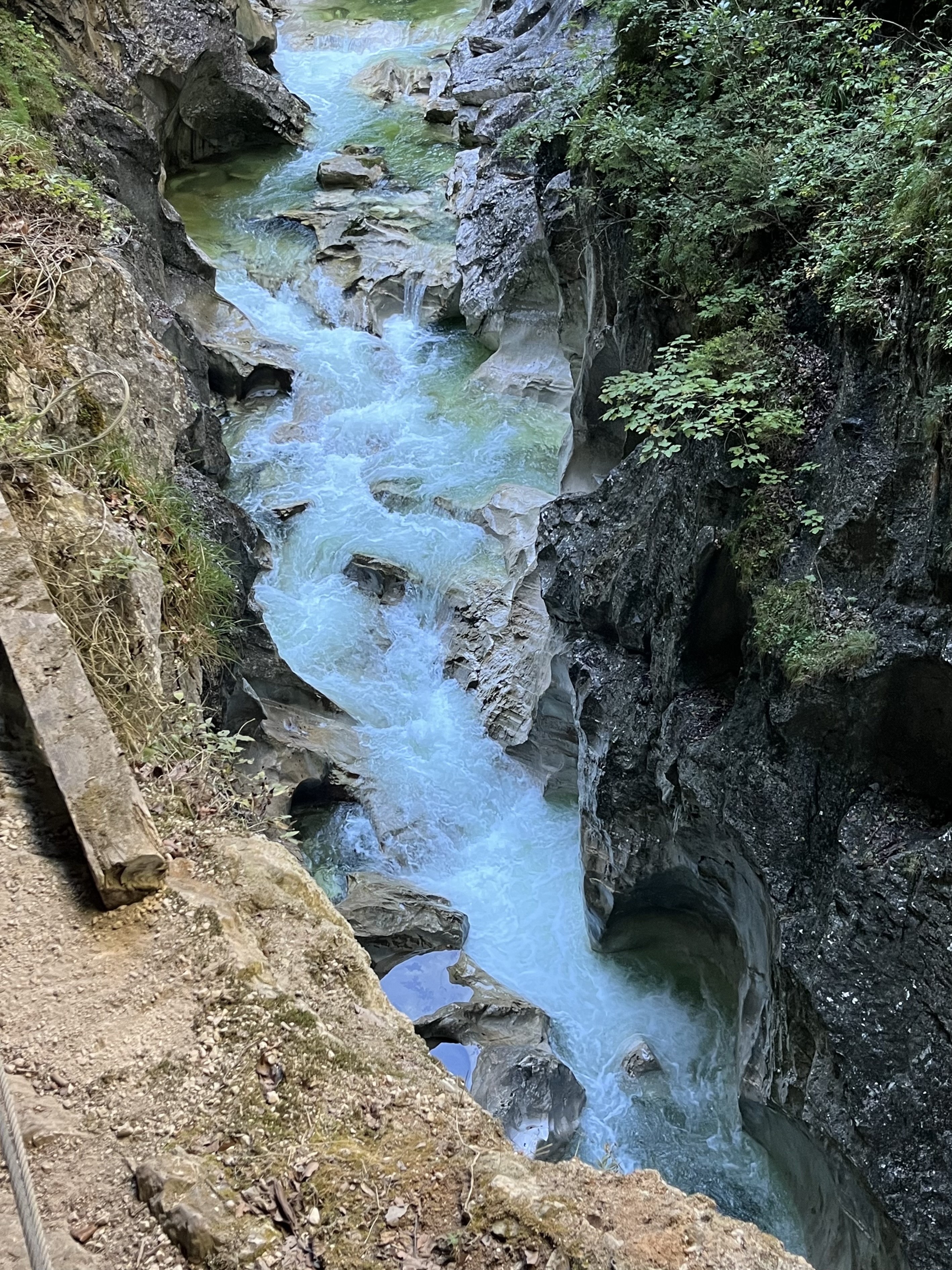
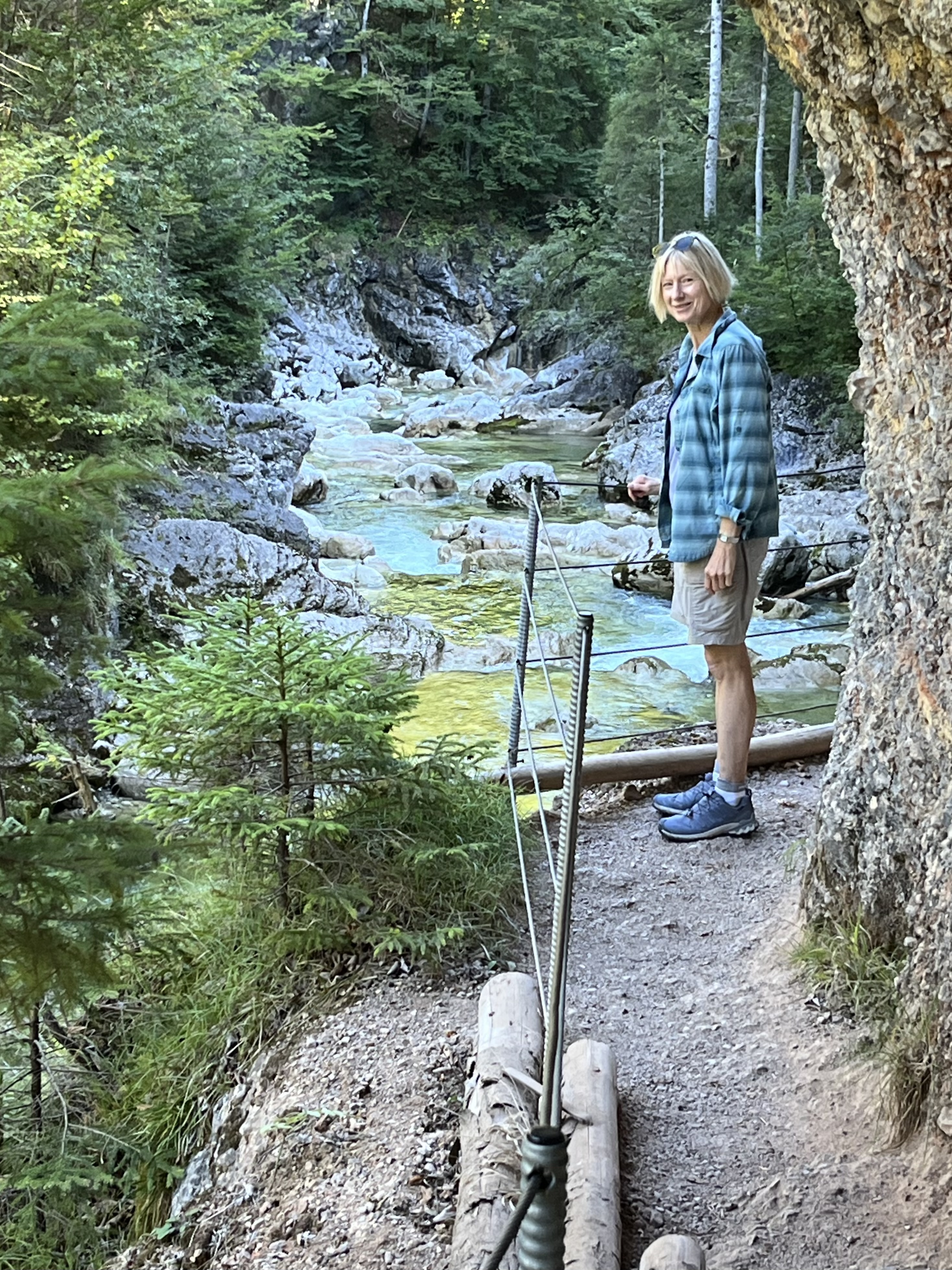
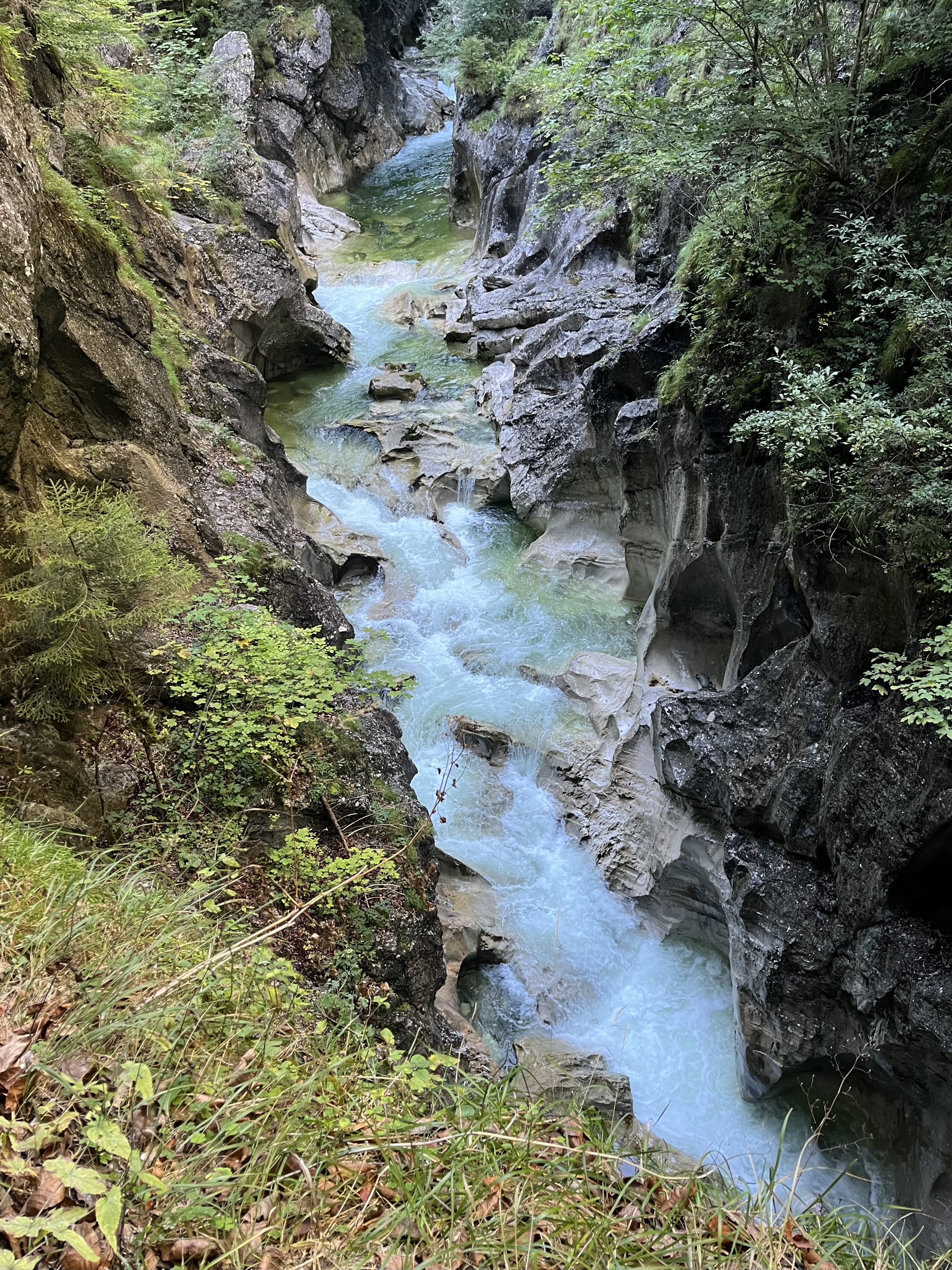
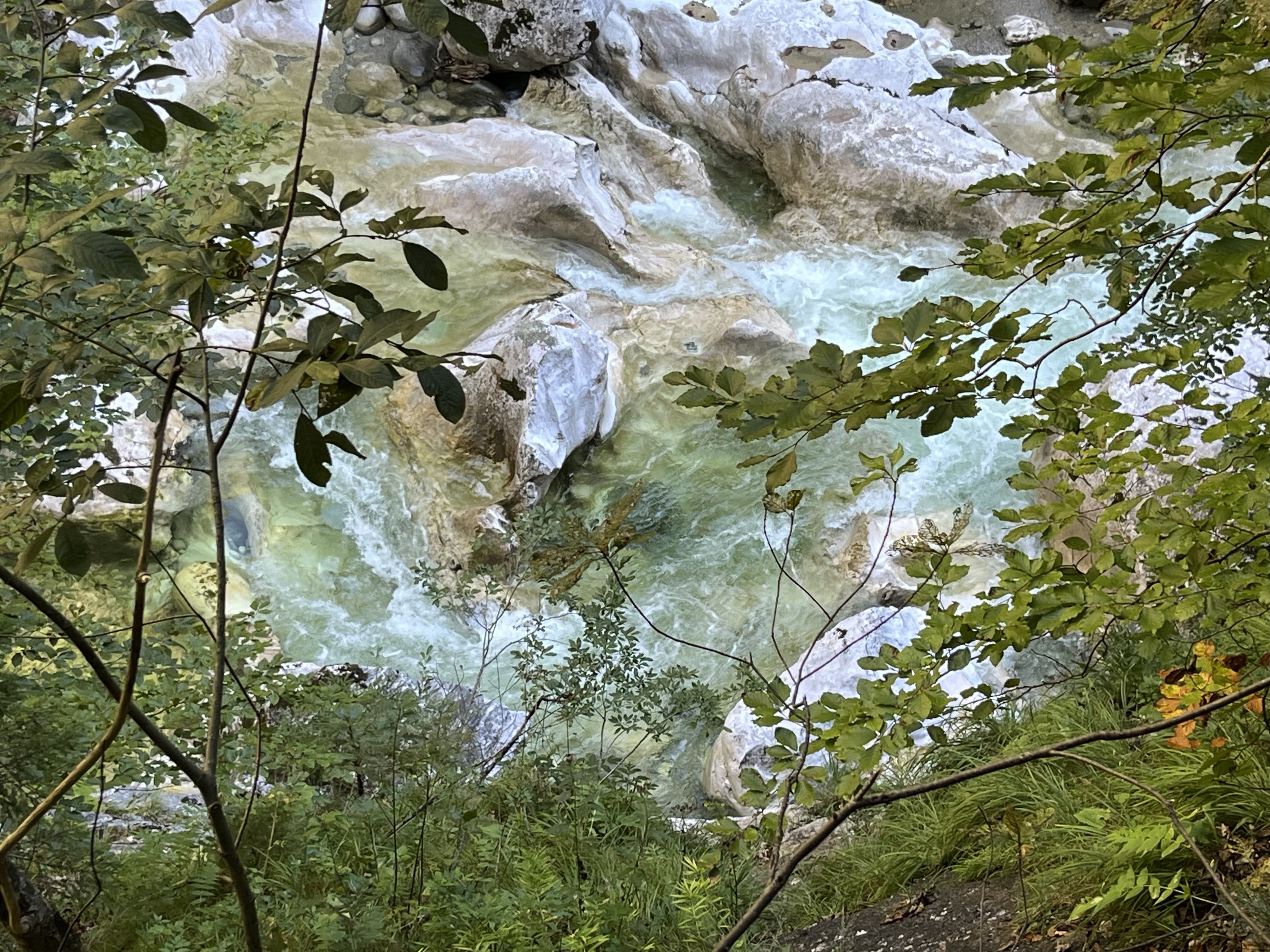
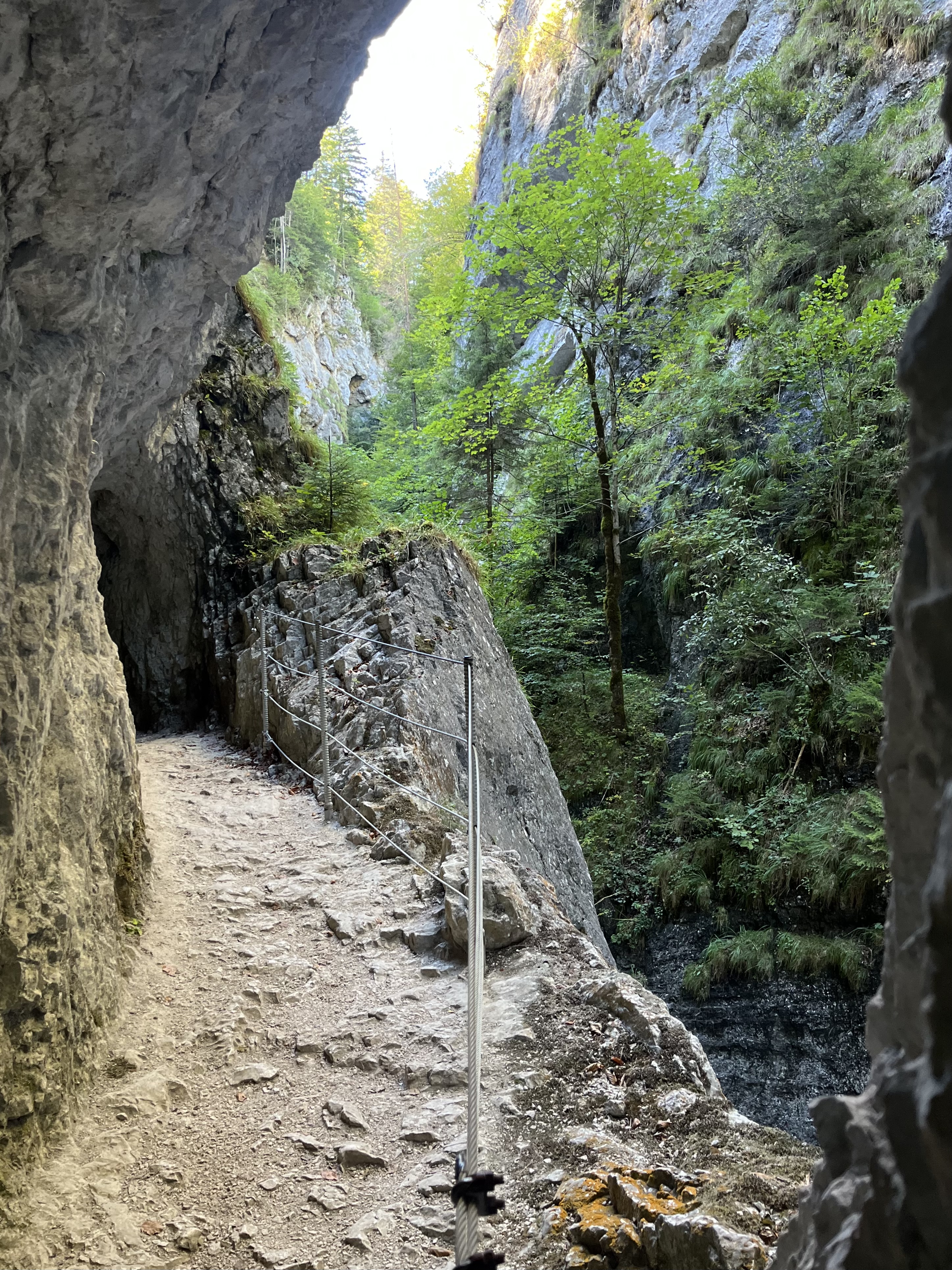
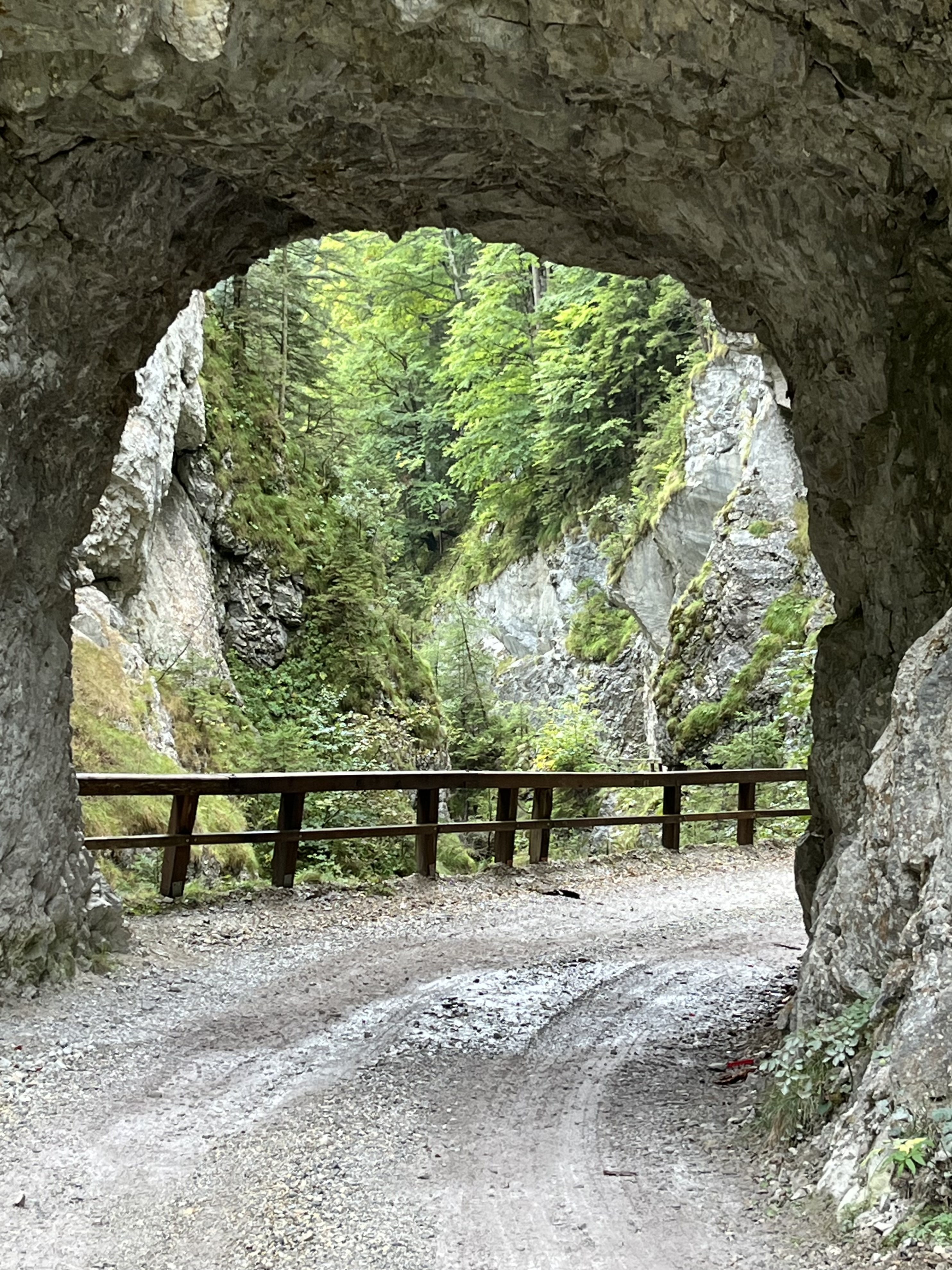
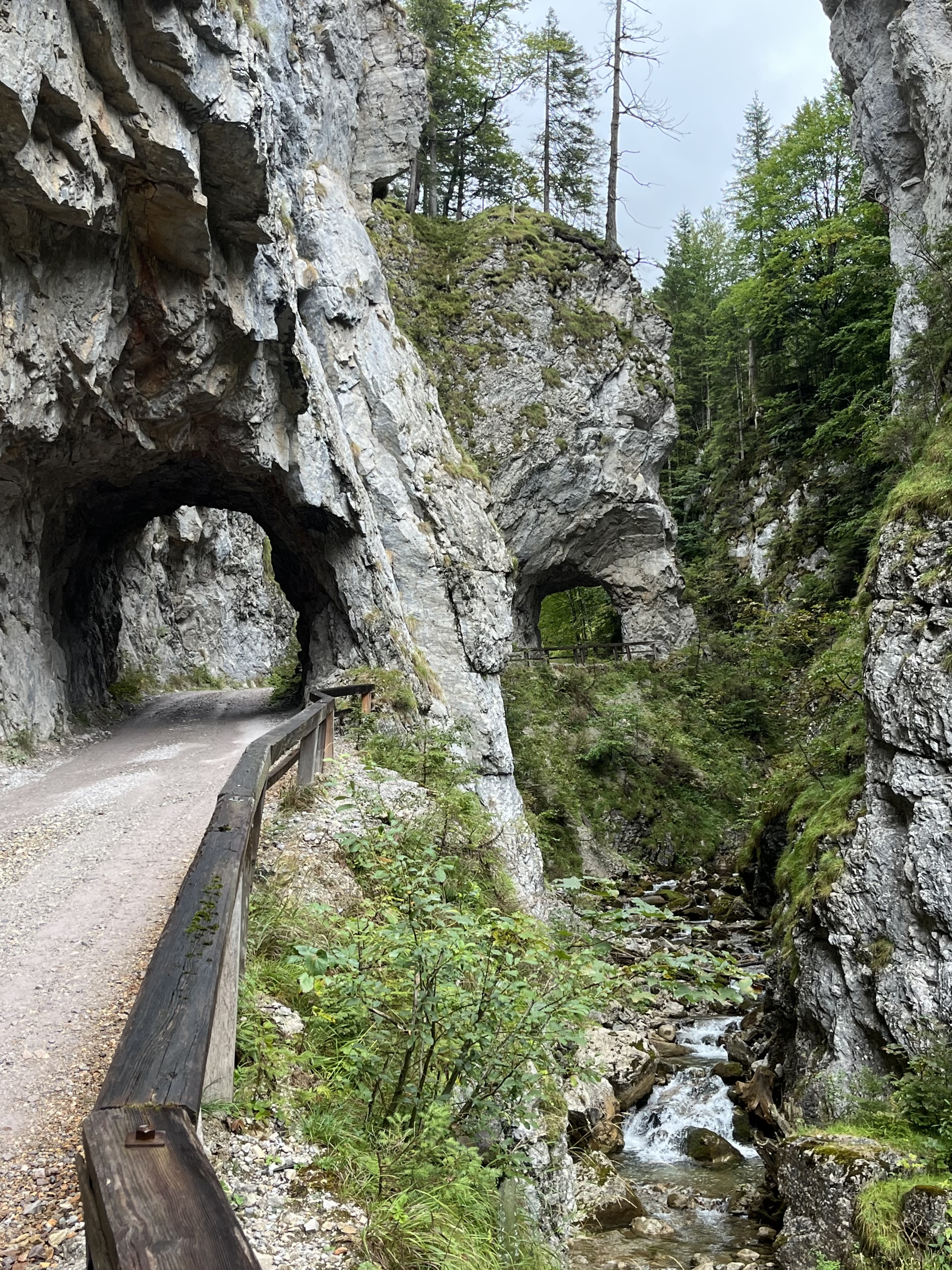
Here we are hiking through the Tiefenbachklamm and Kaiserklamm in the Brandenberg valley where I used to whitewater kayak over 40 years ago, with a lot higher water table during the spring run off.
Unfortunately, unlike in 1986, this time I couldn’t convince Lauri to run down a green alpine meadow in the spirit of Julie Andrews in the Sound of Music movie.
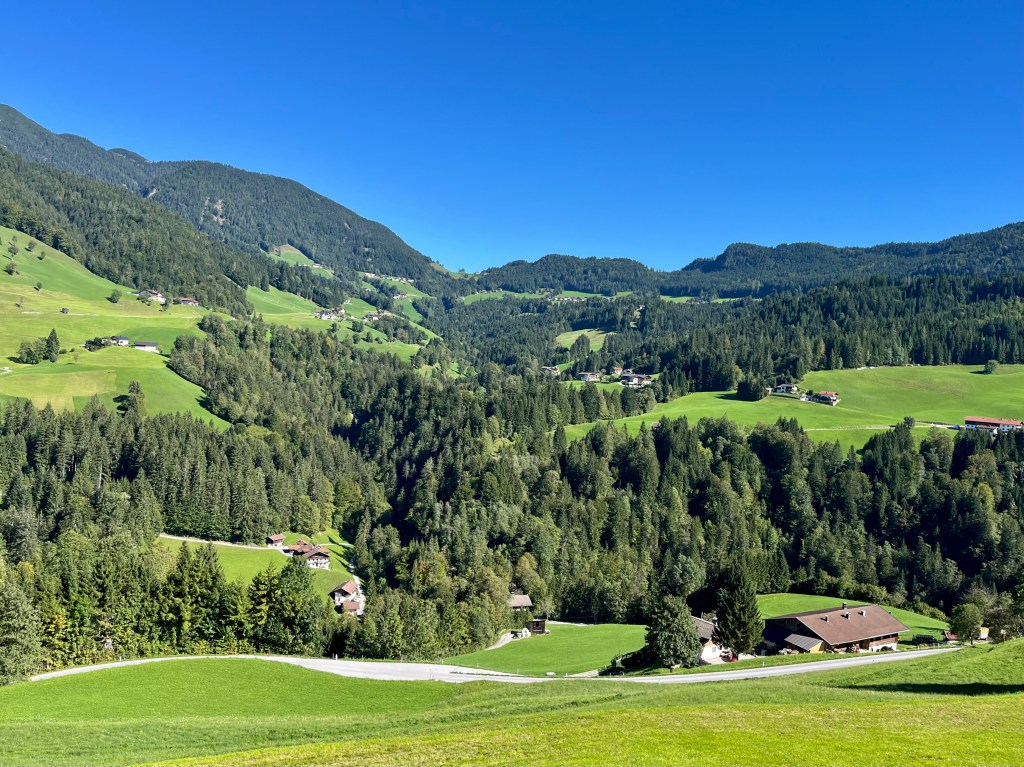
We were done with our memory lane visit and headed further east to discover new sites in the Alps.
Hallstatt, Austria:
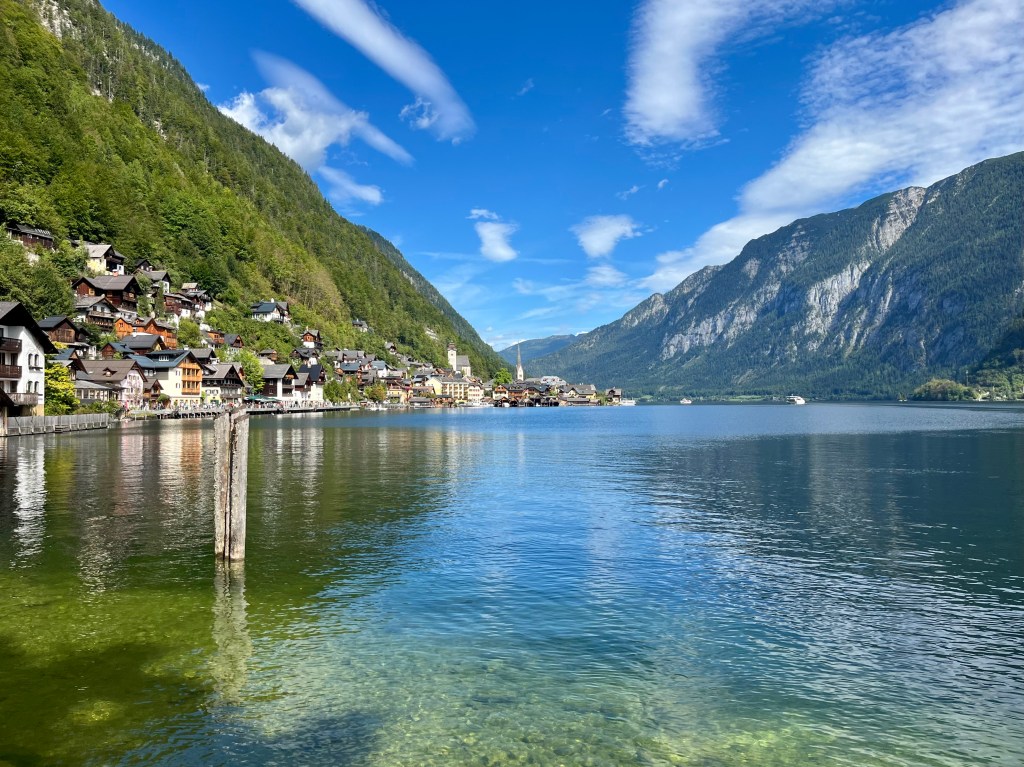
Hallstatt is located in the Salzkammergut Region of Austria and is the site of the world’s oldest active salt mine, being in use for 7,000 years! The town gave name to the Hallstatt Culture of Celtic people in the early Iron Age (800-450 BC).
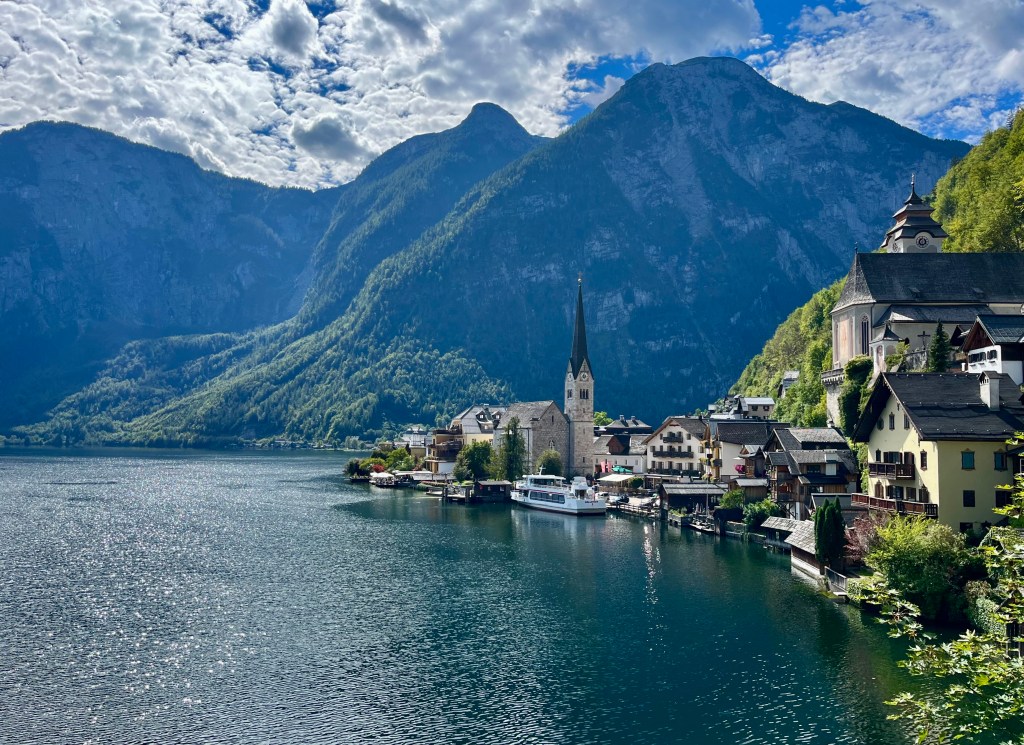
Sitting picturesquely on the SW shore of Hallstaetter See (Lake) with the tall Dachstein Mountain Range in the background, this cute little town of 750 residents is overrun almost daily by 10,000 tourists. It’s been particularly popular with Asian tourists after it was featured in a South Korean TV show in 2006. In China the Hallstatt village is so popular that a full size replica was built in the Guangdong Region in 2012.
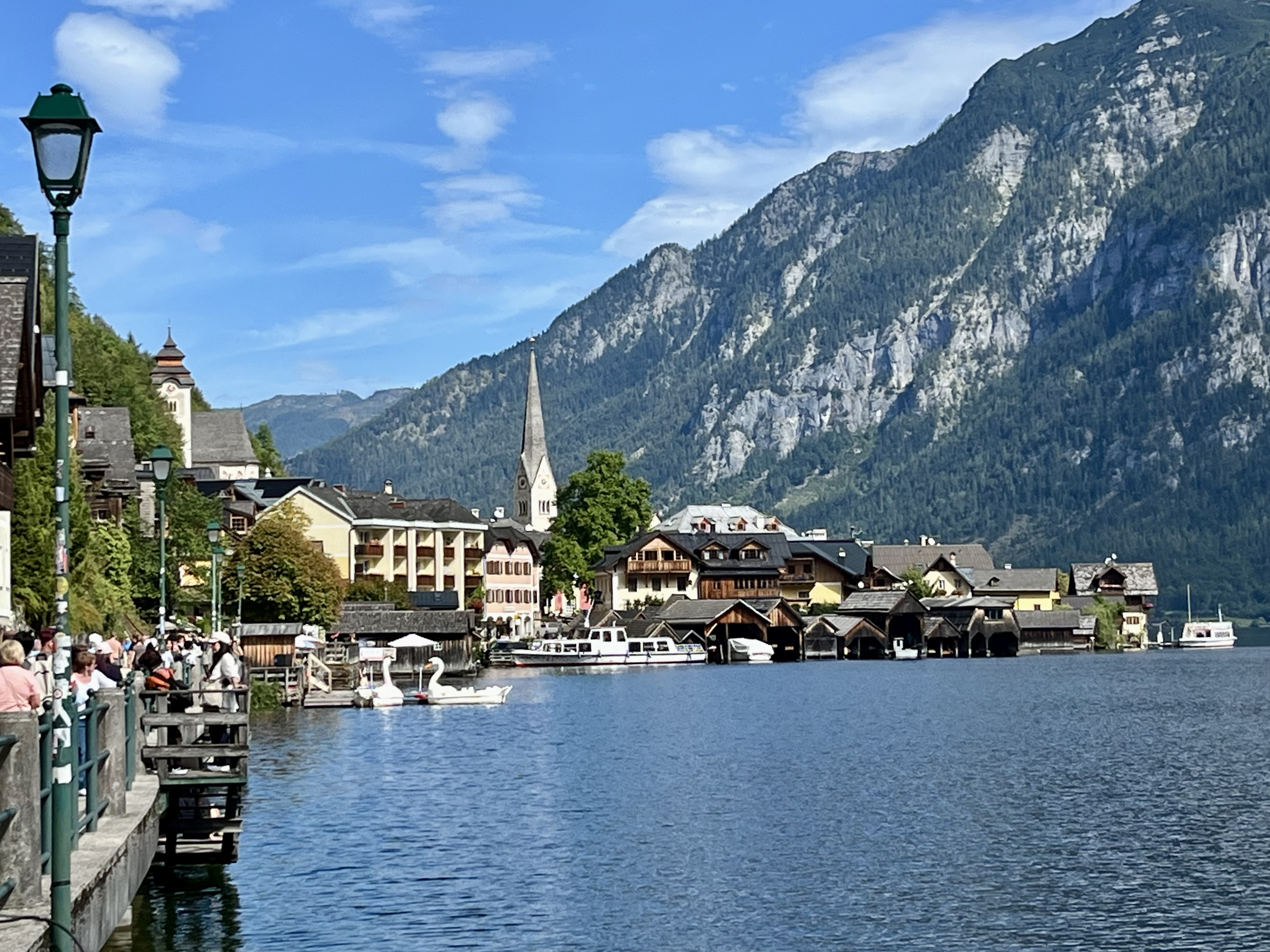
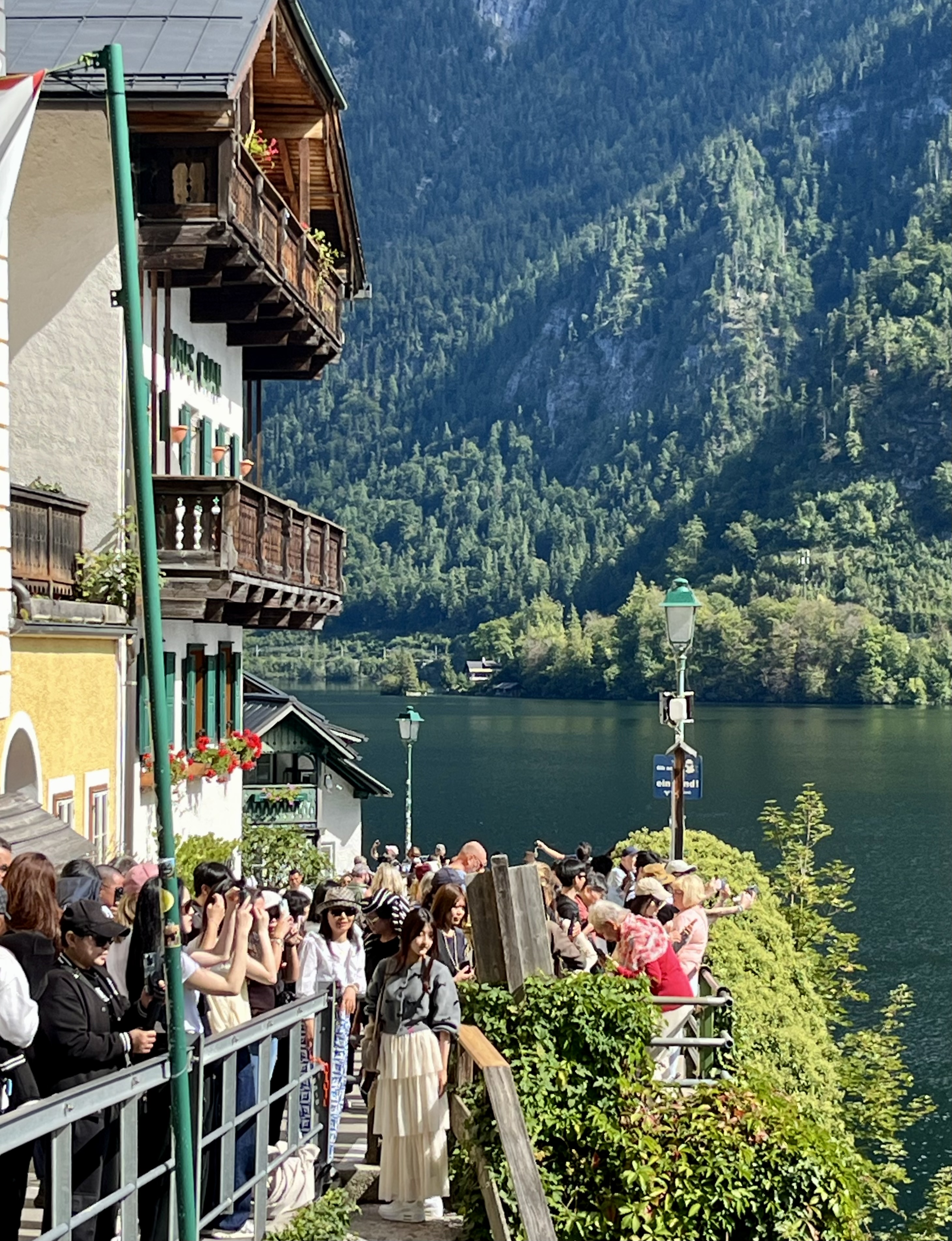
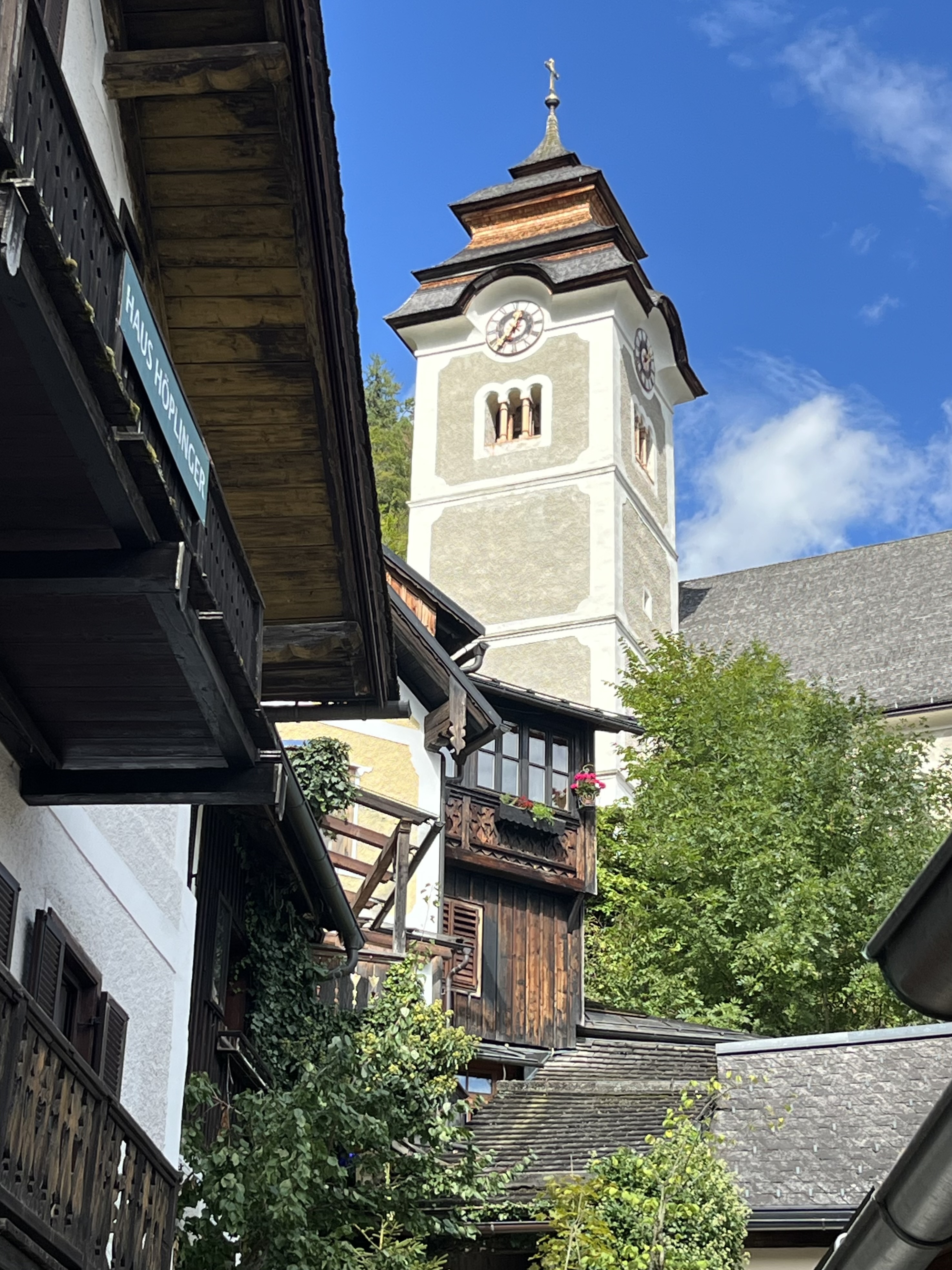
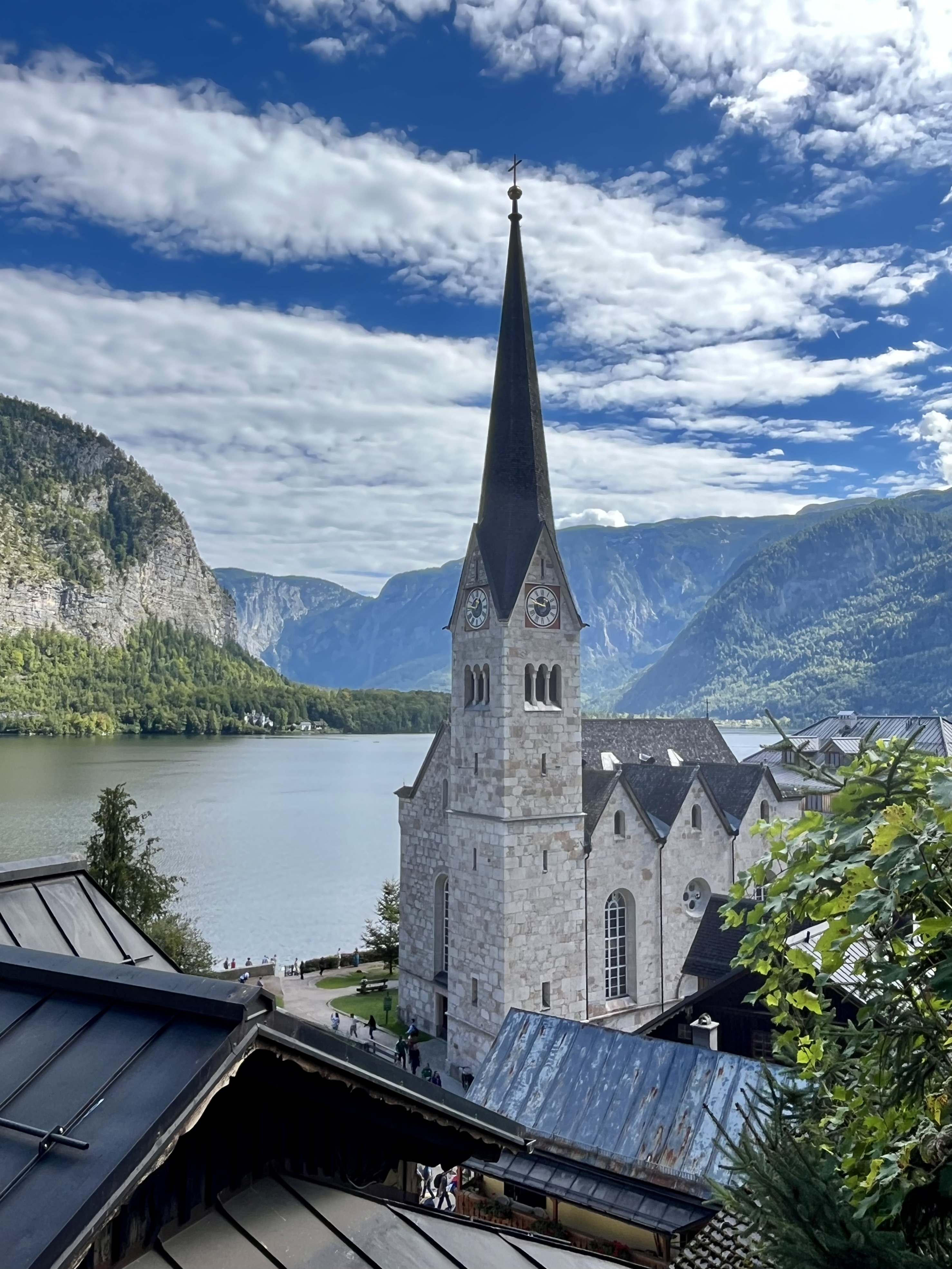
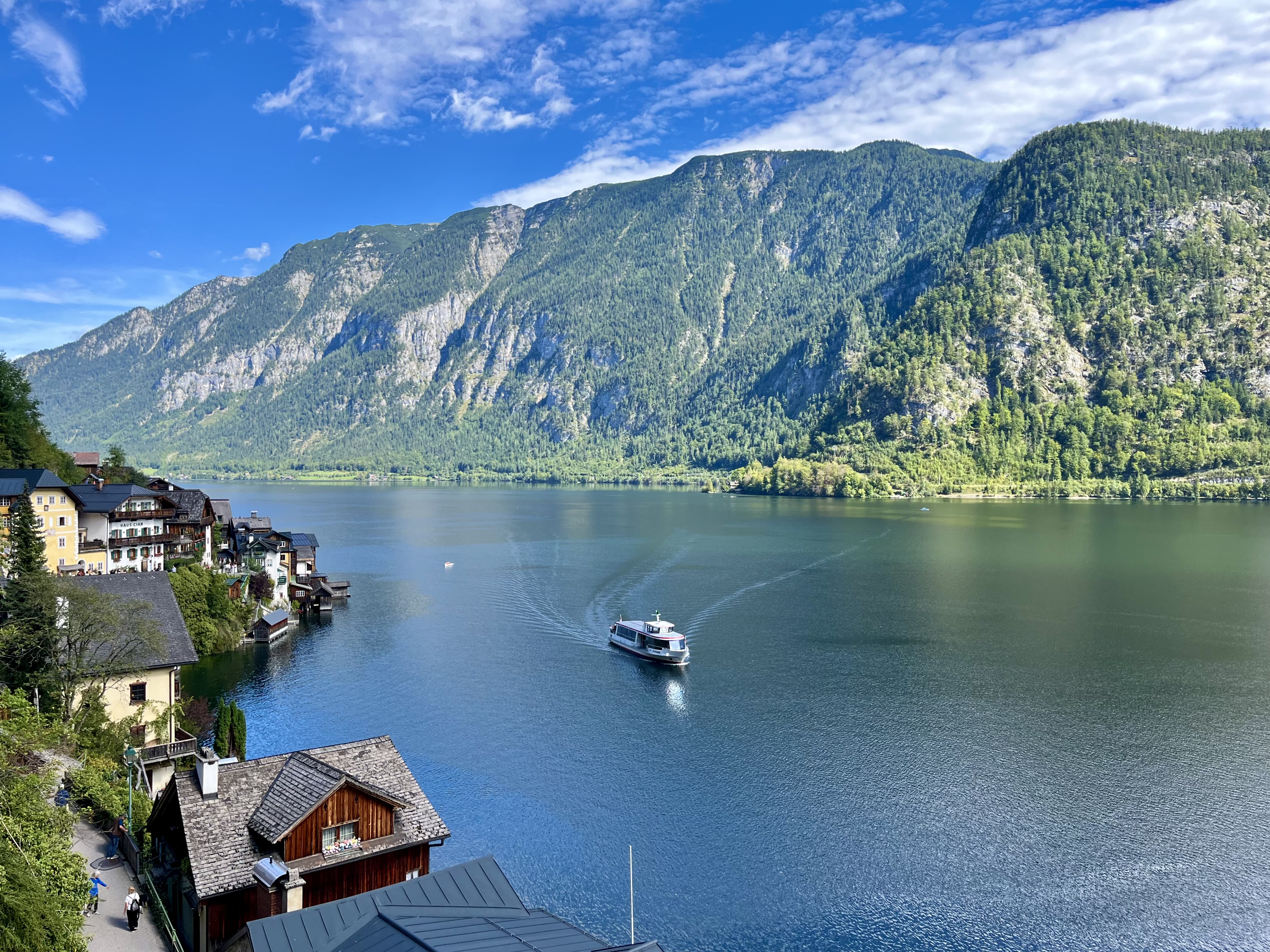
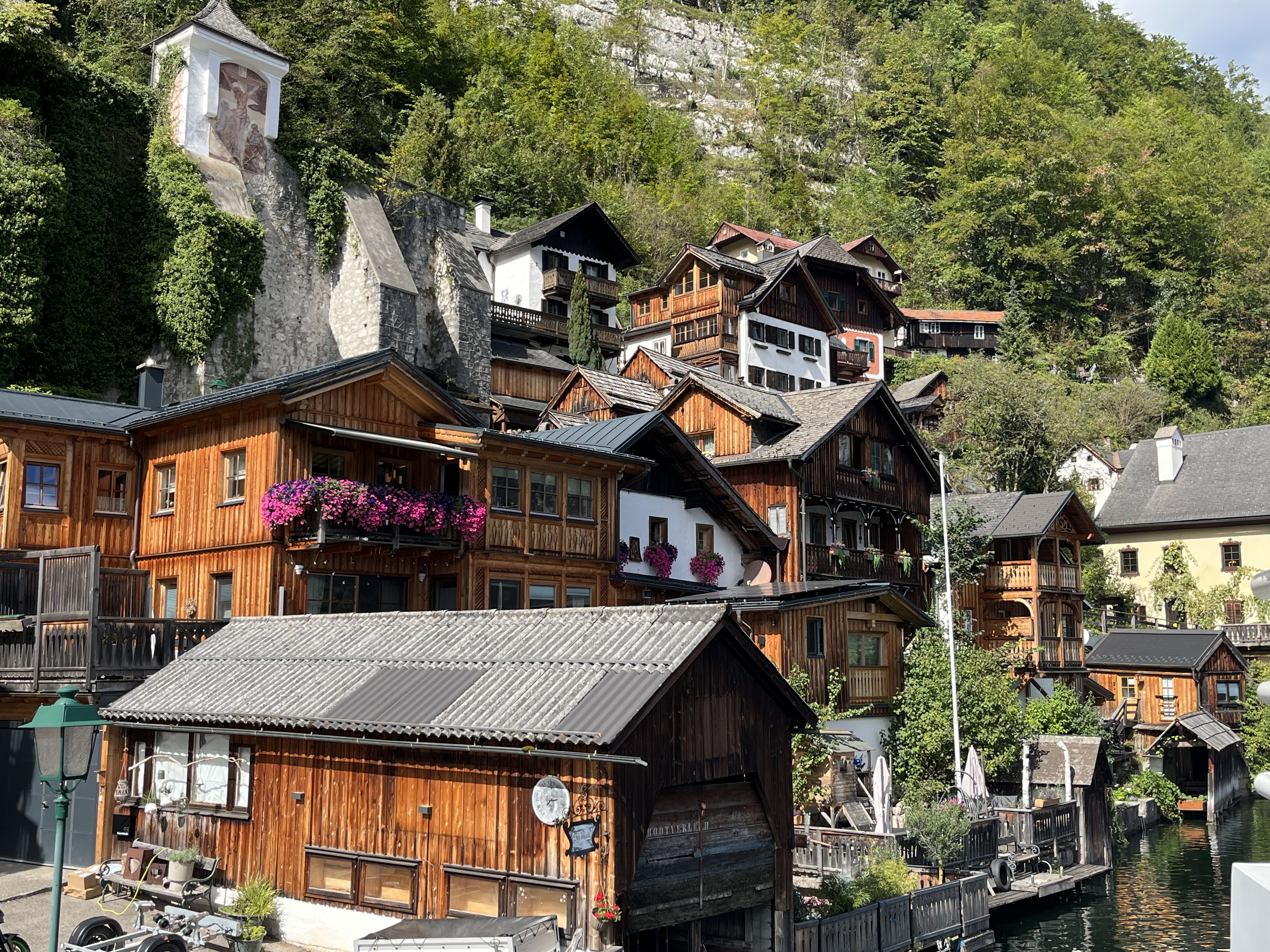
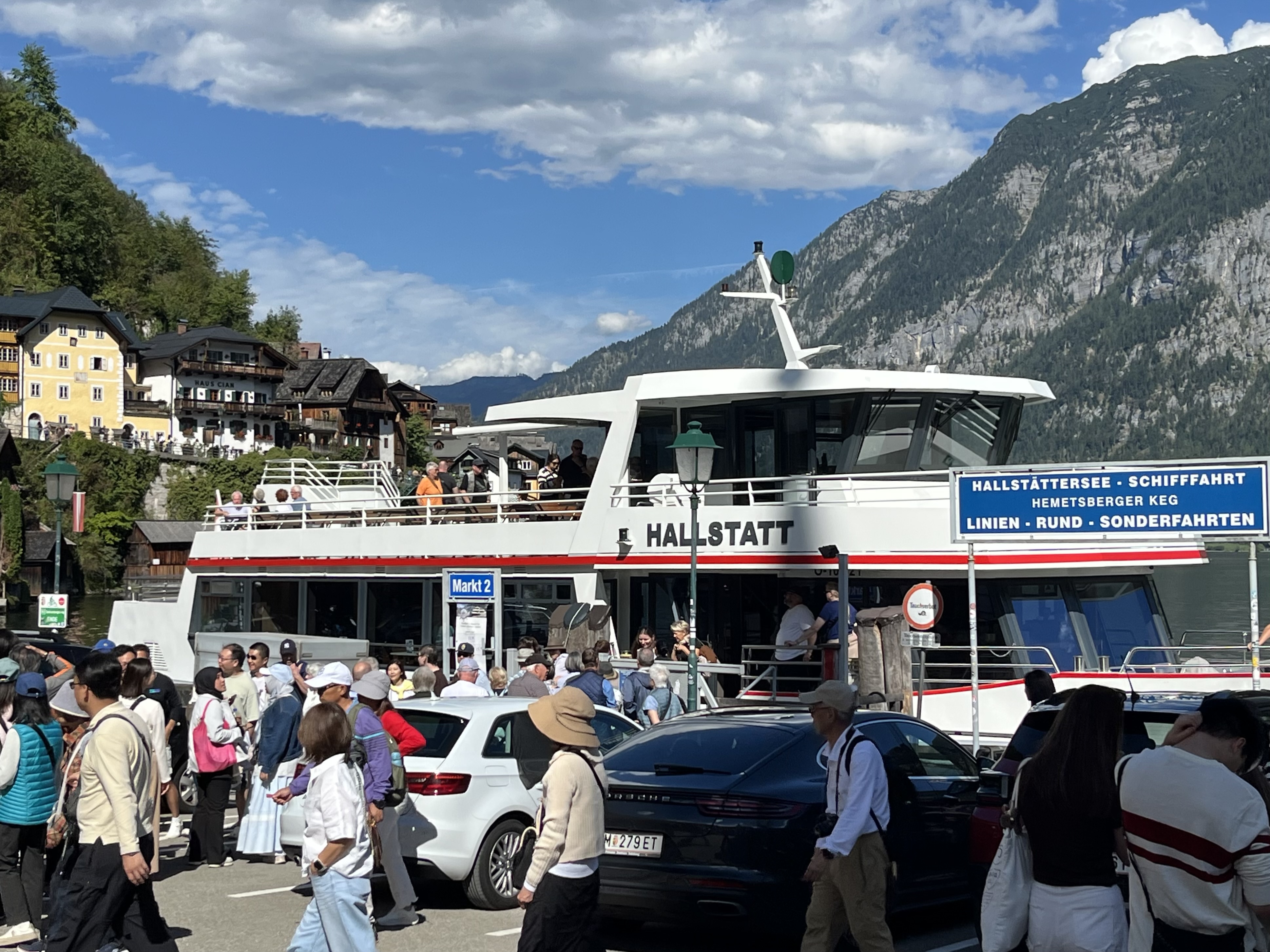
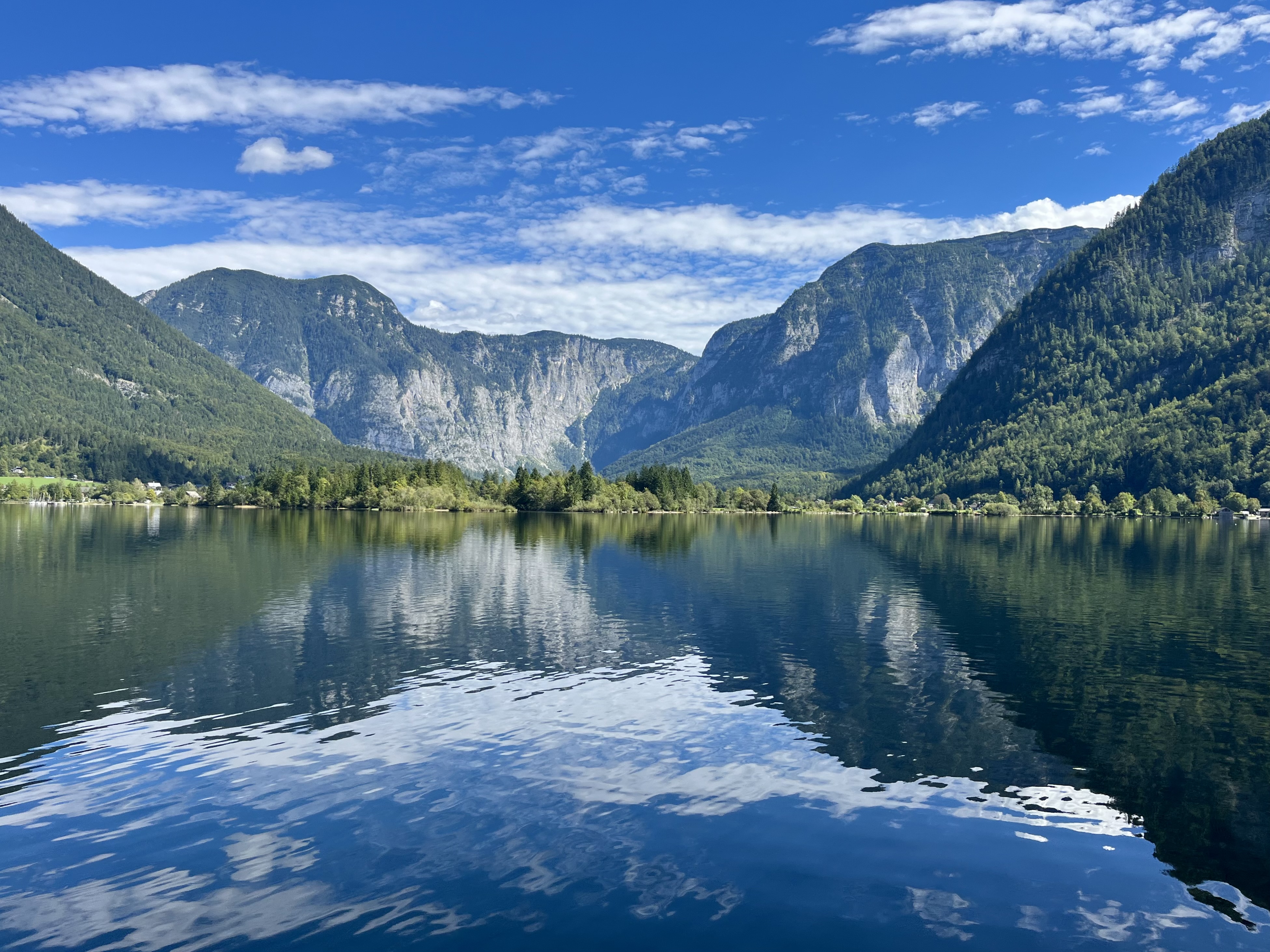
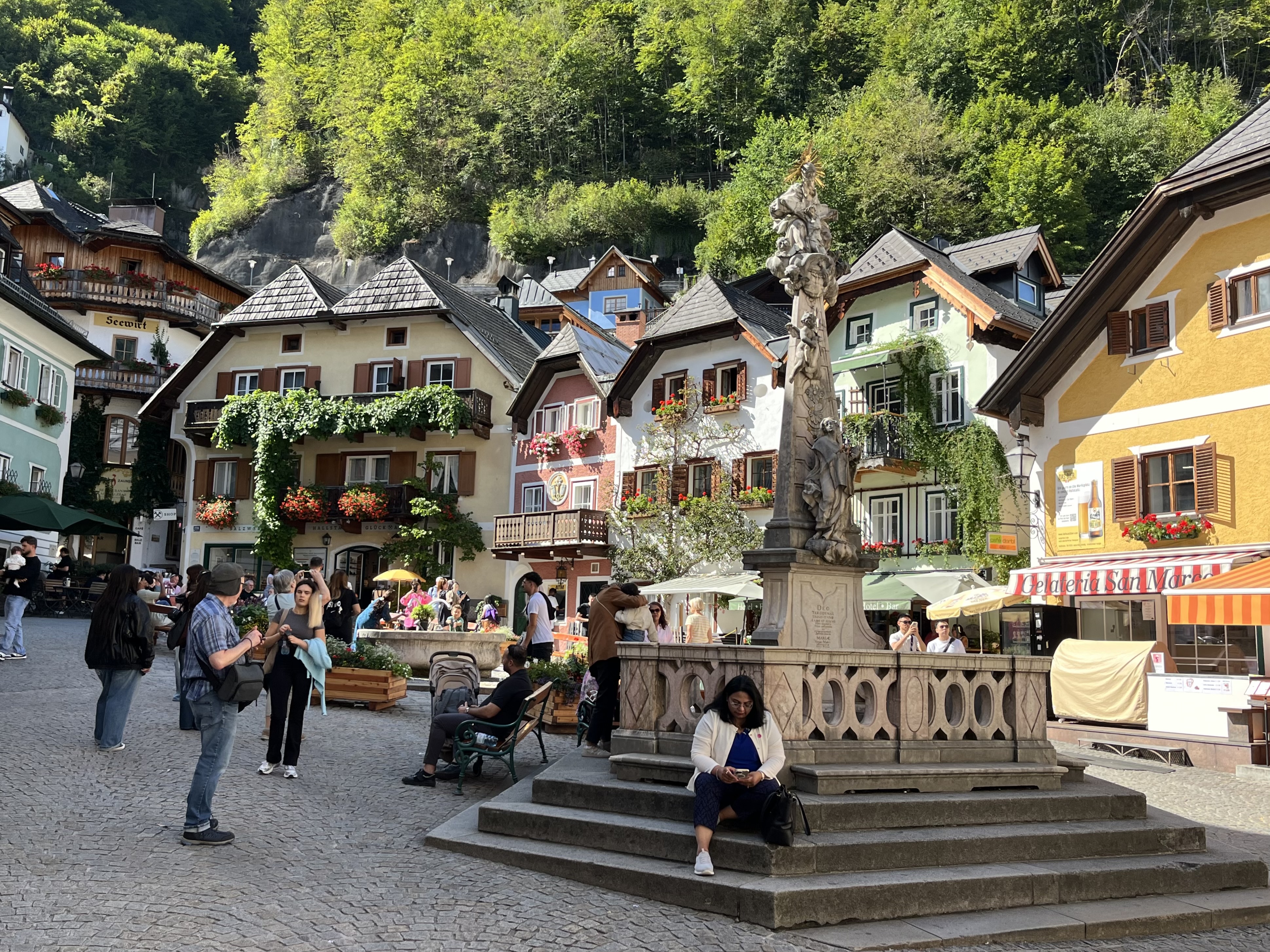
We enjoyed a one hour long ferry loop ride through the southern end of the lake. Until the 19th century Hallstatt was only accessible by boat from the northern shore of the lake or via a narrow trail. After the ferry ride and an additional two hours of strolling through the tourist filled shops and narrow streets, we hiked back to our parking lot 1.5 miles out of town. Even with the tourist crowds, lack of convenient parking etc, this cute Austrian village with its picture perfect setting is a sight to be seen and worth a visit!
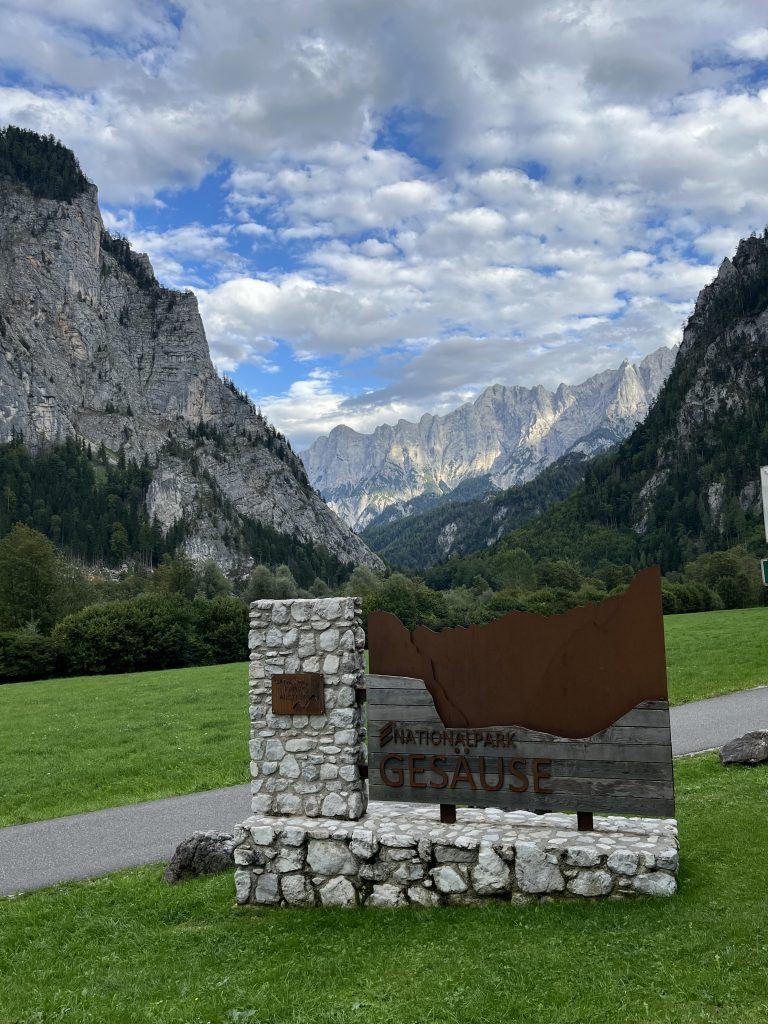
Nationalpark Gesaeuse and Johnsbach Tal, Steiermark, Austria
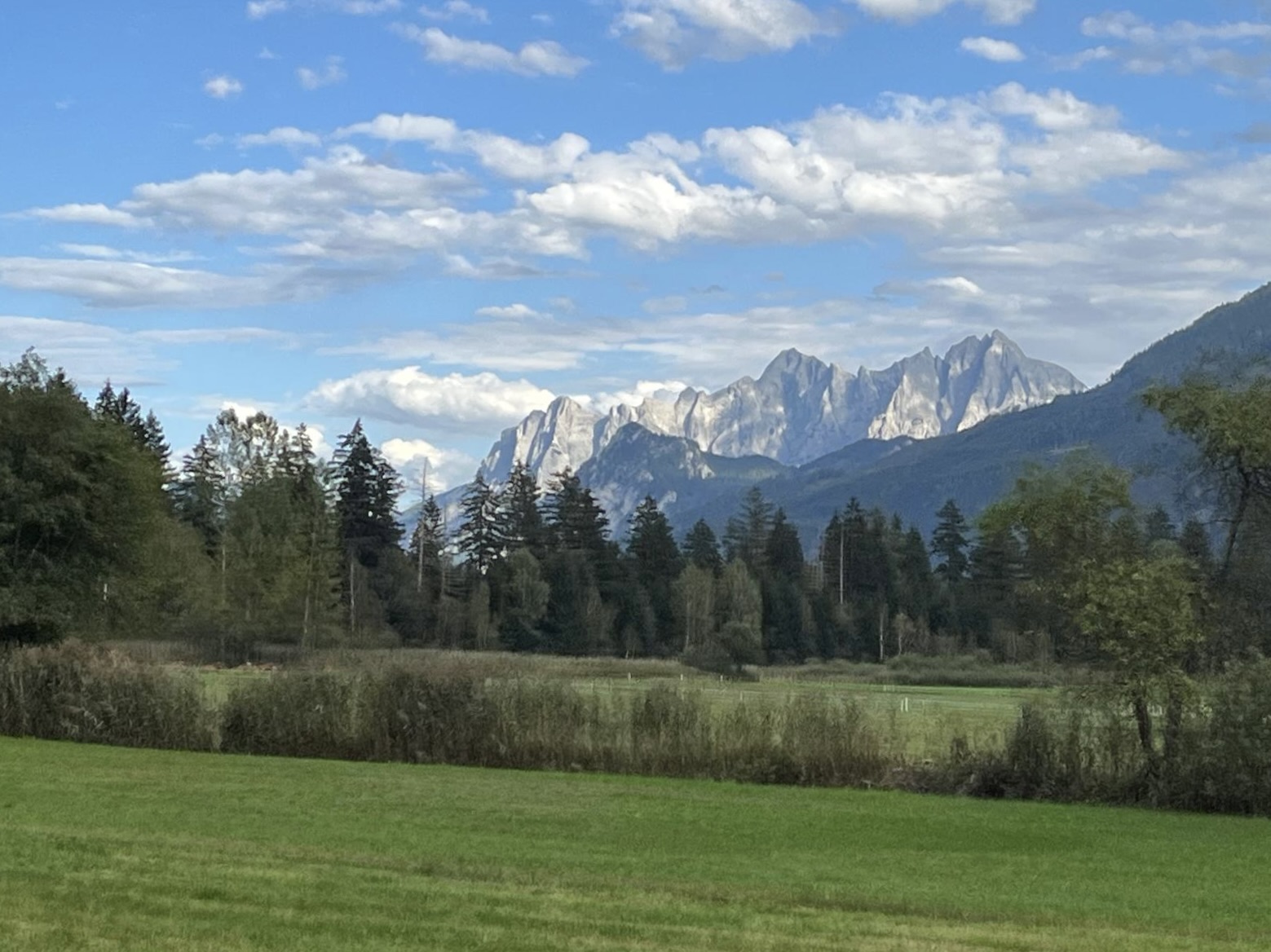
The Gesaeuse Nationalpark, is located in a rural, mountainous area of Austria’s Steiermark Region, and is mostly known by mountain climbers who enjoy climbing its rugged cliffs and mountaintops, as well as kayakers who enjoy running the rapids of the Enns river. The name “Gesaeuse” means “roar”, in this case the roar of the Enns river rapids cutting through the canyon.
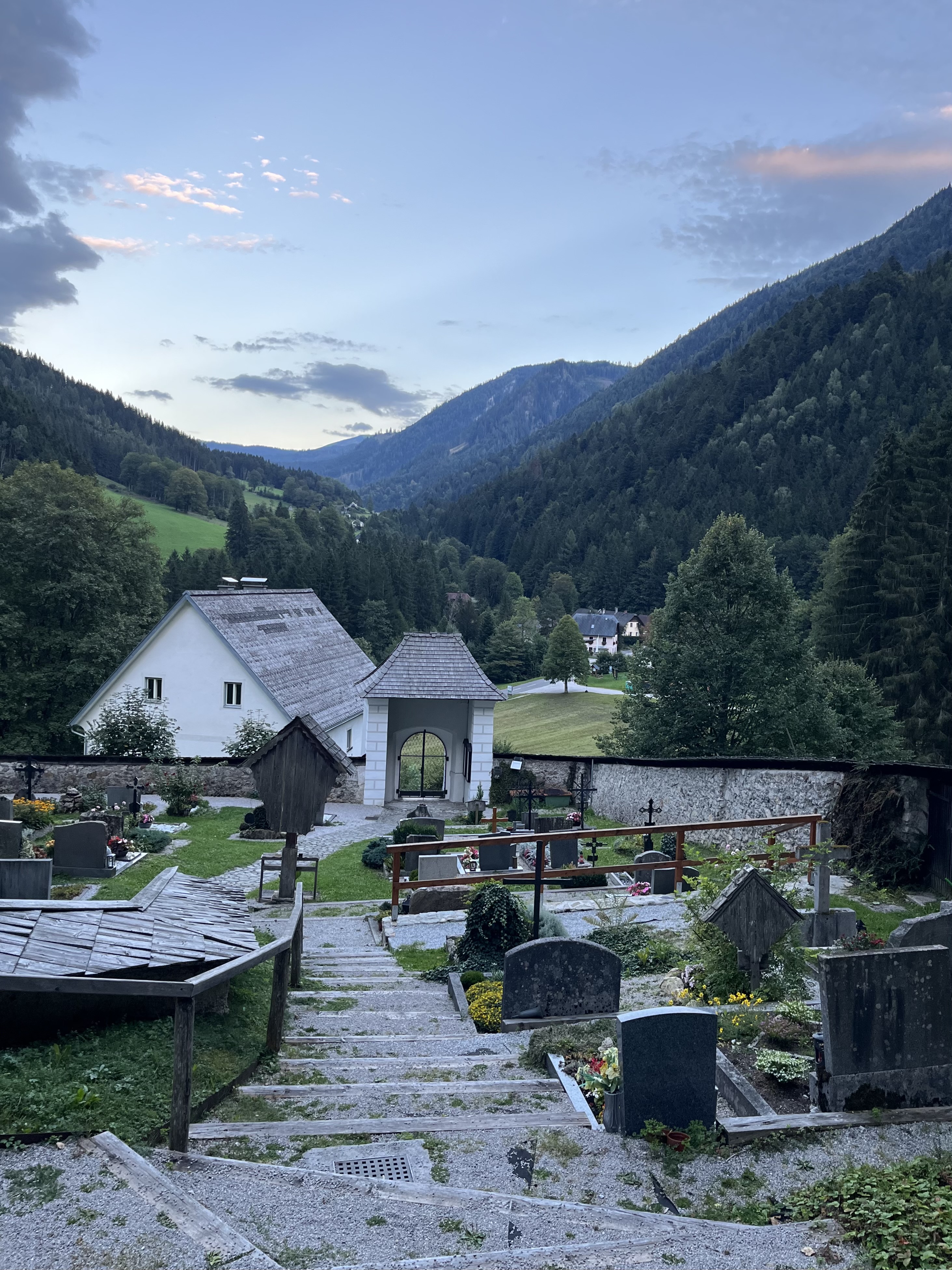
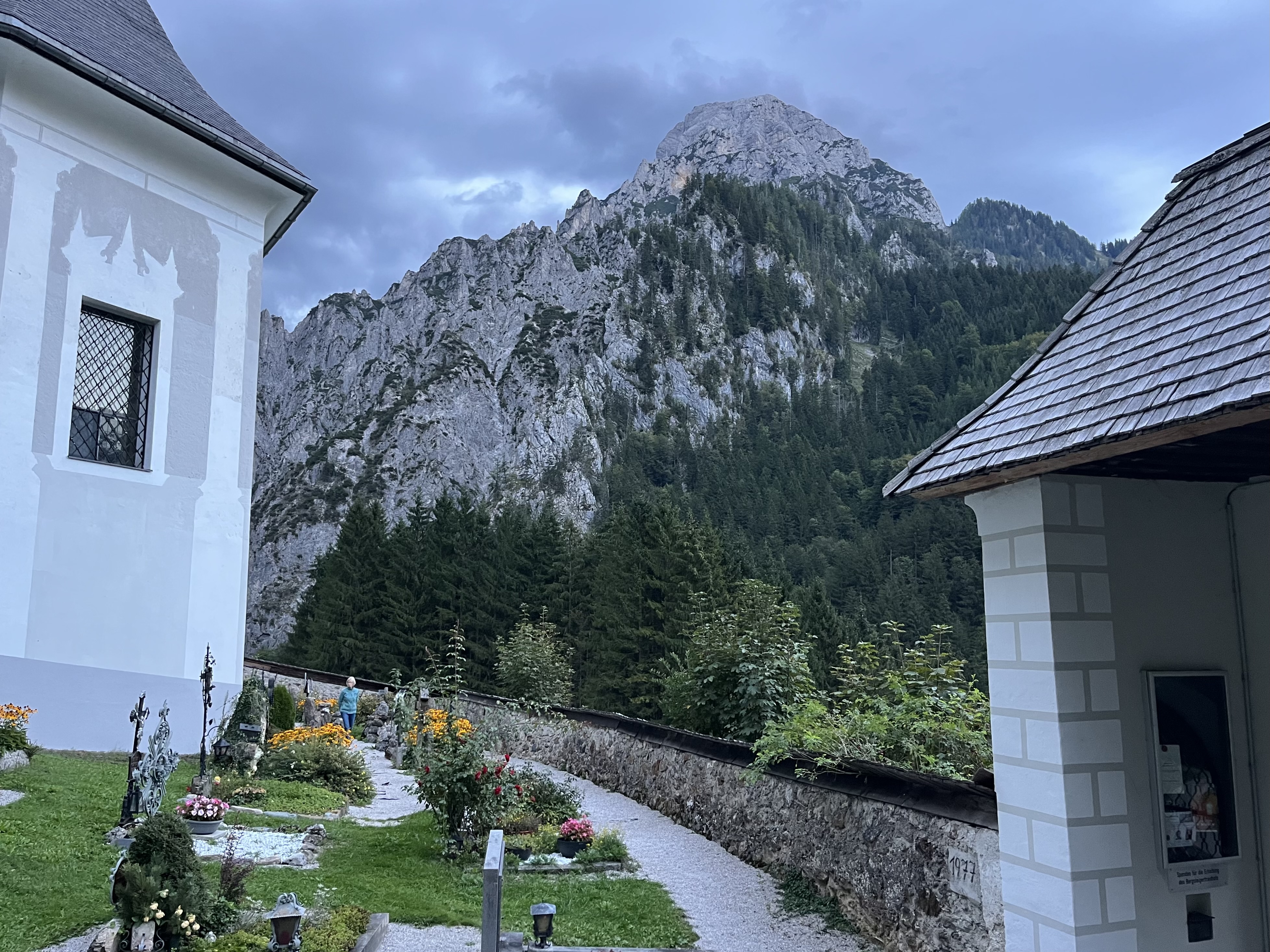
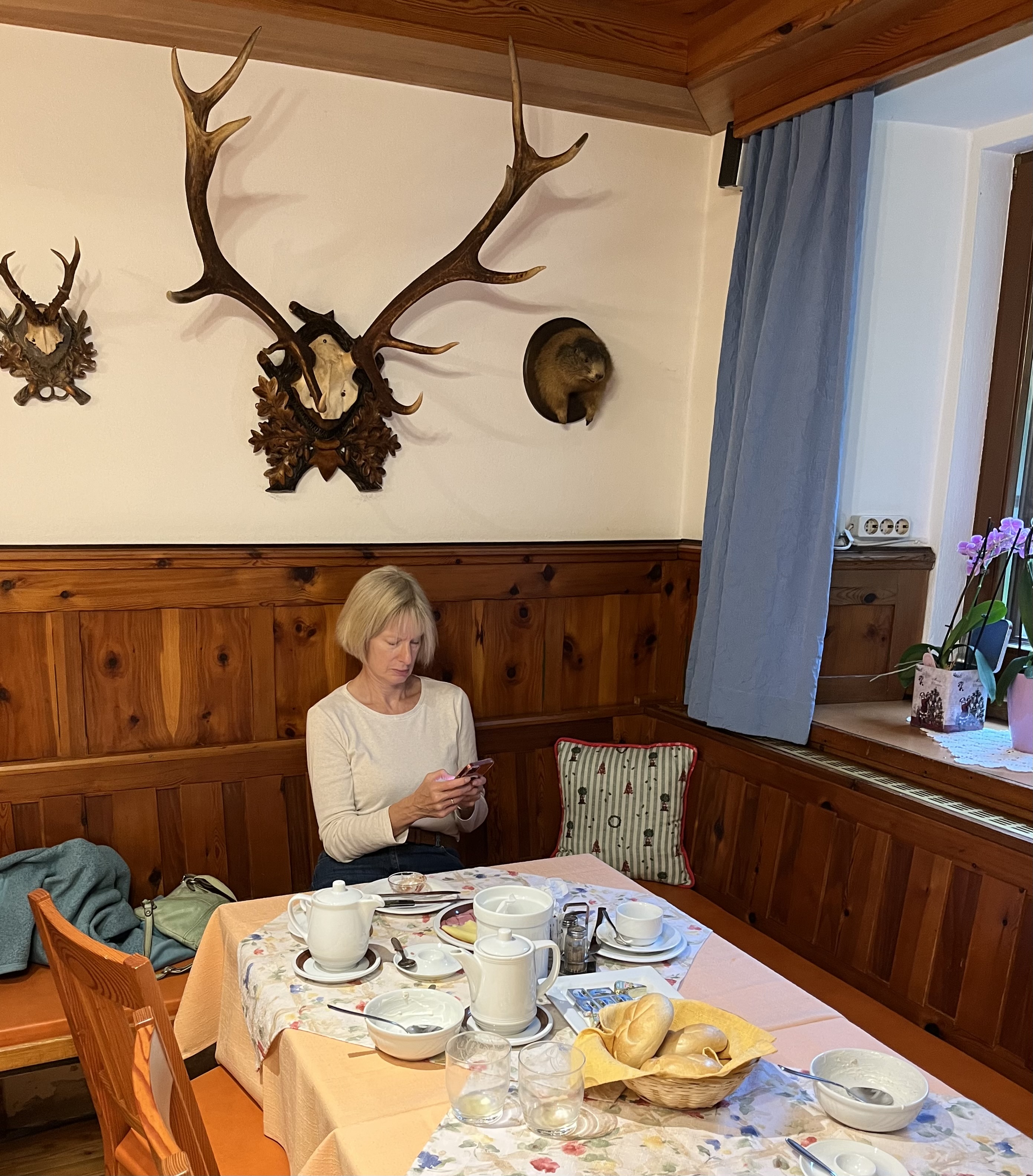
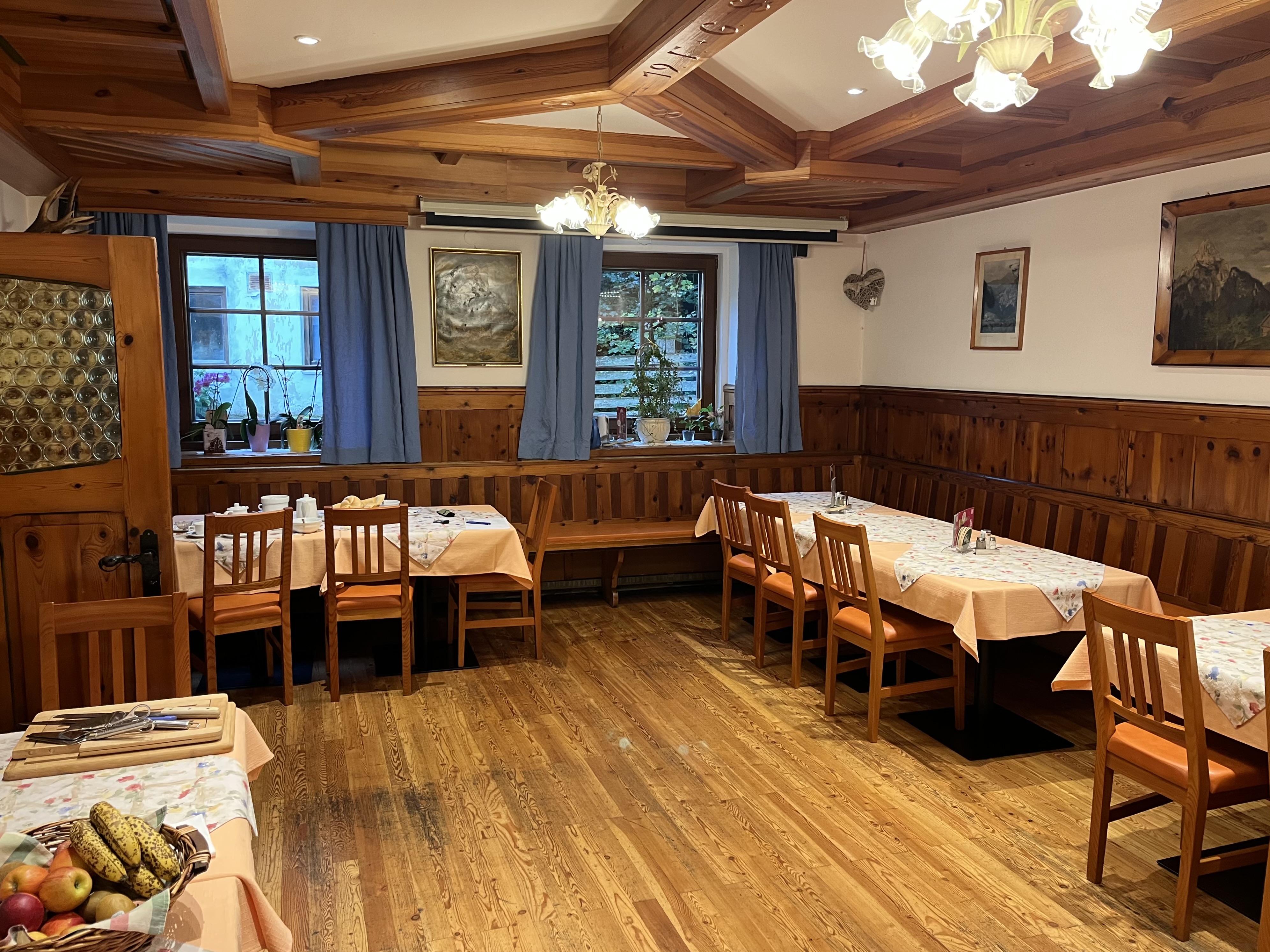
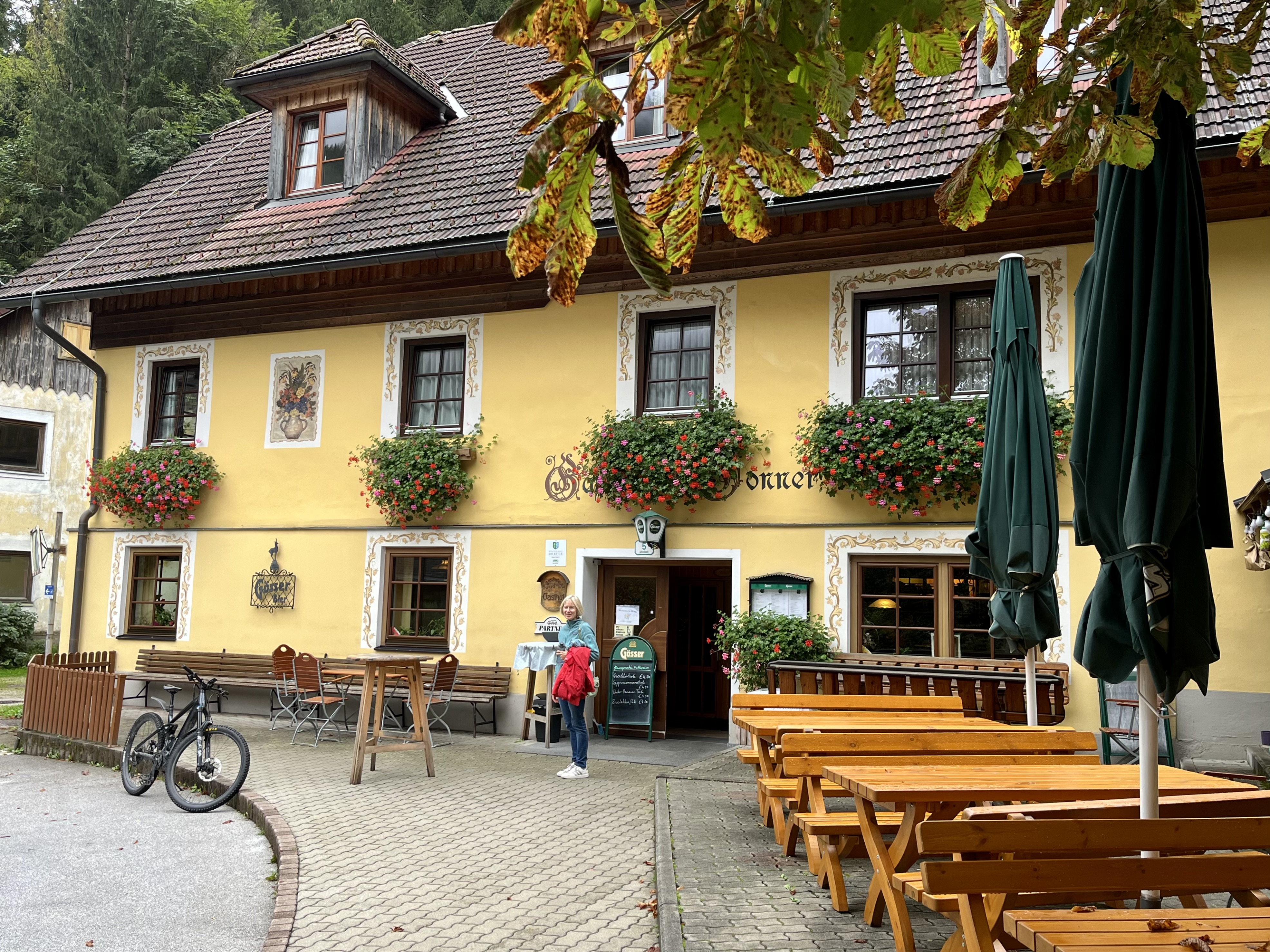
We spent two nights in the very remote and quiet Johnsbach Tal (valley) just to the south of the park in the Gasthof zum Donner. The building of the inn was first mentioned in 1,100 AD and today three generations of the Stadlauer family share their roof with the inn’s and restaurant’s guests. Occasionally the inn’s dining room is even used for school classes visiting the park, or for gatherings of the Johnsbach Tal community. Just down the road from our inn next to a little chapel is the Bergsteigerfriedhof, a graveyard where the killed mountaineers of the region lay buried.
Benediktiner Stift Admont, Austria
We had planned to go on a longer day hike, yet when we looked out of the window on the morning of our hiking day, it was raining and deep clouds darkened the sky.
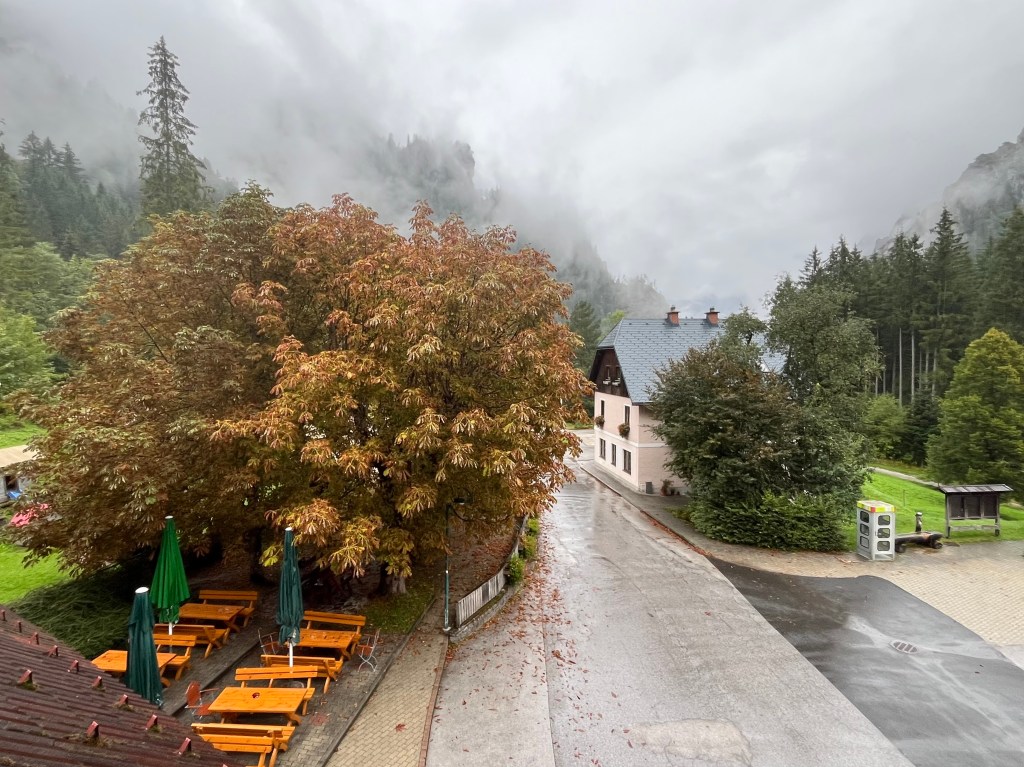
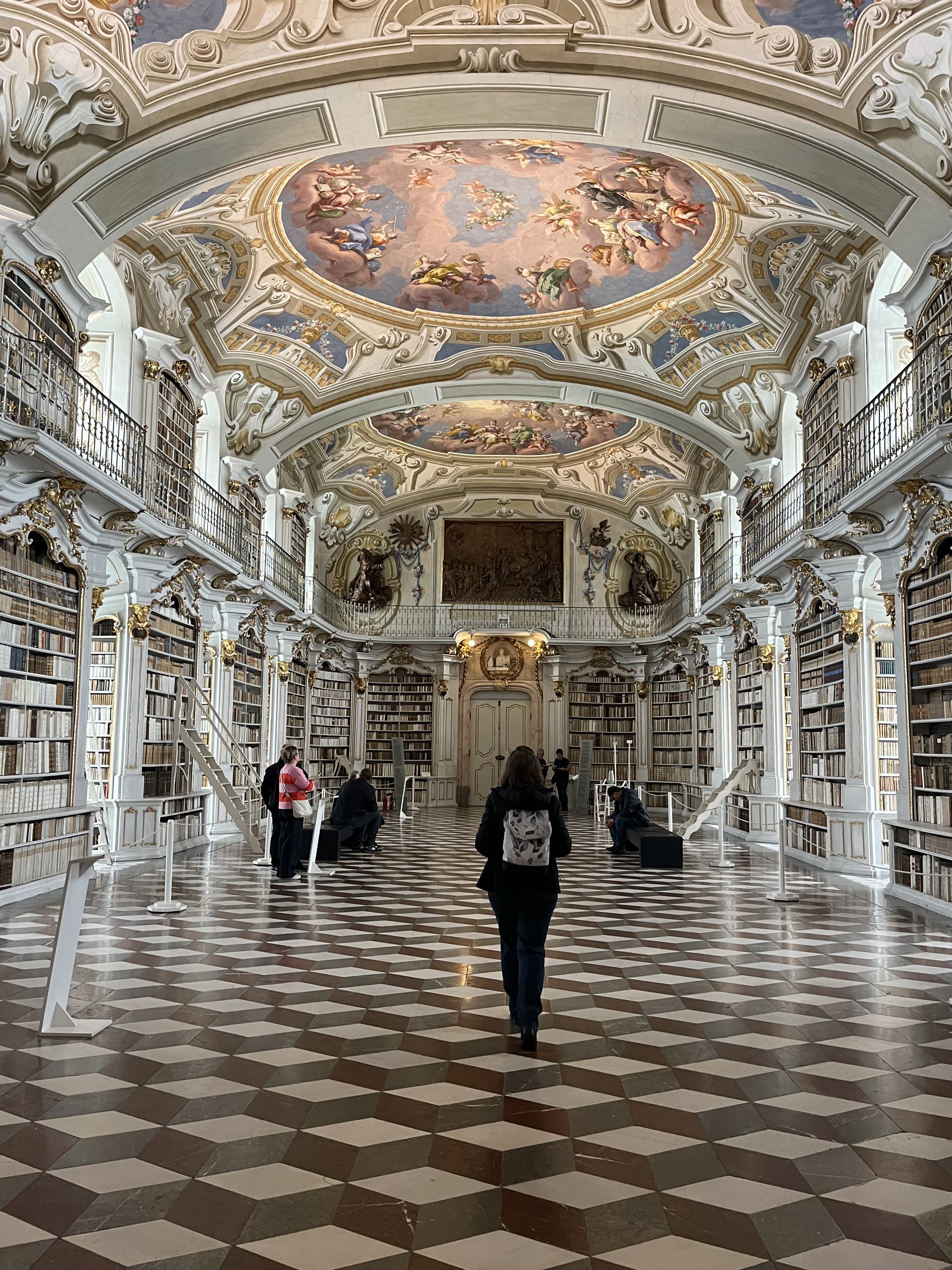
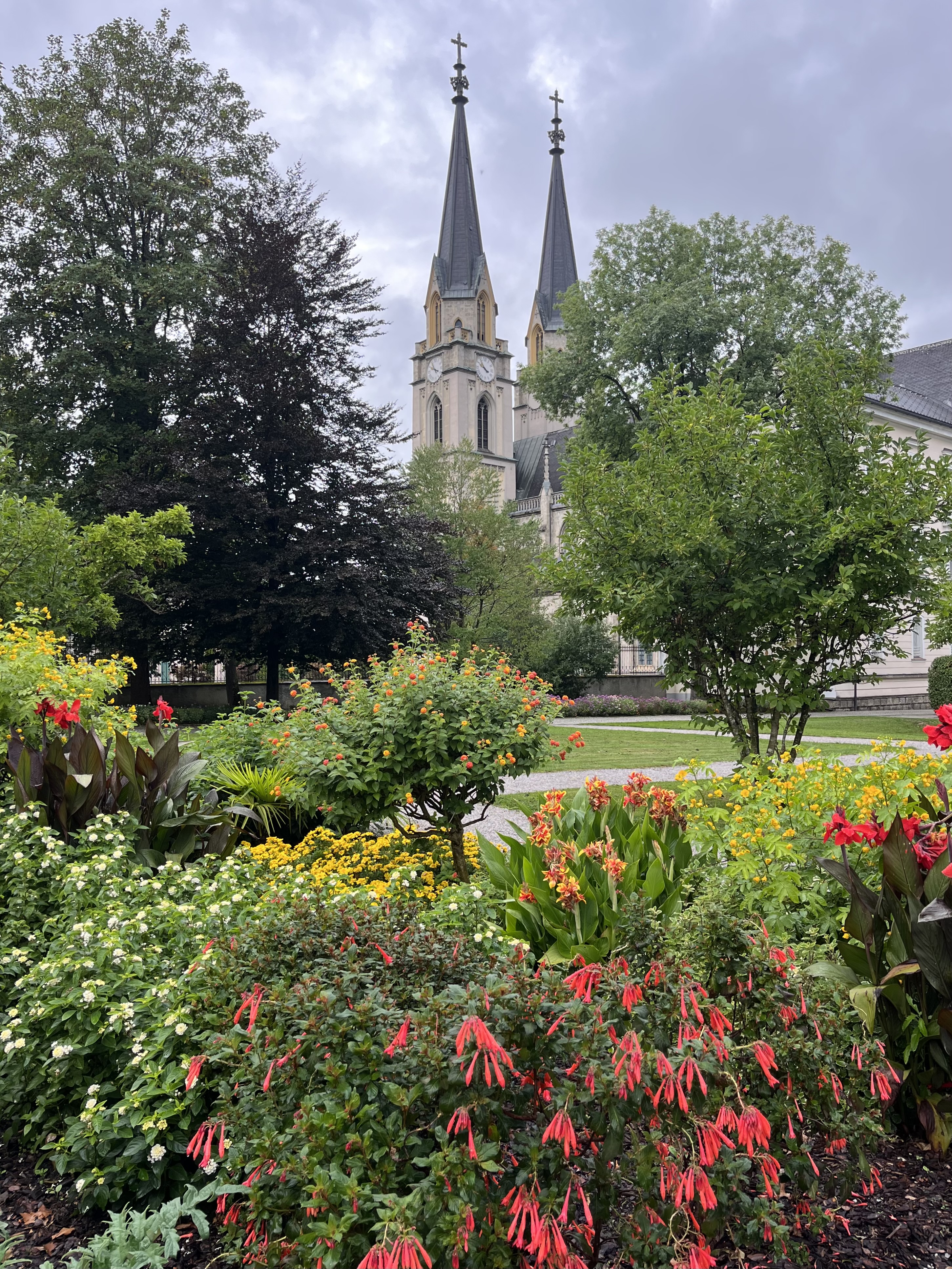
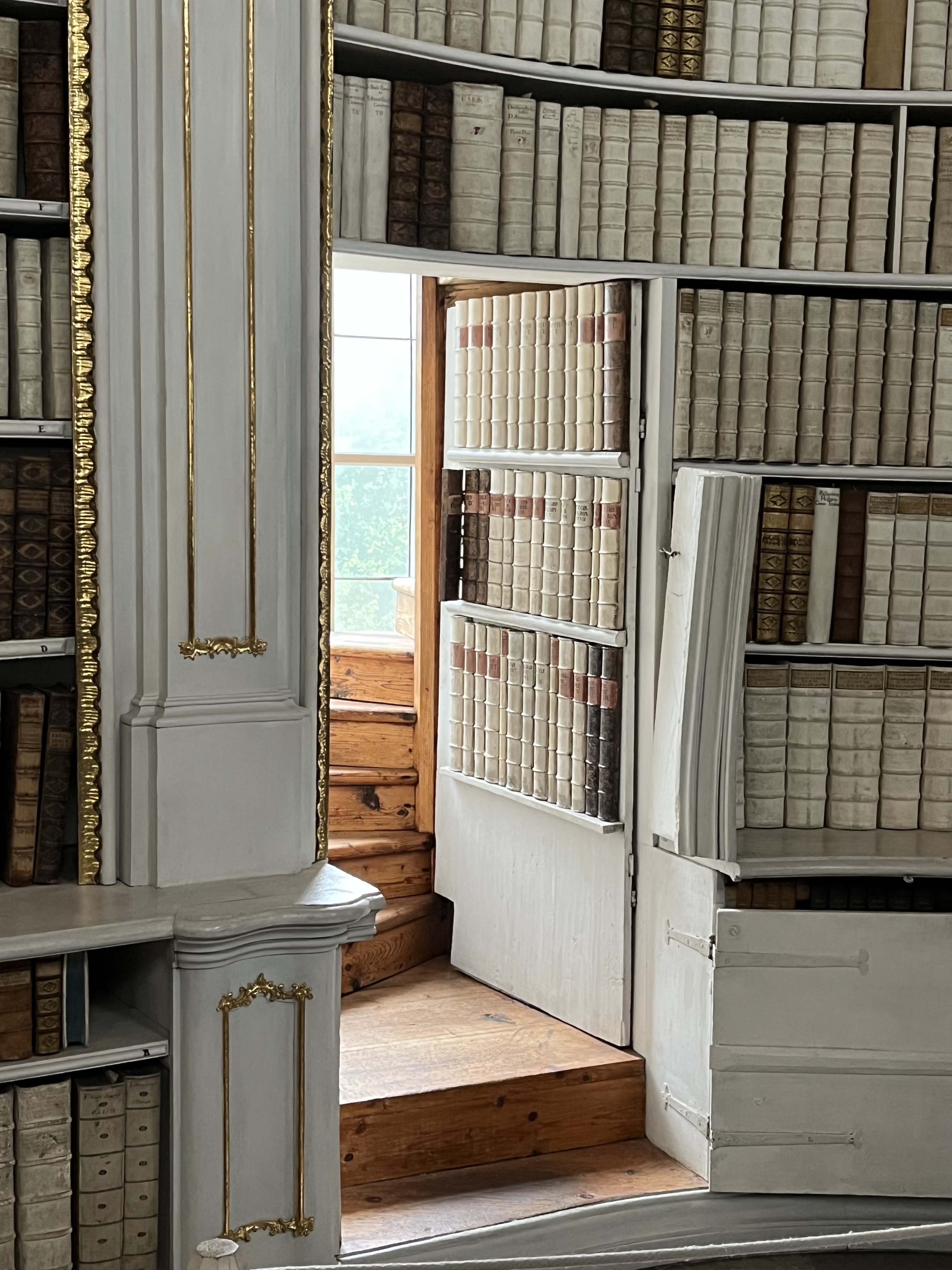
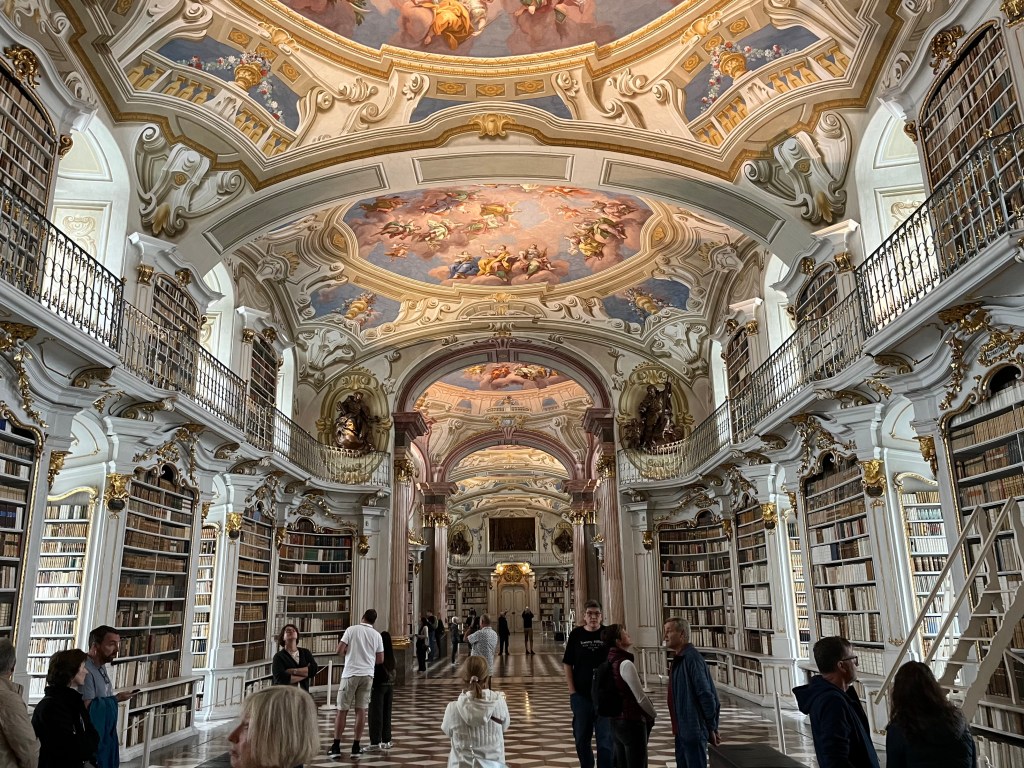
Instead, we spent the morning indoors and drove 30 minutes west to the town of Admont. There we visited the Benediktiner Stift, a Benedictine abbey founded in 1,074 AD with its cathedral, library, and museums. The abbey library, built in the Rococo style with light, vivid colors, is known to be the world’s largest monastery library and contains approx. 200,000 books. We took a guided tour of the library and then spent a few hours visiting the museums. I spent all of my time in the abbey’s museum of natural history, which contained several exquisitly detailed specimen collections from insects over mammals to birds, rocks and minerals, while Lauri enjoyed the art museum. The specimen collections were partly made by Benedictine monks and partly donated to the abbey.
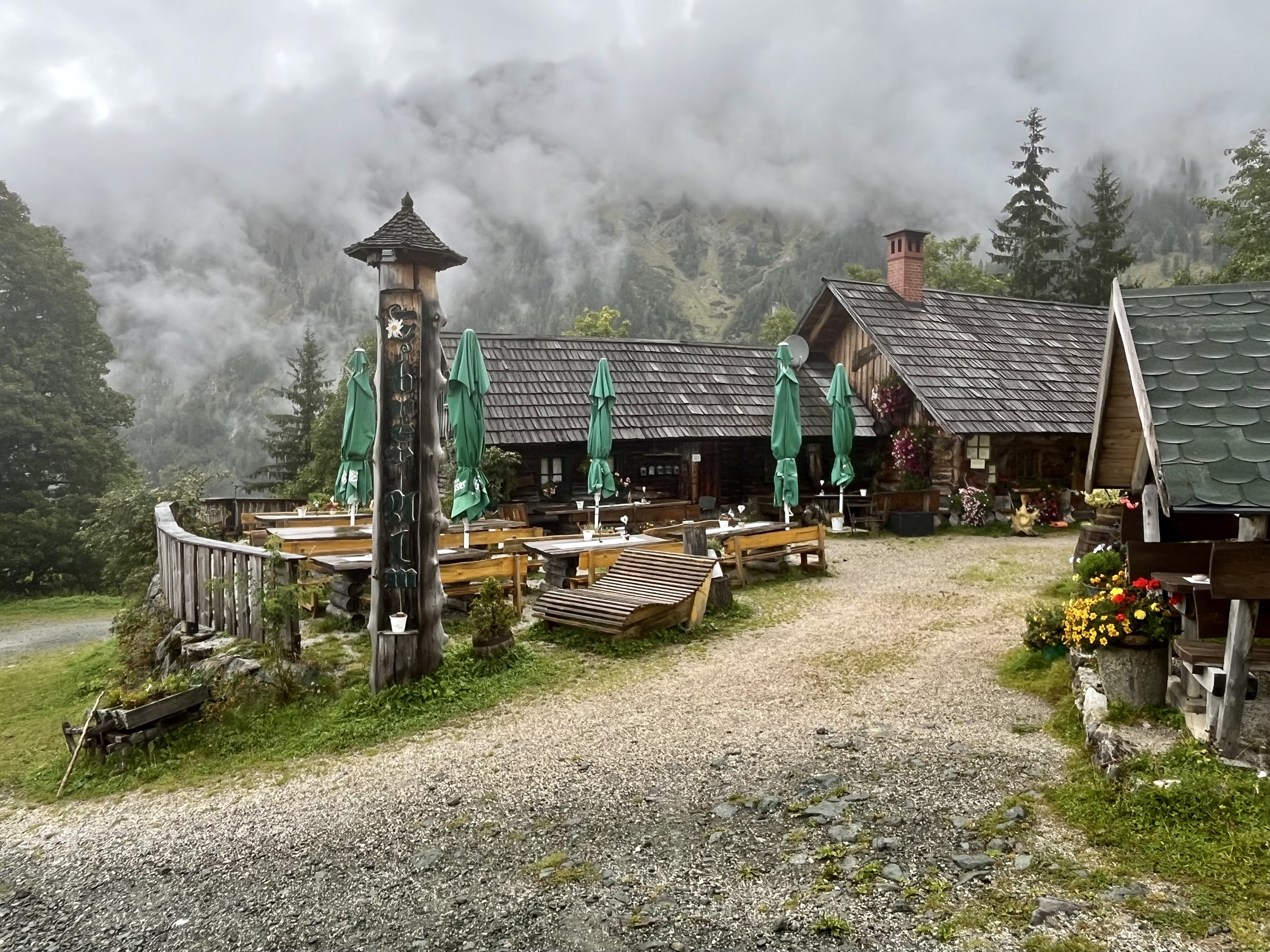
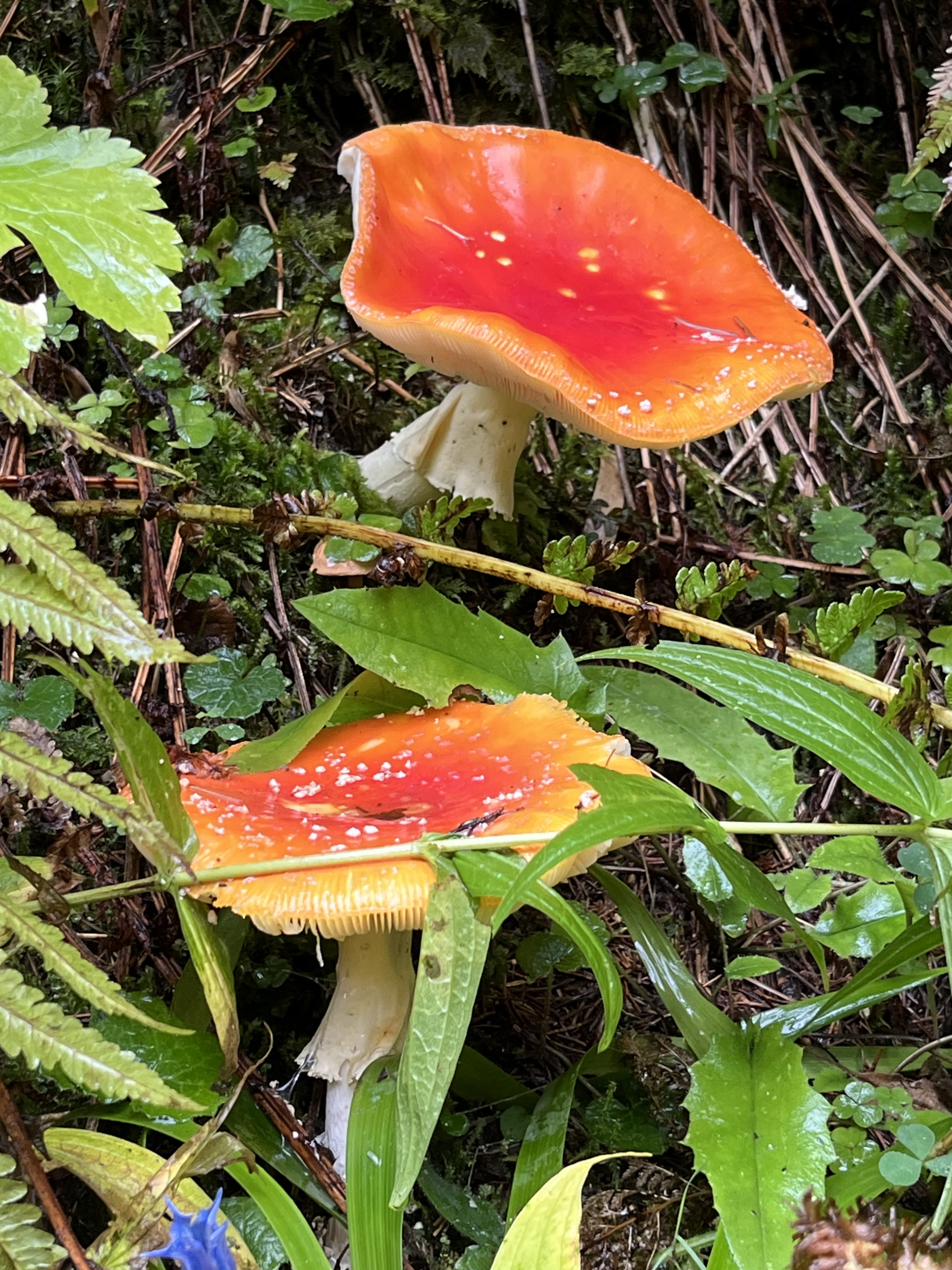
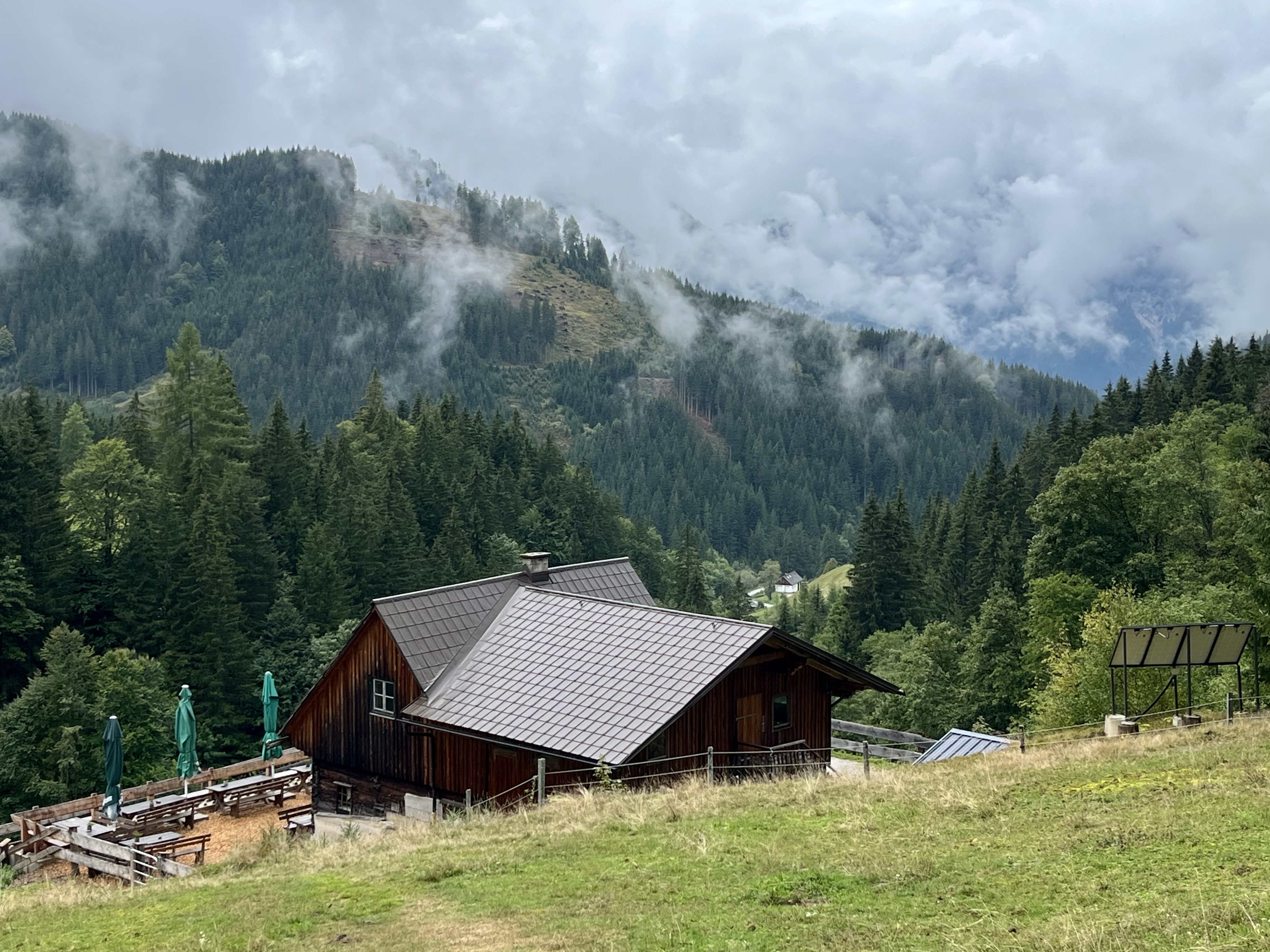
It was midafternoon when we were back in the Johnsbach Tal and started on our hike. Clouds were still hanging low in the valley and occasionally fine rain drizzled from the trees and out of the sky. During our 3 hour hike we didn’t encounter a single other person.
From the Johnsbach Tal we headed for Budapest. Literally just a day before our trip, I thought about looking into toll road regulations for our trip. It quickly became clear that I needed to purchase “Vignettes” (toll stickers) for traveling on freeways in Switzerland, Austria, Slovenia, and Hungary. Fortunately E-Vignettes via license plate readers made the online purchase relatively easy and customer friendly and except for Switzerland, where you had to purchase an annual vignette, the other countries allowed for a weekly or monthly e-vignette, which kept the cost relatively low. Germany was the only country we were traveling through that did not have any toll roads, not even on the Autobahn! All roads and freeways we travelled on were generally in good shape. I recall us driving through Slovenia on an almost empty, fairly new freeway towards Budapest, it was a treat.
Budapest
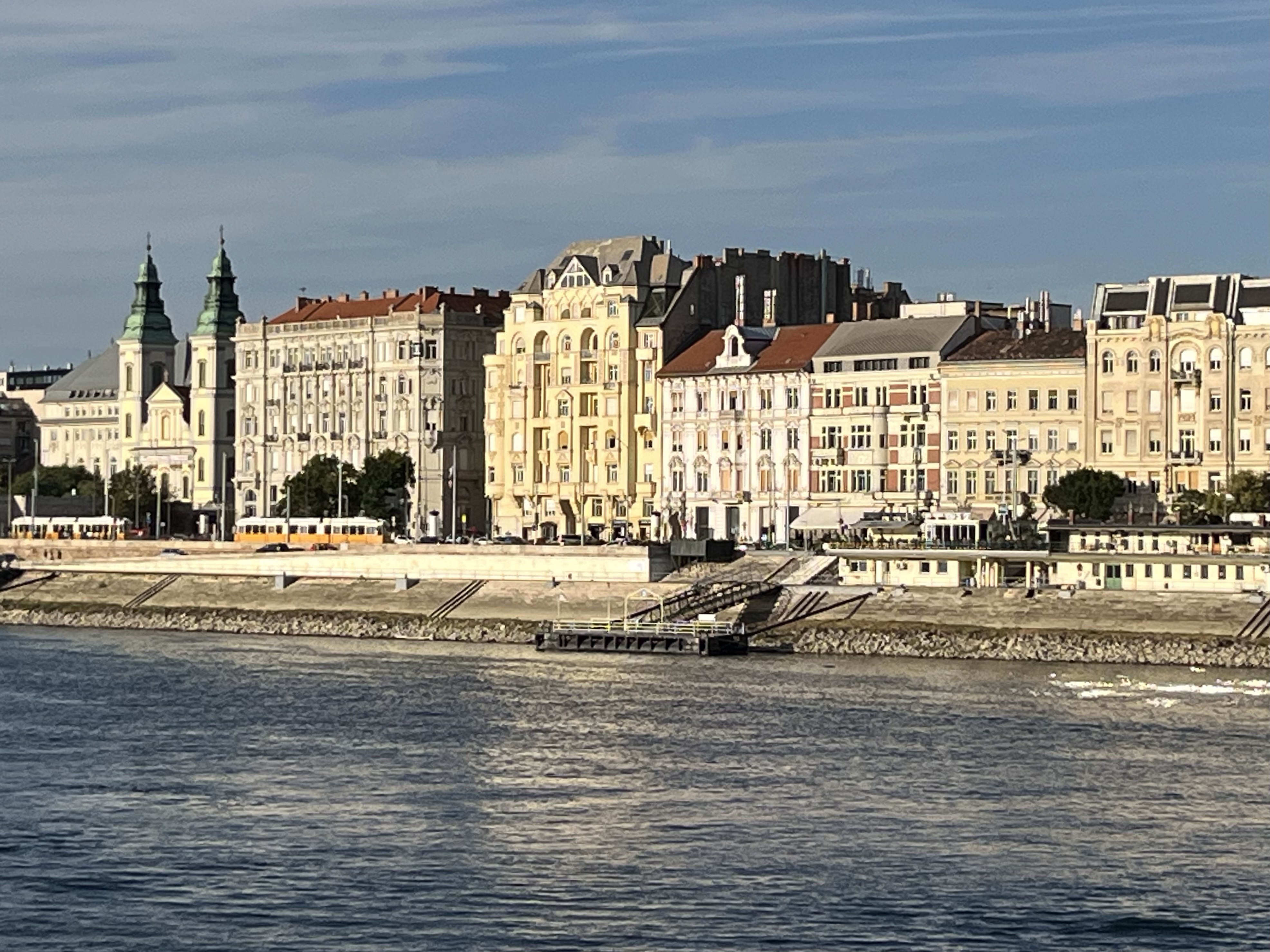
Budapest has been on our travel list for some time and has become a very popular tourist destination several years ago. One of our daughters has been there twice and we’ve heard lots of positive things from friends who’ve visited Budapest. Now it was finally our turn to see Hungary’s capital on the Danube. Budapest is actually two cities separated by the Danube river, with Buda on the west shore and Pest on the eastern shore. We stayed in an Airbnb with garage for three nights in the southern portion of Pest’s city center, and that turned out to be a convenient location, as it provided quick access to public transportation. We explored the neighborhood of Pest the afternoon we arrived and purchased two public transport daily passes for the two full days of our stay.
Budapest for the most part is still a work in progress, with old Iron Curtain era, dirty and graffiti sprayed buildings next to nice new construction or immaculately renovated ones. Our neighborhood appeared to be totally representative of the majority of what we encountered. Most of the hyper center and tourist areas are nicely updated with the exception of a few larger projects which are still in progress.
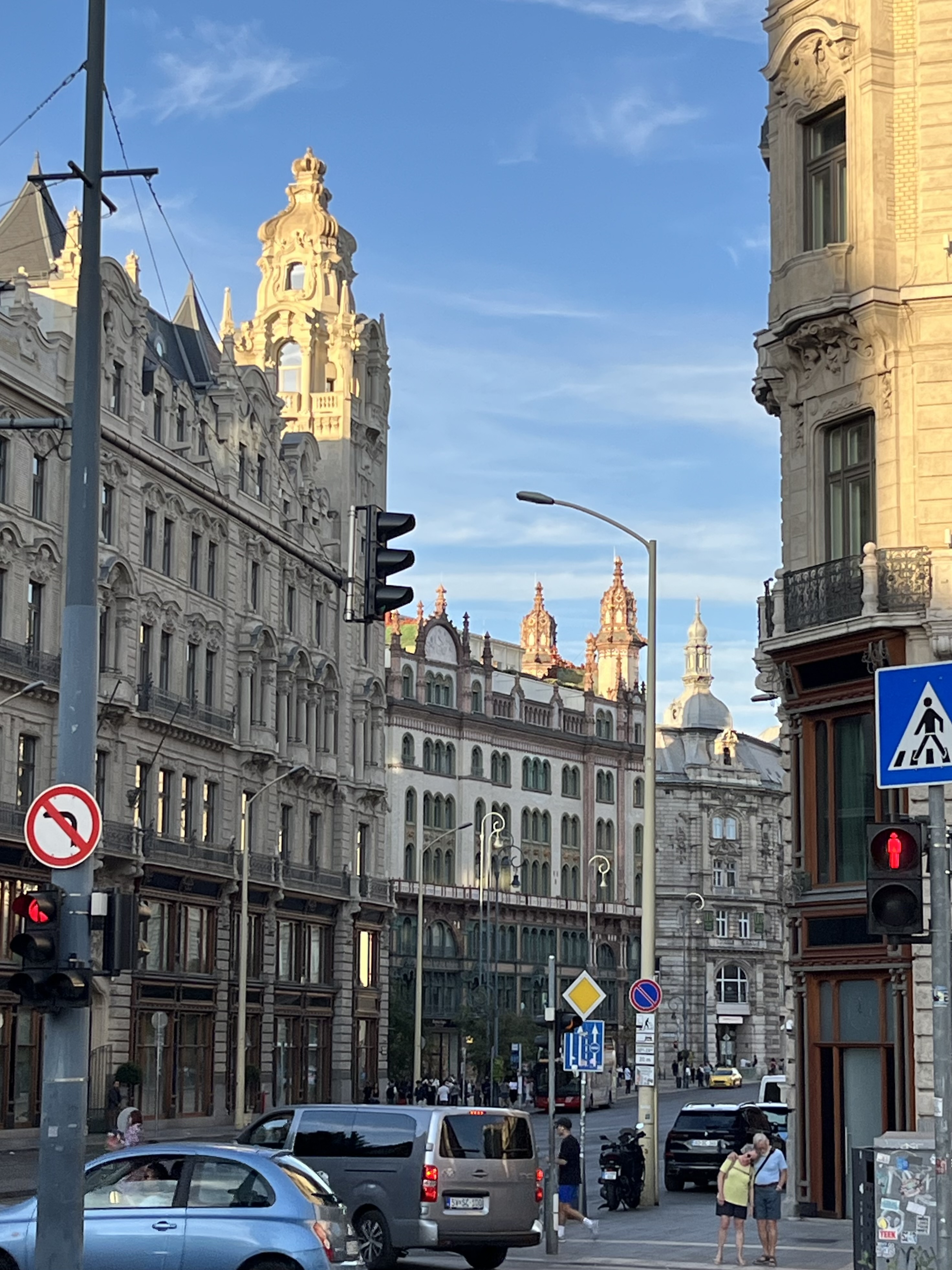
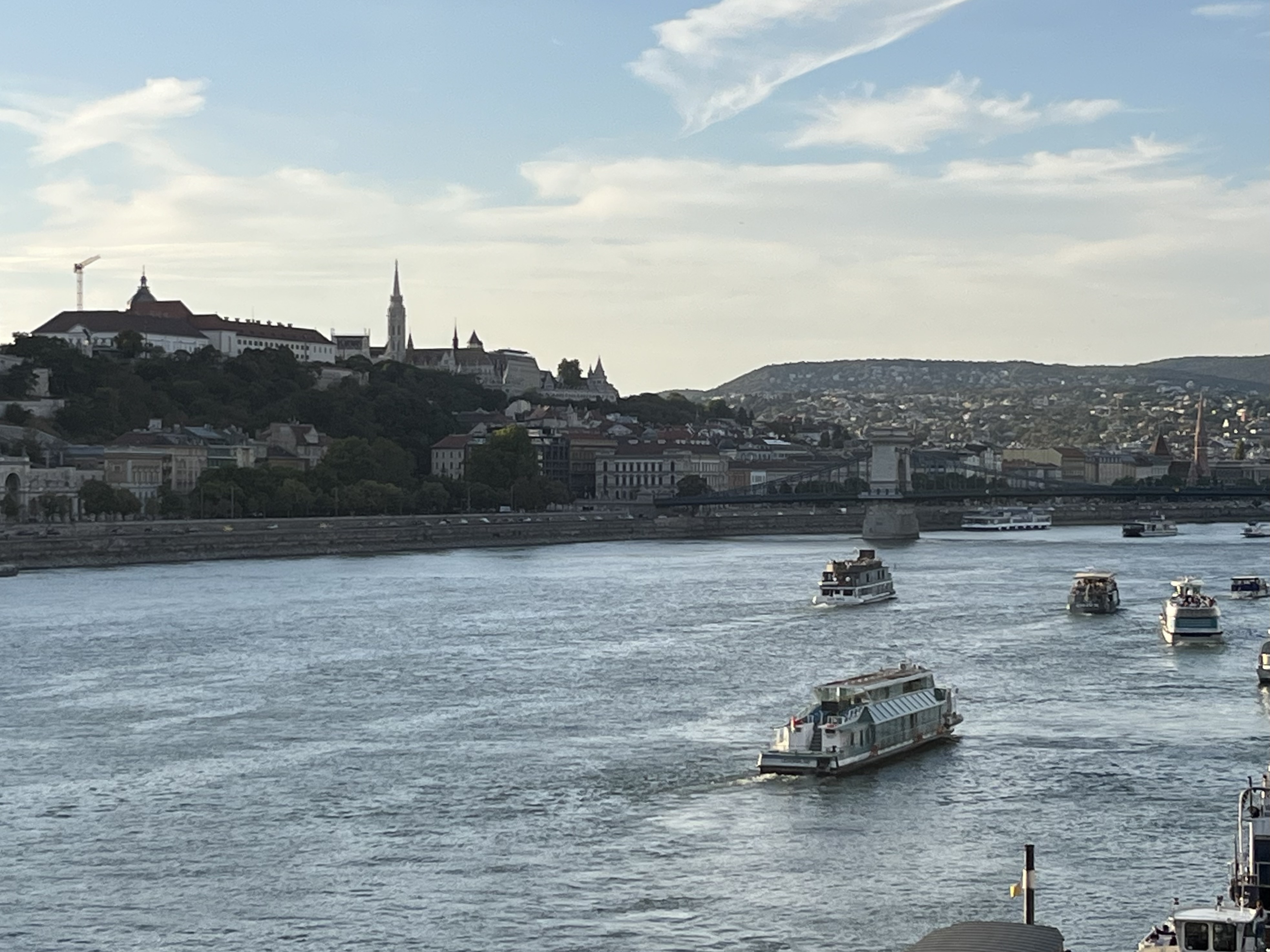
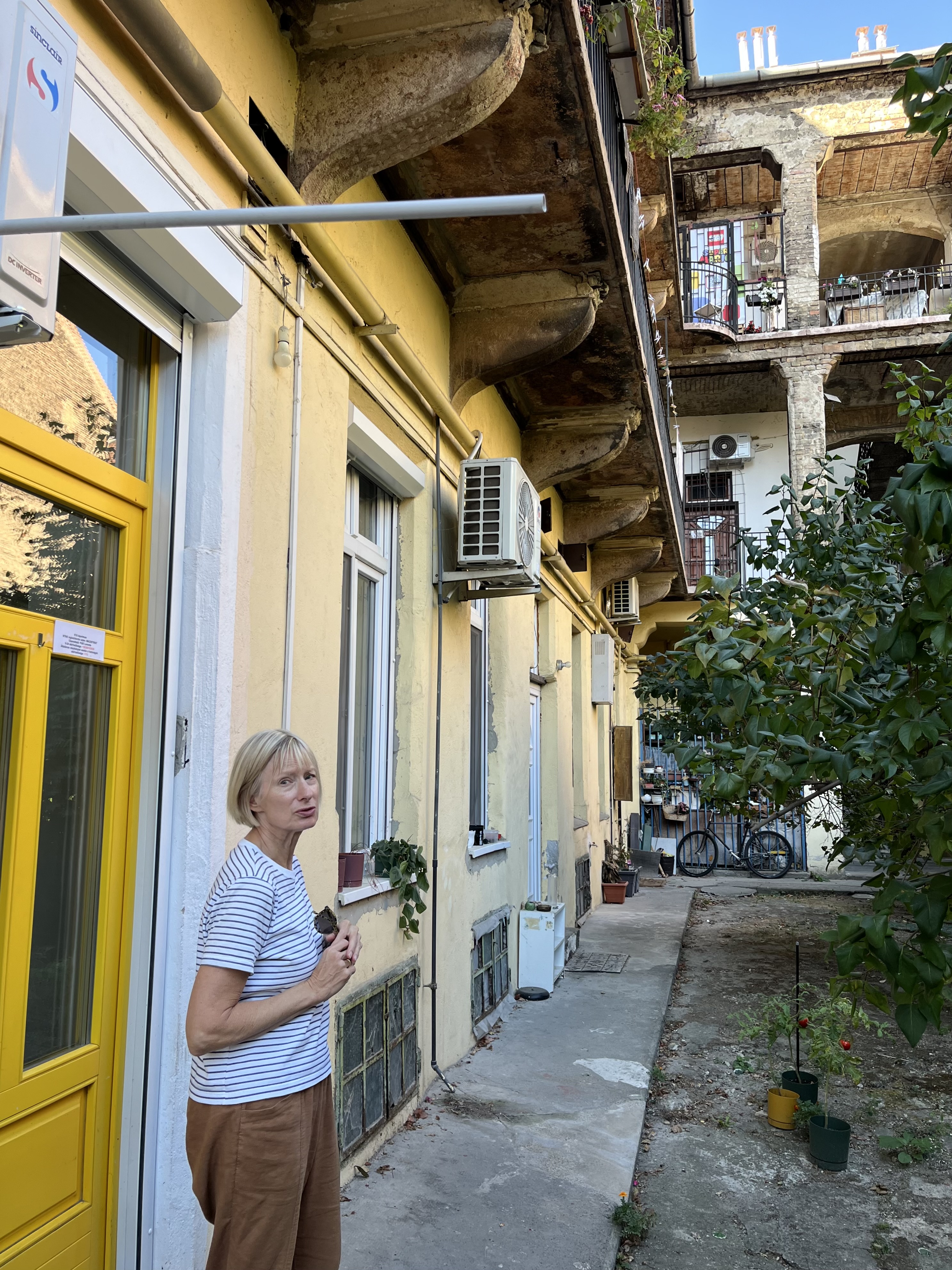
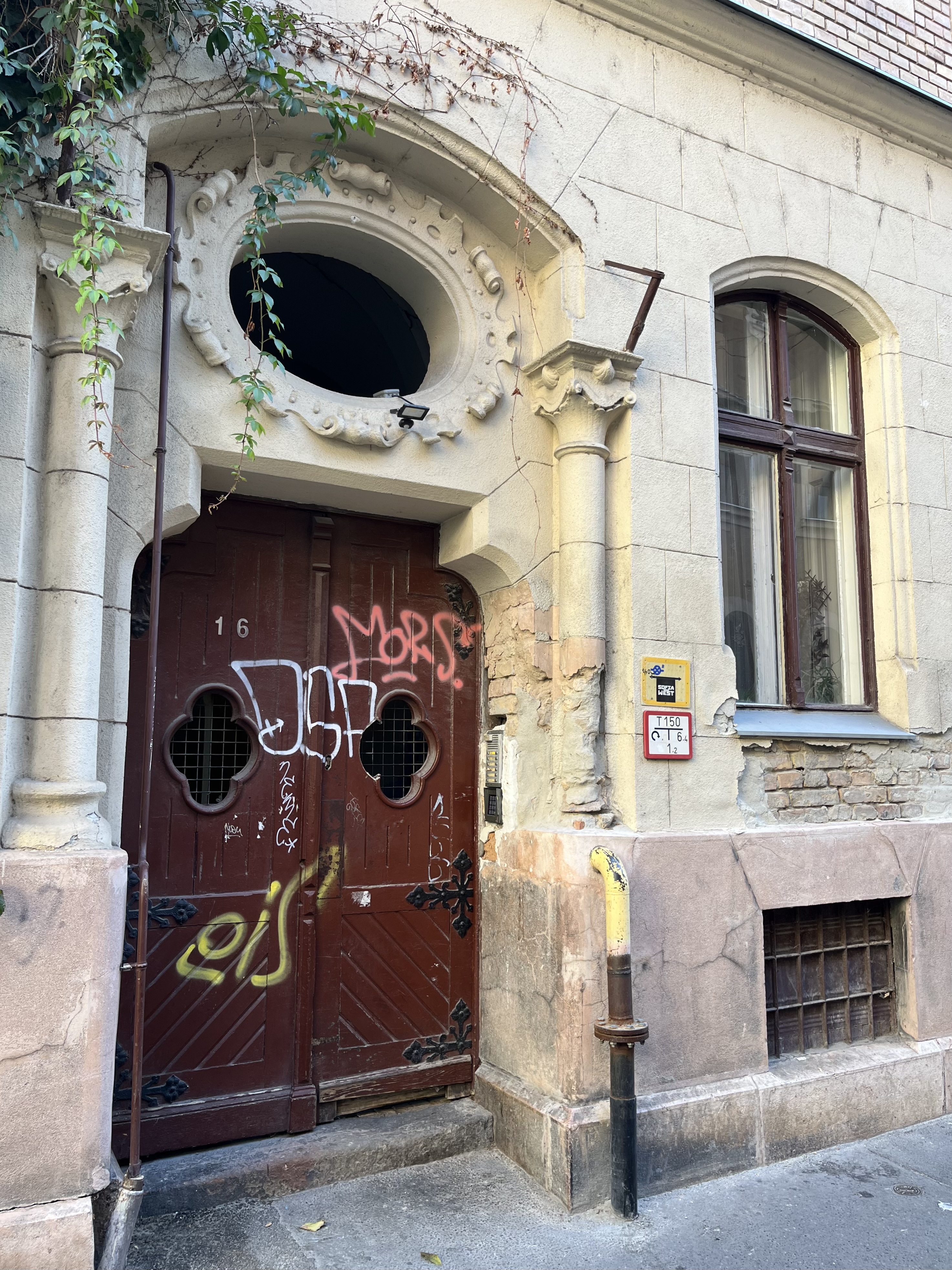
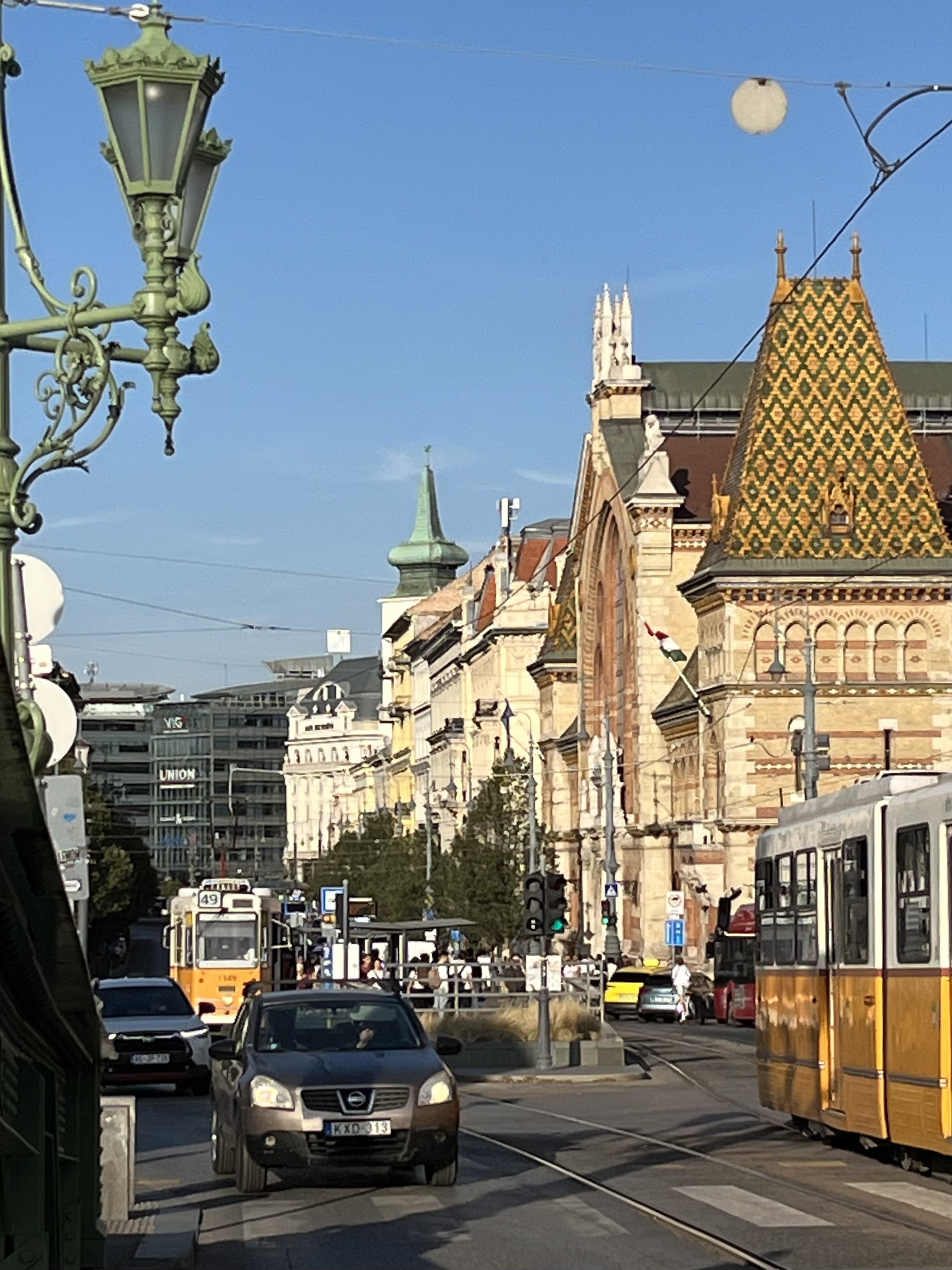
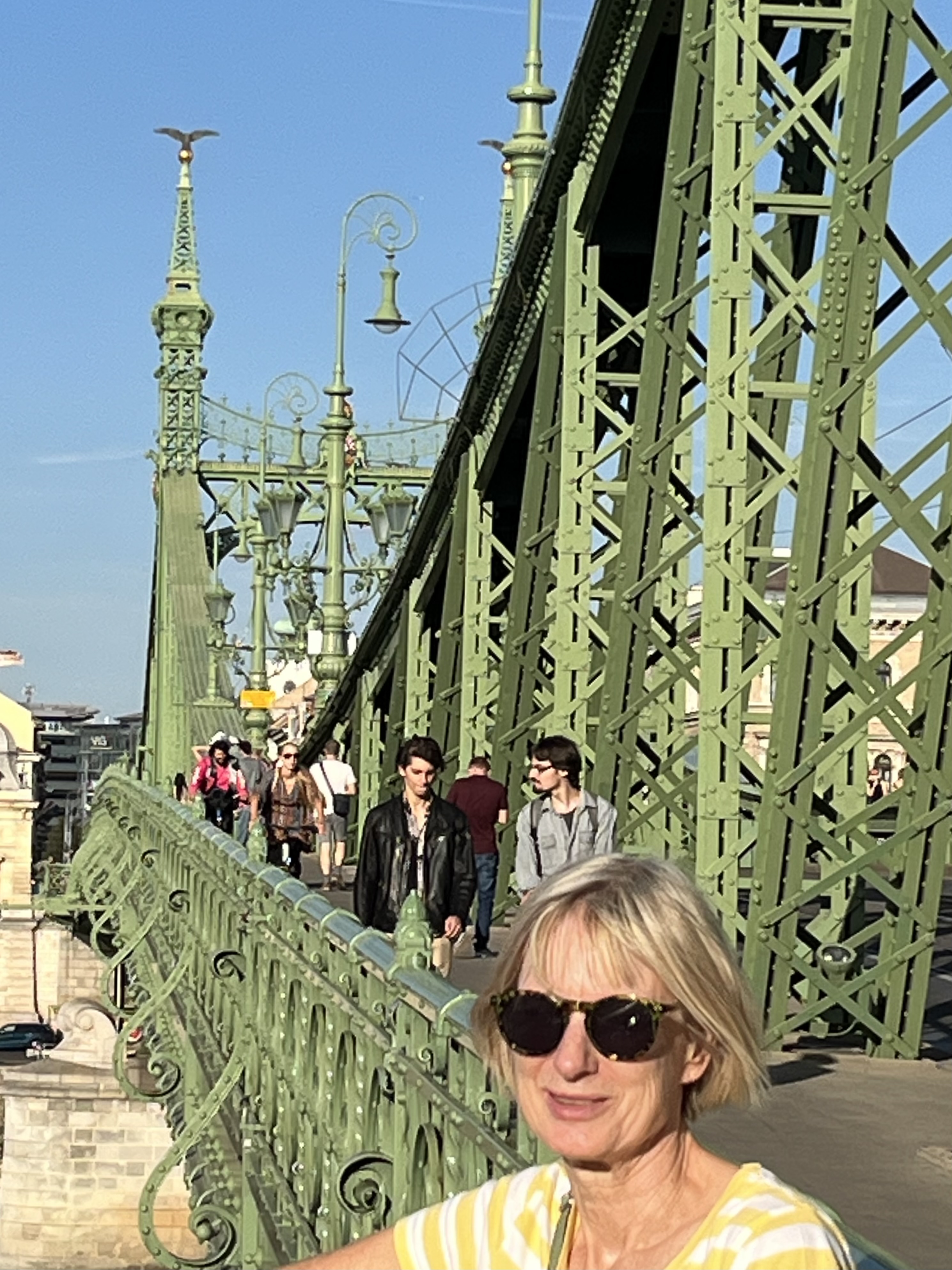
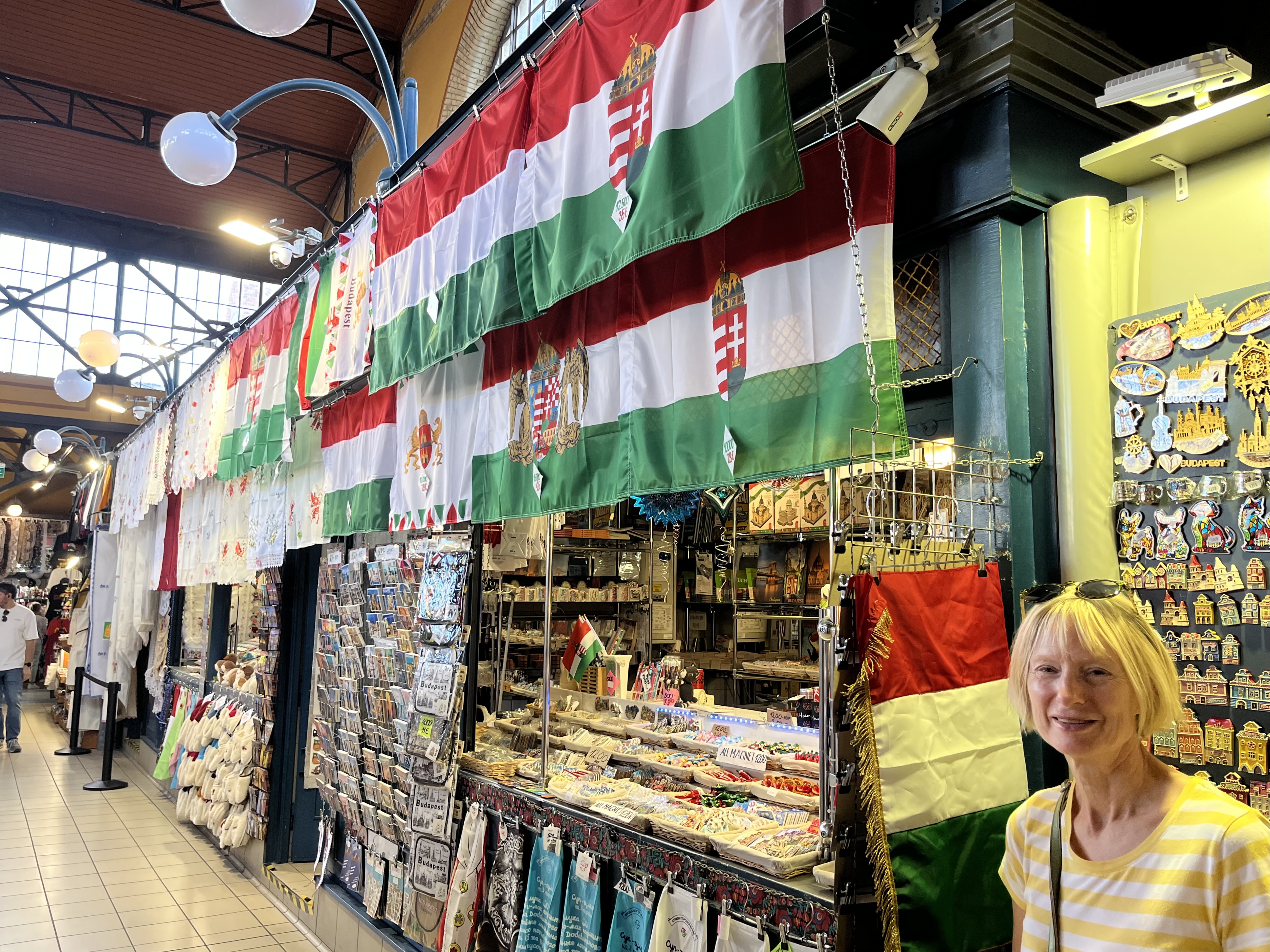
Budapest is a very hip and trendy city, where most of the tourists are young and stylishly dressed. It’s a city where people come to see and want to be seen, like the stylish young blond below….
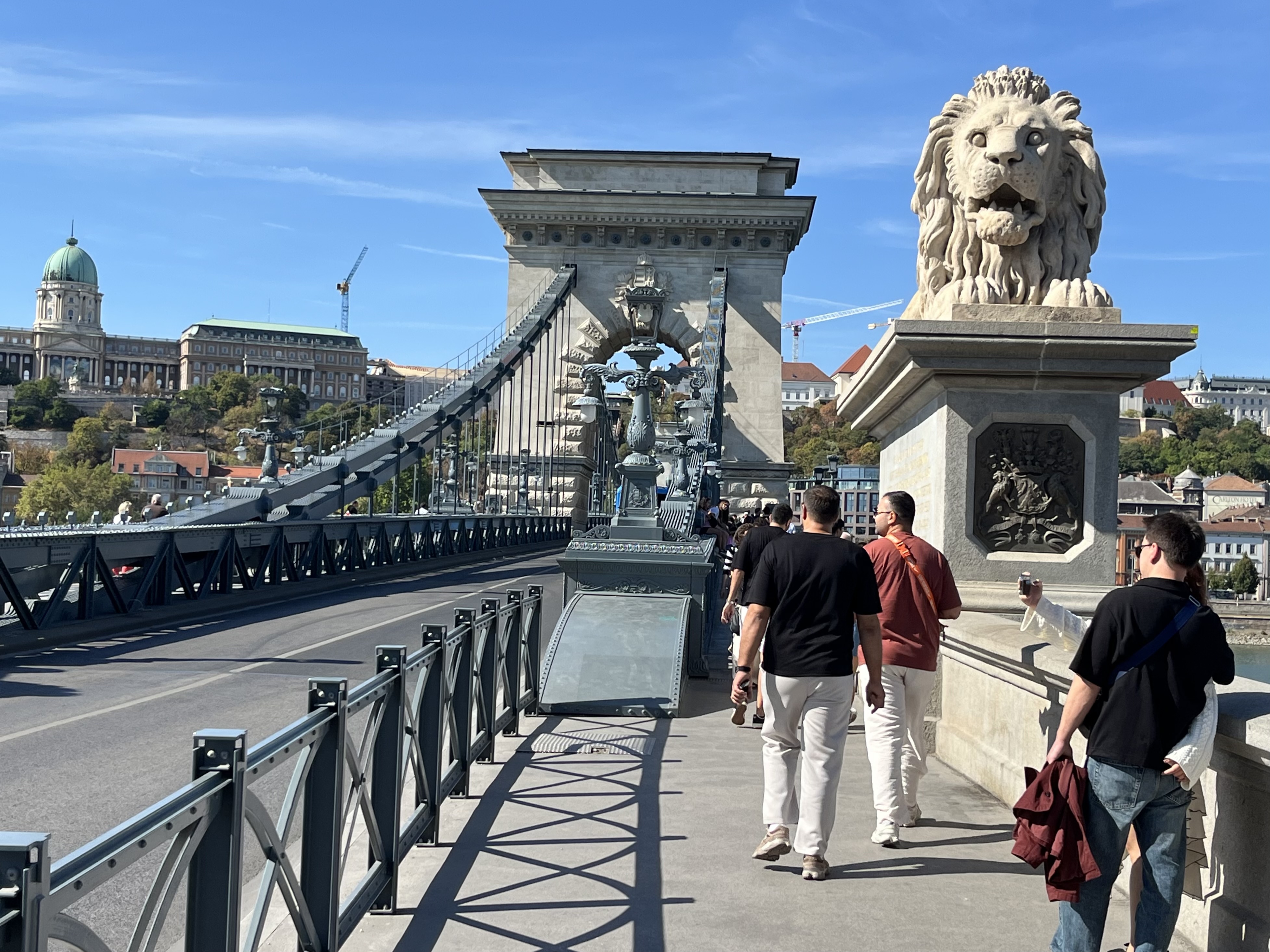
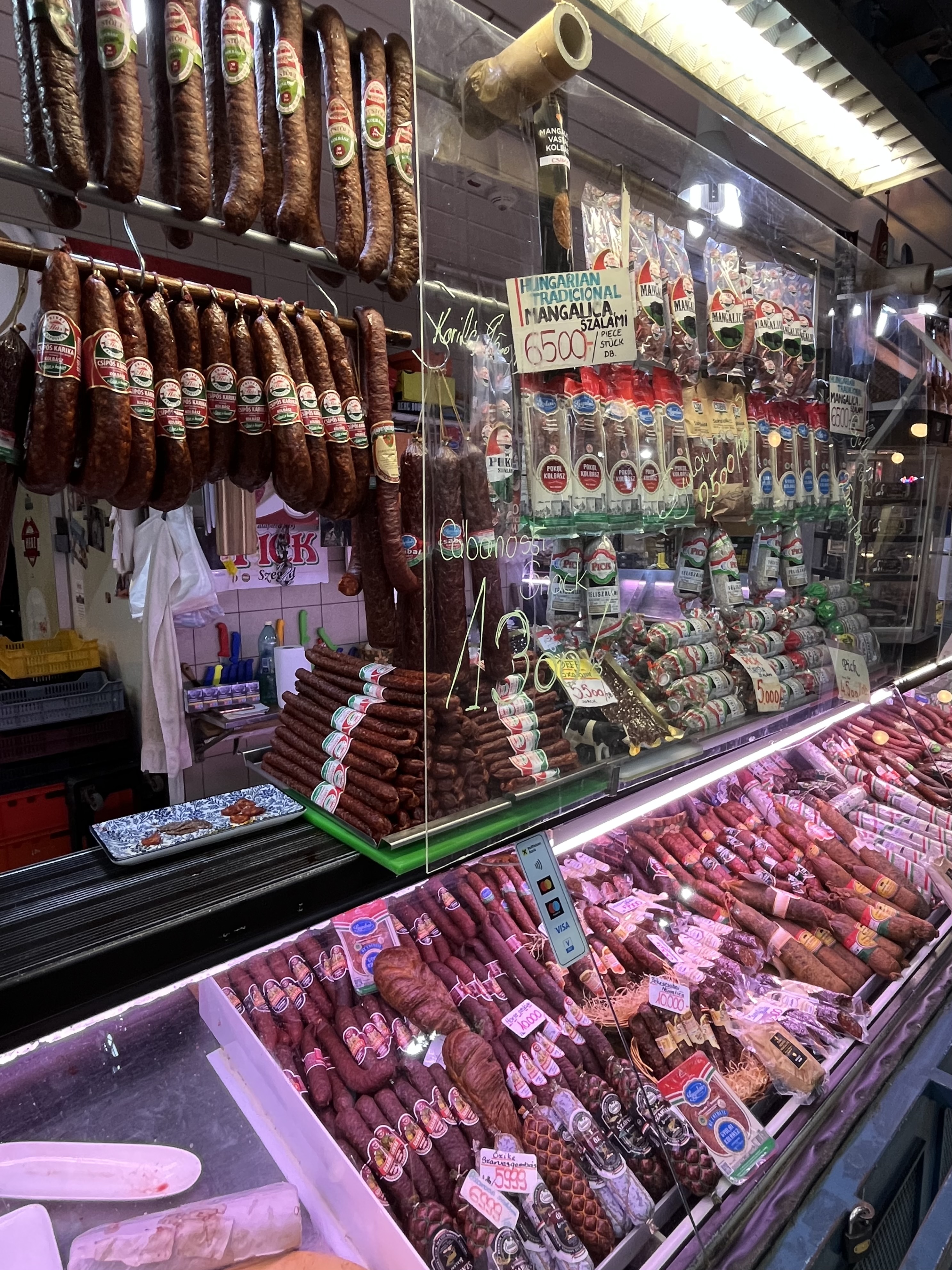
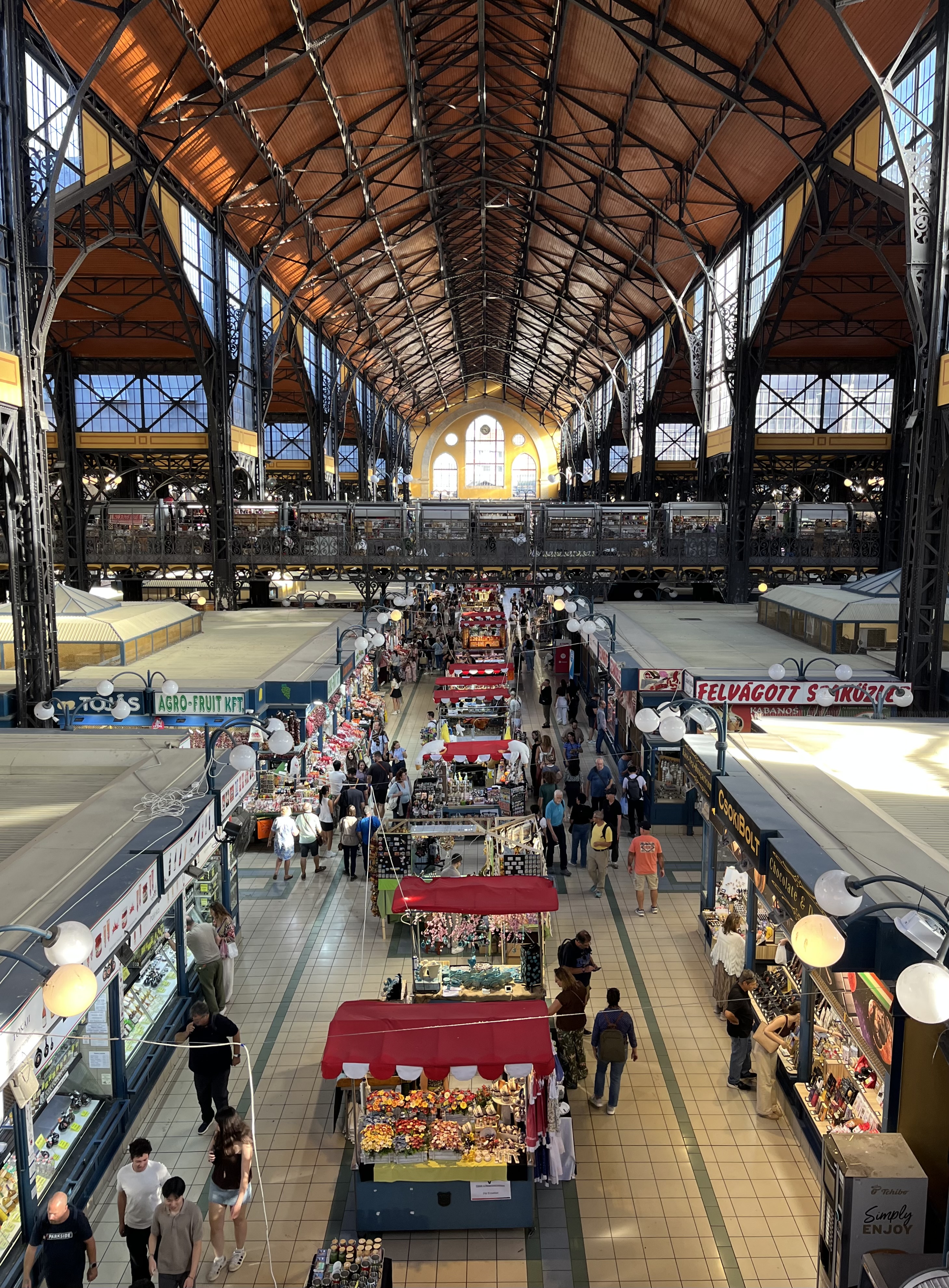
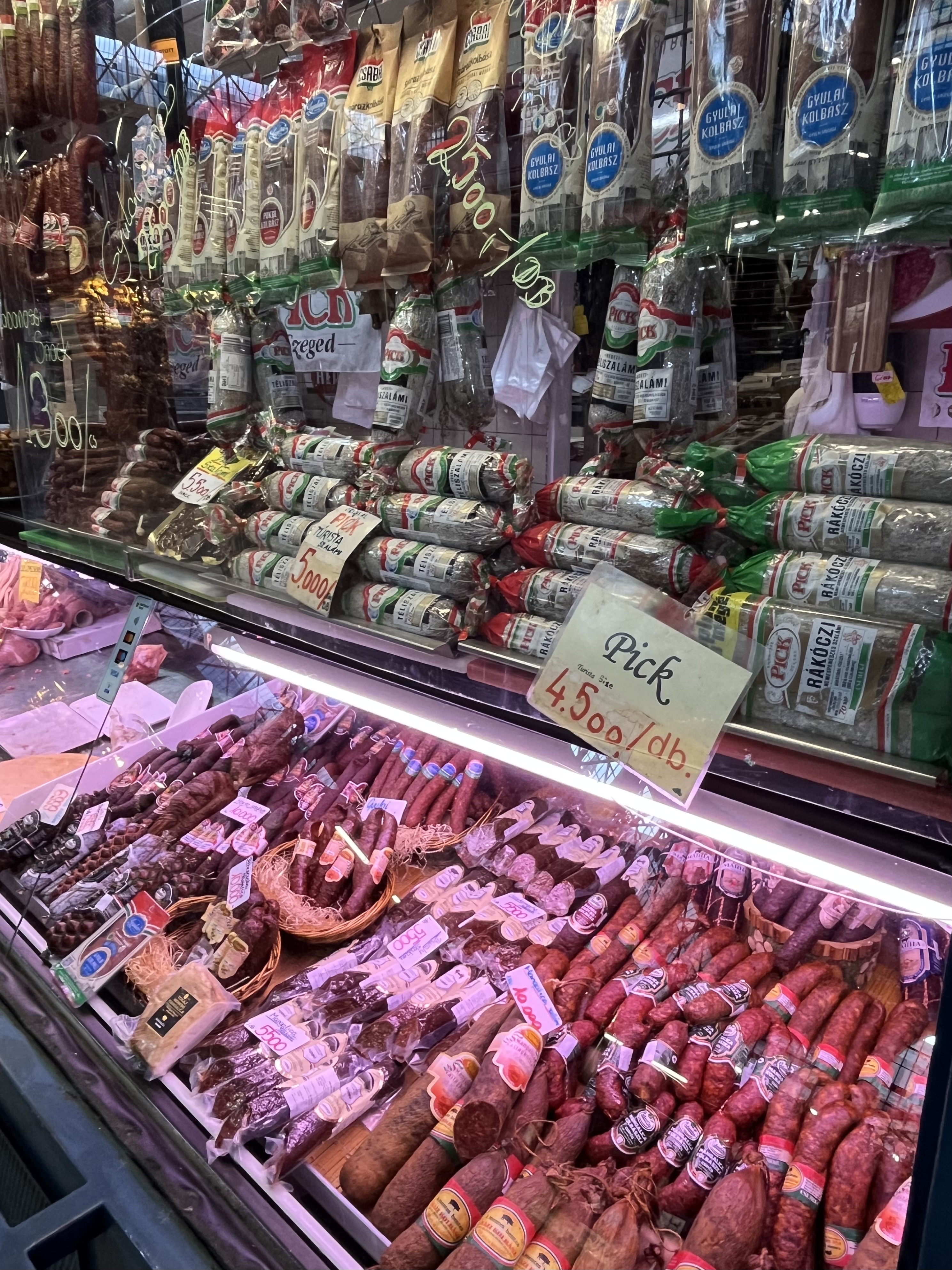
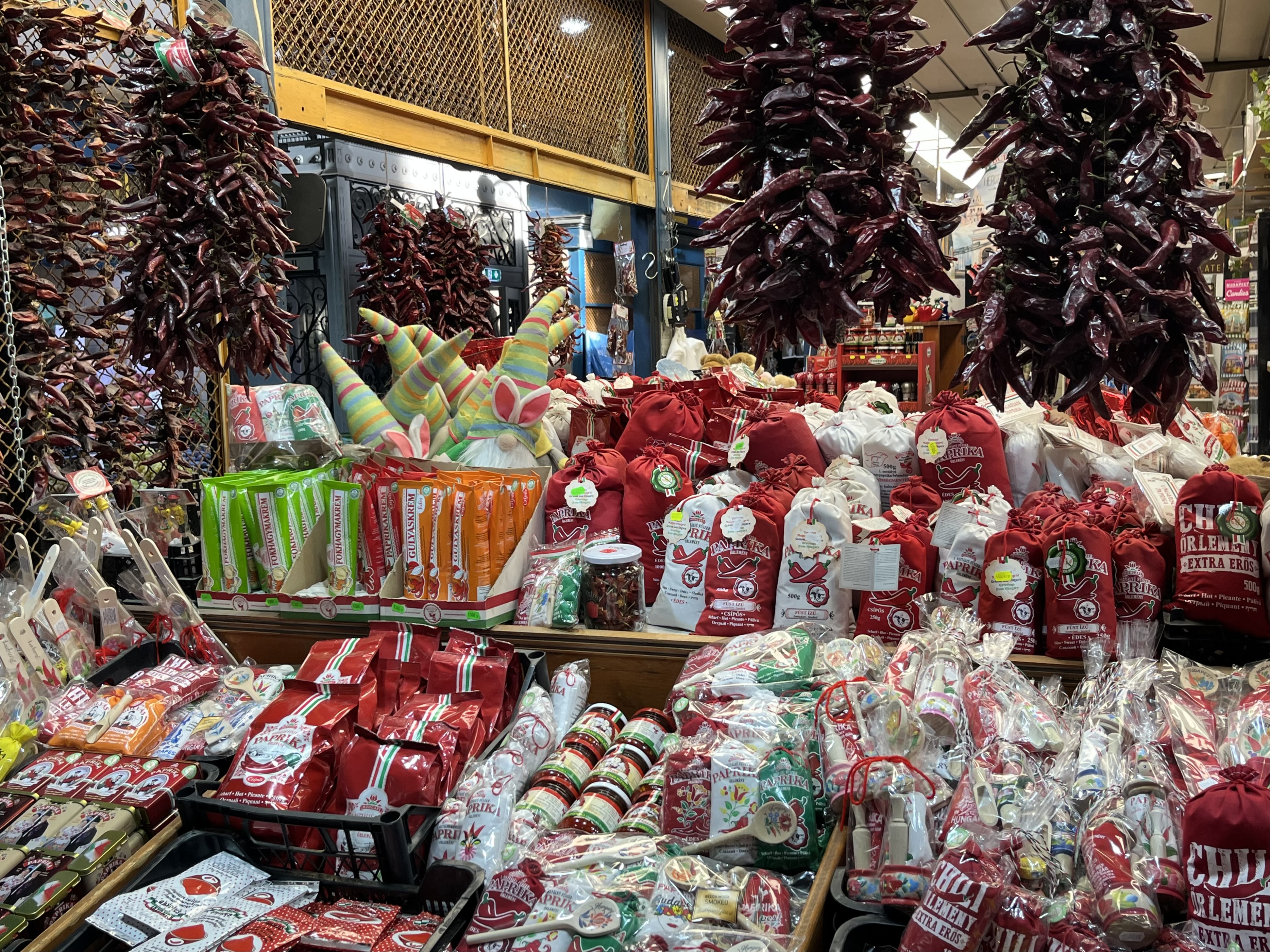
Hungary is known for its peppers and sausages, as seen here on display in the big old market hall, and restaurants with lots of outdoor seating advertising goulash dishes line the streets.
Most of the tourist activities are centered on the Castle Hill area in Buda, including the Matthias Church, the Fisherman’s Bastion and the Buda Castle/Palace. Climbing the Matthias church tower offered us great views over the entire city.
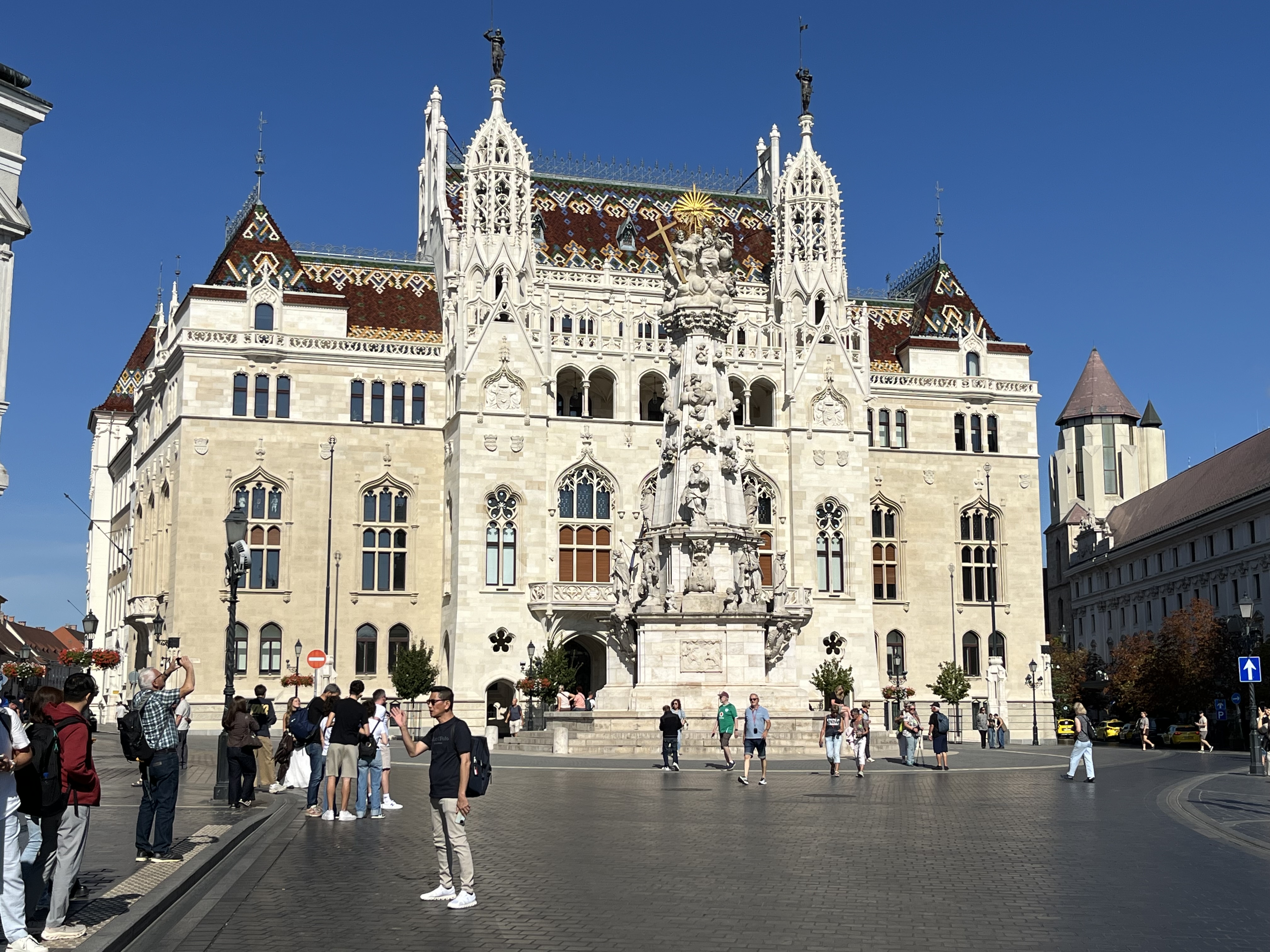
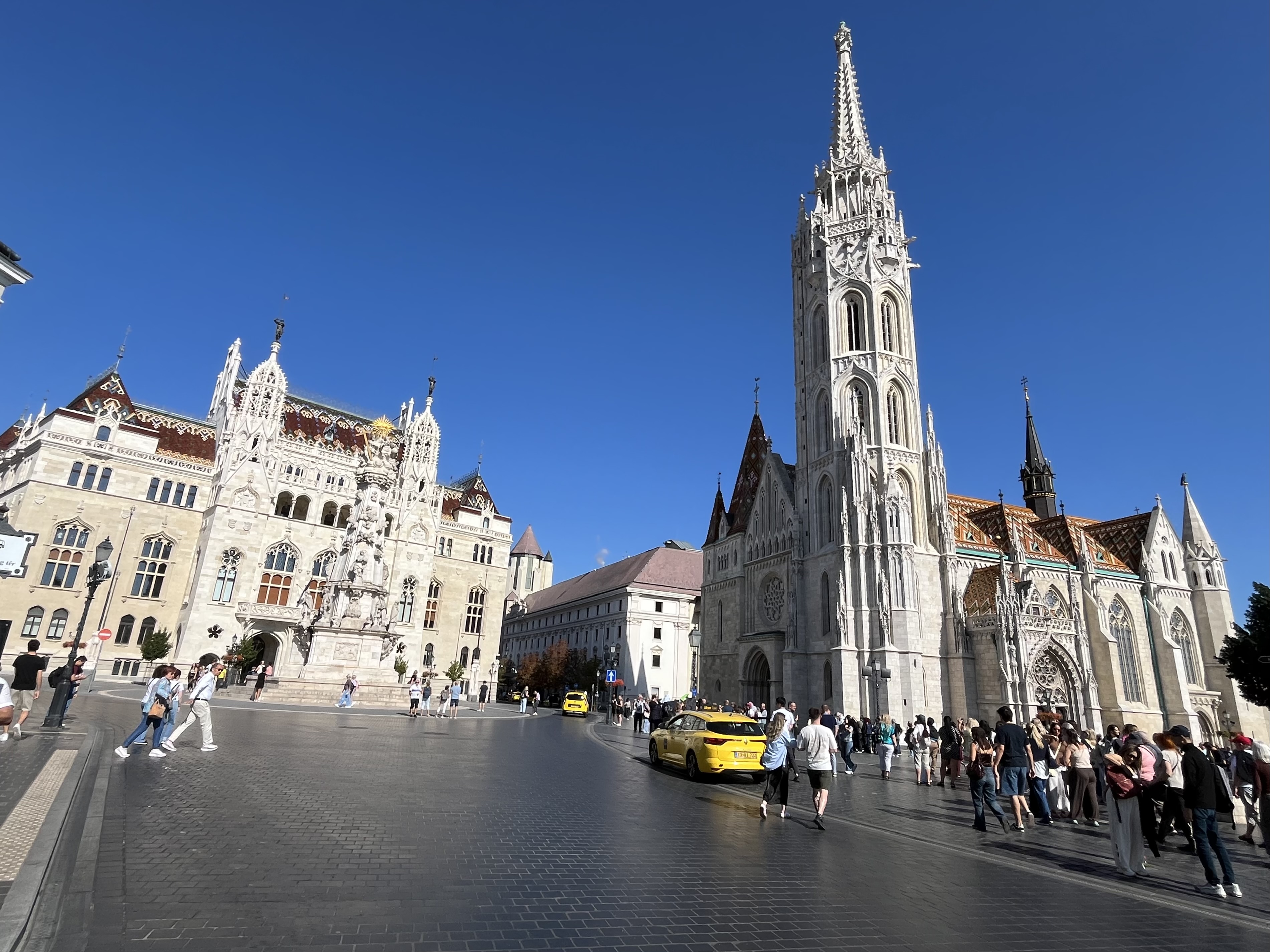
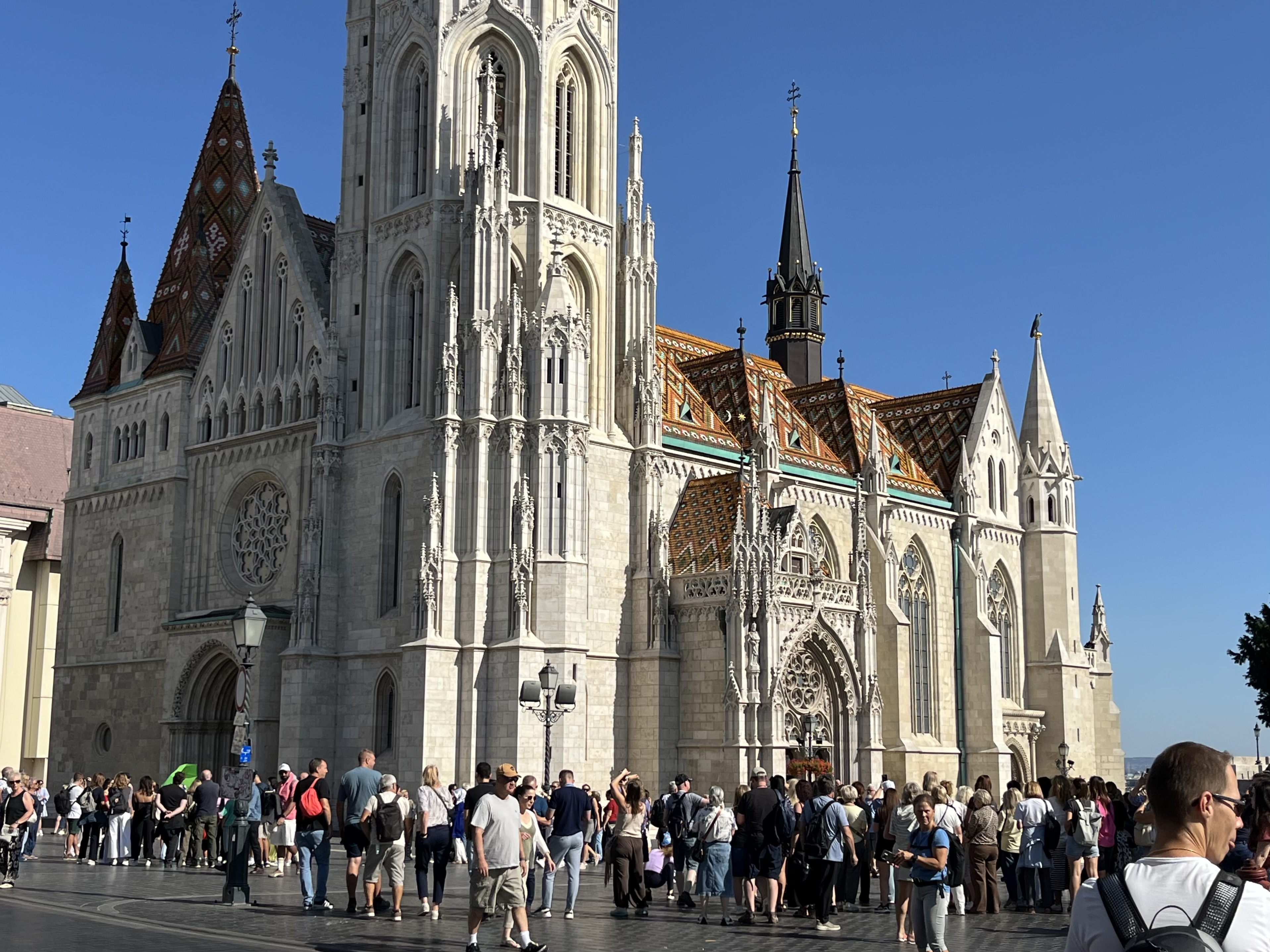
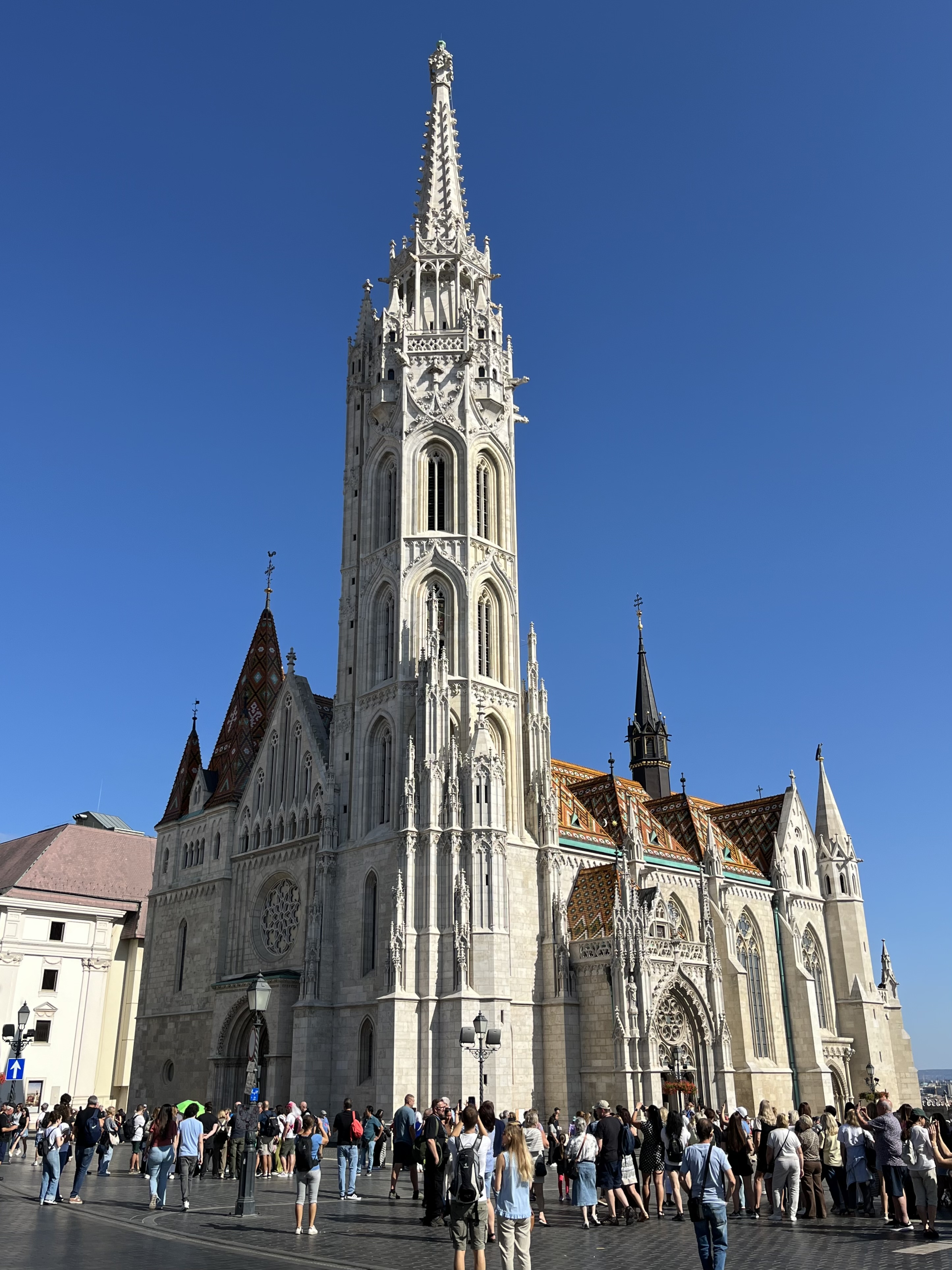
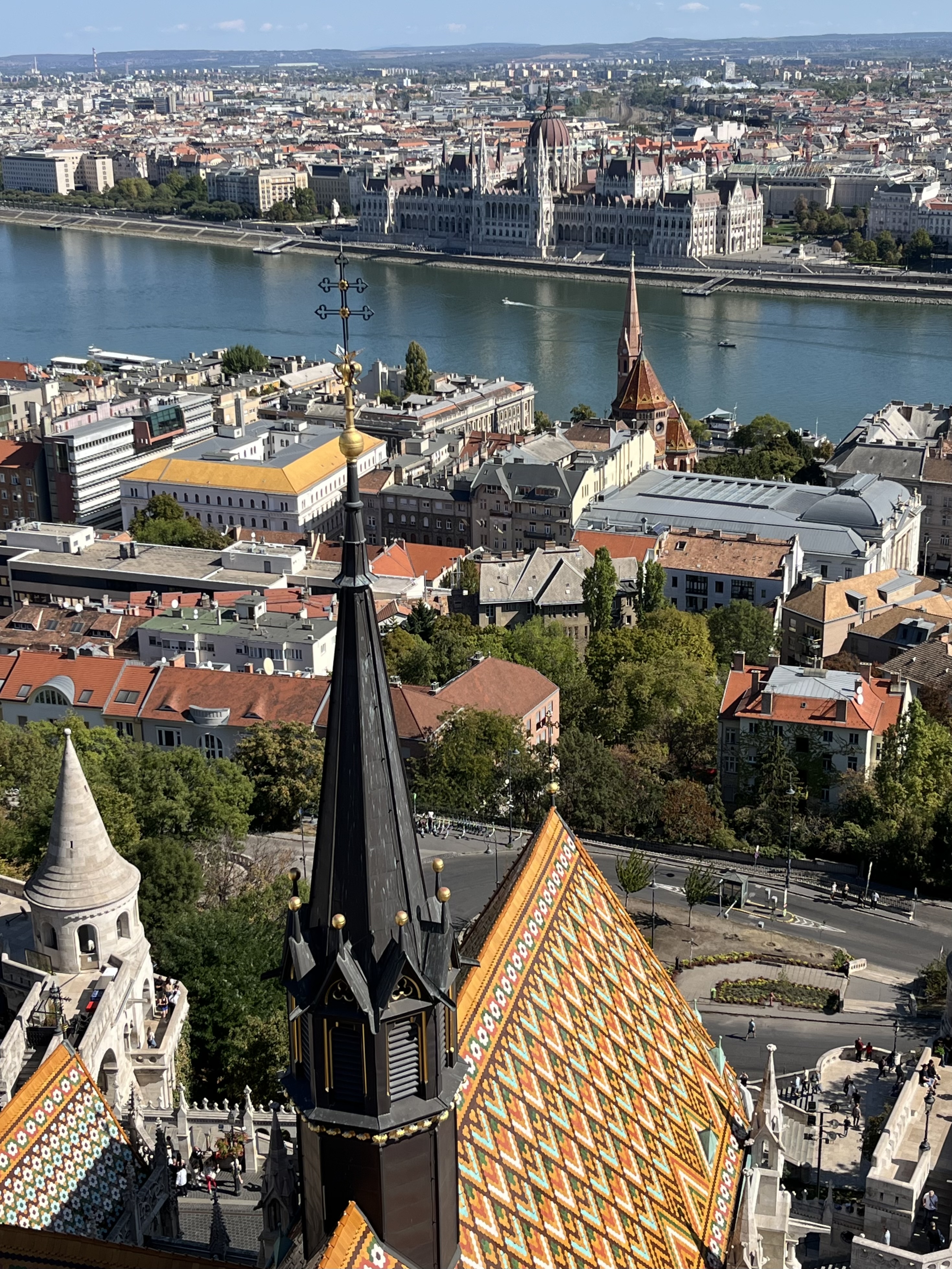
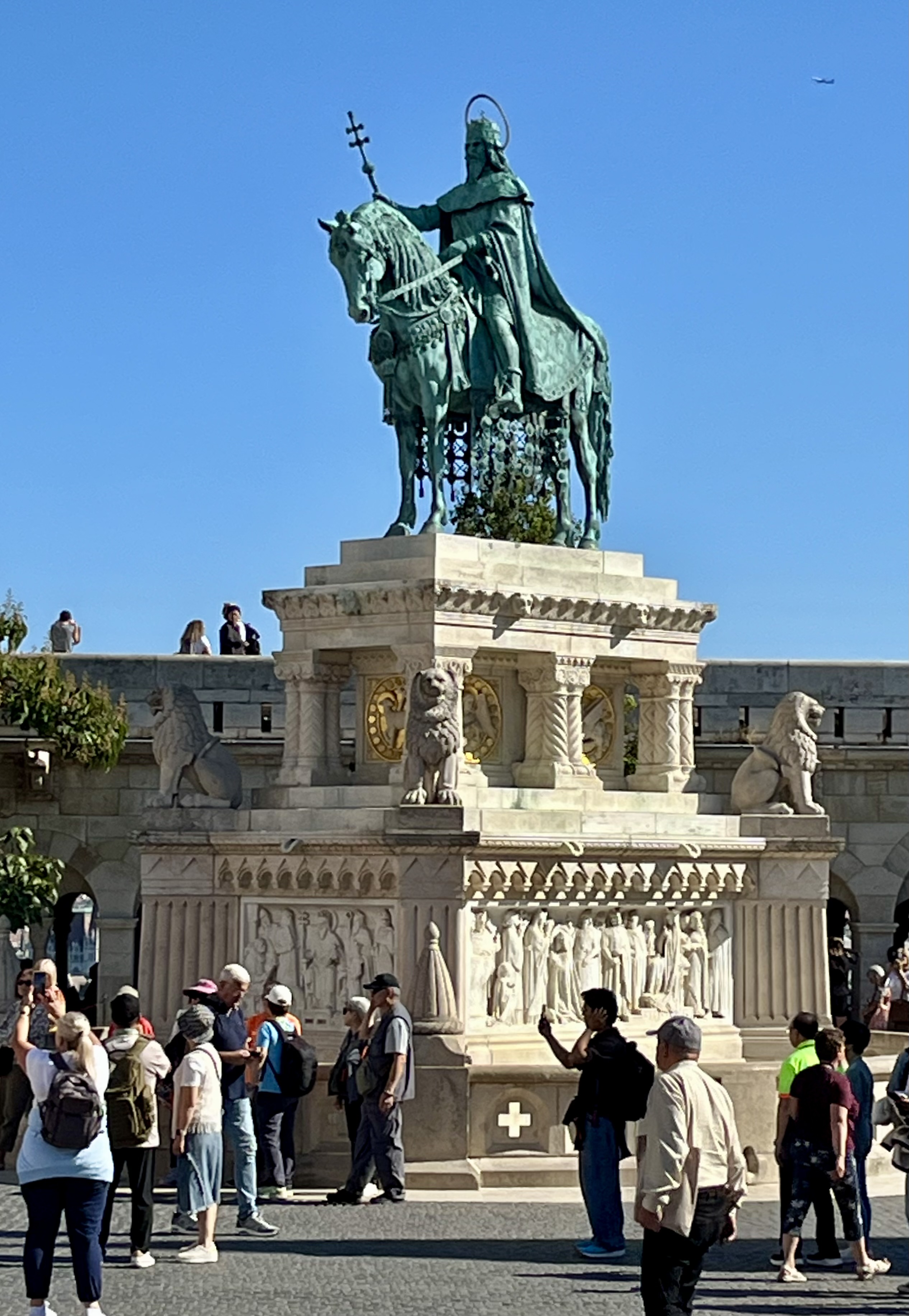
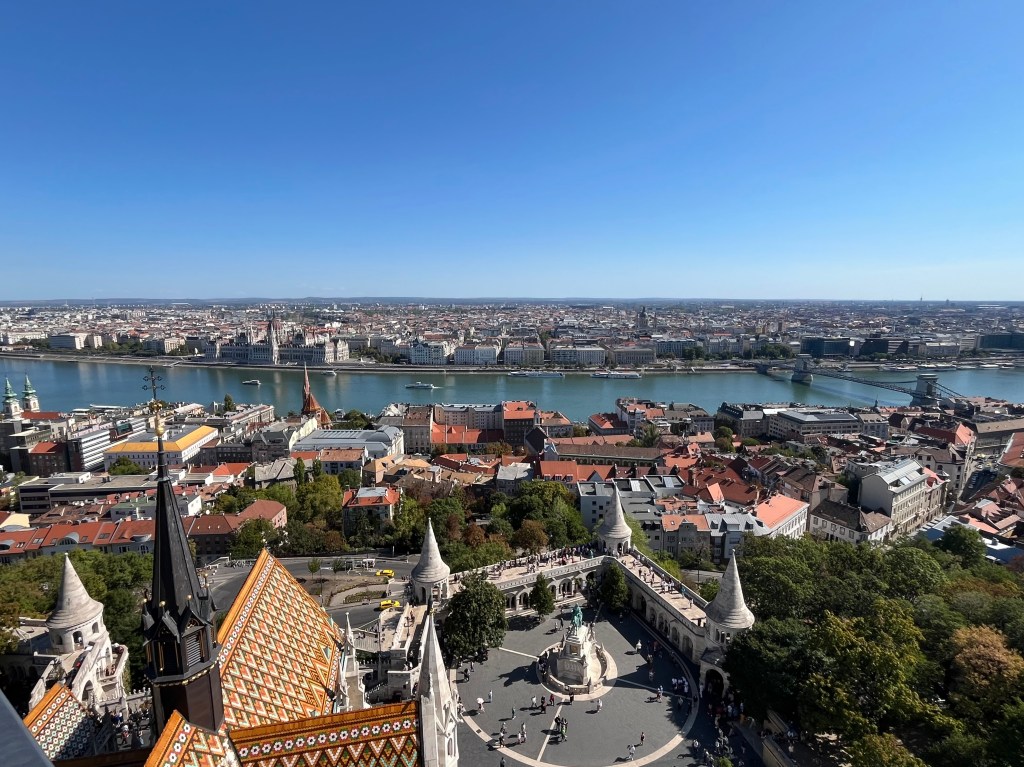
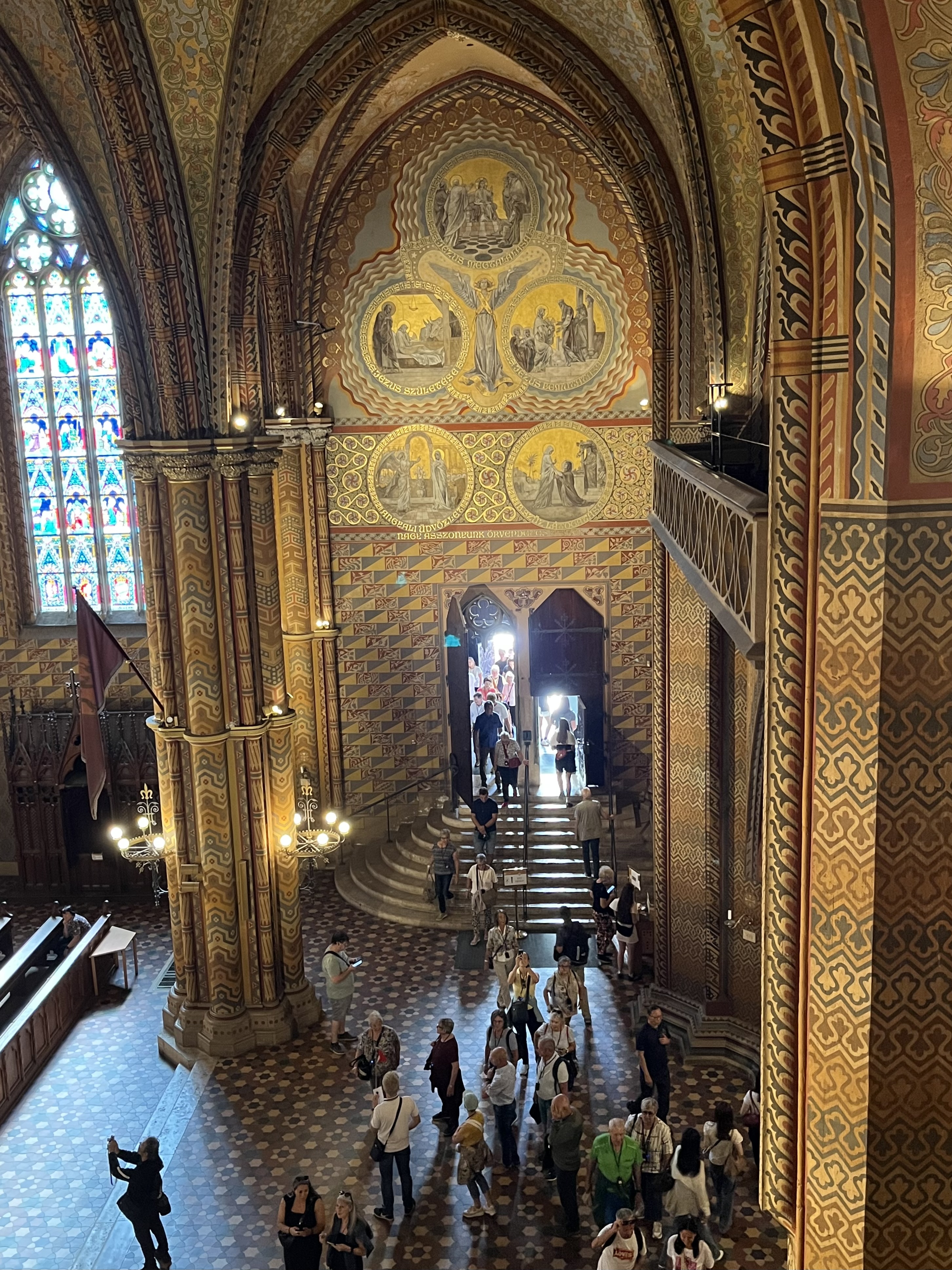
The Matthias Church, has a long history, with the first church on the site being named Saint Stephen in 1015 but was destroyed by the Mongols during the 13th century. In the 14th century it was built in the current Gothic style, then turned into a mosque during the Ottoman Empire occupation from the 15th – 17th century before being restored into its current form during the 19th century by King Matthias, whose statue showing him on horseback sits on the square in front of the church, – see picture above. While the church is officially named The Church of our Lady of Buda, it is generally known as the Matthias church. The last two kings of Hungary were both crowned in the Matthias church. Here, some pictures from the church’s interior.:
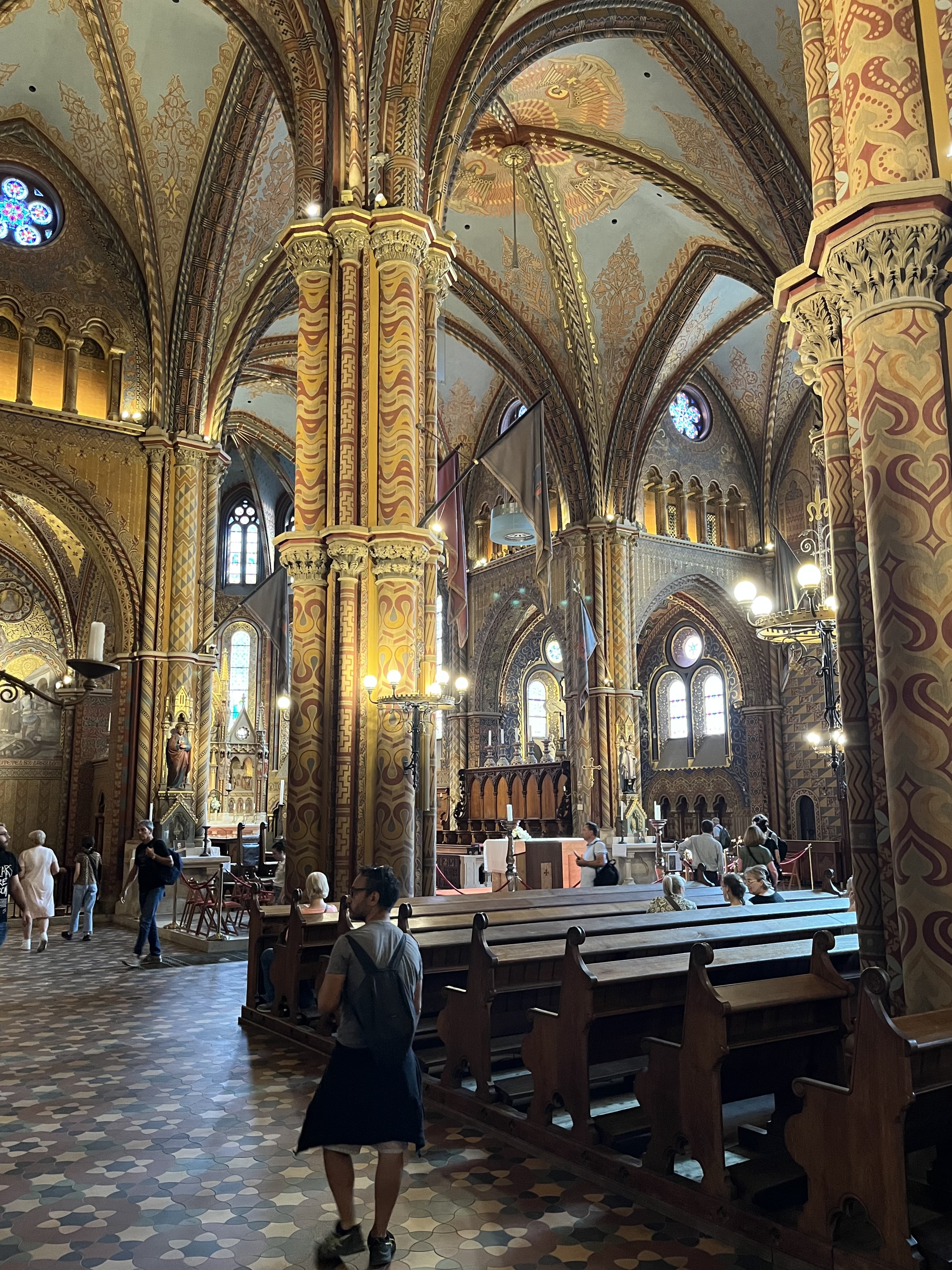
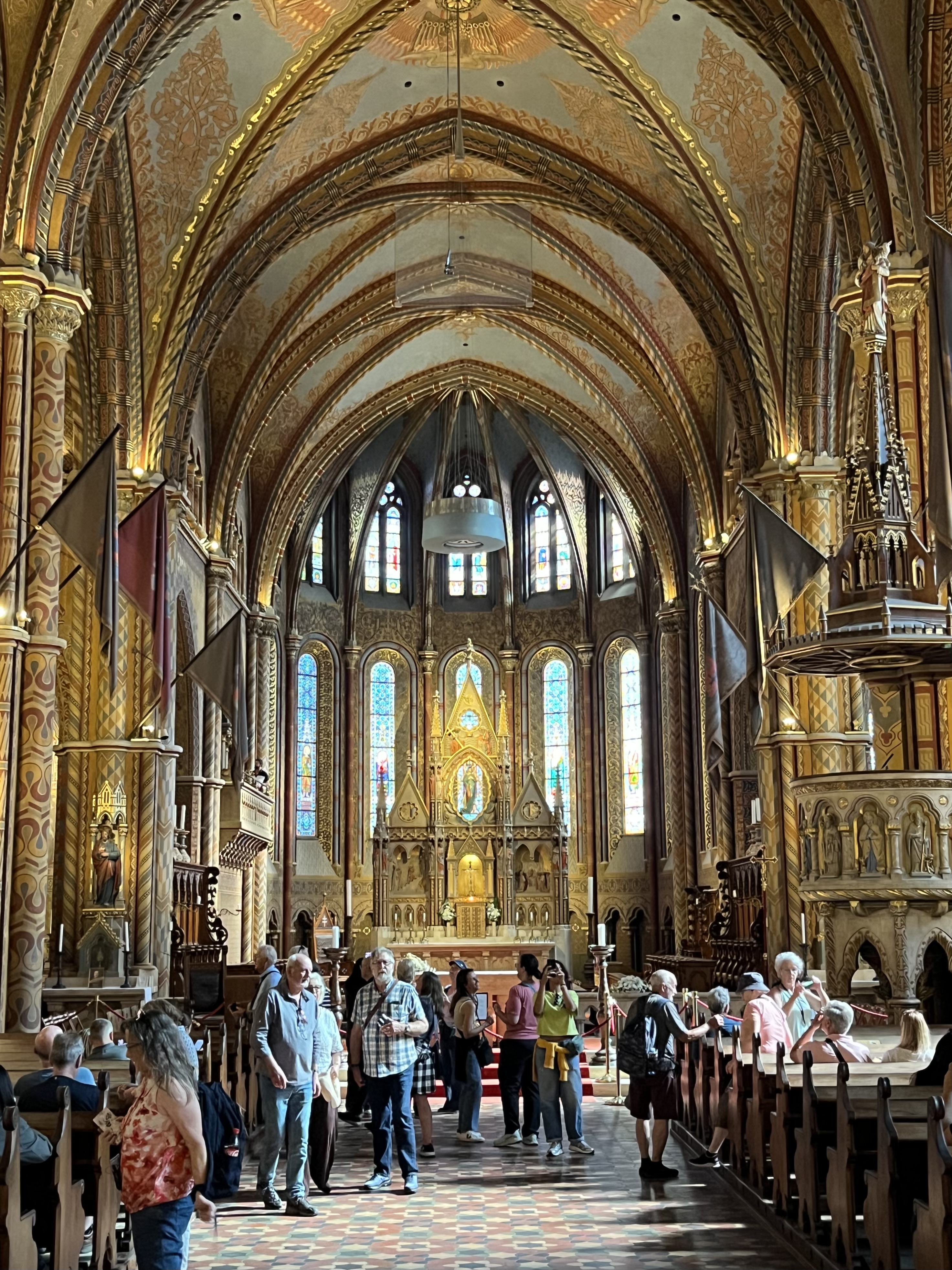
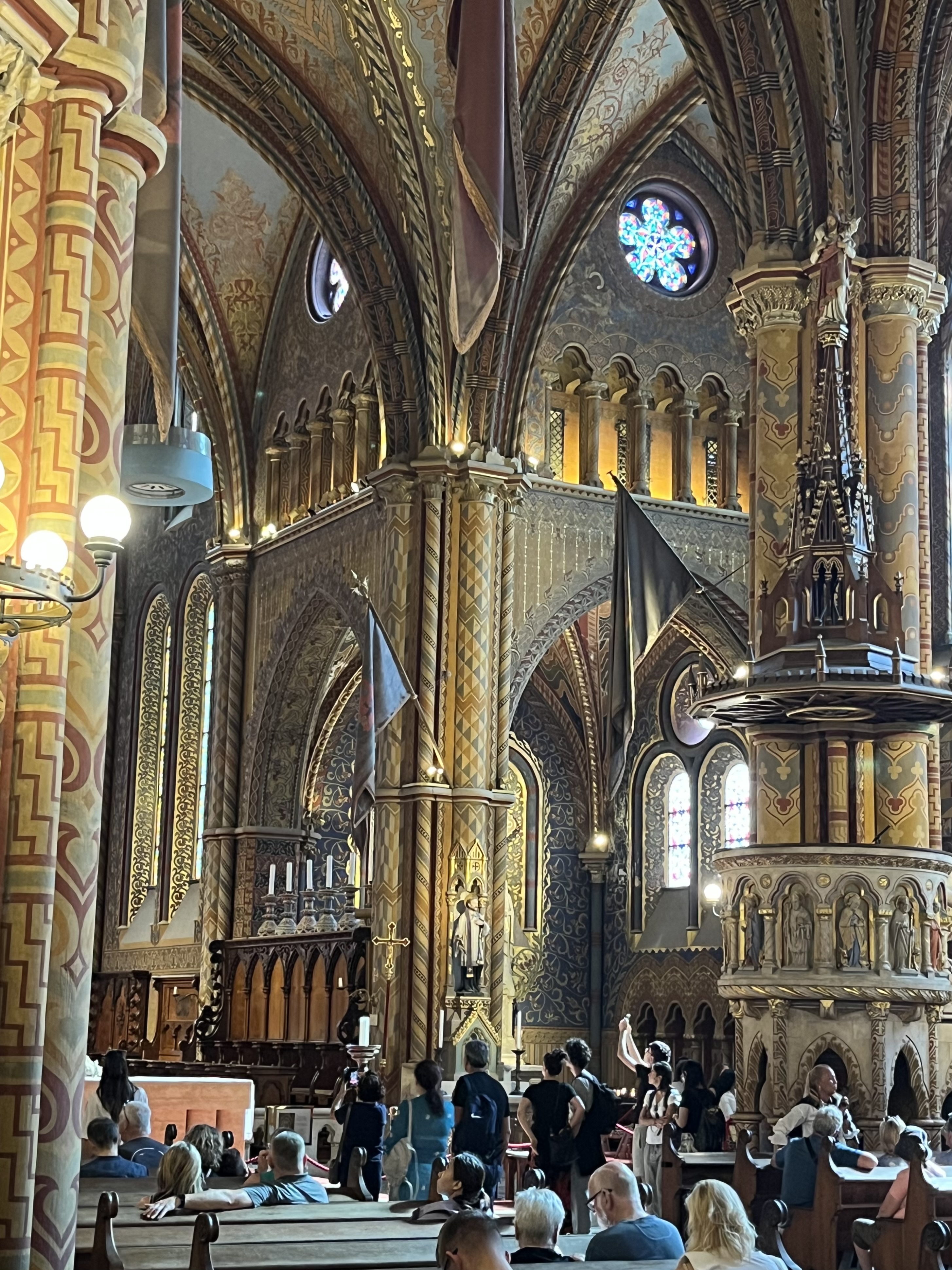
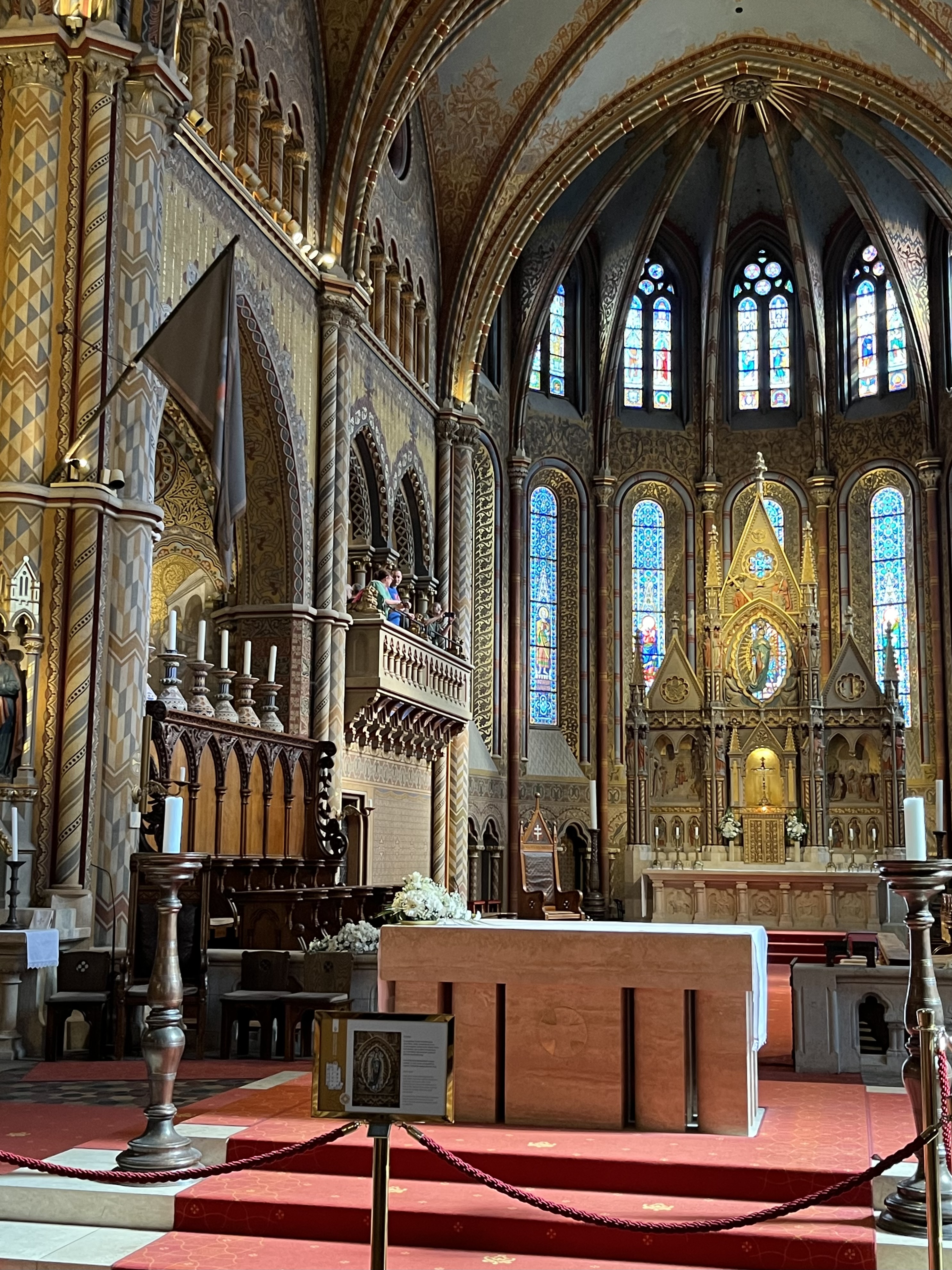
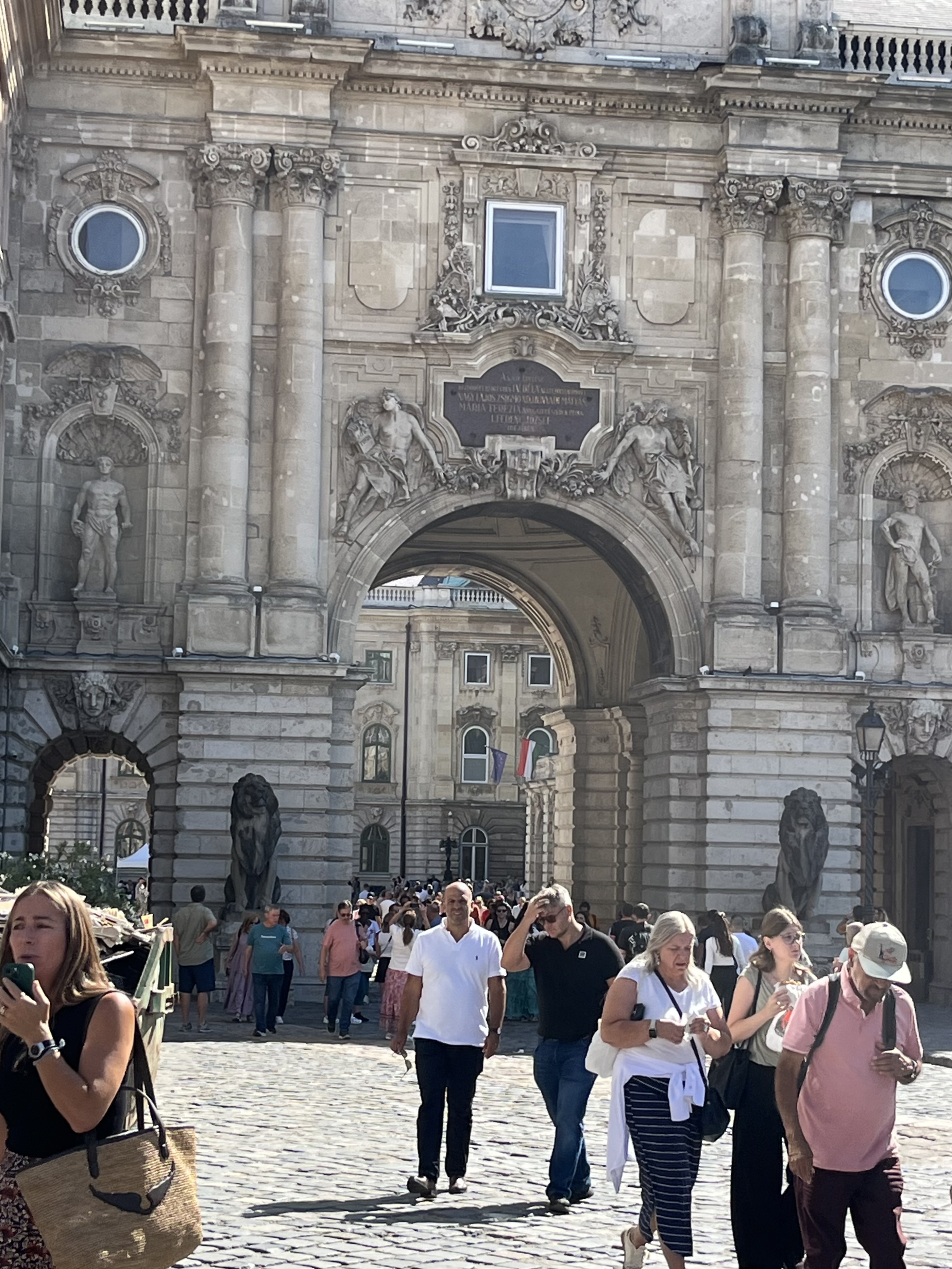
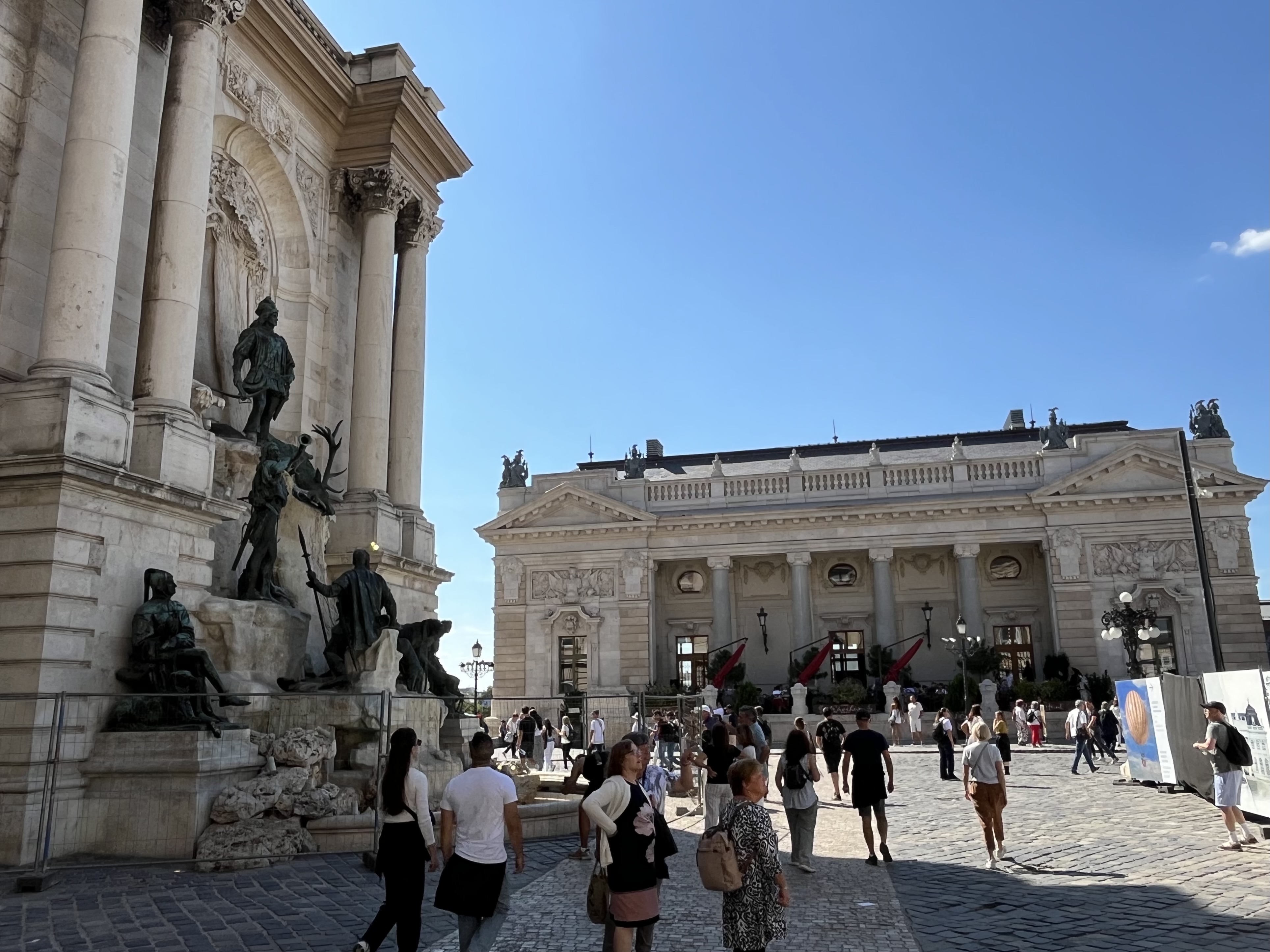
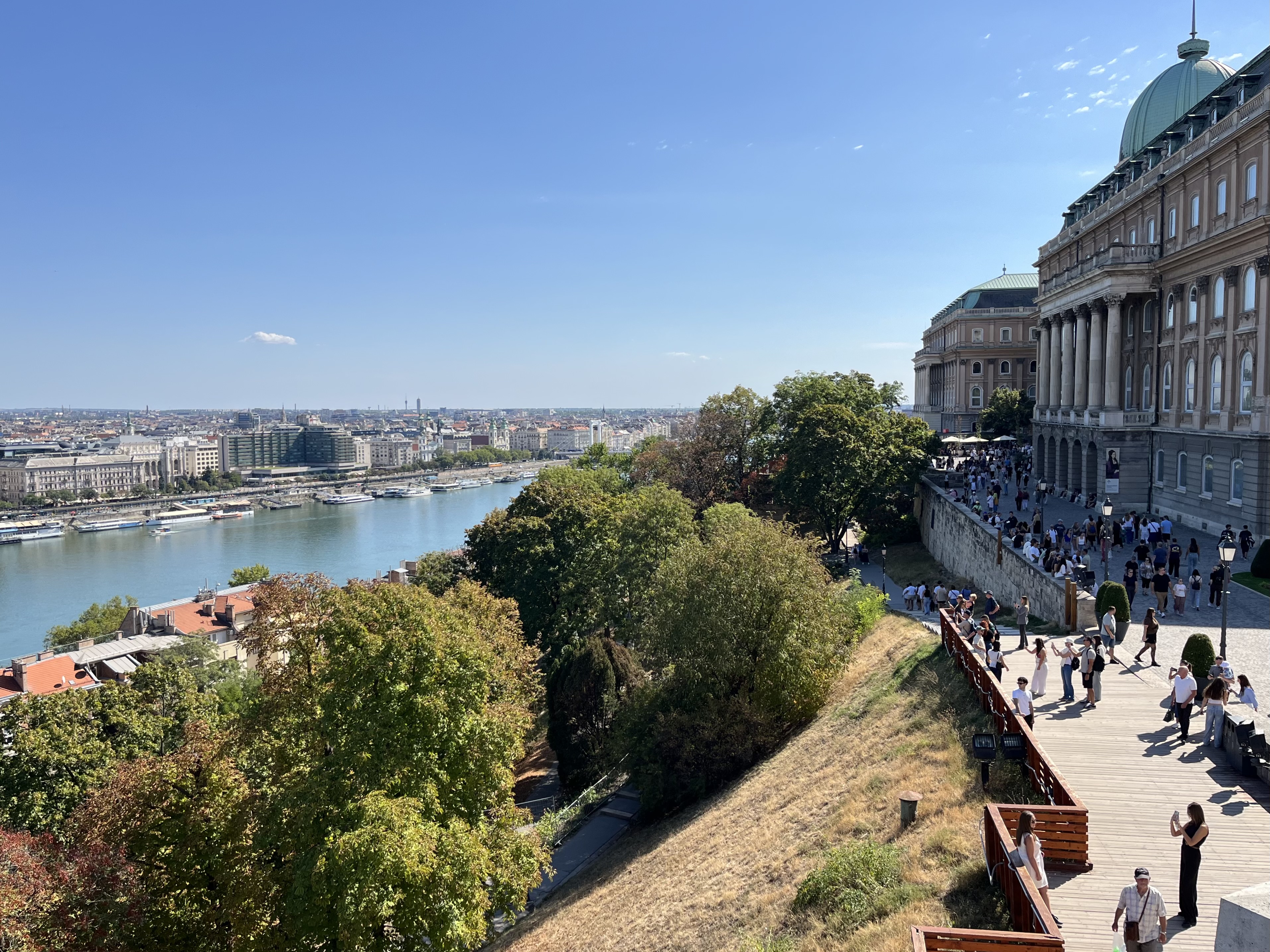
Further south on Buda’s Castle Hill you find the actual Castle, or Palace, of Buda. Besides the usual living quarters and festive halls etc., this big castle complex includes some governmental buildings and archives, as well as the National Gallery and Library and historical museum.
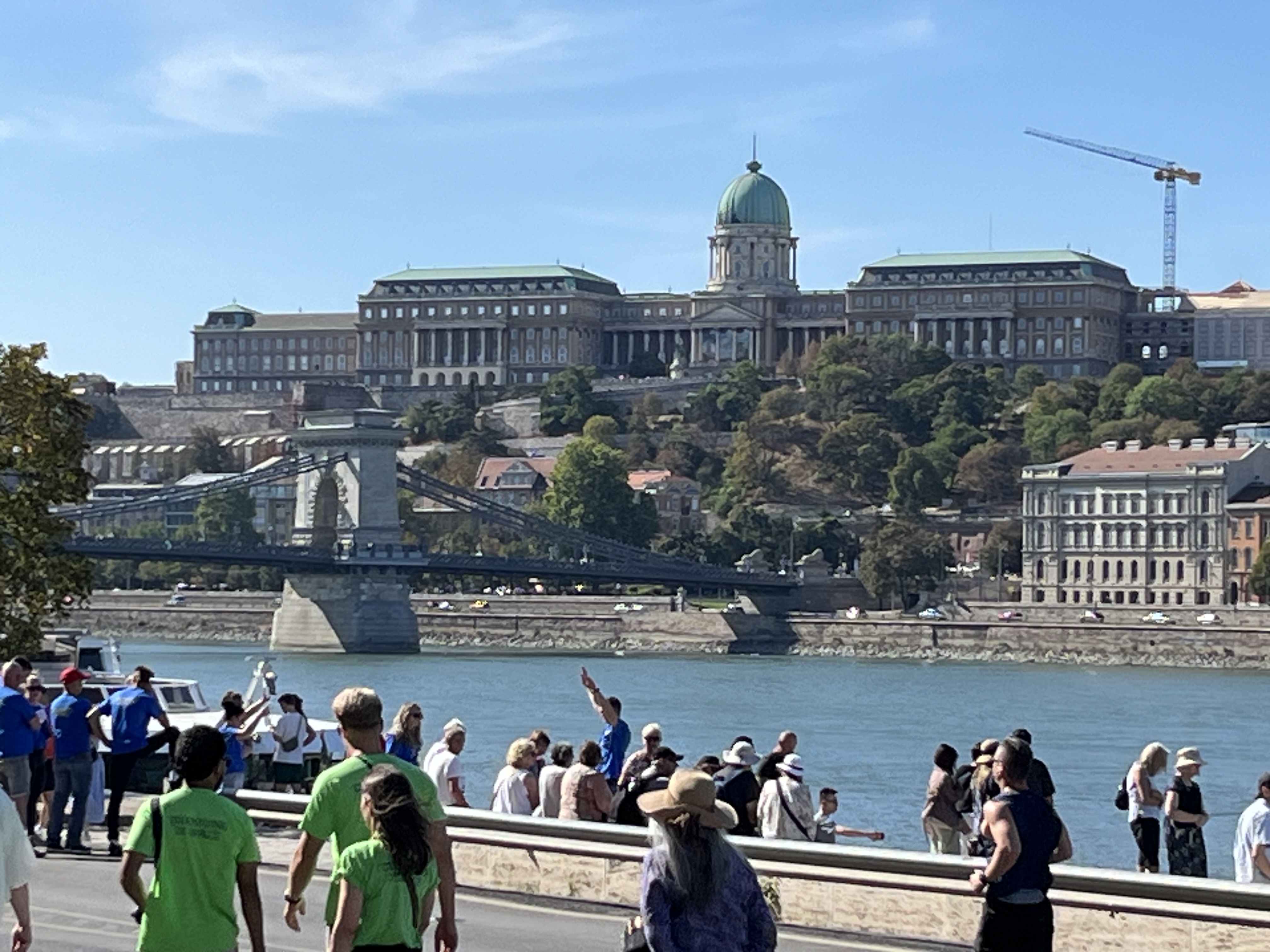
Budapest has several public baths, or thermal baths. Unfortunately the most iconic, Széchenyi Bath, was closed for renovation and so we spent one afternoon in the Ruda’s Bath on the bank of the Danube in Buda instead. There, we soaked in the pools of its almost 500 year old Turkish bath of variously tempered pools and steam rooms. Later I enjoyed the more modern saunas, while Lauri had a massage. We finished it off together in the roof top panorama pool, from where we could watch the boats go by on the Danube while soaking in warm thermal water. Our 4 hour stay went by too quickly.
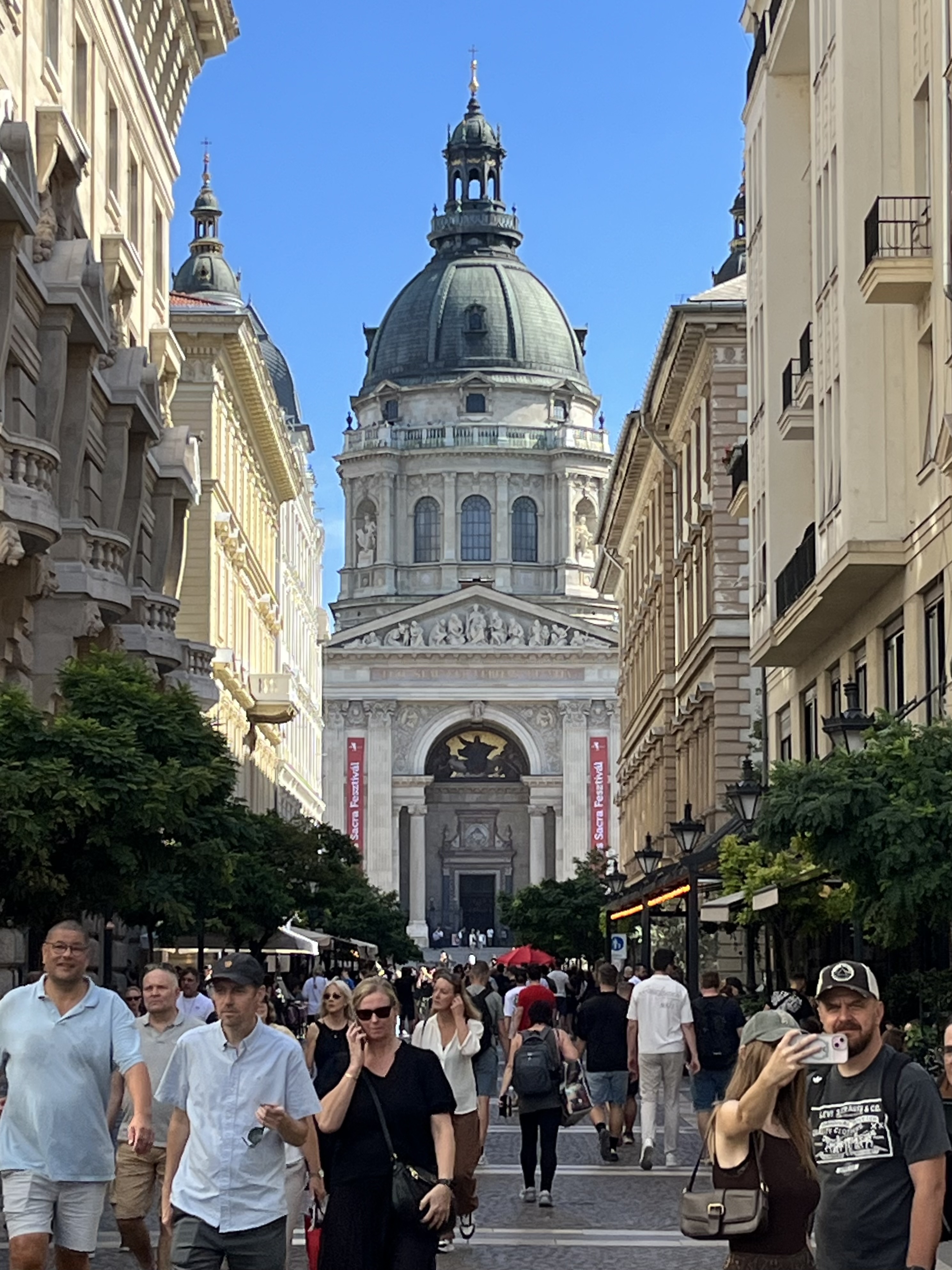
In Budapest, as we’ve experienced in other European cities, almost all tourist attractions charge entry fees and often require a reservation. A few times we have encountered entry fees that appeared so ridiculously high, that we decided not to visit the site at all. Such was the case with the Jewish Dohány Street Synagogue in Pest, where a regular visit would have cost us 40 Euros, or about $45 per person for entry! We preferred going into the Catholic Saint Stephen Basilica where we were charged $6 per person. The long line of tourists waiting to get into the church on the picture below occurred right after the midday closure for Mass and once the doors opened, the line moved rather quickly:
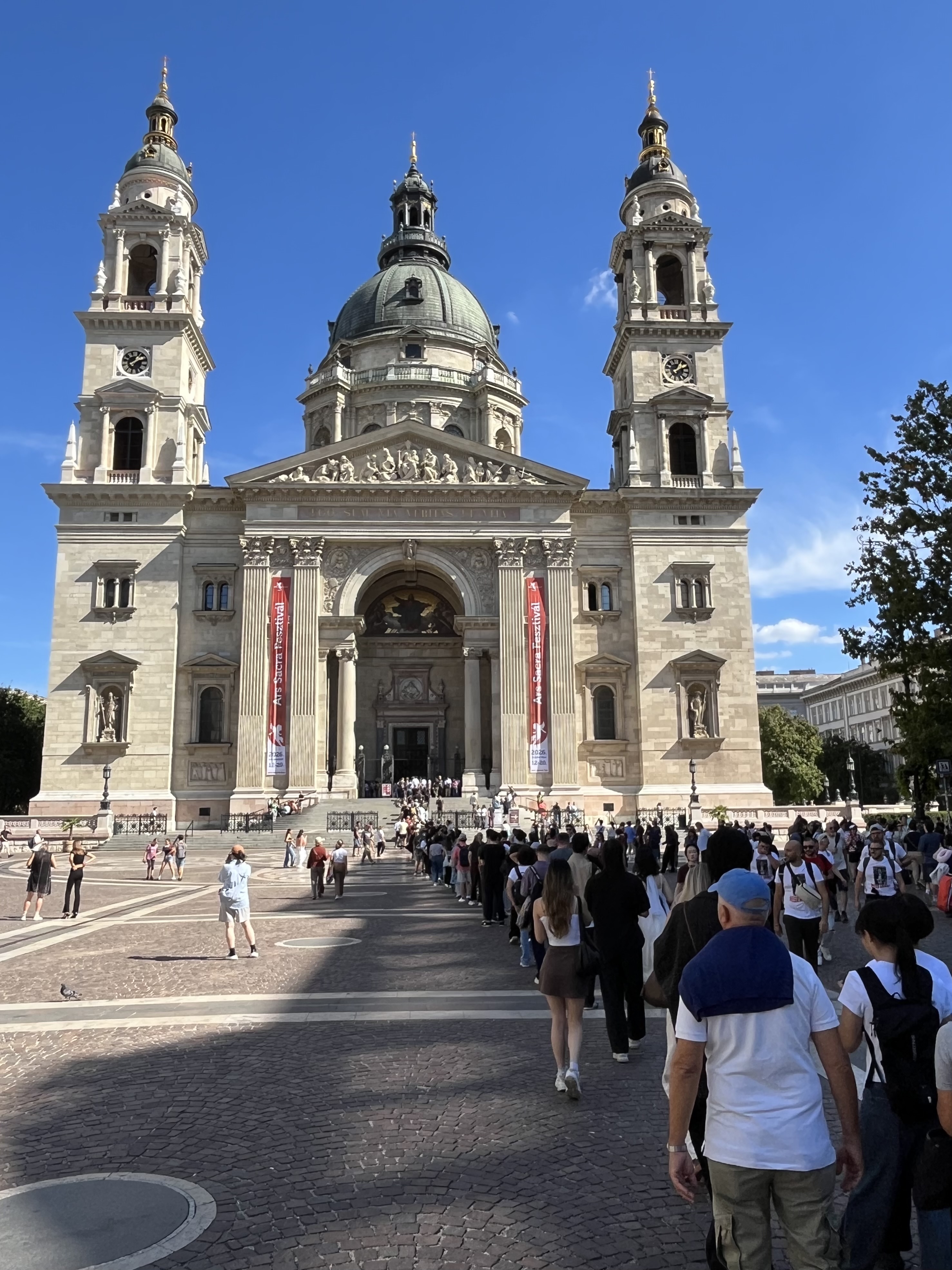
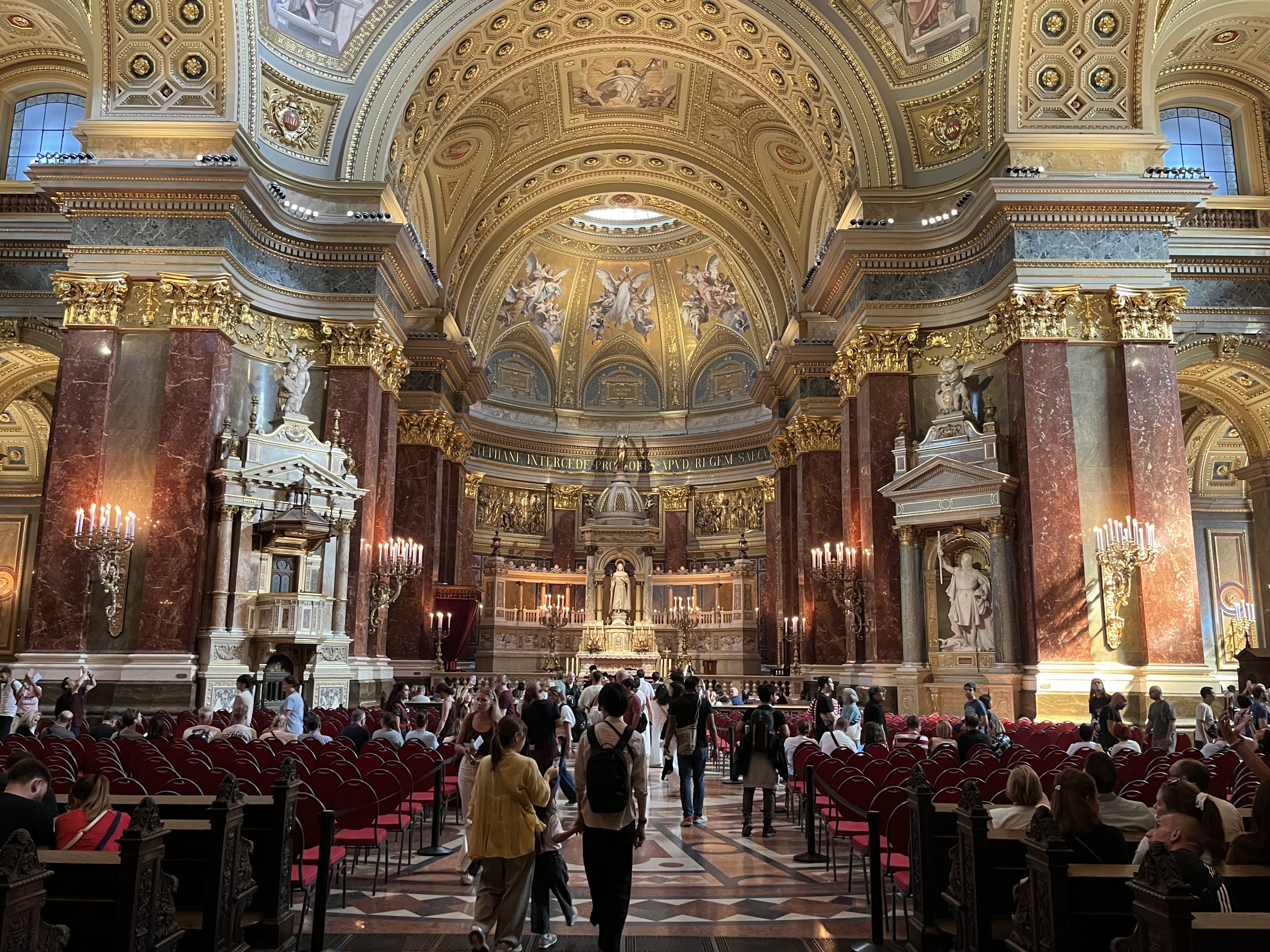
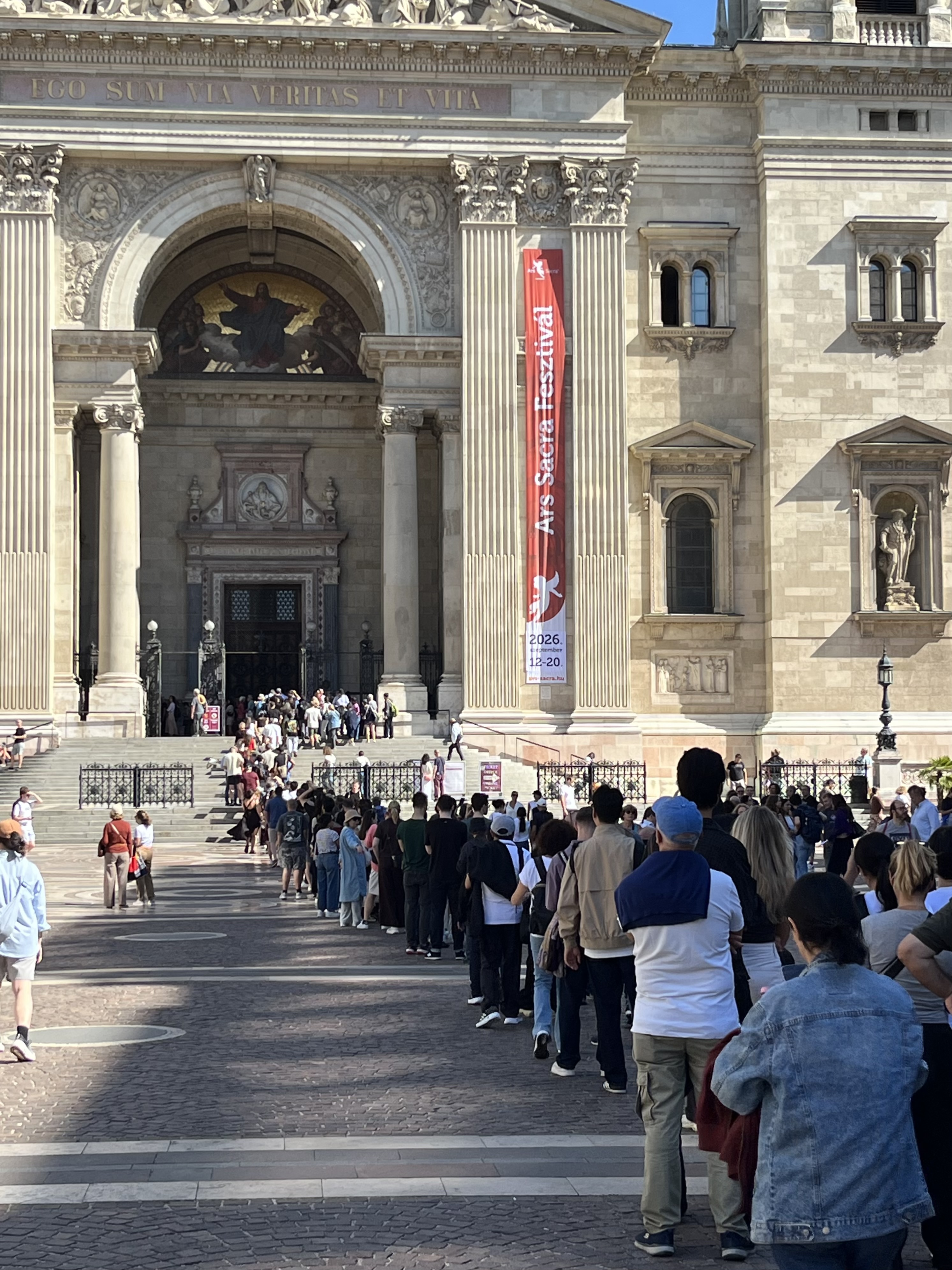
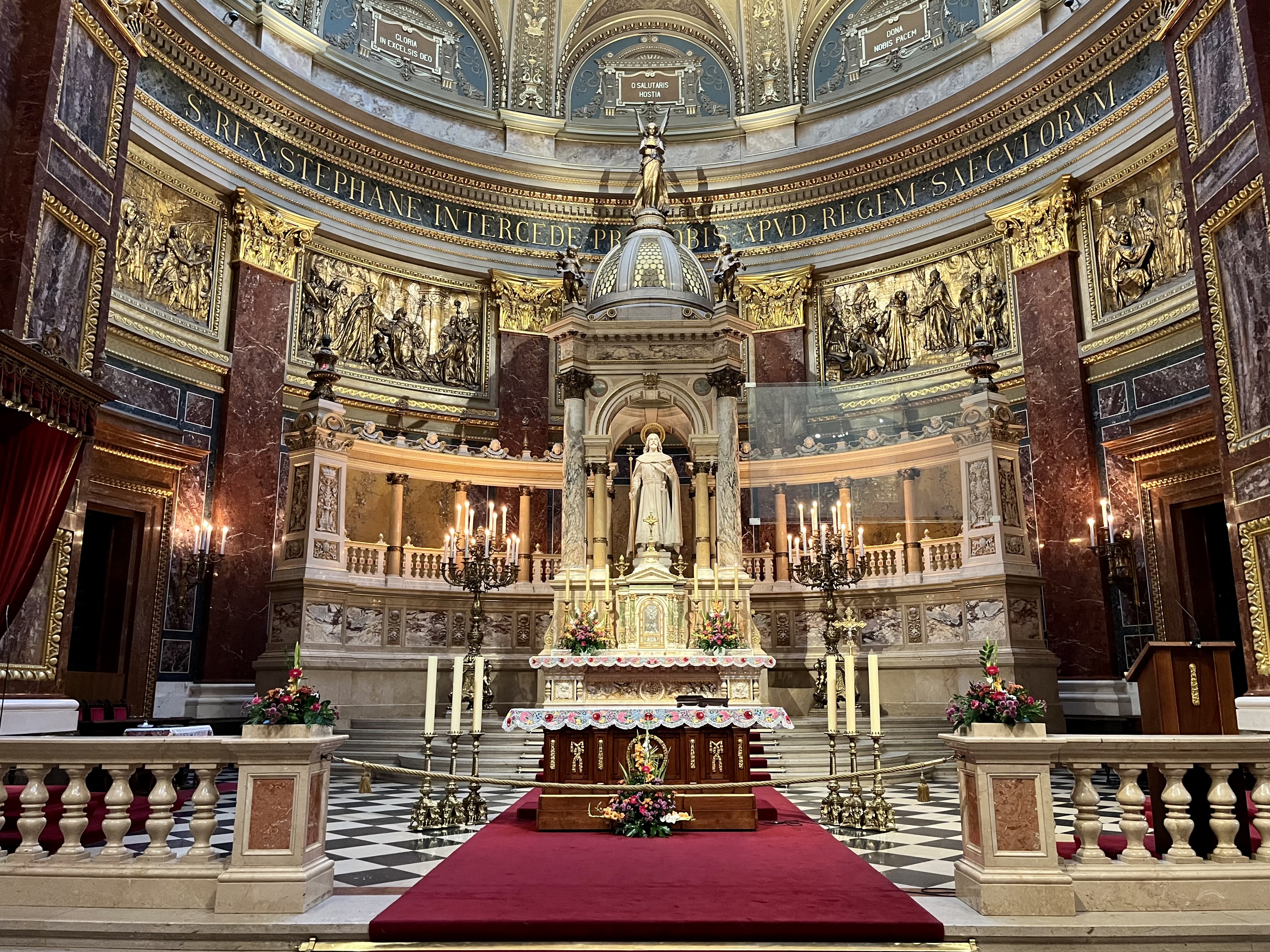
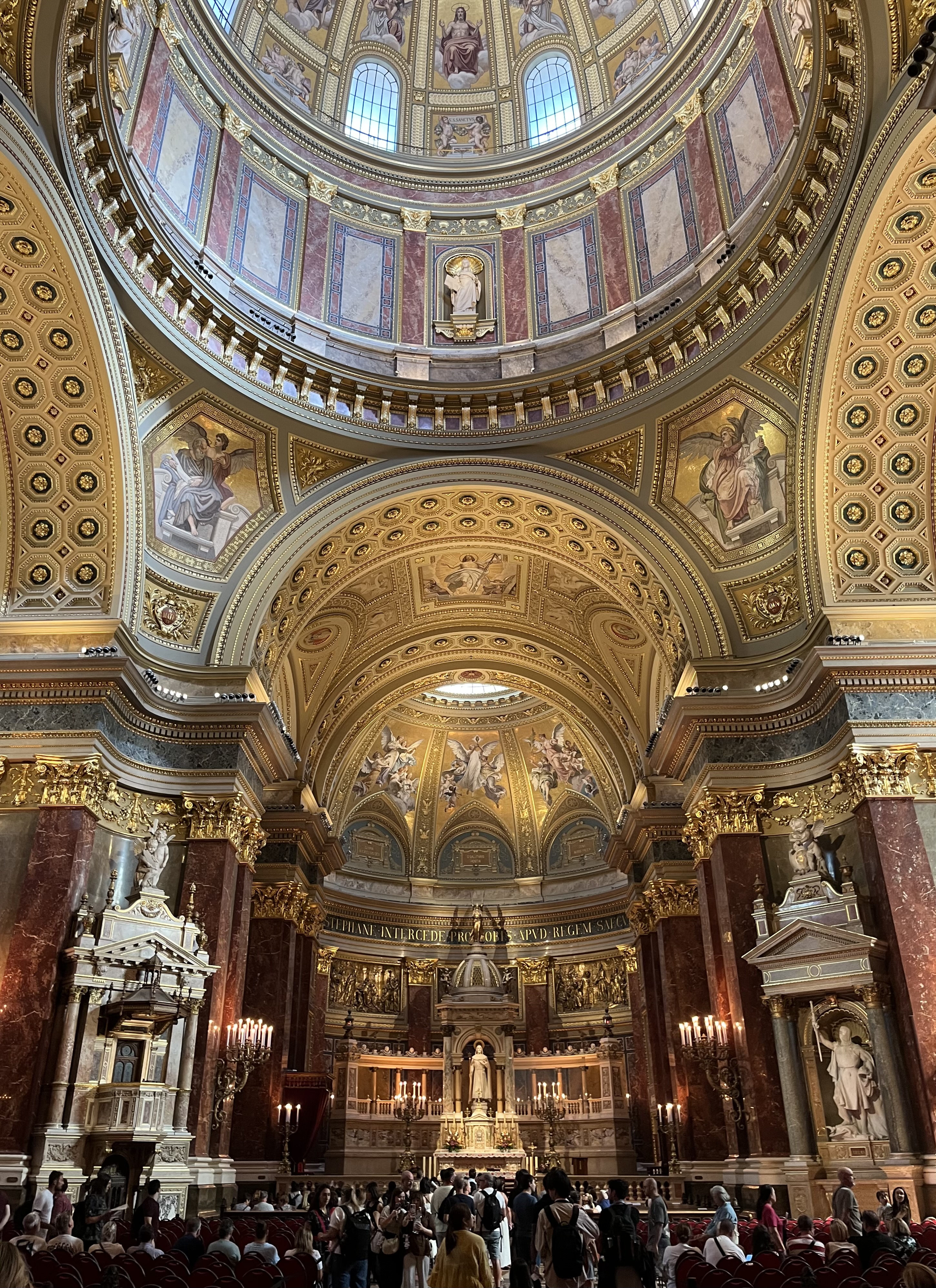
This 19th century, Neo-Renaissance style Basilica reminded me a lot of St. Peter’s at the Vatican in Rome.
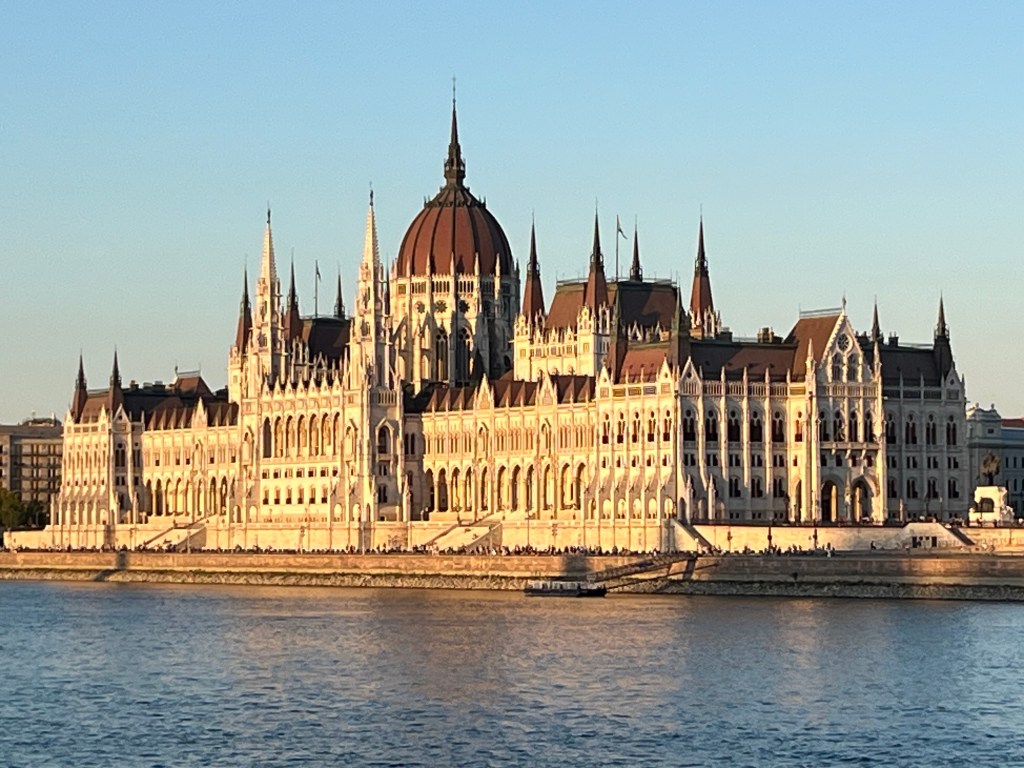
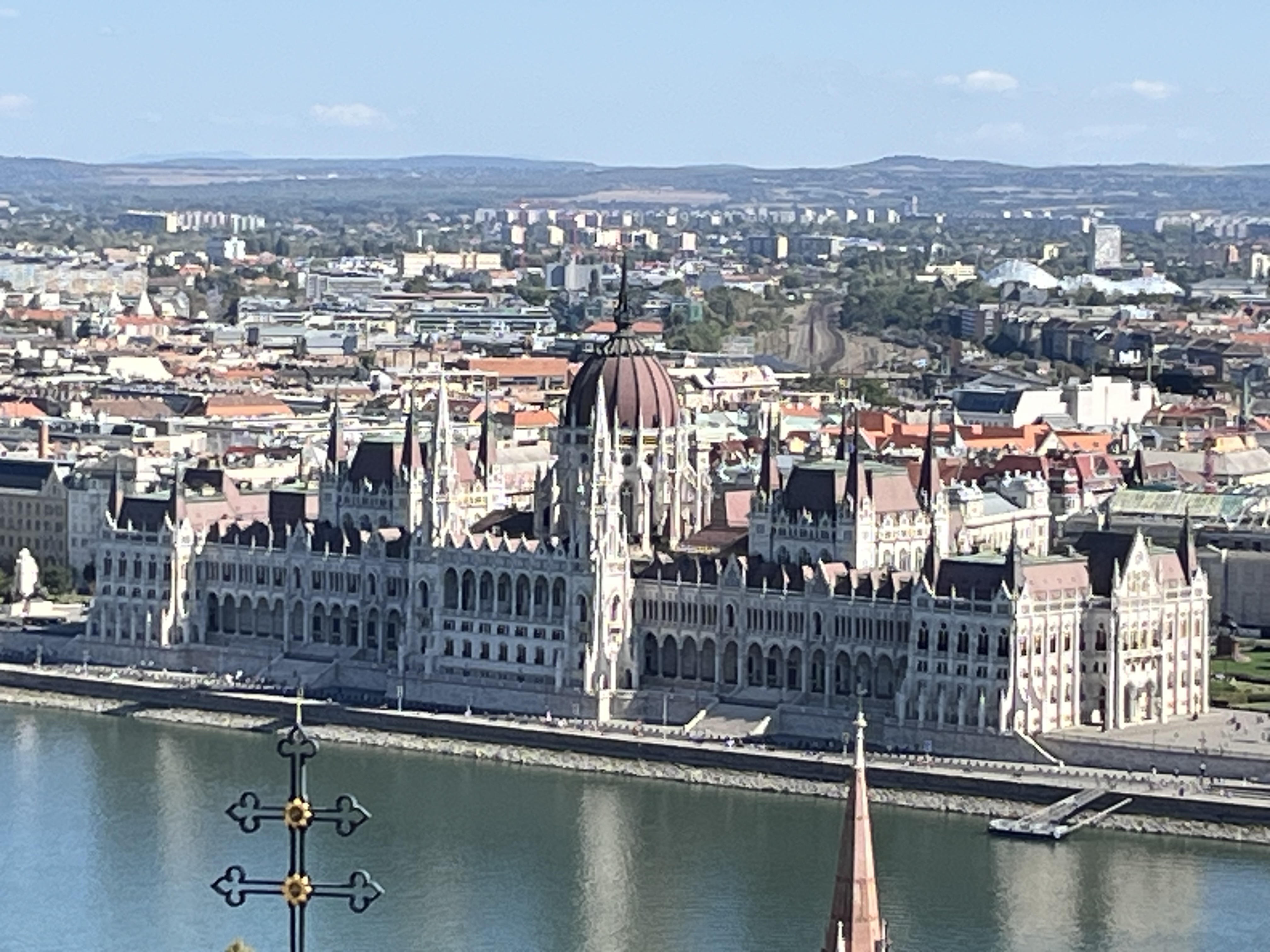
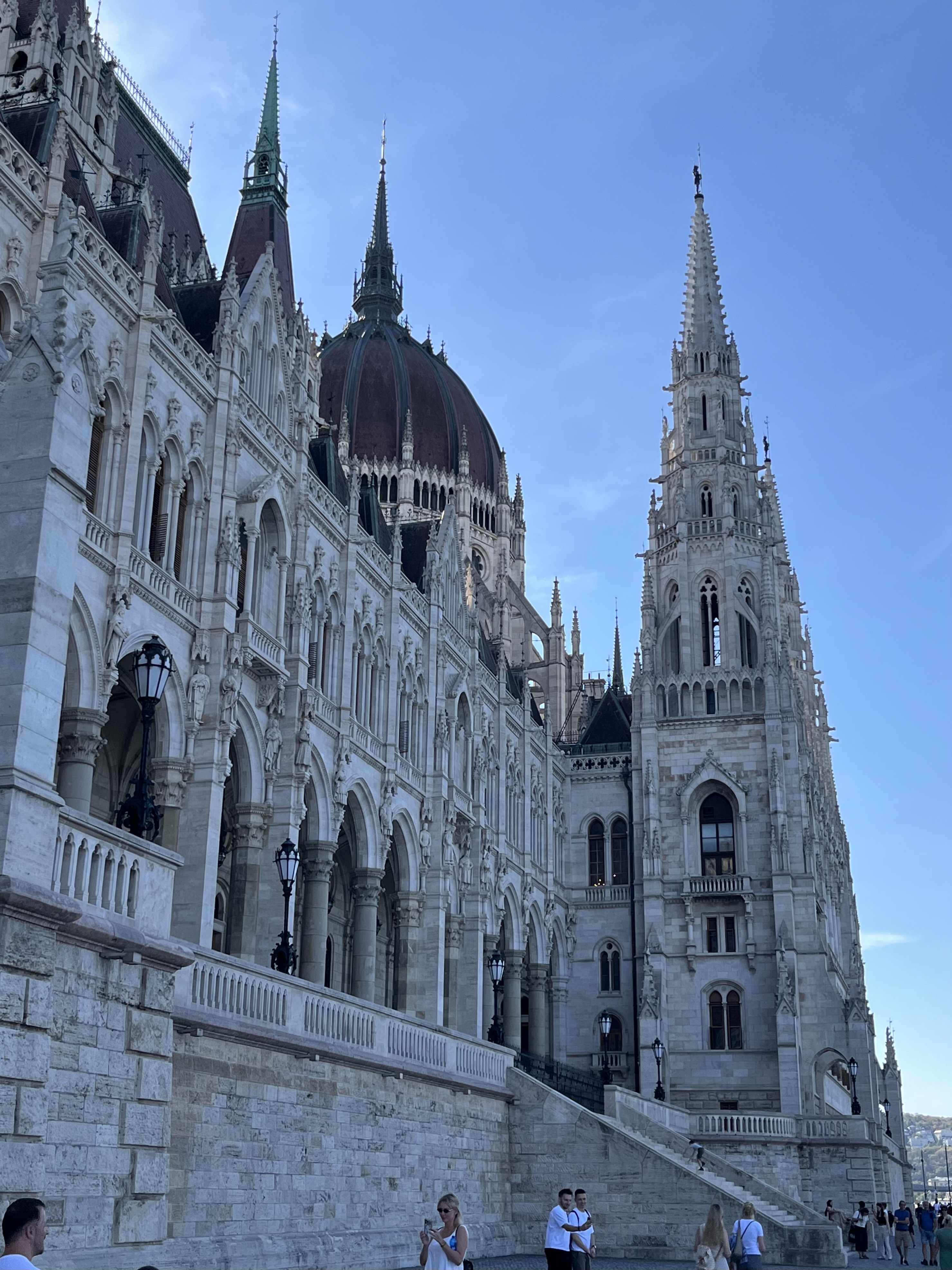
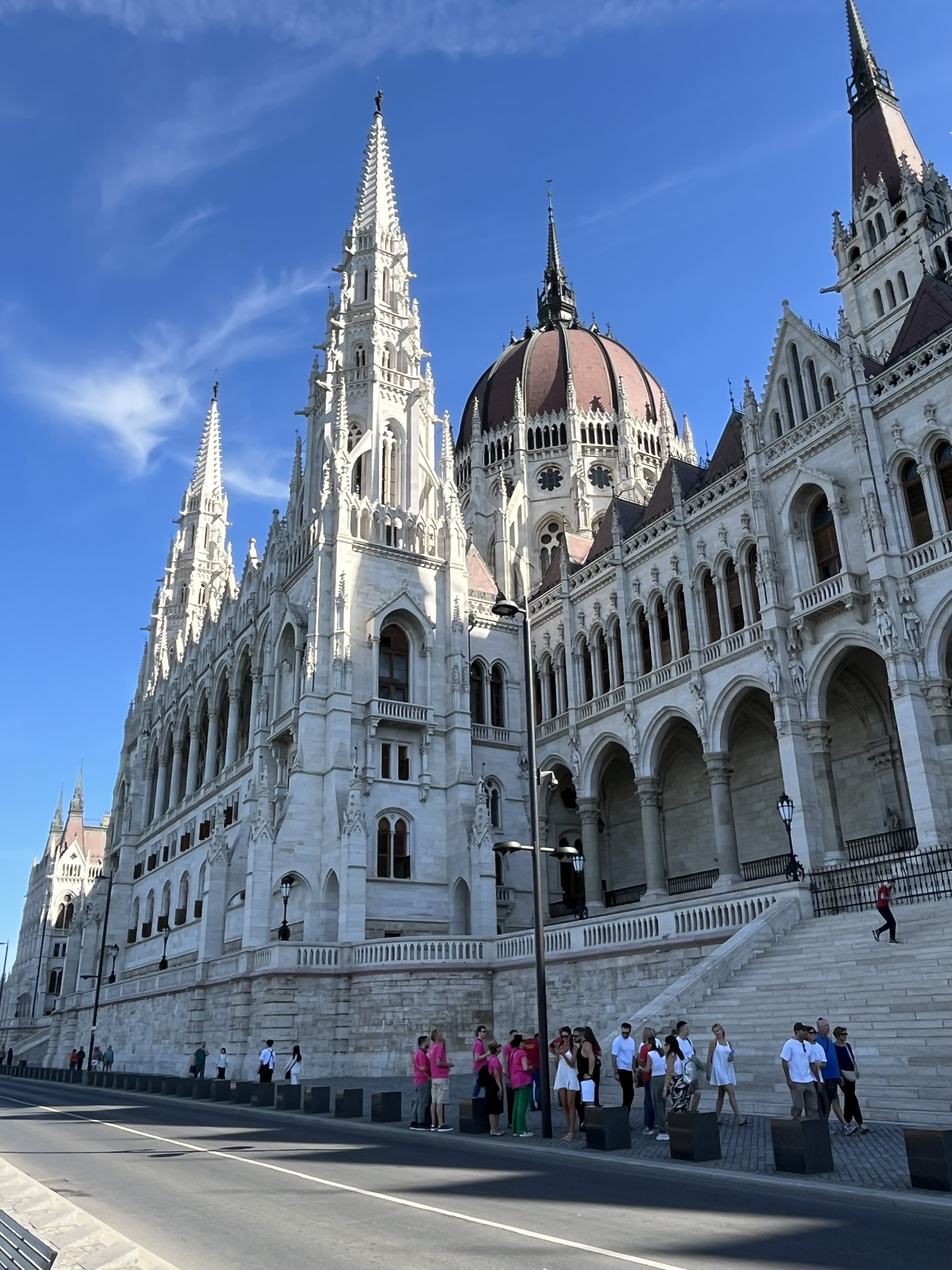
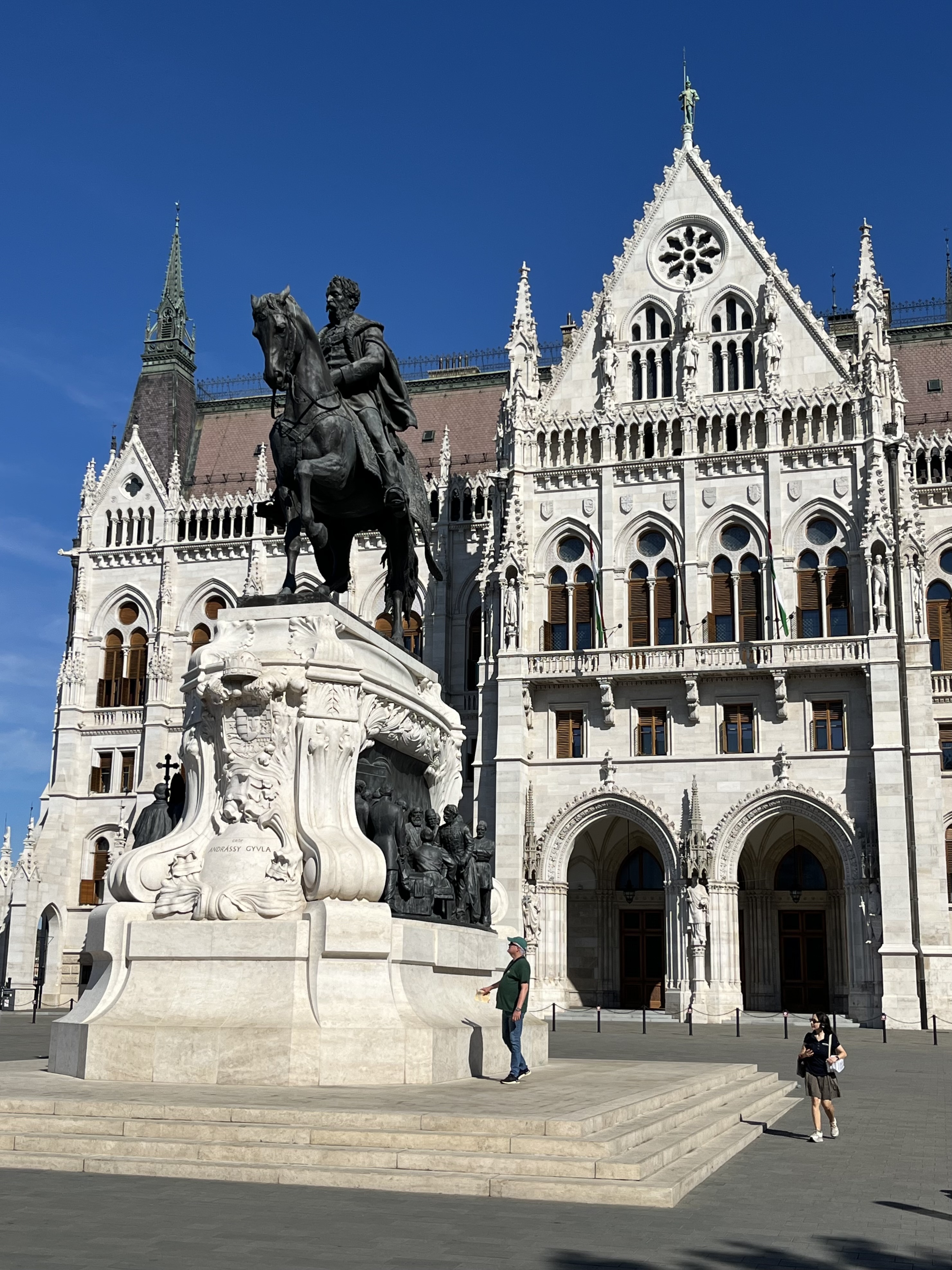
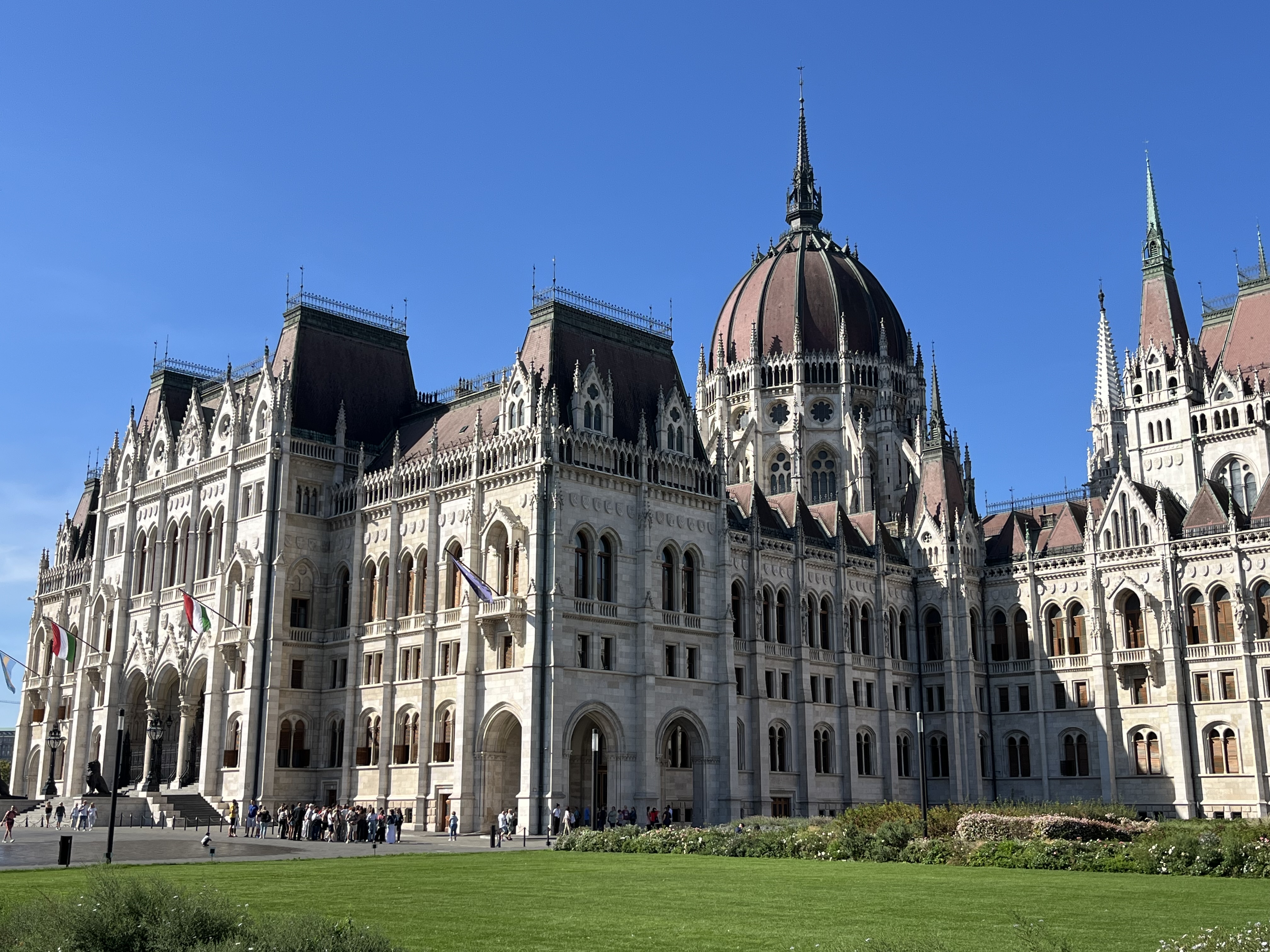
Budapest’s most renowned building is clearly the strikingly beautiful Parliament complex on the Pest bank of the Danube. Unfortunately the guided Parliament tours were already sold out at the time we were hoping to purchase the tickets. We walked around the building’s exterior and in the evening made a point of trying to be on Buda’s Danube shore across from the Parliament while the sun was setting and the soft glow of the low light illuminated the Parliament, a beautiful sight:
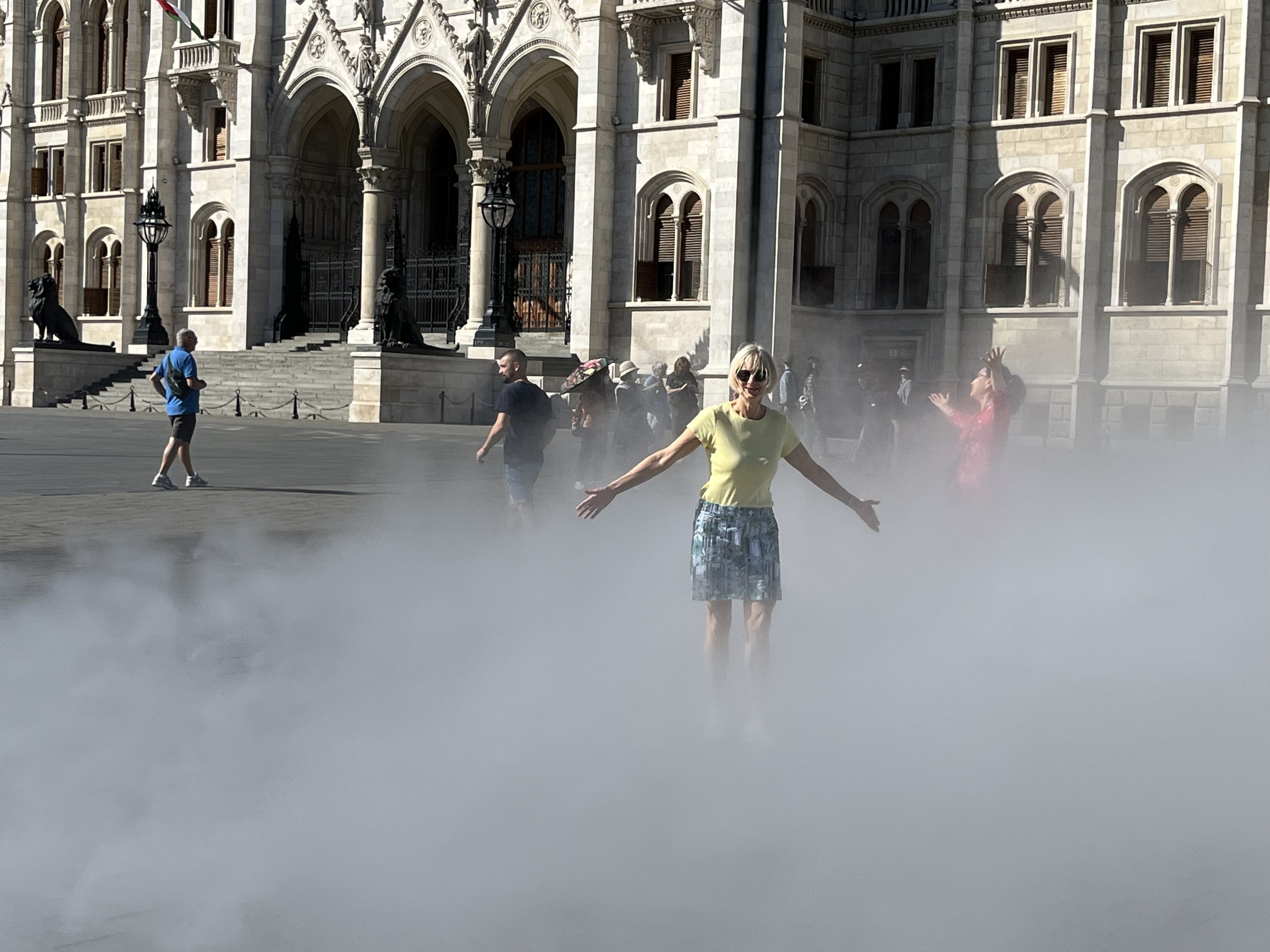
Sorry, the steamy dancer above is not a regular feature at the Parliament and can only be booked for private showings on special request.
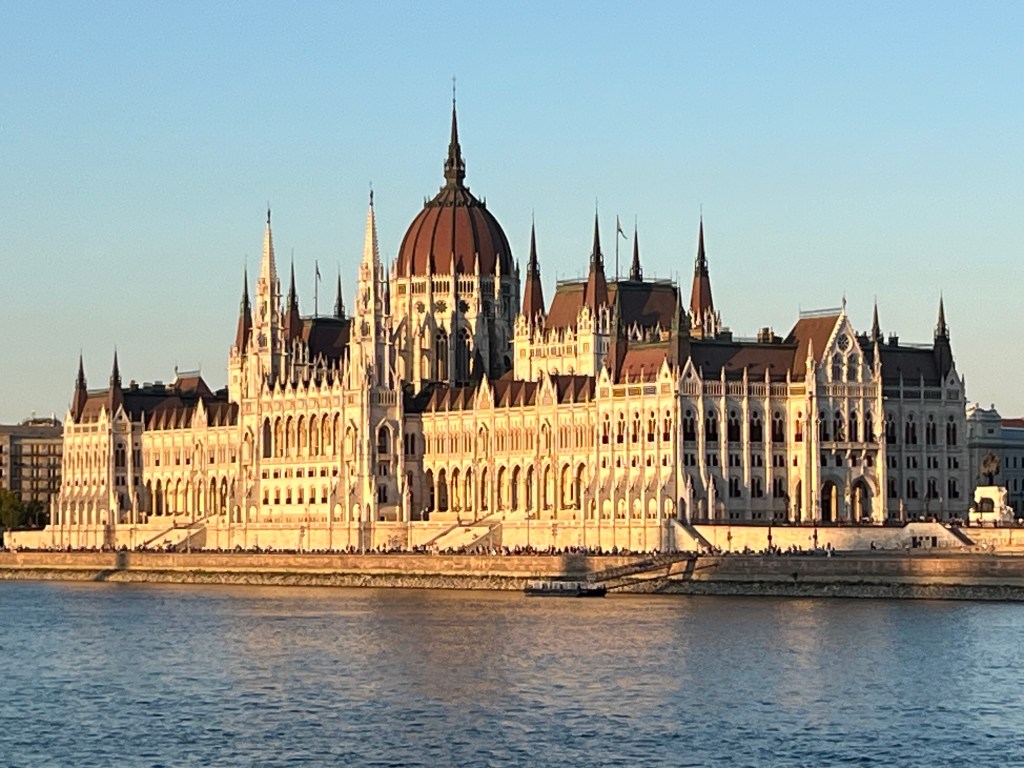
As the picture above shows, this 1902 Neo-Gothic building must be the prettiest Parliament building anywhere! It was partly a lucky shot, as, especially during the sunsetting period, the Danube is filled with tour boats, and the ever present loud jet skis and high speed powerboats.
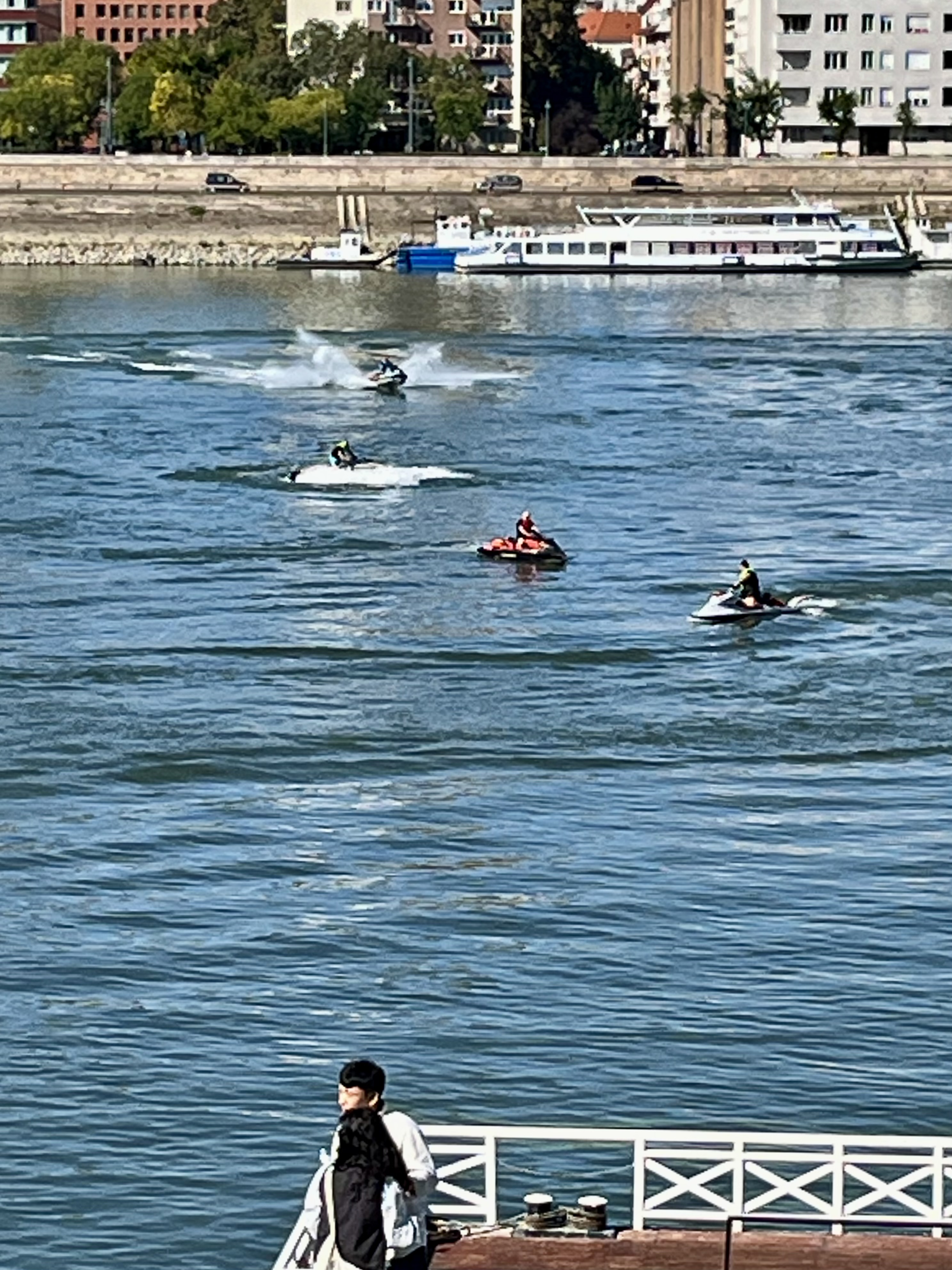
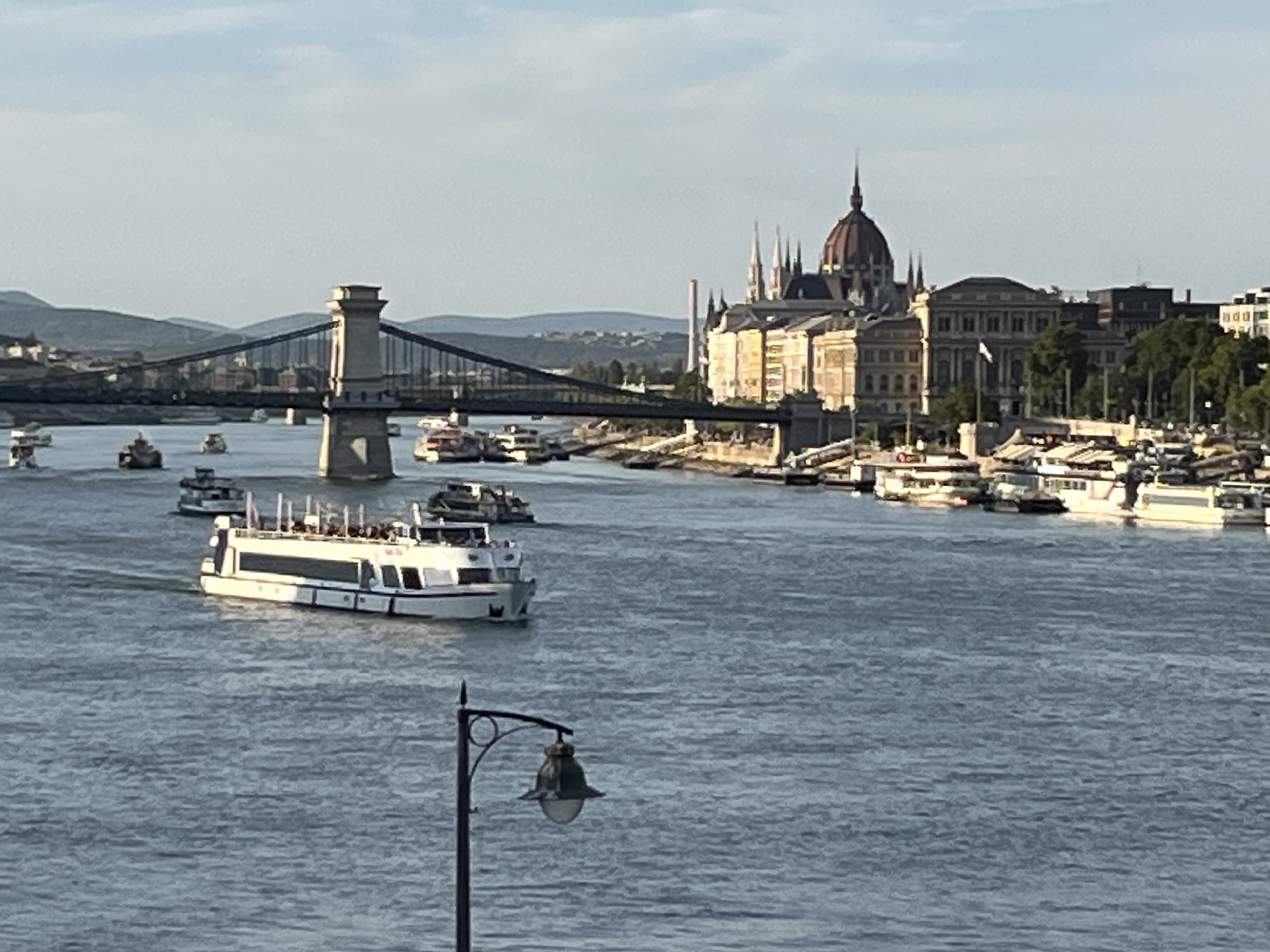
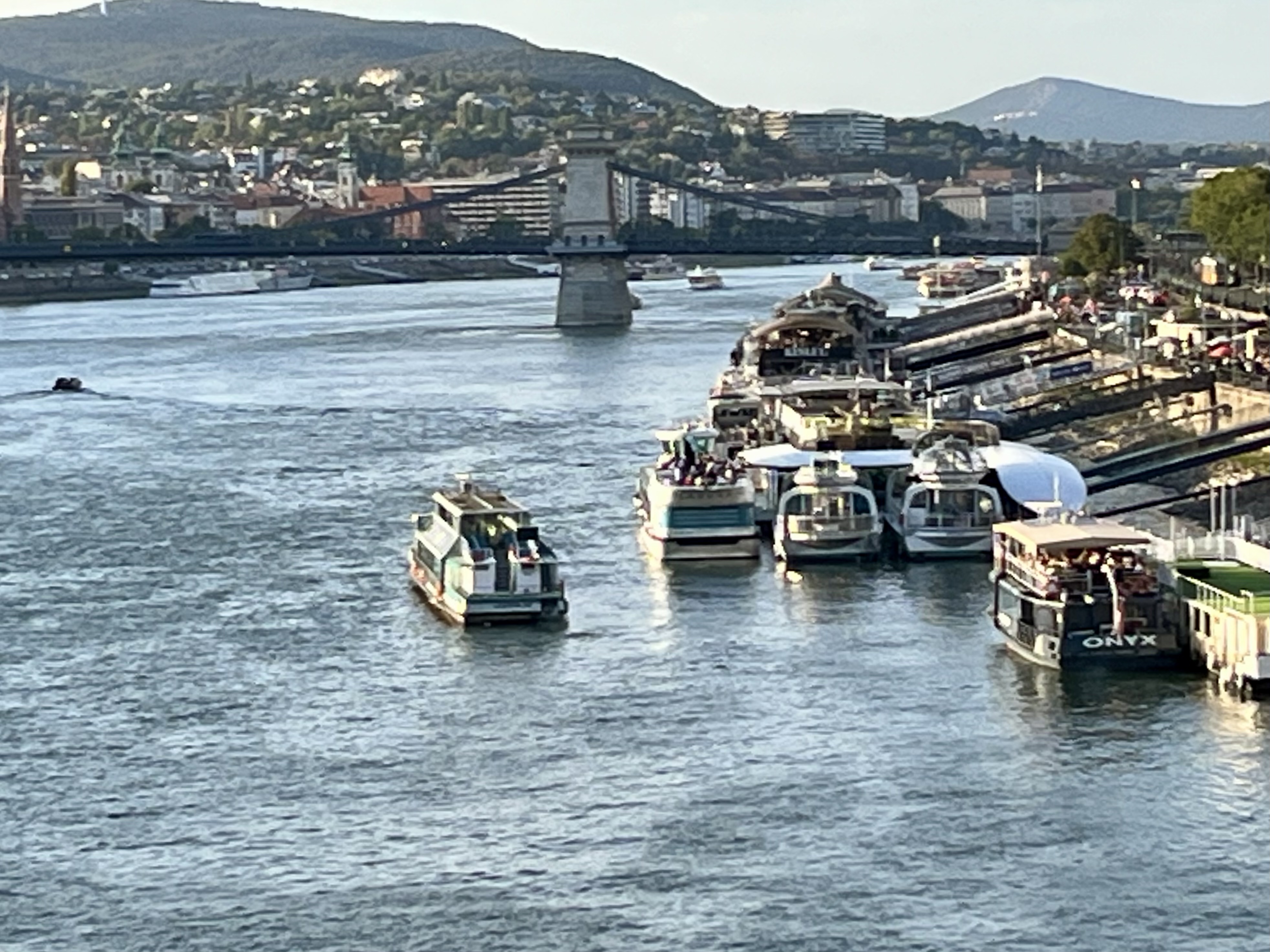
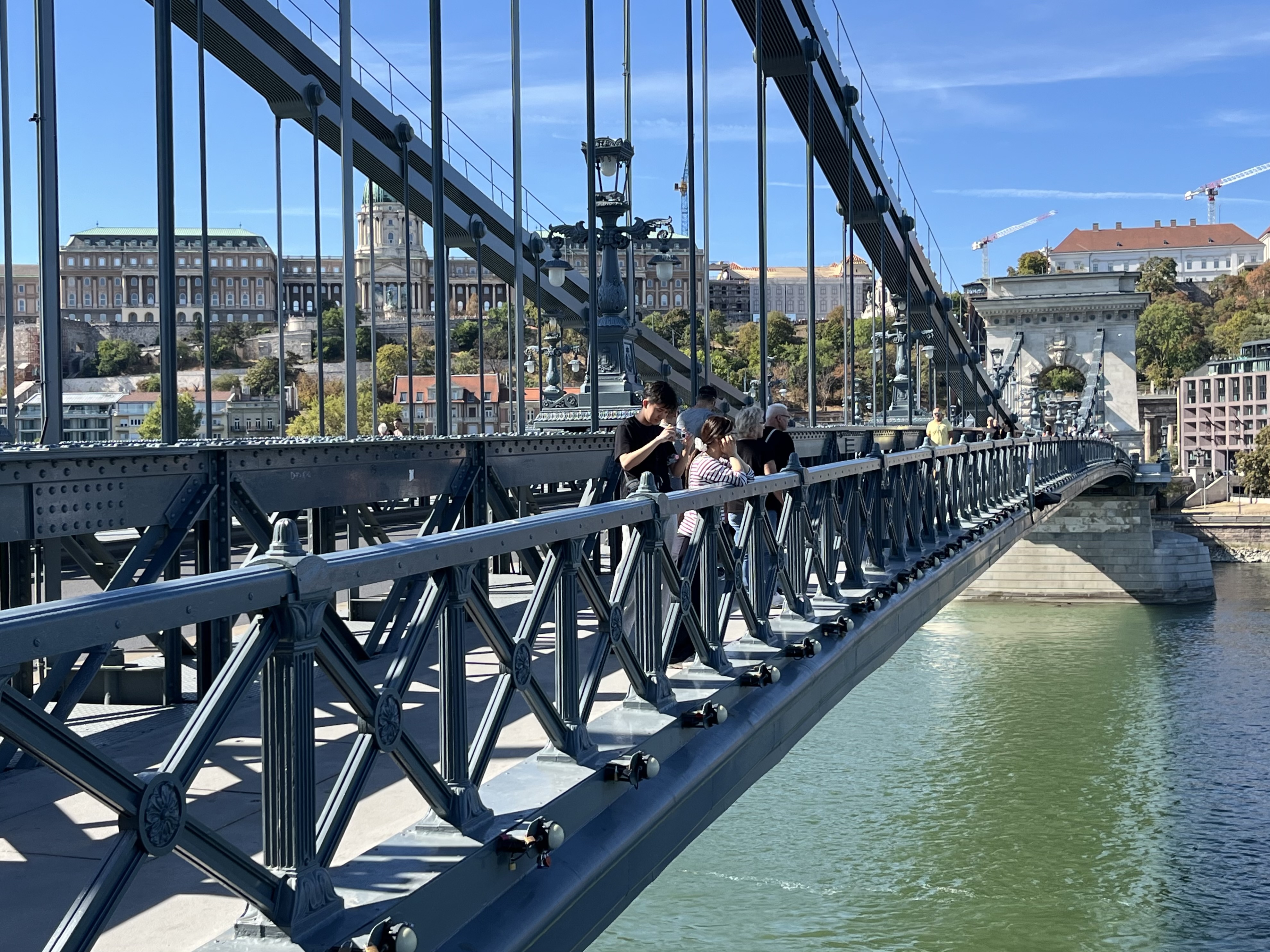
Here are some more impressions of Budapest:
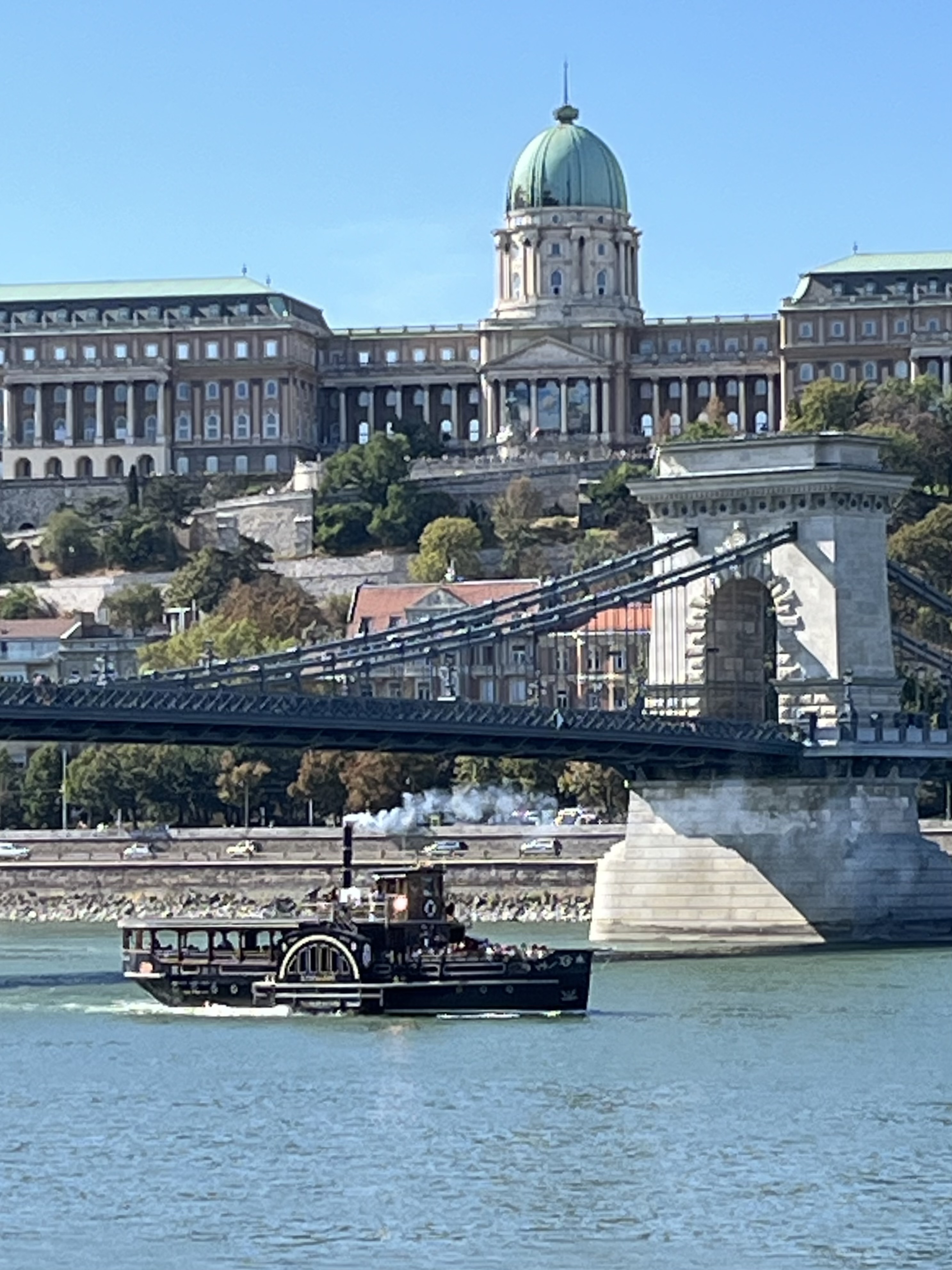
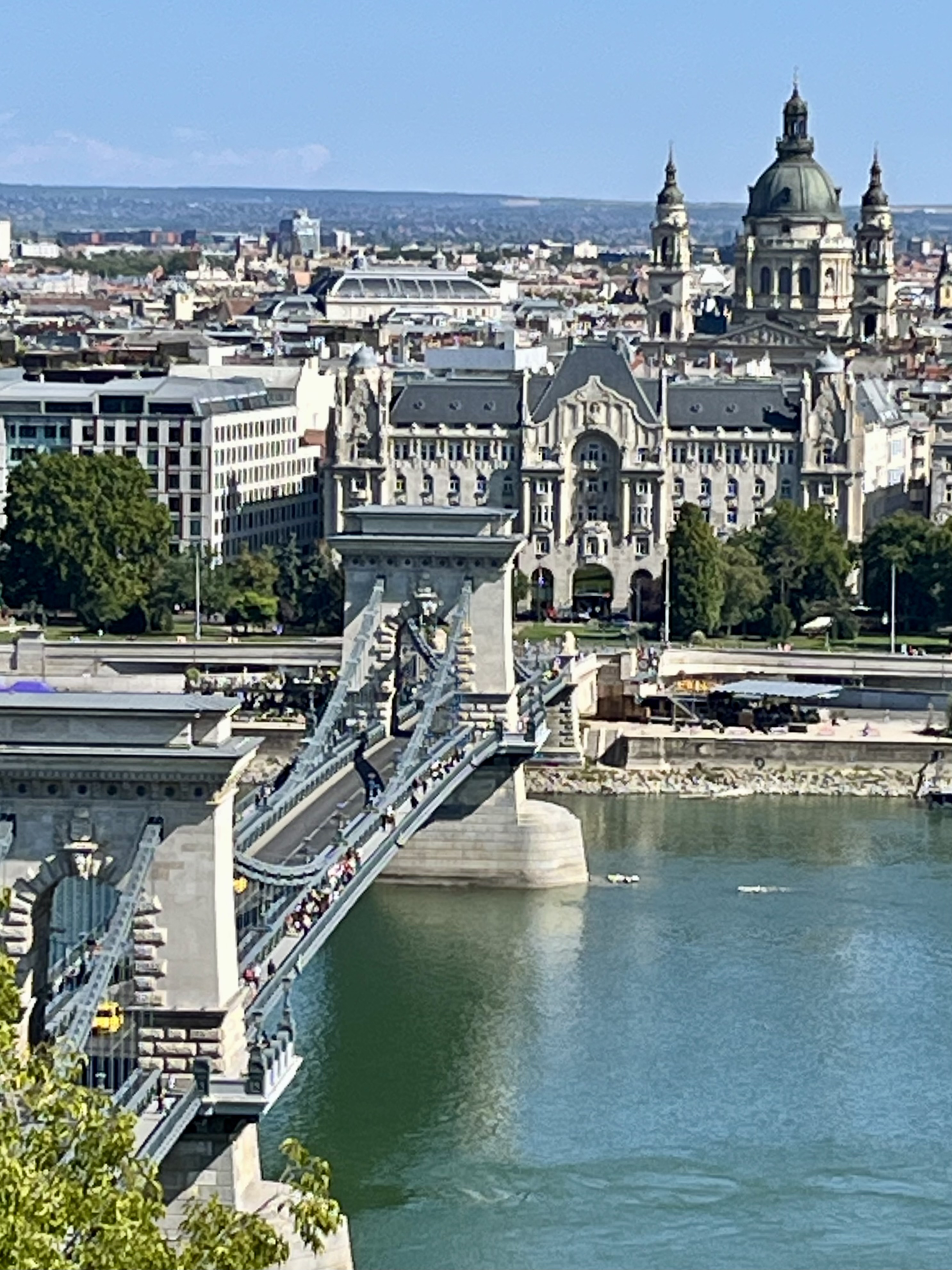
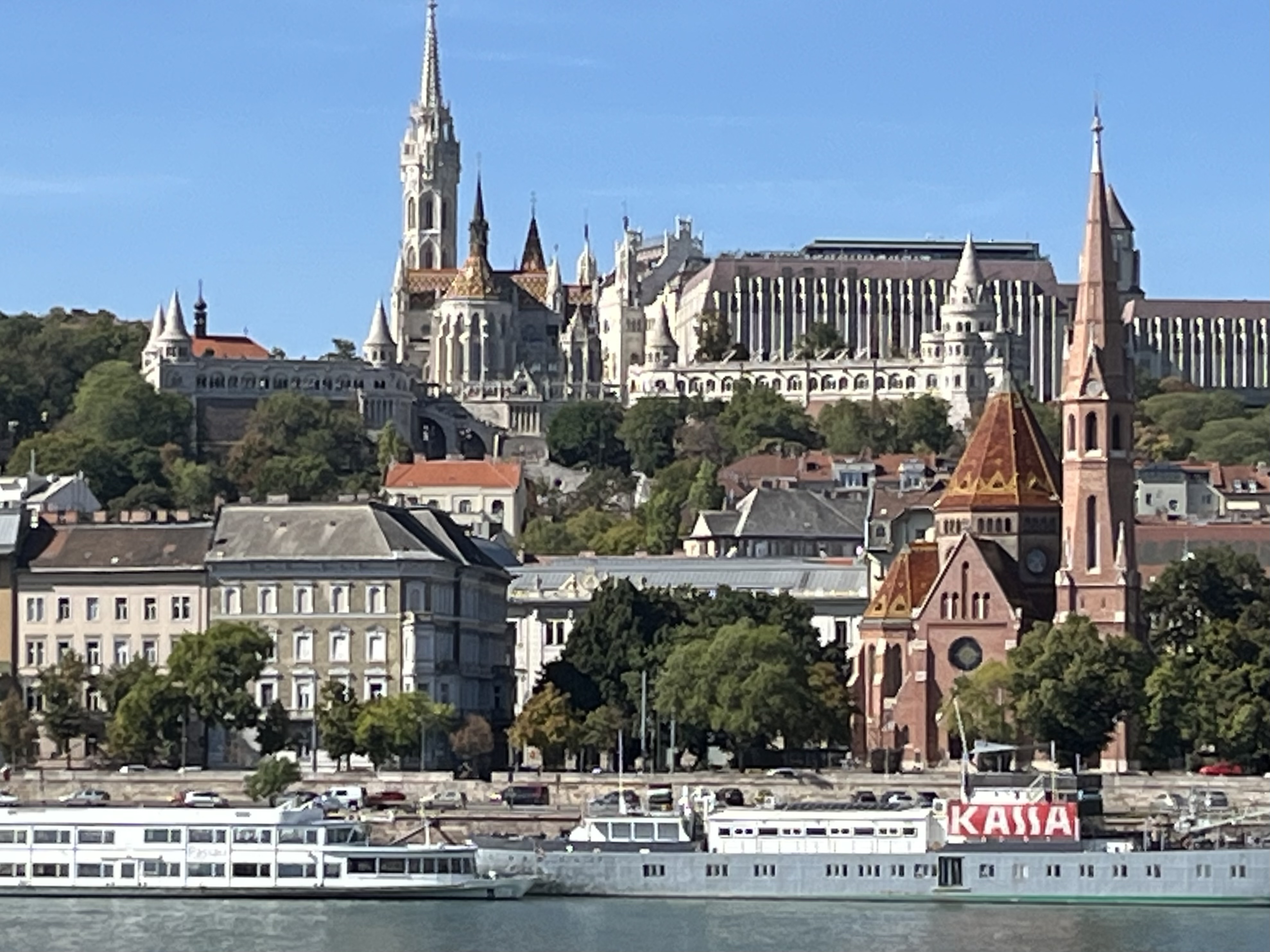
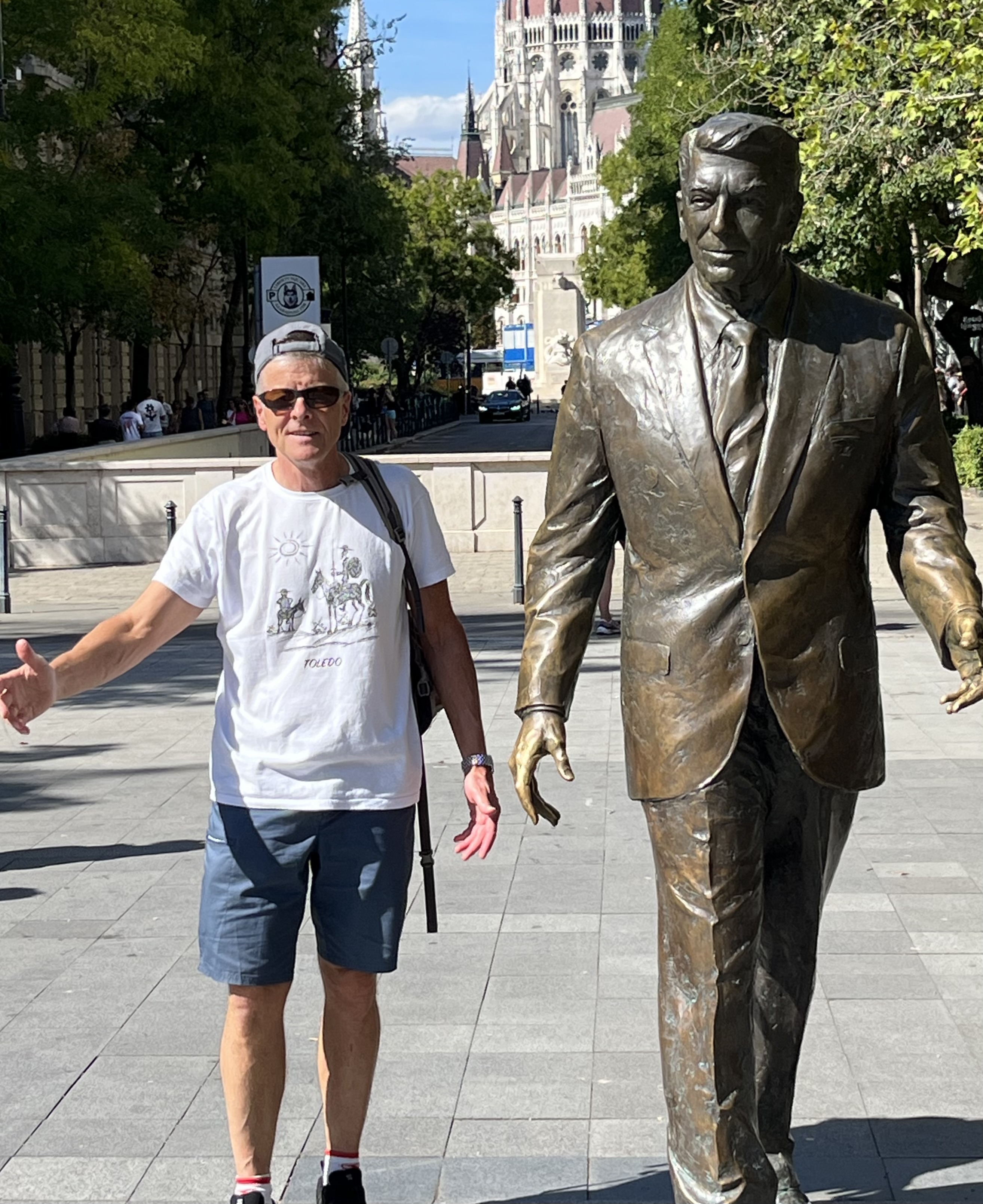
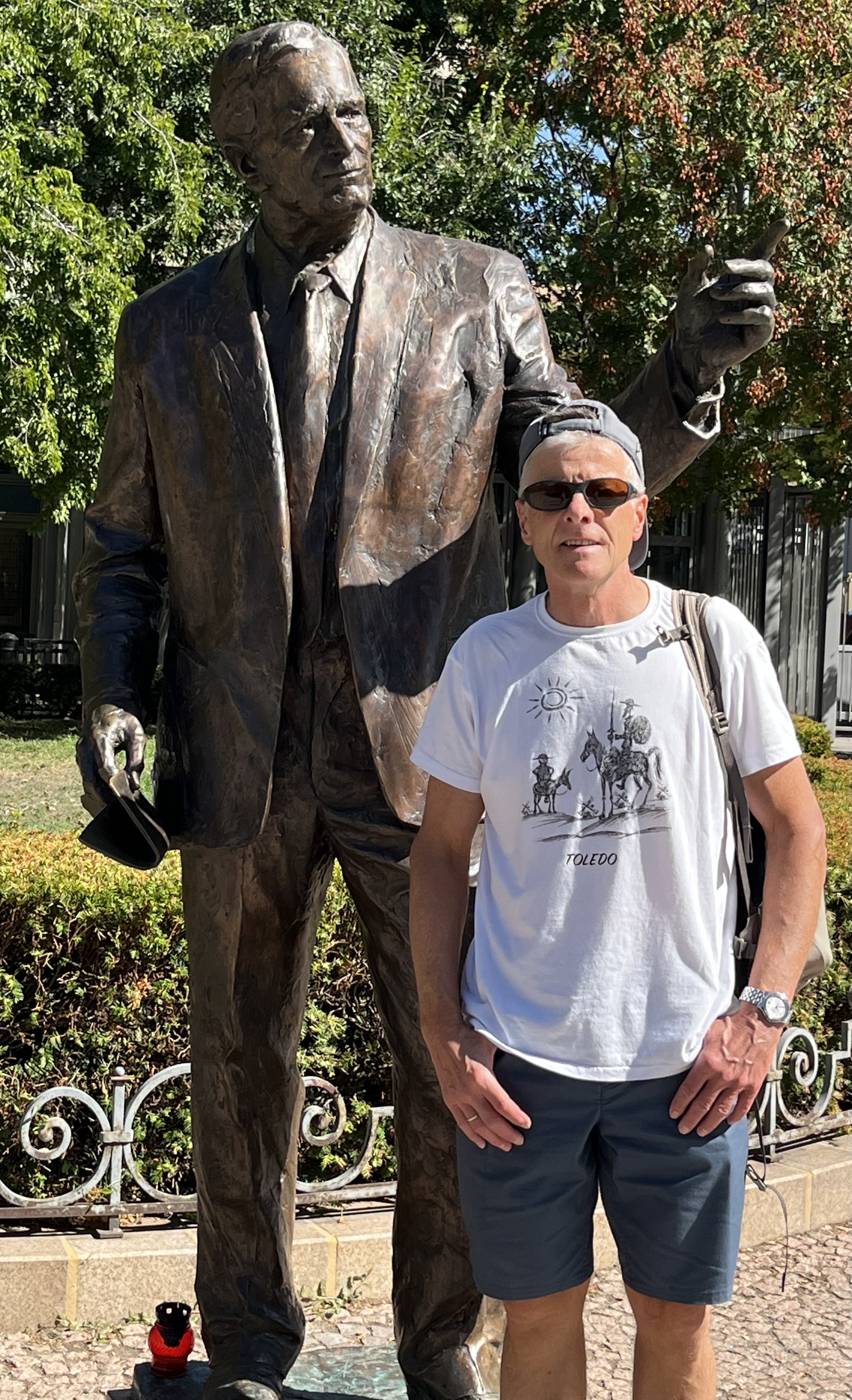
On the fittingly named Liberty Square, next to the highly fortified US Embassy in Pest, I ran into these two chaps who were very much involved in bringing the Iron Curtain down and thus also liberating Hungary:
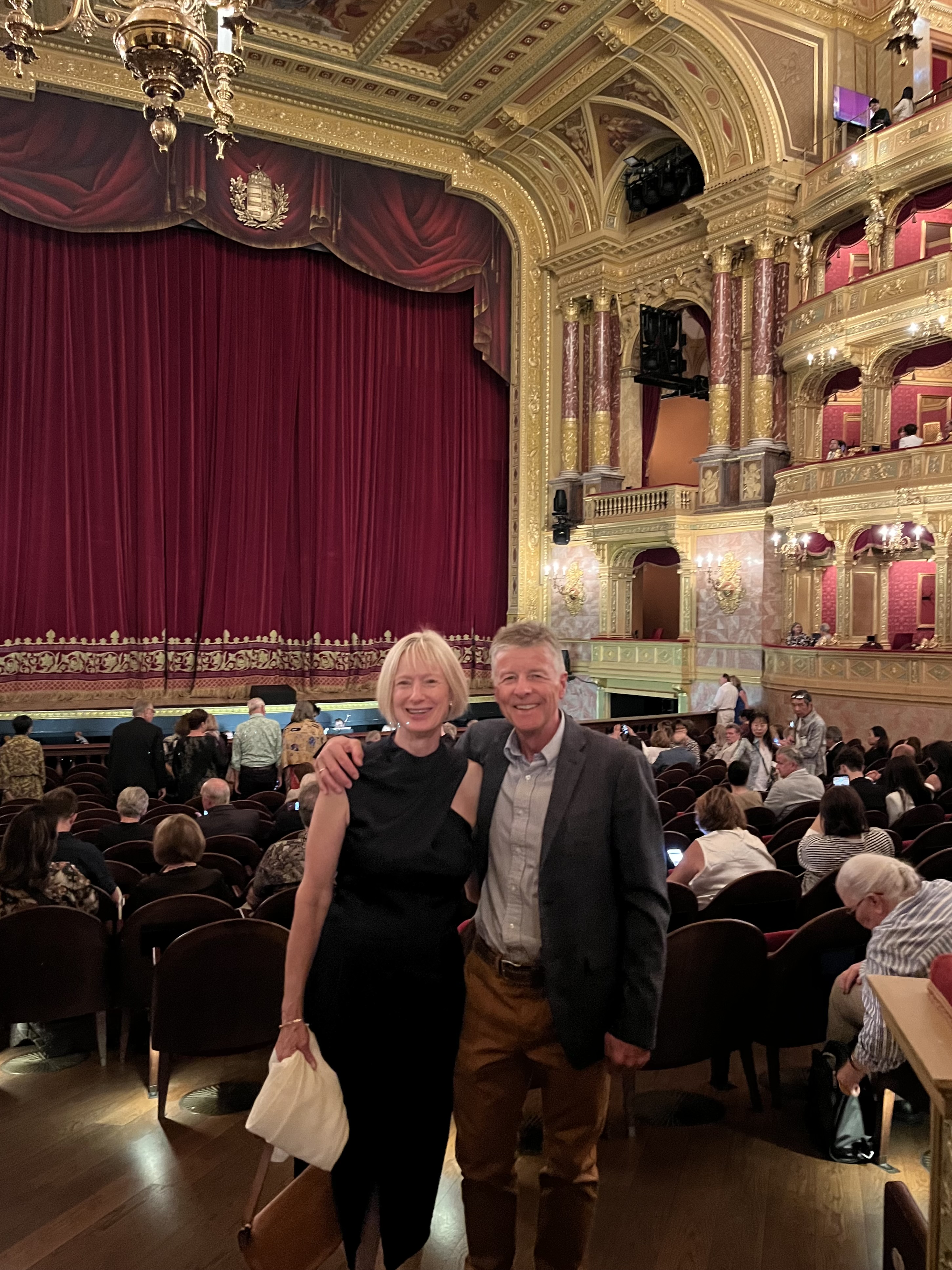
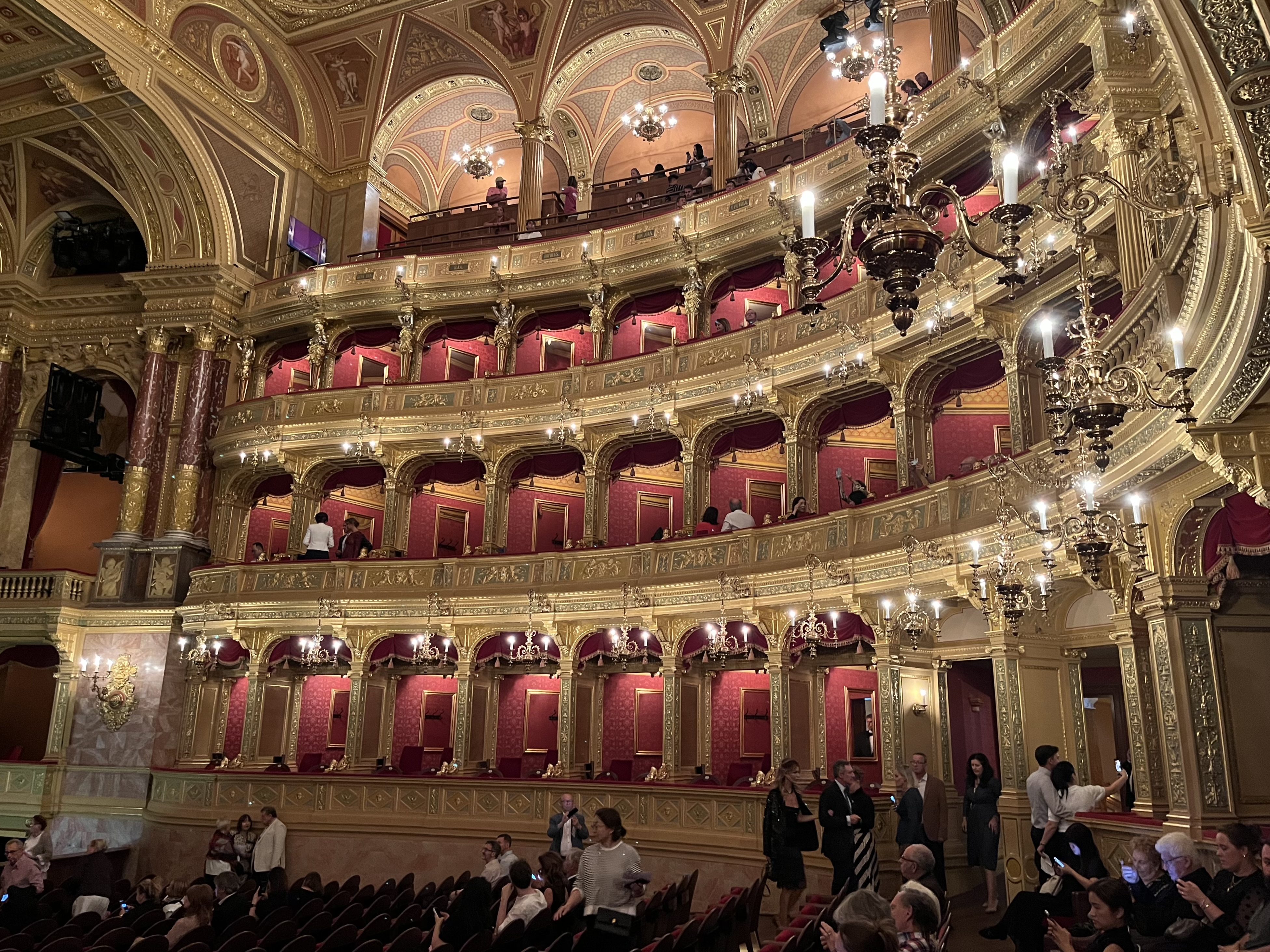
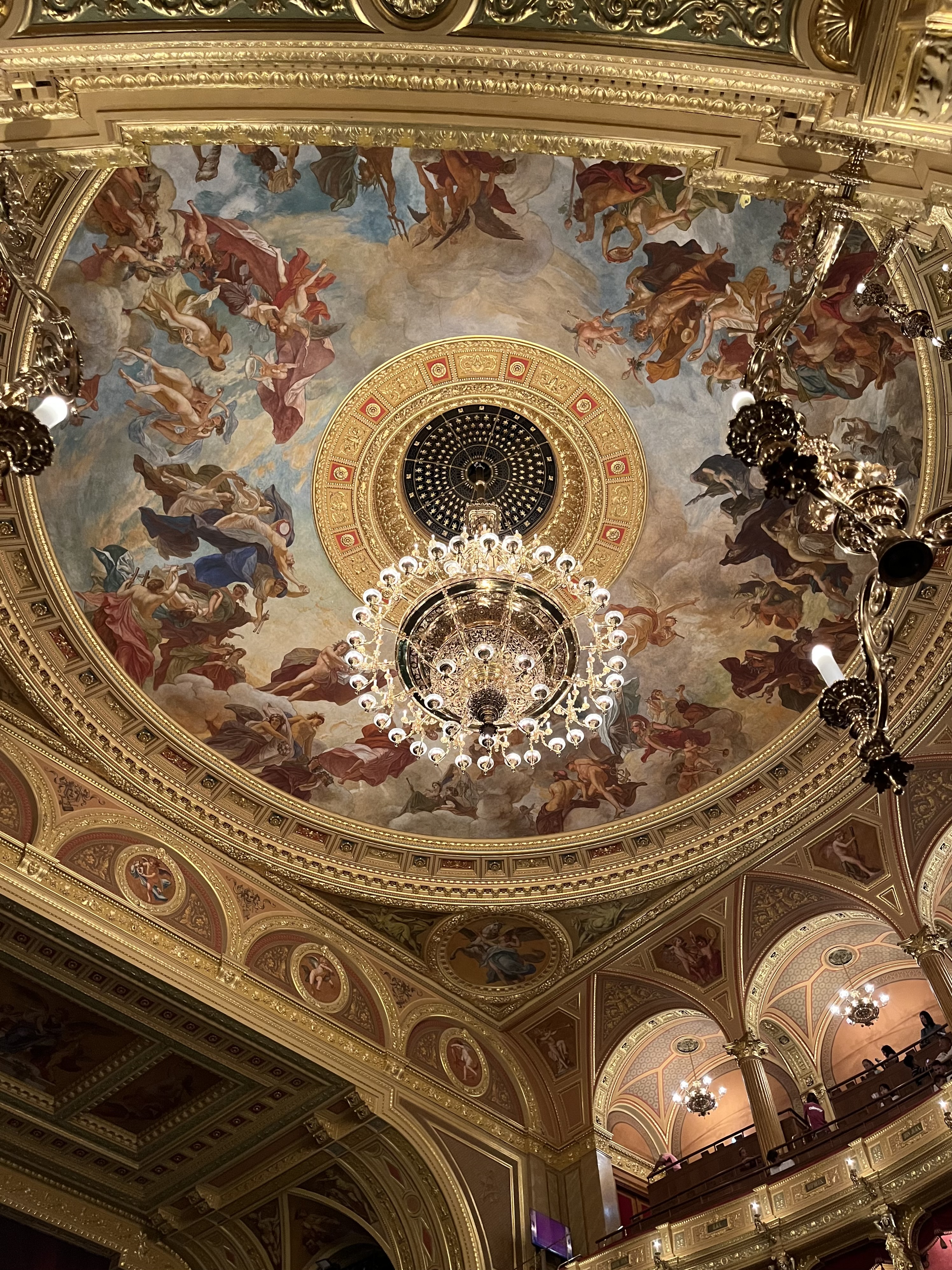
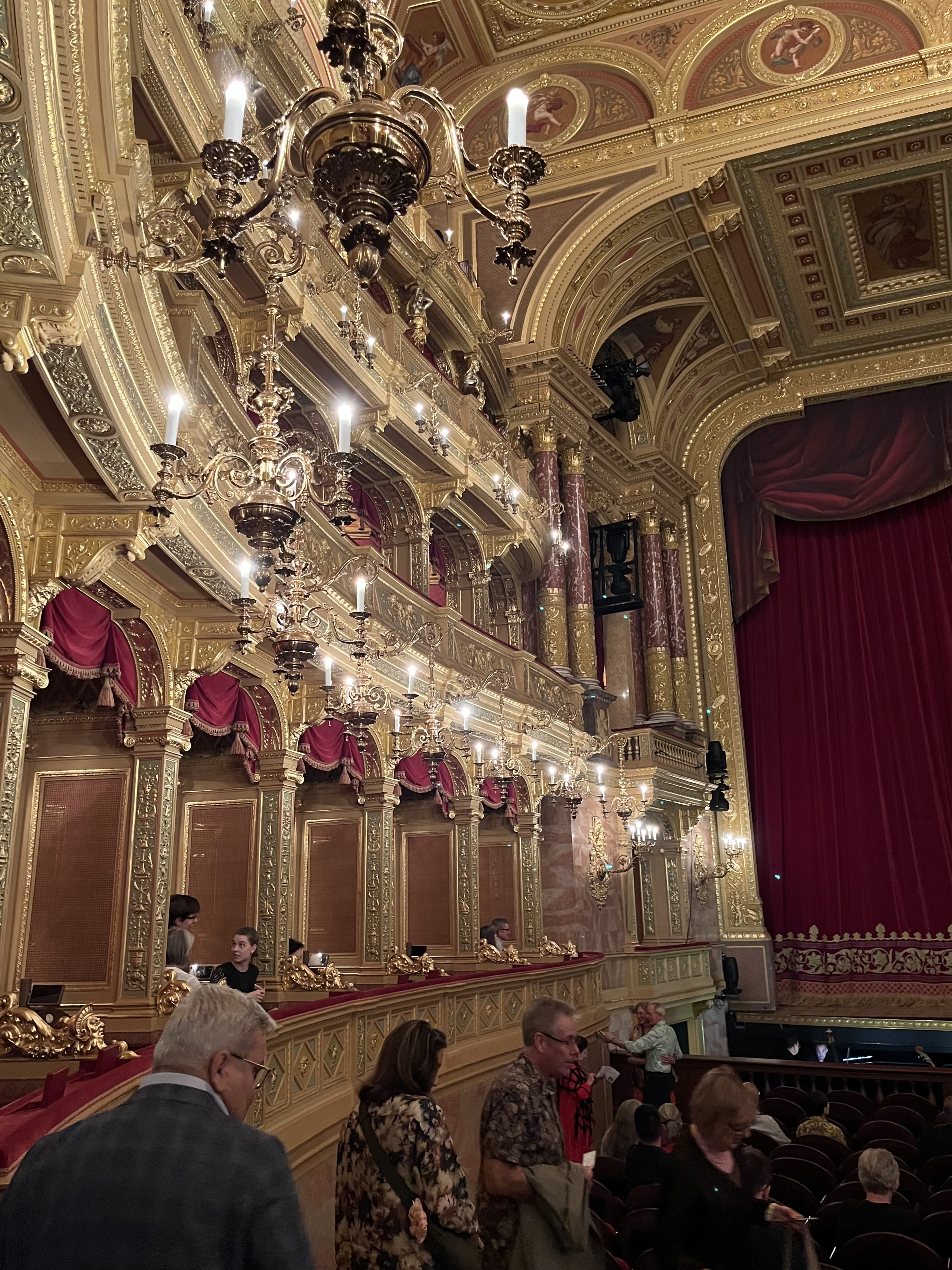
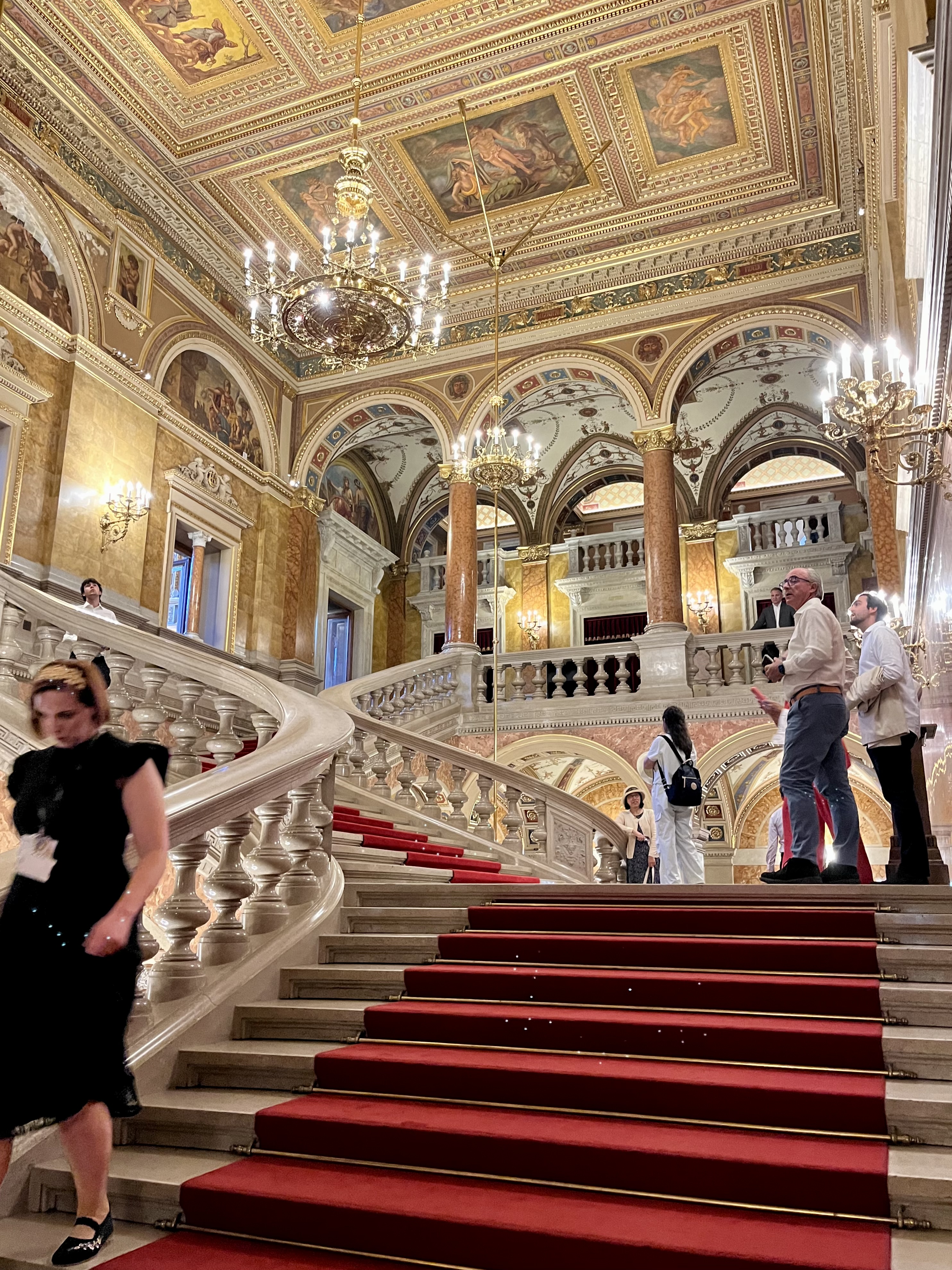
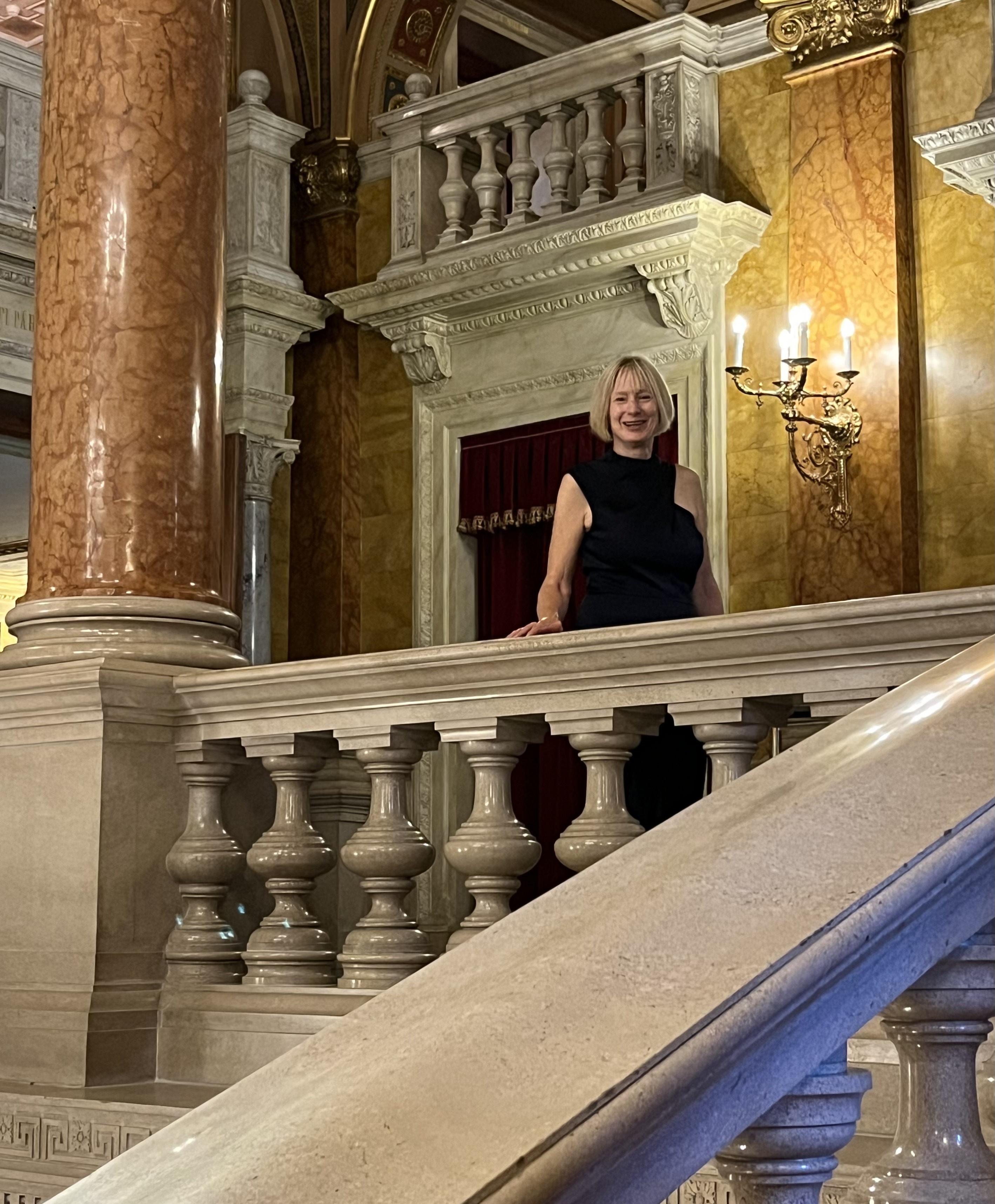
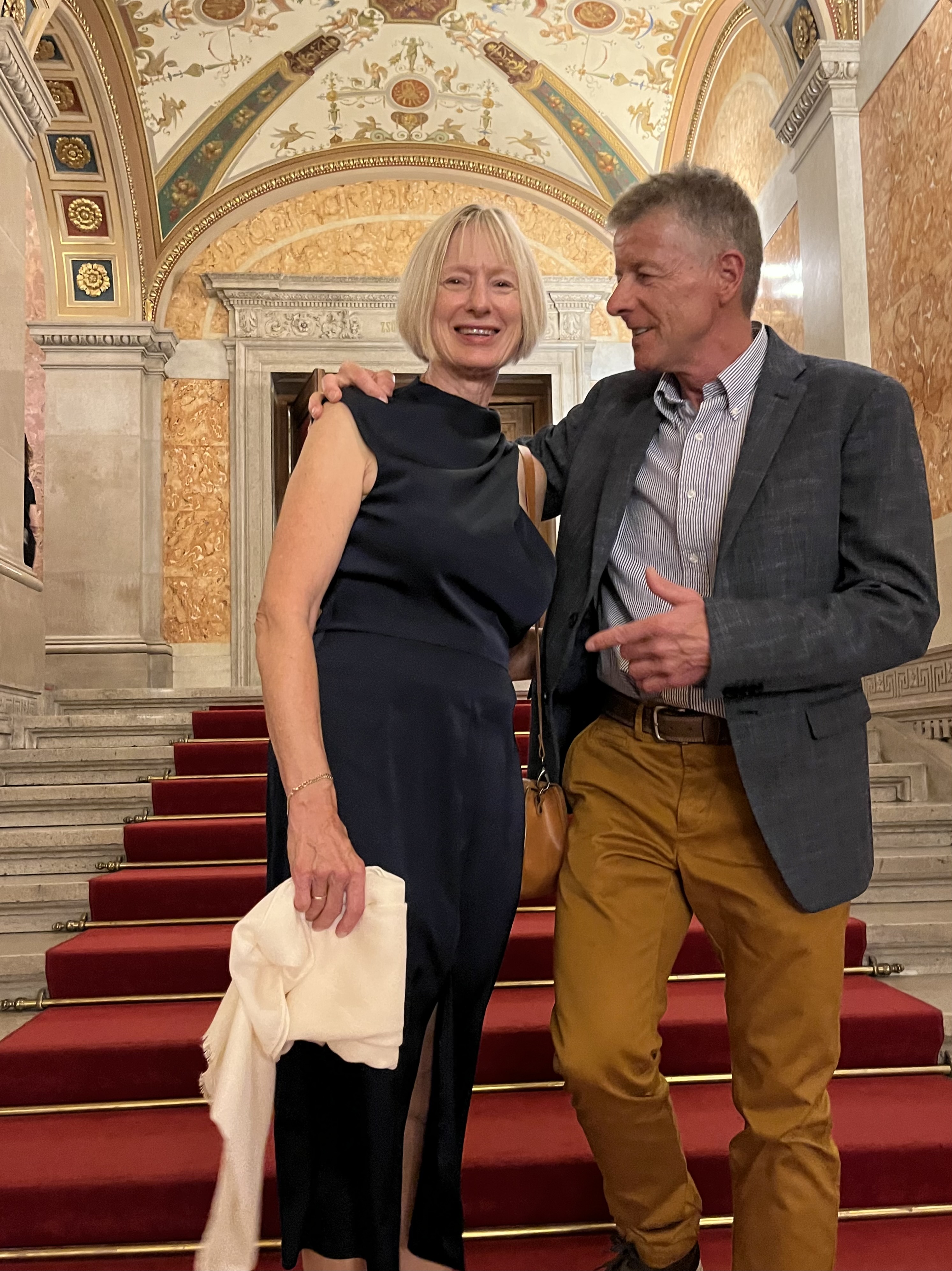
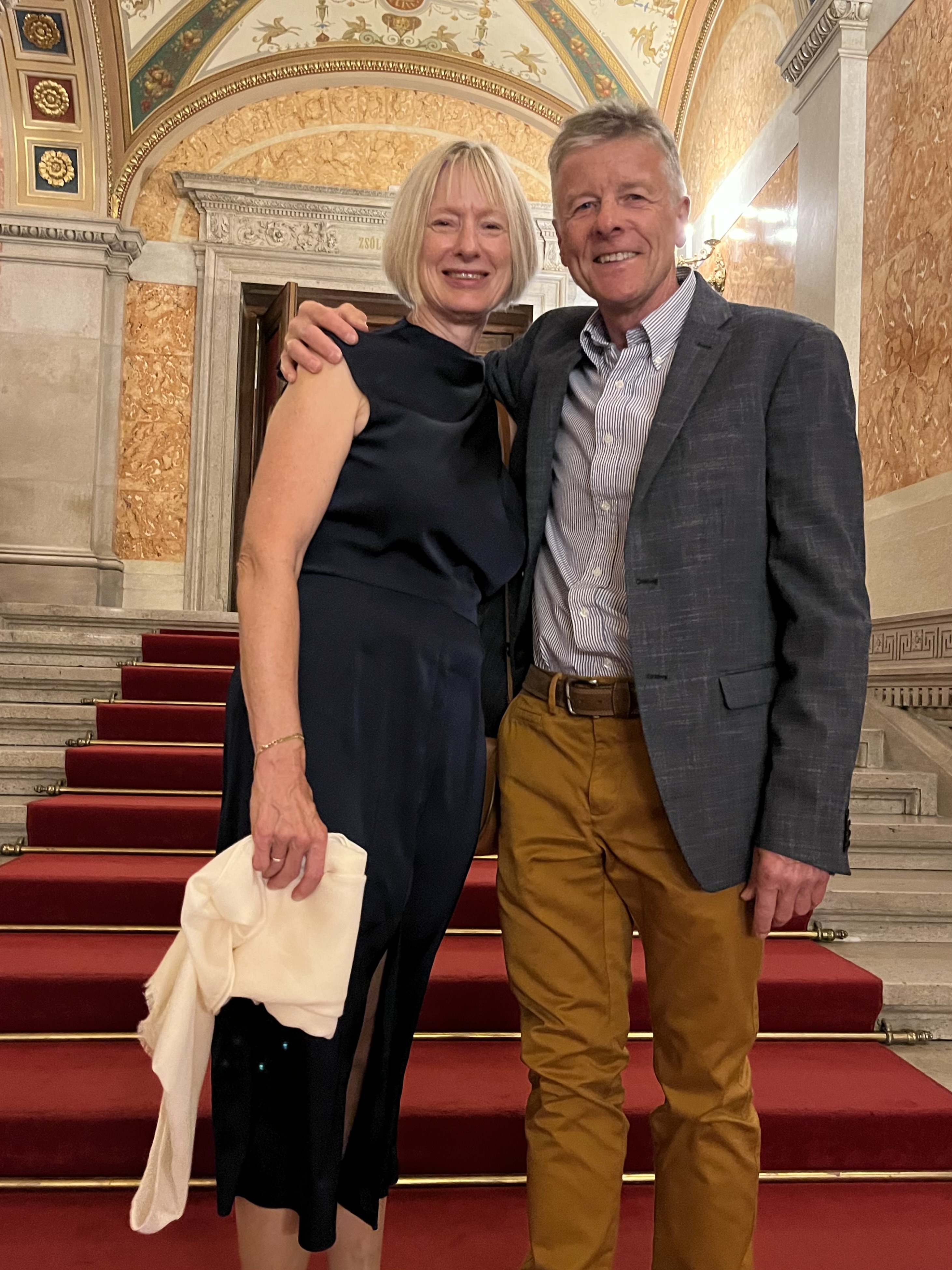
The highlight of our Budapest visit however was on our third and last night in Budapest, when we went to the Hungarian State Opera House for a performance of Mozart’s The Marriage of Figaro. The classic and grand interior of the Opera house was stunning, and we were glad to have brought our best clothing for this festive occasion, which made this memorable evening even more special. It was our first opera and I’d never thought I would ever visit an opera, yet this light and playful comedy with Mozart’s pleasing dynamic music, was very enjoyable and an easy entry for Opera beginners like us. It was also a perfect way to say goodbye to Budapest!
Vienna, or Wien as it is named in Austrian’s native German
Vienna, the charming capital of Austria, and former seat of the Habsburg Empire, is also the capital of classical music, as it is the place where Mozart, Beethoven, Schubert, Brahms, the waltz king Strauss and many others composed their memorable music. Vienna also is the home of countless elegant palaces and cafes filled with chocolate rich cakes and pastries. It is the place Lauri and the rest of my family, as well as many of our friends have been to, and now, it was finally my turn to experience this culturally rich place as well.
We had four nights and three full days planned, and stayed in the Schottenfeldgasse district west of the main center. As usual, having done sufficient research ahead of the visit, it provided us with a very good location as our base, good restaurants and public transportation within short walking distance, and a quieter, mostly residential neighborhood.
As in Budapest, the purchase of public transport daily passes was the best deal for us. While we were very impressed with the public transportation network in Berlin a year ago, we felt like Vienna’s was even better, offering even more plentiful and frequent options. In Budapest we only used the transit system occasionally, and never used their metro/subway.
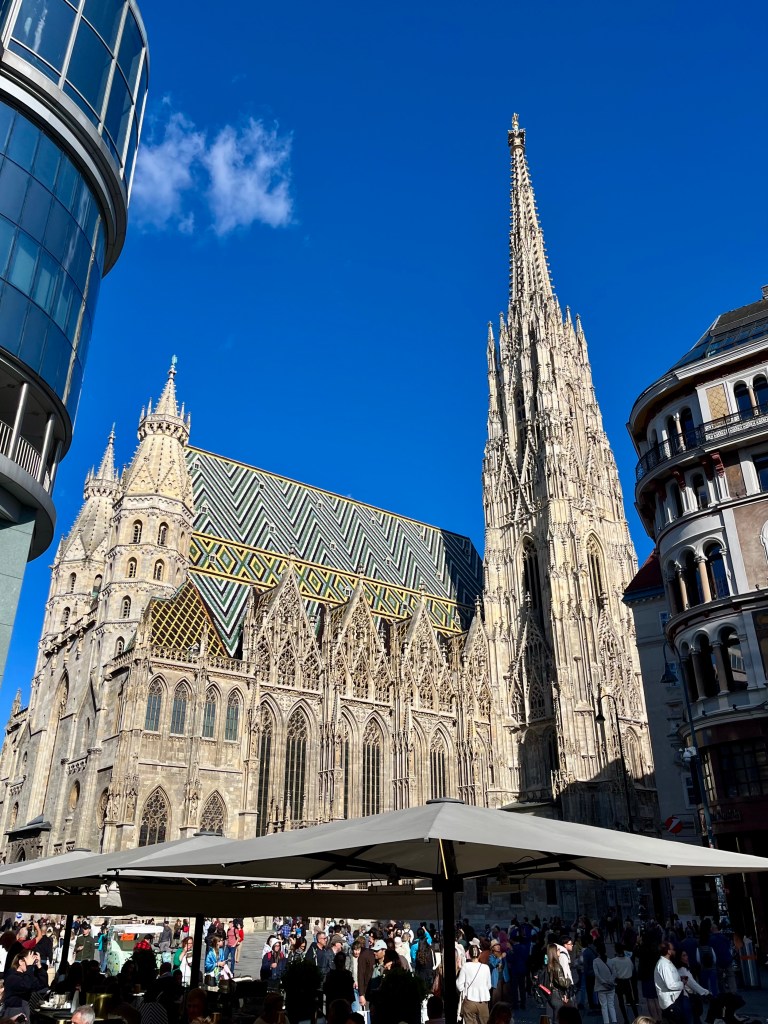
On the afternoon upon arriving in Vienna, we took the subway into the city center. Our first sight when we rolled up on the escalator at Stephansplatz, was the big Stephansdom in the hyper center of Vienna:
From there, we went into our first Viennese Cafe, for a good cup of tea and a cake:
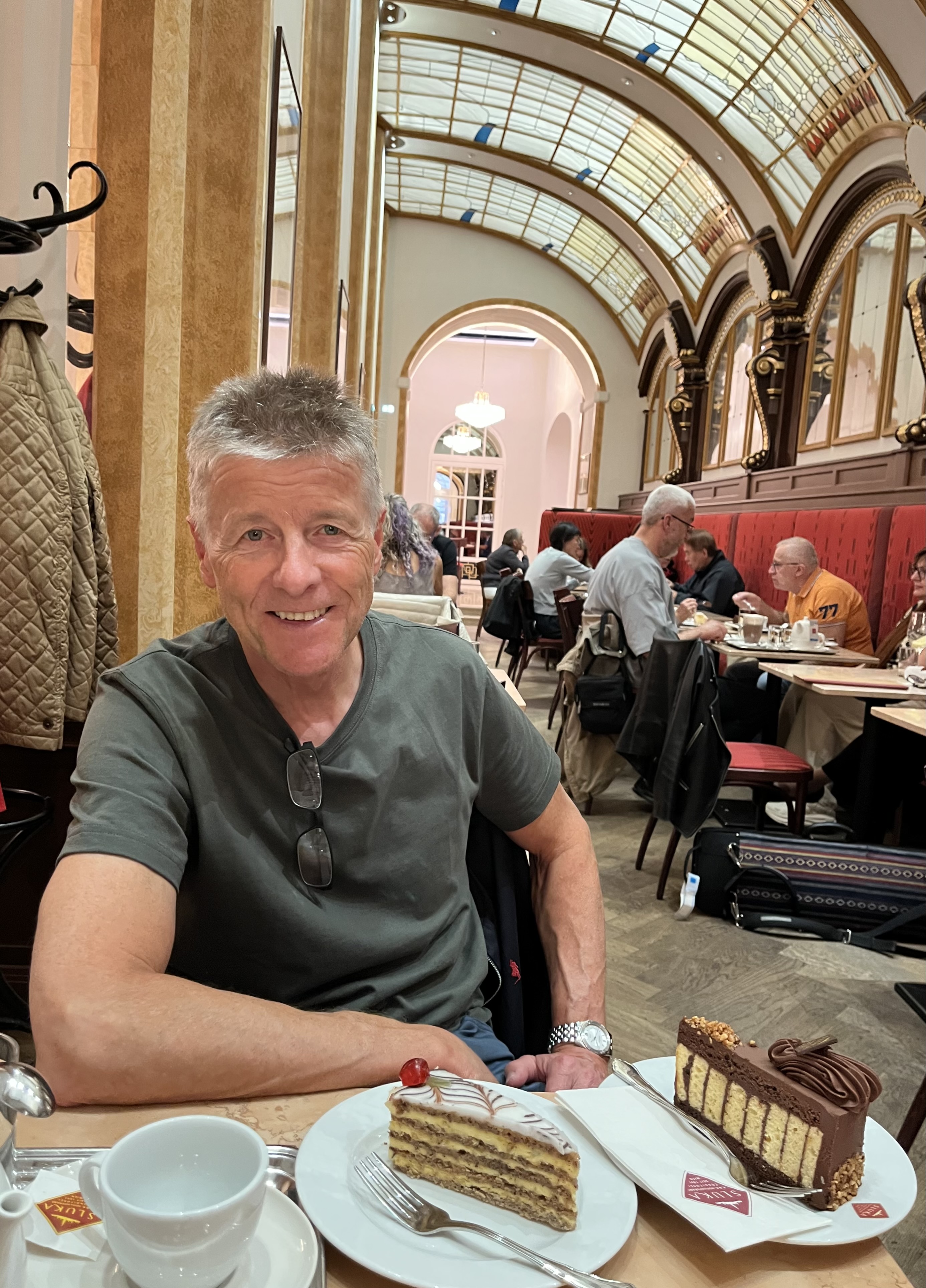
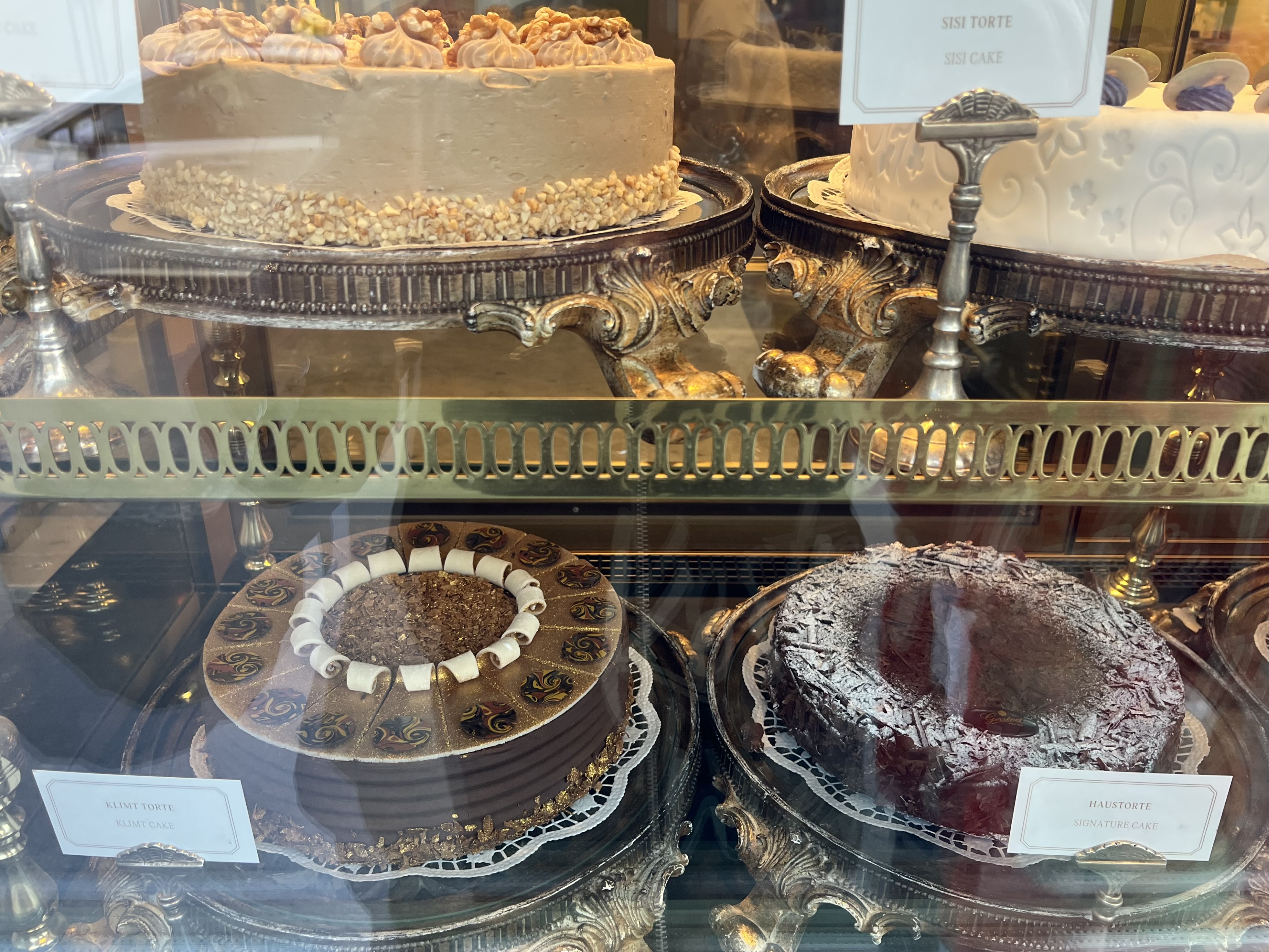
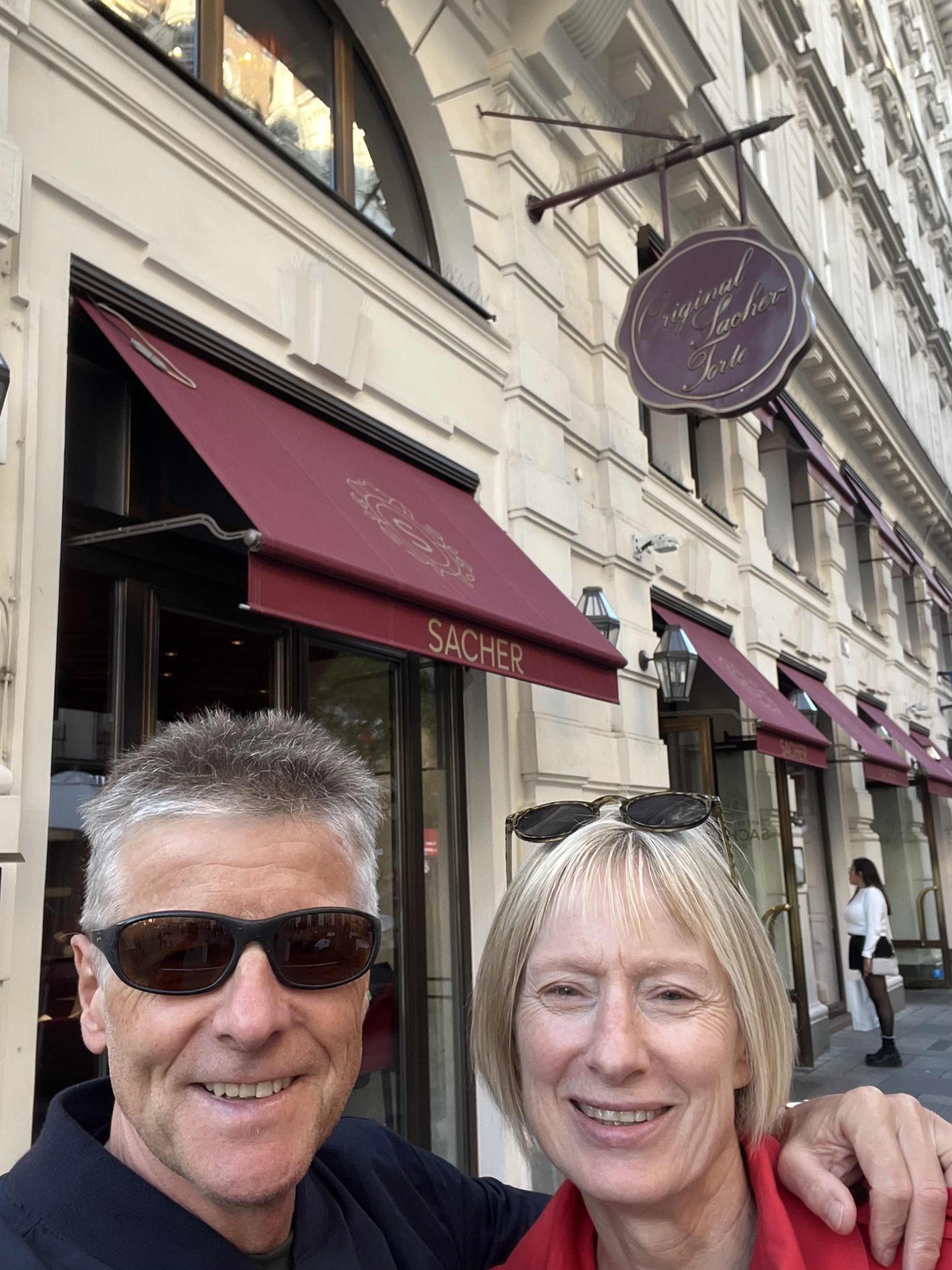
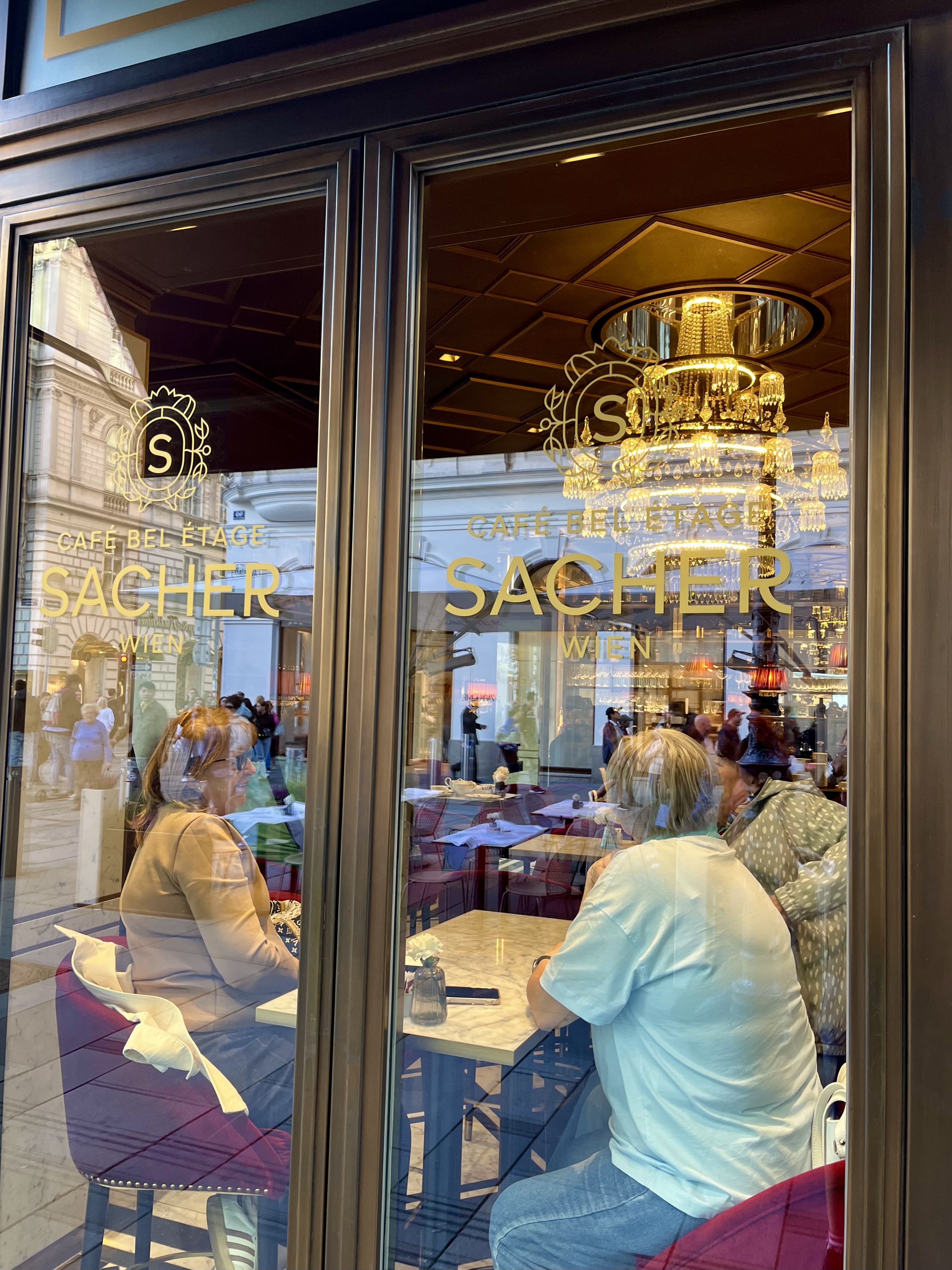
This, was our first, but not our last, Vienna Cafe visit during our stay. In fact we went every afternoon, so four times in a row, total! Below is the Cafe Sacher, home of the famous Sacher torte:
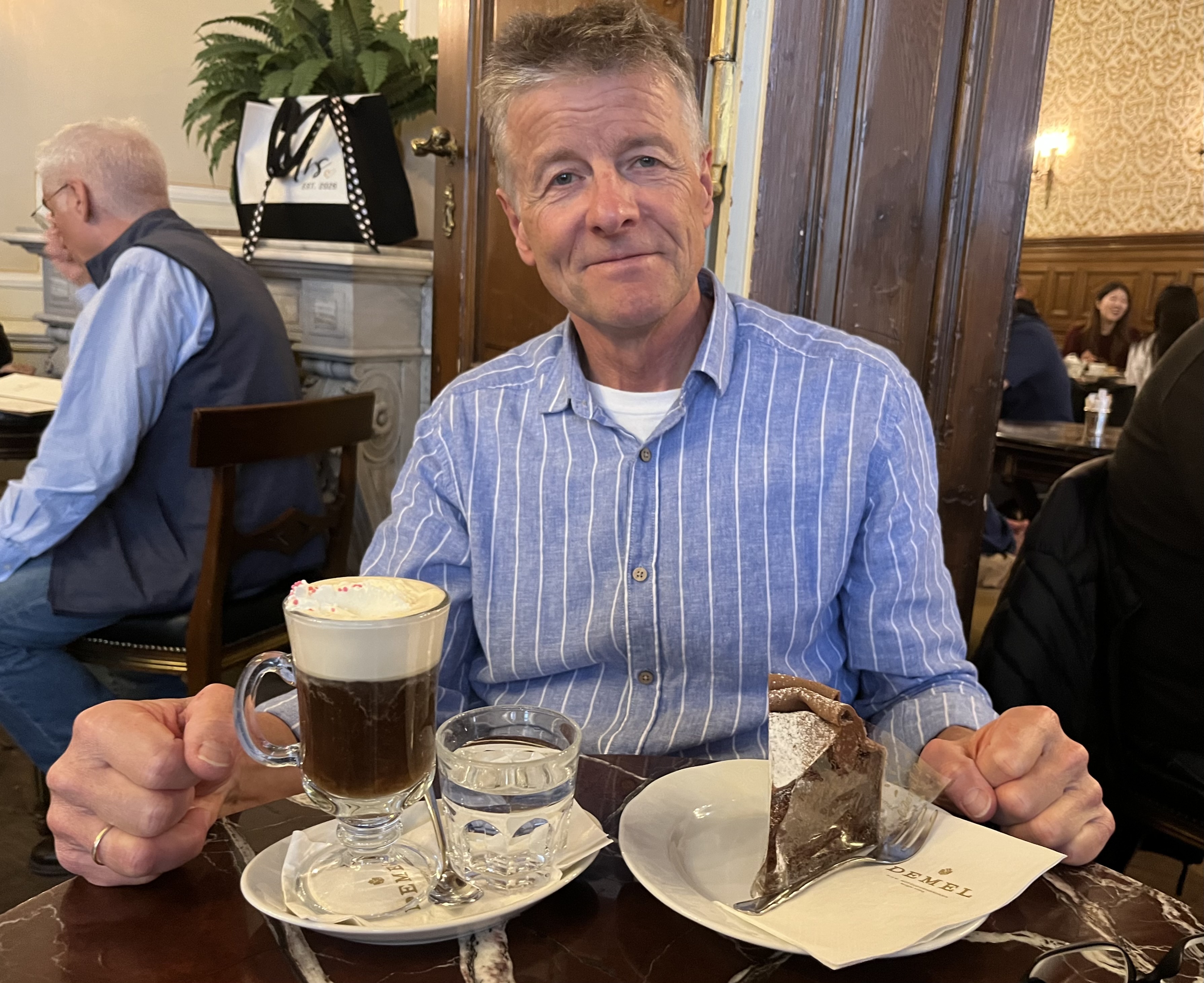
We ended up twice eating at the equally charming and traditional Cafe Demel:
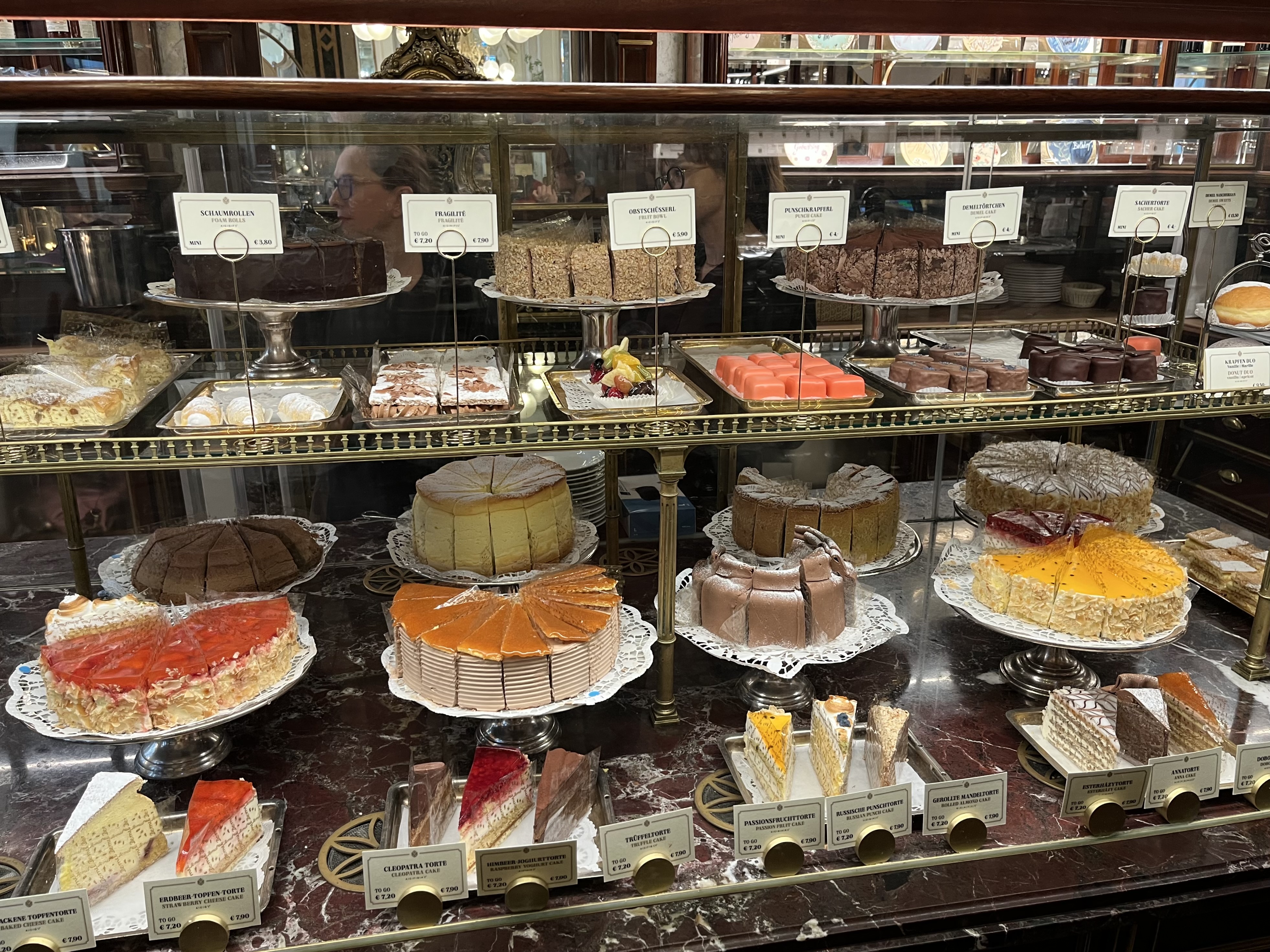
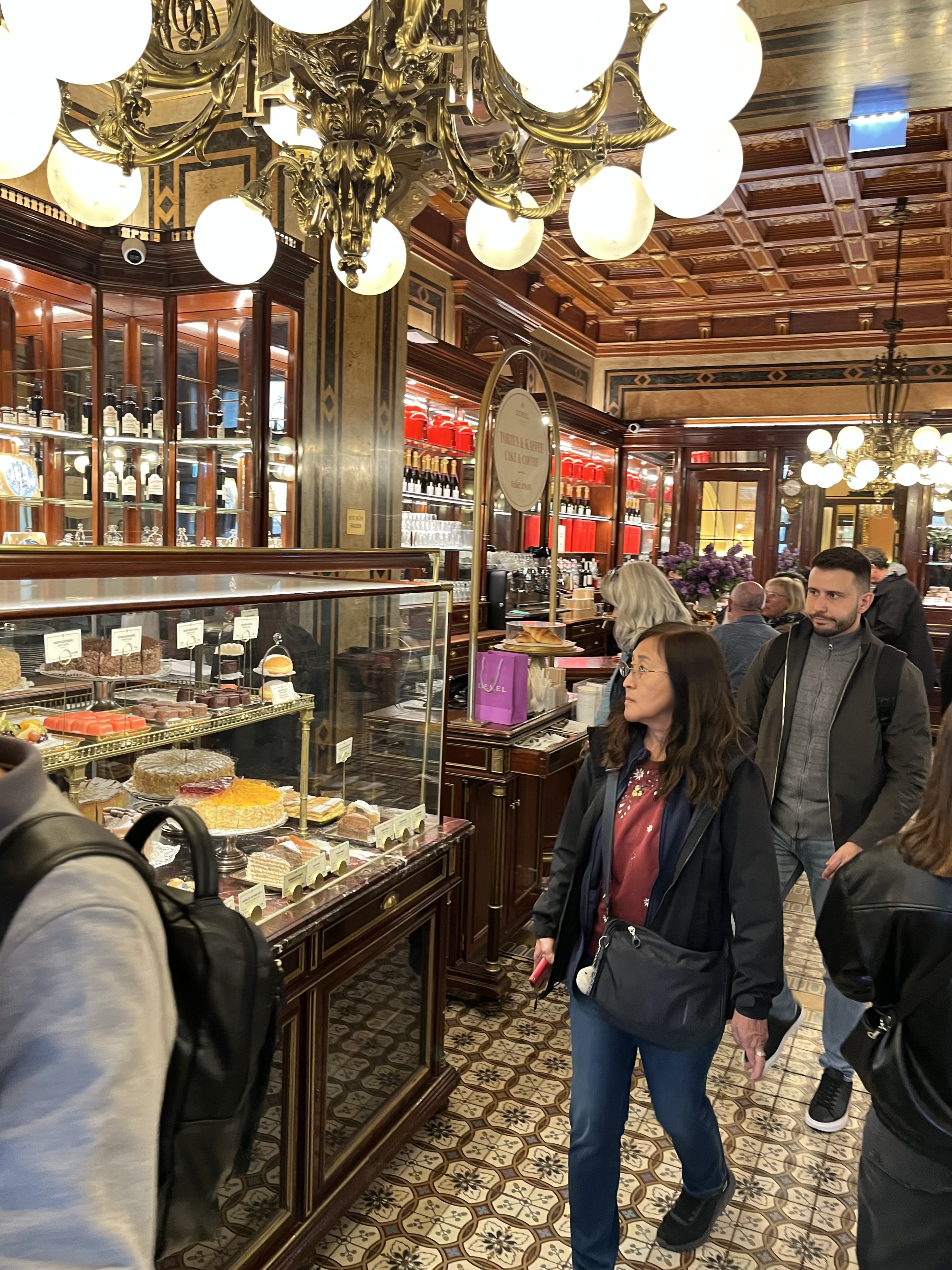
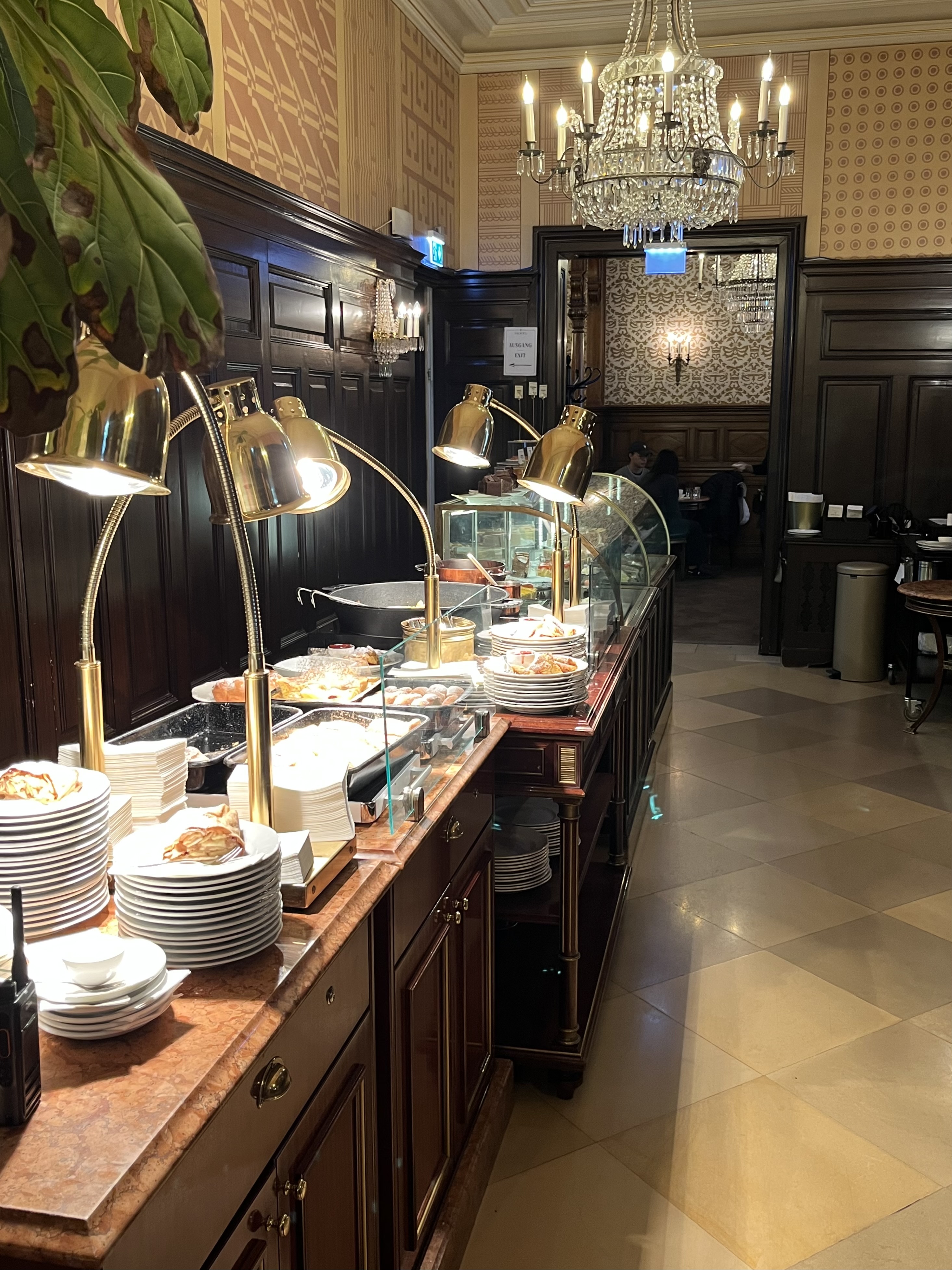
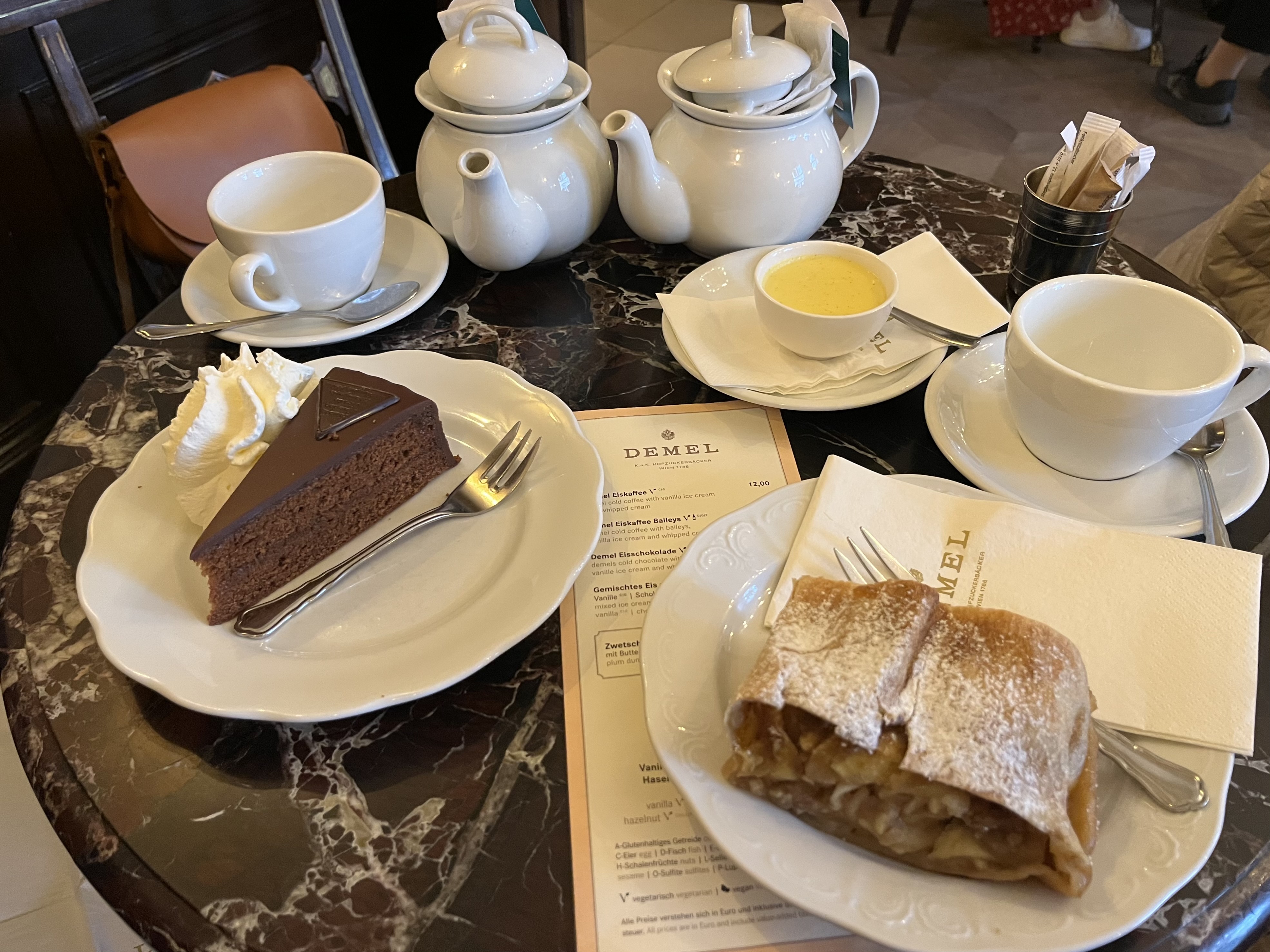
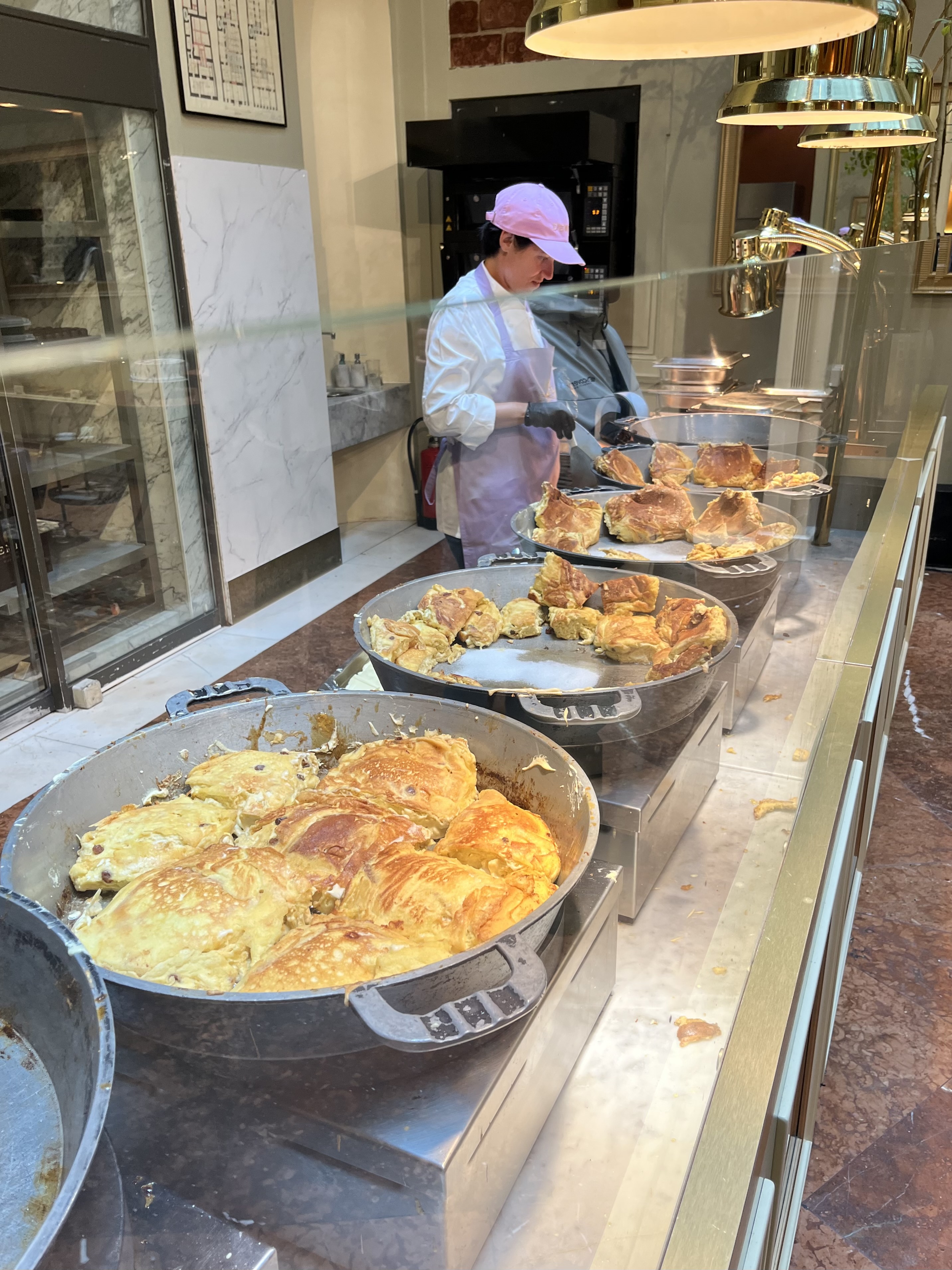
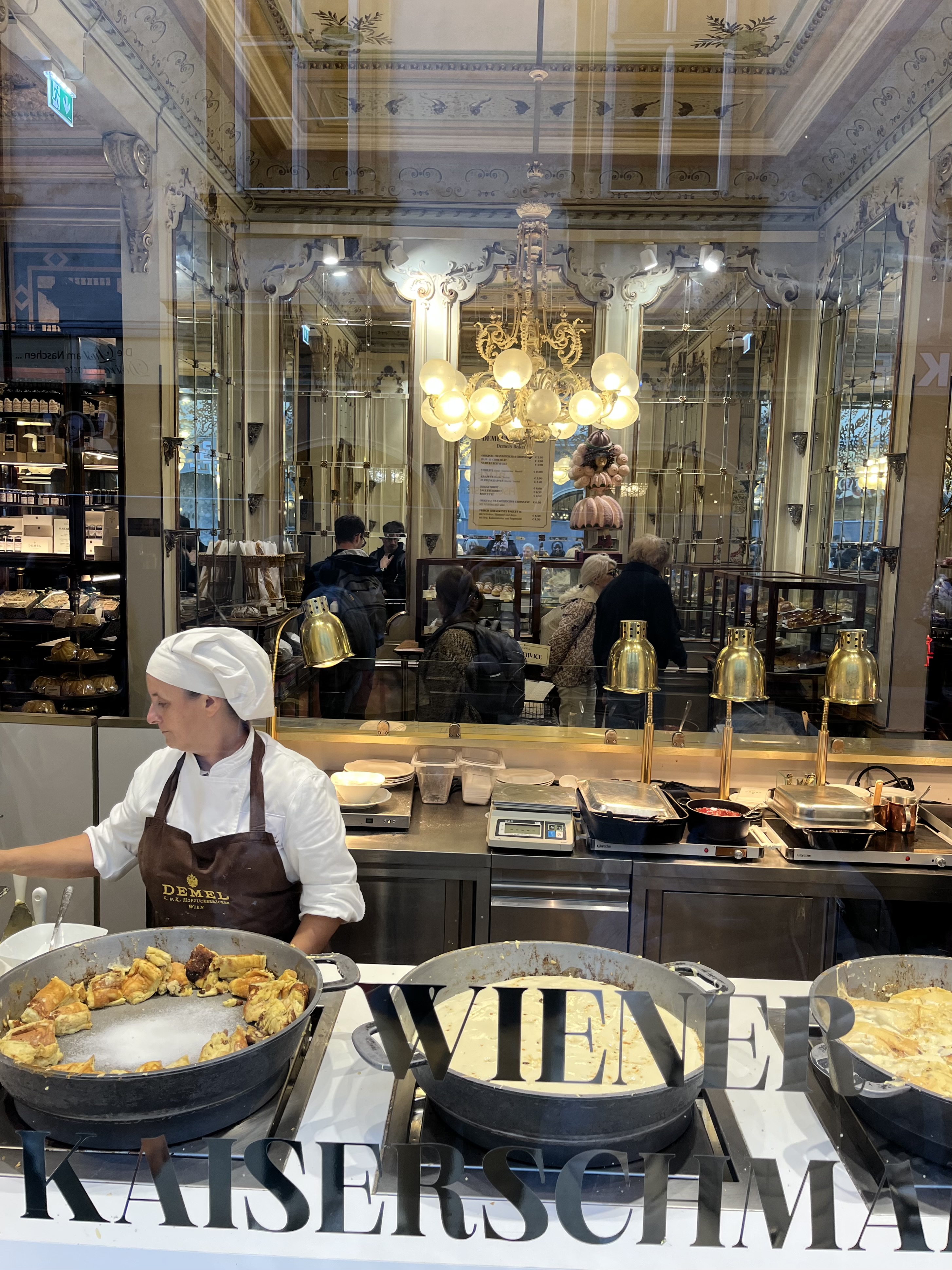
Demel, another Old Viennese favorite, is, besides their pastries, also famous for their Kaiserschmarren, which is a delicious version of upgraded Dutch Babies, shown here in the baking process from large to ever smaller and finer pieces:
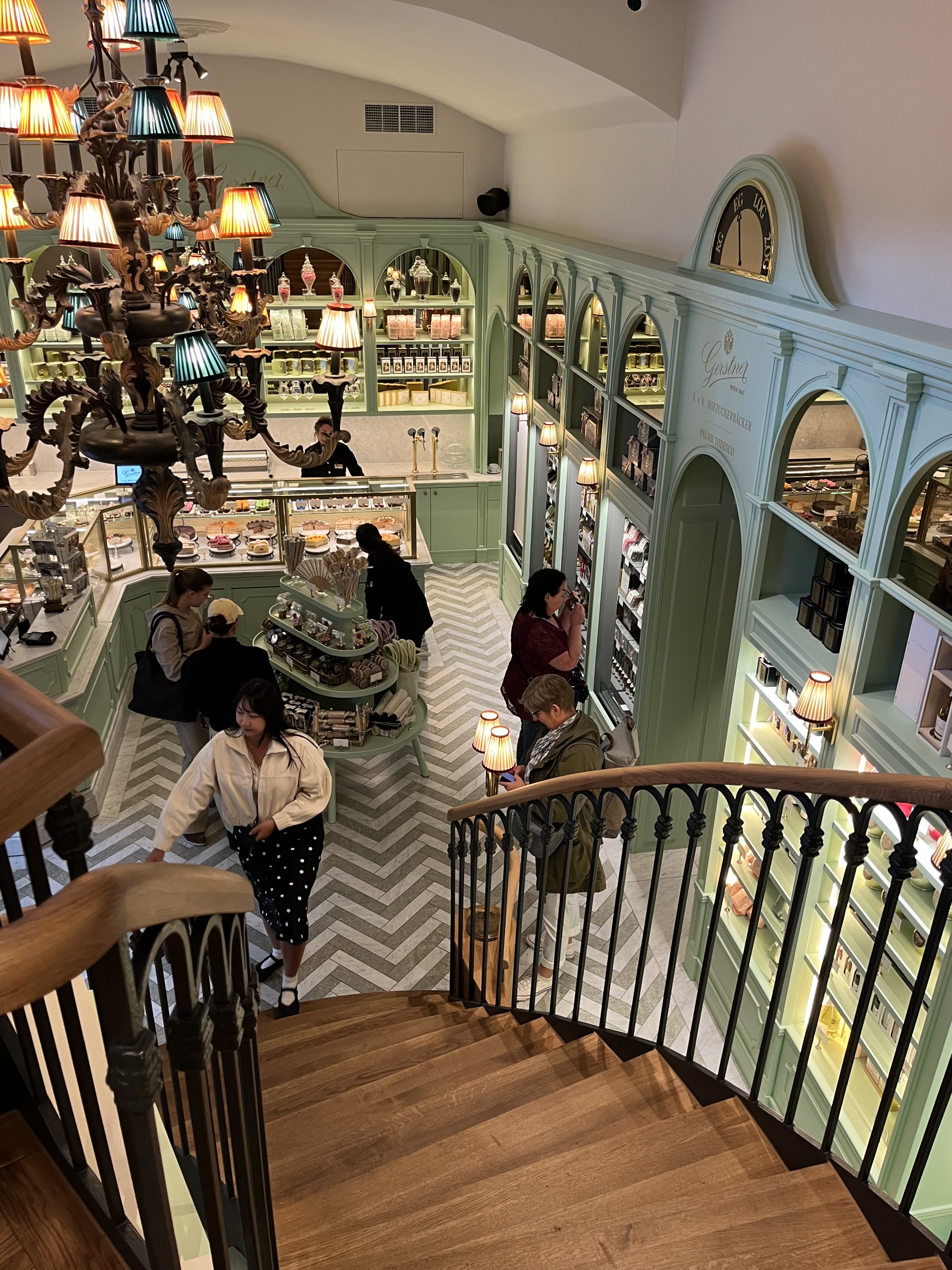
And here K & K Hofzuckerbaecker, another fine and fancy Viennese Cafe for tea and exquisite cake.
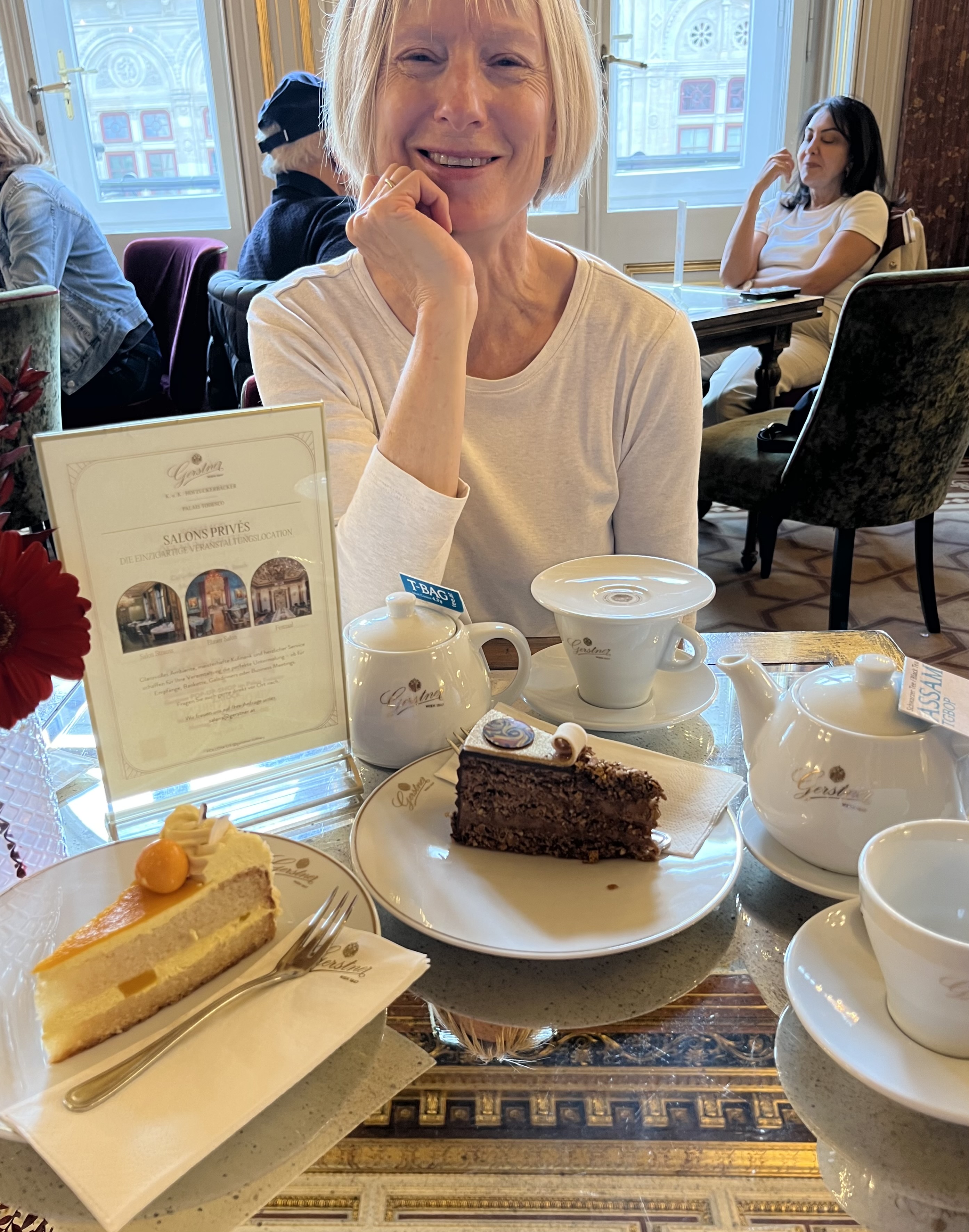
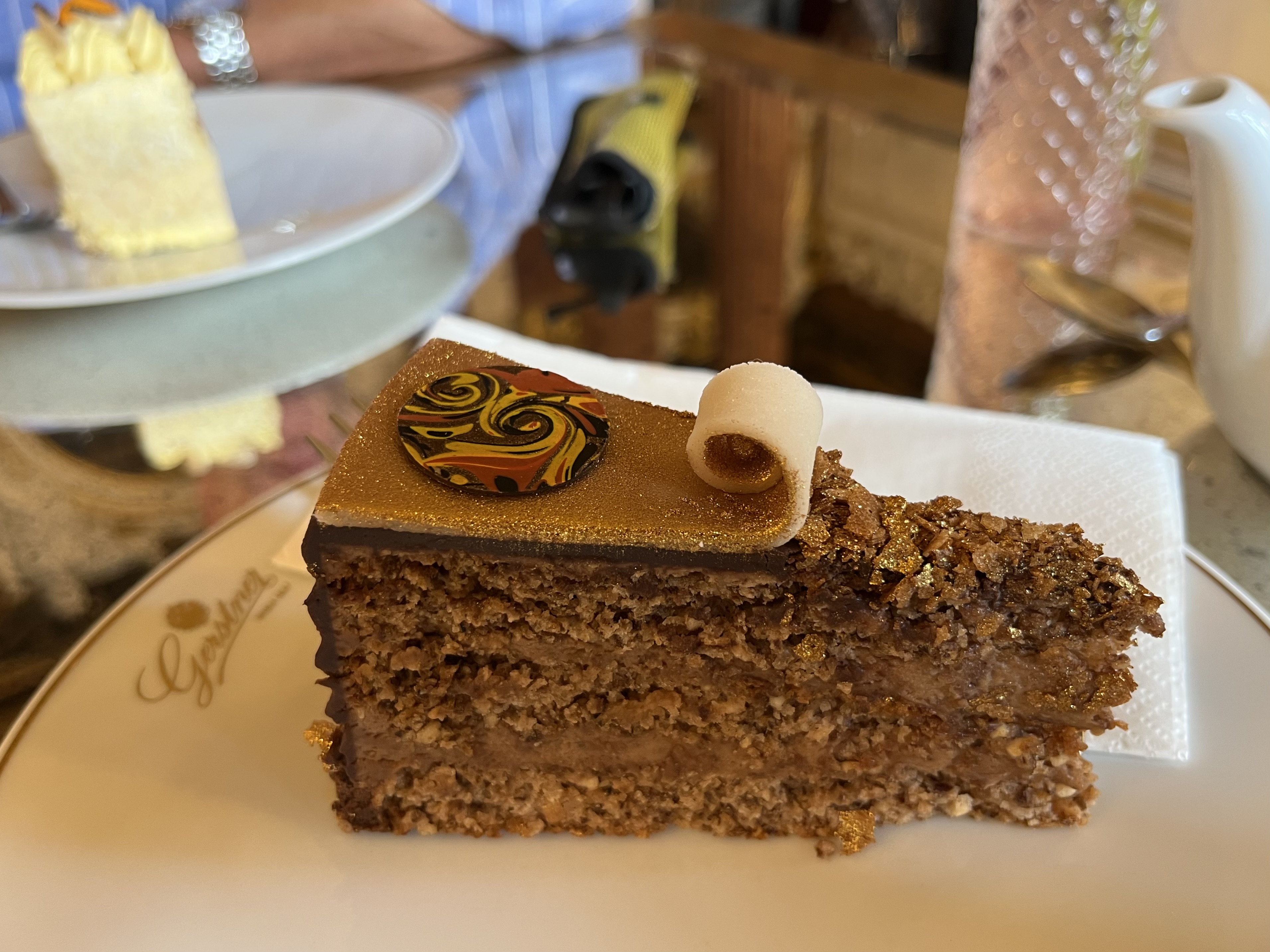
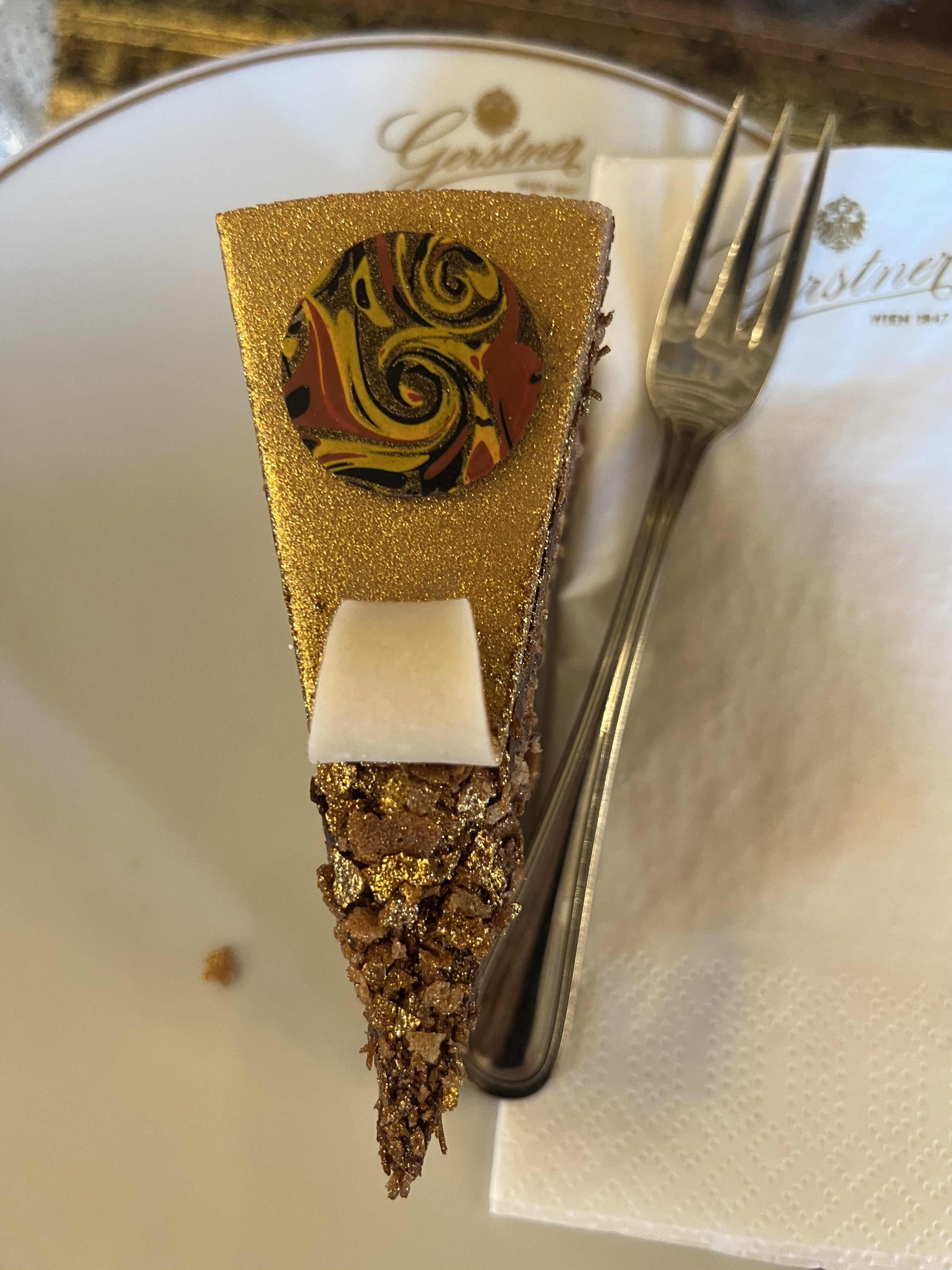
Not sure why I ended up in most of these cafe pictures, but as you can see, Lauri is still exuberantly smiling during our fourth tea and cake session, while I was long done with this fancy sweet cake thing and by that time, rather would have had a Wiener Wuerstel and Bier. And yes, for dinner we ate more nutritious, though still typical, Viennese:
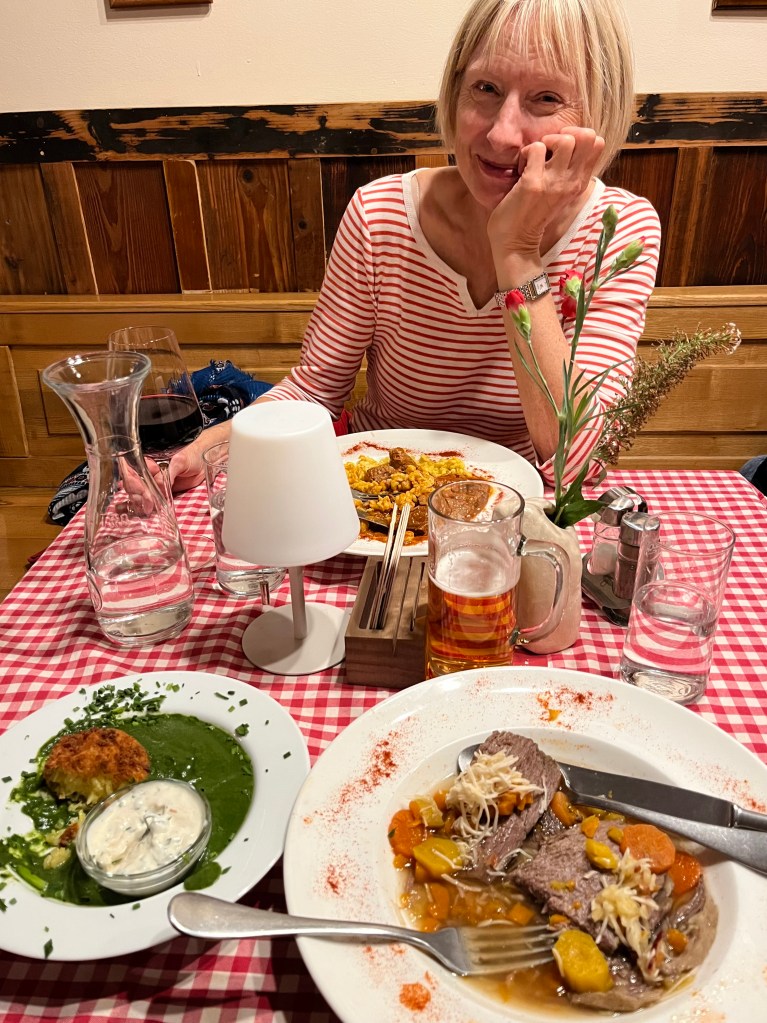
Here Lauri had a Spaetzle dish, while I had Wiener Tafelspitz with spinach.
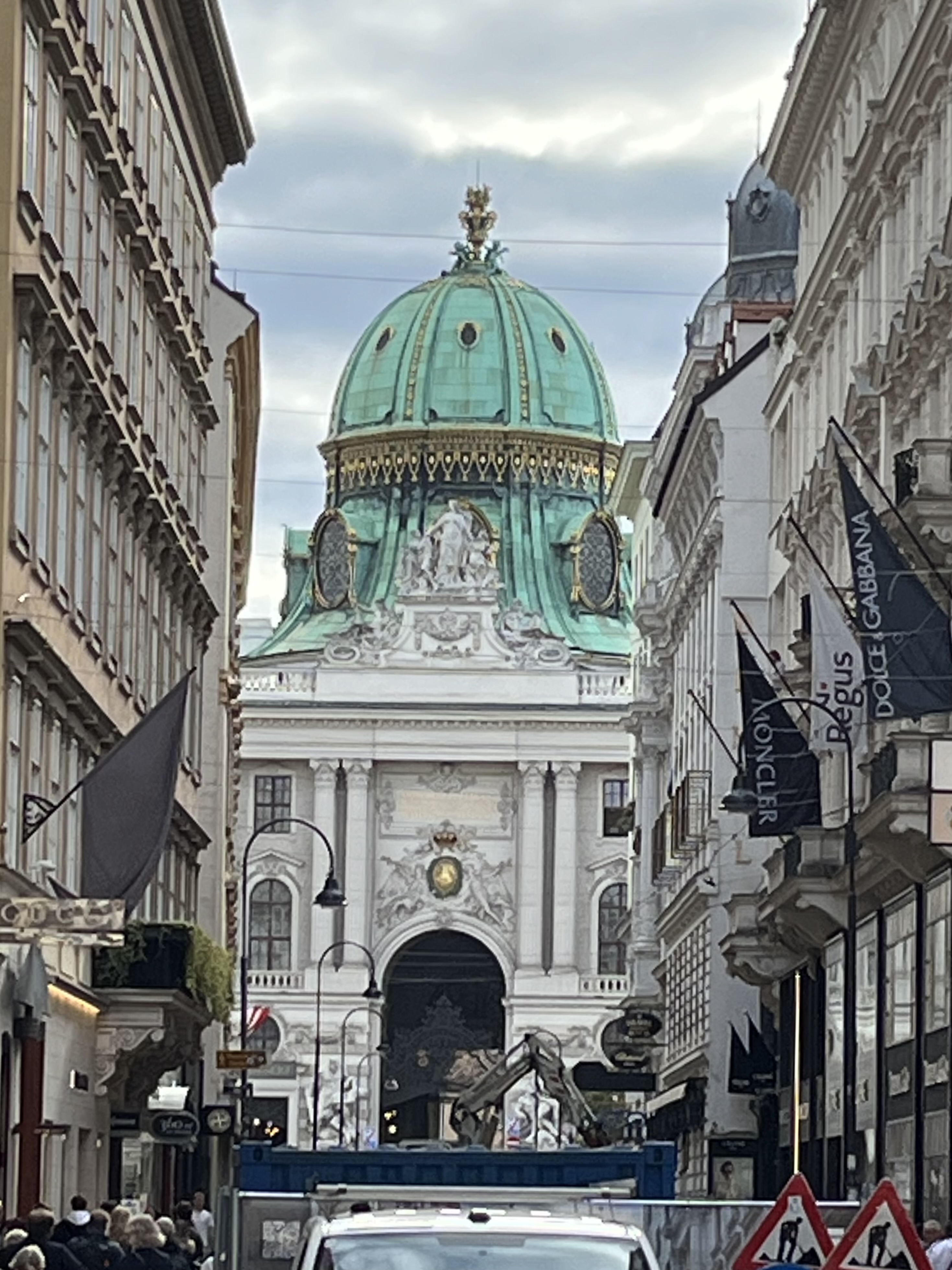
Time to stretch the legs and move on from the eating pictures! Here are some impressions from Vienna’s beautiful and immaculate city center:
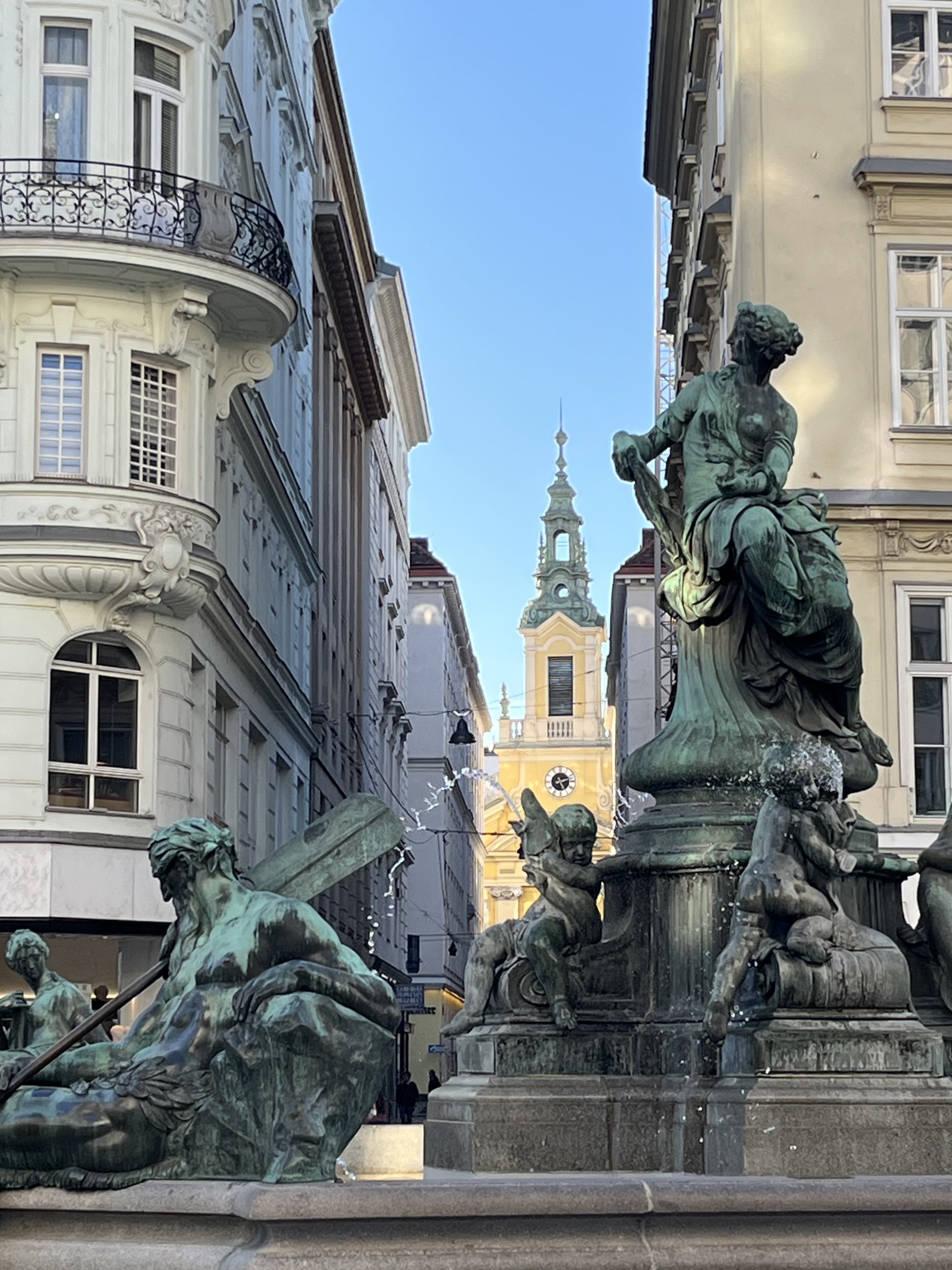
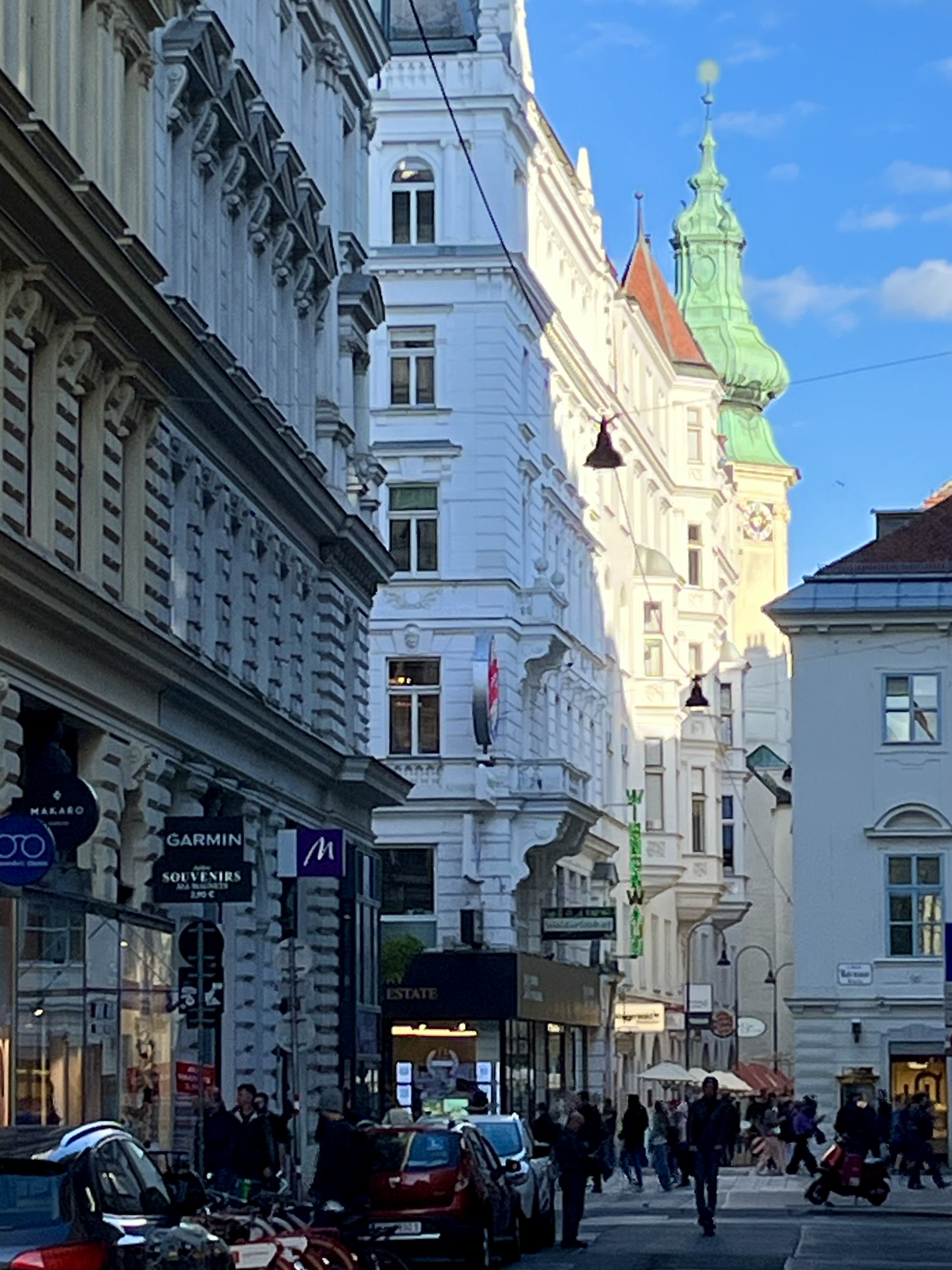
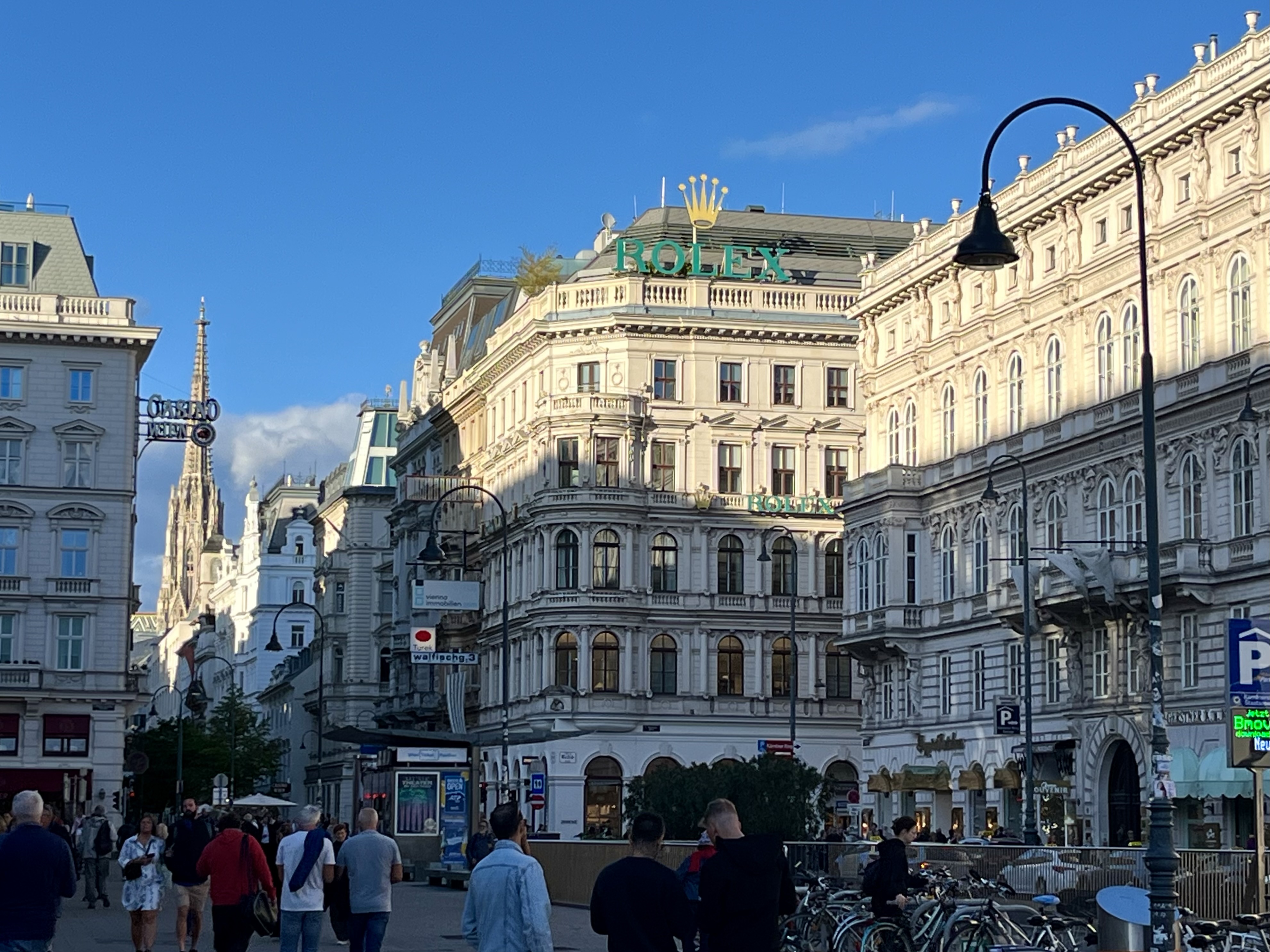
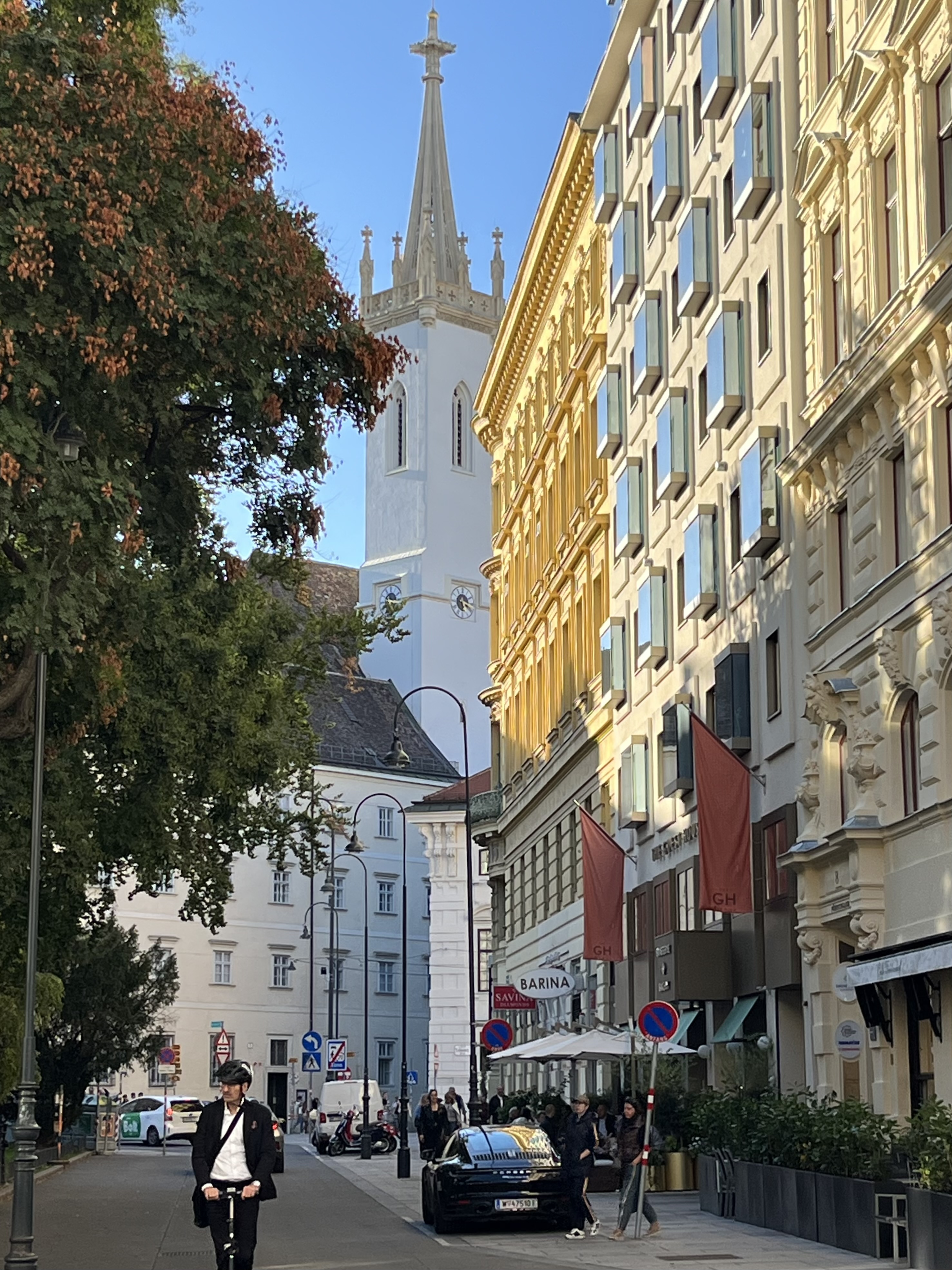
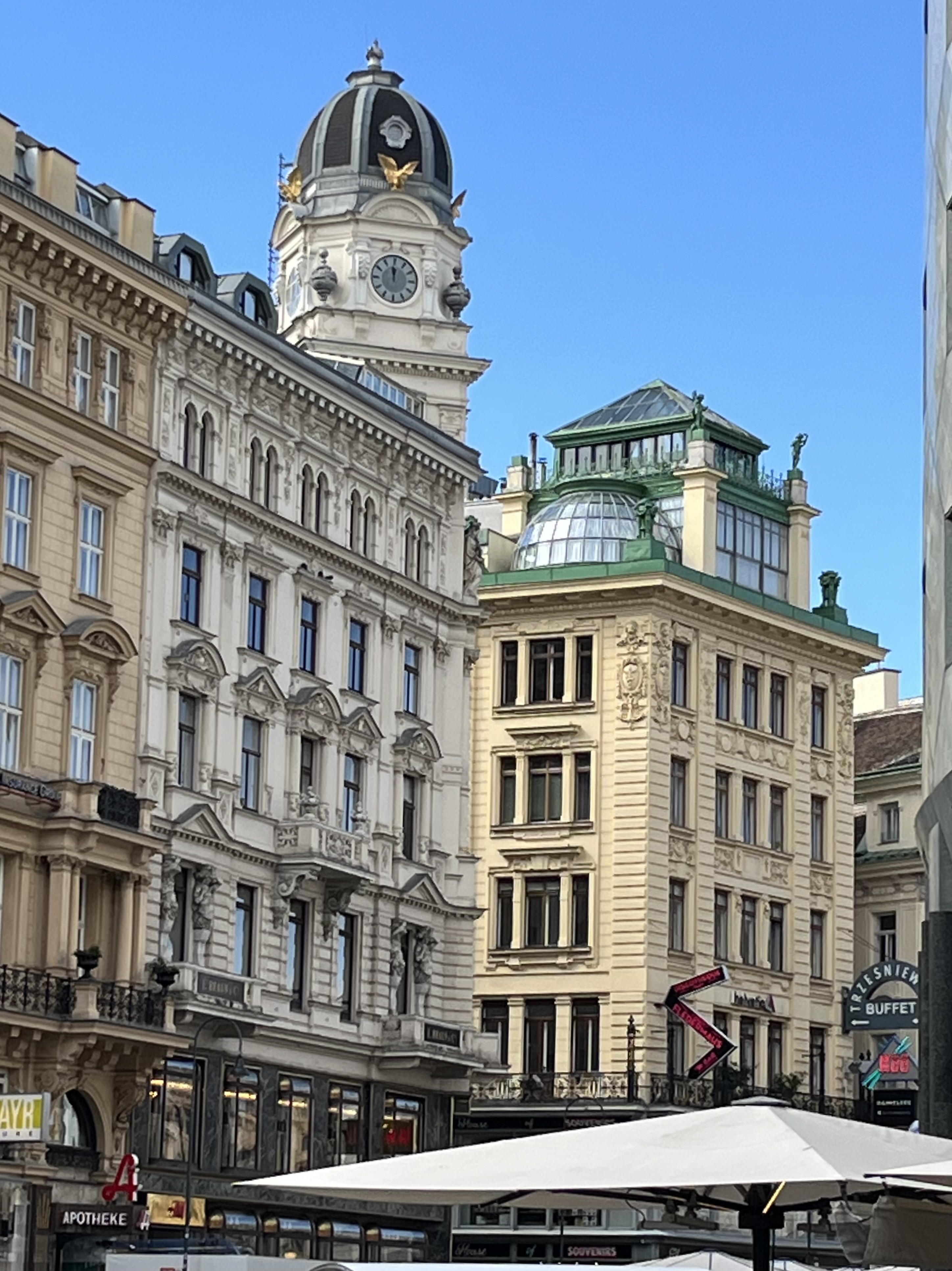
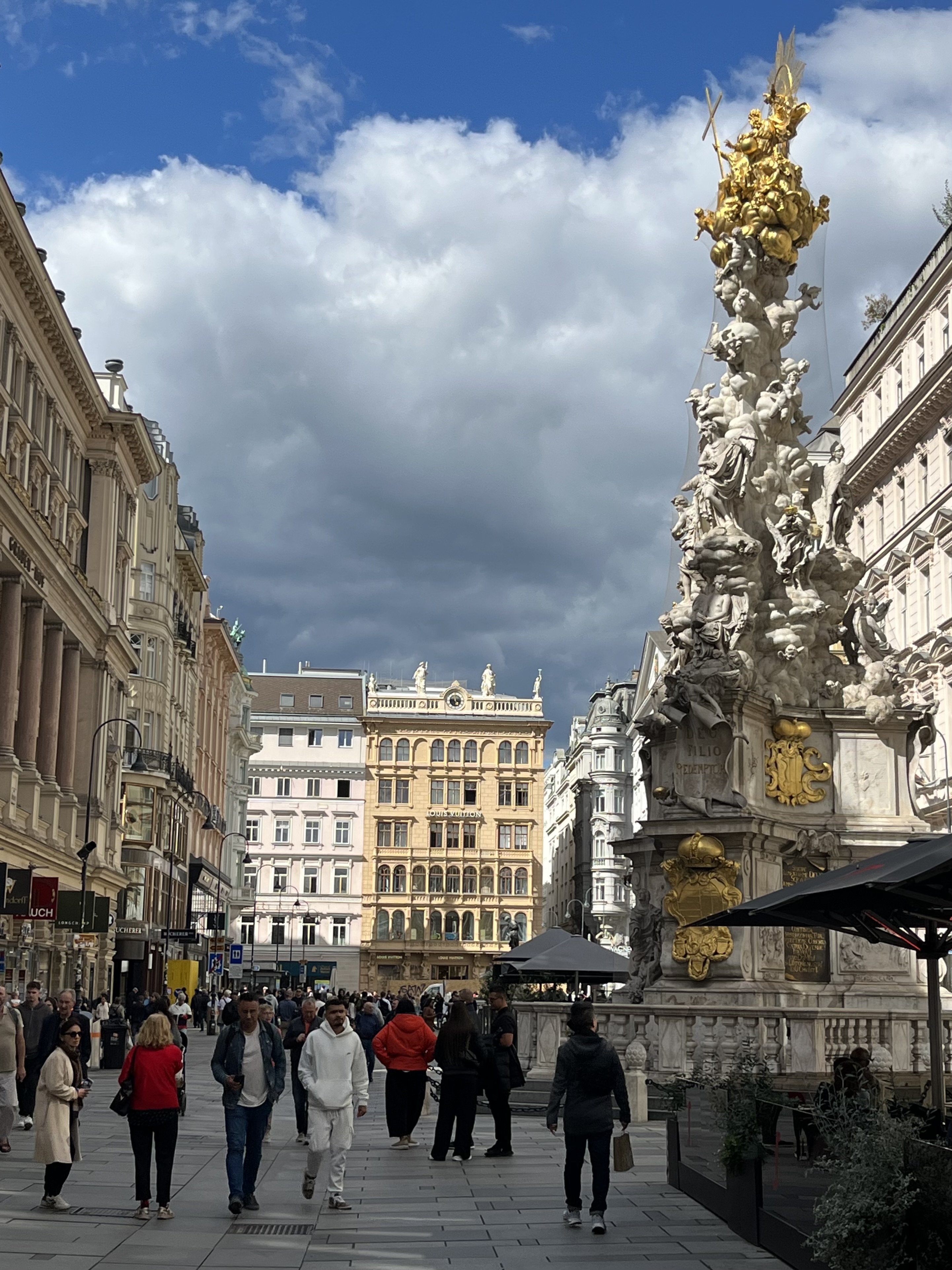
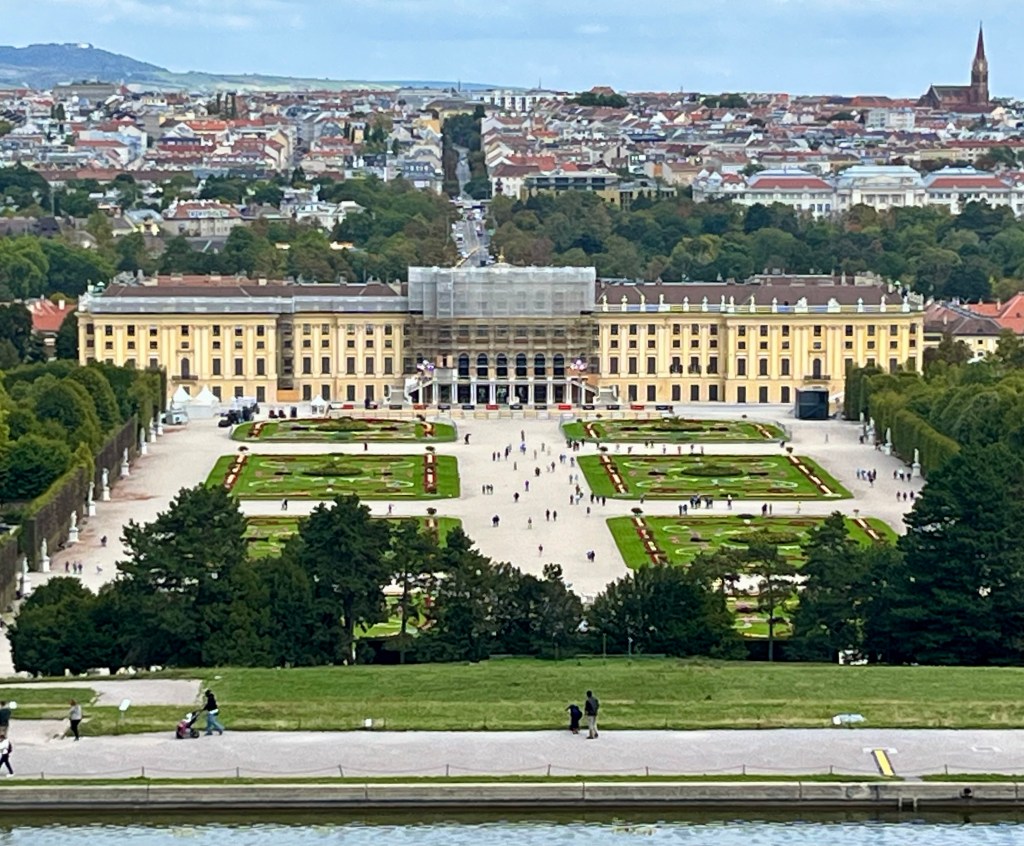
A few miles west of the hyper center we visited the huge, Neo classical style Schoenbrunn Palace, which, with its over 1,400 rooms, was the summer residence of the rulers of the Habsburg Empire. After their 600 year reign, during which the Habsburgers ruled over most of Central Europe, the monarchy ended in 1918 with the end of WWI. At that time, the Palace became the property of the newly founded Austrian Republic. During their long successful reign, the Habsburgers shaped Vienna into the city we know today, from its lavish buildings and palaces to the music and the arts.
Maybe the most prolific and widely known leader of the Habsburgers was Maria Theresa. Under her 40 year reign in the 18th century, she held the title of Holy Roman Empress, Queen of Bohemia, Archduchess of Austria, and Queen of Hungary. She had 16 children and was known for marrying her children off wisely to expand the Habsburg Empire, and, as it is said, only her favorite child was allowed to marry for love… Marie Antoinette was one of her daughters that did not marry for love. Maria Theresa was also highly regarded by other European leaders for her intellect and was frequently visited for counsel. A truly remarkable woman, of the 18th century!
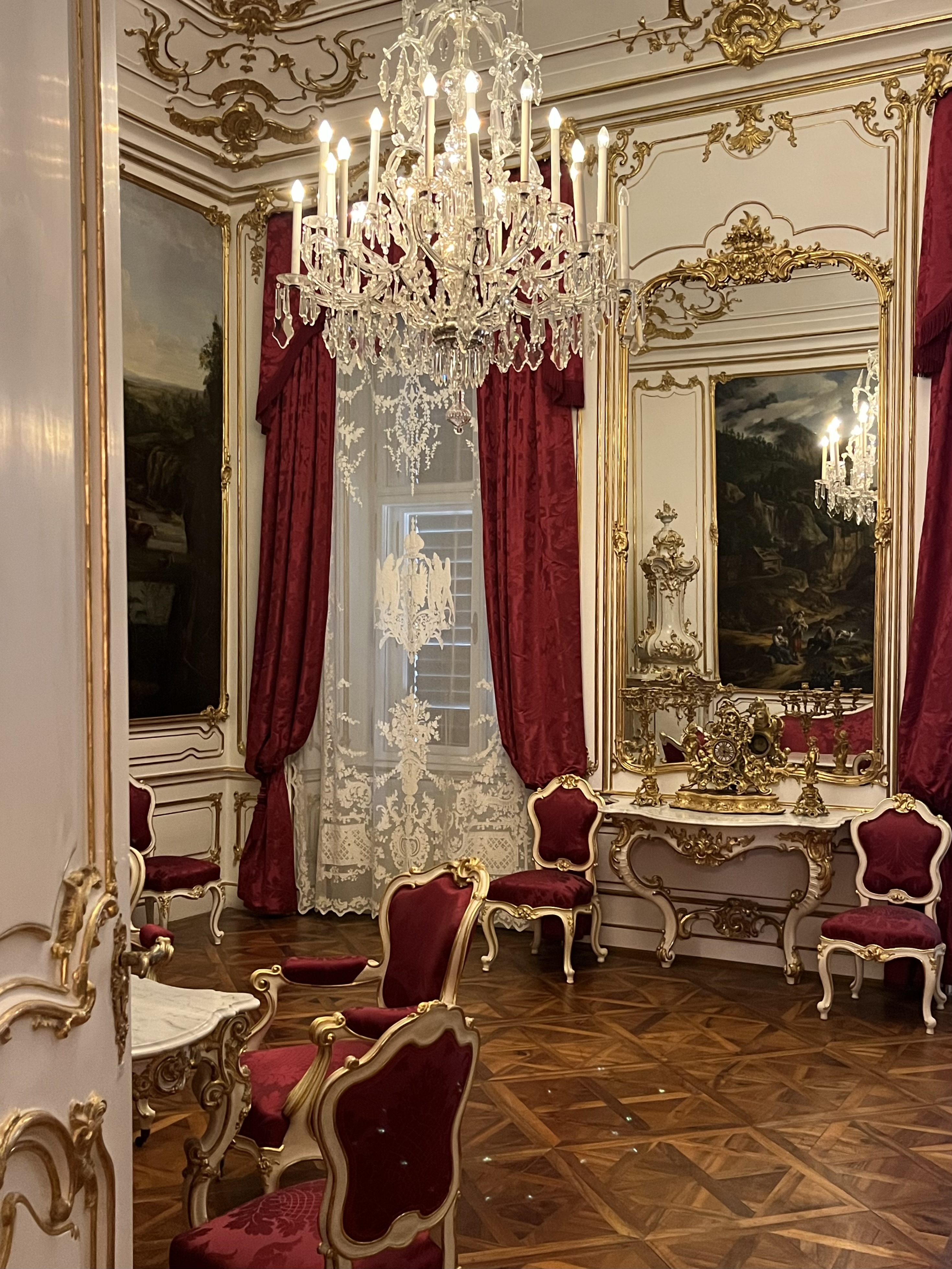
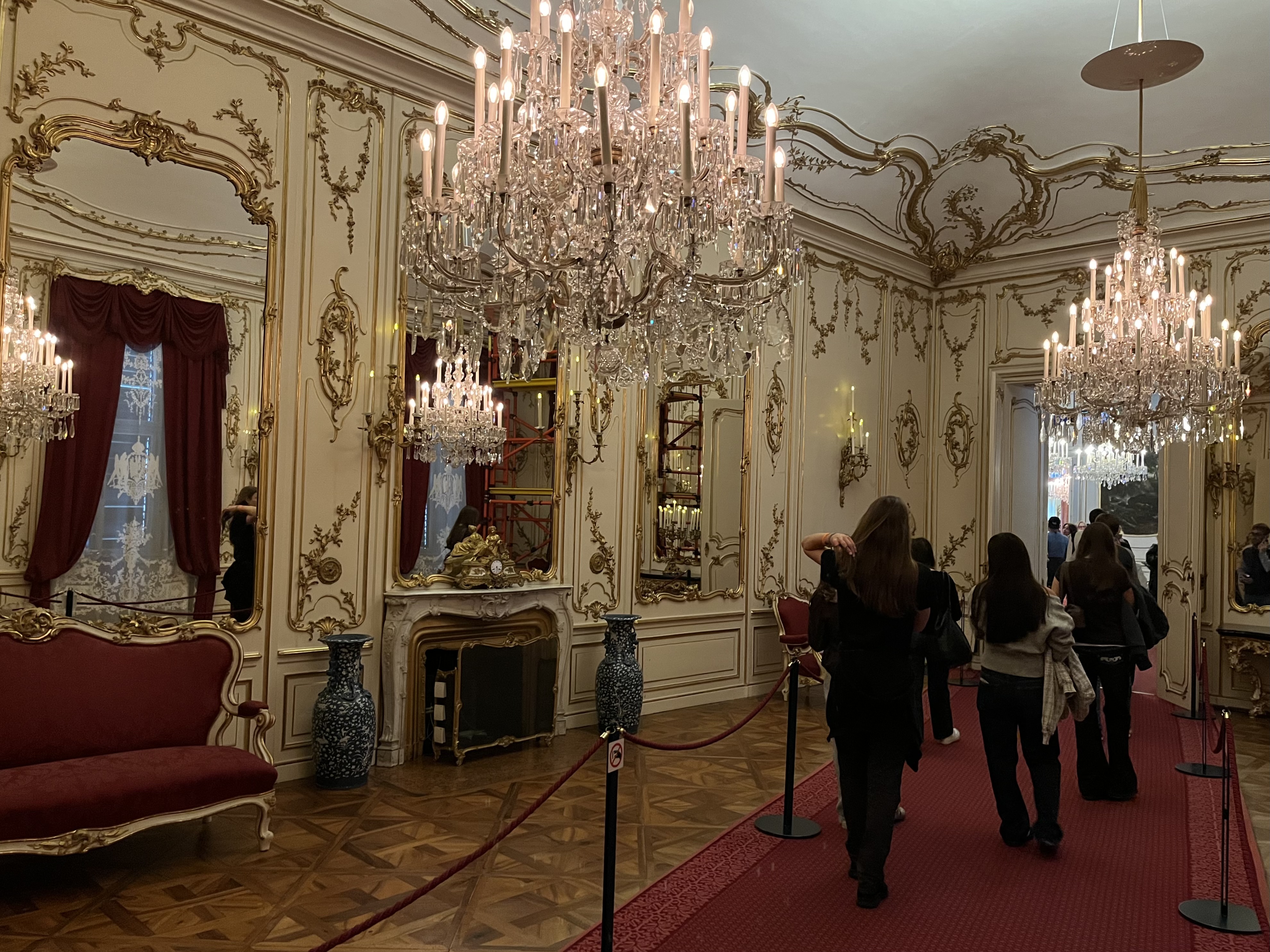
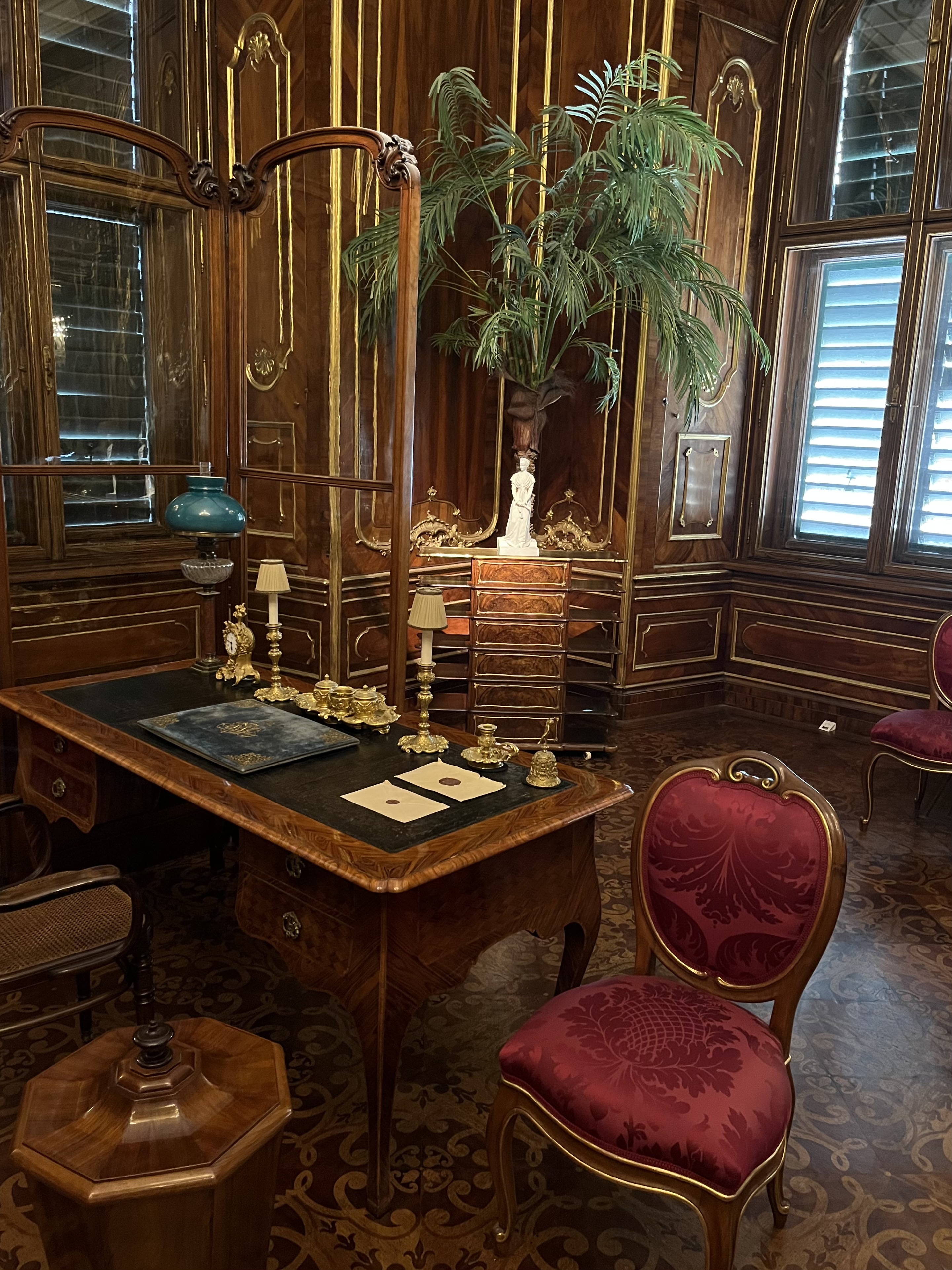
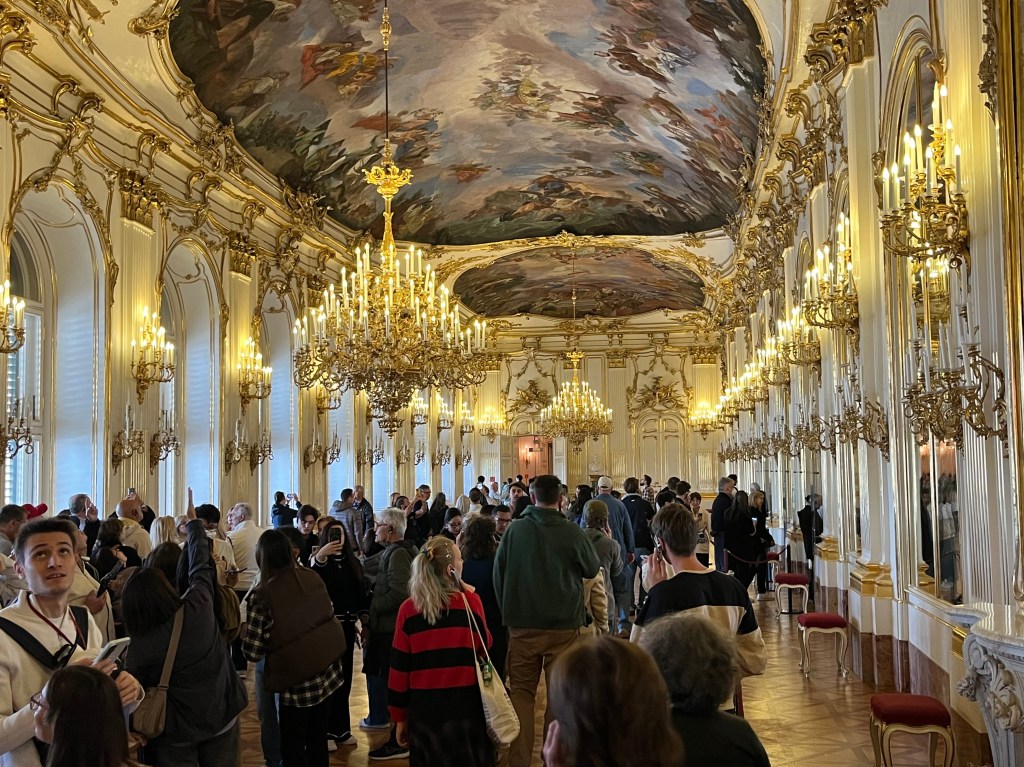
Above, the great hall of the Schoenbrunn Palace.
More culture was on the agenda. We visited the Albertina Museum on the morning of our second day, which is located at the southern end of the Hofburg. The Albertina mostly contains a wide collection of paintings, including works by Monet, Chagall, and Picasso, as well as Durer’s famous Young Hare. At the time of our visit there was a special exhibition of Picasso and Bacon.
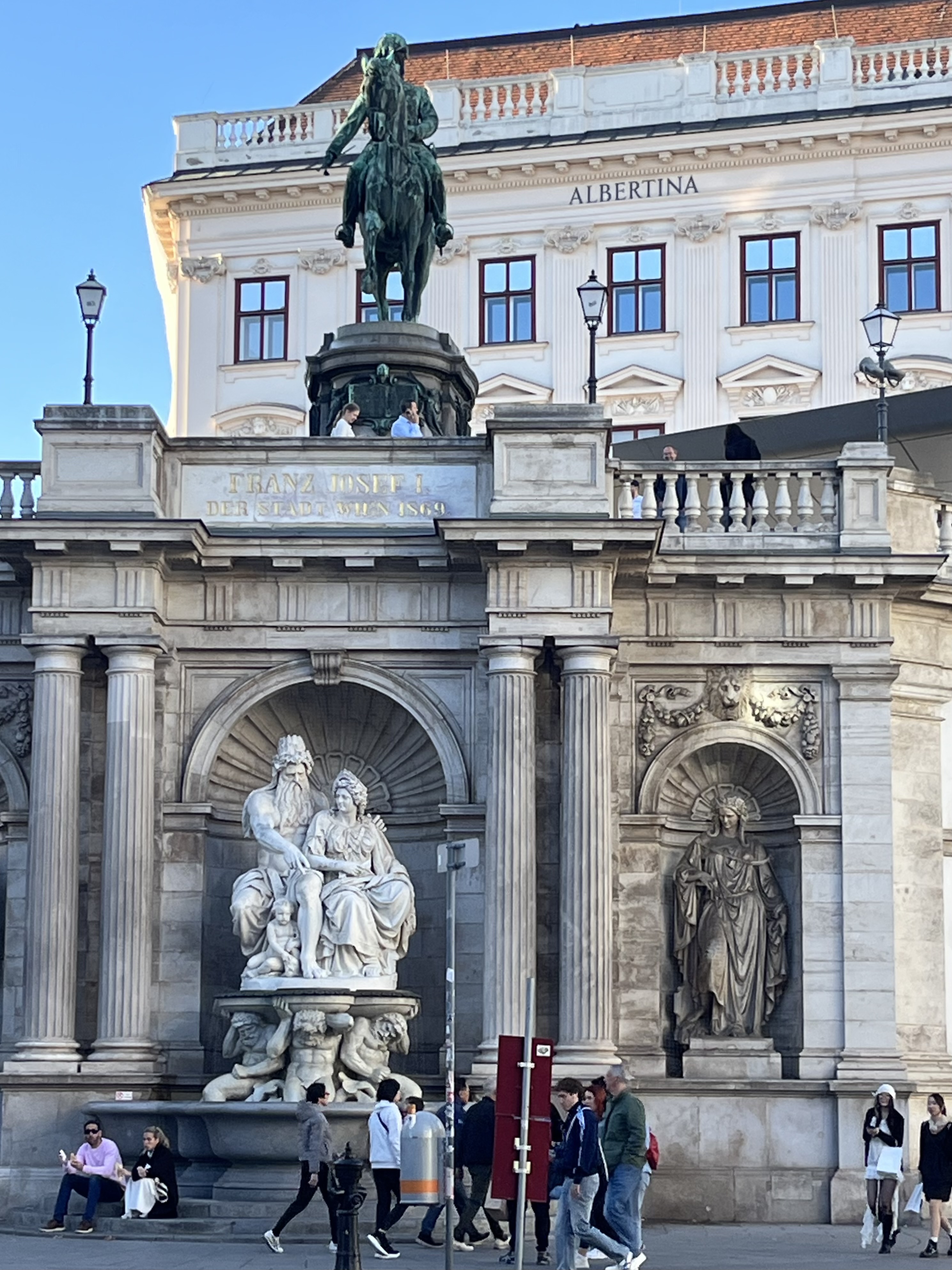
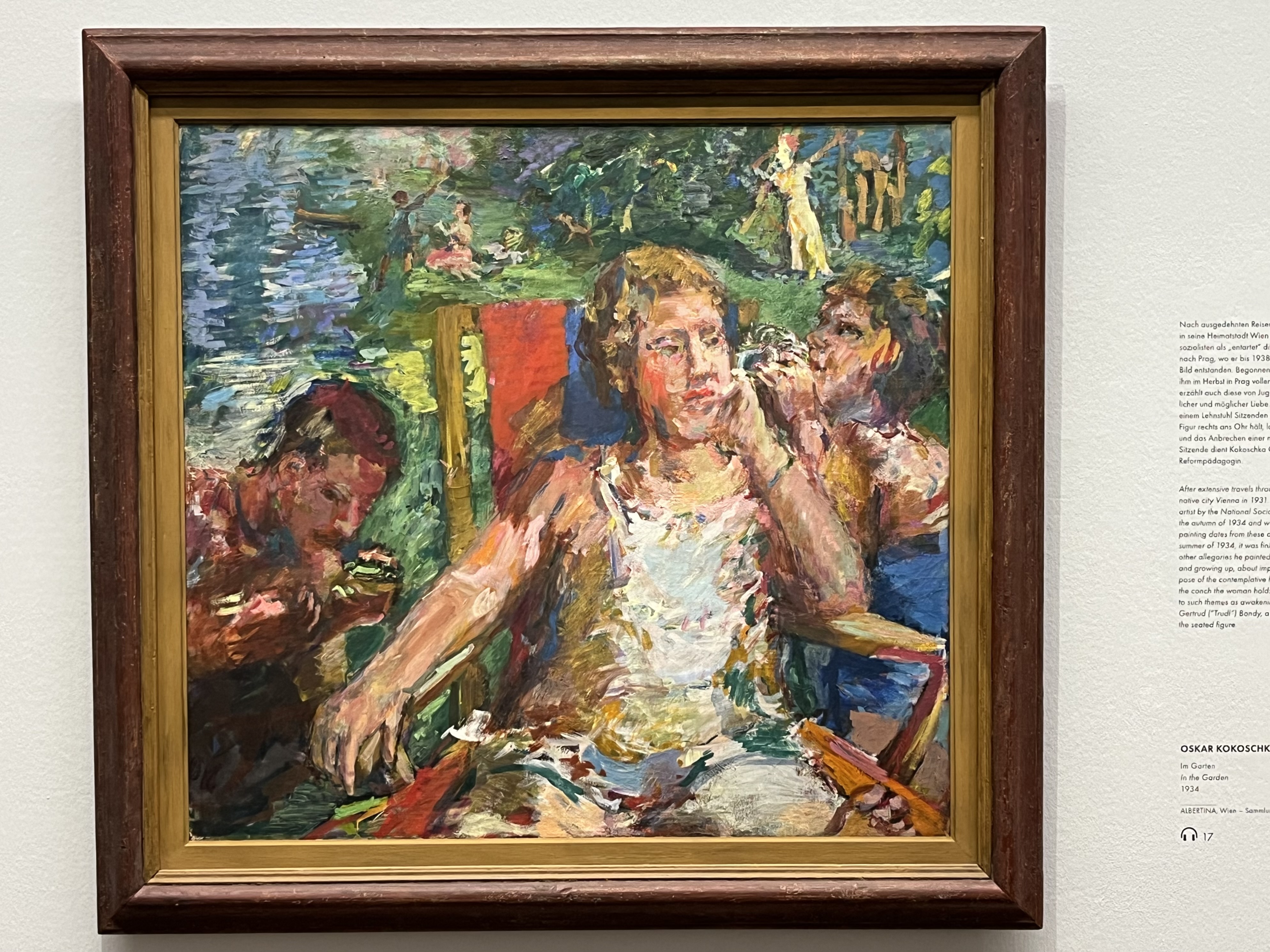
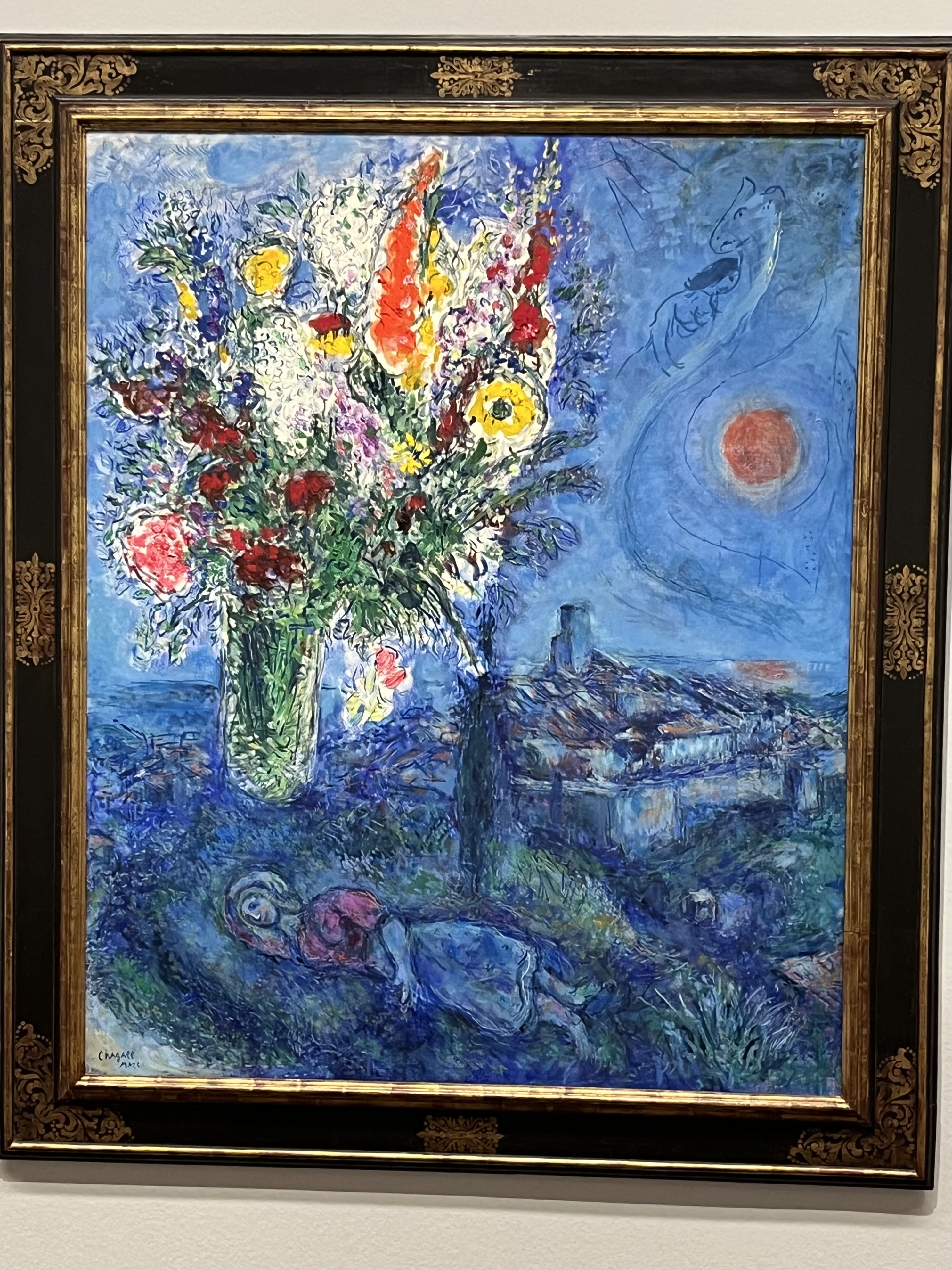
These two paintings stood out to me. The upper one from a 20th century Viennese painter and the lower one, unmistakable, a Marc Chagall.
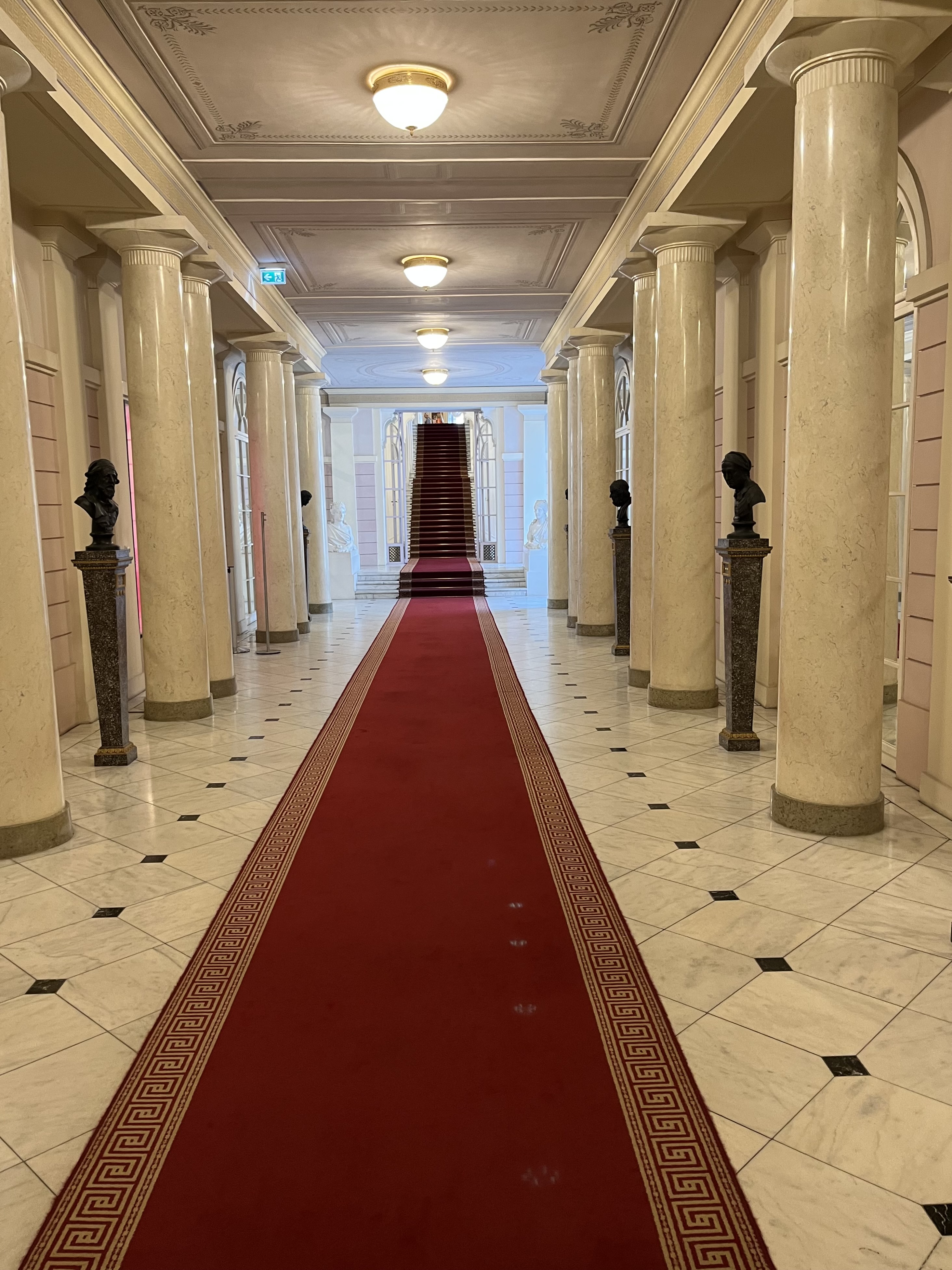
On the third morning we visited the Kunsthistorisches Museum, located NW of the Hofburg close to the Austrian Parliament. The building which contains this huge and varied museum, was grand and beautiful:
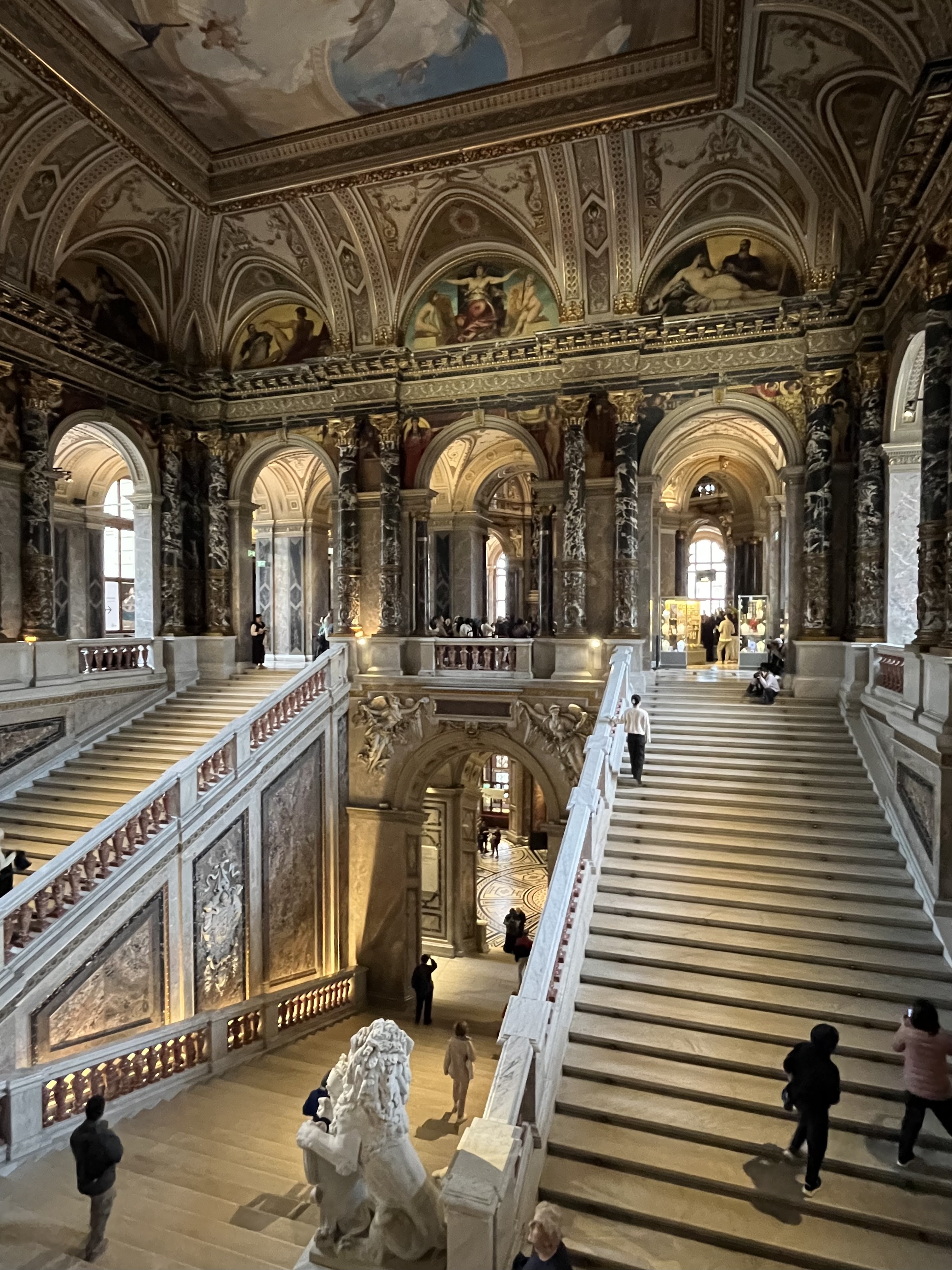
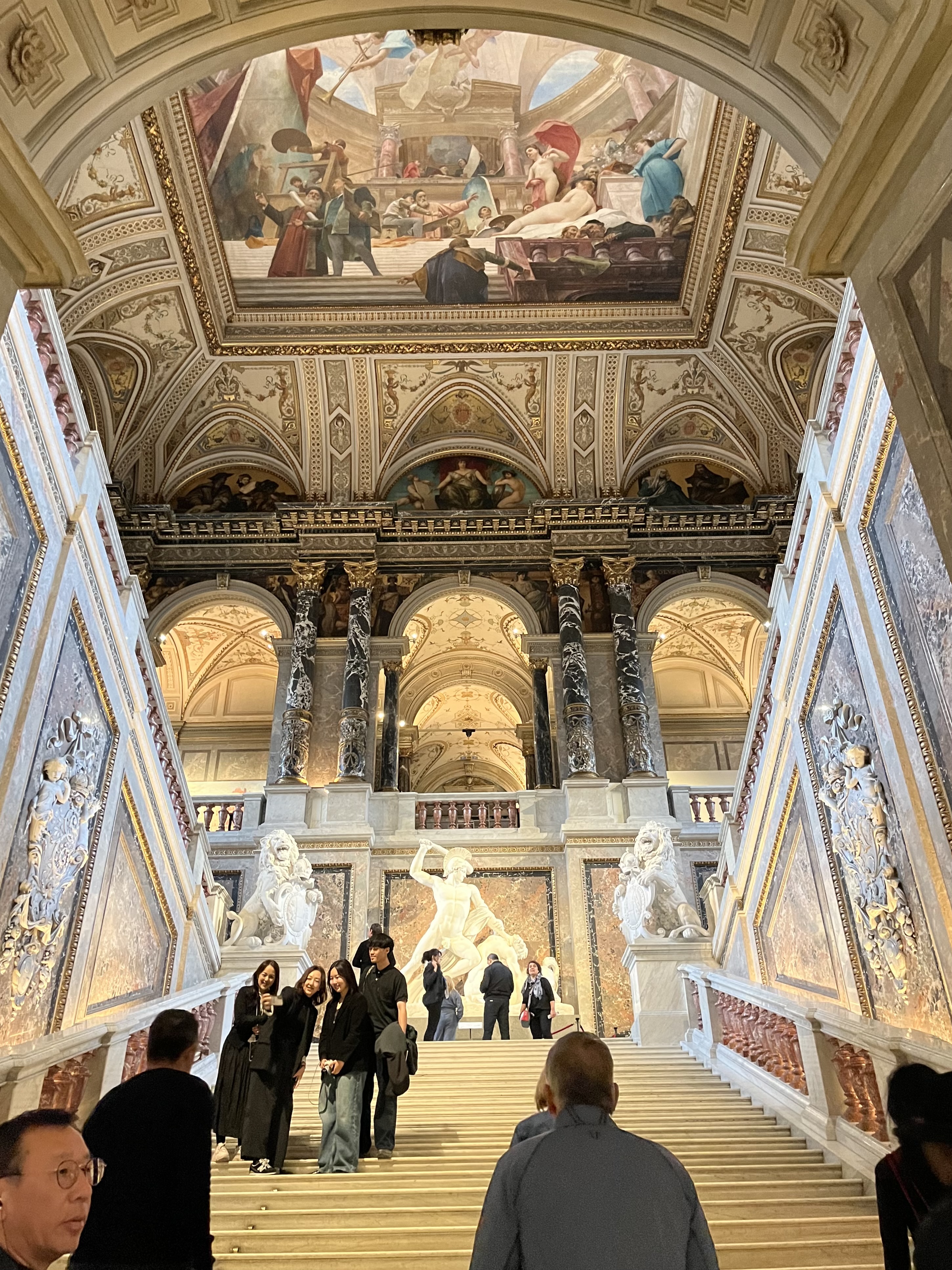
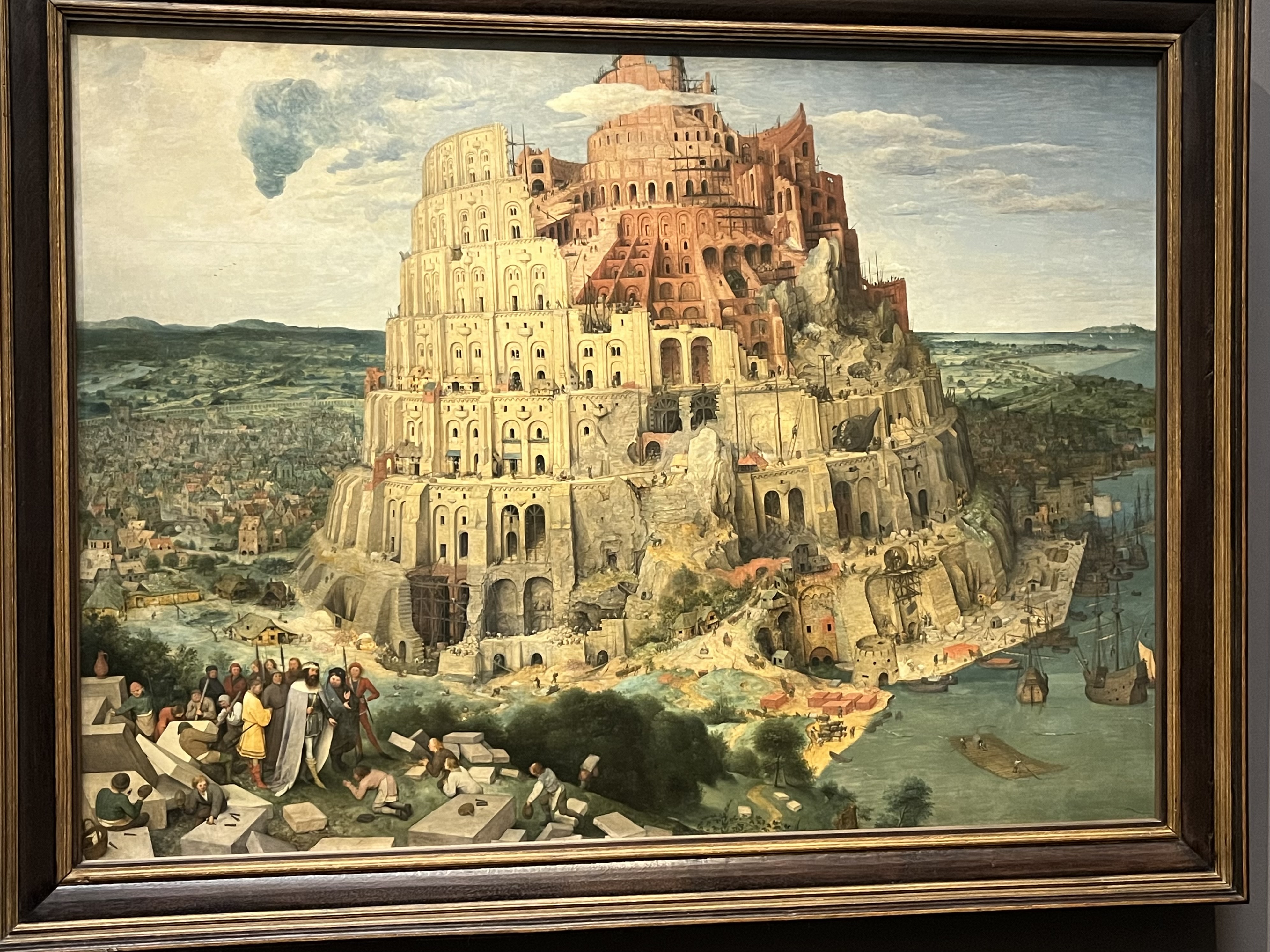
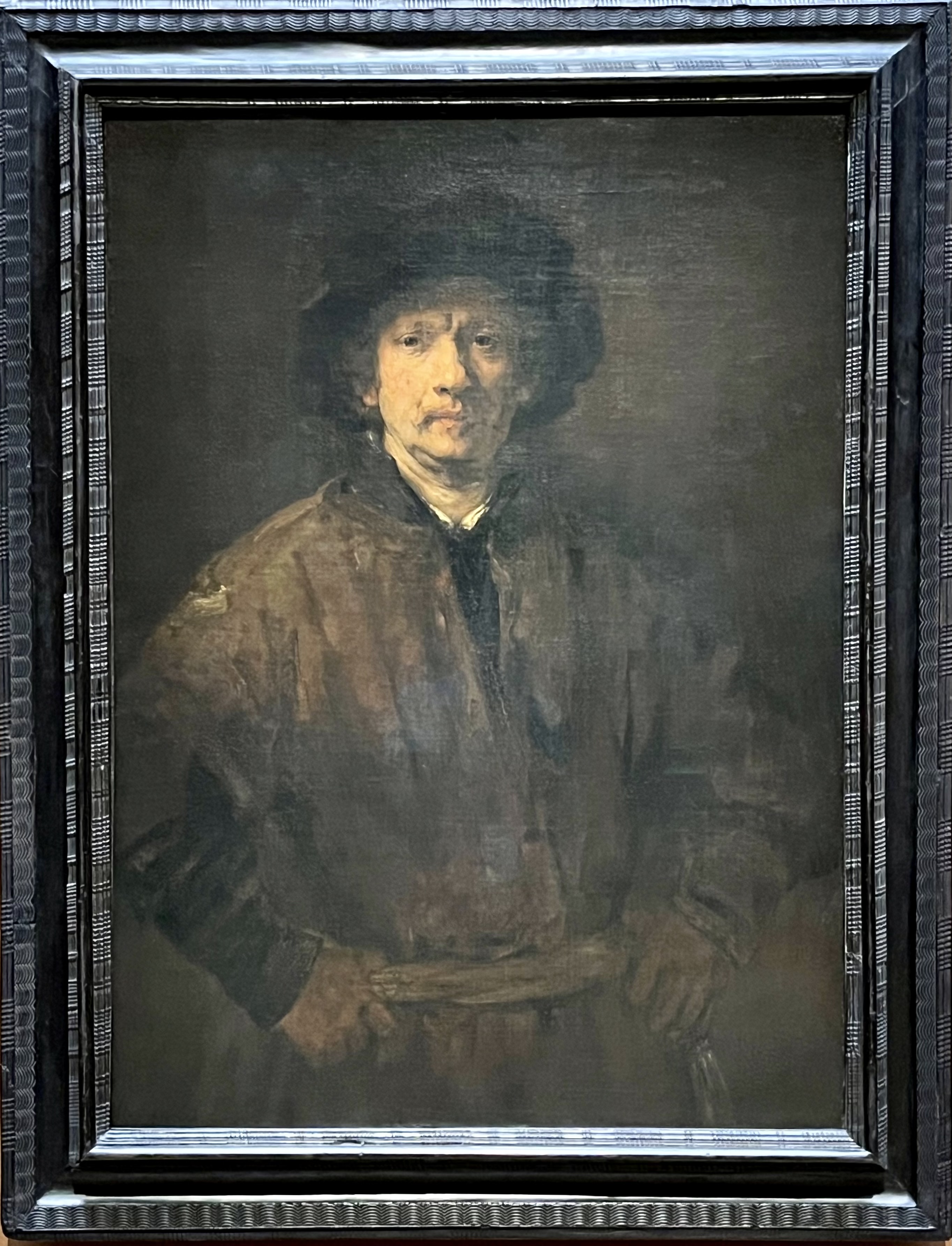
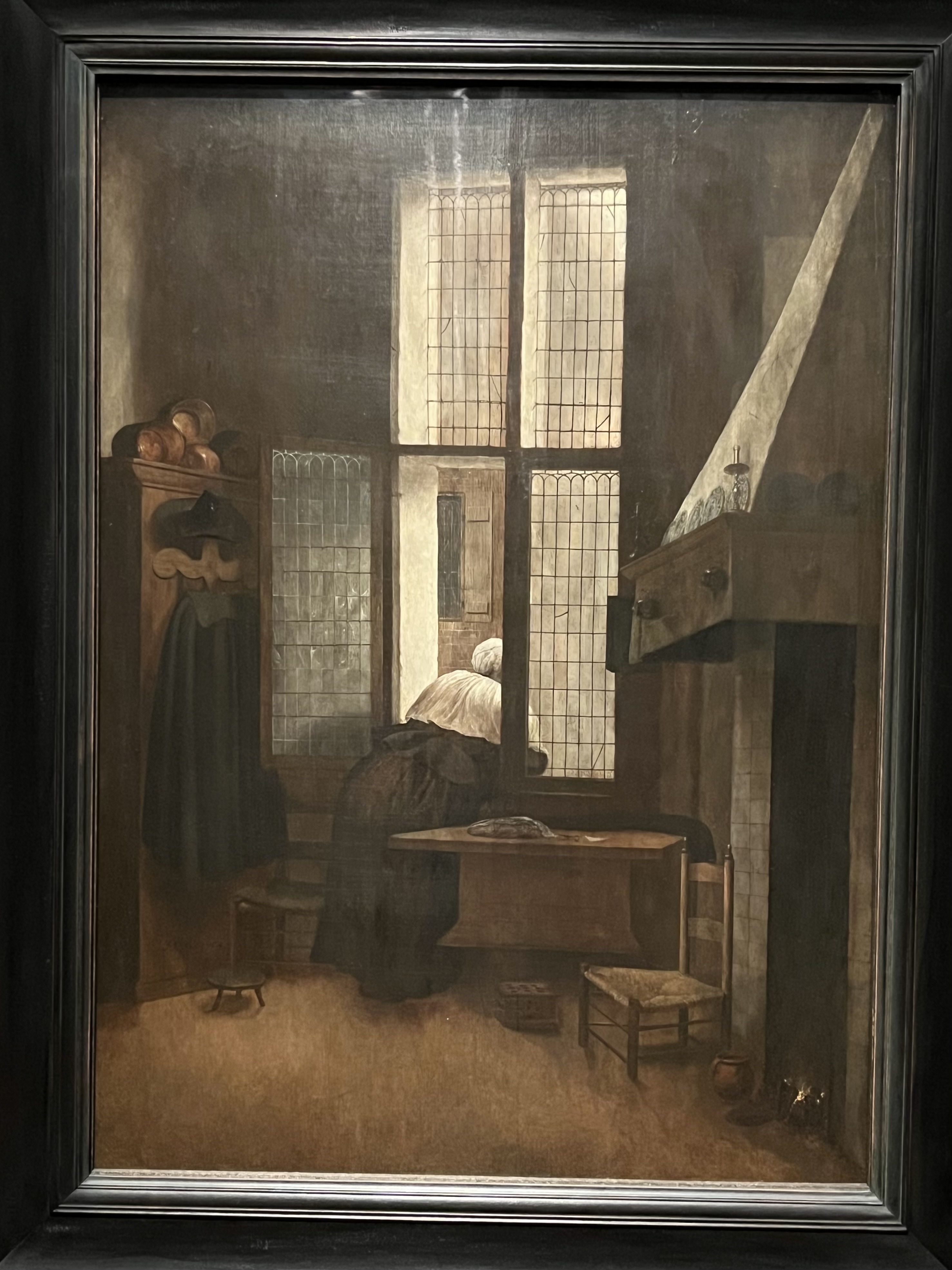
Also here a couple of pictures that stood out to me:
The Tower of Babel by Pieter Bruegel the Elder, a Rembrandt self portrait and this woman watching the road from her room by a less famous Dutch painter:
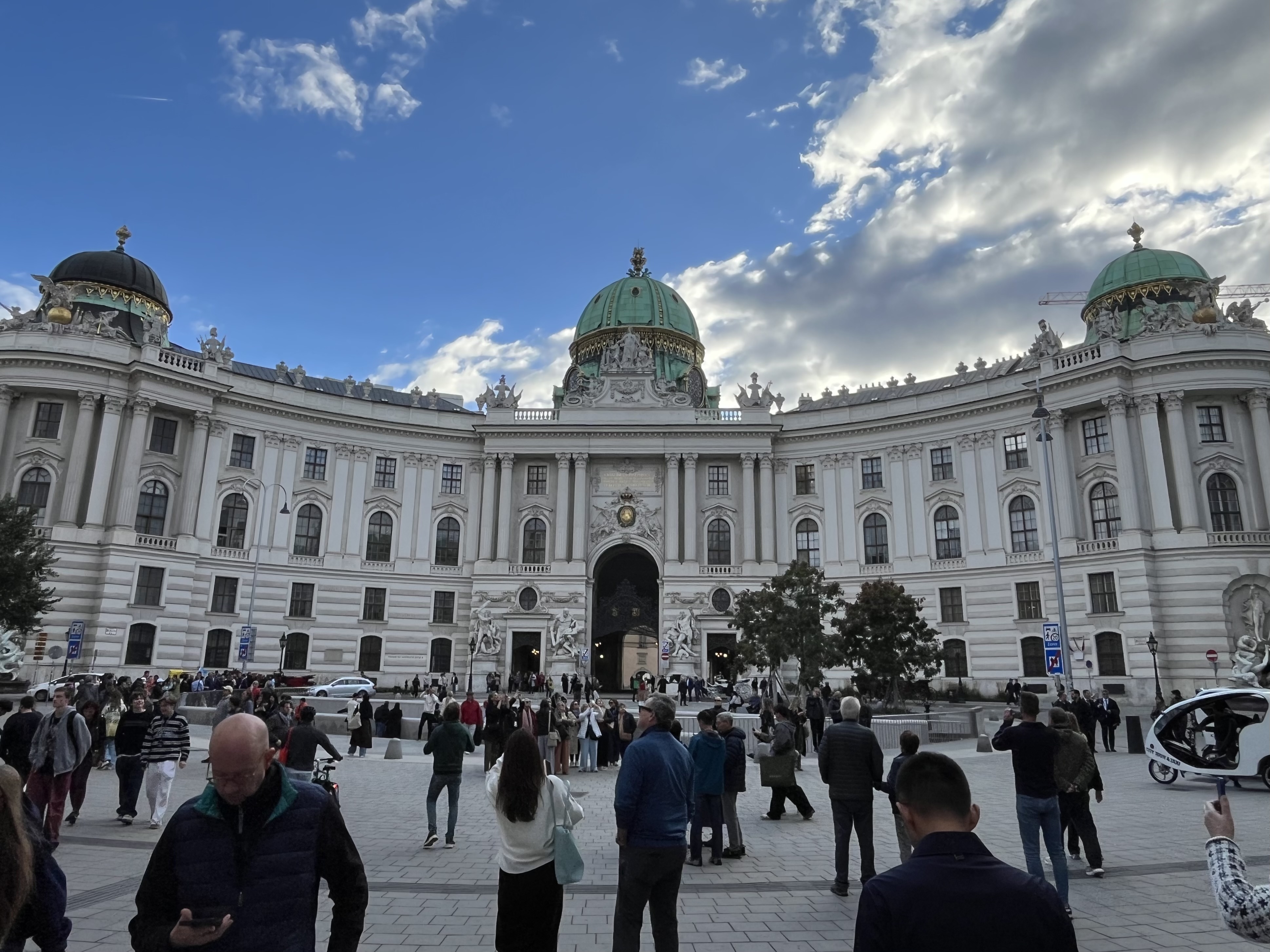
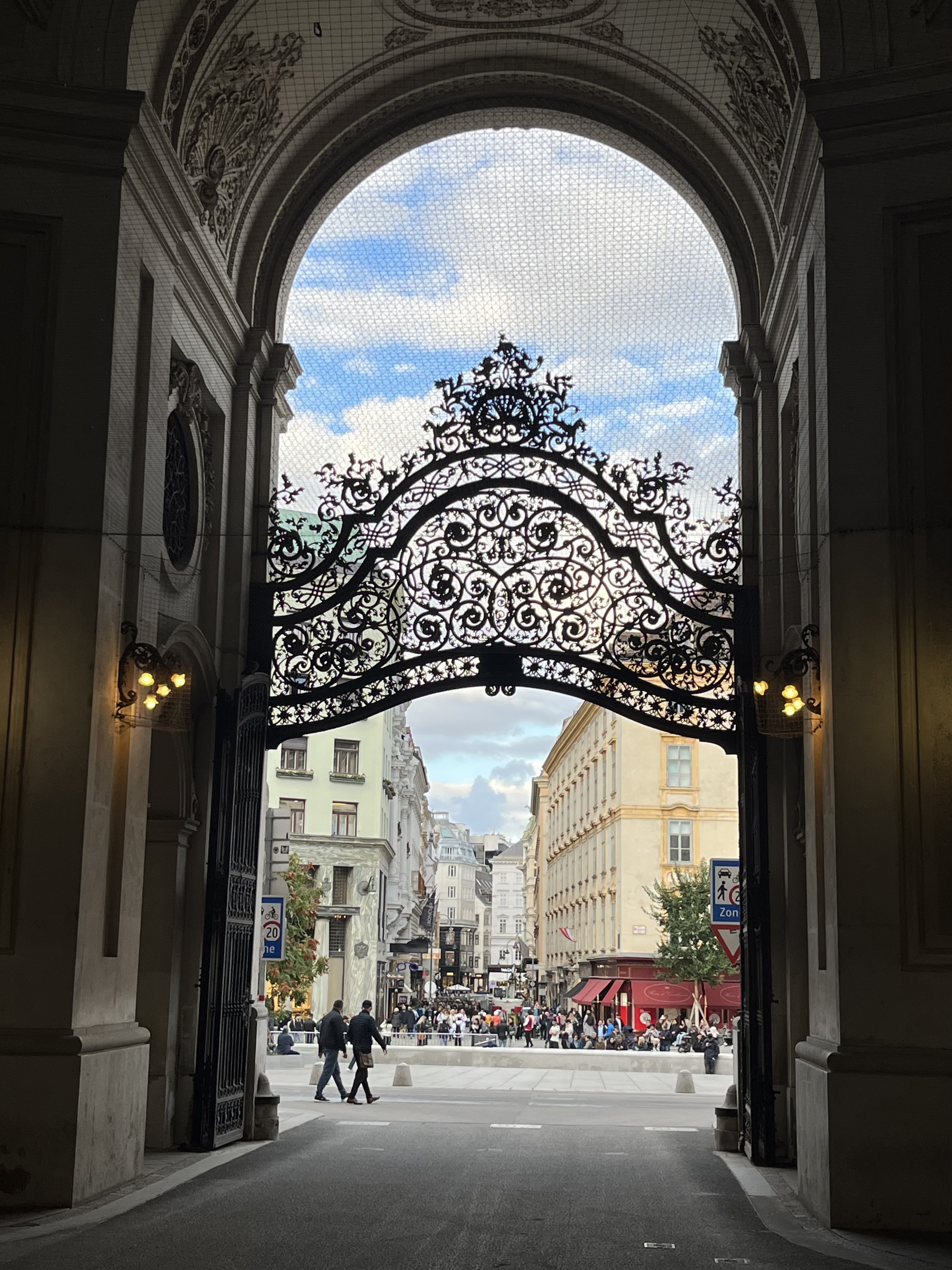
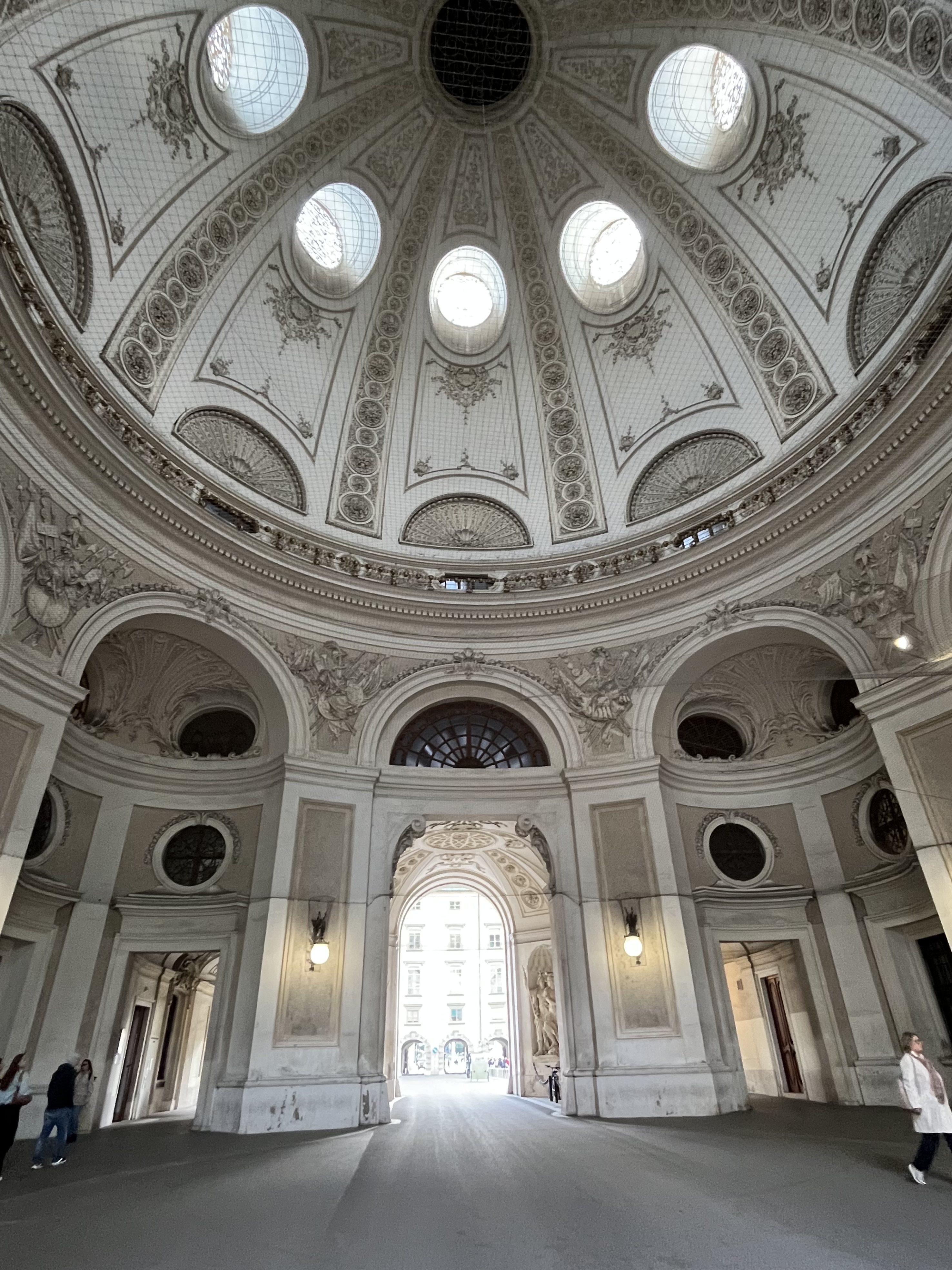
Hear a few images of the Hofburg, which, among many other functions, is also the location of the Spanische Hof Reitschule with the famous Lipizzaner horses:
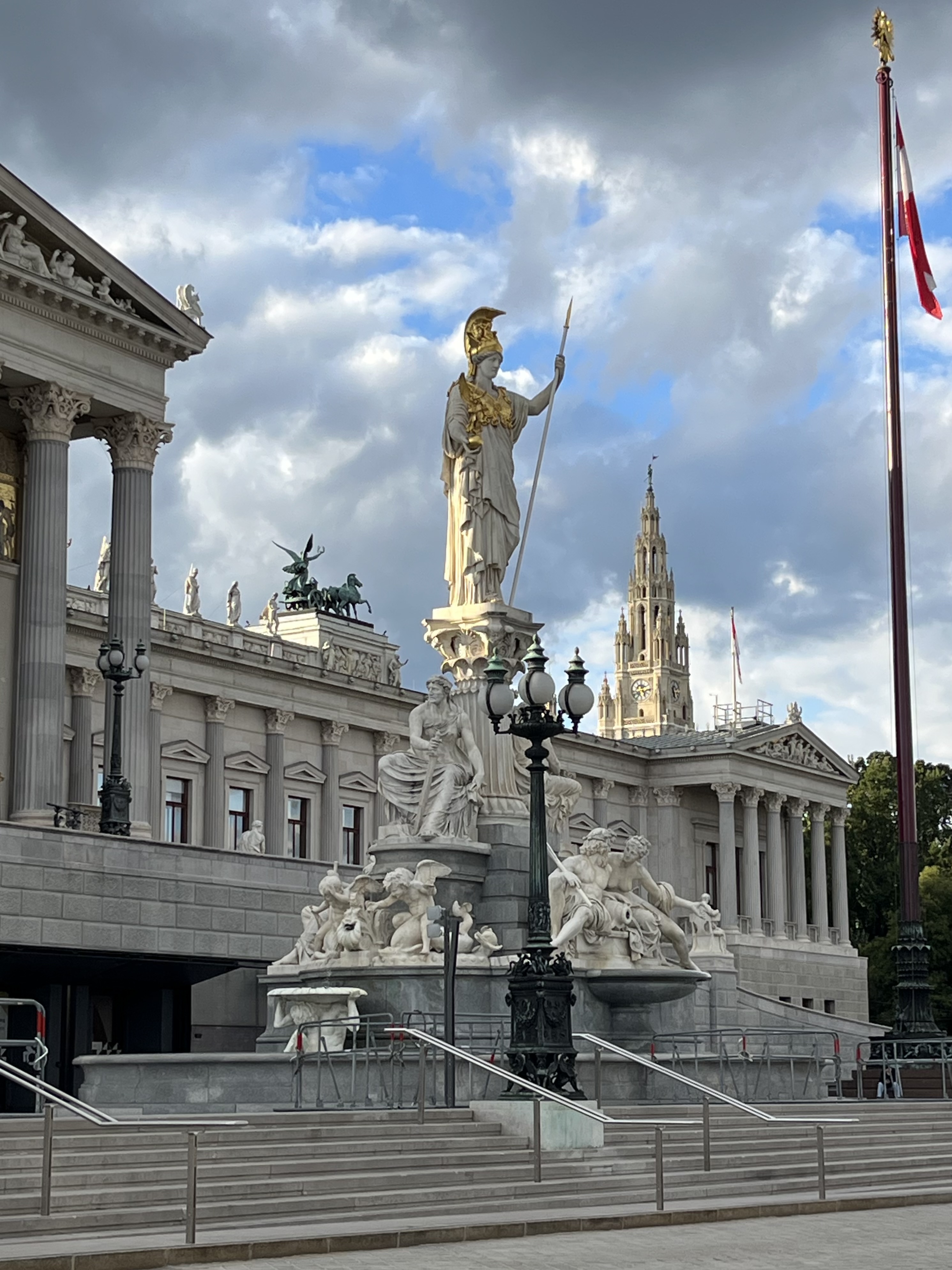
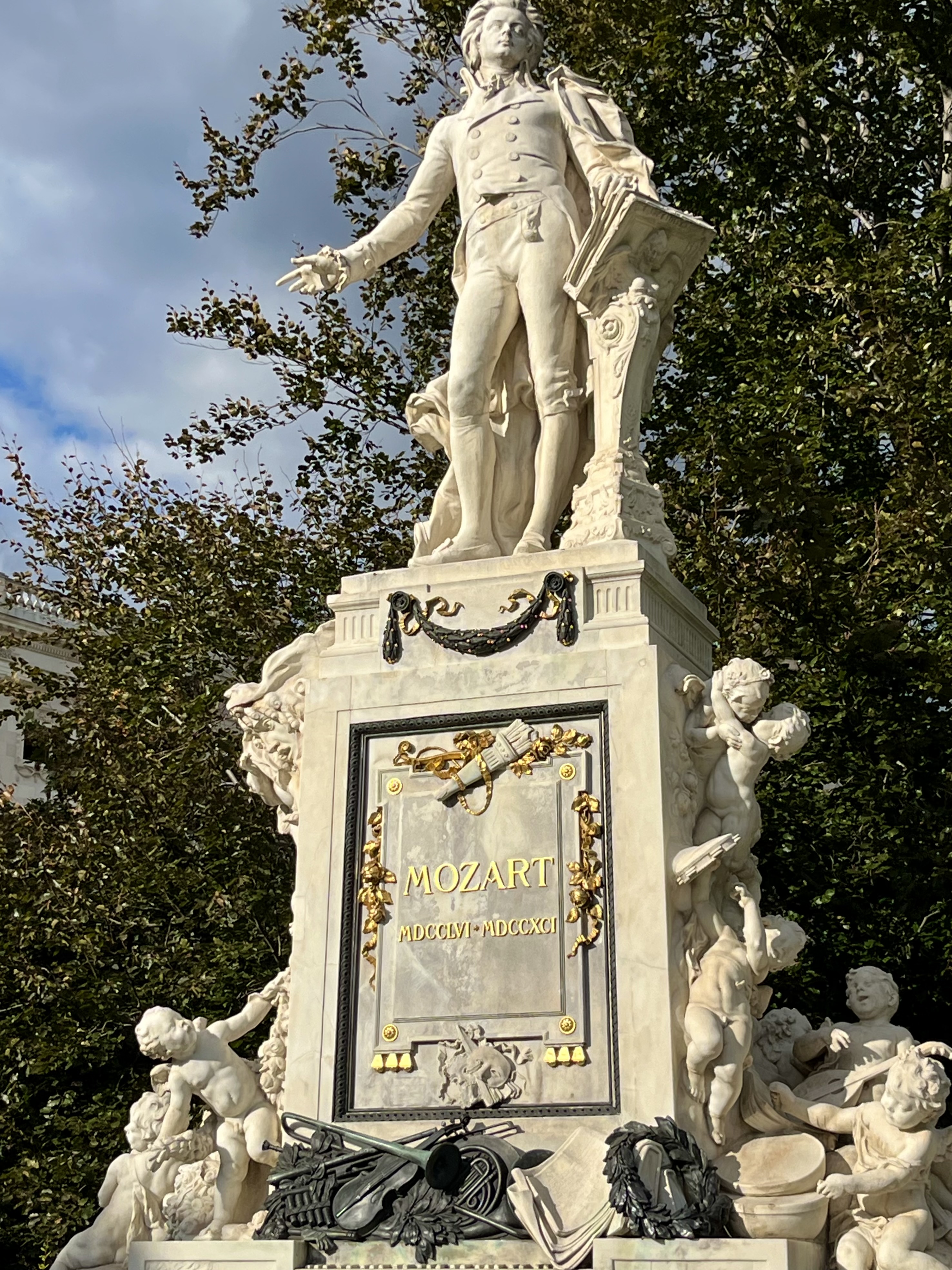
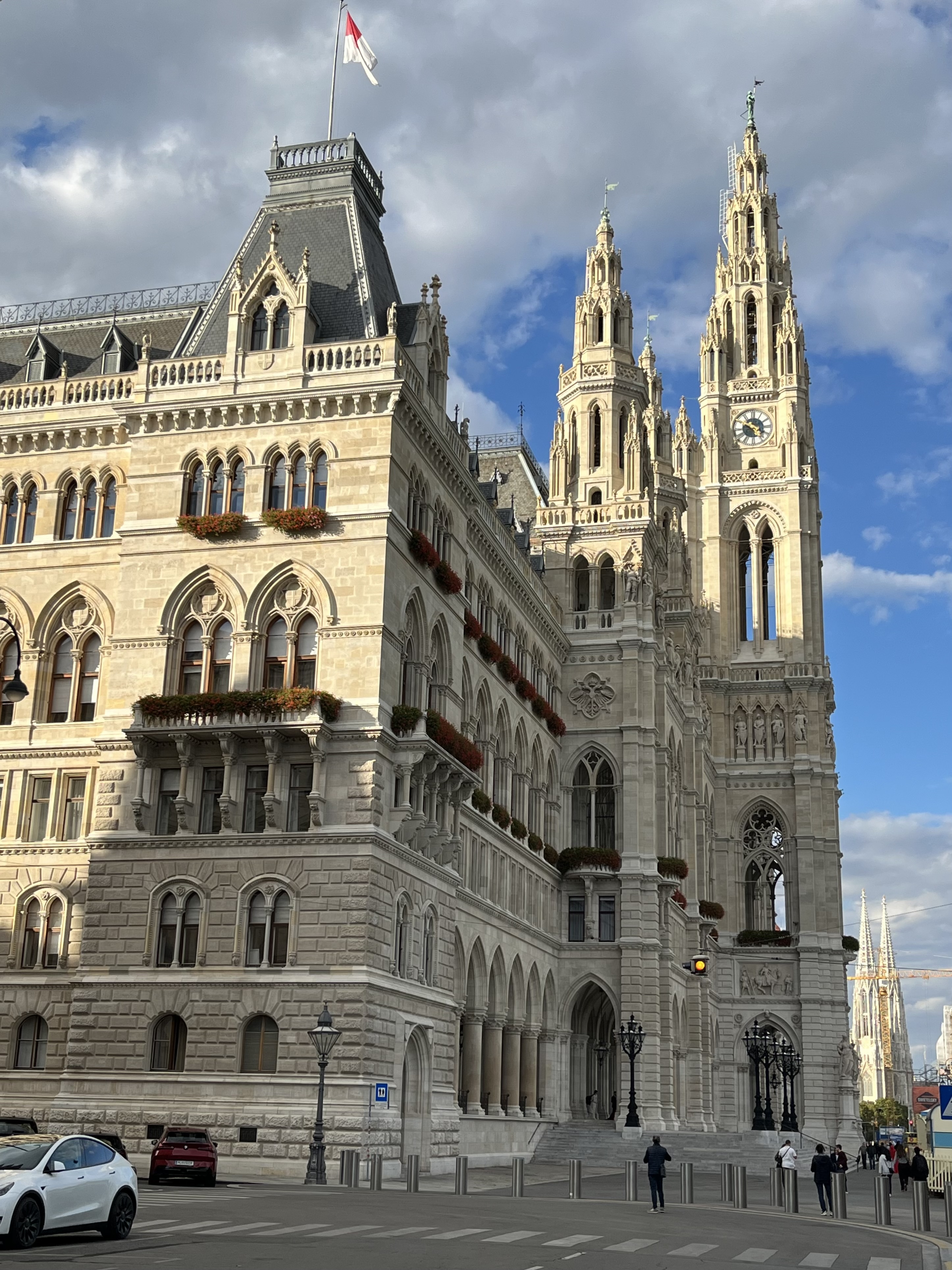
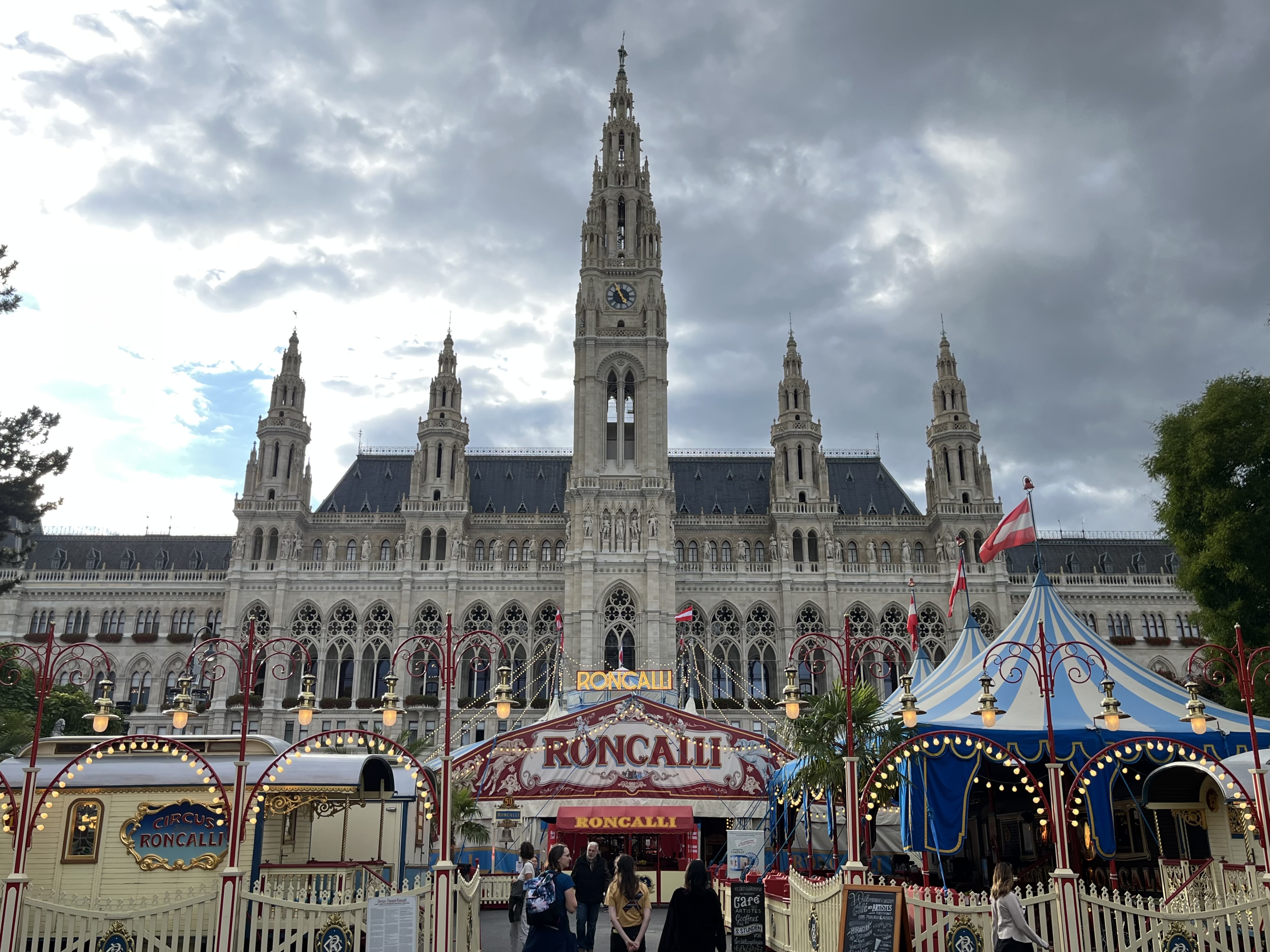
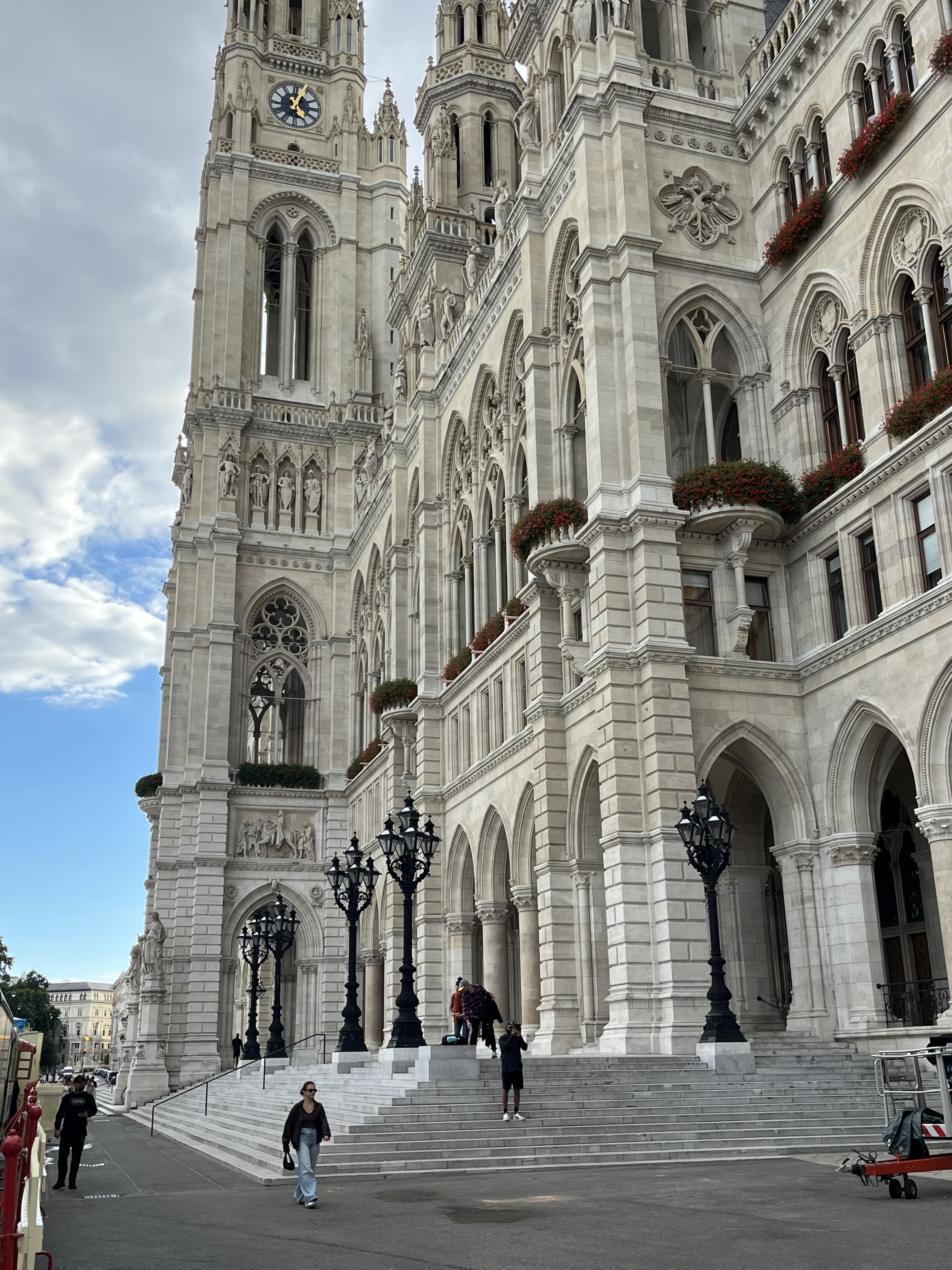
And, located close by, are the Austrian Parliament Building, a statue of Mozart, and the Town Hall of Vienna:
We also took a guided tour of the Wiener Staatsoper building, which was very informative yet unfortunately also included a lecture on copyrights and publishing photographs, so no photos here, yet they are easy to find online if you like. While generally built in the same style, and clearly bigger than the Hungarian state opera, the building and auditorium was not nearly as ornate, festive and stunning. So we were glad that we had booked to see Figaro in Budapest.
Our finale to Vienna was a classical music concert in the Grossen Saal (Large Hall) of the Vienna Musikverein, which is the concert hall from where every New Years Day since 1939 the Neujahrskonzert of the Vienna Philharmonic Orchestra is broadcast live worldwide. It’s been our family’s tradition to watch it on PBS, moderated in the past by Walter Cronkite and Julie Andrews. Now it was our turn to actually be in this music hall and hear Daniel Barenboim with his West-Eastern Divan Orchestra perform Schubert, Wagner and Schumann.
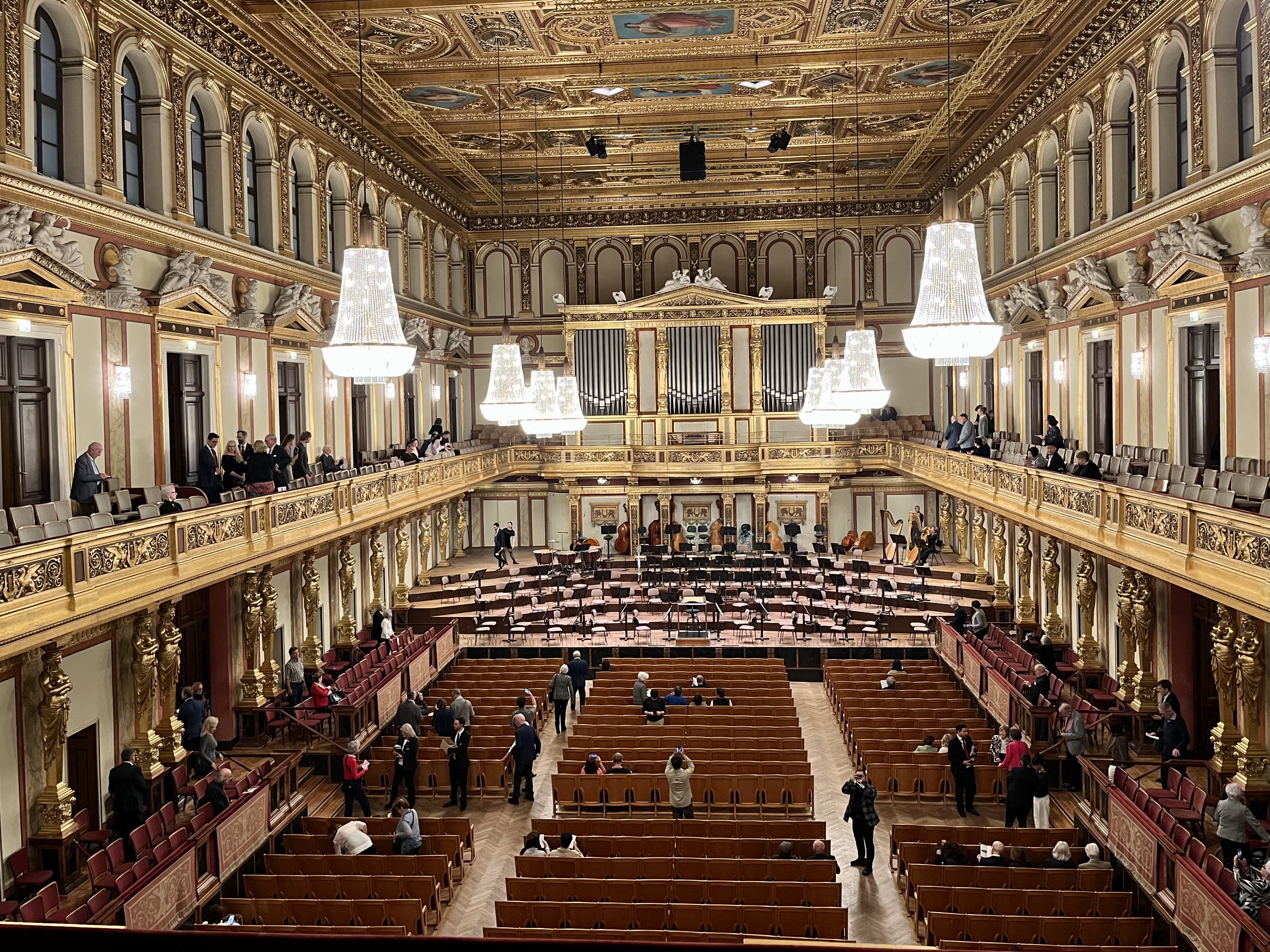
Hearing Schubert’s strong and beautifully opening 7th Symphony (Unvollendete) performed by this world class orchestra, with the crisp, clear acoustics of this music hall, was the highlight of our trip for me! After such a grand concert beginning, Wagner was okay for being Wagner and Robert Schumann’s 3rd Symphony (Rheinische) with its main theme of the first act, is for an actual Rhinelander like me, something like a very familiar National Anthem.
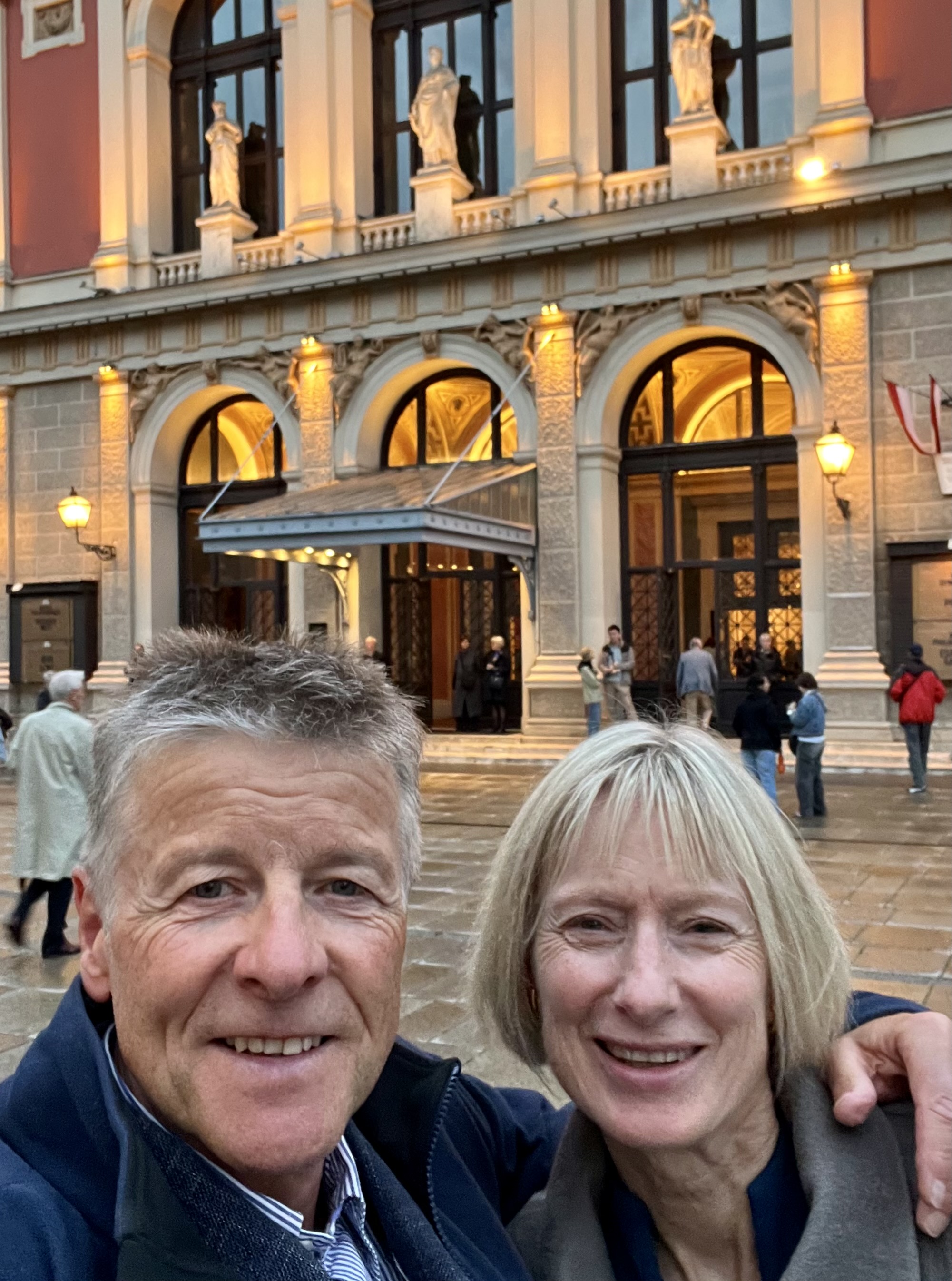
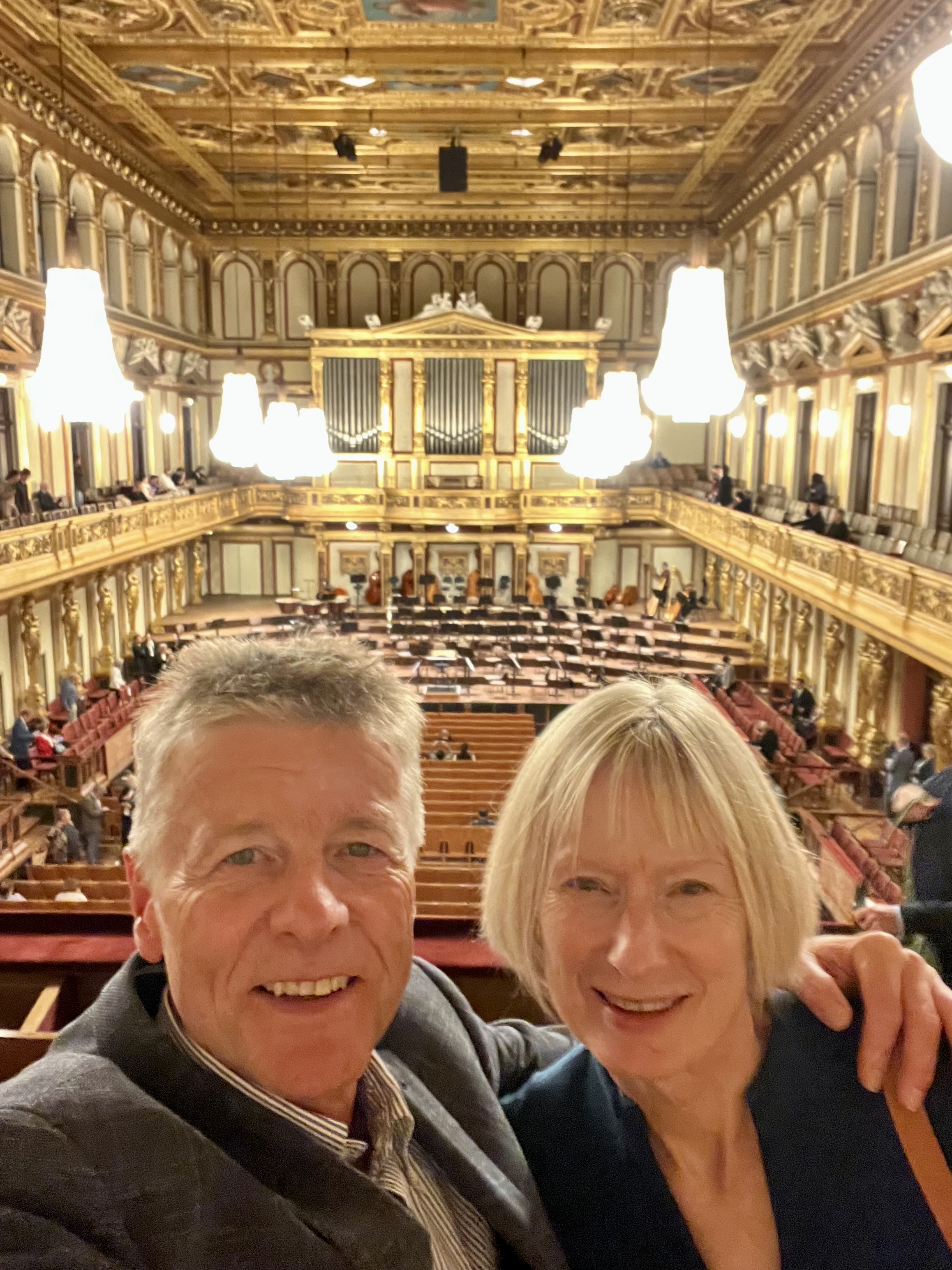
A perfect ending of our visit to beautiful and charming Vienna!
Tuebingen
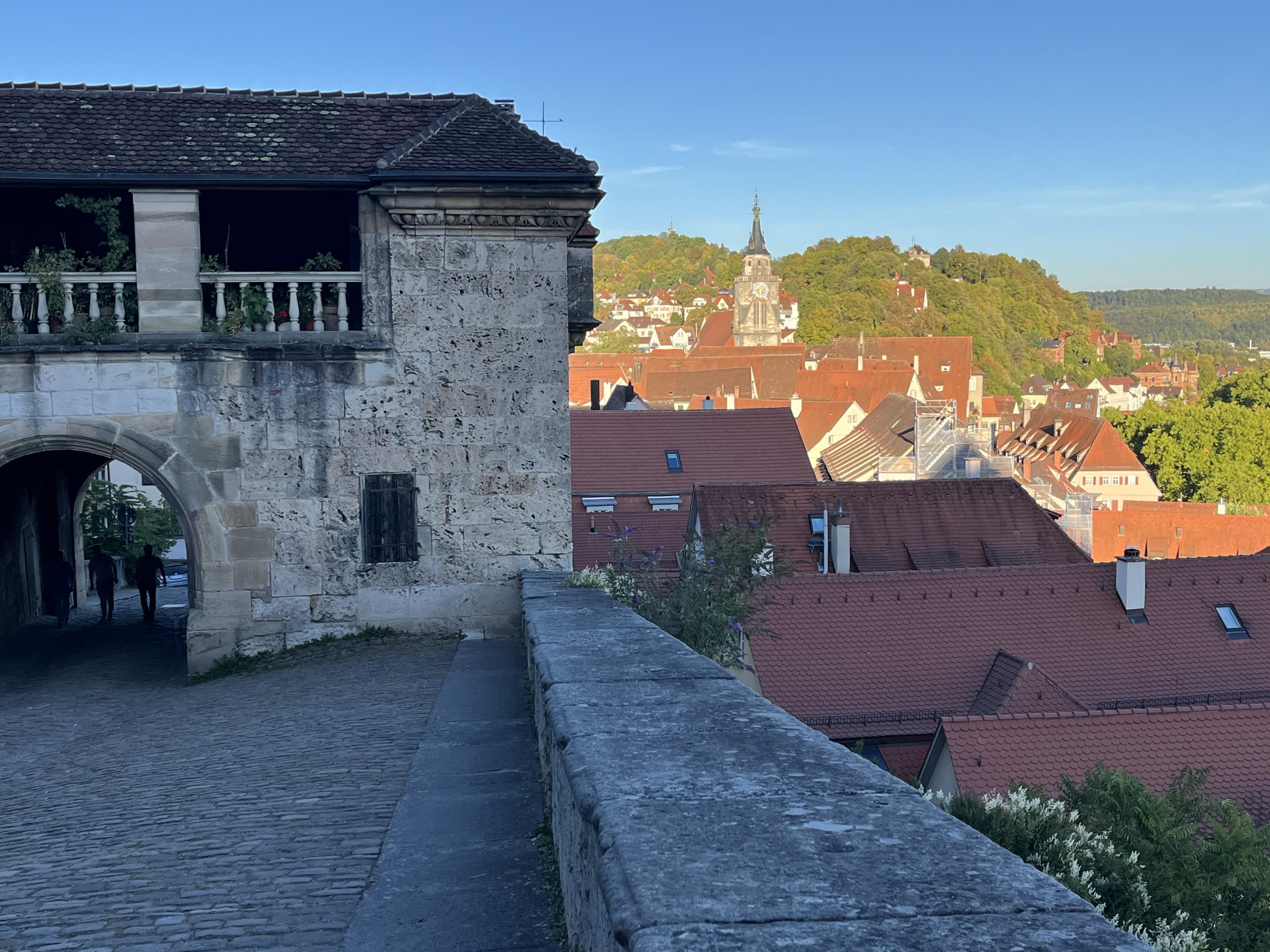
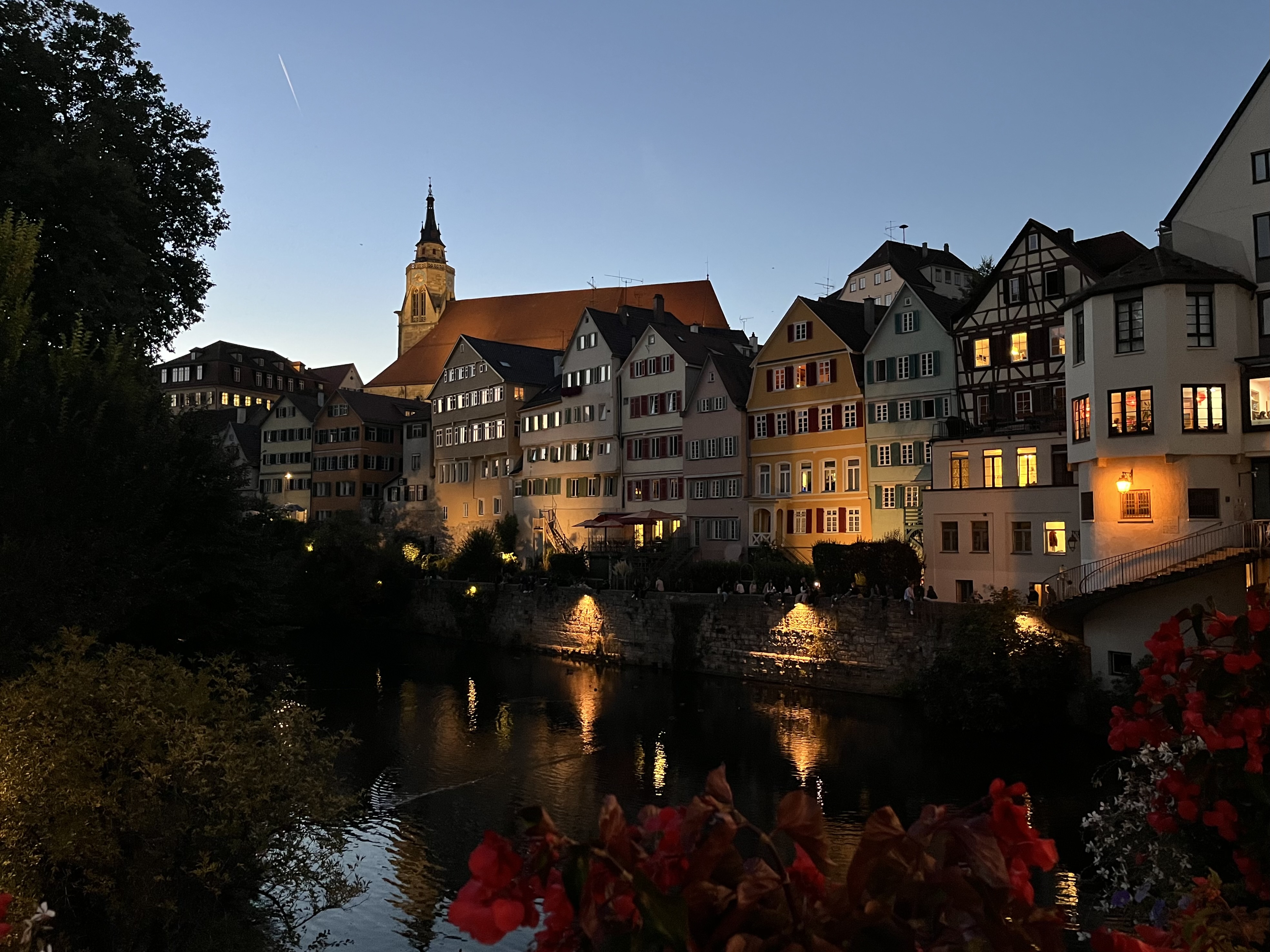
The drive from Vienna all the way to Dijon is simply too long of a drive for me in one day, and so I looked on the map for interesting half way points to spend another night. A little bit south of Stuttgart on the eastern slope of the Black Forest, I noticed Germany’s old idyllic university town of Tuebingen. A couple of years ago our daughter Anna received an offer to do research at this old prestigious university, and now was a convenient time to actually see this typical Swabian place for ourselves. After checking into the hotel, we walked into the old city, ate some typical Maultaschen (Swabian Raviolis) and wondered about who wouldn’t want to be a student in such a perfect place, before we fell into our beds.
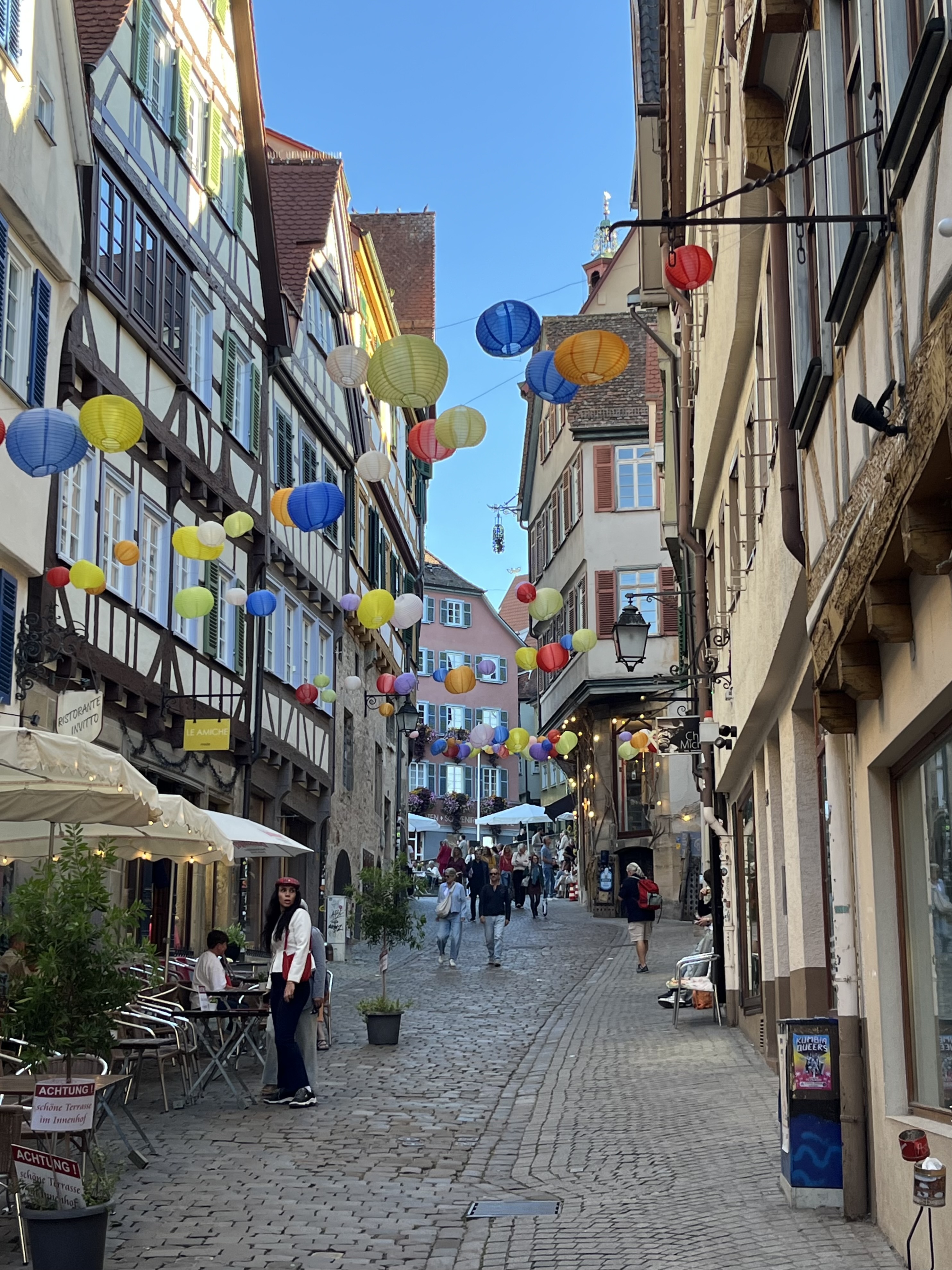
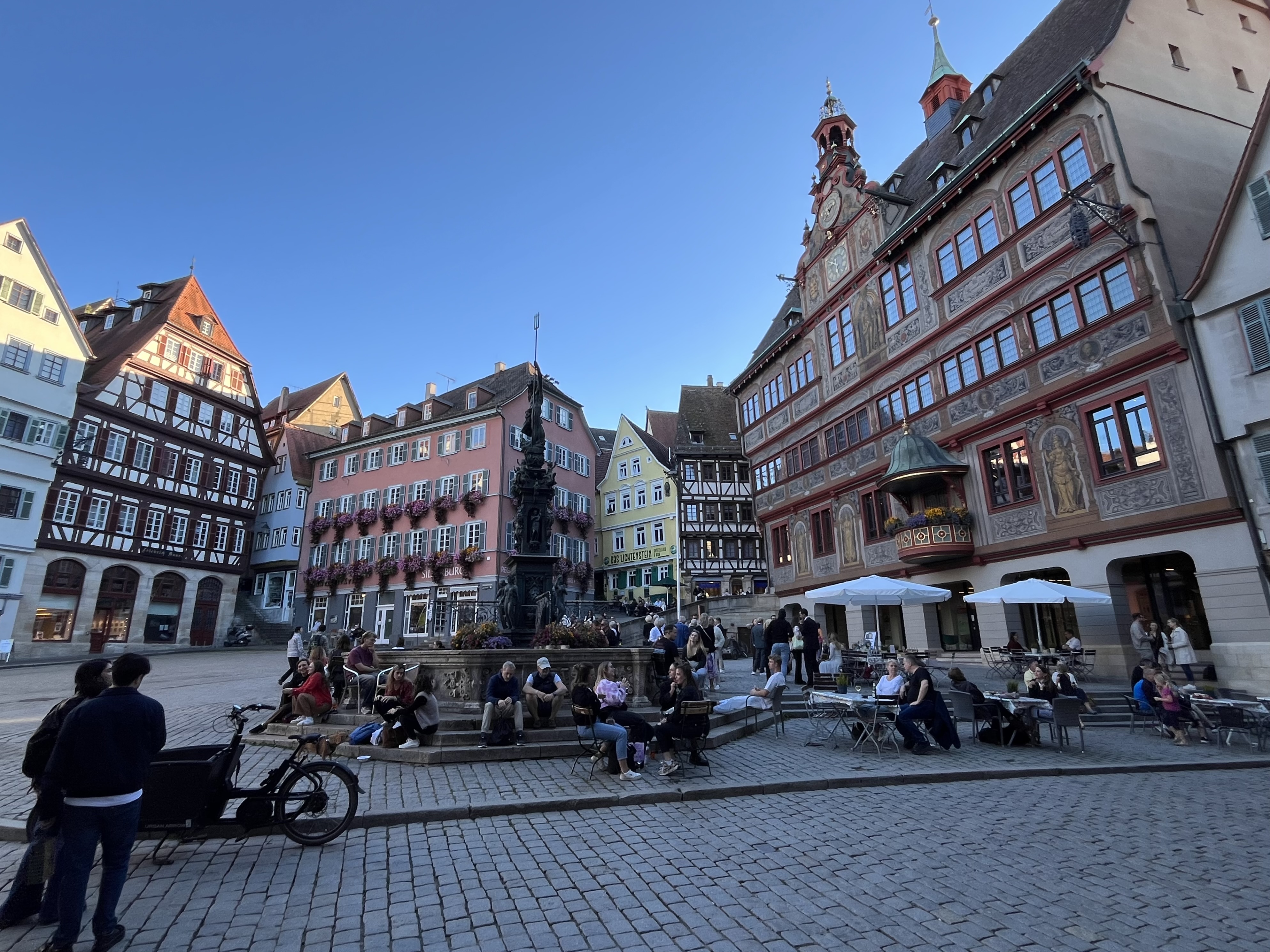
All in all another fun European road trip with lots of new and memorable impressions.
Keep on traveling!


Leave a comment