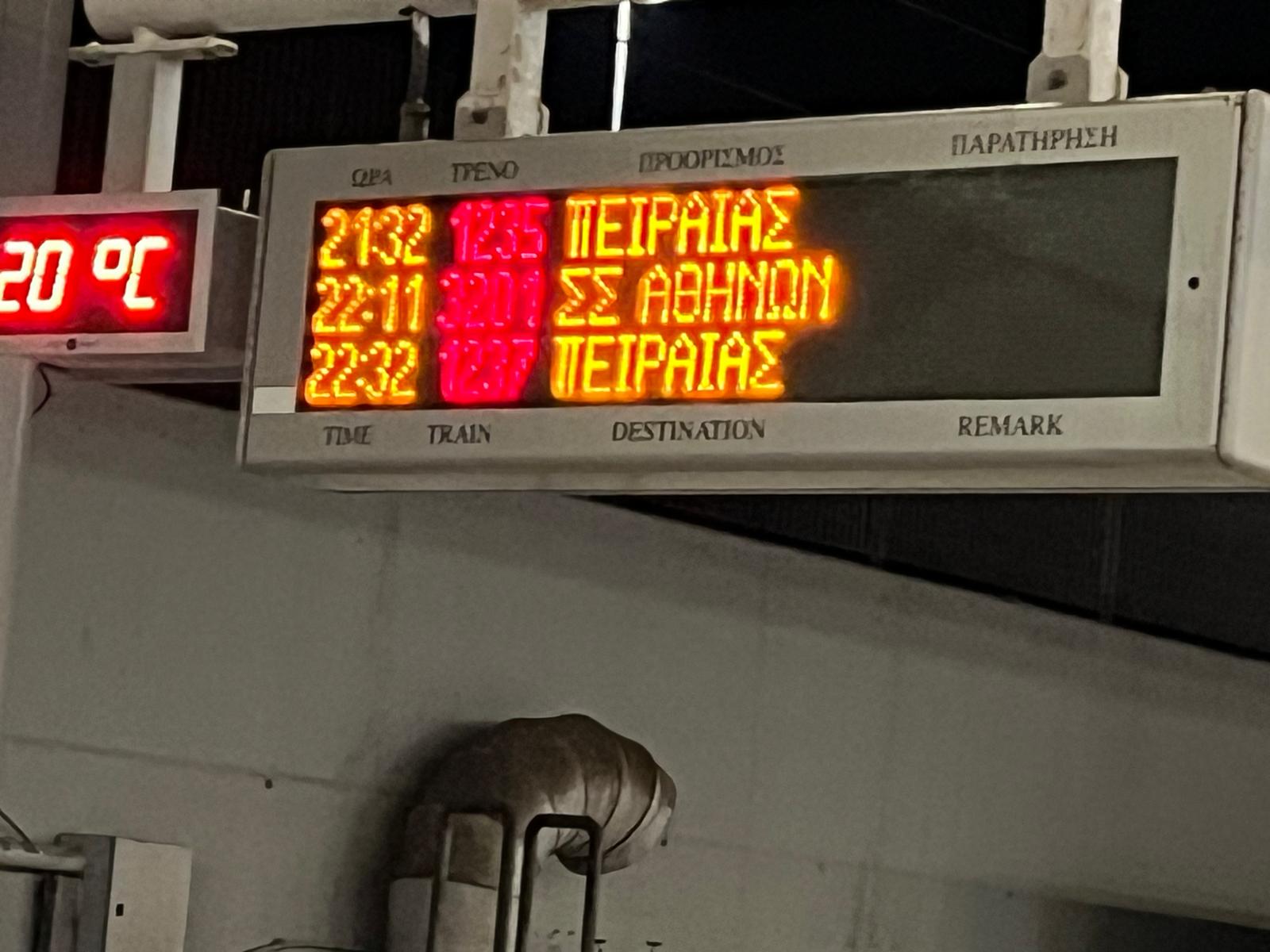
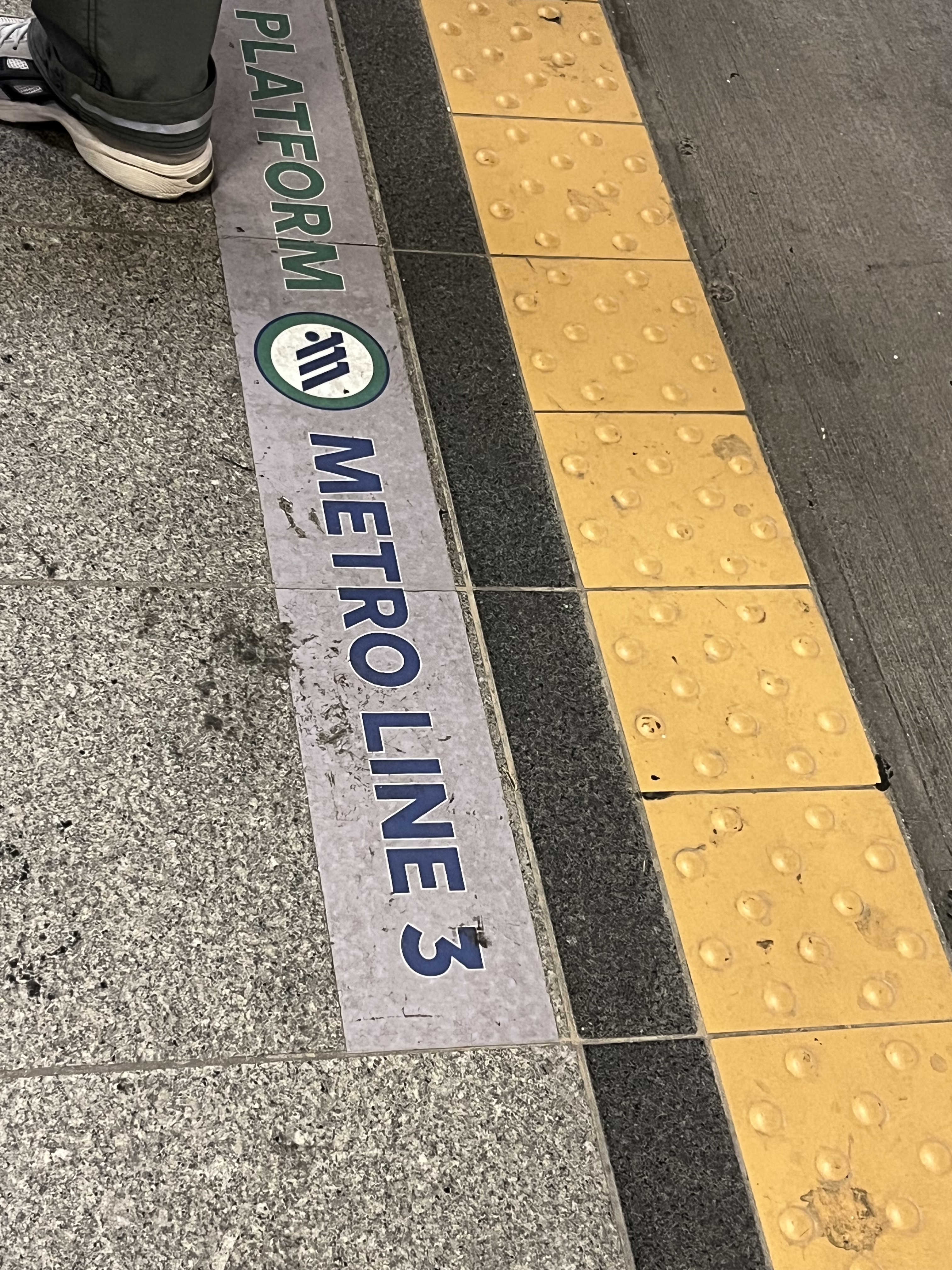
After a long journey from Dijon, Odysseus & Penelope arrived late in the evening at the Athens Airport in Greece. Guided by their trusted Google map star, they tried to find the platform for the Metro Line 3 to take them to their Hermes Hotel in the city center, yet all the signage and directions appeared encrypted, foreign, one might say Greek to them. They searched for clues, tried to communicate with other travelers, when finally noticing that they had been standing on the answer to their search right under their feet, see below. …. Apparently the Gods tried to test our Burgundian juggernaut couple on merit for their role in the unfolding Odyssey, and they barely passed.
The beginnings of this journey however, lay much further back, like in shrouded Greek mythology, when over 40 years ago, this then still unmarried couple had booked a vacation to the Greek islands, only to cancel the journey at the last minute based on Penelope’s wise advice that starting college was more important. Now, after retirement from their business logos world, they felt eager and ready to explore the trails through Ancient Greece:
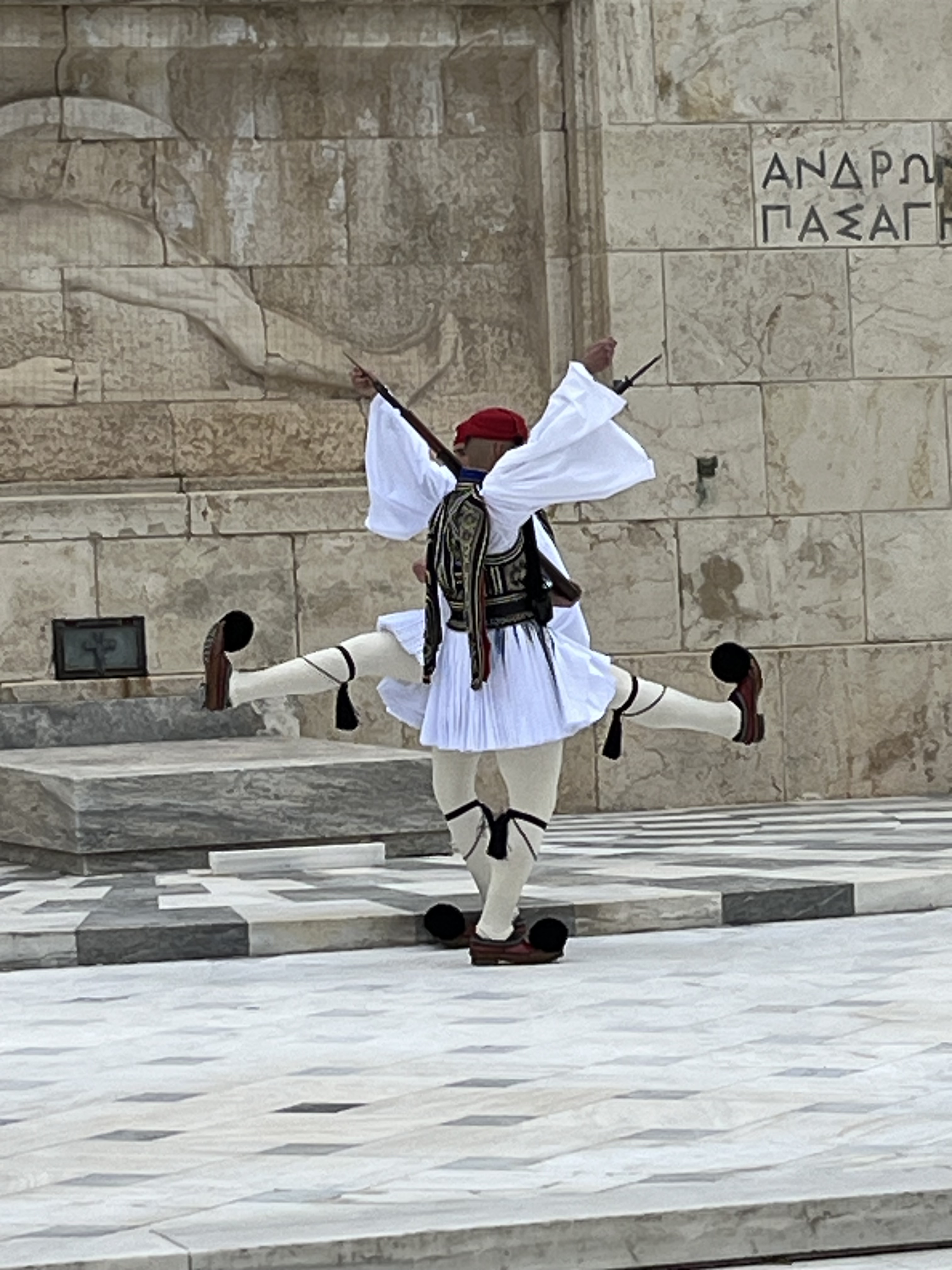
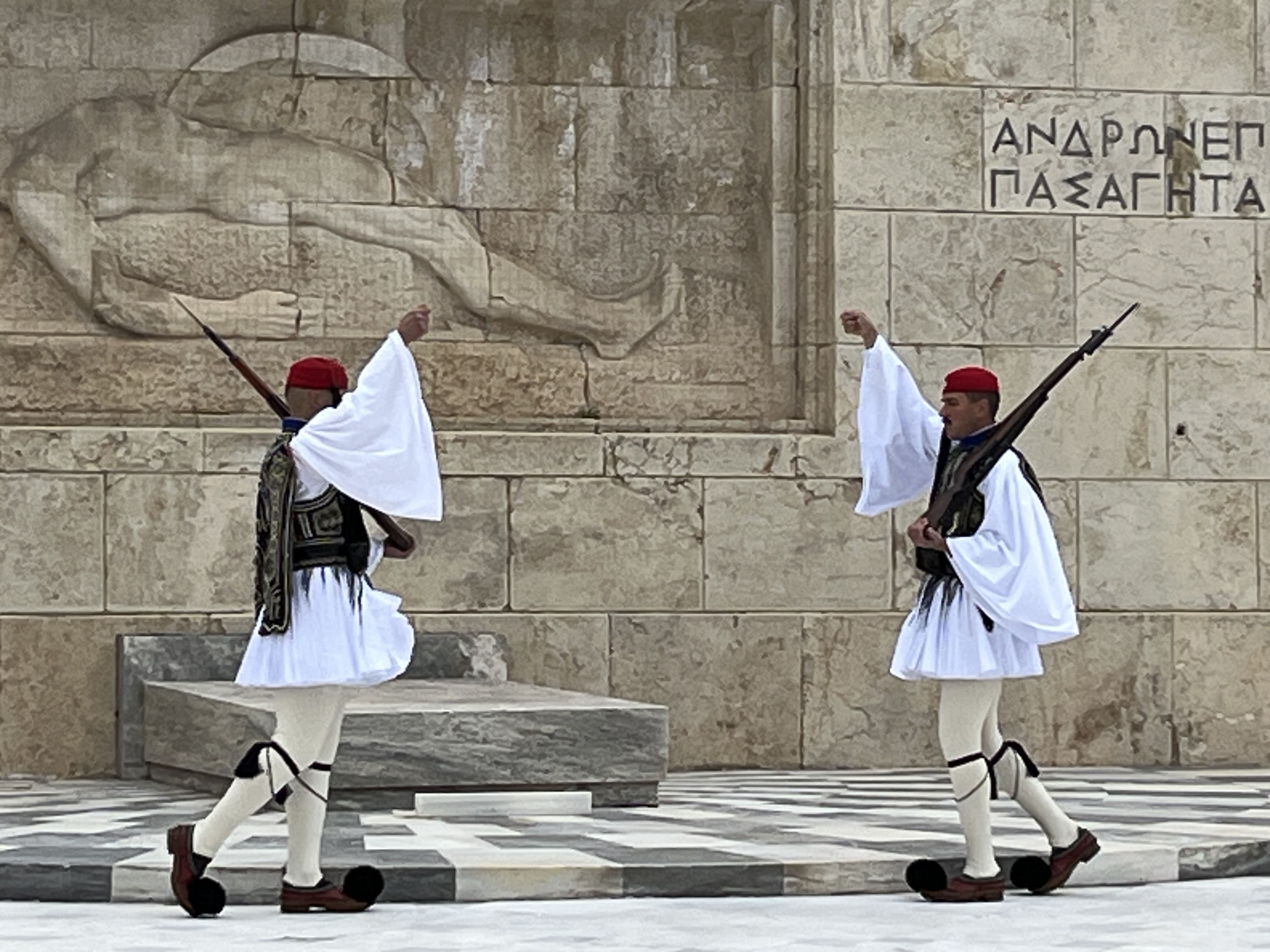
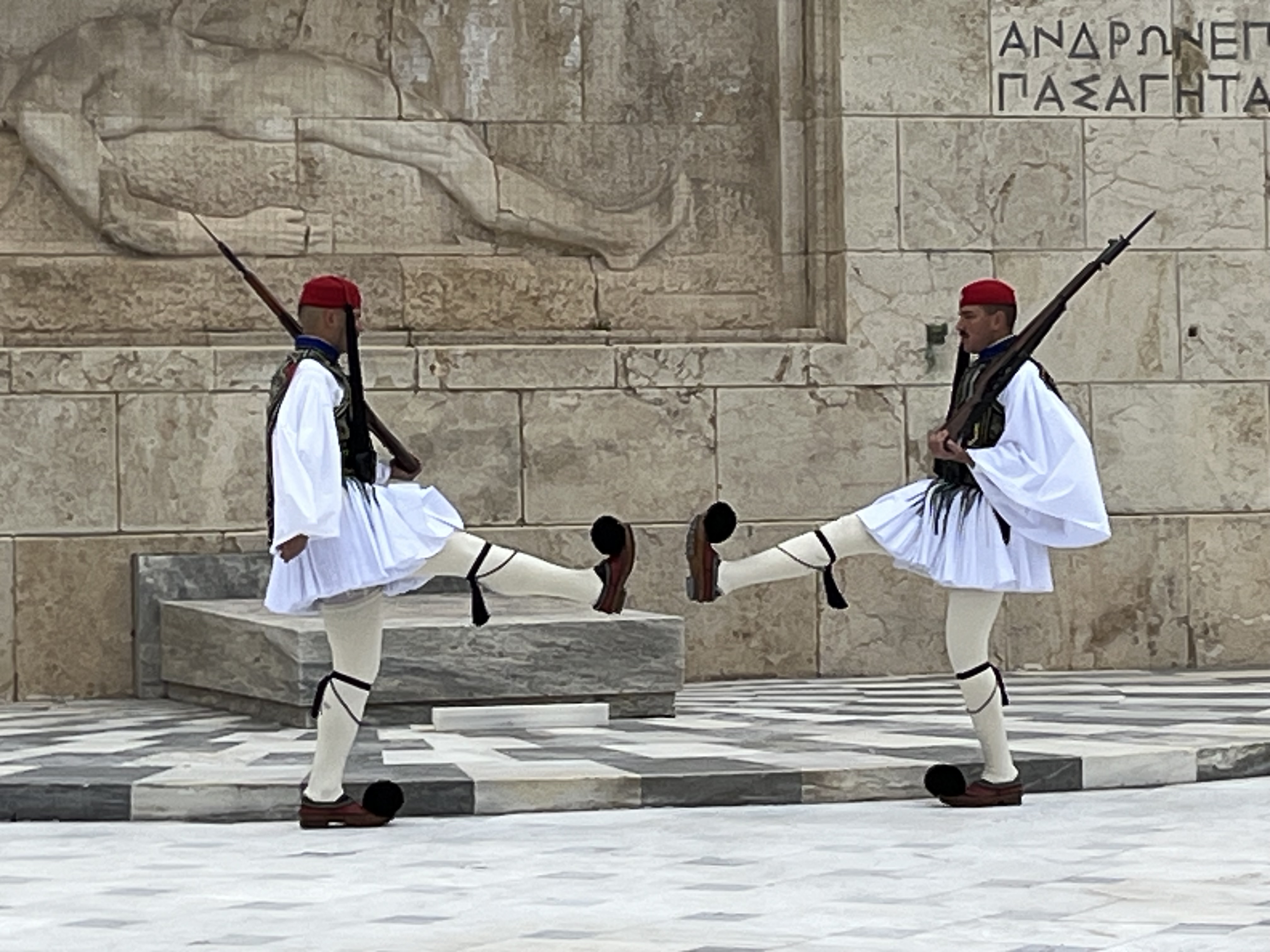
As last year in Spain, we managed again to travel over May 1st, our first day in Athens, and May 1st, the Day of the Worker, is a national holiday all over Europe and everything, including museums etc are closed. We used it as a quiet settling in day to explore the old town of Athens on foot. Fortunately, the guardian soldiers in front of the Greek Parliament at Syntagma Square were on duty to entertain us:
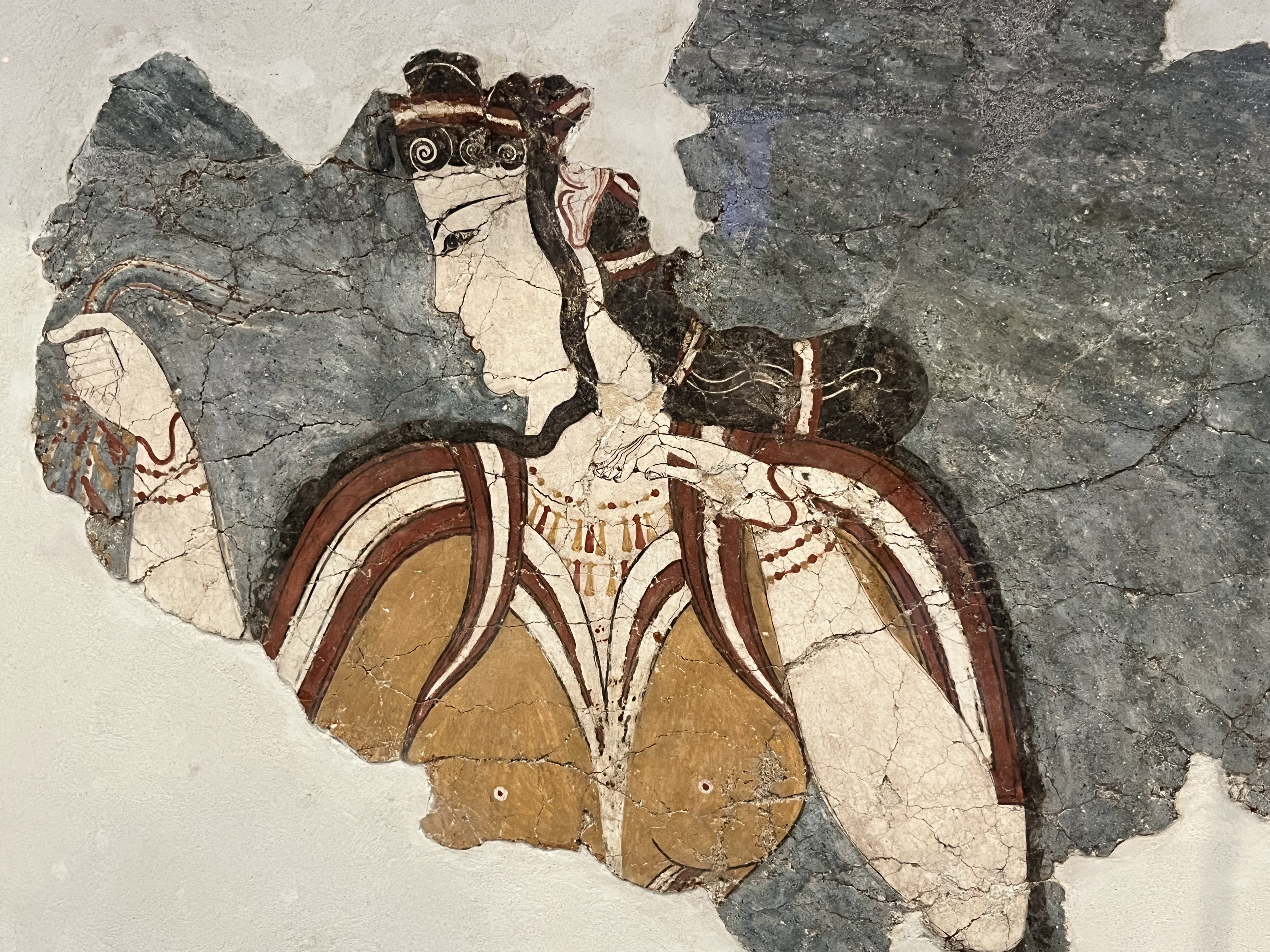
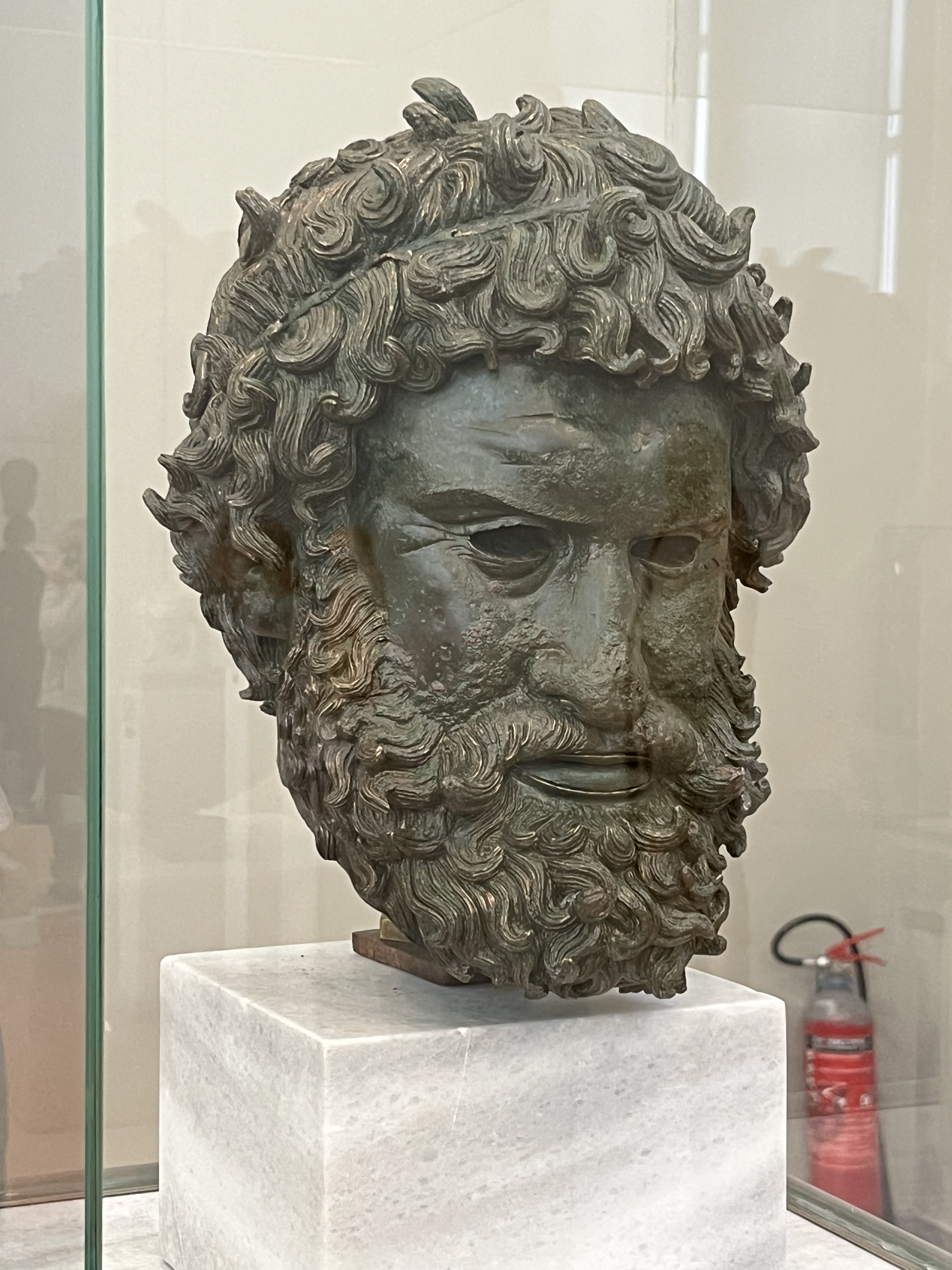
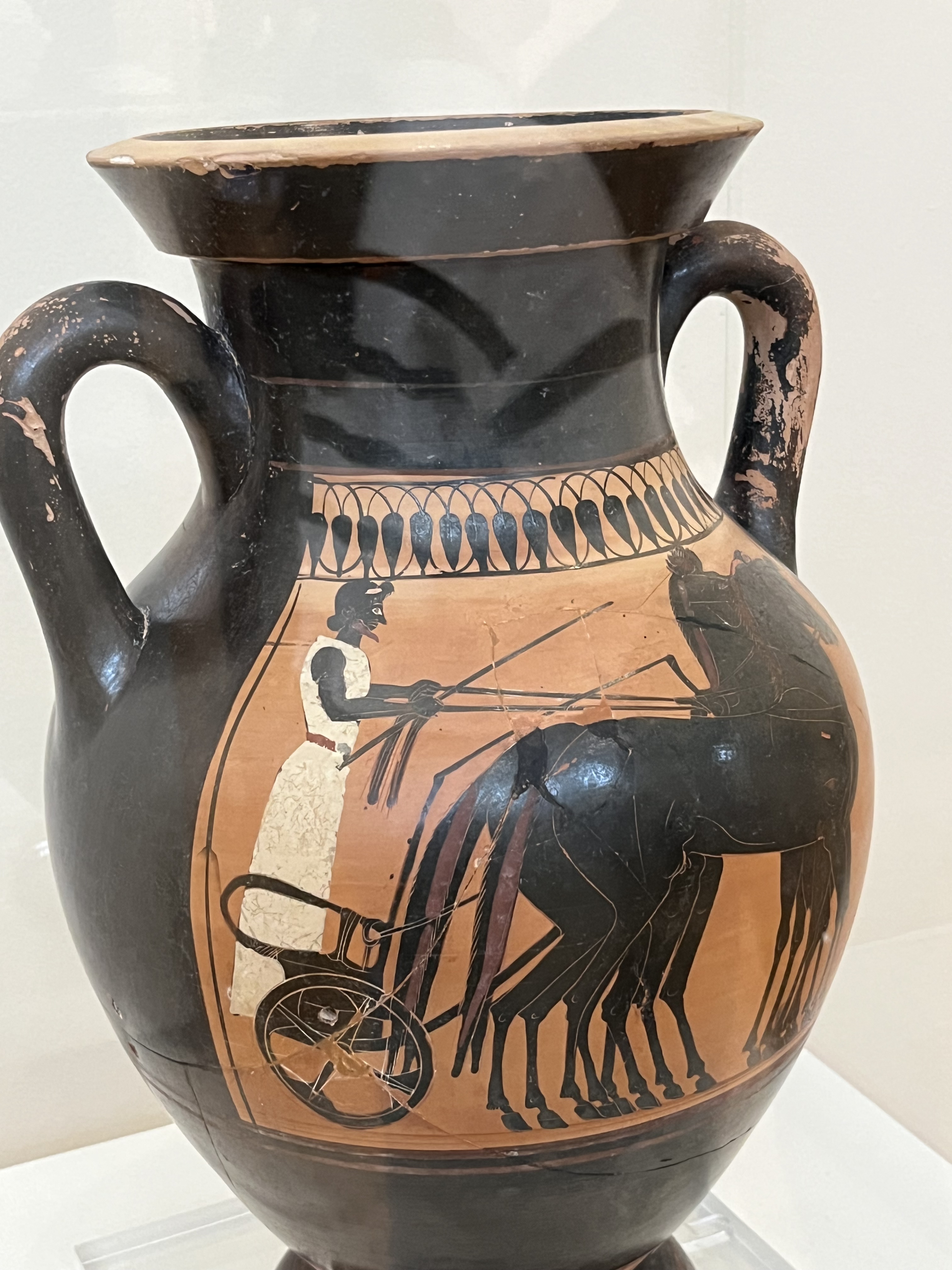
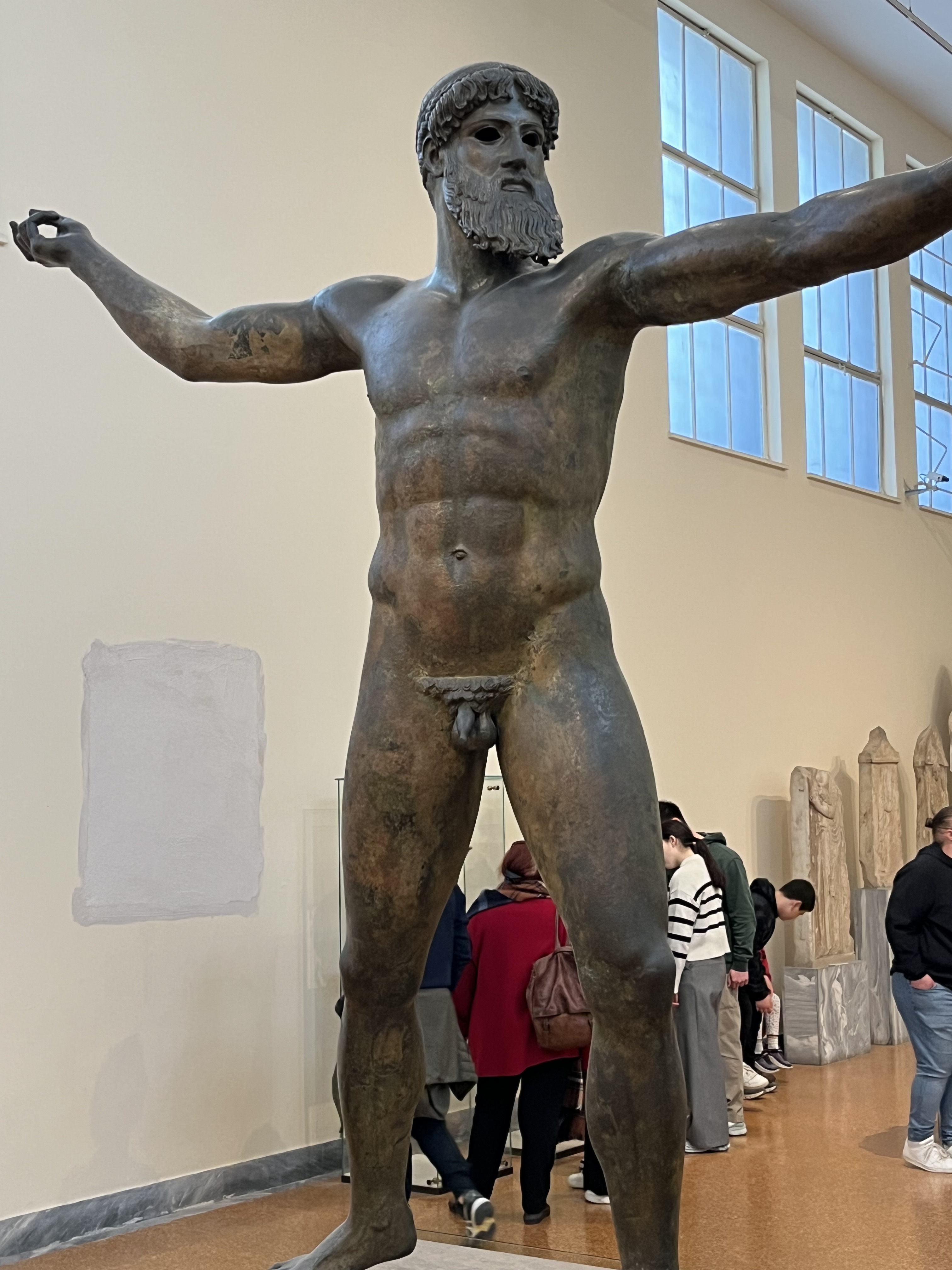
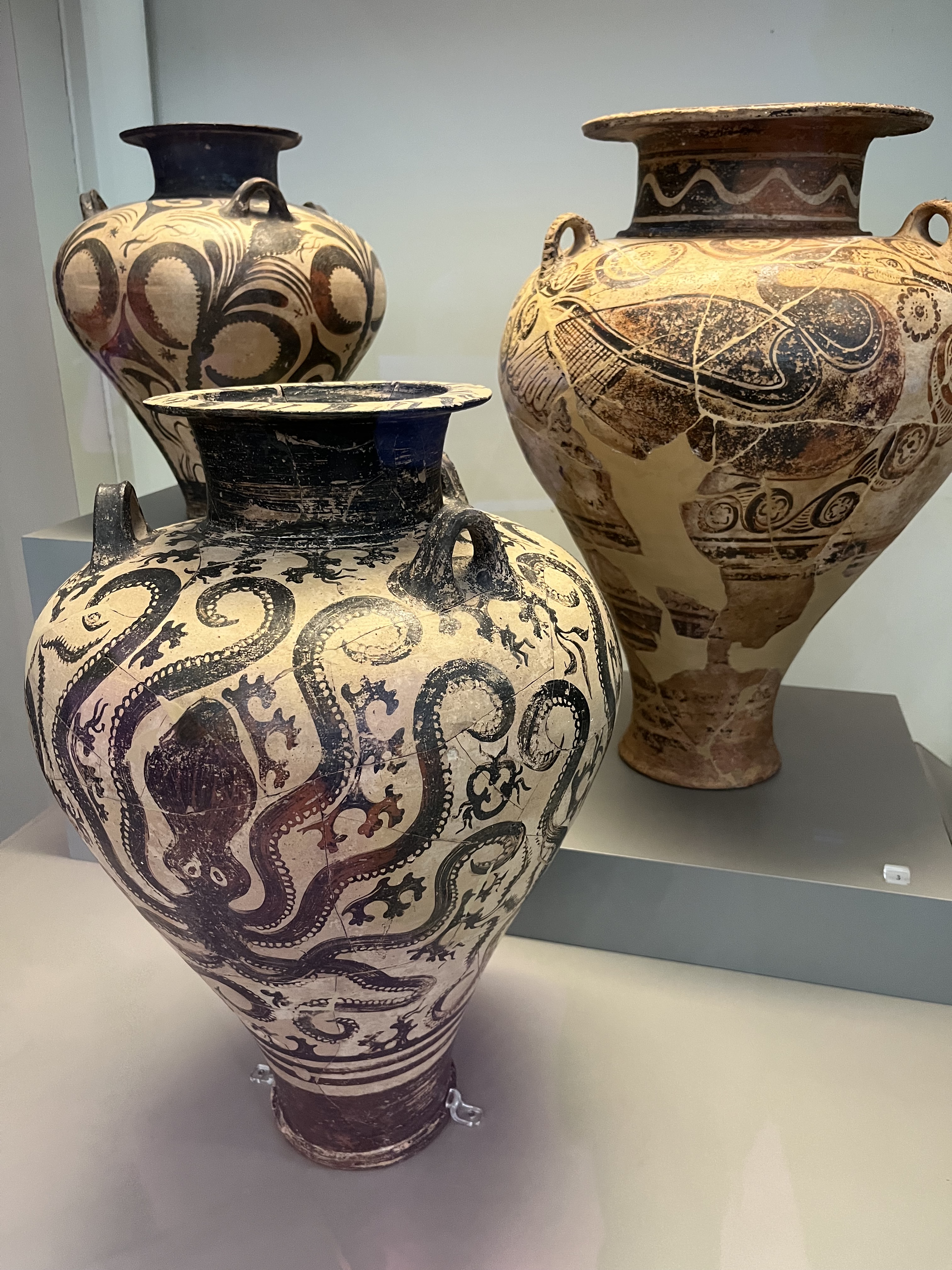
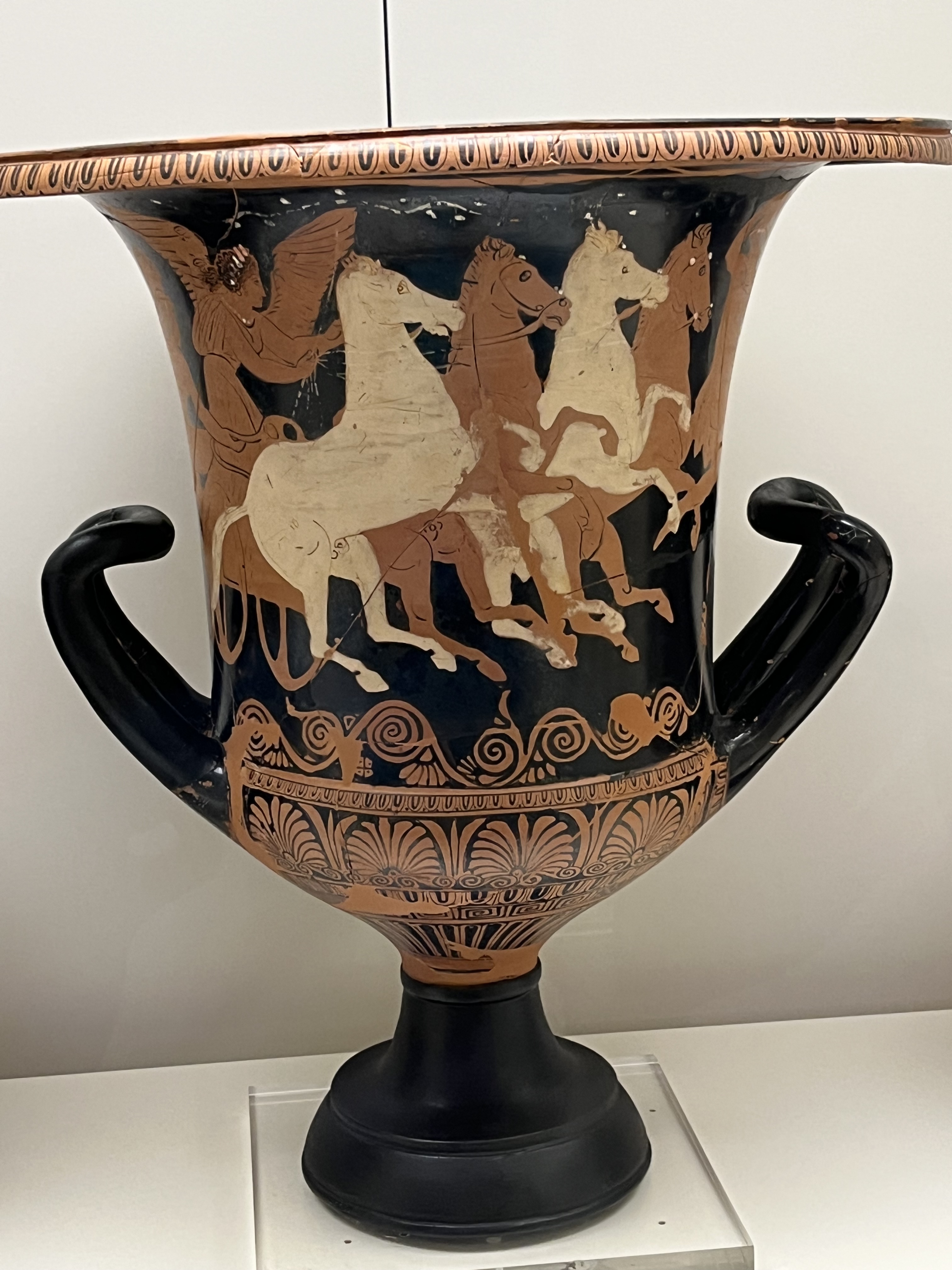
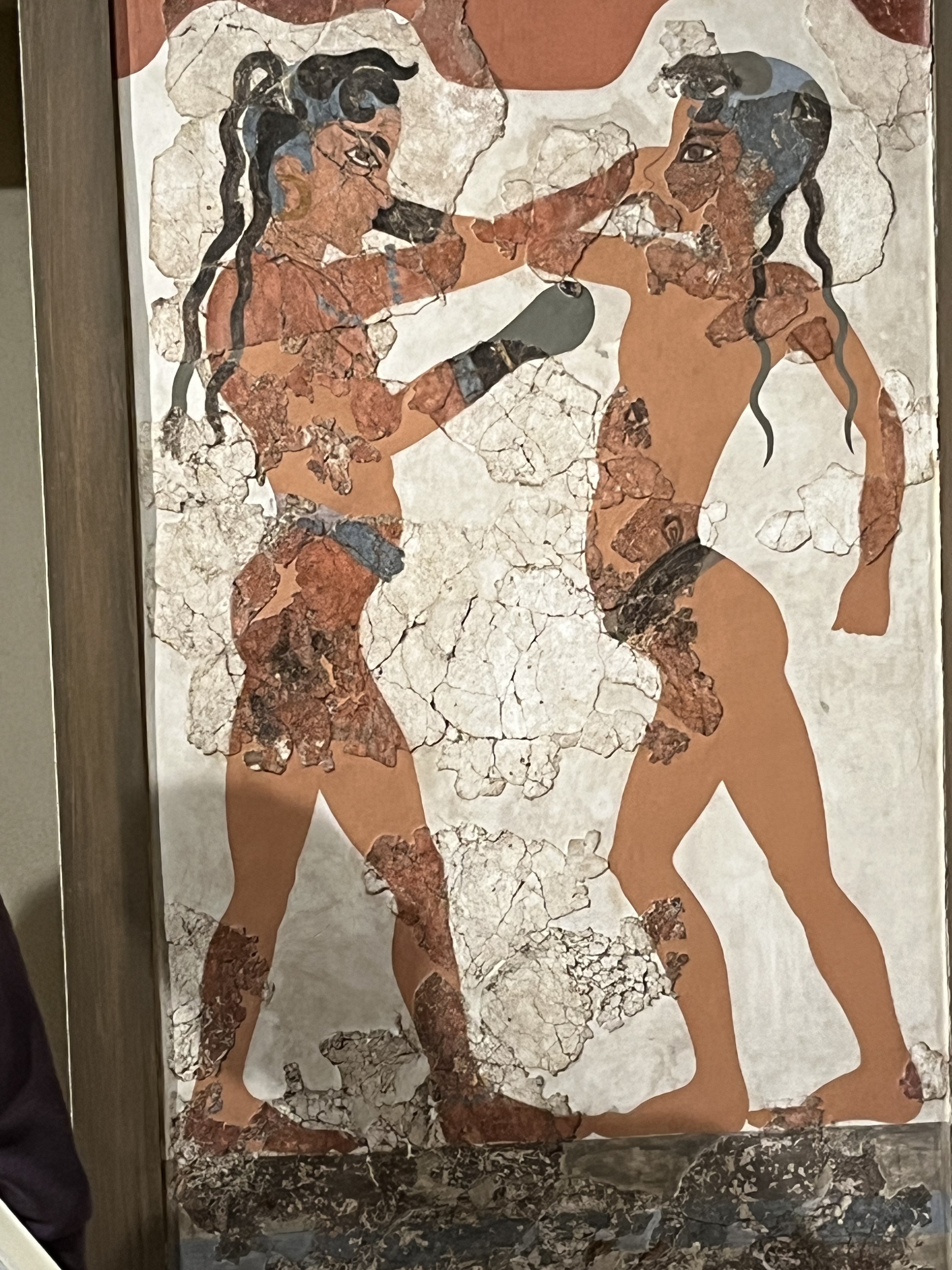
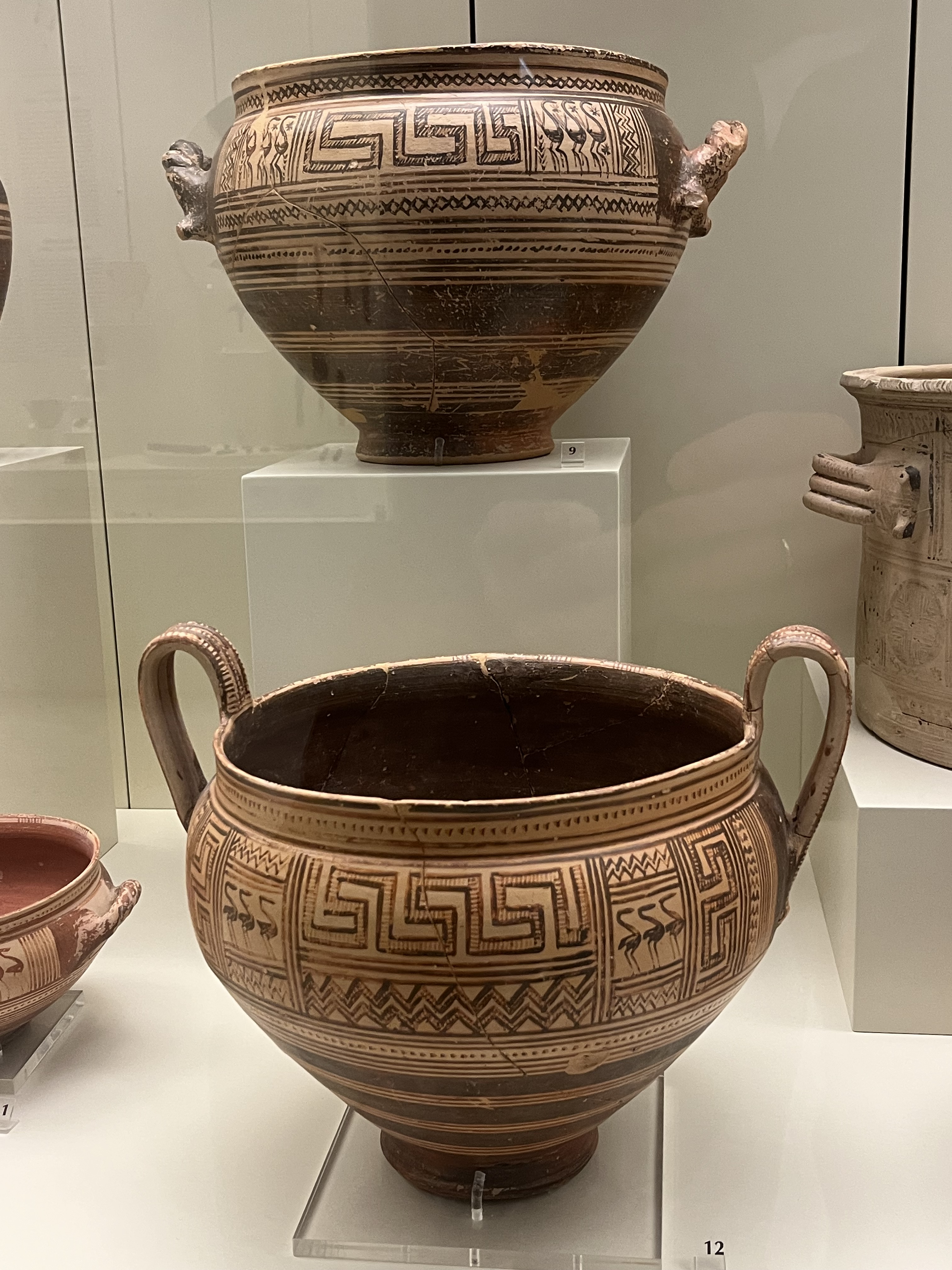
The Greek National Archaeological Museum covers Greek history from the ancient period (3,000 – 1,100 BC) to the end of the Hellenistic Period (150 BC). The museum contains mostly original artifacts from various locations throughout Greece, whereas most of the on location museums display only copies. The amount of beautifully detailed pottery and jewelry displayed in the museum are amazing. Here are just a few pictures, which include a statue of Zeus, the king of the Greek Mythological Gods:
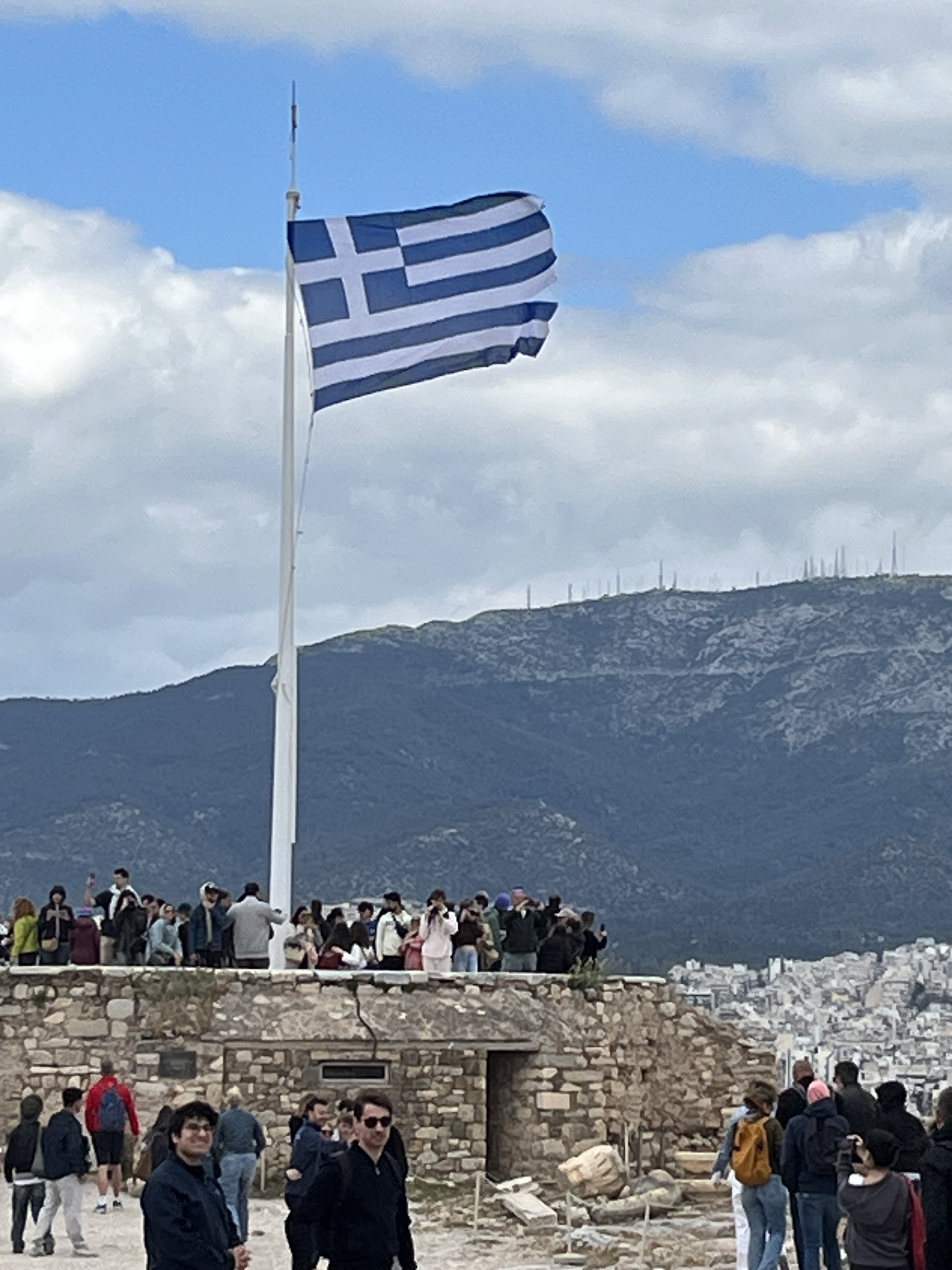
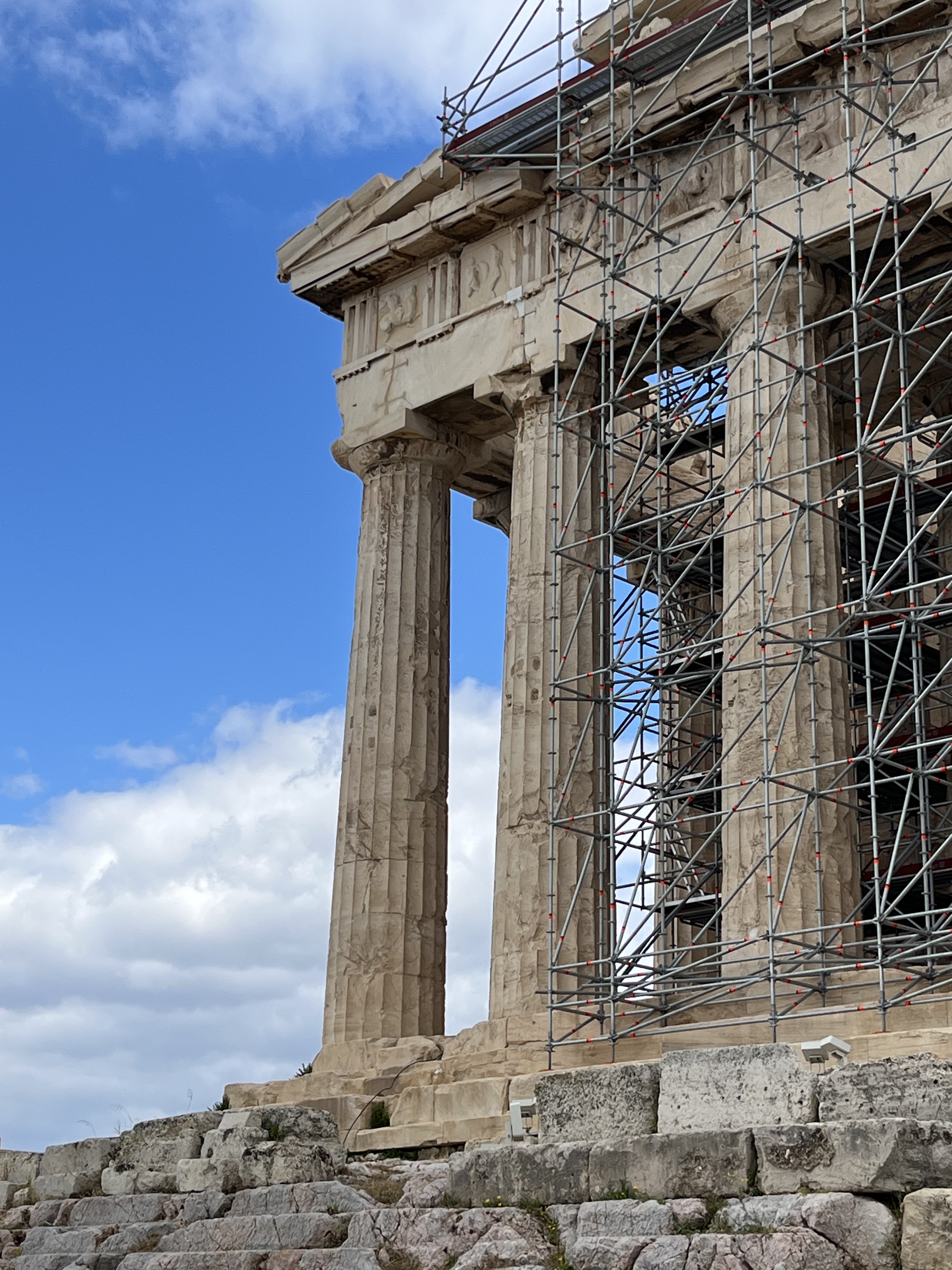
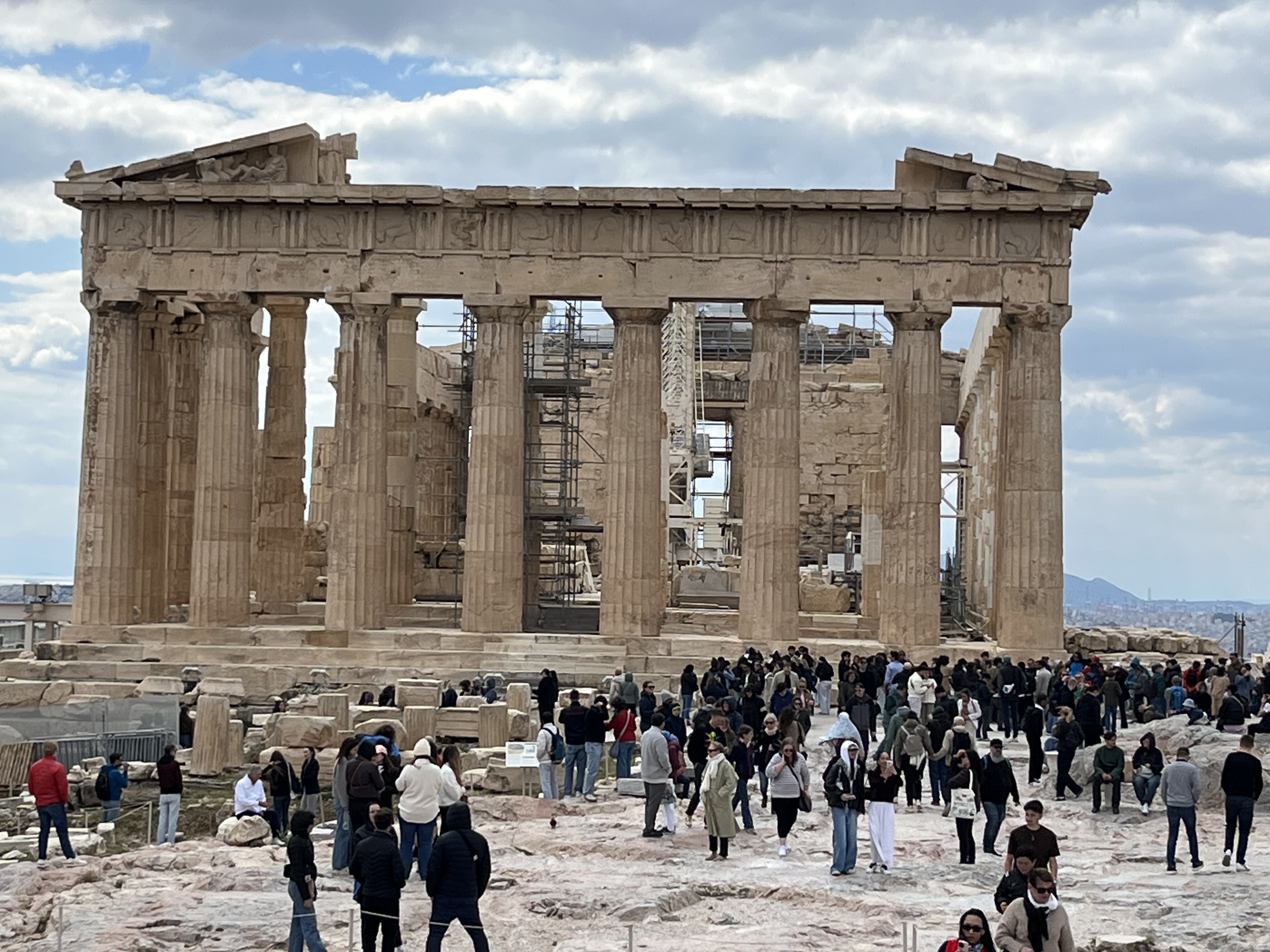
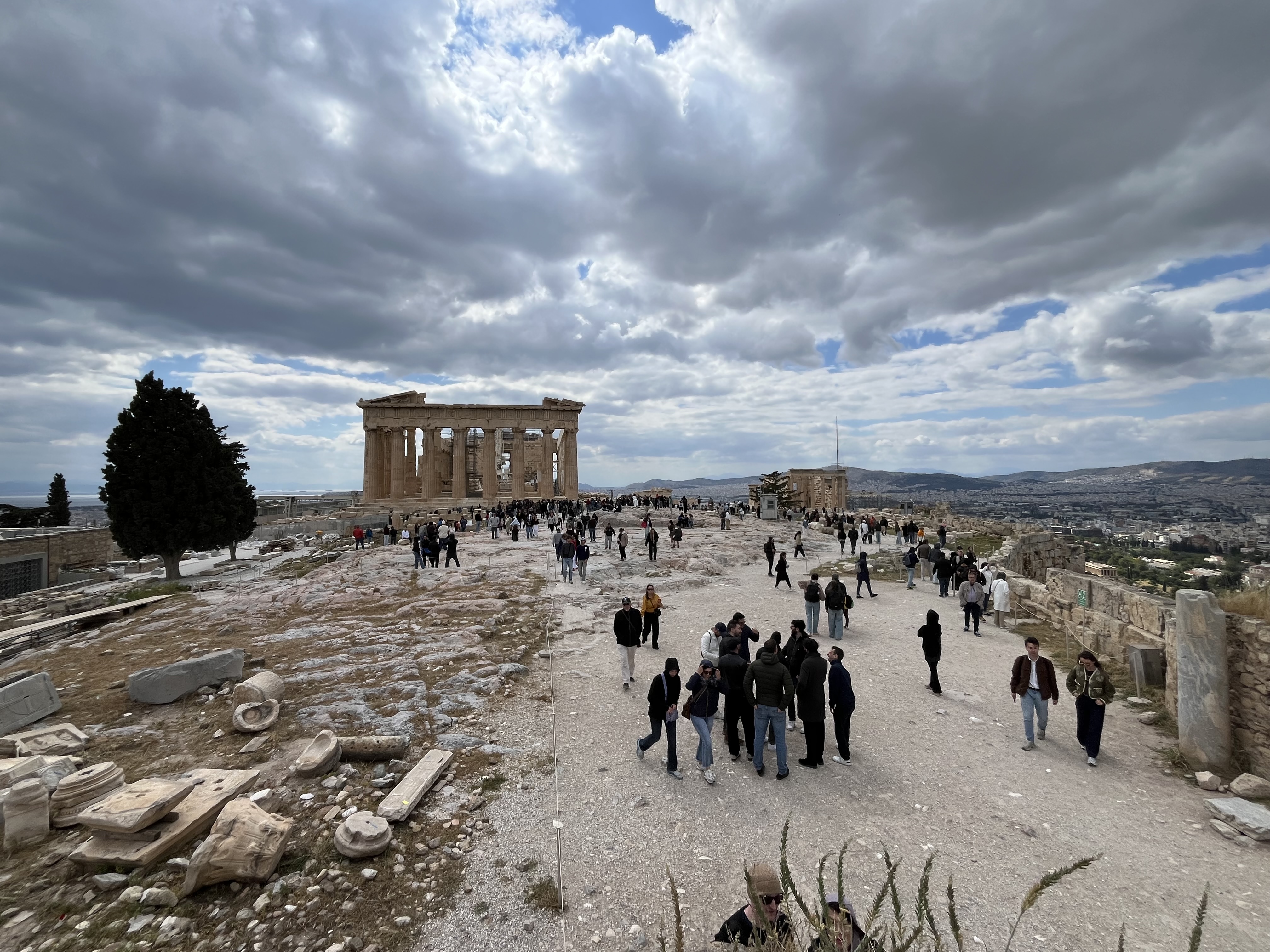
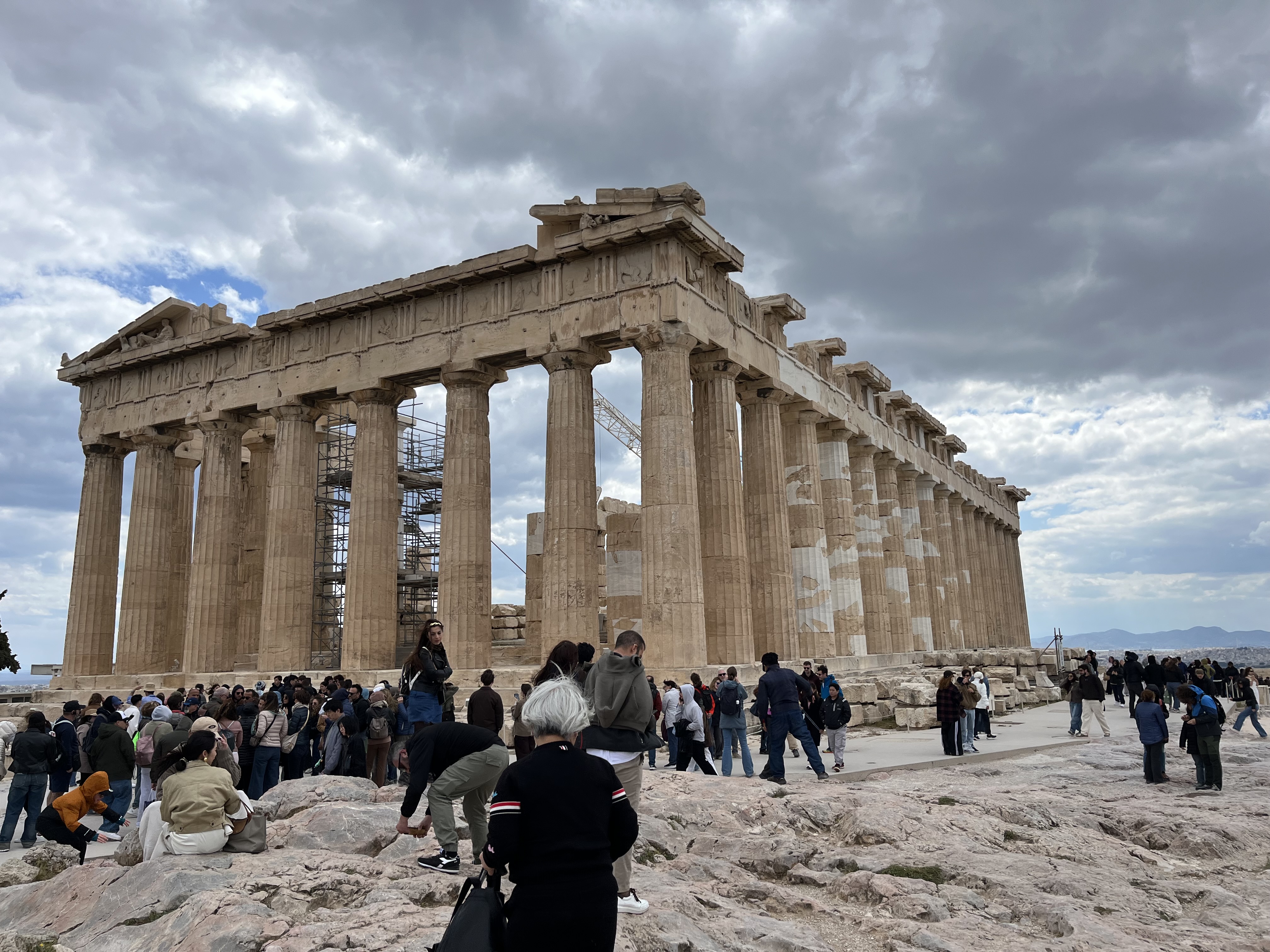
The renowned symbol of Greece and Athens is the Acropolis. It sits highly and widely visible in the center above Athens. The word Acropolis simply means highest point of a larger settlement, usually with a citadel or other buildings on top of a plateaued hill. The Athens Acropolis dates back to 6,000 BC, with the large, 500 BC Parthenon building at its center. The Parthenon was a Greek temple dedicated to the patron goddess of Athens, Athena. The building is reveered for its beauty and fine, harmonious proportions. After being partially rebuilt in the not so distant past, nowadays the building is simply maintained in its current status.
For all Greeks, the Acropolis is a holy site of utmost importance to Greece’s history and identity. It is here, and in the ancient Agora, that Socrates, the great thinker and philosopher of Ancient Greece, and his student Plato, the author of The Republic and other writings, hung out. Their thoughts and ideas, as well as that of other philosophers, curious minds, and mathematicians like Pythagoras, continue to influenced and shaped our Western Civilization to this day. They influence the way we live together as a society, in cities/polis, with forms of government like democracy. They pretty much invented geography, mathematics, medicine and science in general, and we use Greek words like democracy, music, museum, chaos, atlas etc, daily. It started right here, in and around the Acropolis of Athens!
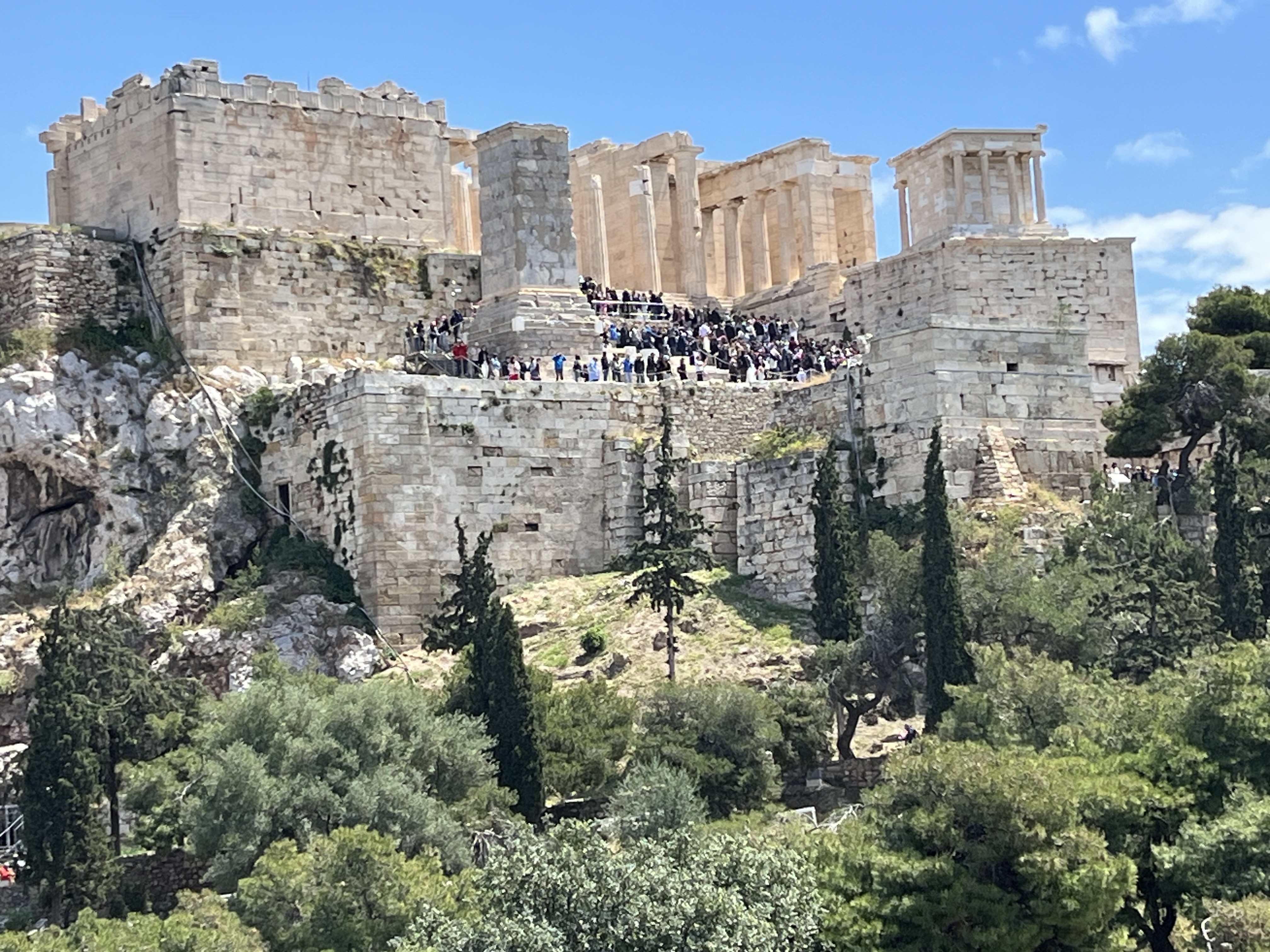
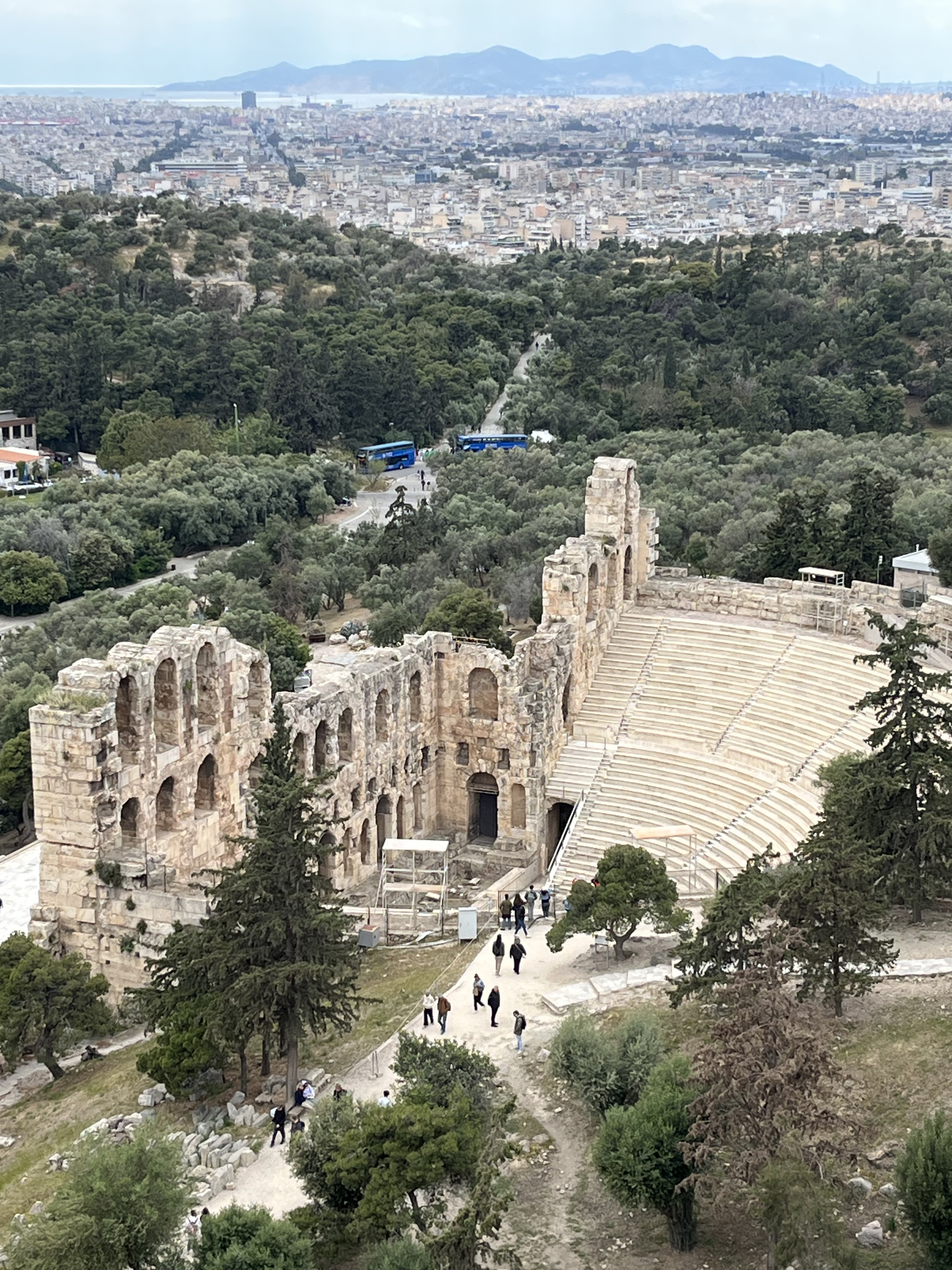
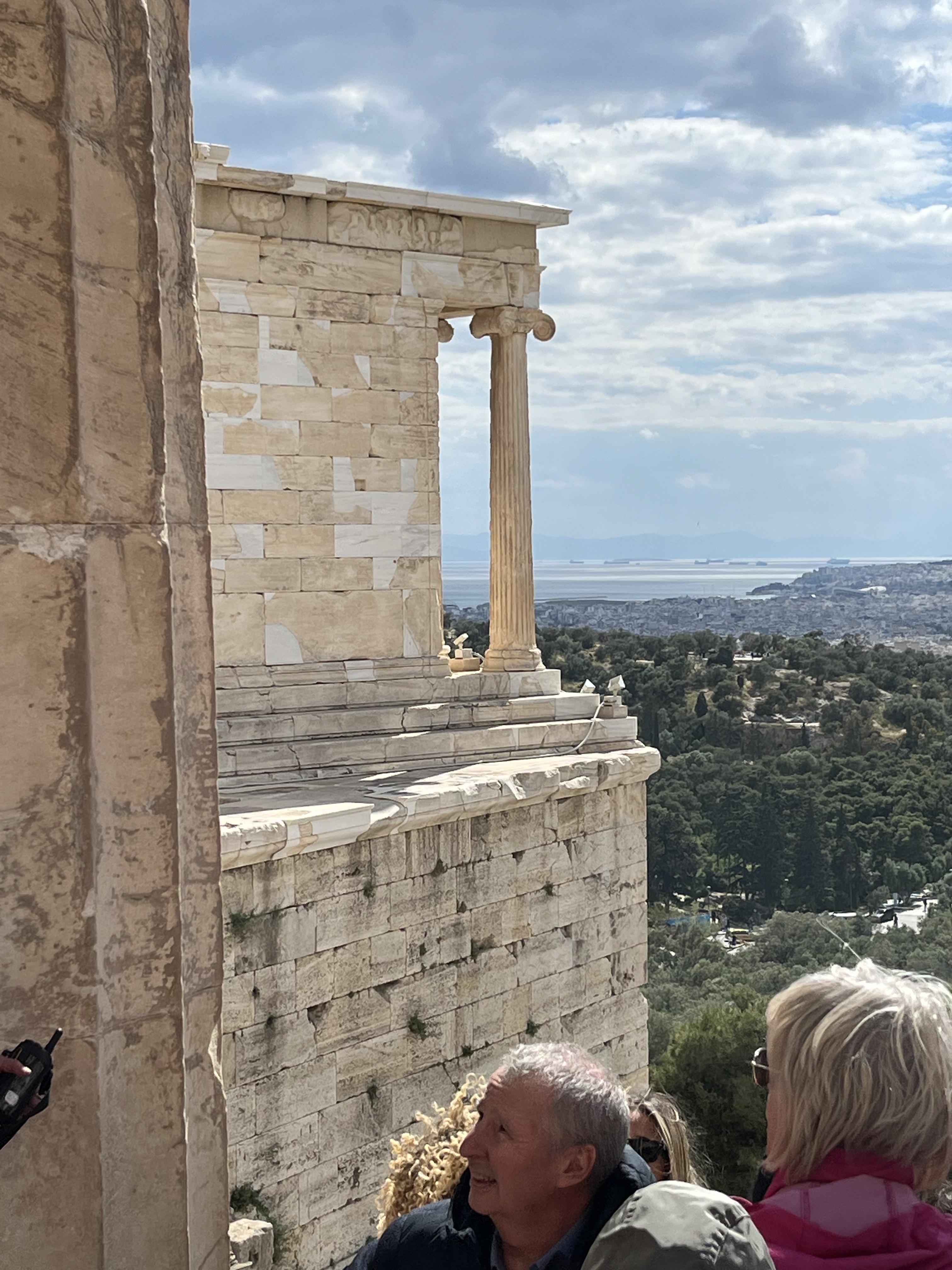
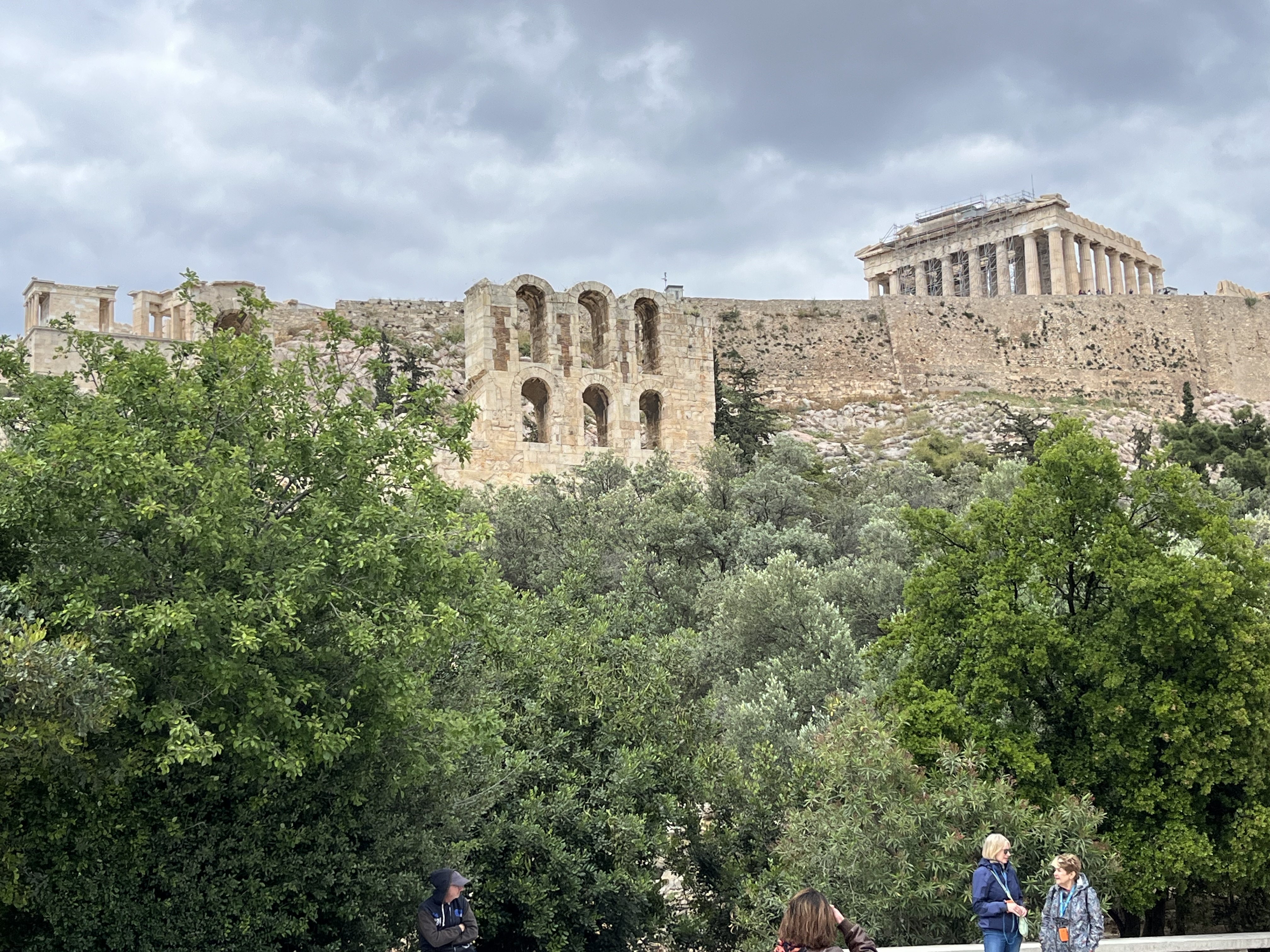
The Odeon of Herodes Atticus amphitheater from 160 BC under Roman rule below left, and the temple of Athena Nike below right:
Lauri, with our Acropolis guide Fay, standing below Acropolis hill. I noticed the characterful sculptures of these ancient Greeks in the Acropolis museum and couldn’t resist the fun and lively expressions of their faces:
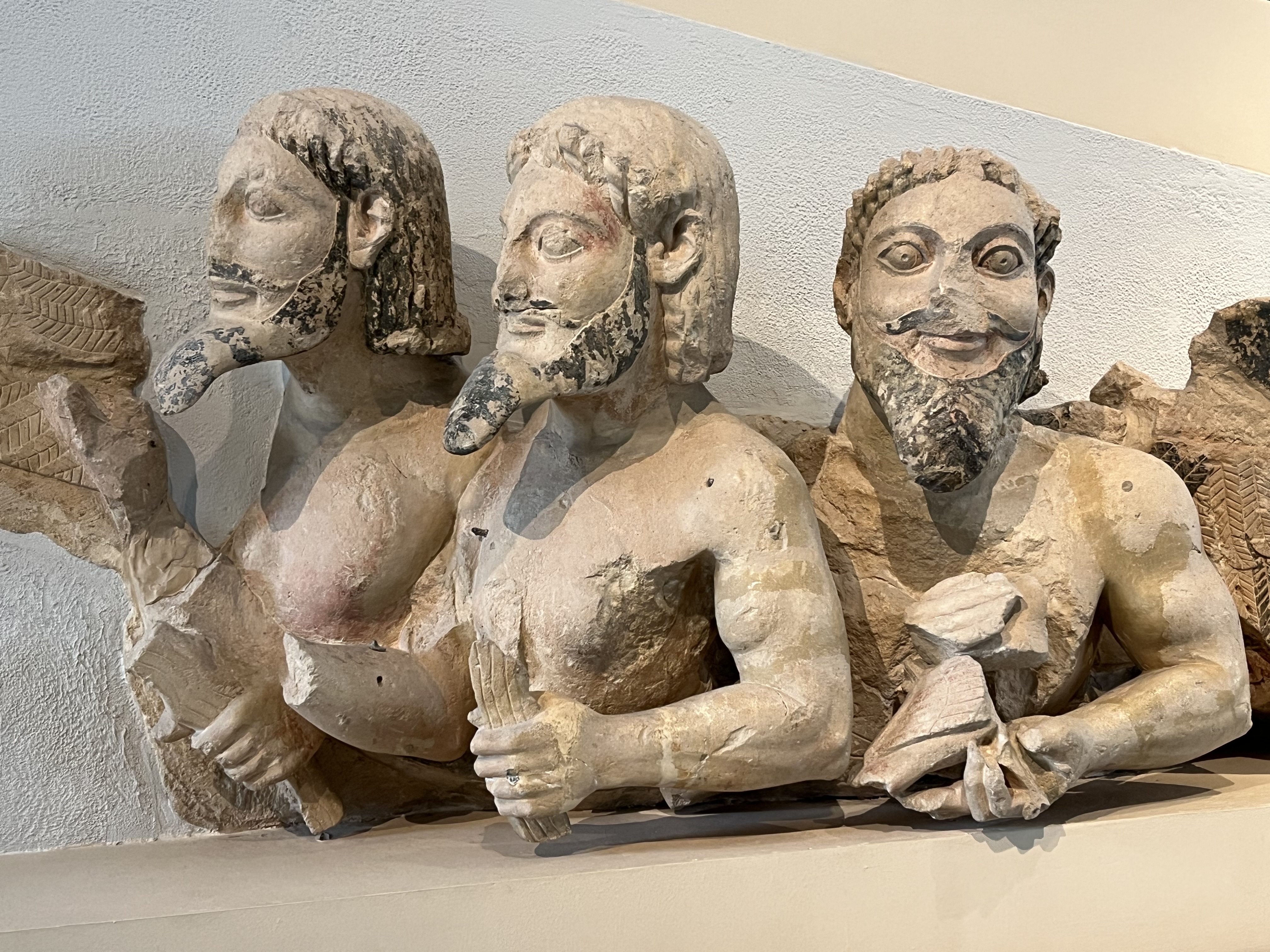
Like Fay, our Acropolis guide, all Greeks we encountered were understandably proud of their rich, deep history. I am going to insert a write up on Greek’s history since the Classical period, as I think it is important for understanding today’s Greece. If this is too much information, simply skip down to the tasty Orange cake:
The Ancient Greeks were organized into independent city-states, or poleis (singular polis), that spanned the Mediterranean and Black seas. Philip II of Macedon (more on him later) united most of present-day Greece in the fourth century BC, with his son Alexander the Great, conquering much of the known ancient world from the Near East to northwestern India. The subsequent Hellenistic period saw the height of Greek culture and influence in antiquity. Greece was annexed by Rome in the second century BC and became an integral part of the Roman Empire and its continuation, the Byzantine Empire, during which Greek culture and language were dominant. The Greek Orthodox Church helped shape modern Greek identity and transmitted Greek traditions to the wider Orthodox world.
After the Fourth Crusade in 1204, Greece and the rest of the Byzantine empire was fragmented into several Latin and Byzantine successor polities, with most Greek lands finally coming under Ottoman (Turkish) rule by the mid-15th century. Following a protracted war of independence in 1821, Greece emerged as a modern nation state in 1830. The Kingdom of Greece pursued territorial expansion during the Balkan Wars (1912–1913) and World War I (1914–1918), until its defeat in the Greco-Turkish War in 1922. No wonder, most Greeks don’t look too fondly at the Turks, their occupiers for almost 500 years!
A short-lived Republic was established in 1924, but faced civil strife and the challenge of resettling refugees from Turkey, culminating in a royalist dictatorship in 1936. Greece endured military occupation during World War II, the subsequent Greek Civil War, and prolonged political instability, leading to a military dictatorship in 1967. Astonishingly, the country began transitioning to democracy, which they invented some 2,500 years earlier, only recently, in 1974, leading to the current parliamentary Republic.
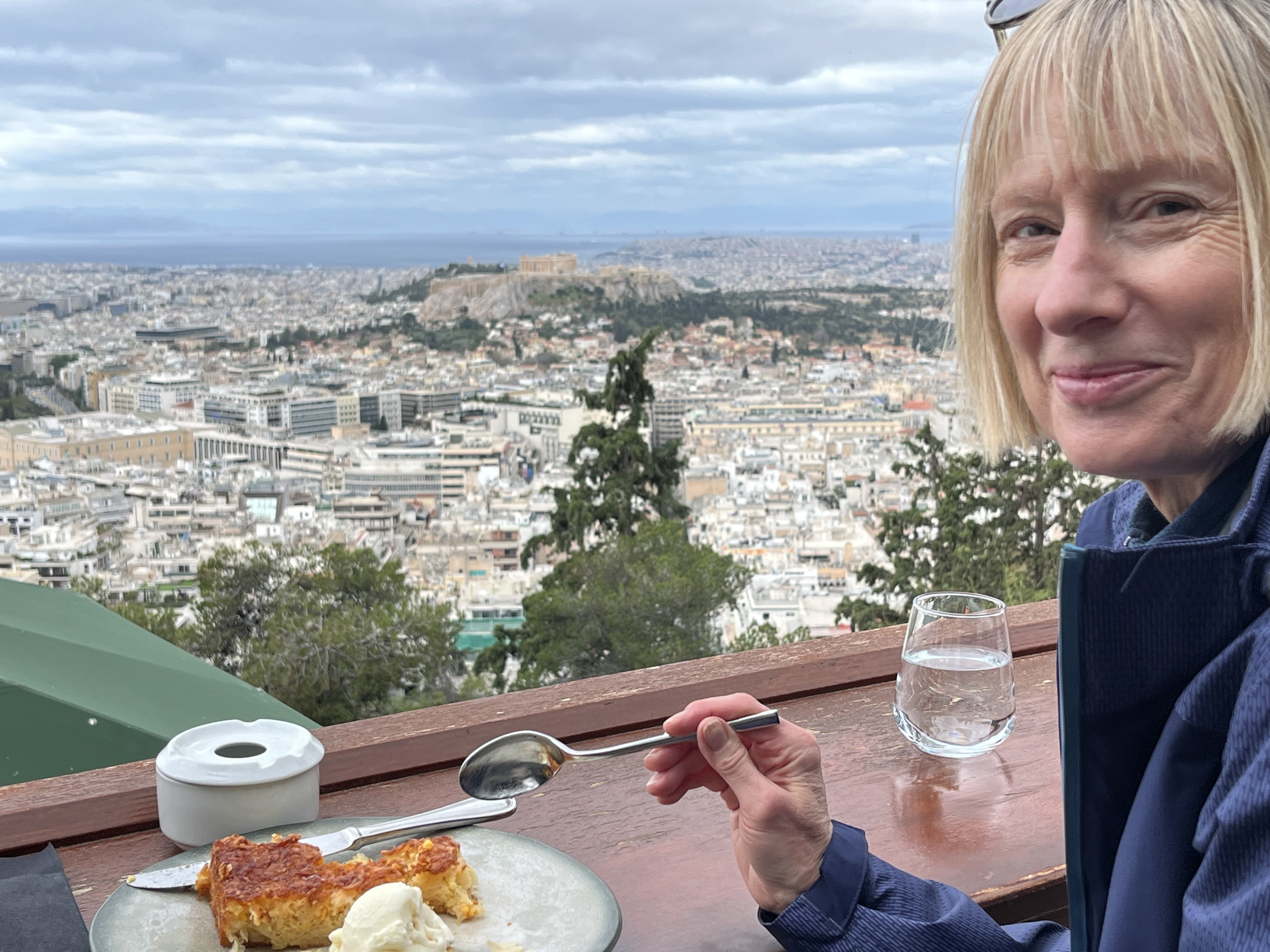
That is a lot of history to digest, so here we we are enjoying something sweeter, with a prime view over Athens towards the Acropolis. It was our first, traditional Greek Orange cake! This dessert comes in various forms and sizes, yet always contains an irresistible mixture of citrussy sour orange and honey sweetened flavors. We easily ate more than 6 different ones during our trip and I turned into a big fan!
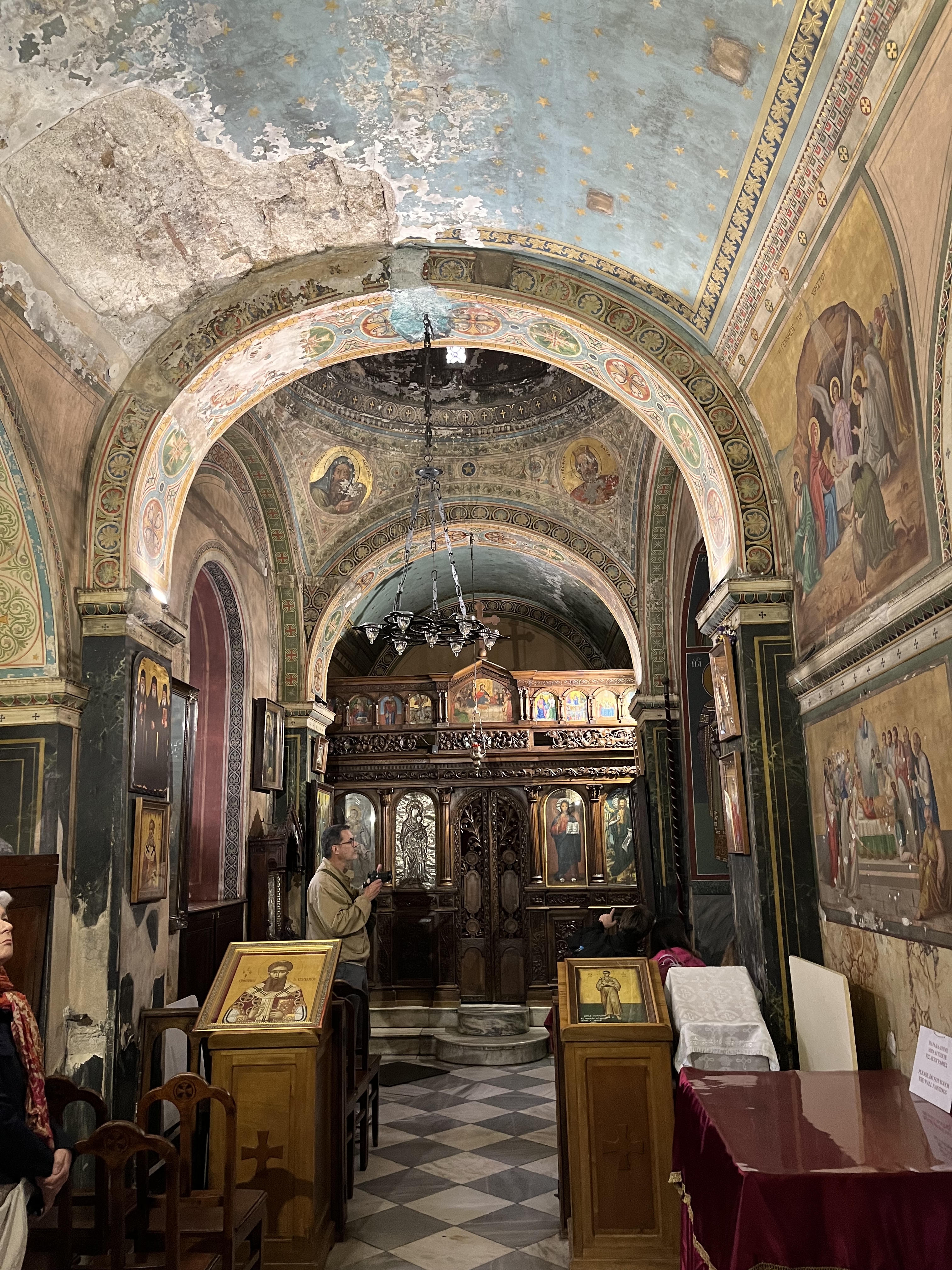
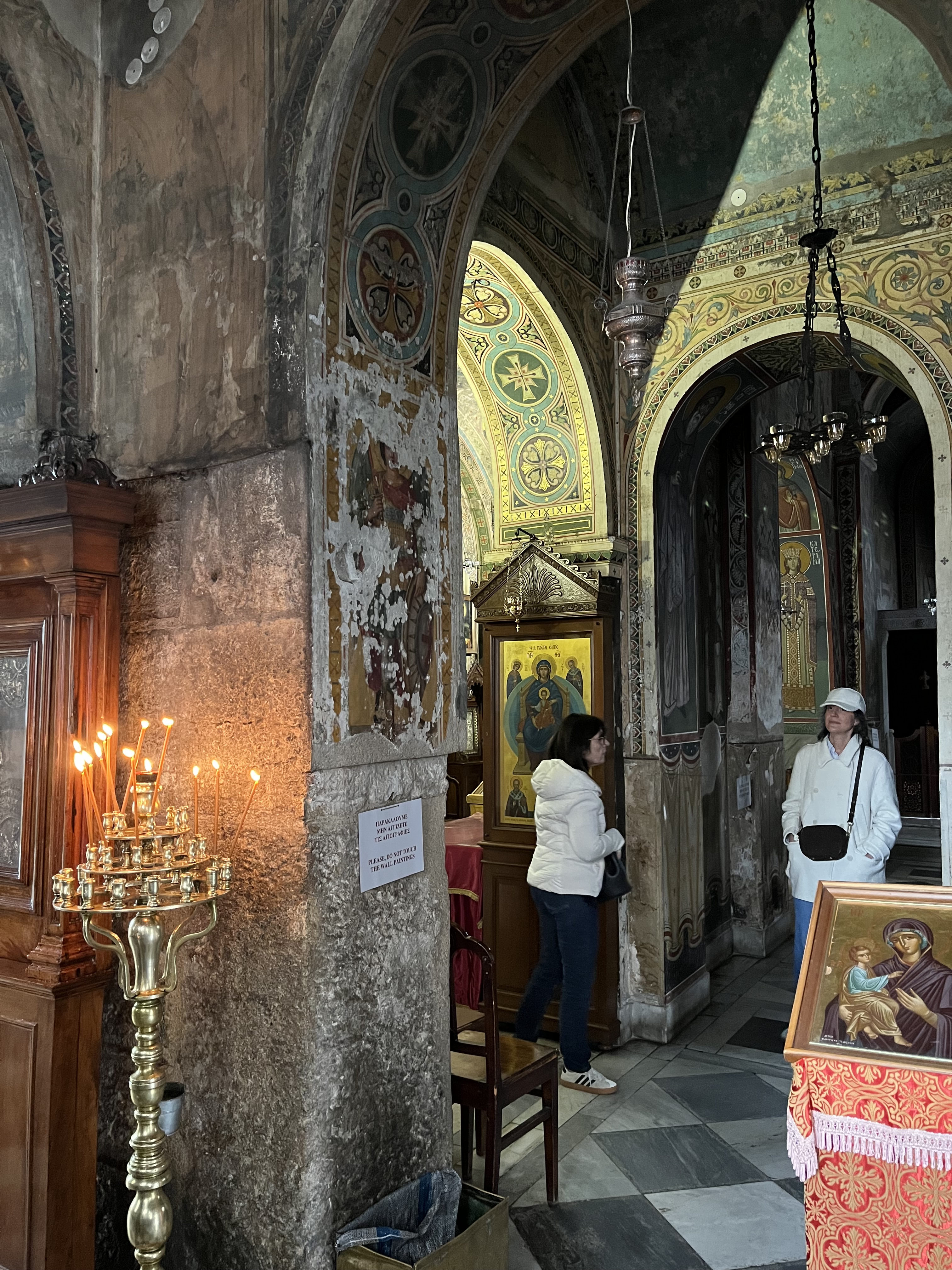
All throughout Athens and Greece, there are countless little, roadside Byzantine chapels in addition to the regular sized churches. Most of them, like the one above and below, are typically richly decorated in the Byzantine style, with gold colored mosaics and icons. I understand that most of these chapels were built and are maintained by families who felt moved to express their faith this way.
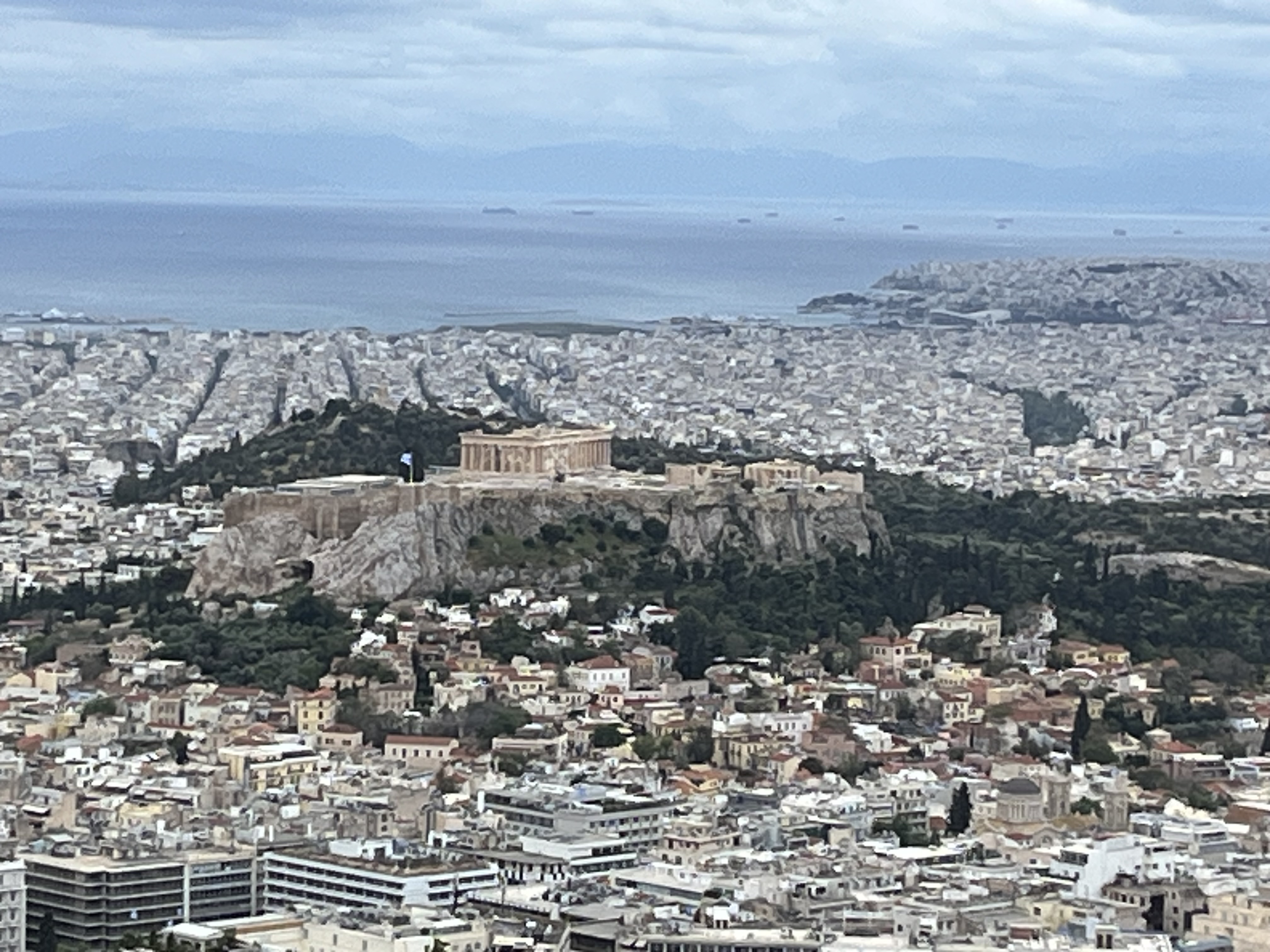
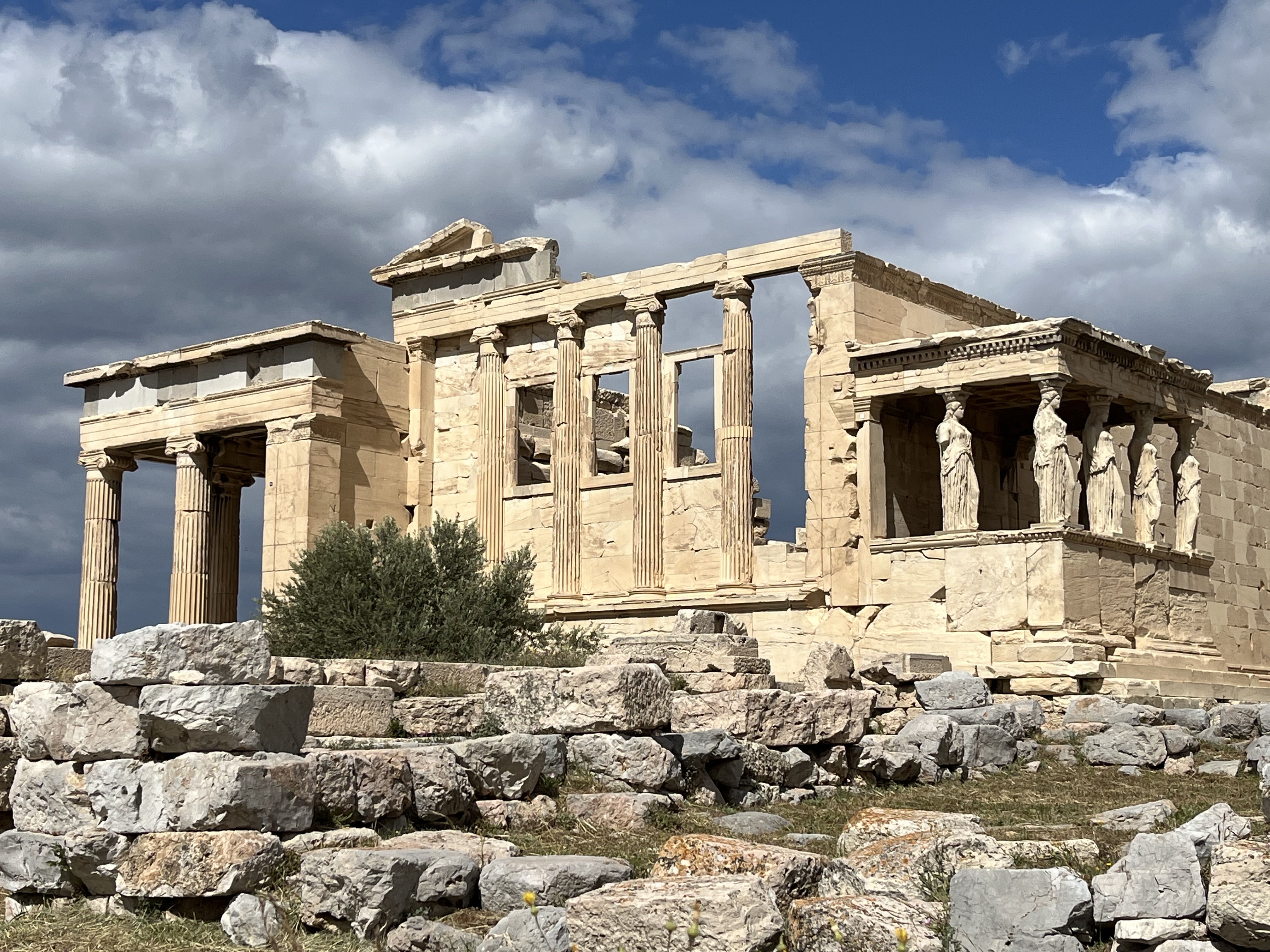
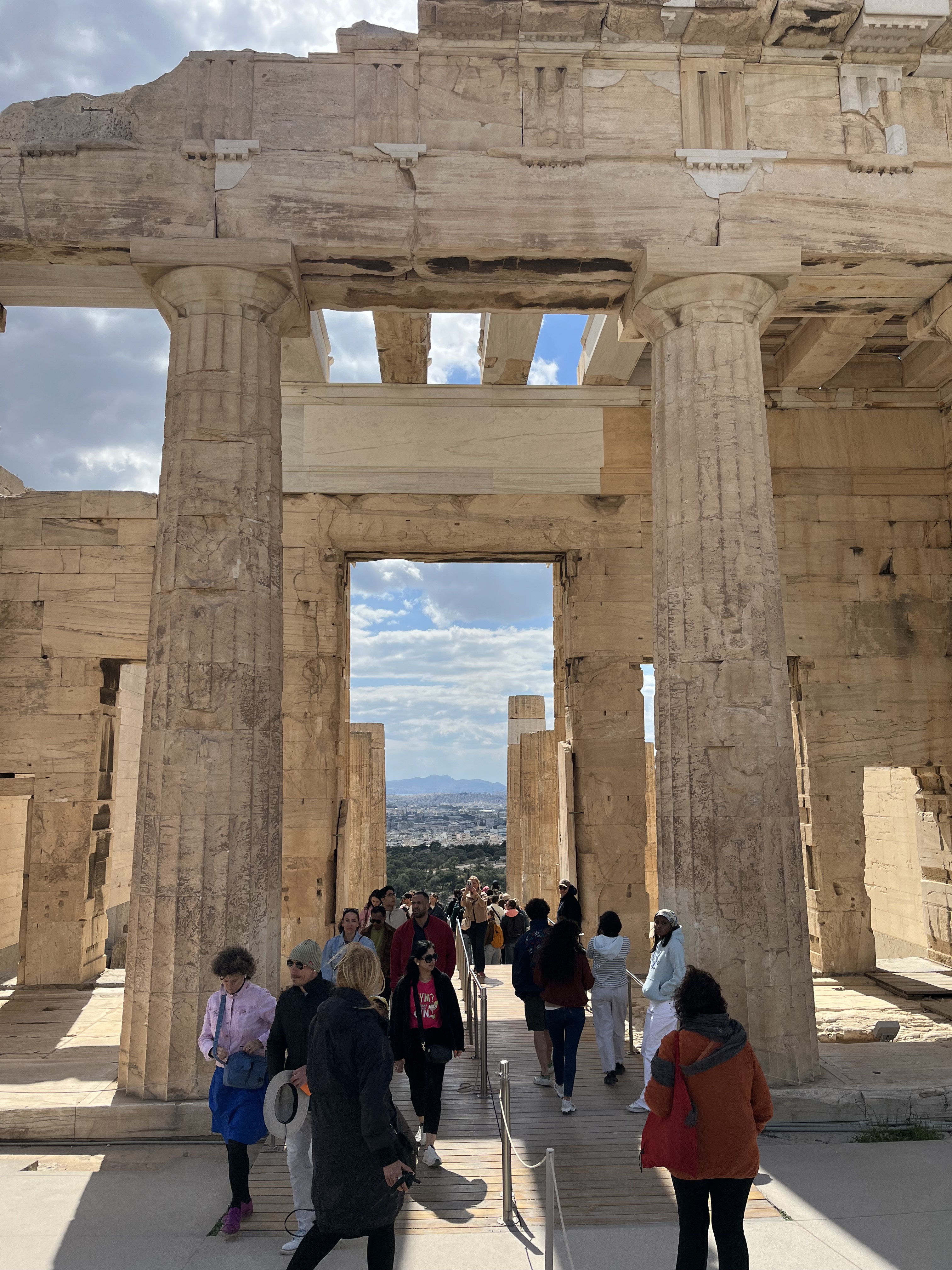
And of course more Acropolis pictures before we said goodbye to Athens:
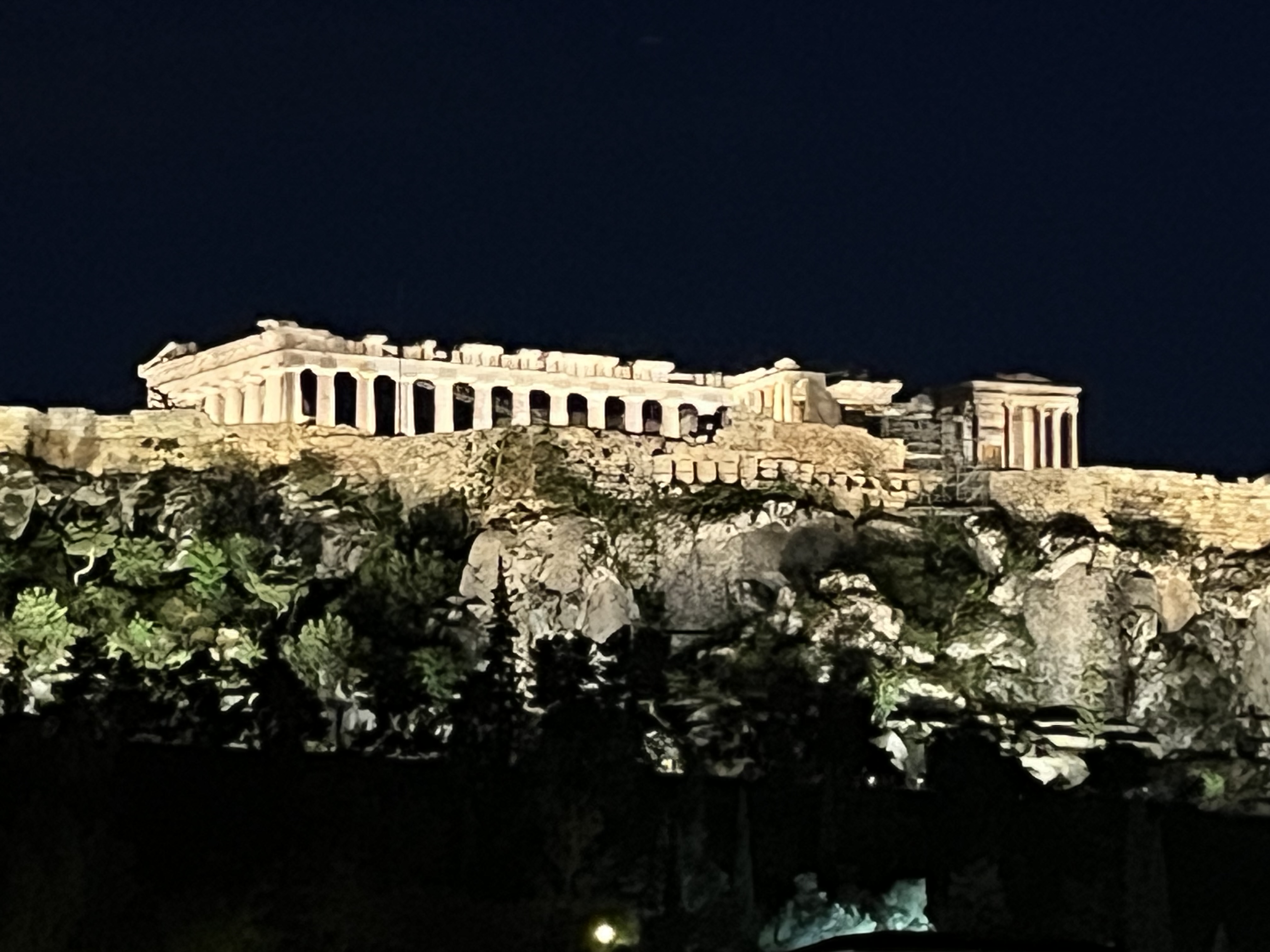
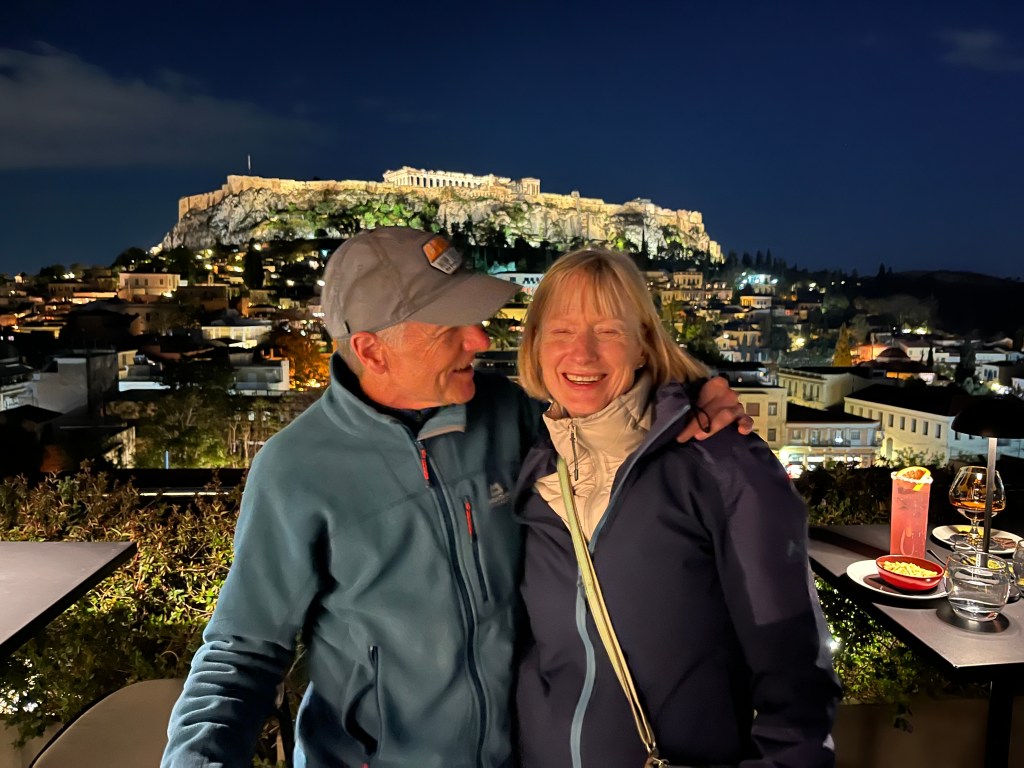
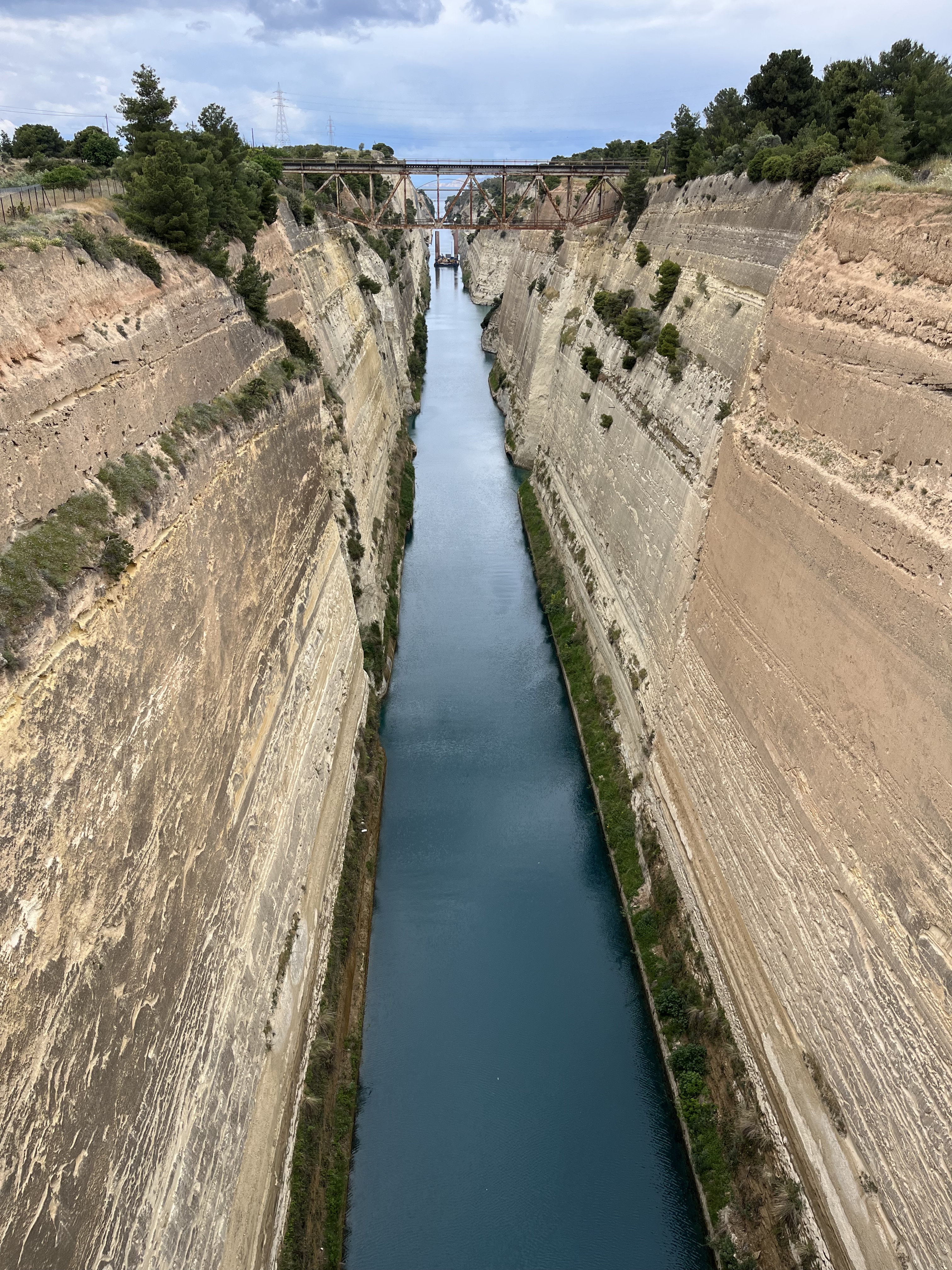
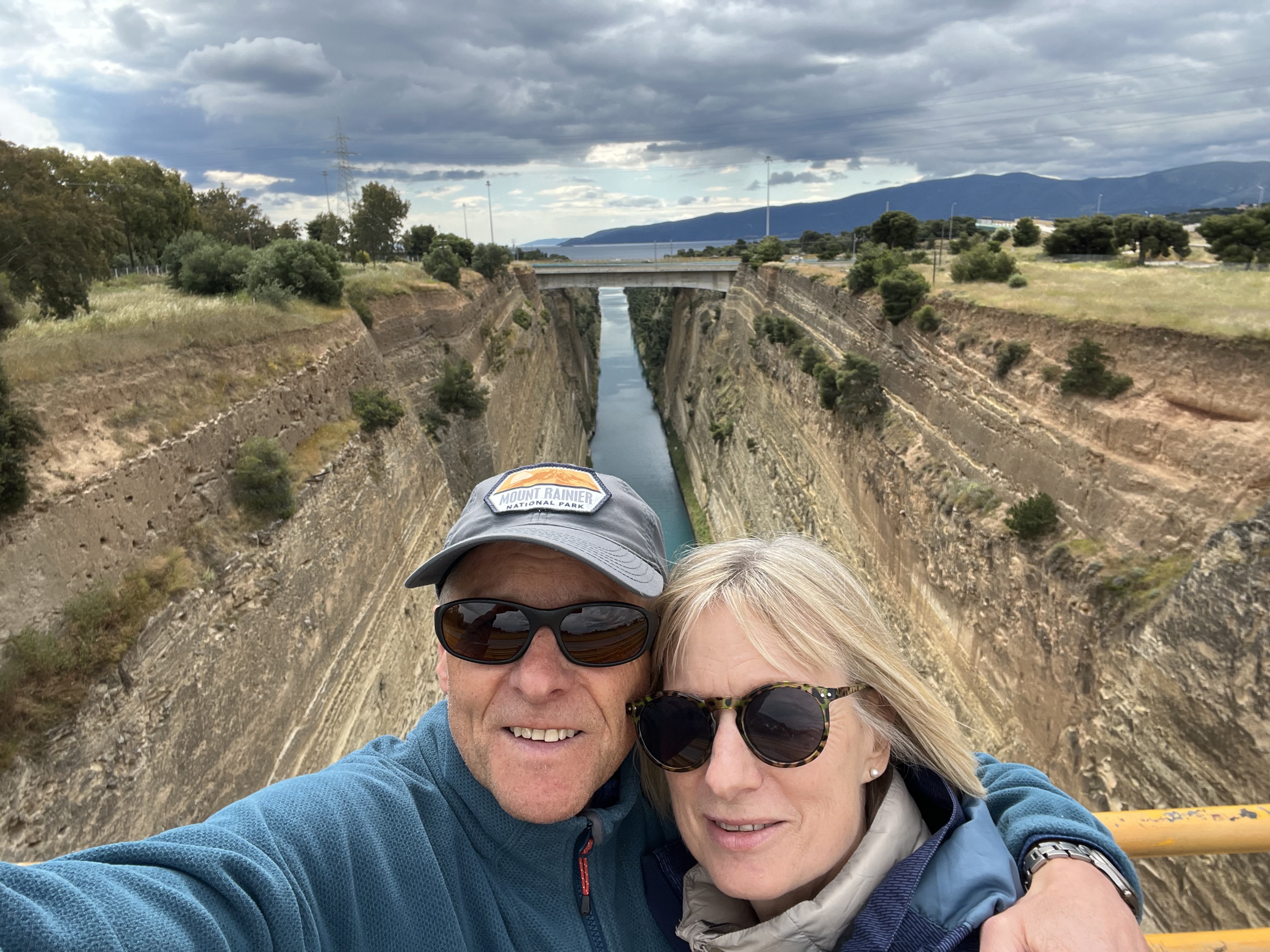
We picked up our rental car and crossed over onto the Peloponnese peninsula at the Corinth Canal. This 4 mile long canal was completed in 1893 and connects the Aegean Sea with the Ionian Sea. Thinking of Corinth’s biblical connection with Saint Paul, we stopped in the town adjacent to the canal and found it rather unassuming.
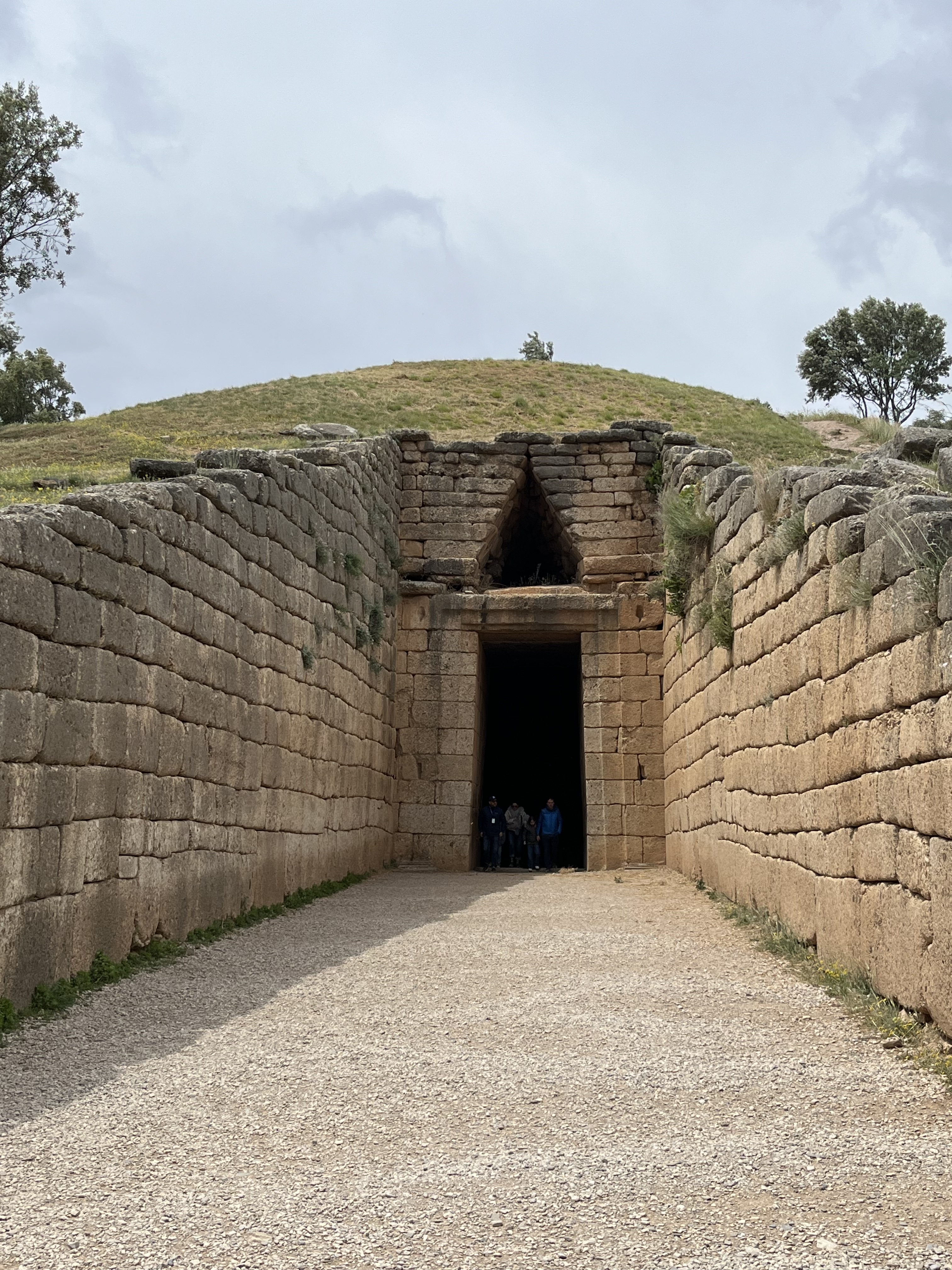
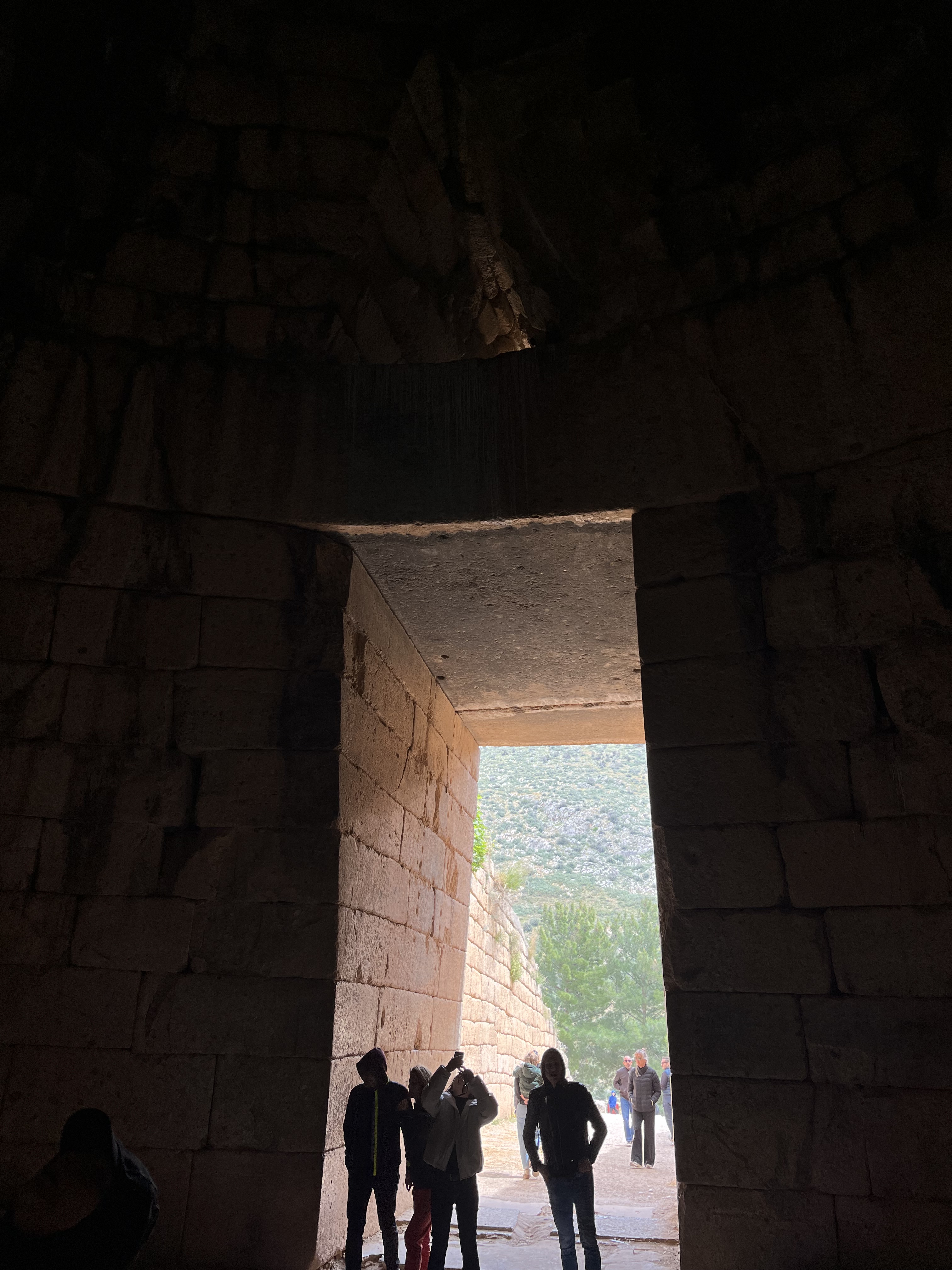
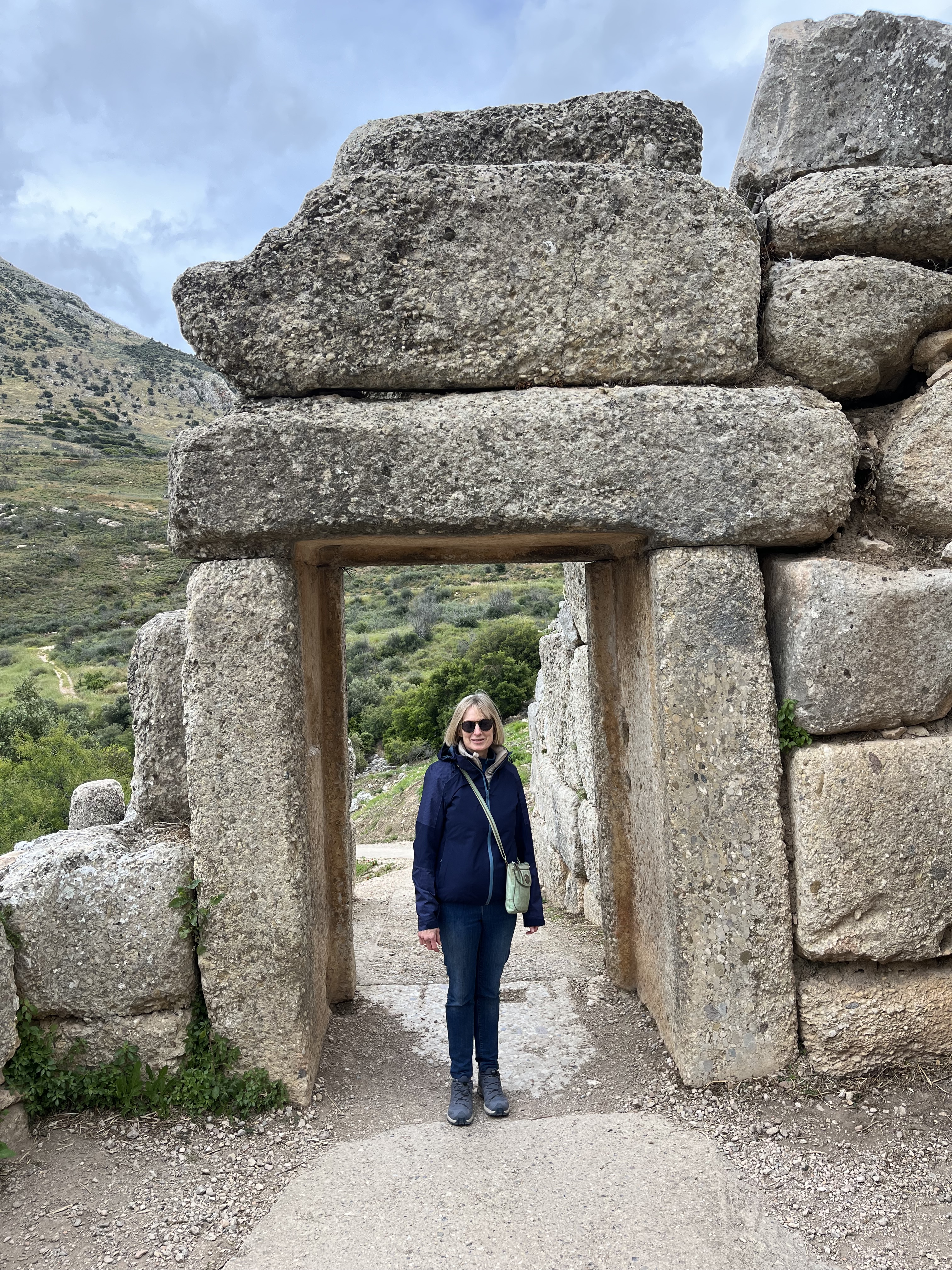
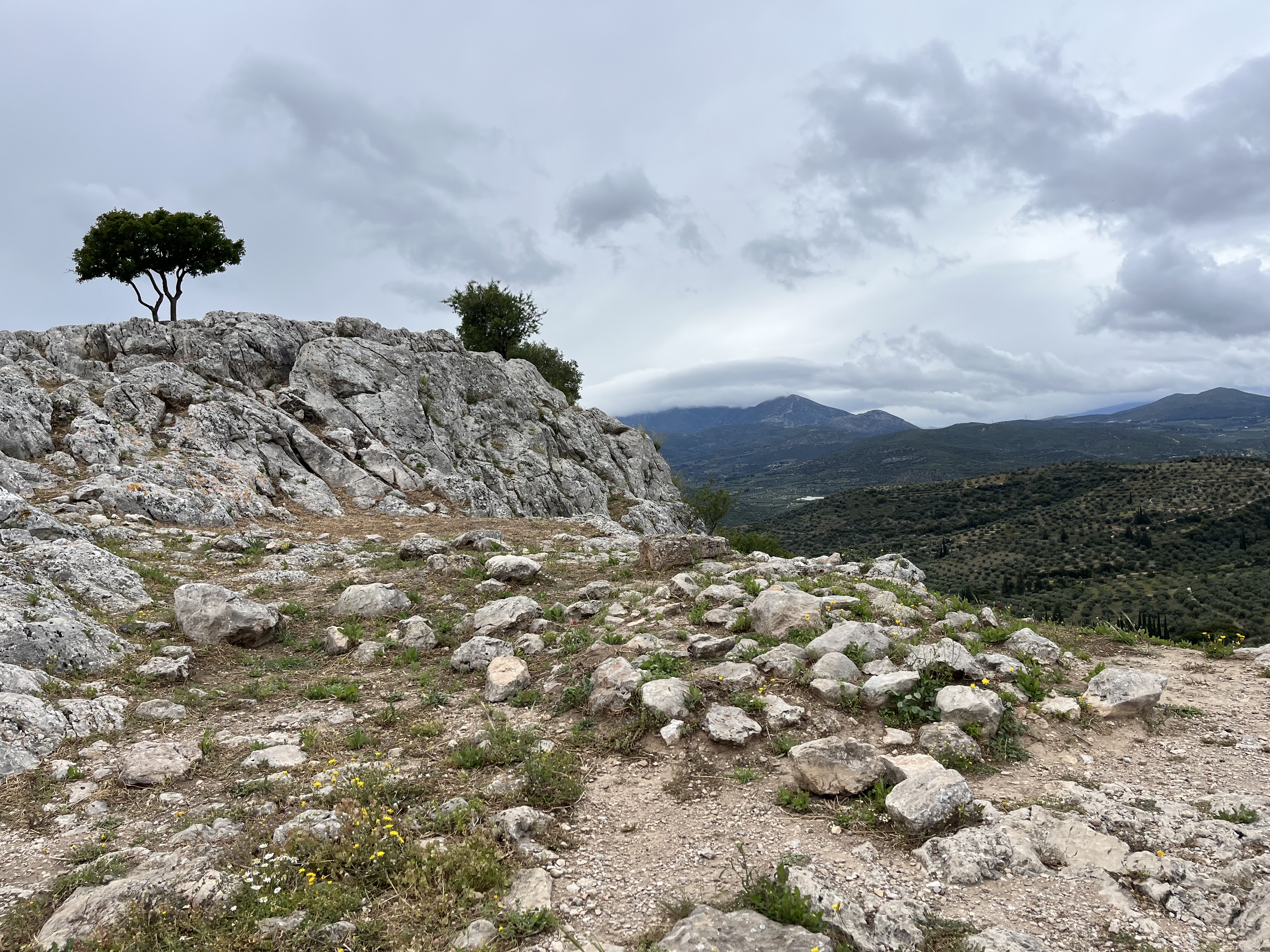
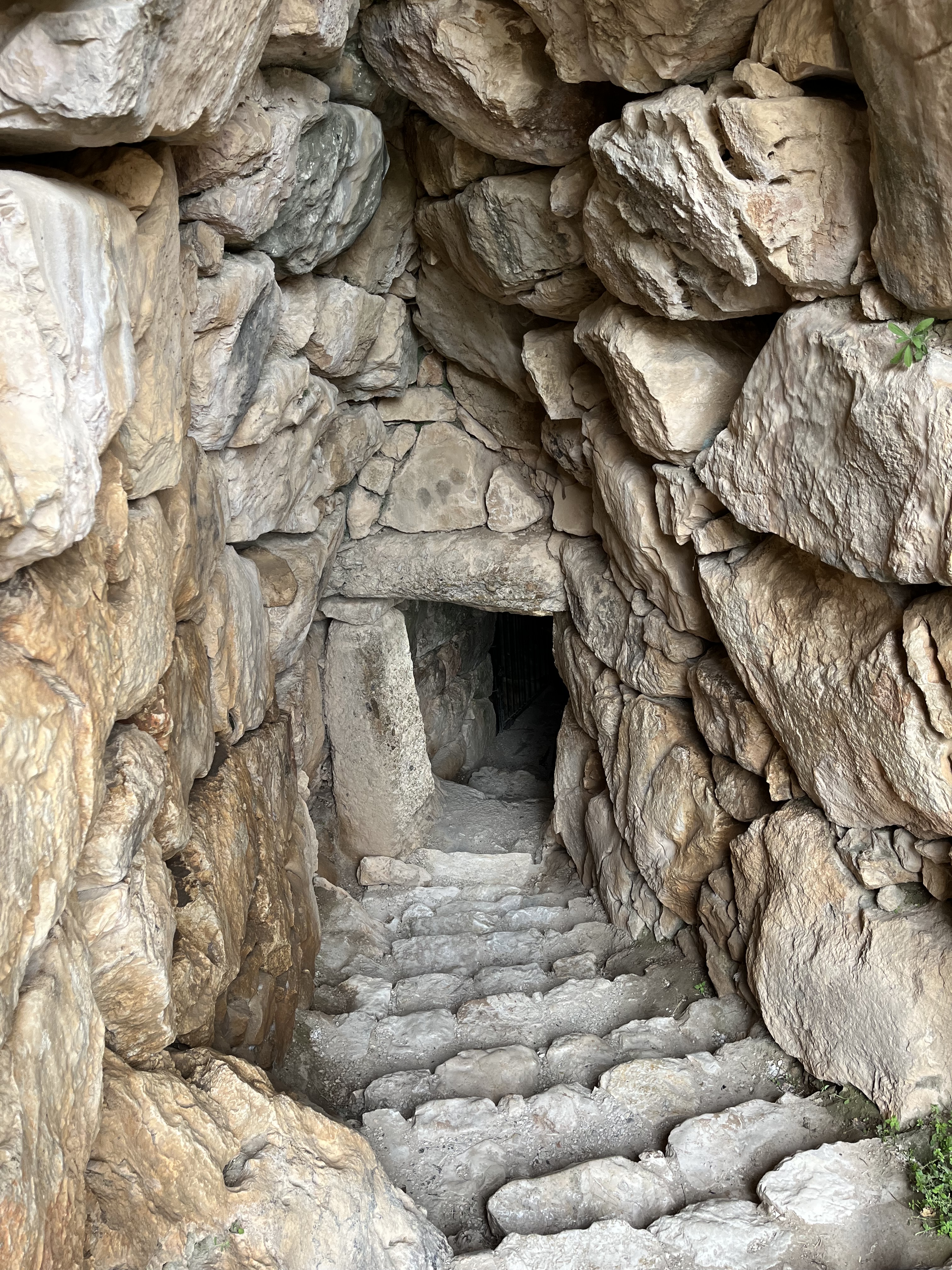
Our next stop was the archaeological site of Mycenae. Here, on a large terrace overlooking the plains toward the Argolic Gulf was the seat and center of the ancient Mycenae culture during the Bronze Age, from 1,600 – 1,100 BC. Up to 30,000 people are estimated to have dwelled in this citadel. The structures, like this tholos, which is a beehive style tomb, the Lion Gate shown below, as well as the walls and theatre of this settlement in general, are built in the massive cyclopian style. This massive, durable construction technique has allowed some structures to continue to stand today, some 3,500 years later. And how do we compare with our building techniques today, where bridges and other concrete structures are in dire need of replacement 50 years after construction……?
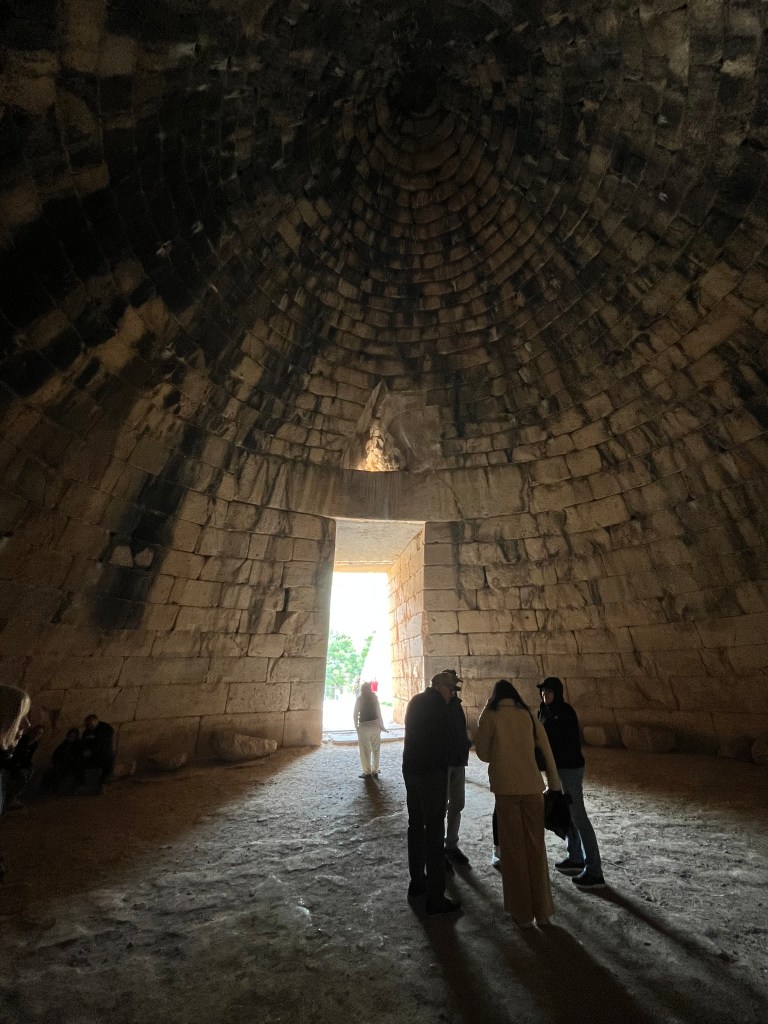
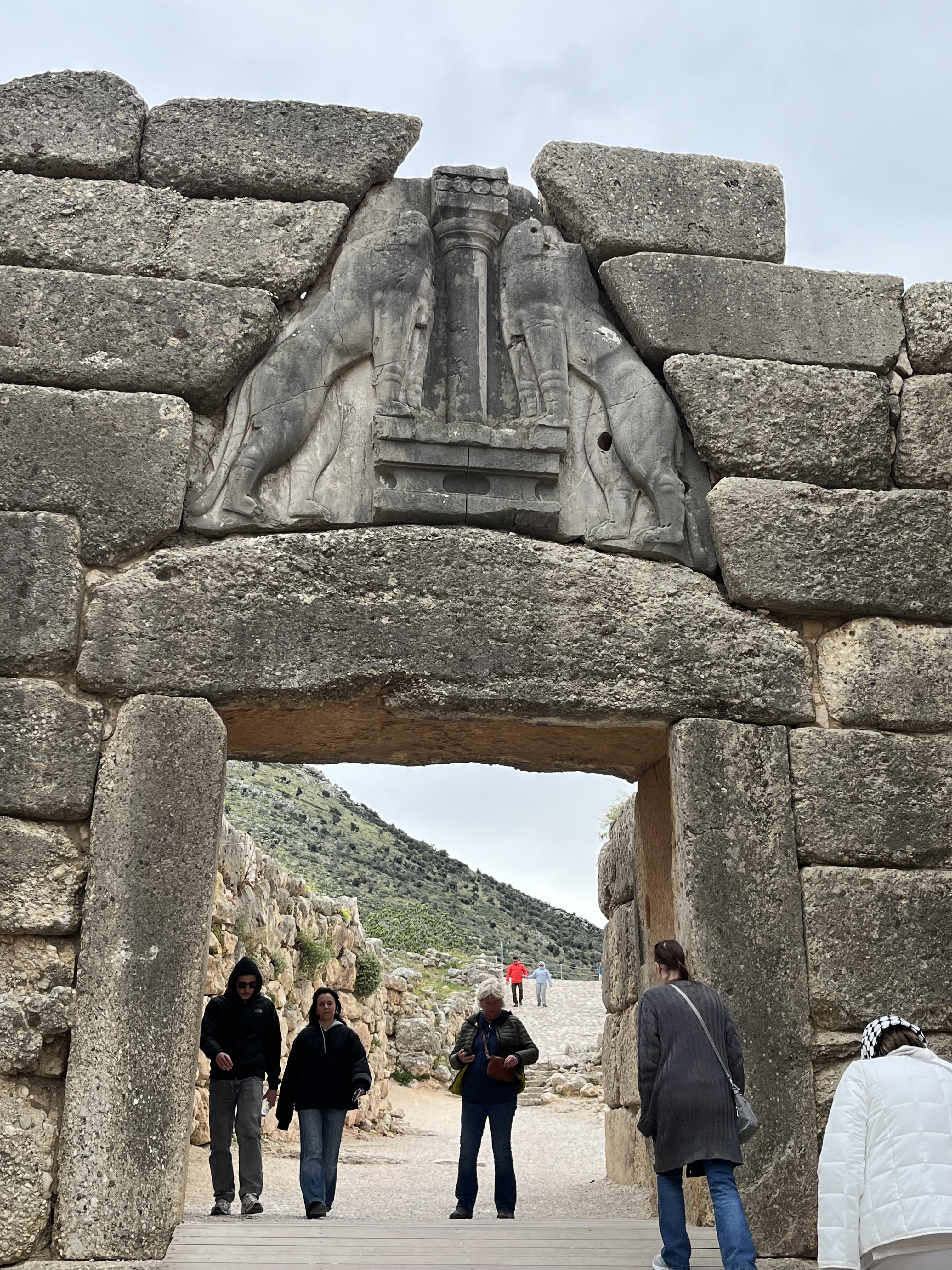
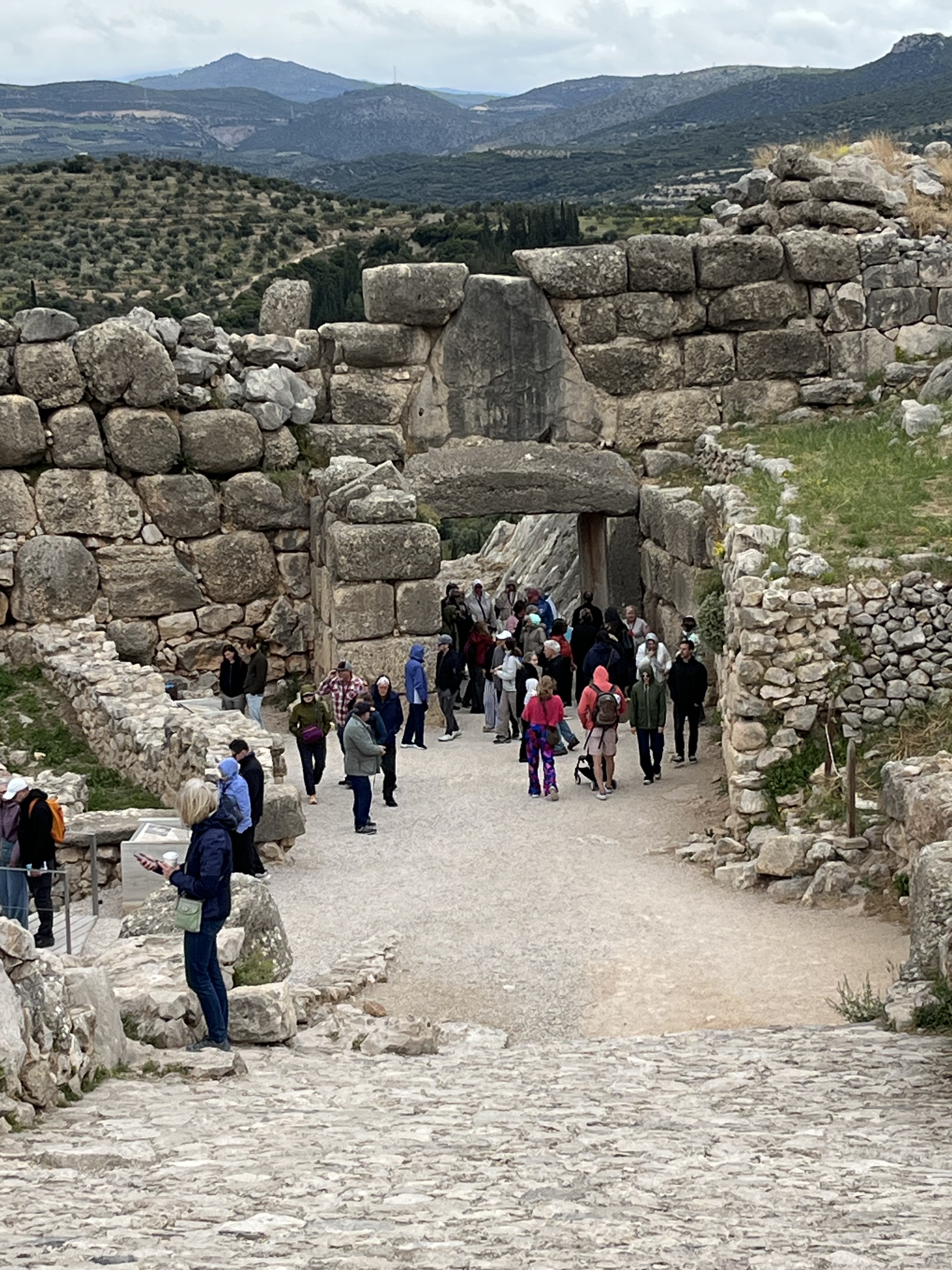
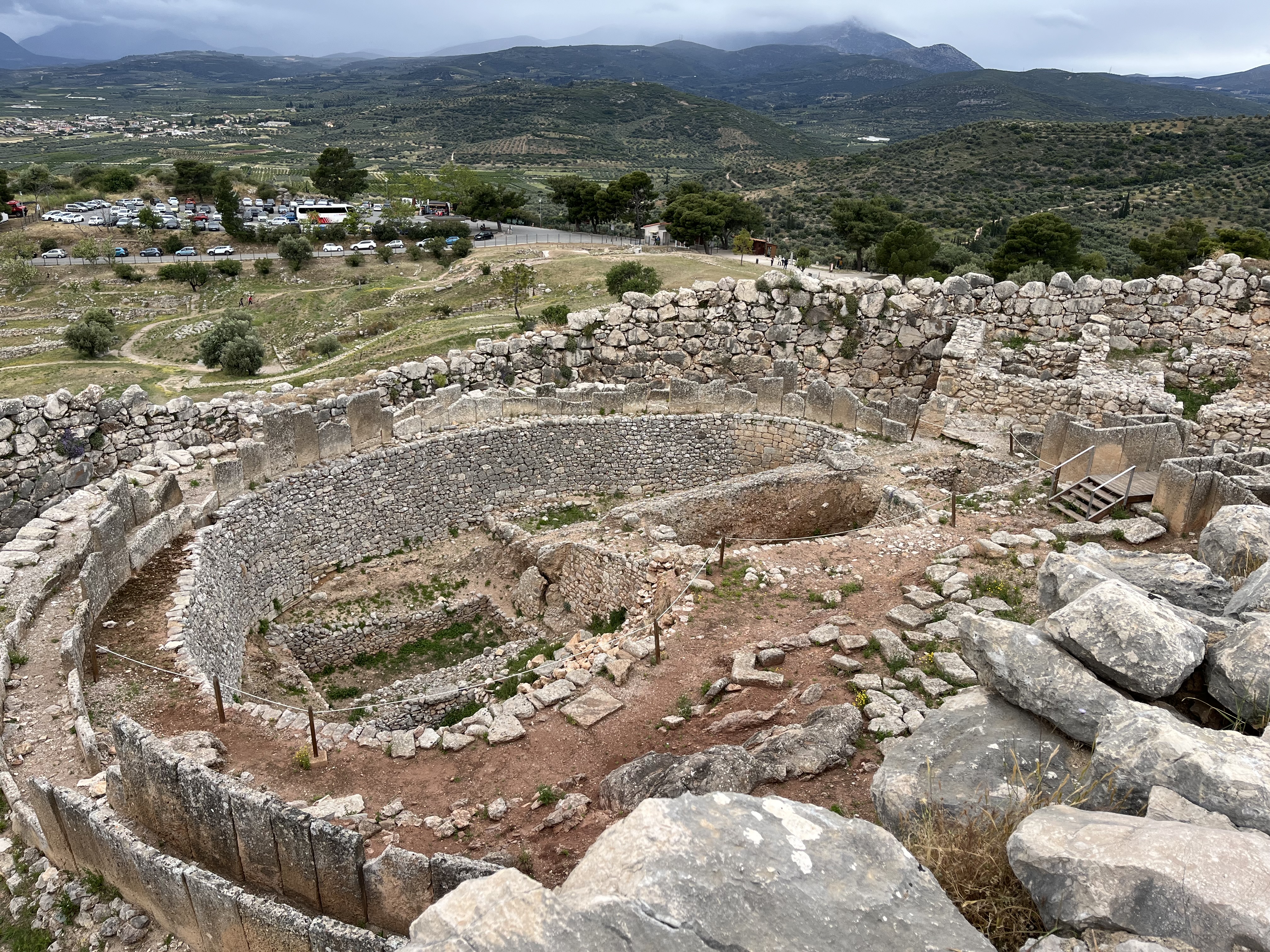
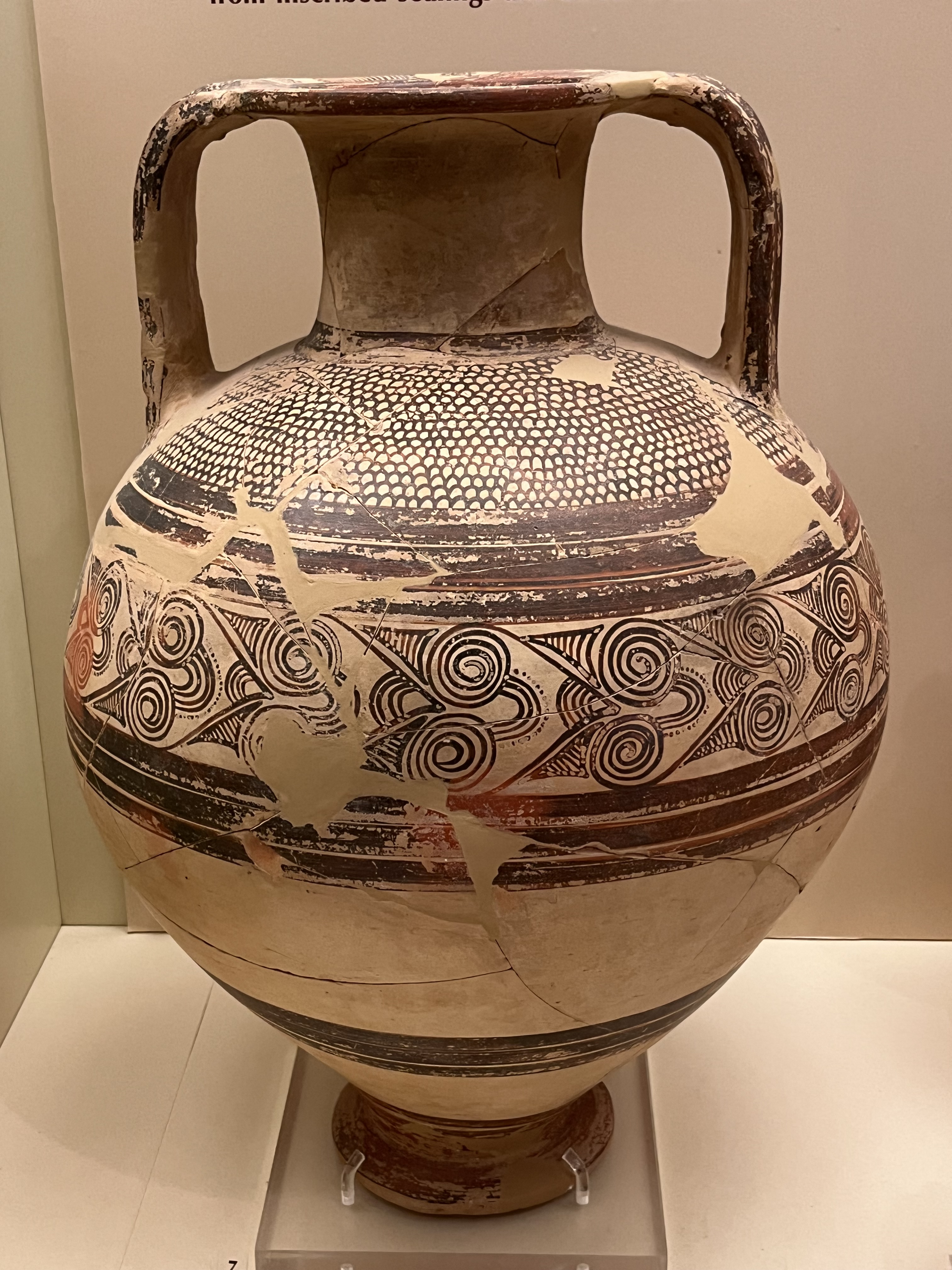
The golden death mask is a replica, with the original artifact being displayed in the National Archaeological Museum in Athens. Based on their buildings, infrastructure, like cisterns and water canalization, pottery, weapons etc. these ancient Mycenae people were rich and advanced, and are assumed to have ruled over most of present day Greece.
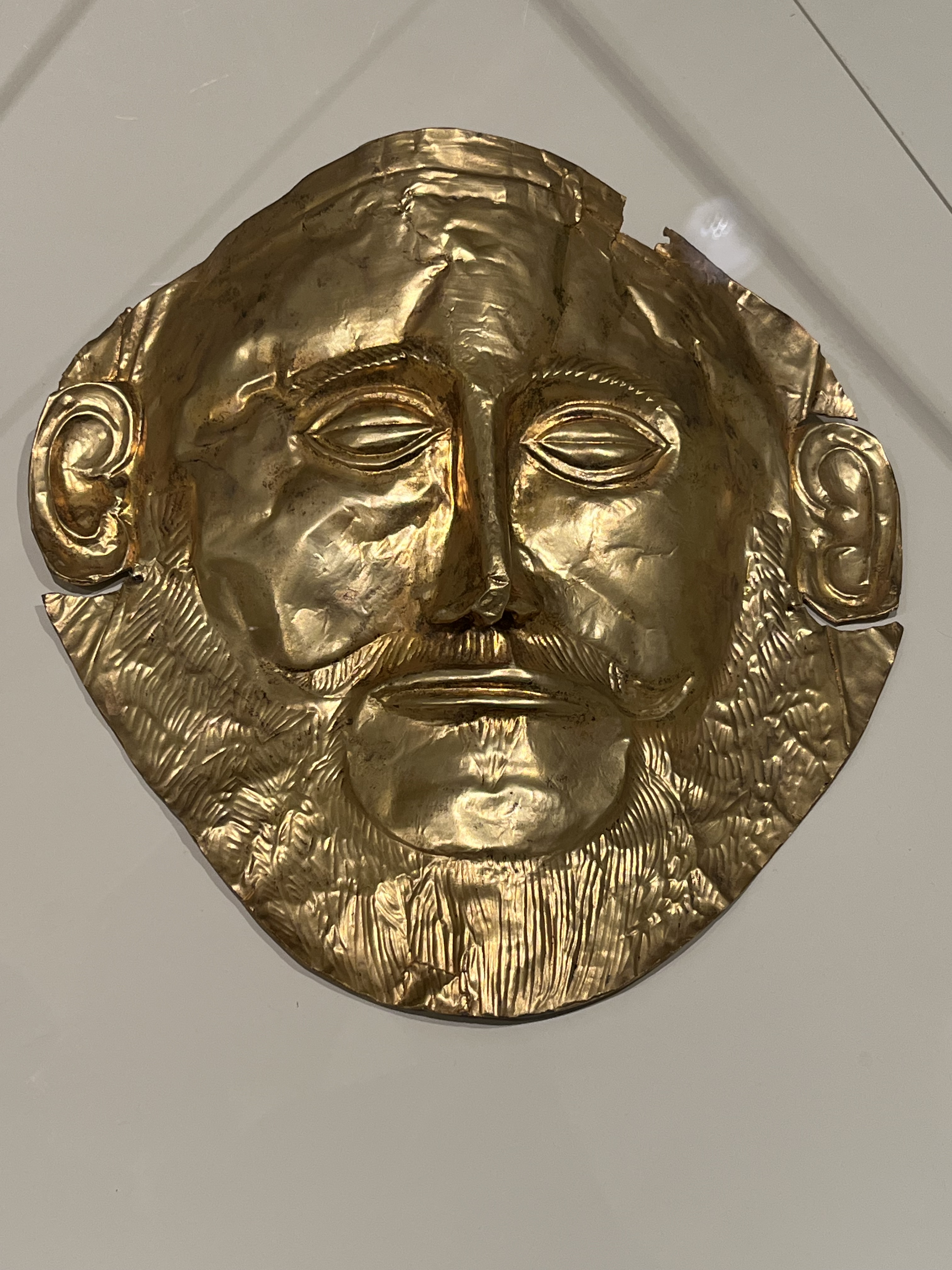
The archaeologist Heinrich Schliemann was obsessed with the epic poetry of Homer and believed Homer’s stories were based in historical truth. In the later part of his life, he dedicated himself to excavating historical sites relevant to the Homeric epics. Schliemann’s first excavation was the site of Hisarlik, believed to be the site of ancient Troy. Following his work at Hisarlik, Schliemann began excavations at Mycenae in 1876. His goal was to find the grave of Agamemnon, the king of Mycenae and leader of the Greek army in the Trojan War as described in Homer’s Iliad. Schliemann uncovered a royal cemetery containing six shaft graves, known as Grave Circle A. Among his findings at Grave Circle A was a gold death mask that he labeled as “The Mask of Agamemnon”. Modern archeological evidence has proven his claims of discovering Agamemnon’s remains were most likely false, as the mask is dated more than 300 years before the events of the Trojan Wars.
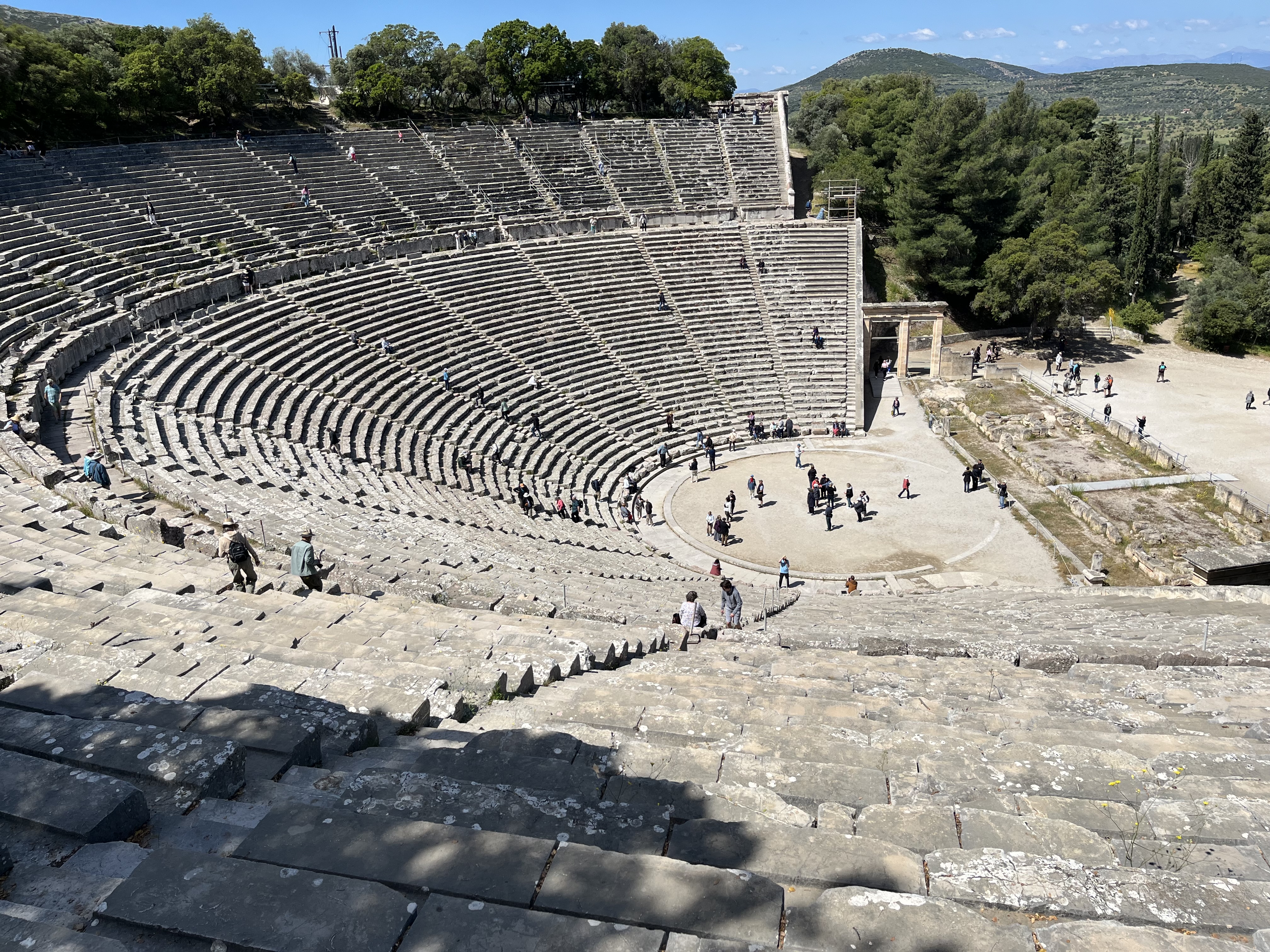
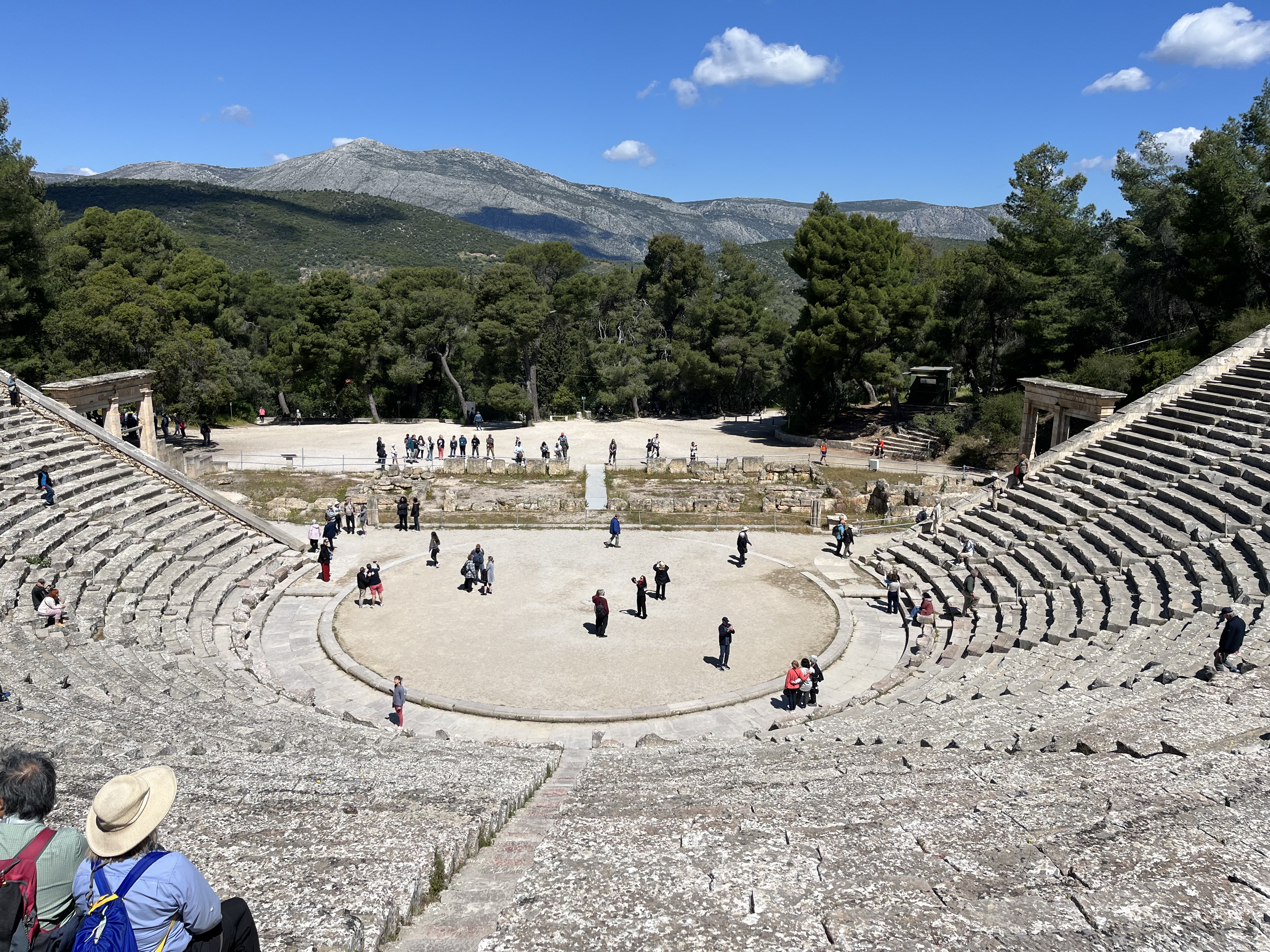
The picture above and below show the Ancient Theatre of Epidaurus. Constructed in the late 4th century BC, this theatre has a capacity for up to 14,000 and is considered to be the most perfect ancient Greek theatre with regard to acoustics and aesthetics. It was inscribed on the UNESCO World Heritage List in 1988. Like a lot of visitors, I just had to check out the acoustics and stepped onto the speaker’s plate in the center of the stage. Lauri was seated half way up, cheering me on. Starting out strong and hearing my own voice projected so loudly, startled me. And, after most bystanders focused in and started to stare at the speaker, my oration was rather short lived. The acoustics are impressive and it was a memorable experience never the less.
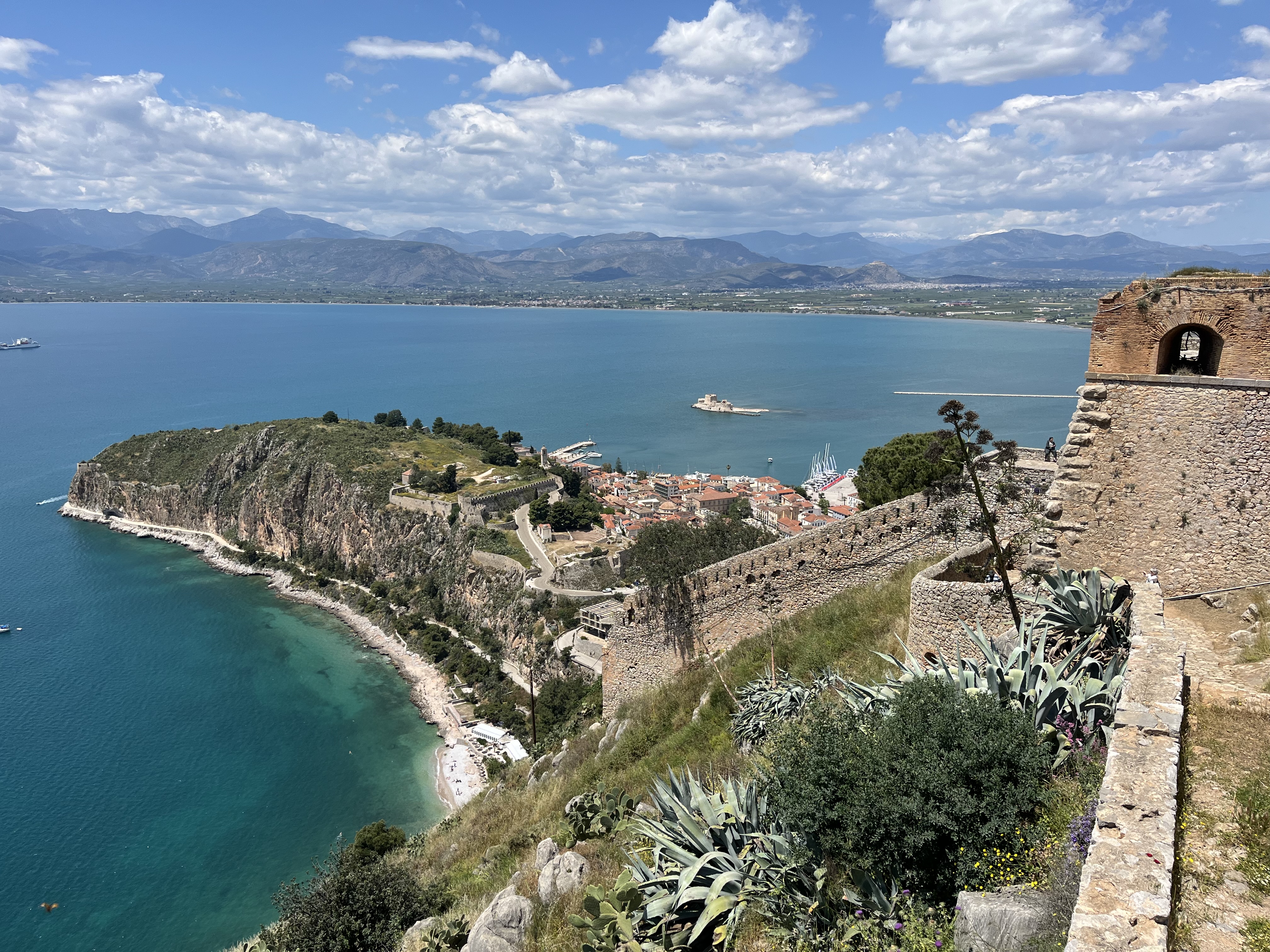
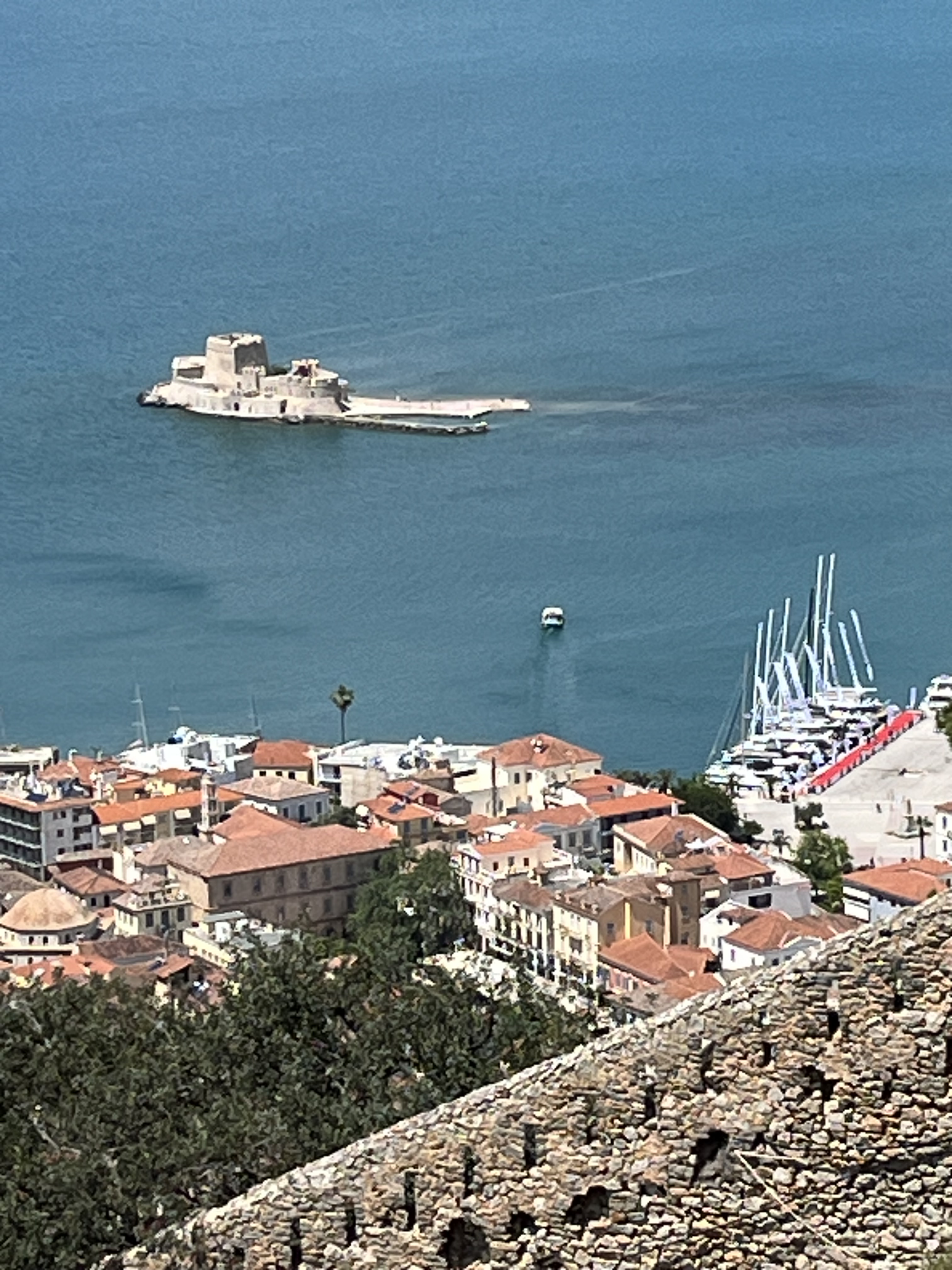
Below is a picture from the ancient citadel which overlooks the coastal town of Nafplio and the Argolic Gulf. Nafplio is the capital of Argolis and an important tourist destination. Founded in antiquity, the city became an important seaport in the Middle Ages and following the Fourth Crusade, came under the control of the Republic of Venice and, lastly, the Ottoman Empire. Nafplio was the second capital of the First Hellenic Republic and of the Kingdom of Greece, from 1827 until 1834. The city was full with tourists on the day of our visit, likely due to a yacht fair being held in its harbor.
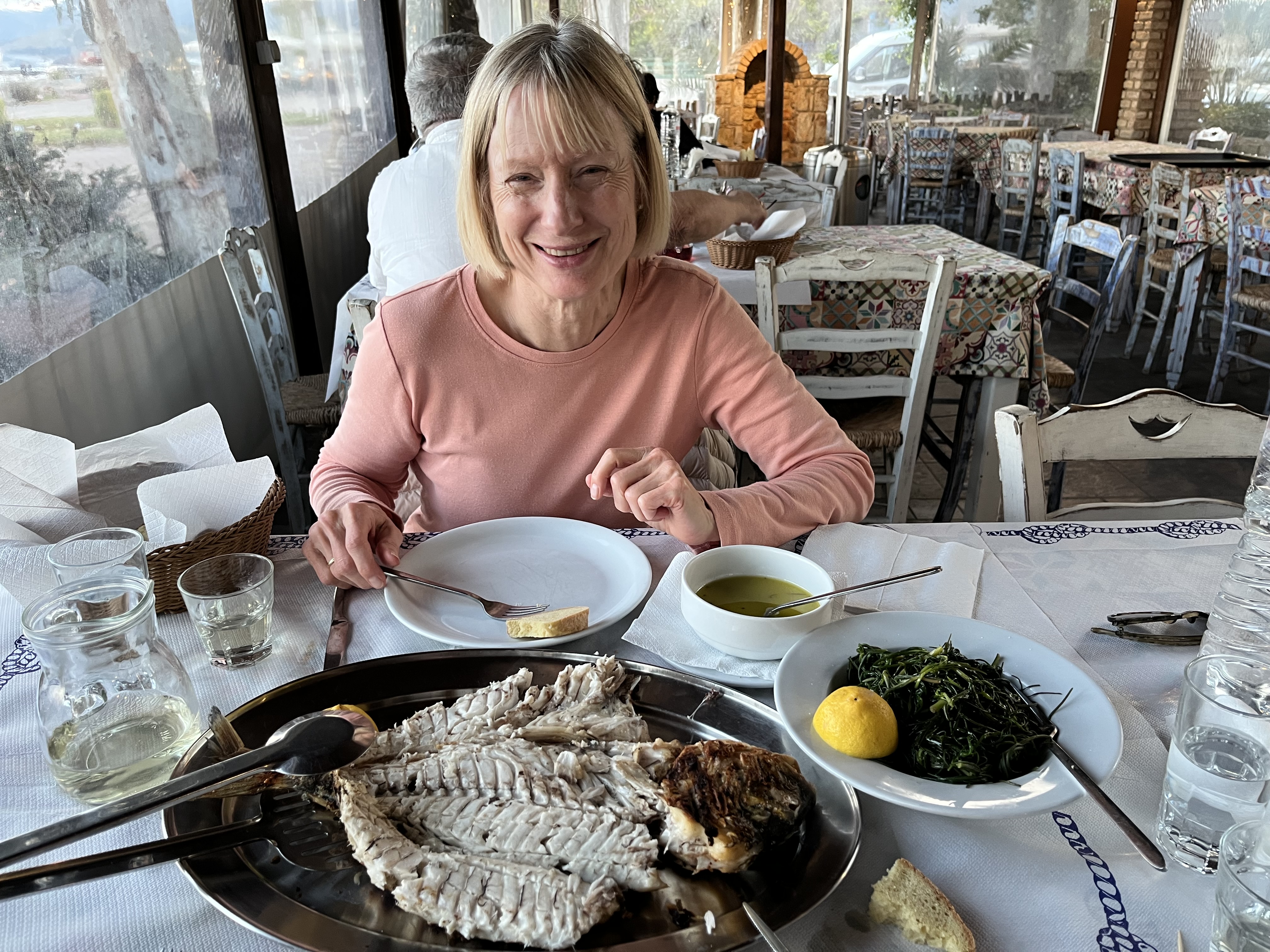
In our less glitzy little fishing village of Nea Kios just a couple miles to the west, we found a simple, yet excellent seafood restaurant. Here, like in most seafood restaurants we found in Greece, you literally select and choose your fish and choose how you want it prepared, and then pay for it by weight. We had grilled Seabream on the first night, and Dorado on the second. Adding some lemon olive oil, some fresh sea wheat, and bread on the side, plus a 1/2 liter of white wine for 3.50 Euros!, and we had two delicious and affordable meals.
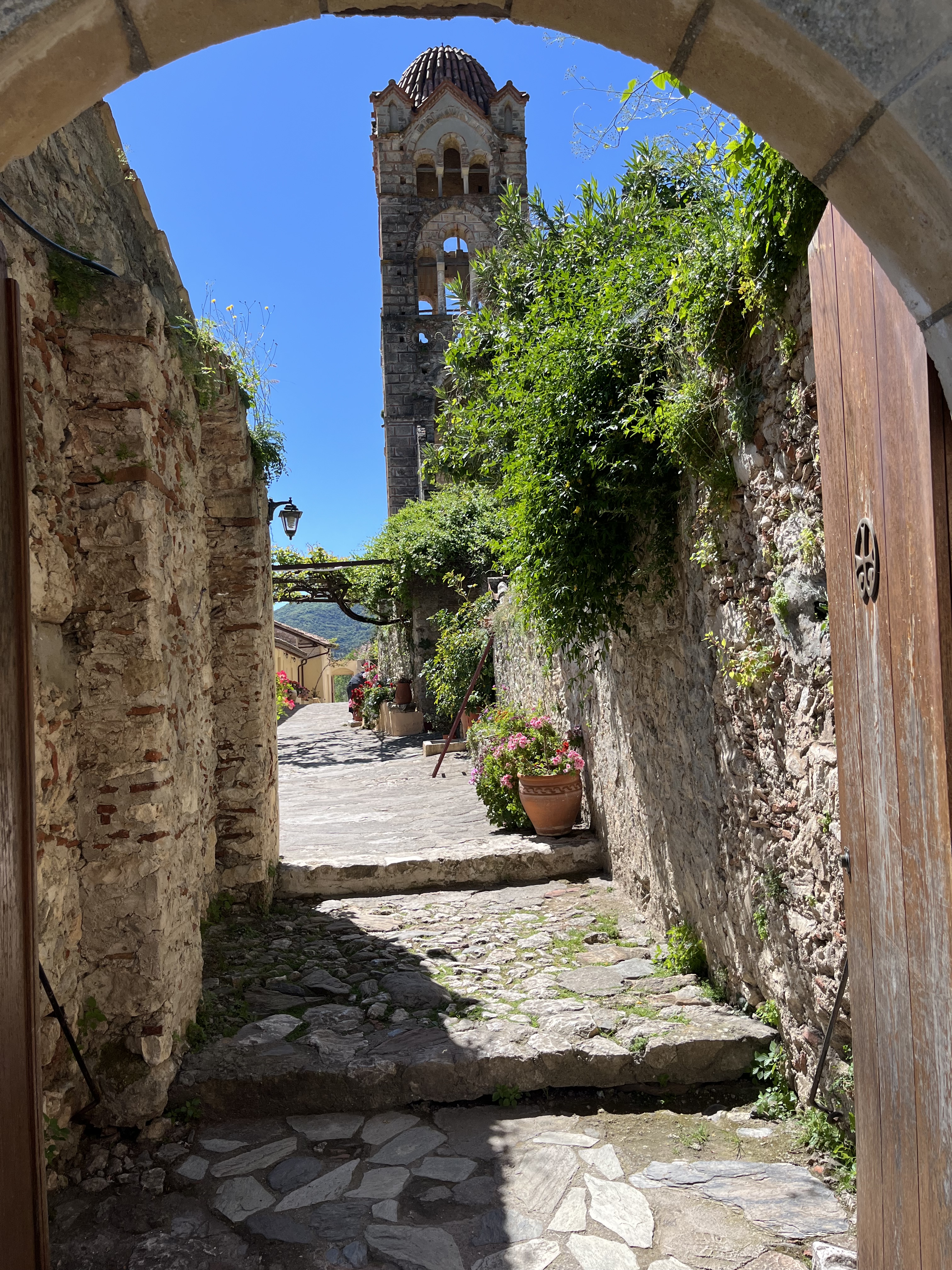
From the Nafplio area we traveled south, to Mystras. Mystras is a former fortified town on a slope above the ancient town of Sparta. It served as the capital of the Byzantine Despotate, judicial region, in the 14th and 15th centuries and experienced a period of prosperity and cultural flowering. The last Byzantine emperor, Constantine XI Palaiologos, was despot of Mystras before coming to the throne of Constantinople.
Mystras remained inhabited throughout the Ottoman period. As an exceptionally well-preserved example of a Byzantine city, and because of its testimony to the development of Late Byzantine and Post-Byzantine art, Mystras was inscribed on the UNESCO World Heritage List in 1989. Its archaeological site sits above the modern village of Mystras and the city of Sparta.
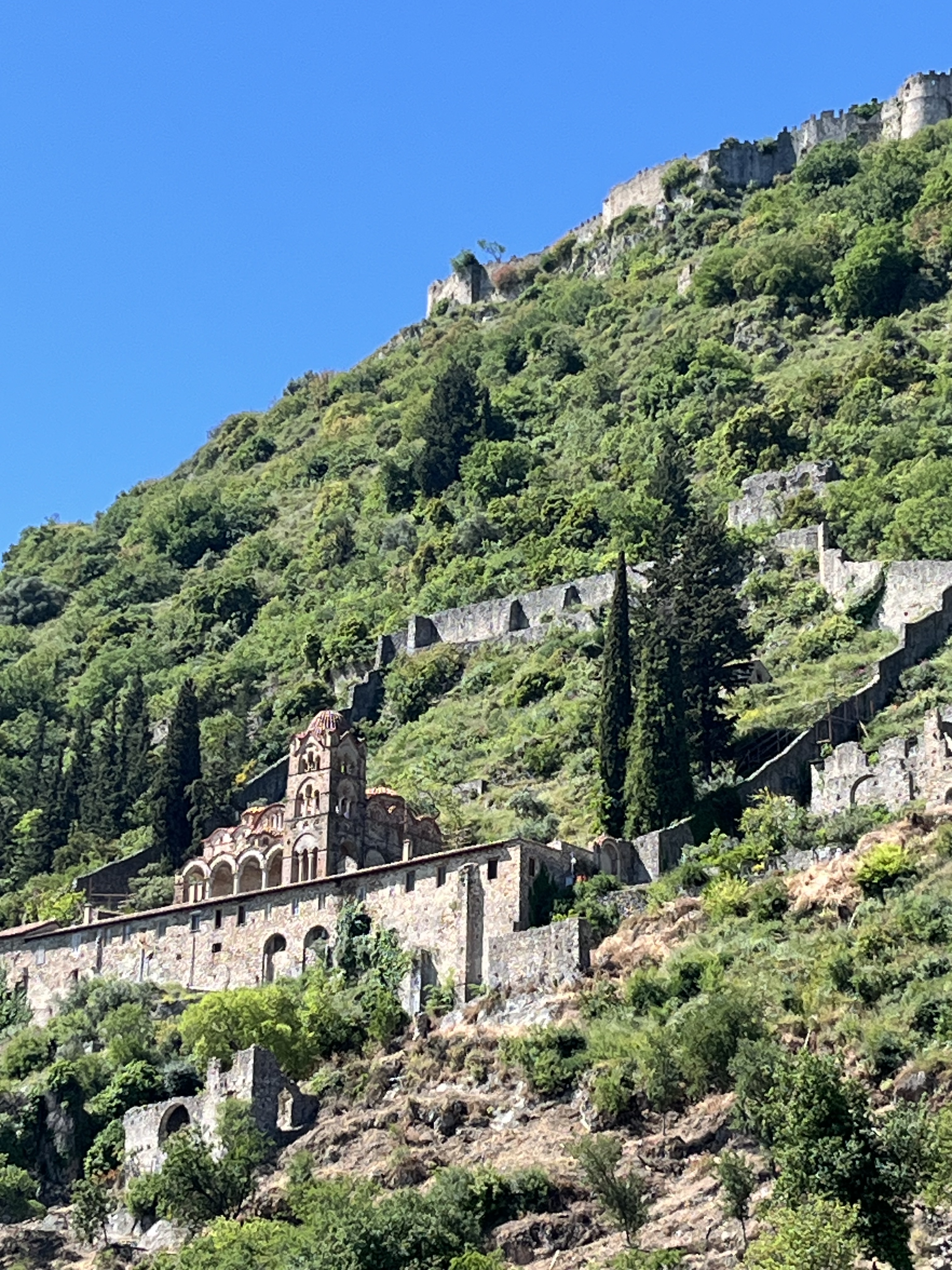
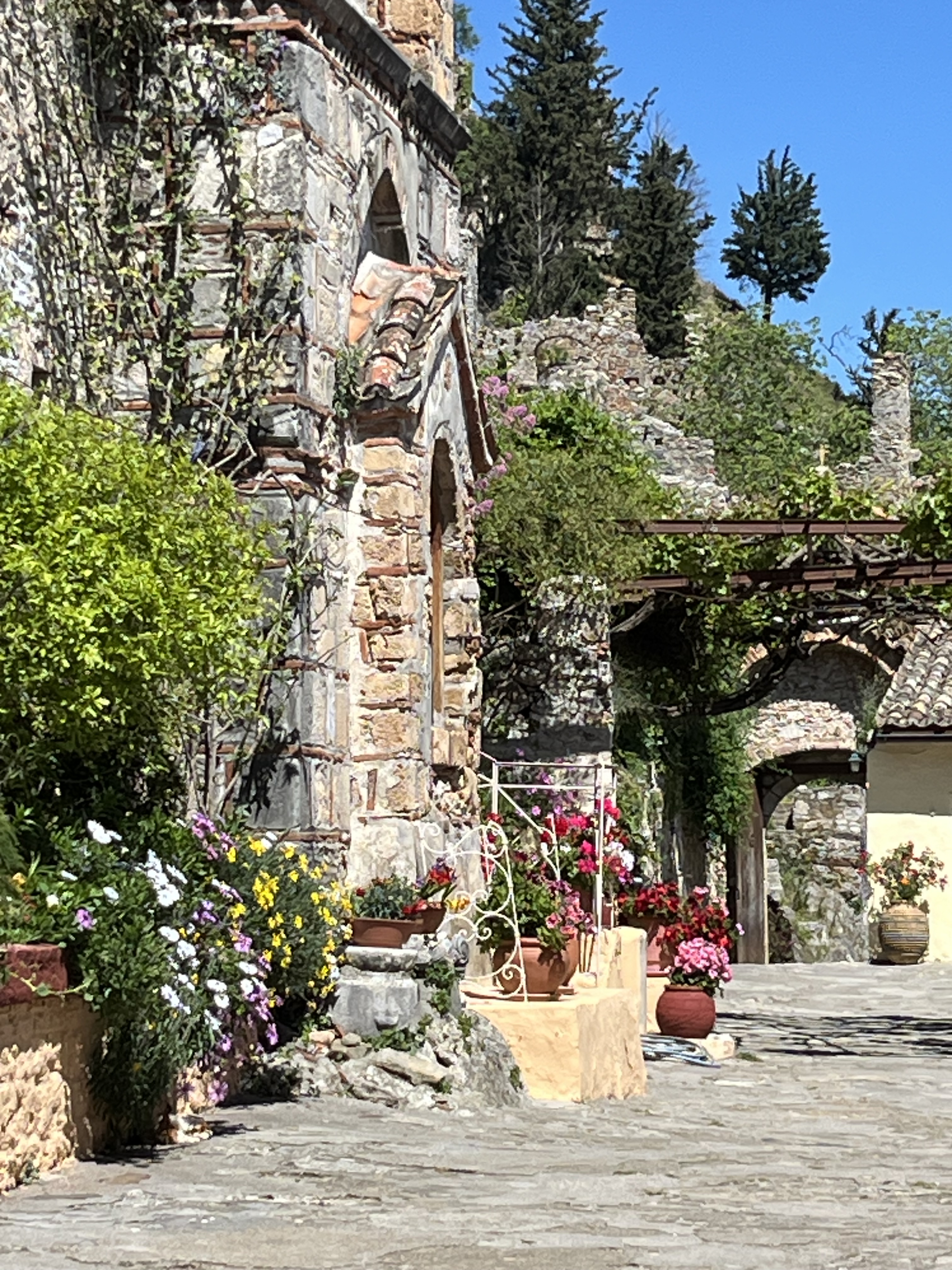
Most of the remaining structures on the Mystra site are ruins and remnants. The monastery shown above and below is the Pantanassa Holy Convent and is still inhabited by a few nuns today. The entire site is well worth a visit, and here one can get an impression of an entire medieval Byzantine town.
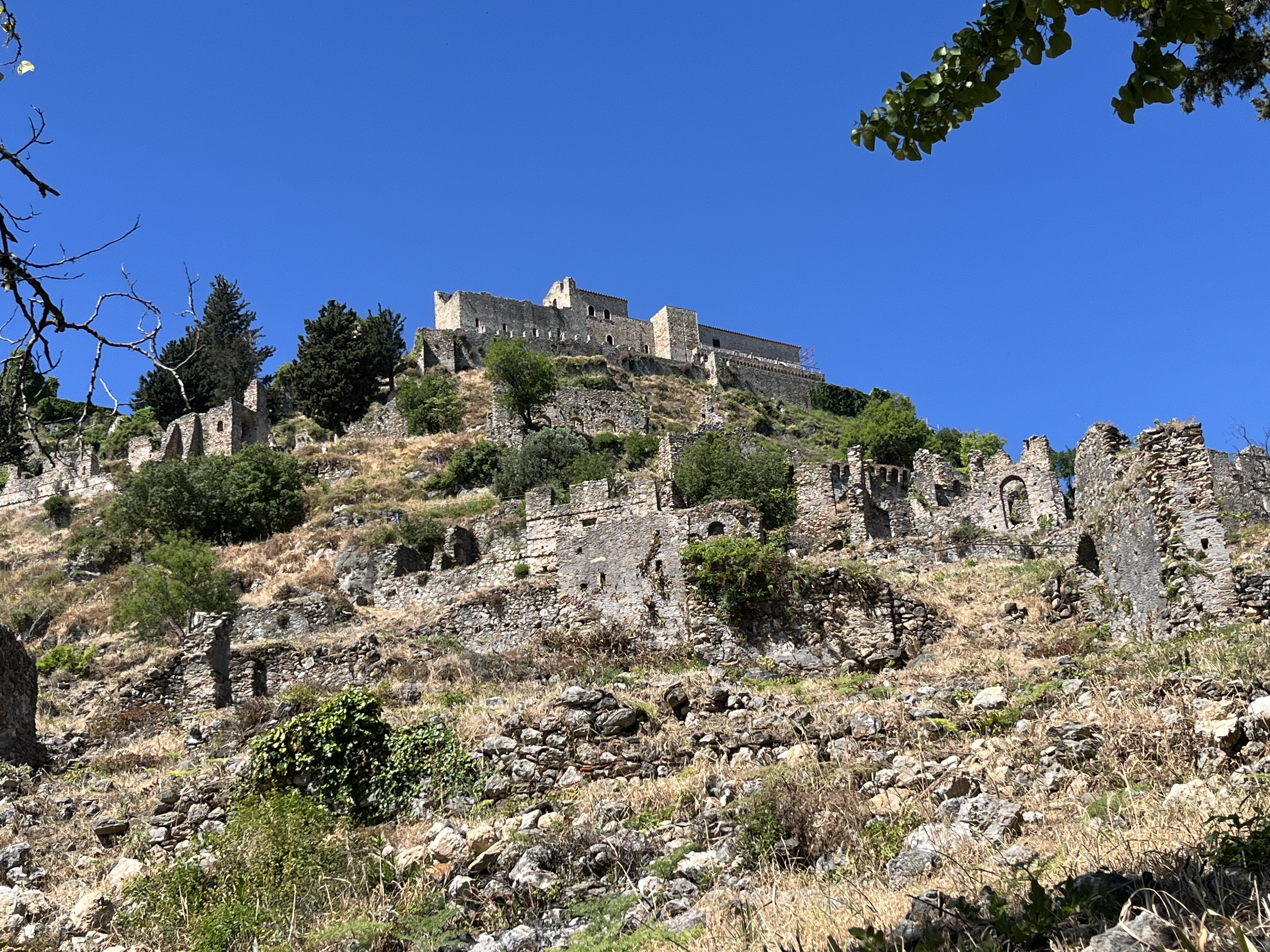
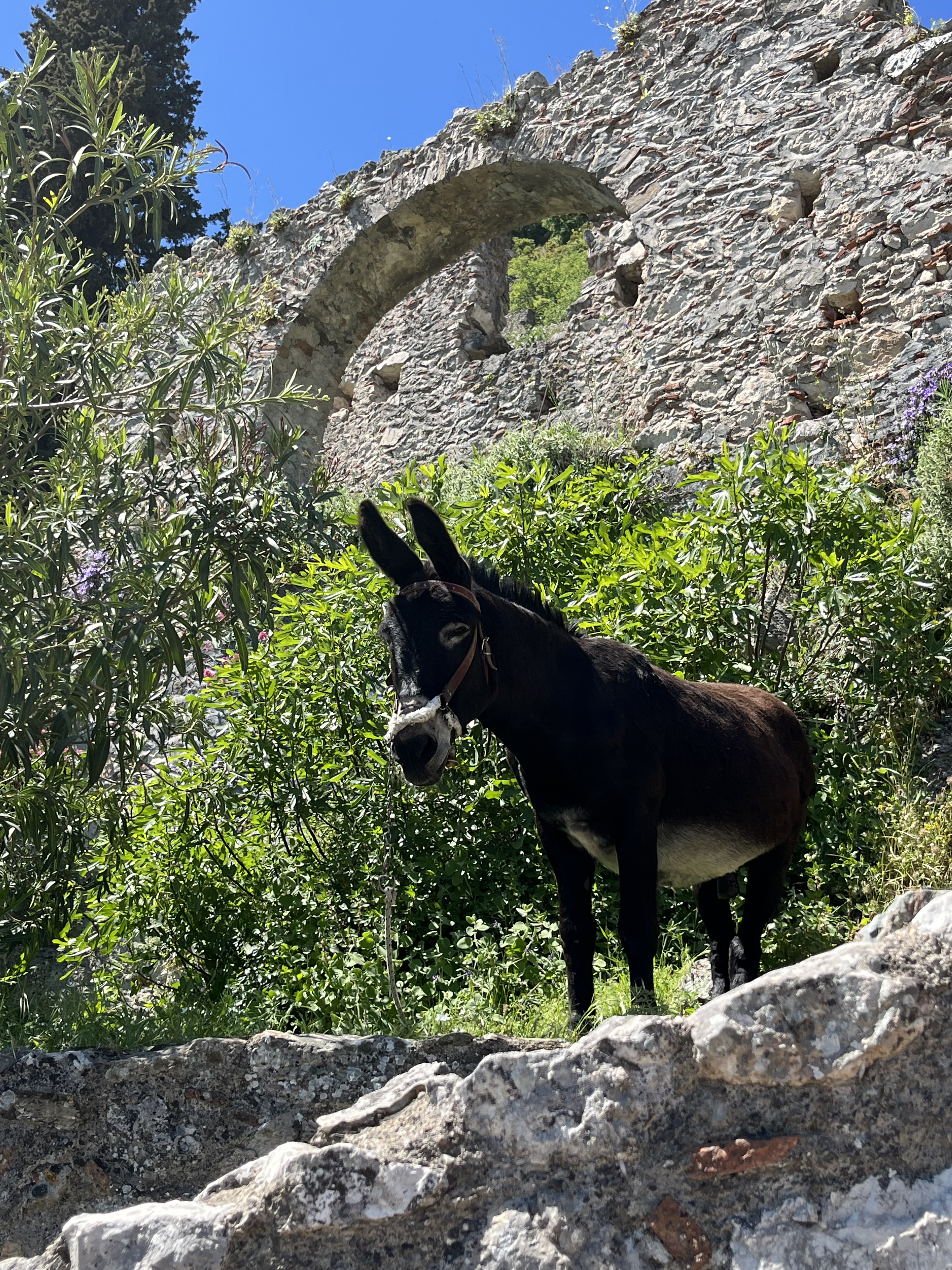
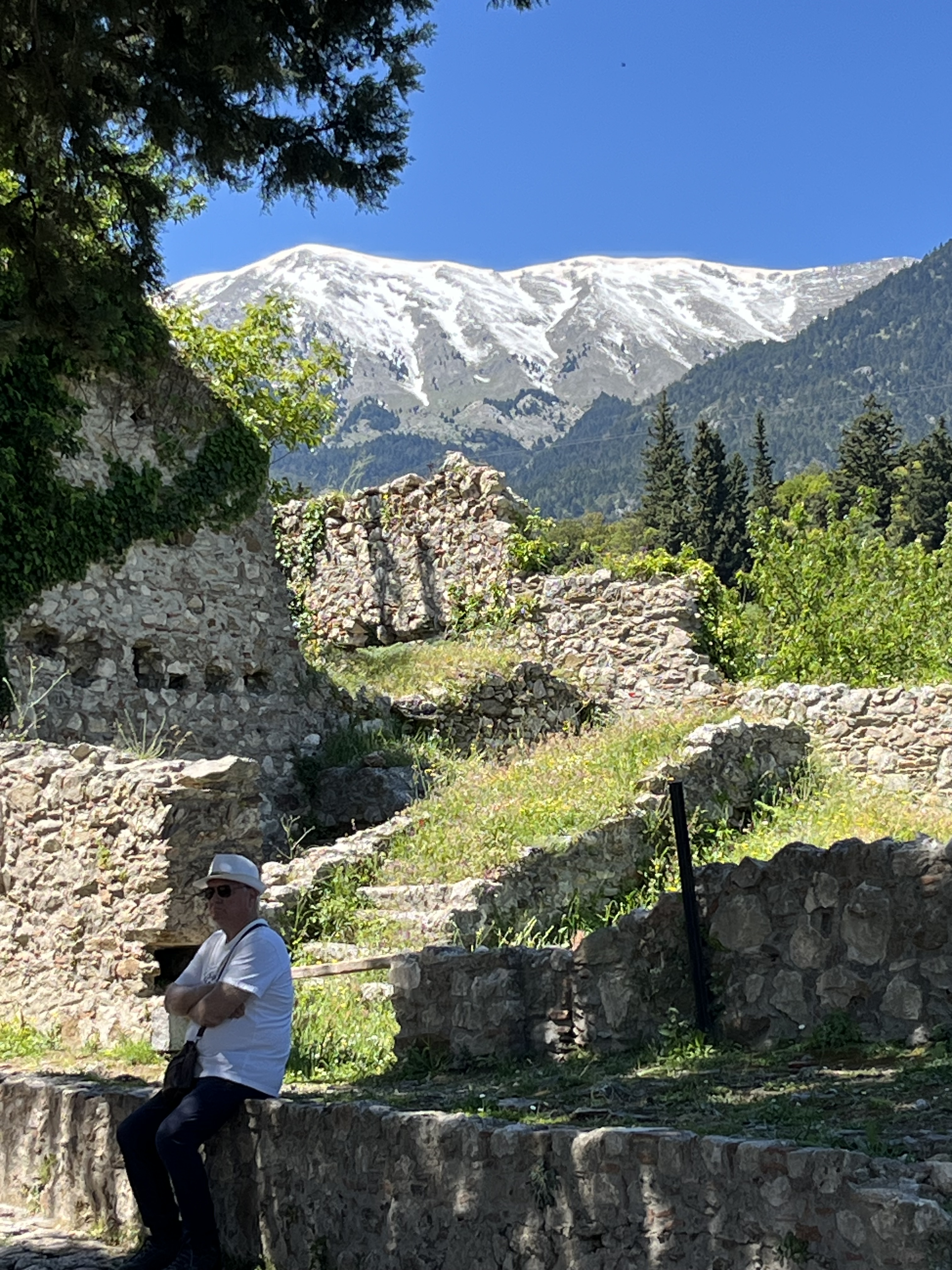
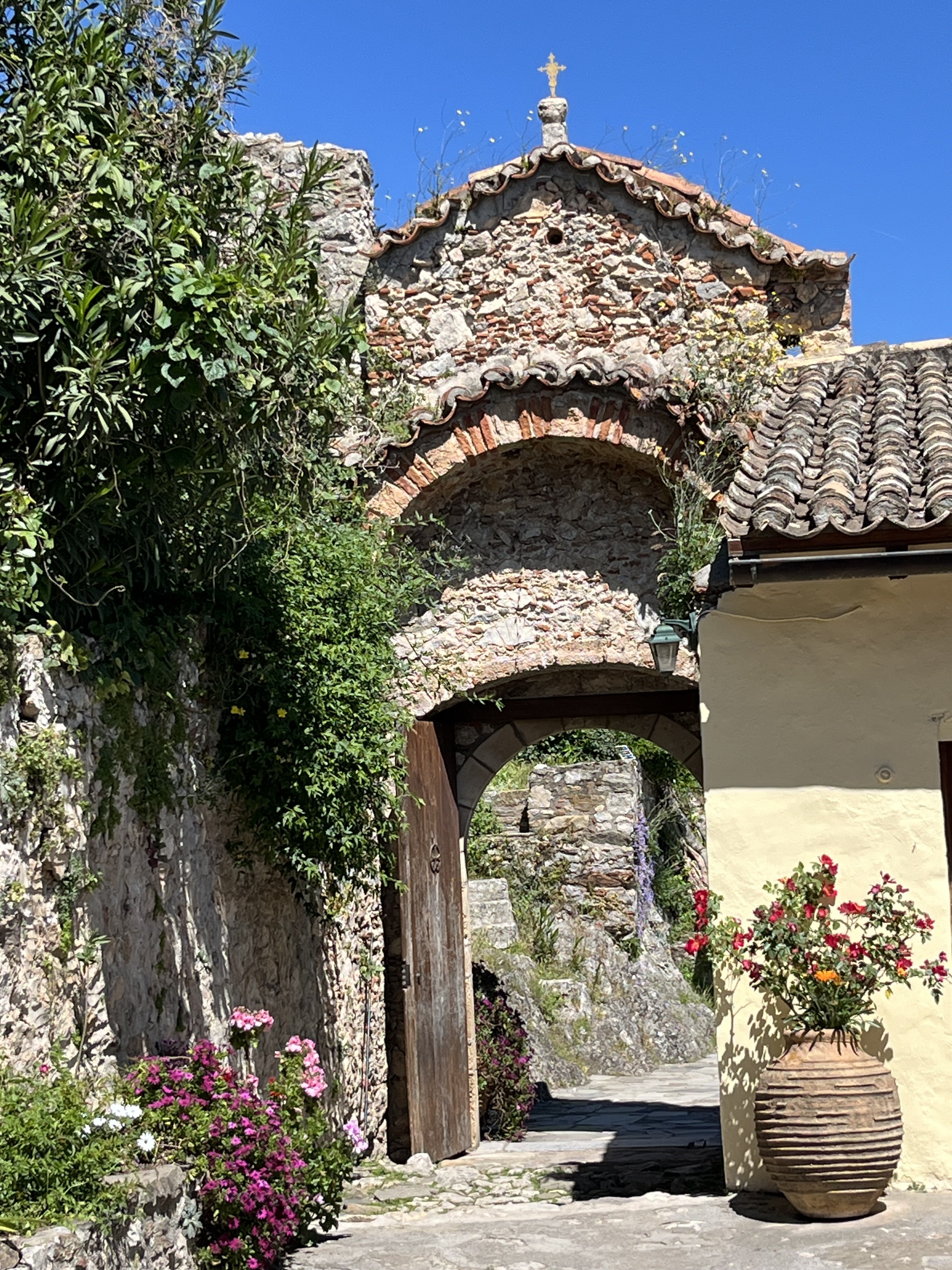
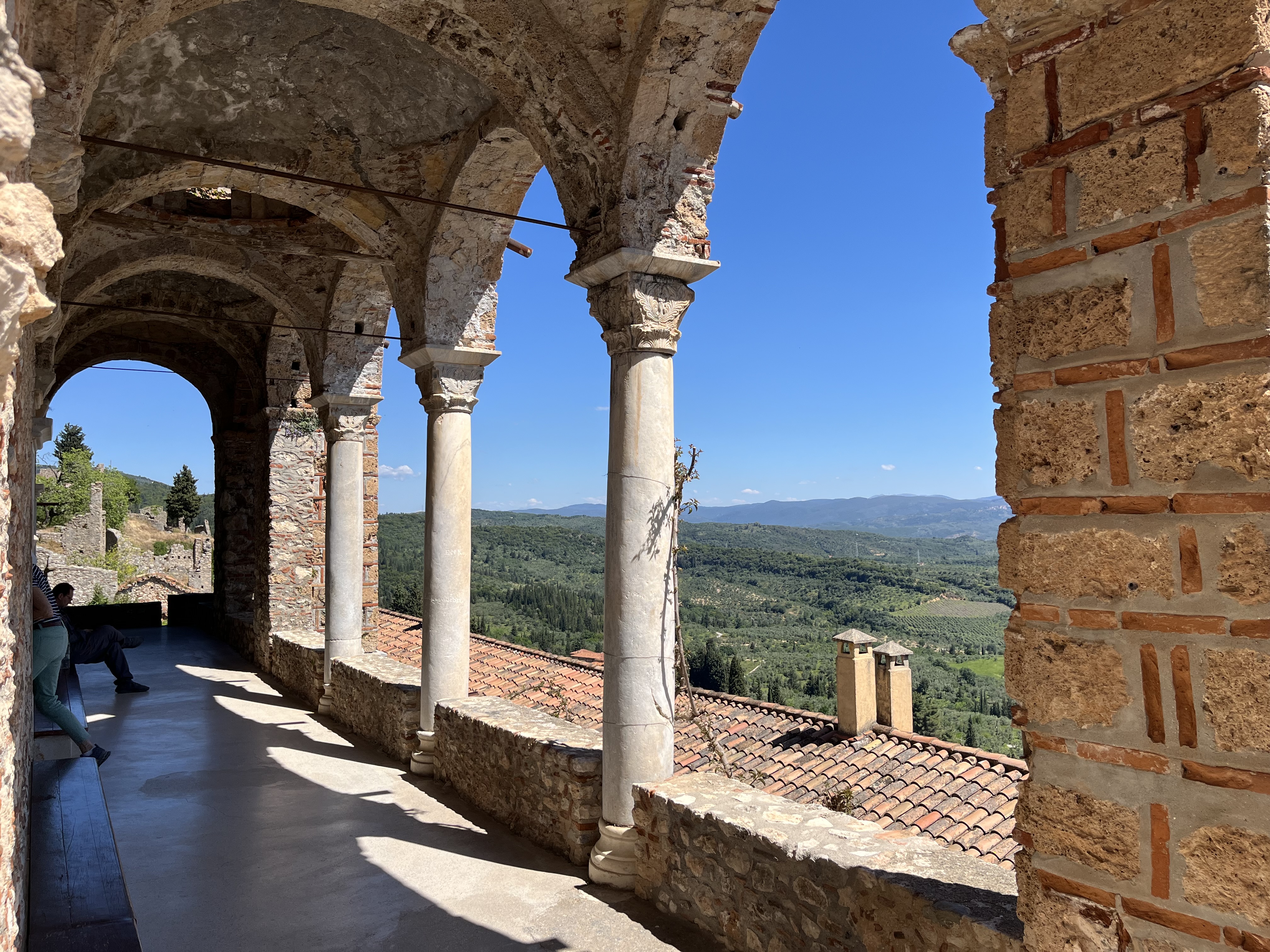
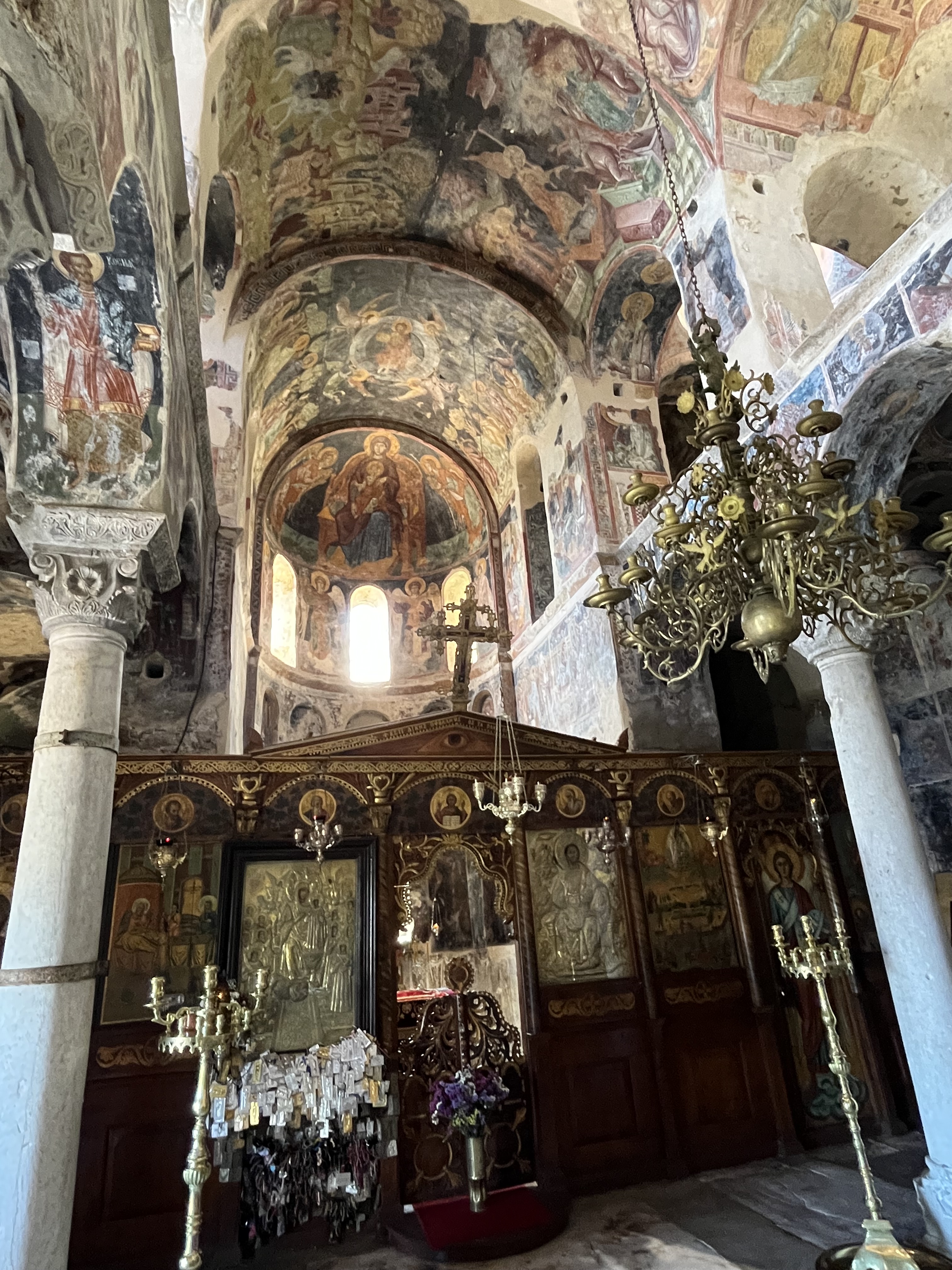
We did not stop in the ancient city of Sparta, as the only thing interesting in today’s busy city appears to be a visit to a statue of the famous Spartan warrior Leonidas. The Spartans, the warrior people and society from this town, ruled large parts of Greece from the 9th to 2nd century BC, and are known to this day for their discipline, harsh training, and warrior capabilities.
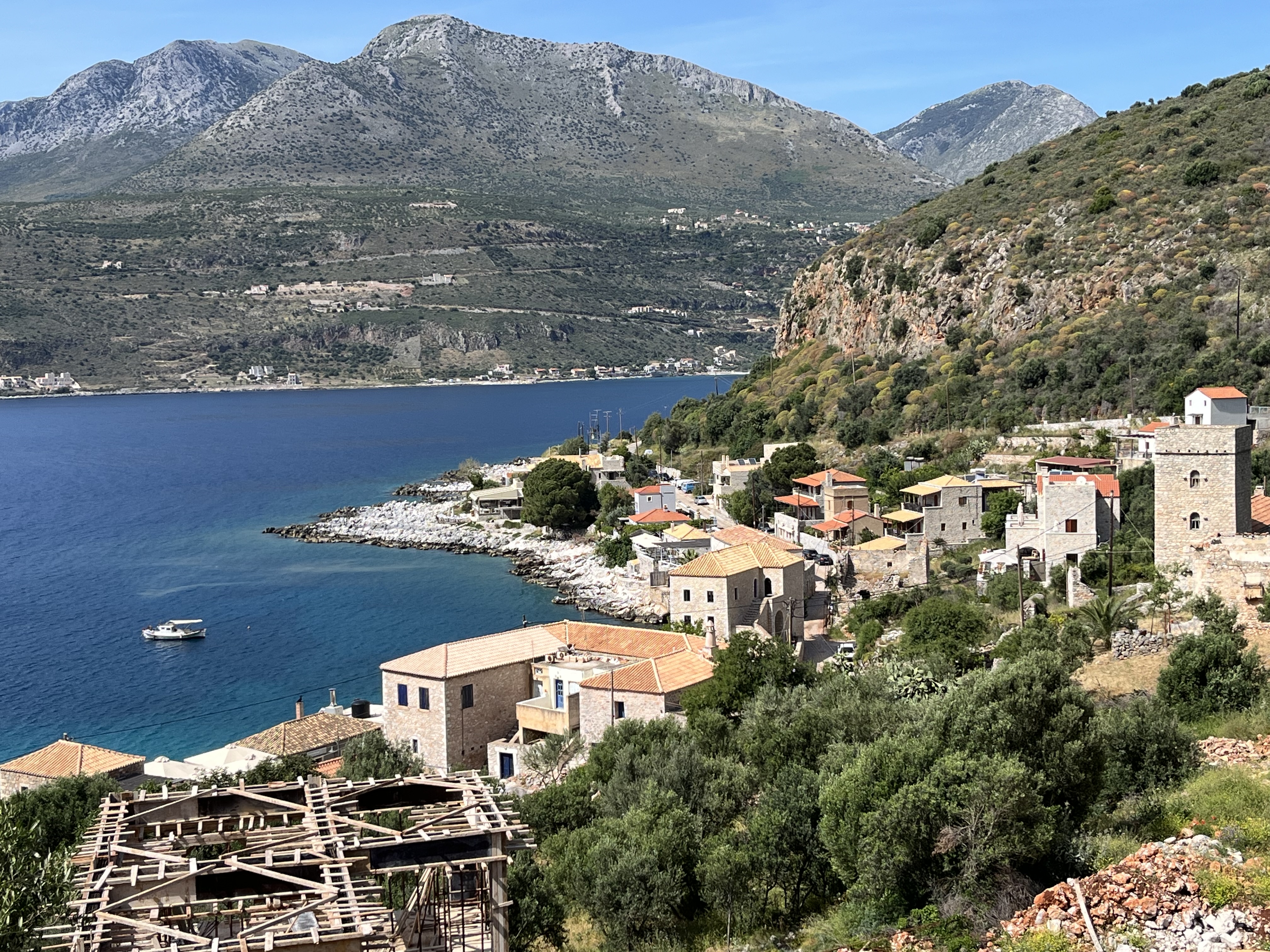
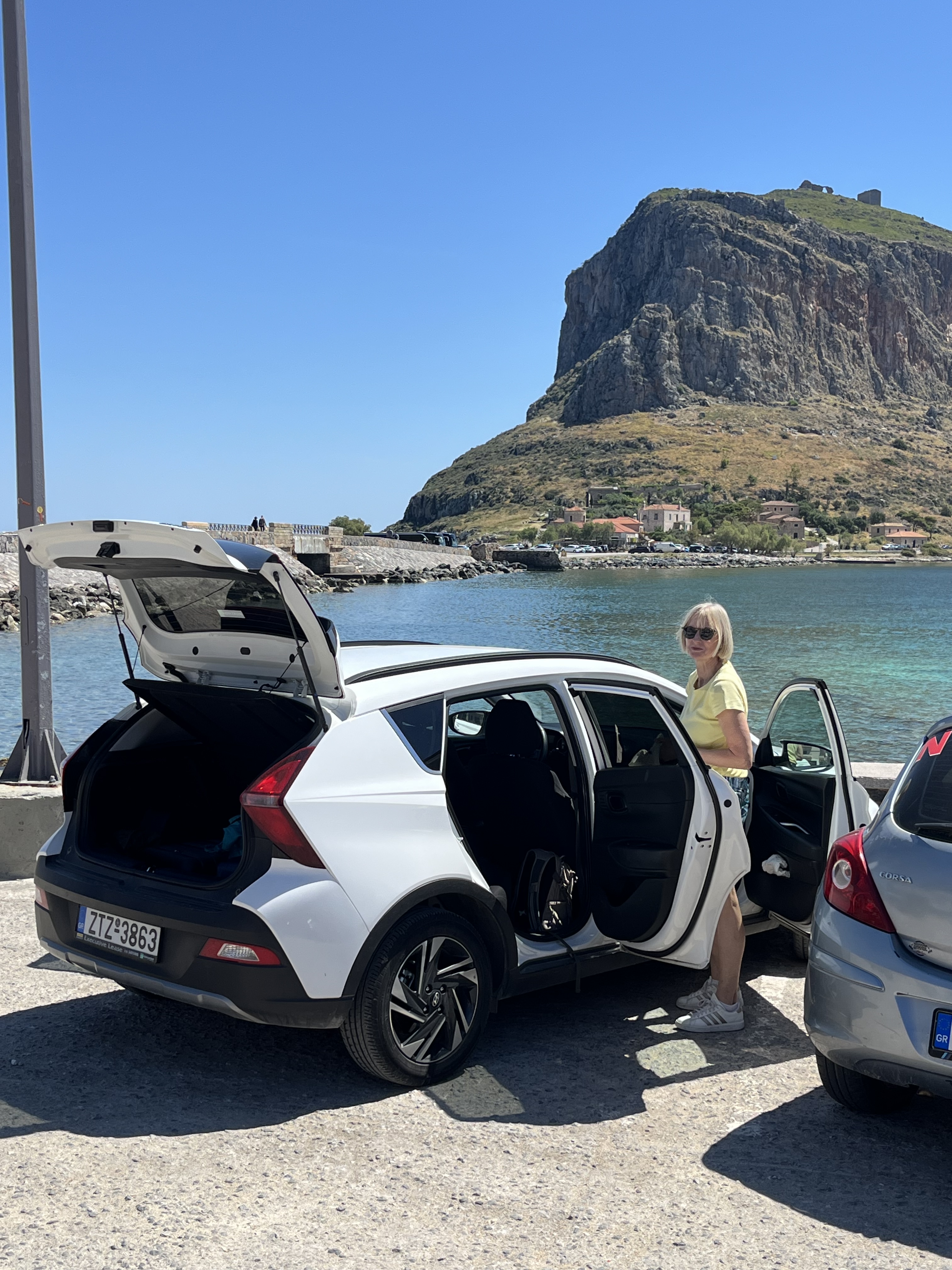
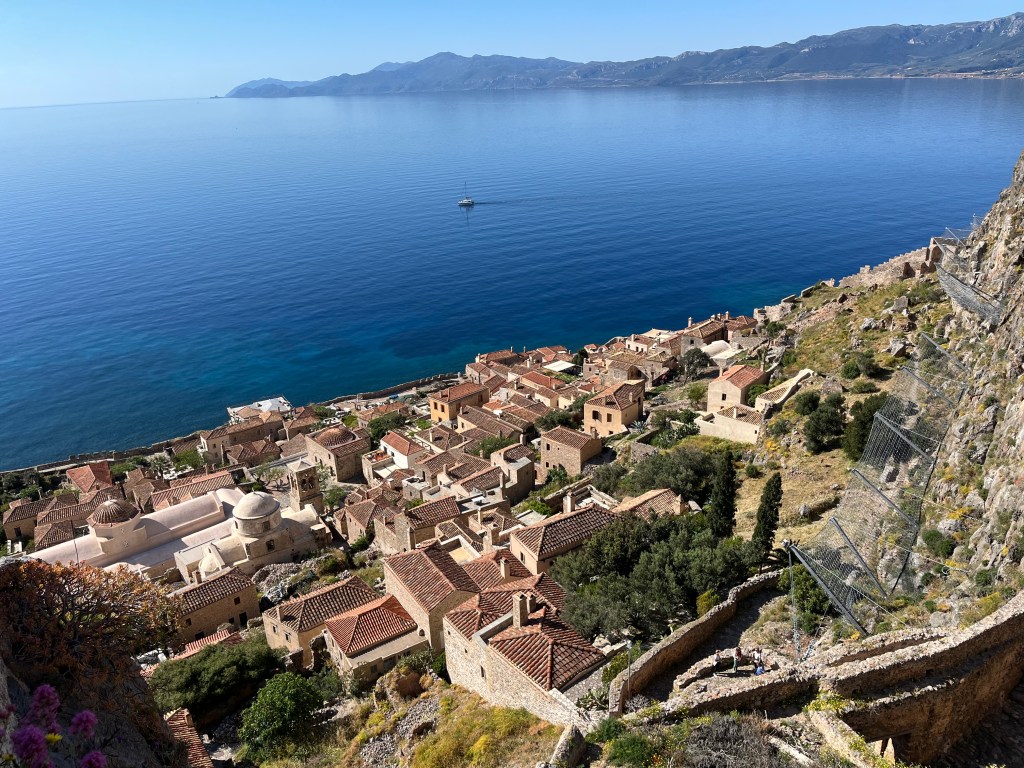
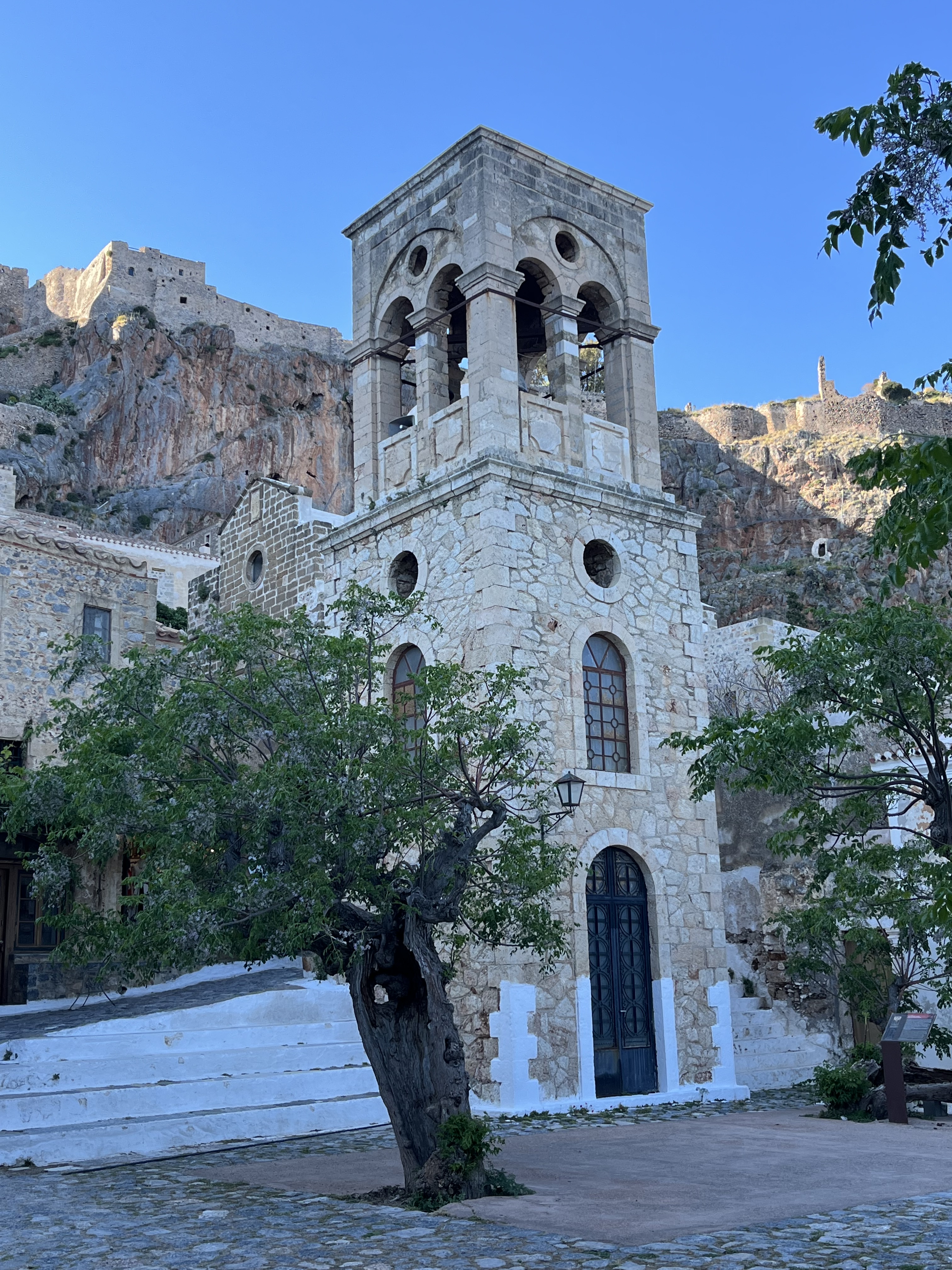
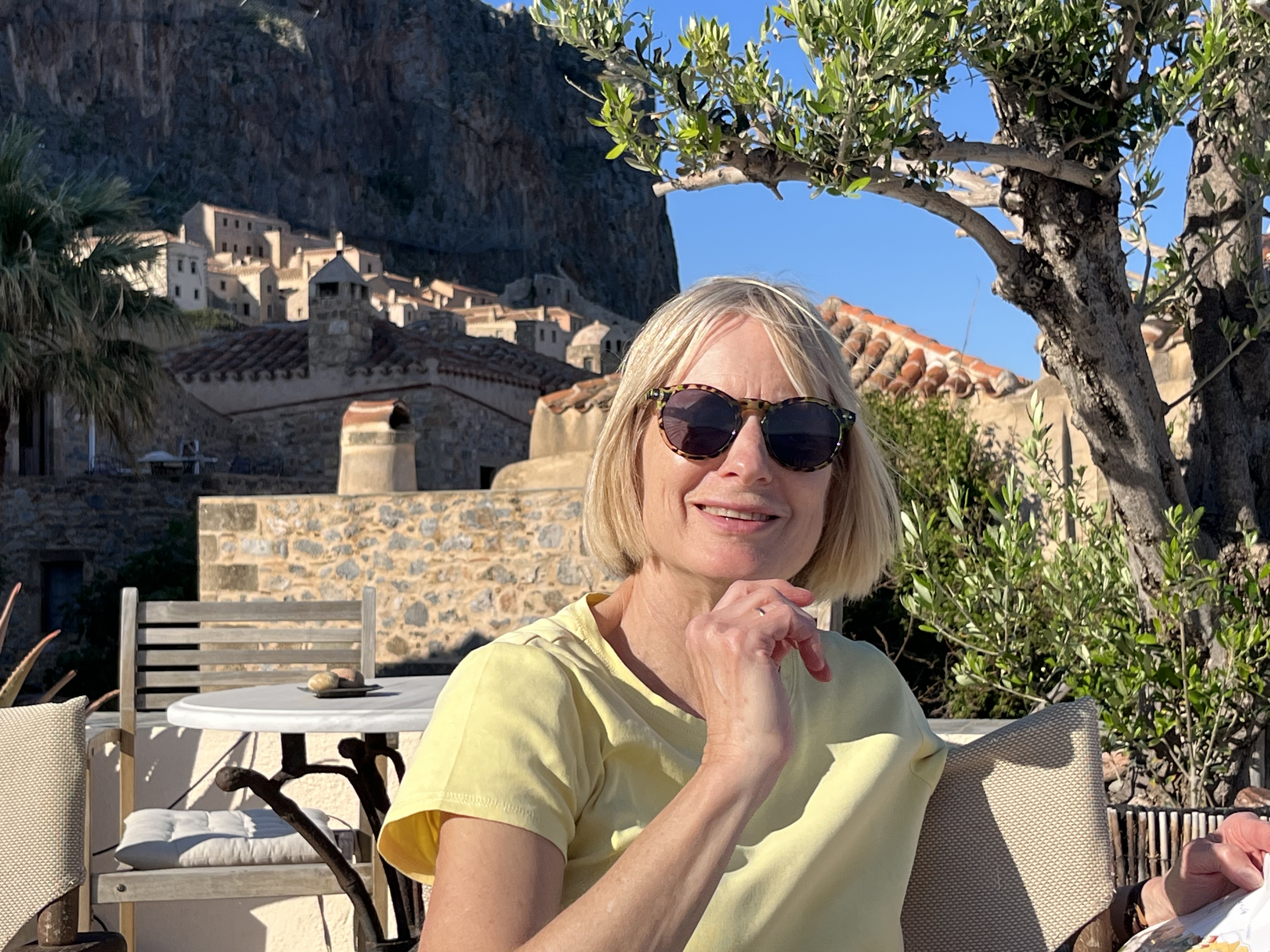
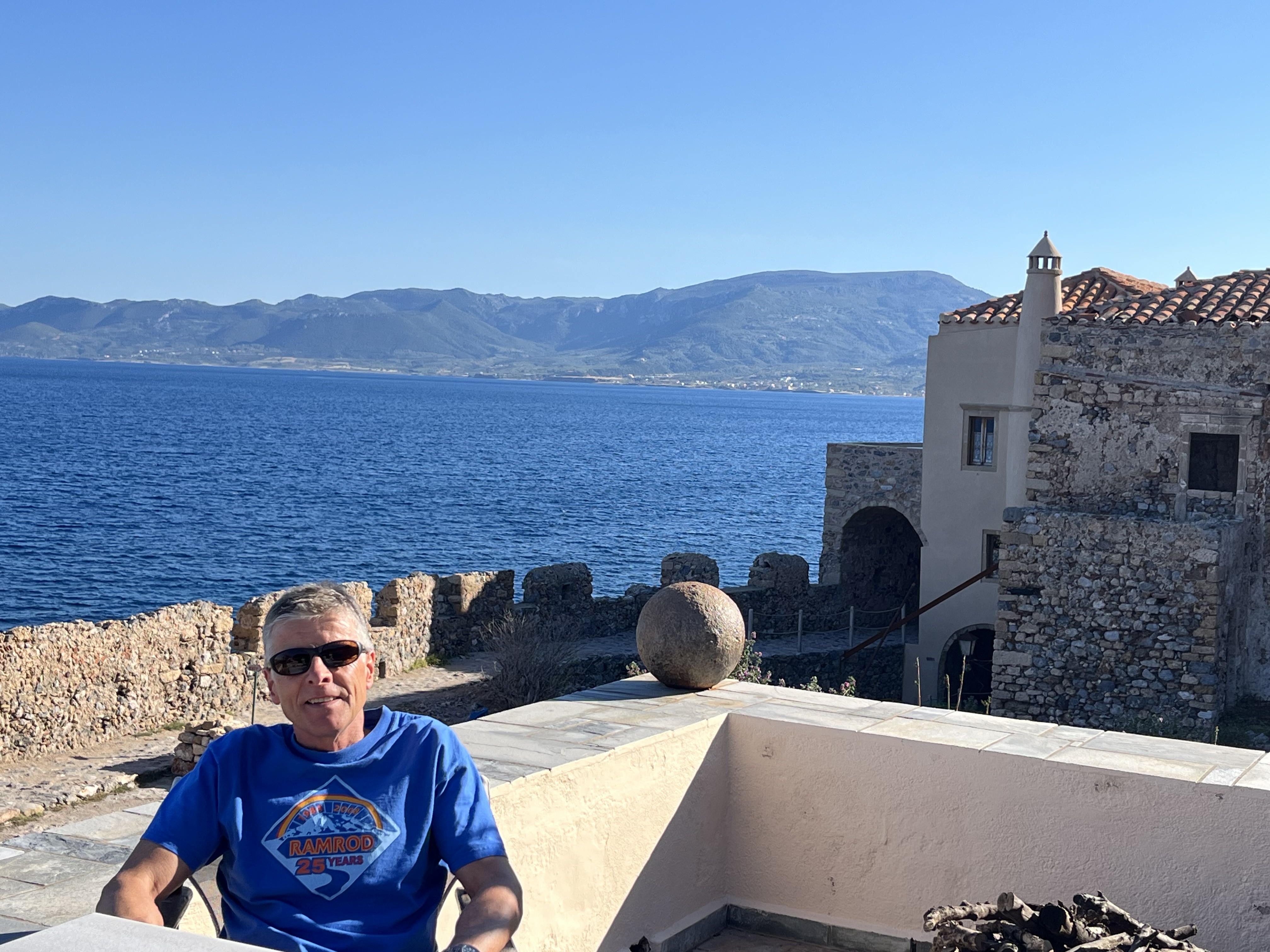
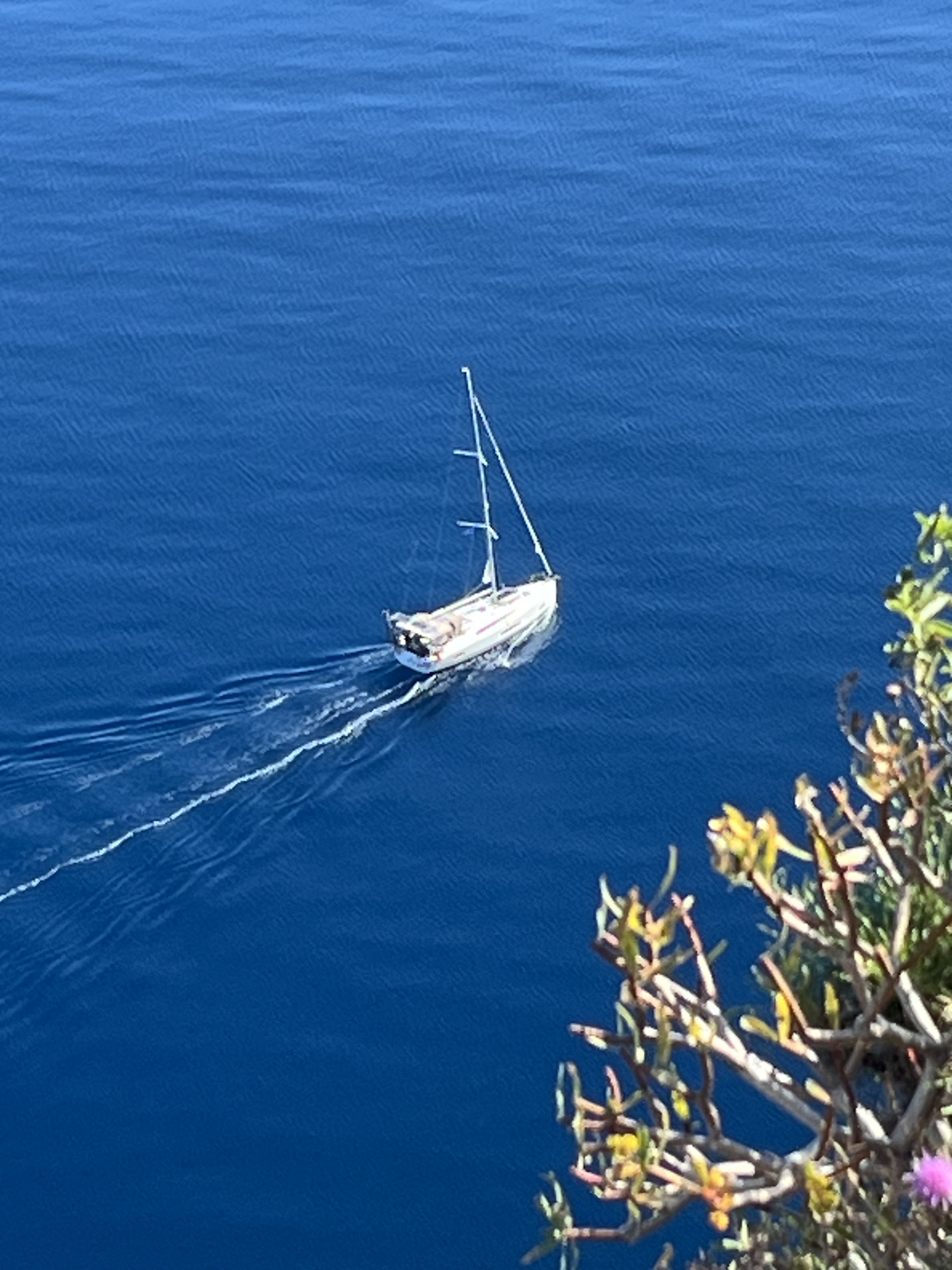
Another 1 1/2 hr SE of Sparta we arrived in Monemvasia. Rather than spending the night in the modern, convenient town of Gefira on the mainland, we followed Rick Steves’ advice and had booked our lodging on the small island in the old, passenger only, part of Monemvasia. It was less convenient, as there is no parking close by, and one has to take an hourly shuttle bus that runs from Gefira across the sand spit onto the island to the city gate of Monemvasia. Yet, as soon as we walked with our luggage through the old city gate, we knew that it was well worth it. The entire town consists of old, tightly squeezed together houses on its south facing terraces above the clear, brilliant blue sea. Myriad crooked, narrow footpaths with lots of stairs lead through the village’s labyrinth, and one can climb several footpaths to the very top of this rocky island, where the remnants of the old town citadel, as well as great views of the sea, are to be seen. Like most places there, our lodging provided ample sea views, and once the day tourists were gone, this place was very quiet and serene.
Founded in the 6th century, Monemvasia is one of the oldest. continually-inhabited fortified towns in Europe. It is the site of a once-powerful medieval fortress, and was at one point one of the most important commercial centers in the Eastern Mediterranean:
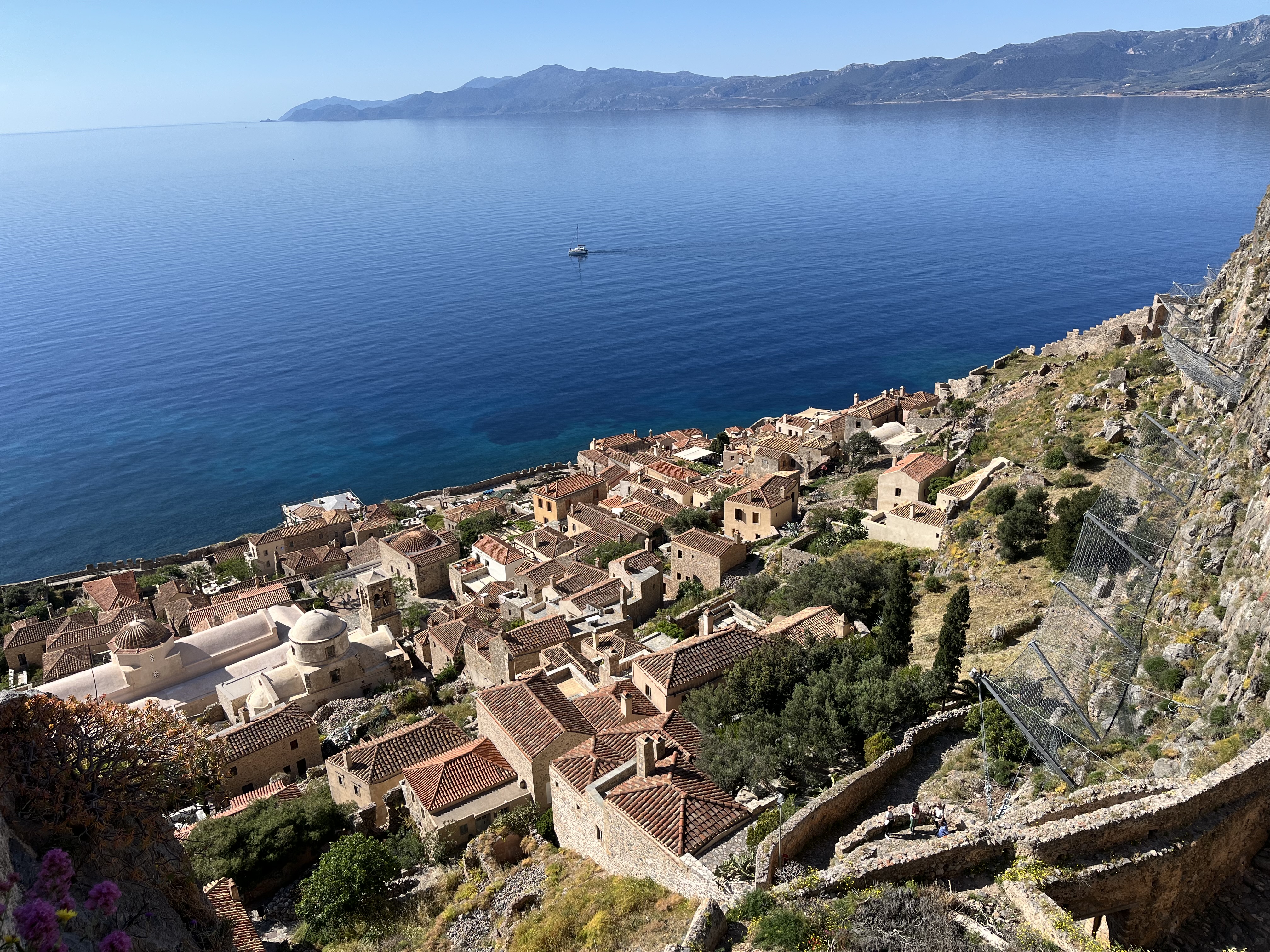
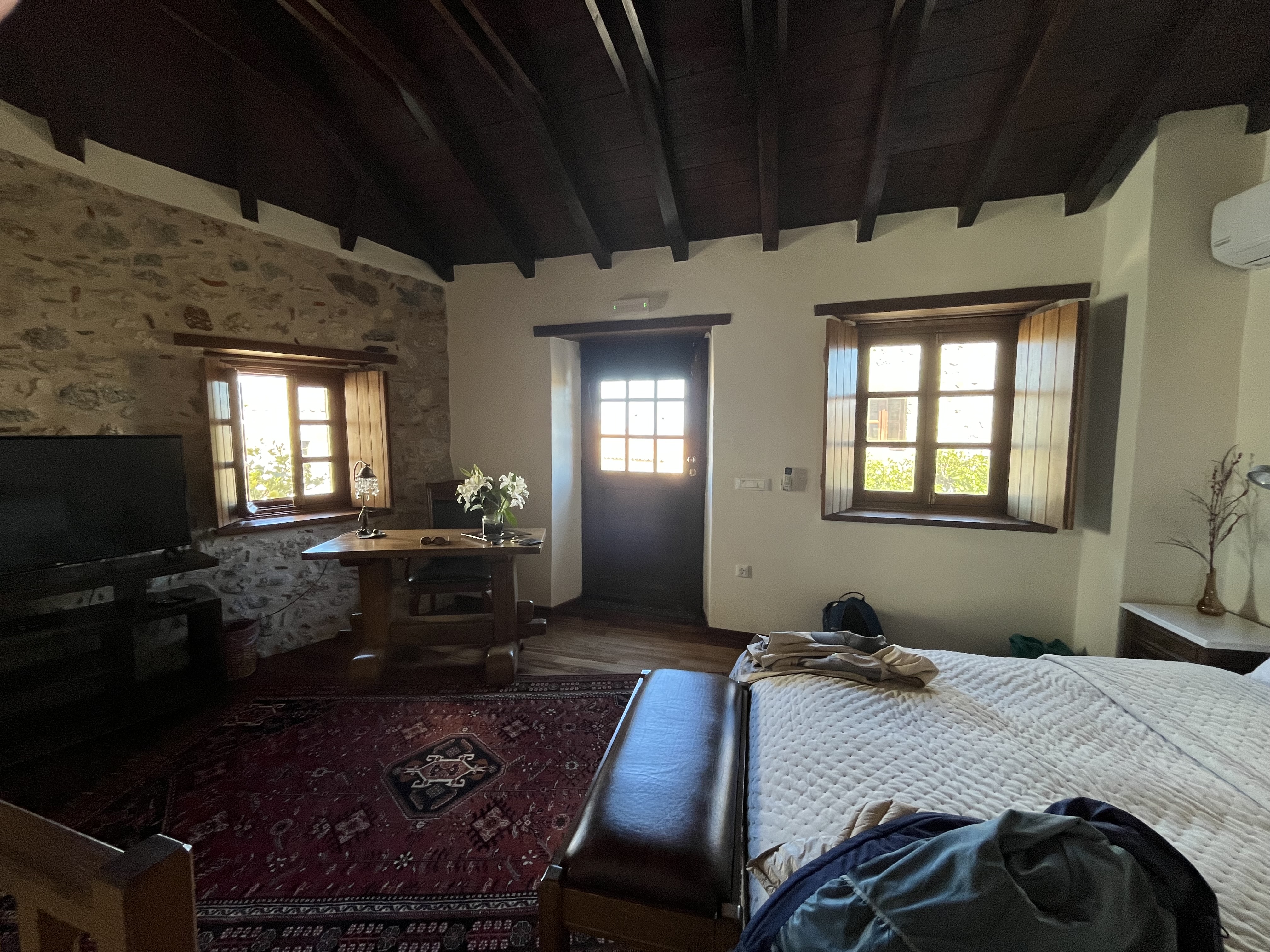
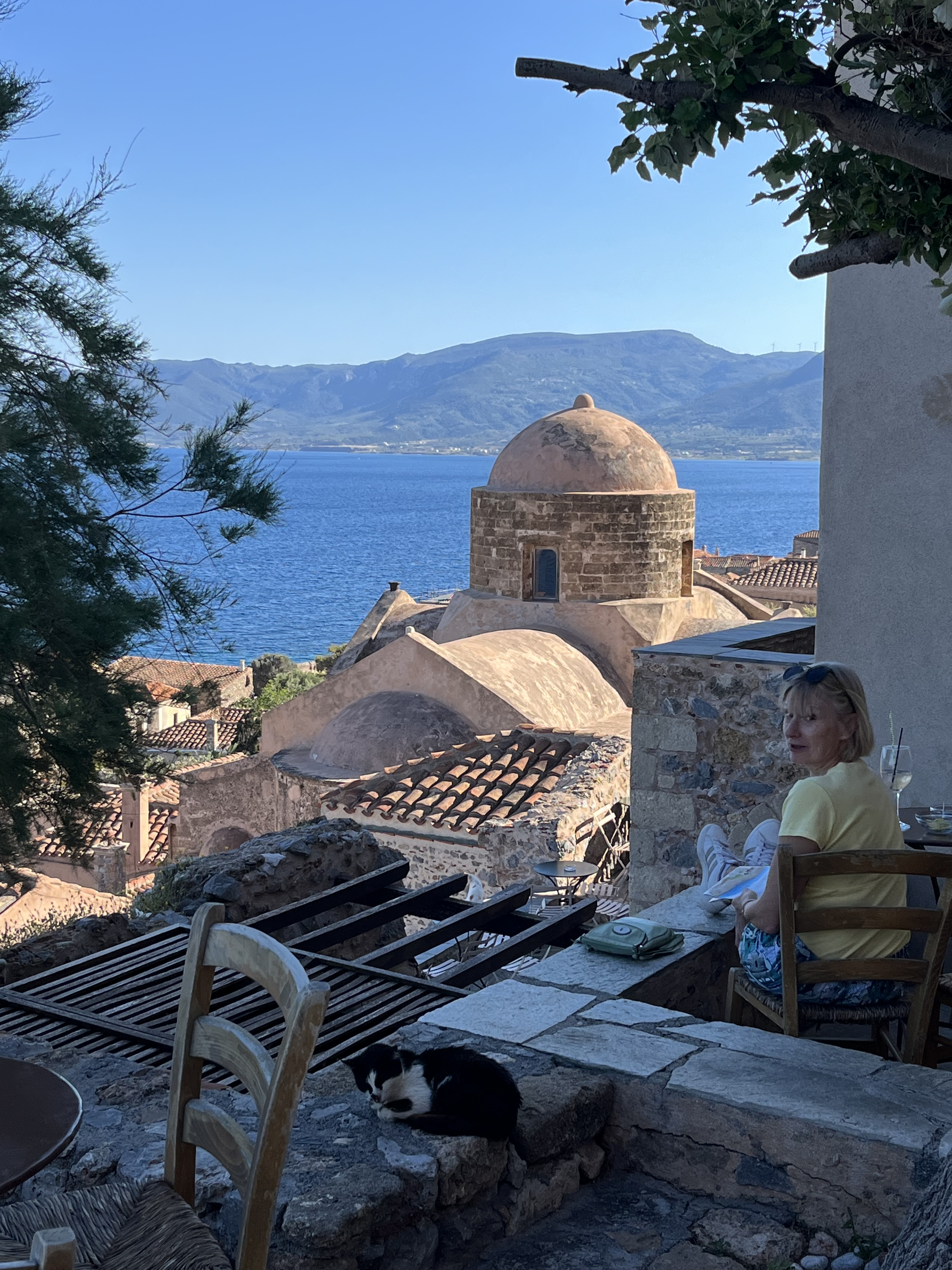
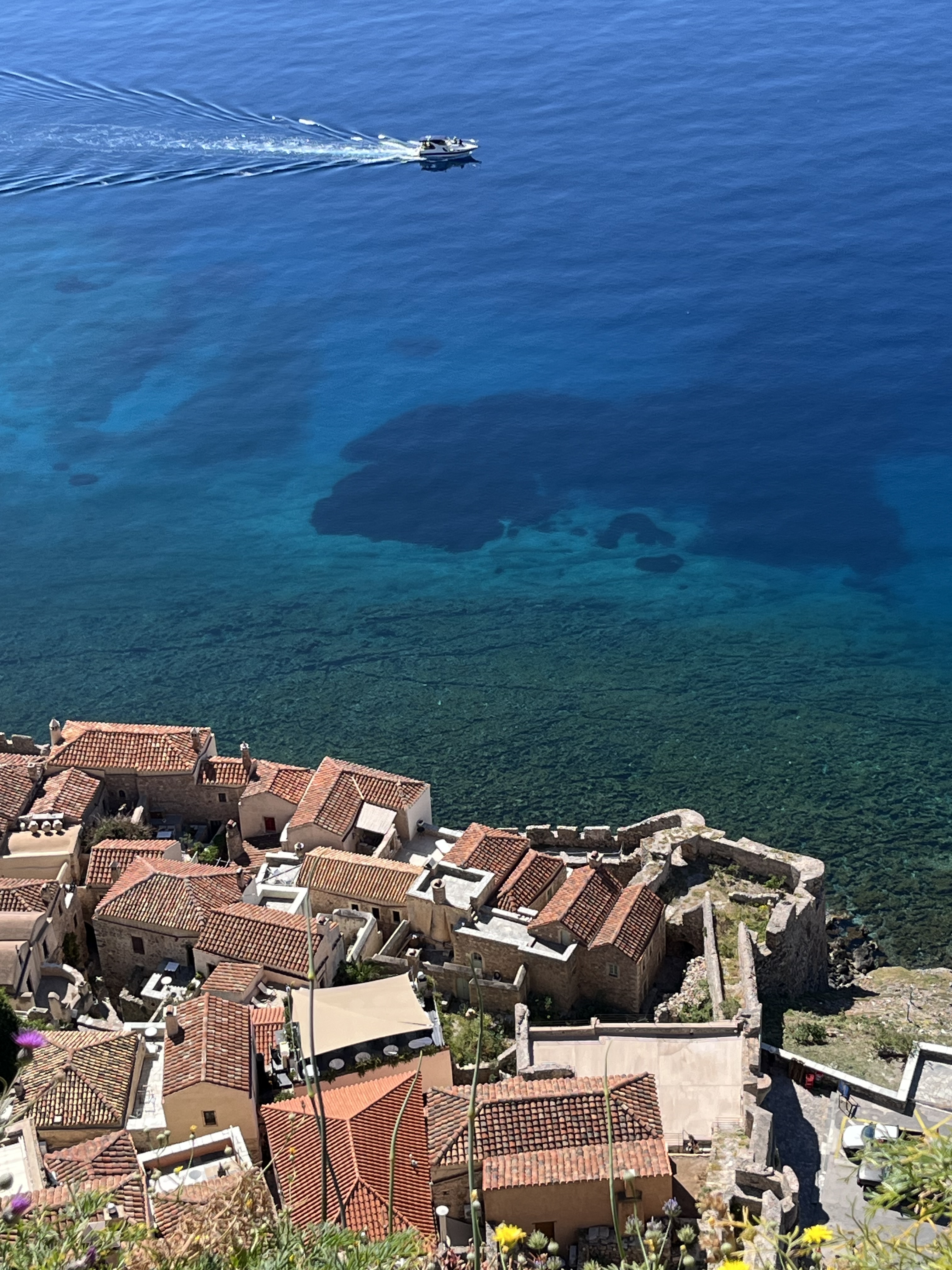
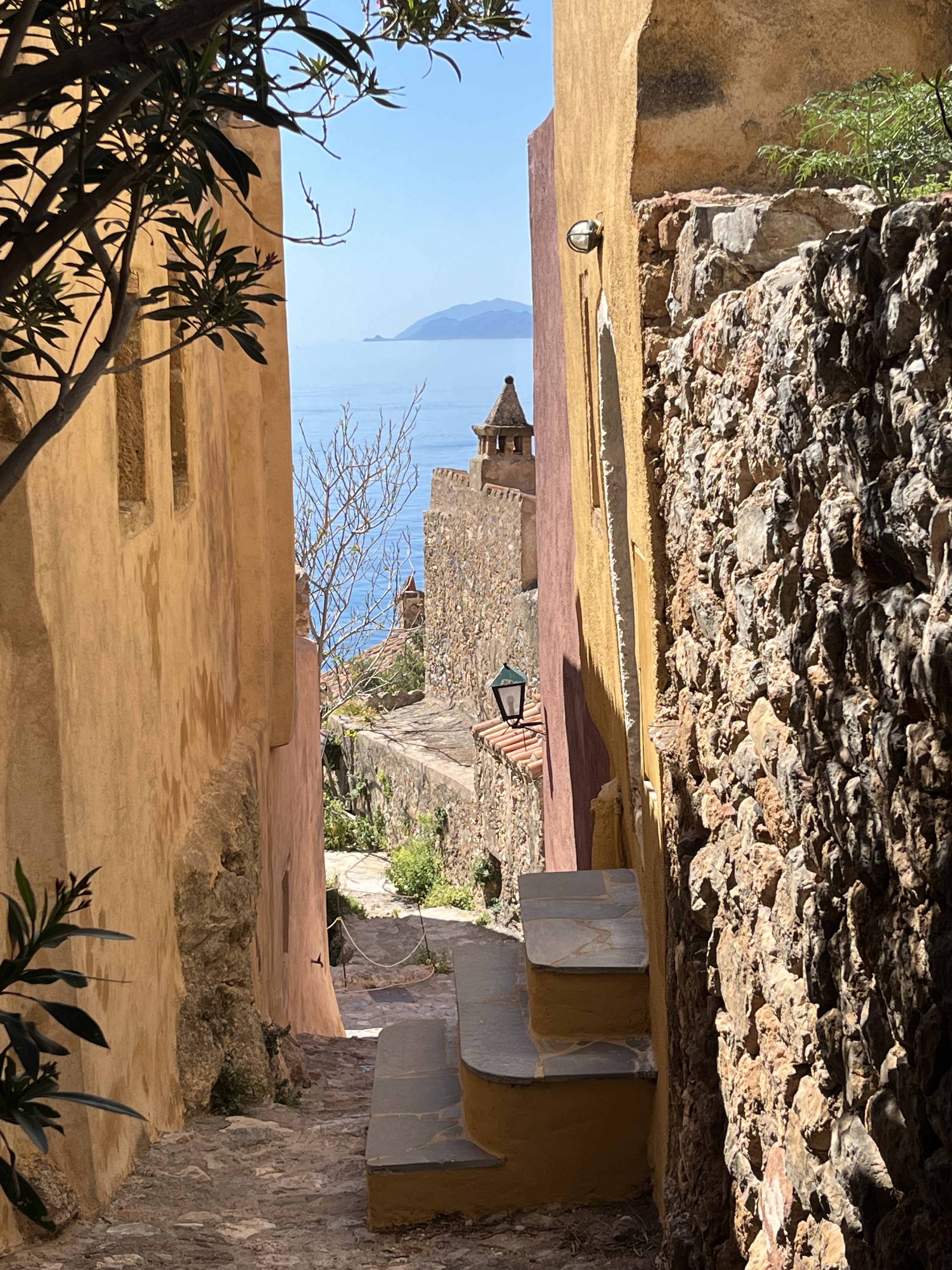
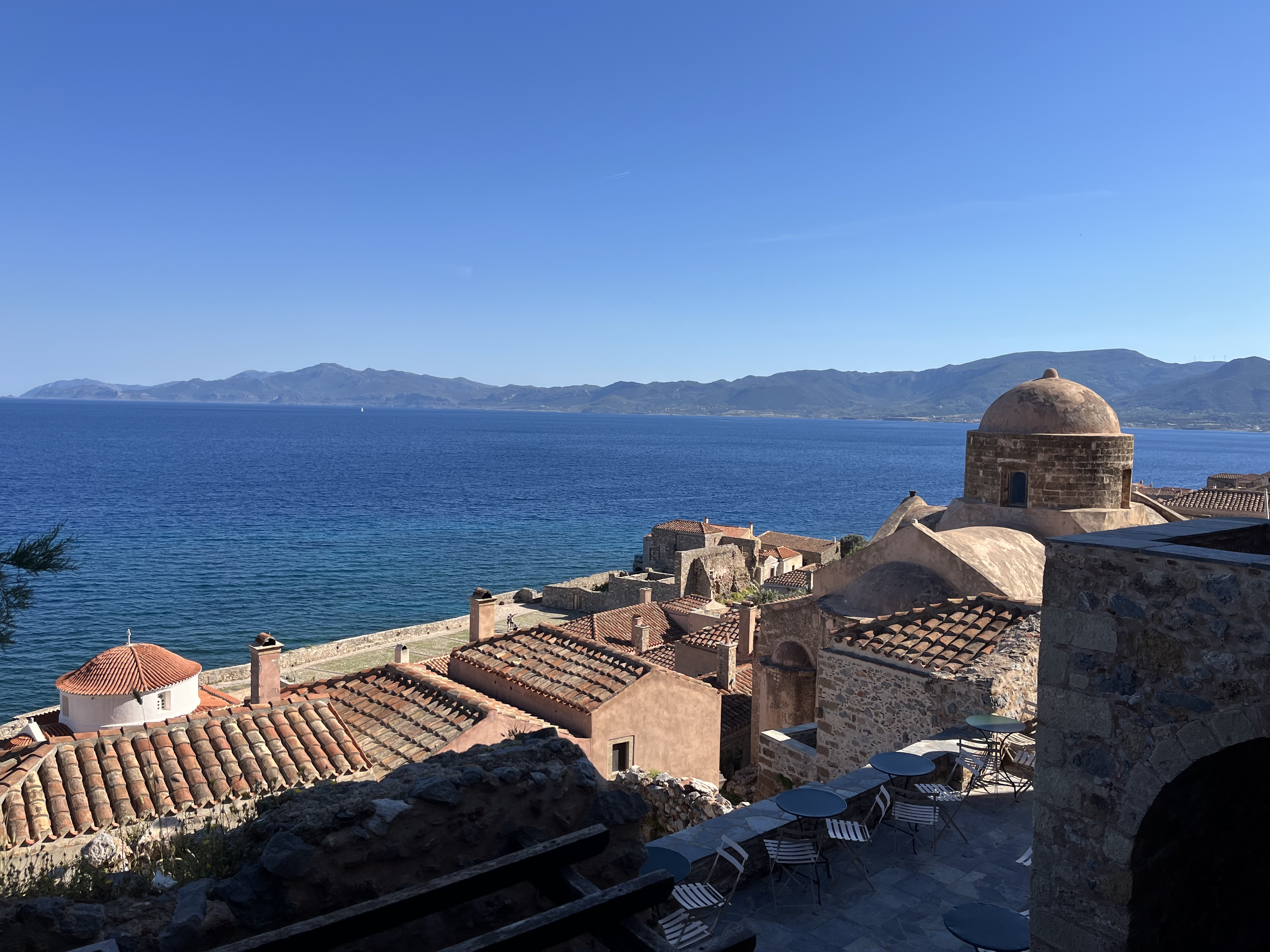
We spent all morning enjoying more of this picture book place before we headed back to our car on the mainland.
Areopolis, on the Mani Peninsula, and the Ionian Sea further west were our aim. We drove by multiple blue shimmering seashores and many orange orchards on the way. Orange orchards, and the ever present olive orchards, appear to be the dominant land use. Areopolis itself is a rather regular Peloponnese town on a plateau high above the seashore. Here, as on the island of Monemvasia, we were close to Crete, and on the same latitude as the southern tip of Sicily or the North African town of Tunis! Surprisingly, it wasn’t all that warm, with highs around the low 70s and some snow still visible on the mountain tops. Our dinner, a kind of slow cooked pot roast in a thick terra cotta pot, reminded me of the tagine cooked food in Morocco. Oranges, in the form of orange cakes or other related products, were offered everywhere, yet surprisingly, during our entire trip through Greece, including some tasty, fancy breakfast buffets, we were never treated to freshly squeezed orange juice in the morning.
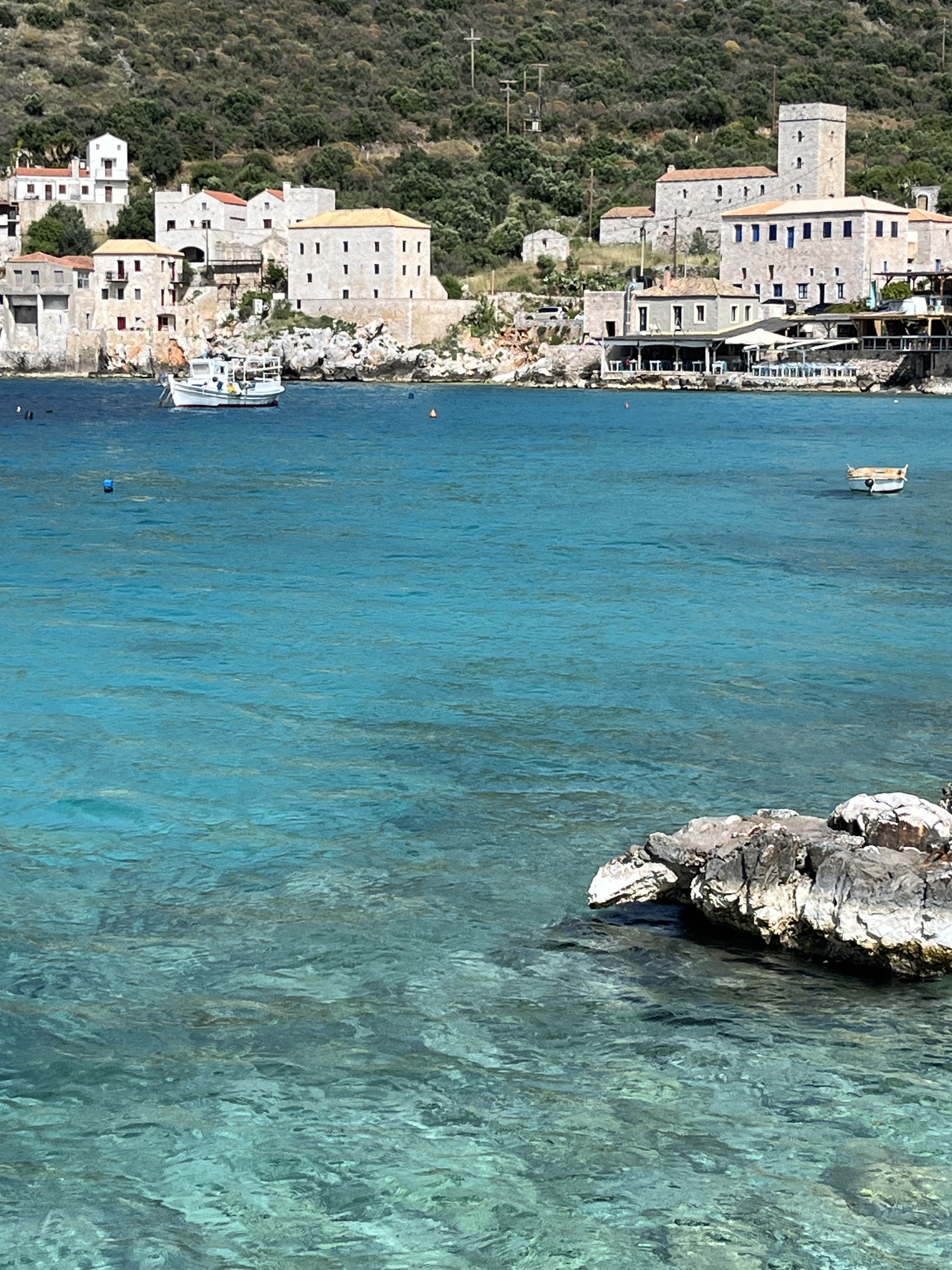
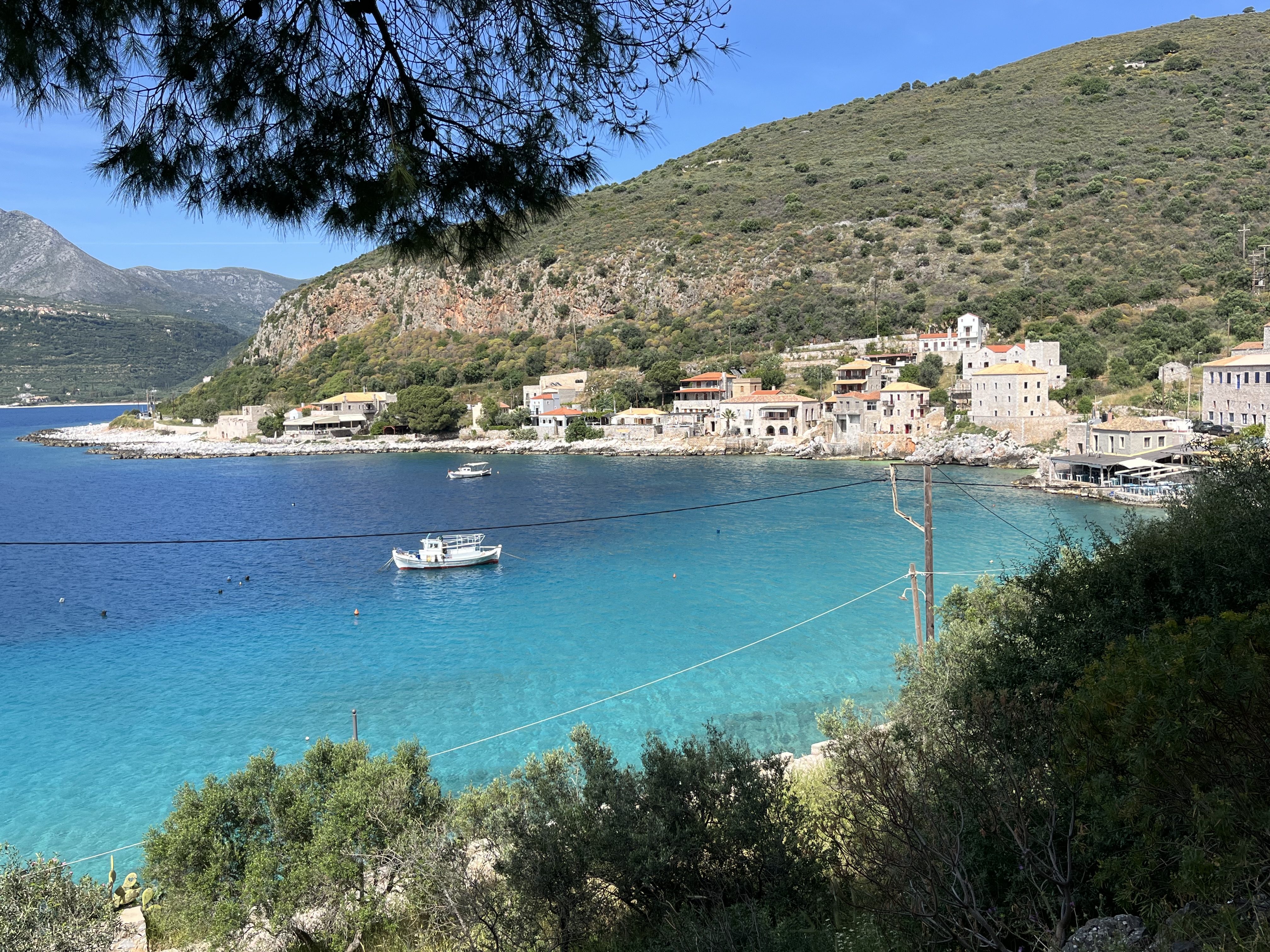
The following morning we headed north, driving by more picturesque fishing villages along the Ionian Sea. We stopped at the Mani Blaeuel olive oil factory along the way, and enjoyed an informative and tasty tour. The factory was founded by a couple of Austrian hippies who fell in love with the Mani Peninsula in the 80s and found their calling. Today this family owned factory produces 1600 tons of biologically grown, high grade olive oil annually and exports to the German, Austrian, and Swiss markets.
In the afternoon we stopped at one of the inviting looking swimming beaches. It was a nice, wide, shallow and sandy beach and only one other person was in the water. Being early May, even the Mediterranean this far south was still a little on the chilly side, yet by keeping moving, I got my first invigorating swim in!
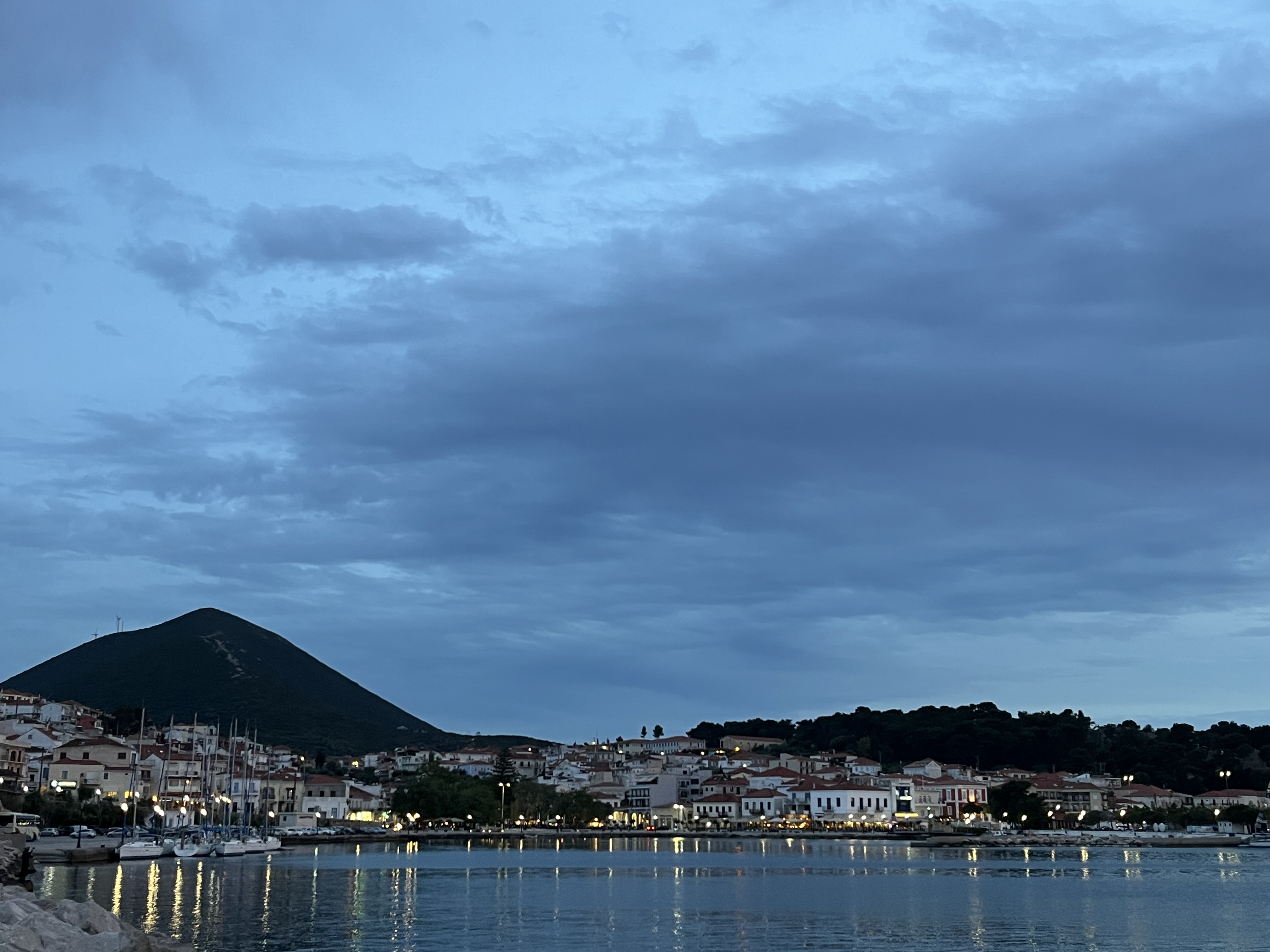
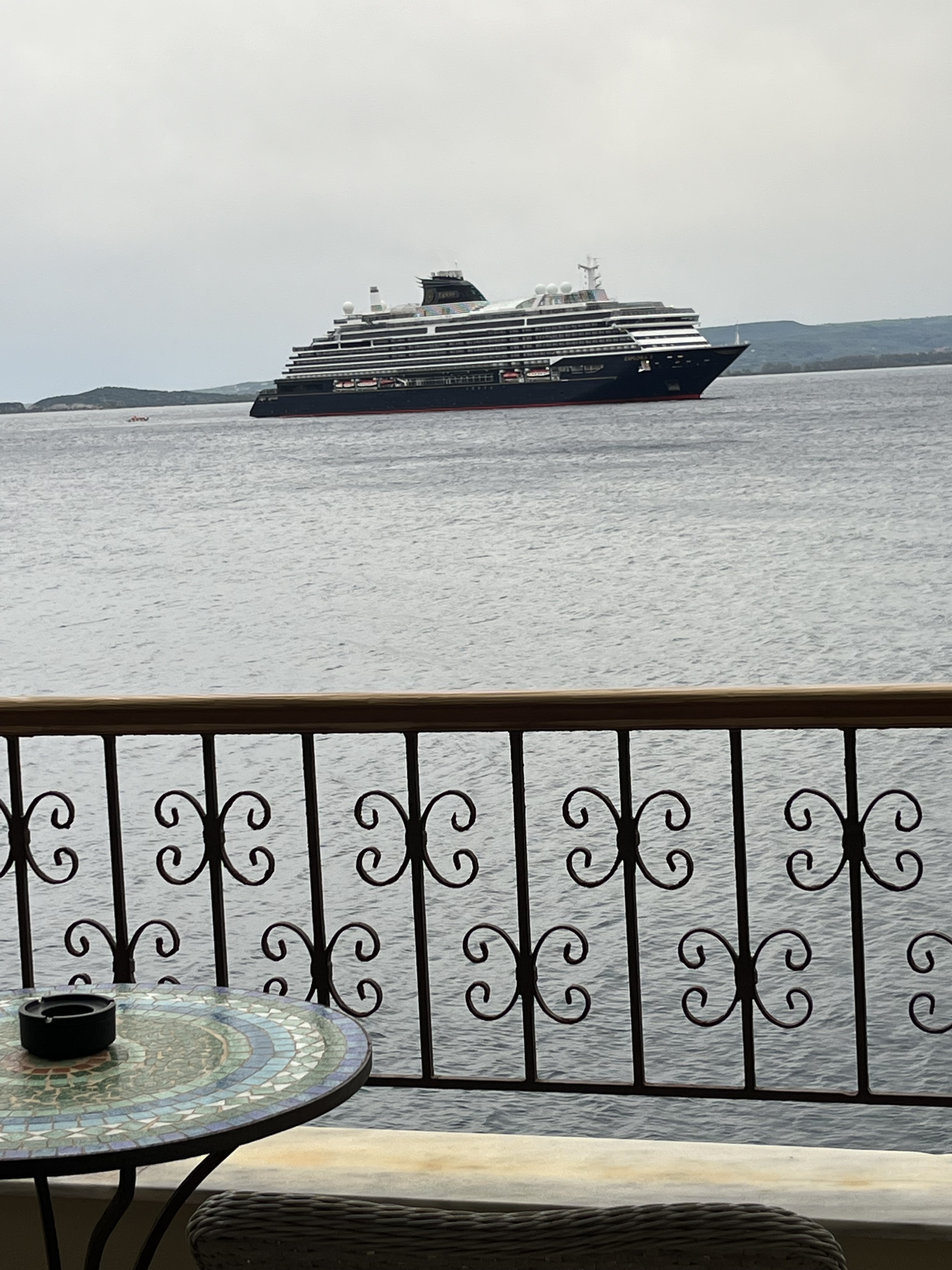
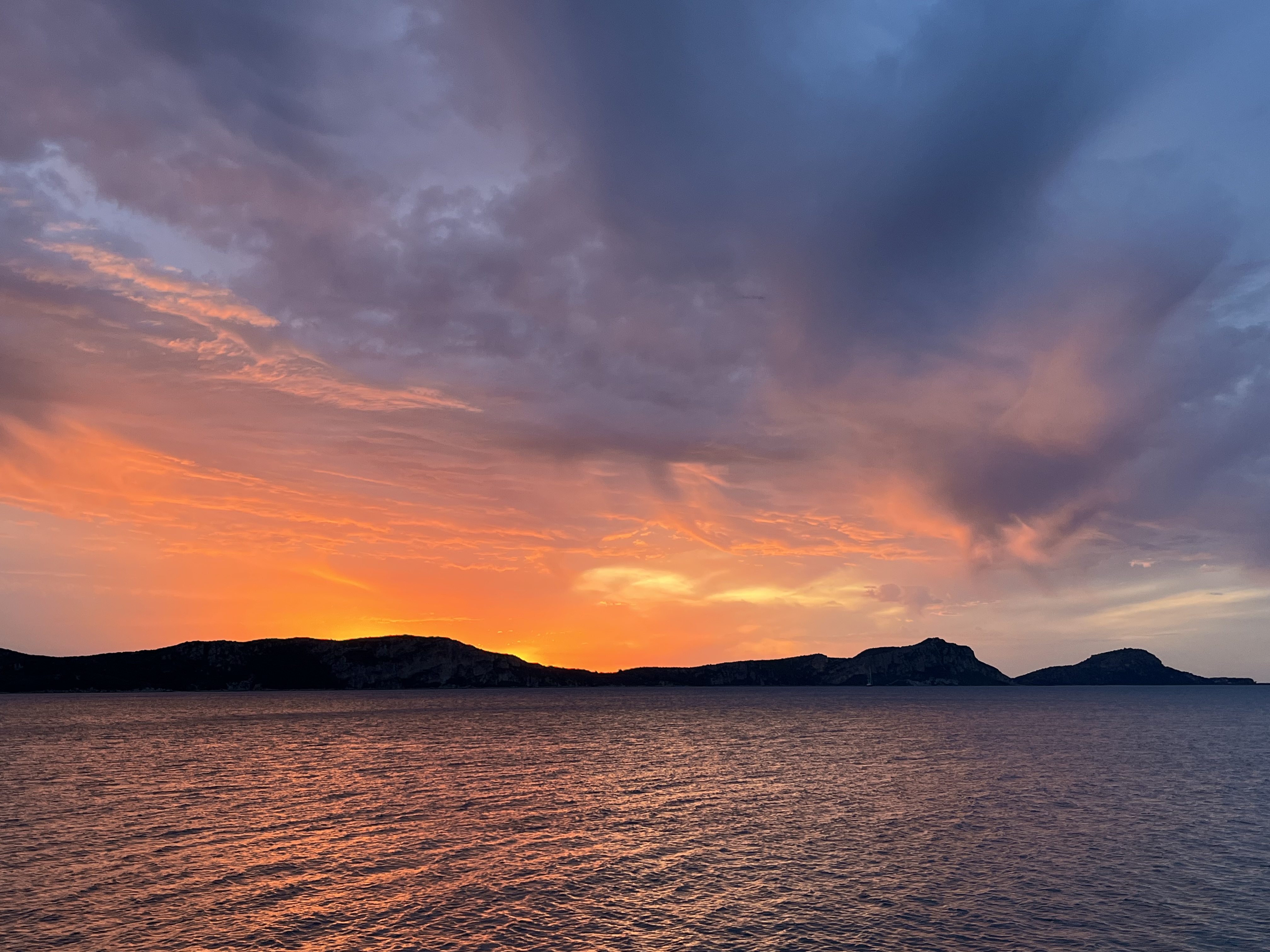
From there we headed past Kalamata – the place where the tasty, big, dark purplish-brown olives come from, to Pylos. Pylos sits at the southern end of the large, almost totally enclosed, Bay of Navarino. This beautiful village has been inhabited since the Neolithic times. Close by, the archaeological site of the Palace of Nestor, is another demonstration of the sophistication of the Mycenean culture. Our Pylos accommodation was at the edge of town, right on the bay, and we lucked out being able to observe a spectacular sunset. When I pulled the curtains open in the morning, we were looking right at a cruise ship, which must have come in overnight.
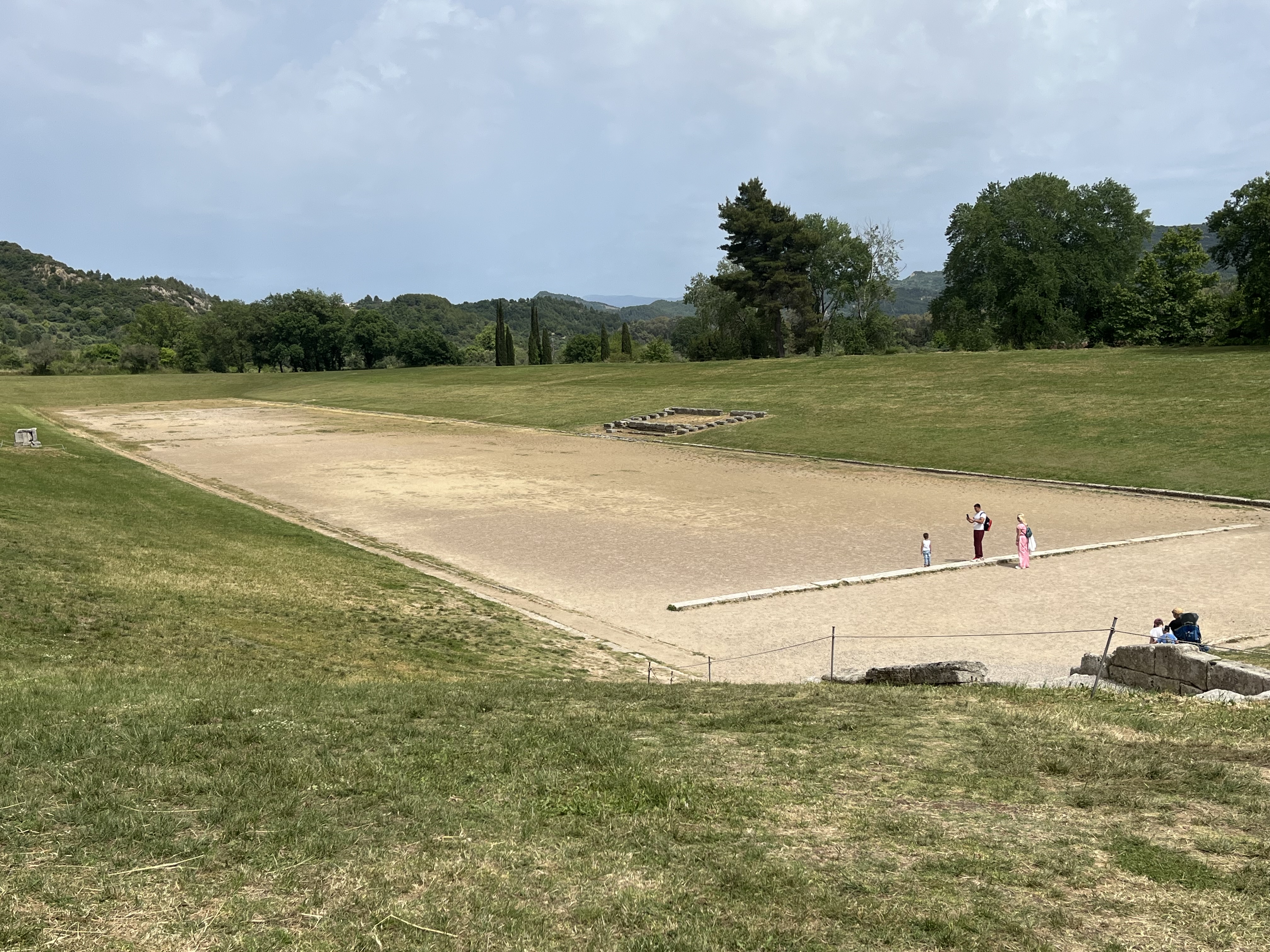
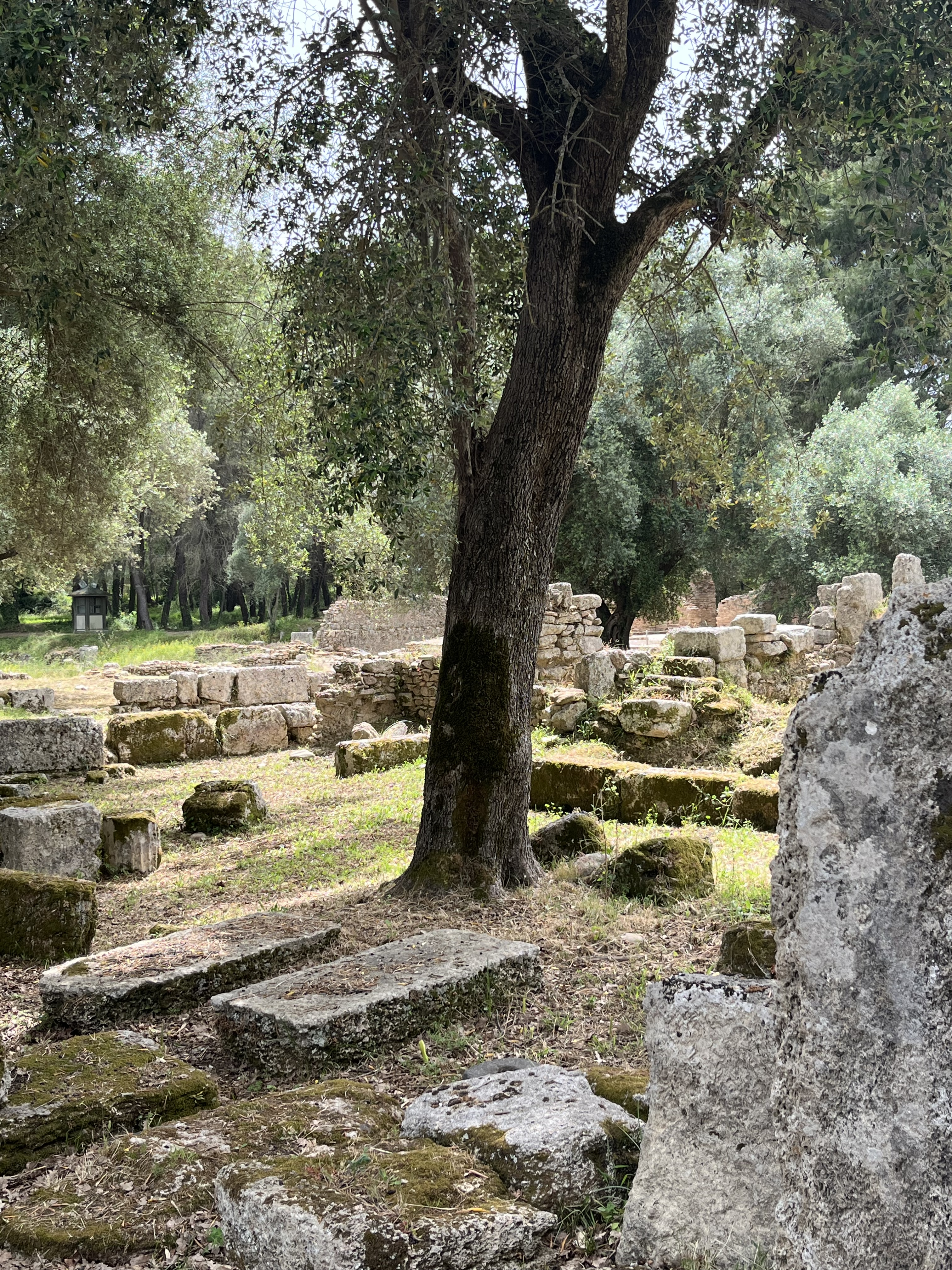
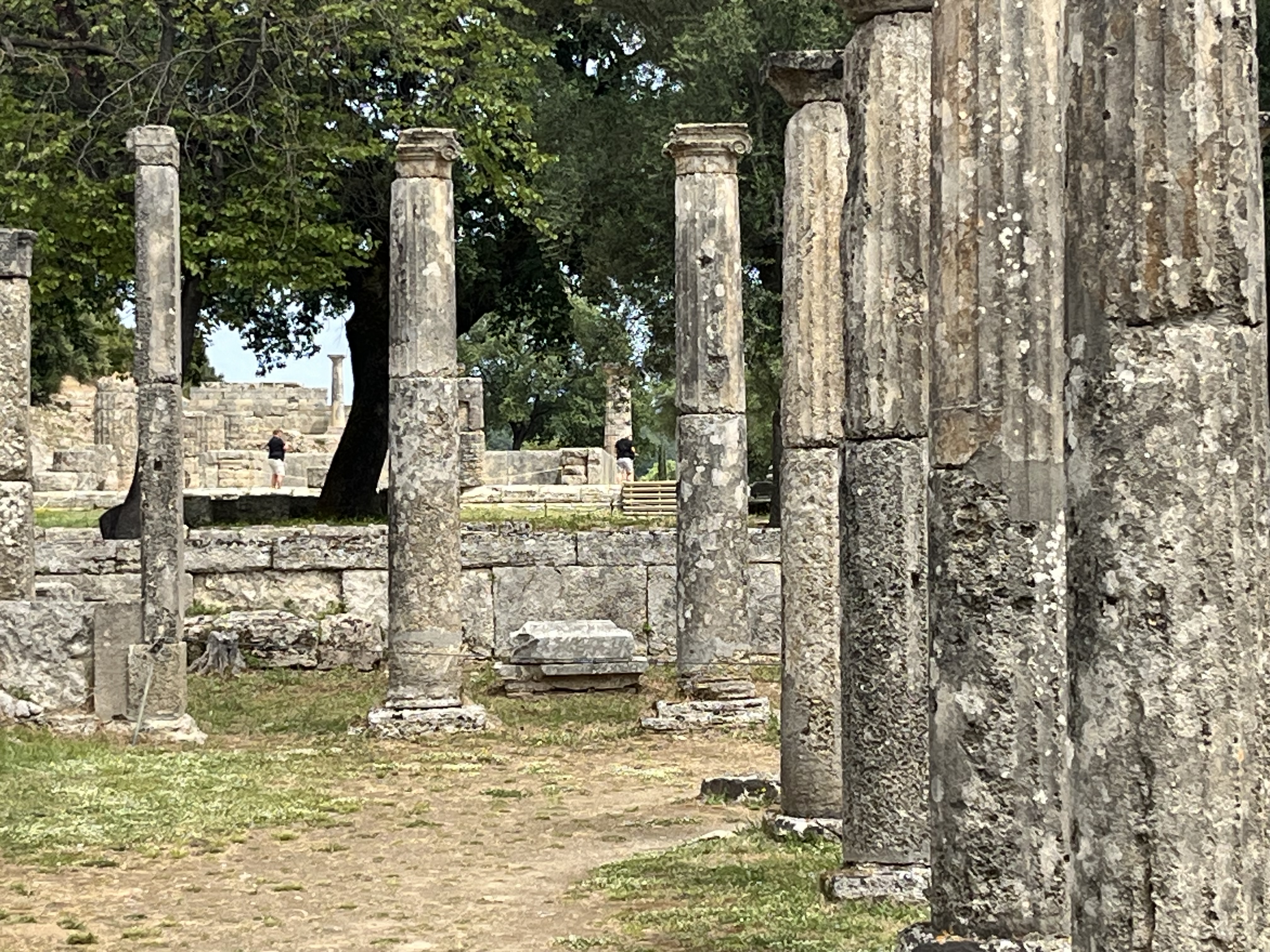
Olympia, site of the ancient Olympic Games, was on the agenda for the day. We started with a visit to the Museum of the History of the Olympic Games of Antiquity. That informative and interesting museum provided a good, and easy to digest background about the beginnings, facilities, participants, disciplines, training, regulations and judging etc. of the Games. From there we visited the archaeological site where the Ancient Olympic Games took place from 776 BC – 393 AD. The remnants of the Temple of Zeus and the stadium stood out. The beautiful, naturally suited setting of the stadium allowed for a capacity of up to 50,000 spectators!
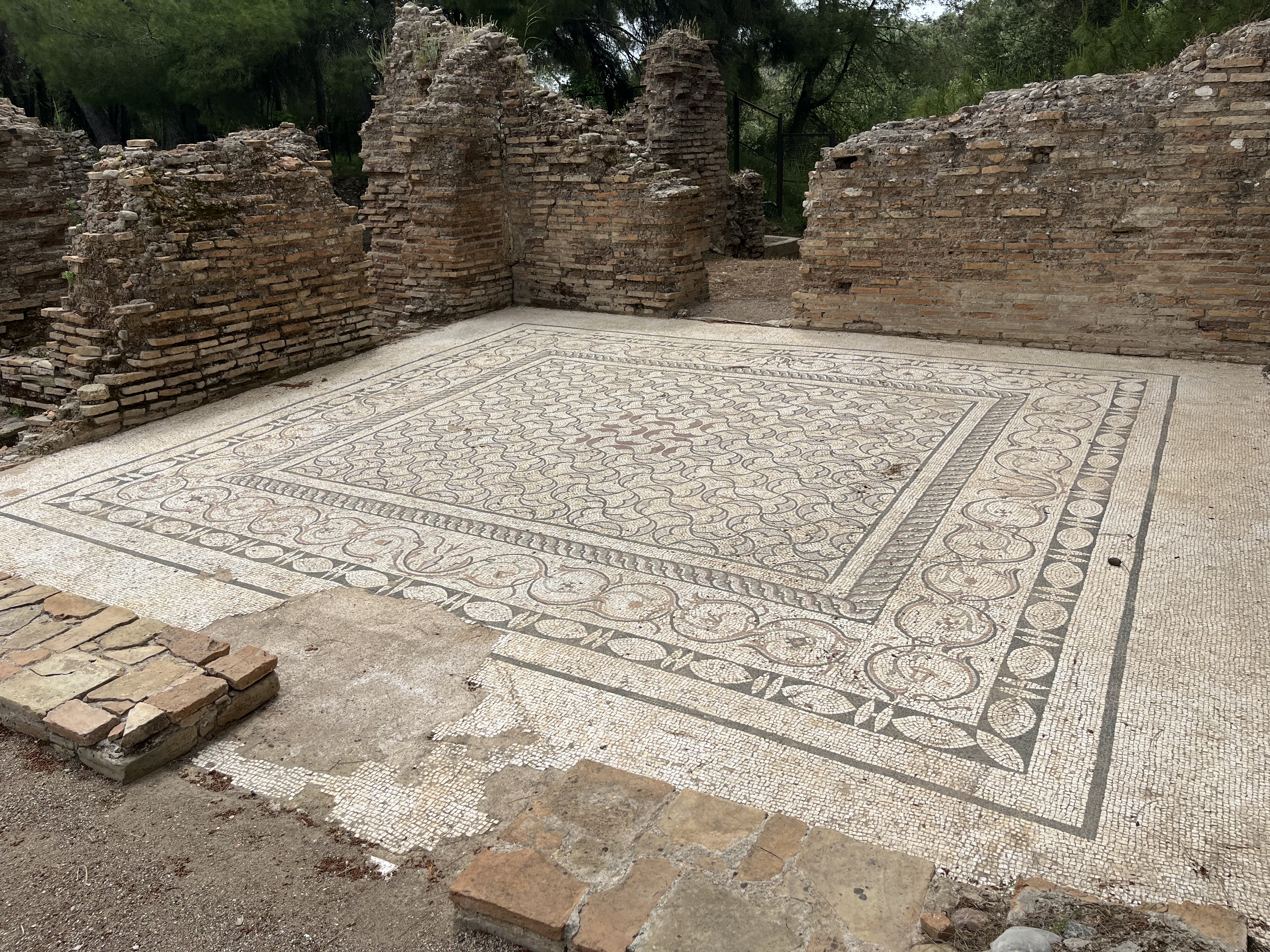
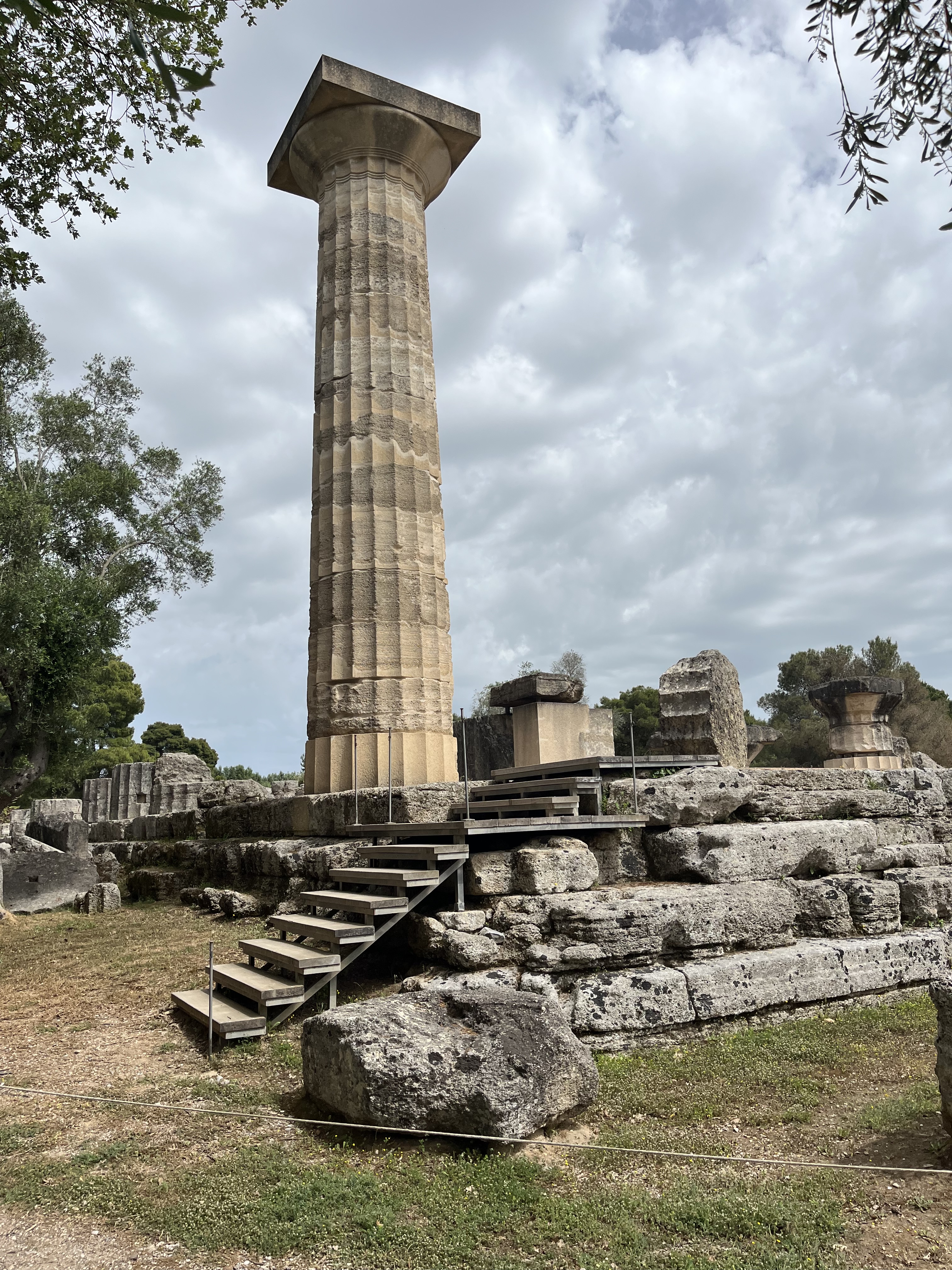
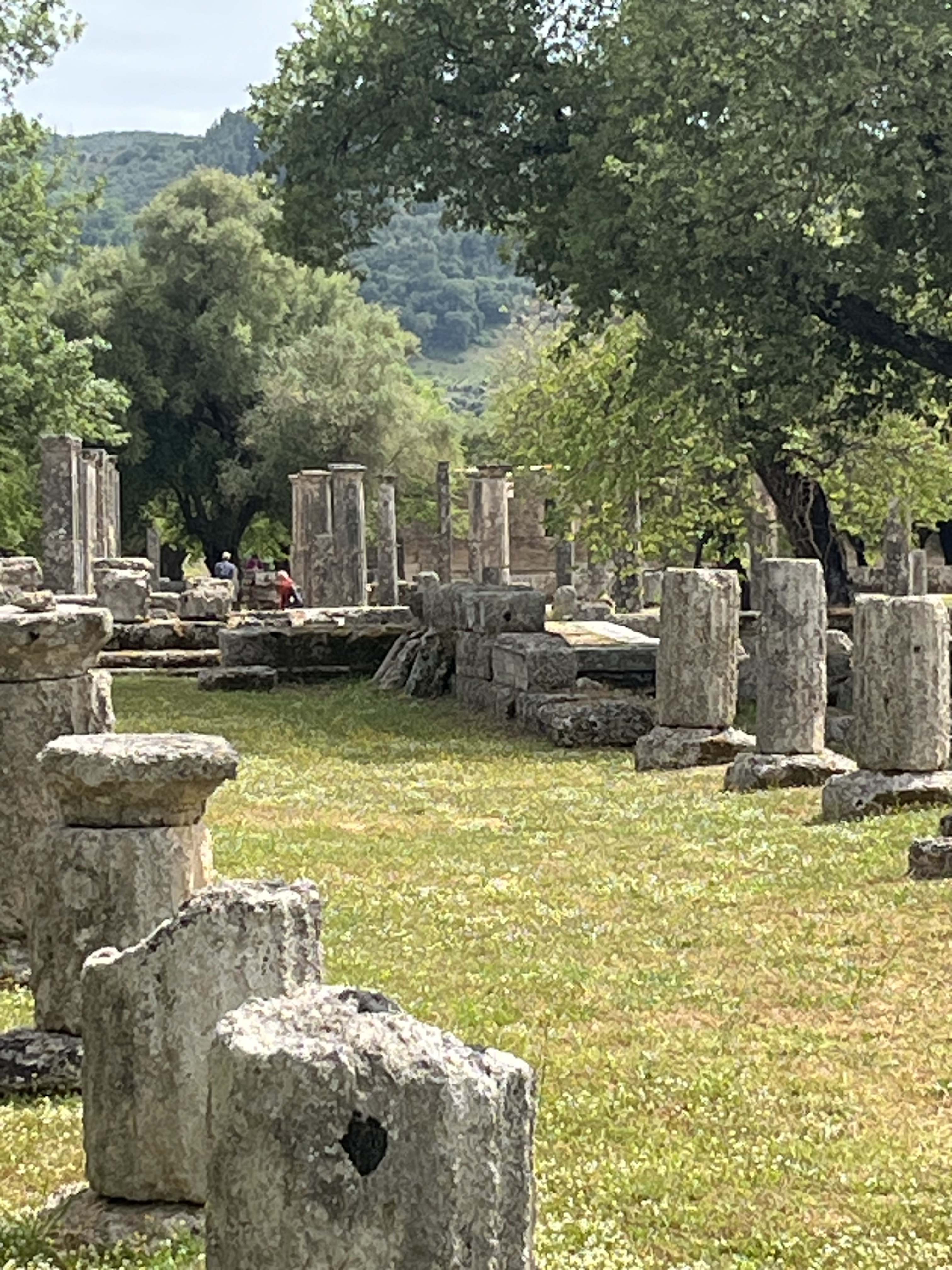
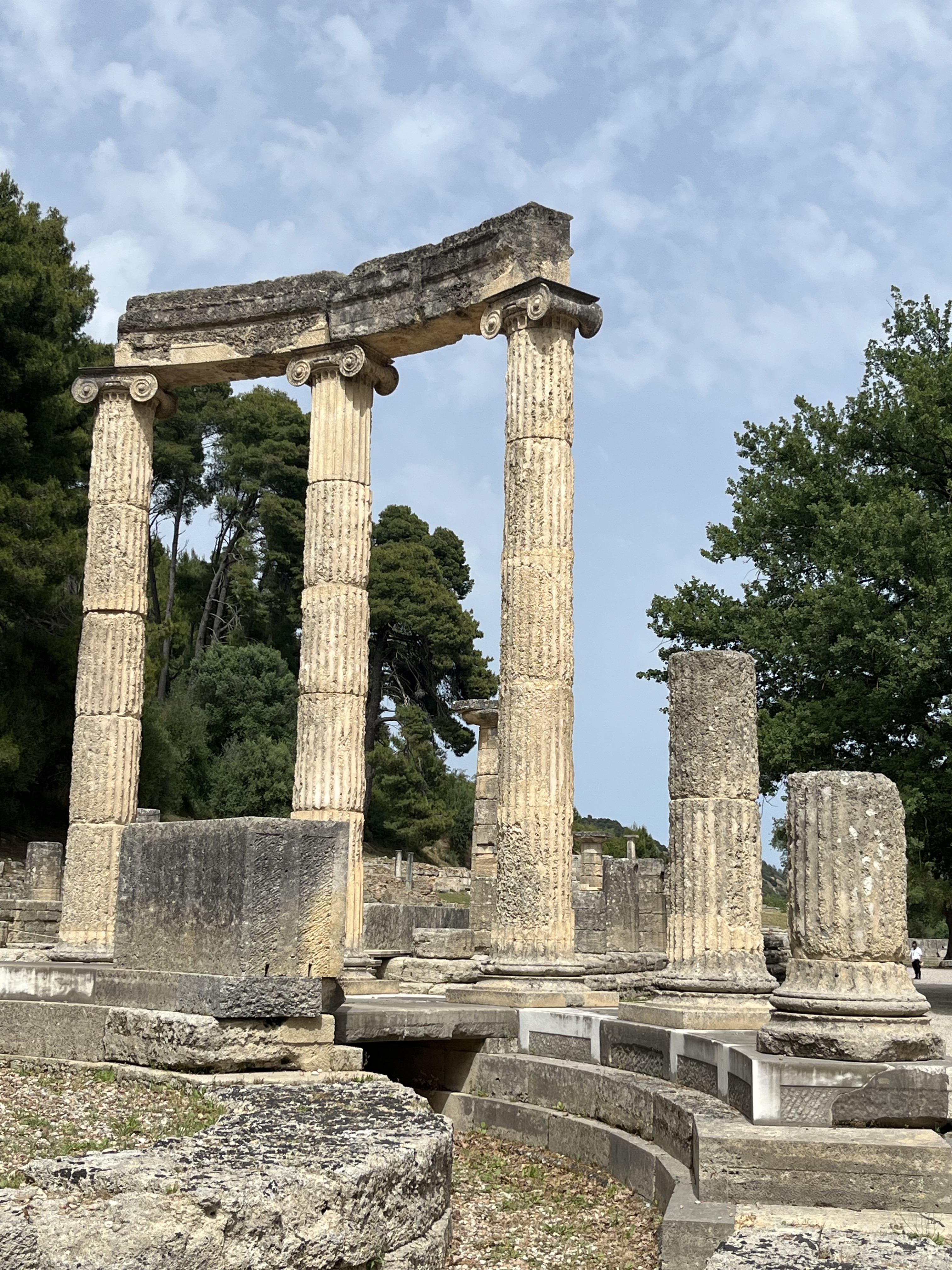
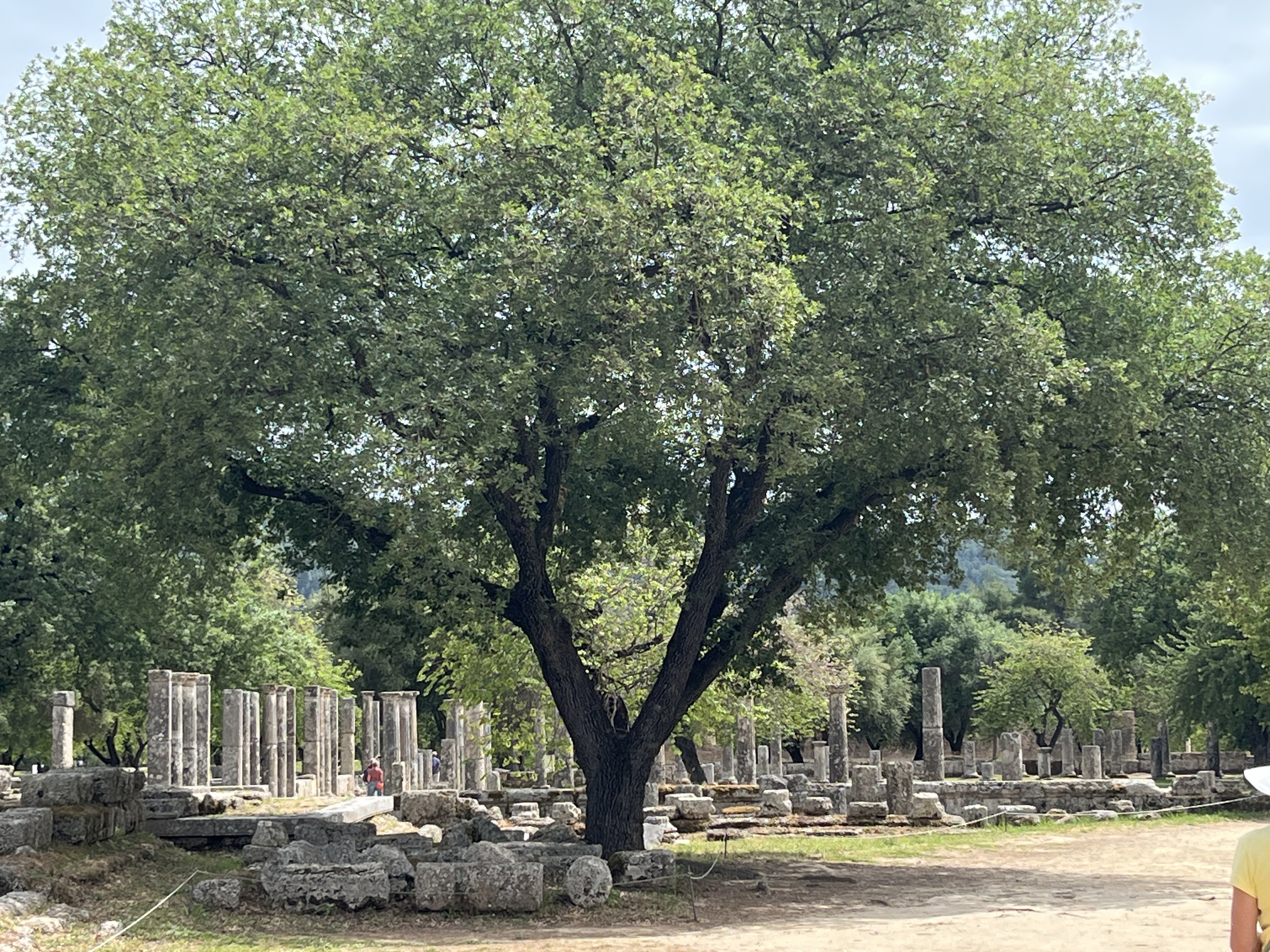
We finished our time in Olympia with a visit to the adjacent Archaeological museum.
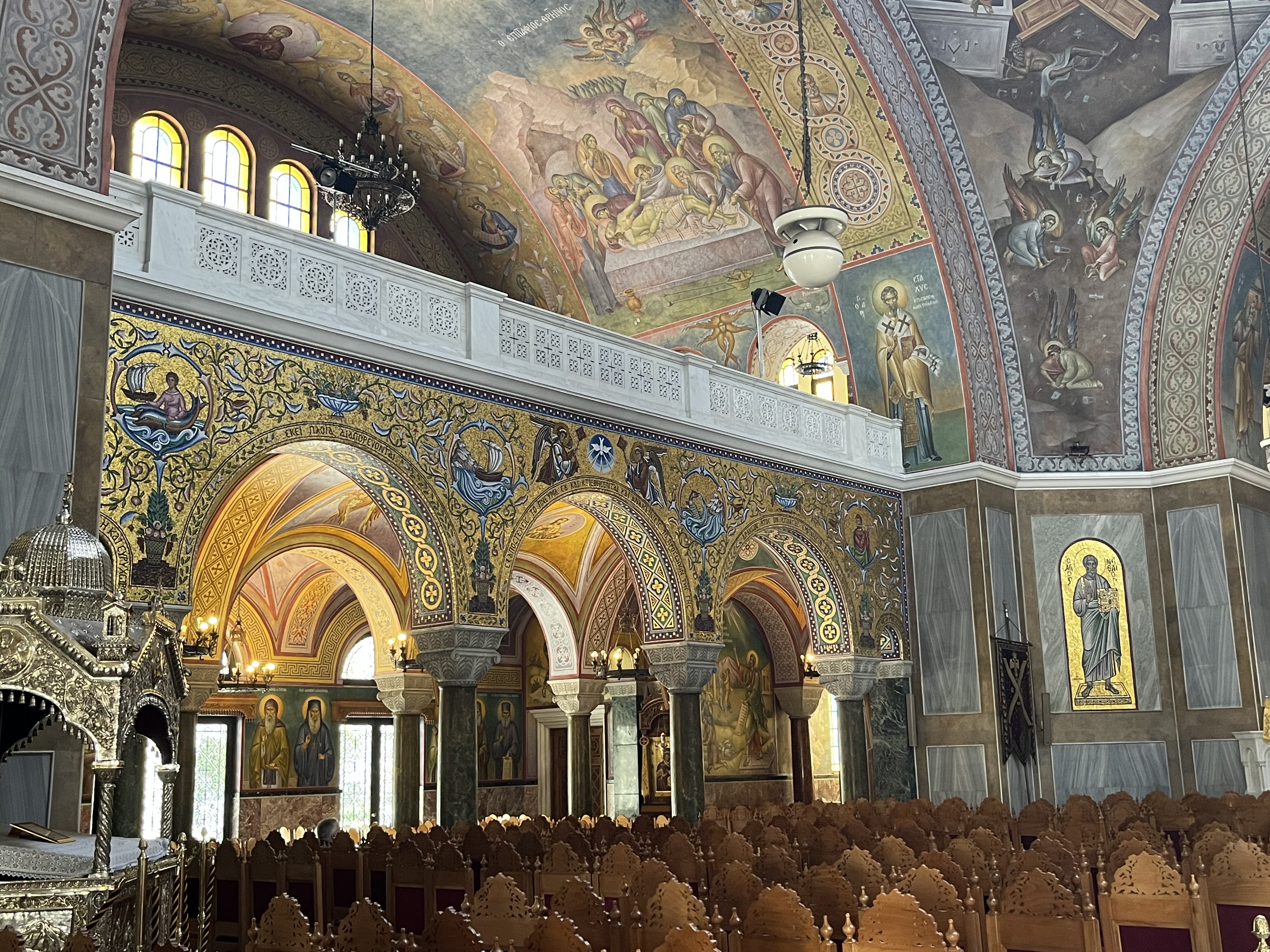
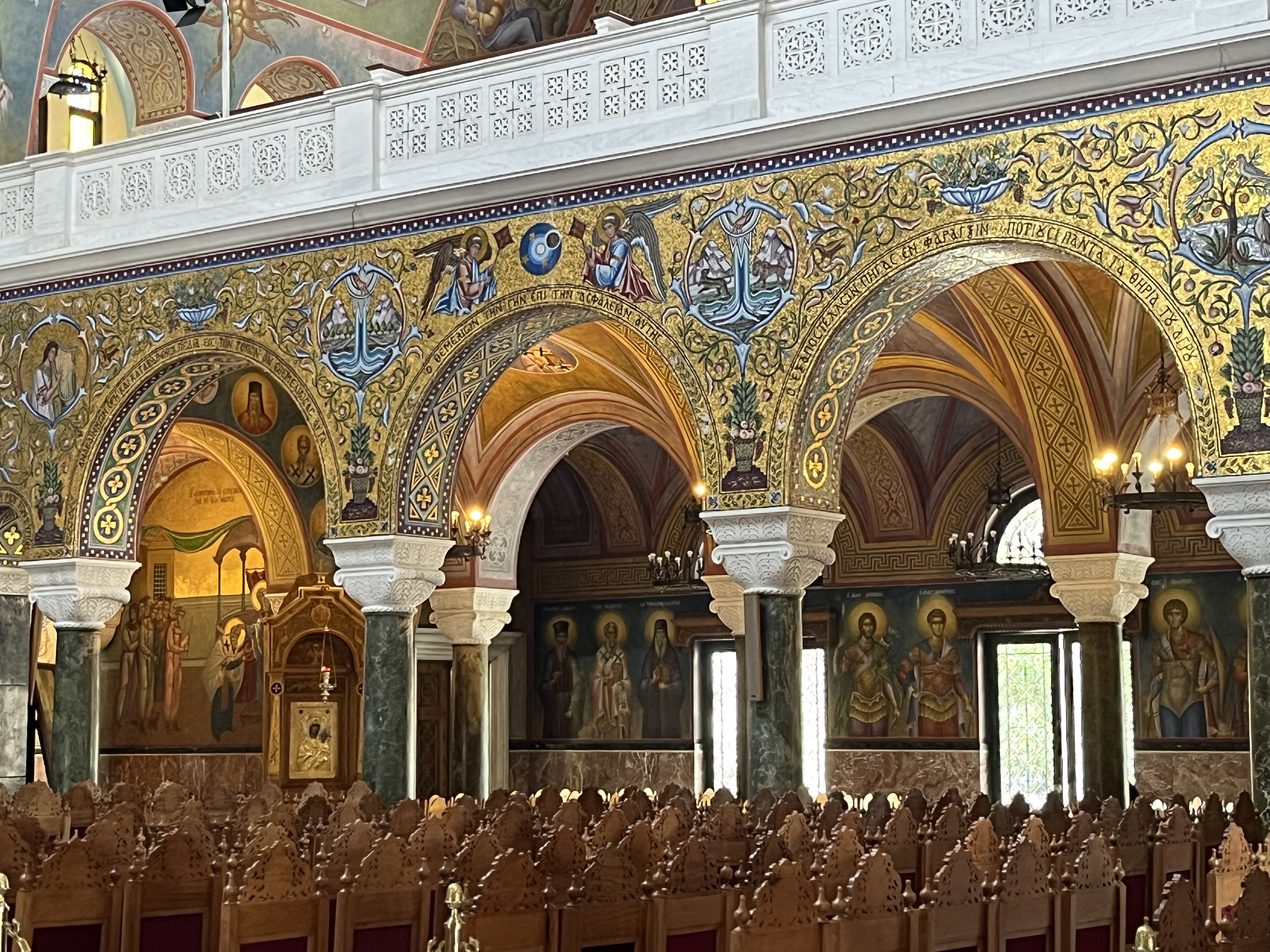
Before we left the Peloponnese, we stopped in Patras and visited the Byzantine Cathedral of Agios Andreas:
We crossed the Gulf of Corinth via the elegant Rio – Antirrio Bridge, and with this, we were back on Greece’s mainland.
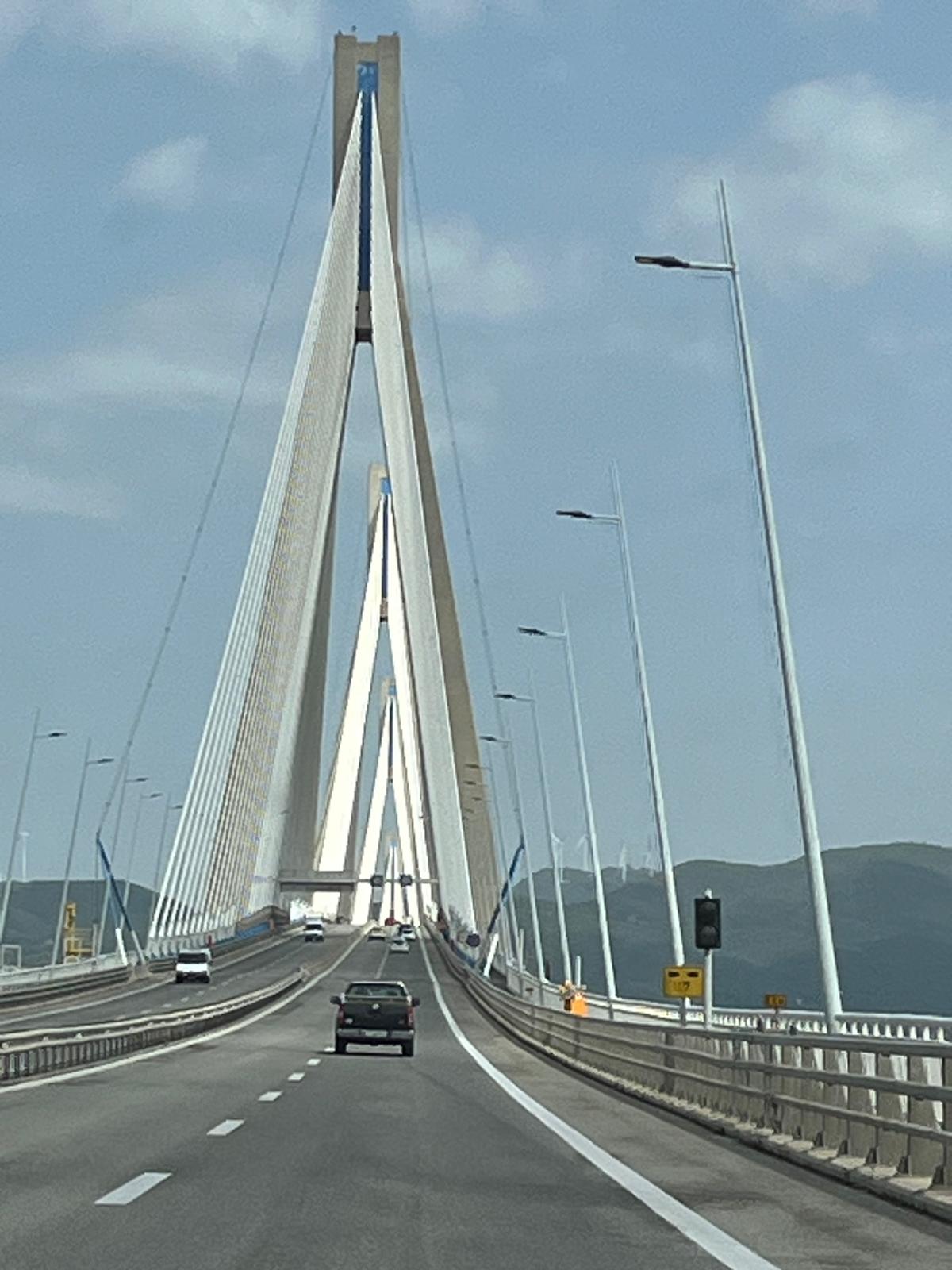
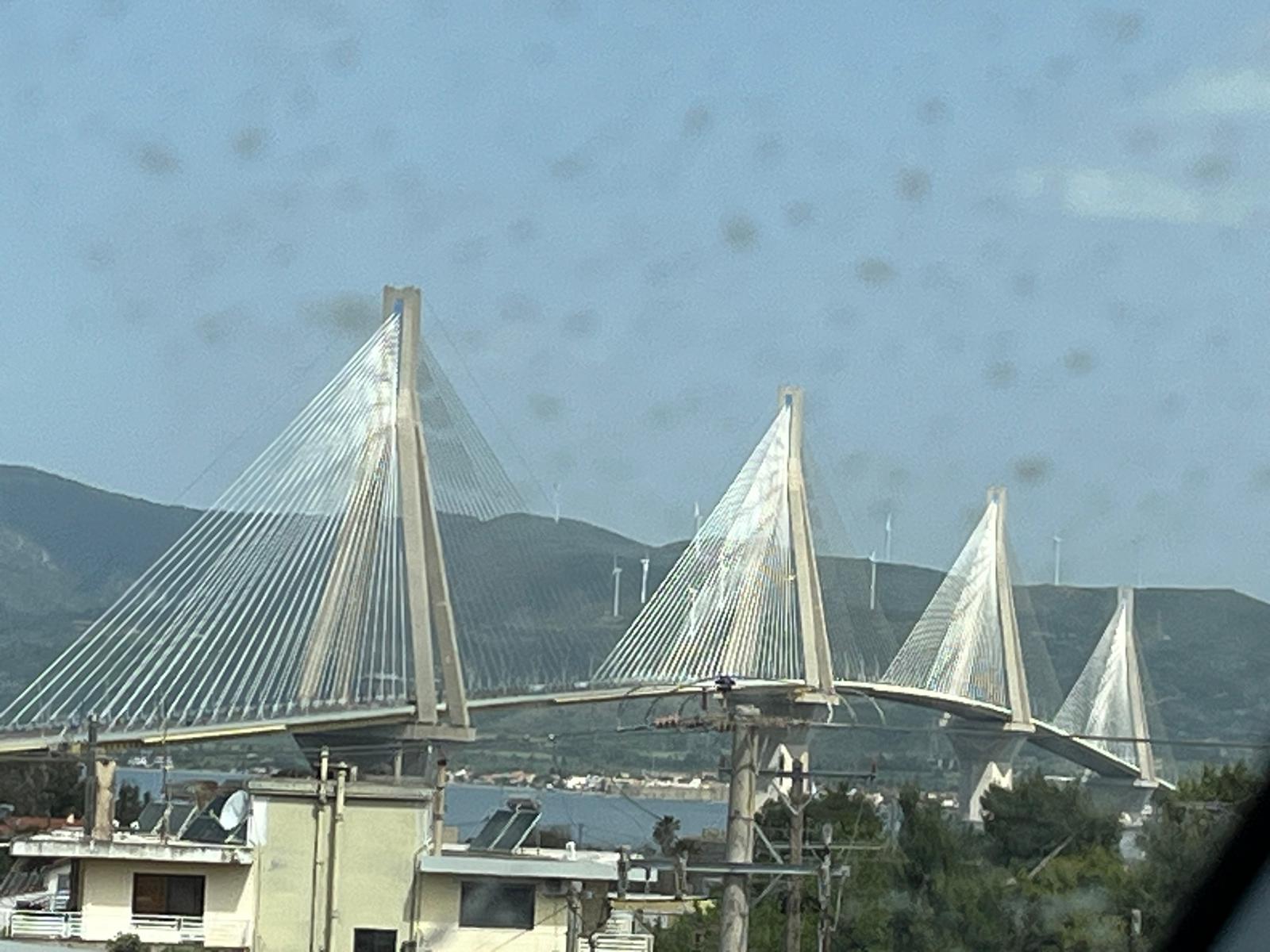
We were headed for Delphi, the place which the ancient Greeks considered to be the center, or navel, of the world. Delphi is closely associated with the god Apollo. One of the most important mythological stories is the story of Apollo and the slaying of the serpent Python. According to the myth, Python guarded the Oracle at Delphi until Apollo arrived, killed the serpent, and claimed the title of god of prophecy for himself. The Oracle of Delphi was consulted about important decisions throughout the ancient classical world.
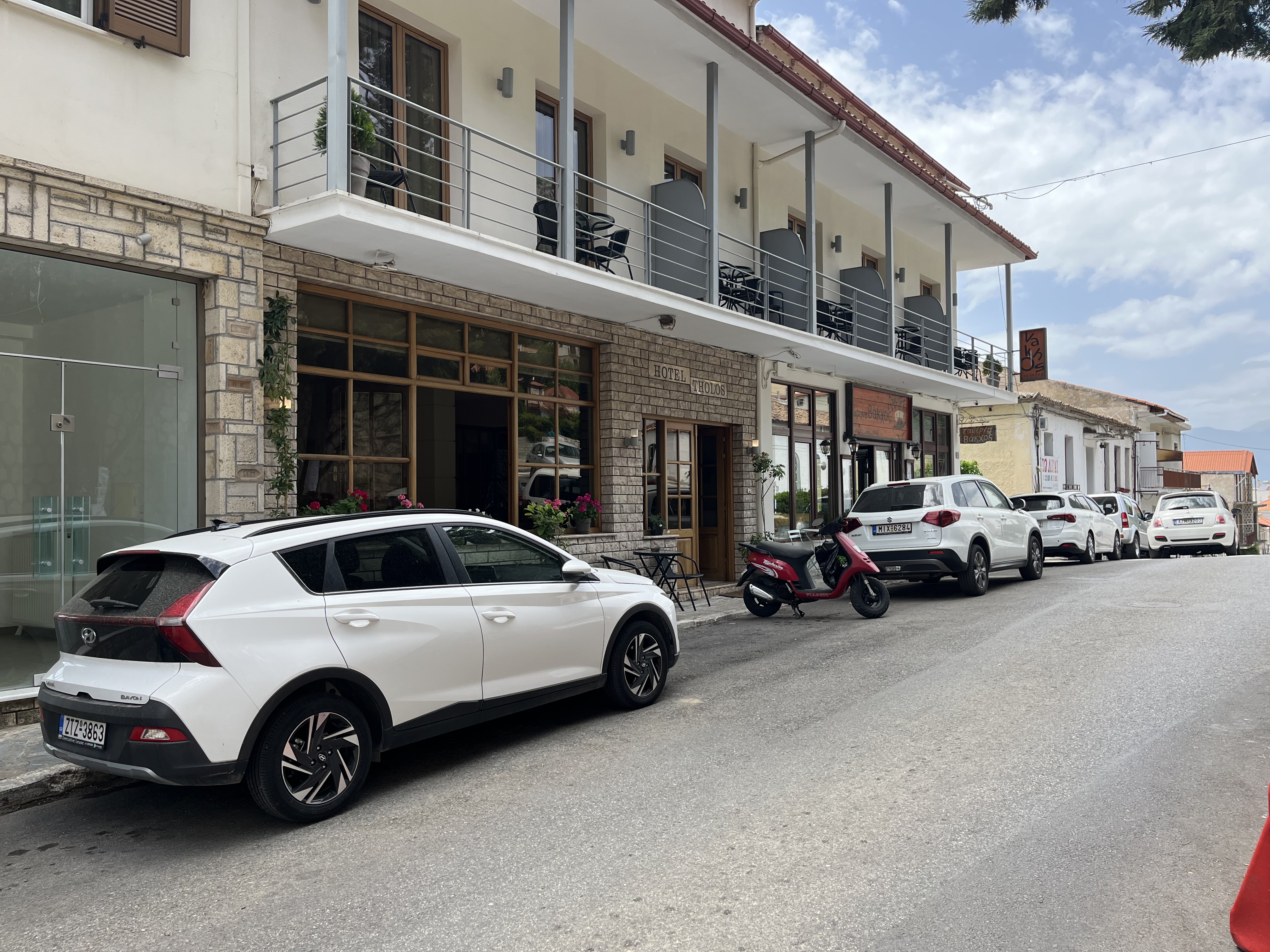
Understanding that our hotel for the night, was located in the busy center of Delphi, on a steep hillside adjacent to the tourist frequented archaeological site, I was worried that parking might be scarce and called our hotel for advice. Asking the woman at the reception who picked up the phone about the situation, she calmly reassured me that I would be able to find a spot along the street without any problem. Somewhat uneasy, I hung up the phone. Driving into Dephi and finding our way through the narrow one way roads towards our hotel, we did not see a single, empty, available parking spot. Still prospecting for parking we anxiously arrived at the hotel, and there, in front of our hotel entrance in the center of town, we found what appeared to be the only available parking spot around. We couldn’t believe it and were obviously relieved. Not sure what fumes the calm receptionist was inhaling, but this experience turned me into a believer, a believer in the prophecies of the Oracle of Delphi!
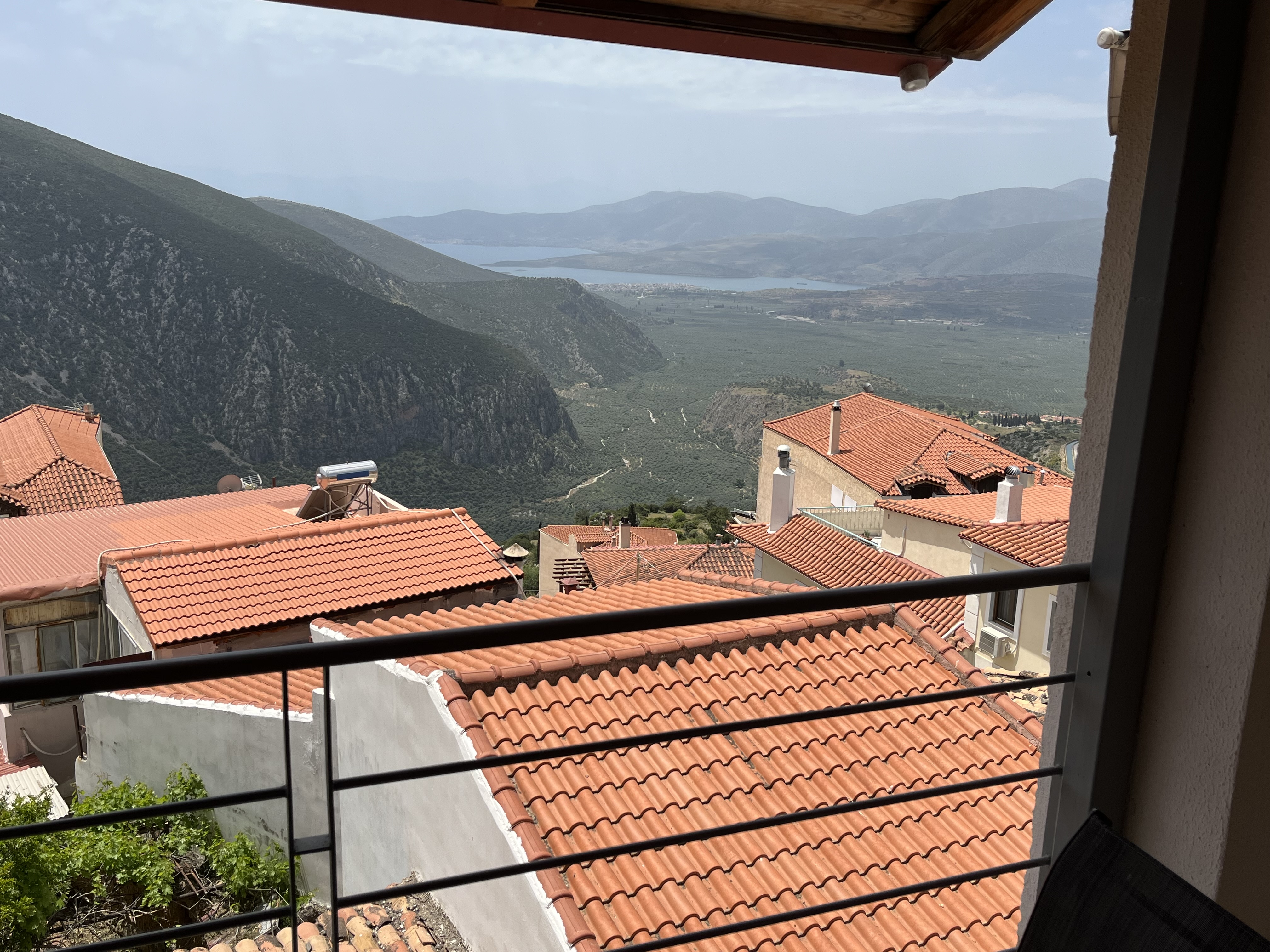
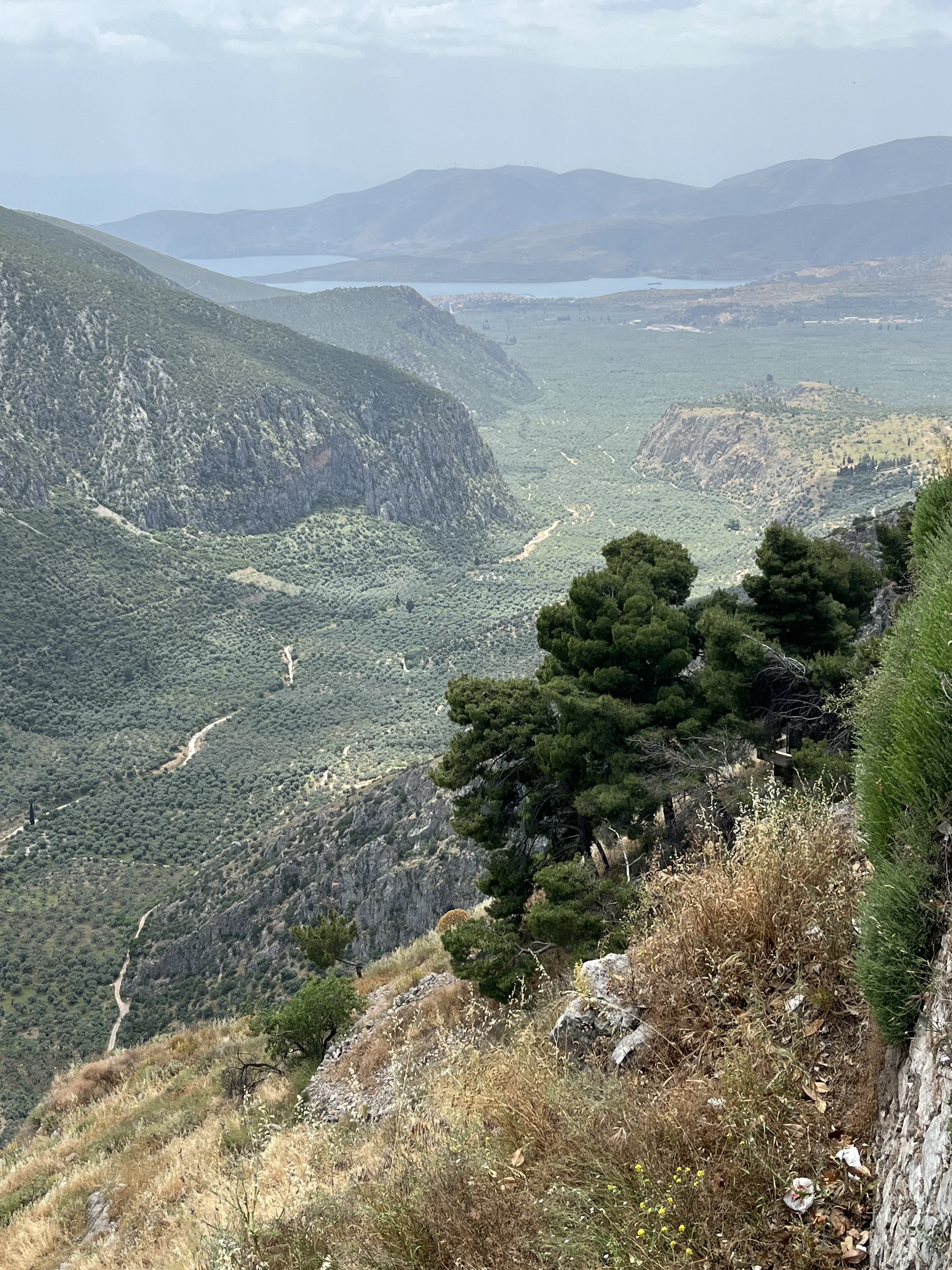
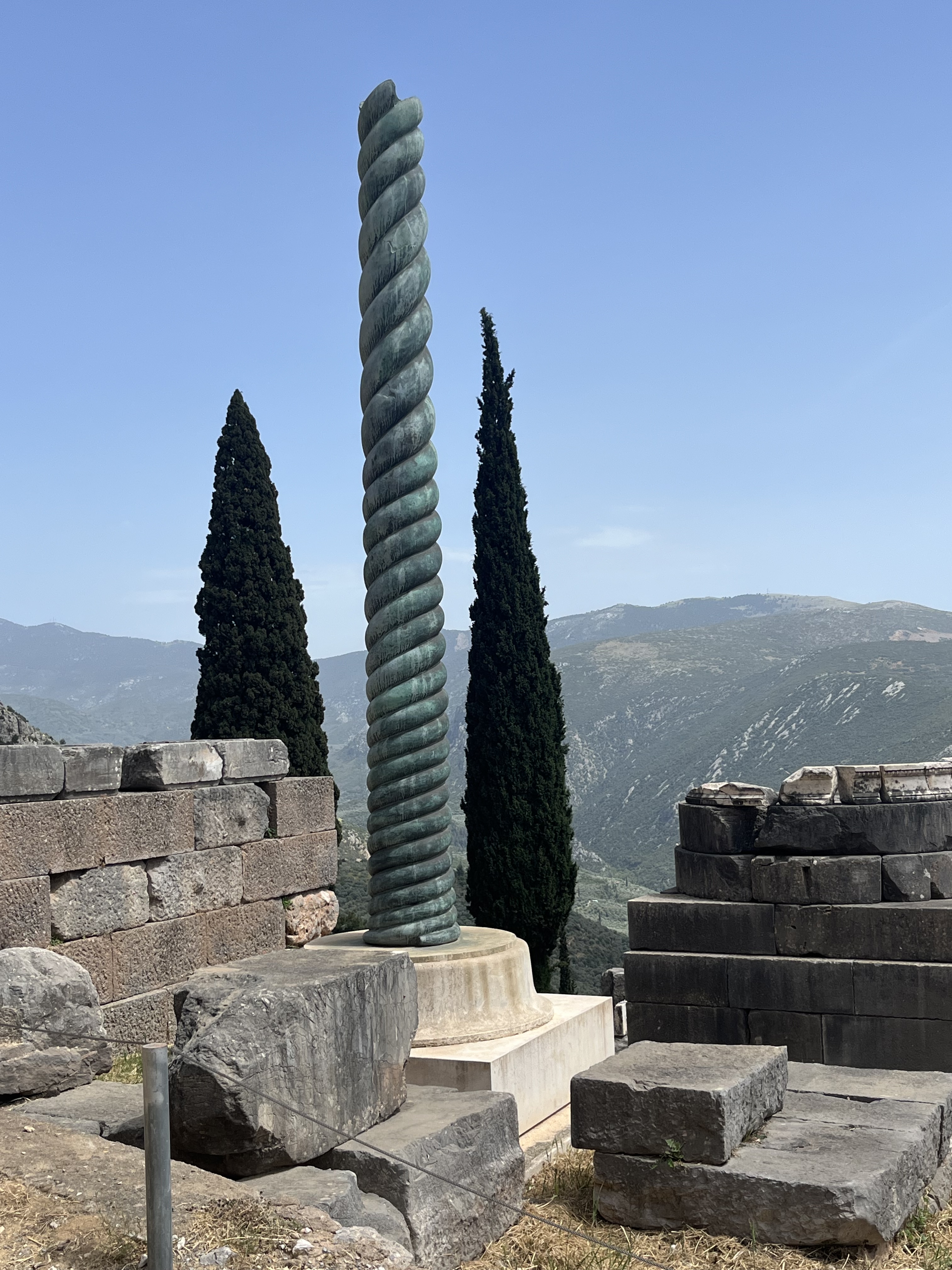
The rich archaeological site of Delphi sits on high terraces of the south facing slope of Mount Parnassus, overlooking a large canyon facing the Gulf of Corinth. It is a striking site! In the top right picture below, the twirled column, symbolizes the python, which today is unfortunately missing its head.
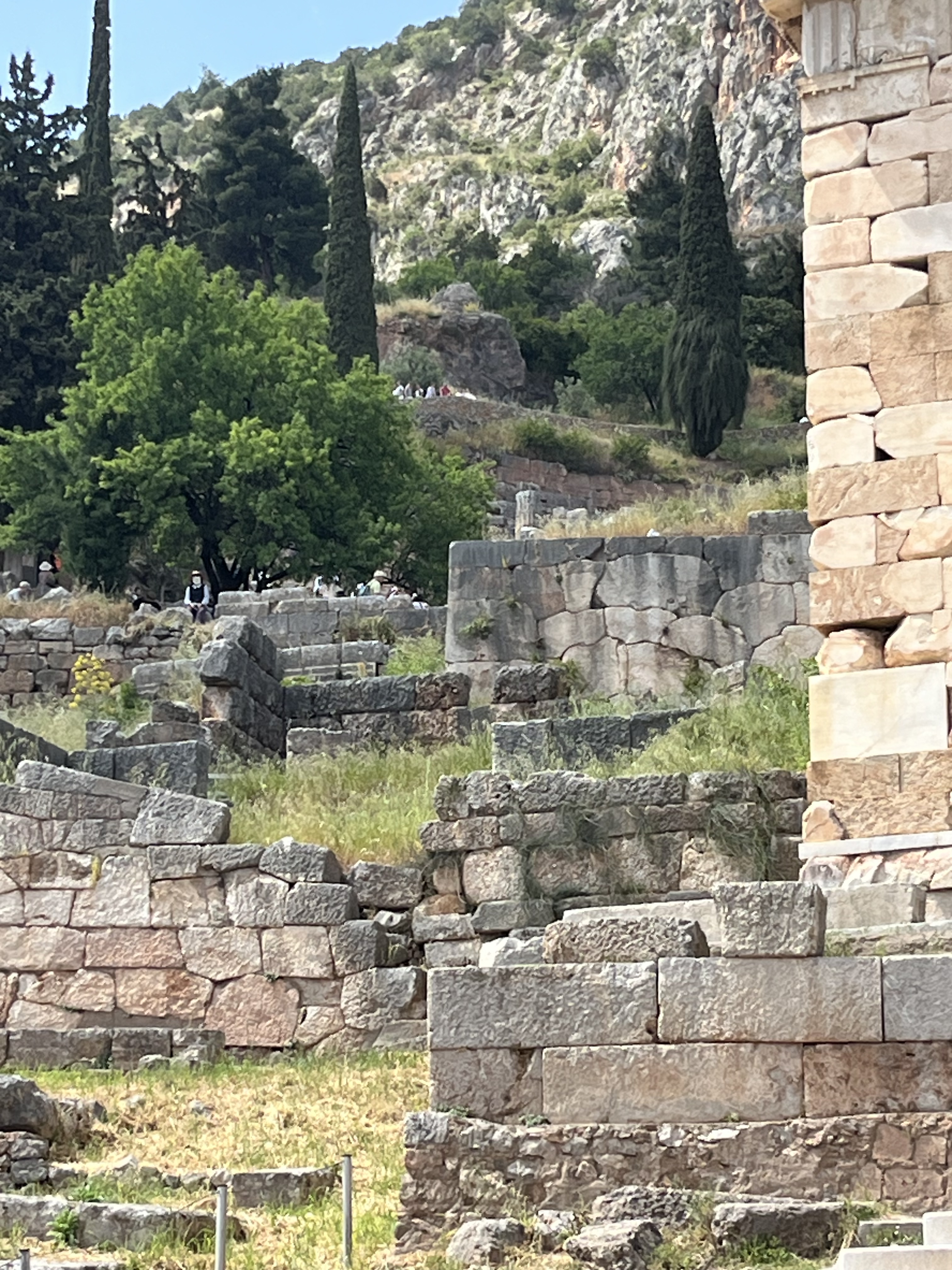
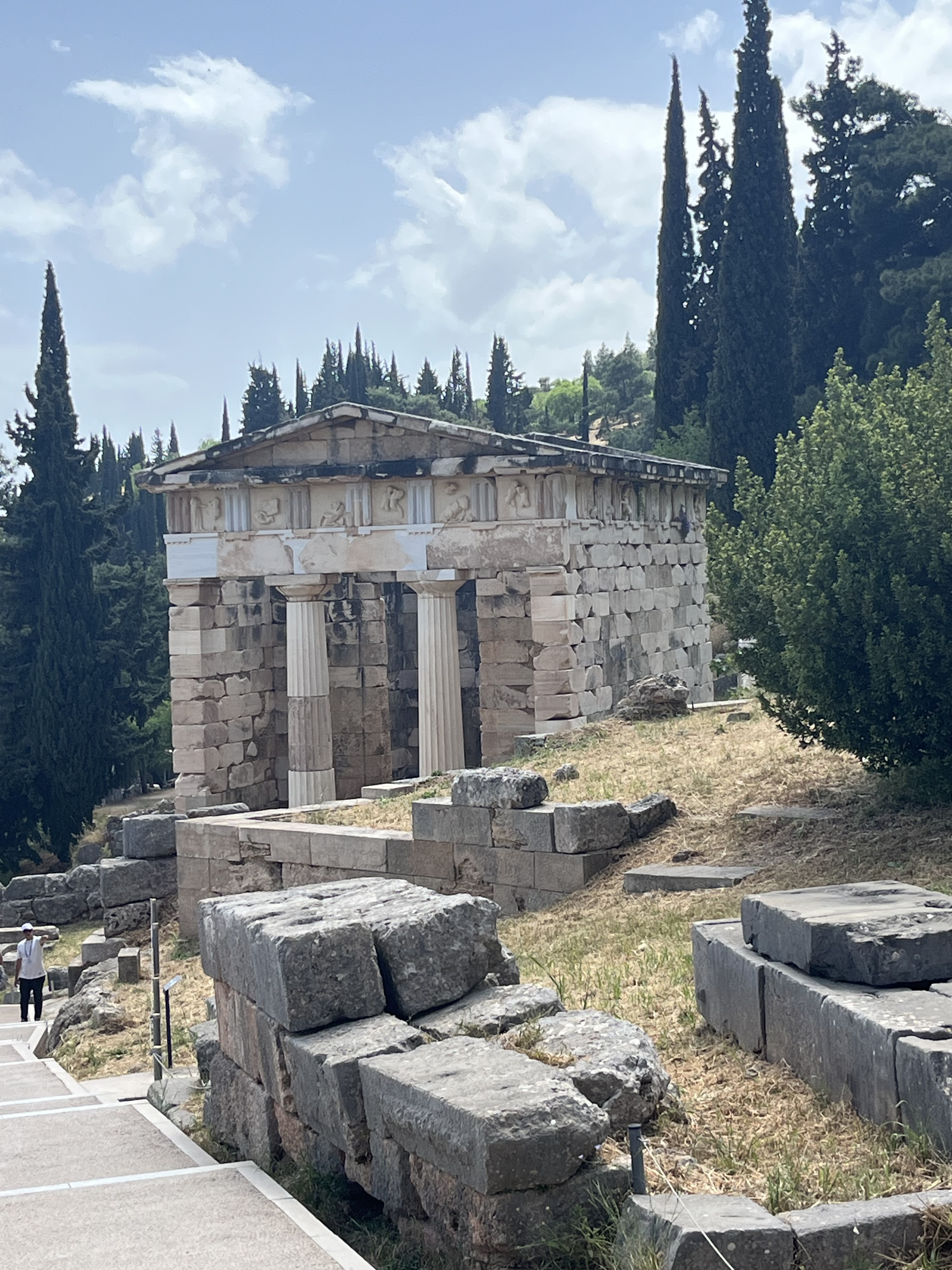
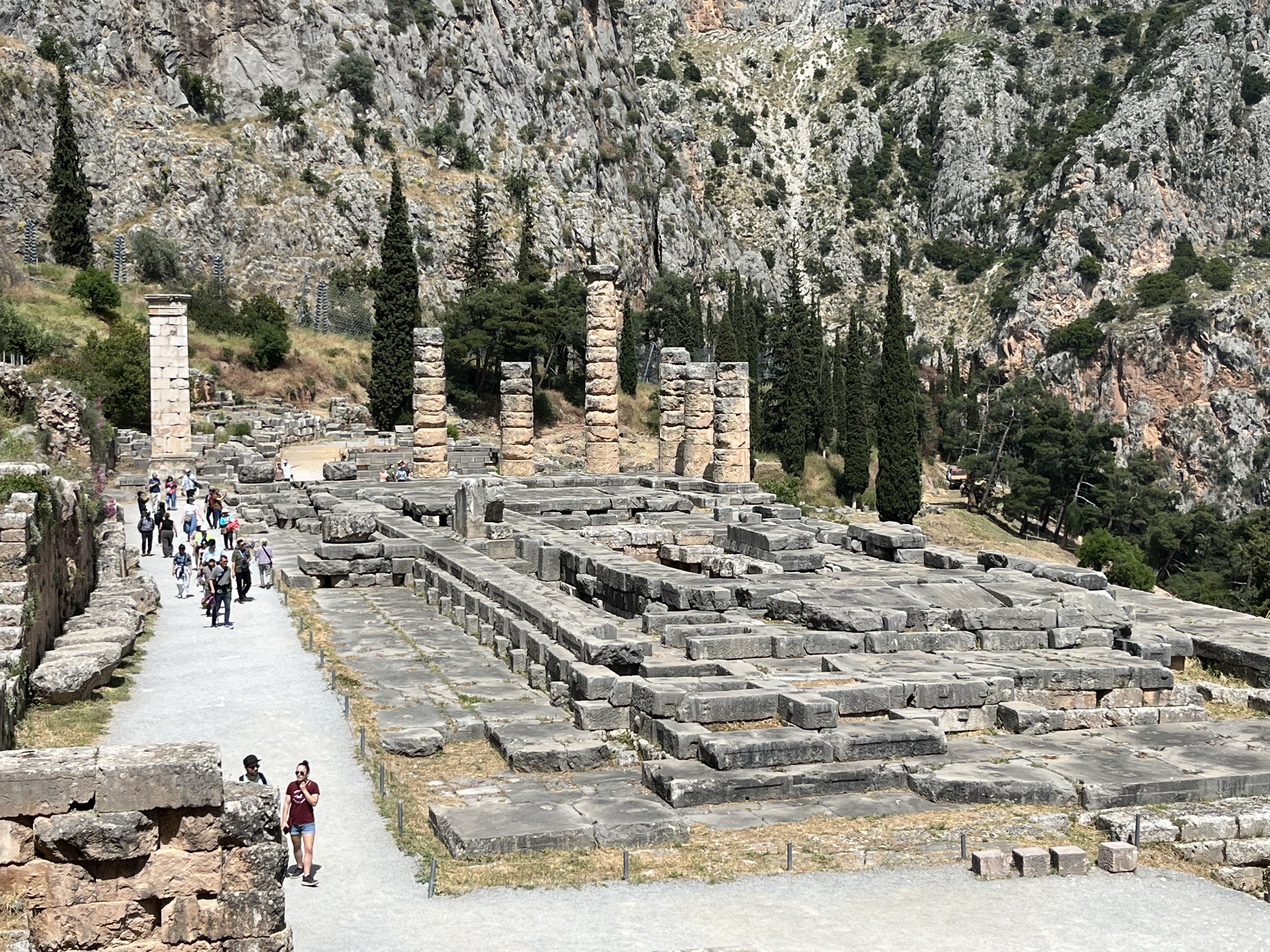
Above left is the reconstructed Treasury of the Athenians, built to commemorate their victory at the Battle of Marathon. Above right are the remnants of the centerpiece of Delphi, the Temple of Apollo. This temple, is said to have been the dwelling place of the Oracle of Delphi. Here, especially between the 8th and 4th centuries BC, lawmakers, colonists, and founders of cults sought Apollo’s advice, or sanctions, through the Oracle. Its counsel was most in demand to forecast the outcome of projected wars or political actions.
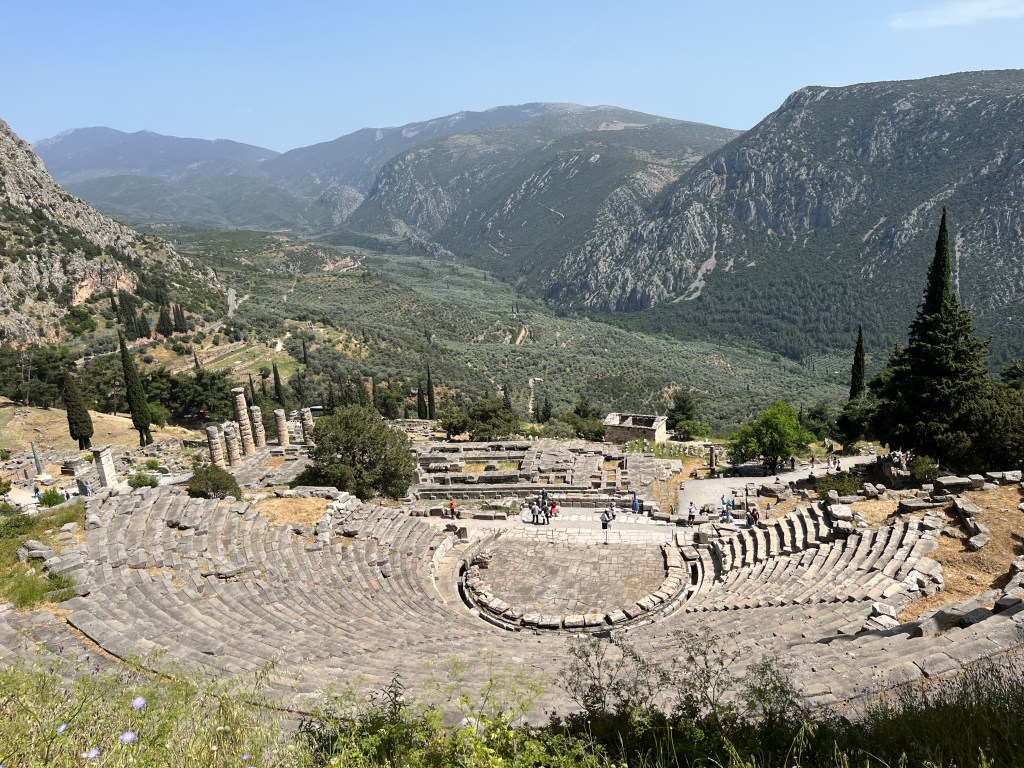
Below, is the spectacular setting of Delphi’s ancient theatre, which overlooks the Temple of Apollo and the canyon below.
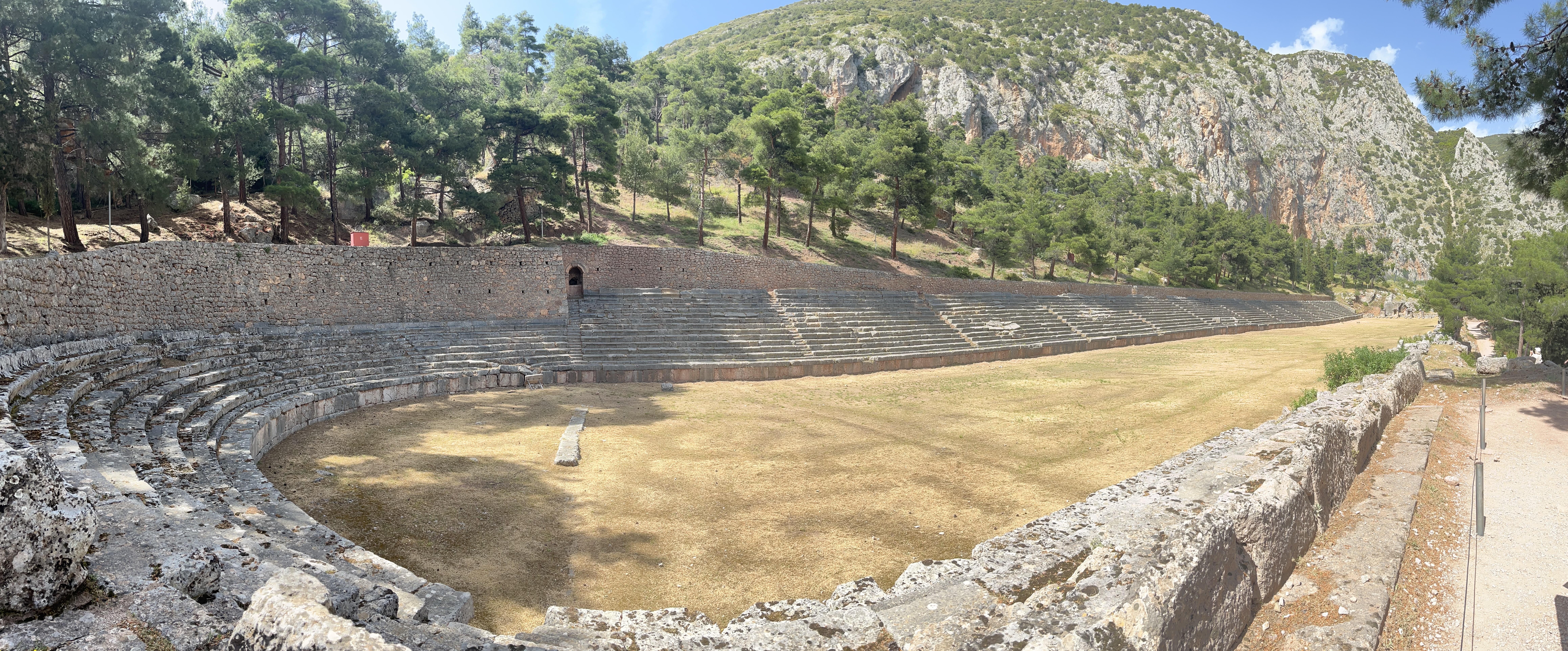
And above the theatre is the well preserved ancient Hippodrome, or Stadium. Amazing how they fit all of these great buildings and structures onto this mountain slope!
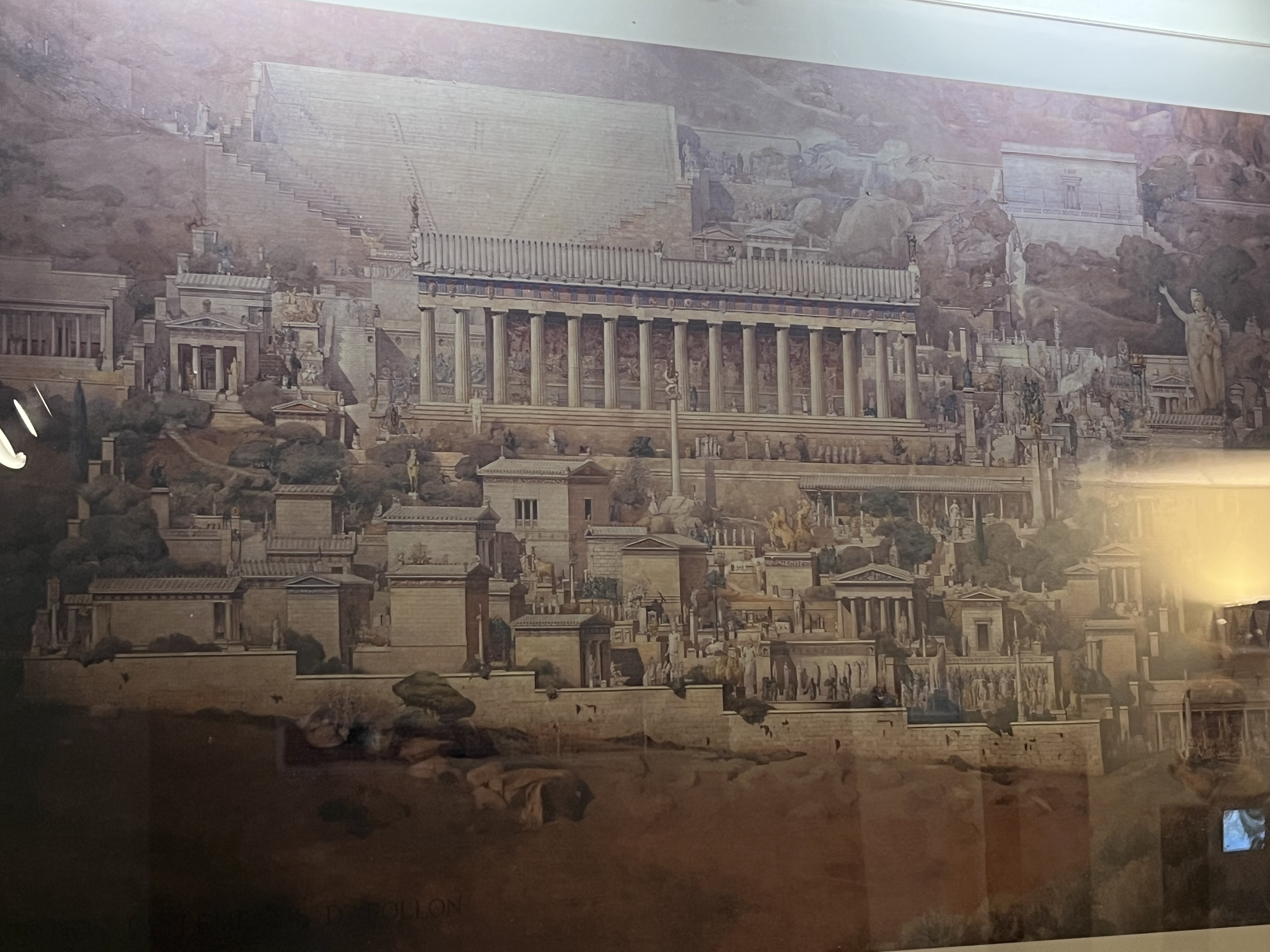
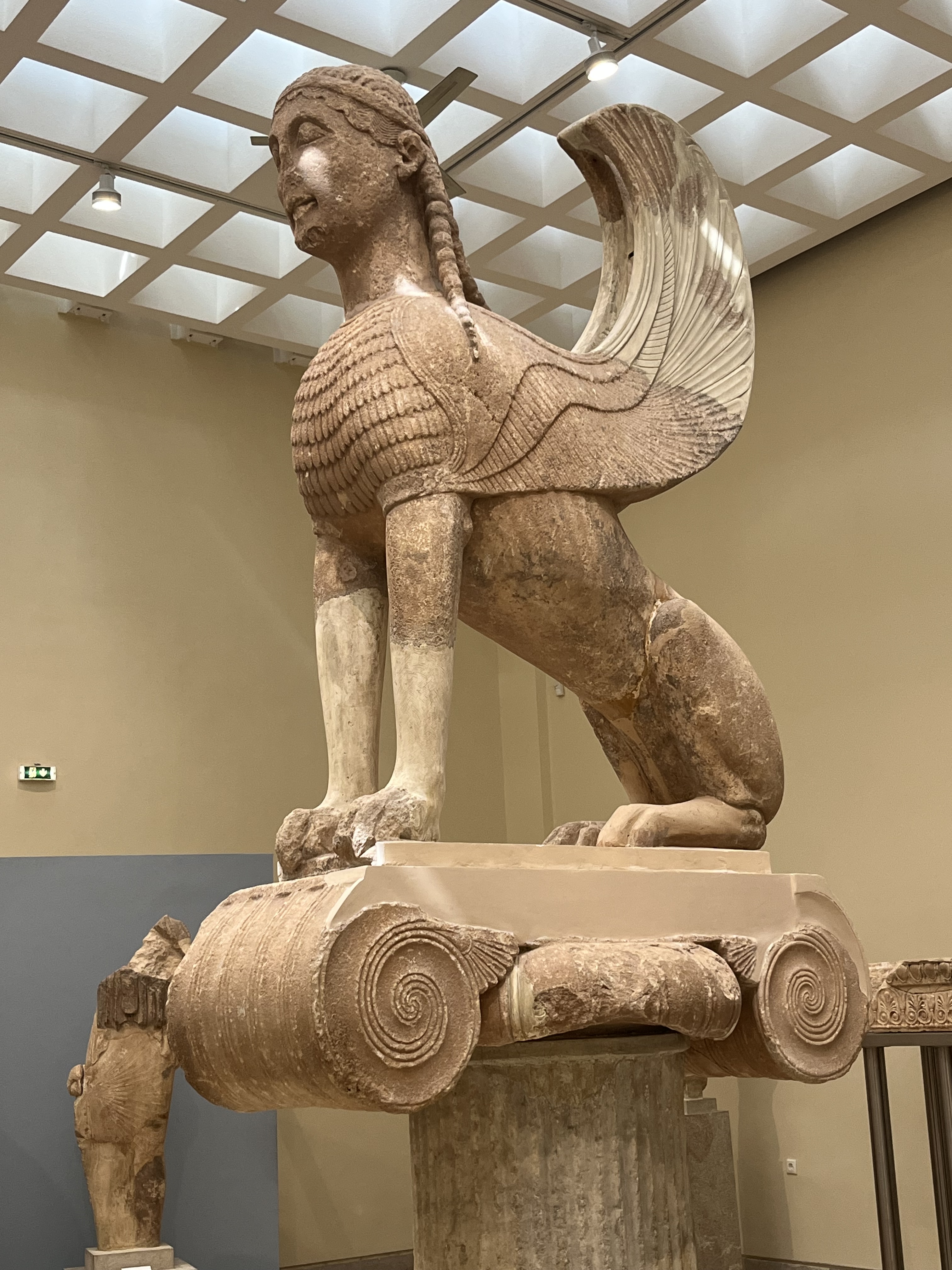
The drawing above provides an illustration, of how the site of Delphi, with the Temple of Apollo in its center, must have looked in antiquity. On the right is the 7′ tall marble statue of the Sphinx of Naxos. We said goodbye to Delphi and the other ancient sites of Greek mythology.
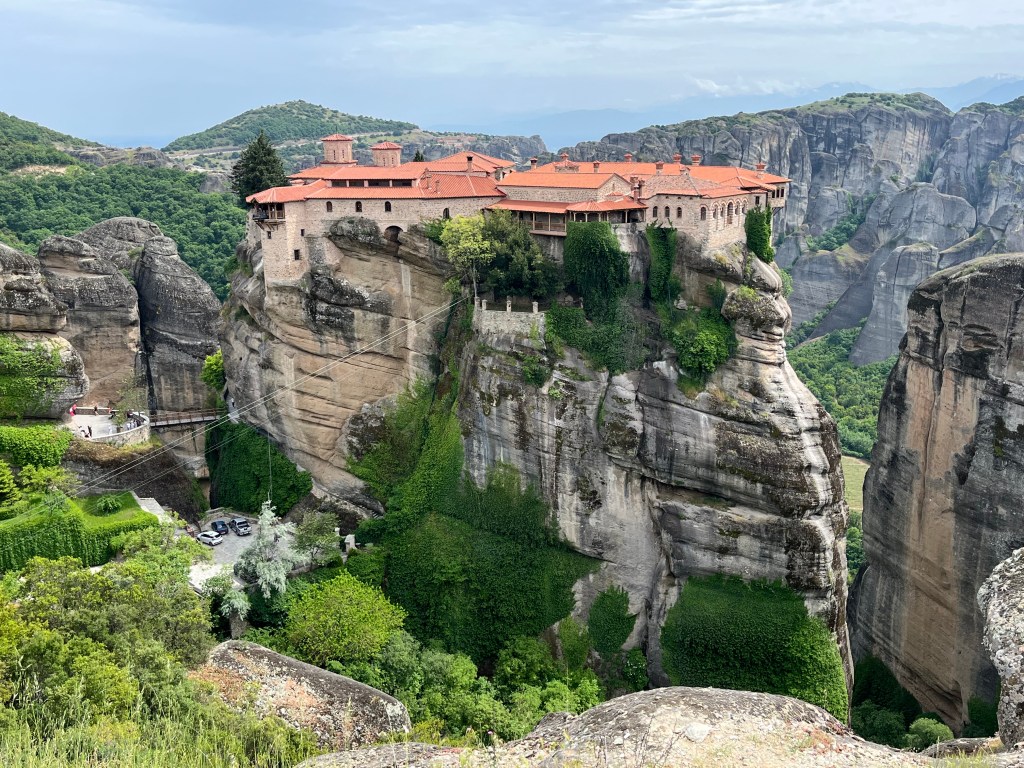
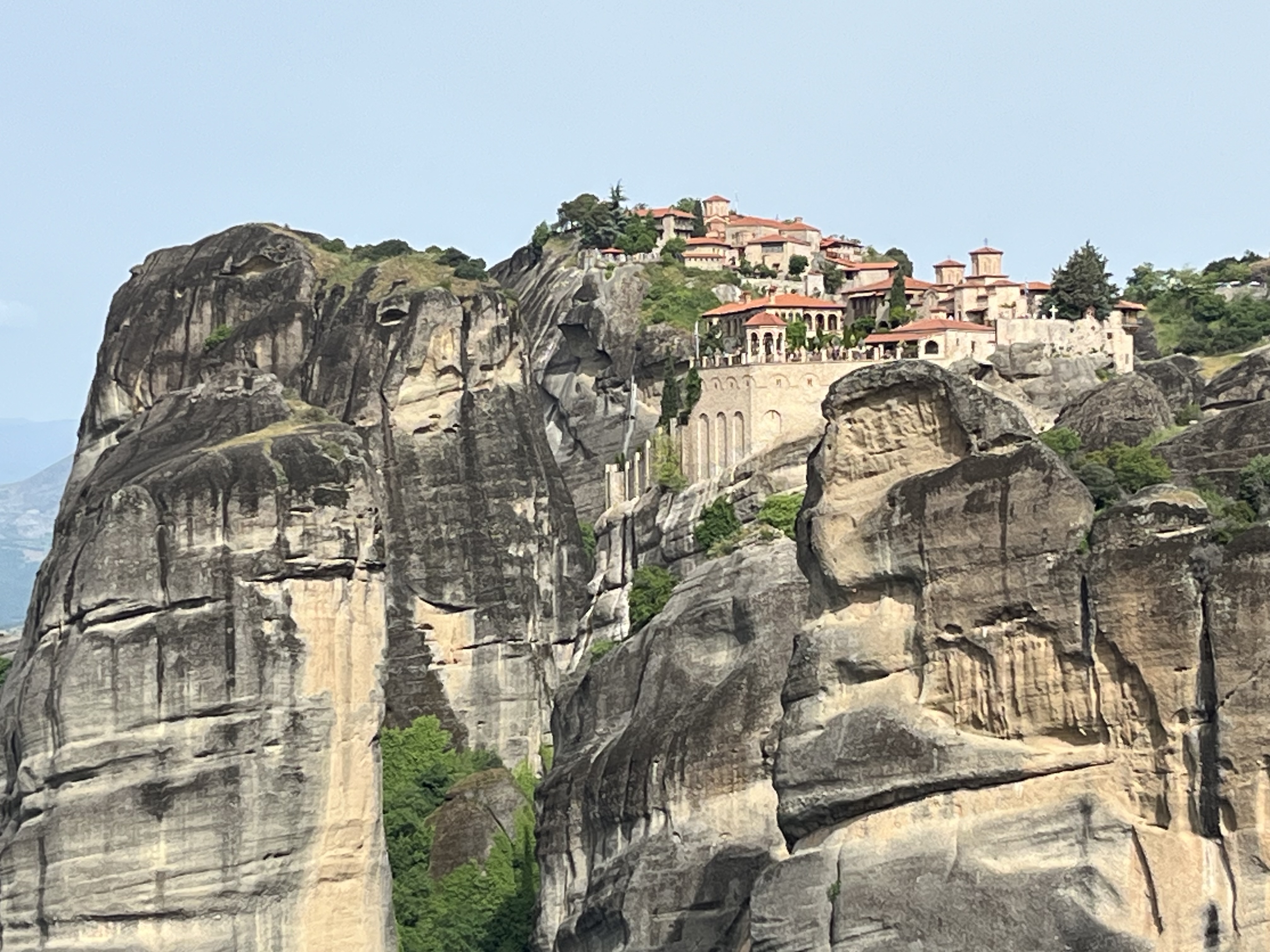
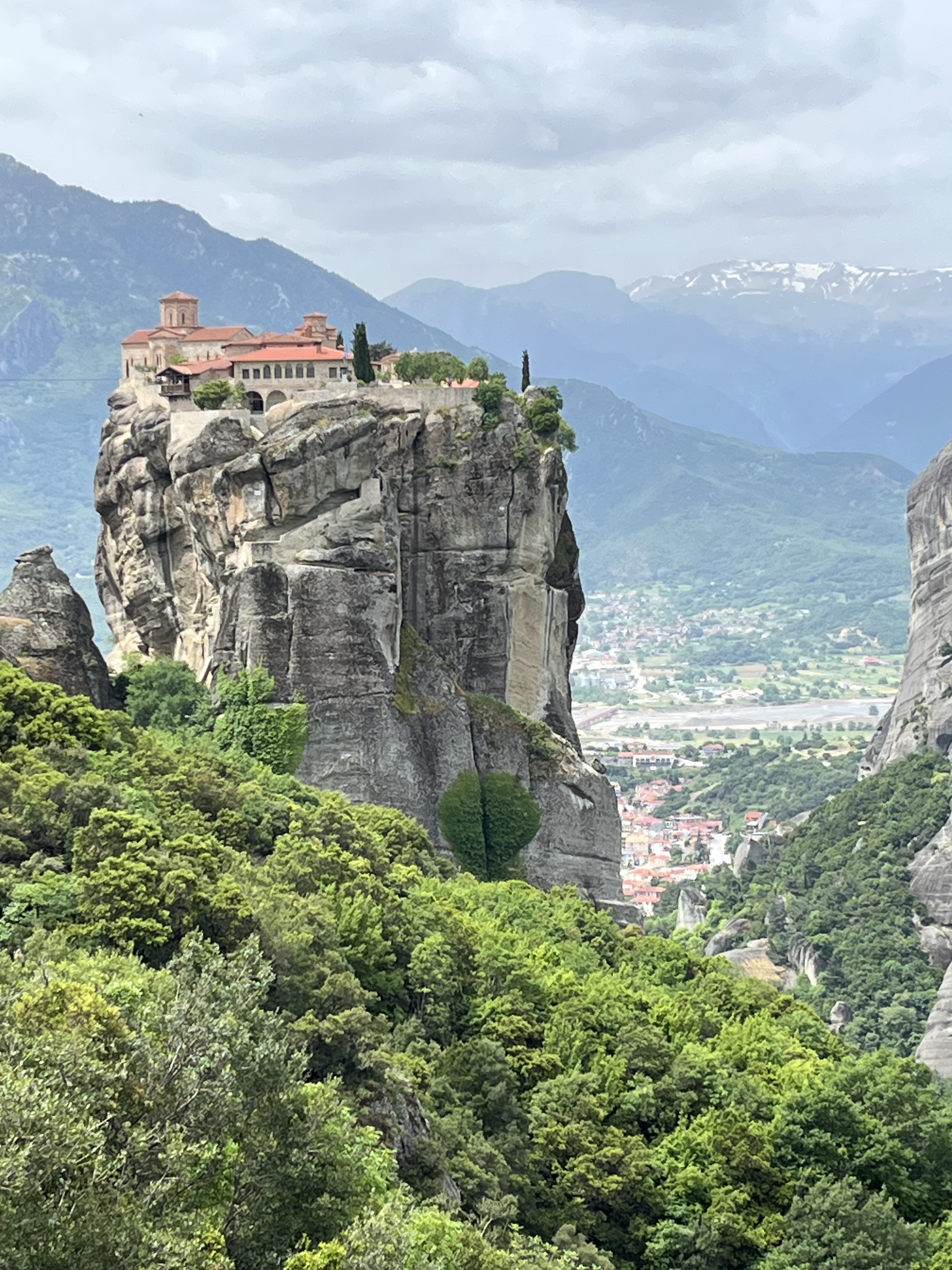
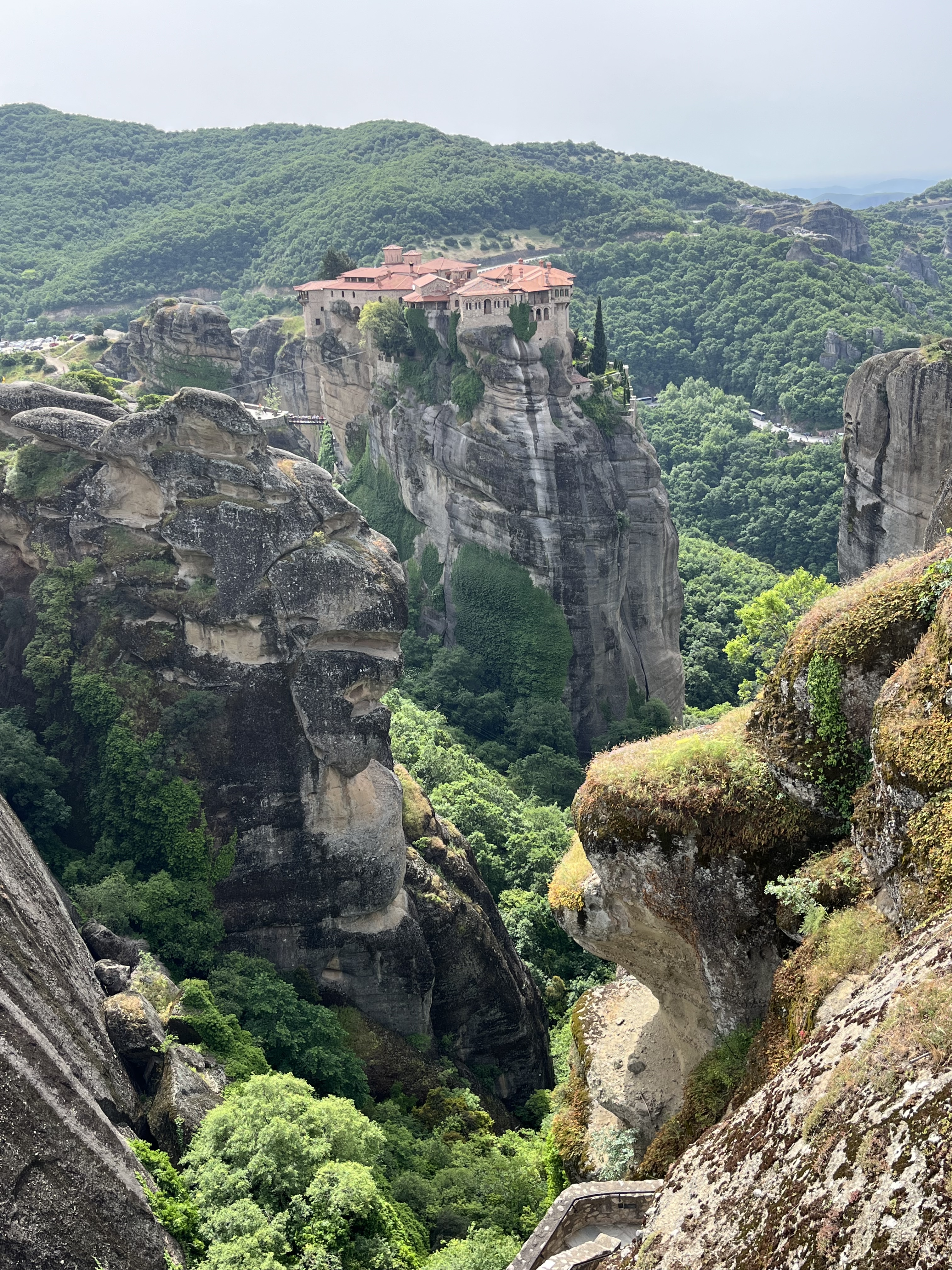
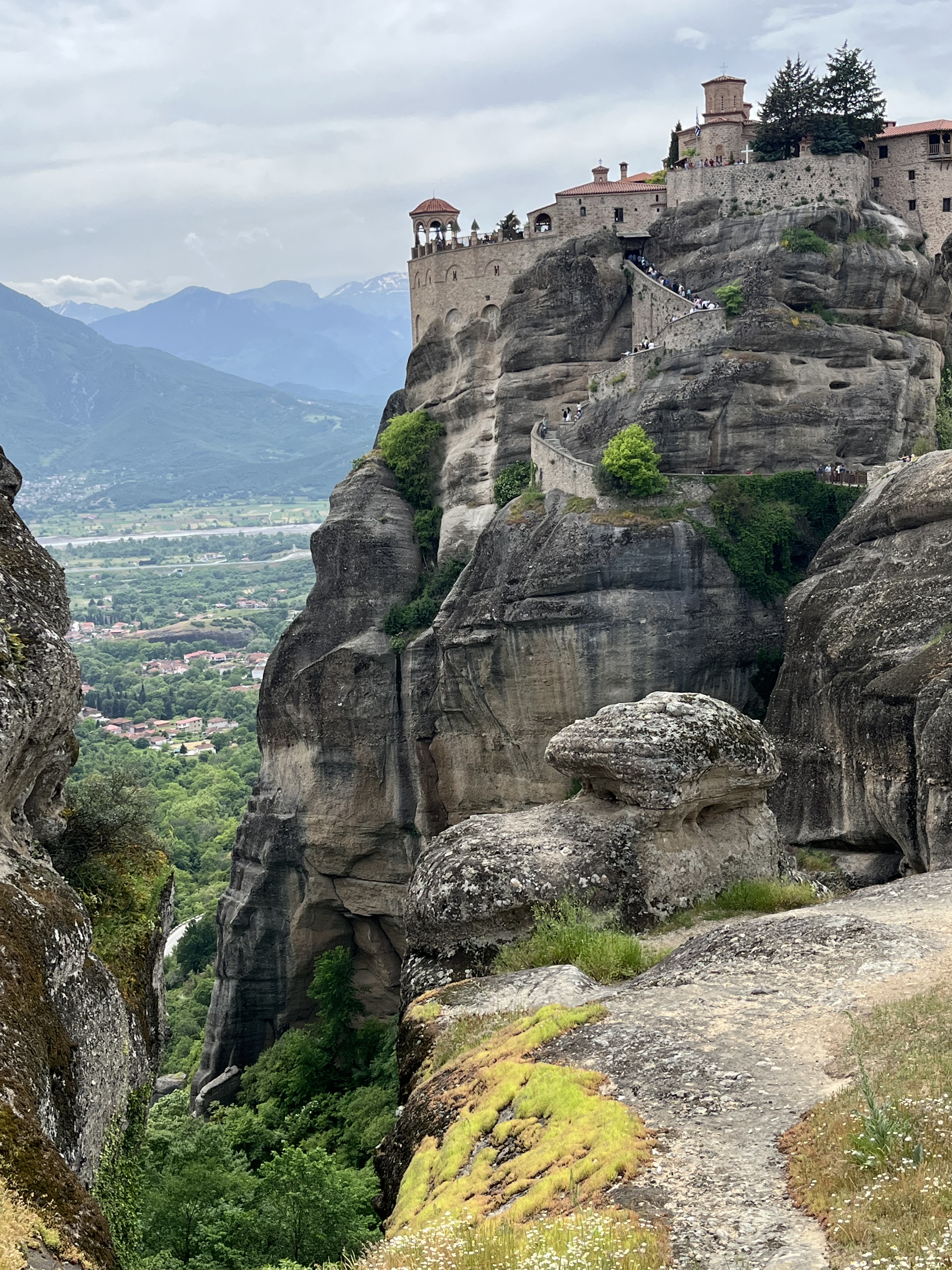
Then we drove north, to the Eastern Orthodox monasteries of Meteora nearby the town of Kalabaka. Meteora means elevated, and one can easily see why they chose that name for these dramatic rock formations and monasteries:
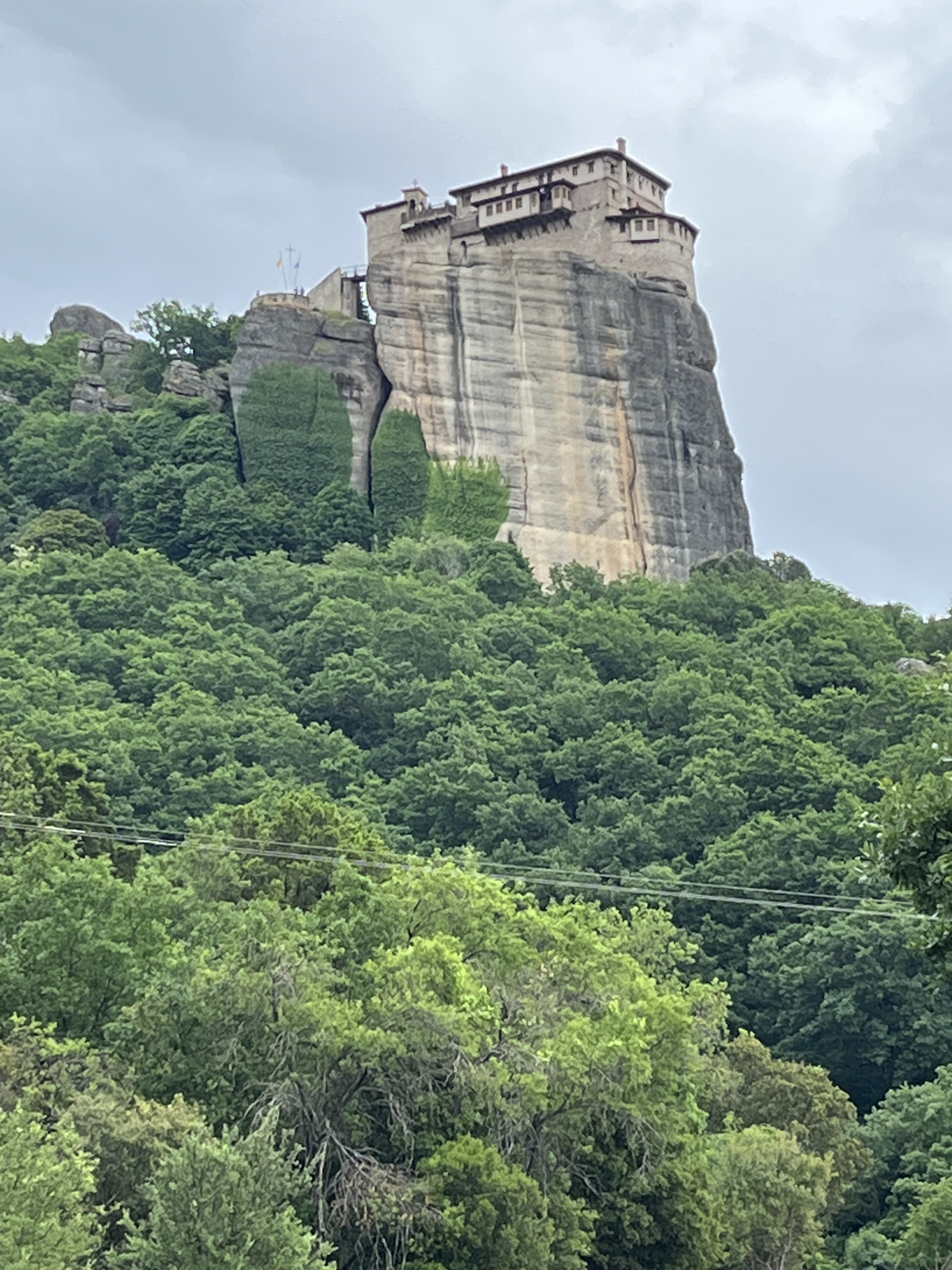
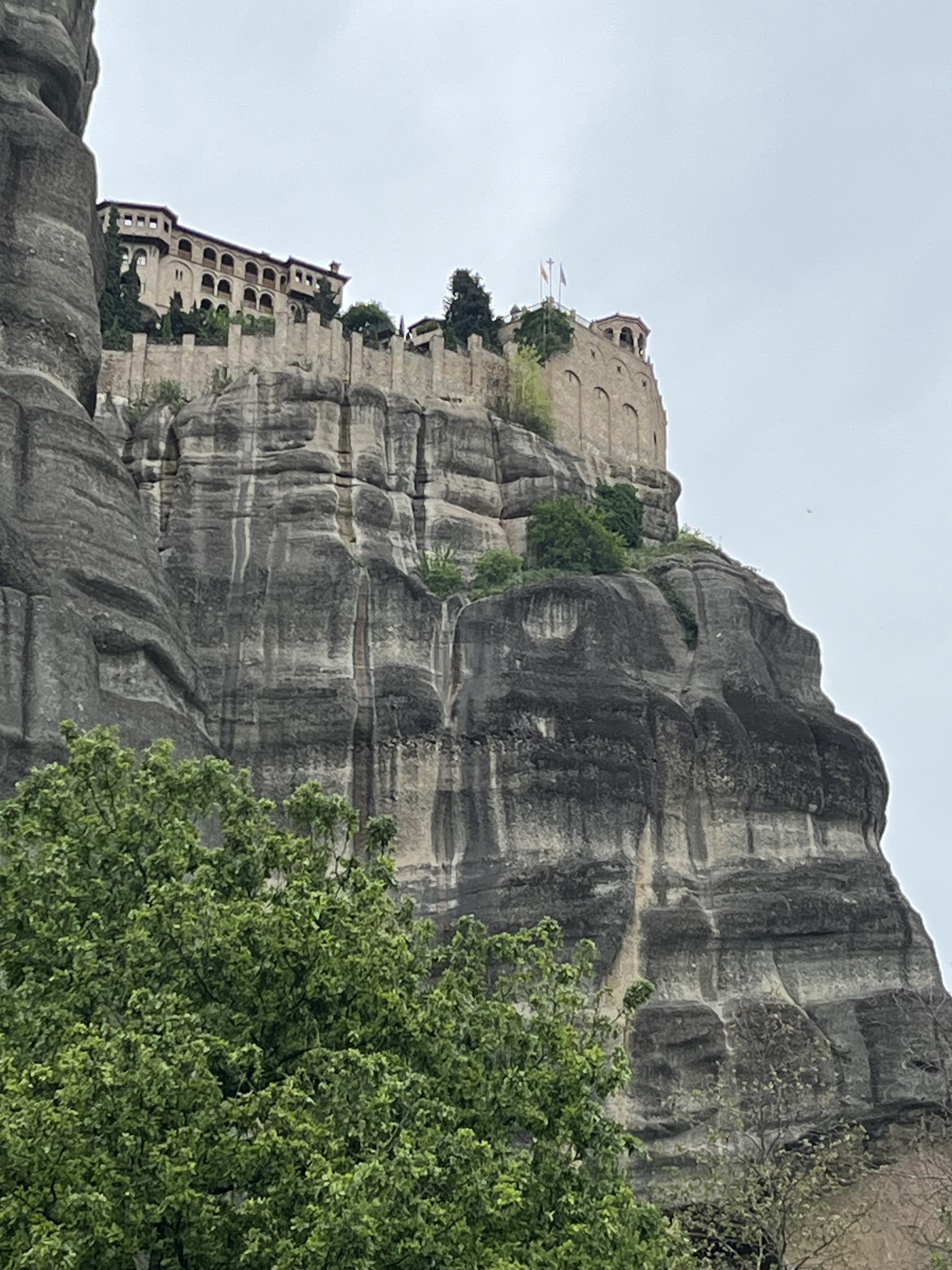
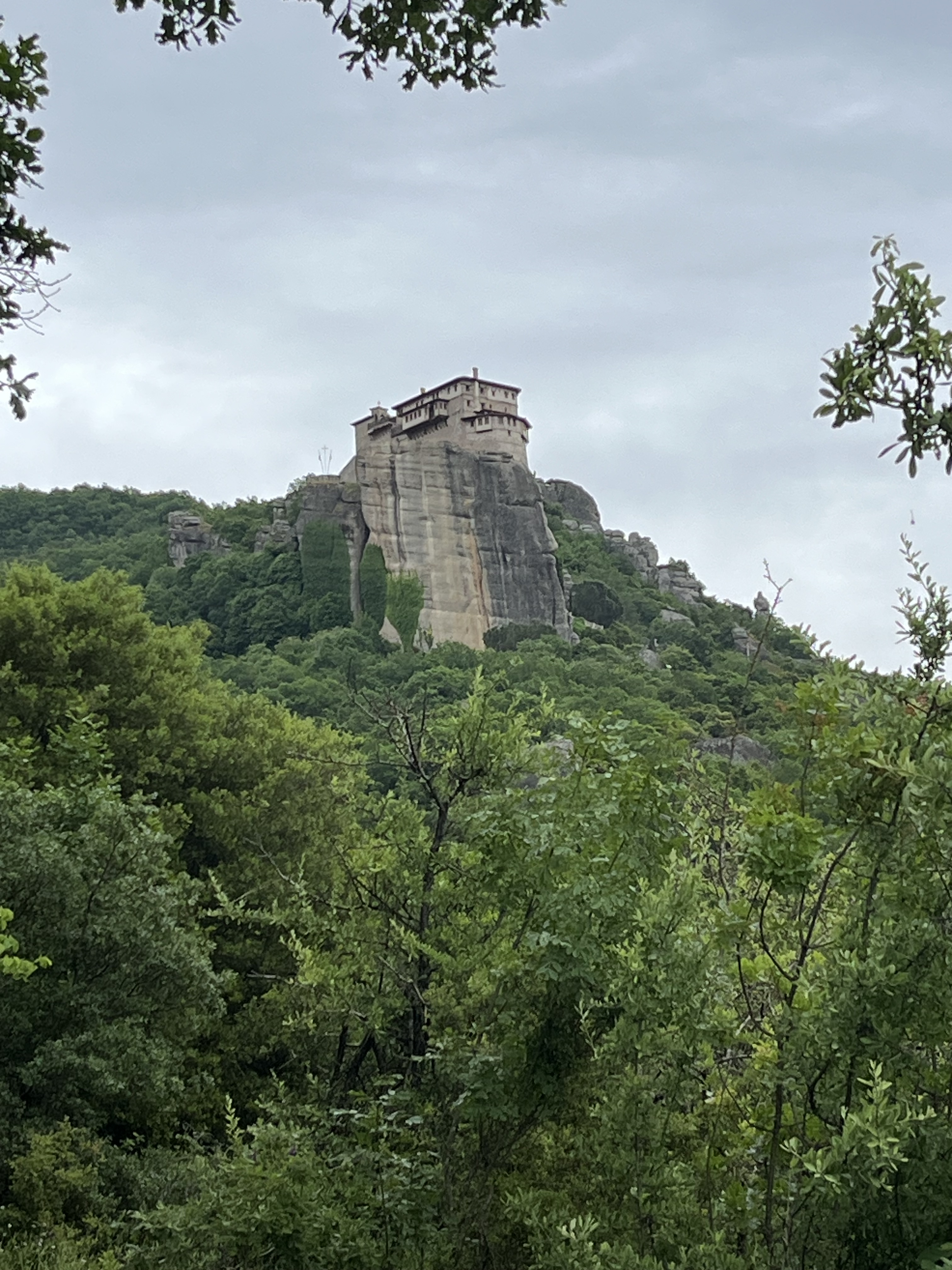
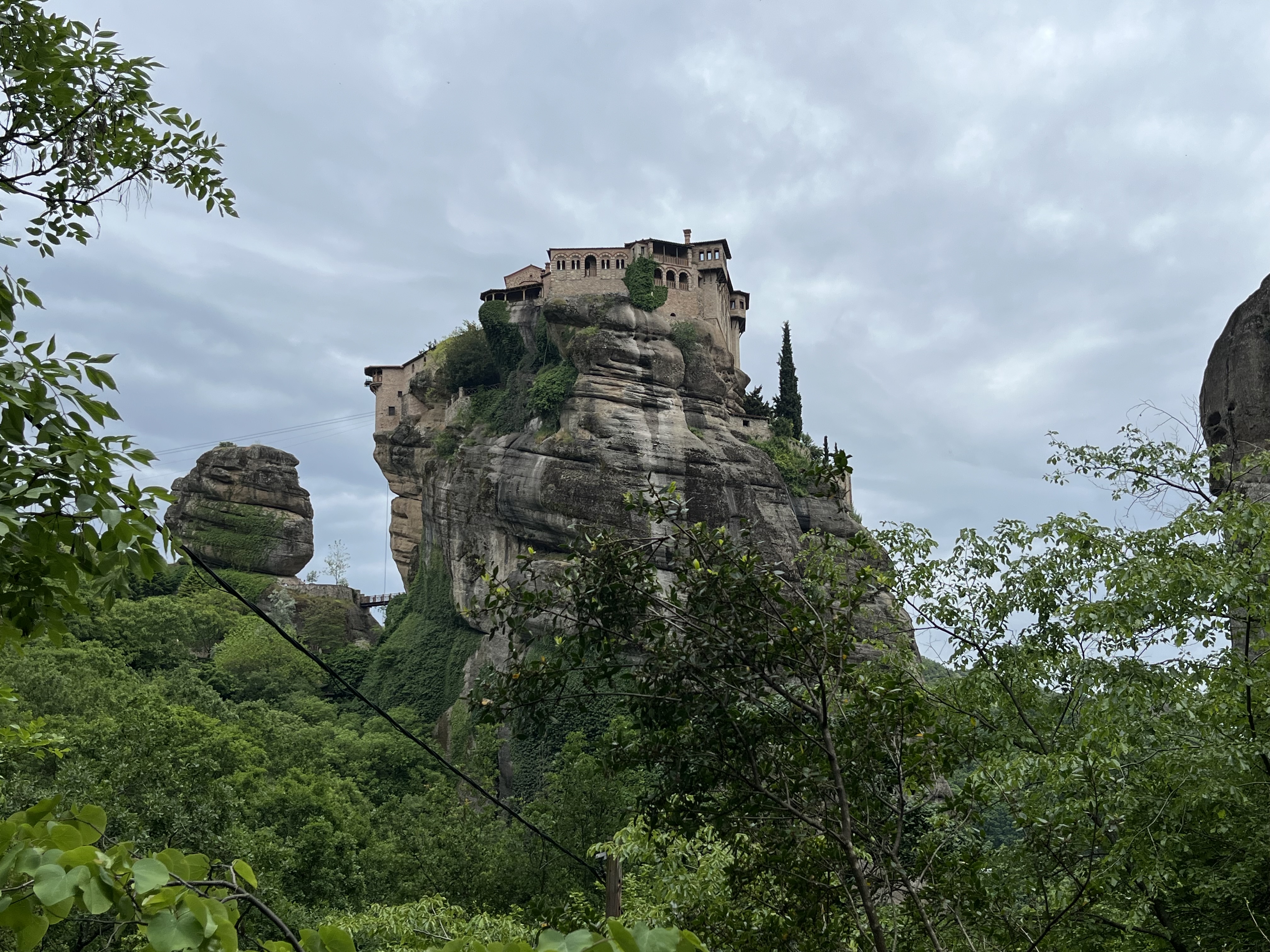
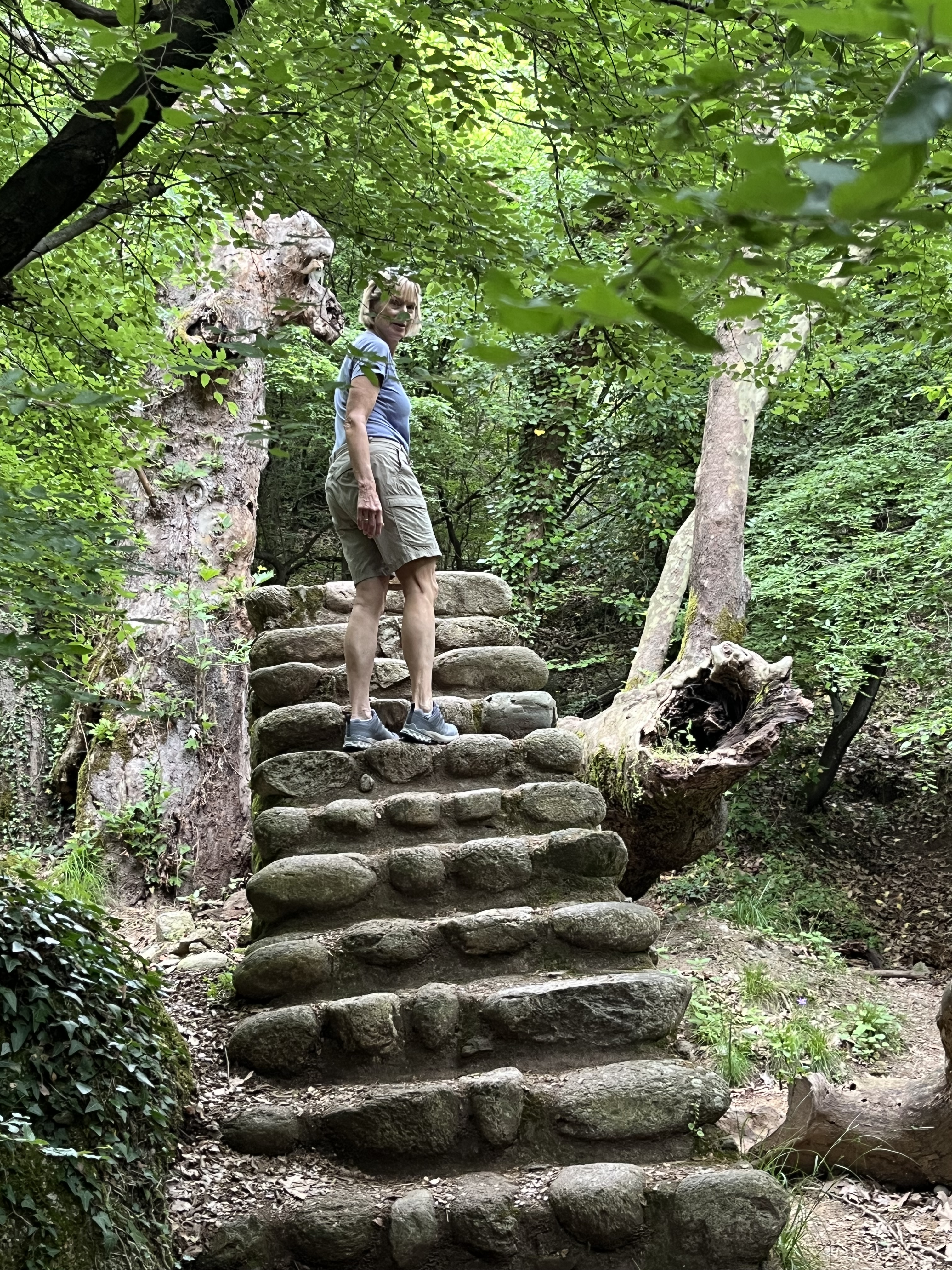
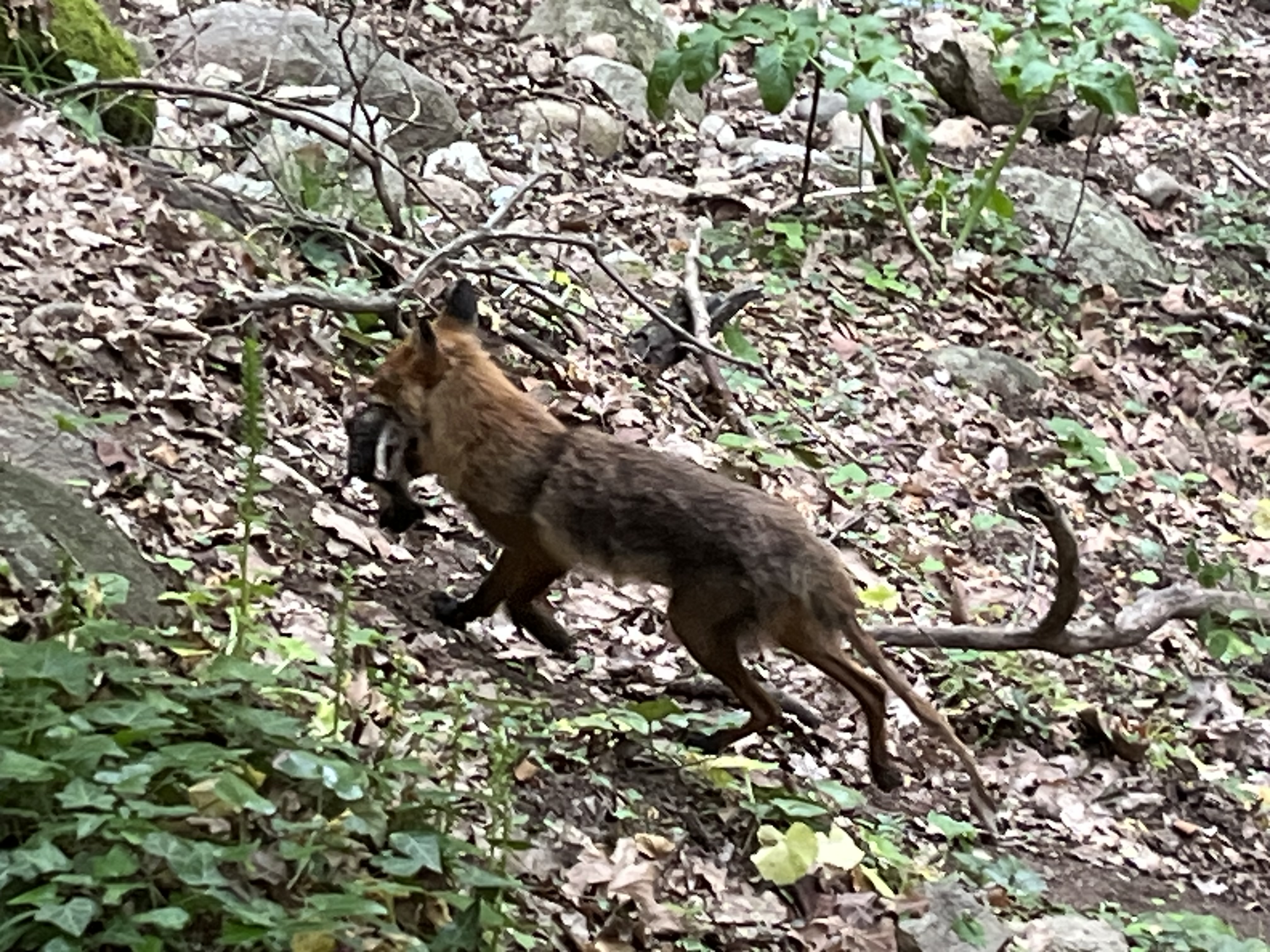
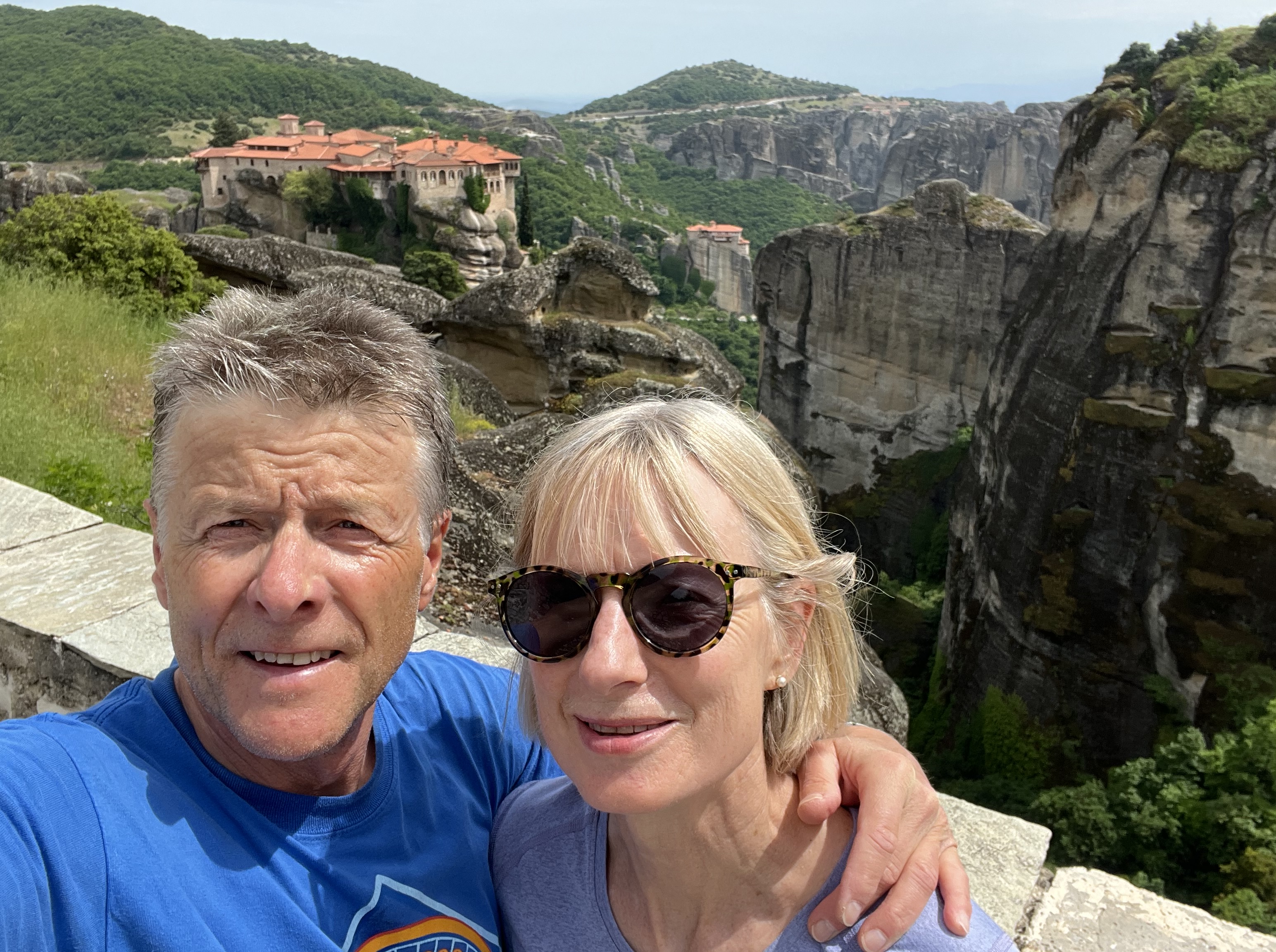
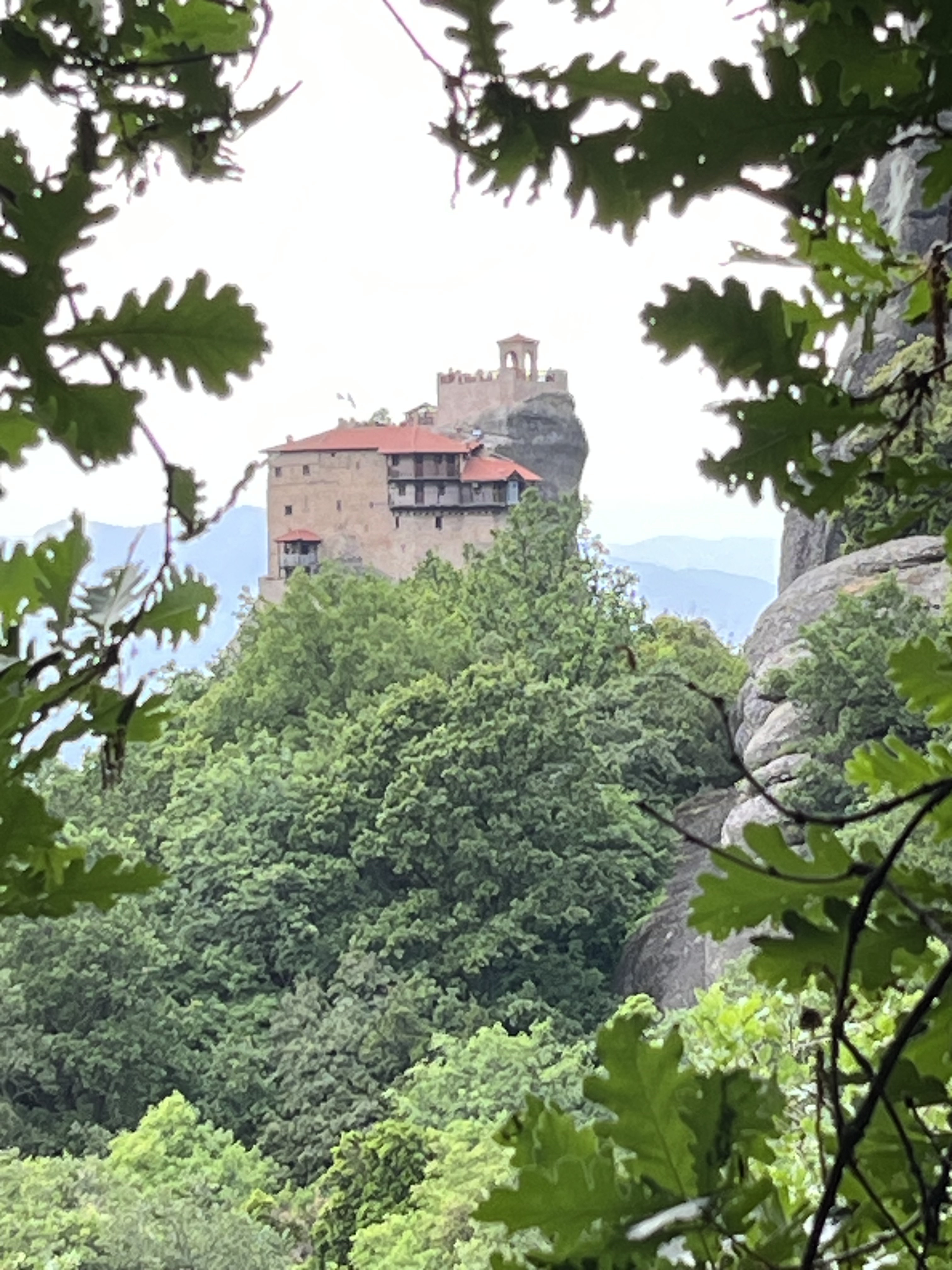
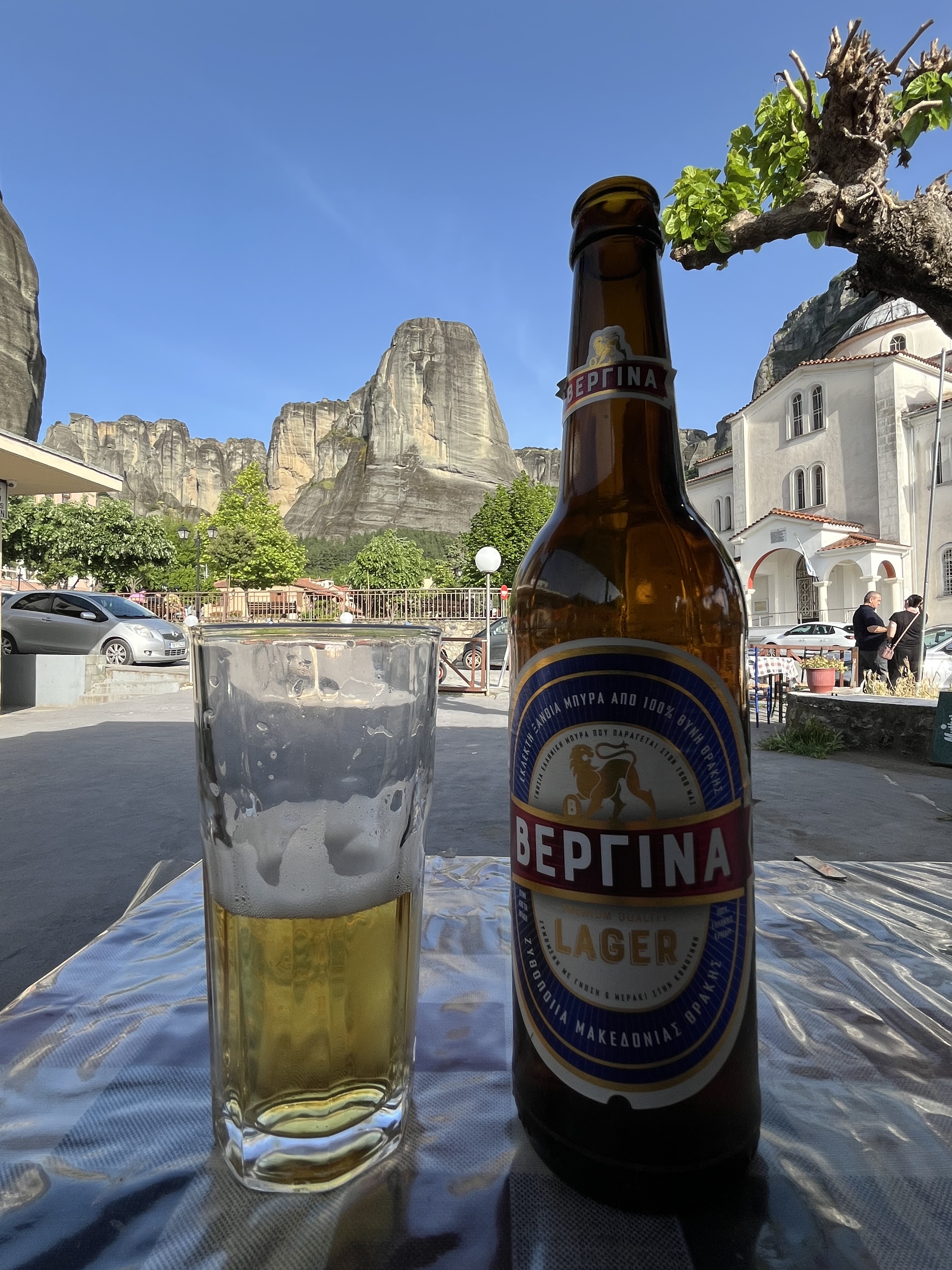
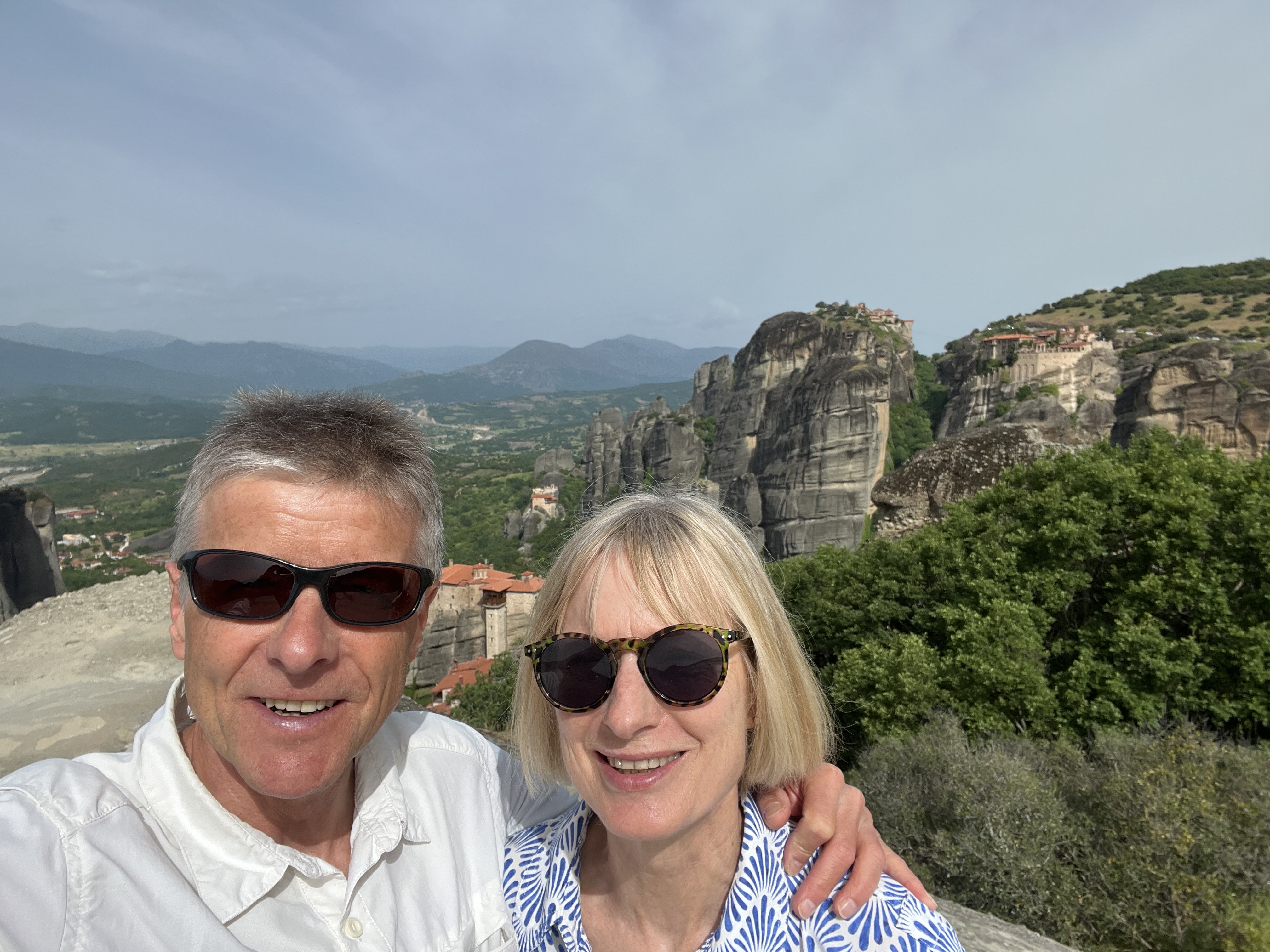
When we arrived mid afternoon, we hiked up to two of them. It felt good to stretch our legs and it was a beautiful, wooded trail, the same trail that the monks had taken for centuries before the roads were built to make these monasteries more accessible. Along the way I just caught a picture of this ragged looking fox, who apparently was carrying his dinner in the form of a magpie down the mountain. We had worked up a sweat, and the beer tasted great, especially when enjoyed with such a view! Below left is a picture of the hotel we stayed at for two nights.
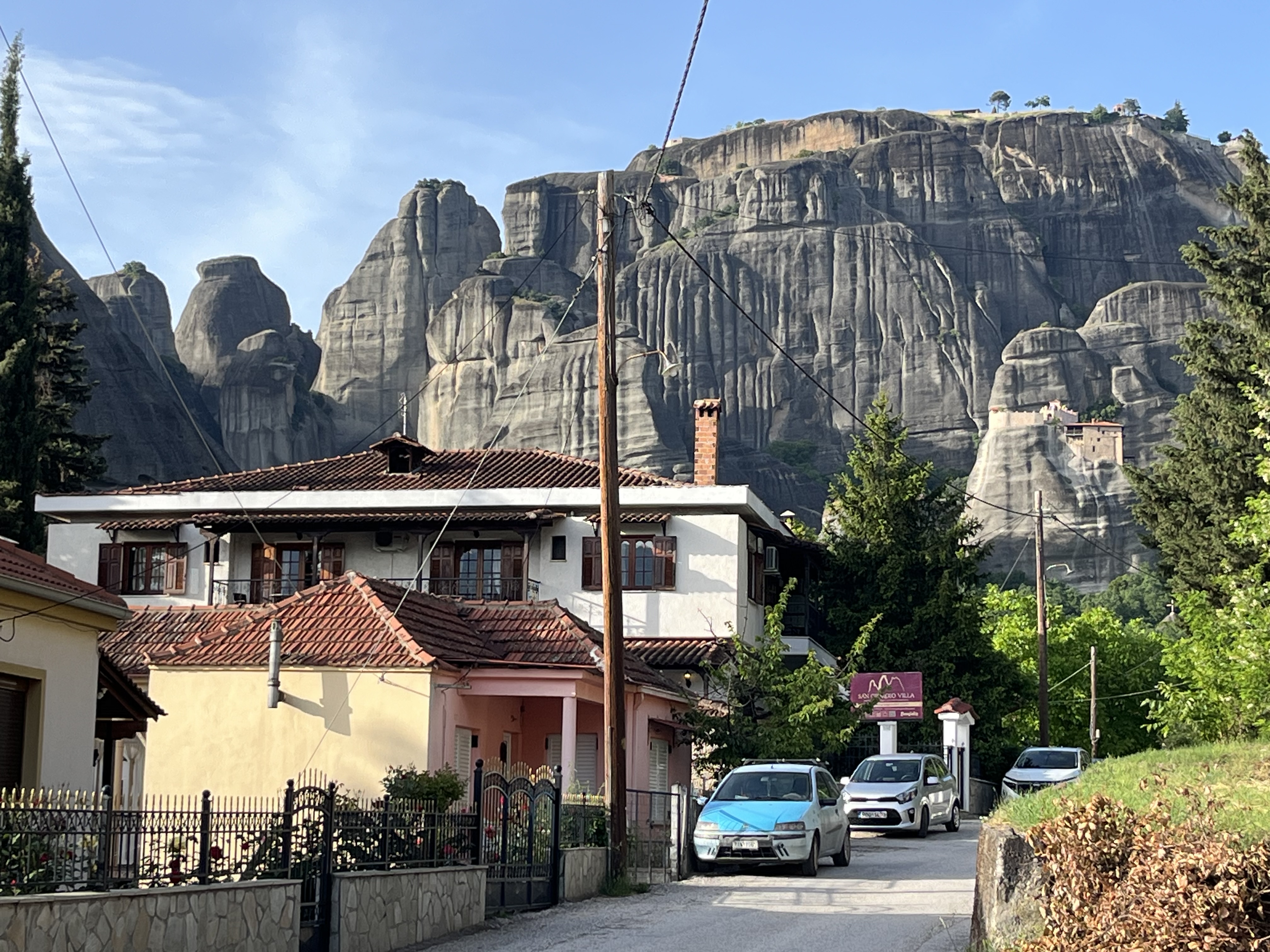
The following day we enjoyed a guide, who provided us with more interesting information around geology, history, and religious background.
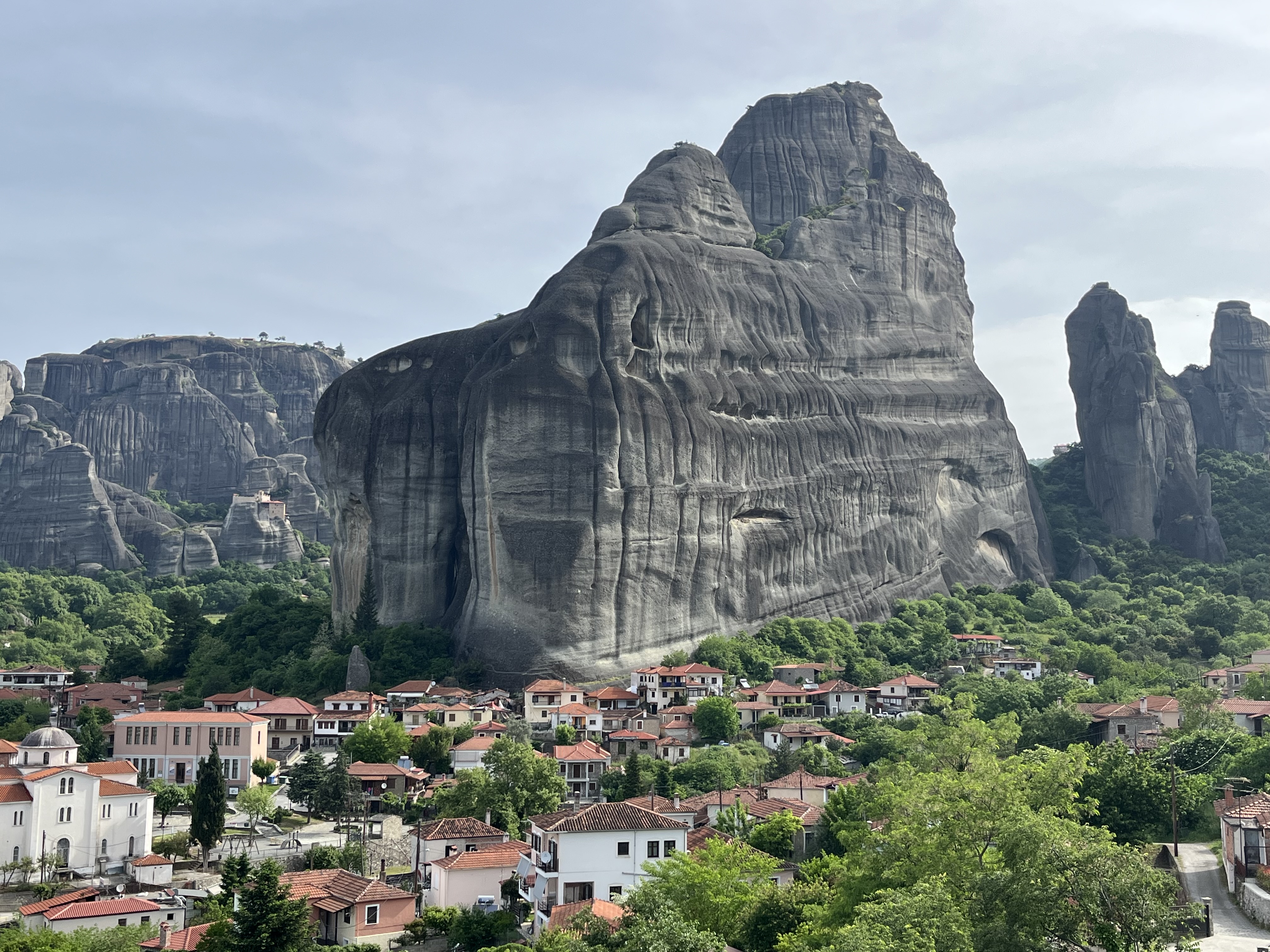
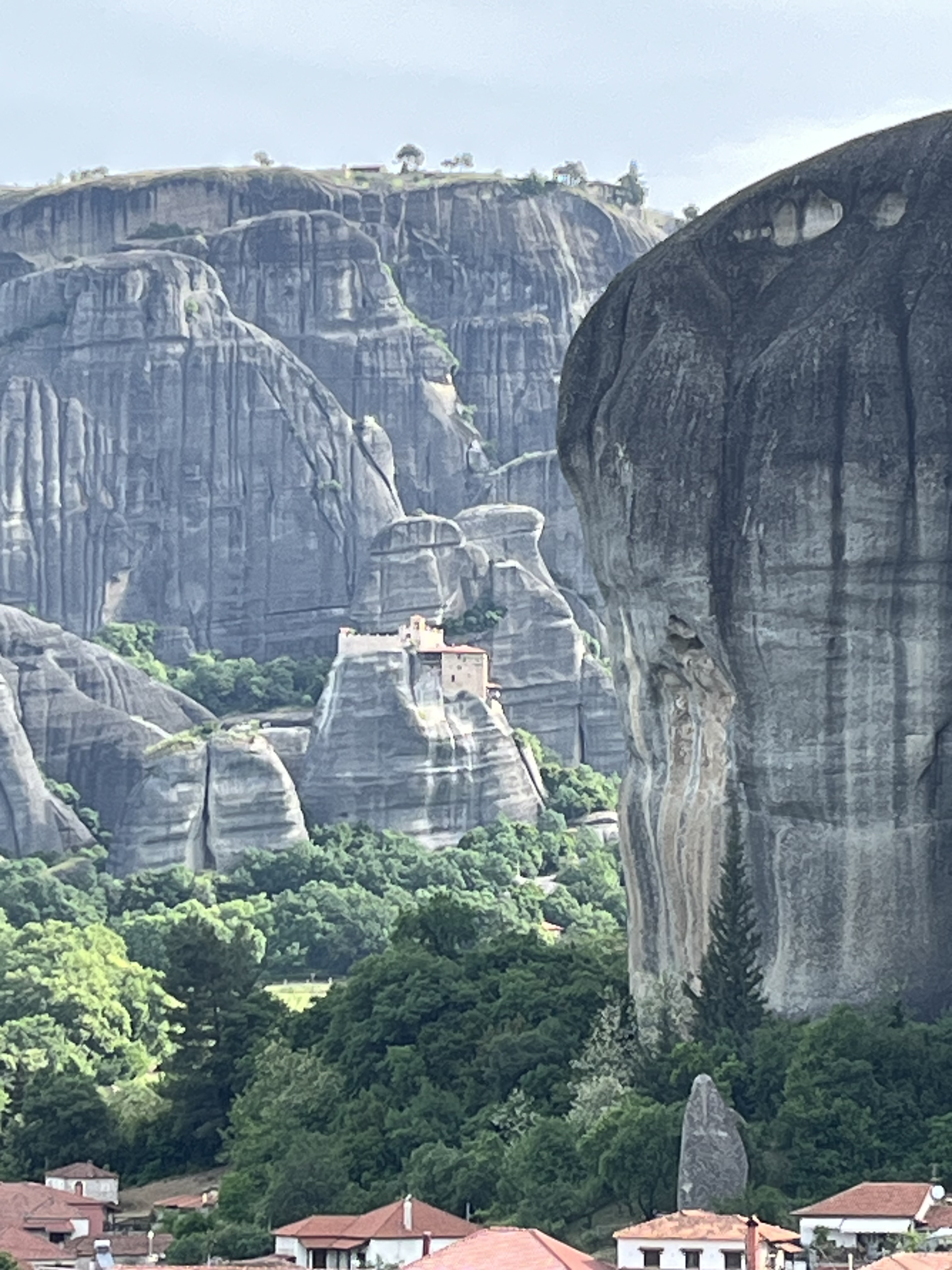
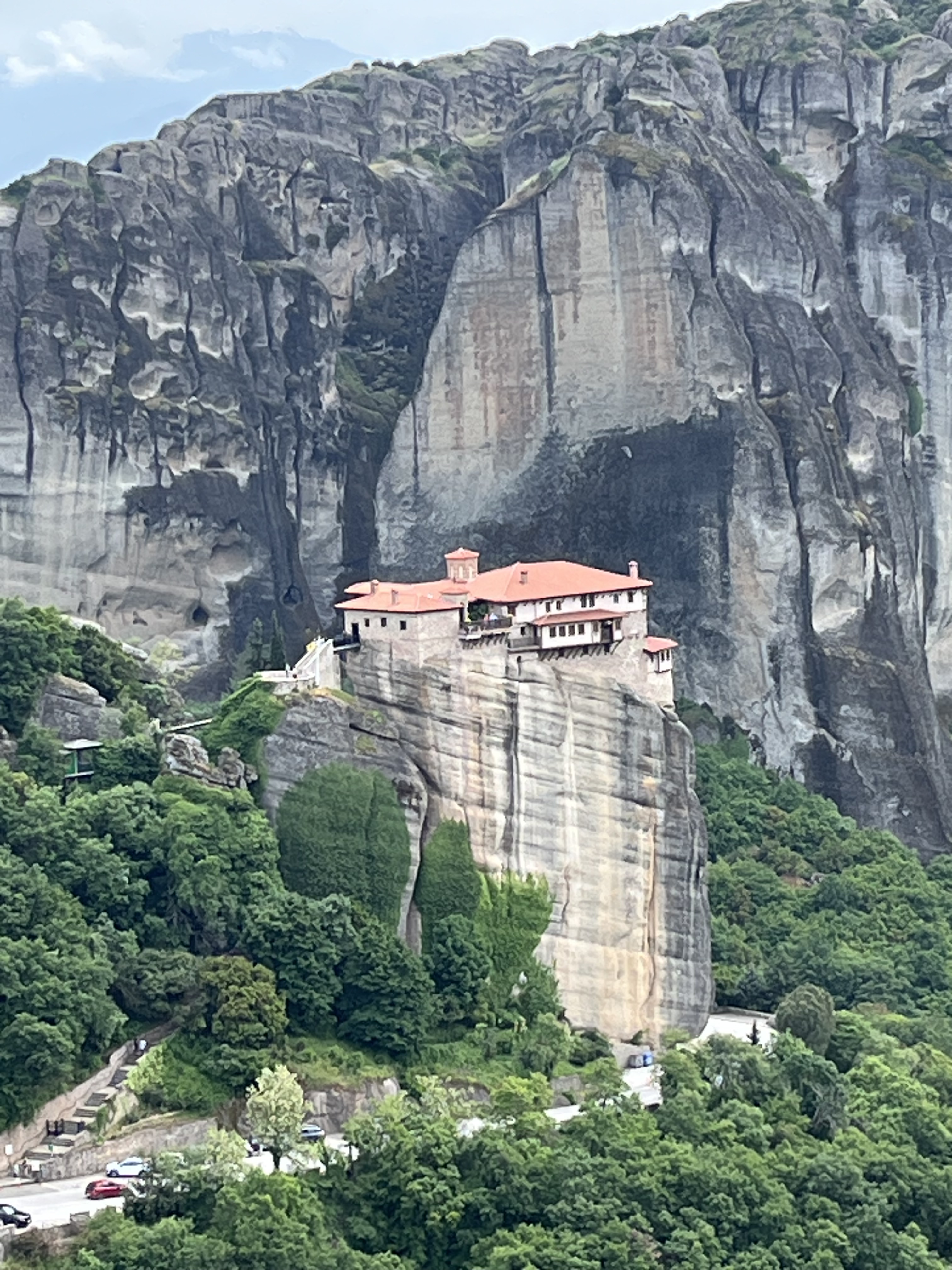
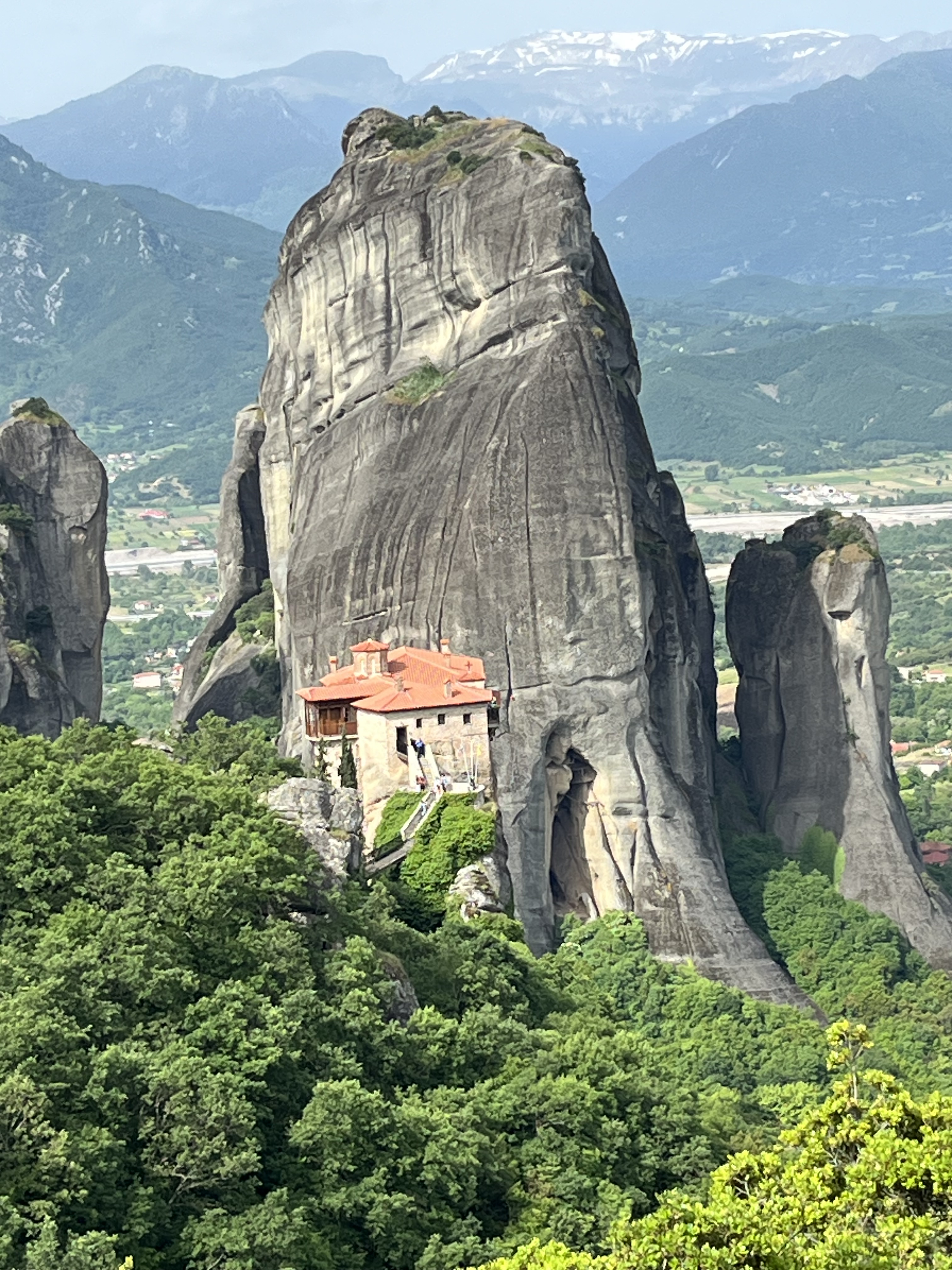
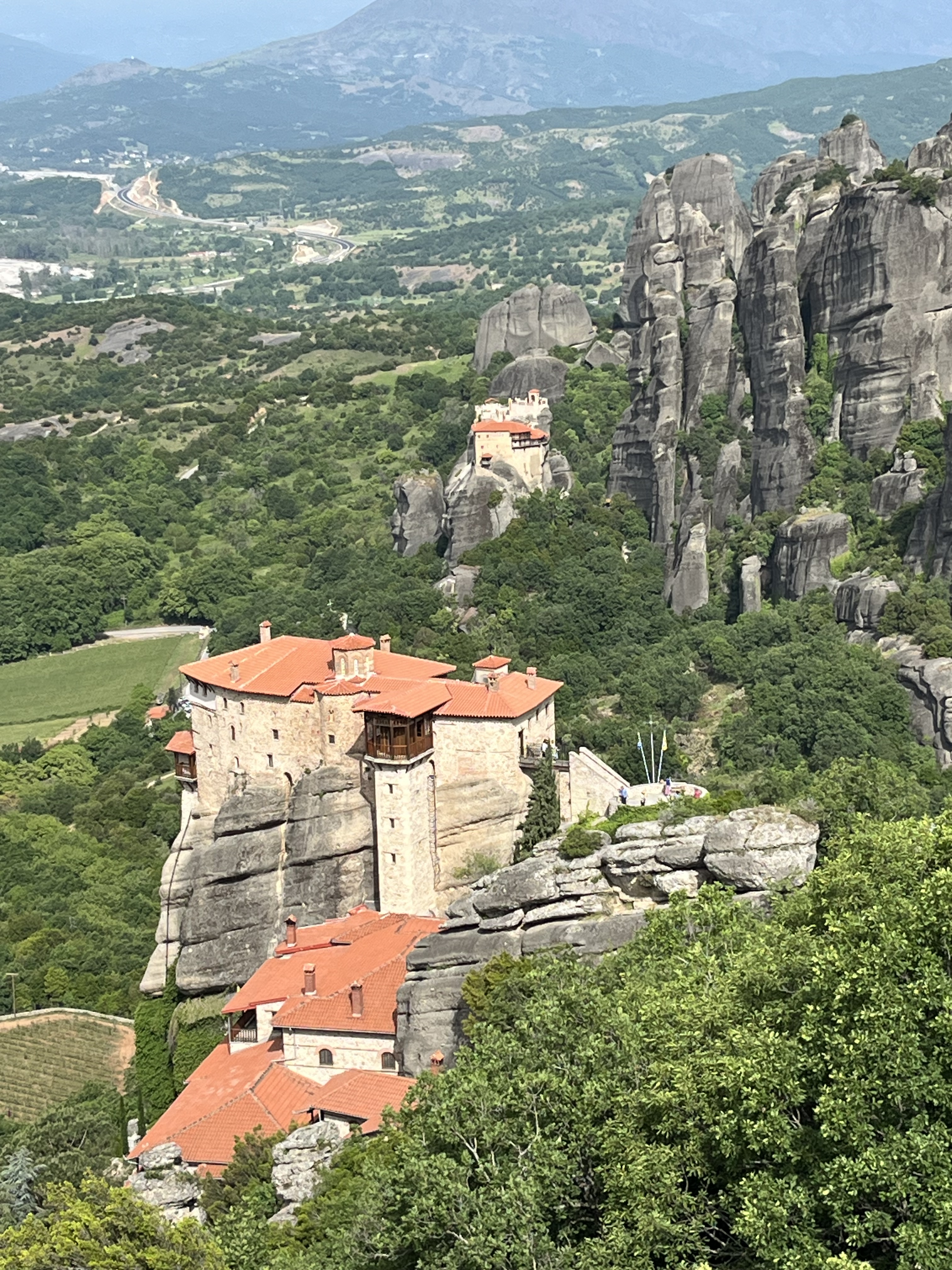
Twenty-four Byzantine monasteries were established, mainly during the 14th century, atop the giant natural pillars and hill-like rounded boulders made out of sedimentary rock that dominates this local area. Today, four of the original monasteries are occupied and in active use as monasteries that are managed by monks, and open to visitors: The biggest complex, the Monastery of Great Meteora, Varlaam, Holy Trinity, and Saint Stephen. Saint Stephen became a convent run by a community of nuns in 1961. Two other, former monasteries are preserved, yet no longer in active use as monasteries. These are the Saint Nicholas Anapausas, which was the site of the For Your Eyes Only James Bond movie, and the Rousanou monastery. These six monasteries of the Meteora complex were added to the UNESCO World Heritage List in 1988 for their outstanding architecture and beauty, as well as, religious and cultural significance.
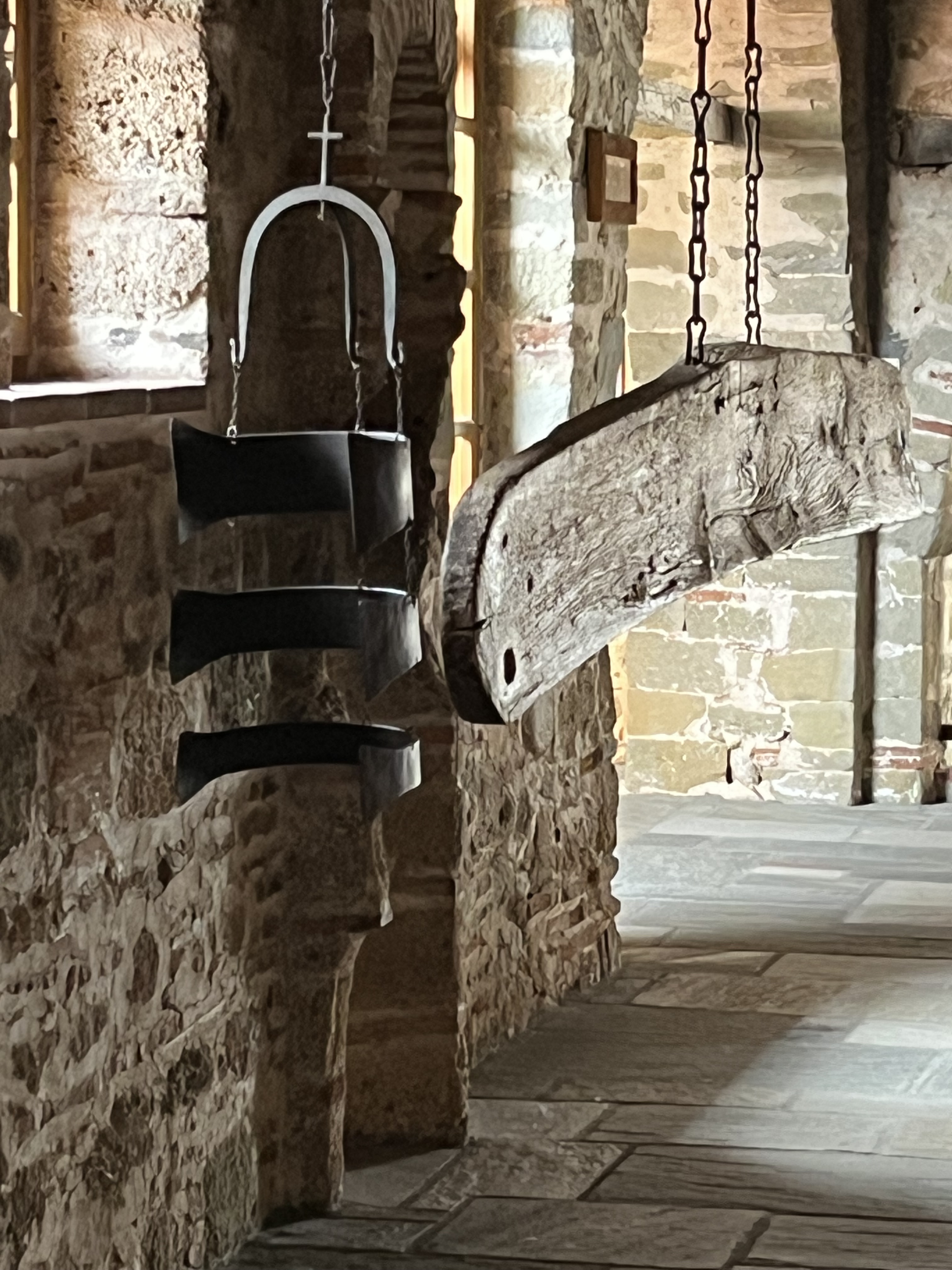
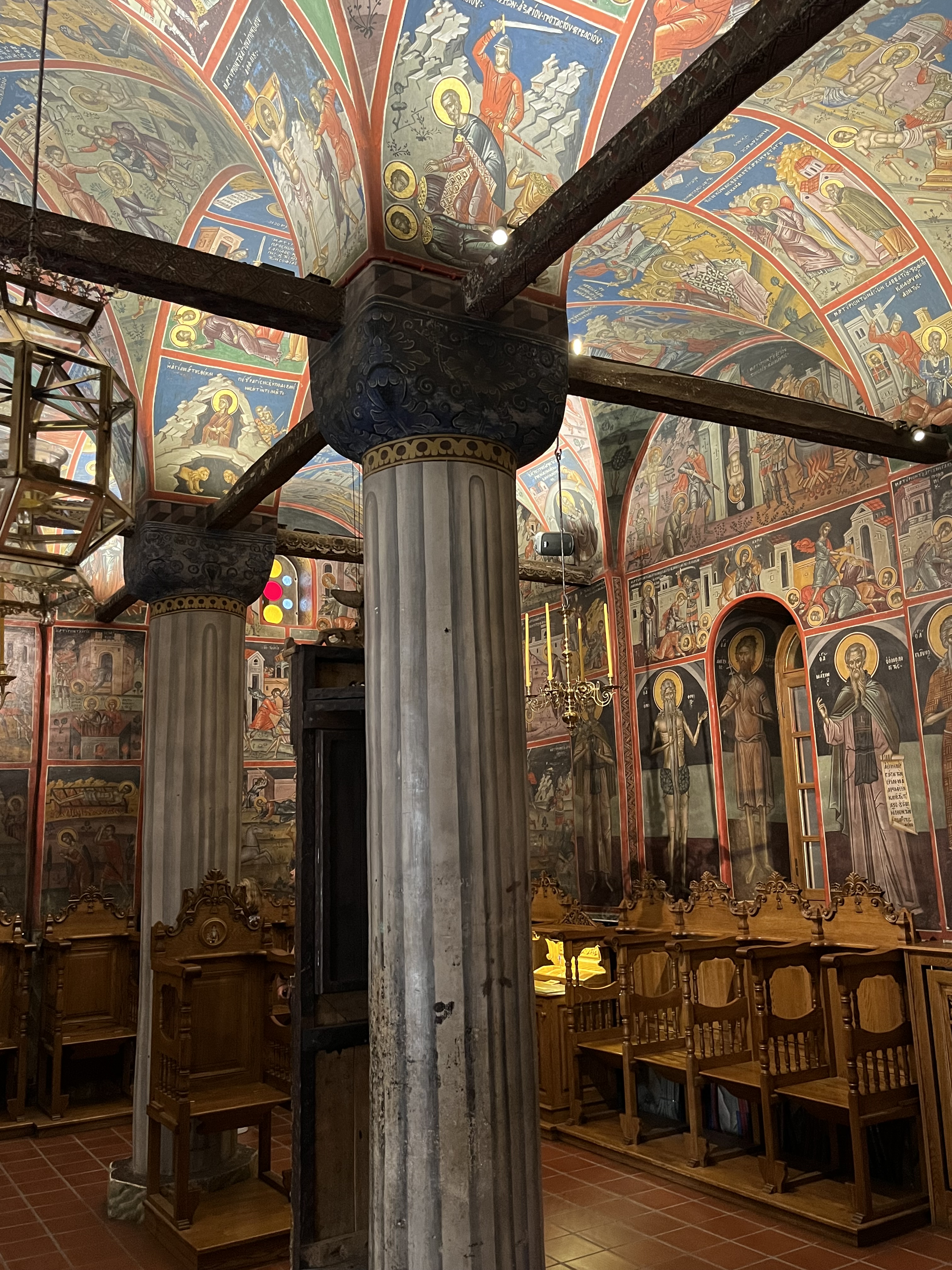
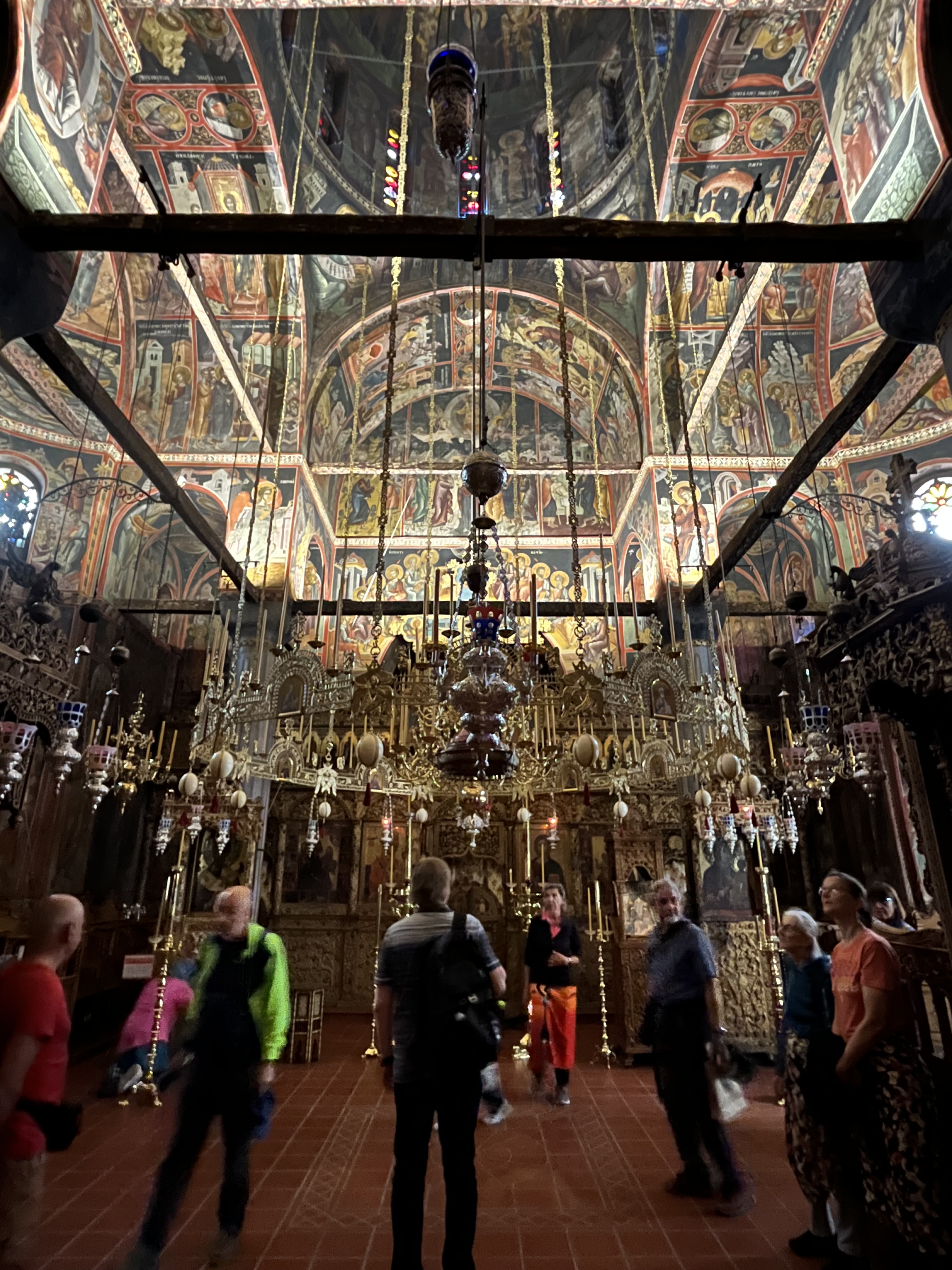
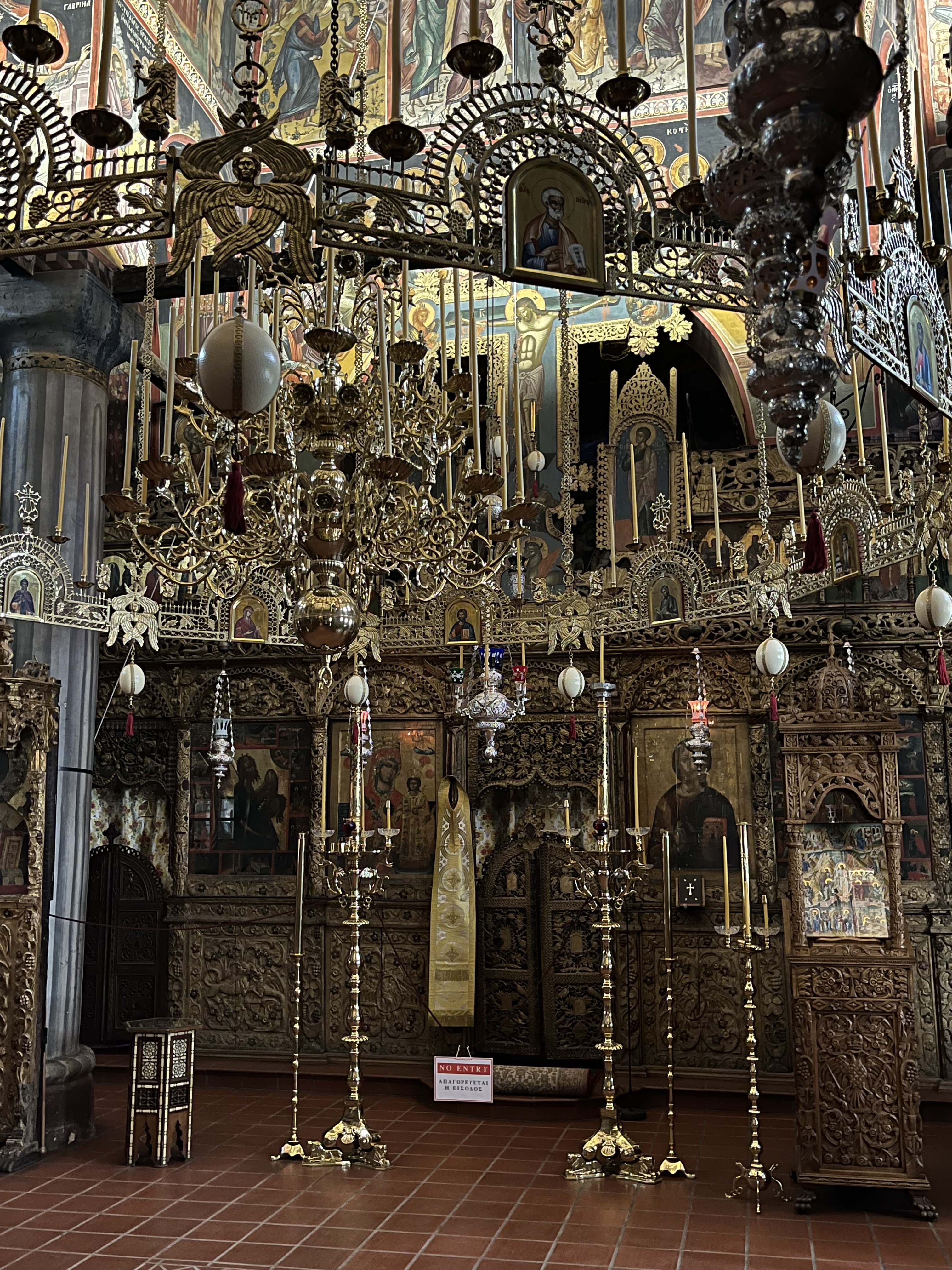
Above, a couple of pictures from the inside of the Great Meteora’s chapel. The rich and finely detailed decorations are beautiful. To this day, the decoration of chapels and churches within the Eastern Orthodox Church are tightly regulated, resulting in a very similar appearance of these Christian houses of God. Unfortunately, picture taking was not allowed in the other monasteries.
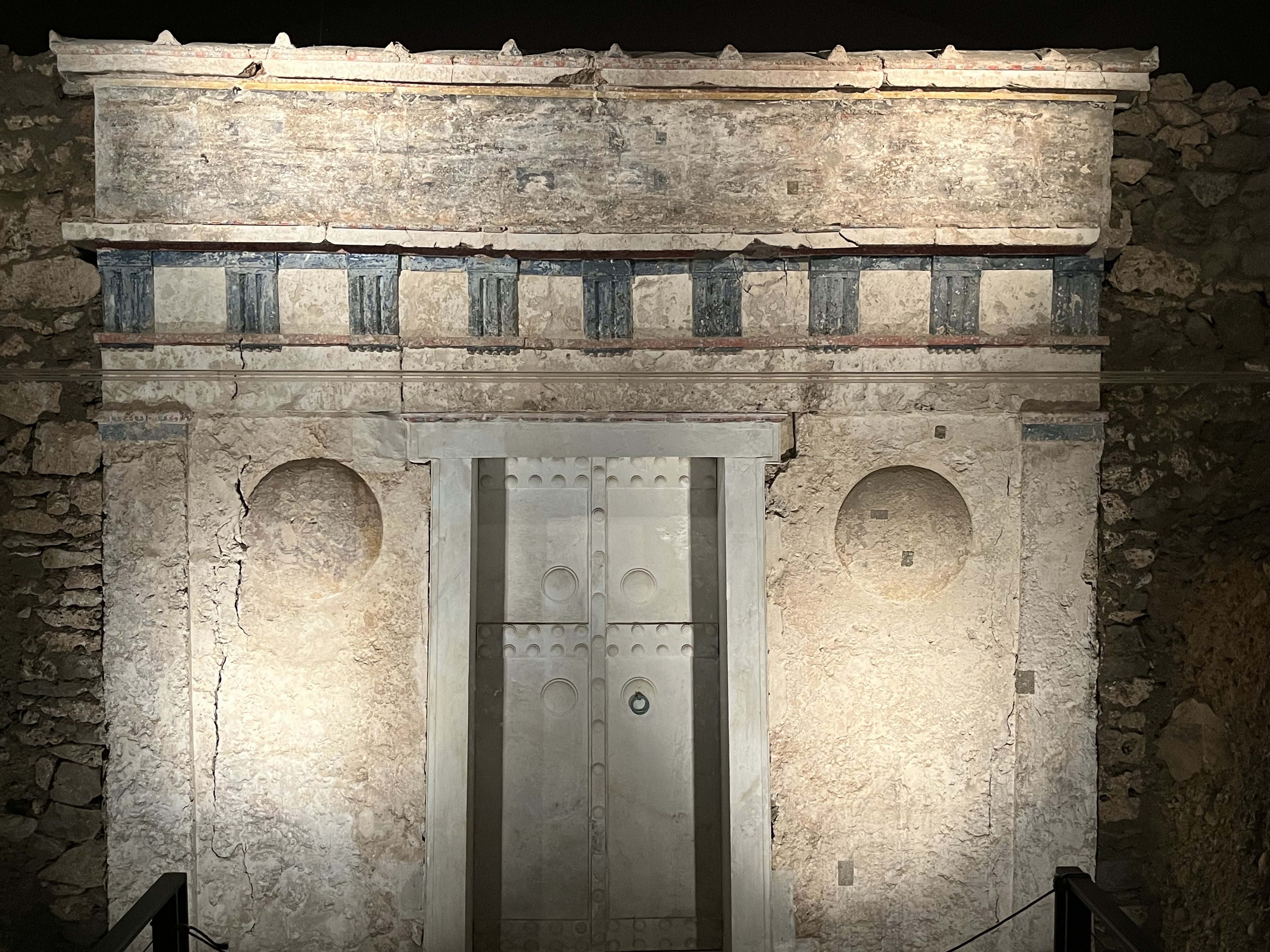
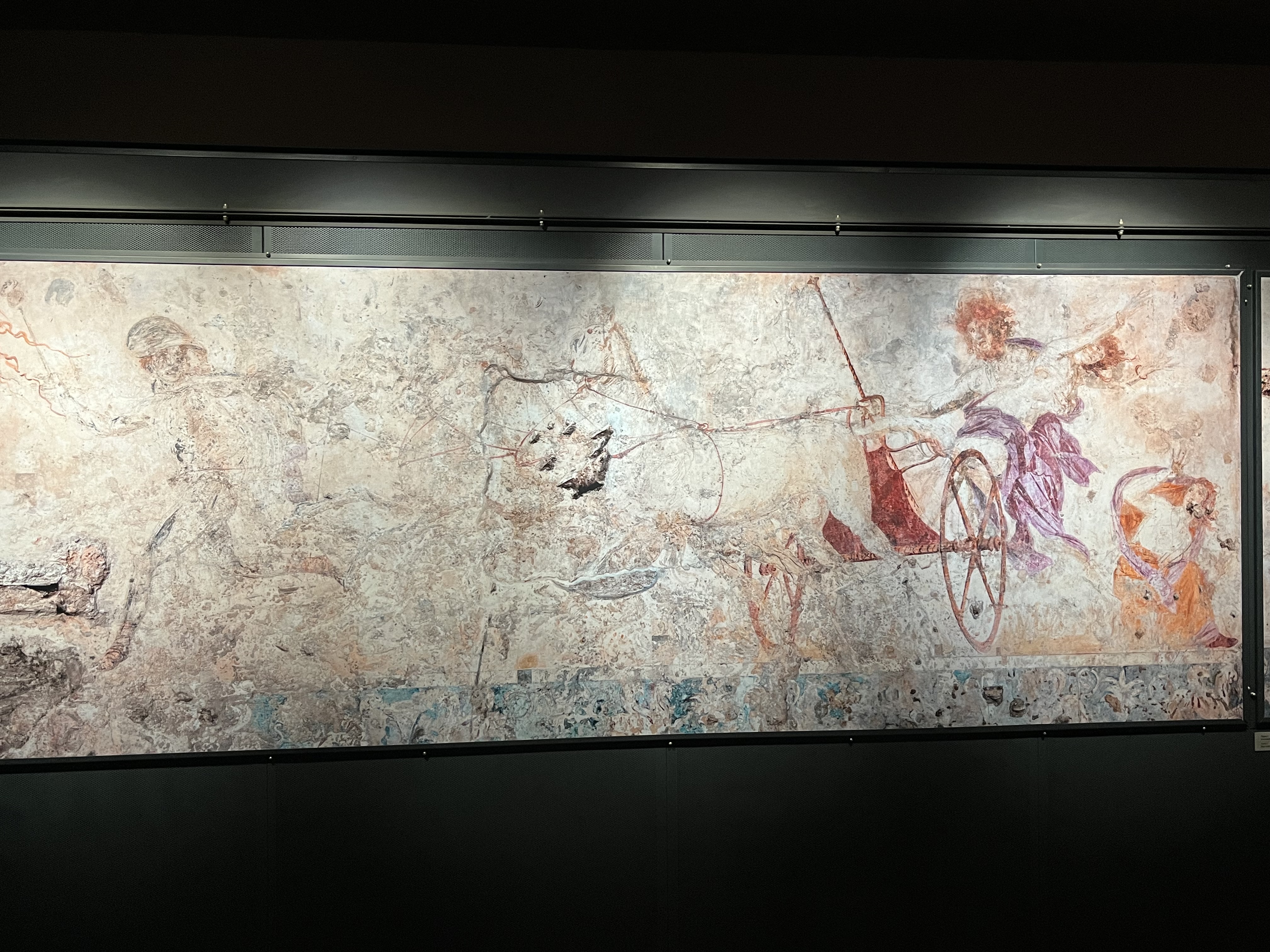
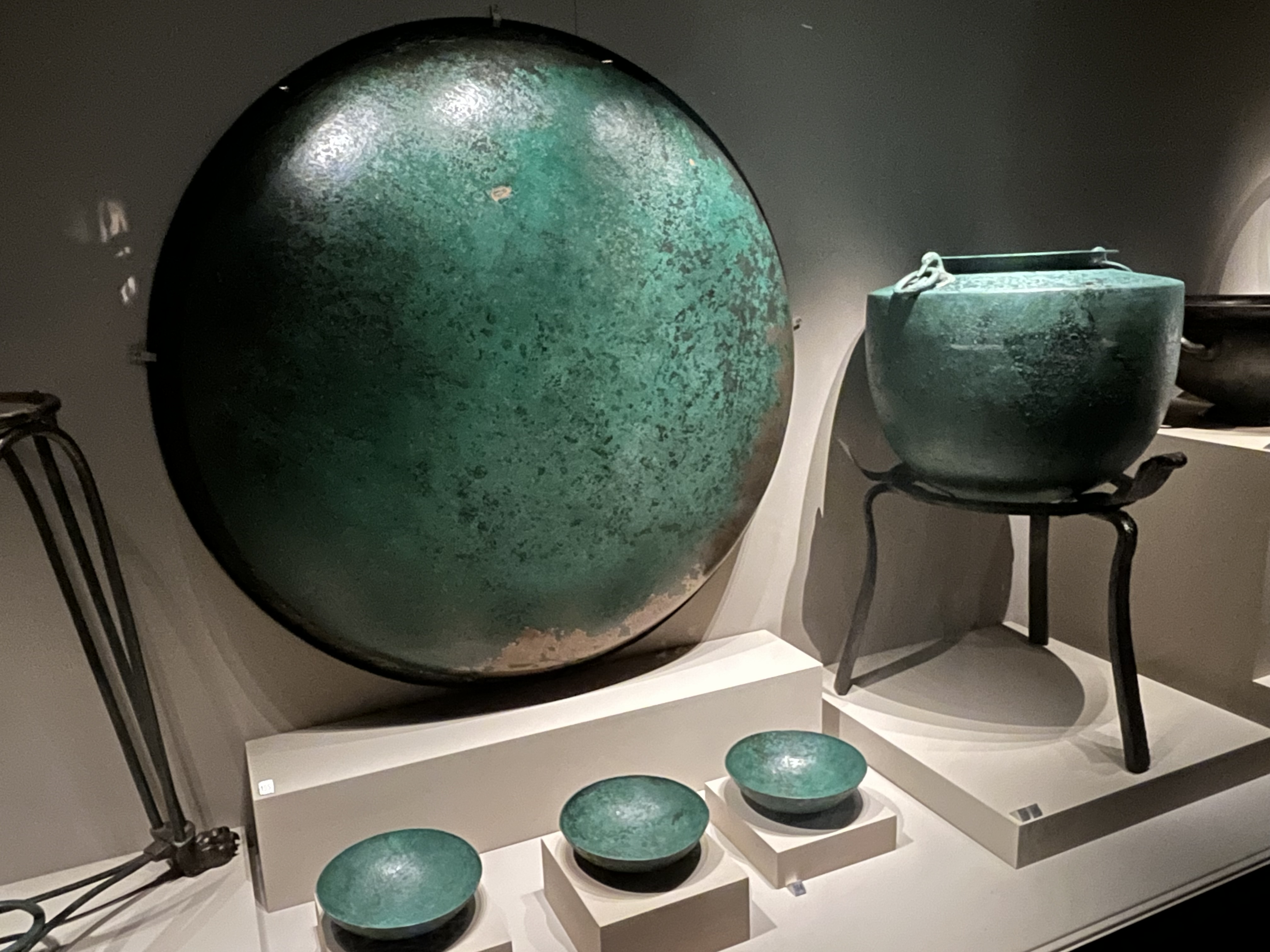
We ended our odyssey of Ancient Greece with a visit to the Royal Tomb of Algae in Vergina, the Tomb of Philipp II, the 4th century BC king of the Greek Province of Macedonia and father of Alexander the Great. Amazingly enough, this tomb was never looted, as attempting grave robbers never dug deep enough. The tomb was discovered in intact condition, as shown in the picture below. We found this recently finished, new museum built around this tomb excellent! The exhibits of the elaborate gifts, such as jewelry, weapons etc. that were buried with Philipp II, as well as the narratives, are very well done. We shared our visit with several school classes that were visiting the museum.
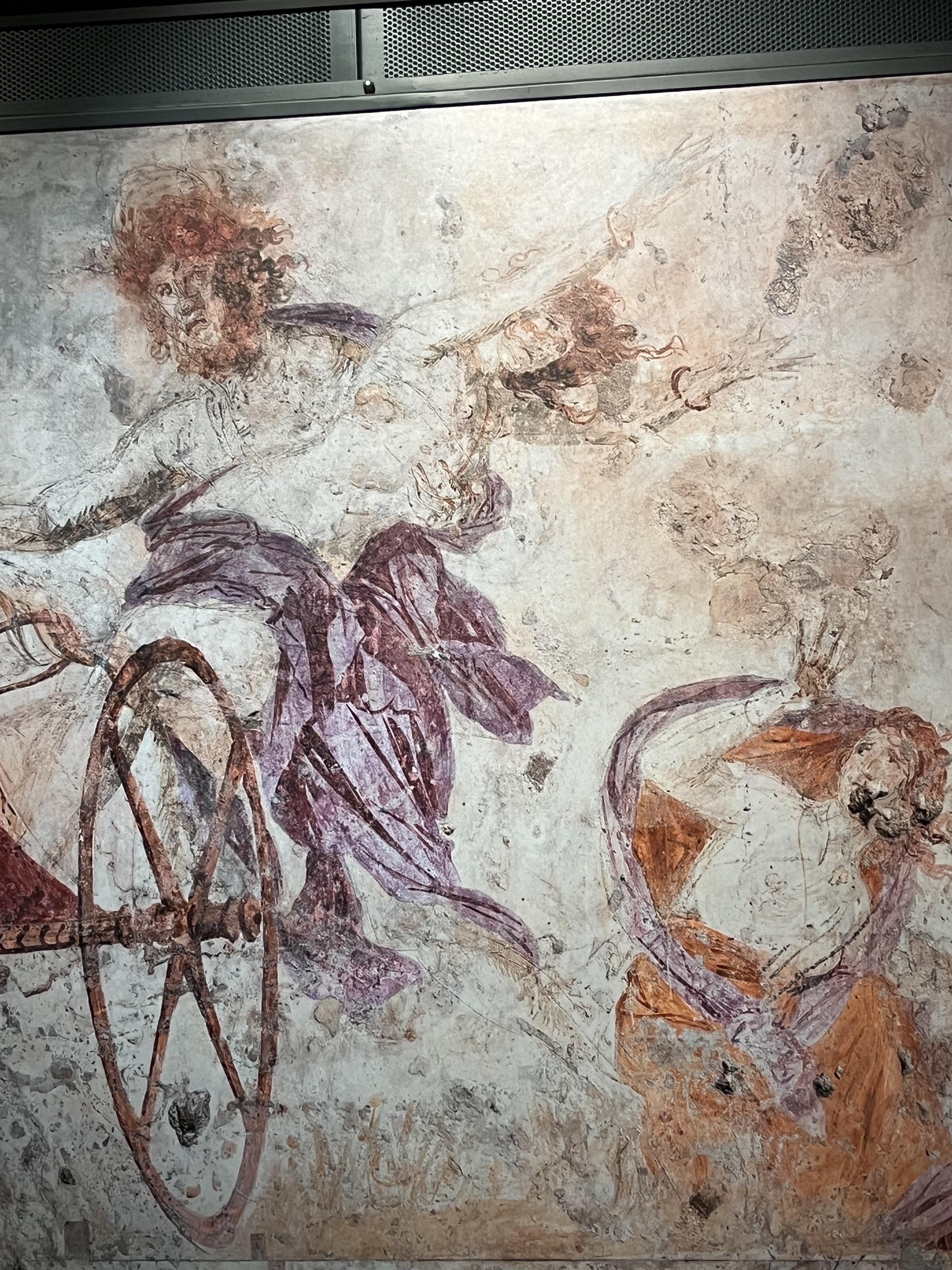
The Abduction of Persephone by Hades, is one of the many well preserved original frescos from this tomb site:
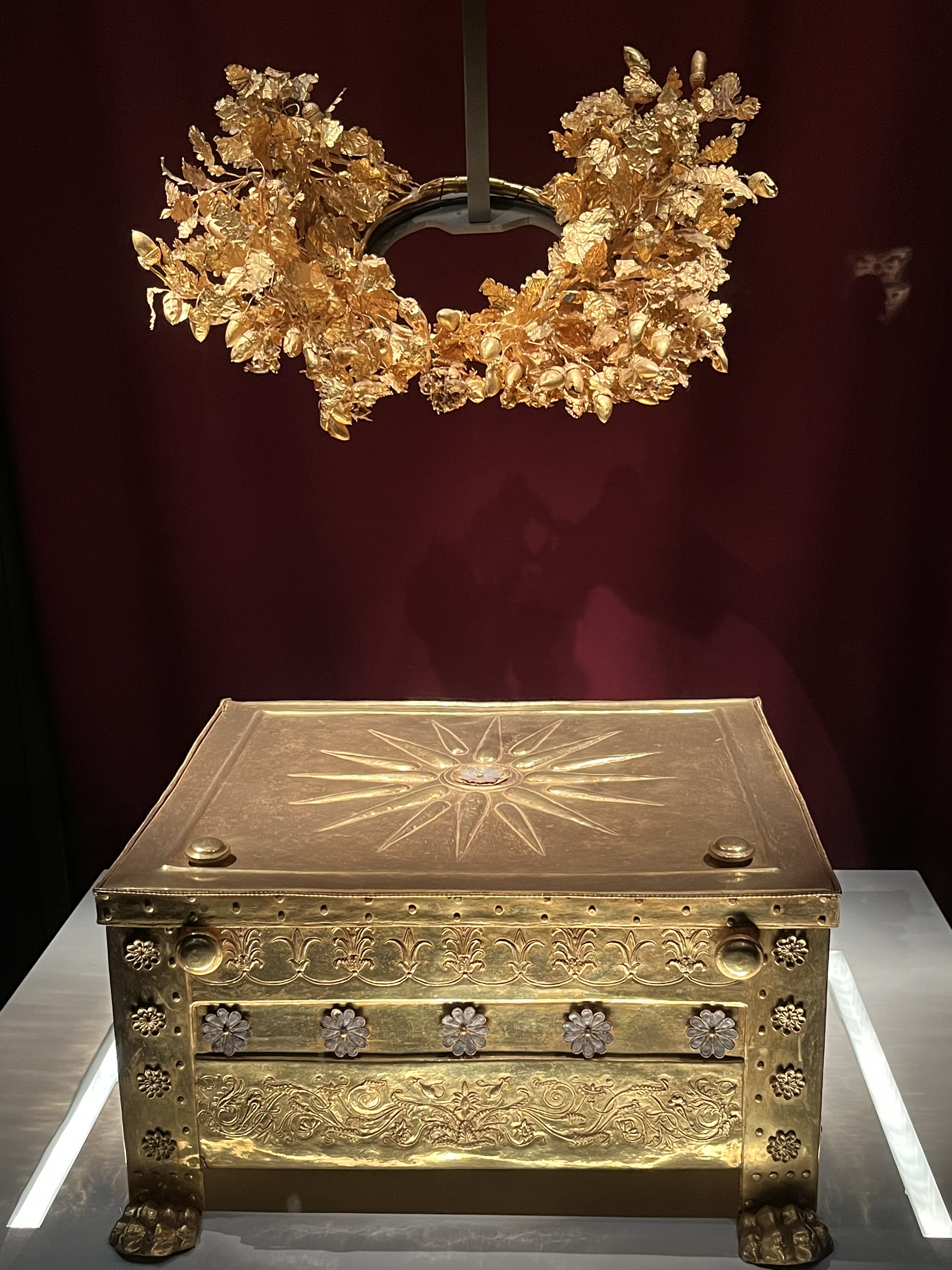
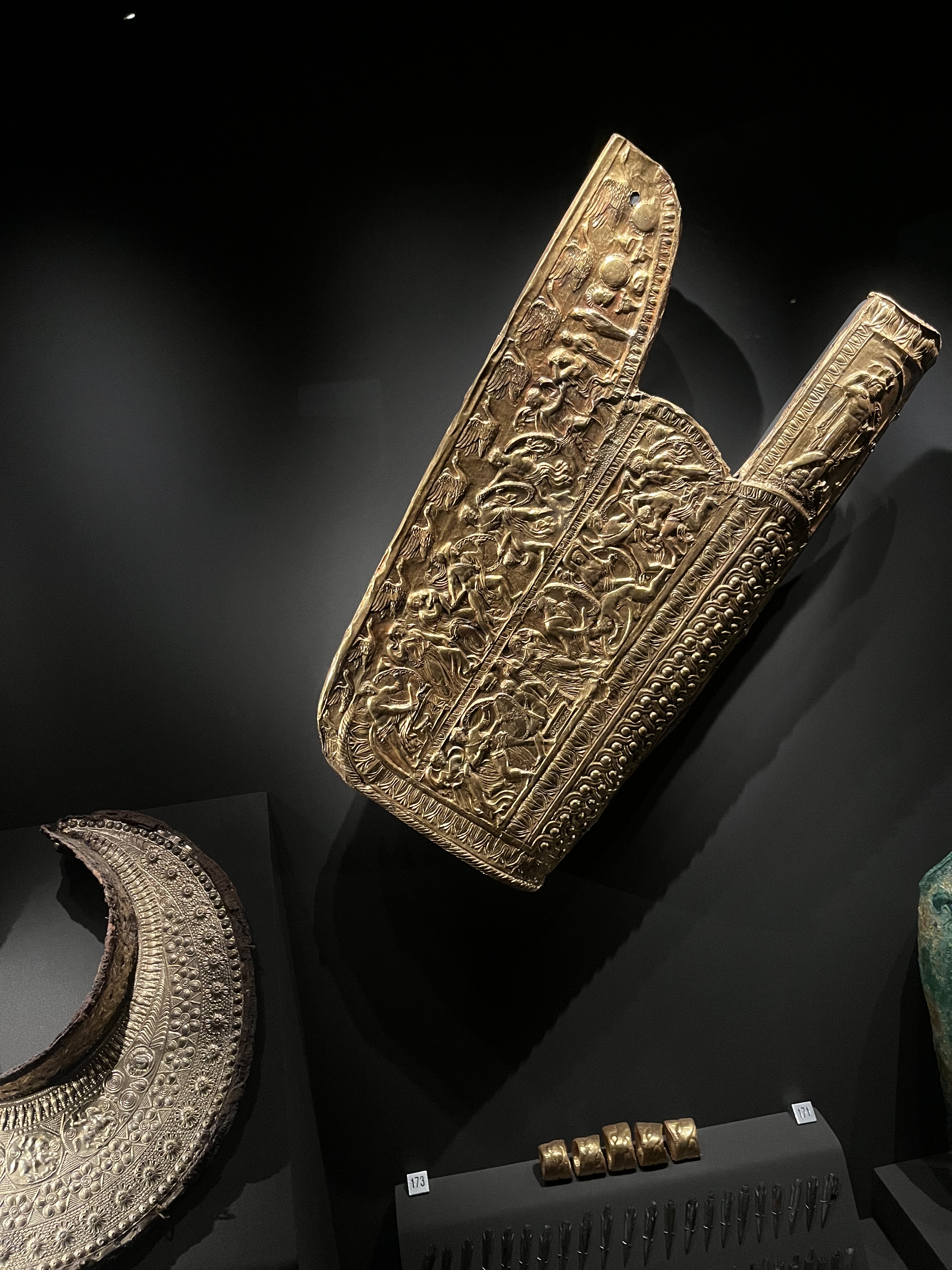
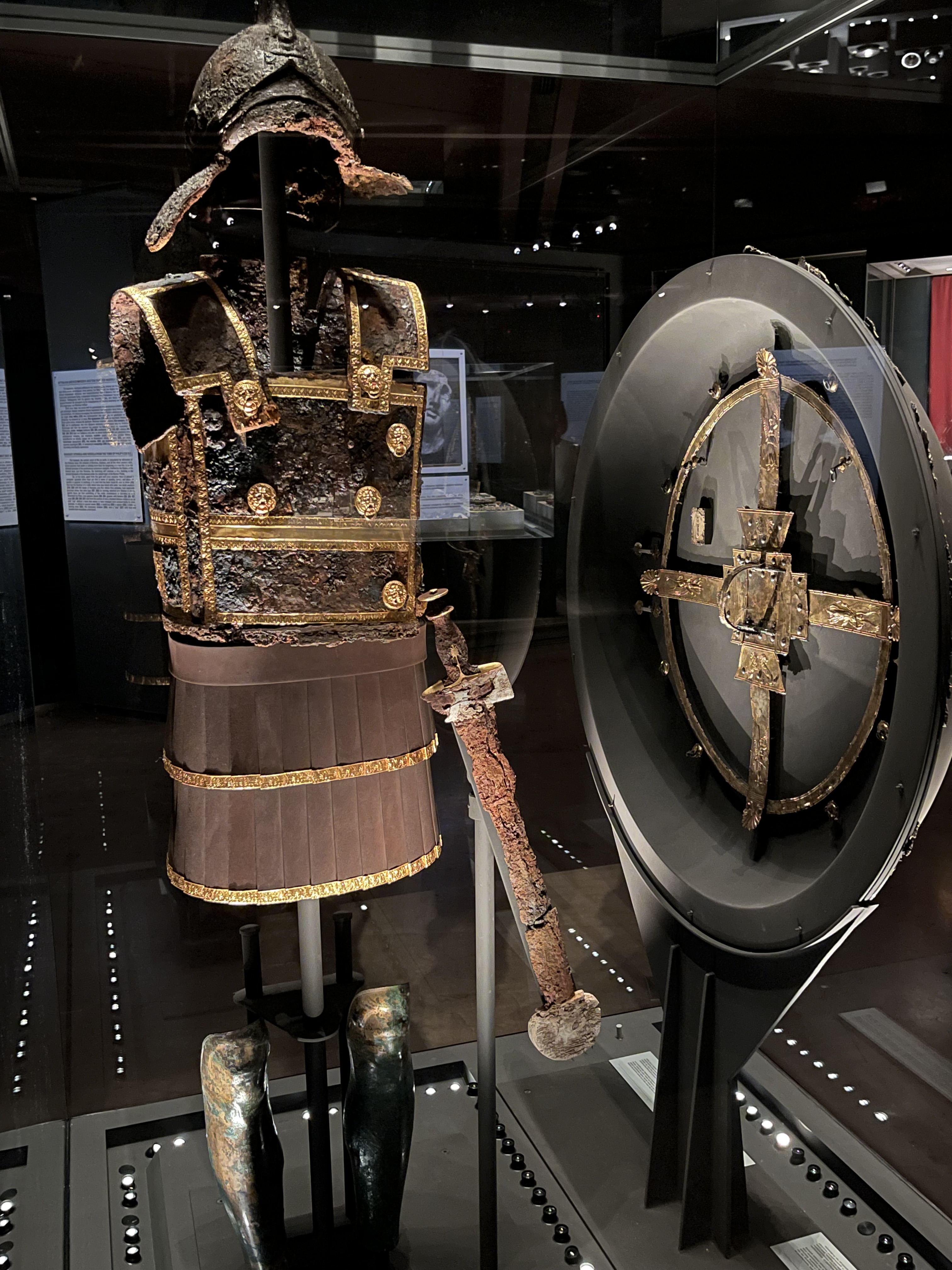
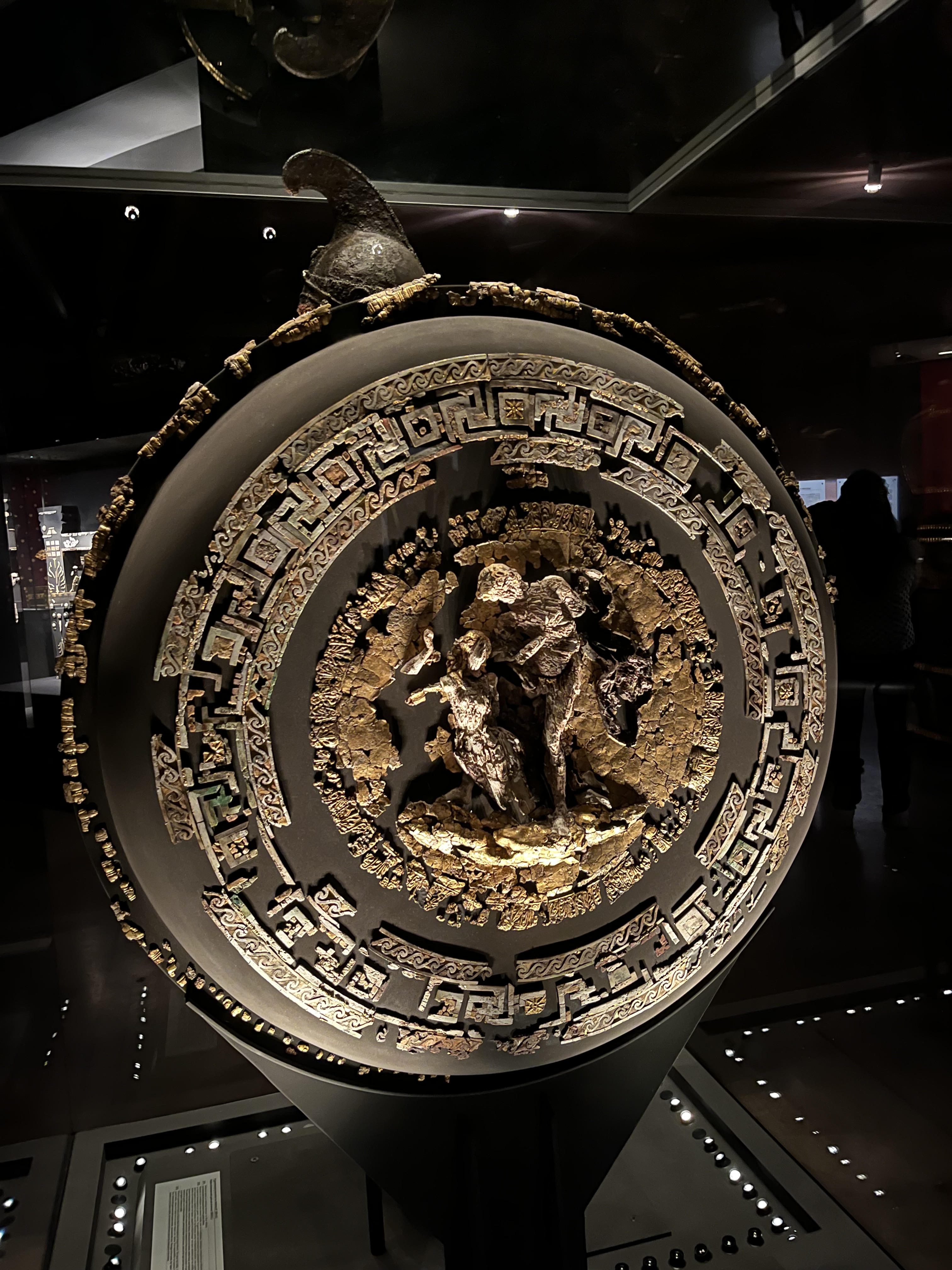
Above, armor and shield of Philipp II.
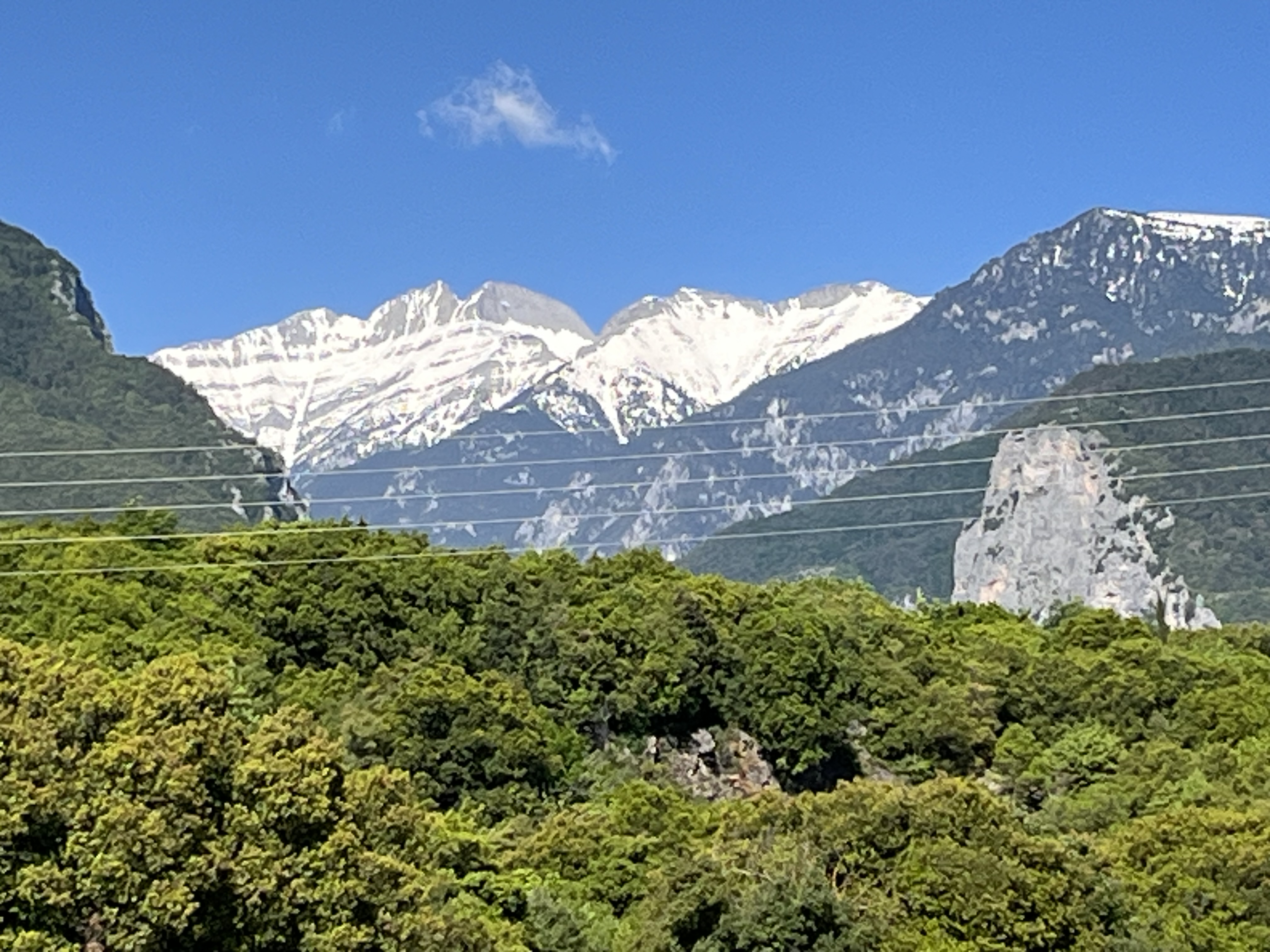
From Vergina, which is almost as far north as Thessaloniki, we headed south, back towards Athens. We spent the night in Litochoro, a touristy, recreational town nestled between the Aegean Sea and Mount Olympus. As described in Greek Mythology, this home of the Gods Mountain, was shrouded in clouds when we arrived. With 9,573′, Mount Olympus is one of the tallest mountains in Europe, and as Mount Olympus in Washington State, is massive and consists of a multitude of peaks and deep gorges.
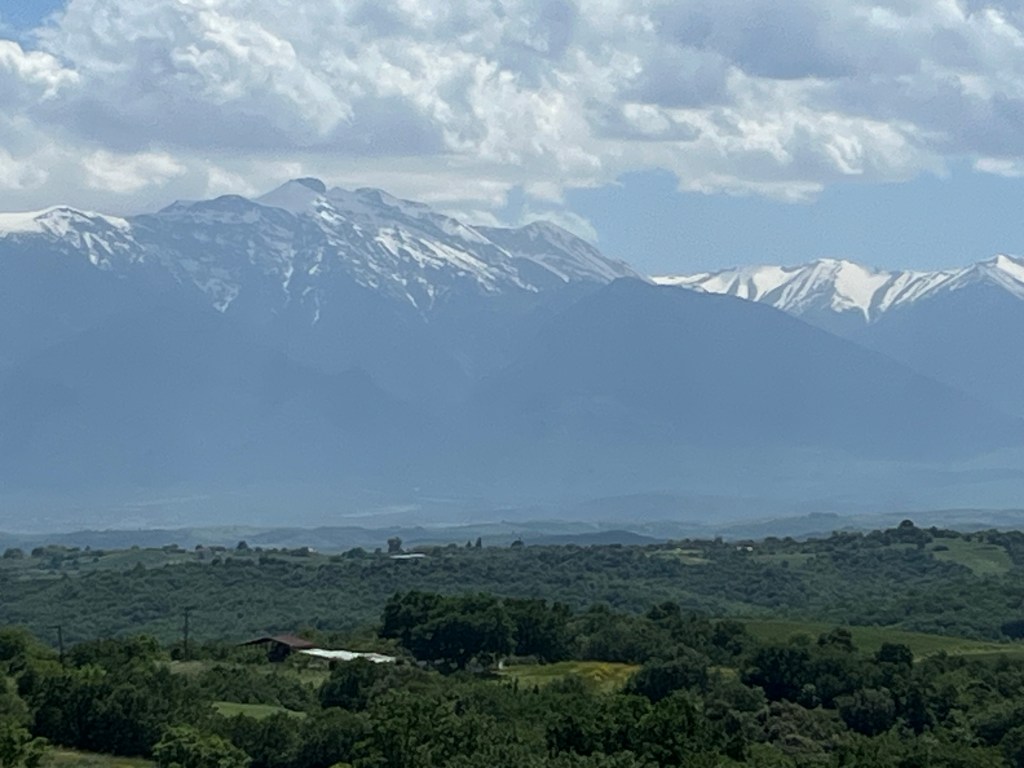
Leaving Litochoro the following morning, Mount Olympus was clear and the still fresh new snow was shining in the morning sunlight under blue skies.
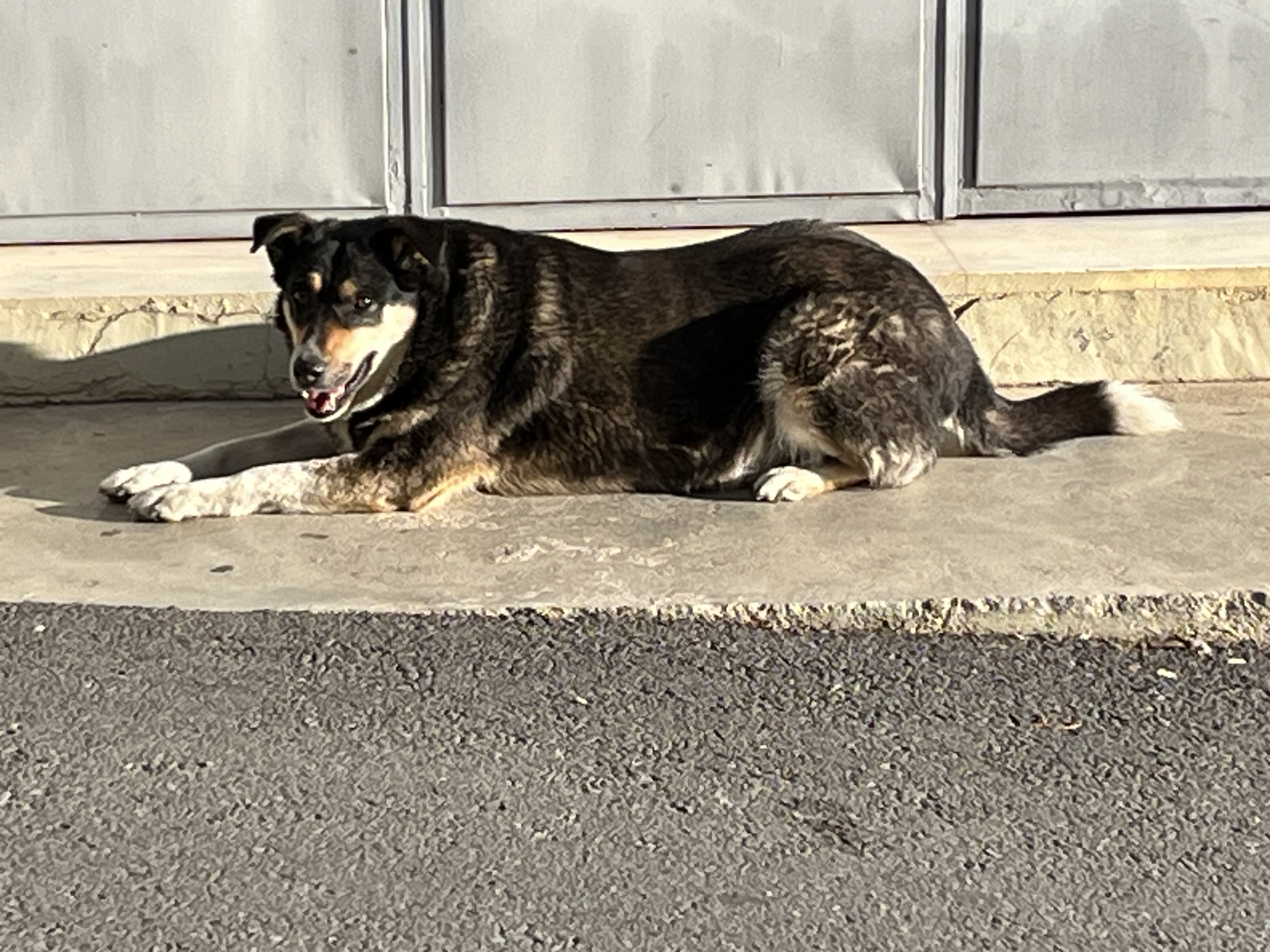
Haven’t mentioned it before, yet constantly observed during our Greek journey, cats are everywhere in Greece. Nobody seems to have them in the house as pets, yet people feed them and they are being loved and tolerated everywhere. We hardly ever see anybody walking a dog in Greece either. There are a few dogs around, yet as with the cats, no-one seems to claim them and they just are fed by handouts. There are typically two types of mutt breed dog types you encounter. A mid to large size hound dog type, who is usually friendly and lazily hanging around town, or the big size scruffy and hairy shepherd type dog, like a great Pyrenees, you might encounter in the countryside, and from what we are told, should be avoided and demand some respect for their aggressiveness.
After driving a little over 1,500 miles in 12 days, we dropped off our trusted Hyundai rental car back in Athens. Overall, driving in Greece wasn’t too difficult or different. One piece of advice I can give though, is to leave plenty of space whenever you can in a narrow stopping situation, as oncoming large trucks will come at you rather swiftly and aggressively, allowing very little time to back up or move out of the way so that one doesn’t get hit. They simply do not seem to care that they might scratch their heavy metal and put some dents into your car! Speed limit signs appear to be meaningless, as hardly anyone seems to care or abide by them. During our entire trip I saw one instance where police were stopping speeding cars. It does not help that the speed limits are usually set very low, change frequently, and mostly do not appear to make much sense. Roads are generally in good conditions and most freeways have reasonable tolls. Within urban areas, people tend to park wherever they want or feel convenient, which often is the middle of the road, to pick something up or other, and with this, creating a large hindrance to traffic flow. And, in general, most Greek drivers tend to be on their cellphones while driving. Besides the driving, by then we also had the Greek Geiá sou for Hello and Efcharistó for Thank You down.
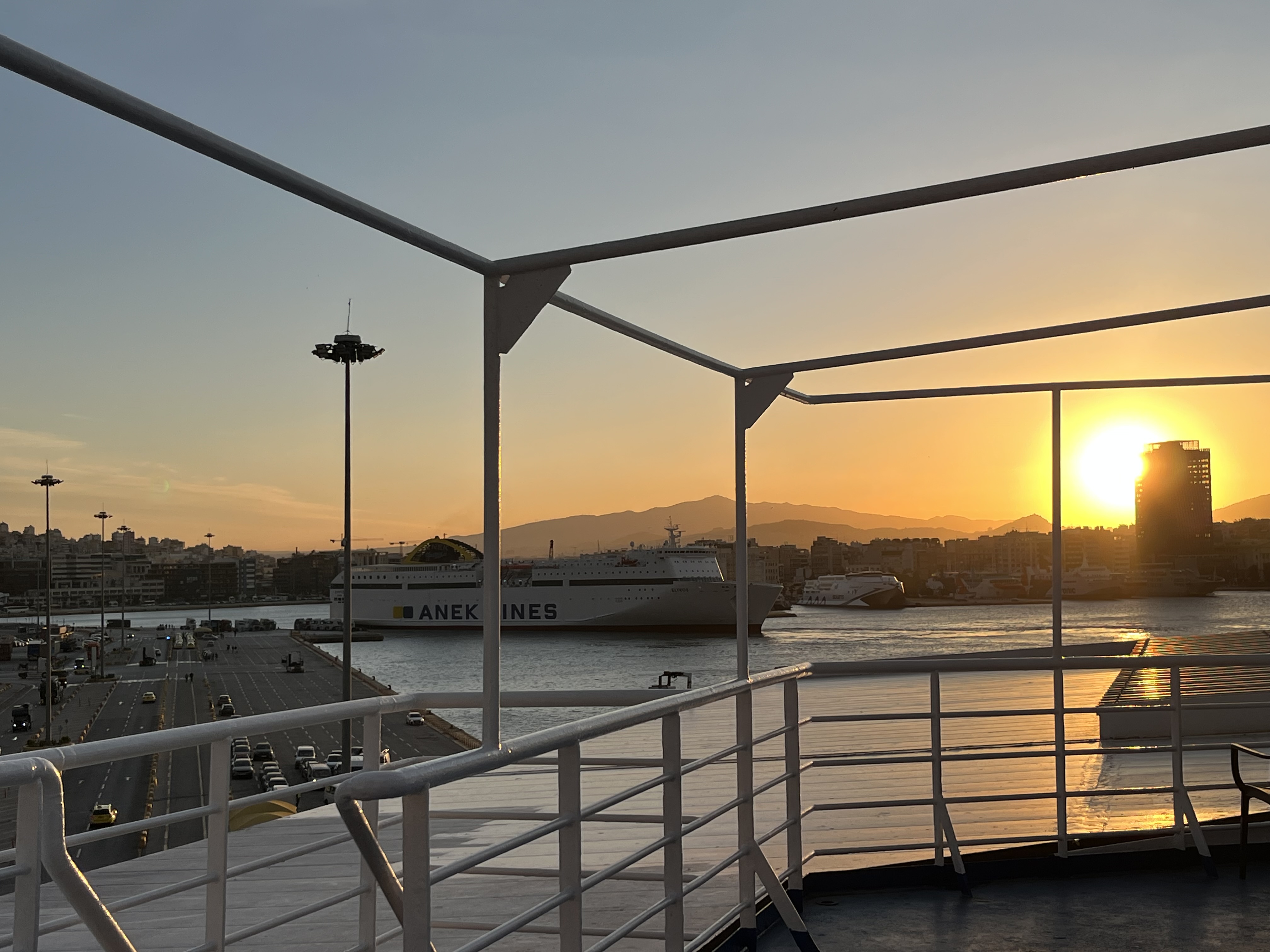
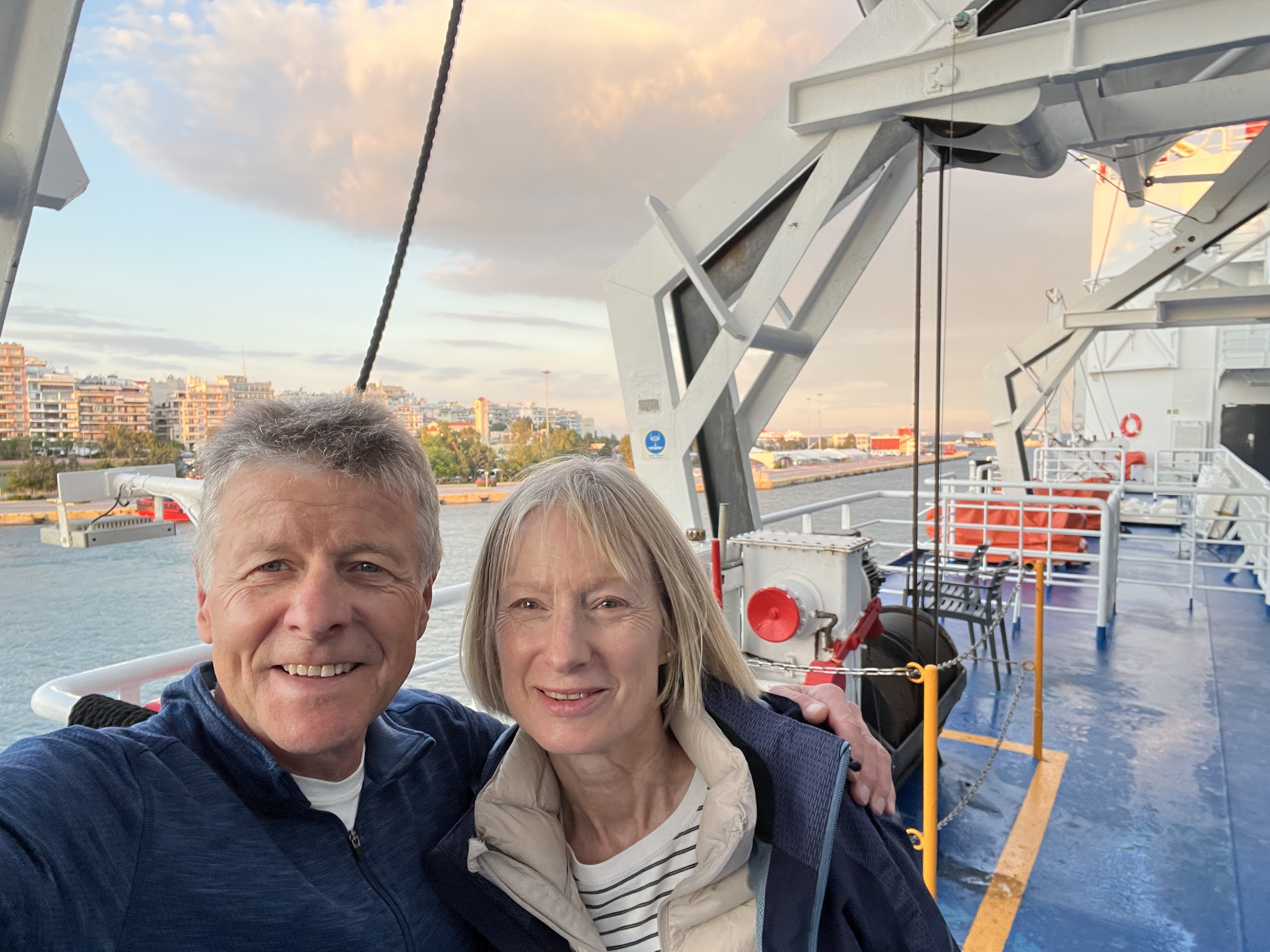
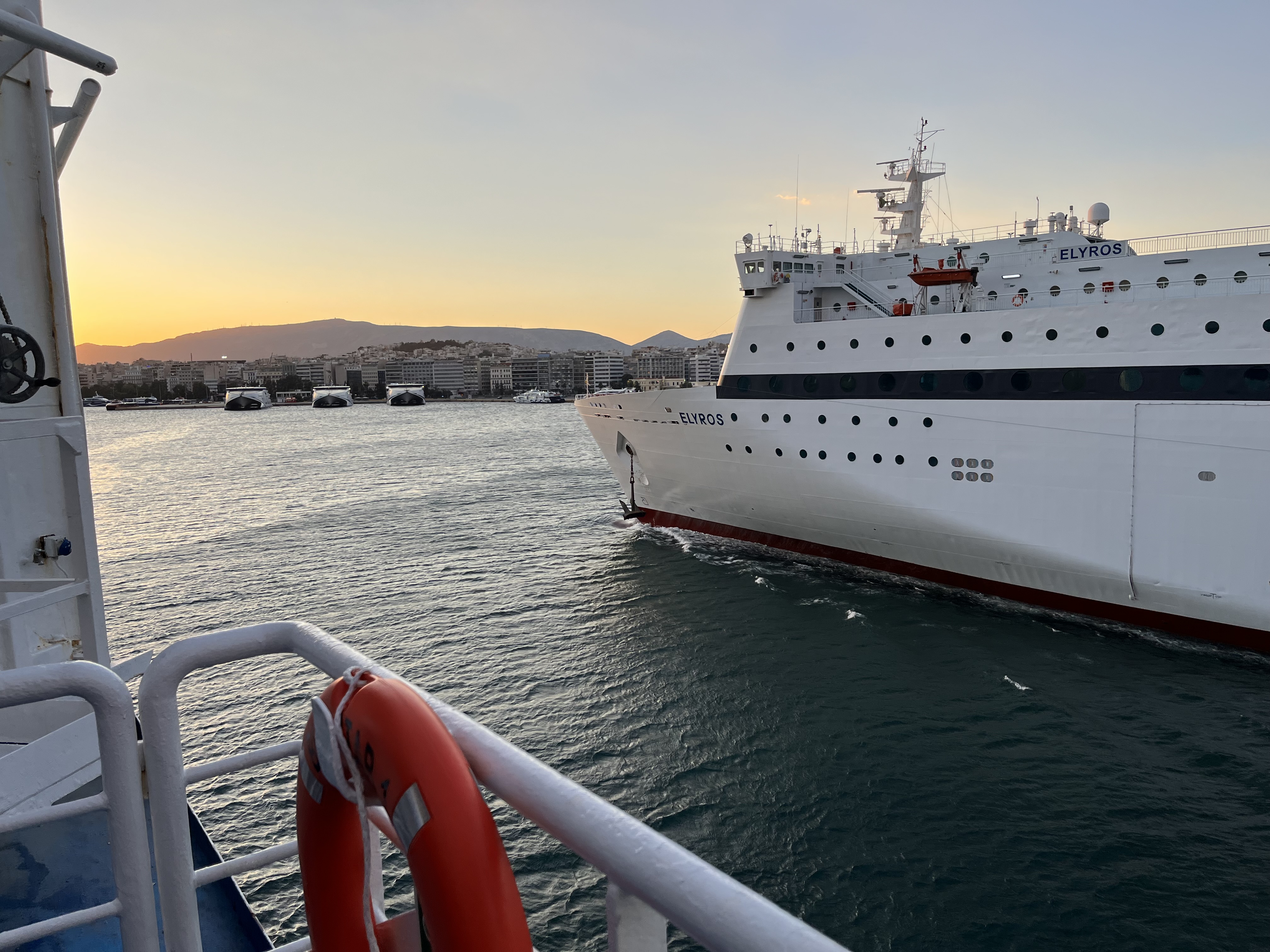
From Athens we took the Metro to Piraeus, Athens harbor town. That evening we enjoyed watching this busy harbor with ferries coming and going. With 2/3 of their country being mountainous, and the remainder in olive and orange orchards, the Greeks always have been a sea going people. Moving the many large vessels quickly with precision in and out of this busy harbor, their craft was on full display.
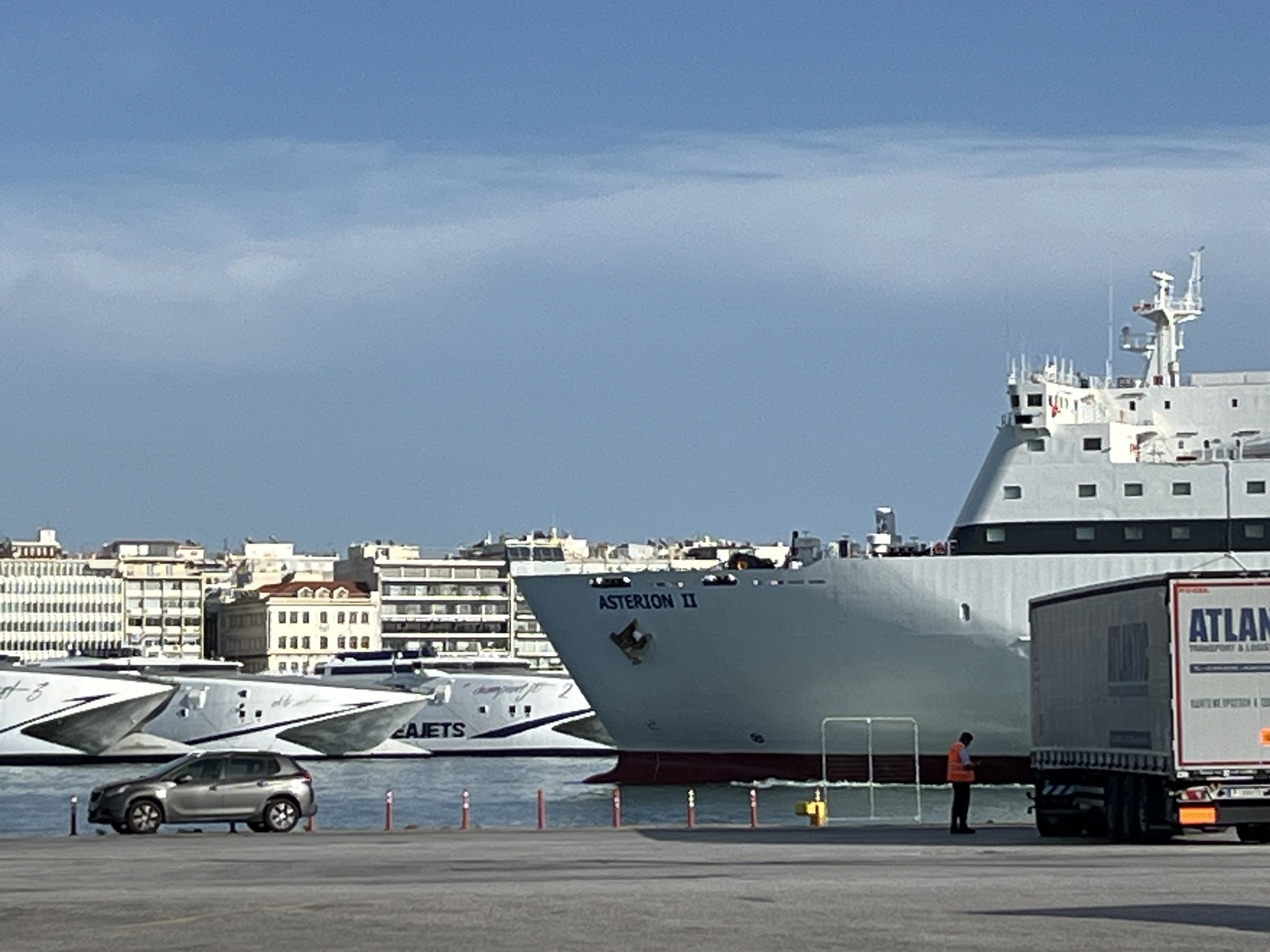
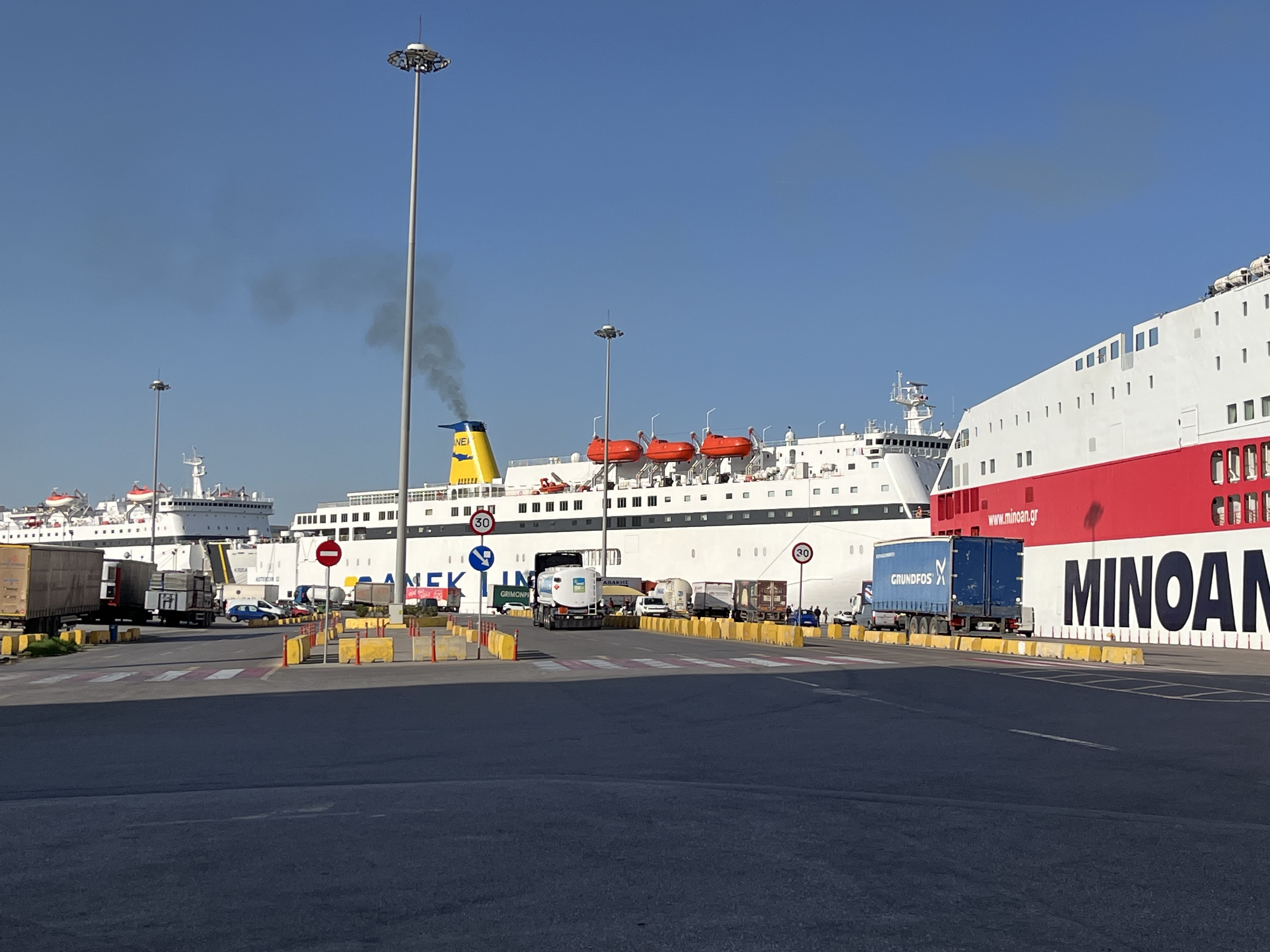
Early the next morning we took a ferry to Paros. These last 3 days in Greece, we wanted to spend in a simply relaxing, typical touristy fashion on a Greek island in the Aegean Sea.
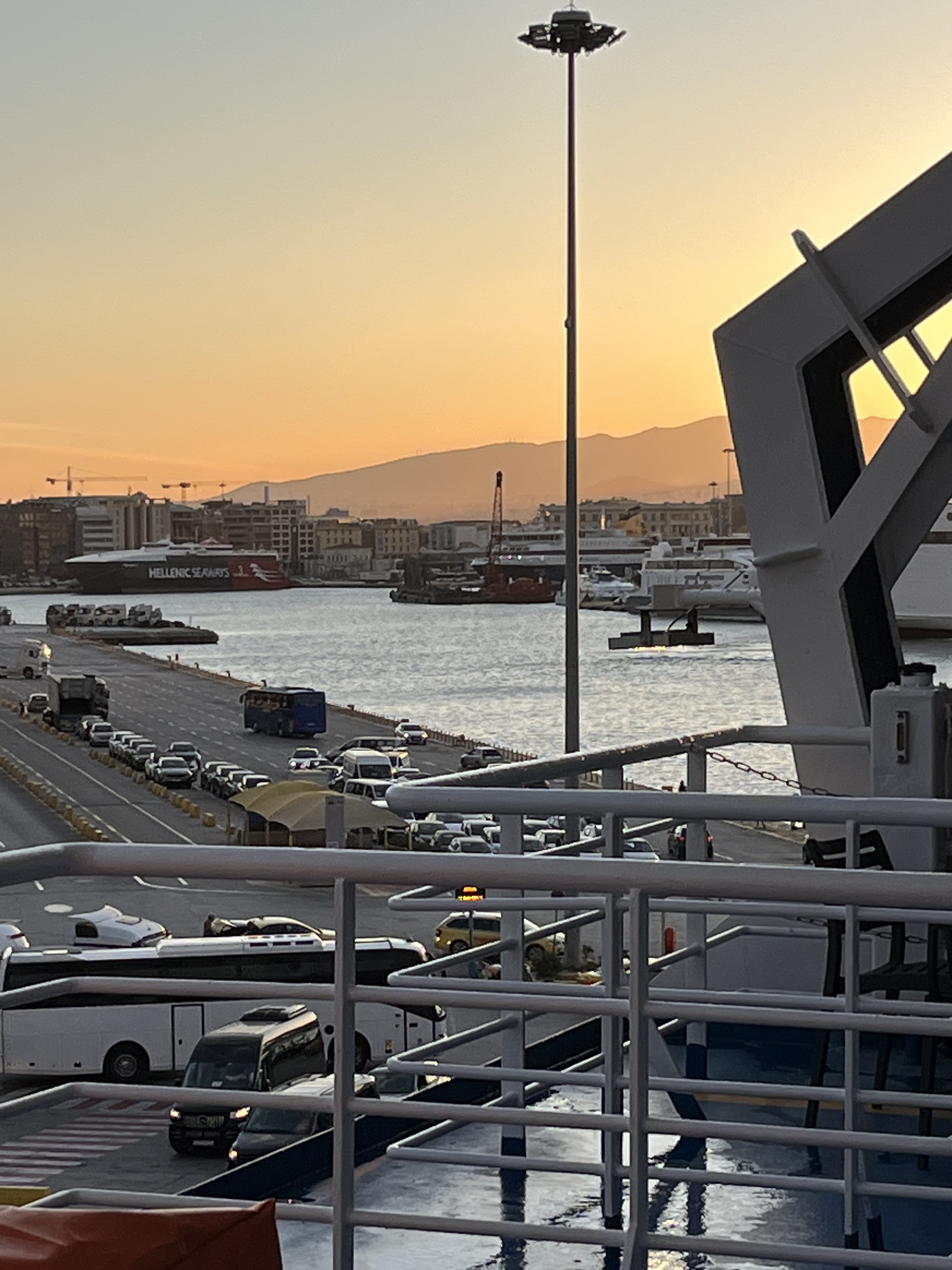
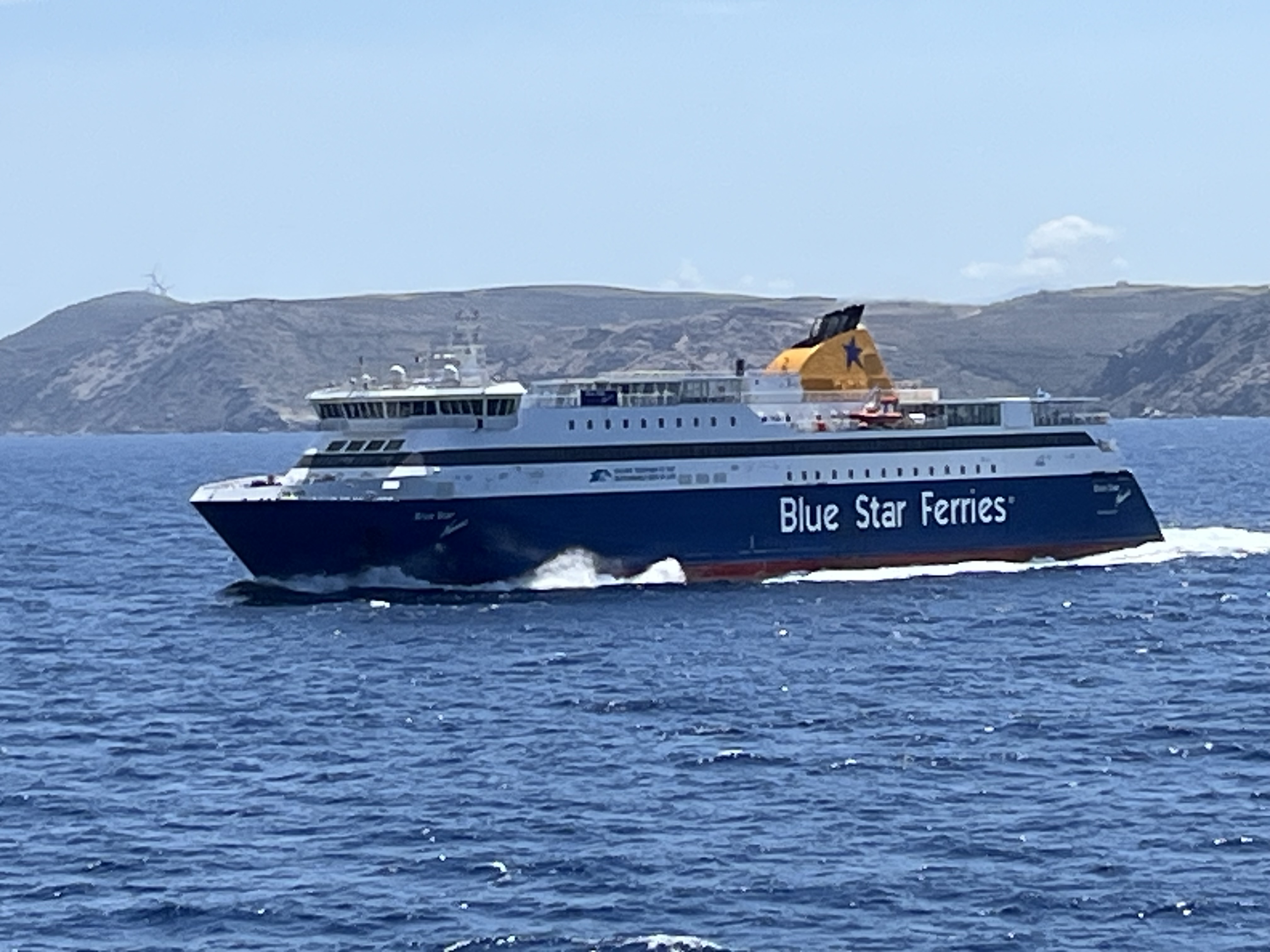
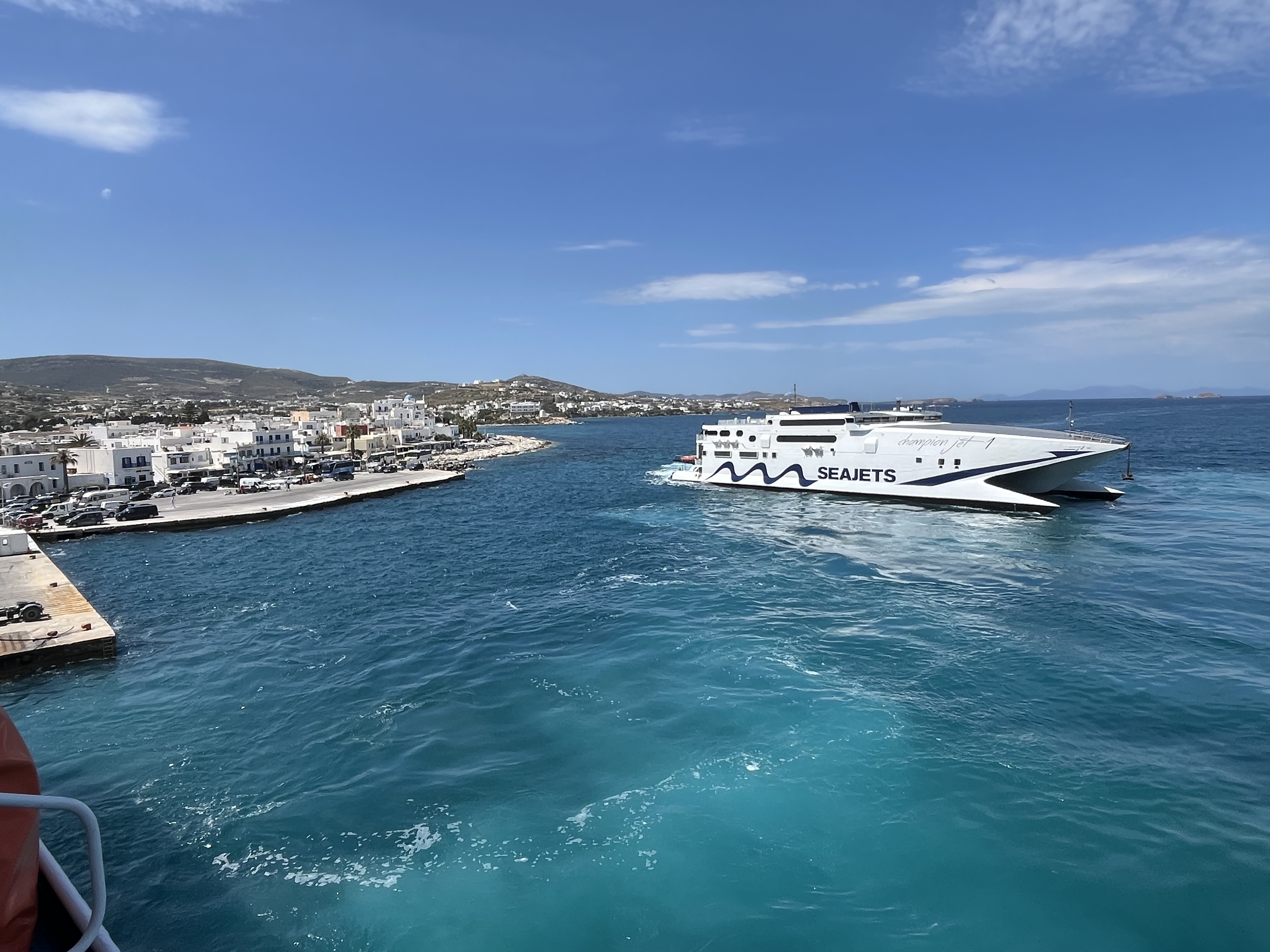
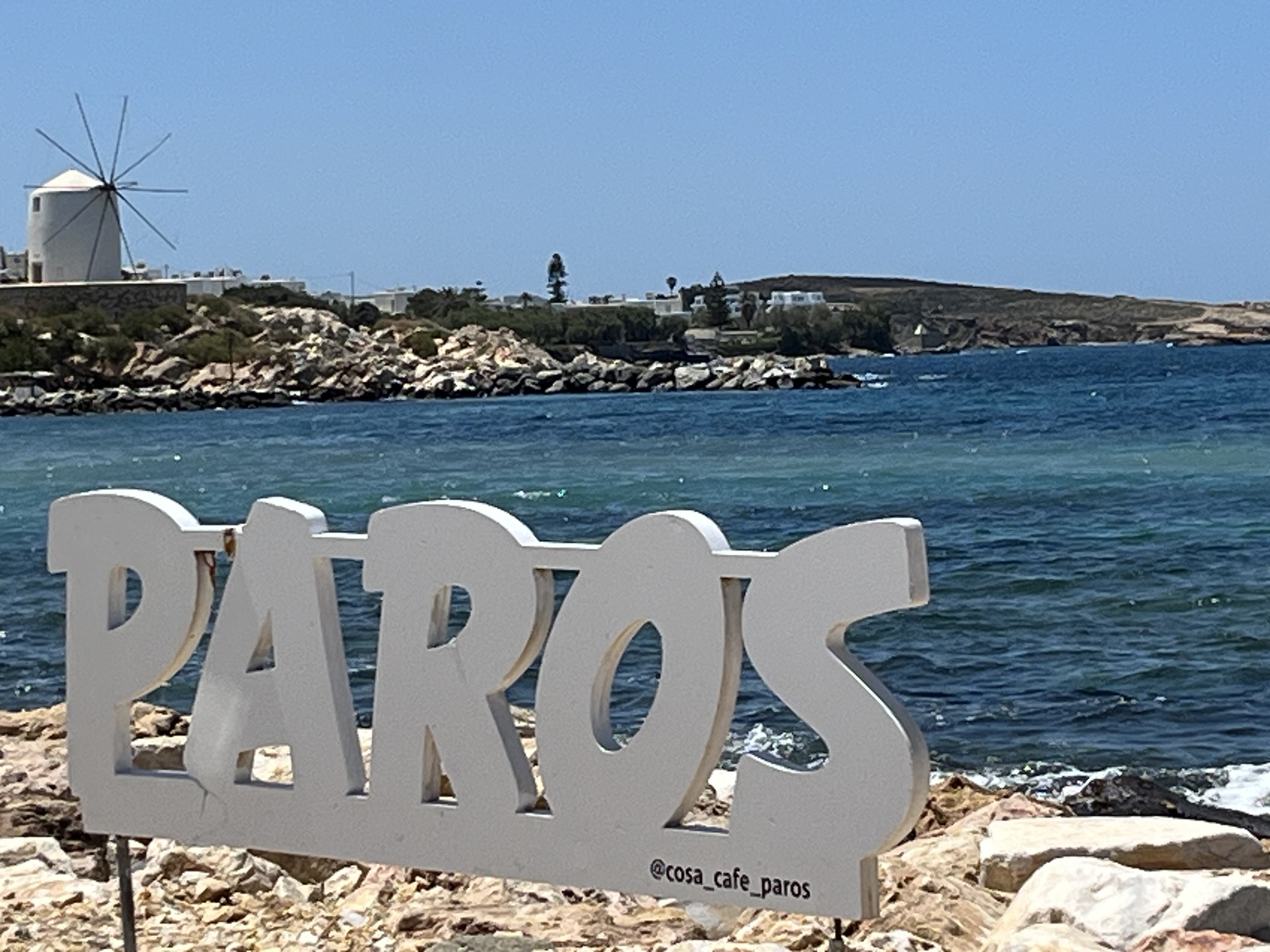
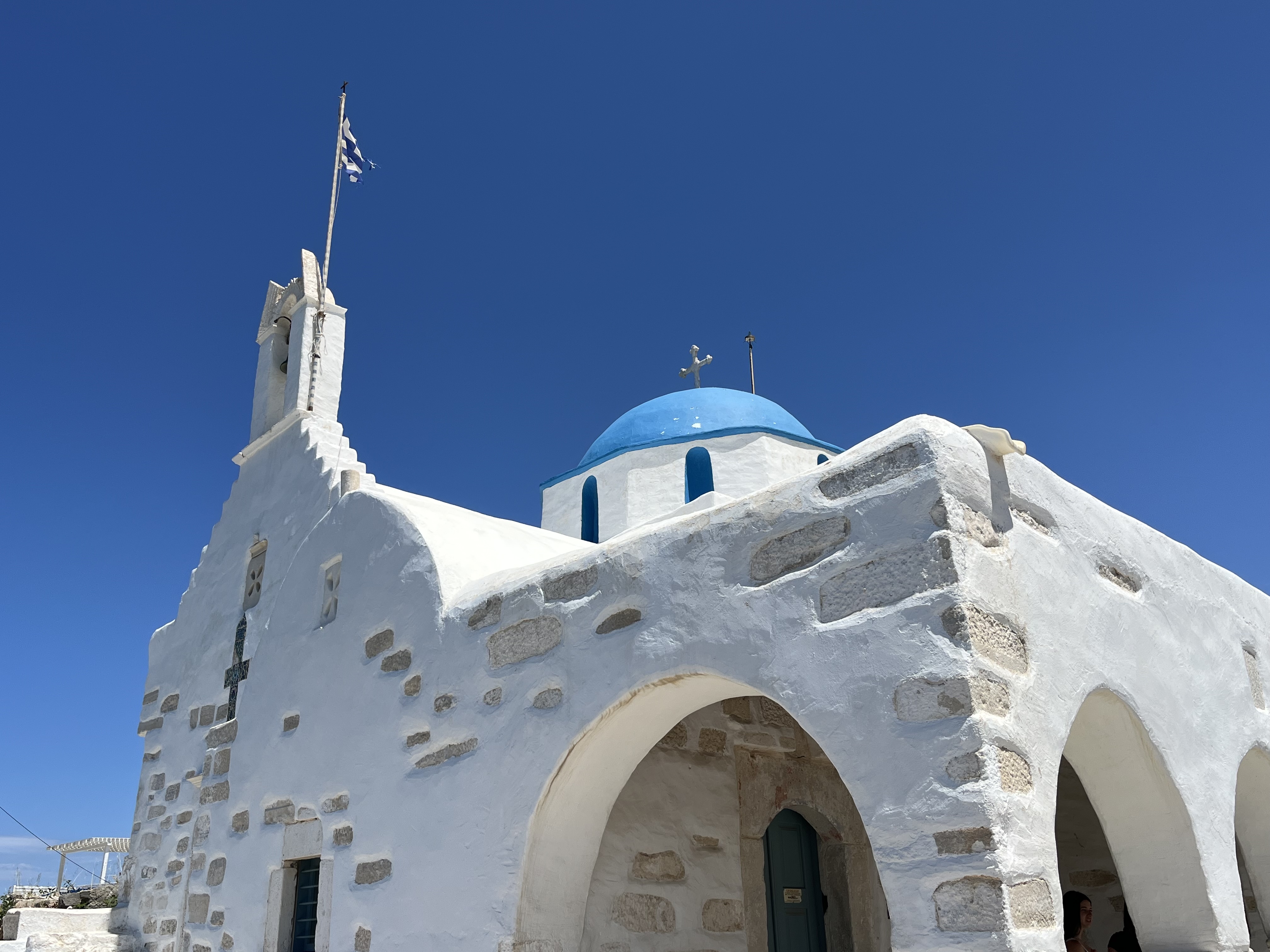
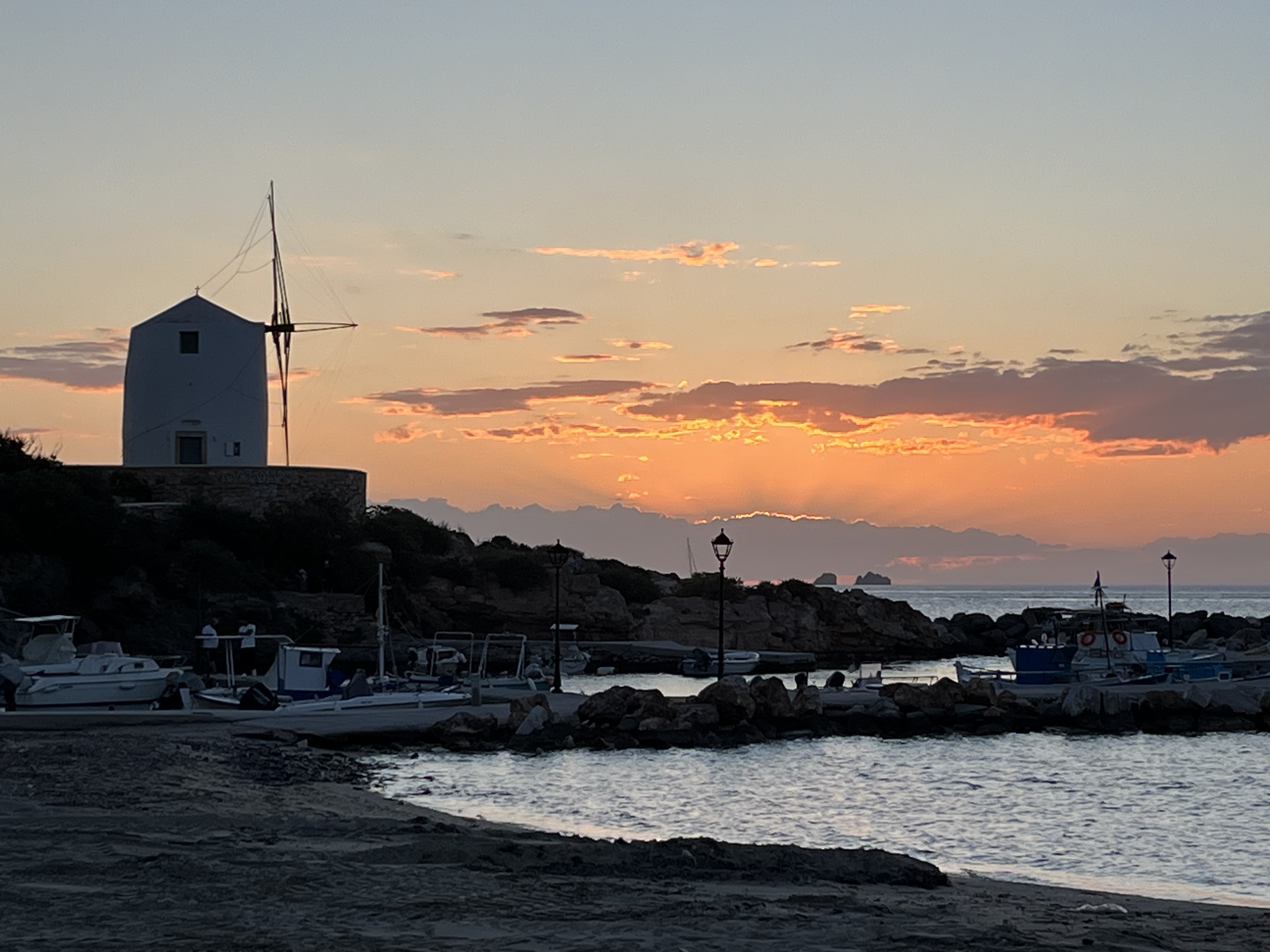
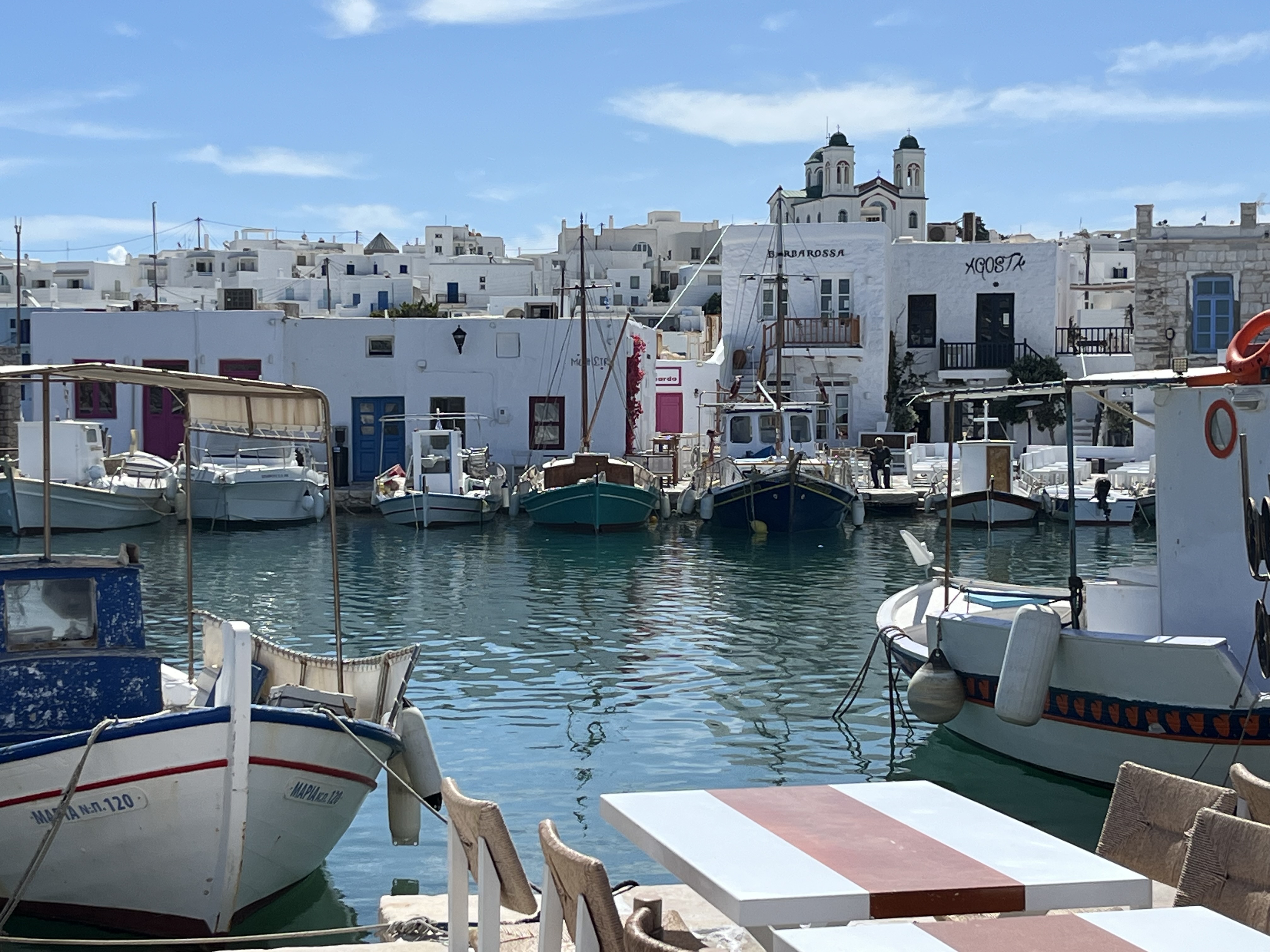
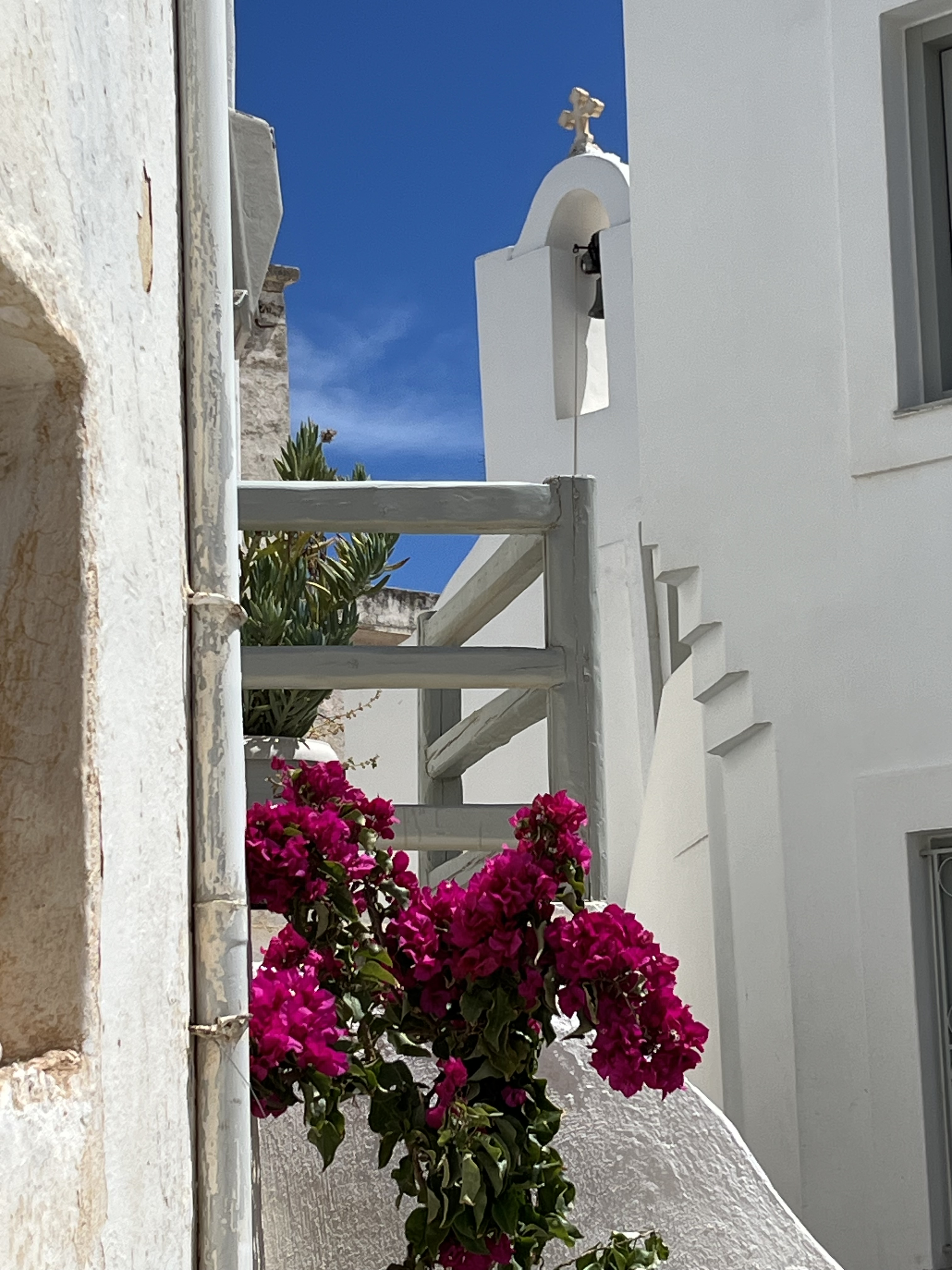
Paros is the picture perfect Greek Island dream. White washed and blue trimmed fishing villages in coves, with pristine blue/turquoise water, fishing boats, windmills, and beaches for swimming. No wonder this island paradise is so popular and a lot of celebrities have a summer home here.
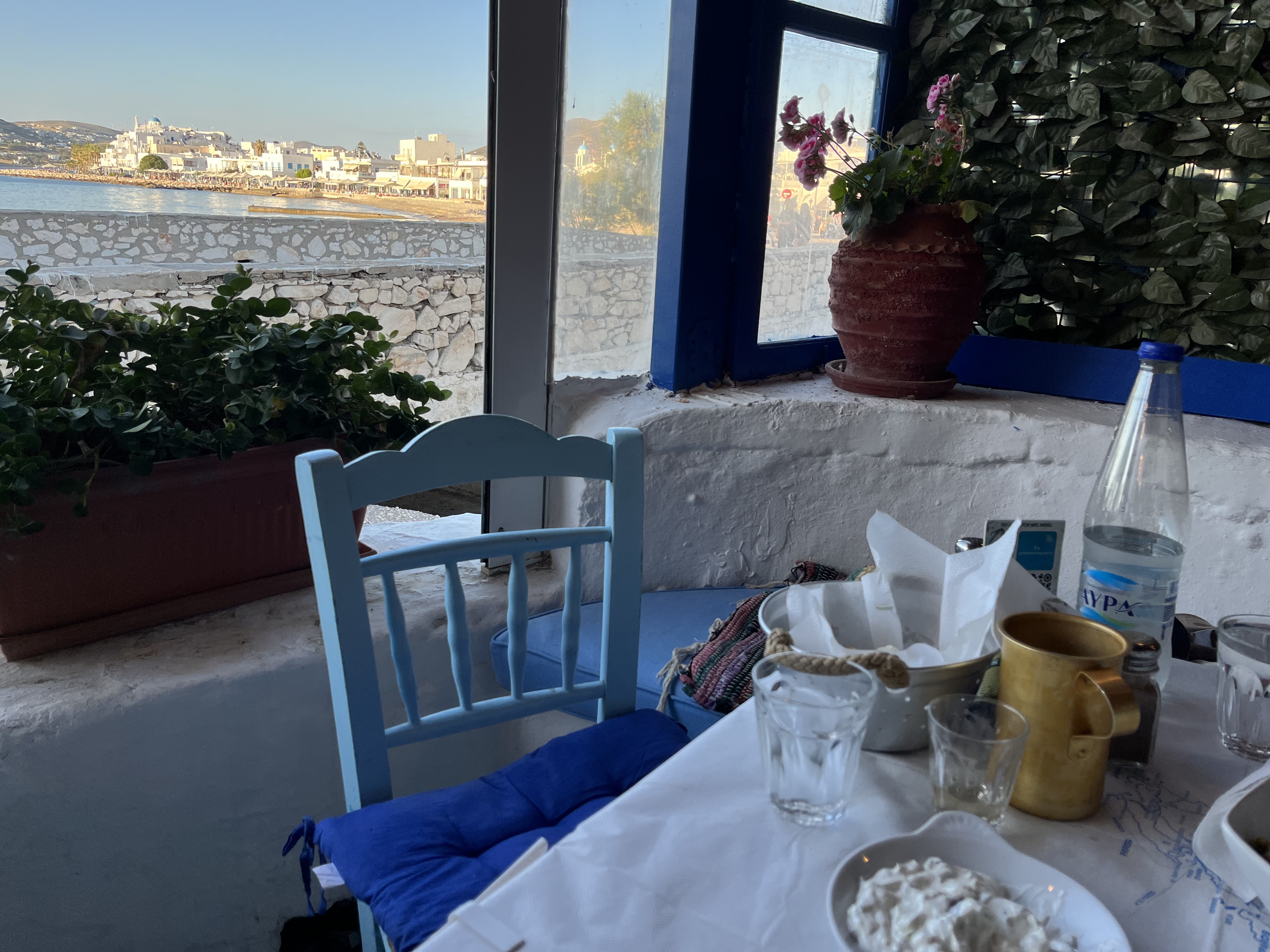
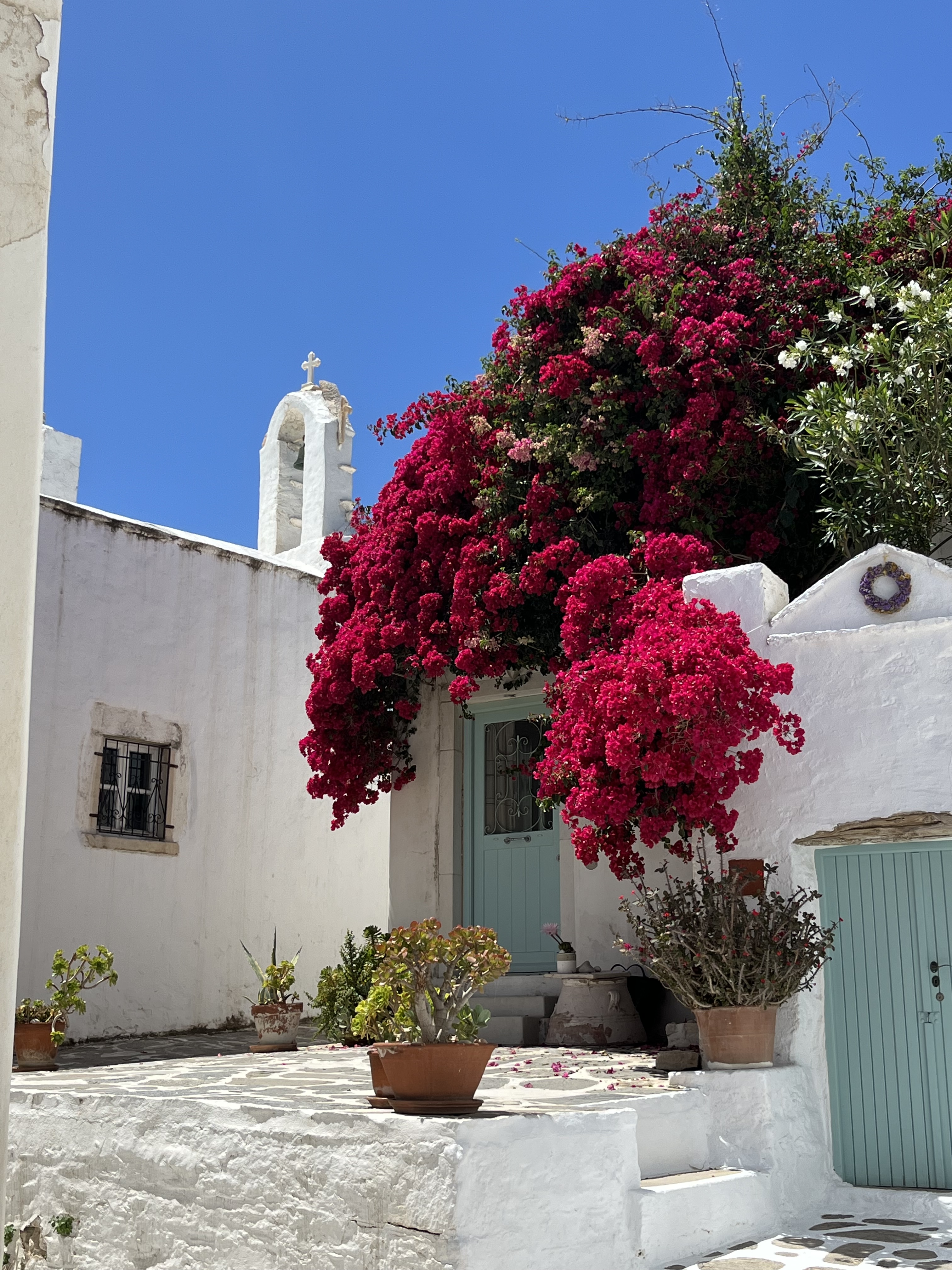
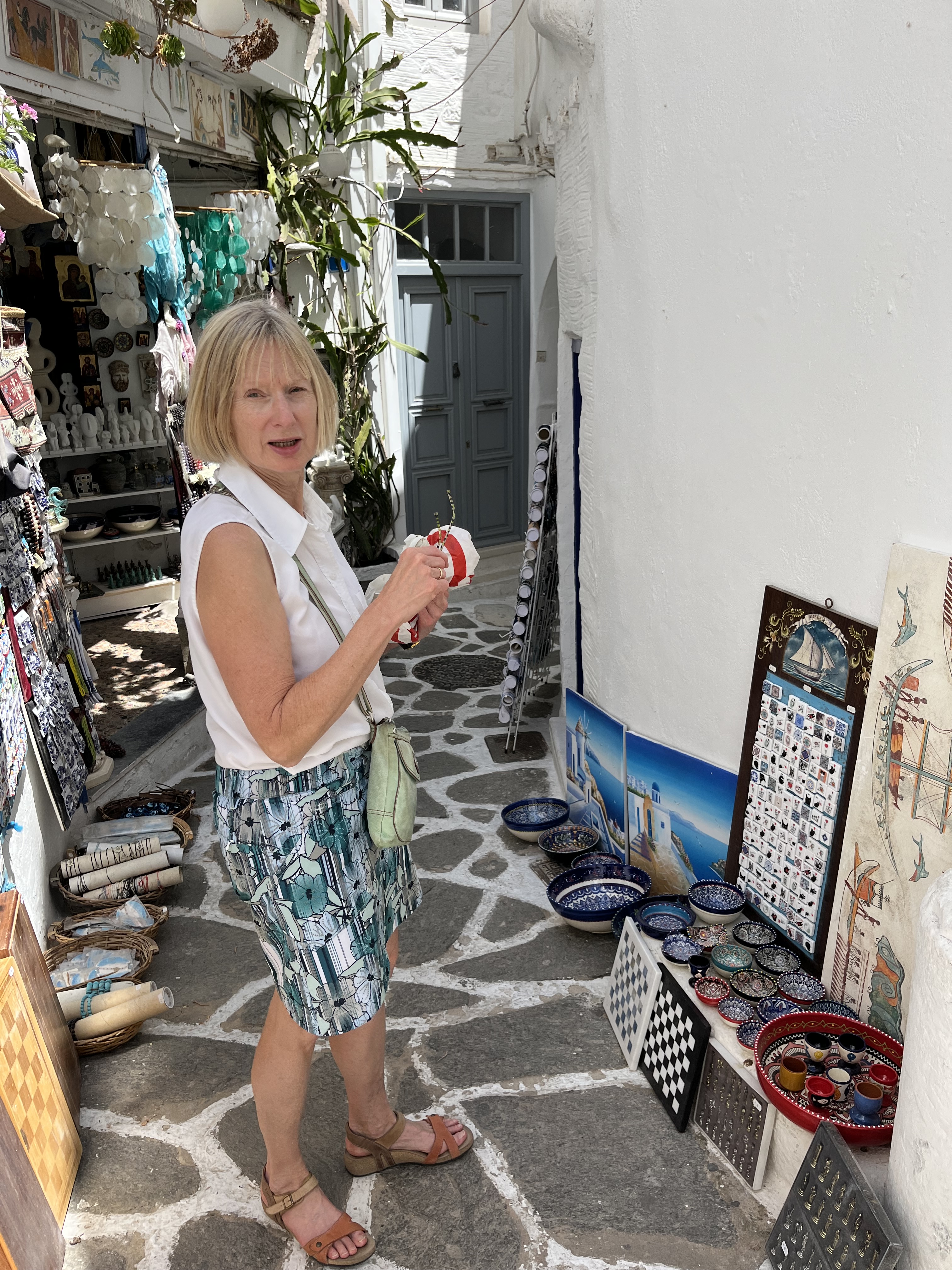
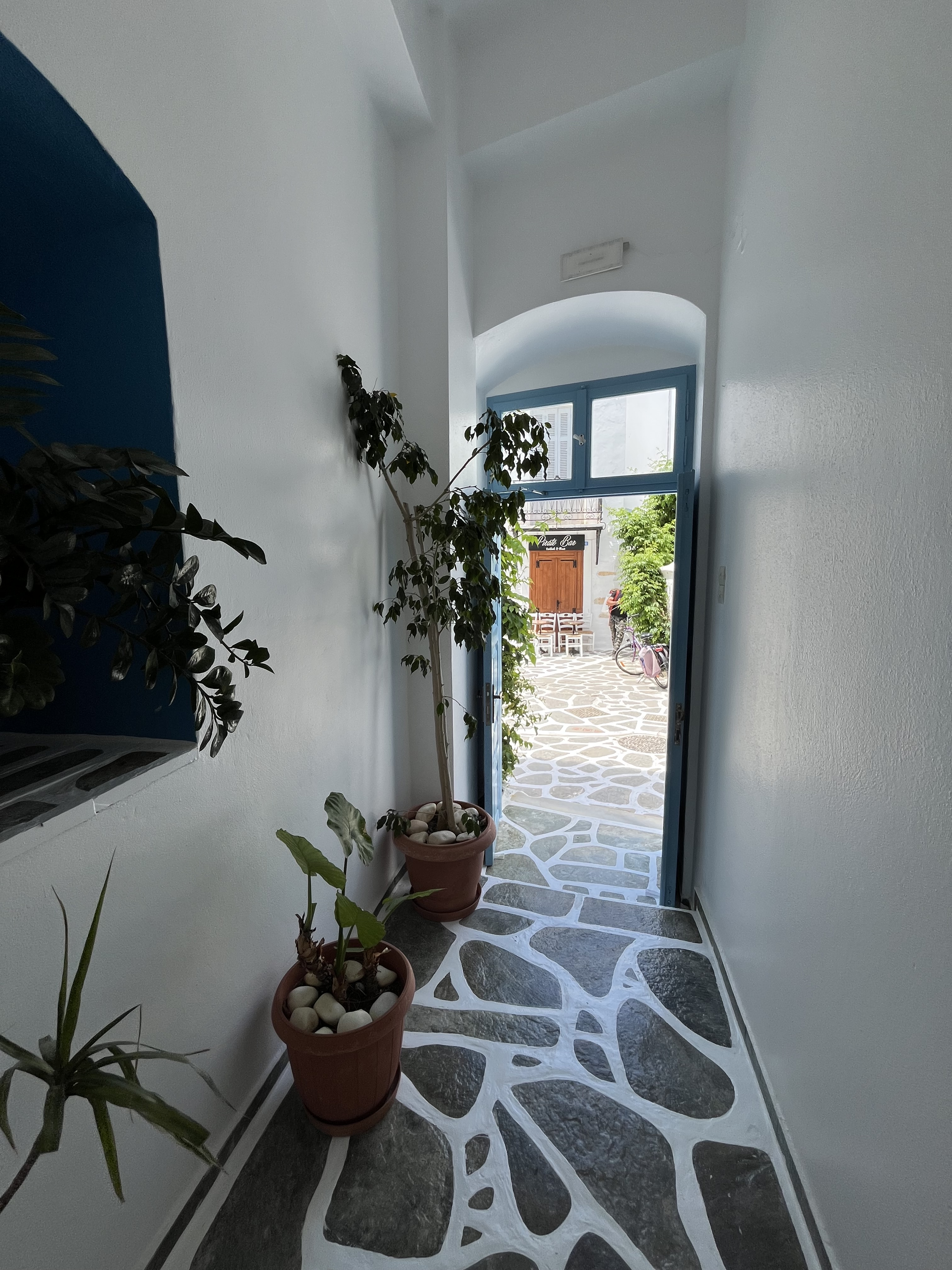
We stayed in the island’s main town of Parasporos, just a 10 minute walk from the ferry terminal.
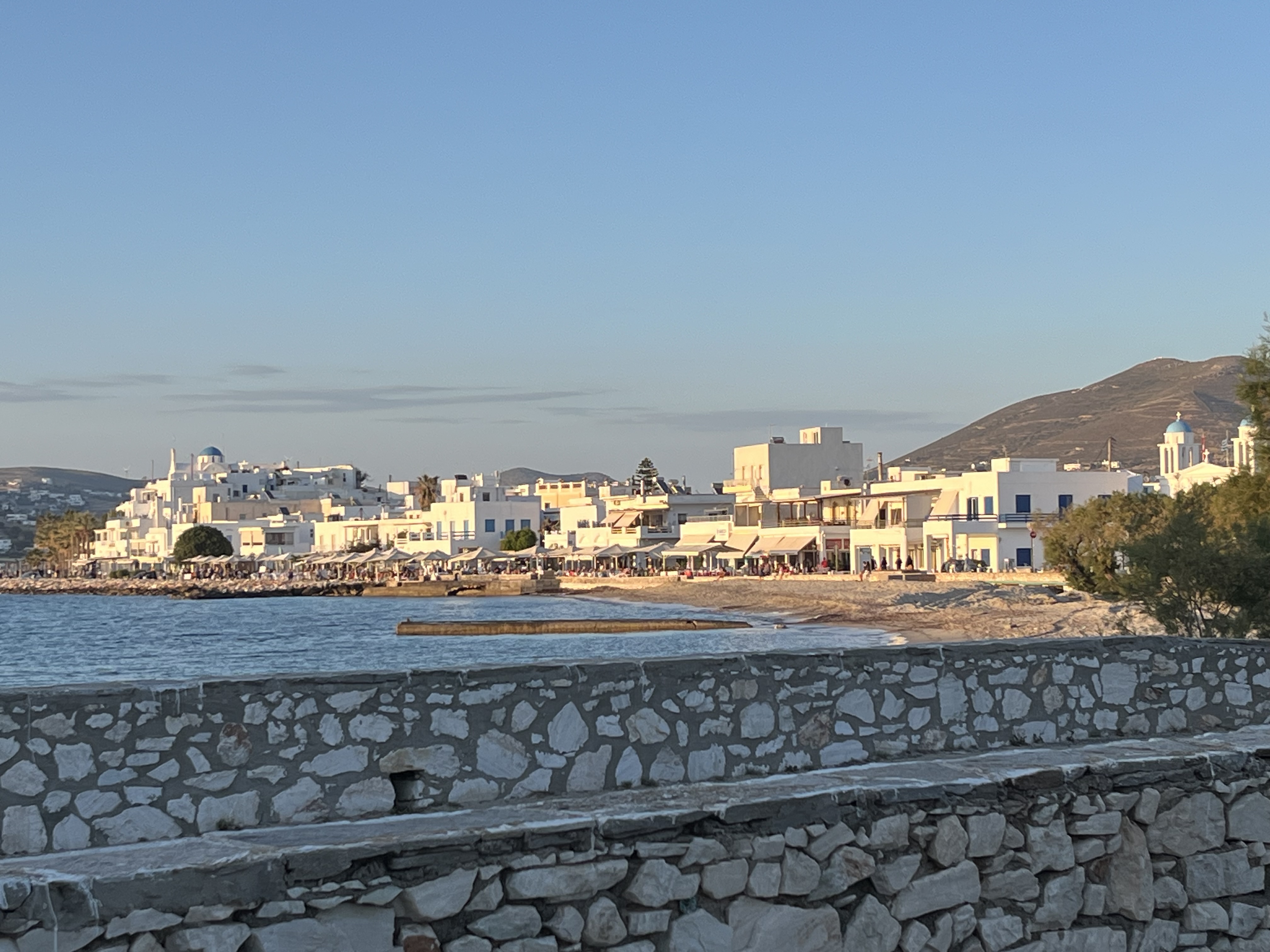
Below is the fishing village of Naousa, situated in a bay at the northern end of the island:
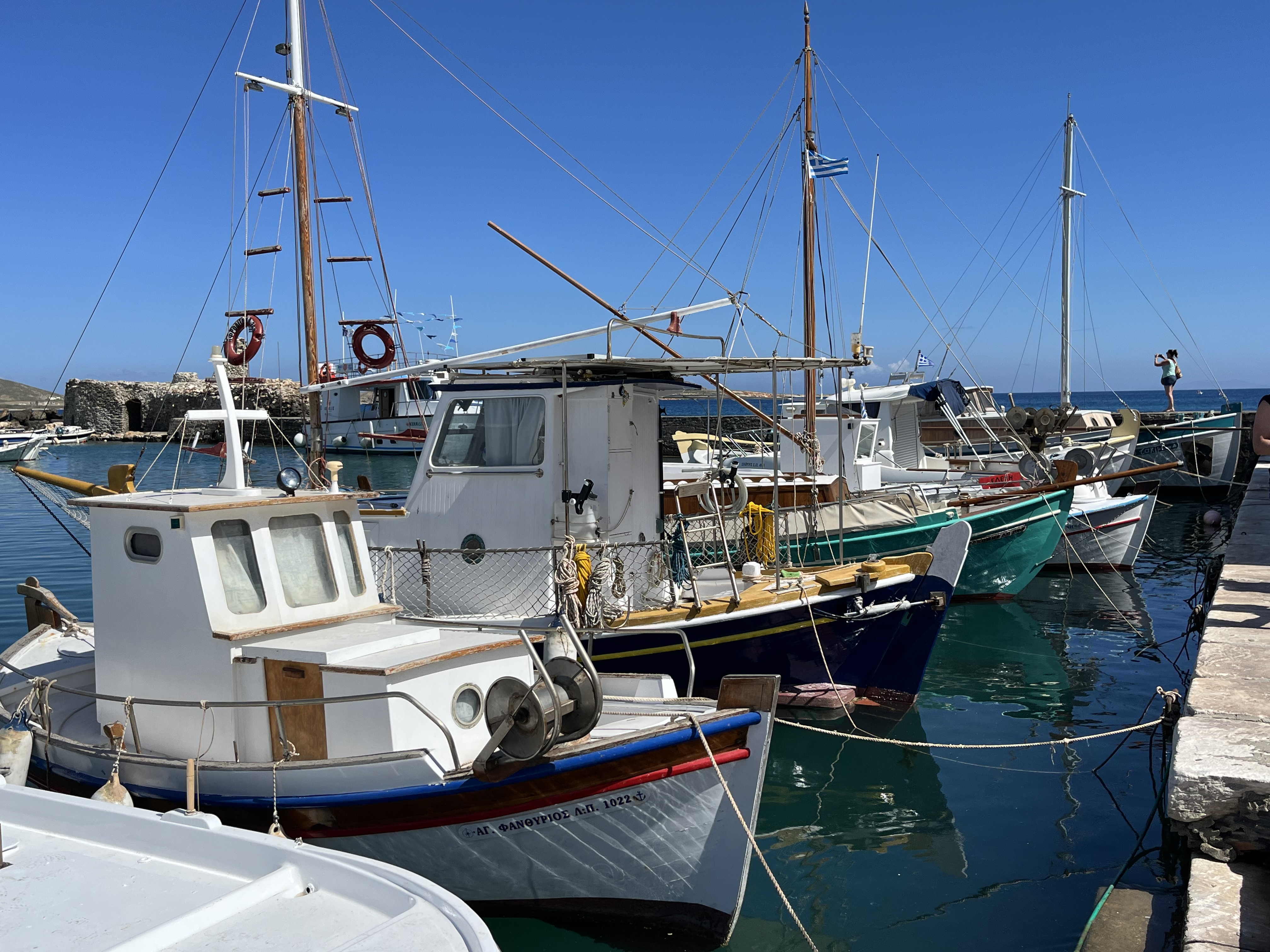
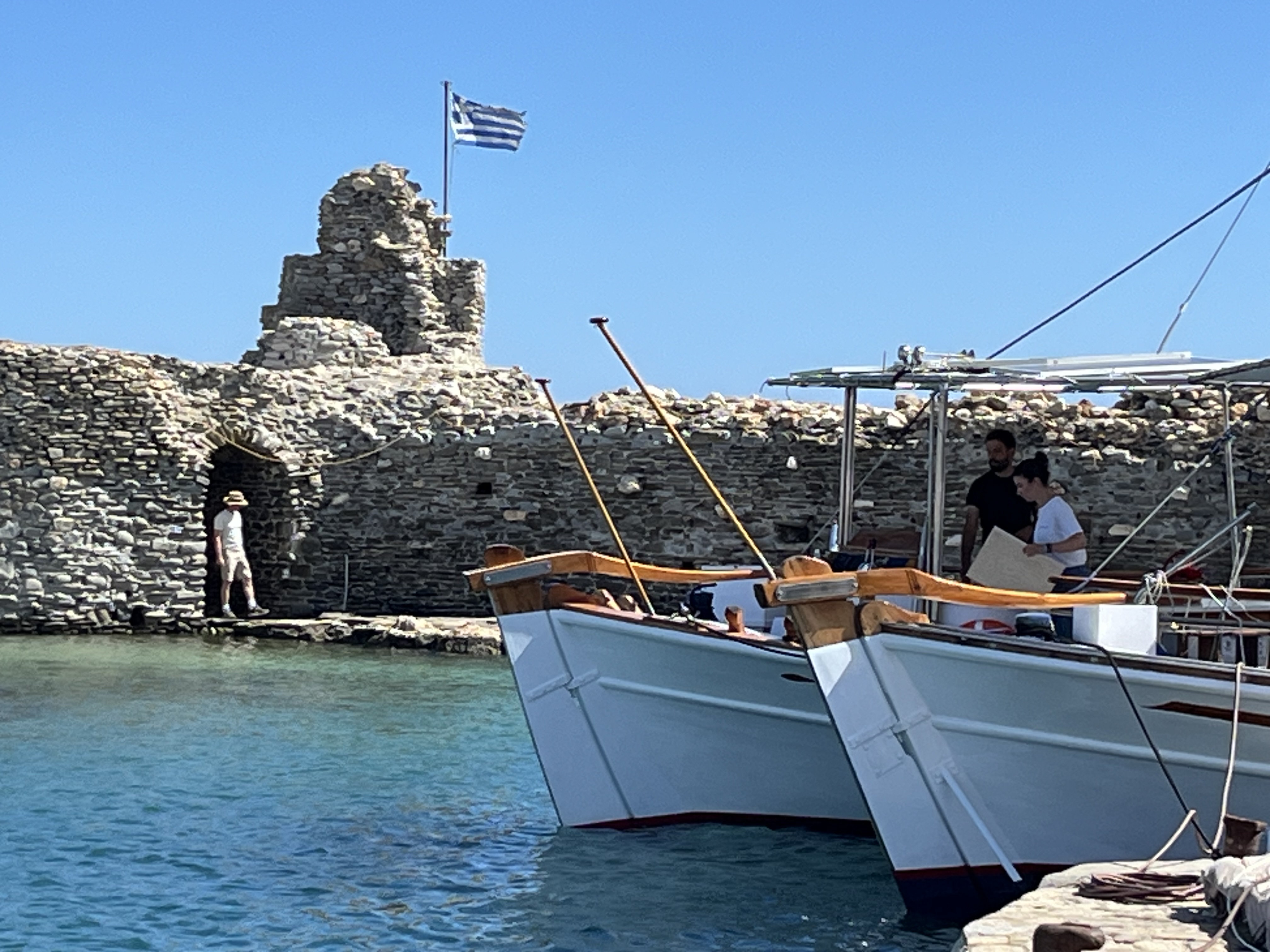
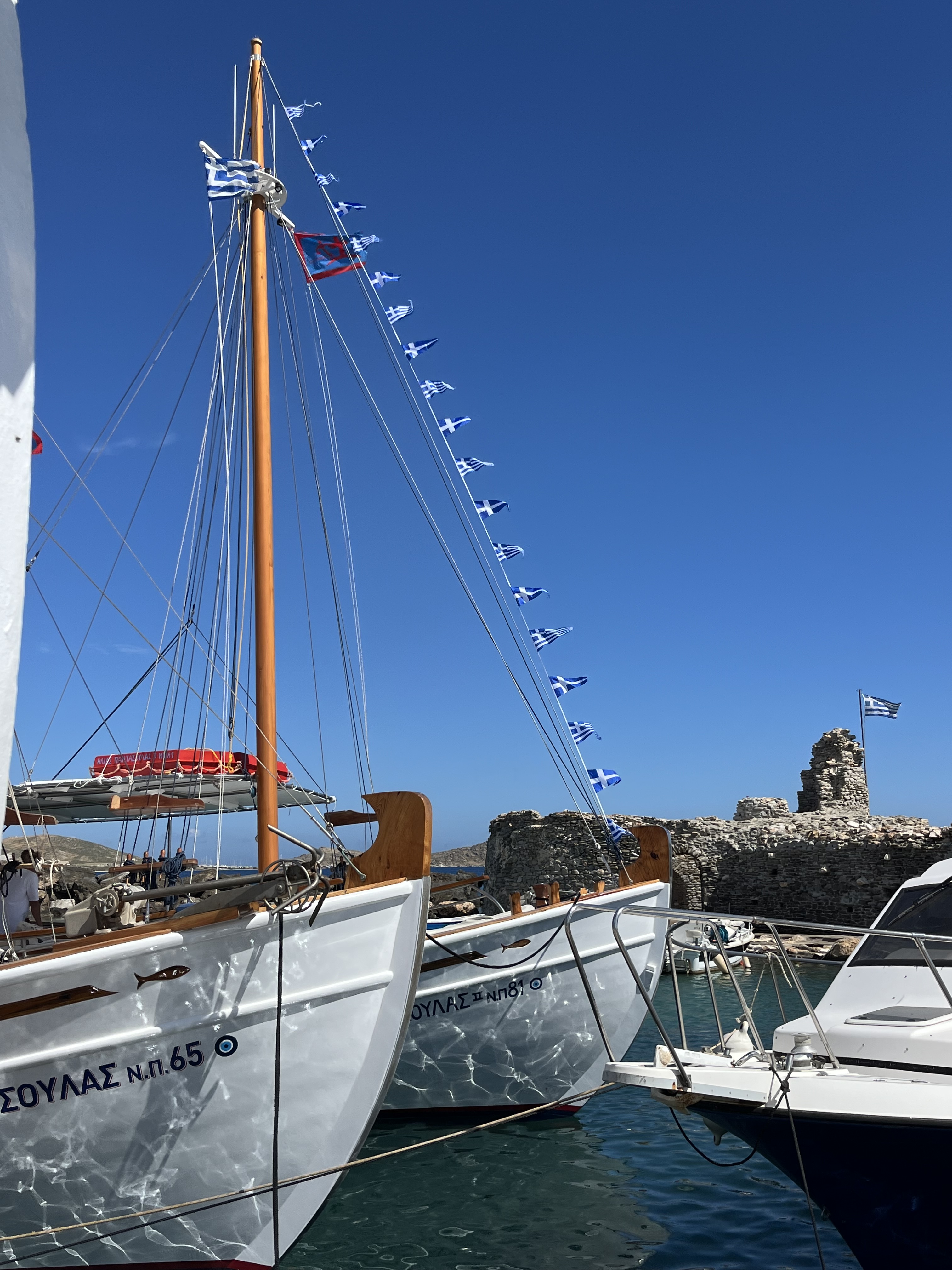
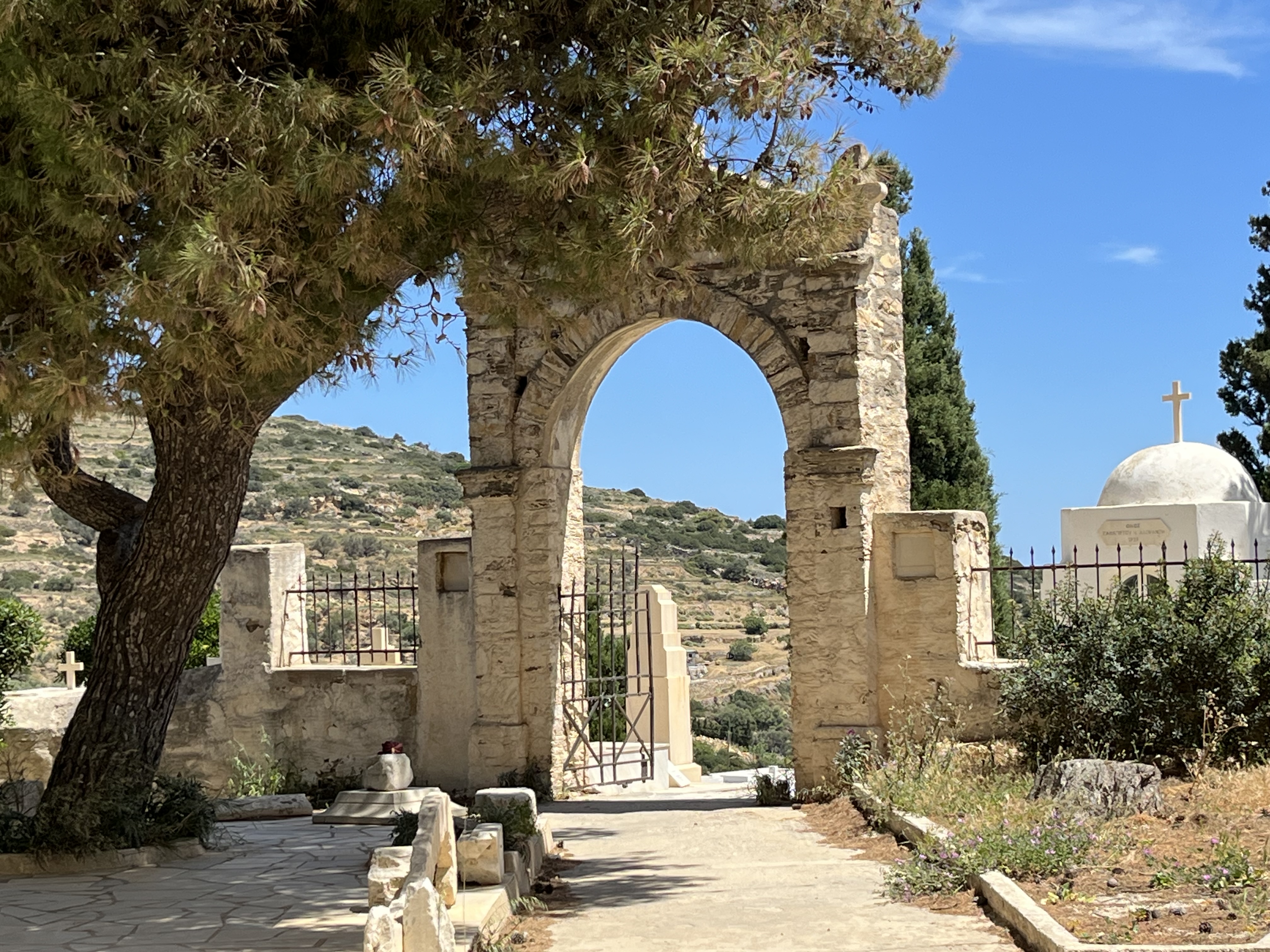
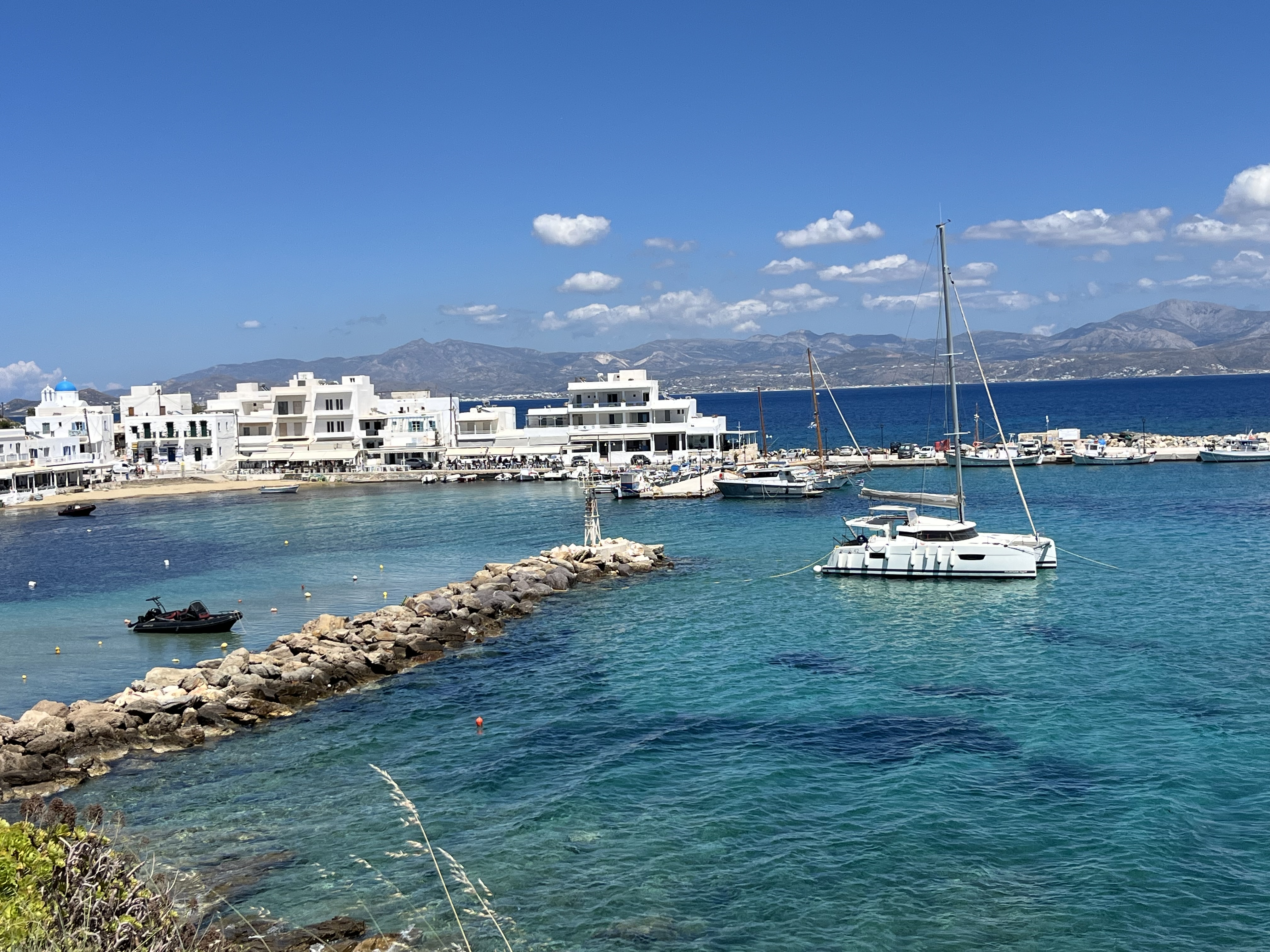
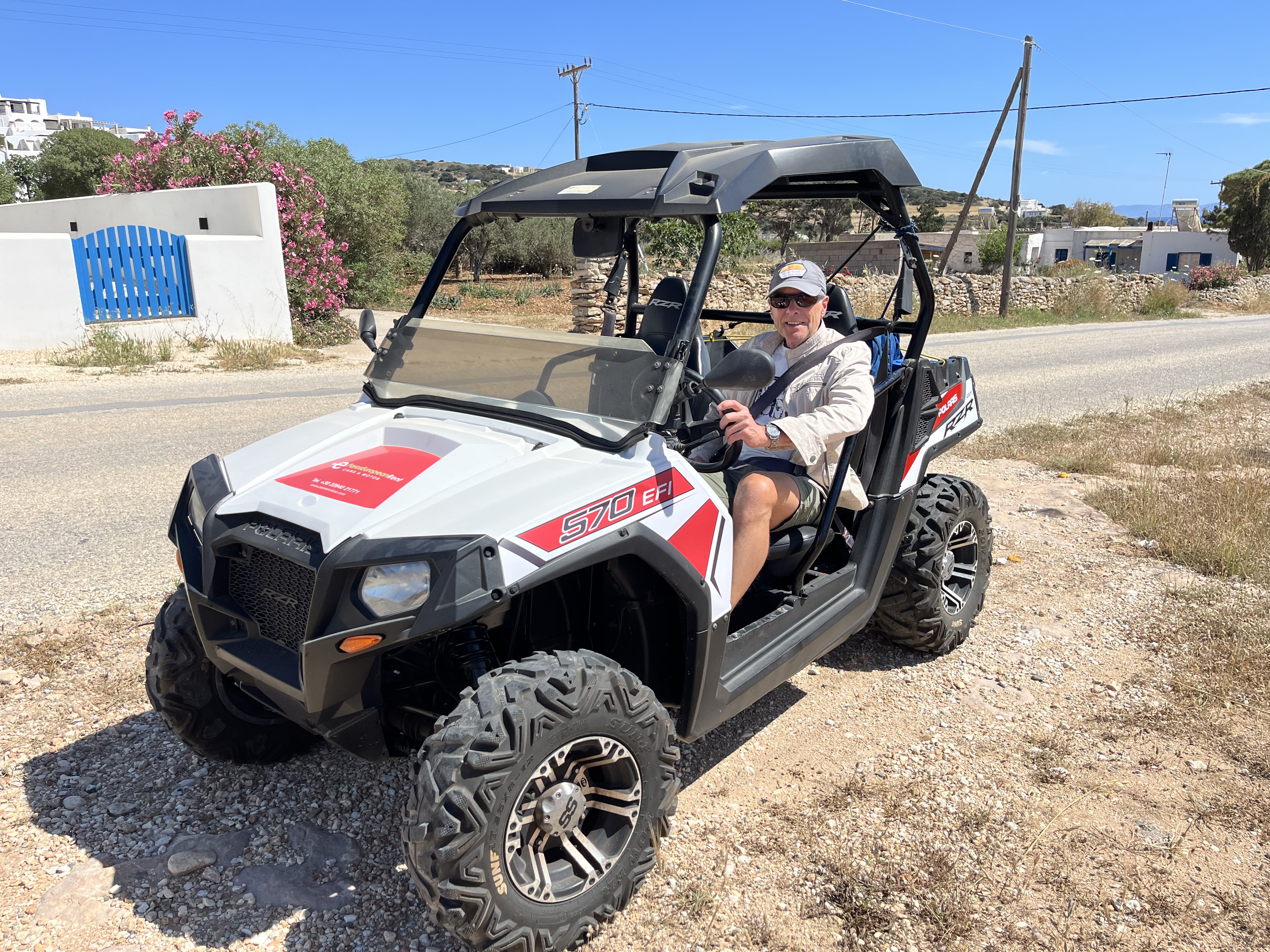
I enjoyed the swimming and together we enjoyed exploring the island on our own in a rented buggy.
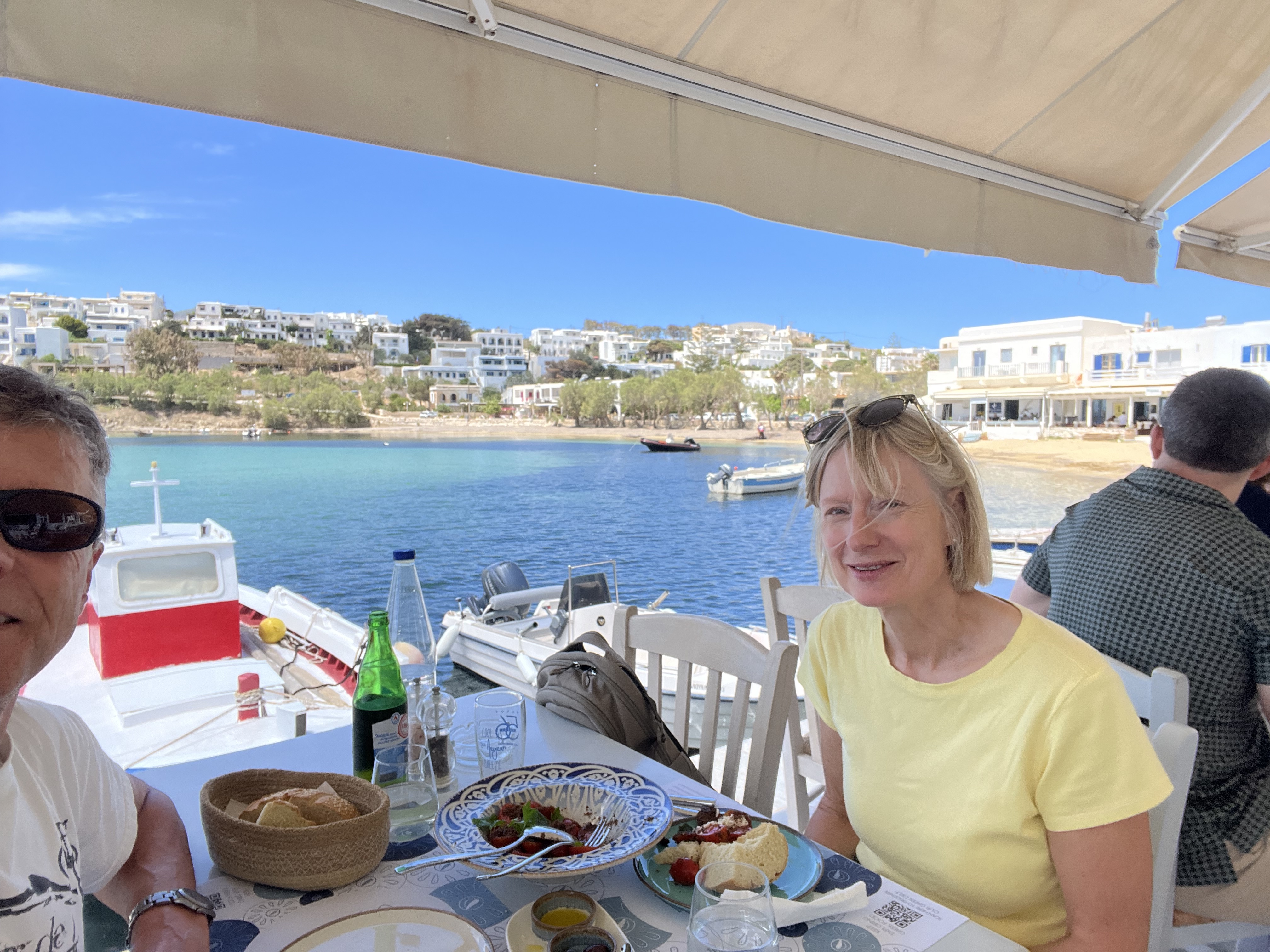
More tasty, fresh grilled fish for lunch in the bay of Piso Livadi. Yes, we enjoyed our stay on Paros!
A few words about food in Greece. Generally it is somewhat predictable. For instance, on every menu you will find Greek Salad, consisting of cucumbers, tomatoes, red onions, olives, and feta. Another standby is Souvlaki, meatskewers with chunks of pork, chicken or lamb, and peppers as well as Gyros, either of pork or lamb. Moussaka, another stand by, consists of layers of sliced eggplant baked in a ground beef sauce smothered in a creamy white béchamel sauce. The meat dishes are usually served with French fries, that, in our opinion, are often undercooked and soft. For dessert, there is the incredible Orange Cake in all kinds of variations, and the other dessert favorite being Baklava. We also had to adjust to the large food servings, as ordering a full menu per person resulted in way too much food for us. For an easy lunch, we usually bought a spinach pie at a bakery, which is filled with a spinach-feta mix baked in puff-pastry and usually sold warm.
Beer consists mostly of light Pilsner types and is usually served in large 1/2 liter bottles. If one isn’t too picky, the white, house wine offered is usually quite drinkable and very inexpensive. Higher quality wine is offered in most restaurants, yet enjoying a glass of what we spoiled Burgundians consider a good wine, will likely be somewhat spendy.
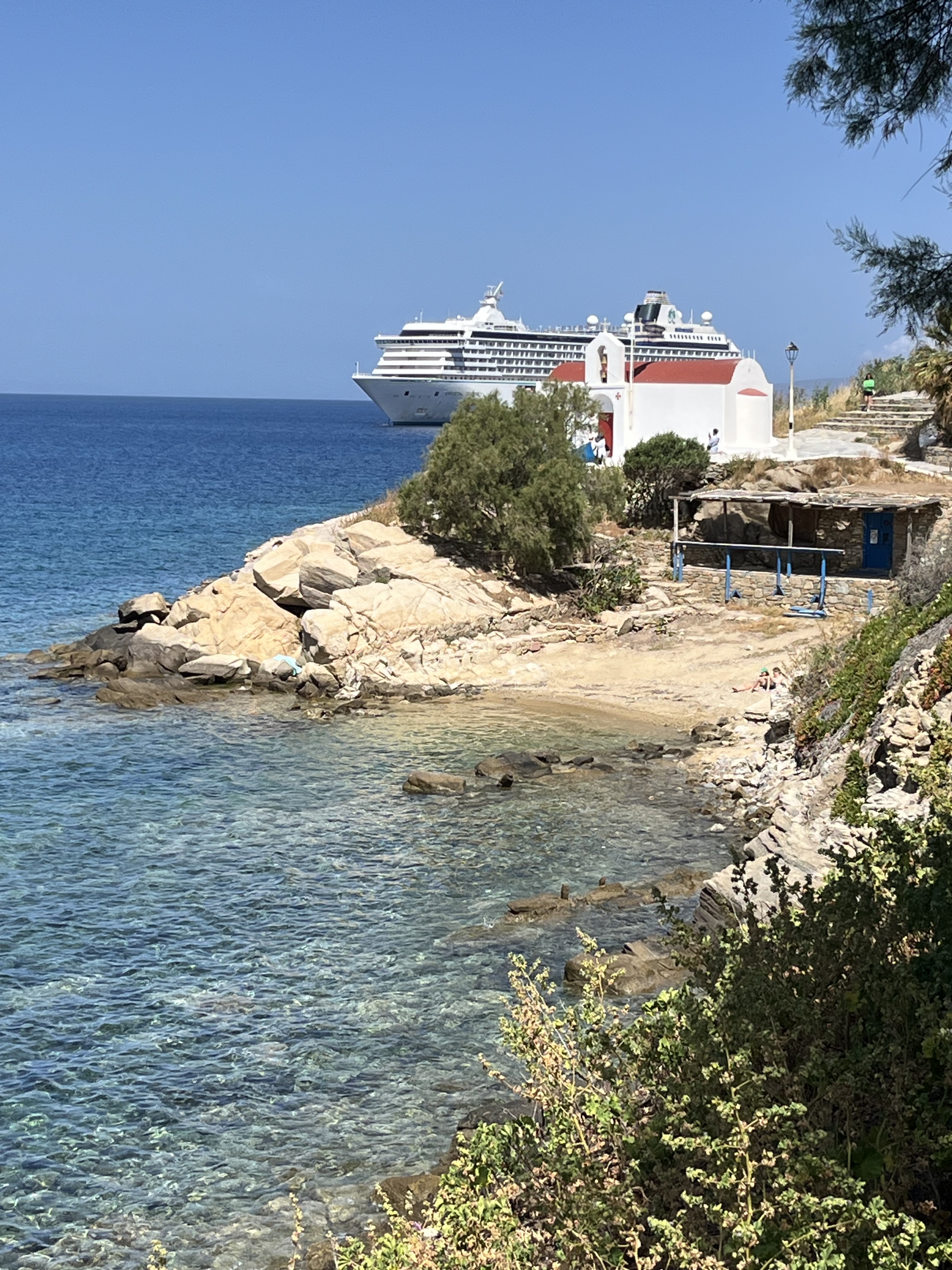
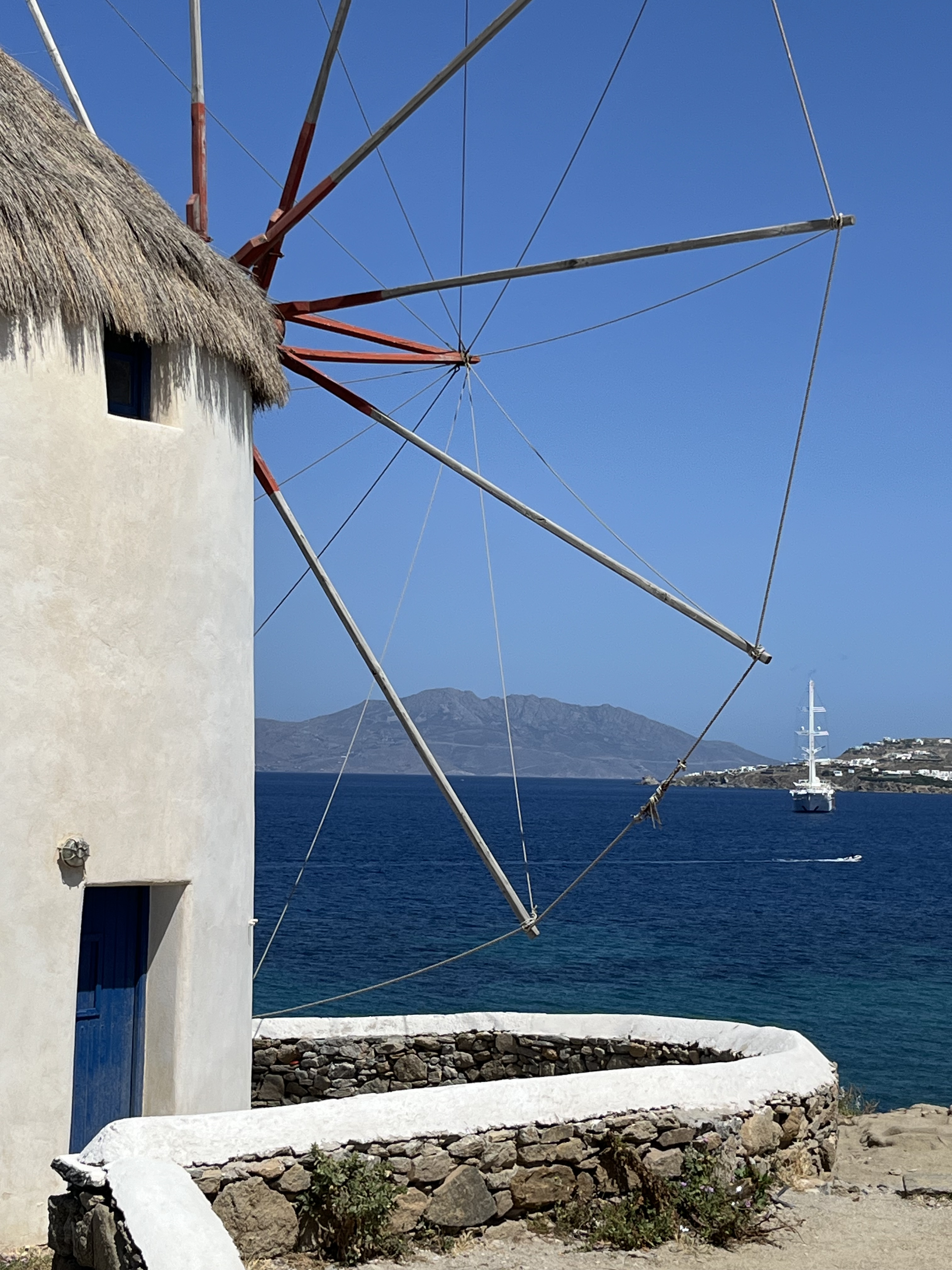
Our last night in Greece was spent on Mykonos, just a short ferry ride to the north. Mykonos, is after Santorini, the most frequented Greek Island. It showed, as there were a couple of cruise ships in the bay when we sailed in. The row of windmills on the ridge just south of the main town, the tightly packed restaurants on the bay called Little Venice, and the narrow shopping alleys in the old part of town where you are being lured by high end shops offering Gucci handbags and Hermes shoes as well as cheap trinkets, it all was crowded, loud, and too much for us. I got one last swim in and early the next morning we took a flight from Mykonos over Athens to Istanbul.
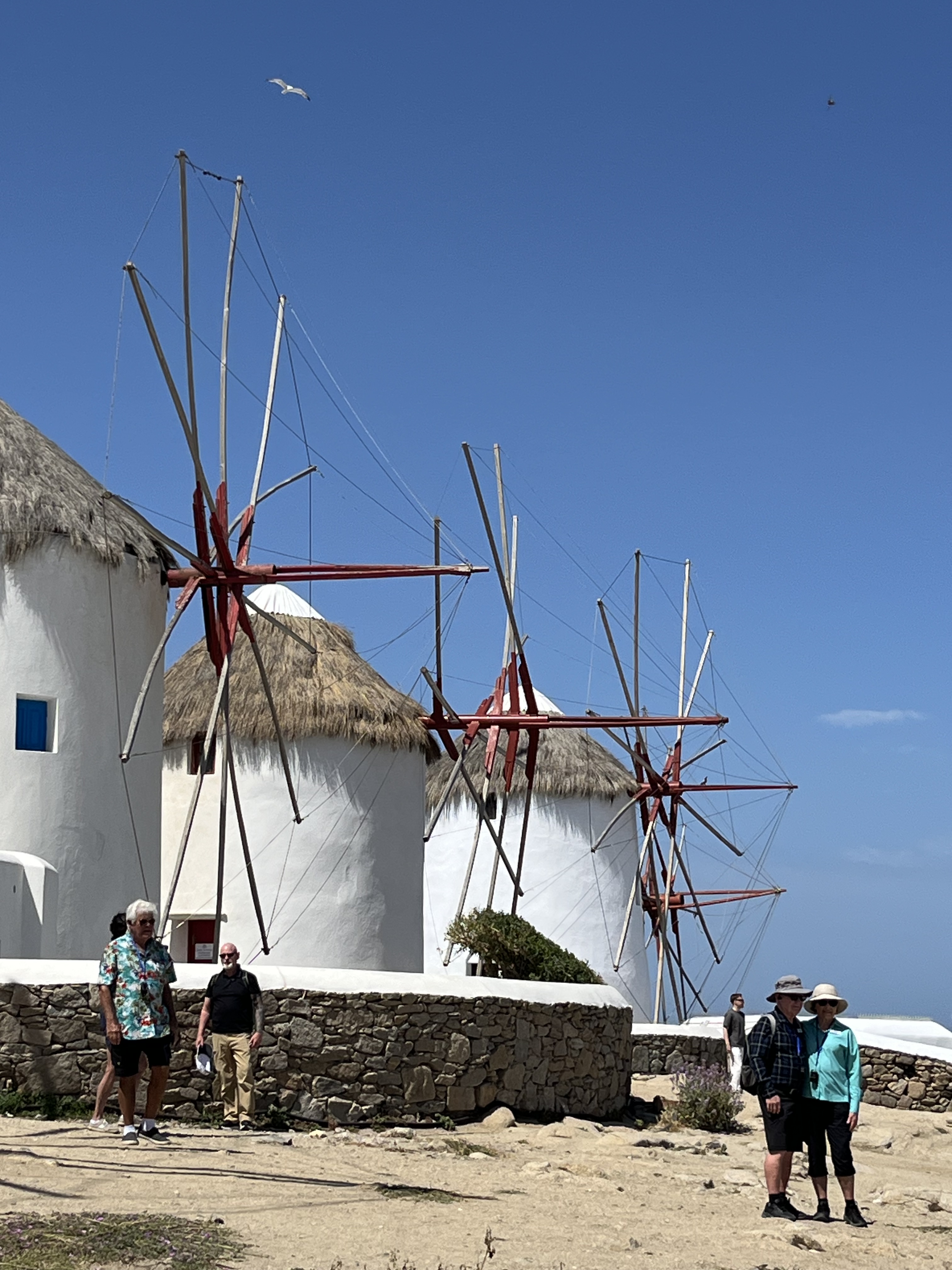
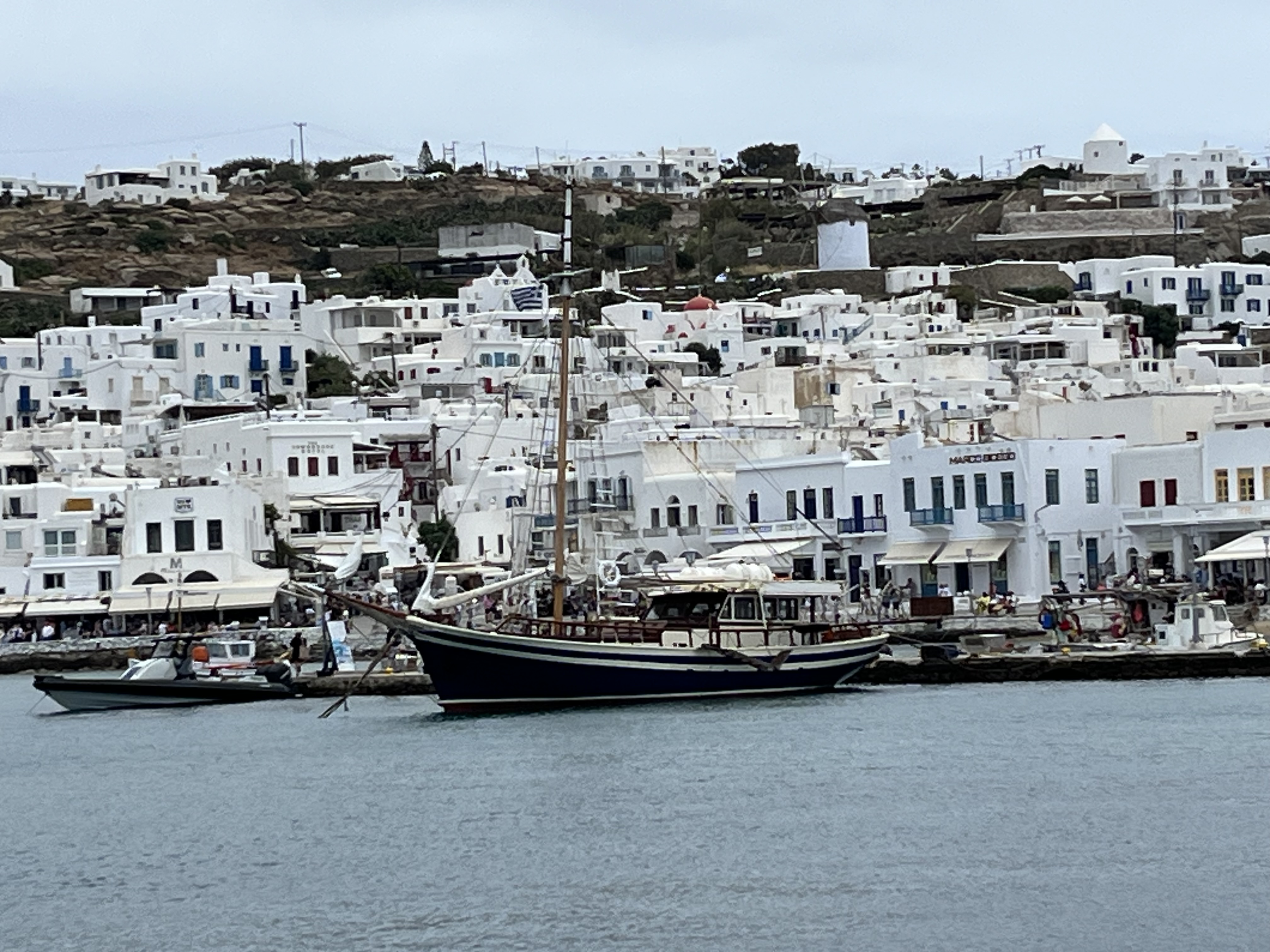
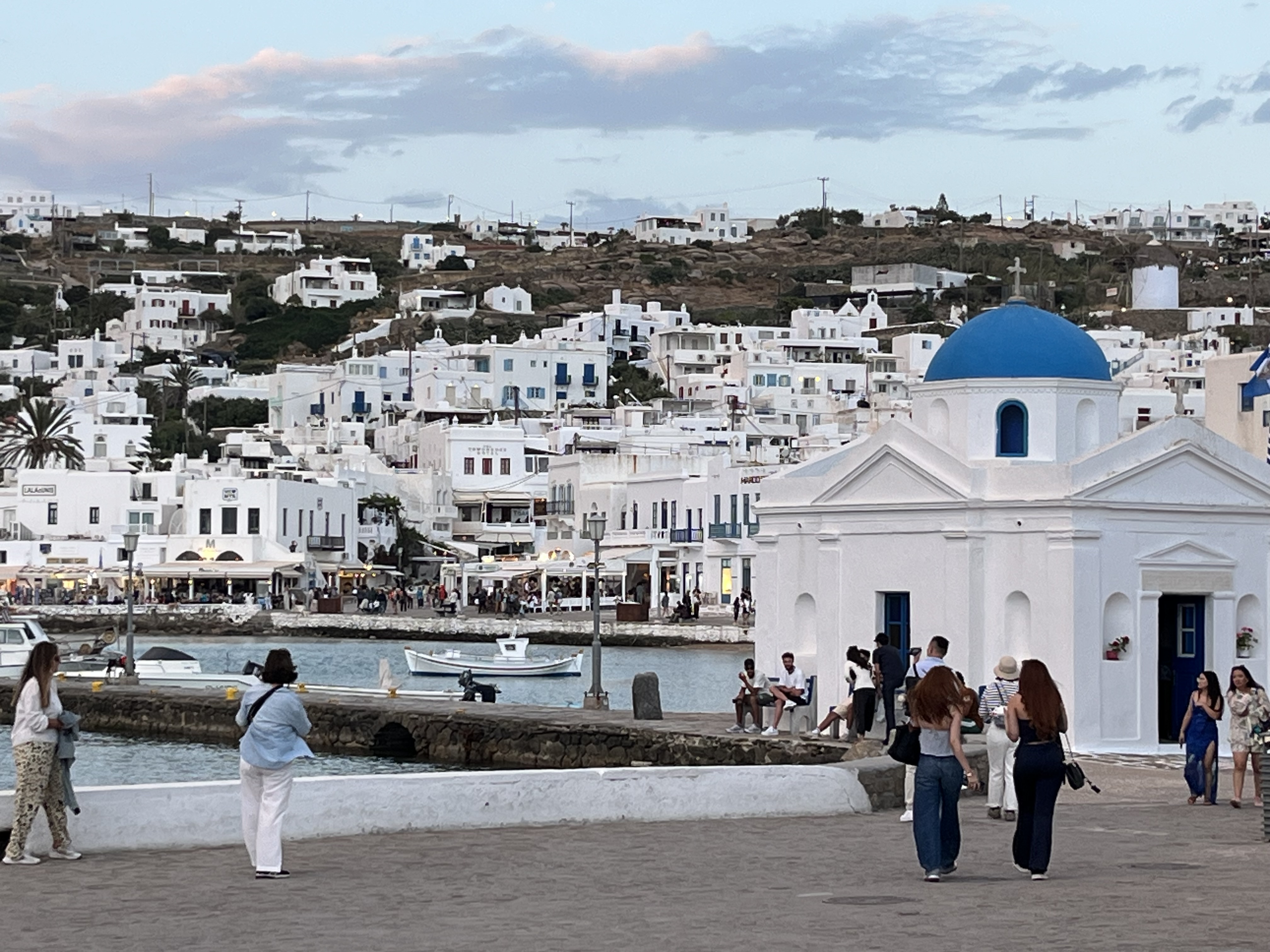
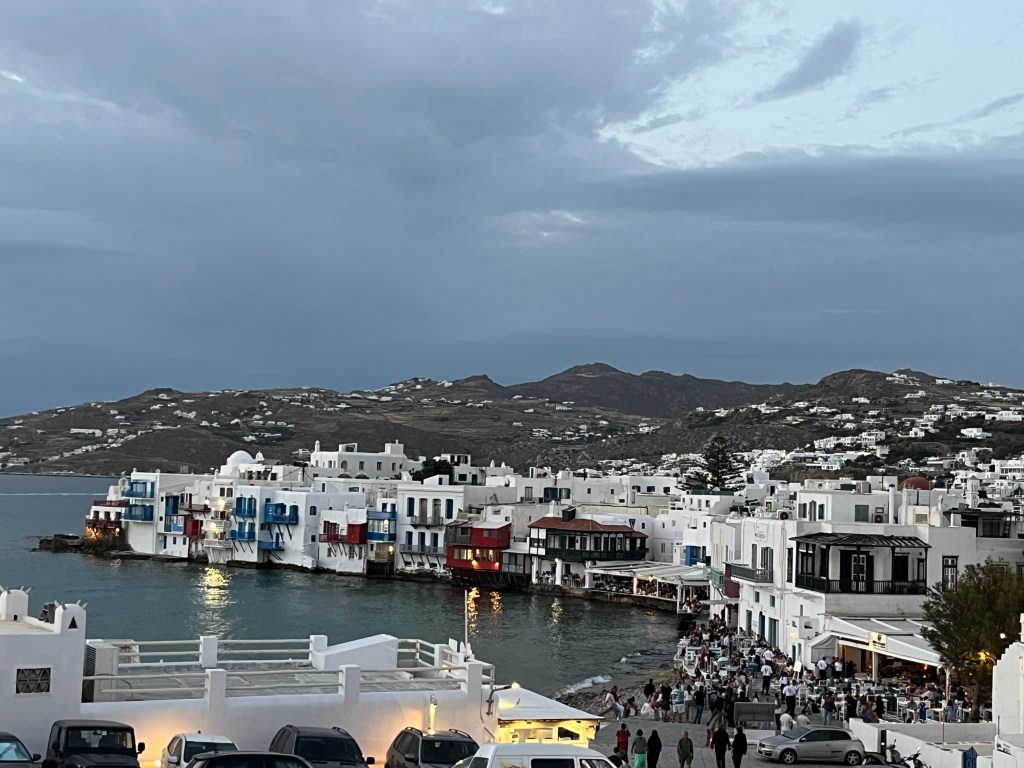
The End of our Greek odyssey ….
Flying into Istanbul we realized how BIG this city is. Bigger than any city we’d visited before. 16 Million to be exact, making it the largest city in Europe. Istanbul’s new international airport, IST, is located almost 30 miles NW of Istanbul’s old city center, which was our destination. IST is huge! It has six runways and is currently the second busiest in Europe, and has a capacity of 150 million passengers a year – 60 million more than Hartsfield-Jackson in Atlanta, the current busiest airport in the world. IST is also modern, and we found it to be well designed and efficient. Needless to say, we were impressed. Especially so, when we found a friendly, English speaking woman to answer our questions and direct us towards the shuttle bus for our downtown location. For only eight Euros per person, this bus took us directly to the old city center of Sultanahmet and a 10 minute walk from our hotel.
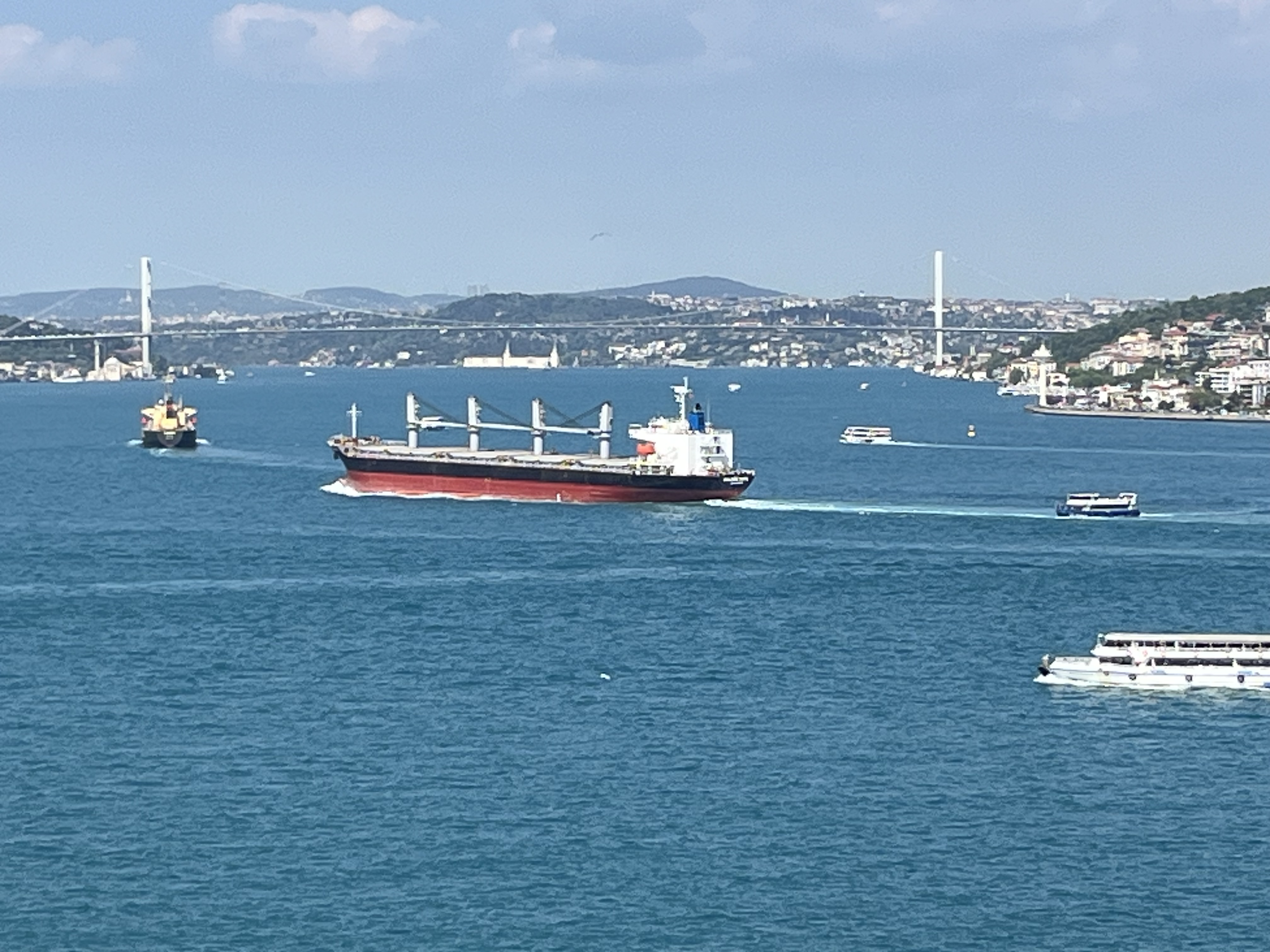
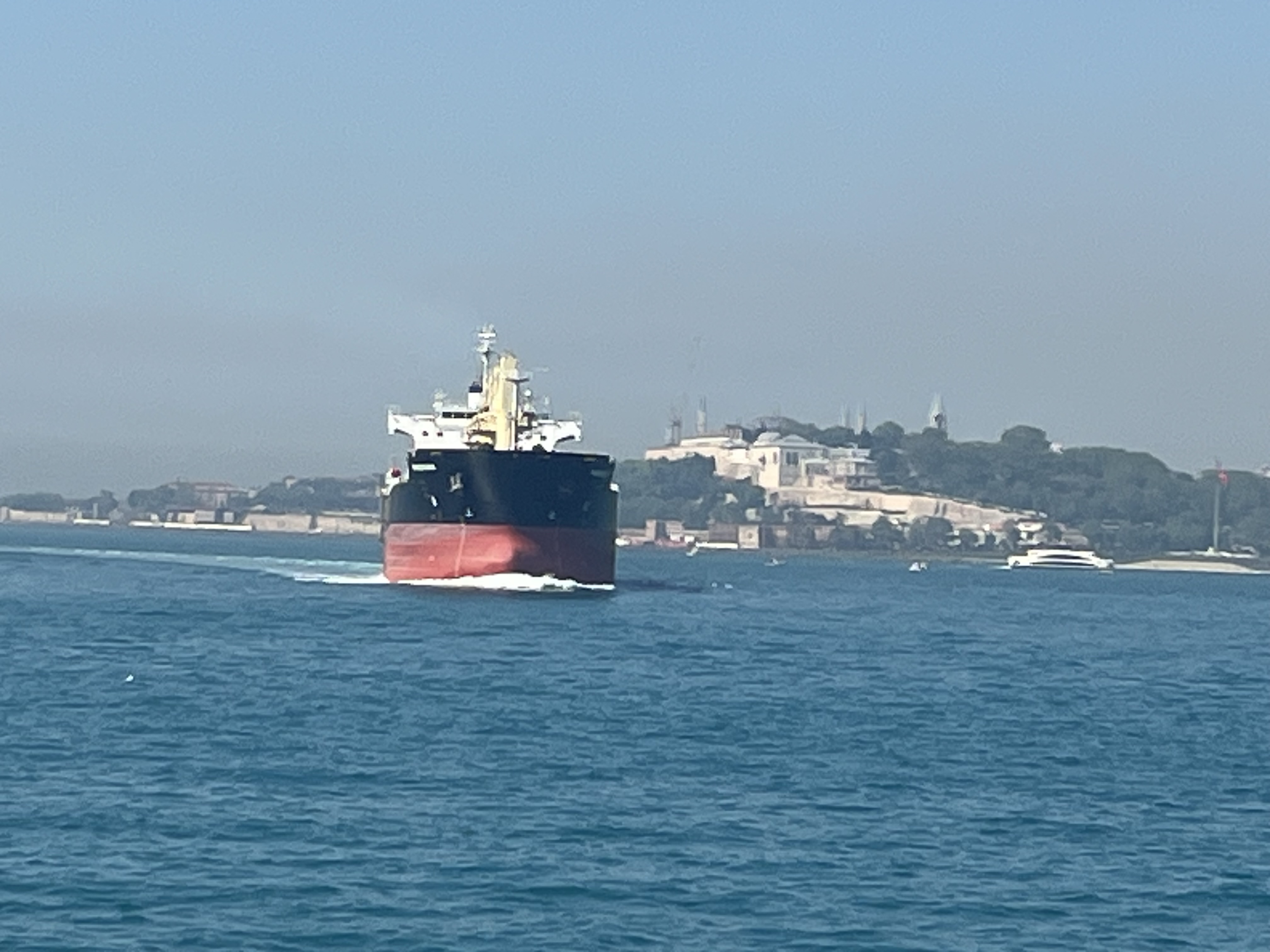
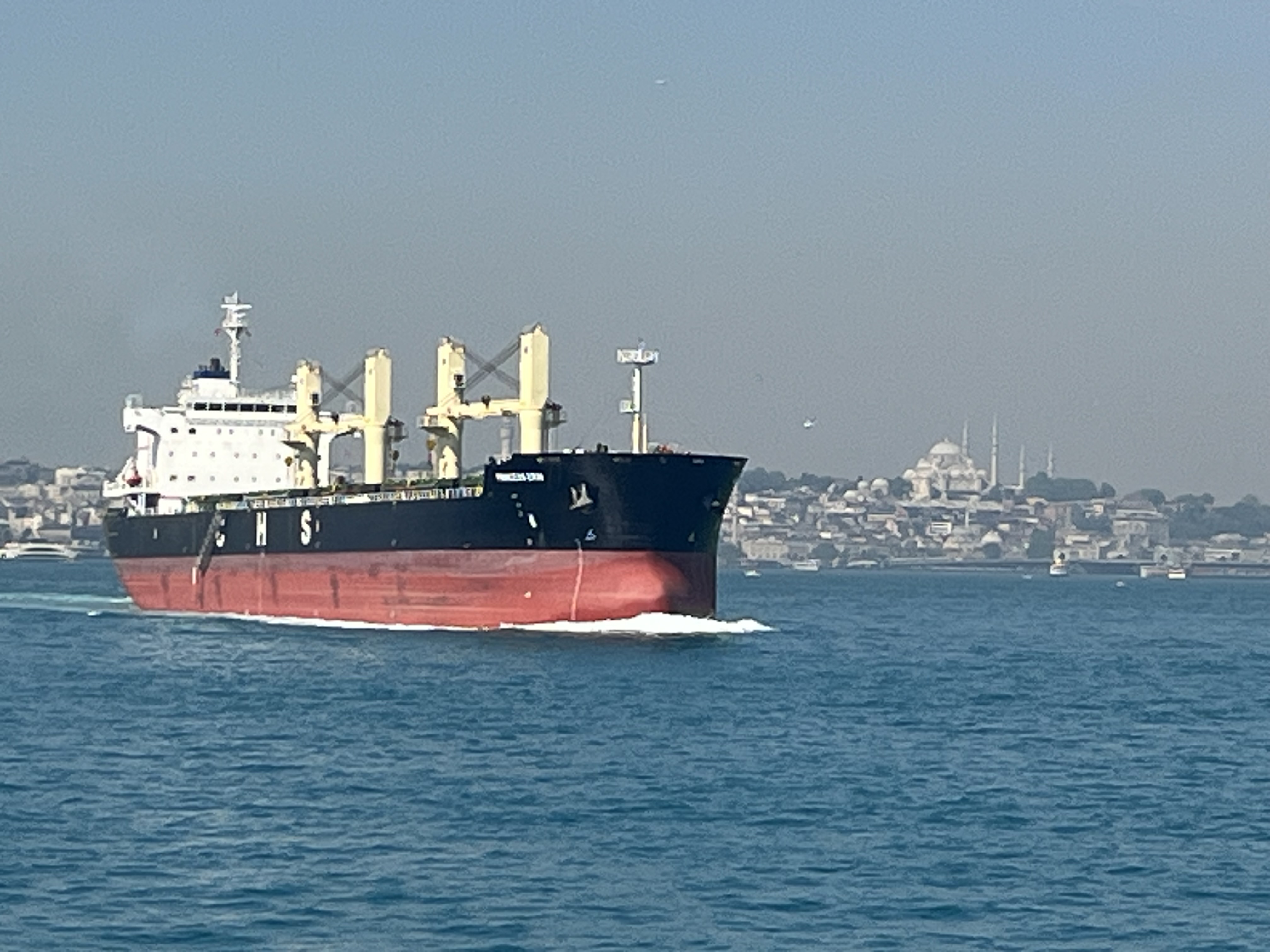
Getting off the bus at the crowded Eminoenue ferry terminal, we felt the vibe of Europe’s gateway to the Orient, the end of the line for the old Orient Express train. People rushing every direction, honking cars, and ferries and ships blowing their horns. Here on the Bosphorus, the natural waterway that drains the Black Sea from inner Asia into the Mediterranean, we were at the old crossroad of West – East, East – West, and as I imagined, the Bosphorus was full of ships from big ocean going freighters and ferries of various sizes, to small fishing boats.
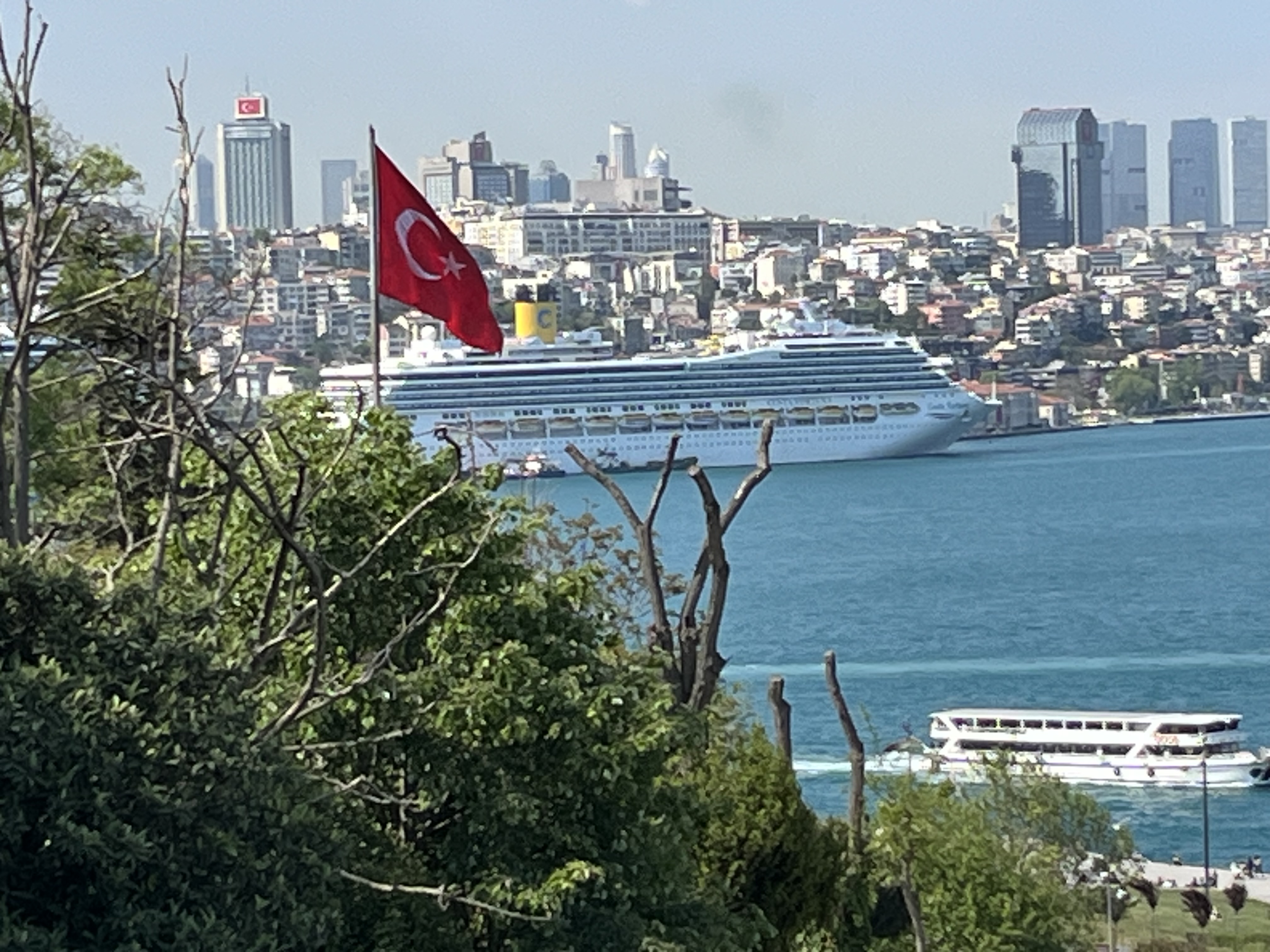
We lucked out with our hotel, as its location was close to the main tourist attractions in all directions, yet on a somewhat quieter side street across from a high school. And yes, a mosque with minaret projecting a call to prayer never seems to be far away in a Muslim country.
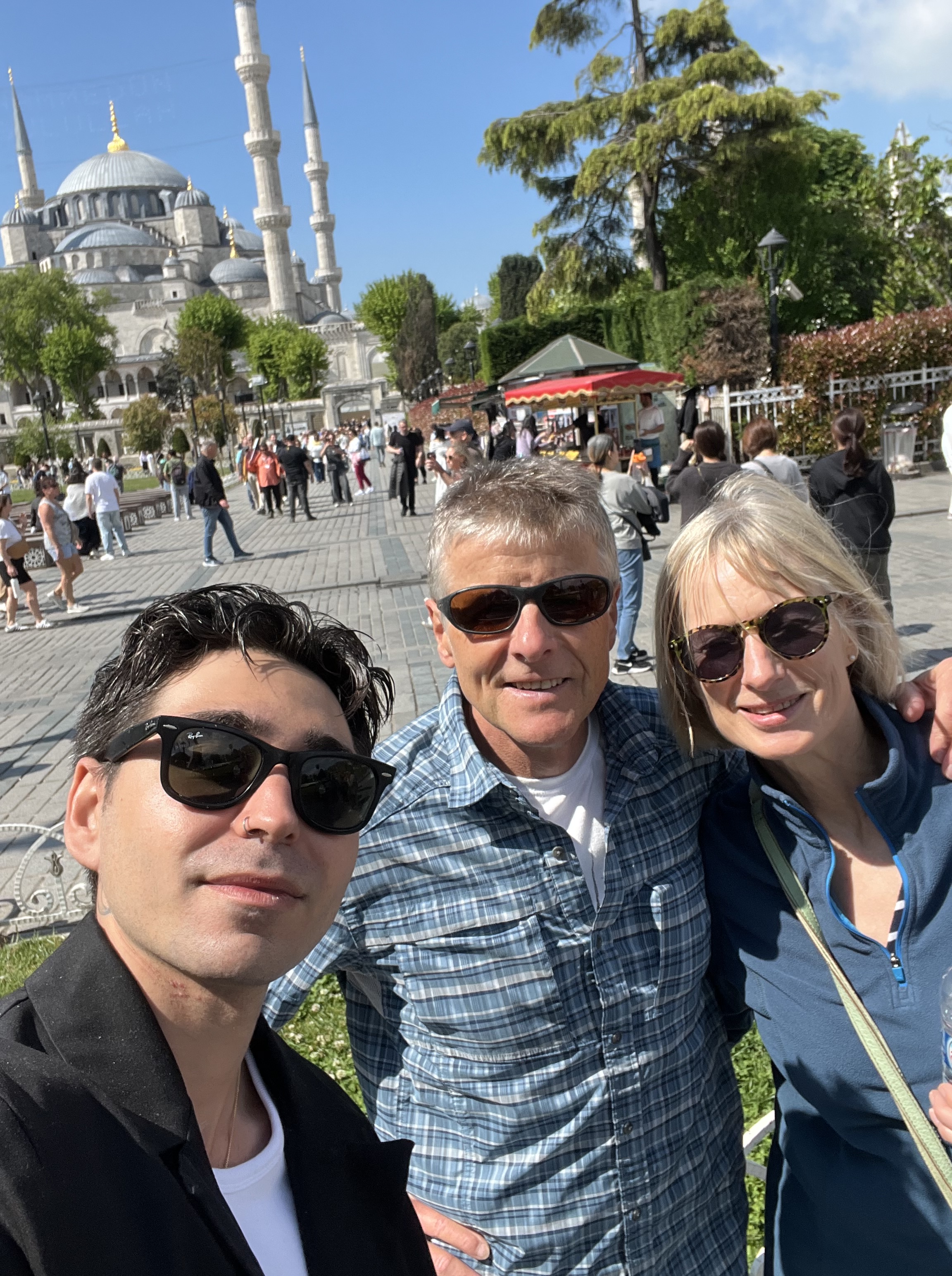
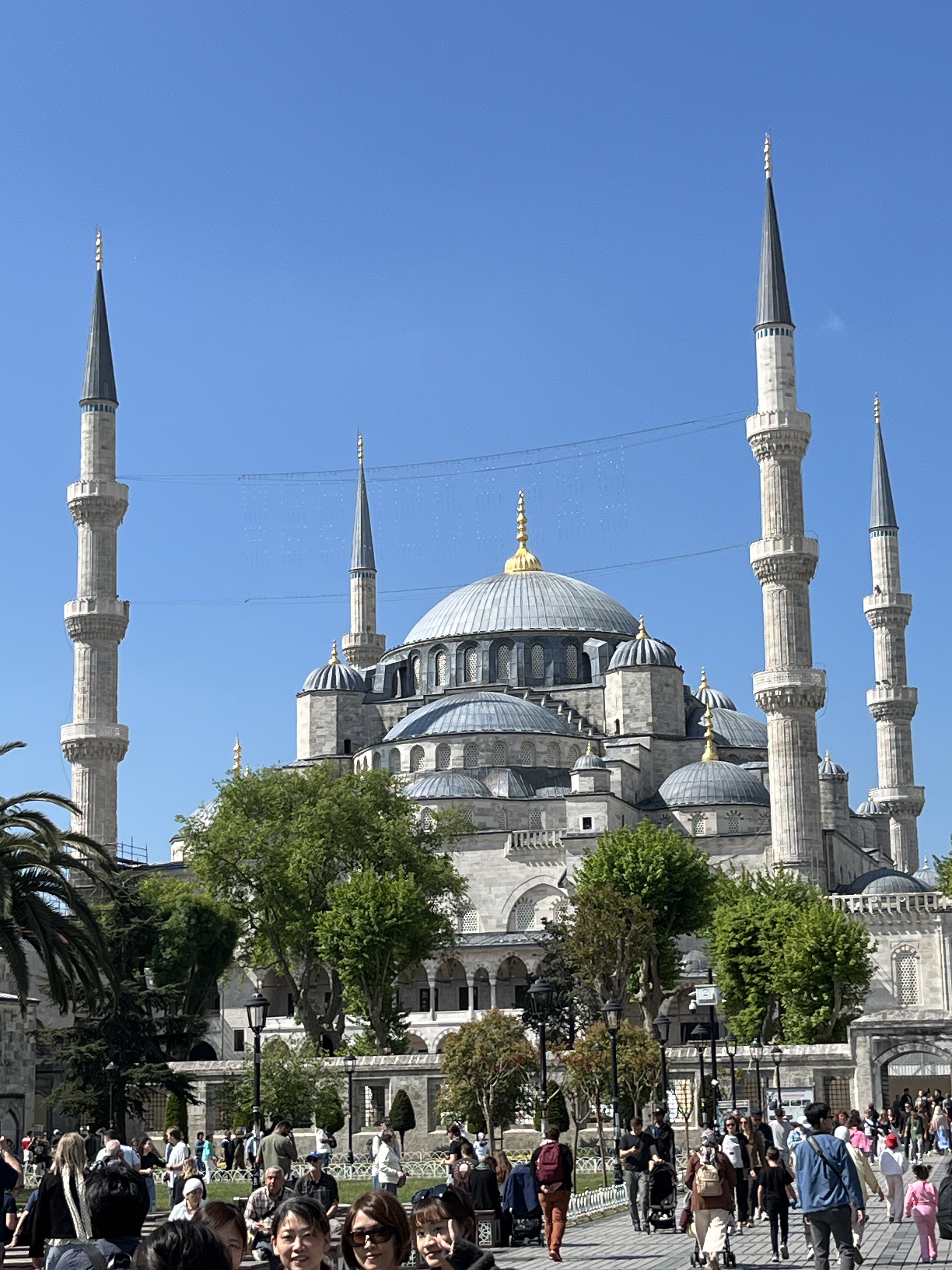
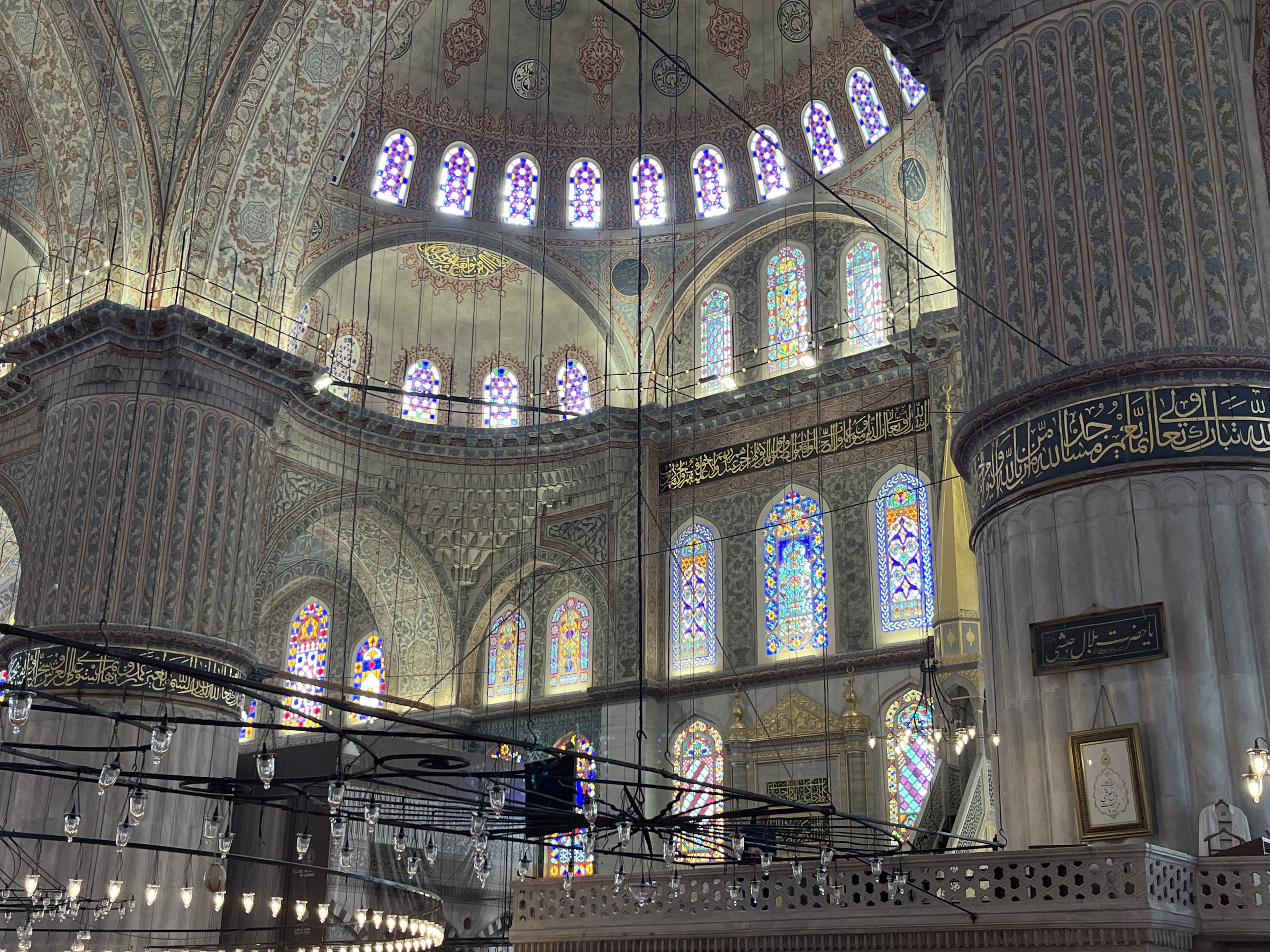
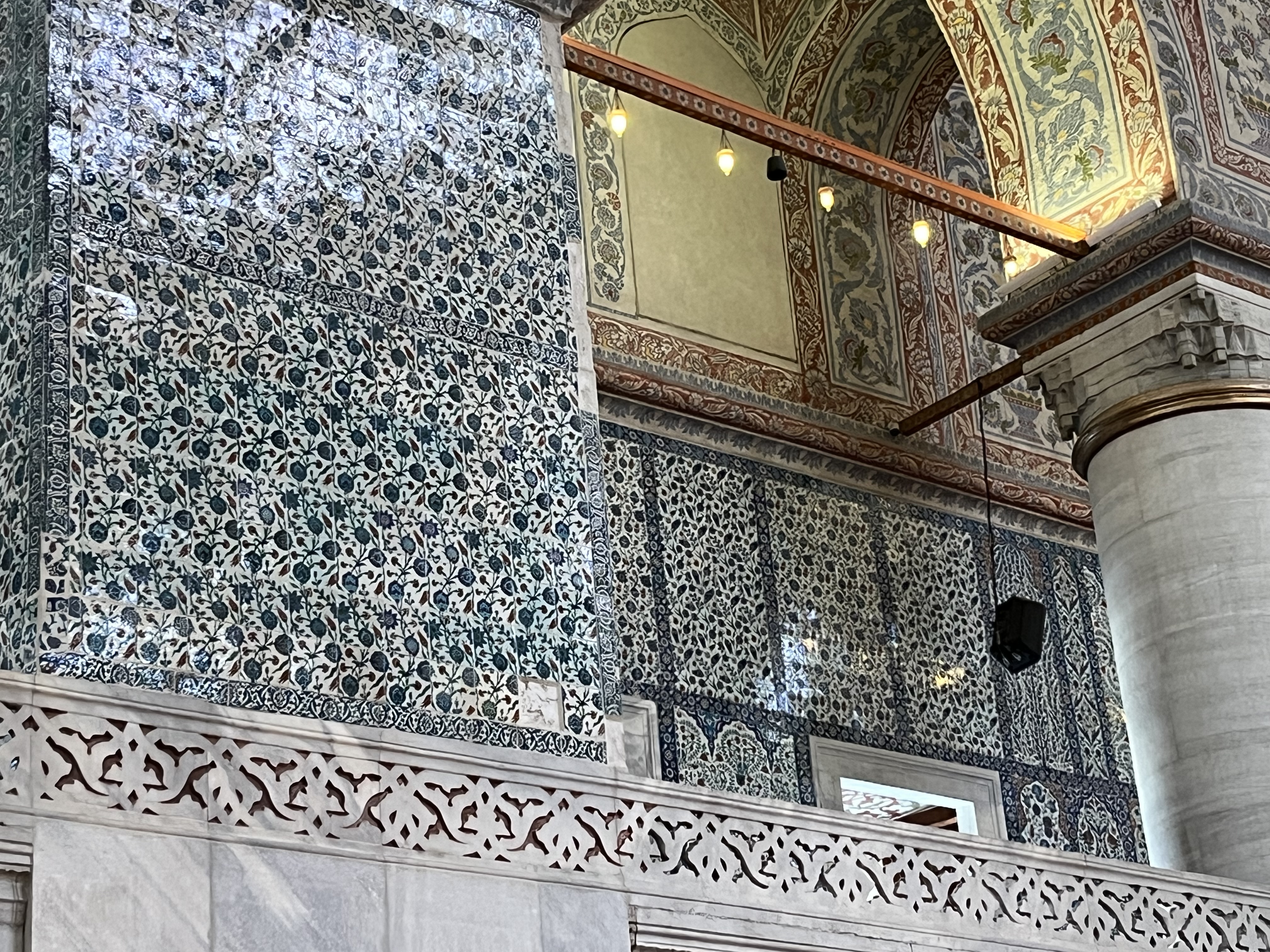
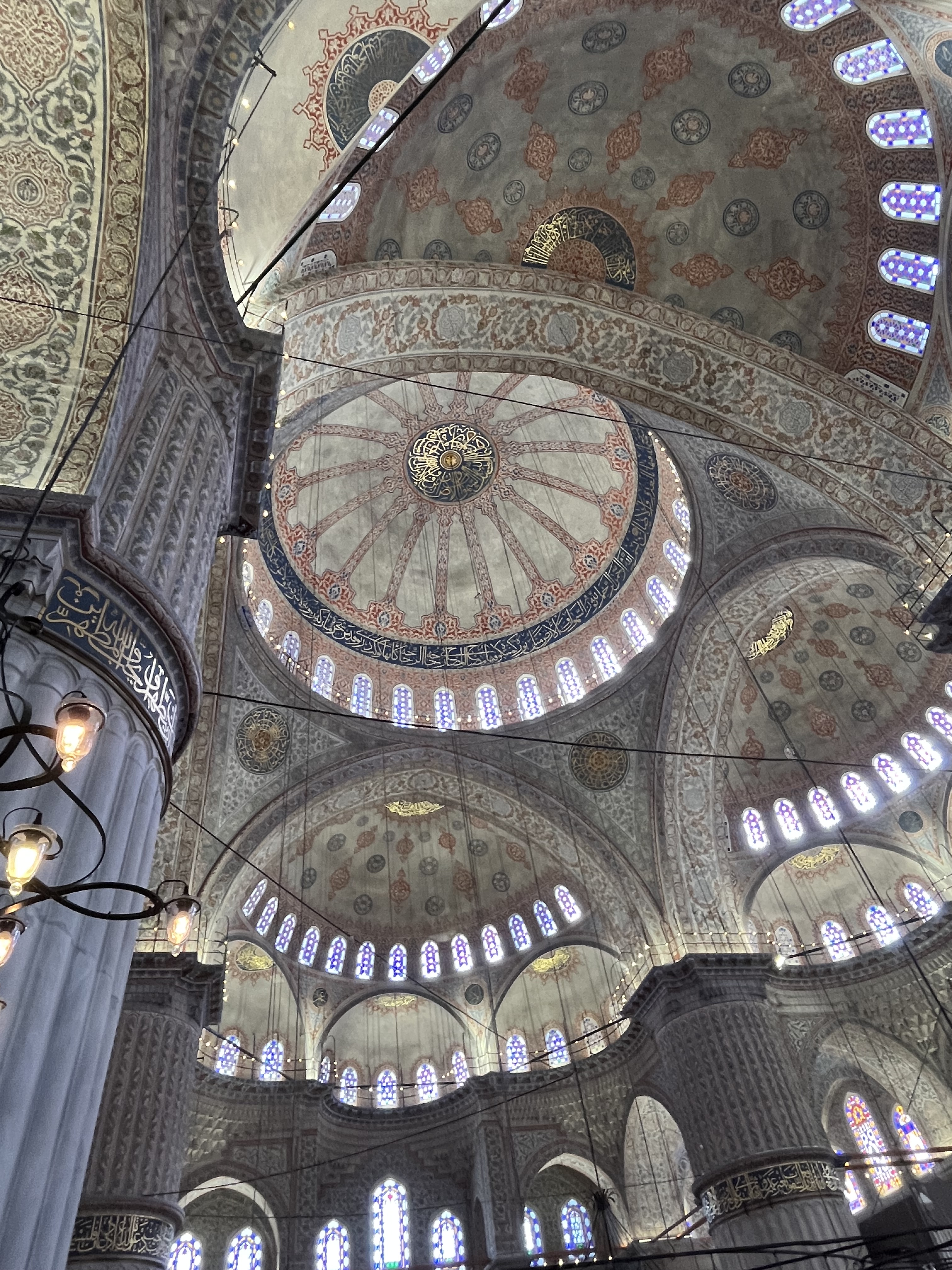
We spent our first day being guided by our young and fun tour guide Omer. The Blue Mosque was our first site. Like most of the larger mosques in Istanbul, it was built during the height of the Ottoman Empire in the 17th century. The name of this mosque being derived from the mostly blue colored tiles that decorate its interior. Here, as in many other mosques we visited, ostrich eggs are hung from the chandeliers to keep out spiders and scorpions.
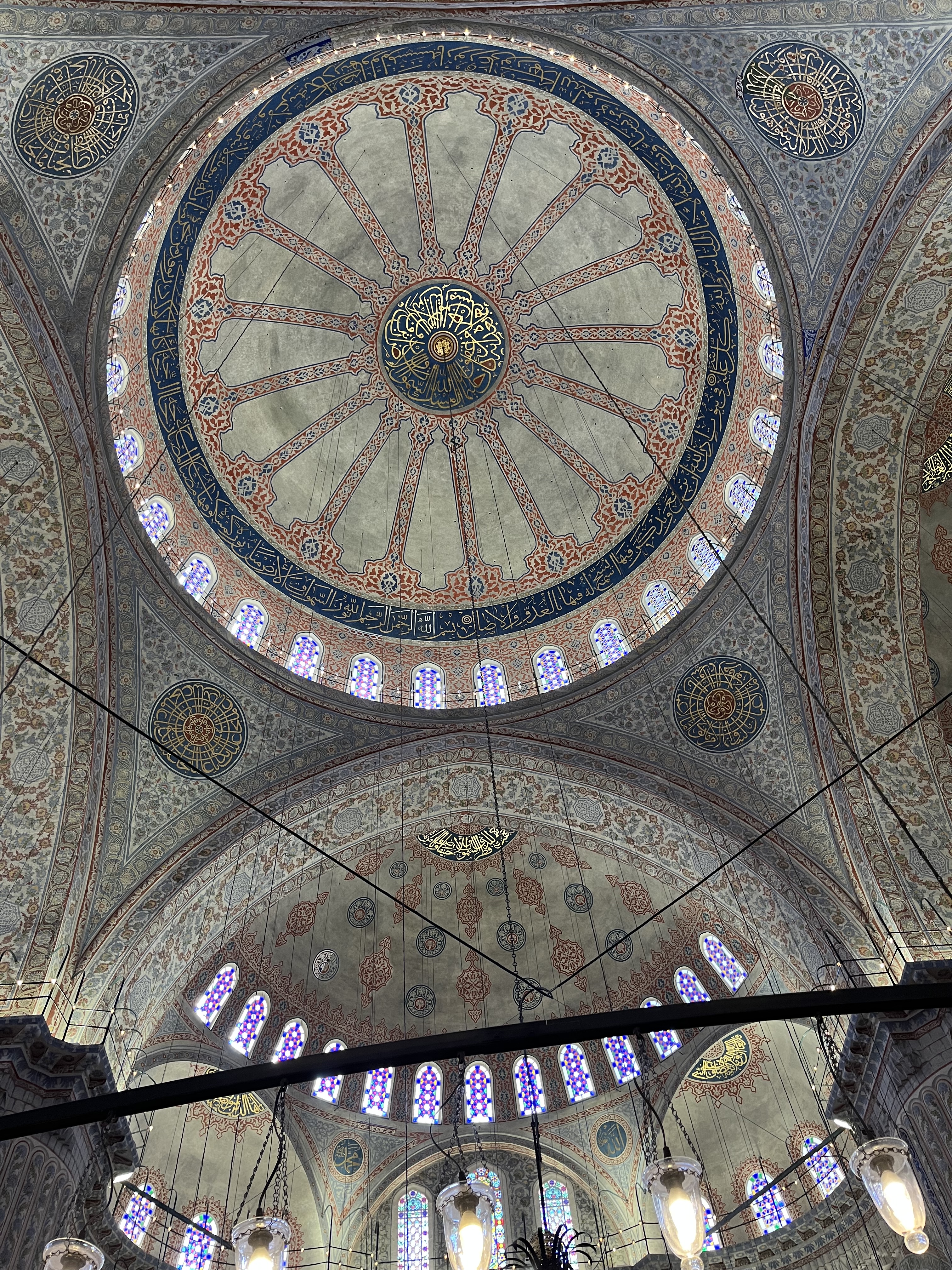
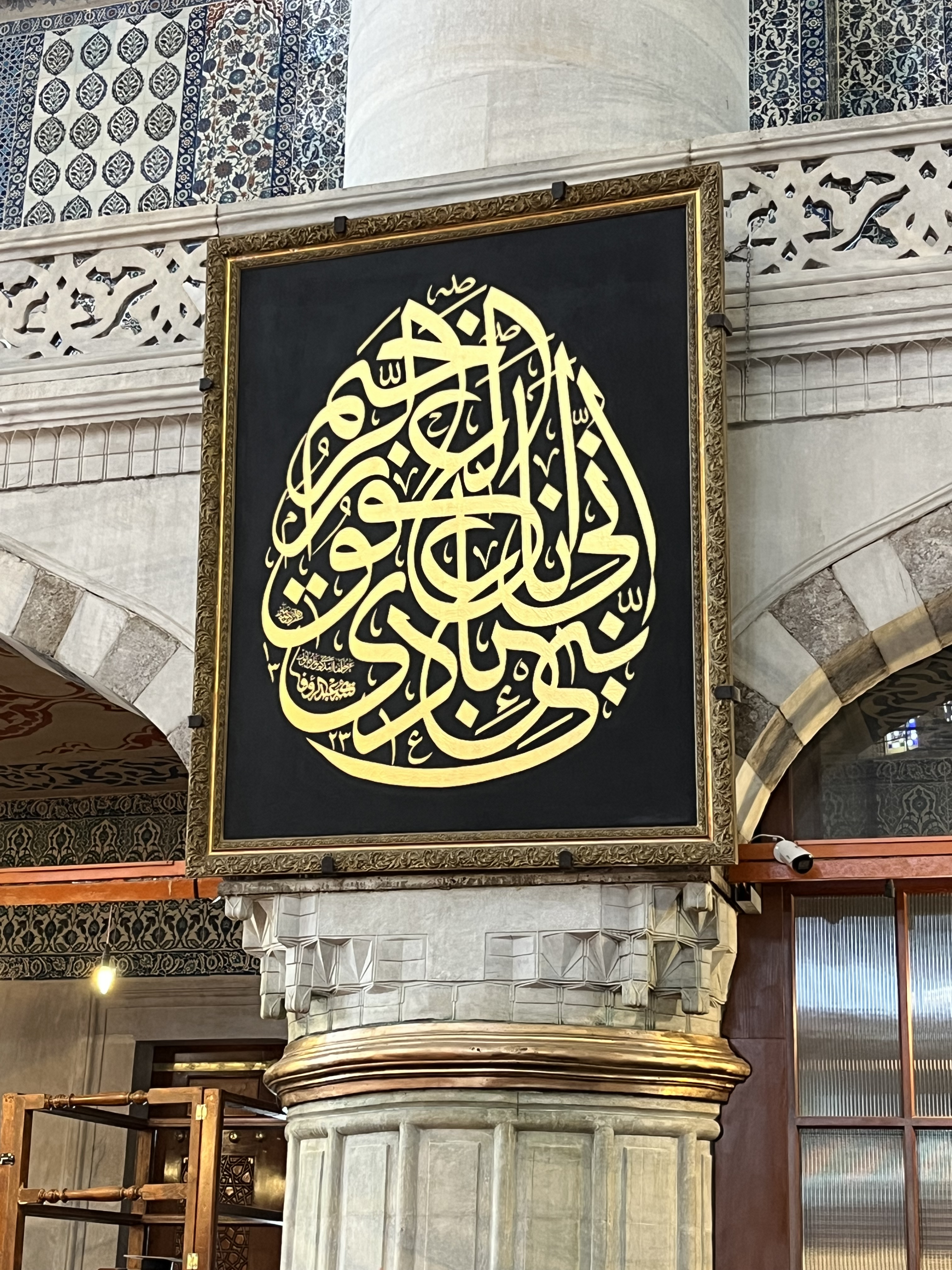
The ostrich eggs are such a common feature in the mosques, that here the calligraphy is even written in the form of the egg.
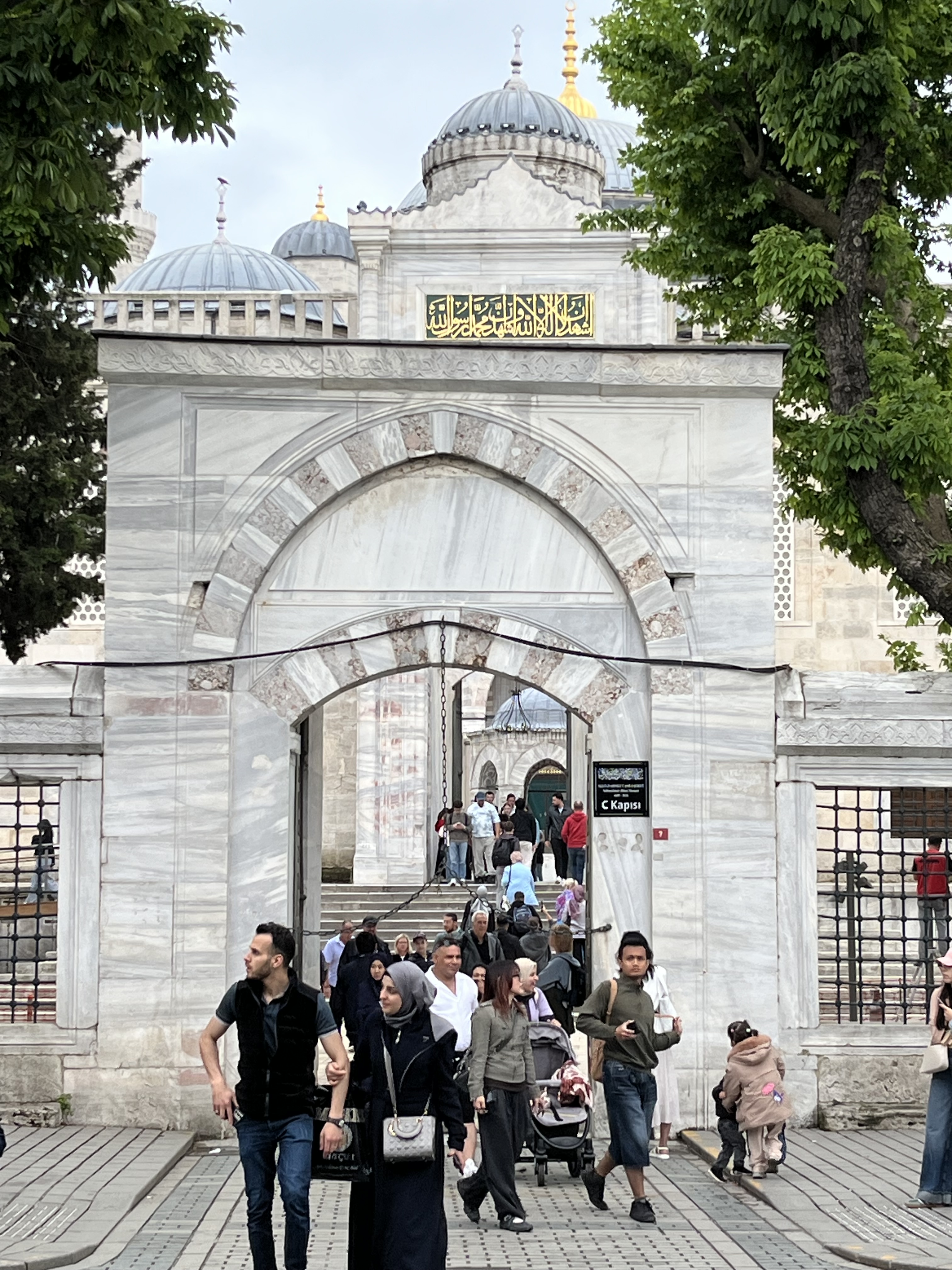
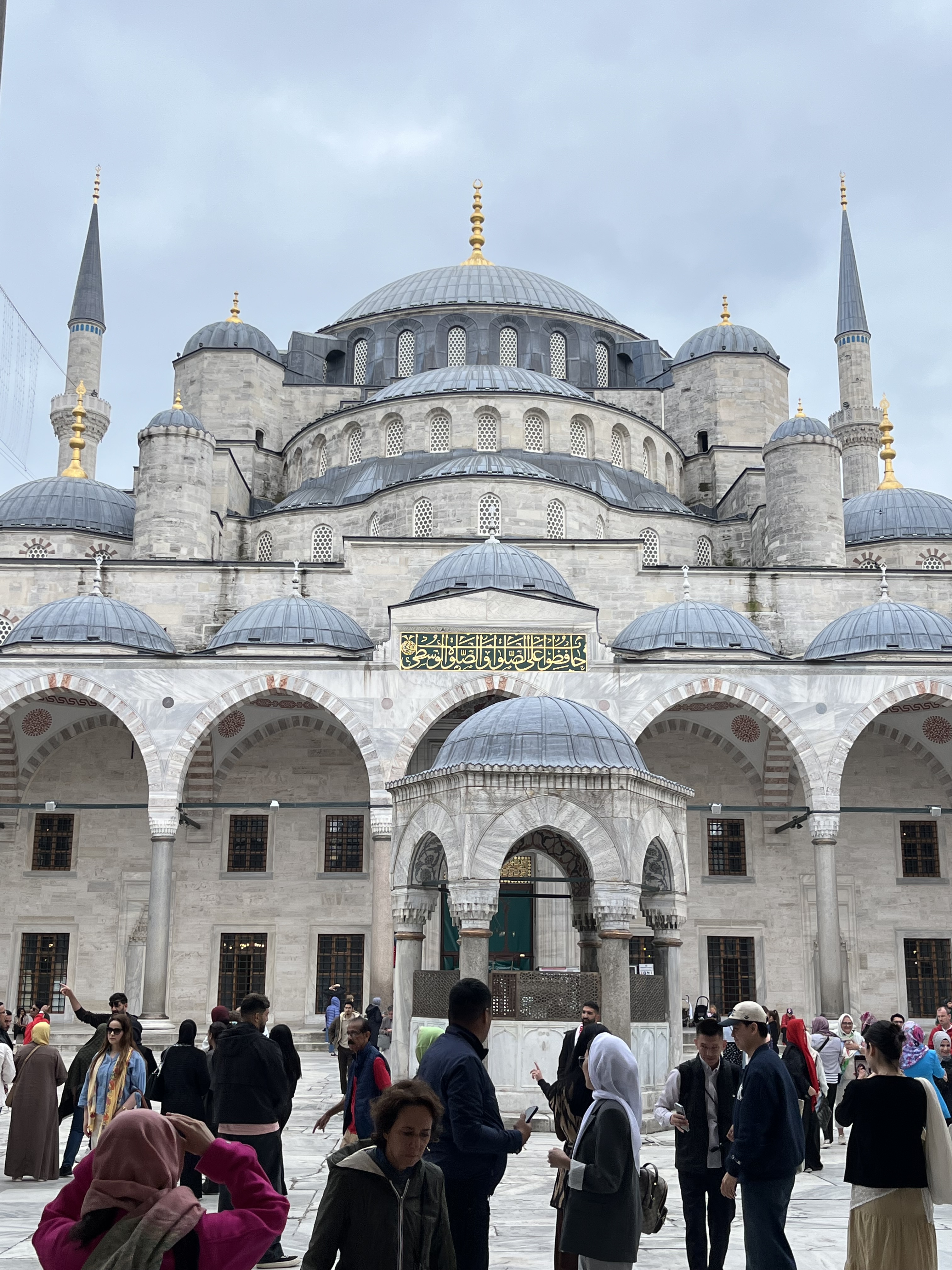
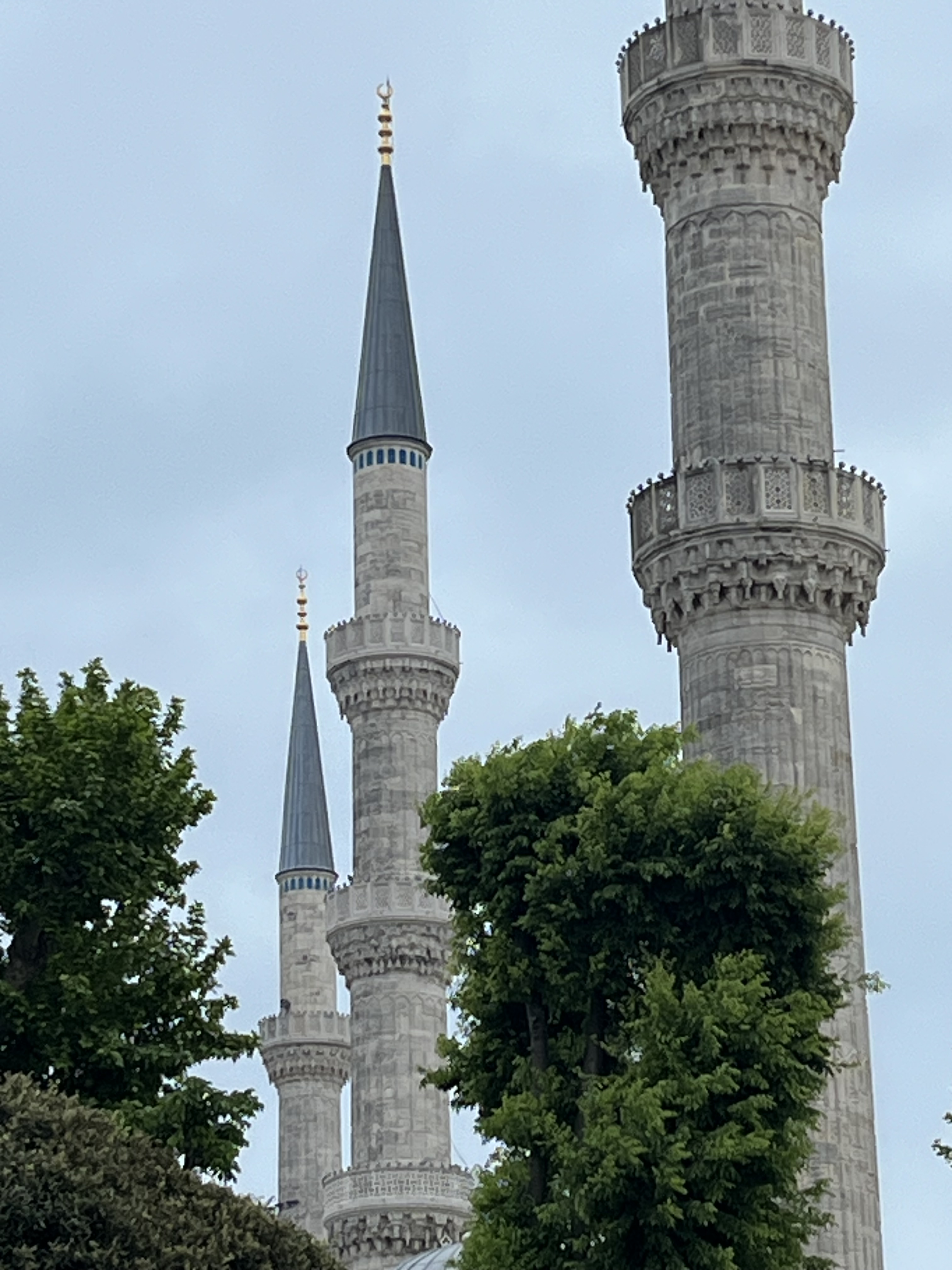
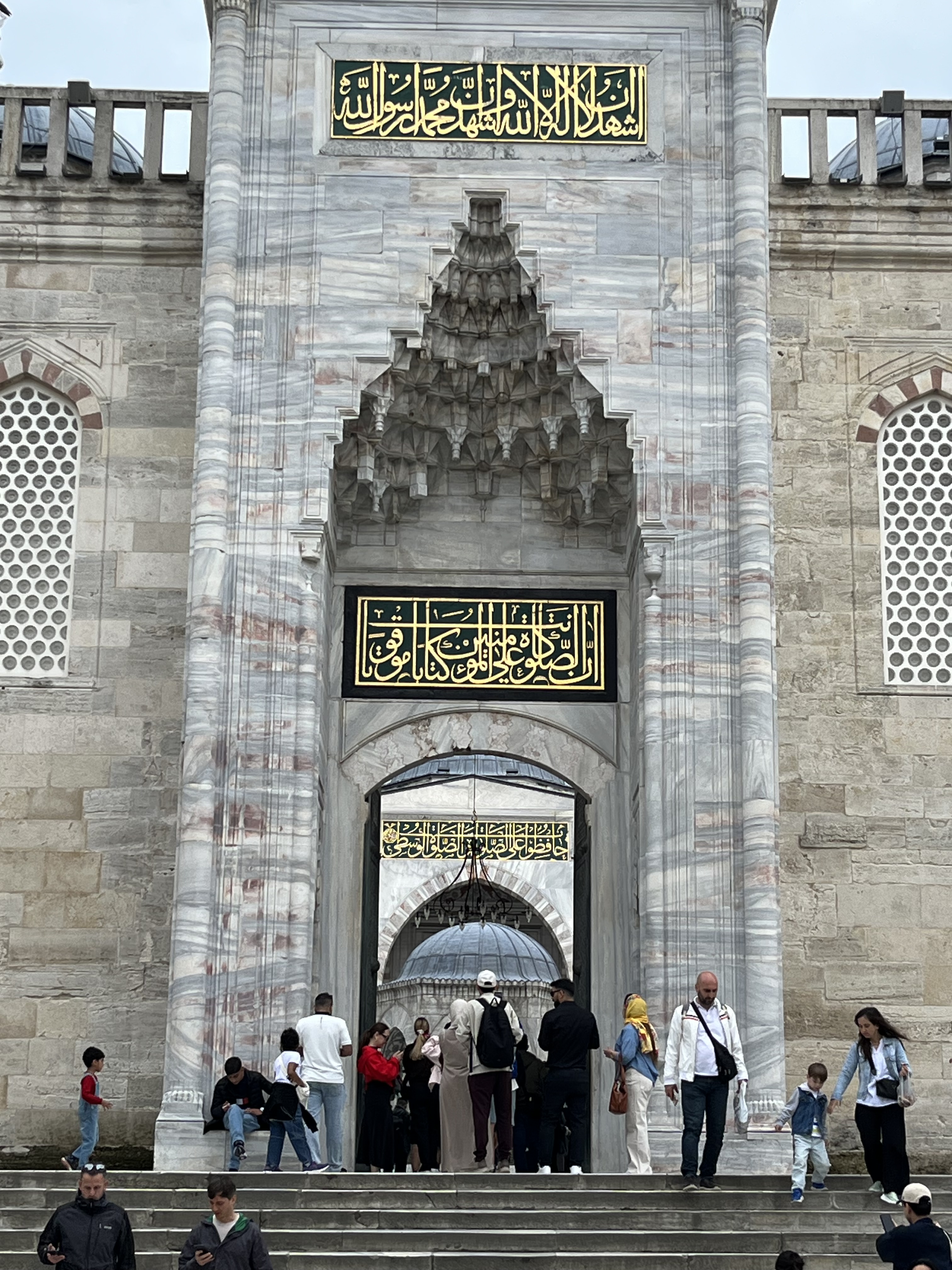
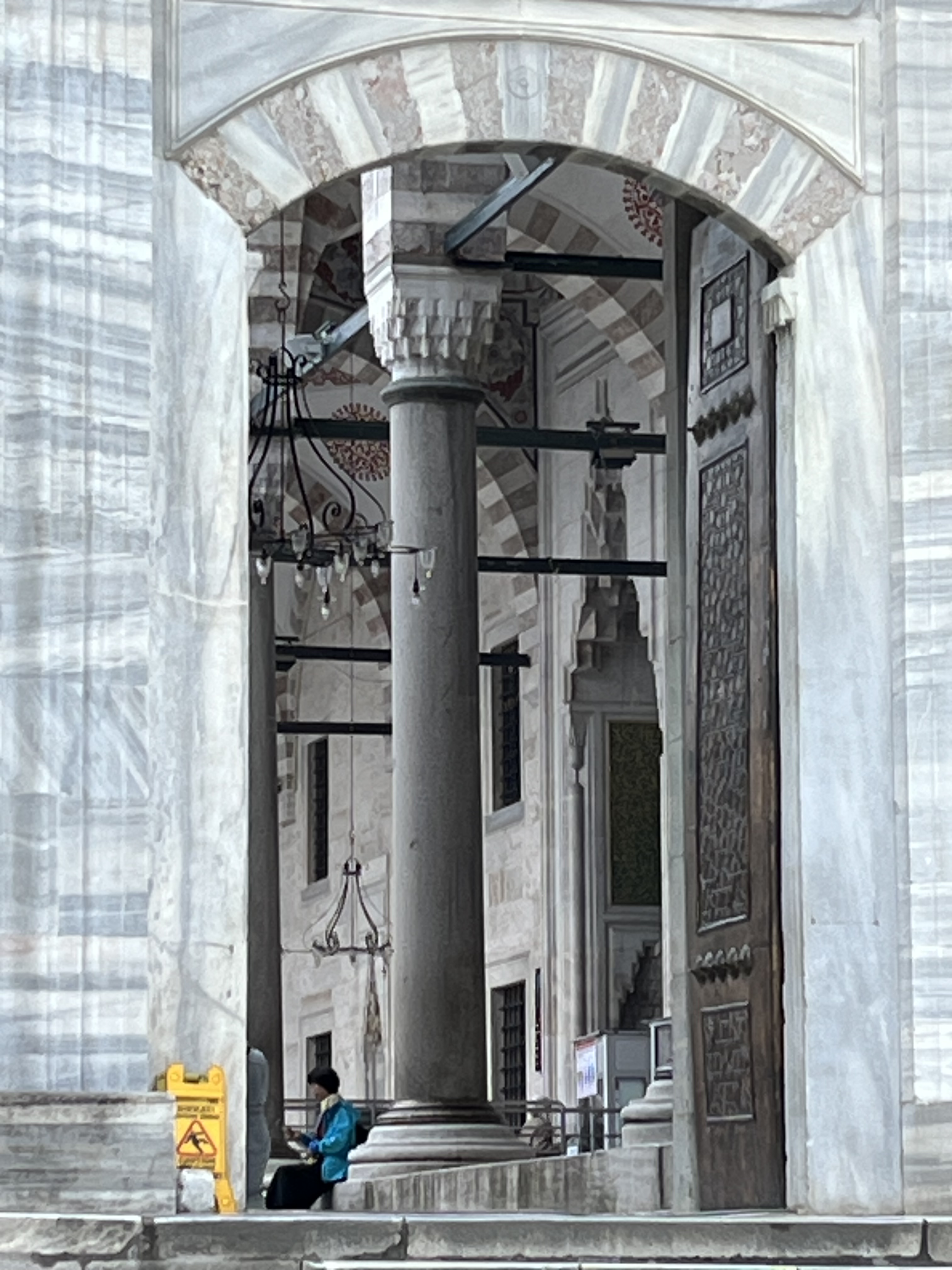
The Blue Mosque is located next to the old Hippodrome and across from Istanbul’s most famous and important building, the church gone mosque, the Hagia Sophia. Here, as at other heavily touristed sites, it was great to have a personal guide who purchased all the required entry tickets ahead of time and who could lead us past the long waiting lines and into the building via the guide entrance. Besides, it is nice to receive so much insightful background information right on site and one can ask and discuss wherever and whatever appears to be relevant.
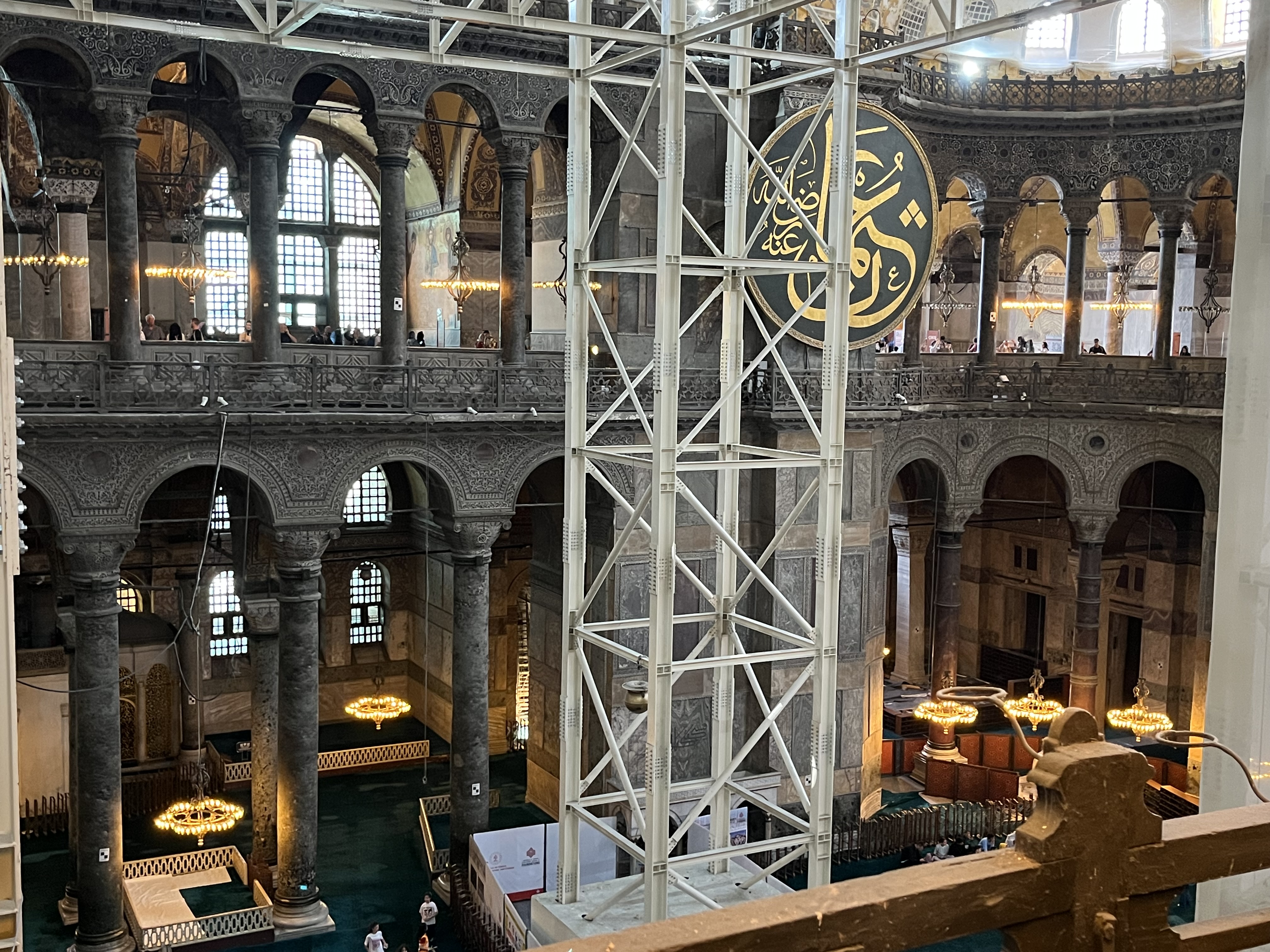
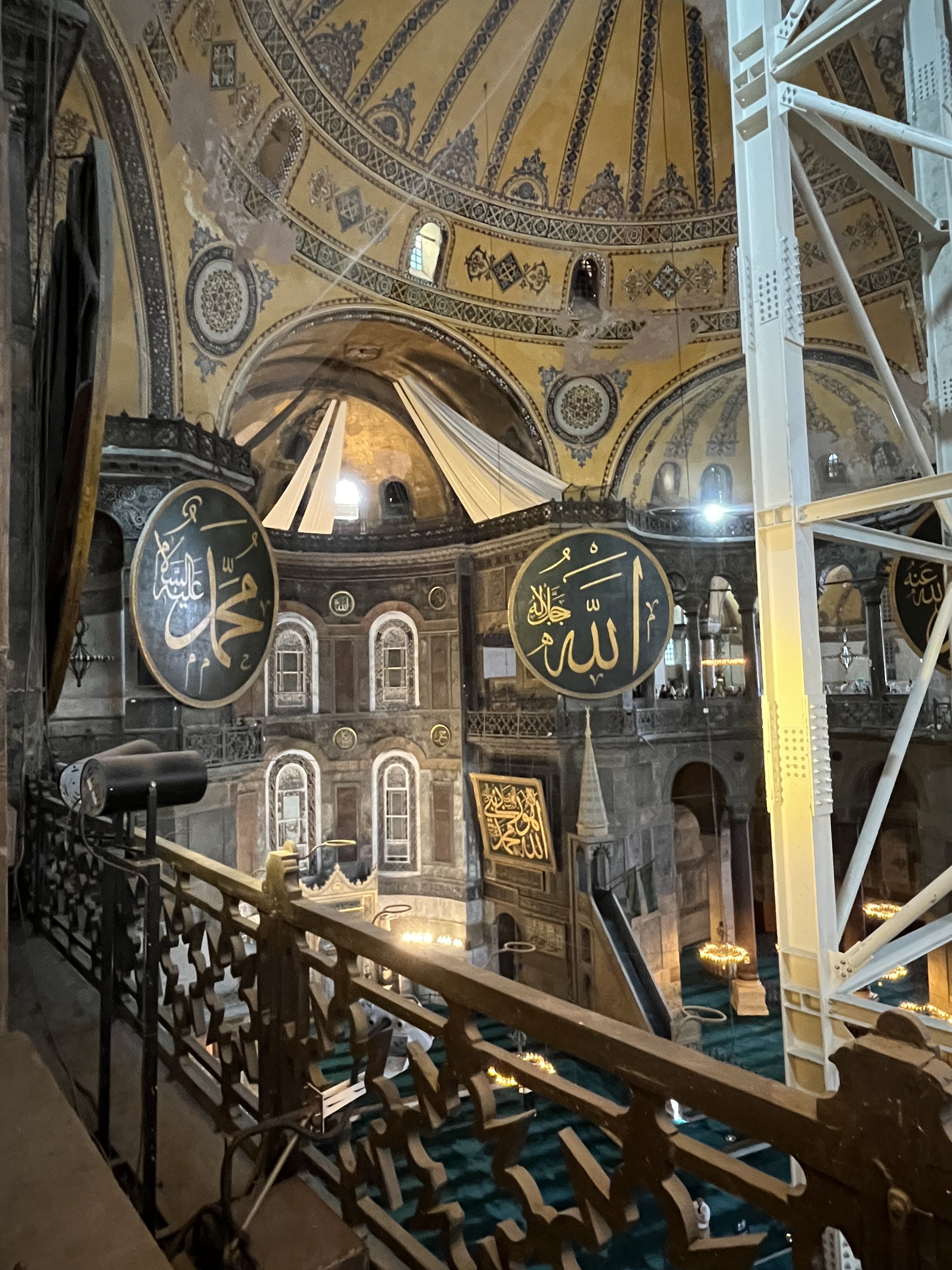
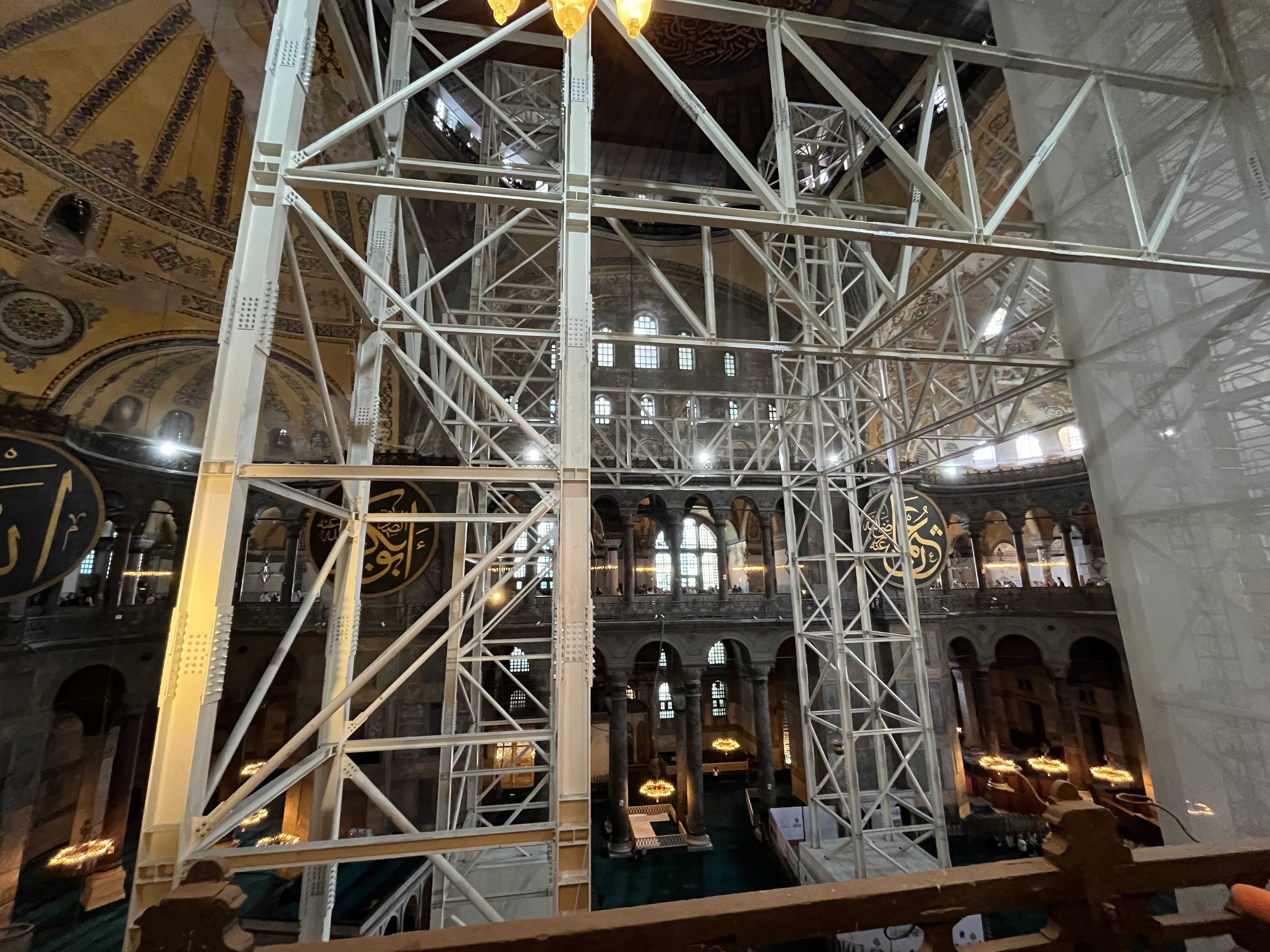
As you see in the pictures above, unfortunately the Hagia Sophia was under heavy renovation during our visit. This is mostly a structural renovation and reinforcement to make the building more earthquake safe. Even the outside of the building was mostly covered in scaffolding and tarps, so that I didn’t even take a picture.
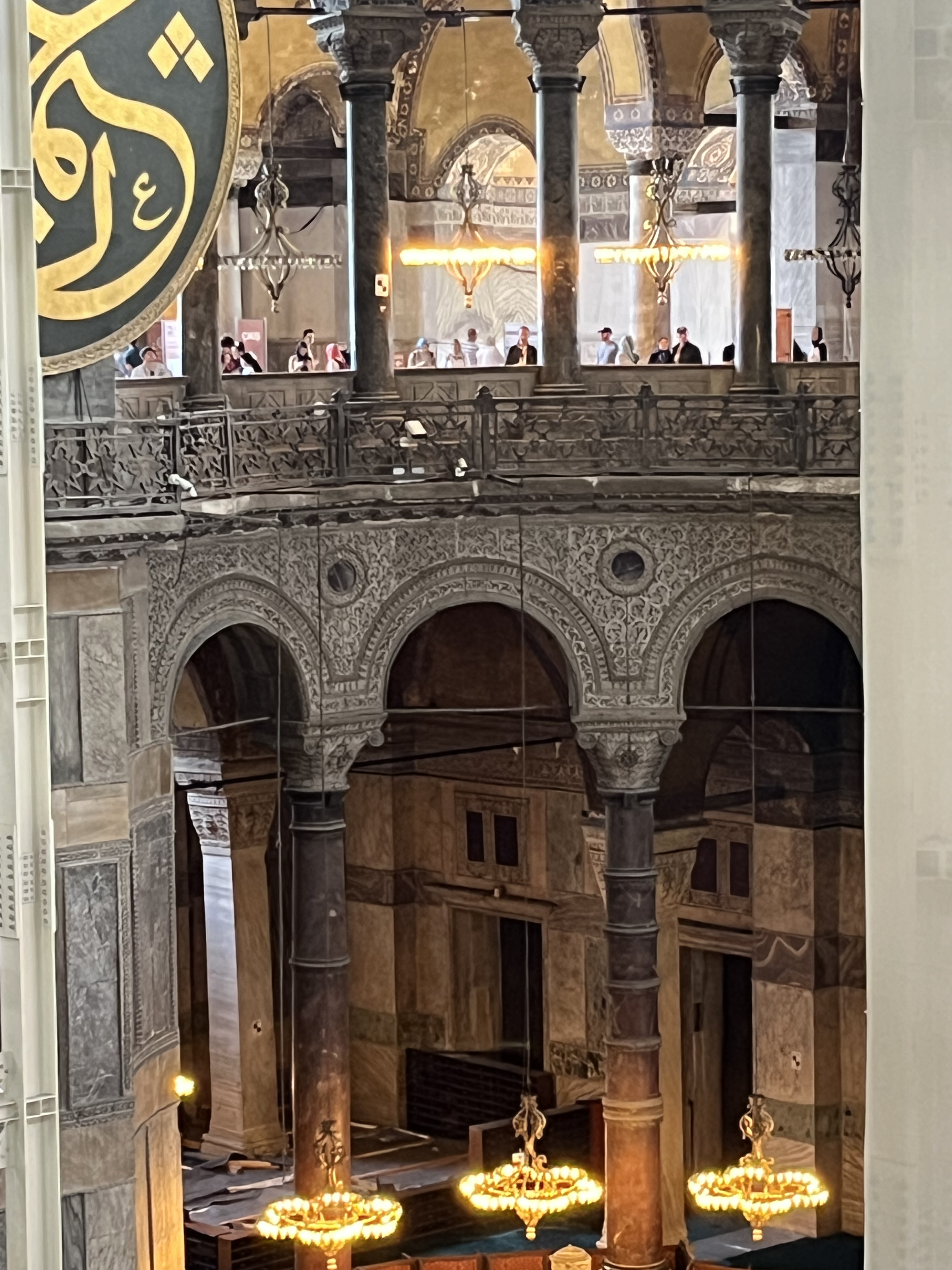
Here a little background on this culturally important building:
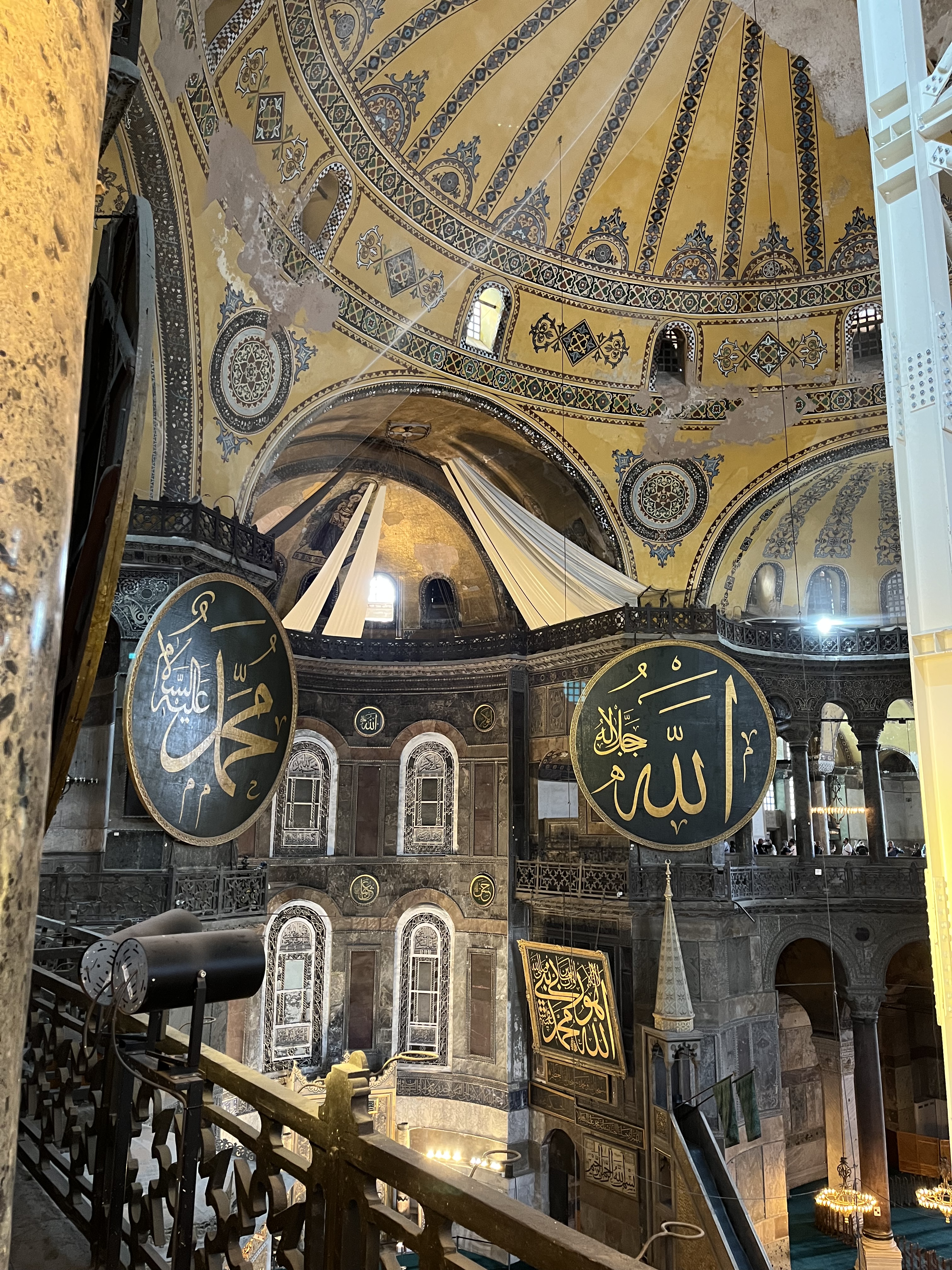
Hagia Sophia, today officially called the Hagia Sophia Grand Mosque, is a mosque and a major cultural and historical site. It was formerly a church (360–1453) and a museum (1935–2020). The last of three church buildings to be successively erected on the site by the Eastern Roman Empire, it was completed in AD 537, becoming the world’s largest interior space and among the first to employ a fully pendentive dome. It is considered the epitome of Byzantine architecture and is said to have “changed the history of architecture”. From its dedication in 360 until 1453, the Hagia Sophia served as the cathedral of Constantinople in the Byzantine liturgical tradition, except for the period 1204–1261 when the Latin Crusaders installed their own hierarchy. After the fall of Constantinople in 1453, it served as a mosque, having its minarets added soon after. The building became a museum in 1935, and was redesignated as a mosque in 2020.
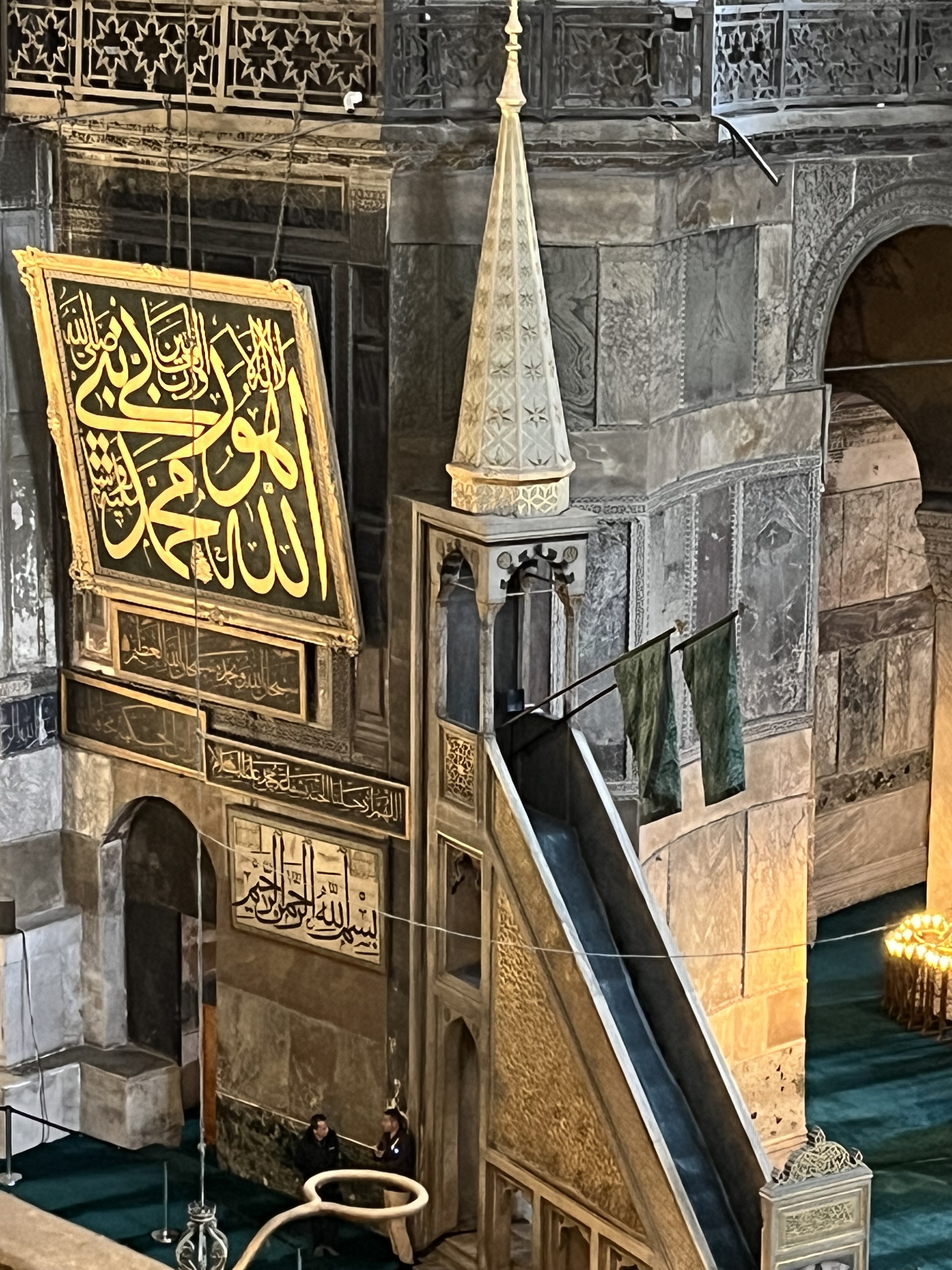
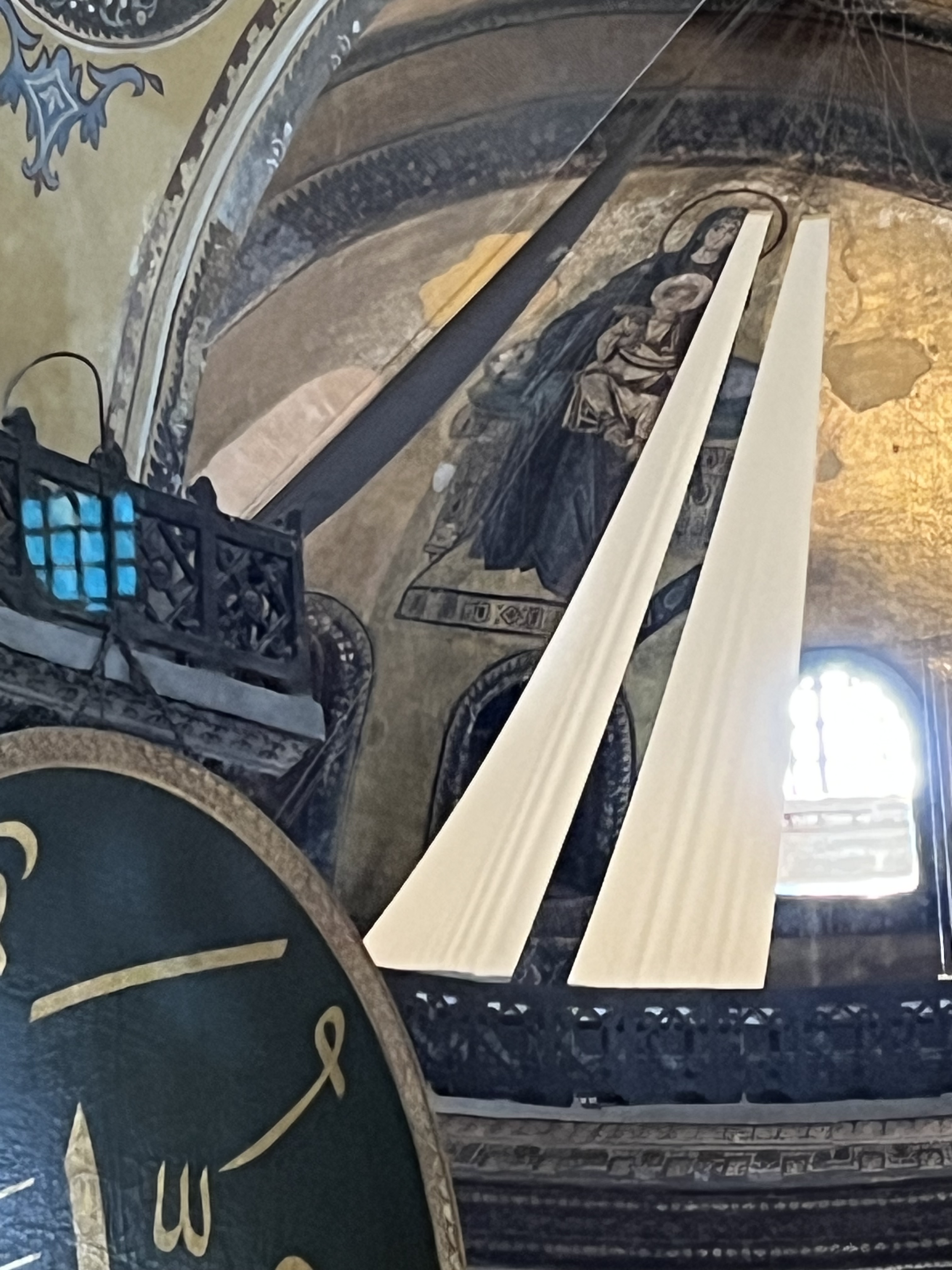
Above left one can clearly see the added Muslim mosque features, and top right and below, see the original Christian byzantine paintings and mosaics. The Christian features are mostly half covered so that they are not a distraction for the praying Muslims. It is nice to see that many of these original features were kept and integrated into today’s mosque.
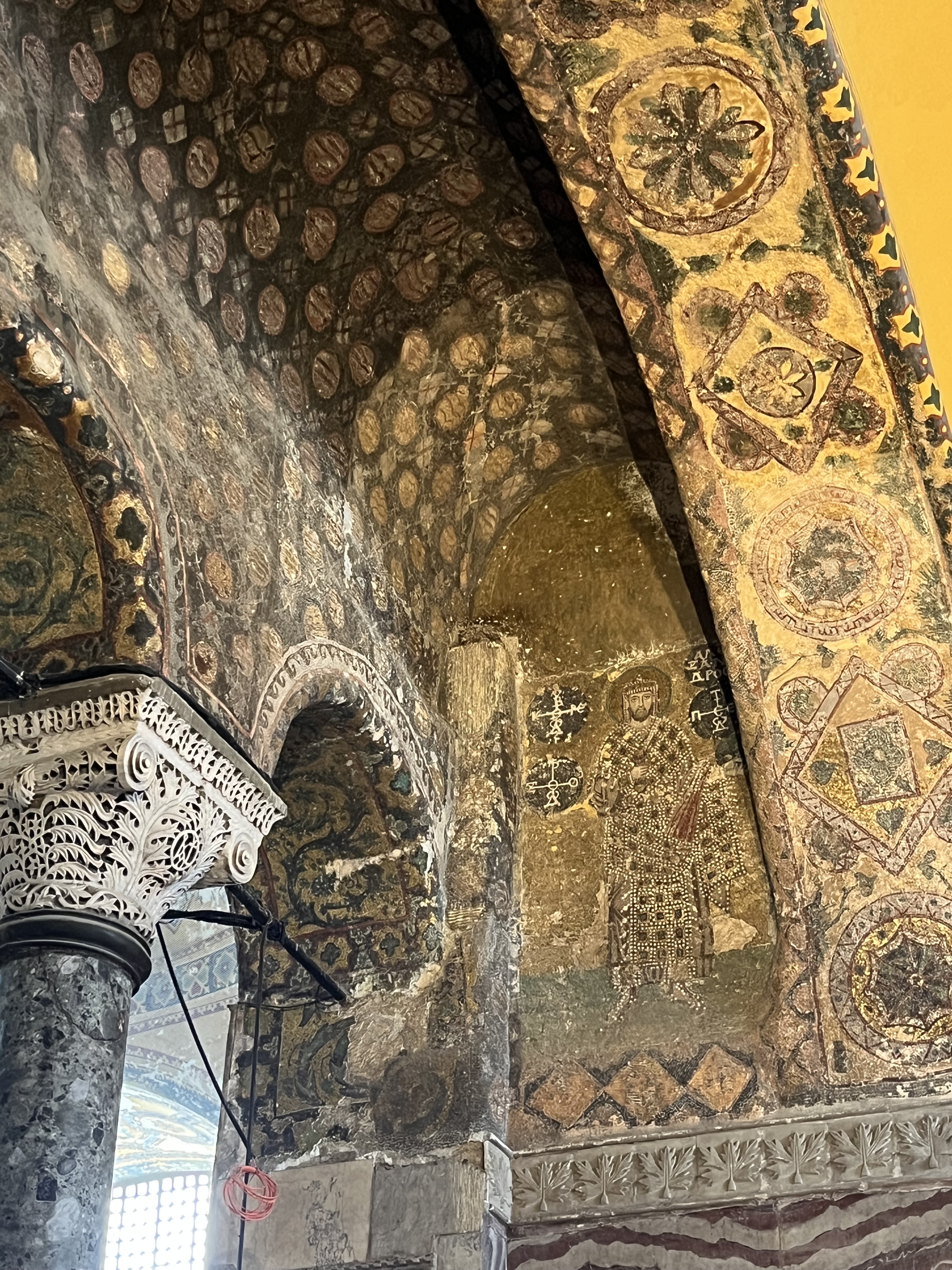
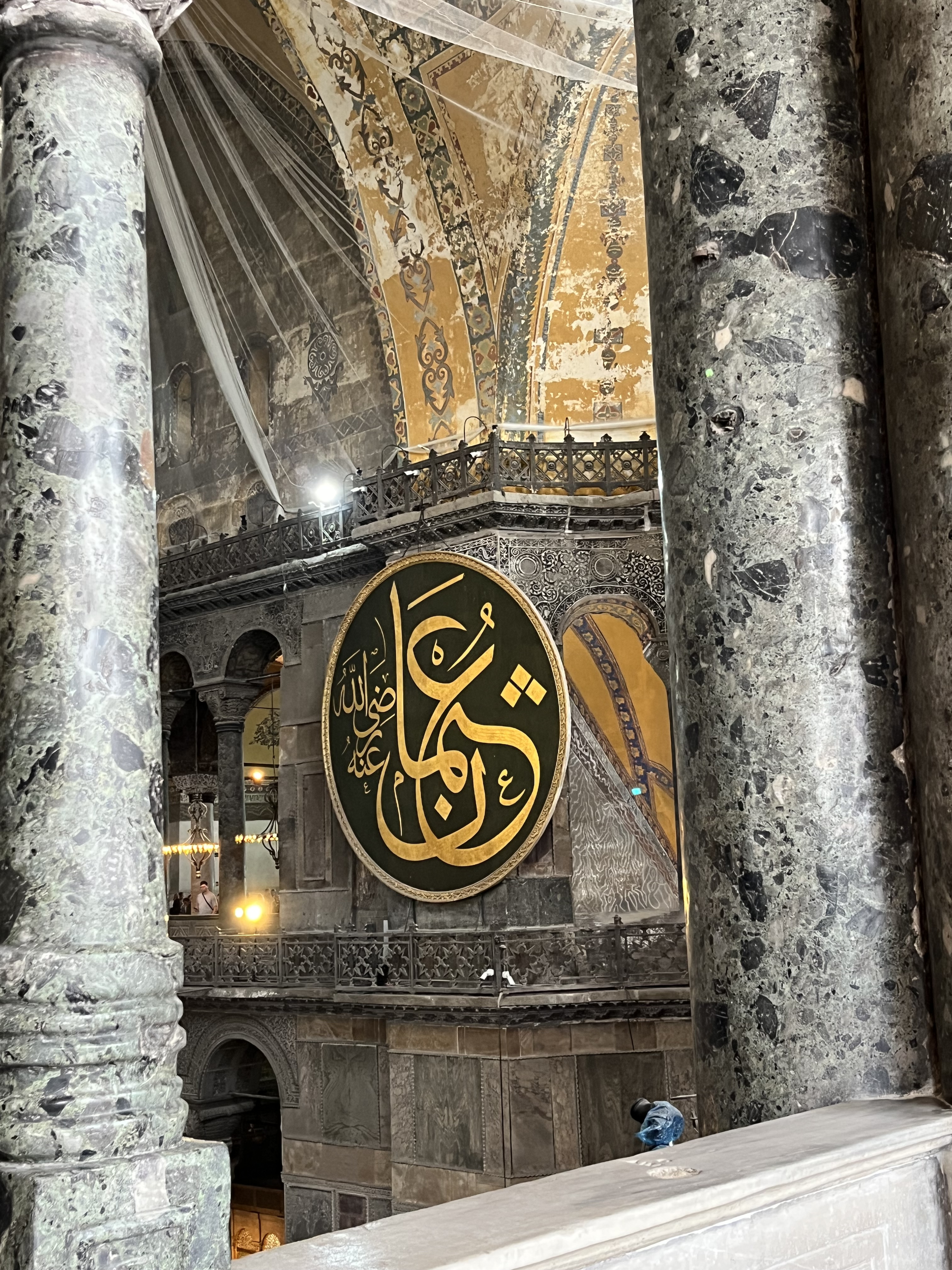
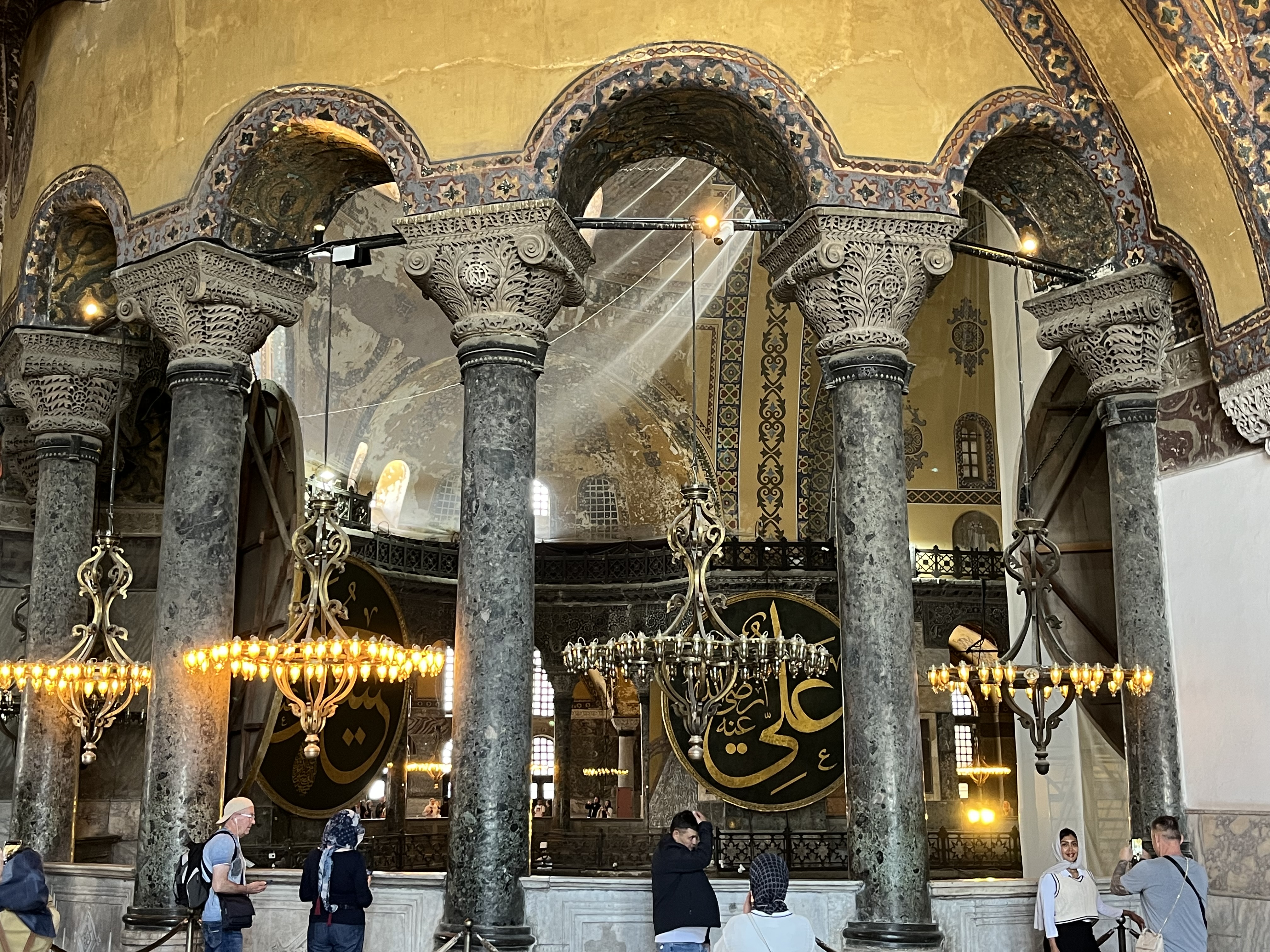
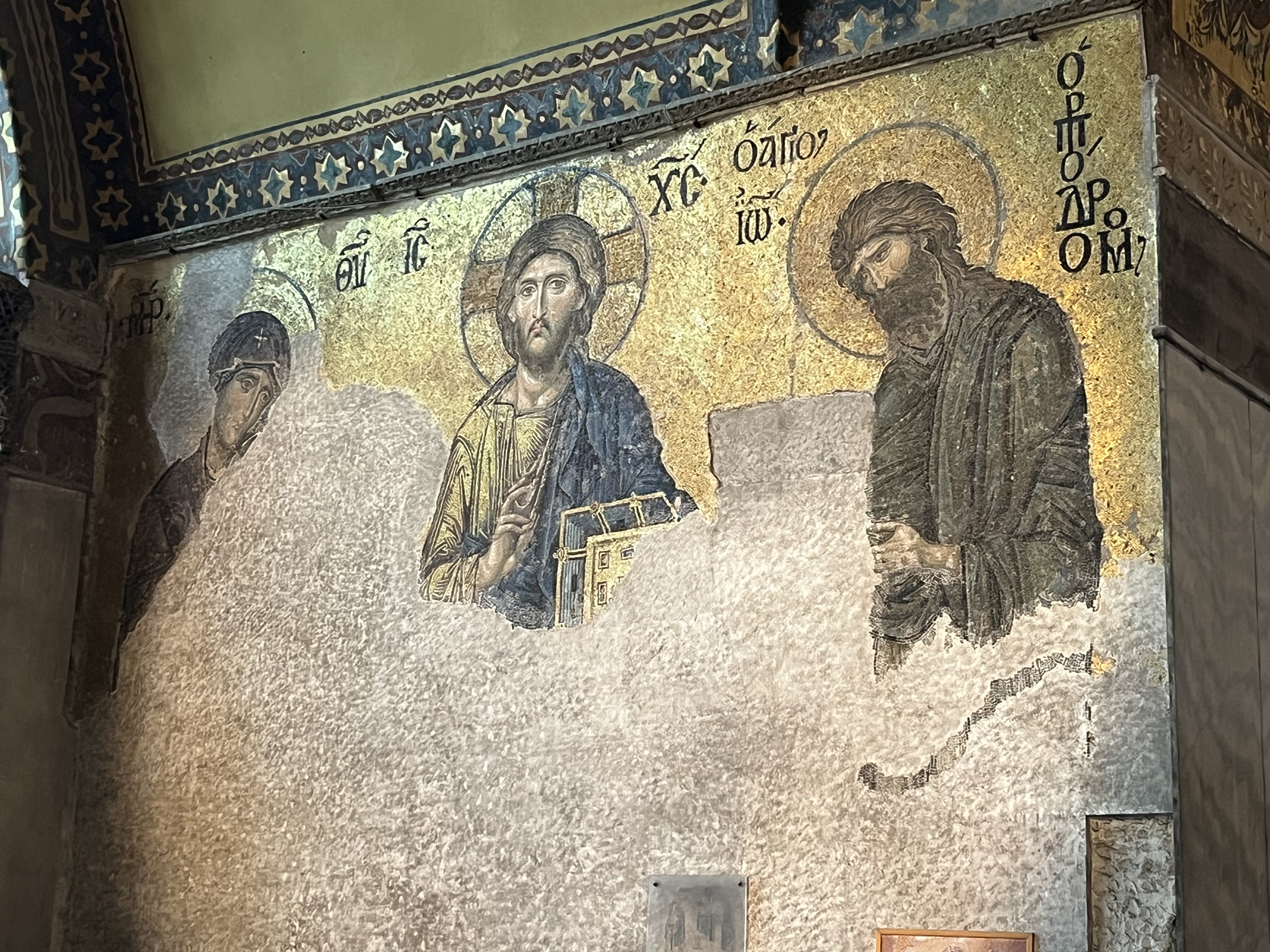
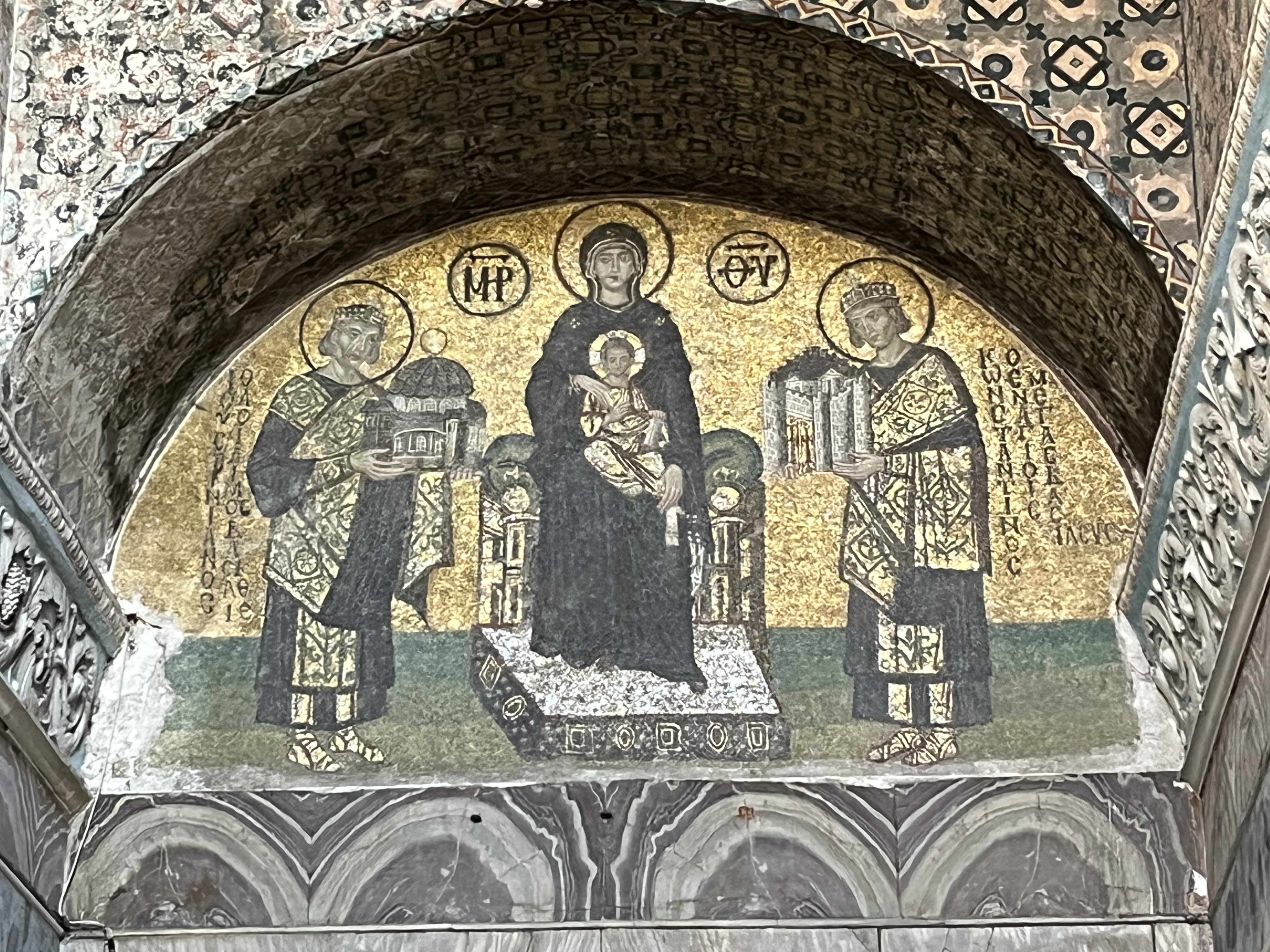
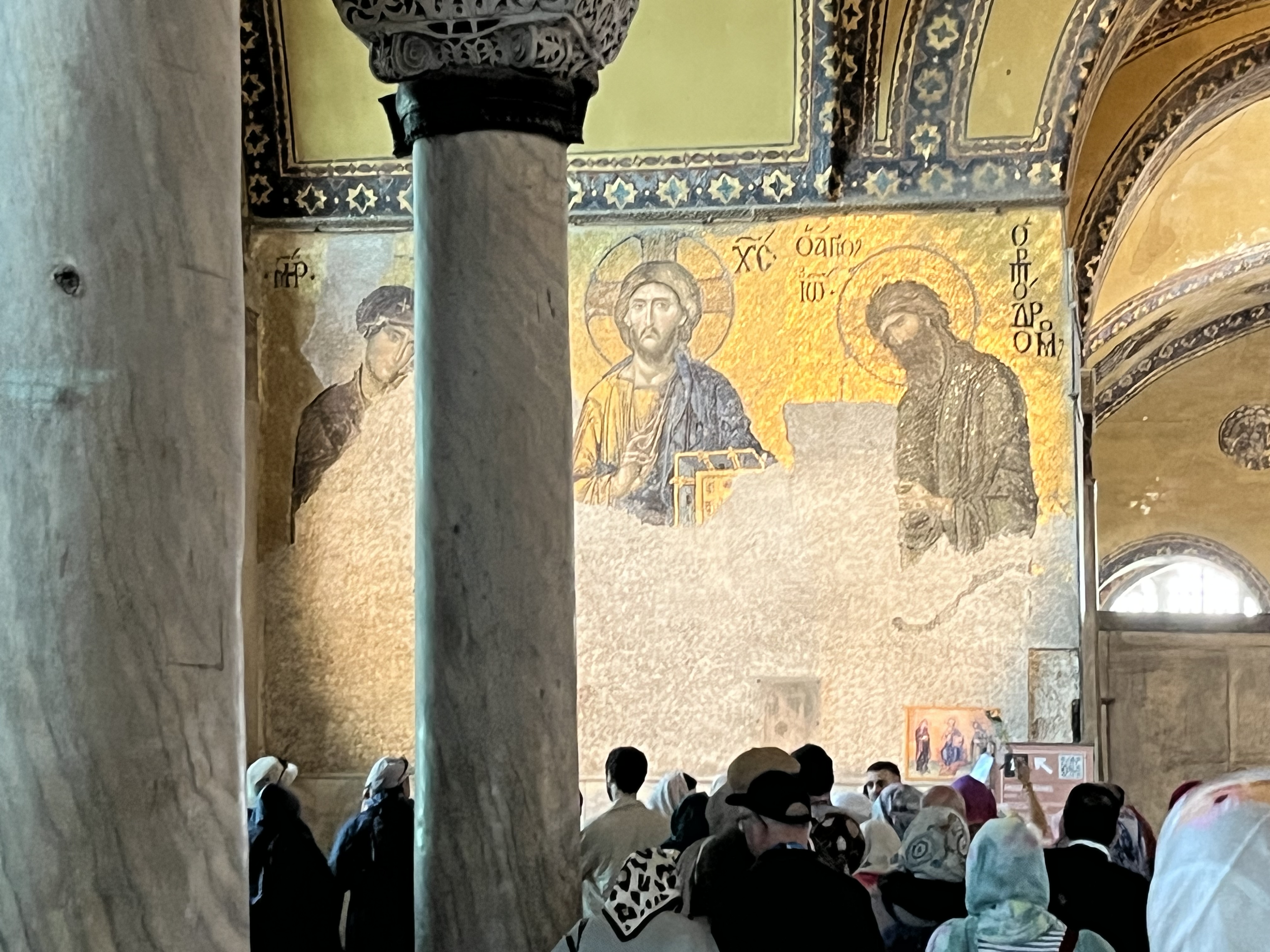
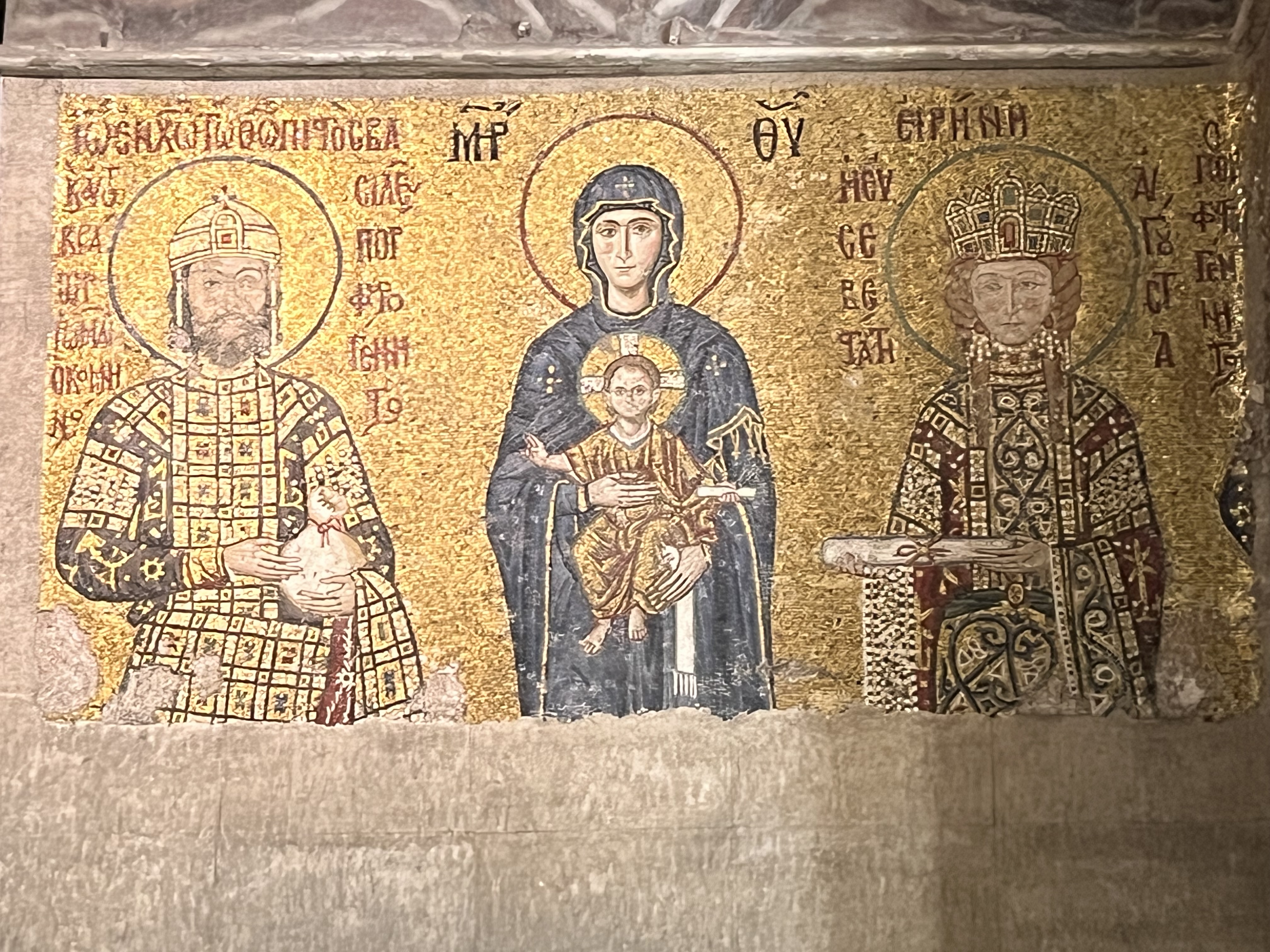
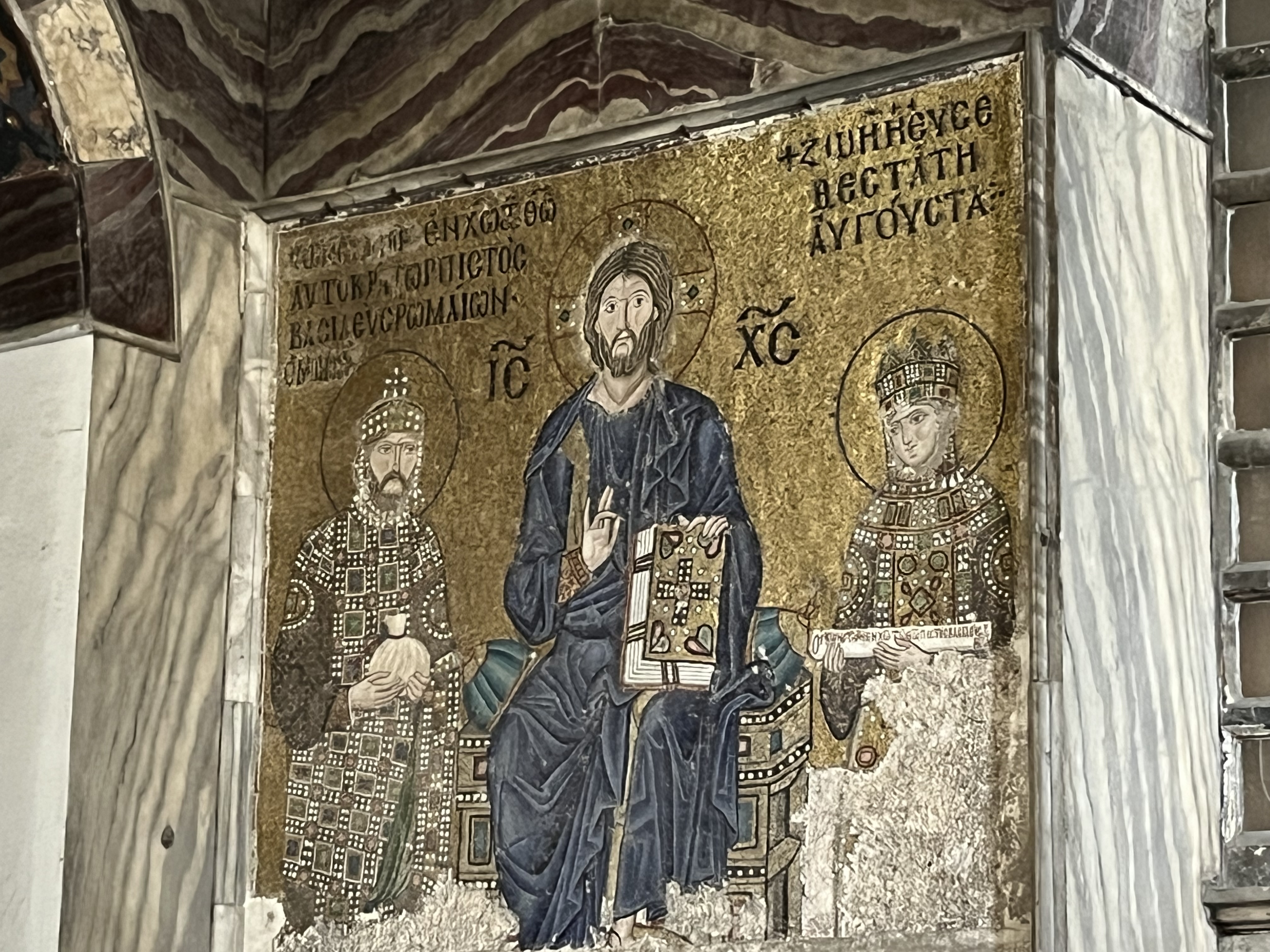
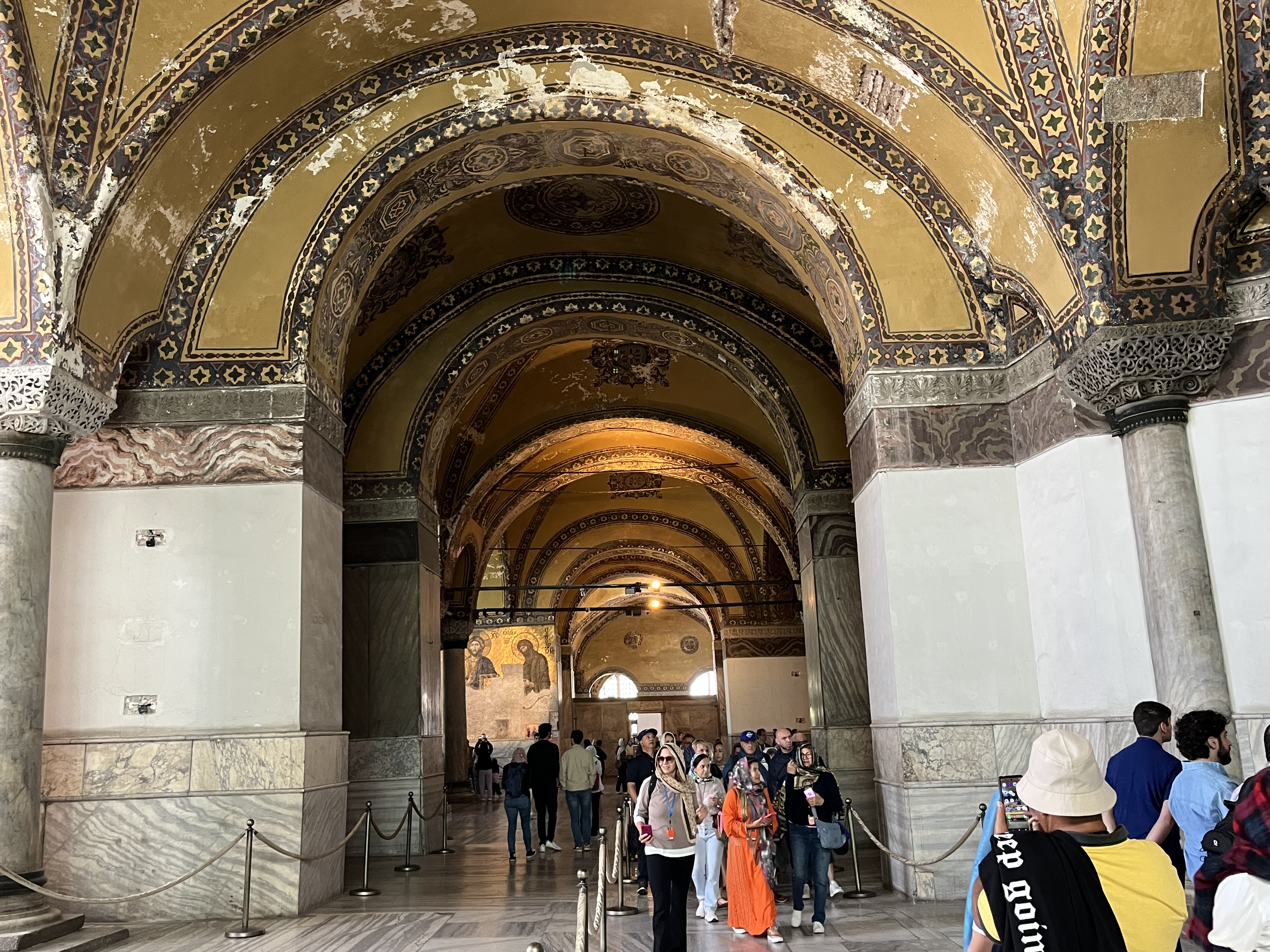
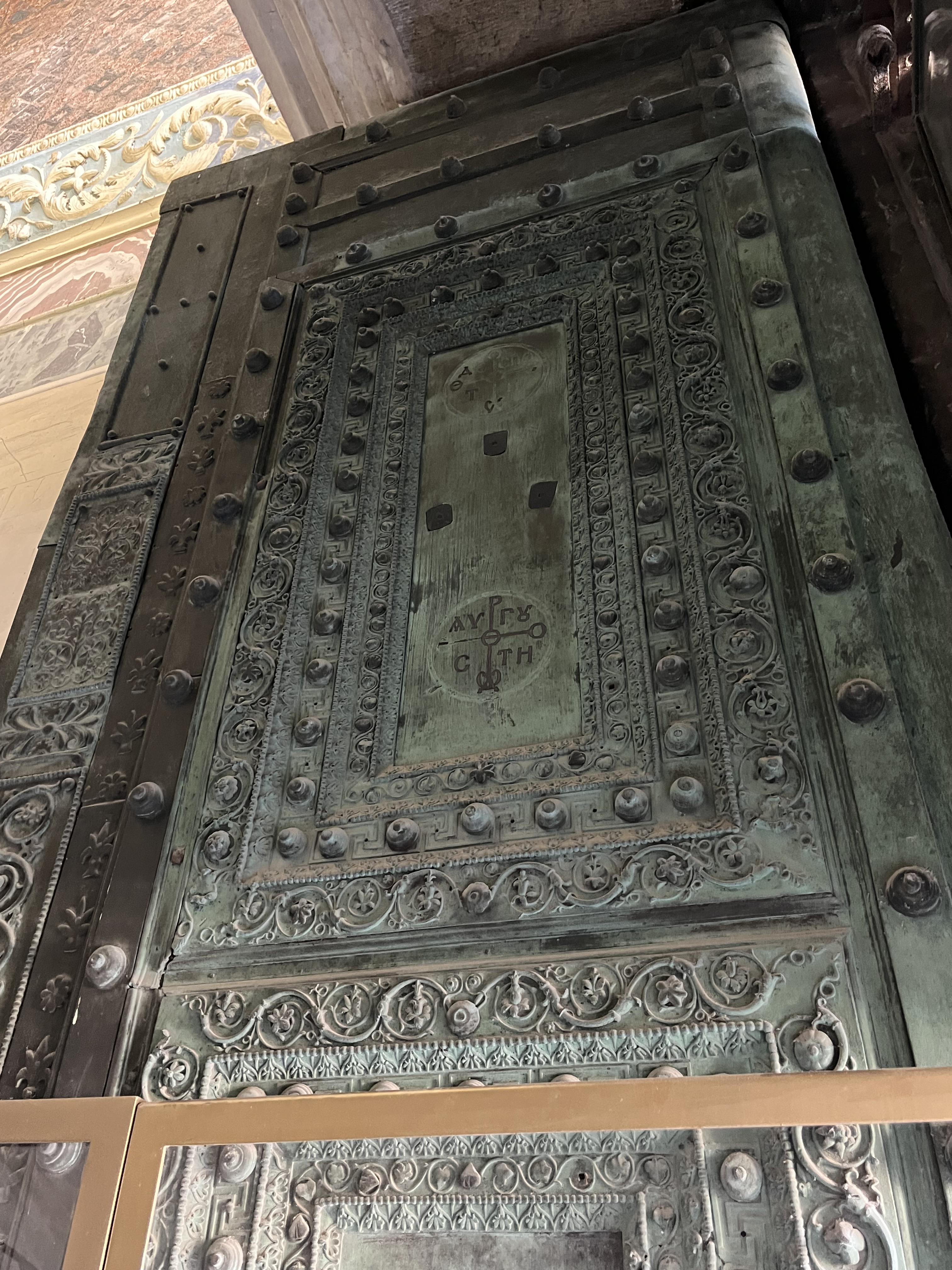
Above I tried to capture the crookedness of the archways, pillars, and columns, which are a lot more graphic in reality. The entry door on the right is the gate from the Biblical town of Tarsus on Turkey’s southern shore where St. Paul was born.
The following structure is located close to the Hagia Sophia, yet something totally different:
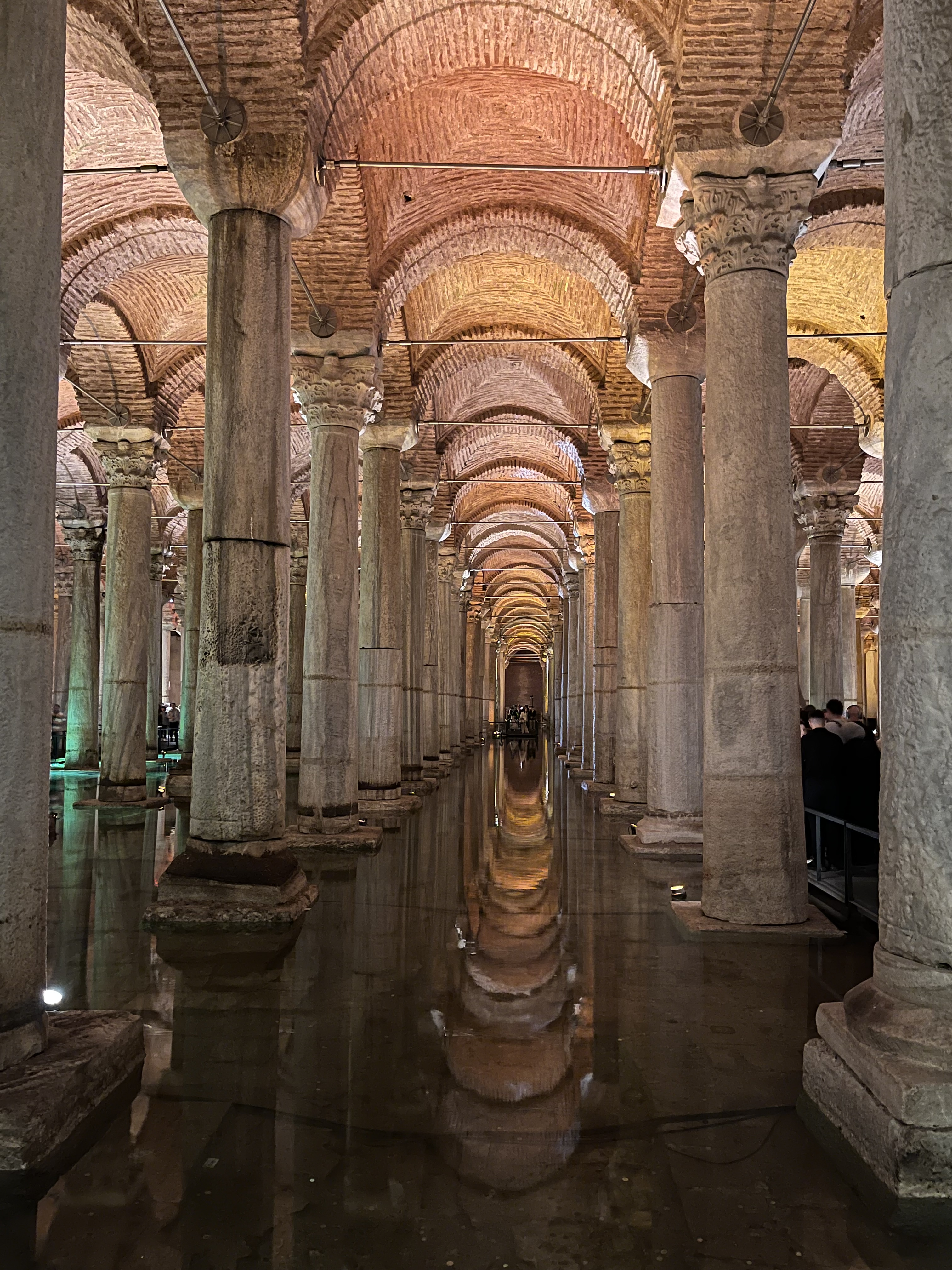
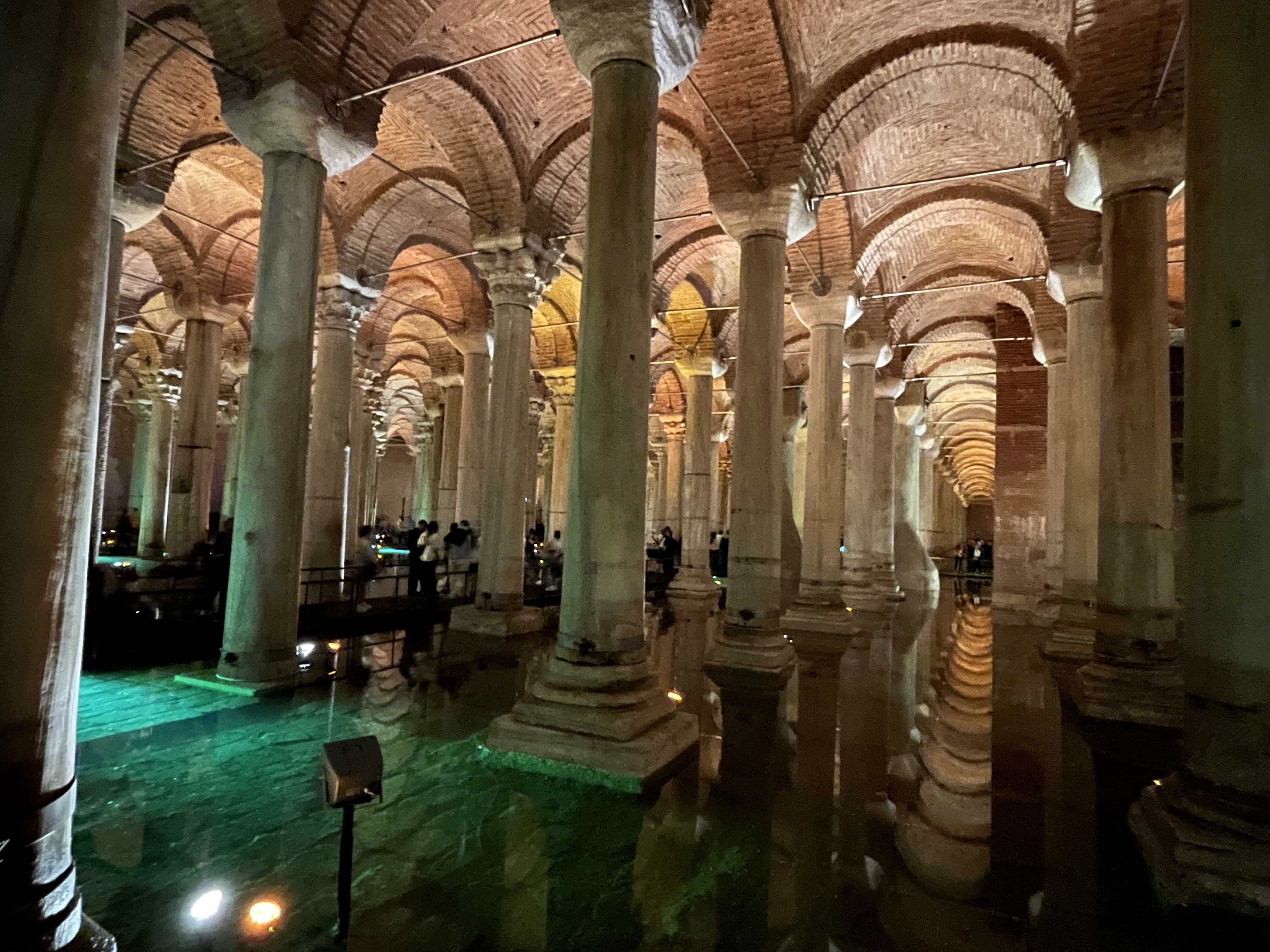
The Basilica Cistern is the largest of several hundred ancient cisterns that lie beneath the city of Istanbul. This one lies 150 meters SW of the Hagia Sophia and was built in the 6th century during the reign of the Byzantine emperor Justinian I. Today it is kept with little water for public access to the space and sometimes used as the setting for concerts, runway fashion shows etc.. It is called Basilica because it is located under the Stoa Basilica square. Istanbul, though right next to the Bosphorus had limited natural drinking water. To provide the growing city with drinking water, the Roman engineers constructed these cisterns during the 3rd to 4th century. It is written that 7,000 slaves were involved in the construction. The existence of the cistern was eventually forgotten by all but the locals who still drew water from it until, in 1565, a French traveller left a record of it. He recorded being rowed in between the columns and seeing fish swimming in the water beneath the boat. Today this place is a spectacular tourist attraction, likely especially popular on a hot day above. These cisterns were also the site of a scene in the James Bond movie From Russia With Love.
Back above ground and under blue sky we visited Topkapi Palace, the former seat of the Ottoman Empire and its Sultan.
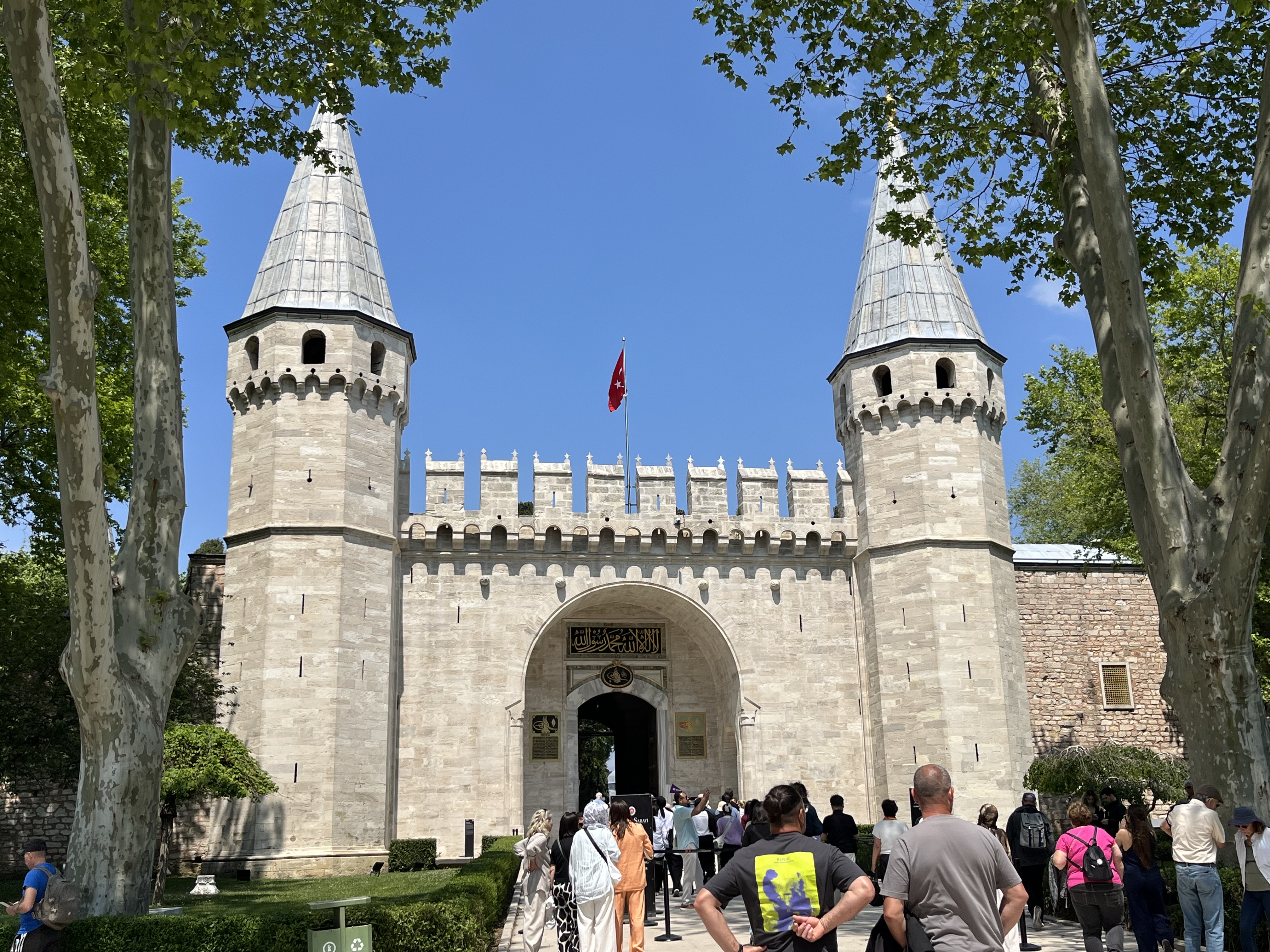
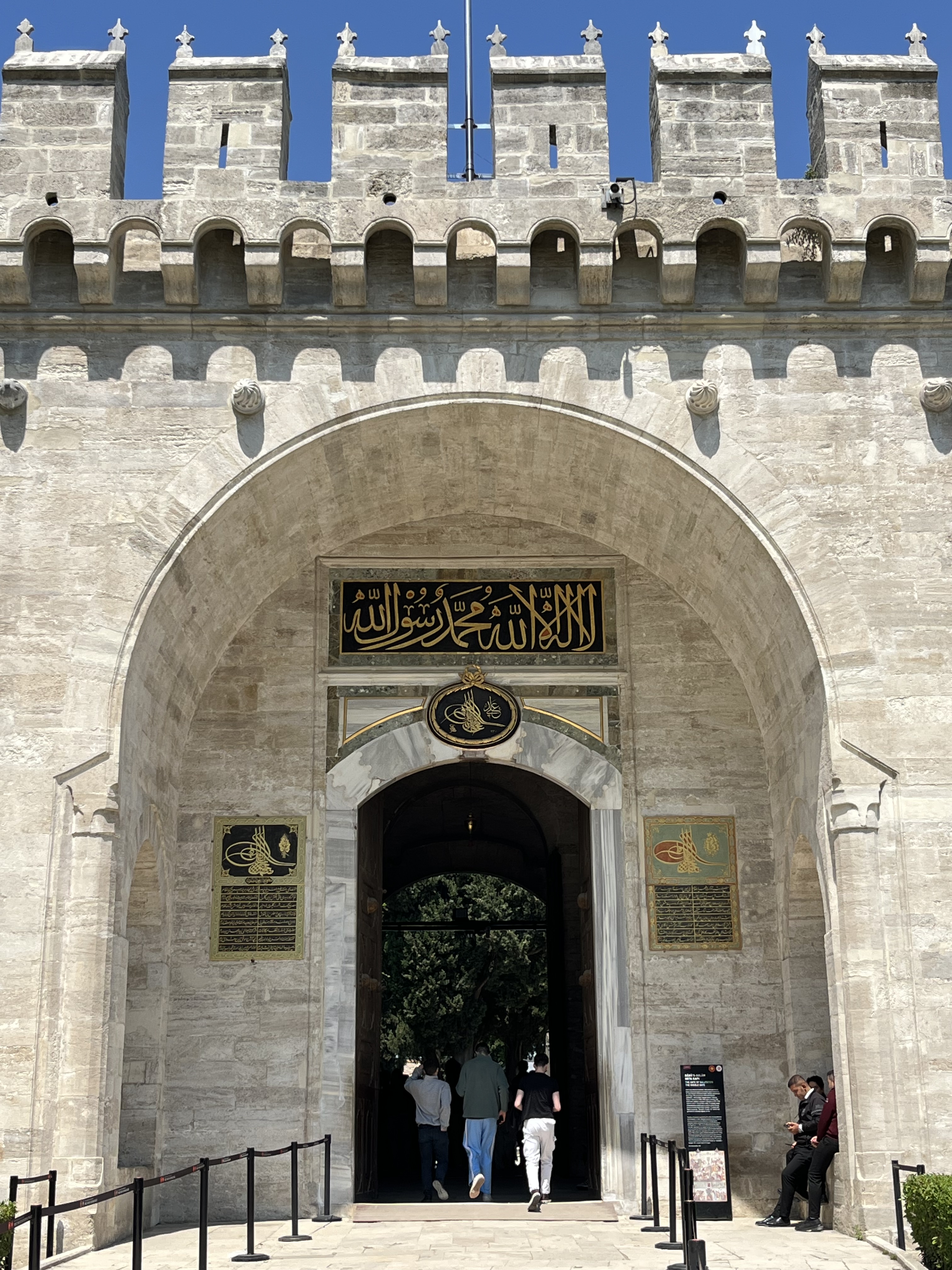
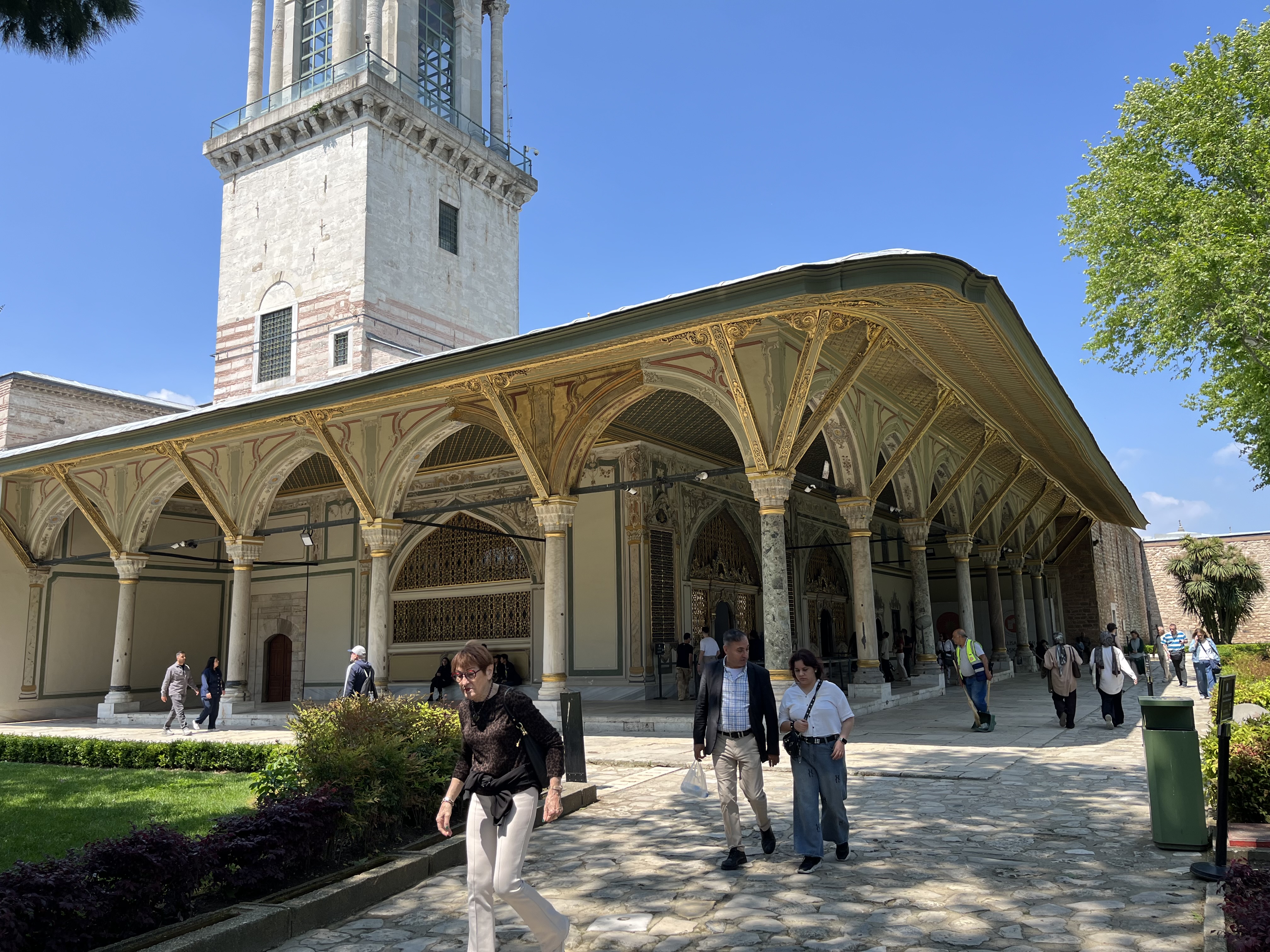
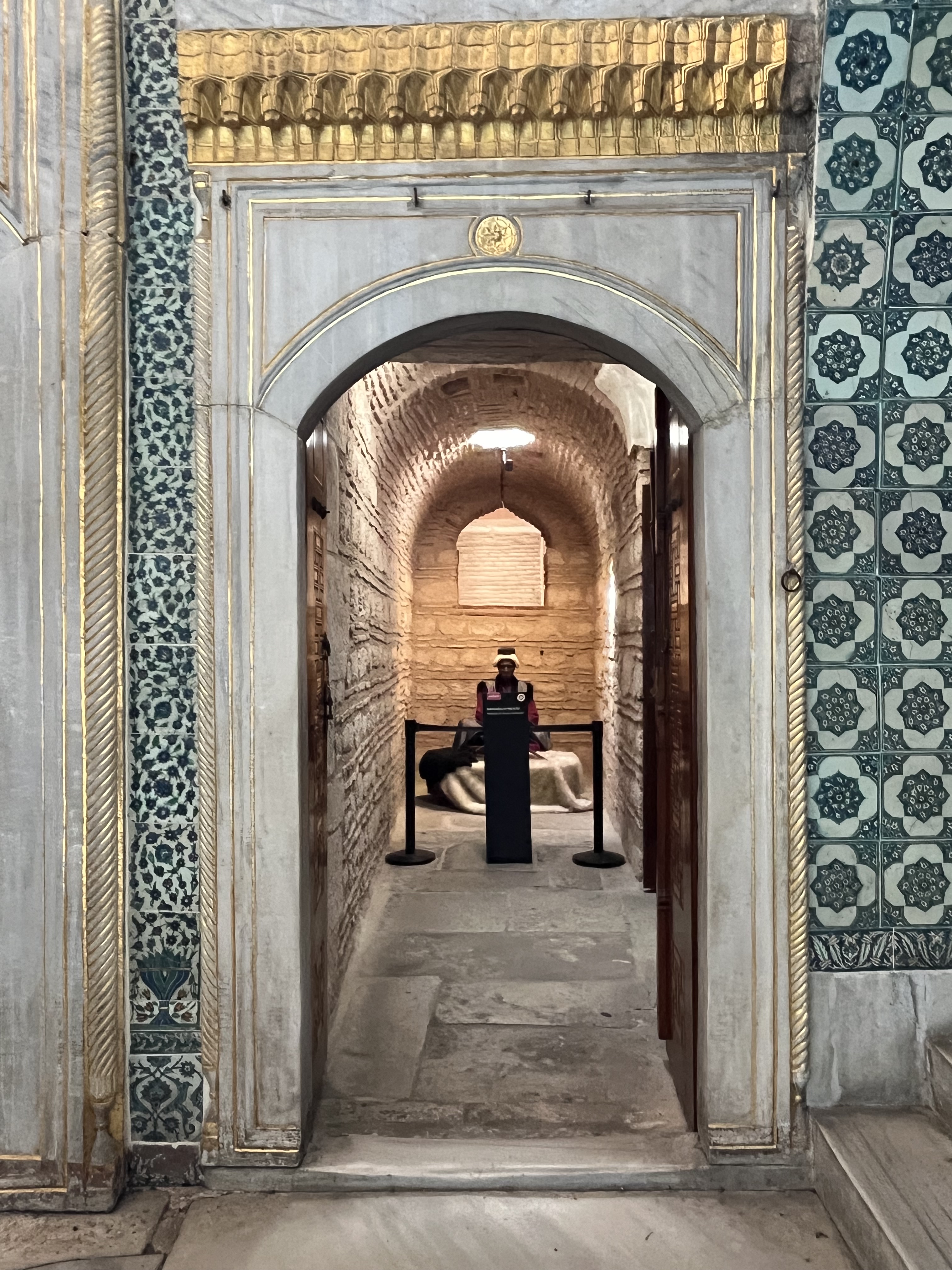
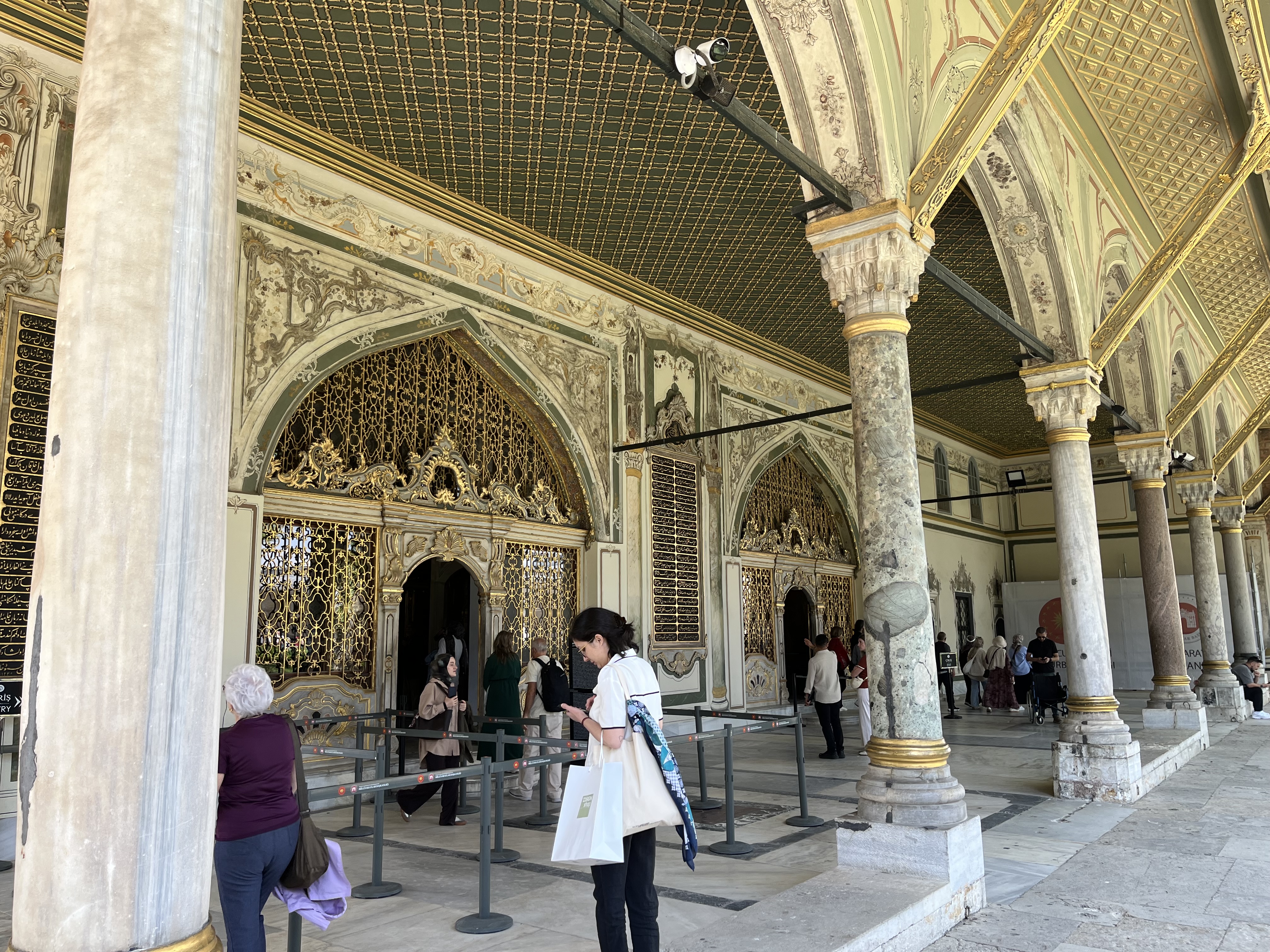
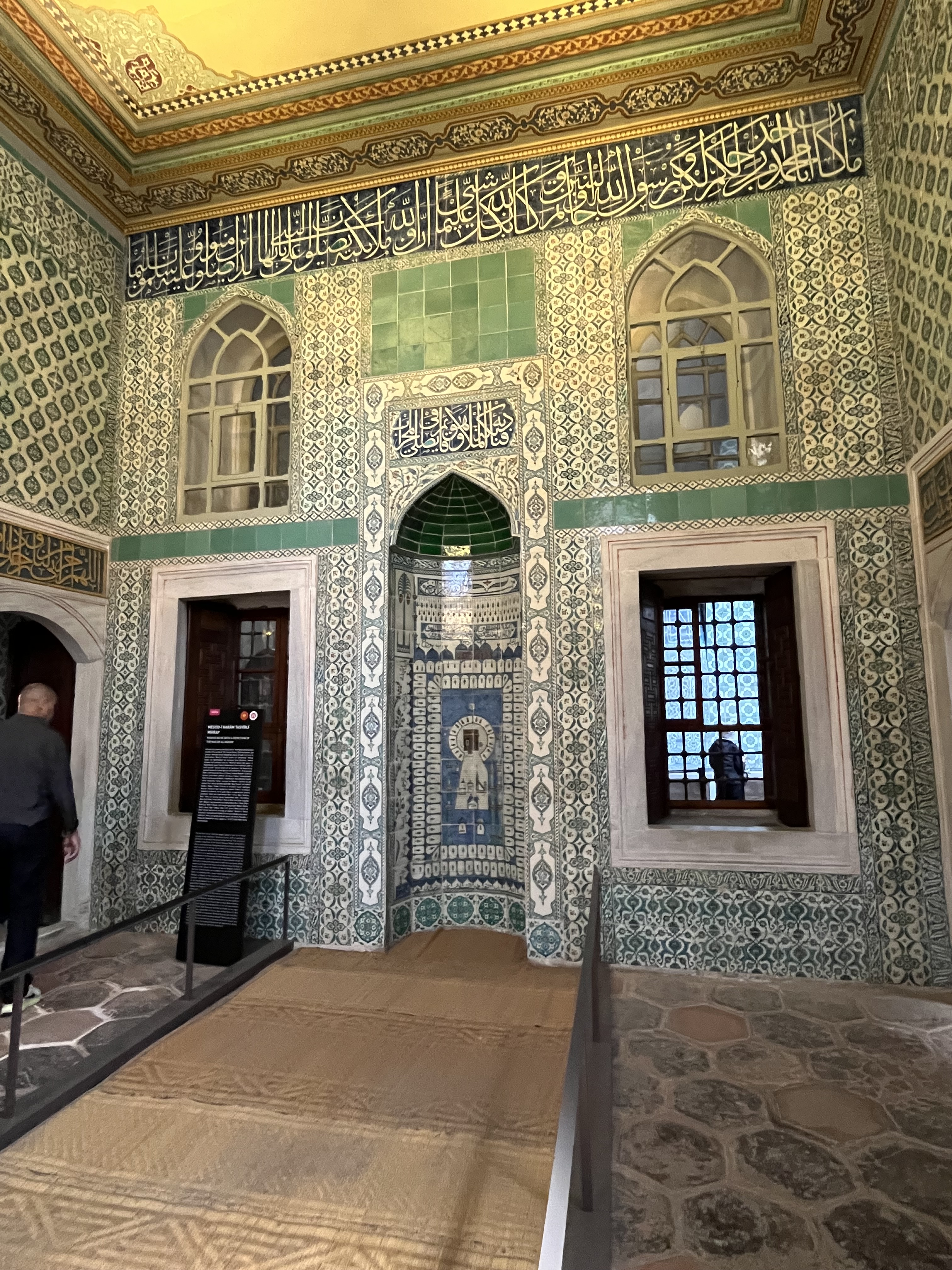
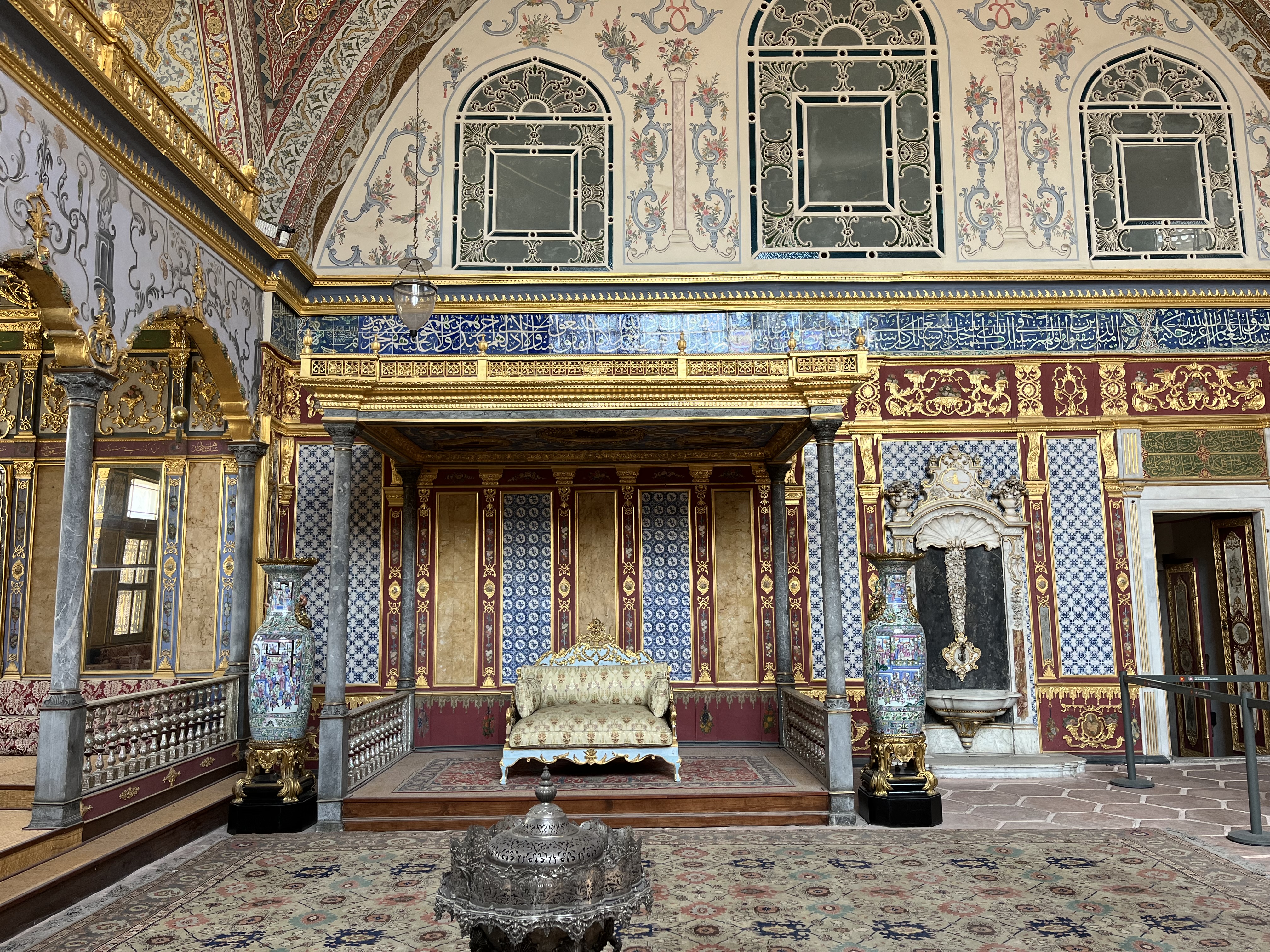
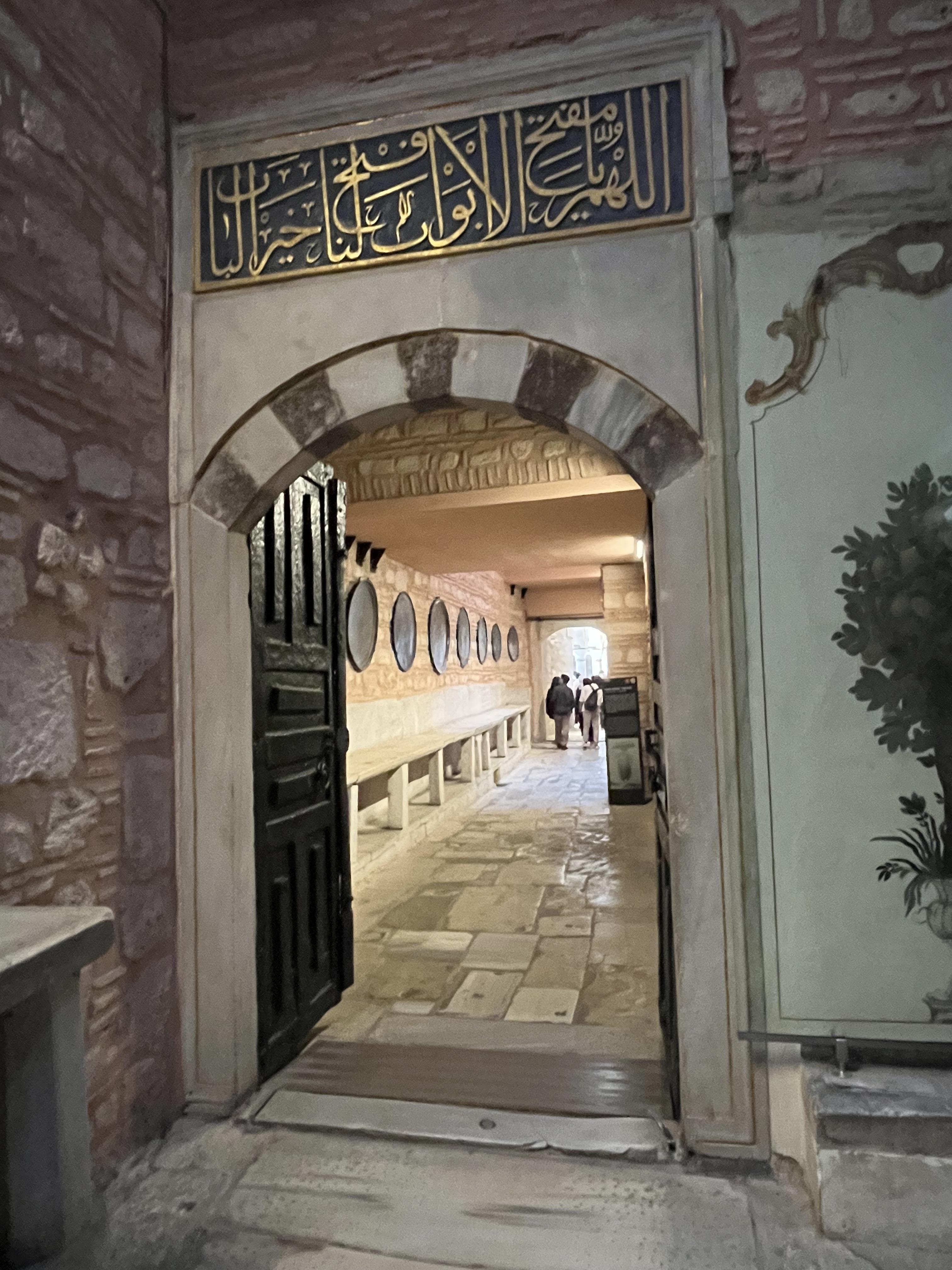
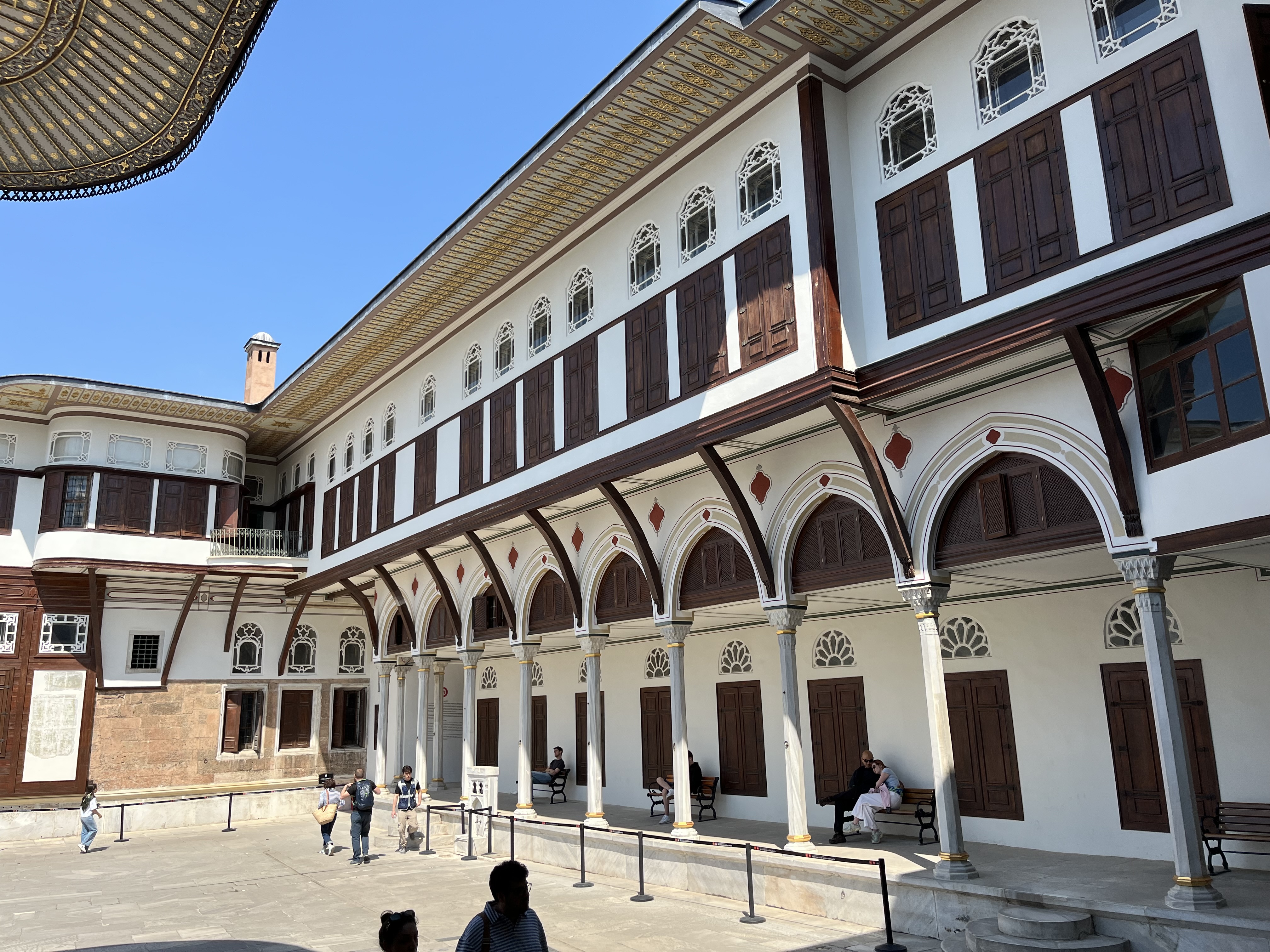
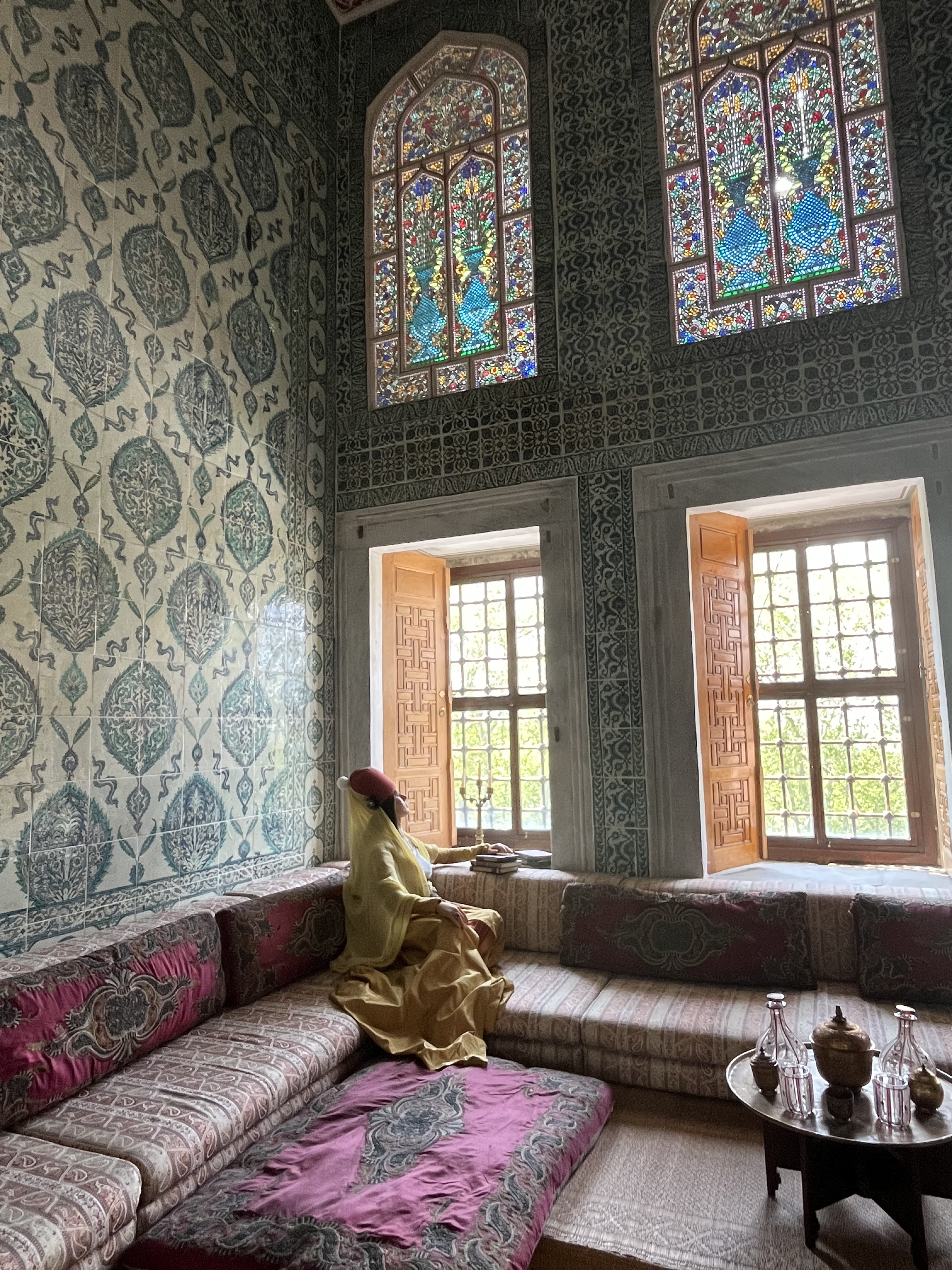
Starting with the third row of pictures above are the Haarem Quarters. Always a popular subject, Omer provided a lot of interesting information which resulted in more and more questions from Lauri…
We learned a lot about the greatness of the Ottoman Empire that day, as Omer proved to be a proud ambassador of his home country of Turkey. For six centuries, from the 14th to the 20th century, this empire, at its height, stretched from Hungary to the Asian countries surrounding the Black Sea, down to Iraq and Egypt, and West to Tunisia.
In between the tour sites, we stopped with Omer at a typical Lokantasi restaurant for lunch. Lokantasi restaurants are cafeteria style restaurants, where you pick your dishes at the counter and pay for your purchase before you sit down with your tray. They usually provide fresh, tasty dishes for very reasonable prices, and in there, where you usually share a table with other customers, you encounter more local Turks than tourists.
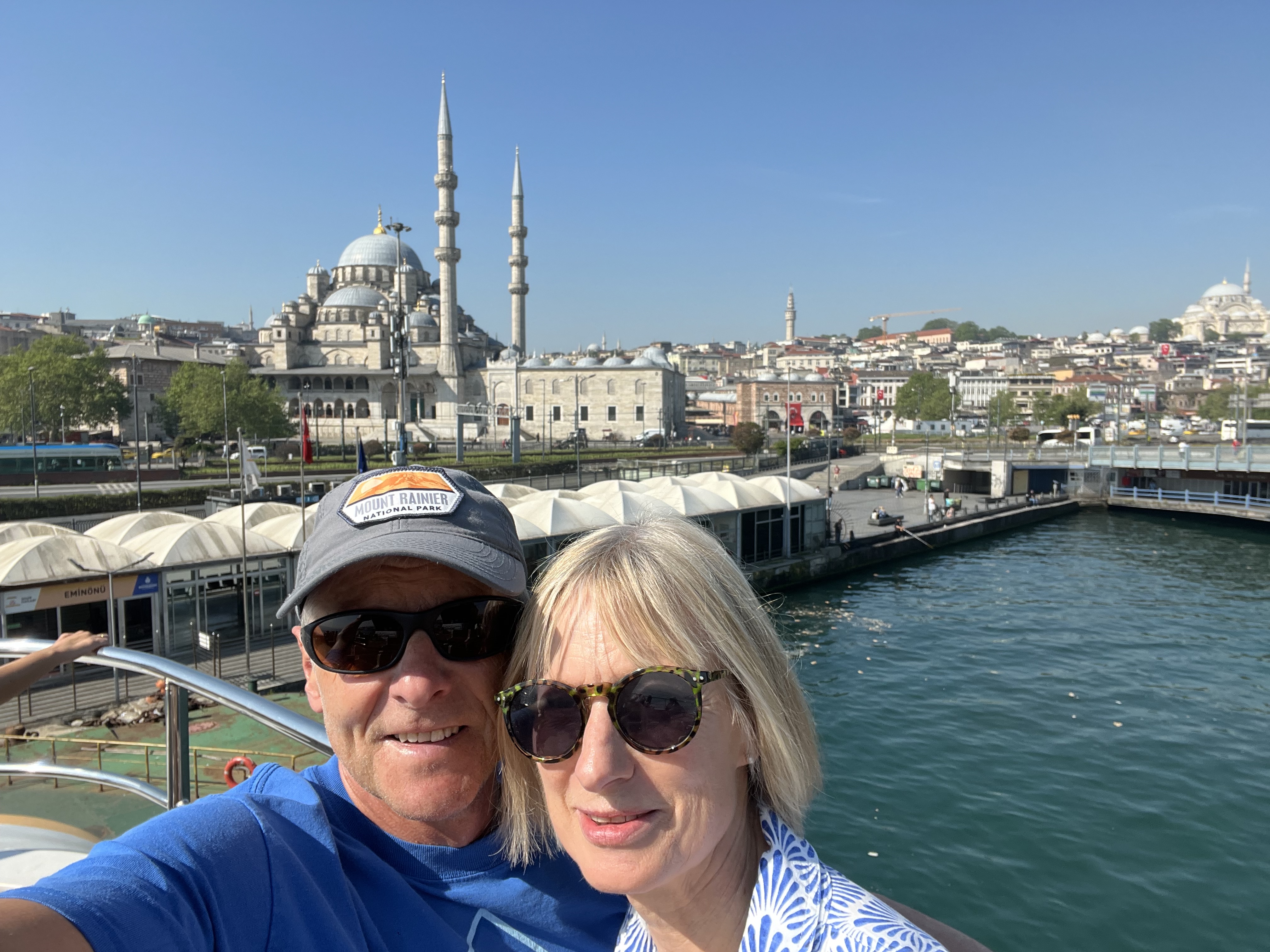
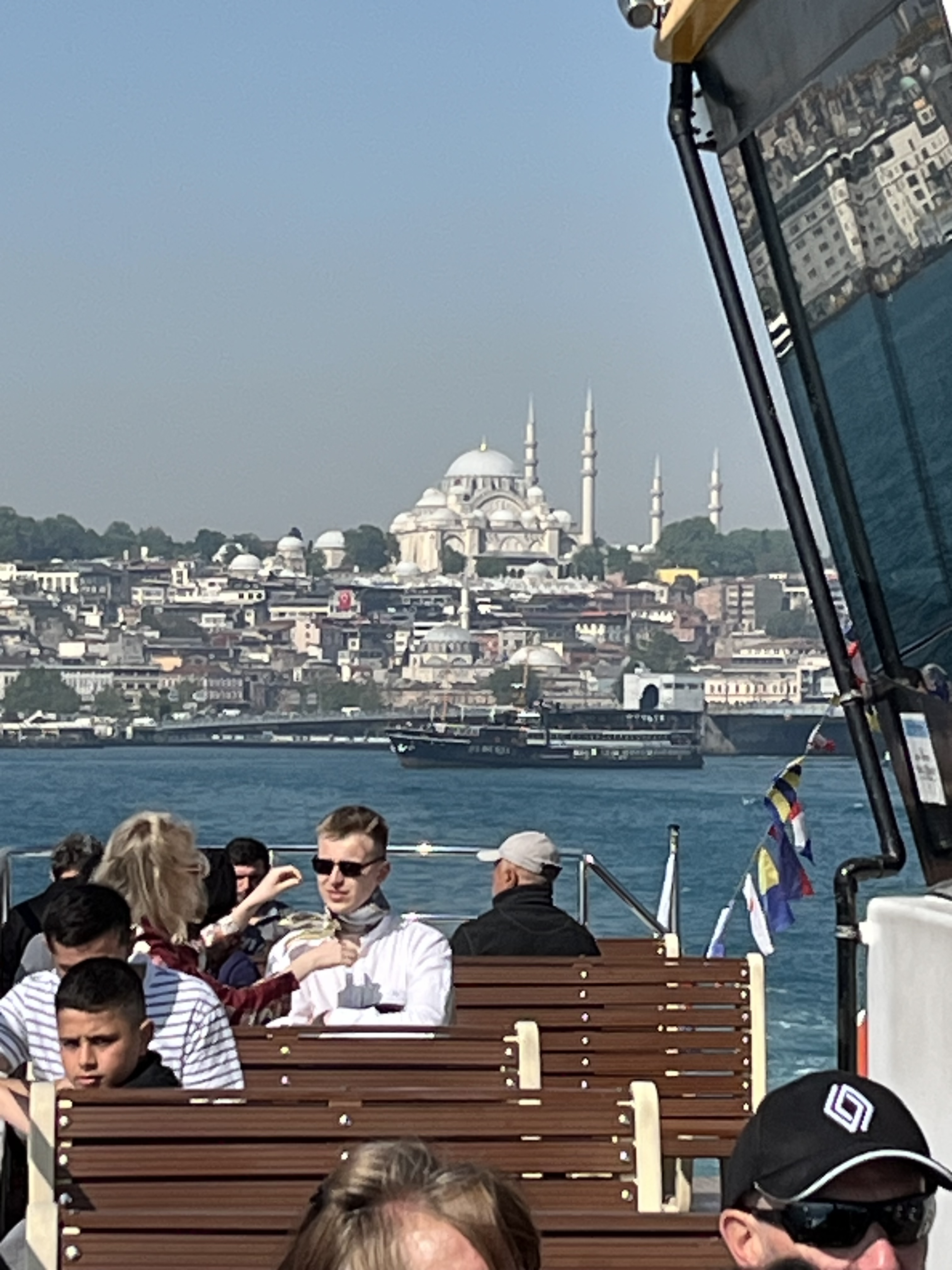
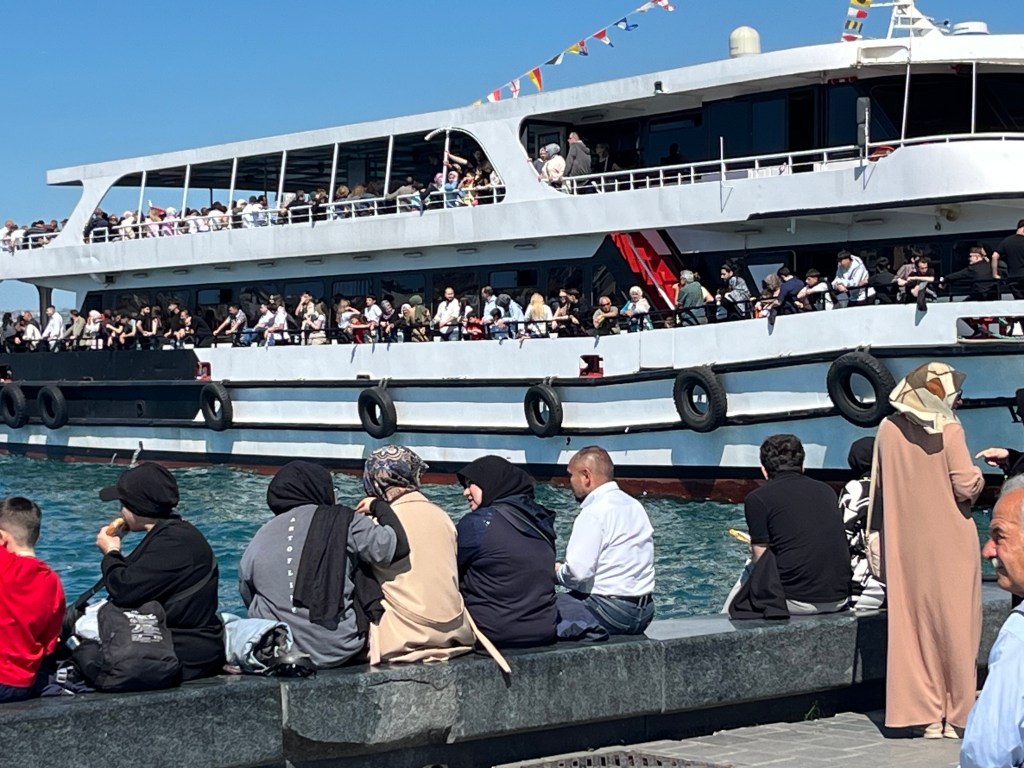
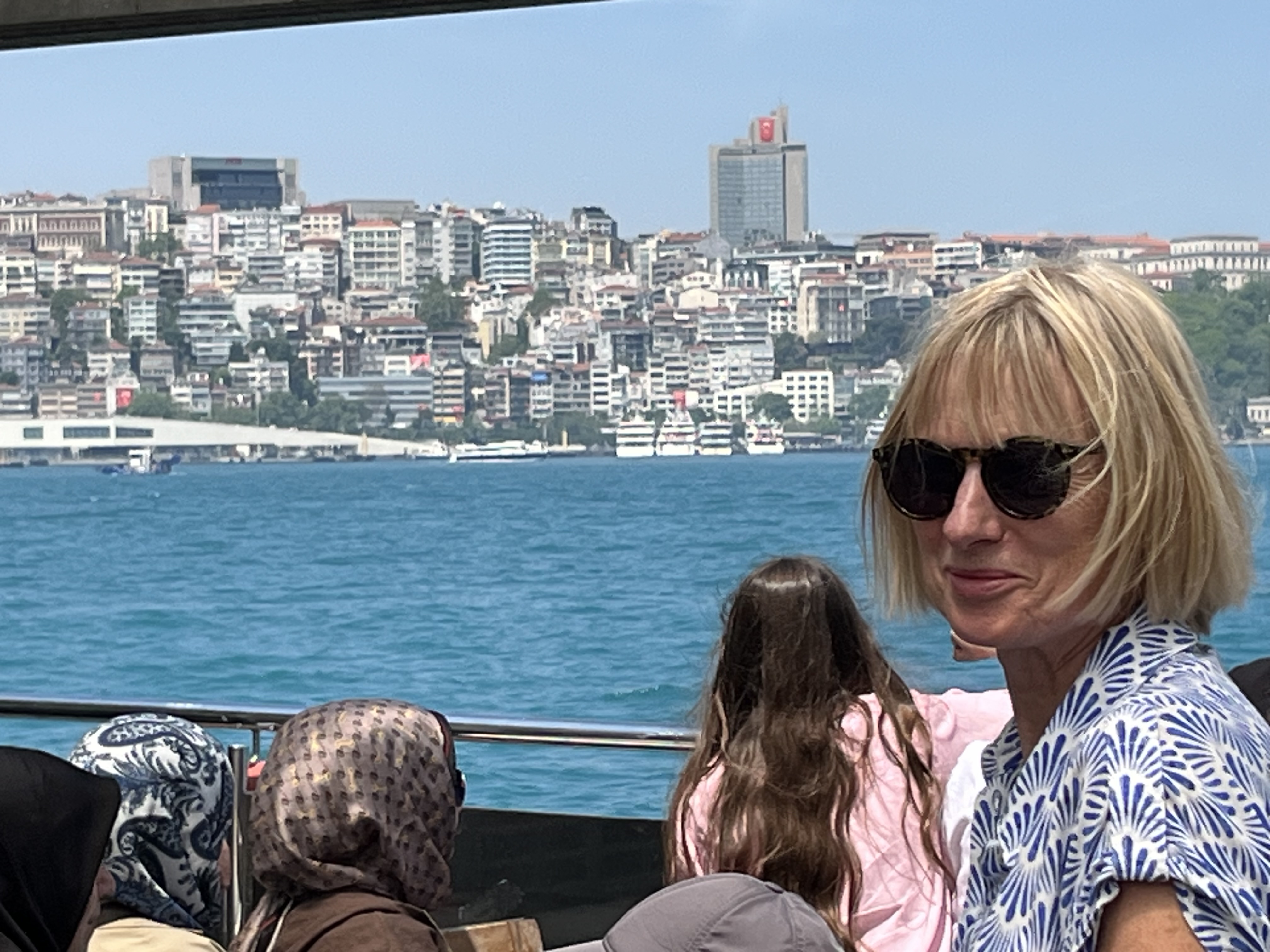
Fortunately, our weather was still clear and sunny the following morning, and we took a public commuter ferry across the Bosphorus to the Asian shore of Istanbul.
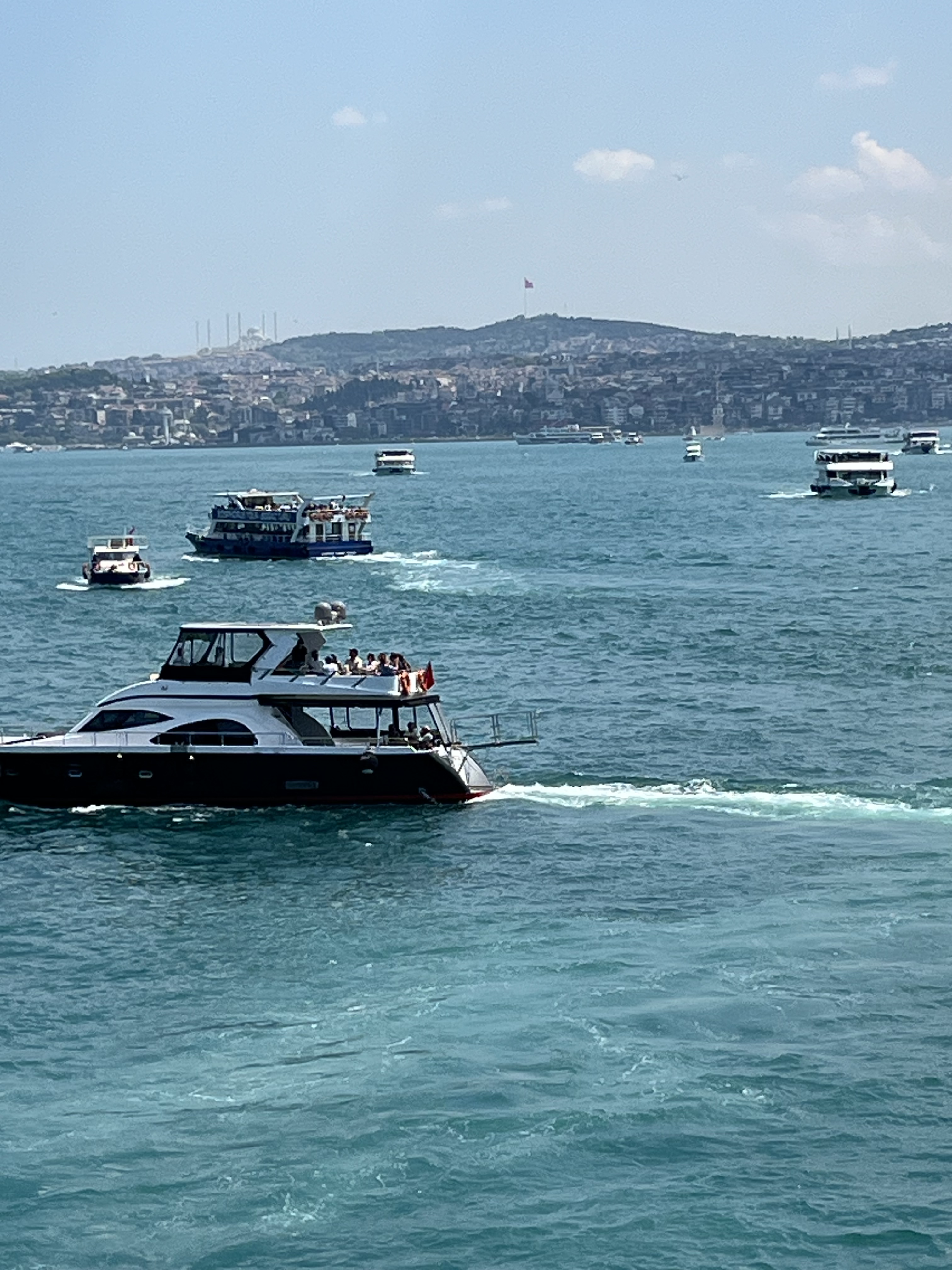
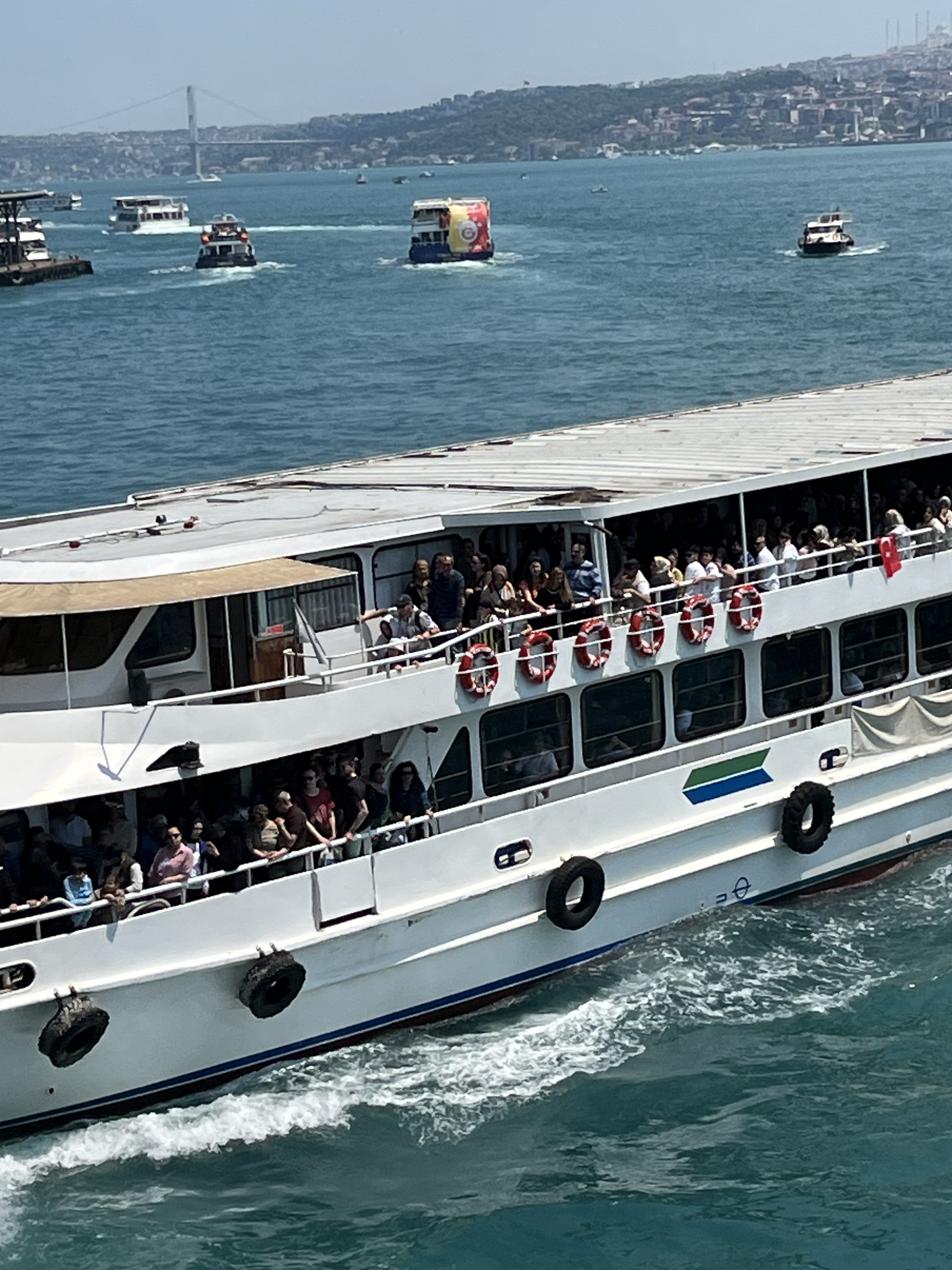
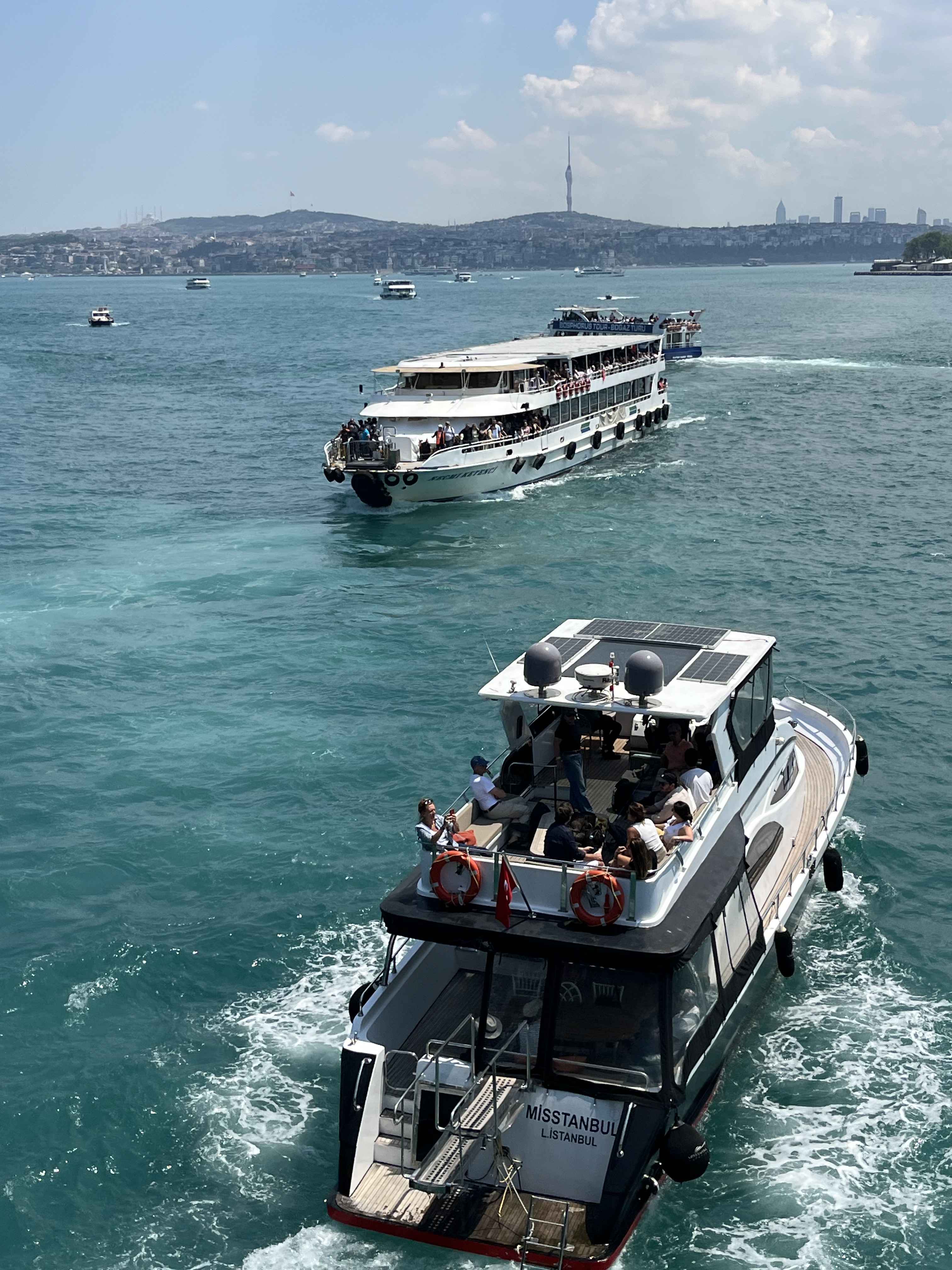
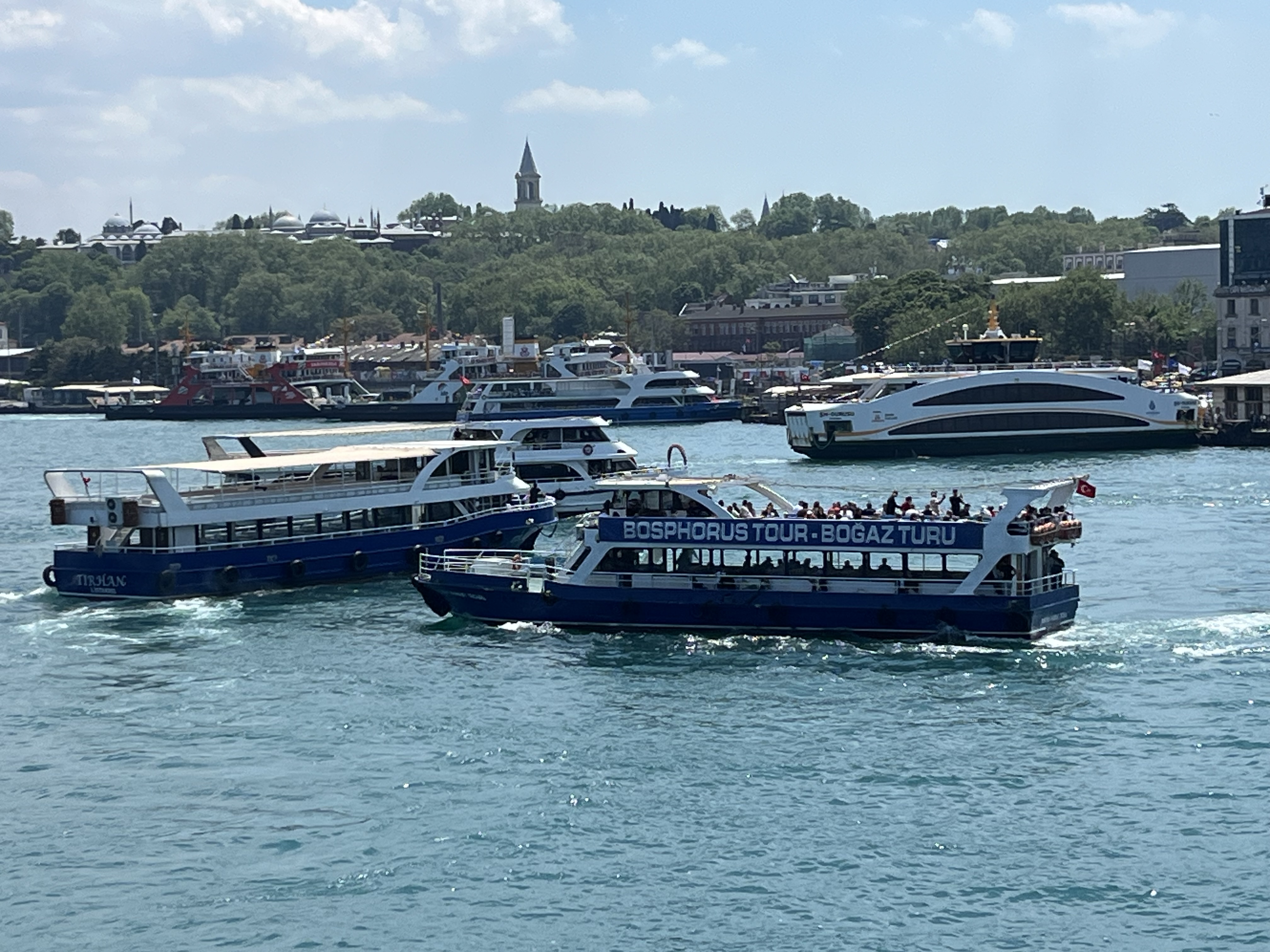
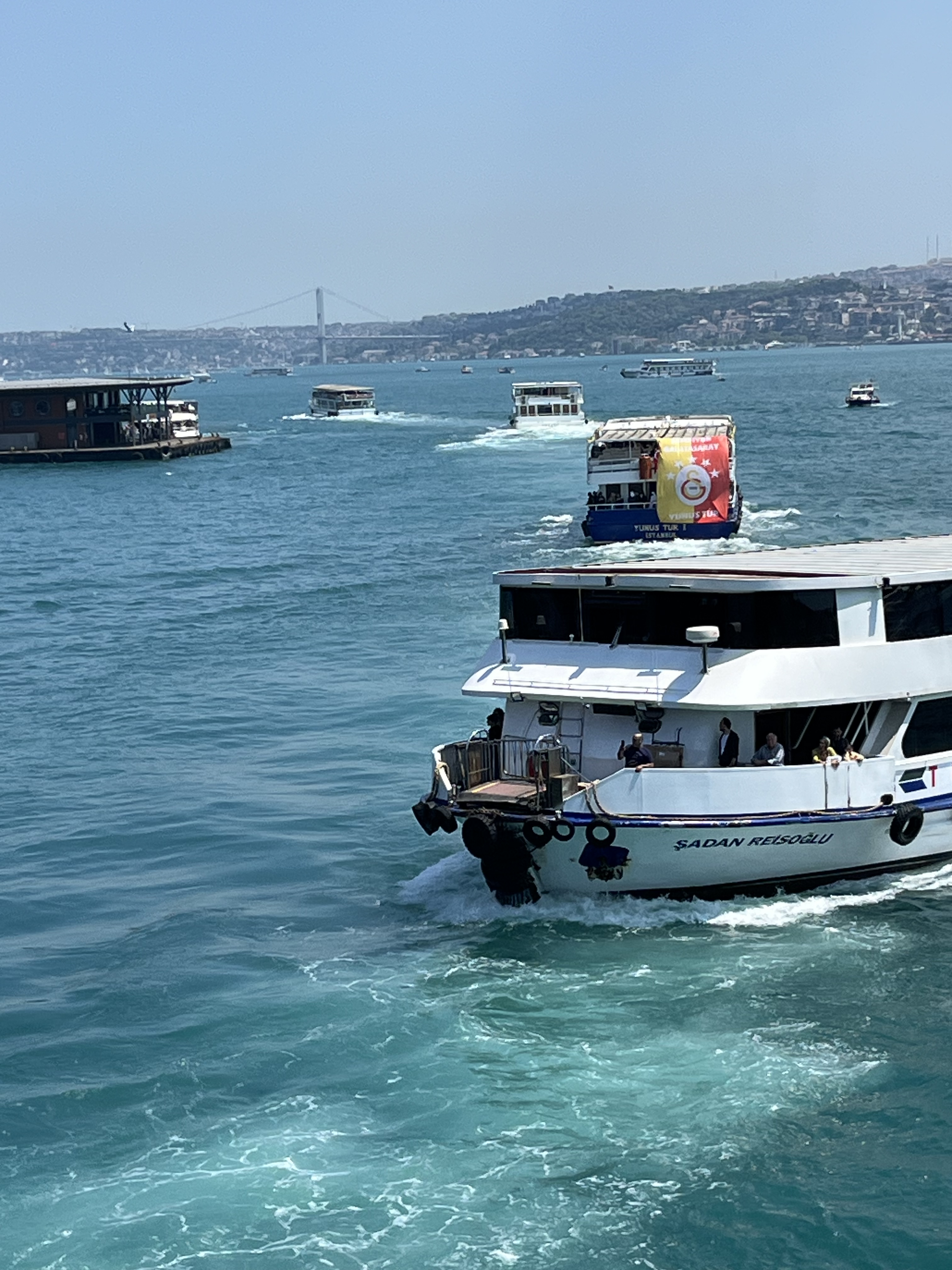
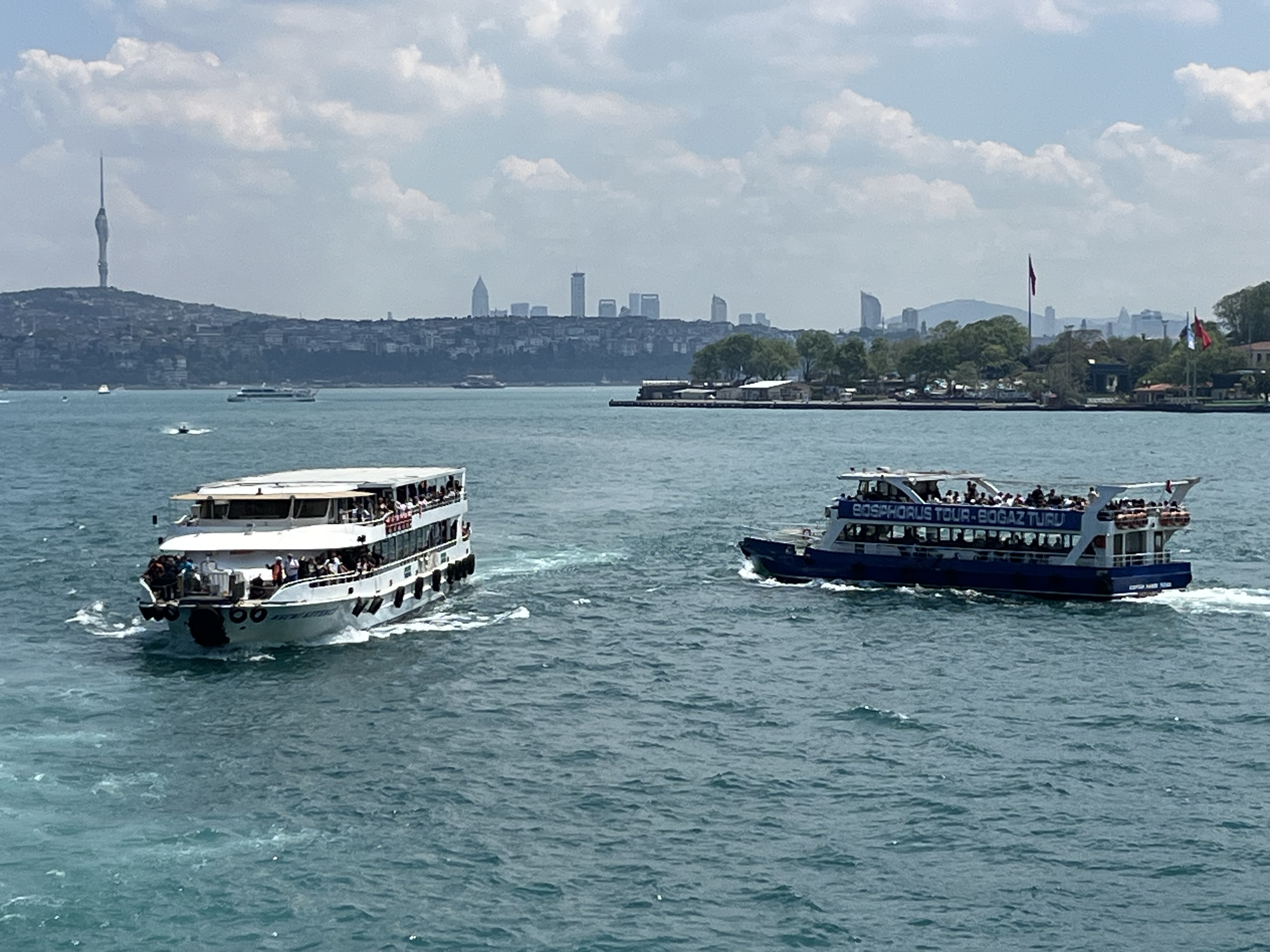
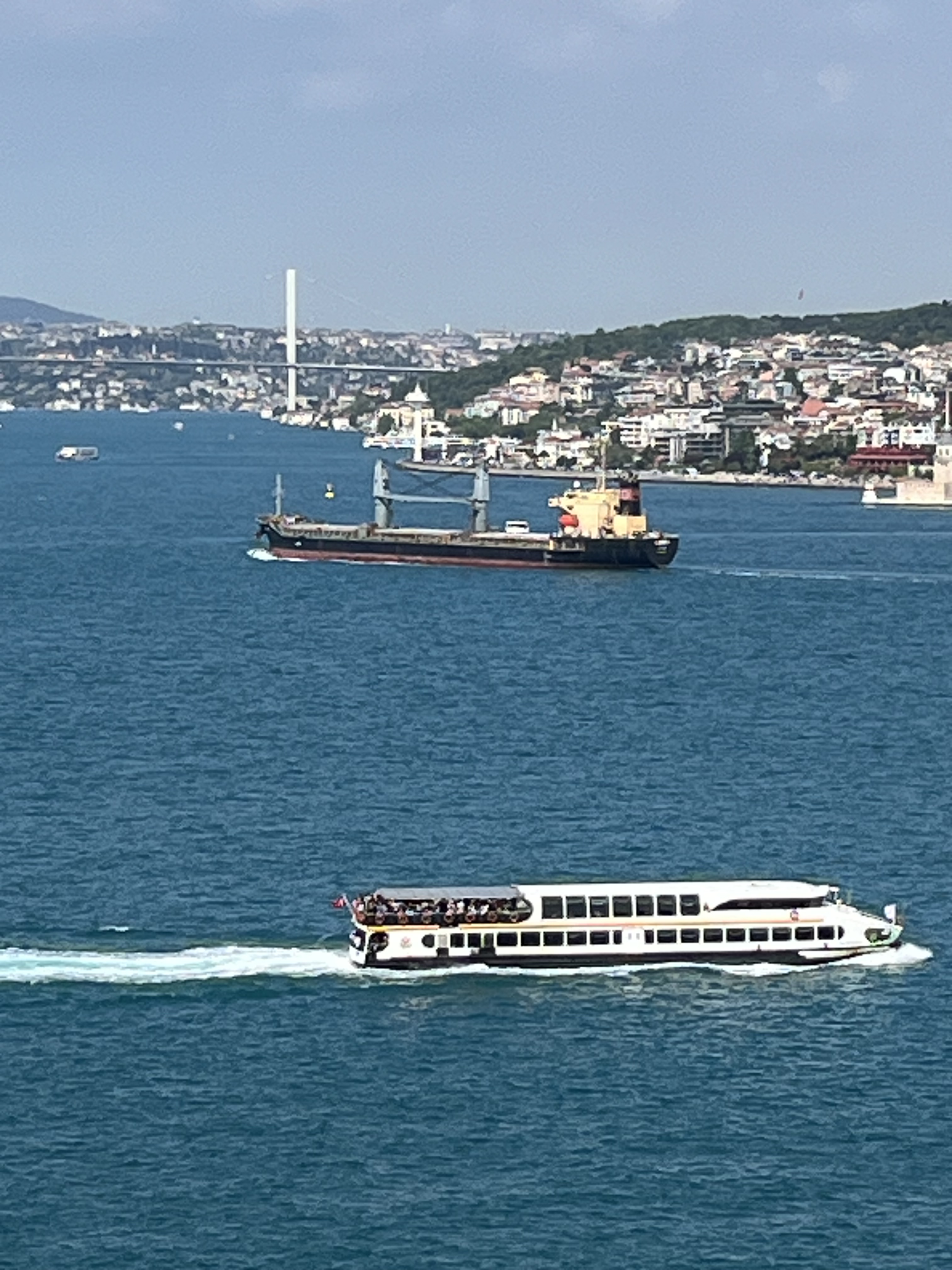
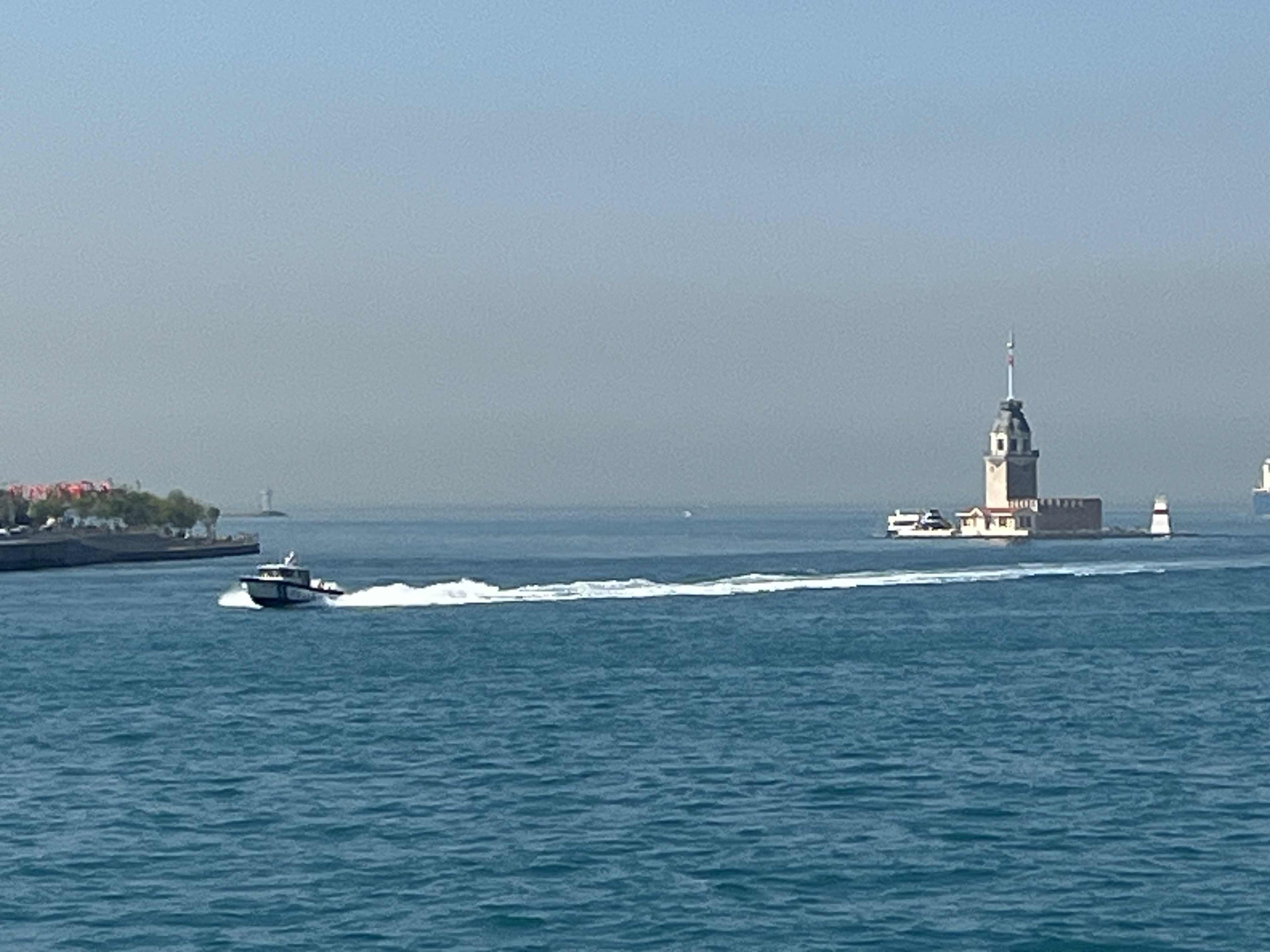
Again, I enjoyed watching the multitude of boats maneuvering, and am simply amazed that there are not more accidents.
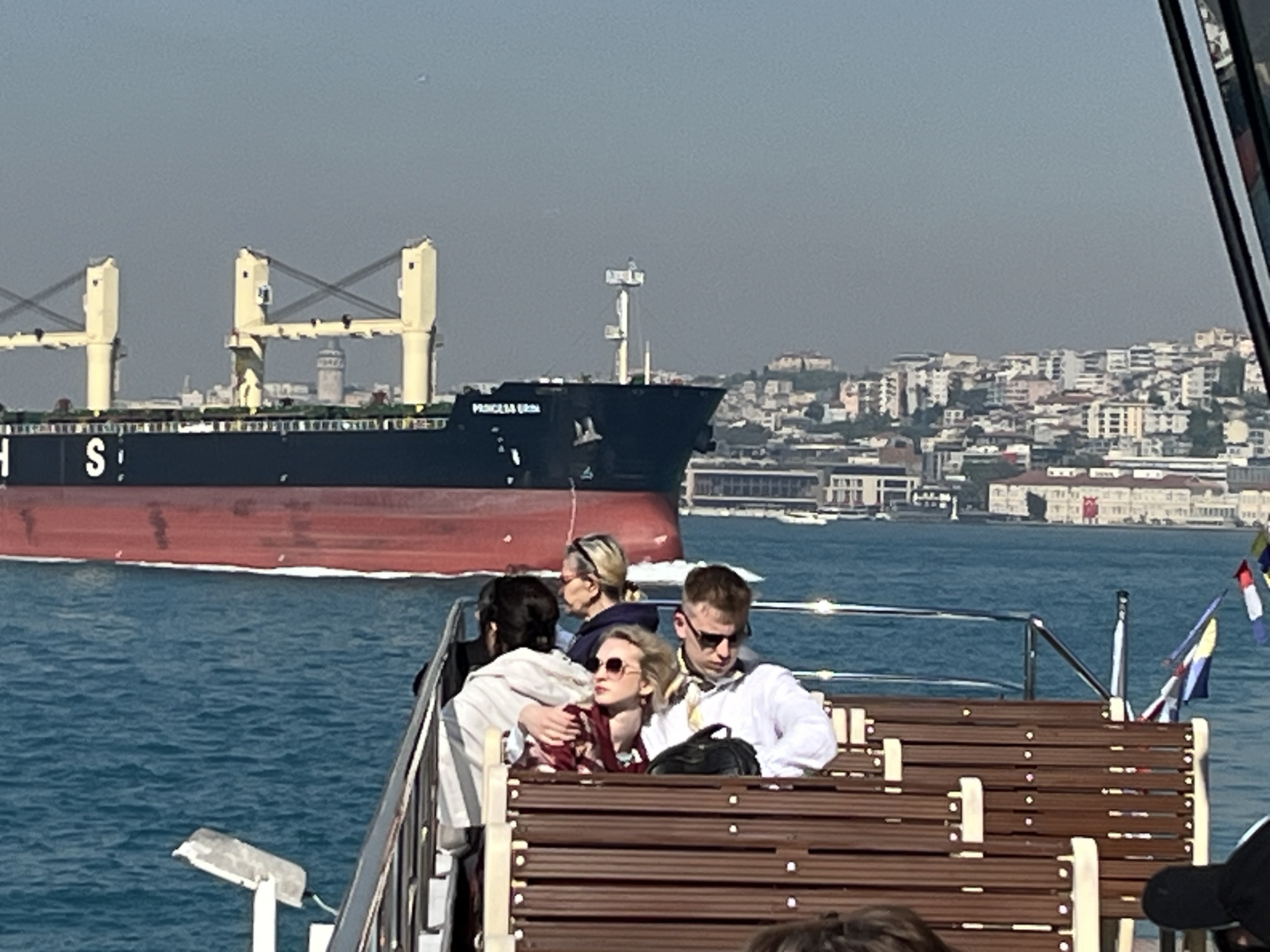
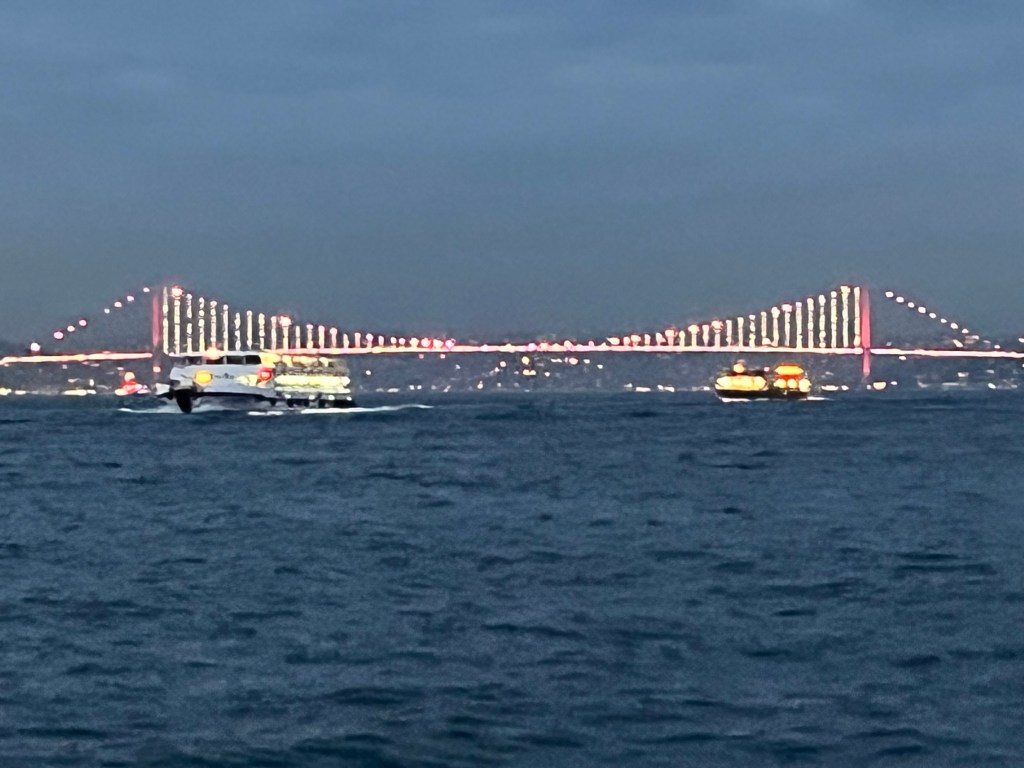
In the background, the Bosphorus Bridge. At its completion in 1973, this beautiful bridge was the fourth longest suspension bridge, a little shorter than the Golden Gate Bridge.
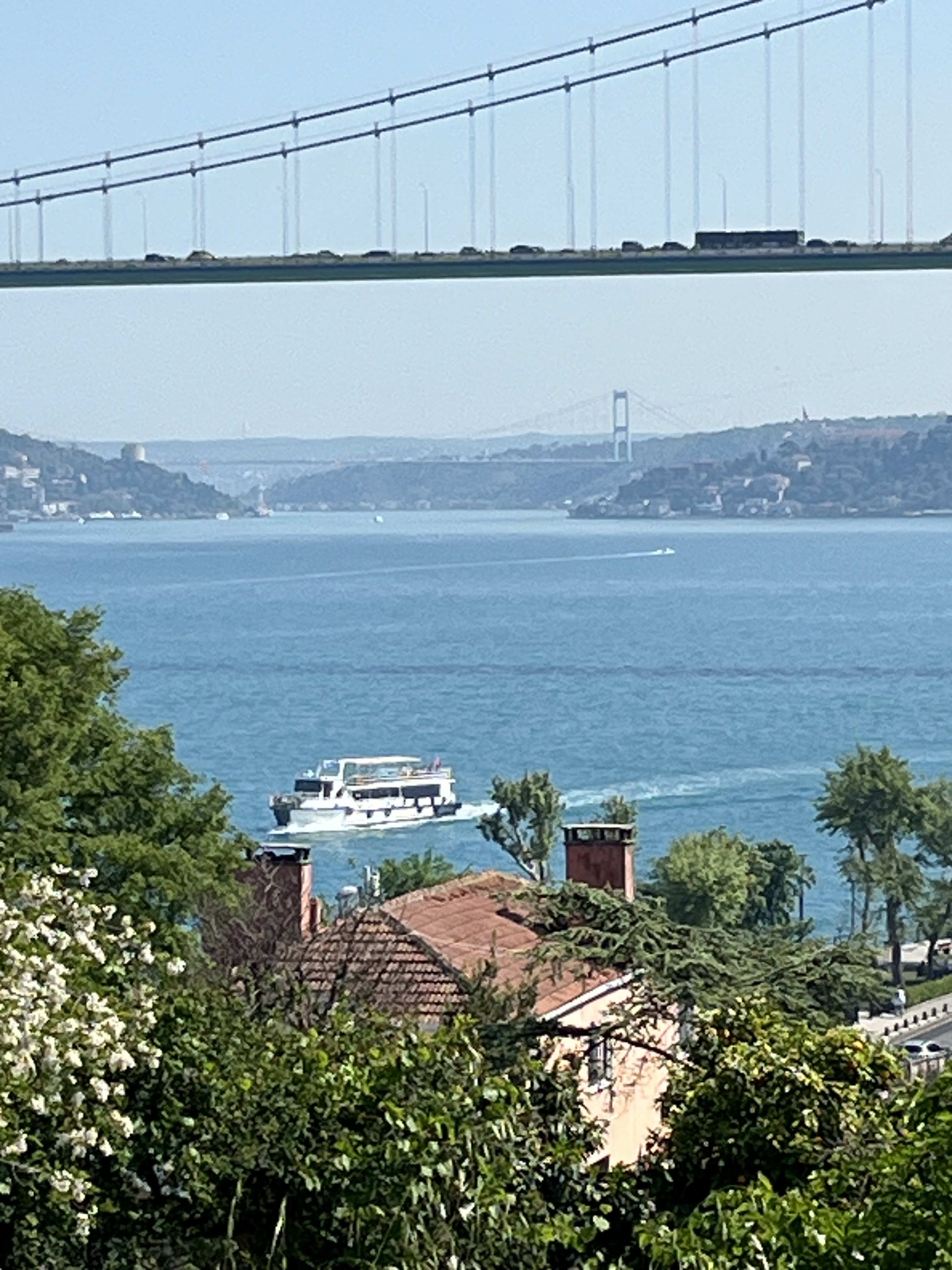
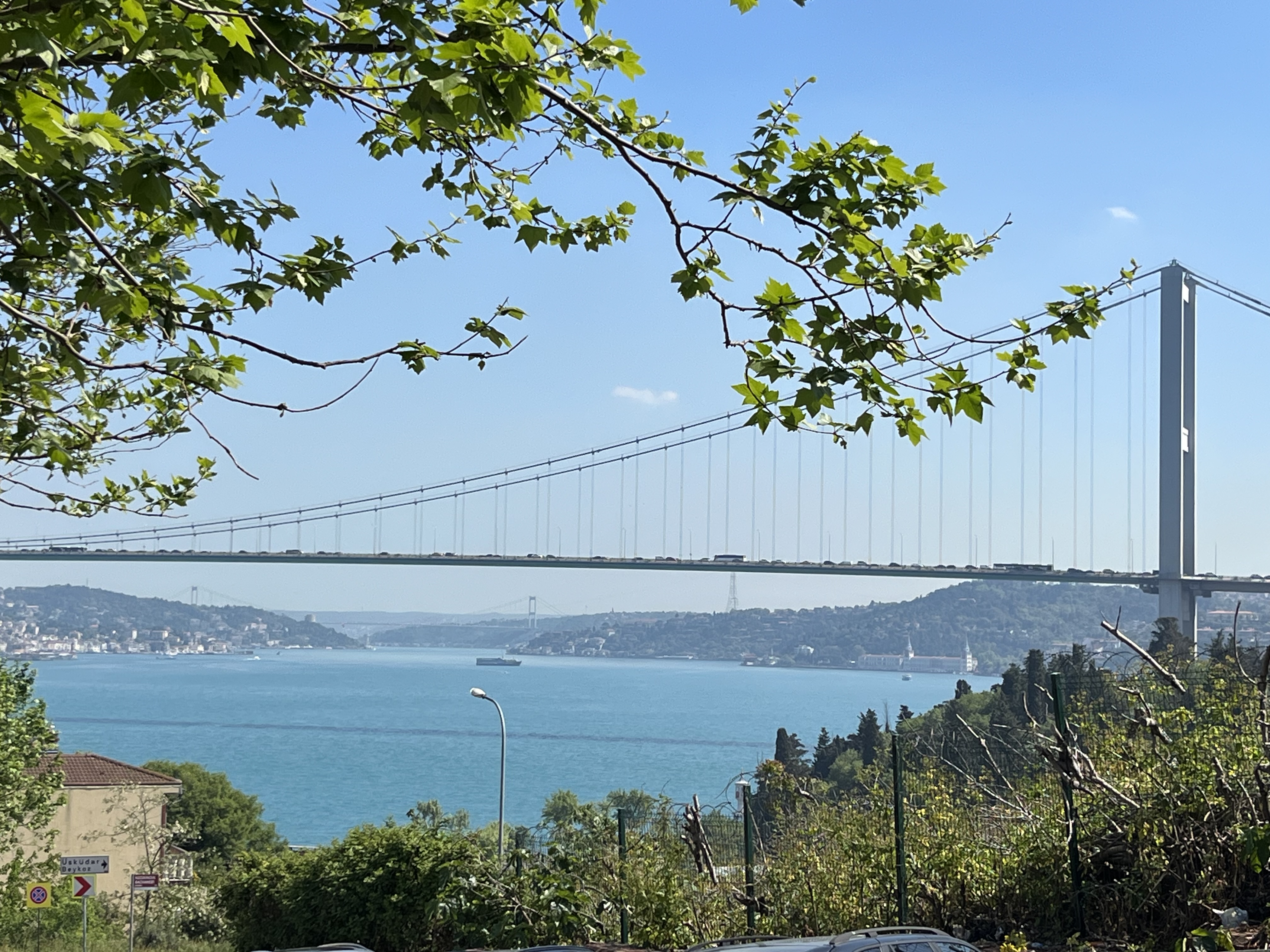
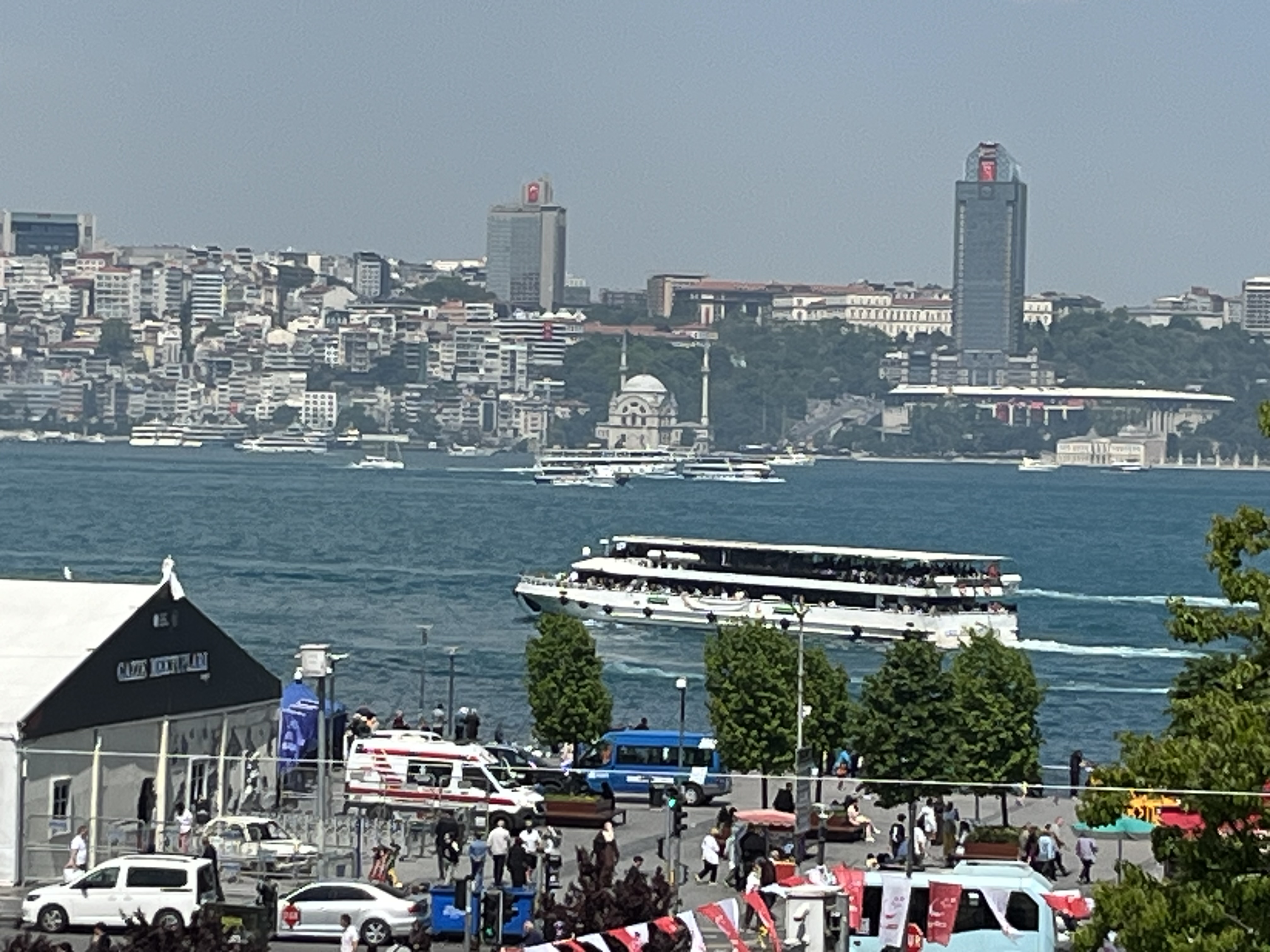
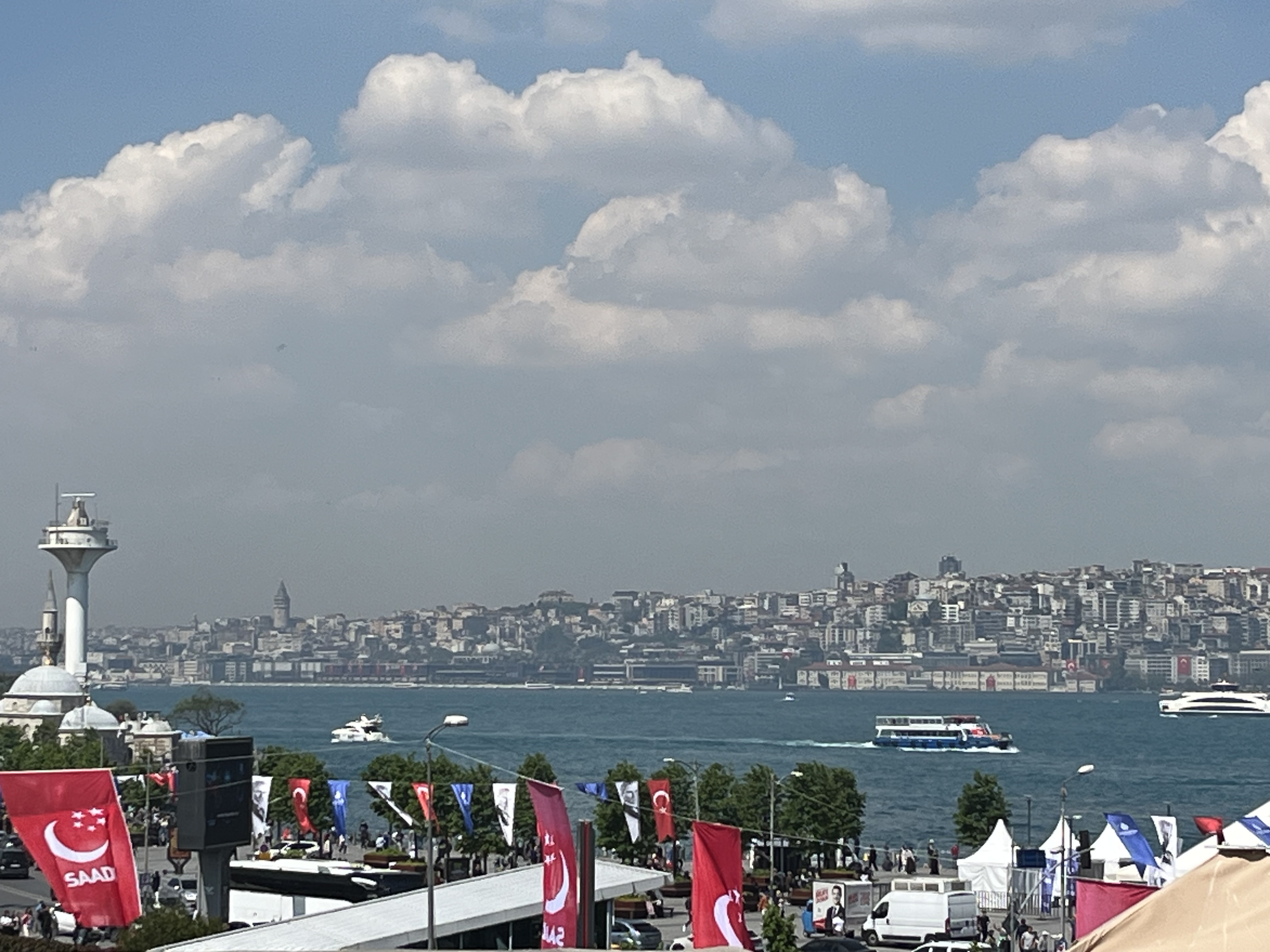
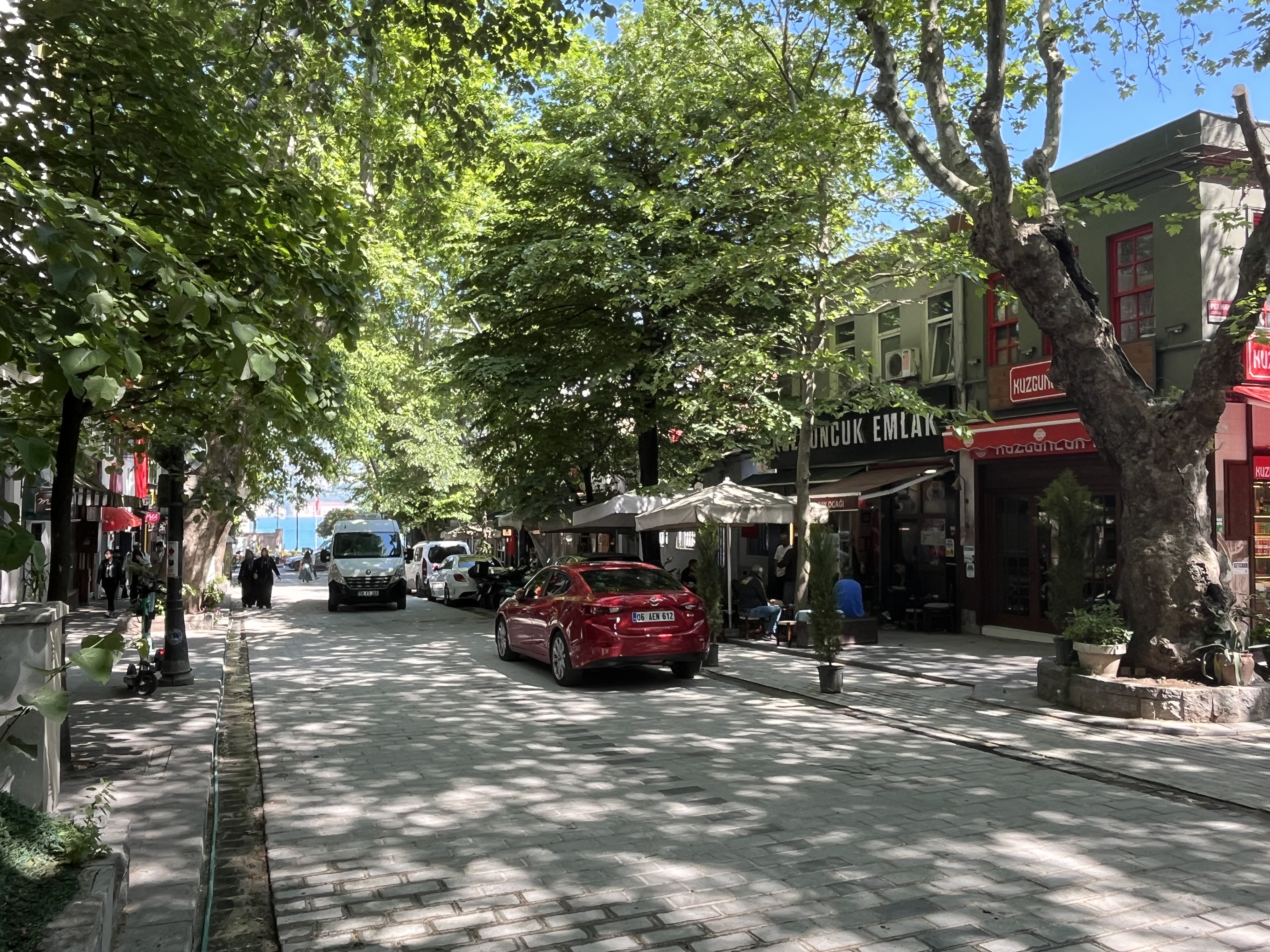
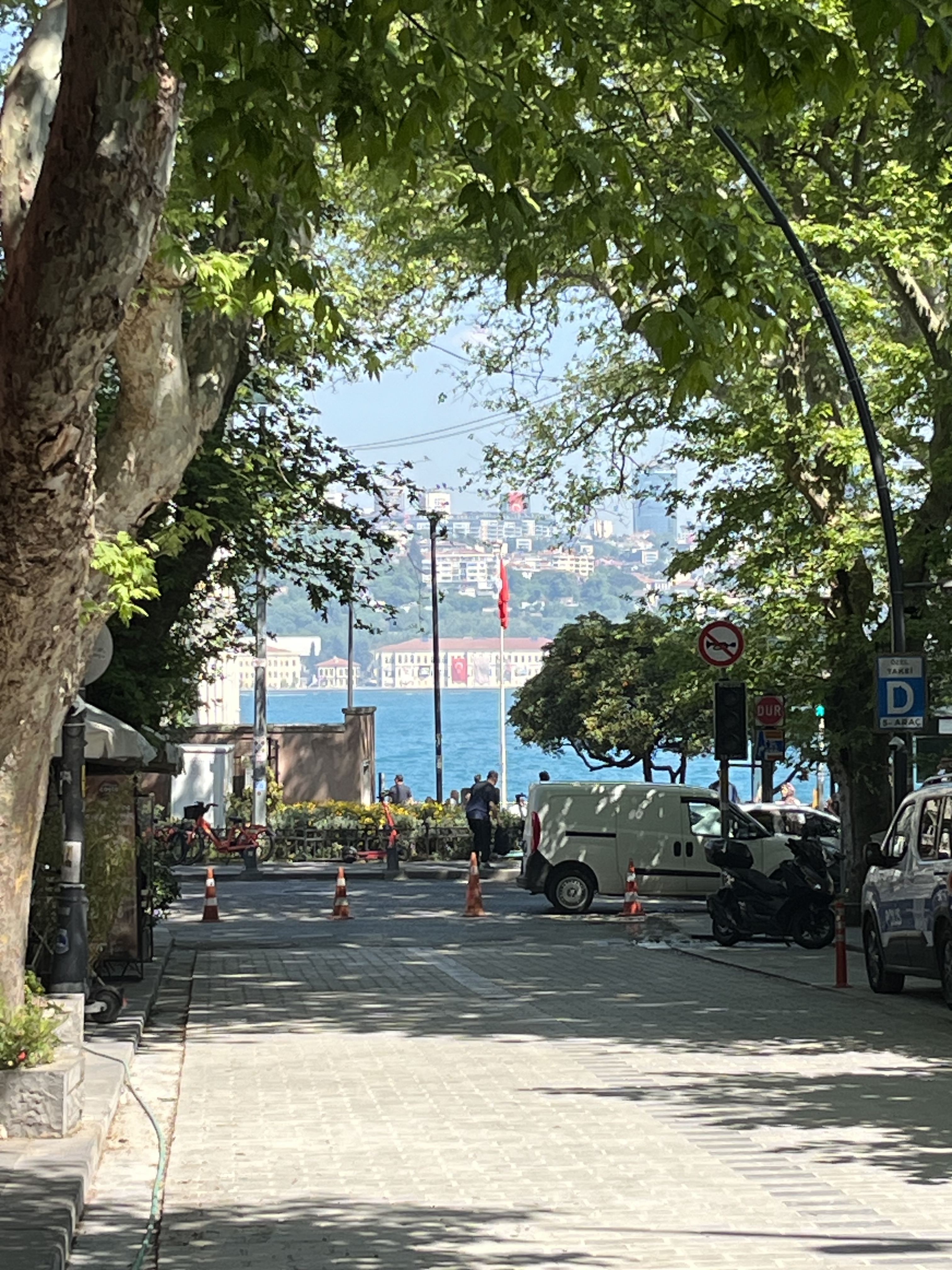
We had made it to Asia for the first time! Above are a couple of pictures of a nice, Bosphorus view neighborhood on the Asian shore. After a couple hours we took the ferry back across to Europe.
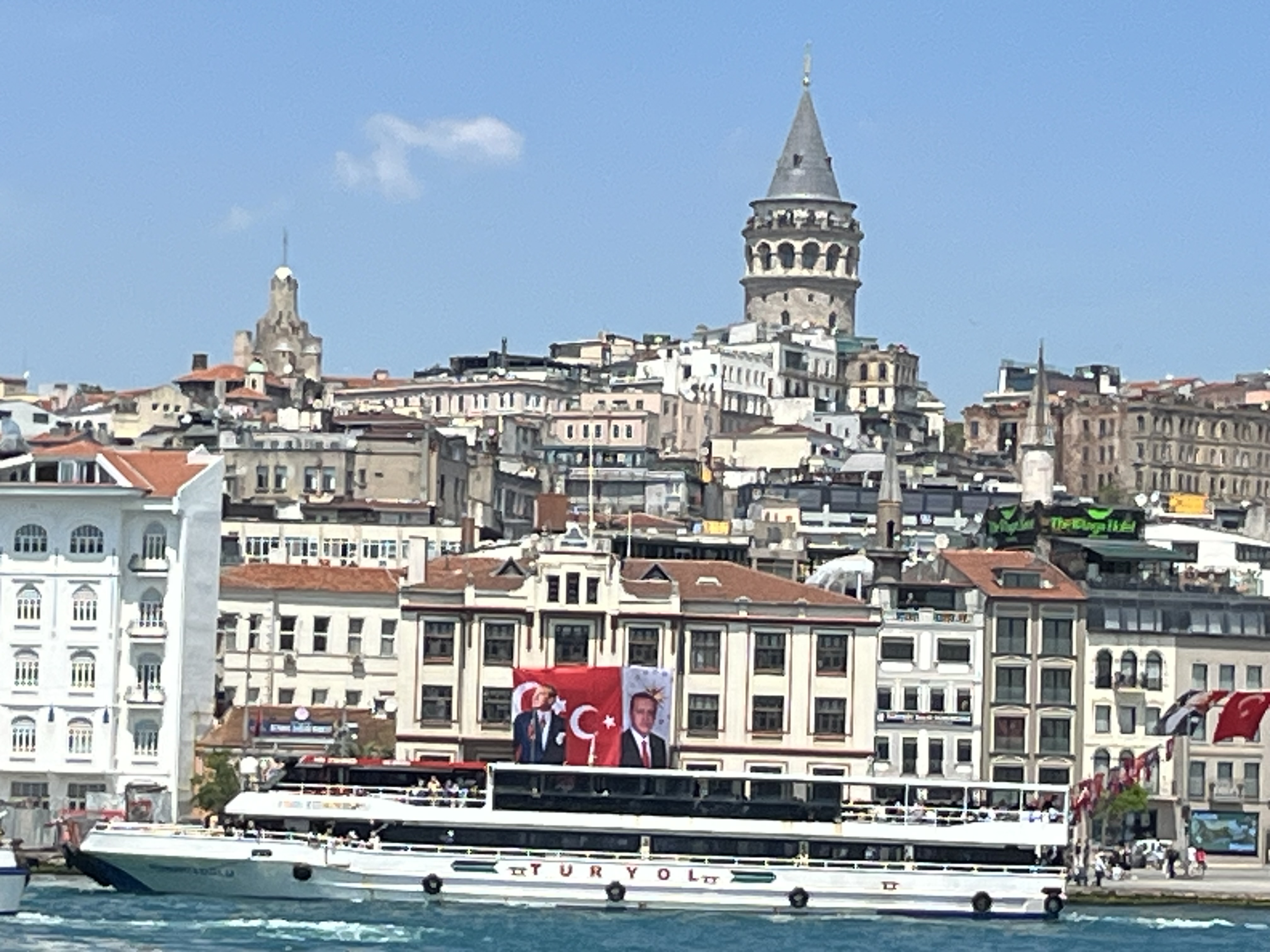
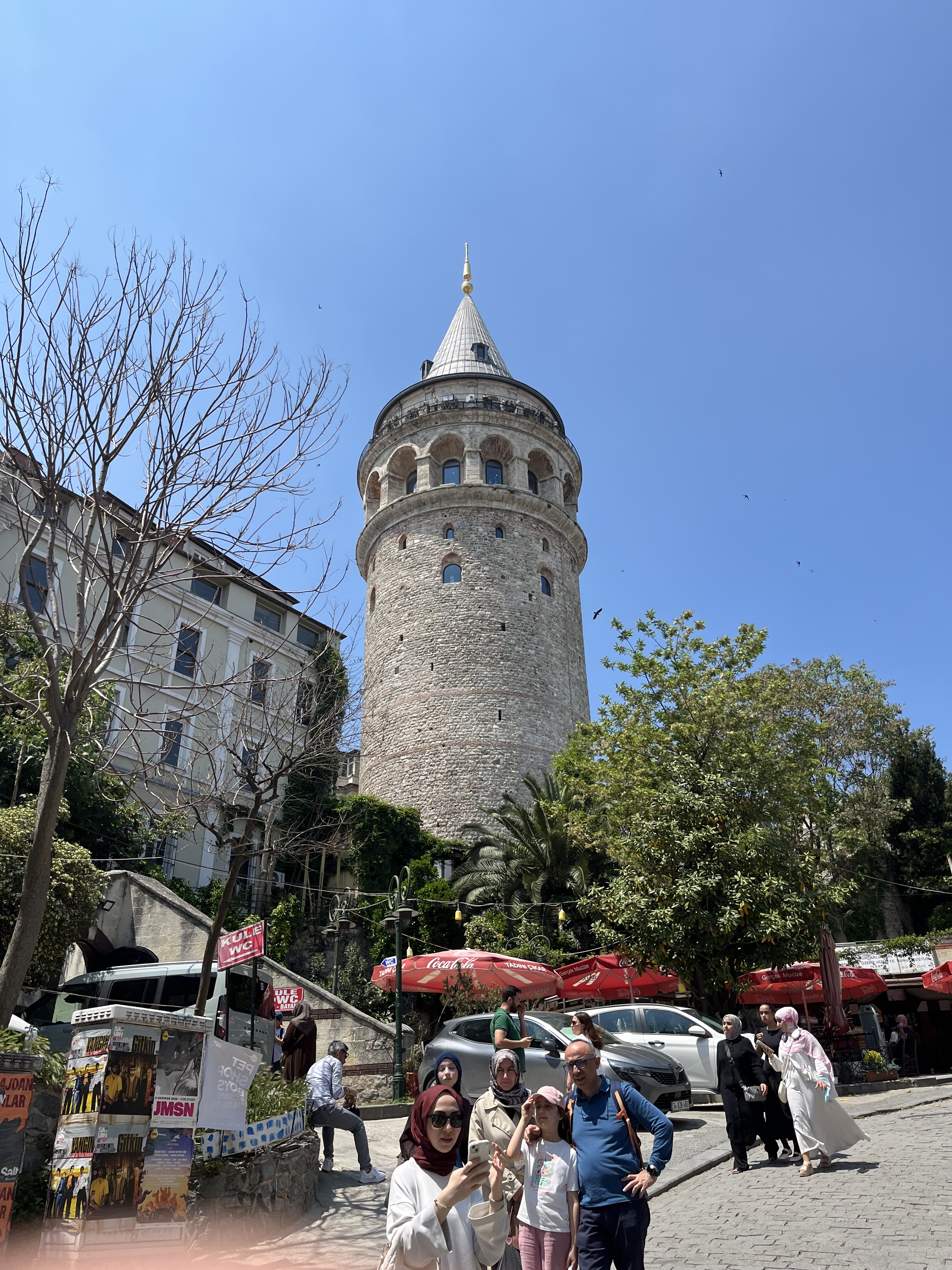
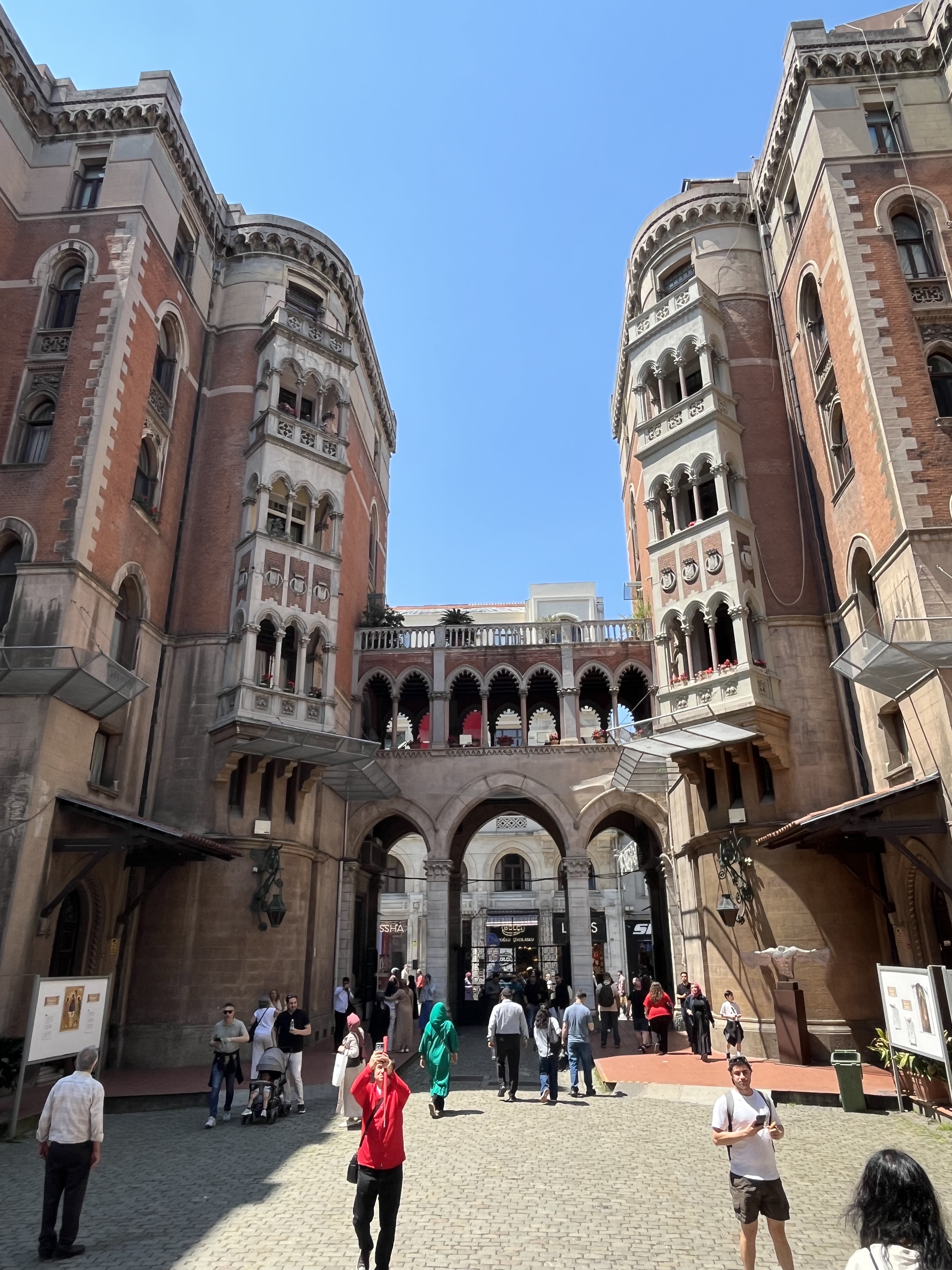
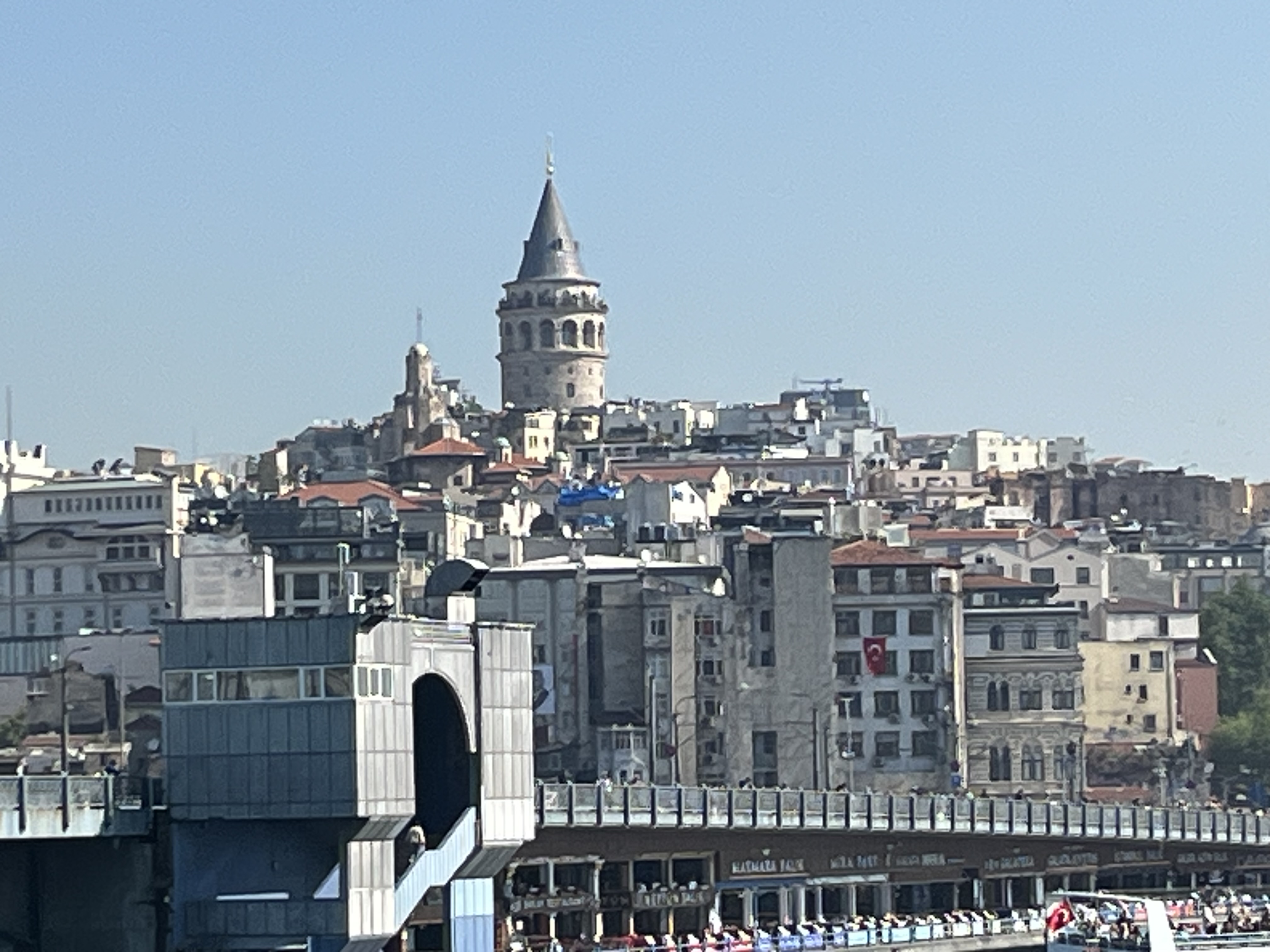
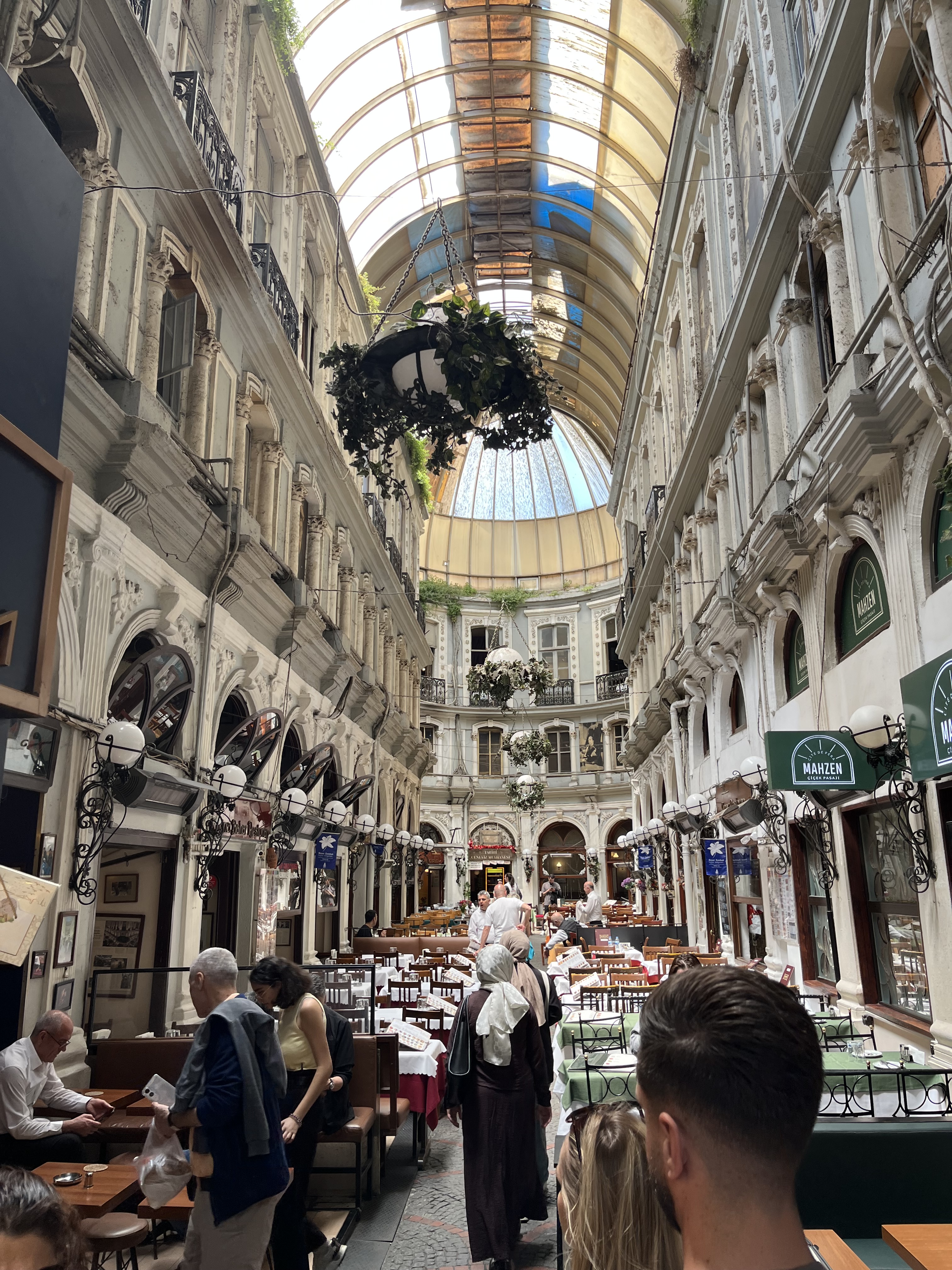
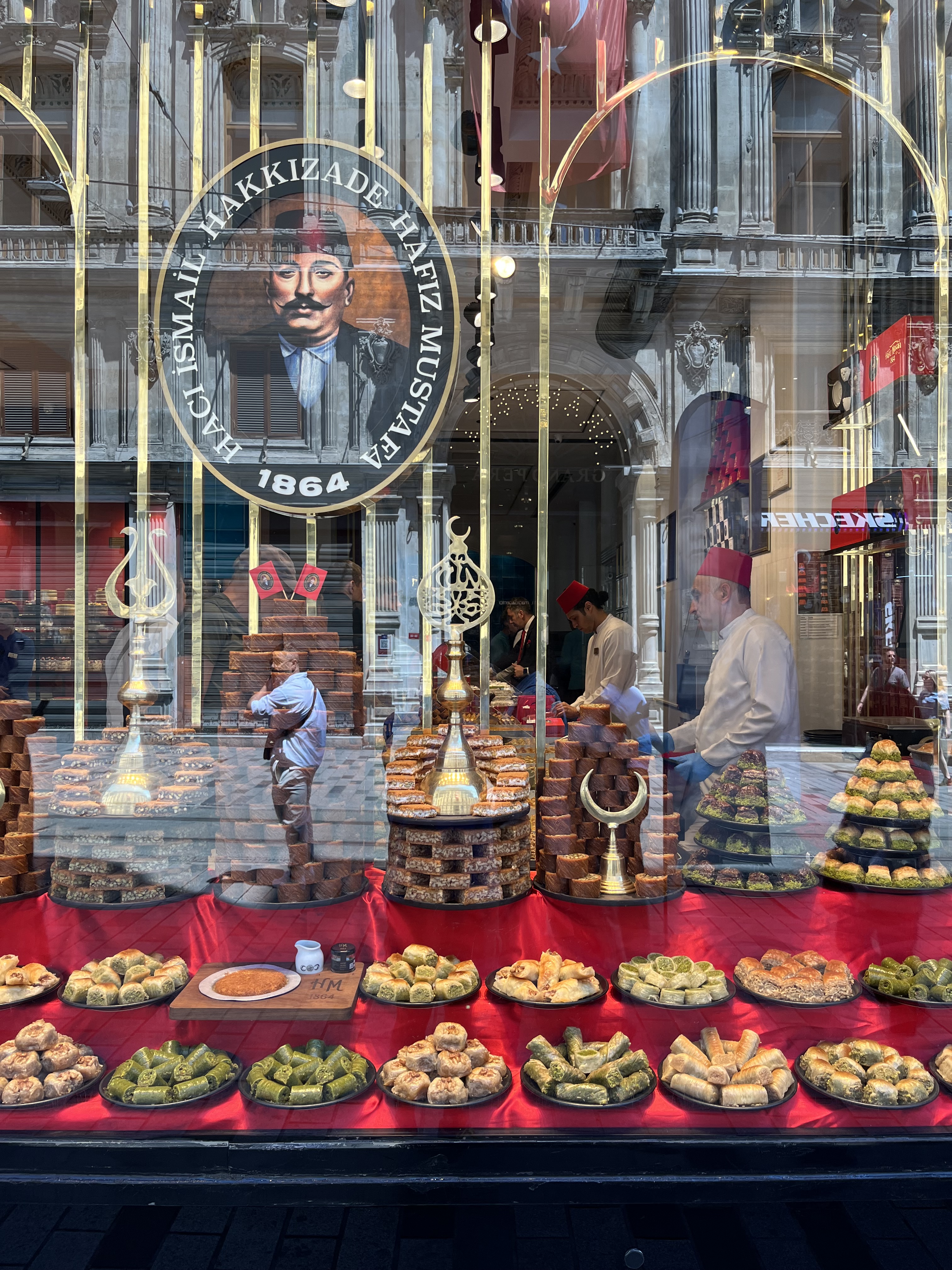
Above left is the Galata Kulesi tower, a renown landmark. Above right and below are shopping scenes from Istanbul’s biggest shopping street, the Istiklal Street, leading towards Taksim Square. Below right is a store of Istanbul’s premier Turkish Delight specialty bakery.
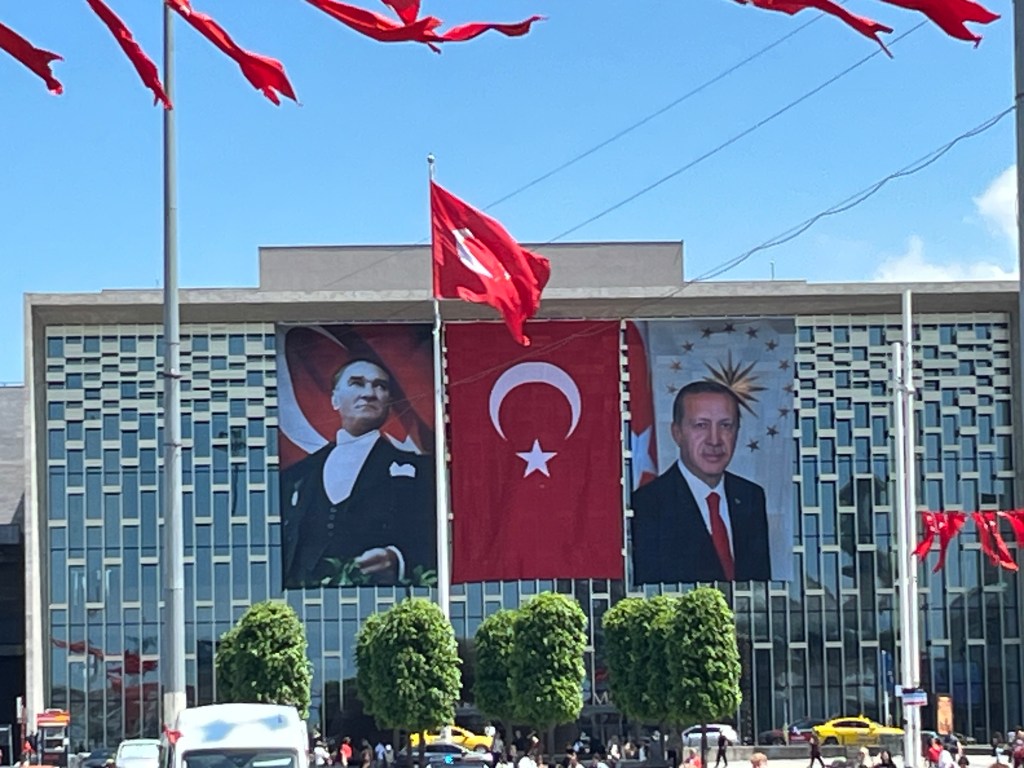
Walking down this glitzy shopping street and seeing the big Turkish flags surrounding the portrait of Mustafa Kemal Atatuerk, the founder and first President of today’s Turkish State after the collapse of the Ottoman Empire in 1923, right next to the portrait of Erdogan, the current strongman and president of Turkey, I am reminded of the political and cultural tensions of today’s Turkey. It is a tightrope walk, between the culture of a traditional Muslim country, where we saw fewer women in public contact positions, and the Christian based, liberal, free market forces of the West. There is also the geopolitical tension between NATO and the Eastern Powers, as well as between democracy and autocracy. Today this tension plays out with headlines of opposition leaders being jailed or judicially being barred from office, – a presidential power some Western leaders dangerously admire! This reminds me also about the fact that we saw a LOT of police and military presence, especially in the very crowded tourist places. This Turkish government wants to insure that these tensions do not get out of hand…
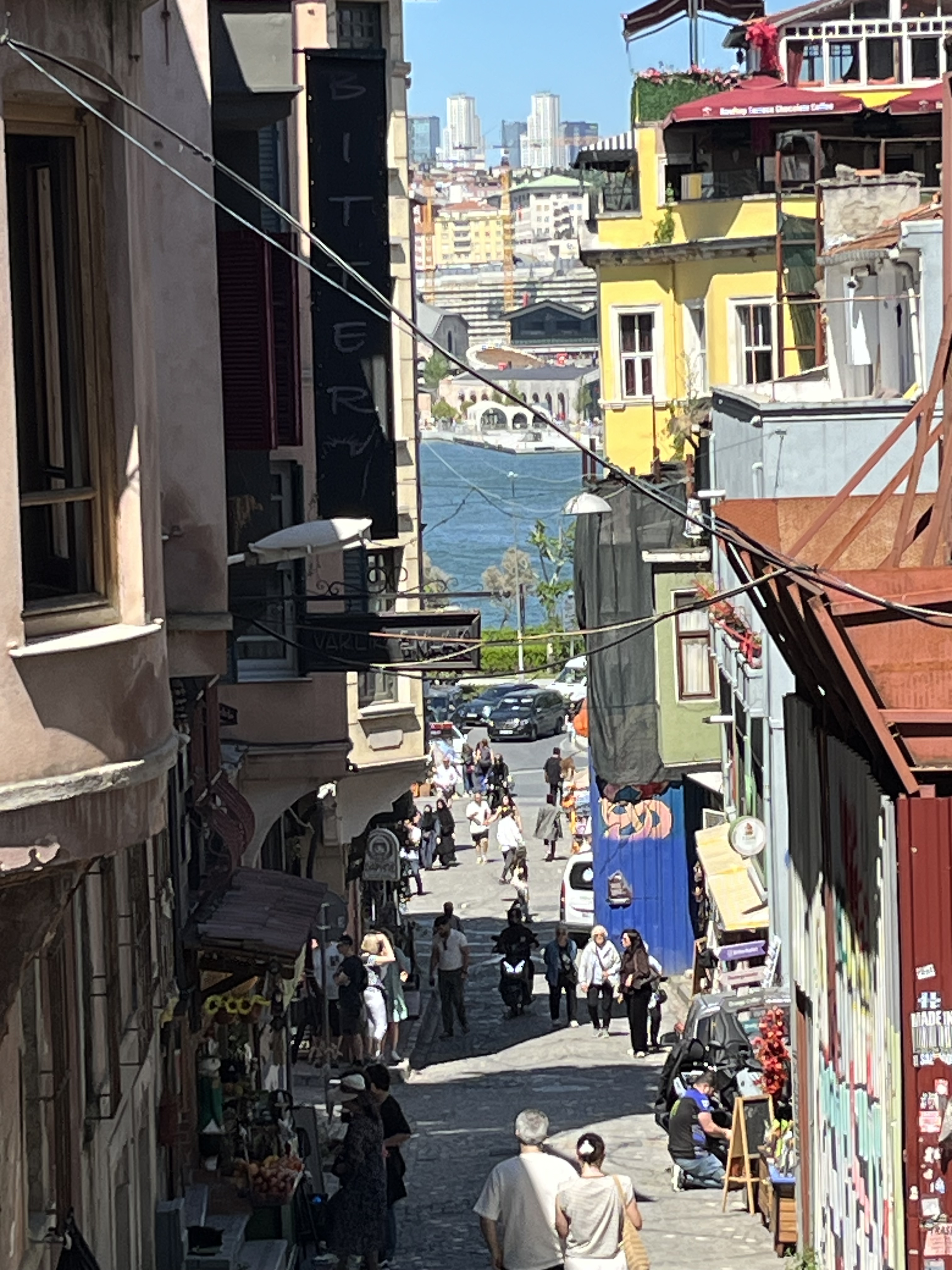
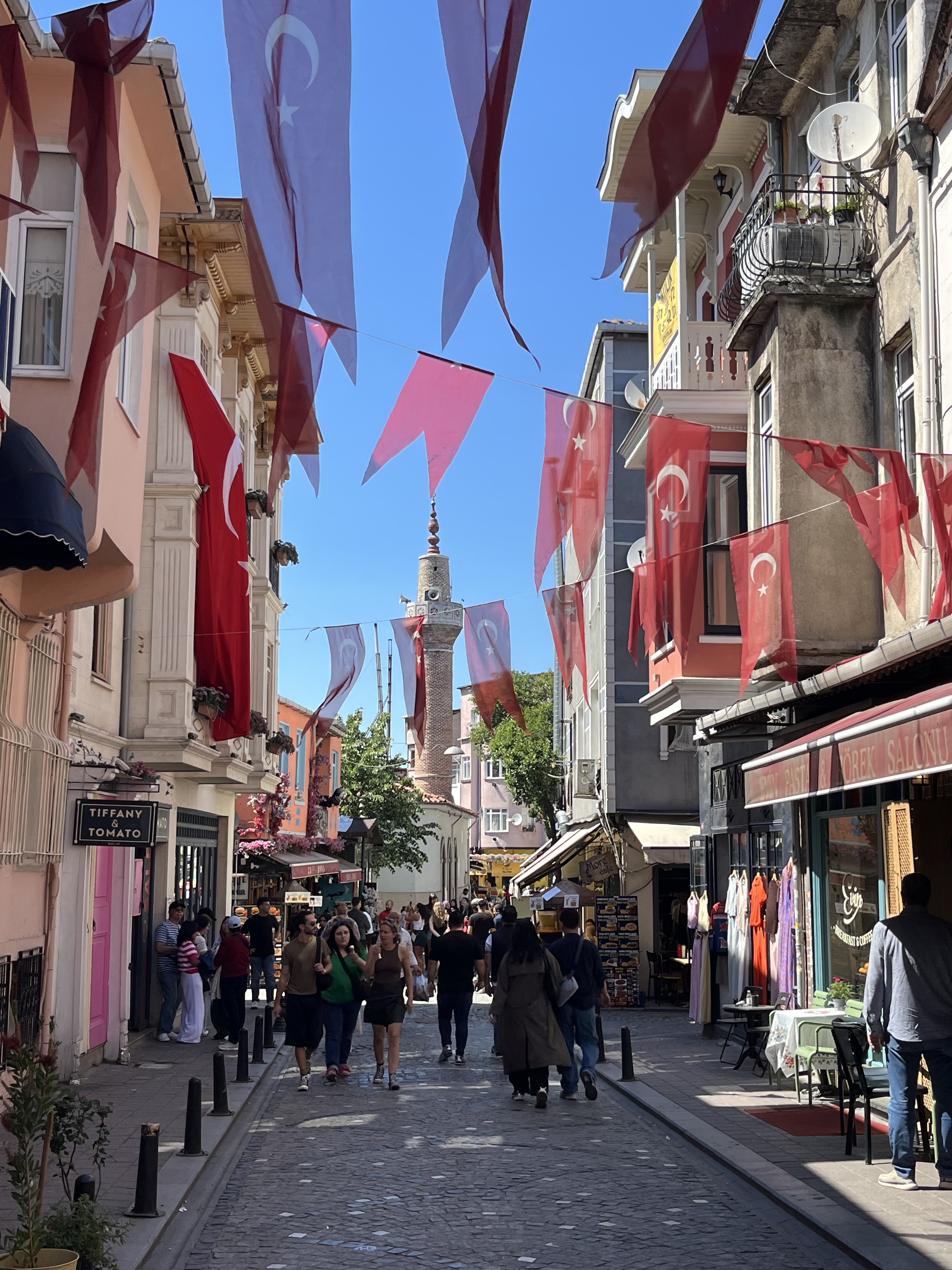
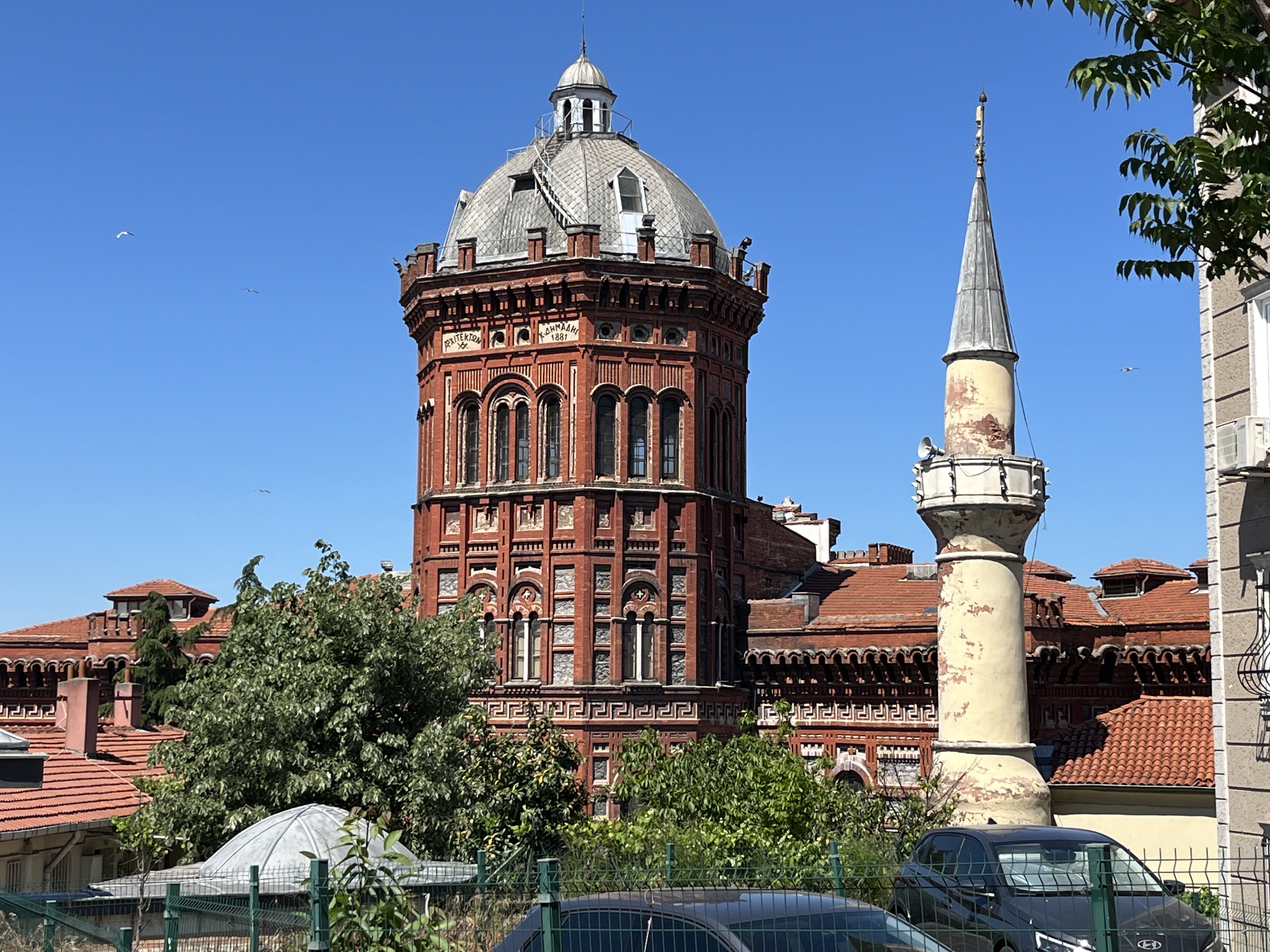
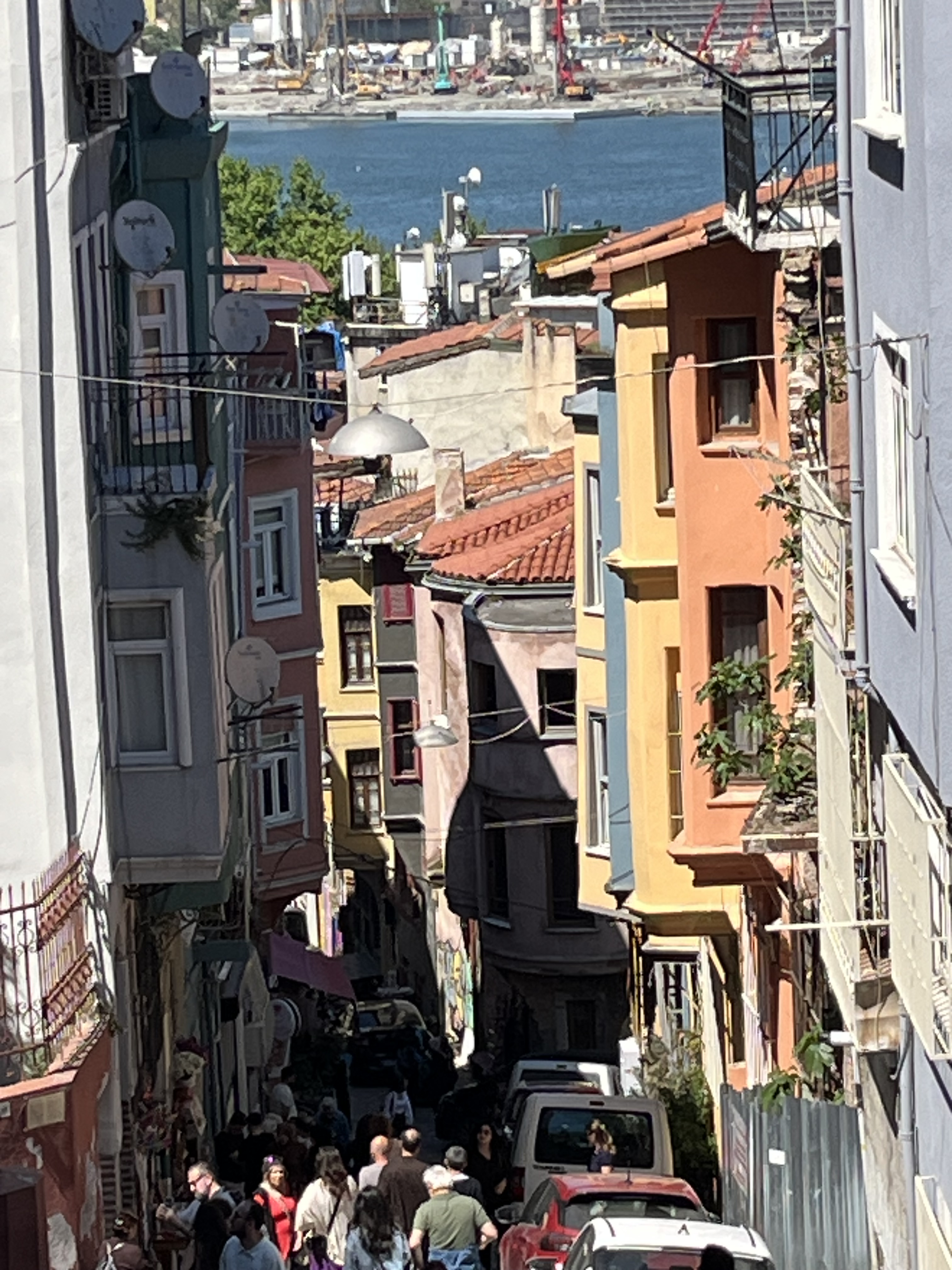
Above and below are a few pictures from Istanbul’s Fener district.
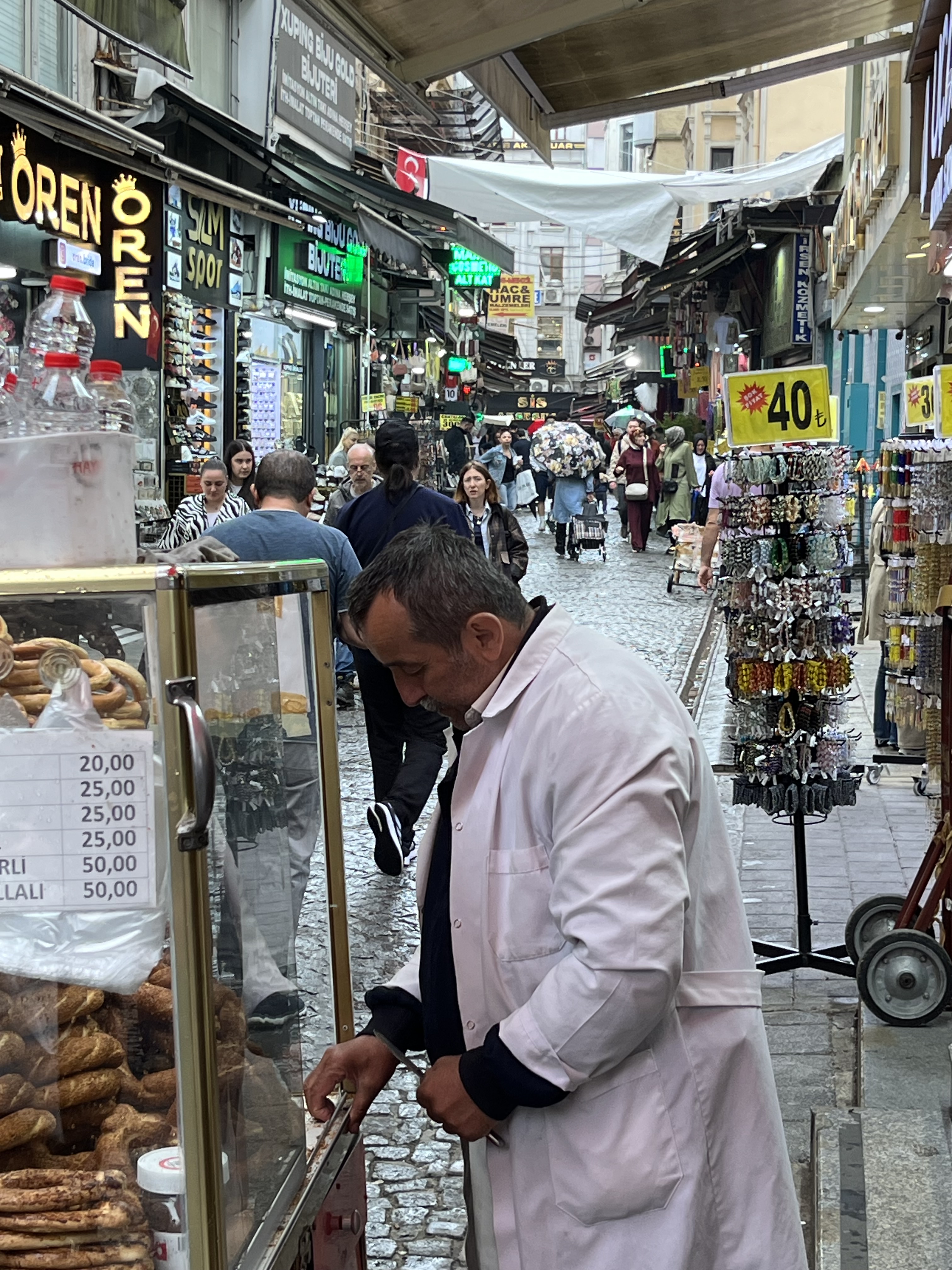
And here, some pictures of the Spice Market, or Egyptian Bazaar. It was still early in the morning and the crowds were down. Here, as well as in front of restaurants, outgoing, talkative salesmen try to lure the tourists into their businesses to make a sale. Most all Turks we encountered speak some English, and by then, we had the Turkish Merhaba for Hello, as well Teşekkürler for Thank You, well down.
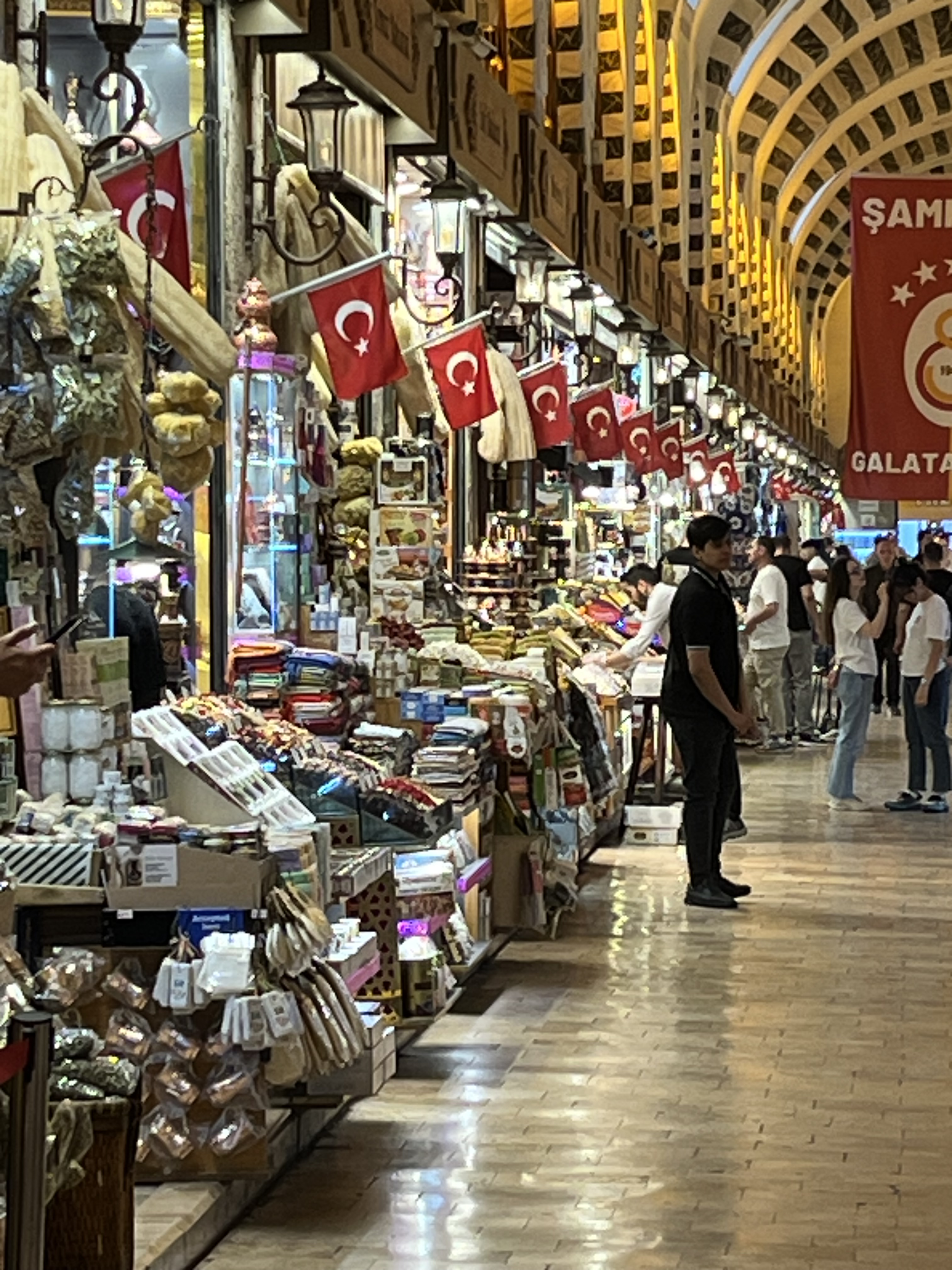
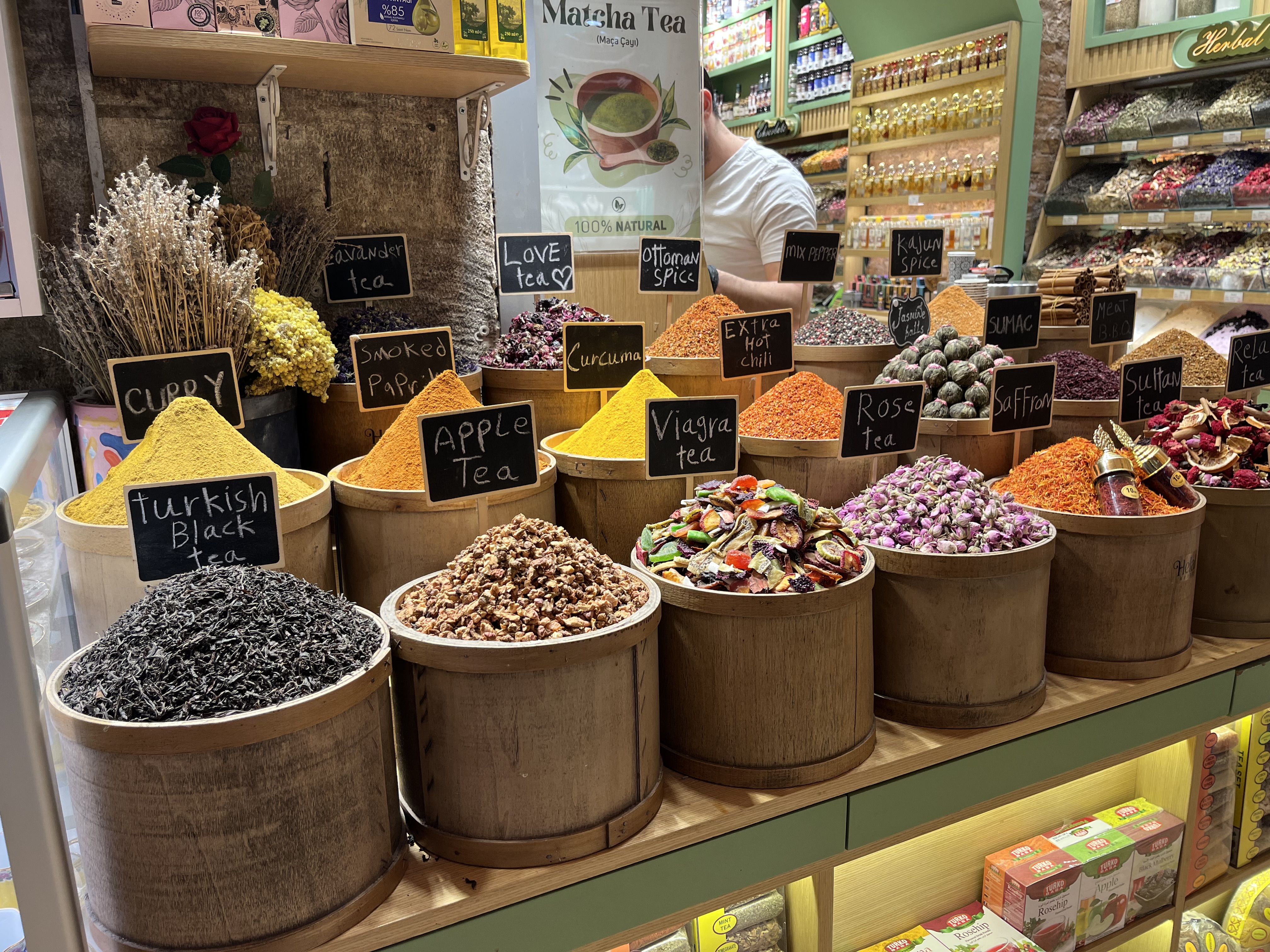
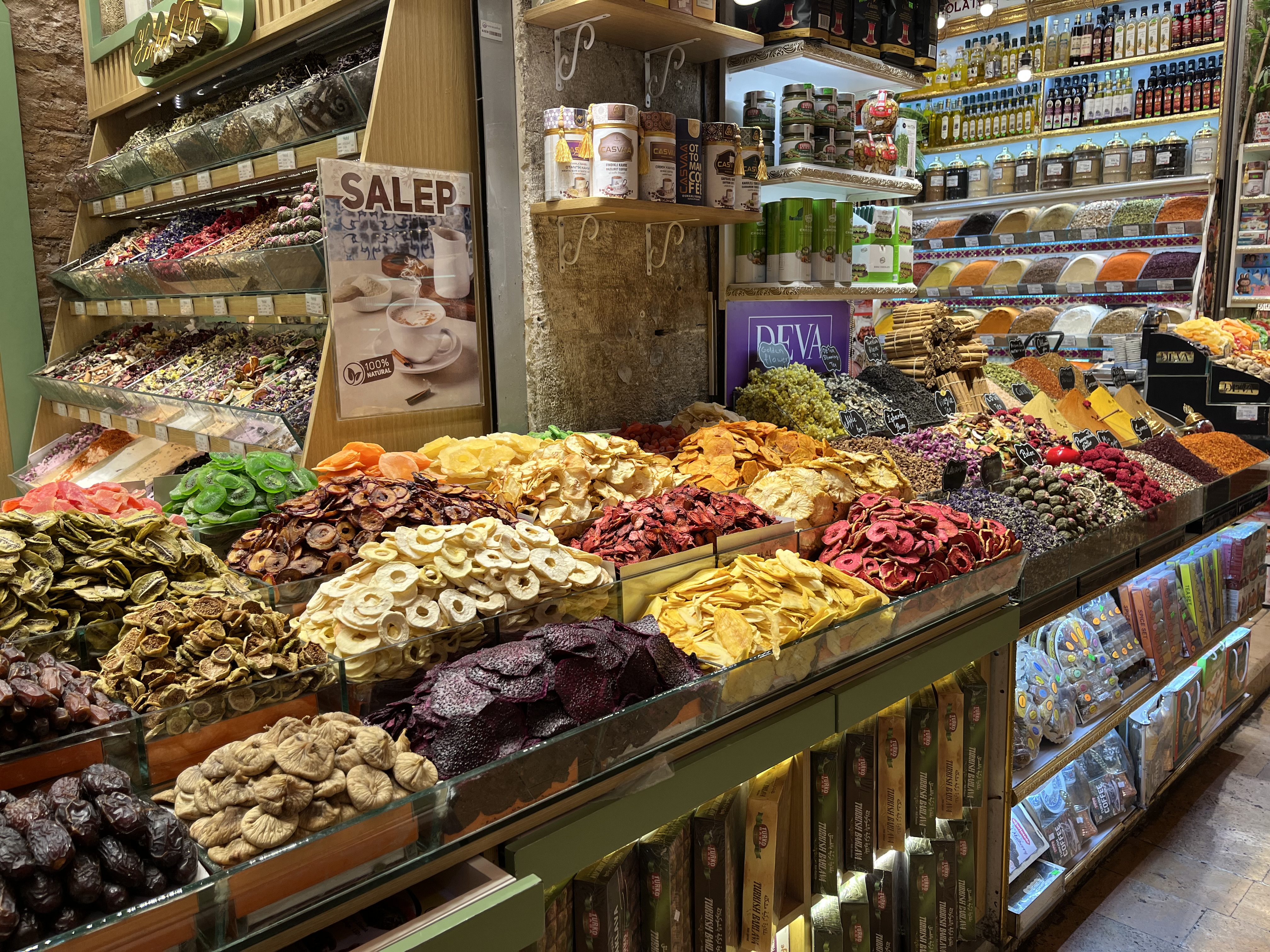
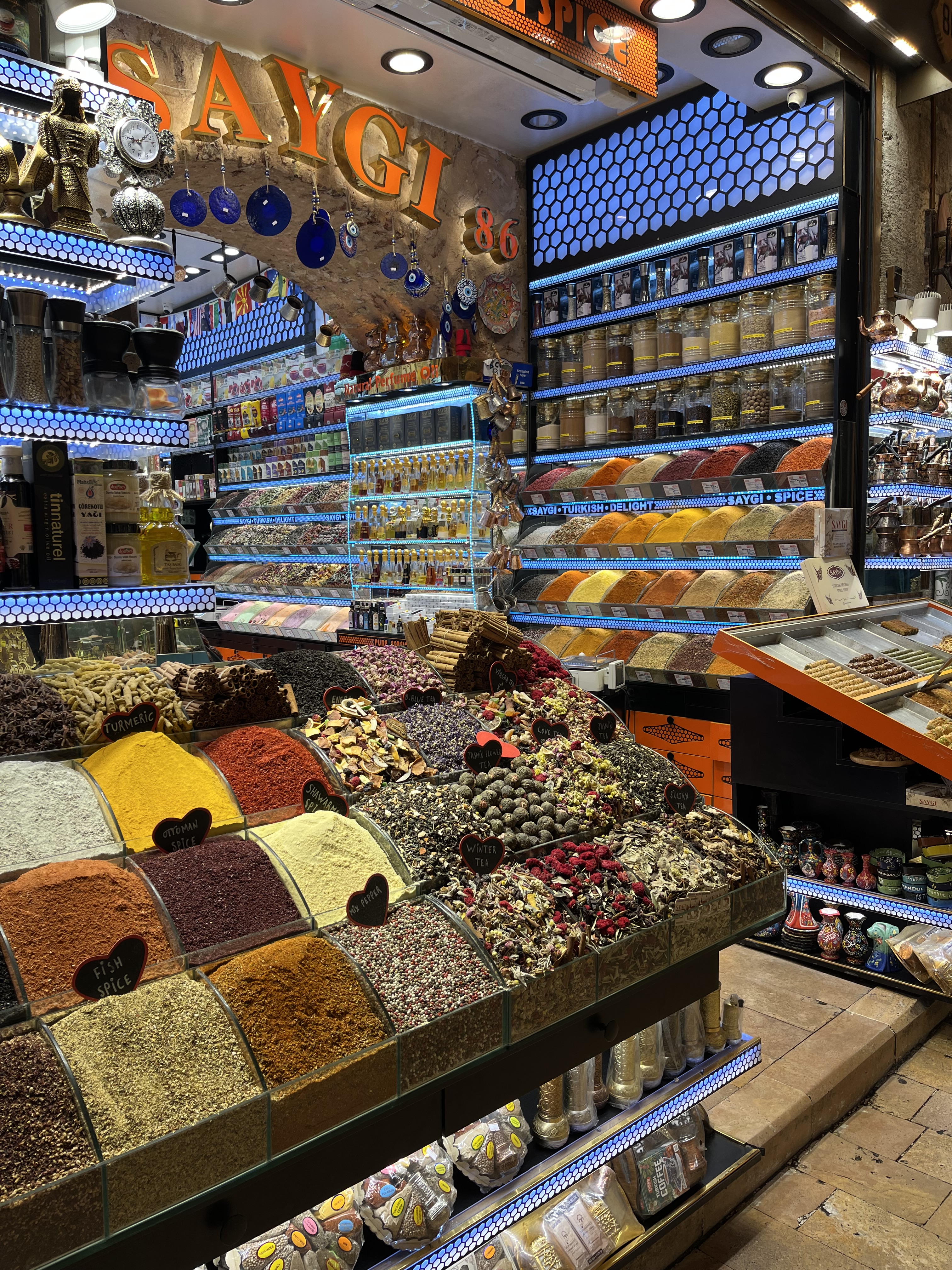
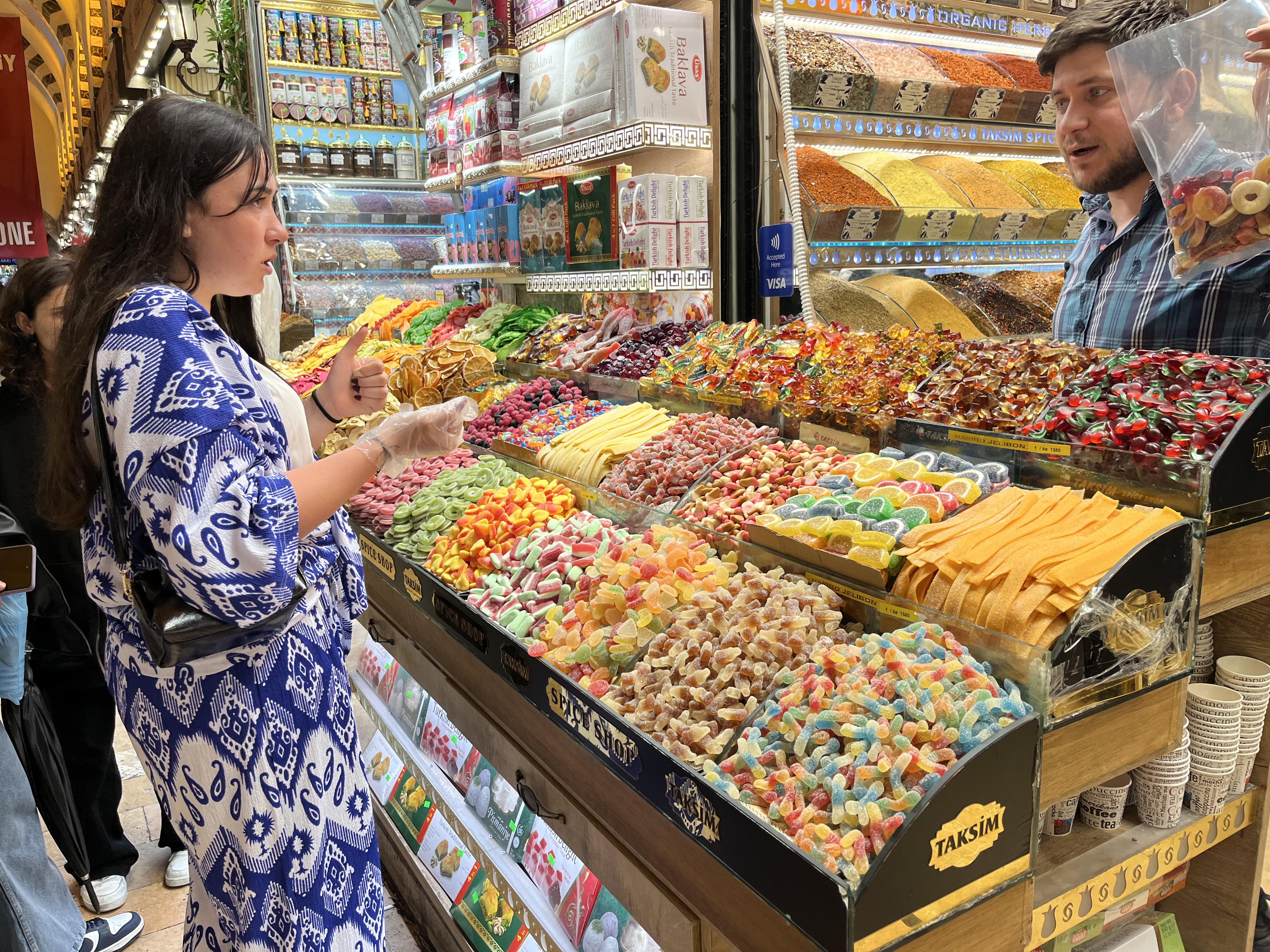
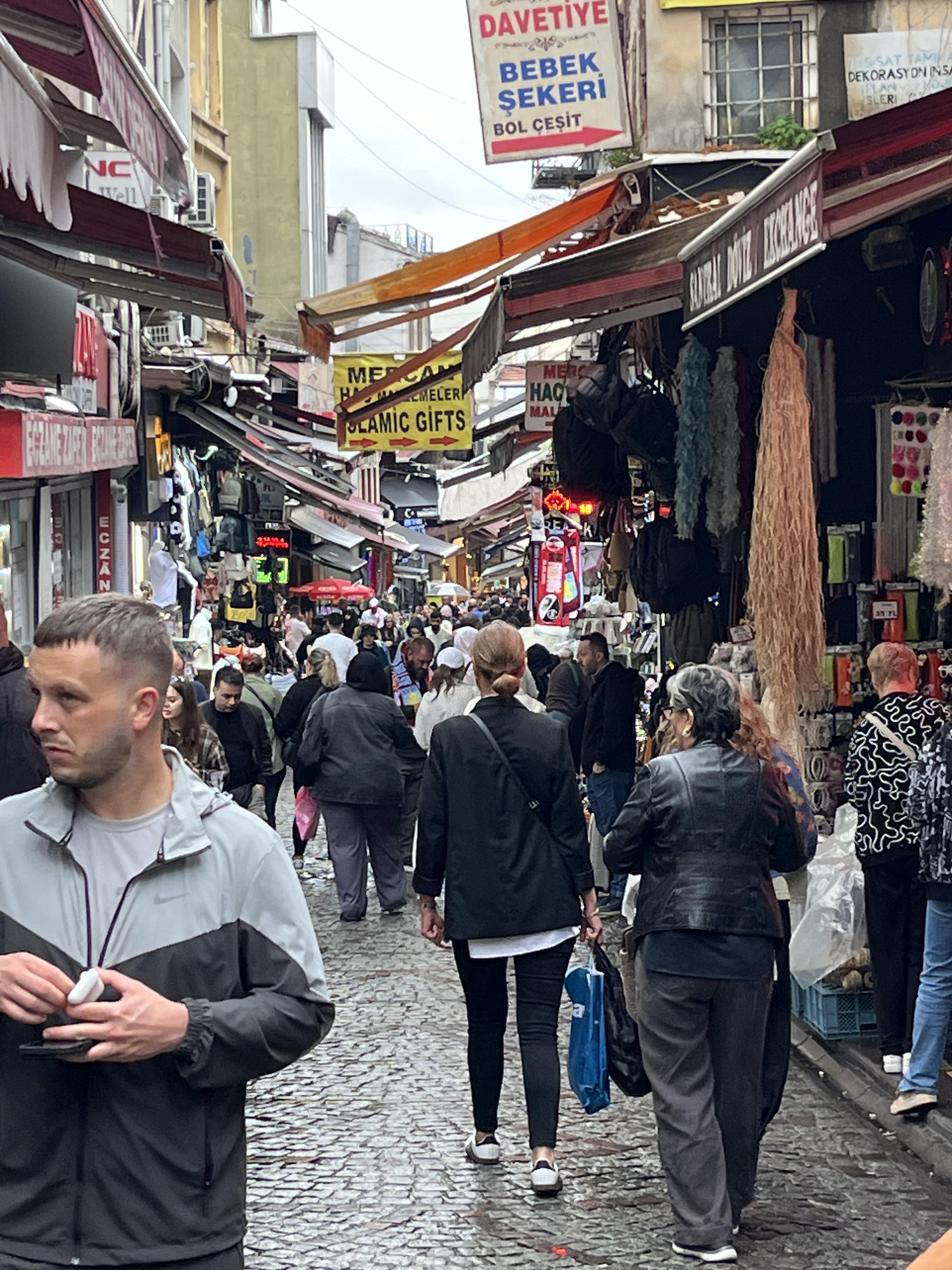
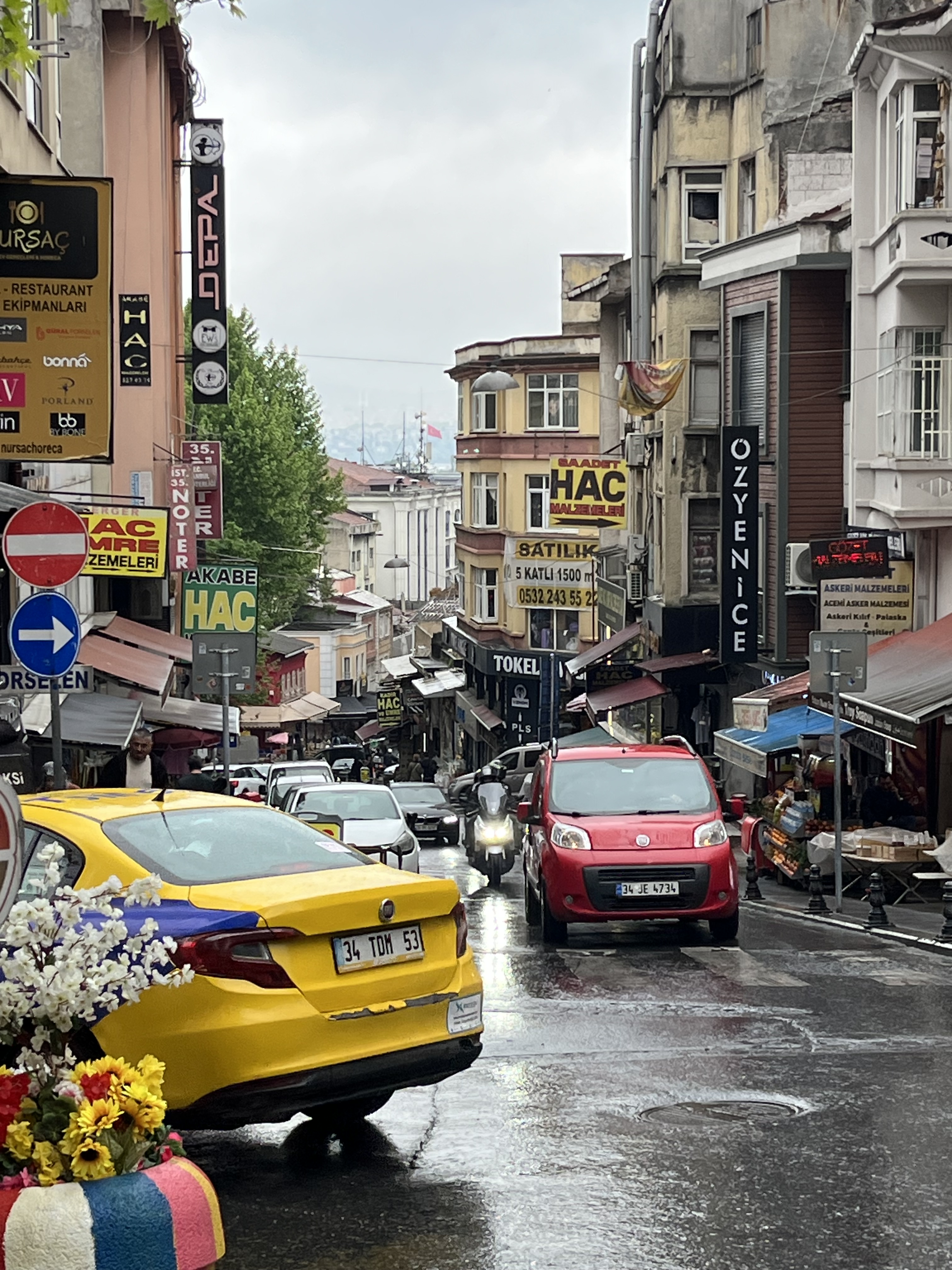
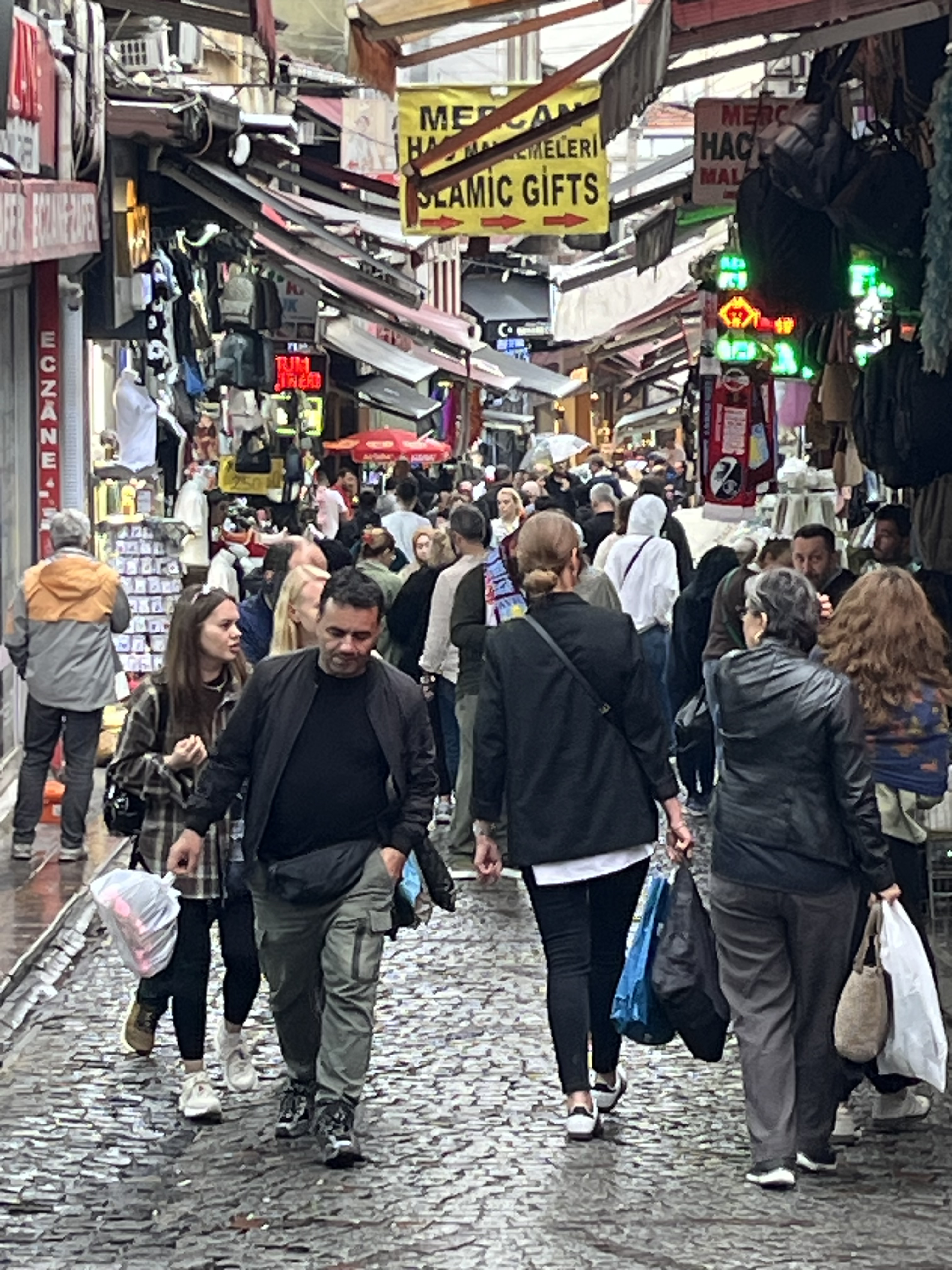
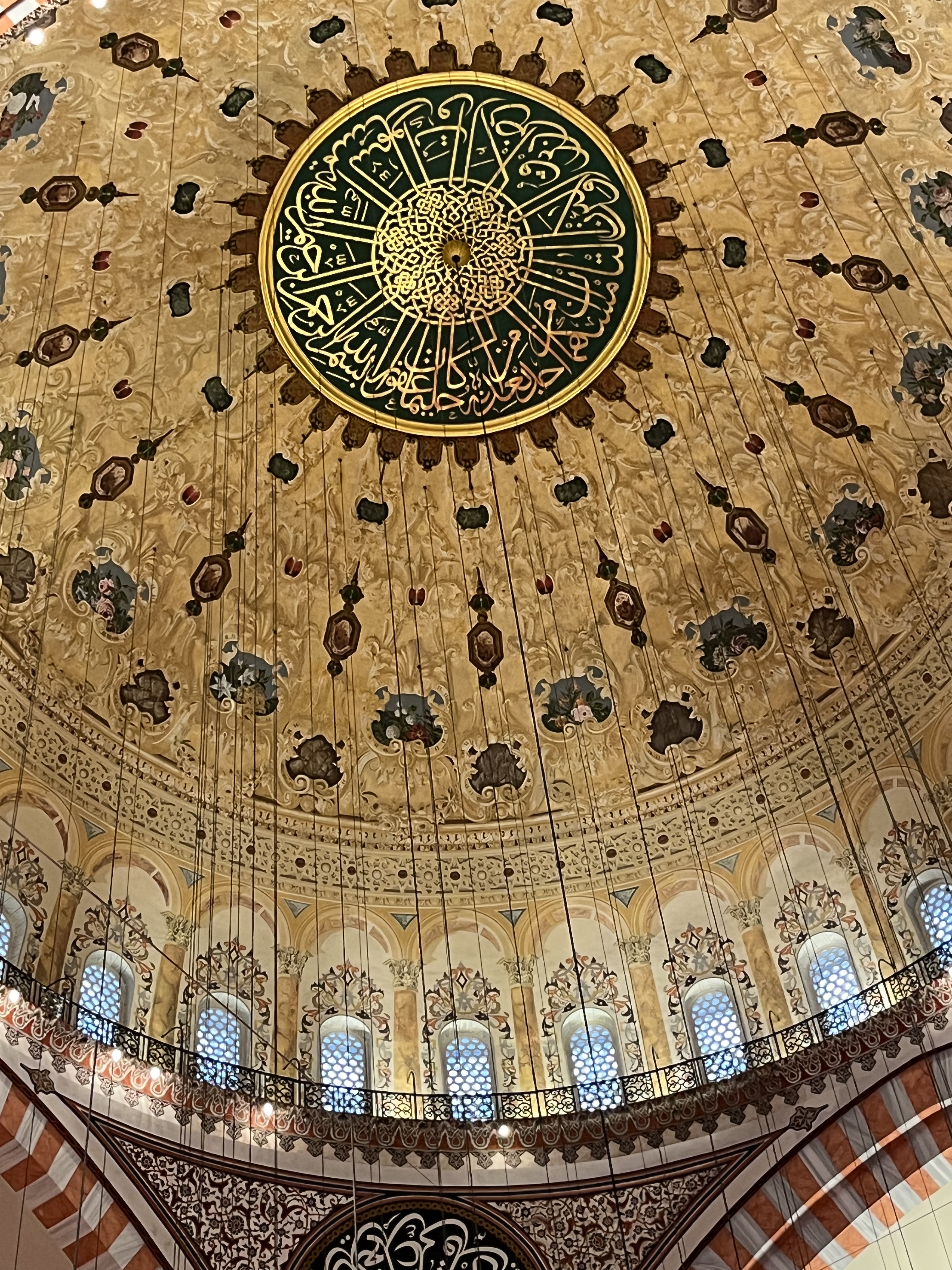
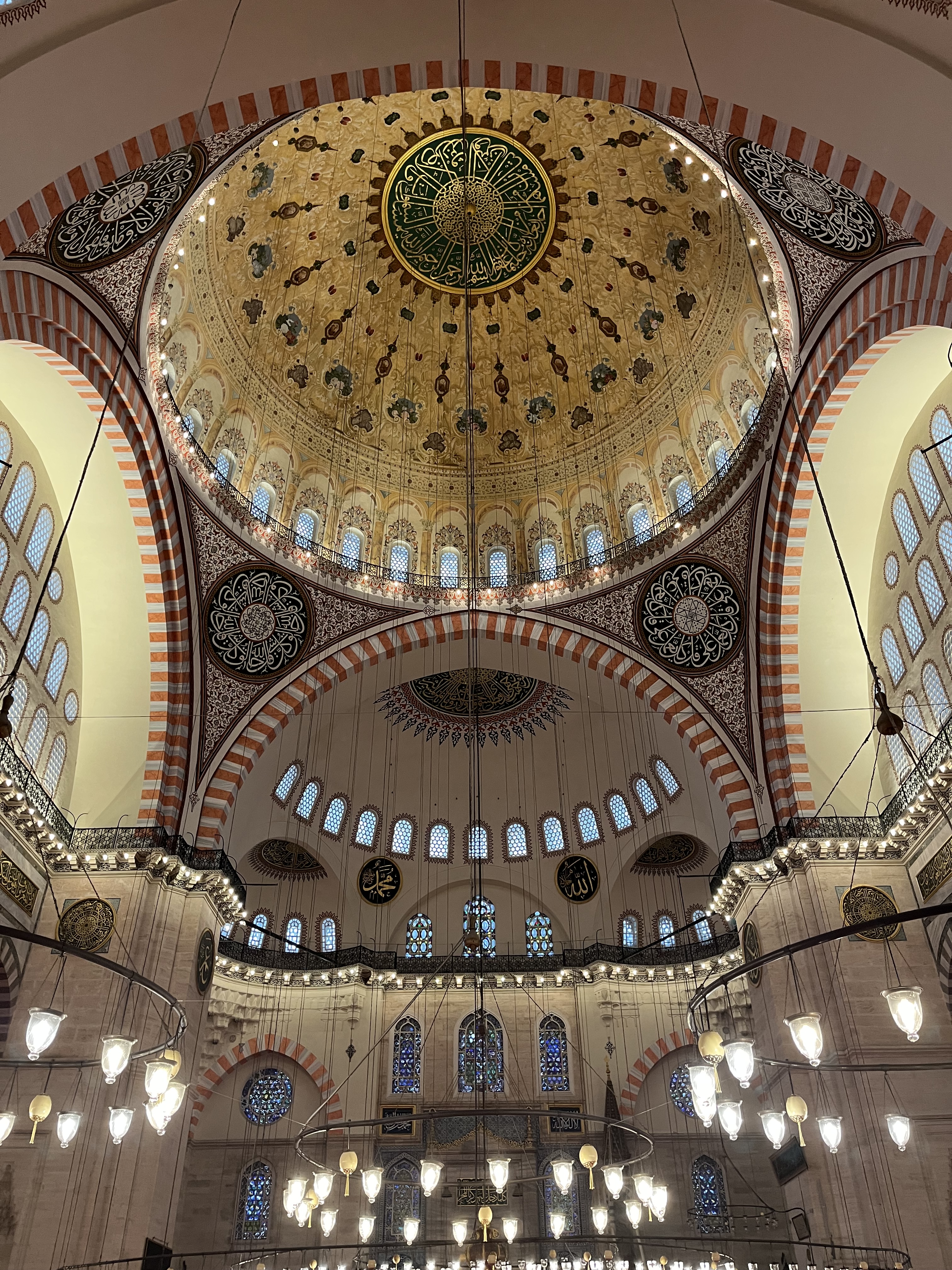
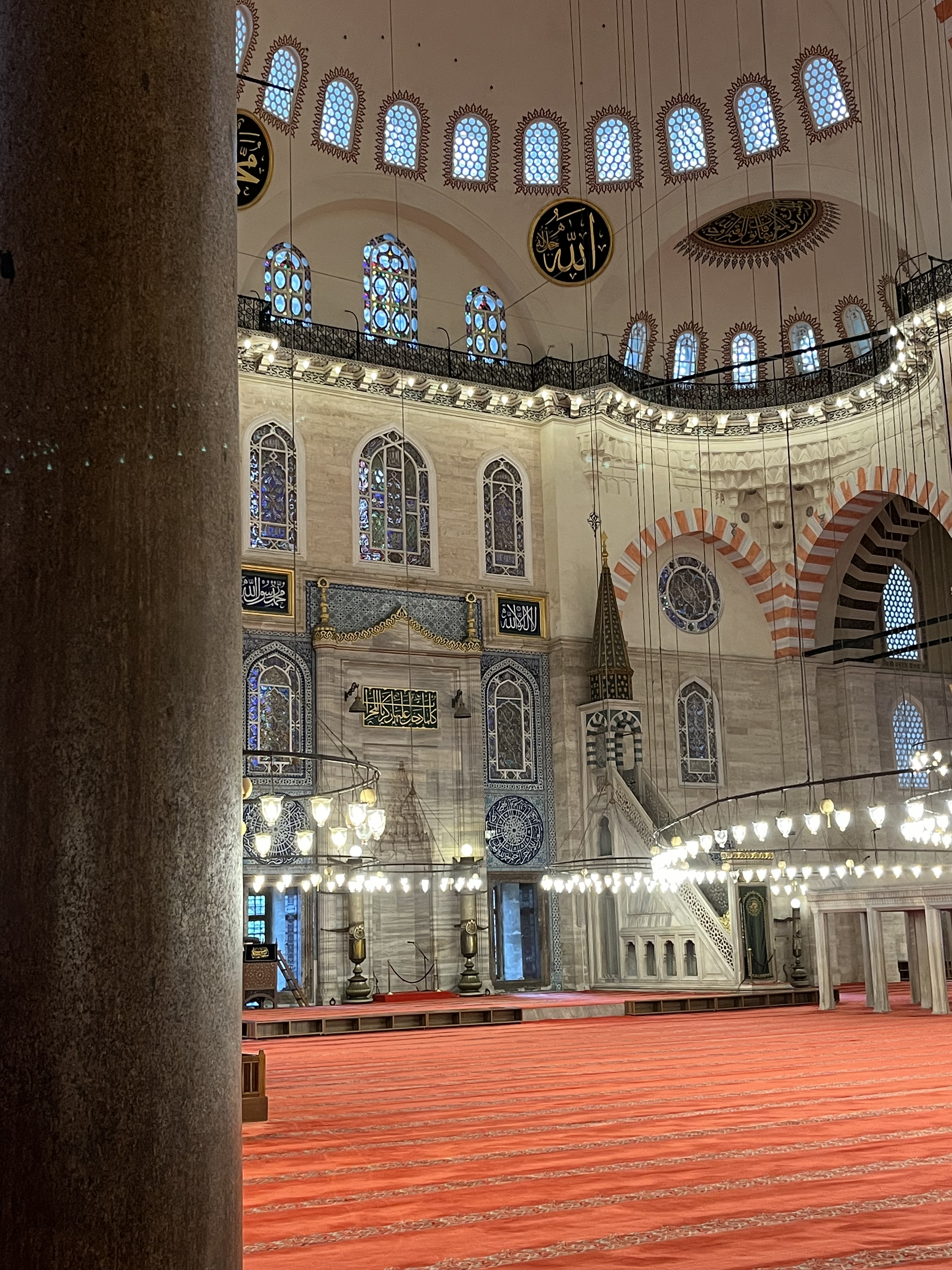
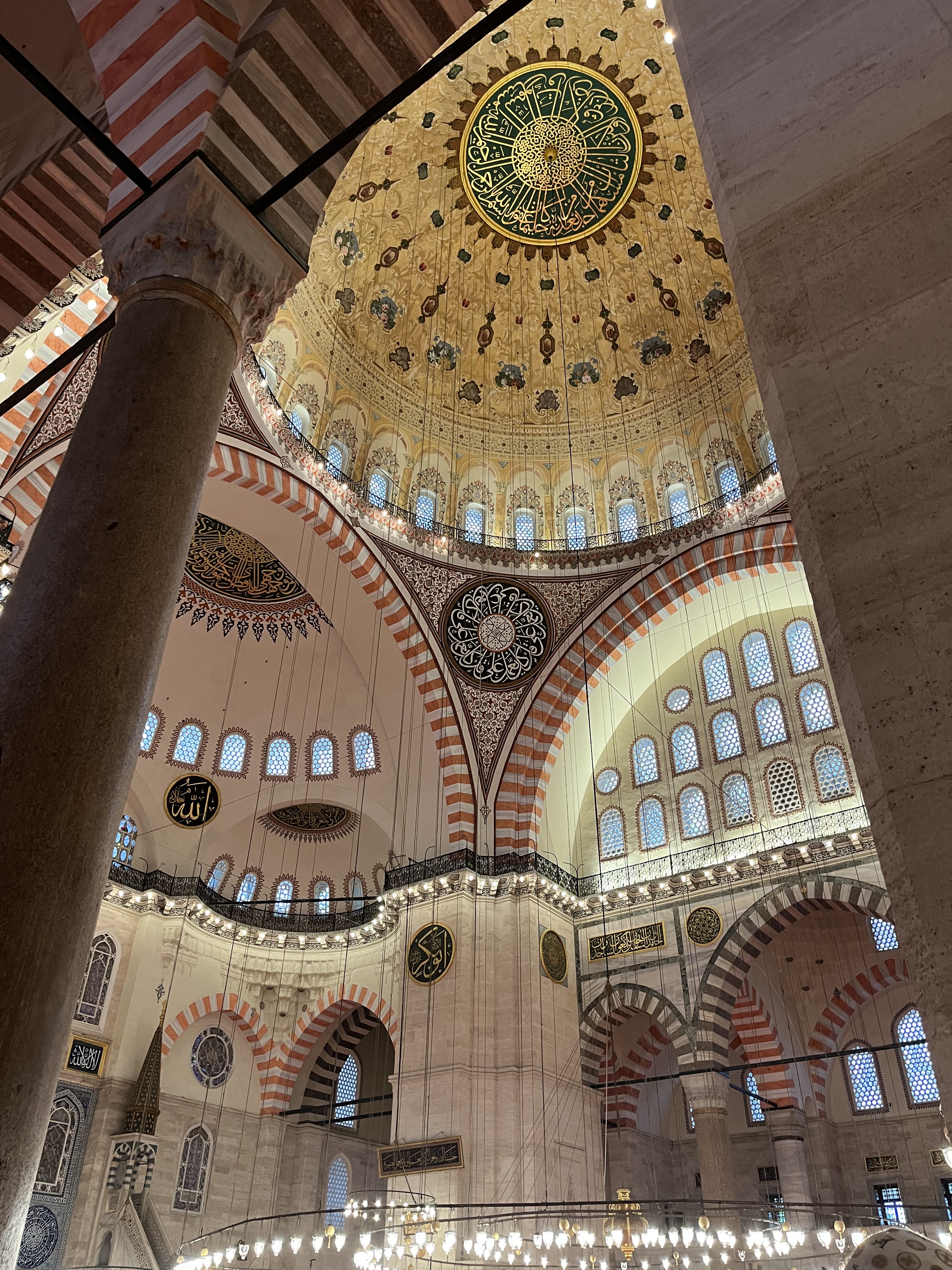
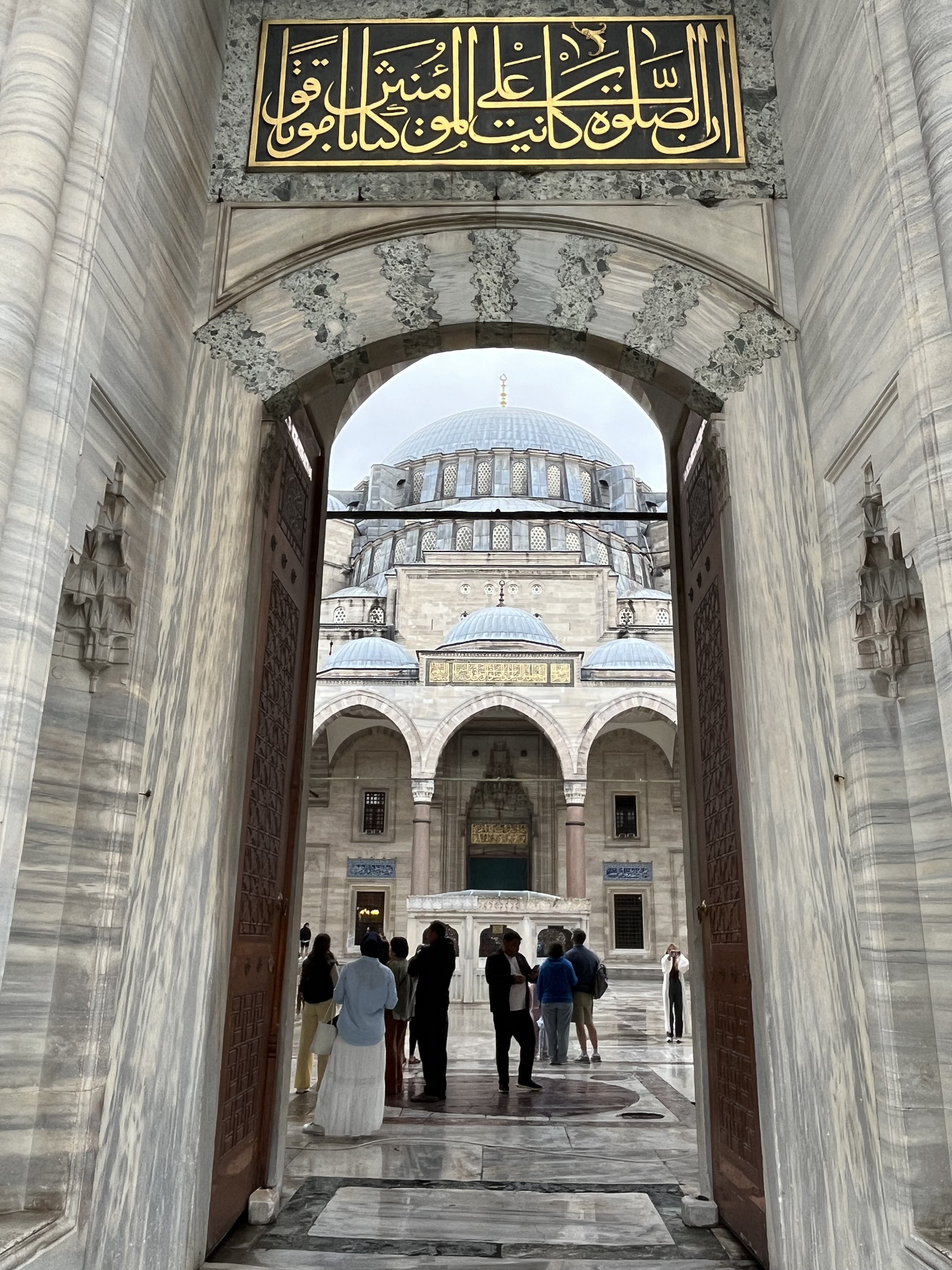
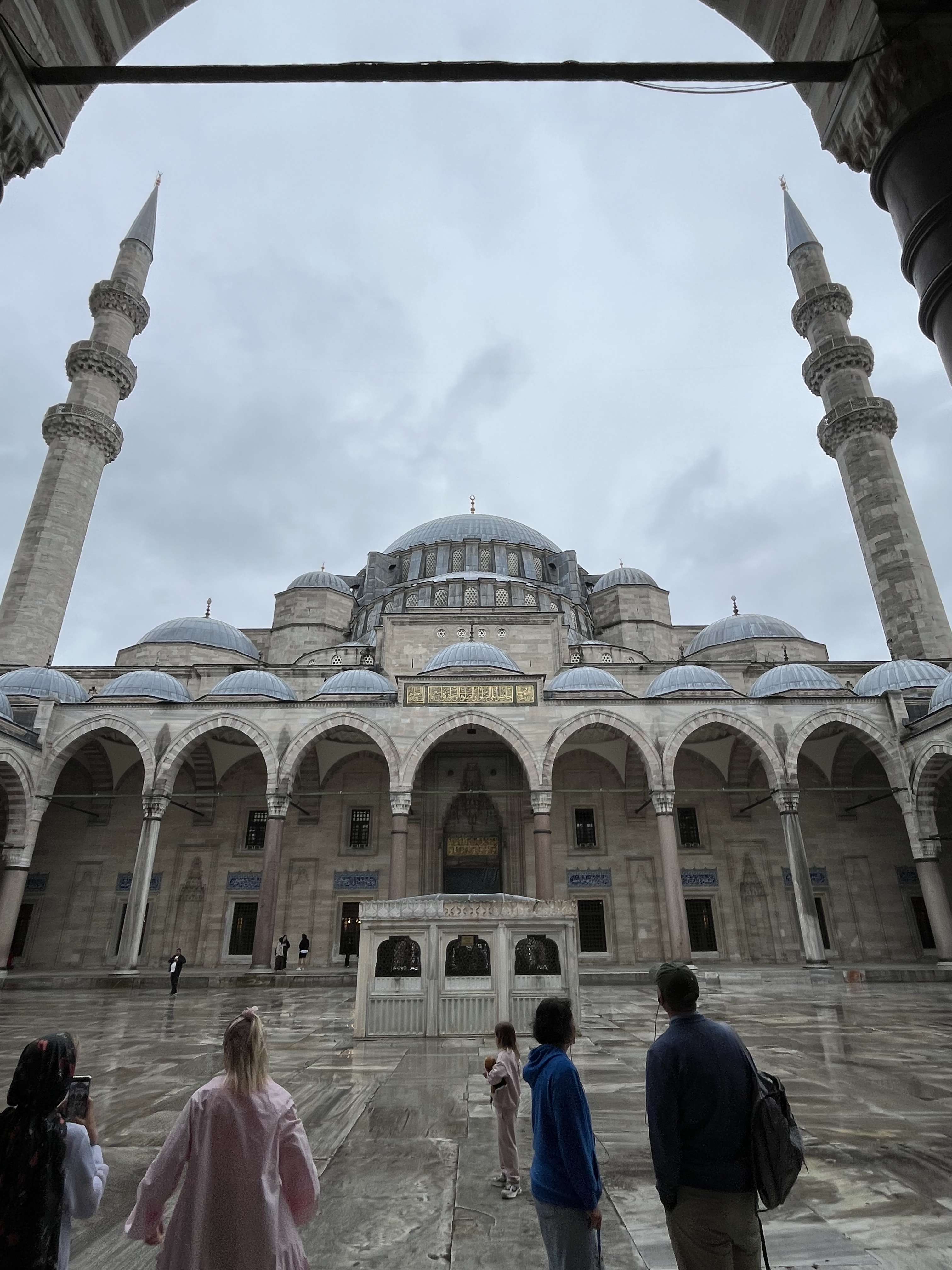
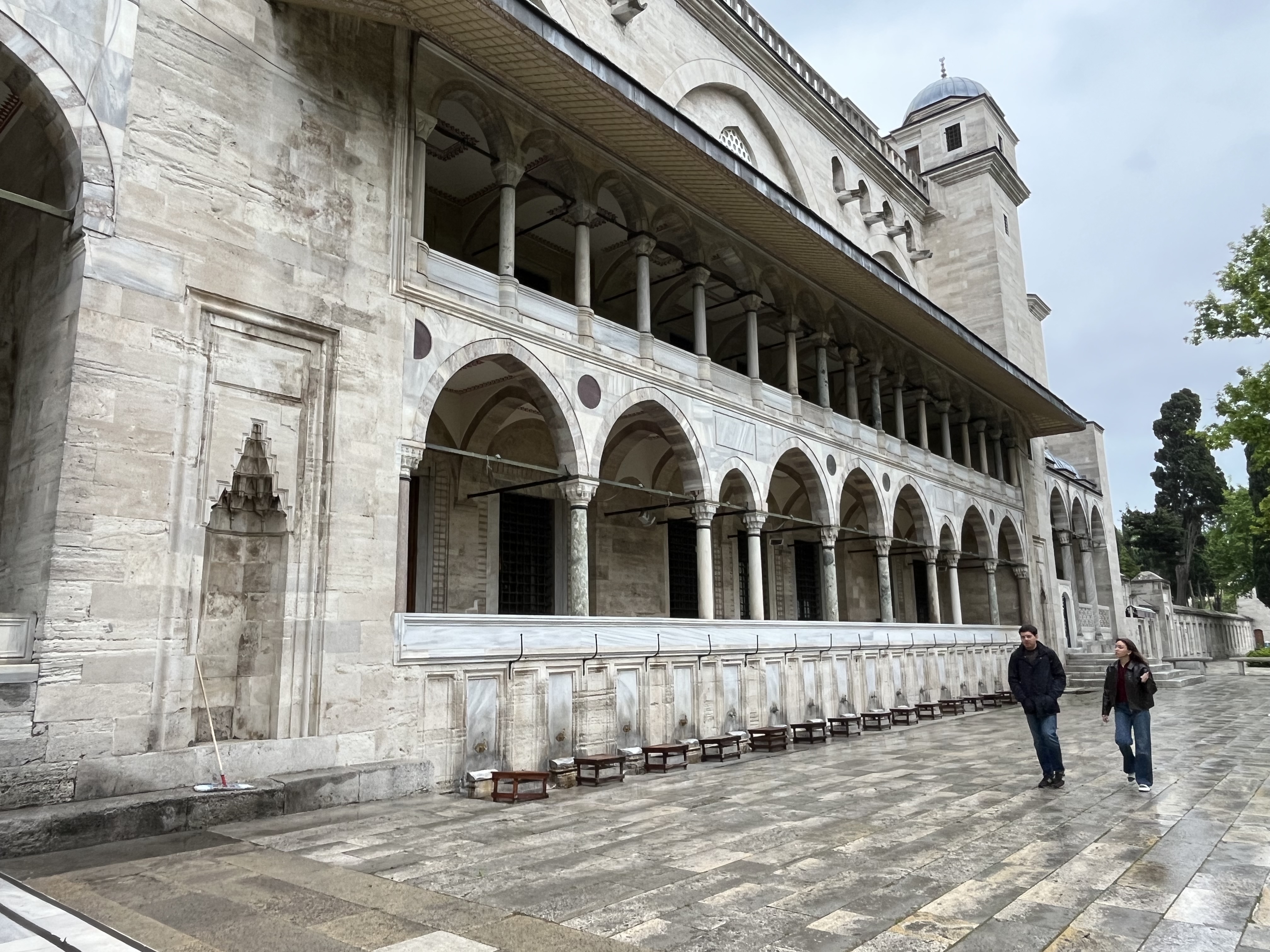
With the change in weather and rain, we visited the Süleymaniye mosque, which, built during the same period as the Blue Mosque, is very similar in style on the inside, as well as the outside, with the benefit of being free of entry fees and crowds. Additionally, it has a nice terrace with the ever interesting view of the Bosphorus.
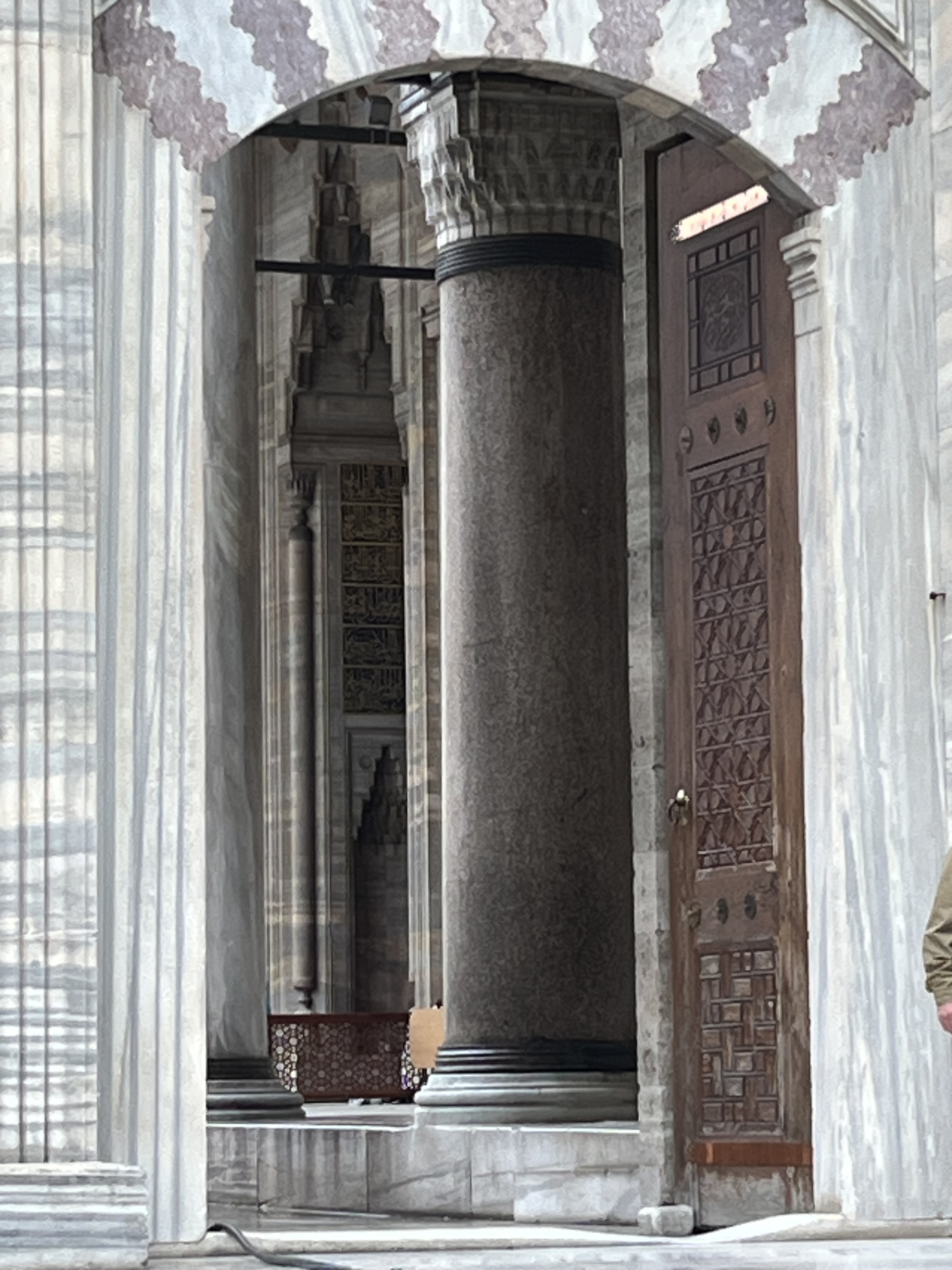
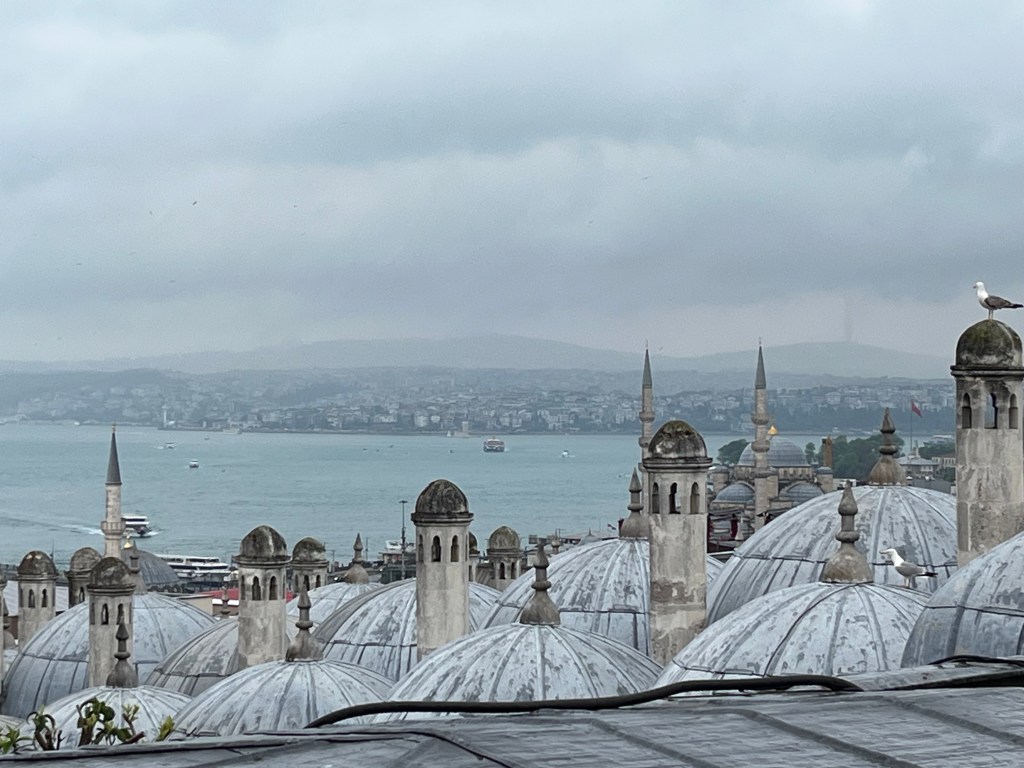
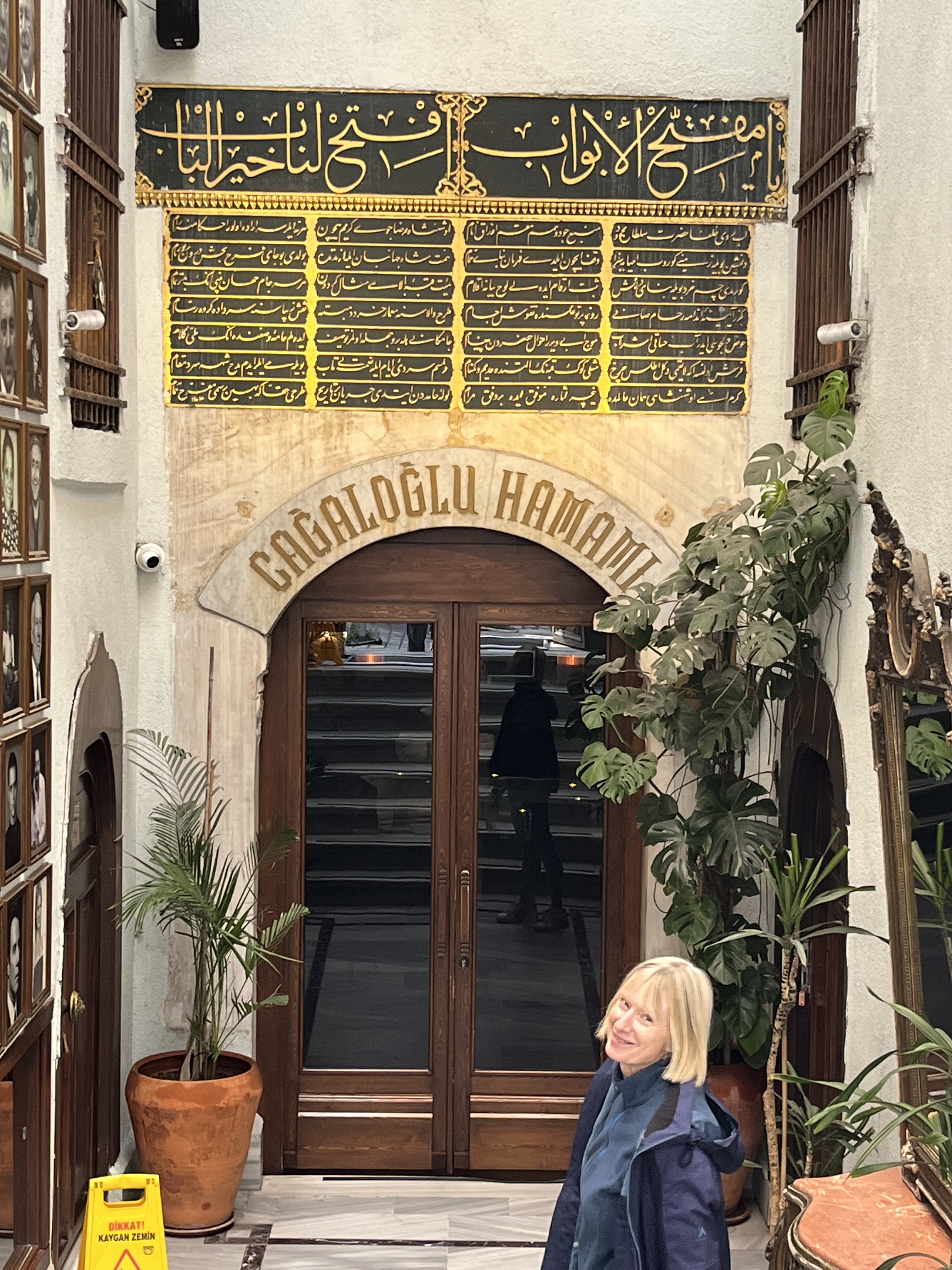
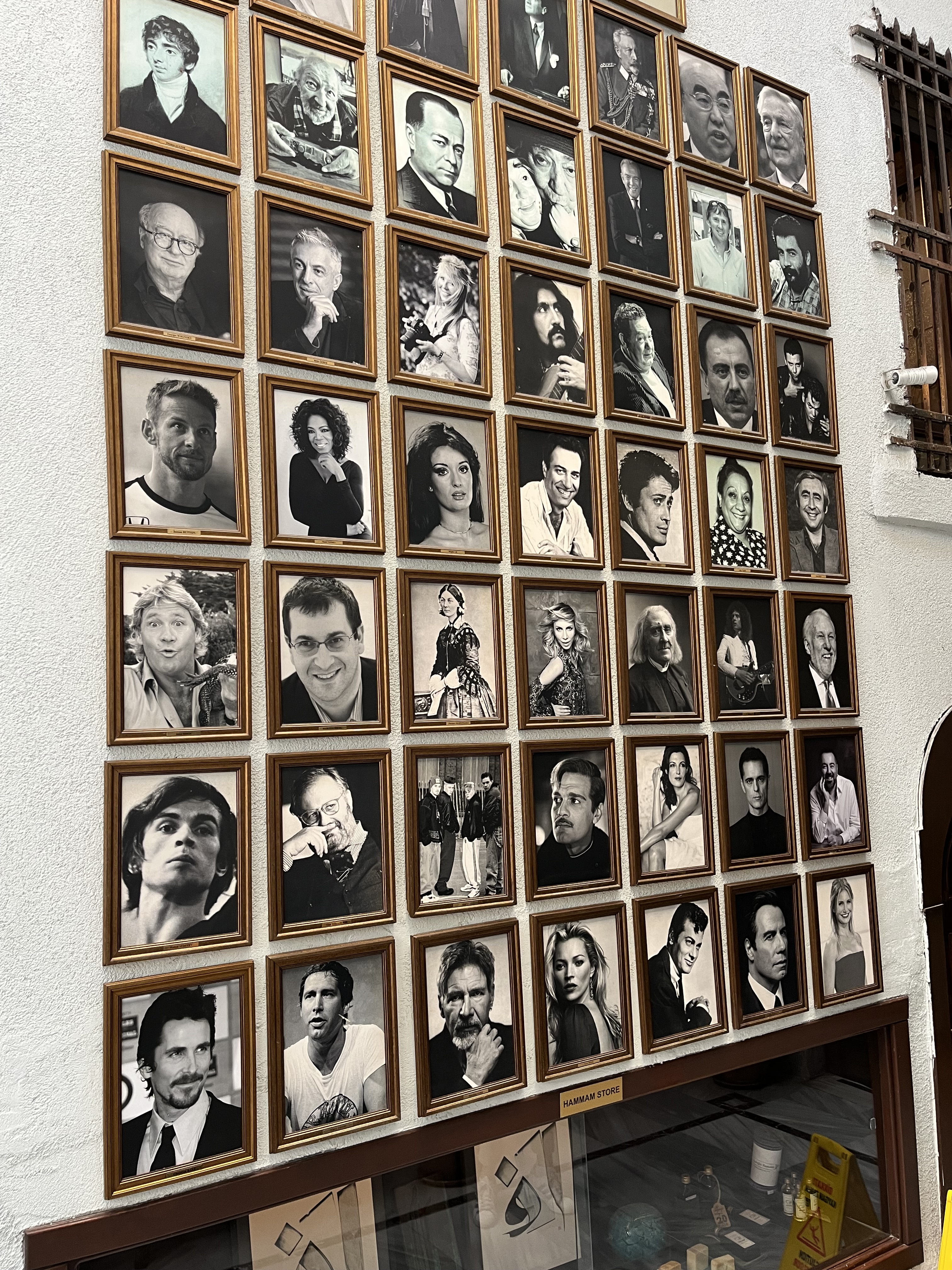
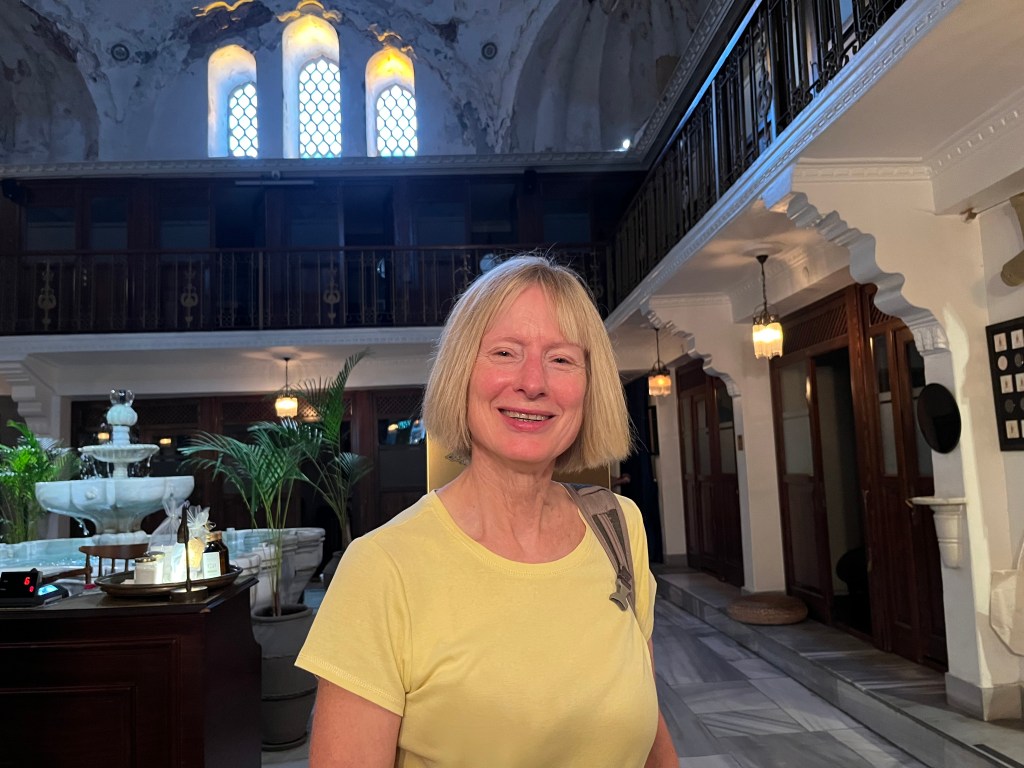
On our last evening we treated ourselves to a Turkish Bath, a Hammam. We saw a sign for this place just two blocks from our hotel, and walking down the stairs realized how many celebrities had also been here. The warm to hot steam bath with the followed body scrubbing and bubble massage felt great and was well worth it. No fear, men and women are totally separated during the entire proceedings, which lasted a little over an hour, and was followed of course with the ever present Turkish tea, a strong black tea, and the sweet Turkish delight for a relaxing cool down. Lauri, who was skeptical at first, visibly enjoyed it as well.
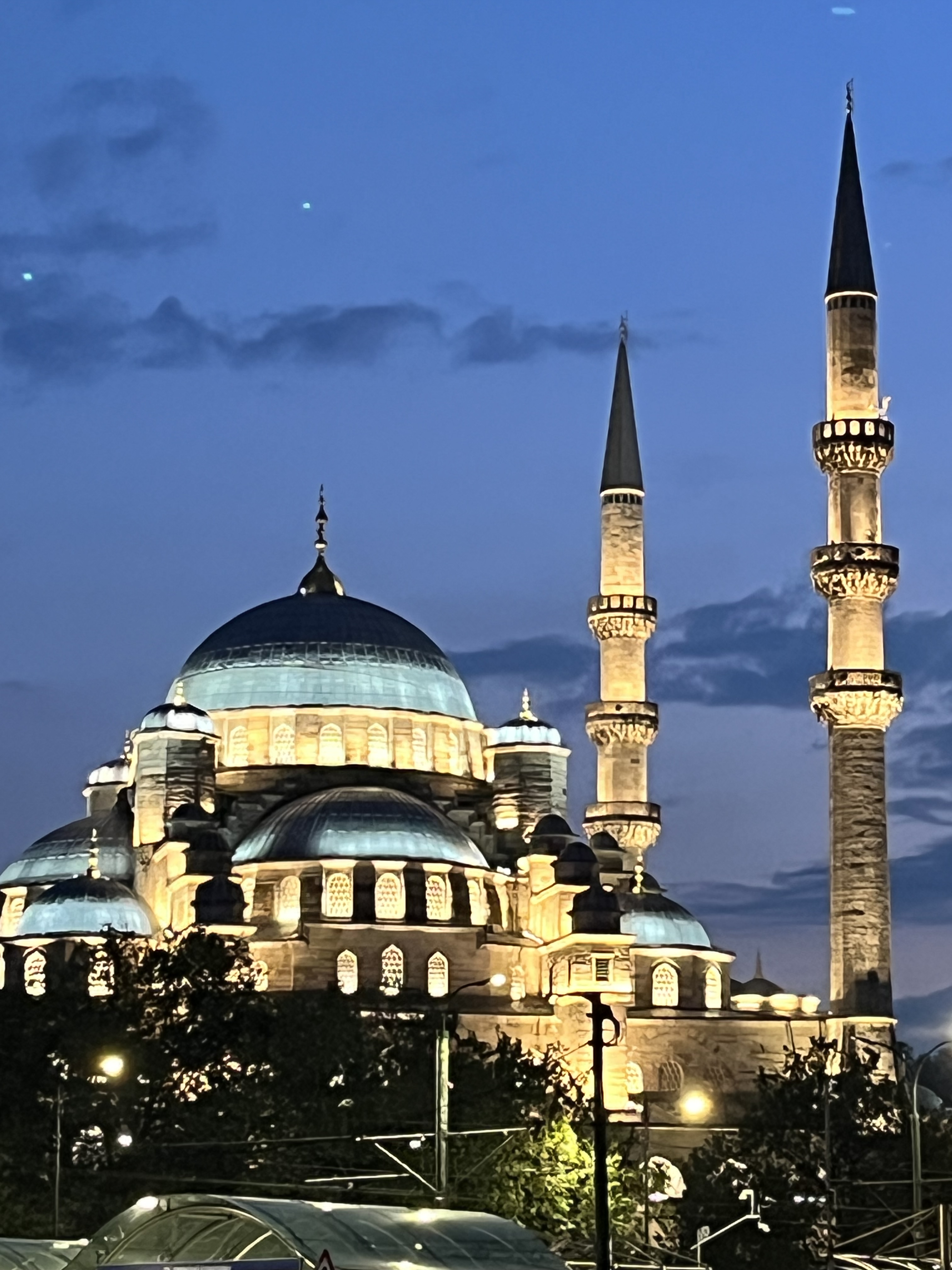
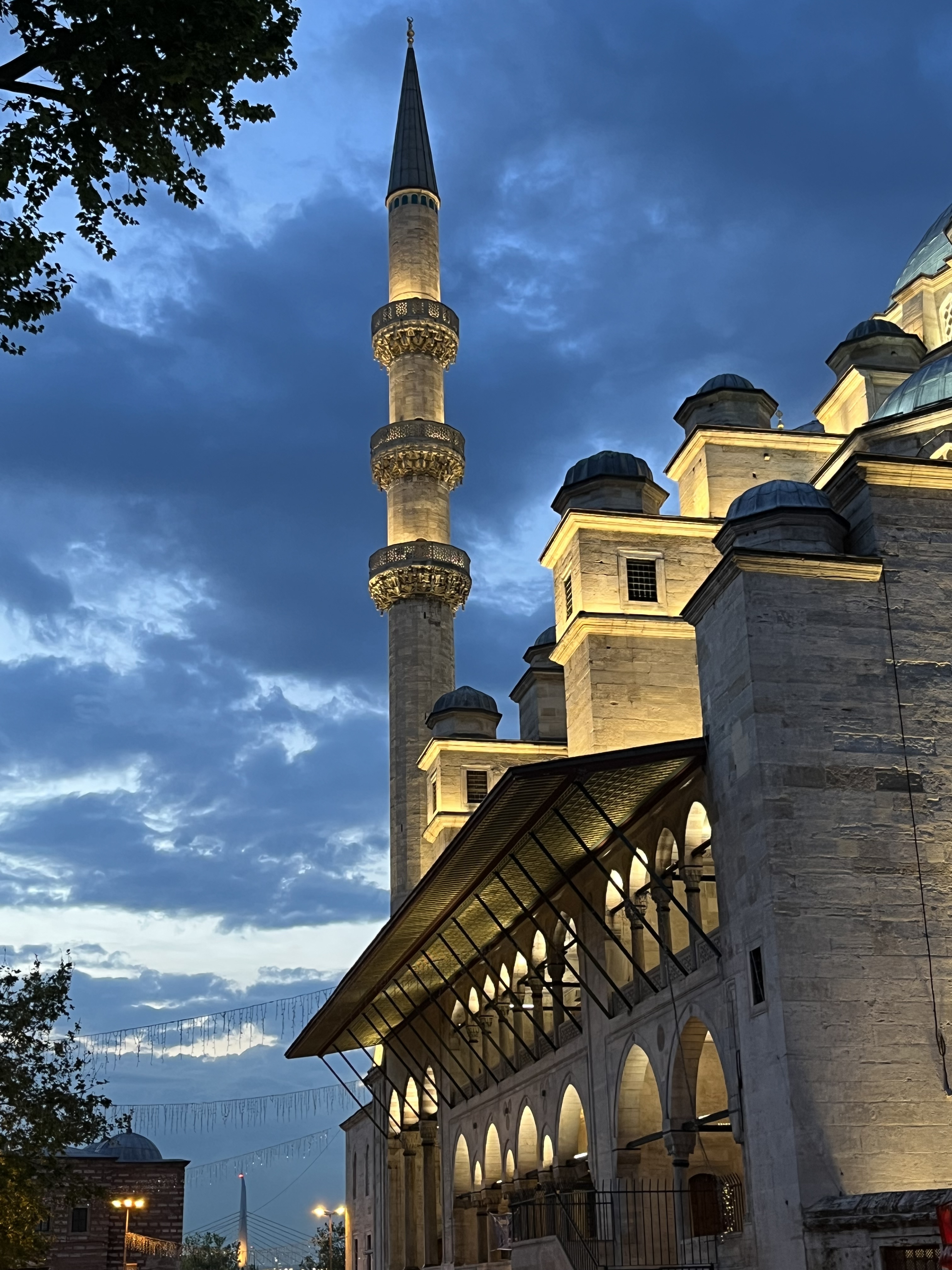
An illuminated mosque with minarets and the illuminated Bosphorus Bridge gave us their good night and good bye.


Leave a Reply