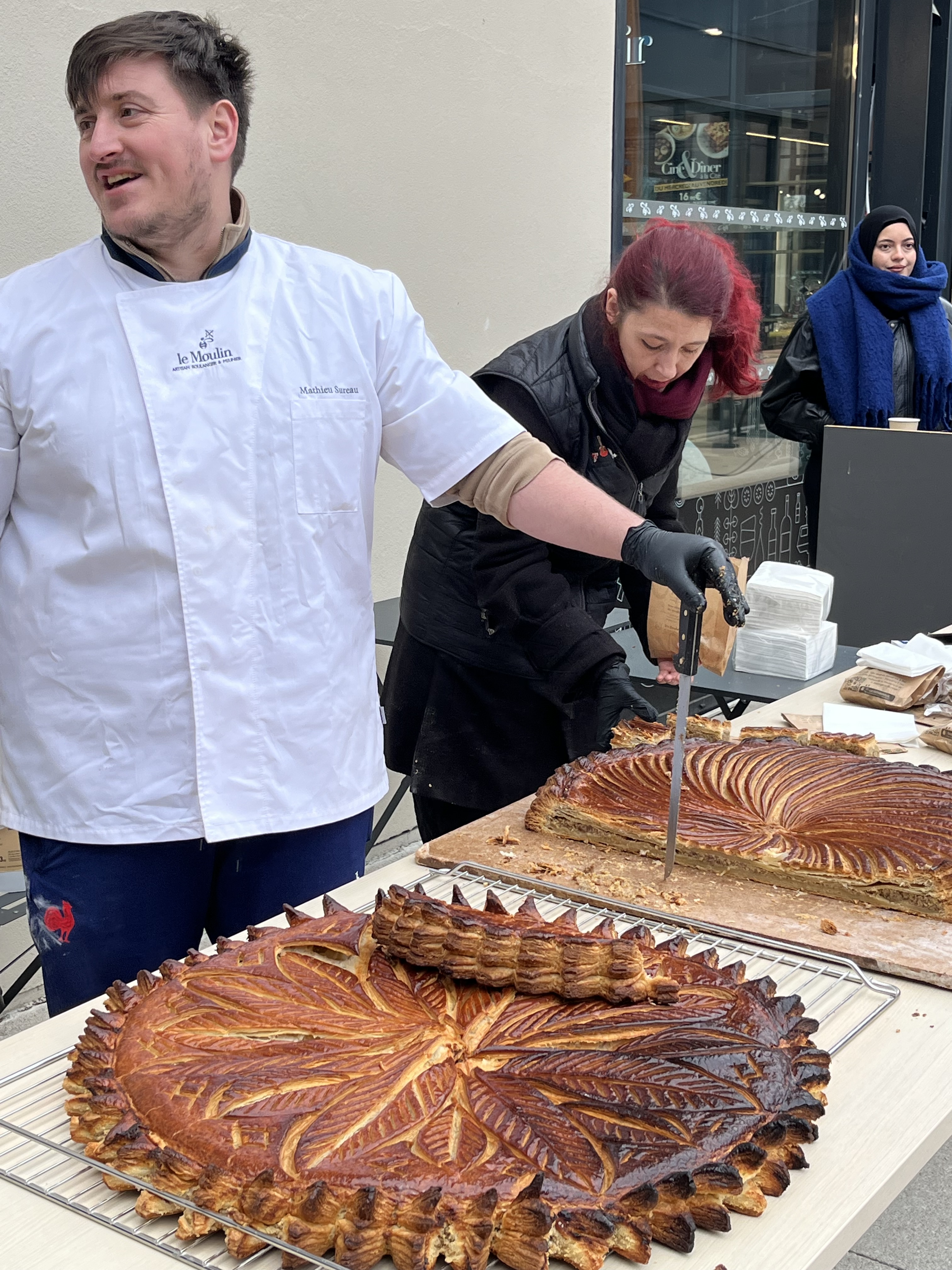
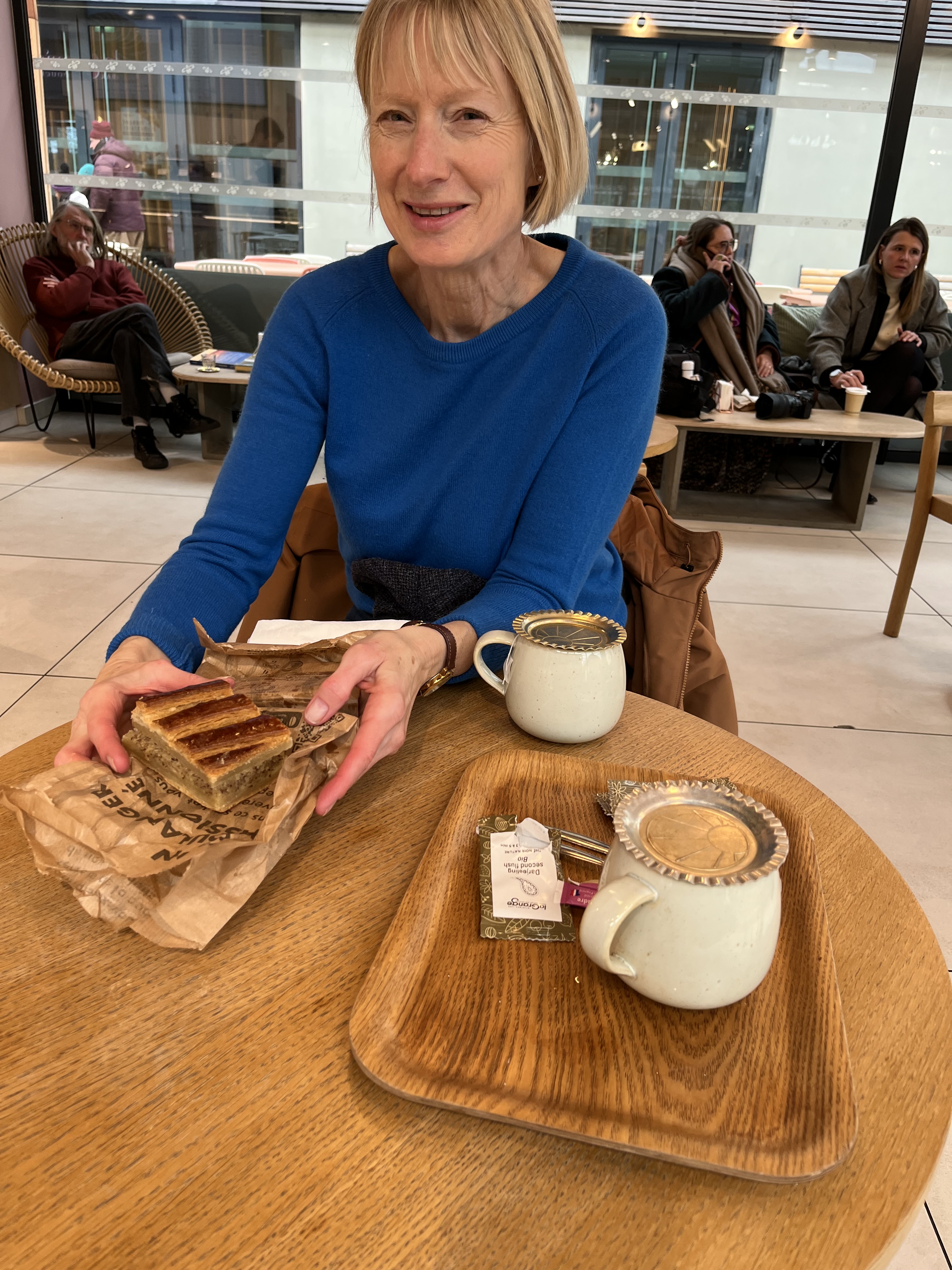
In France the delicious holiday celebrations aren’t over on Christmas Day, nor on New Year’s Day. During the first part of January the predominantly Catholic France celebrates Epiphany, the arrival of the Three Kings bringing gifts to honor Baby Jesus. The French celebrate this event by serving the Galette des Rois cake. This special annual puff pastry cake is filled with frangipane, an almond pastry cream, and comes in all kinds of sizes. During this time period Galette des Rois cakes are seen everywhere, from boulangeries to grocery stores and even to children selling the cakes on the street as fundraisers, like Girl Scout cookies in the US. The bakery in the picture below offered an unusually big version that, freshly out of the oven, we couldn’t resist sampling.
In mid January we visited Nancy, the largest metropolitan area of Lorraine, about a 2 1/2 hr drive north of Dijon.
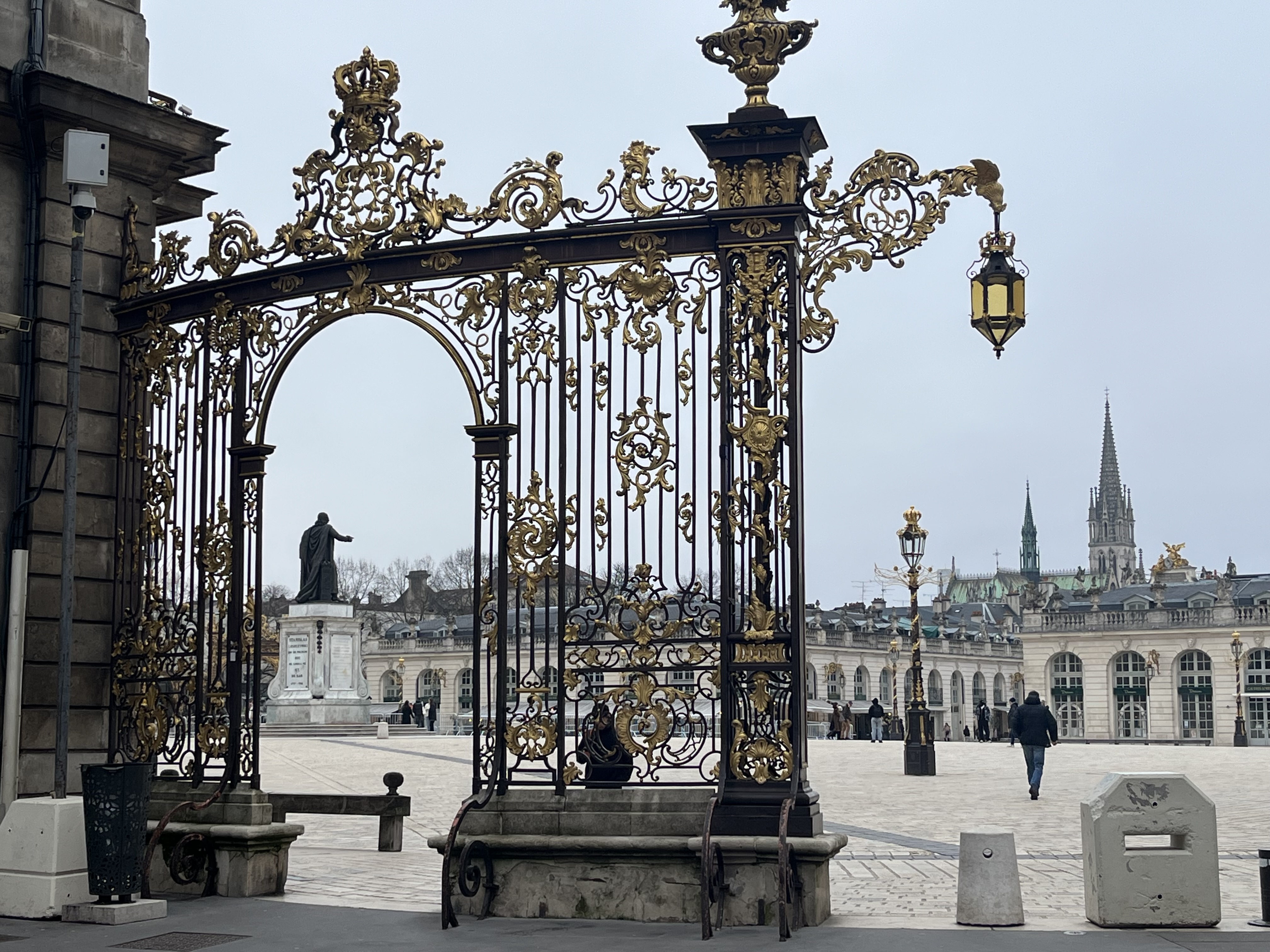
Nancy’s most famous site is the 18th century Place Stanislas, a large public square built in the period when Stanislaus I was King of Poland and Duke of Lorraine.
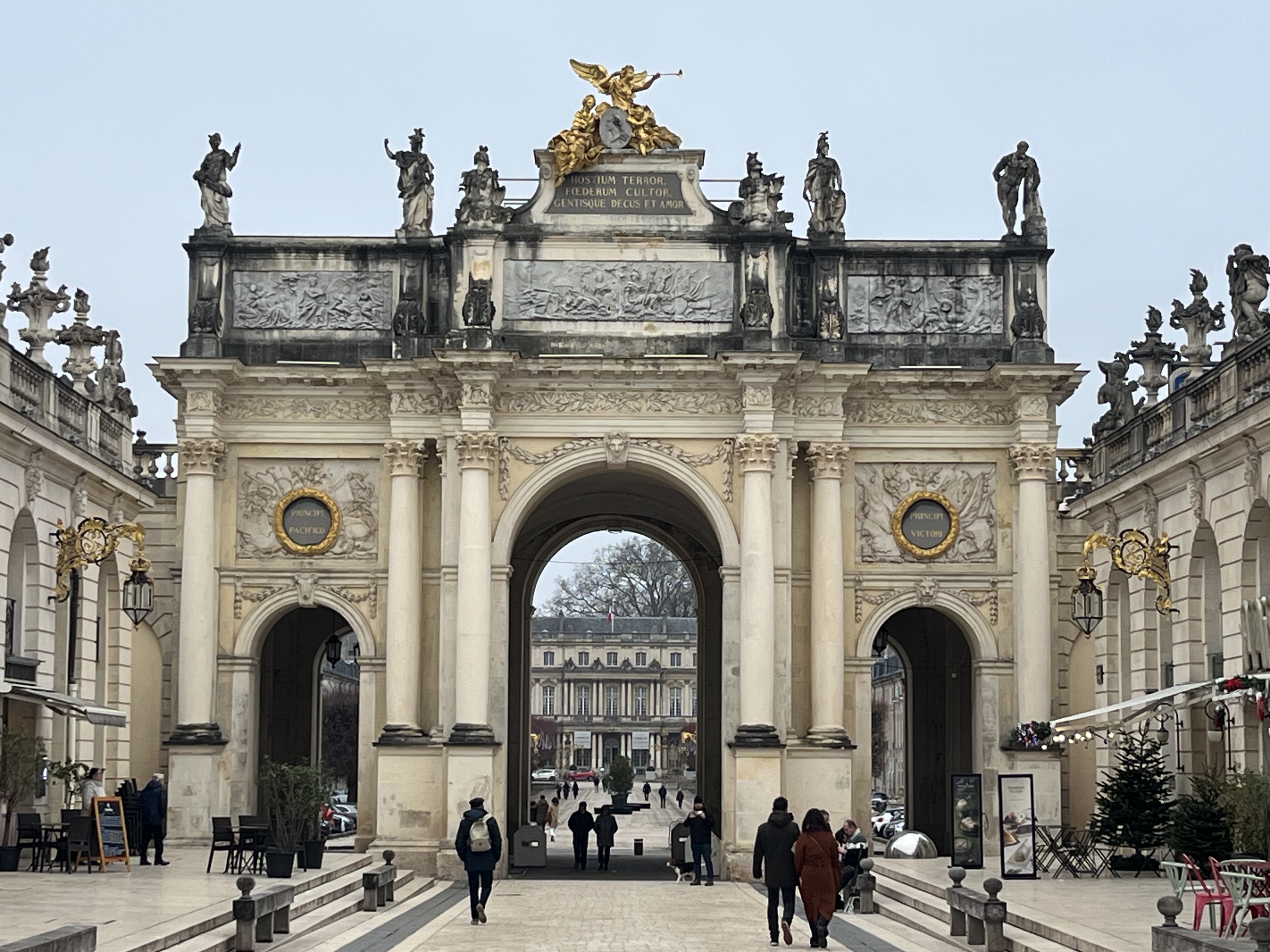
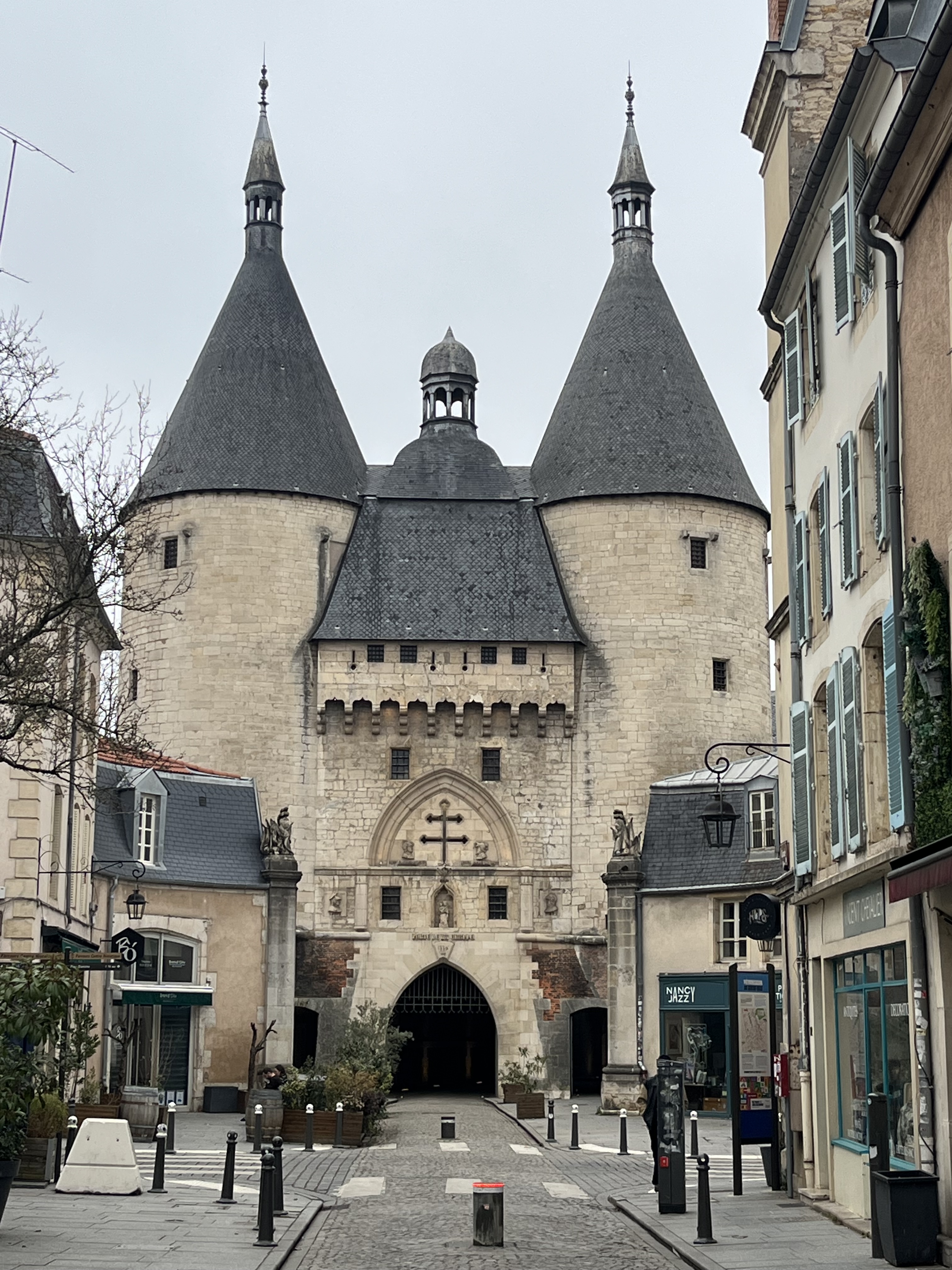
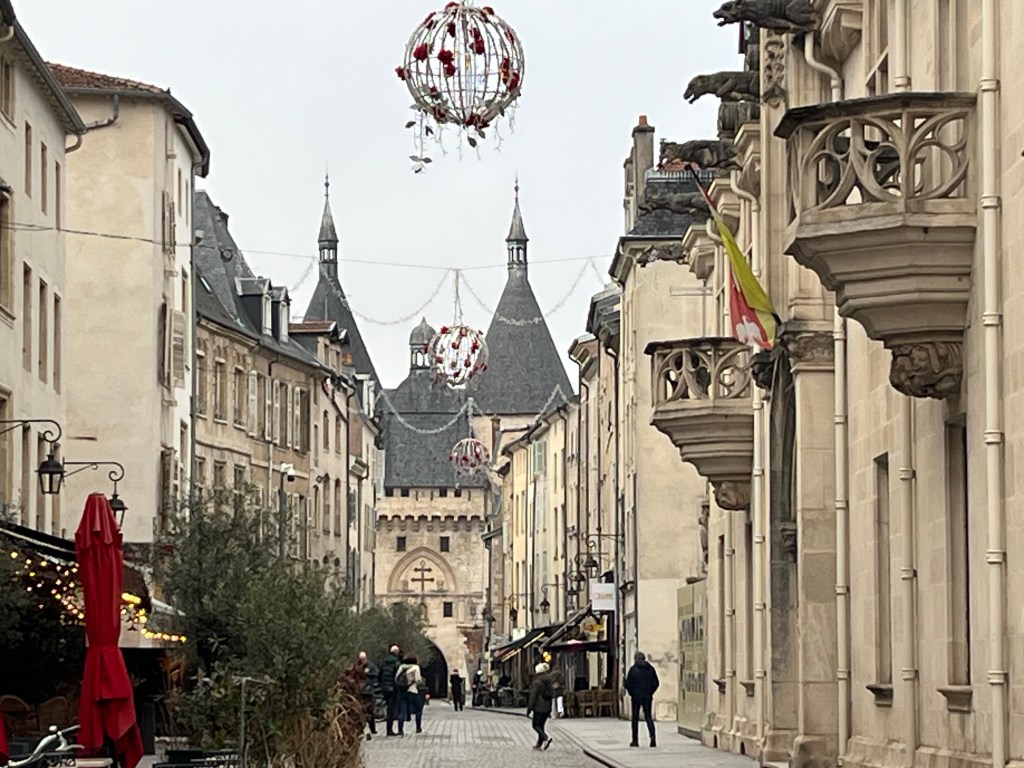
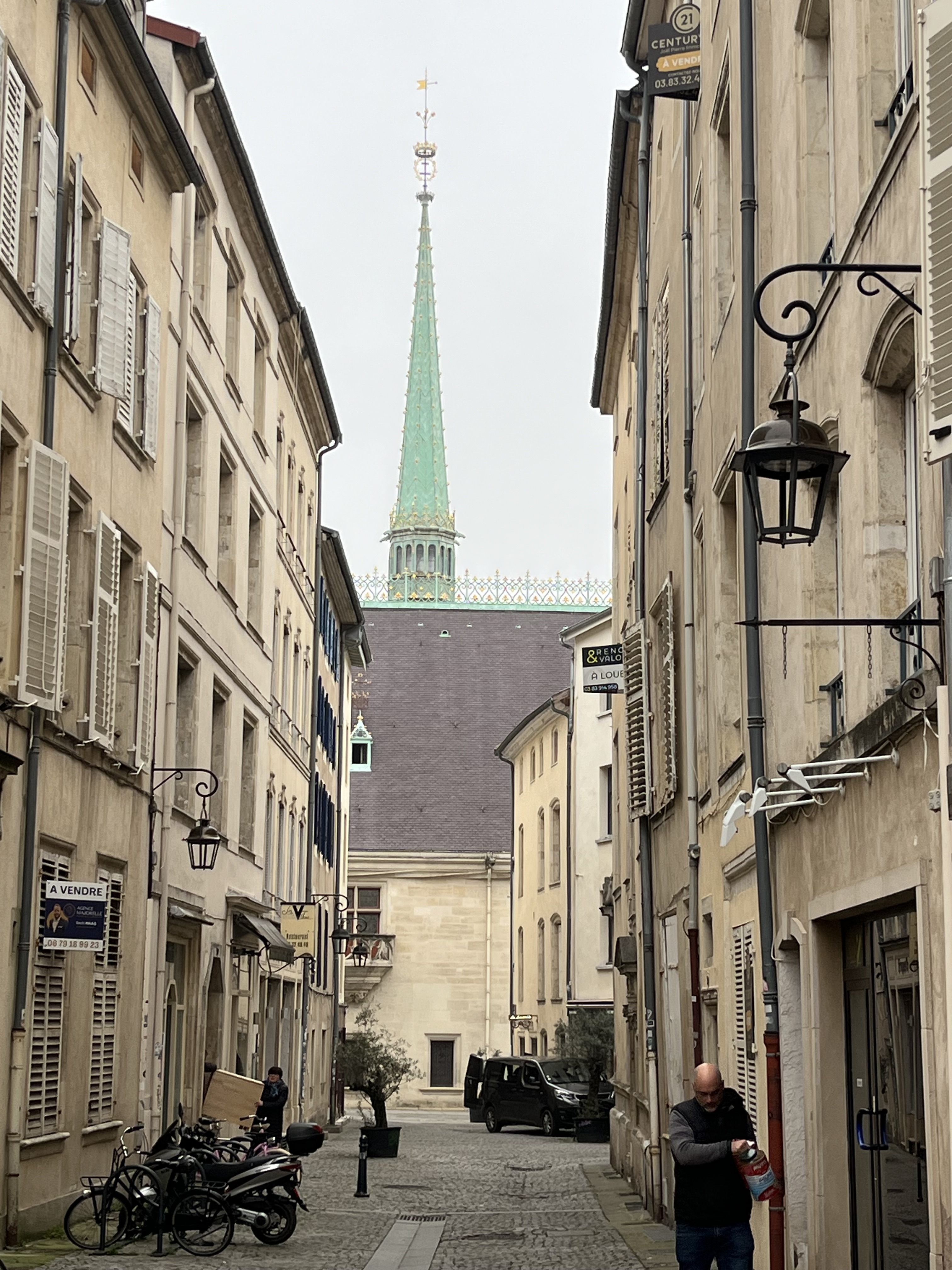
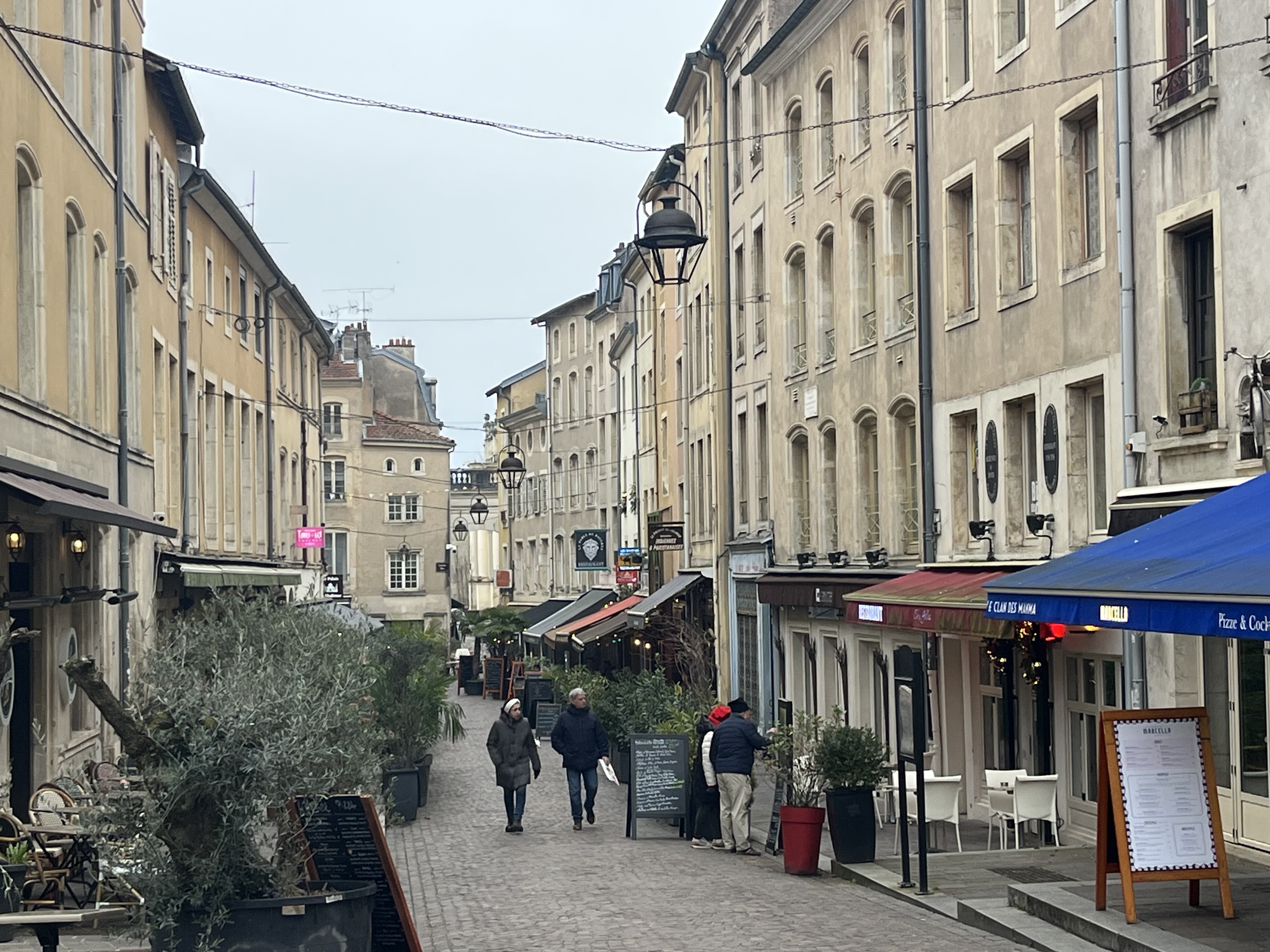
The medieval old town of Nancy, pictured above and below, is built around the Ducal Palace, which was the princely residence of the Dukes of Lorraine.
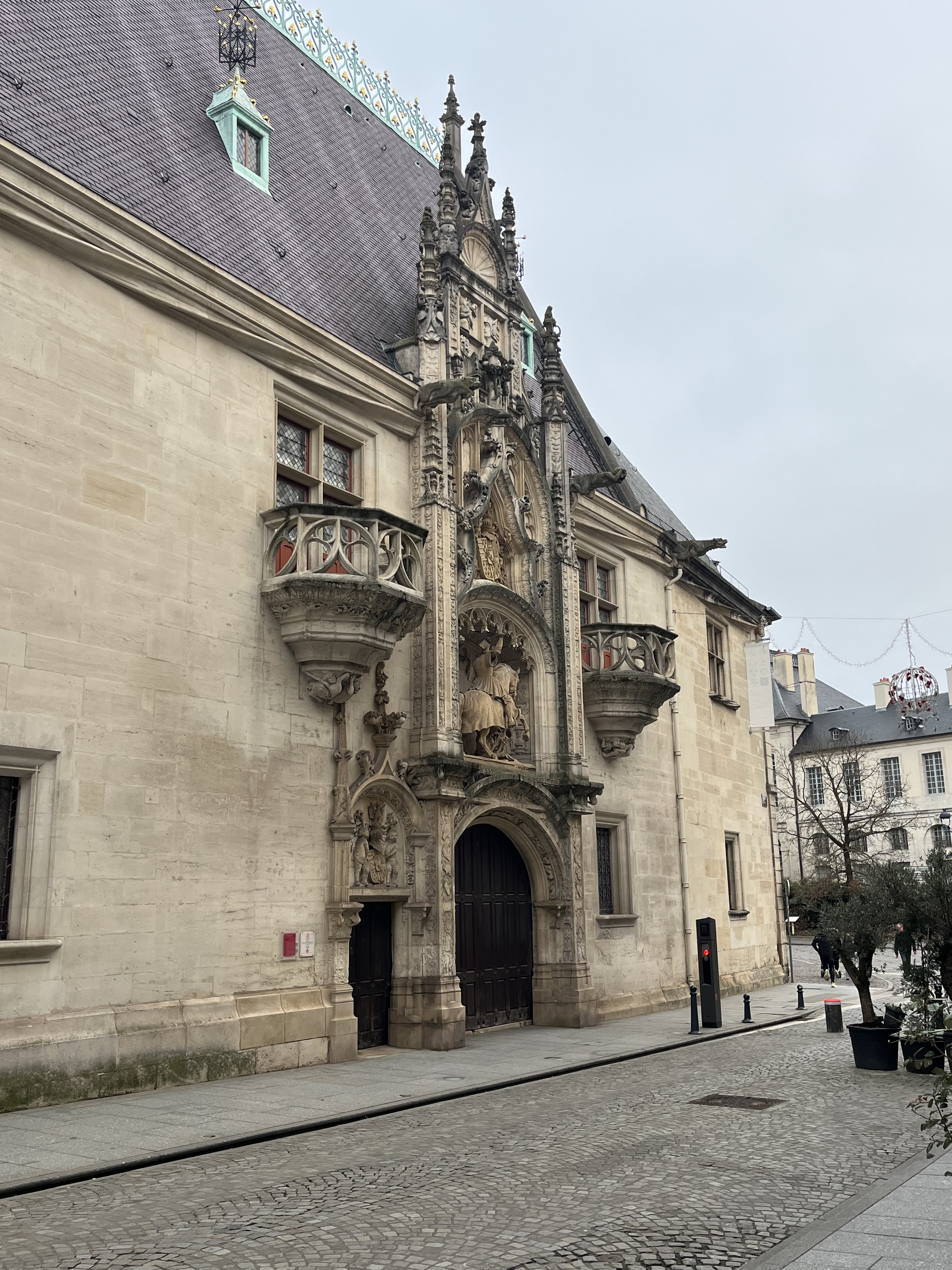
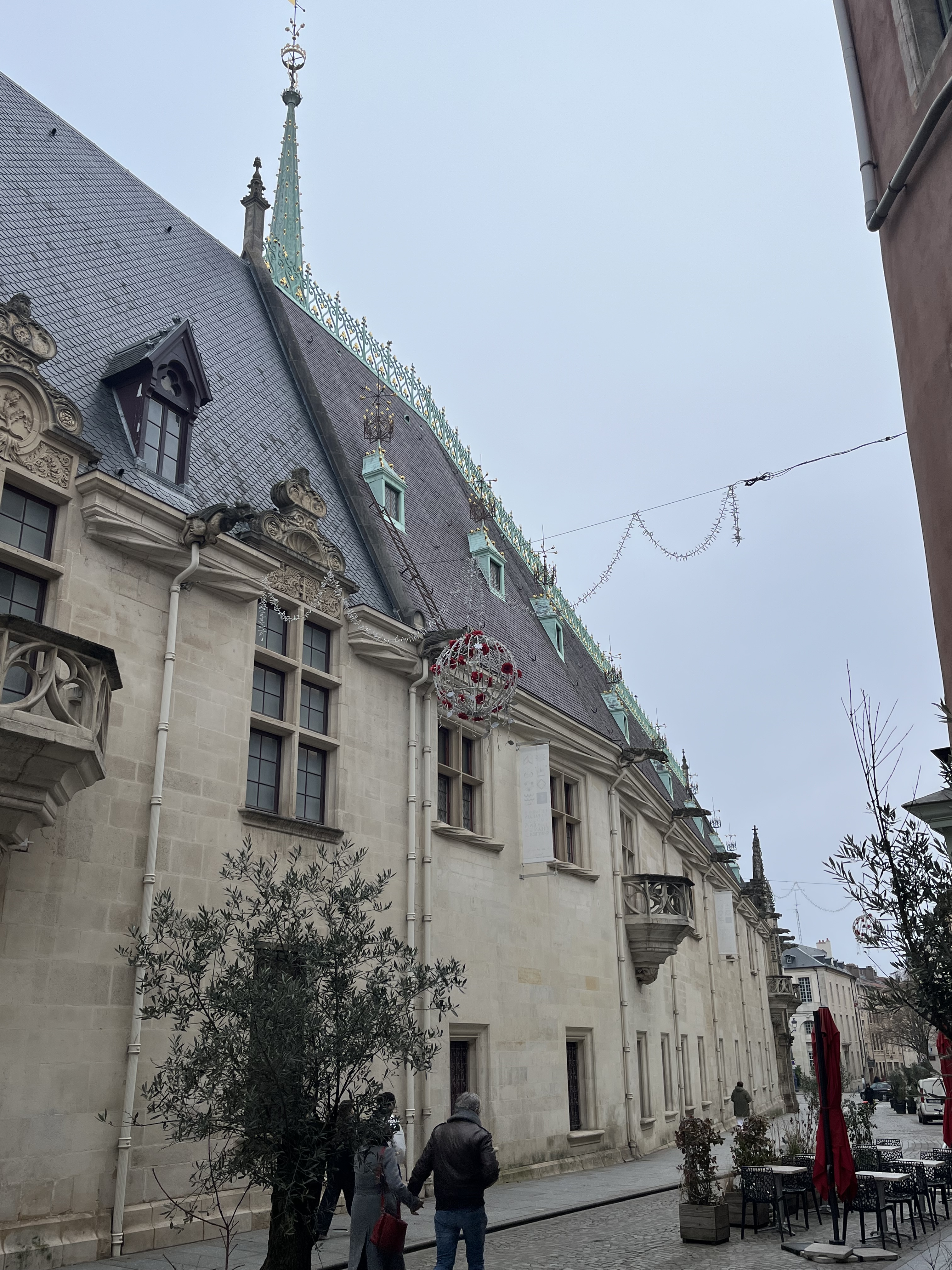
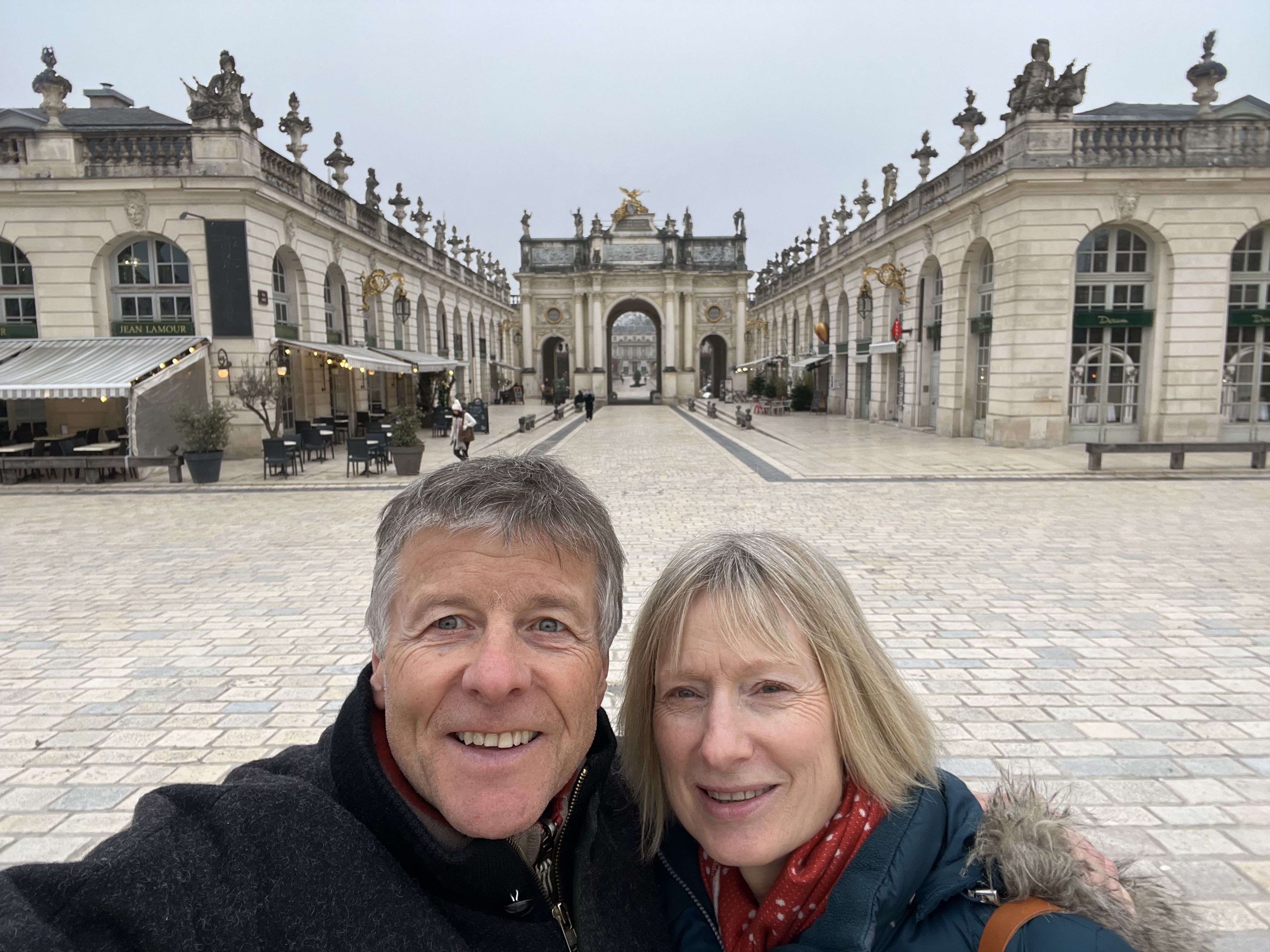
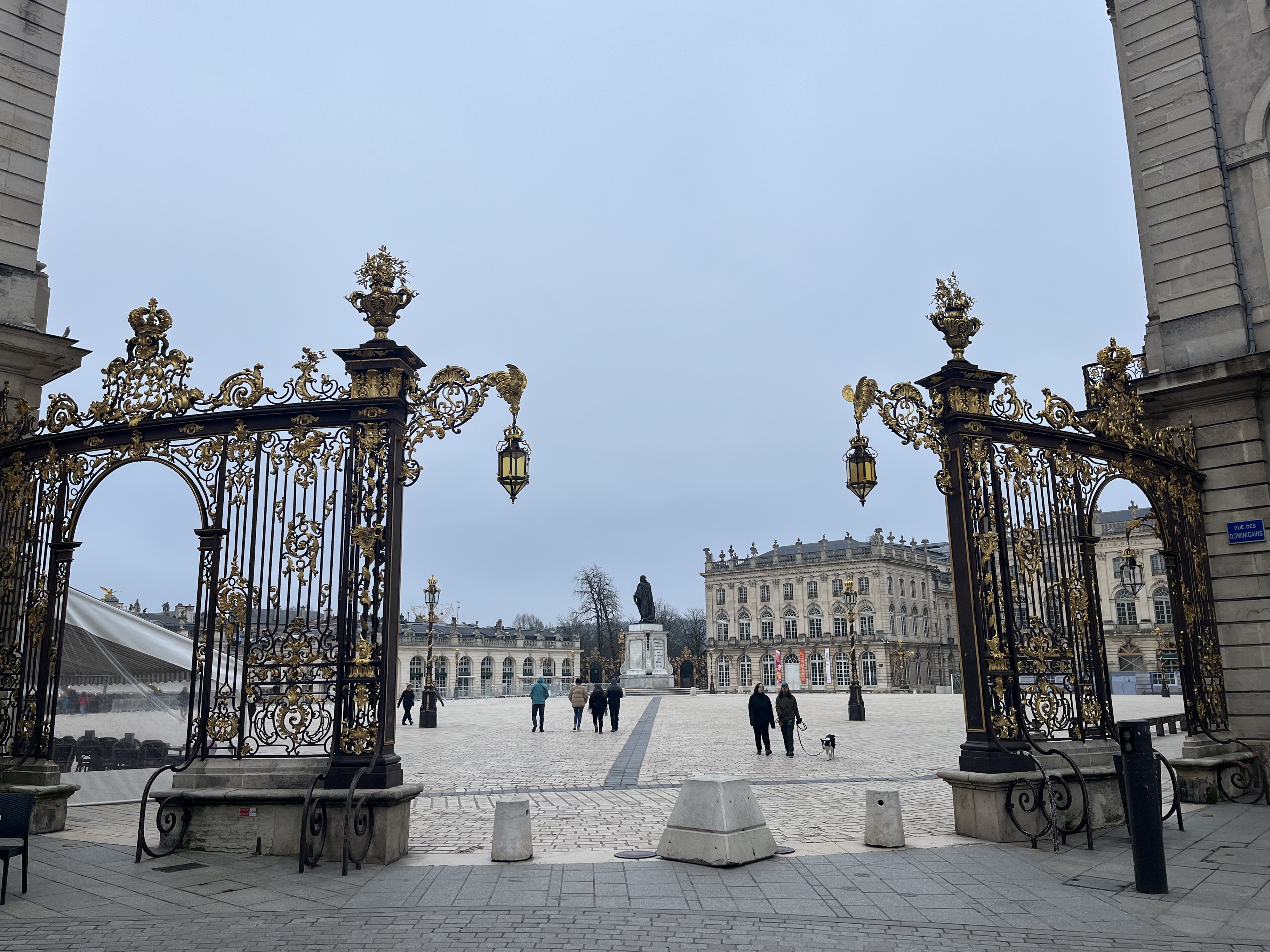
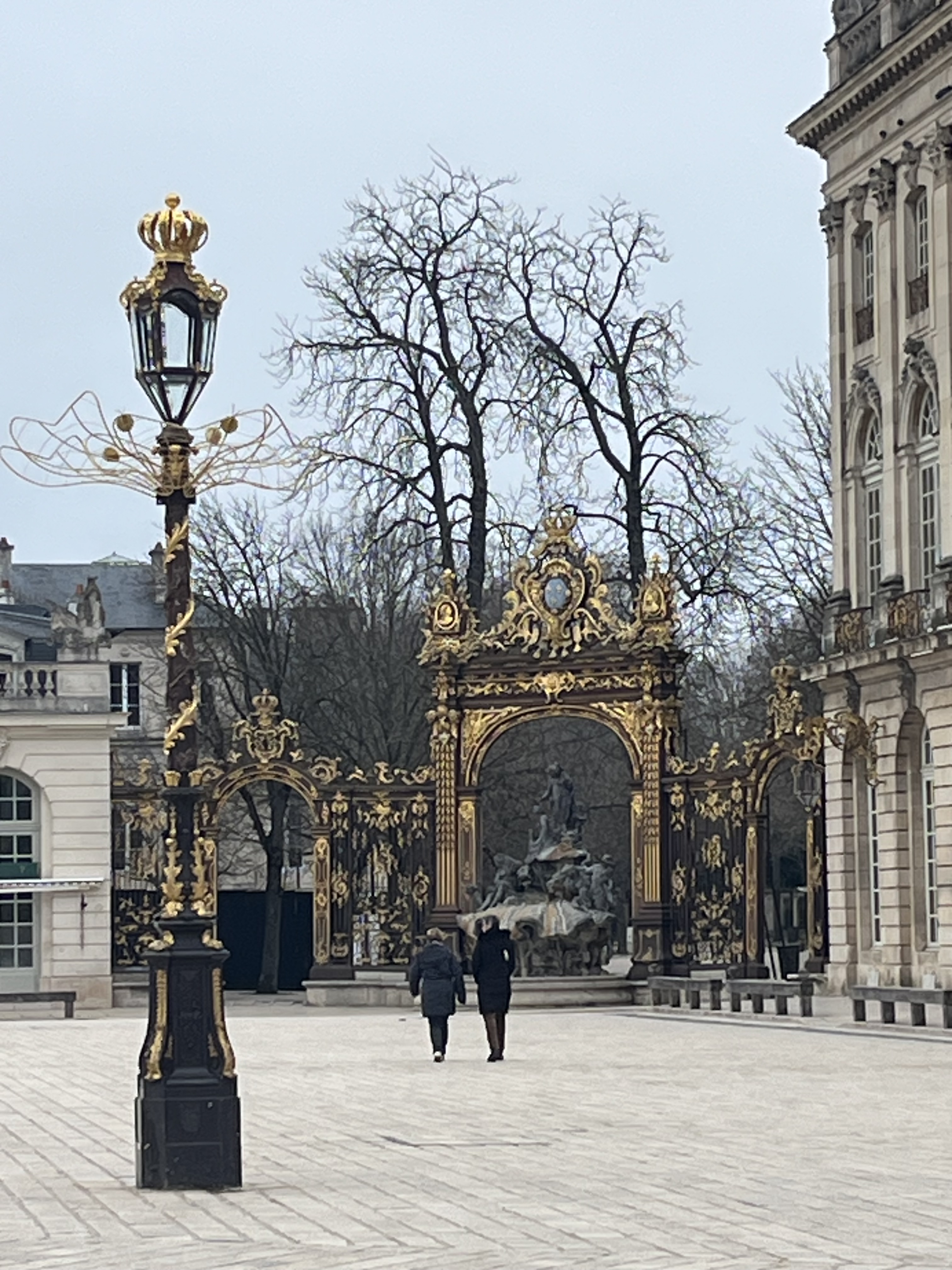
Nancy was once known as the capital of Eastern France, and during the 19th and 20th century became an important cultural and industrial hub. Especially during the Art Nouveau period it became a center for innovative decorative art and design, visible in its buildings, furniture, and glassworks manufactures, of which Nancy’s Daum Crystal Art manufacturer is a witness to this day.
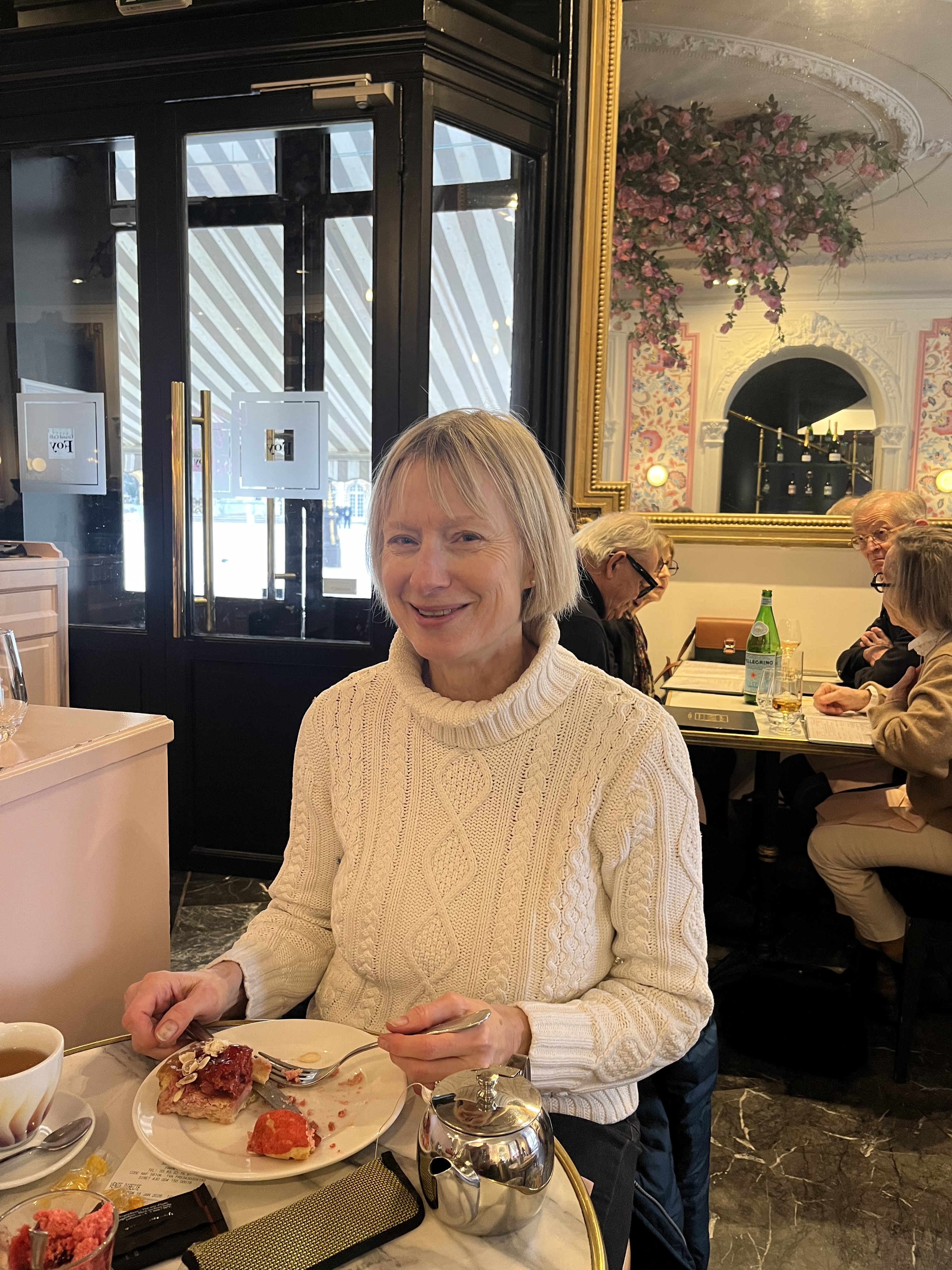
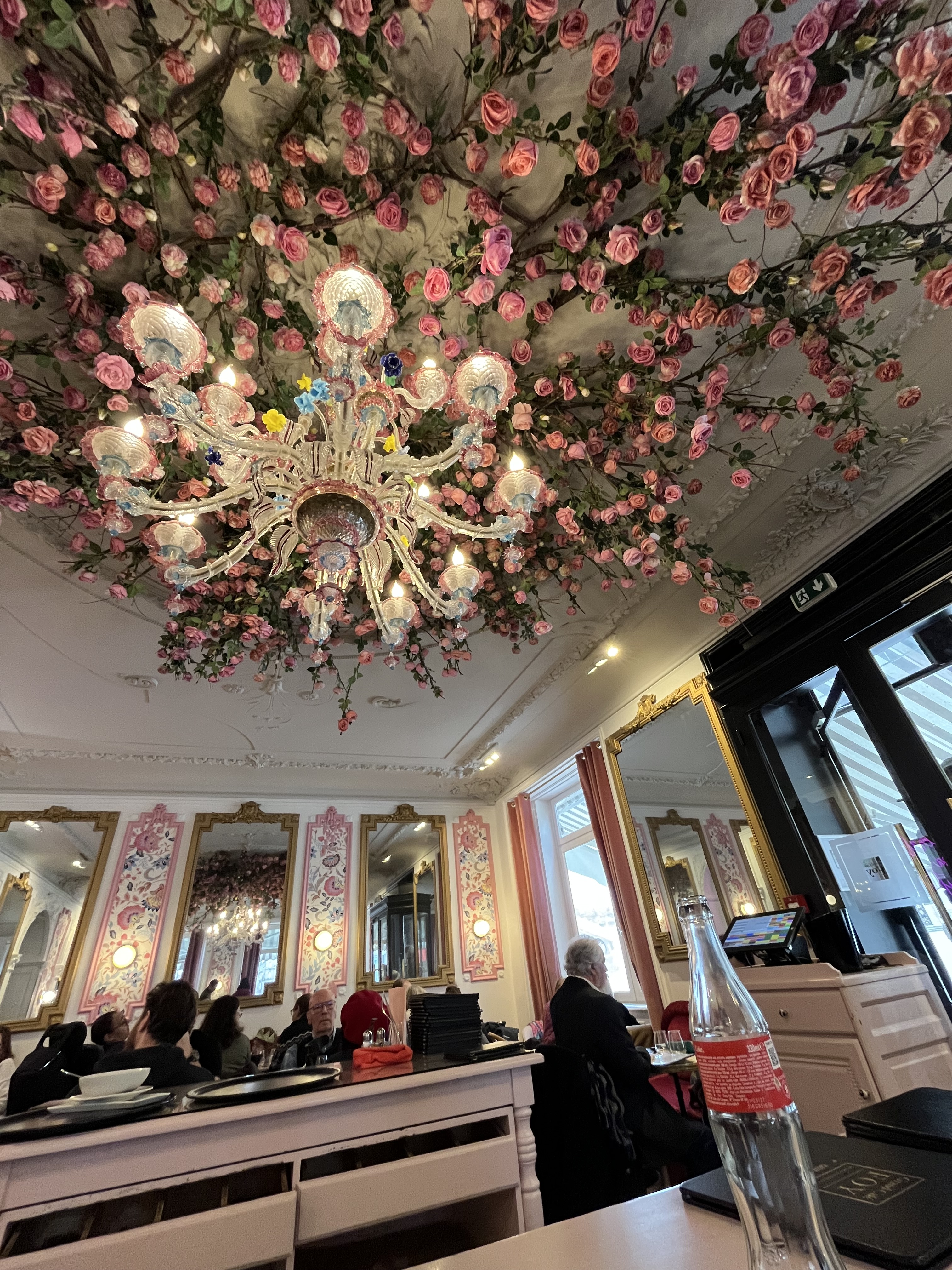
After touring the city and attending a classical concert, we spent the night in the old town. In the morning we visited the excellent Musee des Beaux-Arts right on the Place Stanislas and had some tea with dessert in an adjoining, classic Art Nouveau cafe before we drove back to Dijon.
If you like pink and flamboyant flower decor, like the rose chandelier on the ceiling, this cafe is your place:
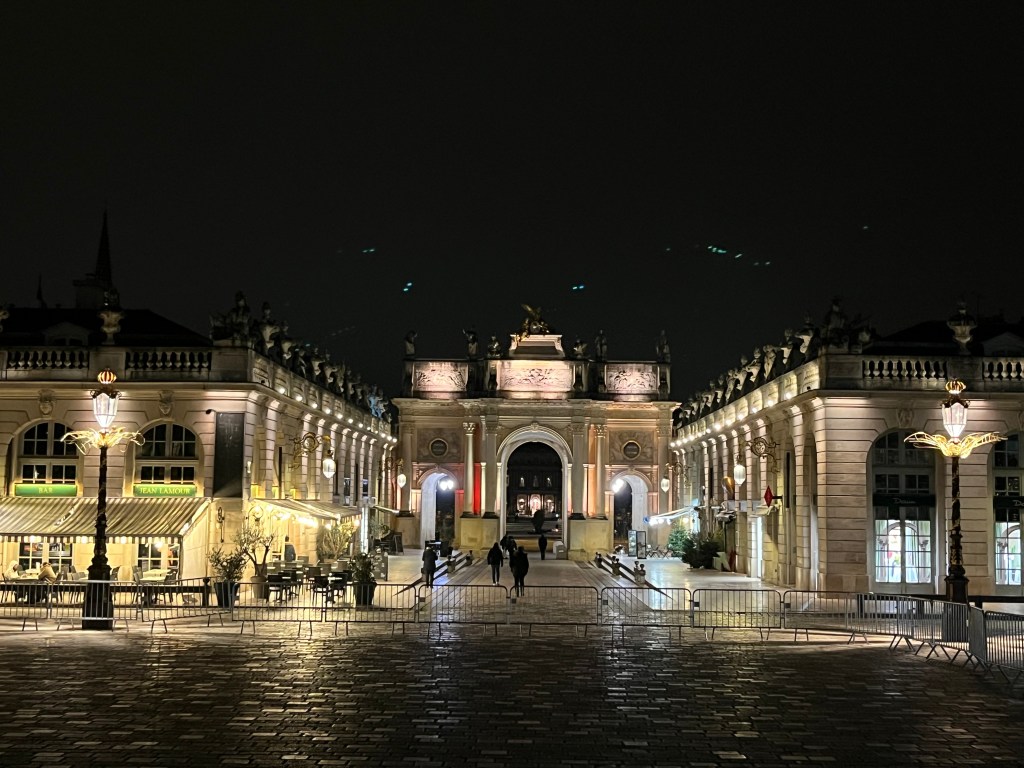
Good bye and good night Nancy!
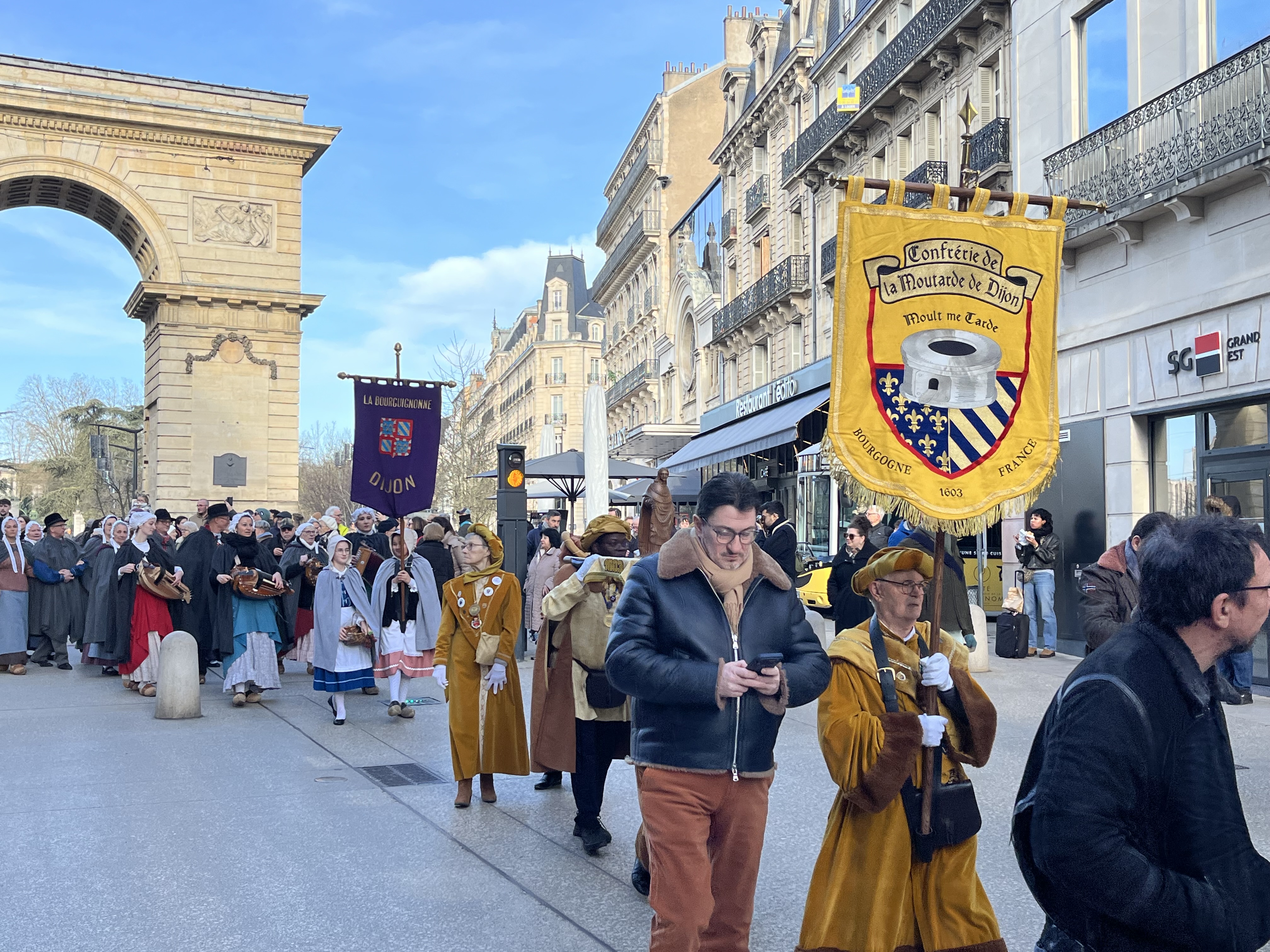
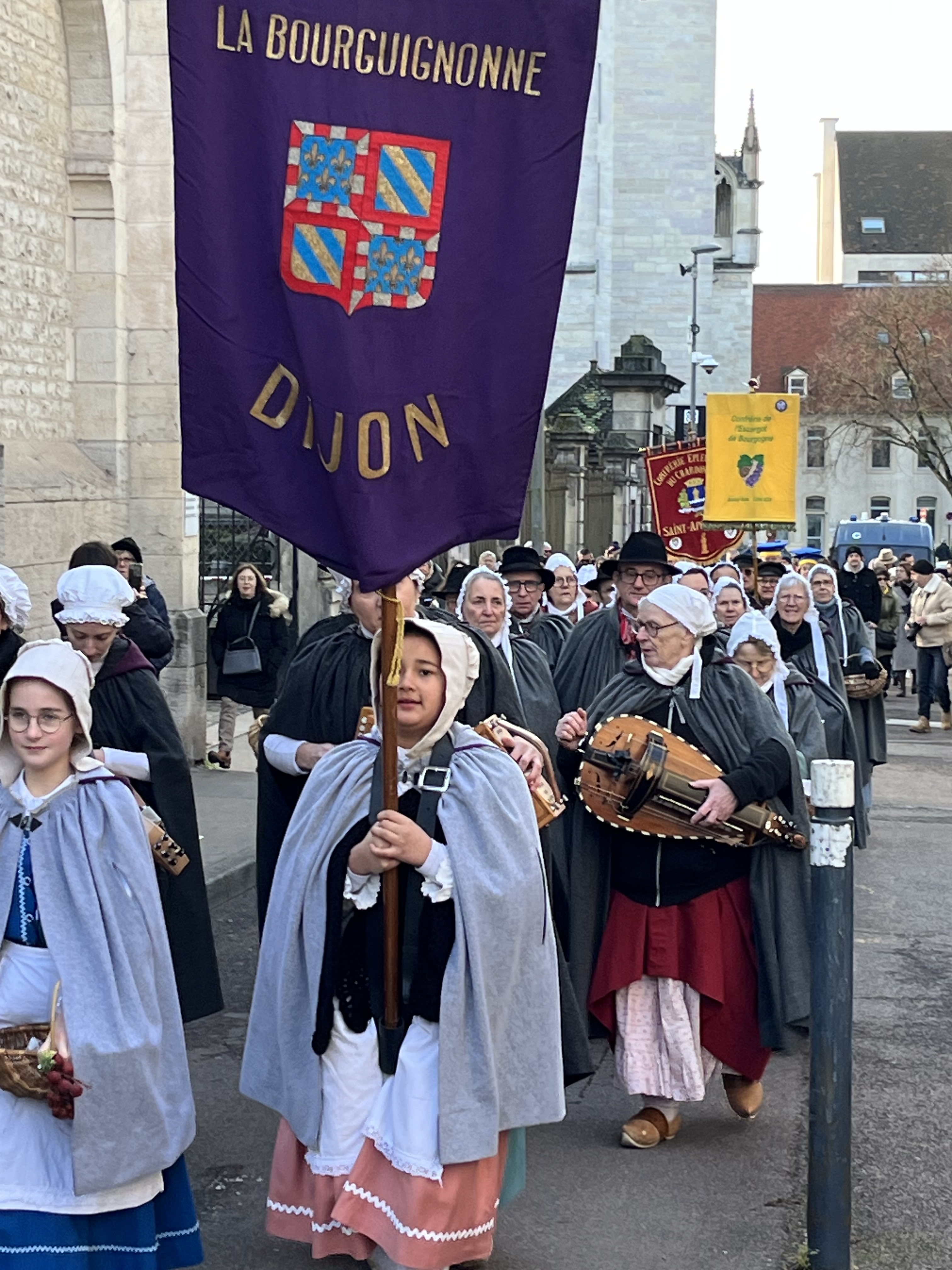
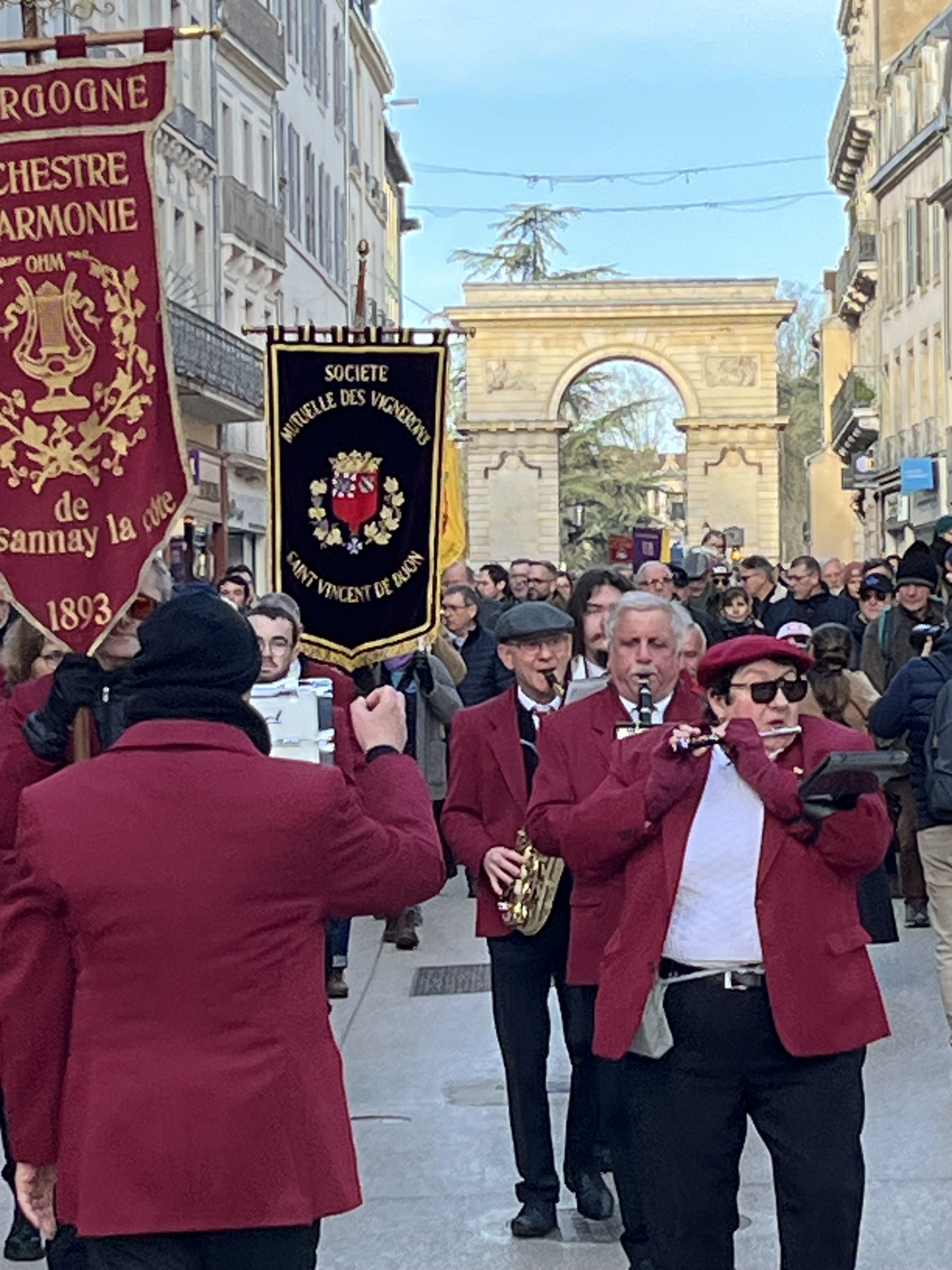
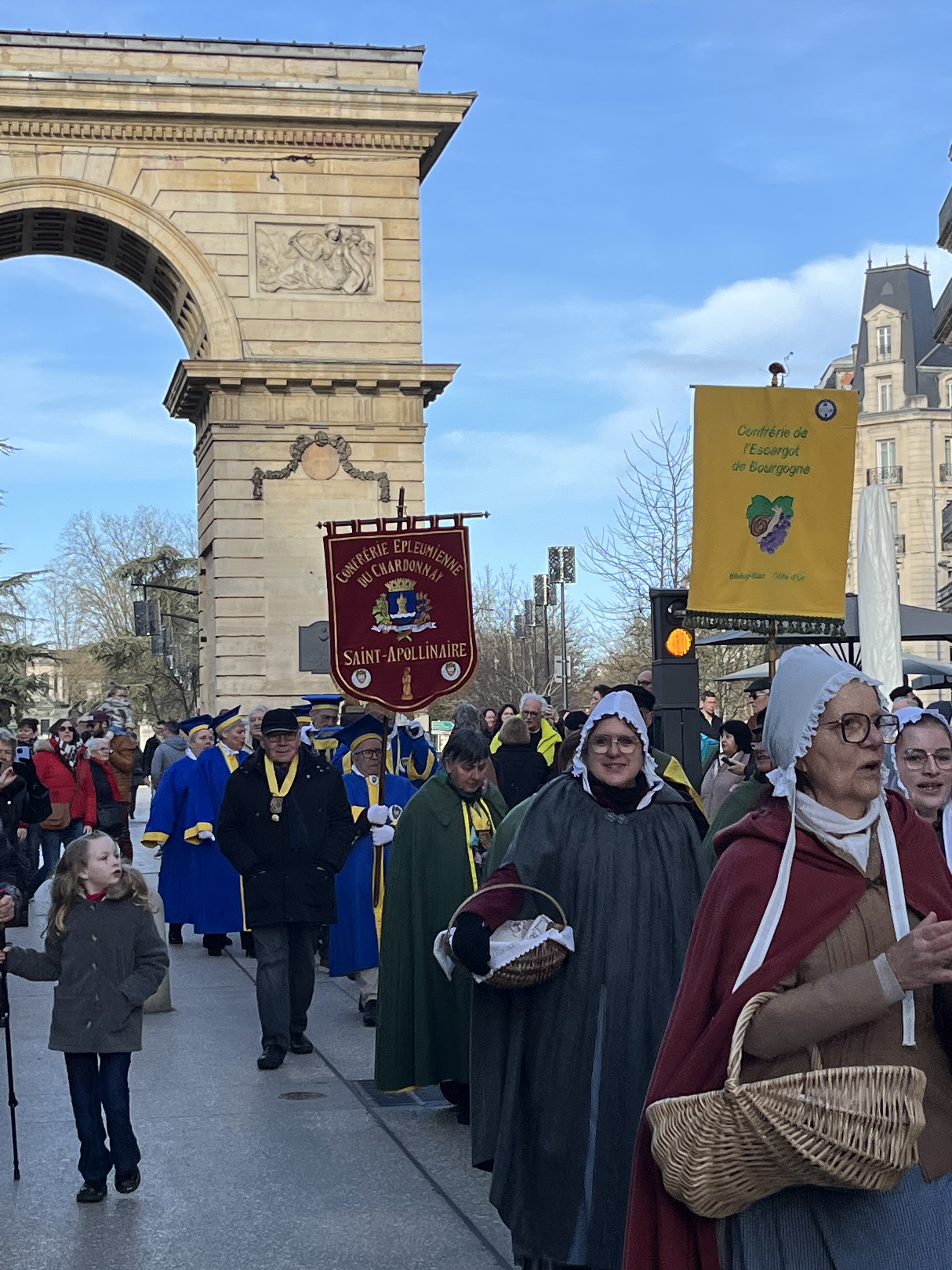
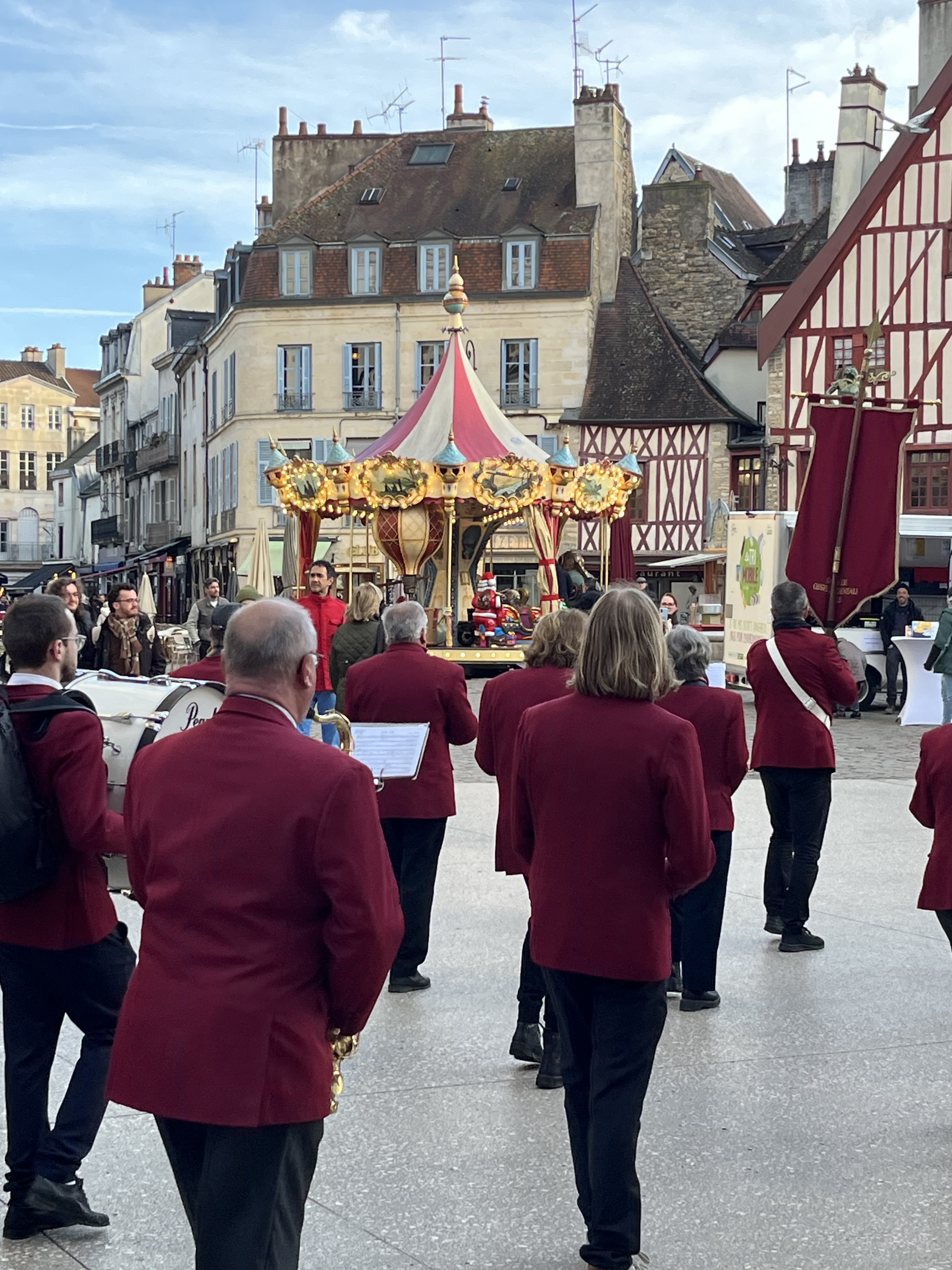
By the end of January in Burgundy, it is time for the annual St. Vincent celebrations to honor the patron saint of the region’s wine growers. We caught the parade through downtown Dijon:
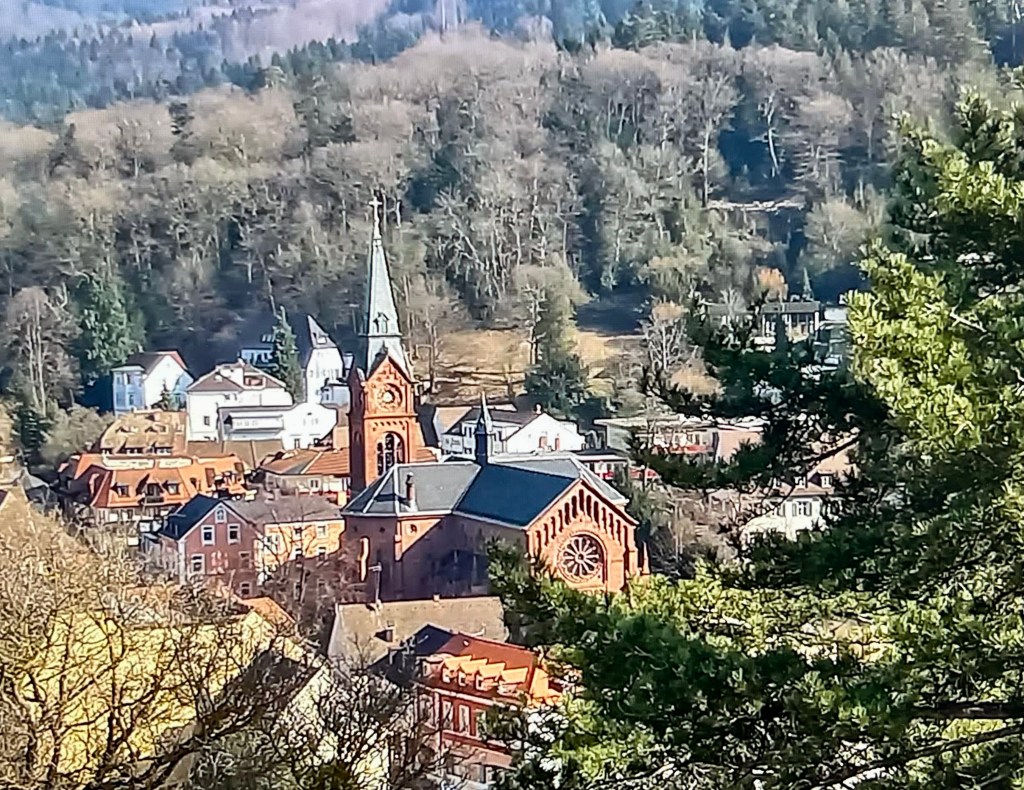
During February we had a lot of cold and wet weather and I remembered the proximity to the appealing bathing culture tradition of Germany. On the western foothills of the Black Forest in the upper Rhine Valley, there are some naturally occurring hot springs that have been developed and used since Roman times. Some have grown into thermal resort towns like Baden Baden, – baden is the German word for bathing. We prefer the smaller and quieter thermal baths of Badenweiler, which are only about a 3 hr drive east of Dijon.
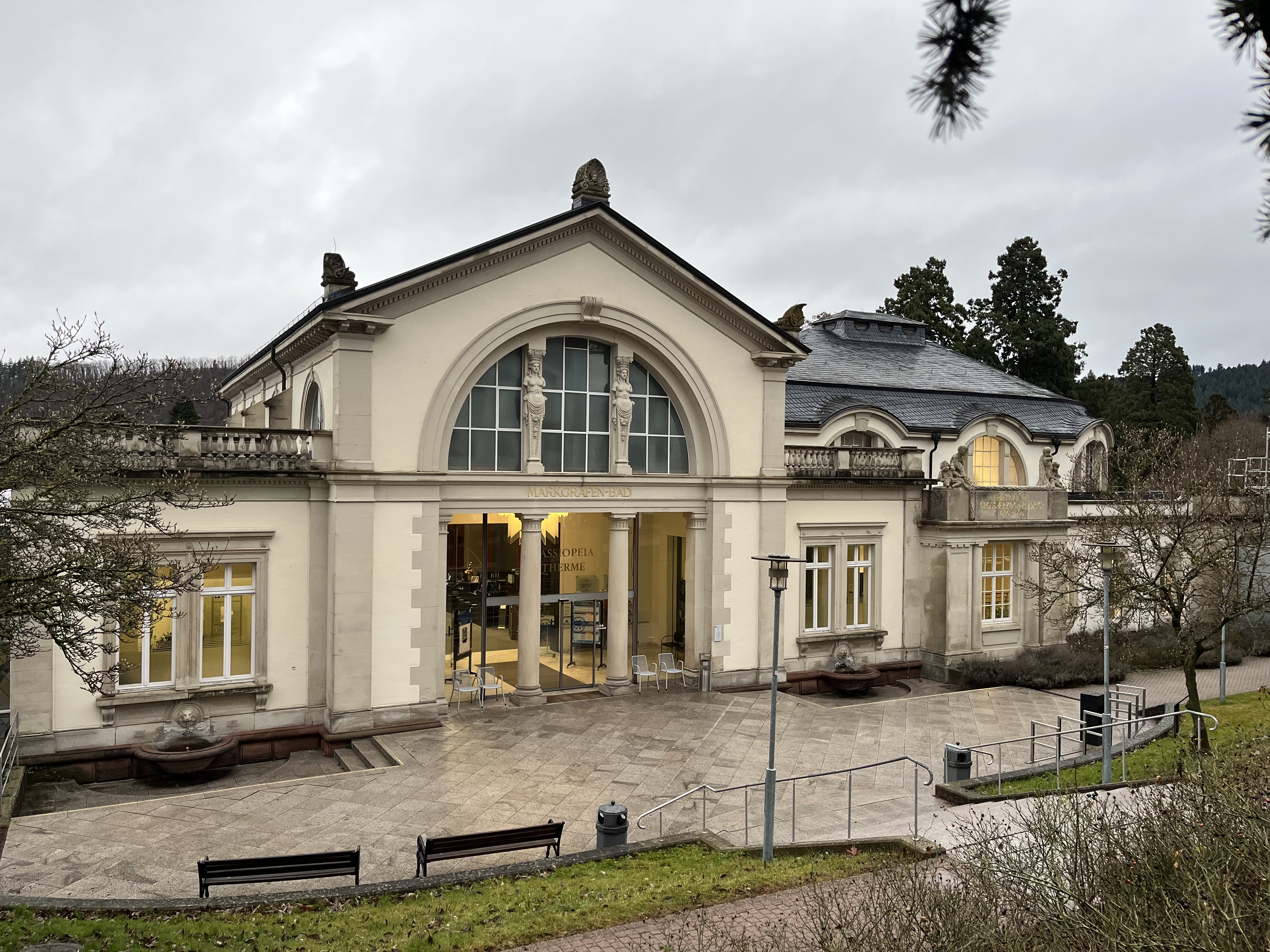
Here, in Badenweiler, as in Baden Baden, and most of Germany, the thermal baths, are publicly owned and managed, as in this case, by the State of Baden Wuertemberg.
Usually the baths consist of multiple indoor and outdoor basins of thermal, mineral rich spring water at different temperatures. They also usually include steam rooms and saunas of different temperatures. There often are some clothing free, nude areas; however, no fear, as these are well separated and posted. Various massages can be booked and purchased as add ons as well. Quiet rooms for relaxation, and usually an adjacent park, complete the picture. Most visitors spend about 3 – 4 hrs for their relaxing thermal retreat.
Though there are multiple natural hot springs occurring west of the Rhine, like opposite Germany’s Black Forest in the Vosges Region inside France, the French do not appear so keen on bathing publicly as the Germans are. The few French thermal resorts we noticed, are a lot smaller and often solely cater to medically prescribed treatments. “Spa”, the term that is used in the US for hot tubs or relaxation facilities in hotels or shopping malls, actually goes back to the name of the public thermal bath in the town of Spa in the Ardennes region of Belgium. Spa, just like “Bath” in Bath, England are two more examples of public baths whose development goes back to the Romans.
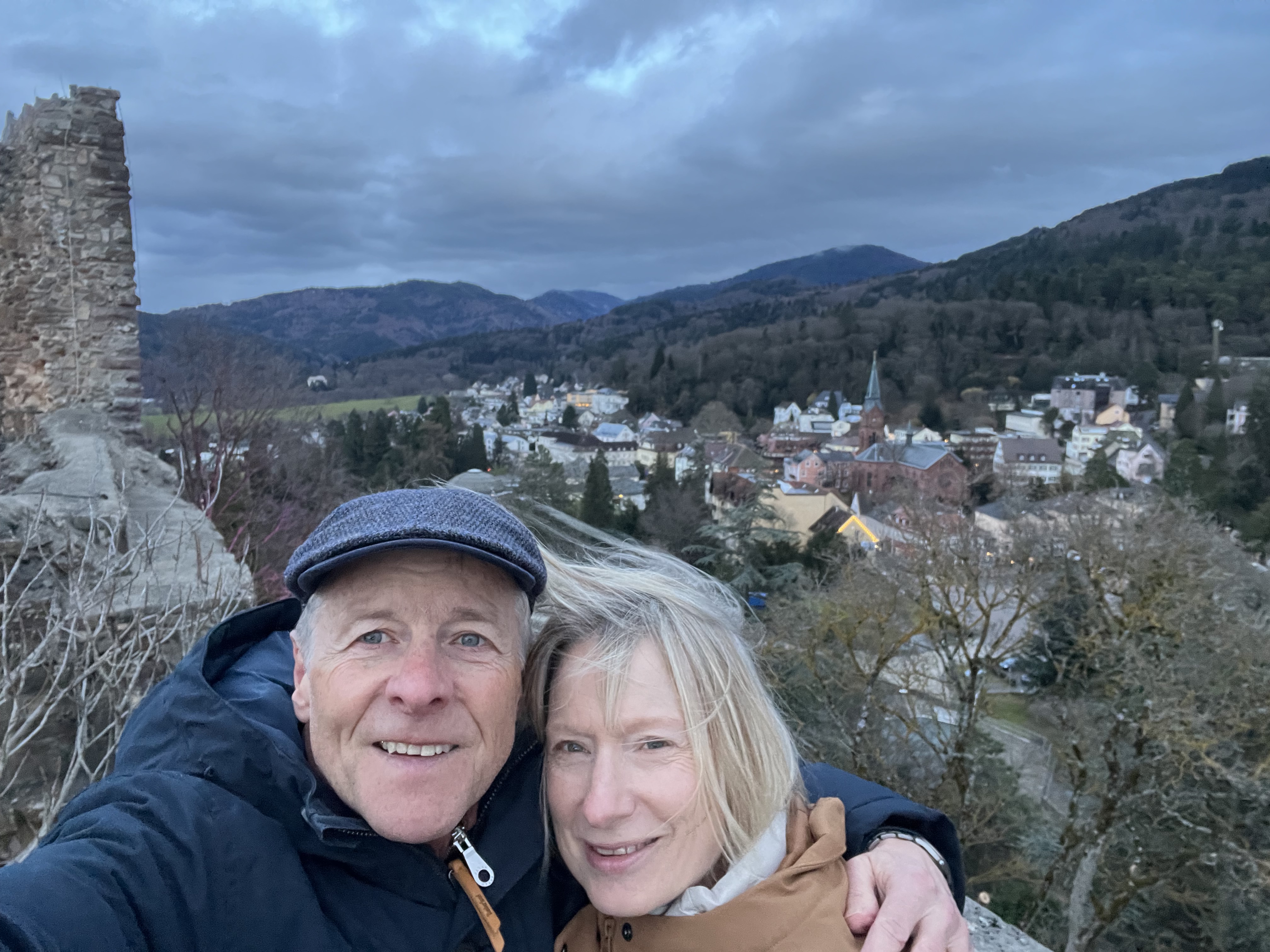
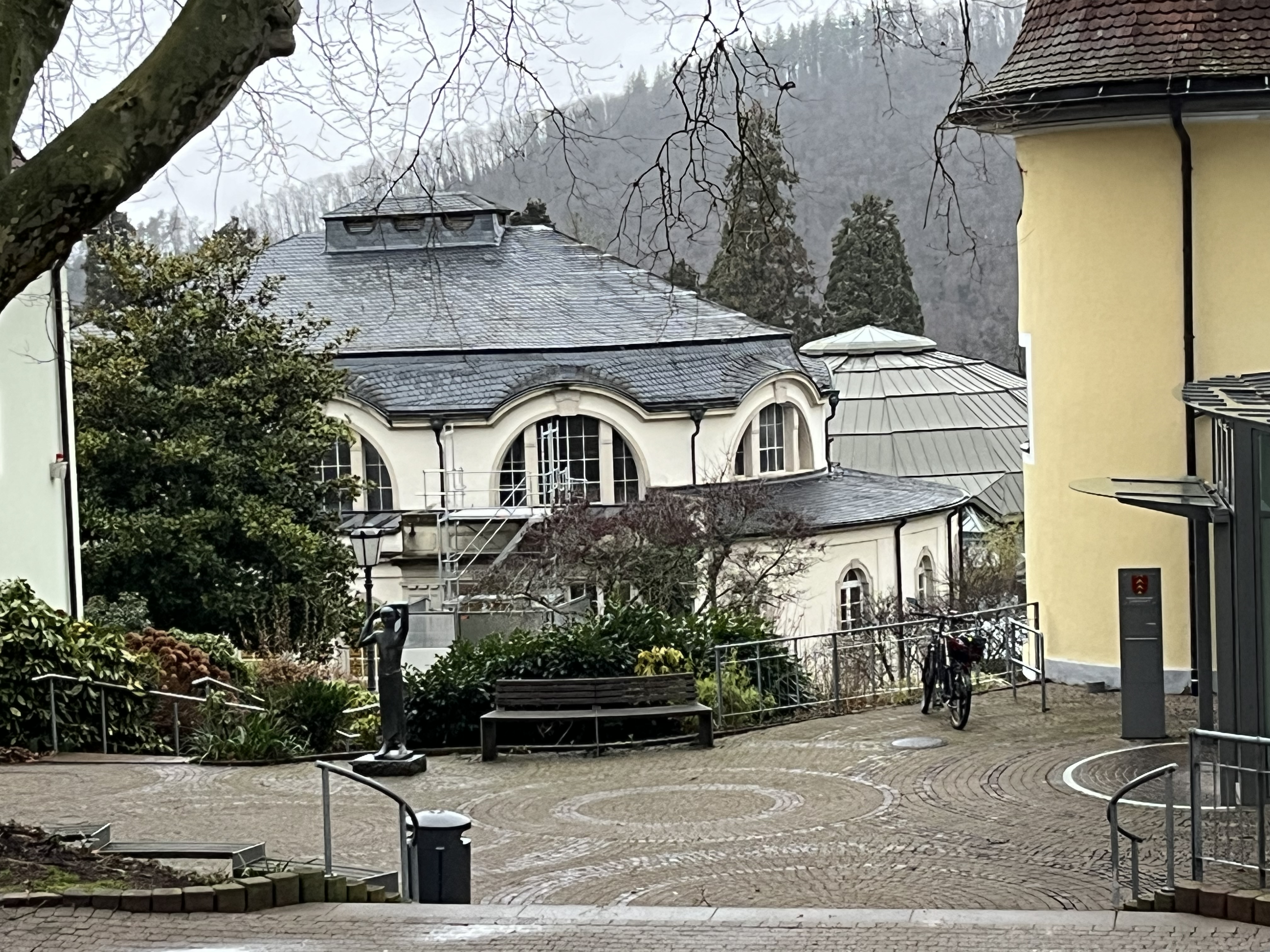
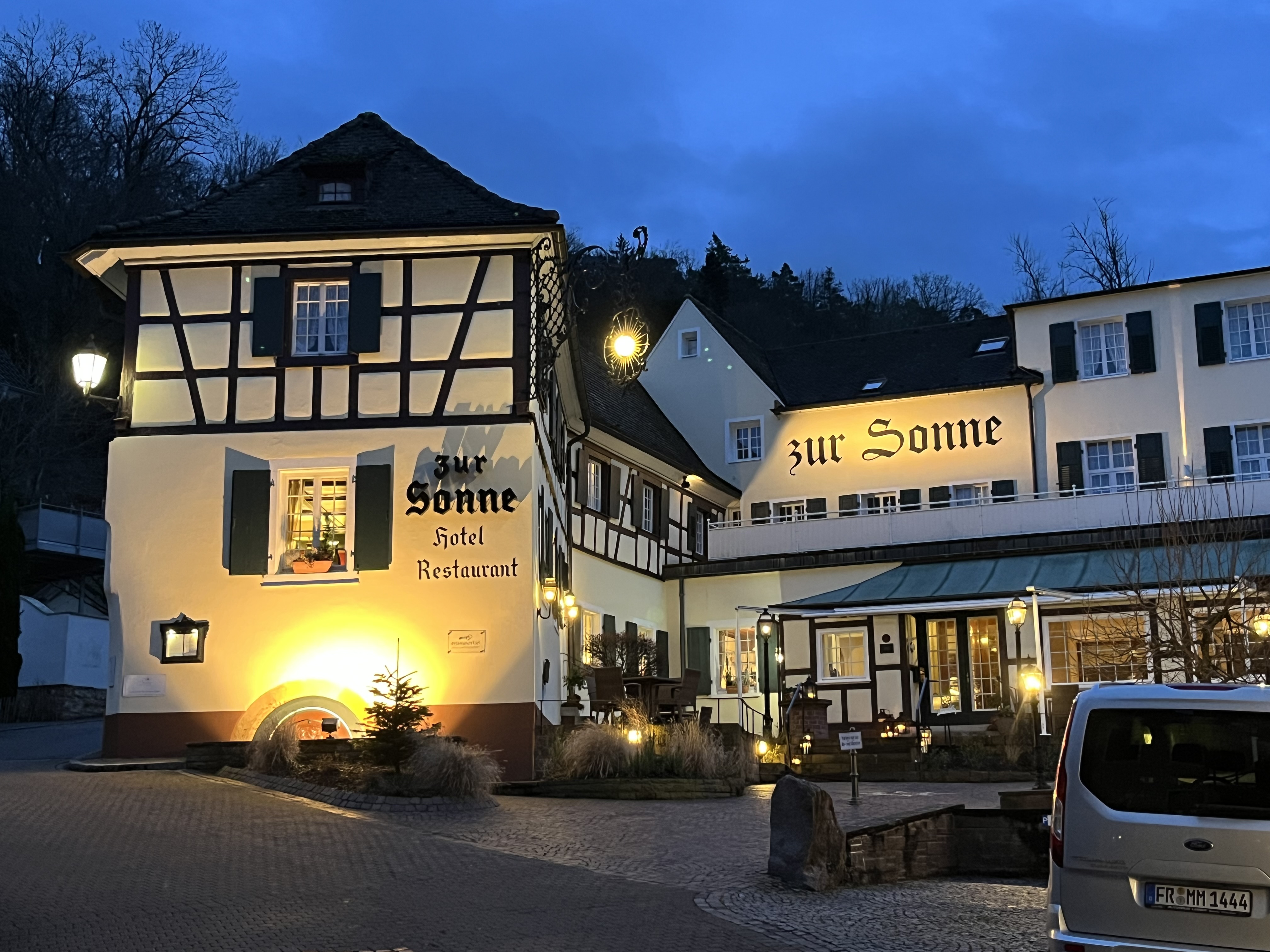
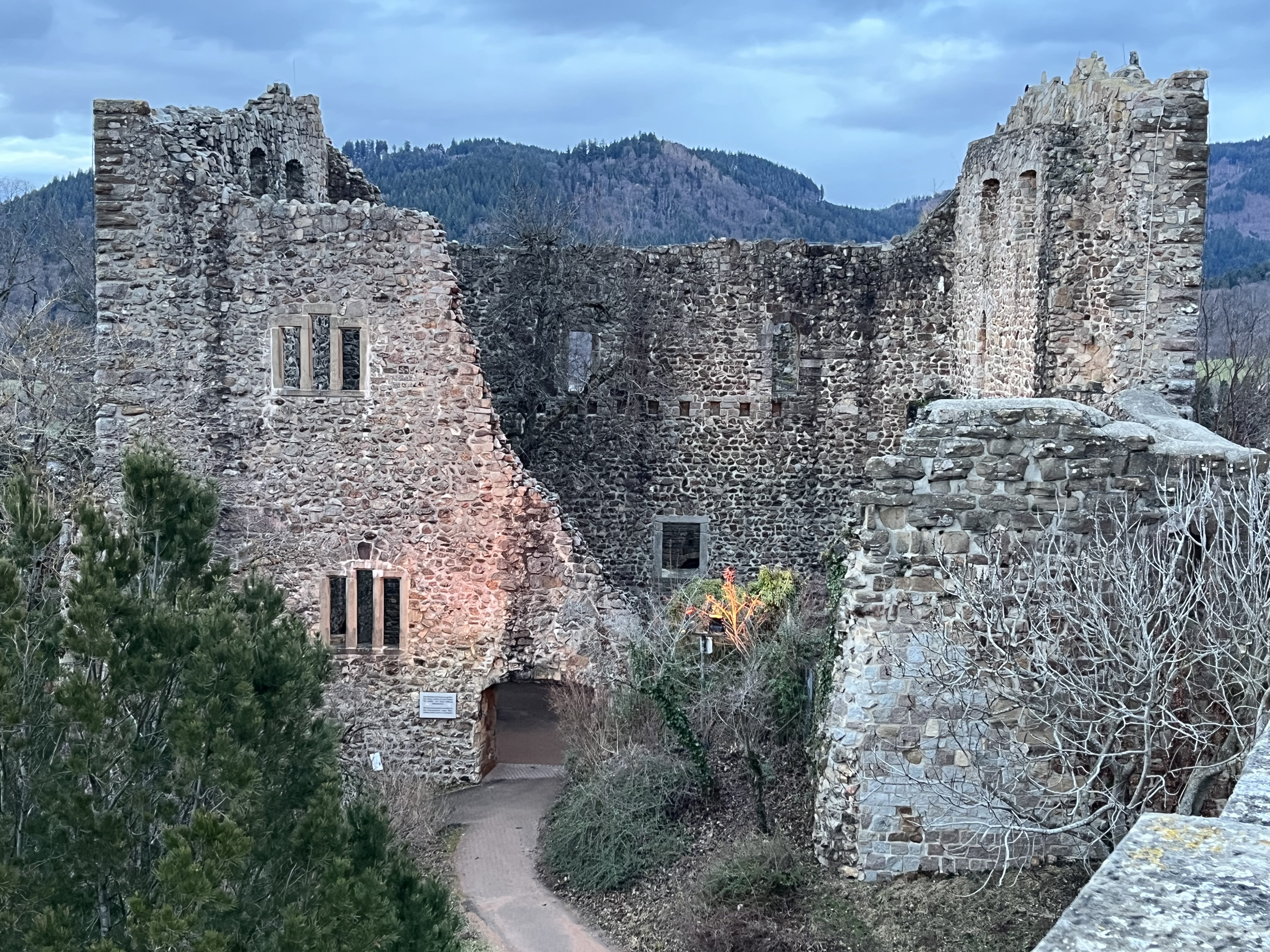
Here in Badenweiler, we enjoyed a quiet and relaxing stay, where we noticed several French and Swiss visitors due to the proximity of these countries.
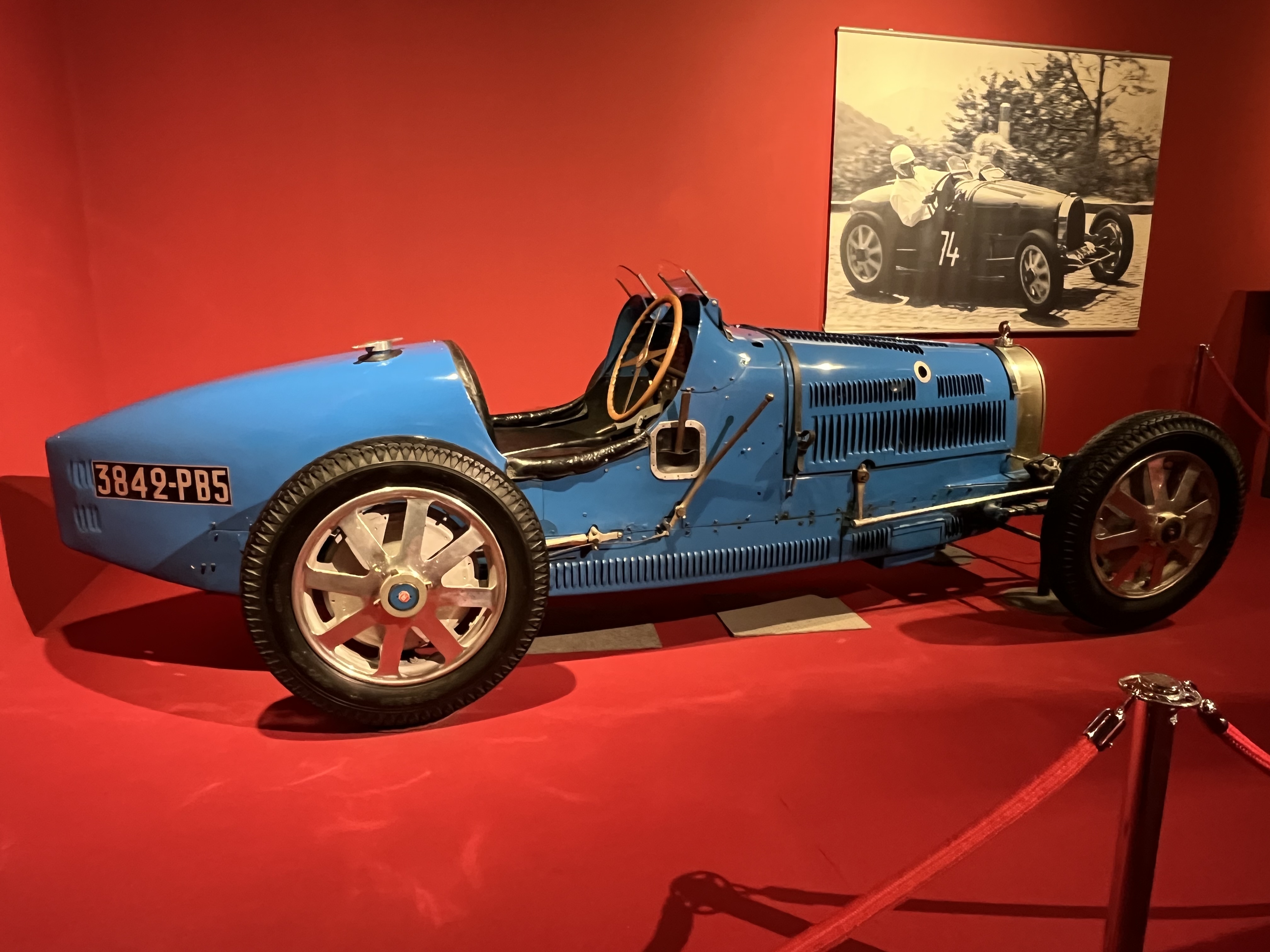
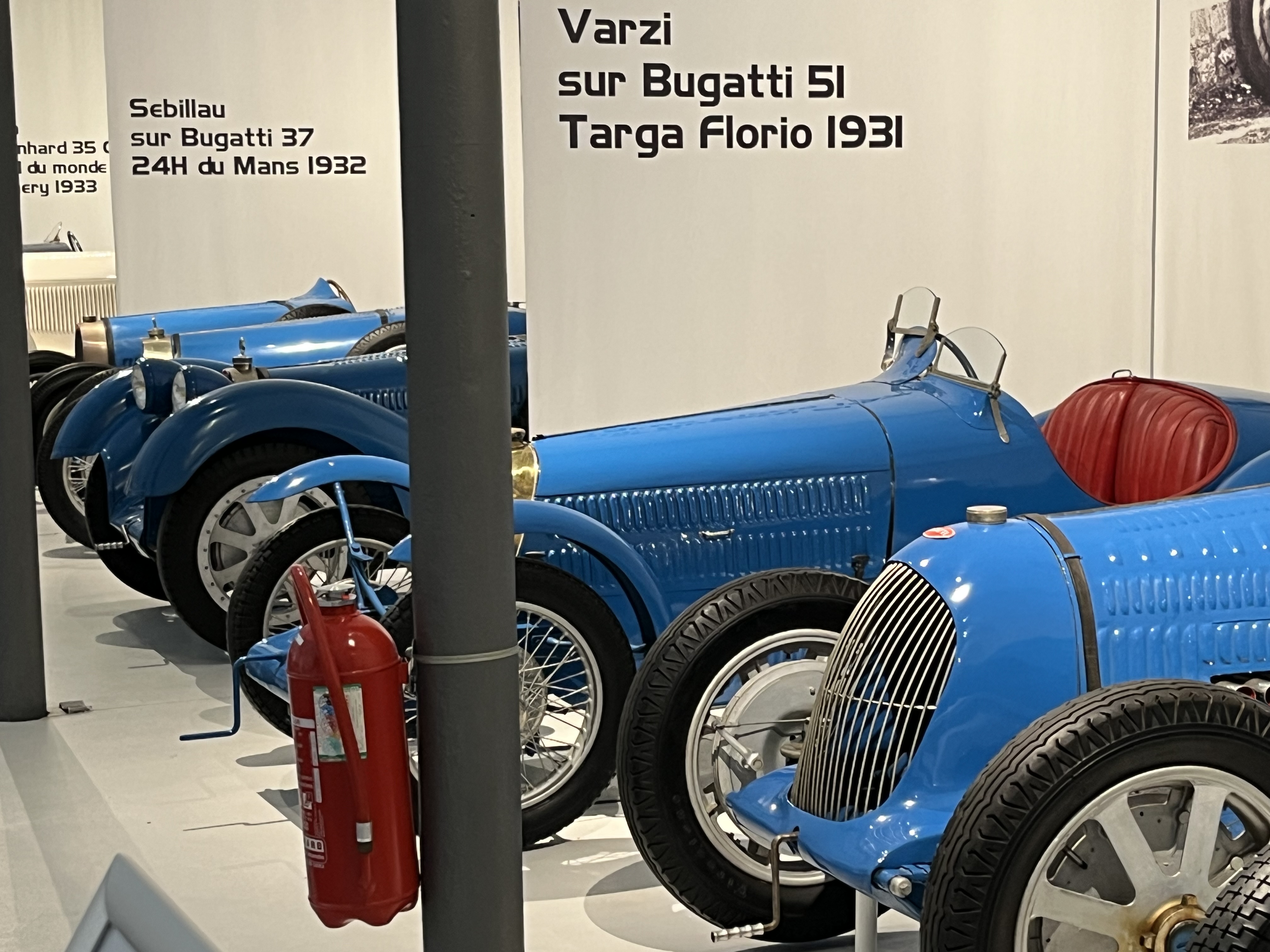
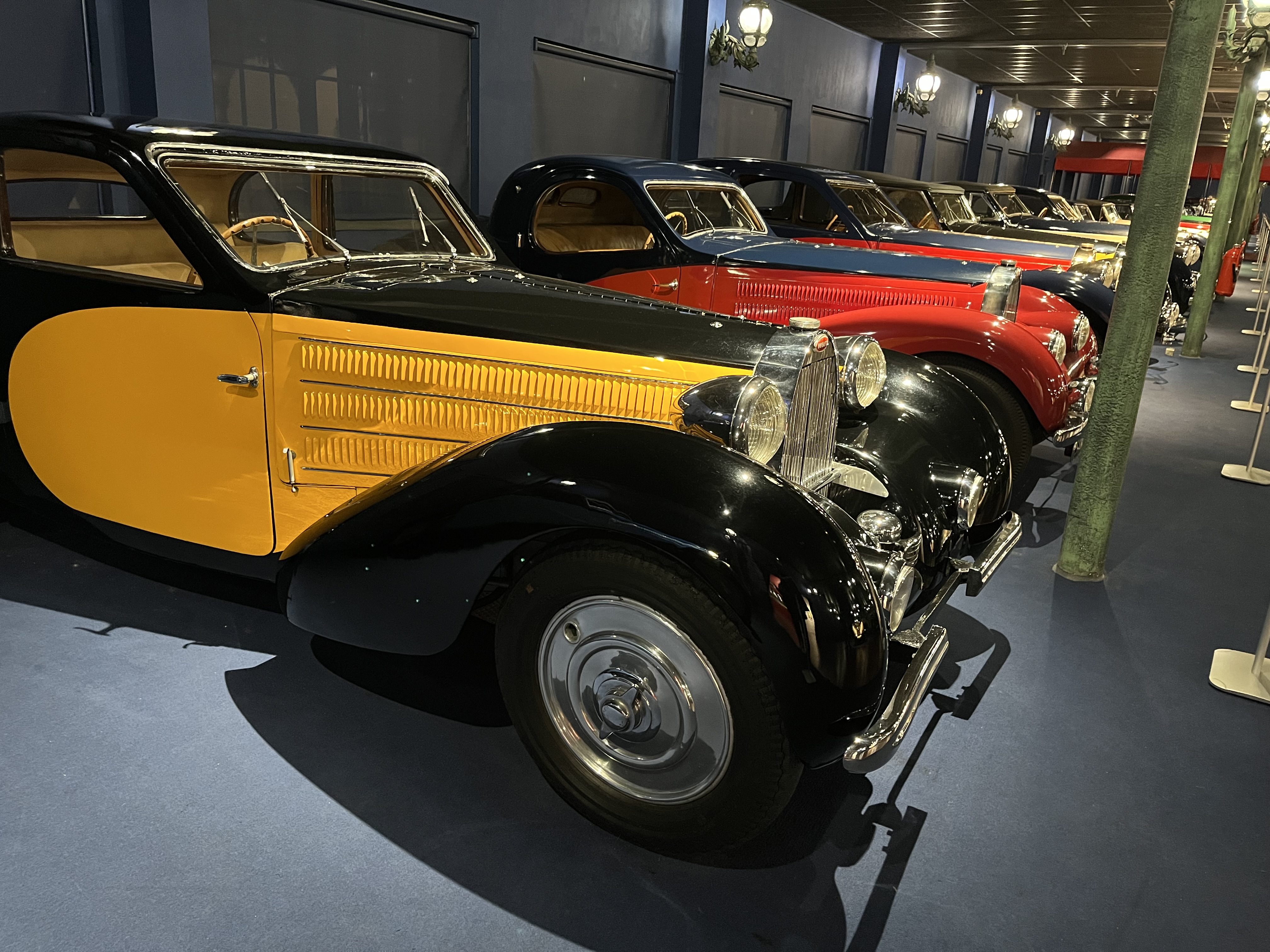
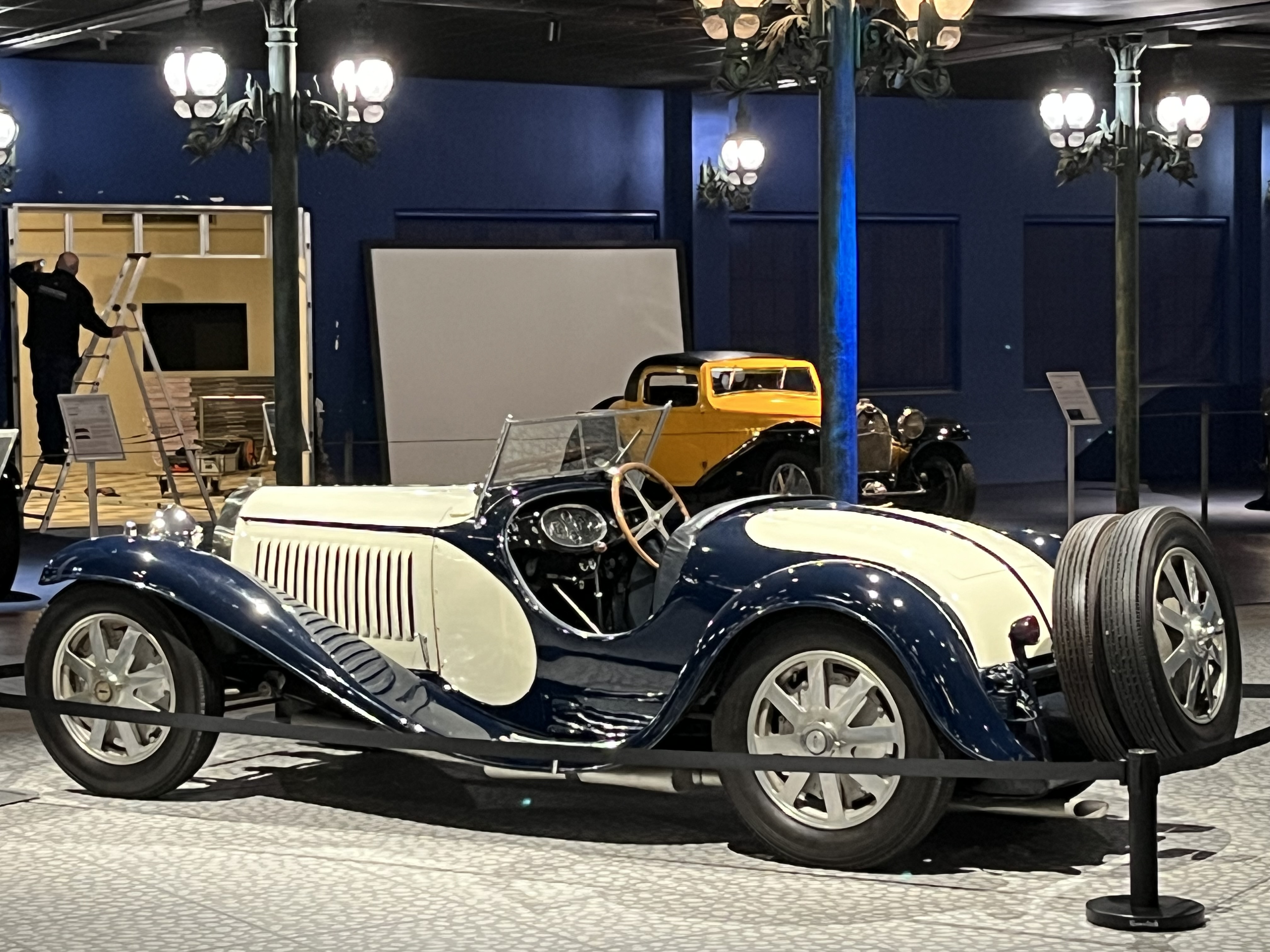
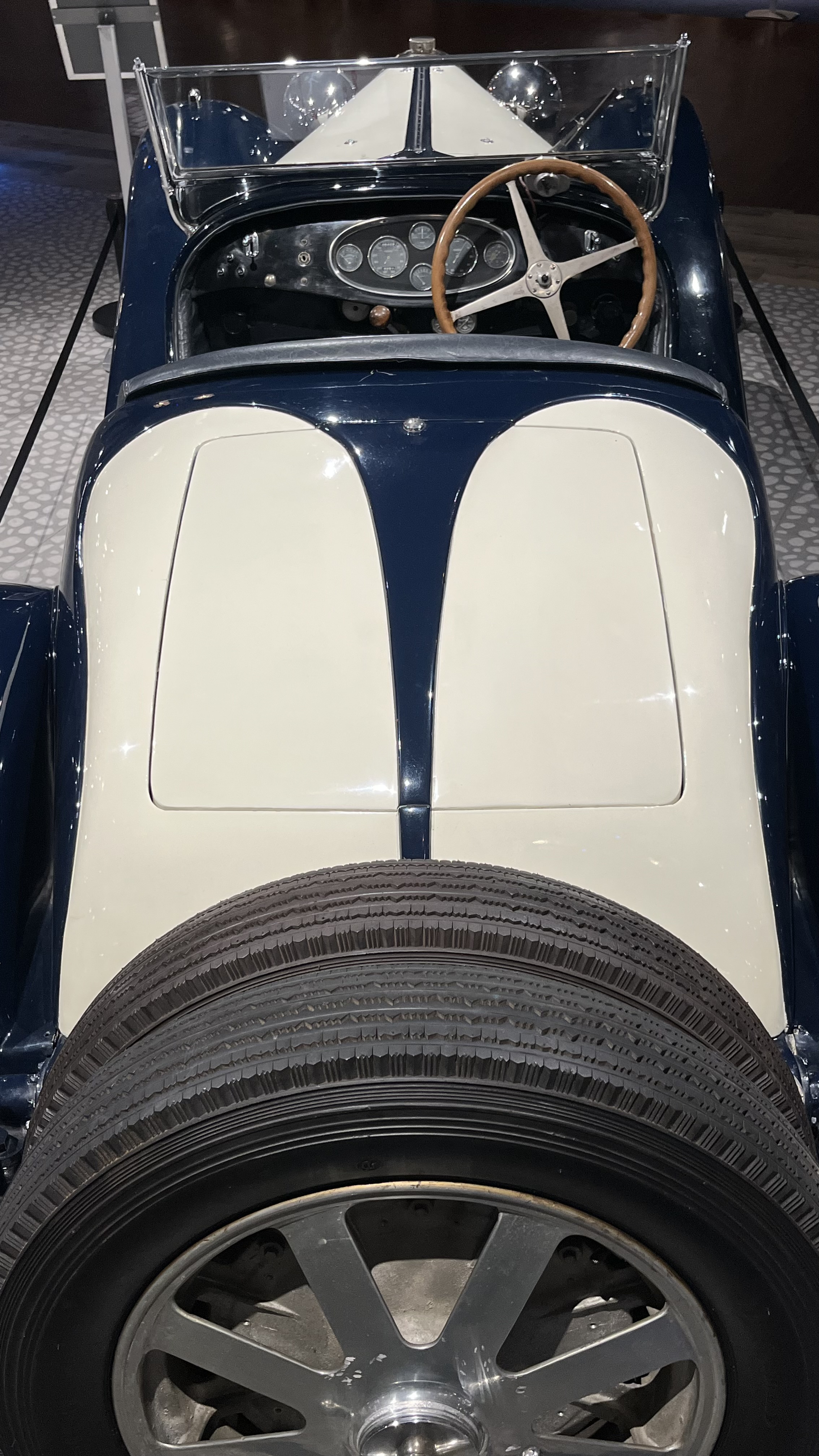
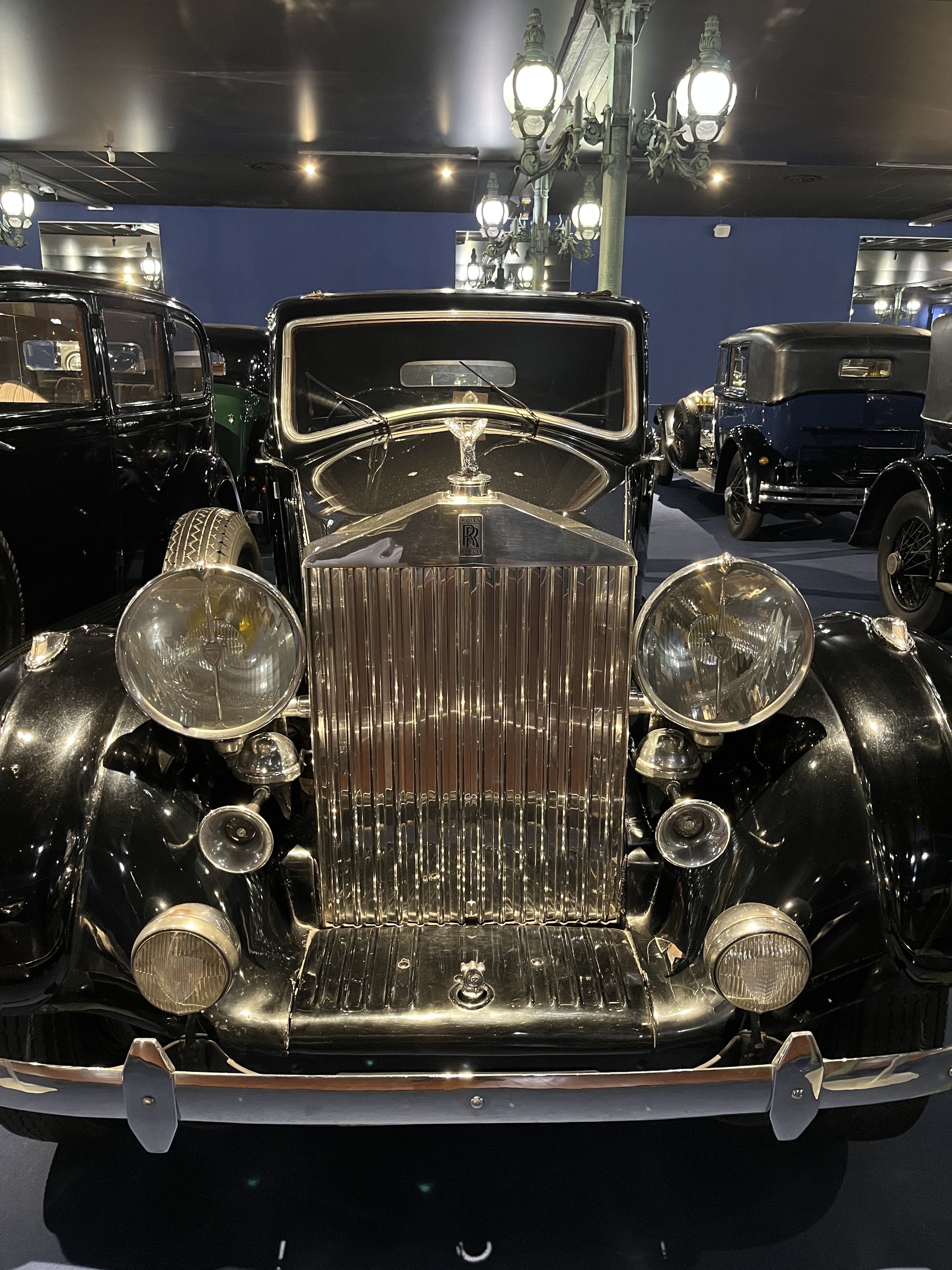
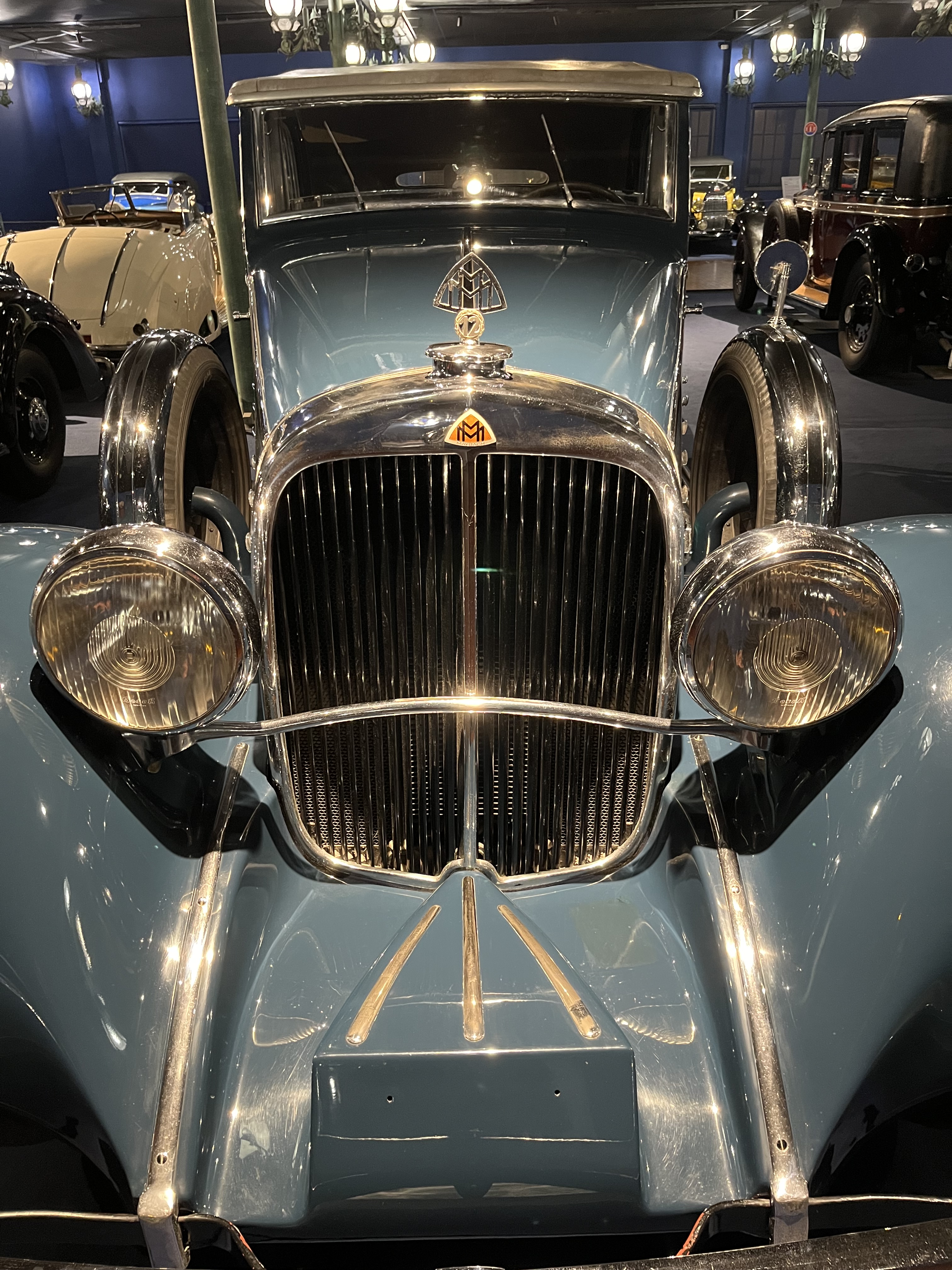
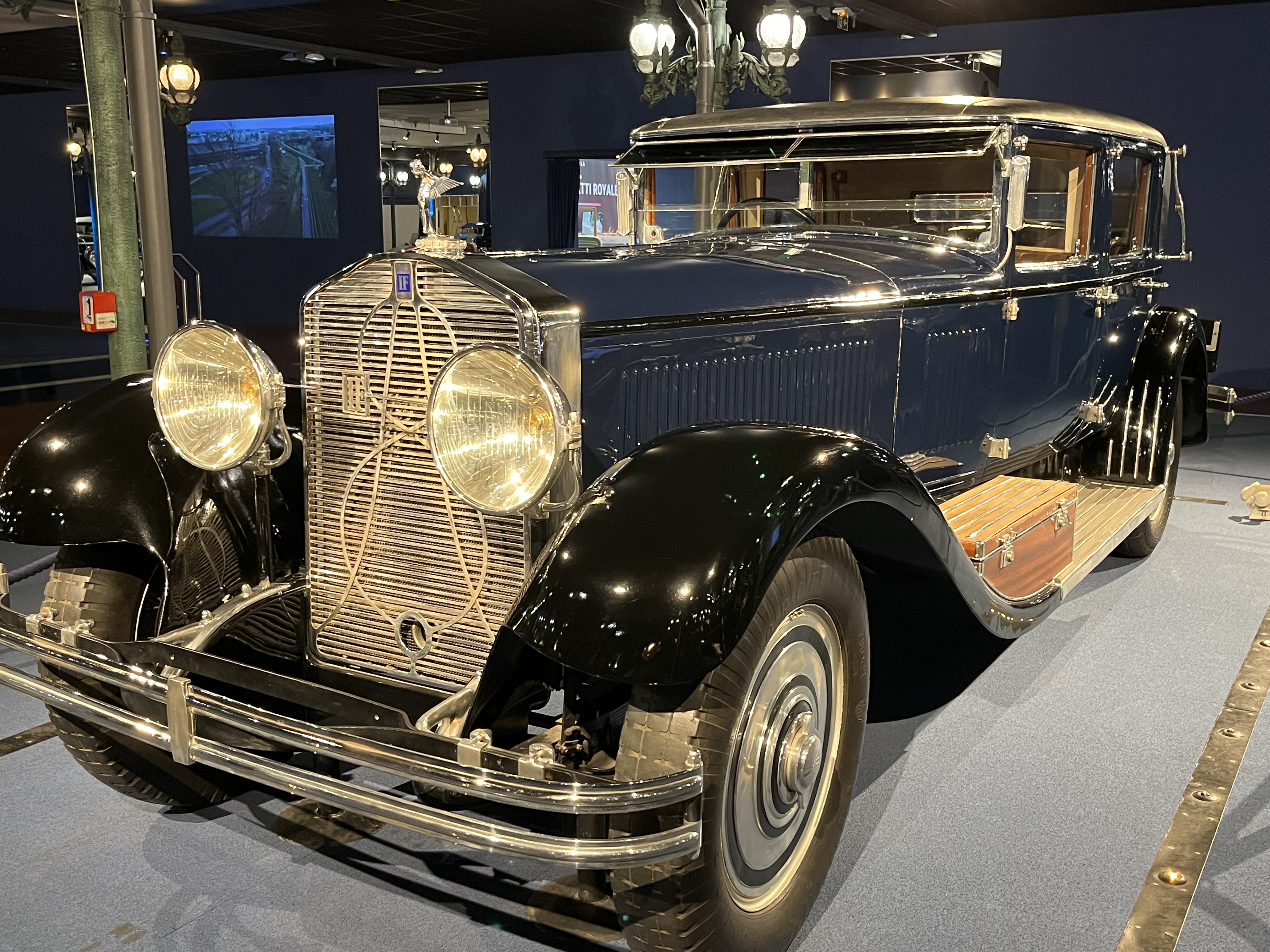
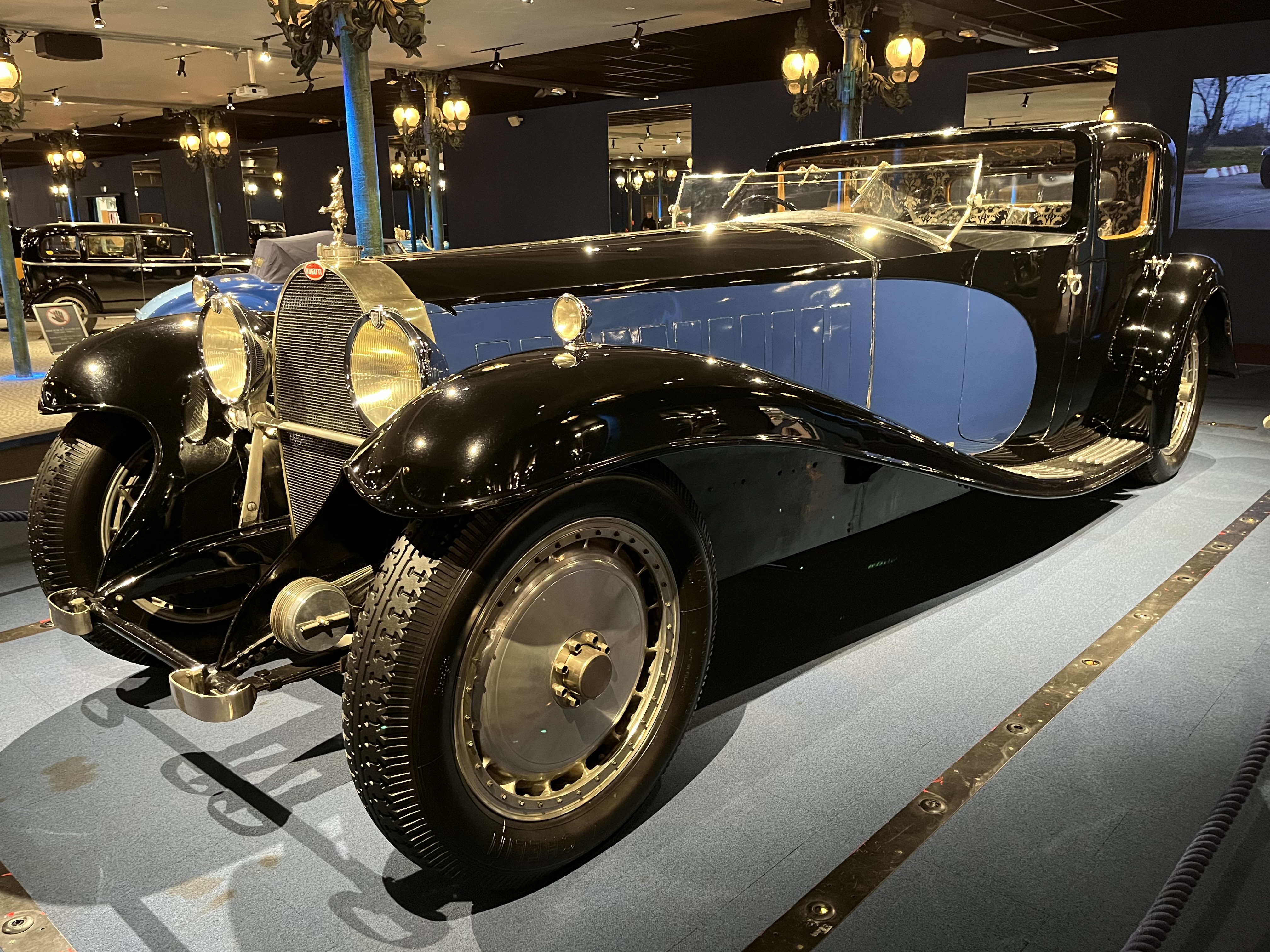
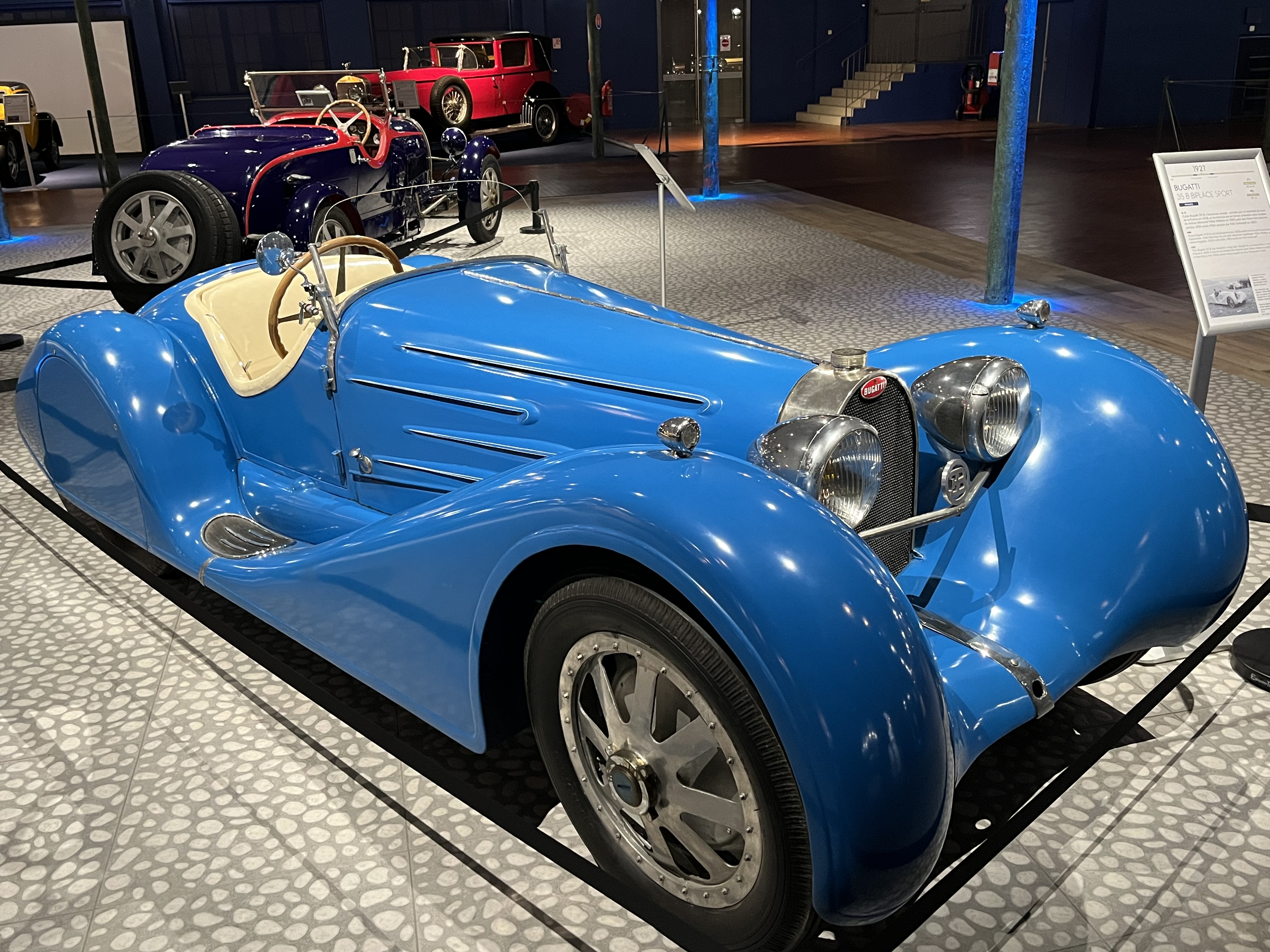
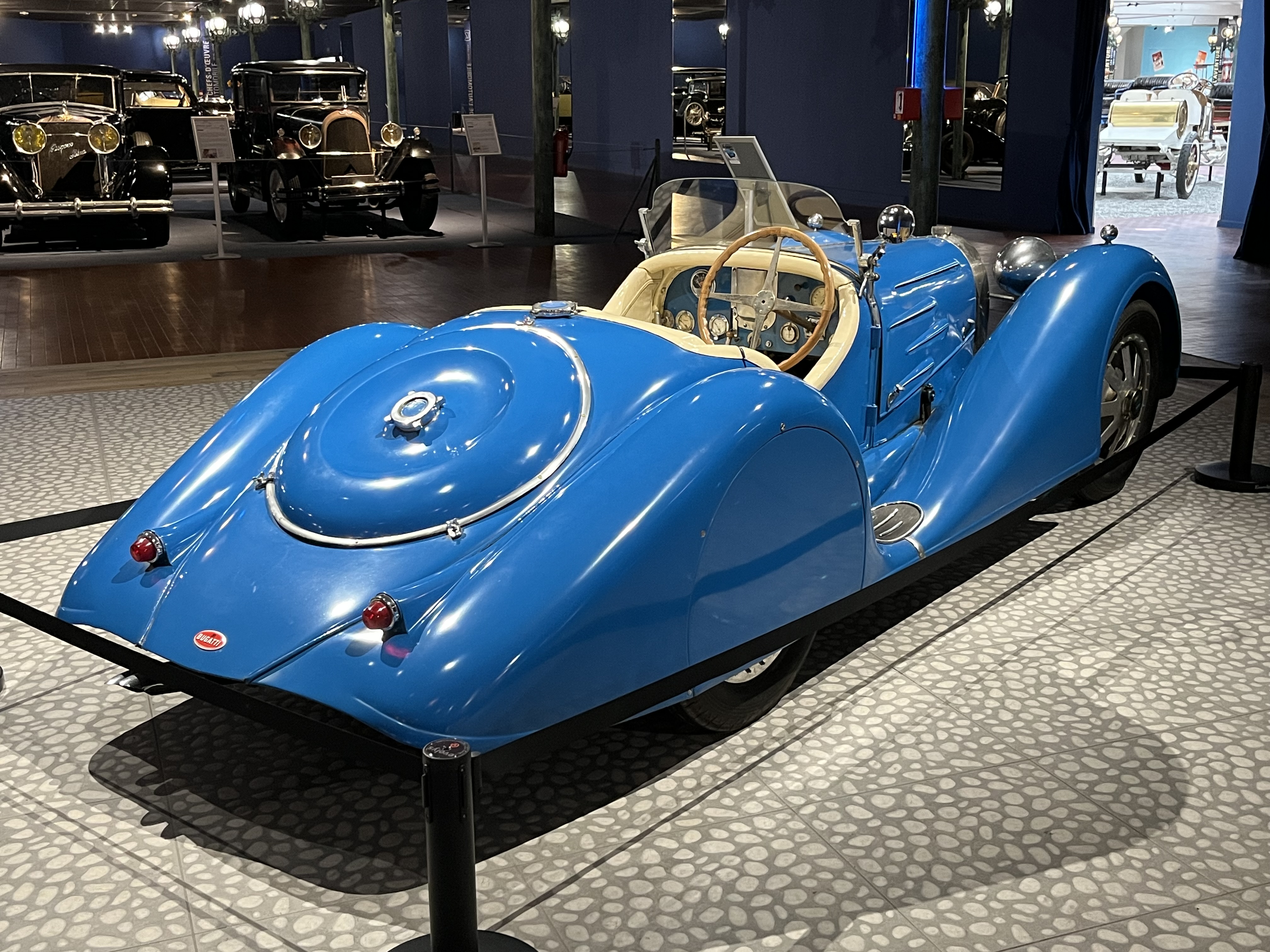
On the drive back we visited the Musee National De L’Automobile in Mulhouse including the famous Schlumpf Collection:
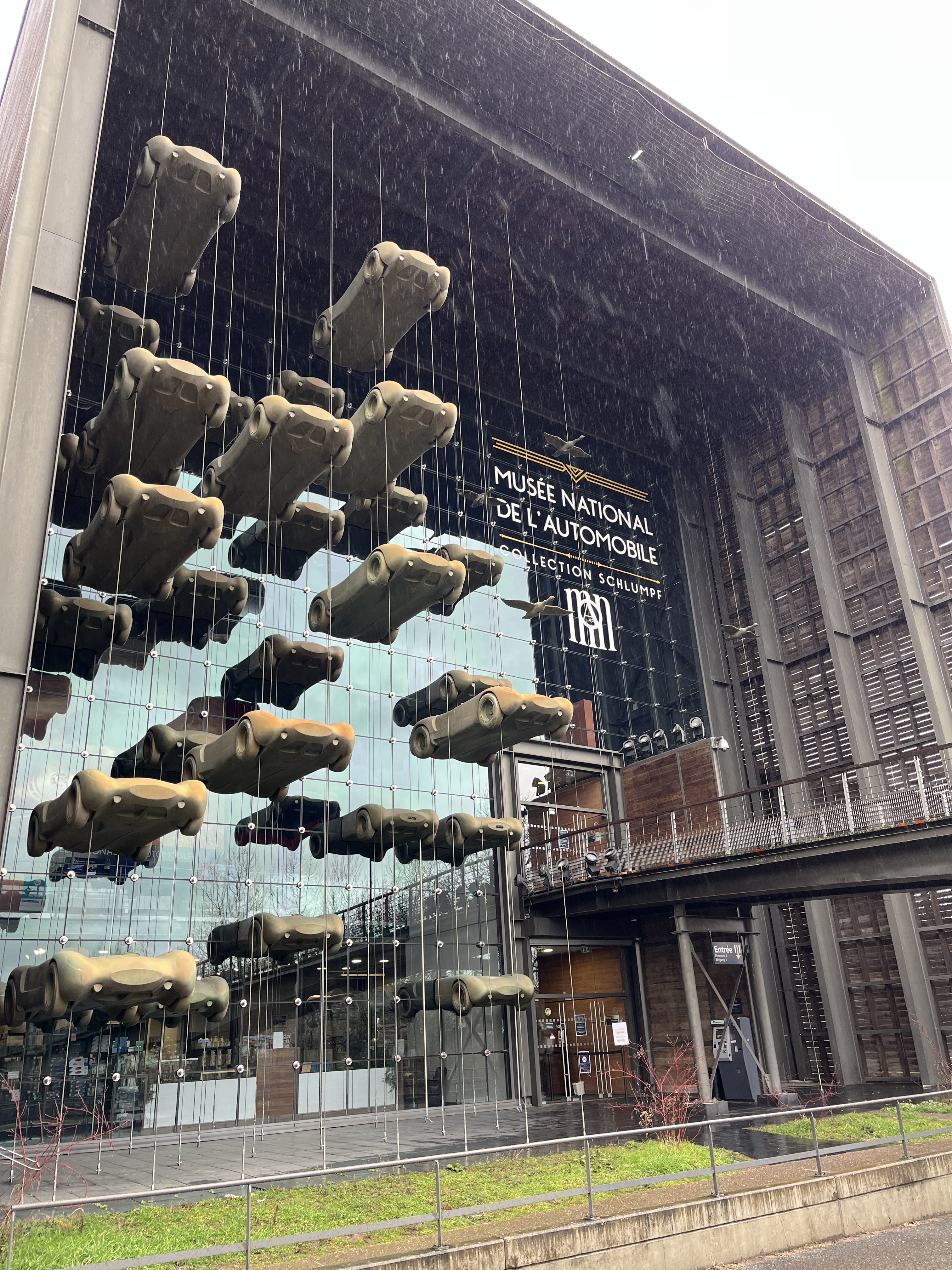
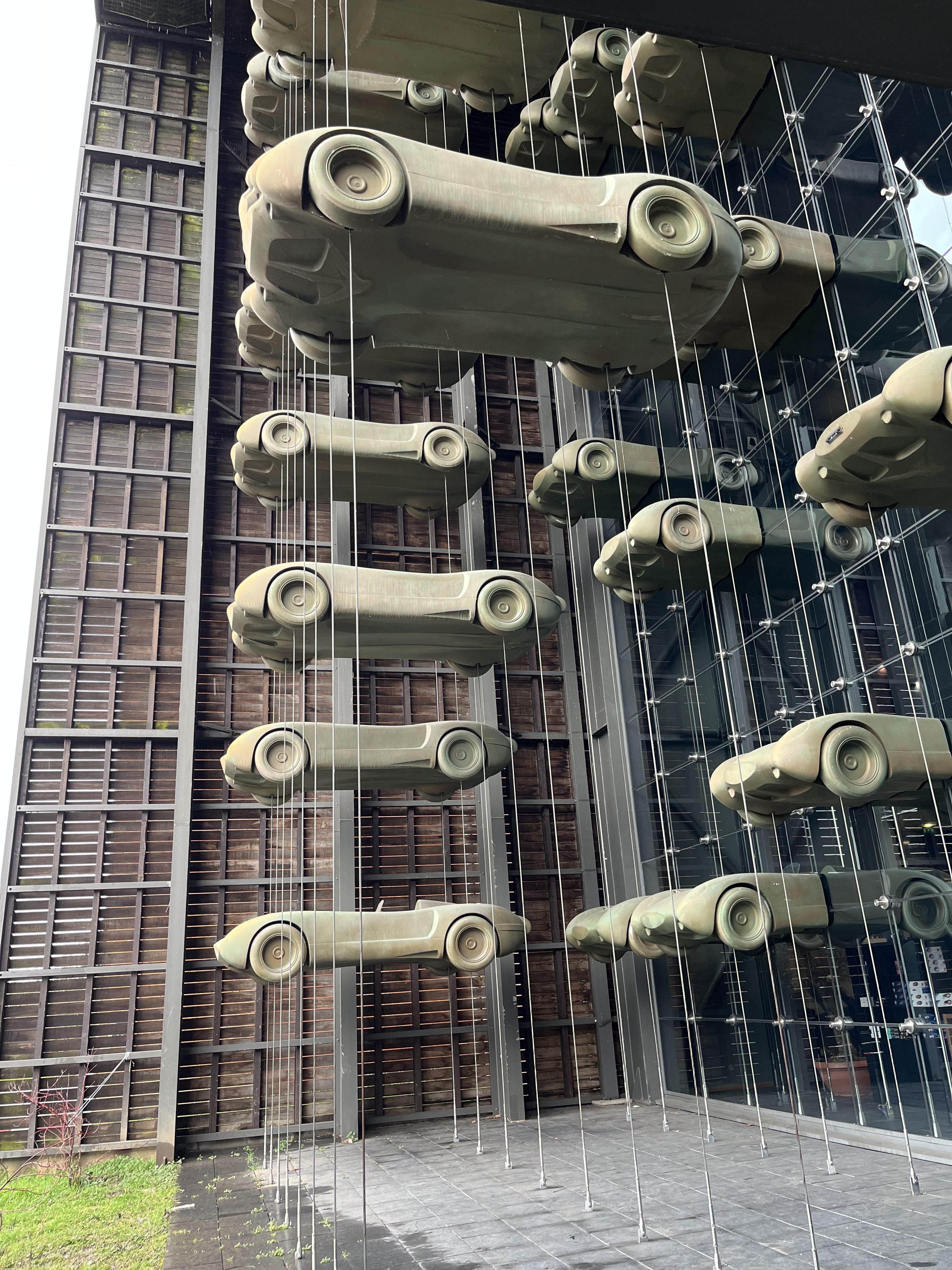
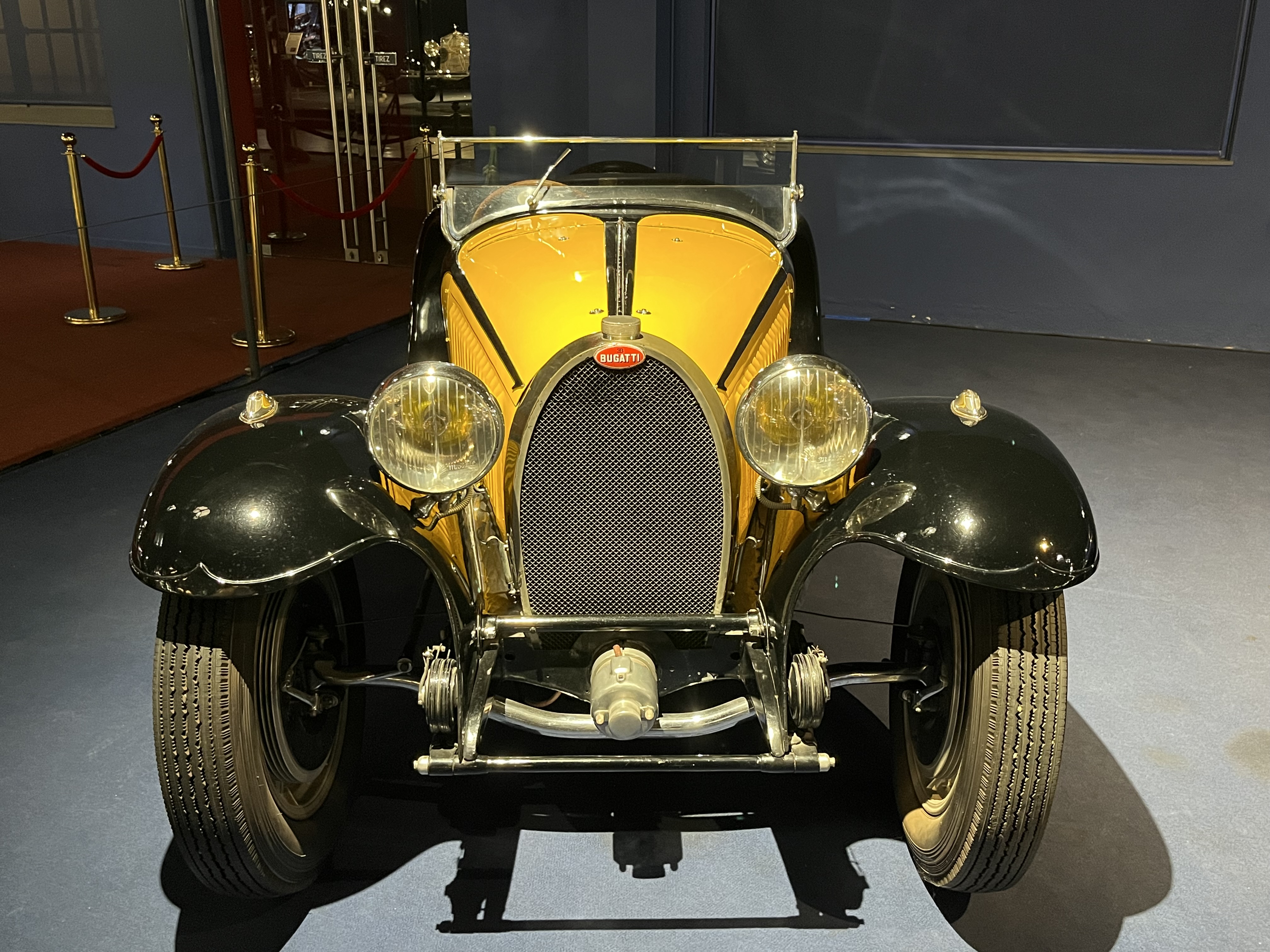
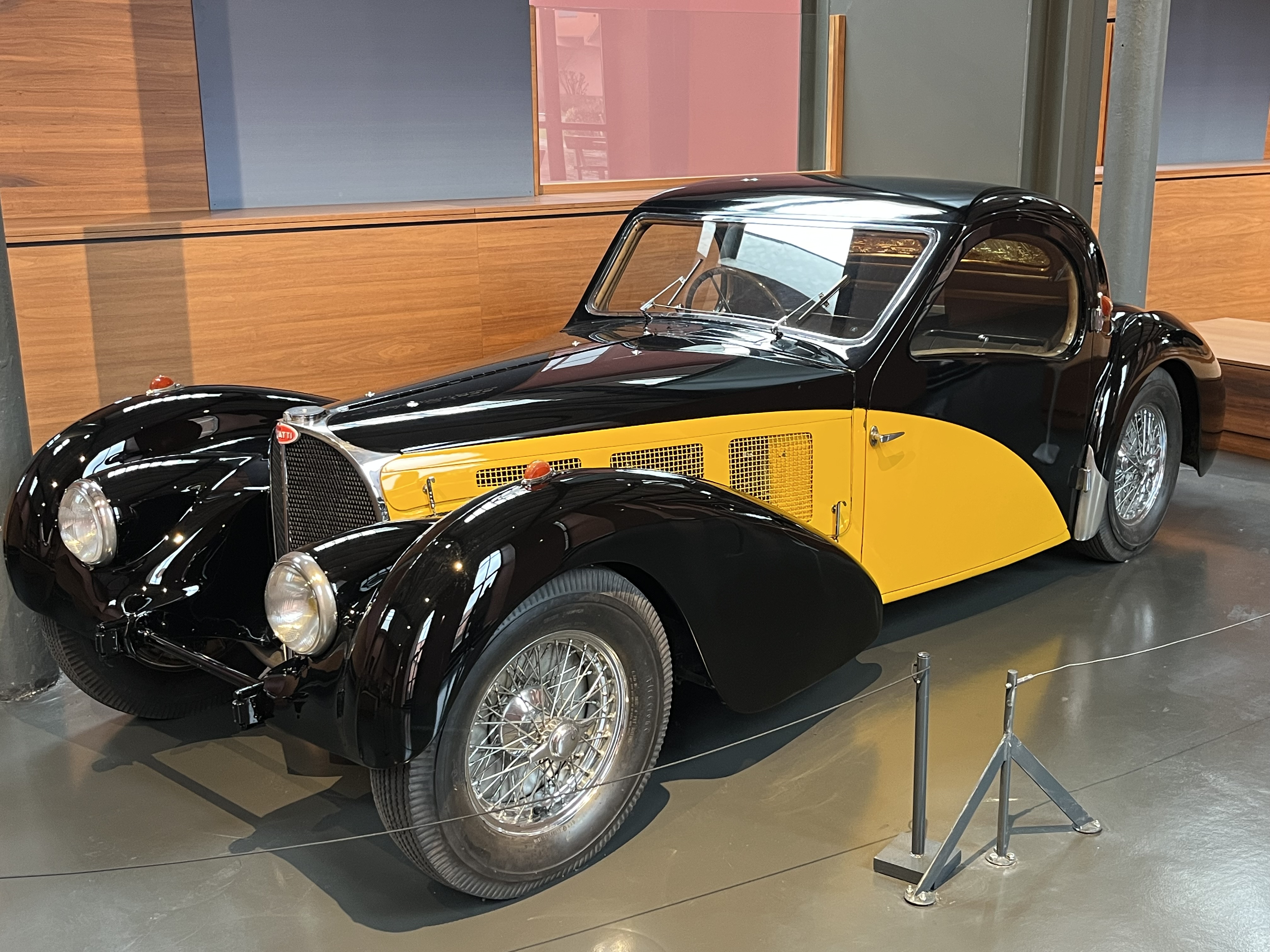
The Schlumpf Brothers, Hans and Fritz Schlumpf, built a textile manufacturing empire in Mulhouse, France. After WWII, when their factories made them rich, Fritz followed up on his childhood passion and started racing and collecting classic cars, with an obsession for the renown Italian Bugatti car brand. The Schlumpf textile manufacturing business has long ceased, yet the famous Schlumpf collection of over 450 cars, including 105 Bugattis!! are displayed inside the old factory halls. For car enthusiasts like myself, well worth the visit!


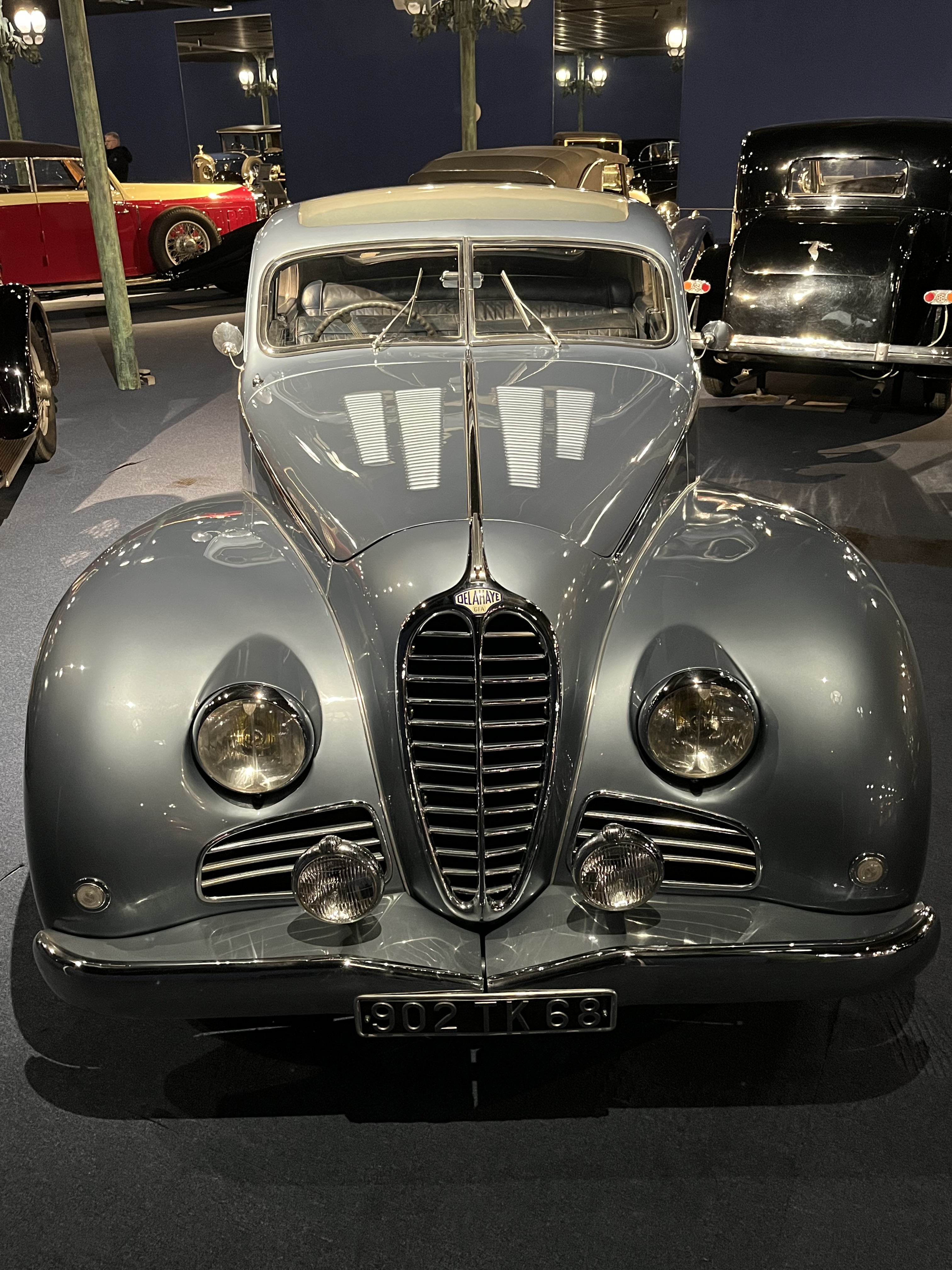
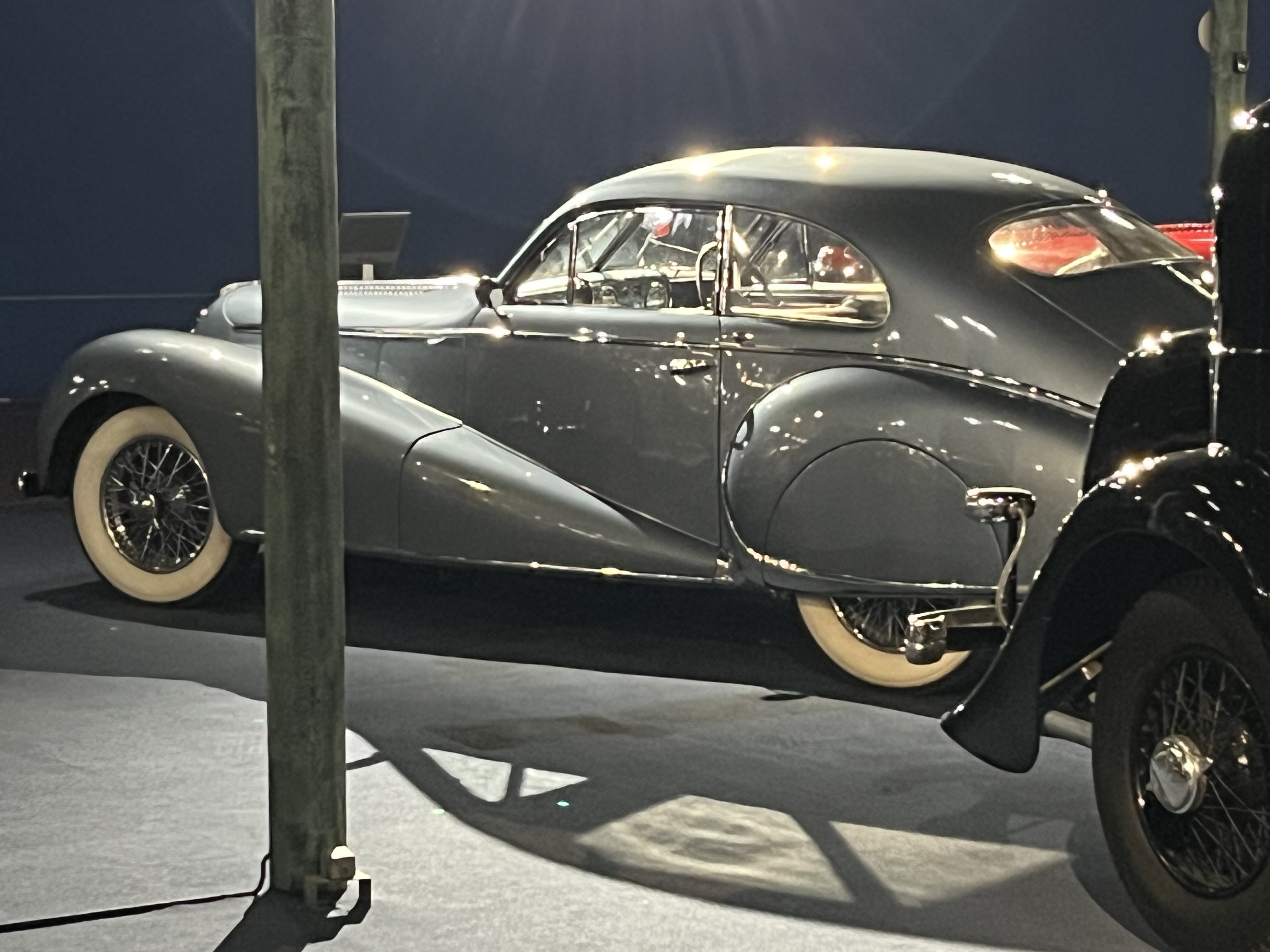
The light bluish-gray, French 1949 Delahaye 135 M Coach with it’s elegantly swung lines displayed on 3 pictures above, was certainly one of my favorites of the entire collection!
The iconic 1954 Mercedes 300 SL with its futuristic gullwing doors not only won several big car races, its chic design also attracted a string of famous owners, like Clark Gable, Sophia Loren, Gina Lollobridgida, Zsa Zsa Gabor, Tony Curtis, Glenn Ford, Alfred Krupp, Baron von Thyssen, the King of Jordan etc. to name a few.
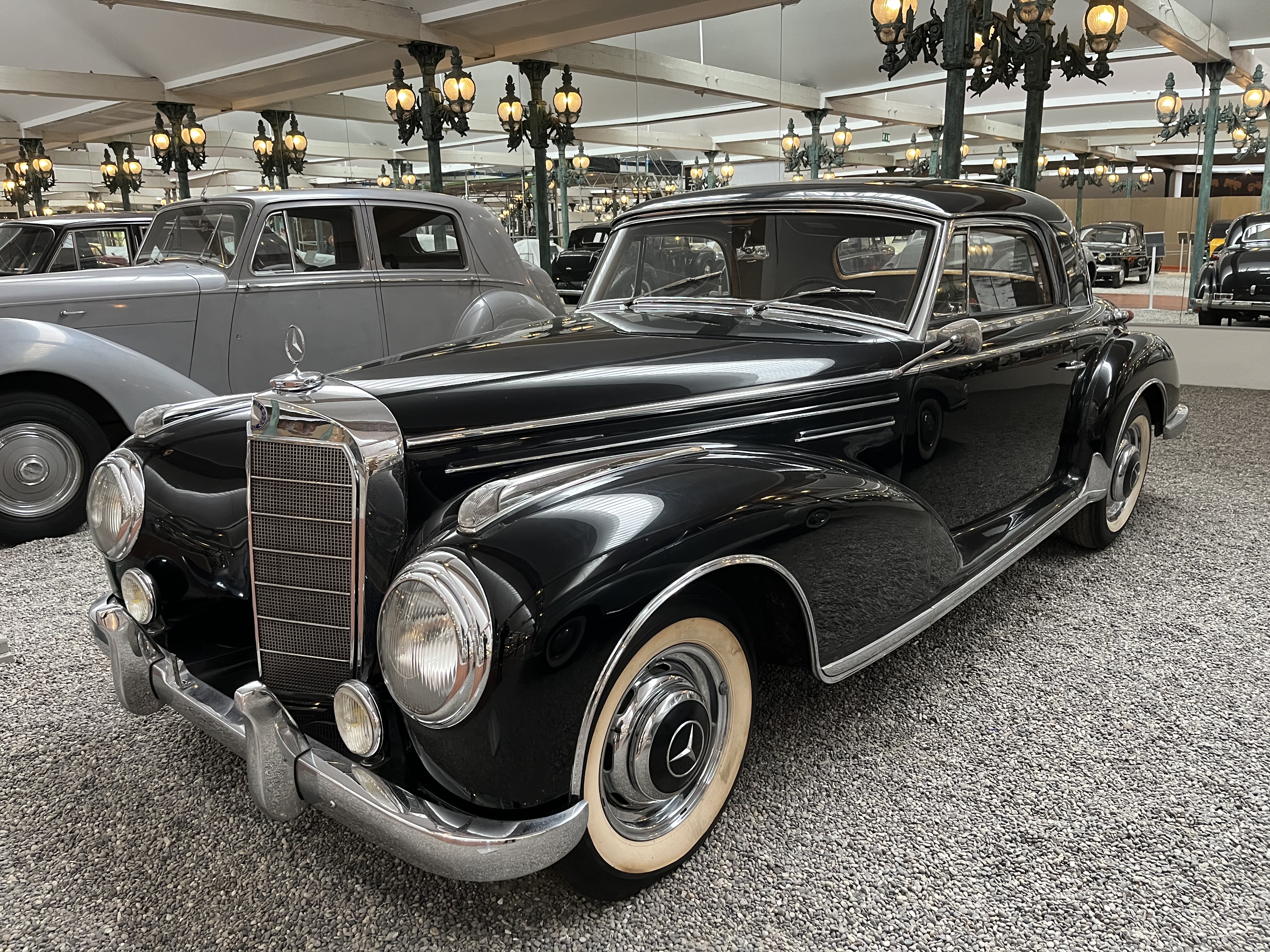
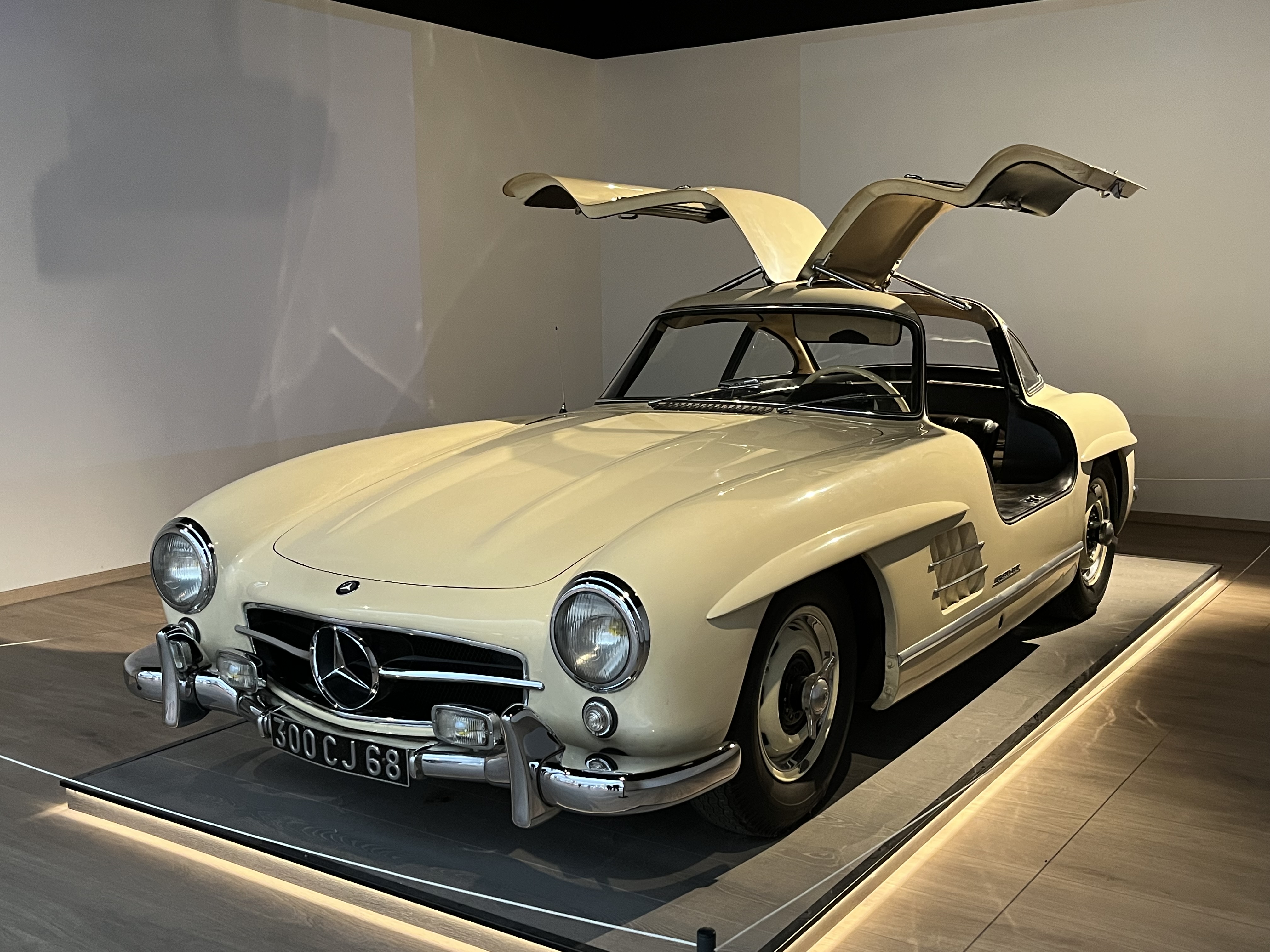
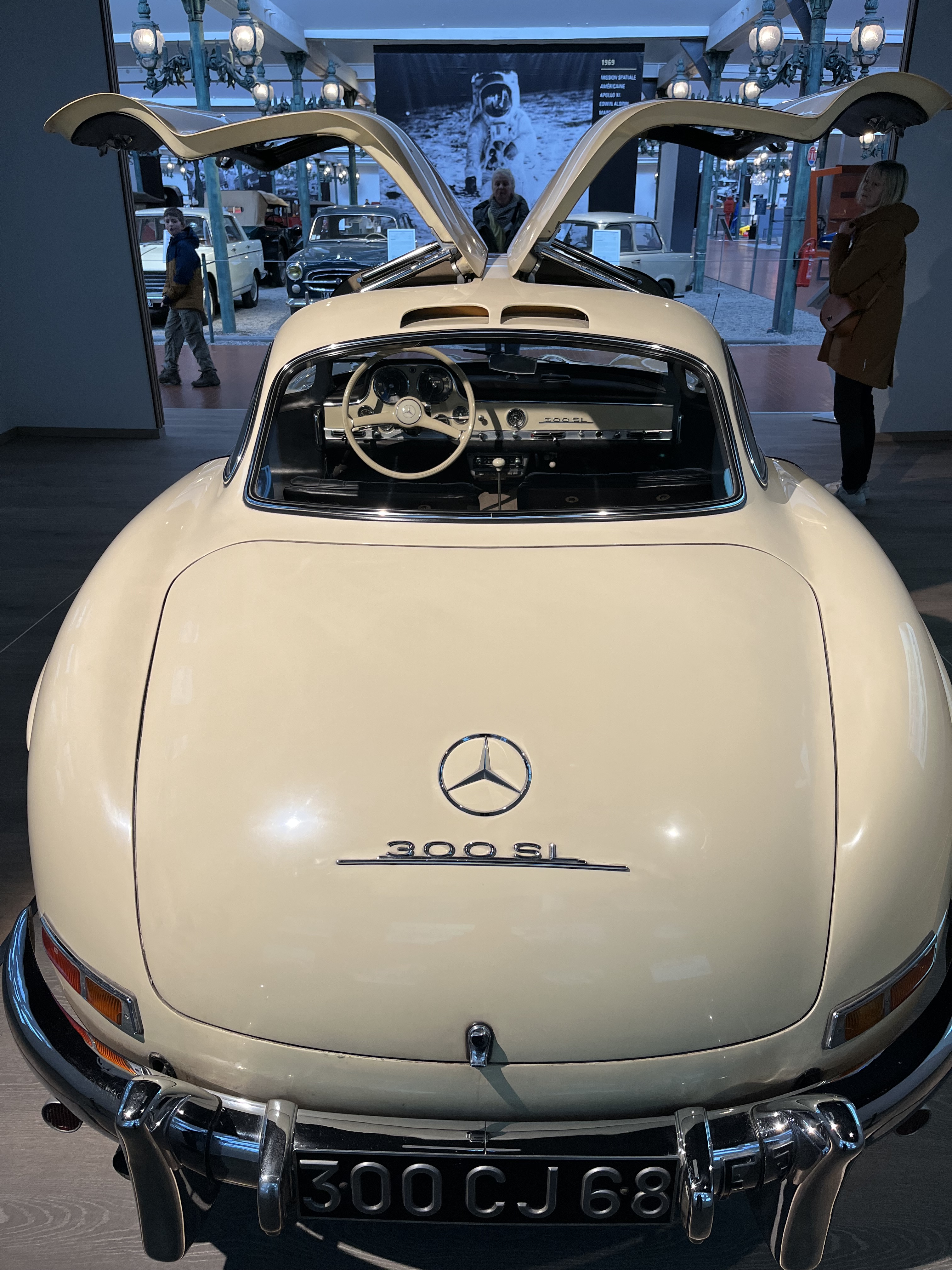
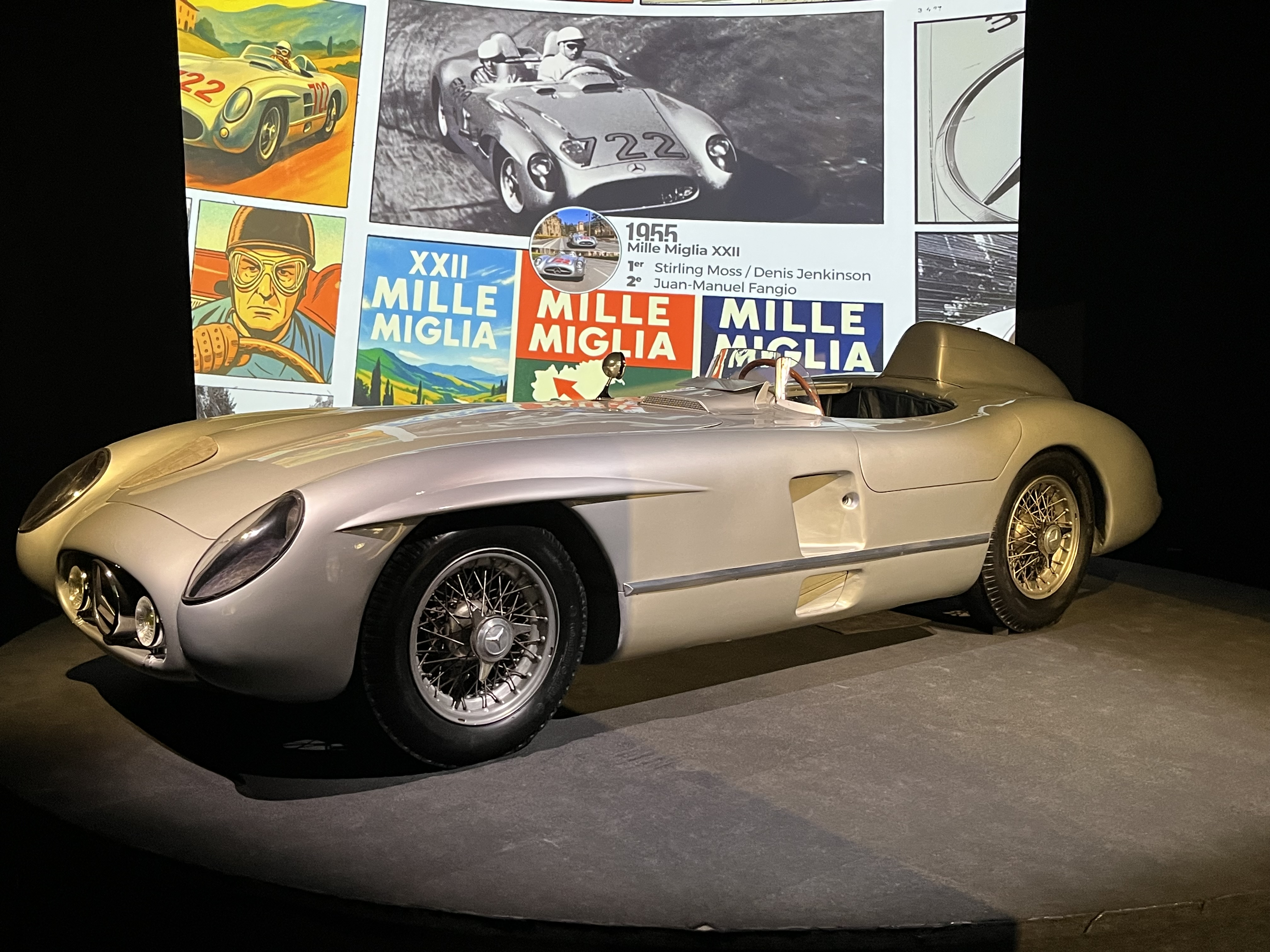
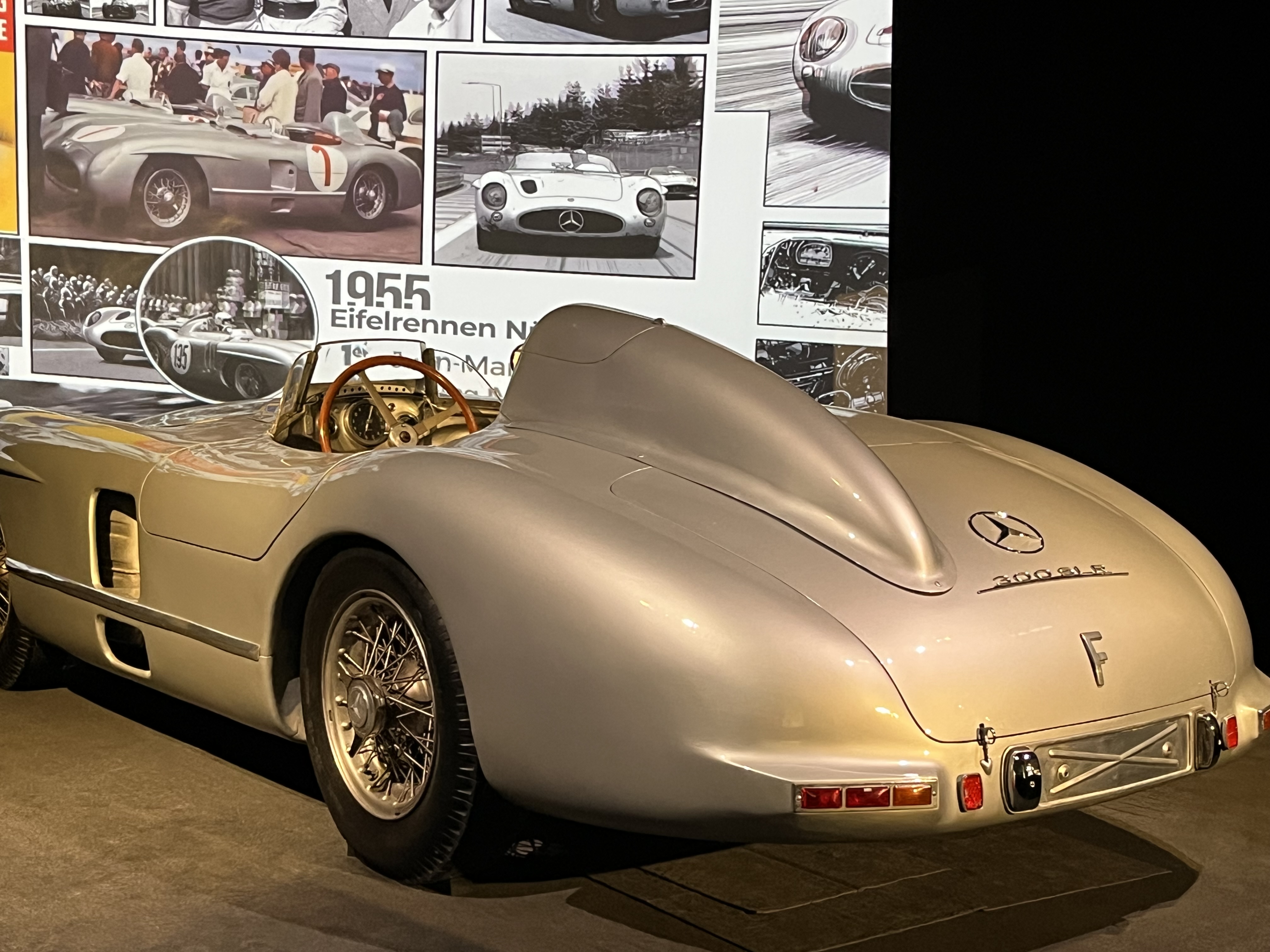
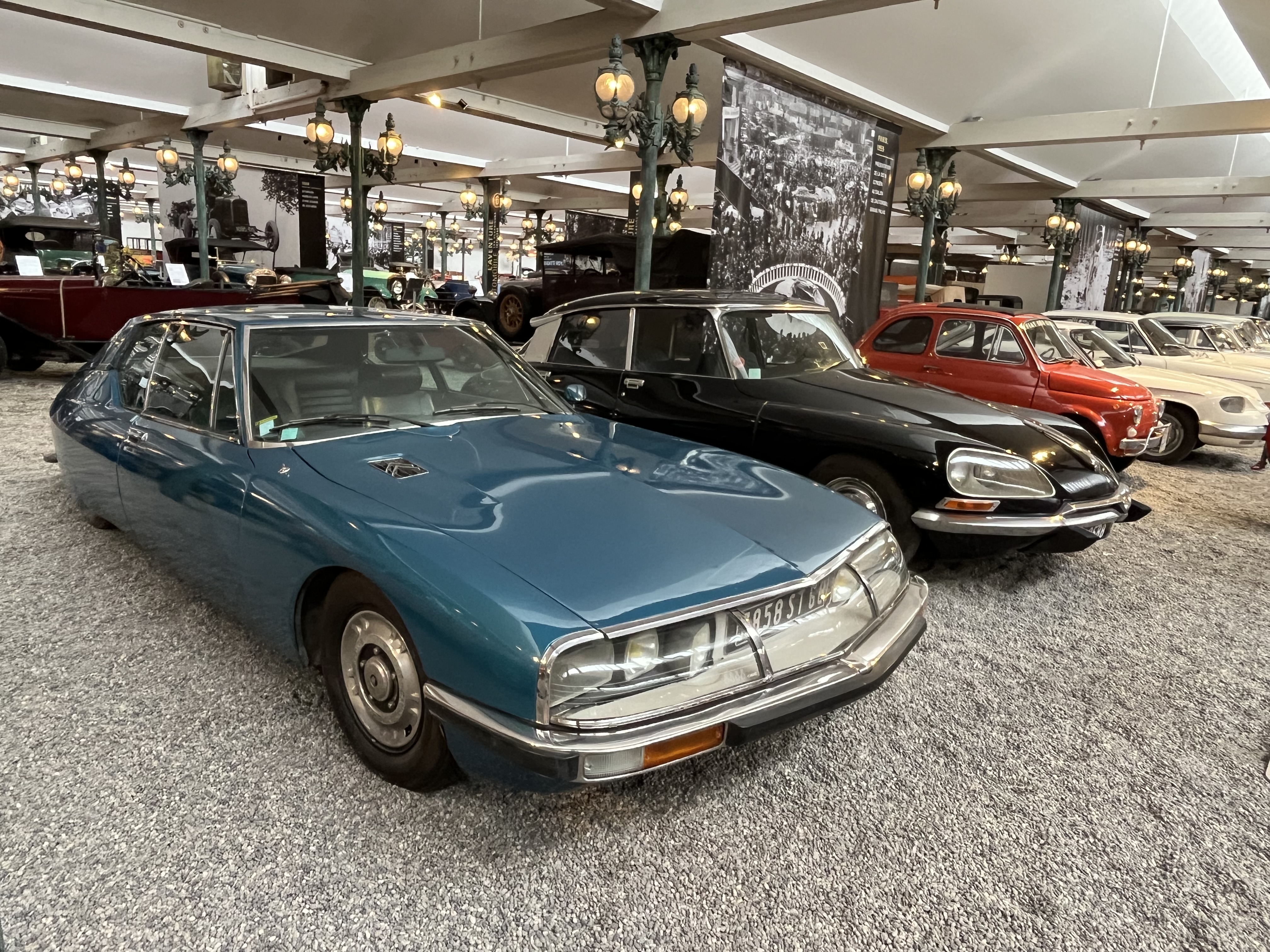
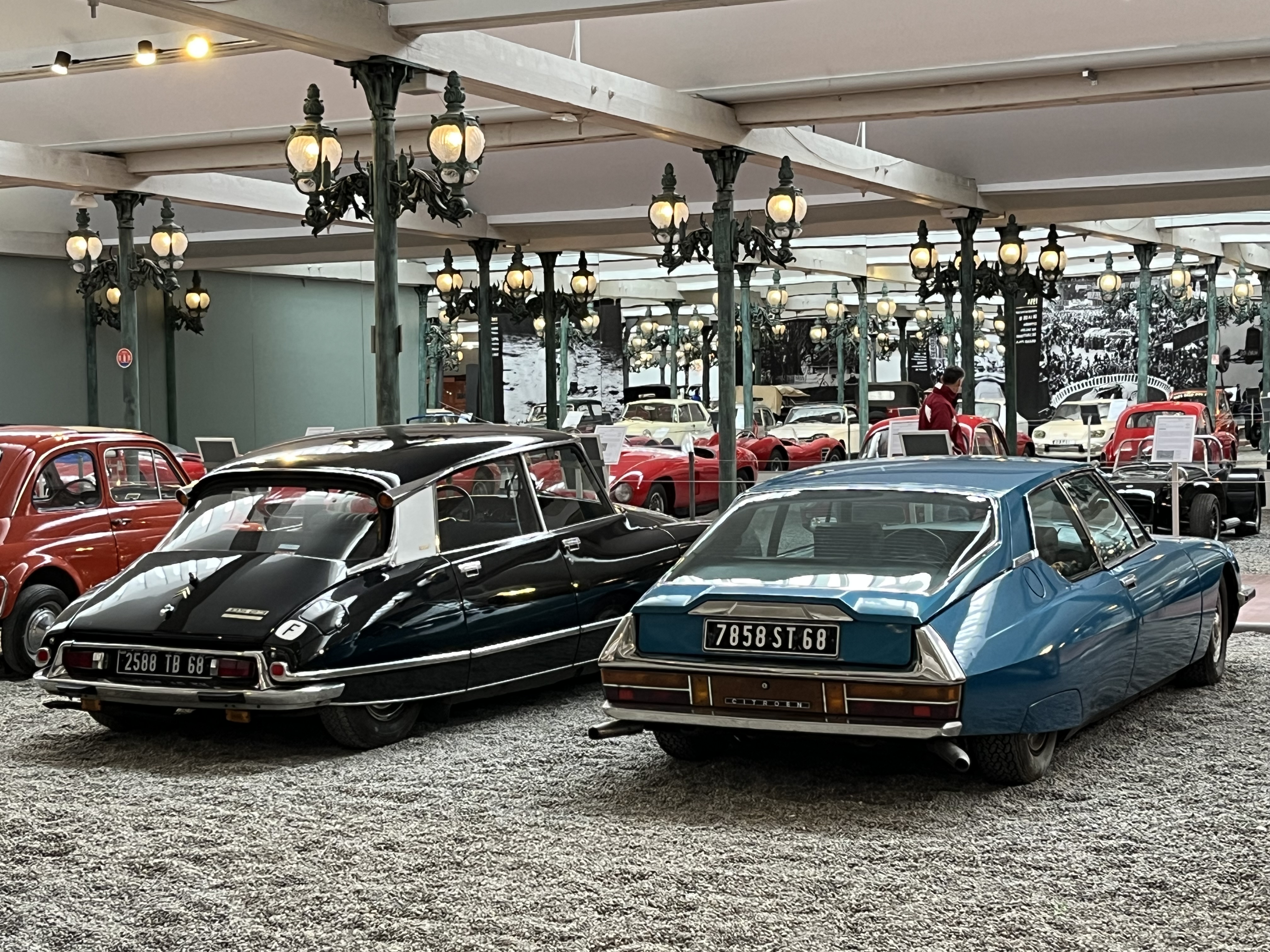
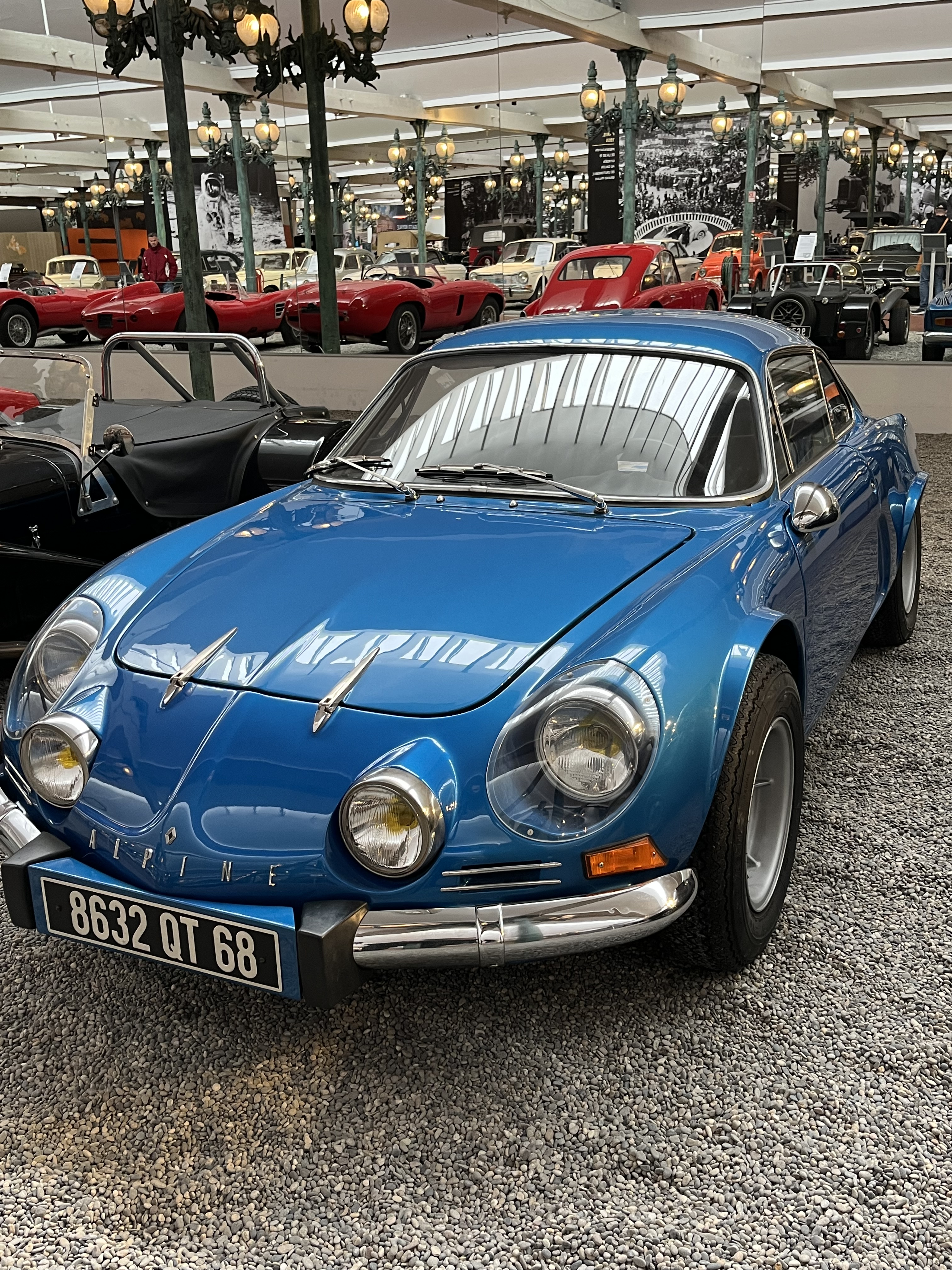
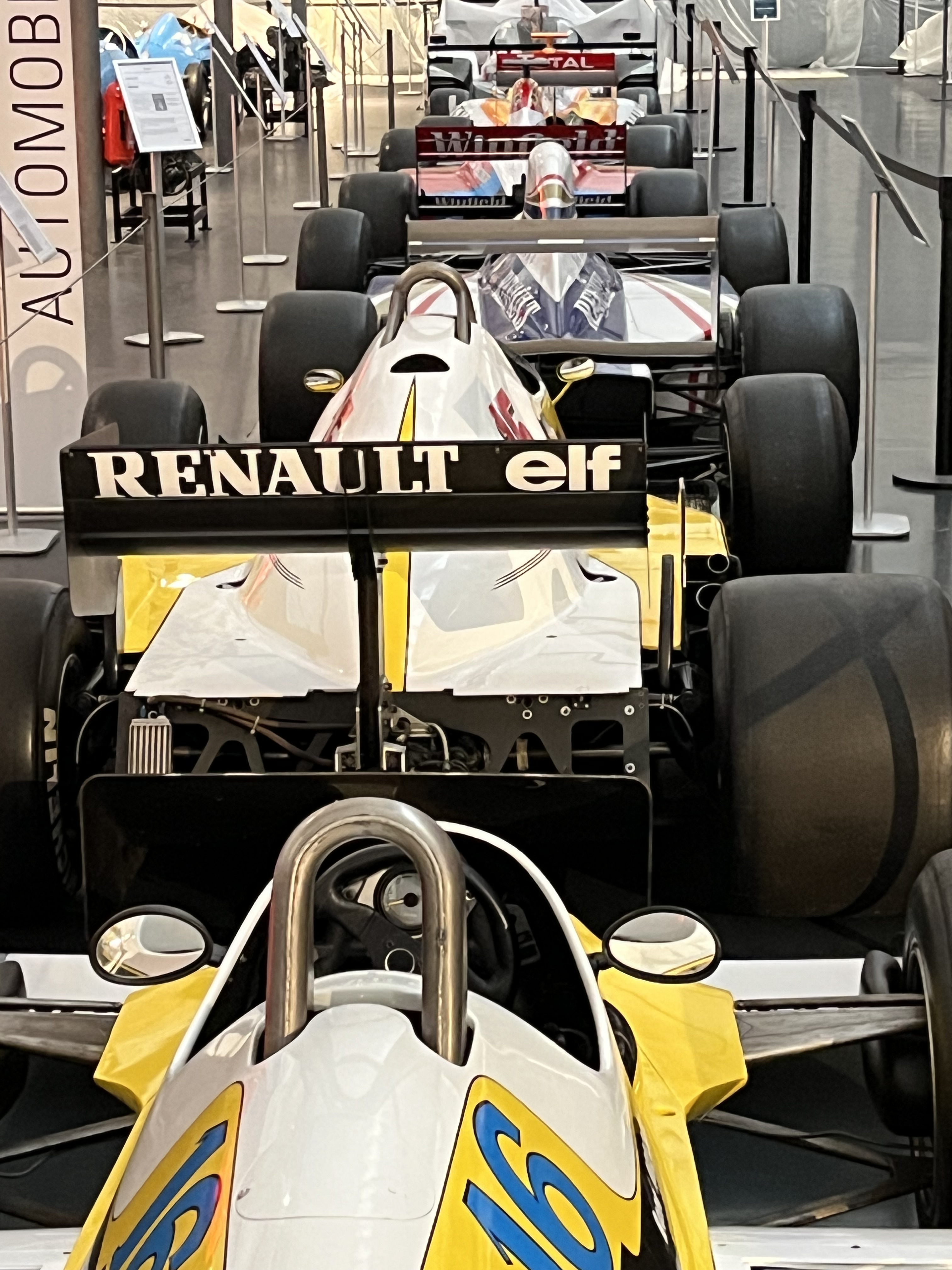
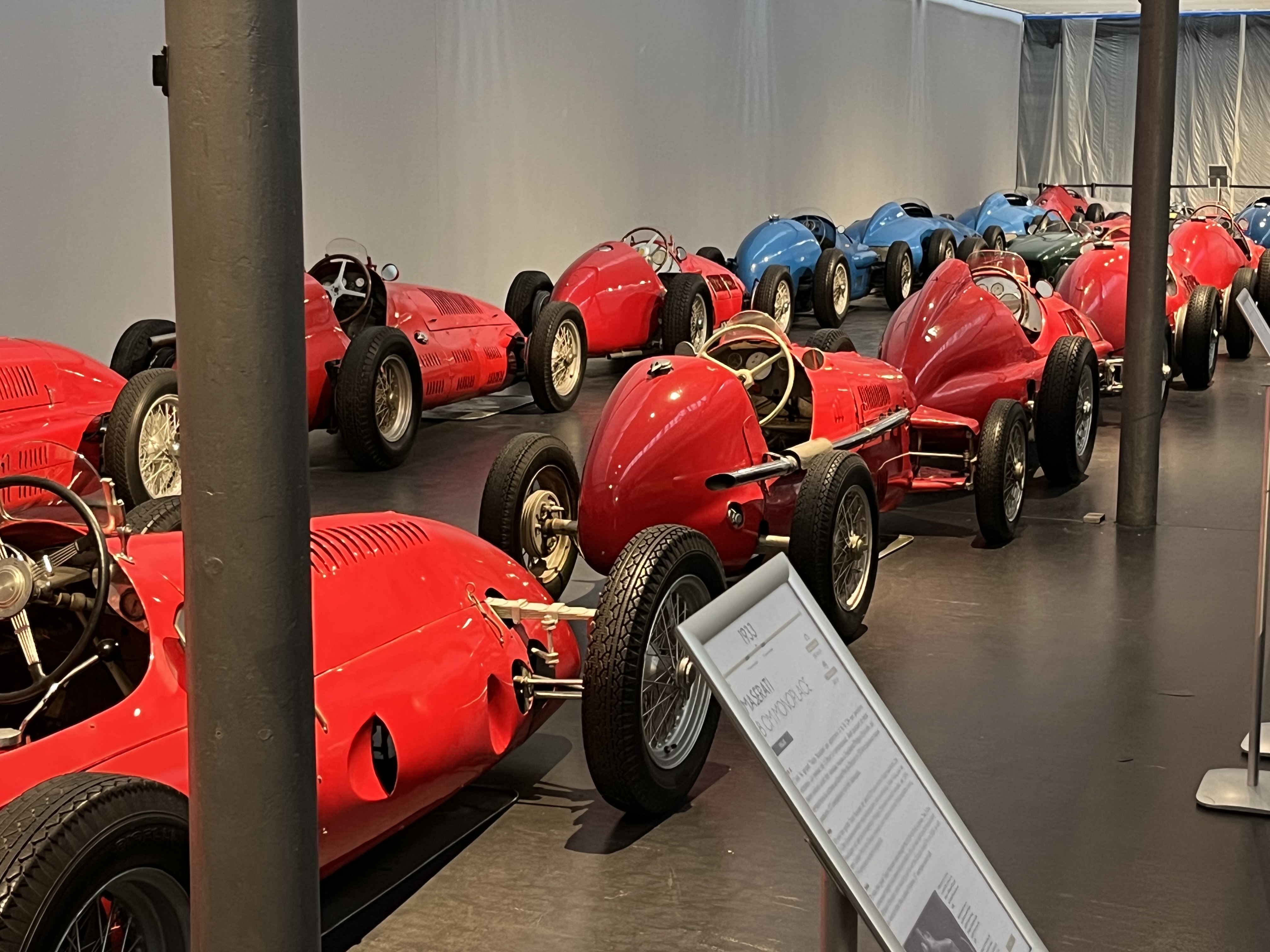
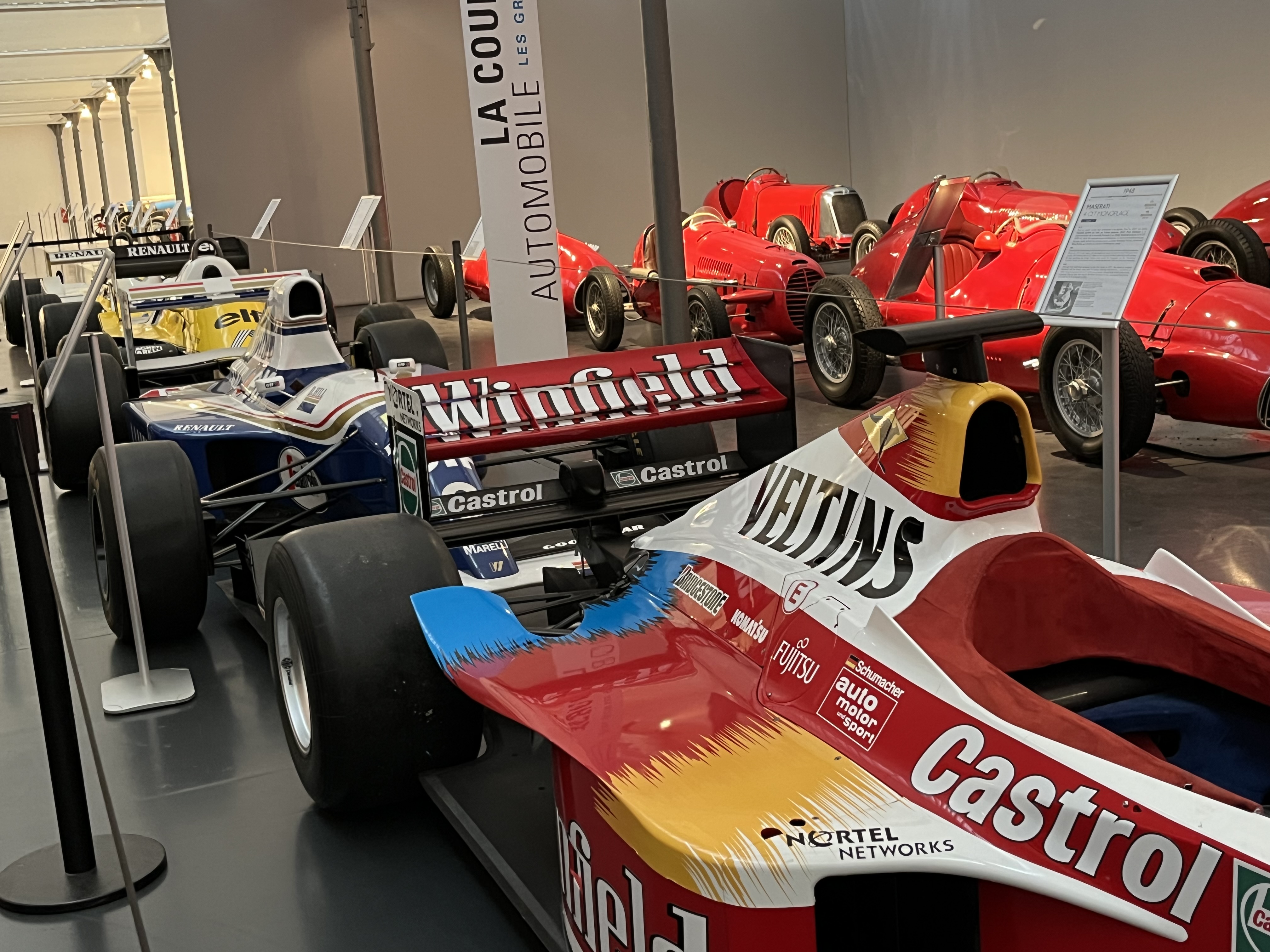
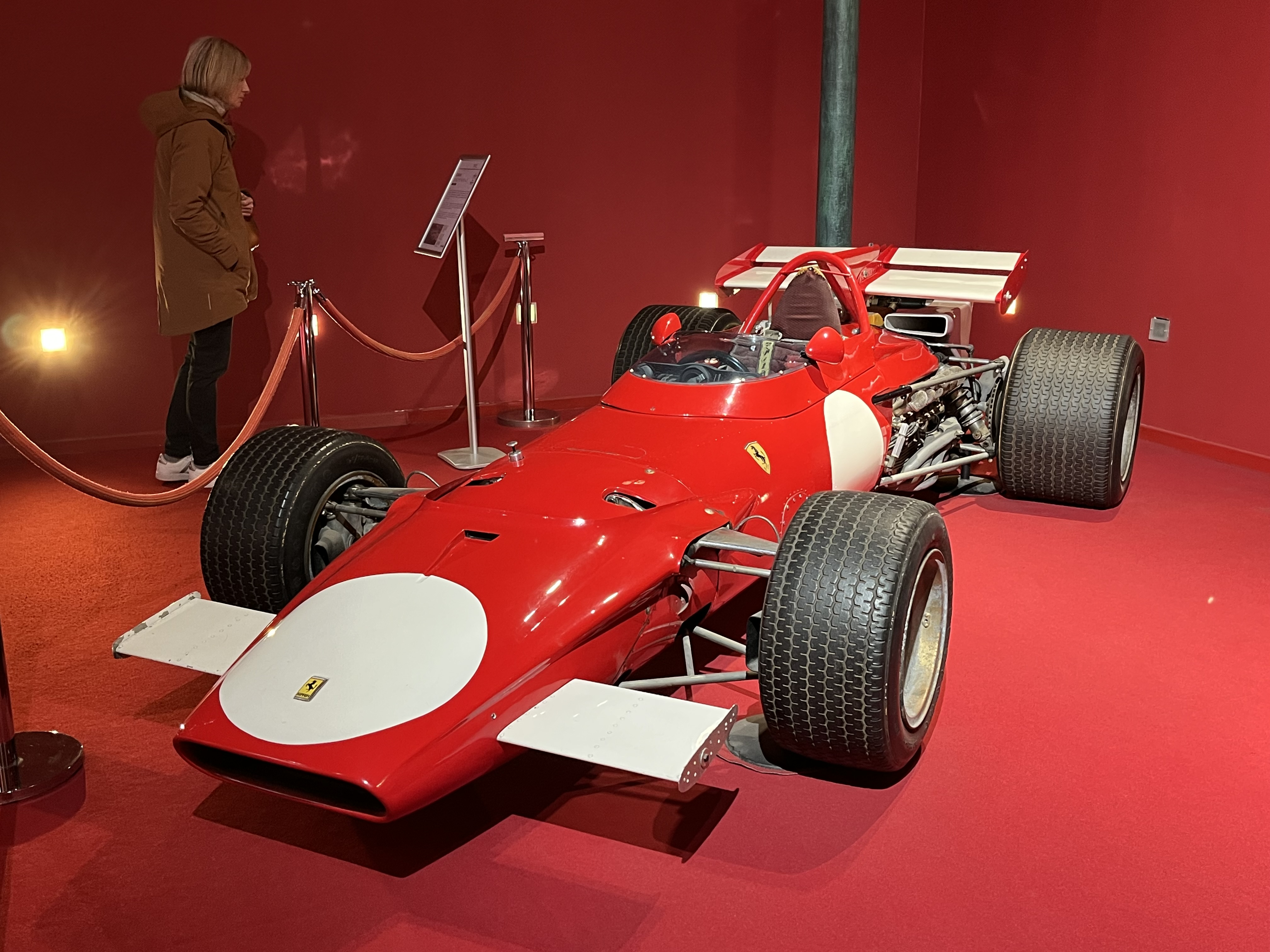
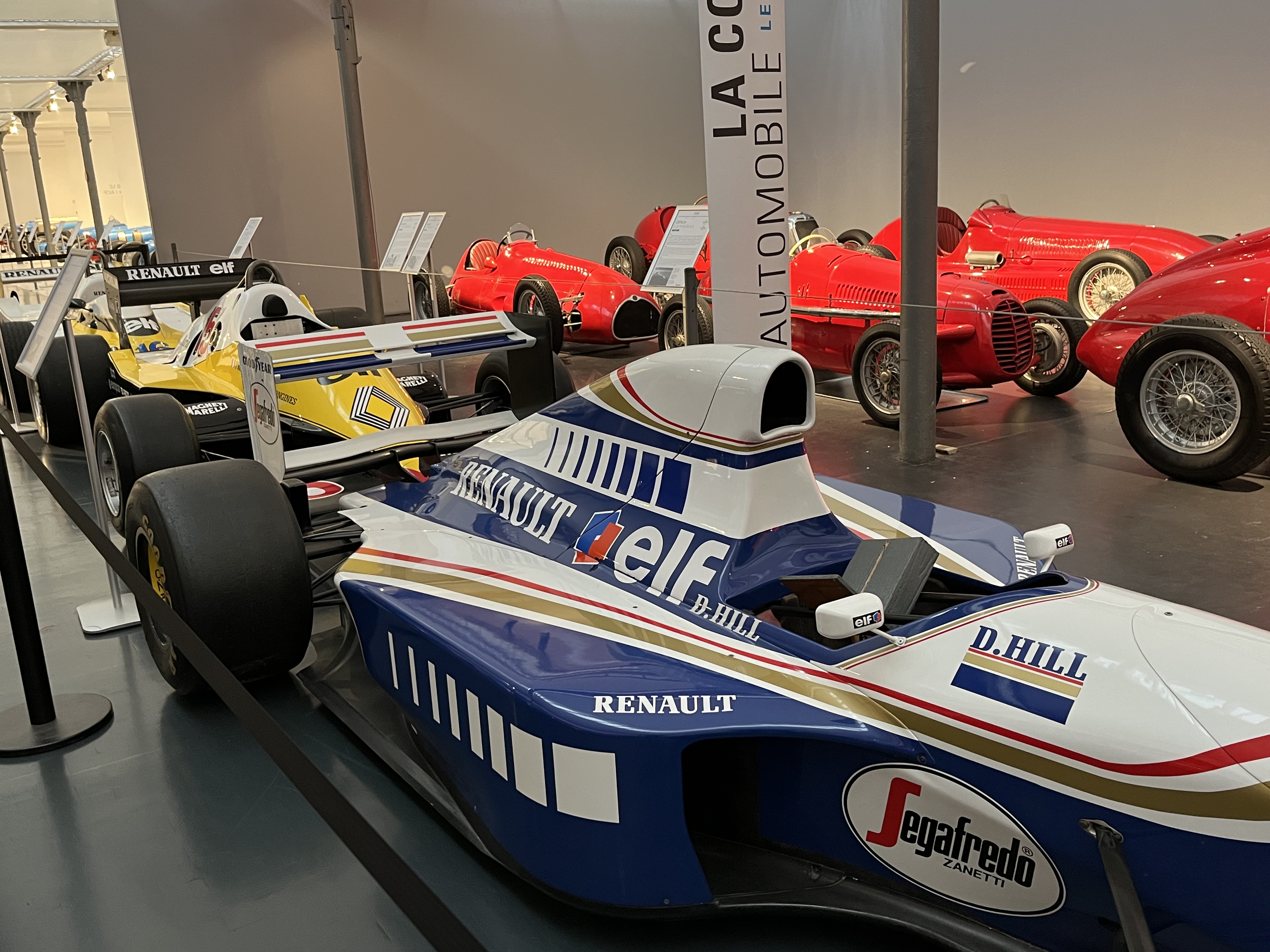
For the enthusiasts there are a lot more pictures and detailed information available on the museum’s website. I just tried to give an impression of the abundance and variety of the multiple classic cars displayed, and hope I didn’t bore the unenthused reader too much.
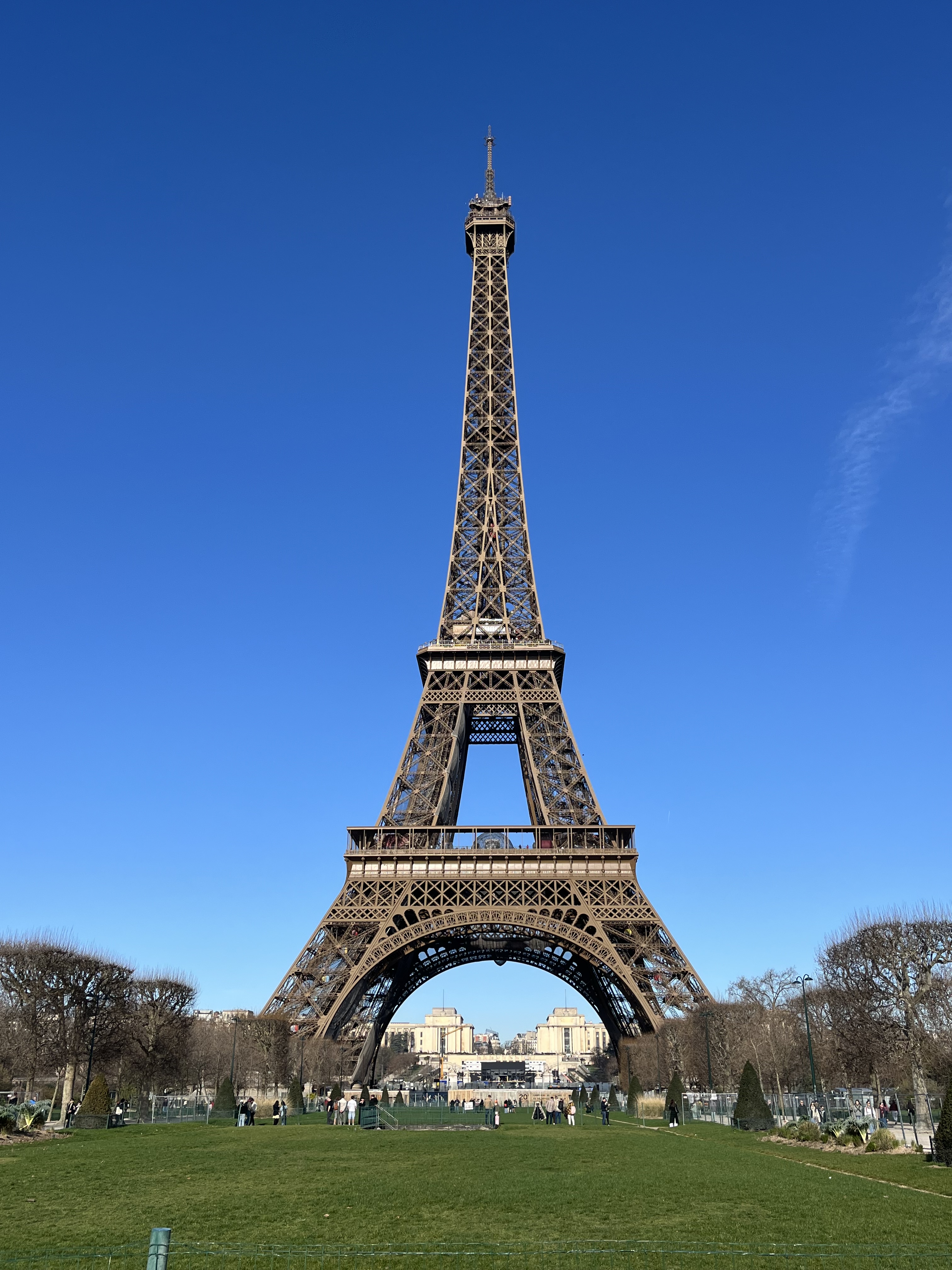
This site and location probably requires no introduction. At the end of February we spent three sunny, spring like days in Paris, our second sightseeing trip to France’s capital.
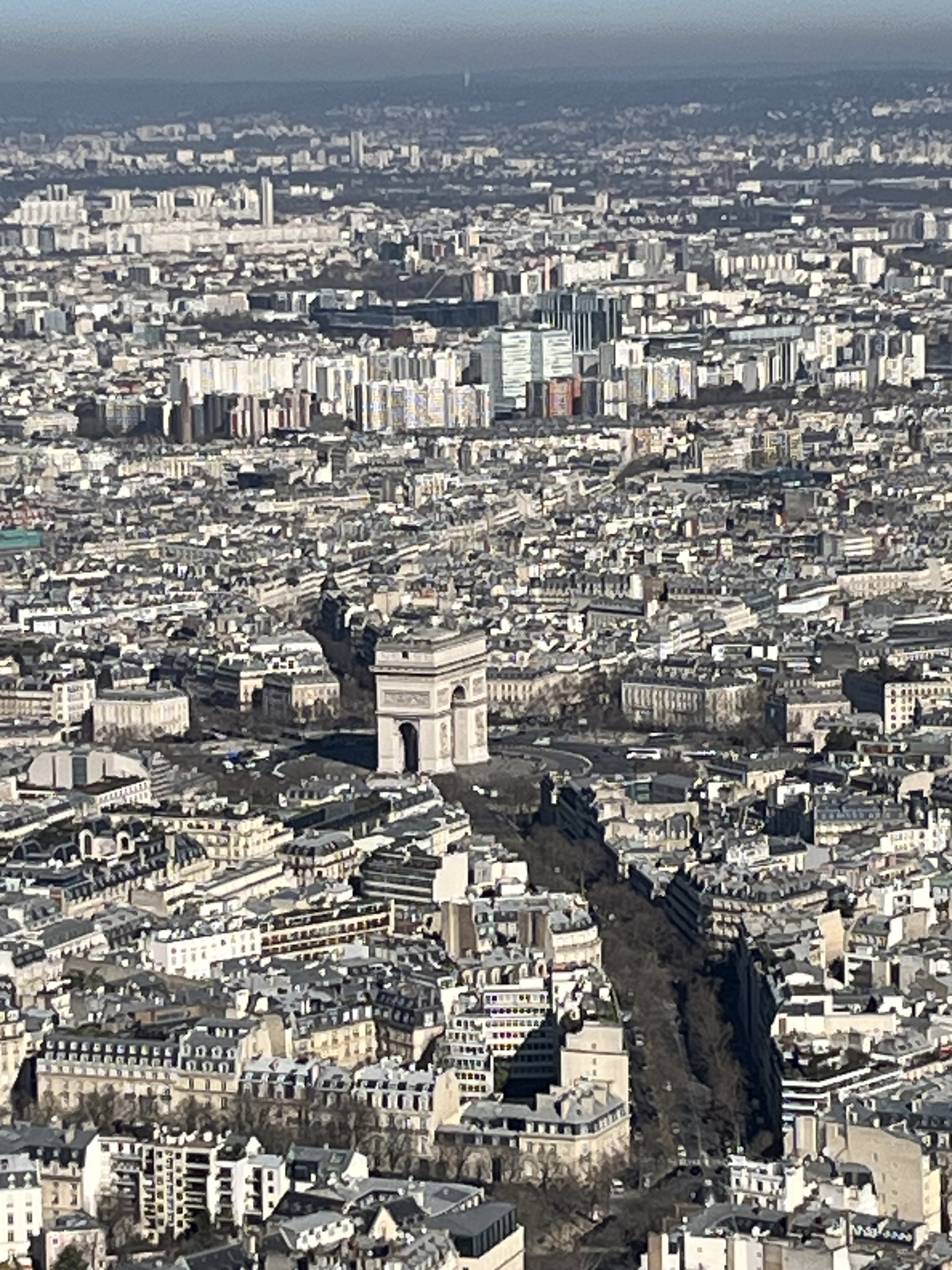
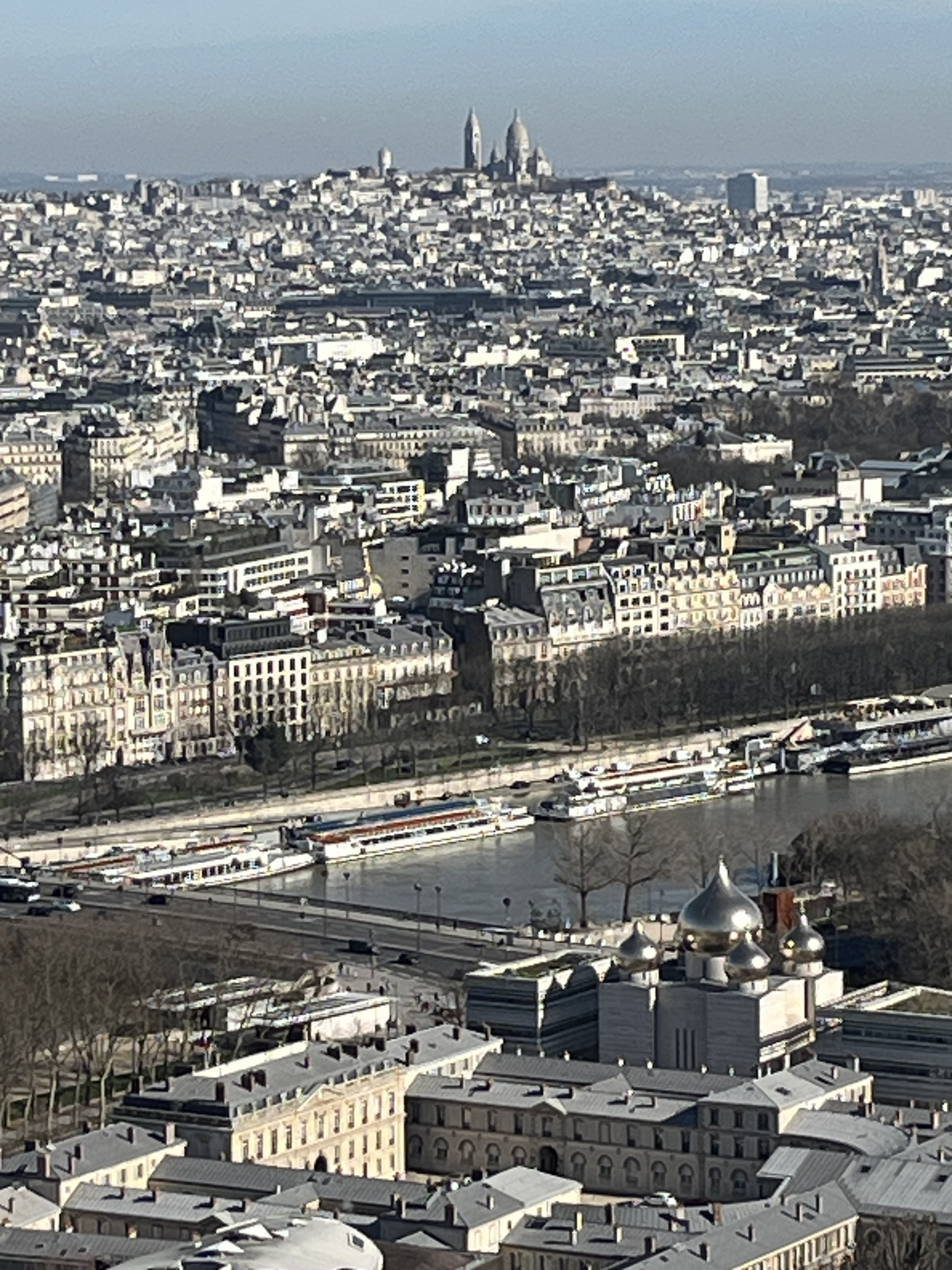
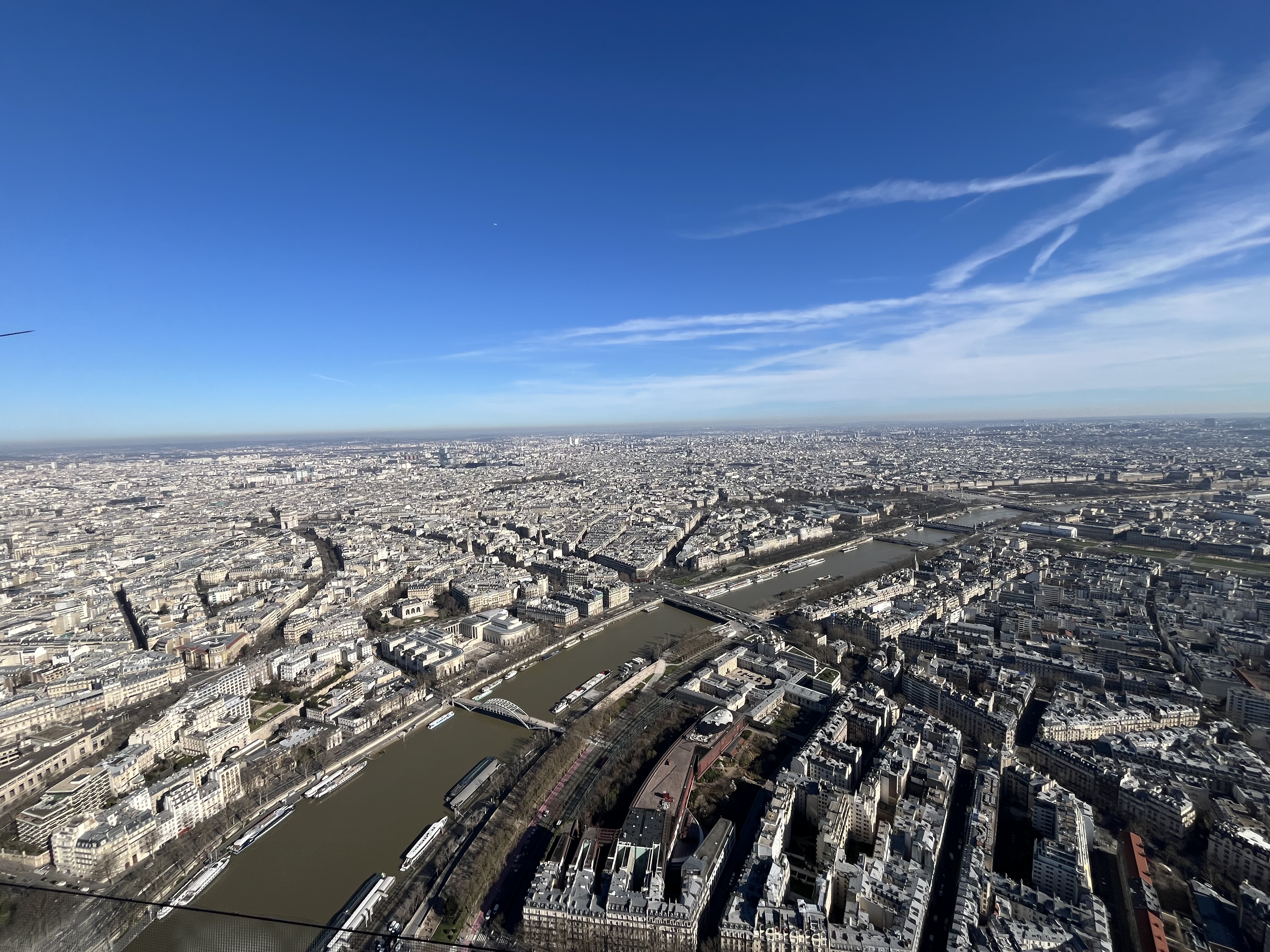
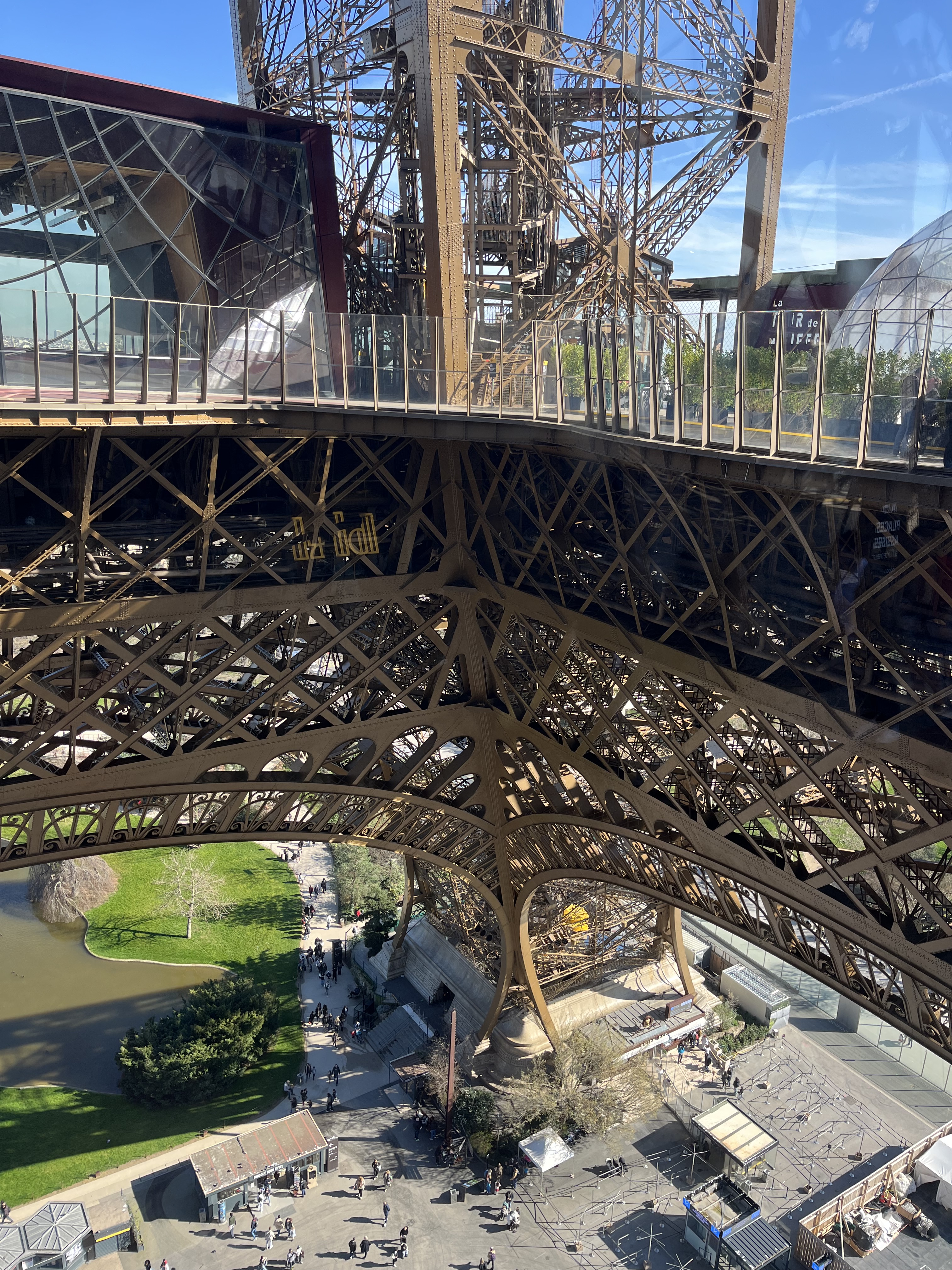
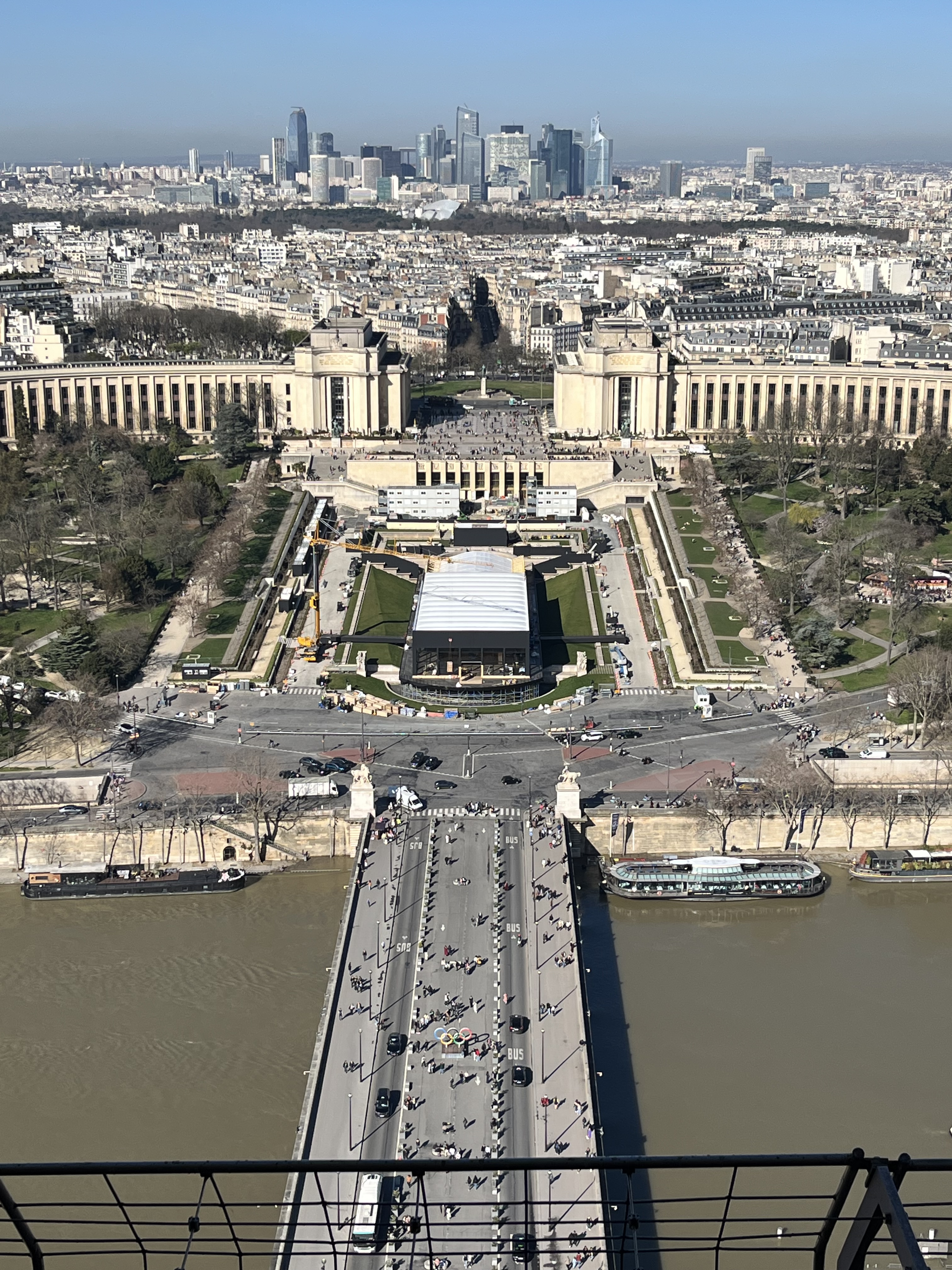
The top of the Eiffel Tower provided clear, unobstructed views of the City of Light.
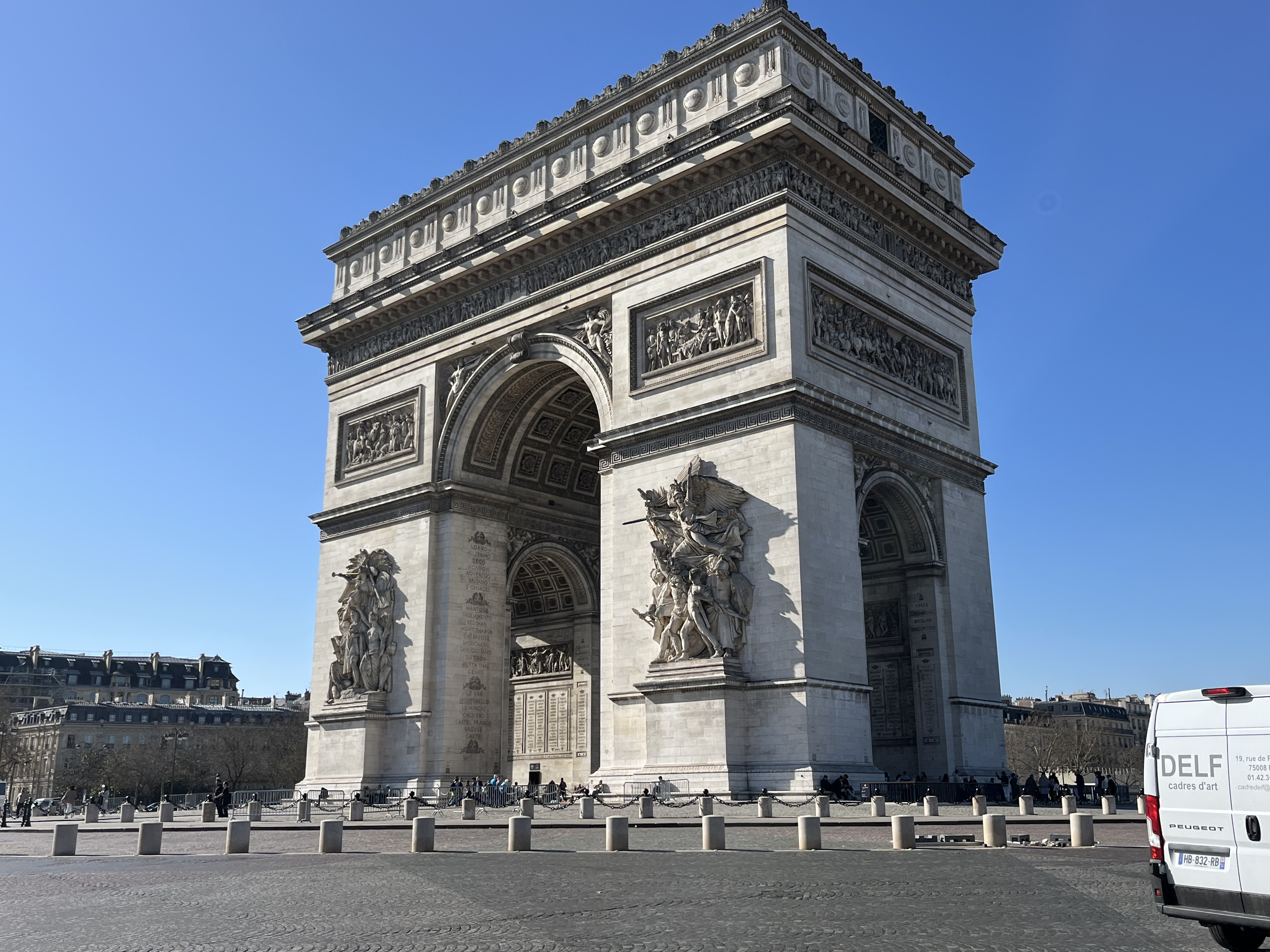
Hard to believe, on a regular workday at 11 am, the Arc de Triumph with hardly any cars circling this famous roundabout. Paris is notably less congested by cars than it used to be. Instead of cars, you see more bicycles in all types and forms swarming the city. During the last decade Paris has made a huge effort to make the city more bike friendly by creating more and better cycling infrastructure, such as bike lanes and biking inter connectedness with public transportation. One person from my riding group commutes to Paris 2 to 3 times per week, takes his bicycle onto the TGV train, and uses it for all travels inside Paris. This bicycle priority has frustrated a lot of car drivers, and the subject became a big political hotpoint during the mayoral and city government elections this March.
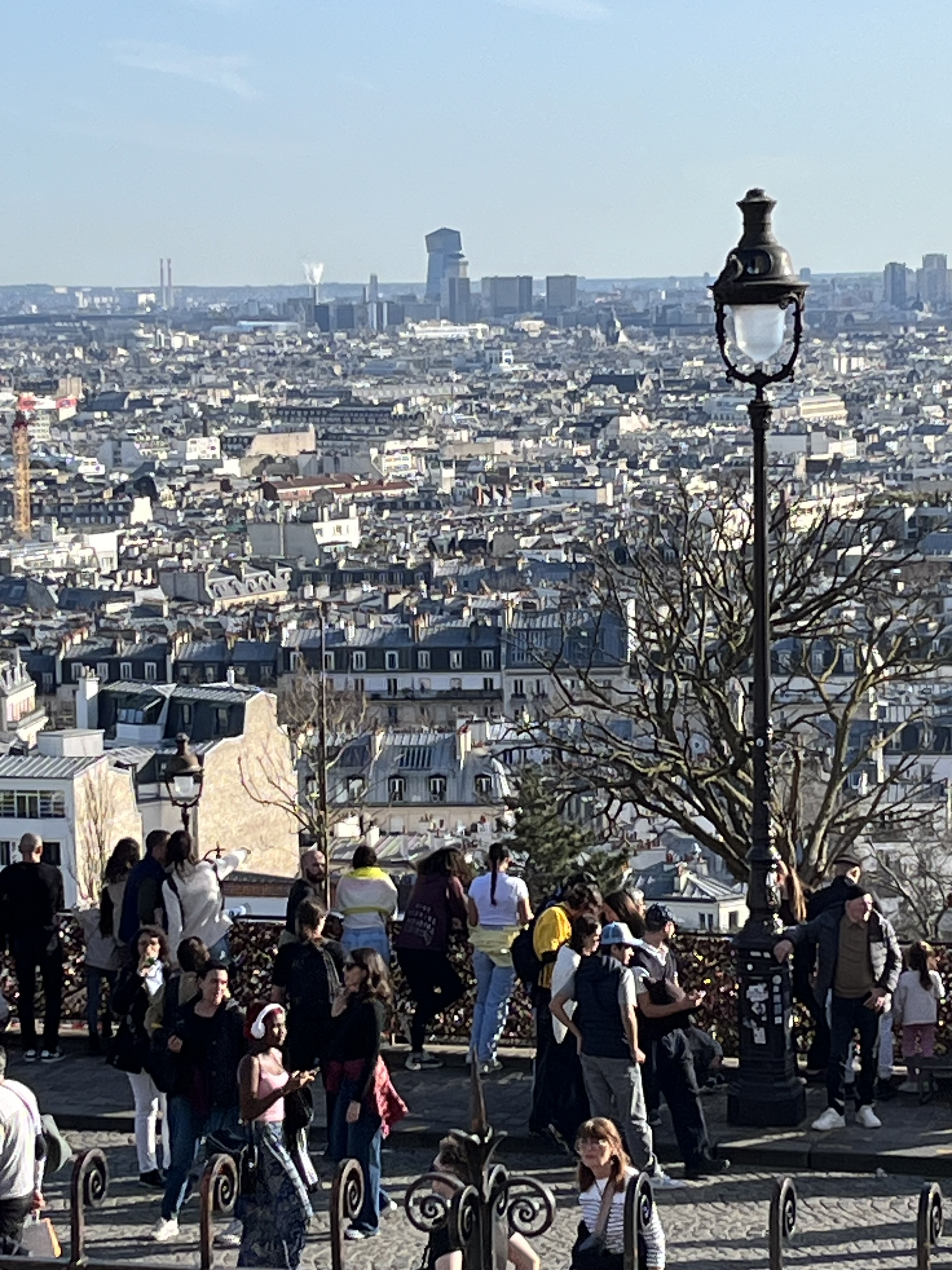
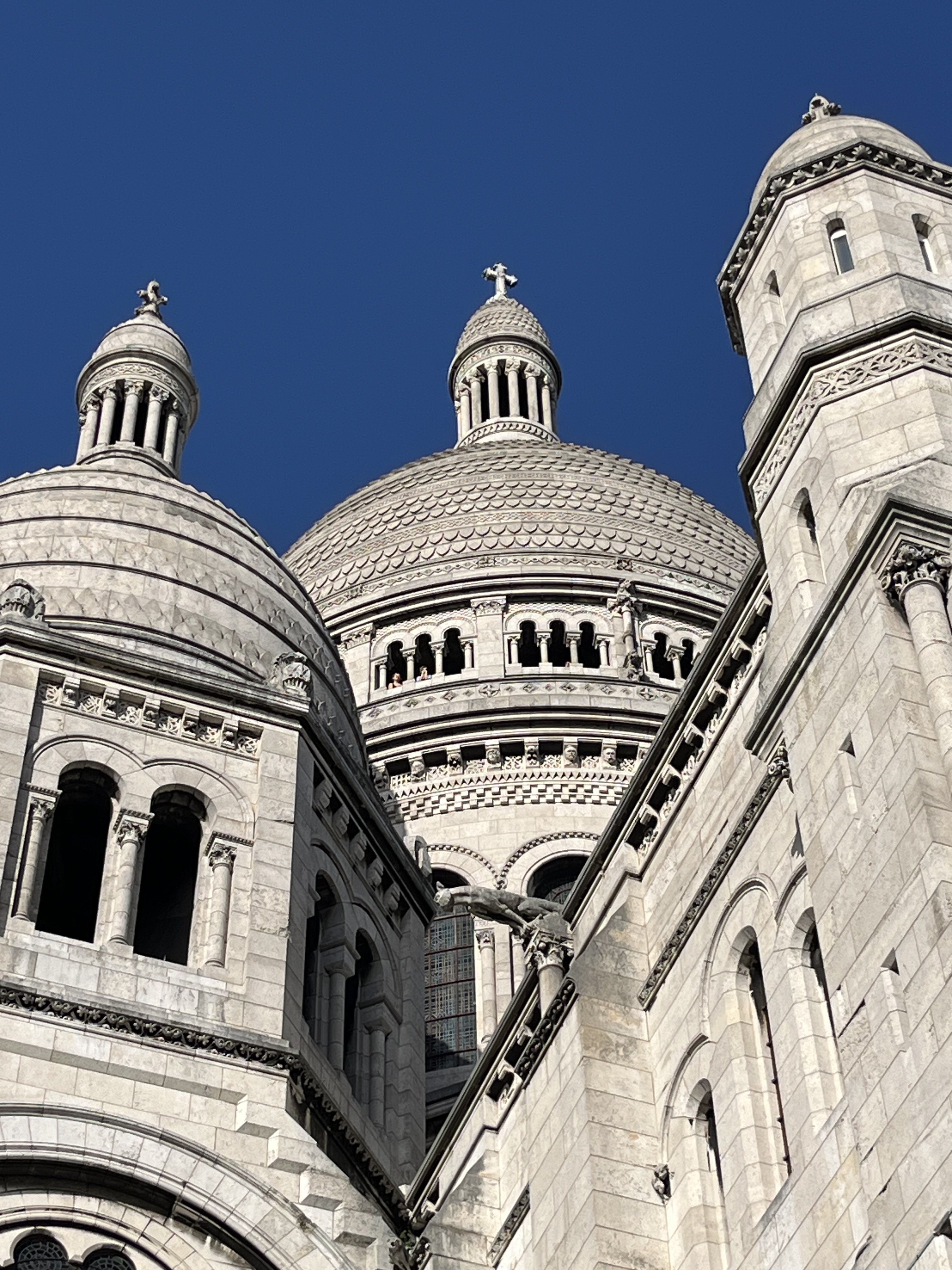
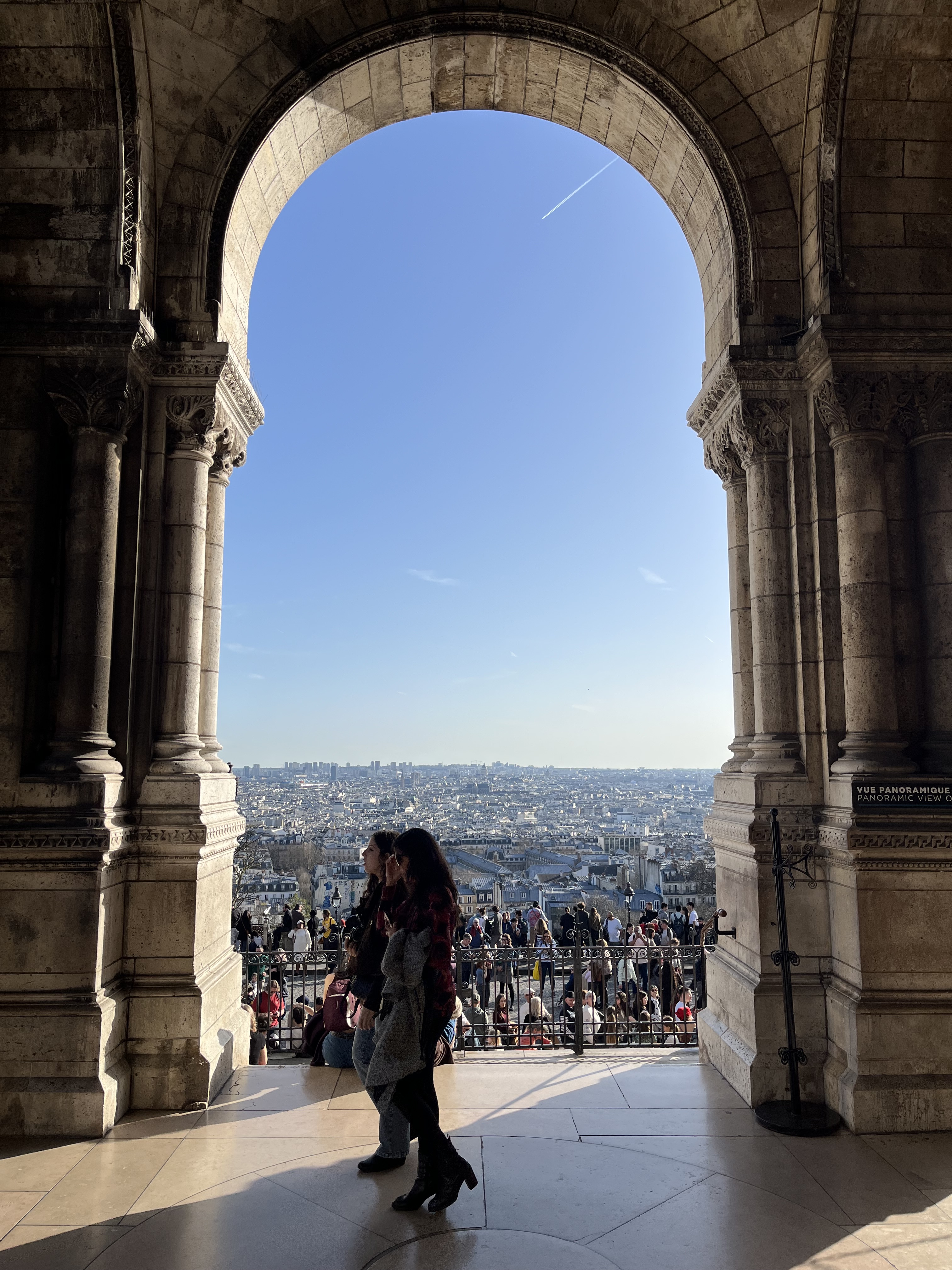
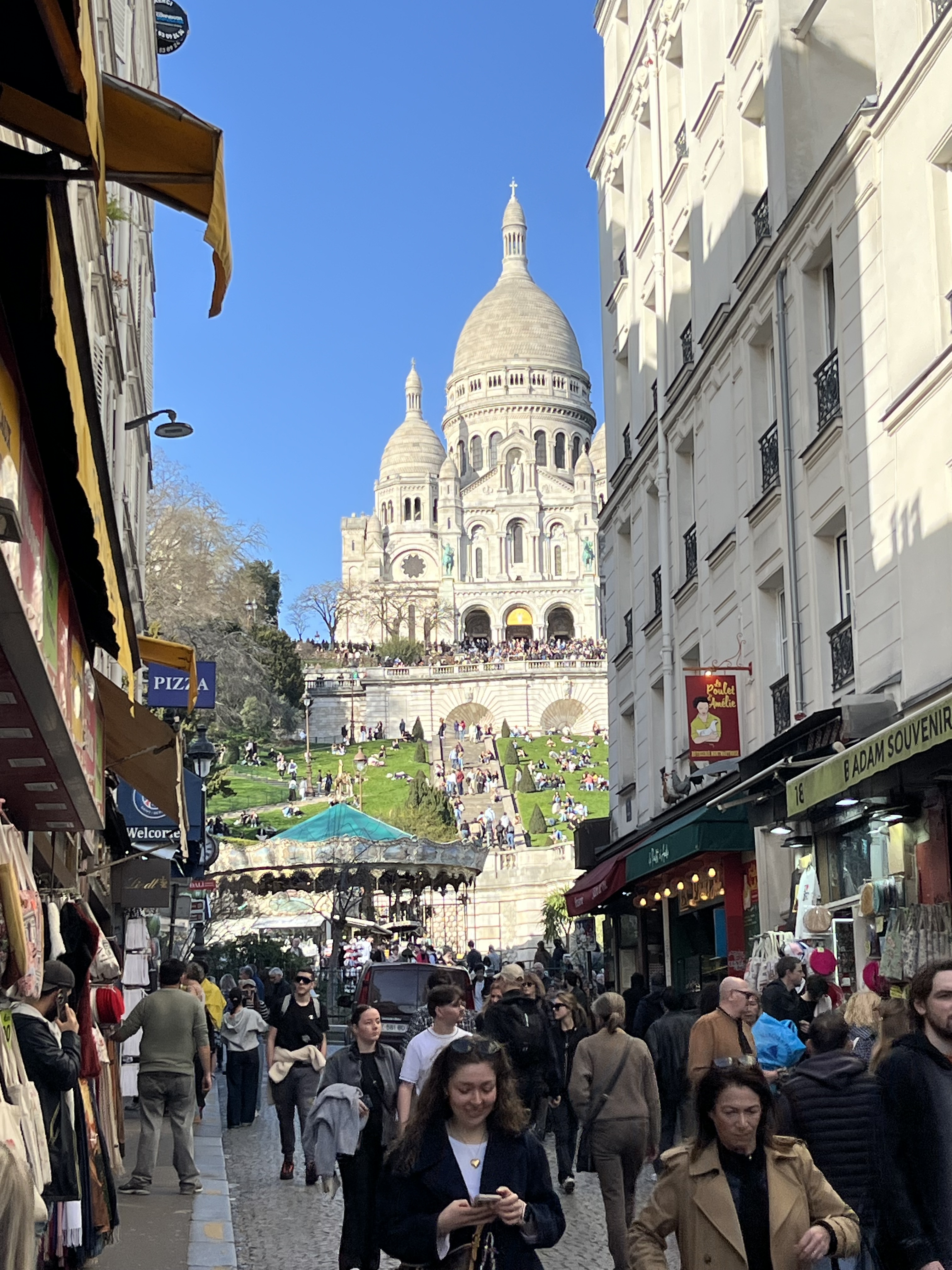
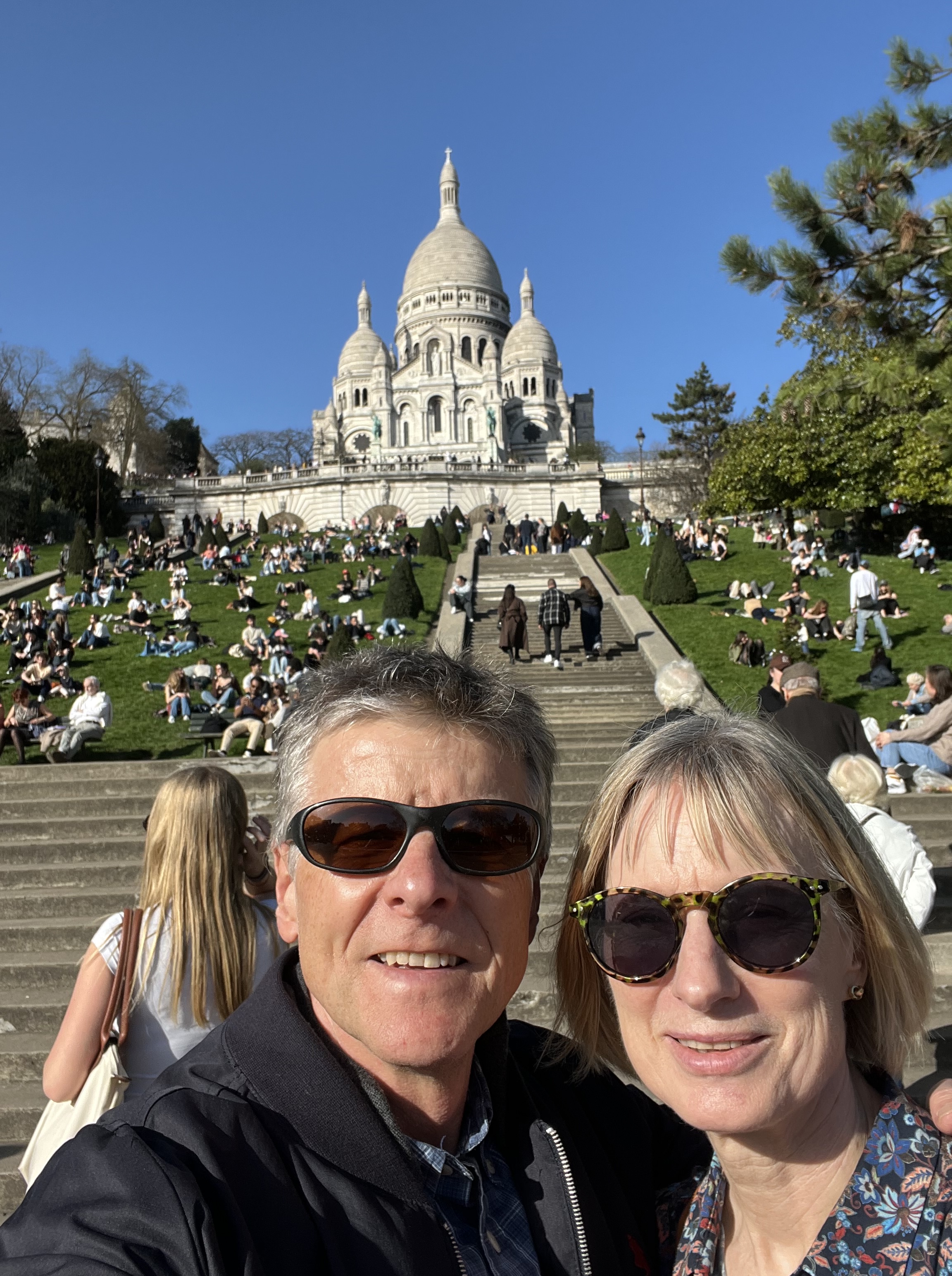
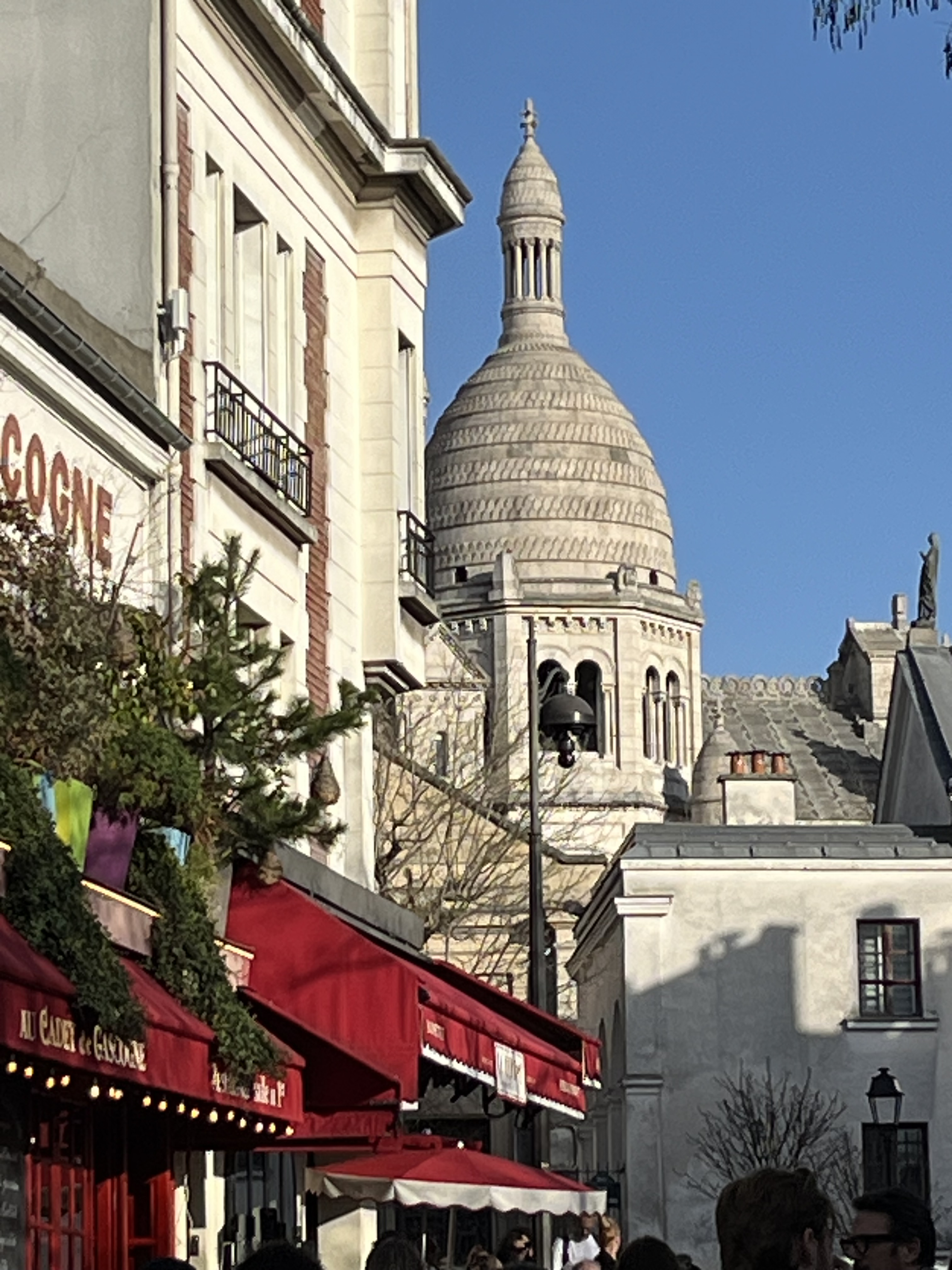
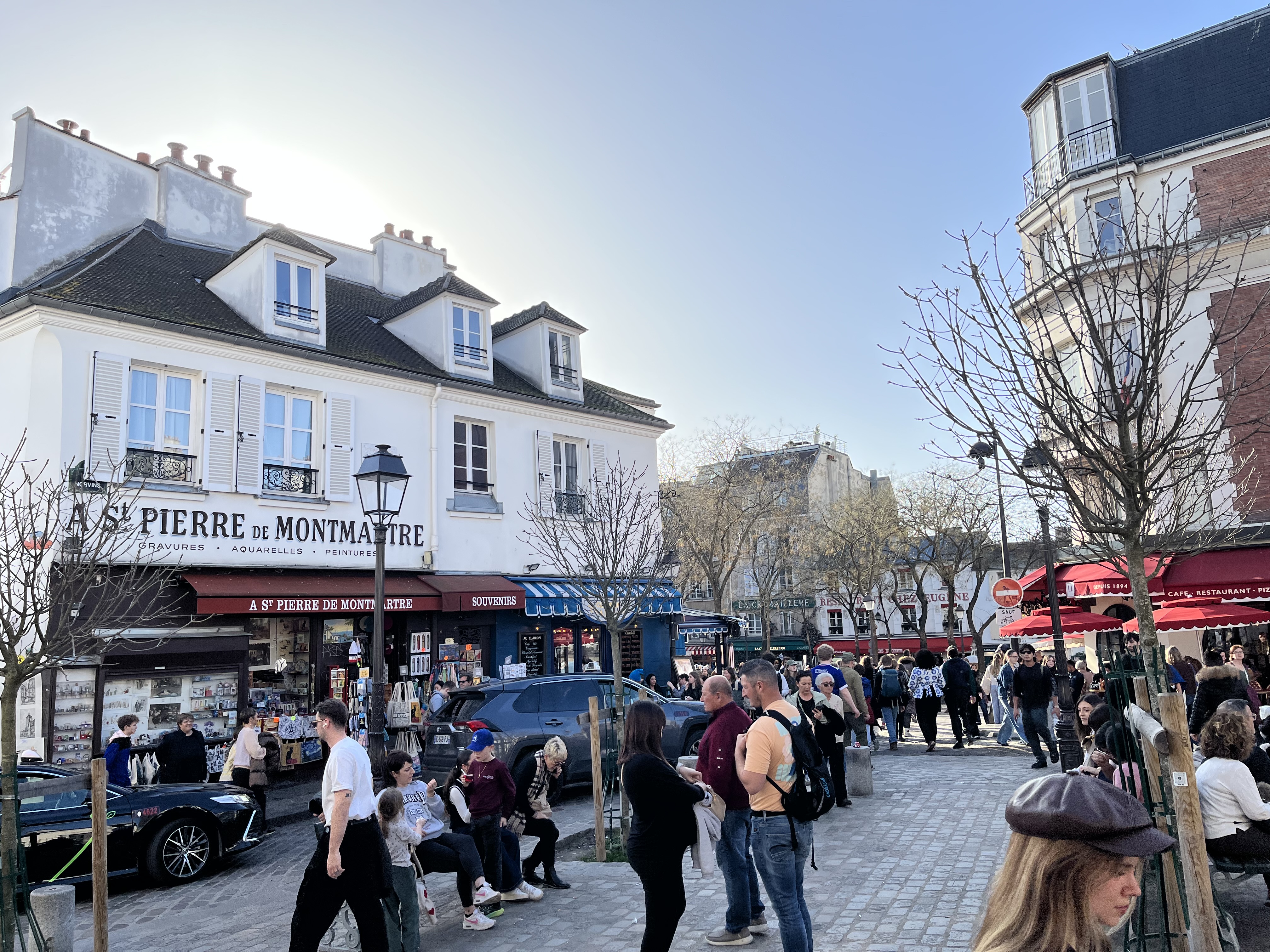
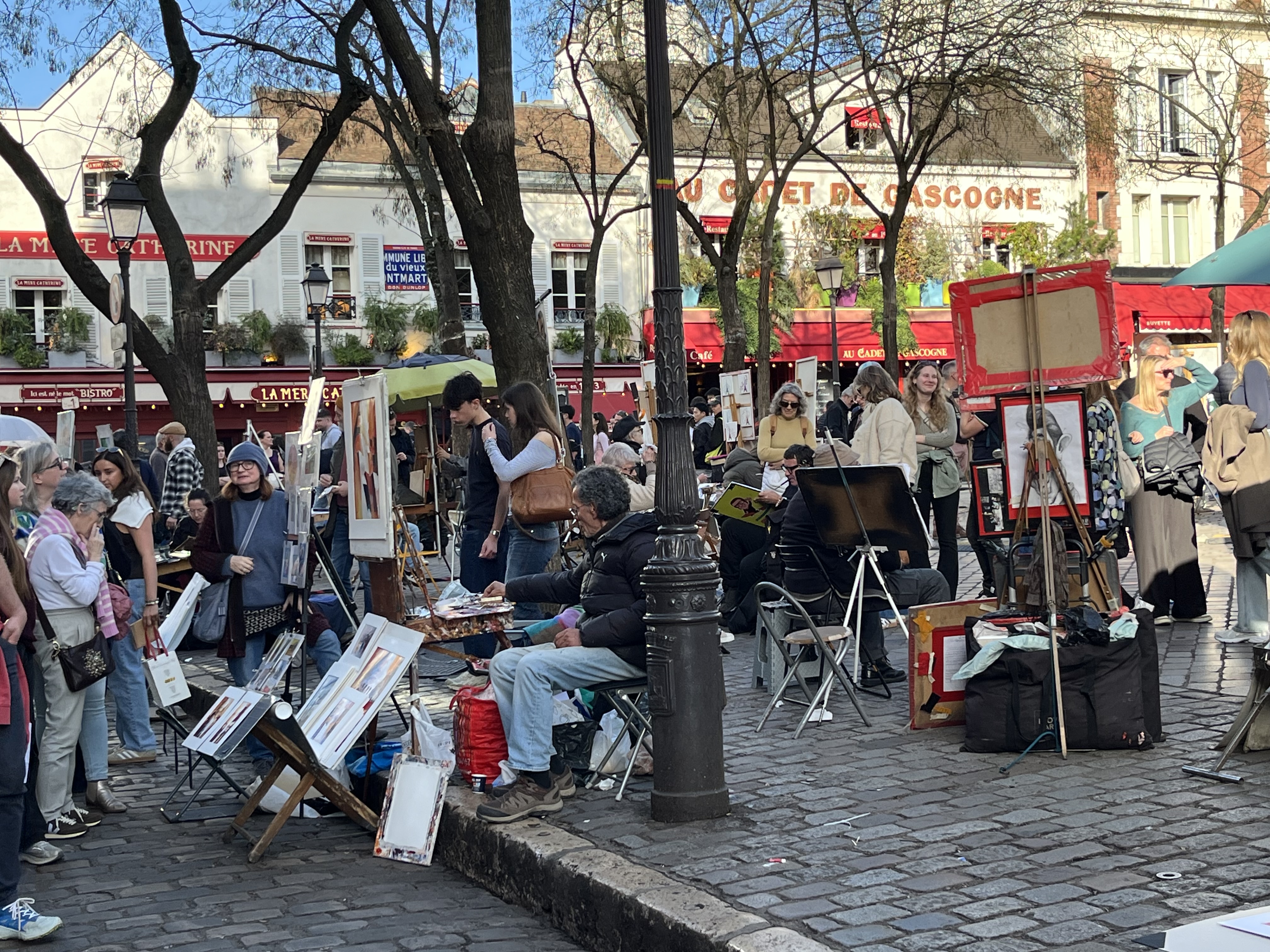
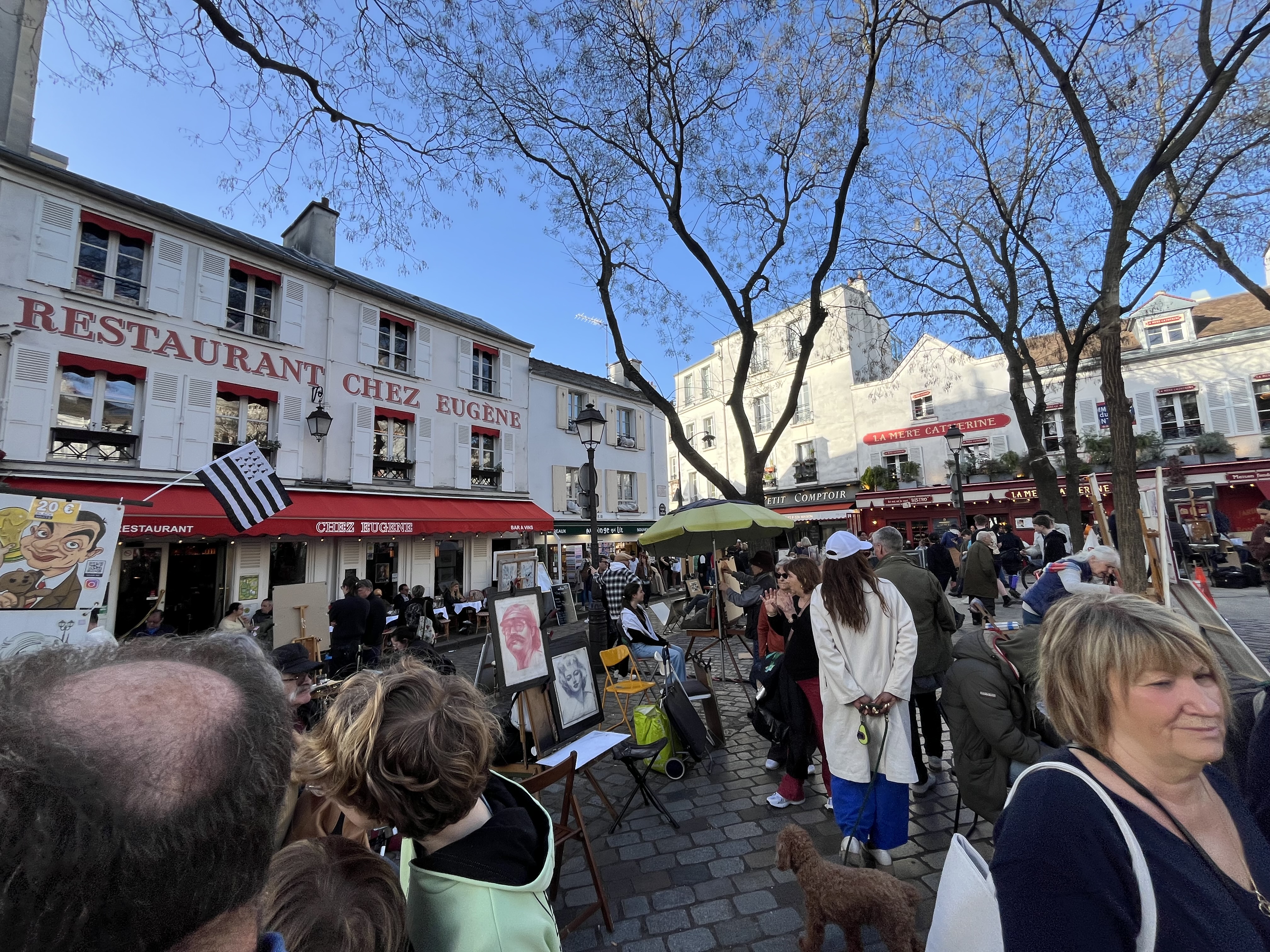
Montmatre, the artsy district of Paris, is always a tourist draw, and on such a perfect day, the walk up the hill to the church of Sacre Coeur was an enjoyable pleasure! We took our time, also visiting the inside of Sacre Coeur, and found this neo-Byzantine-Romanesque church very special and beautiful. Sorry, picture taking was not allowed inside the church.
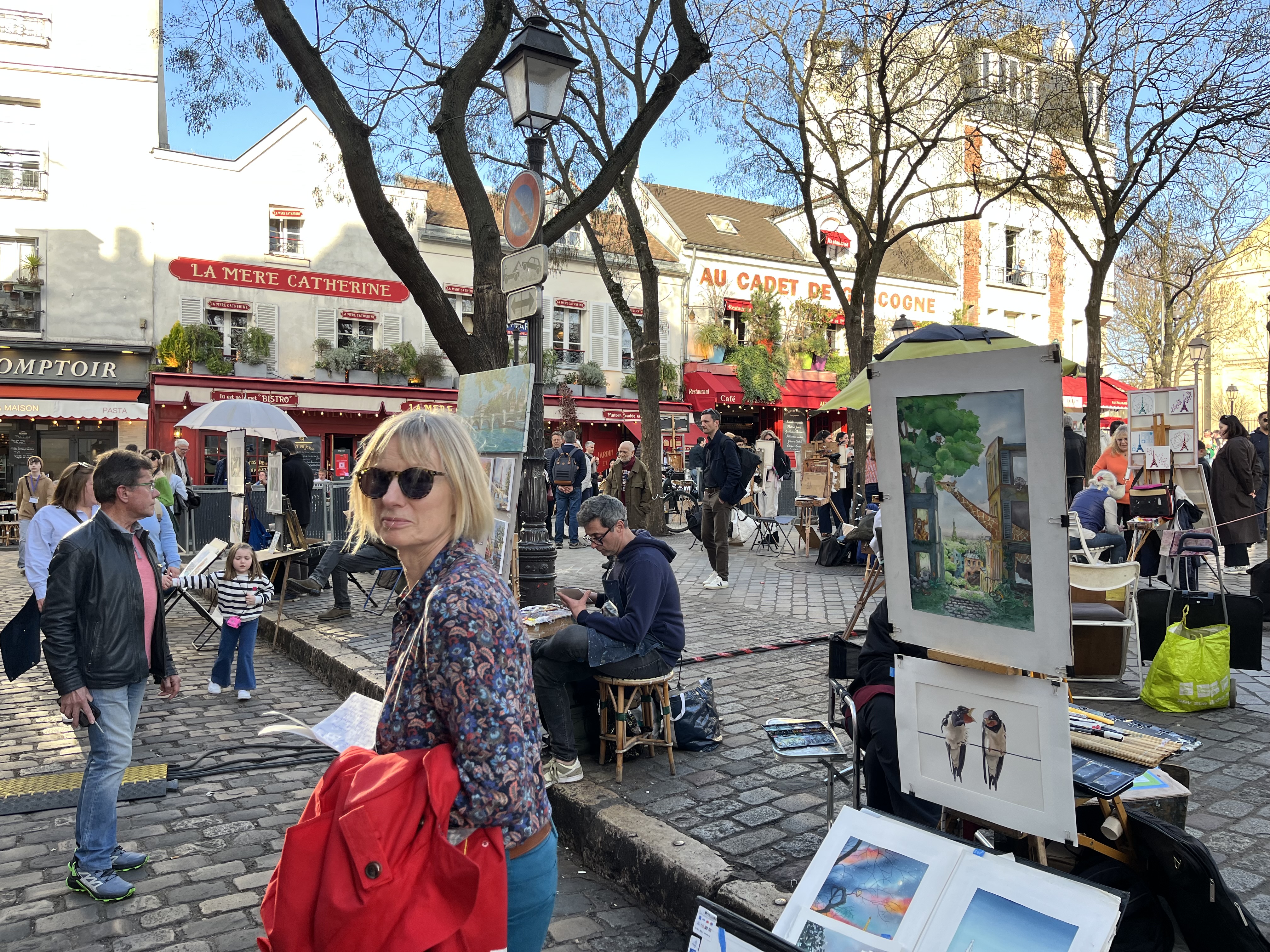
I caught the image of this cool blond on Montmartre’s small market square. Guessed with all the painters displaying their artistic works, that this young lady must be some local aquarrelle queen….
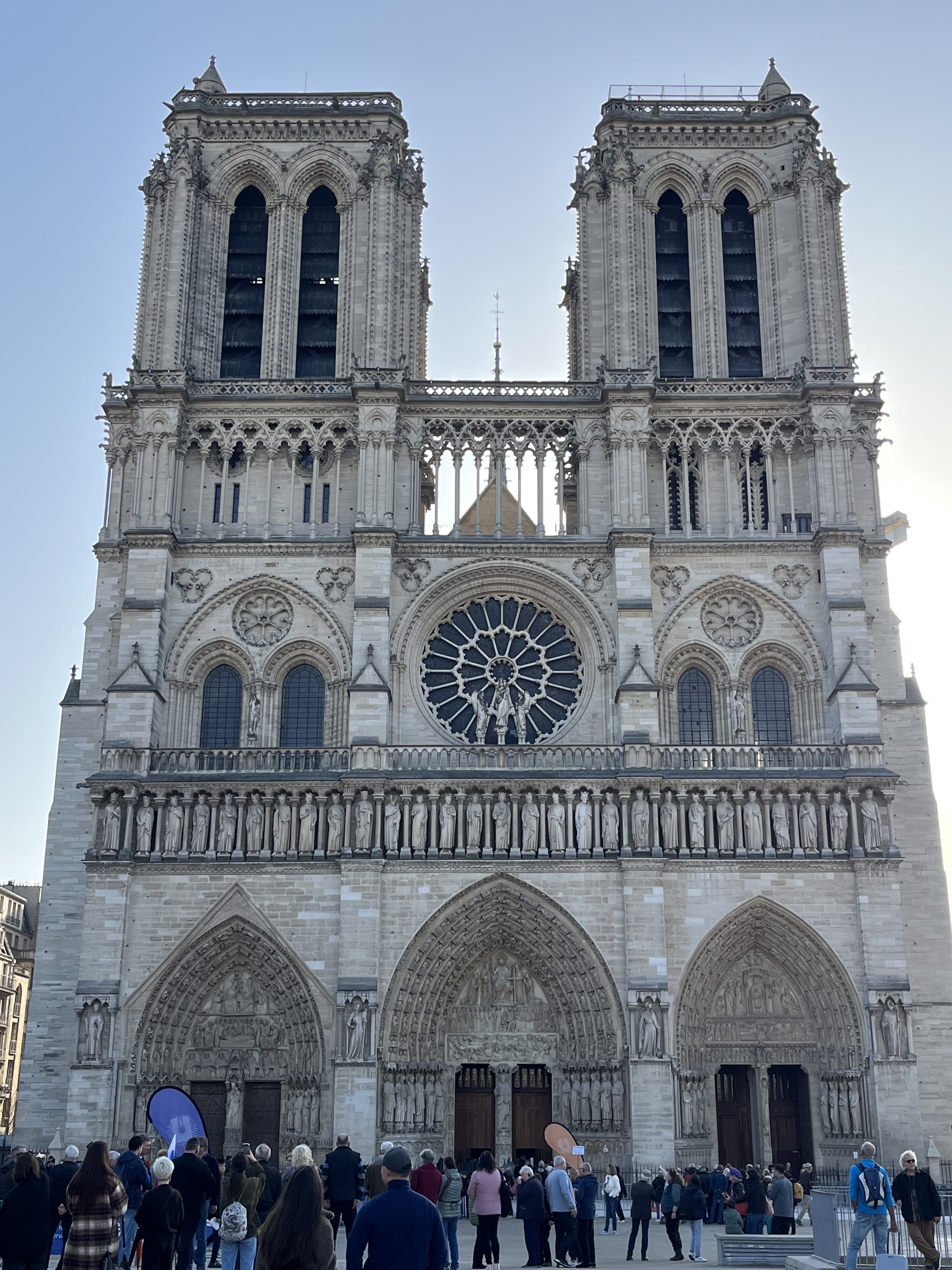
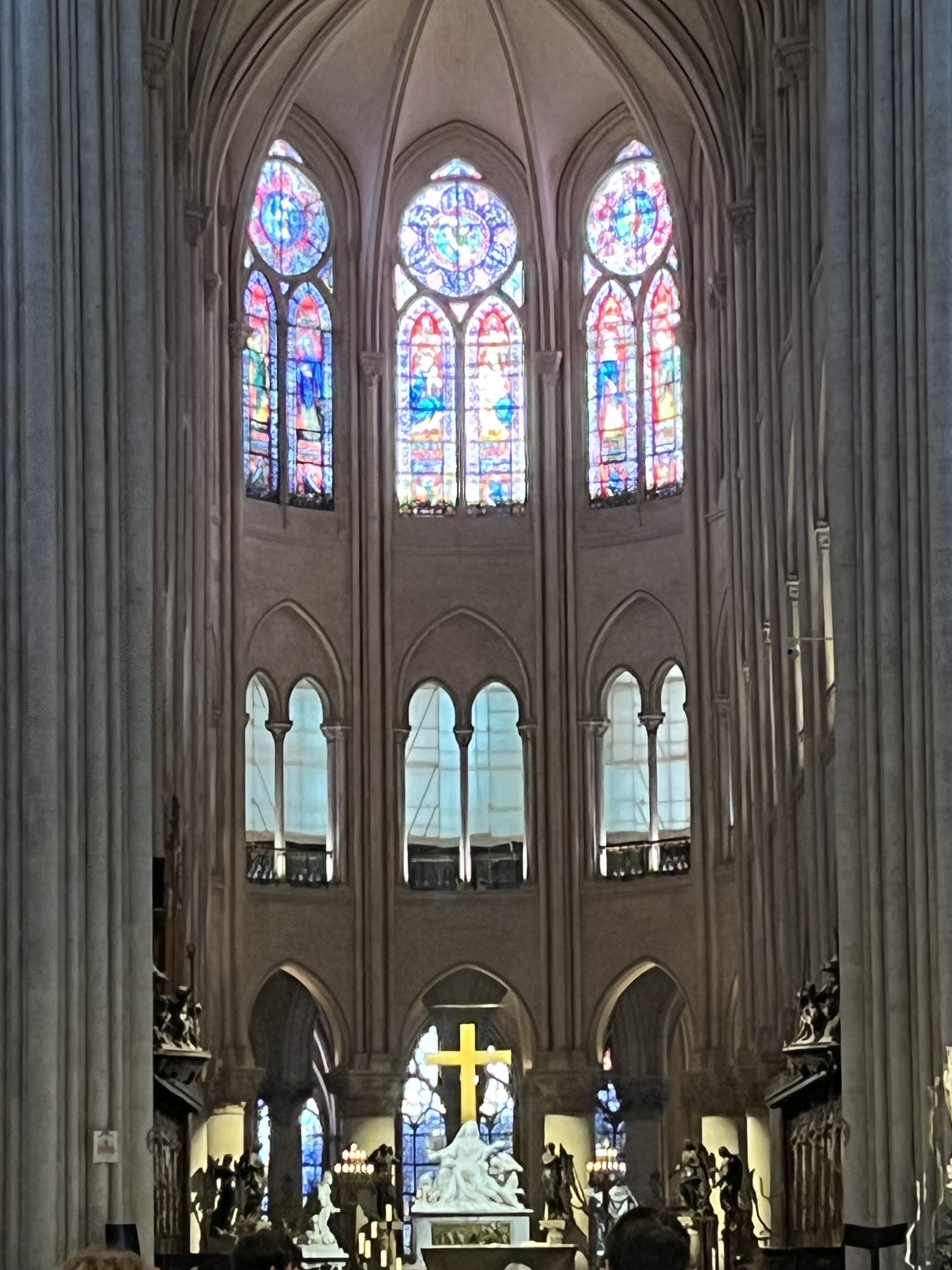
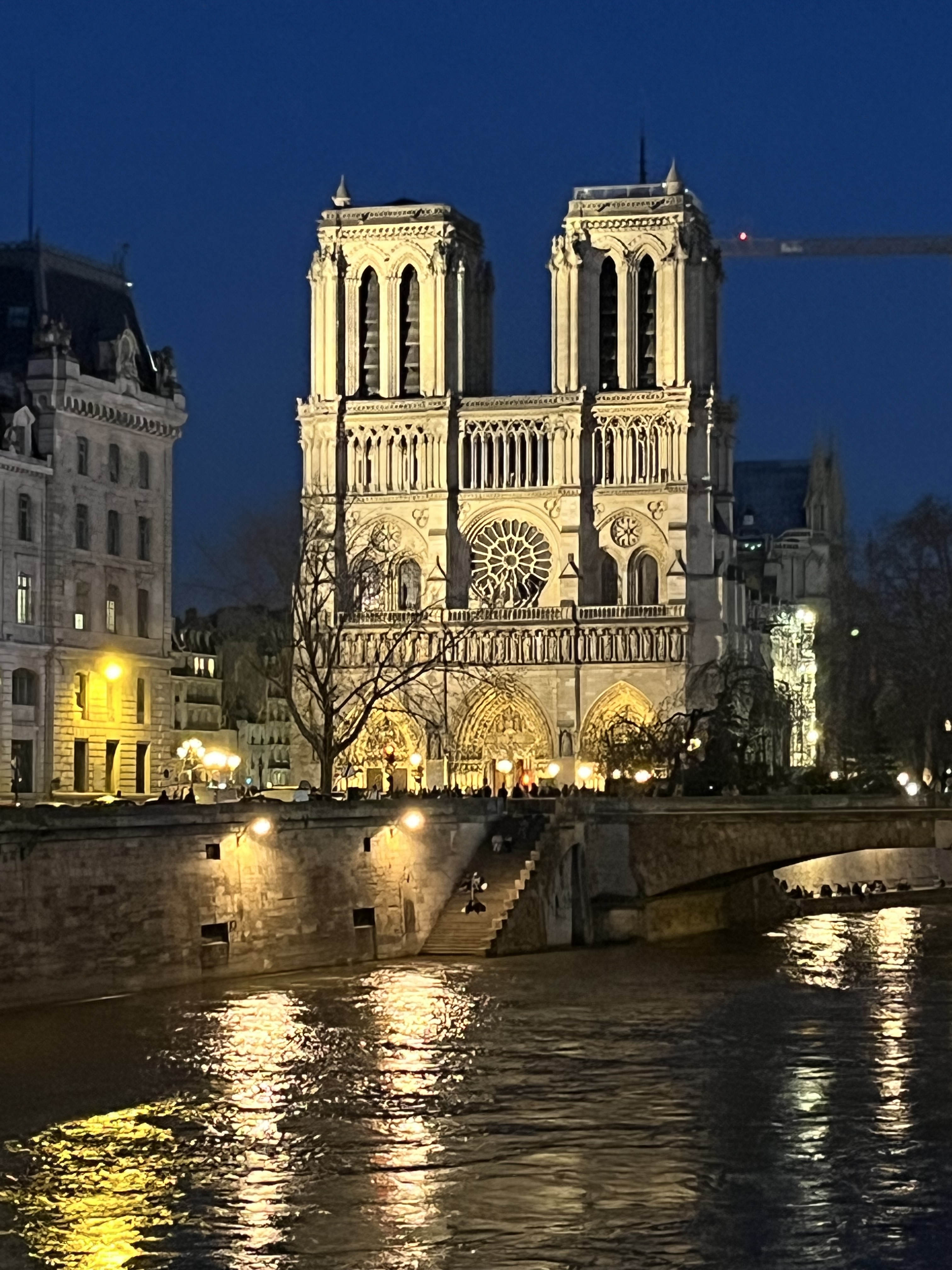
Visiting the freshly rebuilt church of Notre Dame was the main objective of our Paris visit. At the end of 2024 the church was reopened to the public, almost 5 1/2 years after it mostly burned down during the fire of April 15, 2019. At the time of our visit, even the rebuilding of the outside of the church was mostly complete. When France’s President Emanuel Macron announced in 2019 that the church would be rebuilt within 5 years, it was a very ambitious promise with a lot of unknowns.
Approximately 2,000 workers, mostly artisans, from masonry workers to carpenters, as well as leaded glass artists, etc were involved. They worked at the church and in various locations throughout France to make this huge rebuilding effort happen. There are many good and detailed write-ups and documentary videos available, which cover the painstaking, detailed work of this project. One of the facts that I admire most, is that this herculean effort was solely paid for by 340,000 donors from 150 countries, who contributed over $900 million to cover all of the costs. A fact that reflects the love and importance people from all around the globe feel for this special, iconic church of Notre Dame de Paris.
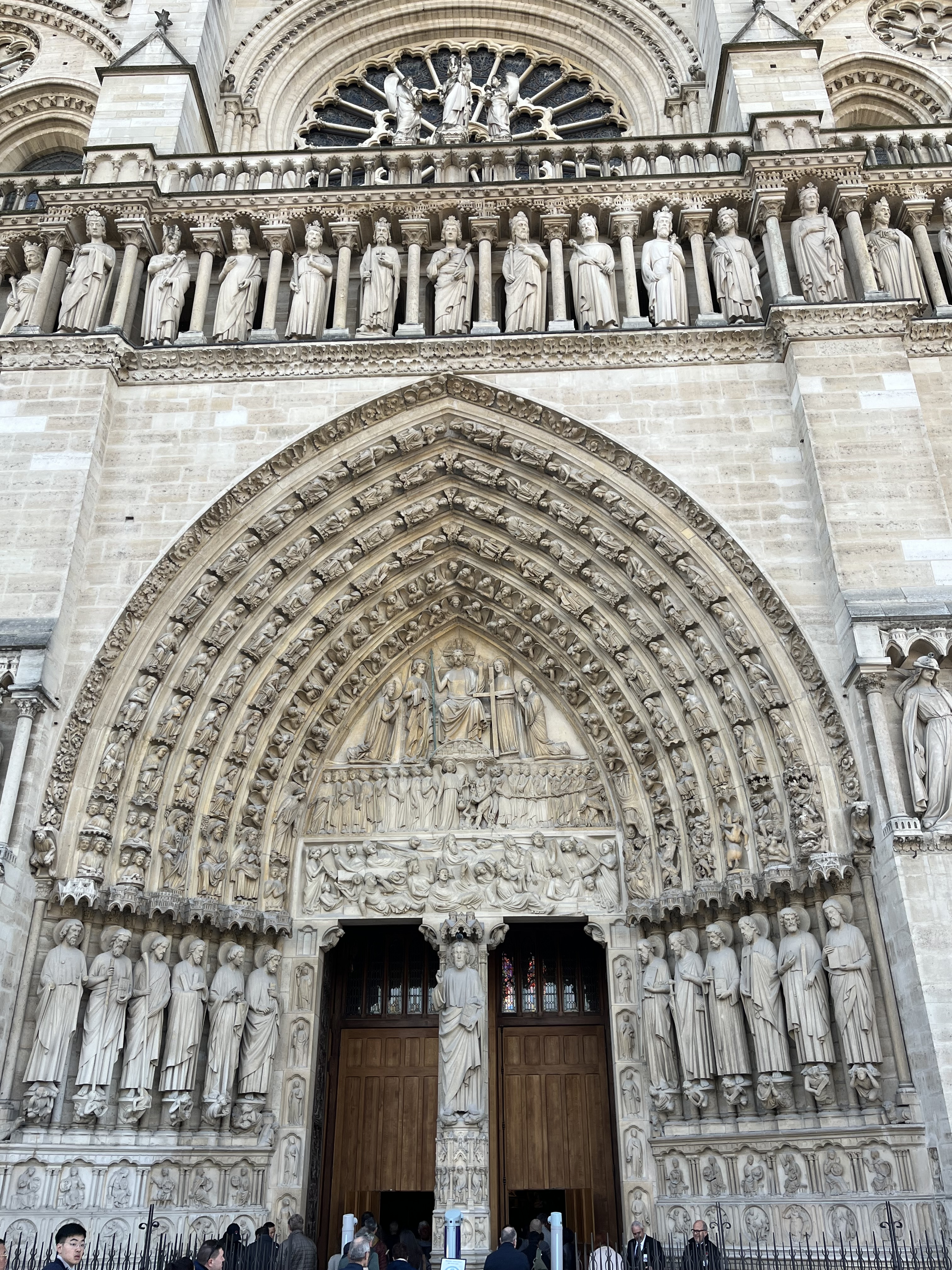
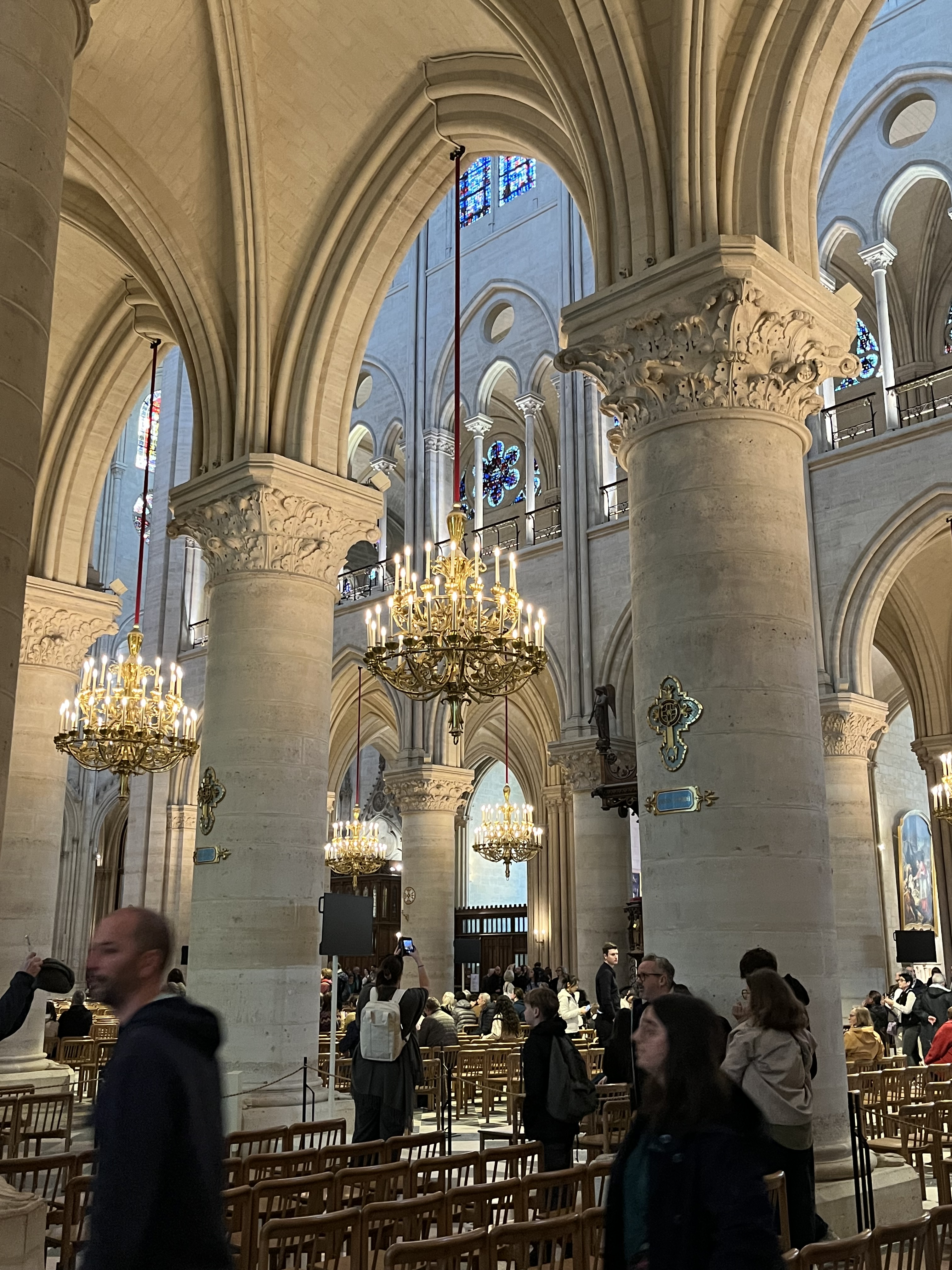
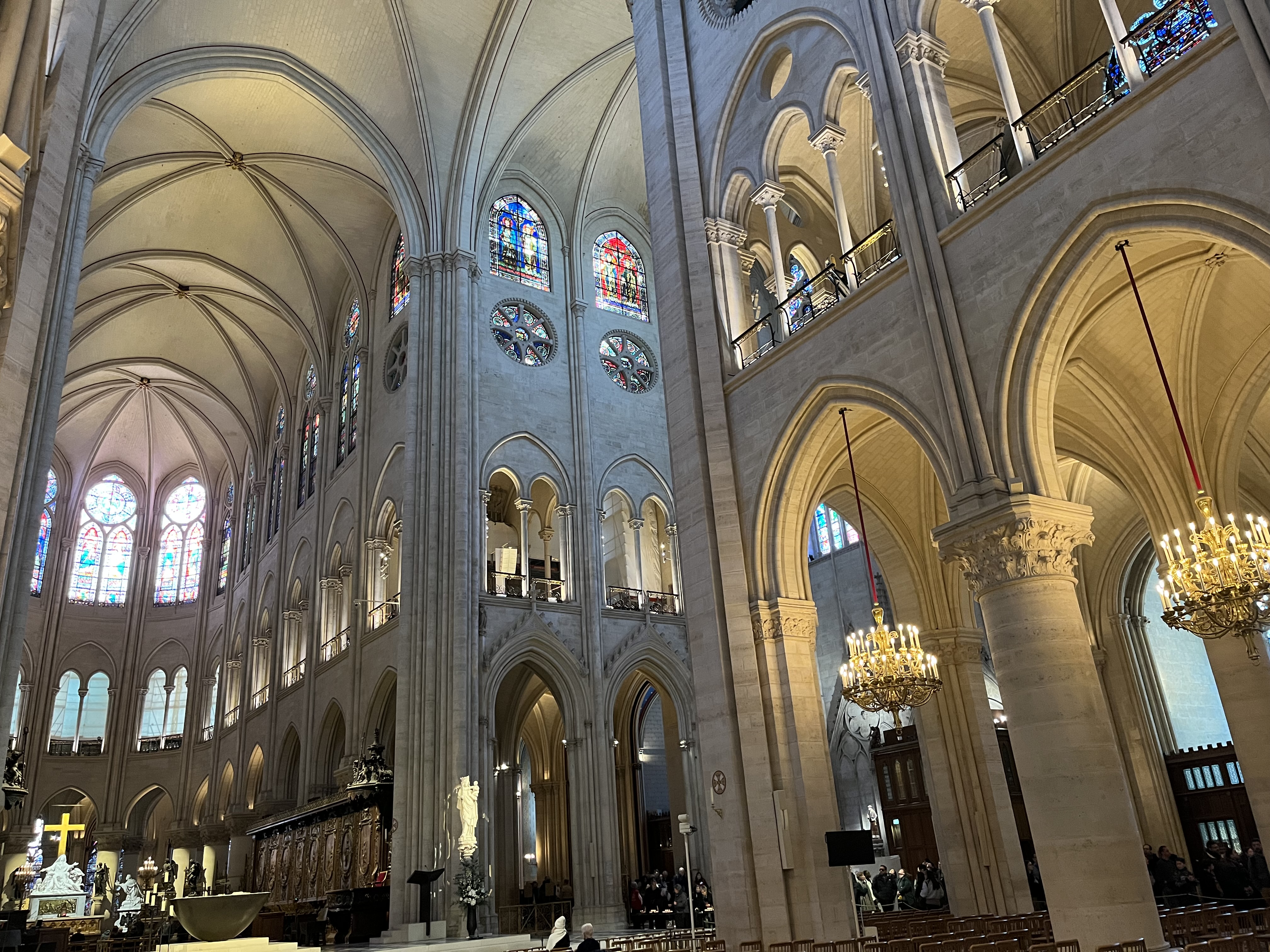
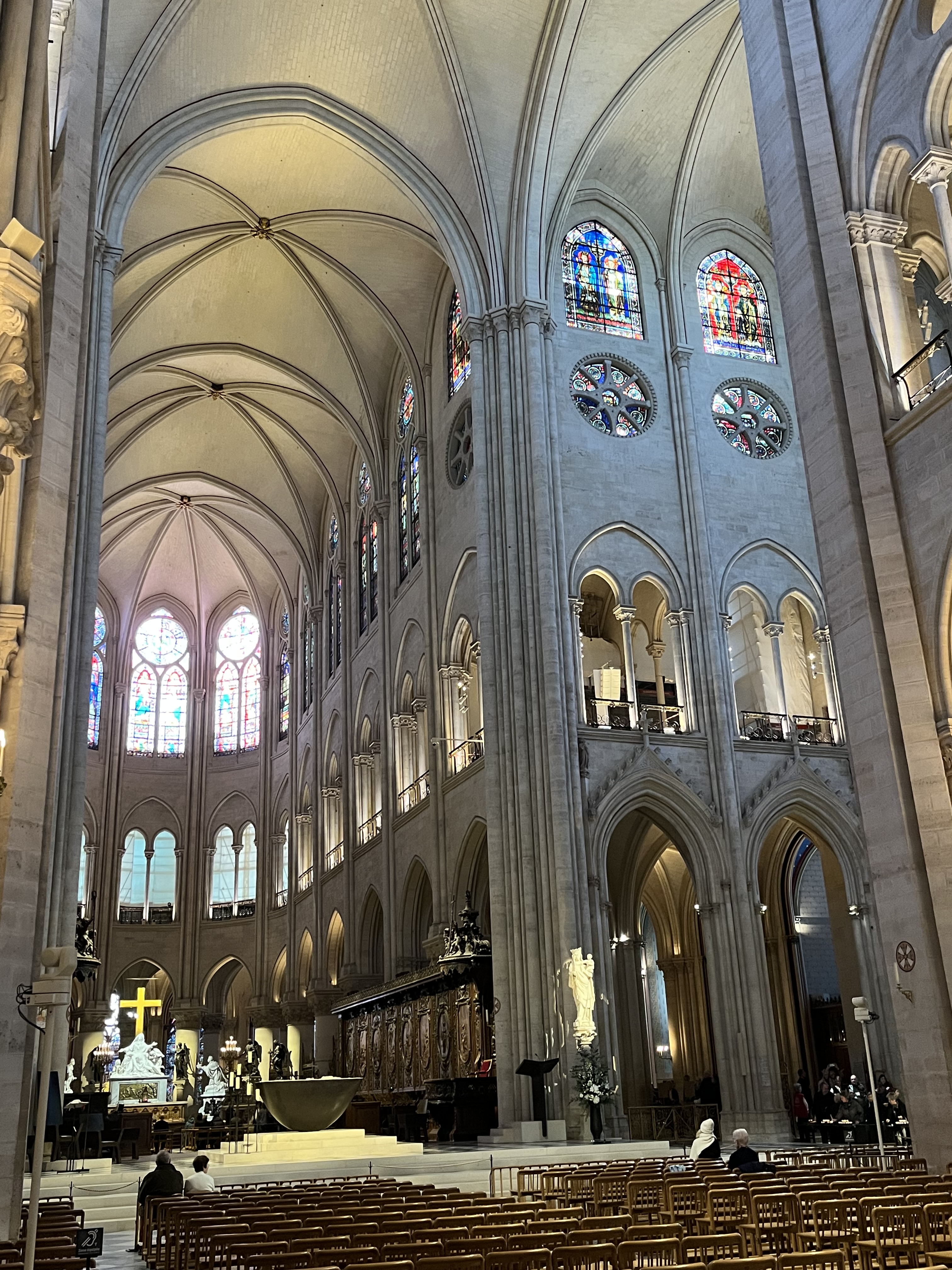
We visited Notre Dame some 25 years ago when our daughters were still young. At the time, one of them was very excited about visiting the church towers to see the place of the hunchback of Notre Dame. As soon as we entered the cathedral this time, we felt like we were visiting for the first time. Everything immediately struck us as very bright, clean, and perfect. It was hard to imagine we were visiting the same place, or was it? Previously, centuries of candle and incense smoke, as well as plain dust and grime, had darkened the walls and dimmed the light shining in through the dirty windows. Now, this bright, colorful, and sharply detailed interior felt almost a little too perfect, new and unfamiliar.
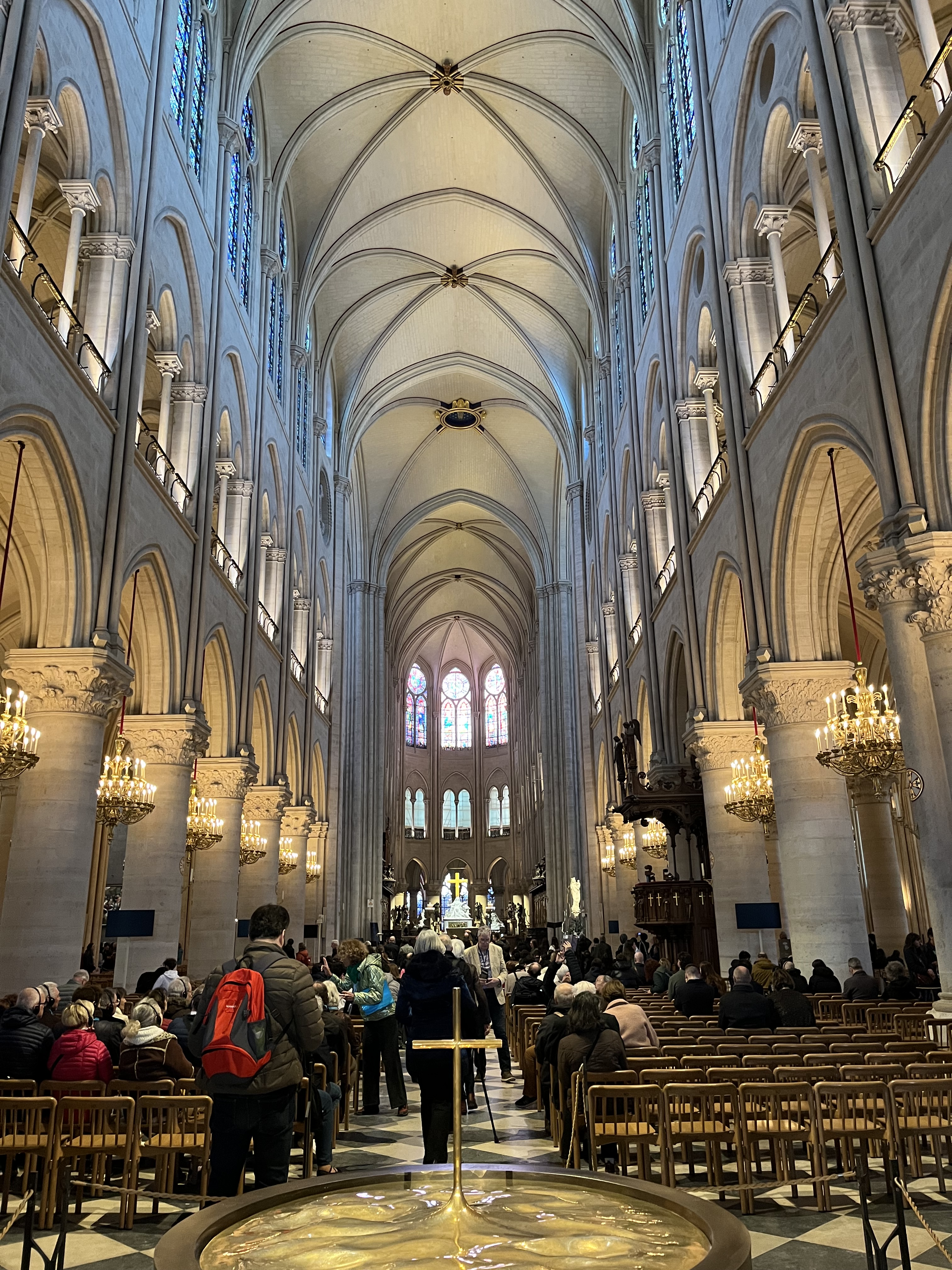
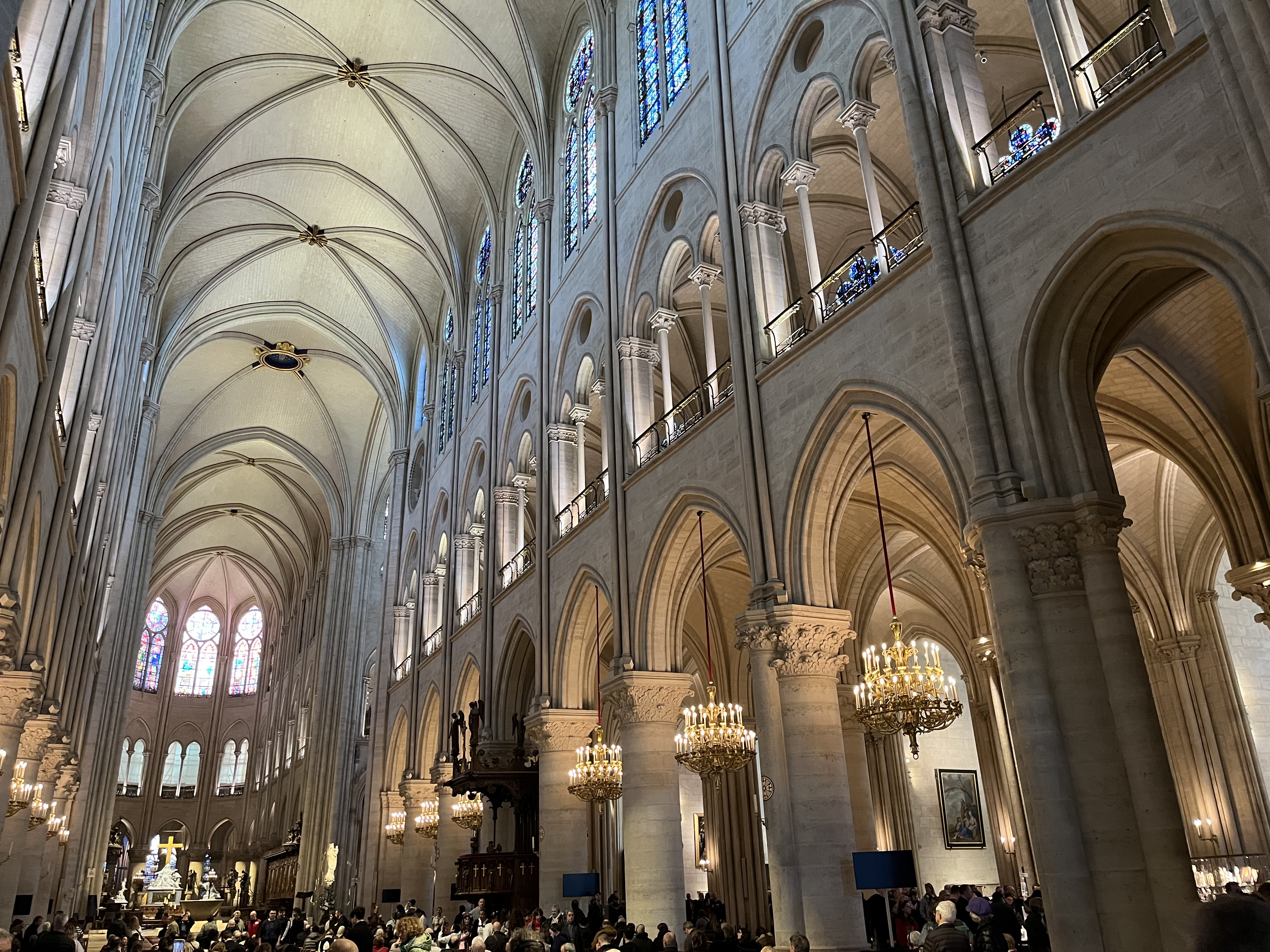
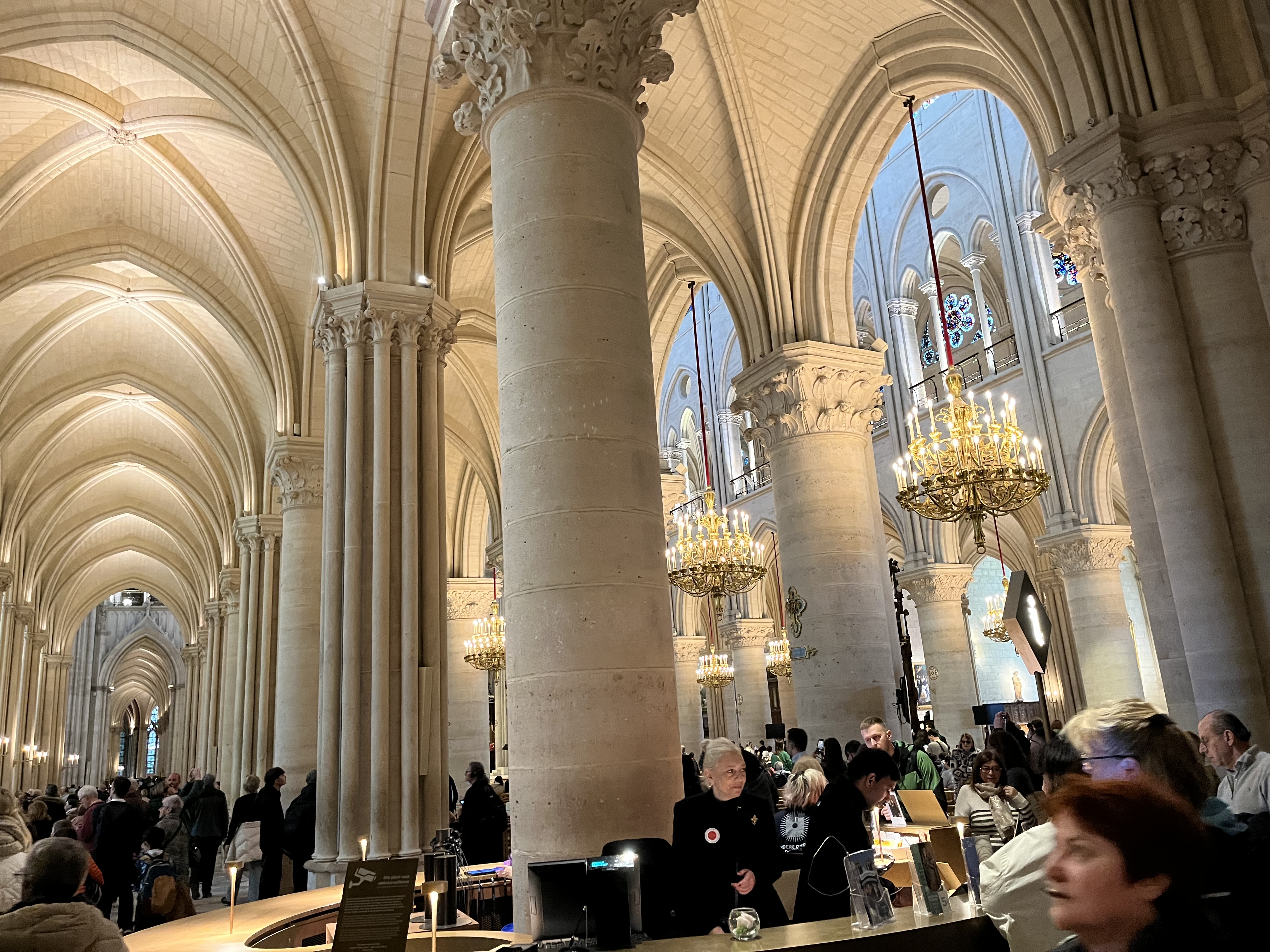
Visiting the cathedral is free and does not require a reservation, though it is recommended. Being cautious, we made a reservation in advance, yet noticed that it wasn’t necessary, as pretty much everyone was allowed inside without a delay. The church felt fairly full and, yes, it would have been nicer to have more space and a quieter atmosphere to stroll through the church. It was however not nearly as bad as we have experienced elsewhere, for instance, at the Vatican Museum in Rome, where we were literally pushed through at a pace we did not necessarily choose. Here we could still walk at our own pace, though not everywhere, as some areas were reserved for visitors wanting to sit or kneel quietly in prayer.
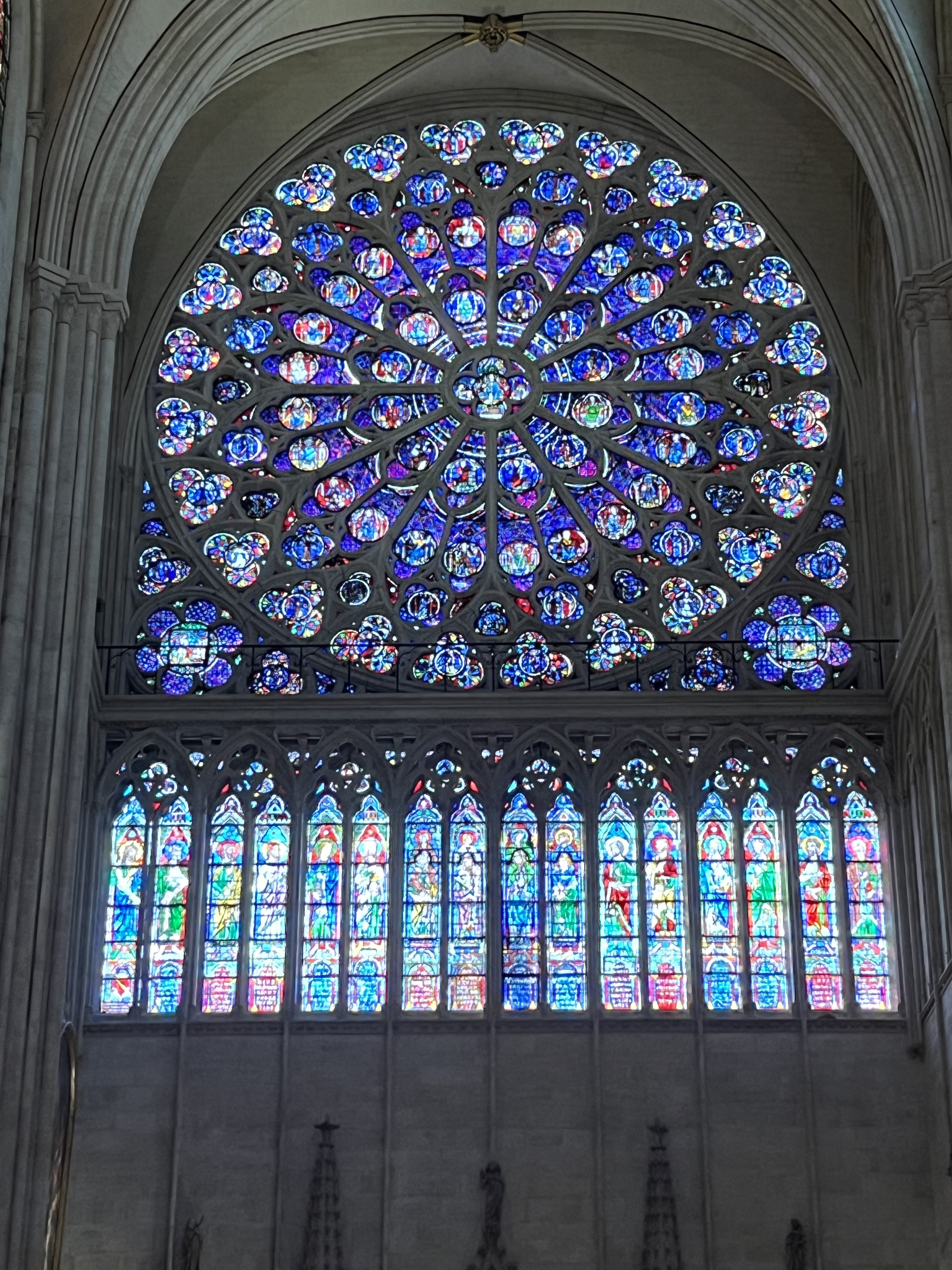
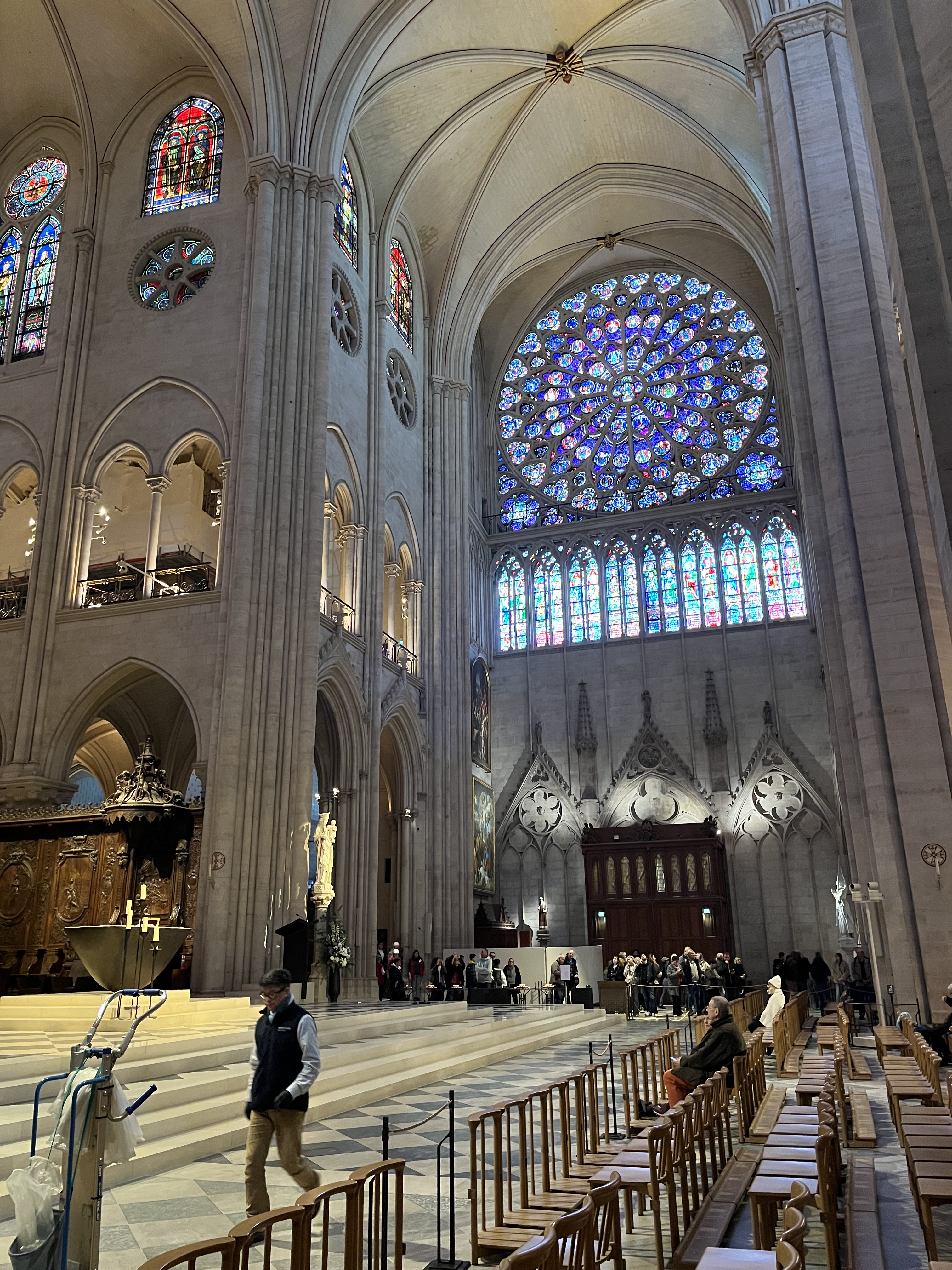
Above, the south facing rose window.
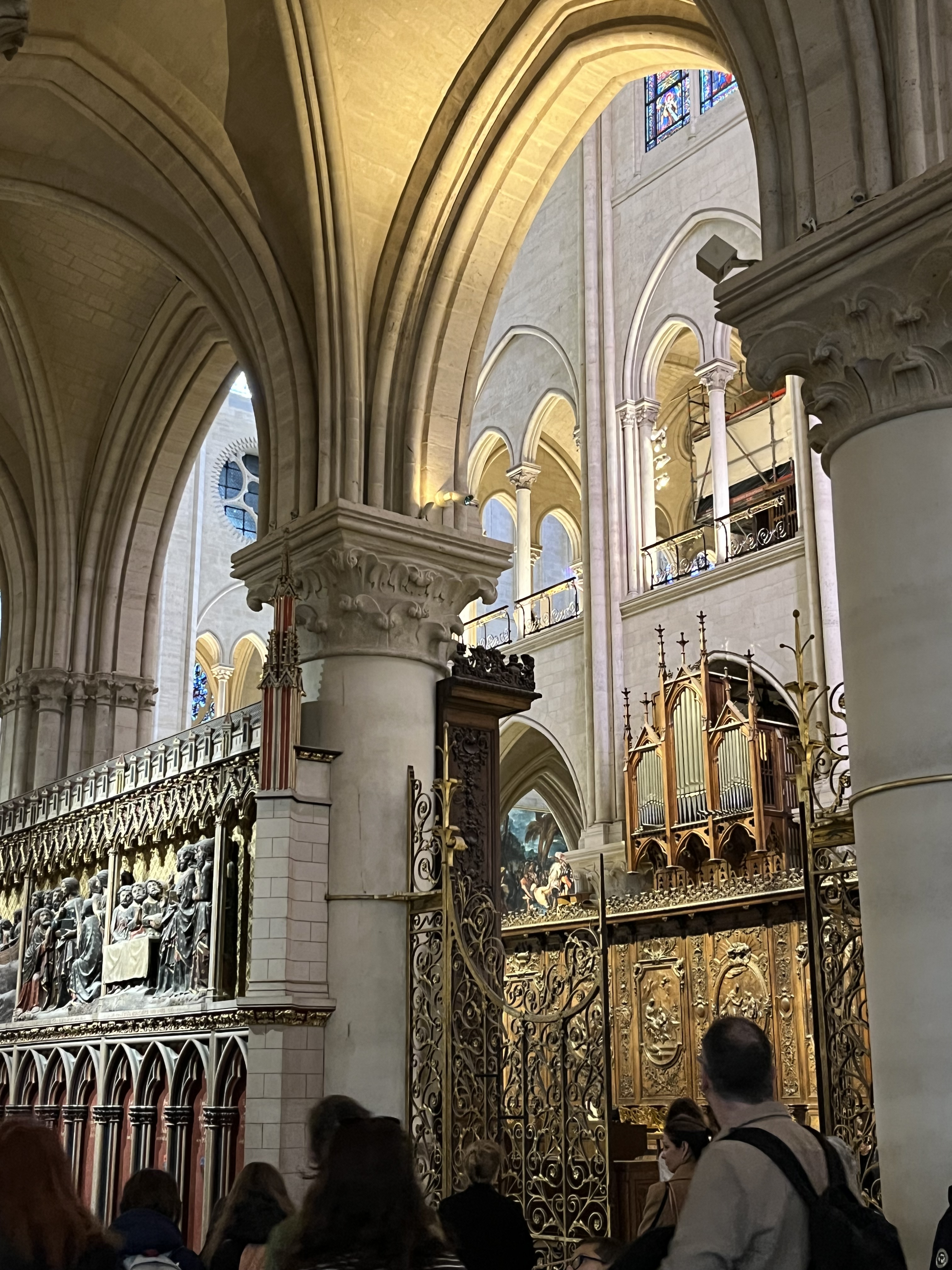
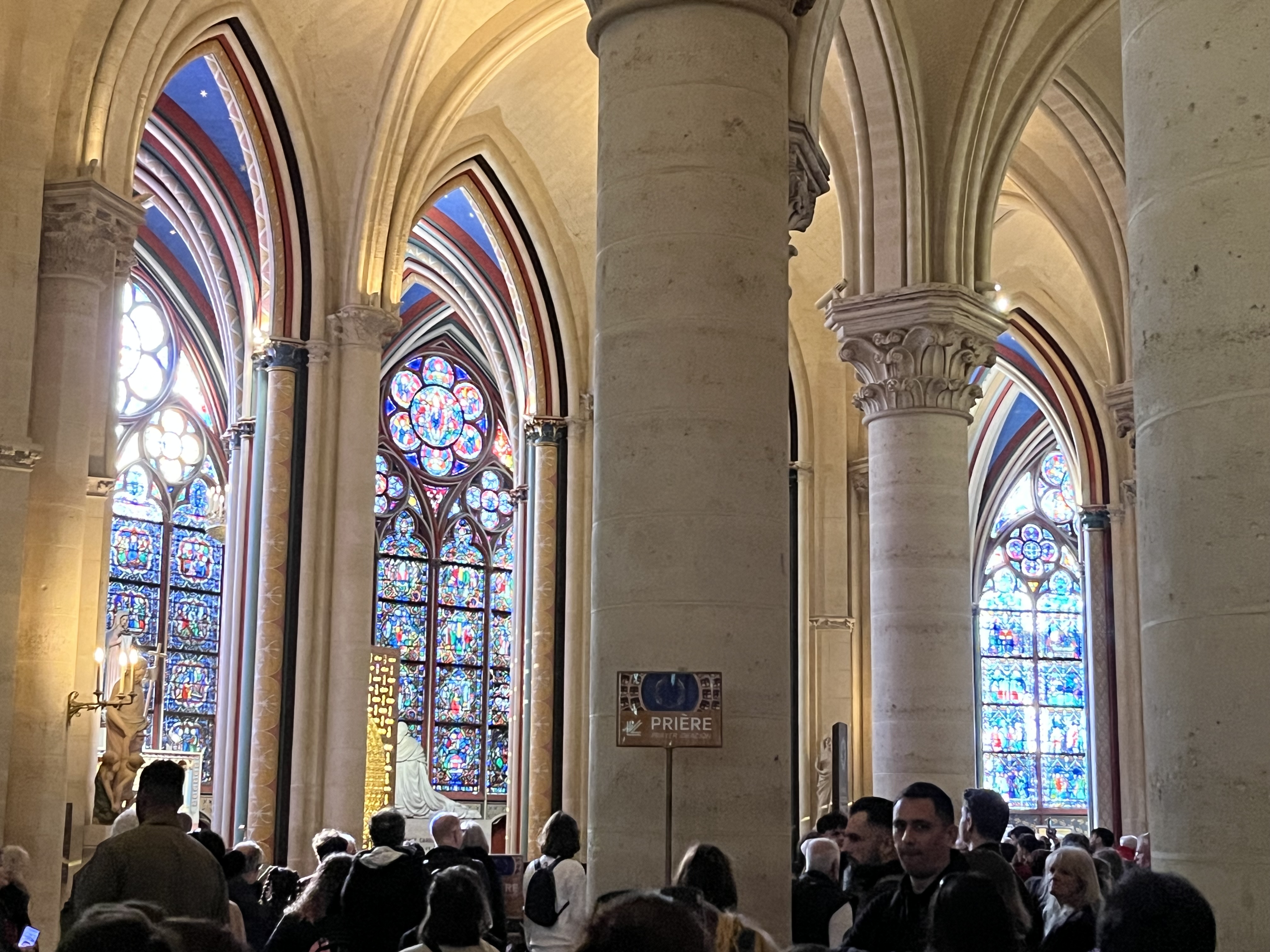
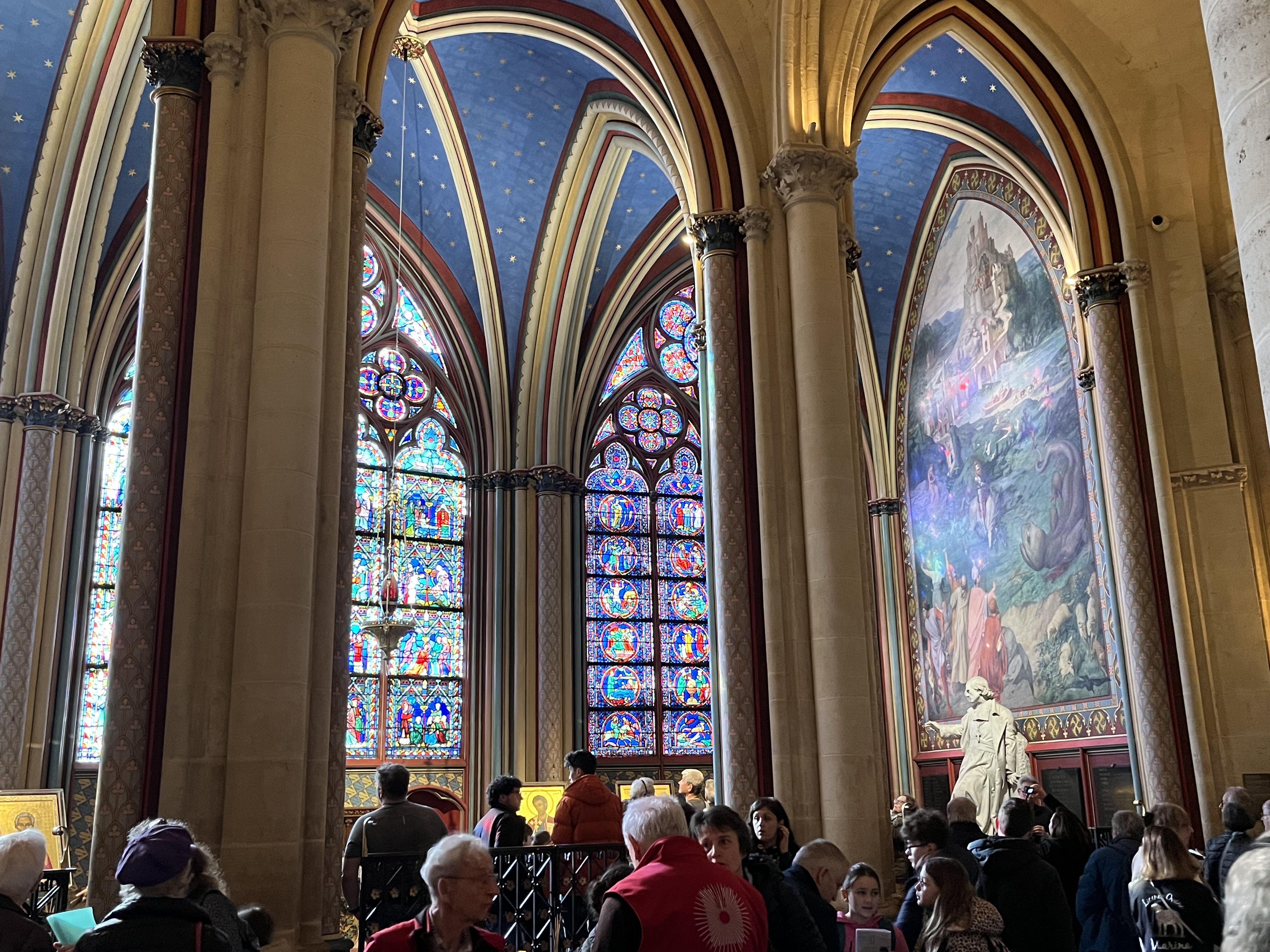
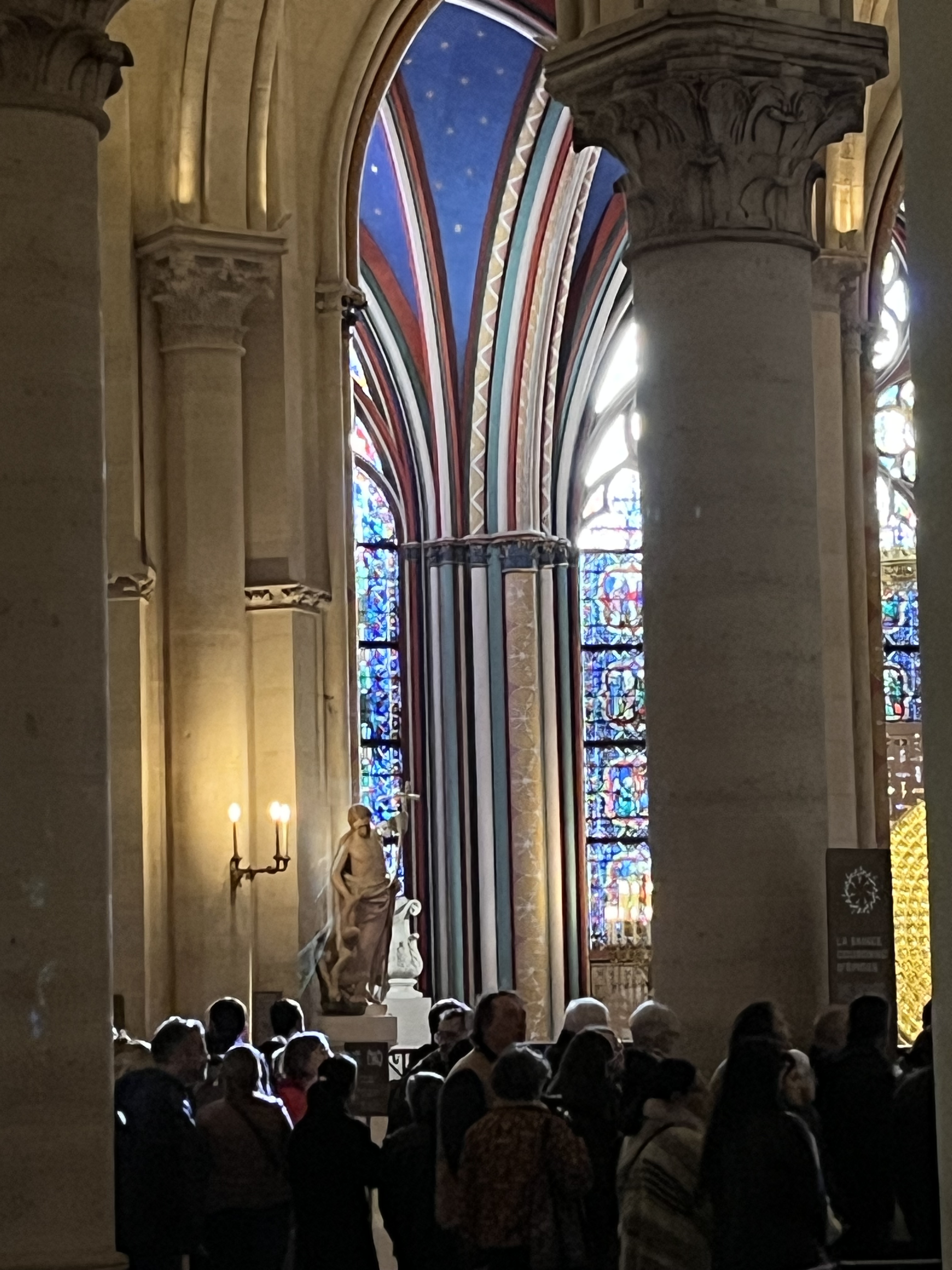
Above, the shining, colorful and predominantly blue of the windows and ceiling paint in contrast to the white, freshly cleaned stone walls and columns, was amazing!
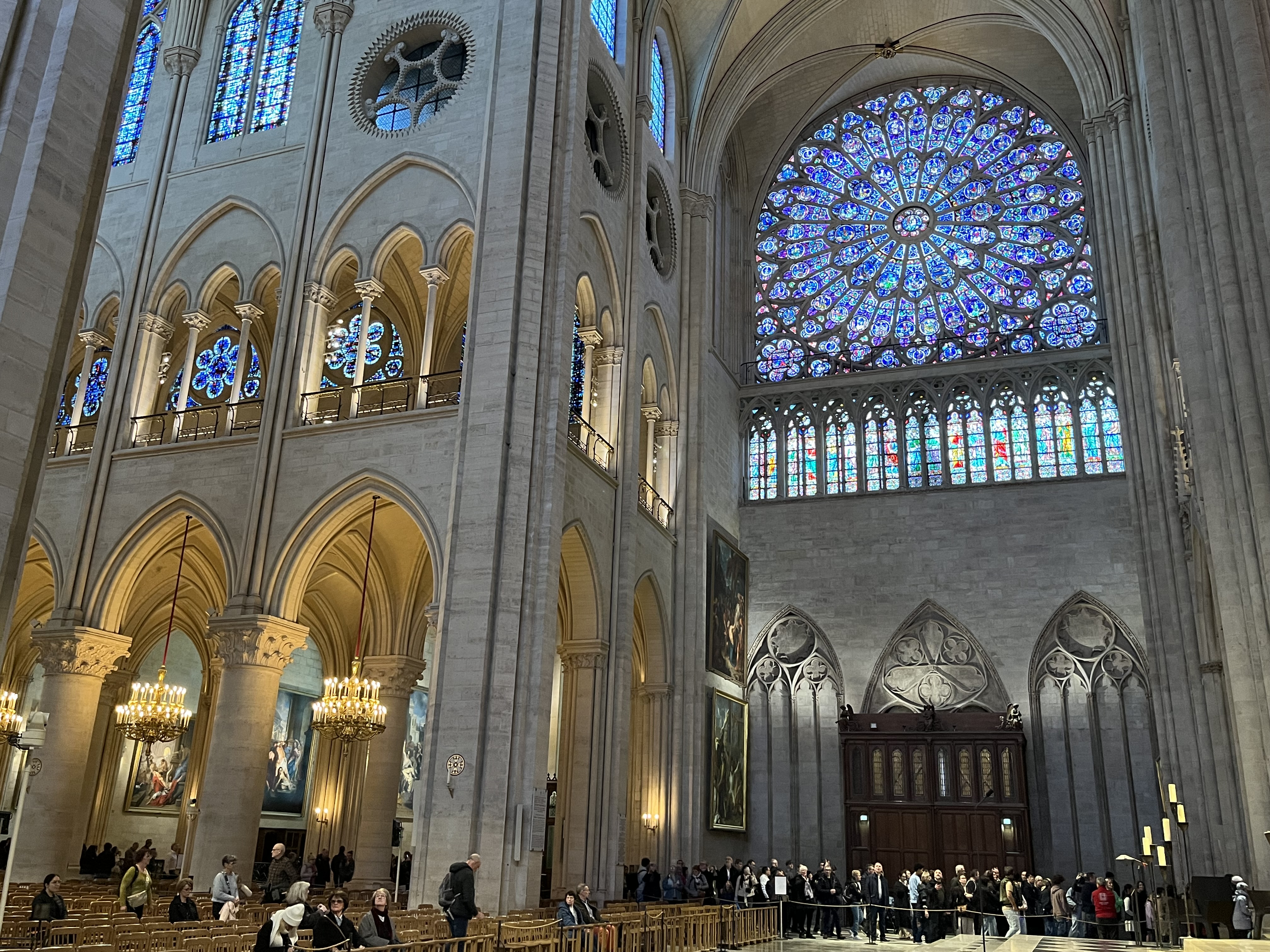
For me, the picture above, of the north facing rose window in the cathedral’s transept, best conveys the bright, clear, sharply detailed beauty and colorful impression of the newly rebuilt Notre Dame’s interior.
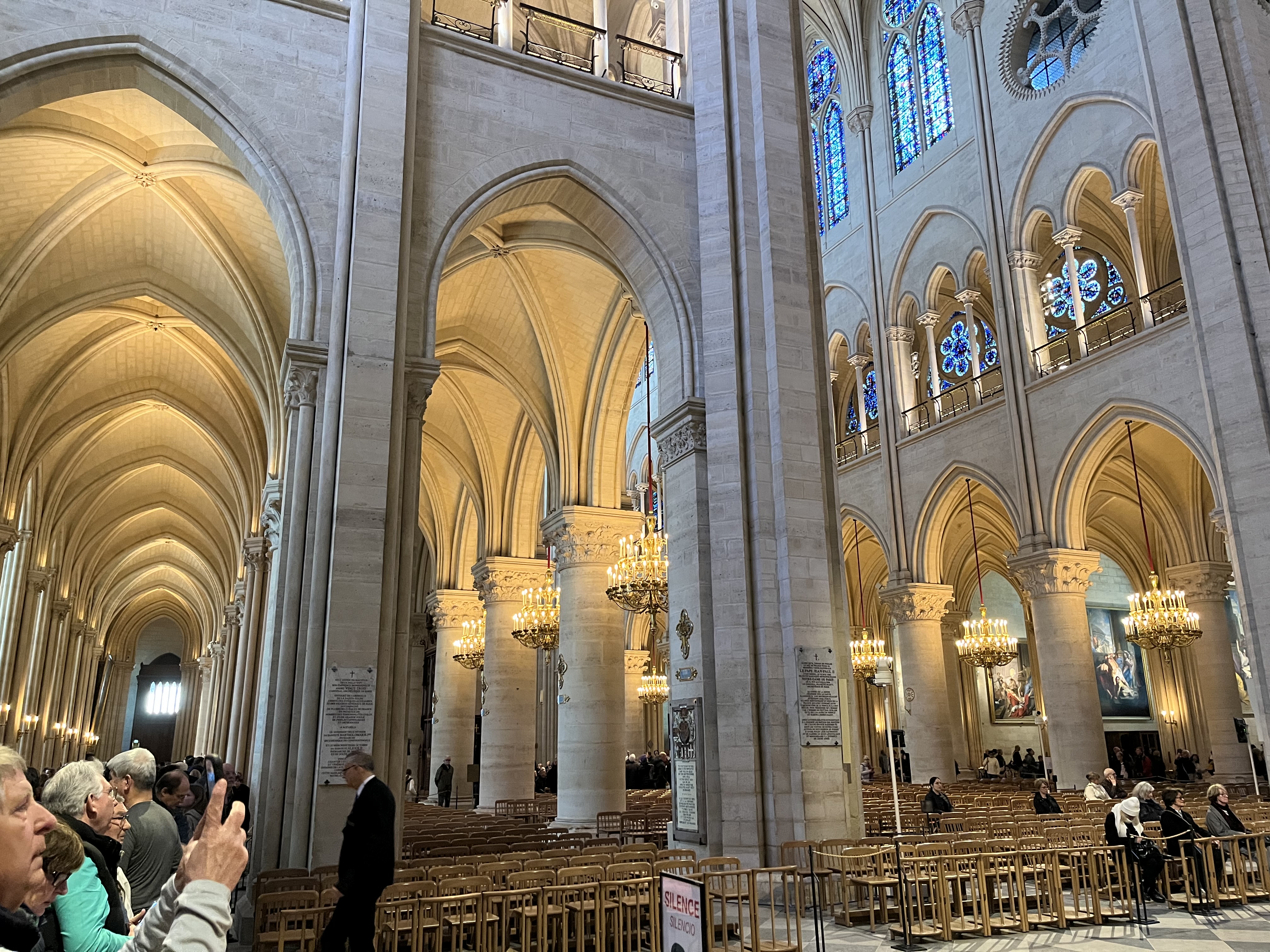
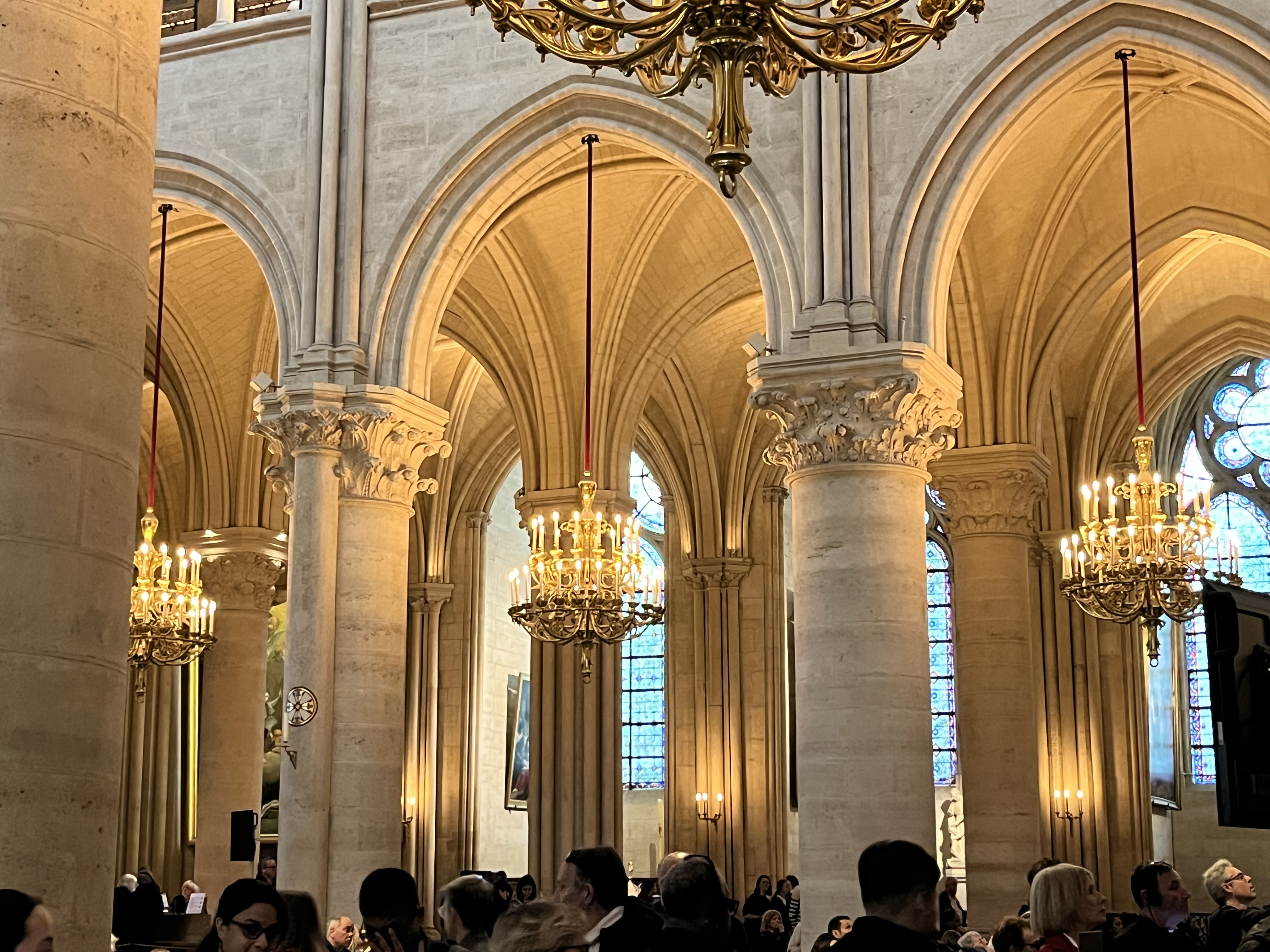
Though I took lots of pictures, they do not really convey our impression from our visit. Overall, the rebuilt Notre Dame is certainly a must see and stunningly beautiful. Whether I liked or felt the emotional connection as strongly as when we visited the old Notre Dame cathedral, or for instance, the old, grand cathedral of Reims, I would probably have to say no. For me, the dimension of the ancient, timeless beauty falls short. You’re seeing the cathedral today the way people originally would have seen it, in its original sharp and bright colors, and therefore, it doesn’t convey the feeling of the depth of timeless history.
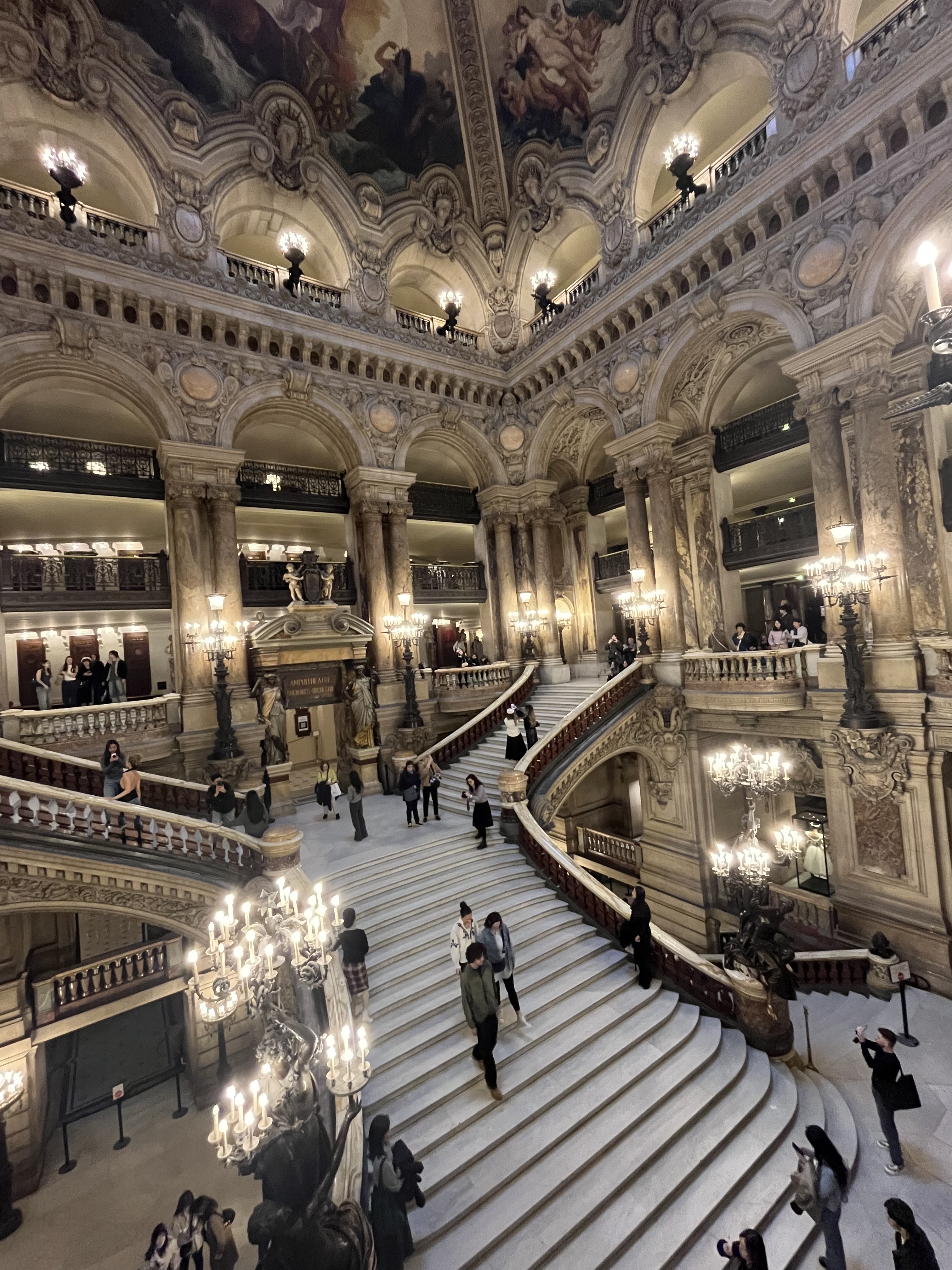
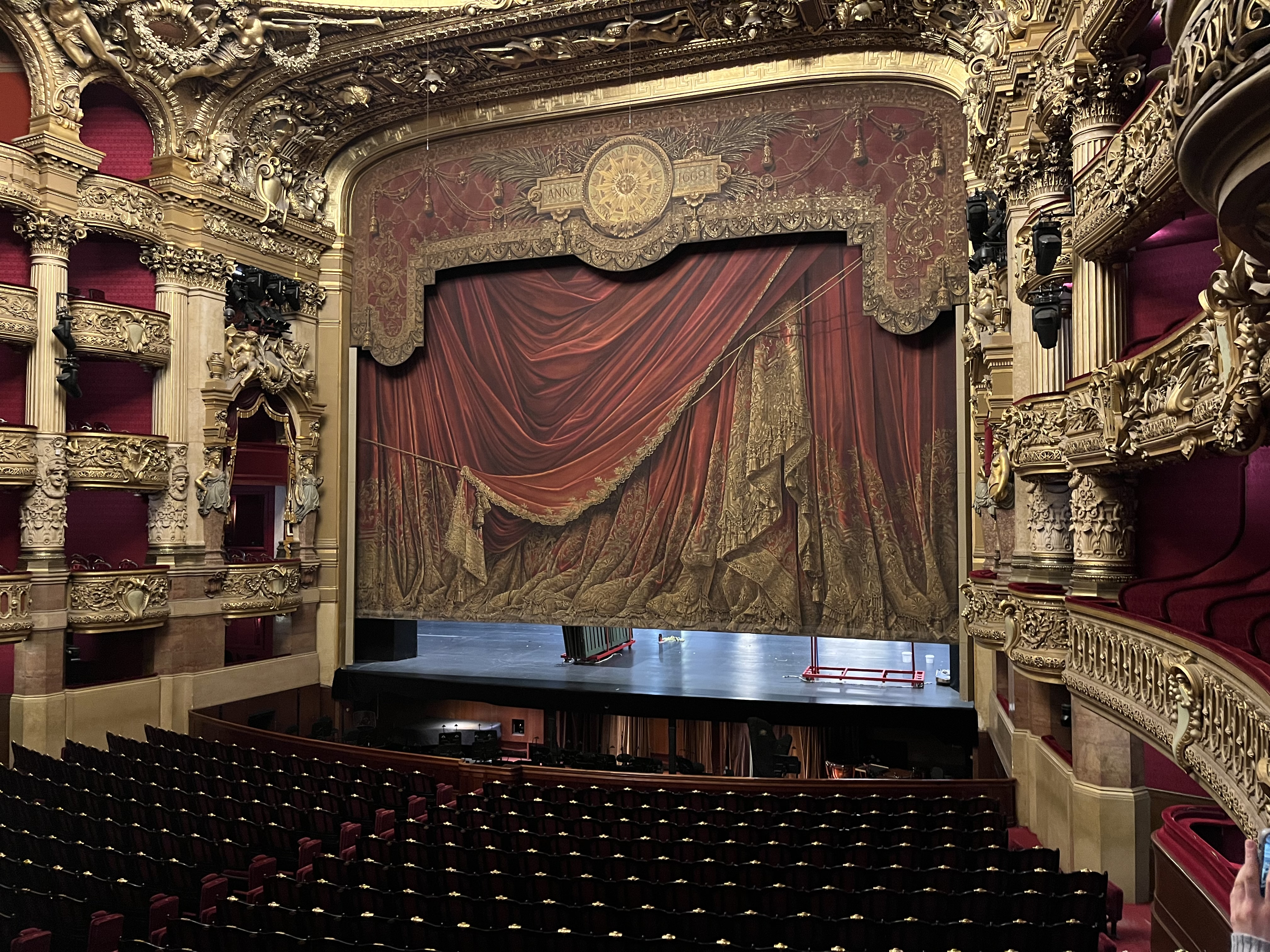
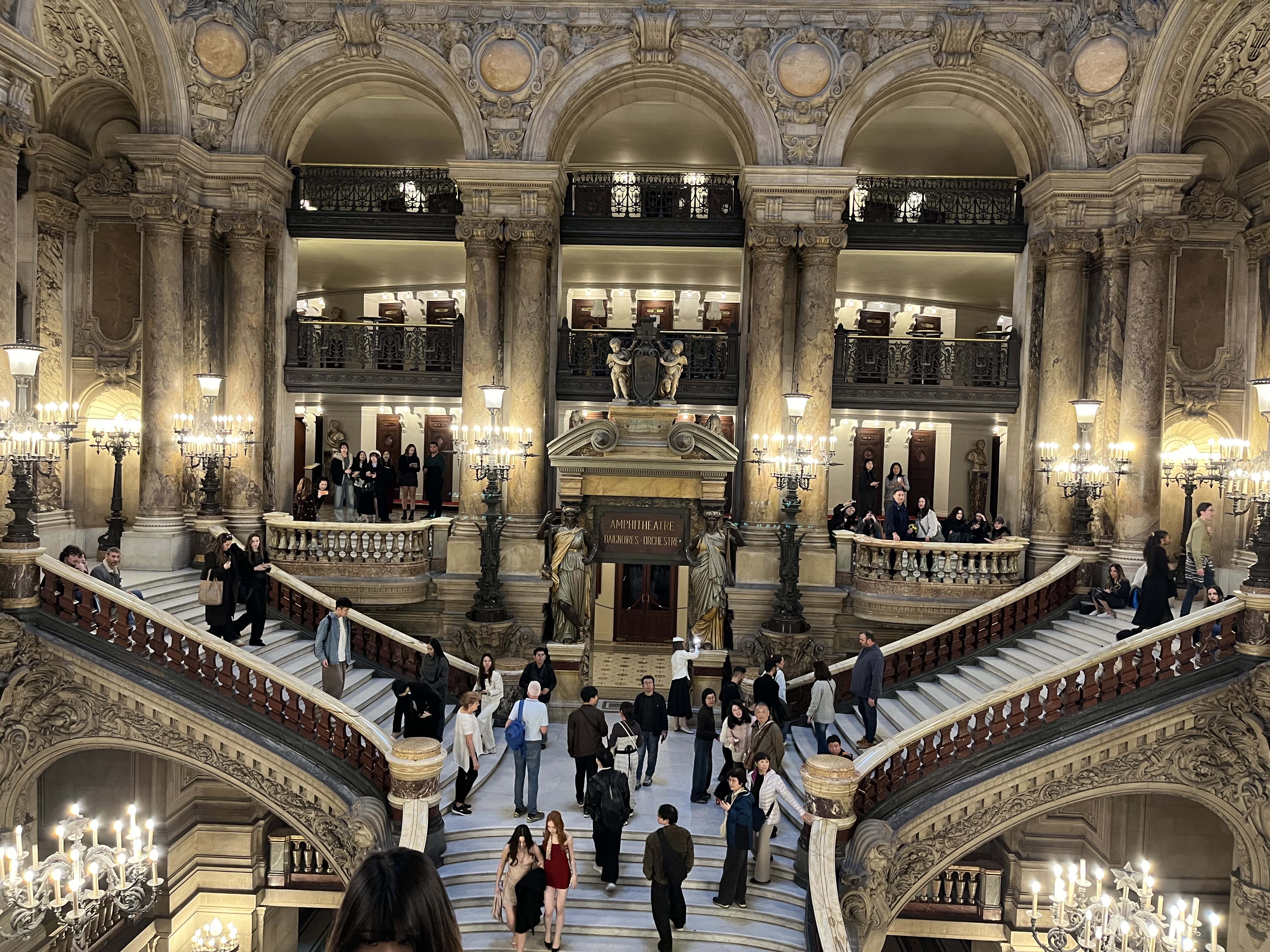
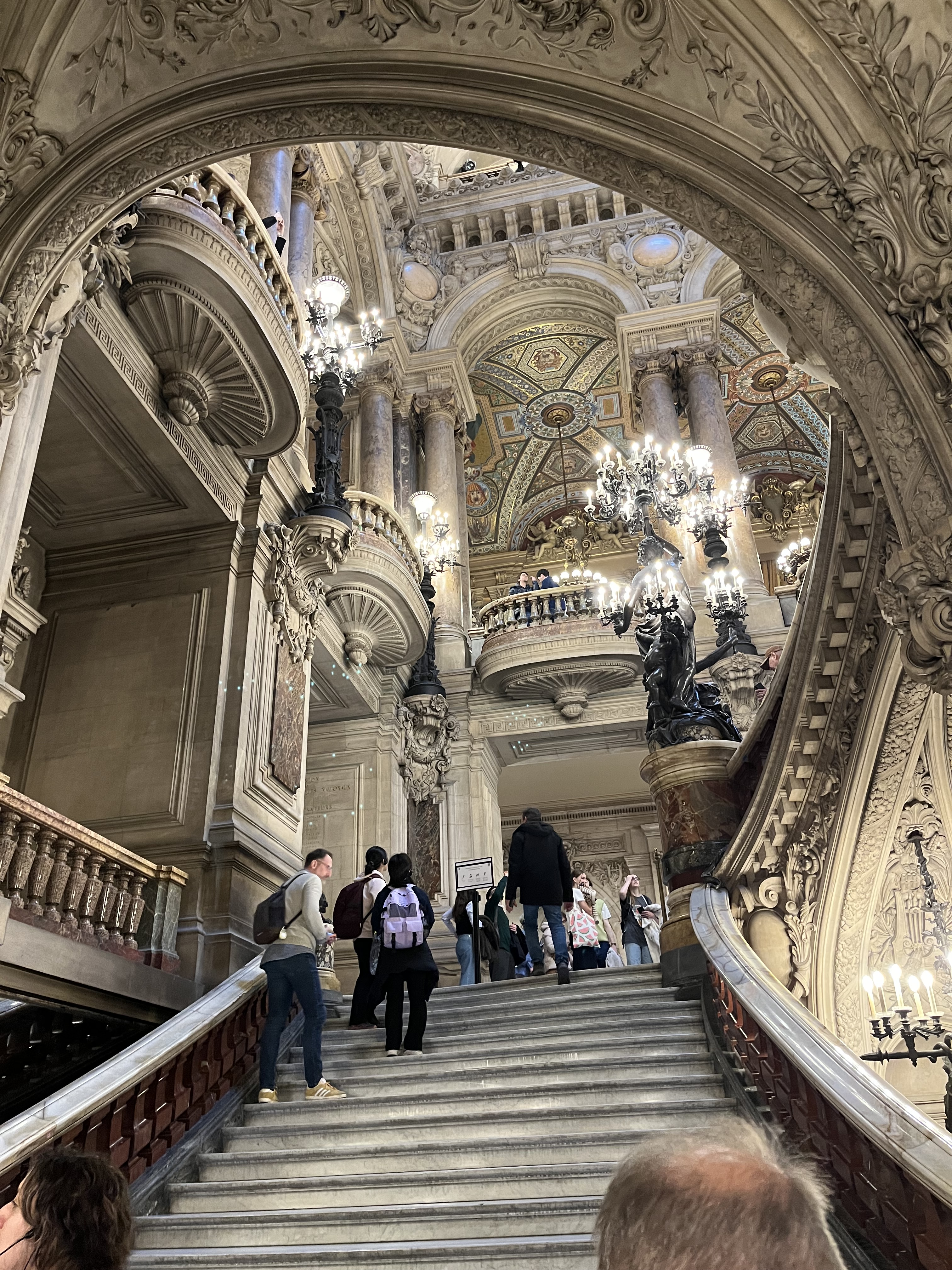
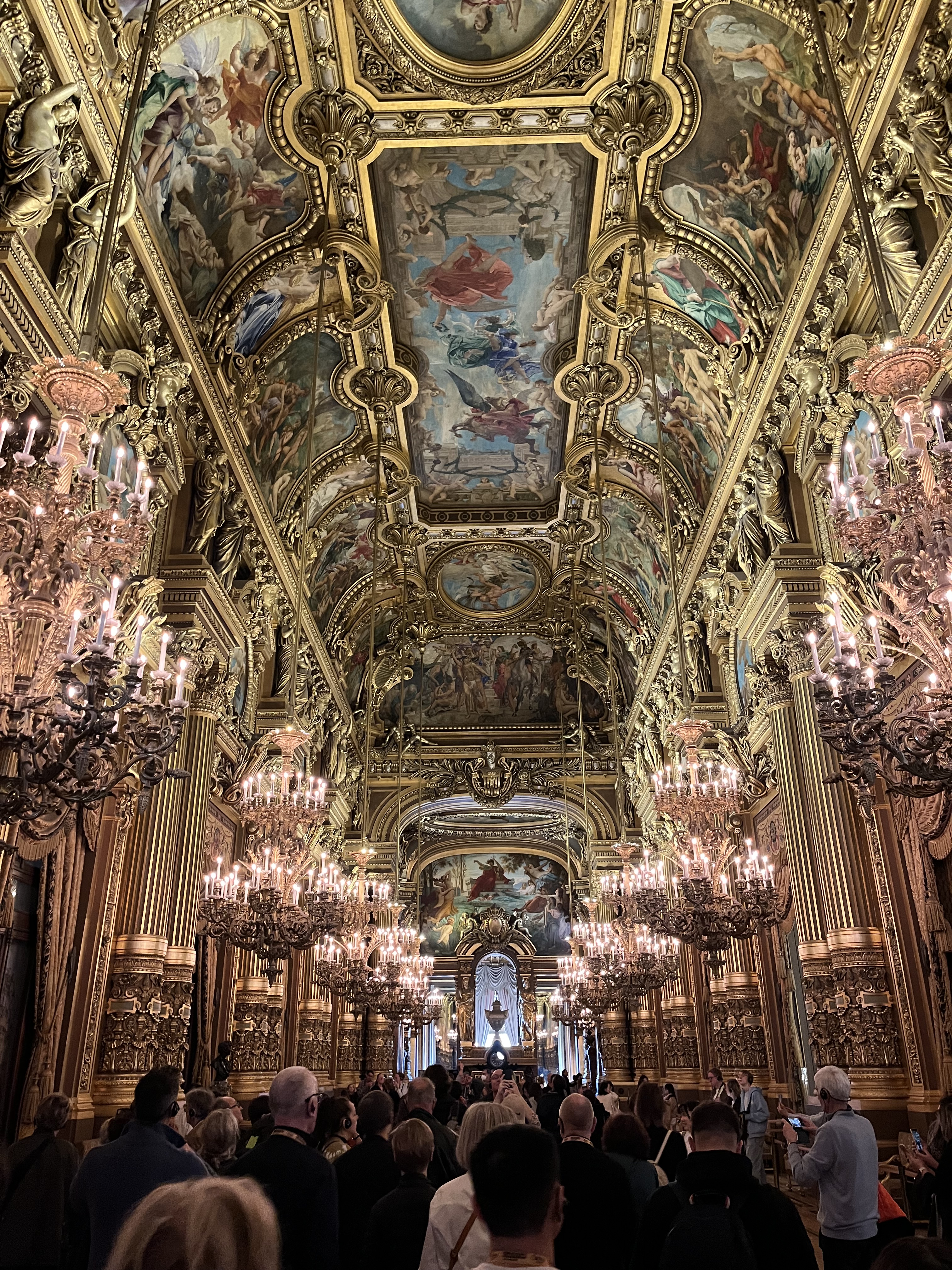
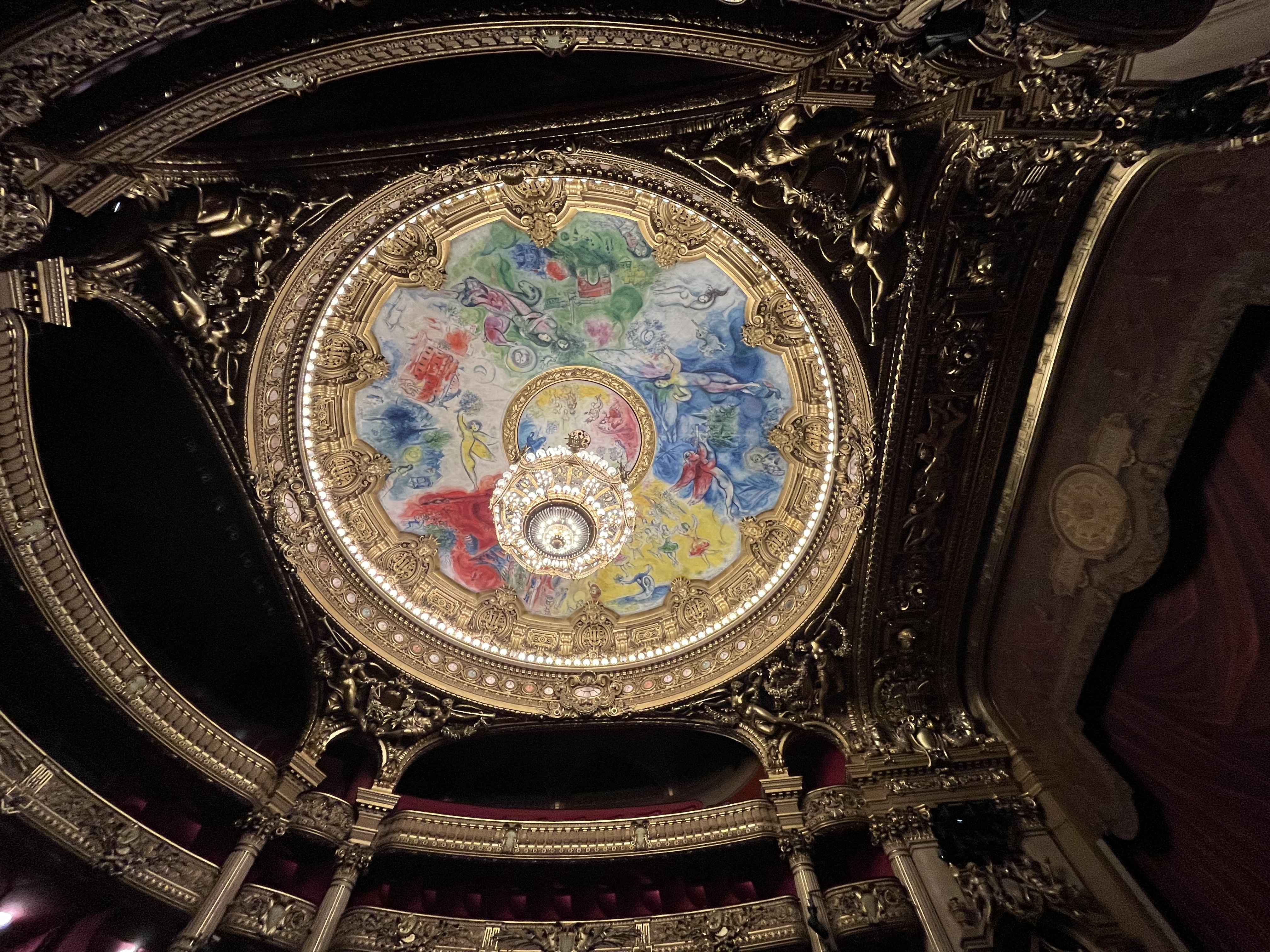
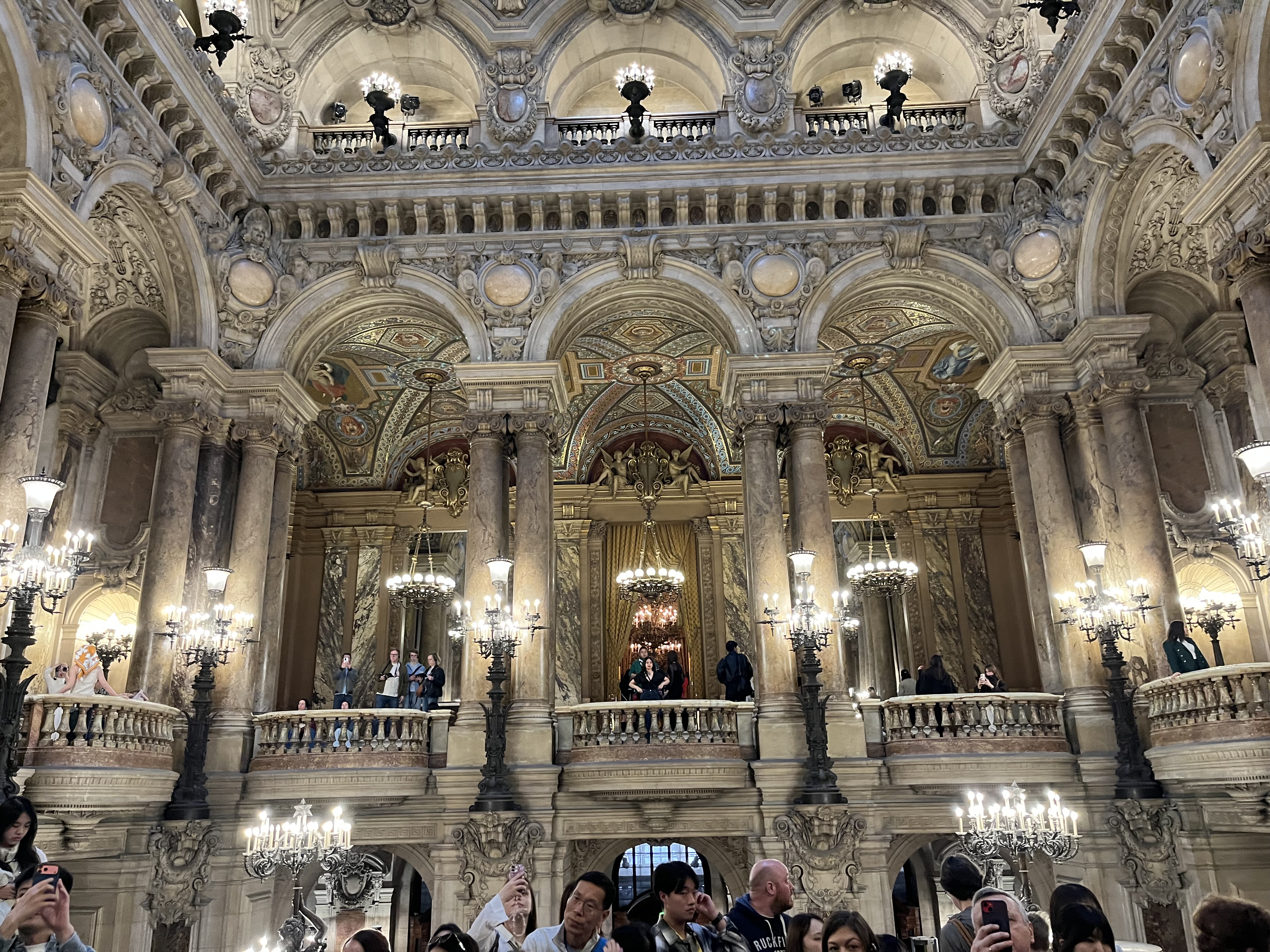
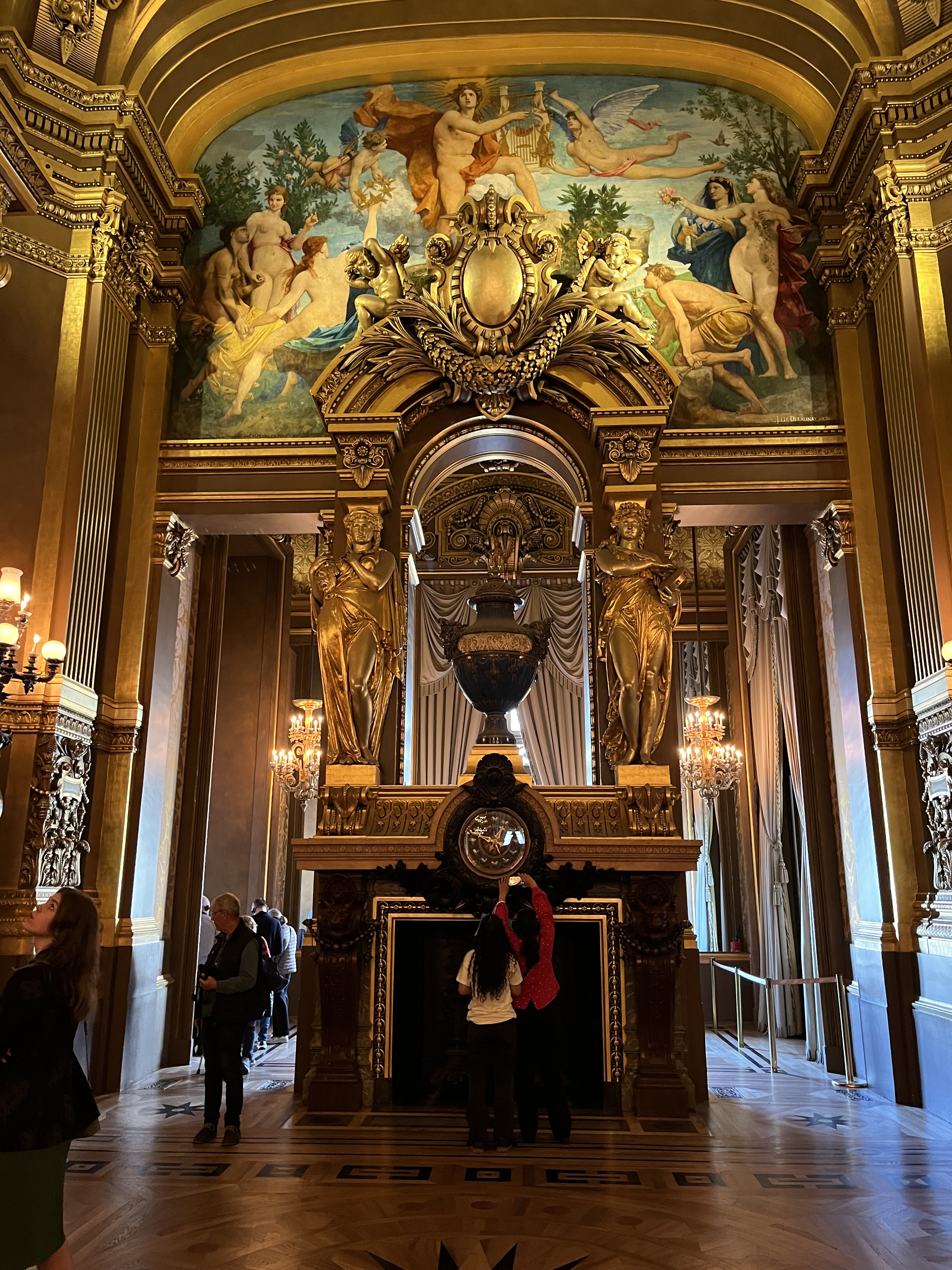
Another famous site of Paris, that we hadn’t visited before, was Palais Garnier, the National Opera of Paris:
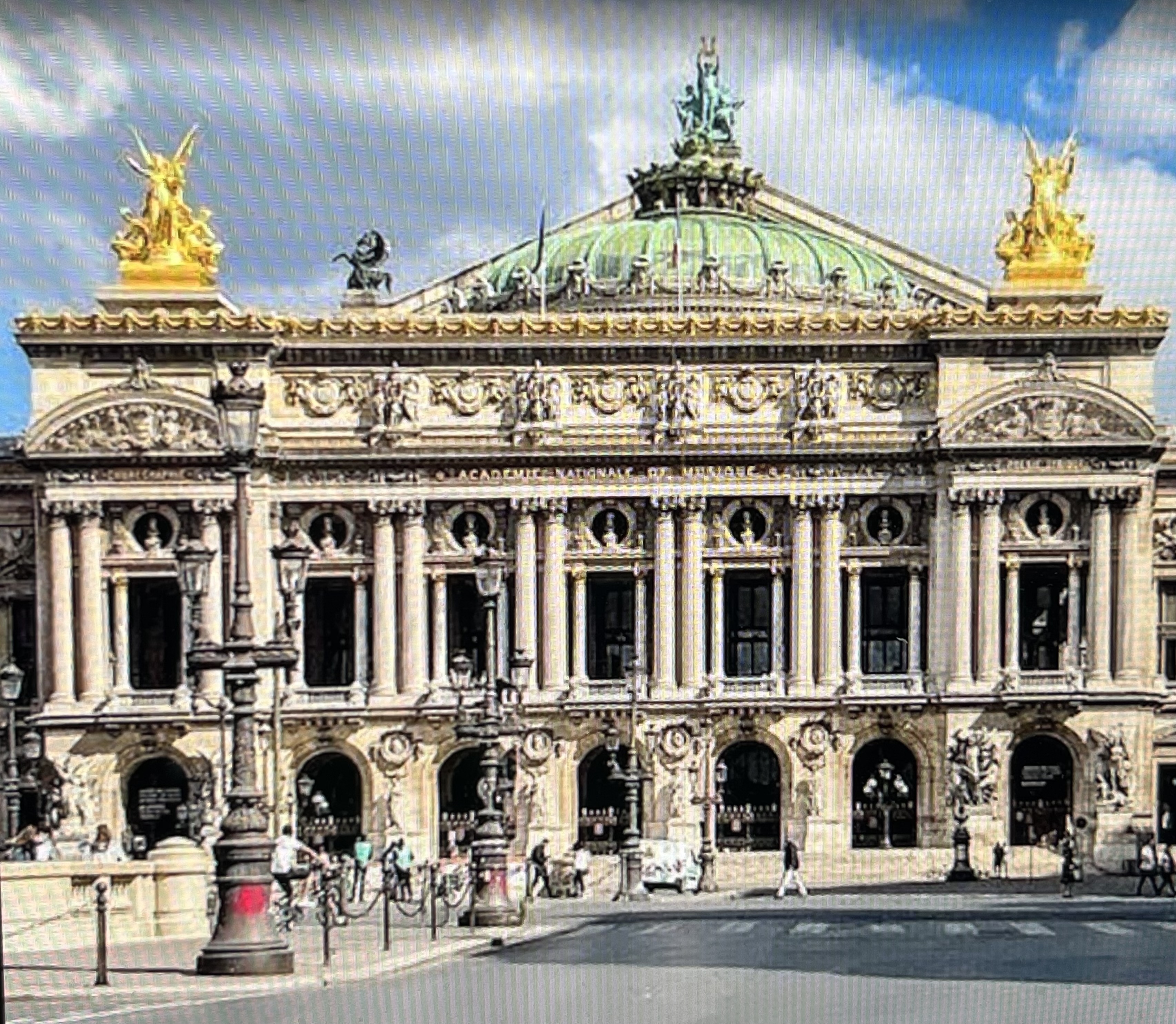
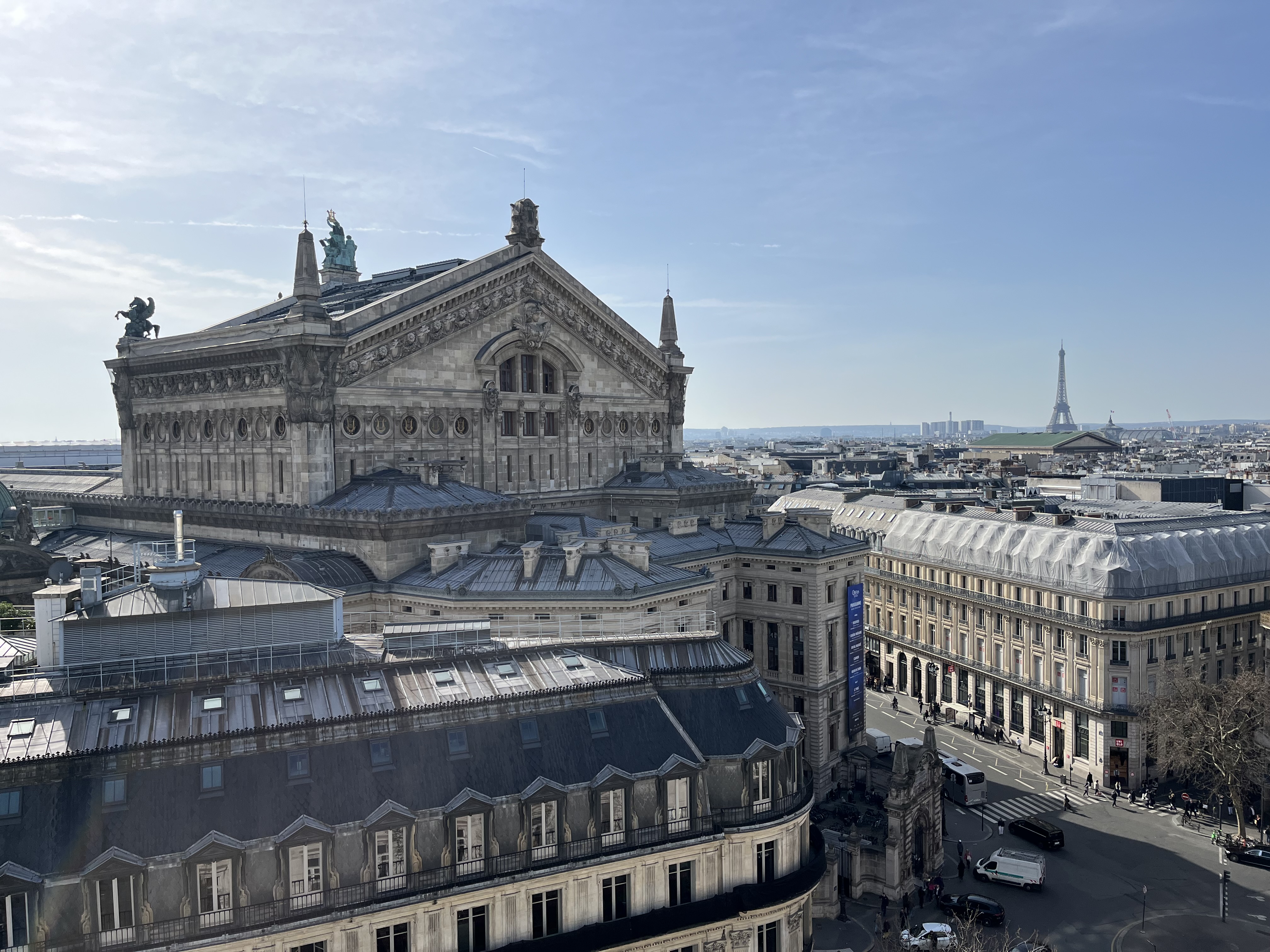
We had booked a 1 1/2 hr guided tour in English, which allowed us to see and enjoy the visit of this dramatic grand place in detail. The guide and the tour’s presentation was for once a little disappointing. We should have asked the Phantom himself, to guide us instead, the Phantom of the Opera, whom we thought about, and whose dramatic music we kept hearing in our heads throughout our visit.
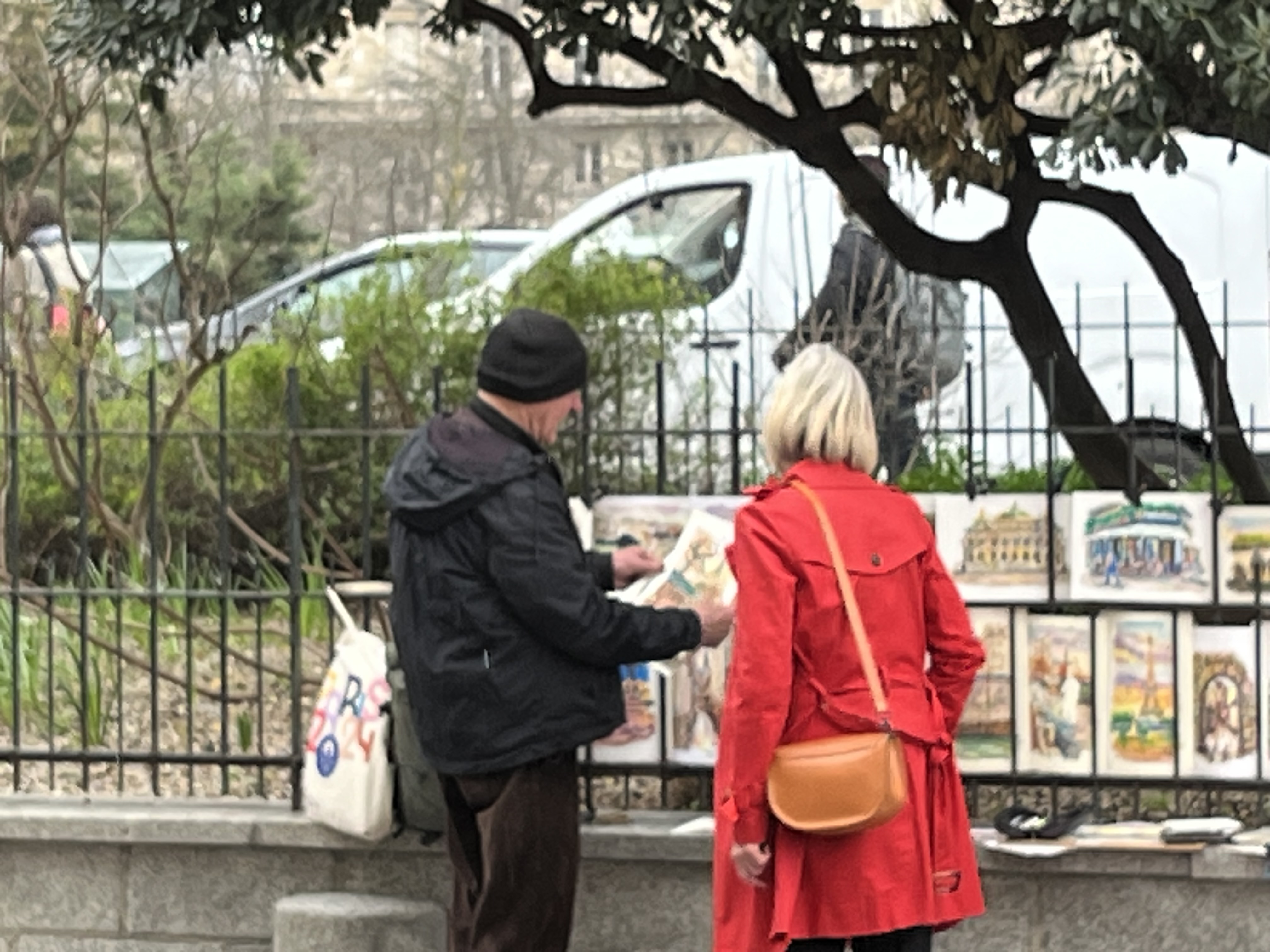
One painter talking to another, – a Parisian street scene:
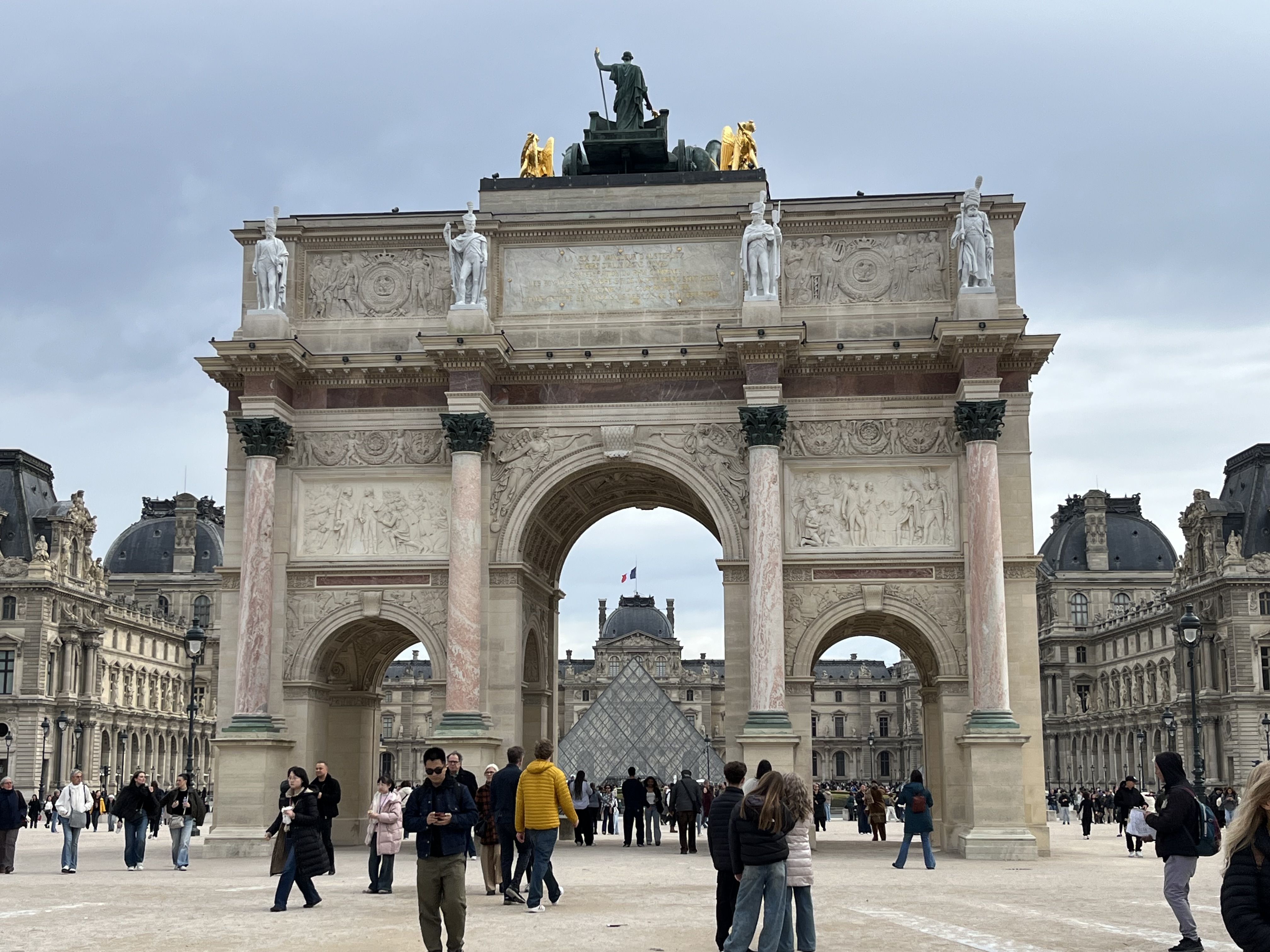
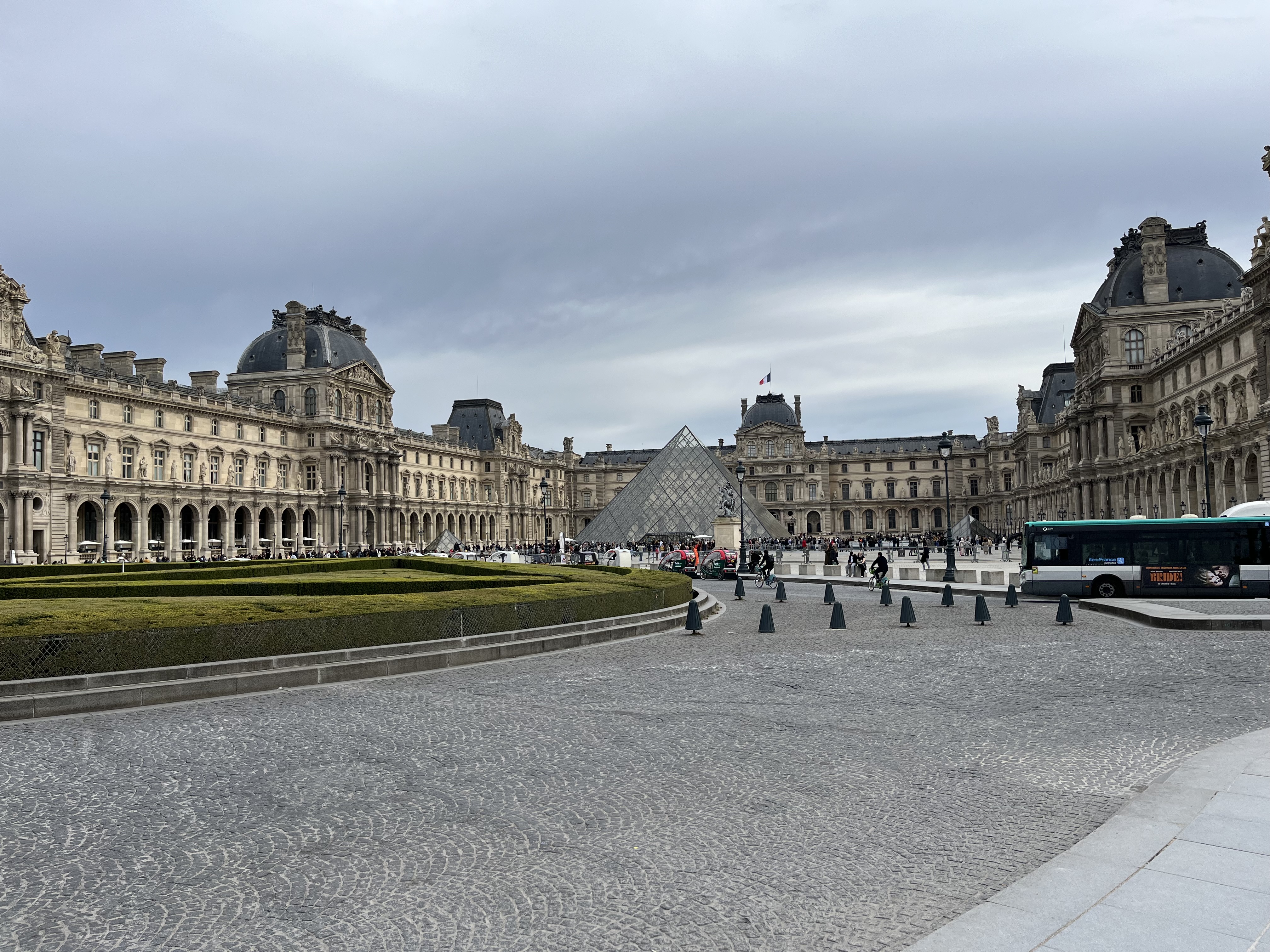
As during our visit last time, we decided to skip a visit to the Louvre to not overload our visit, and of course, it provides us with another reason to visit this great city again.
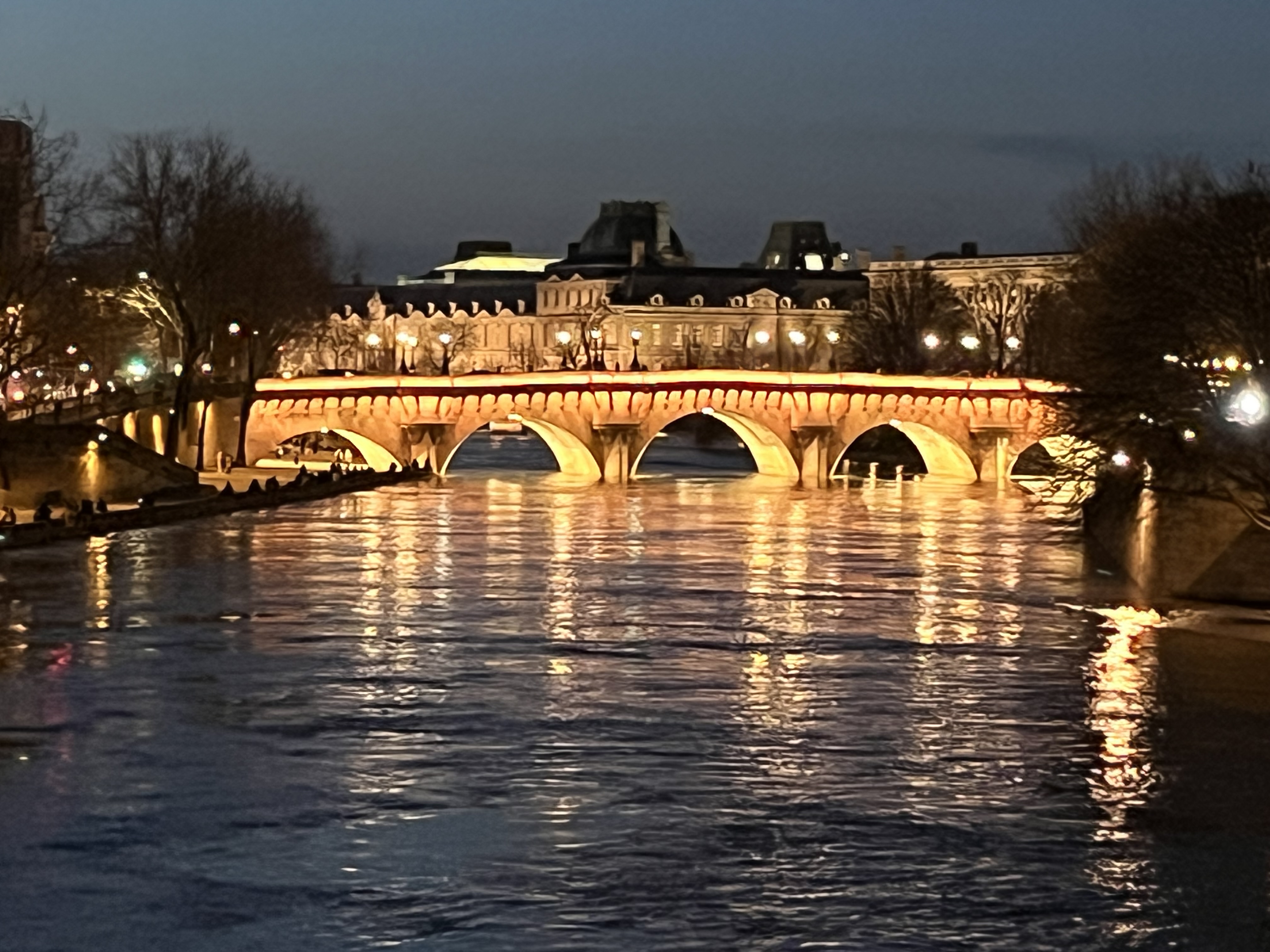
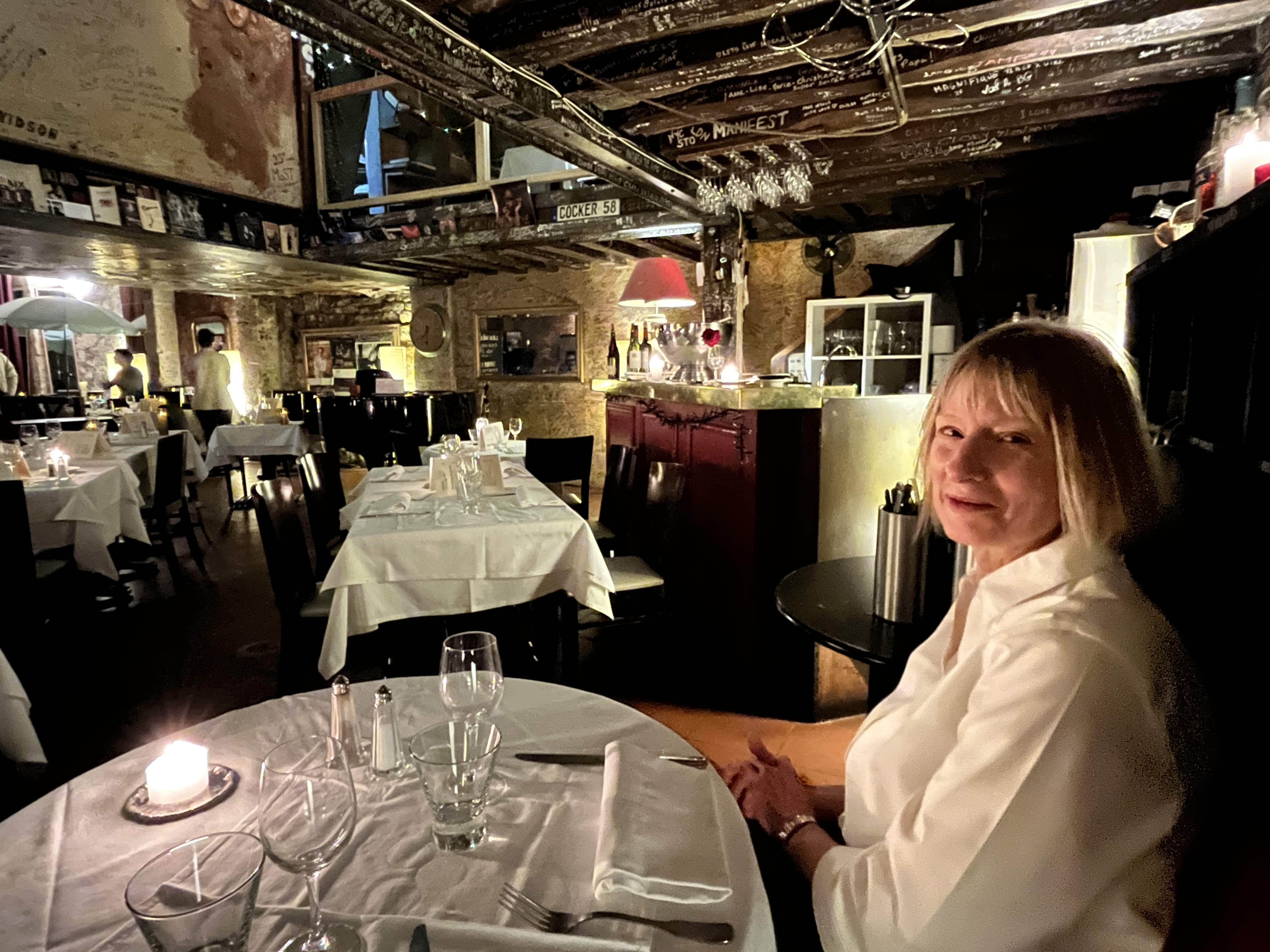
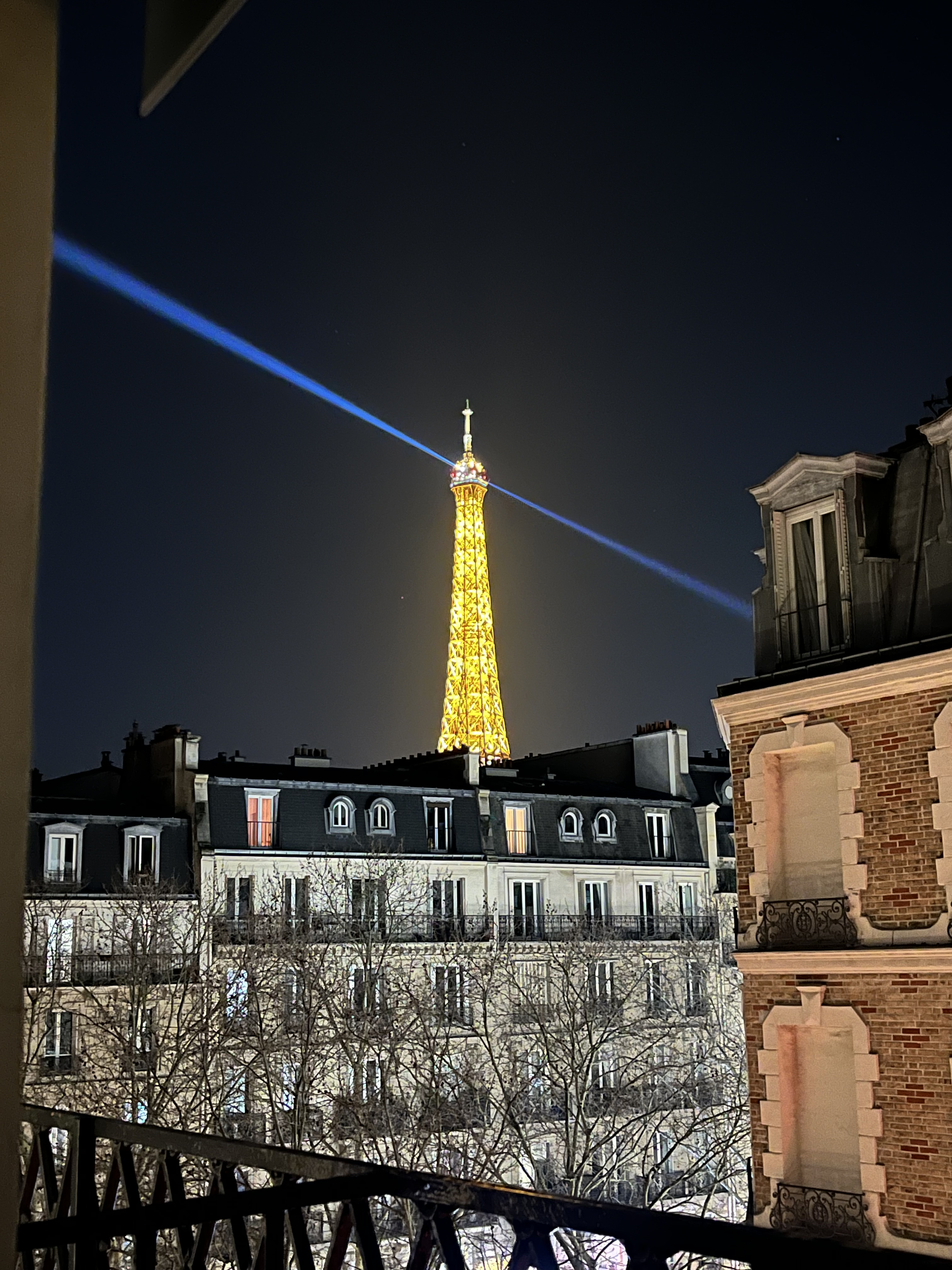
The City of Light always impresses, especially during the evenings. We rounded out the visit with dinner at a jazz venue, which turned out to be quite good and made for a nice bonne soirée to finish our visit.
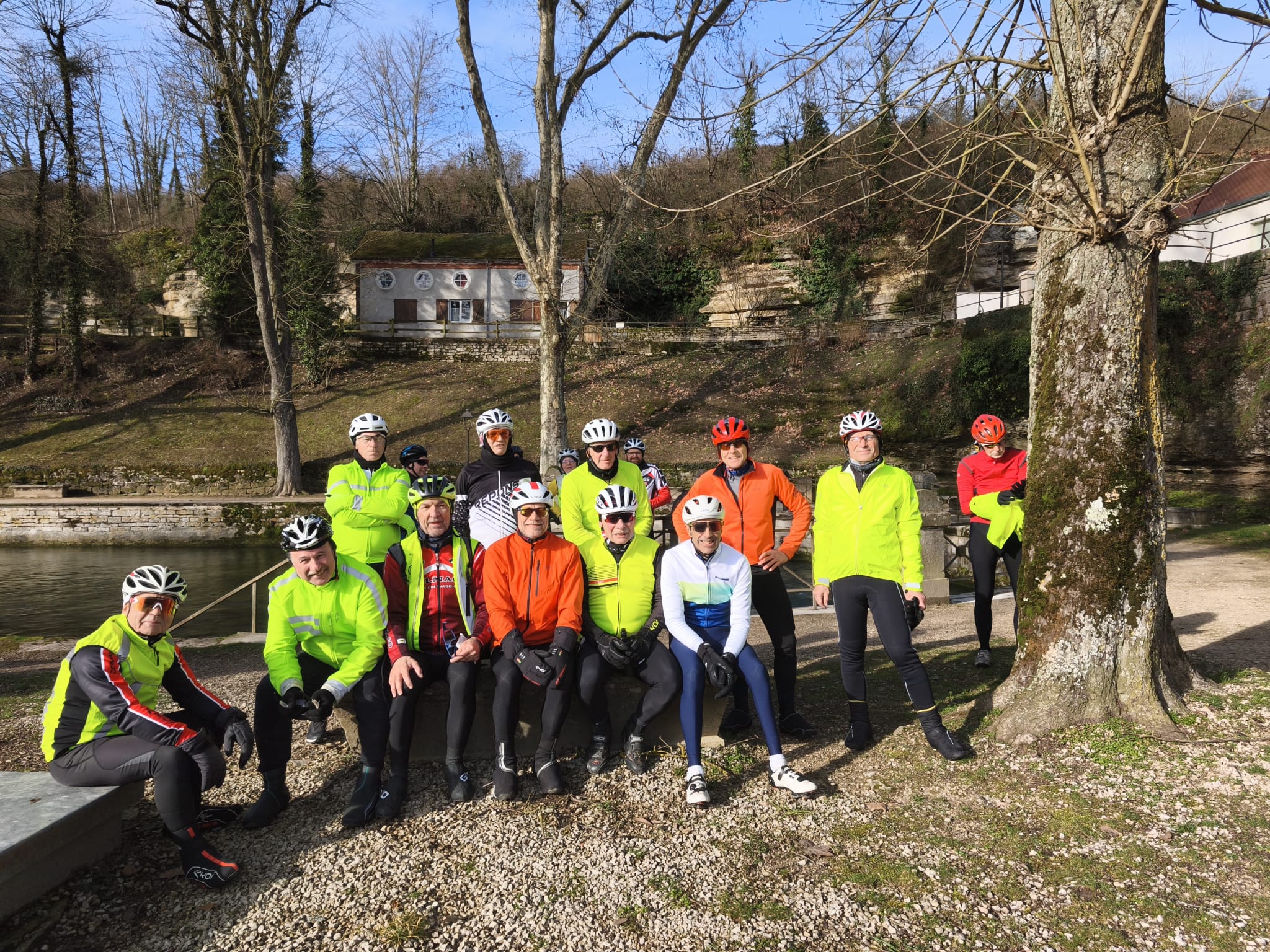
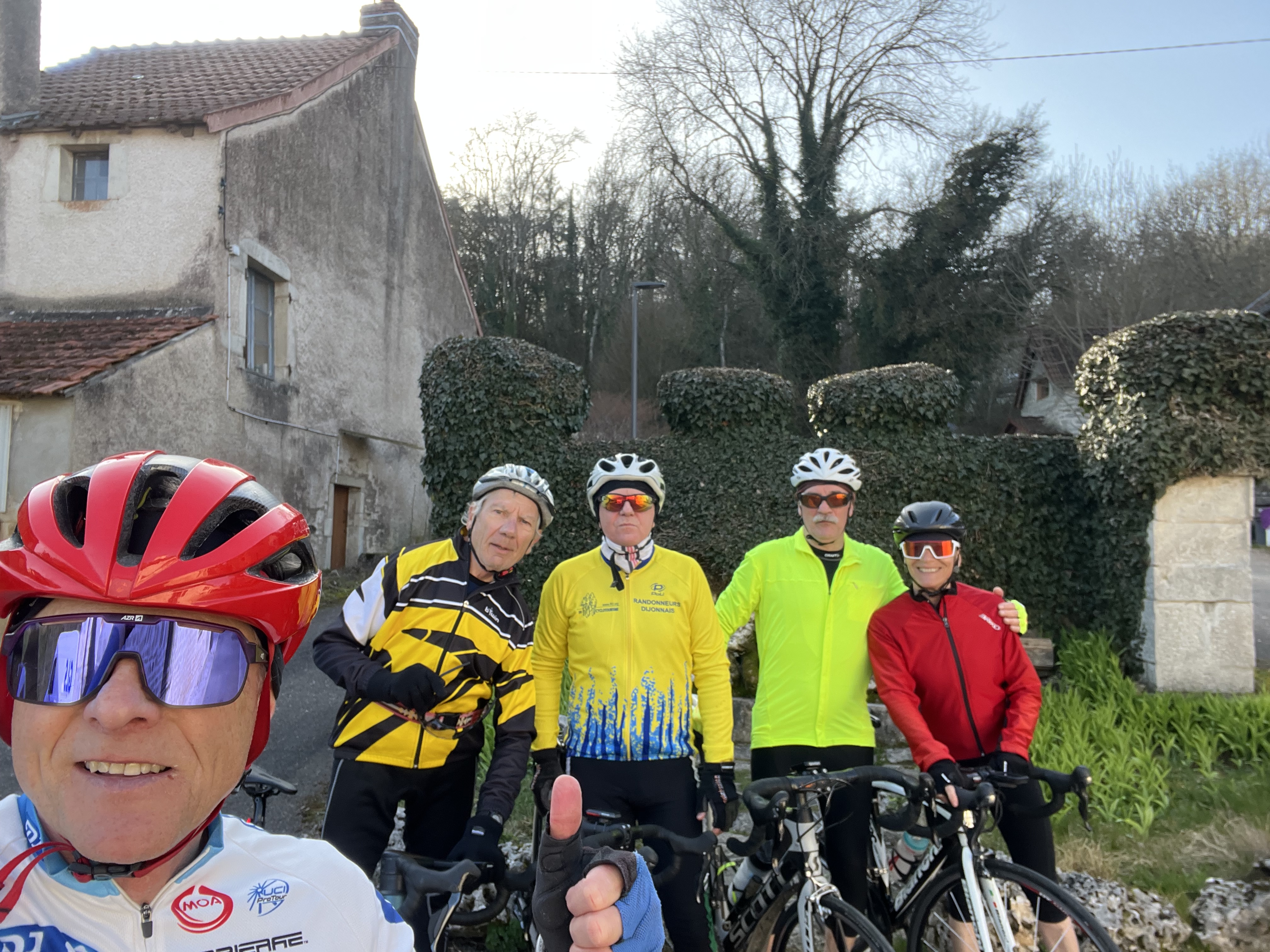
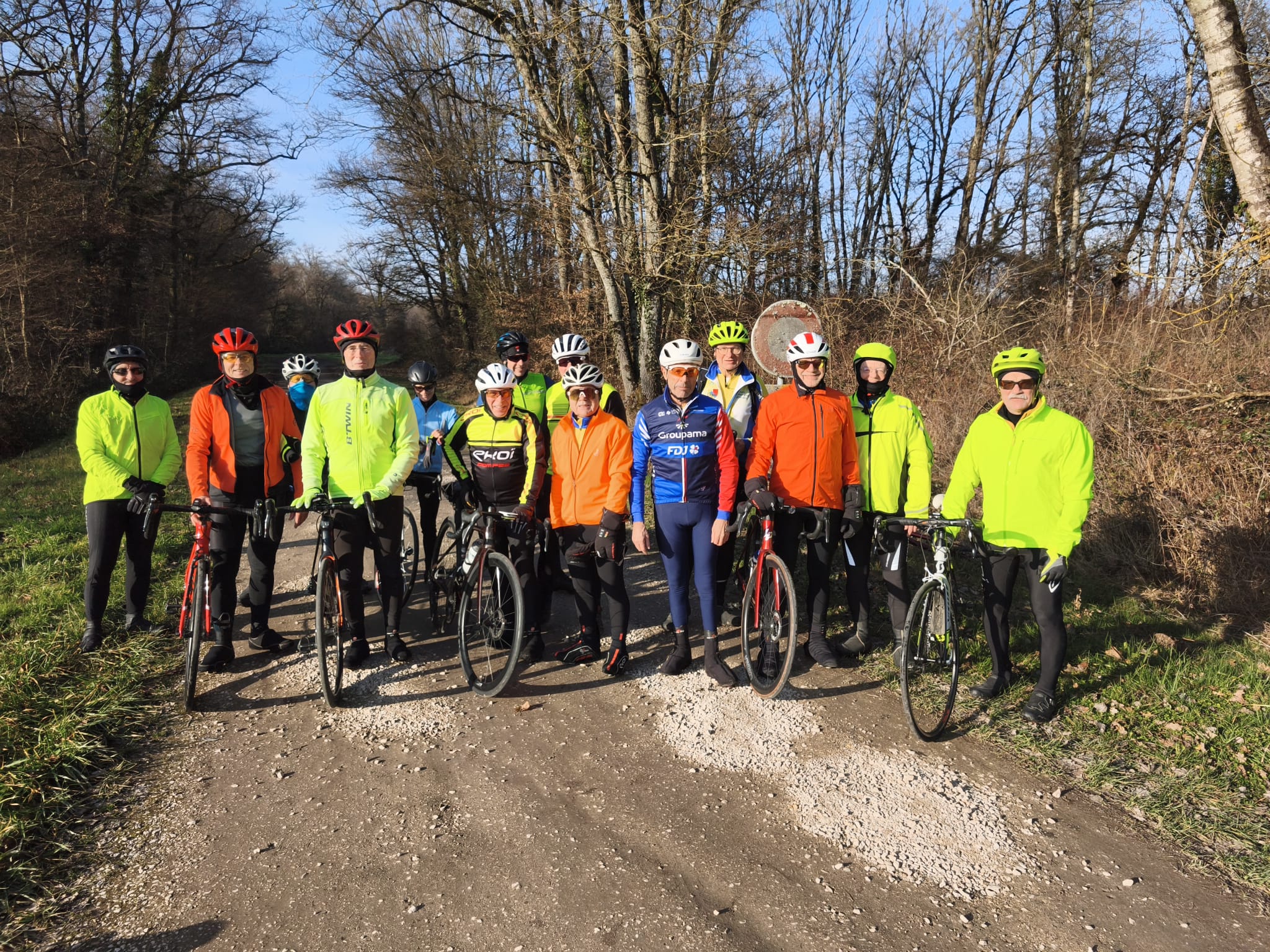
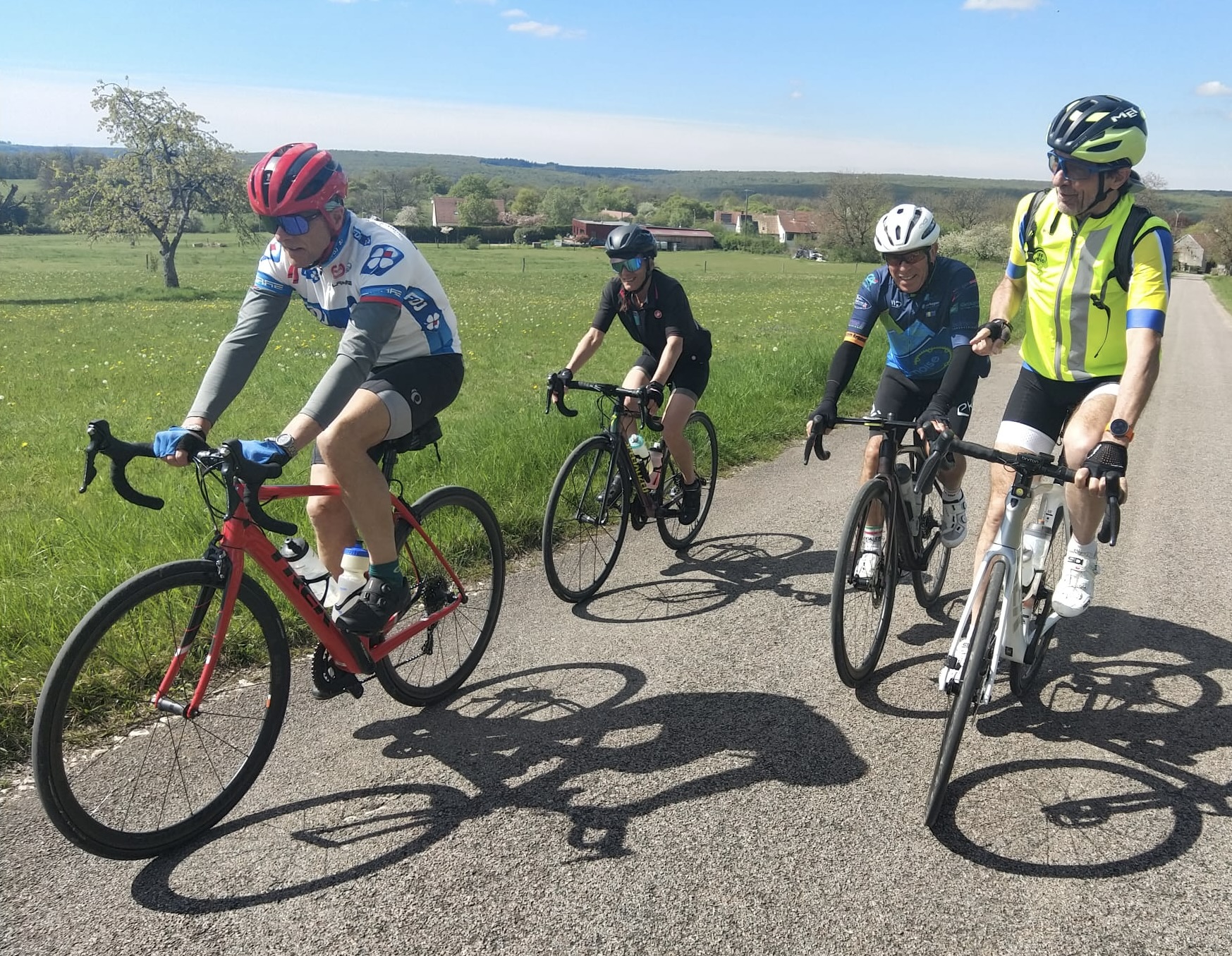
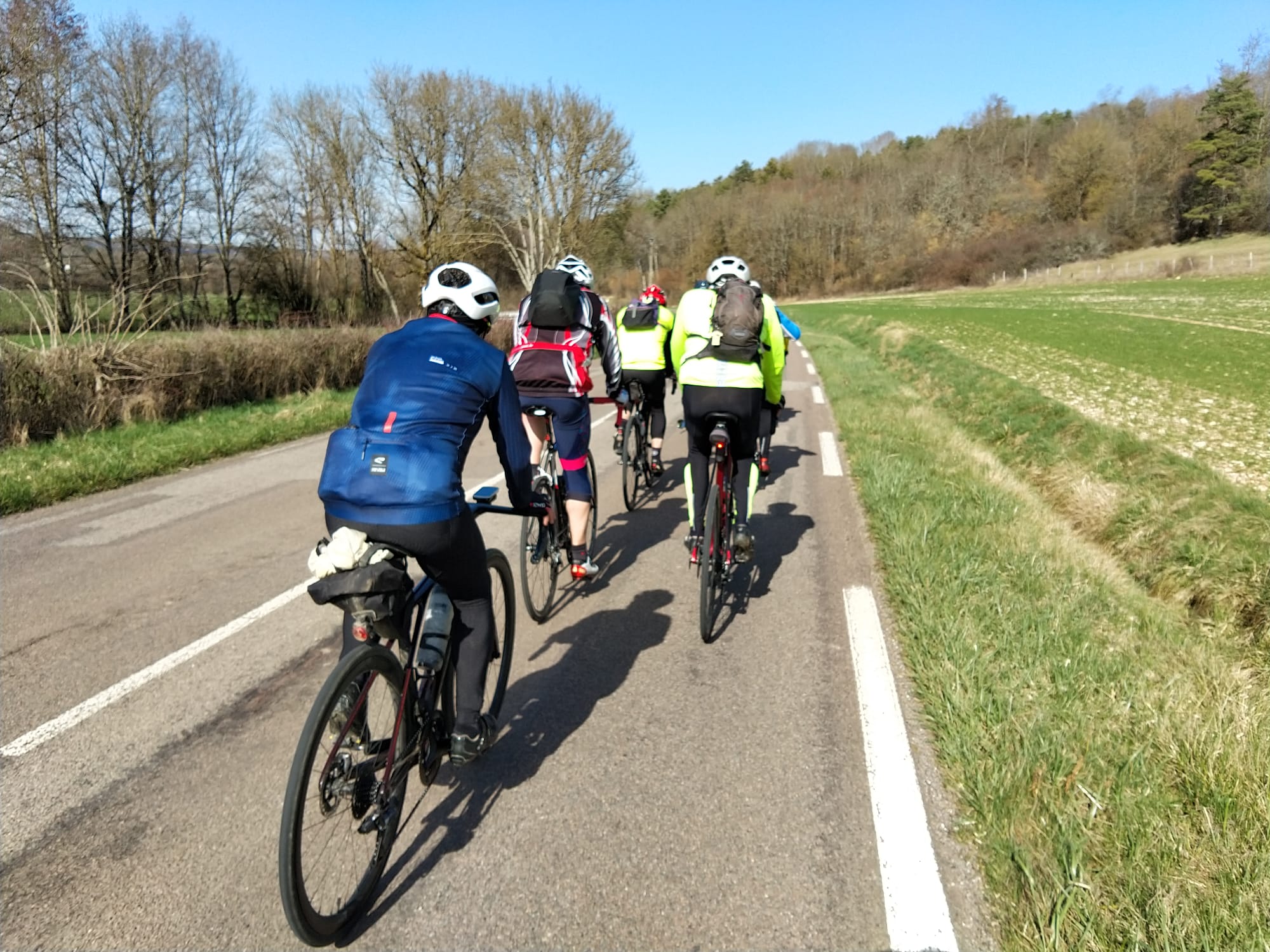
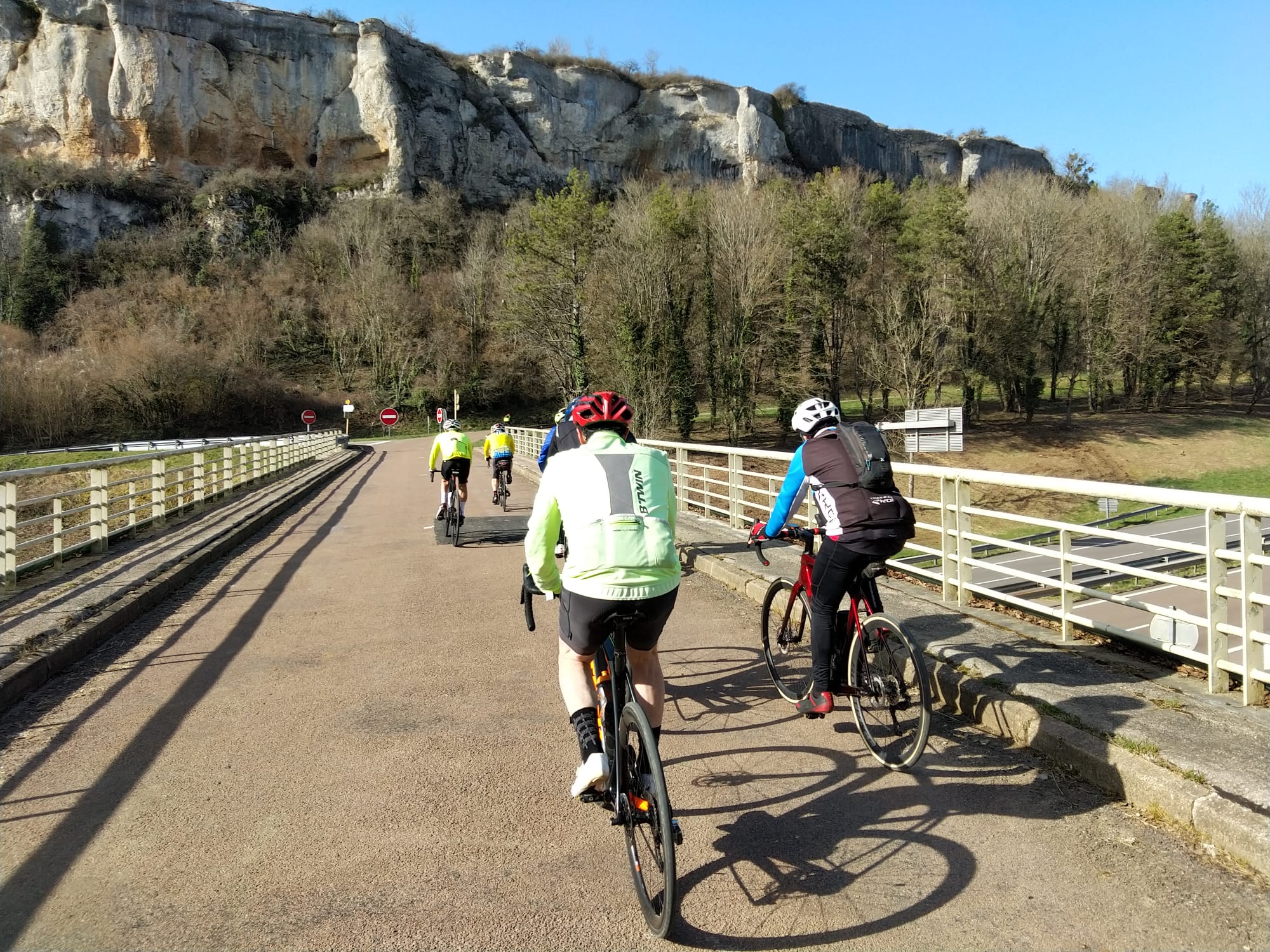
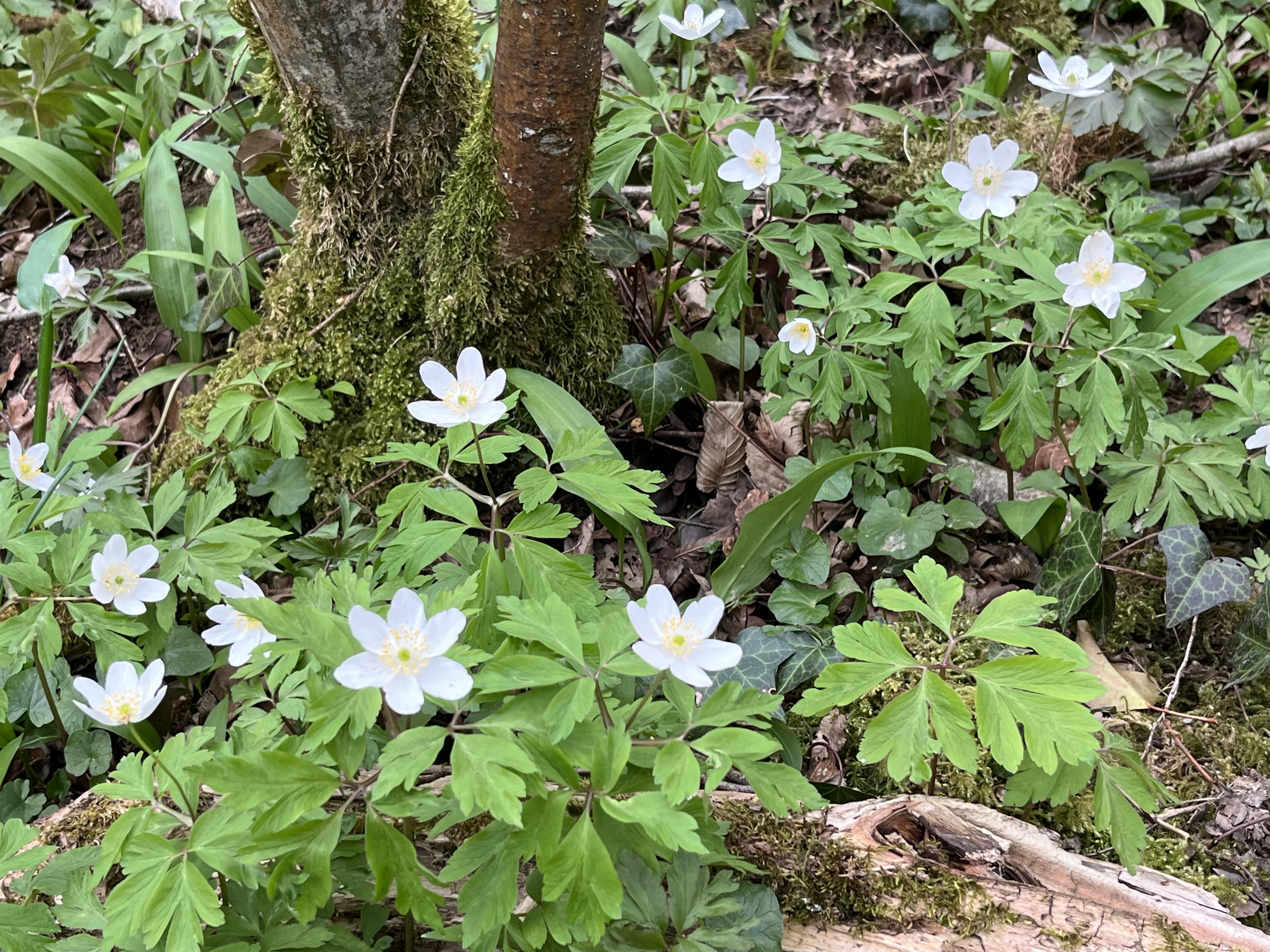
Back in Dijon we enjoyed more bike riding and hikes in our vicinity.
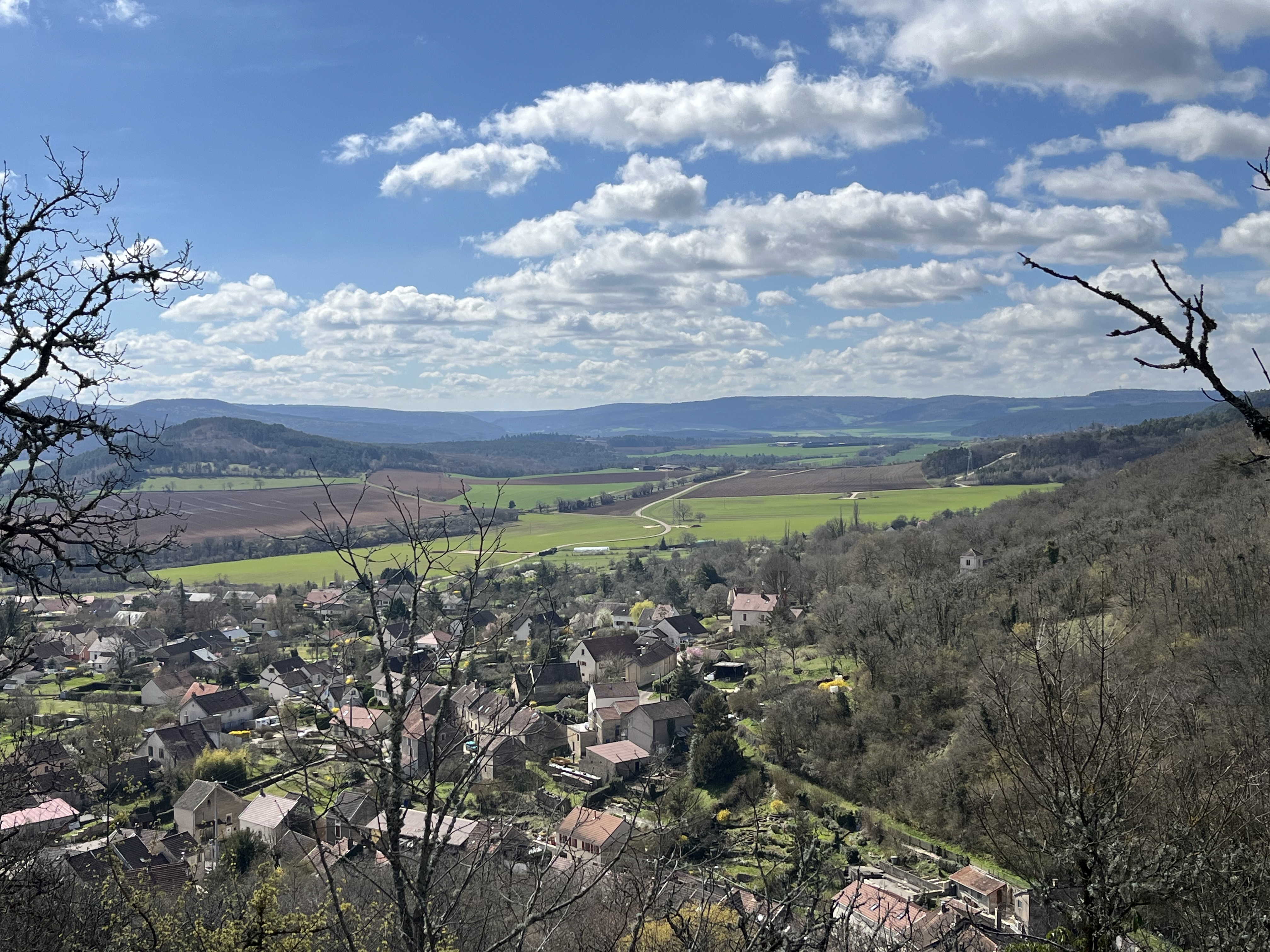
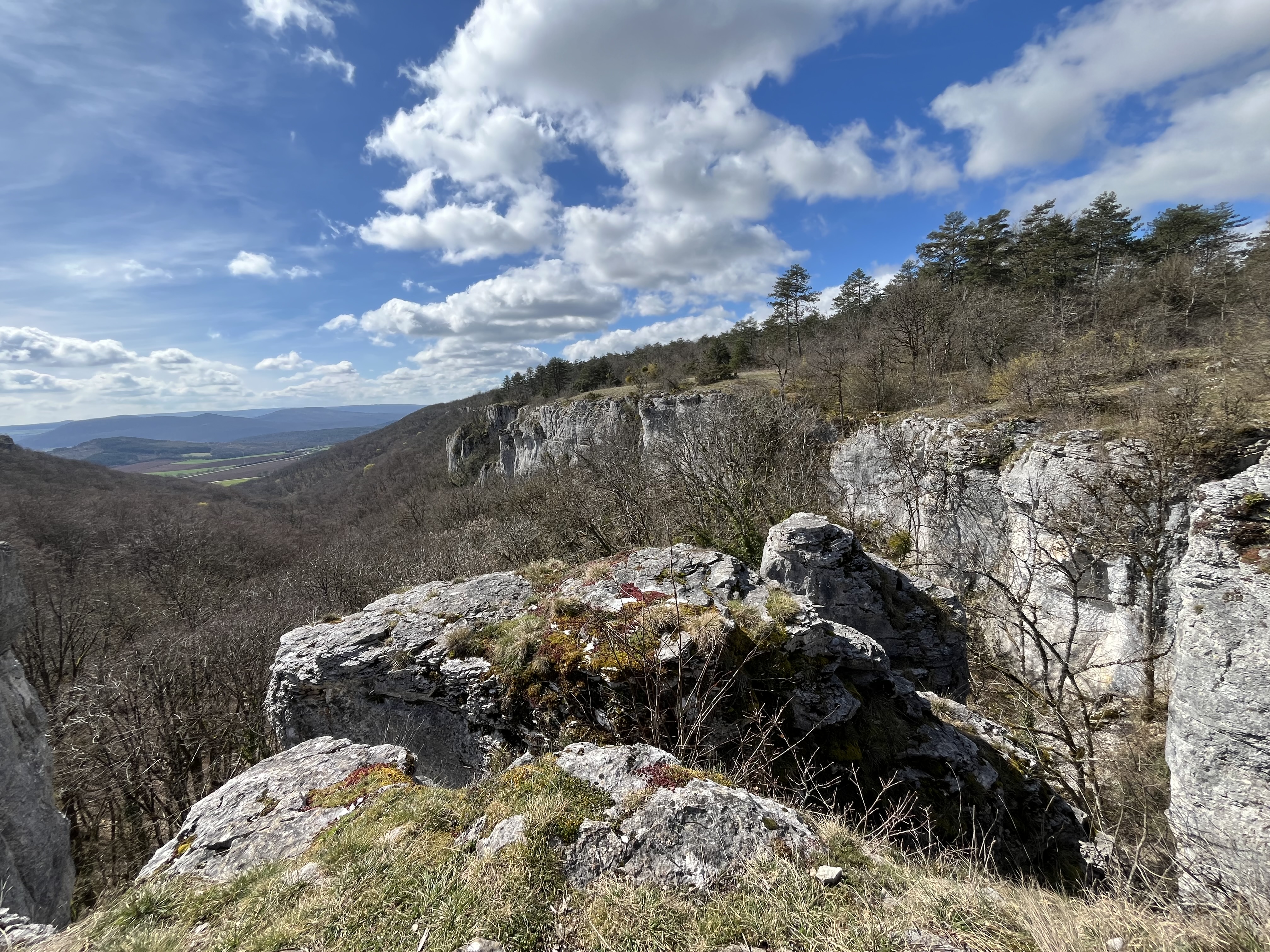
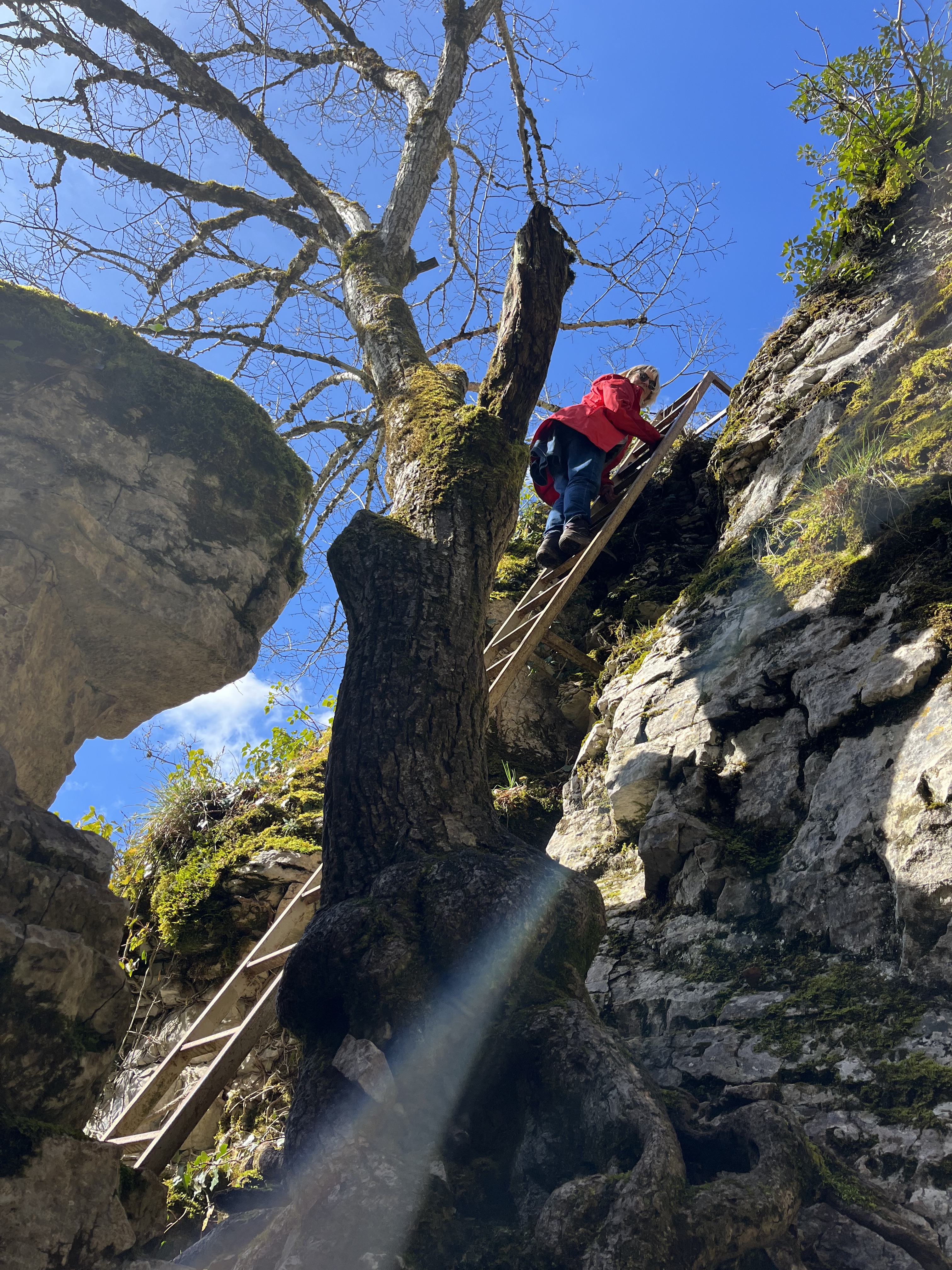
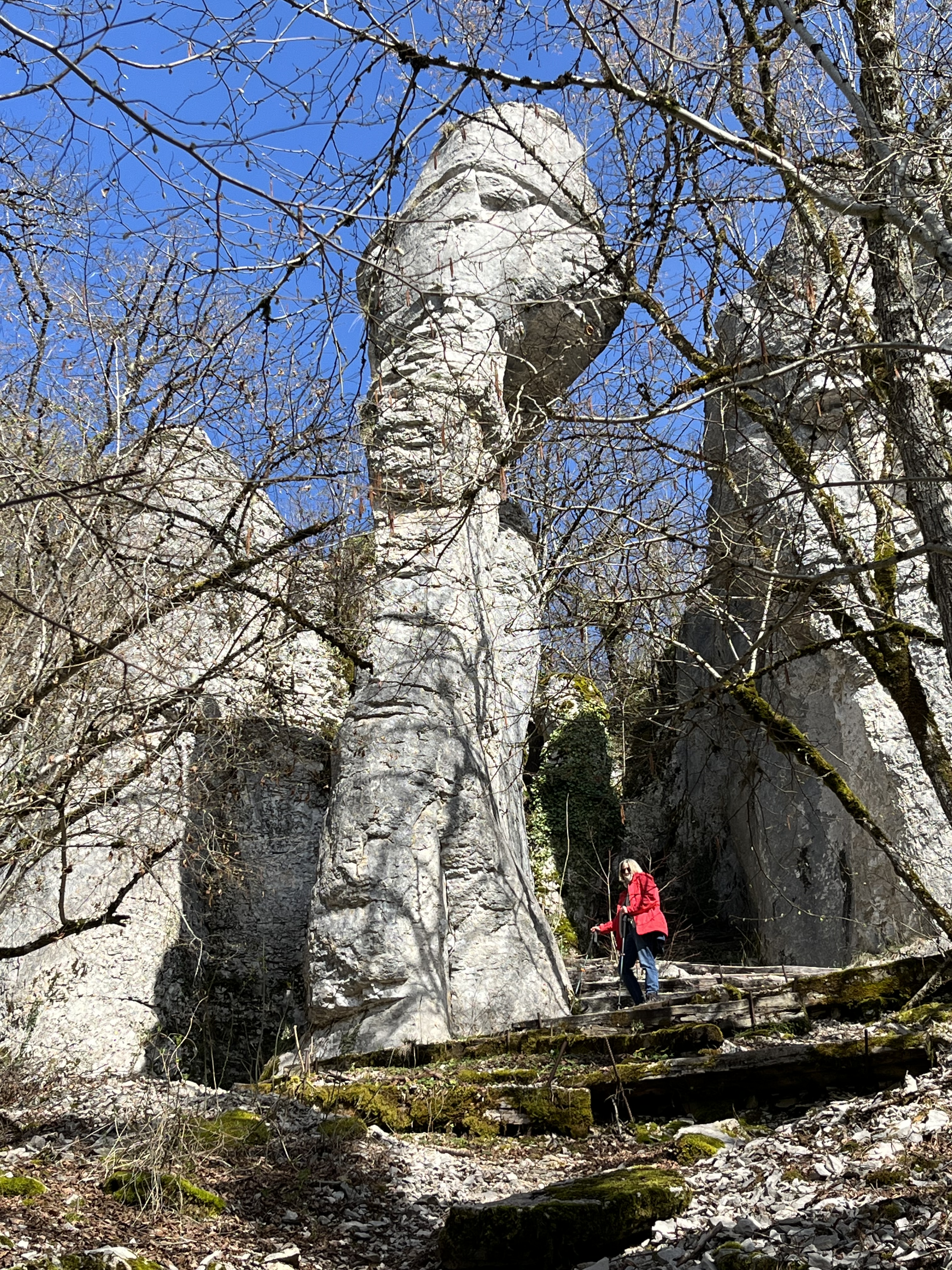
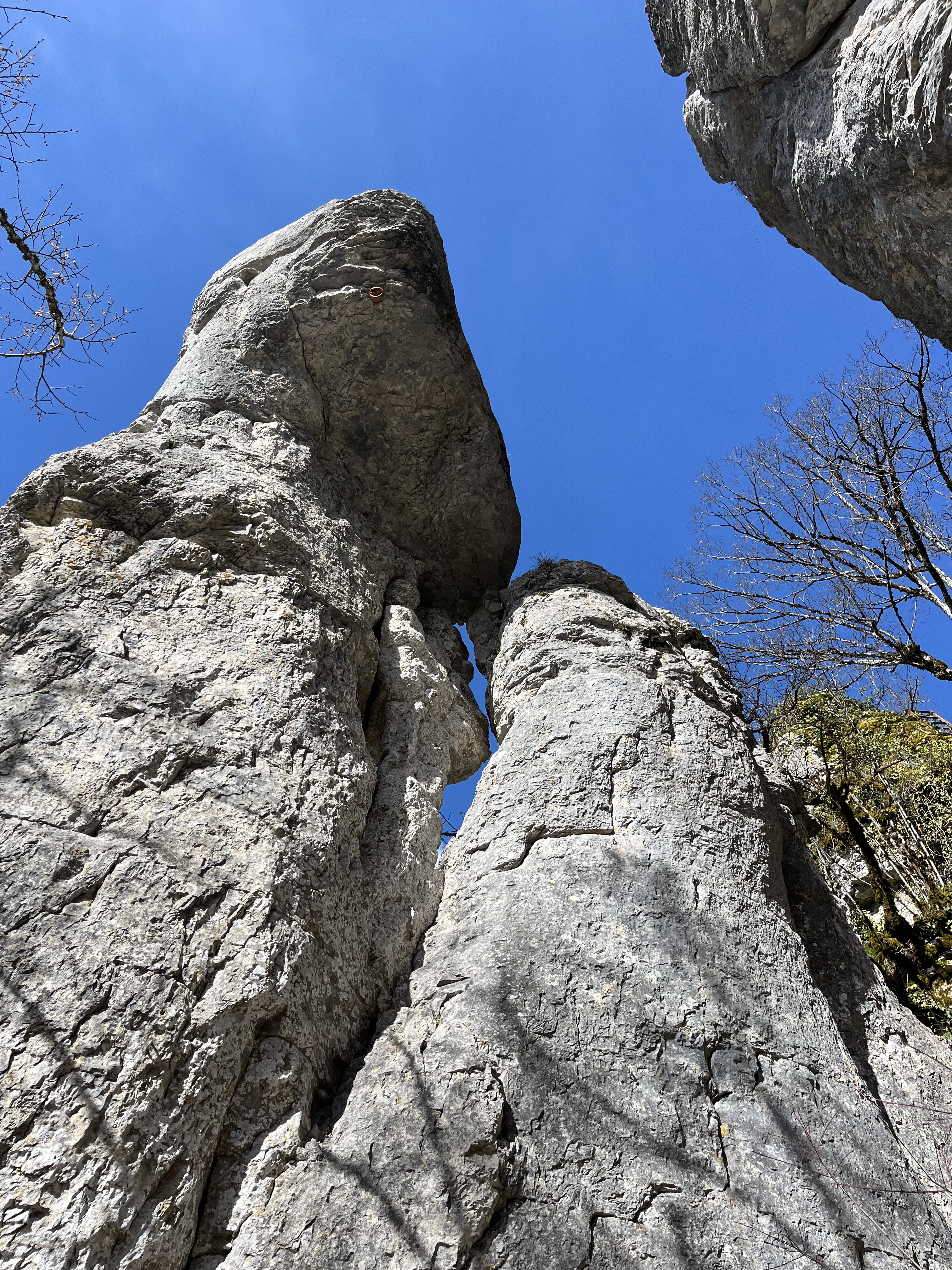
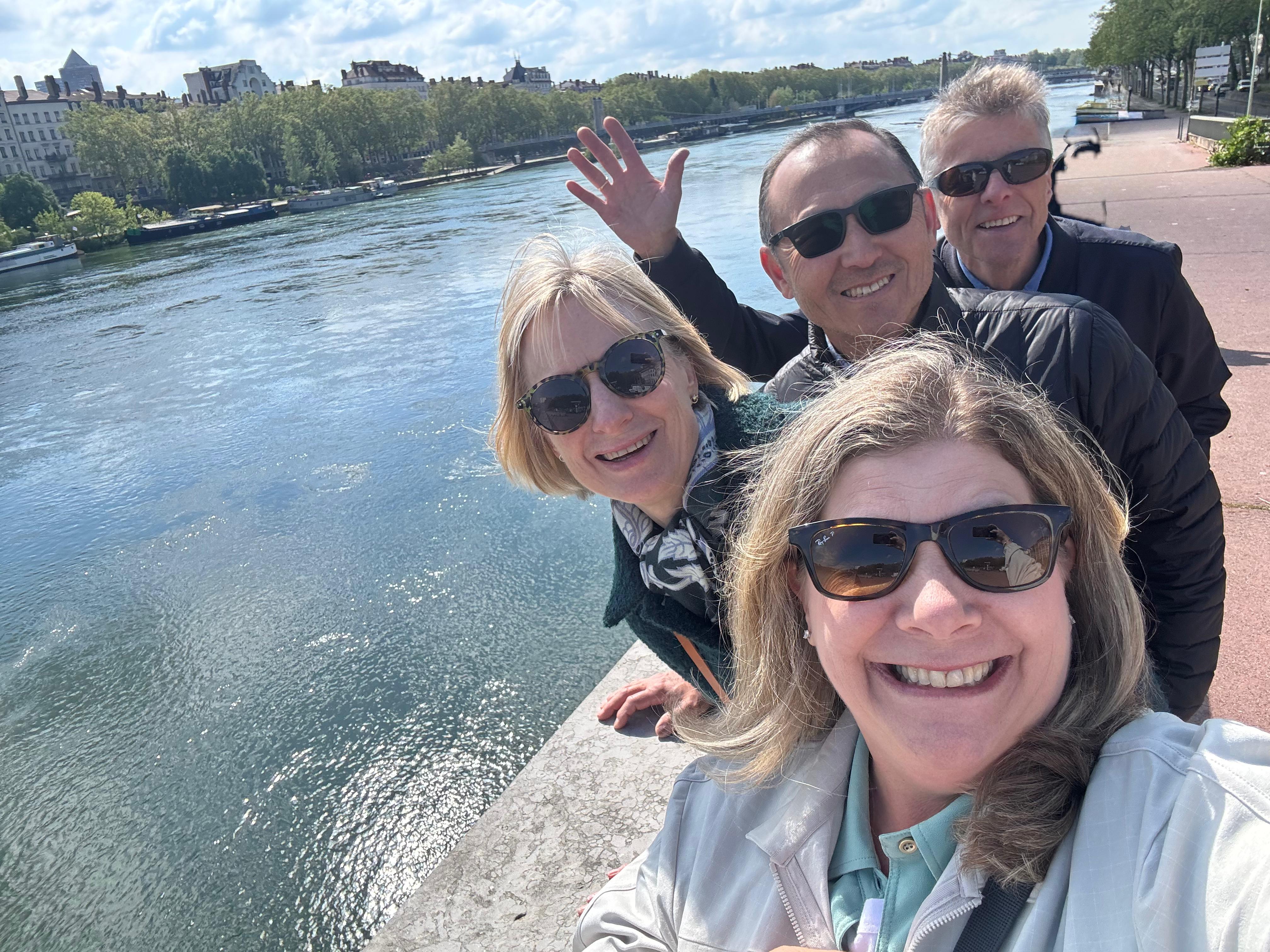
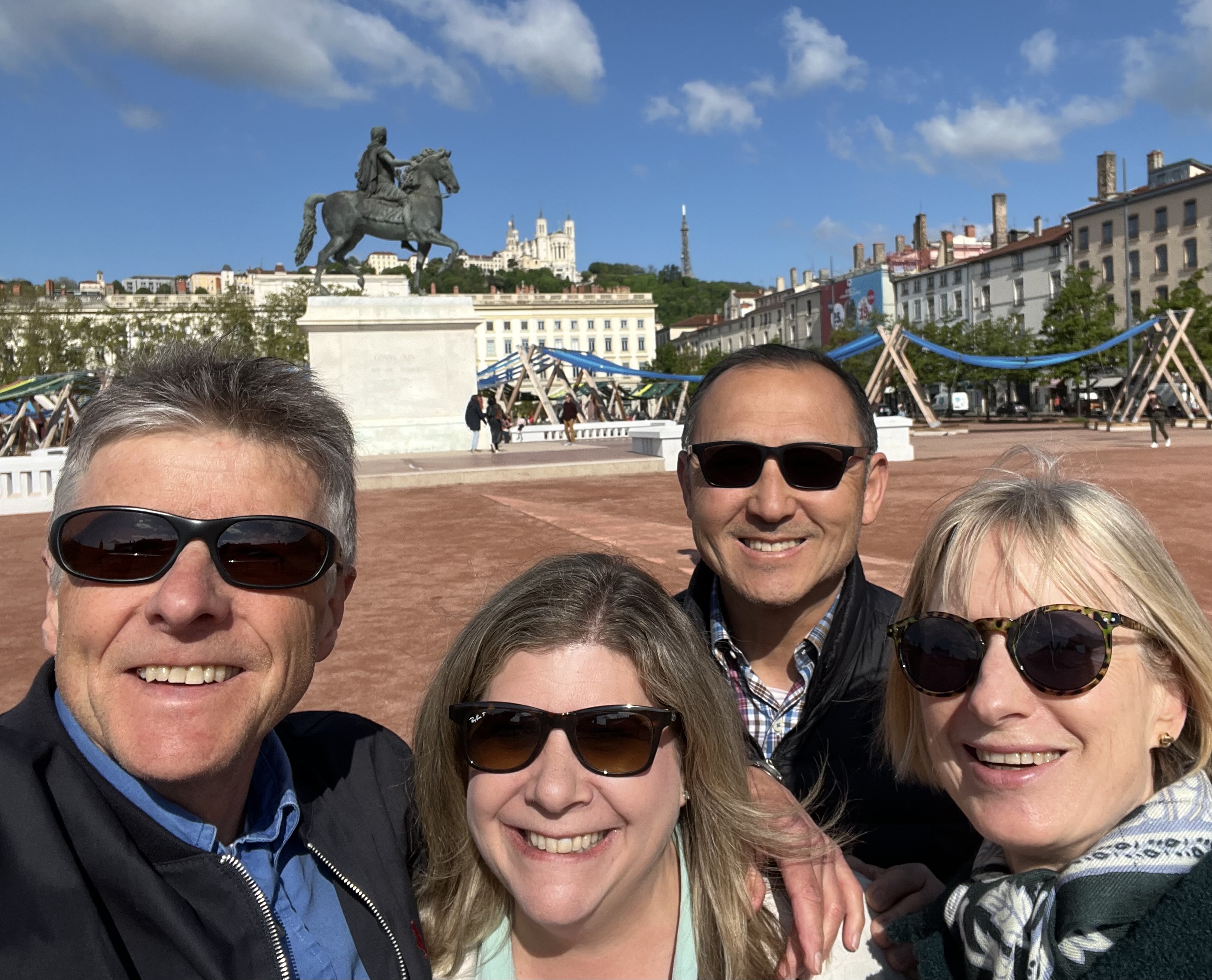
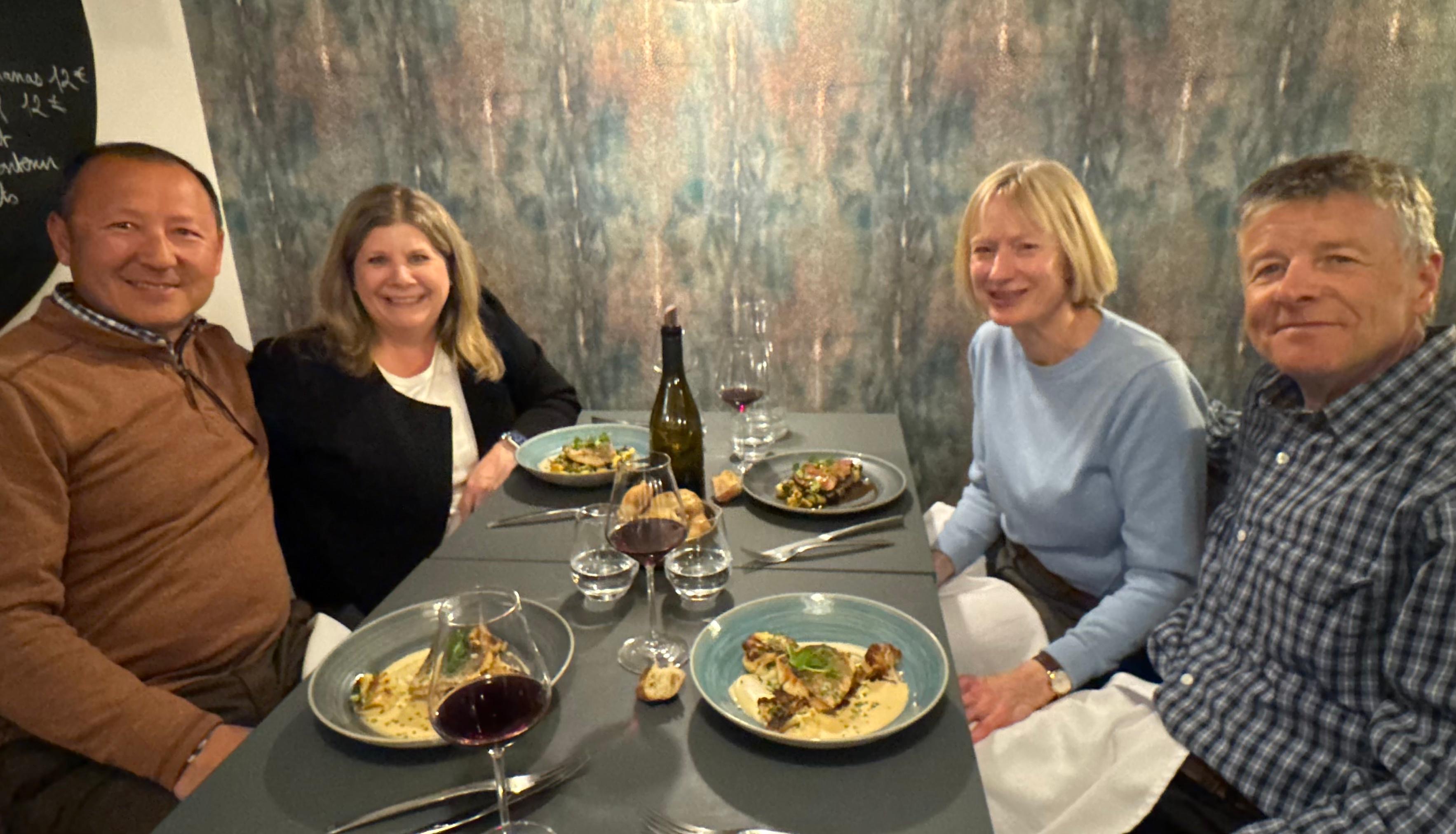
We were also fortunate, to welcome visiting friends from the US and show them our Burgundian world:
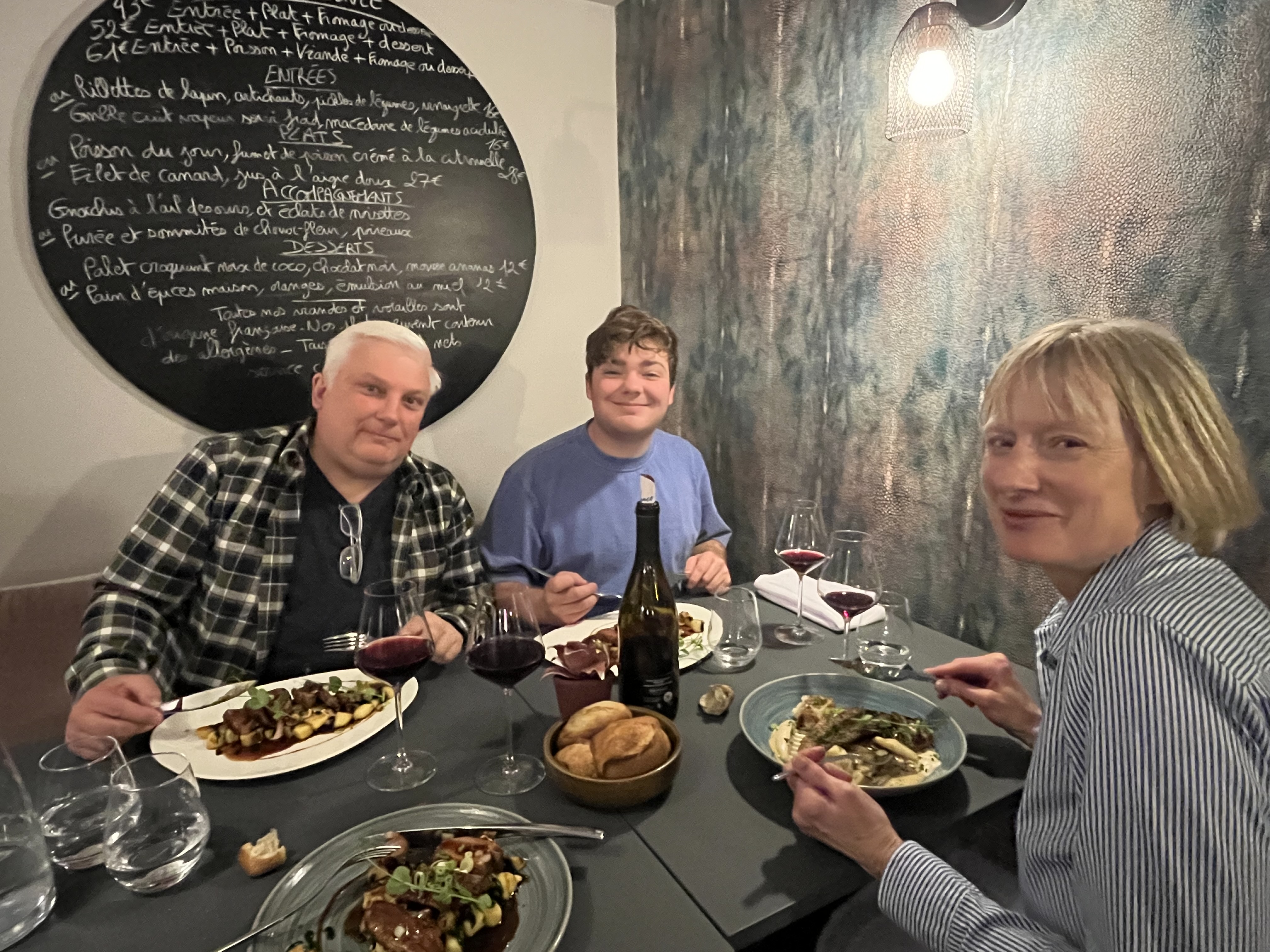
And more visitors, from my sister with husband from Heidelberg Germany, staying over on a trip to their son in SW France, to a visit of Lauri’s close friend from Chehalis, WA with husband, who spent a few fun days with us. We certainly enjoy doing our part to keeping the American – European friendship alive!
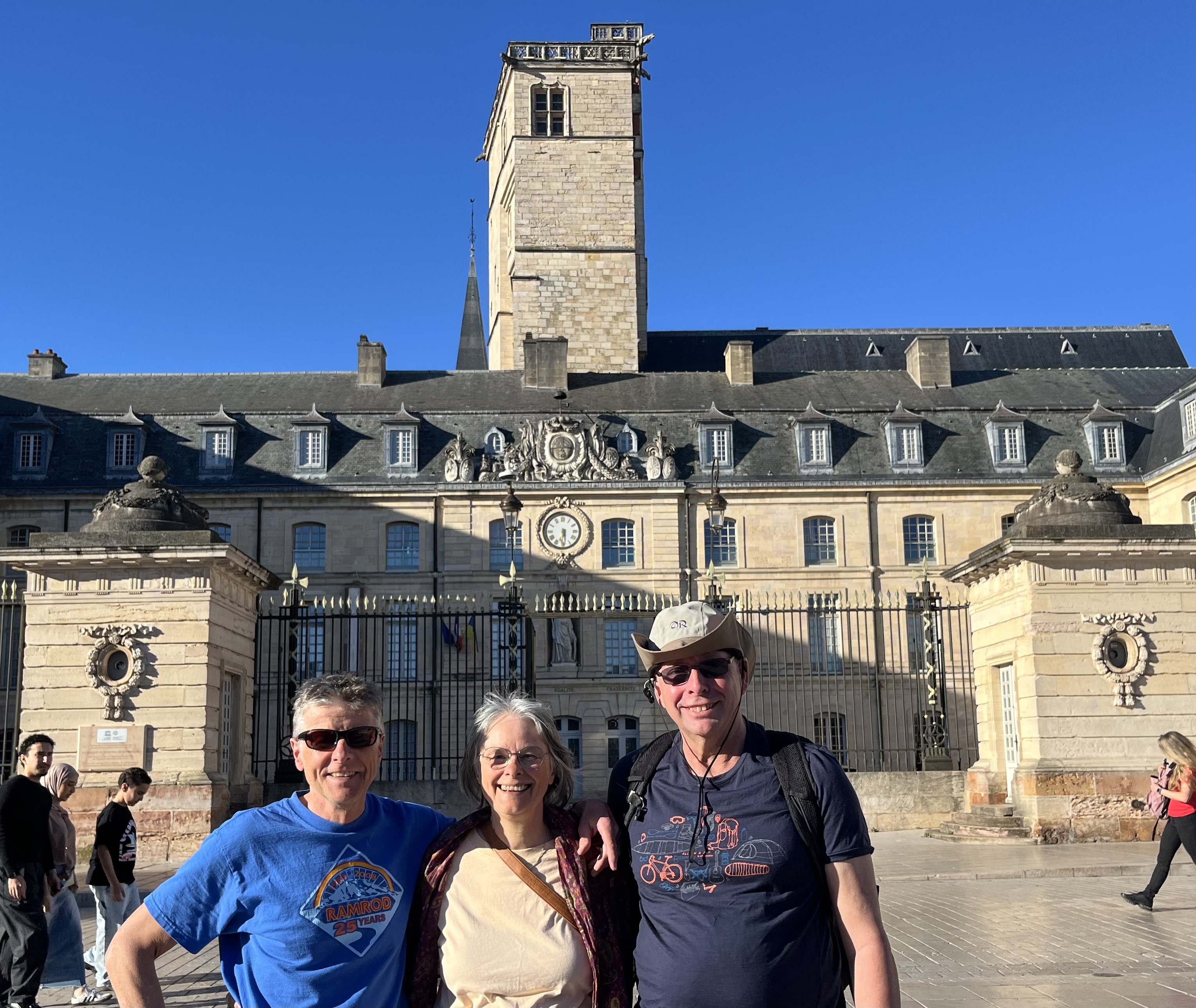
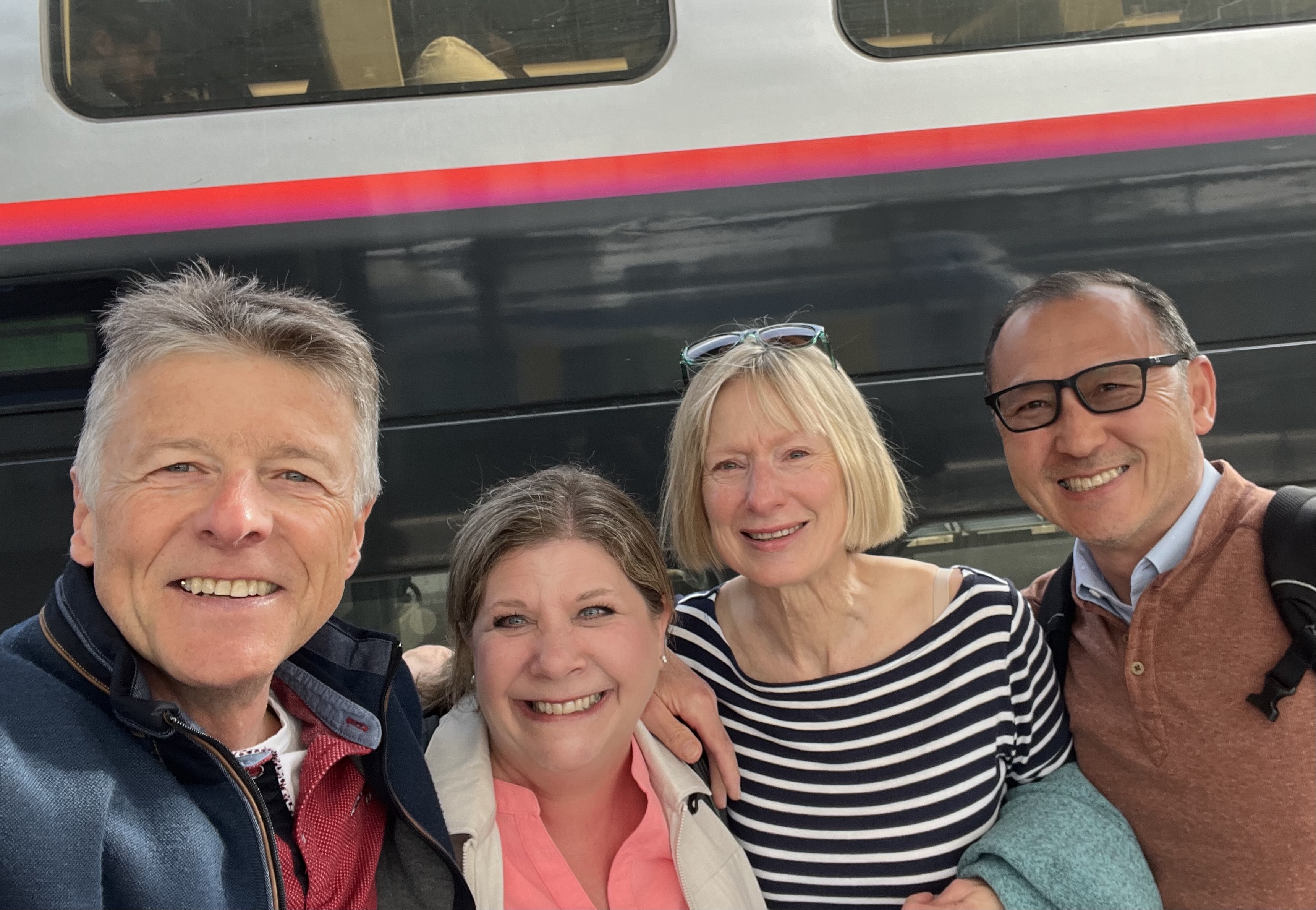
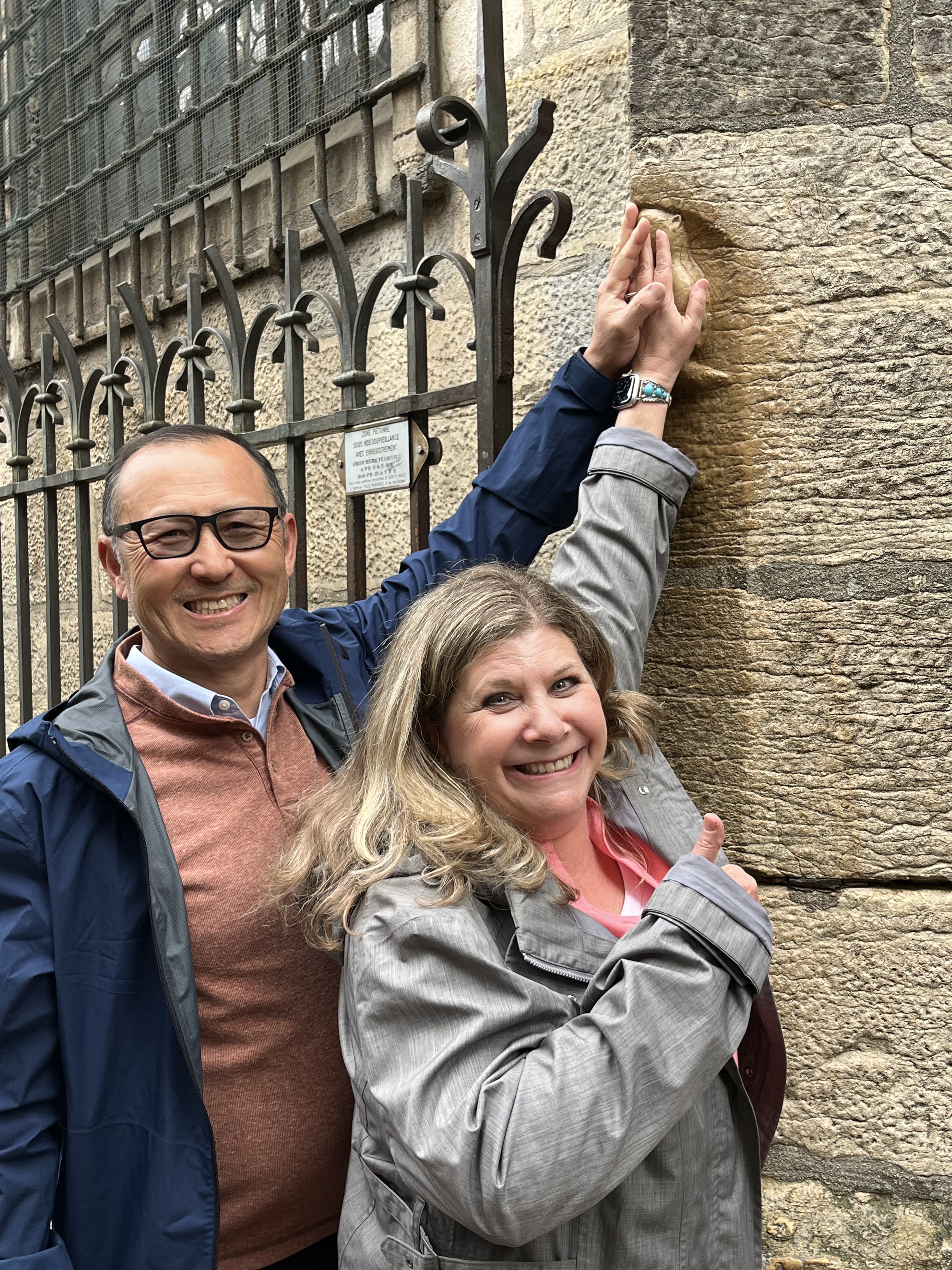
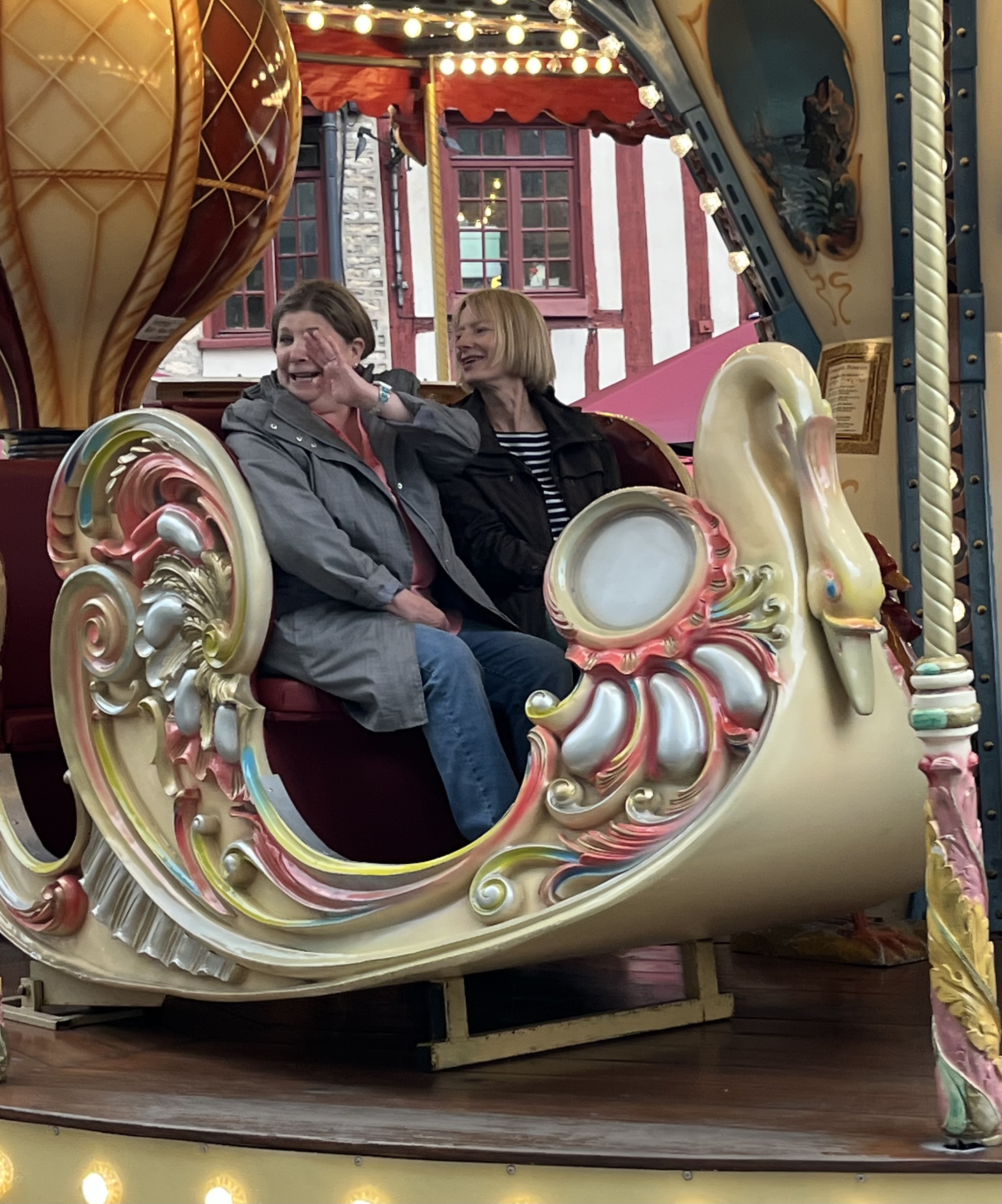
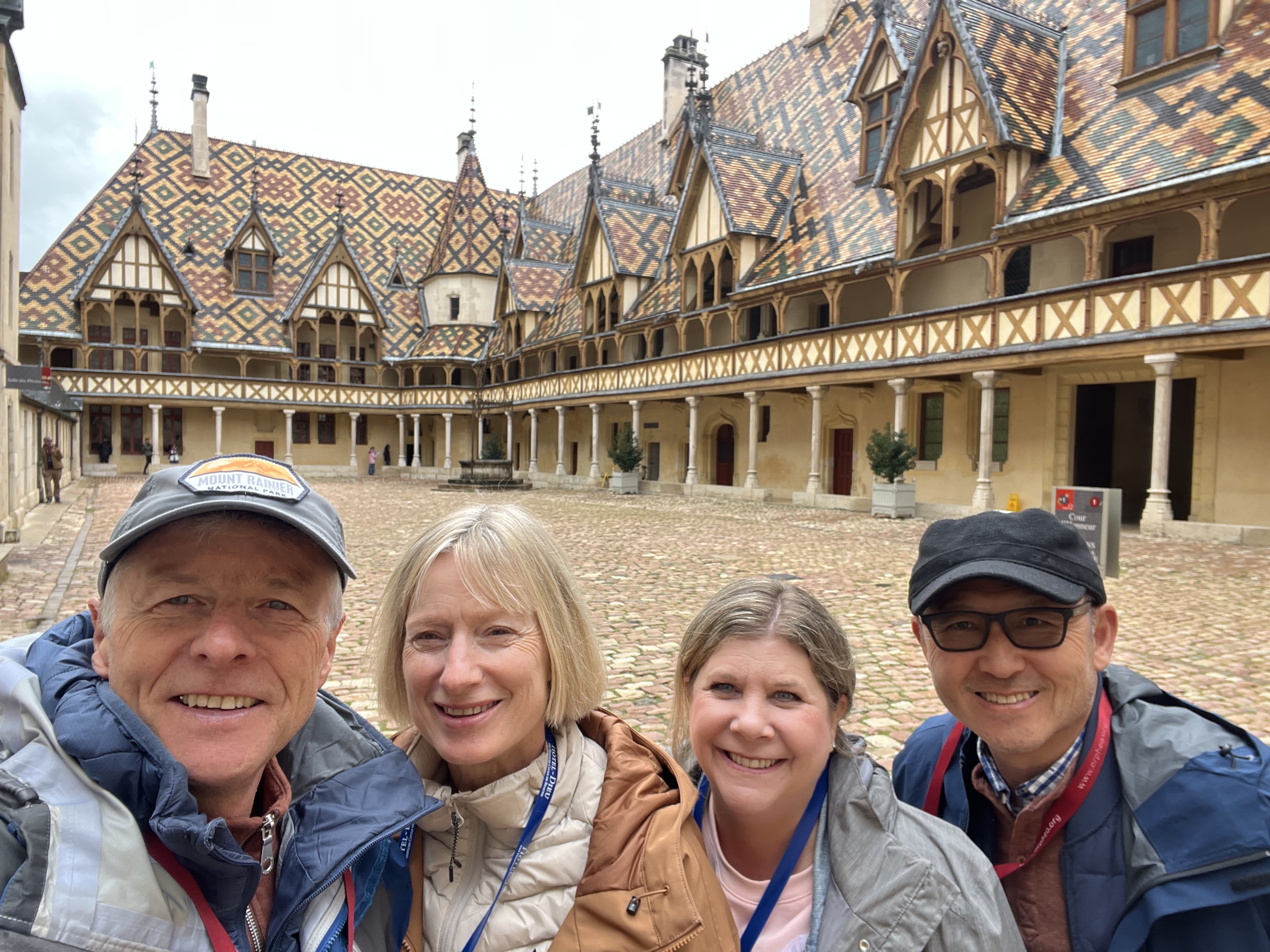
Just a couple days after our last visitors had left, we moved into a new apartment. At the end of January we were surprised to receive notice that we needed to move out of our apartment at the end of our 3 year lease term by November 5th of this year. Remembering how hard it was to find a fitting apartment for us in the first place, we immediately started looking for other options. In March I found a fresh internet listing in a building we know and like, within our beloved Old Town neighborhood, just a 5 minute walk away. We immediately applied and lucked out that we actually got the place, as there was a lot of interest for this new listing.
In mid April we made our actual move. Still living lightly, with almost all our belongings in the US, the move was relatively easy and mostly a one day affair. I found a young moving helper who was a pleasure to work with and rented a small van for the transport. Everything went well and boy was I tired and worn out from all the carrying up and down the stairways. One really does grow older, so maybe next time I will hire two helpers, just supervise and enjoy watching their energy at work….
Here in France, when moving in and out of rental real estate, you have what is called an “Etat de Lieux”. It is an inspection of the rental property together with an independent, third party, contractor who writes up a report that documents the status of the property. It is a tool to facilitate decisions on the security deposit etc. and to protect the renter, as well as the landlord. The inspecting contractor is paid for by the landlord and the renter. We found this detailed Etat de Lieux inspection a fair and good way to manage this potentially confrontational part of renting real estate.
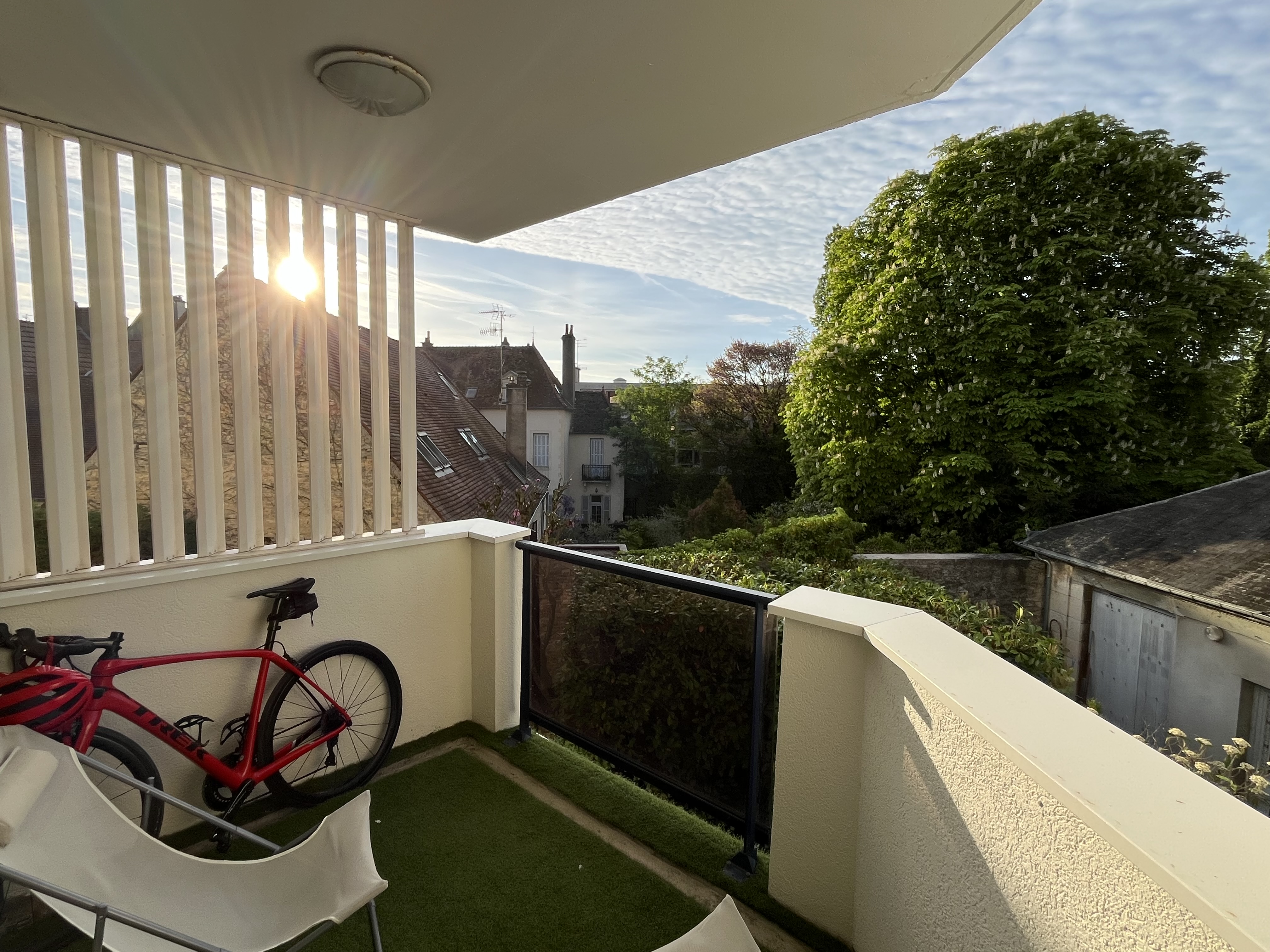
We again live on the third floor, or second floor by European definition, yet we do not live immediately under the roof anymore, and we now have a balcony with a private and peaceful view. That is something we are enjoying very much! Here are a couple of pictures:
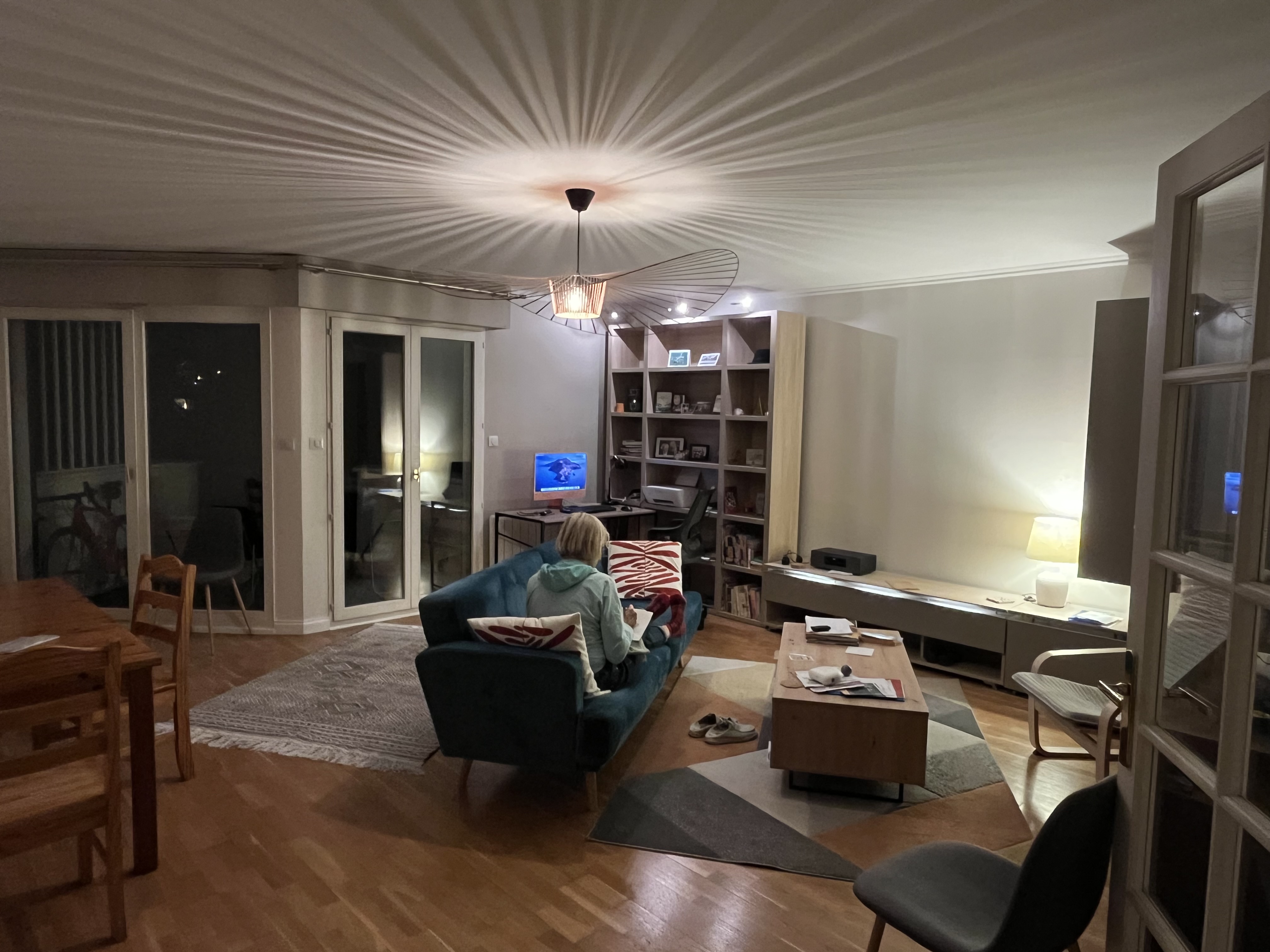
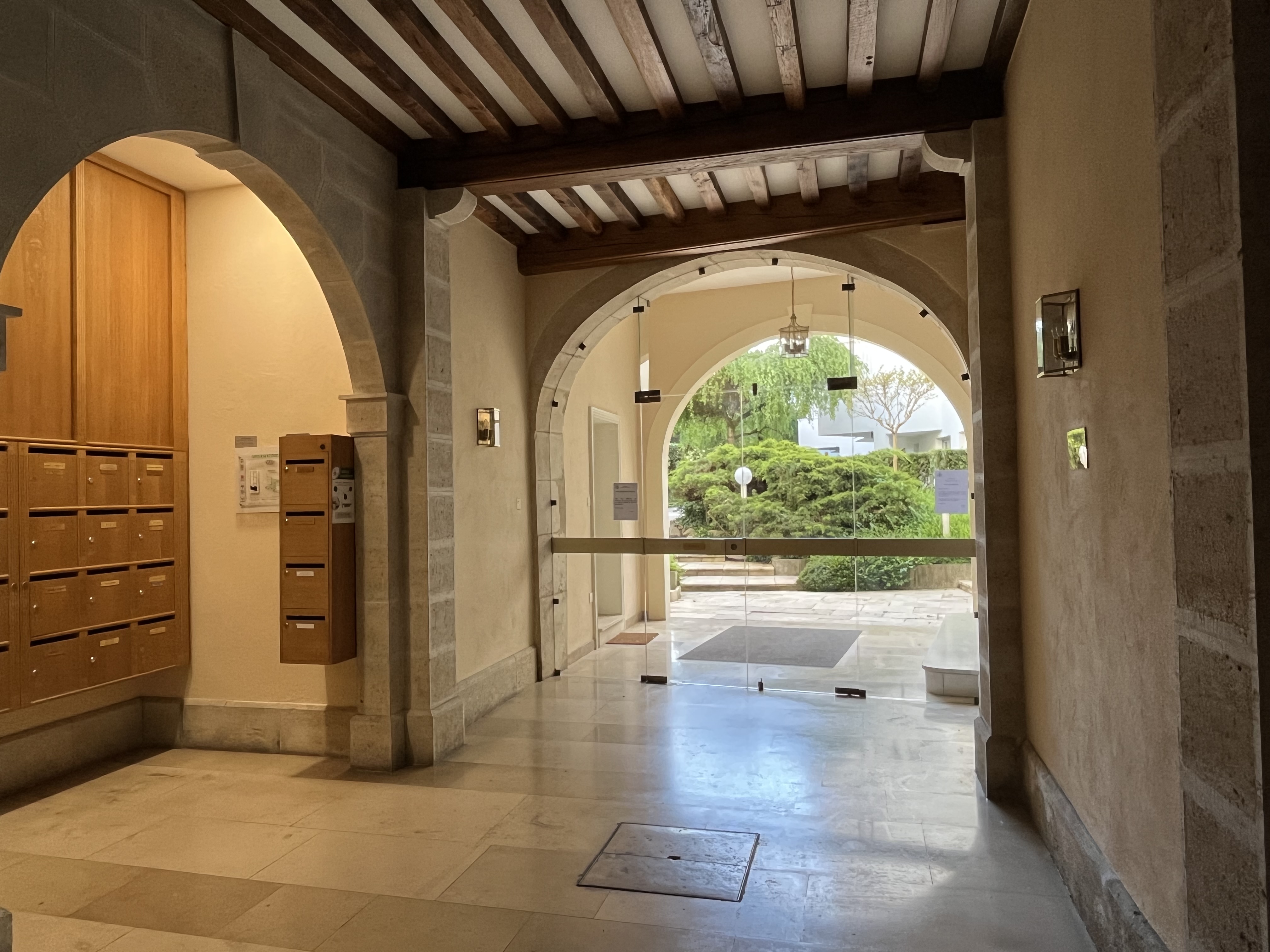
This will do for the in between spring post. On April 30th we’re leaving for a 3 week trip to Greece and Istanbul, a destination we’ve been dreaming about visiting for a long time. À bientôt!


Leave a Reply