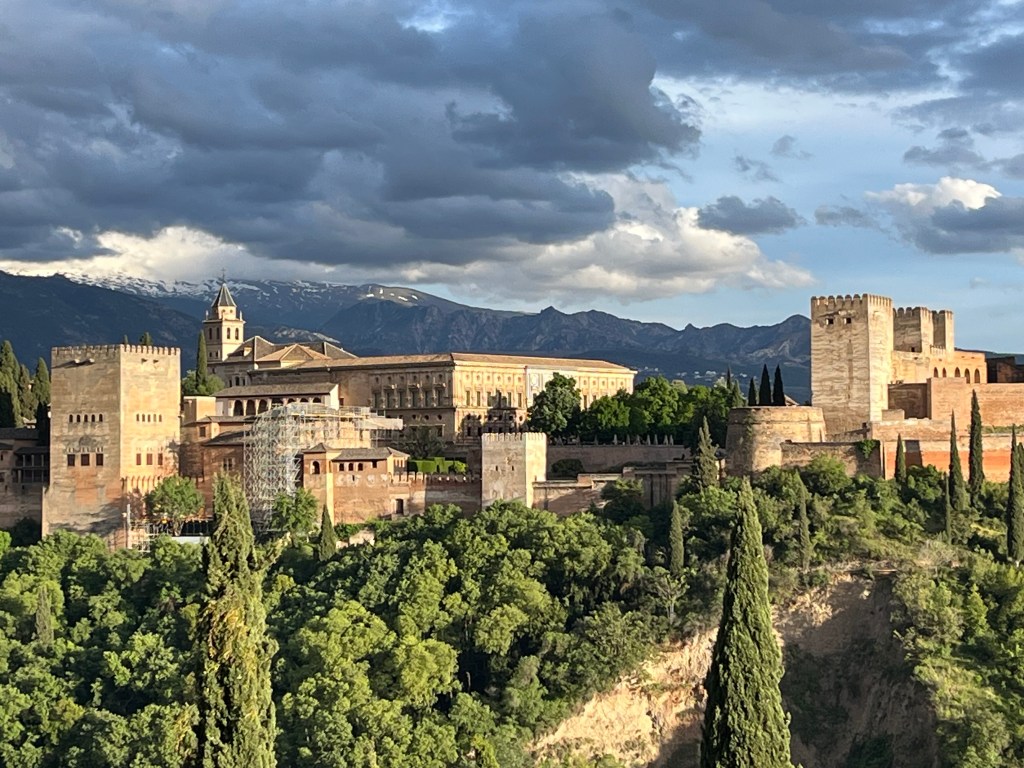
We covered a lot of sites during our 3 week loop of the Iberian Peninsula, so just like our Italy post from last year, this is a long post with lots of photos that you might want to digest in more than one sitting. Here a little tip that might help: The blog posts are much better read and viewed through your internet browser on your computer screen, rather than your email, and you can double click on the individual photos to bring them up to full screen viewing.
Barcelona
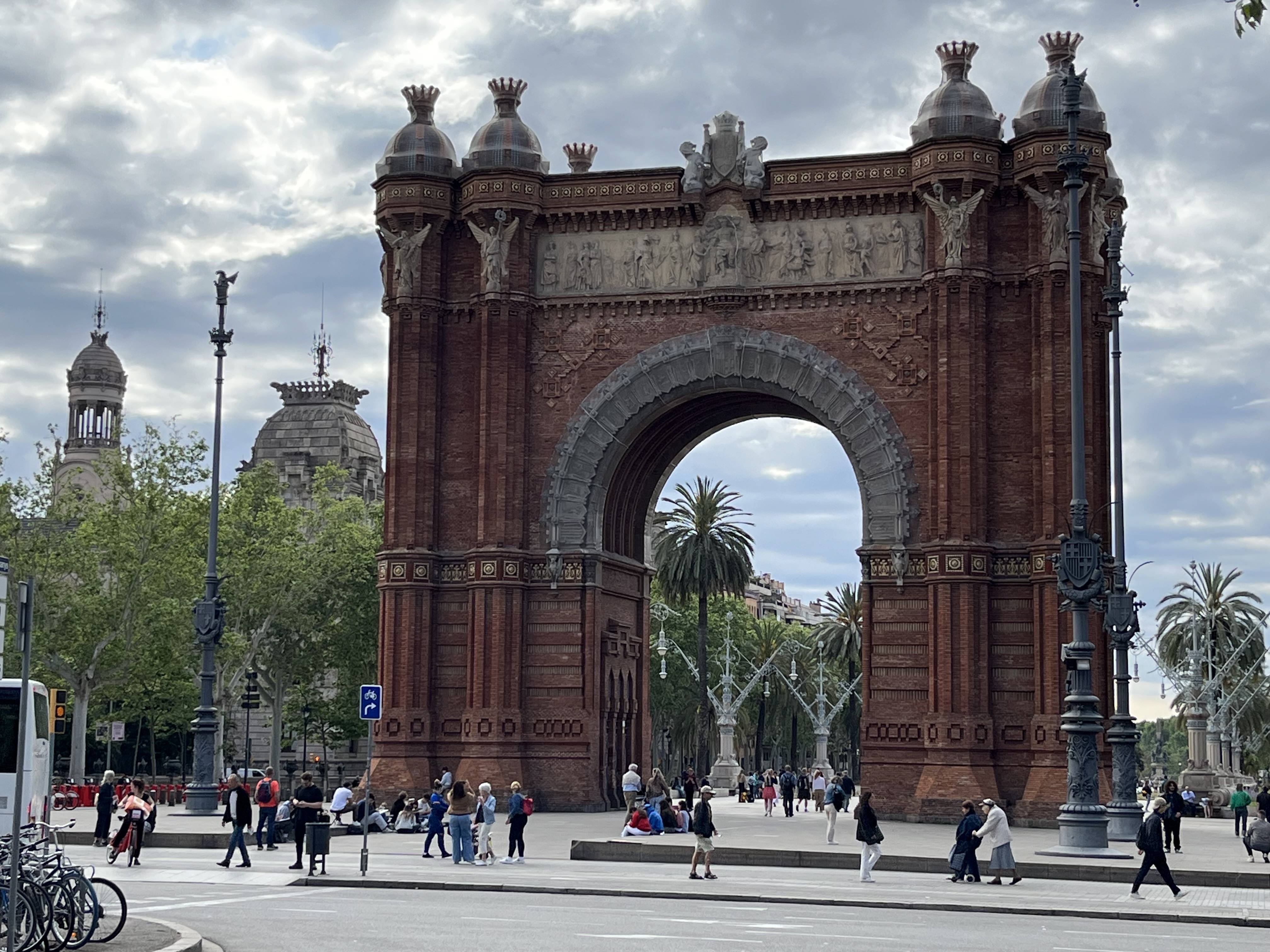
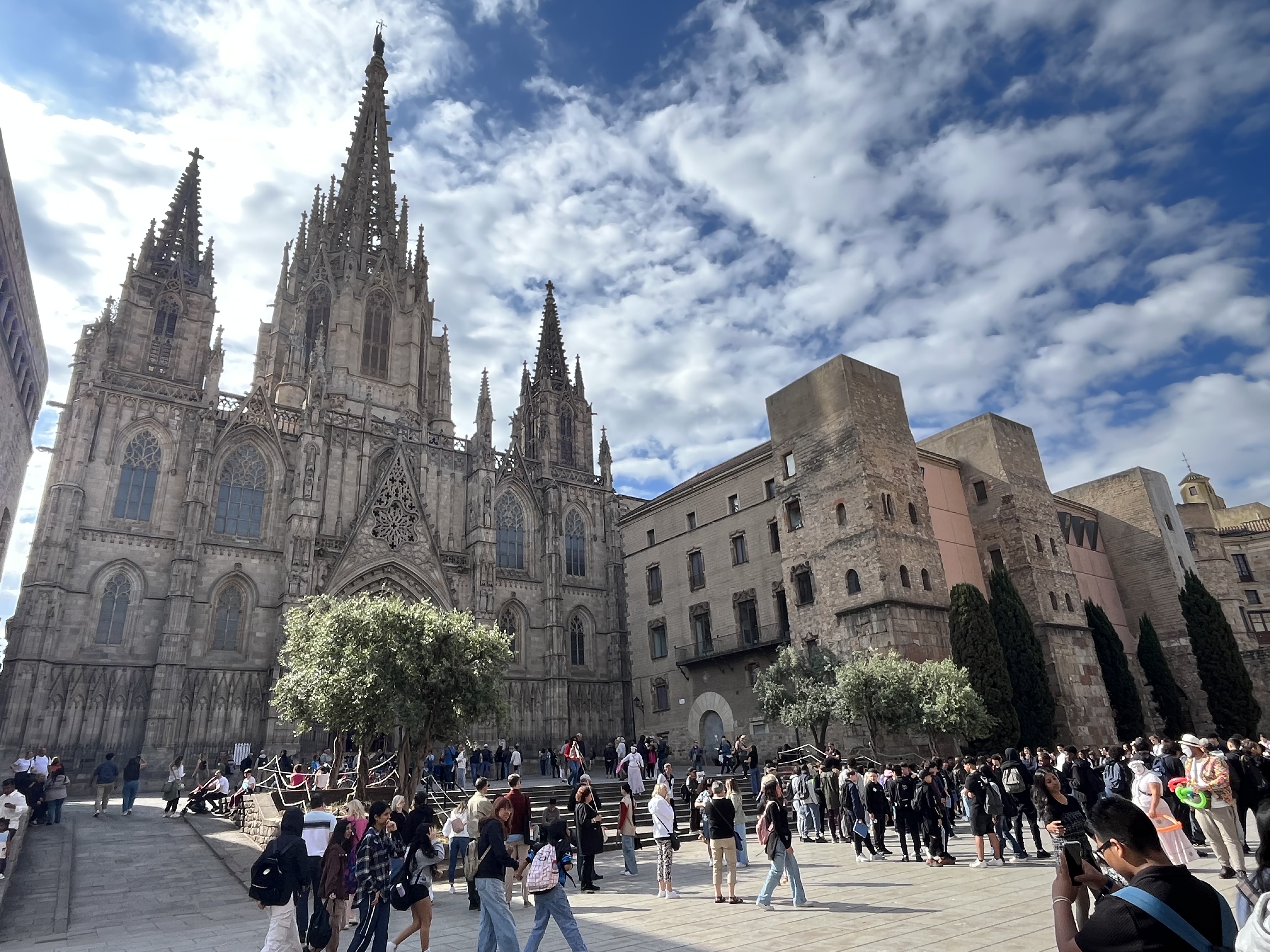
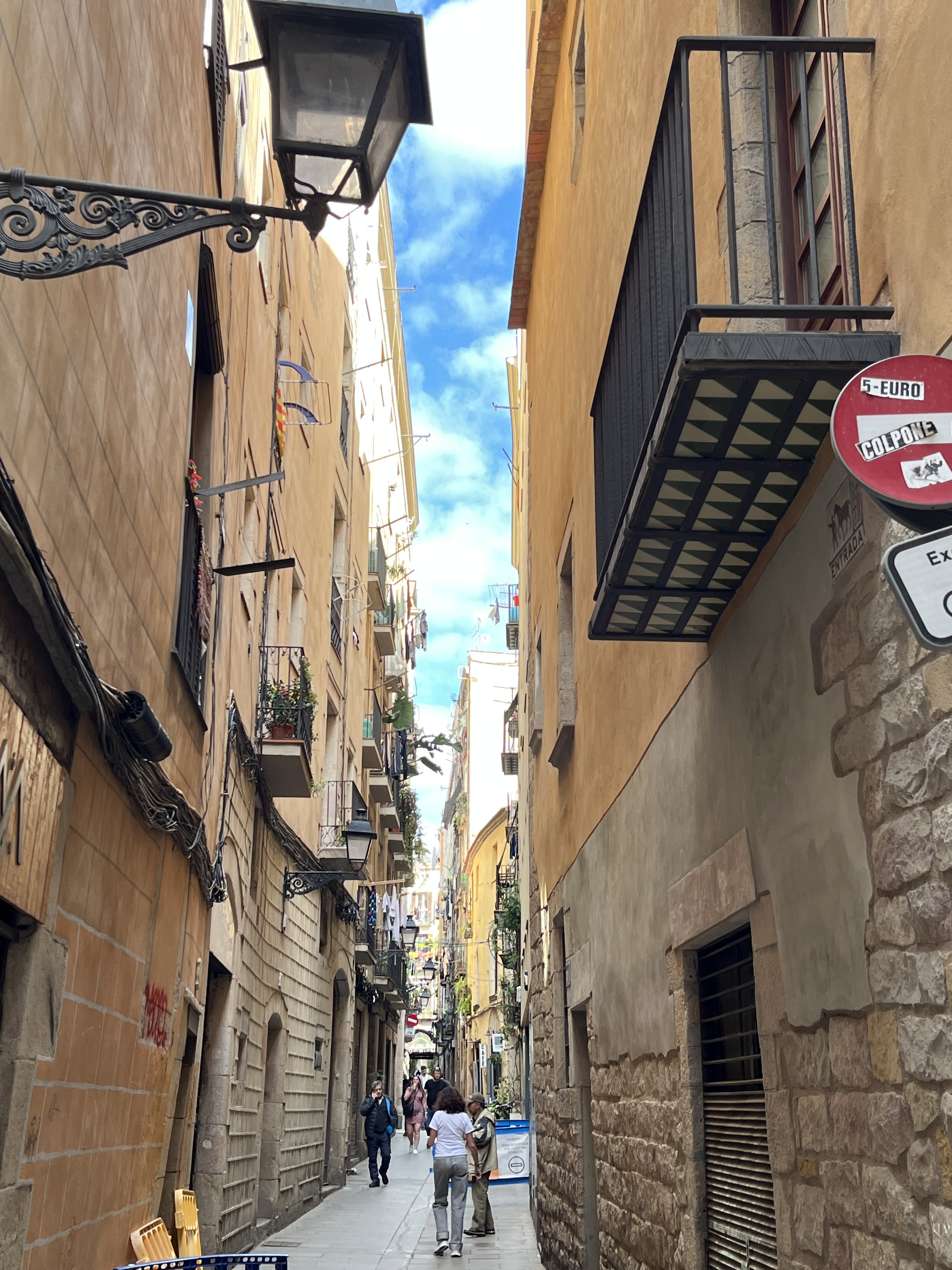
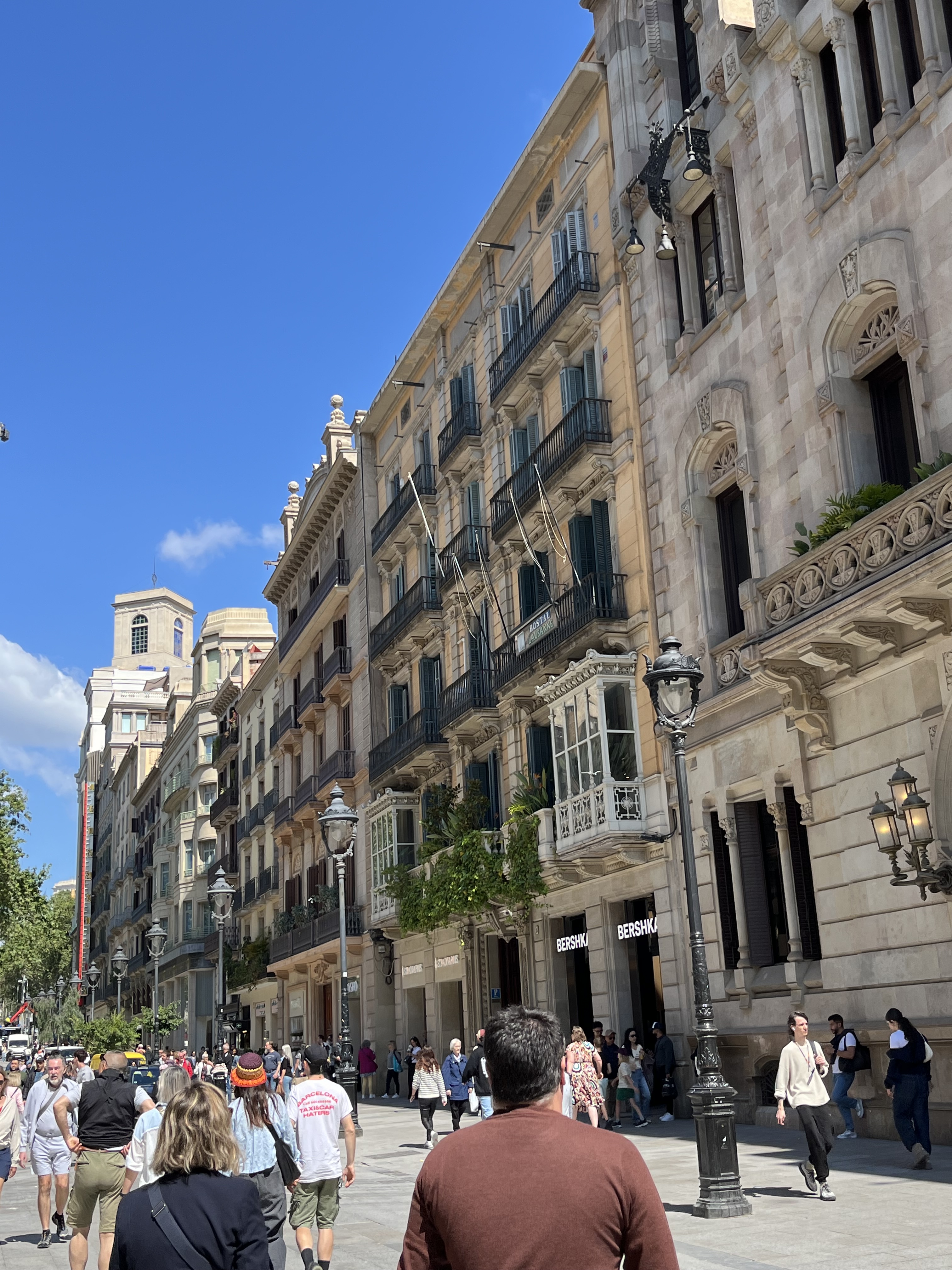

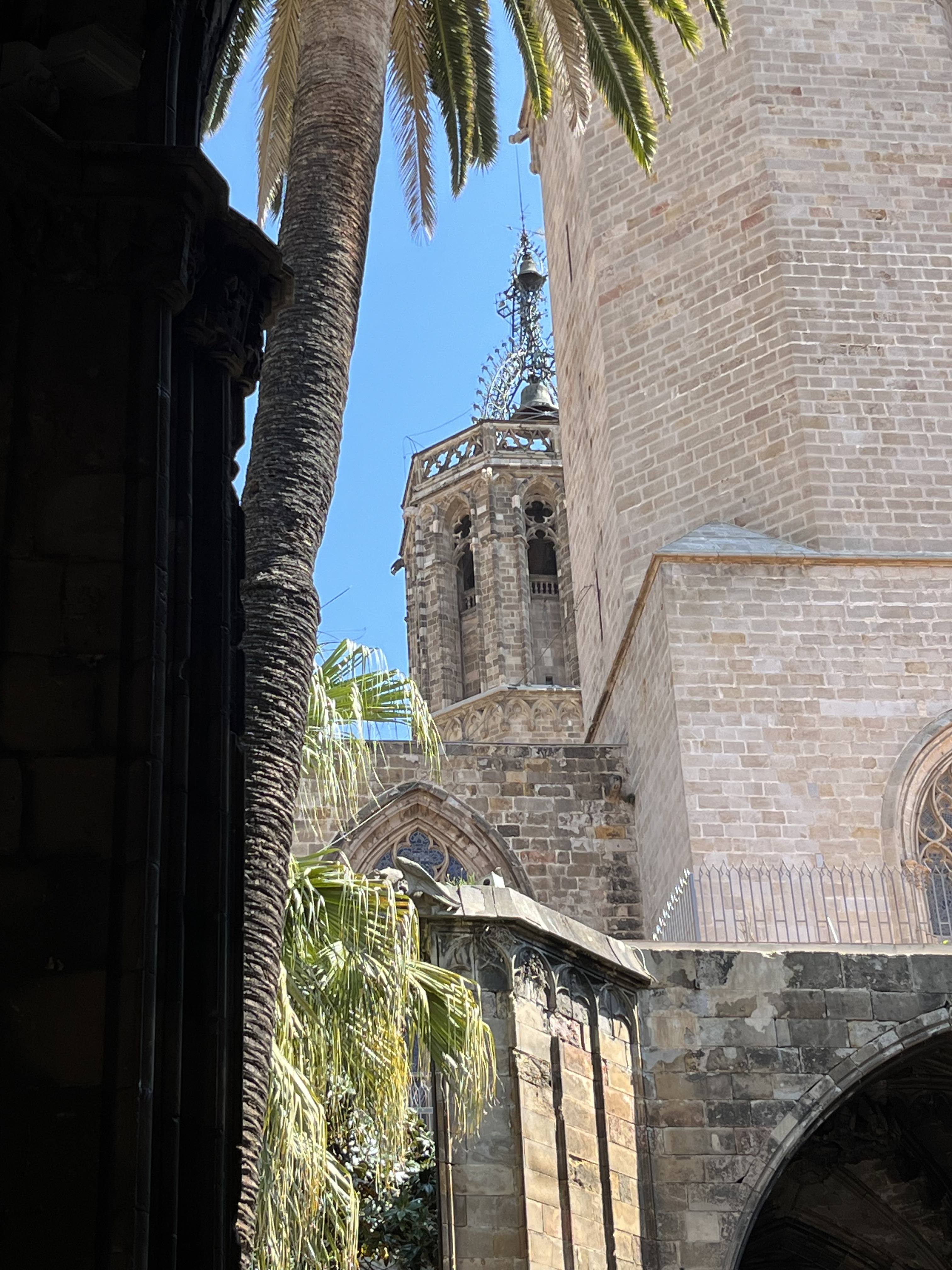
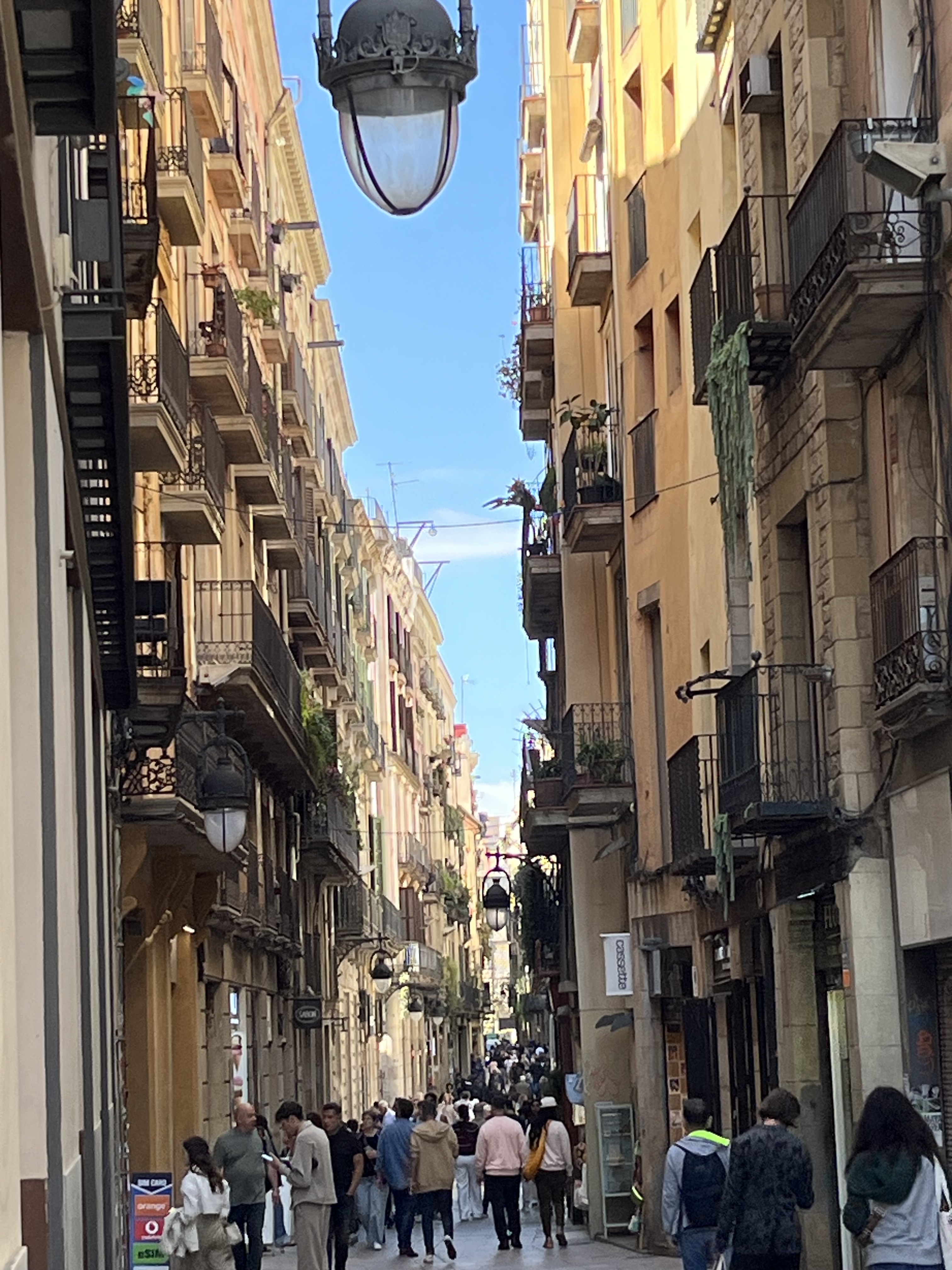
On our first day in Barcelona, just when we were looking for some tapas a little bit after noon at the Mercat de la Boqueria (farmers market), the lights went out. Yes, literally! First we thought that only a city block might be effected or that it would only last for a few minutes. Back at our hotel, the receptionist standing in the malfunctioning entry door to secure the premise, told us that most of the Iberian Peninsula was in a blackout, that a cyberattack was the suspected cause, and that there was no information available as to when power would be restored.
Not having any food, and not knowing when power would be restored, we followed the receptionist’s advice and walked to a close by minimart, where in the dark, with our phone flashlight, we, like a lot of other residents, searched for essentials such as drinking water, bread, and peanut butter. Inside the store we had to take pictures of the purchased goods price tags and pay with cash only, since scanners and credit card readers didn’t work, and neither did ATMs. We saw people walking on the street listening to transistor radios trying to get information. Back at the hotel we heard that it wasn’t a cyberattack, yet that the cause was still unknown. By evening power returned to a few isolated businesses in the neighborhood and we lucked out finding a functioning restaurant where we were able to get a decent meal. We heard other customers in the restaurant asking whether they were allowed to charge their phones, or stay until business closing, as they were unable to enter, open their Airbnb’s electronic entry door where they’d left their luggage in the morning. Finally, shortly after midnight, a little over 12 hours after the power went out, we woke up as the light came on in our hotel room and we were back in the 21st century. – Hallelujah, quite the unexpected start to our journey! We were impressed by how laid back and civilized people reacted to the situation.
Barcelona has a reputation for pickpocketing, with warning signs in several places. In fact, this goes for Spain in general, and there are even billboards regarding this on the freeway. For instance, when we entered Spain, a big sign read that the friendly person offering to help you fix your tire might actually be planning to rob you and drive away with your car. I also recall that a few months ago, our driver in Morocco advised us to be especially careful of pickpockets when visiting Barcelona, and I recall that my sister had her suitcase stolen here in the 80s. These frequent warnings do make one feel uncomfortable and alert.
Despite this, Barcelona, has become very popular with tourists and a trendy, and highly desirable place to live. With a population of 1.7 million, Barcelona had 17 million visitors in 2024!!
Spain in general is popular with tourists, contributing to almost 13% of their GDP, vs 7.7% in France, and supply and demand rules here as well. Spain is not the once cheap tourist destination anymore. We were surprised about the prices for lodging, and every tourist site such as churches etc, charges entry fees higher than one would expect.
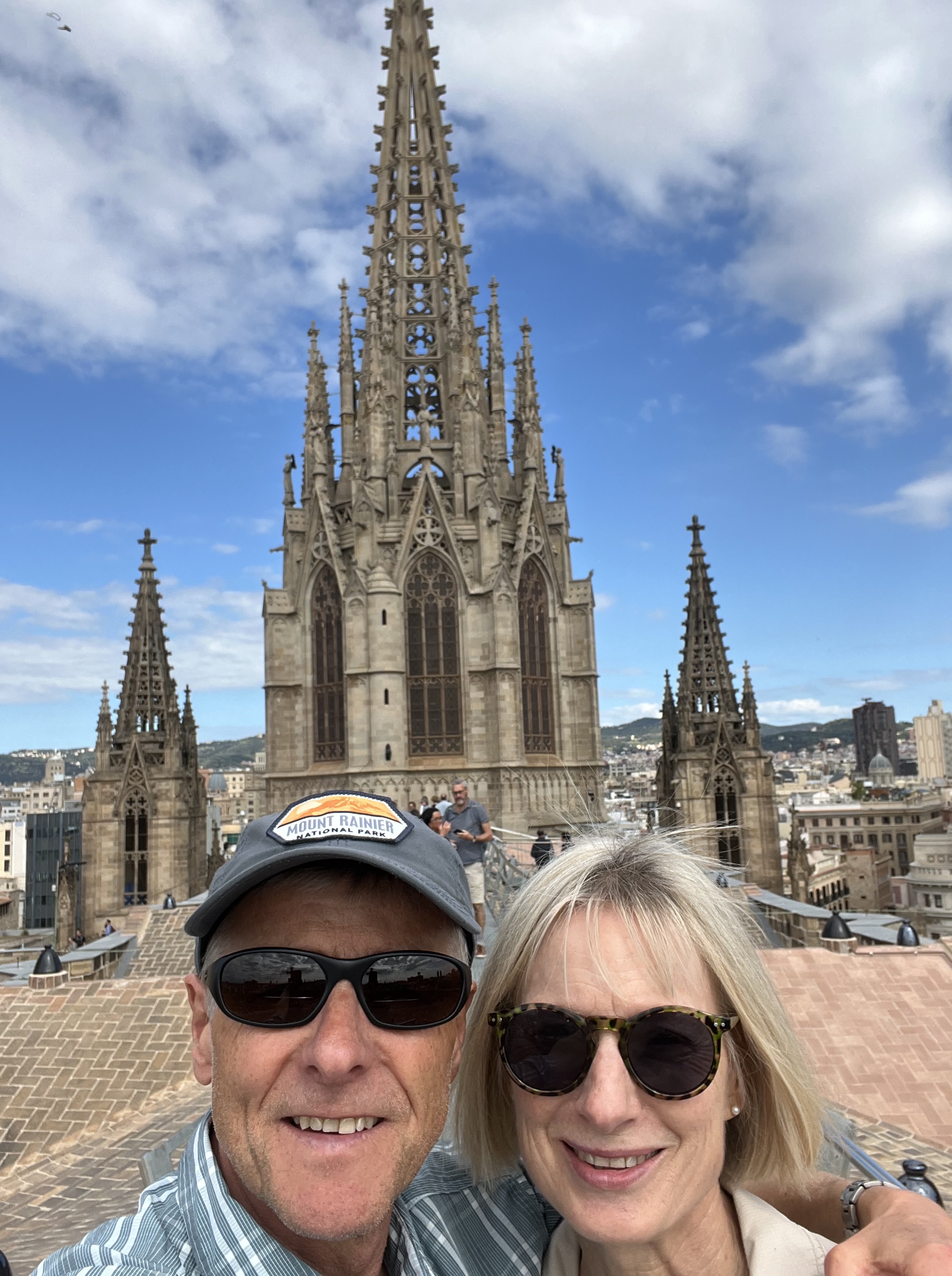
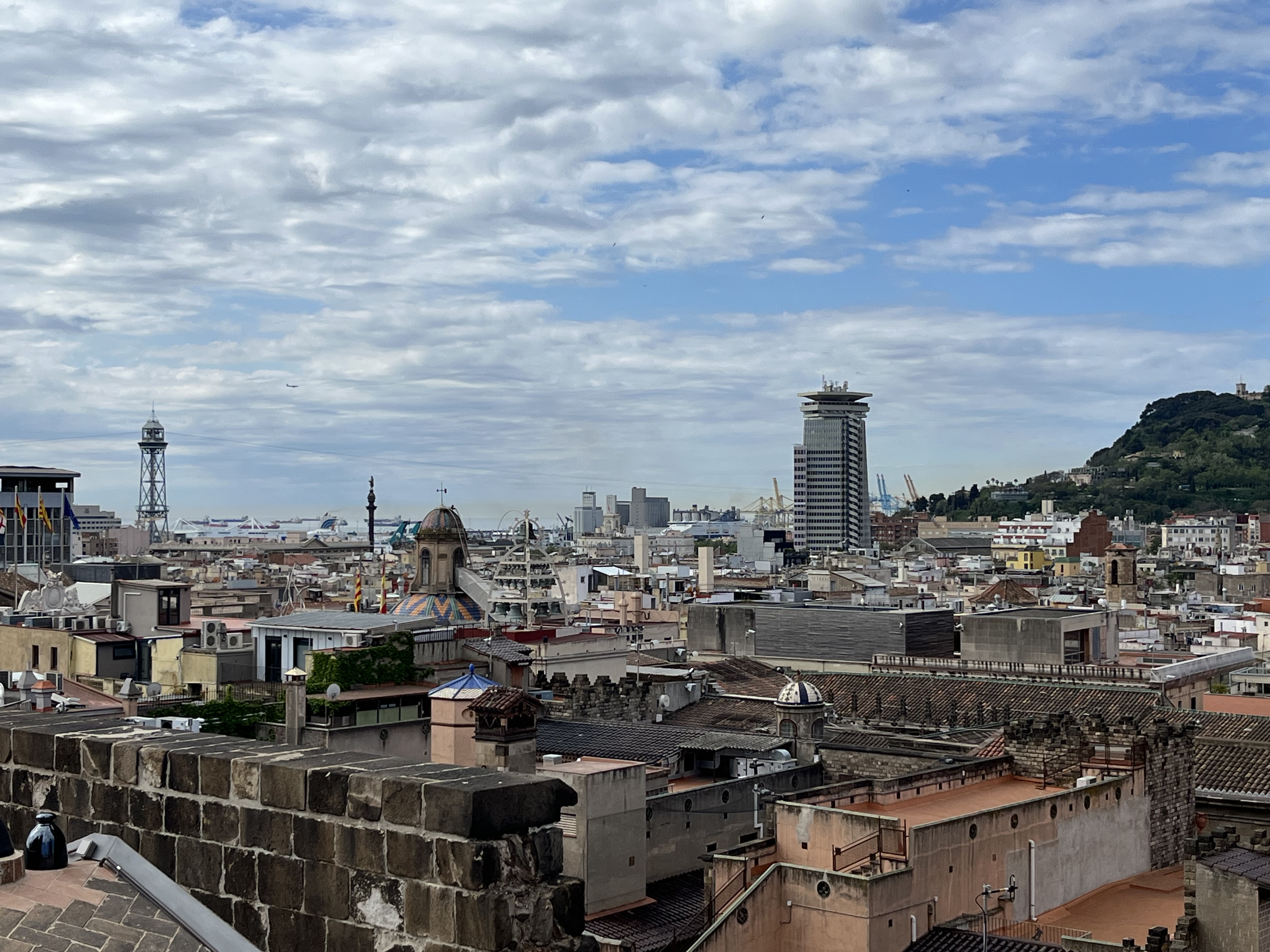
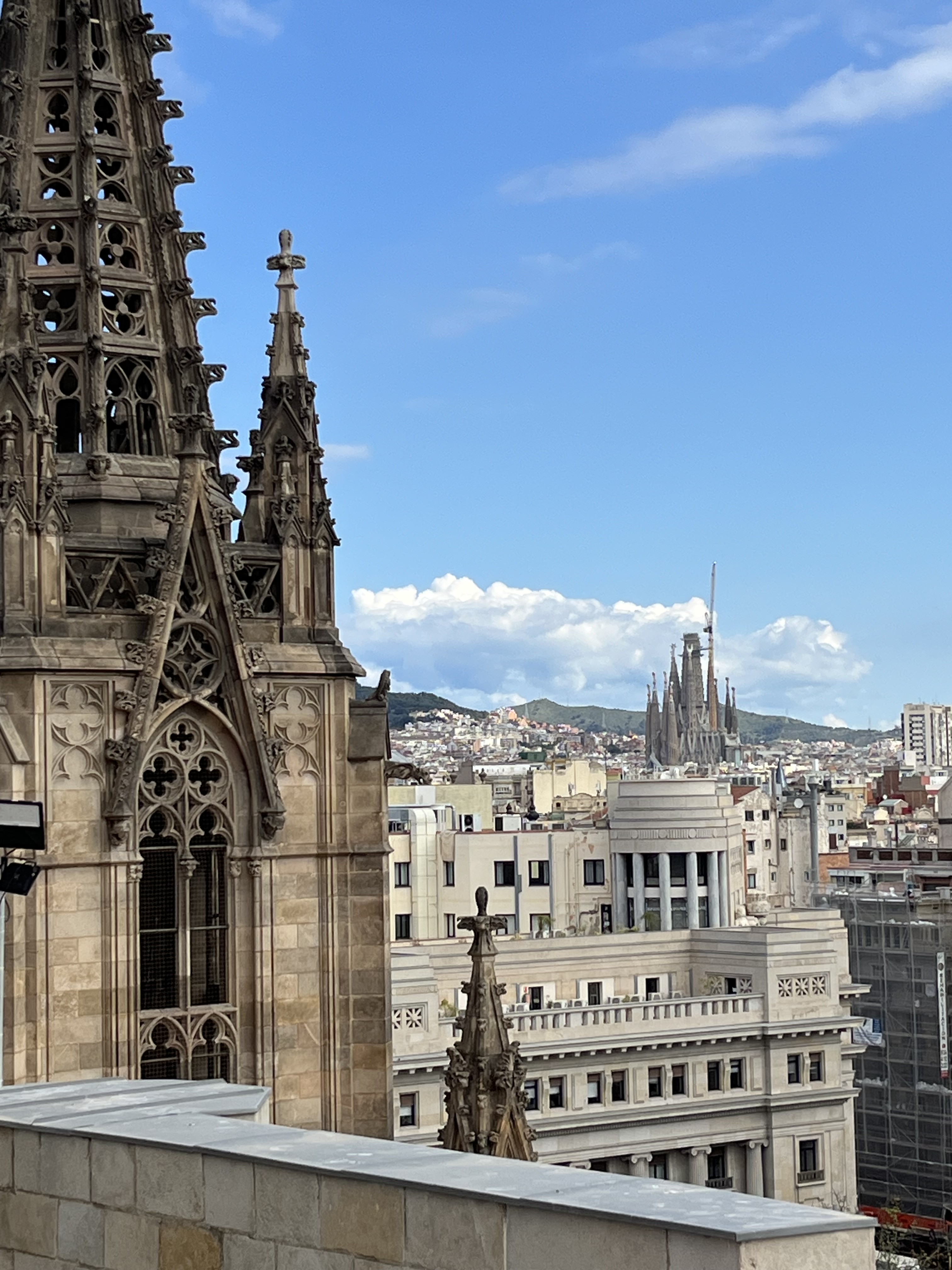
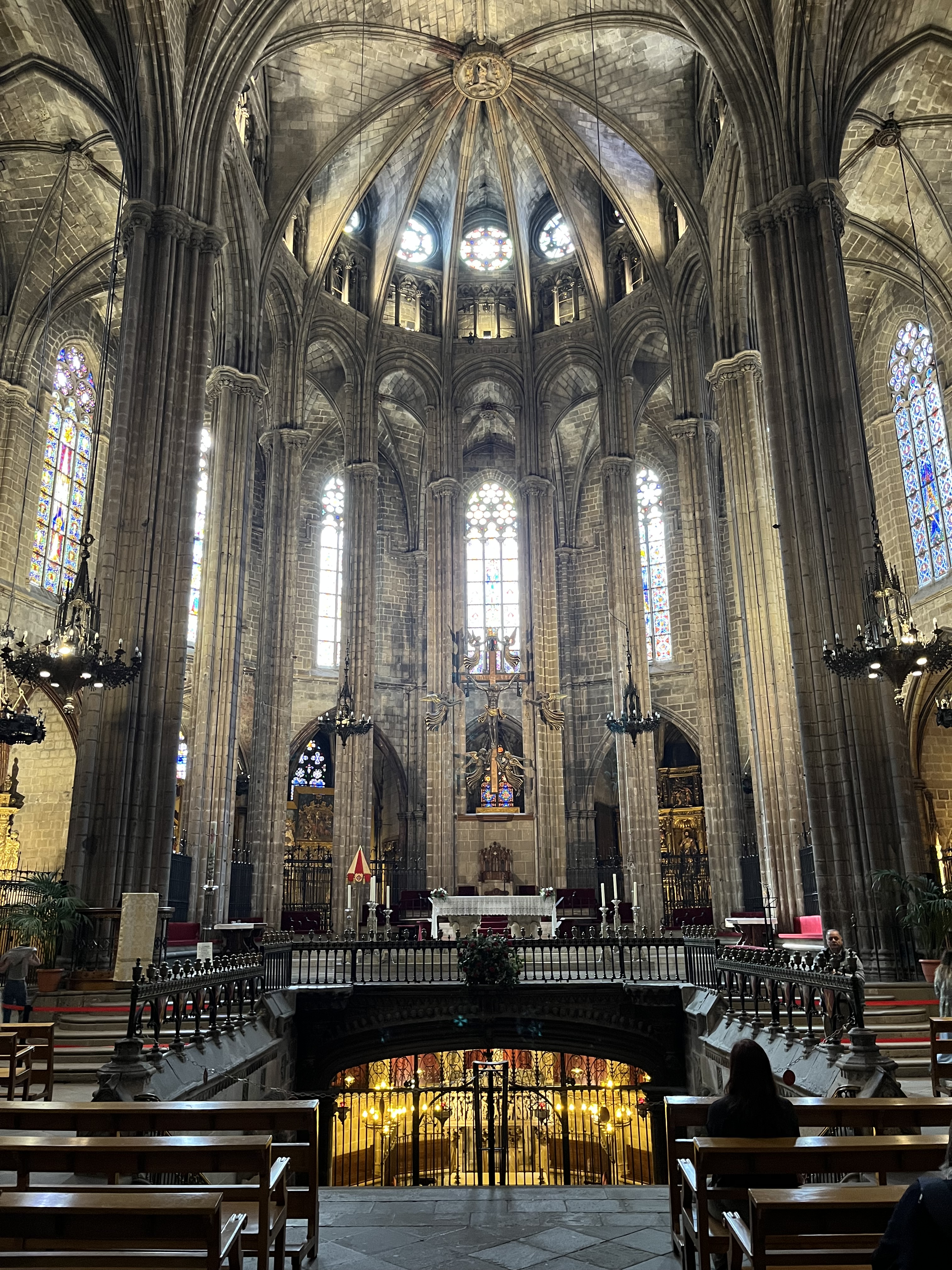
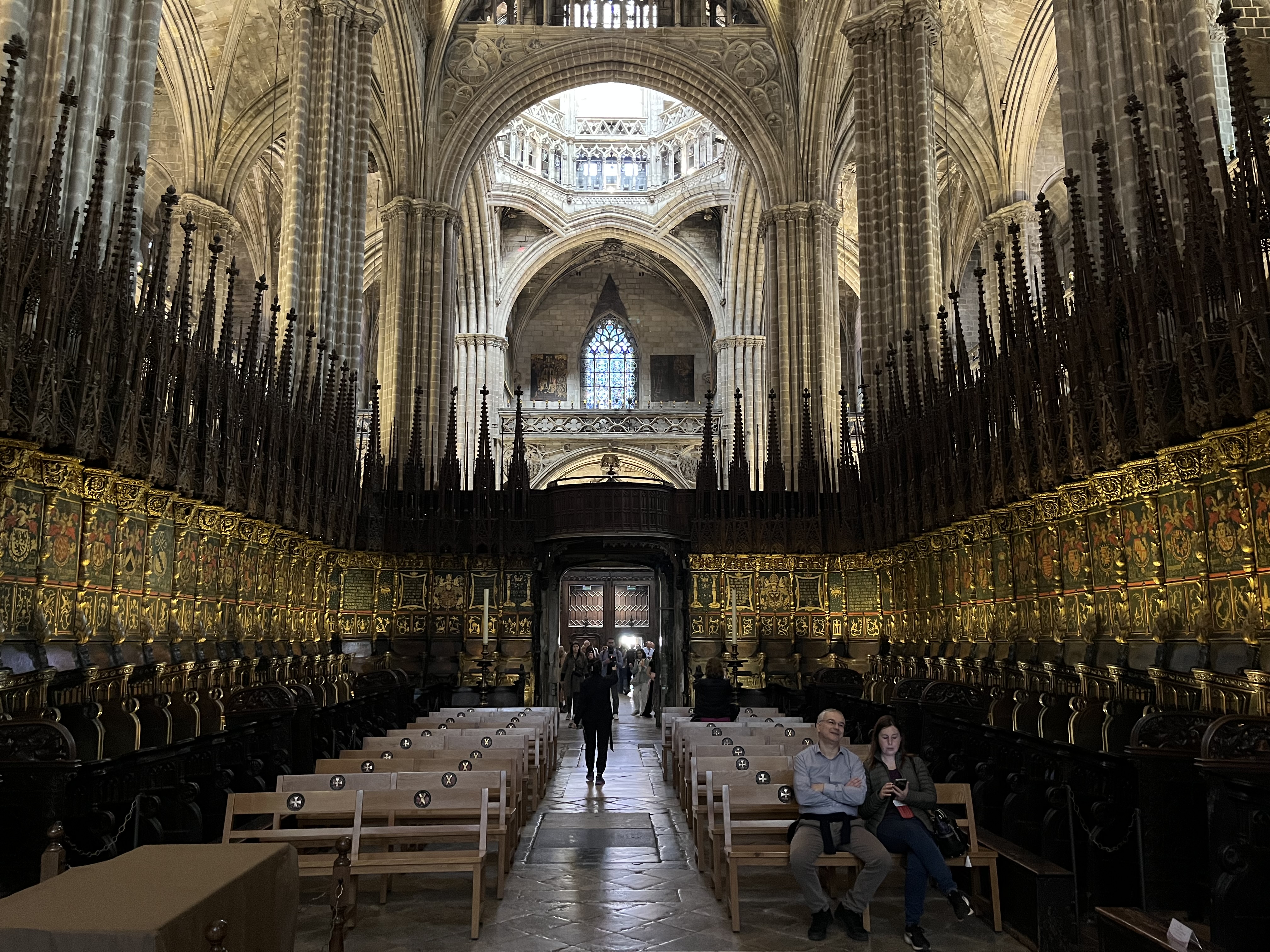
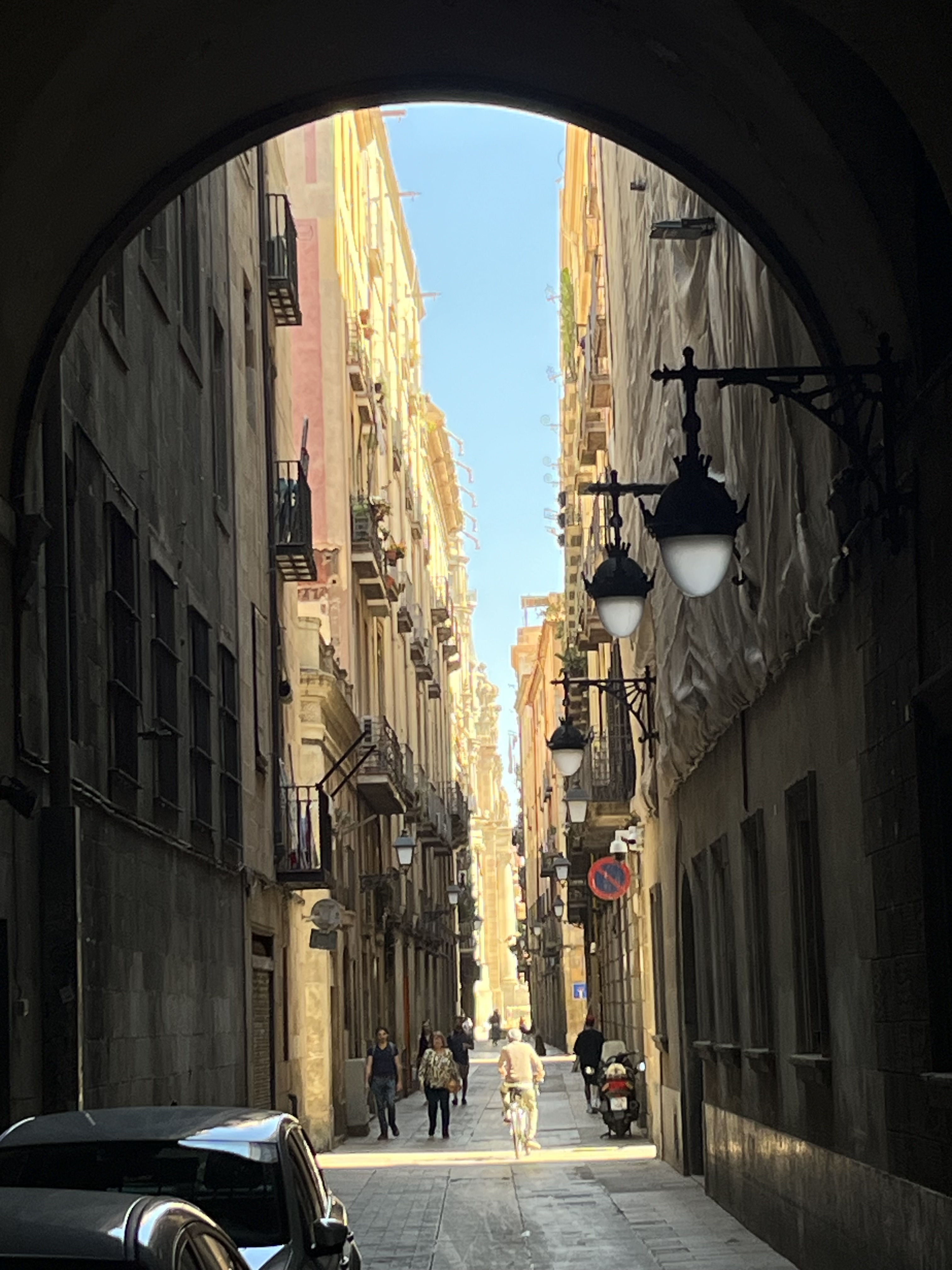
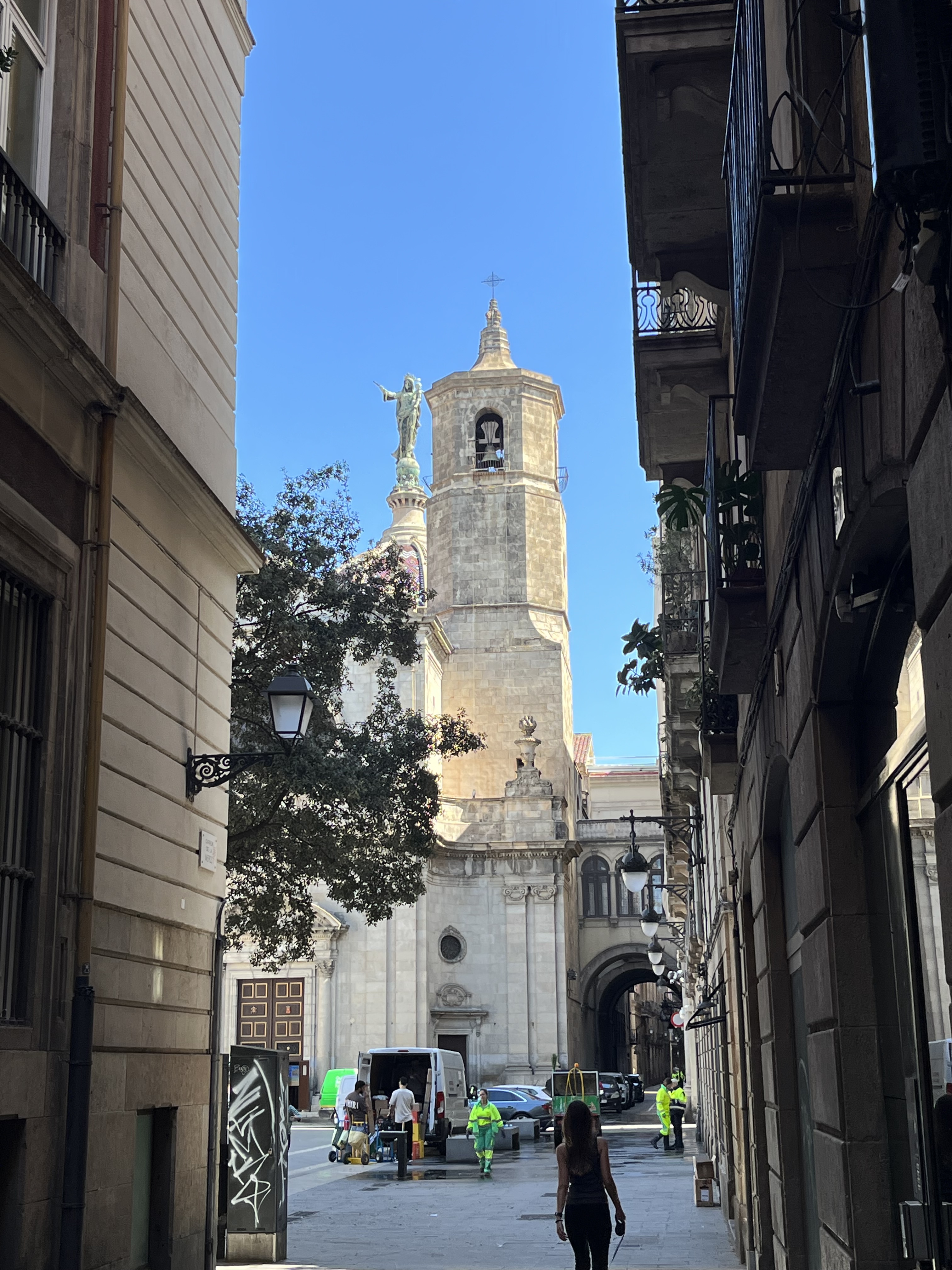
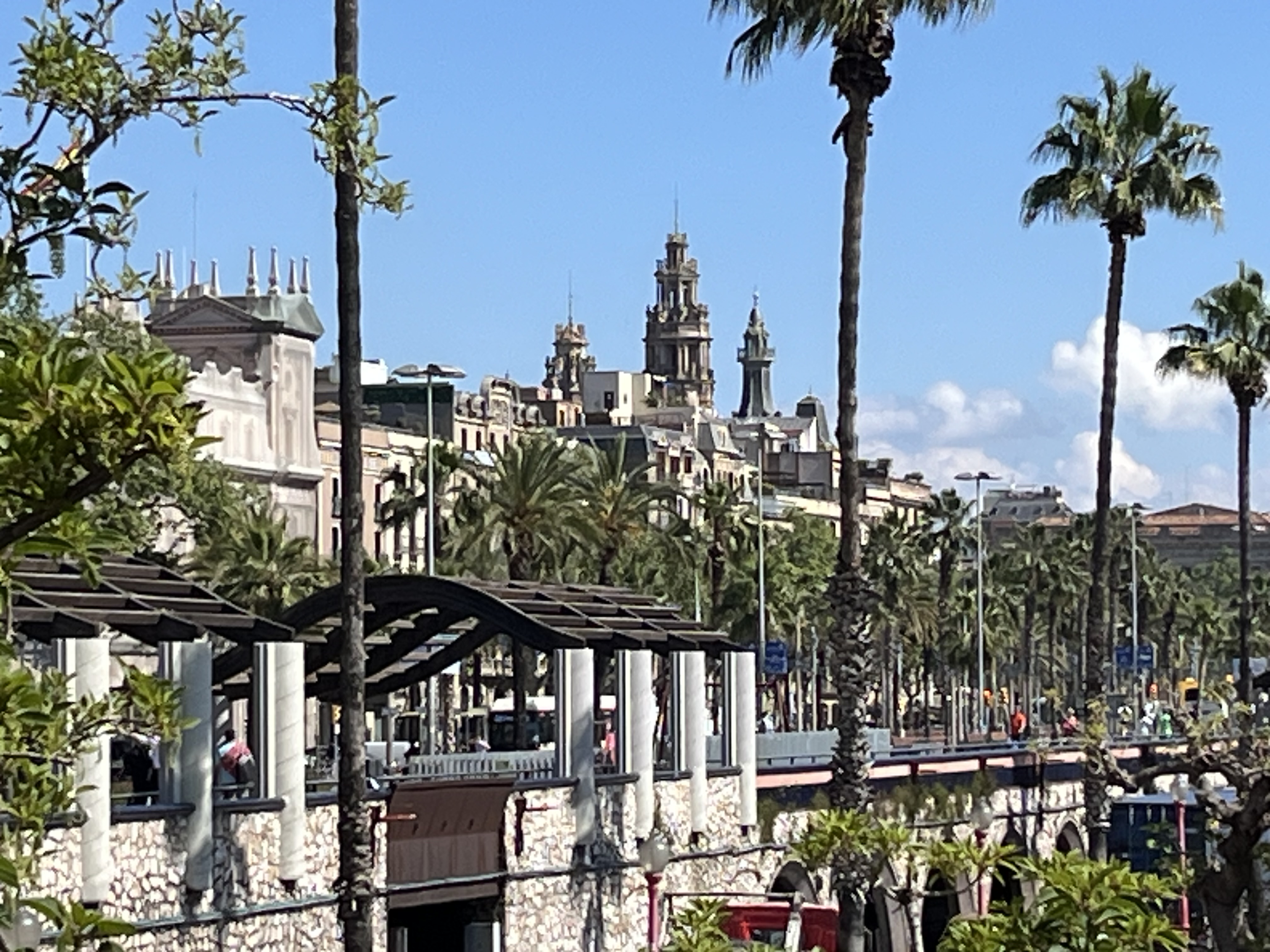
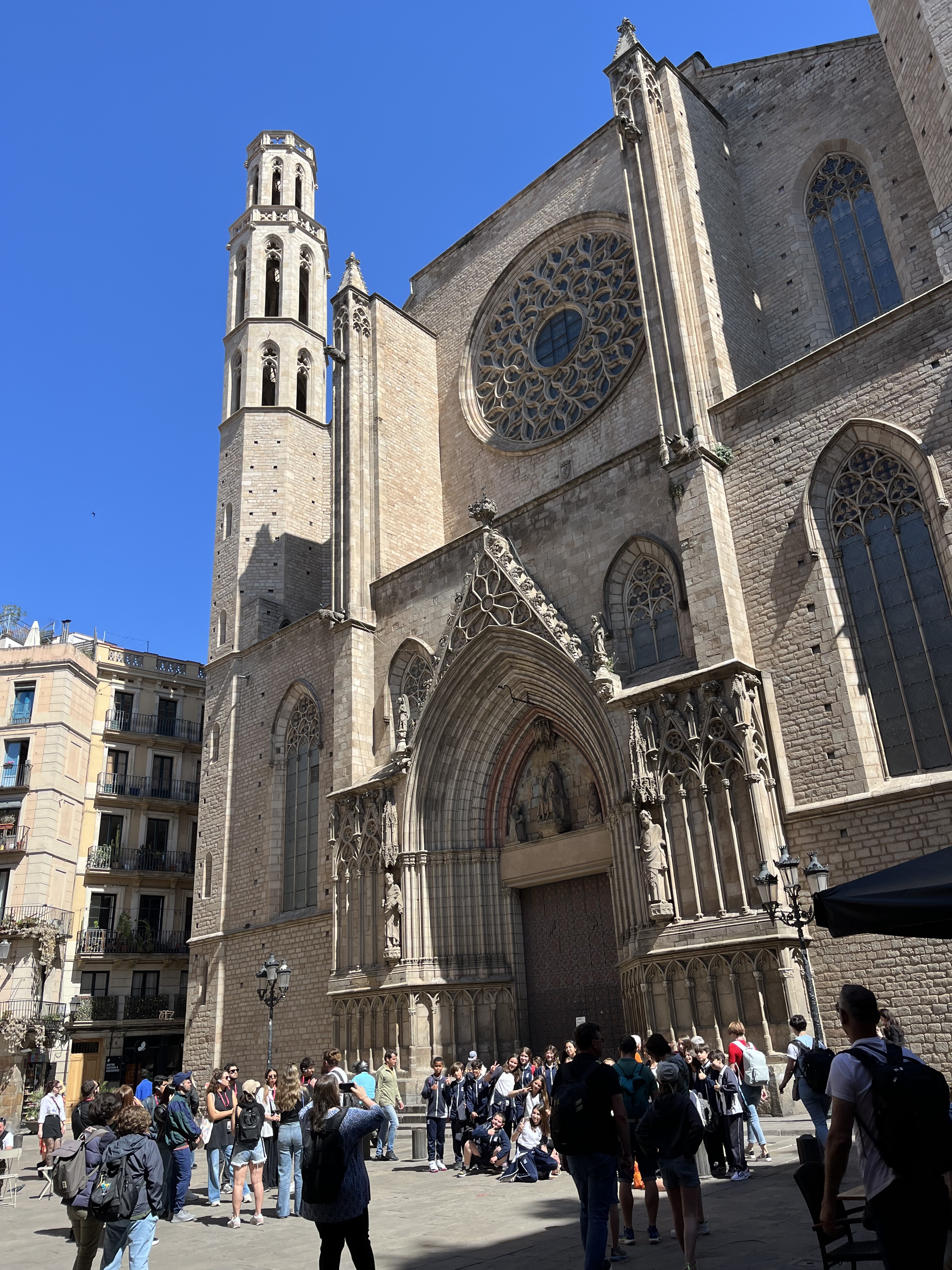
Back to sightseeing in Barcelona, and first to it’s great old Cathedral. Walking on the roof terrace of this big building, one can enjoy Barcelona from above. From here, every part of this great city falls into place, from the Mediterranean shore all the way to the hills in the west:




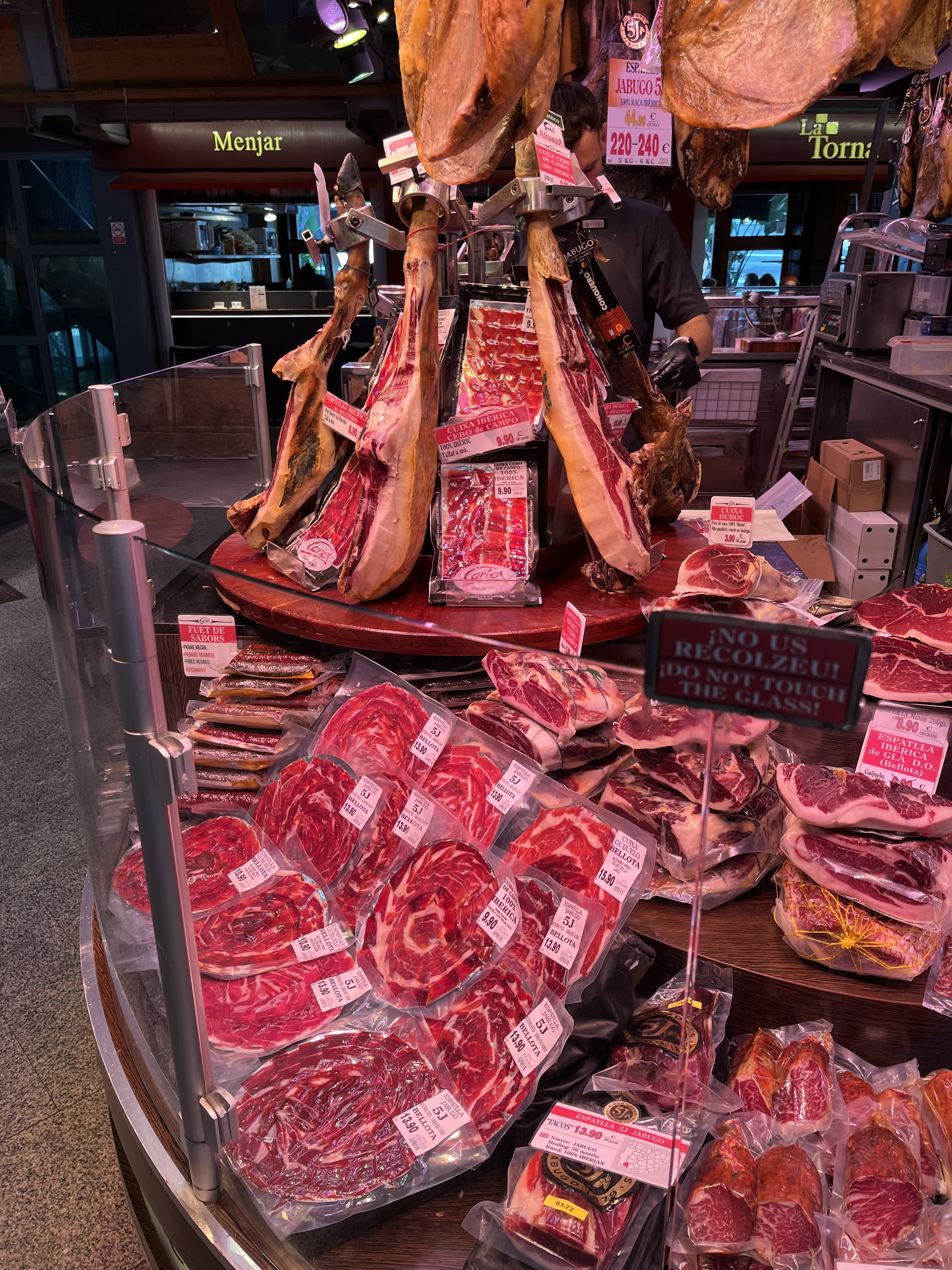
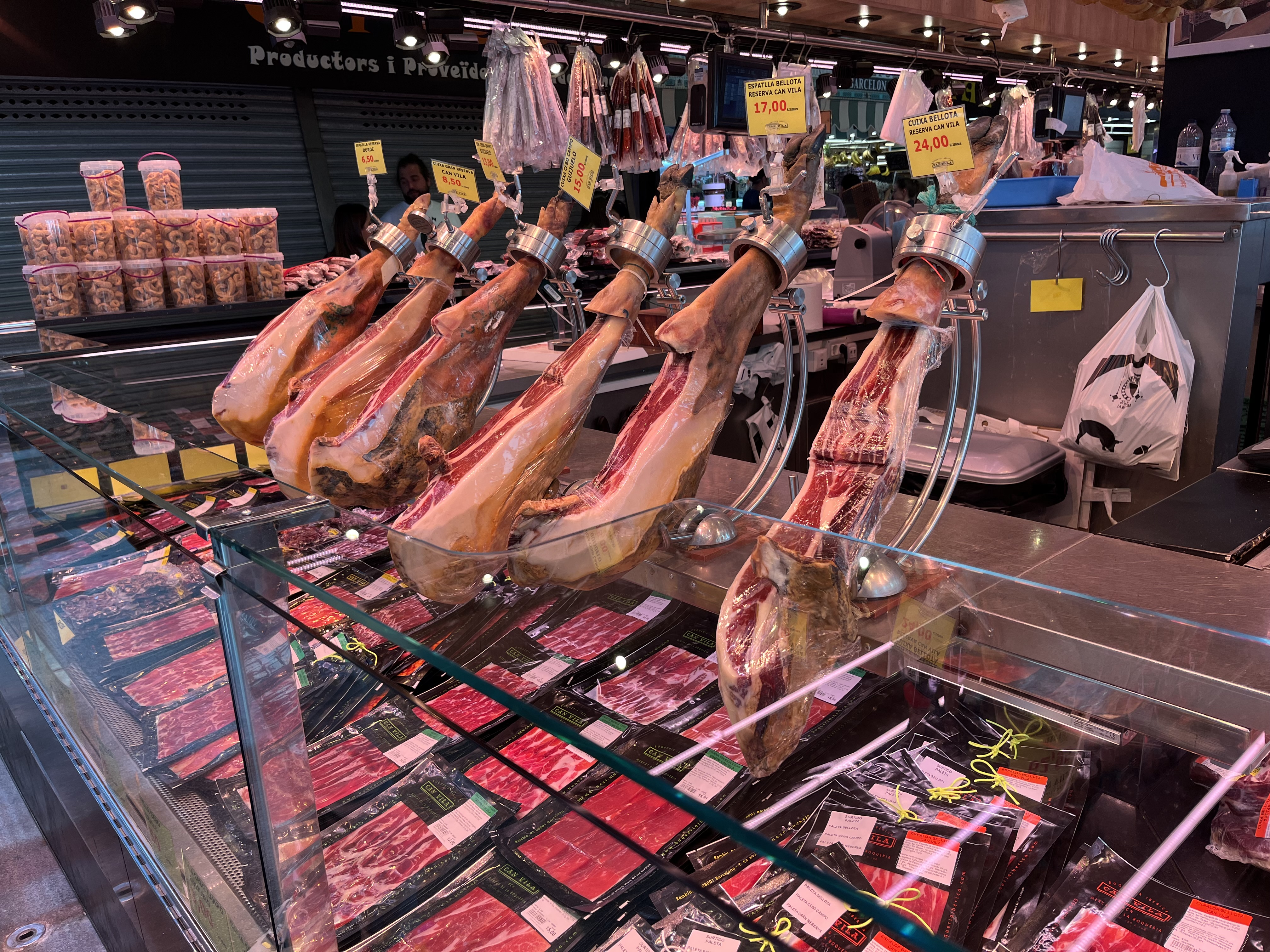
Spaniards are carnivores, and enjoy showing off their Jamon (ham) Serrano and Jamon Iberico, chorizos, and steaks:

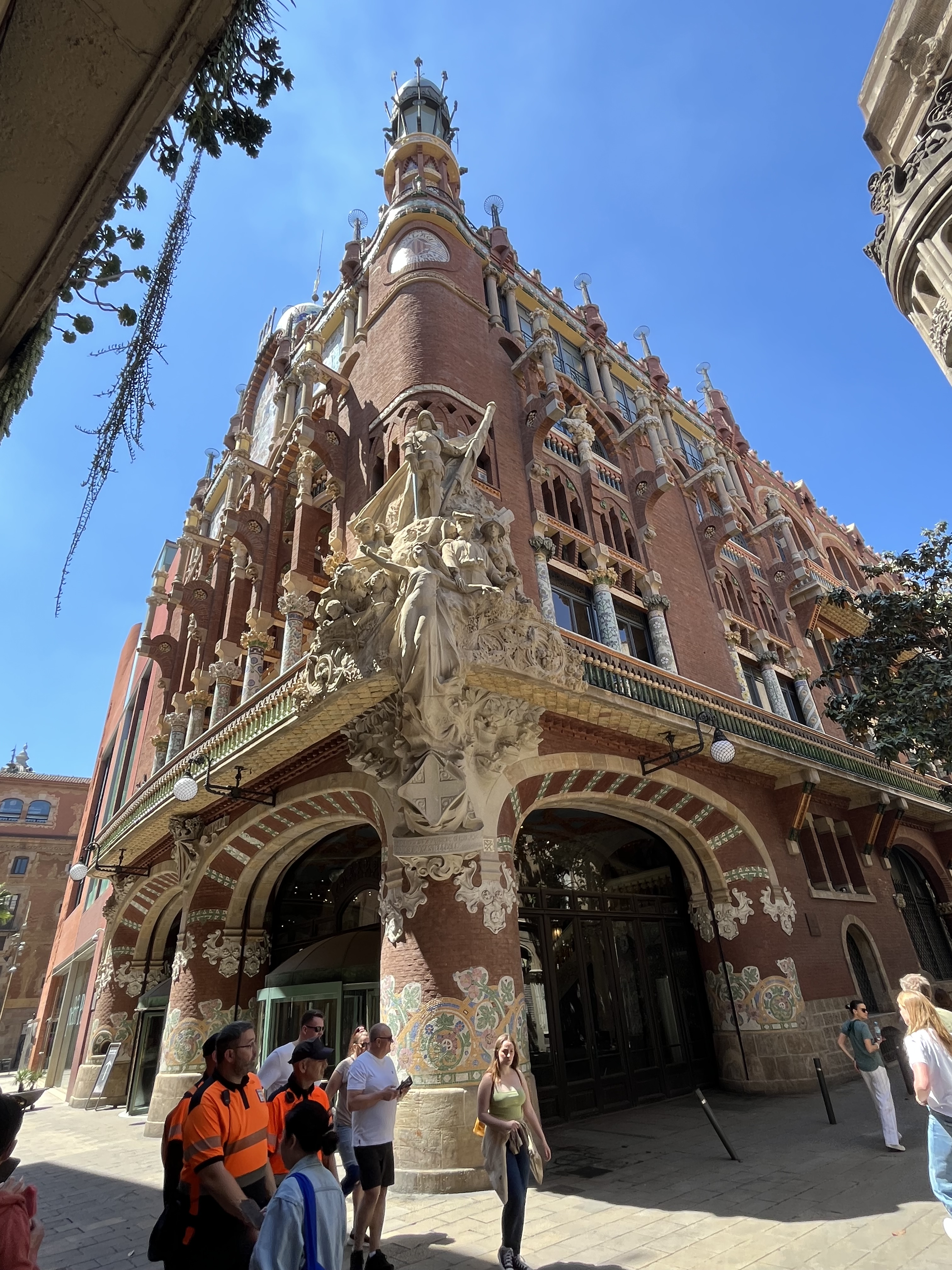
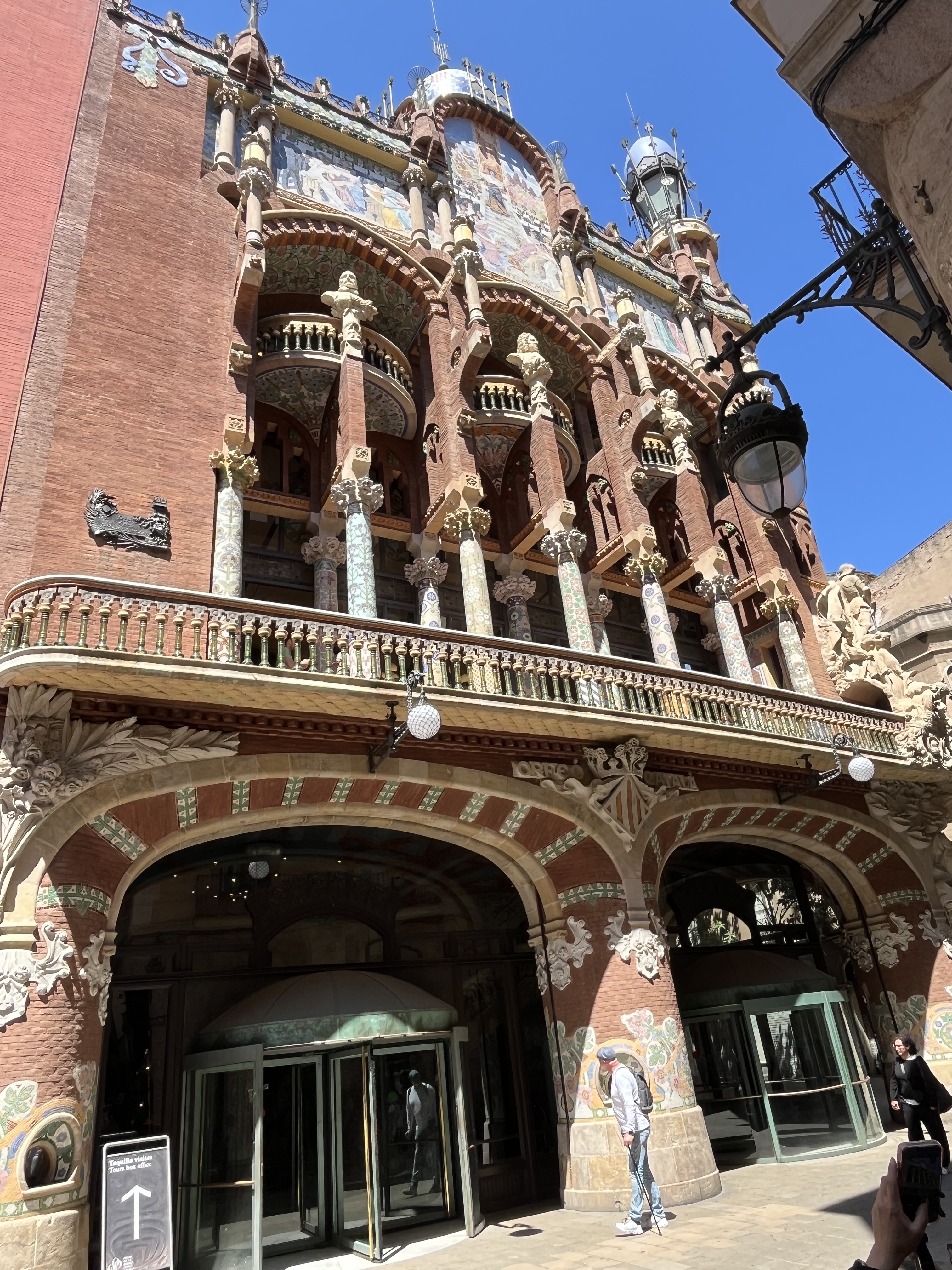
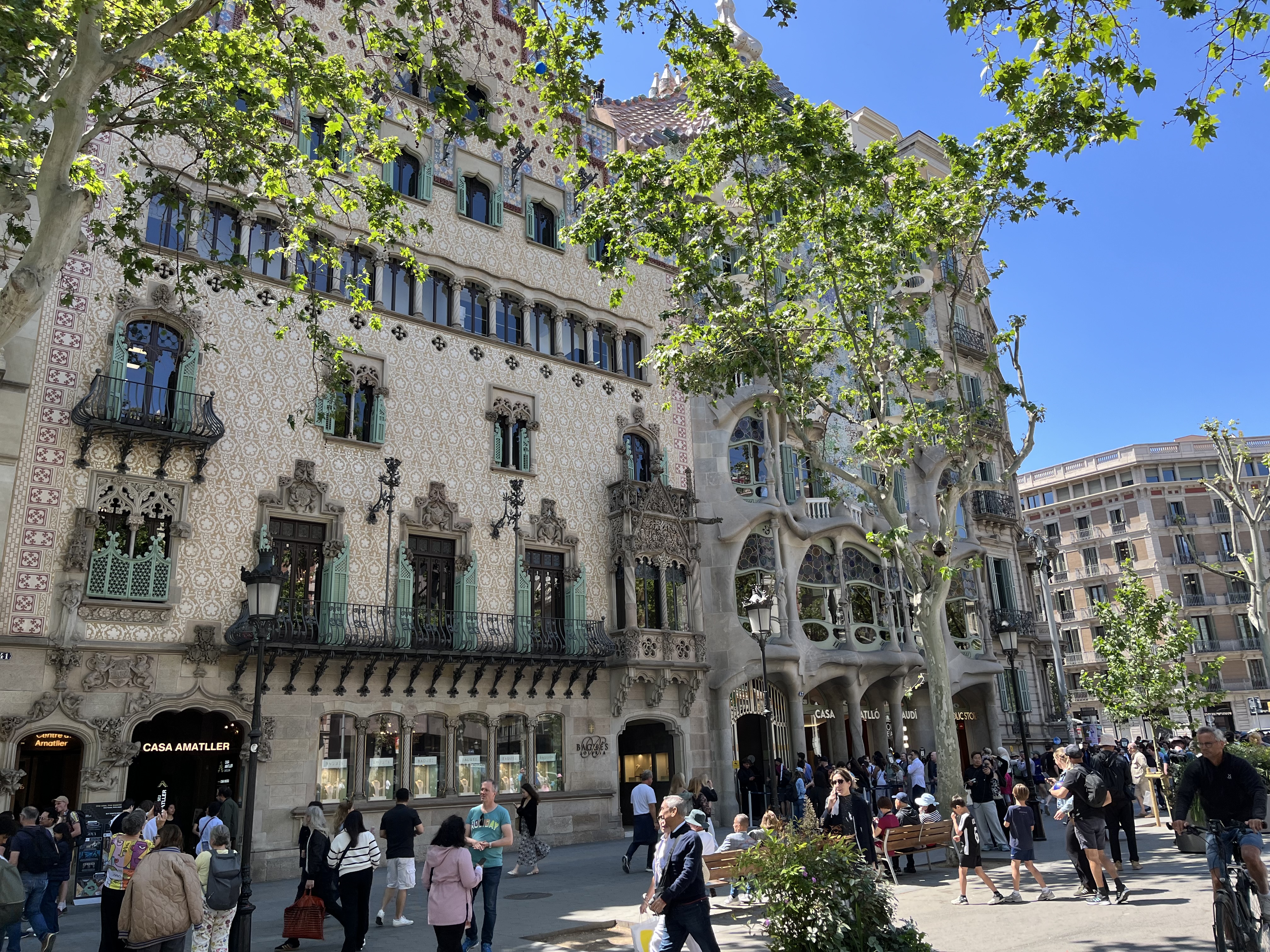
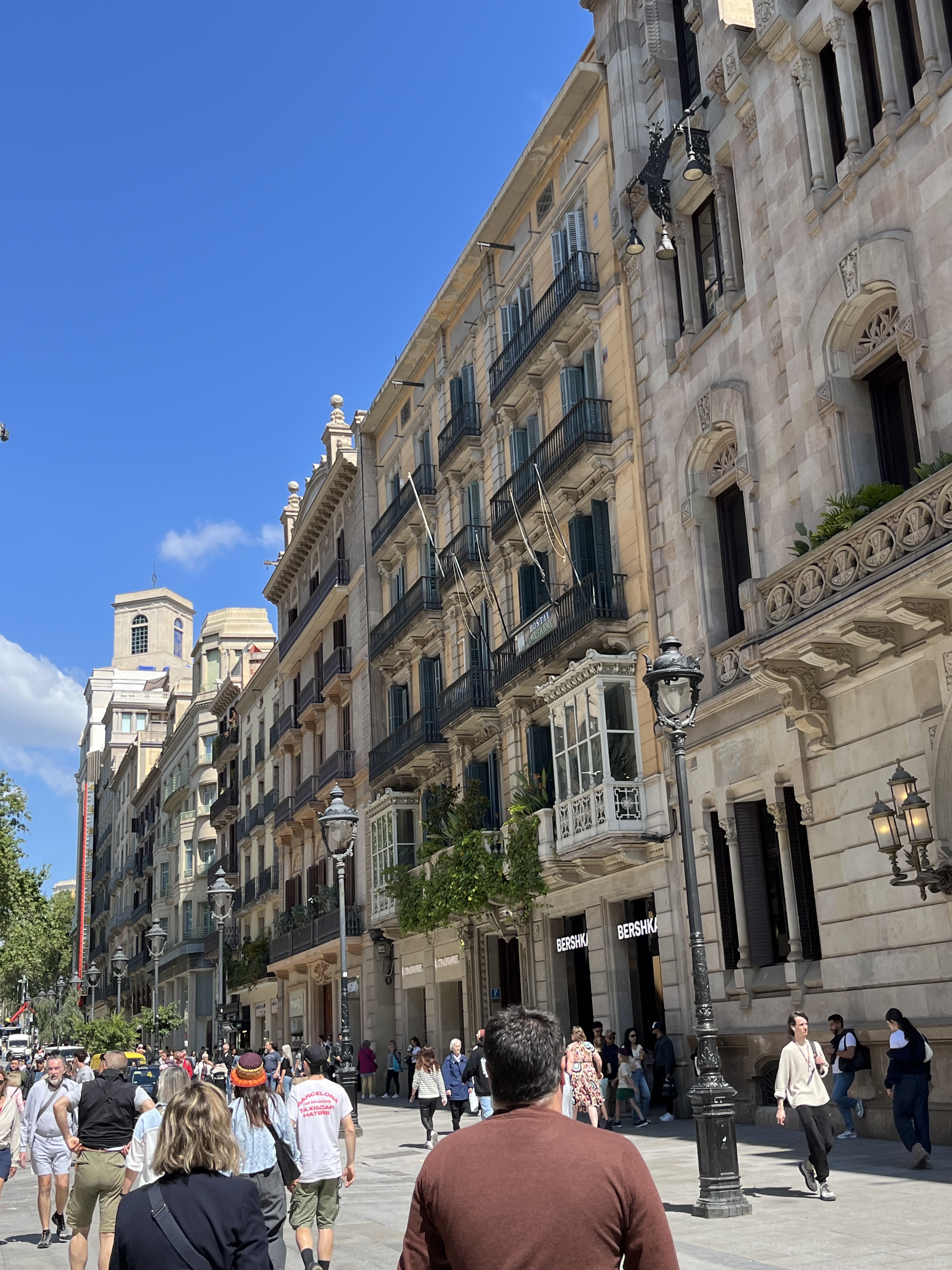
Barcelona is not only the capital of Catalonia on the Mediterranean Sea, it is a big, vibrant city with varying and flamboyant architectural styles, ranging from traditionally Spanish to Moorish influenced buildings, as well as the nature inspired and children picture book like designs of their renowned architect Antoni Gaudi:

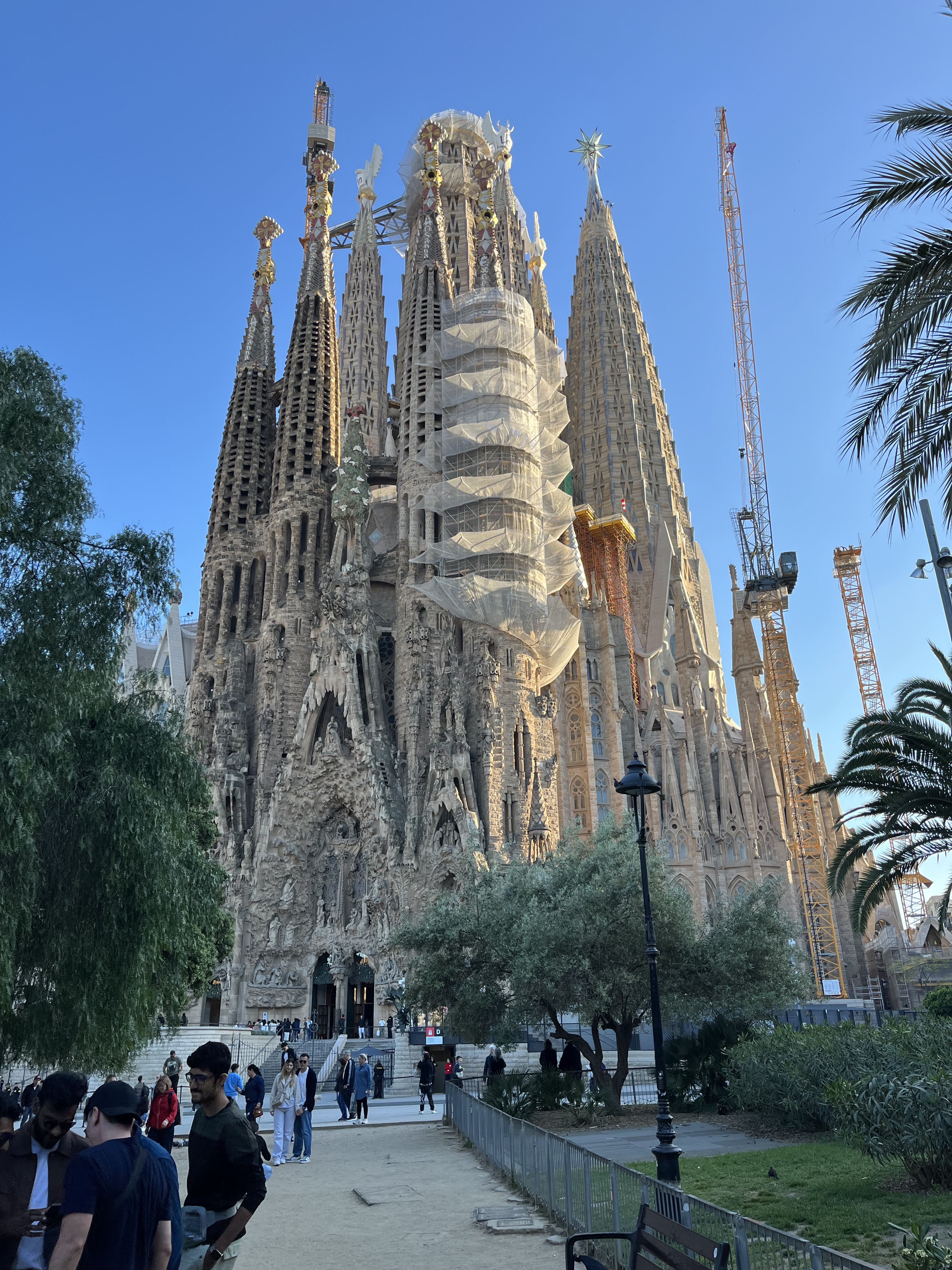
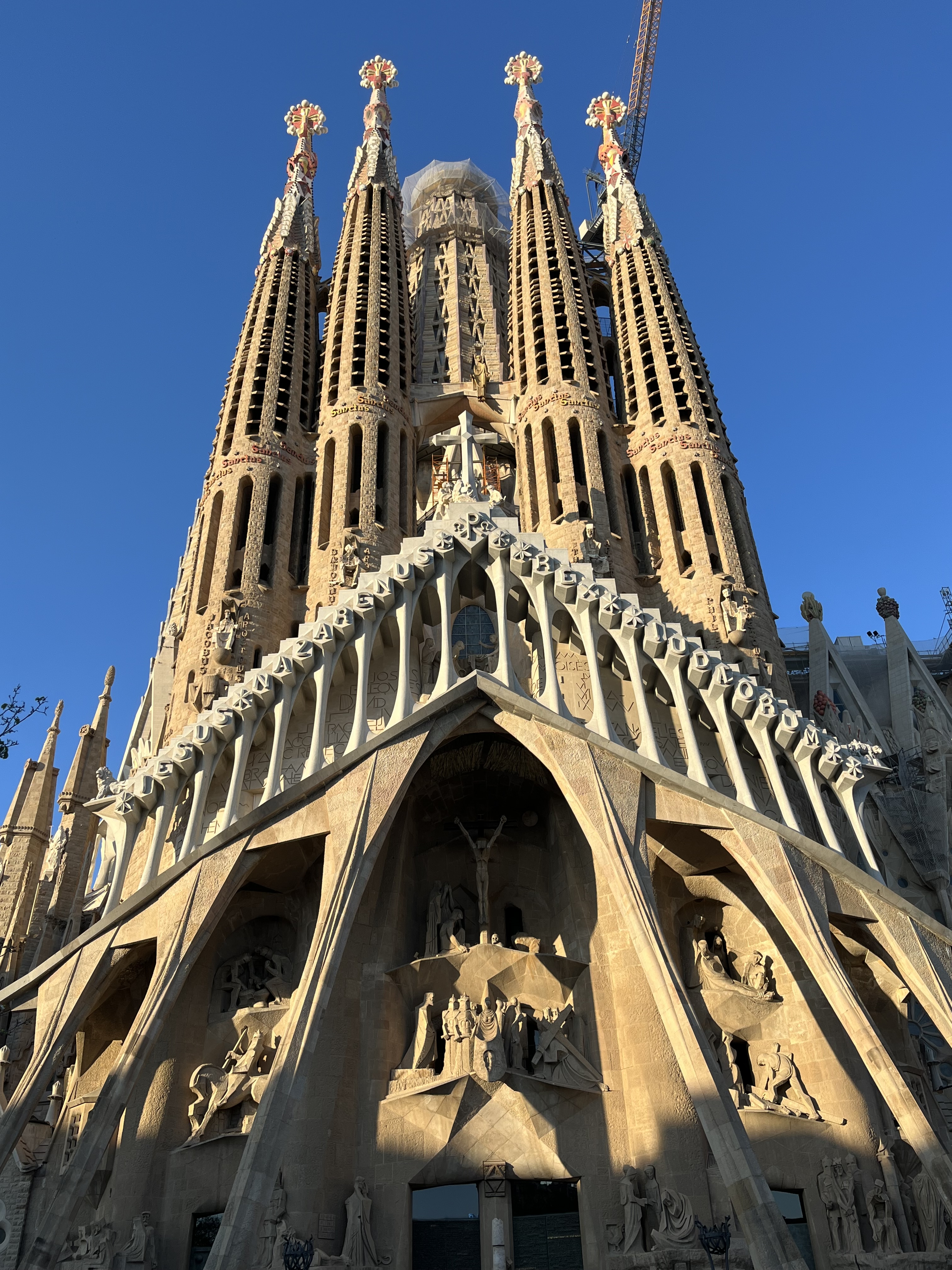
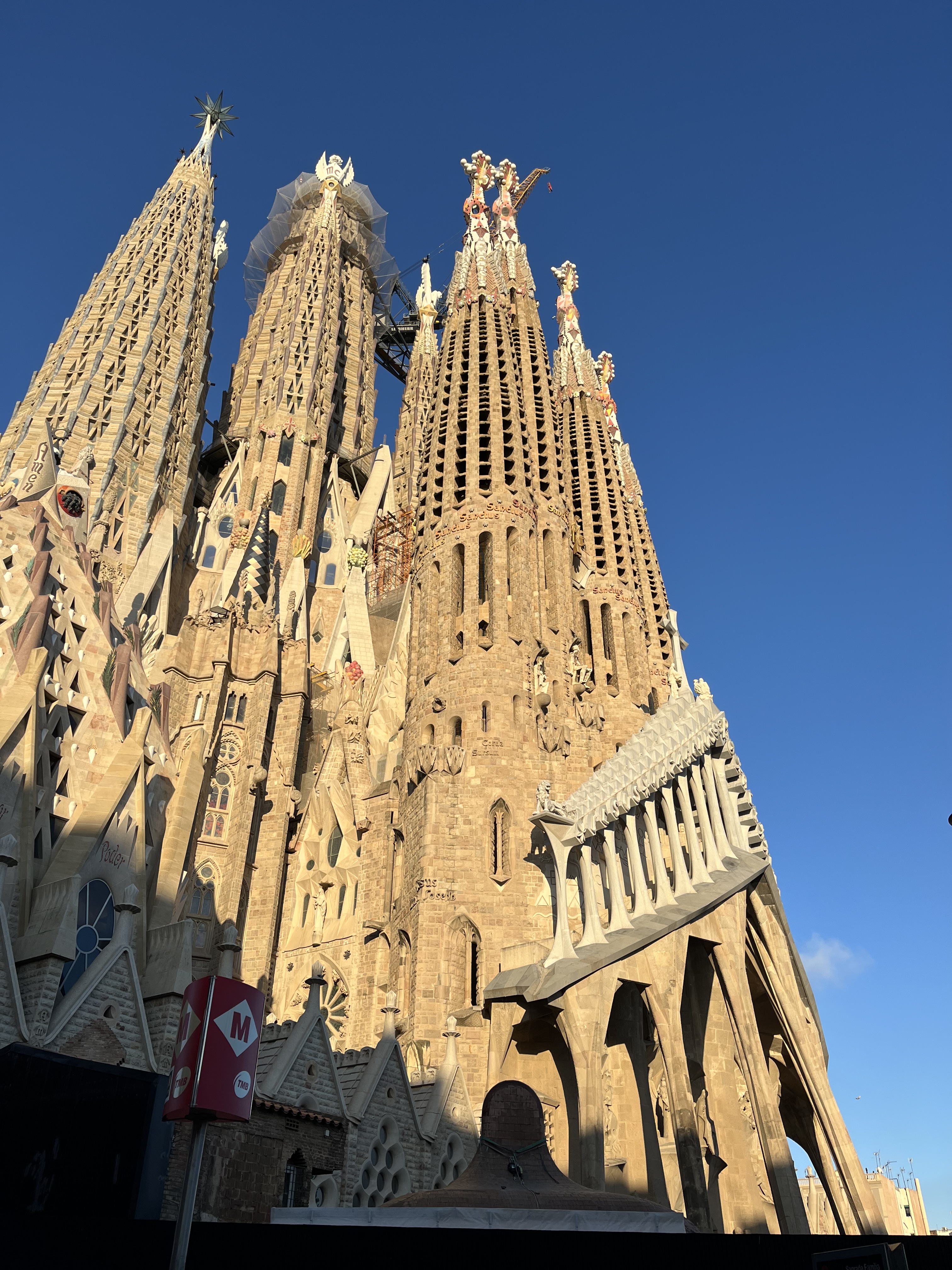
The Basilica La Sagrada Familia is Gaudi’s most famous creation and most visited tourist site in Barcelona. One can’t help but be awed by its playfulness, size, and the incredible details of the structure. No matter where you look, you’ll find further biblical details, making this almost completed building, a storytelling biblical picture book. Since our hotel was close by, we walked around the exterior more than once, discovering different details every time. Started in 1882, the main portion of the Basilica is scheduled to be finished in 2026, with final details to be completed by 2034.
I will gladly admit that prior to seeing the Basilica in person, I didn’t understand the hype about this odd looking church, and so, the hefty 40.00 Euro entry fee per person kept us from booking our entry tickets and by the time of our visit, they were long sold out. Thanks to the abundance of YouTube videos available, one can get a glimpse of the colorful, light–filled interior of the Basilica, which now, after seeing the building, I would have liked to see in person.


Madrid
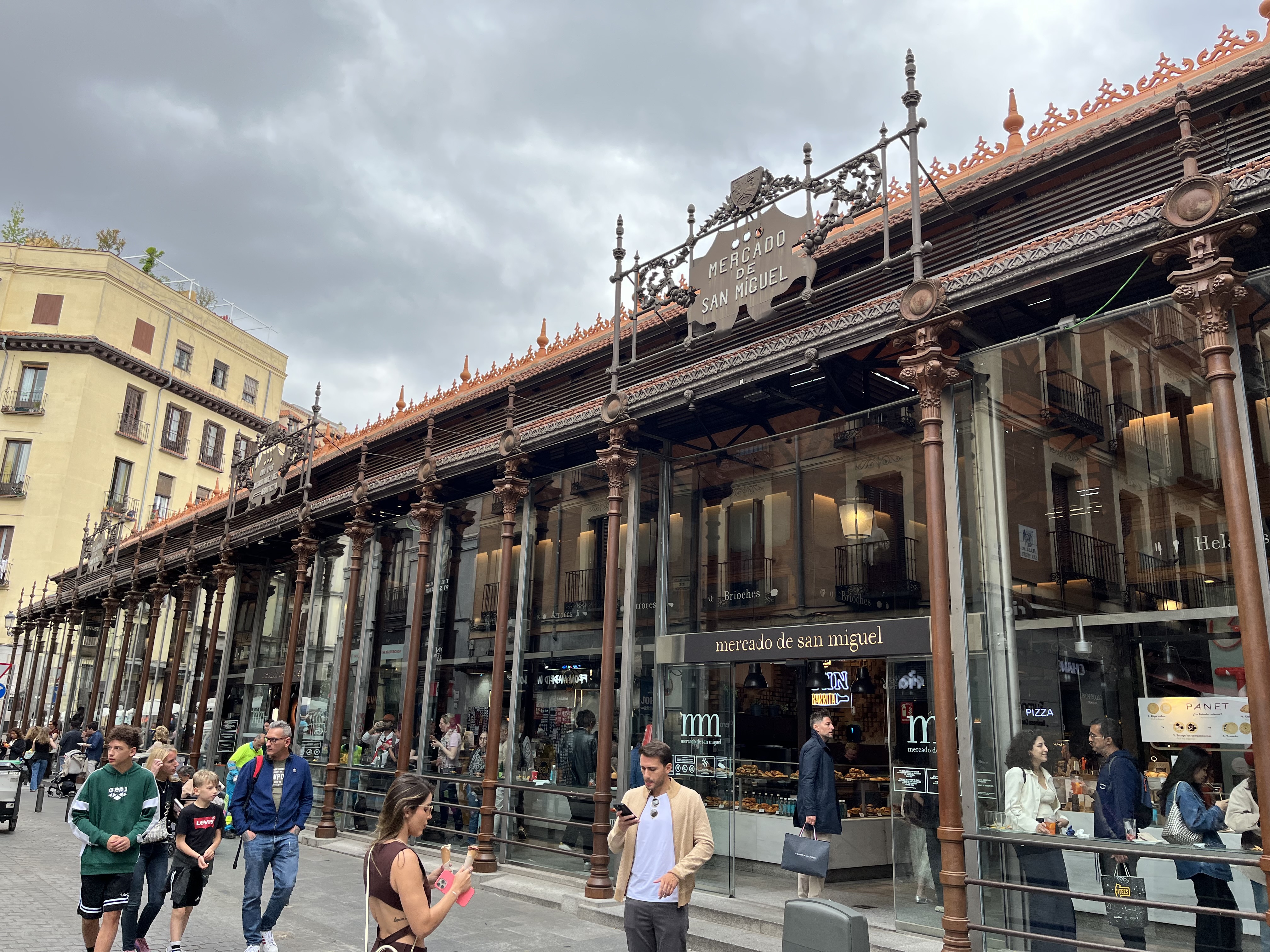
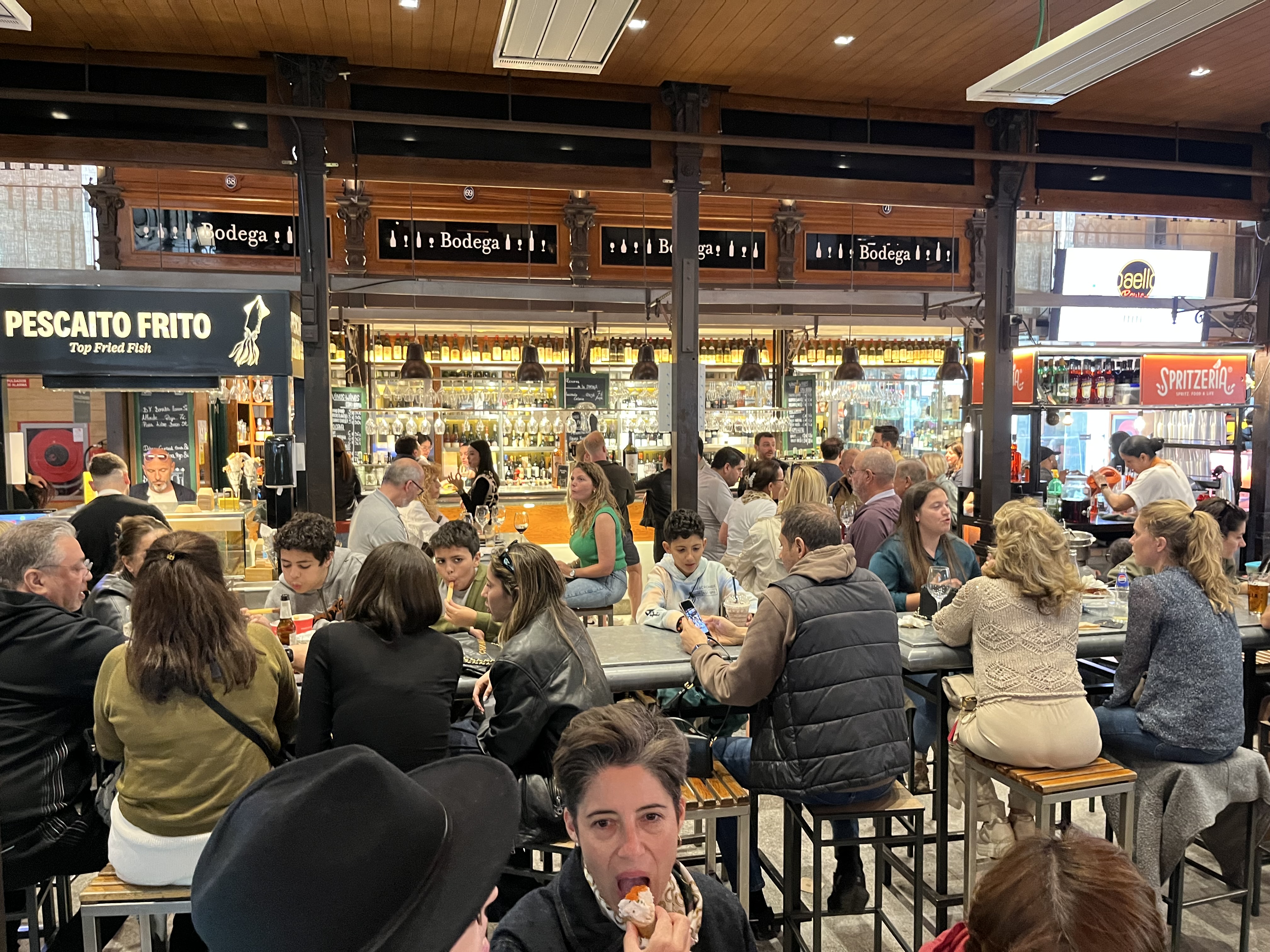
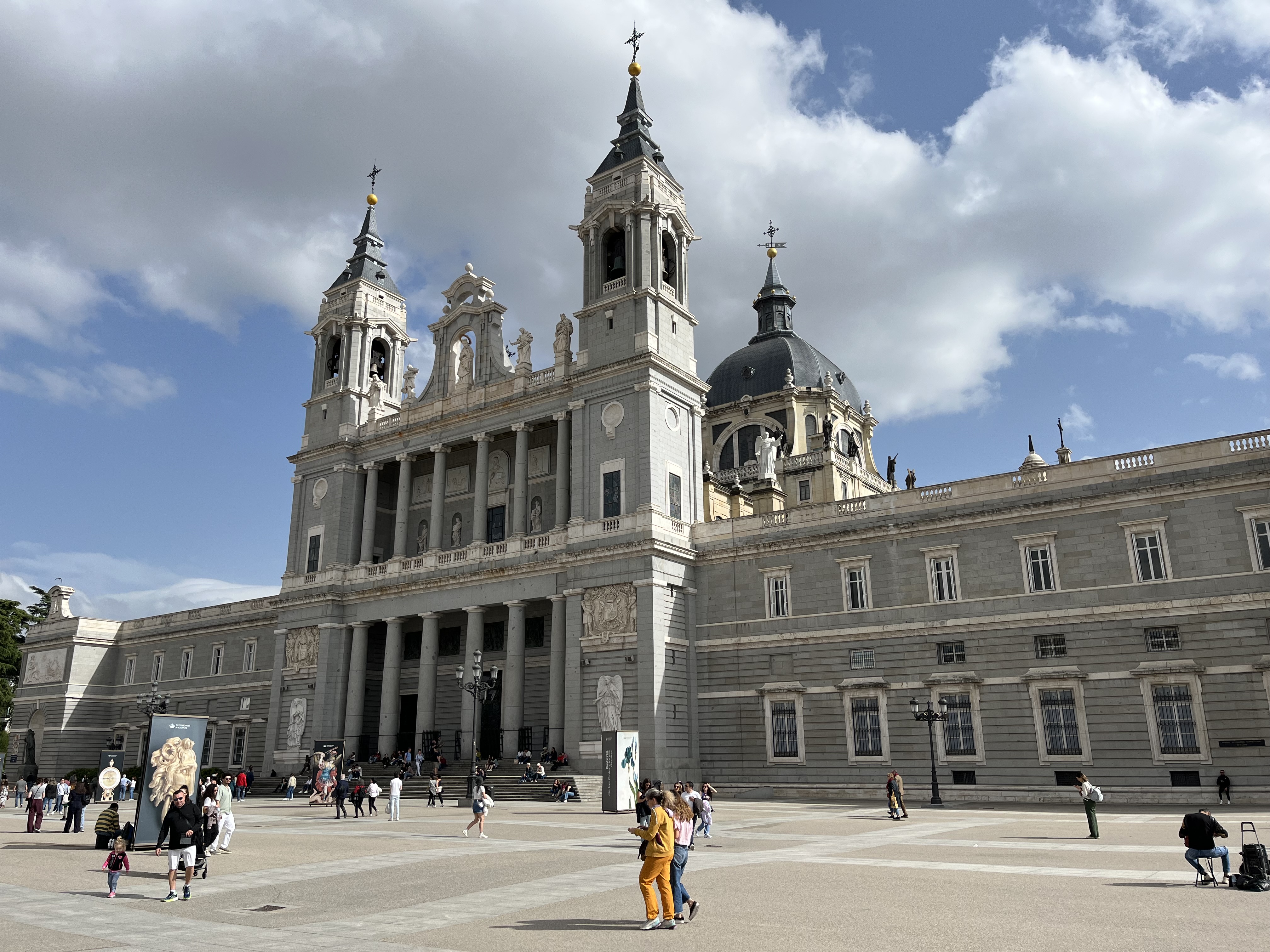
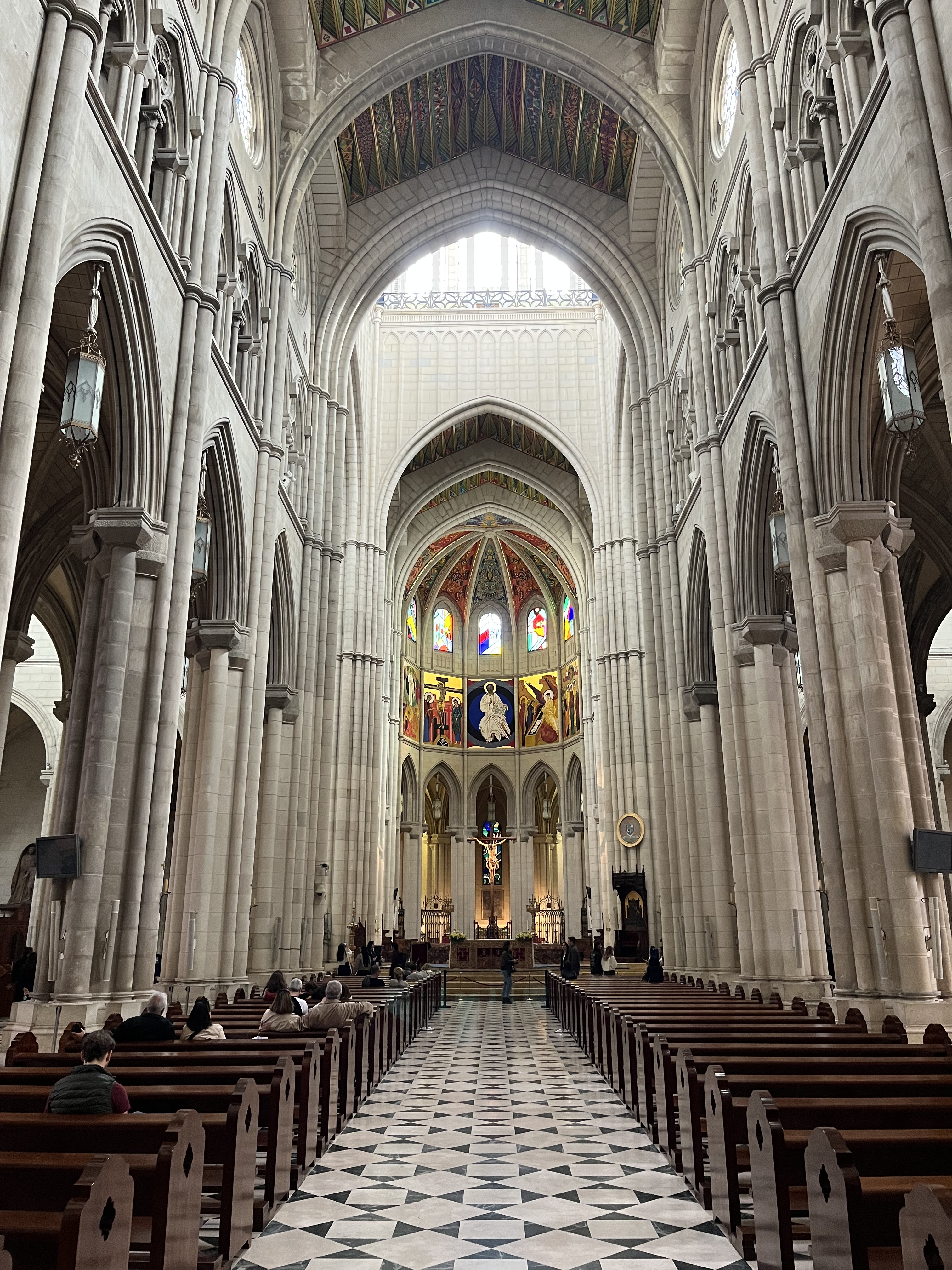
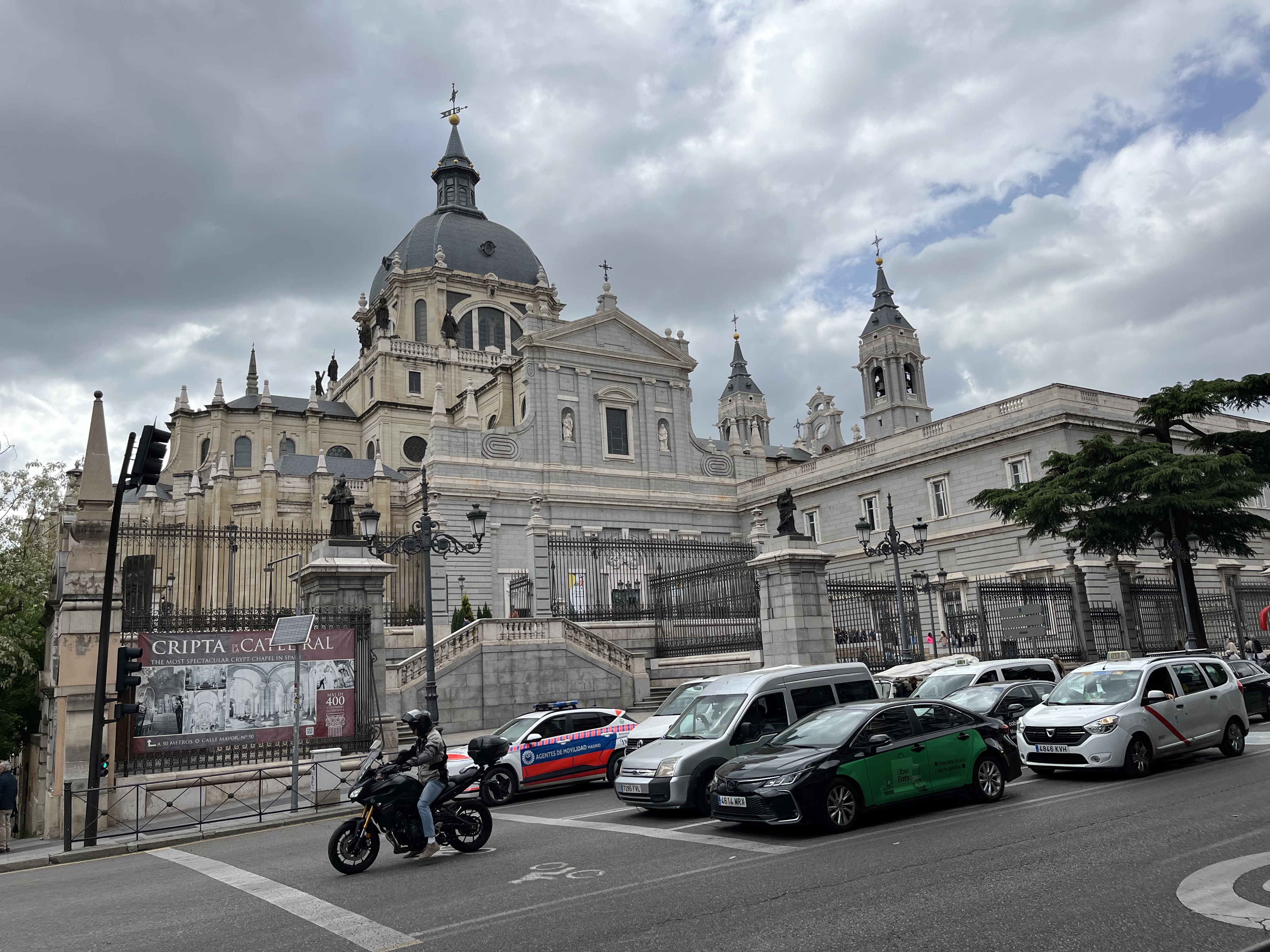
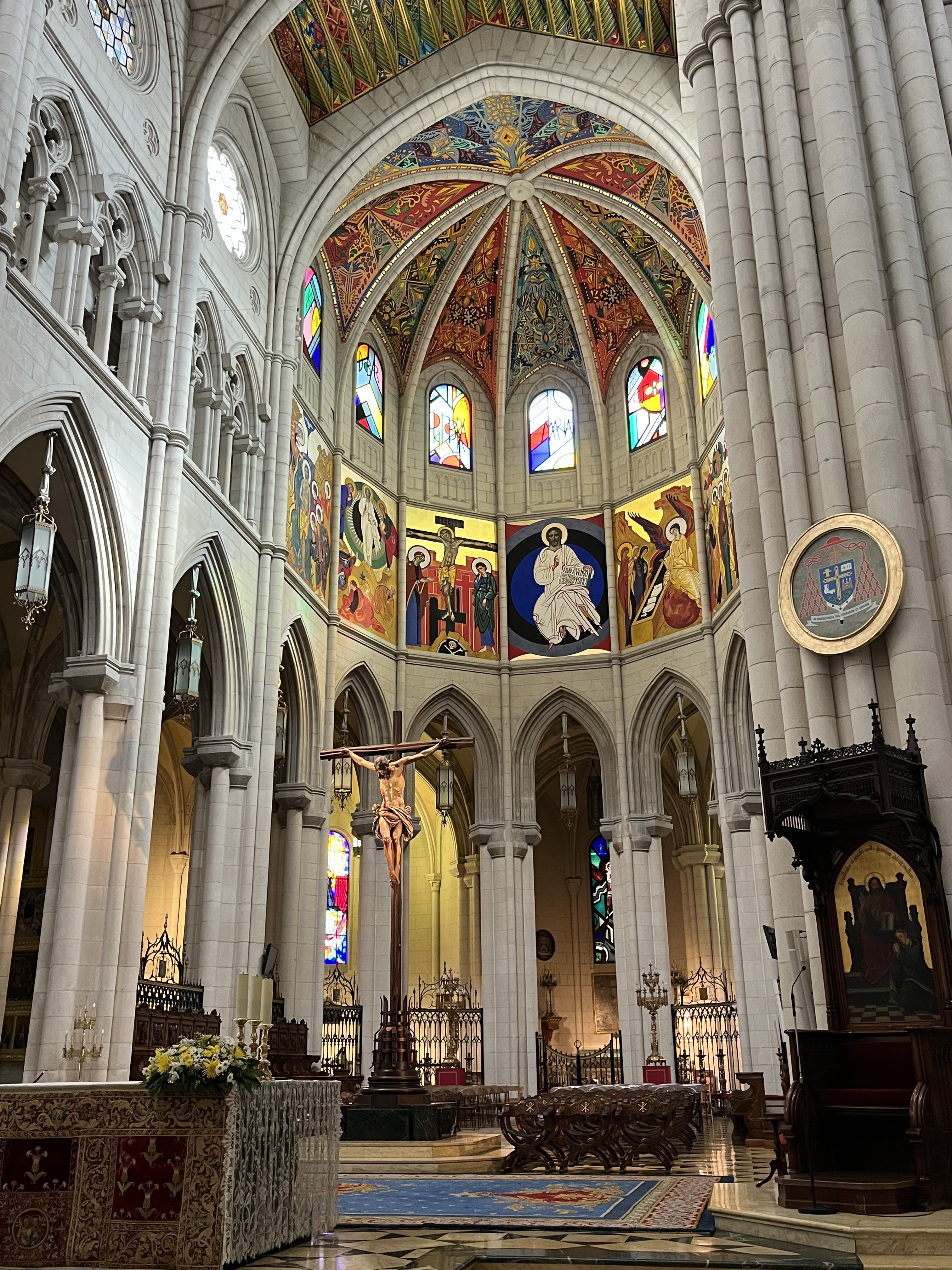
We did not expect much from this big city, and only stayed for one evening to get an impression of Spain’s capital, but it turned out, with it’s grand, classic, and chic feel, we ended up liking Madrid more than Barcelona.

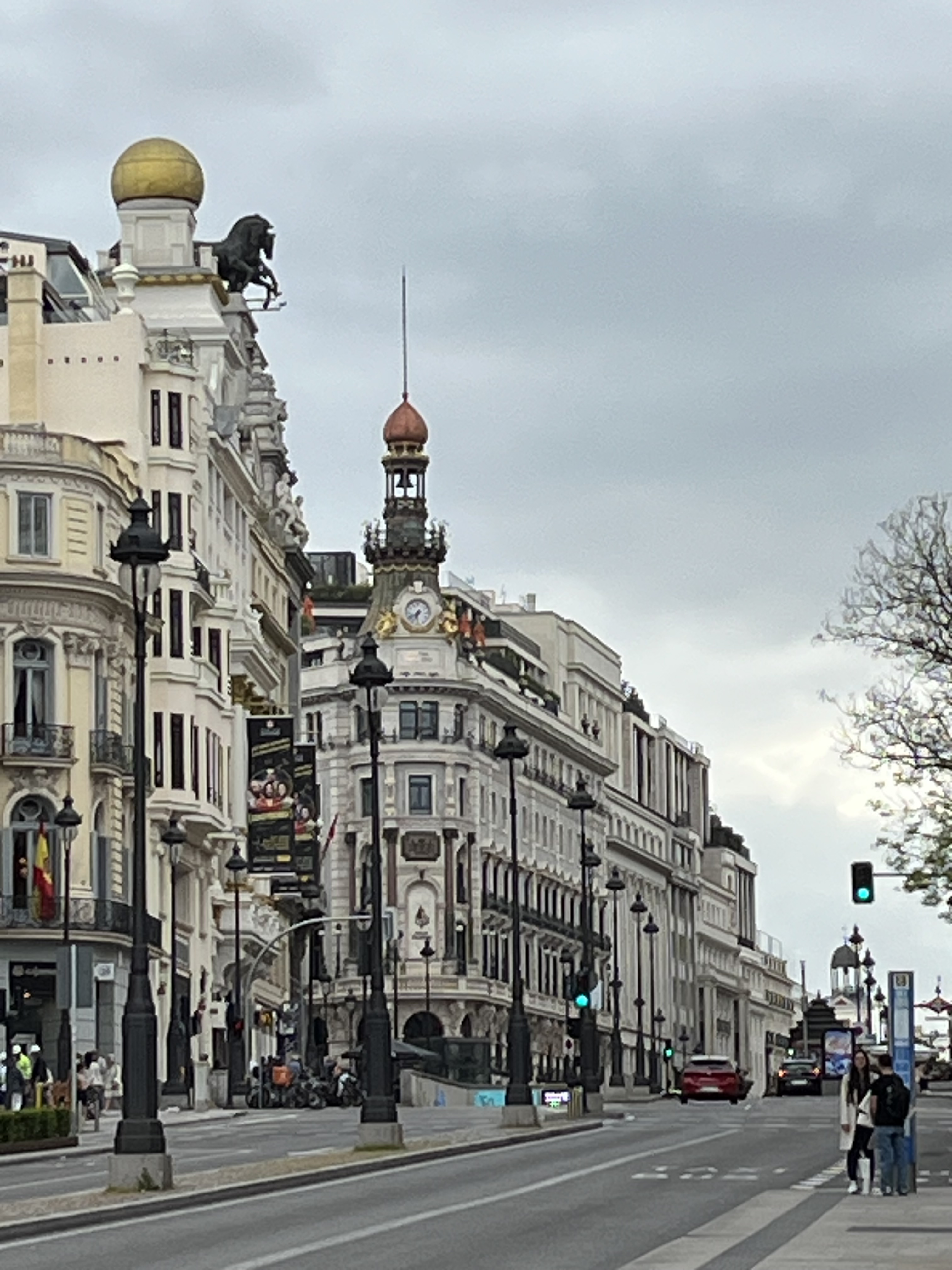
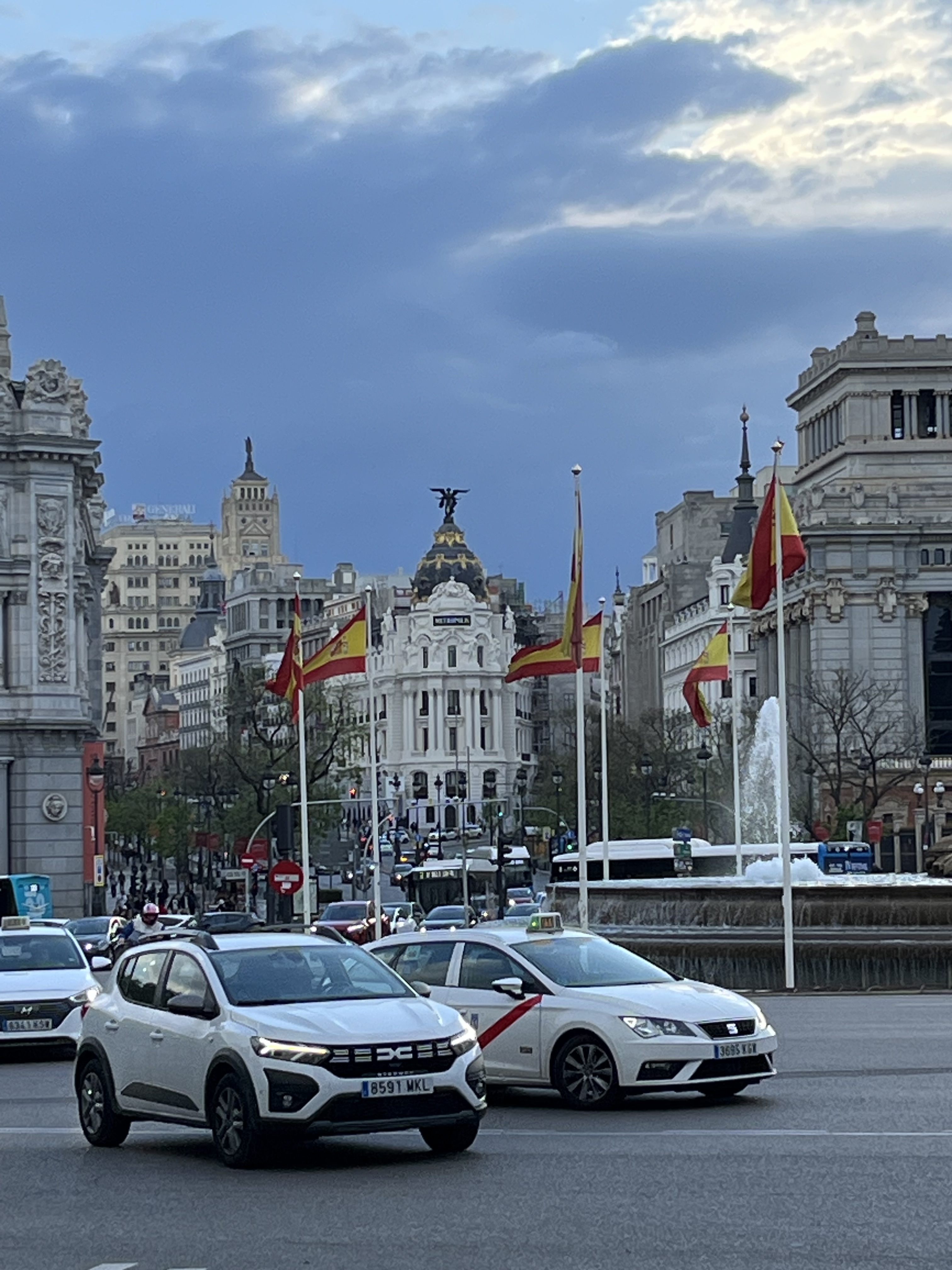

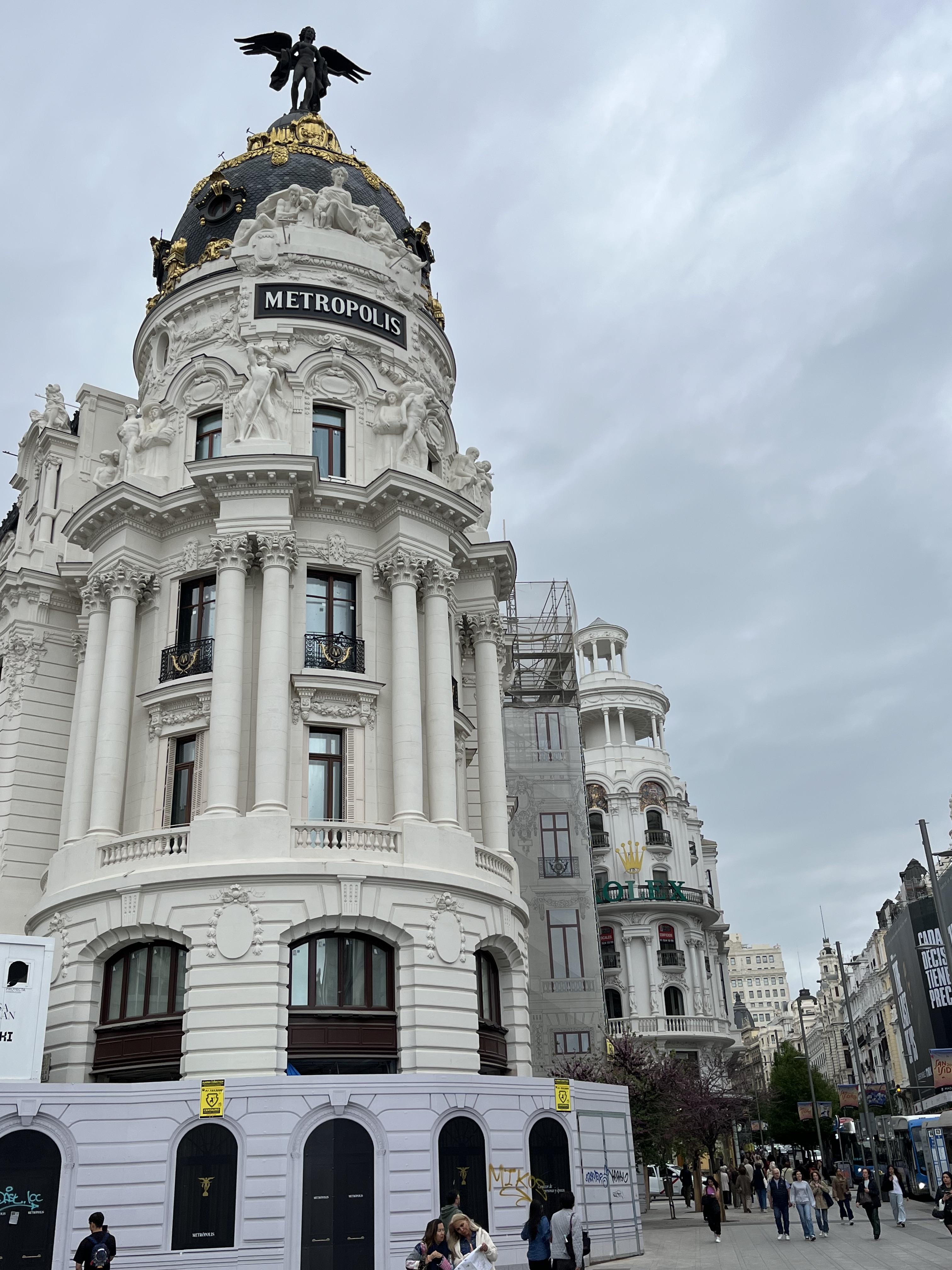
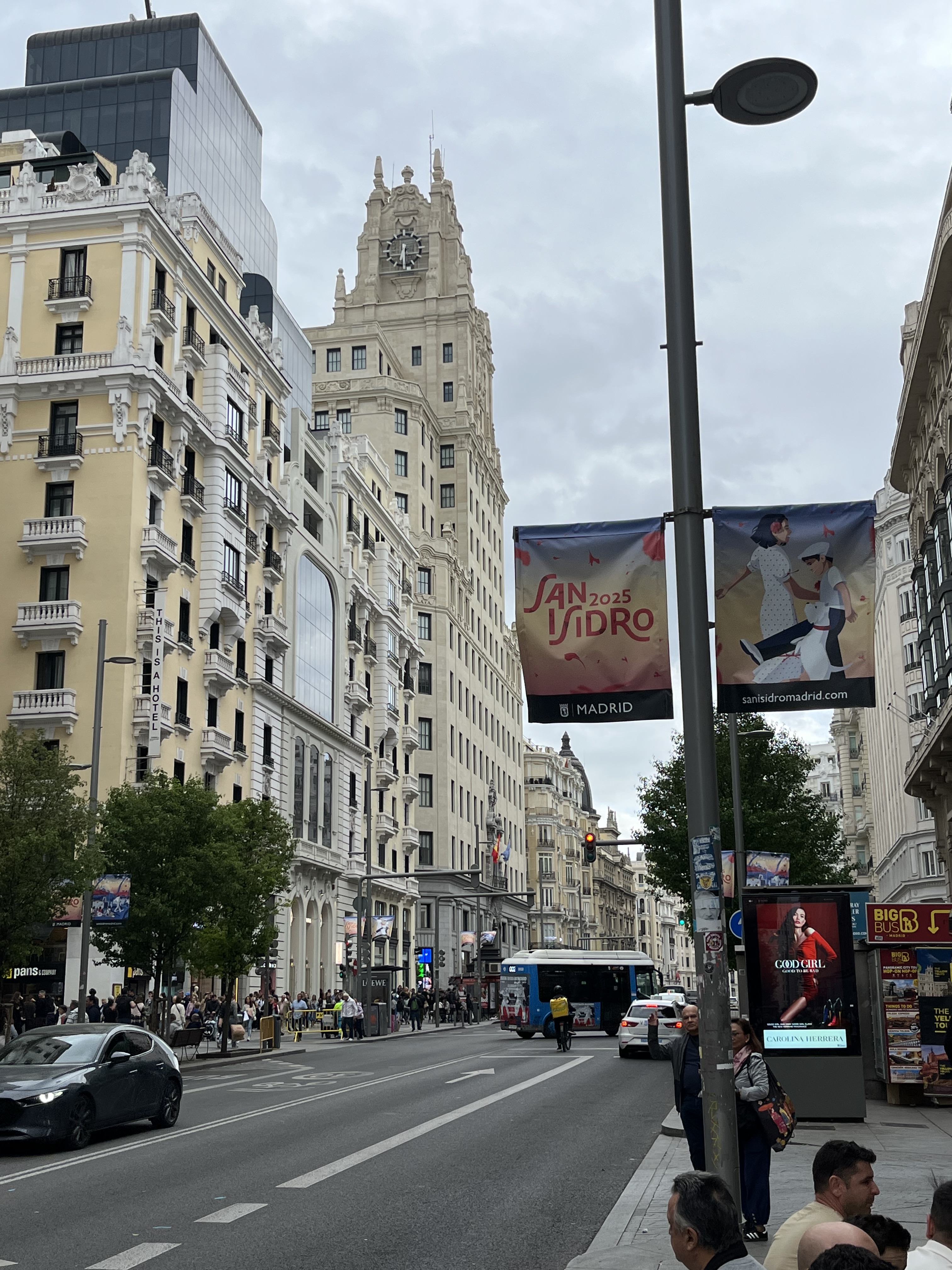

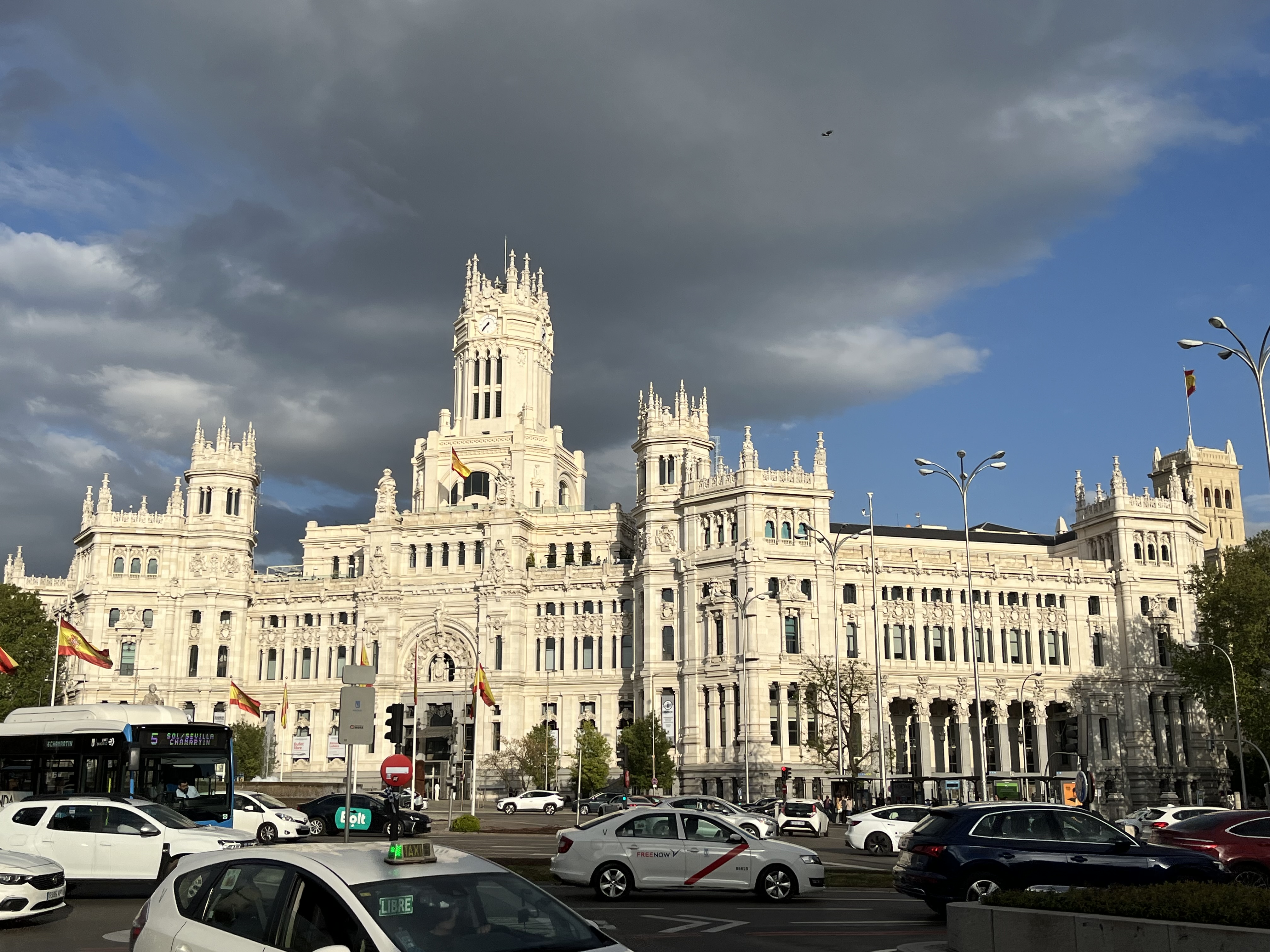

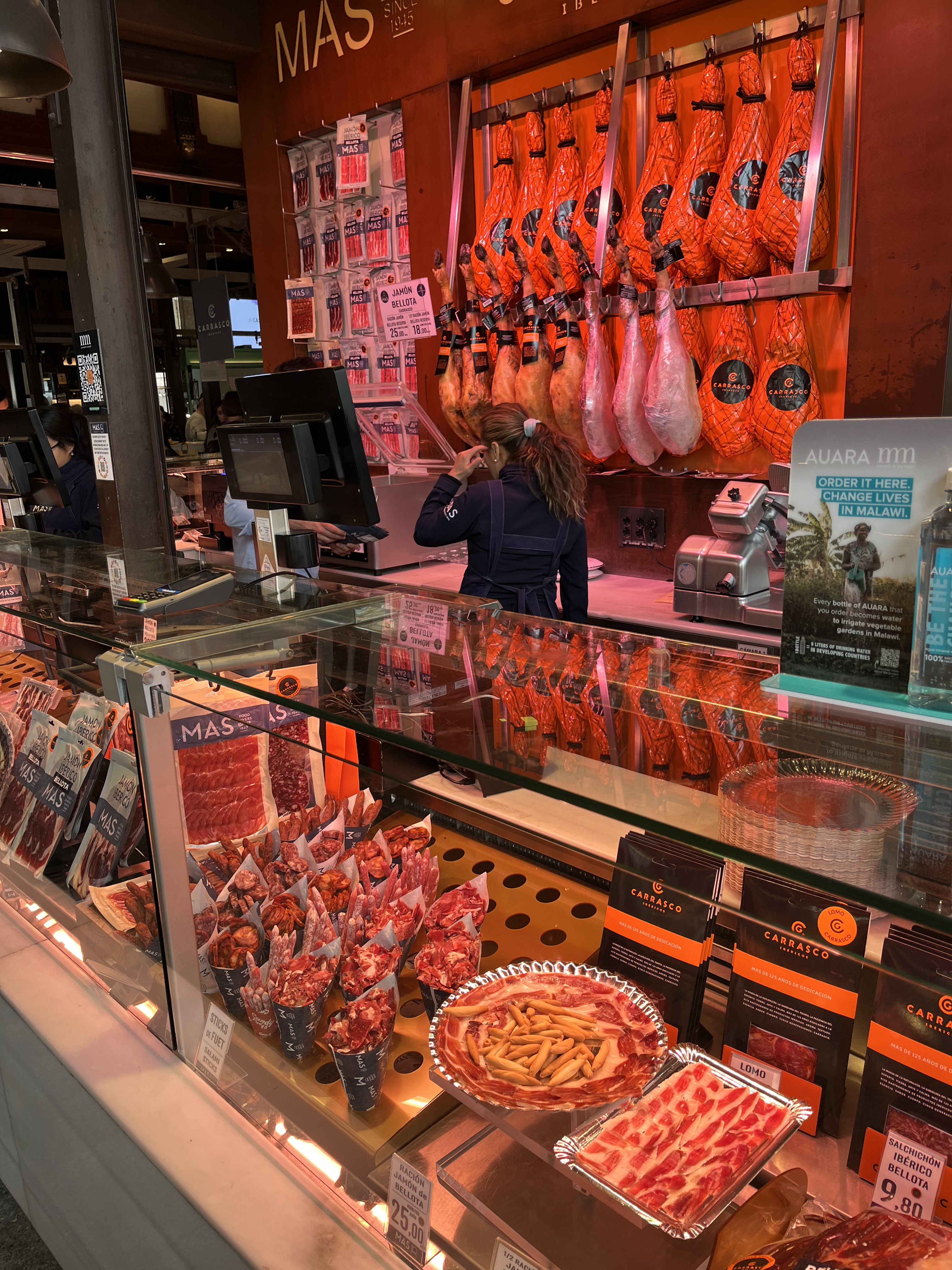
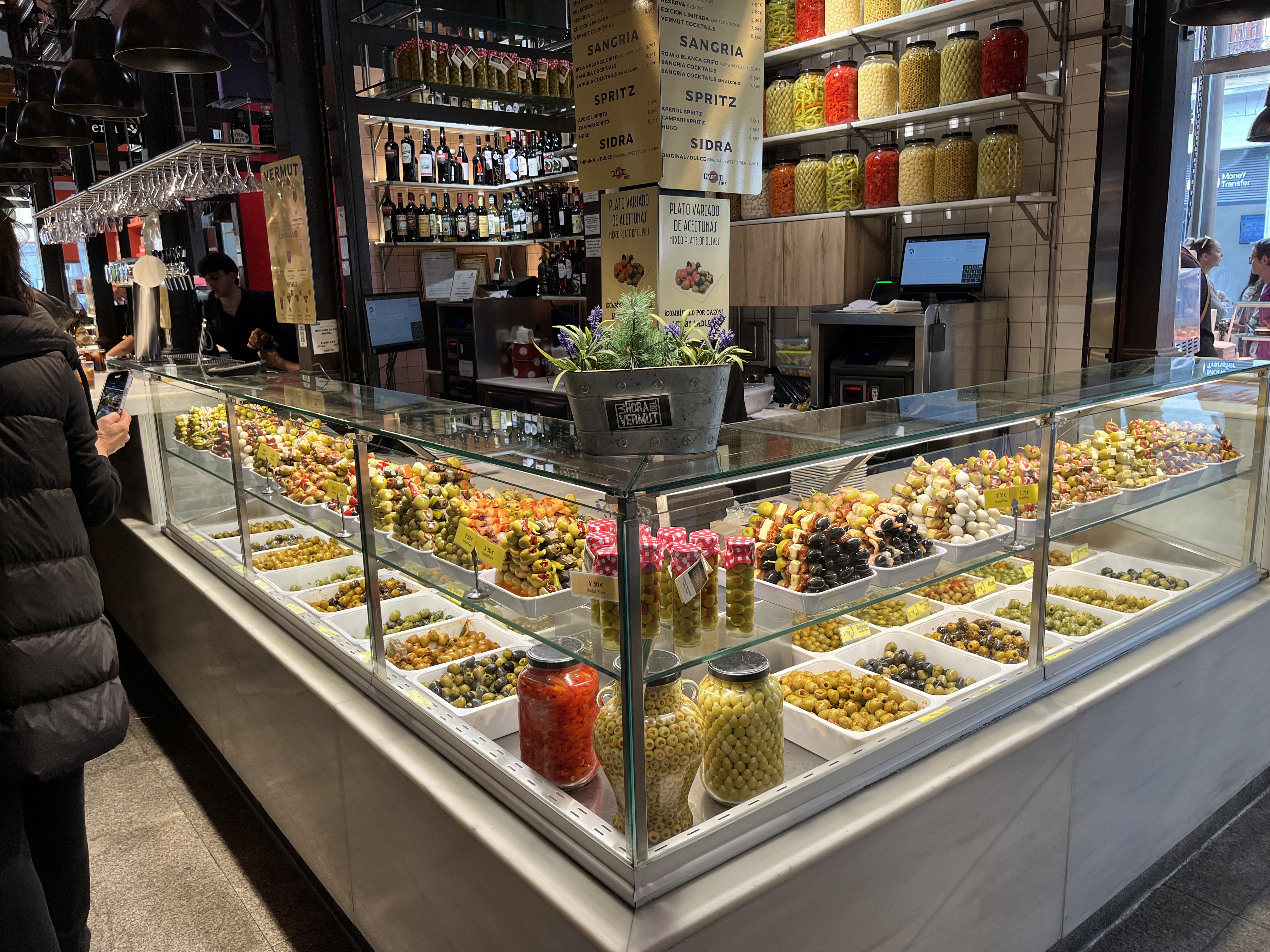
Here, Madrid’s Mercado Dan Miguel, the Royal Palace and Cathedral:


Segovia
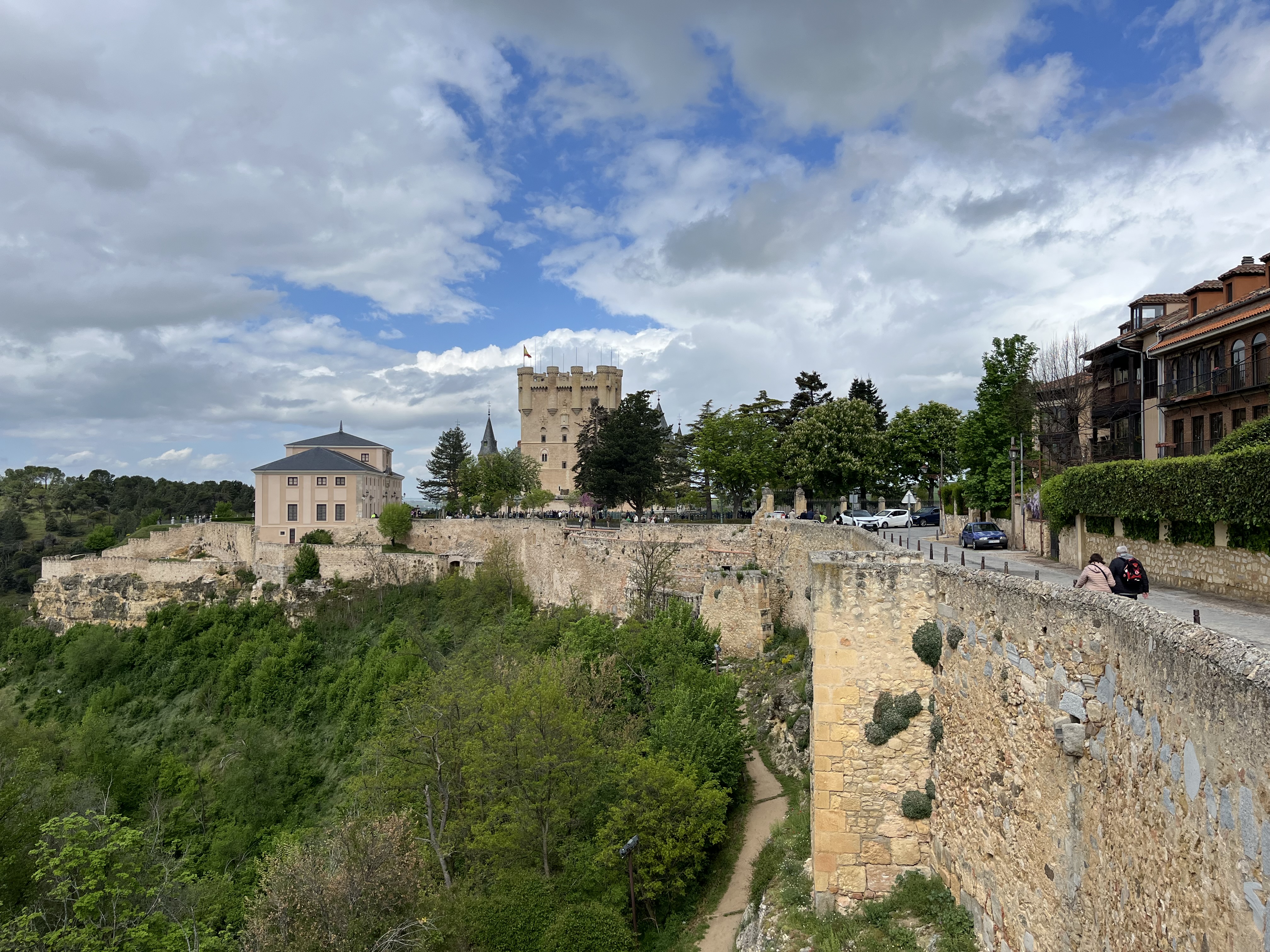
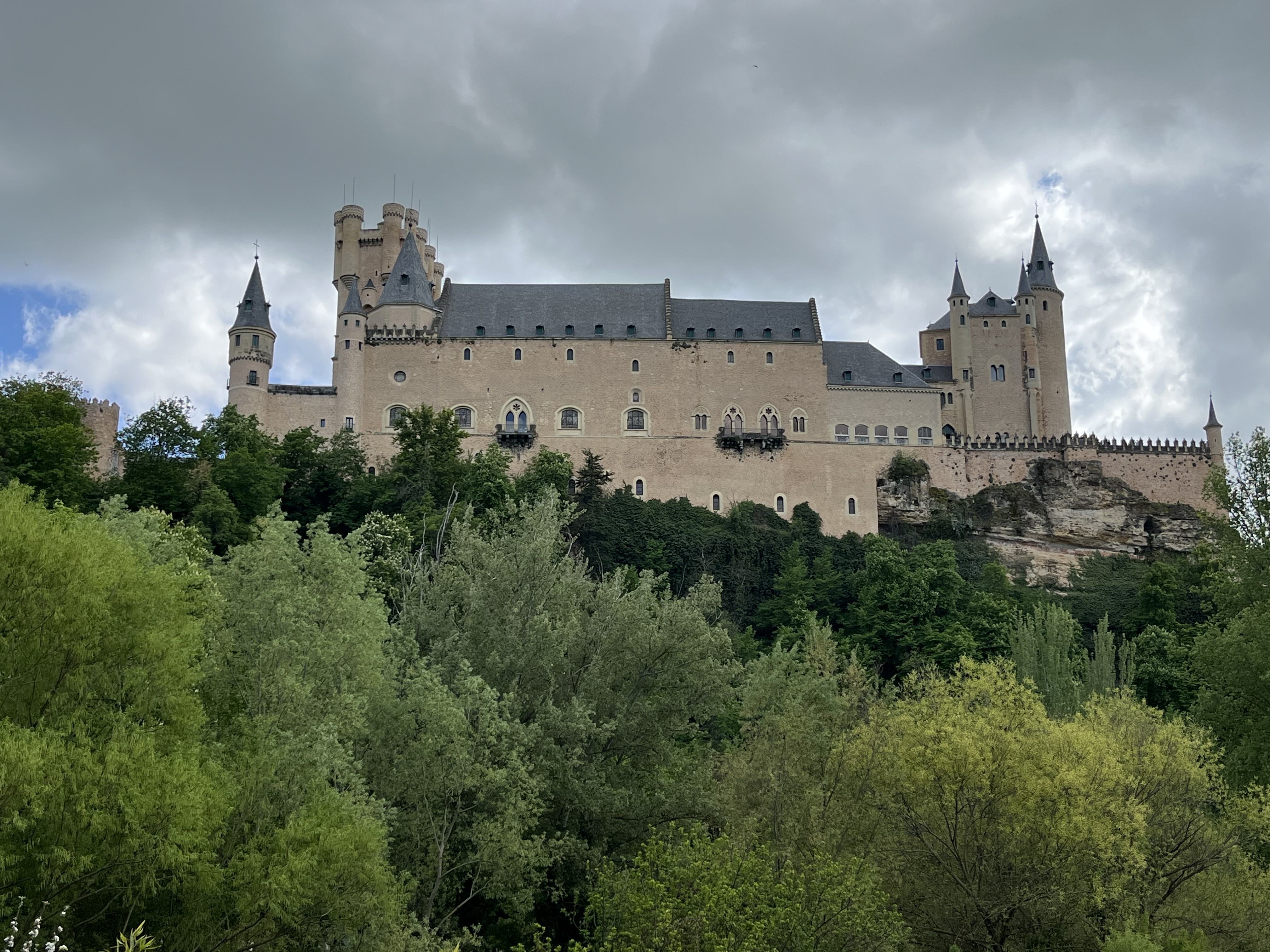
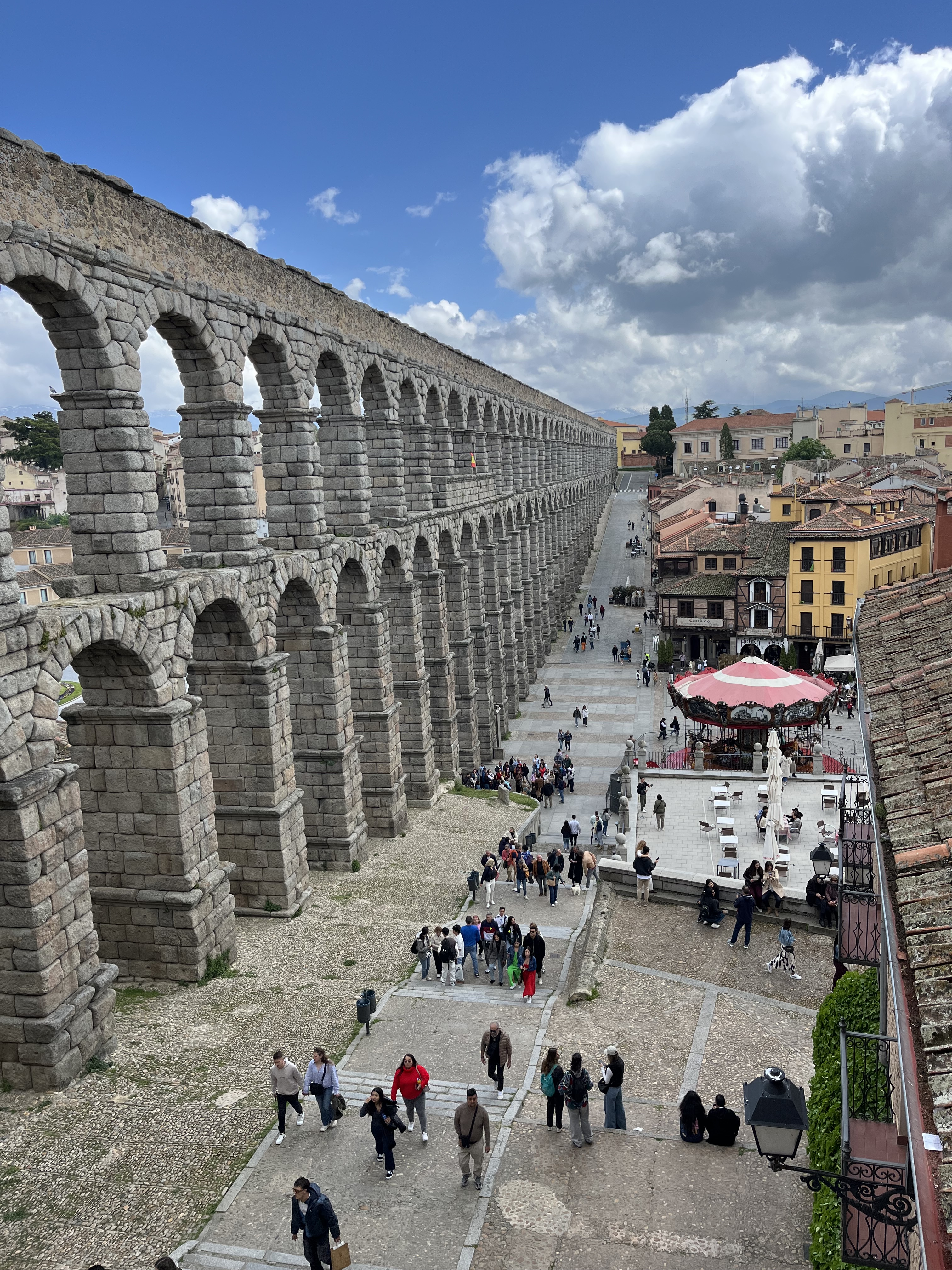
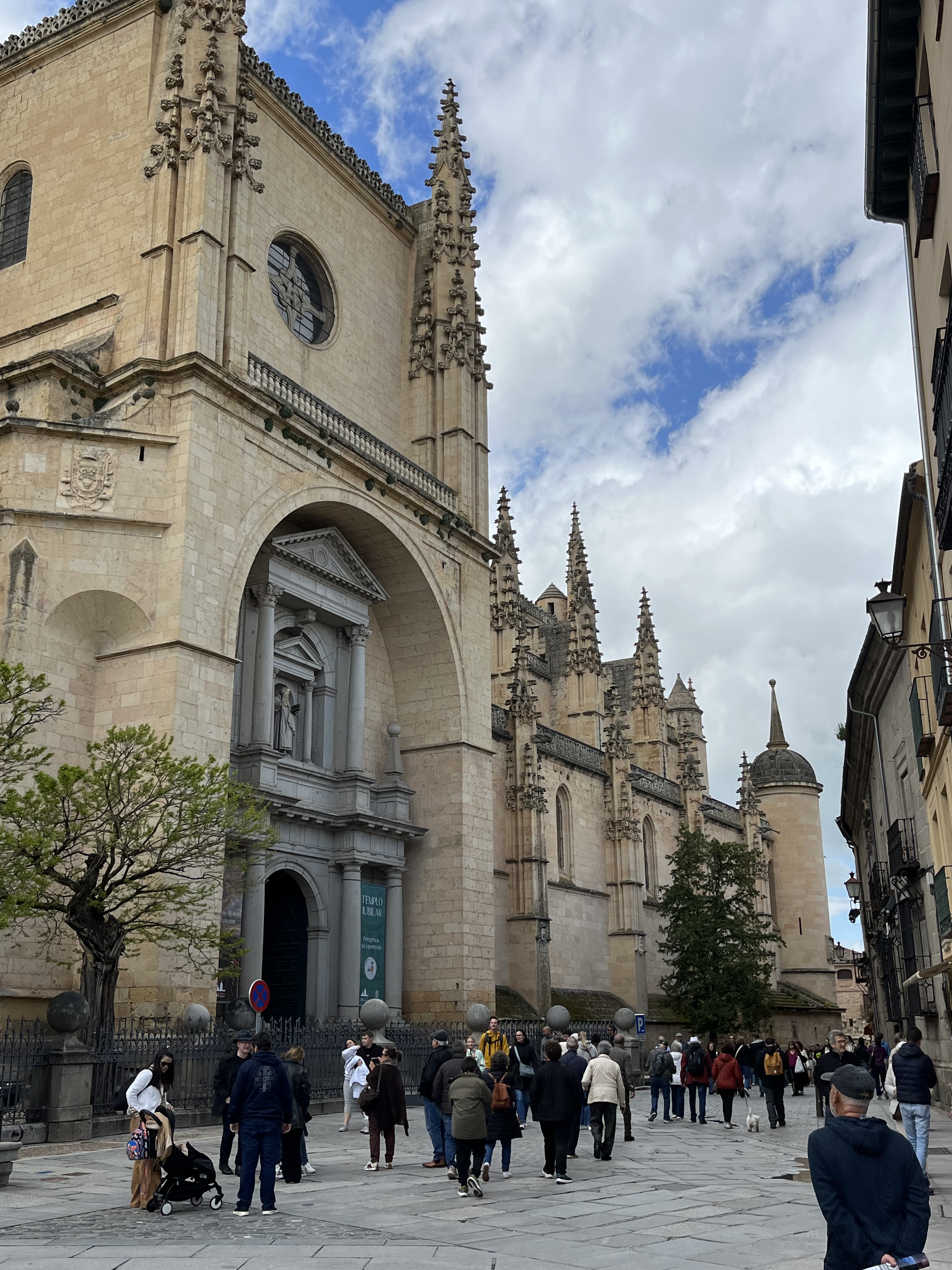
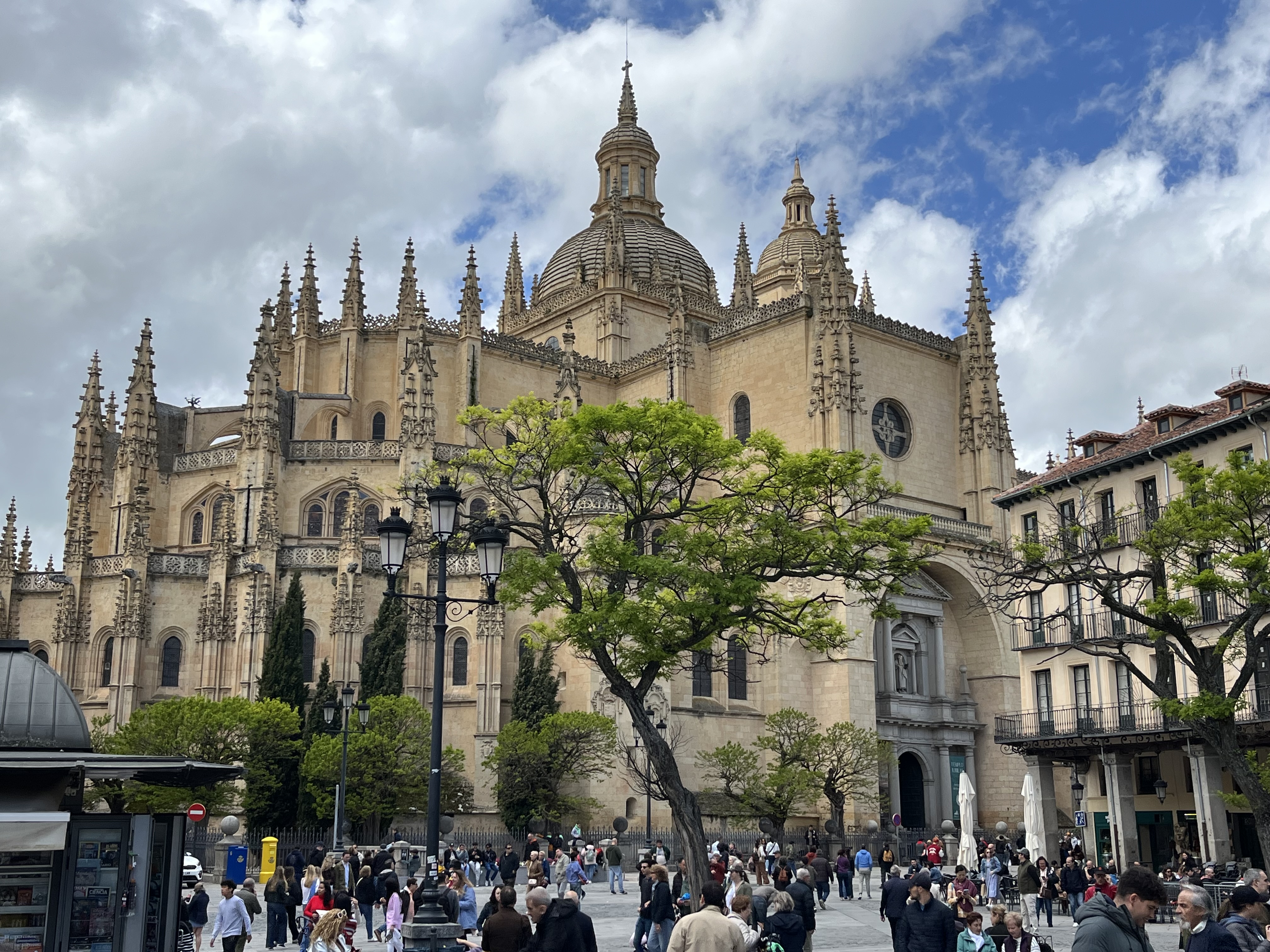
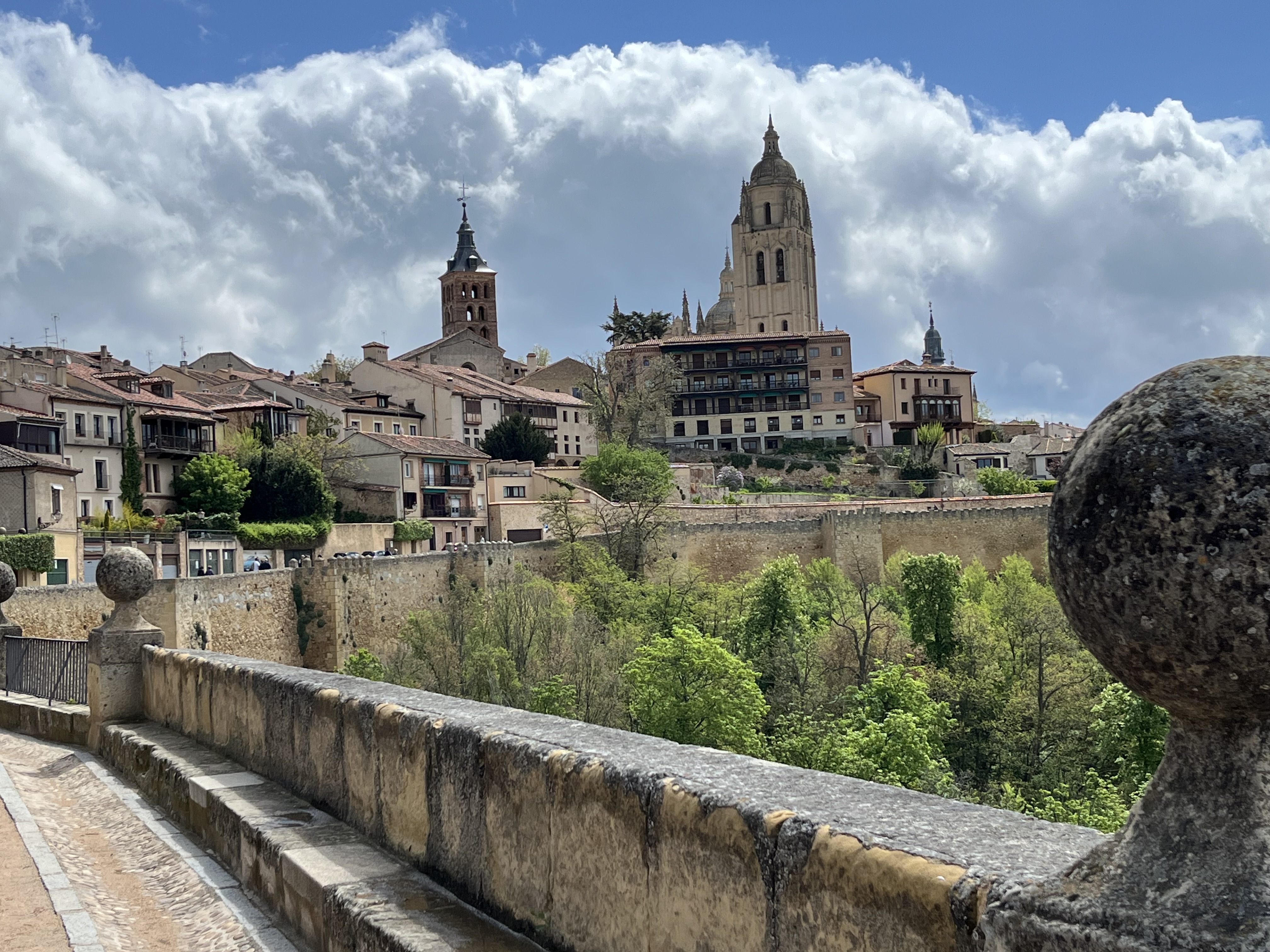
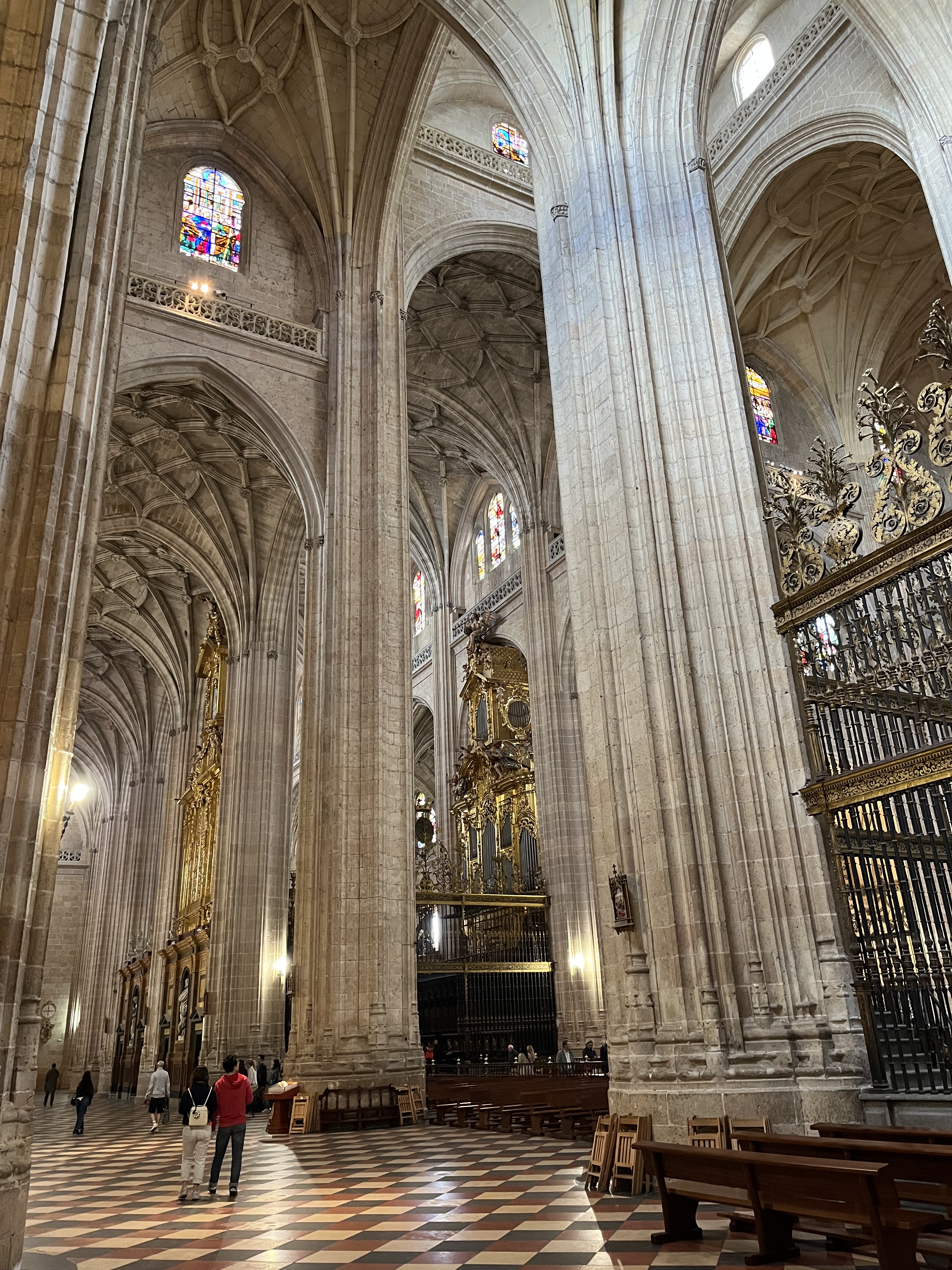
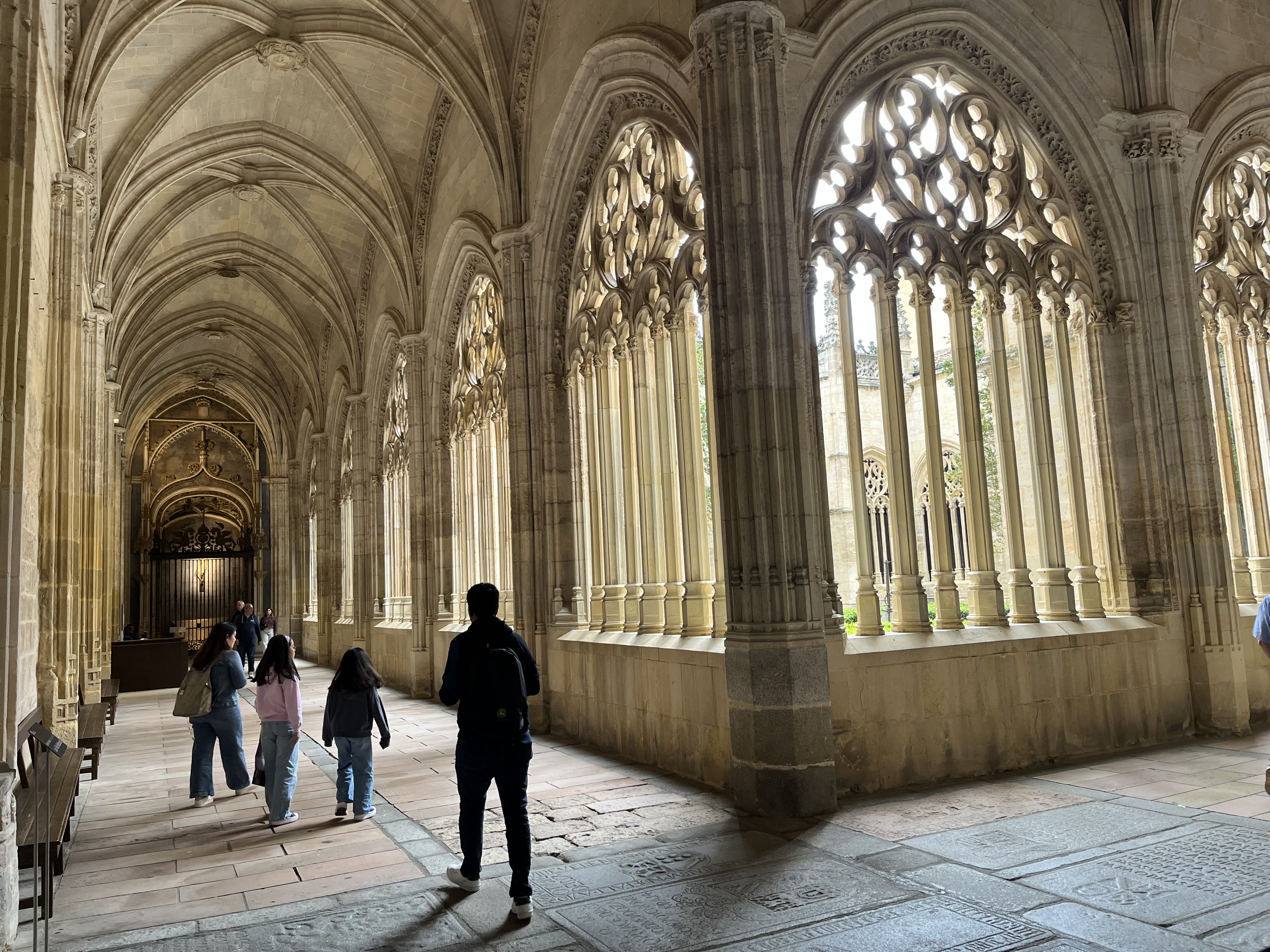
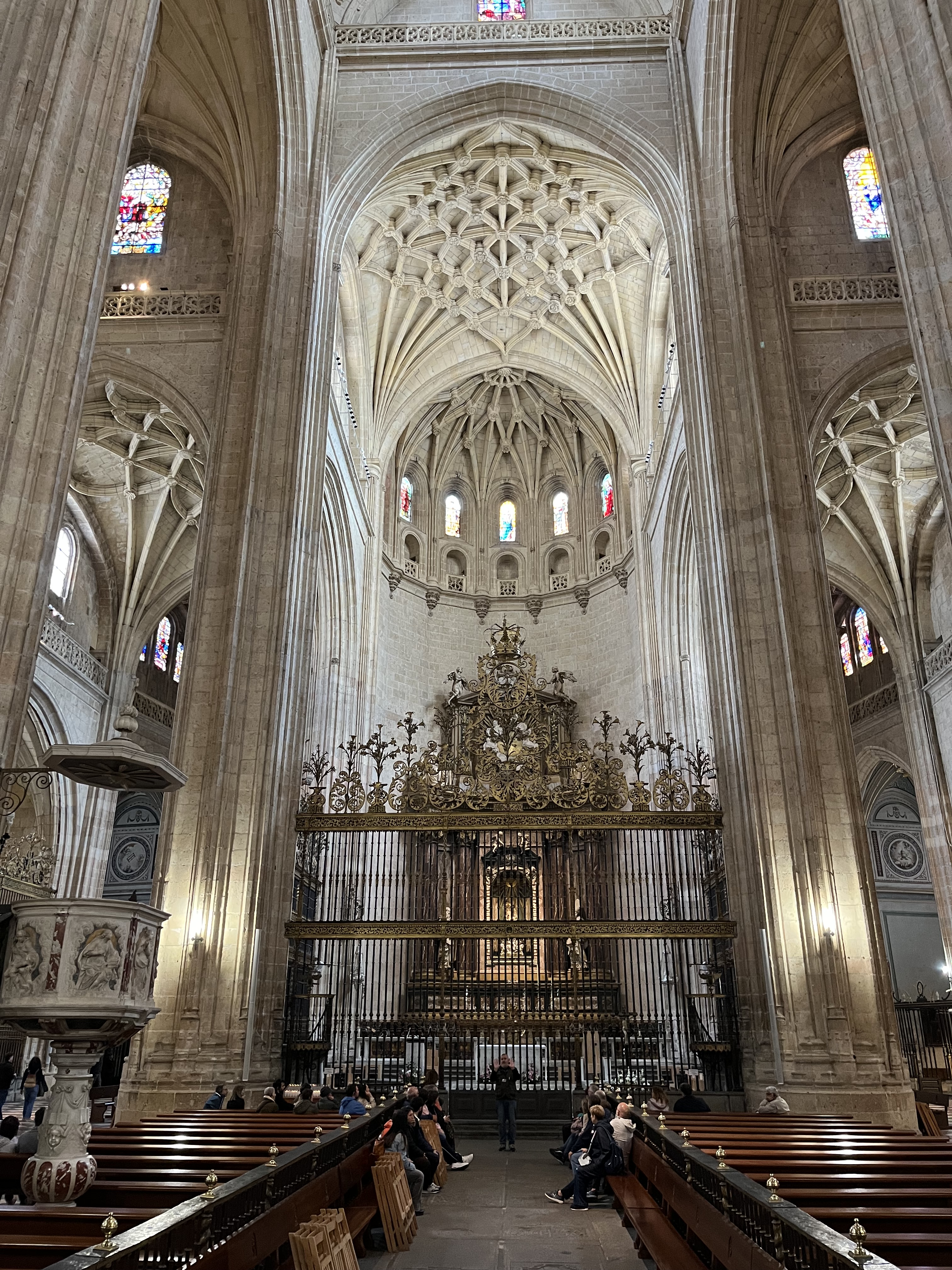
After big and busy Barcelona and Madrid, this small, old hillside town was a welcome change of pace. On one end of town sits the well preserved and once important Alcazar (castle), and on the other end, an old Roman aqueduct. In the middle of town you find a big Spanish cathedral, market square, and lots of typical, authentic restaurants where we enjoyed a fantastic meal. Wine during our entire trip was generally substantially cheaper than in France, and we were rarely disappointed with the quality of the recommended house wines served. The day we visited Segovia was May 1st. There, as elsewhere in Europe, this international day of labor is a holiday and often used for union demonstrations, as here, in this little town of Segovia.





Toledo
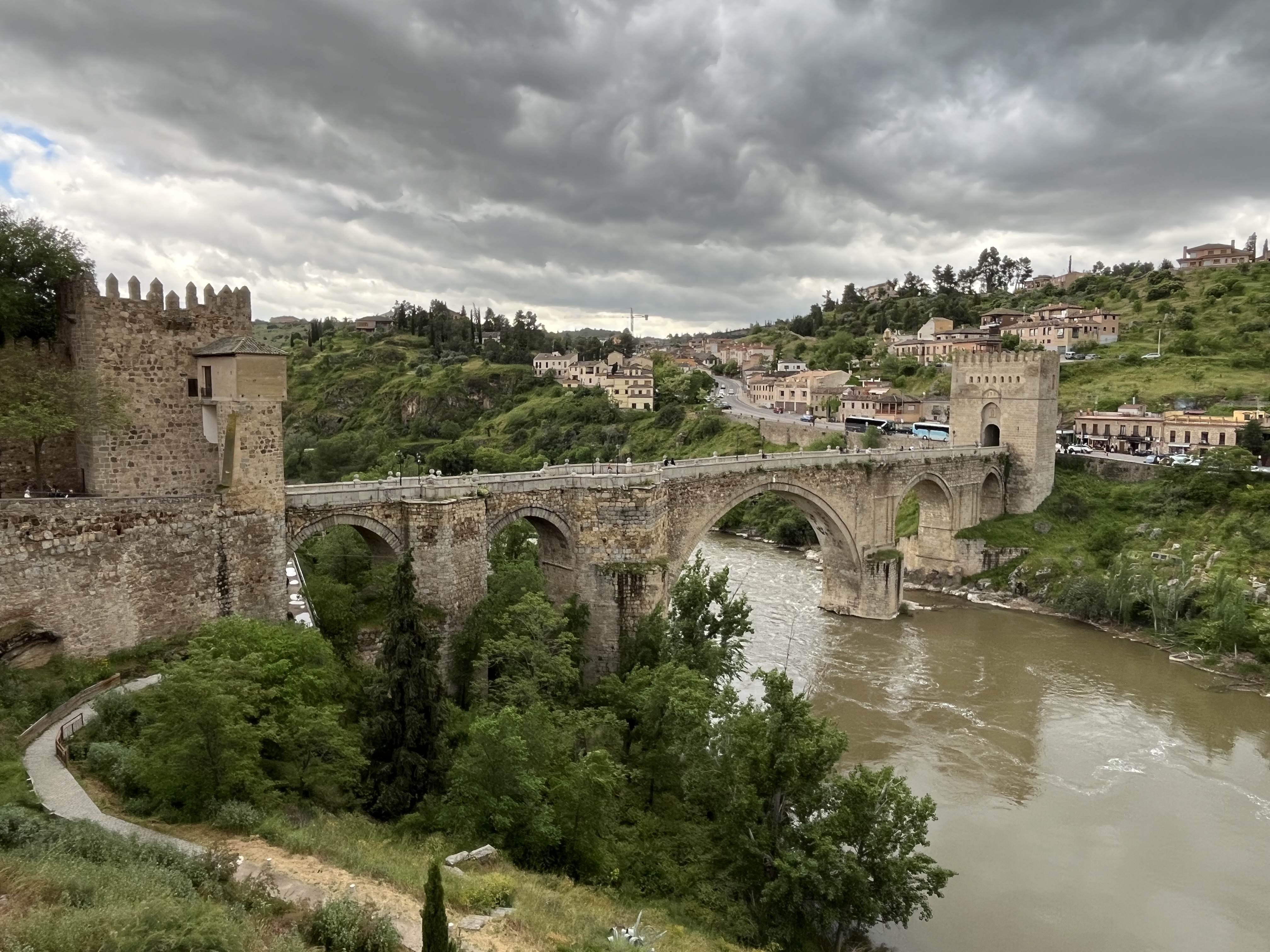
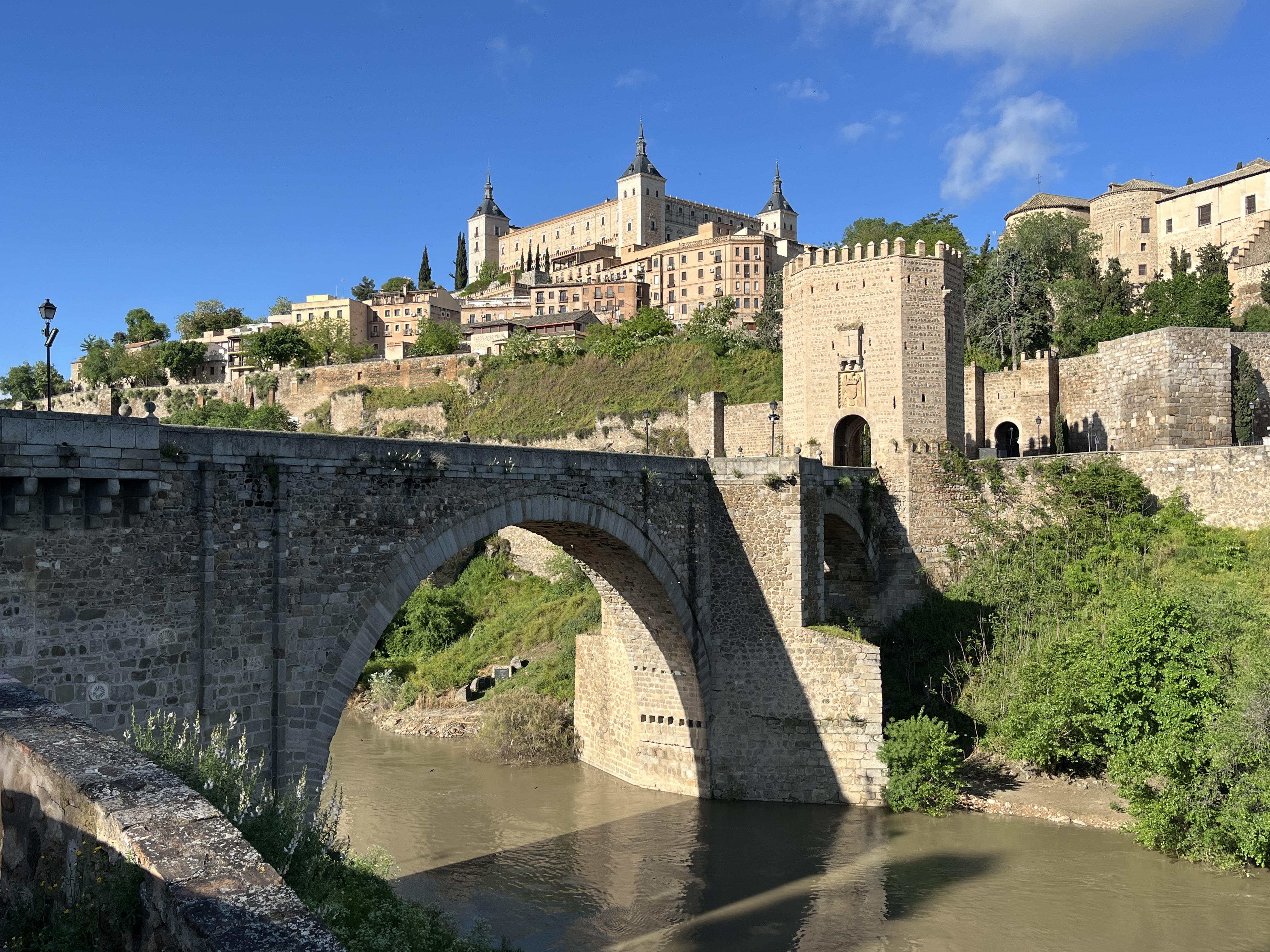
After Madrid and Segovia, Toledo was the third city in central Spain that we visited. It sits on a hill overlooking a bend in the Tagus river, making it a natural, easily defendable location. Toledo is the old capital of Spain, dating back to pre Roman times. In the 17th century it declined, and with no further building activity, resulted in the well preserved, large, fortified historic city center of today. Toledo is known for steel making, especially blades for knives, swords etc, which are amply displayed in numerous cutlery stores in town.

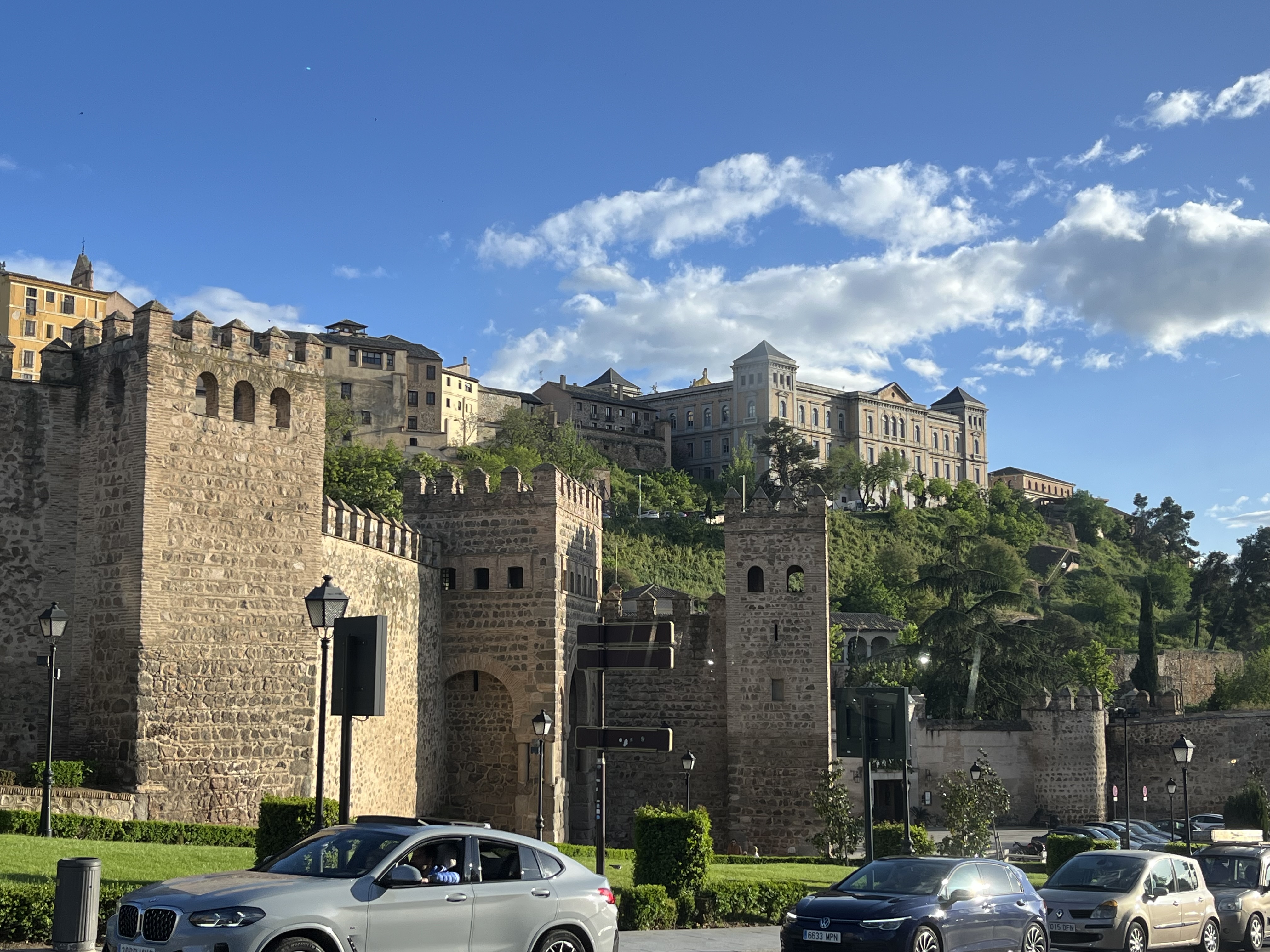

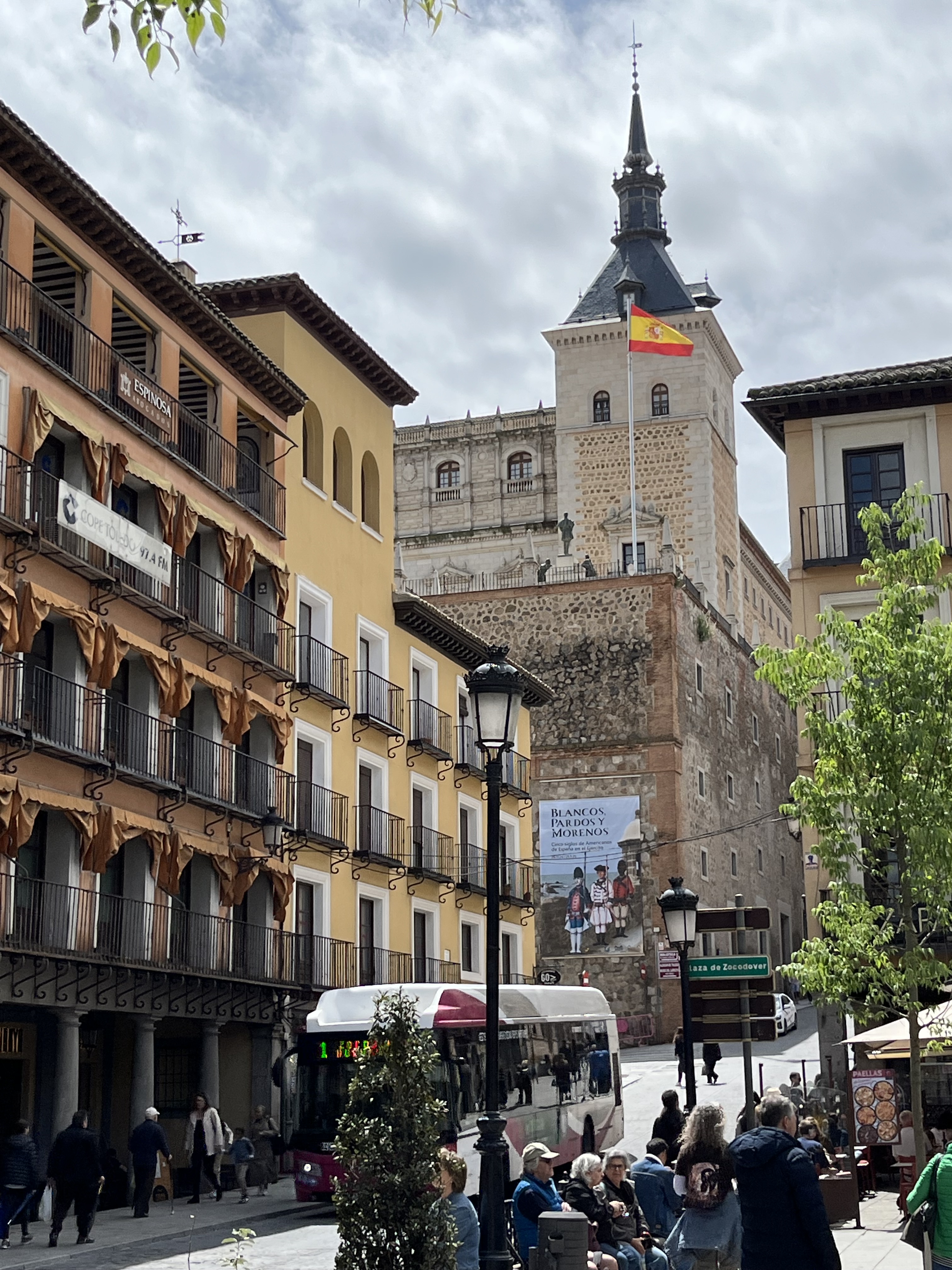
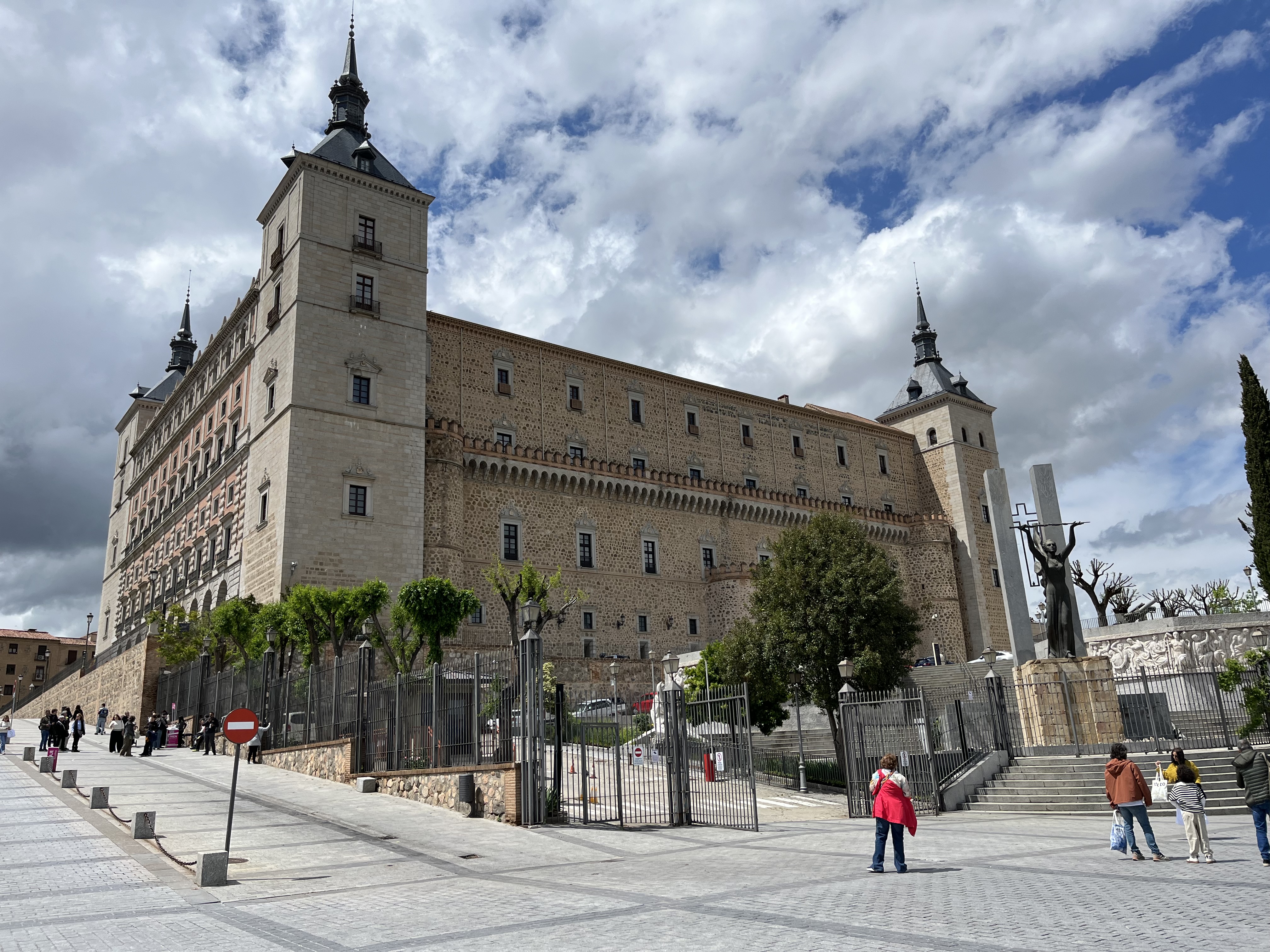
On the highest point of the old city center you find the squared Alcazar, which for centuries was the administrative center of Spain.
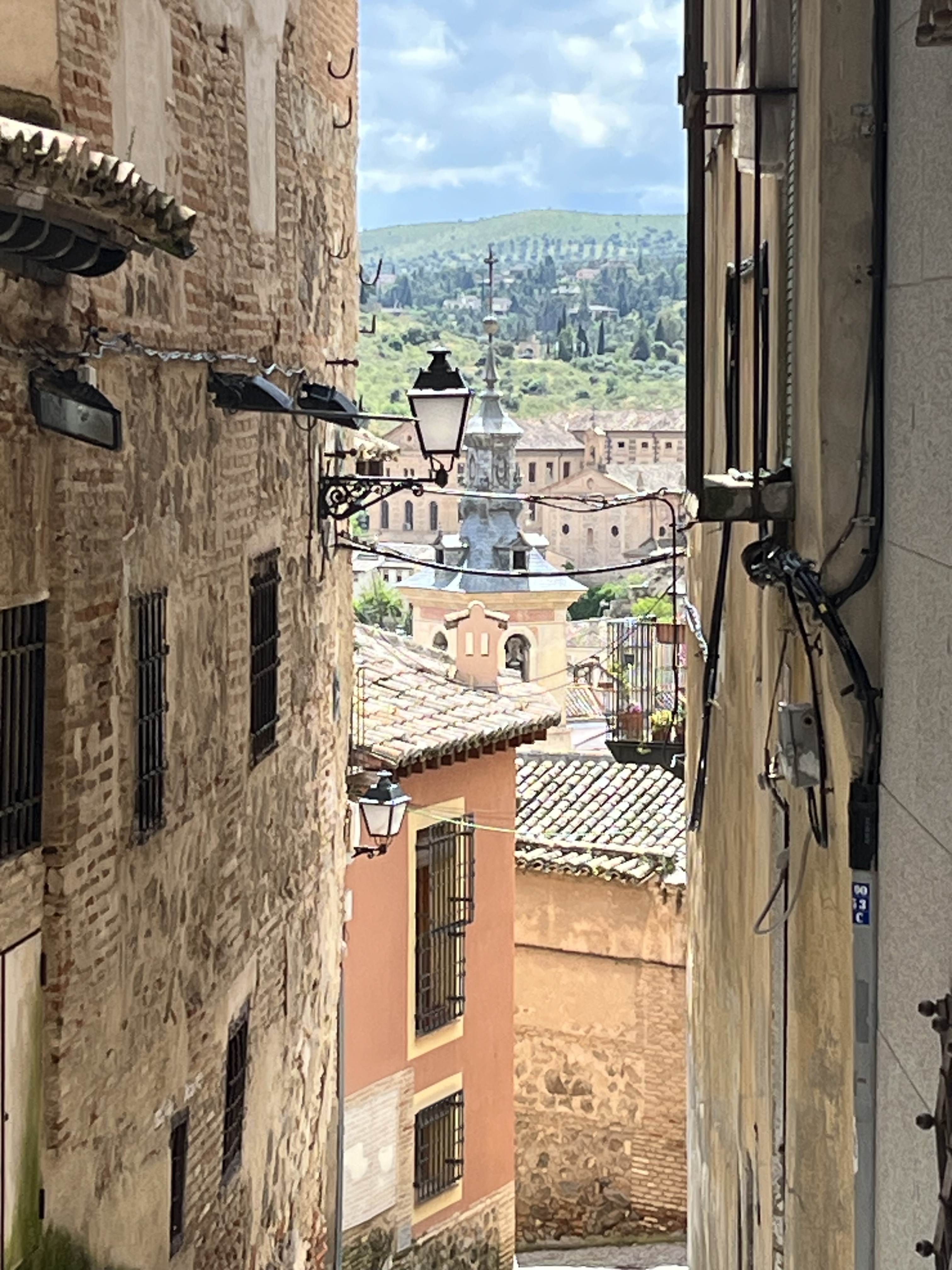

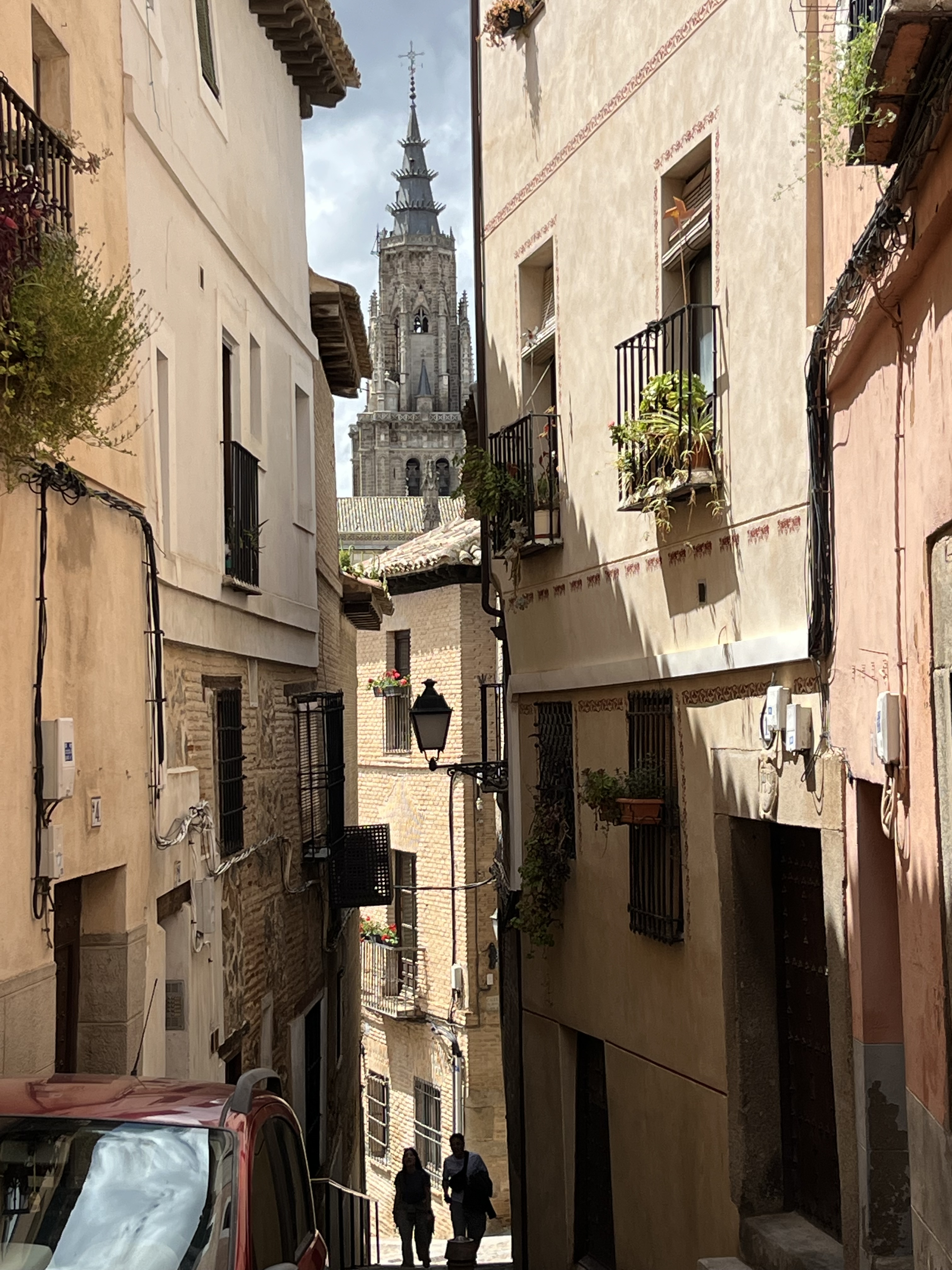
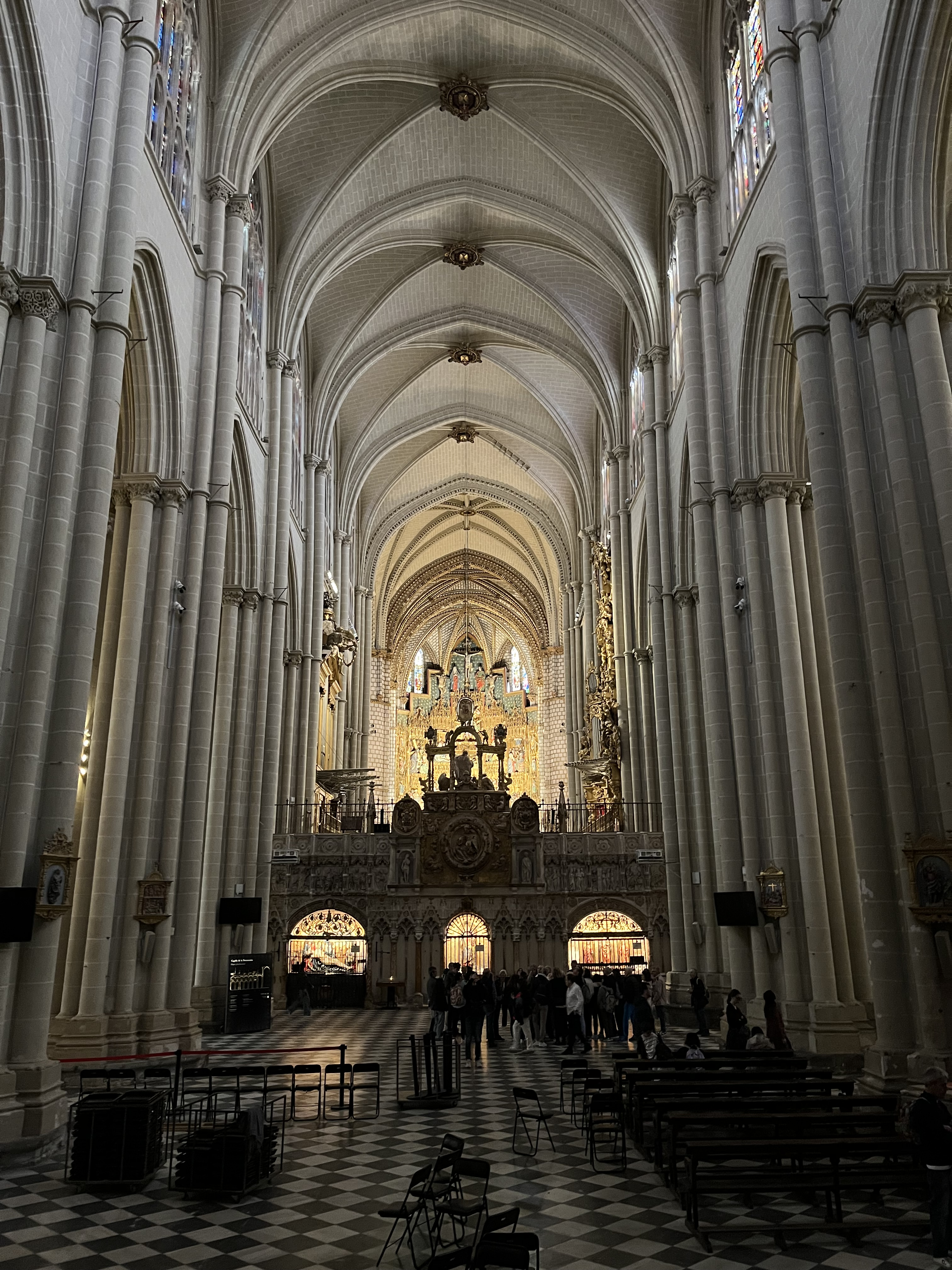
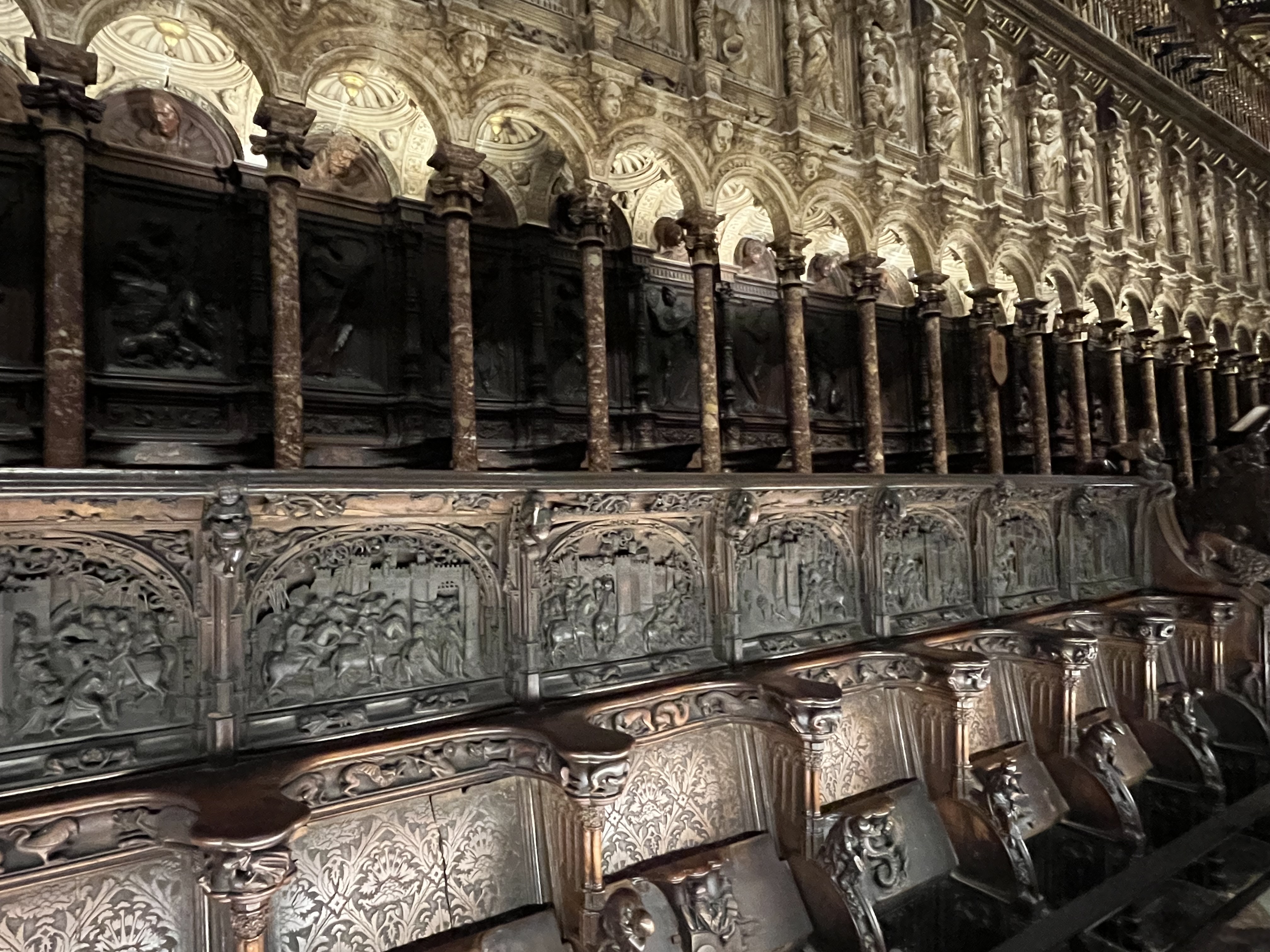
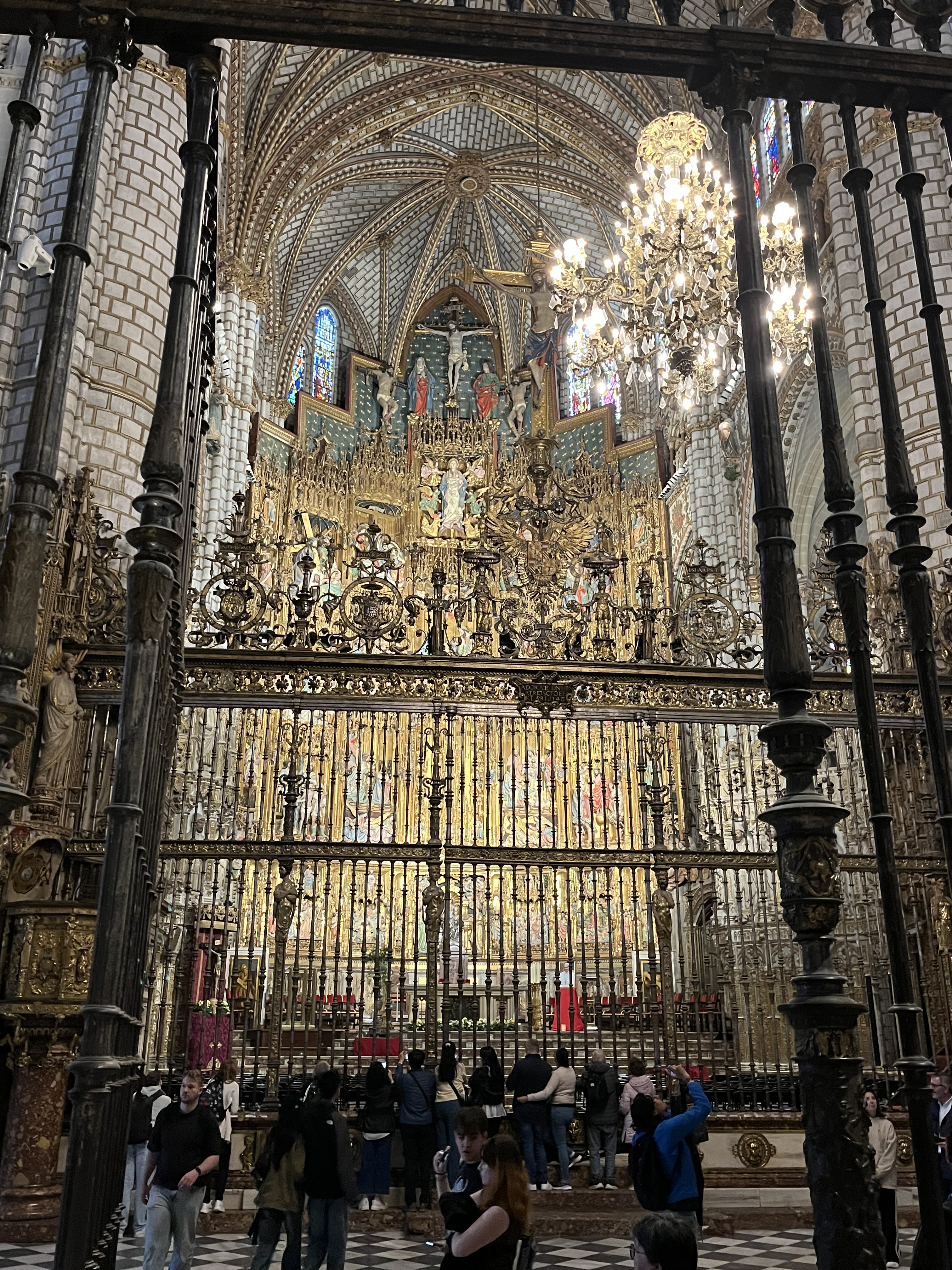
The large, elaborately decorated cathedral demonstrates Toledo’s former importance:





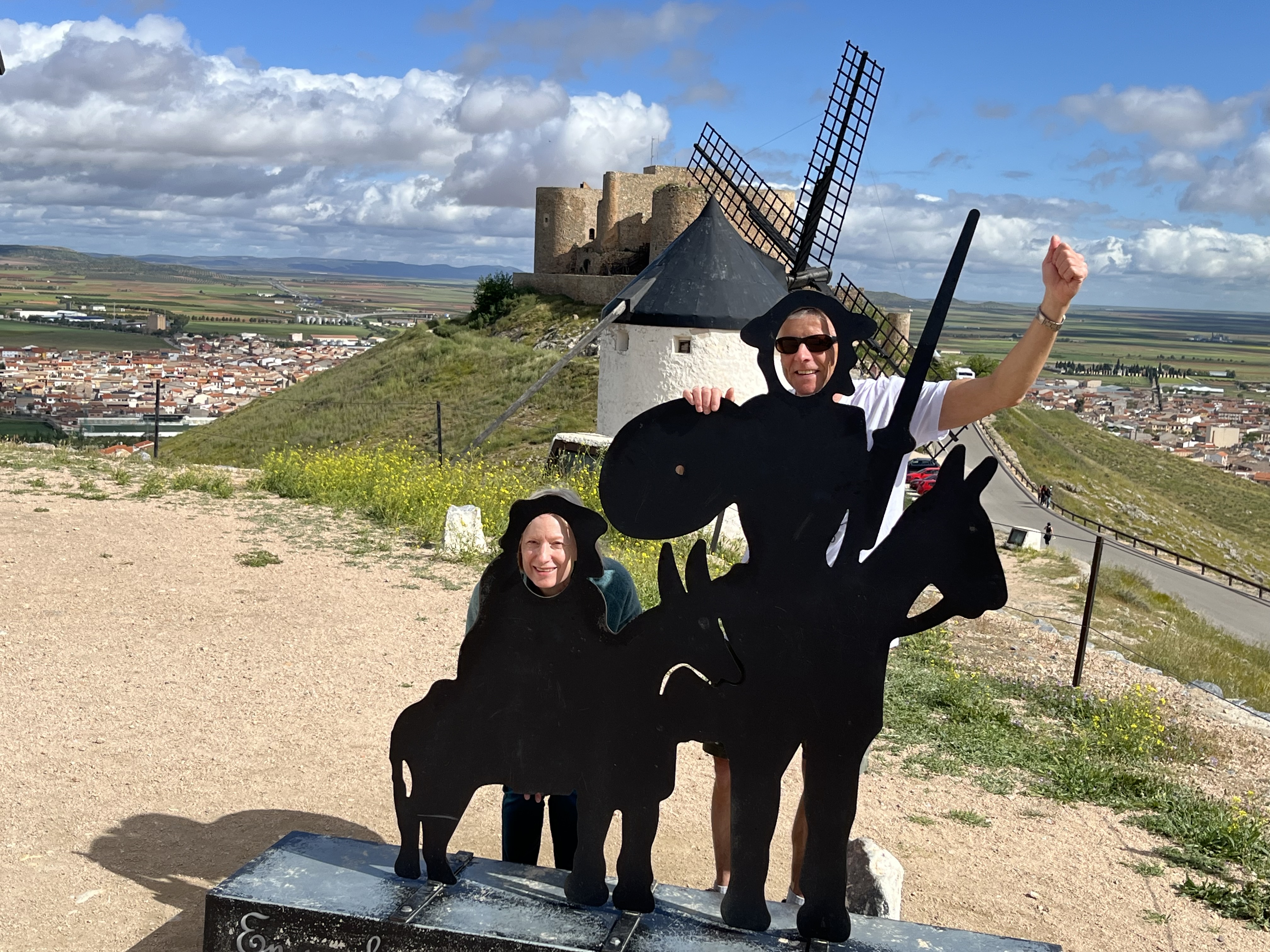
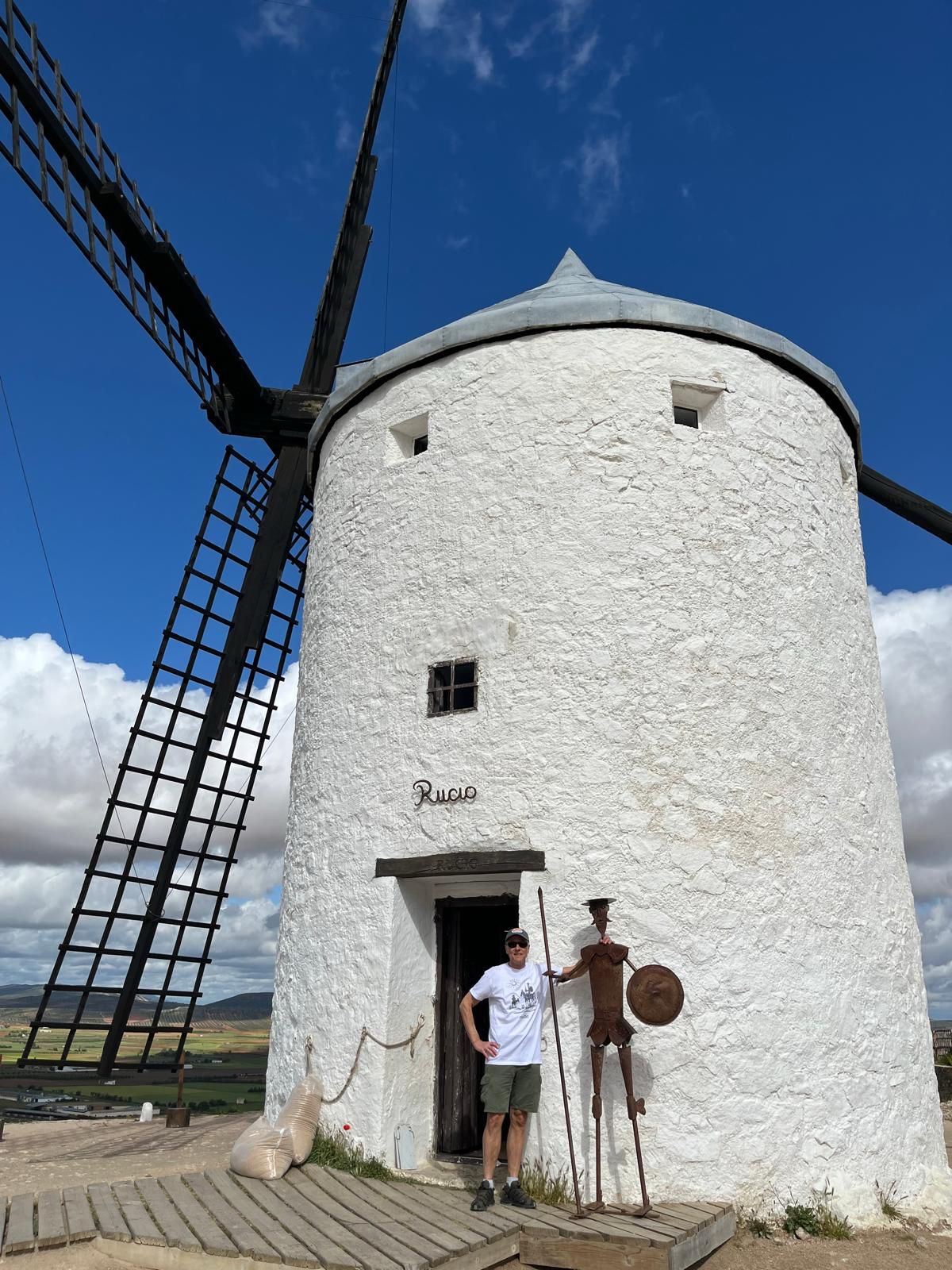
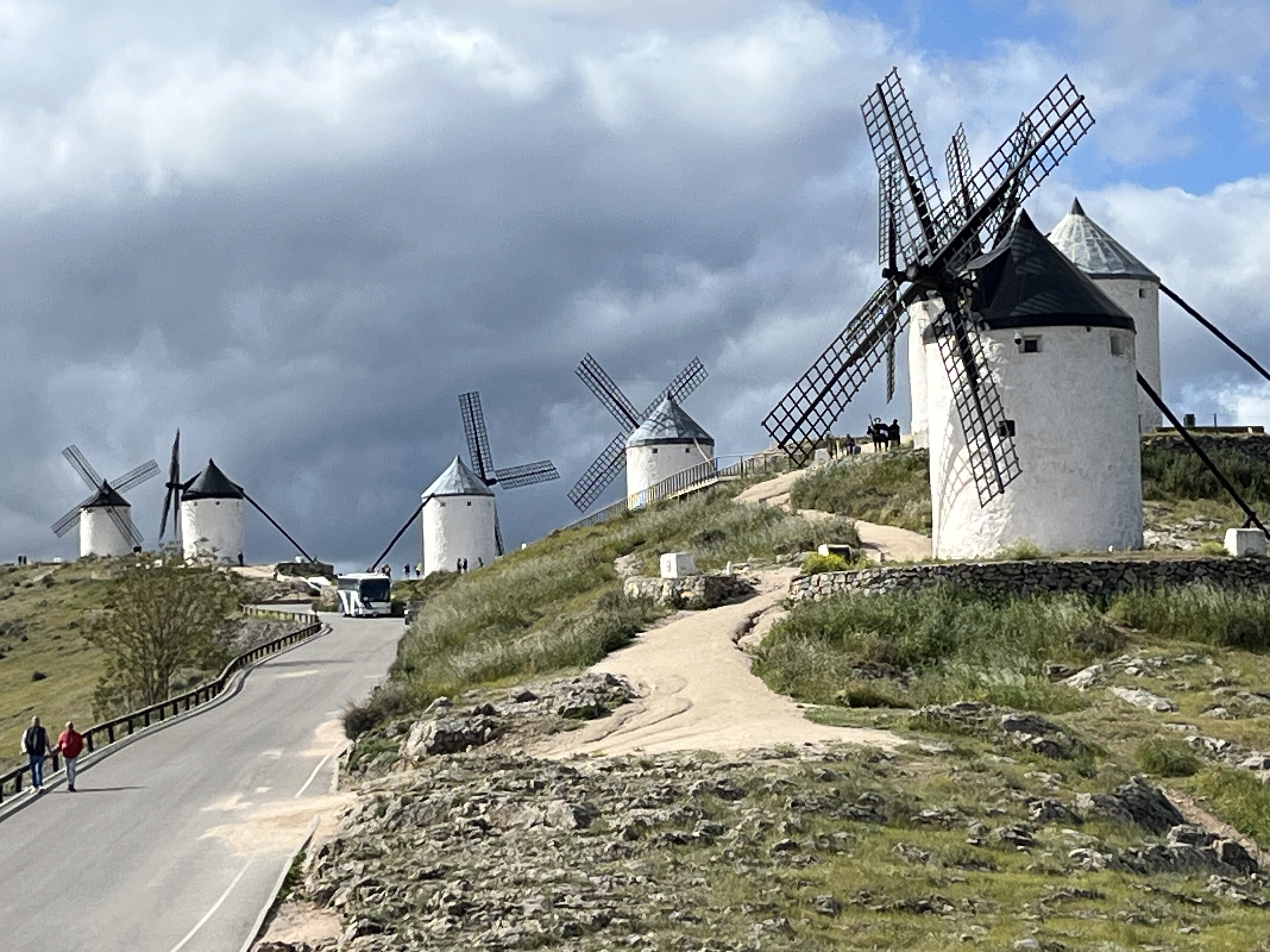
Consuegra,
was just a short stop on the way south from Toledo to Andalusia. It is the place to see the old windmills made famous in Cervantes’ Don Quixote. Here, in this case, demonstrated by Don Bernardo and his trusted side kick Sancho Laurenca, tirelessly fighting the windmills…..


Cordoba
Cordoba was our first stop in Andalusia, and our entry to the Moorish influenced southern part of Spain. I think of Andalusia as the Bavaria of Germany, the place that everyone envisions when thinking about Germany, or in this case, Spain. Images of white washed houses with red tile roofs, Moorish influenced architecture, Alcazars, bull fighting arenas, guitar music, and flamenco dancing coming to mind.
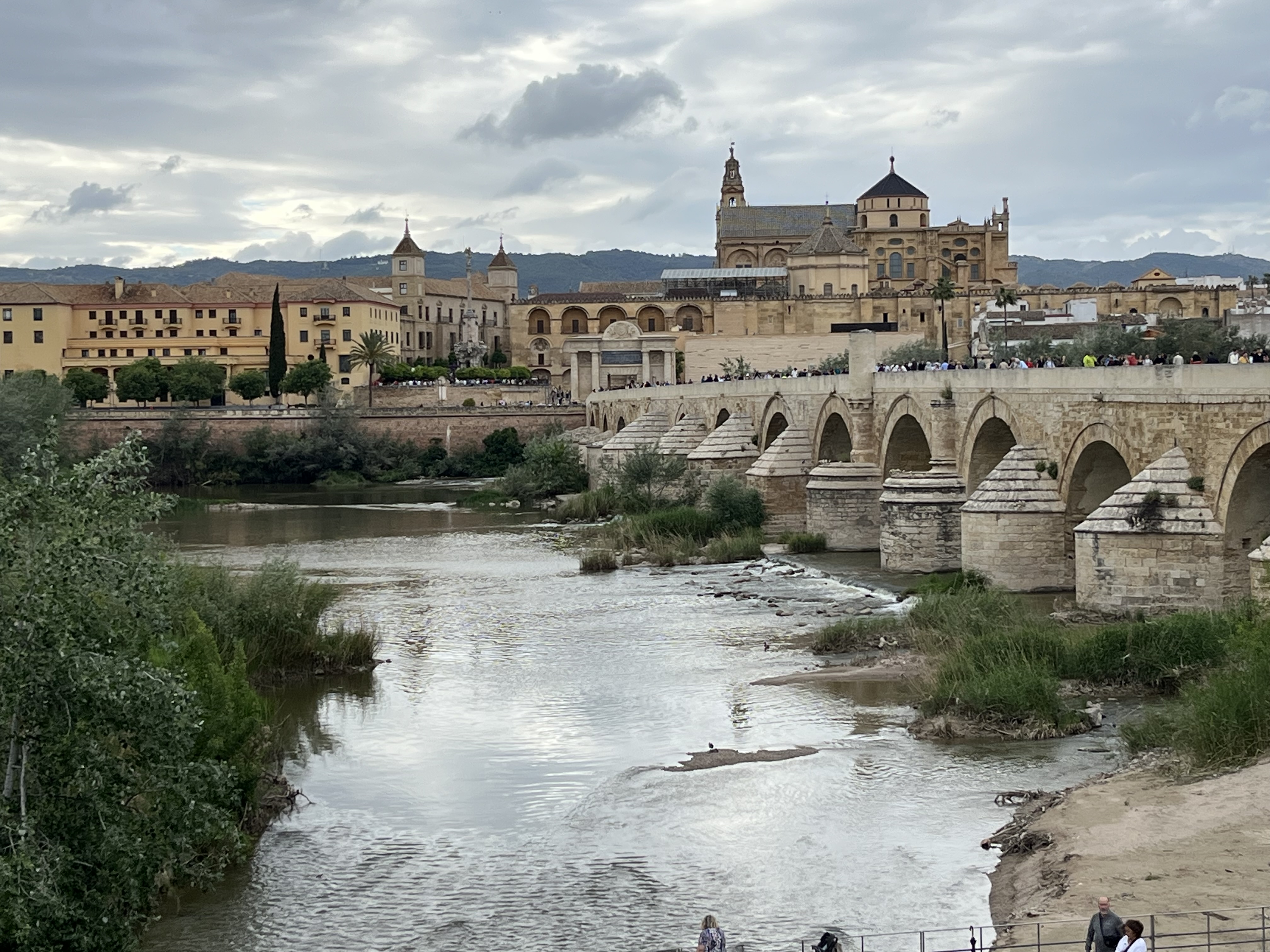
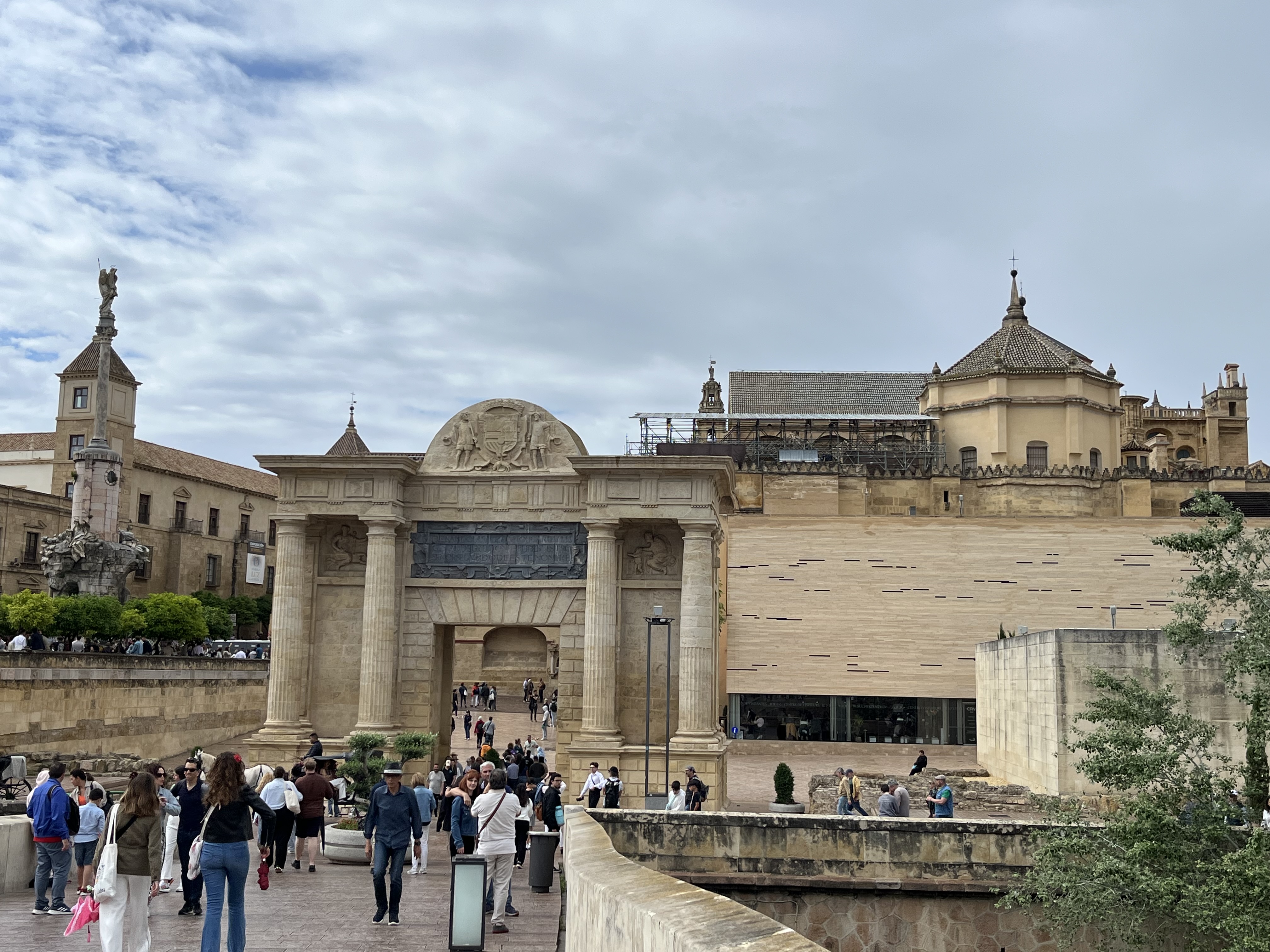
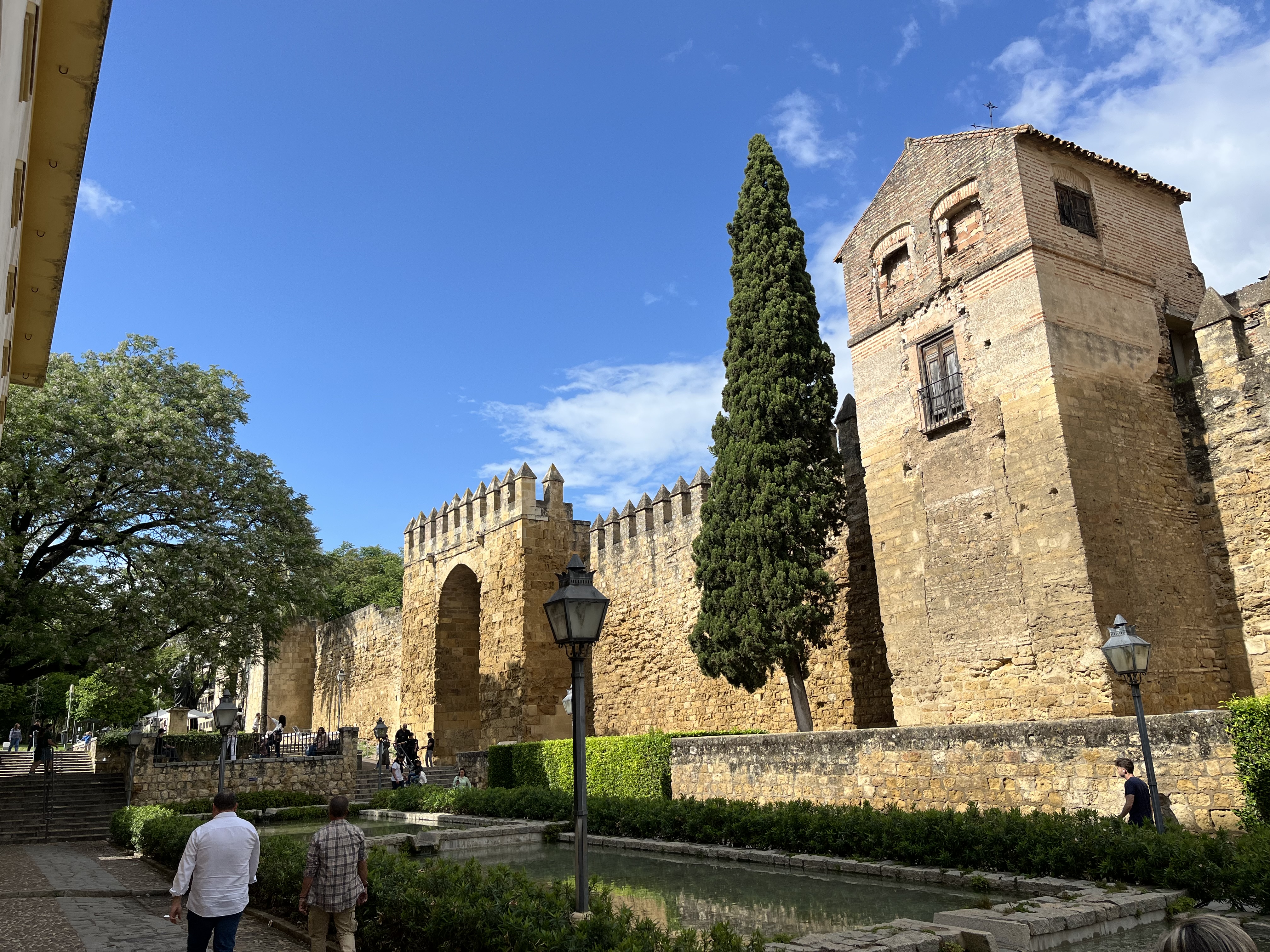

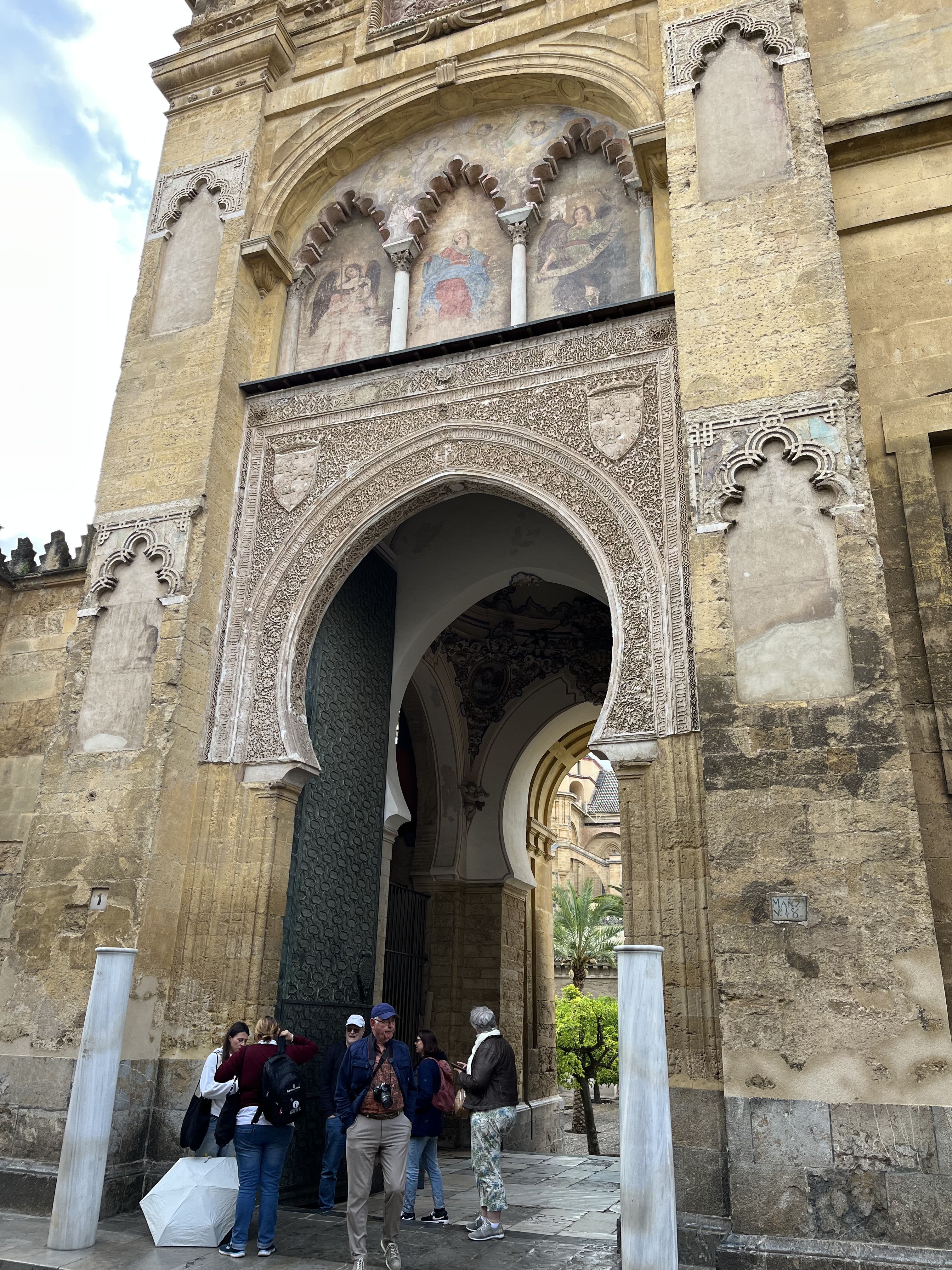
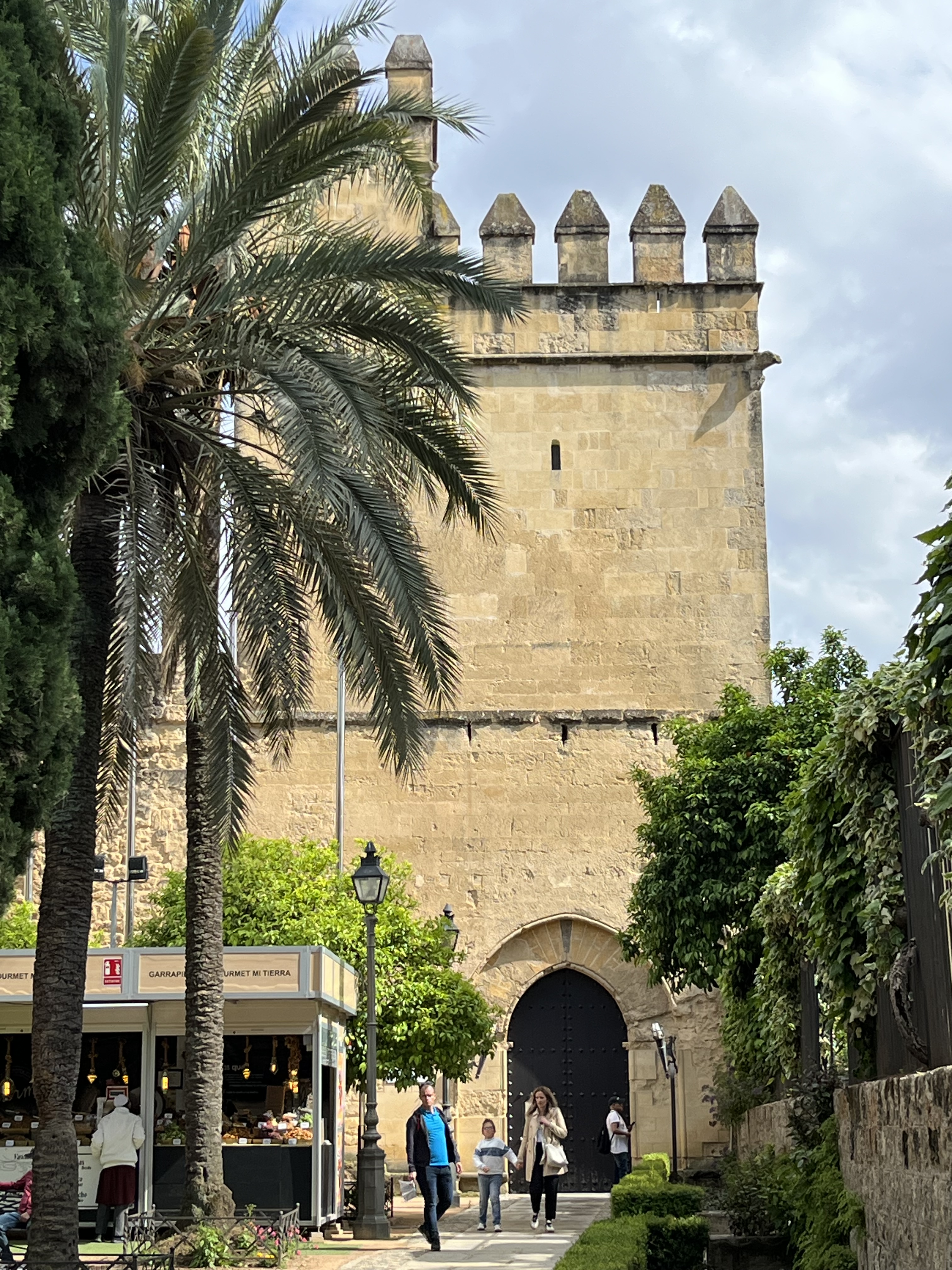


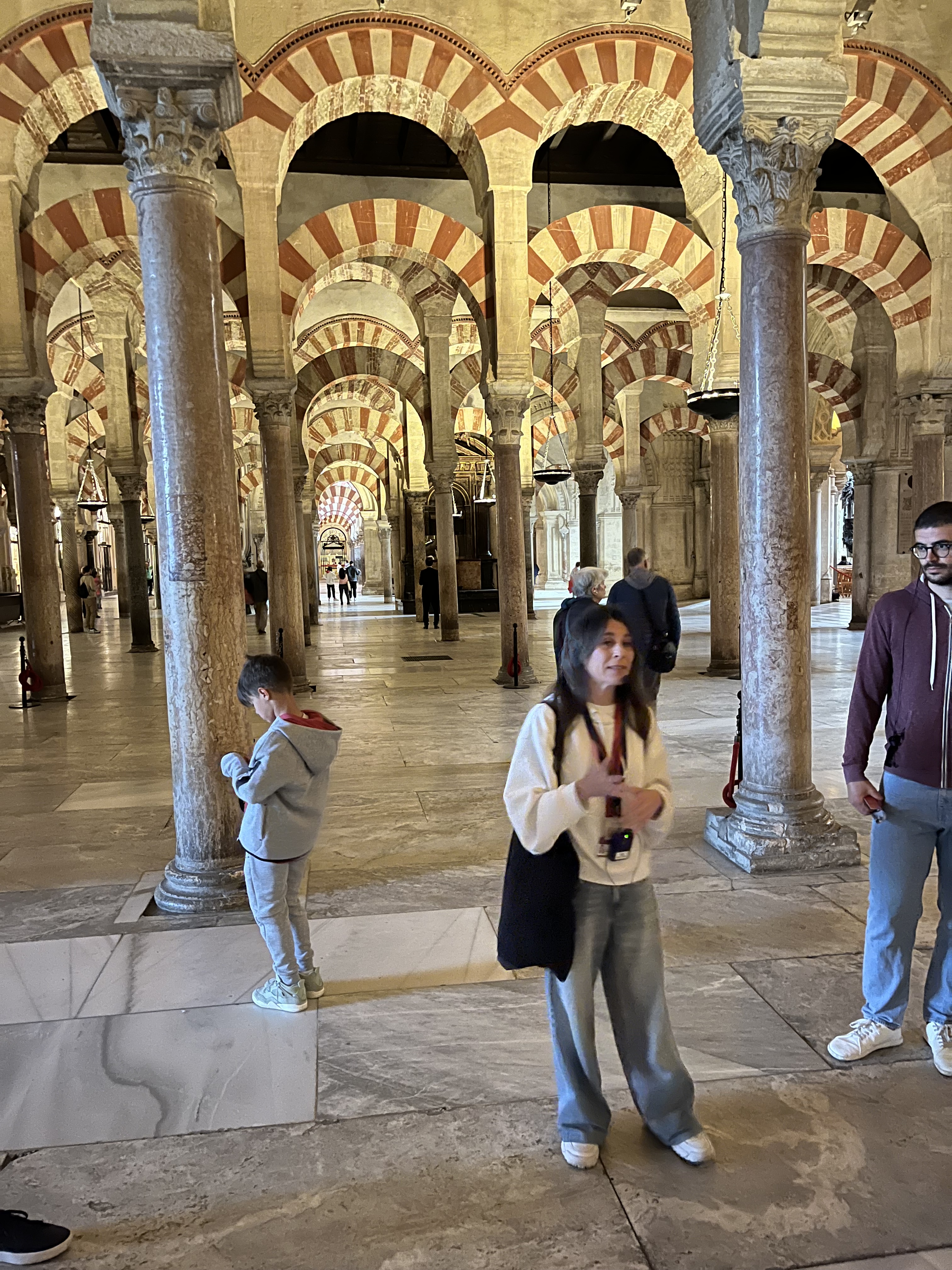
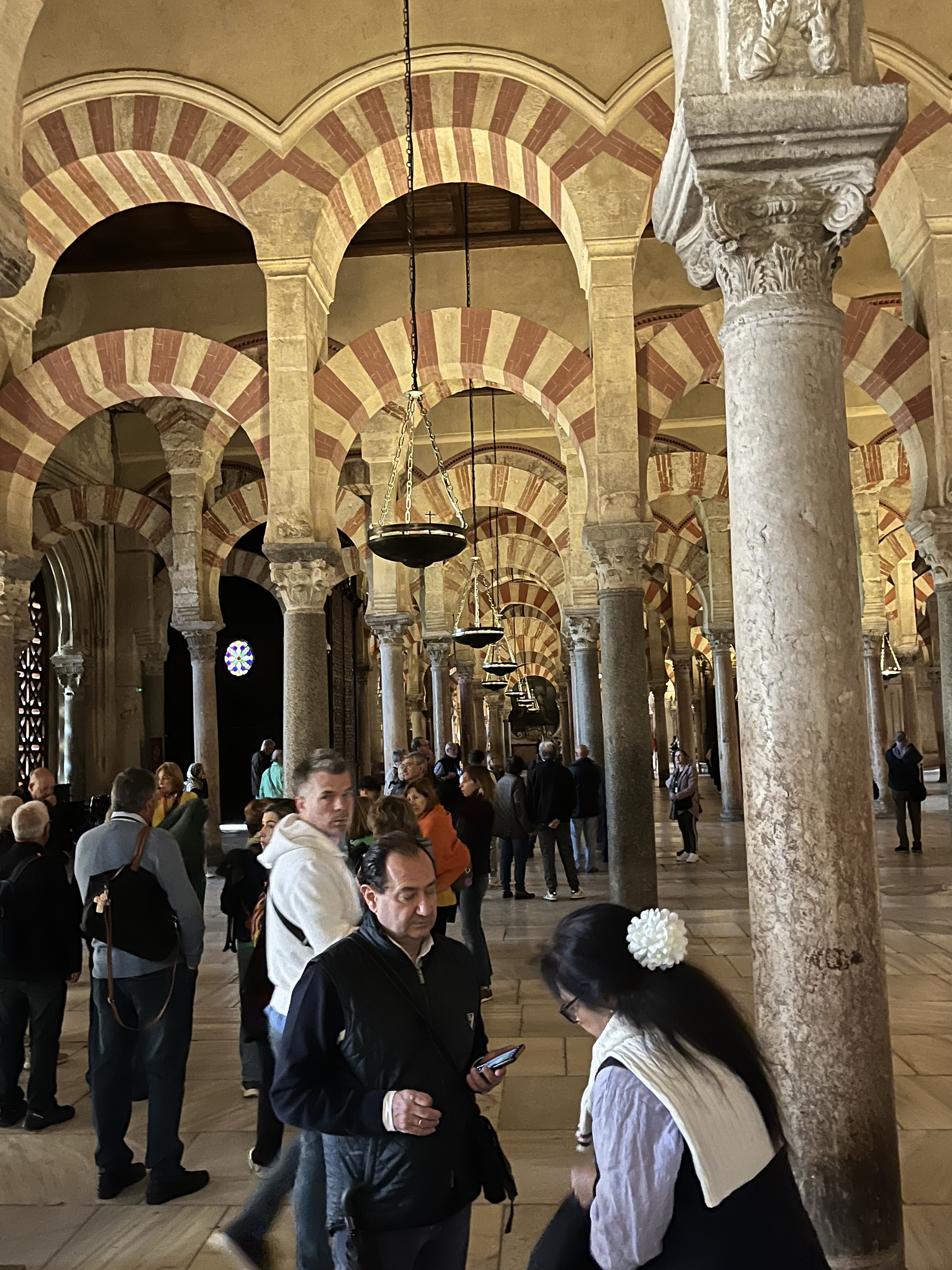
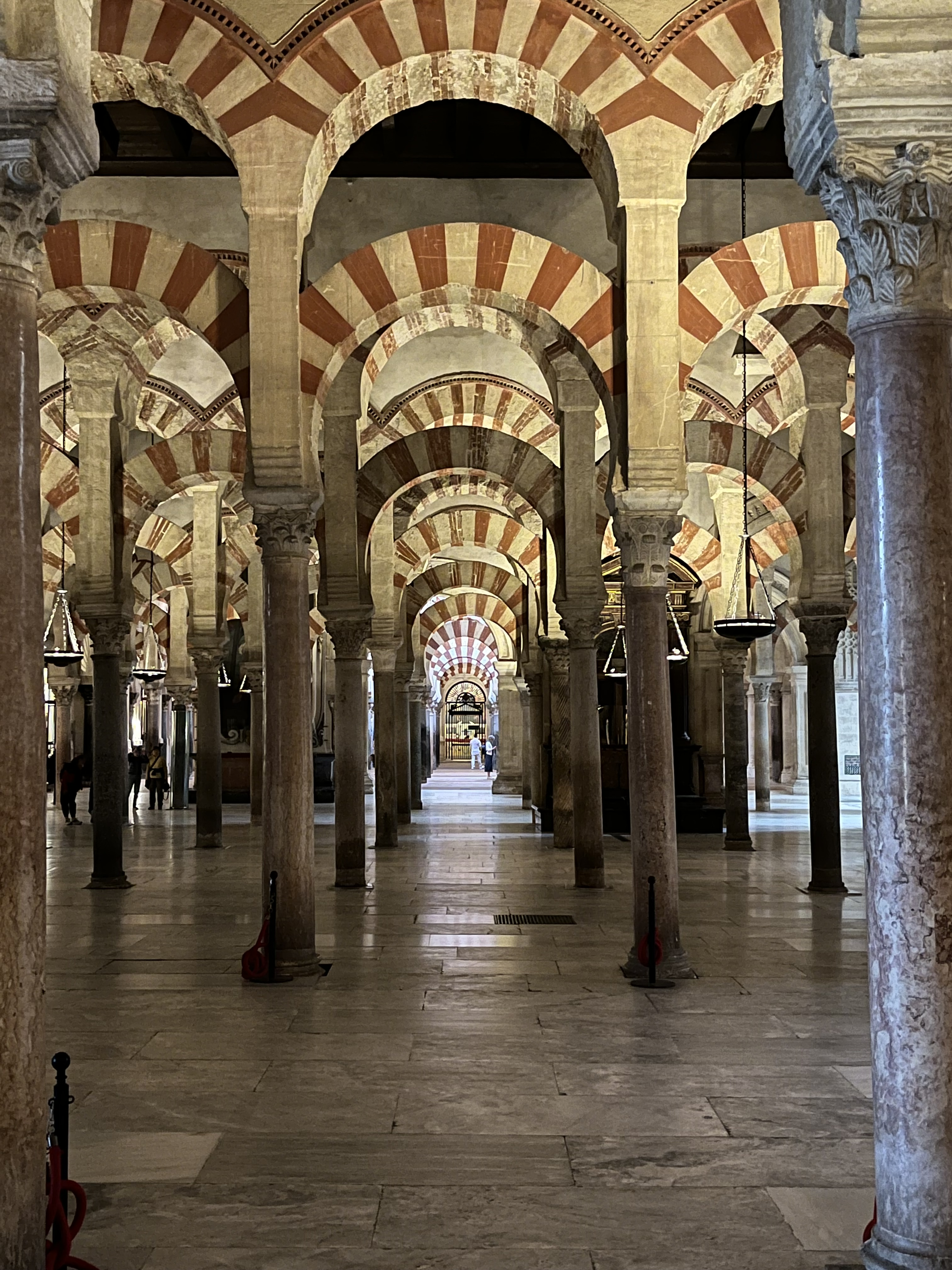
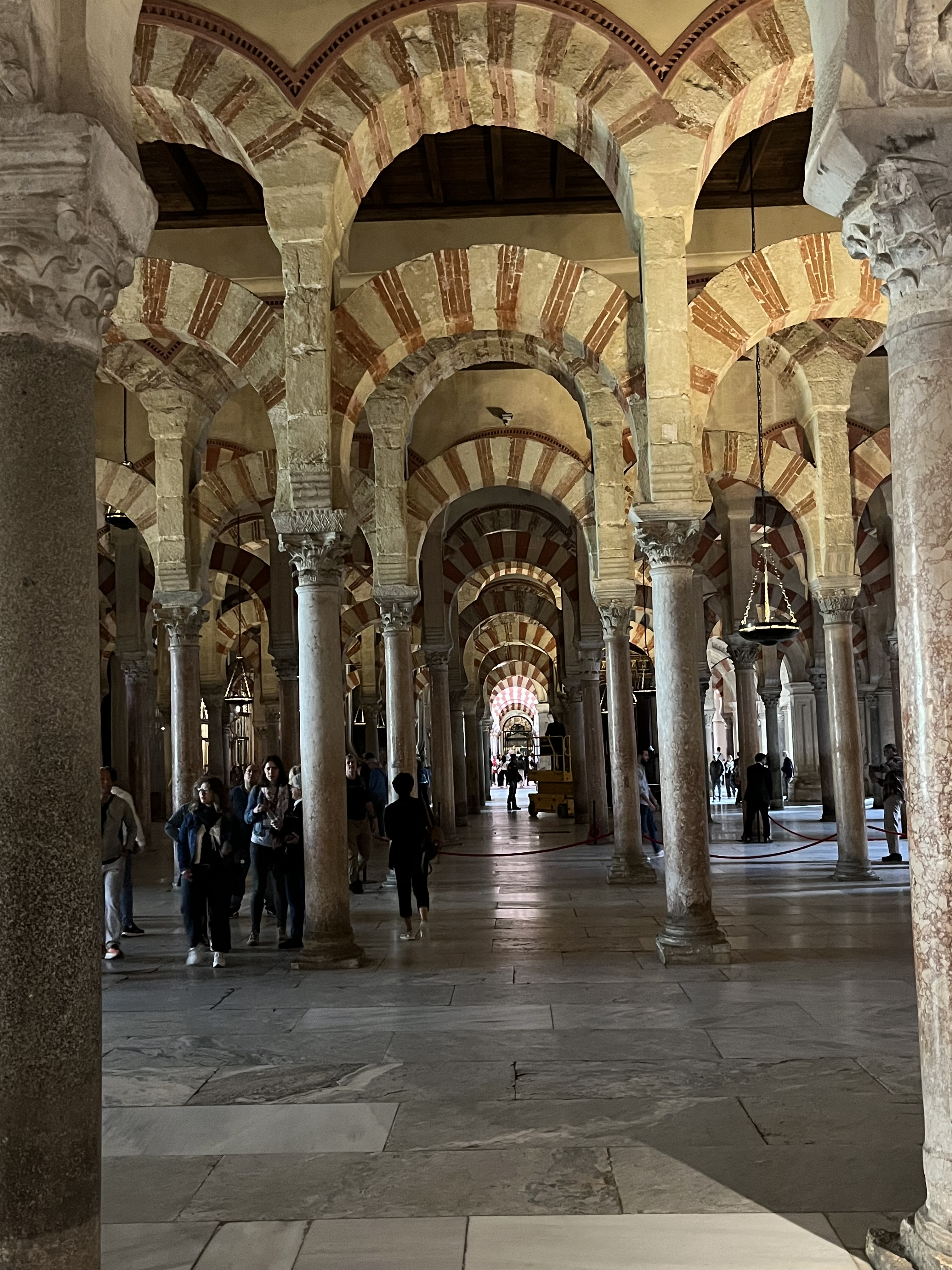
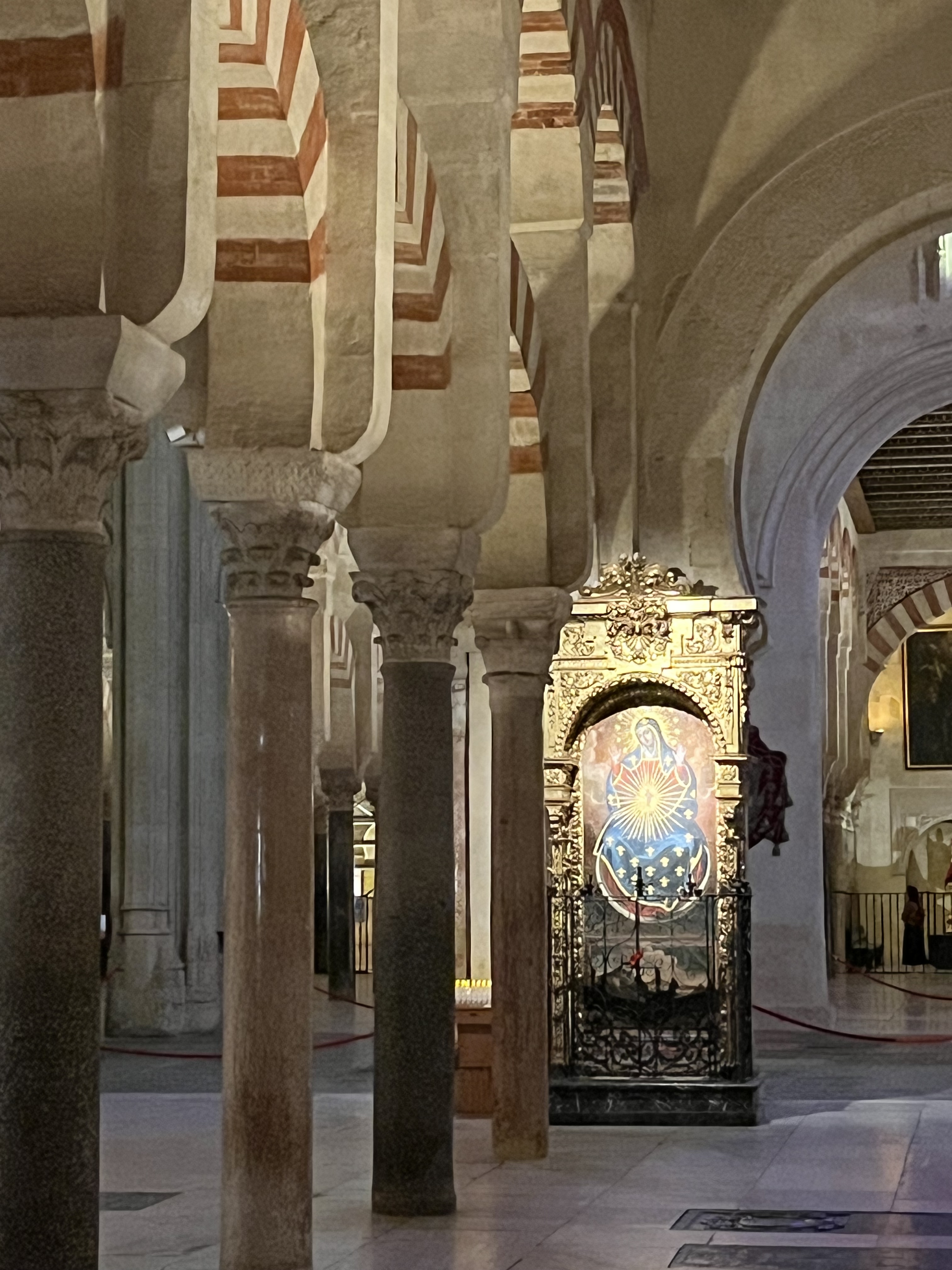
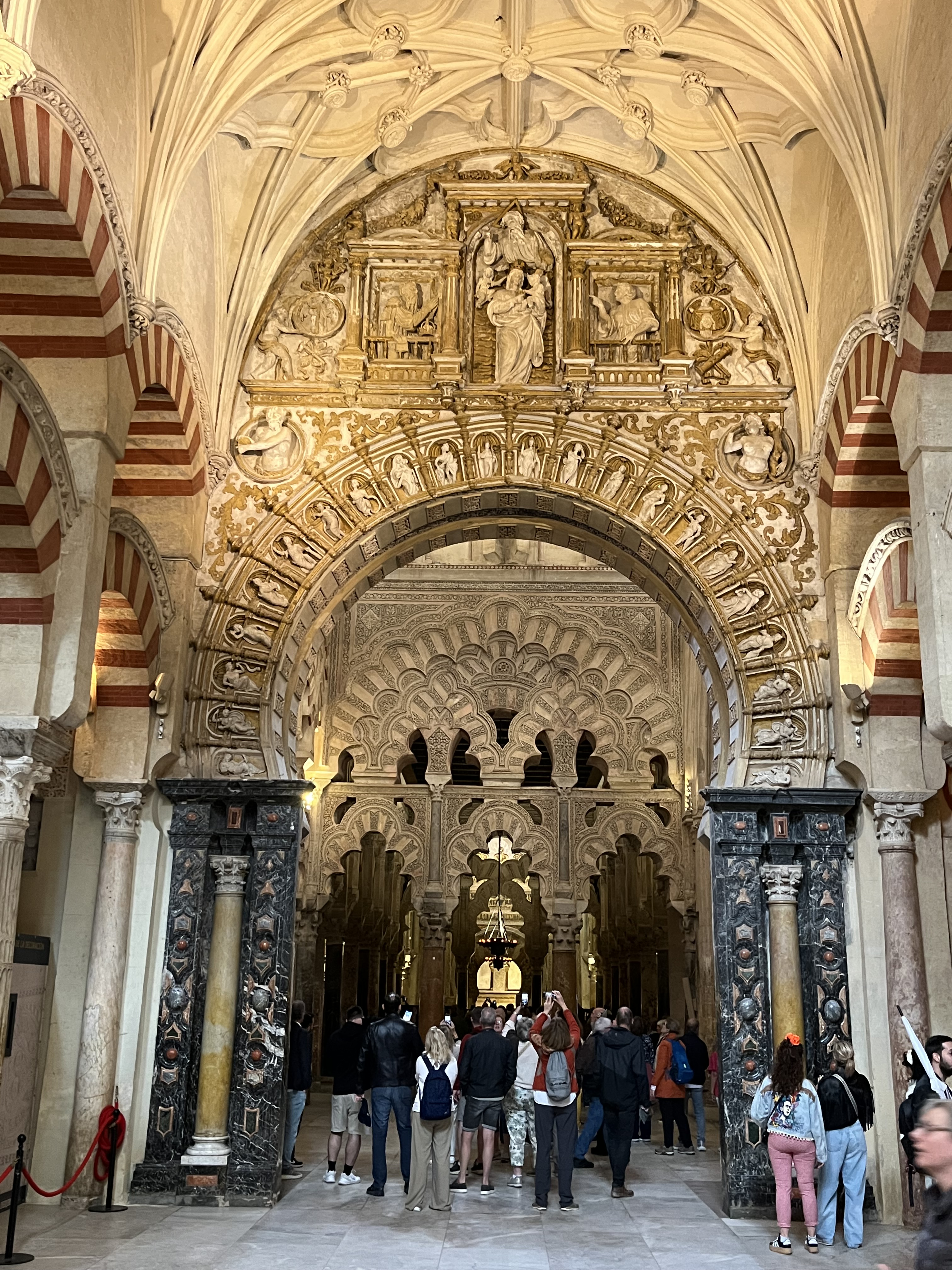
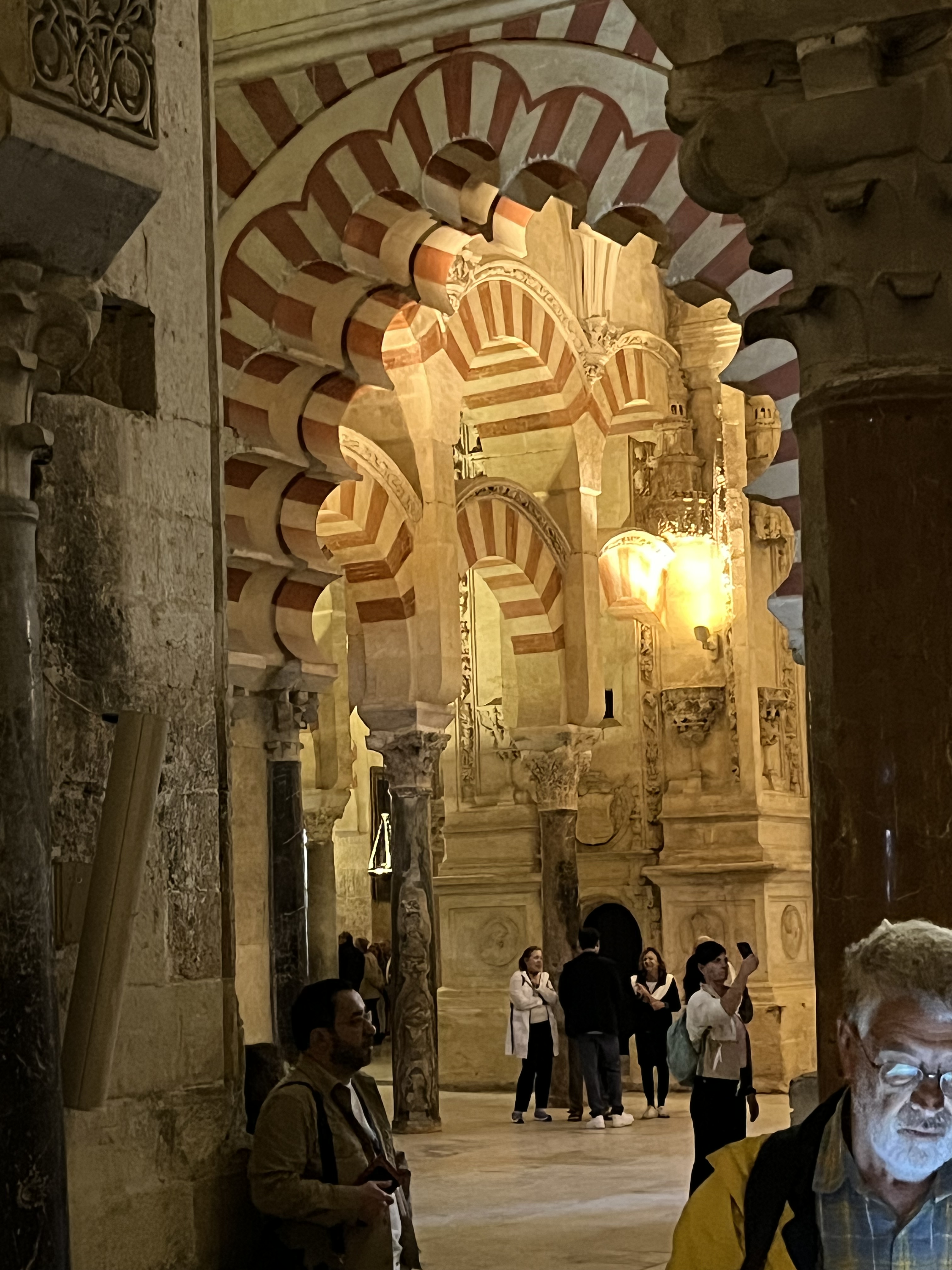
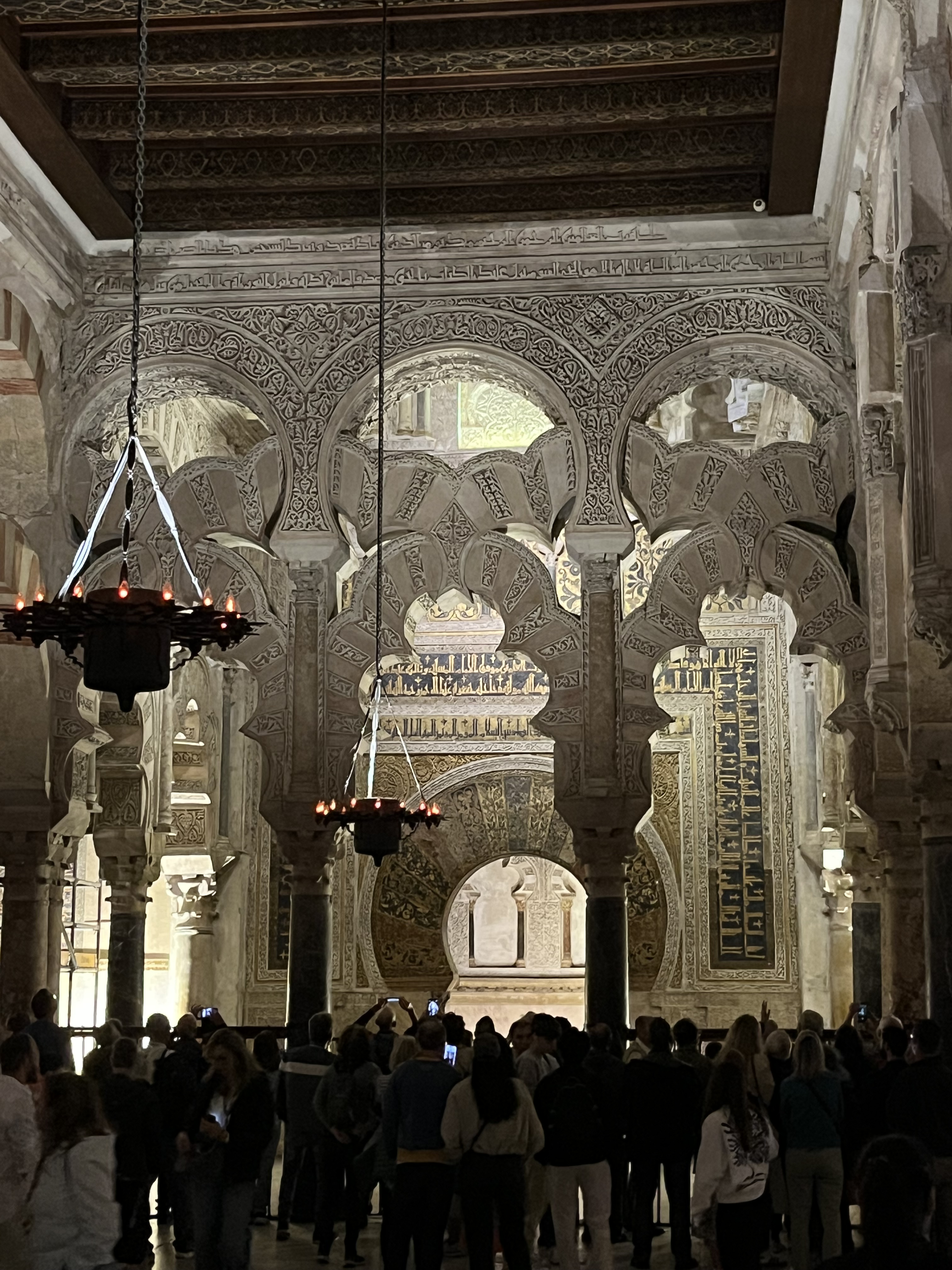
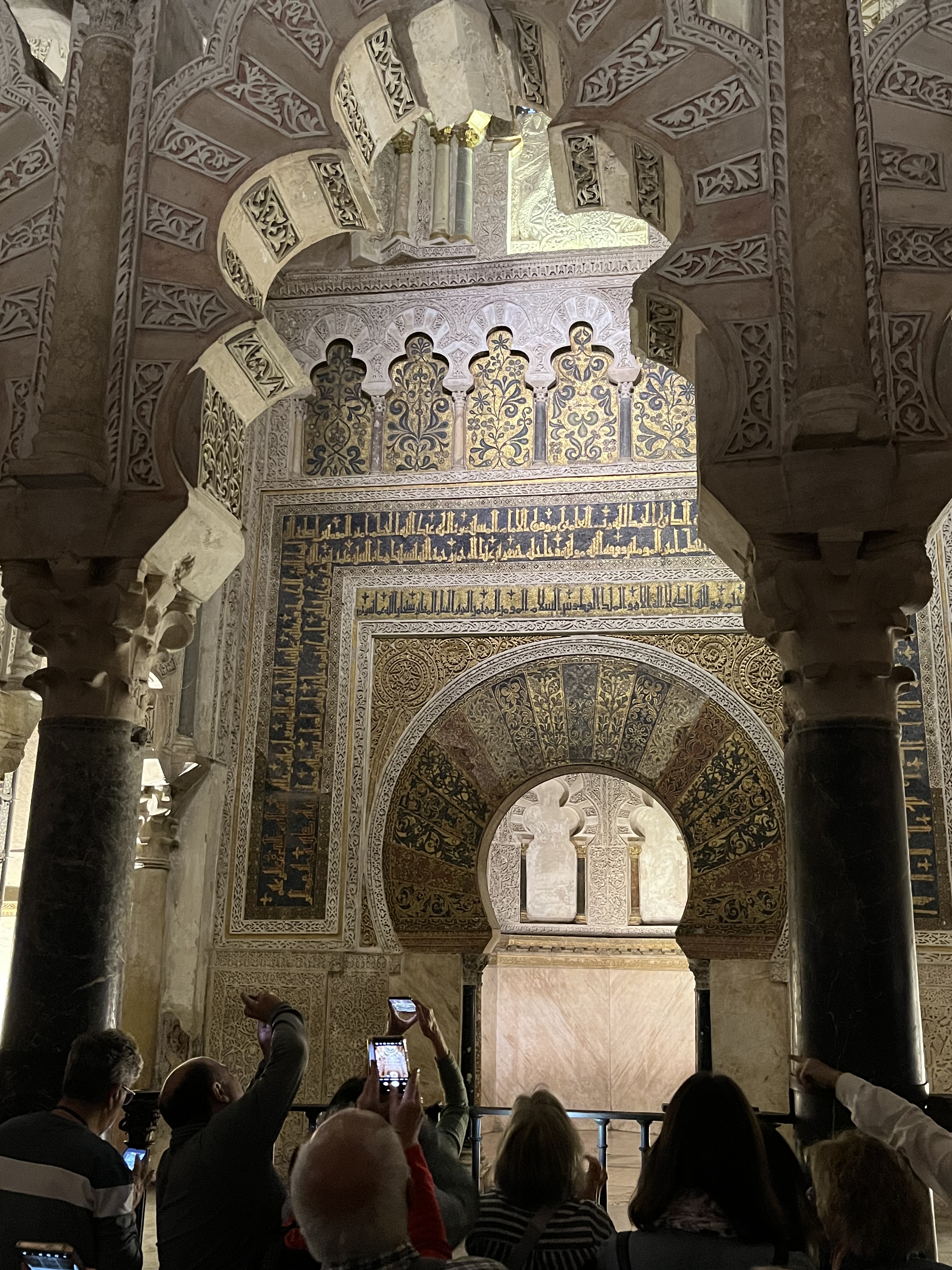
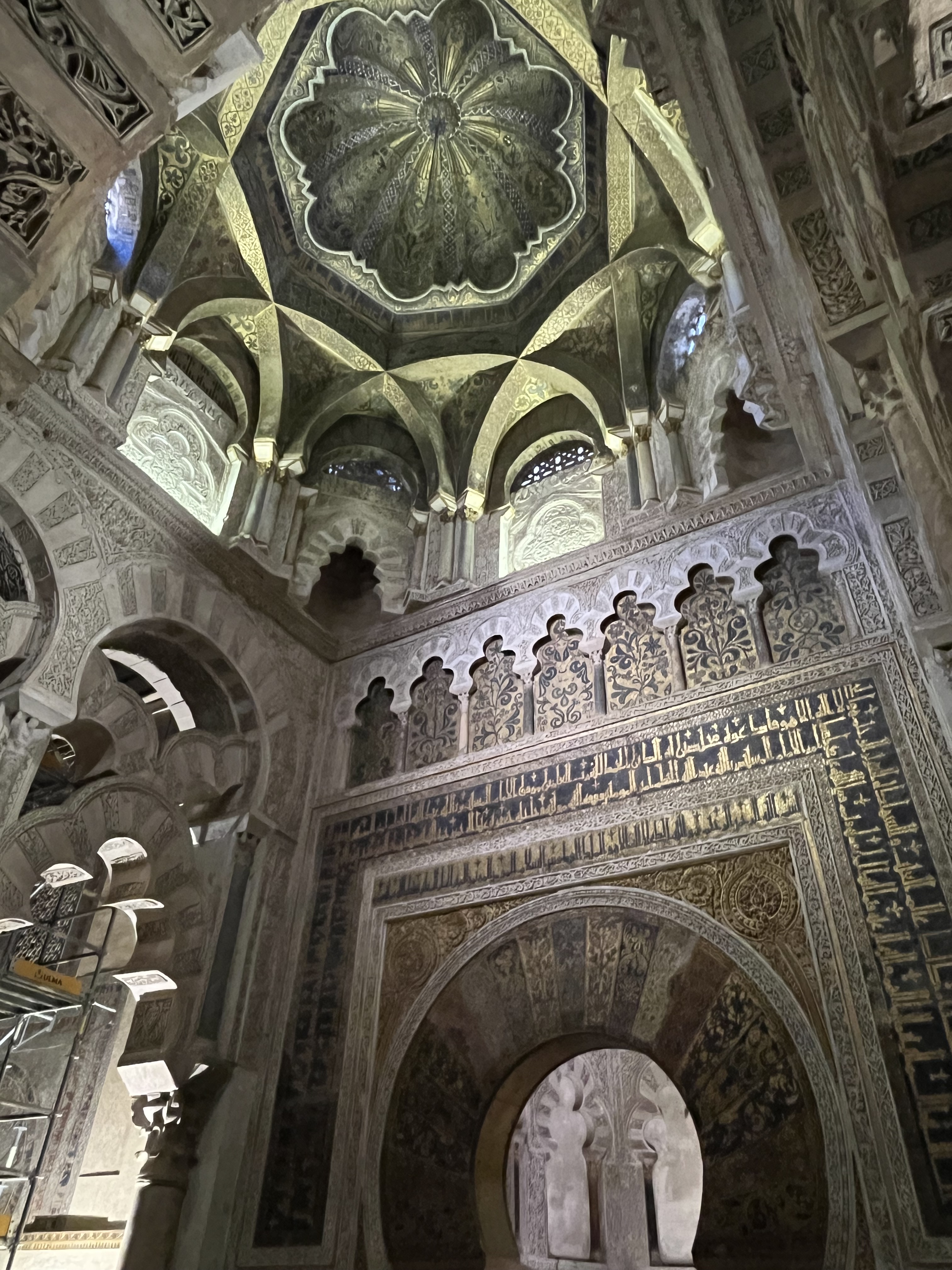
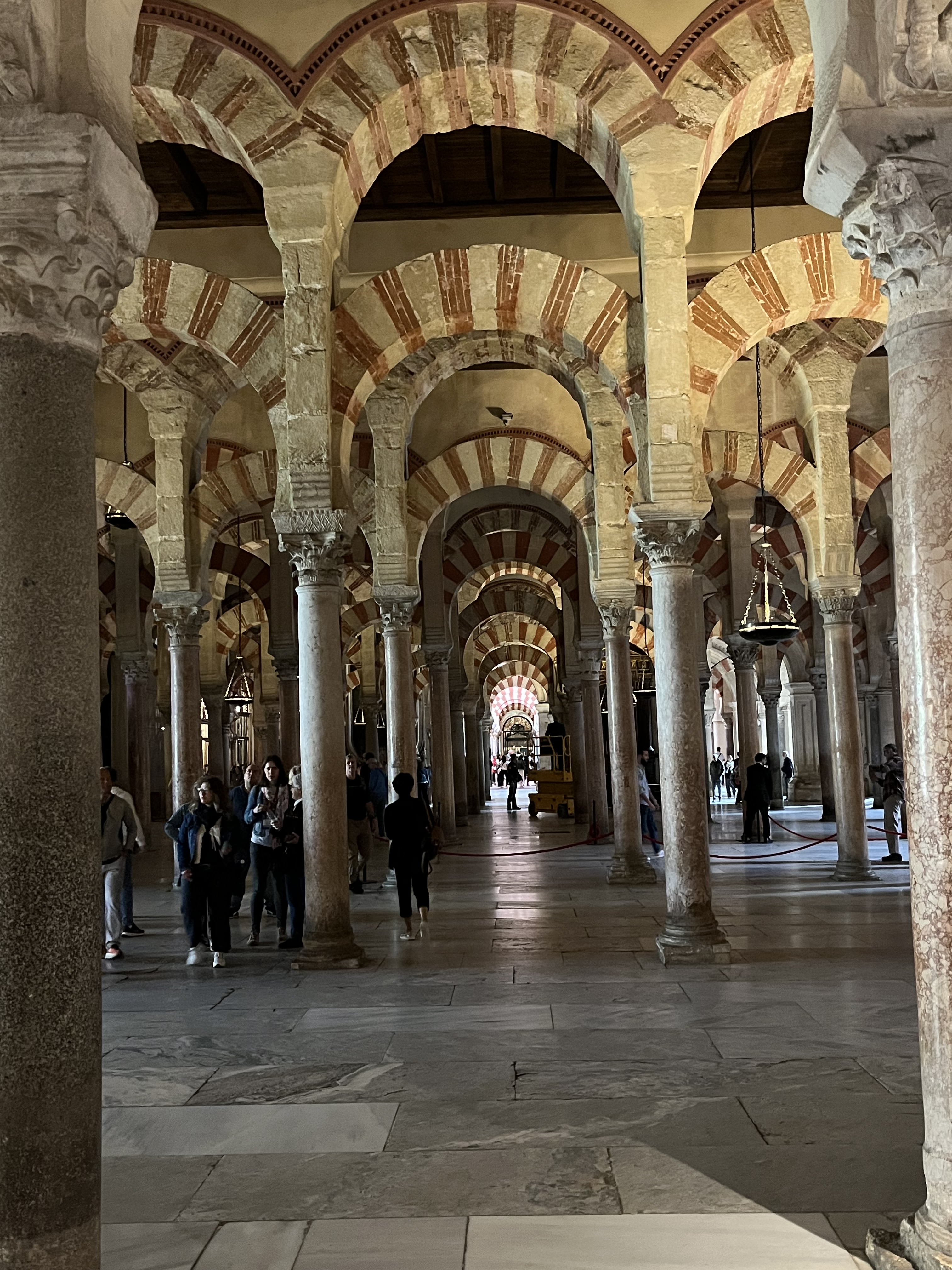
Cordoba is known for its Mosque-Cathedral of Cordoba (Mezquita Catedral de Cordoba). In 786 – 787 after the Moors, the medieval Muslim people of the Maghreb, conquered most parts of the Iberian Peninsula, they erased a Christian church standing on the site, and reused the building materials to construct over time the world’s second largest mosque outside of Damascus on its foundation. The Mosque-Cathedral of Cordoba, with its myriad columns and iconic red/white arches, was large enough to host 30,000 – 40,000 worshippers. Cordoba was the capital of the Caliphate of Cordoba, and at its height, was one of the largest cities in Europe.
In the 11th century the Caliphate of Cordoba declined, and by 1492 the last Moors were pushed out of Spain. The reconquering Christians did not demolish the mosque, yet built, added on to, and integrated a new, gothic, Catholic cathedral in the center of the mosque. Today the mosque/cathedral building, with its blend of architectural styles, gives testimony to the peaceful respect and coexistence of these two different religions.



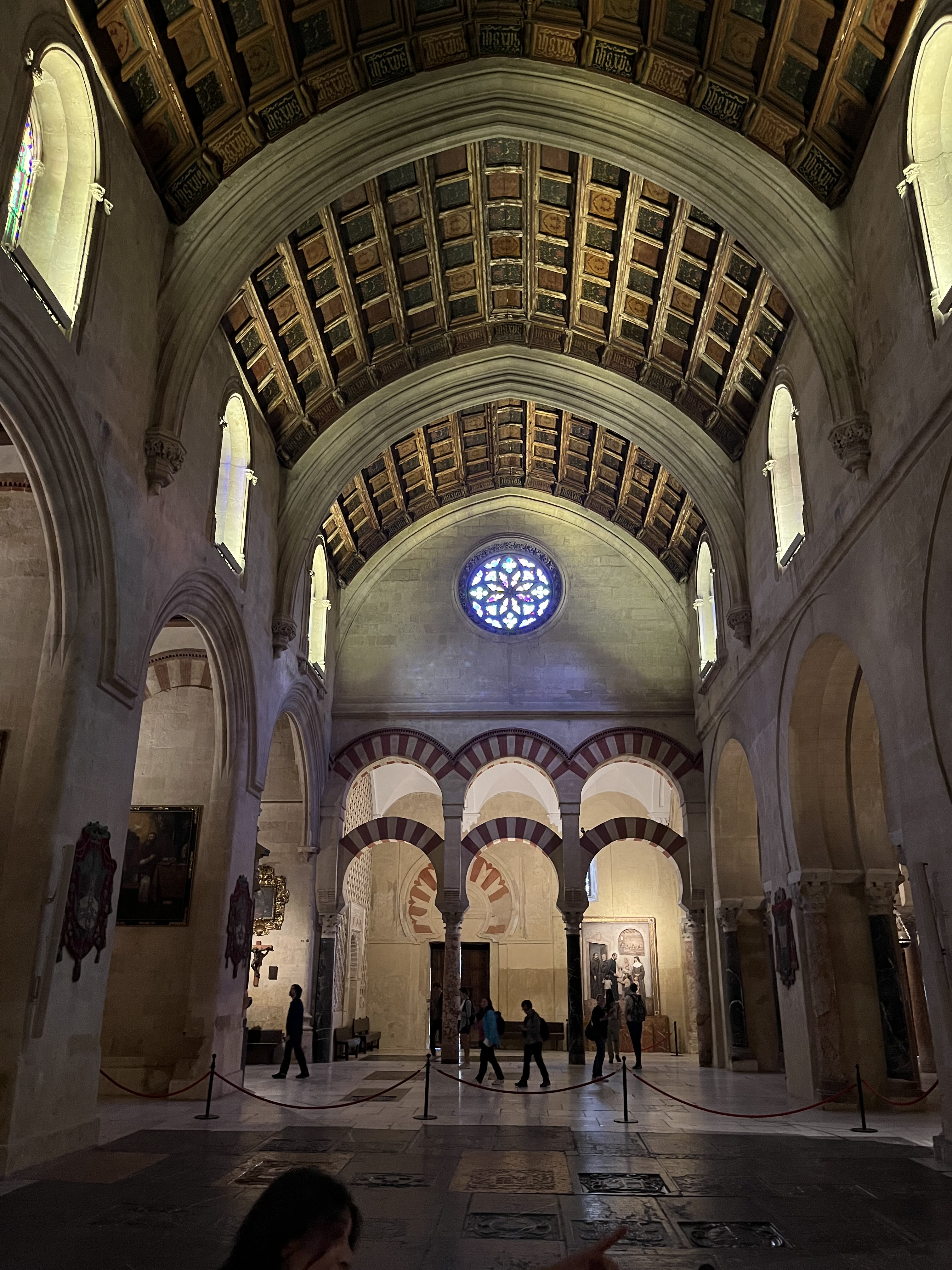
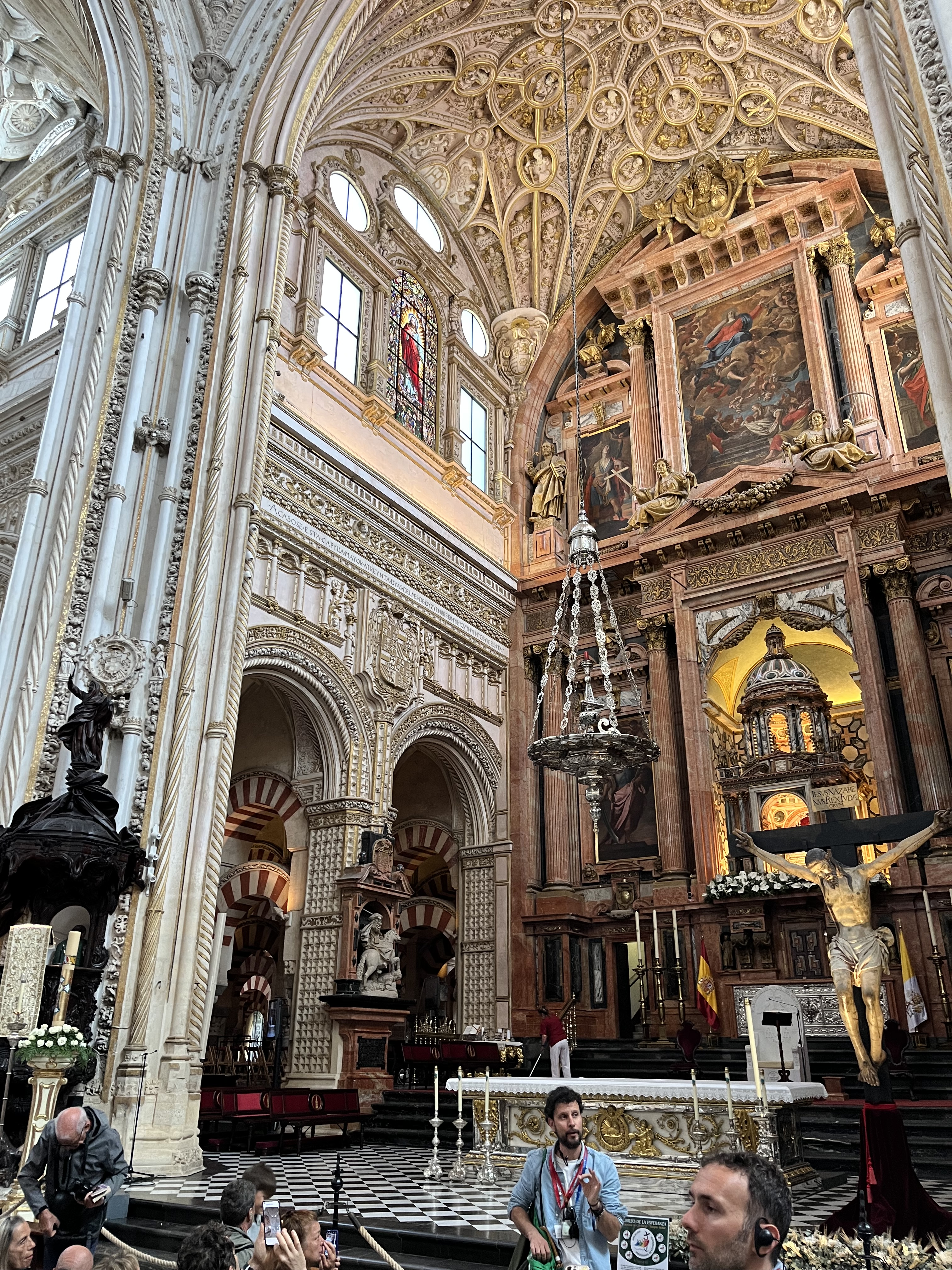


Granada, – the site of the Alhambra
Driving from Cordoba through the Andalusian hill country towards Granada, one comes to a big, vast valley in front of the 3,500 meters (11,500′) high Sierra Nevada mountain range. At the foot of these mountains, that were still capped in snow, sits Granada. It’s setting reminded us of Salt Lake City.
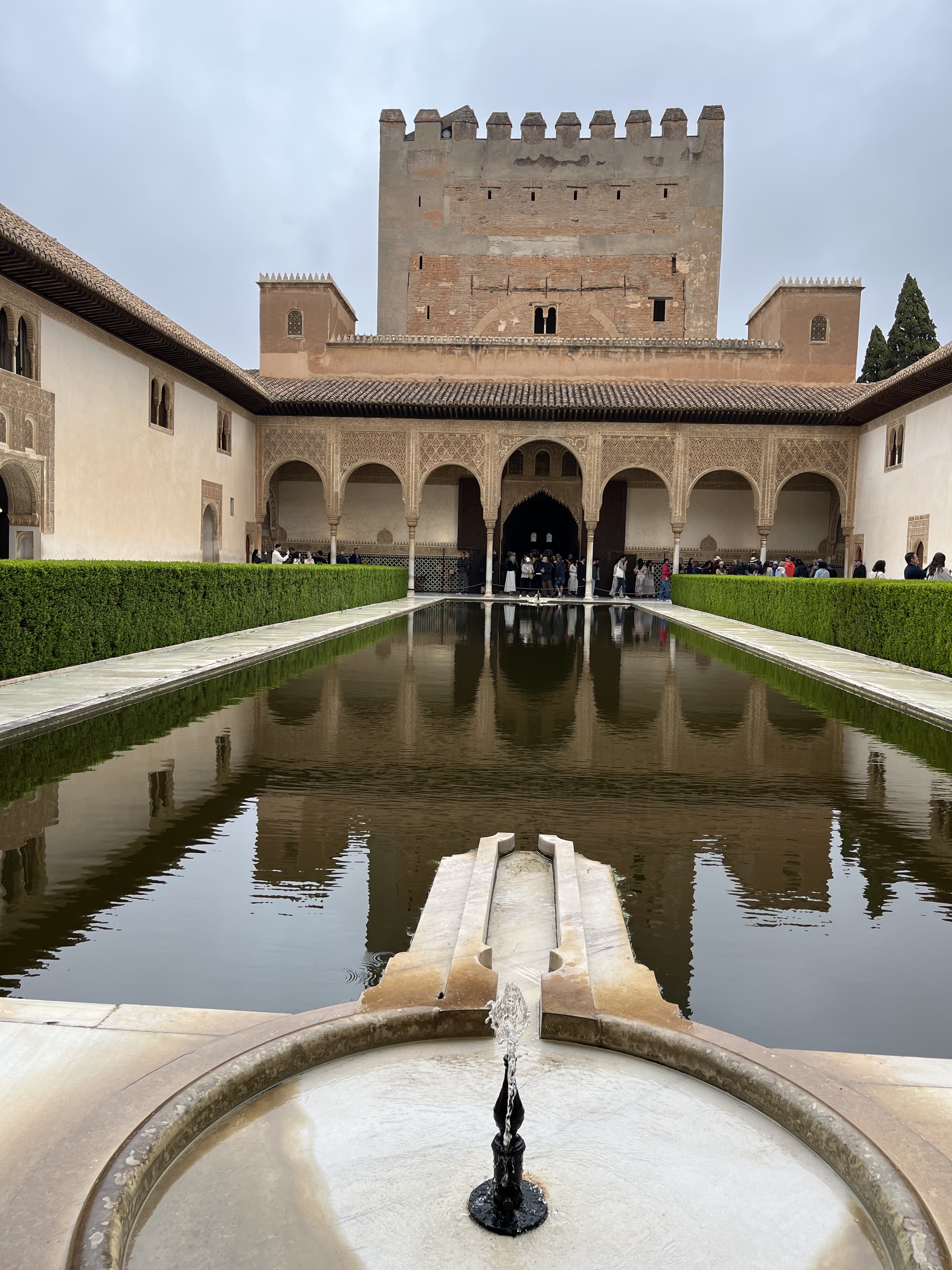
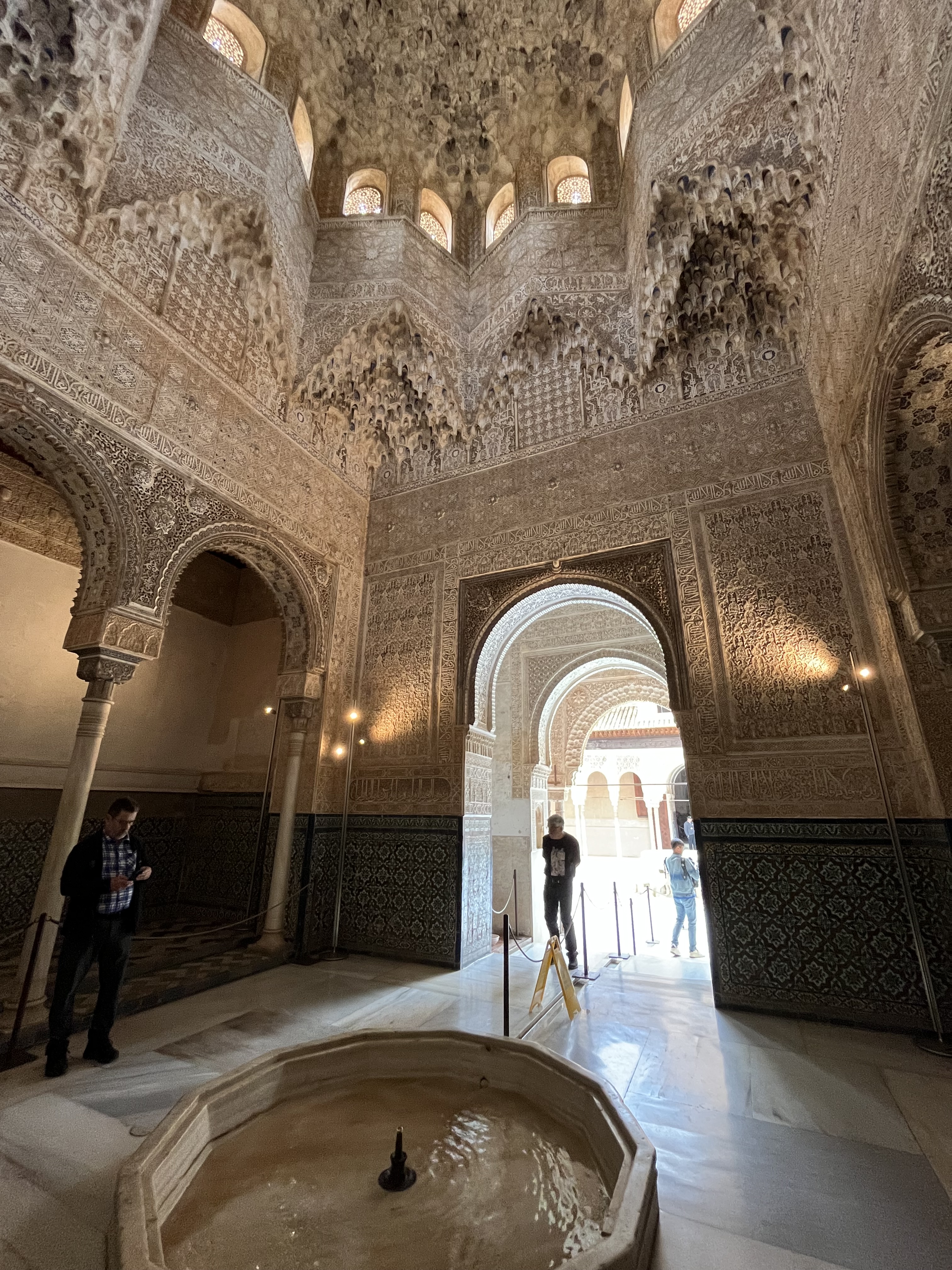
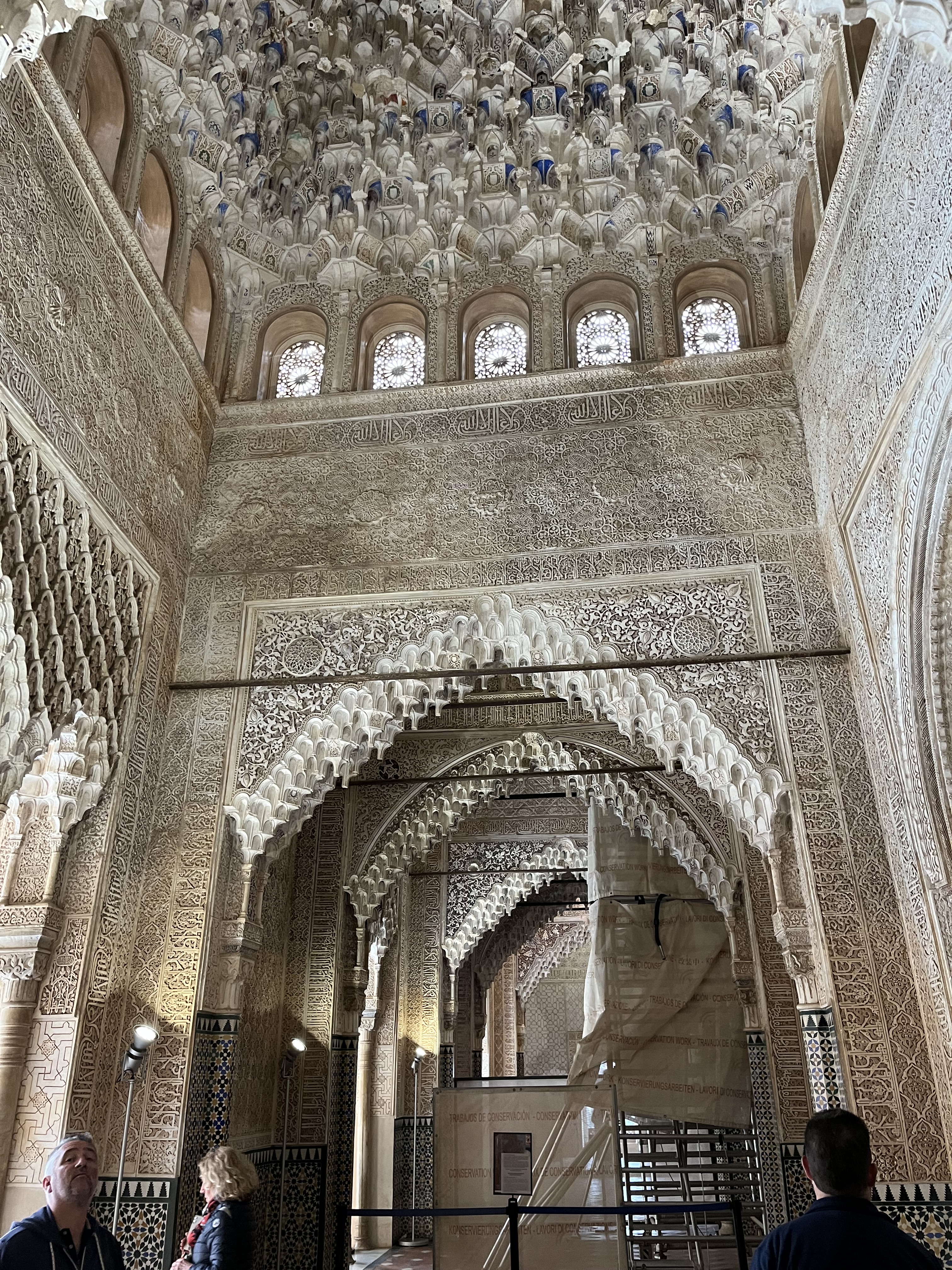
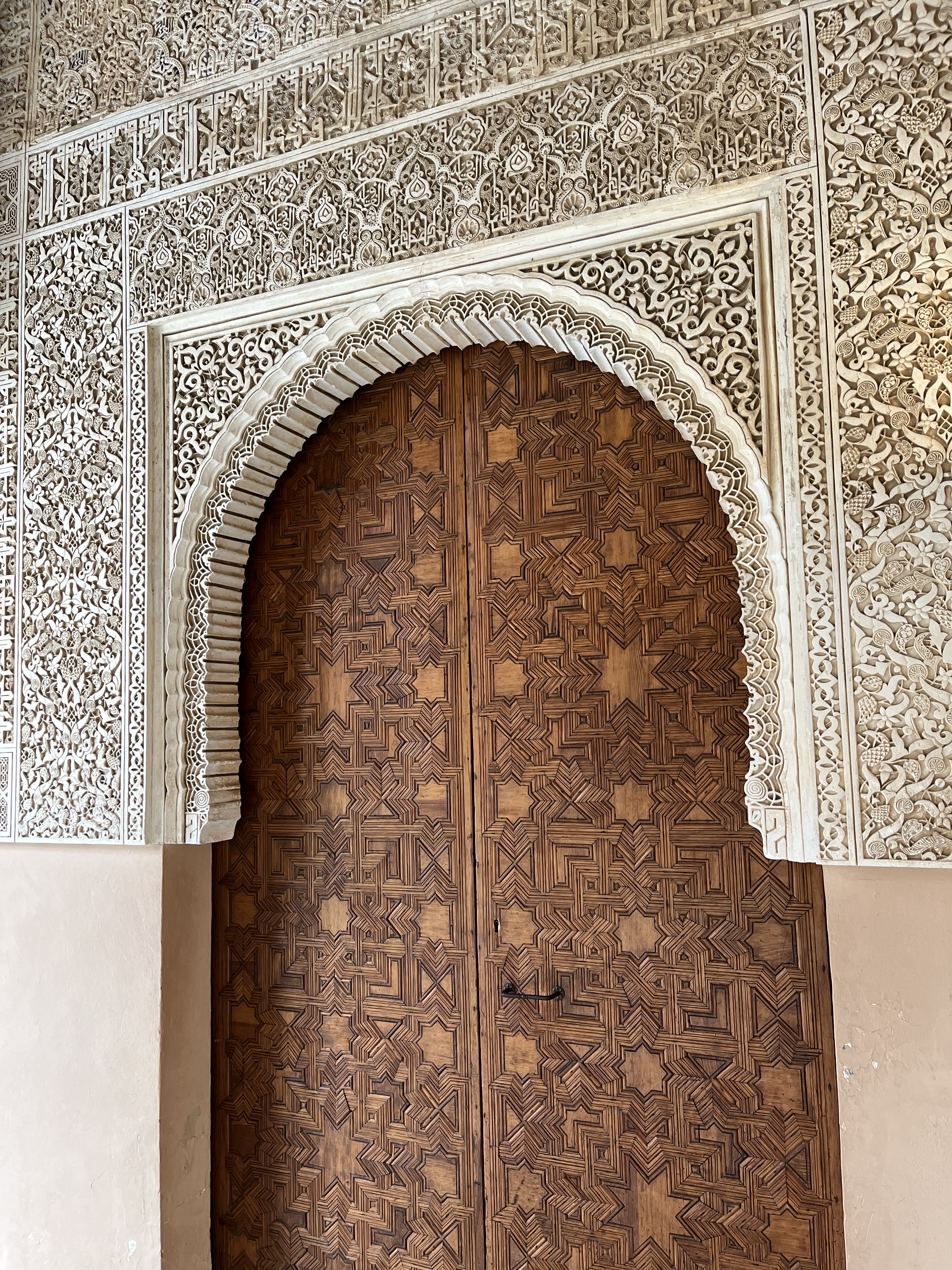
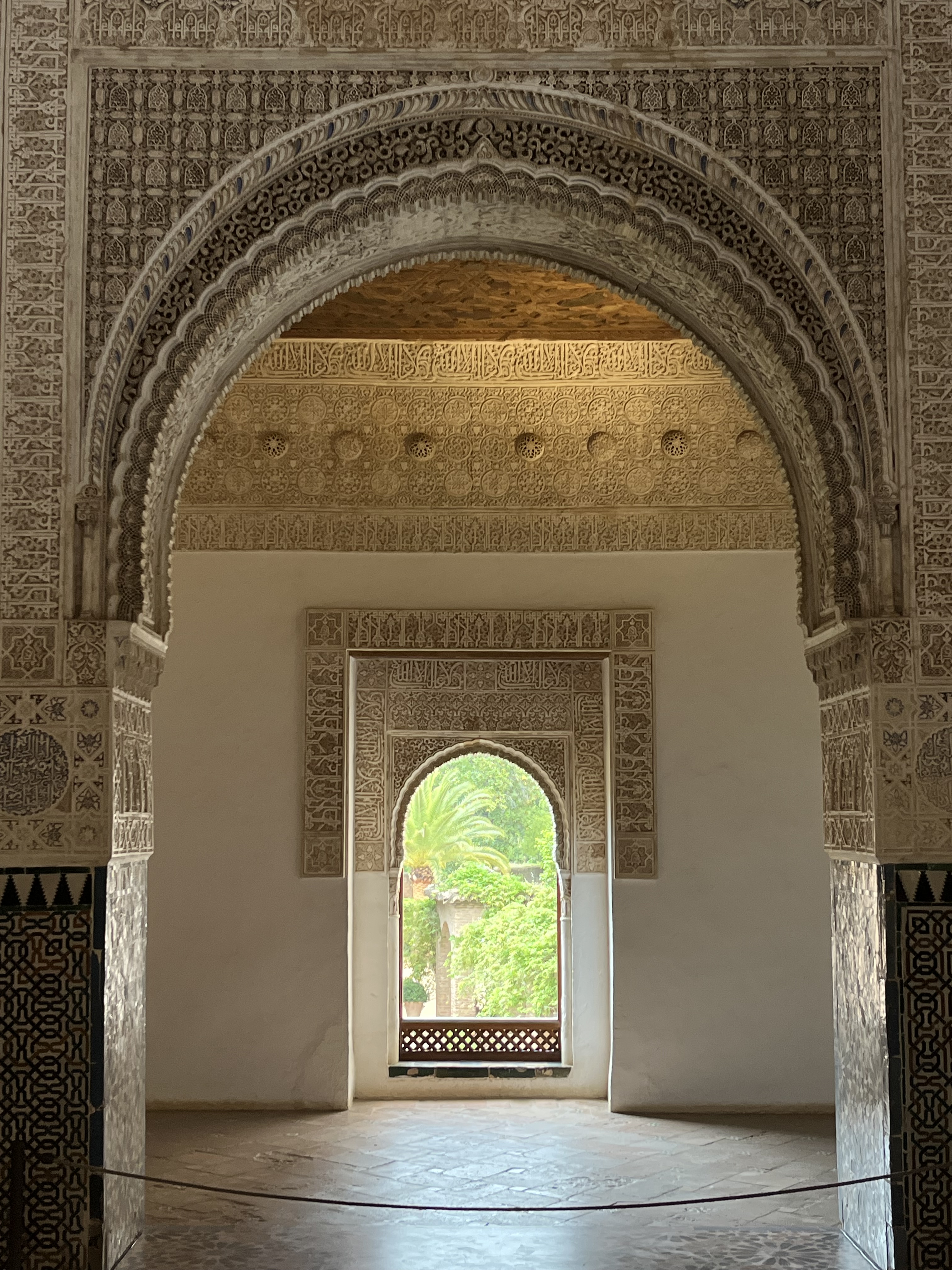
As does Cordoba, Granada has a well preserved old, historic part of town, yet foremost, Granada is overshadowed by the site of the Alhambra, the spectacular, beautiful, harmoniously detailed architectural marvel, that is known the world over.

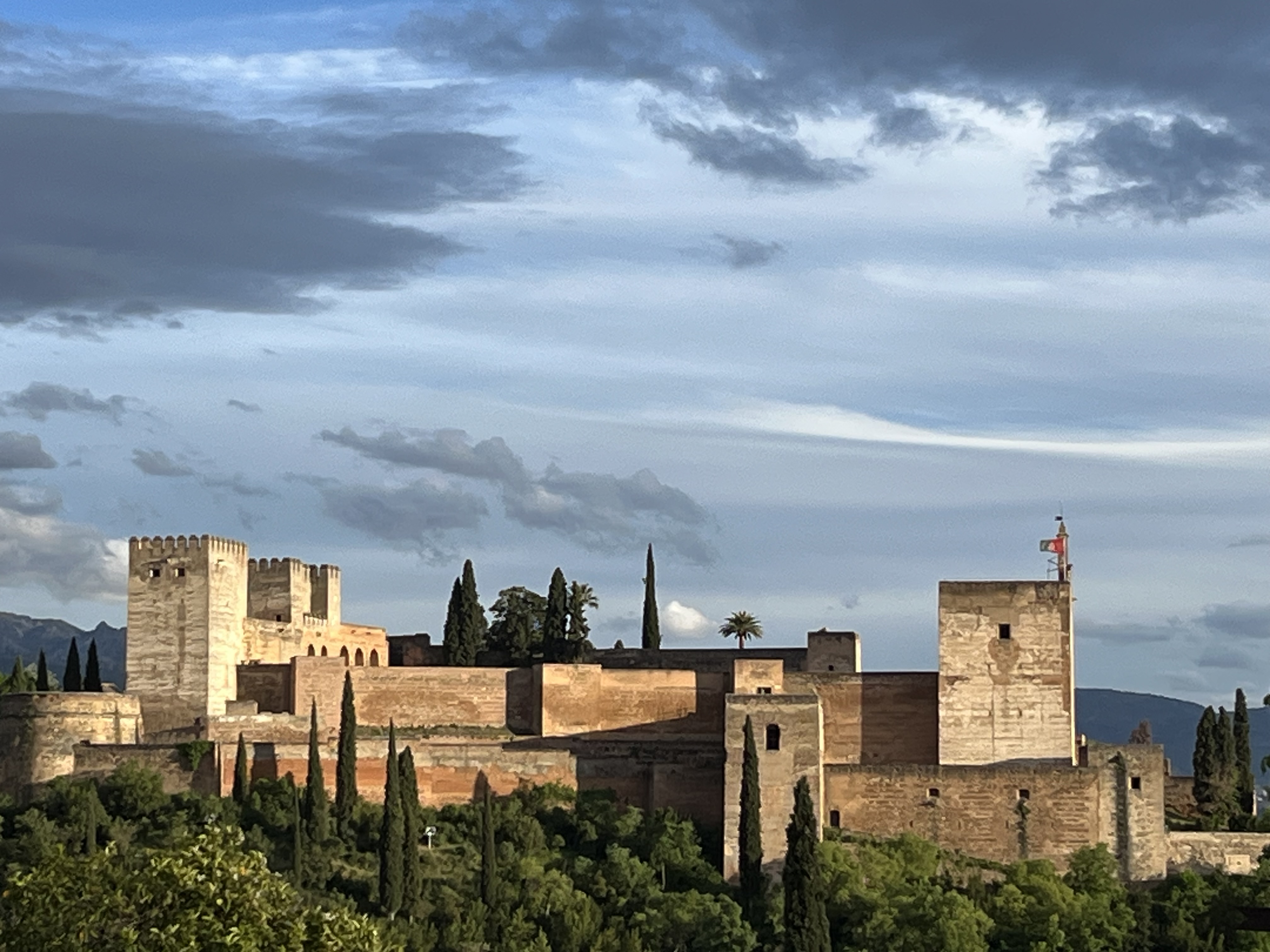
In 1232, about 500 years after the construction of the large Mosque in Cordoba, the Sultan of the Nasrid kingdom established his court on the site of the ancient fortifications on Sabika hill above Granada. Successive Nasrid sultans steadily expanded the complex known as the Alhambra until 1492, when the last Sultan handed the keys over to the Catholic monarchs, who preserved the Alhambra as a symbol of their victory, and leaving this unique monumental complex to posterity.
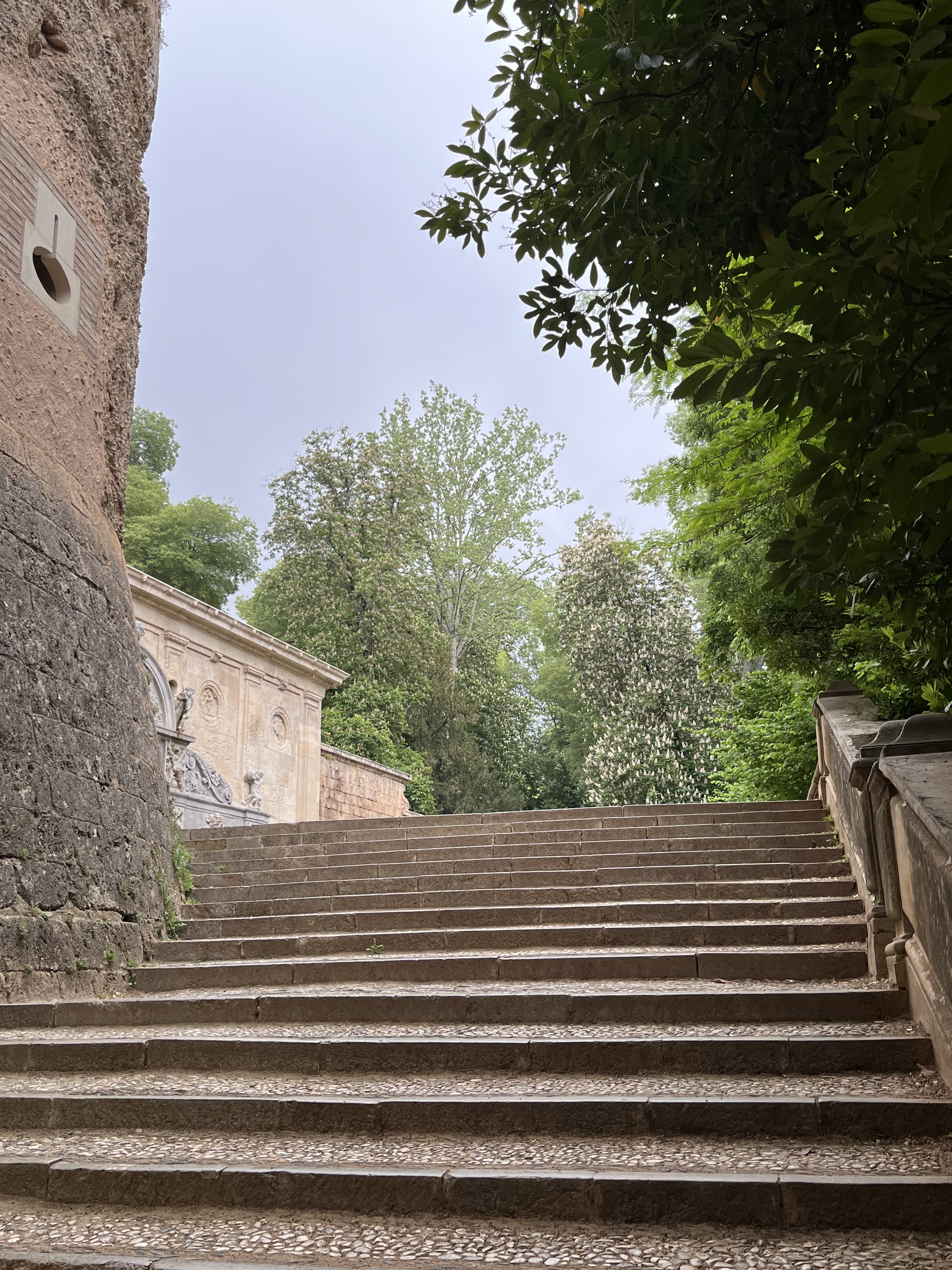
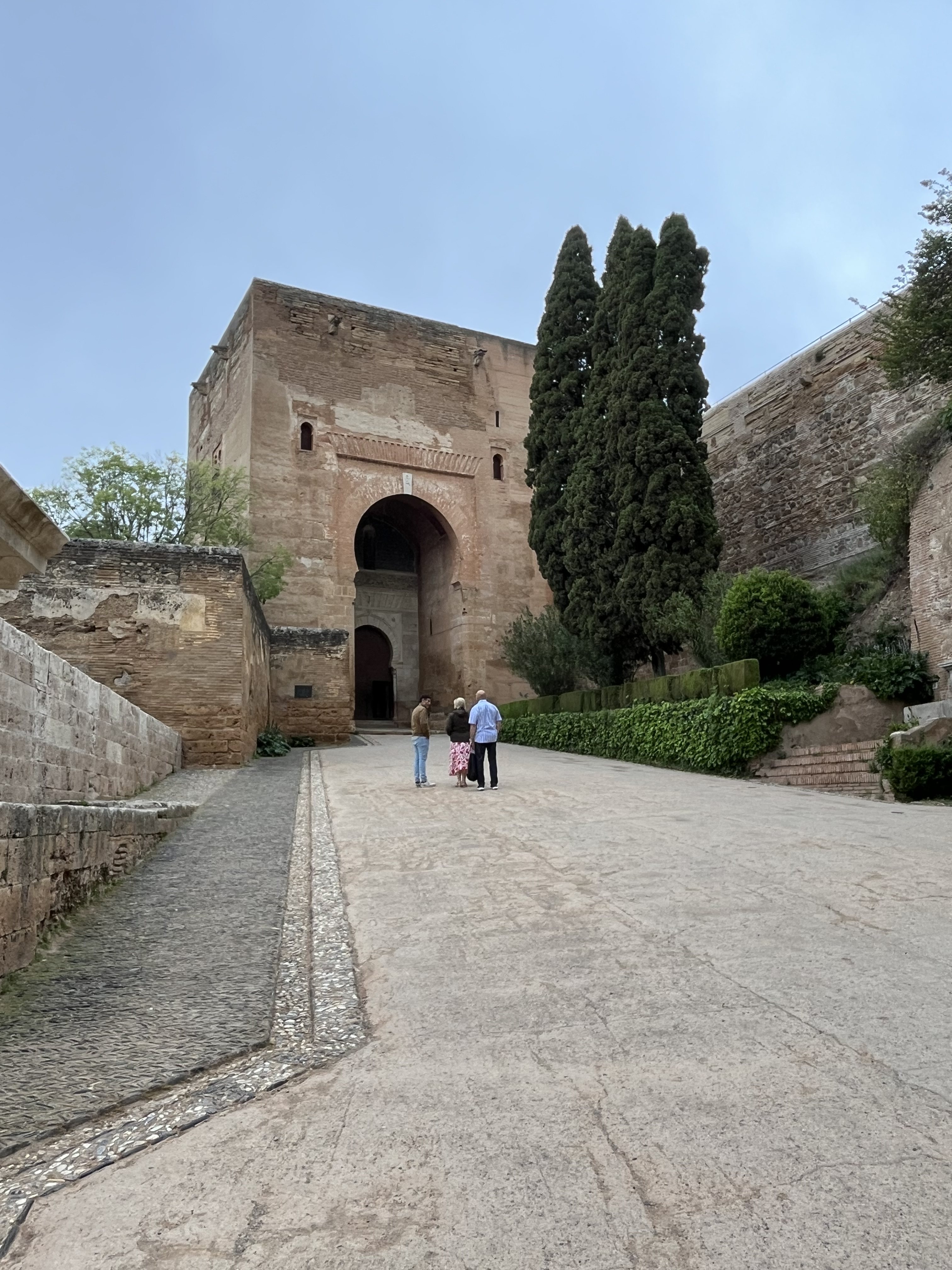
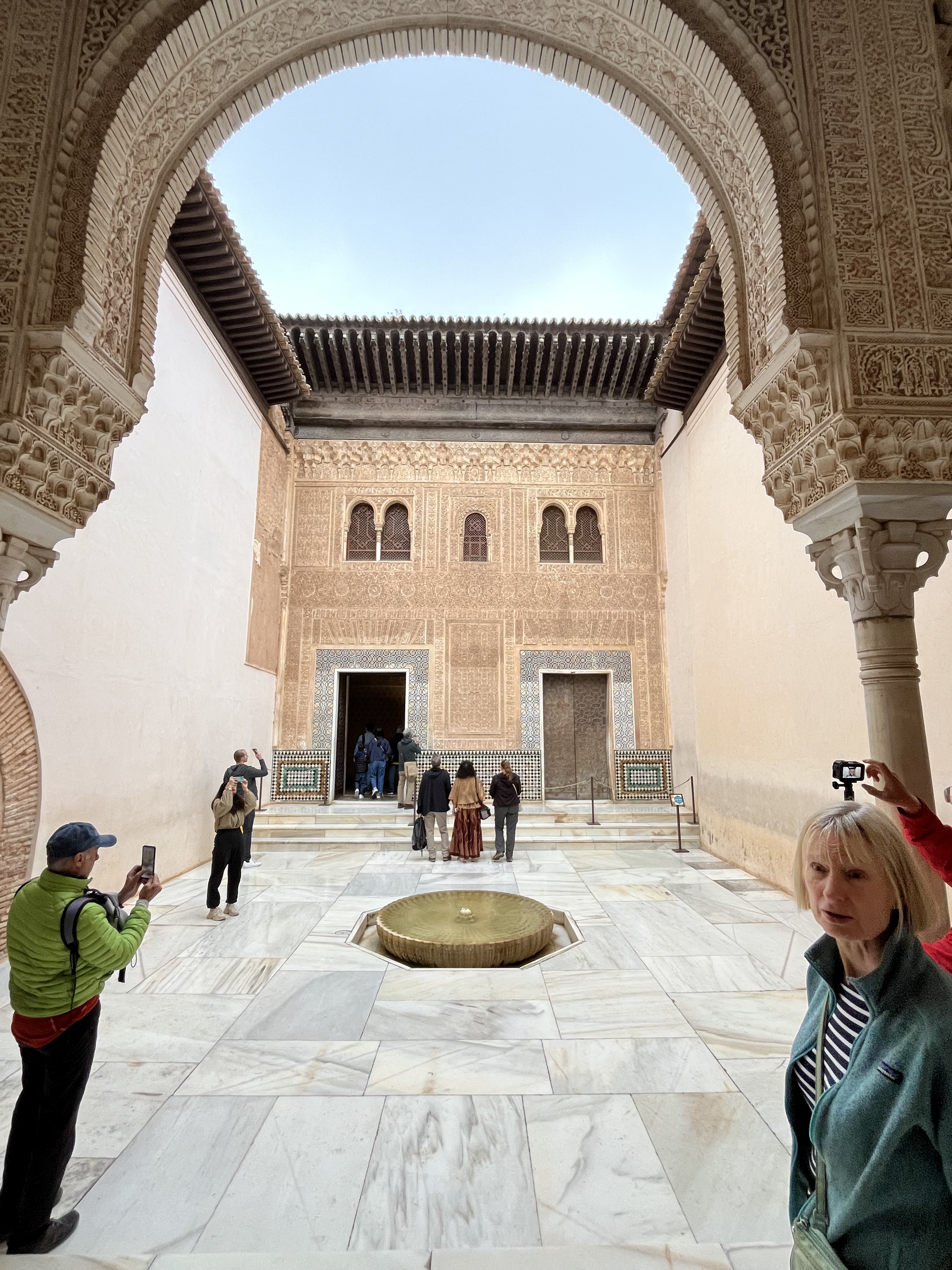
The court of the Myrtles and the Throne Room, where the Sultan ruled over his kingdom:

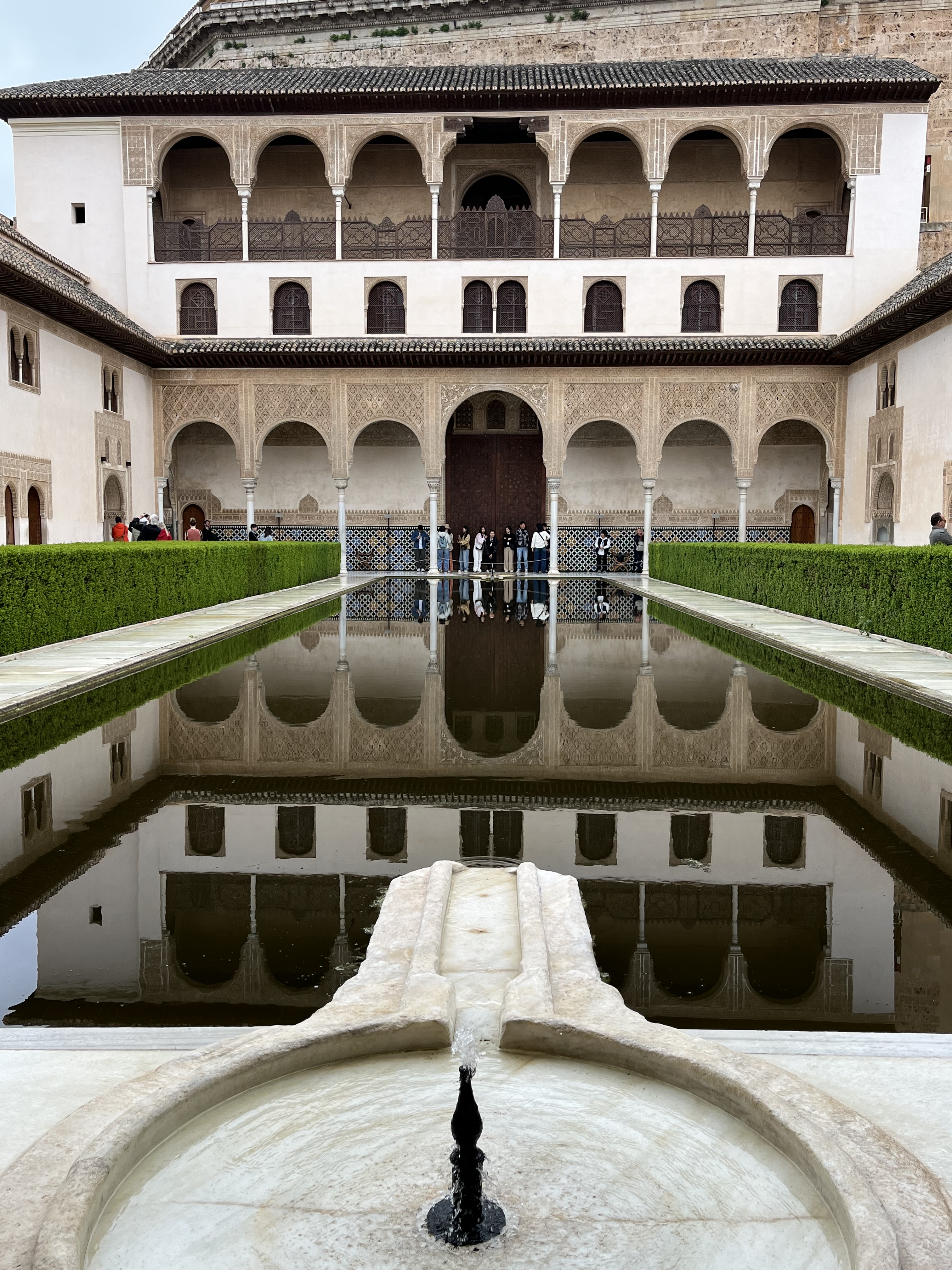

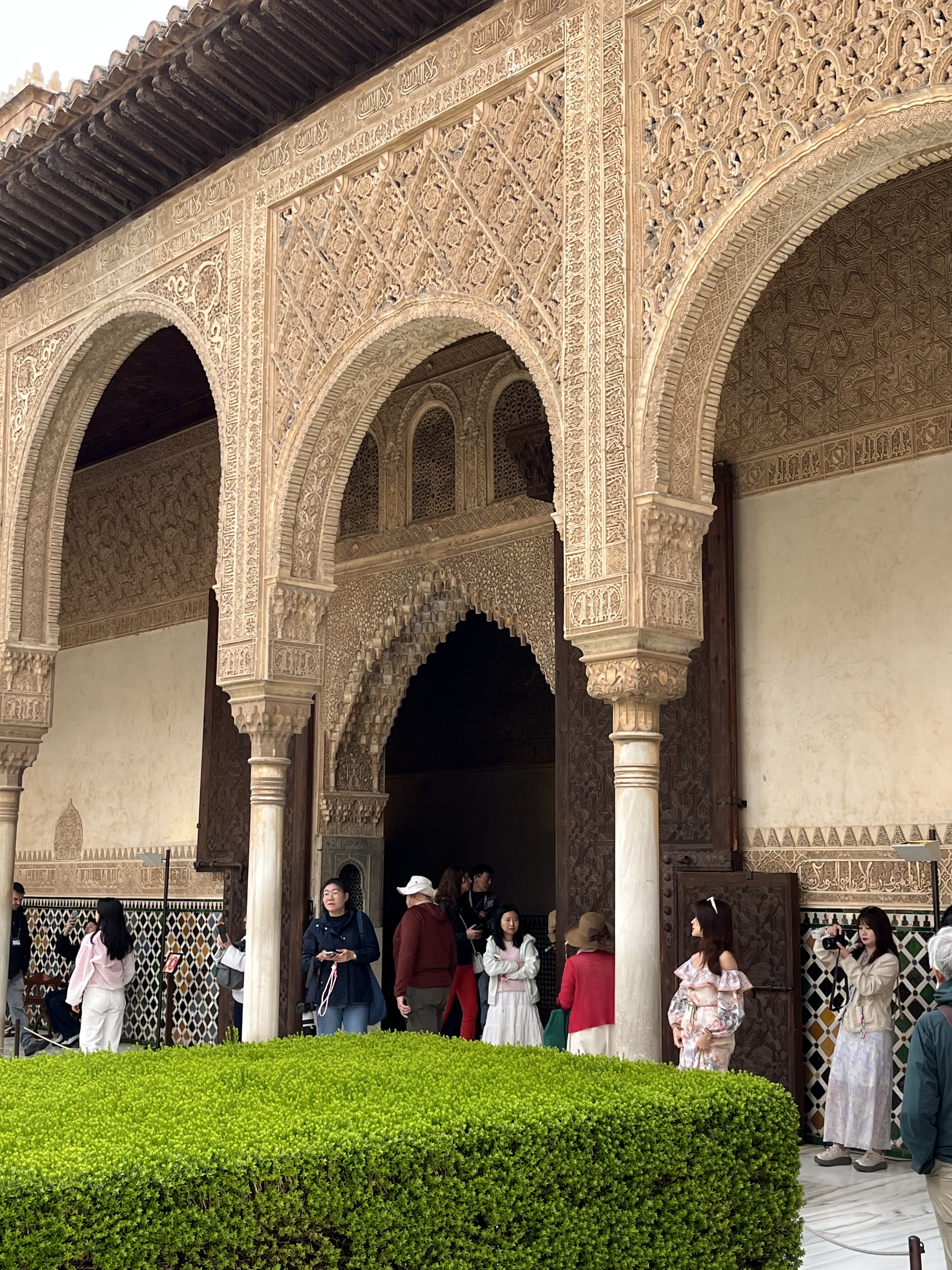
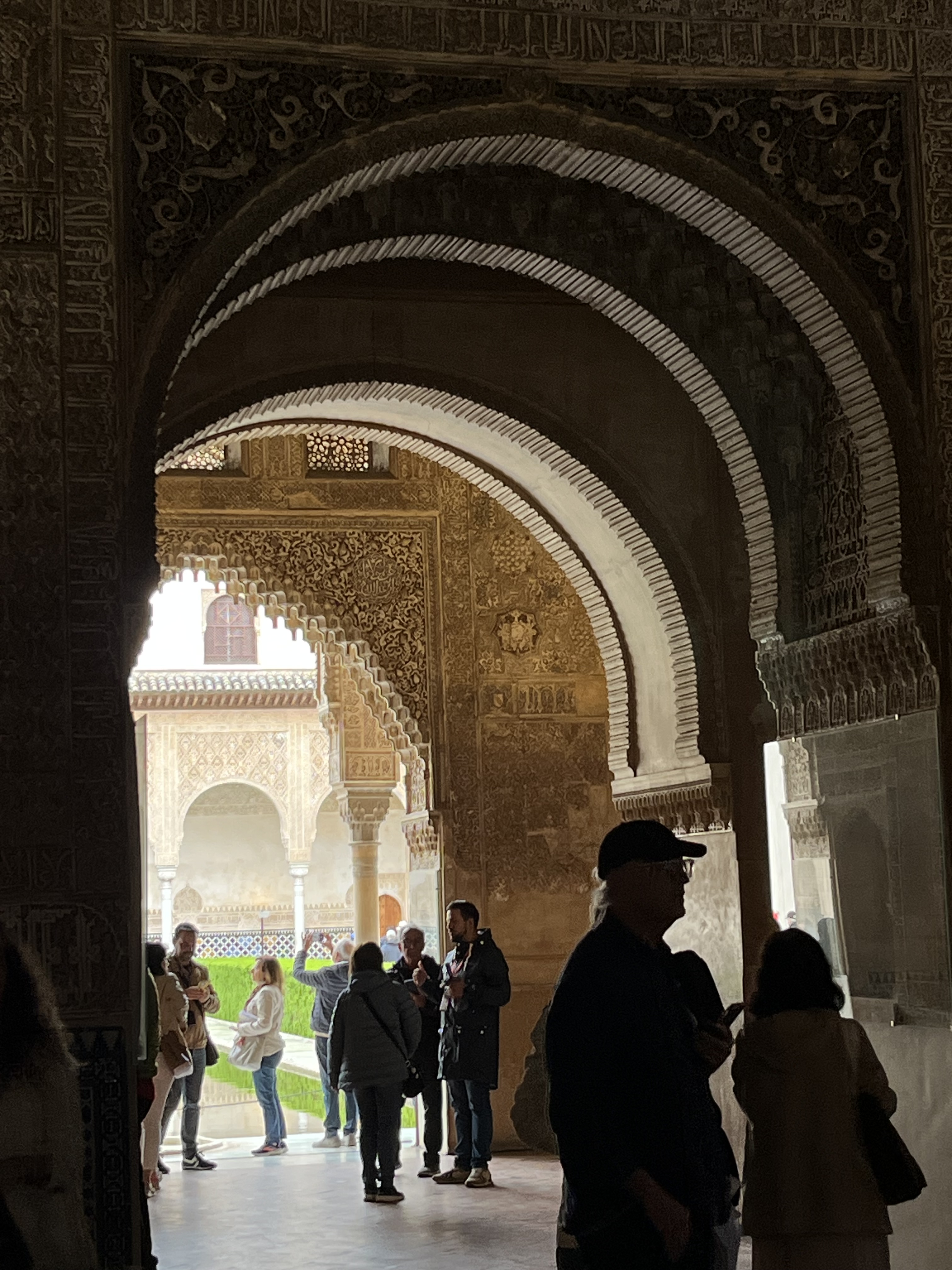
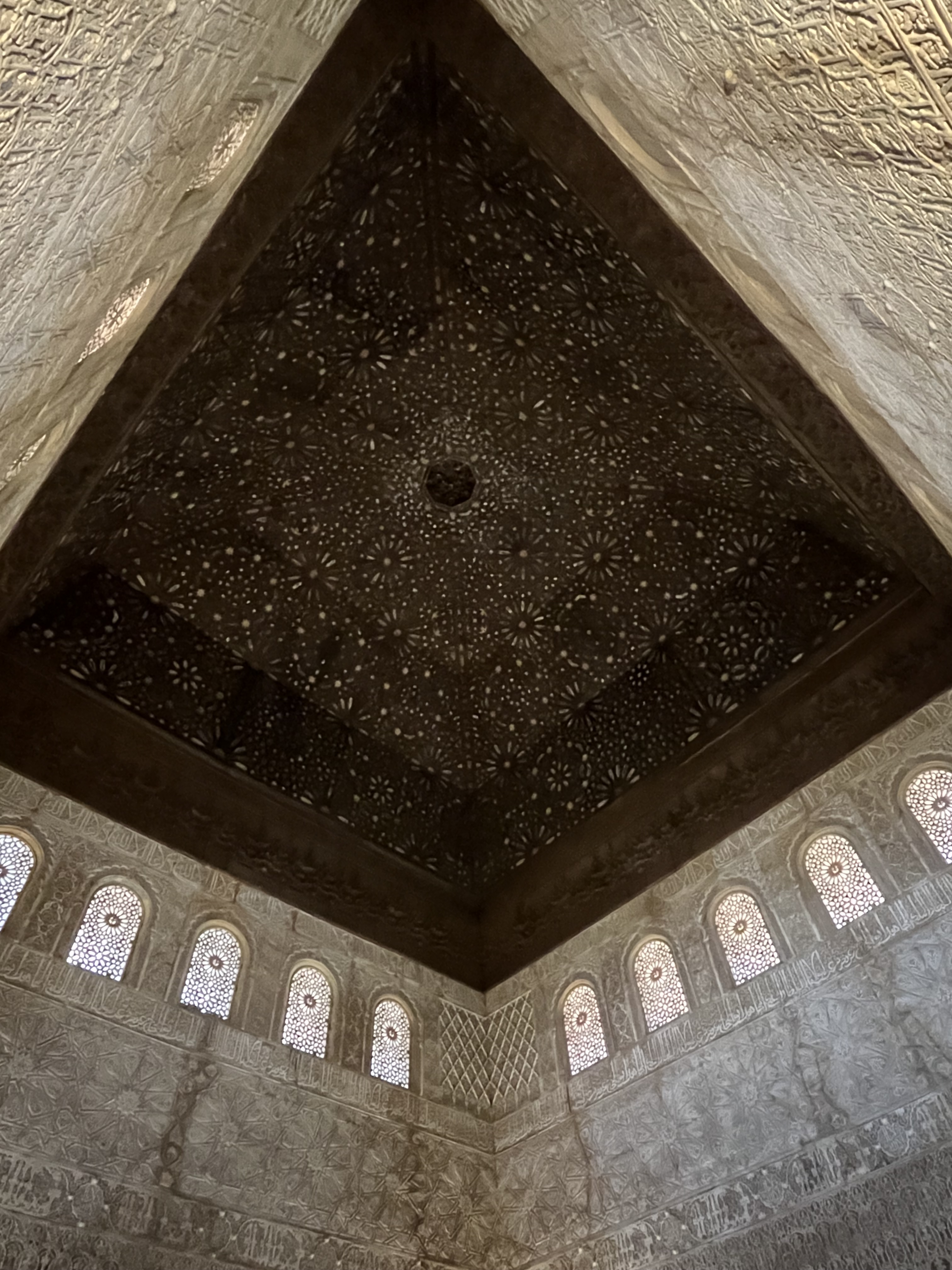
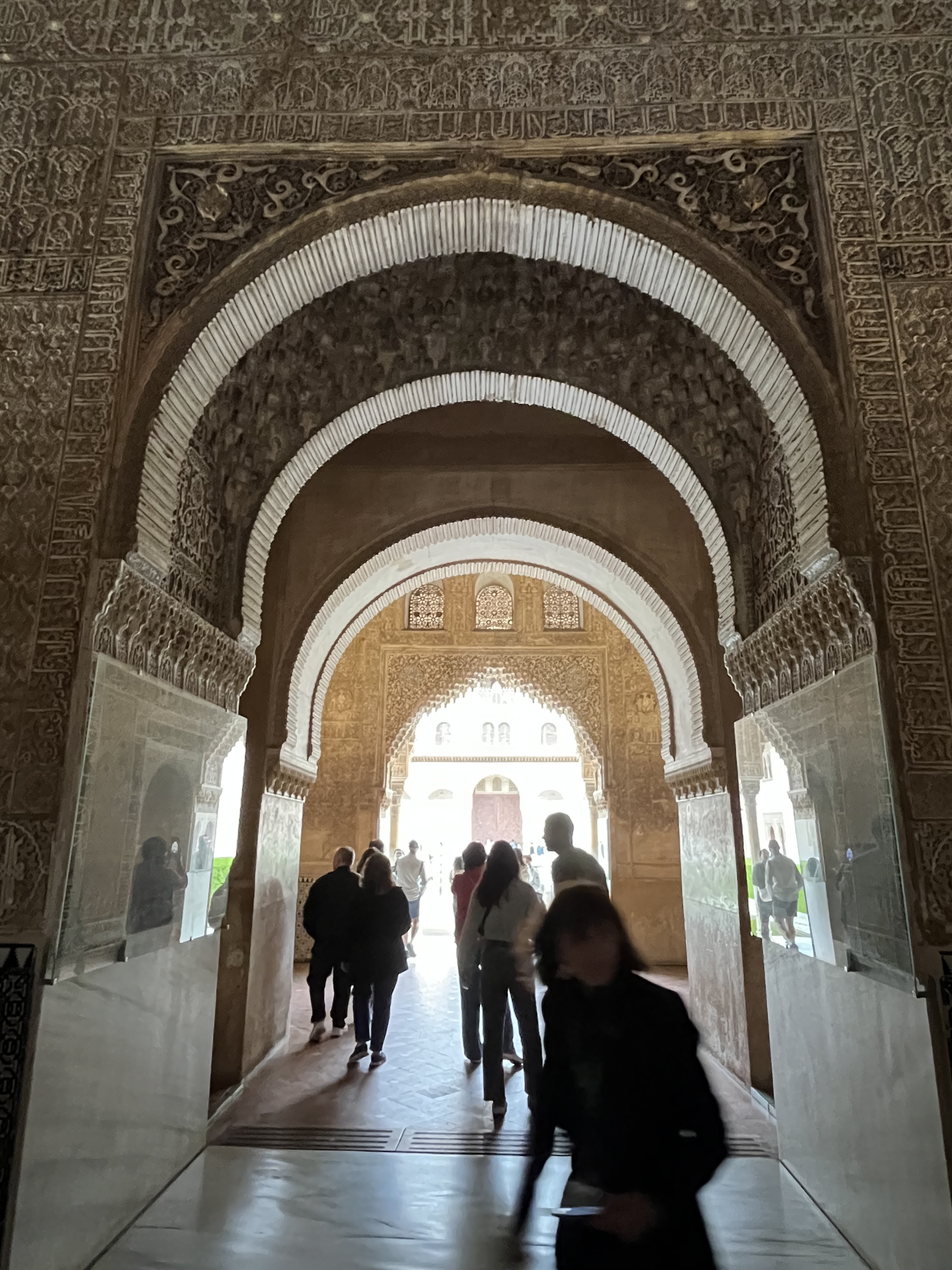
The Palace of the Lions, the serene living quarters of the Sultan and family:
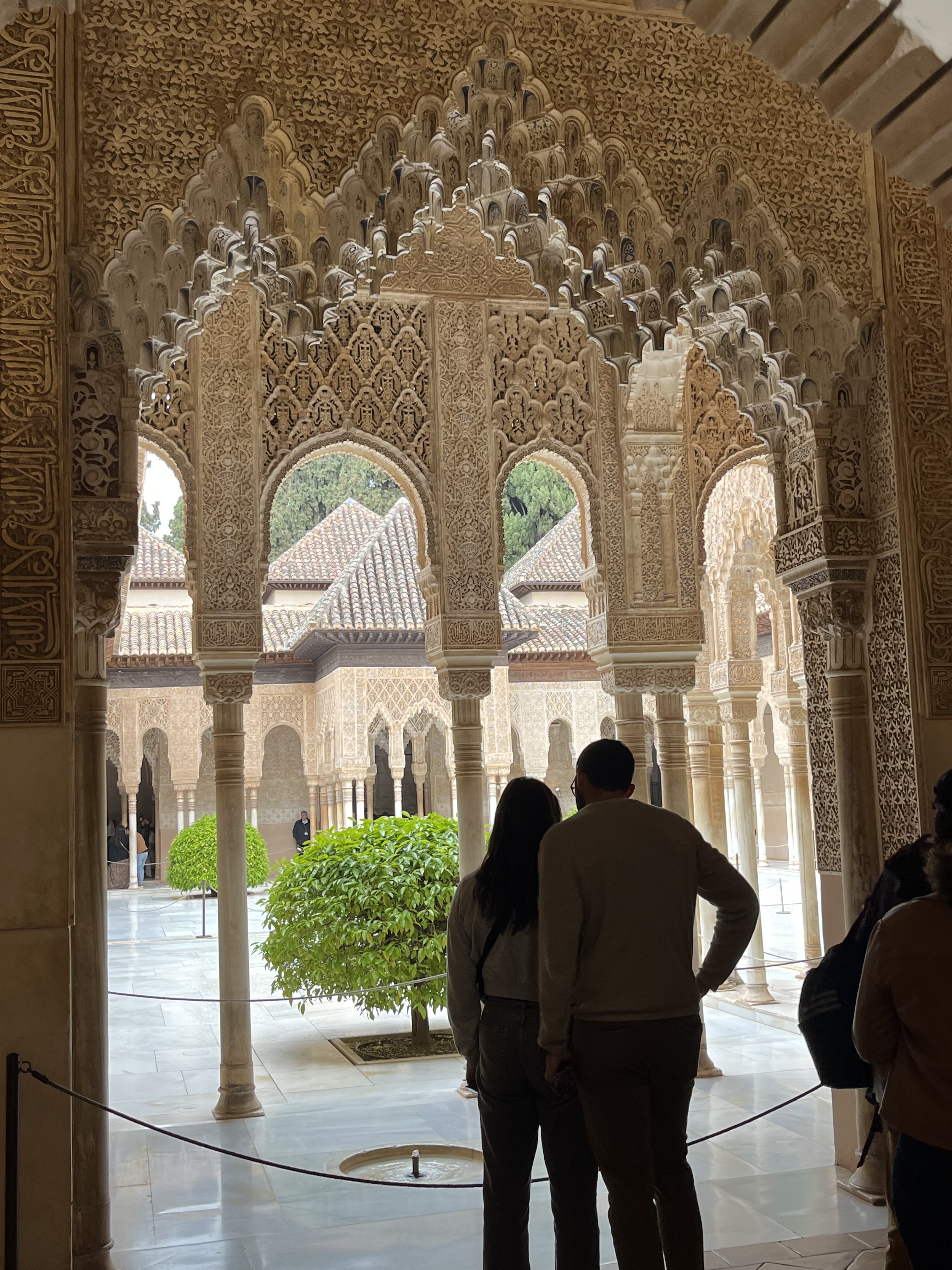
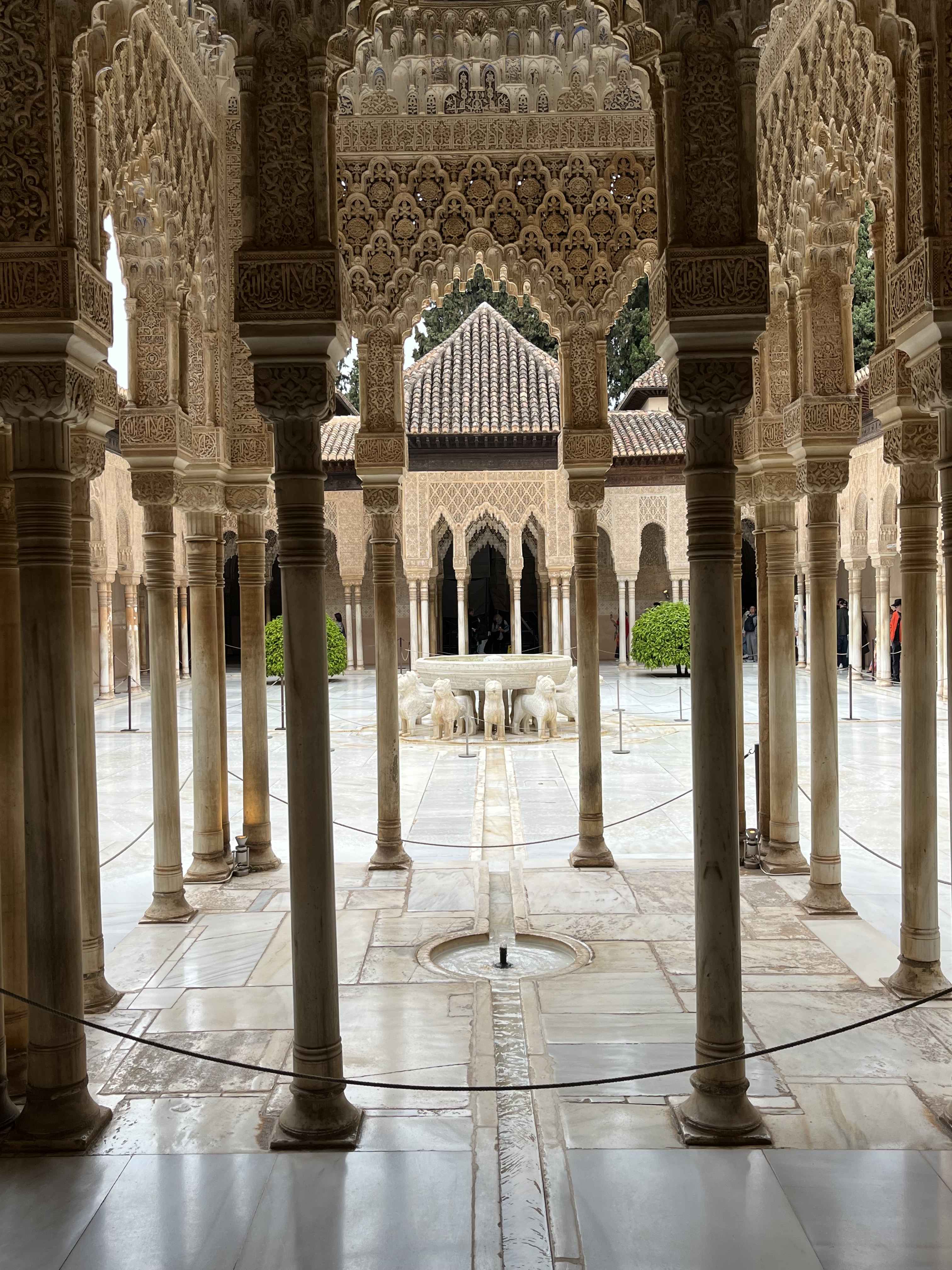
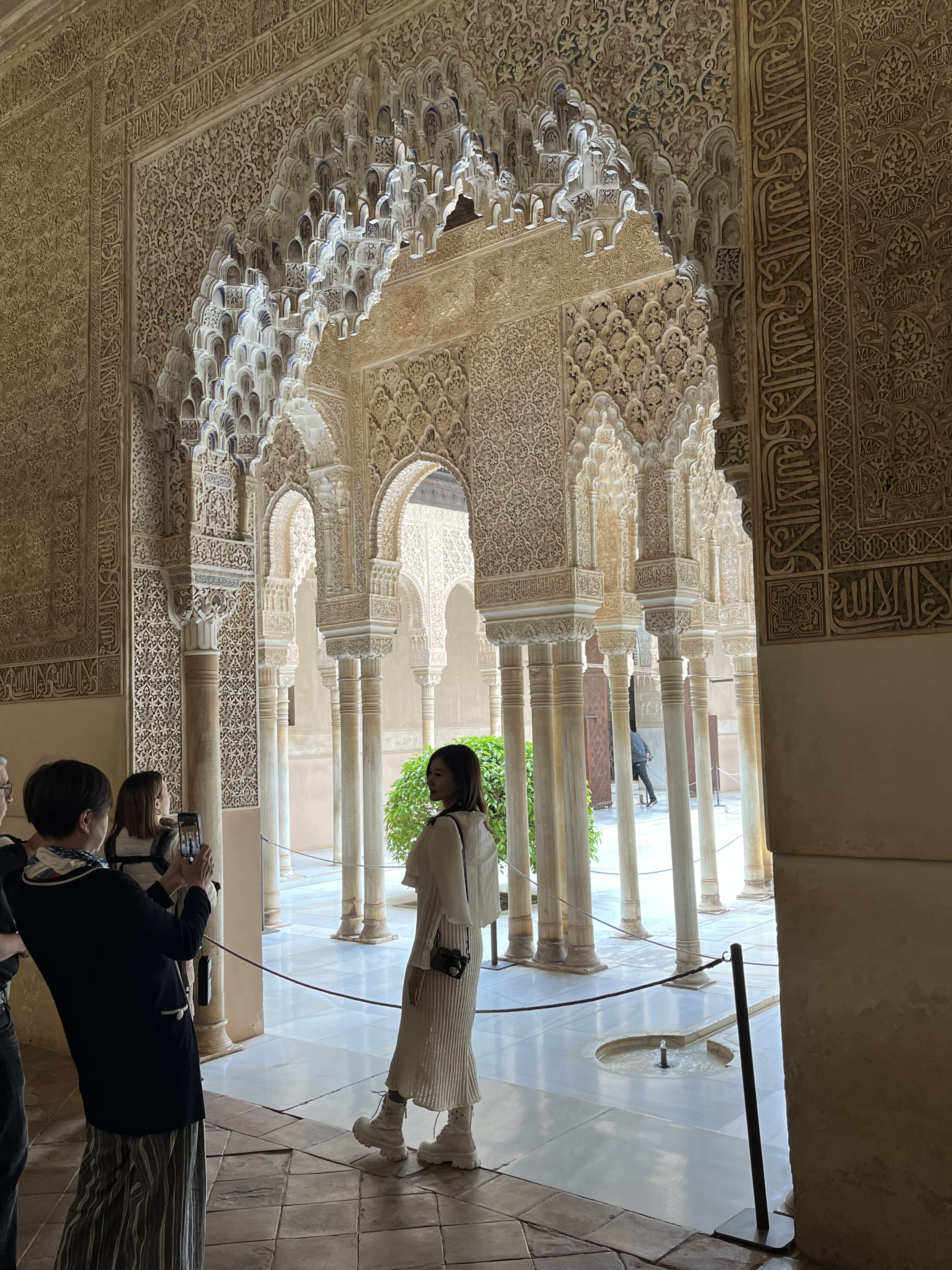


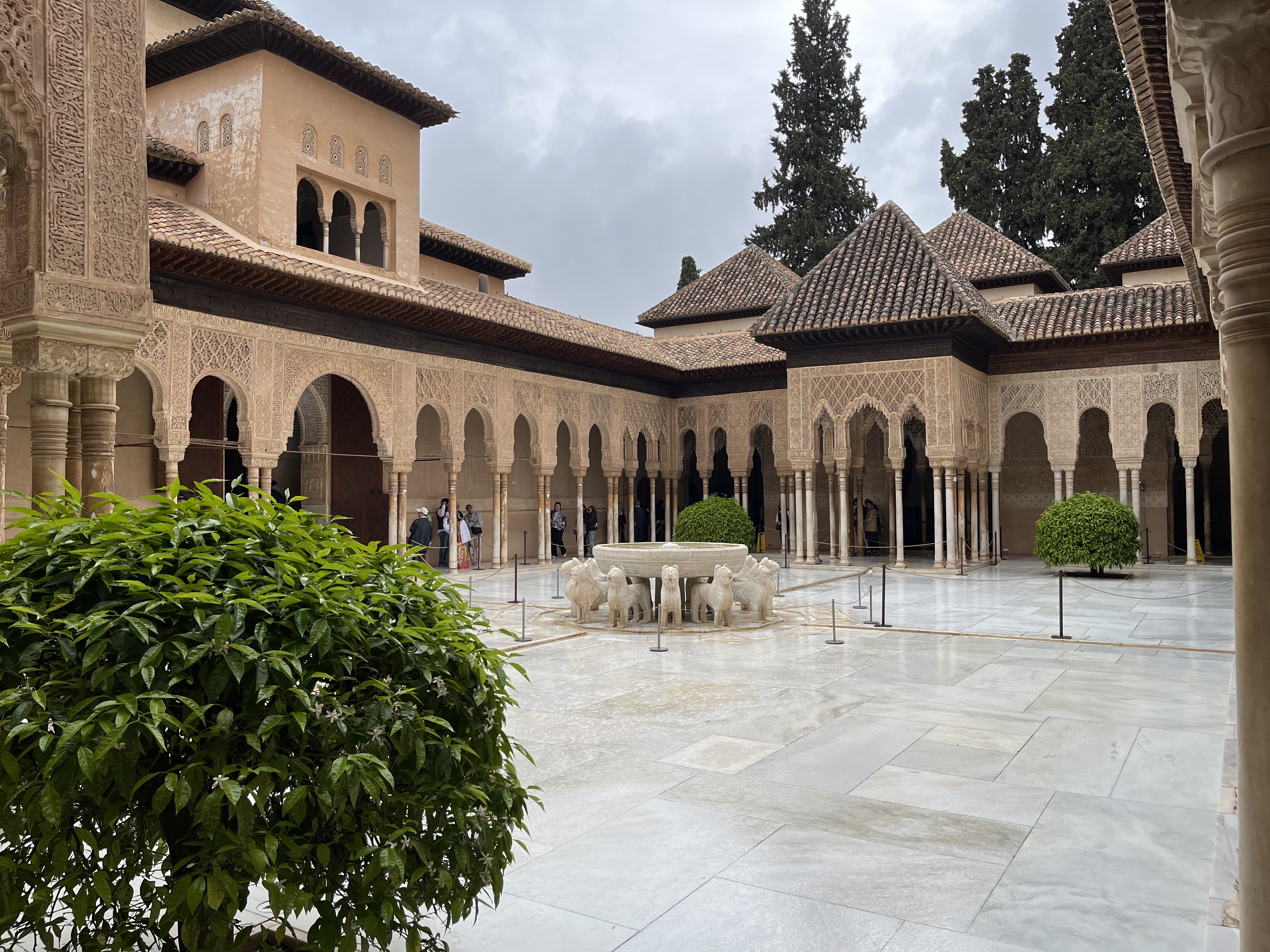
The Hall of the Kings and the Hall of the Two Sisters:

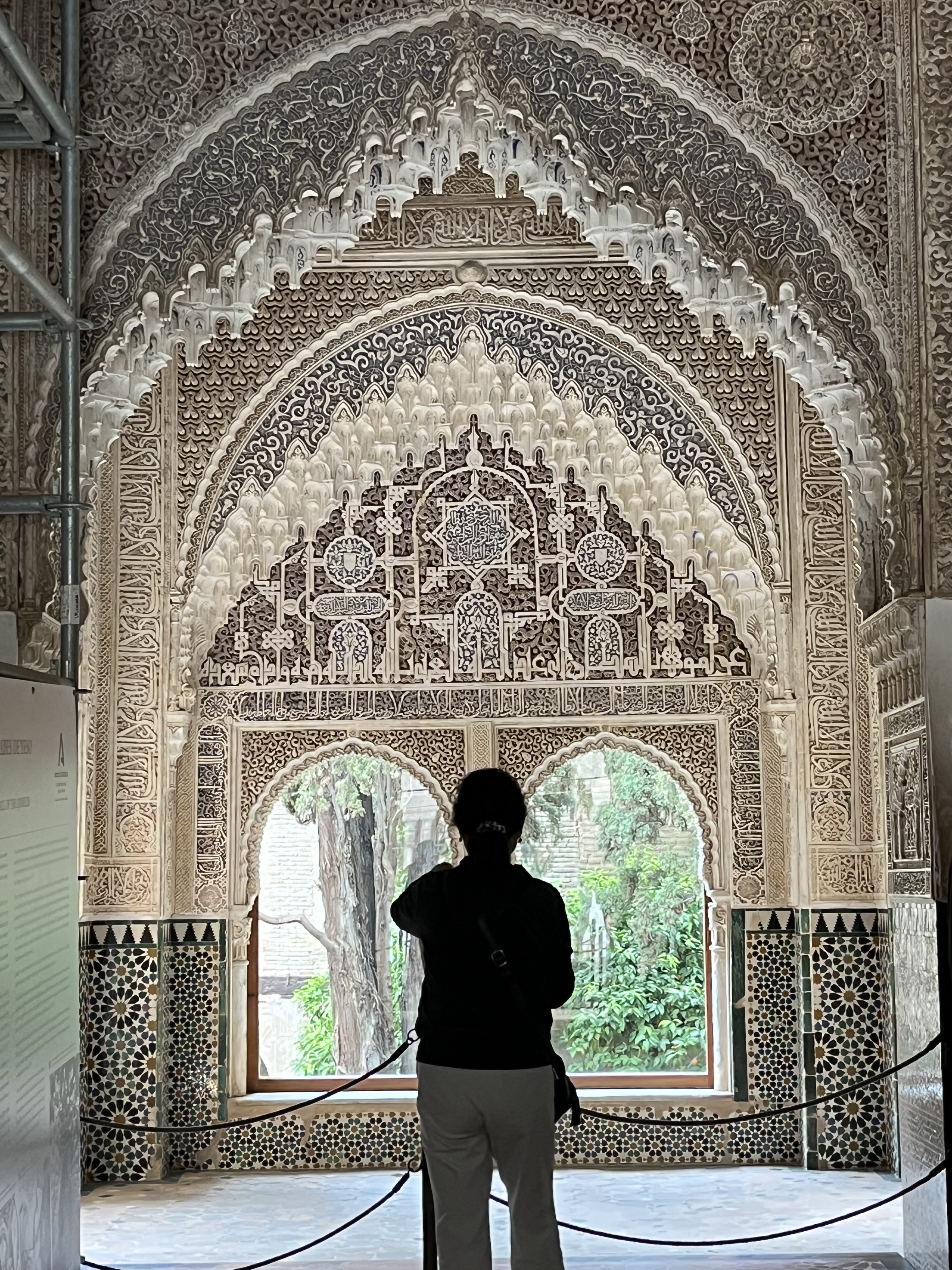
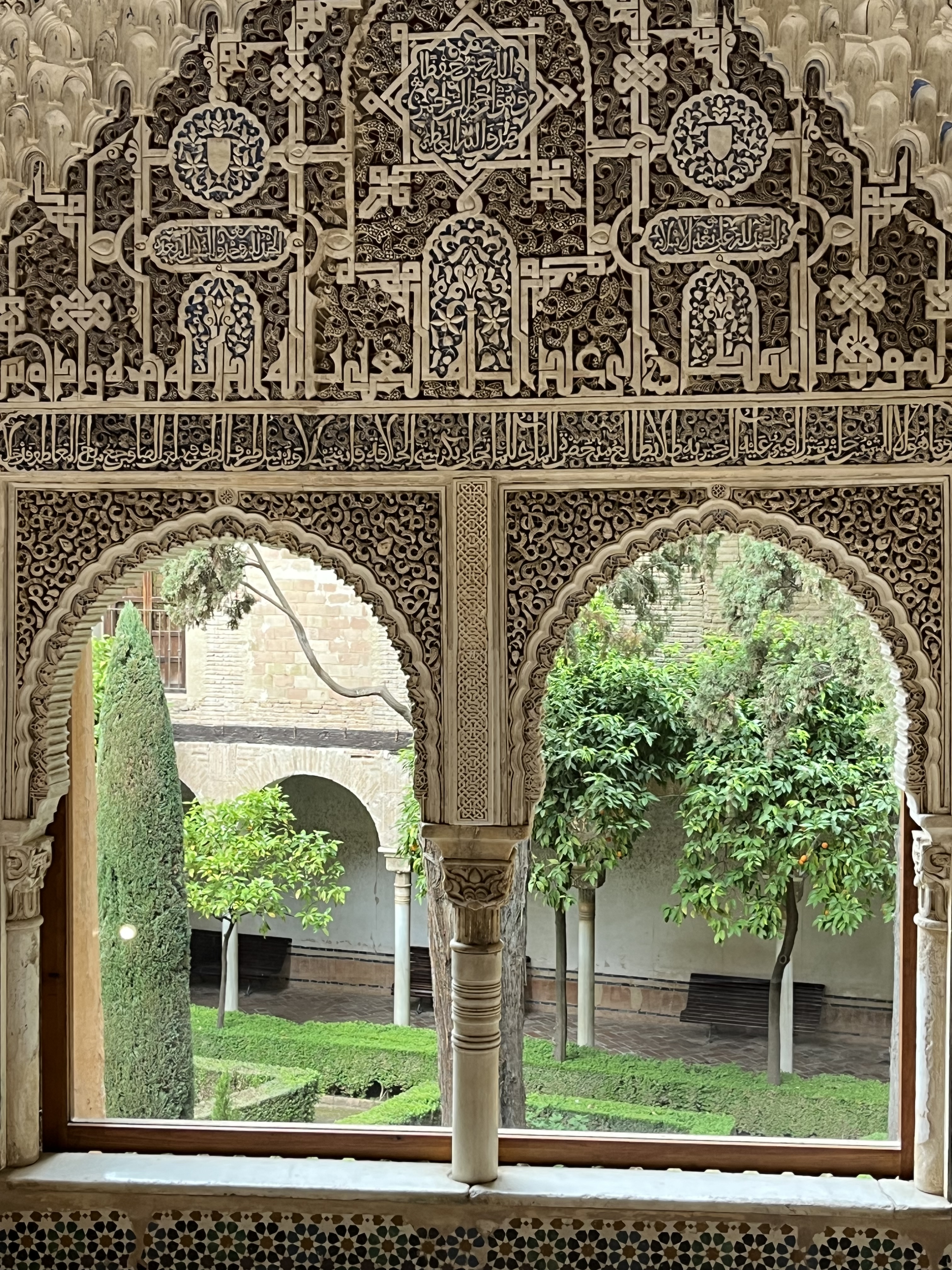
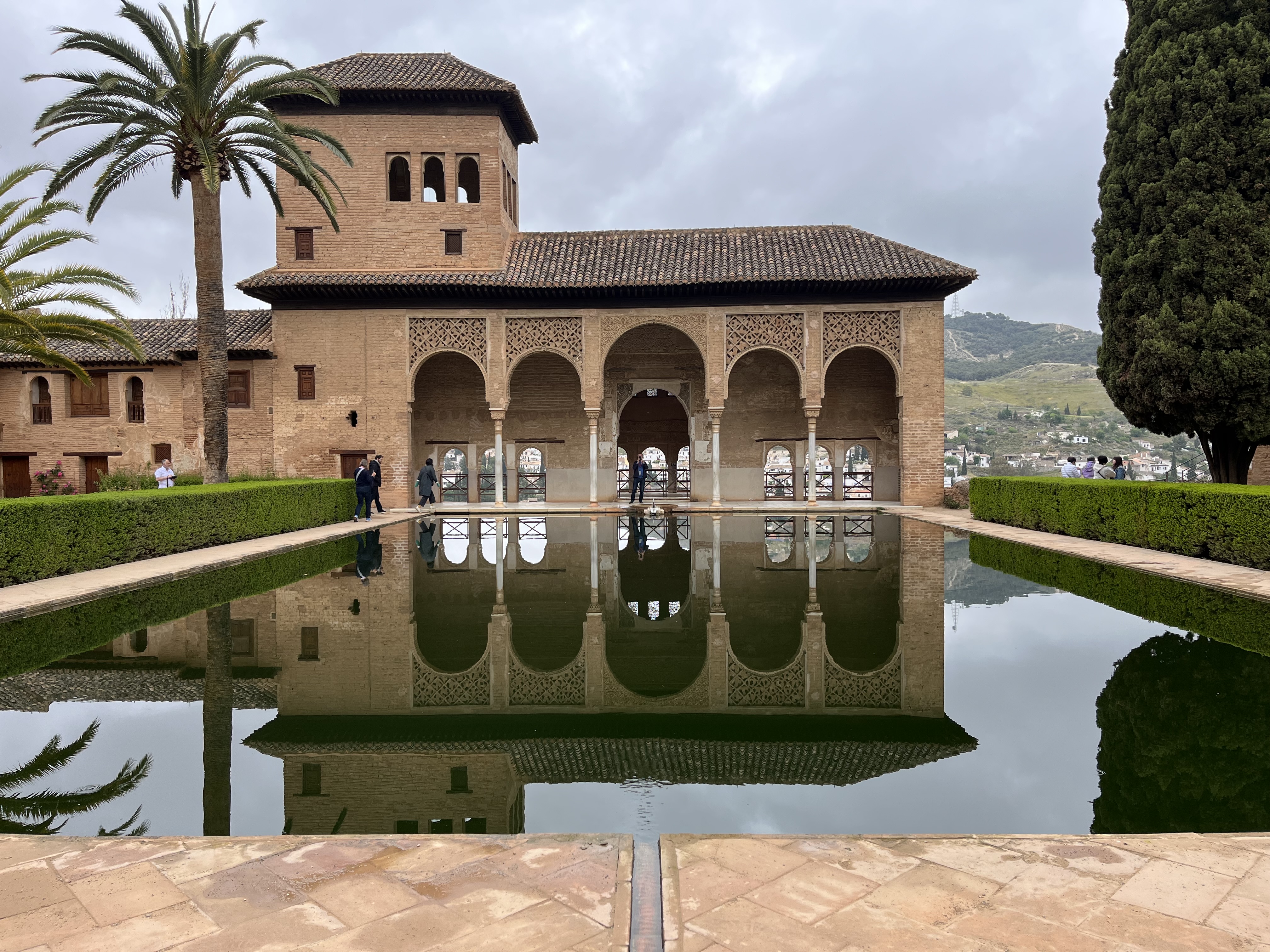
The Palace of the Portico, the oldest Palace of the complex:
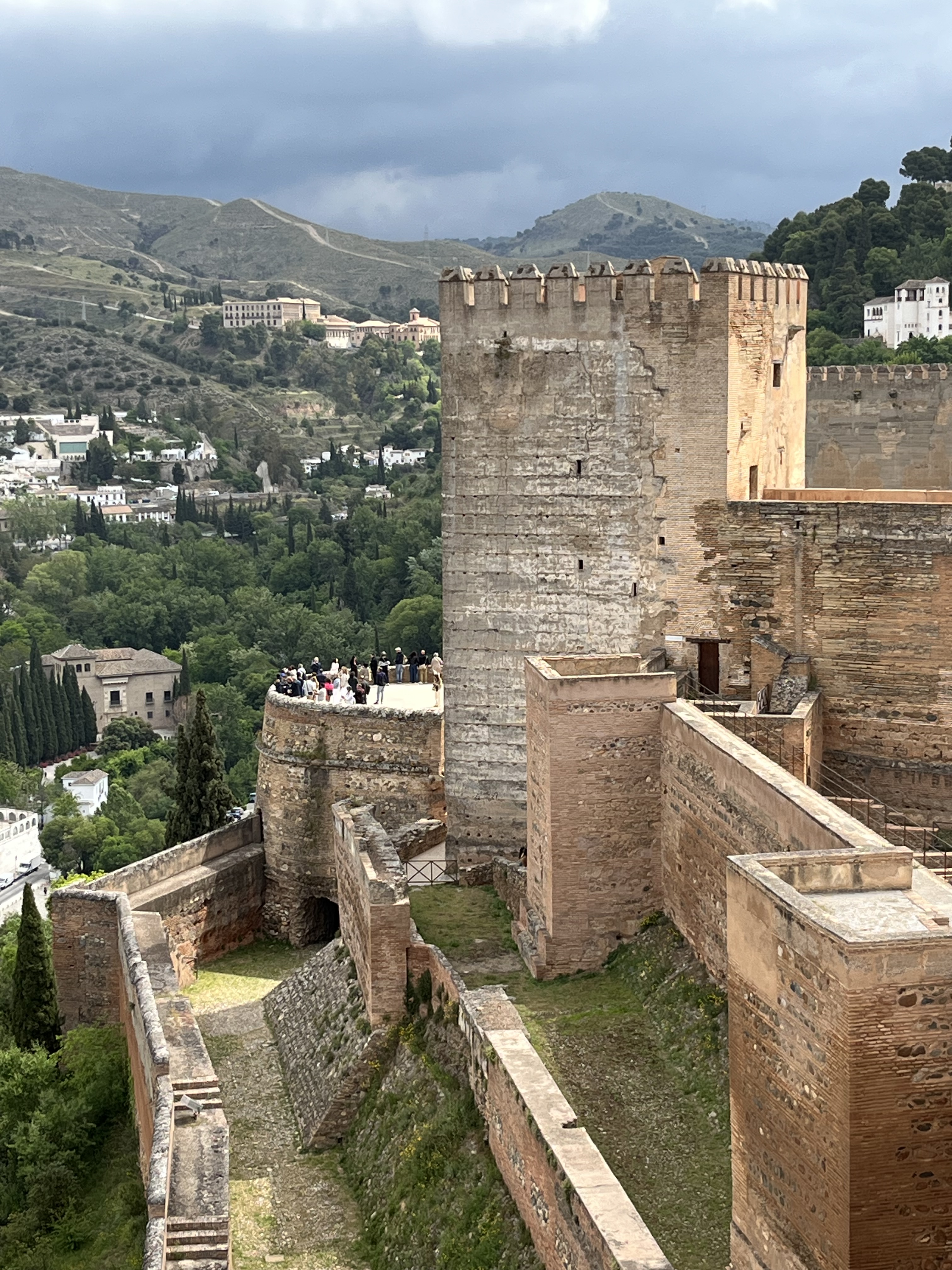
The Alcazaba with Watchtowers:
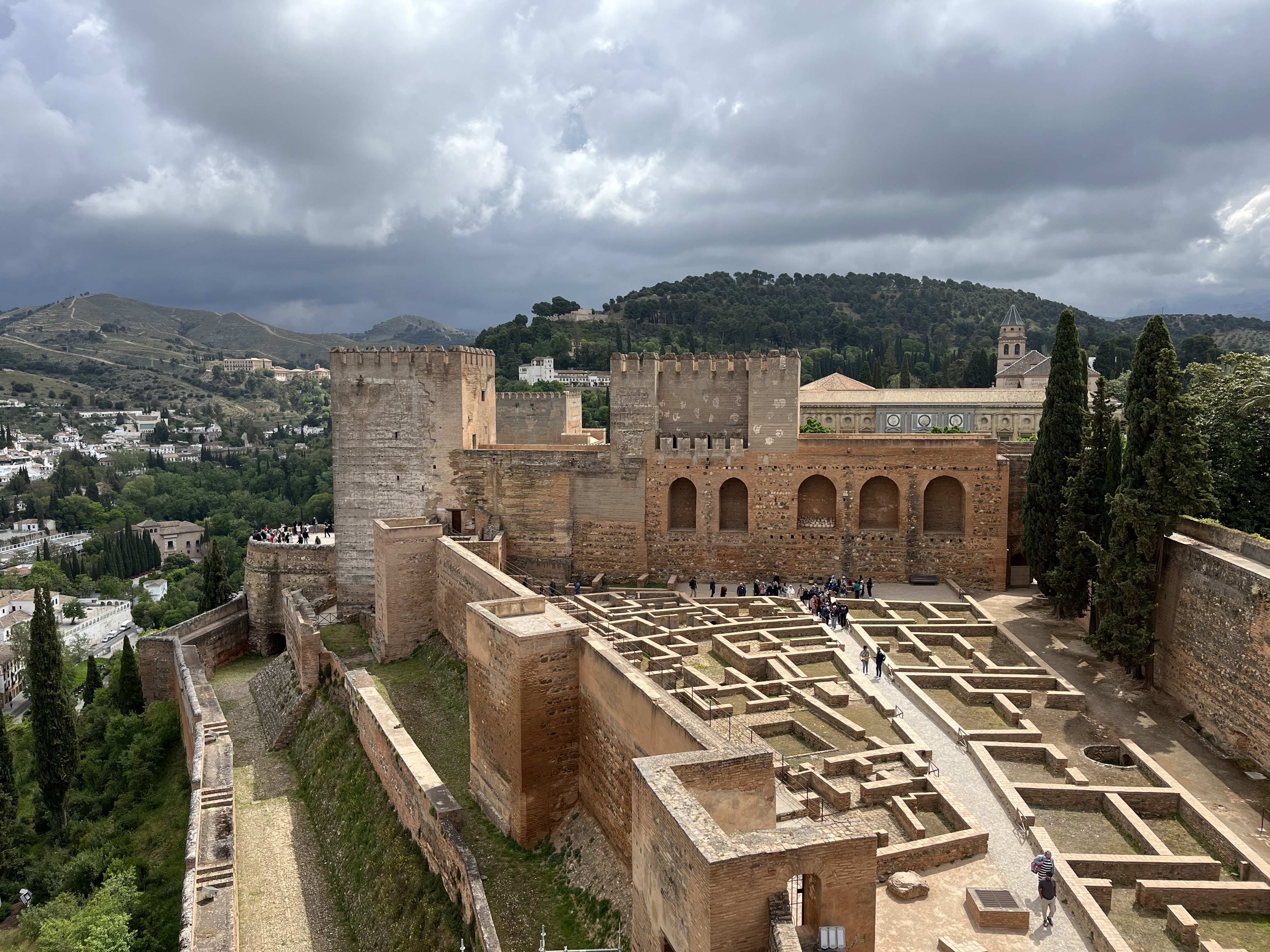
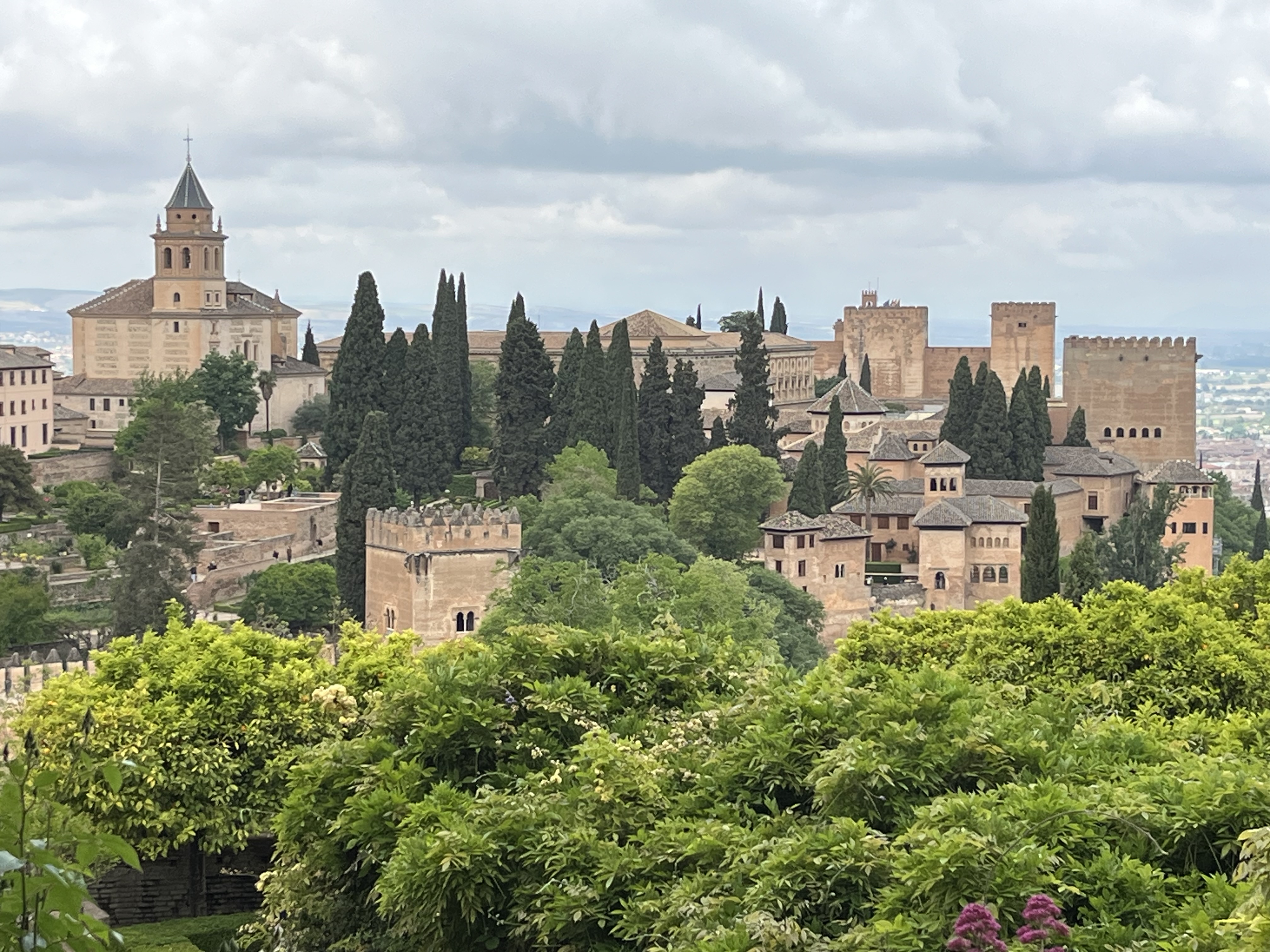
One could keep writing about the Alhambra, for instance its innovative heating and ventilation system or the elaborate artisanal techniques used to build the tile work and wooden ceilings, all harmoniously beautiful! Or the many, cleverly landscaped gardens with their irrigation systems, functioning for leisure, beauty, and as food supply with vegetables, fruits, and nuts.
Like most popular tourist sites in Europe, we had to book our Alhambra entry tickets several months in advance. Here we were glad to see to what extent they had limited the number of visitors per time slot, so that it was, for the most part, not too hard to take pictures unobstructed from any other visitors or to simply have sufficient time to leisurely enjoy the site and take in the beauty.
A few more impressions of Granada’s historic quarter:

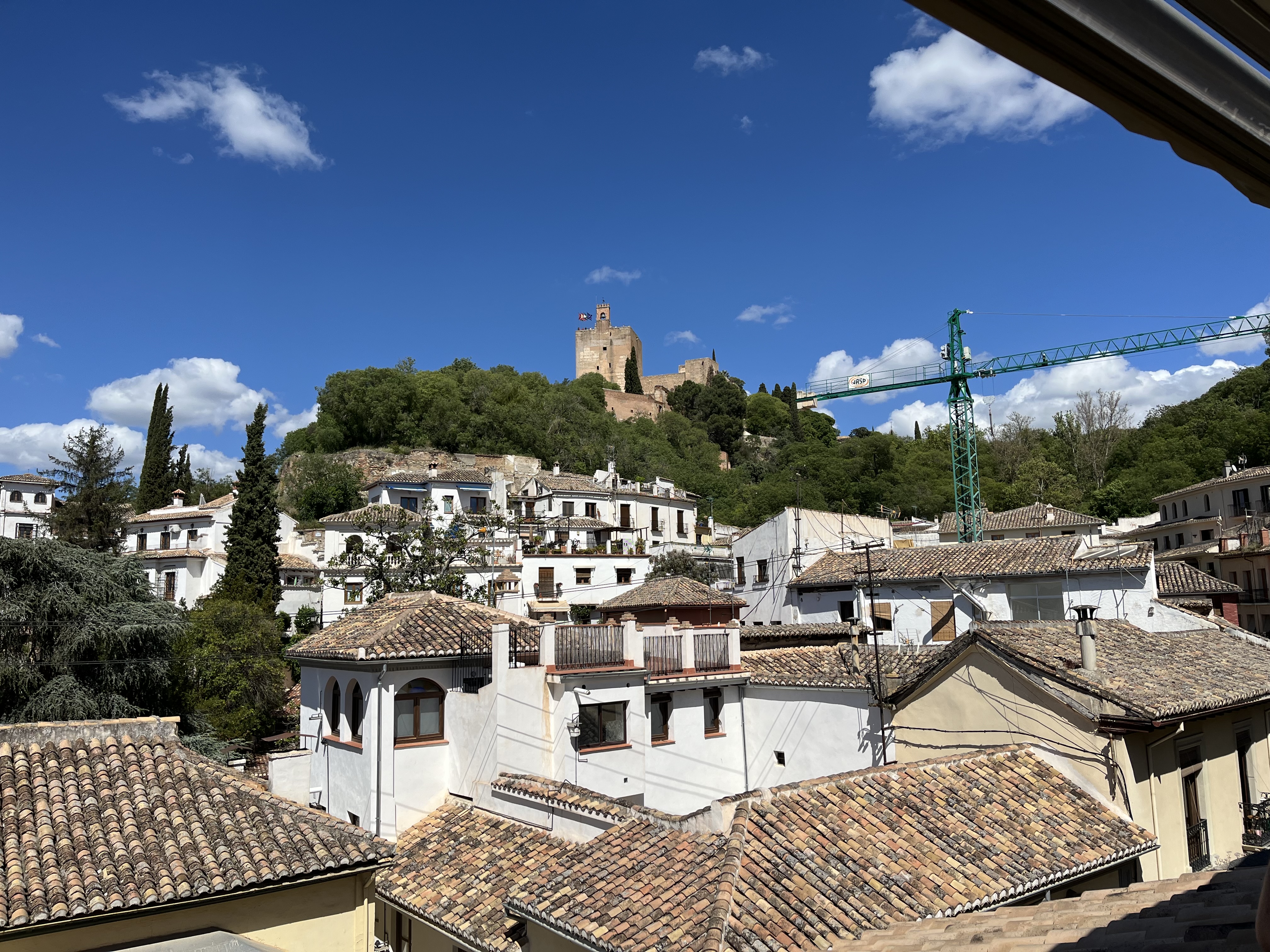
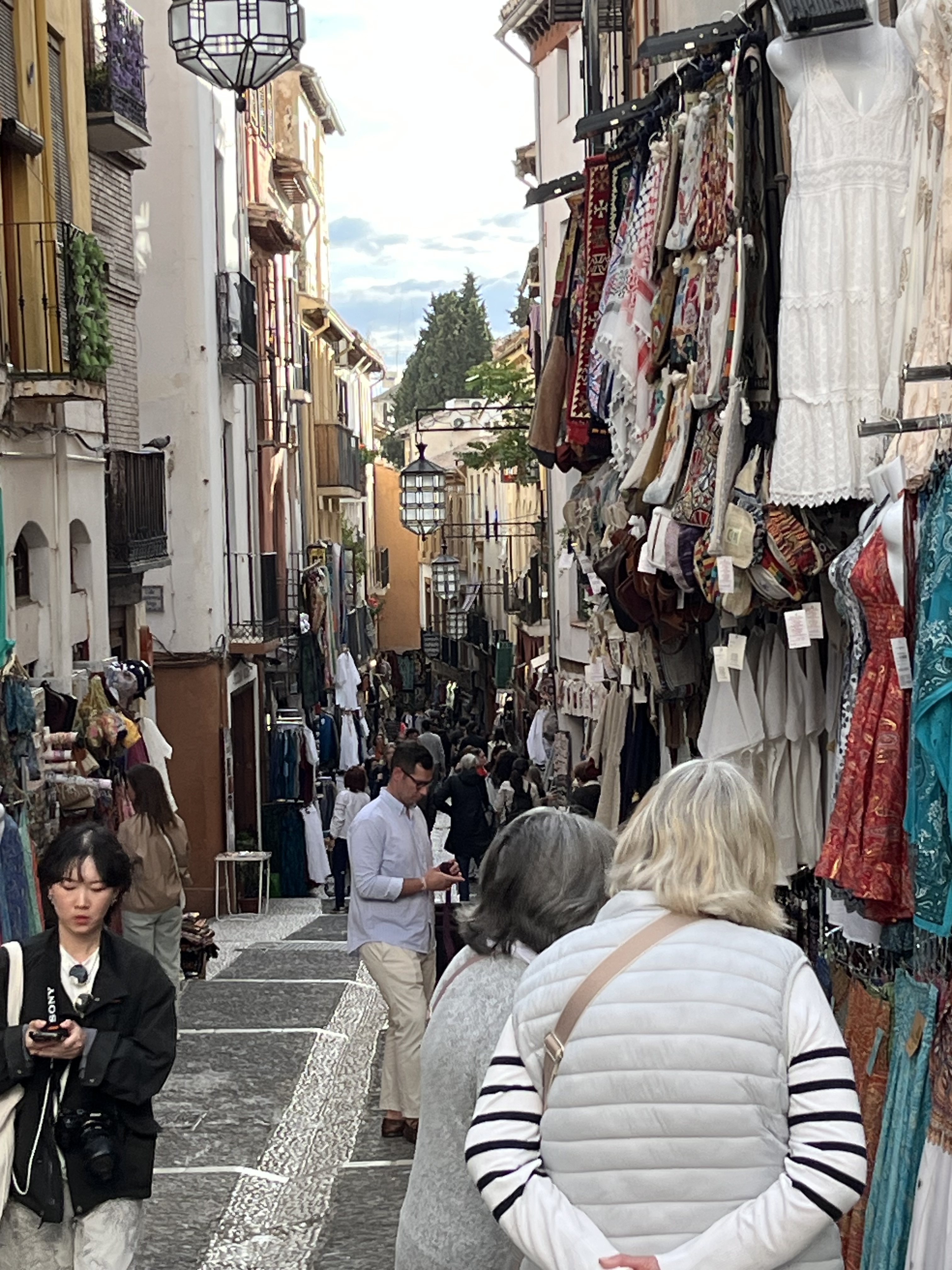

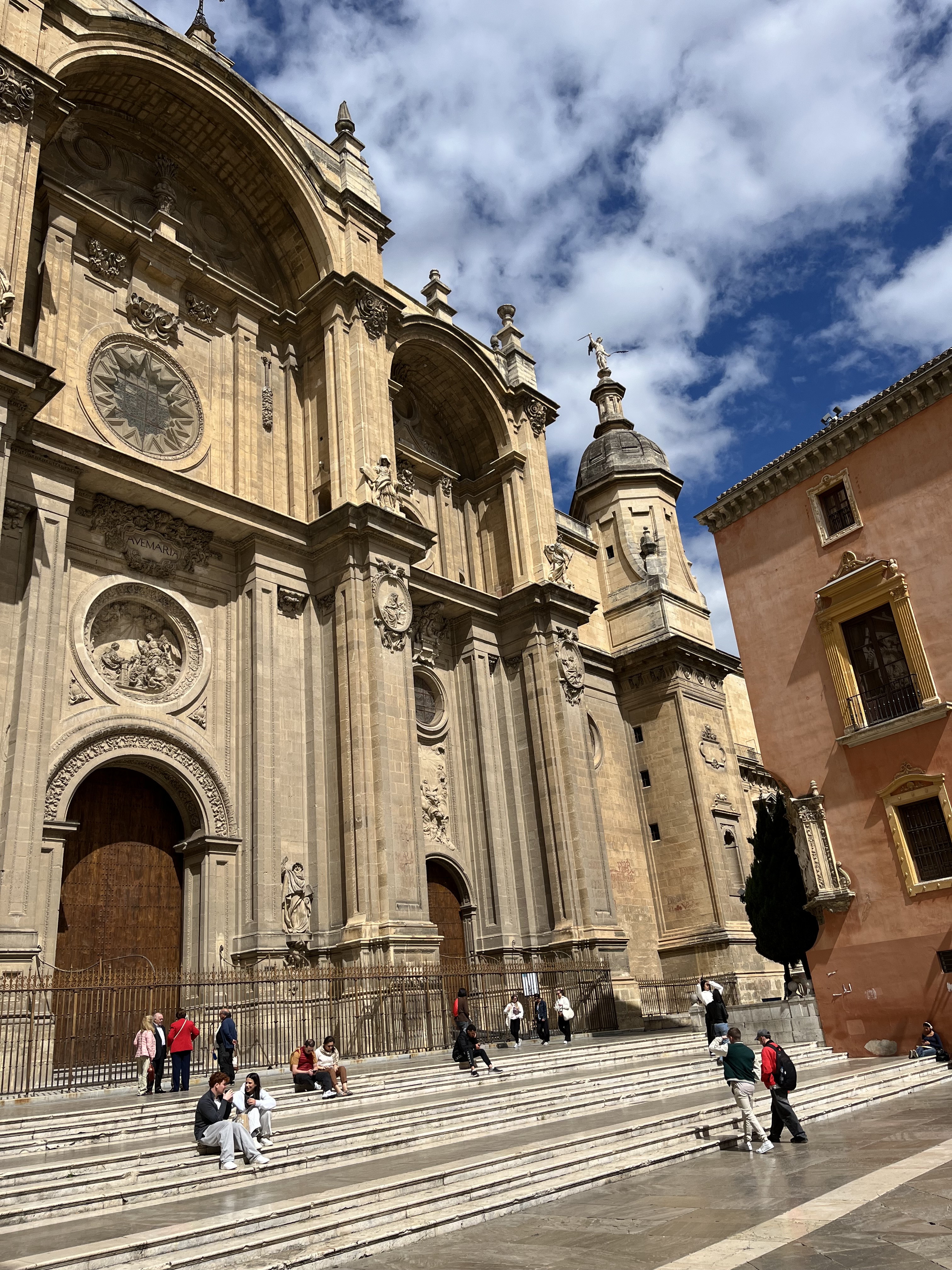
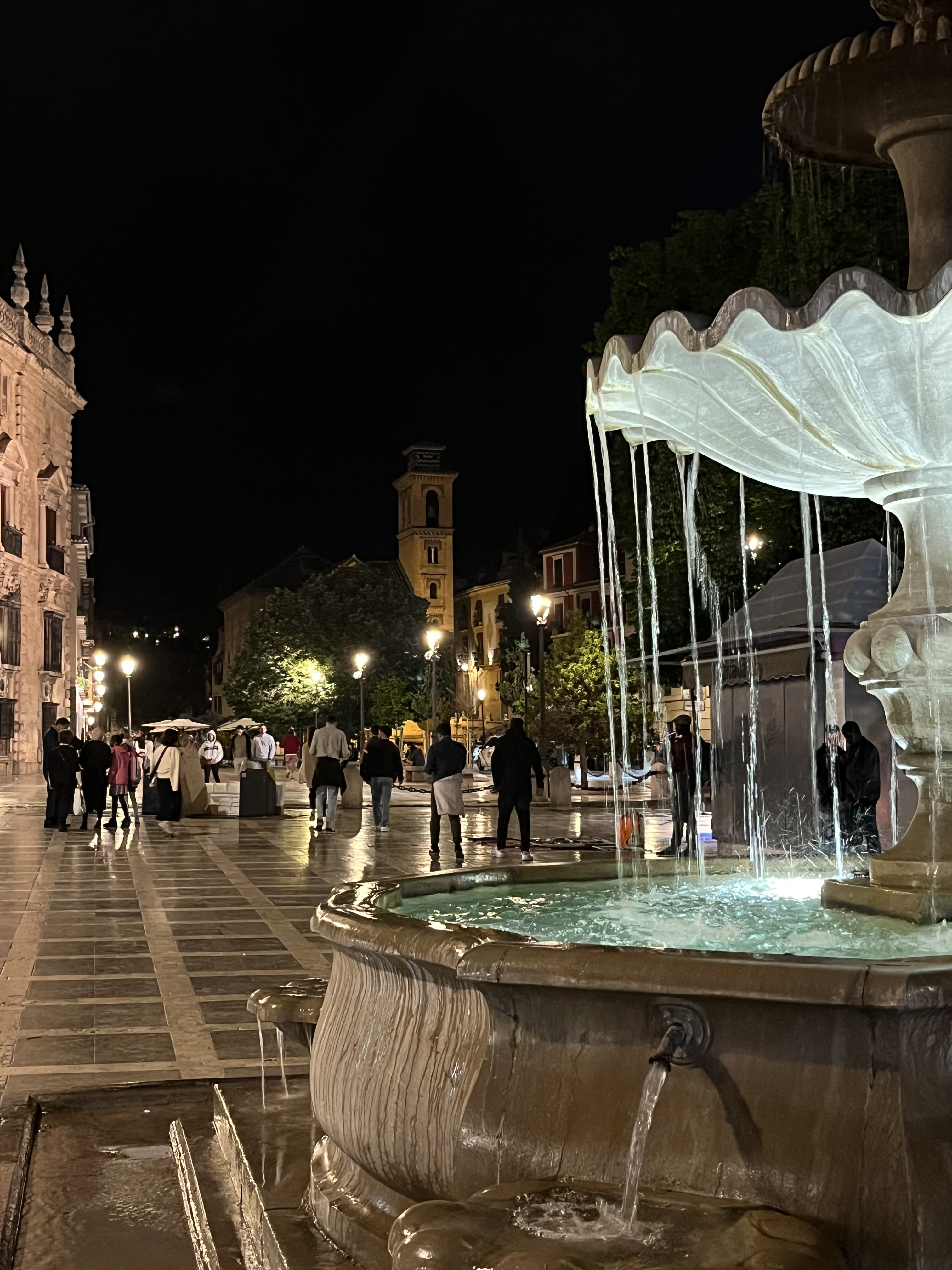
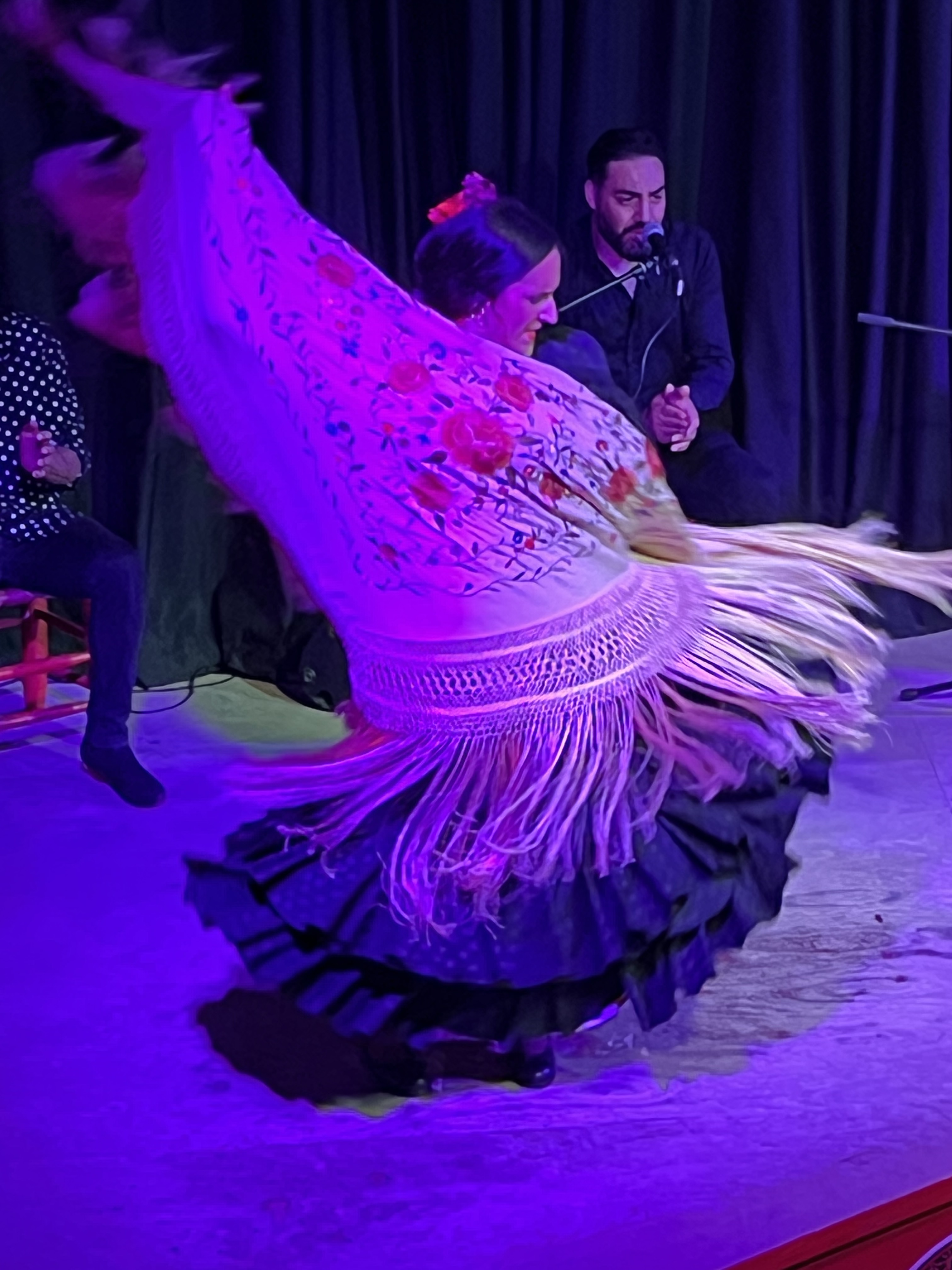
We finished our Granada visit with a flamenco show. Flamenco, which has been called an extract of fire and poison, clearly goes back to the Moorish, Arabic influence as is evident in the accompanying singing.


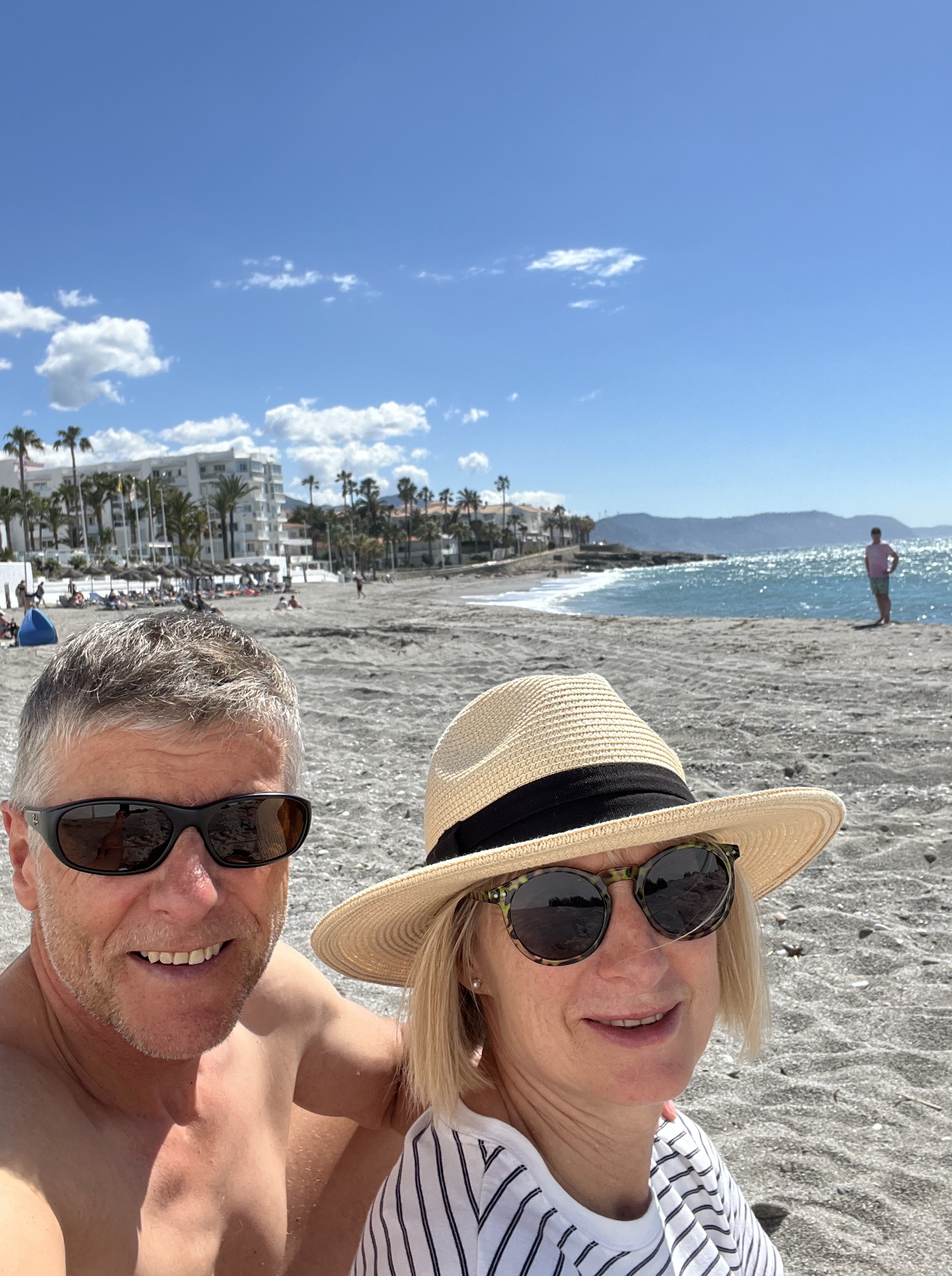
On the way from Grenada to Ronda we stopped for a couple hours in Nerja, a popular seaside town east of Malaga on the Spanish Costa del Sol. It was the most southern point of our journey. To our surprise we found the best swimming beach we’ve encountered in Europe, with nice, clean and free toilettes and showers! Overall, our weather was relatively cool during our three week trip, yet for the few hours in Nerja, we enjoyed some warmth, sunbathing and swimming and off we were on the road again.
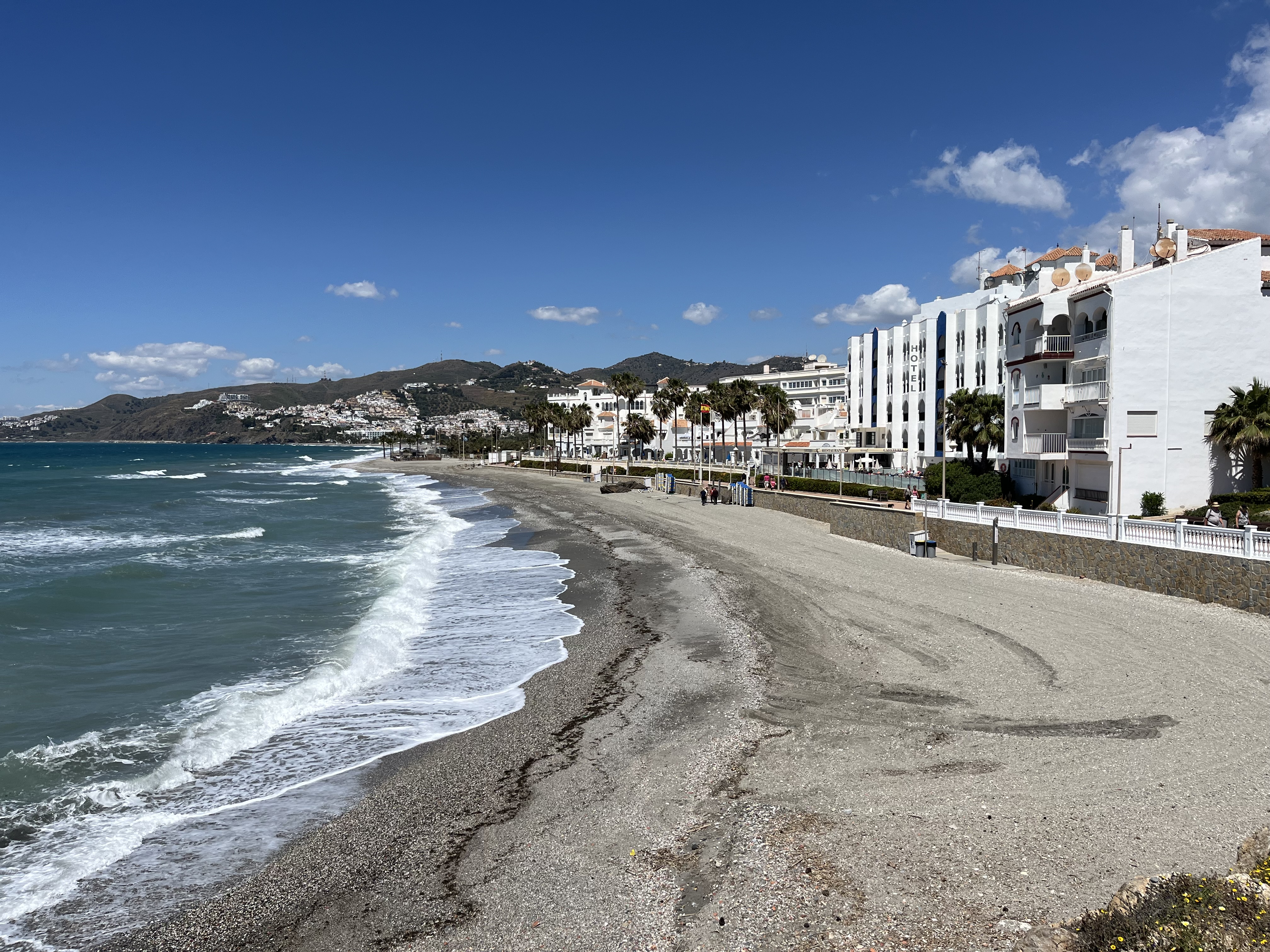
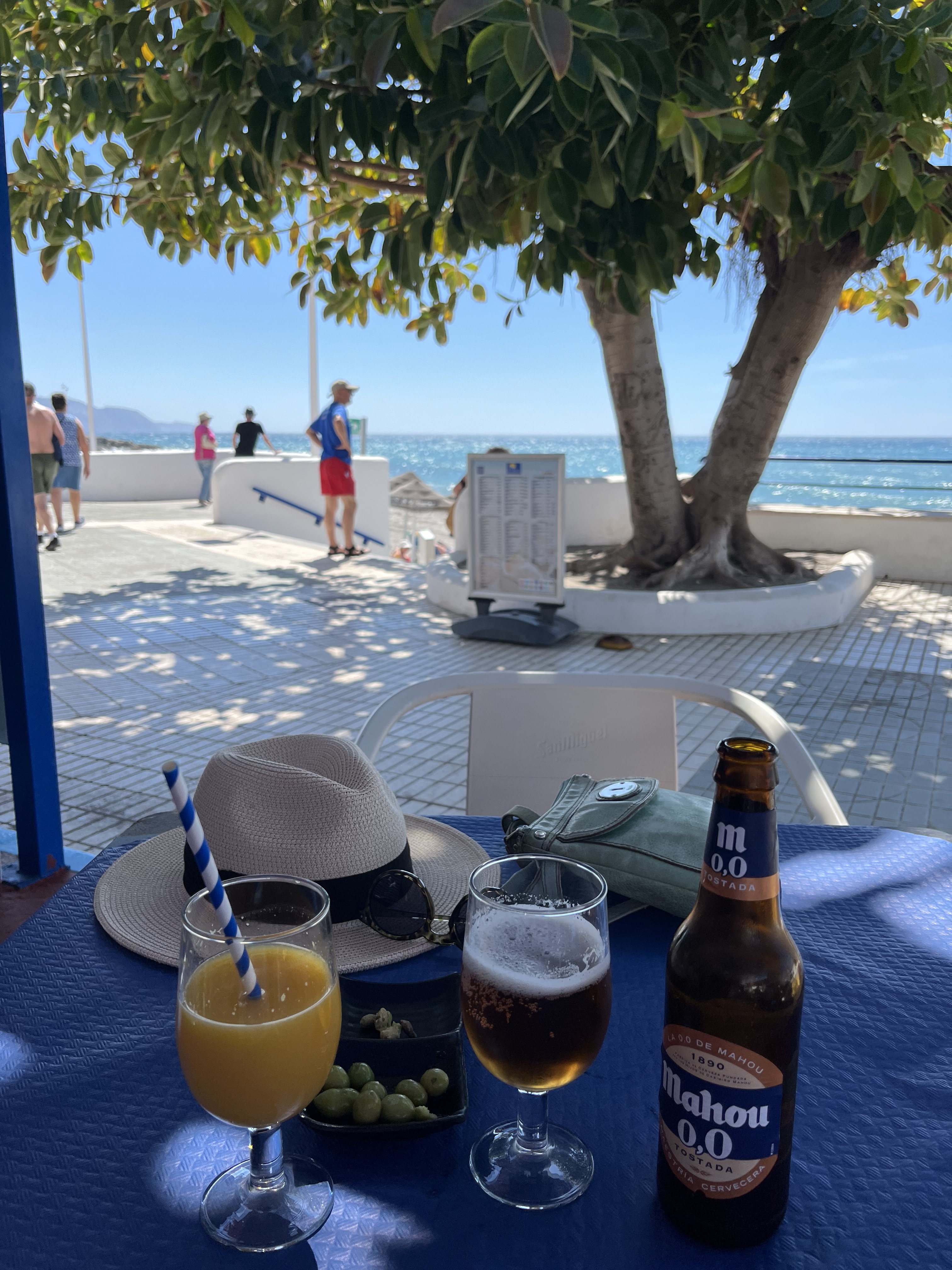
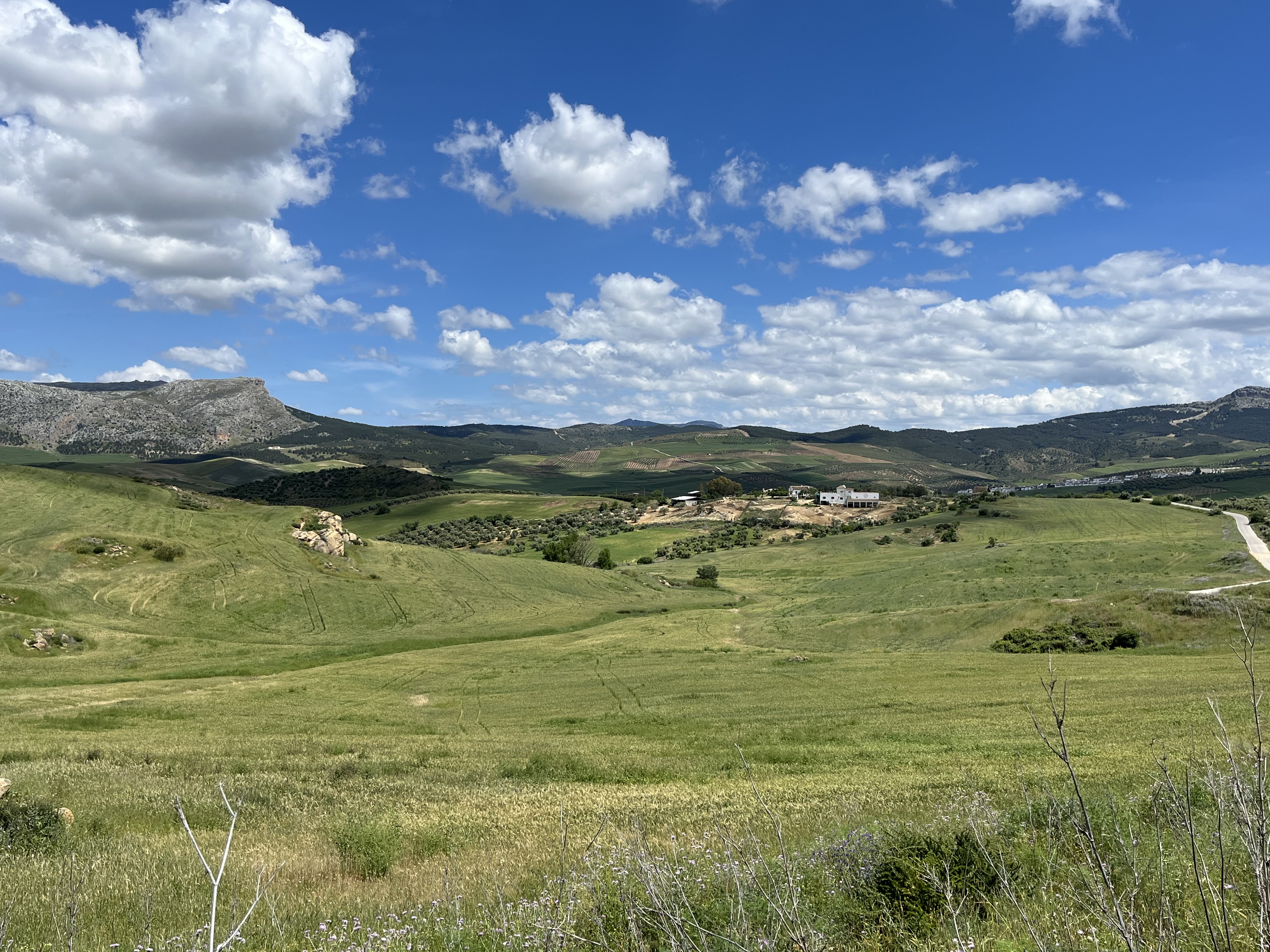
While we were heading toward Ronda in central Andalusia, we thought that Spain, with its vast landscape and sparse inland population, reminded us of the American West like no other European country we know. For instance, this scene around Ronda might as well be somewhere in Montana or Wyoming:
Ronda
Ernest Hemingway and Orson Wells fell in love with this small hillside town and so did we! Orson Wells’ ashes are buried in Ronda and a street, the “Paseo de Orson Wells.” is named after him. Hemingway spent a lot of time here, studying and writing about bullfighting.
Ronda’s exposed setting on top of the steep cliffs are a spectacular site, surrounded by the backdrop of the Andalusian hills, and it has a famous bull fighting arena with museum that was worth the visit.

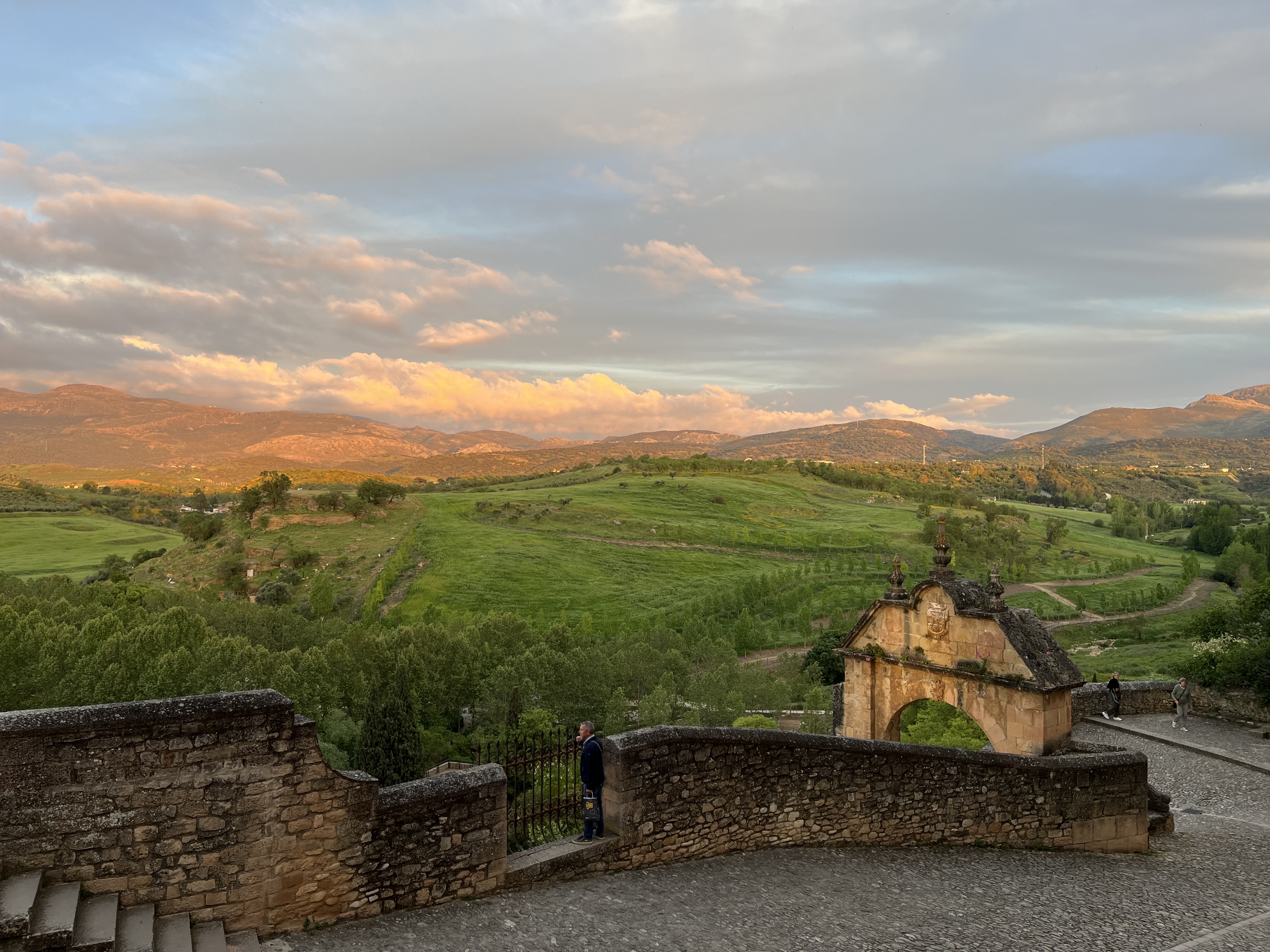
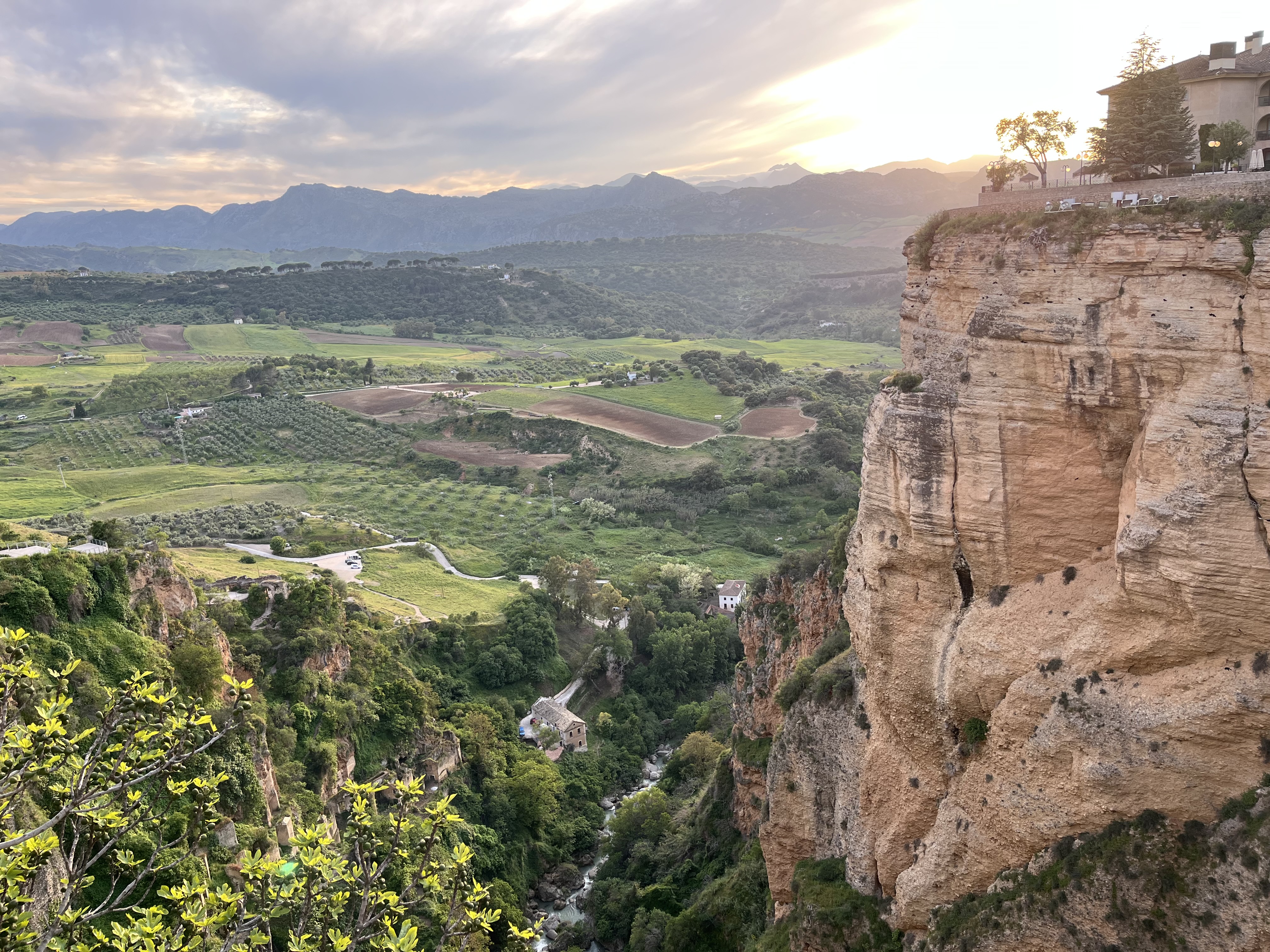
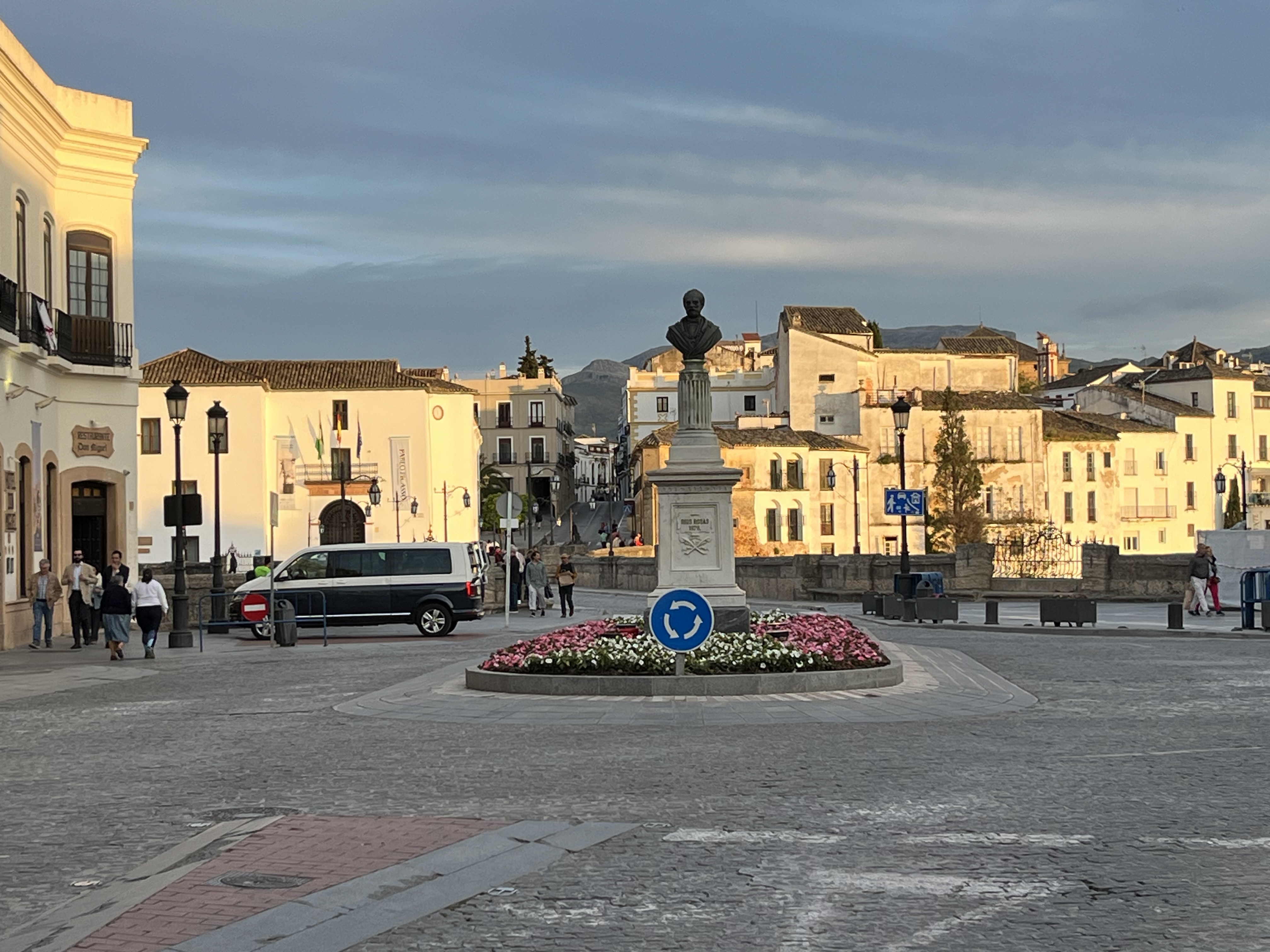

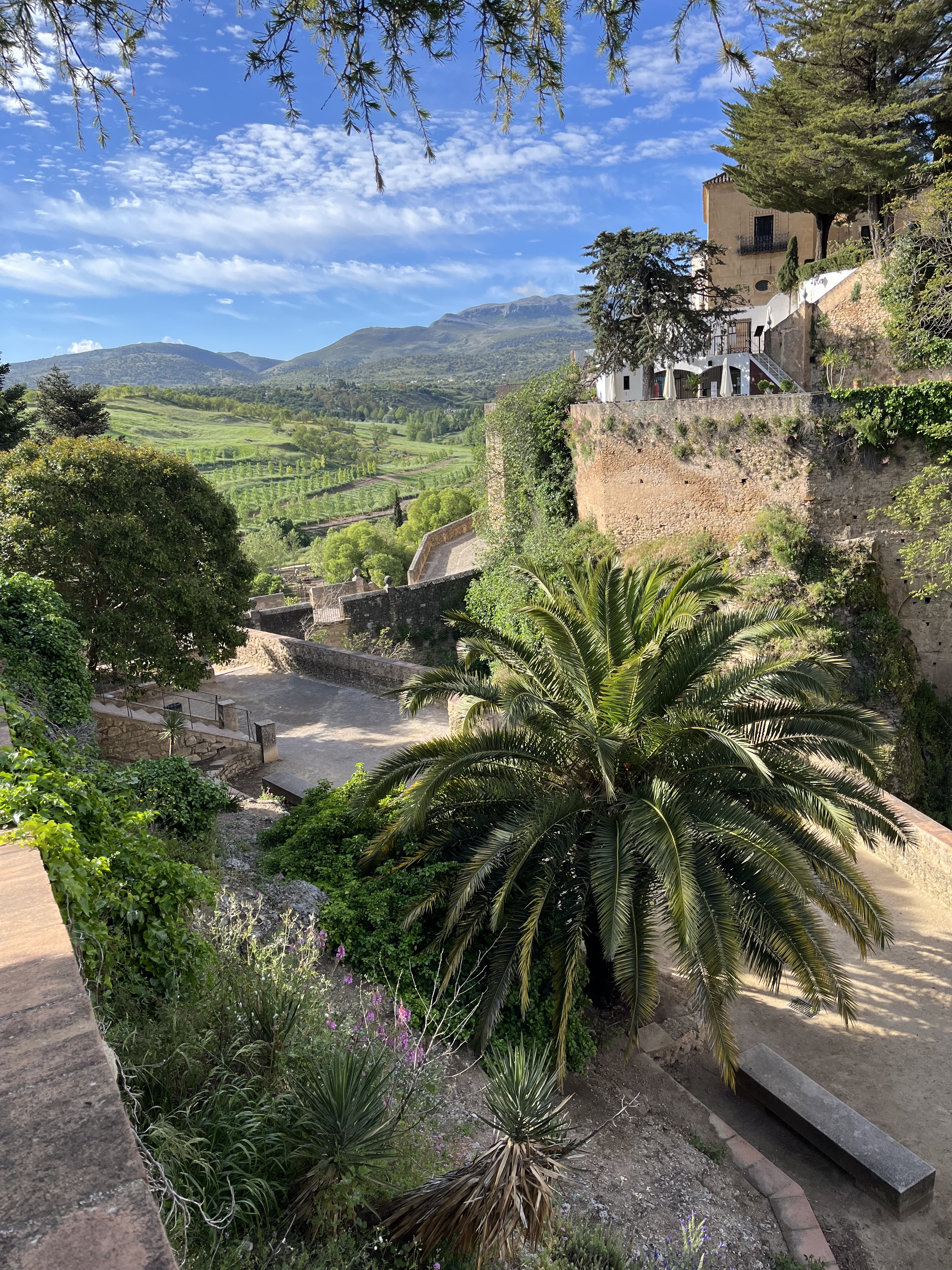
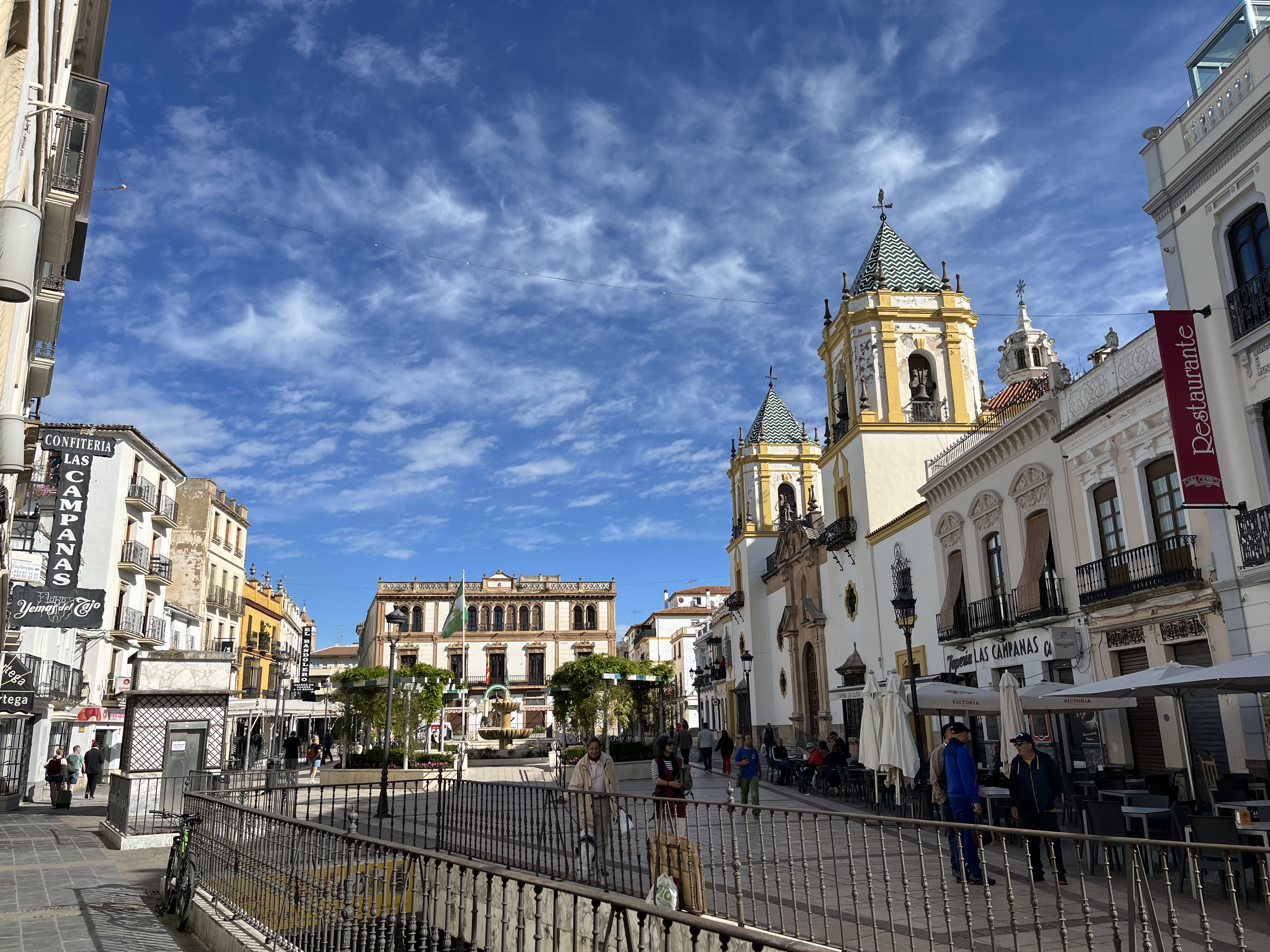
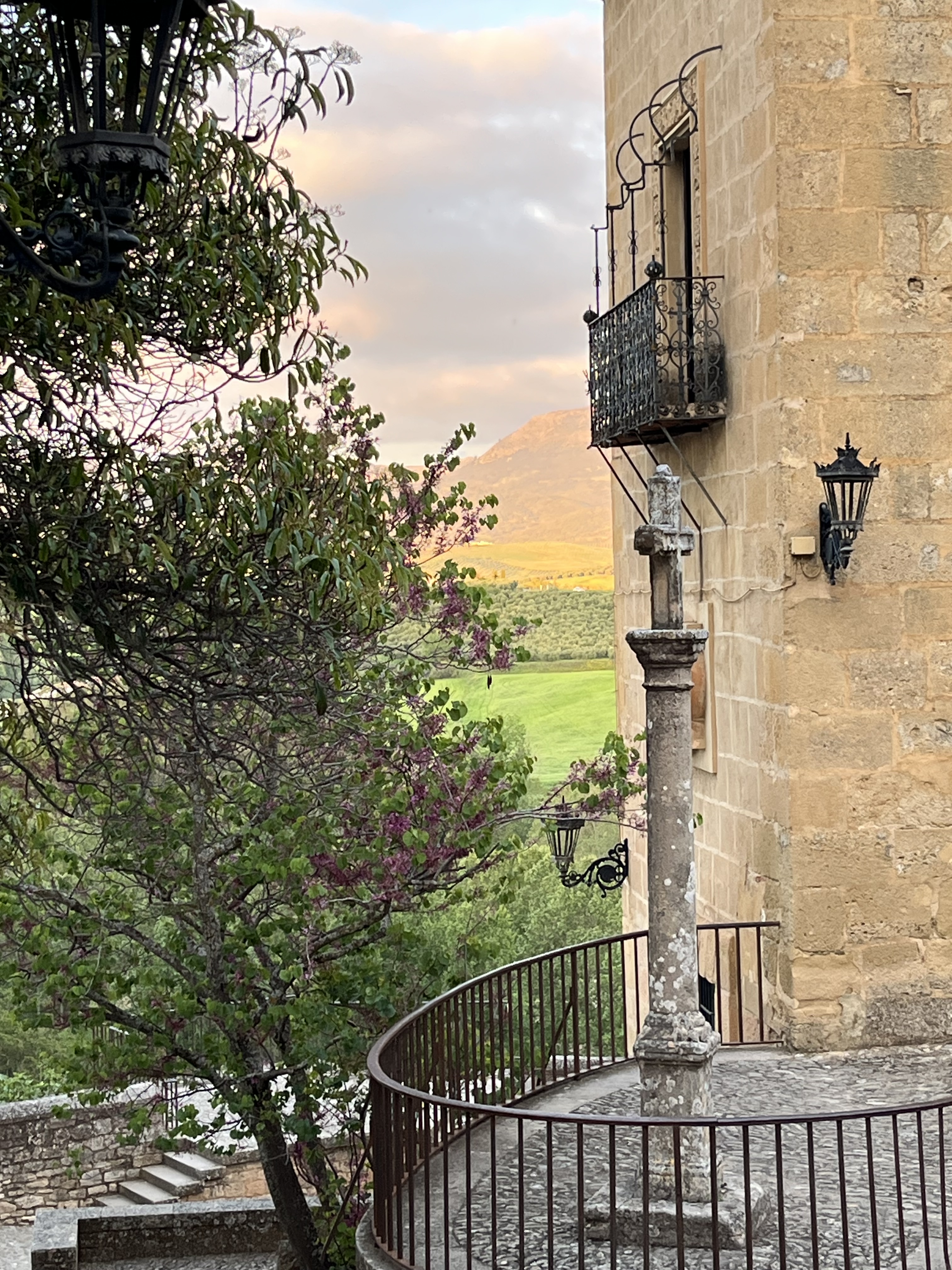
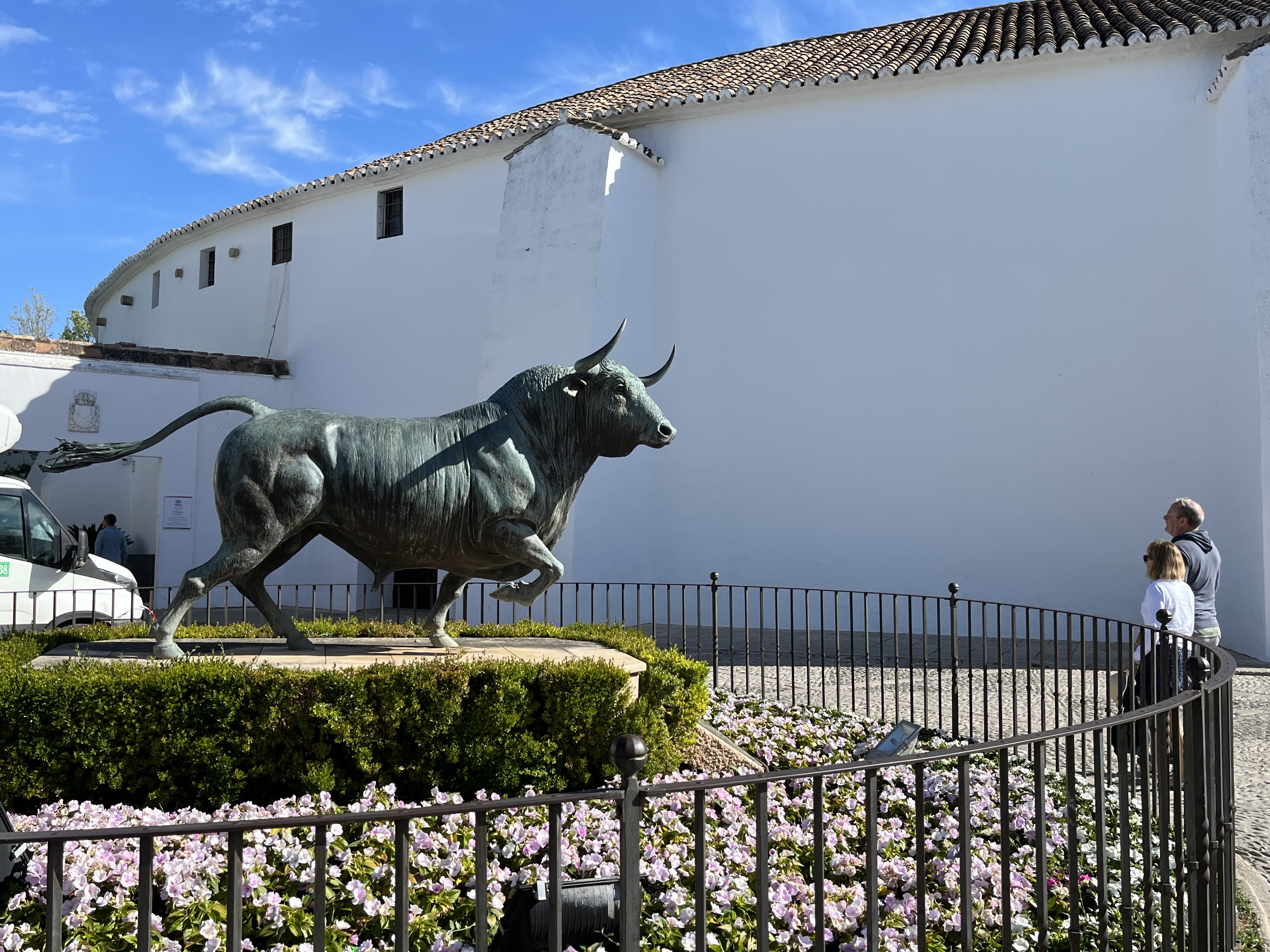
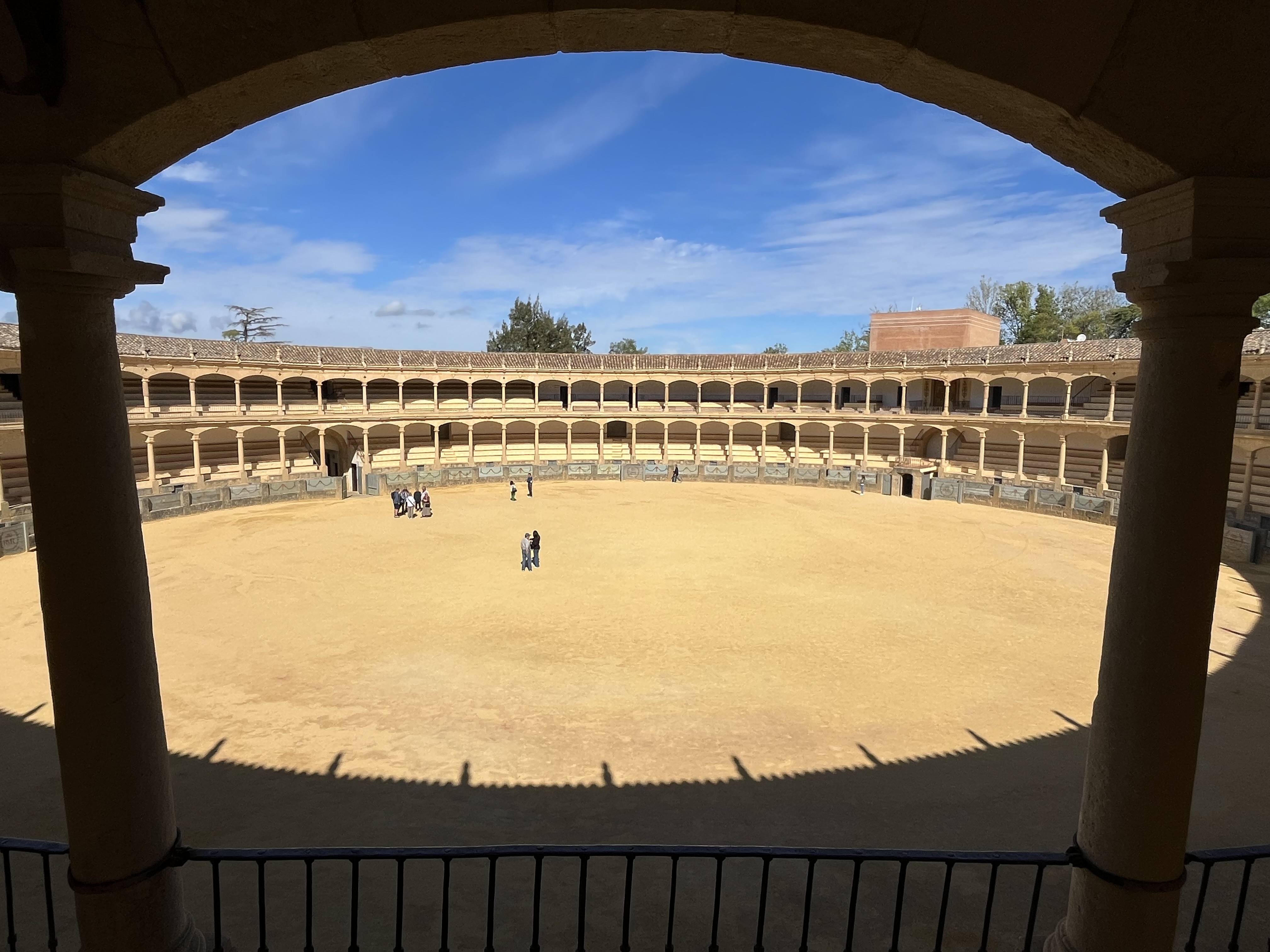

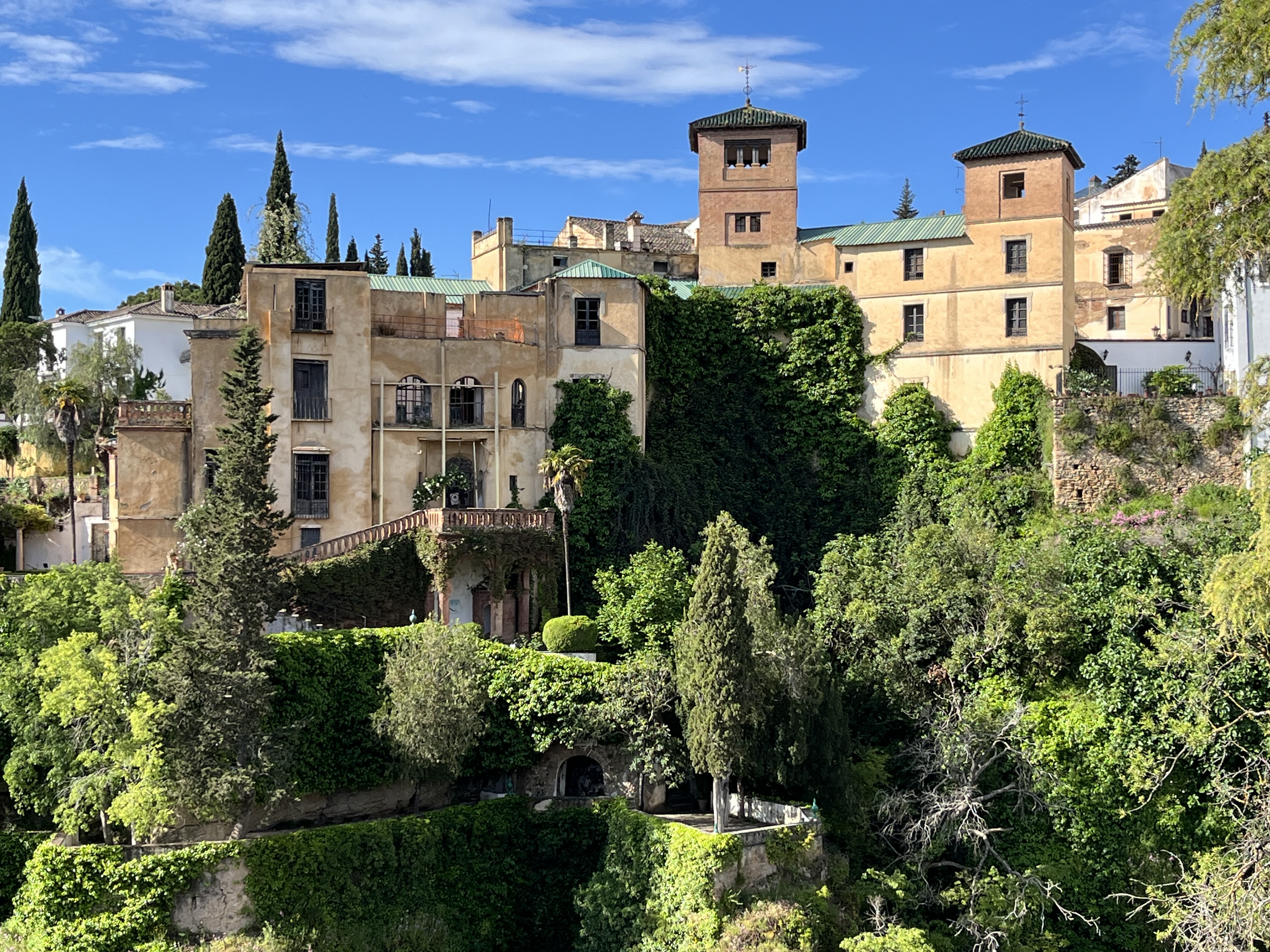
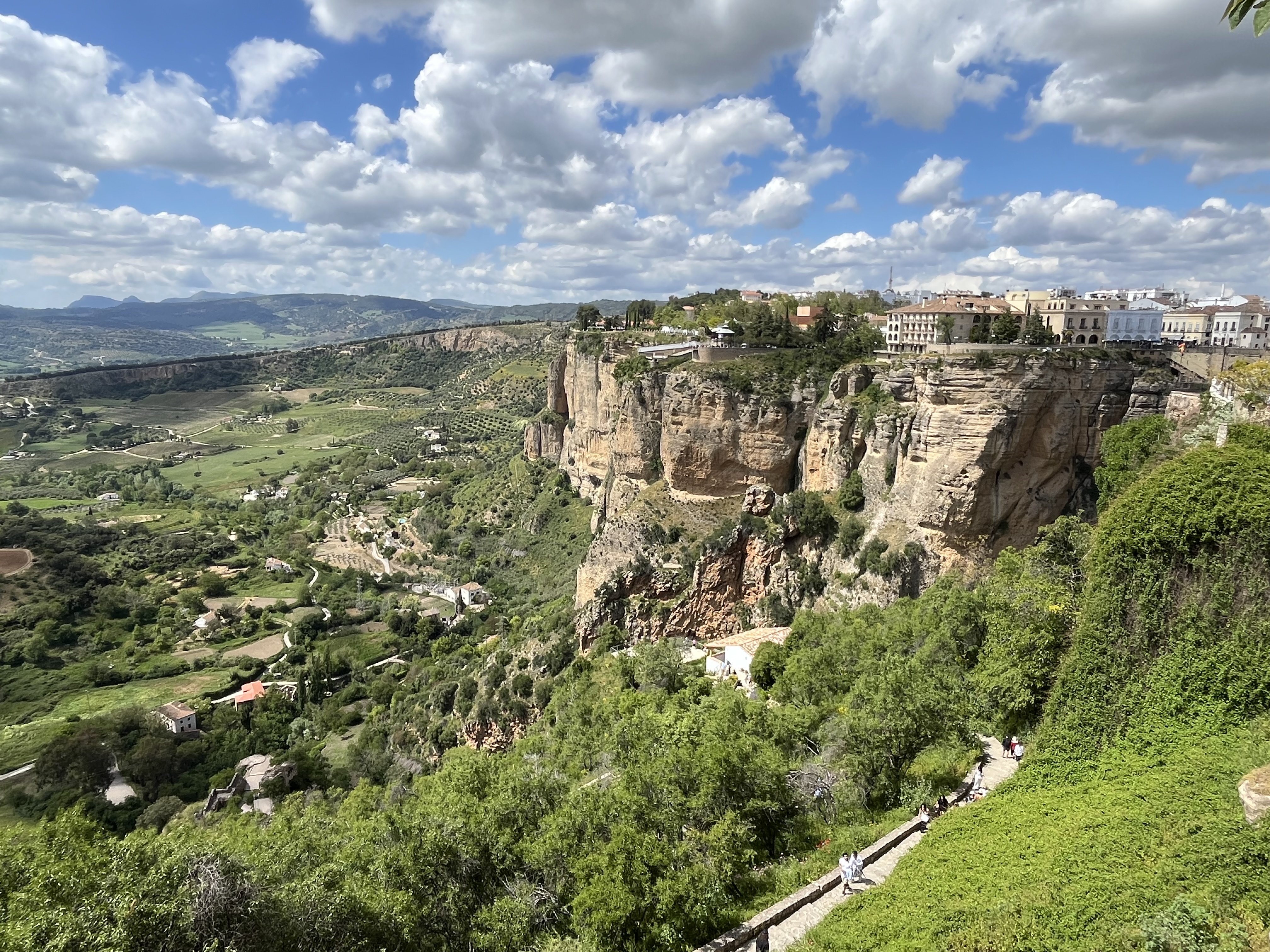
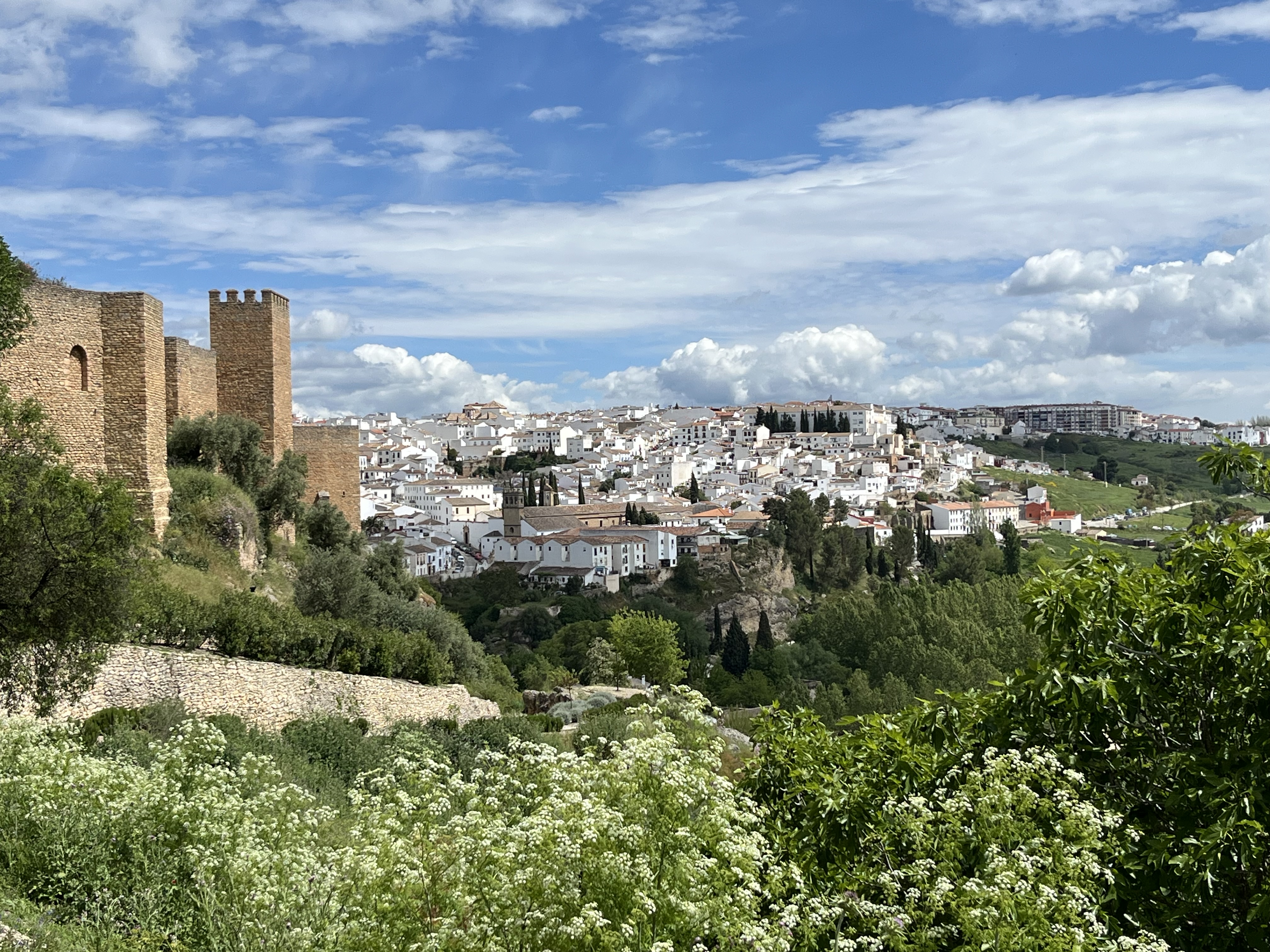
Ronda’s typical white washed houses reflecting in the sunshine:
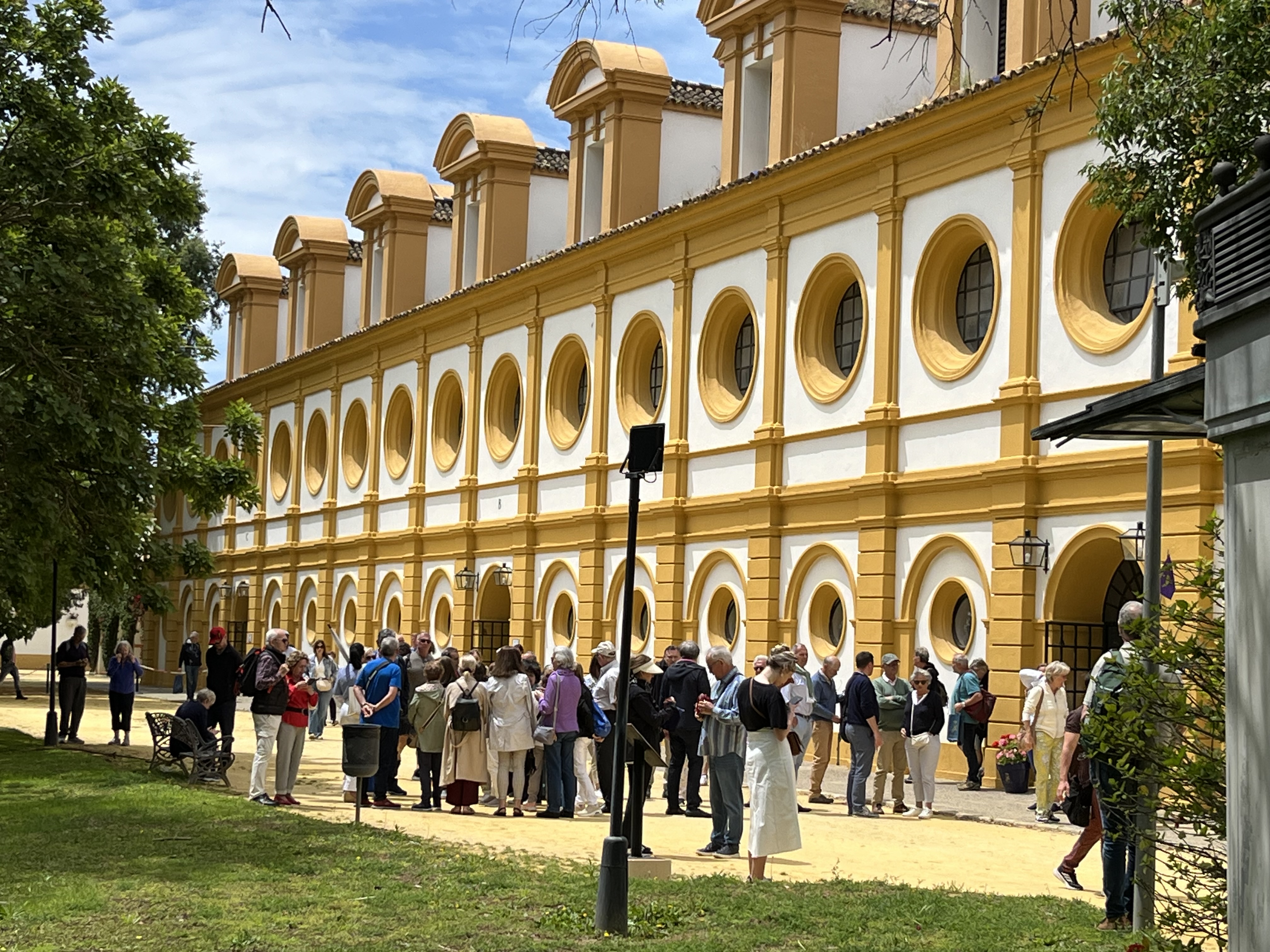
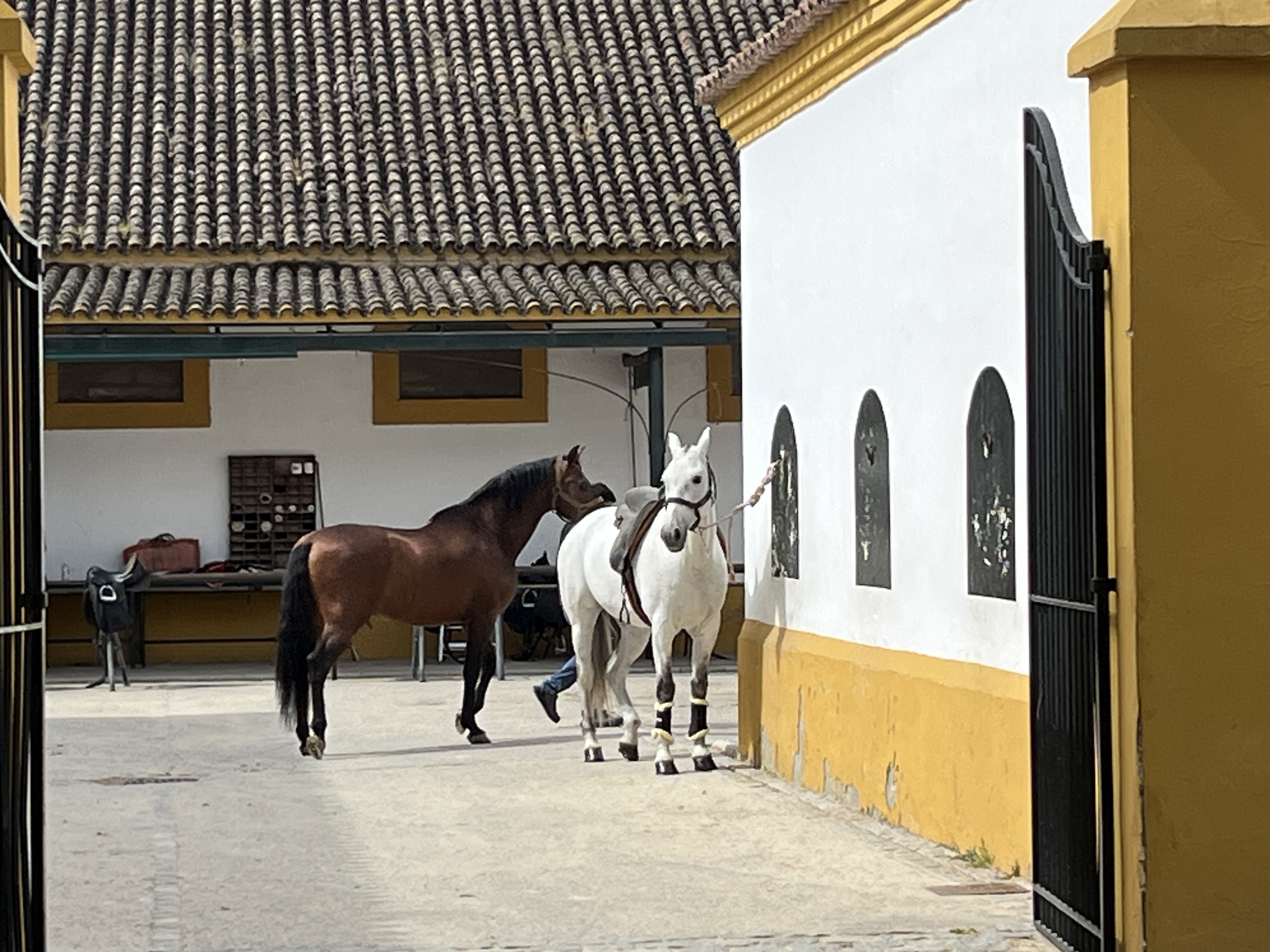
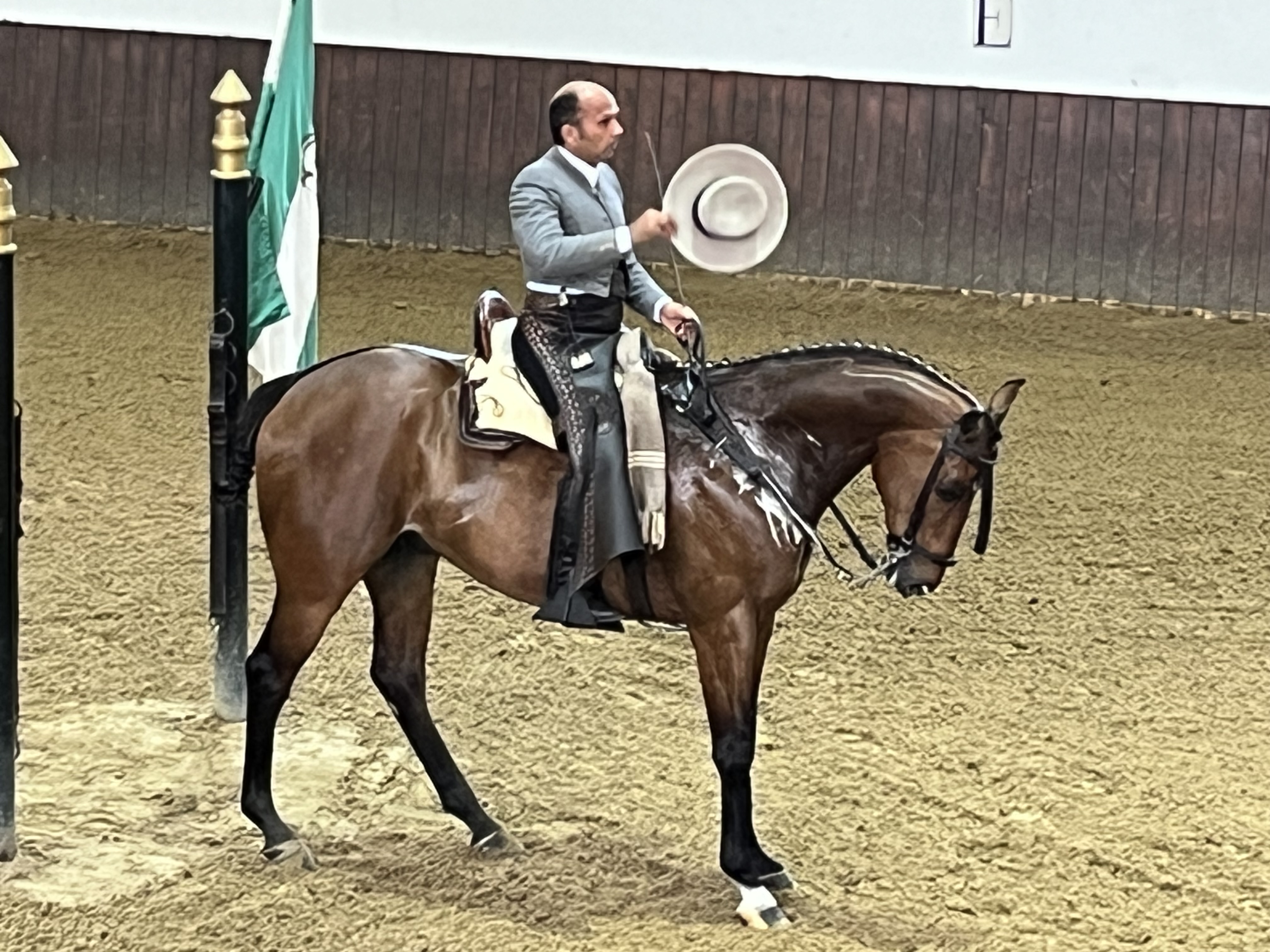
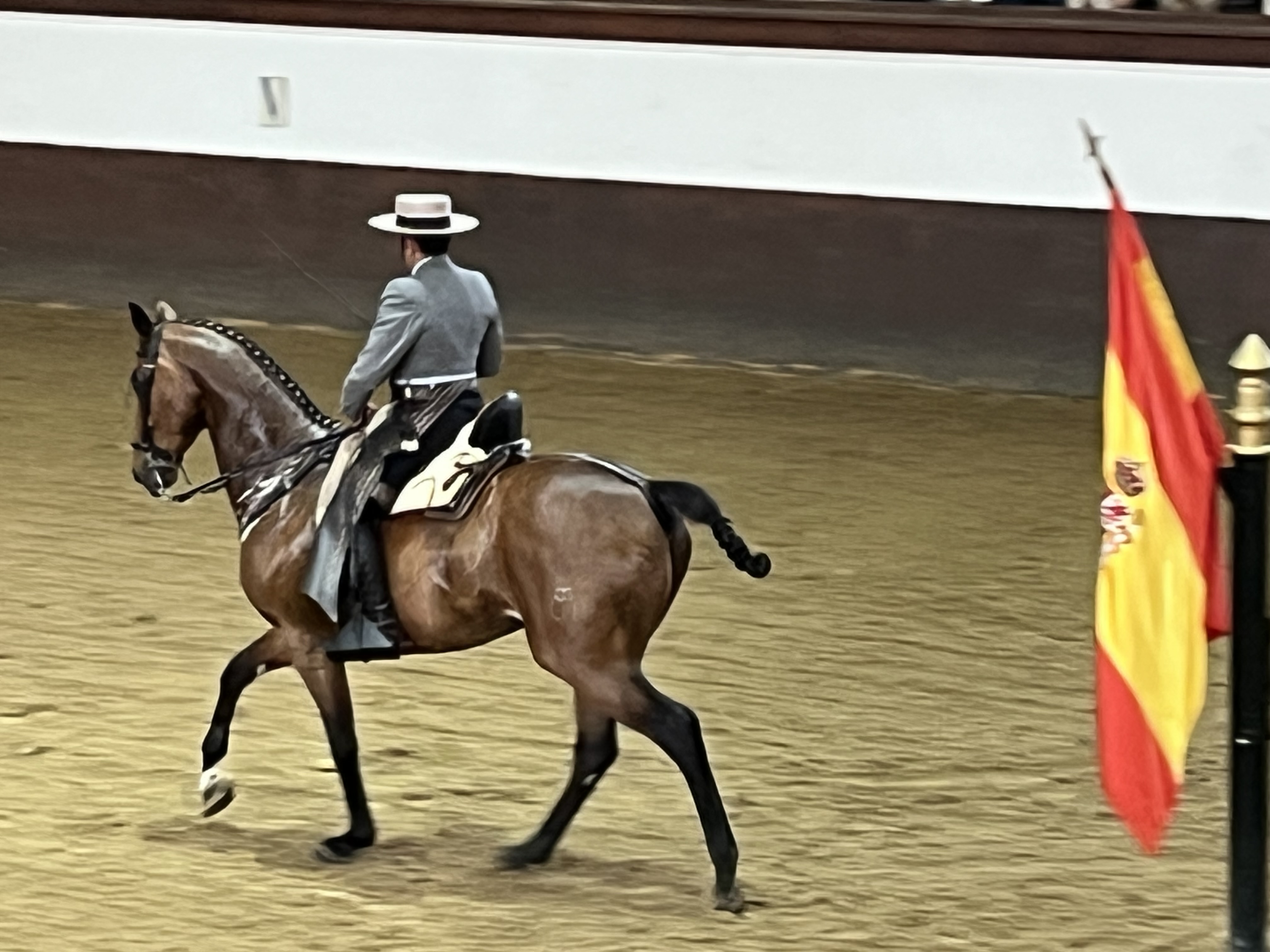
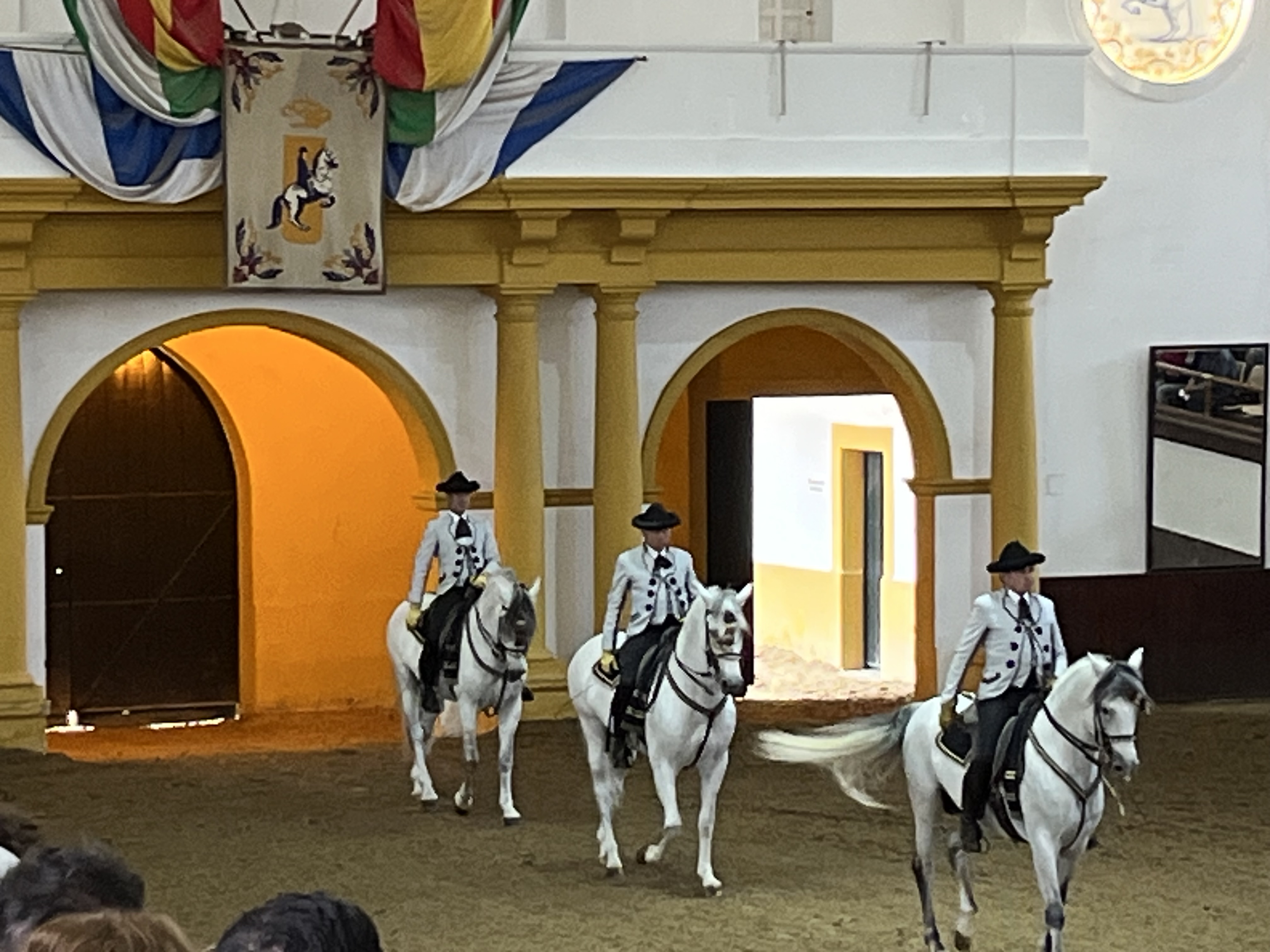
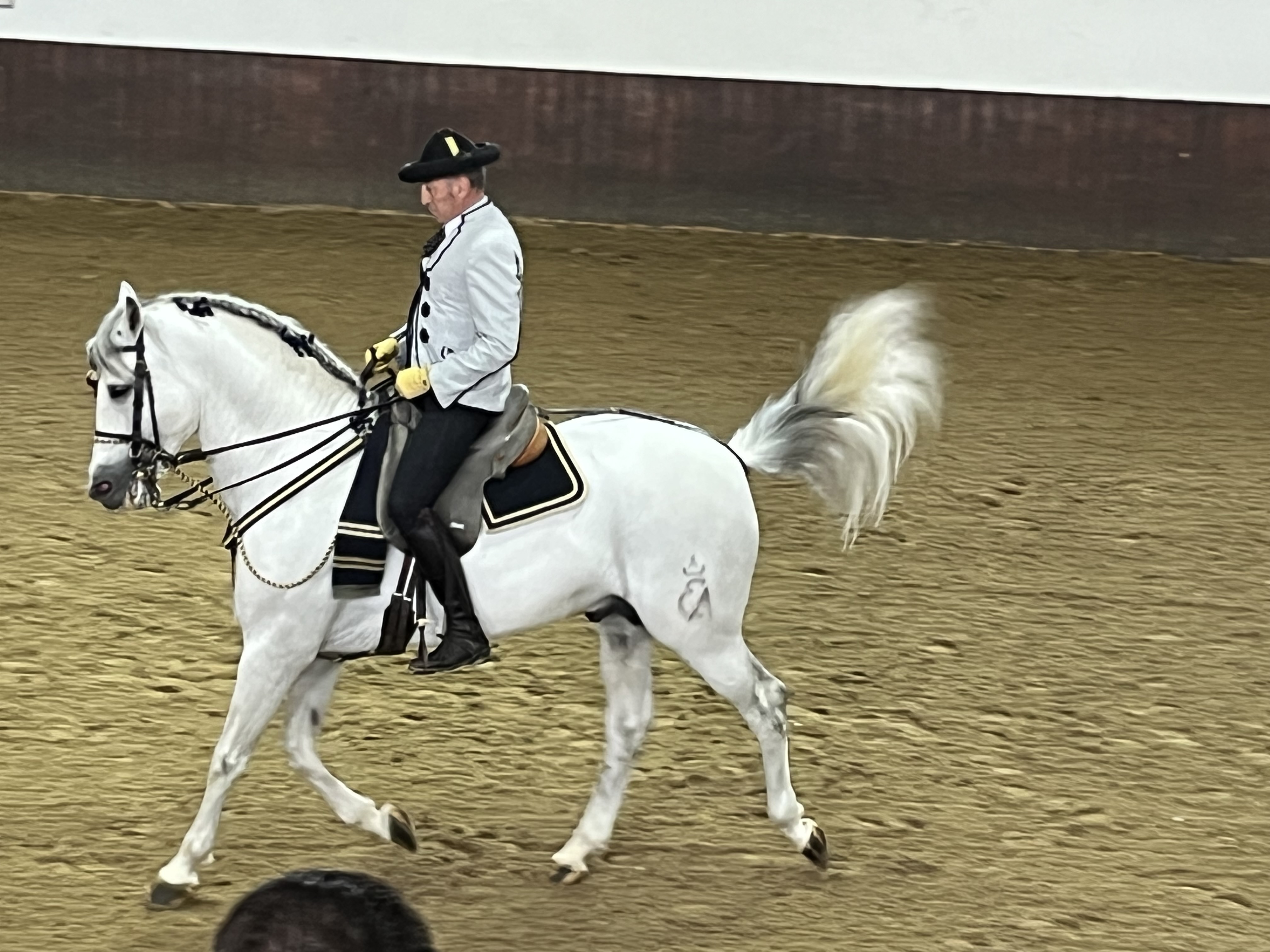
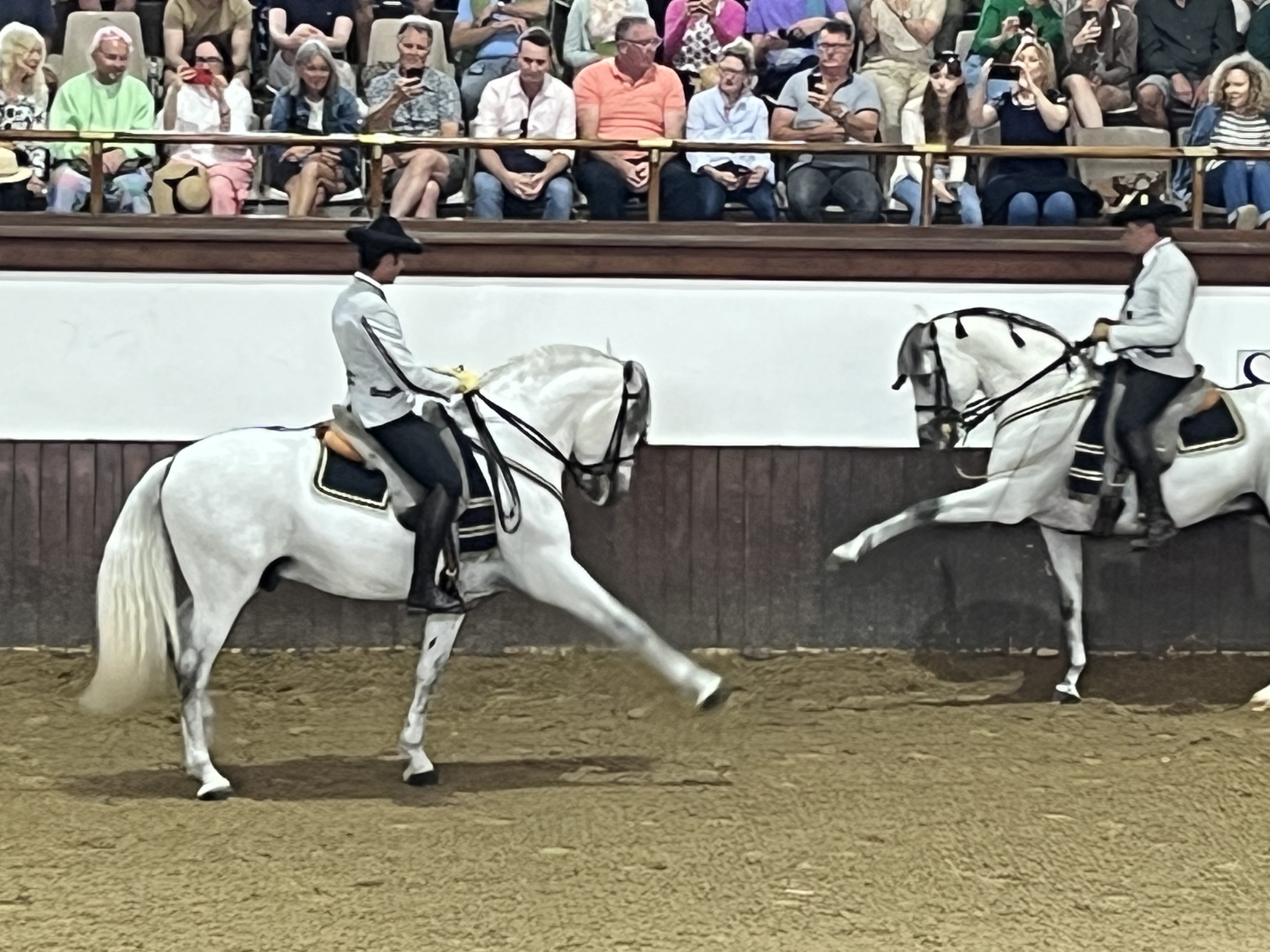
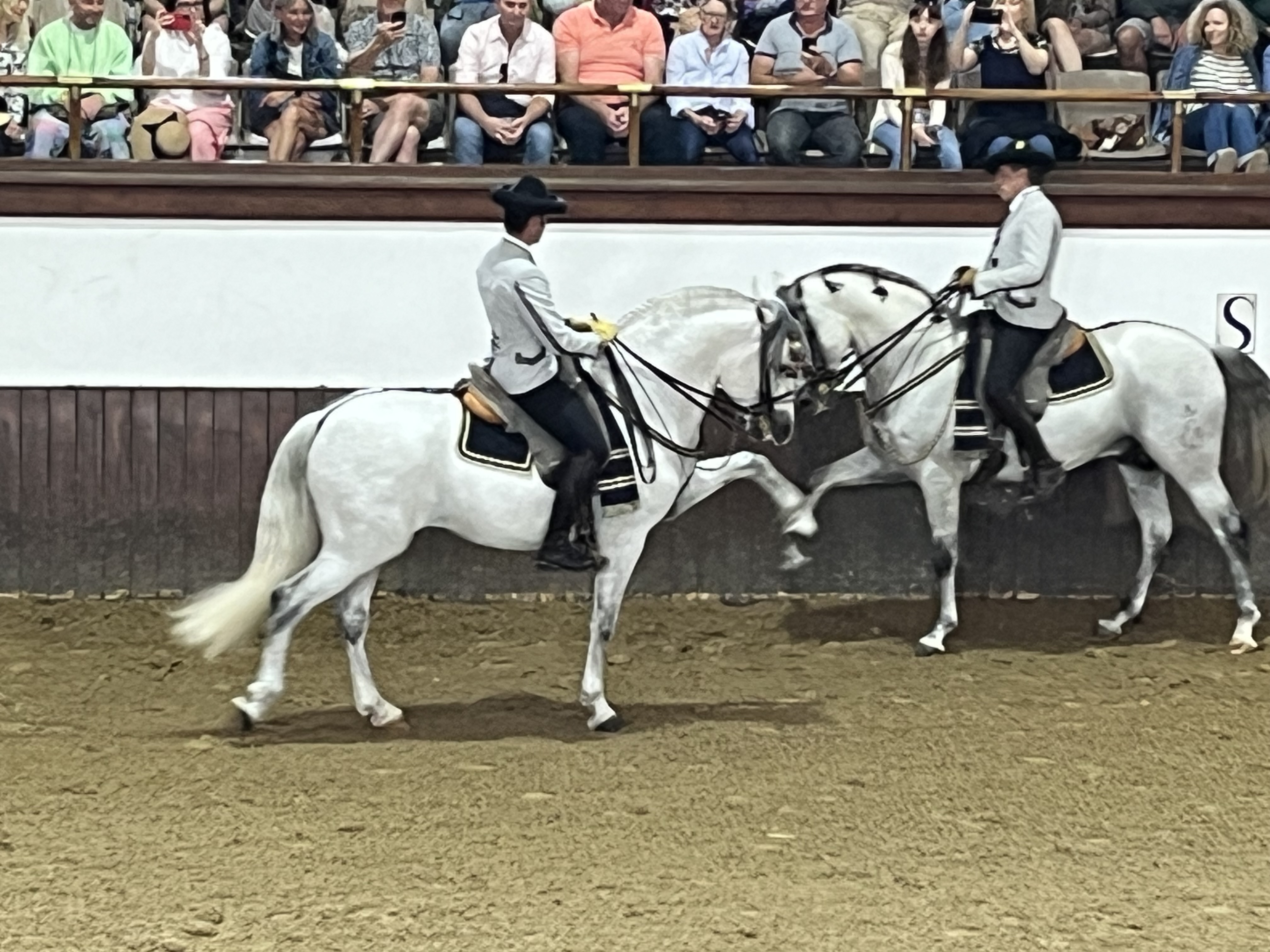
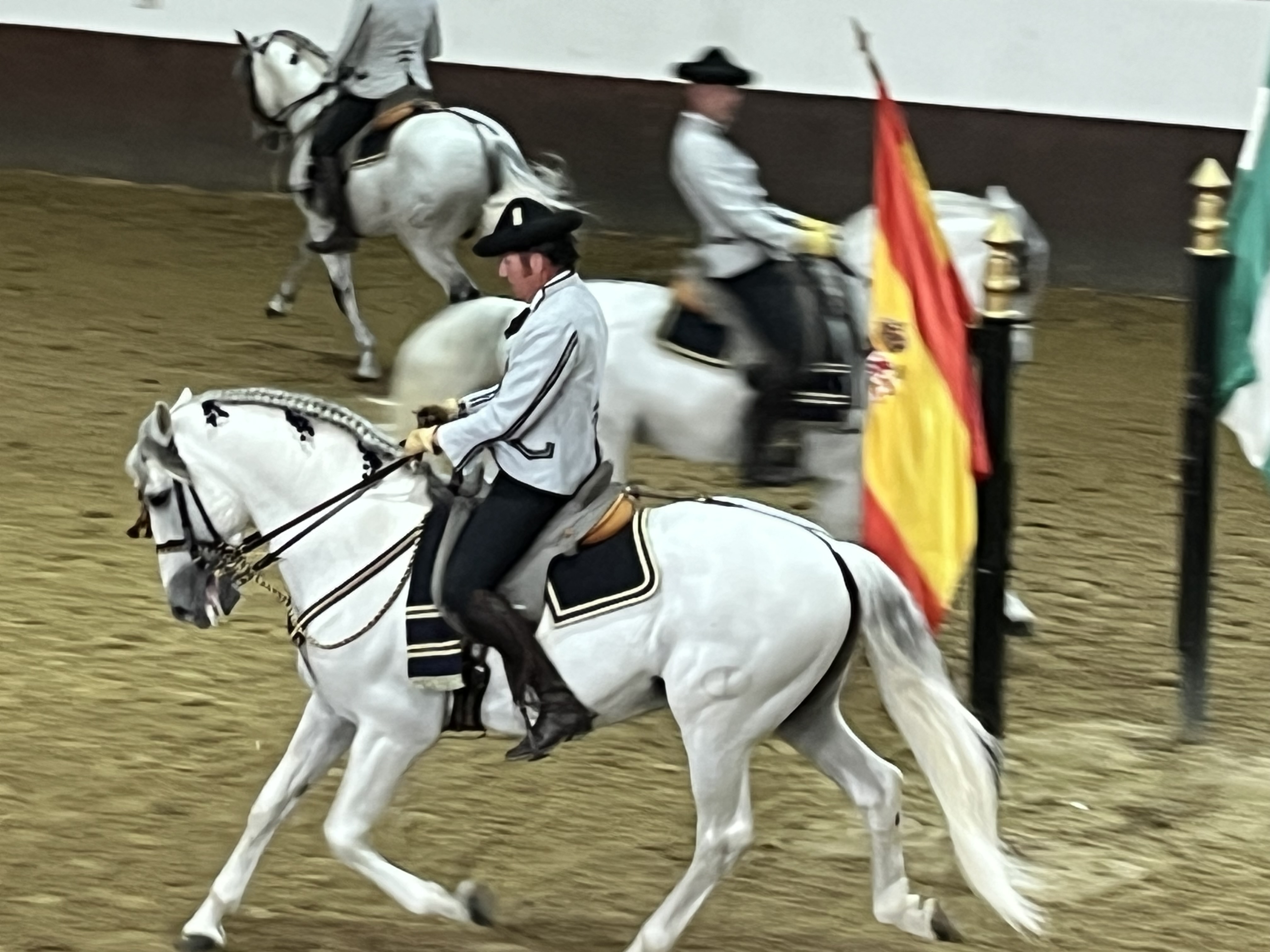
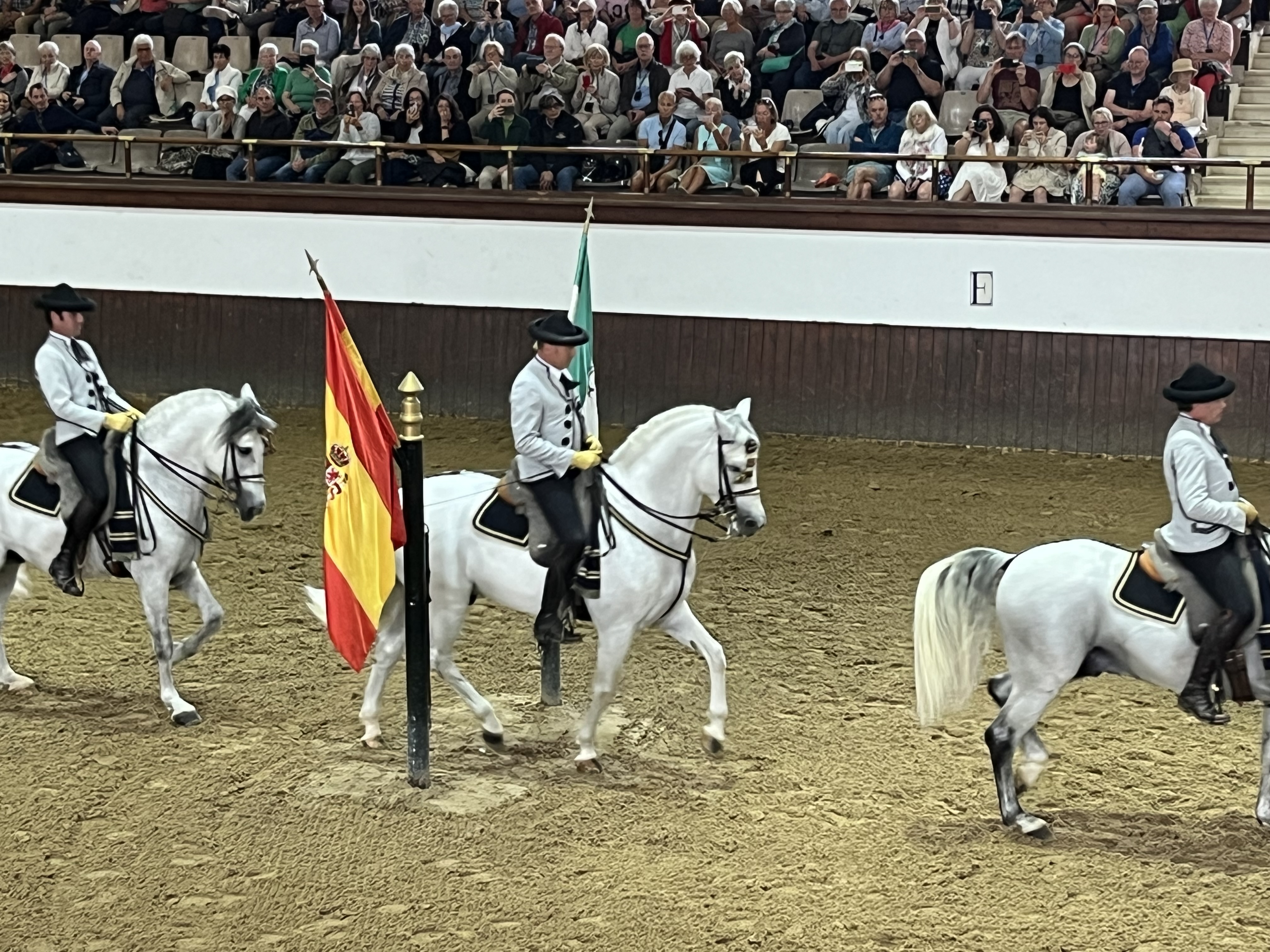
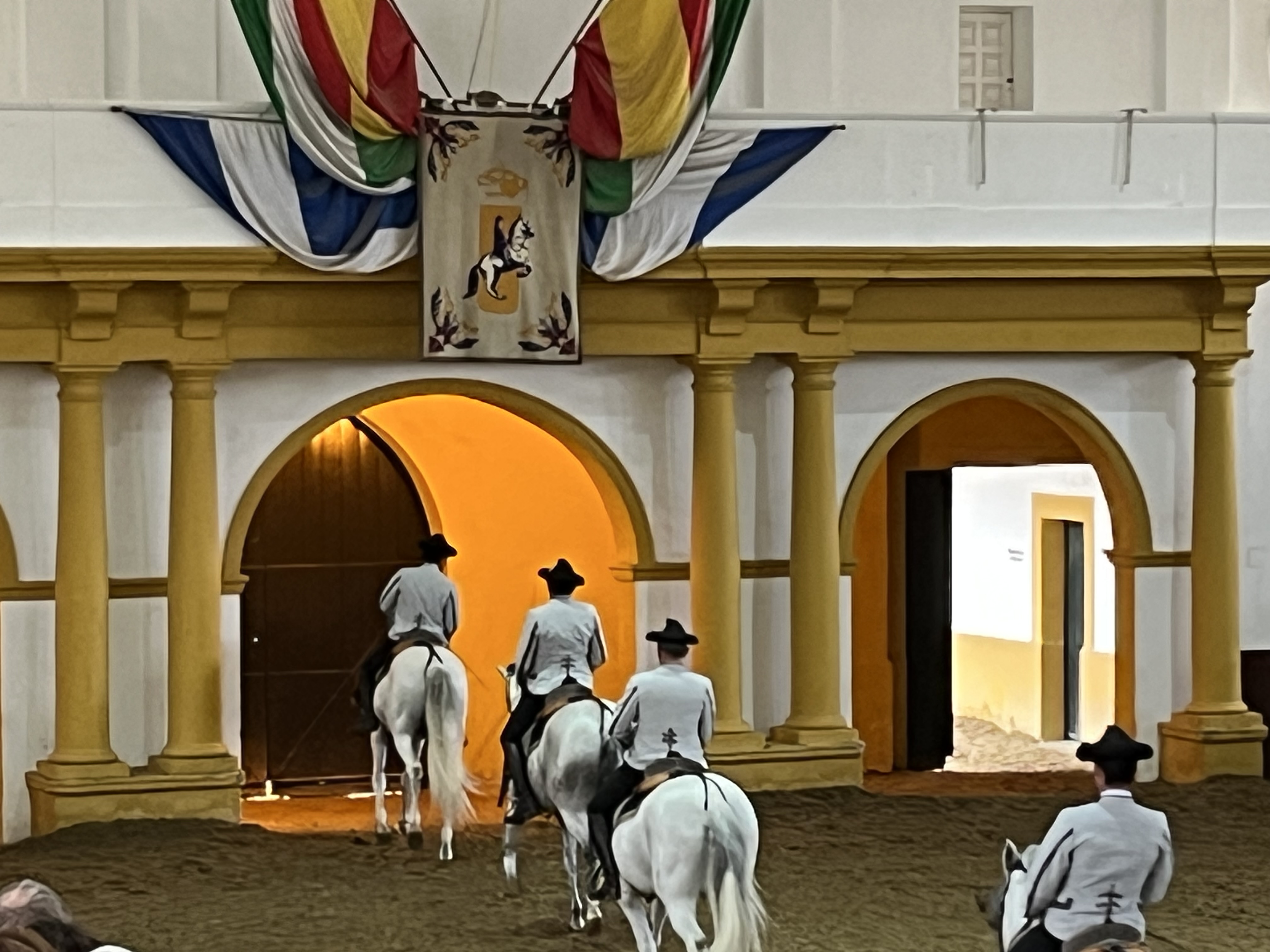
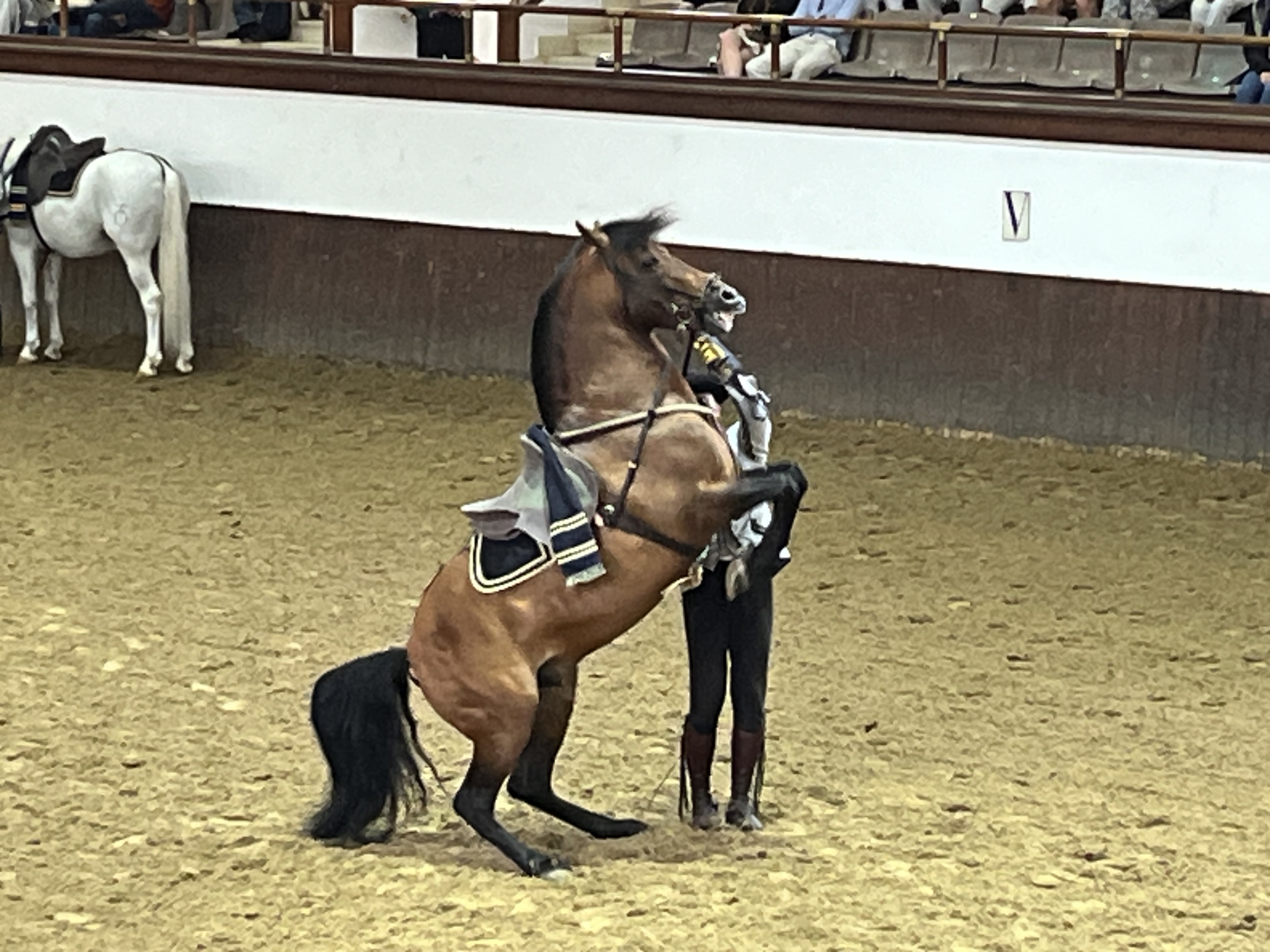
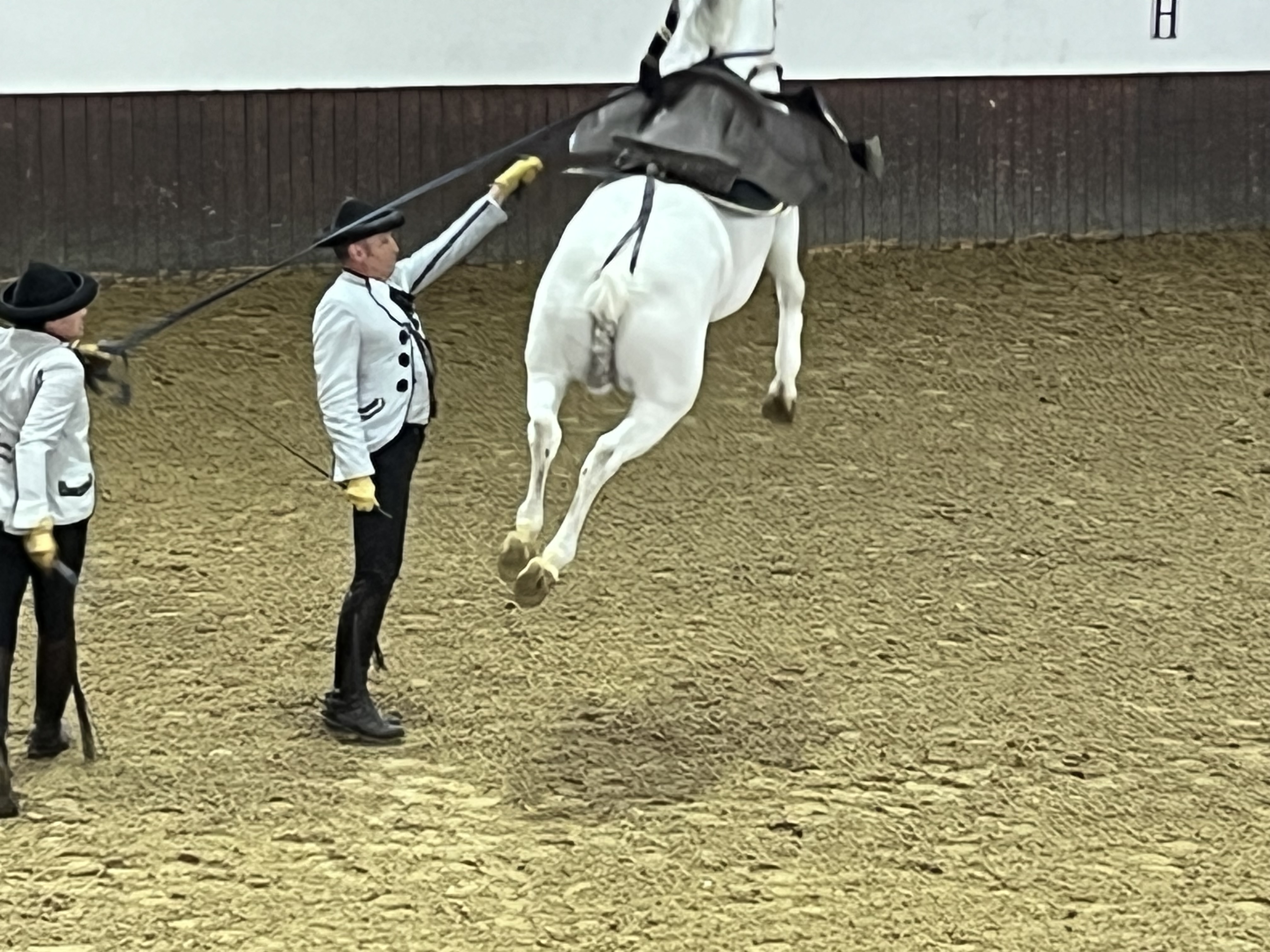
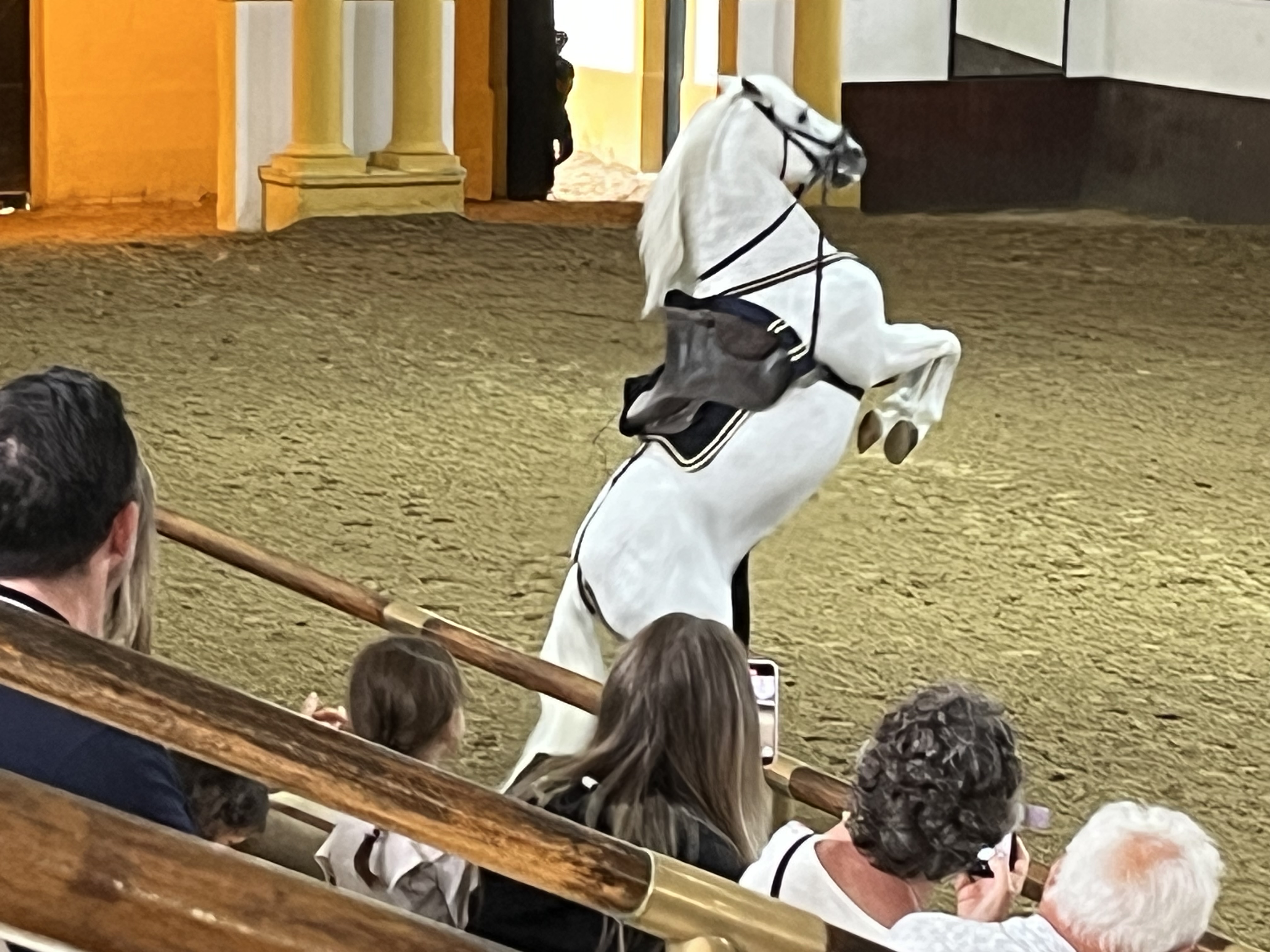
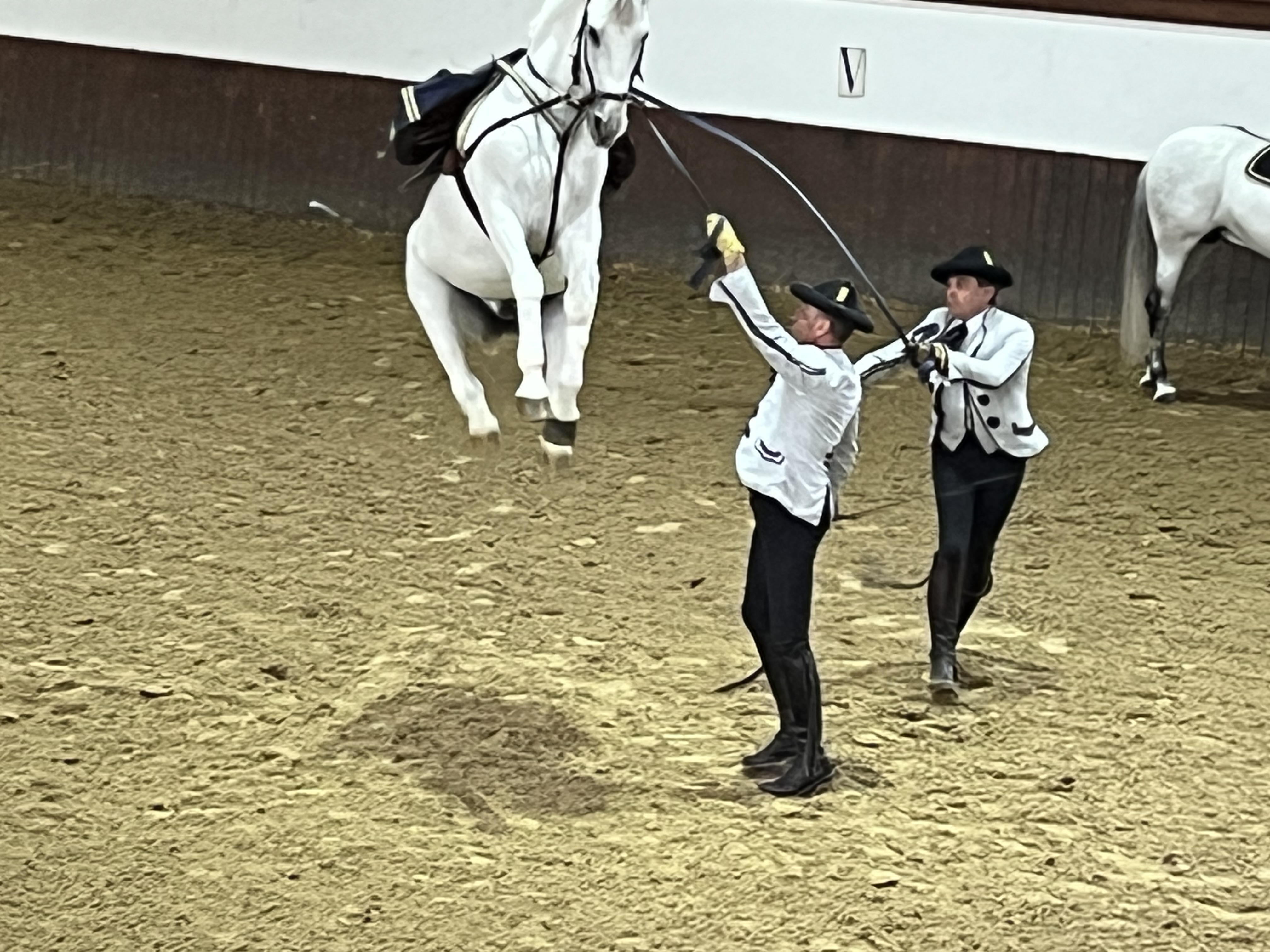
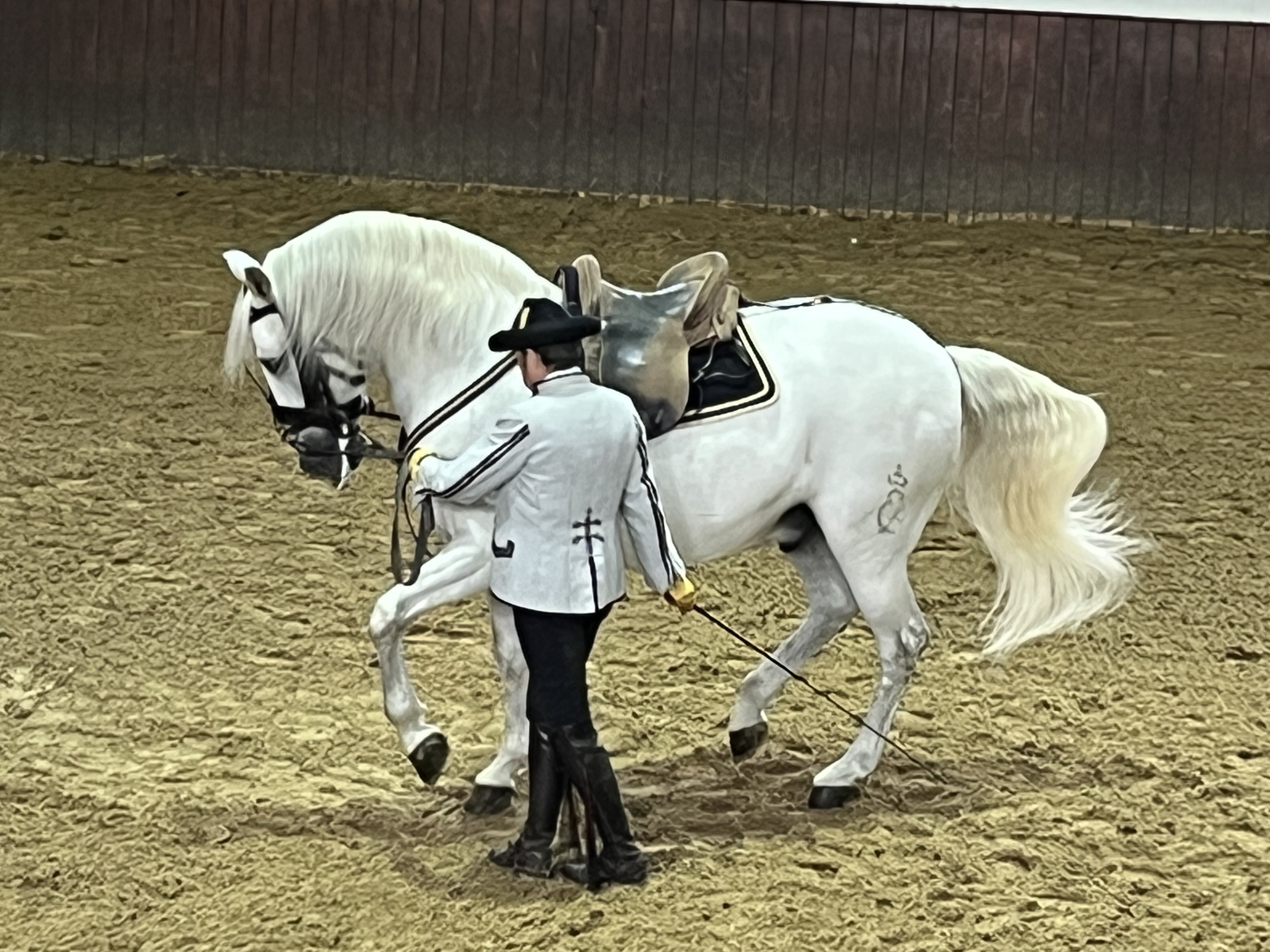
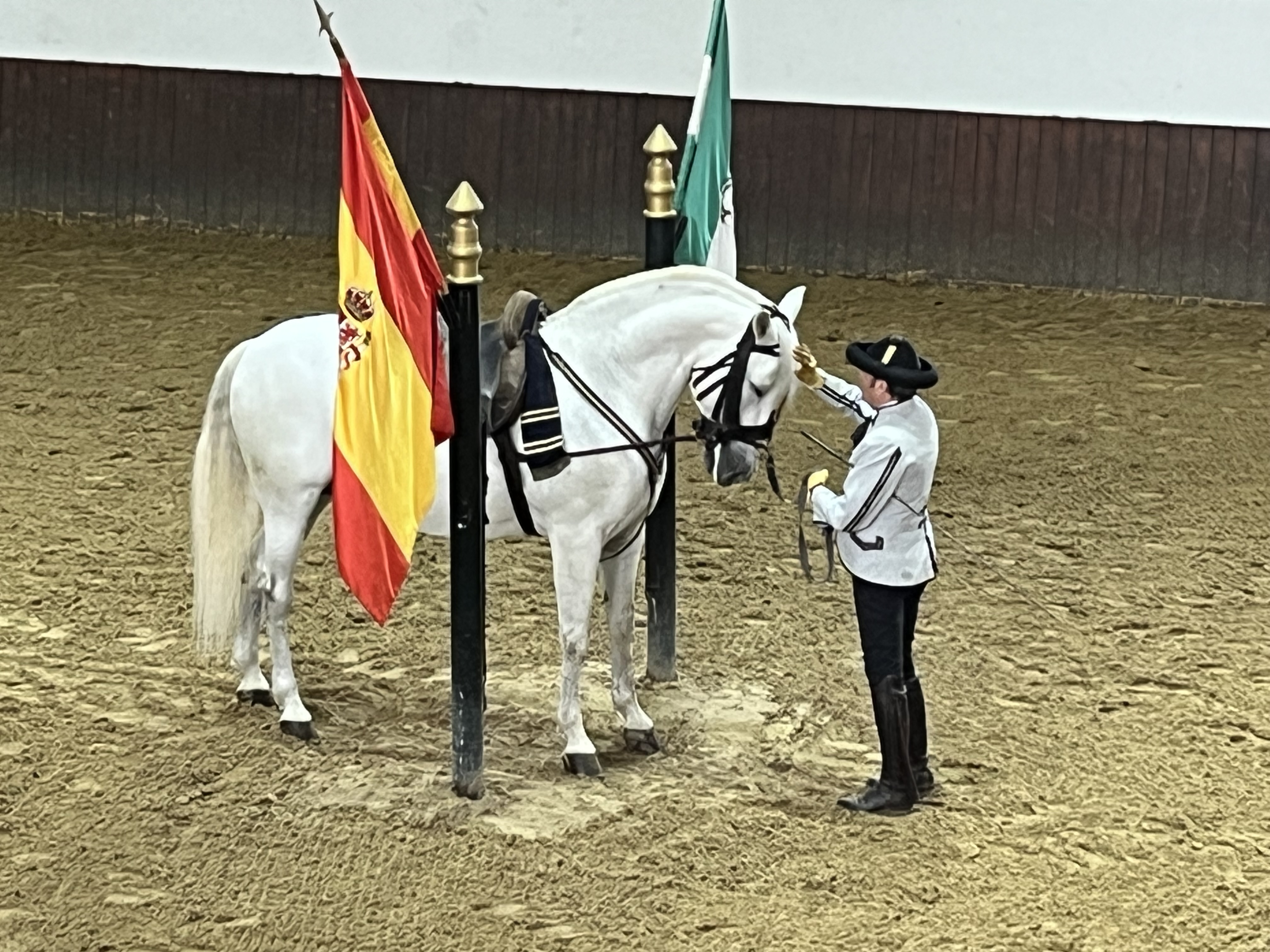
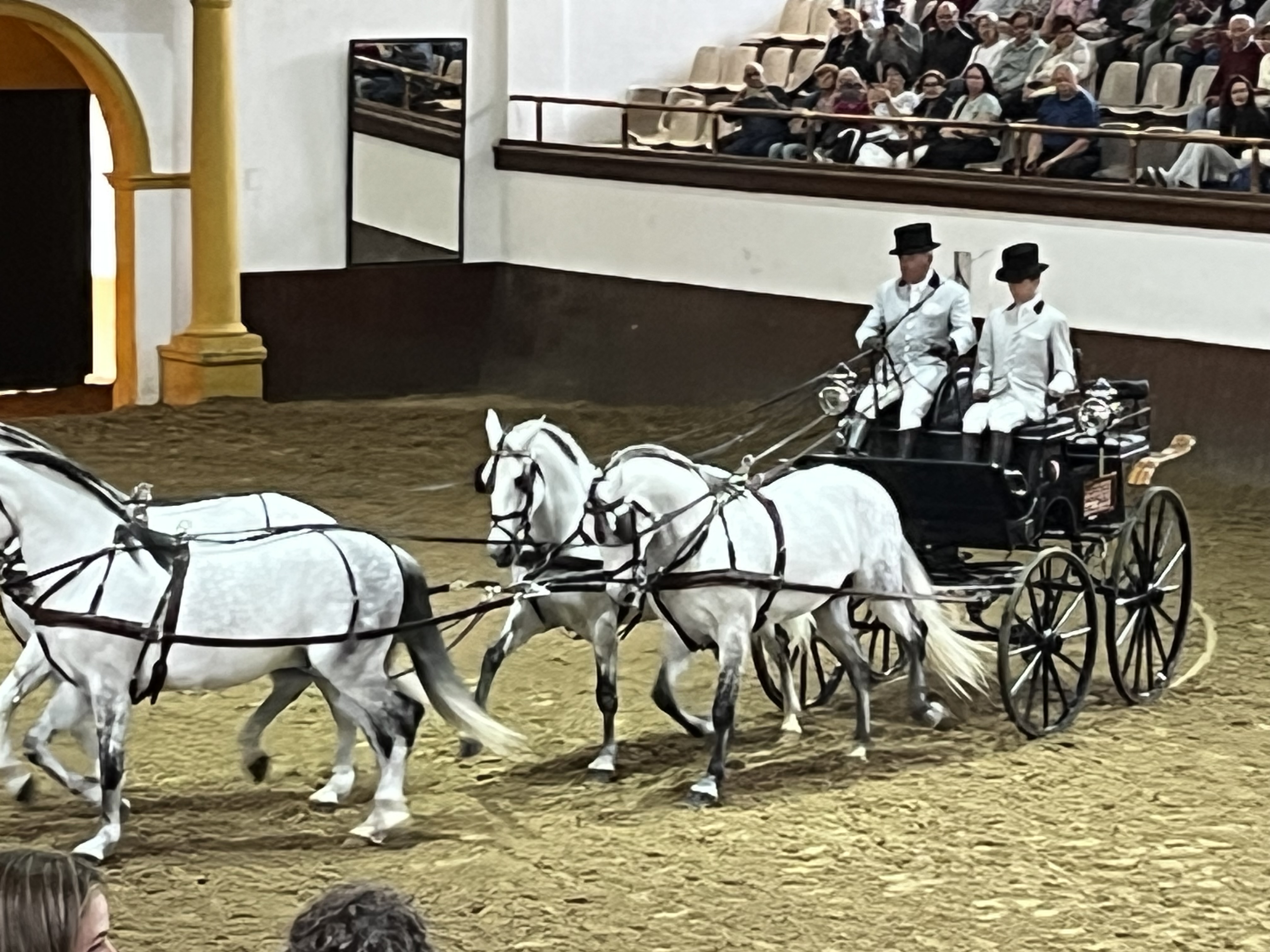
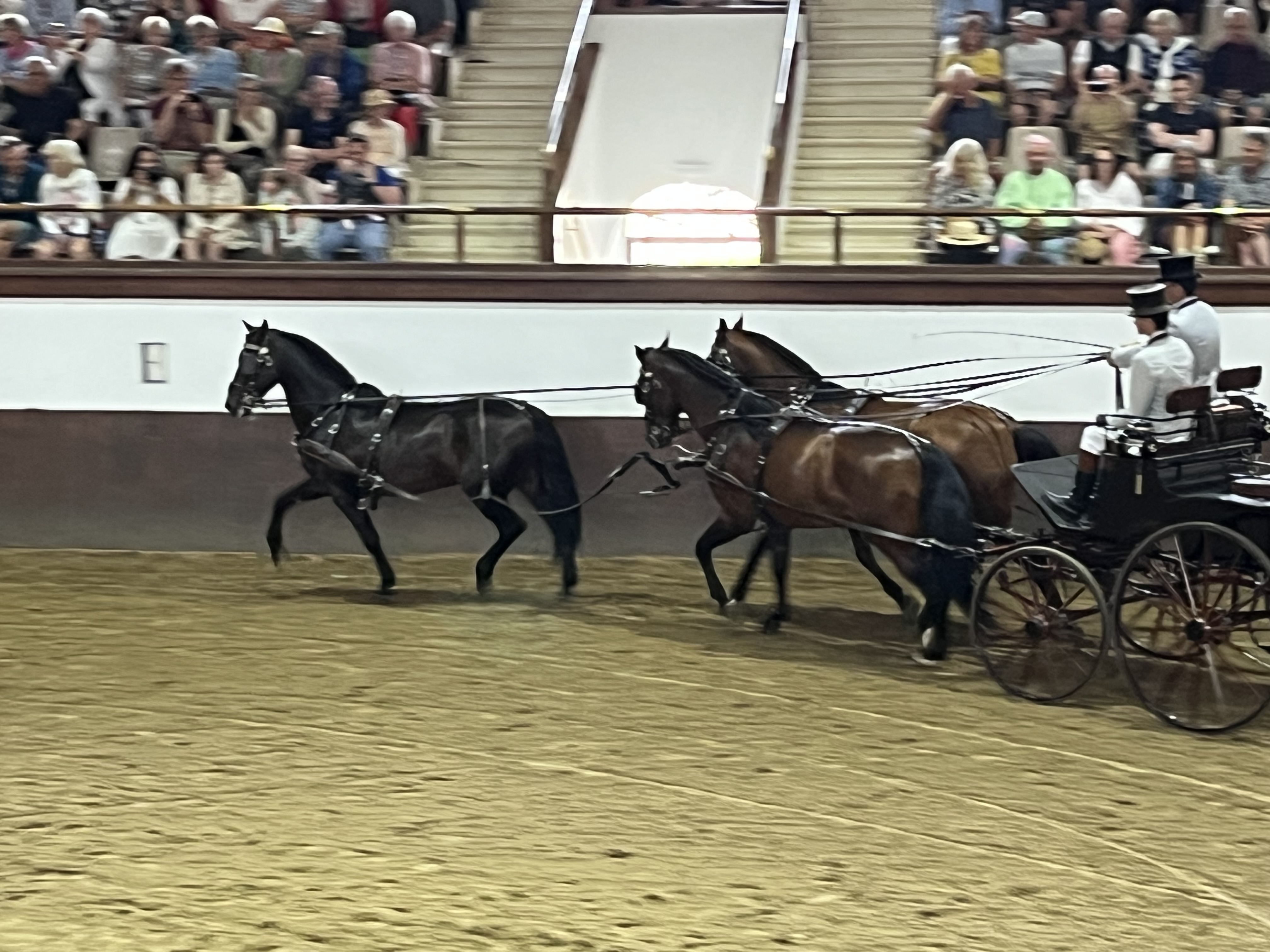
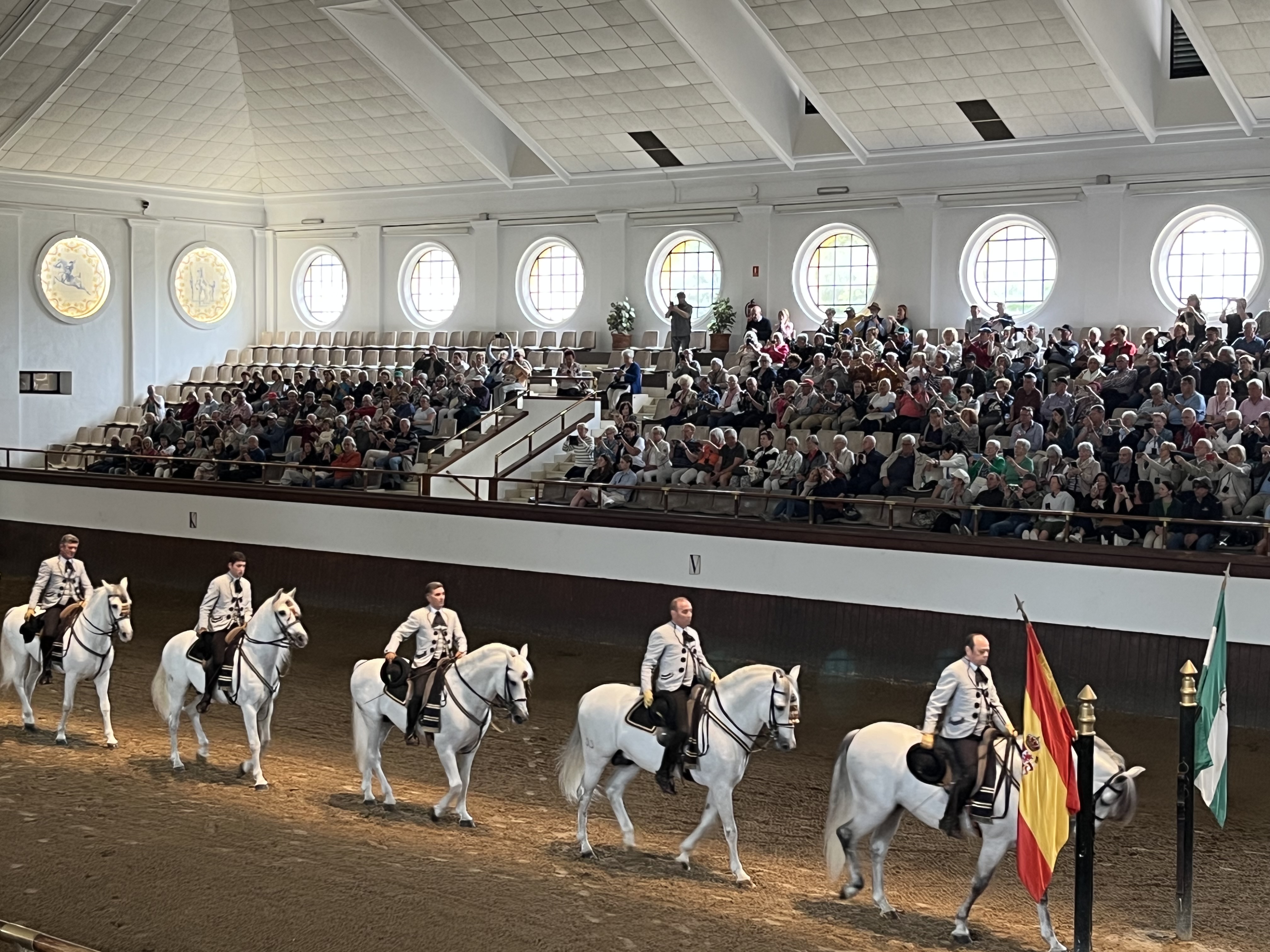
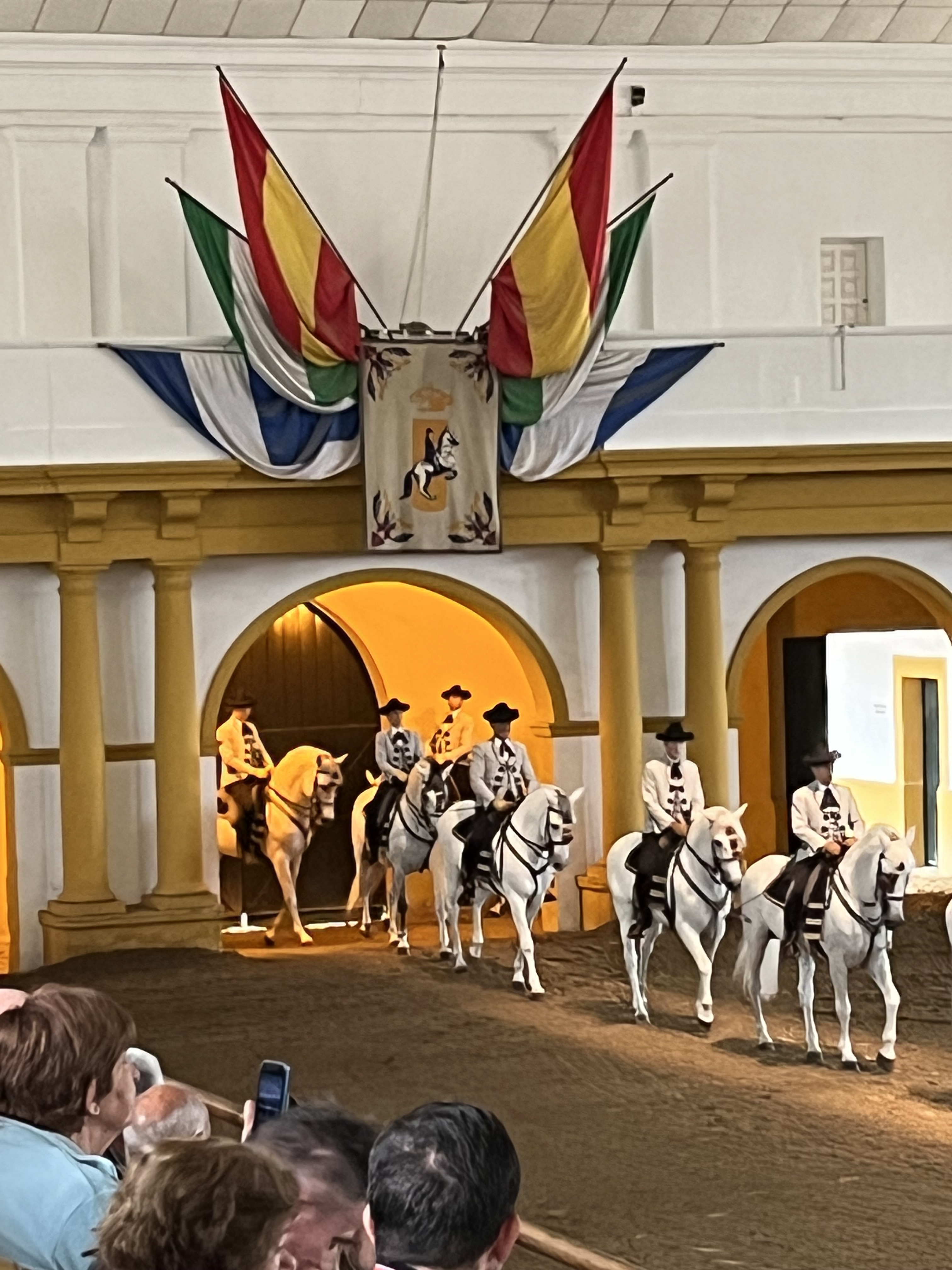
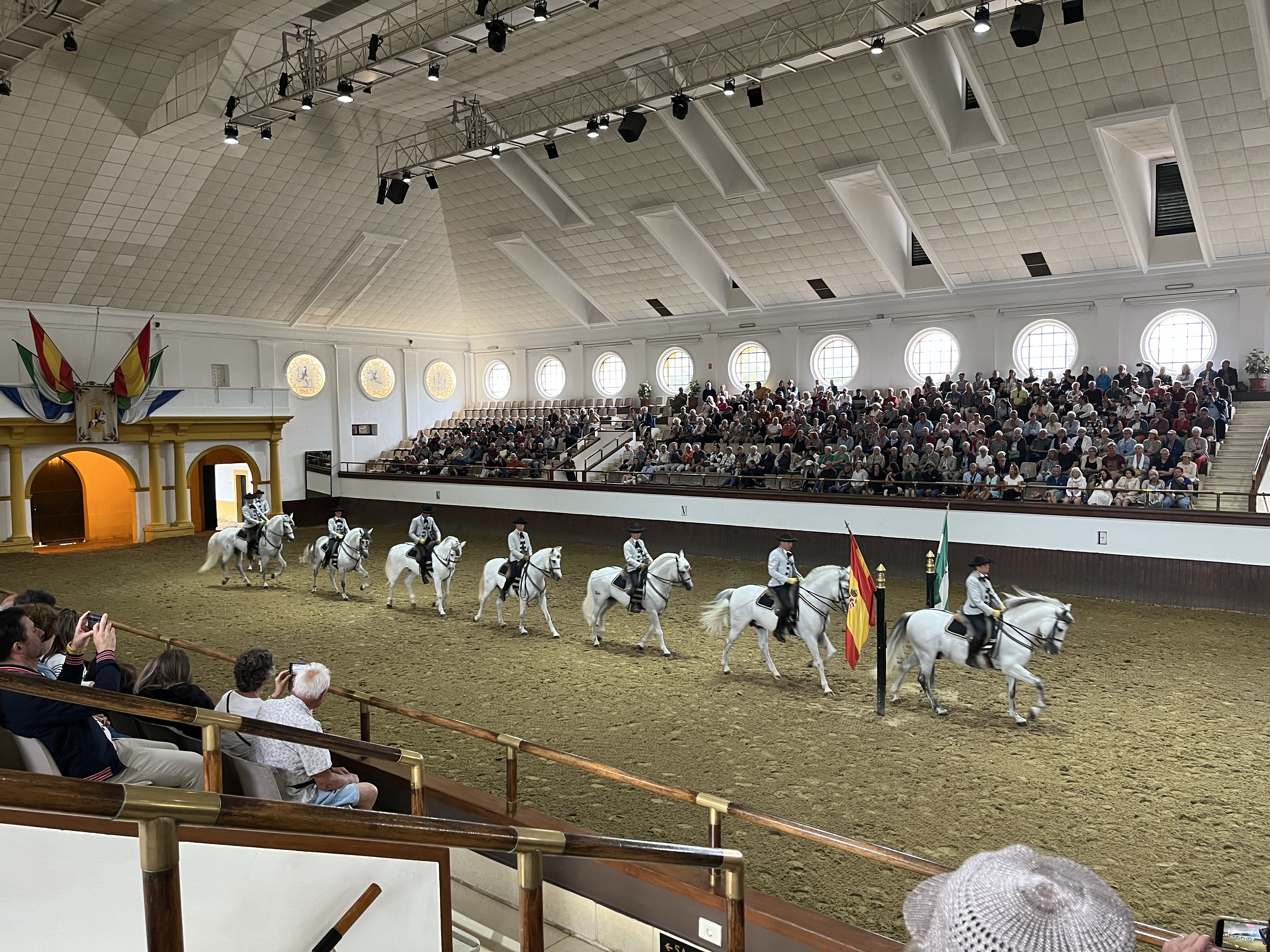
On the way to Sevilla we stopped for a show at the Royal Andalusian School of Equestrian Art. Spaniards have a long history of horsemanship and a lot of their riding drills and techniques have evolved out of the use of their horses for warfare. Though horse riding in general is certainly more Lauri’s forte, I clearly enjoyed the show as well. These strong built Andalusian horses are beautiful, and the varied performance was spectacular. The entire show performance felt lively, with horses and riders full of poise and having fun, unlike some forced dressage riding I’ve seen before.




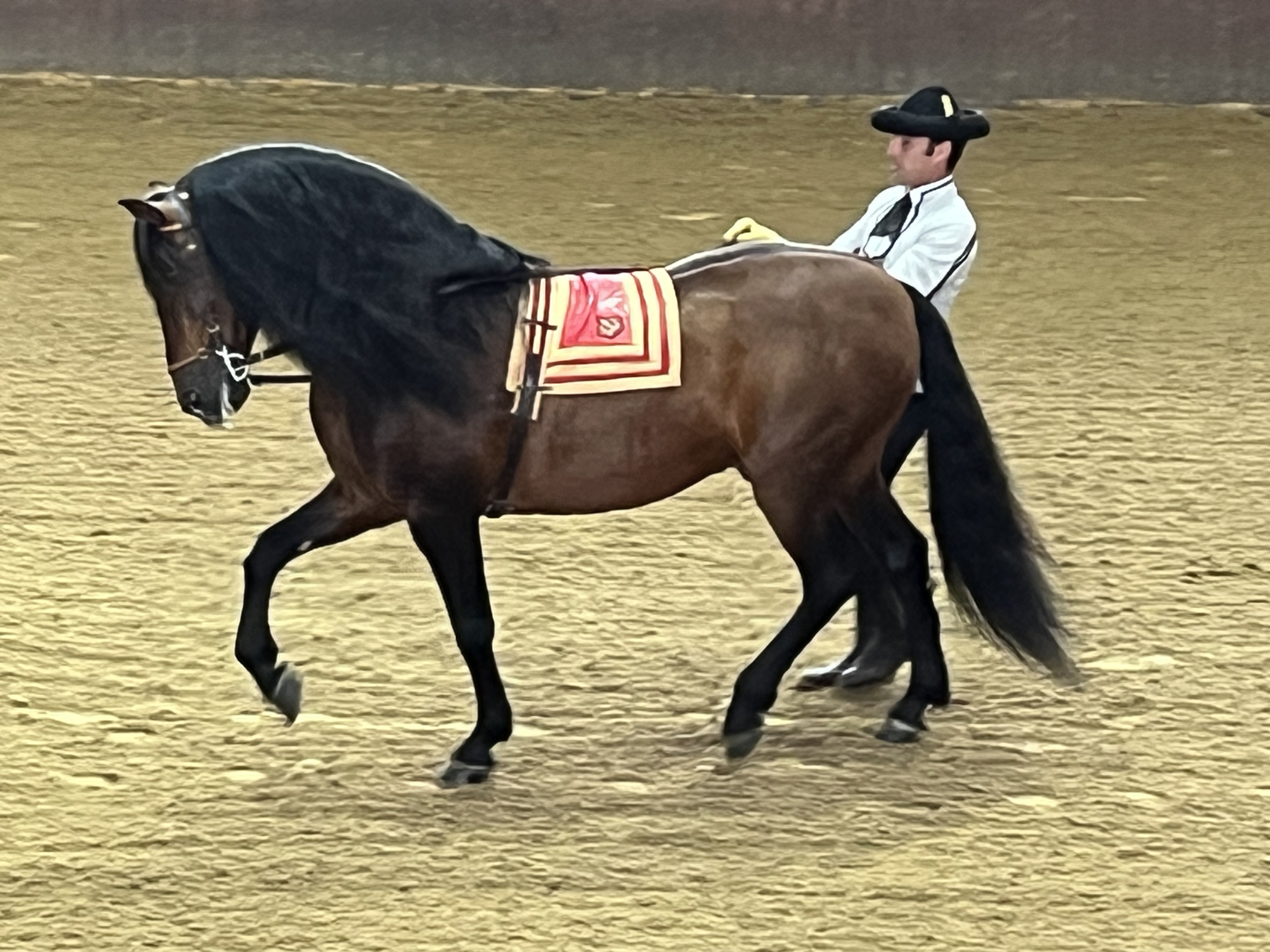
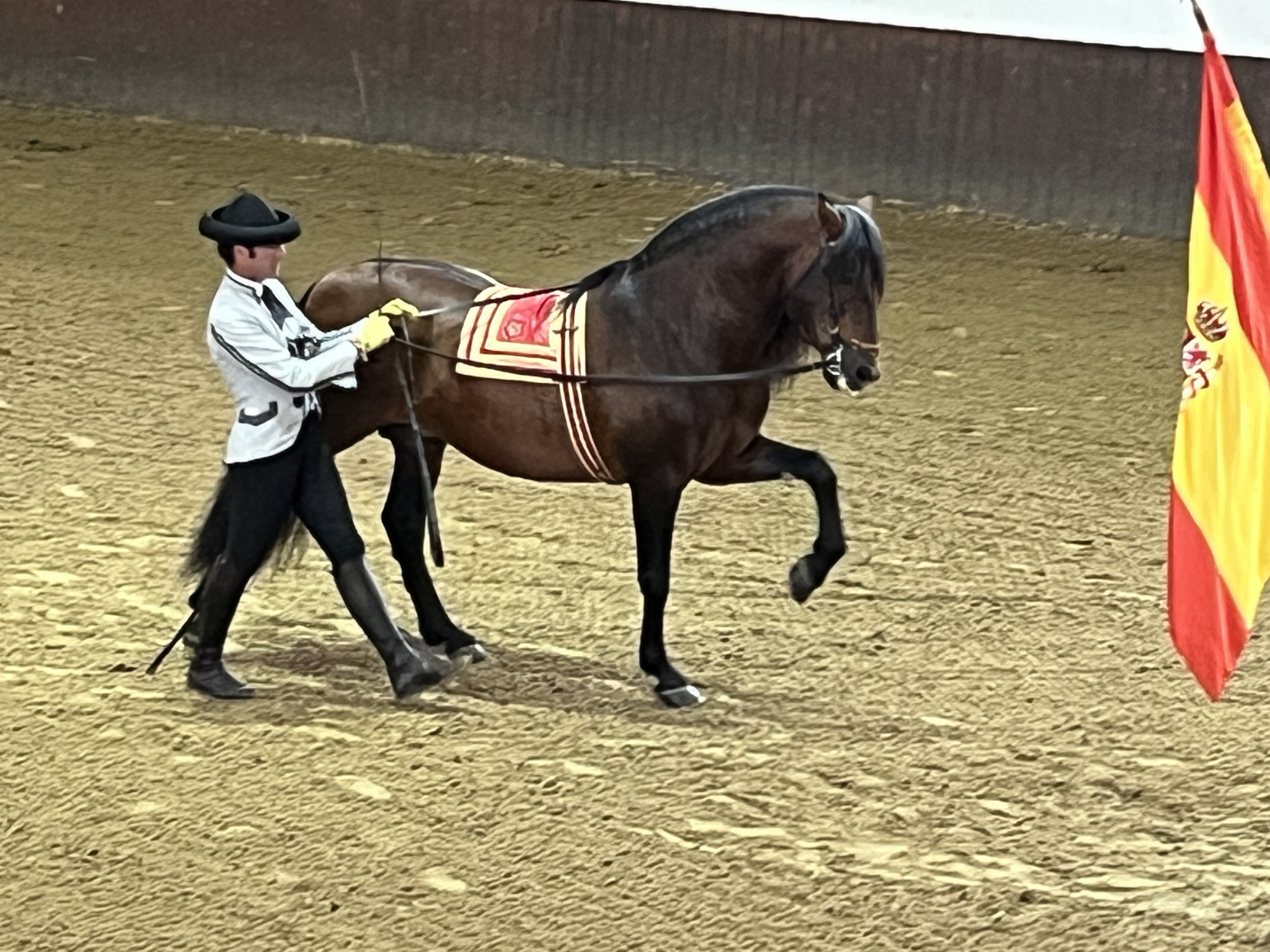
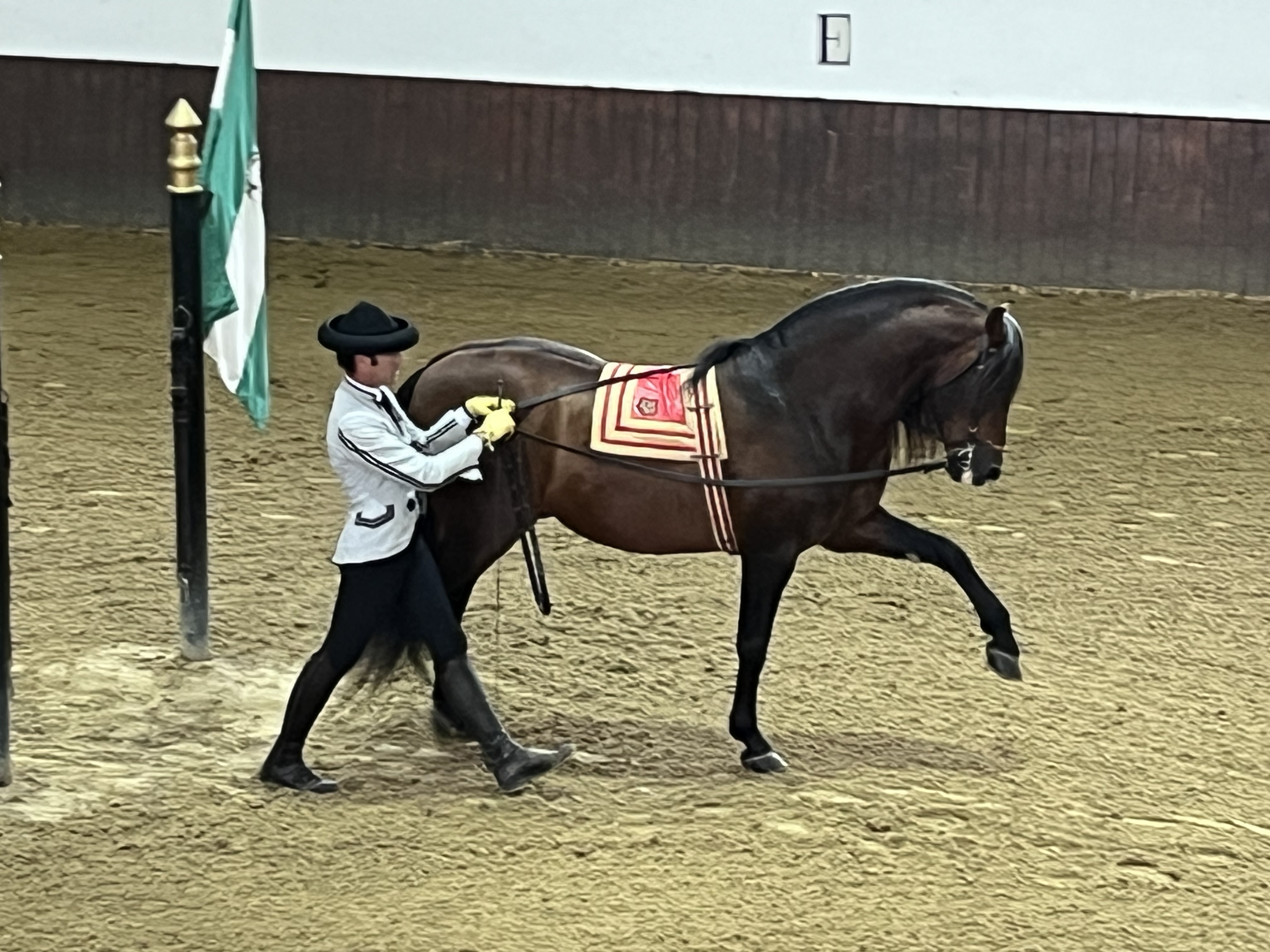
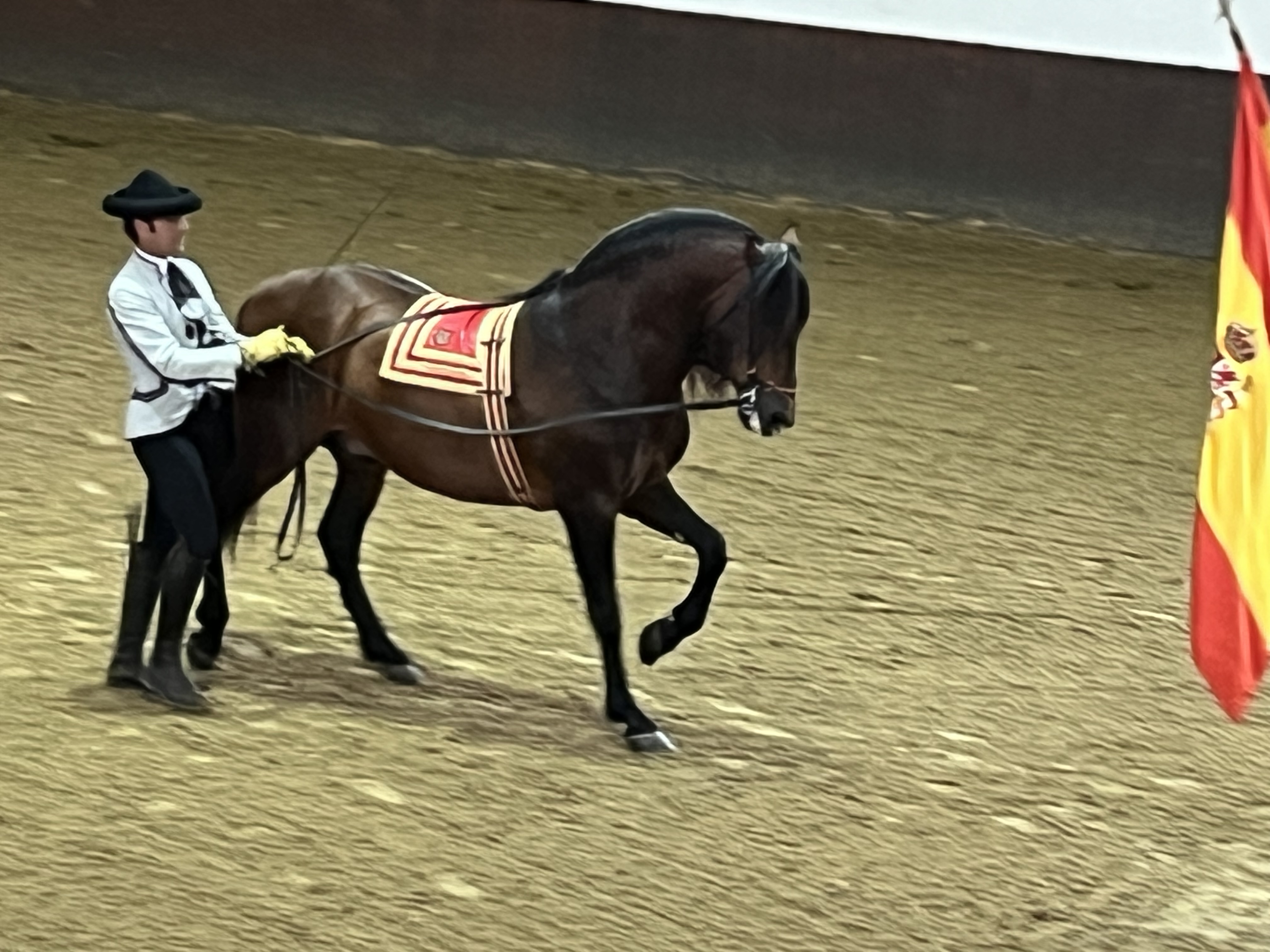
Sevilla
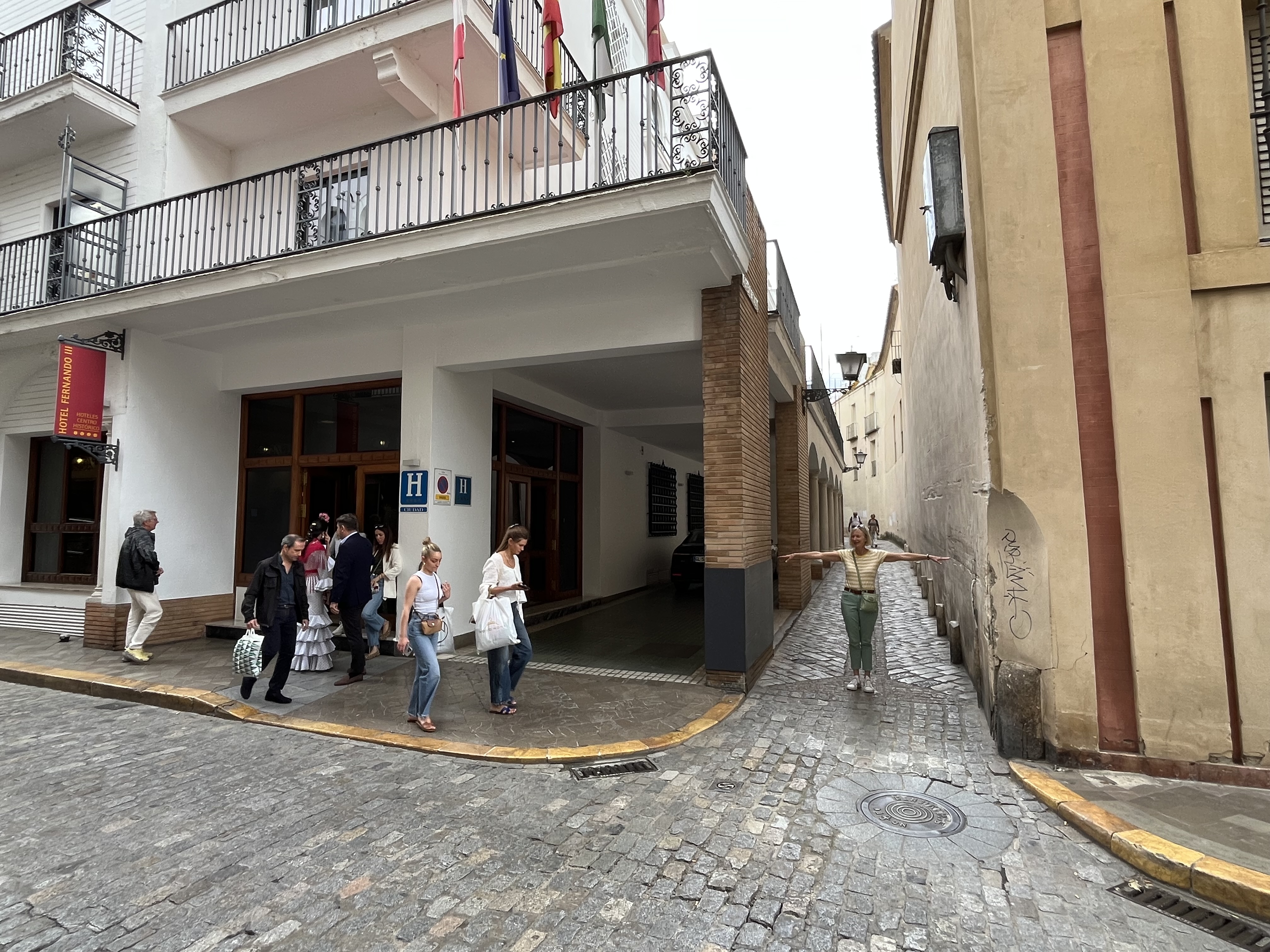
Once called the new Roma, this old city, dates back to Roman times. With its Alcazar and Cathedral, it has a similar history to Cordoba. Today, Sevilla is the biggest city in Andalusia and southern Spain, with a population of 700,000. Its labyrinth like, large historic center of narrow streets and small squares feels very livable and attractive, and like a place one can easily lose ones sense of direction. This reminds me, that when we were driving in, trying to find our hotel in the narrow streets of the old town, we almost literally got our car stuck. I had to fold in our mirrors to squeeze through between houses. This is what can happen, when receiving Google map directions from your copilot, who is reading off instructions for pedestrians, – DAAAHHH! Fortunately we had a good laugh and got out of this literal bind without a scratch!
Here, in the next picture where Lauri is spreading her wings, is the narrow path we came out of with our Peugeot….

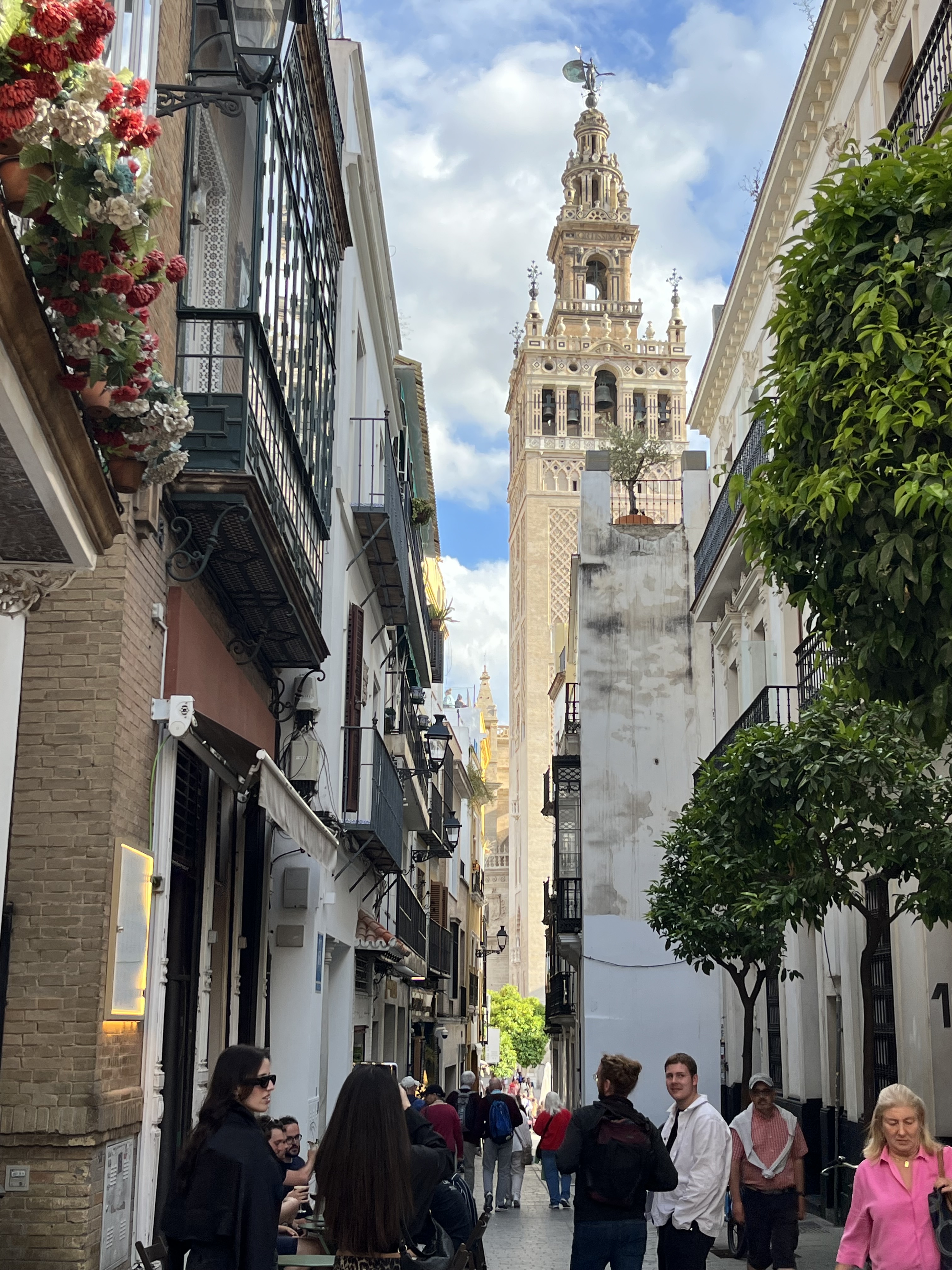
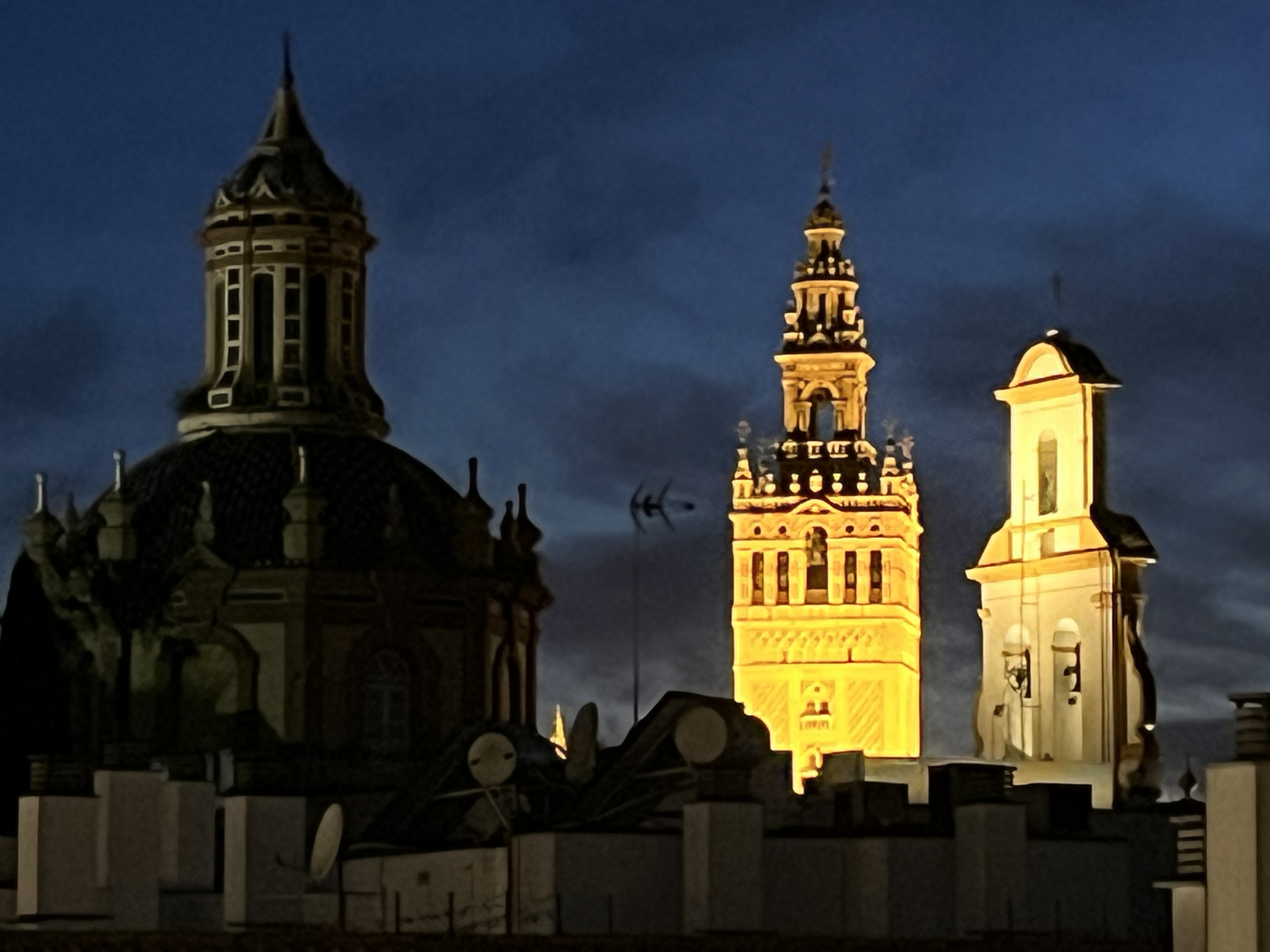

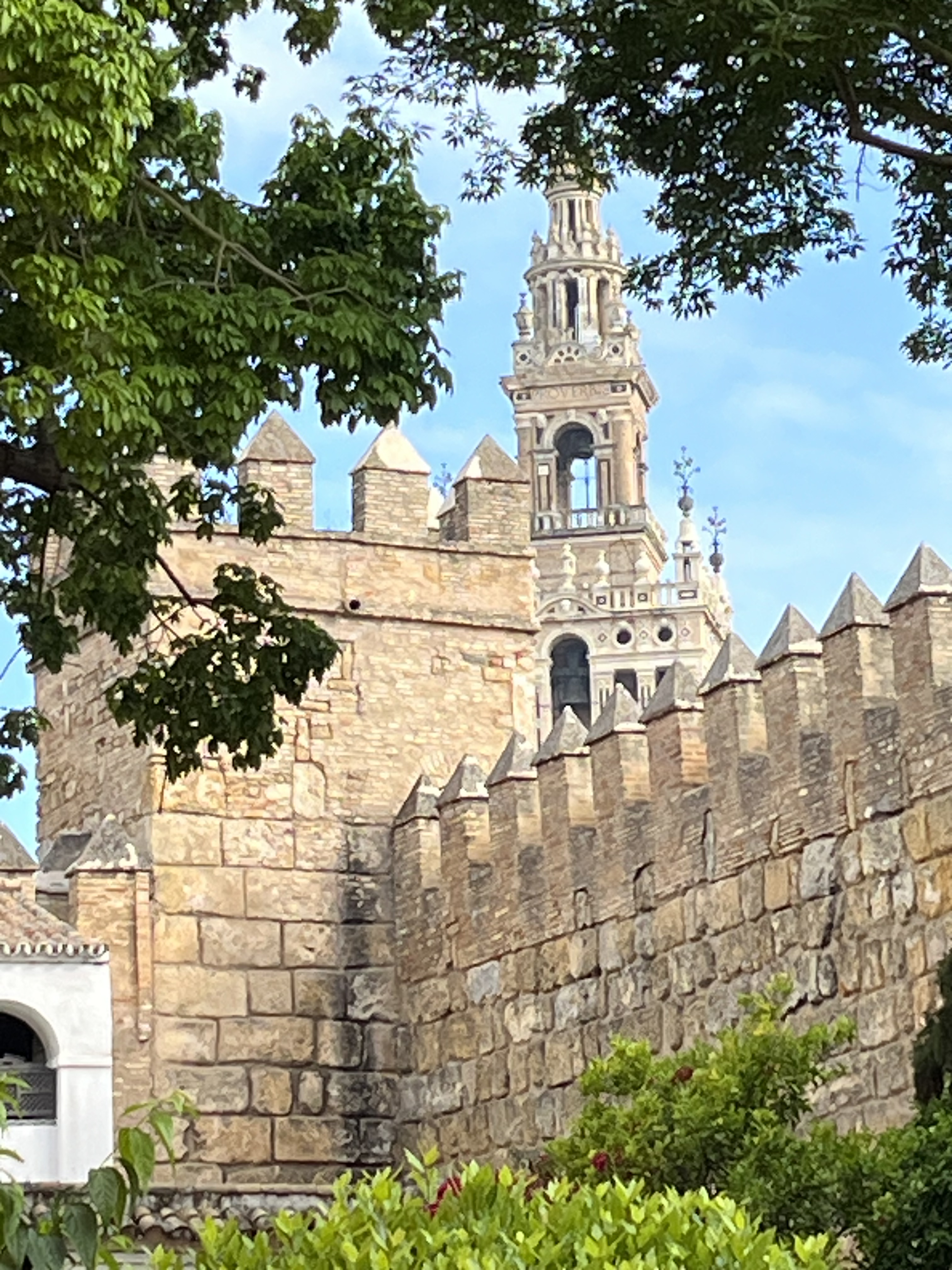
The tower which can be seen above and from most locations in Sevilla, is the Geralda, the Cathedral’s church tower, which clearly shows its Moorish influence.
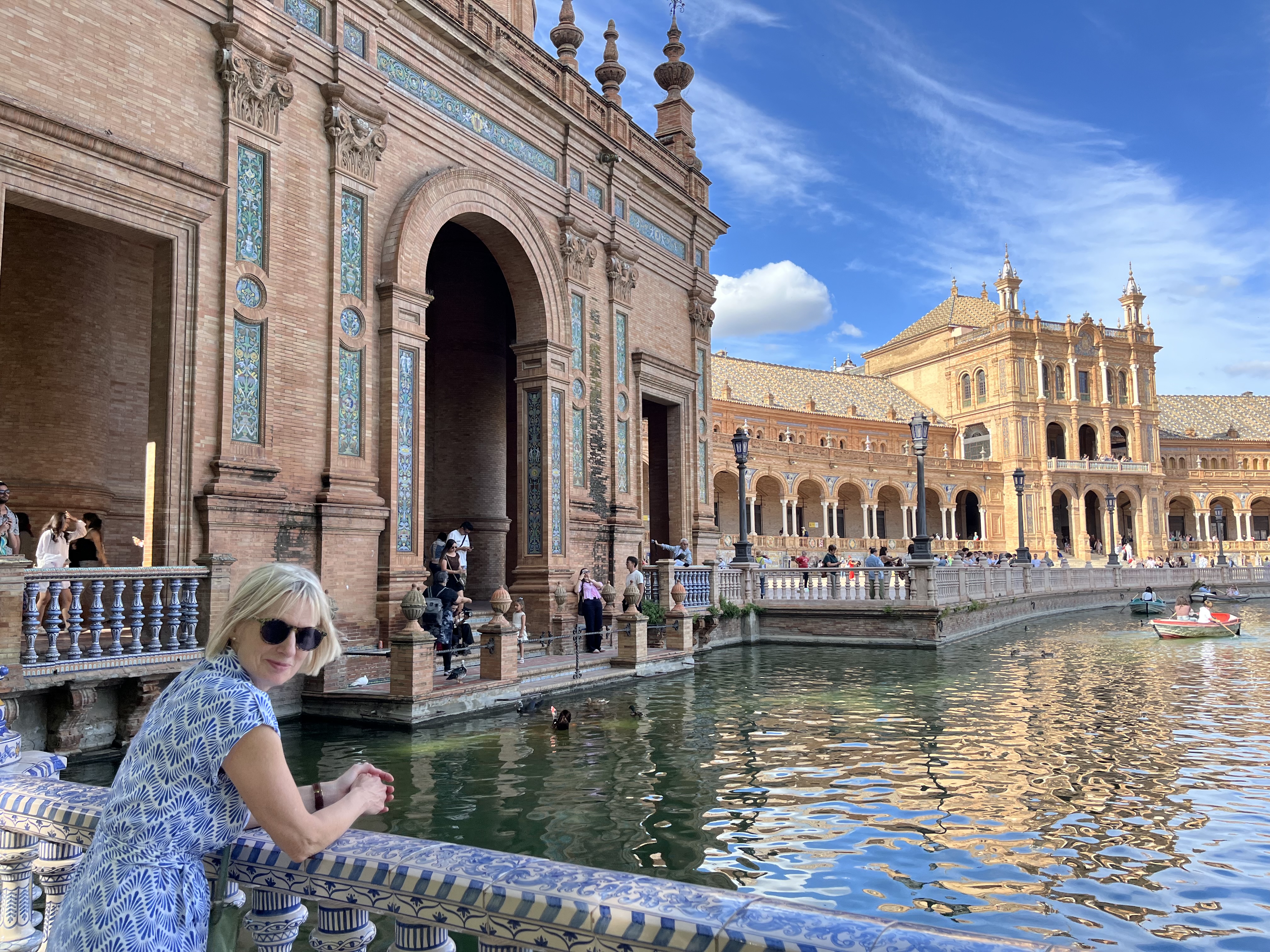
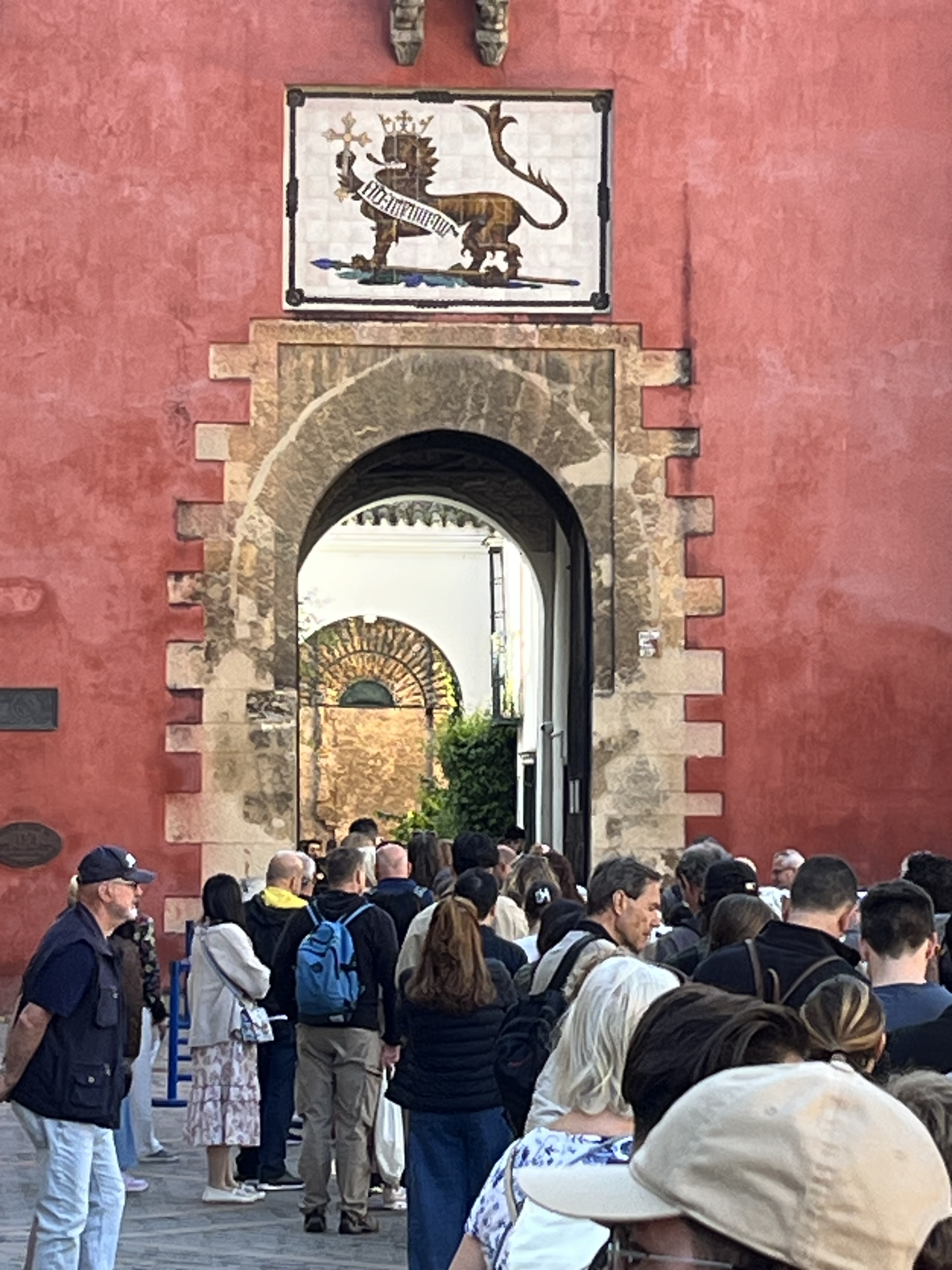
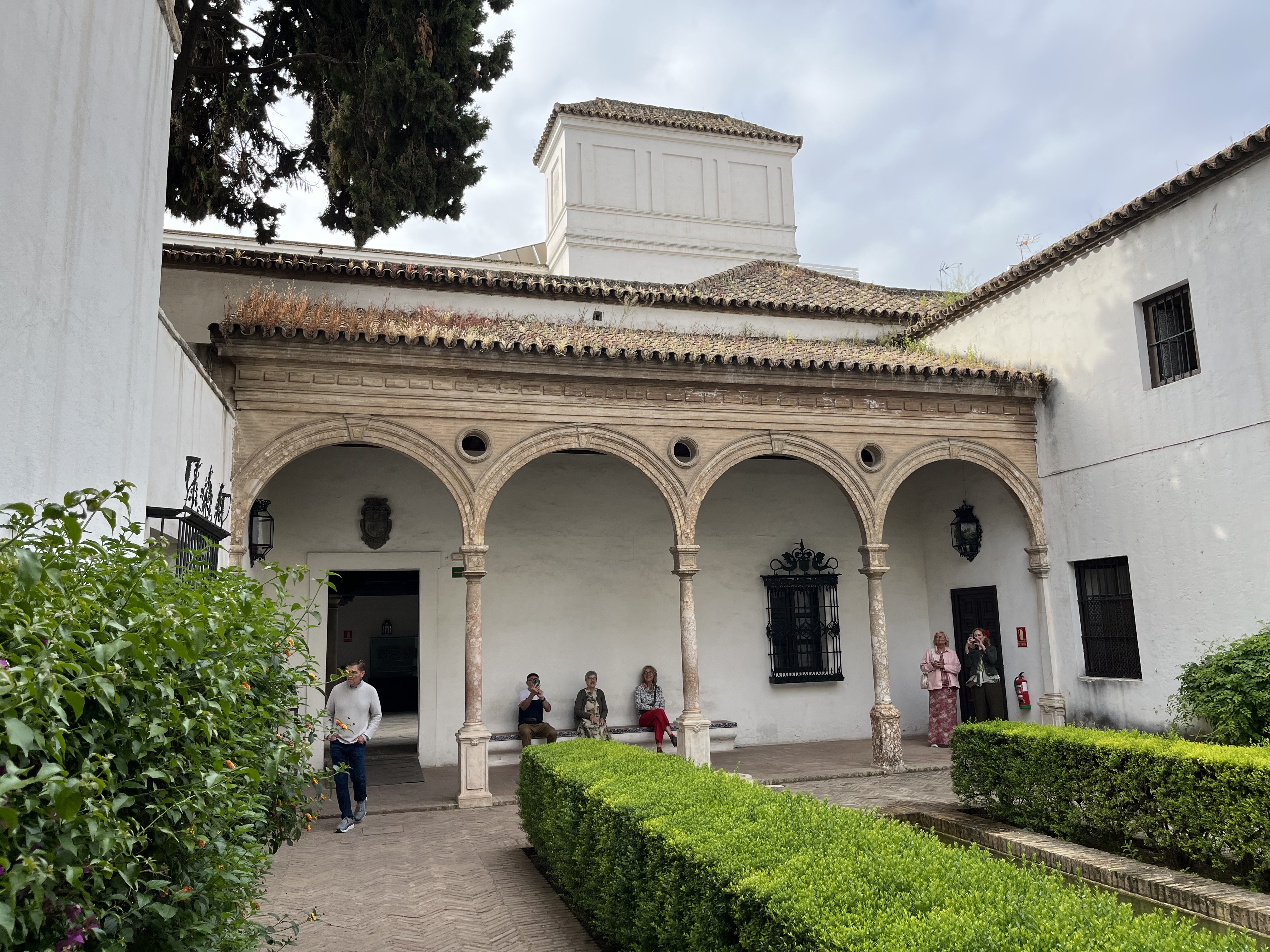
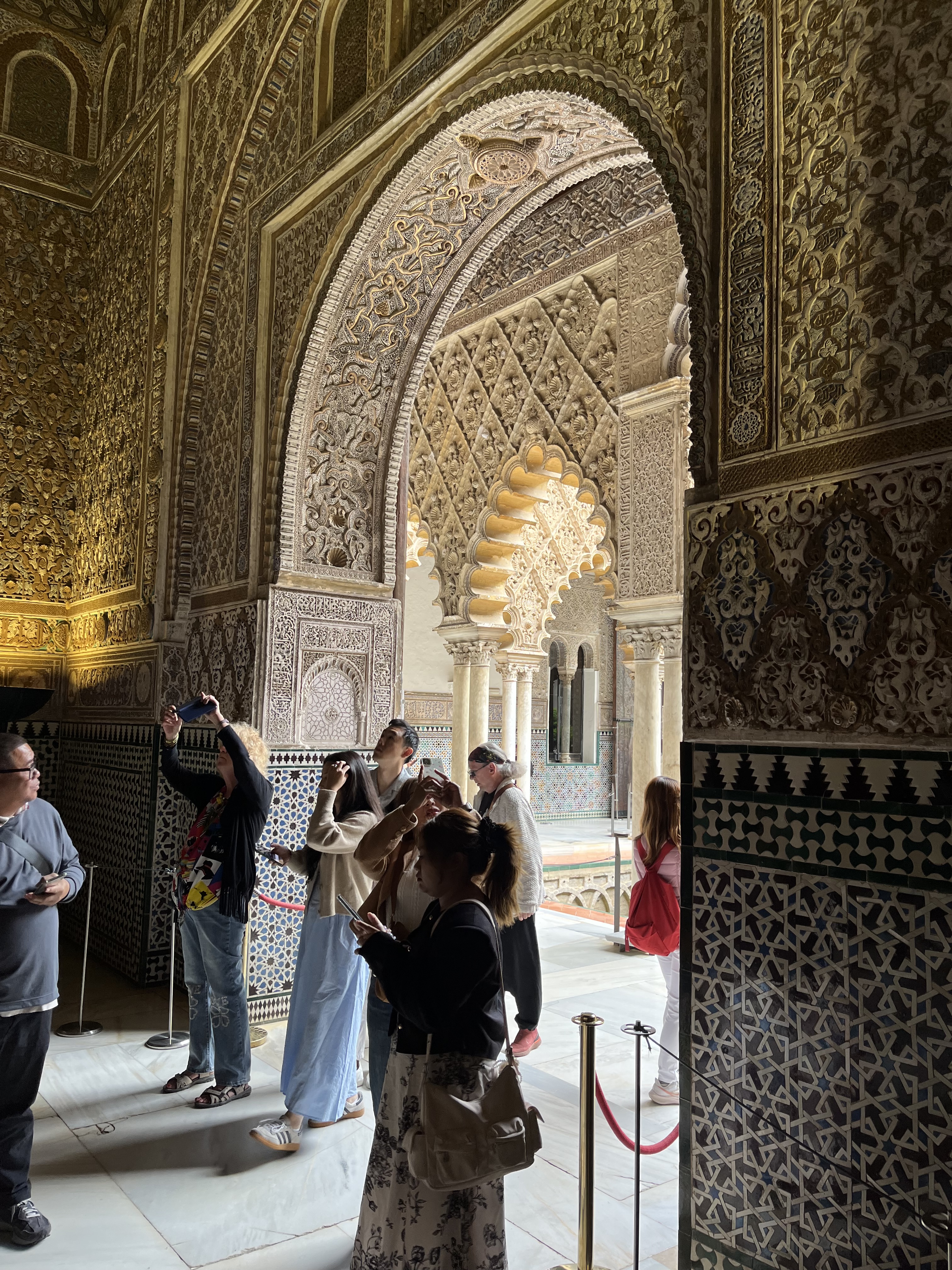
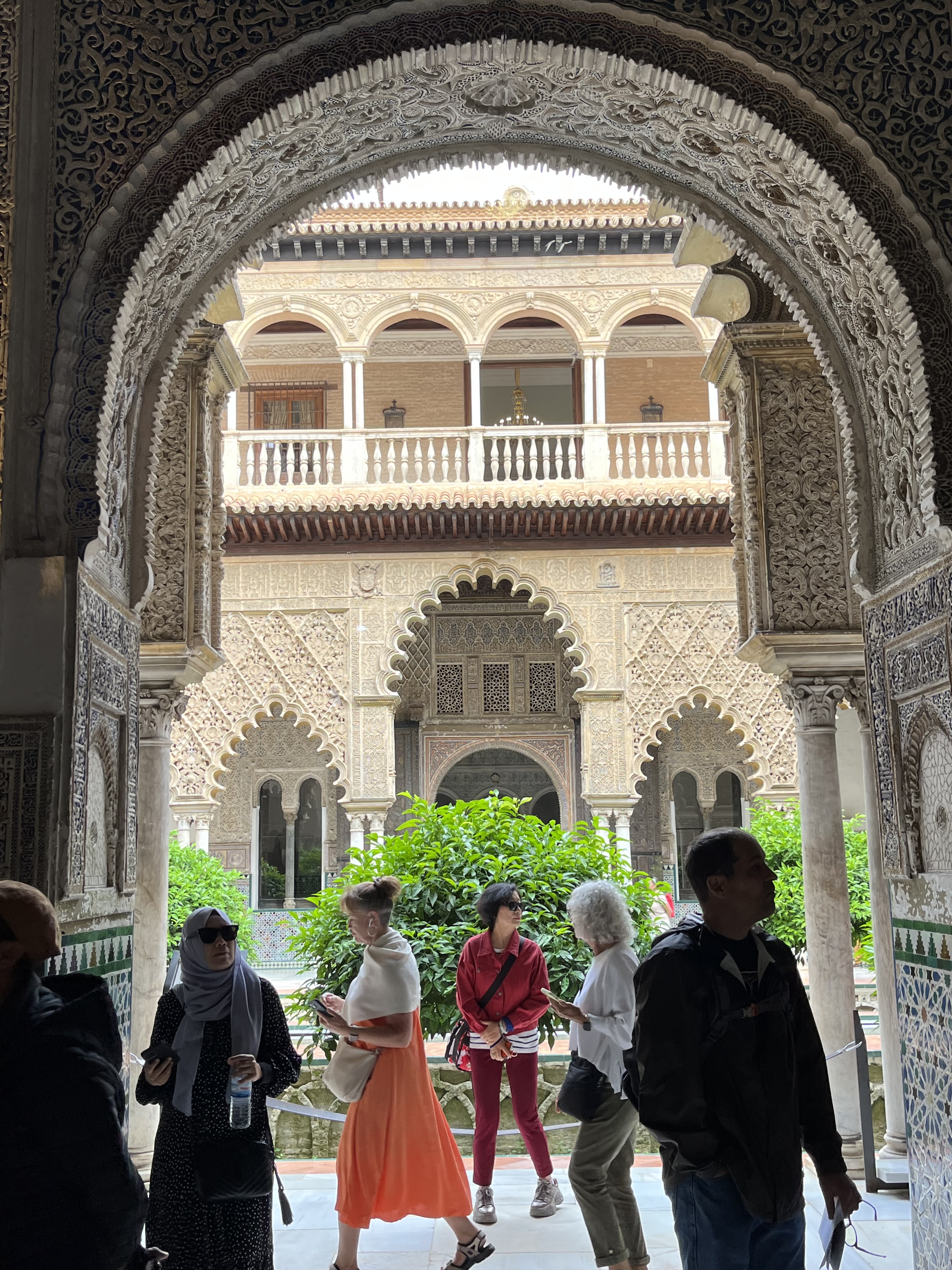
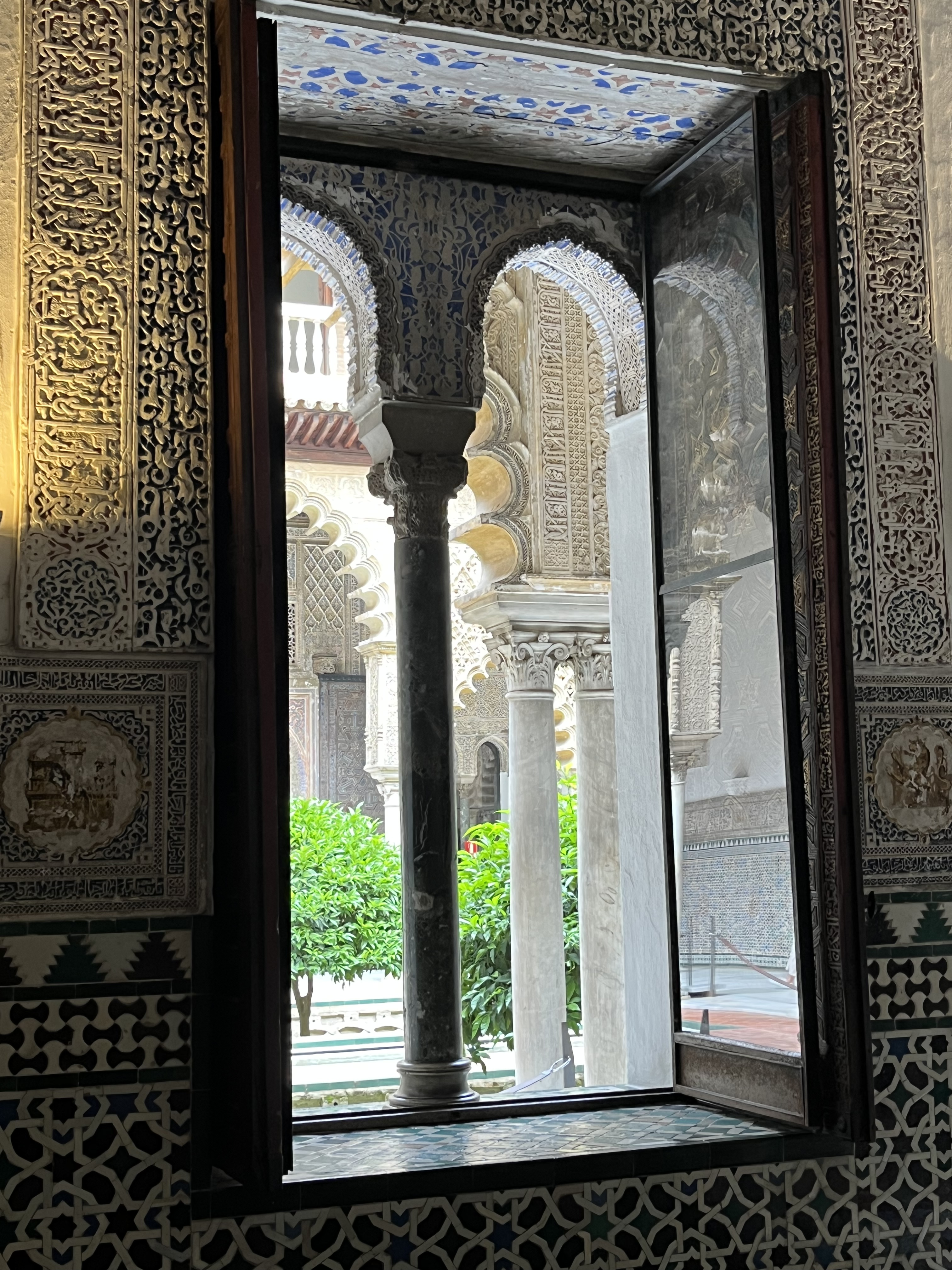
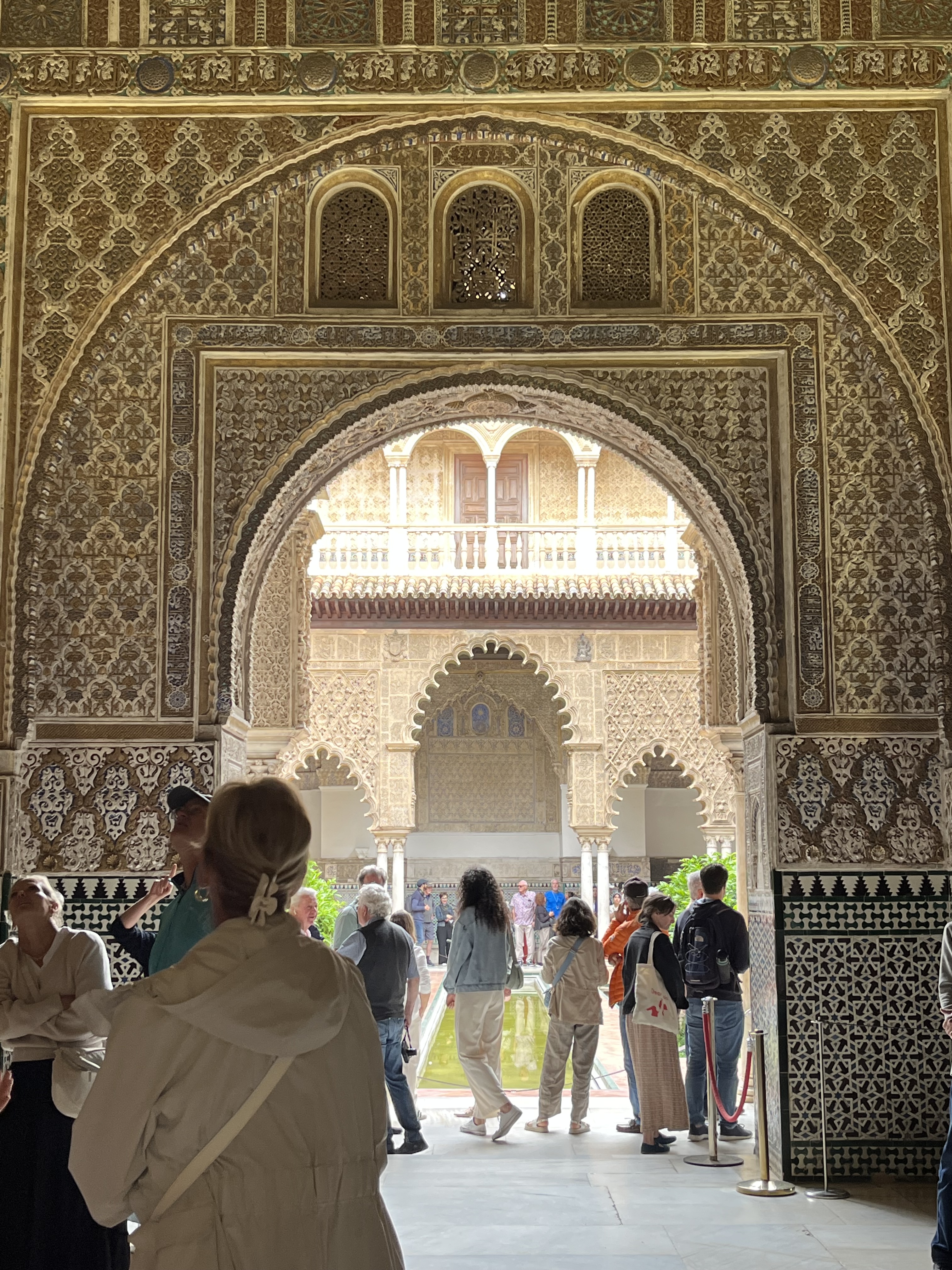
Sevilla’s Alcazar, is very similar in style and dates back to the same time as Granada’s Alhambra. It is also large, elaborate, beautiful, and worth a visit, yet after seeing the Alhambra before, it does not come close to the harmonious beauty of the masterpiece.

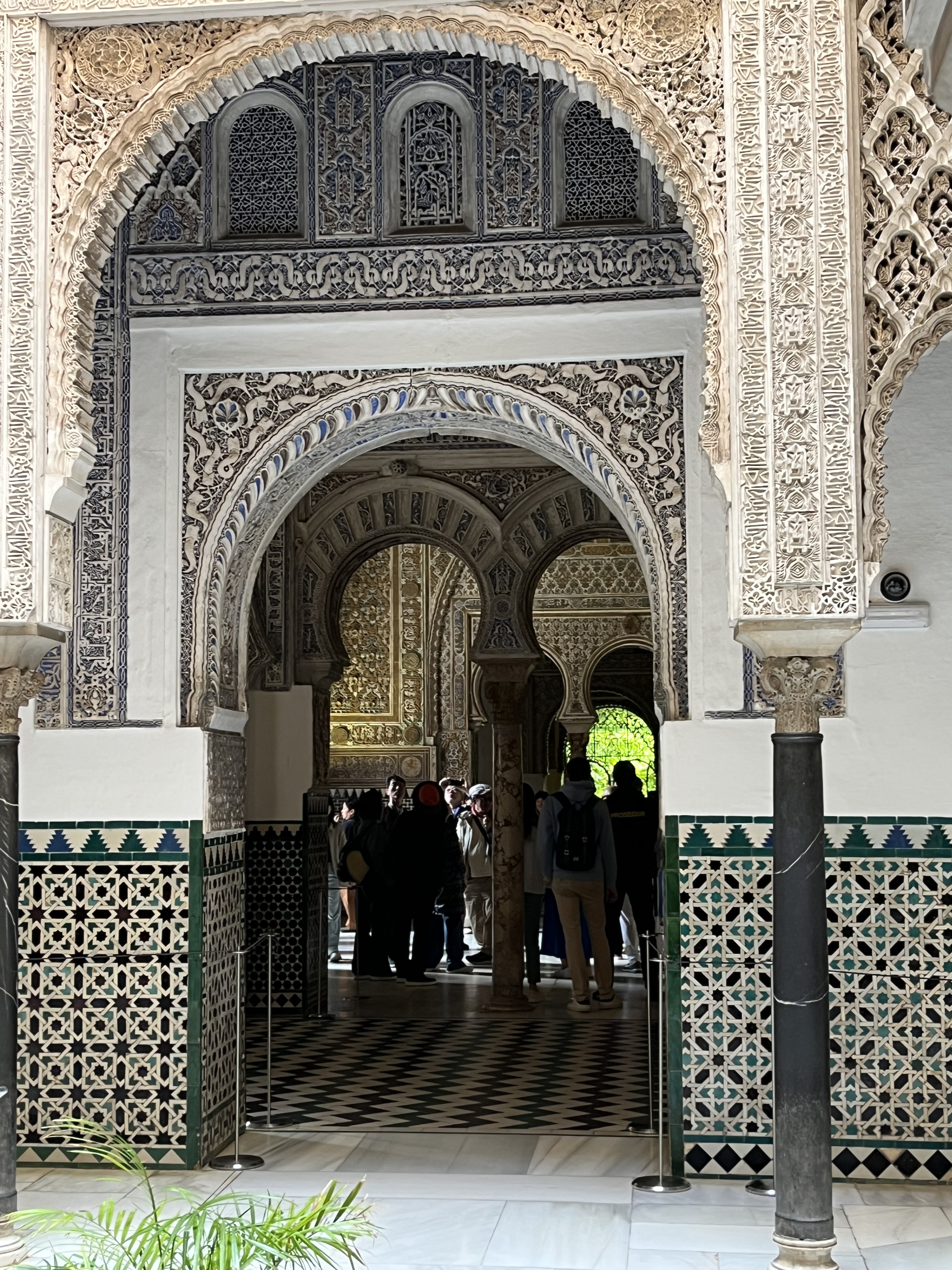


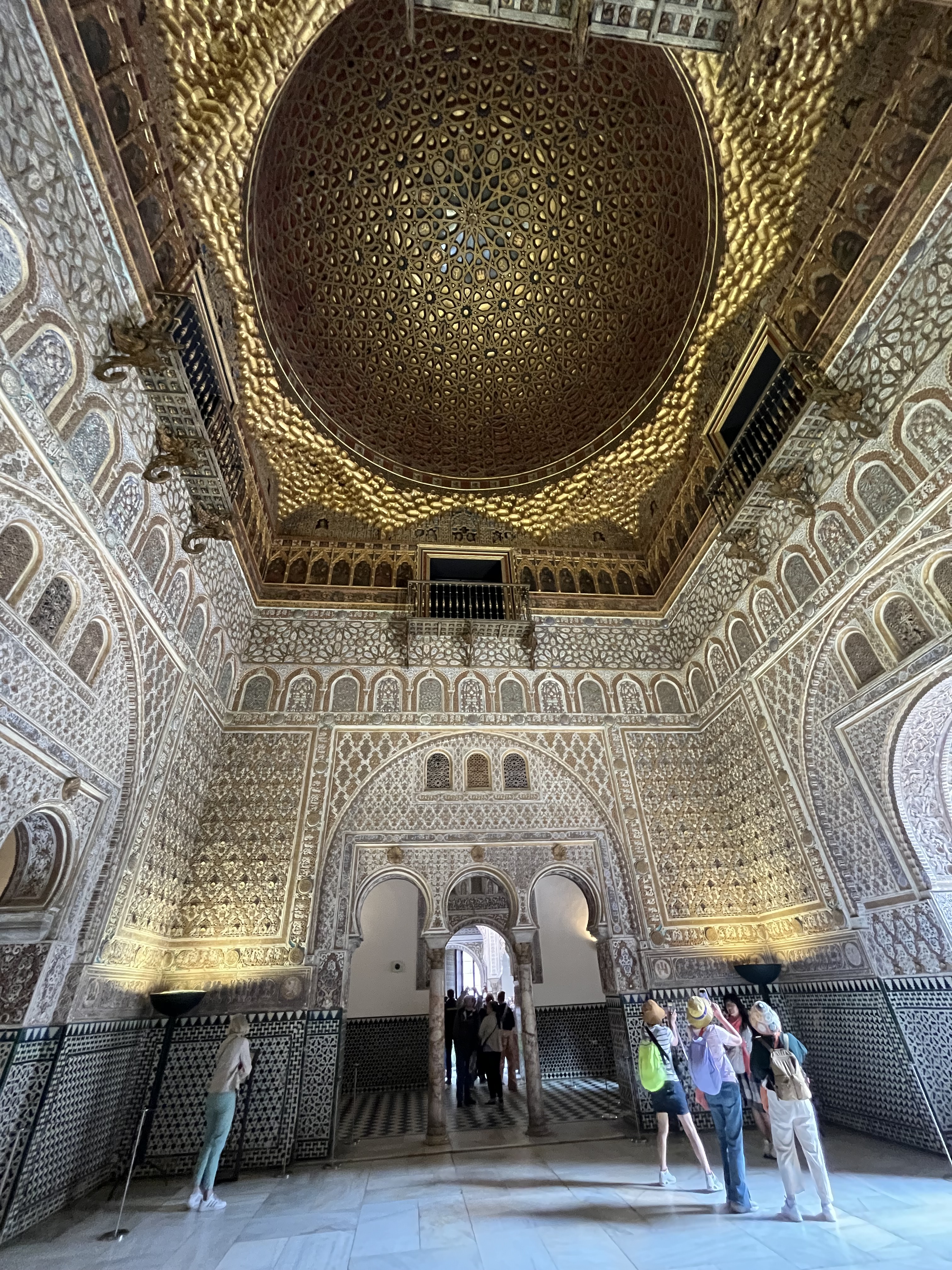
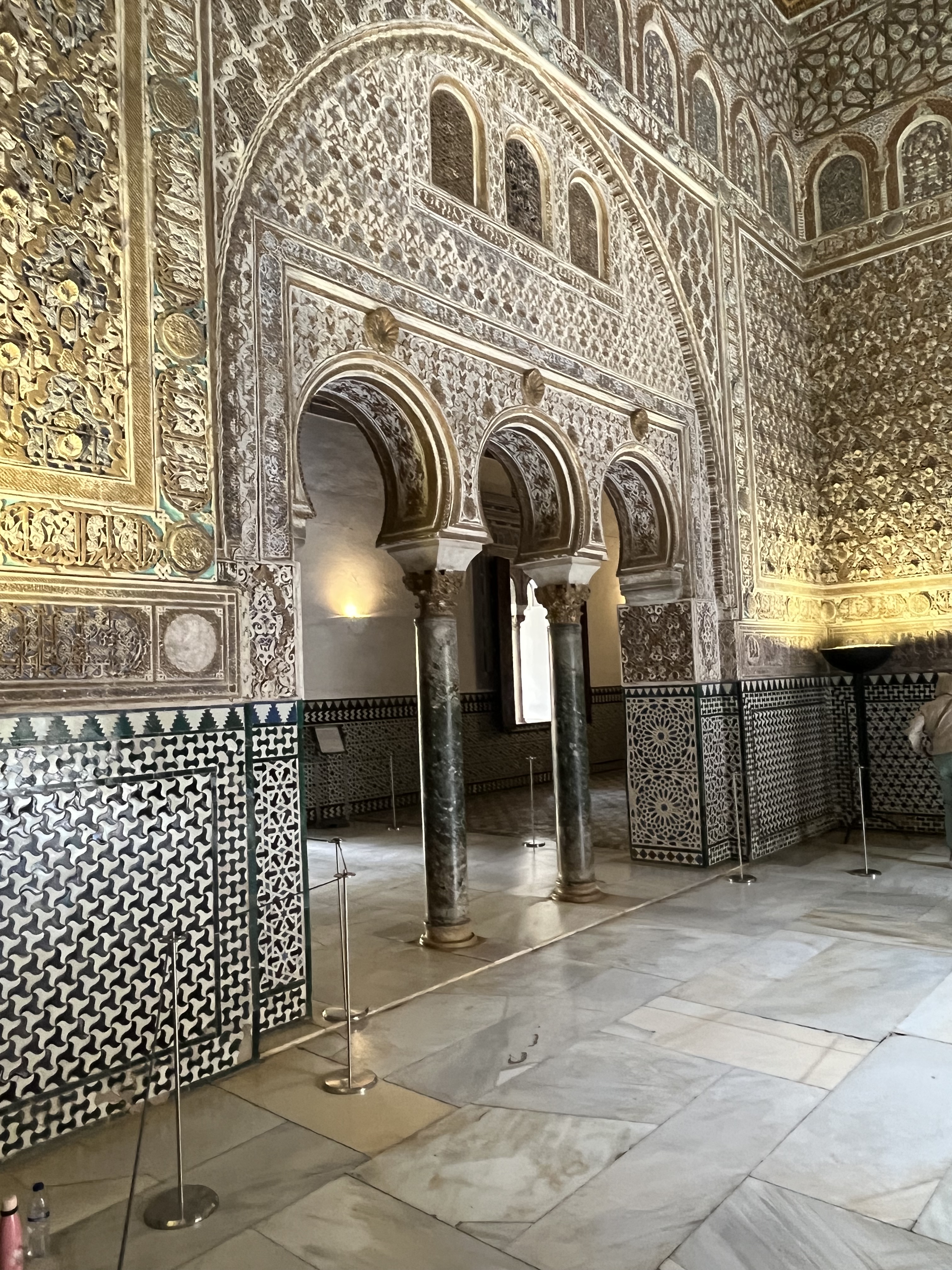
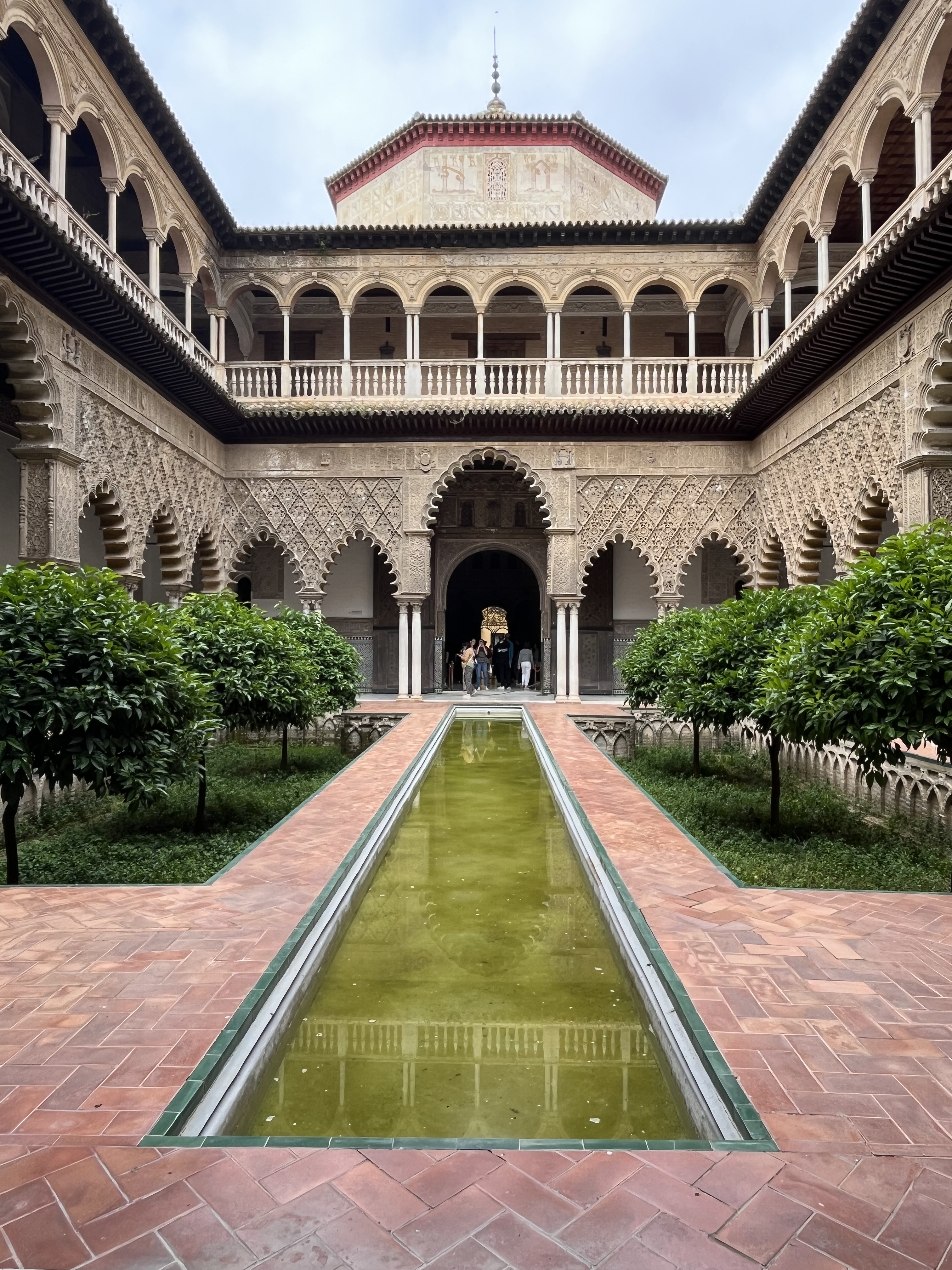
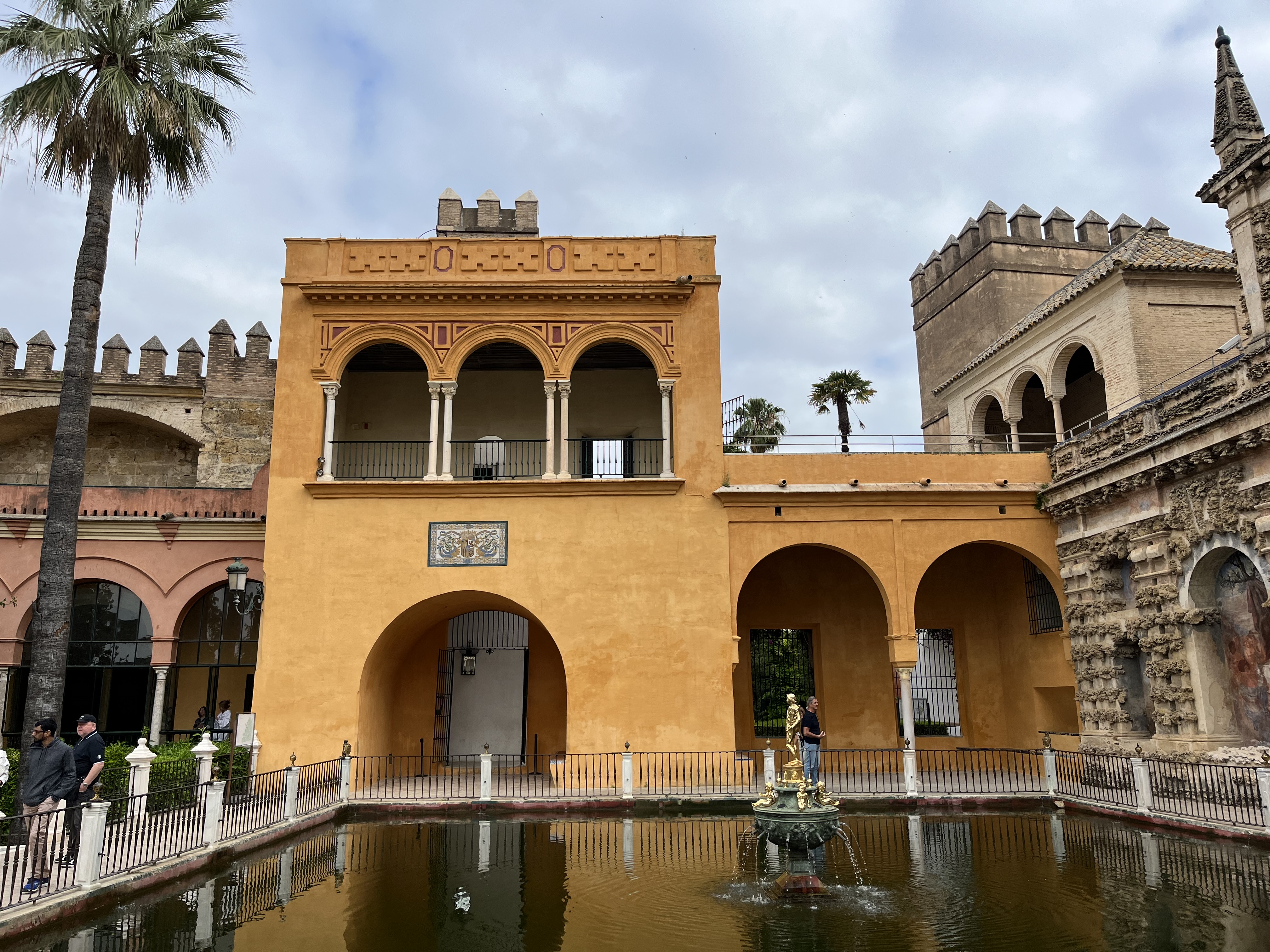
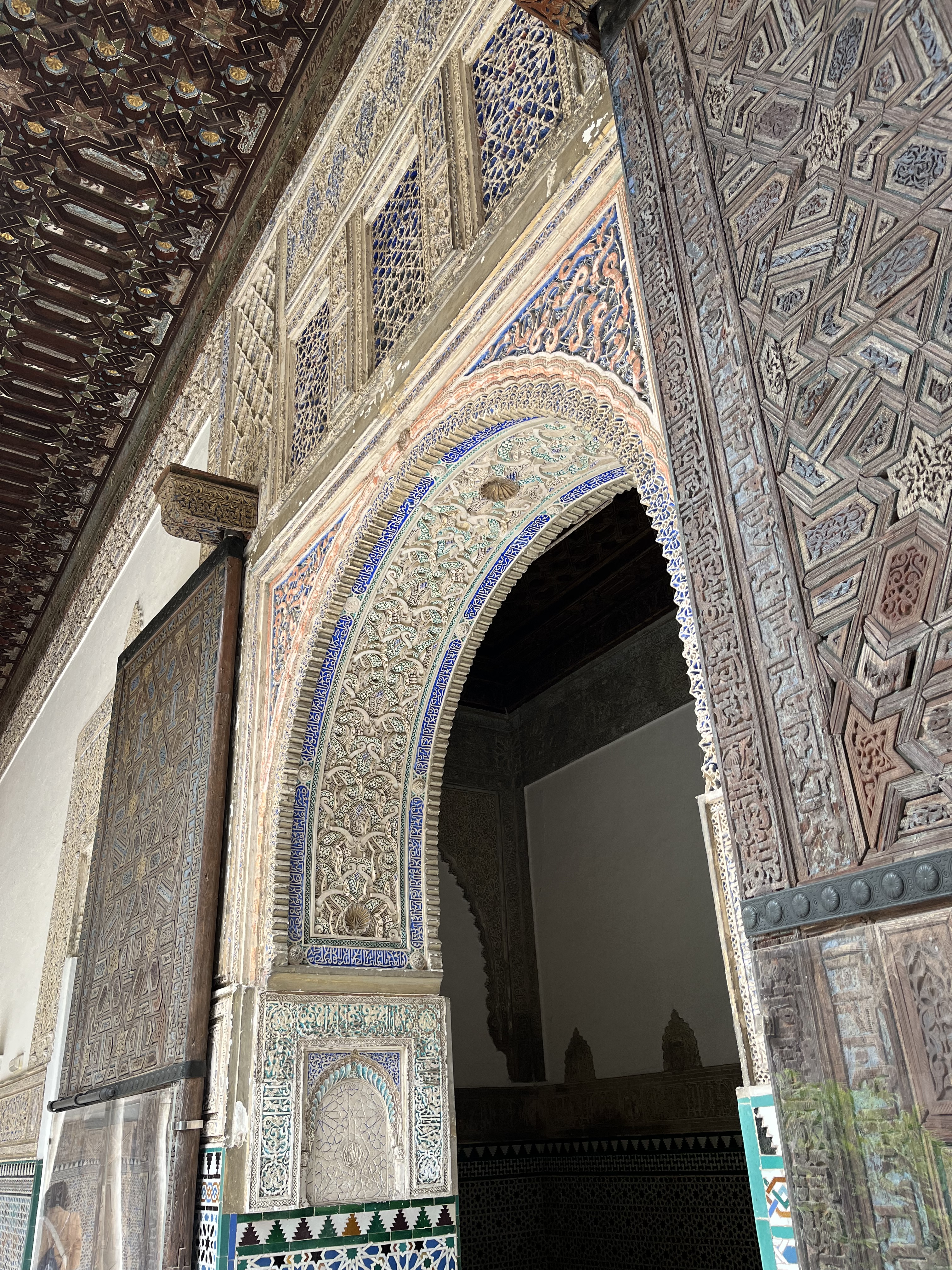
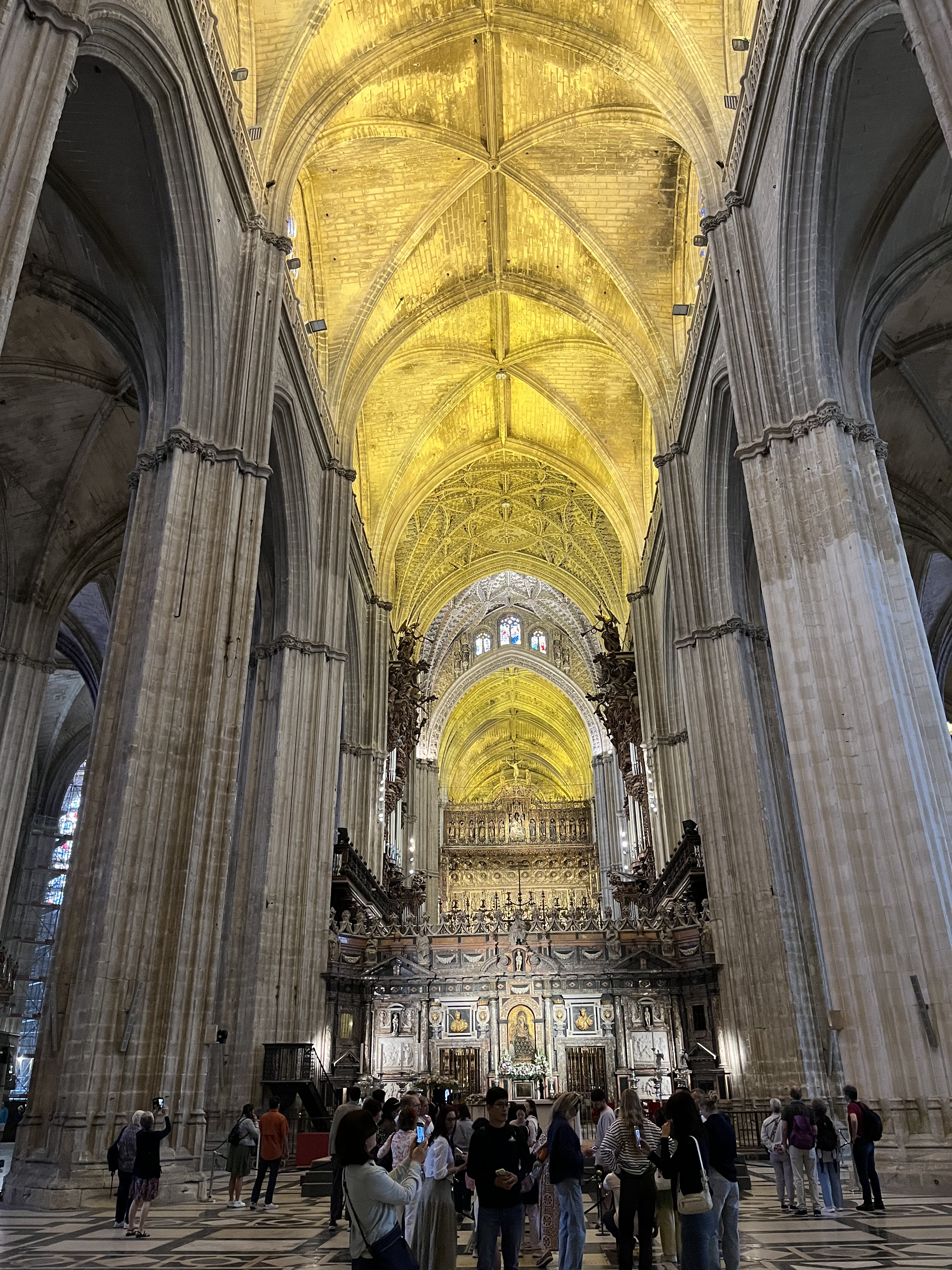
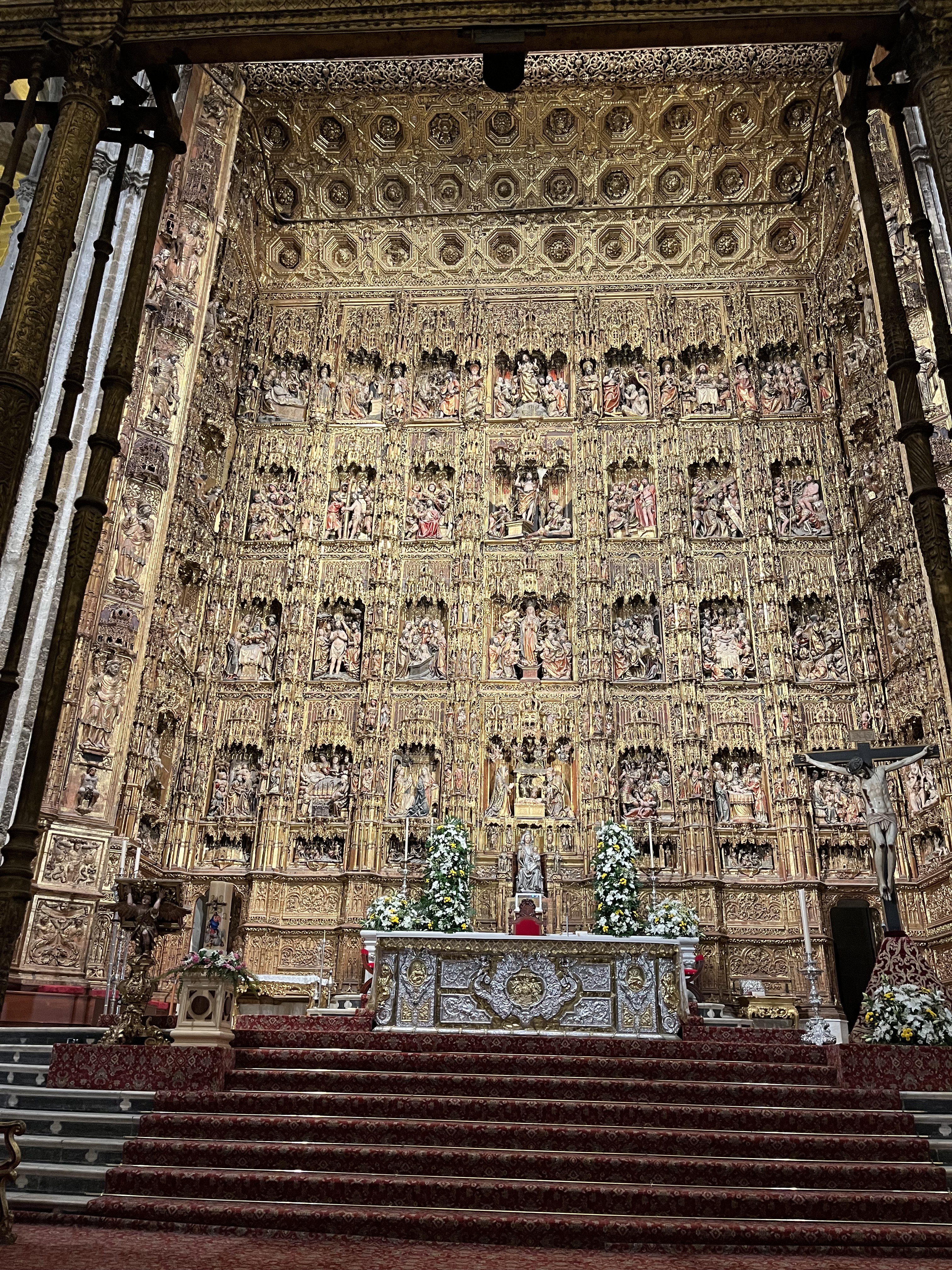
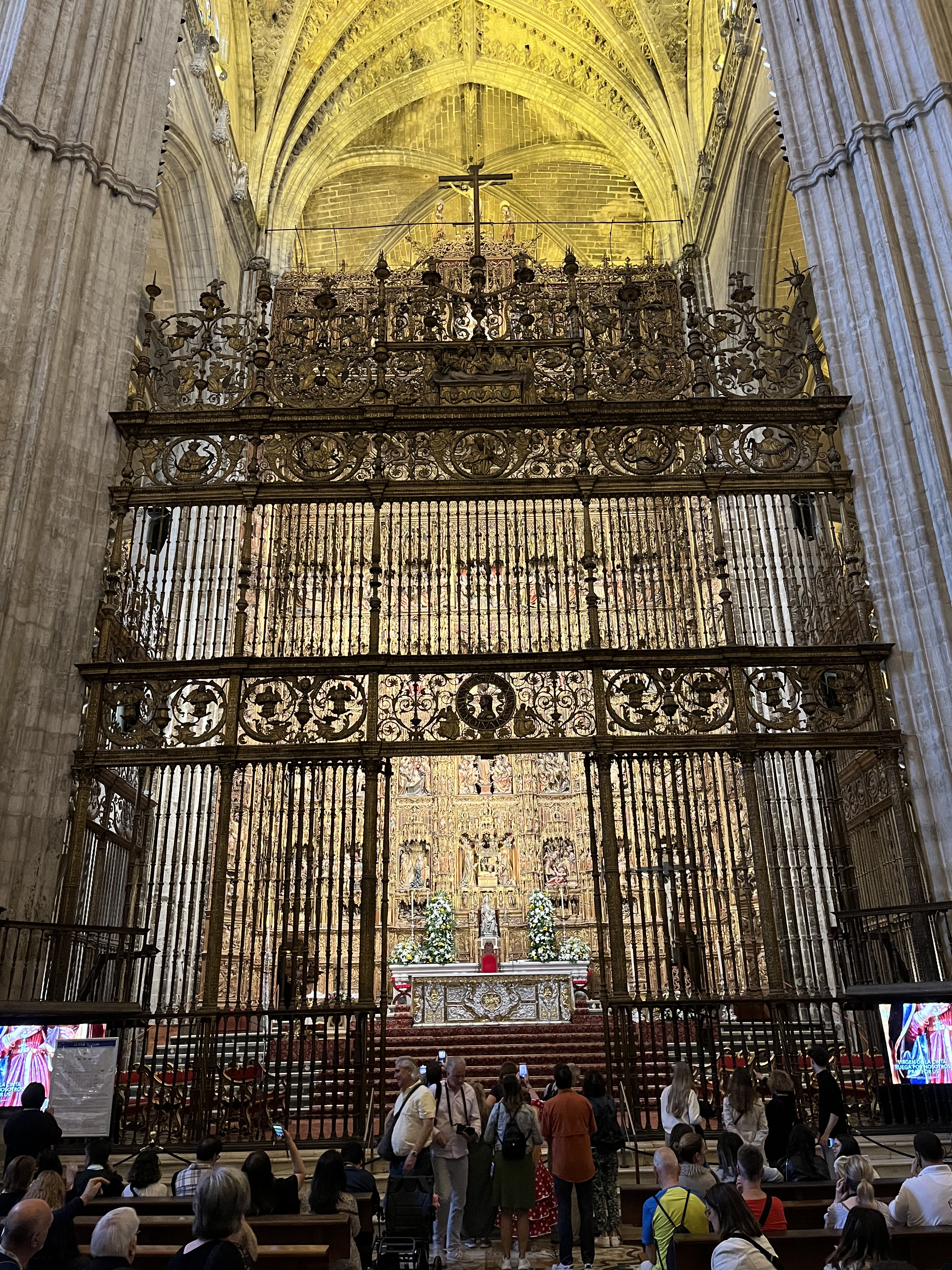
The Cathedral of Sevilla is a big gothic church, with the world’s largest altarpiece. As in Toledo, the size and magnificent interior of the cathedral, show off its former wealth and importance.
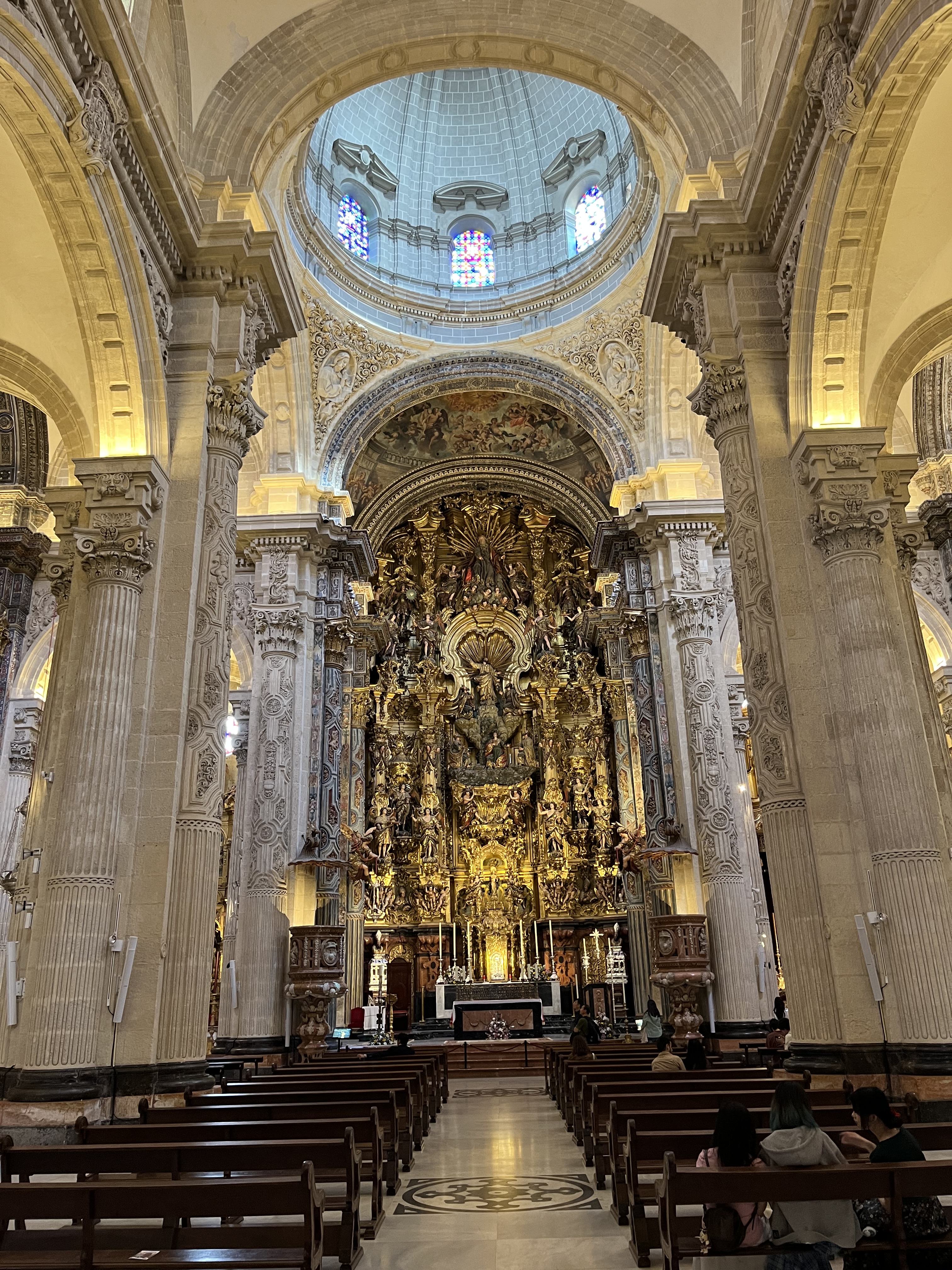

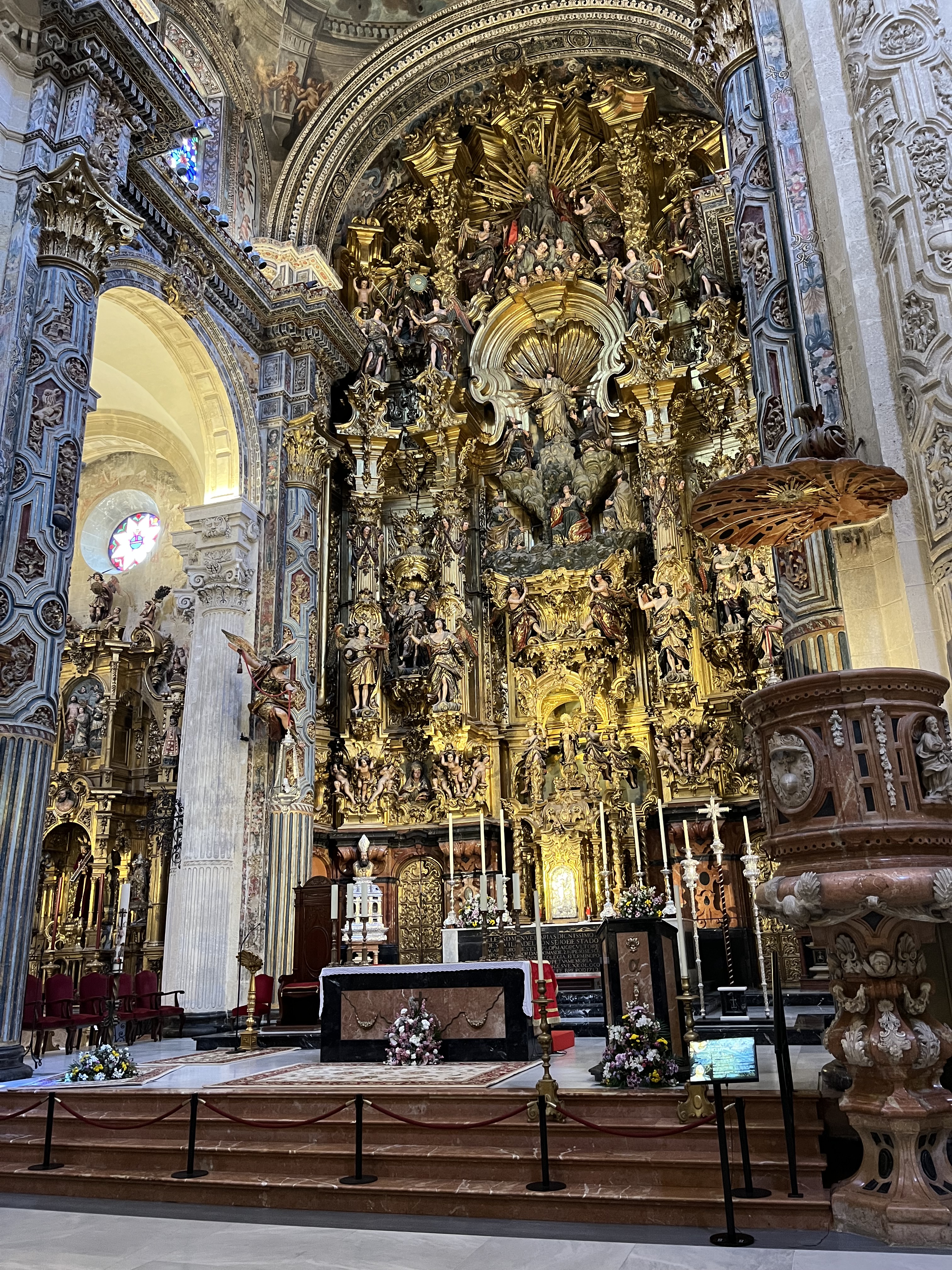
Here, a couple pictures of the barock Cathedral of El Salvador:


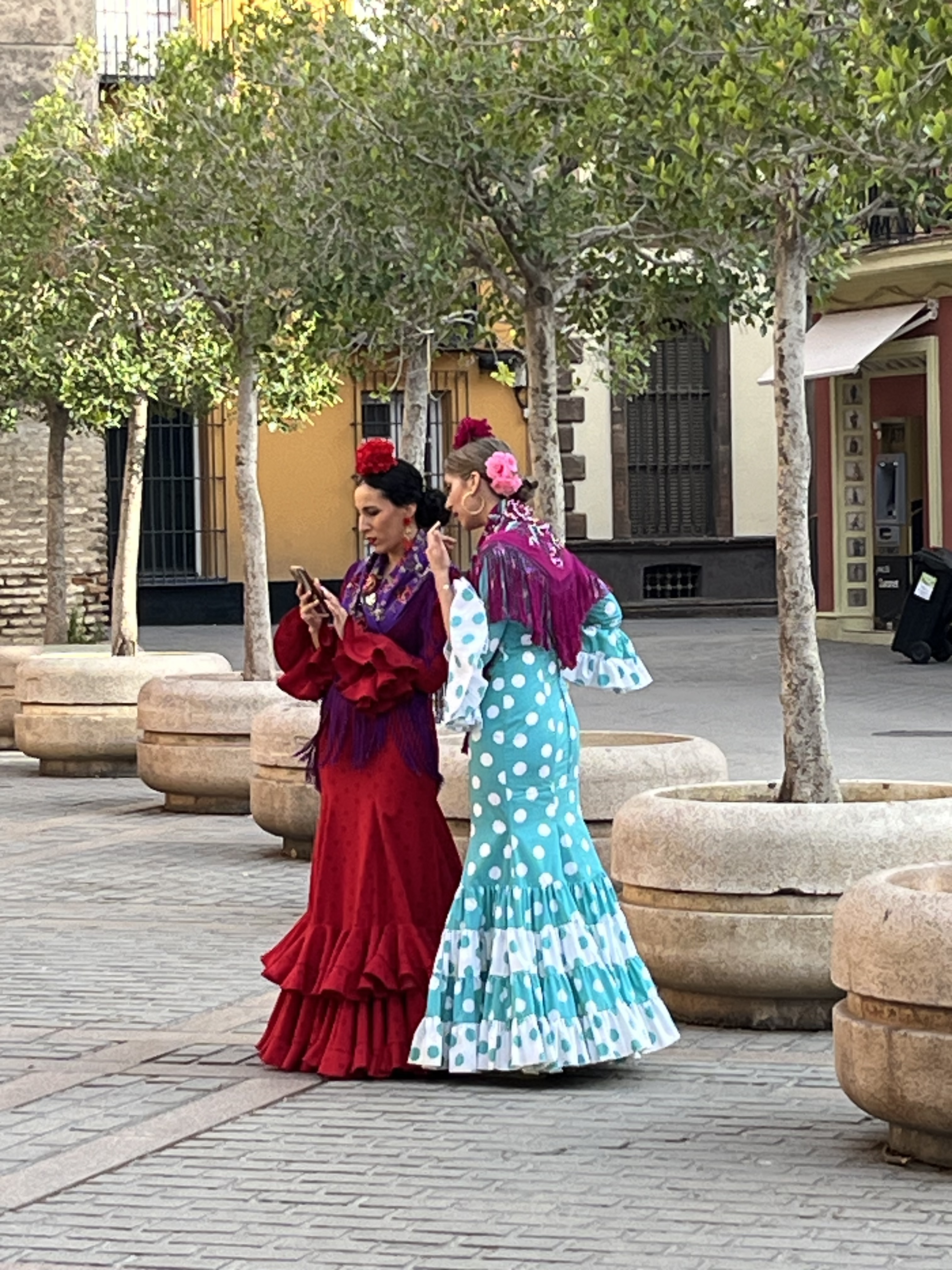
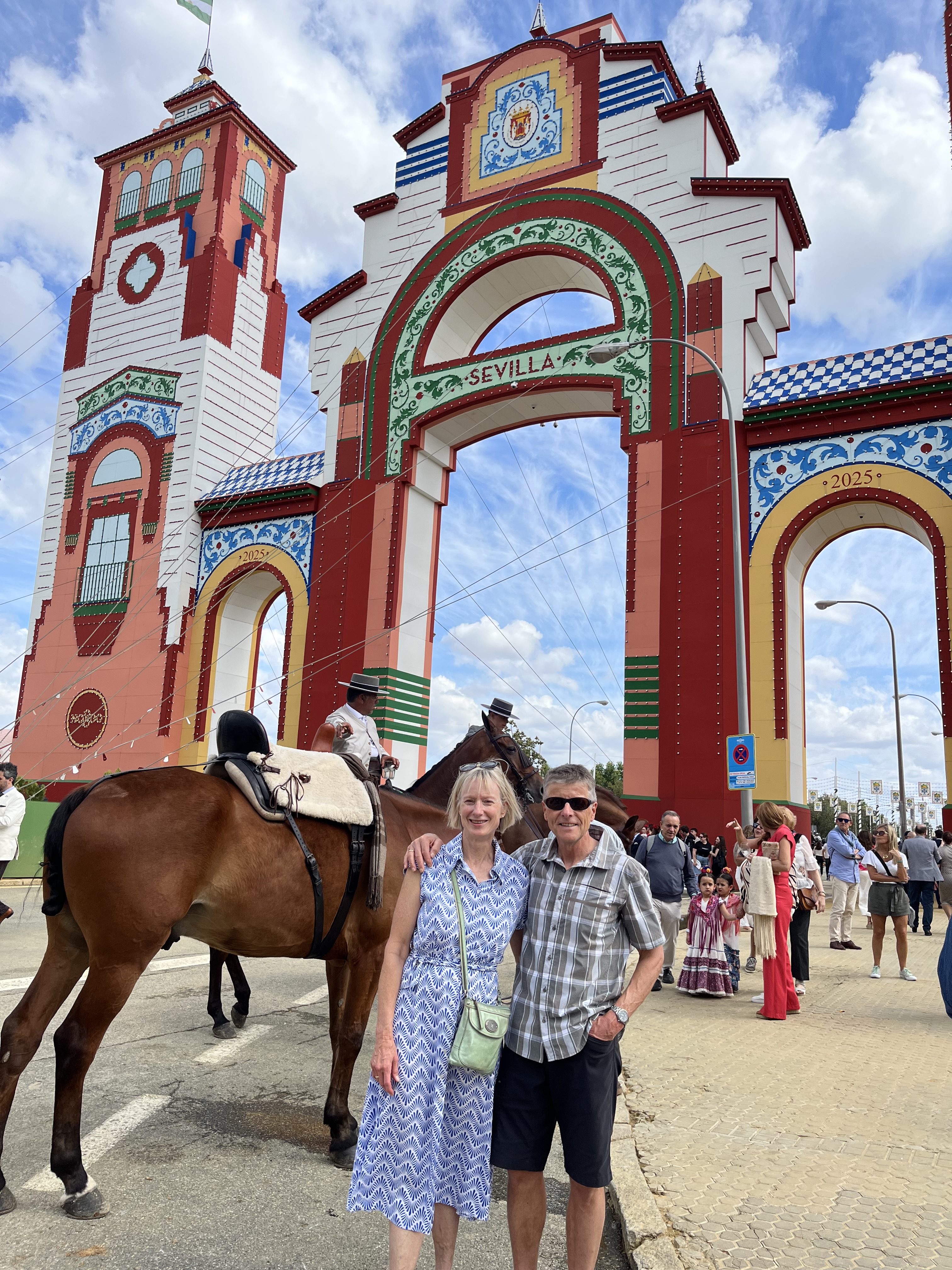
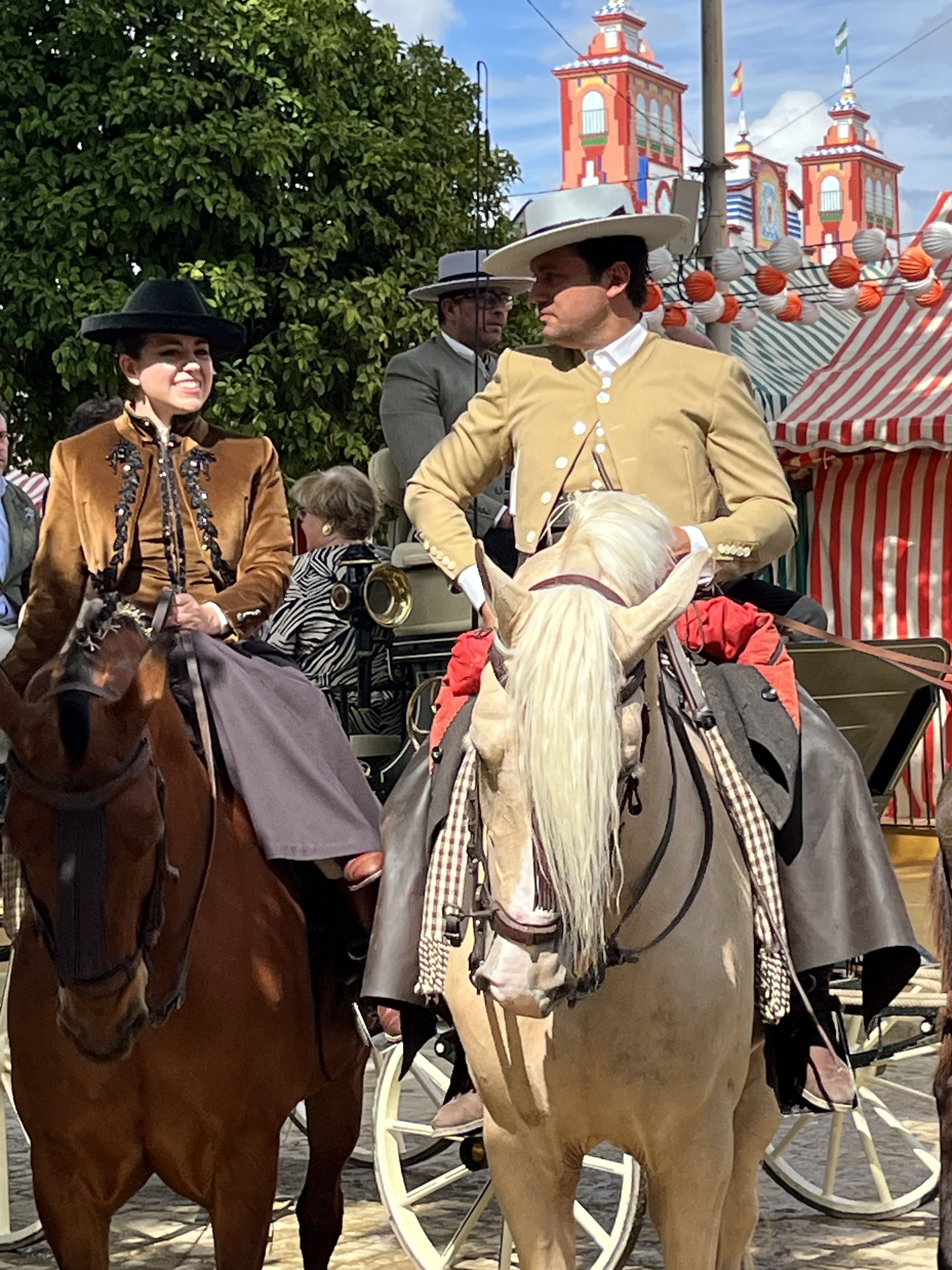
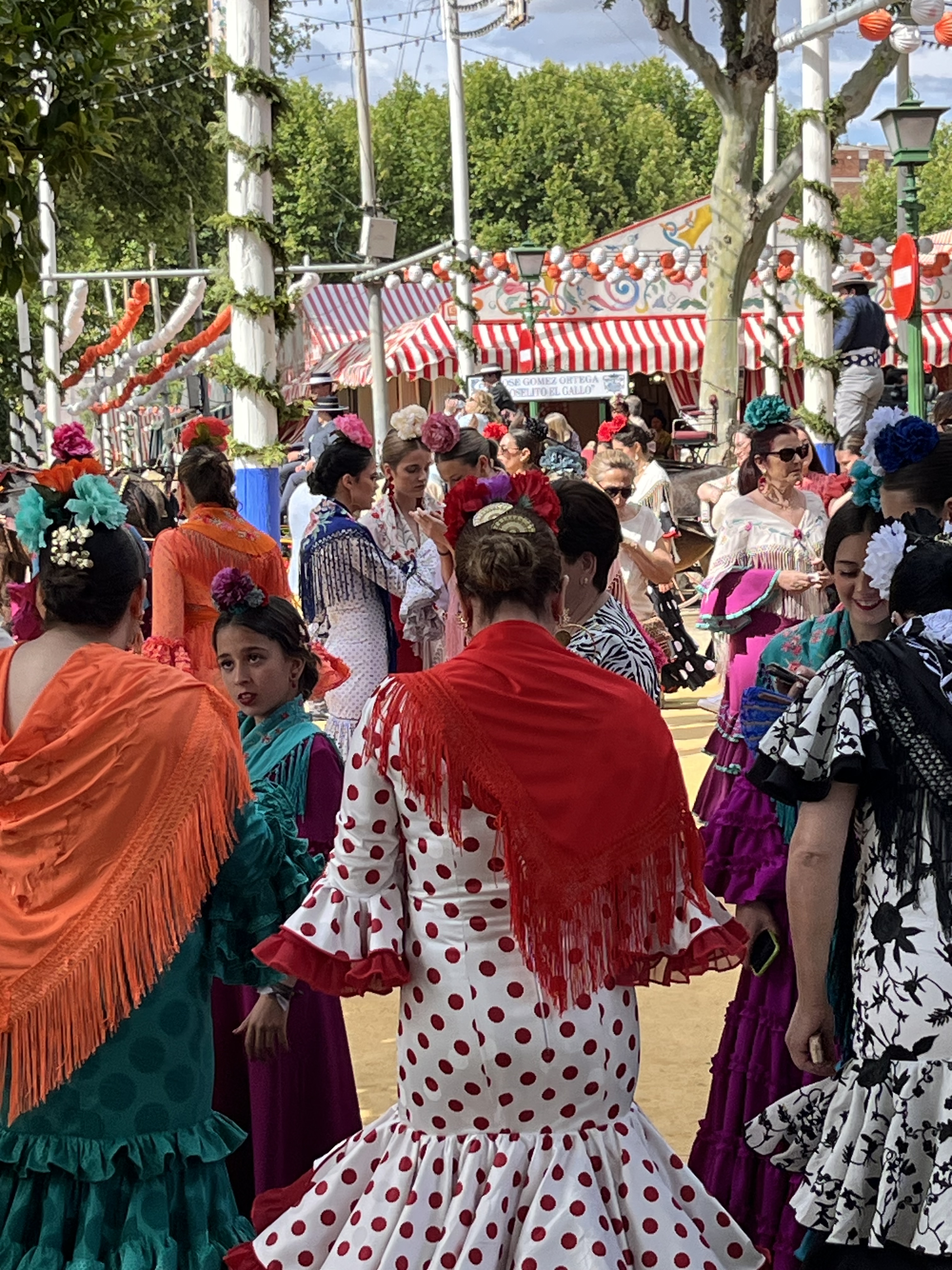
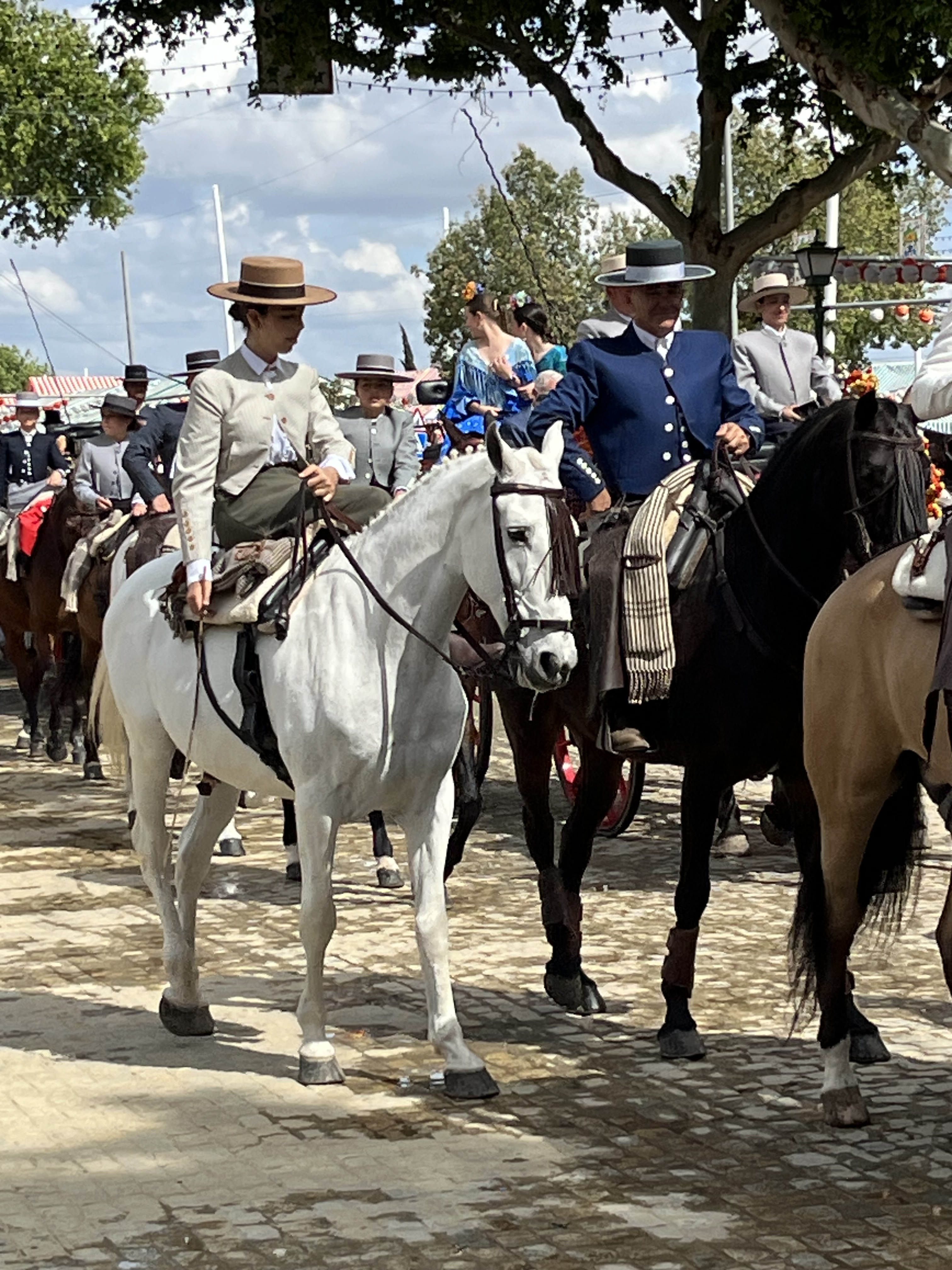
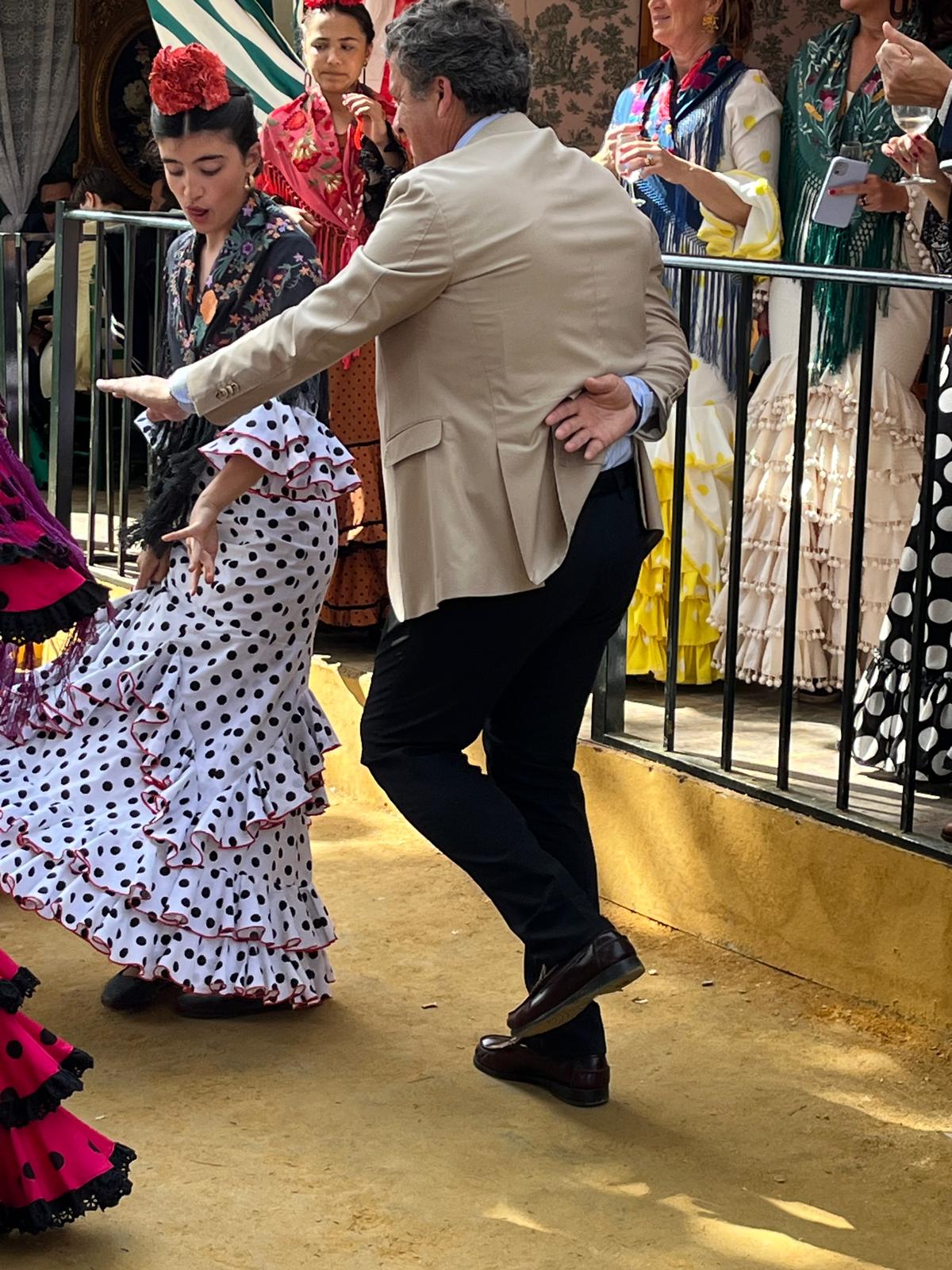
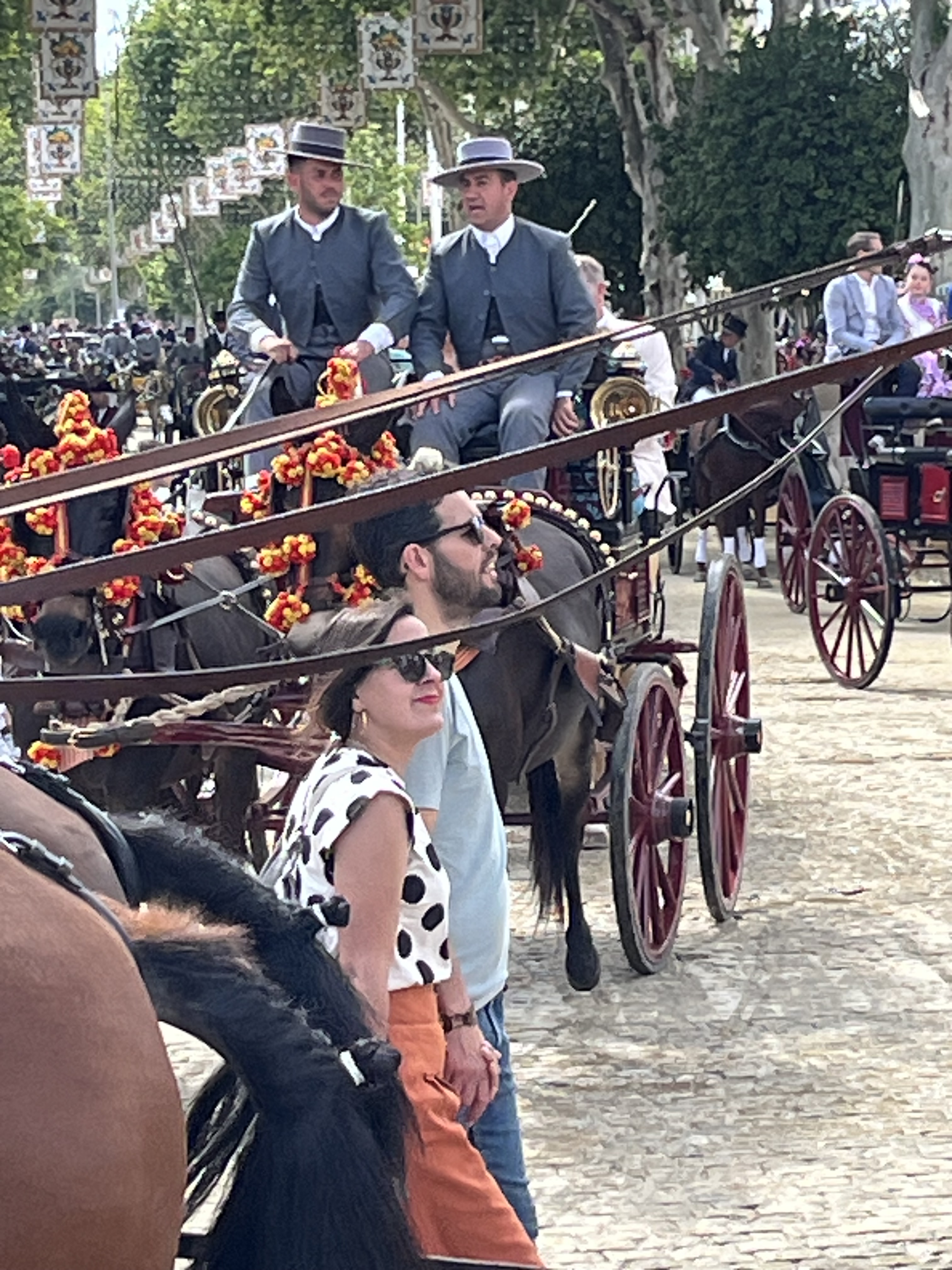
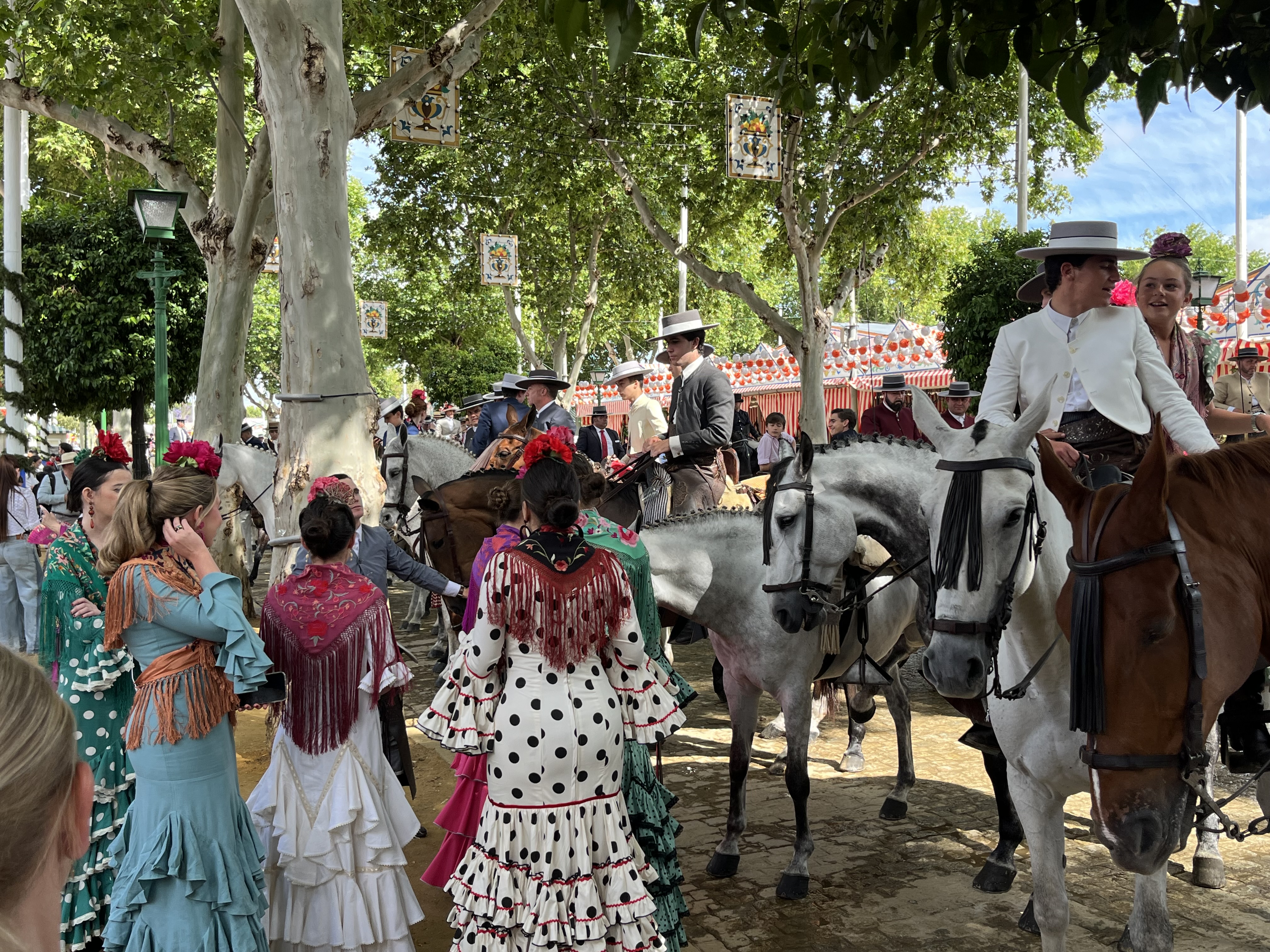
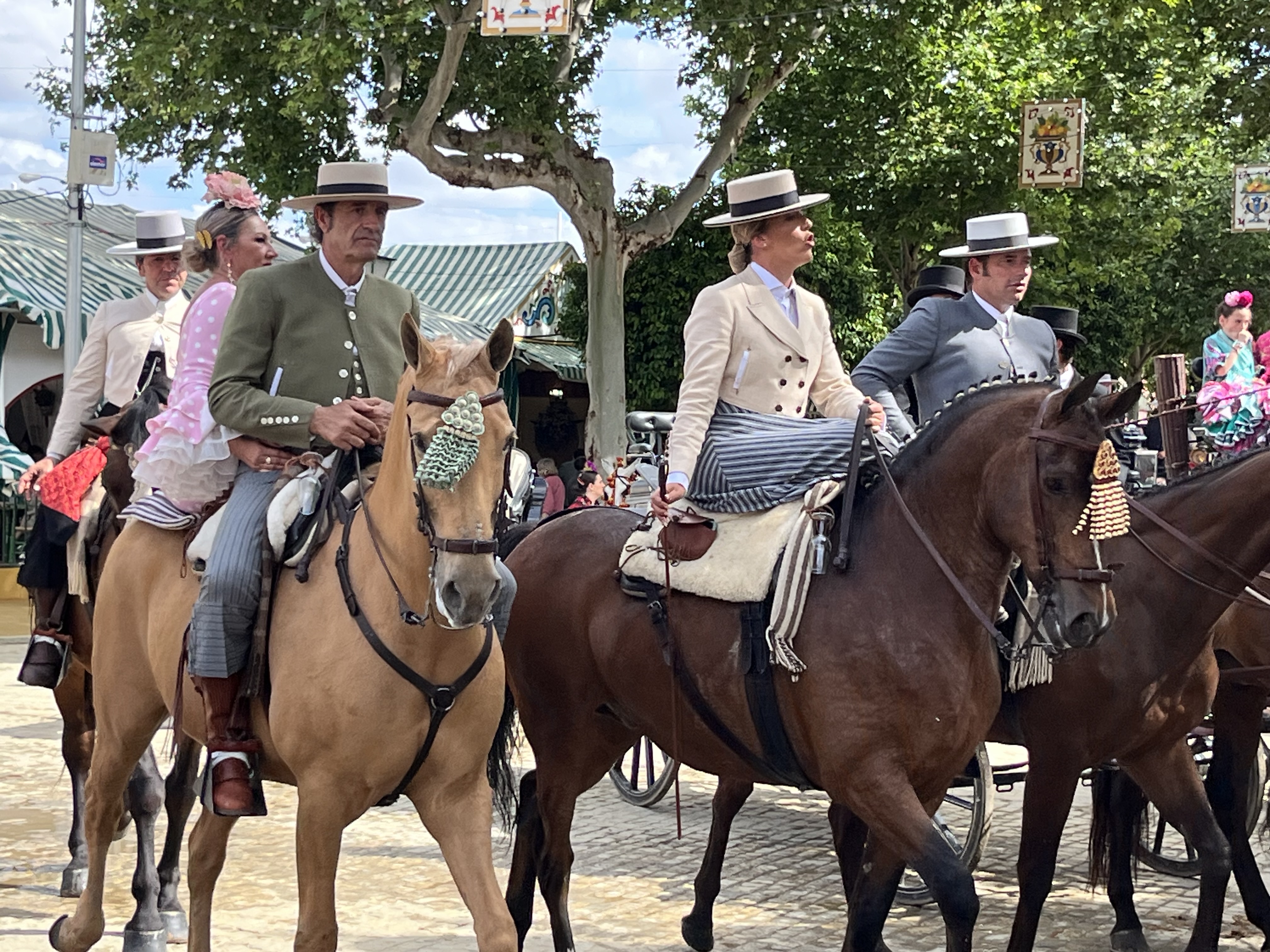
We lucked out by unintentionally being in Sevilla during the annual weeklong Feria festival. According to the helpful receptionist at our hotel, this is the most “Spanish” week of the year, for which a lot of people in Sevilla take the week off and dress in traditional clothing. All throughout town, we noticed women in flamenco dresses and men in suits, with some riding horseback in the historical center.
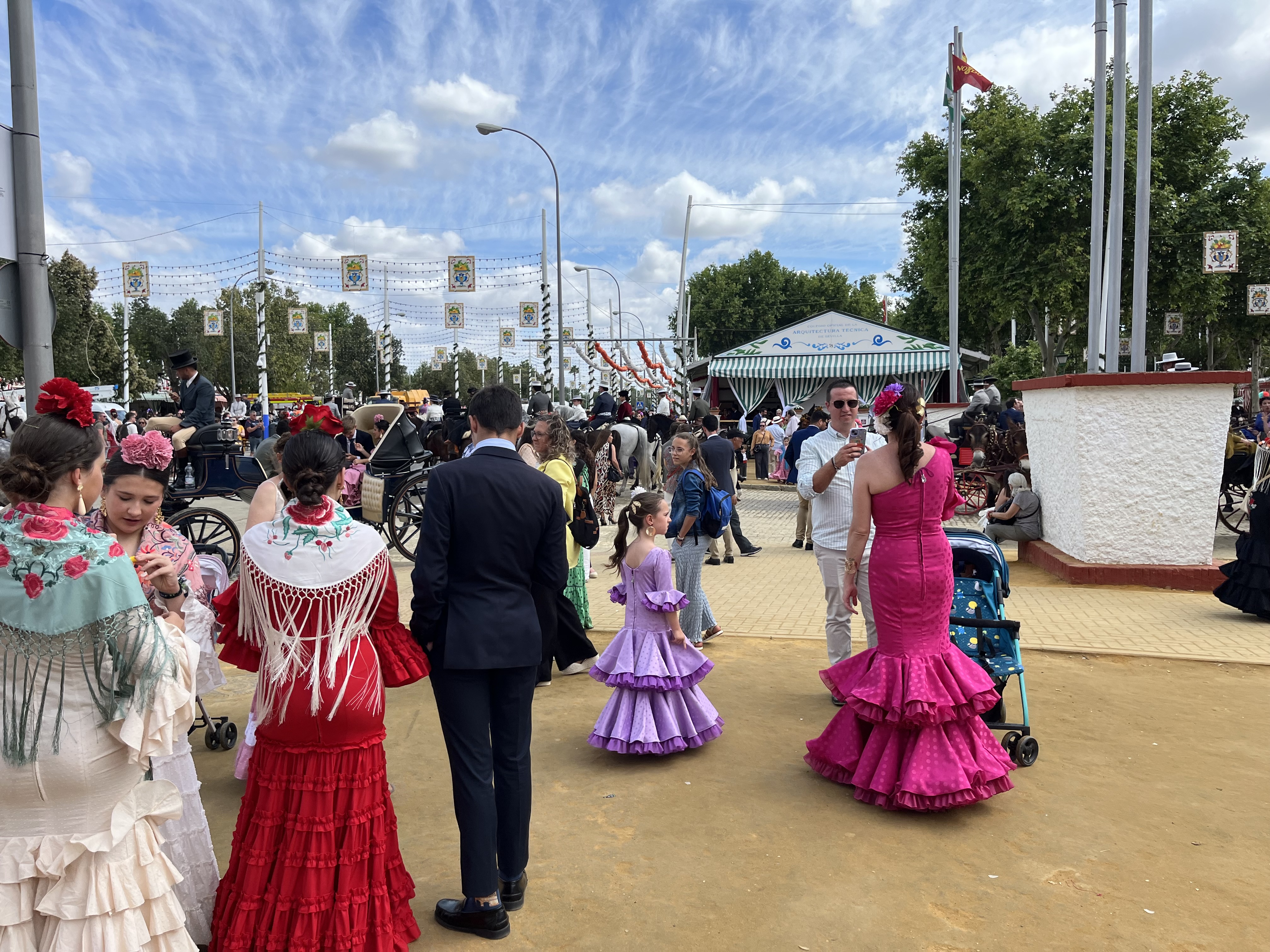
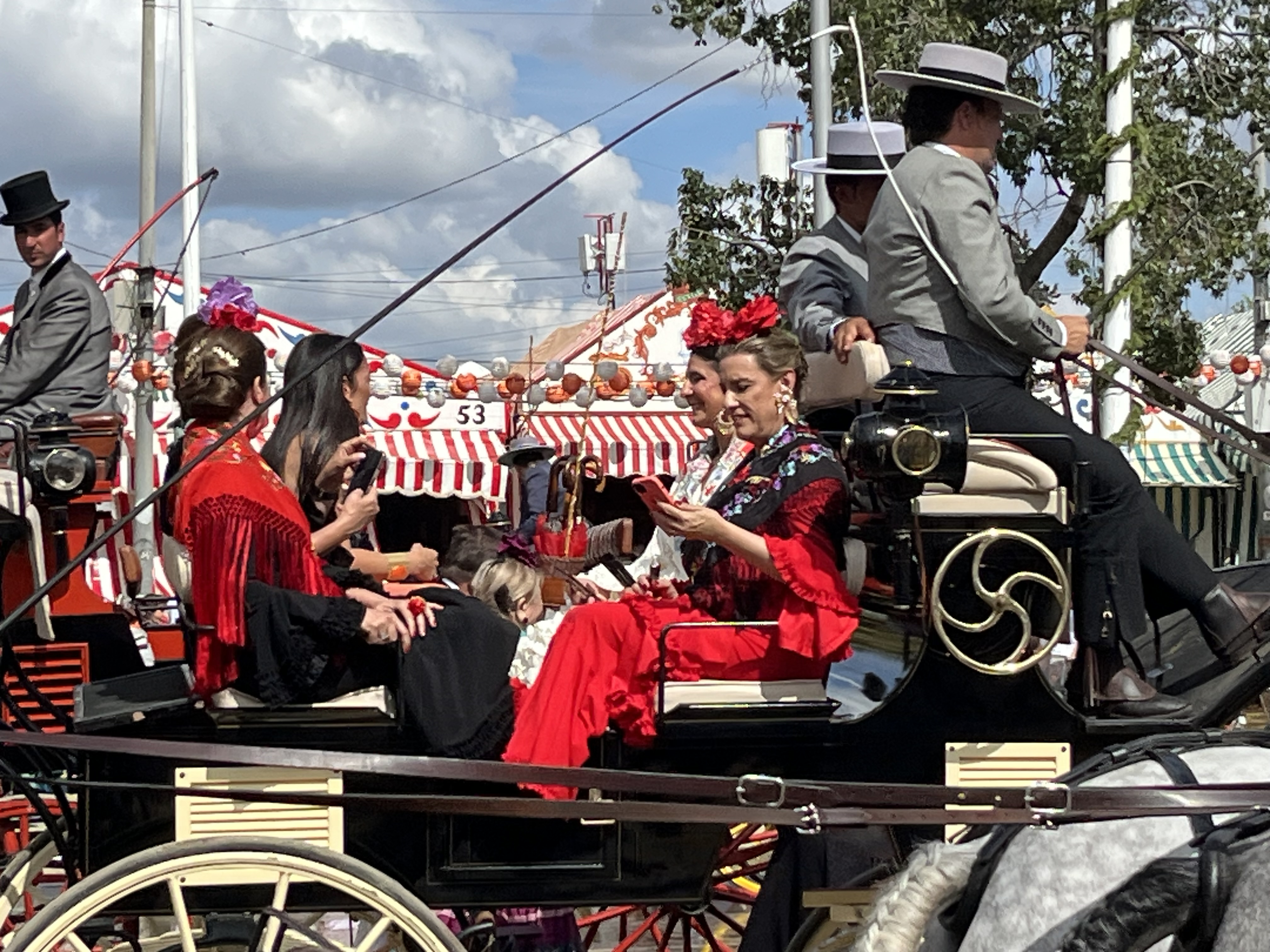
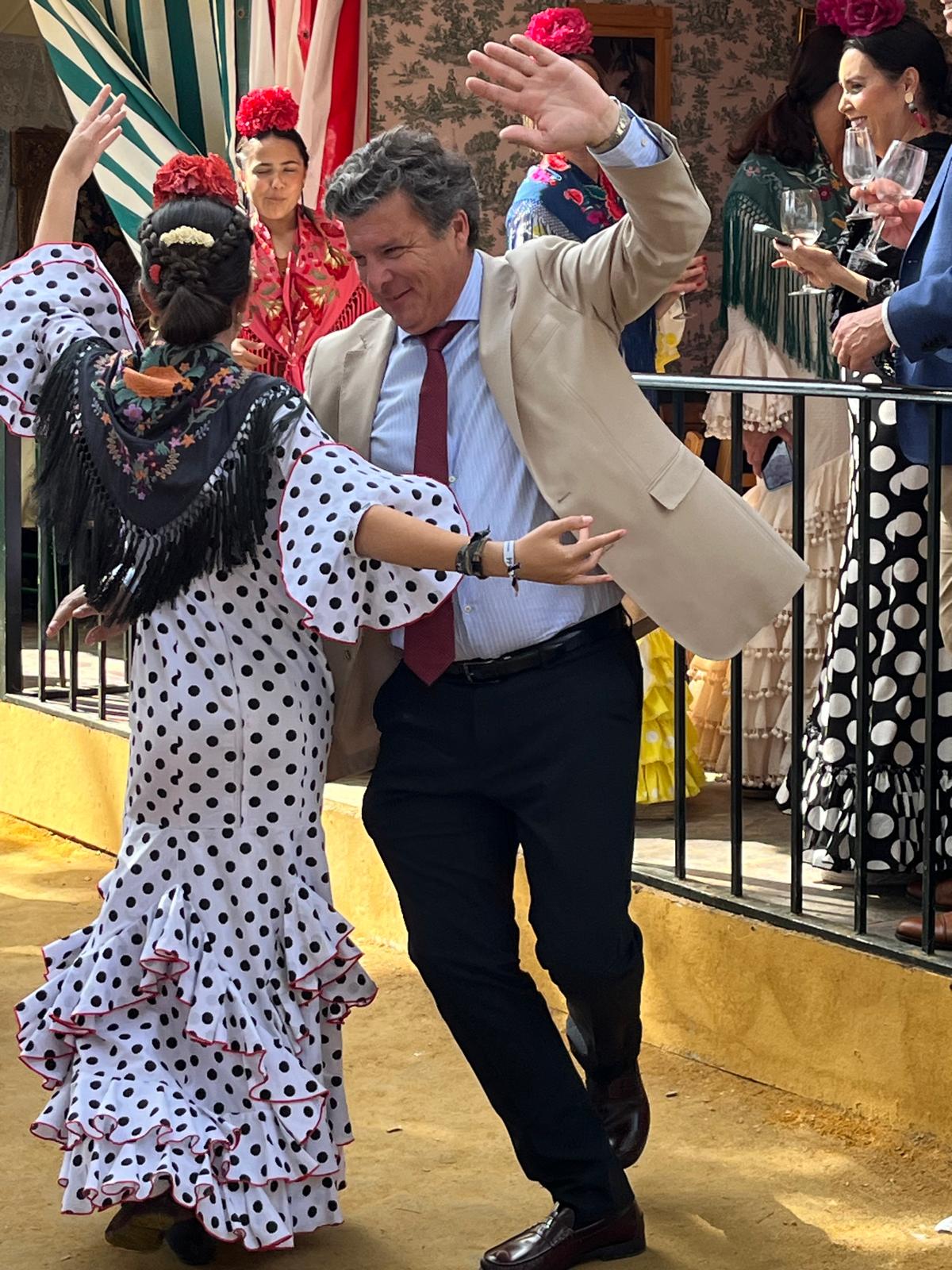
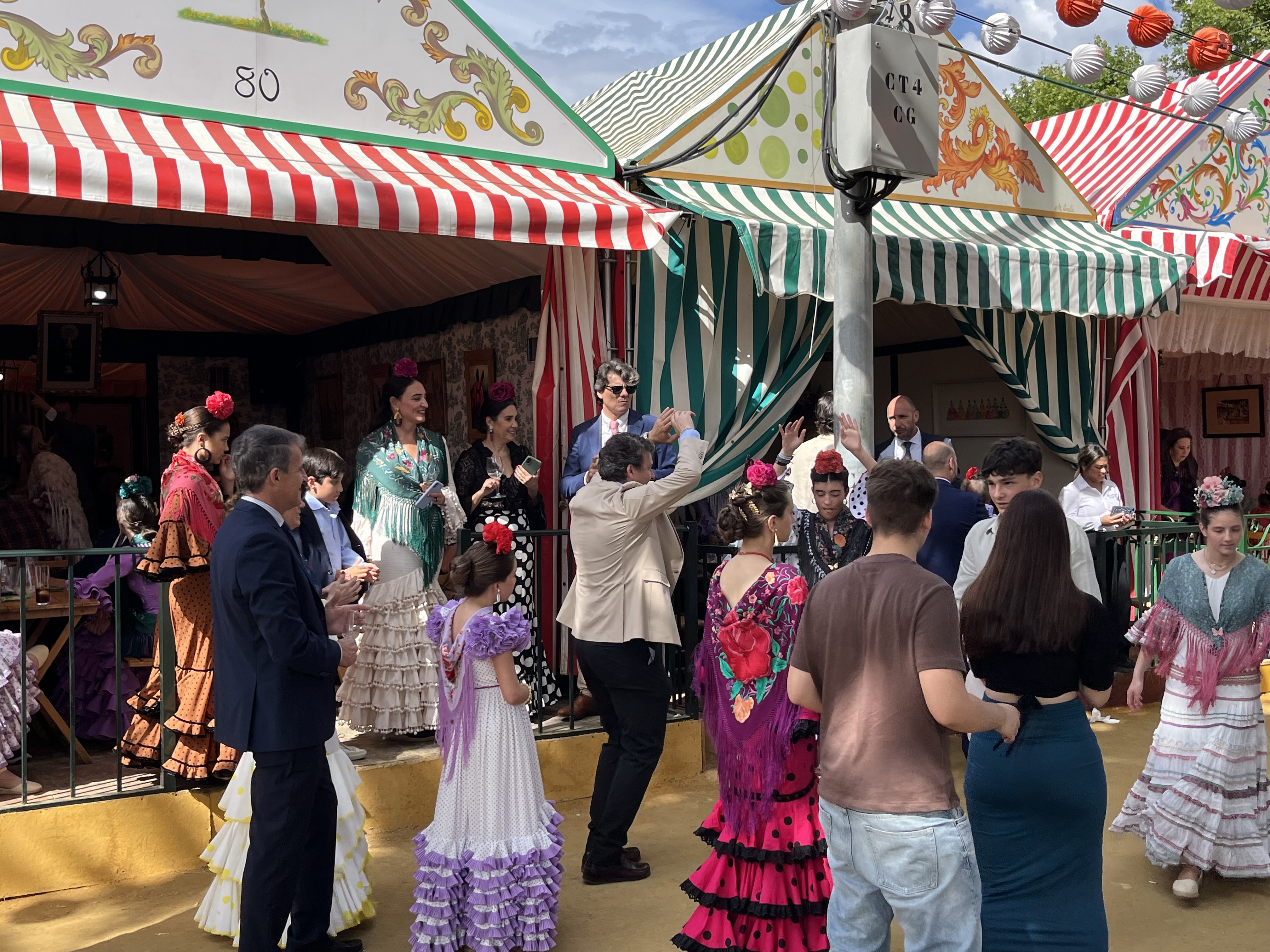
We really got into the festivities when we visited the fairgrounds at the edge of town. There were lots of private, family, and association run party tents and almost everyone we saw was dressed up. We were amazed by how many attendees were on horseback or riding in one of the many horse drawn carriages that literally paraded on the roads between the tents. The mix of riders, carriages, and dancing pedestrians appeared at times somewhat wild, yet despite this unregulated traffic, the Spaniards proved to be excellent horsemen and everything appeared to somehow flow along without any mishaps. While both of us would have liked to take part more actively in the celebration, we were just observing tourists who lucked out, being able to take it all in.
Some traditionally dressed Spaniards during Feria week in Sevilla:


Midweek at the Feria Festival fairgrounds:



Lisbon
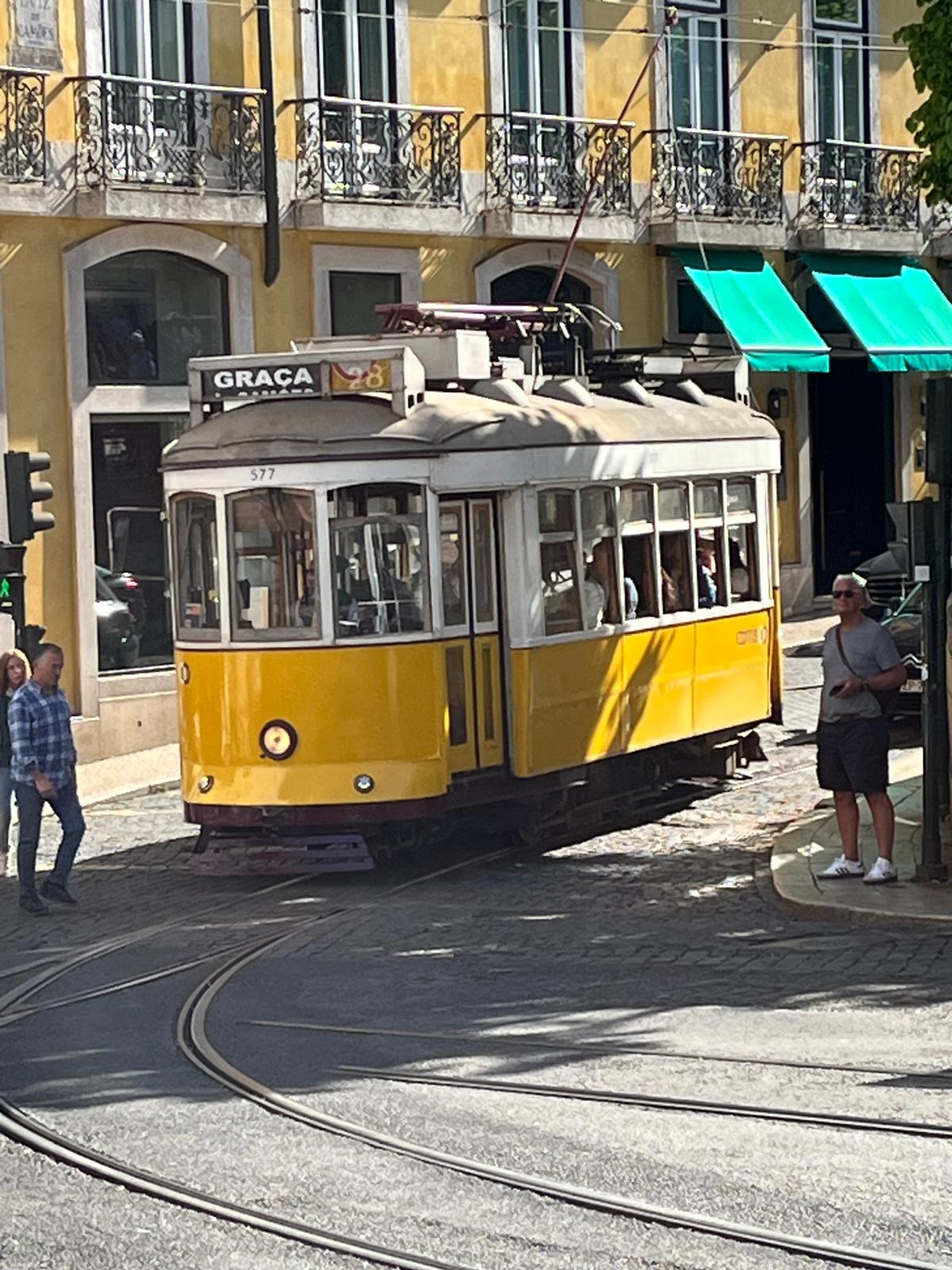
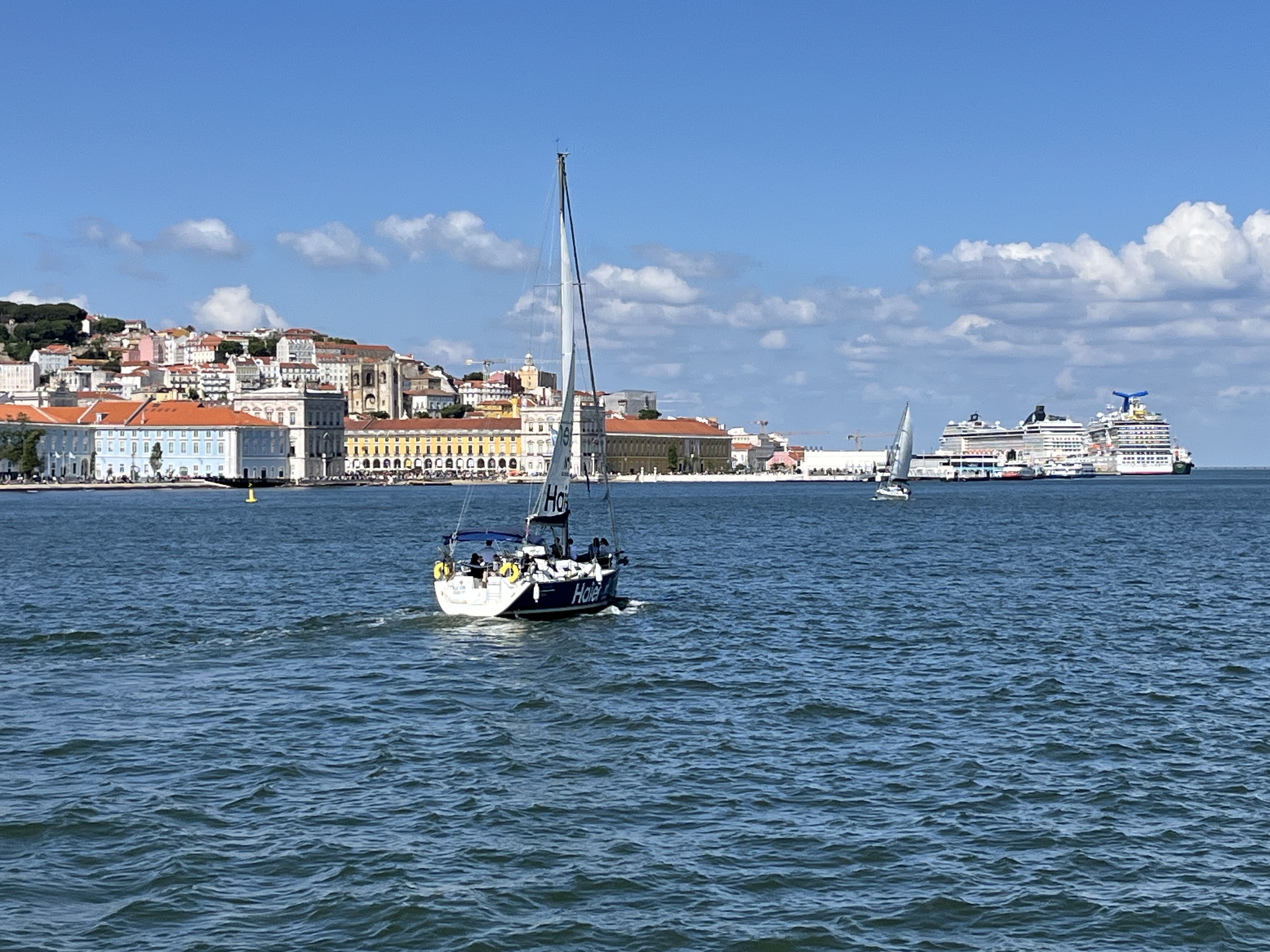
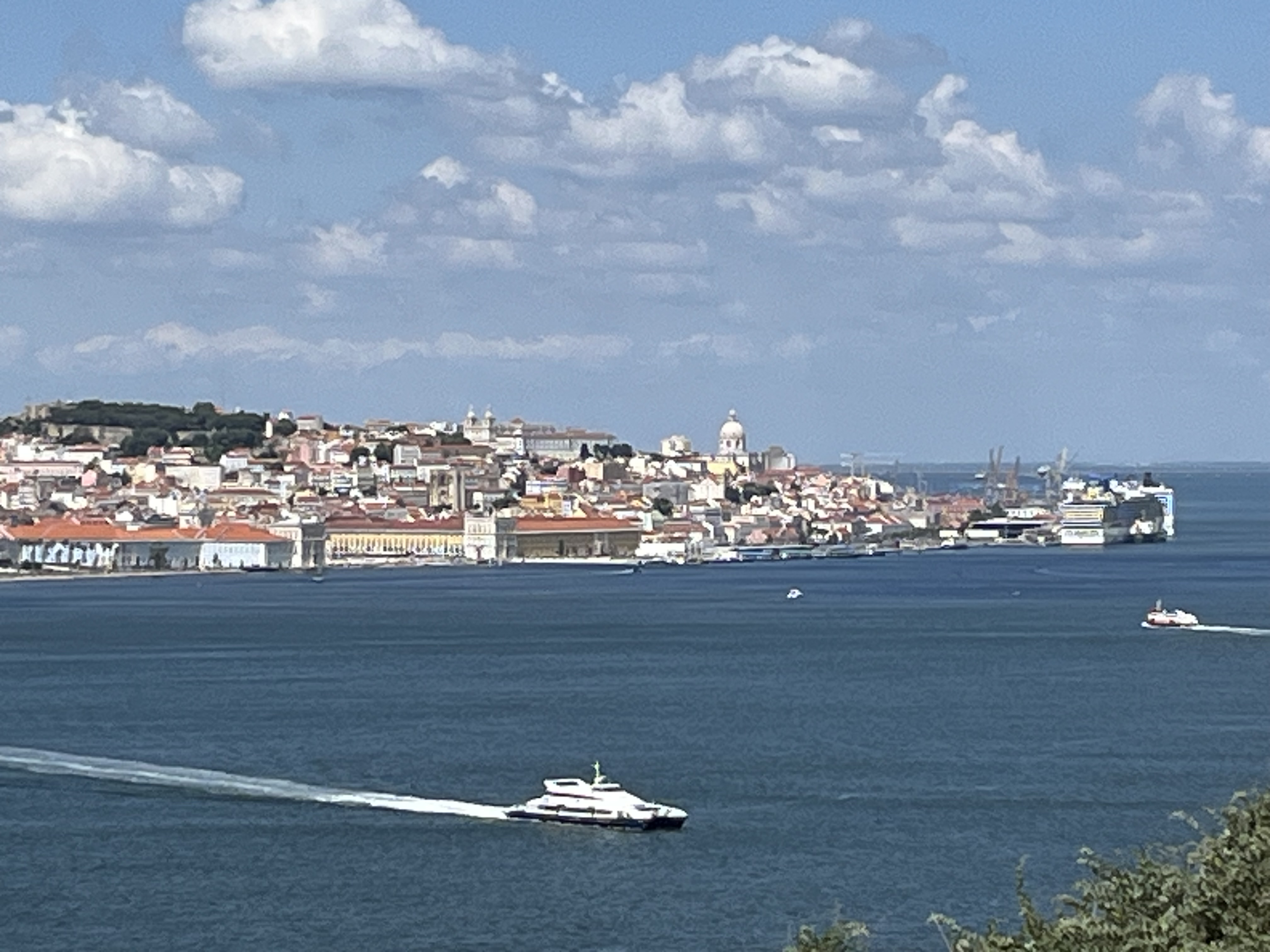
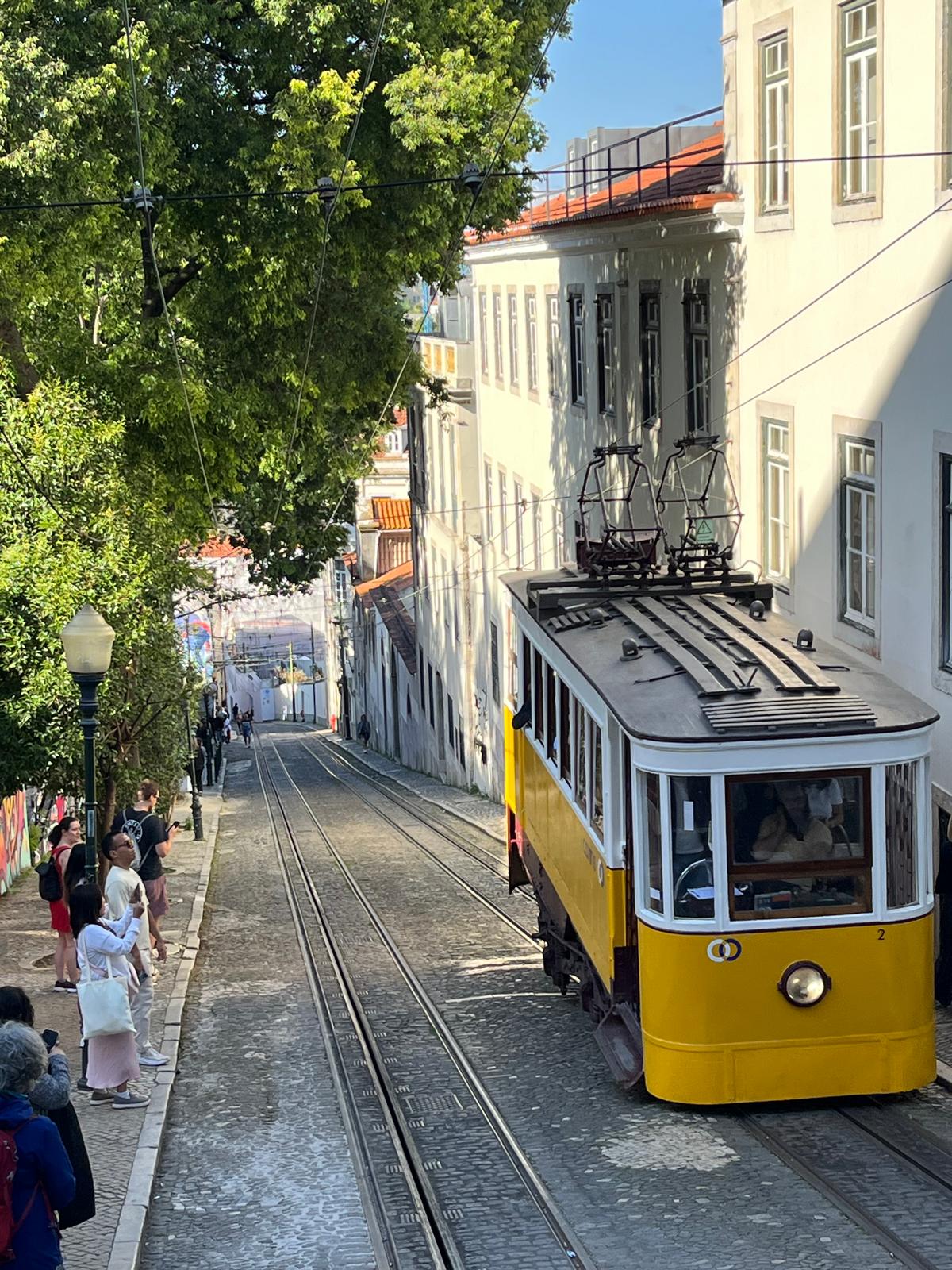
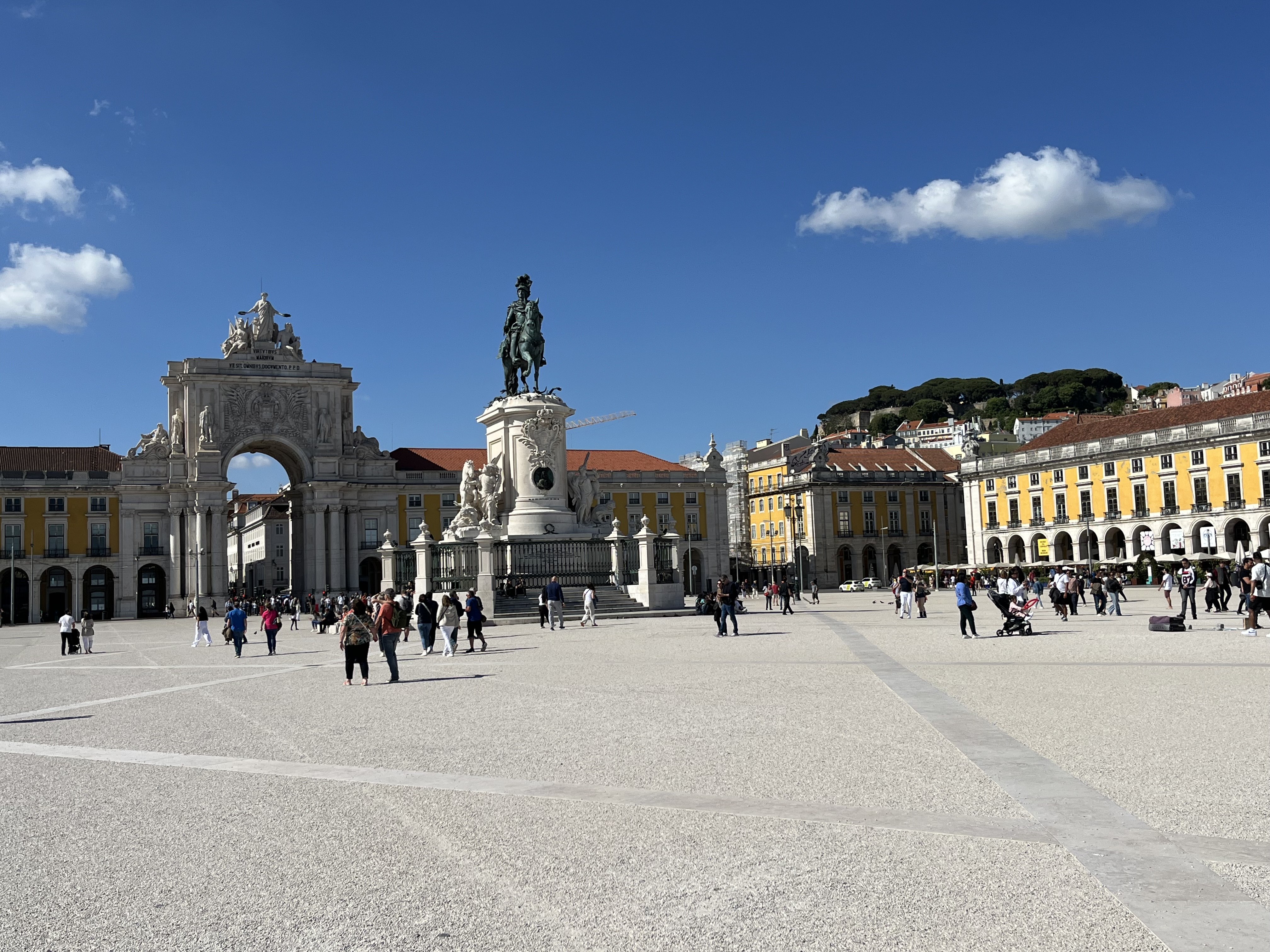
We had been wanting to visit Lisbon, the capital of Portugal, for a long time and our visit did not disappoint. With Lisbon’s hillside setting on the north shore of the wide Tajo River close to the ocean and it’s elegant “Ponte 25 de Abril” suspension bridge, it reminded me of a San Francisco on the Atlantic Ocean, where the call of seagulls and a fresh ocean breeze fill the narrow, hilly streets, old yellow cable cars run, and a myriad impressive views over town and water can be found at almost every street corner.
With its numerous old residential neighborhoods of narrow, slope weaving streets, one doesn’t feel like being in a city of 3 Million. Until 40+ years ago, prior to Portugal joining the European Union, Portugal was one of the poorest places in Western Europe and real estate and cost of living was very affordable. Today Lisbon, and all of Portugal, have become tourist hot spots and Lisbon, just like Barcelona, though with a distinctly different vibe, has become, a very trendy, desirable, and expensive place to live. I recall my younger sister moving to Lisbon for a few months in the 80s and literally living on a dime. Strolling through the Chiado, Bairro Alto or Baixa de Lisboa neighborhoods today, with their high end shops and restaurants etc, it is hard to believe that just 40 years ago, this was one of the poor houses of Europe.
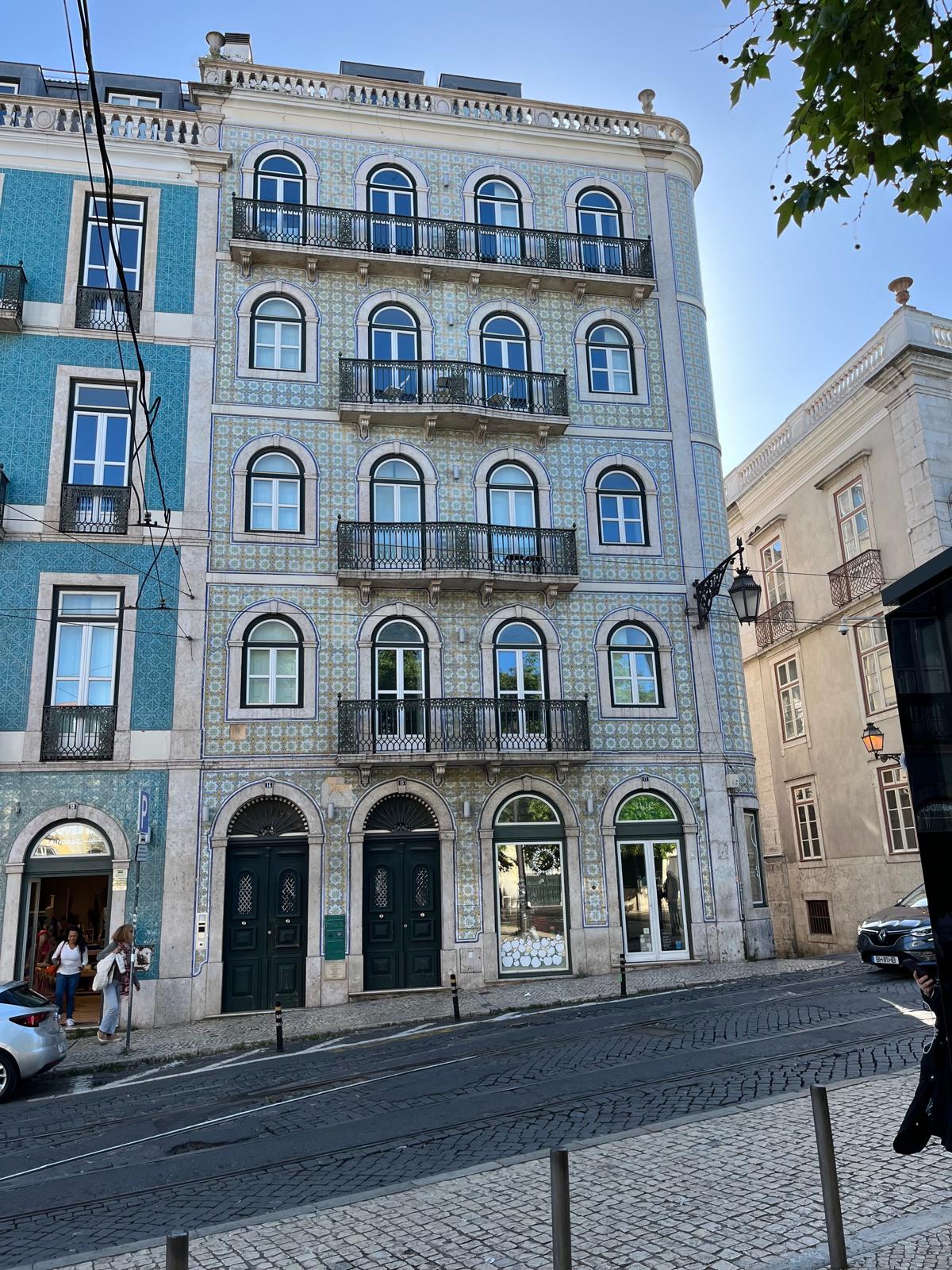
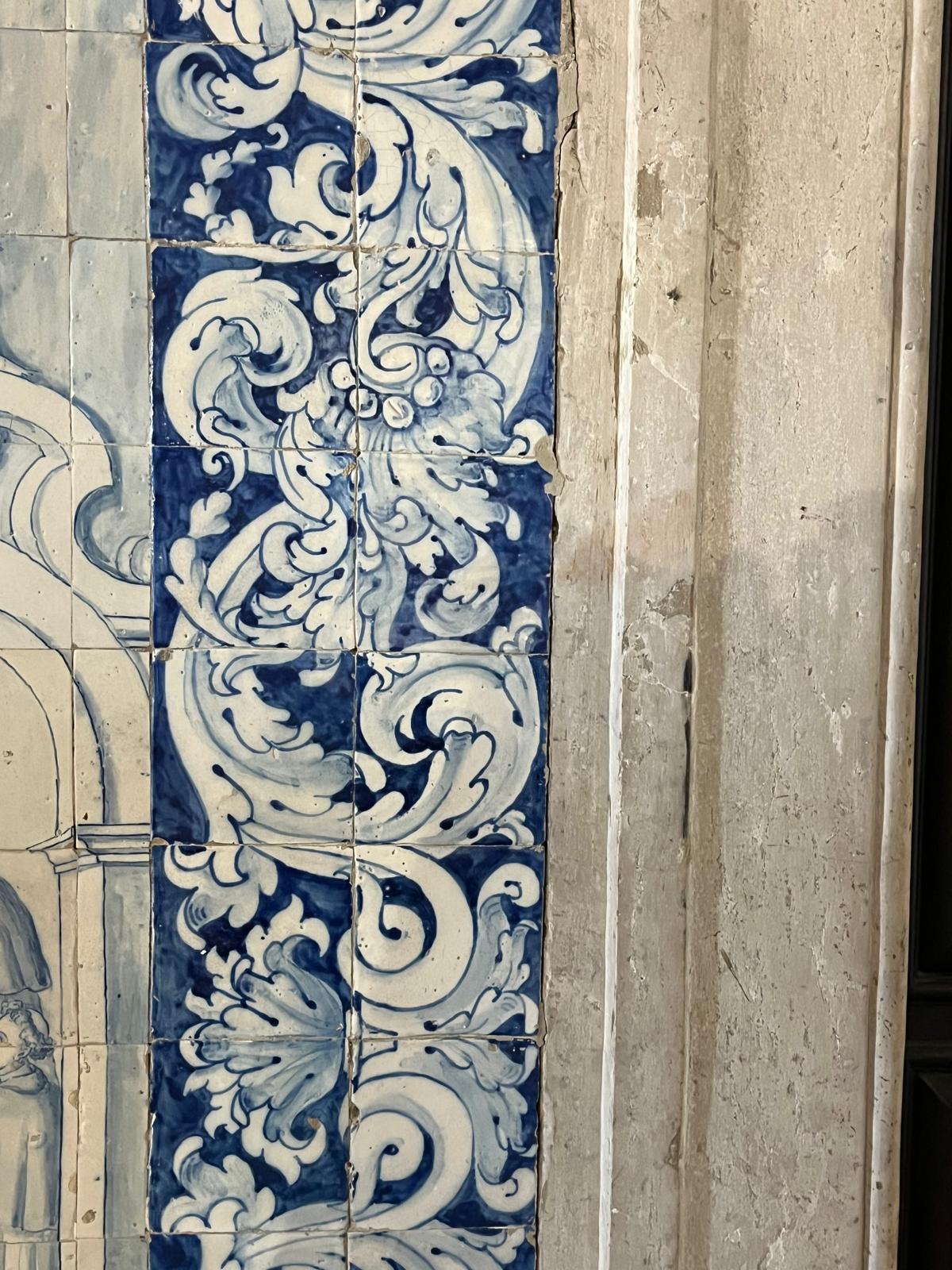
It’s the beauty of Lisbon and its setting and original charm that make it so attractive. Not to be forgotten are the many, mostly blue toned, tiled houses that provide its distinct charm. We’re used to tiles in the bathroom or on the floor, yet here, homeowners used to decorate, show off their wealth, by tiling the entire fronts of their houses with individually designed and patterned tiles.

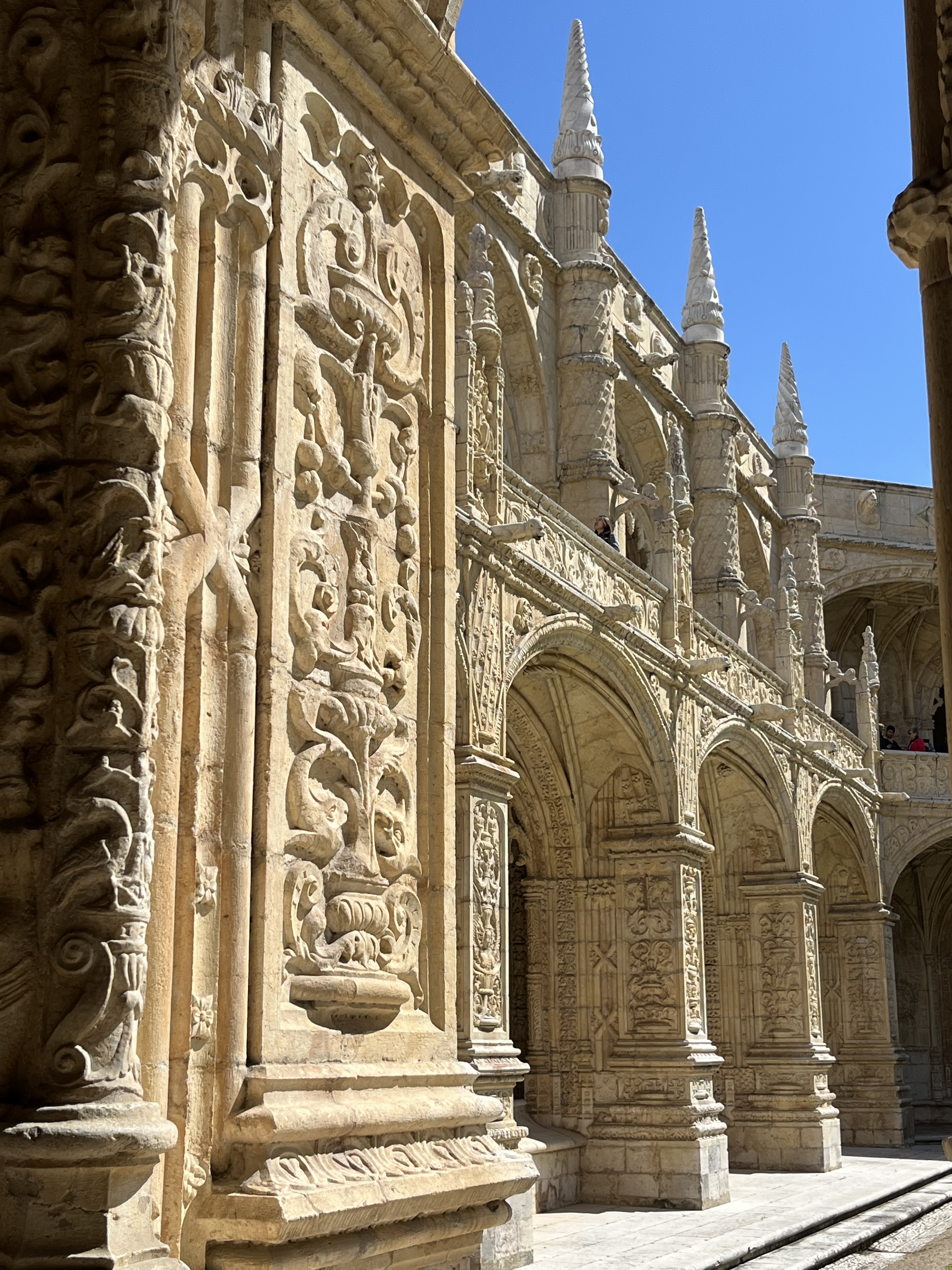
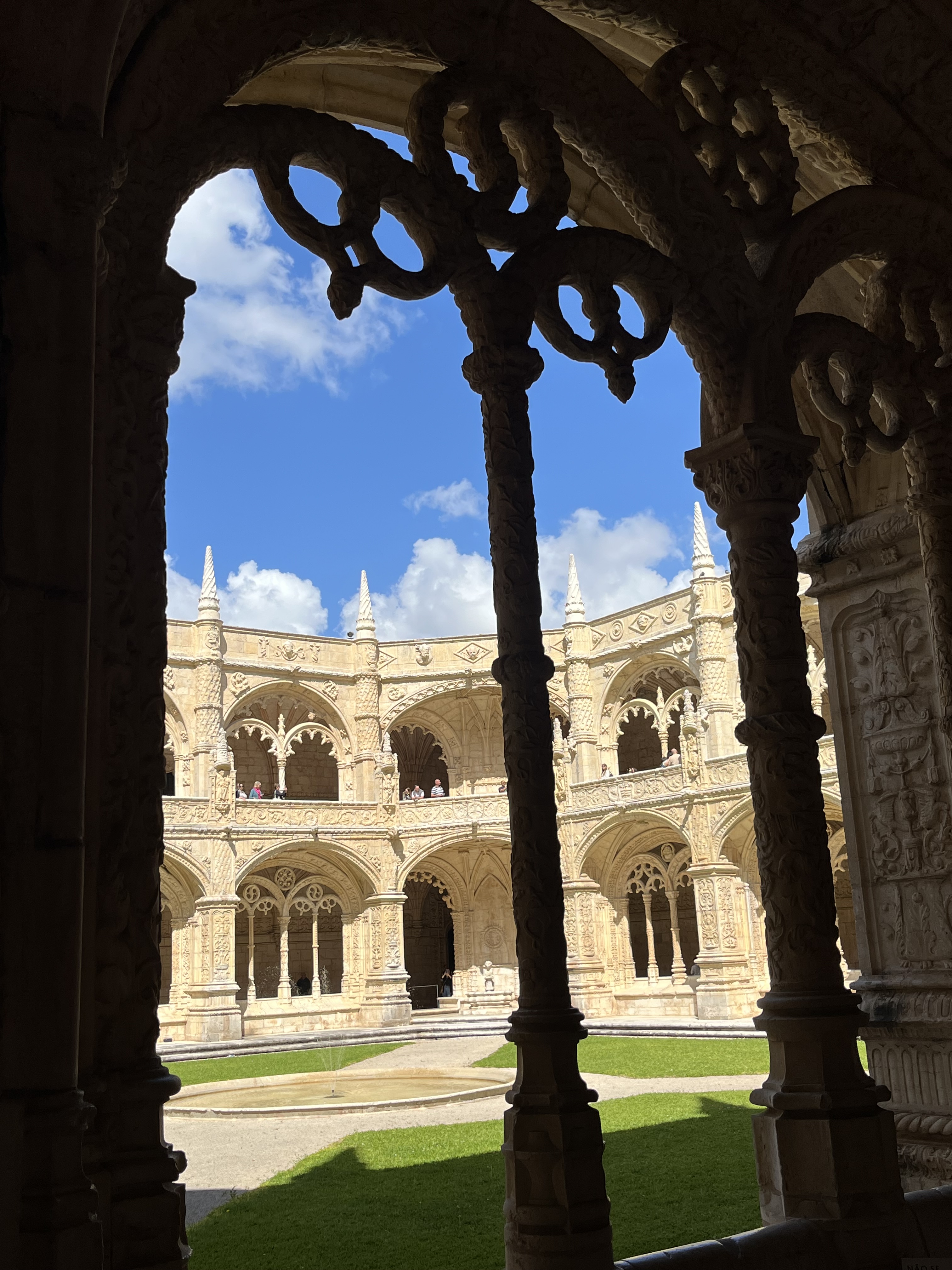
Mosteiro dos Jeronimos:



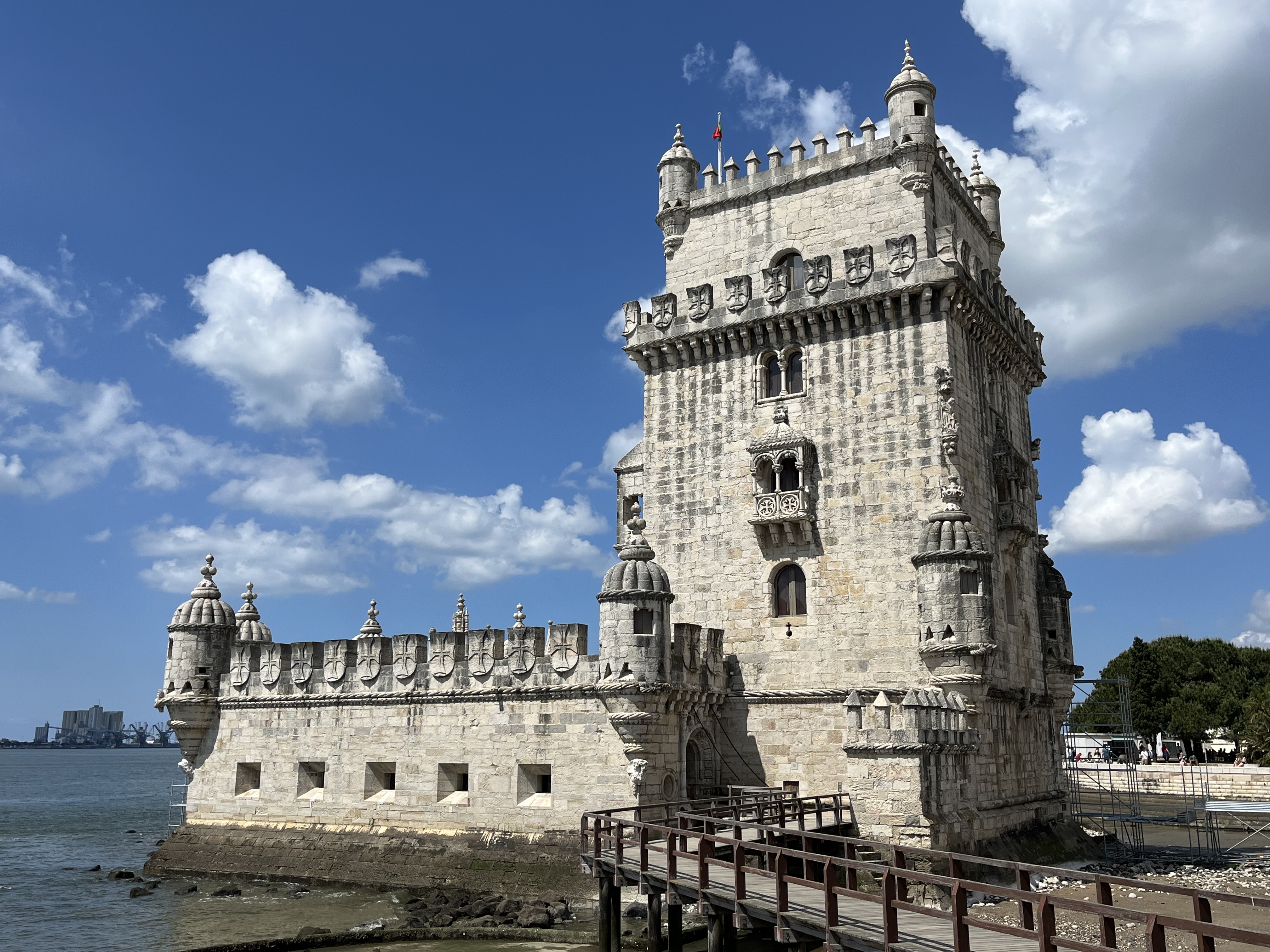
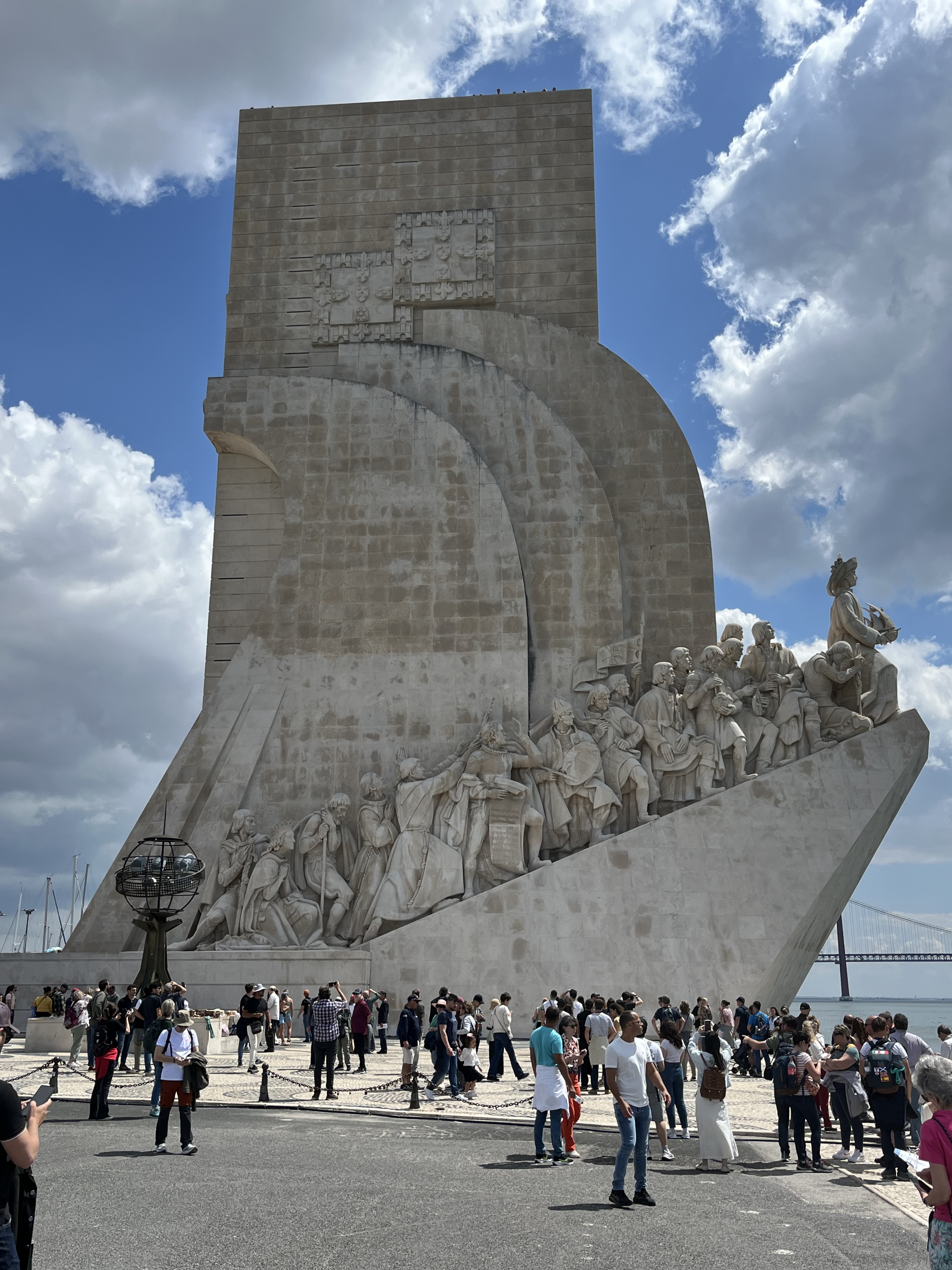
The Monument to the Discoveries and the Tower of Belem:

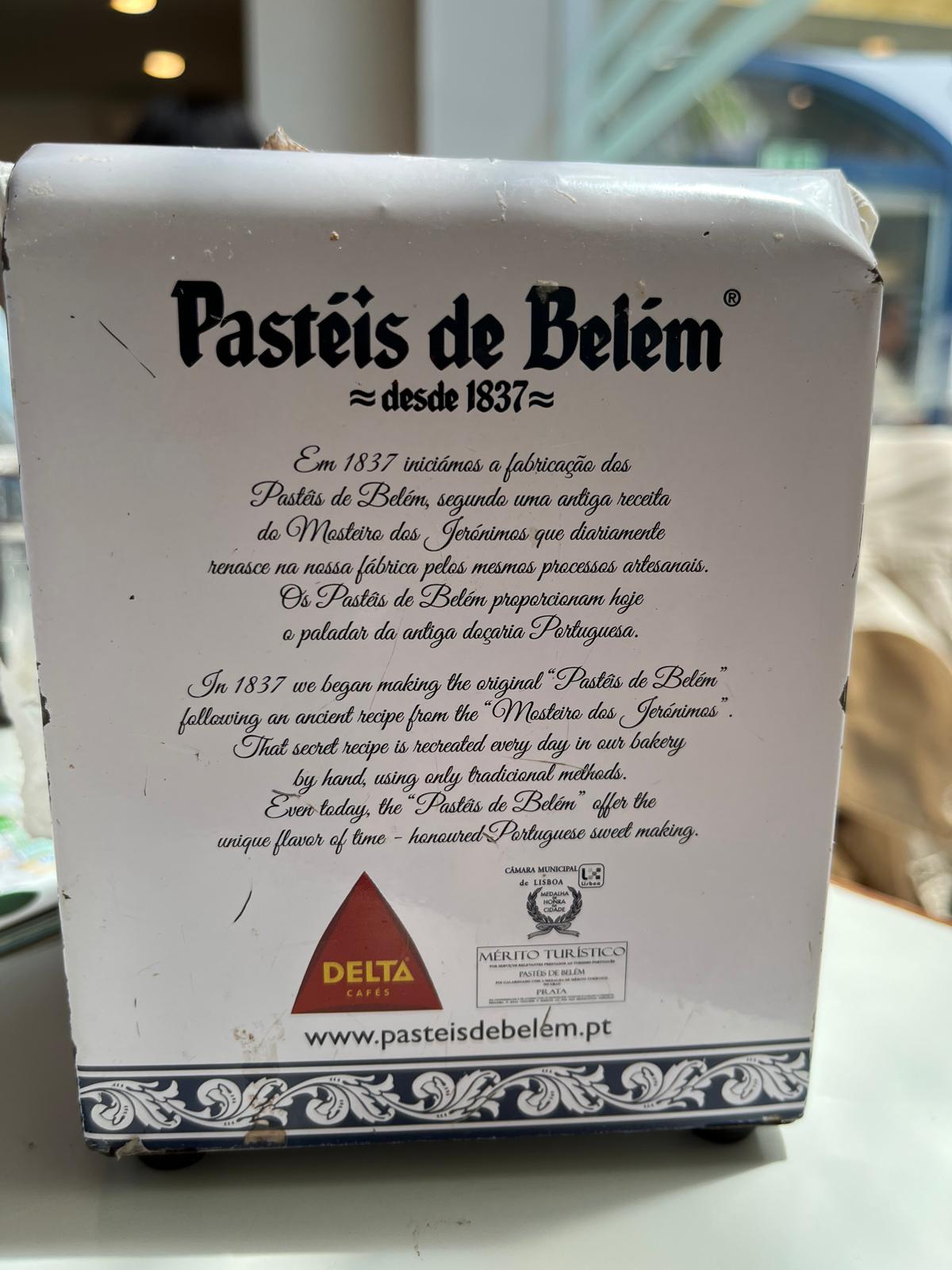
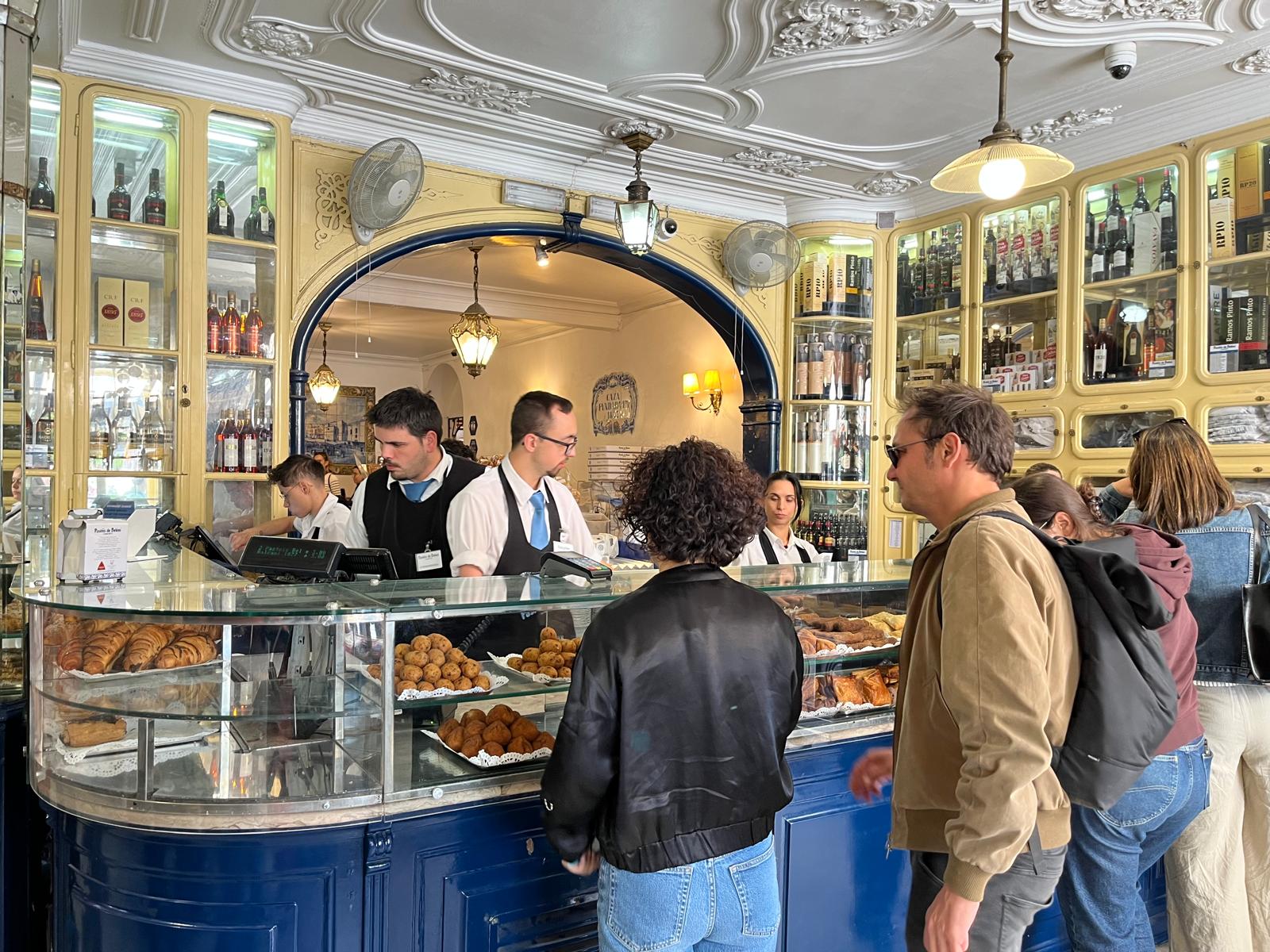
The renowned pastry of Belem:





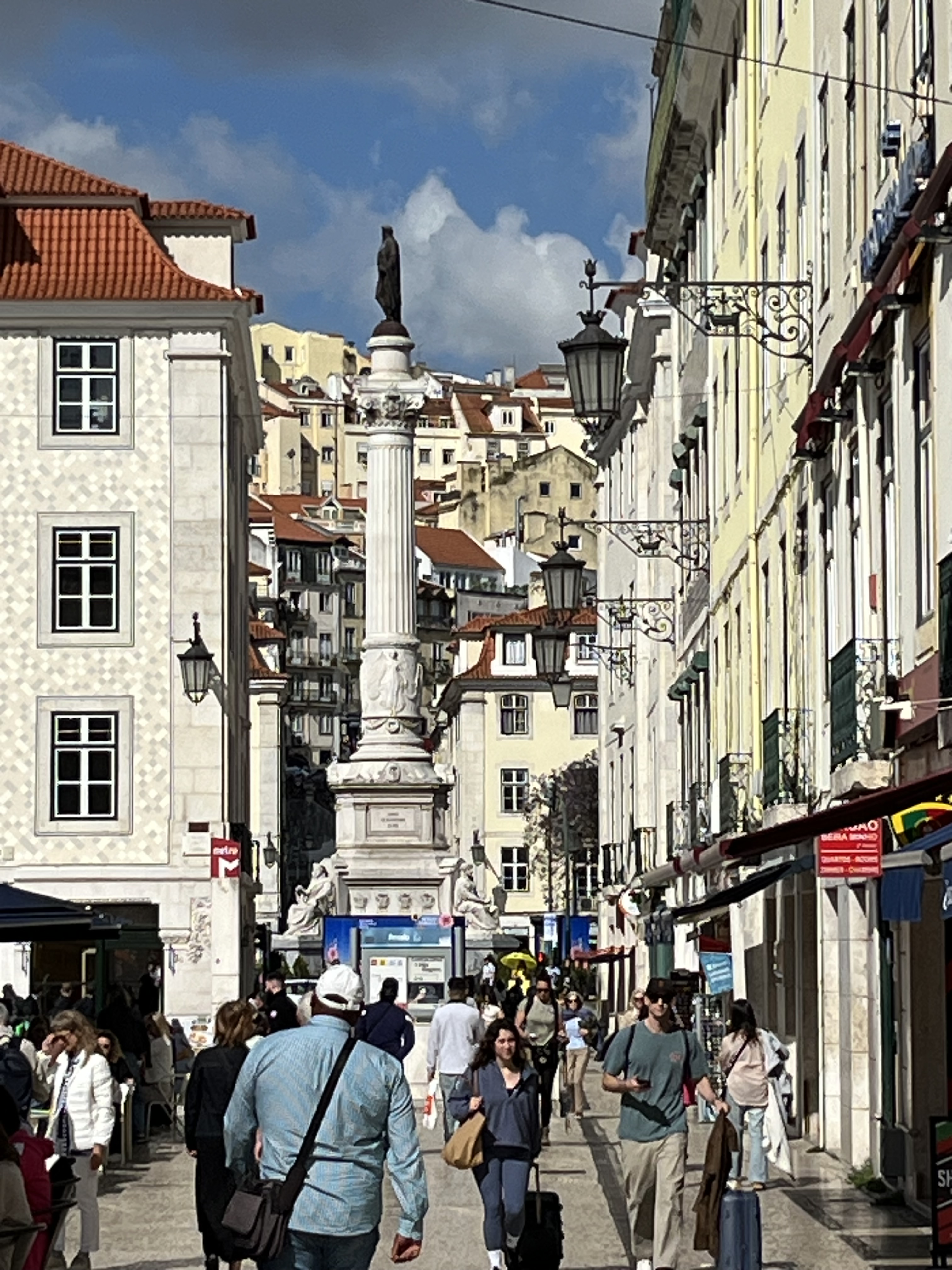
Lisbon is known for its tiles which cover the outside of most traditional houses:


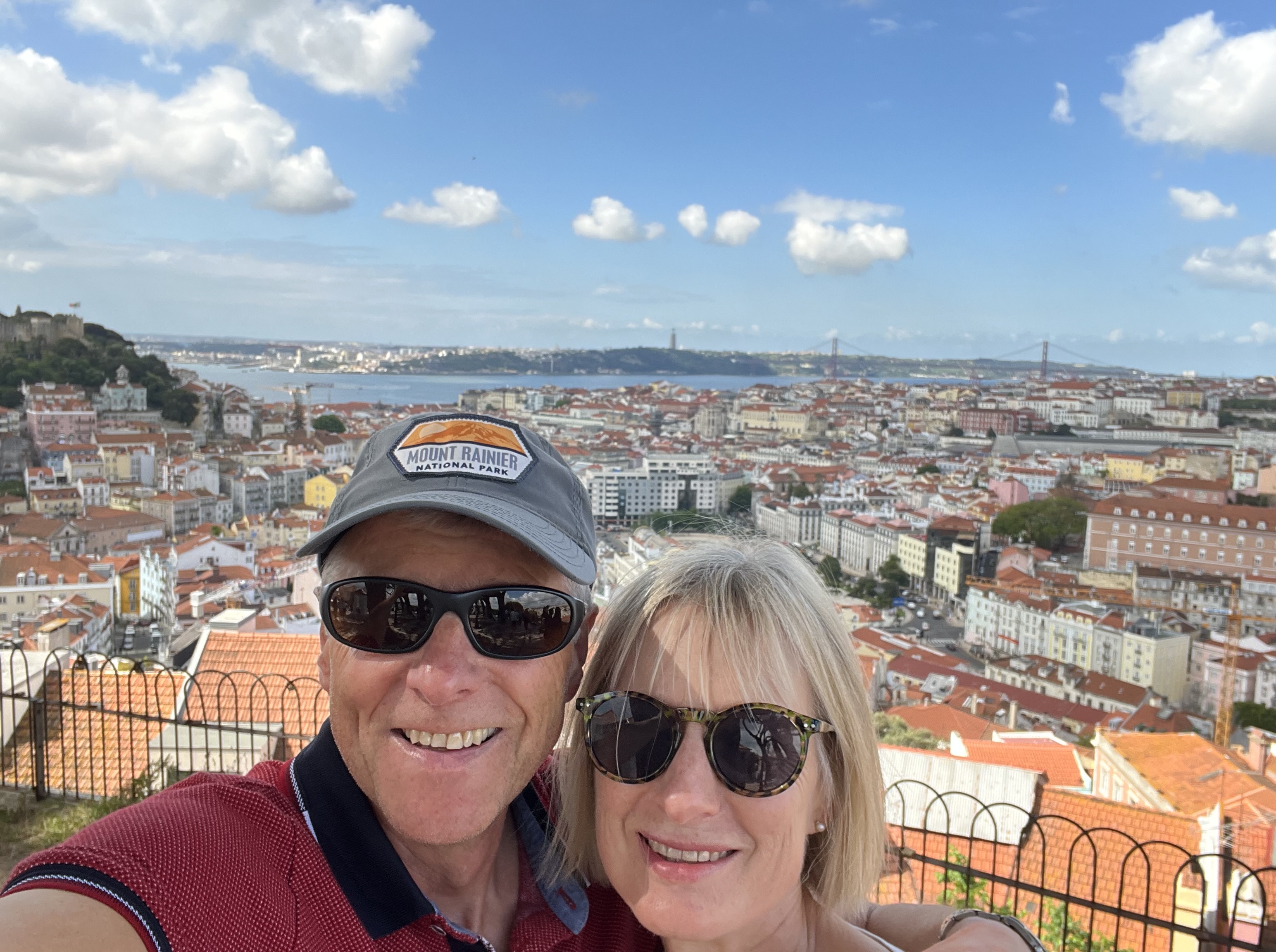

The “Golden Gate Bridge” of Lisbon spanning the Tajo river:
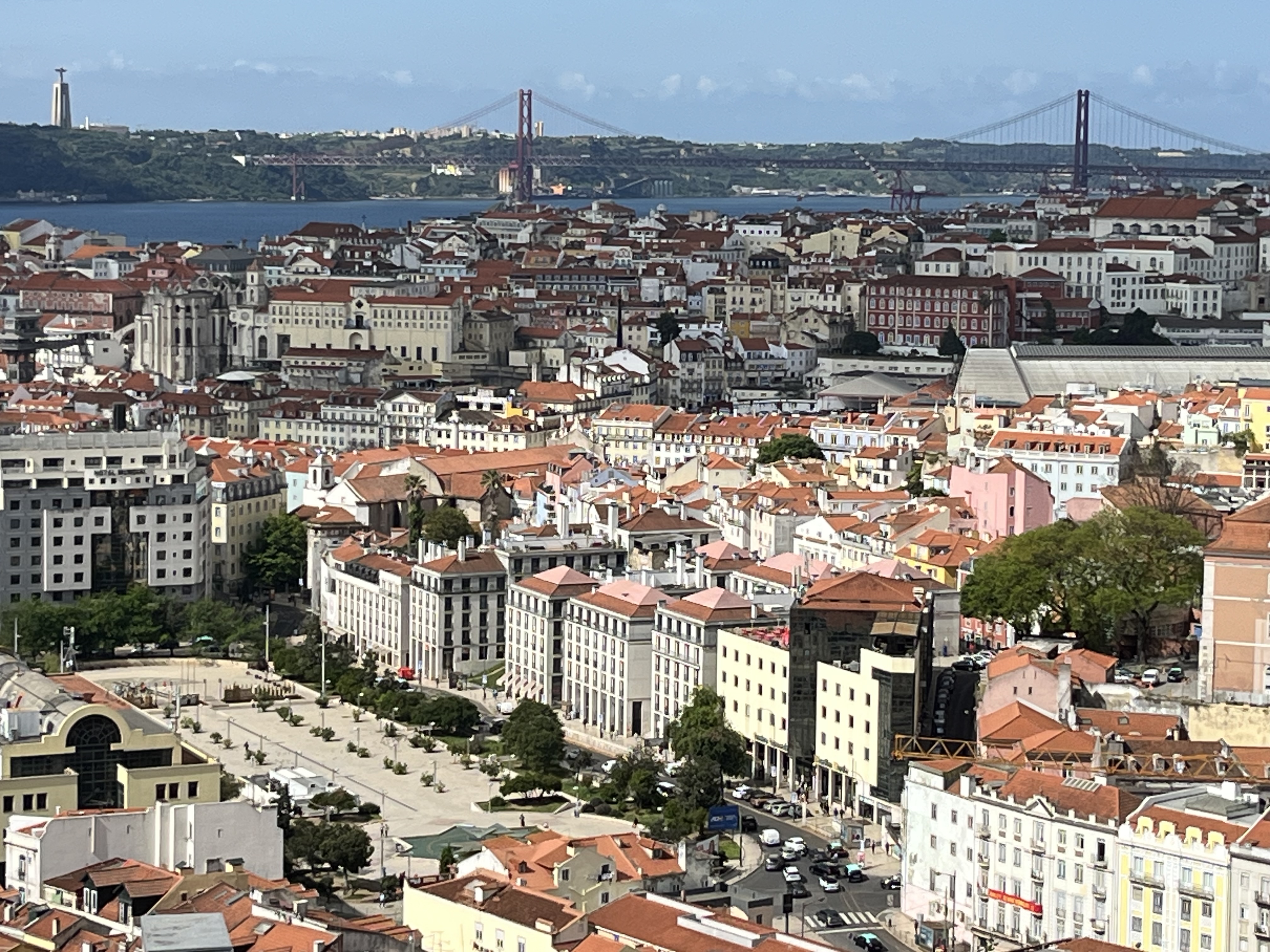
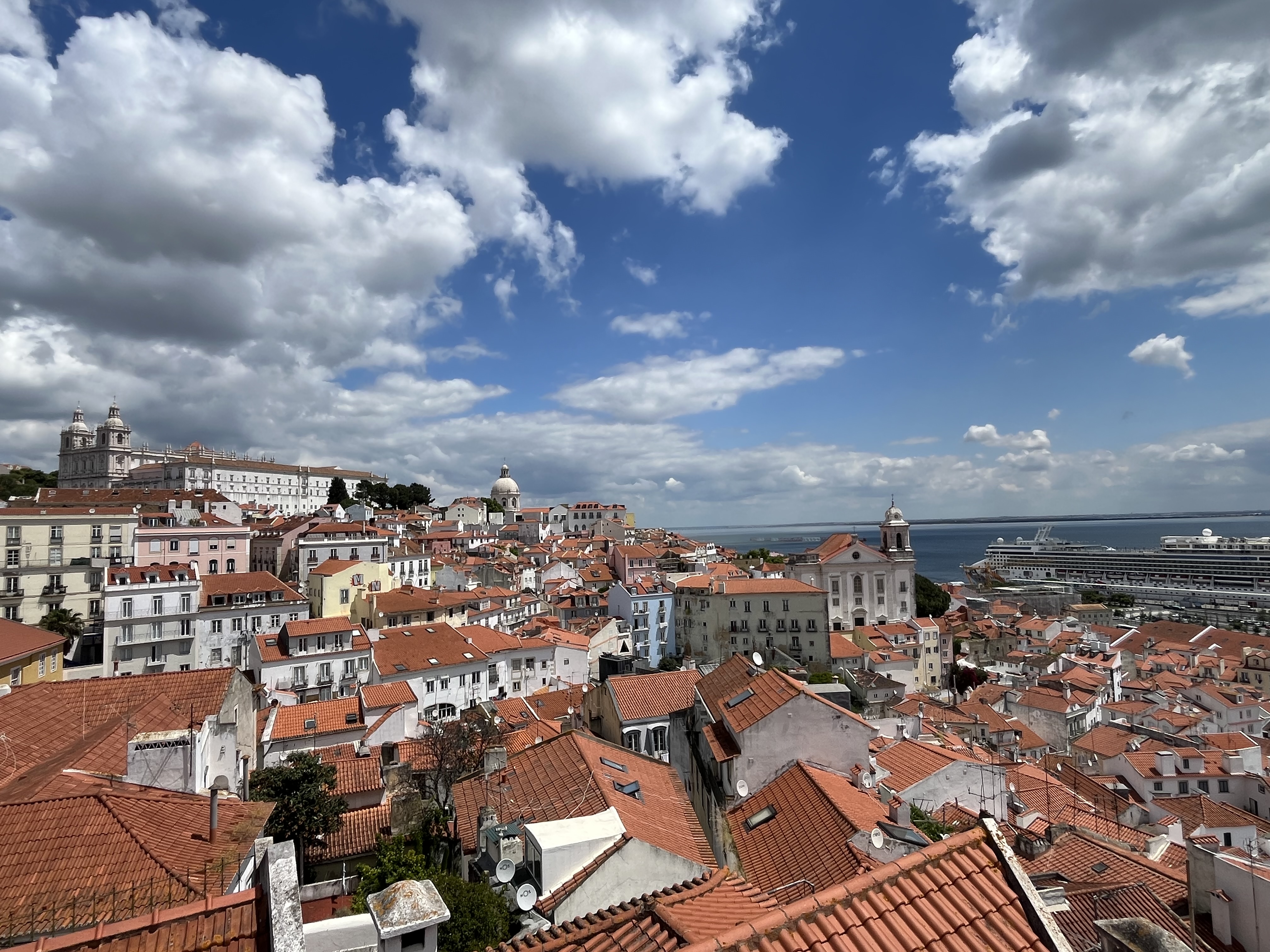
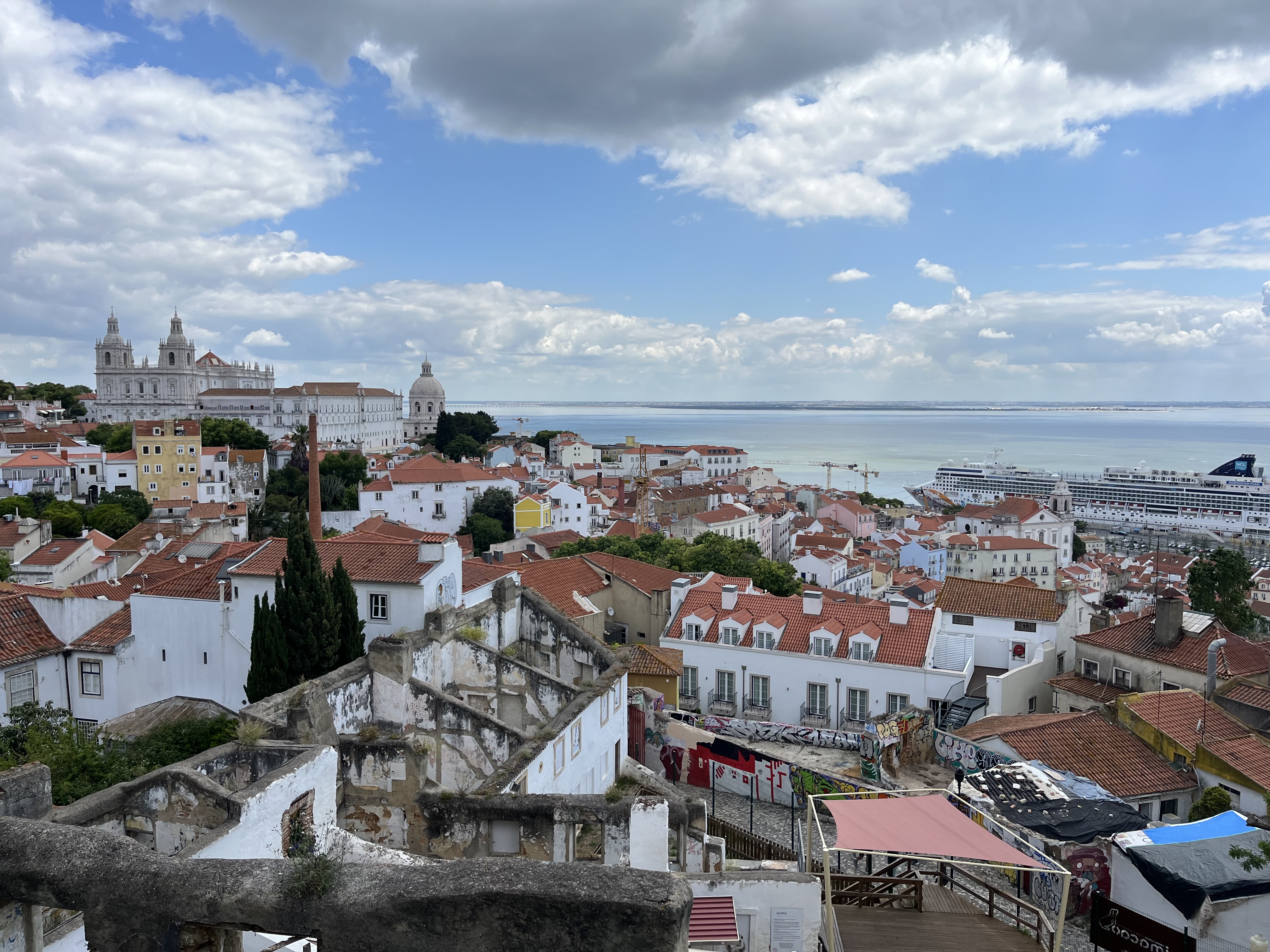
Good night and good bye Lisbon:


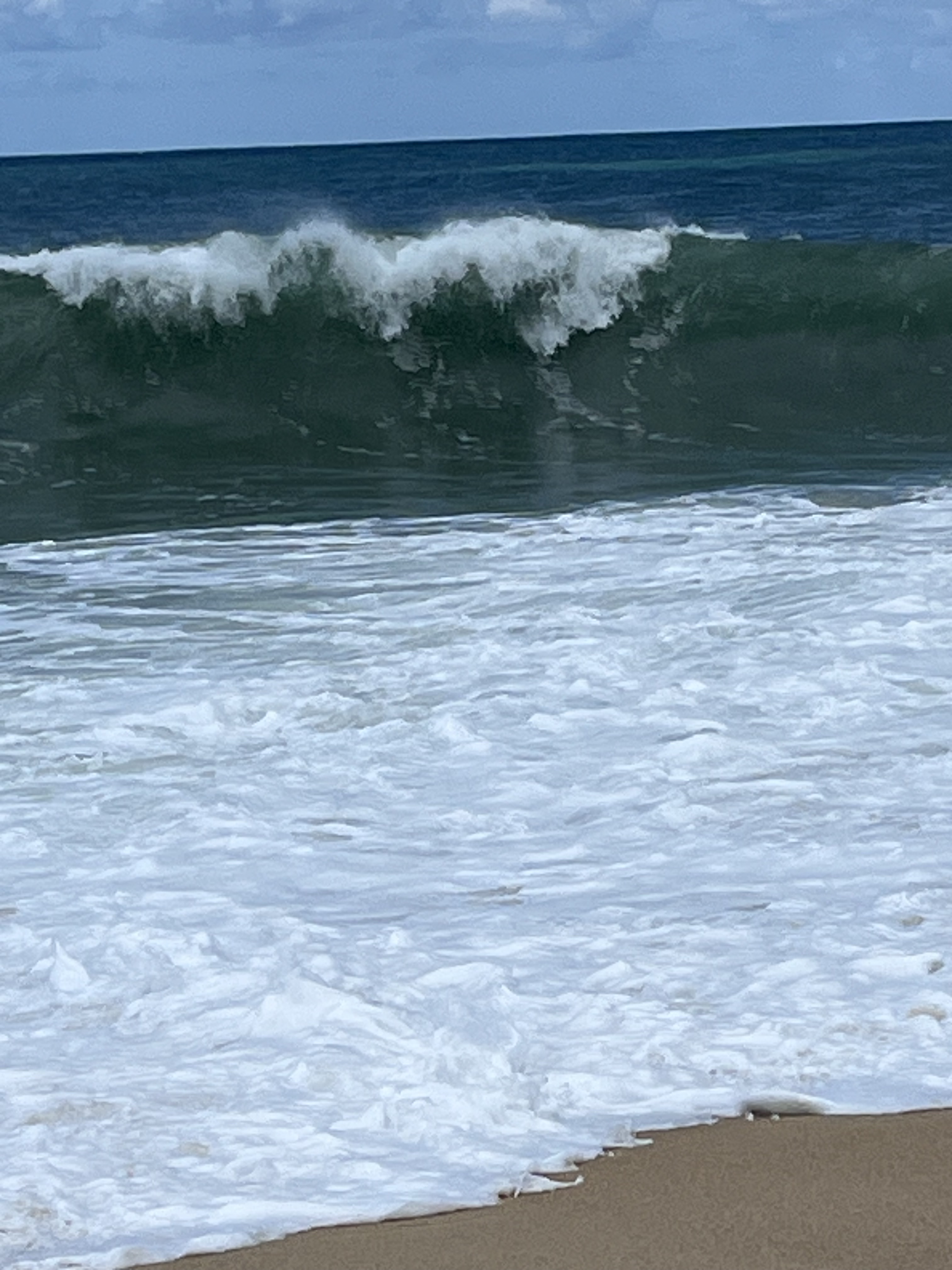
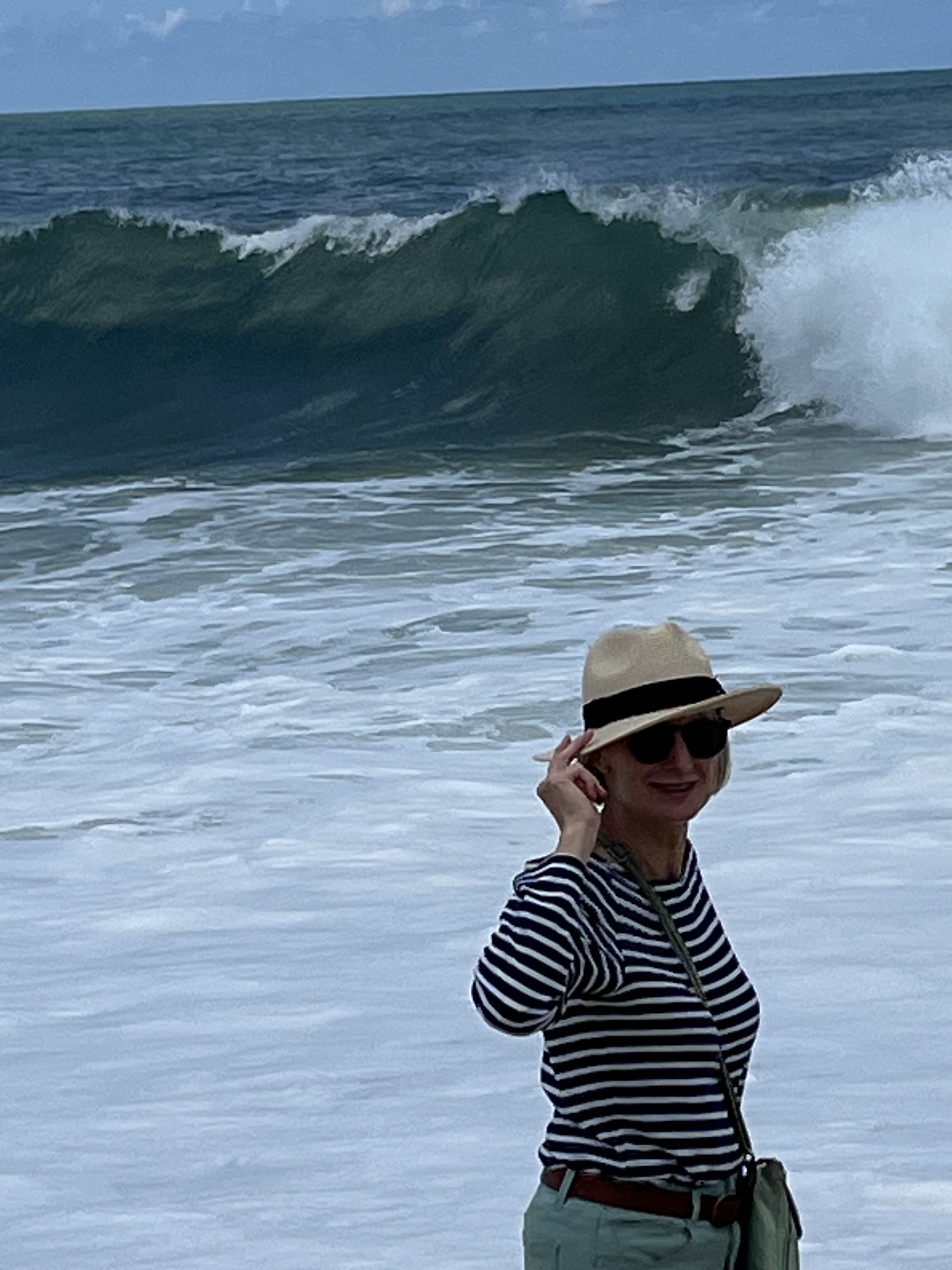
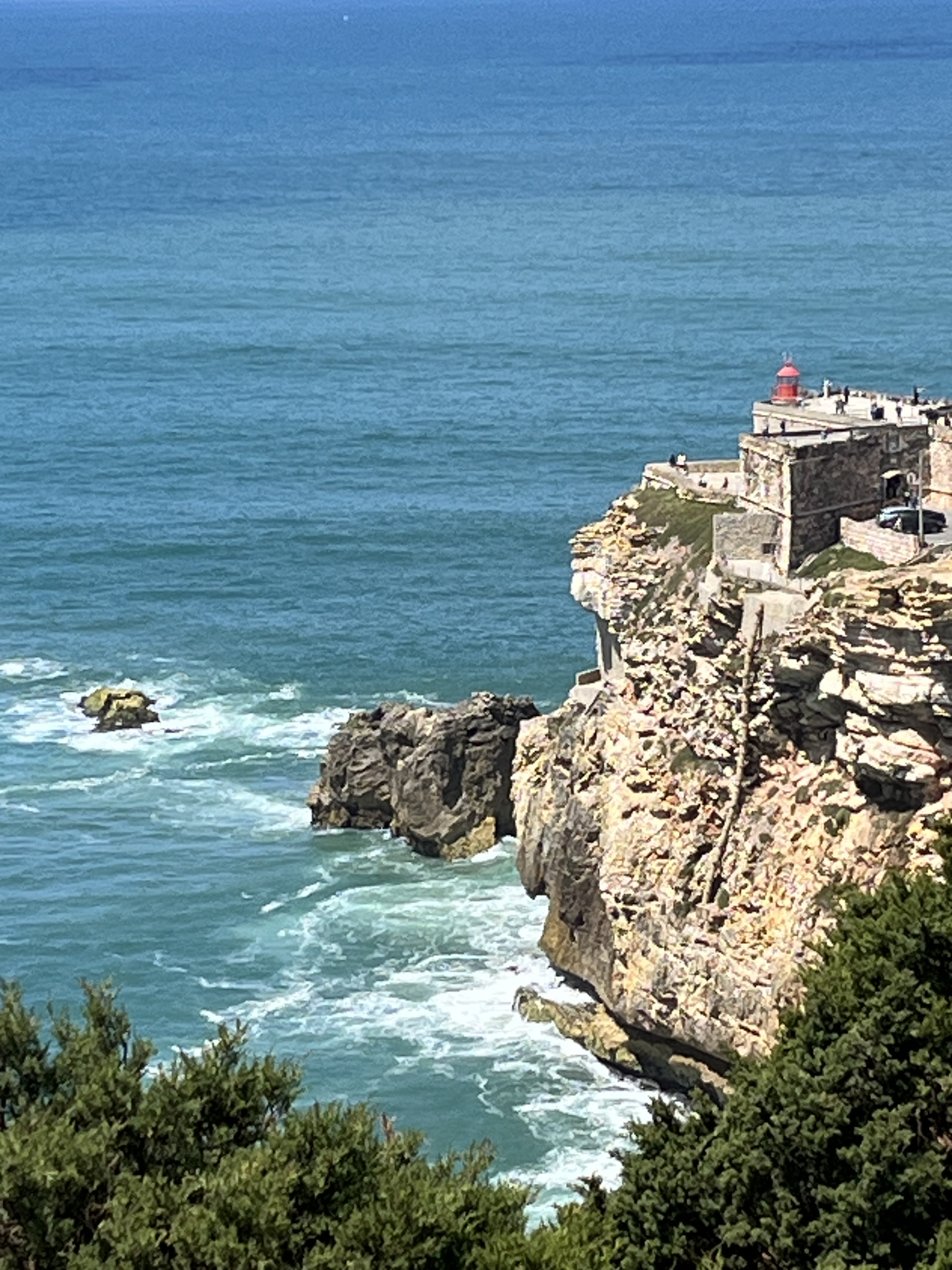
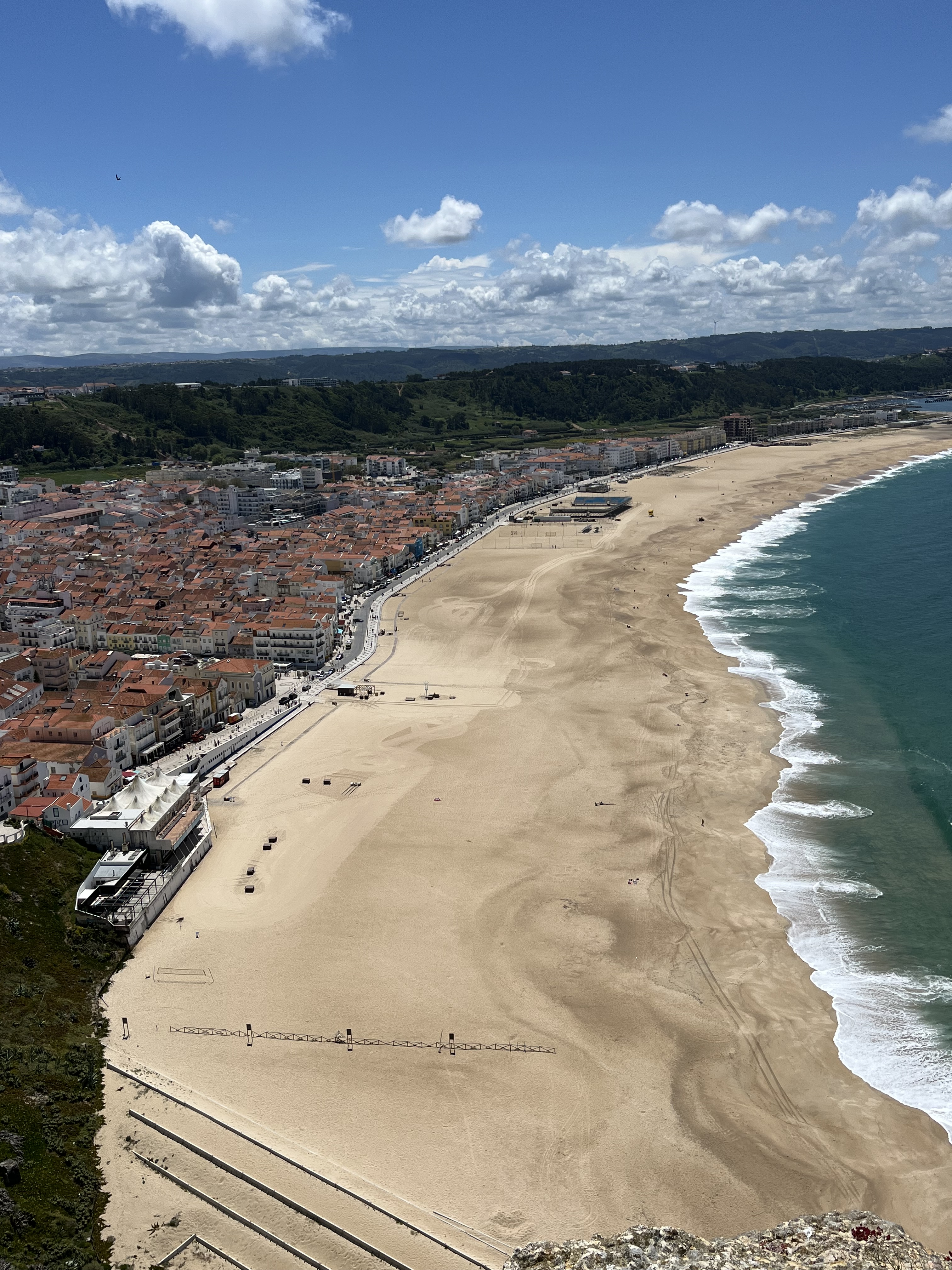
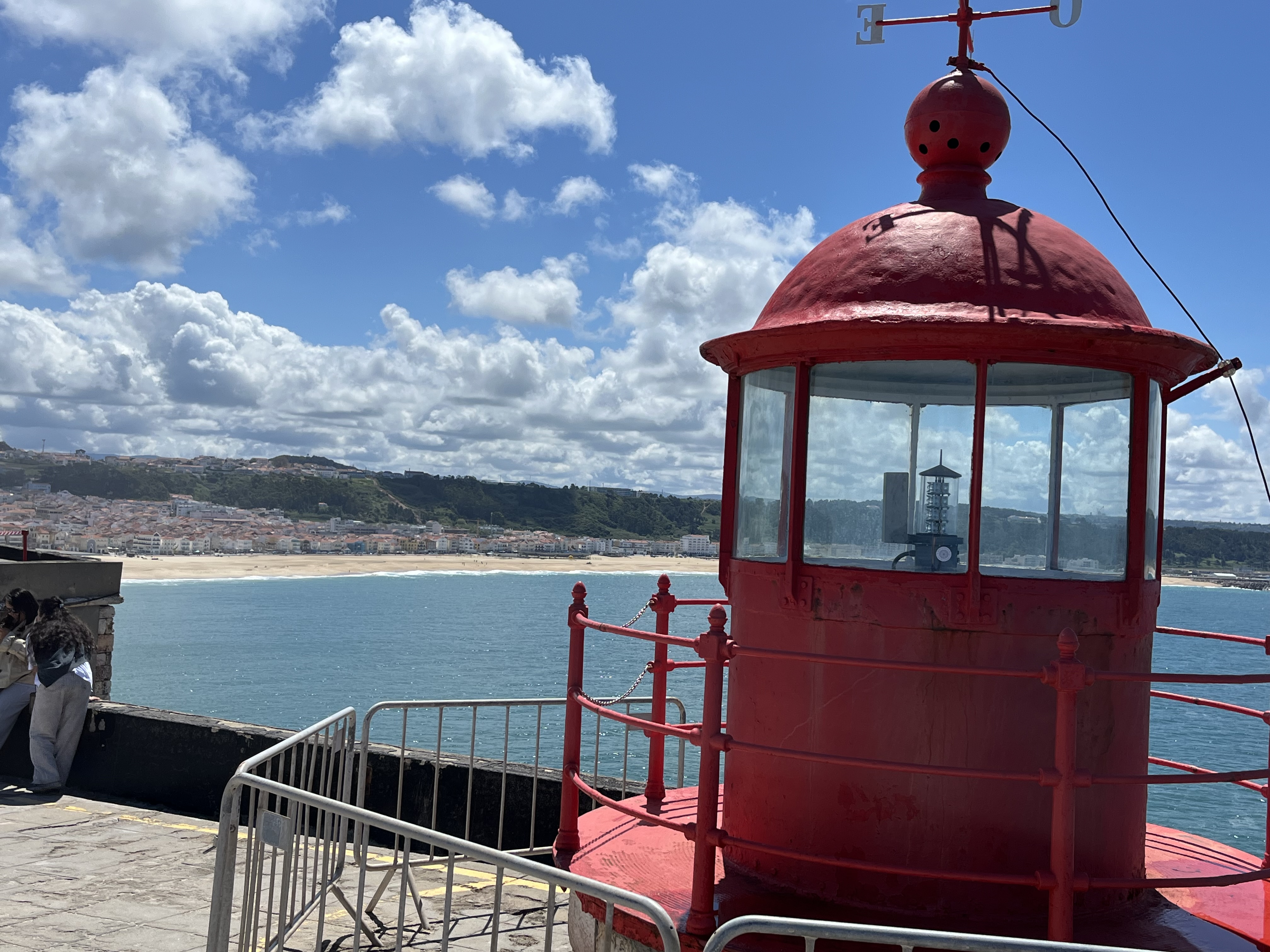
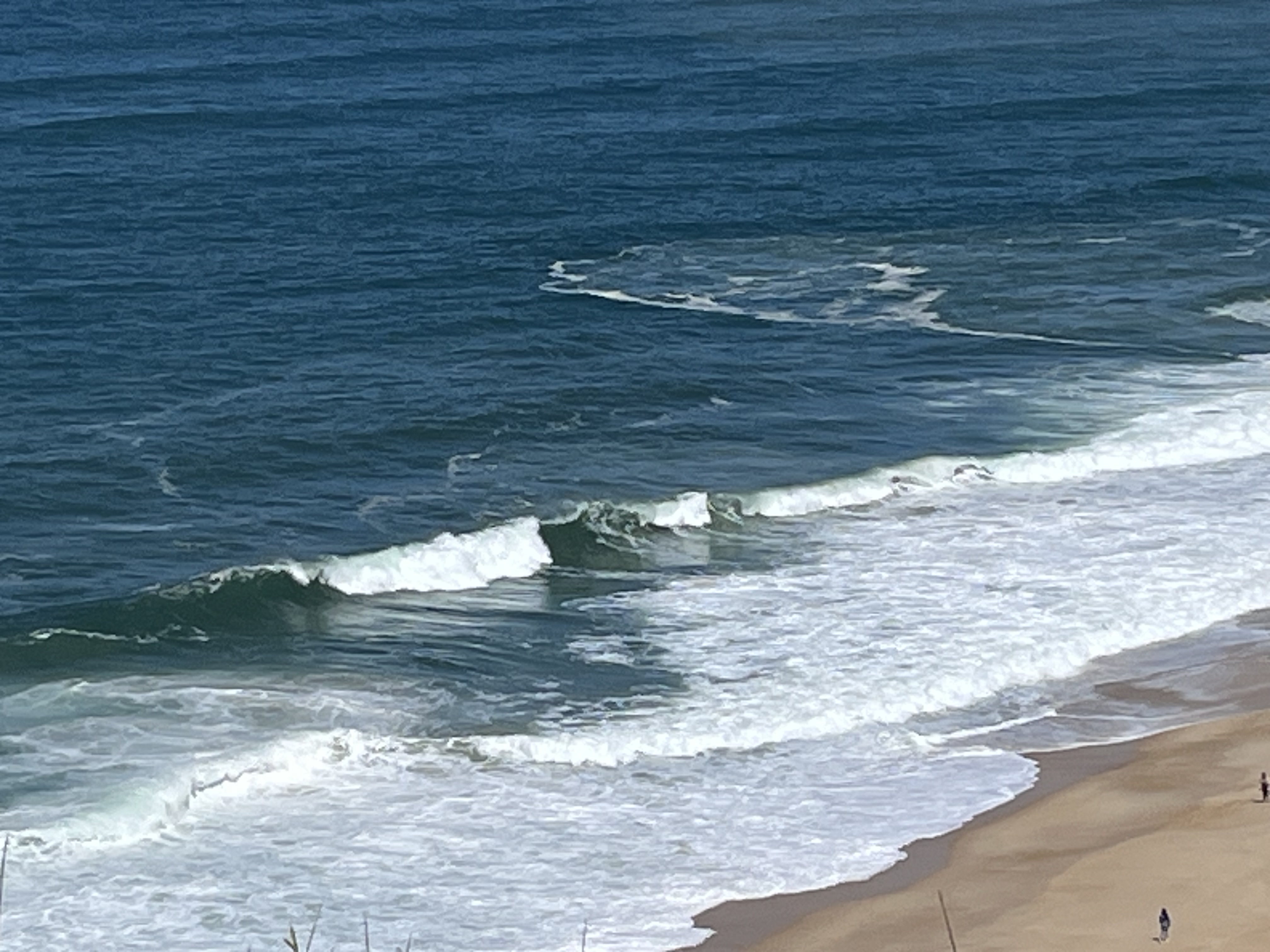
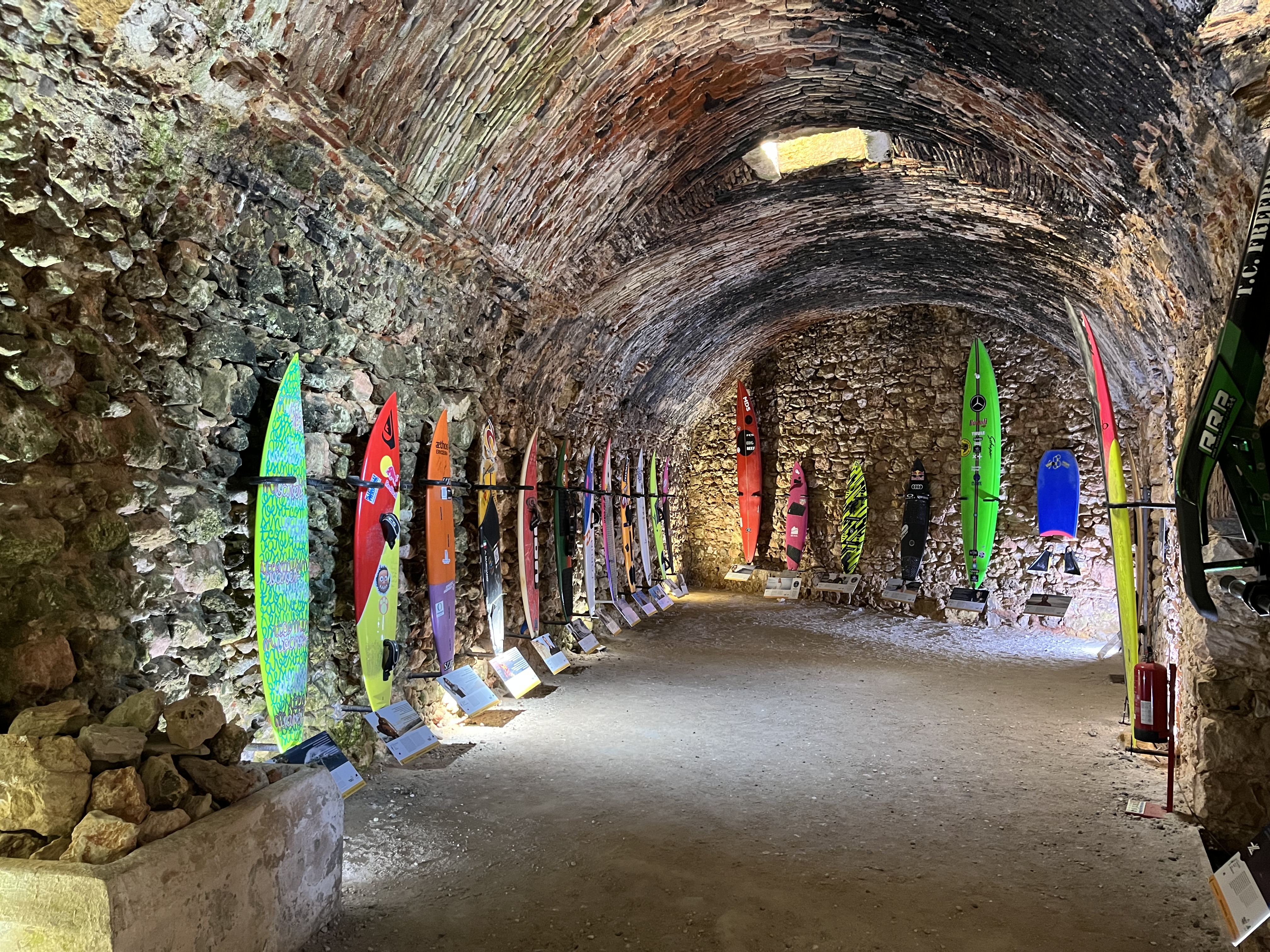
On the drive up to Porto we stopped in Nazare, which is known for the world ‘s largest waves, up to 30 meters!!, and thus has become a world famous surfer mecca. It wasn’t specifically windy during our visit, and there were no spectacular waves to speak of, yet walking along the North Beach, the regular waves, with their impressive crushing breaker rumble, were invigorating.




Porto
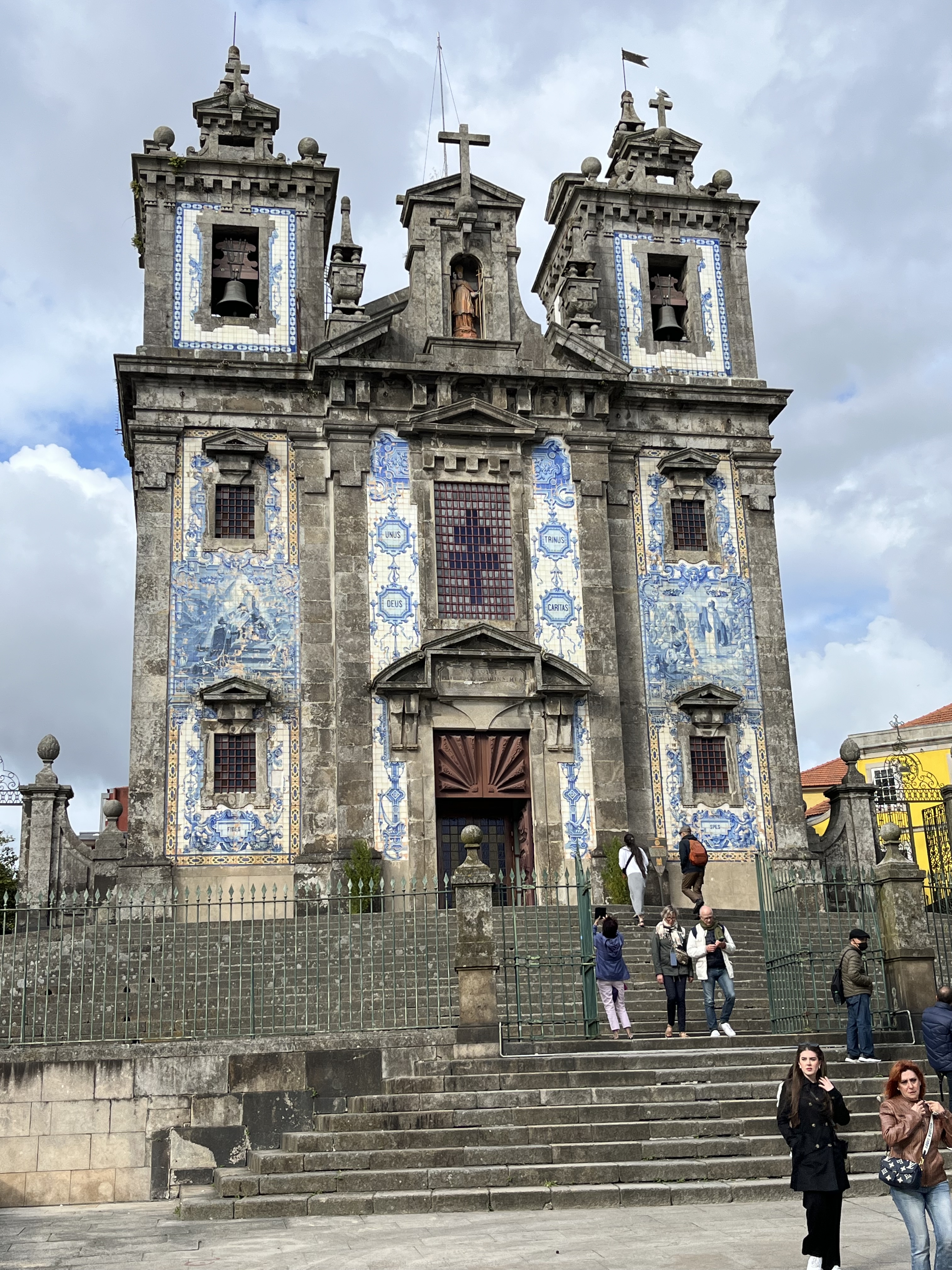
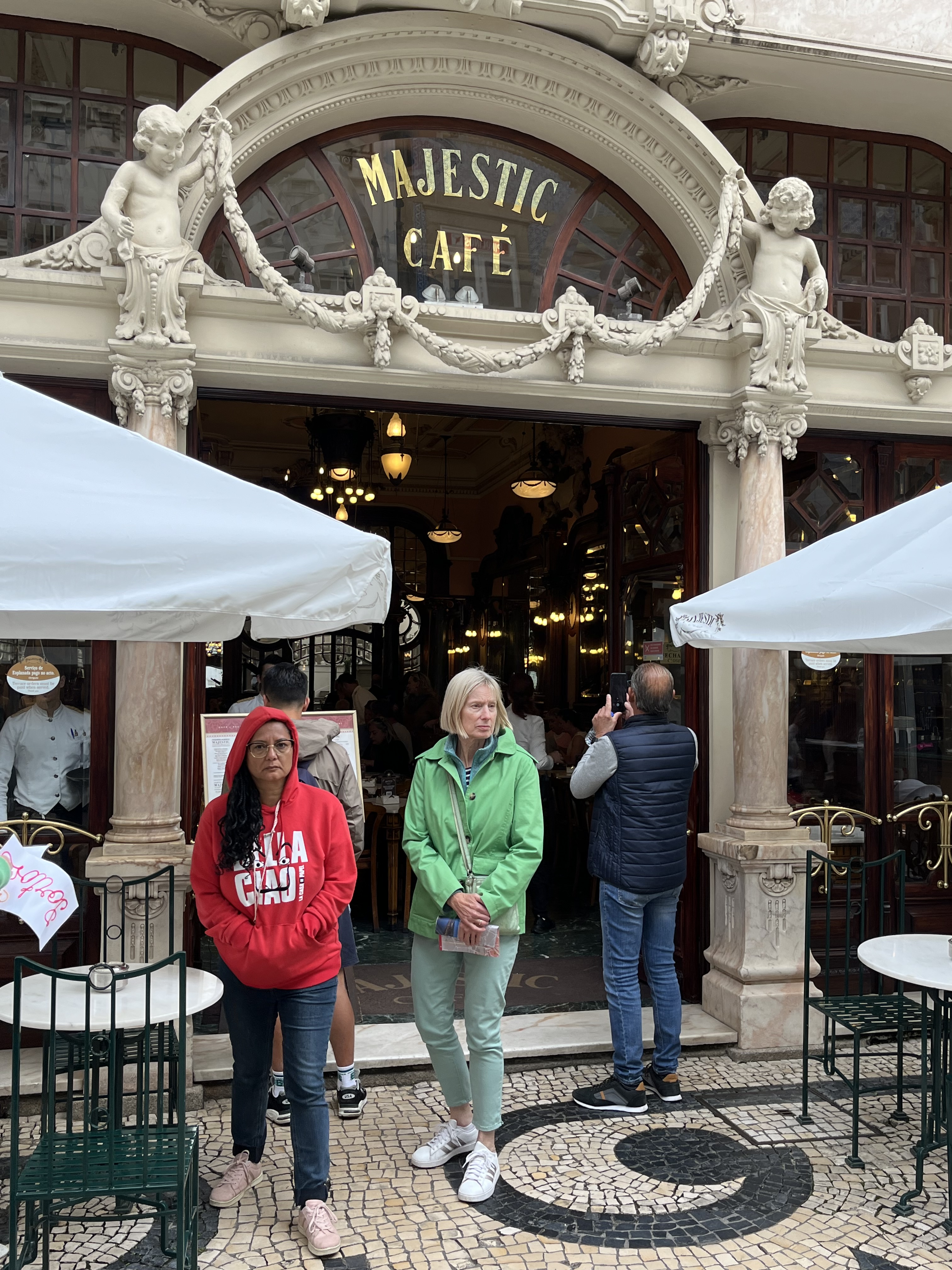
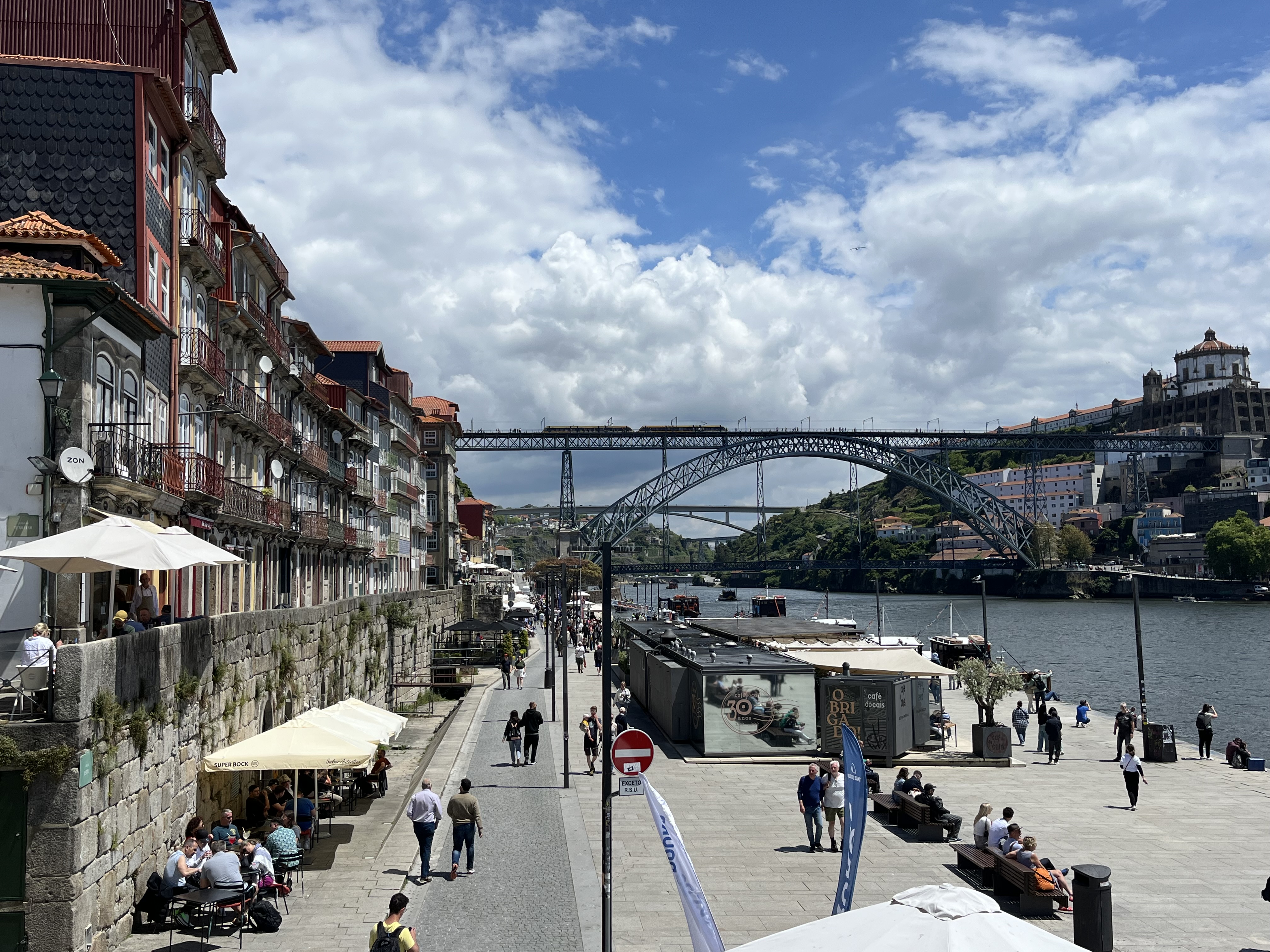
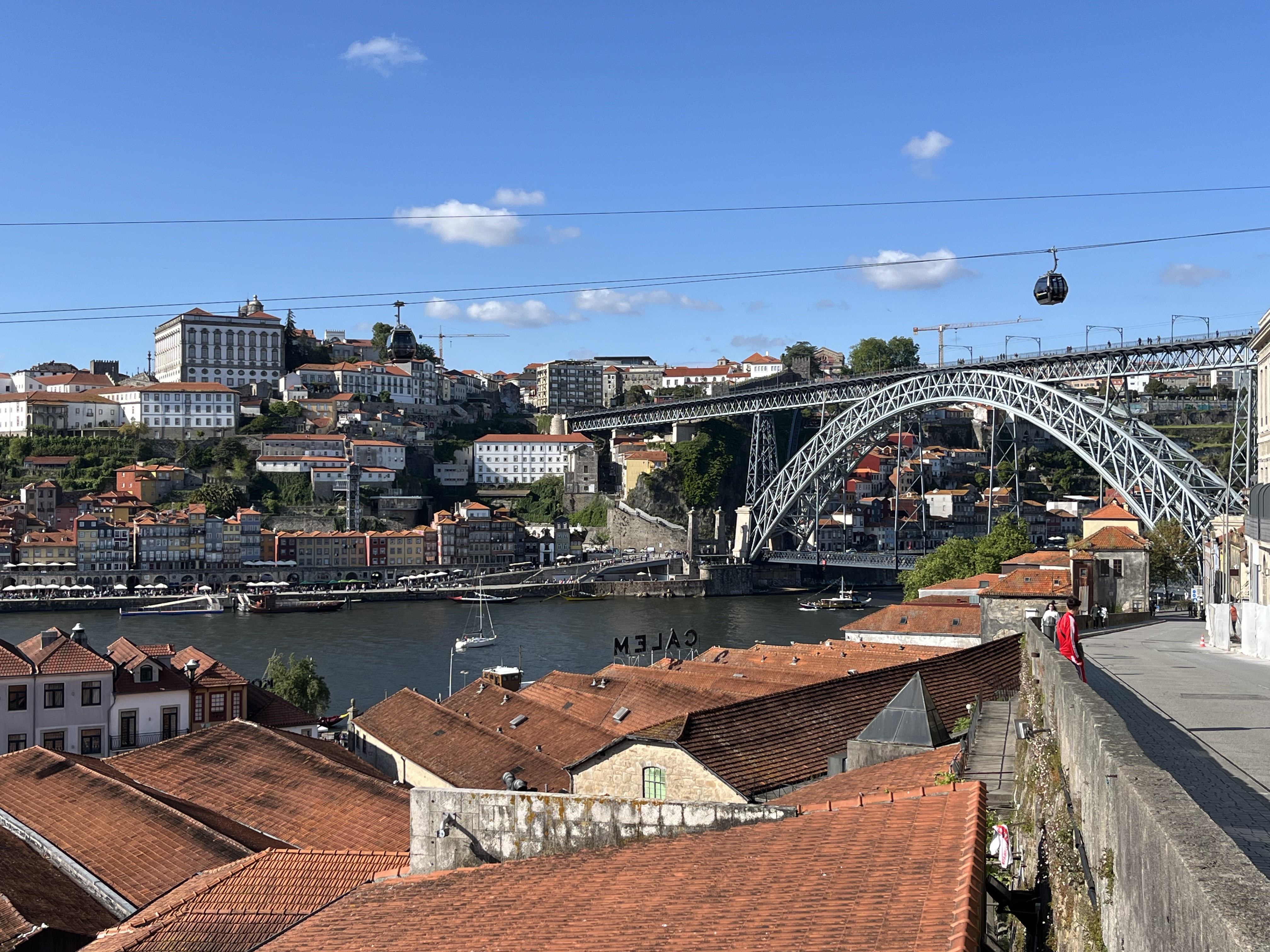
Porto, like Lisbon, sits on a river, close to the Atlantic Ocean. It also has cable cars and a LOT of tiled buildings, including churches, yet Portugal’s second largest city has a different vibe. Sitting on the steep banks of the Douro river, with most buildings appearing darker, it feels grittier, more like a regular, working man’s town. But, we have to admit, Porto’s charm grew on us during our stay, and we ended up really enjoying it! A lot of its buildings, like for instance our small, family run hotel, have this old, colonial Portuguese charm. Though I’ve never been there, Porto reminded me of what I envision South America or Buenos Aires in particular look like.


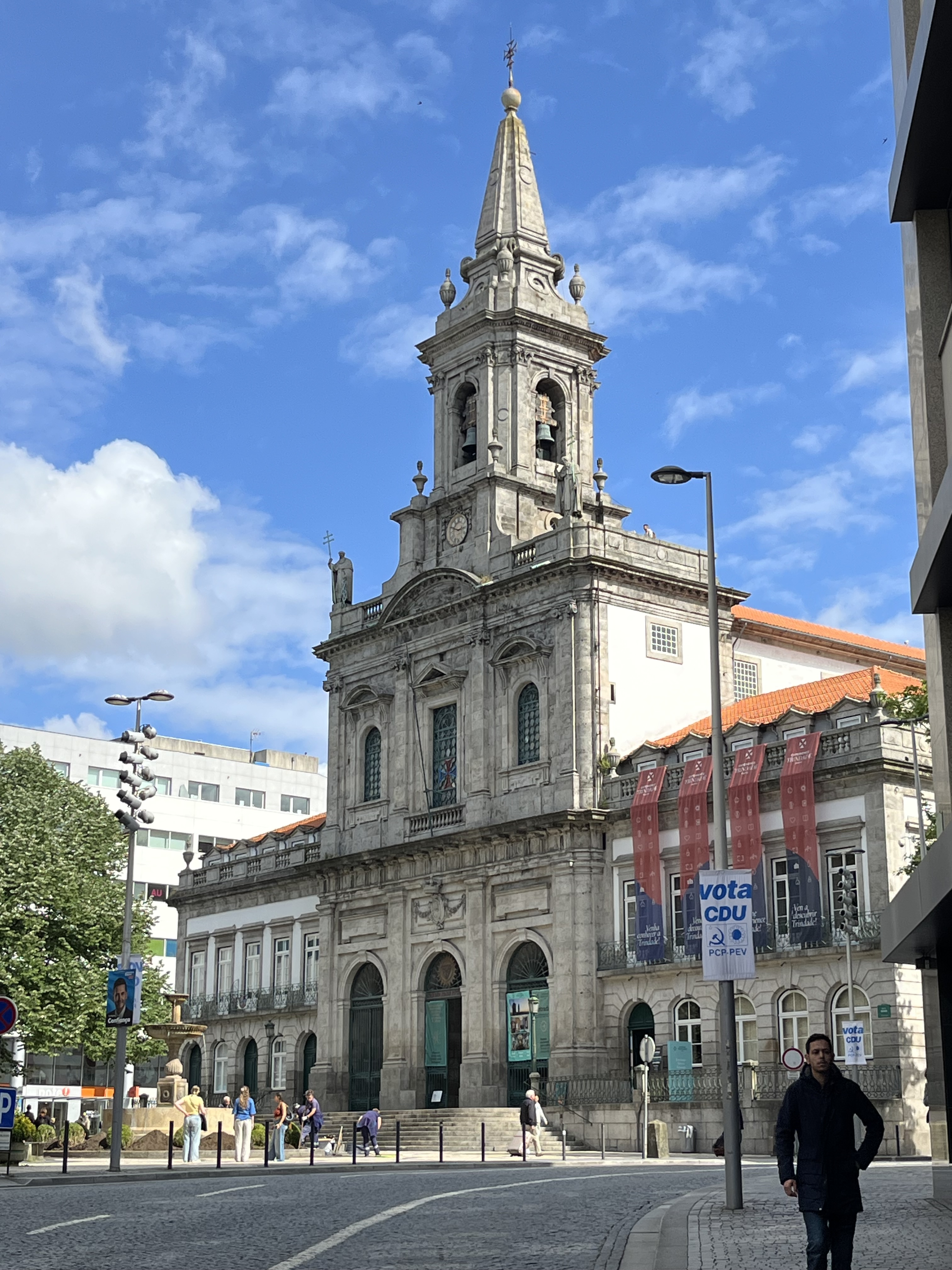
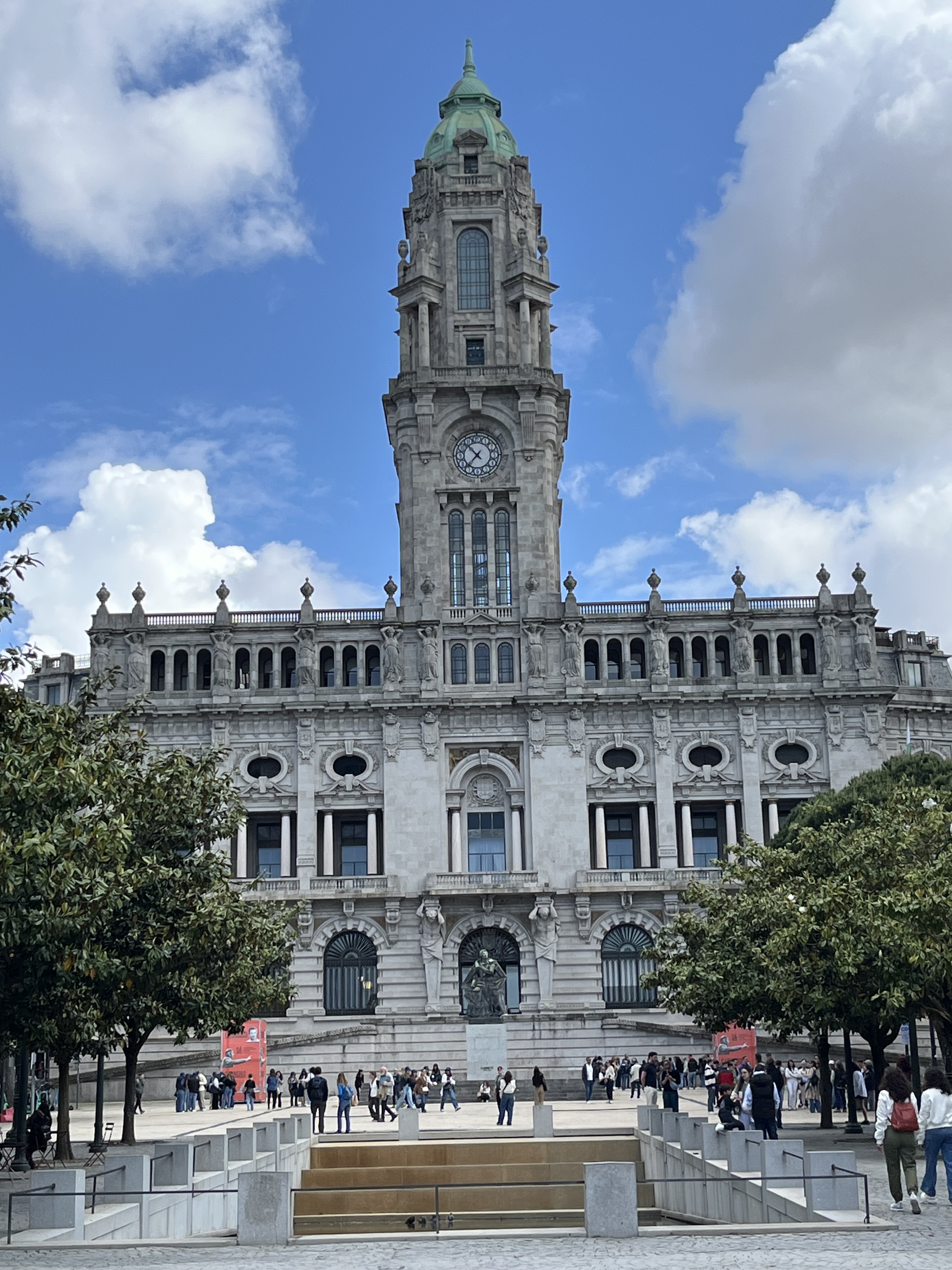
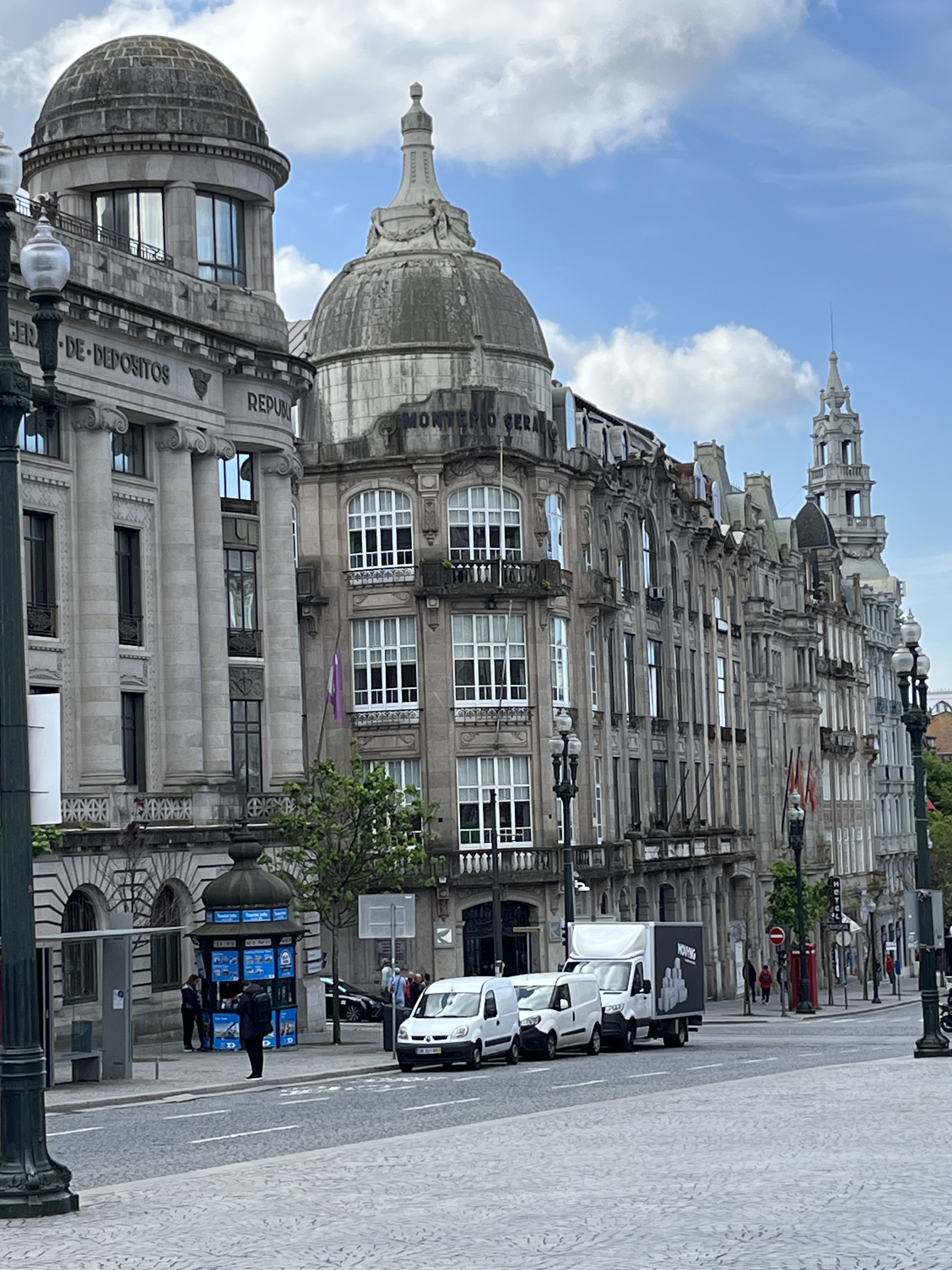
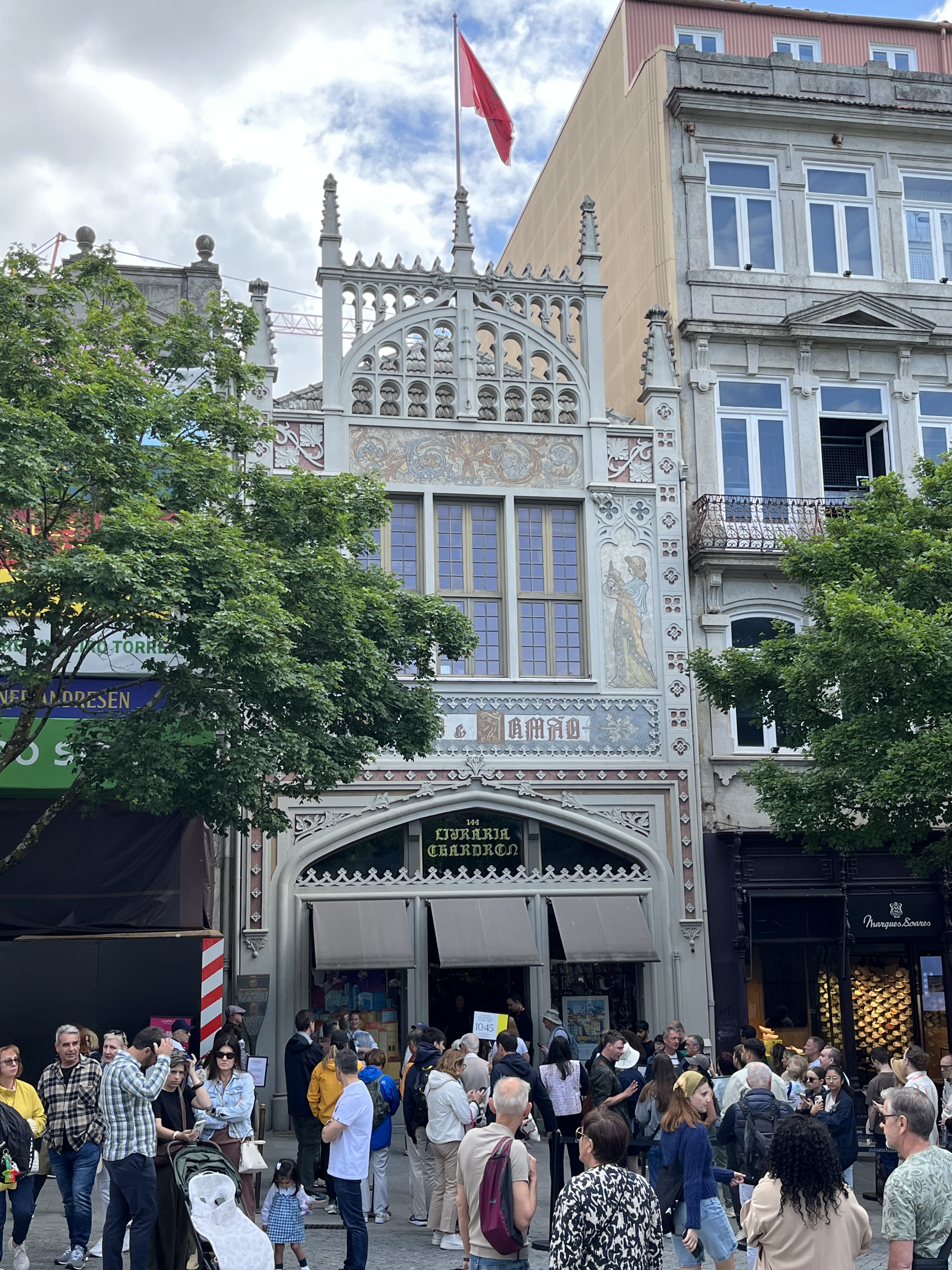
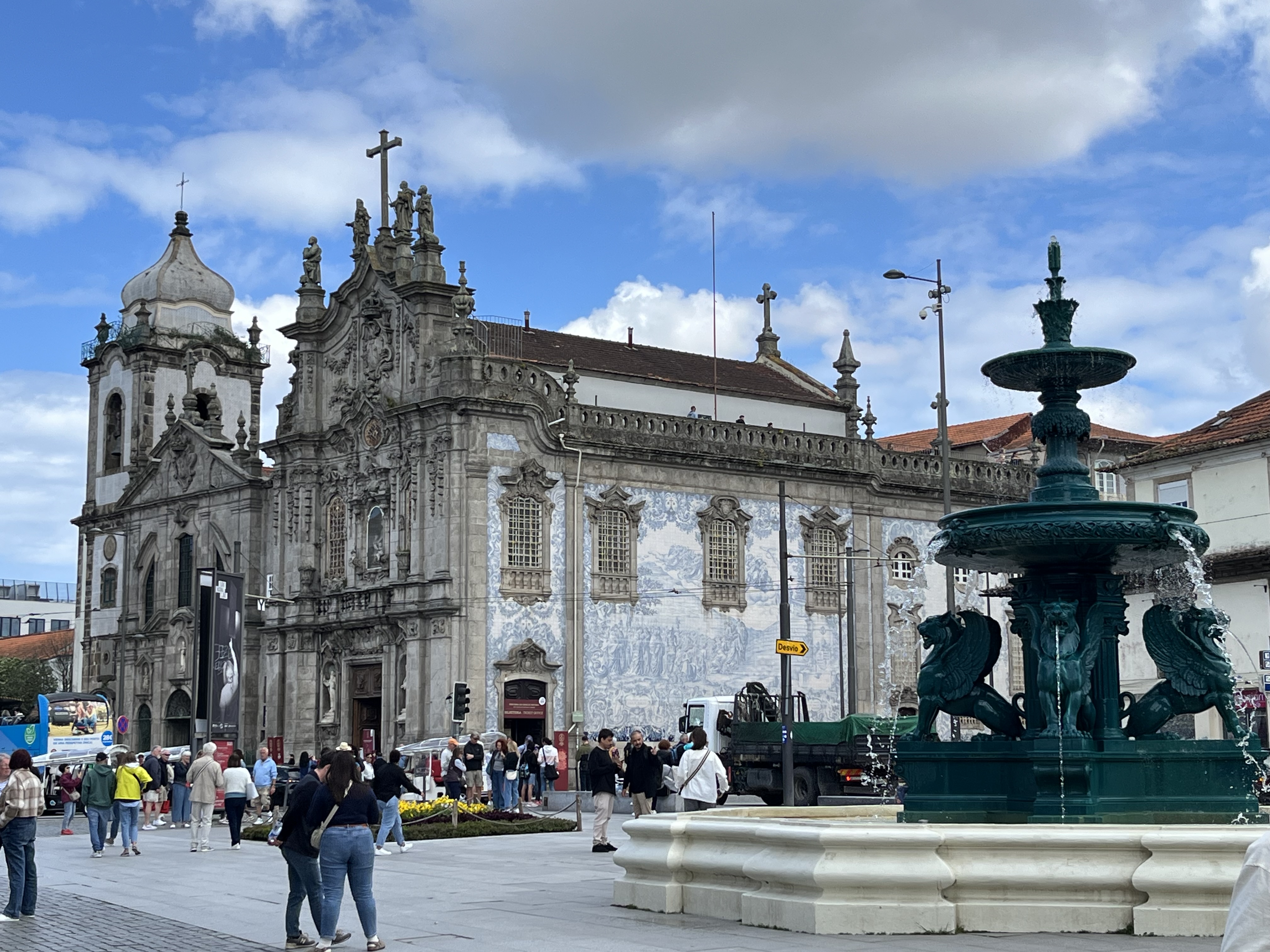
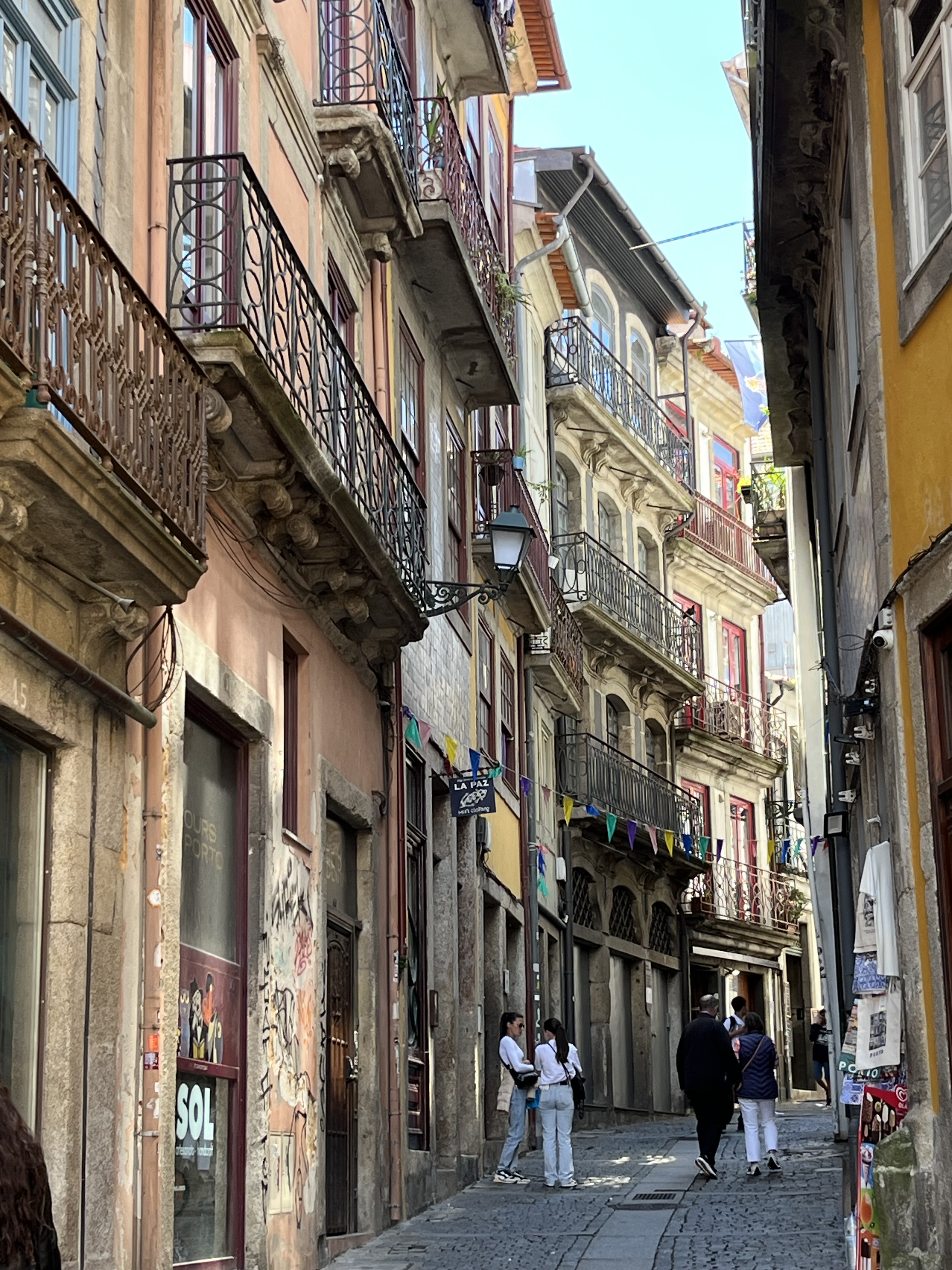


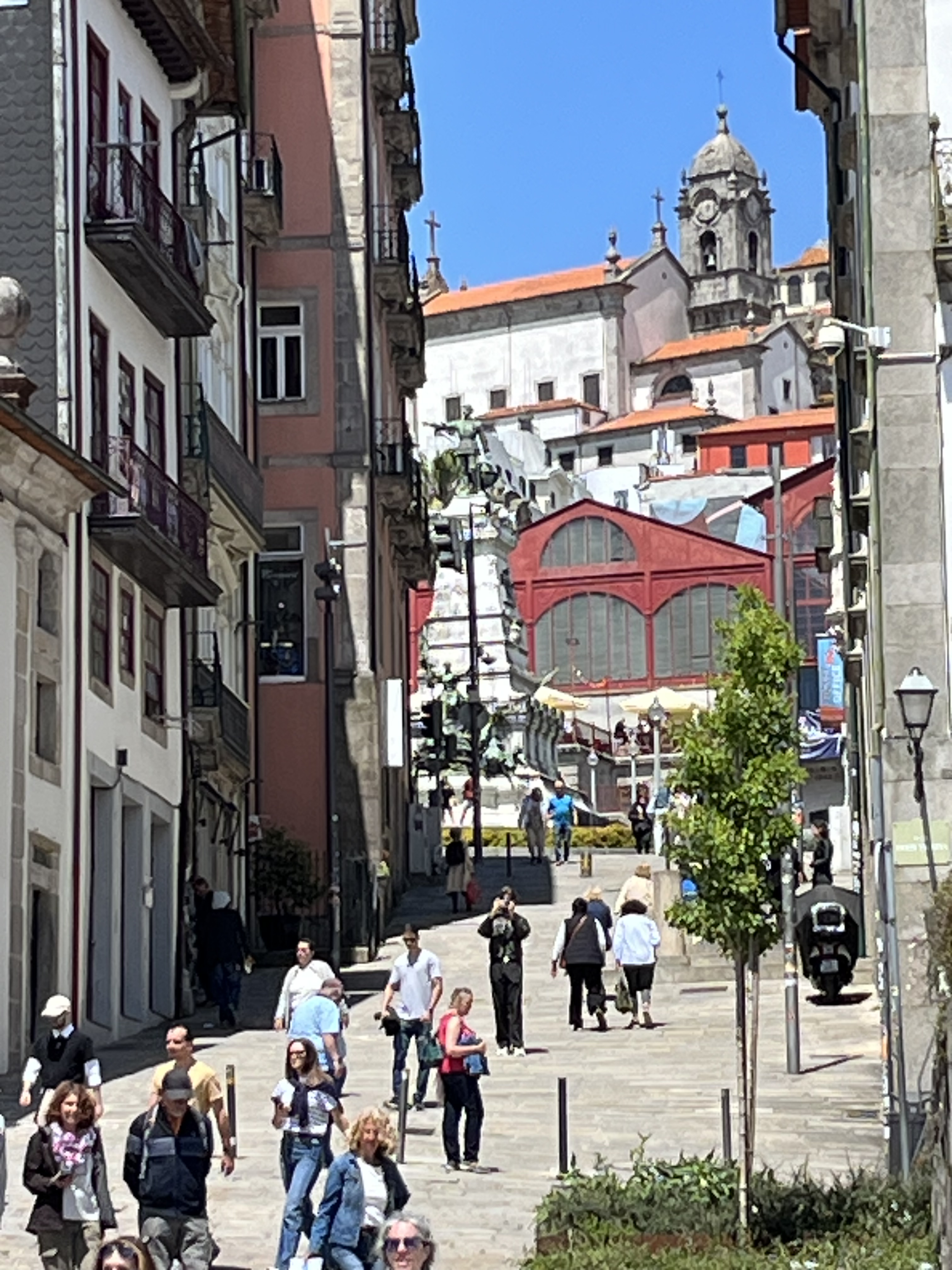
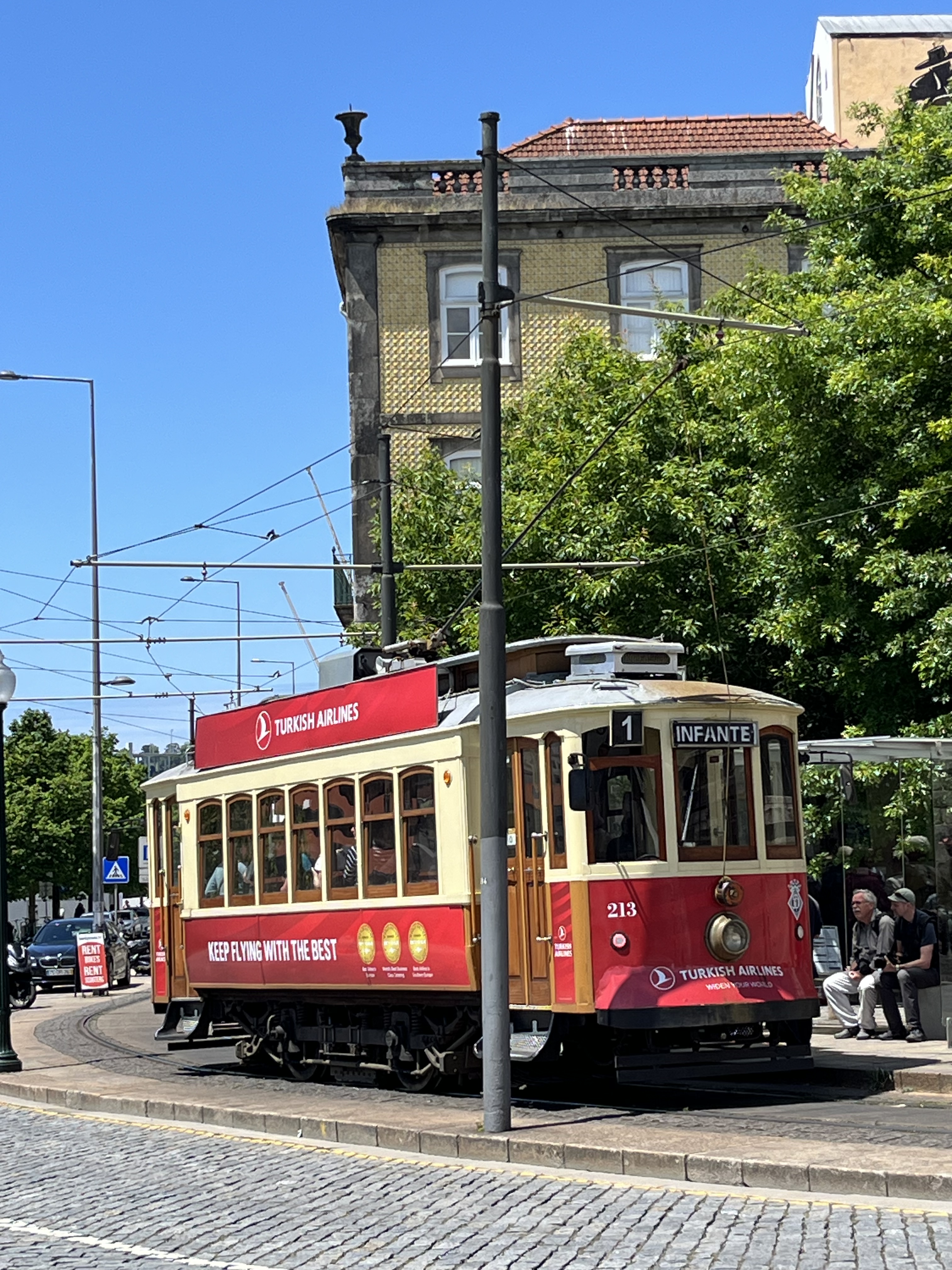
Porto’s farmer’s market:

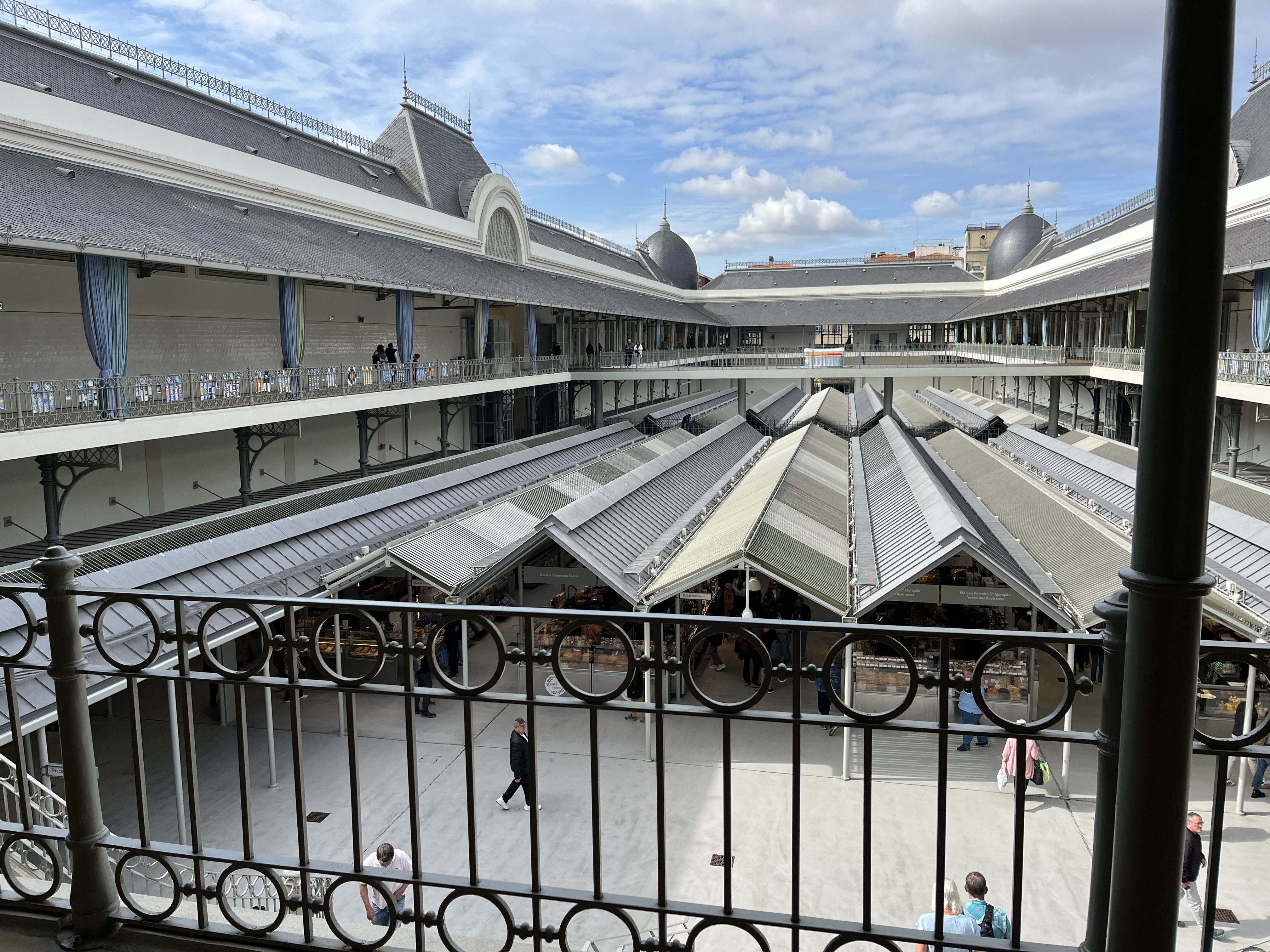
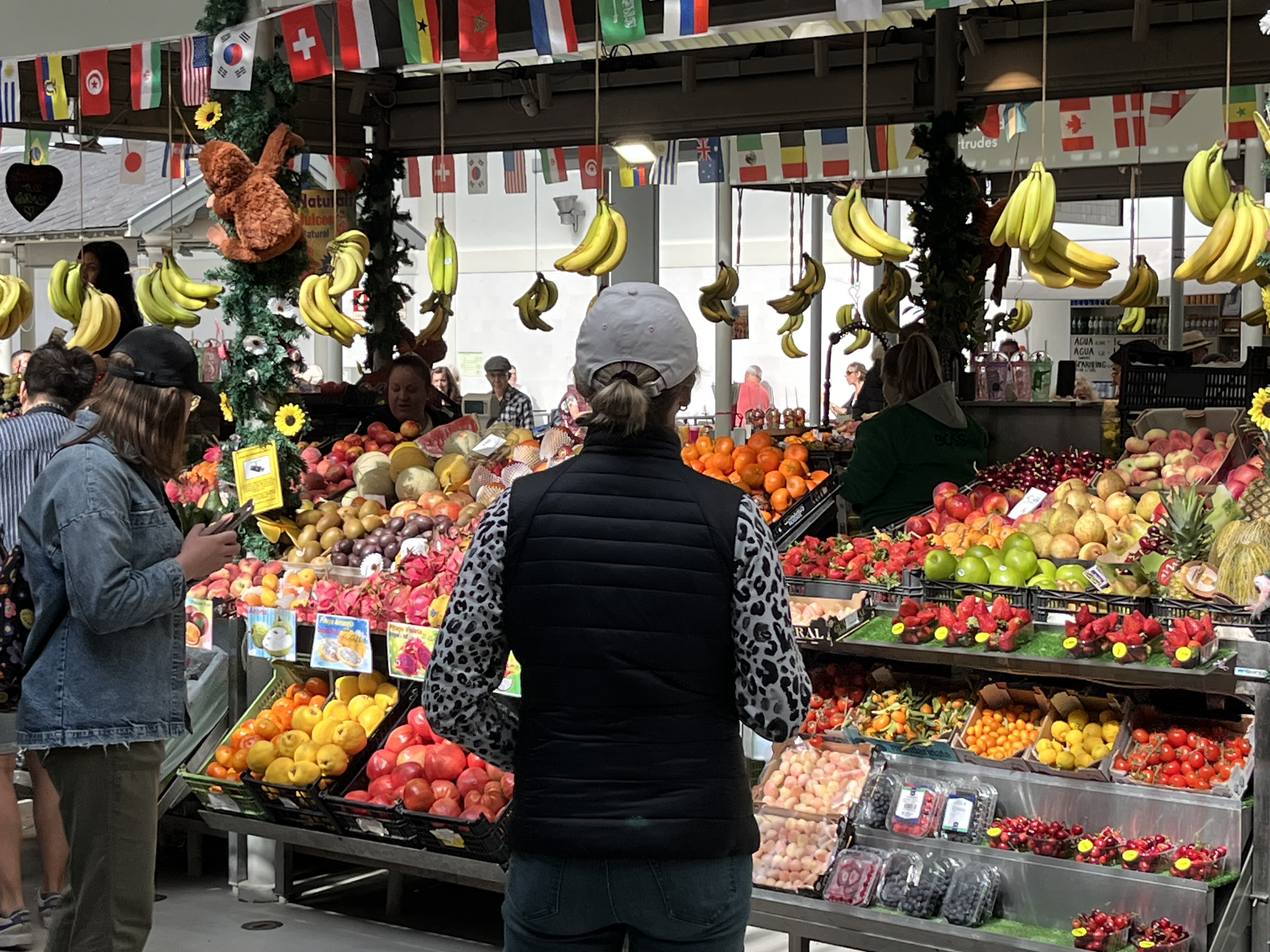

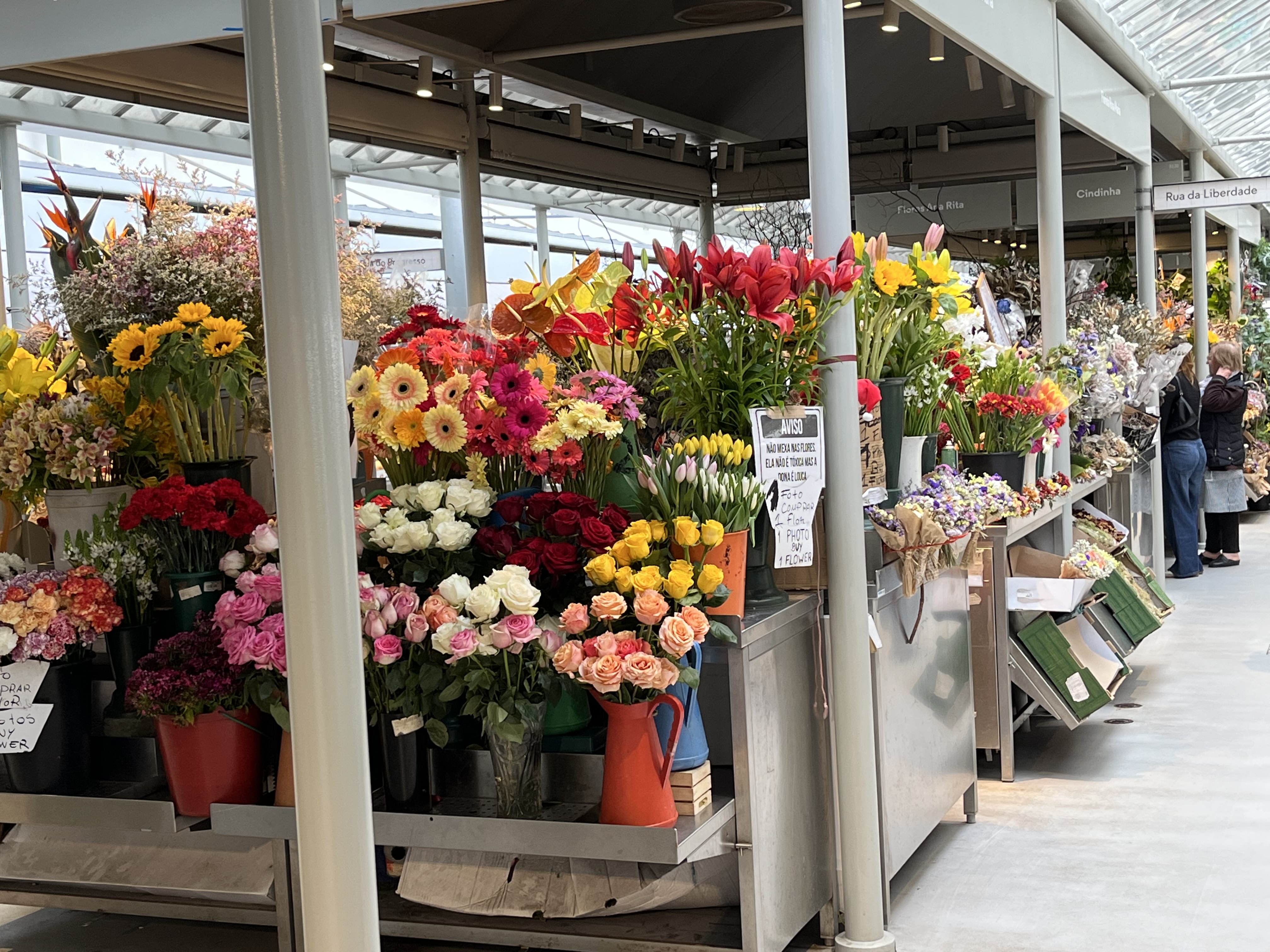

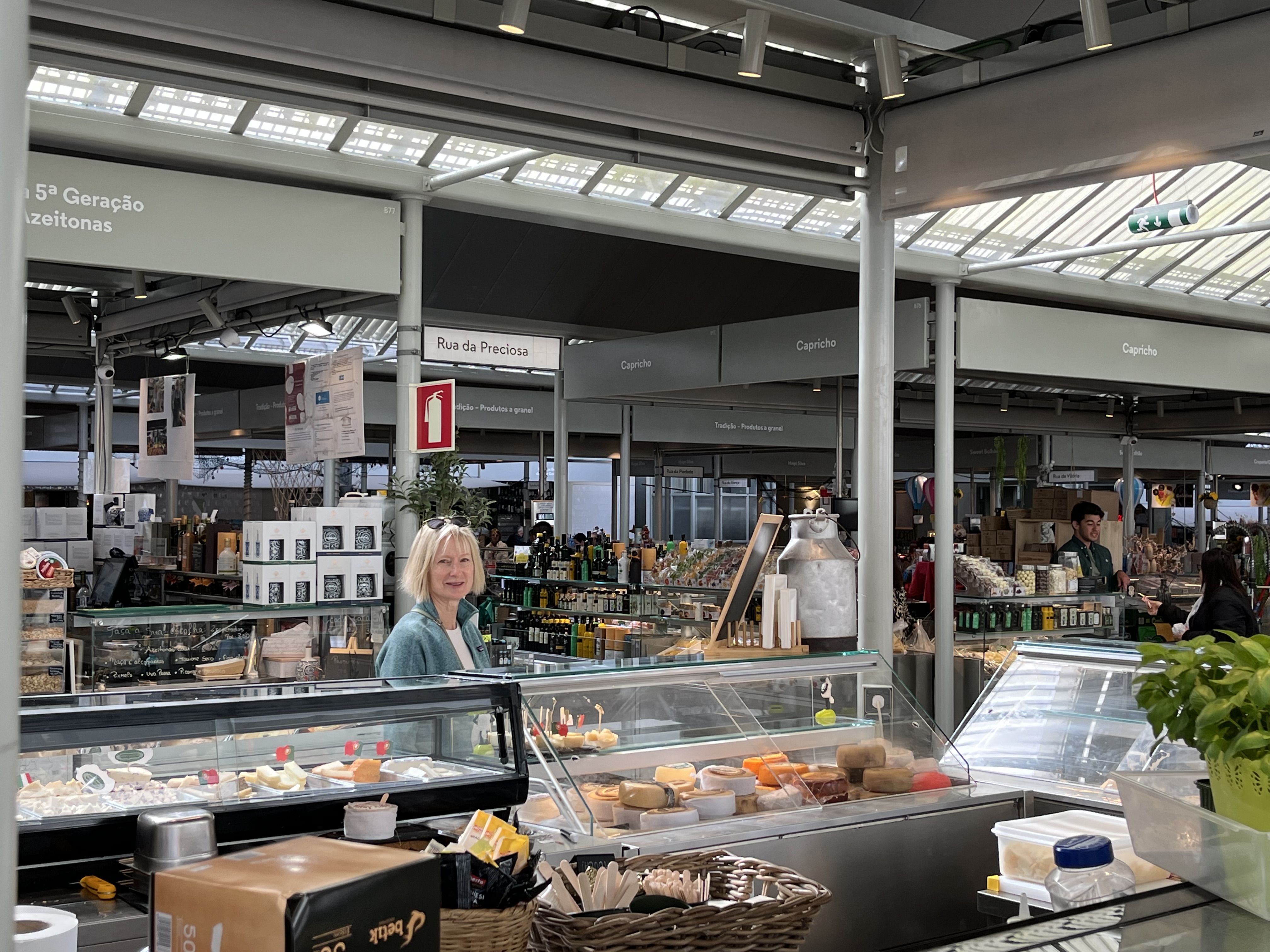
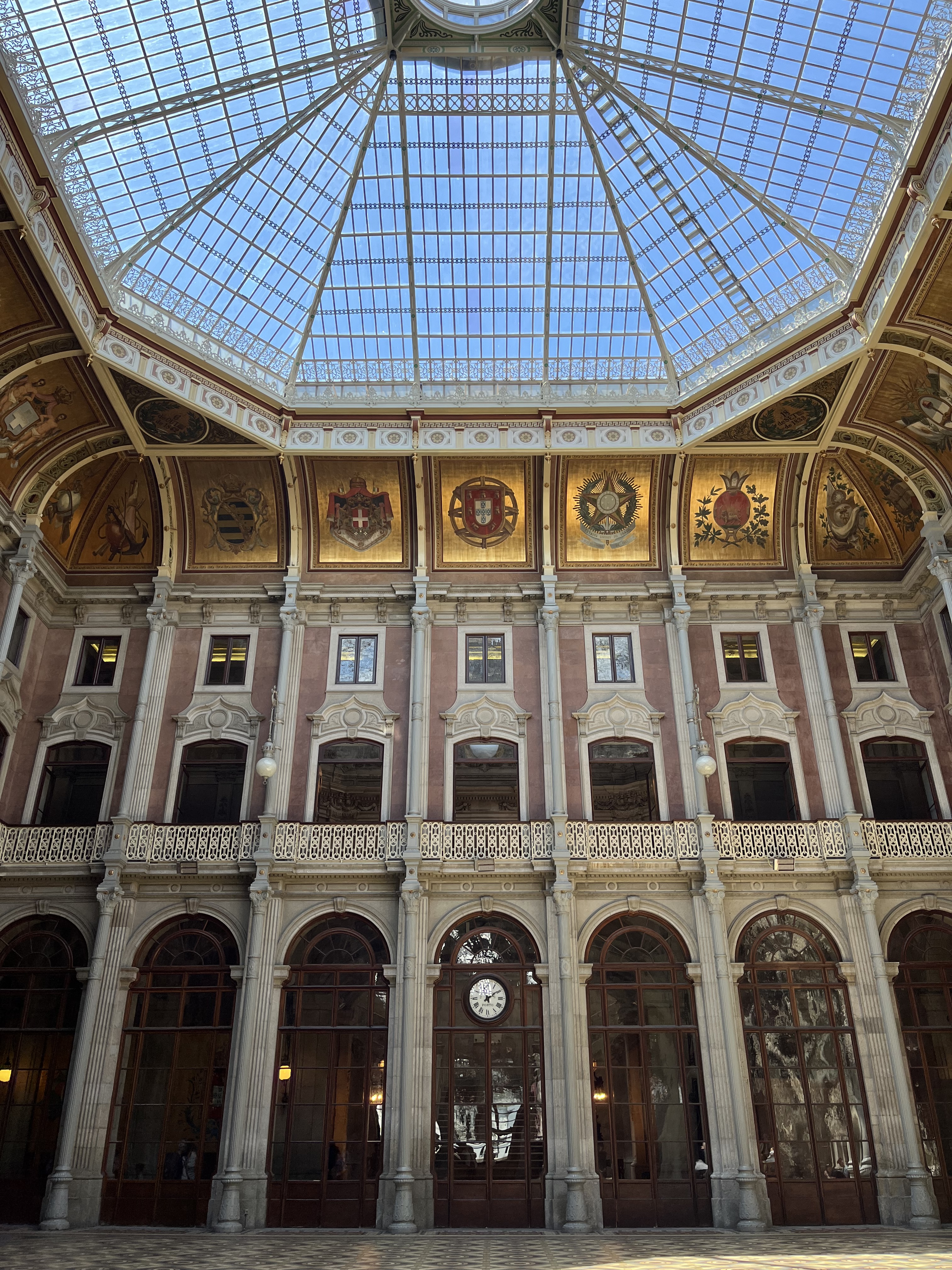
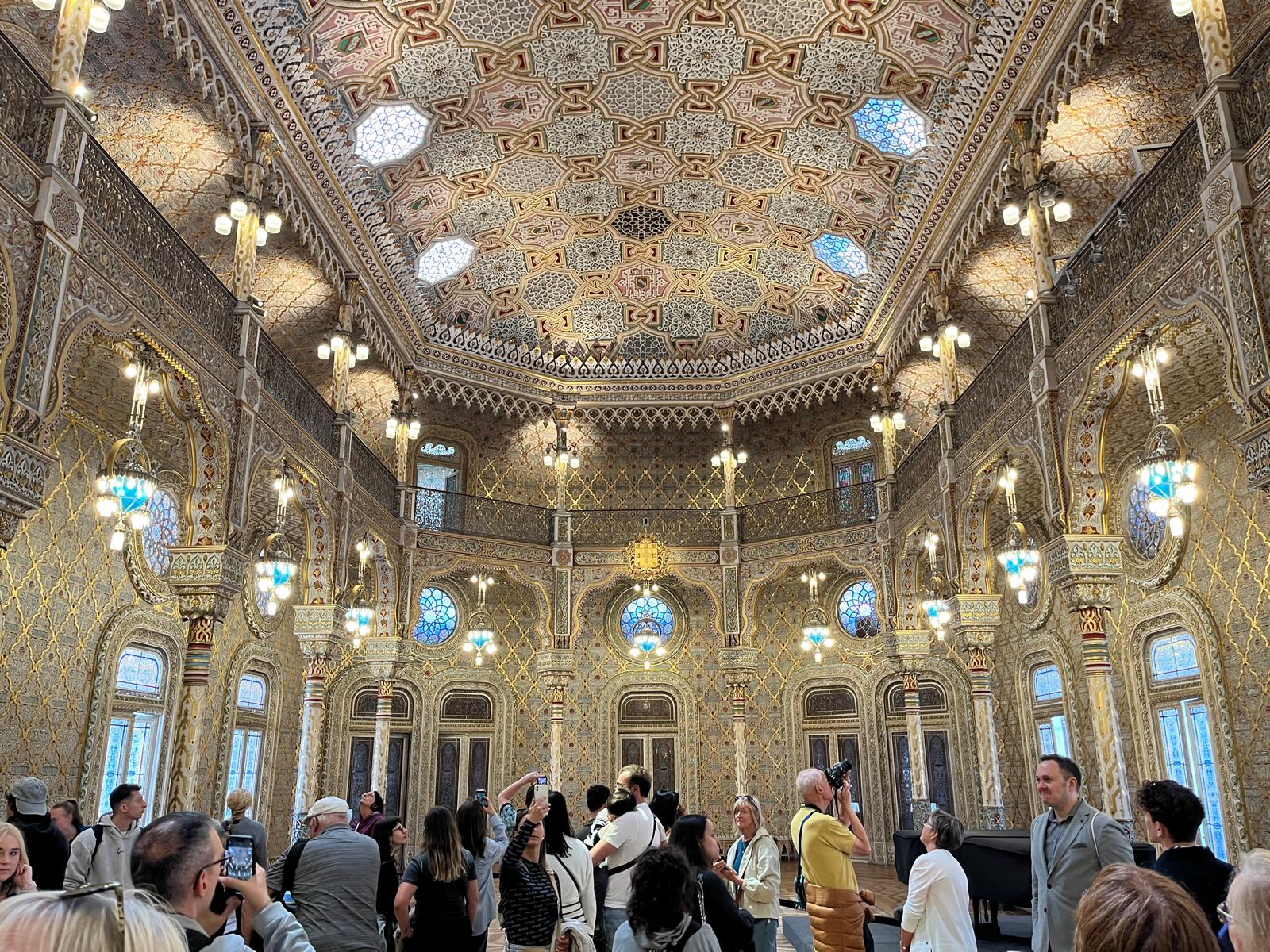
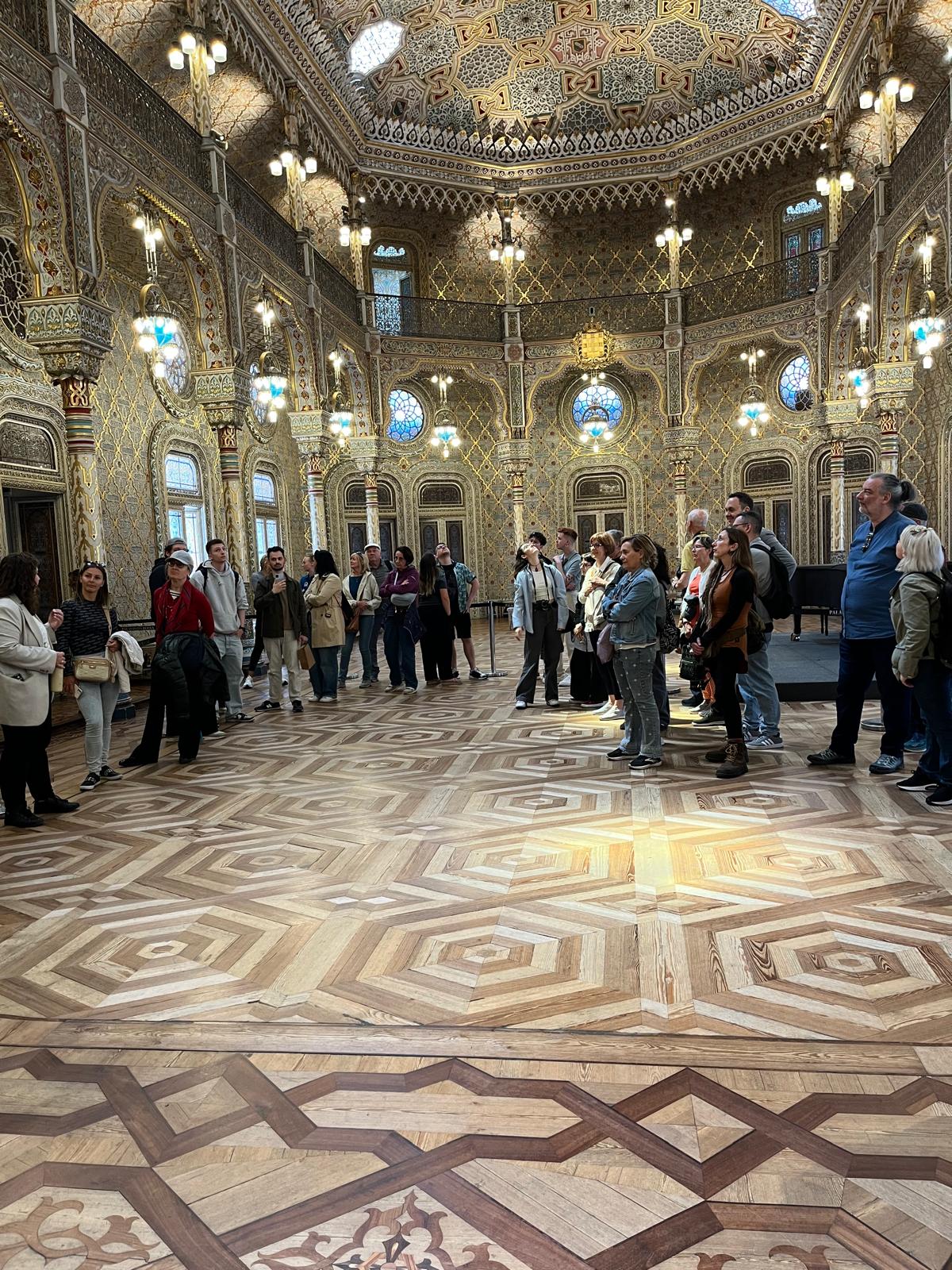
Inside the Palácio da Bolsa (Porto’s historic stock exchange building) with the Aladdin Salon:


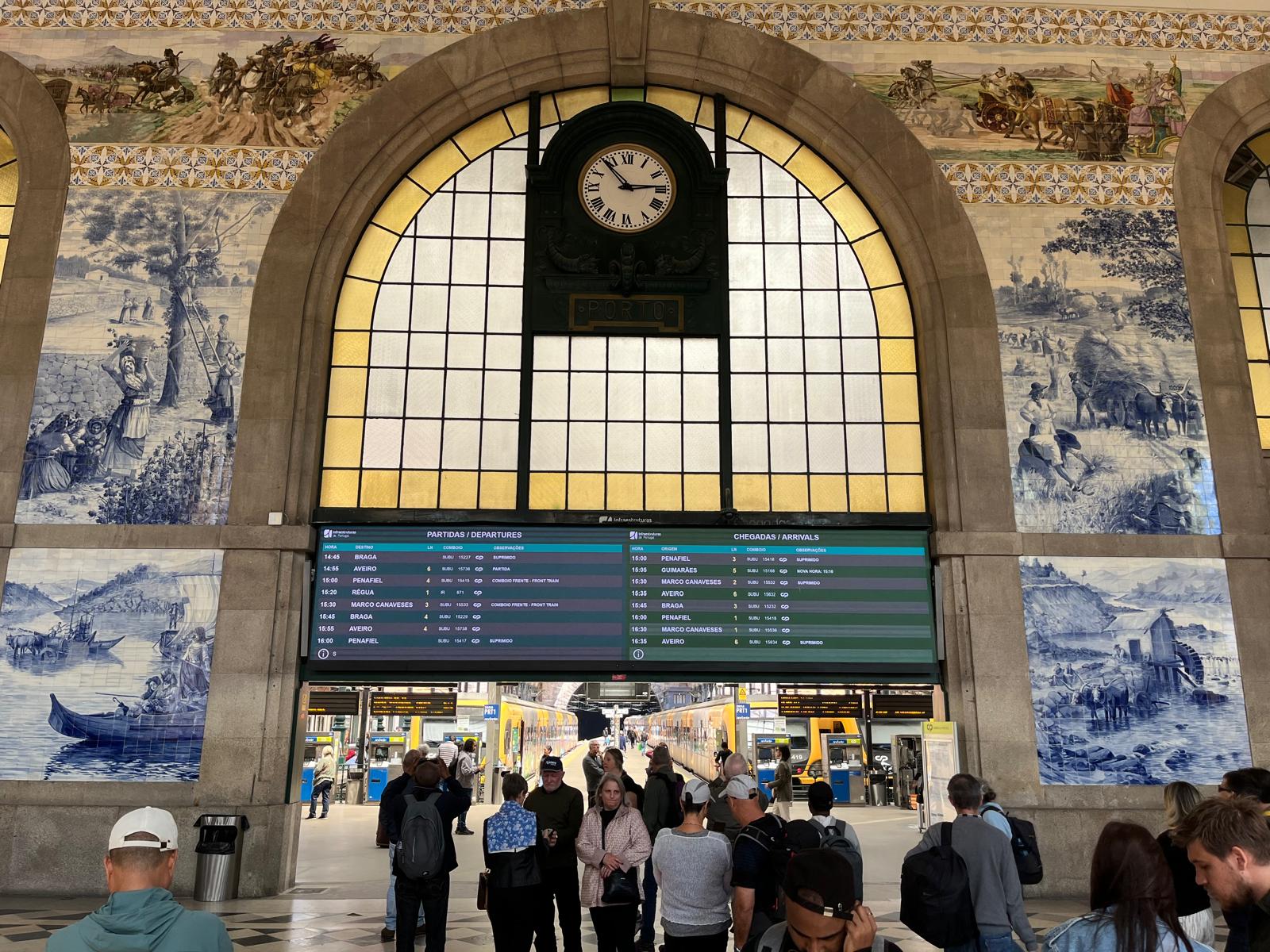
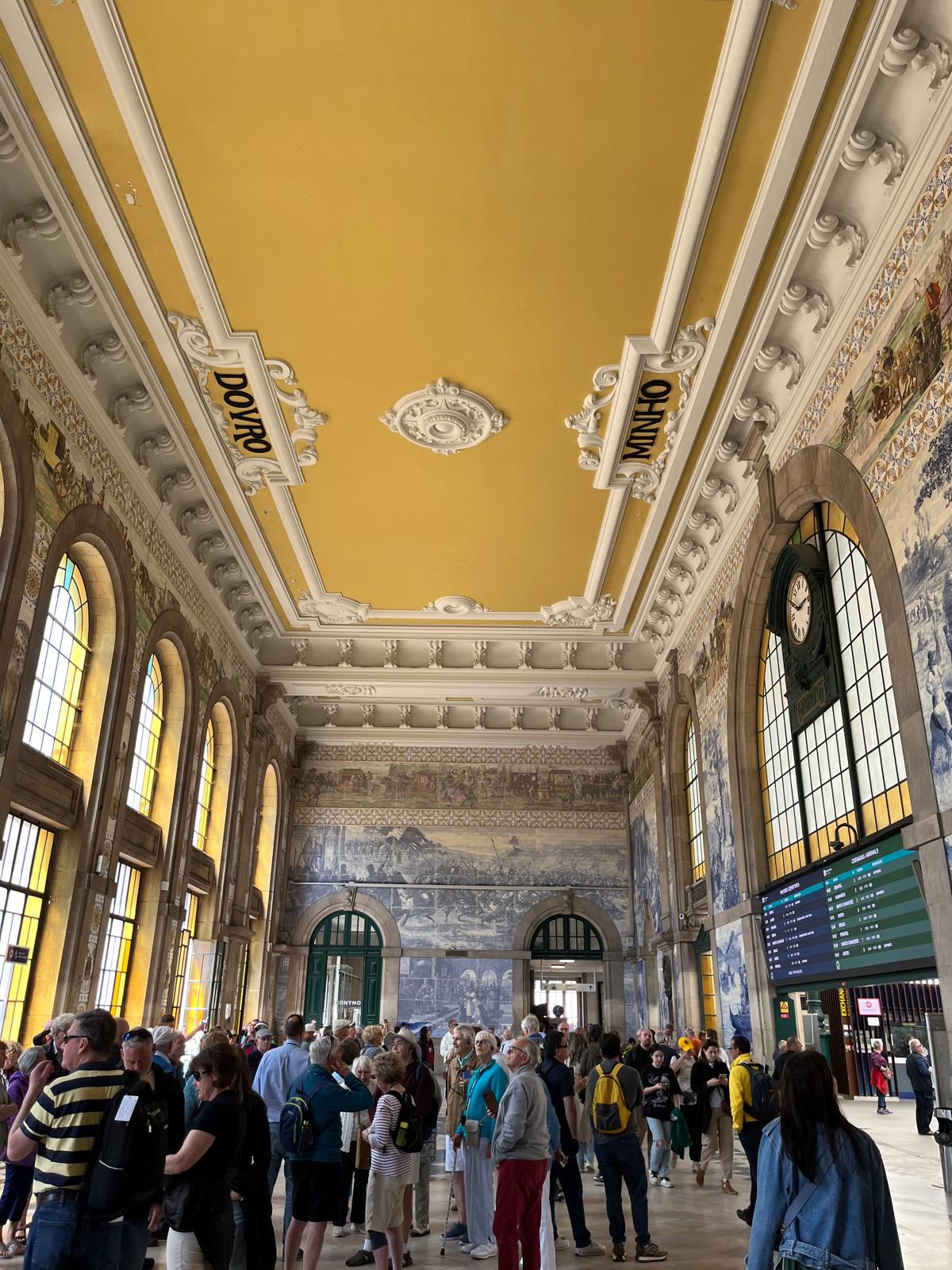
Inside the historic train station with the town’s storytelling tile work::
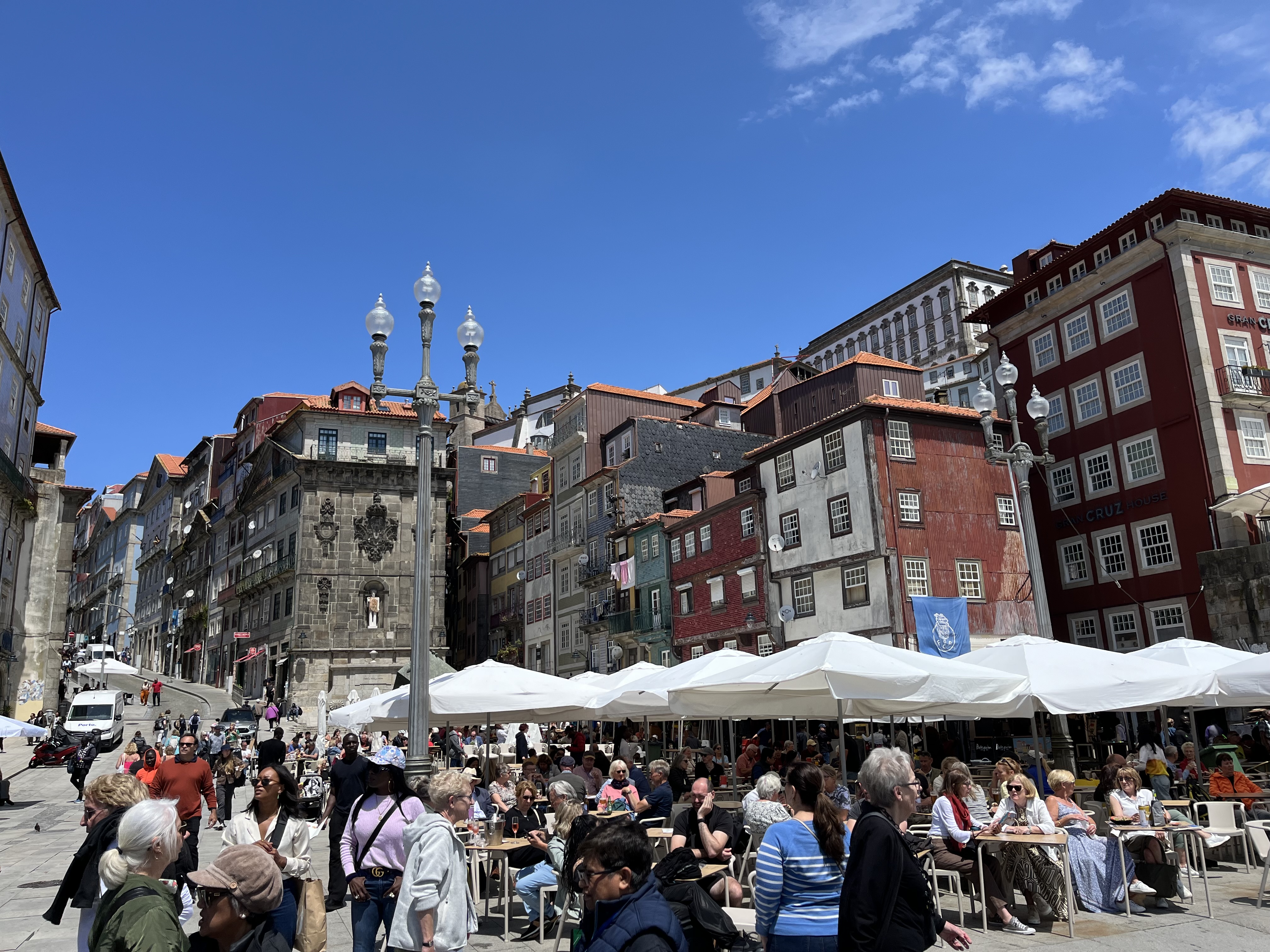
Along the Douro river’s north shore:

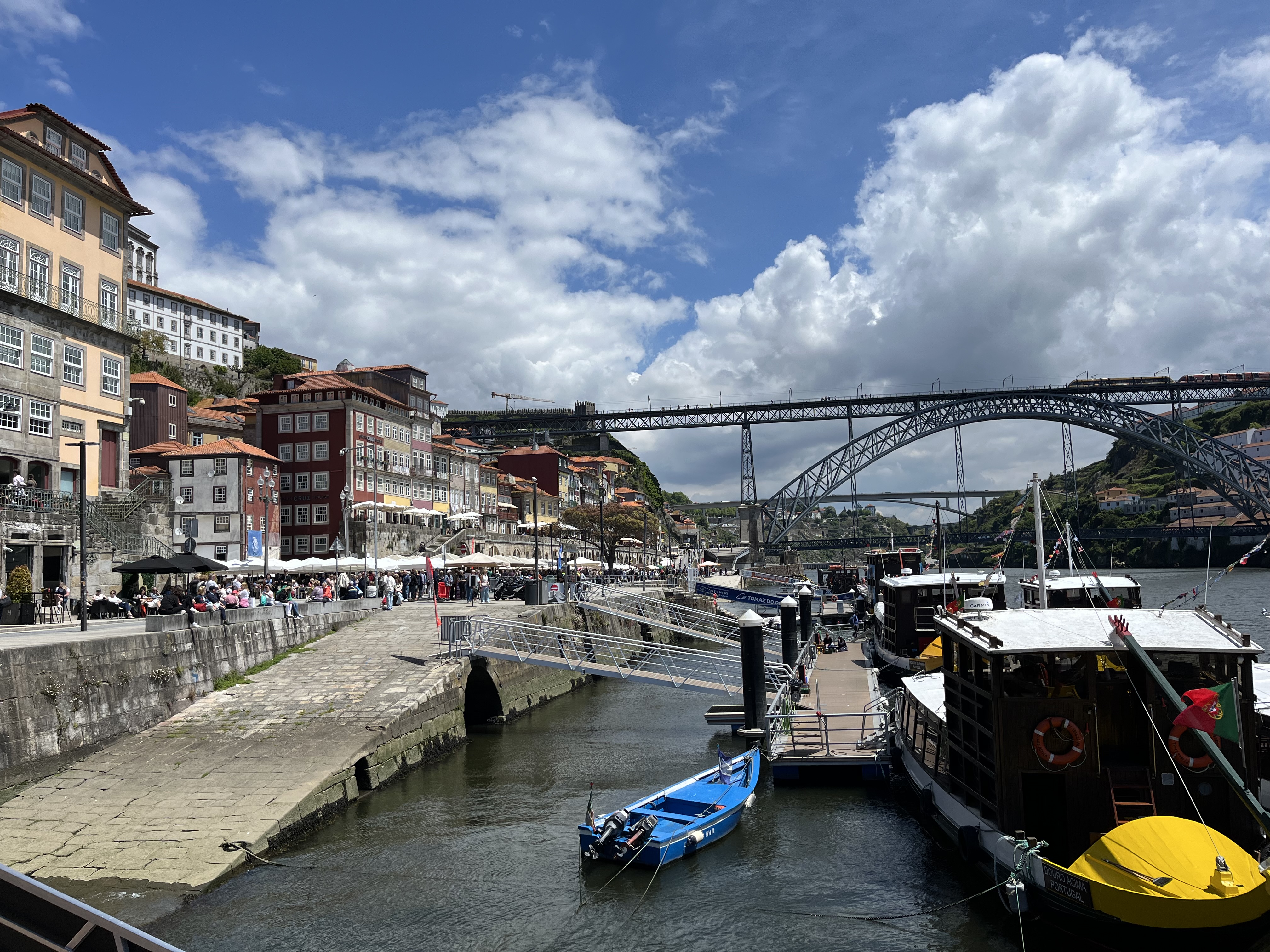


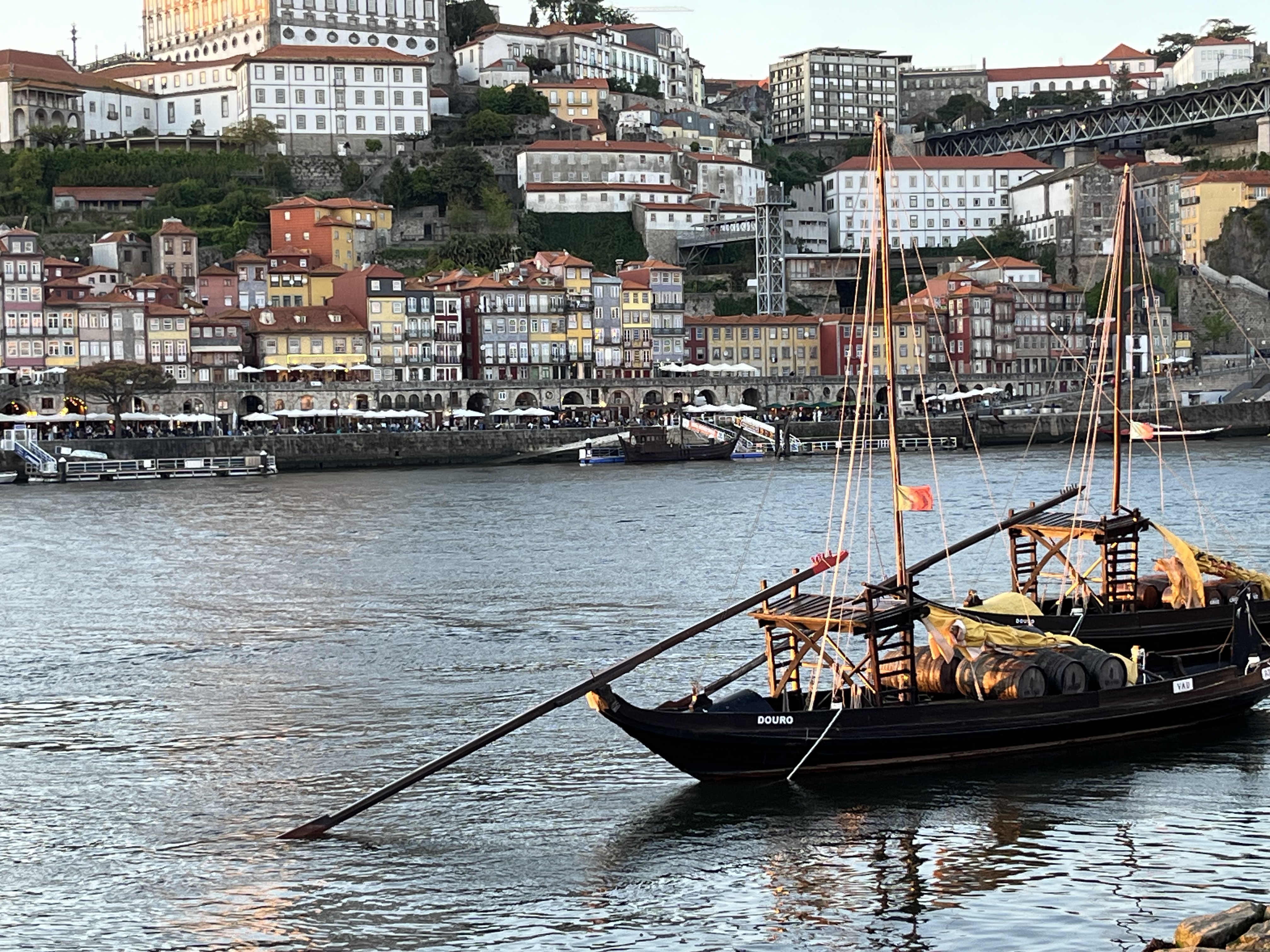
Yes, we ended up tasting the famous wine of Porto, the Port wine. In the picture below, with the north shore of the Douro river in the background, is one of the traditional boats that were used to transport the Port wine down the river. You can see the wine barrels on the boat. Nowadays the wine is transported by truck to Vila Nova de Gaia on the south side of the Douro river, where just like in years past, this fortified wine is stored and aged prior to being bottled:

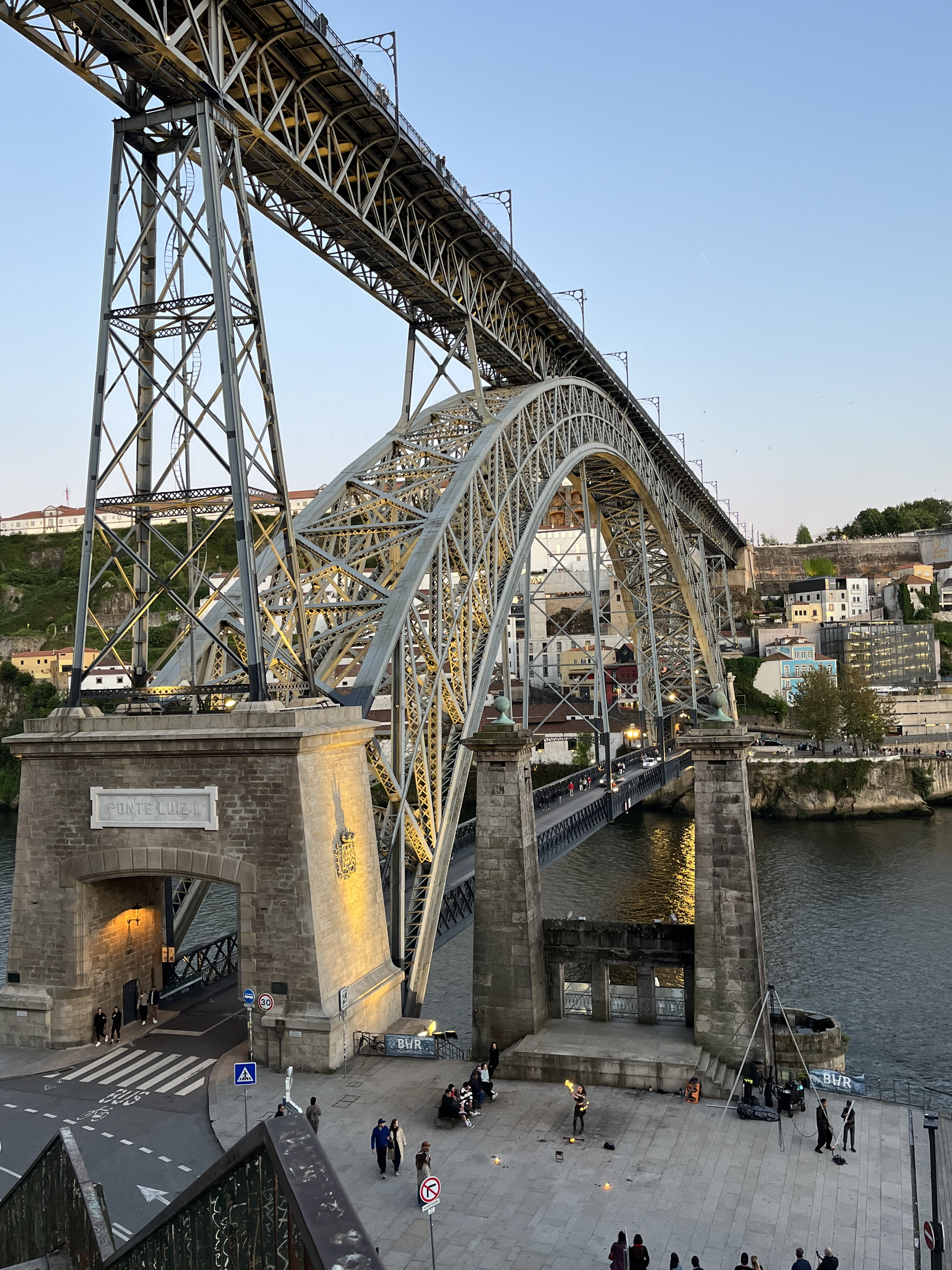
Good night and good bye Porto:

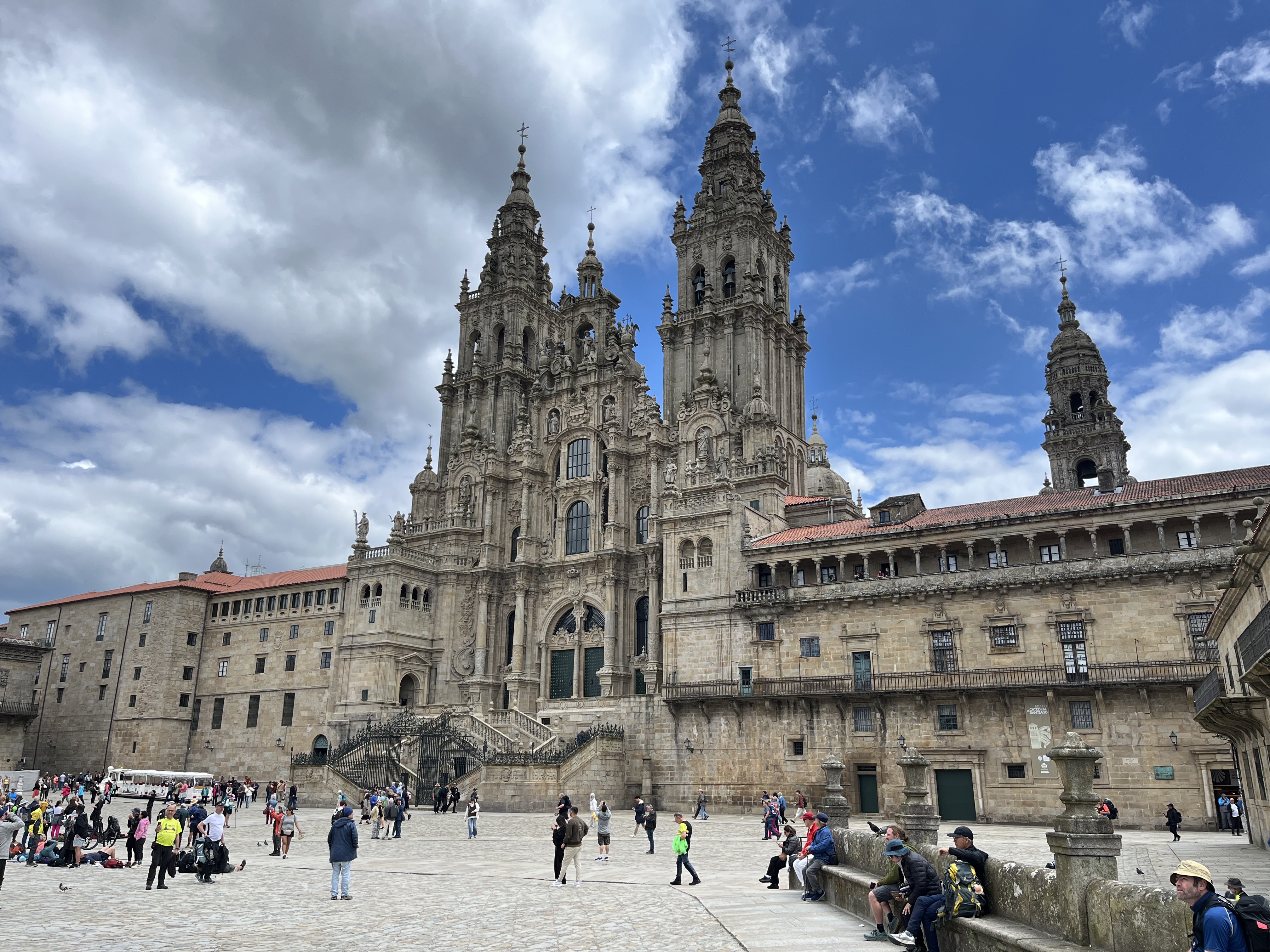
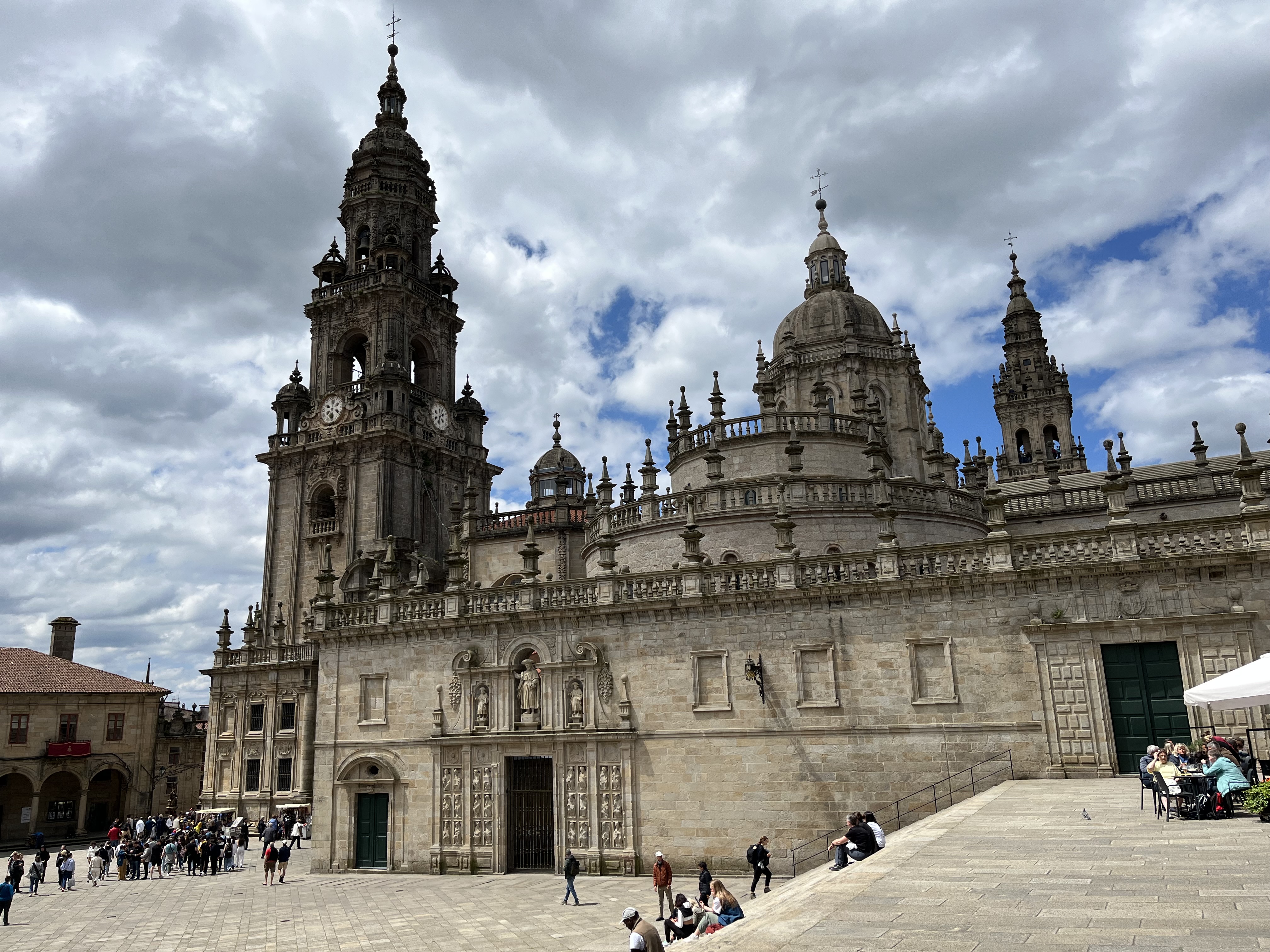
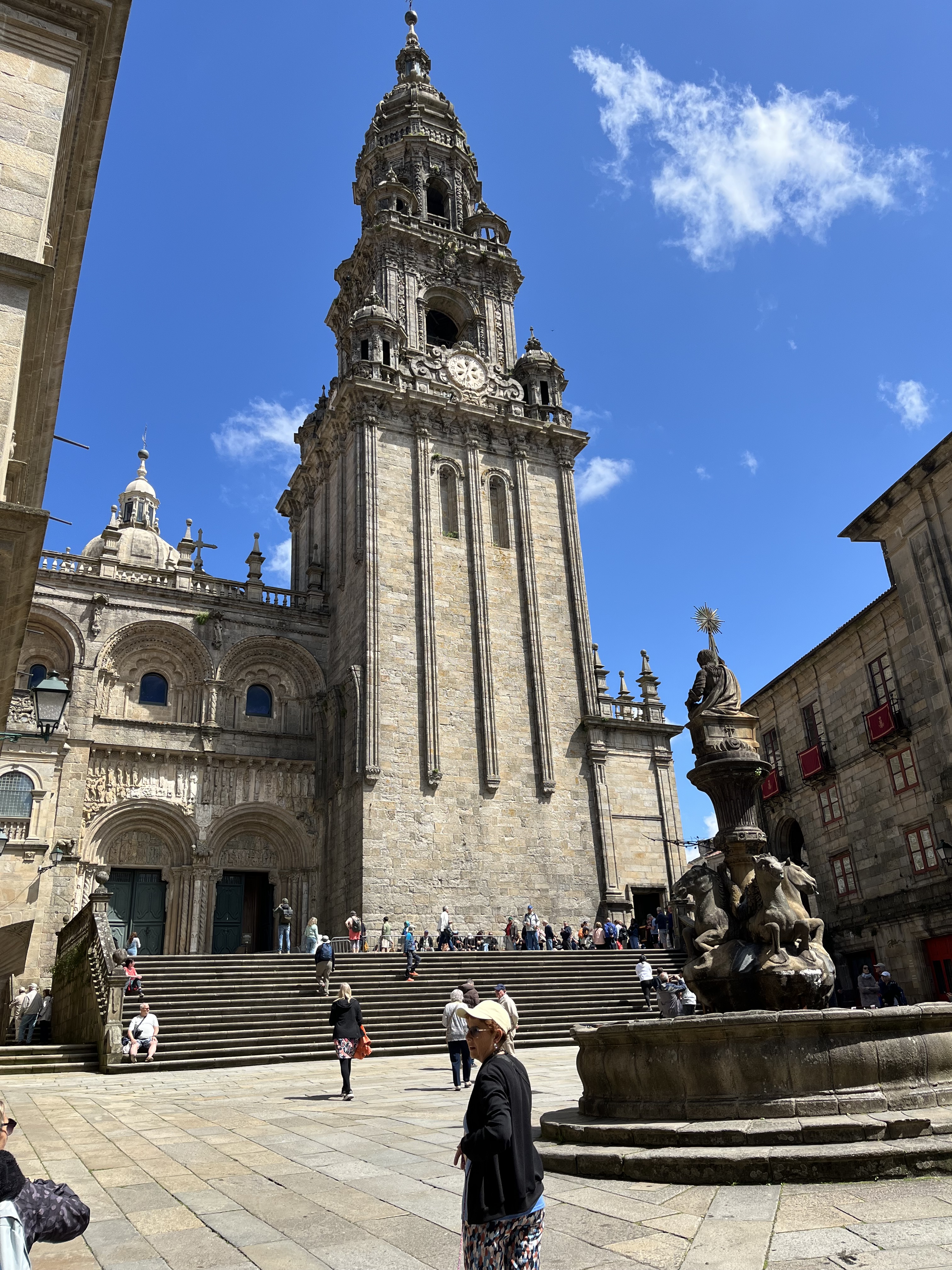
Heading north towards the Bay of Biscay, we stopped in Santiago de Compostela. Santiago de Compostela is to this day, the renowned and popular pilgrimage destination, where the numerous routes of the Camino de Santiago pilgrimage routes converge and end. It is believed that the remains of St. James are buried in its cathedral. It was inspiring to see so many, obviously elated and happy pilgrims of all ages around and inside the cathedral. In fact, there has been a revival in pilgrimages overall, including other routes such as the Via Francigena from Canterbury to Rome. It is also not just Catholics anymore who participate. Nowadays a lot of pilgrims go for the hiking experience, out of camaraderie or fitness reasons, or to seek simplicity and solitude to find themselves. Pilgrims don’t necessarily set out with a backpack that carries all of their essentials to hike the entire route in one uninterrupted adventure, not knowing where to spend the night or when to arrive at their destination. Some pilgrims choose to do certain sections at a time, maybe over multiple years, and usually know where and when they have their night’s lodging reserved, or even have a support vehicle arranged that carries their clothing etc.
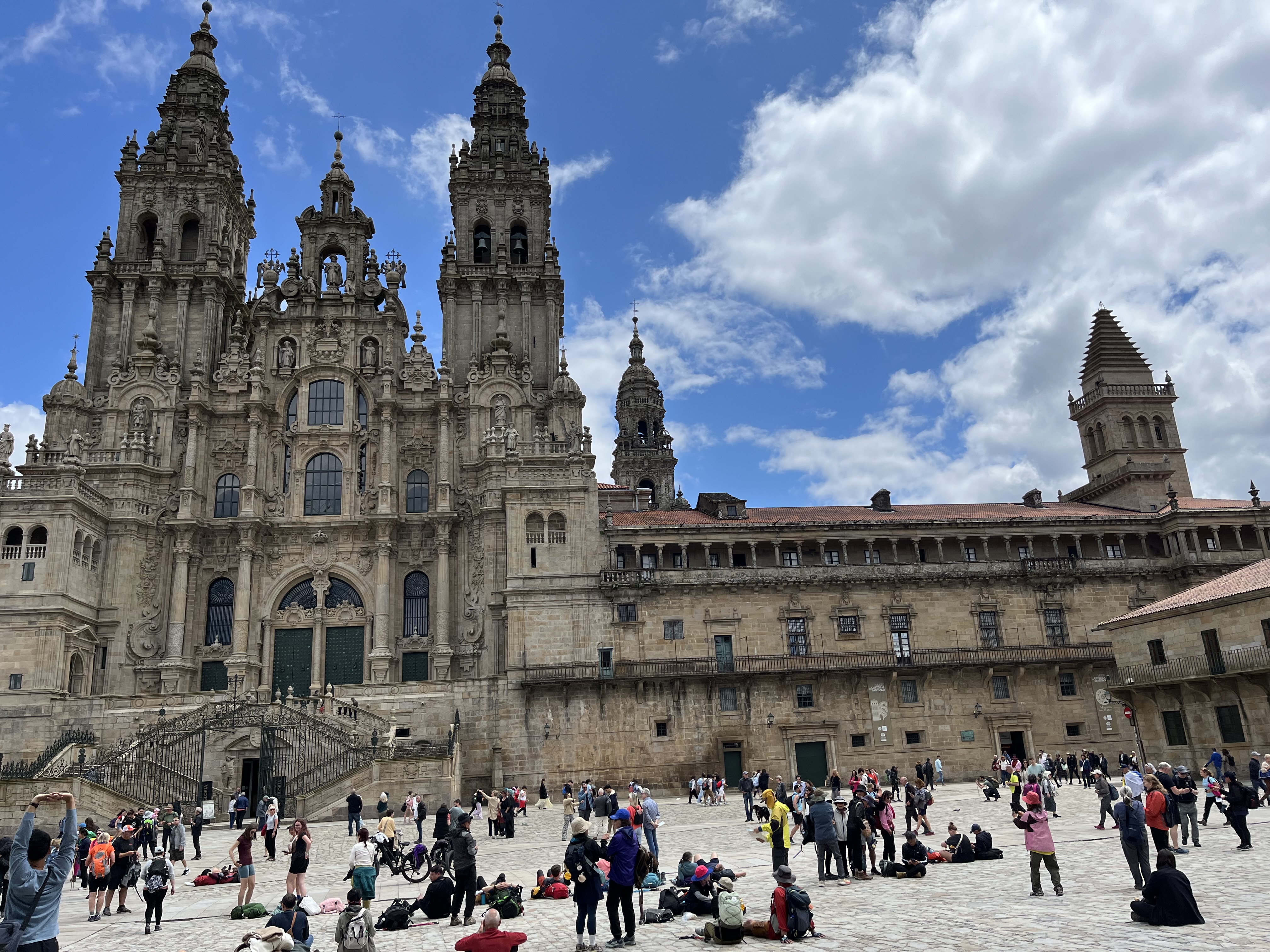

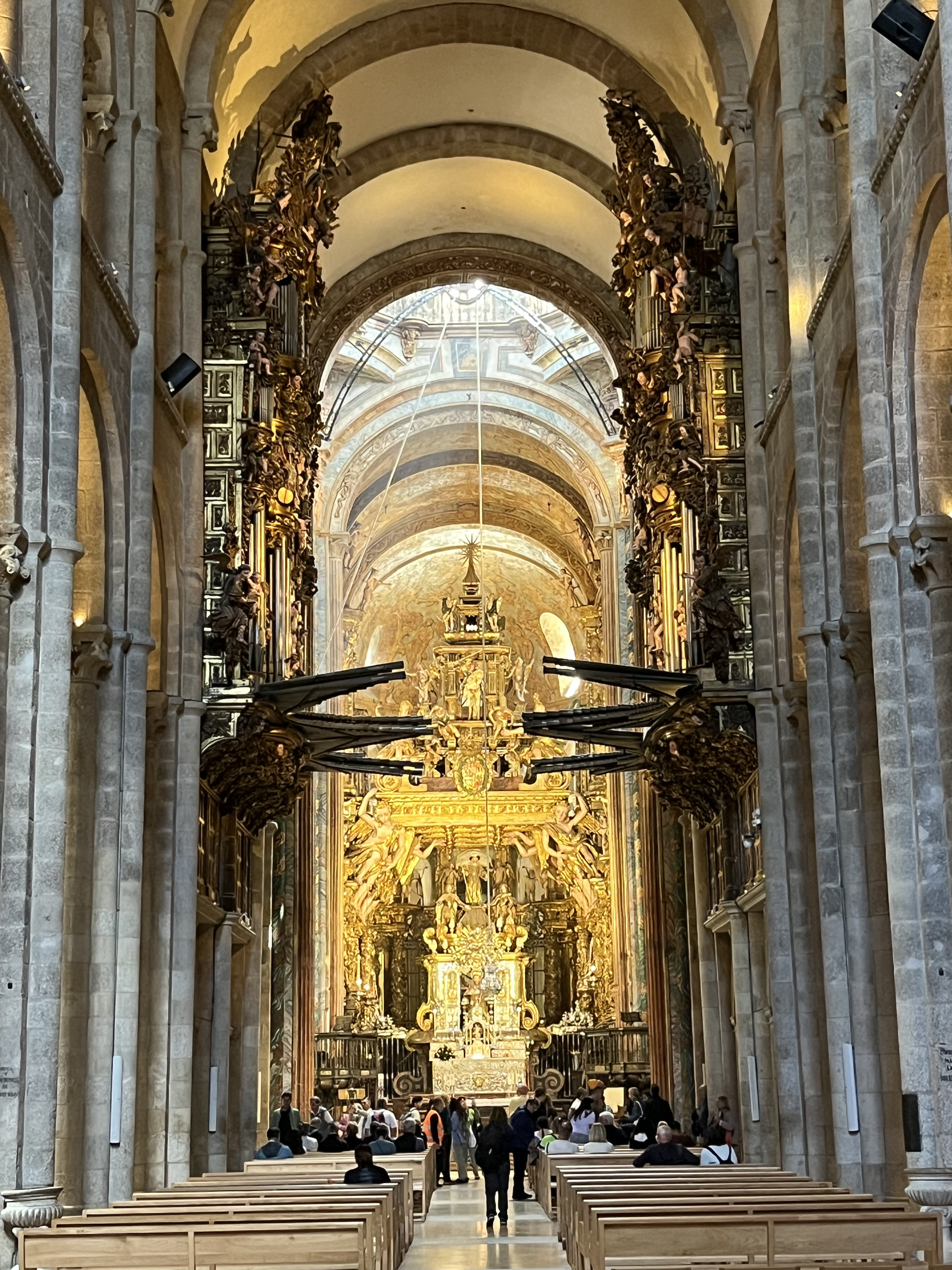
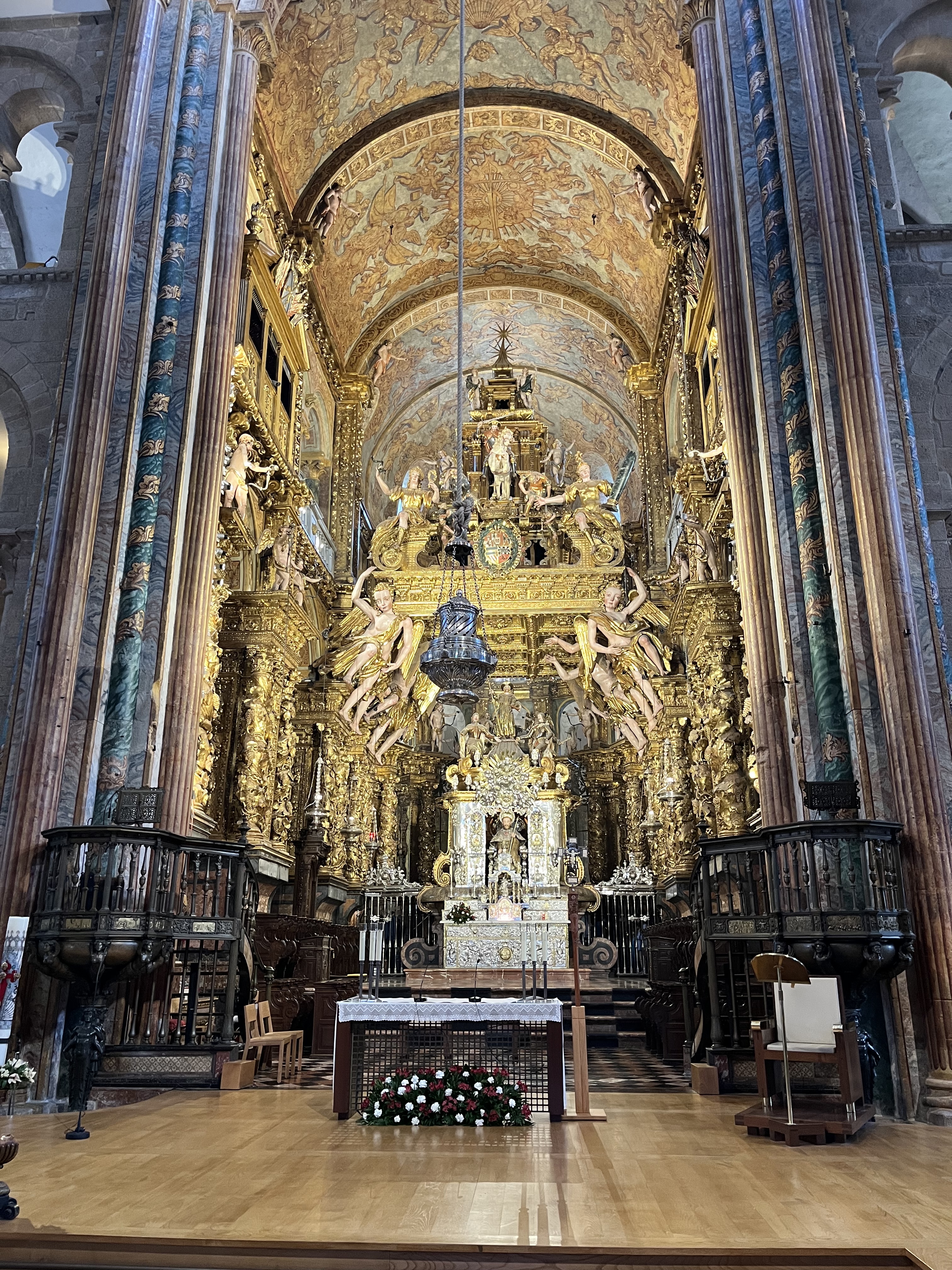
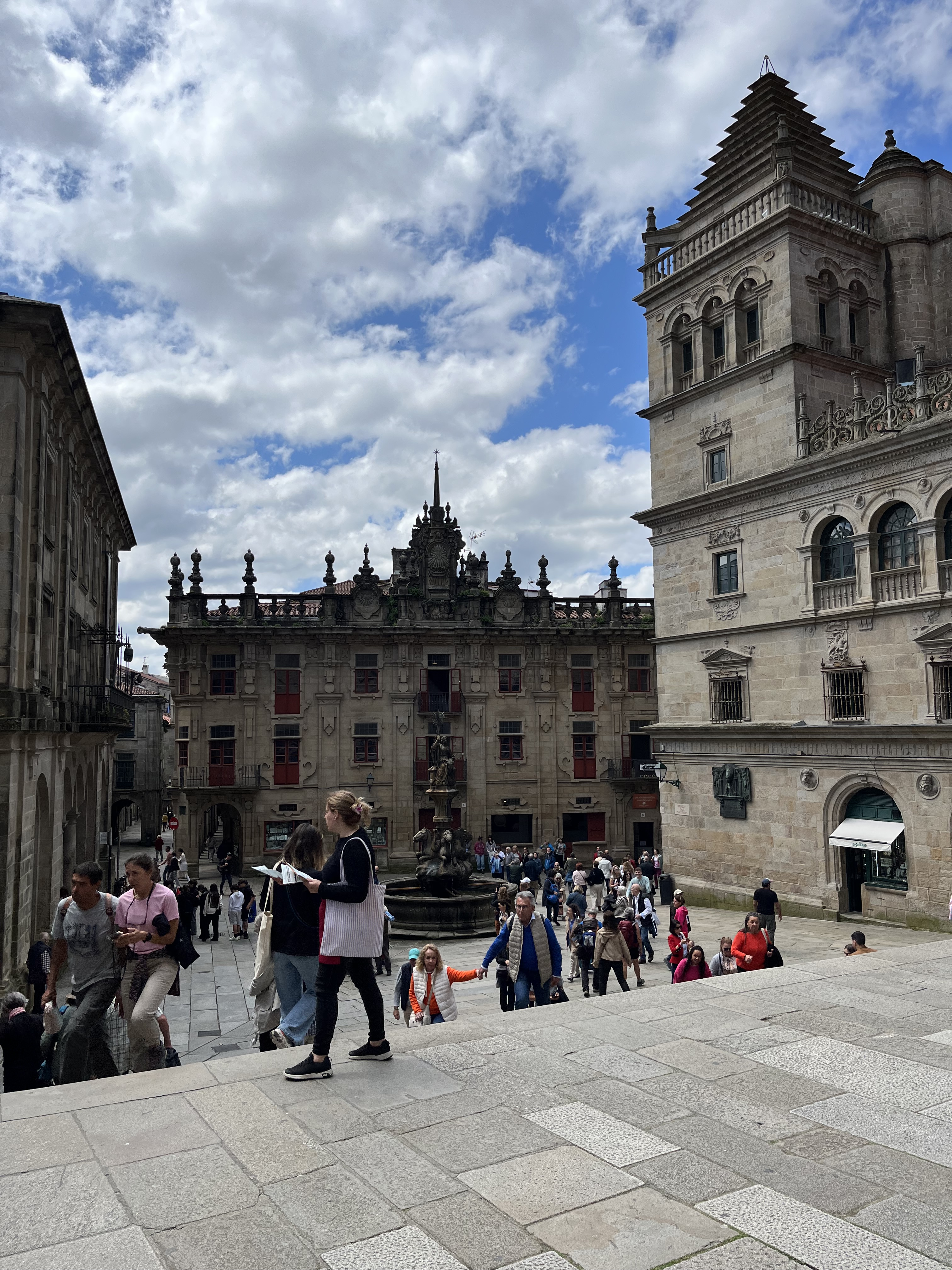

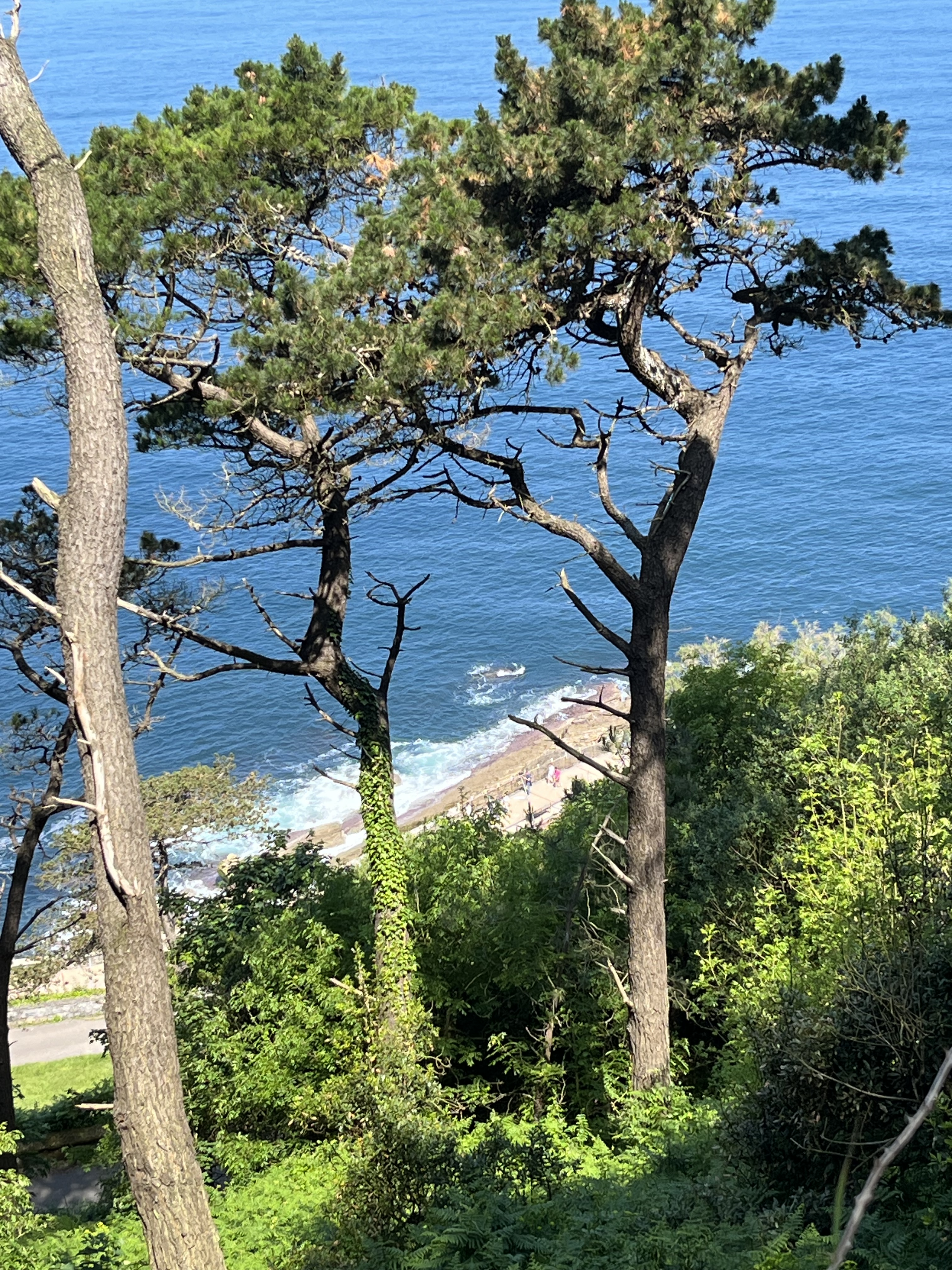
Here are some impressions from the Atlantic coast of the Basque Country:
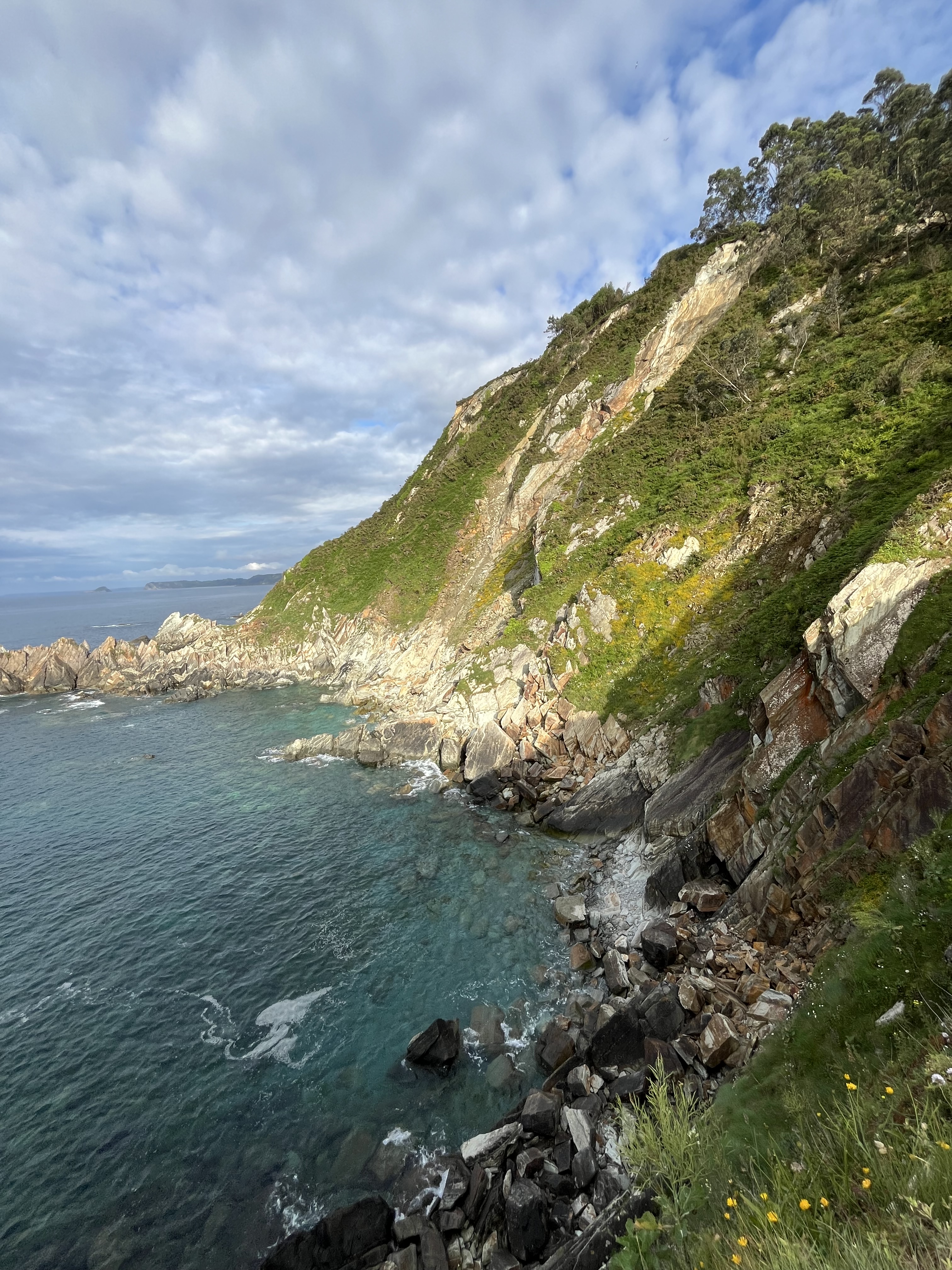
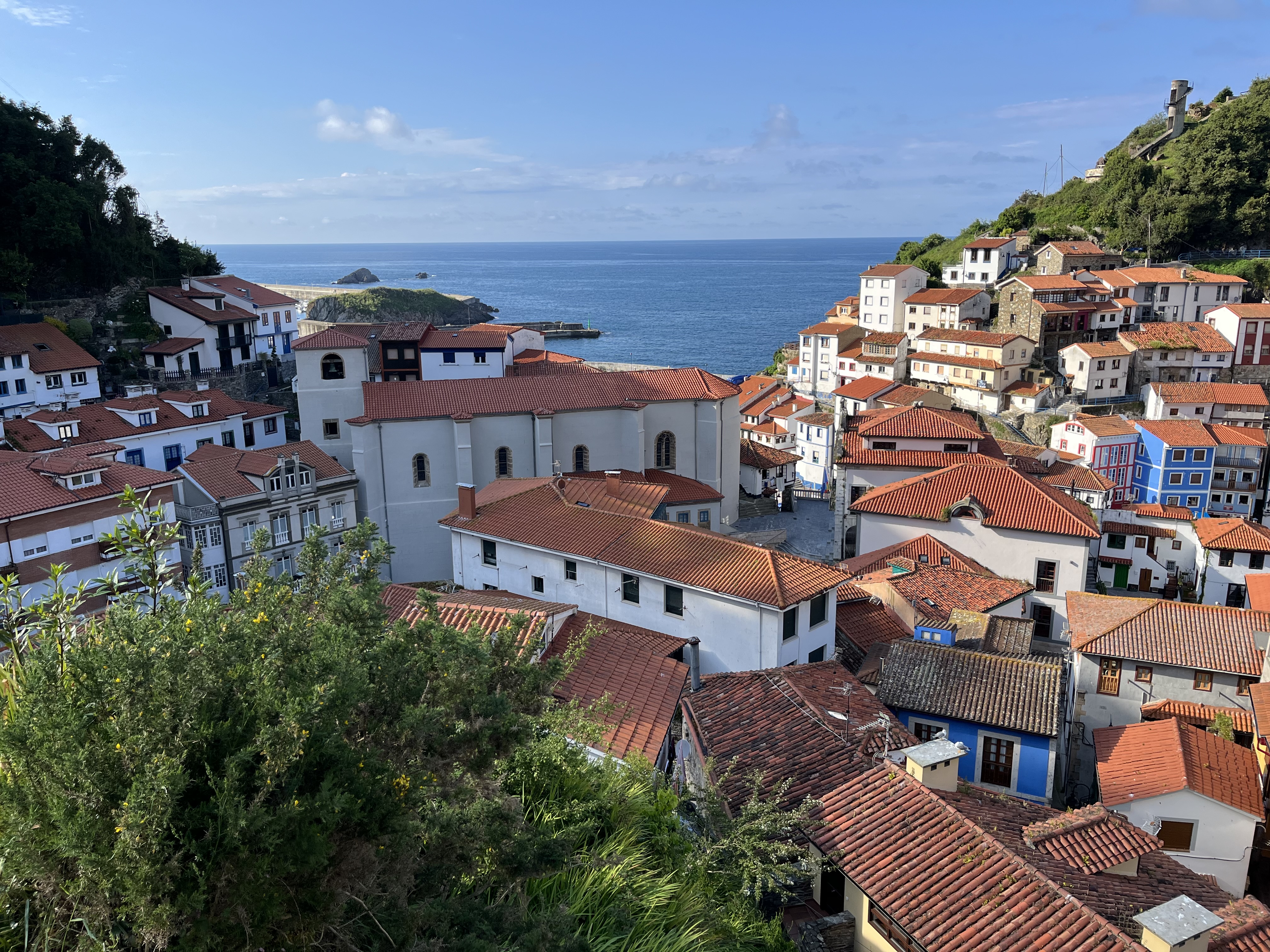


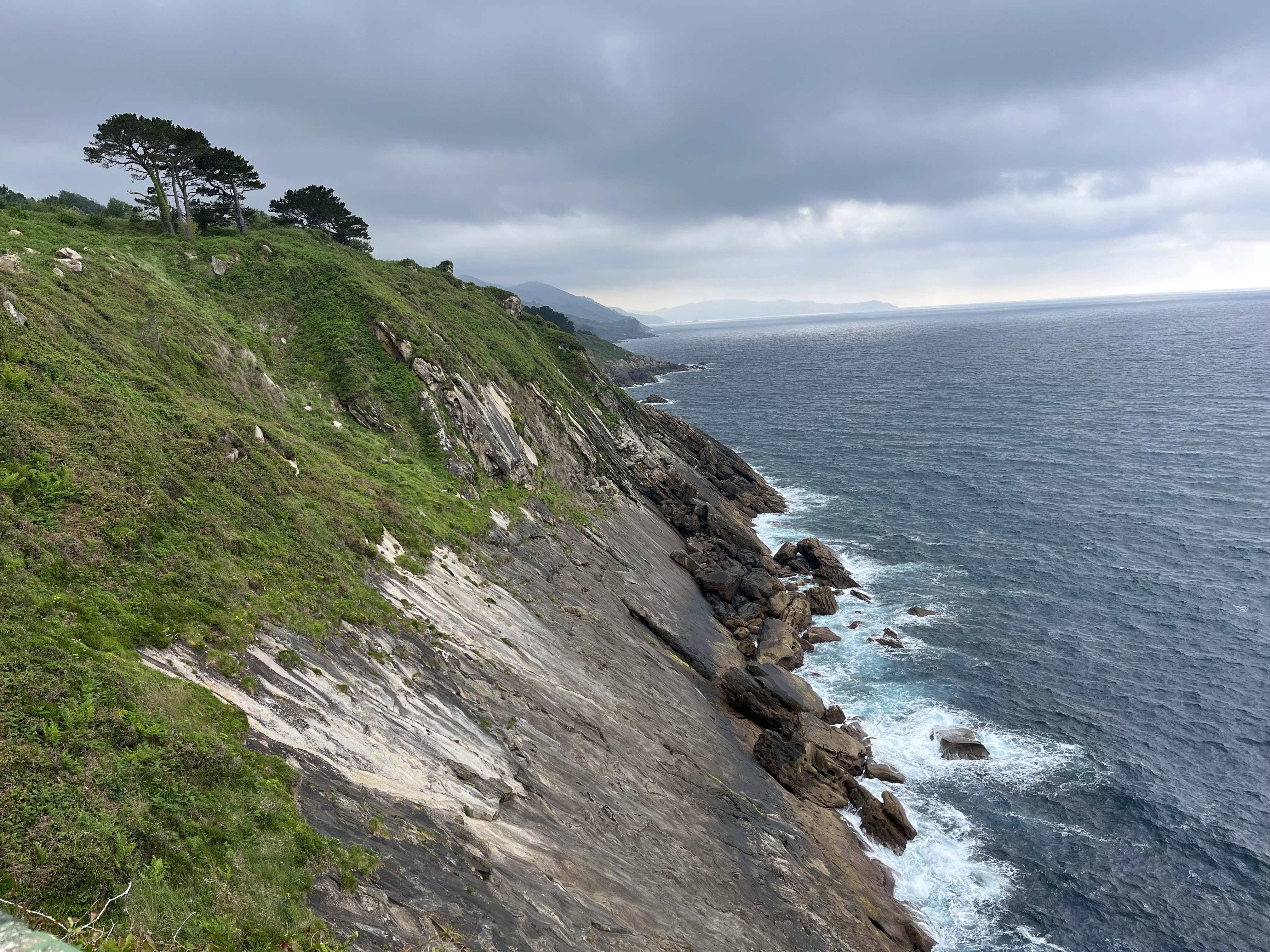
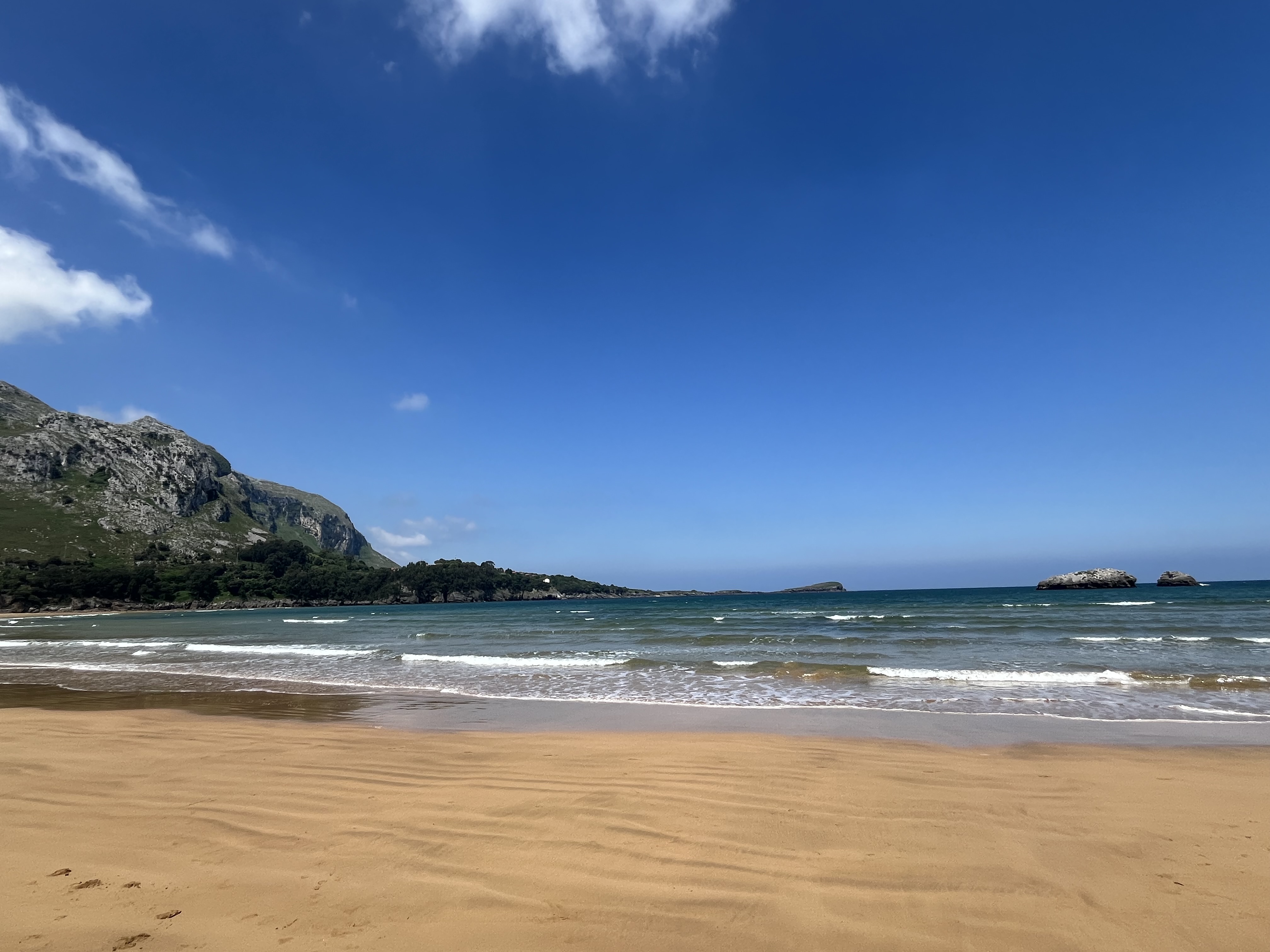


…reminding one of the Oregon or Washington coast on the Pacific, well, maybe except the Palm trees….

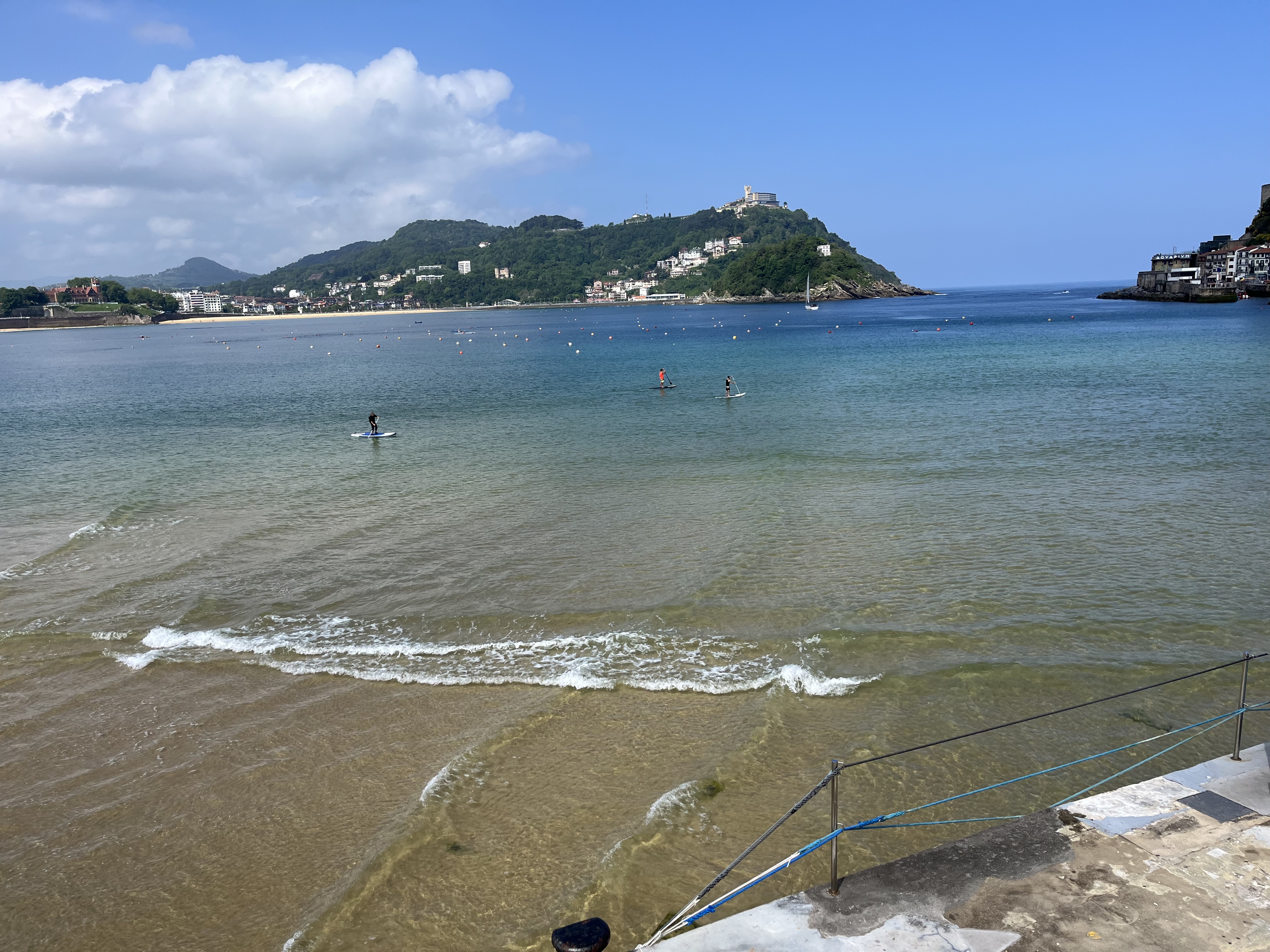
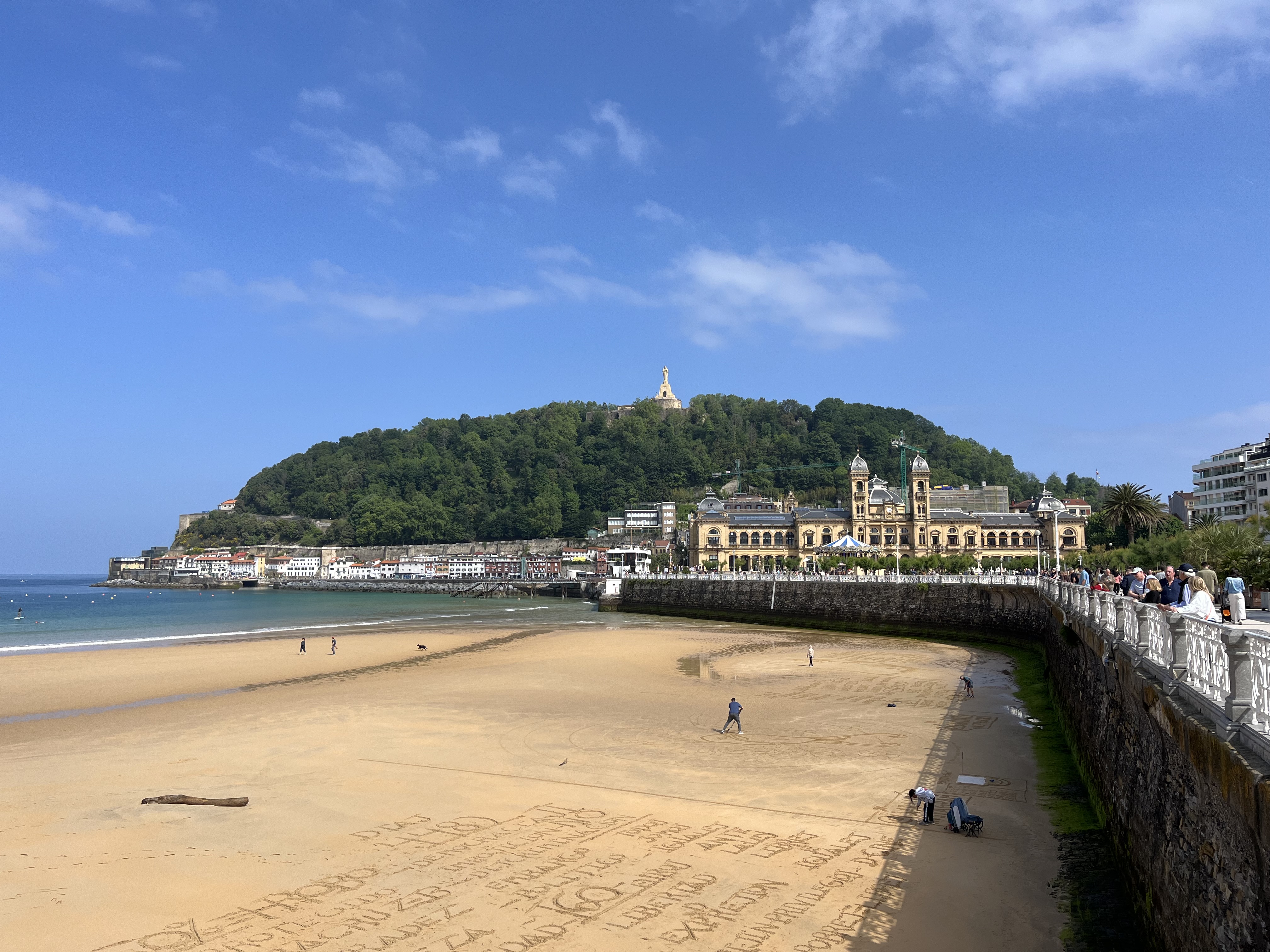
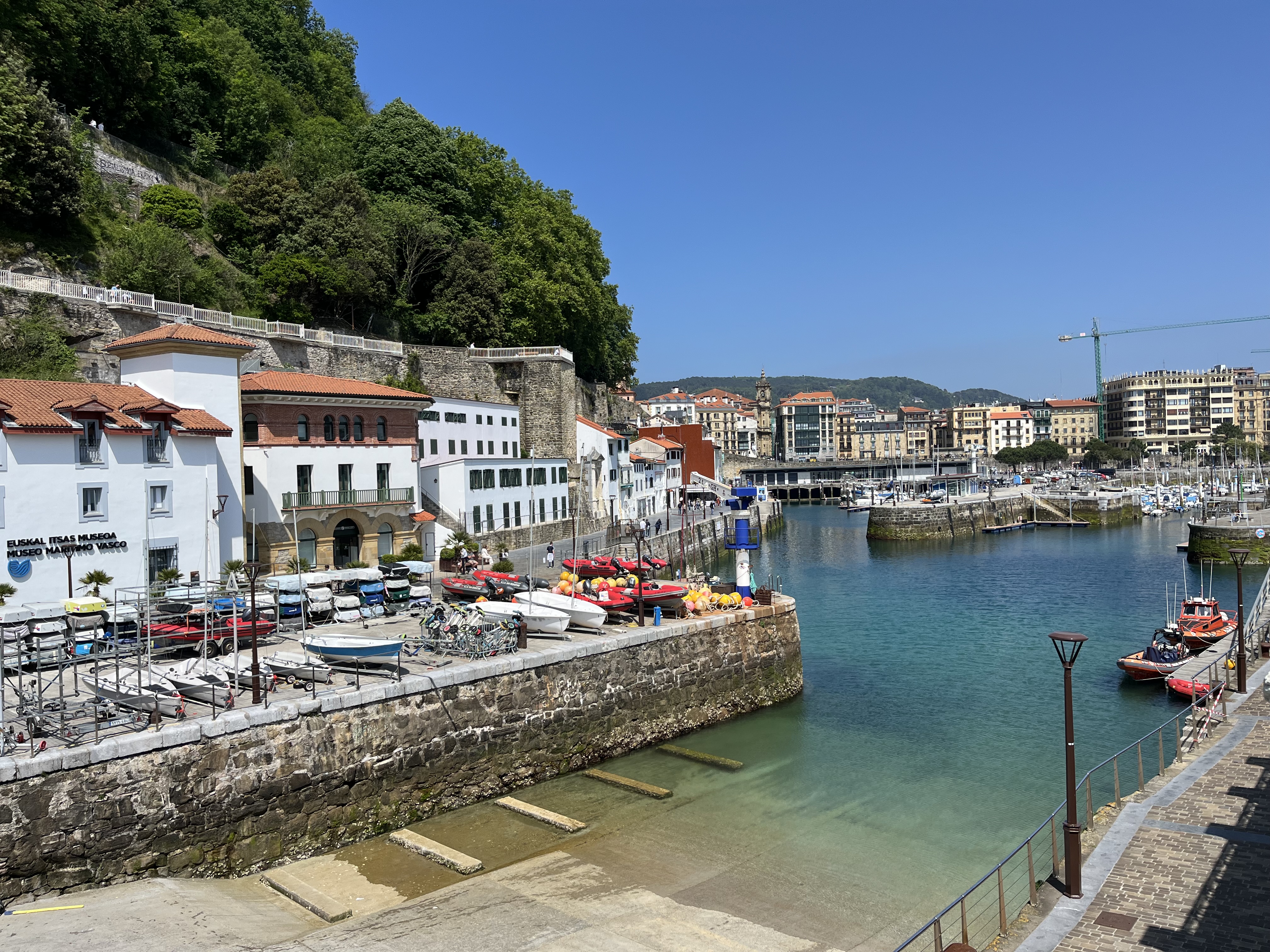
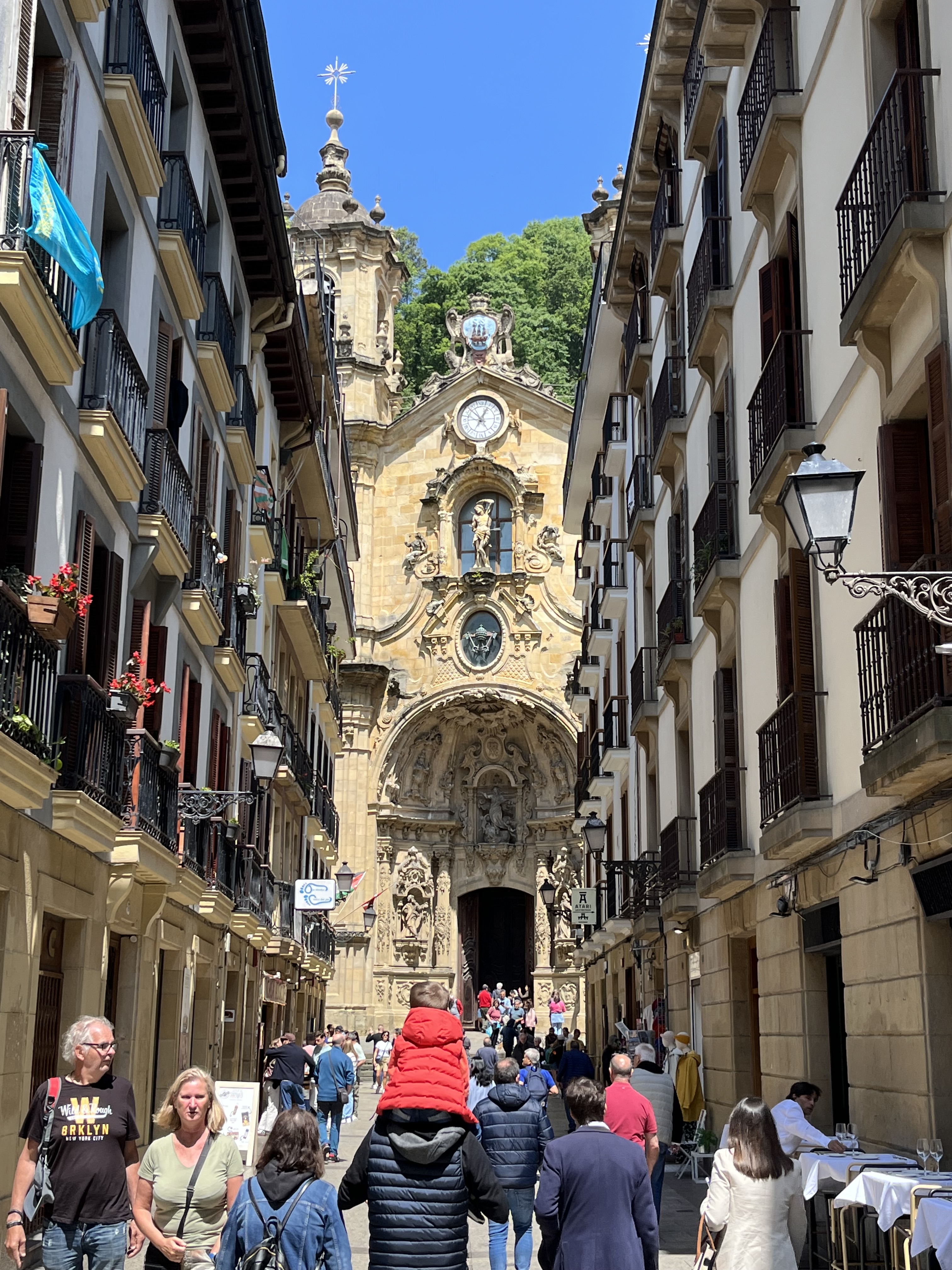
Donostia San Sebastián,
Located in the angle of the Gulf of Biscay, just south of the French border, this Spanish Basque town was the last stop of our journey.

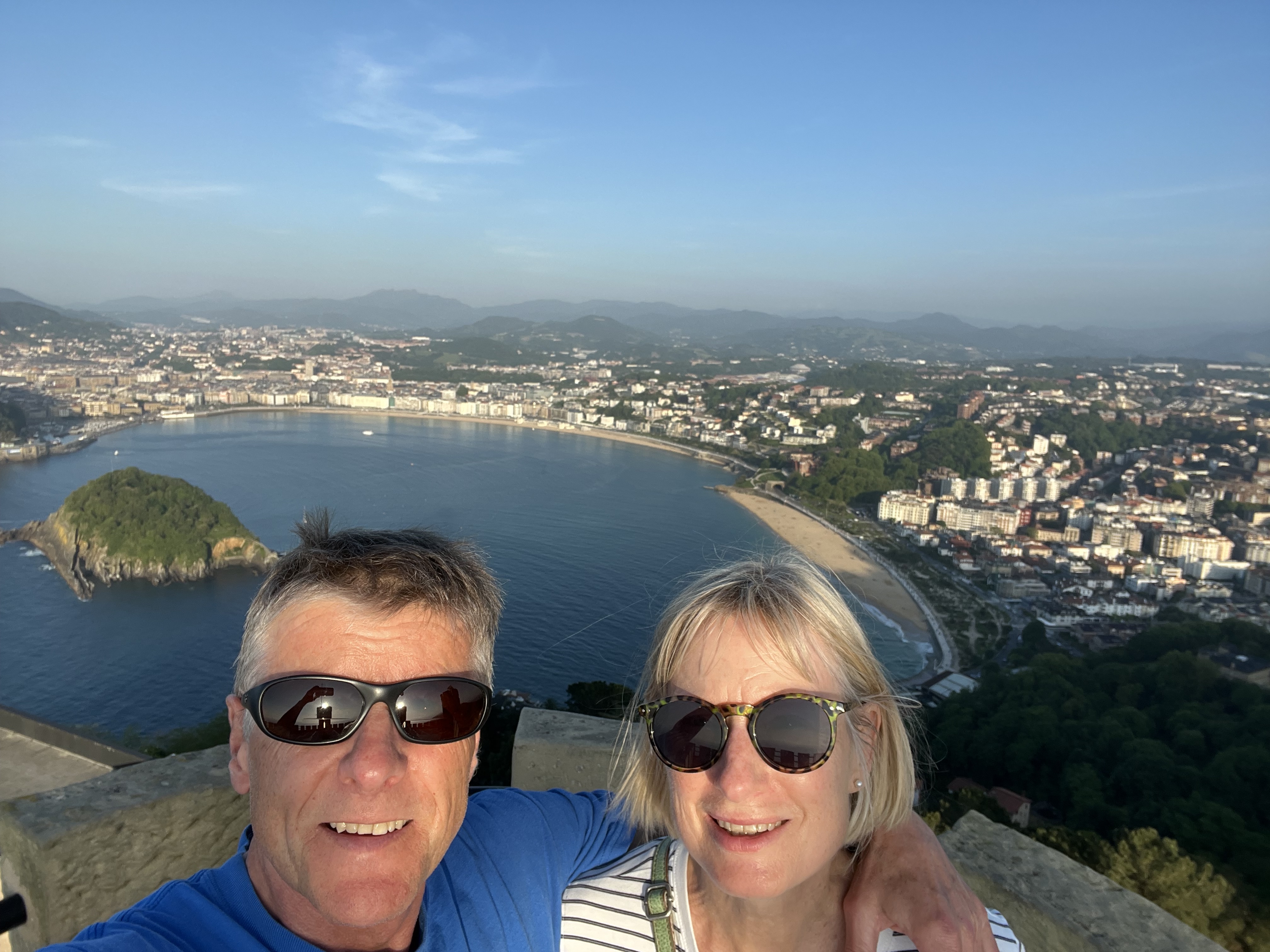
Ever since I’ve seen this view of San Sebastián, I’ve been wanting to see this place, and this perfectly rounded natural bay, with its white sanded beach and green forested hills, and it indeed proved as beautiful as I envisioned! Thoughts of a mini Rio de Janeiro coming to mind.
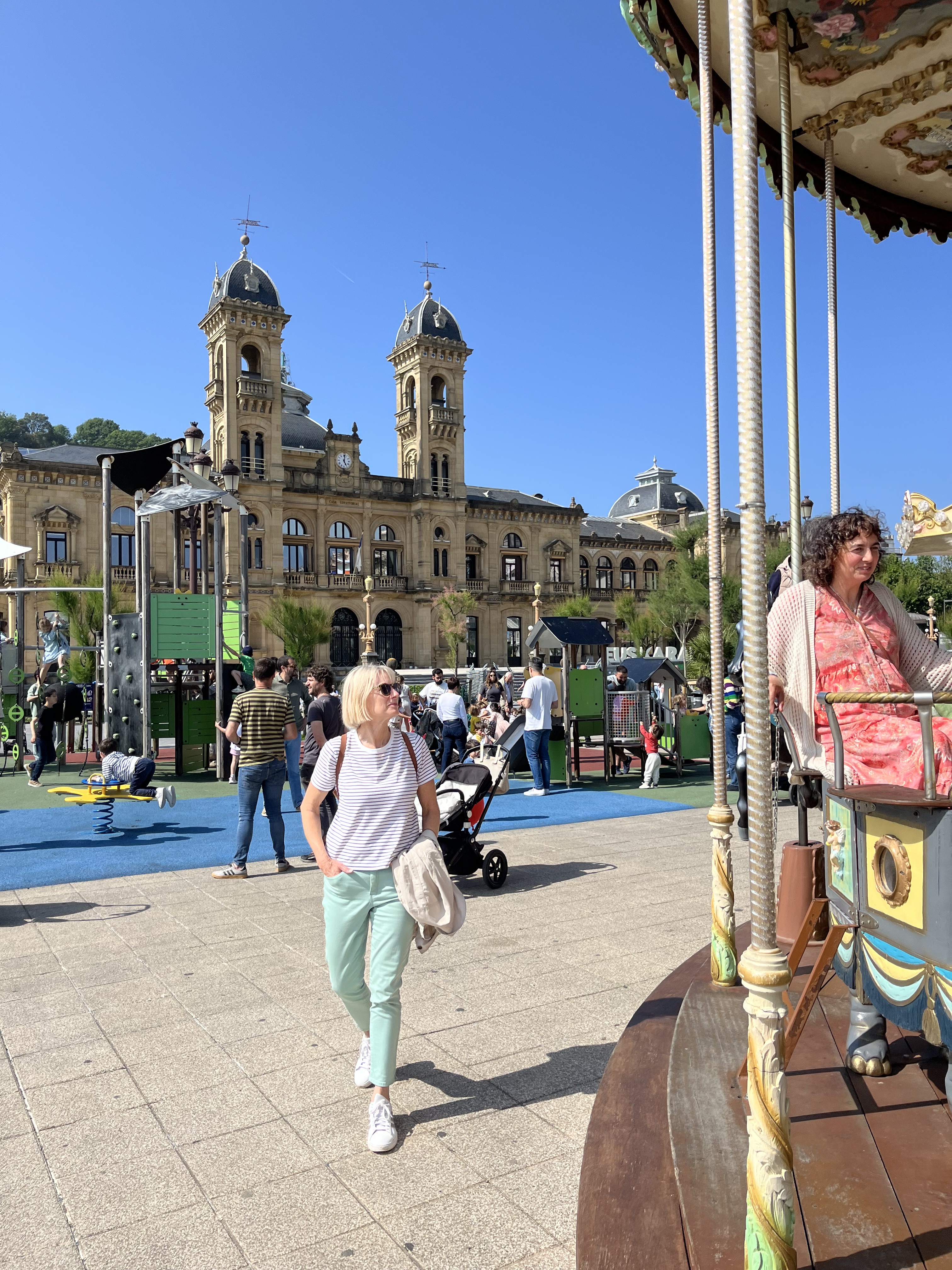
Here, as in Toledo, we took a public bus into the city center that conveniently stopped right next to our hotel.
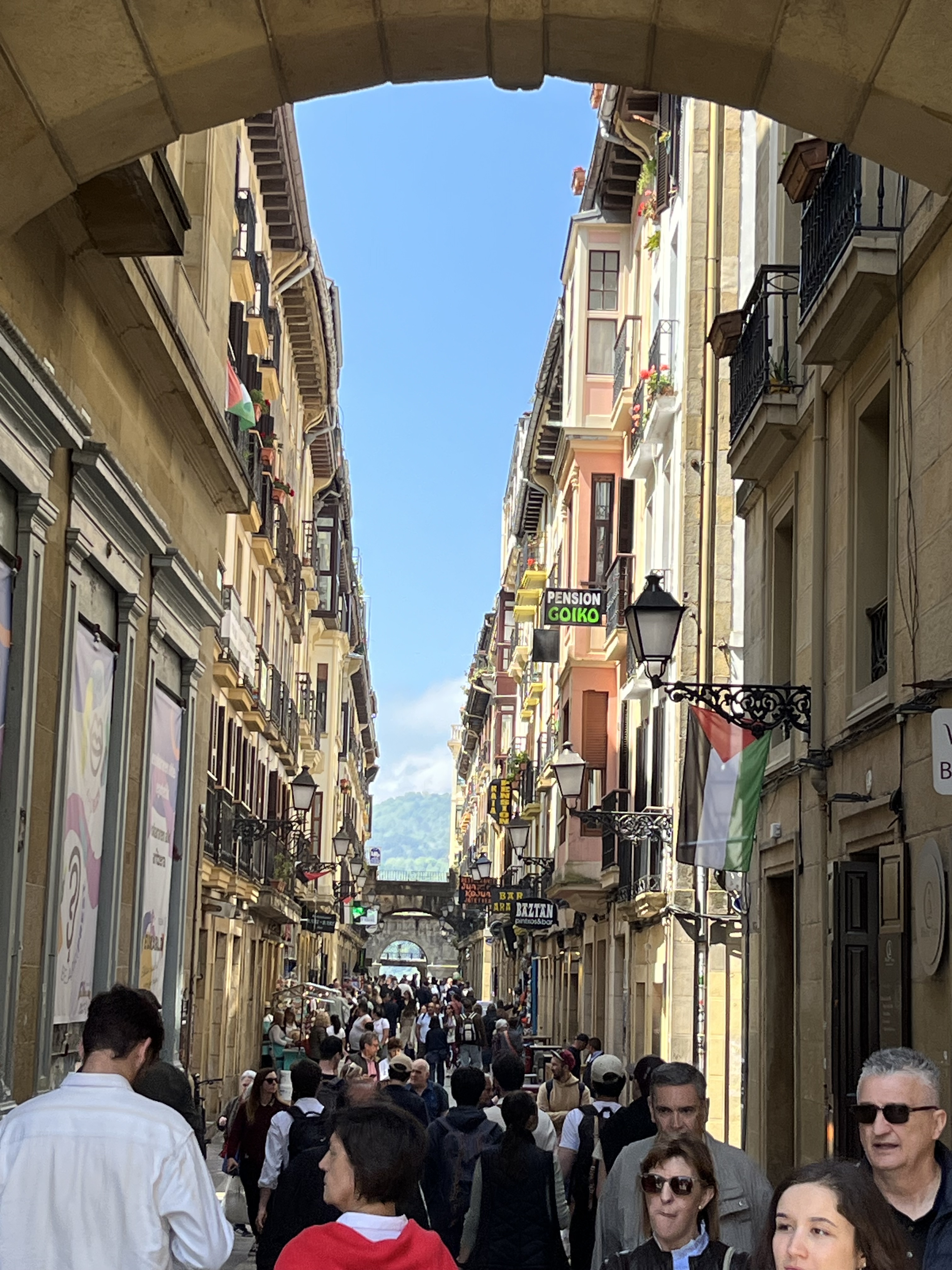
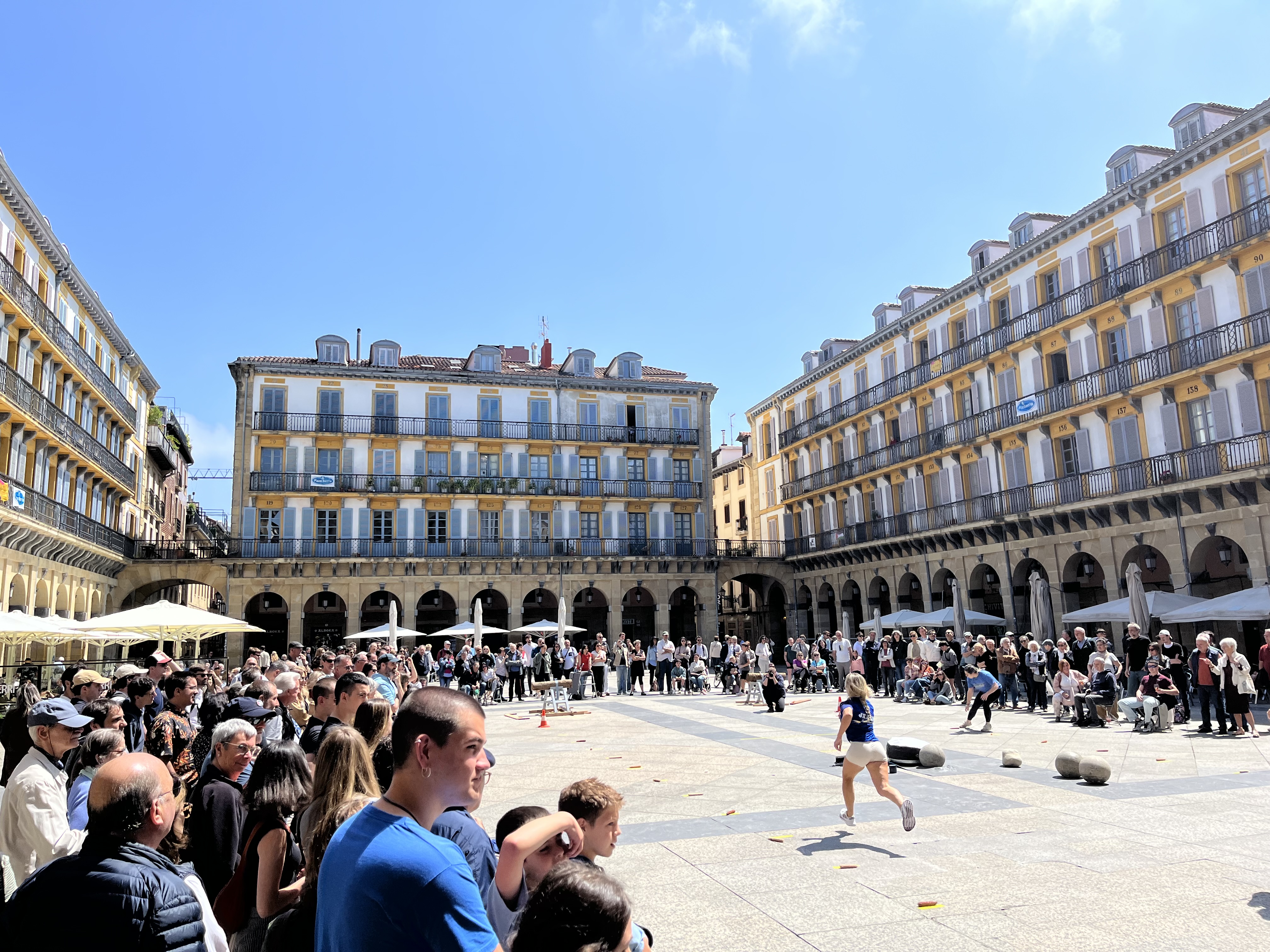
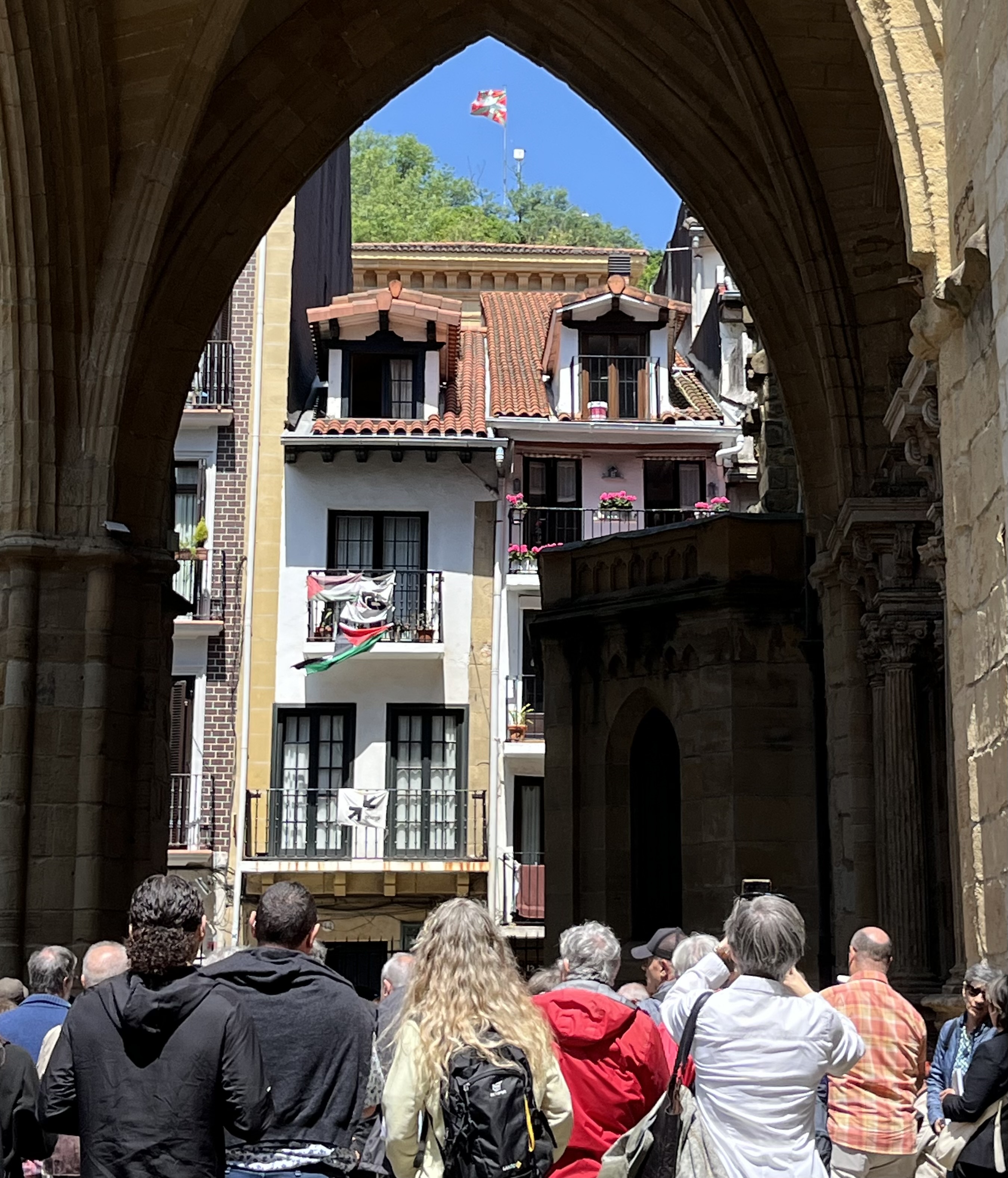
San Sebastián lies in the Basque region, which is an autonomous community in Northern Spain since 1978. The Basque people are characterized by their unique, and officially used Basque language, their distinct culture and shared genetic ancestry, all which they are very proud of. Beside the trademark Basque beret, I grew up knowing the term Basque (Euskadi) from the E.T.A., which was their separatist terror organization that frequented European news headlines with their bombings during the 70s. After 40 years of terror, with over 800 killed and thousands wounded in search of their independence, the E.T.A. finally laid down arms in 2018. On the Saturday we visited San Sebastián, we observed people congregating in front of a church loudly singing some Basque hymns with the support of a music band. Basque flags were displayed in numerous locations and Basques in general, like for instance our hotel manager or the staff in the restaurant we ate at, enthusiastically talk about and show off their culture. Naturally, they are also not shy in sharing their antipathy towards the Spanish.
Here in San Sebastián, just like we’ve observed in other places of the Iberian Peninsula, people enjoy going out and mingle together in tapa bars of the inner cities between noon and 3 – 4 pm, and then again from 8 or 9 pm to well beyond our bedtime. Not being able to find an open restaurant before 8 pm was something to get used to.

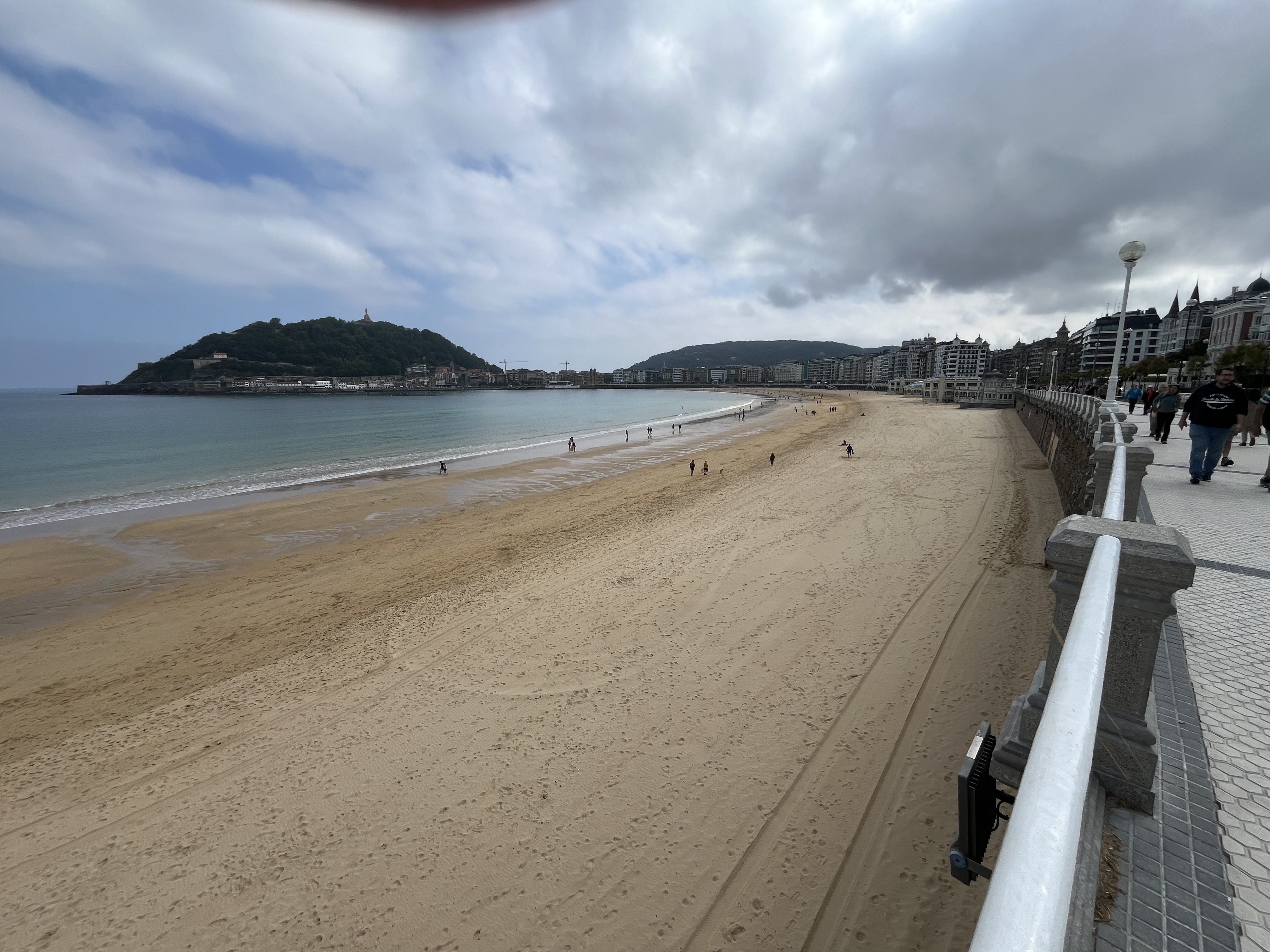
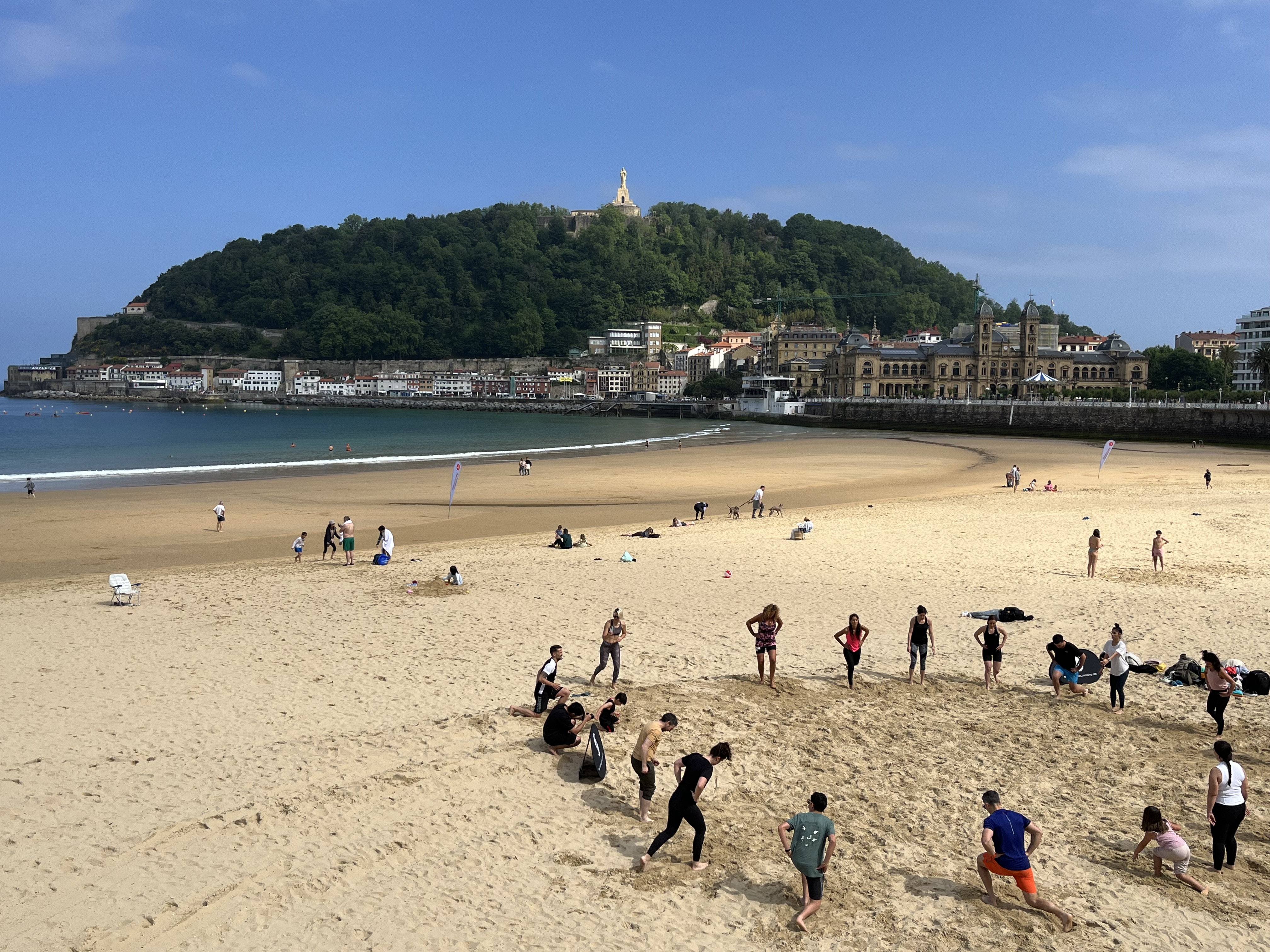

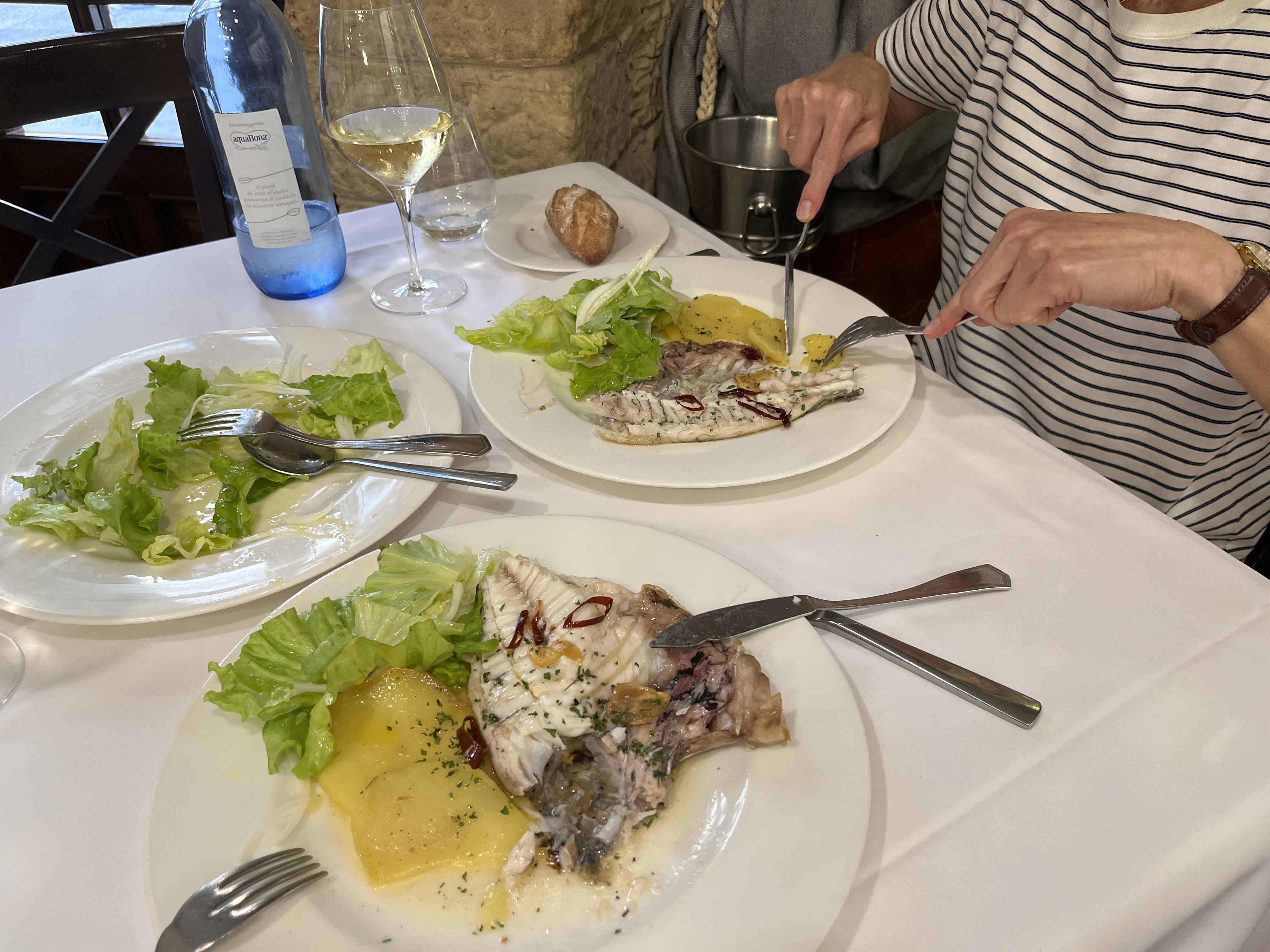
Here are a couple of quick and shallow observations from our trip: Spaniards are outgoing, eager to share their opinions about folks, whether positive or not so complimentary. They are laid back drivers and, to our surprise, all pedestrians young and old stop at red crosswalk lights and wait their turns. We perceived the Portuguese as a little more quiet, yet also, like the Spaniards, friendly and approachable. However they are certainly much more aggressive drivers and like to use their car horns, at least as much as the Italians. As with the Spaniards, they generally stop immediately for pedestrians at crosswalks, yet will honk at you if you jaywalk. Portuguese also eat a lot more salad and vegetables than the Spaniards, who, as mentioned, tend to mostly rely on their carnivorous diet. Another thing that was occasionally a little challenging for us, is the fact that fewer Spaniards speak English than in other countries we’ve visited.
After 3 full weeks and 5,300 km (3,300 miles) driven, we made it back to Dijon. This trip was a very big bite and we’re still digesting all of the new impressions, and territories we’ve encountered. We’re also trying to work off the the couple kilos of weight both of us gained from trying too much interesting looking local food while spending too much time driving.
We enjoy traveling by car to get a feel for the country and I’ve spent a lot of time detailing out our trips, from the typical lodging and tourist site reservations, to scouting out and reserving parking garages and some required city permits for entry by car, which for instance is required in Barcelona and Granada. Still, I am curious to see if we’ll end up with any unforeseen surprises in the mail within the next months. For instance, a couple of months ago, I received a notice from the city of Antwerp in Belgium. Apparently I entered the restricted inner city earlier this year without the proper permit and emission sticker. The fine ended up costing us a little under 100 Euros. Coming back from our Spain trip, I found a letter from the city of Florence in Italy, where on October 13th 2024!! I apparently drove in a lane not approved for our type of vehicle, which cost us 87 Euros in fines. If you’ve ever driven in bigger, unfamiliar European cities, you know how hard it is to constantly be aware of all the many applicable road signs. Together with all the frequent freeway tolls and, for instance, recalling the cost and time commitment for obtaining a driver’s license, one realizes that all the well intended lowering of car traffic to reduce emissions, congestion, parking, noise etc., do have a downside and cut into your enjoyment and freedom of traveling by car. Hope I am not coming across as a complainer, as I simply try to give the reader a balanced picture of our experience here and I do generally support these restrictions, and yes, we still enjoy our travels by car here in Europe and in fact are already planning our next adventure.
Hasta la vista.


 Barney & Lauri's Burgundy & Beyond Adventure
Leave a comment