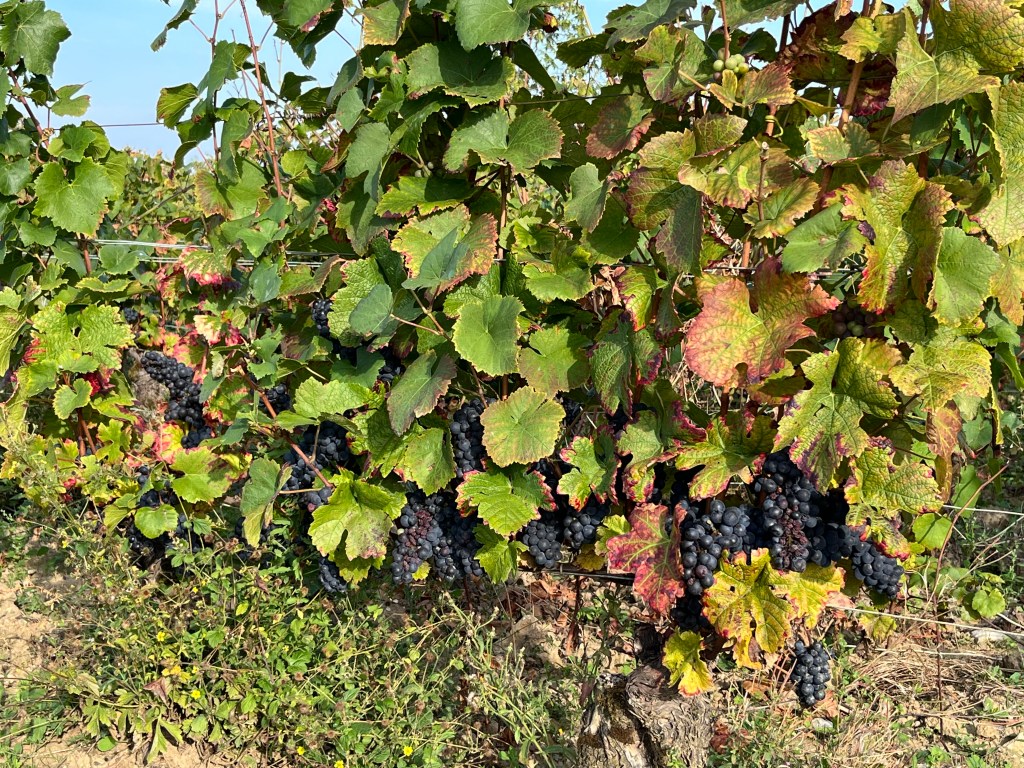
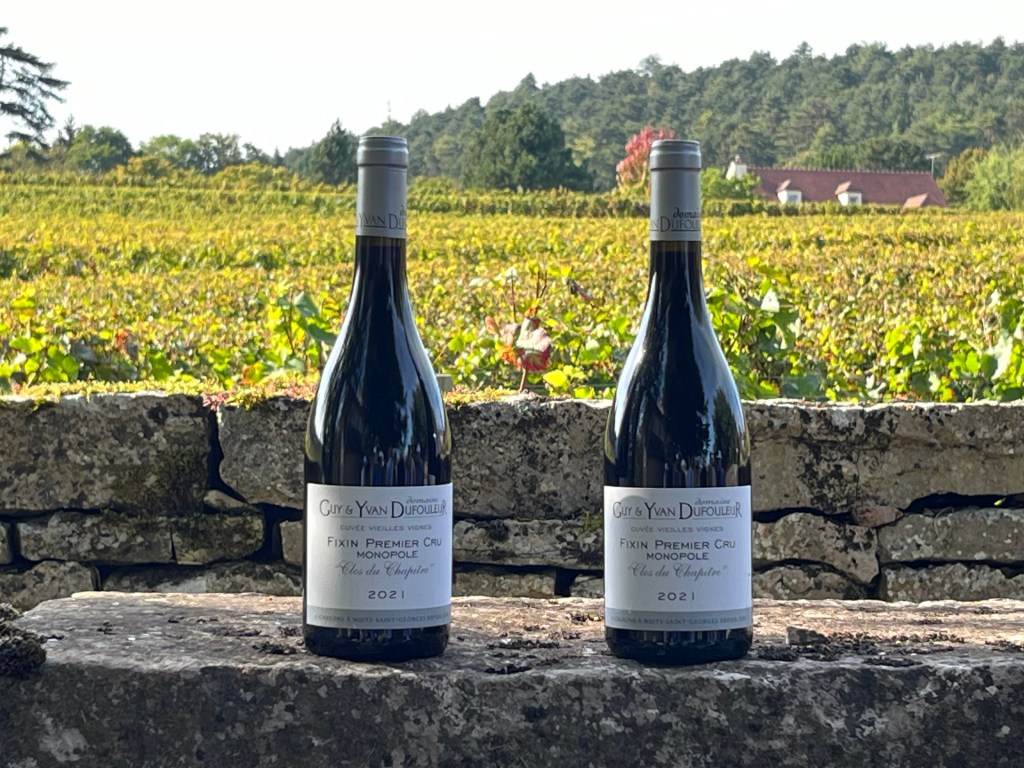
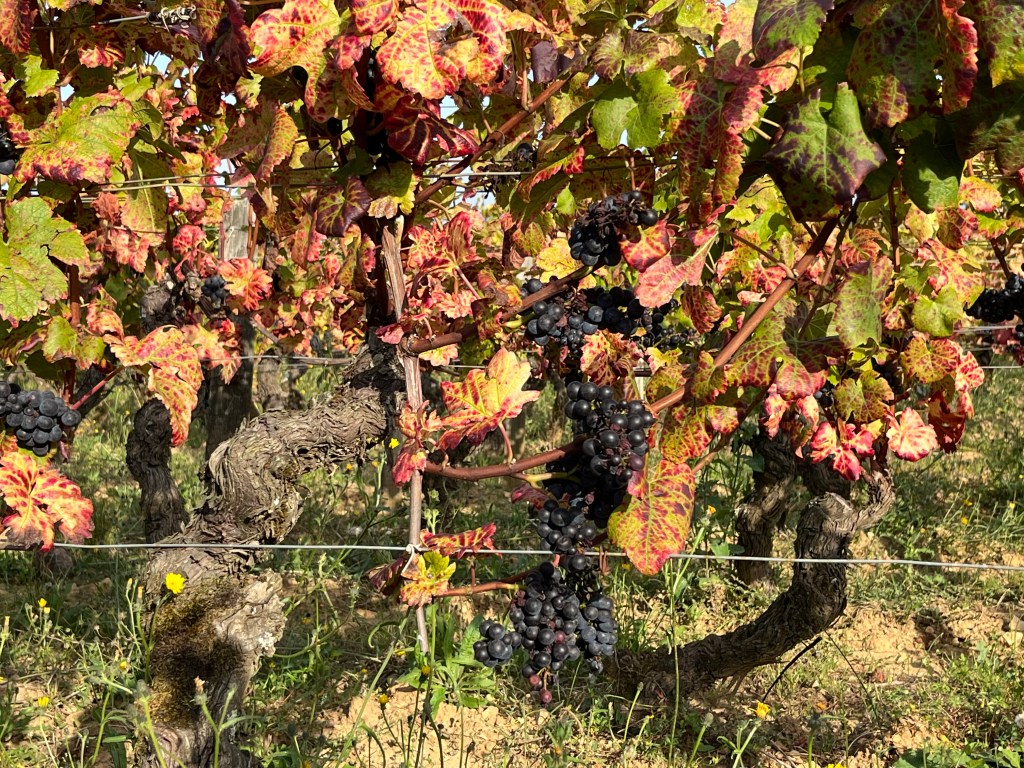
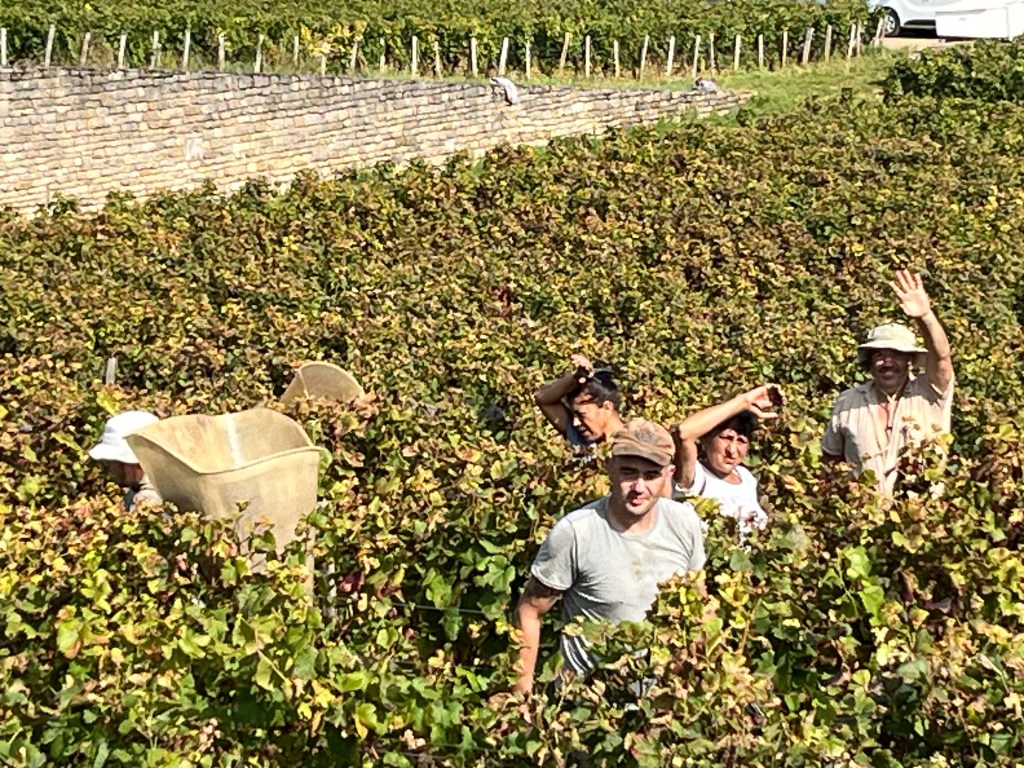
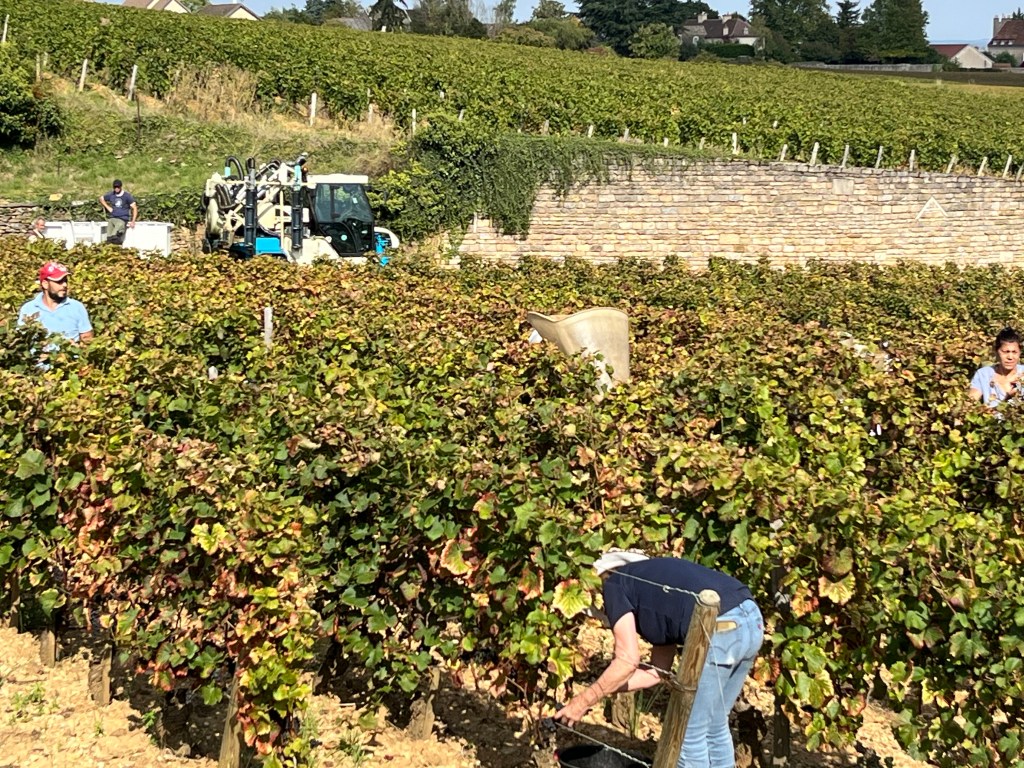
In the second half of September, while we we were getting ready for our trip to Italy, the grape harvest here in Burgundy was in full swing.



Ravenna
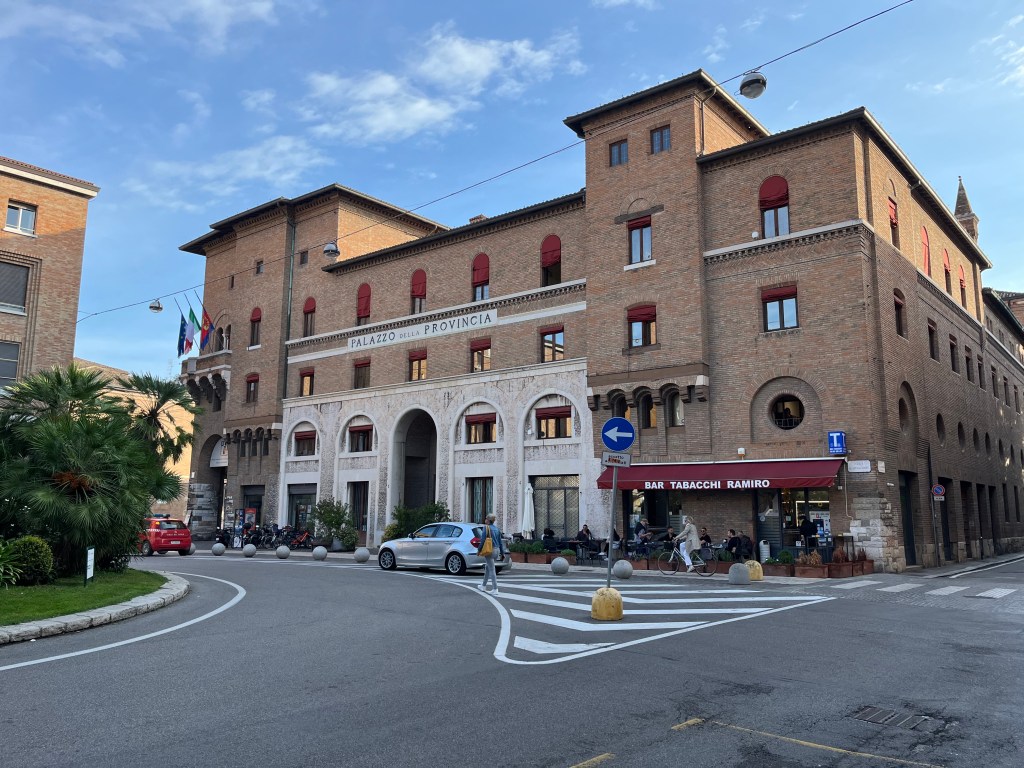
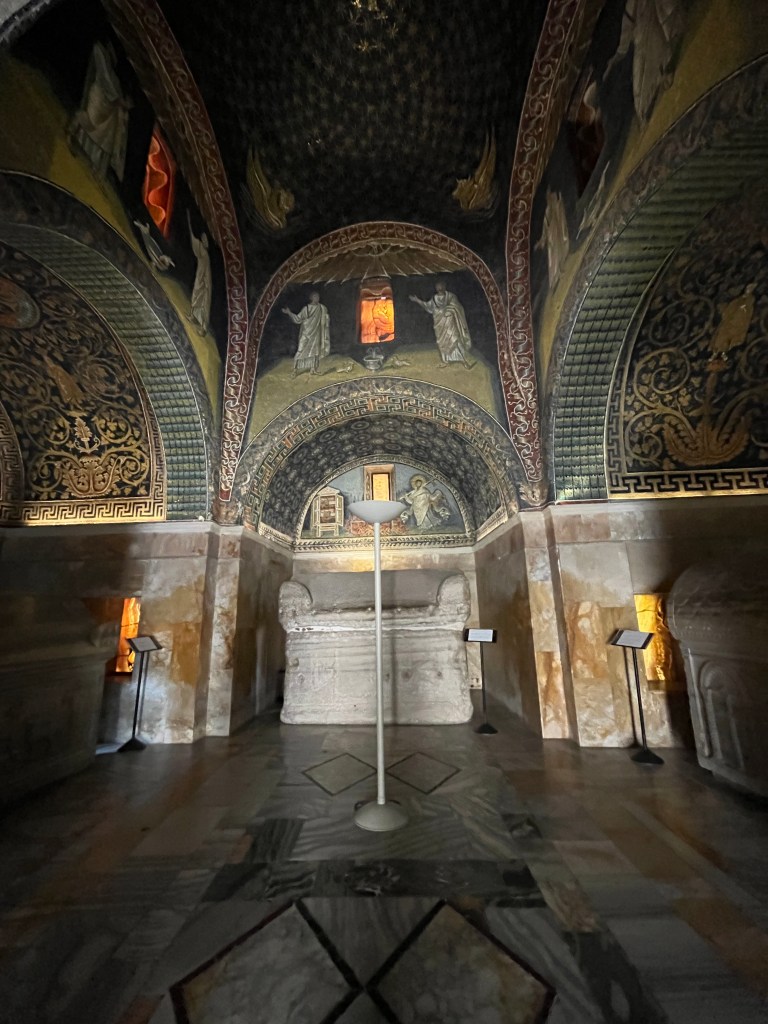
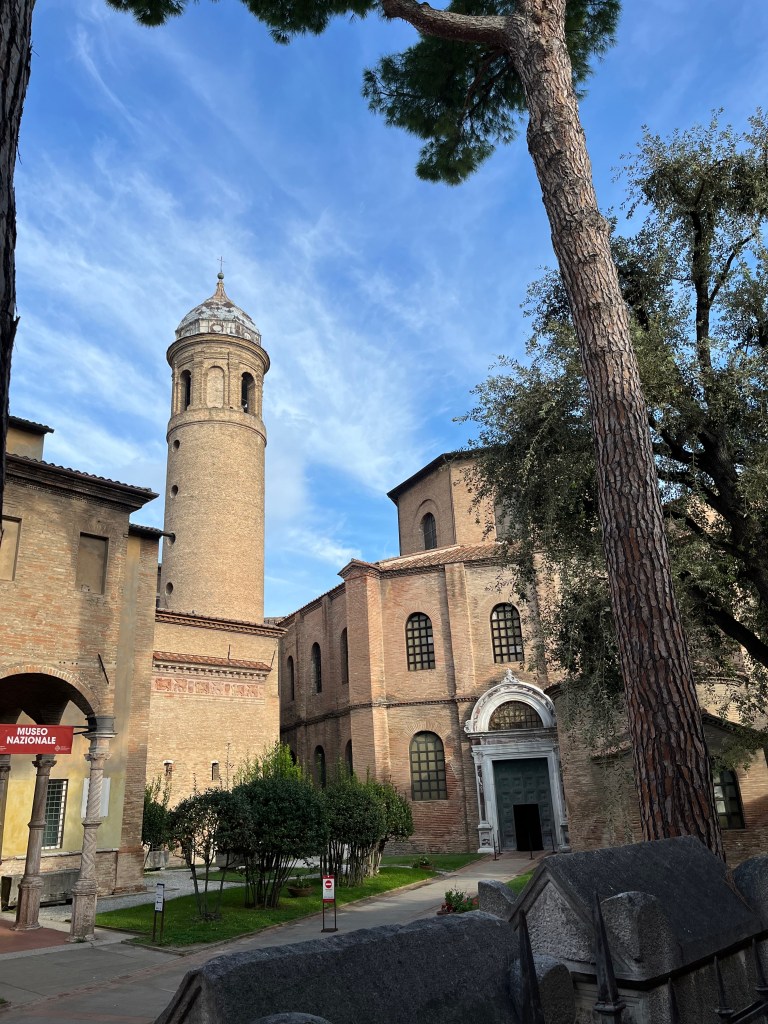
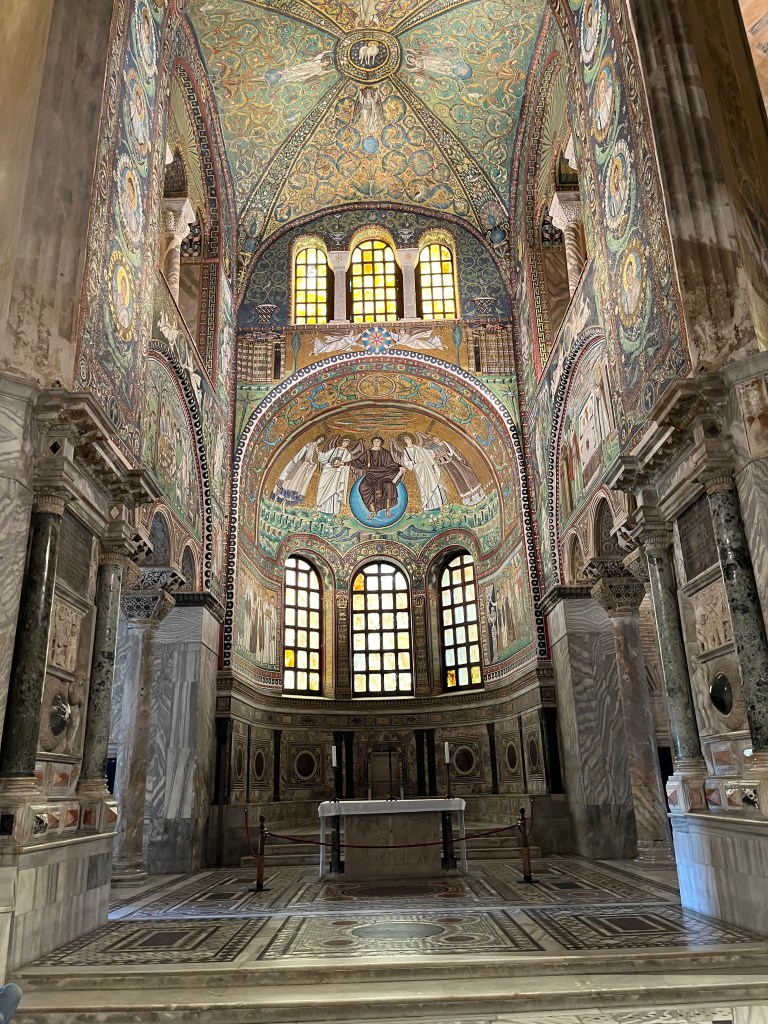
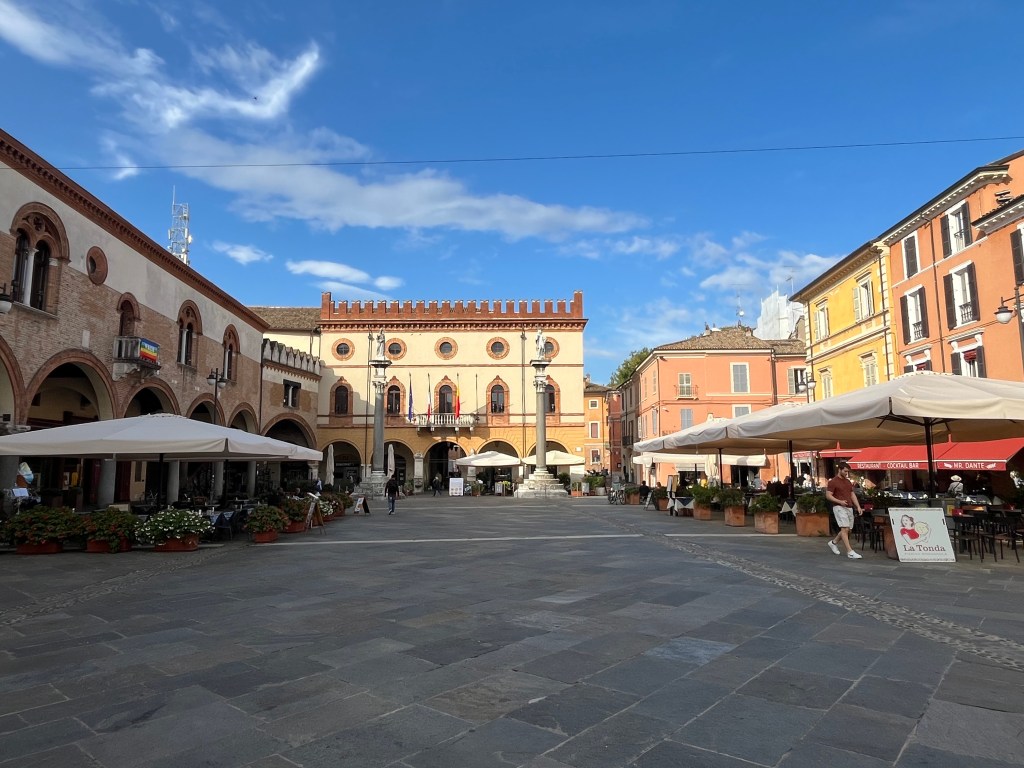
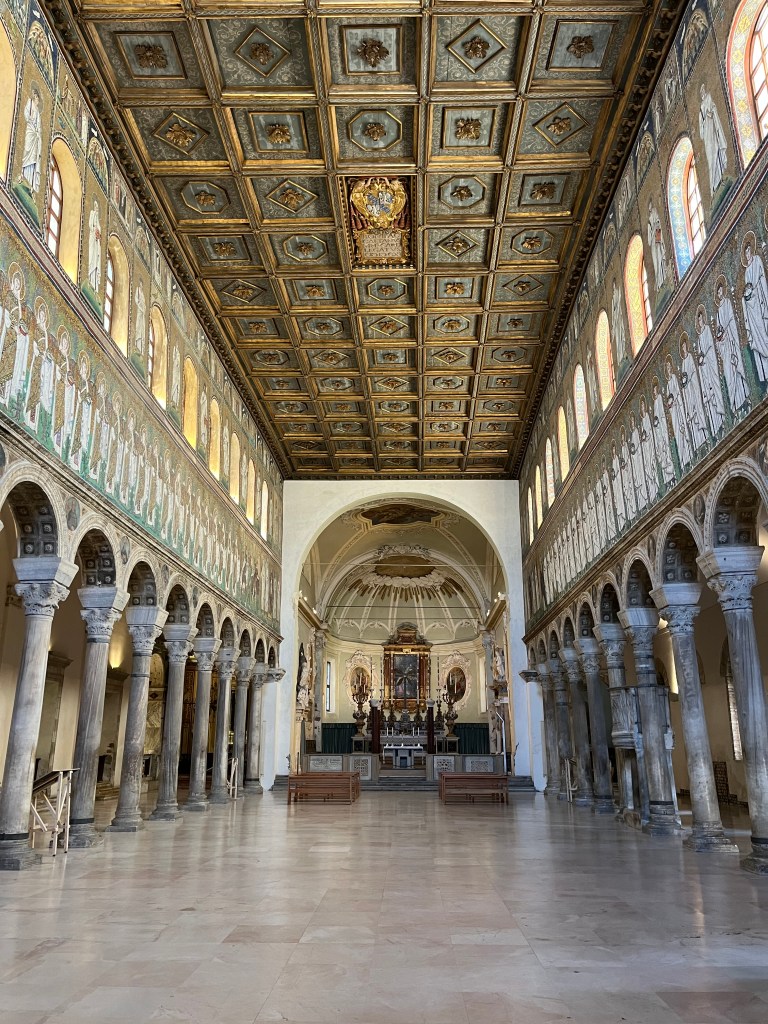
After meeting up with our daughter Anna in the French Alps, we put in a long day of driving, crossing northern Italy from west to east, all the way to Ravenna on the Adriatic Sea. Ravenna was the capital of the Western Roman Empire during the 5th century. Today it is known for its well preserved late Roman and Byzantine churches and baptistries, that are full of vibrantly colored mosaics, giving Ravenna the name of the city of mosaics. After some enjoyable hours in the evening and in the morning, we found Ravenna a pleasant surprise and a very livable city. Being also a university town and of similar size, with well preserved historic buildings, we thought Ravenna felt like an Italian Dijon.



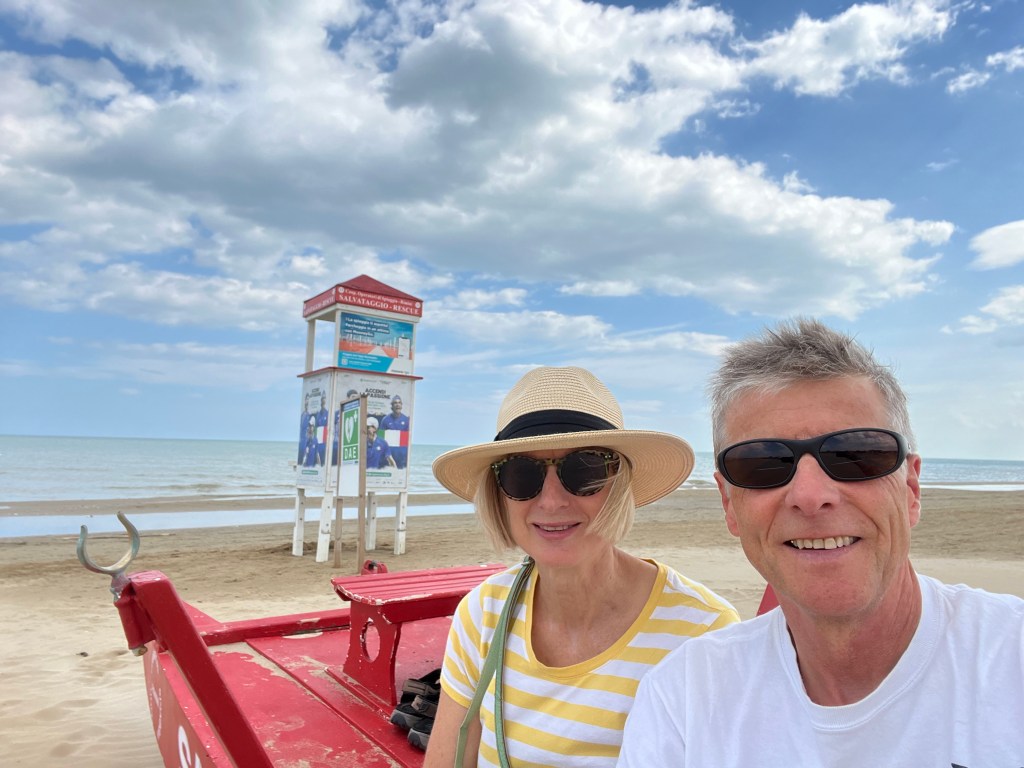
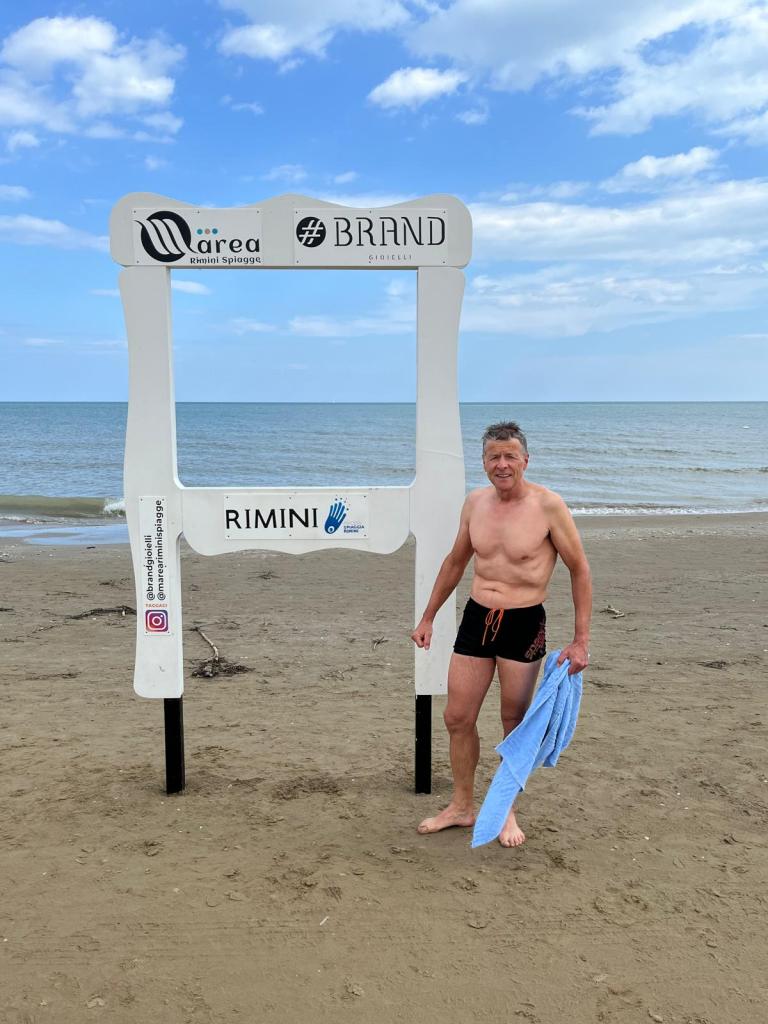
On the way south to Assisi, we made a stop in Rimini for a swim in the Adriatic Sea. In the later part of September the bathing season had clearly passed and the beach resorts were closed. Water temperature was comfortable and the uplift of the salty Mediterranean made the swimming an easy pleasure.

Assisi
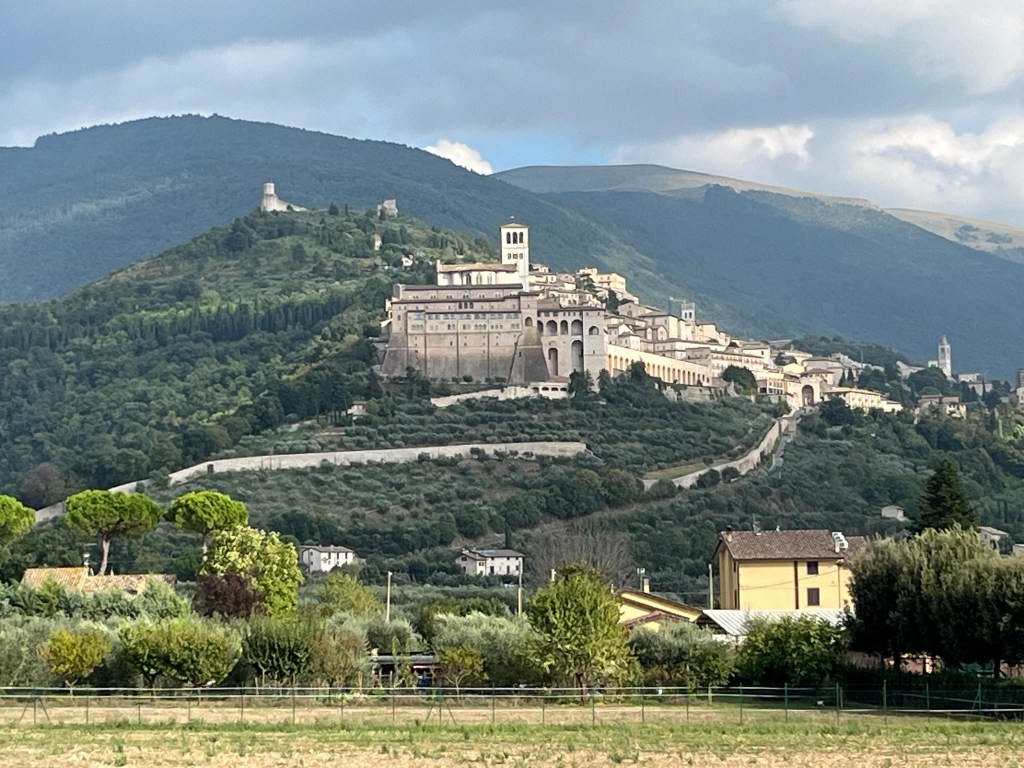
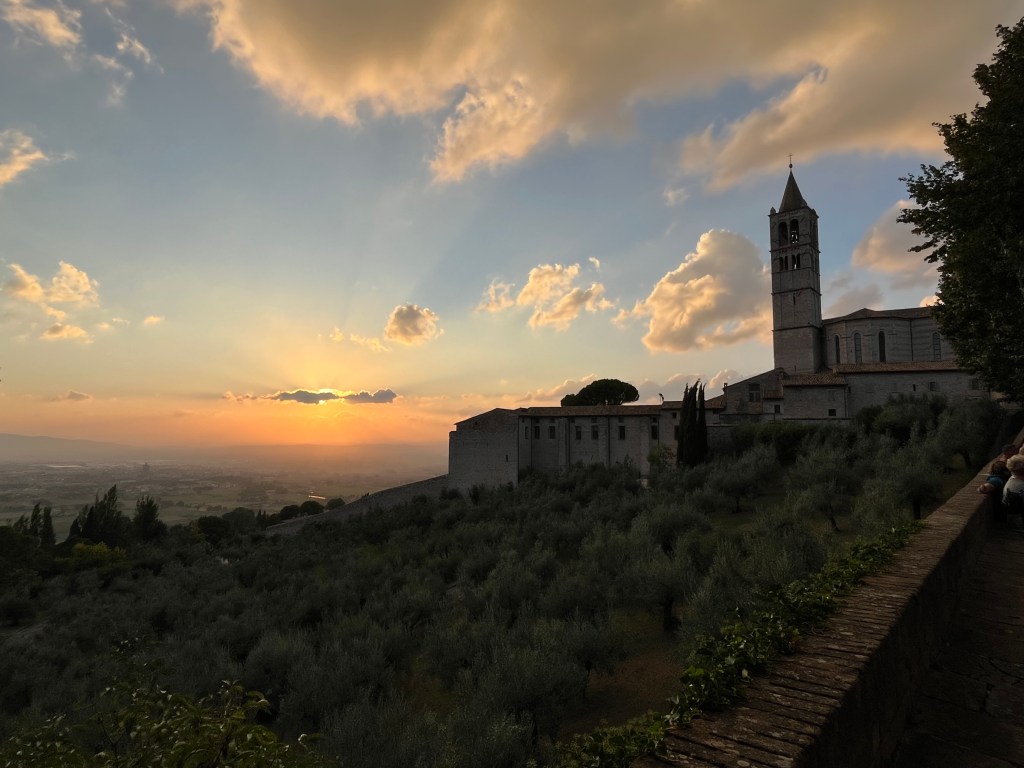
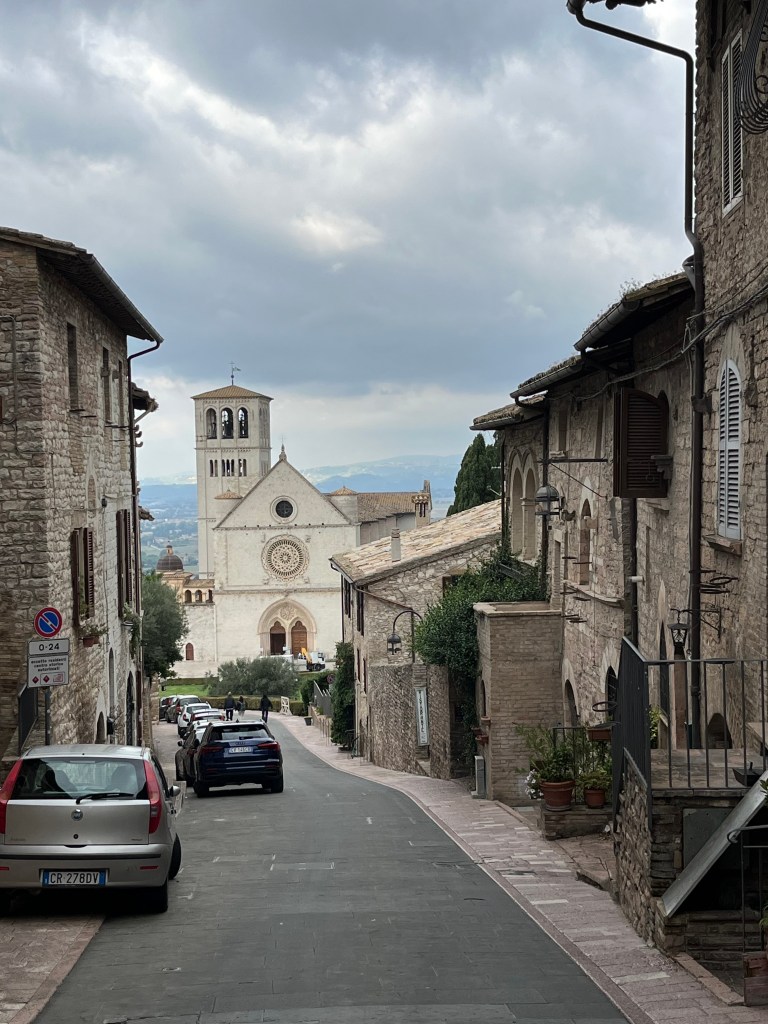
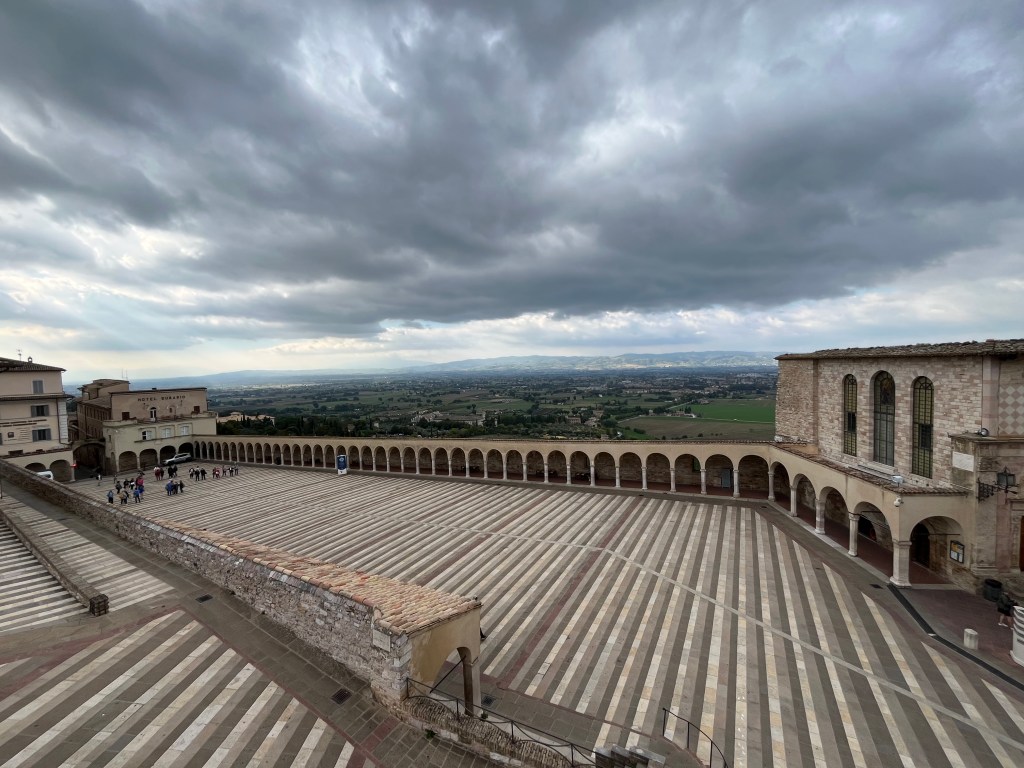
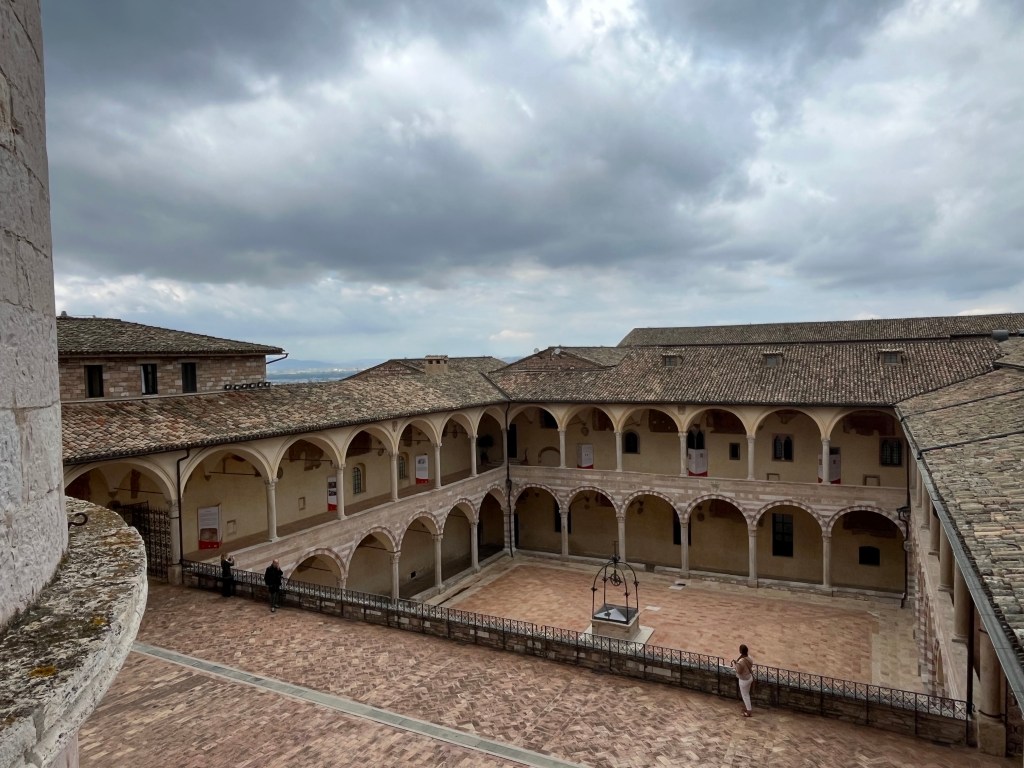
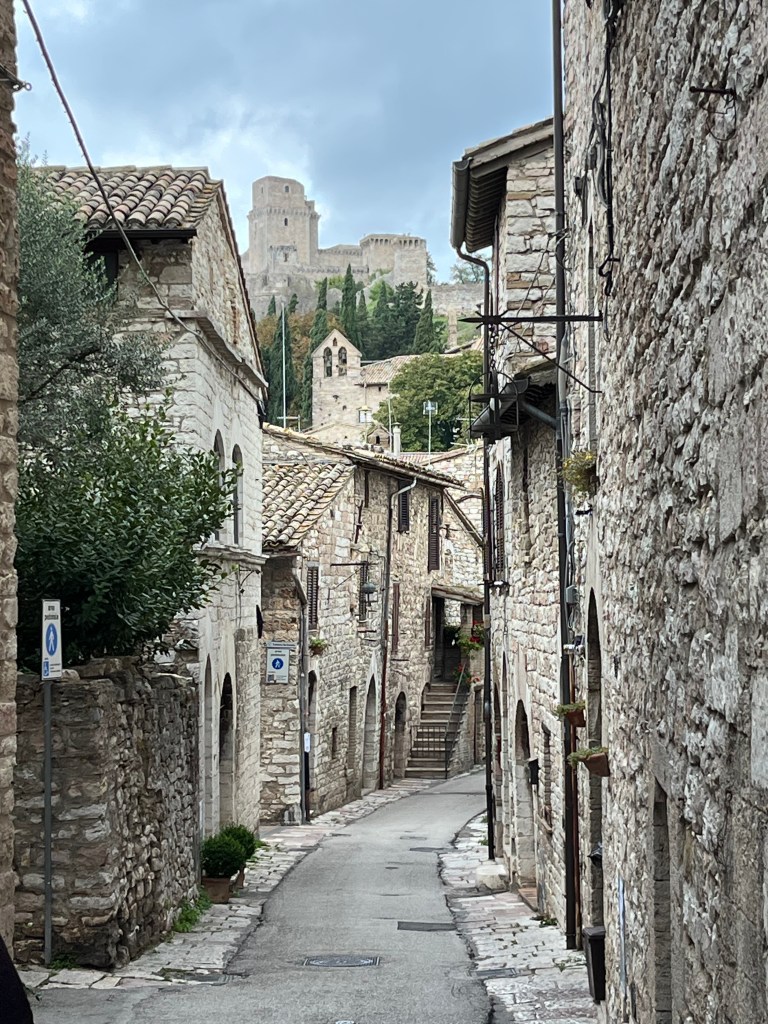
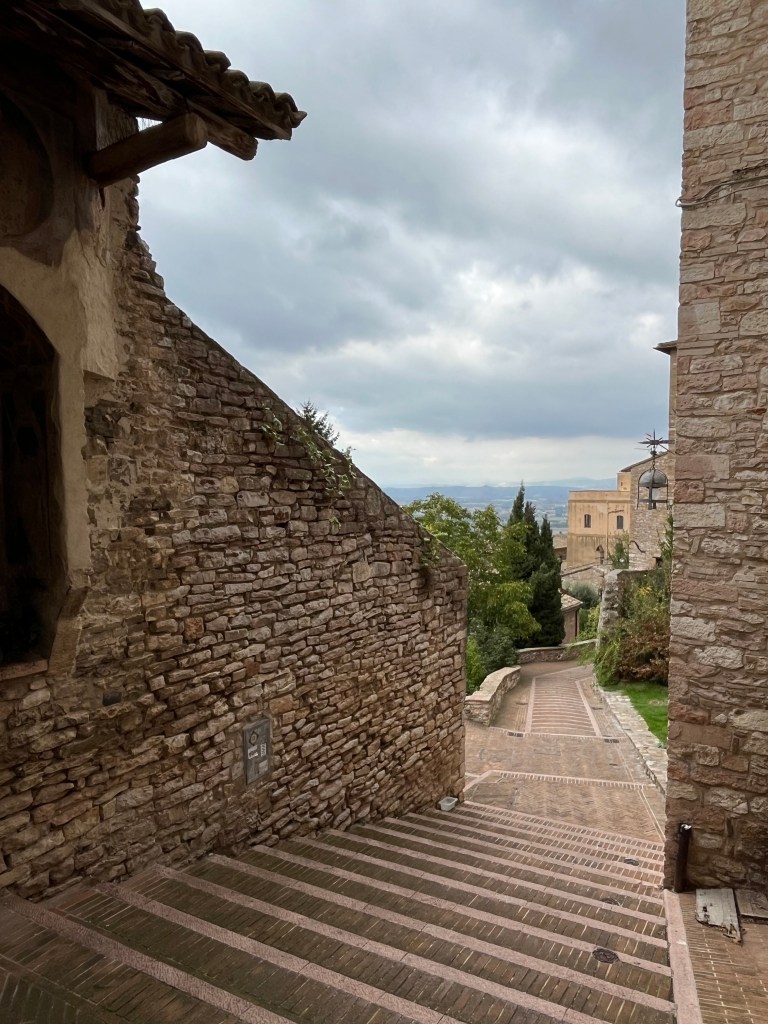
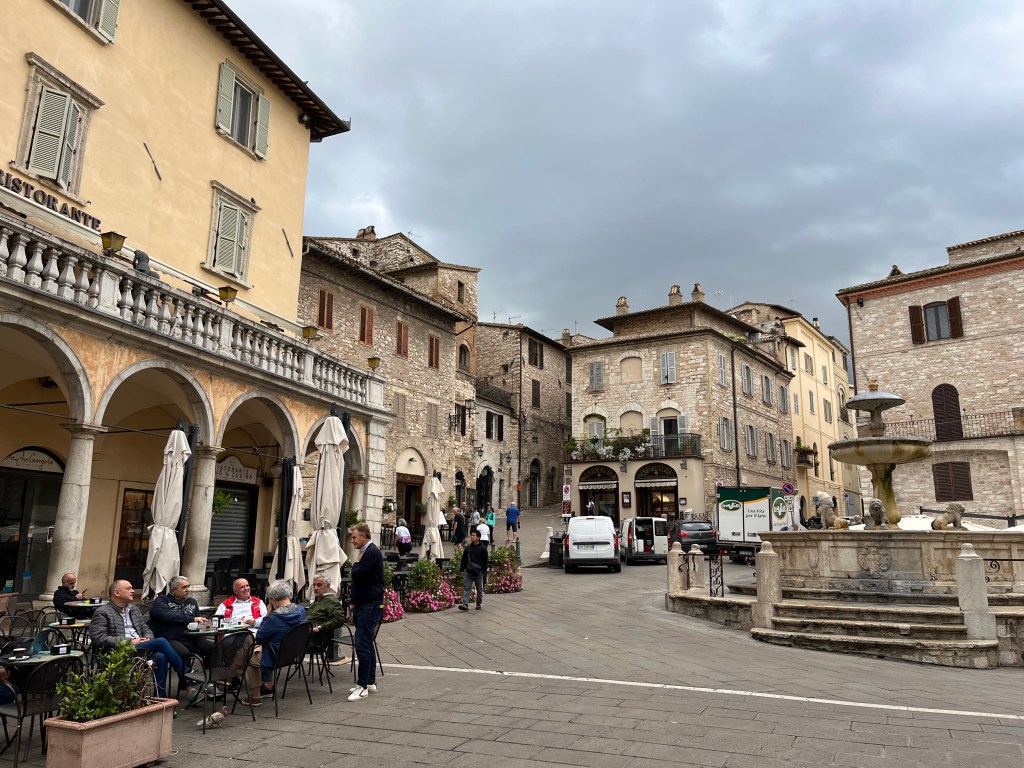
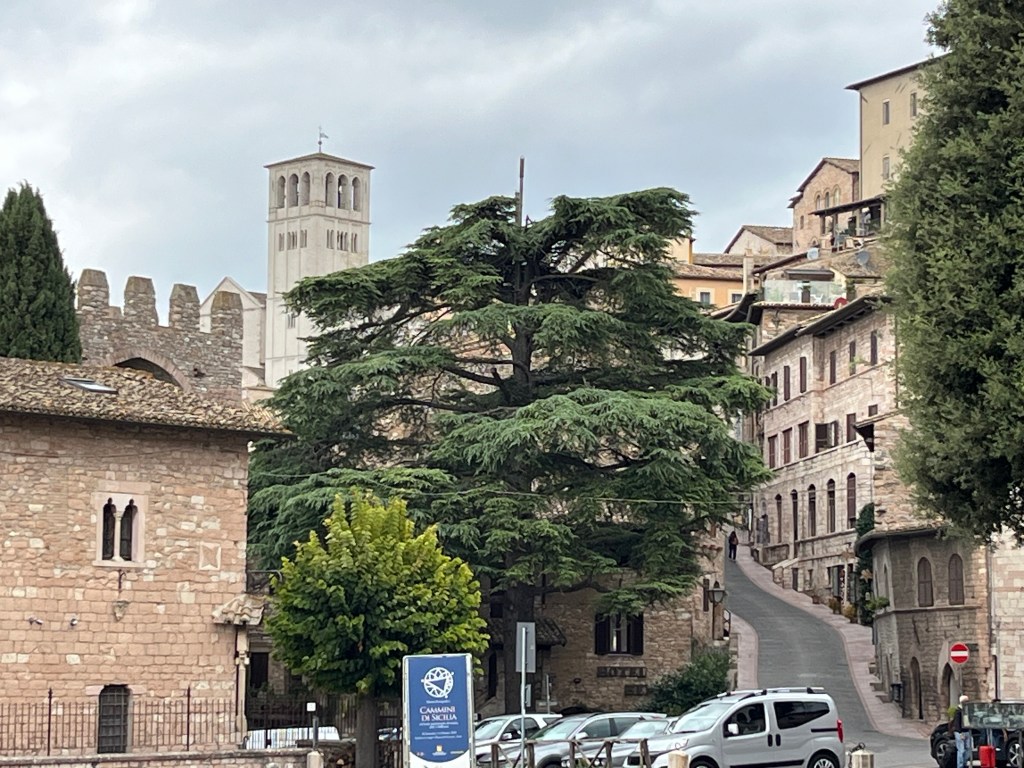
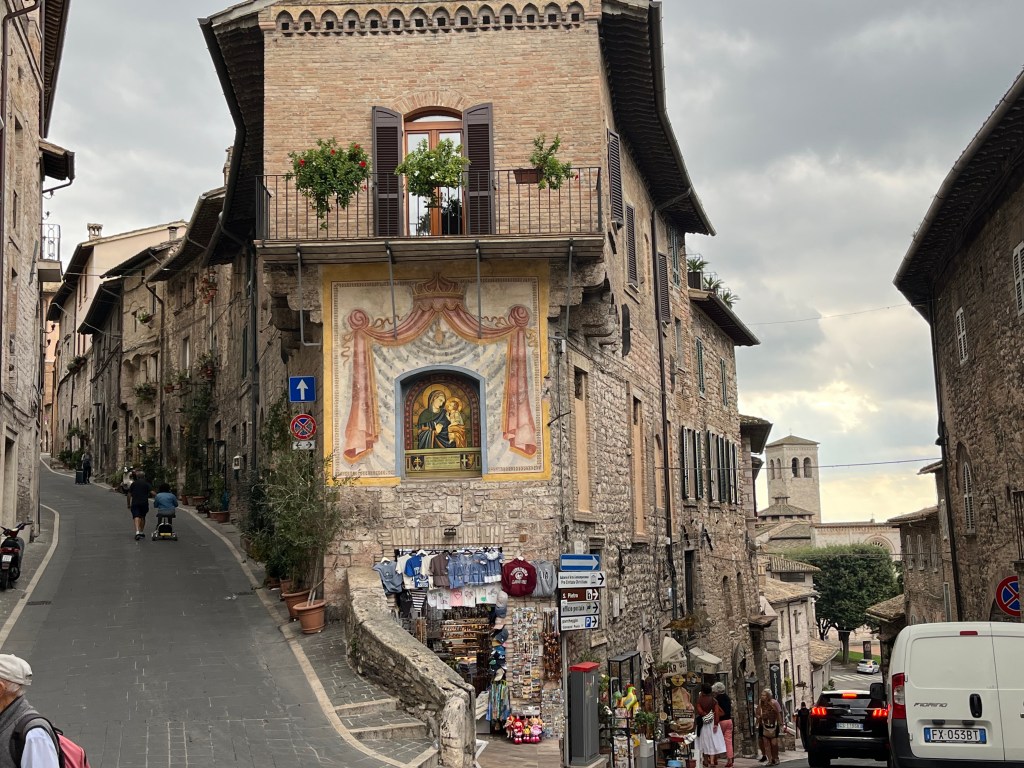
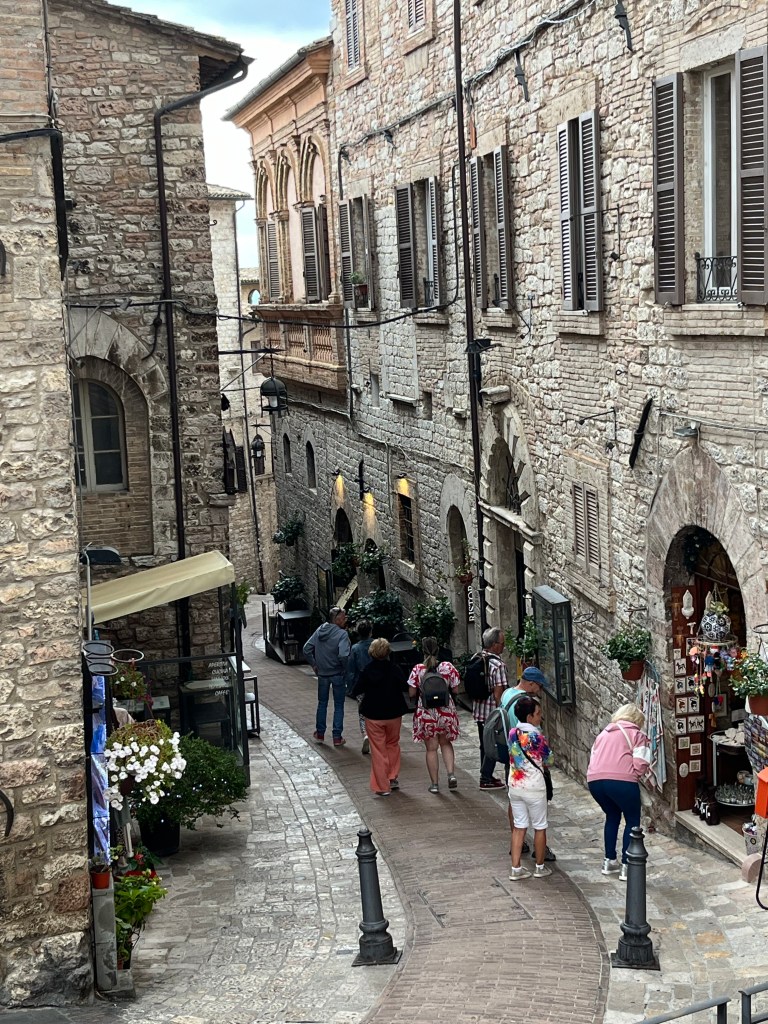
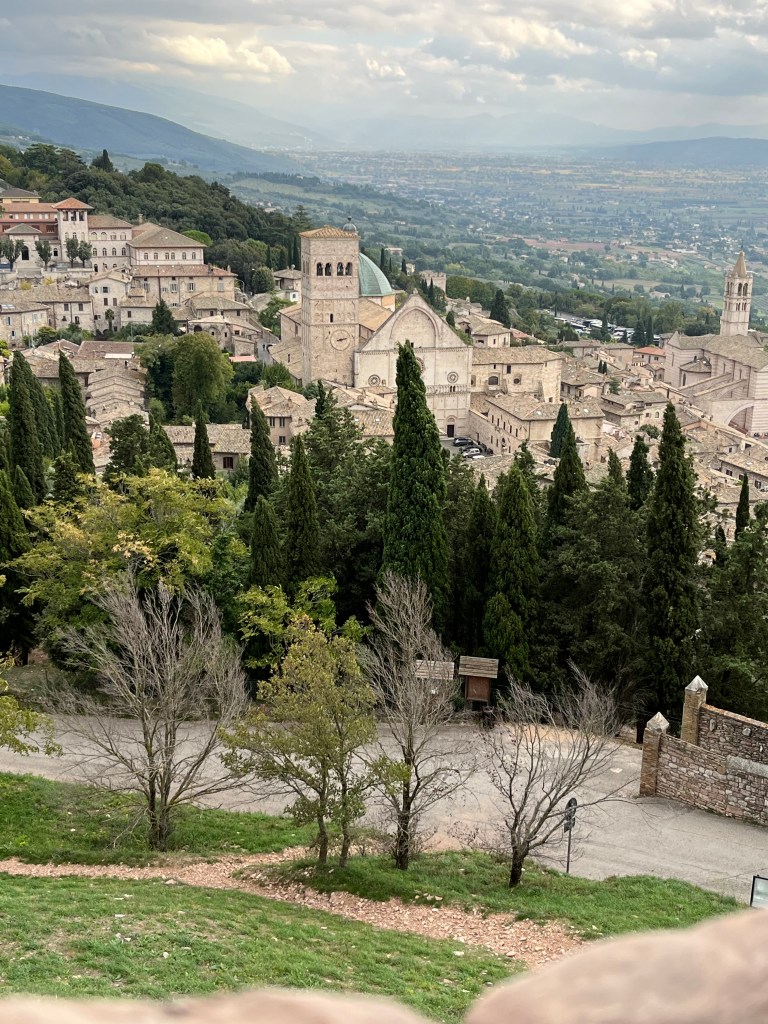
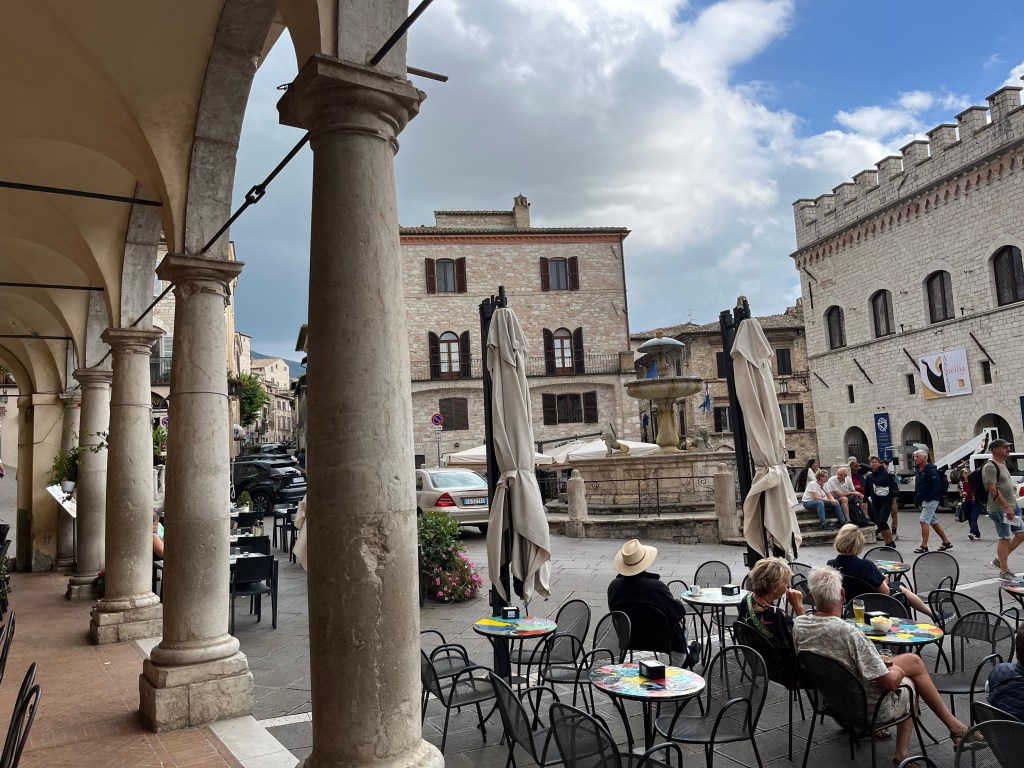
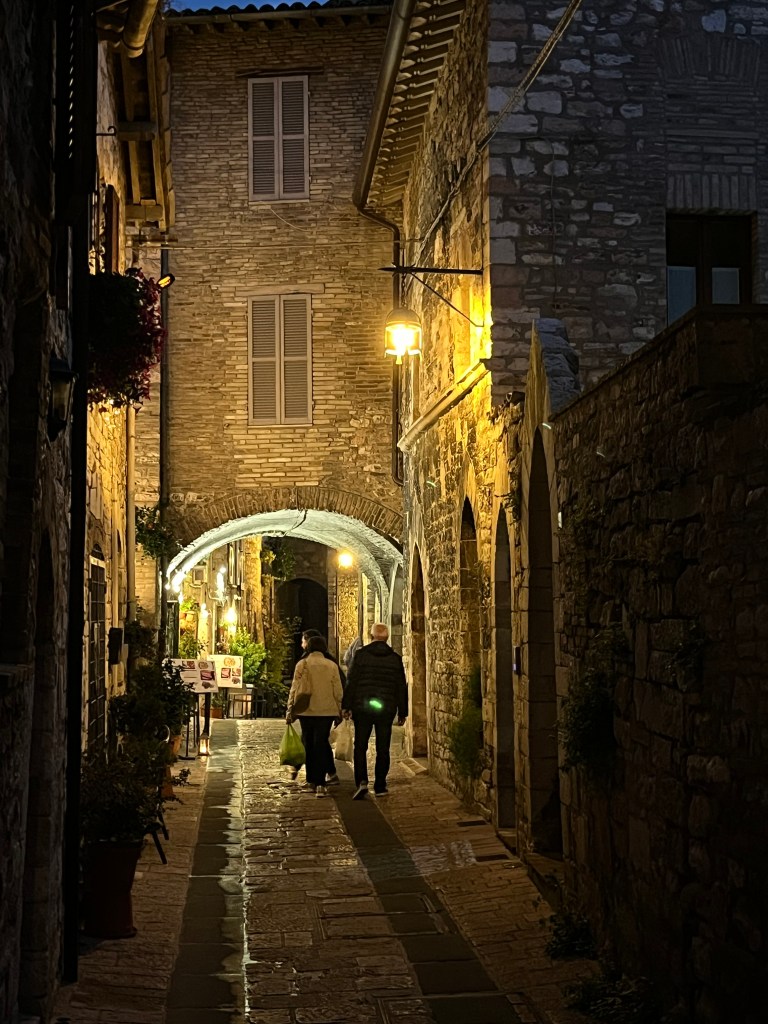
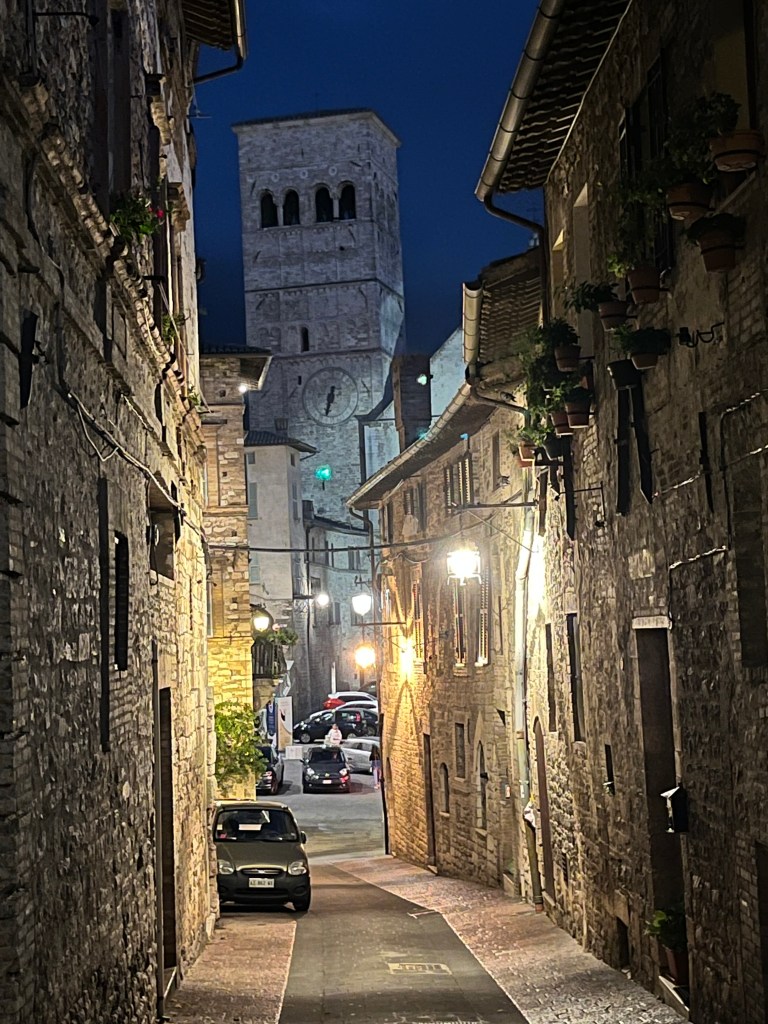
Assisi is the birthplace of Saint Francis, the founder of the Franciscan order. Franciscan brothers/monks, and sisters/nuns, are easily recognized by their iconic hooded, brown, raw cotton robes. Their order stands for a simple, humble Christian belief dedicated to the service of others. With our current Pope naming himself Pope Francis, a first in the Roman Catholic church’s history, the order has received increased recognition. Assisi has been an important and renowned pilgrimage town for centuries. As one might imagine, this small town is packed with churches, abbeys, and other Christian buildings, and on the small cobbled streets you encounter more smiling monks, nuns, and priests than anywhere, all trying to walk in the footsteps, and to catch a vibe of the simple, humble, nature loving and peaceful spirit of Saint Francis.
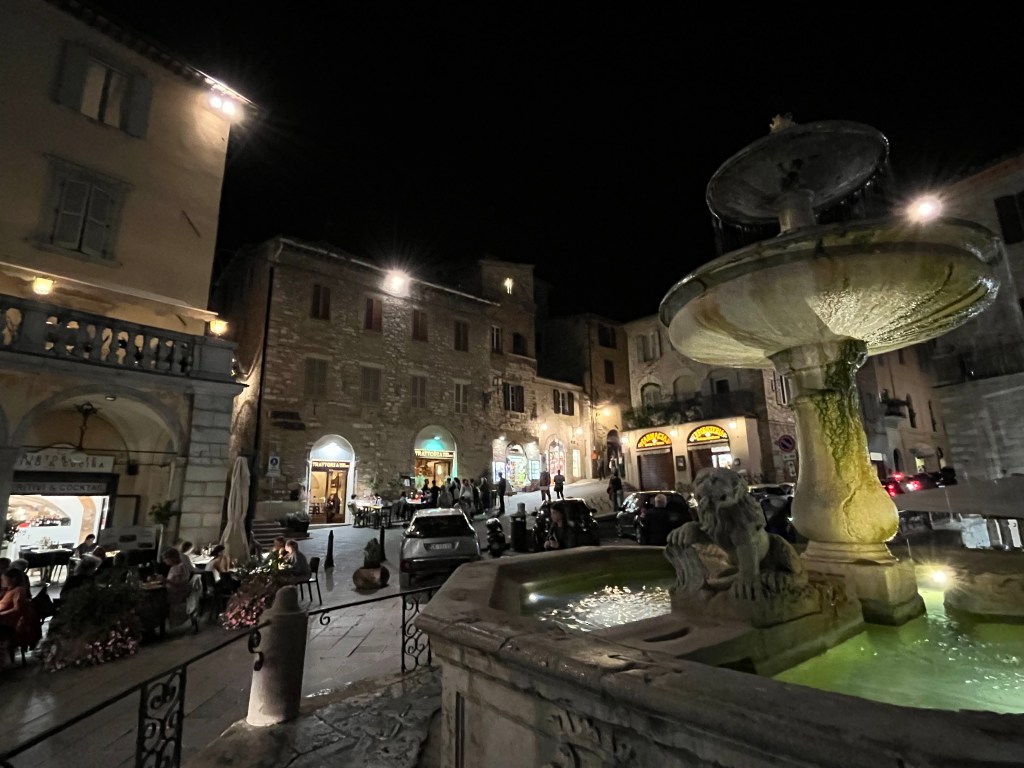
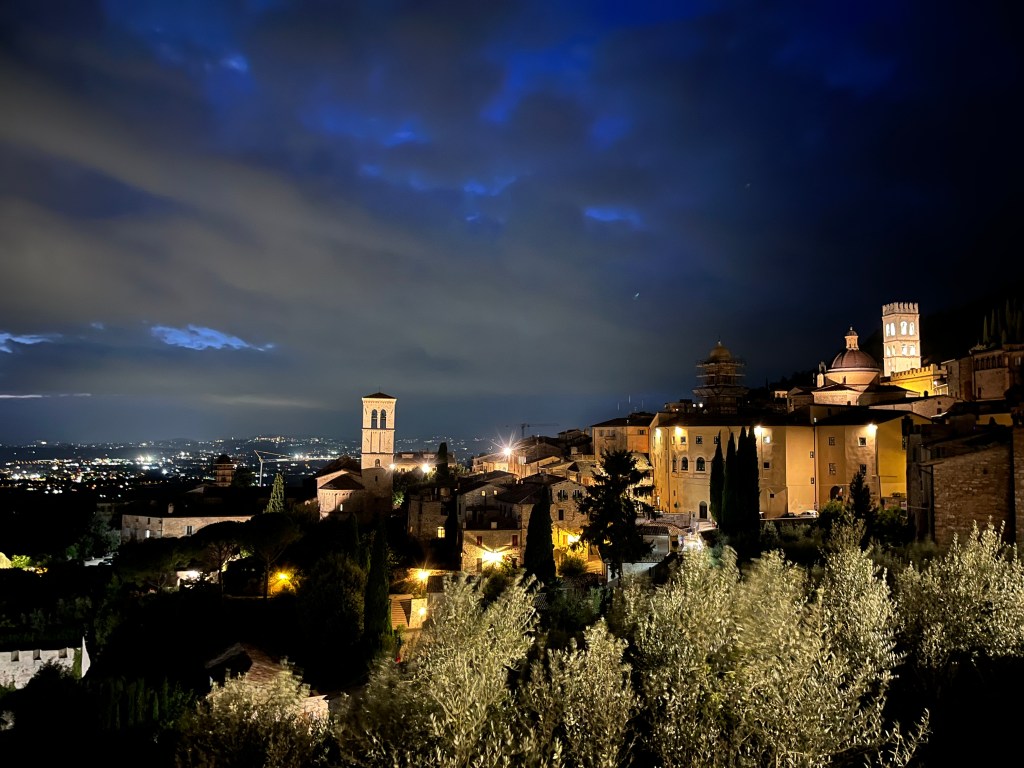
We had 3 nights booked in an Airbnb within the old hillside town, which turned out to be peaceful and quiet. Assisi is mainly a tourist stop town, that gets very busy during mid day after the tour buses have dropped their loads. Once the buses have left in late afternoon, the old, mostly car inaccessible hillside town, with its narrow cobbled streets, gets very quiet. We enjoyed a slow paced, relaxing stay.





Perugia
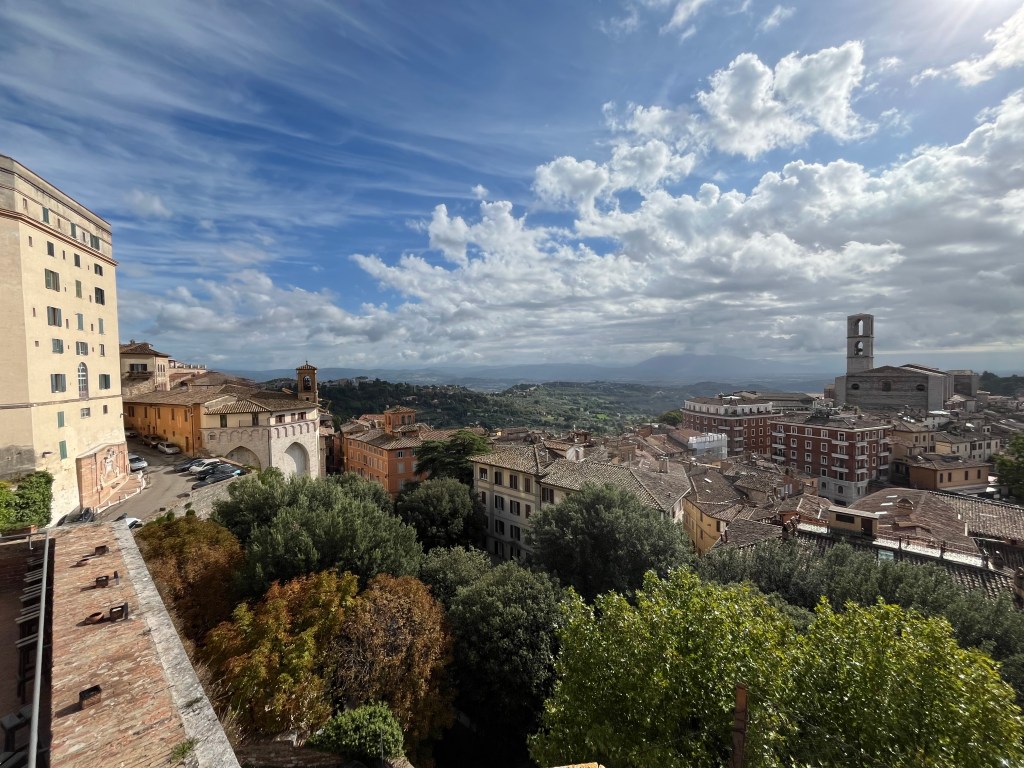
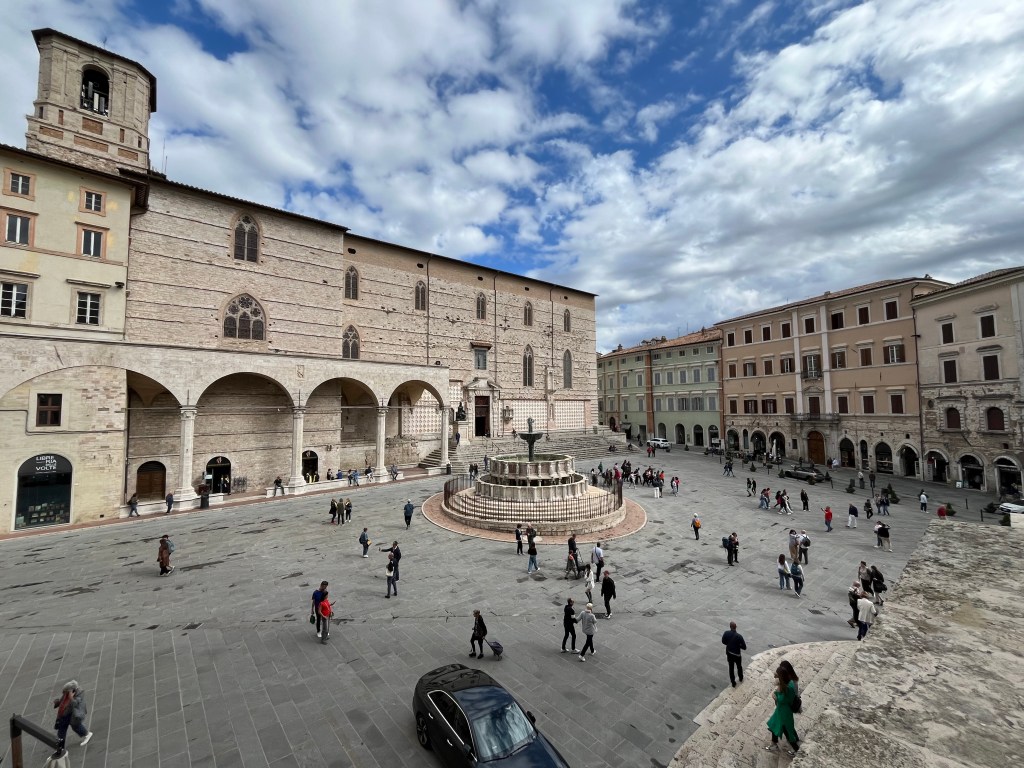
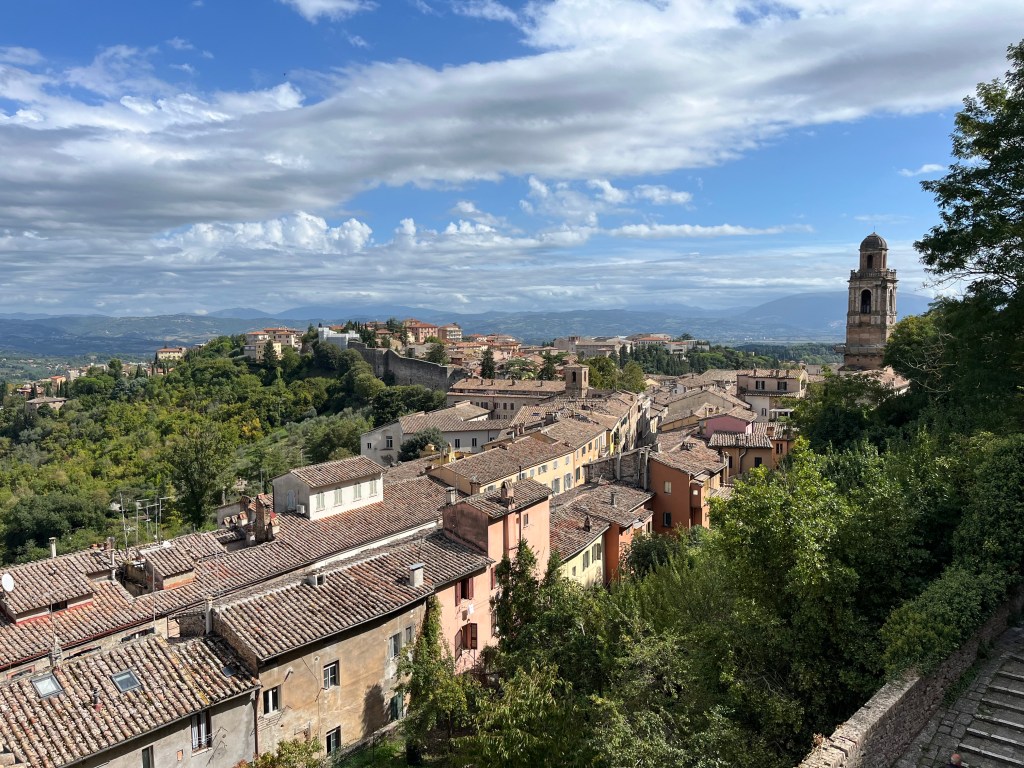
From Assisi we took a 30 minute drive west to Perugia, the old Etruscan city and capital of Umbria. Its spectacular hilltop setting can be seen from Assisi across the fertile valley. The Piazza IV November in the center of town, with the cathedral and city hall, is Perugia’s main attraction.


Amalfi Coast
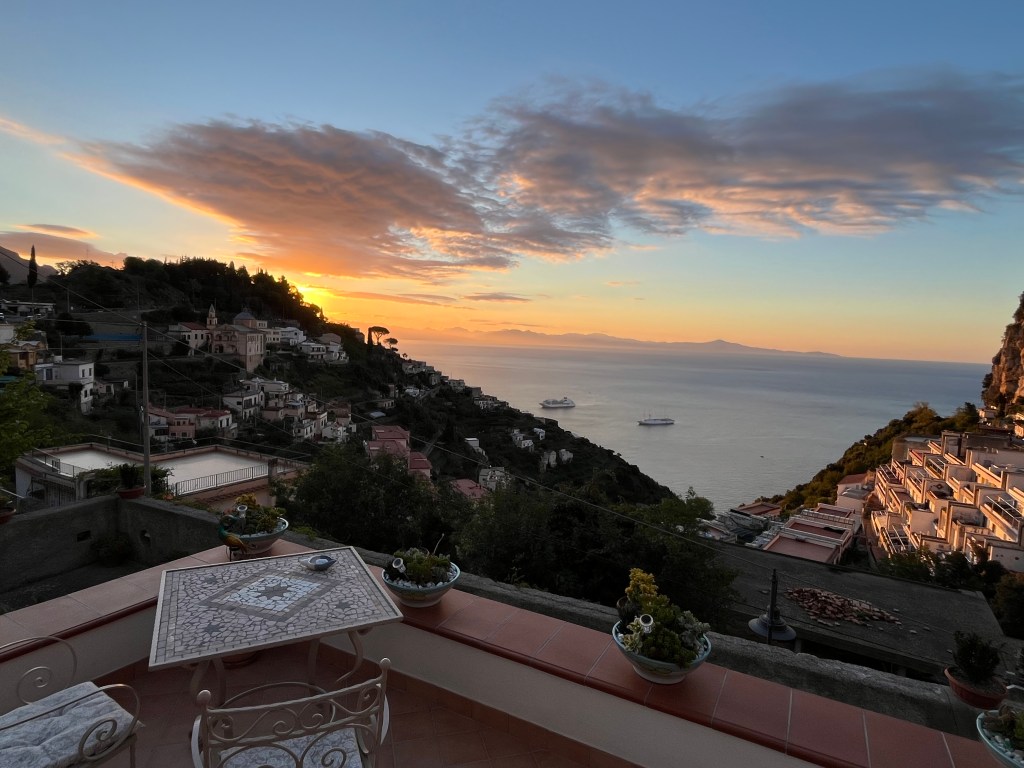
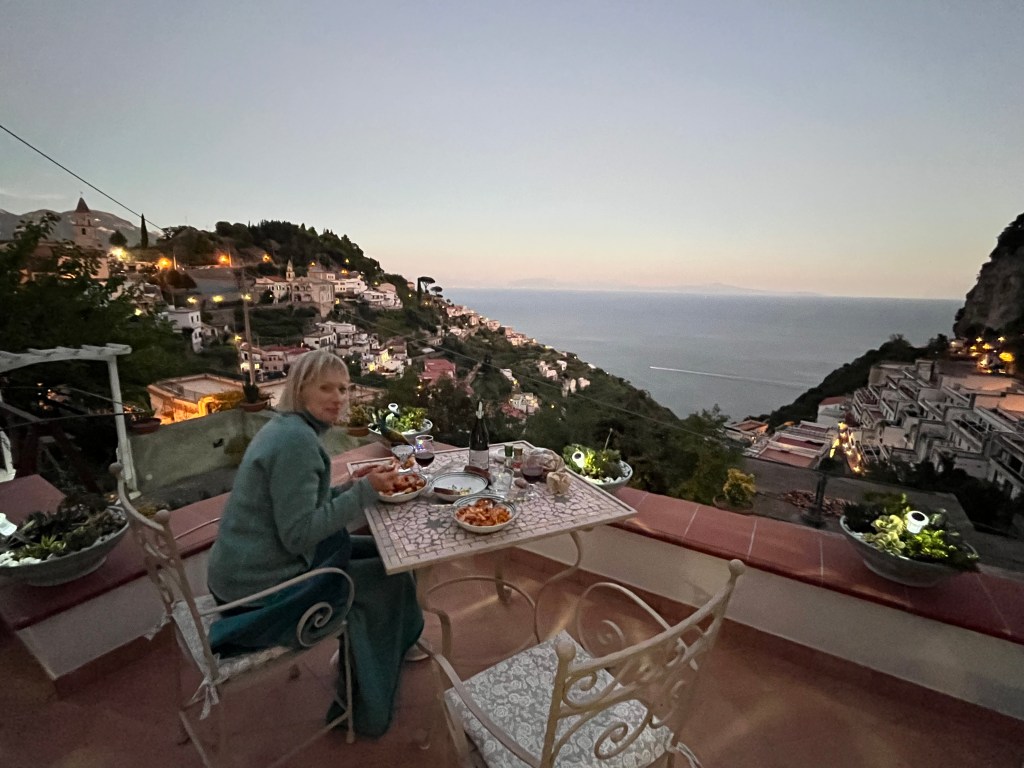
The spectacular and beautiful Amalfi Coast south of Naples, with the island of Capri, the Blue Grotto and towns like Amalfi, Positano and Sorrento has been renowned for Italian Dolce Vita the world over. Yes, this image drew us as well, and our Airbnb in the quiet hillside village of Pogerola above Amalfi delivered a scenic terrace just as advertised. Here, with the rising sun over the Mediterranean:
Walking down into Amalfi, we quickly realized that we weren’t the only visitors, and that all these tourists, unloaded by buses and cruise ships, stuffed into this small and narrow coastal town makes for cramped sightseeing….. a little too cramped for us. This made us scale back our Amalfi Coast visiting plans a little, and we spent more time on our quiet and spectacular Airbnb terrance.
Driving your car on the Amalfi Coast is an experience! Every Italian, out in his banged and scrached up little Fiat, apparently thinks that his name is Mario Andretti, when flying around the numerous blind corners on roads that are mostly too narrow for two way traffic. I gladly left our car parked at the Airbnb for our 3 night stay and we walked and took the bus instead. Besides, finding parking spots on the cramped coast is almost impossible! The public buses drive very frequently and basically everywhere on the coast, and are loaded with locals getting to work, school, running errands etc. The drivers of these buses are simply amazing. They weave their big vehicles quickly and efficiently with millimeter precision. Having your window open while driving there is a must, as the buses and trucks honk on all the frequent blind corners and expect the oncoming traffic to pull over and find the nearest turn out. If you fail to hear their horn and don’t honk back timely, you’ll get the thrill of finding yourself in front of a rapidly approaching oncoming bus or truck that takes up the whole road with no place to pass! Yes, occasionally they run into another vehicle they can’t pass, and then the bus passengers get the pleasure of listening in on some heated, animated Italian “conversations” about who’s at fault and who has to back up.
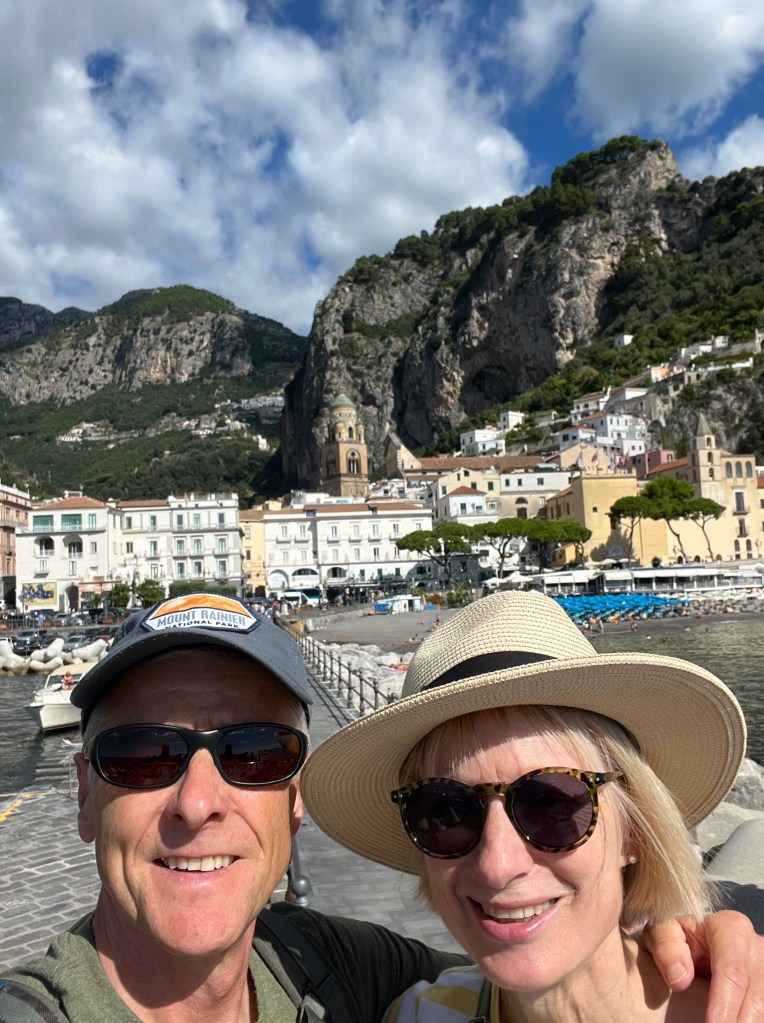

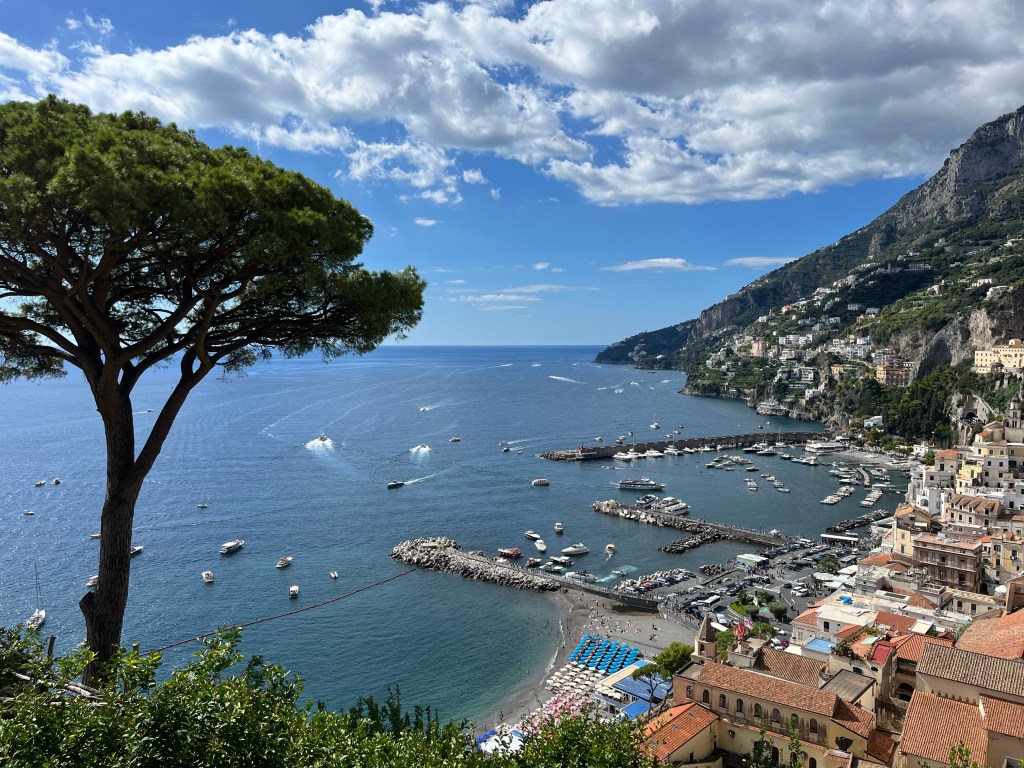


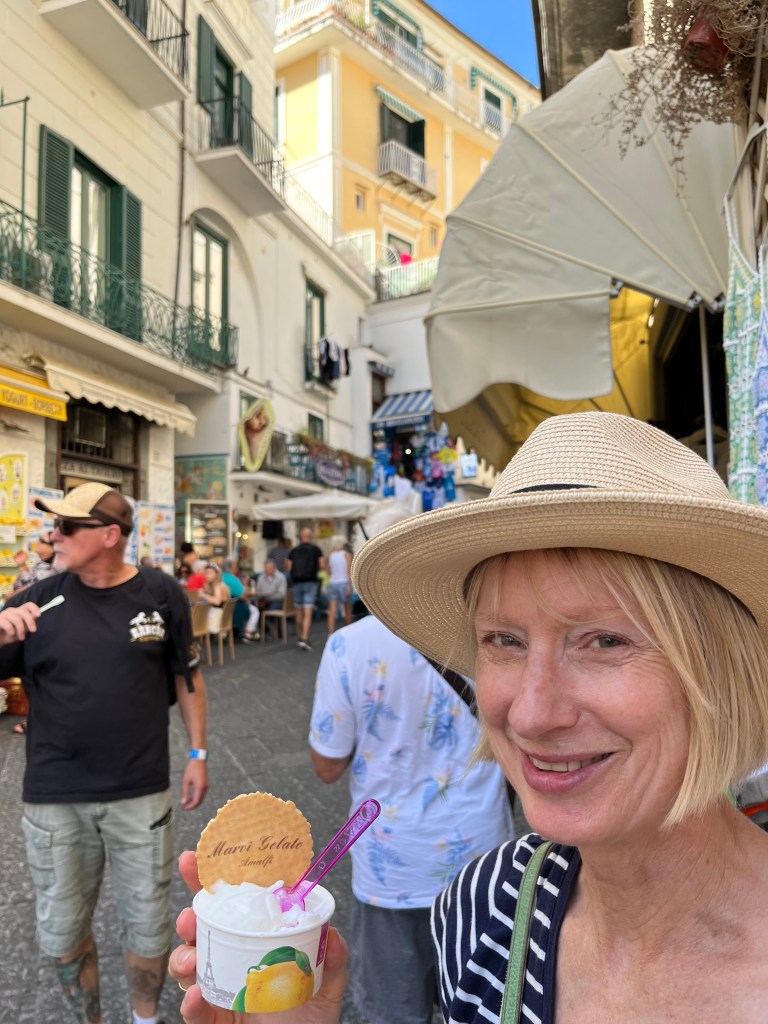
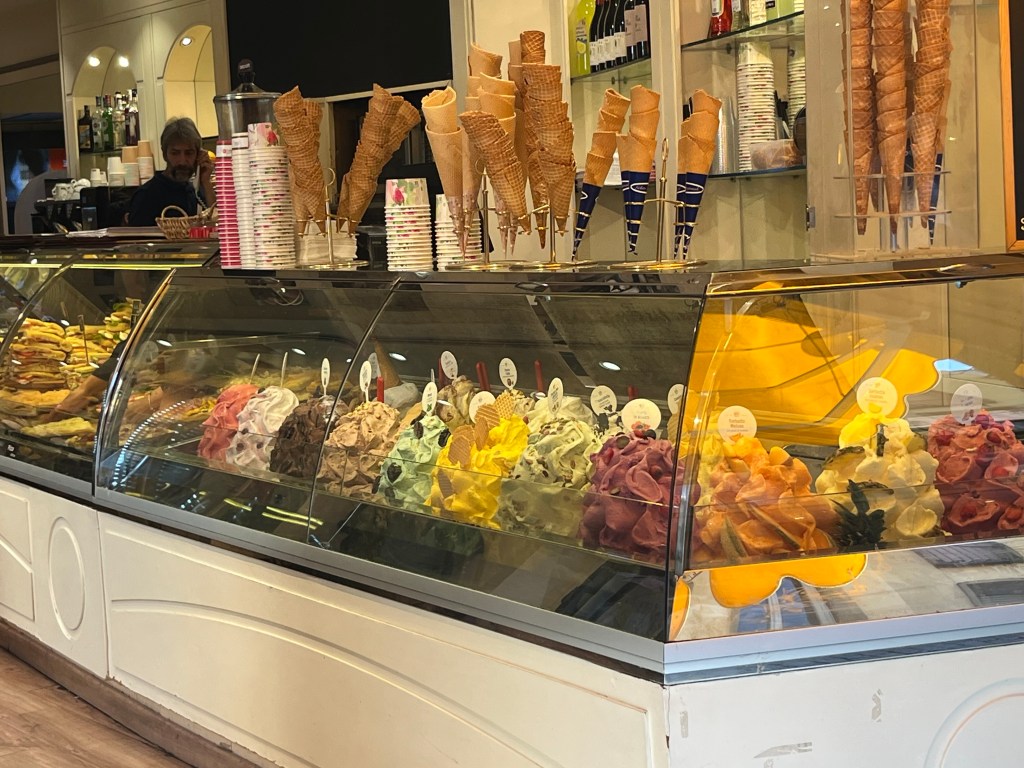
The following pictures are from a short ferry ride visit to Positano. The best part was the swimming and the Sorrento lemon gelato!!
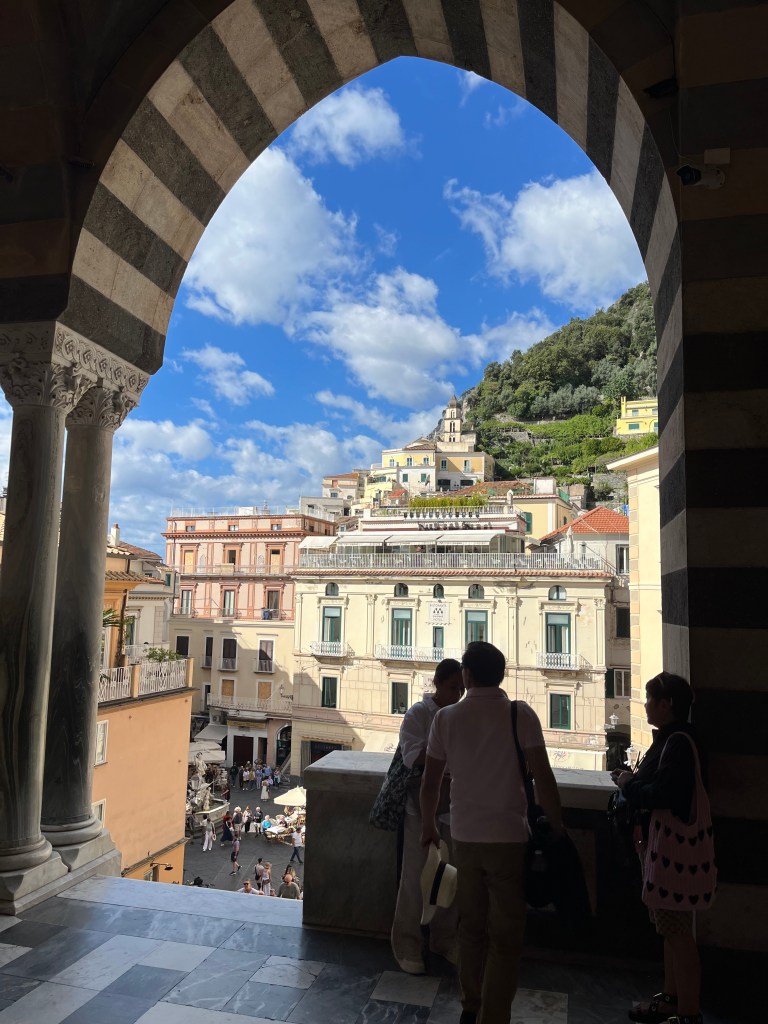
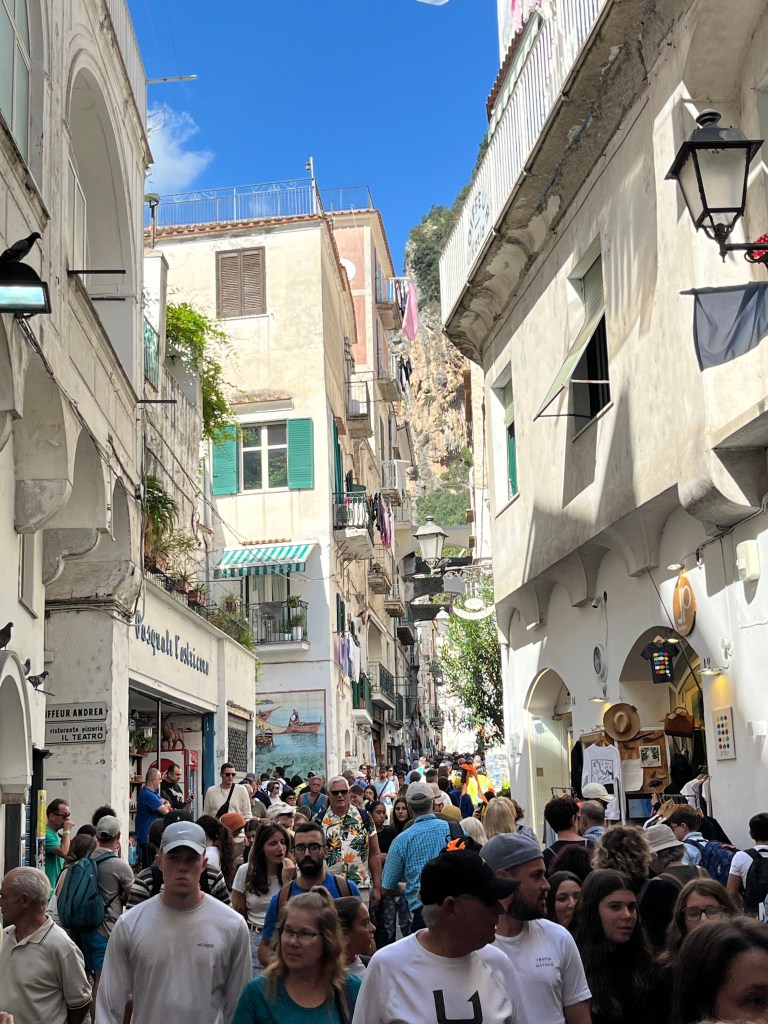

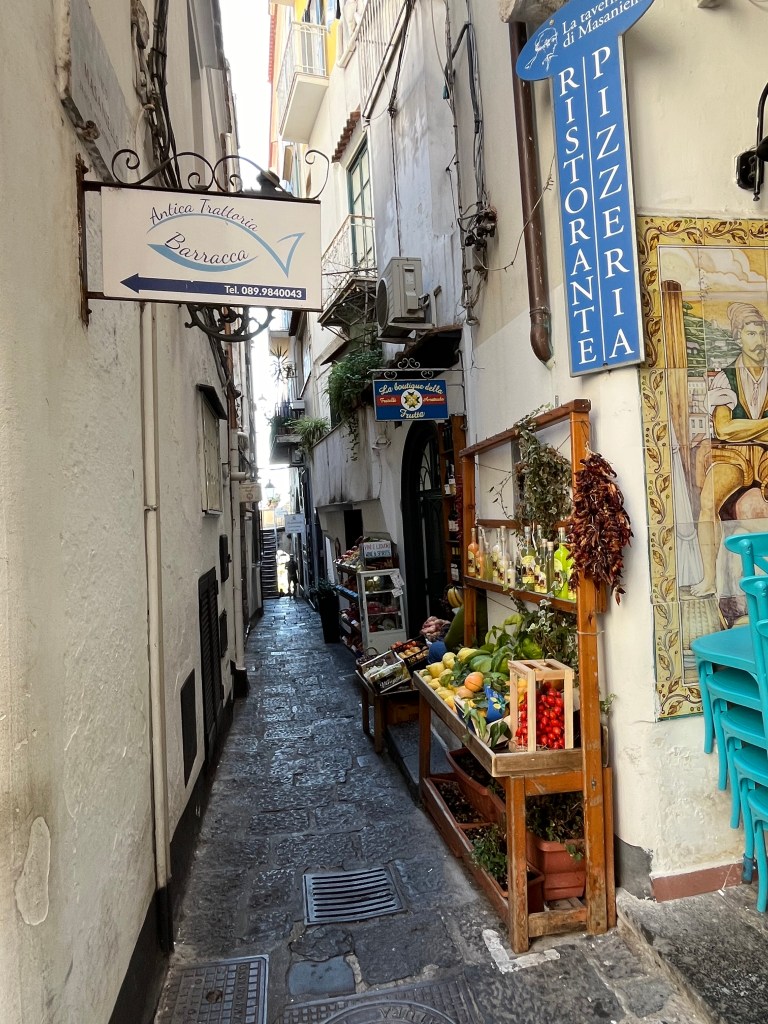

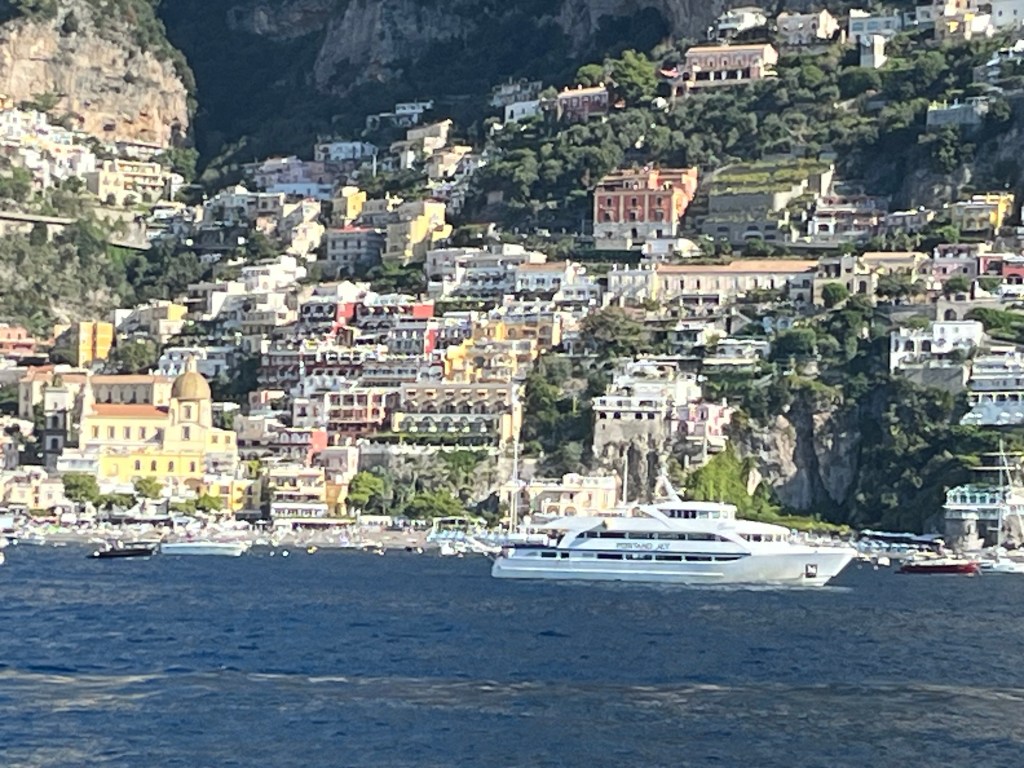

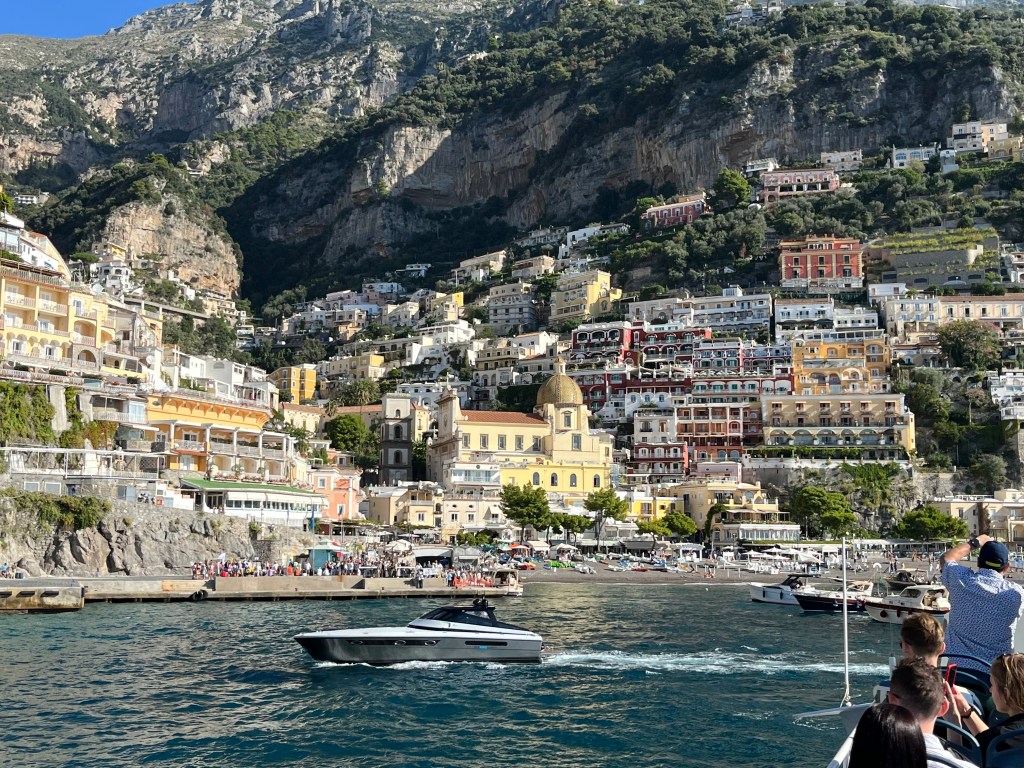
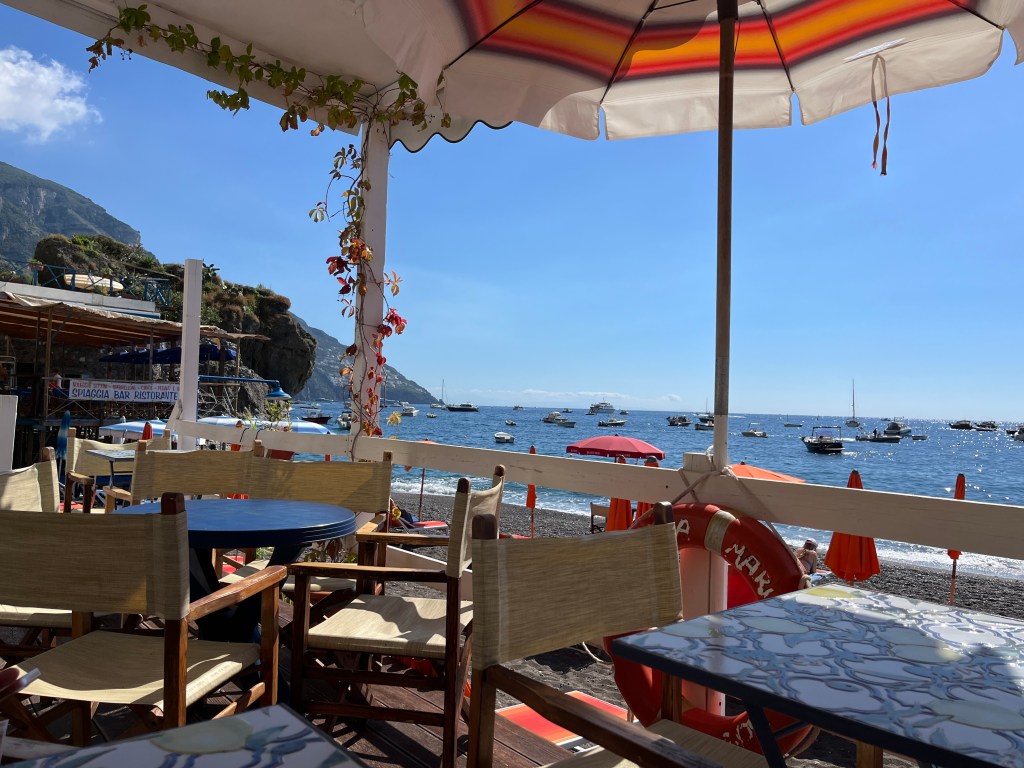
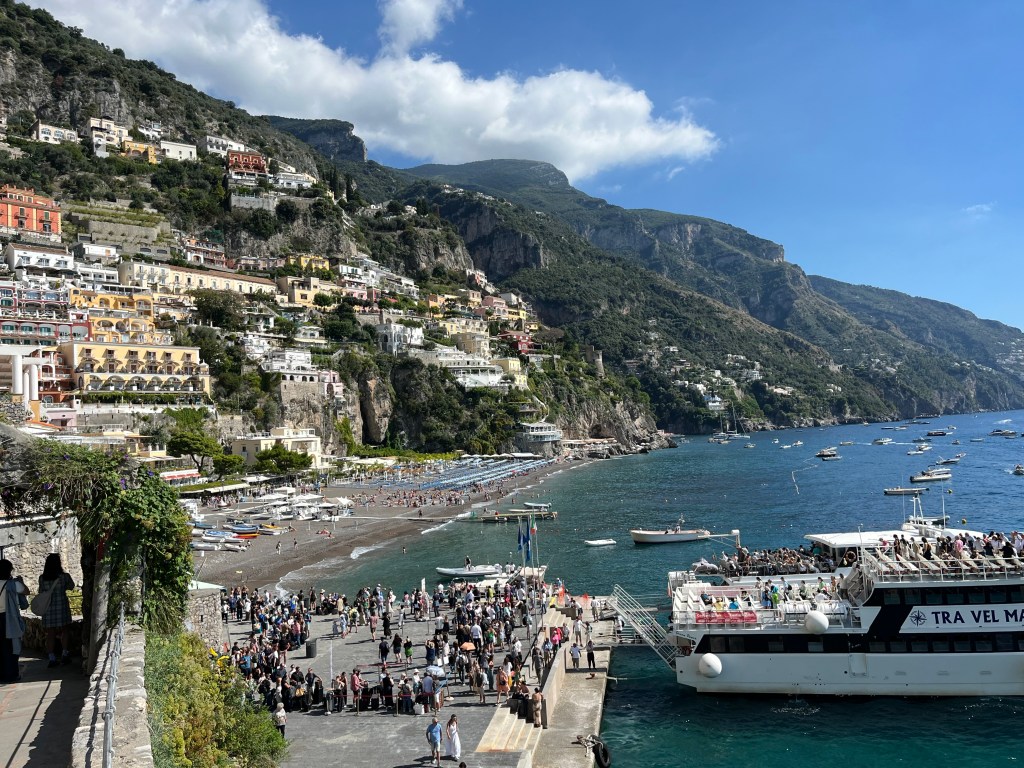
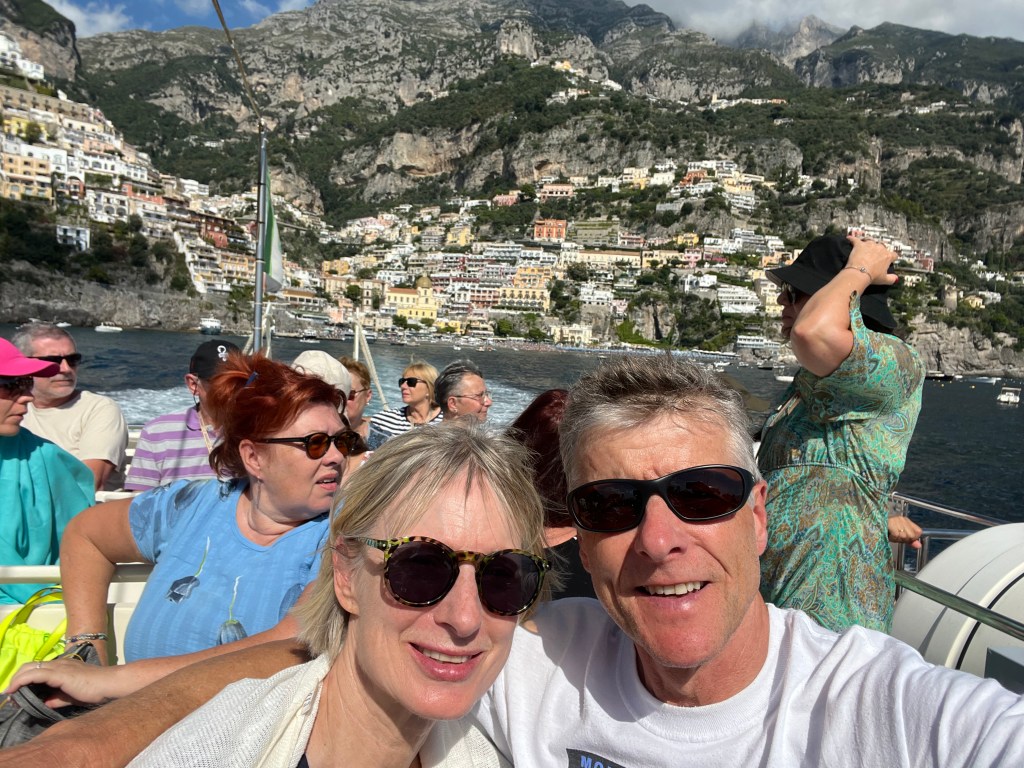
Indicated by the conditions of a lot of the buildings, the Amalfi Coast appears to have seen its best time some decades past, yet despite this fading glitz and still large tourist crowds, we were glad to have seen and experienced it, and that without a single scratch on our beloved Peugeot!
Pompeii
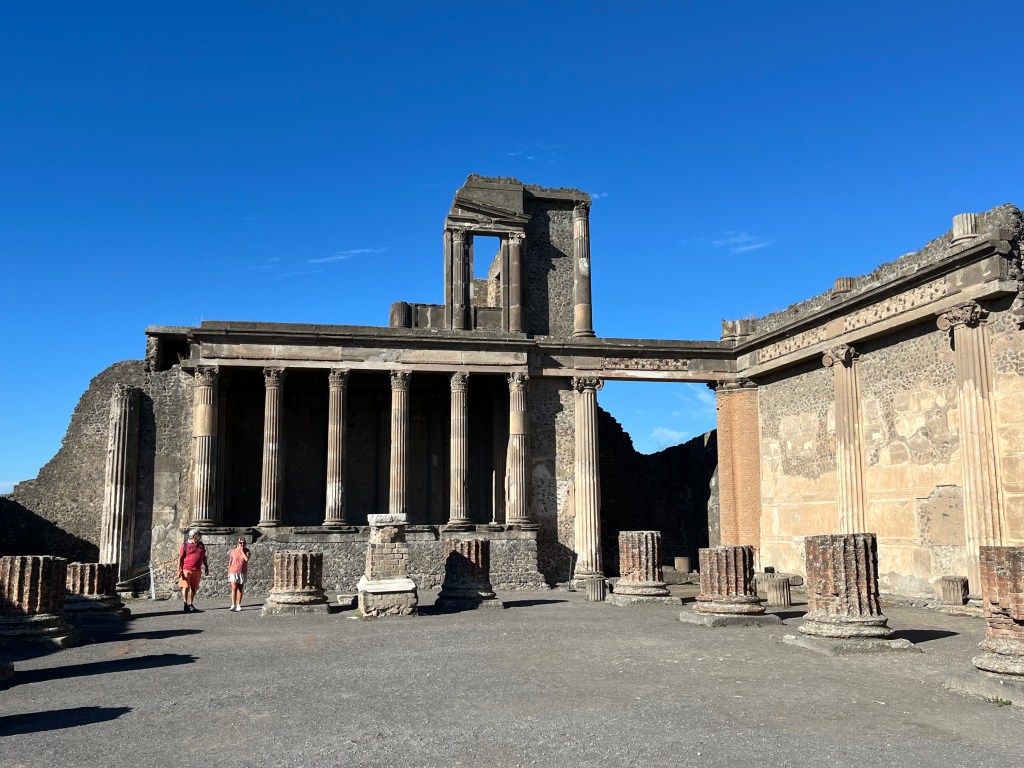
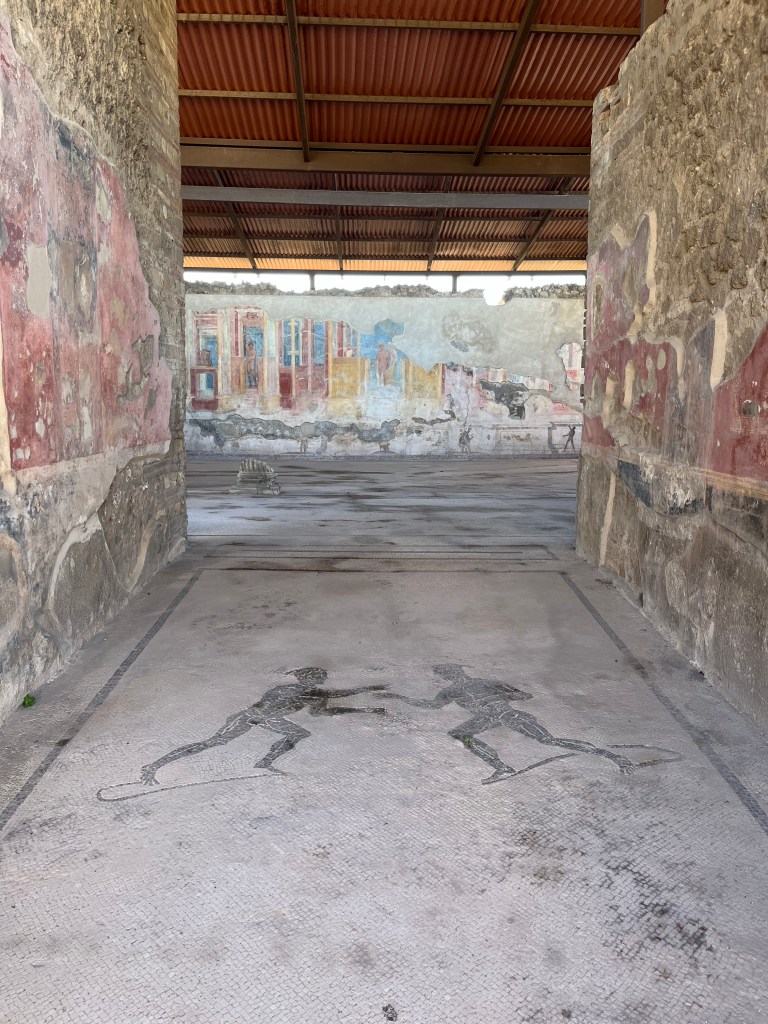
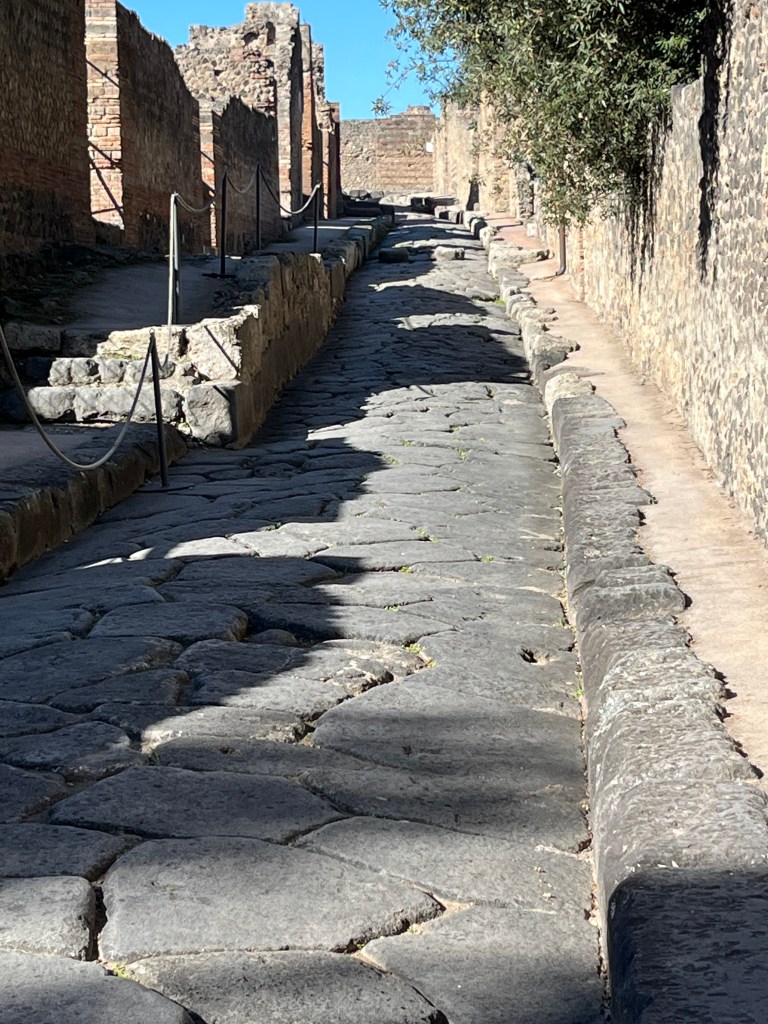
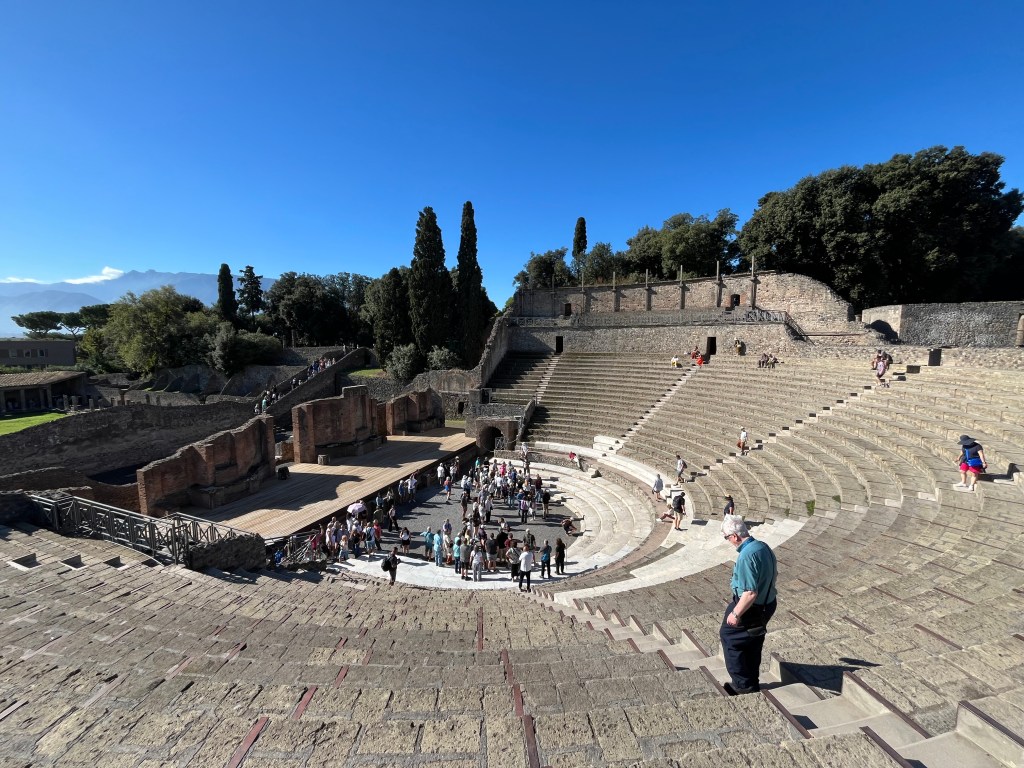
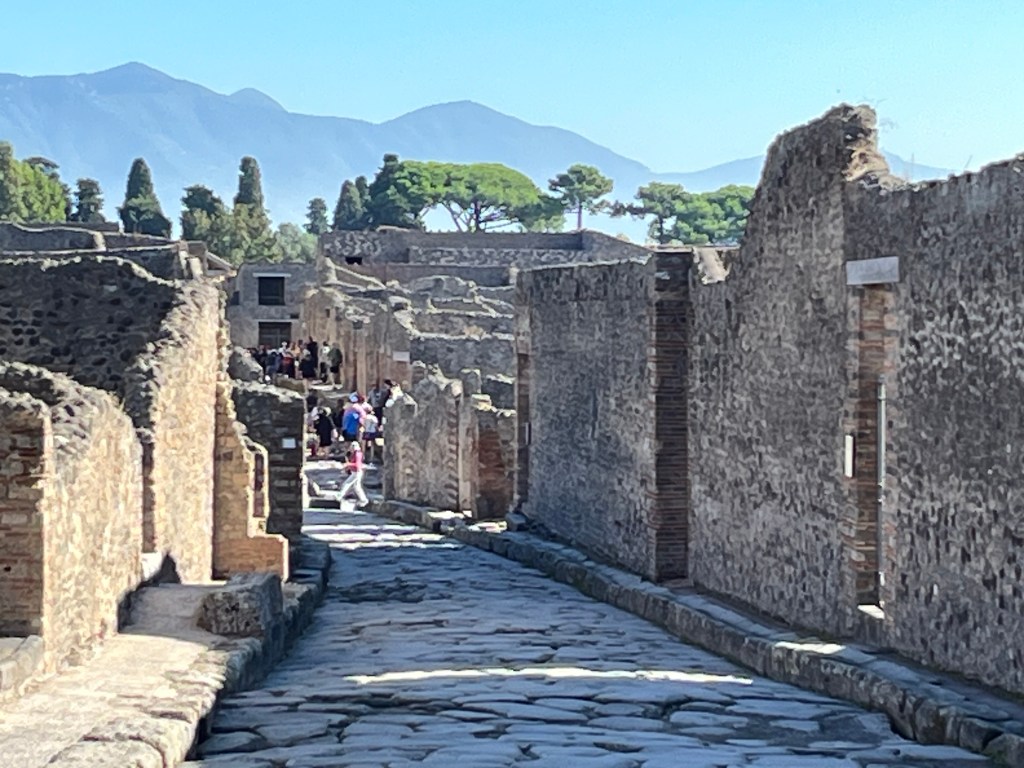
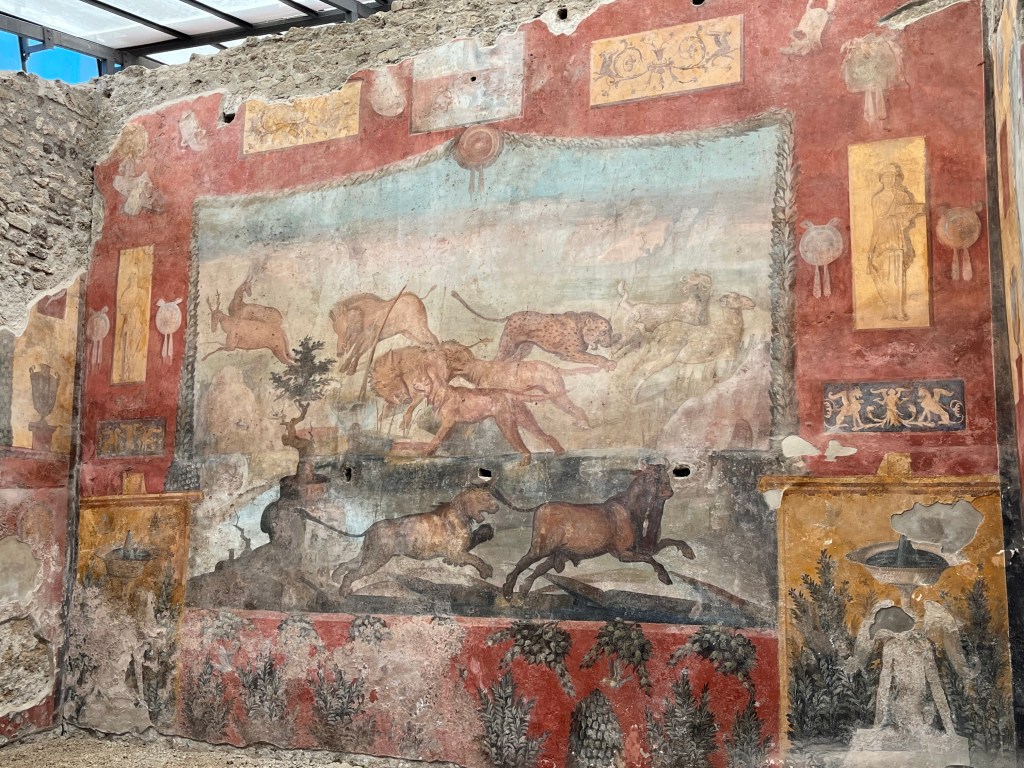
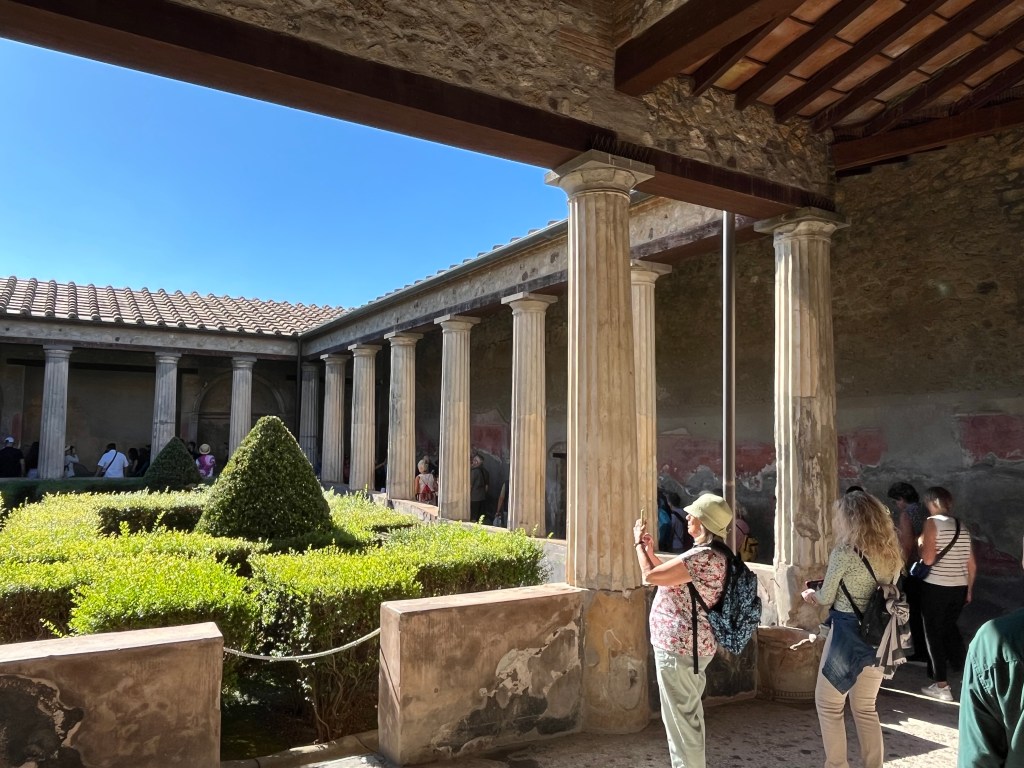
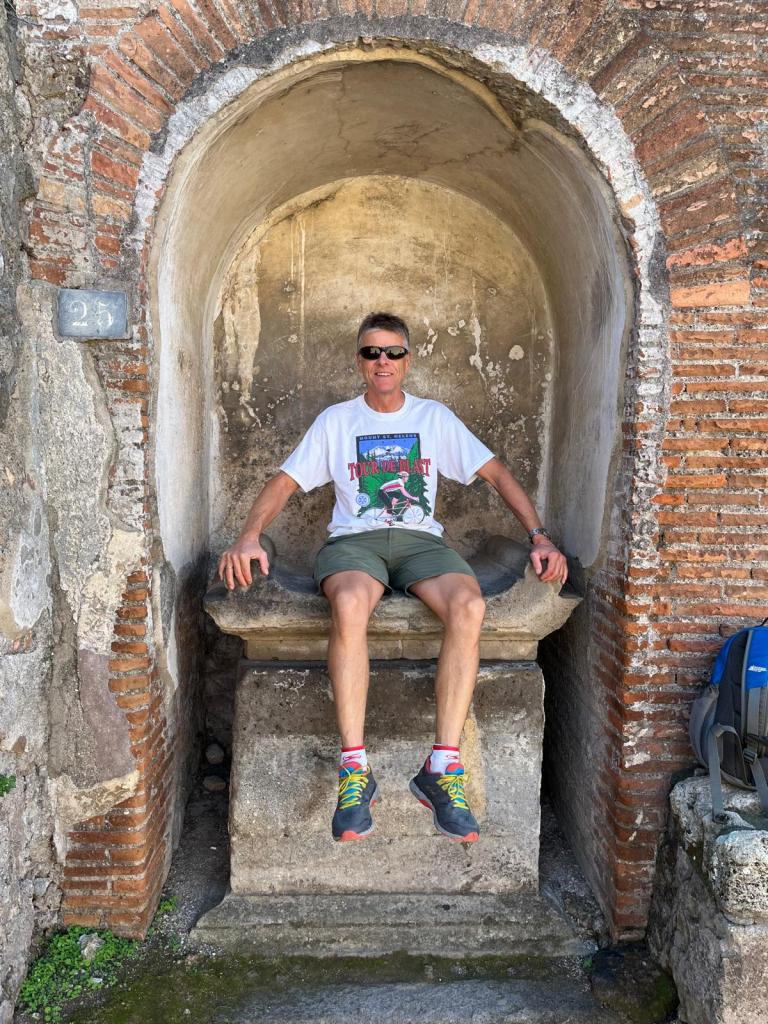
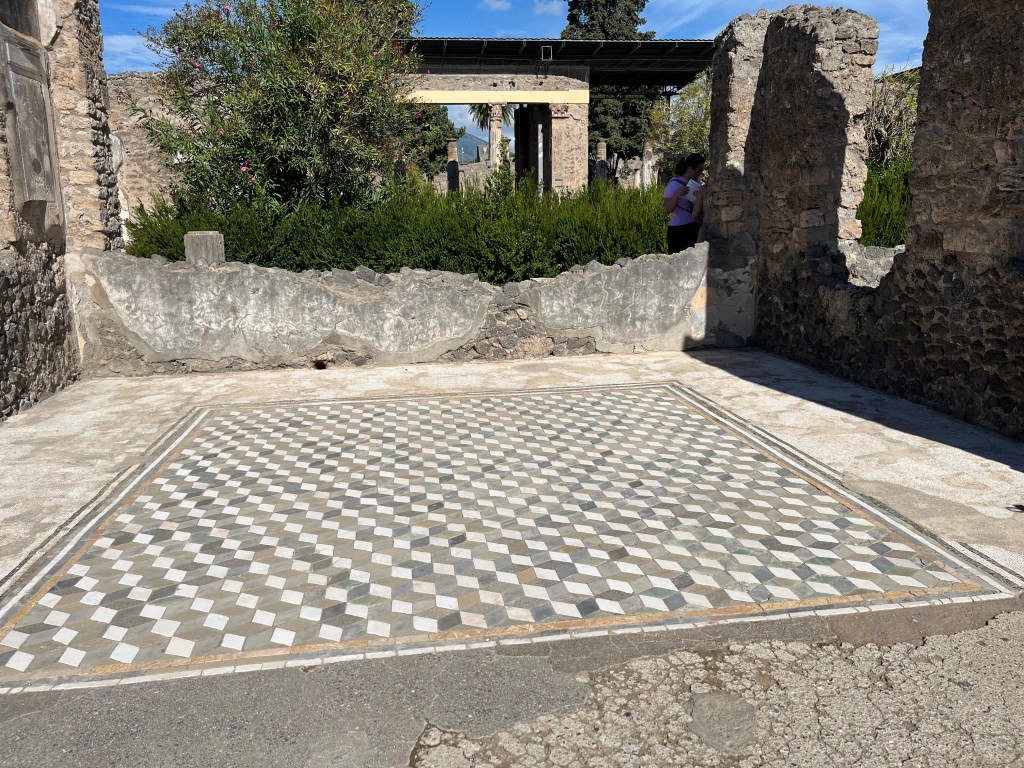
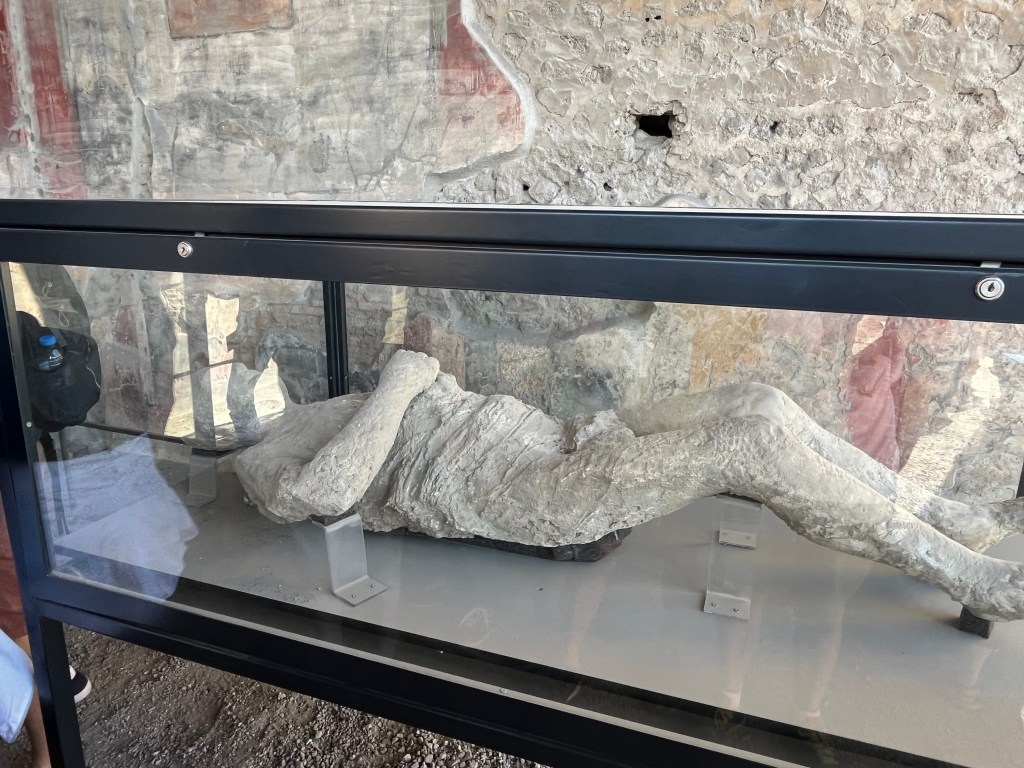
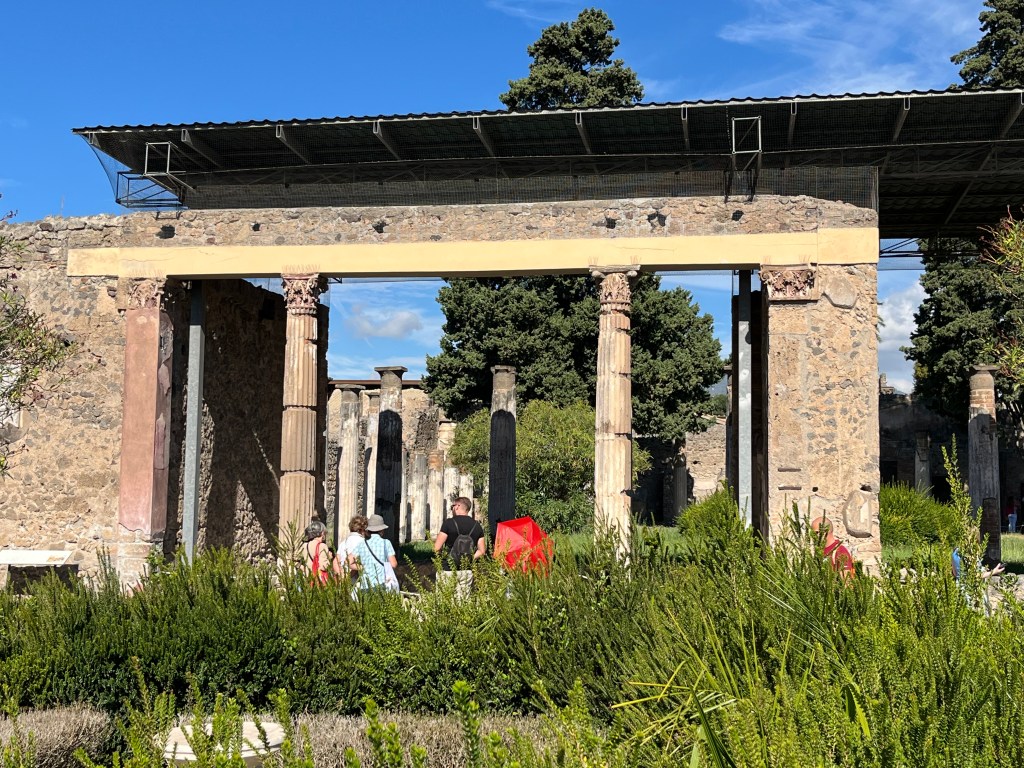
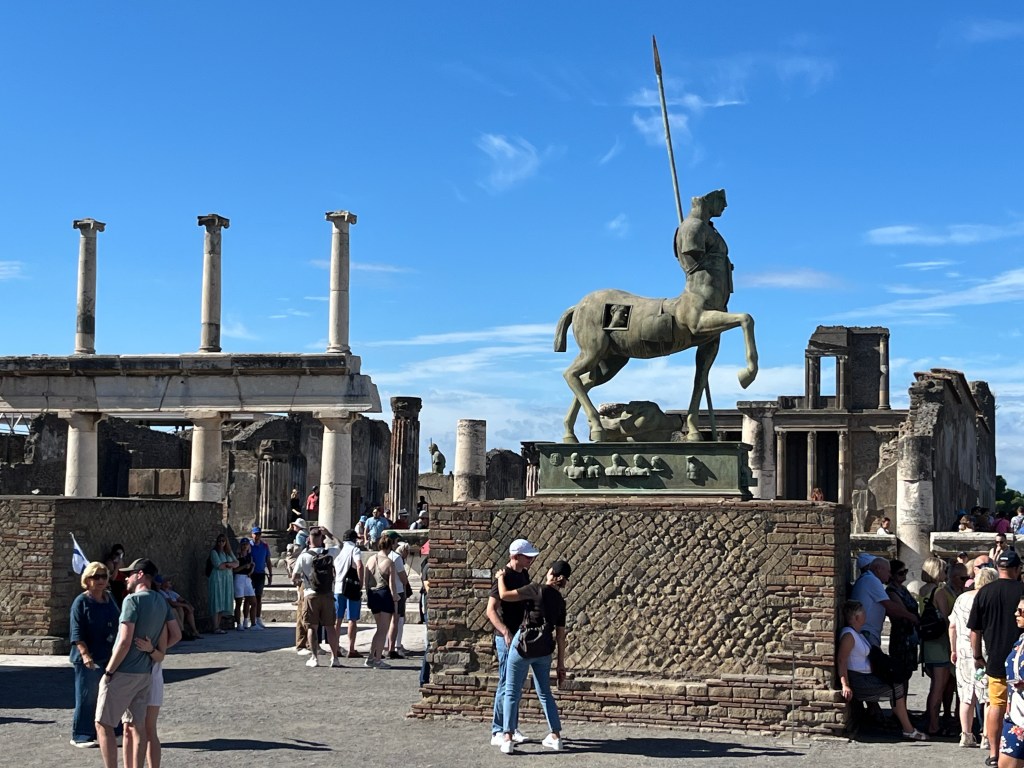
In 79 AD, Mount Vesuvius, a volcano south of Naples, erupted and buried the Roman city of Pompeii under up to 20′ of volcanic ash and pumice, preserving this once flourishing, wealthy town of 10,000 to 20,000 inhabitants. Today, mostly dug out, and preserved as an archaeological park, this largely preserved city offers a snapshot in time of Roman living. The site was discovered in the 16th century and the ongoing excavations didn’t start until the 18th century. Growing up along the NE edge of the Roman Empire, I have seen several archaeological sites of Roman buildings and culture, yet the scale and well preserved integrity of such an entire, intact city, was much more impressive than I expected, and clearly brings the Roman living from 2,000 years past to life. Roads, water supply and drainage, public heated baths, and underground water heated floors in buildings. From villas with courtyards, floors and walls decorated in elaborate mosaics and paintings, simple living facilities for the less privileged slaves, bakeries, to large public meeting places, amphitheaters, and churches, one can’t but come away impressed and awed by the level and wealth of cultivated communal life these Romans lived some 2,000 years ago! Certainly this place is worth a visit. We were there early in the morning at park opening. By midday, when we left, the park was packed with tourists. After the fact we somewhat regretted not having hired a good guide for the visit.

Rome
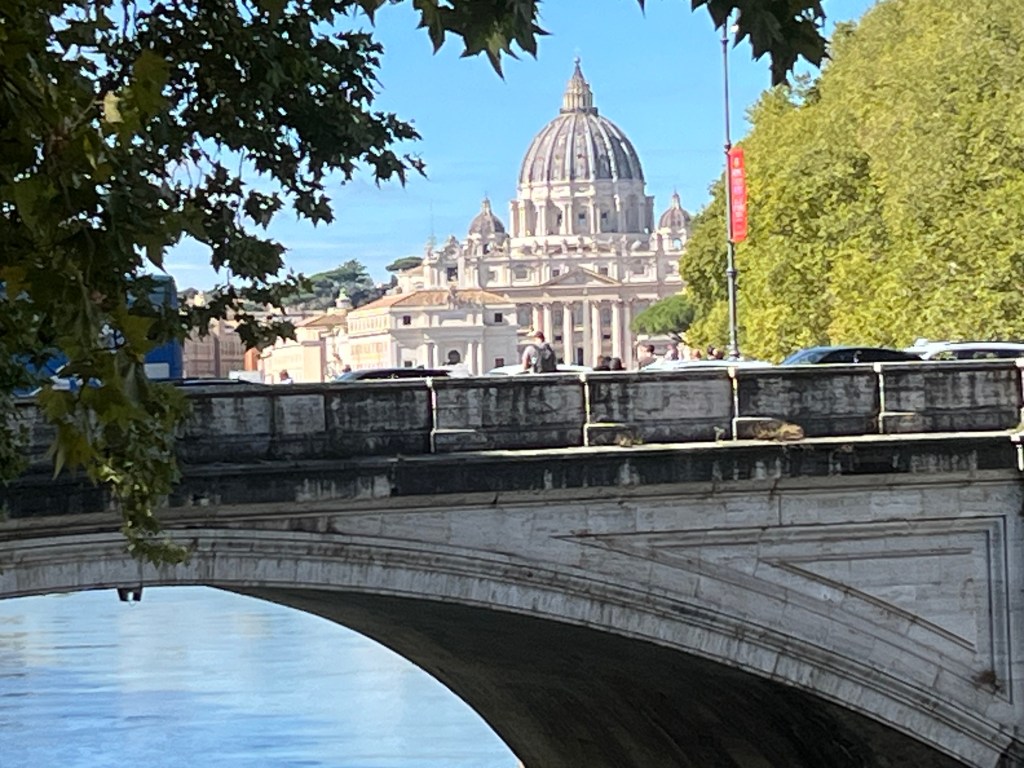
Rome, the eternal city, with a history spanning over 28 centuries, center and capital of the Roman Empire, and with this, our civilization’s center for over 500 years, and for Catholics, foremost known as the seat of the Roman Catholic Church. Today, with about 3 million residents, it is the capital and largest city in Italy, and third most populous city in the European Union. Rome is so much, all in one place. I will start with the Vatican.
How could I not start with the Vatican? Coming from a family deeply steeped in the Catholic faith, and as an altar boy, the Pope, Saint Peter’s Basilica, the Holy See, and Vatican City, were naturally always on my mind. Life and other priorities got in the way, yet about 60 years later, I finally got to see it in person. Lauri had visited Rome and Saint Peter’s previously, in the 70s with my parents.
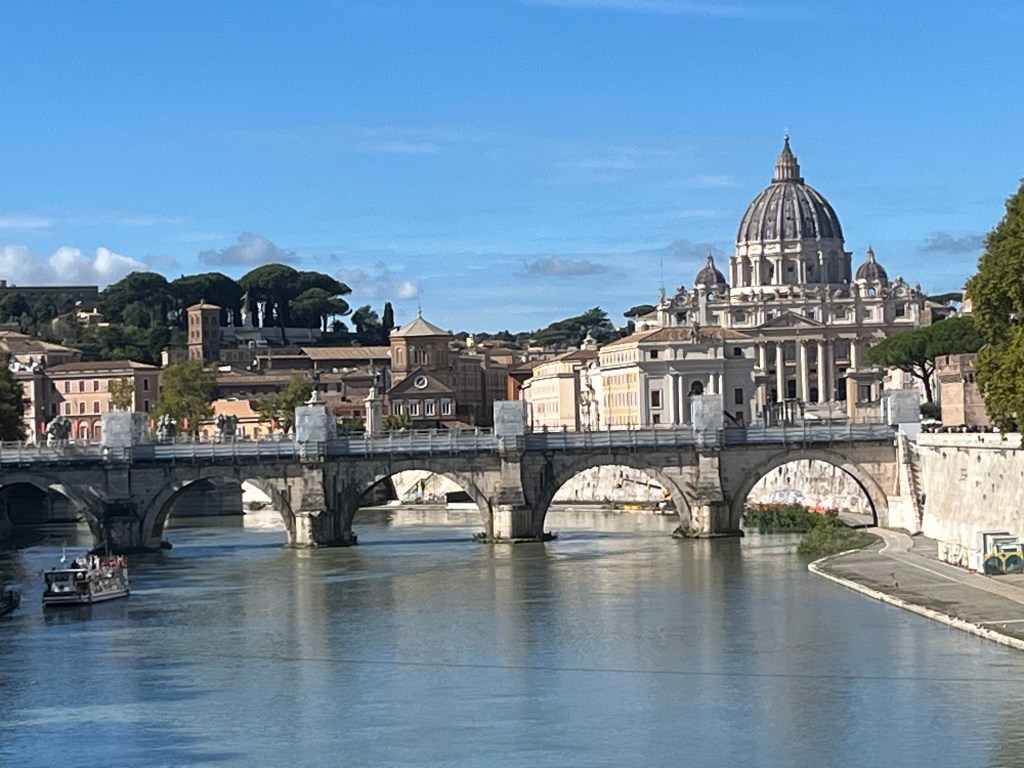
In 1929, in a move to separate church and state, the Vatican City State was created. With less than 800 inhabitants on 120 acres, it is self-governed and autonomous, with its own postal service and military guard. It is located completely within the city of Rome, and is the world’s smallest state. In the Vatican’s center is the enormous Saint Peter’s Basilica, the world’s largest church. Built in the 16th century and designed by Michelangelo, Bernini, and others, it is a spectacular site. The large, circled Saint Peter’s Square in front of the Basilica can hold up to 80,000 worshippers during special events like Easter.
We chose to visit Saint Peter’s Basilica early in the morning at gate opening, and were in the church by 7 AM. As we saw a couple of days before, the line and wait to enter the church on a normal week day can stretch up to as much as a 45 minute wait.
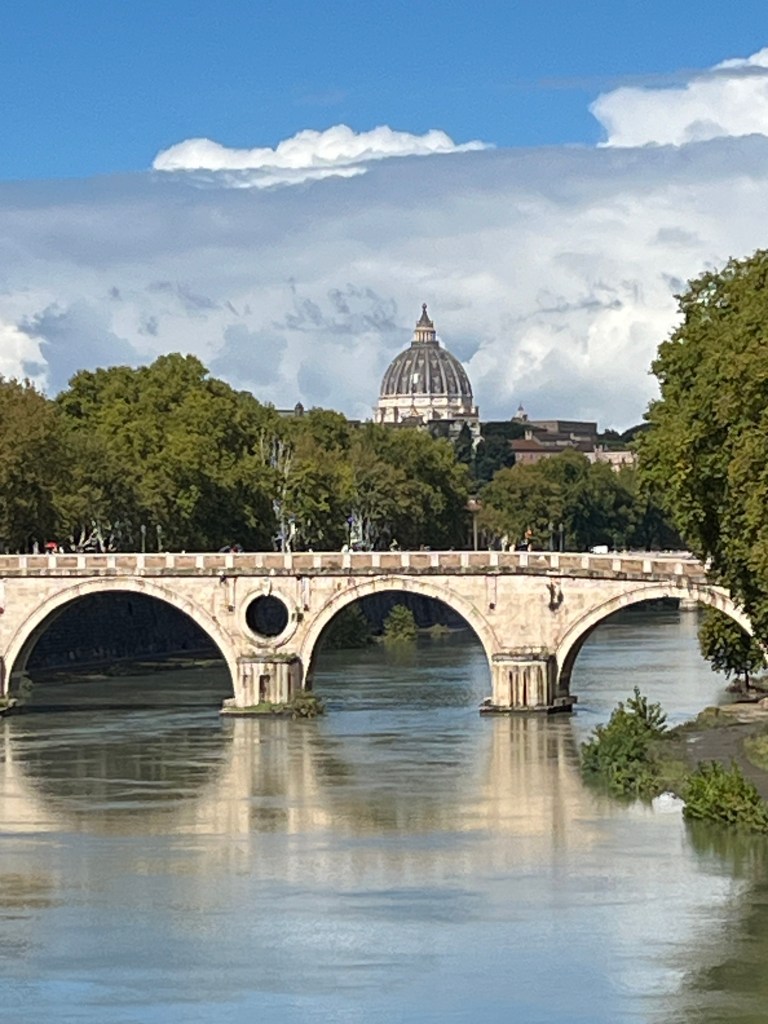


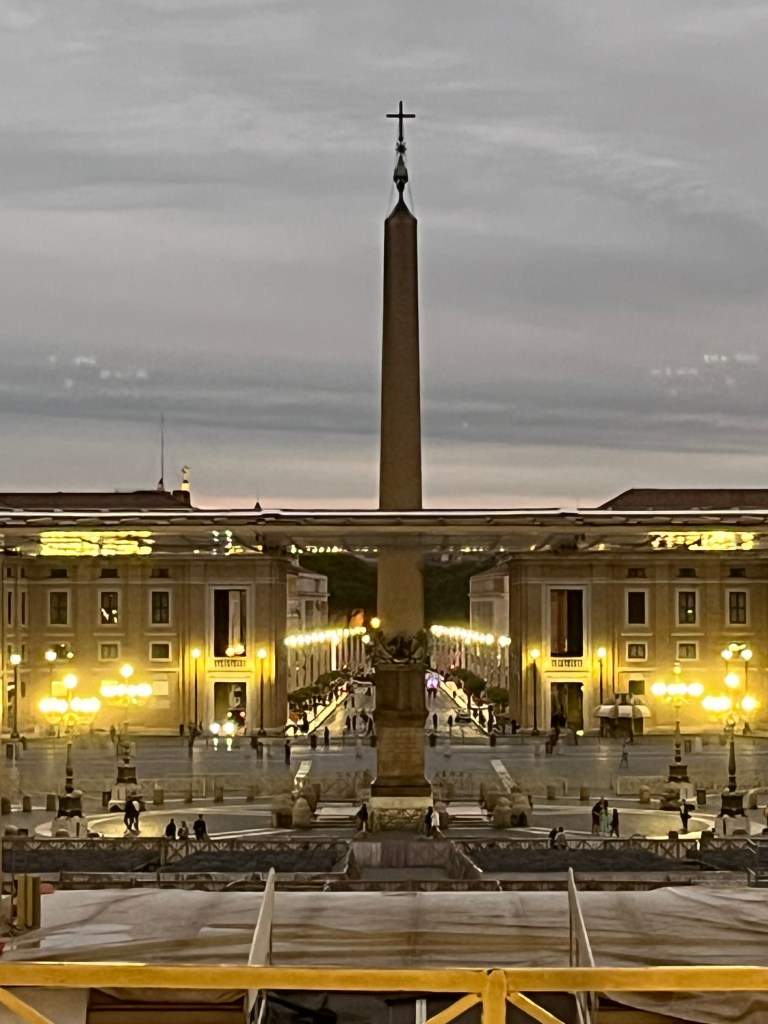

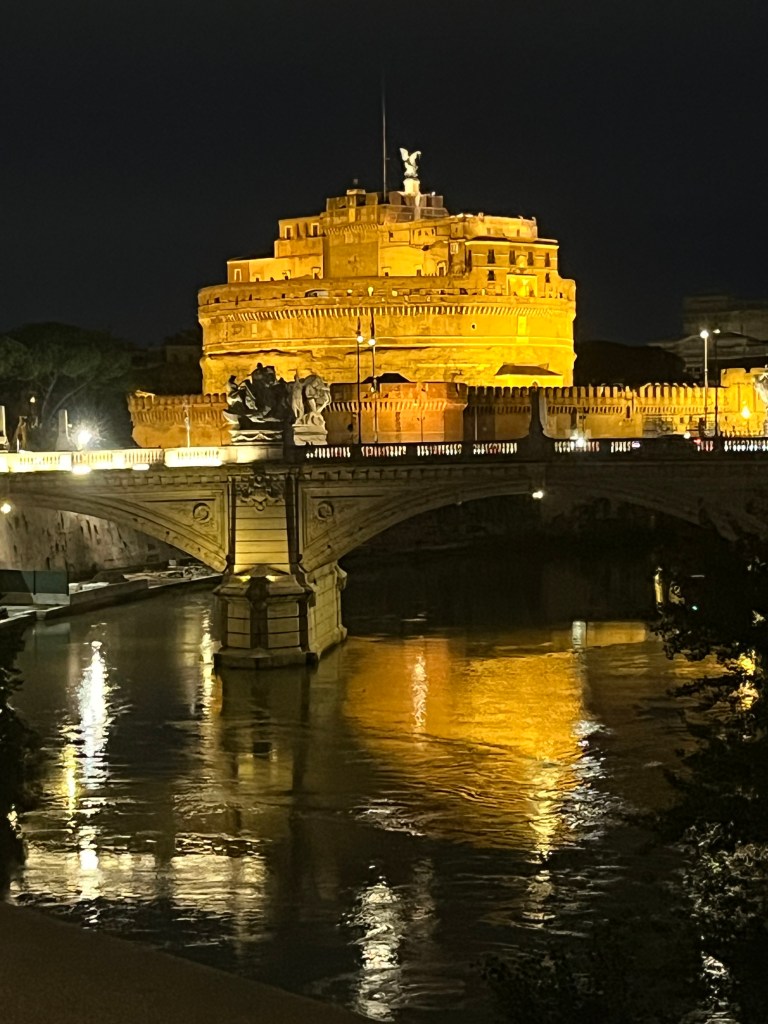

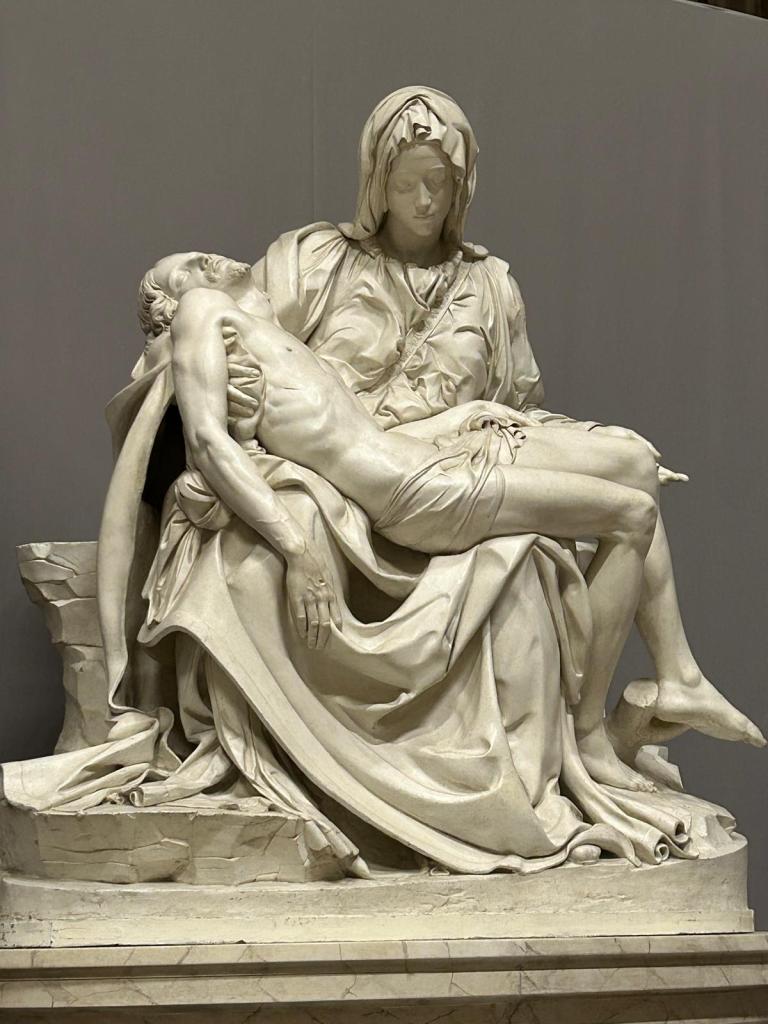
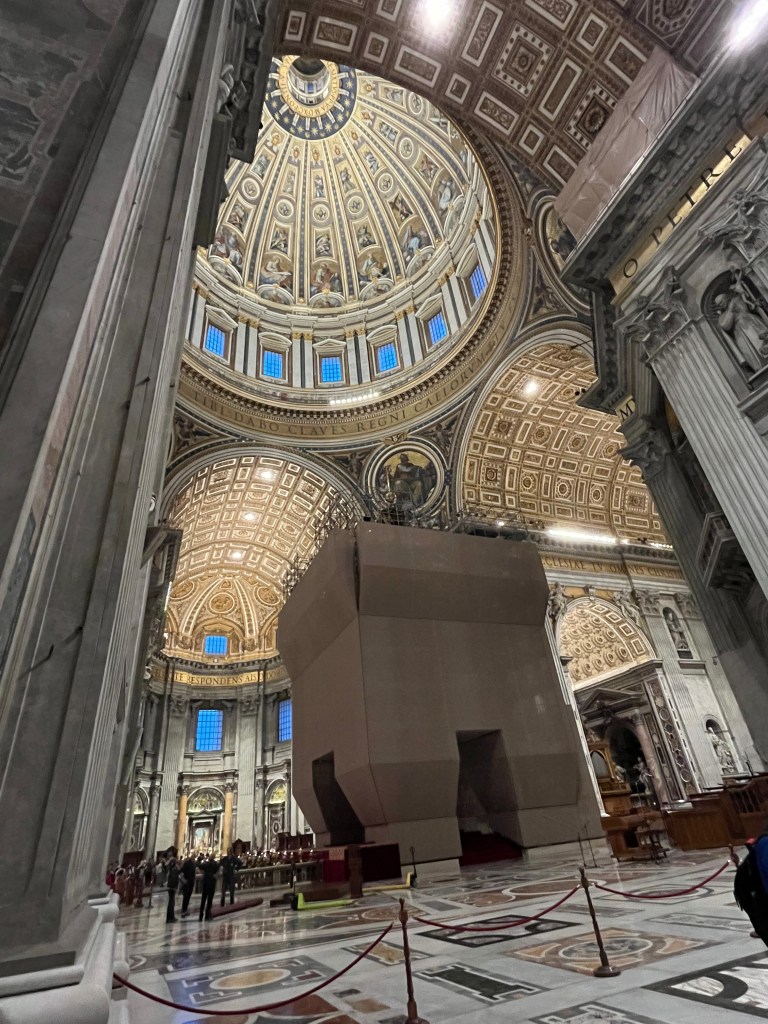
Entering St. Peter’s at dawn, we walked into an almost empty Basilica. We noticed immediately that there were some renovations going on, as unexpected and out of place just to the right, stood one of Michelangelo’s most famous works, the Pieta, which depicts the Virgin Mary holding the dead body of Jesus. The details and emotional expressions of the scene are truly amazing. Looking down the main ship of the Basilica, we saw that Bernini’s centerpiece, the portal, was covered up for renovation. That was no big disappointment for me, as my photo based perception of this portal has always been that it isn’t very tasteful and that Saint Peter’s might look better without it.
From other visitors’ reports, I had always heard and envisioned Saint Peter’s as simply enormous, heavy, colossal, and overly ornate. Standing in Saint Peter’s, and slowly realizing the immense scale of the structure, is truly awe inspiring, and it does not feel as heavy as I envisioned it. The enormous, otherworldly height of the ceiling balances out the otherwise heavy arches and columns, and yes, while certainly ornate, in this building it blends together nicely. It is not the most beautiful church I’ve seen, and to some extent it didn’t really feel like a church, or how I am used to perceiving a church to be. Saint Peter’s feels more like an awe inspiring, magnificent, and ornate Temple. The awe inspiring perception was likely intended with its design. Climbing up the steps to the top of the dome is well worth it. One not only realizes the enormous scale and height, one can also appreciate the beautiful layout of Saint Peter’s Square, with the wide road leading up to it, and one gets a stunning view over Rome.




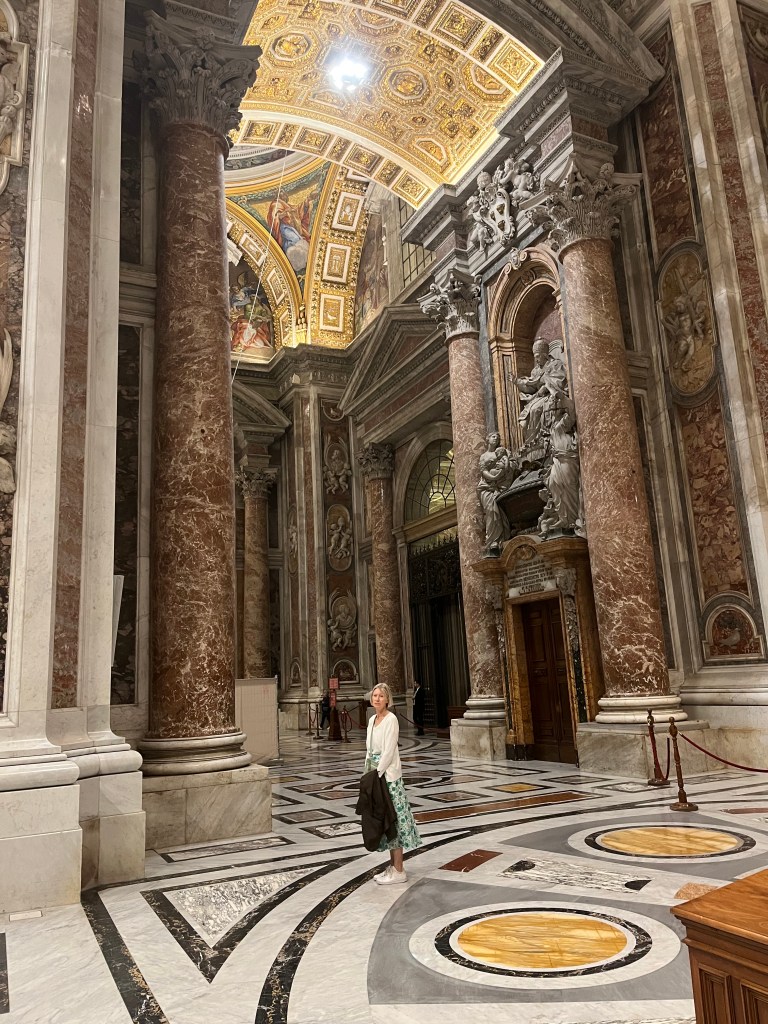
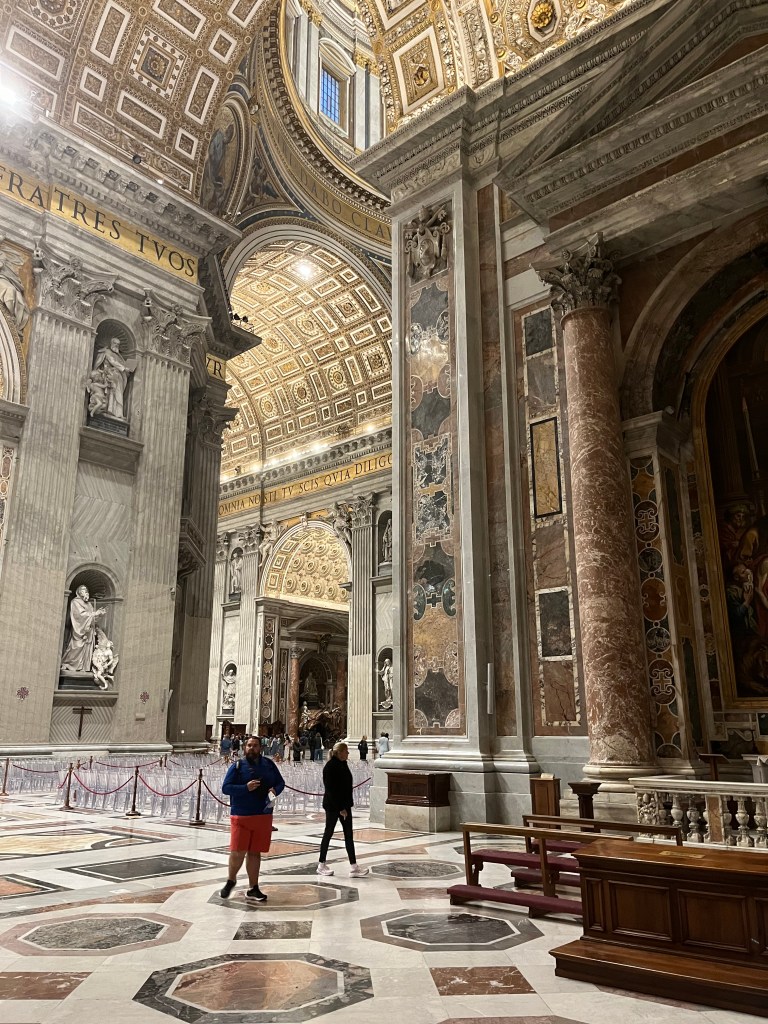
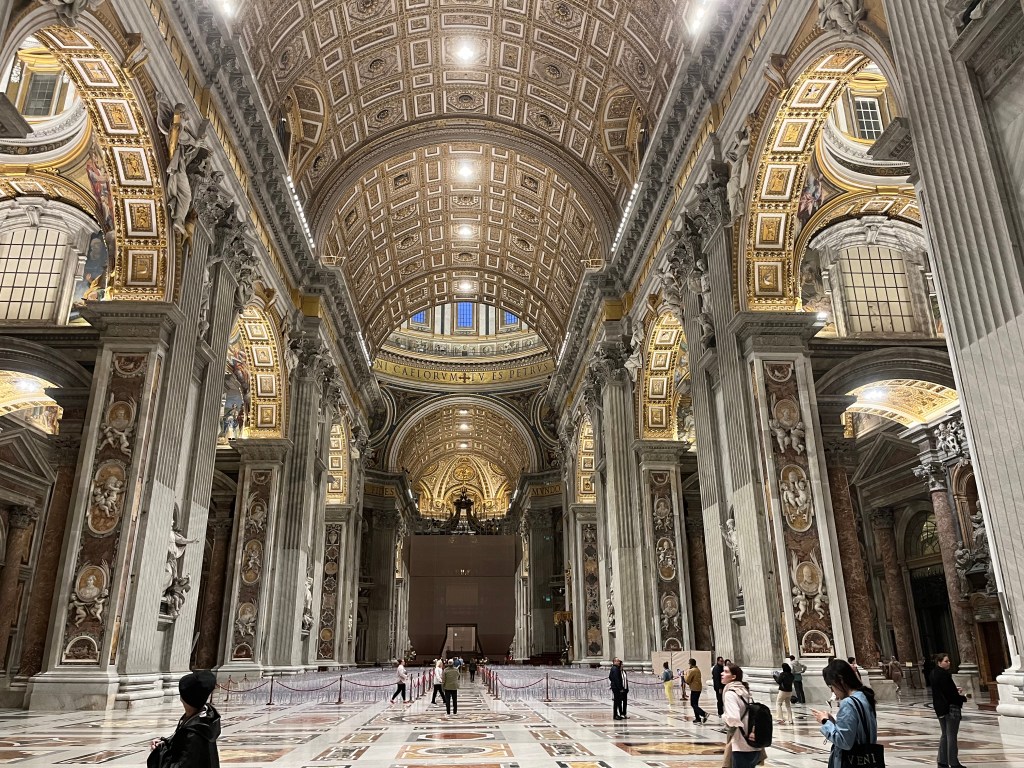
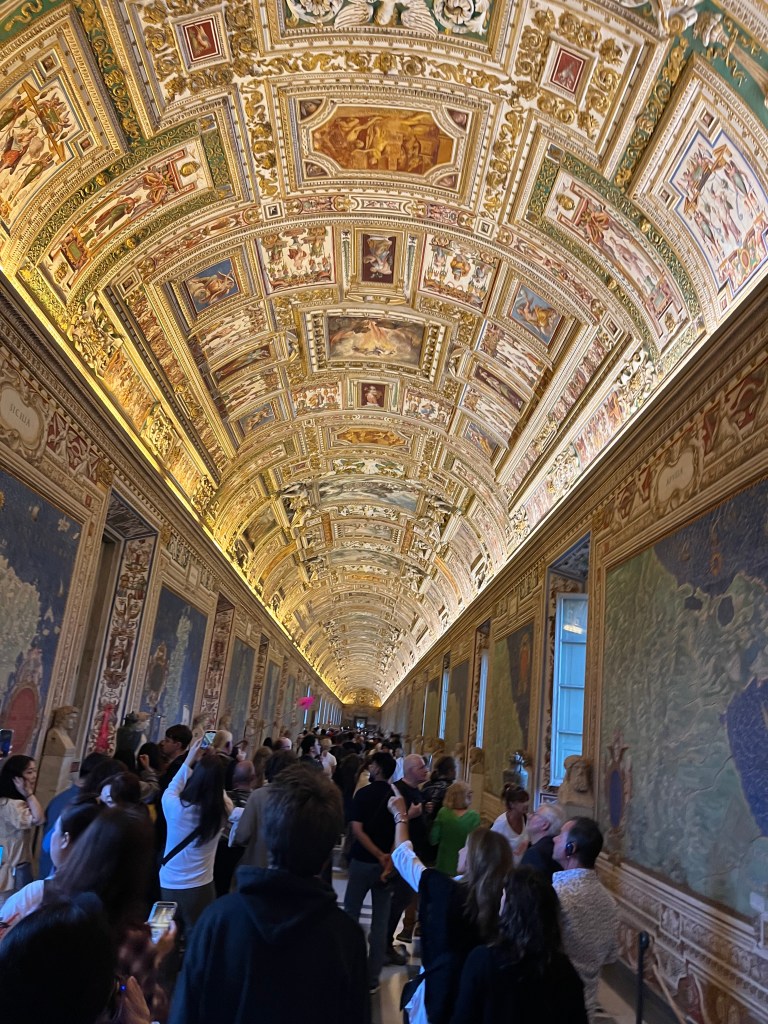
We also visited the Vatican Museum, for which visitation reservations are a must. The museum and its rooms, exhibition halls, and hallways can be described with the attributes I’ve used for Saint Peter’s. The amount and content of the objects on display is simply astonishing and unreal. For instance, I recall the Egyptian section with a large collection of several well preserved, detailed mummies I had not expected to exist anywhere outside of Egypt. One could easily spend one or two full days in there, like for instance in the Louvre, yet unfortunately they allow only limited time, and funnel so many visitors through there, that one almost literally gets pushed through it within 2-3 hours, and that unfortunately included the Sistine Chapel. Here, as in a lot of places in Rome, Lauri was simply amazed by how different her visitation experience was as compared to her first trip in the 70s due to the tremendous difference in number of visitors.
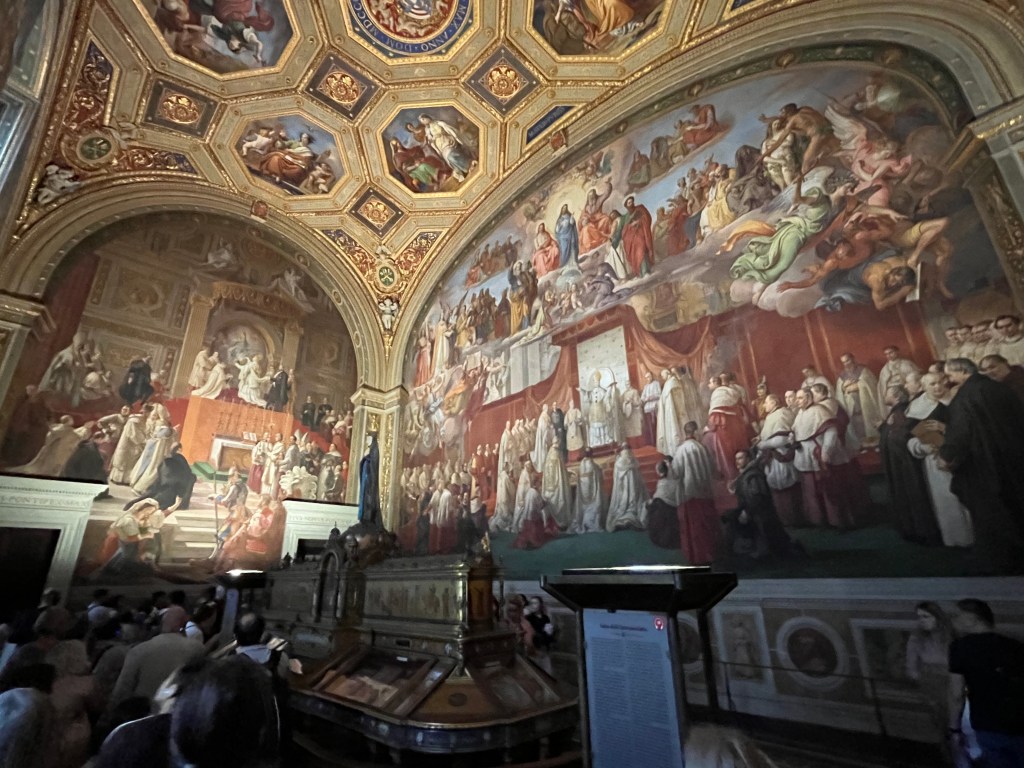

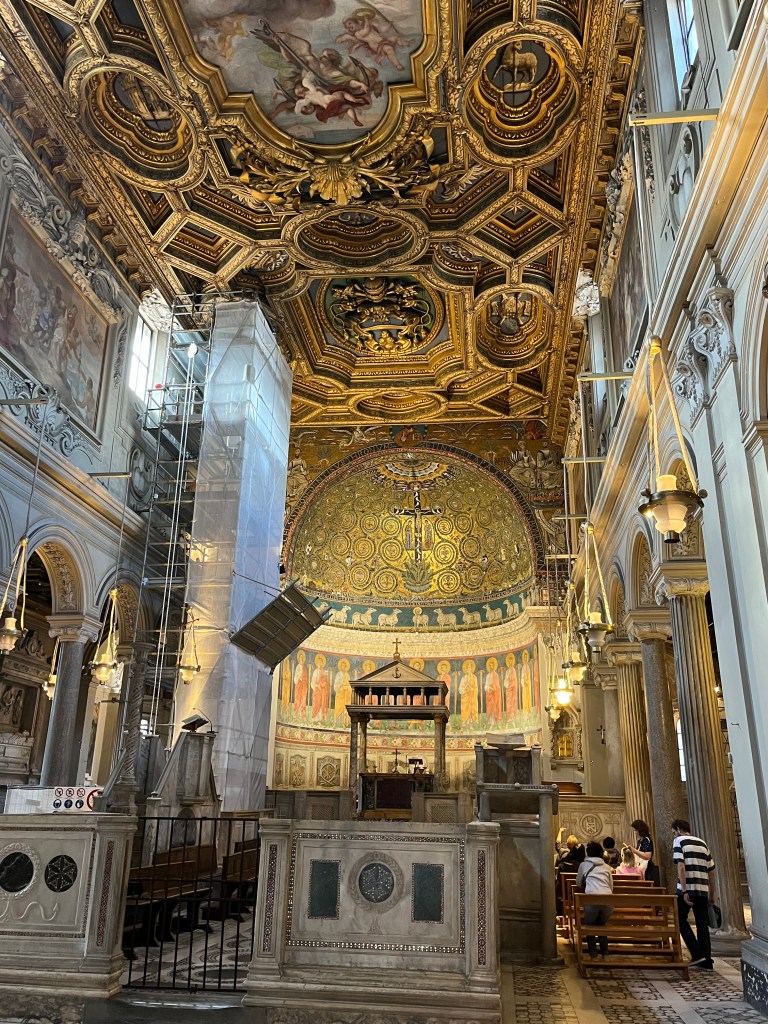
Despite the crowds at the must-see tourist sites, Rome is simply amazing anywhere you look. There is simply so much history in one place. A good example is the unassuming Basilica de Saint Clemente neighborhood church. During work on the structure of the current church building, it was discovered that the current structure was built on top of a church from the 8 – 12th century. Excavating this “original” 8 – 12th century church, archeologists discovered that it was built on top of an ancient temple from BC. Today, one can visit these two older building layers by a dug out, well guided trail and actually see the different, layered building structures. For instance, you walk down 2000+ year old steps to the lowest layer and next to some rooms, see an underground spring and creek. One wonders how many more hidden gems like this are still waiting to be discovered in Rome.

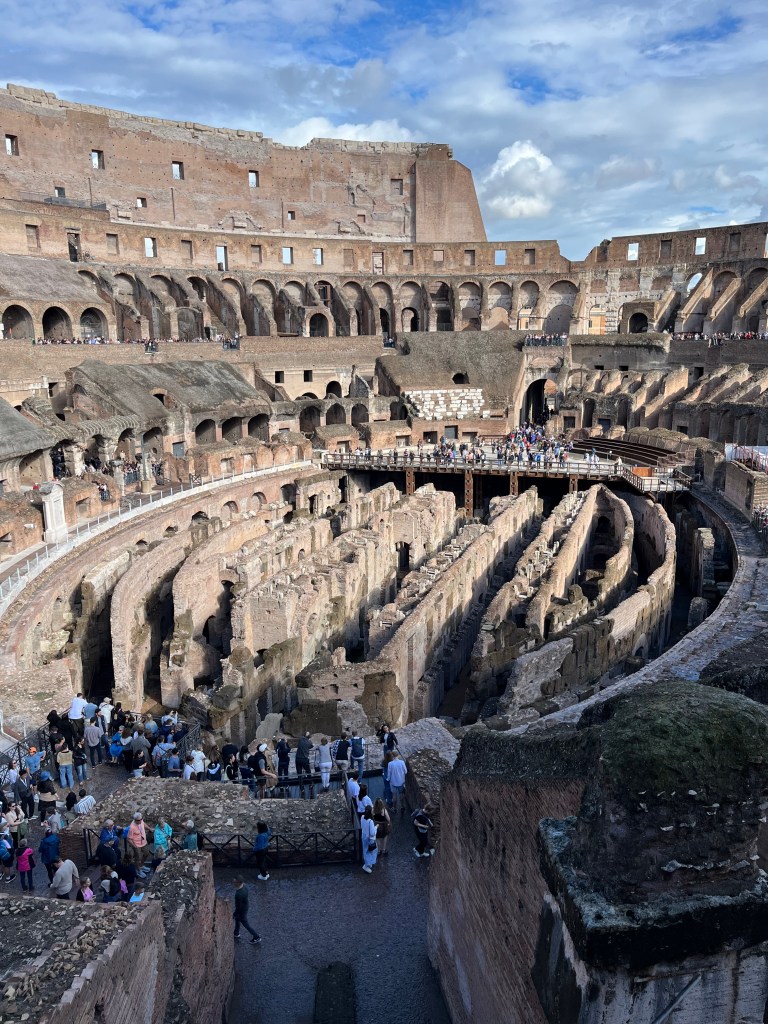
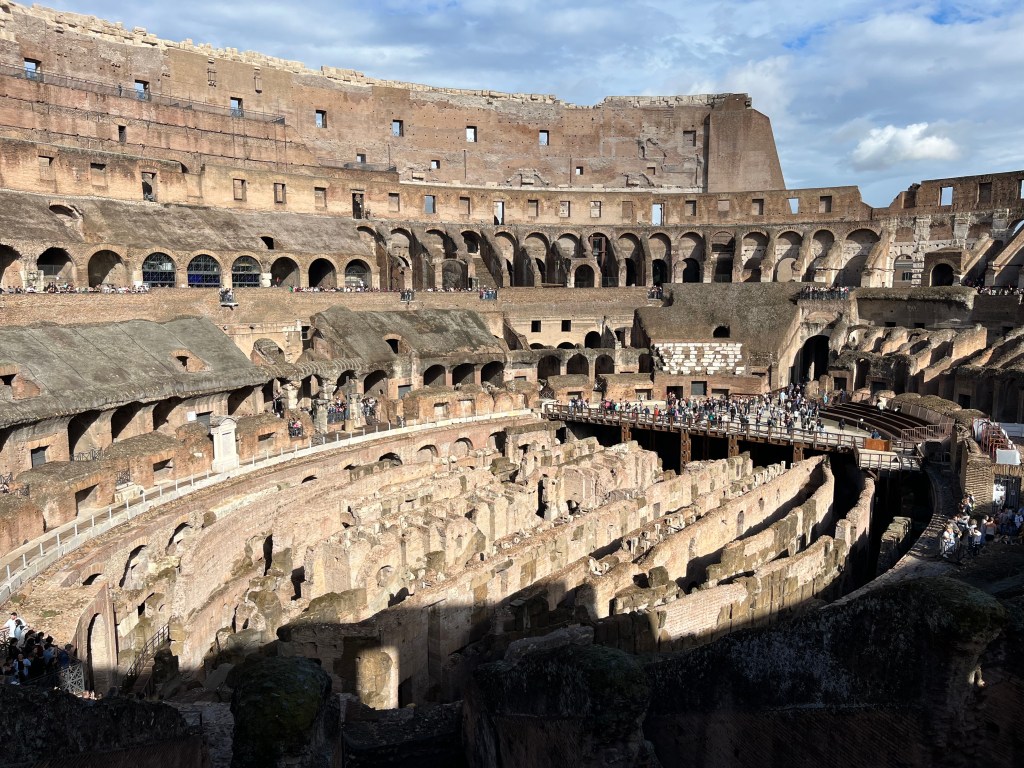
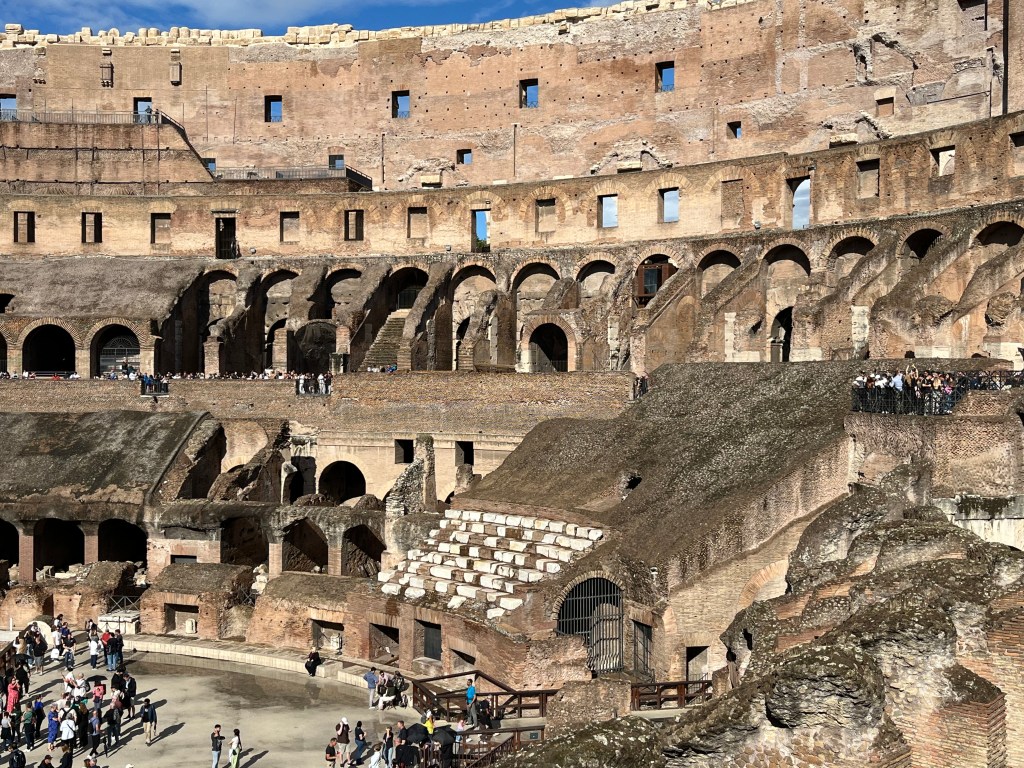
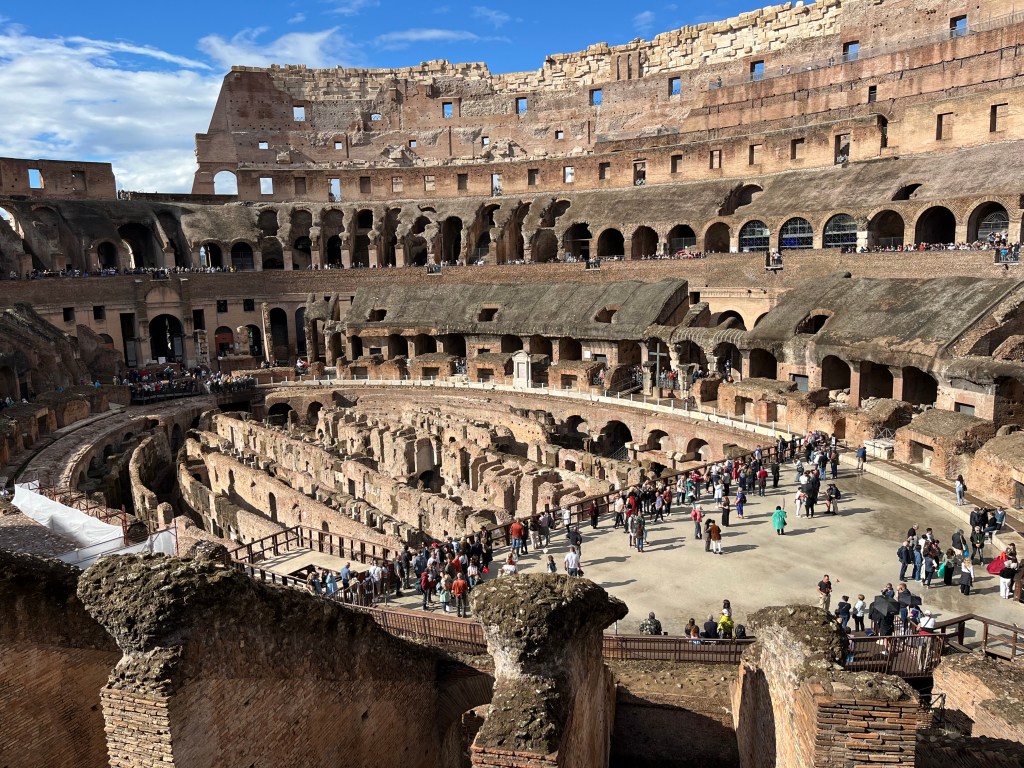
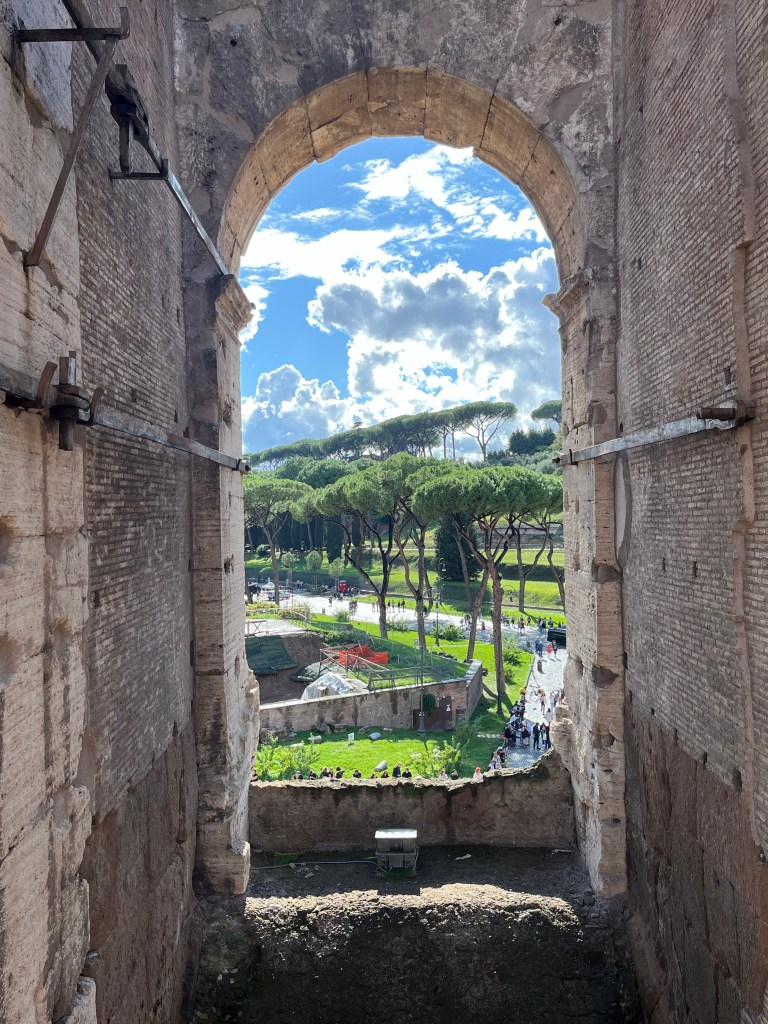
The Colosseum is maybe Rome’s most iconic site from the time of the Roman Empire. Gladiators, lions and blood sport, cruelty, and thumbs up and down are coming to mind. Built in the 1st century, this elliptical amphitheater could seat 65,000 – 80,000 spectators. The design, from underground accessible arena floor, to efficient spectator exits, seating, and views, to mobile shade providing sun covers on top, demonstrate the advanced, wealth, and ability of the Roman Empire.


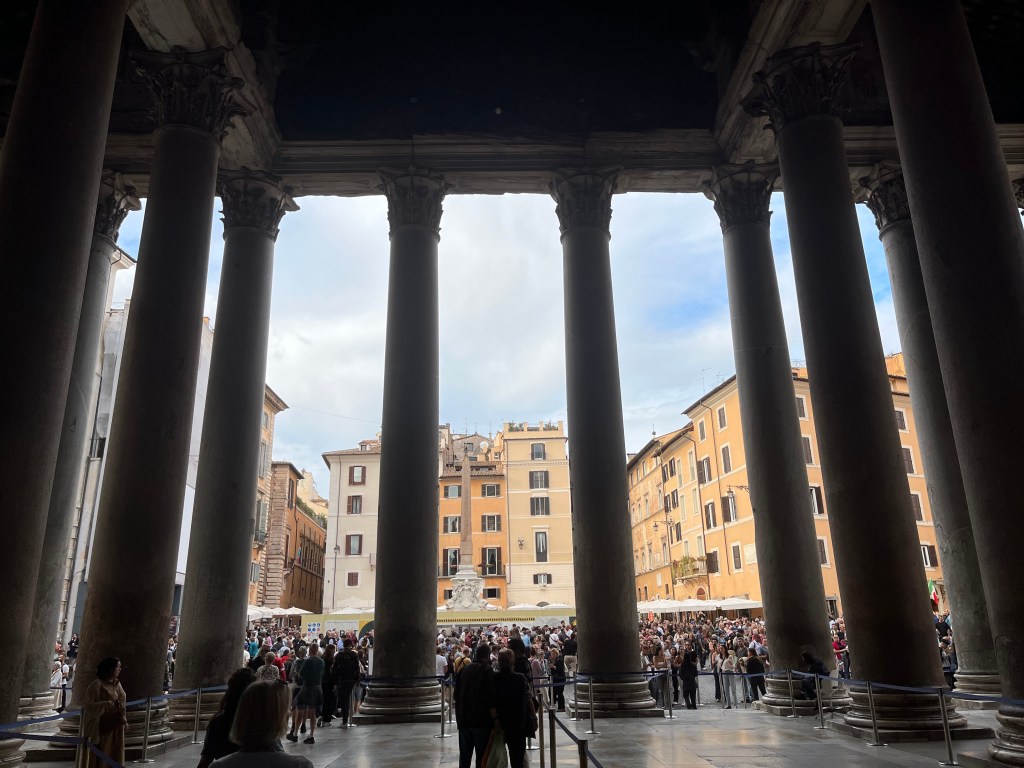
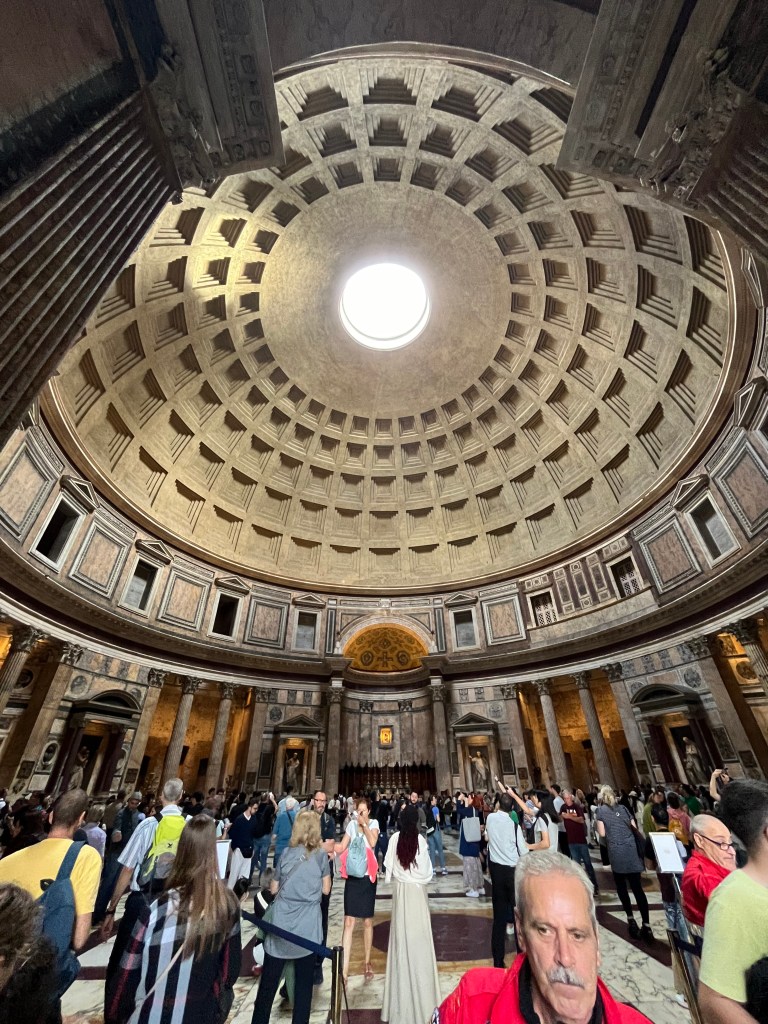
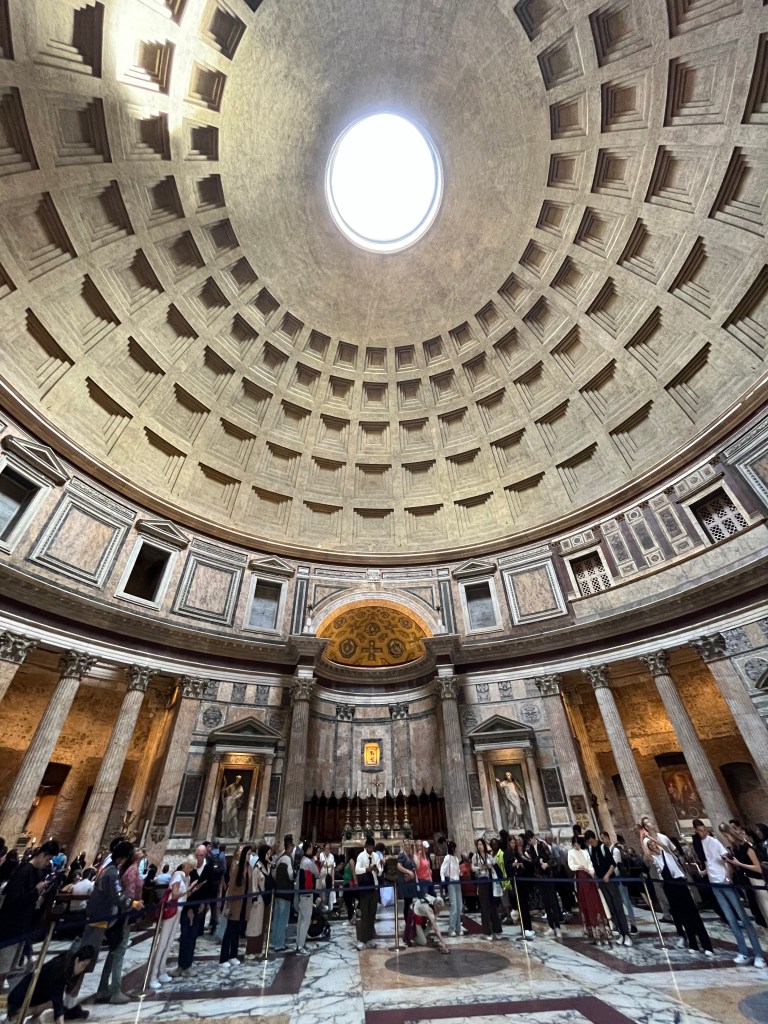
More than any other structure in Rome, I was most awed by the Pantheon. Sorry, I forgot to take a picture from the outside, likely due to the hordes of tourists, or to the structure’s relatively unassuming curbside appeal. The Pantheon was built as a temple almost 2,000 years ago, and since 600 AD it has been continuously in use as a Christian church. Here are some stats about the structure, in particular, the Pantheon’s dome:
The height to the oculus, the circular opening on top of the dome, and the diameter of the Pantheon’s interior circle are the same, 43.3 meters (142 ft), so the whole interior fits exactly within a cube. The thickness of the ingenius concrete dome structure varies from 6.4 metres (21 ft) at the base of the dome to 1.2 metres (3.9 ft) around the oculus. The materials used in the concrete of the dome also vary. At its thickest point, the aggregate is travertine then terracotta tiles, then at the very top, tufa and pumice, both porous light stones. At the very top, where the dome would be at its weakest, and vulnerable to collapse, the oculus, the 8.8 meter (29’) diameter uncovered opening, lightens the load.
To further add strength to the dome, the dome features sunken panels or coffers in five rings of 28 coffers each, that are perfectly shrinking in size to the top until abutting the oculus. This evenly spaced layout of these coffers must have been extremely difficult to achieve. Besides its structural advantage by its rib-like framing effect, it is presumed that it had symbolic meaning, either numerical, geometric, or lunar.
Today, almost 2,000 years later, this dome still holds the record as the world’s largest unreinforced concrete dome!
The interior of the dome was possibly intended to symbolize the arched vault of the heavens. The open oculus at the dome’s apex and the entry door are the only natural sources of light in the interior. Throughout the day, light from the open oculus moves around this space in a reverse sundial effect, marking time with light rather than shadow. The oculus also offers cooling and ventilation. During rain, a drainage system below the sloped, draining floor, handles rain falling through the oculus. All this, engineered and constructed 2,000 years ago!
Every Pentecost firefighters climb to the top of the dome and drop rose petals through the oculus, which slowly float, illuminated by the sunbeam, to the floor. Thousands of spectators come to visit the Pantheon for this annual magnificent site. You can easily find it on YouTube.


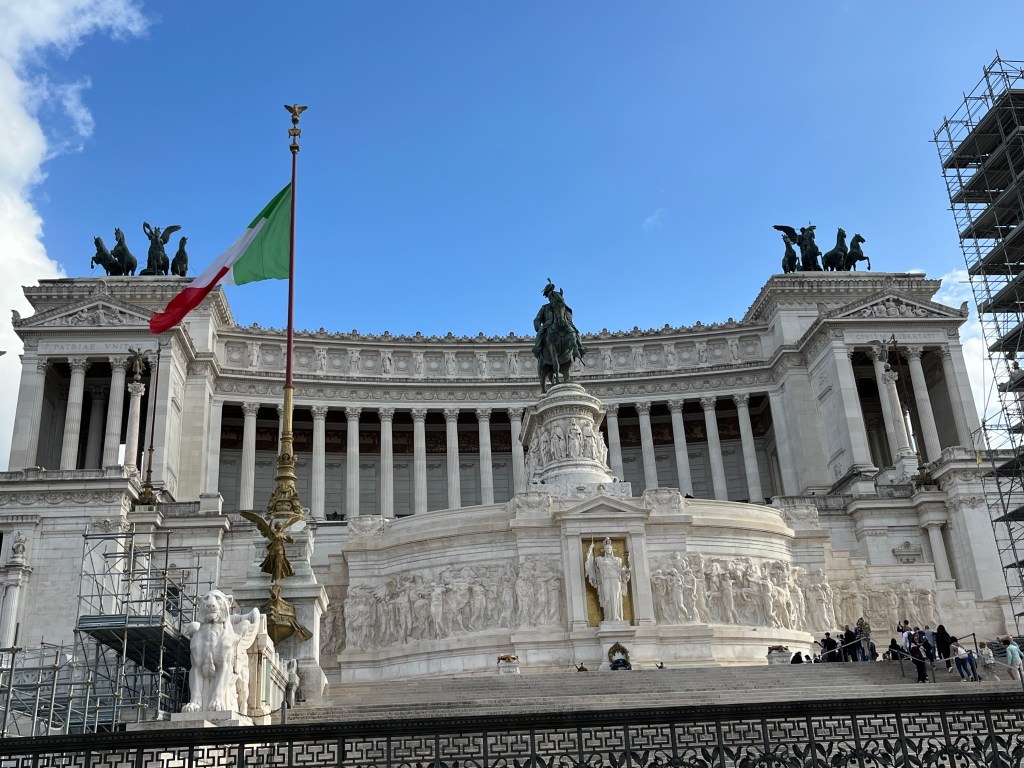
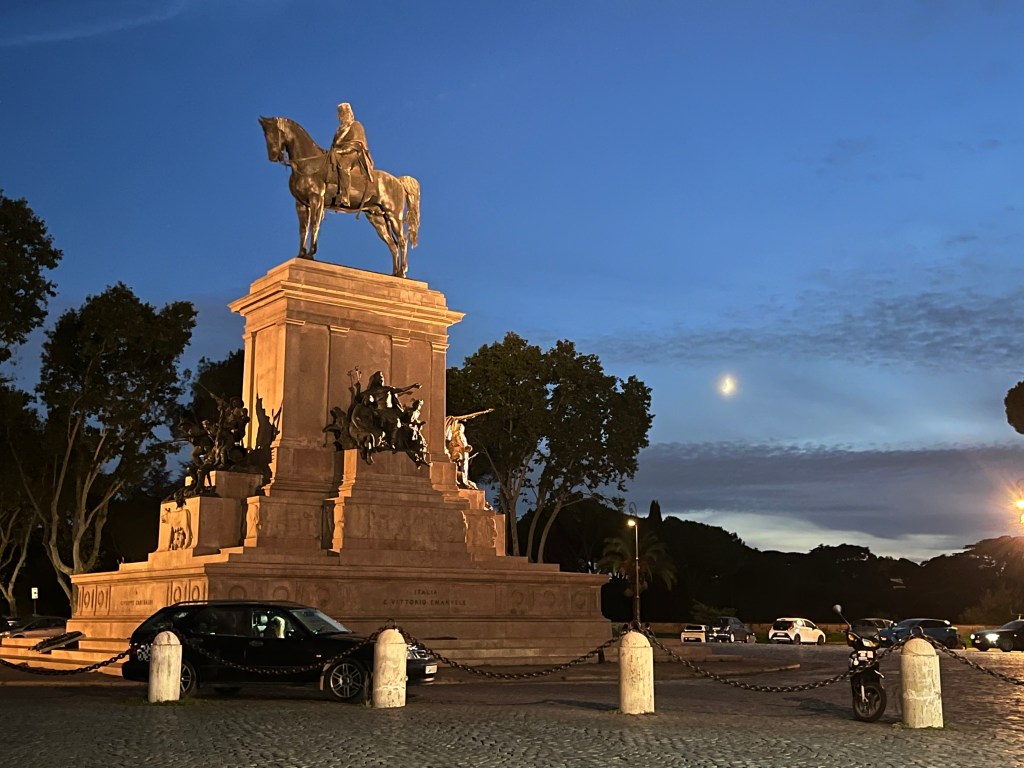
And here are some more of Rome’s famous sites. The Vittorio Emanuele Memorial:
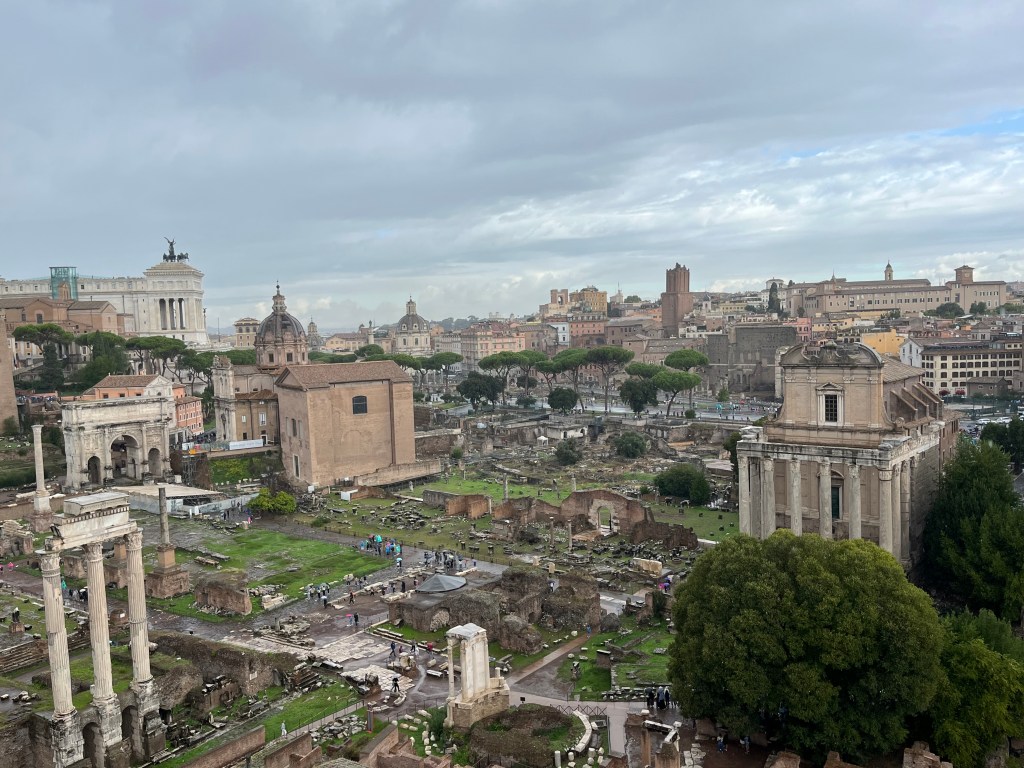
The Forum:
Michelangelo’s Moses at Saint Pietro:
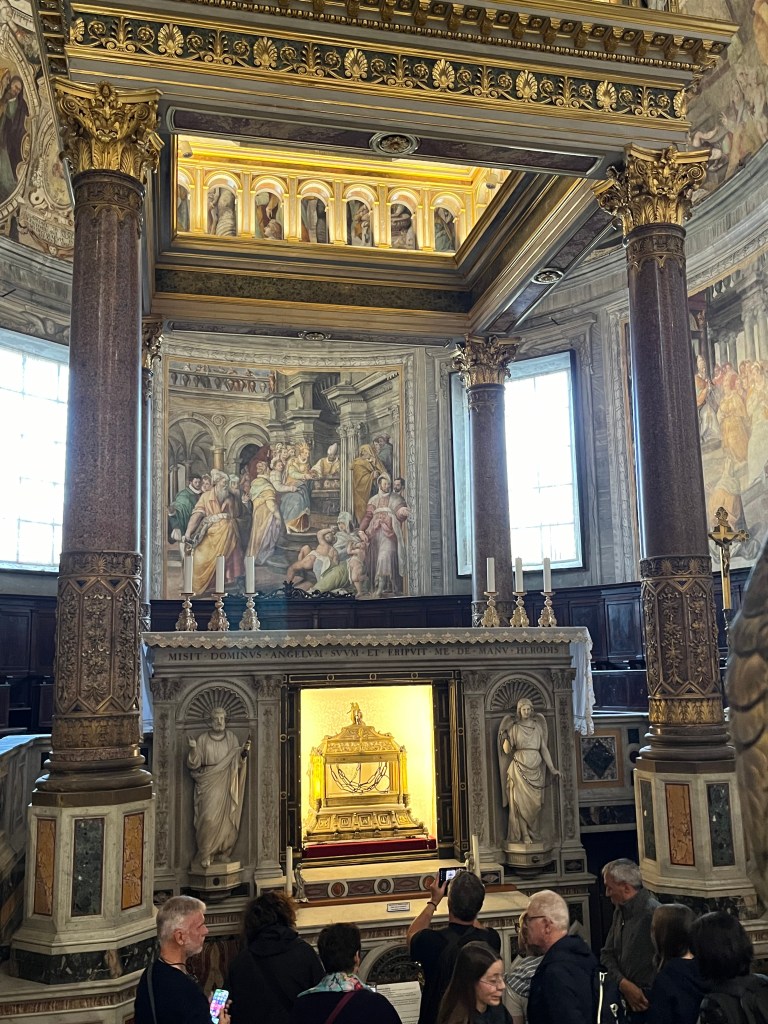
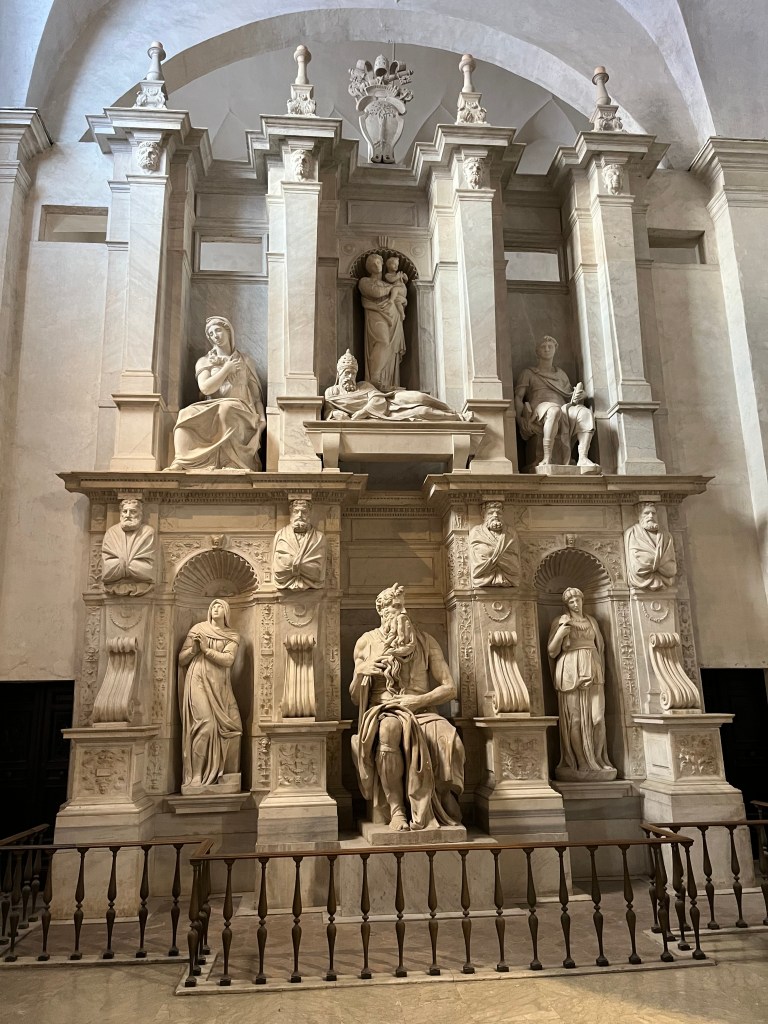
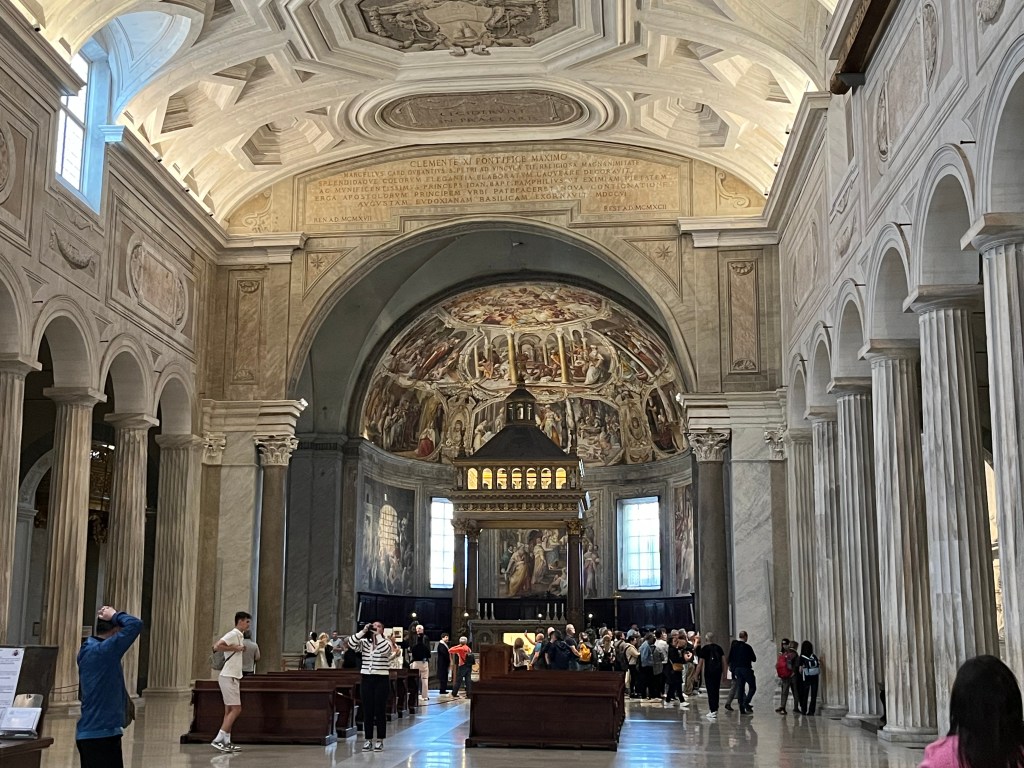
… and more….
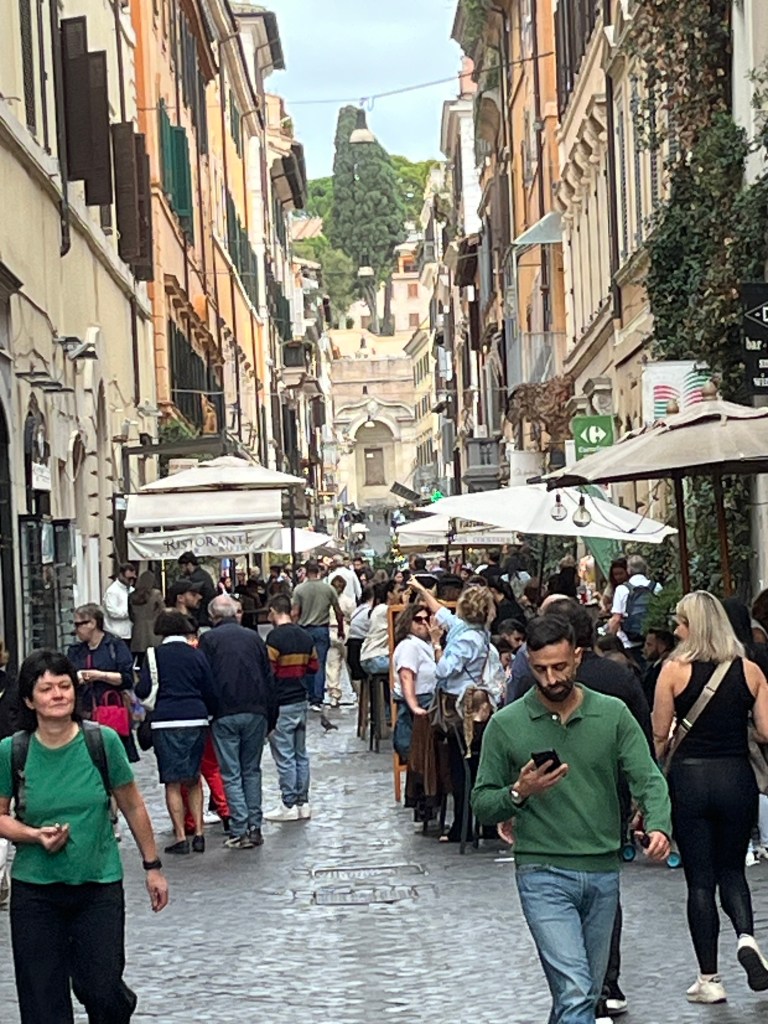
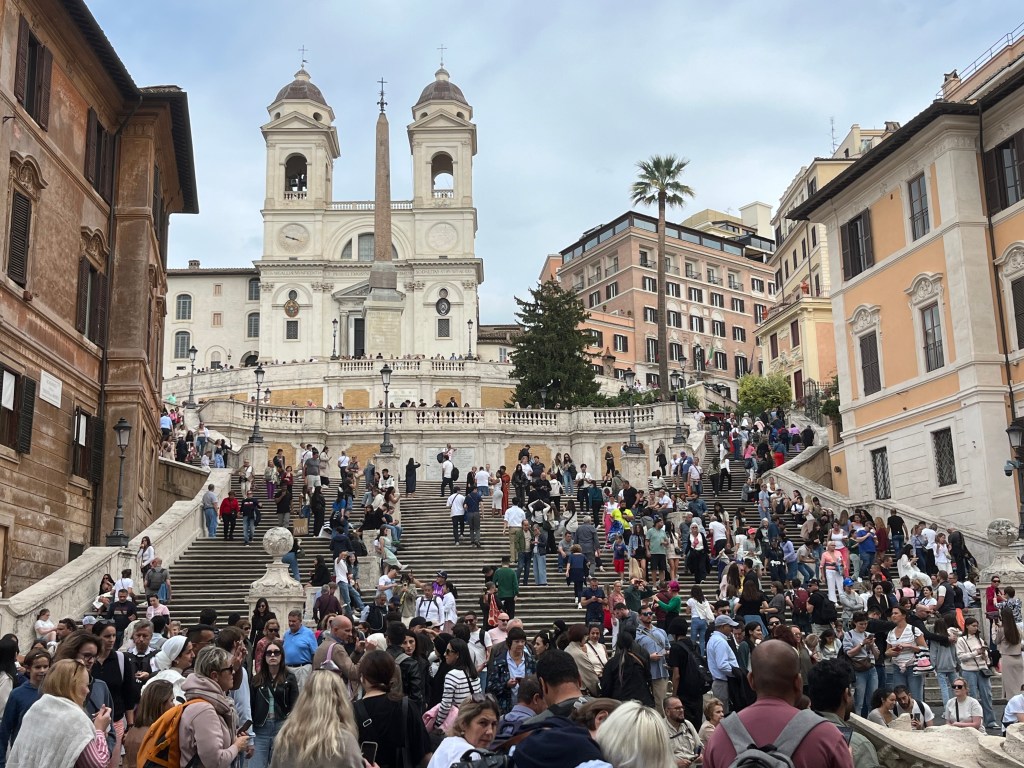
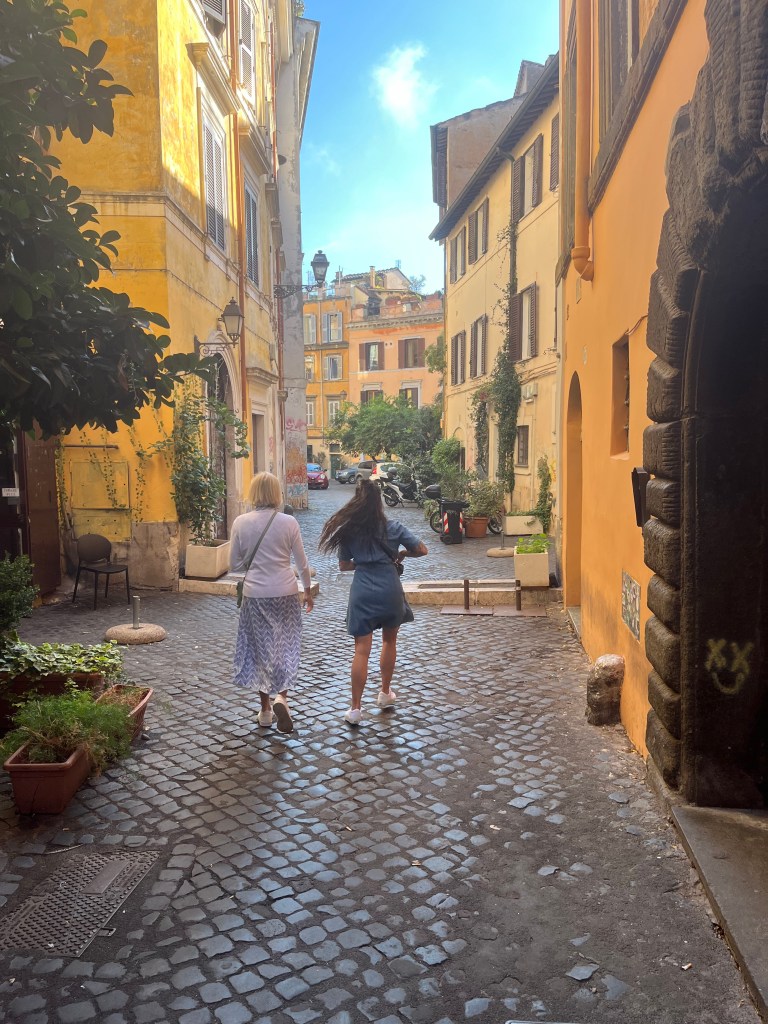

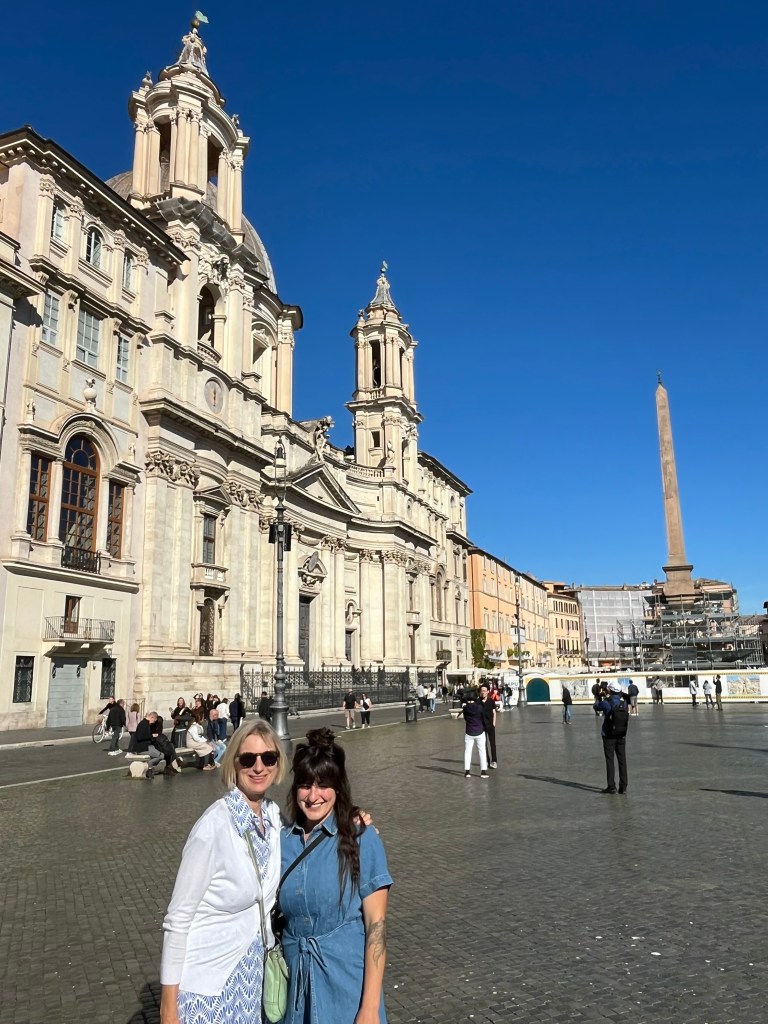
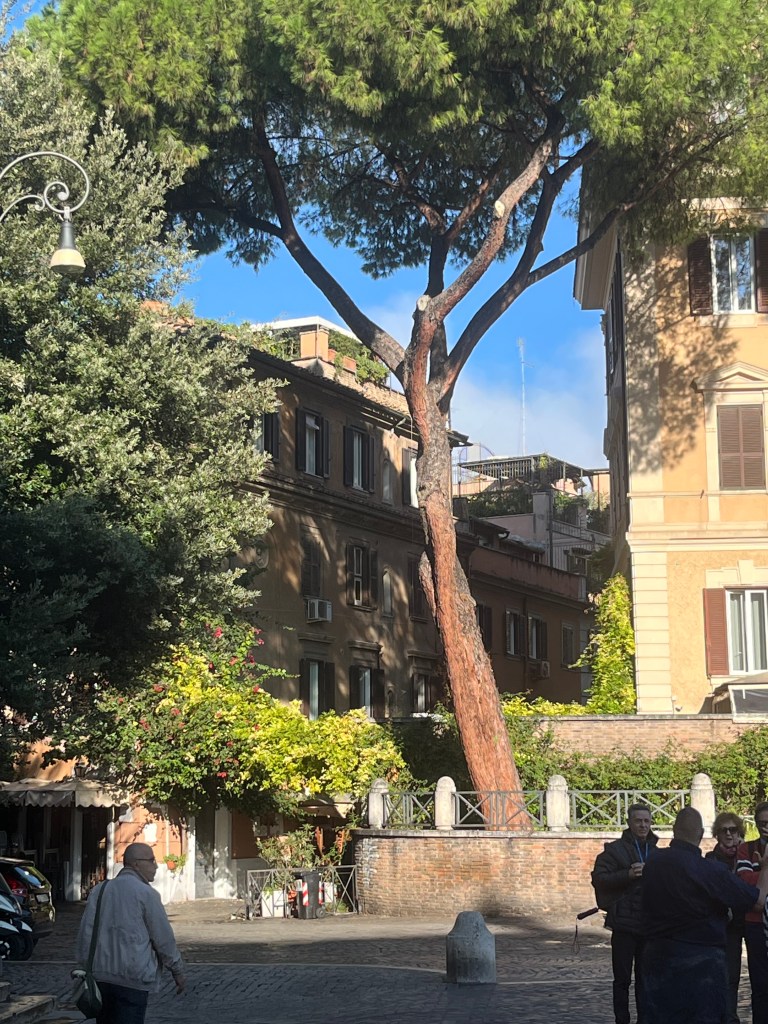

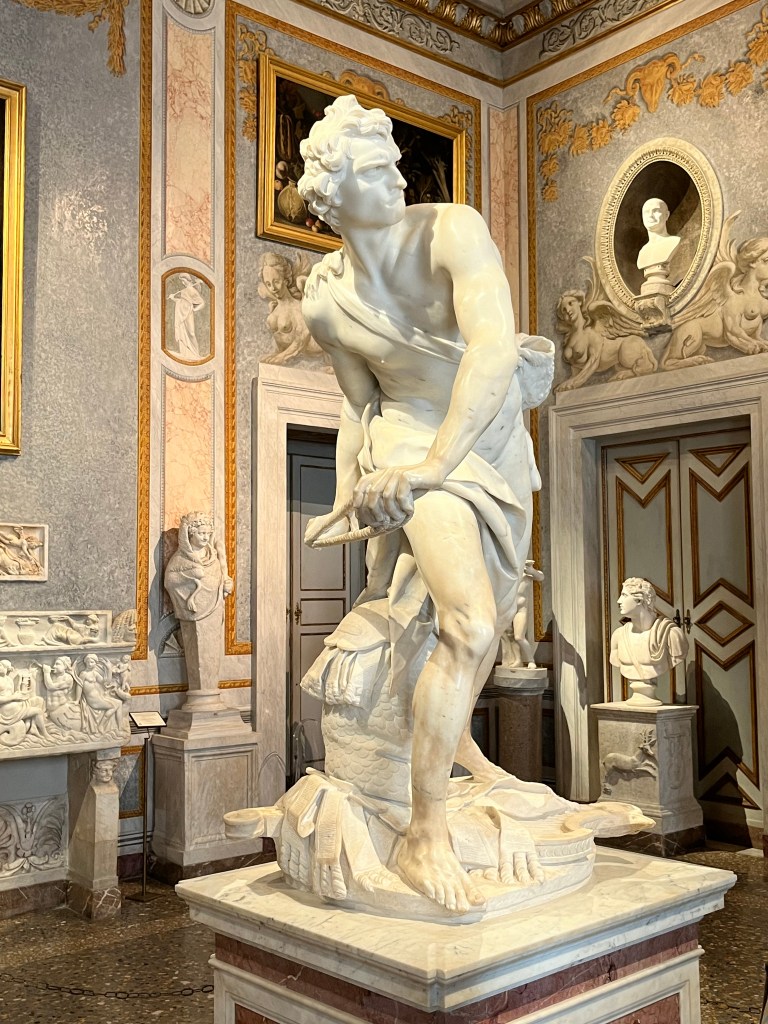
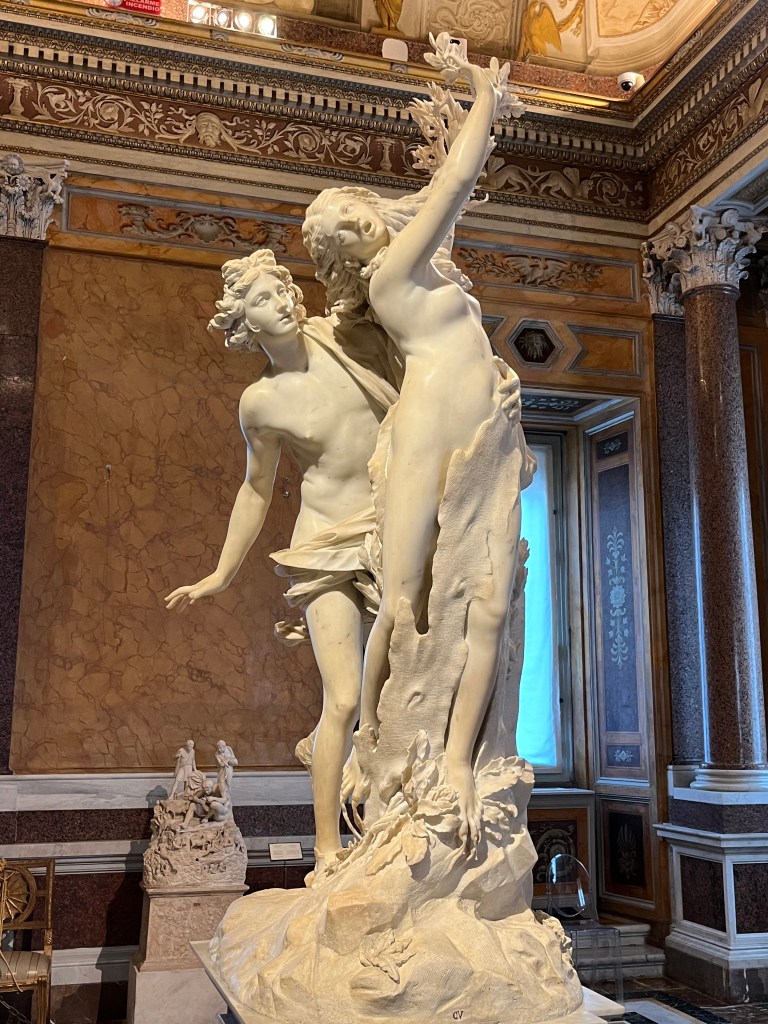
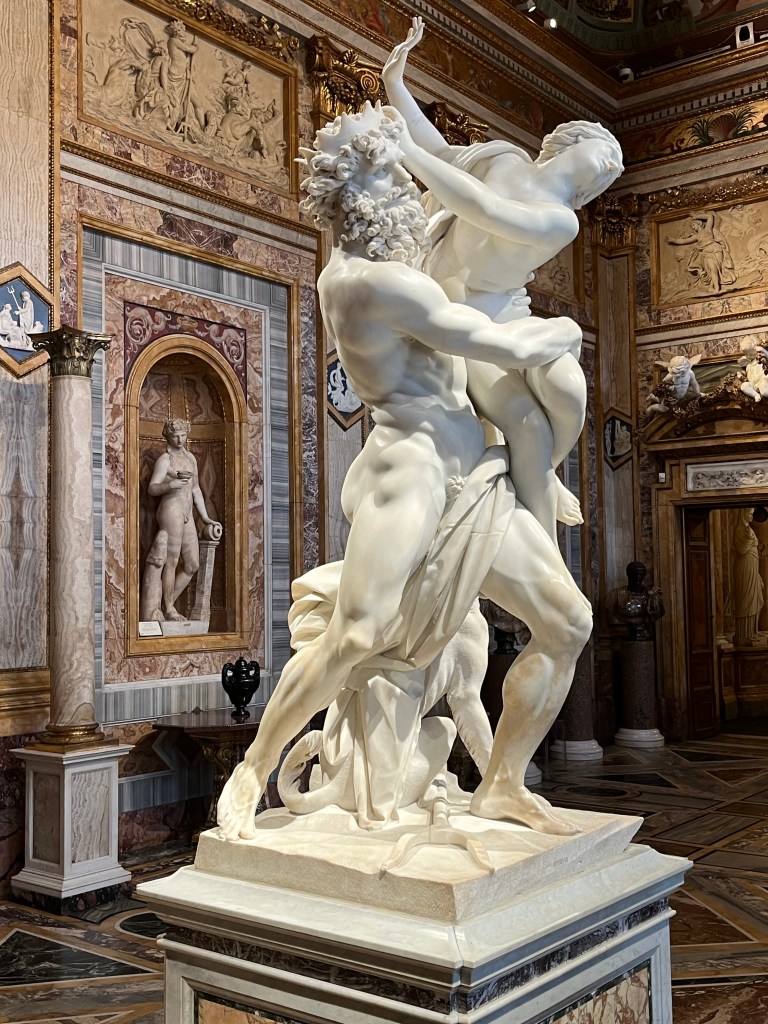
And Bernini’s David, Apollo & Daphne and The Rape of Proserpina at Villa Borghese:
Our Airbnb was located conveniently in the hip Trastevere district, close to a daily fresh market, bakery, grocery stores, and plenty of restaurants and gelaterias. Trastevere is where our daughter Katrin stayed for a summer term during her architecture studies some years ago. She met us there as our Rome tour guide, and stayed with us for the remainder of our Italy trip. Trastevere is also the seat of two American colleges, explaining why one tends to encounter so many young Americans in this district. For us it was a fun and centrally located place.
We spent one entire week in Rome, and naturally there is still so much more to be seen. It is the culturally richest place I’ve ever visited, yet it was time to get to a quieter place to let the overload of new impressions slowly sink in. Besides, as the stereotype correctly suggests, Italians are outgoing, and it seems especially here in Rome, and that makes for less organized, somewhat noisy and chaotic living, just try to drive your car through Rome…. On the other hand, this makes Rome a very lively and lovable place. Ciao Bella Roma!

Siena
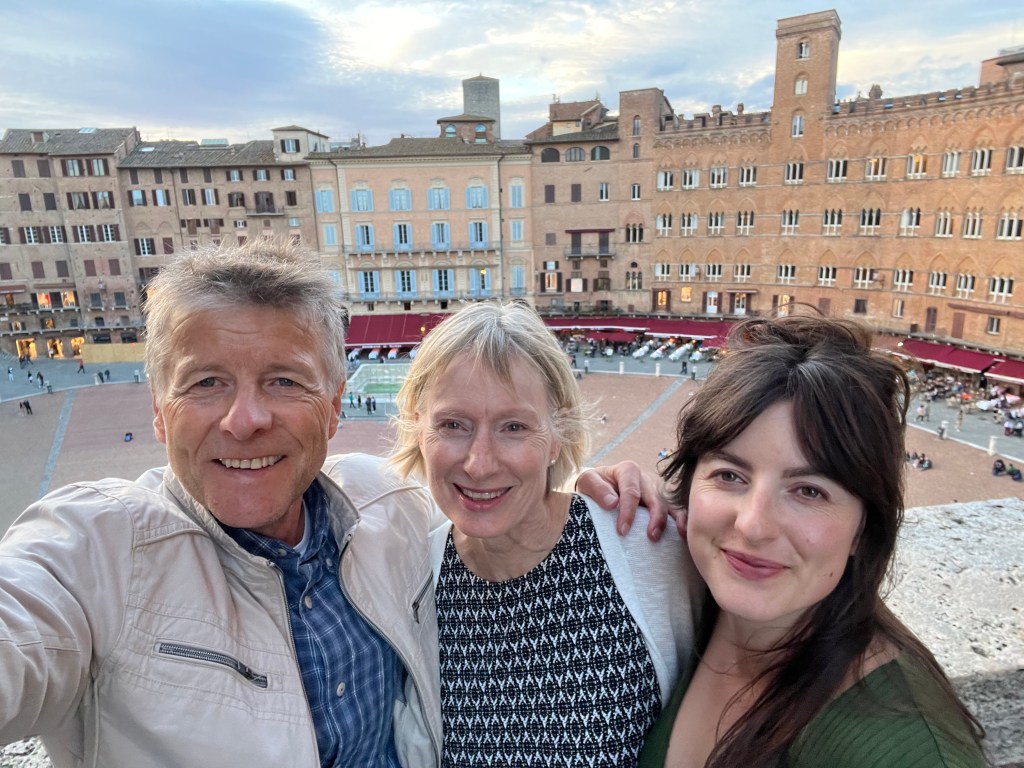
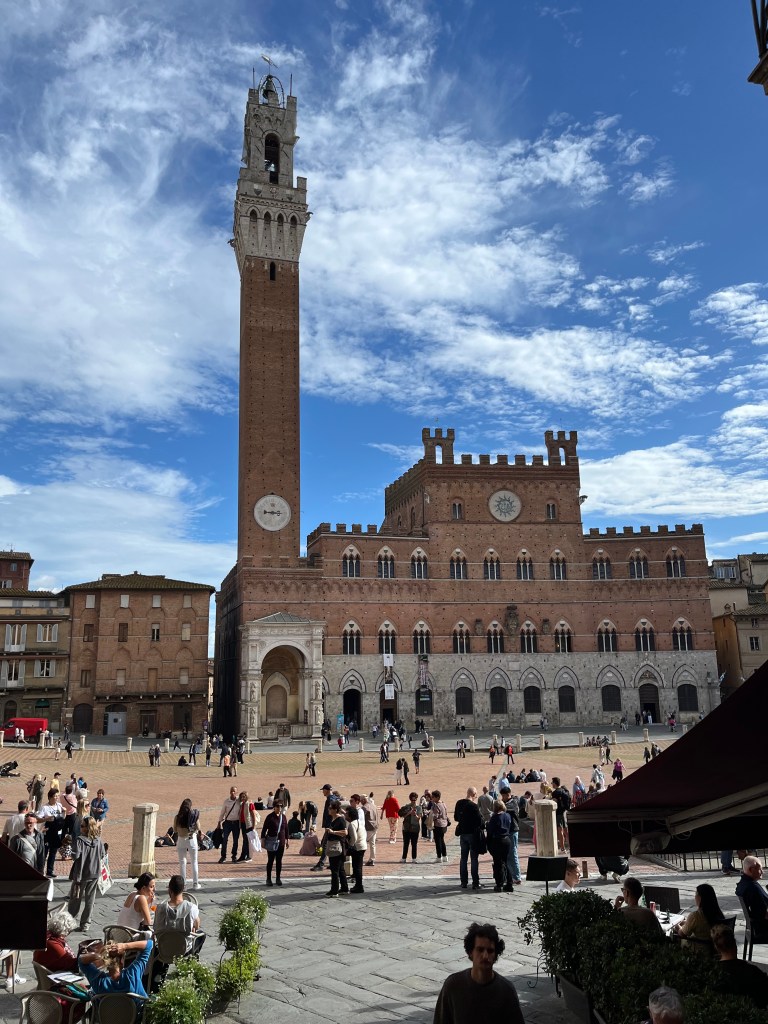
We’d visited Siena in 2015 and knew that we wanted to come back to our favorite Italian city. A midsized, well preserved town center, with it’s Piazza Del Campo and Torre del Mangia (tower) at the center, a beautifully detailed Duomo (cathedral), all picturesquely set on a hill in the center of the rolling Tuscan landscape. How can one not fall in love?

Siena thrived during the Middle Ages and Renaissance. It even rivaled Florence during the 14th – 15th century, which culminated in the Italian Wars. It is the seat of the world’s oldest, continuously operating bank, and the Stadium Senese University founded in 1240 is one of the world’s oldest continuously operating universities. Today, with it’s 50,000 inhabitants, which is almost the same as during the Middle Ages, it is mostly known for its annual Palio, a wild, bareback horse race held on the tight Piazza del Campo twice a year. Just type “Palio” into YouTube to see the spectacle, it is worth it! For me, as an avid road cyclist, Siena is foremost known for its annual Strade Bianchi spring bike race that ends on the Piazza Del Campo.
The Piazza is best enjoyed during summer evenings, sitting in front of one of the Piazza’s cafes and watching the Italians doing their La Passeggiatta, which is their evening promenade, where young and old, usually dressed up, walk with their loved ones hand in hand through town, to see and be seen.

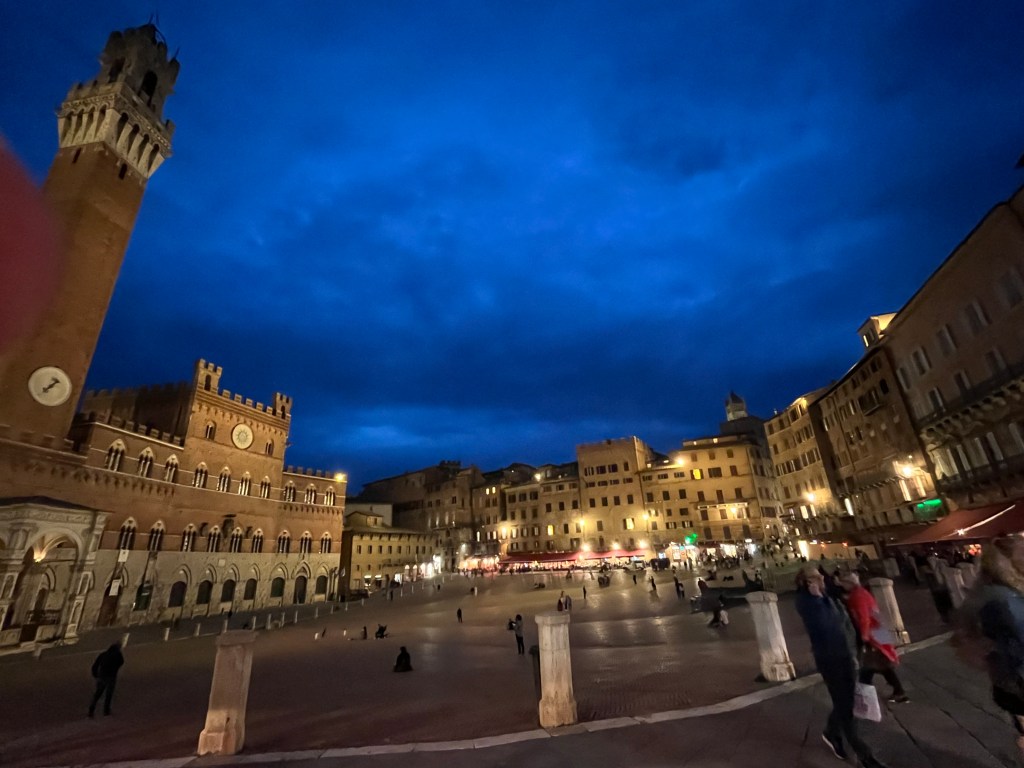
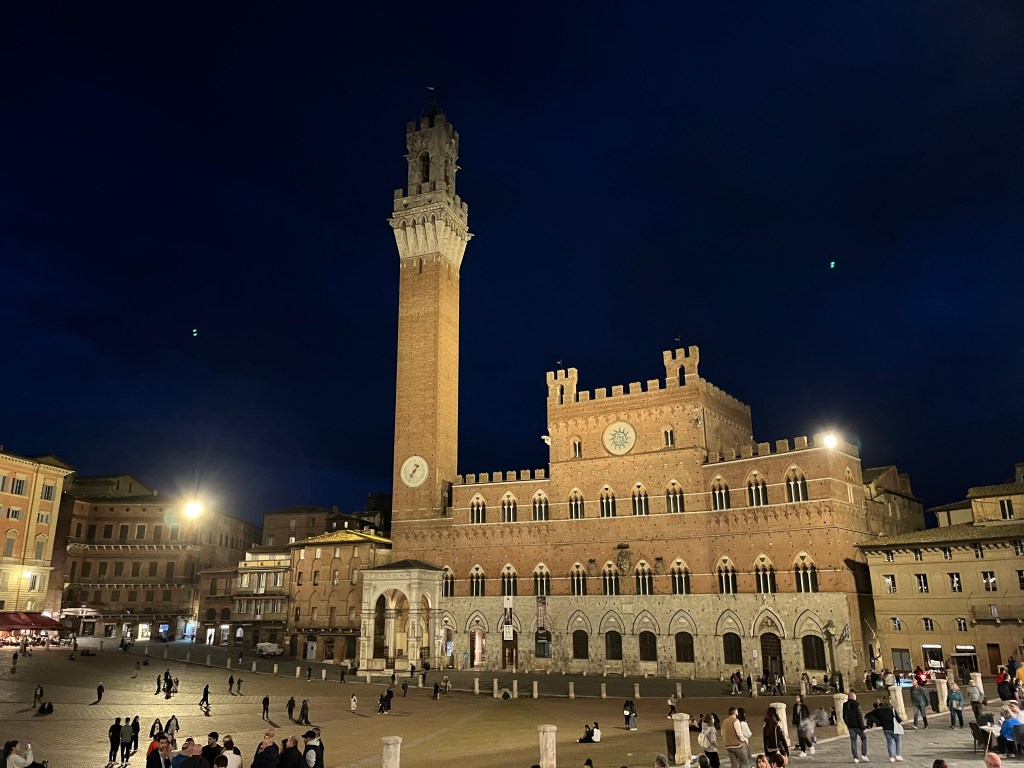
The Duomo di Siena is one of the most elaborately detailed churches anywhere. The striking black and white striping created by the alternating stones used, the fine, filigree details on all of the columns, edges, moldings etc, and then the beautifully marbled inlaid mosaic floor. Our daughter Katrin, with her trained architect’s eyes, was mesmerized! Unknowingly, we were lucky enough to visit during one of the two periods per year during which the entire mosaic floor is actually uncovered and visible.

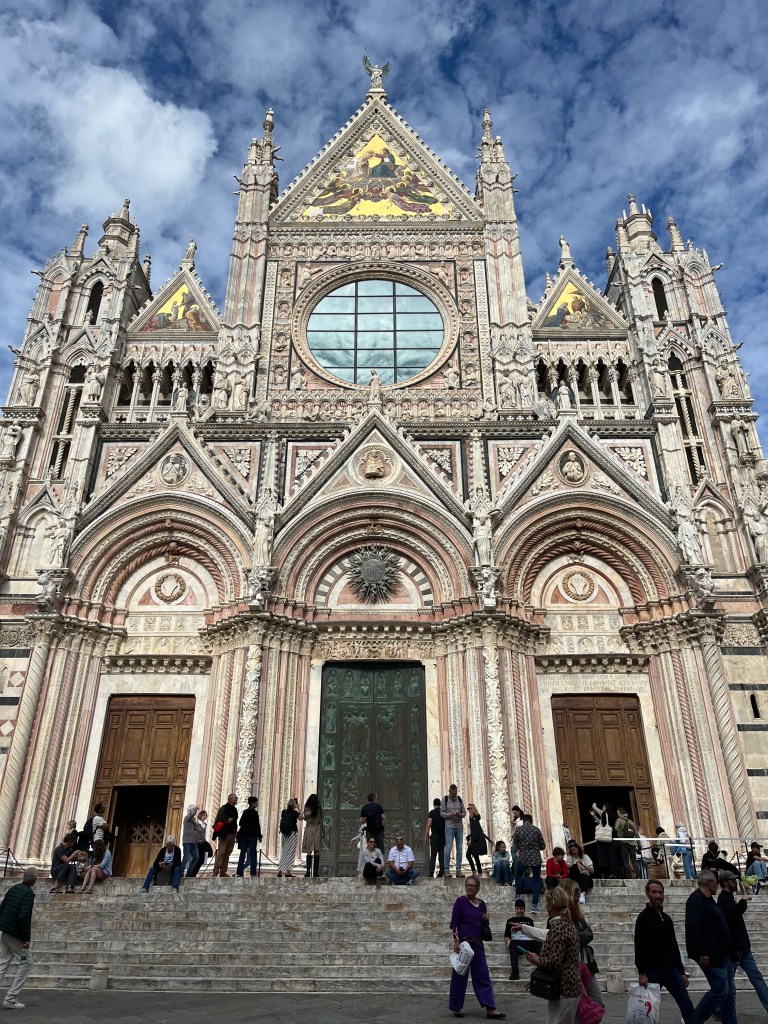
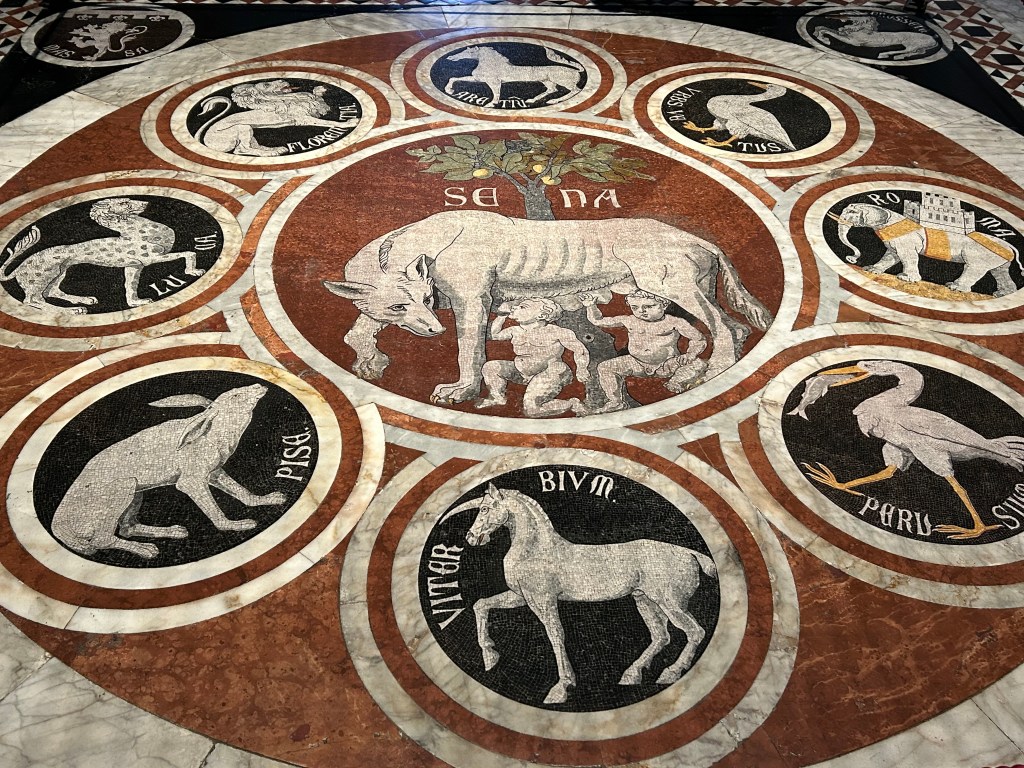
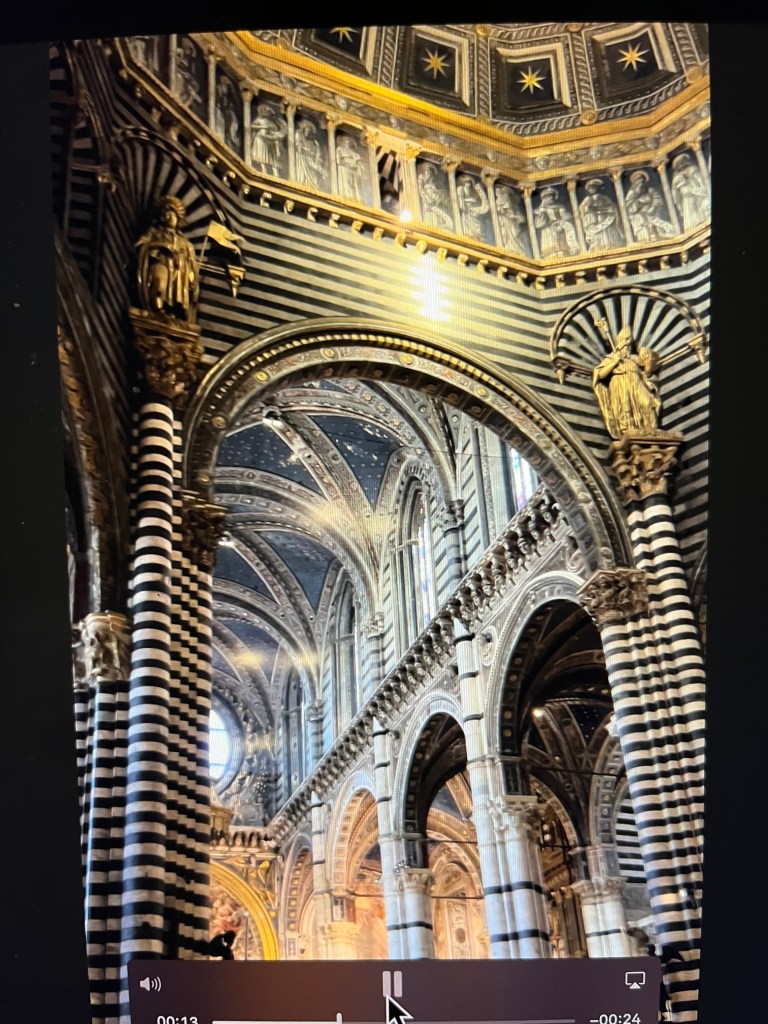
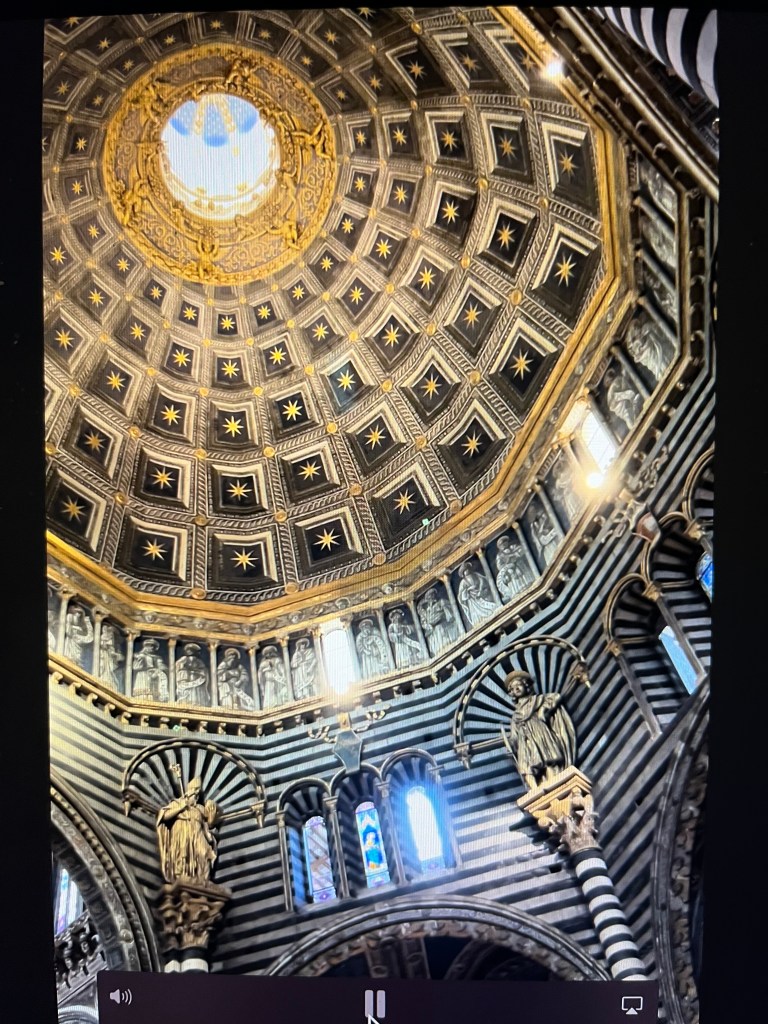
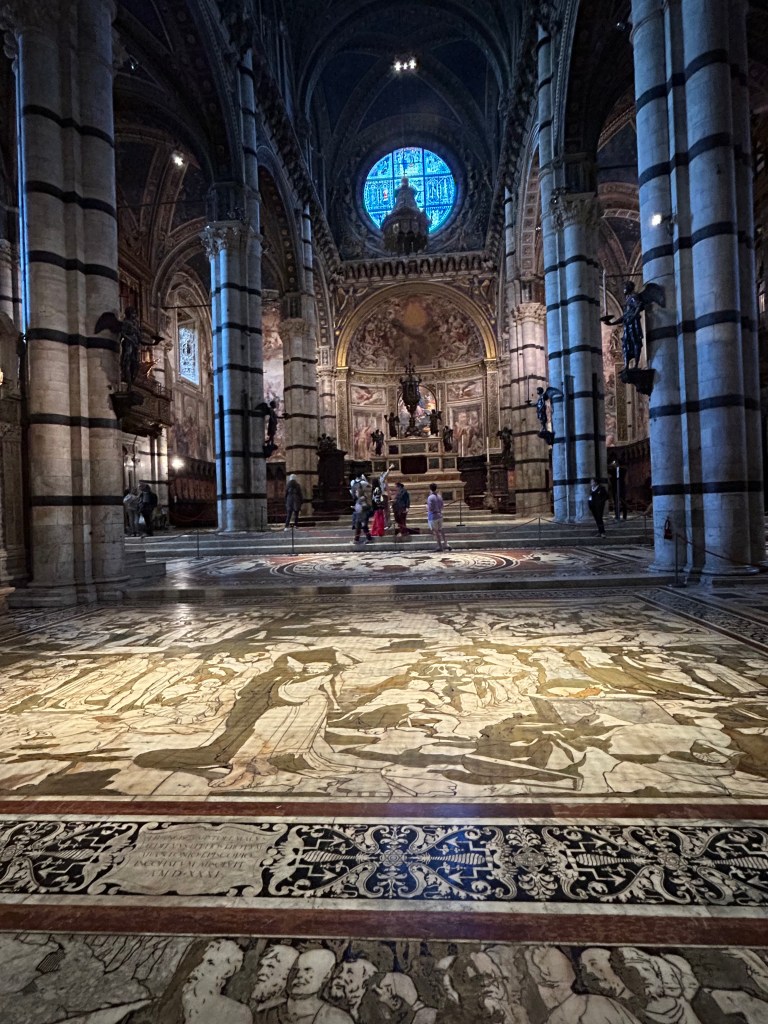
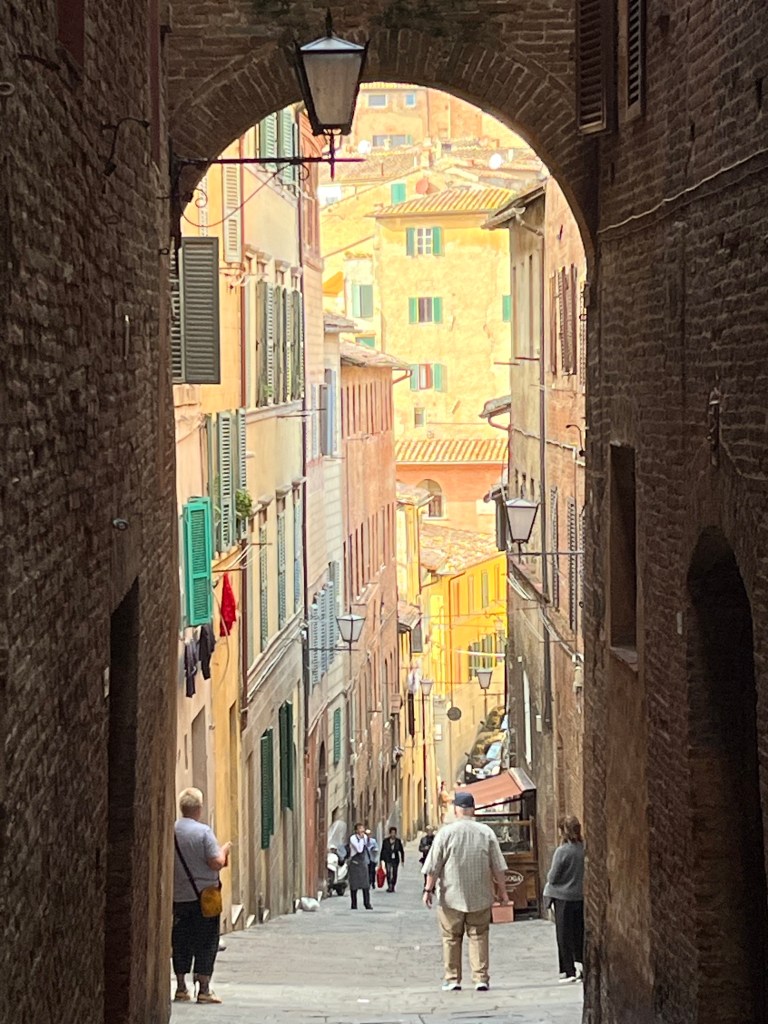
Siena feels relaxing, slow paced, cozy and warm. It is also known for its food and has an array of small, cozy restaurants. We stayed for two nights in the same Arbergo we stayed at in 2015. Located in the old center of town, it has simple rooms and a spectacular communal terrace facing El Campo and the Duomo, and no, we didn’t mind having to carry our luggage from the car parked outside the center to our lodging, just like in Assisi.


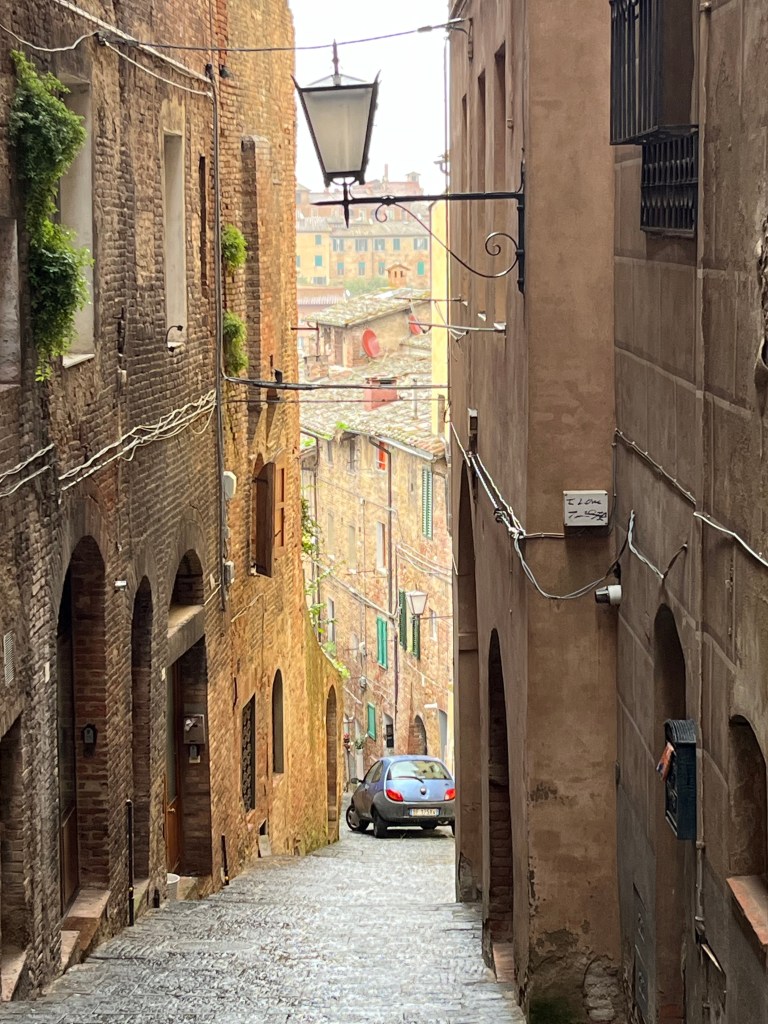

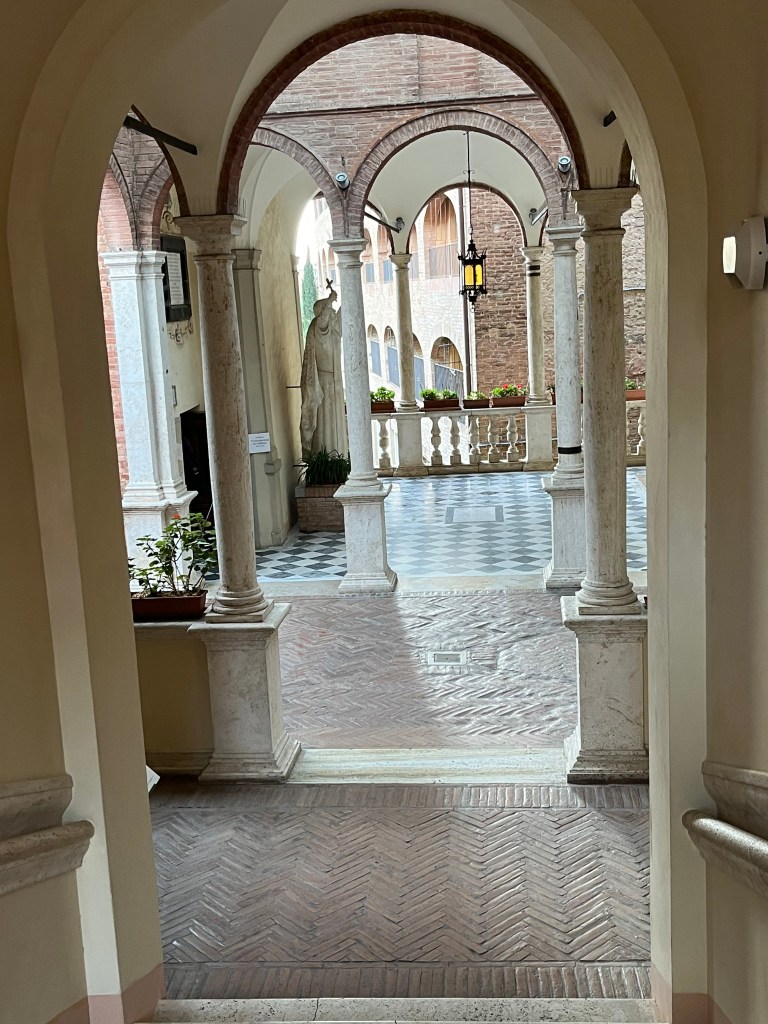
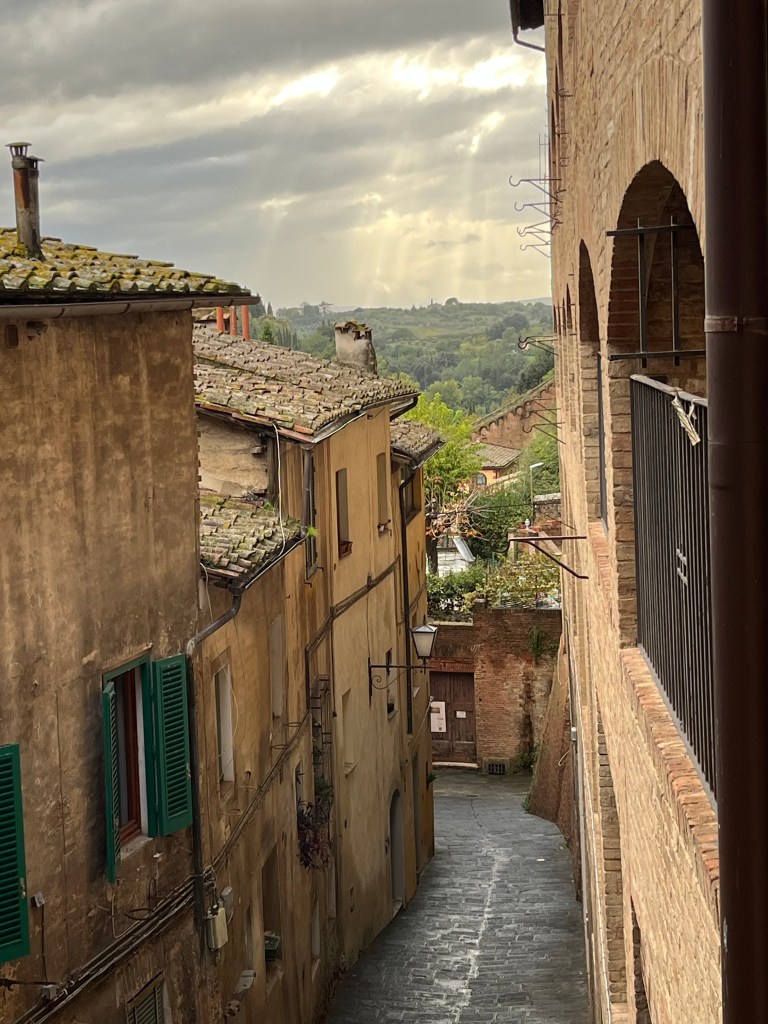
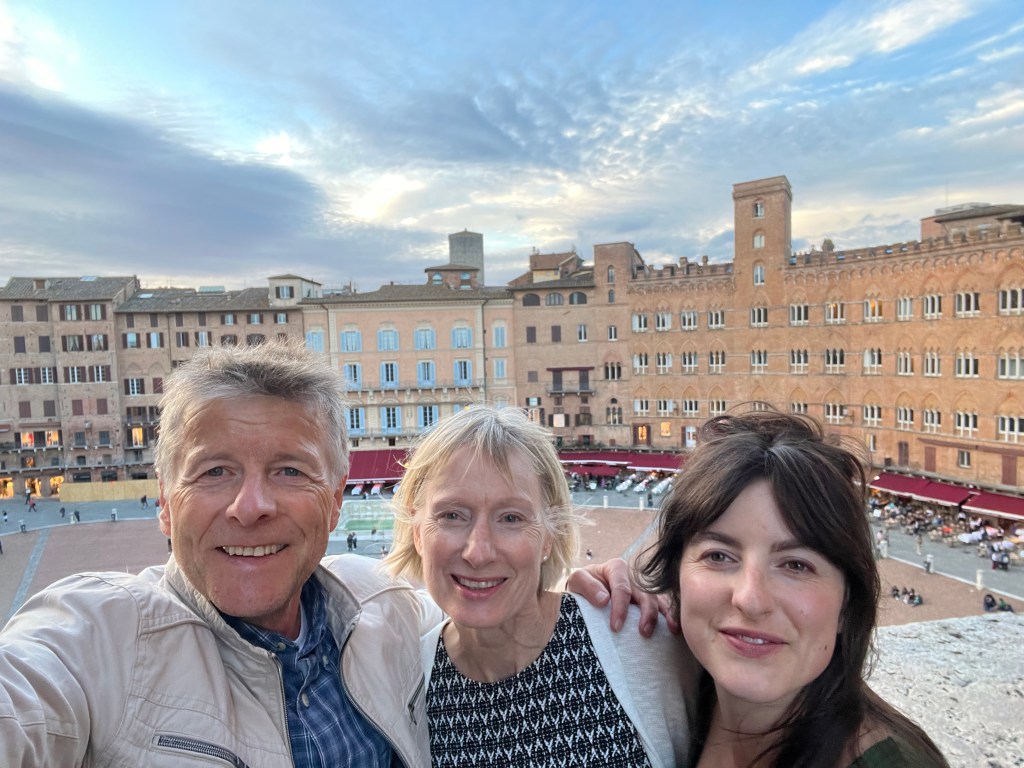
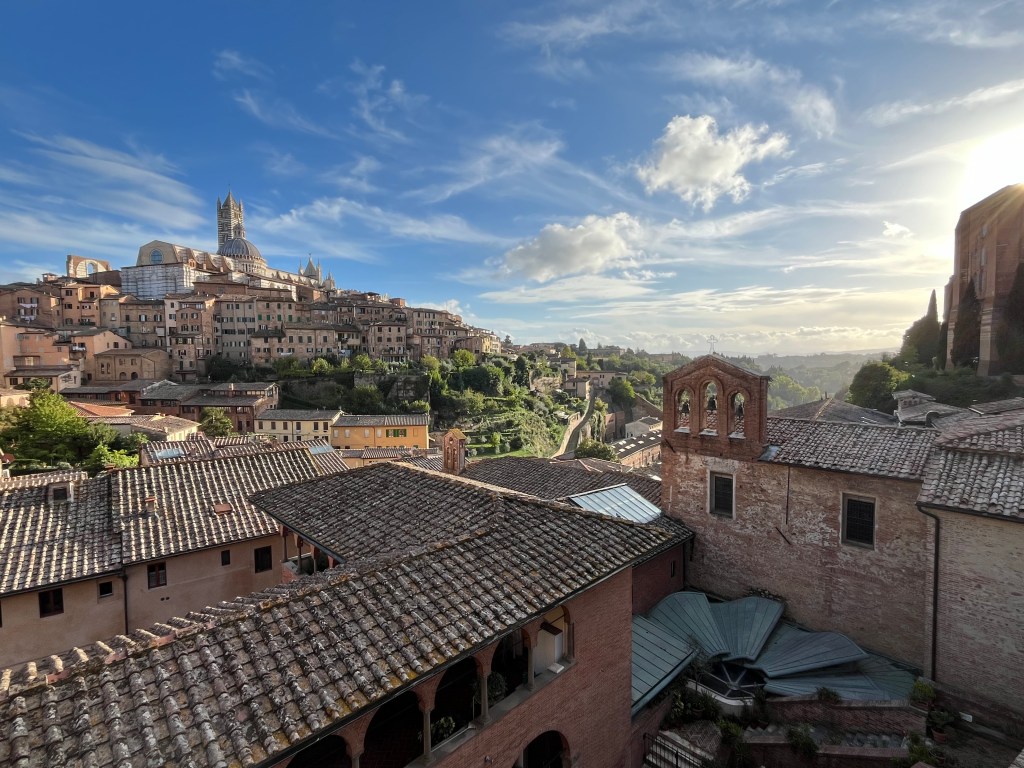
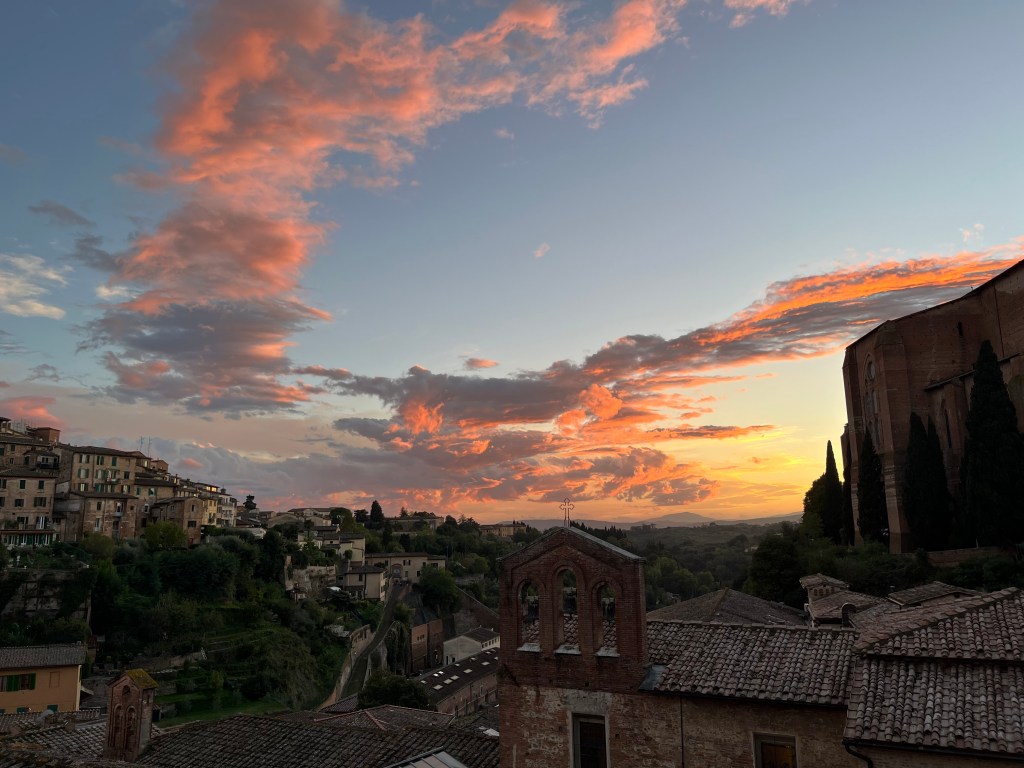
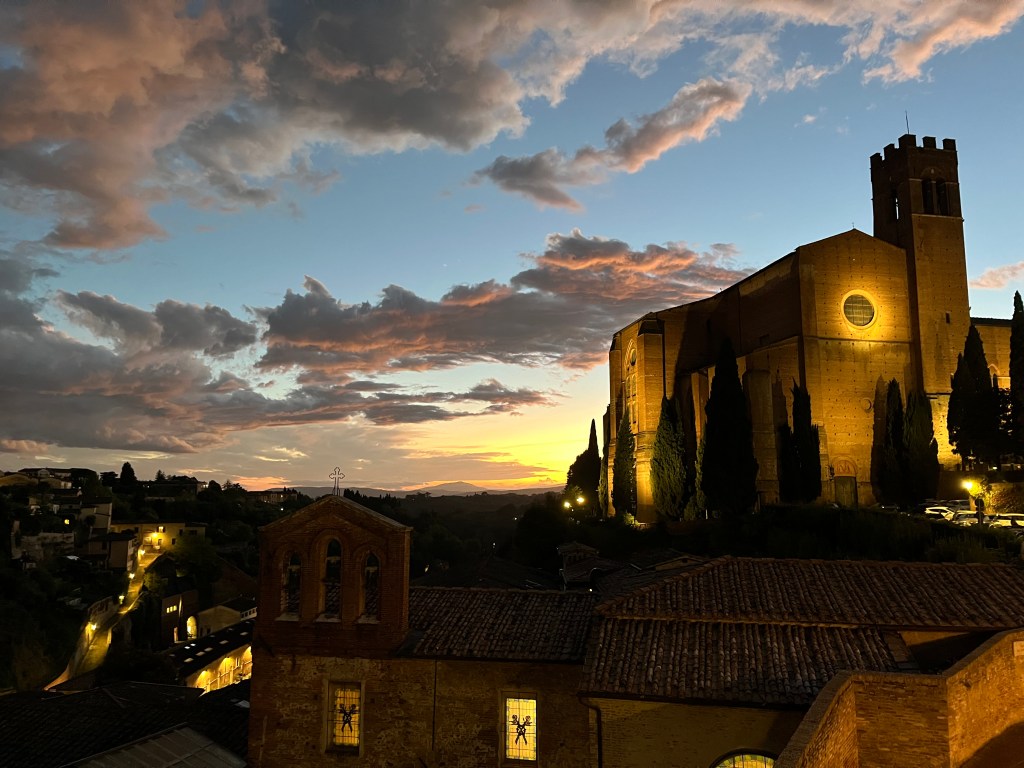
Siena didn’t disappoint, and again, we hope to be back some day. Chiao Bella Siena!
Florence
Just 50 miles north along the Arno river lies Florence. This rich and vibrant Tuscan metropolis, with its 370,000 inhabitants, has a totally different vibe than its former rival Siena. After struggling to find parking and settling into our Airbnb on the south side of the Arno, we headed out to see the city.

Just a short walk away, we crossed the Arno over the Ponte Vecchio. The old bridge, used to be filled with butcher and tanner shops, that could easily toss their waste into the Arno below. Since the 16th century, the bridge is crammed with artisan goldsmiths and jewelry shops. Today it is one of Florence’s major must-see tourist sites.
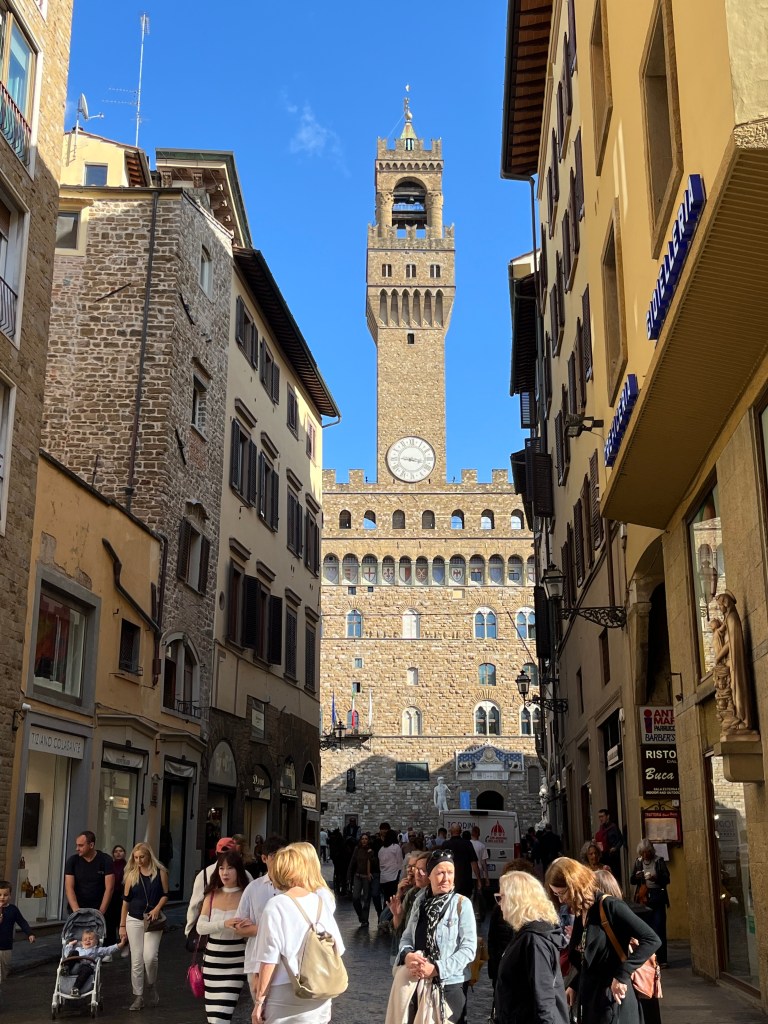
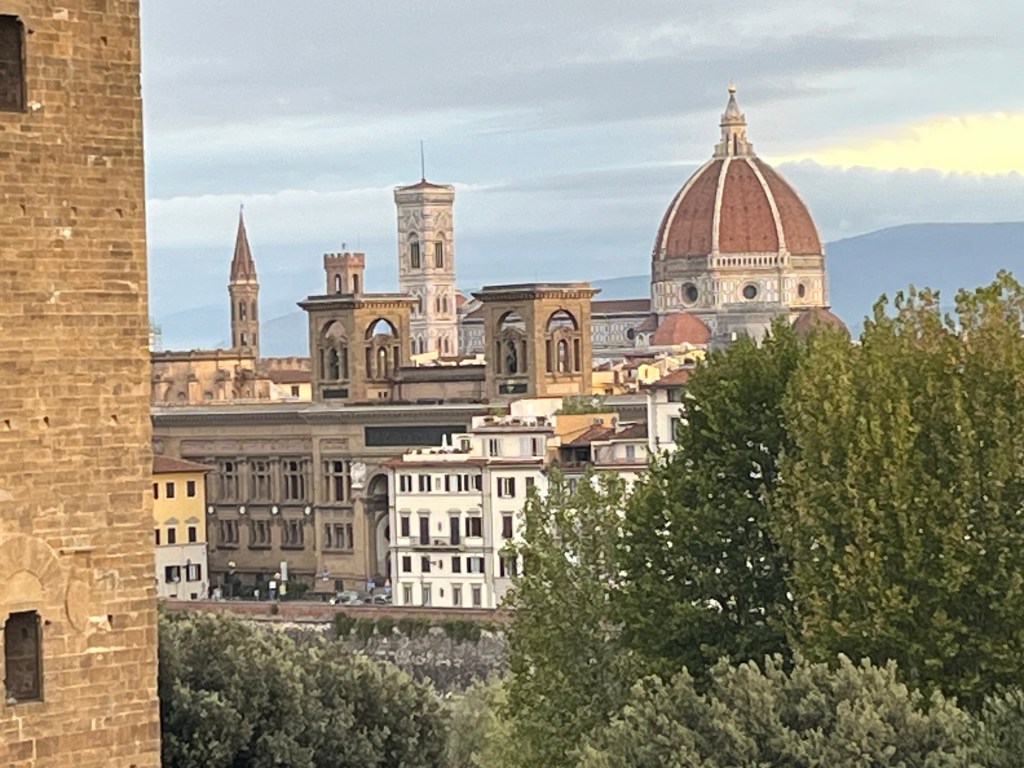
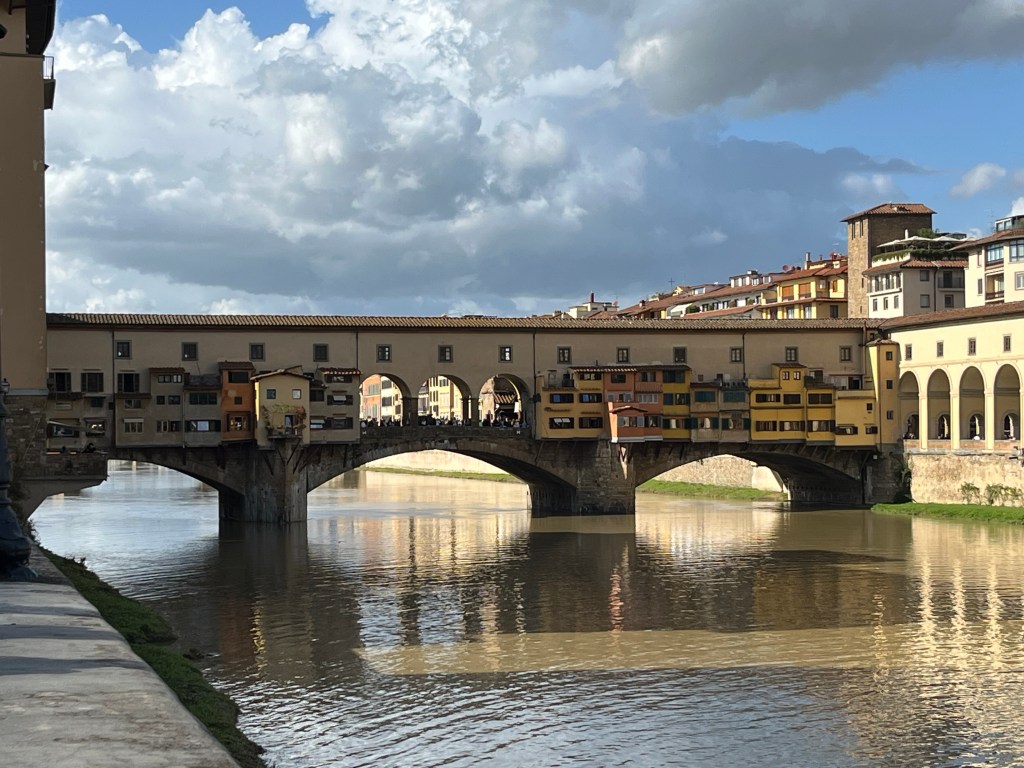
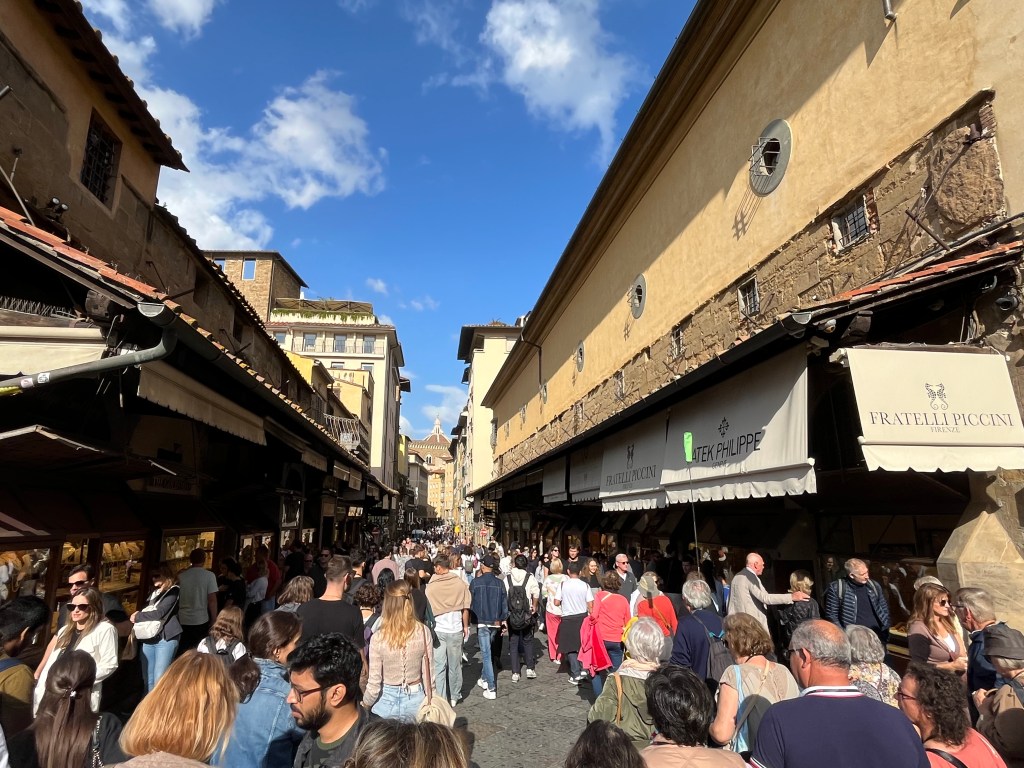
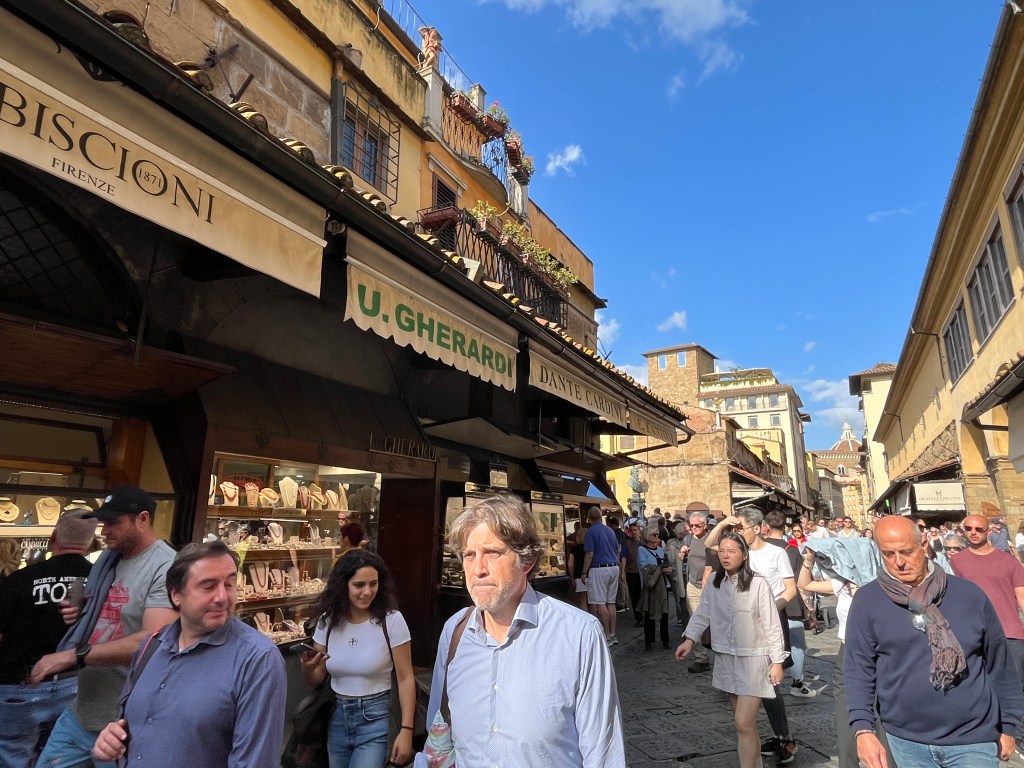
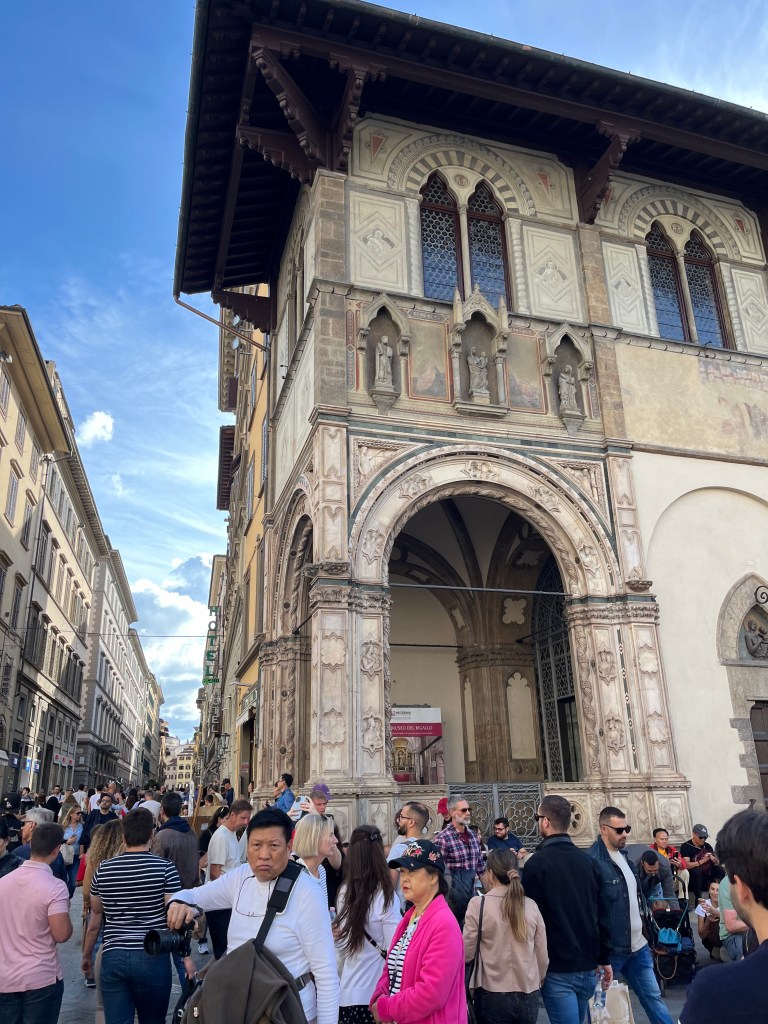
Other major tourist sites include the Duomo with Baptistry, the Basilica of Santa Croce, the Palazzo Vecchio, the Uffizi Gallery, Spedale degli Innocenti, the Museo National de Bargello, and of course the Galleria dell’Accademia housing Michelangelo’s David sculptor. Most sites, especially the Duomo with Baptistry, the Uffizi Galleria, and Galleria dell’Accademia, require timely visitation reservations. This list is far from complete and there are a lot of other interesting museums and piazzas to be seen right in the center of Florence. As you might see from the photos, even in October the city was packed with tourists, and the lines to get, for instance, into the Duomo, still stretched for a couple hundred yards.

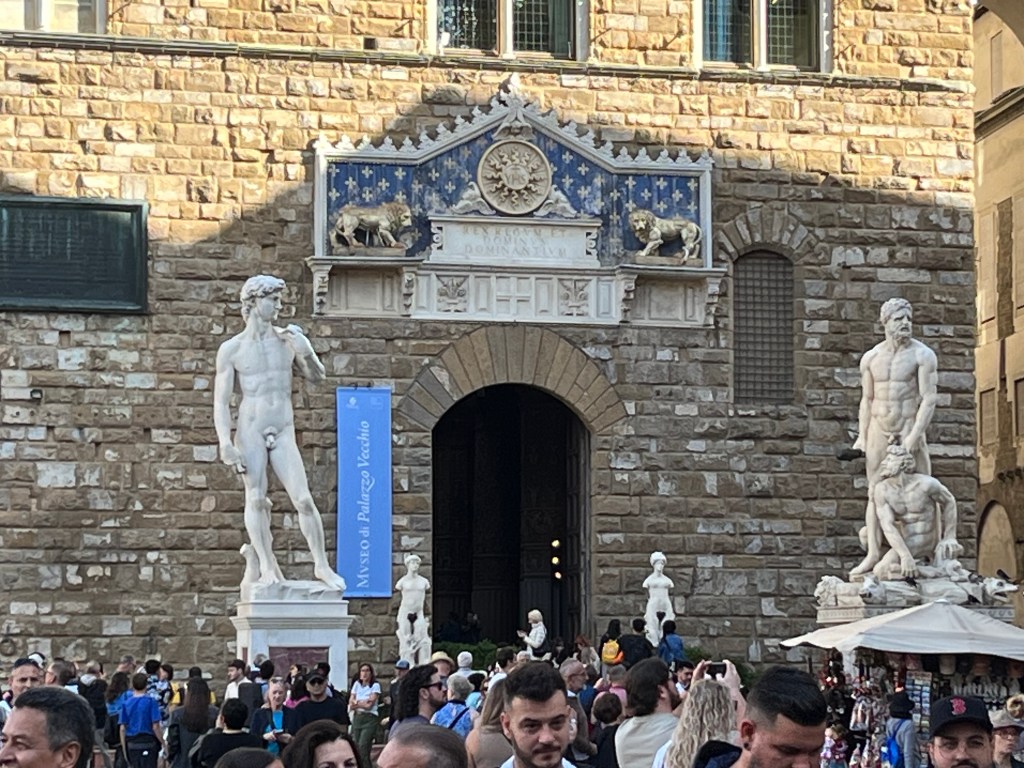

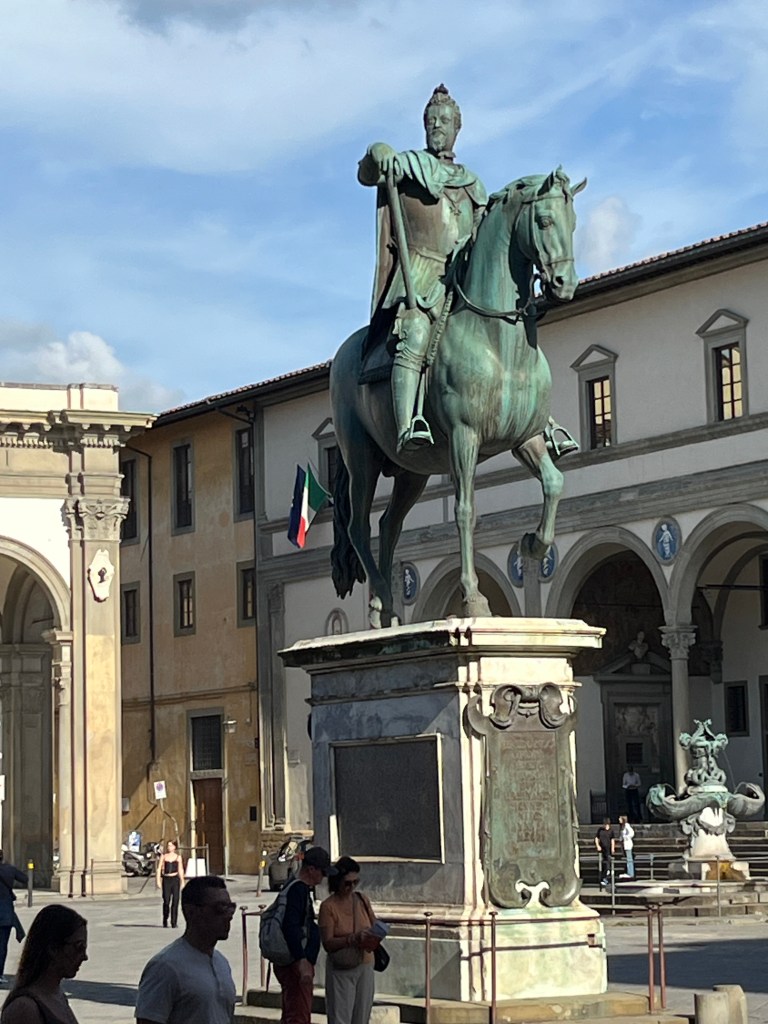

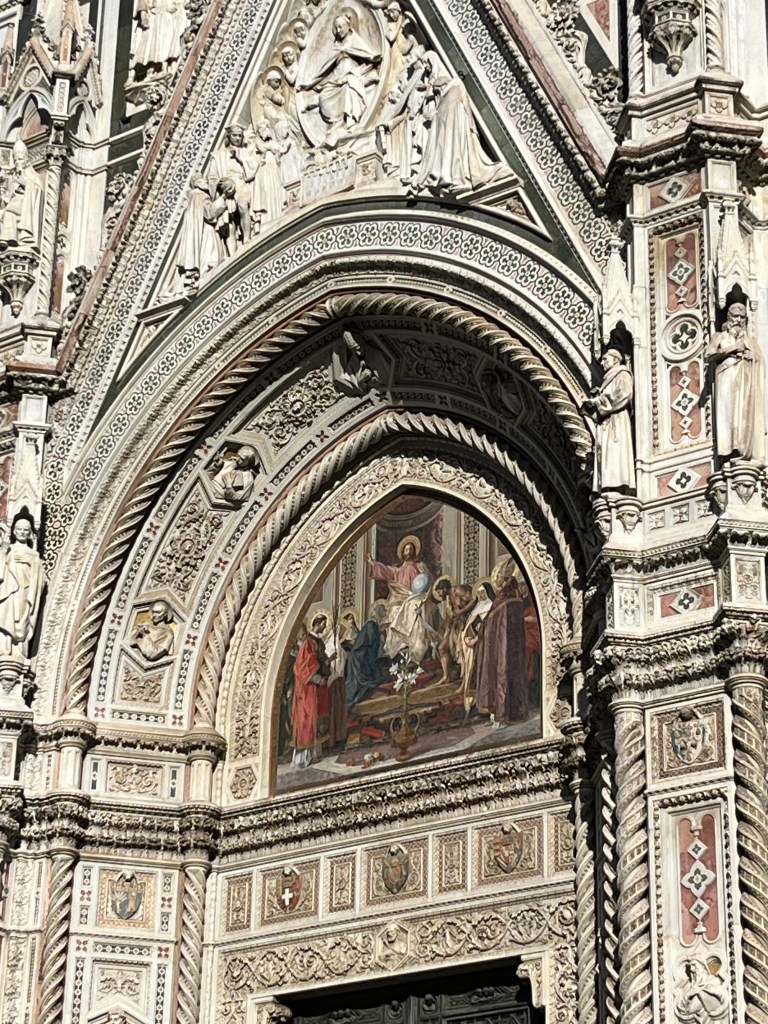
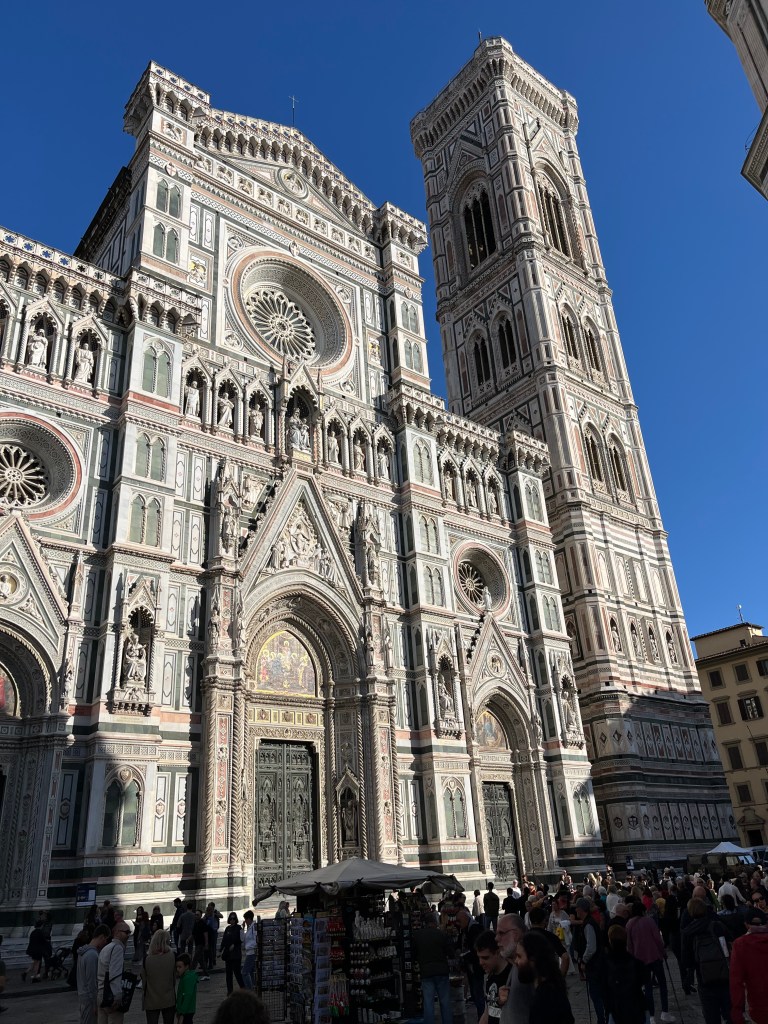


The outside of the Duomo, tower, and Baptistry, completed in the 15th century, are beautifully intricate. The Duomo structure is dominated by its iconic red dome, designed by Filippo Brunelleschi. The dome is double shelled and another trailblazing engineering marvel one could write a lot of details about, like the Pantheon in Rome.
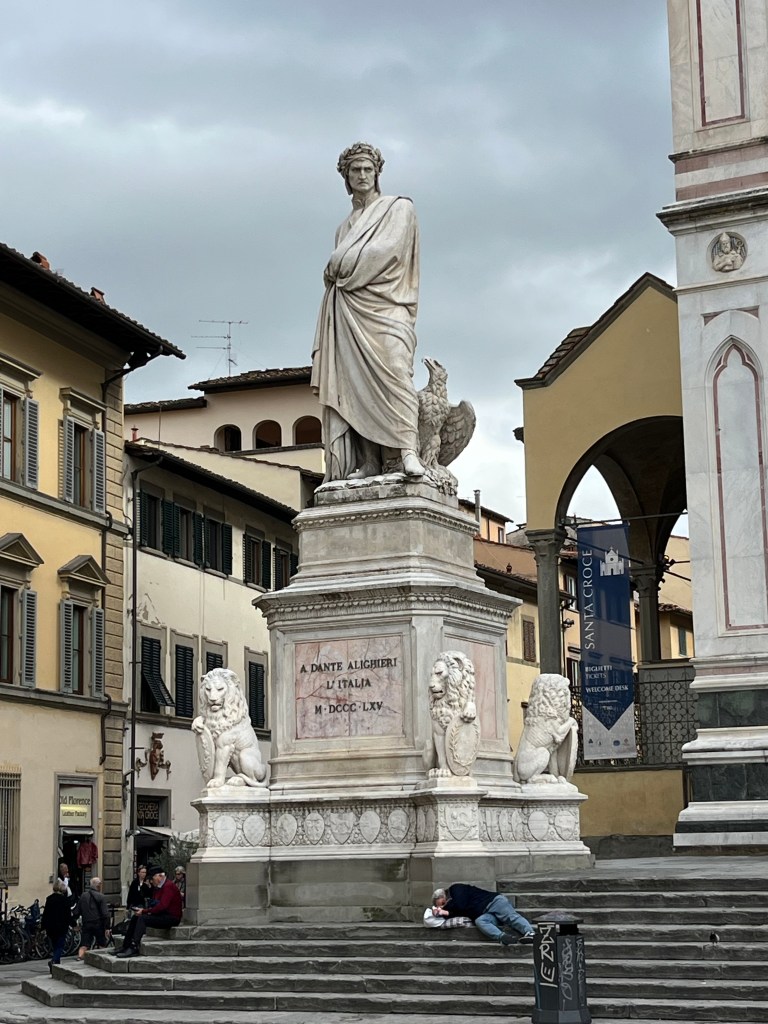
We found the Basilica of Santa Croce, which legend has it, was founded by Saint Francis himself, a nice surprise, where one can get in without reservation and long lines. This largest Franciscan church is beautiful inside and houses the tombs of some of Florence’s most renown residences, like Michelangelo, Galileo, Machiavelli. Dante, who was born in Florence, is buried in Ravenna, yet has a memorial in the church and has a statue placed outside on the Piazza di Santa Croce.
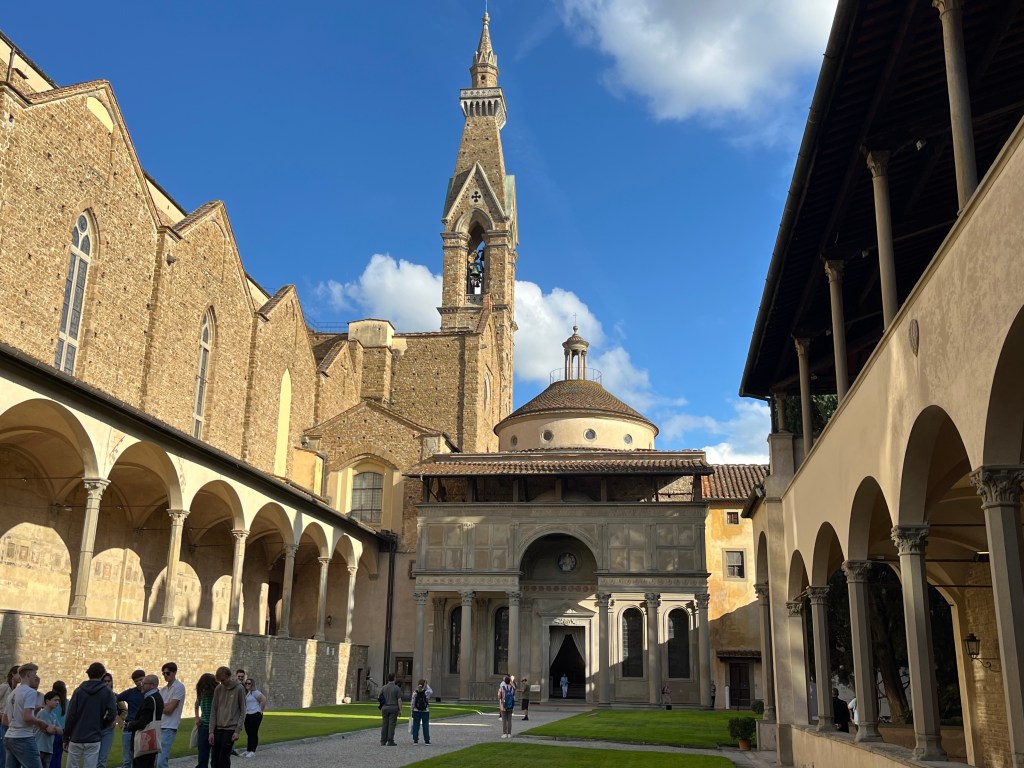
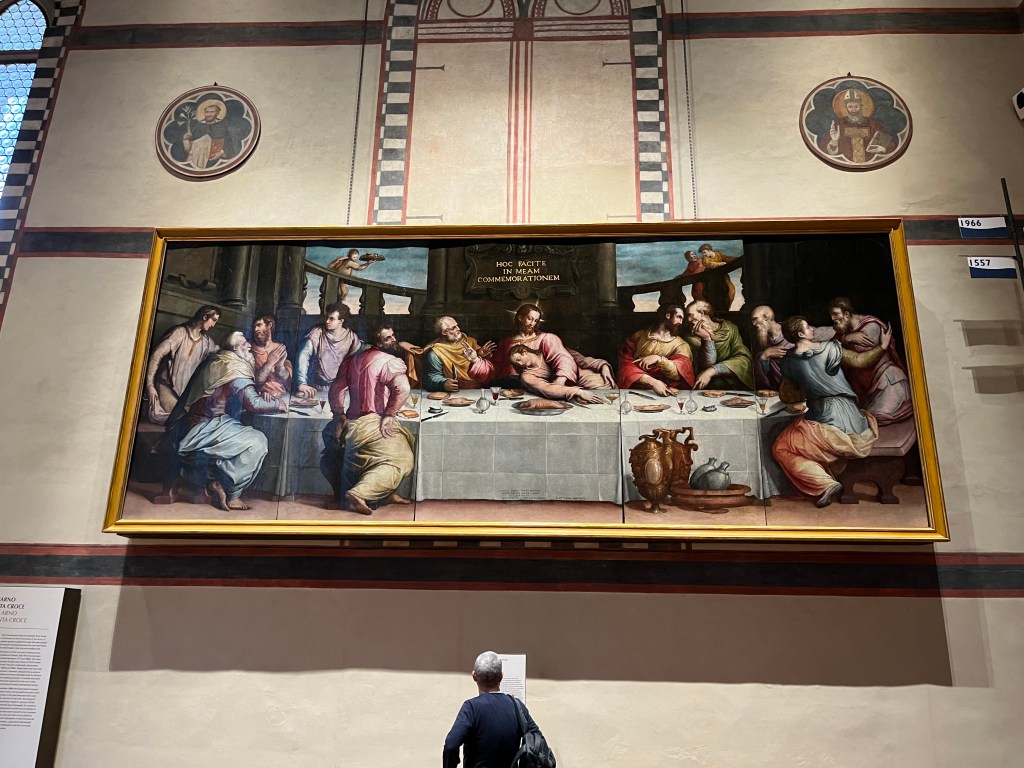
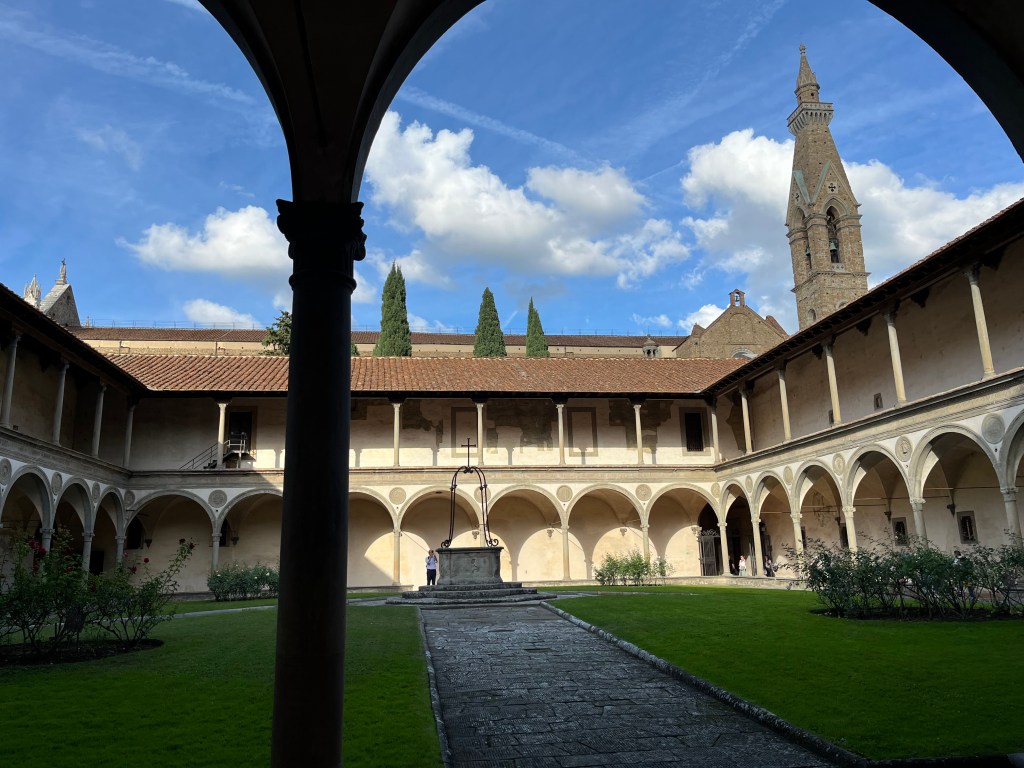
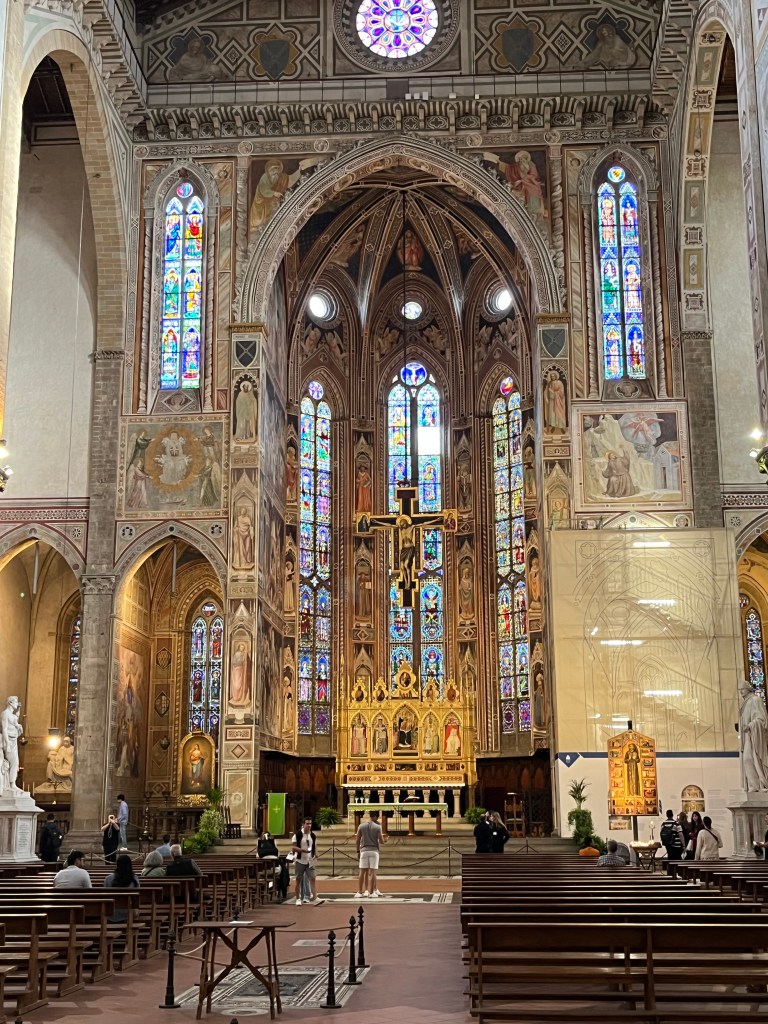
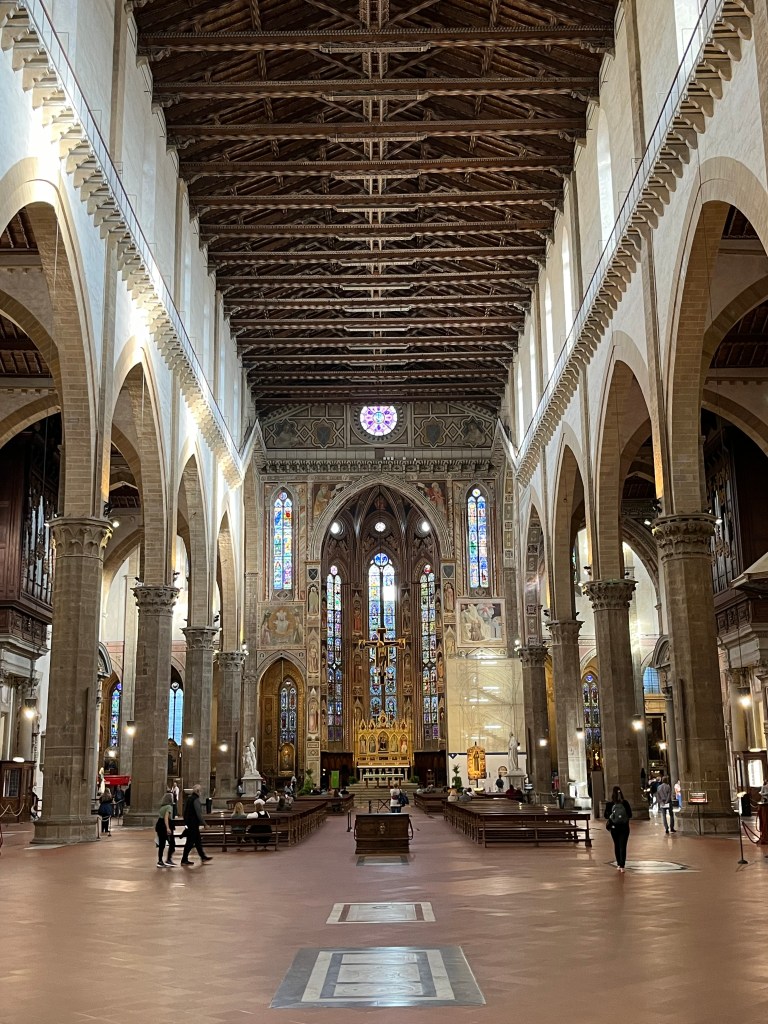
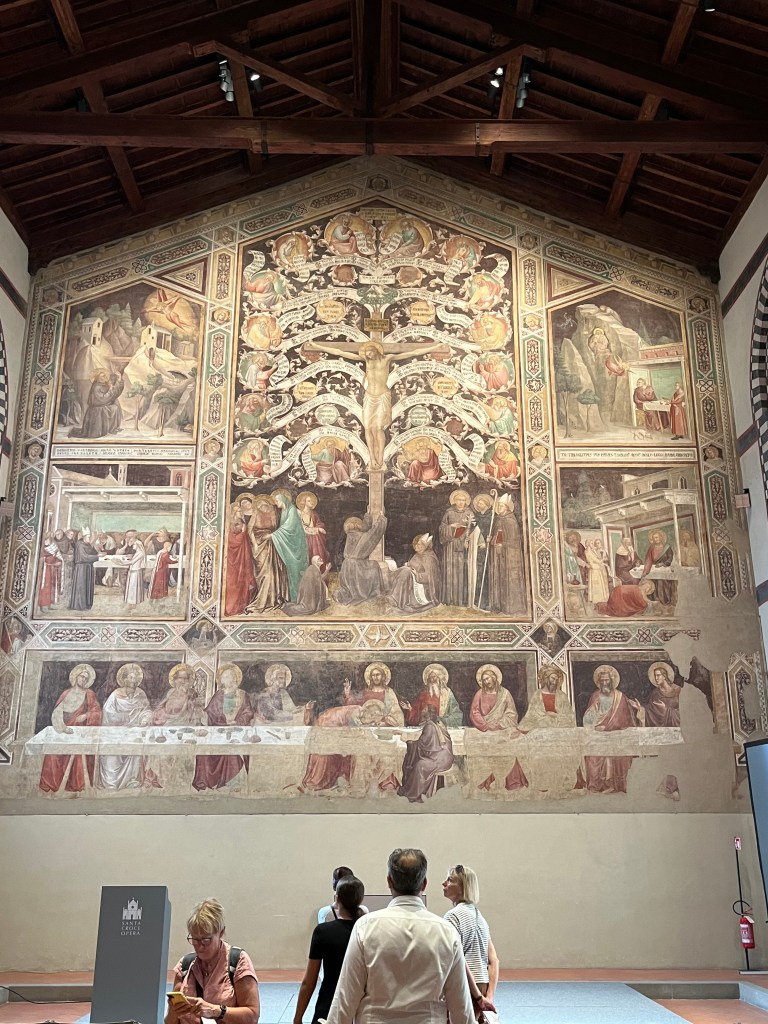
Within the old city, with all its historic tourist sites, luring restaurants with there hung slabs of Tuscan beef on display in the windows, the inner city is also a vibrant shopping district, from high end clothing, jewelry stores etc., to an abundance of leather stores. In fact, walking through some of the narrow streets, the smell of the fresh leather hangs in the air from one leather store to the next.
Overall, Florence appeared a little too busy, tight, and commercialized to us. Two nights were enough and we headed west to the Mediterranean coast for a quieter finish of our tour of Italy.
Cinque Terre
Unlike the hustle and bustle of Florence, Cinque Terre is mostly about experiencing the small quiet coastal towns by relaxing and hiking quietly from one town to another through the beautiful scenery. There are five coastal towns in Cinque Terre, Monterossa al Mare, Vernazza, Corniglia, Manarola, and Riomaggiore. All of these towns differ, some have a harbor, some have beaches for swimming, some are totally perched above the shore etc., so there is something for everyone.
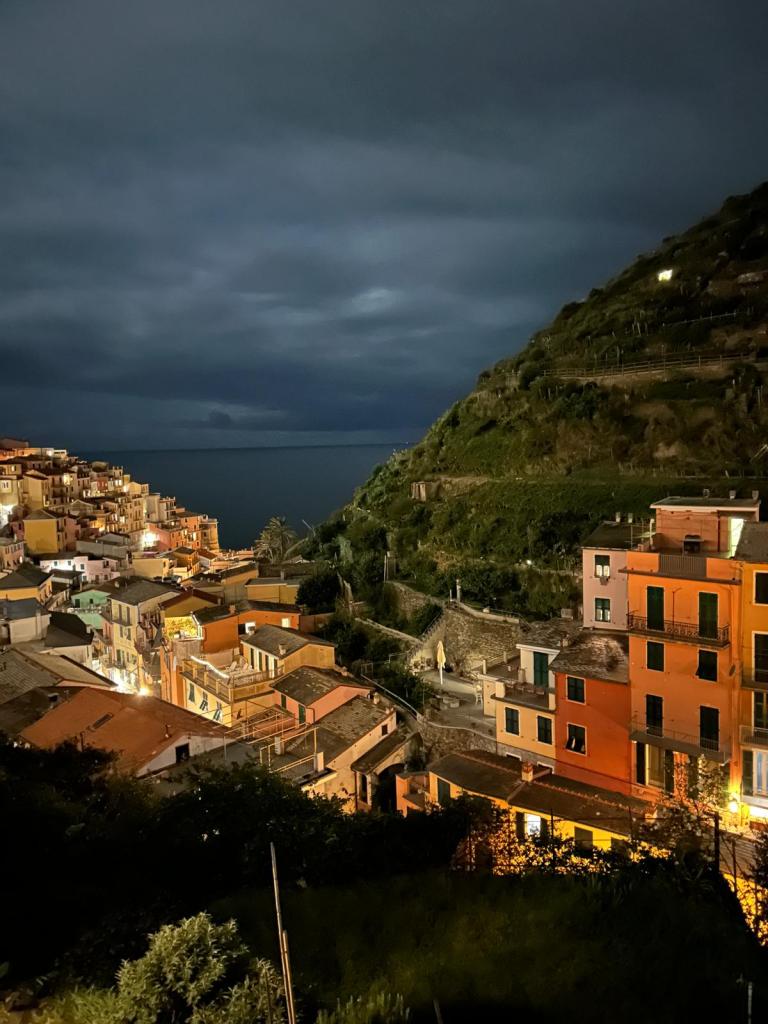
We had an apartment booked in Manarola, which, just like on the Amalfi coast, turned out to be as good, or in this case better, than advertised. Manarola is medium sized and offers everything you need. It is quieter than, for instance Vernazza, and does not have a swimming beach like Monterossa al Mare; for us it was just right. The weather did not provide a lot of sunshine, yet we lucked out by staying dry. After parking the car above town, we spent the next day hiking and did what pretty much every other tourist does in Cinque Terre, took the train. The frequently running regional train system starting from La Spezia in the south and connecting to Genoa in the north is amazing. It seems that most of the short distances between the coastal towns lead through tunnels! We took the train from Manarola for two stops north to Vernazza, pictured below:
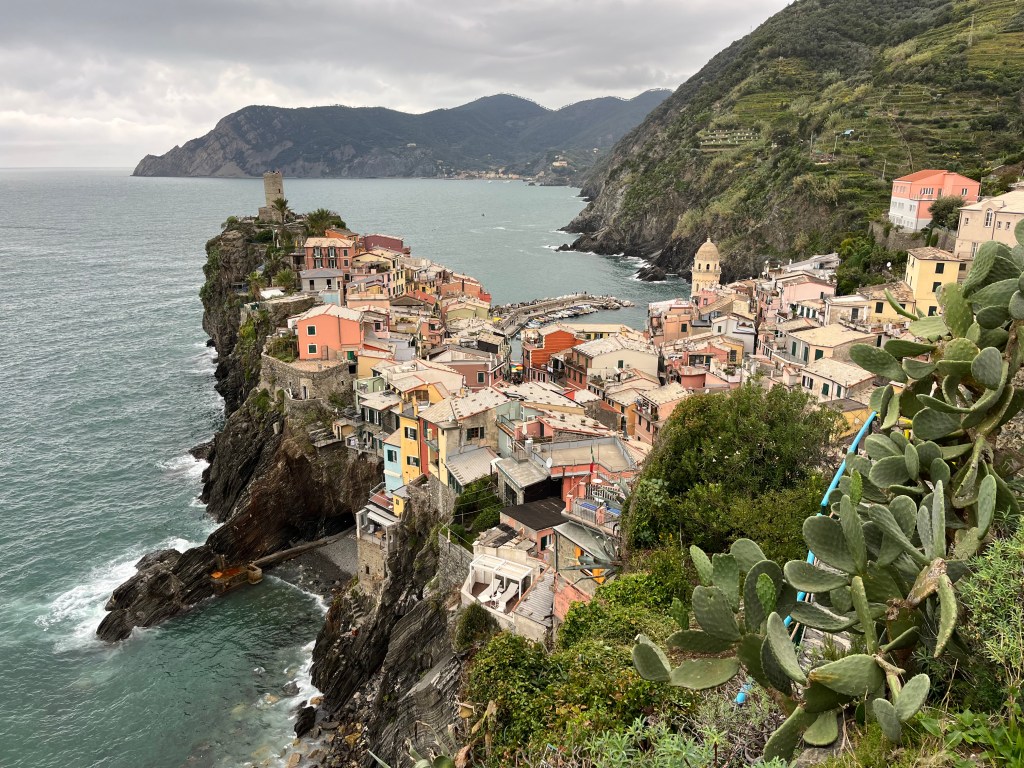
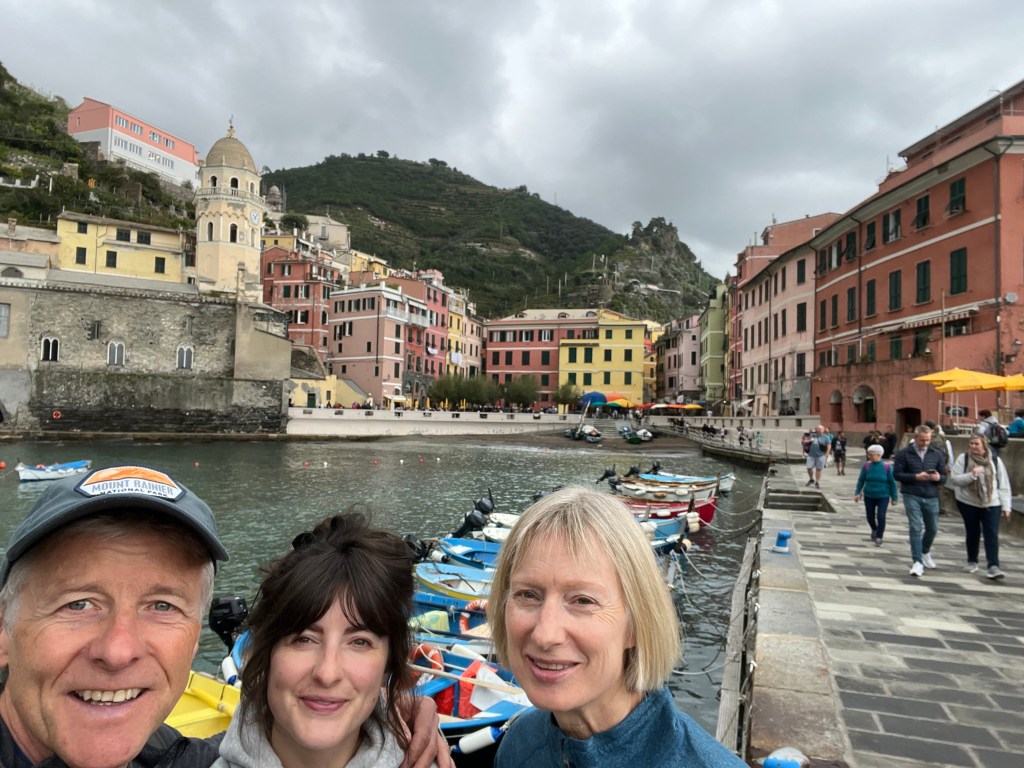
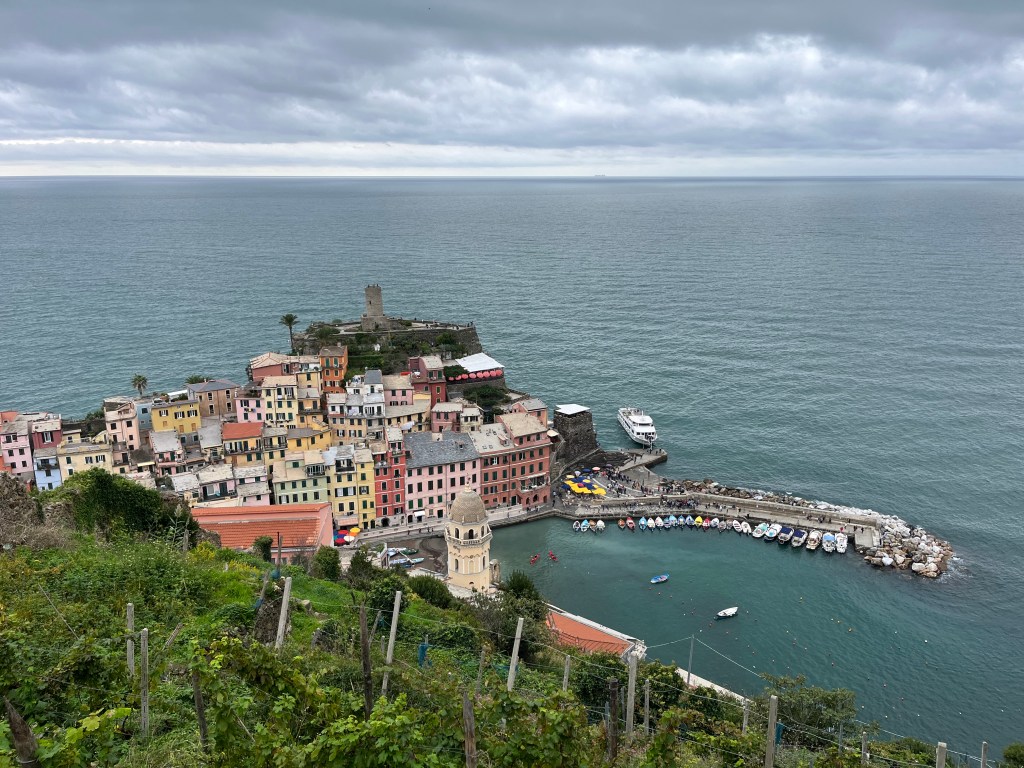
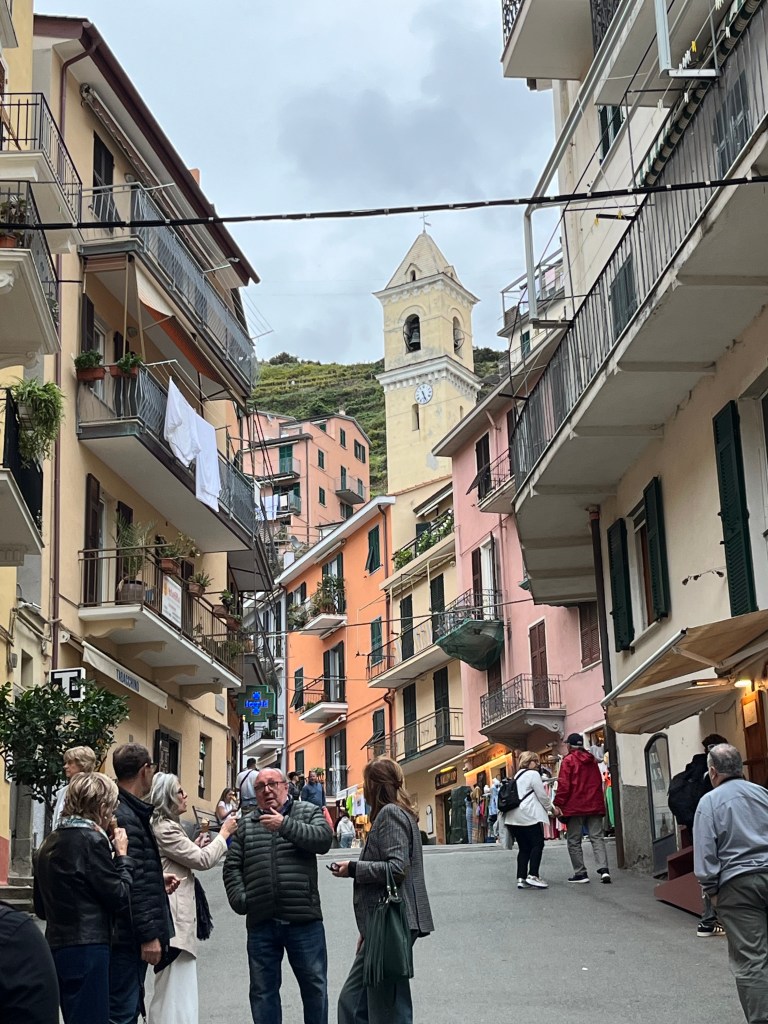

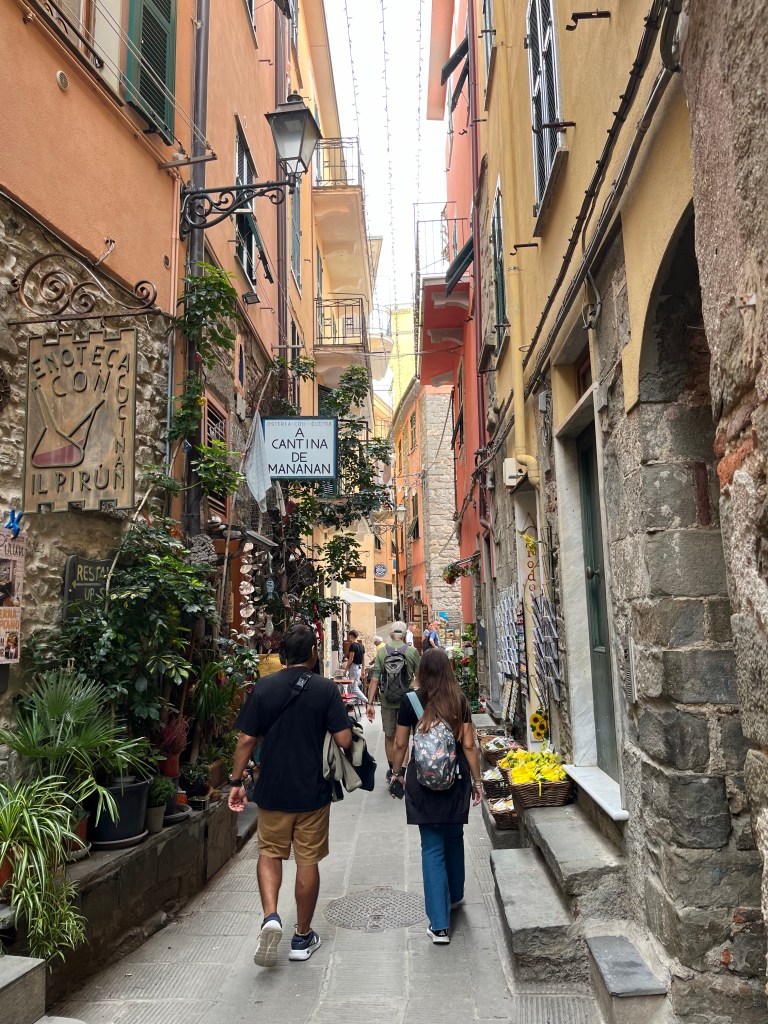
Vernazza, with its spectacular setting and tiny fishing boat harbor, is very picturesque, and considered the most scenic and one of the more visited towns in Cinque Terre. Based on our experience, we totally agree. From Vernazza we took the train one station back to Corniglia. After our hike from the train station up into town, we had lunch, and hiked back to Manarola. We were glad that we did not choose a longer hike, as the hike was steep up and down on a worn and rocky trail. The views were spectacular and, as in the towns, we encountered several families and groups of older folks. Most of the people likely retired, imagine that. Seems like we heard a lot of French, German, and a good amount of English being spoken.
Manarola, pictured below, turned out to be the perfect base for us:
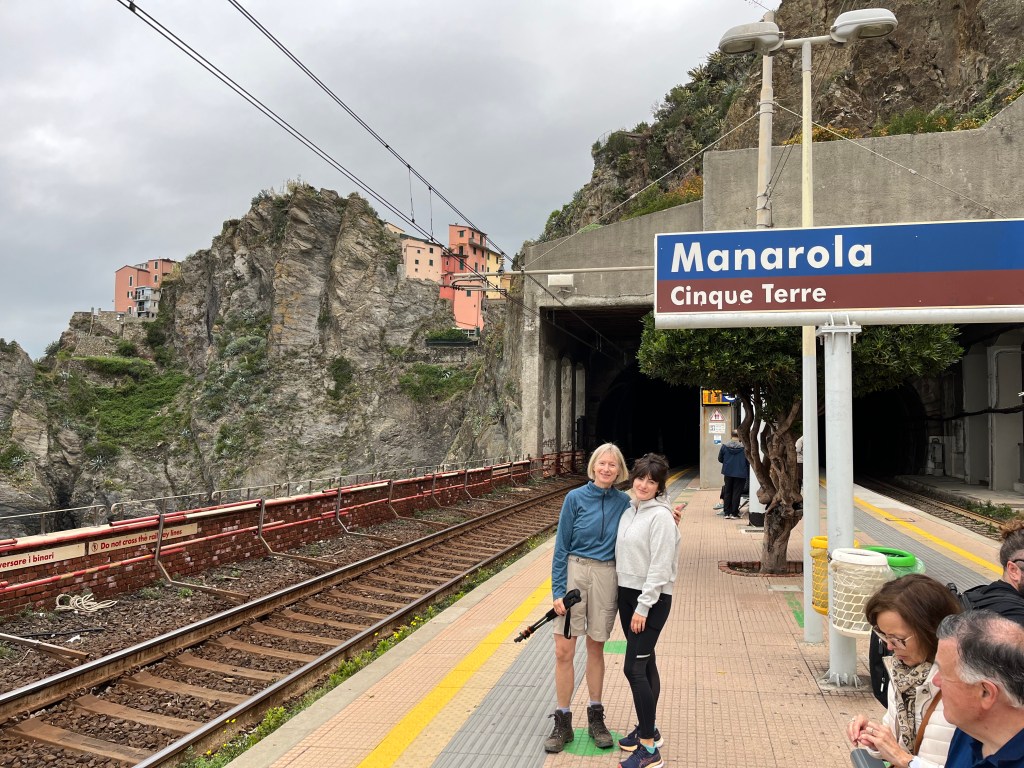
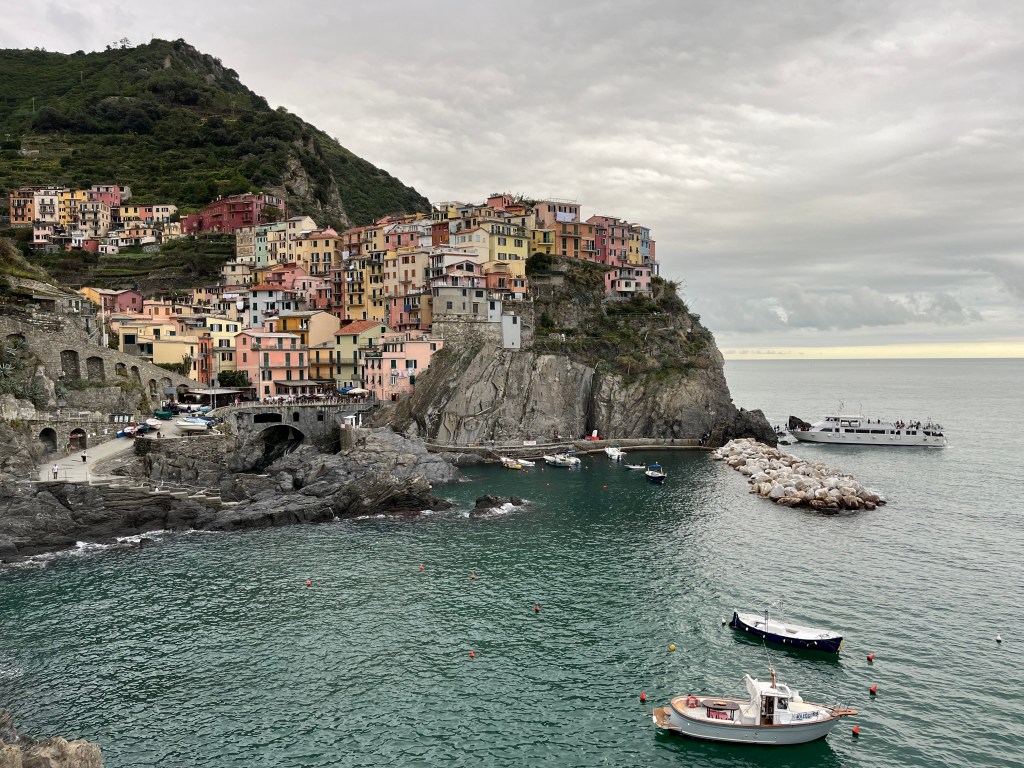


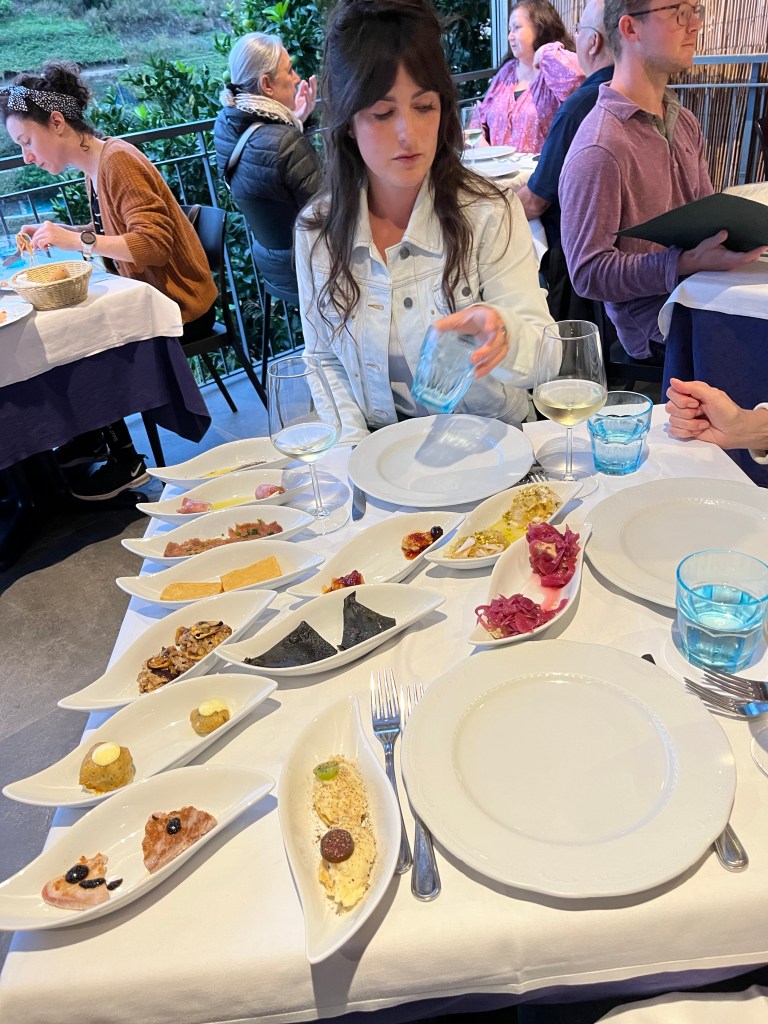
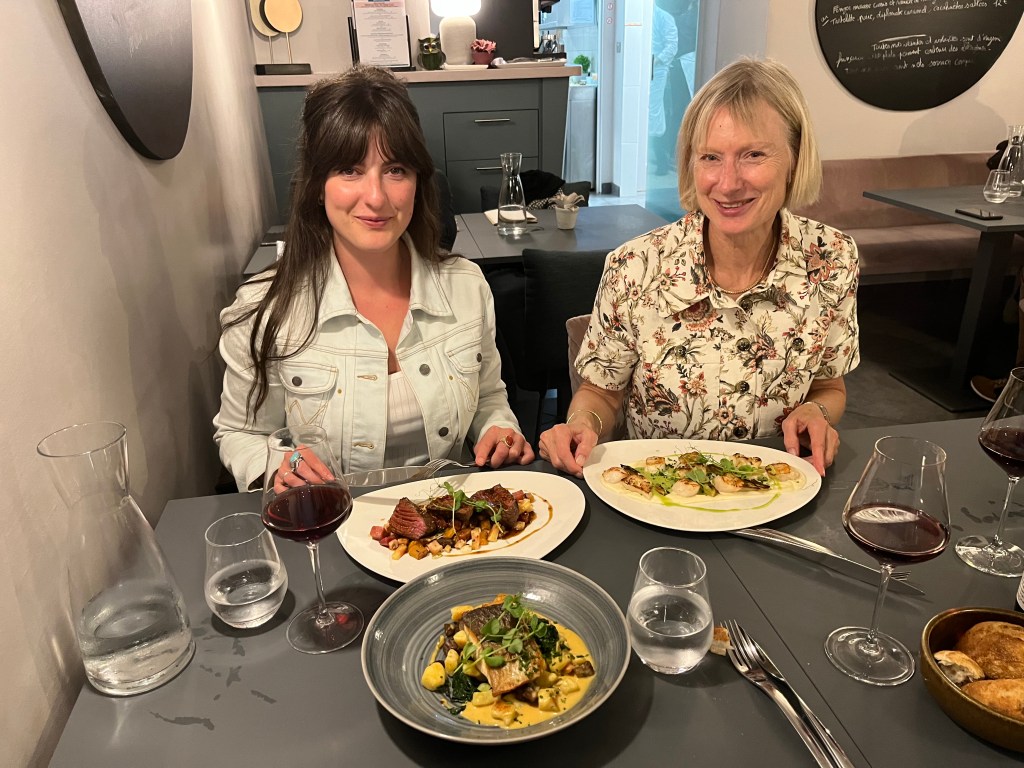
Right next to our apartment was the town’s most recommended seafood restaurant. After our arrival, we immediately made reservations as recommended by our host. The reviews were not exaggerated, and the terraced restaurant was tightly packed. On our last evening in Italy, we enjoyed one of the best seafood dinners we’ve ever had! The first picture shows our appetizer, a seafood sampler consisting of 12 different seafood dishes, and all of them very fresh and delicious.

Three weeks of our Tour of Italy were coming to an end, and the next morning it was time to say Ciao to Dolce Vita and Bella Italia!


 Barney & Lauri's Burgundy & Beyond Adventure
Leave a reply to shirley Cancel reply