Last November we thought that it would be nice to travel south in search of some warm sunshine during January or February, however, spending the time just sitting at a Mediterranean beach or hotel pool didn’t sound too appealing to us. Looking at the map I recalled that my parents and sisters visited Marrakesh in the 70s and 80s and really liked it. As we had never been to Africa and I didn’t really envision driving there, we decided it would be best to work with a travel agency. There are several travel agency offices here in Dijon, and the closest one, just a 5 minute walk from our apartment, had recently put a week long, customized Marrakesh – SE Morocco travel tour together for another customer. That package included a couple of days in Marrakesh and a 5 day loop over the Atlas Mountains to the Sahara desert in the east, close to the Algerian border. Lauri and I had never done a group travel tour and we didn’t particularly like the idea, yet customized, with an English speaking driver and local site guides for just the two of us, and thus allowing lots of flexibility, sounded very appealing! We signed up and didn’t regret it.
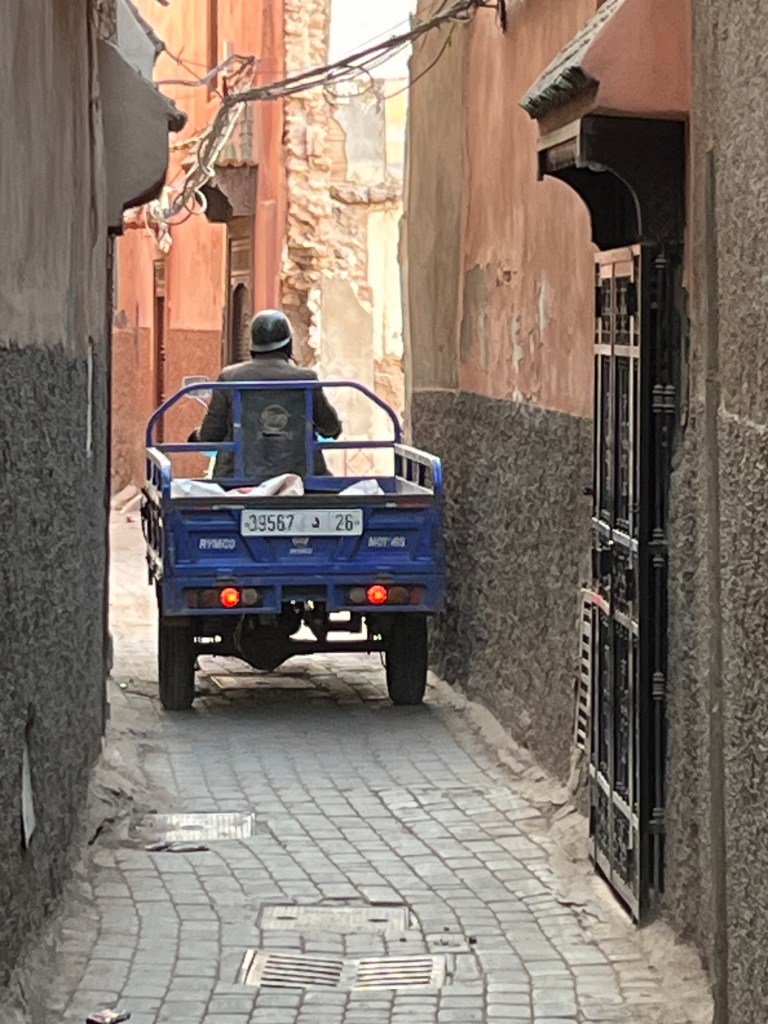
We left Dijon at 2 am on Sunday January 26, and took an “Easy Jet” flight from Lyon. At 10:35 am we were in Marrakesh, with blue skies and weather for shorts! A driver picked us up at the airport to drive us to our riad, located within the Medina, the walled, old city center of Marrakesh. Traditionally “riad” is the Moroccan term for guest houses or homes that have inner courtyards and no windows to the outside, so that women would not be seen. The normally 10 minute drive turned into an hour due to the Marrakesh Marathon event that had most roads surrounding the inner city closed for the event. Circling the city center through regular neighborhoods we realized that we were in a different world. Narrow streets were filled with everything, from women carrying huge loads on their backs, donkeys pulling trailers, honking, packed vehicles that literally looked like their wheels could fall off at any moment, to big, overloaded semis. We parked on the main square and walked for 5 minutes through narrow, busy alleys to find our riad. Although located directly within the busy center, the place itself was totally quiet, with nice rooms and a roof top terrace.
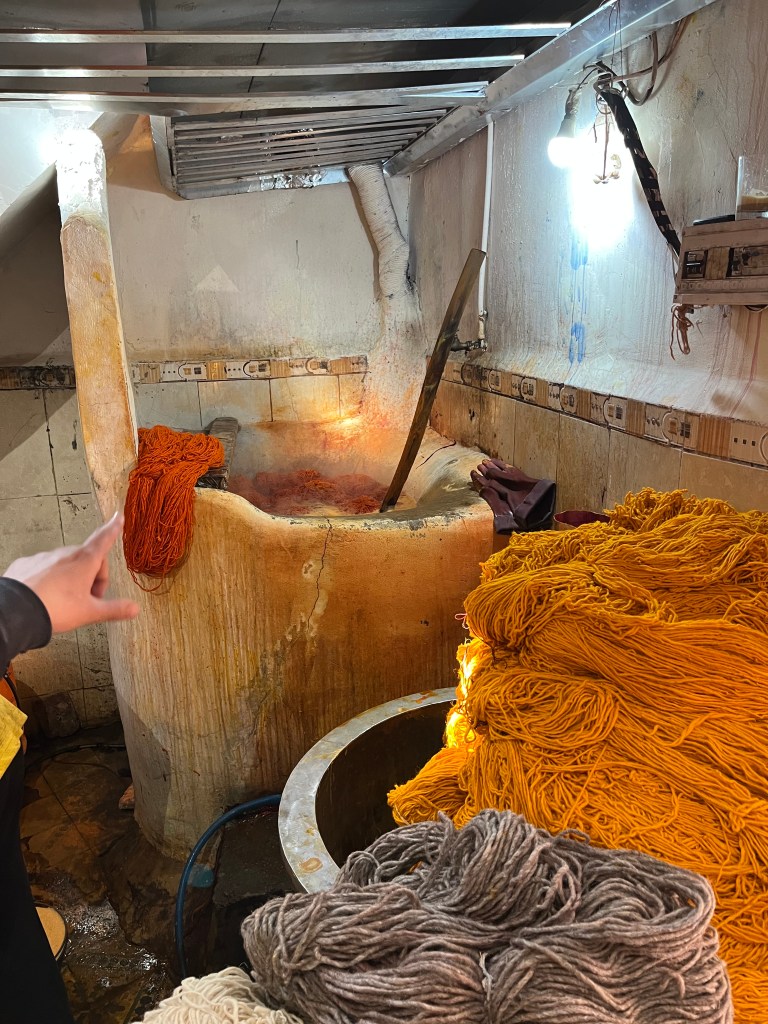
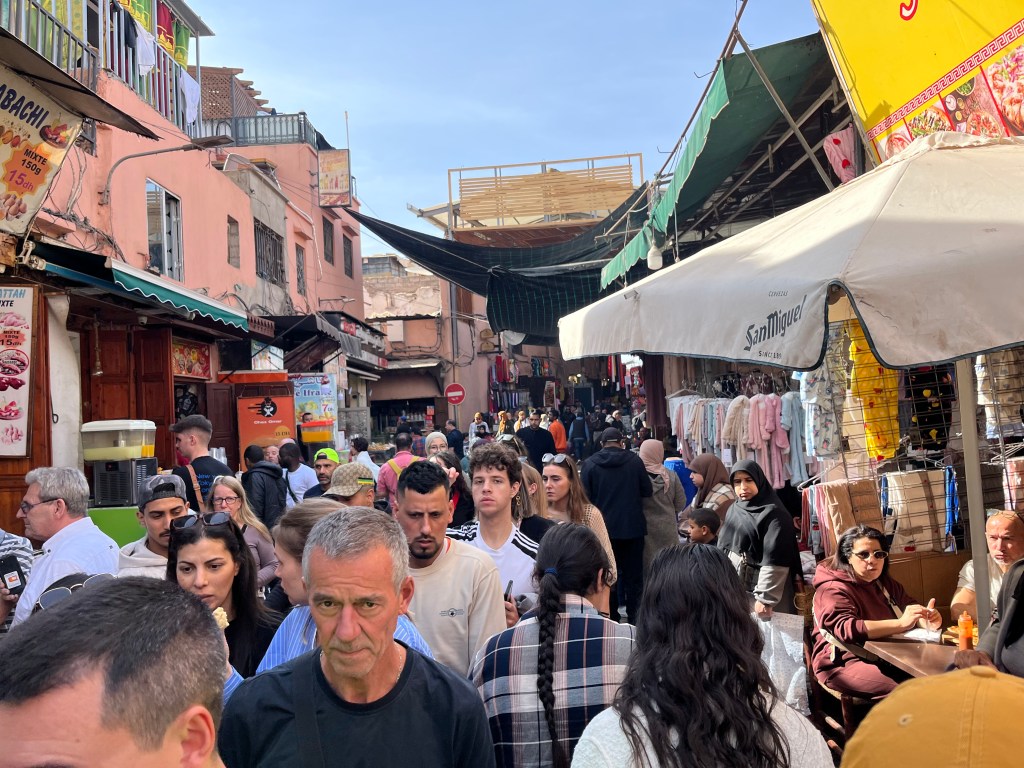
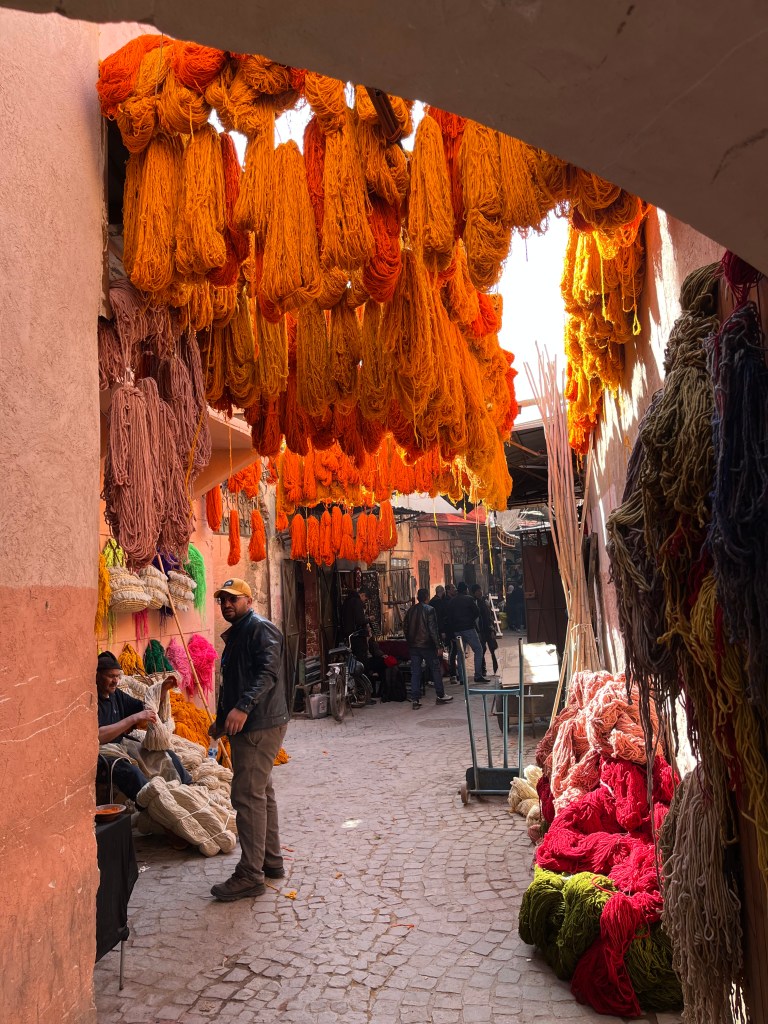
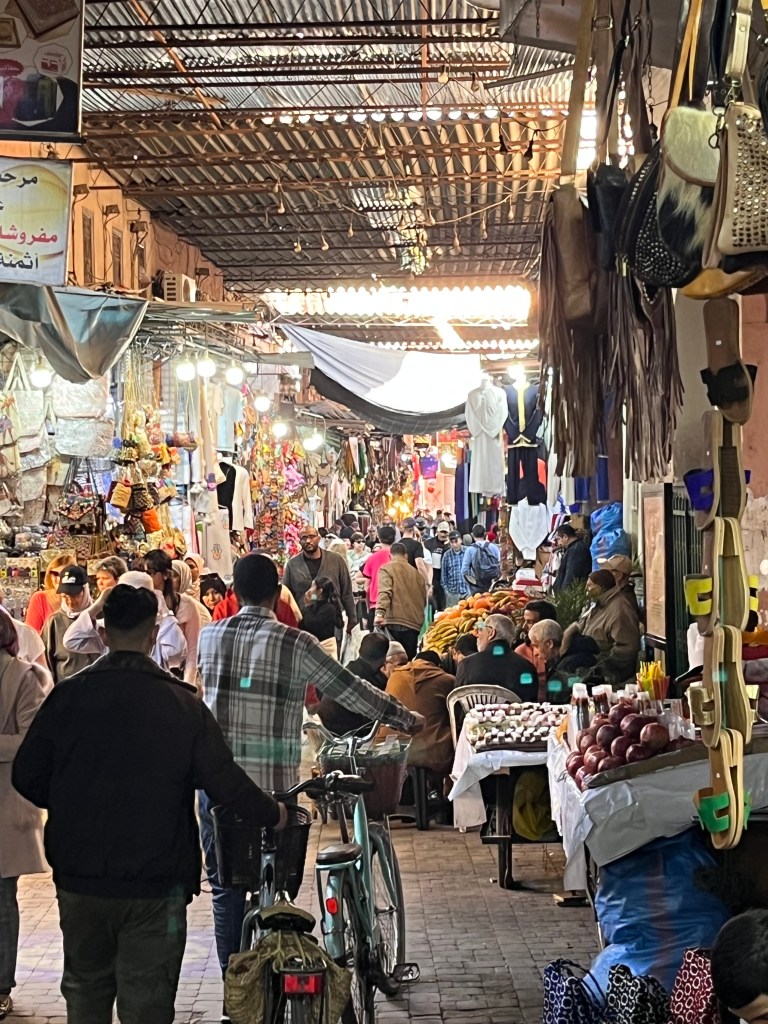
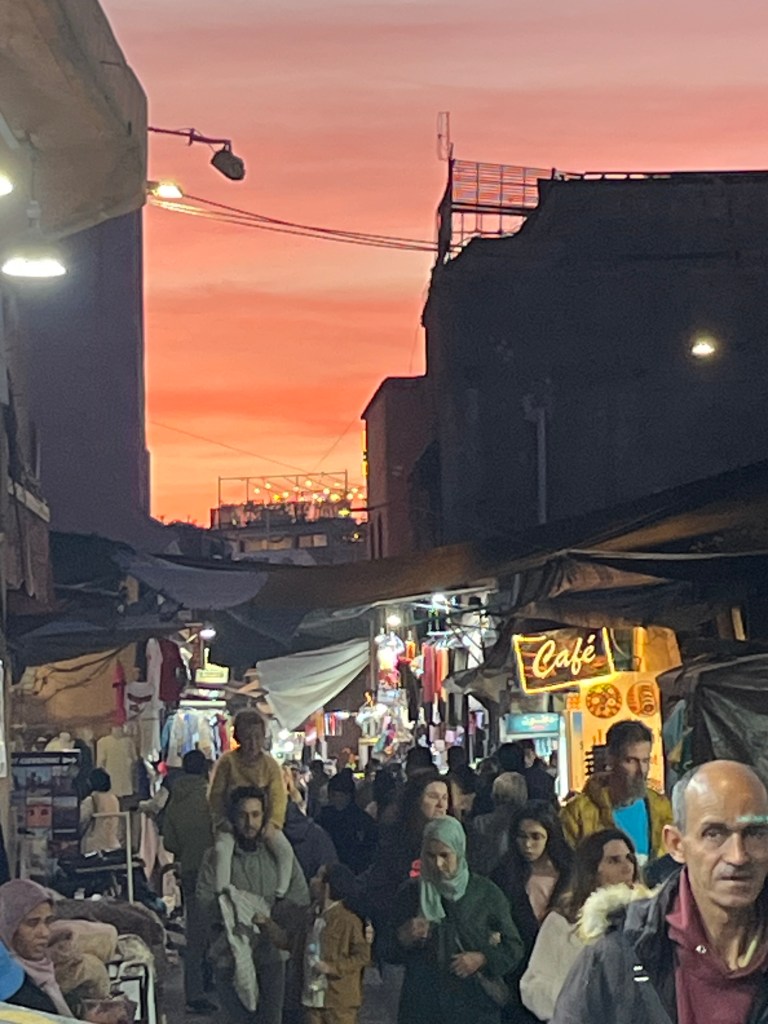
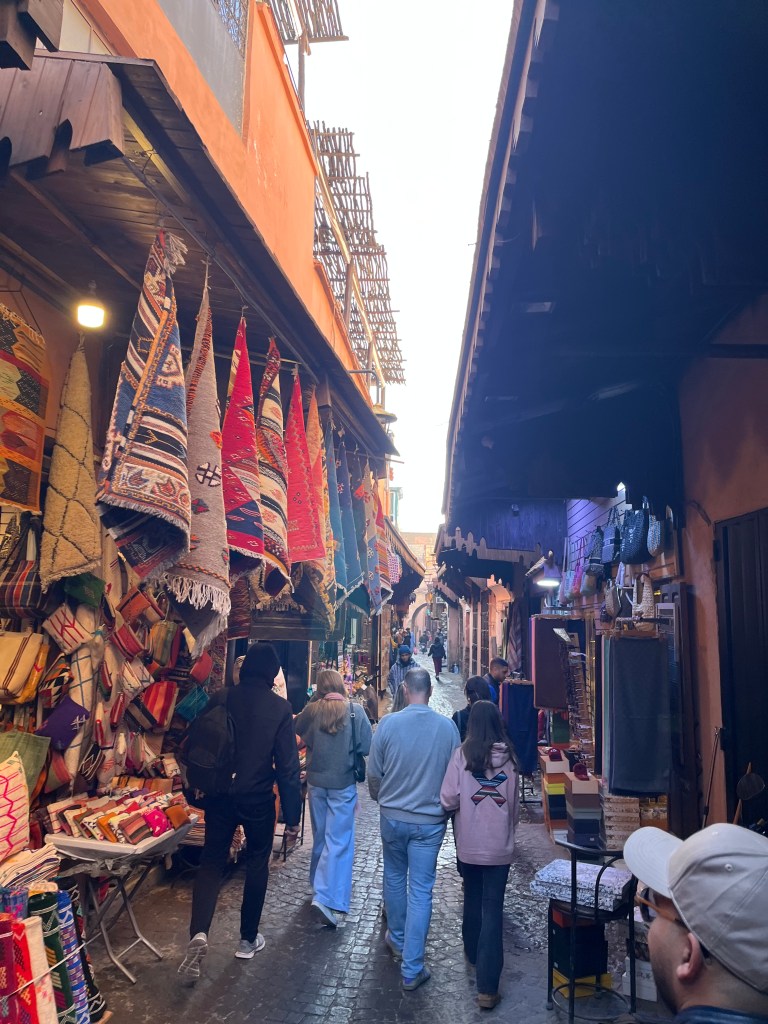
In the afternoon, Mehdi, our local Marrakesh guide for a day and half, picked us up. Together we toured the bazaars, or “souks” as they are called here. These souks, or market places, are generally organized by field of trade and craft, like the leather souks, clothes dying, metal or wood working souks etc. nestled in tiny shops in narrow alleys, and mostly run by families since generations. I like the following description: Souks are like a honeycomb of intricately connected alleyways where one can easily get lost.
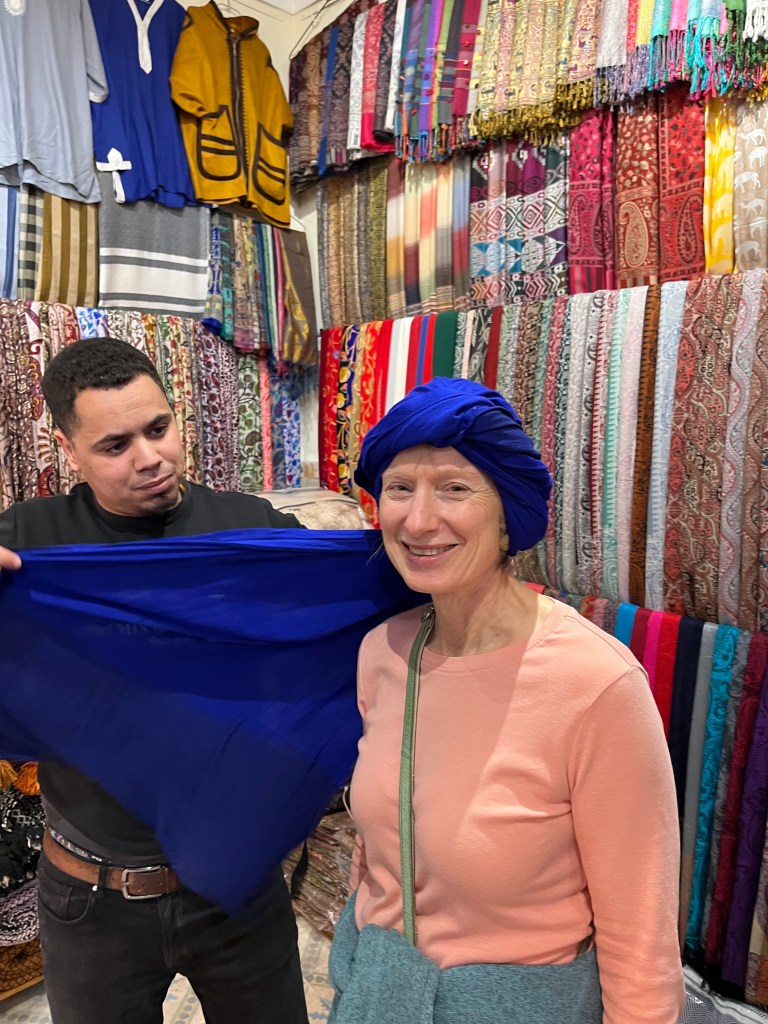
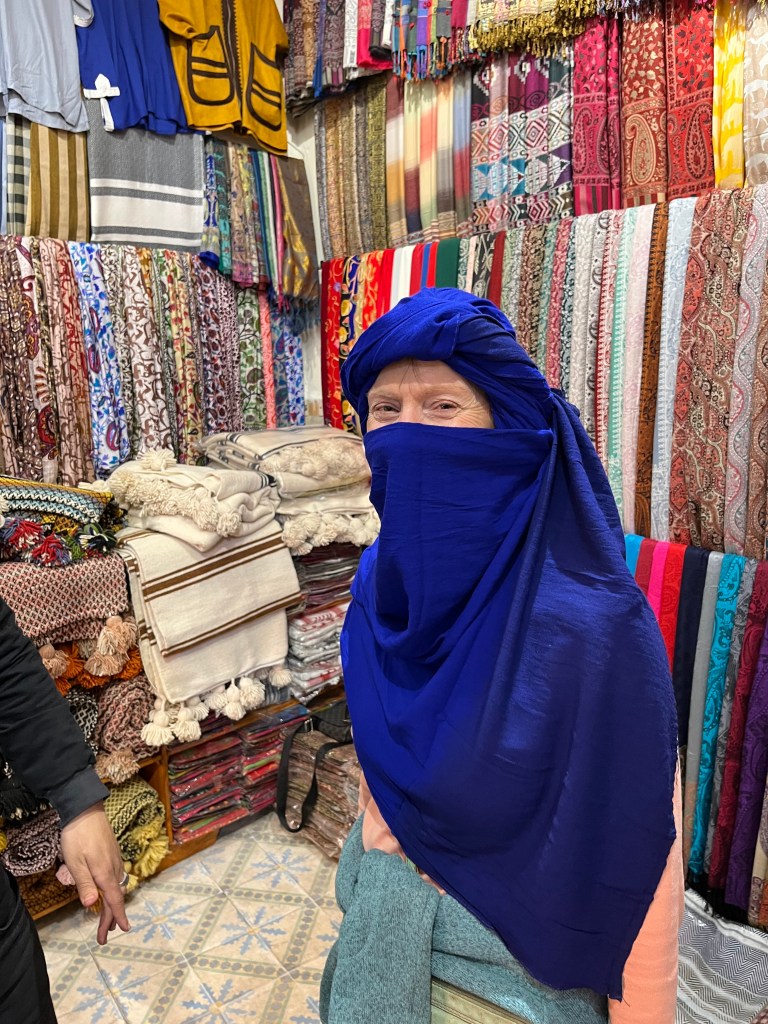
Yes, Laur(ence)i of Arabia trying on her secretive hijab…
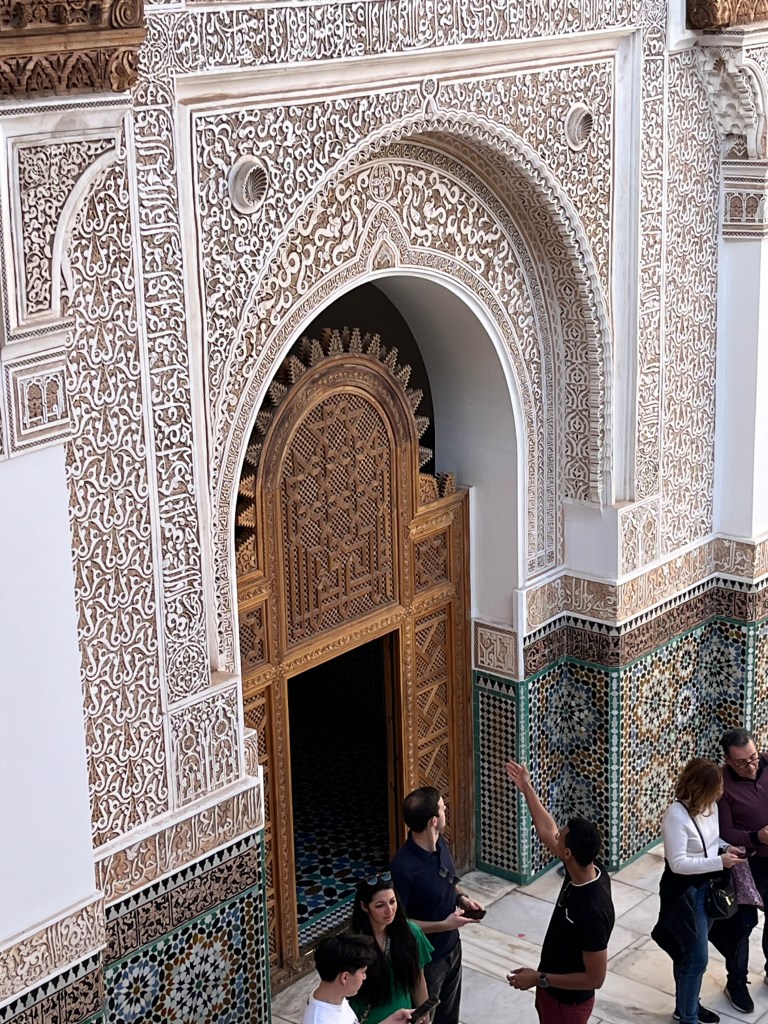
Located also within the Medina, we visited the Medersa Ben Youssef. This 16th century built Koranic school used to accommodate up to 900 students and was the largest and most important Koranic school in Morocco and the North African Maghreb region. The detailed, ornamental architecture is extraordinarily beautiful!
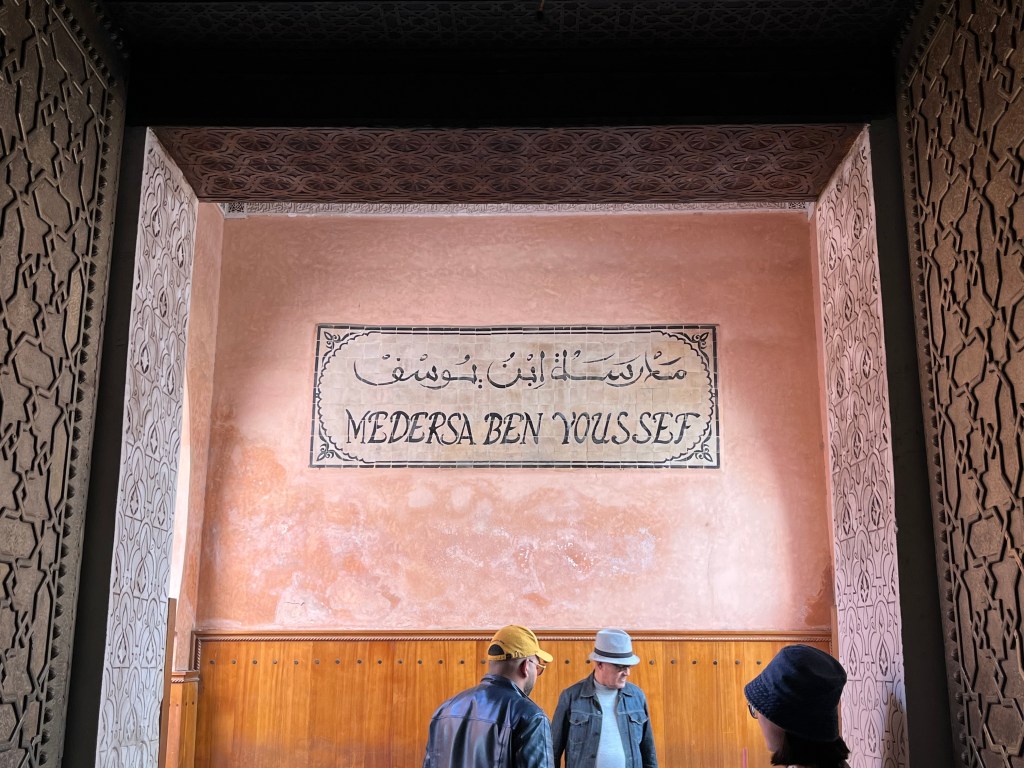
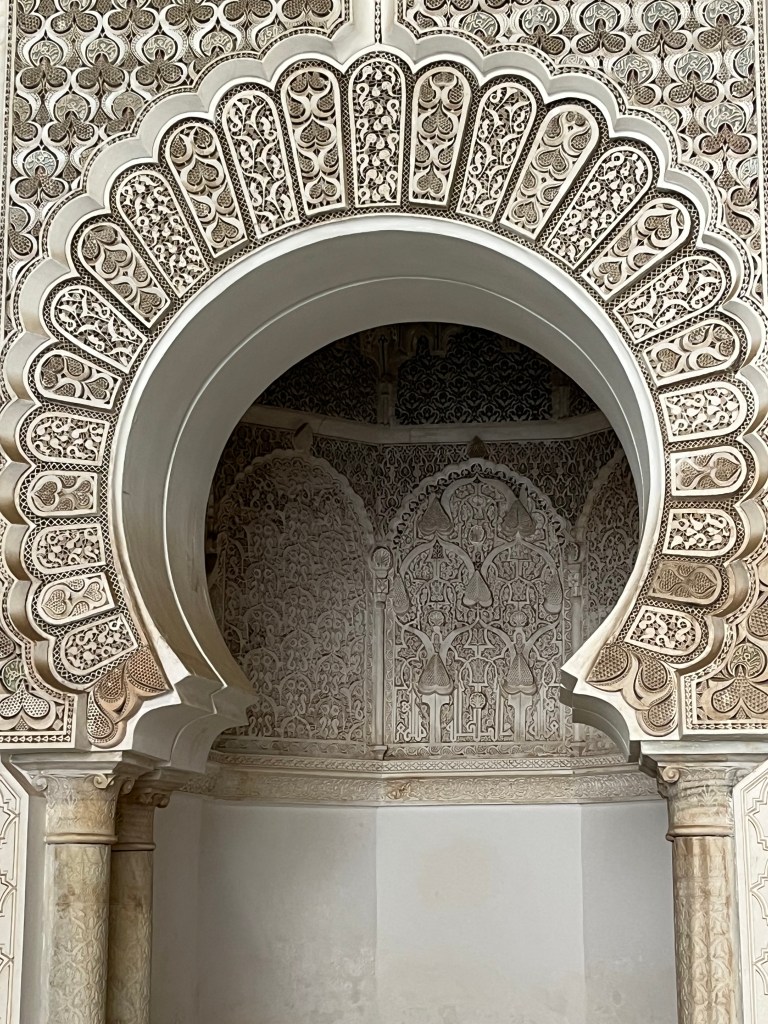
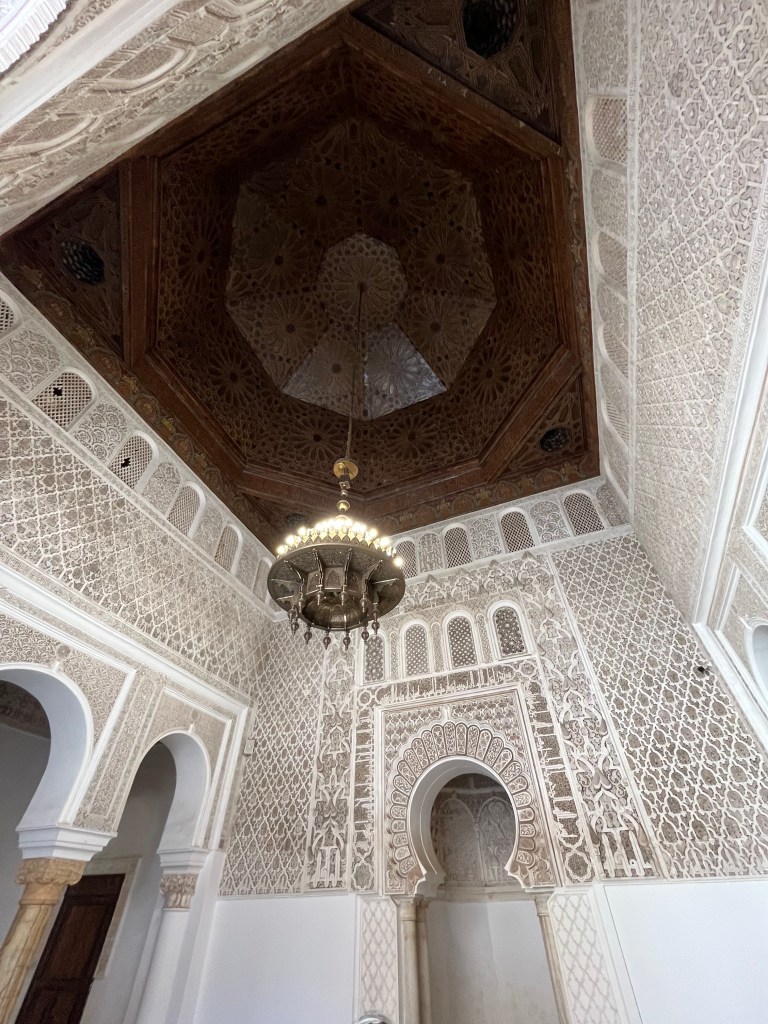
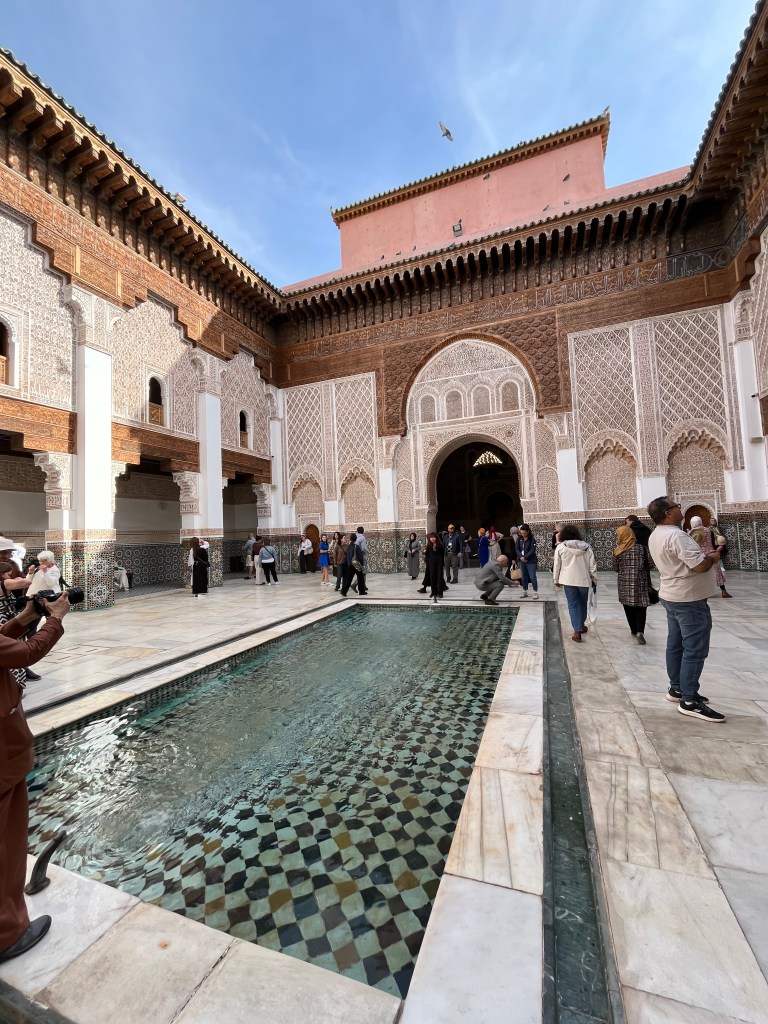
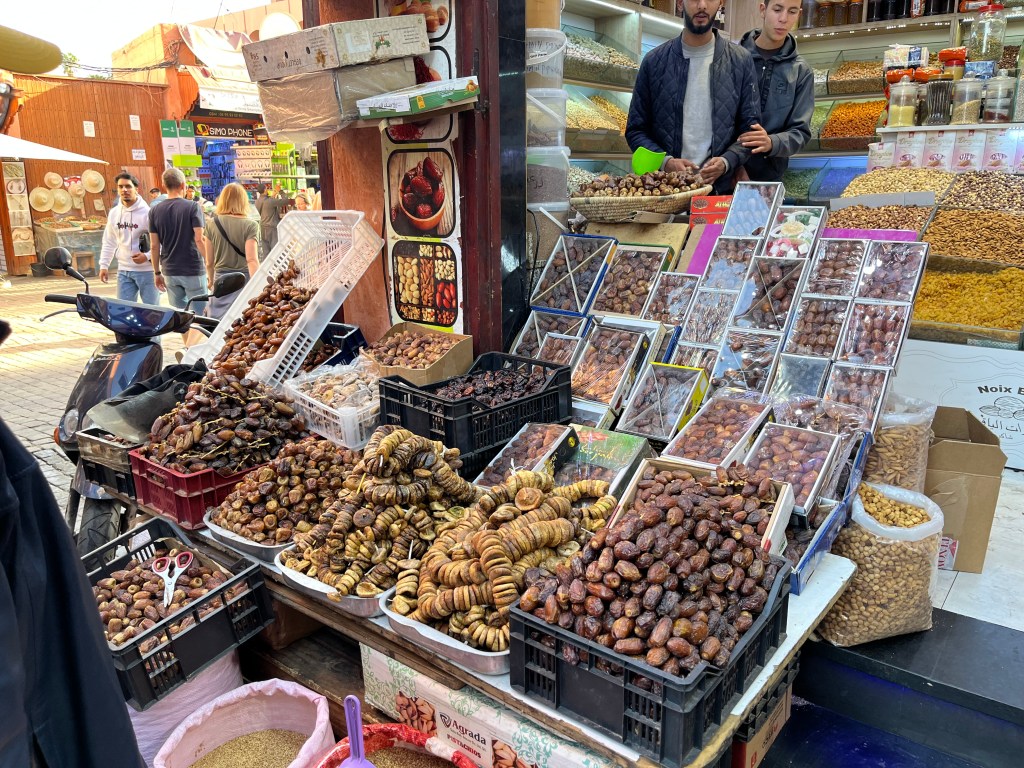
More scenes from the souk quarter:
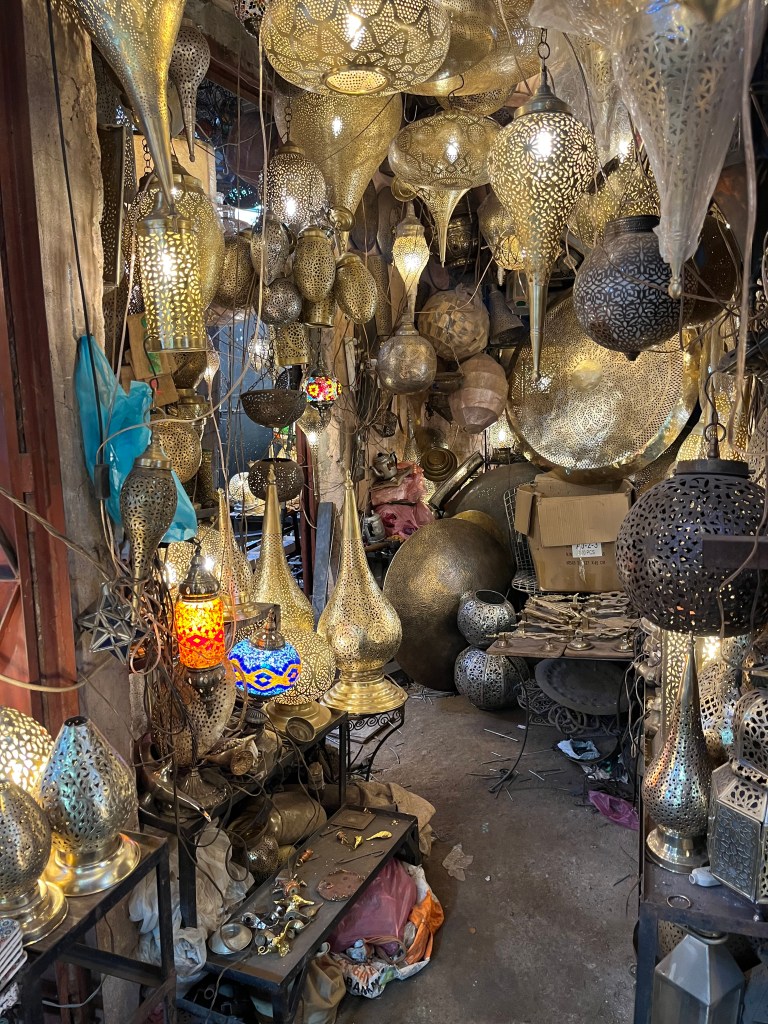
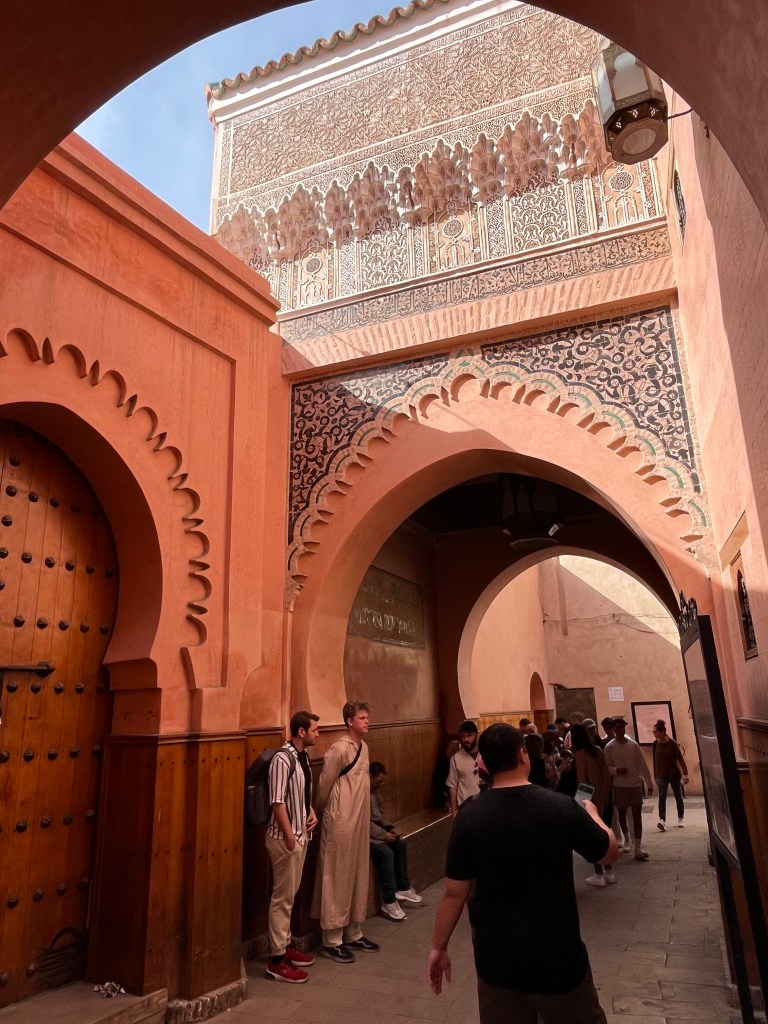
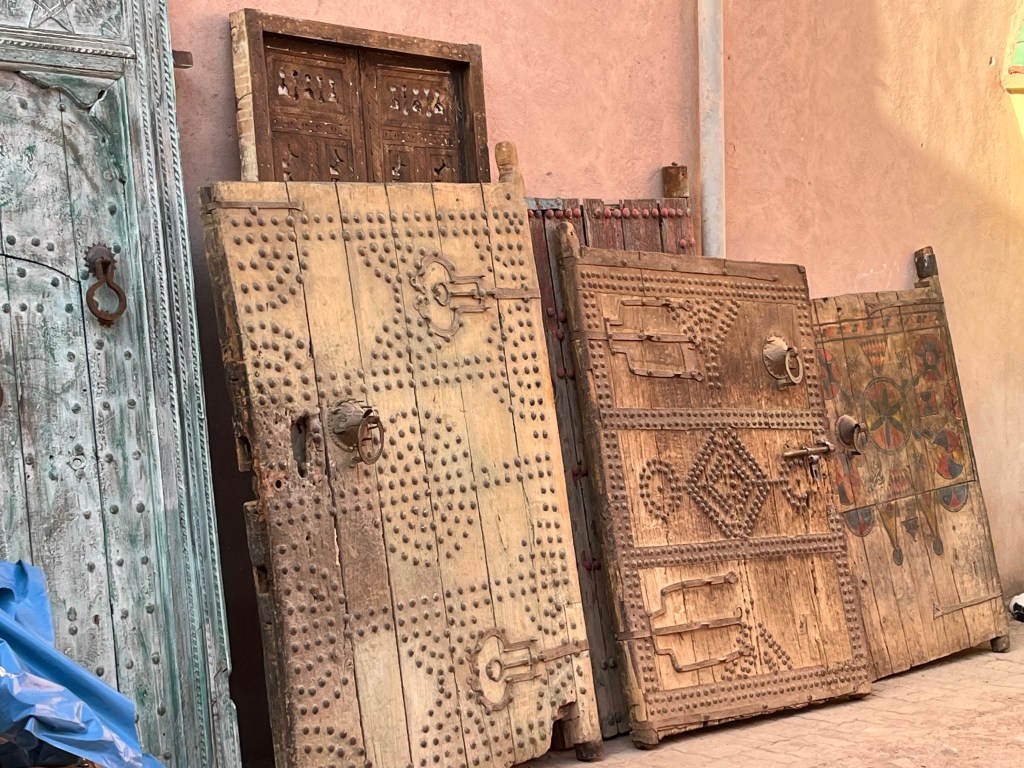
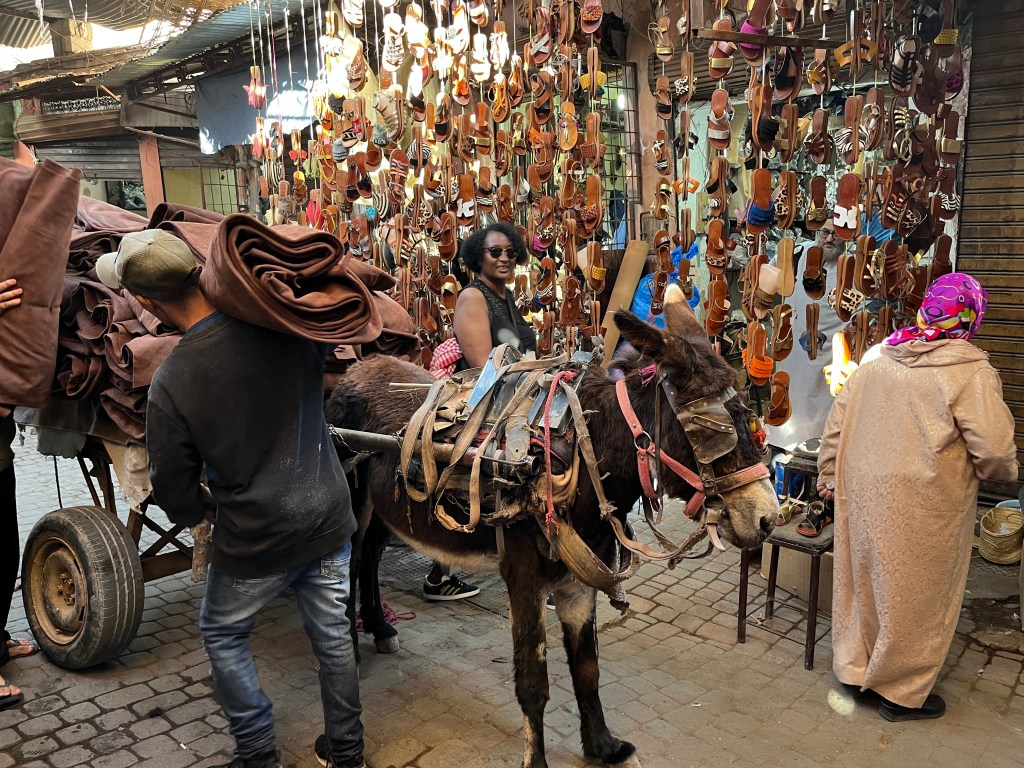
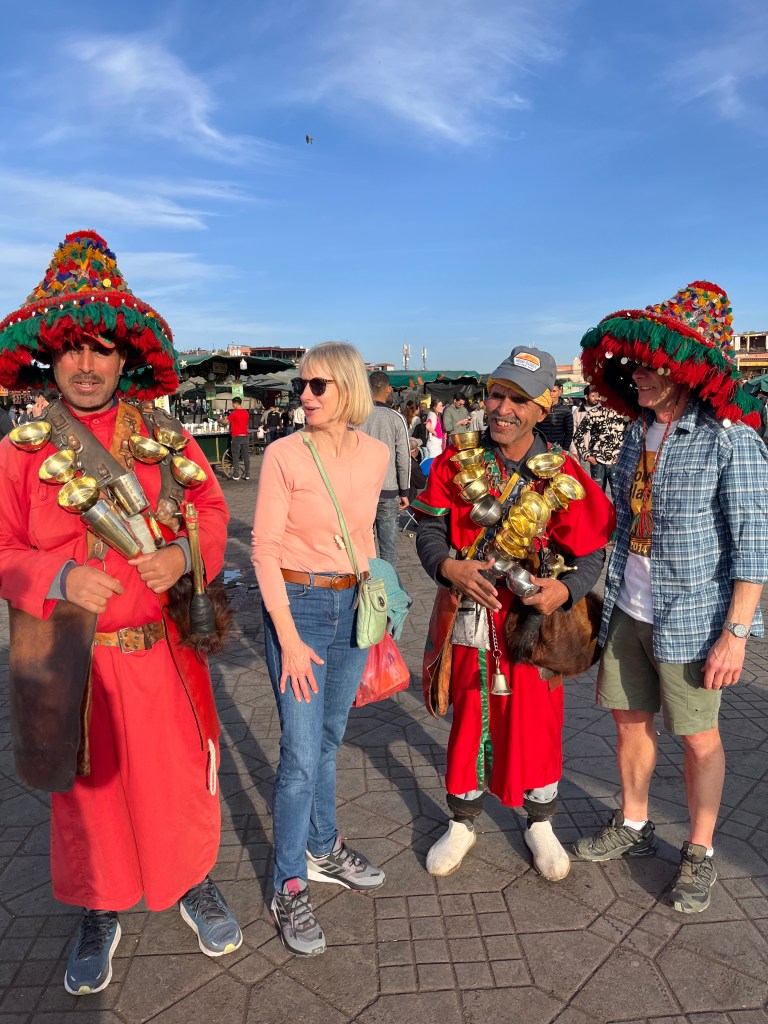
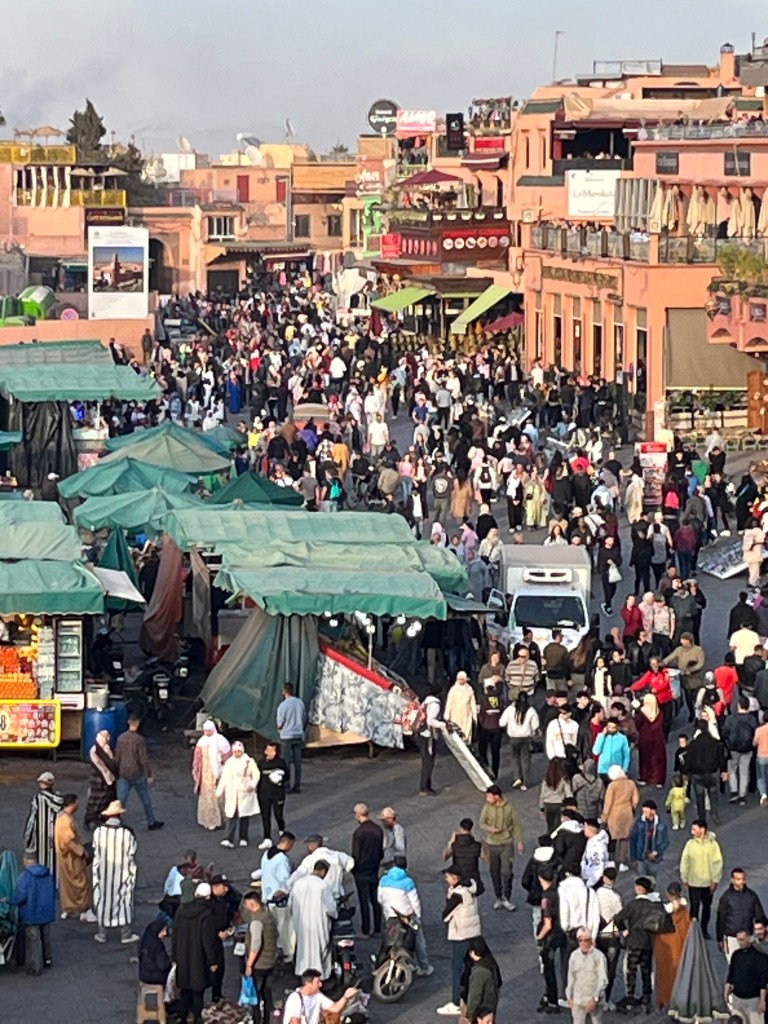
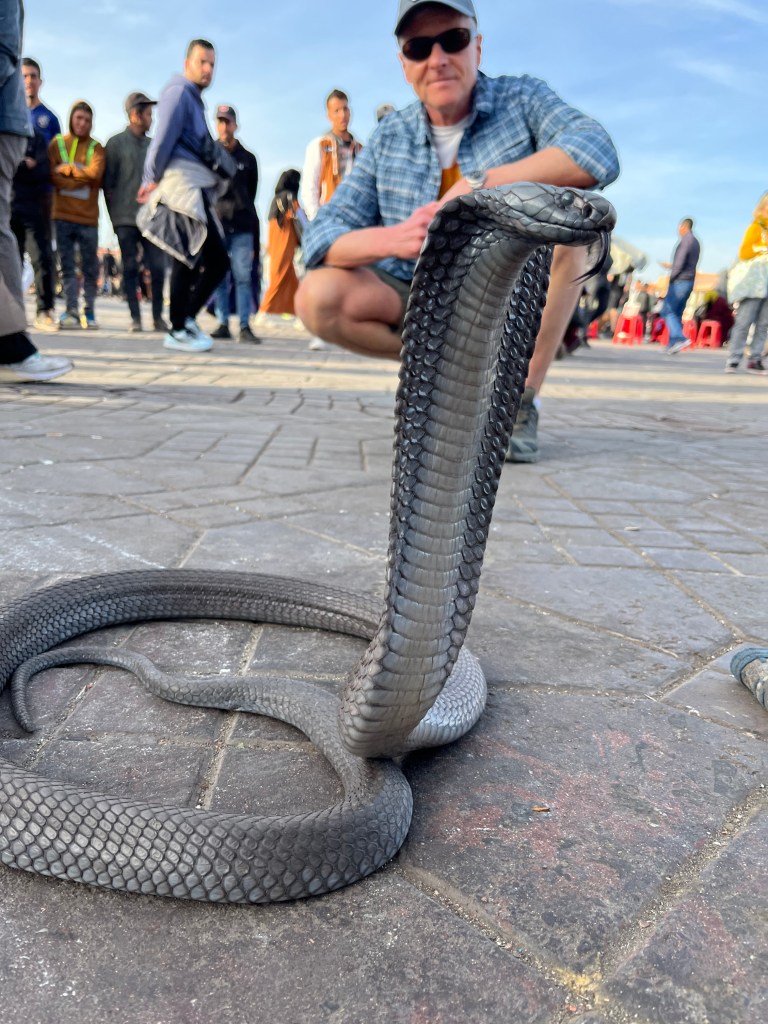
And a couple scenes from the main market square, the Jemaa El Fna:
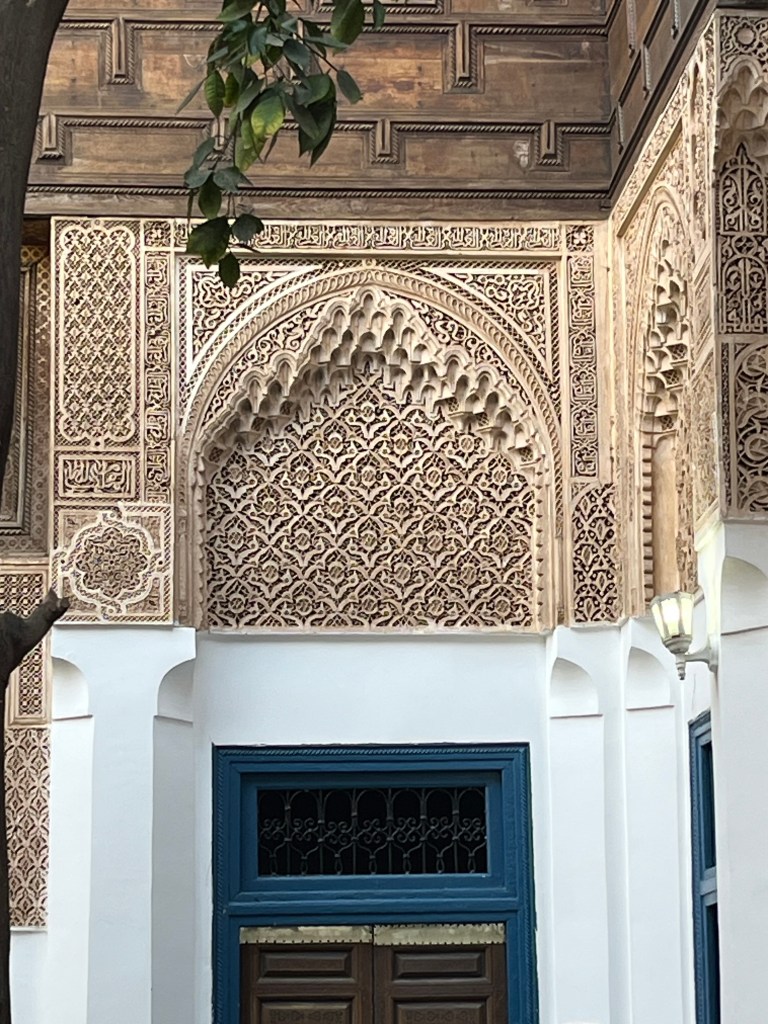
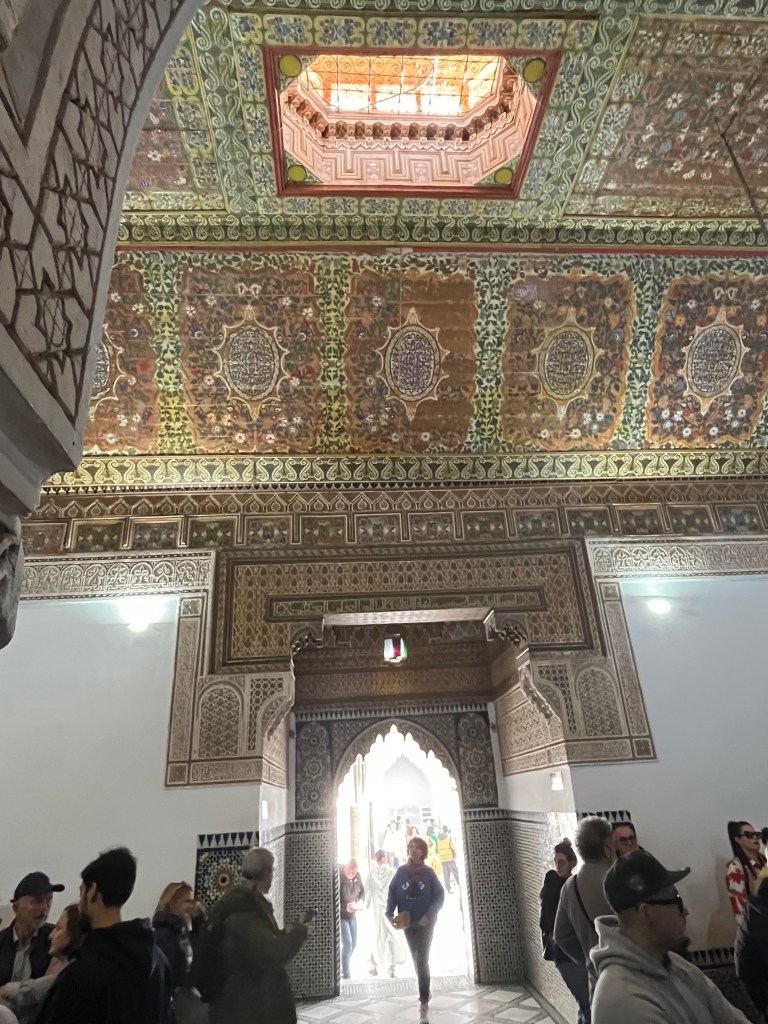
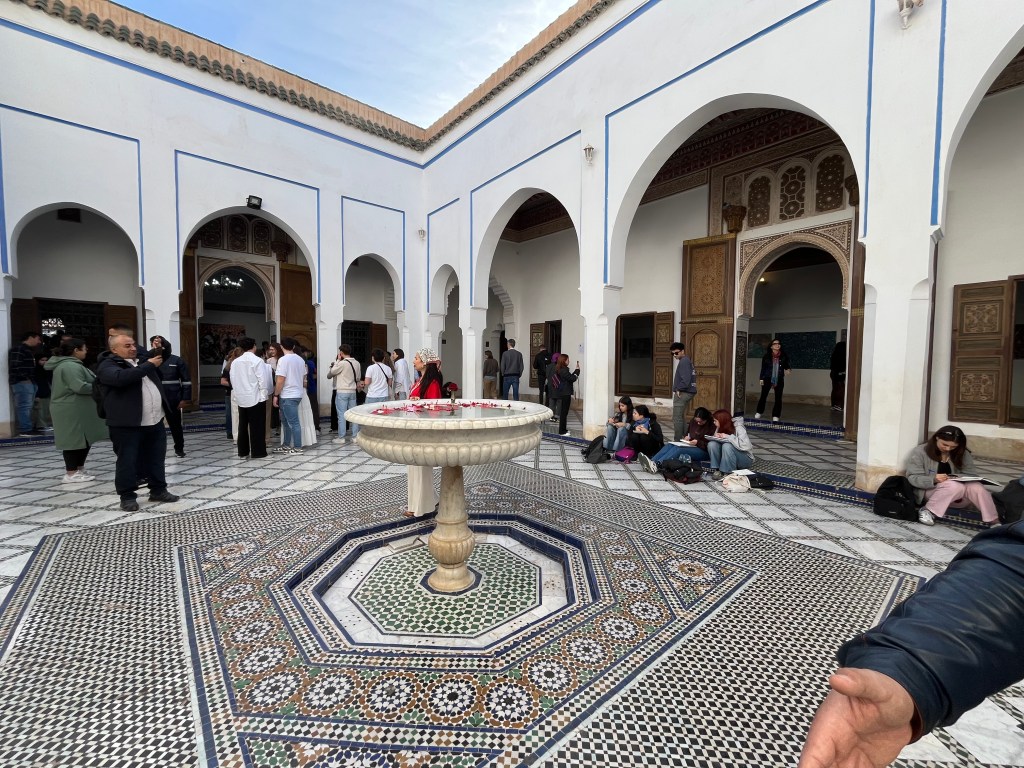
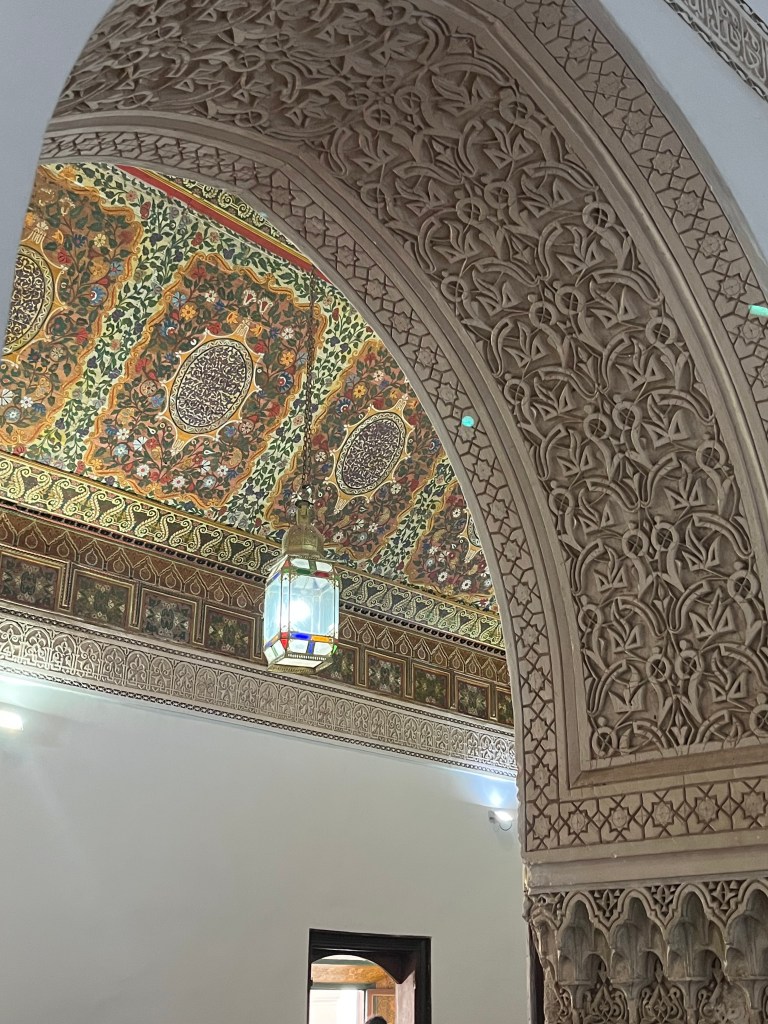
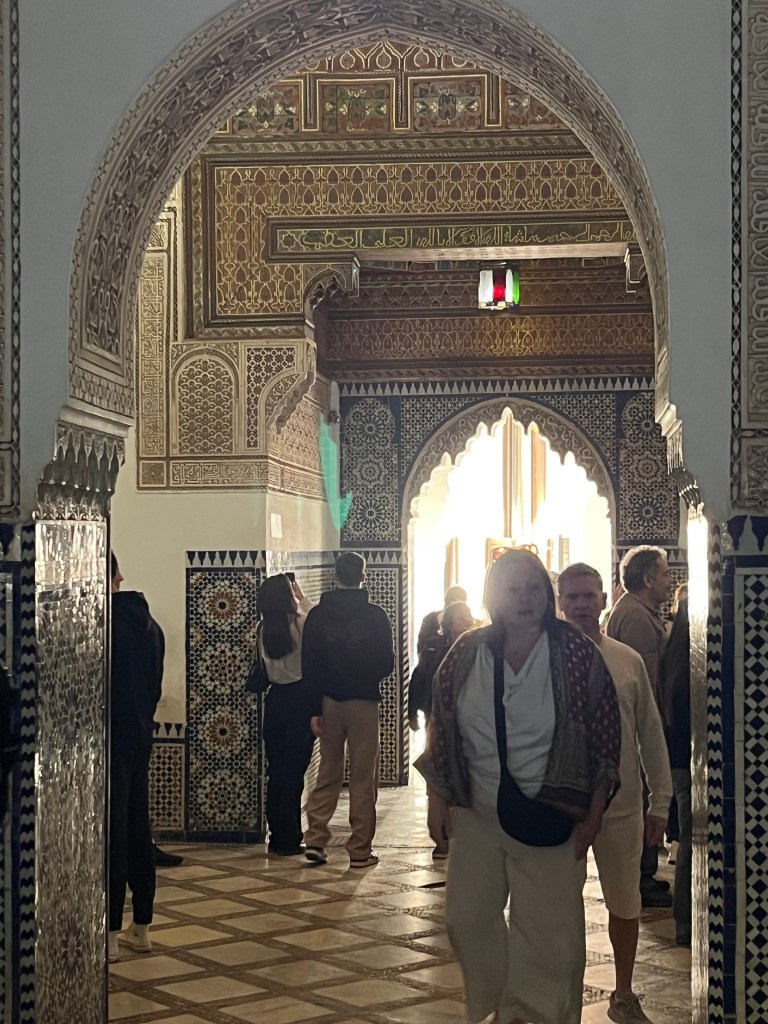
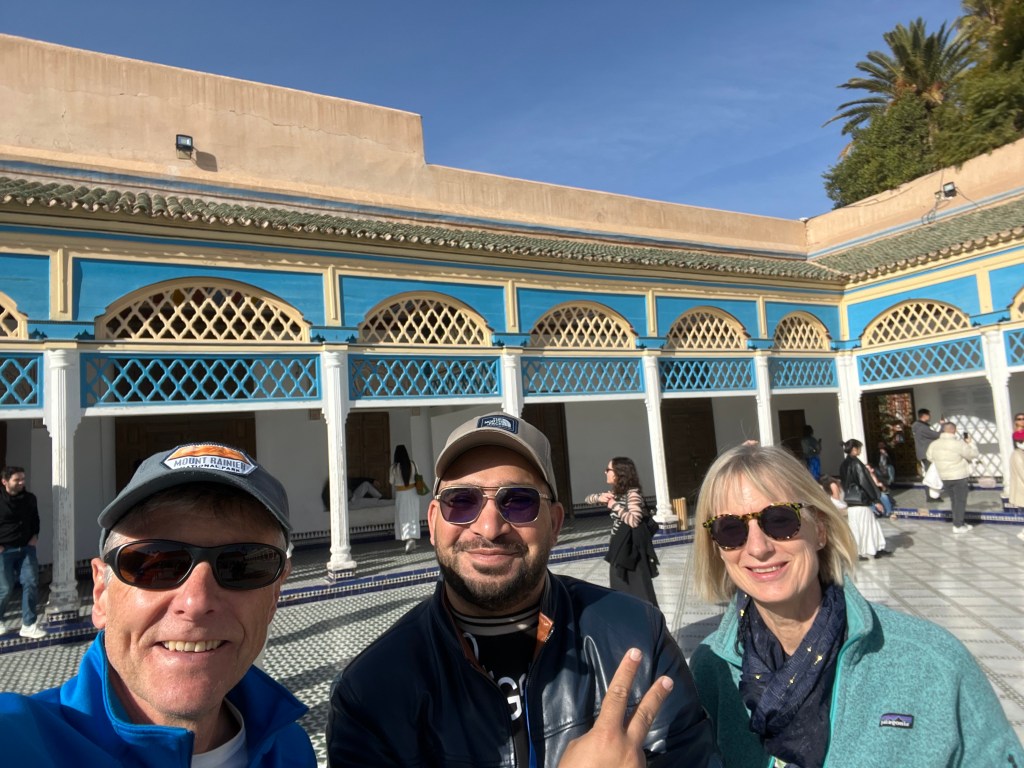
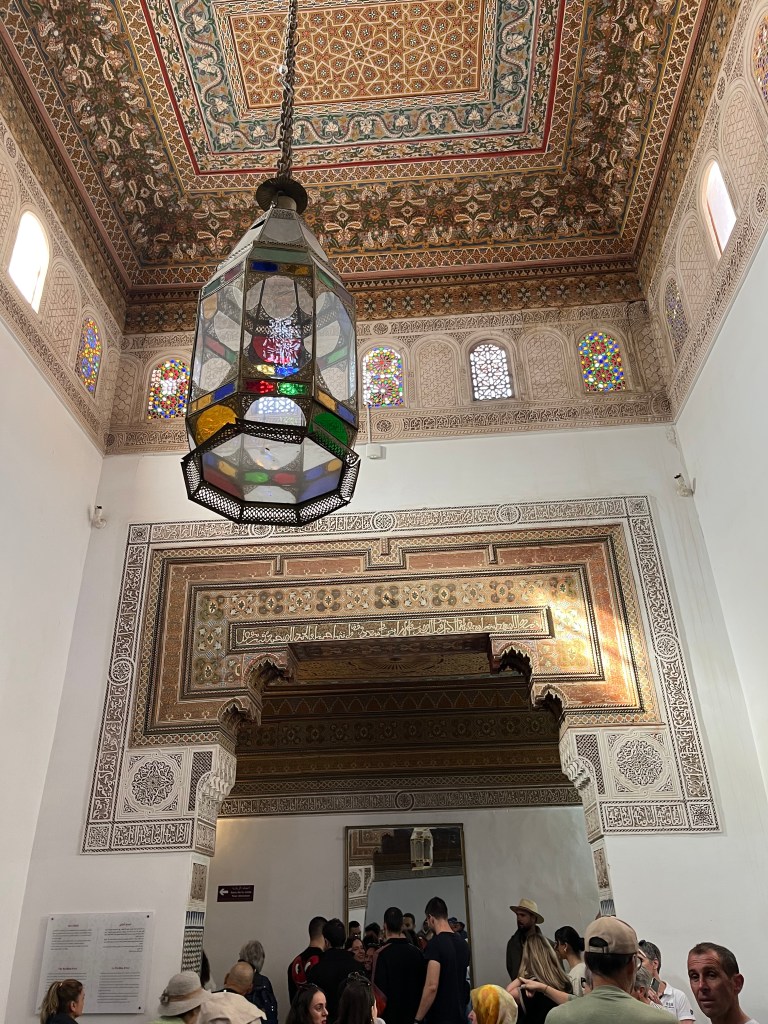
On the second day we started our tour with the Bahia Palace. This 19th century built Andalusian-Moroccan style palace was one of the most luxurious, sumptuous residences in Morocco. Here, as in a lot of places in Marrakesh, the damage of the recent 6.8 earthquake from Sept 2023 was still visible, with some sites closed for ongoing reconstruction.
Next to the Bahia Palace, and also located within the Medina, we visited the Mellah, the Jewish quarter. Jewish people made up a large part of the population of Marrakesh, until most of them left for the newly founded state of Israel in 1948. Most of the spice and tea trading souks are located within this Jewish quarter. The sheer amounts, bright colors, and strong odors of the spices are amazing.
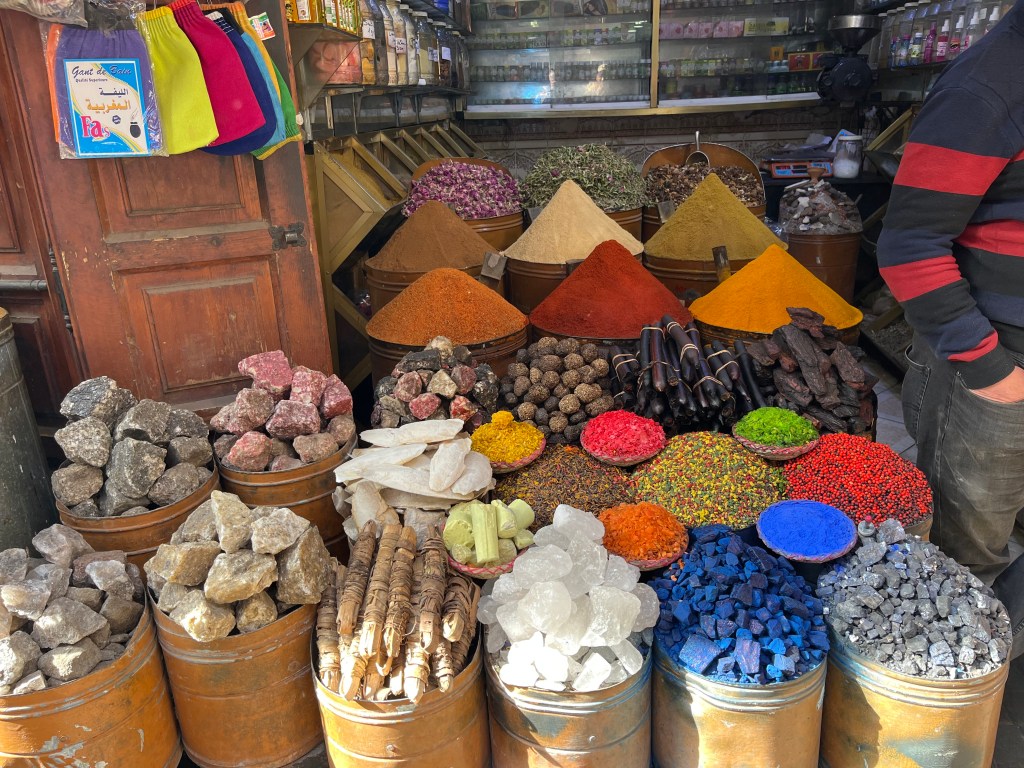
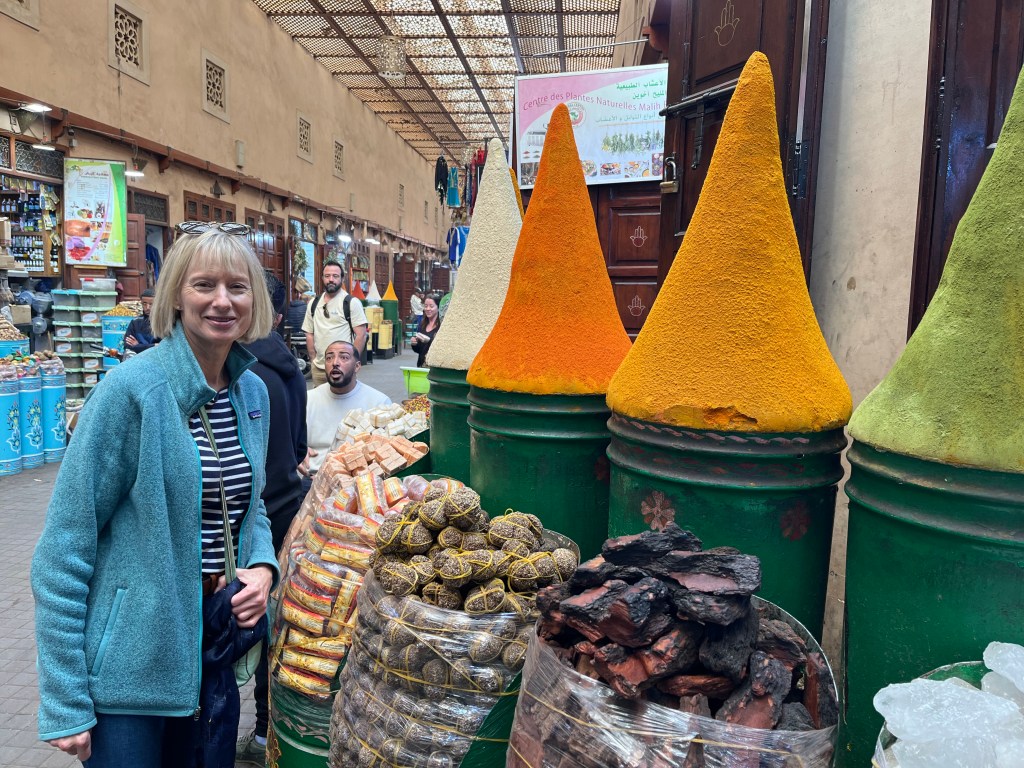
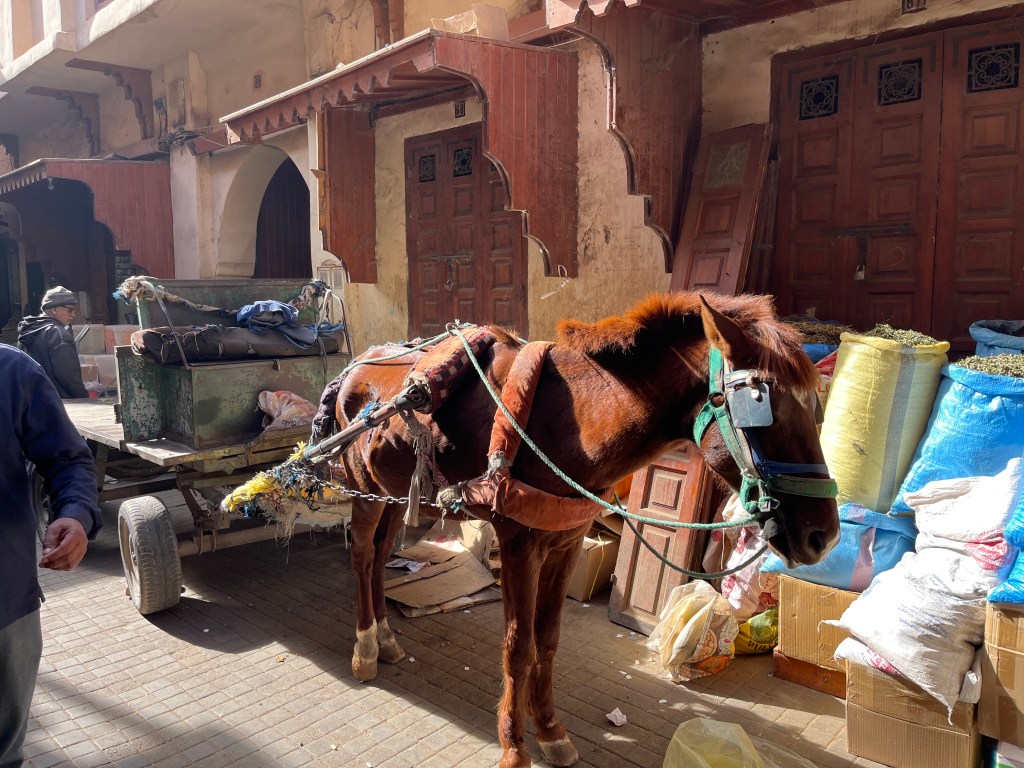
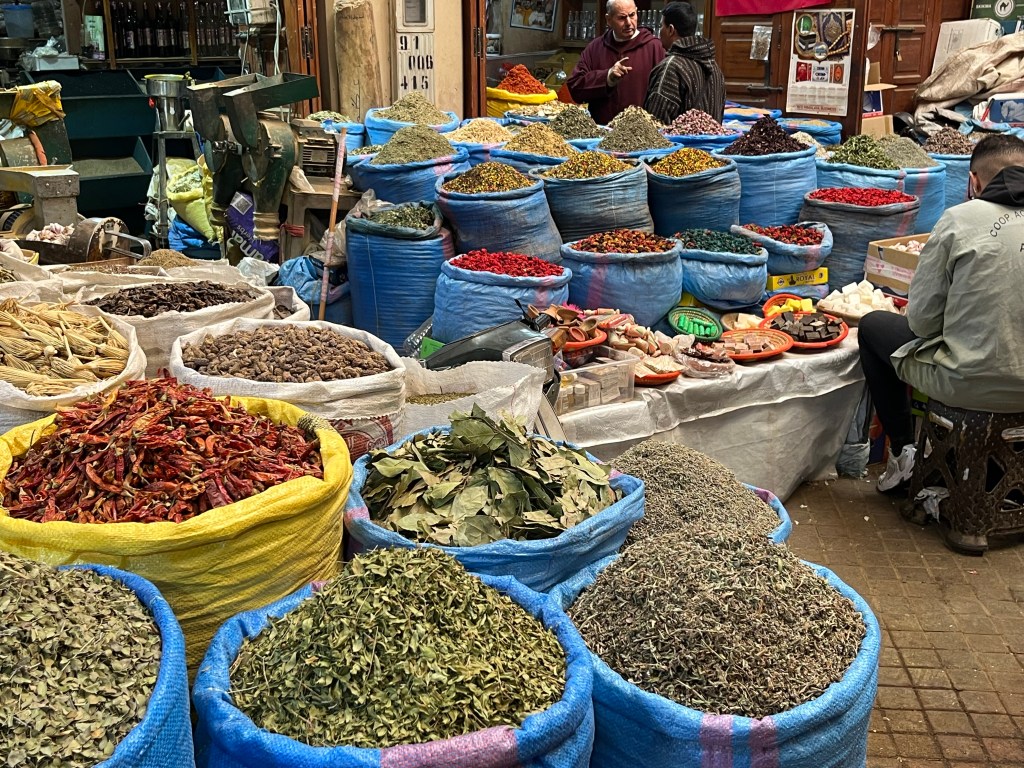
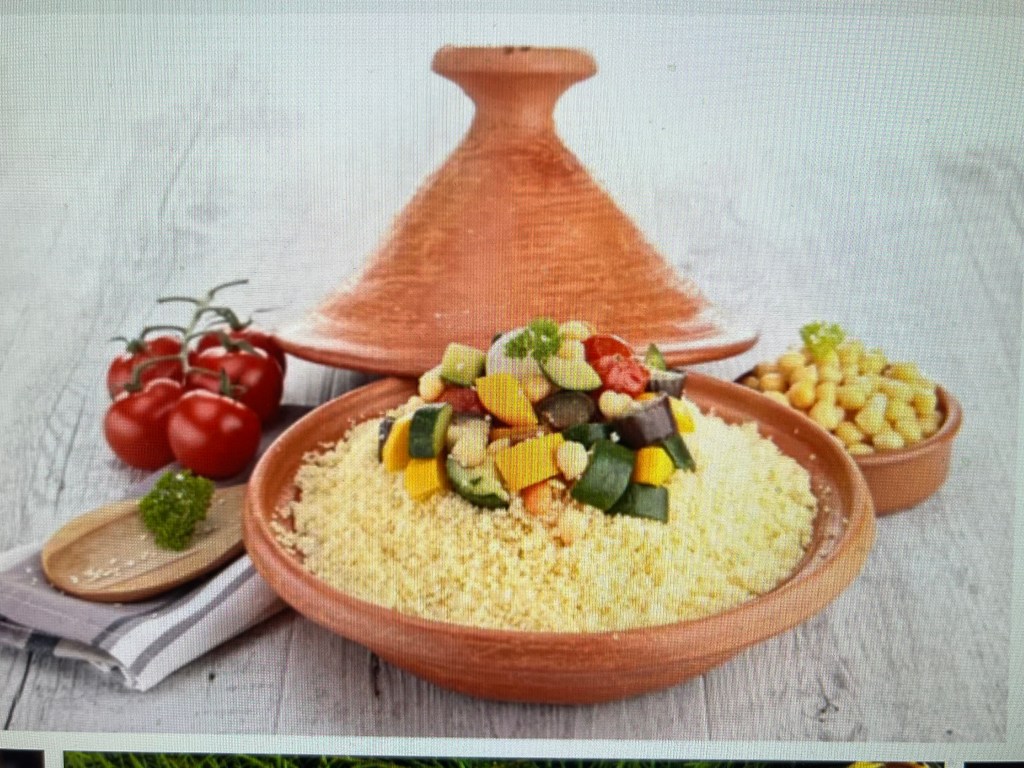
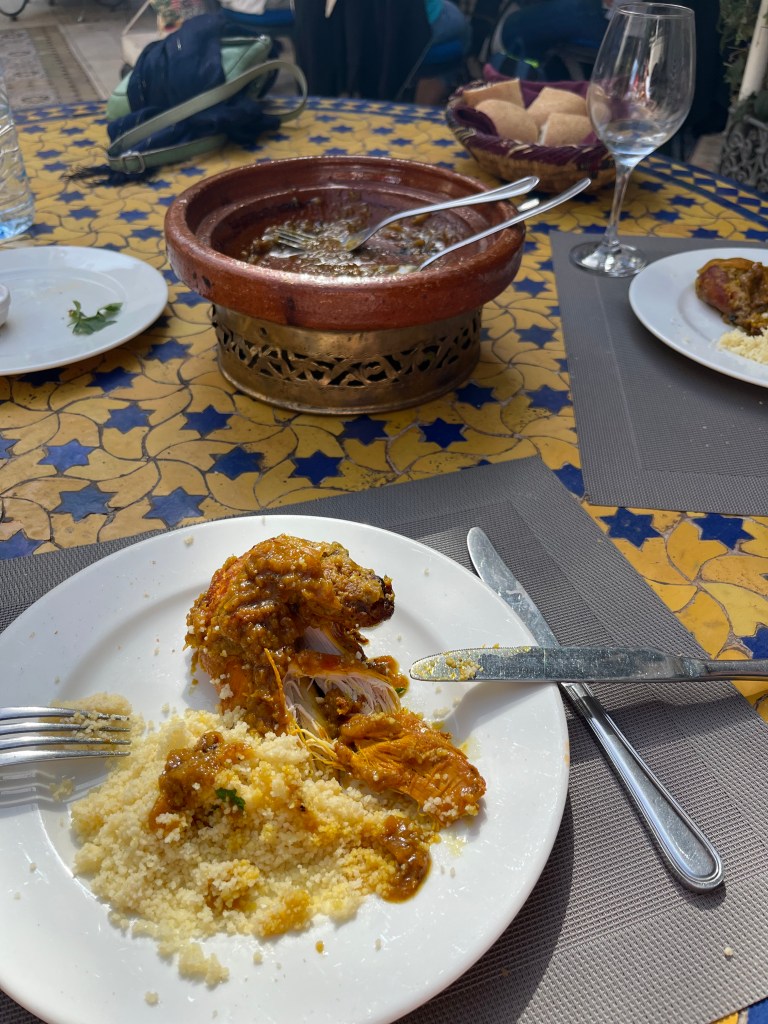
Spices make a good transition to food, and the Moroccan cuisine is worth talking about. Located on a major spice trading route, it is no surprise that Moroccans use a lot of them in their food: cumin, turmeric, ginger, pepper, paprika, saffron, cinnamon, peppermint and thyme are all frequently used, yet Moroccan food is not spicy hot, like chilly or habanero peppers. I would describe Moroccan food as pronouncedly flavorful. Couscous with lemon chicken prepared in the typical Moroccan tagine dish must be their sauerkraut dish of Germany or what are hamburgers to the US. A tagine is a type of terra cotta casserole that is used for the serving and cooking of most Moroccan hot dishes:
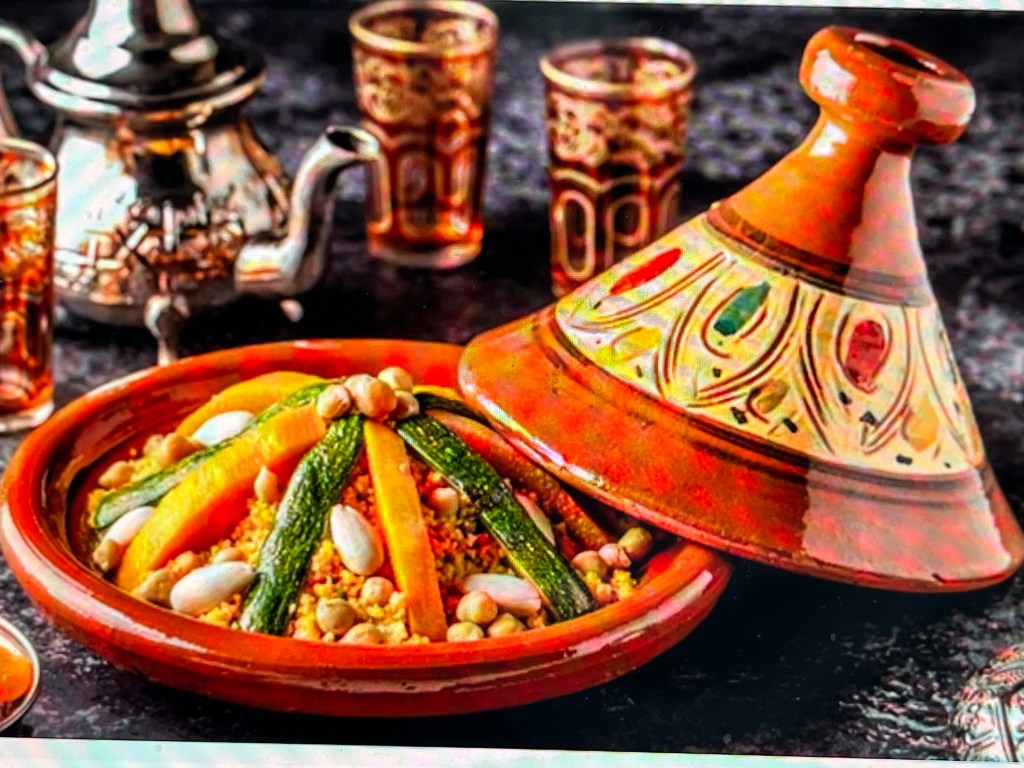
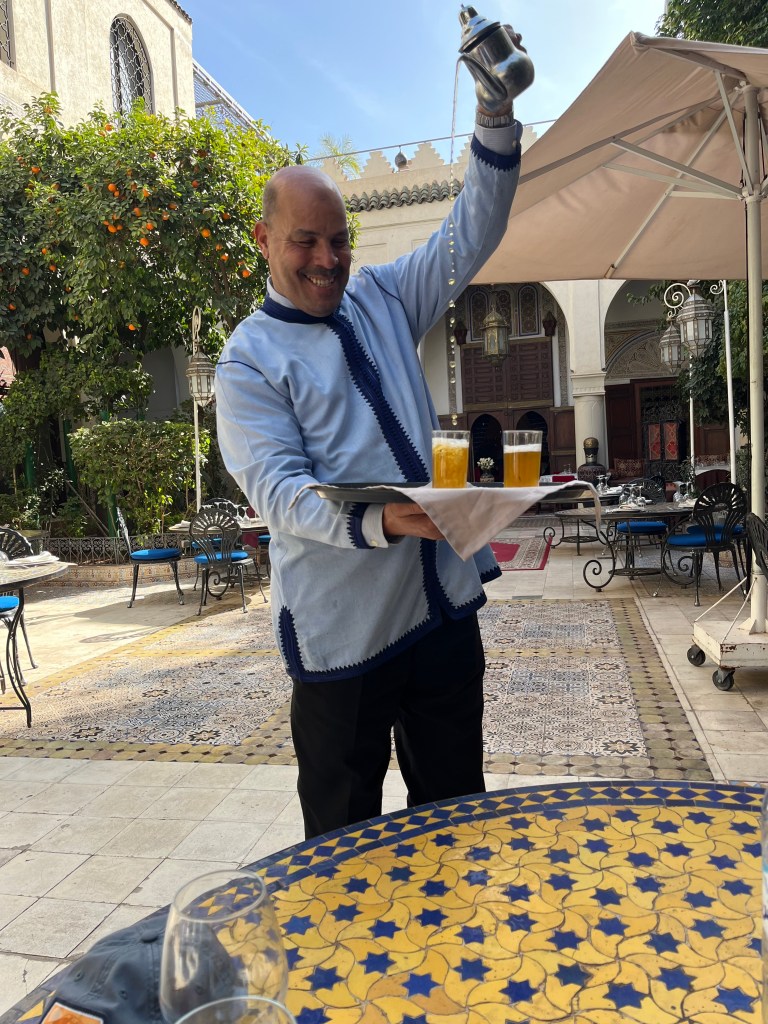
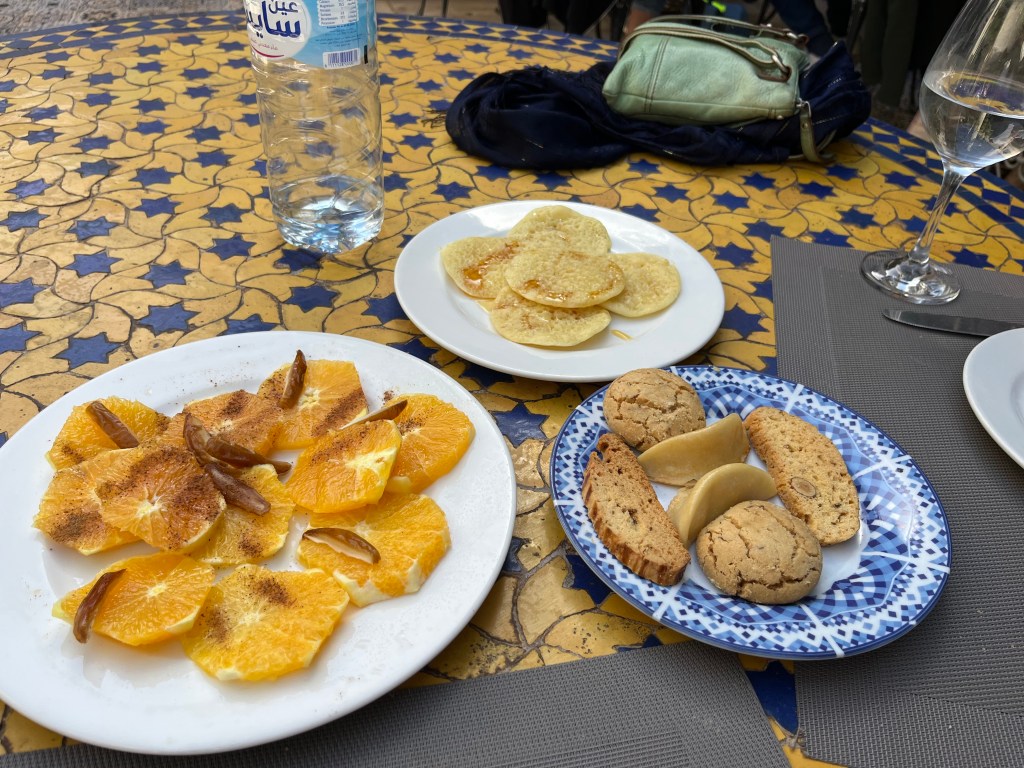
And with every food dish, or in fact at any meeting or reception occasion, a Moroccan mint tea is served, which is a gunpowder green tea with fresh mint, such as spearmint leaves, and usually the tea is sweetened with sugar or sometimes with honey. Yes, the Moroccans certainly have a sweet tooth, as they not only like to put ample sugar into their tea, – though thankfully they always ask you first before serving, they also eat a lot of sweet cookies, pastries, dates, marmalades, etc.
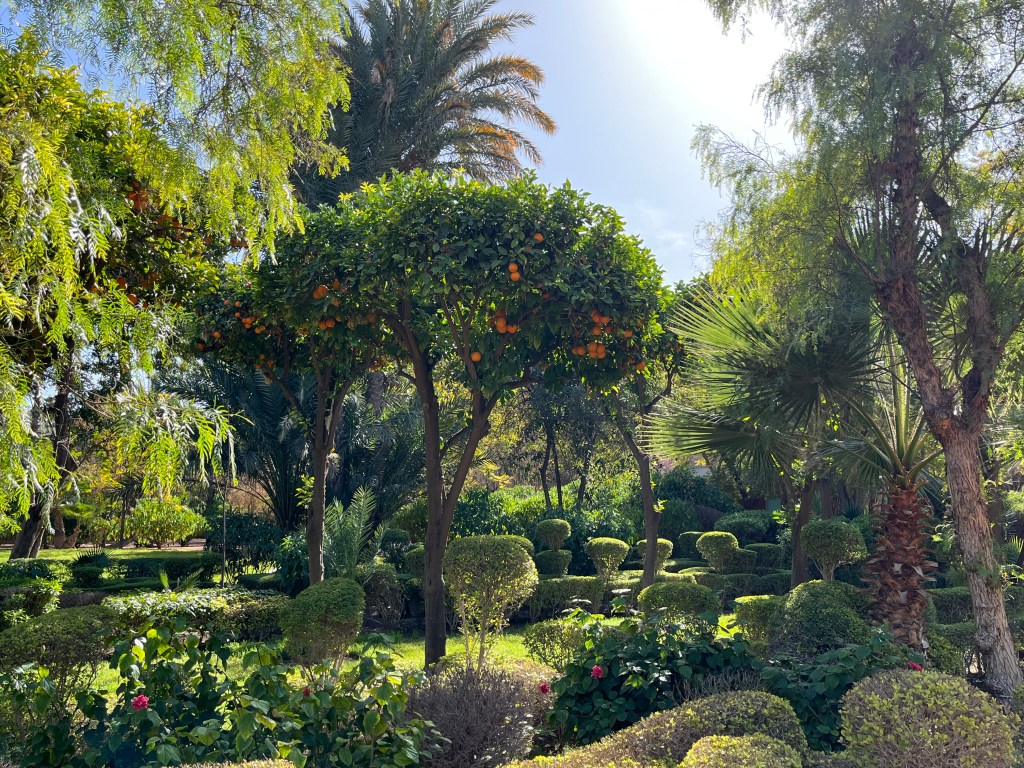
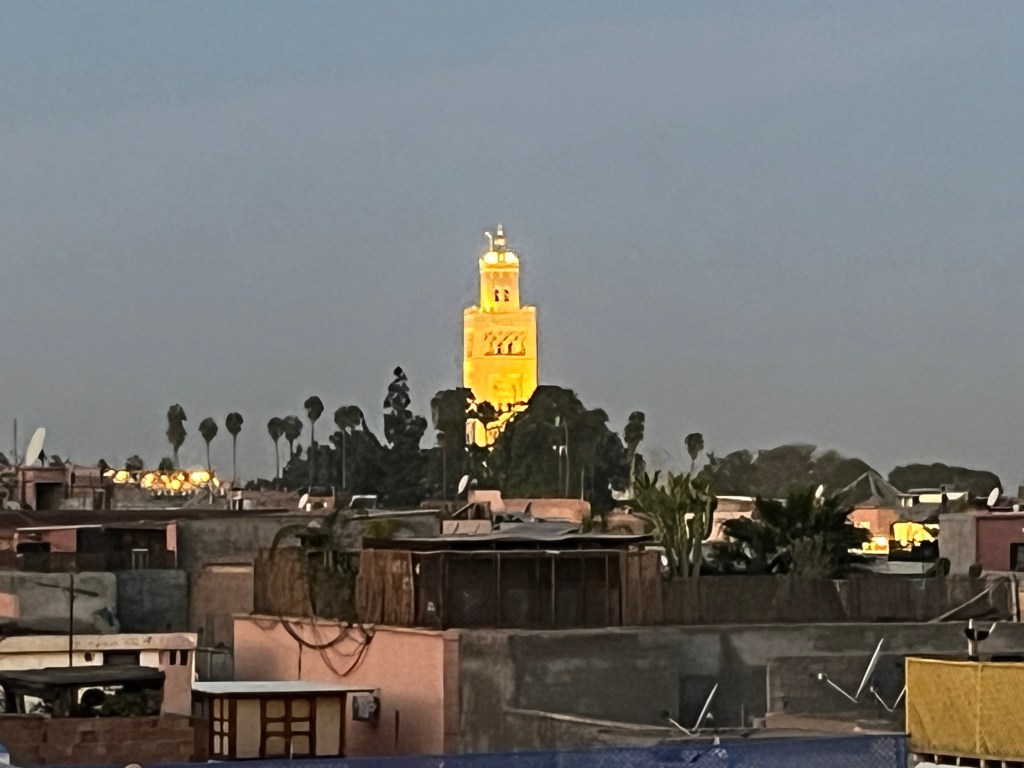
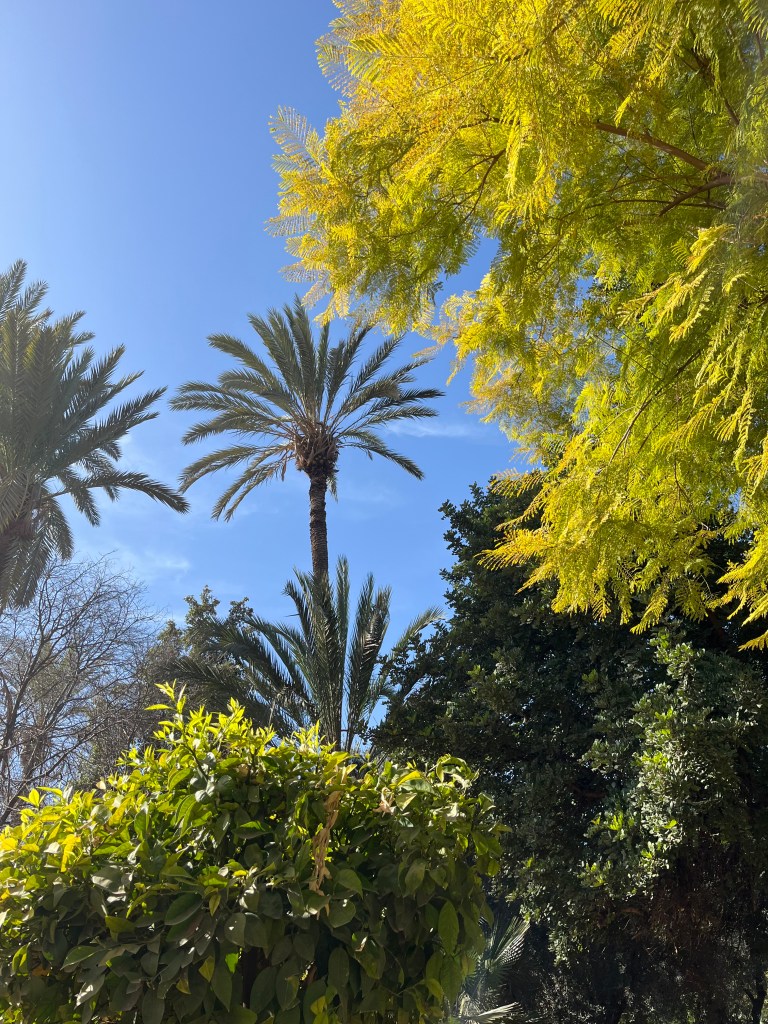
Marrakesh still provides the busy and exotic bazaar trade feel that made it a renowned North African hub for many centuries, and its people live up to their reputation for being welcoming and friendly. Orange trees and palm trees abound, and seen from almost any place in the city, is Marrakesh’s tallest building, the tower of the Koutoubia mosque:
Morocco is a mix of Arab, Berber, African, and European cultures. In 1956 it became independent from French colonization and today Morocco is a semi – constitutional monarchy, with two elected parliament chambers and the king of Morocco holding the executive branch as monarch and prime minister. The king has the force of law and can dissolve parliament. Just like the Moroccan flag, pictures of the king and his family are displayed everywhere, as well as the three words “God” “Motherland” and “The King”. Moroccans are proud of their country and their heritage. Arabic and Amazigh, the language of the Berbers are the main languages, with French spoken by most everyone as a second language. French is also frequently displayed on road signs or as a second language in tourist areas. In fact, the French influence of governance is still evident, from the names of their town halls to the typical white/yellow painted road marking system. Morocco is a Muslim Sunni country by over 99%, and the daily calls to prayer that are blasted 5 times per day from any mosque tower, and out of the numerous public loudspeakers, are certainly something that takes some getting used to. I recall one riad we stayed in, that was located right next to a mosque tower, where you certainly didn’t need an alarm clock, as the the 6:45 am call to prayer made sure that it was heard by everyone around.
Morocco’s economy is heavily tourist based and the frequent traffic stops/controls by police, as well as the visible police presence in touristy areas, shows the concern for safety and the interest in upholding the good reputation as a stable and safe tourist destination. We felt safe everywhere during our travels and Moroccans were generally friendly and polite. Only a couple of times, in areas that are normally not frequented by tourists, did we feel a little pressured by locals trying to offer all kinds of services to receive a few local Dirham, the Moroccan currency. In remote areas people are clearly very poor and living well below US or European conditions.
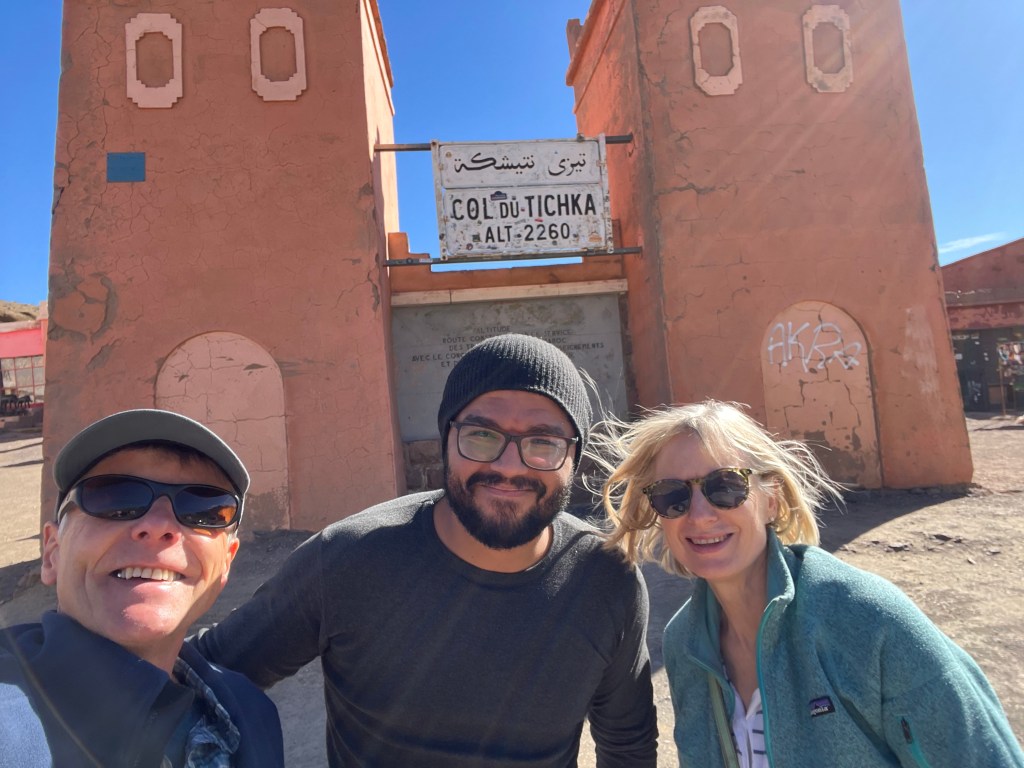
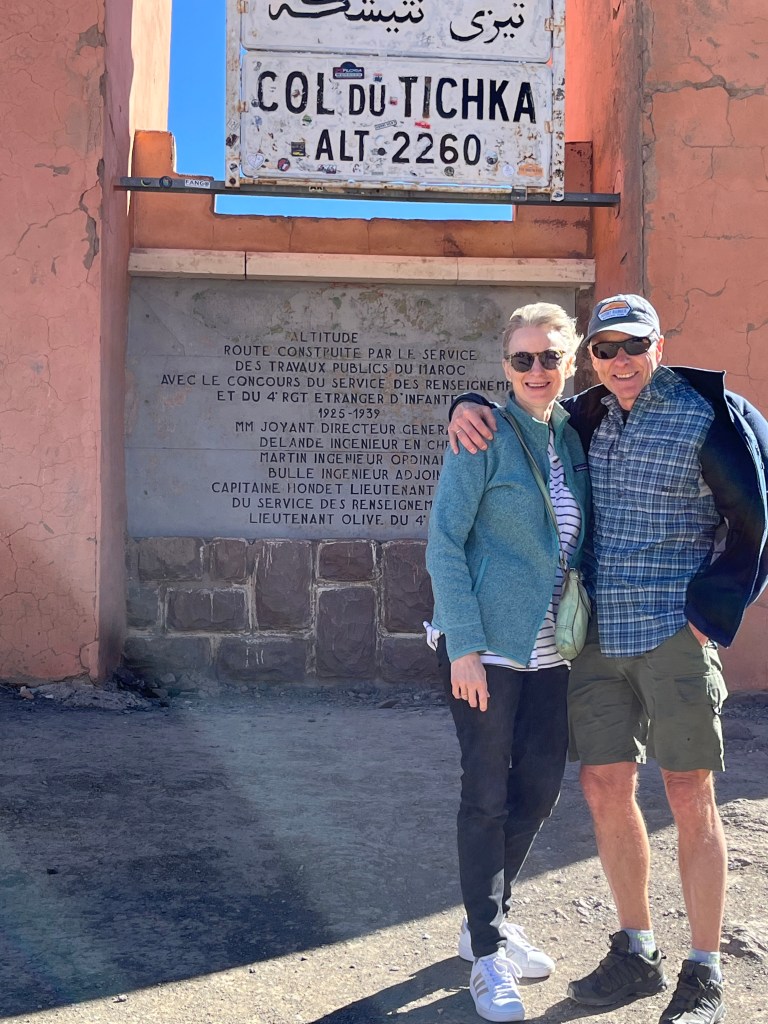
On our third day, our English speaking driver Amine picked us up and we headed towards the east, driving over the 2260 meter high Tizin’t Tichka pass in the Atlas Mountains, or, as displayed in French on the sign below, the Col du Tishka.
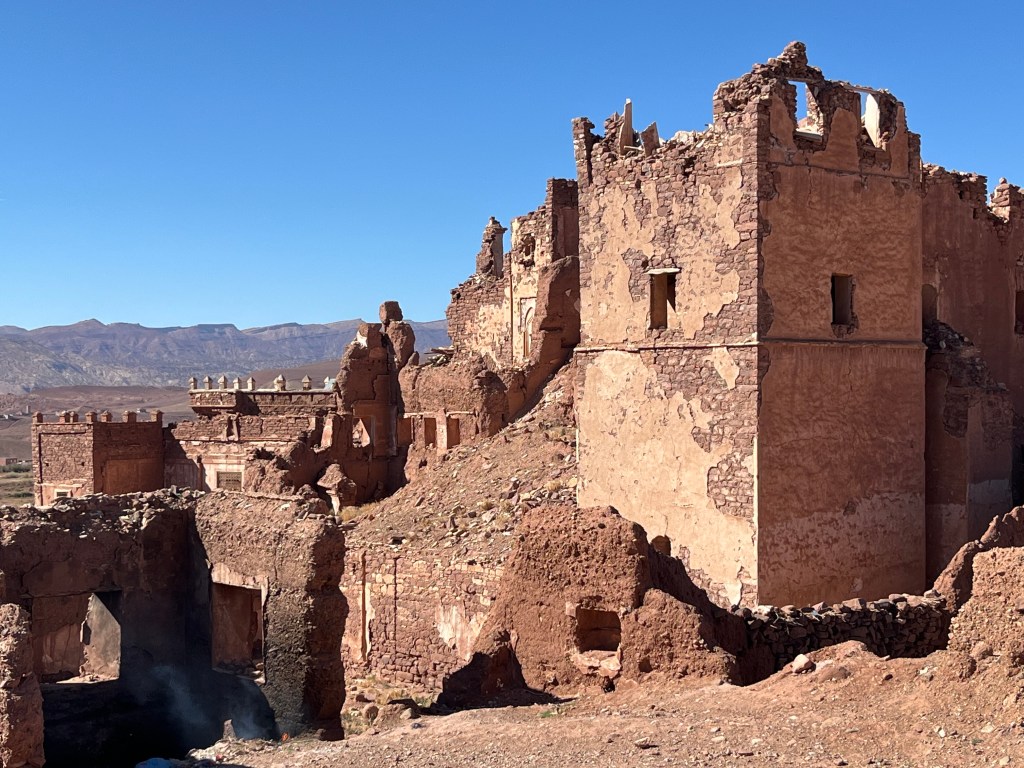
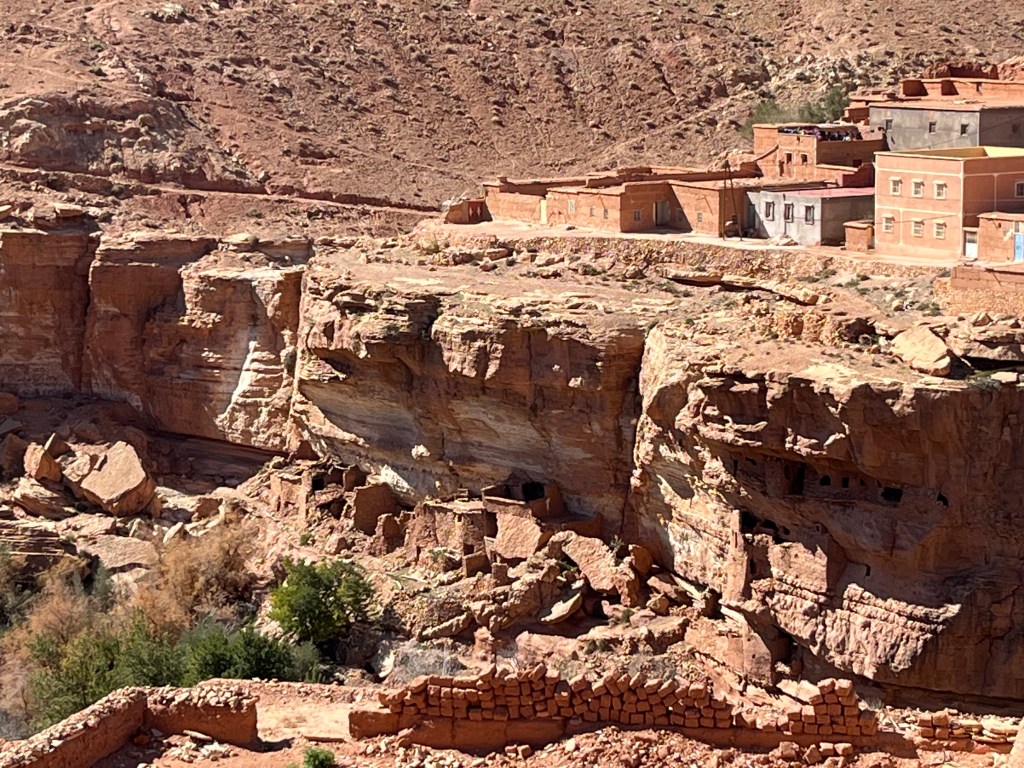
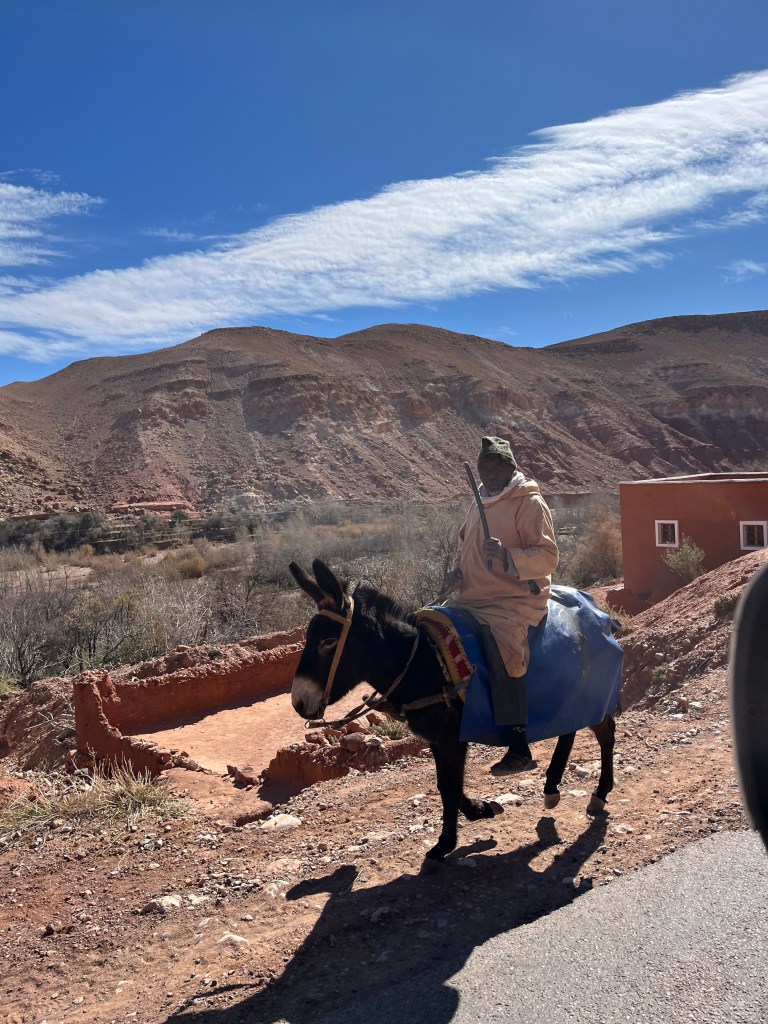
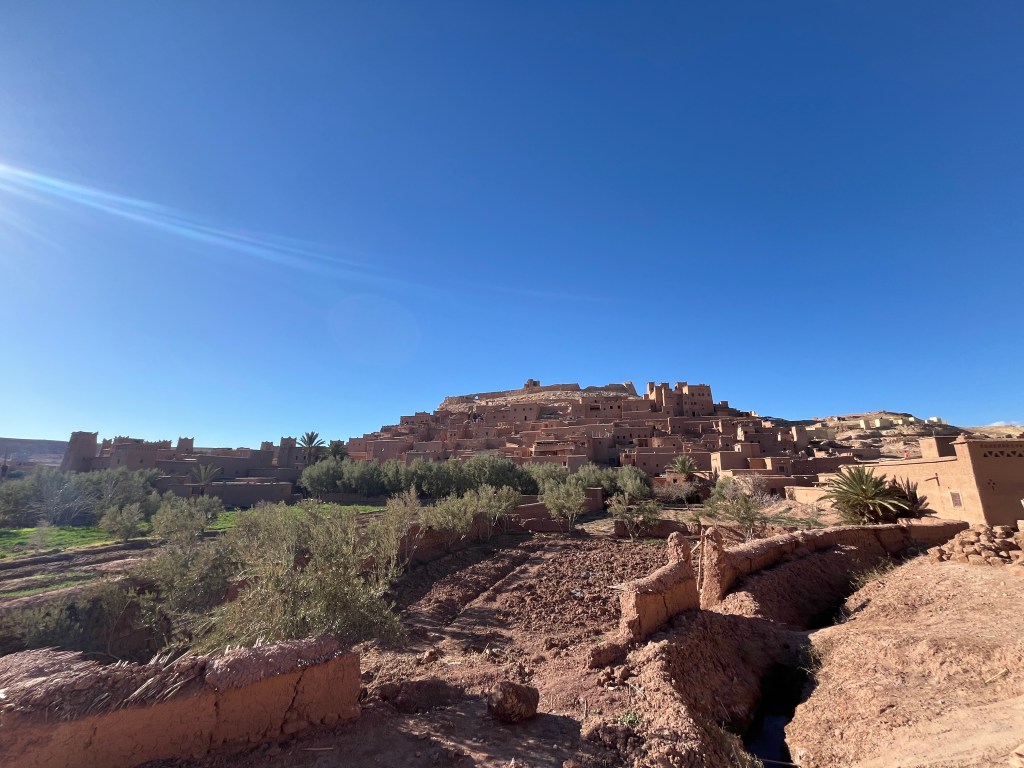
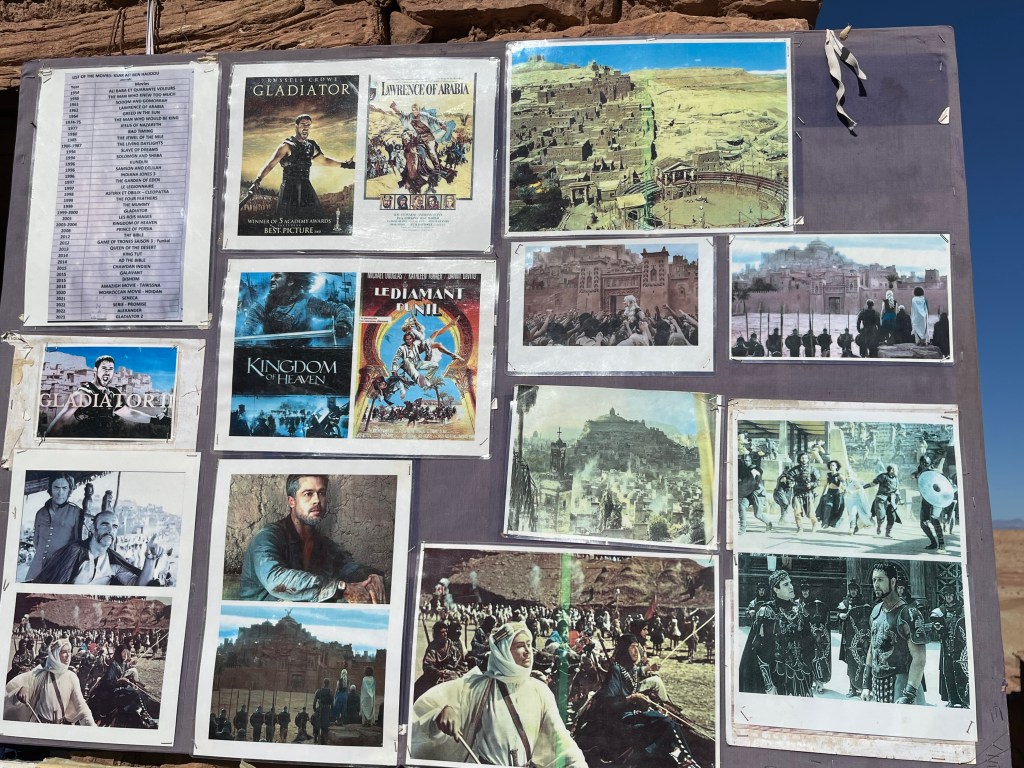
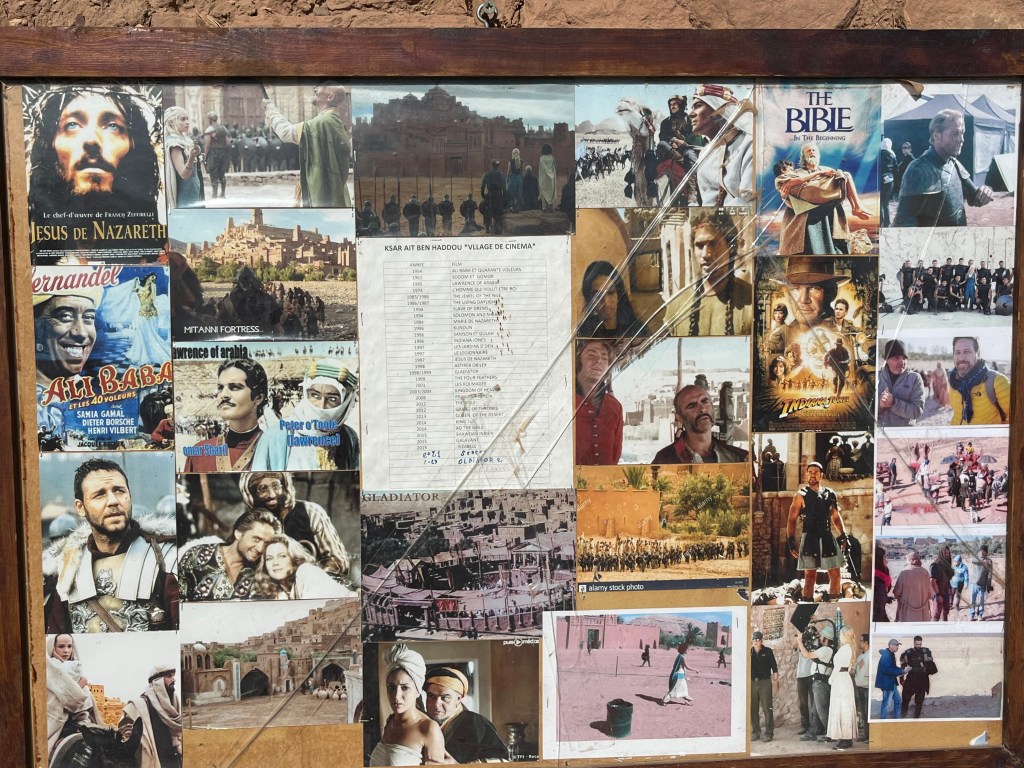
Our first stop with a local guide was the Kasbah of Ait Ben Haddou. A kasbah is a fortress, citadel, or fortified city quarter. This Air Ben Haddou kasbah dates back to the 11th century and sits strategically on a hill overlooking the Ounila valley along the ancient caravan trading route between Marrakesh and the Sahara. Again, the recent earthquake evidence was everywhere. This Ait Ben Haddou kashbah has also been, and still is, a popular filming location. Among other films, the site has been used in “Lawrence of Arabia” (1962), “The Jewel of the Nile” (1985), “The last Temptation of Christ” (1988), “Gladiator” (2000), and many others. Filming activity was ongoing while we were visiting.
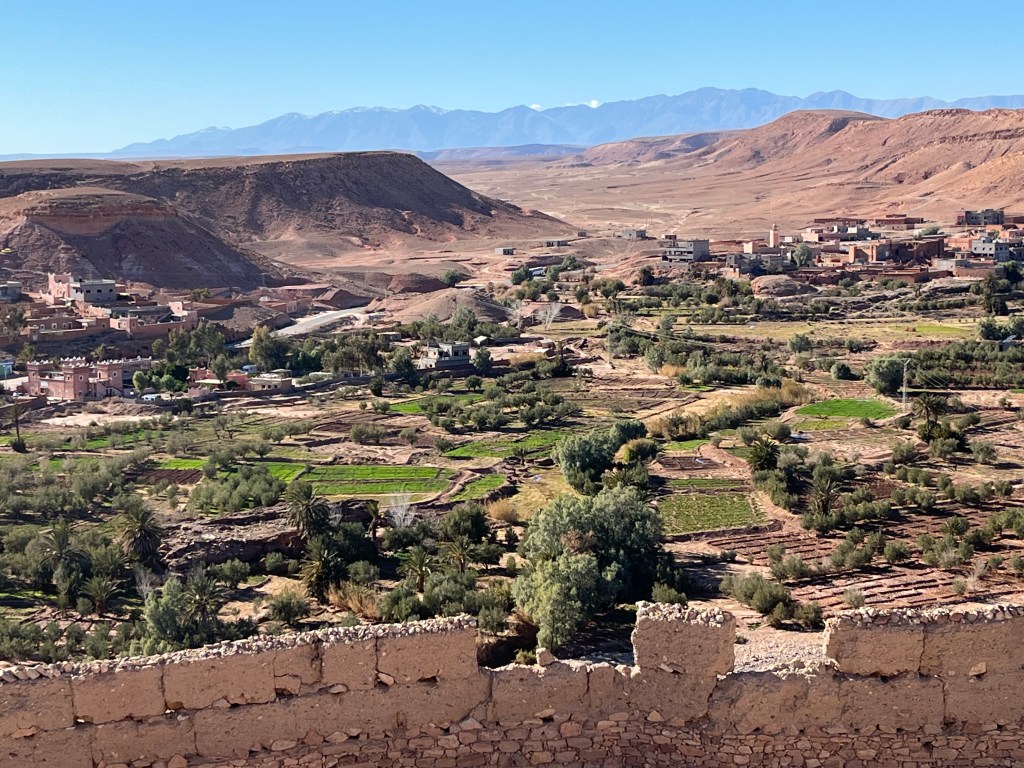
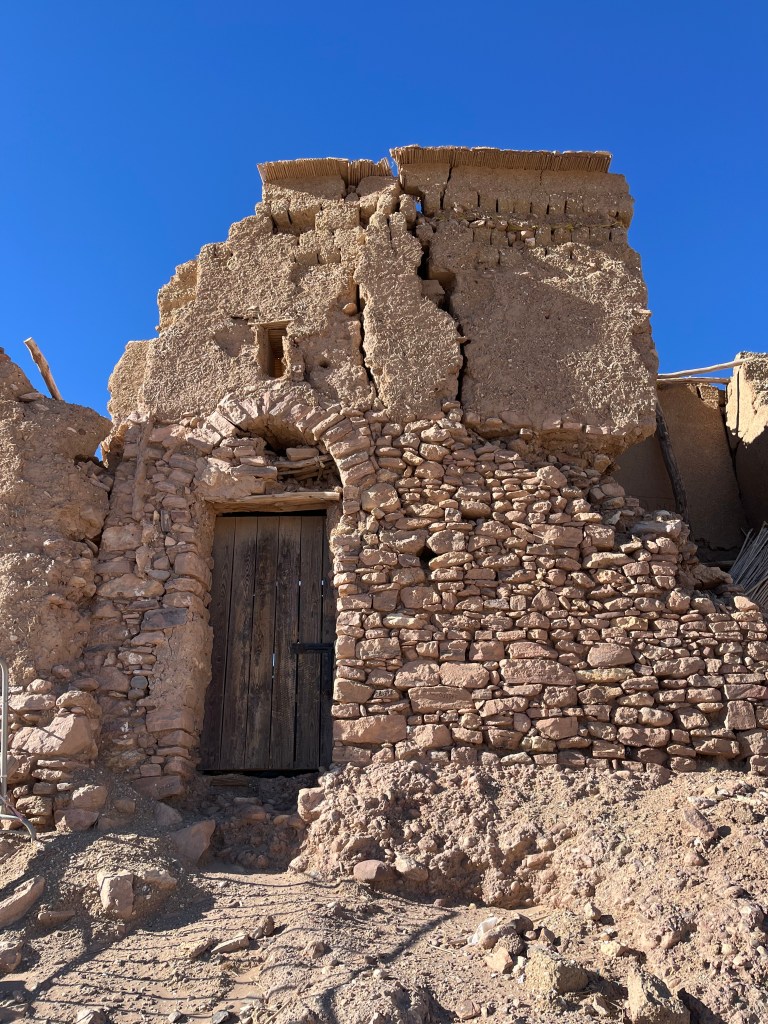
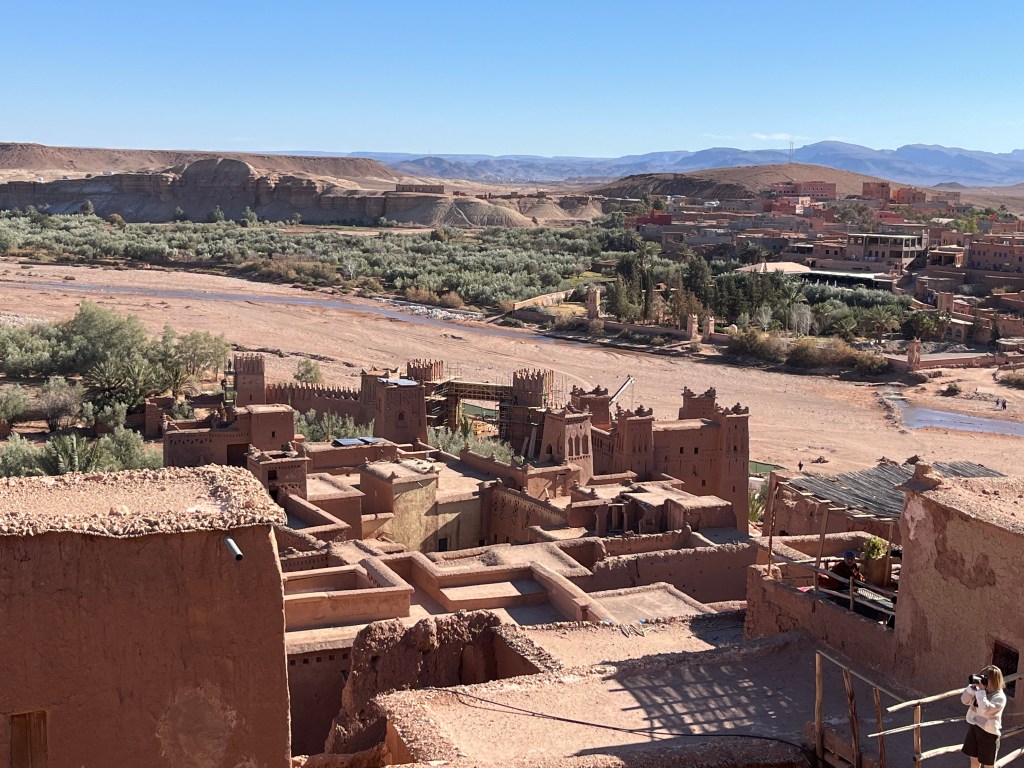
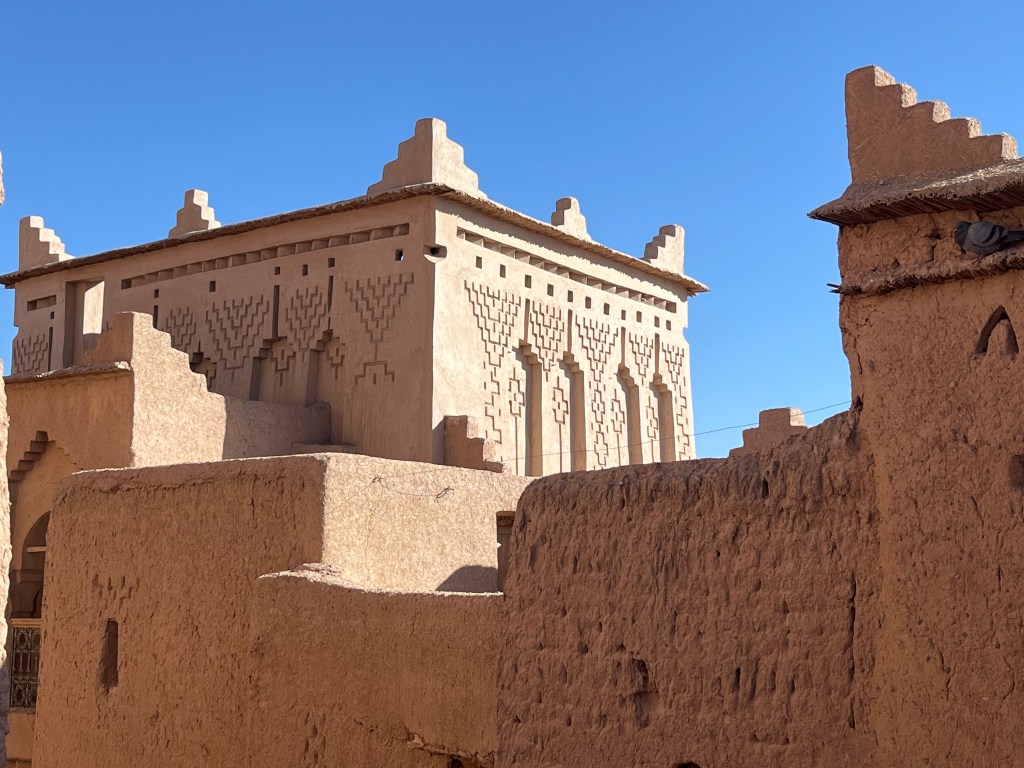
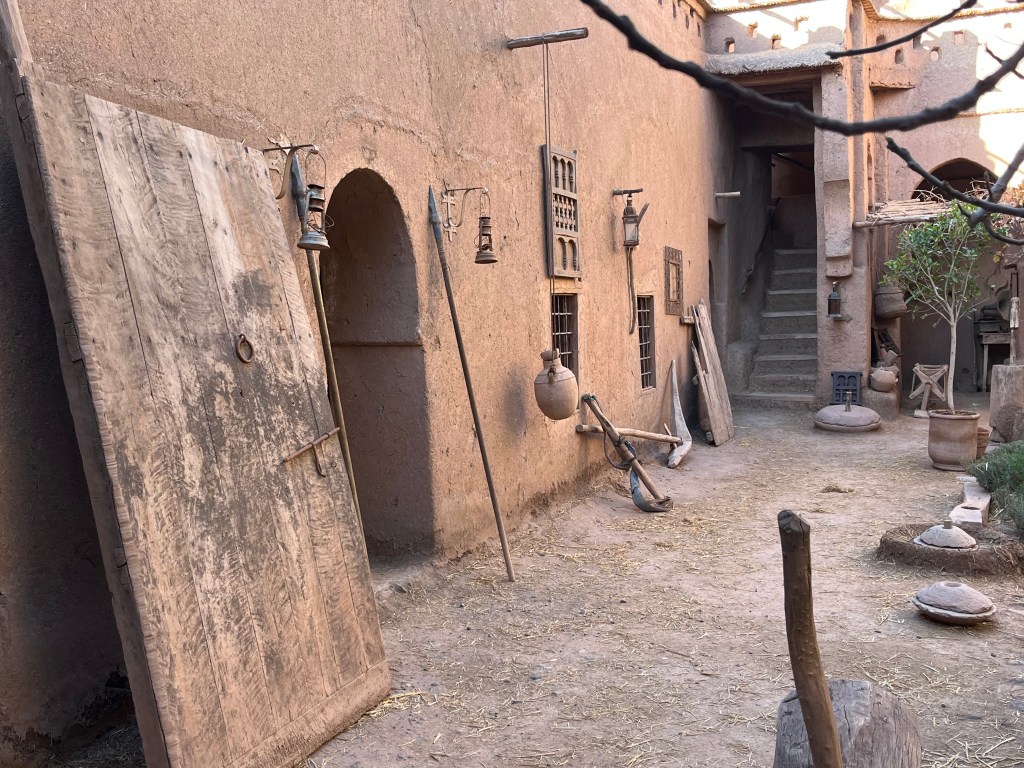
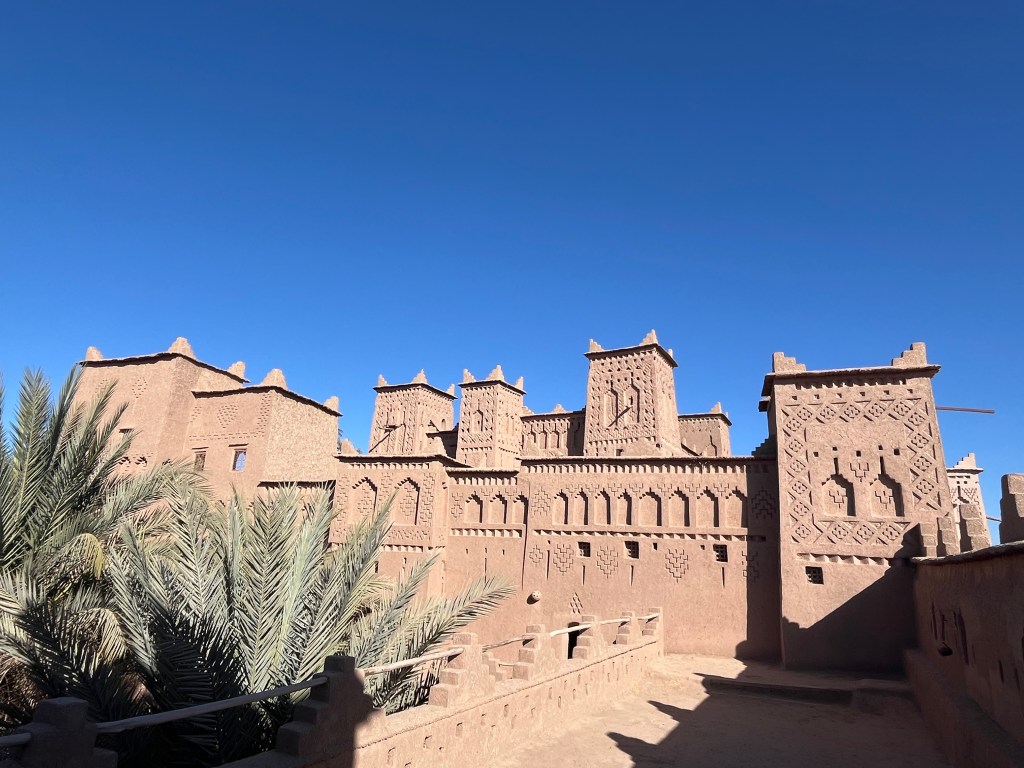
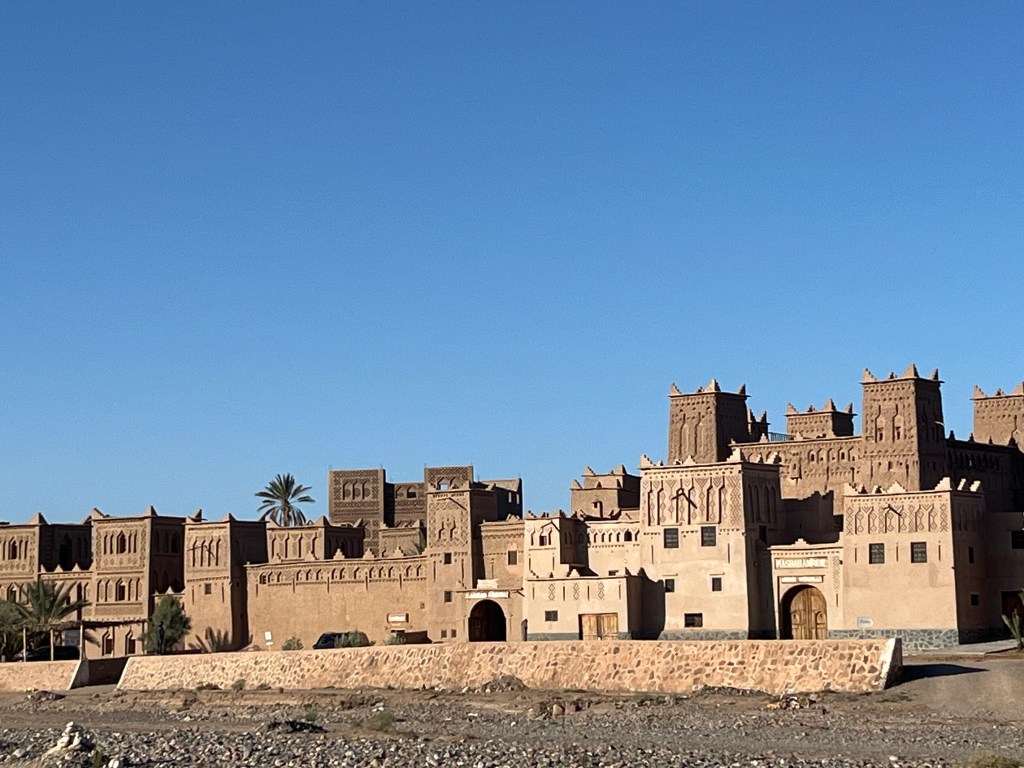
Further east in the Dades Valley we stopped in the large oasis and Dadepalm grove of Skoura and visited the defensive Kasbah of Amerhidil right next to the wide, dry river bed. This Kasbah is still privately owned by one family that has the means to maintain it. An excellent local guide brought the daily living in this 17th century kasbah to life for us. He also explained in technical detail the building of these, typical mud structures, in which sun dried loam bricks are used with a mud loam straw mix as the main building material. For the roofs, ceilings, windows, and door or window lintels, palm and tangerine lumber beams are used with the addition of reeds as a cover on the roofs and ceilings. Walls are usually 2 to 3 feet wide depending on the load bearing height of the structure, with relatively small window openings, and rooms that are usually kept long and narrow. This allows temperatures to stay relatively cool inside, even during the extremely high summer temperatures. The sun and rare rain exposure naturally erodes the outside walls relatively quickly, requiring frequent refinishing, new plastering with the mud – straw mix about every 7 years. This is a natural, local, and sustainable building method that due to its ecological footprint has found a lot of new interest over the last decade, however, being earthquake proof is not one of its strength.
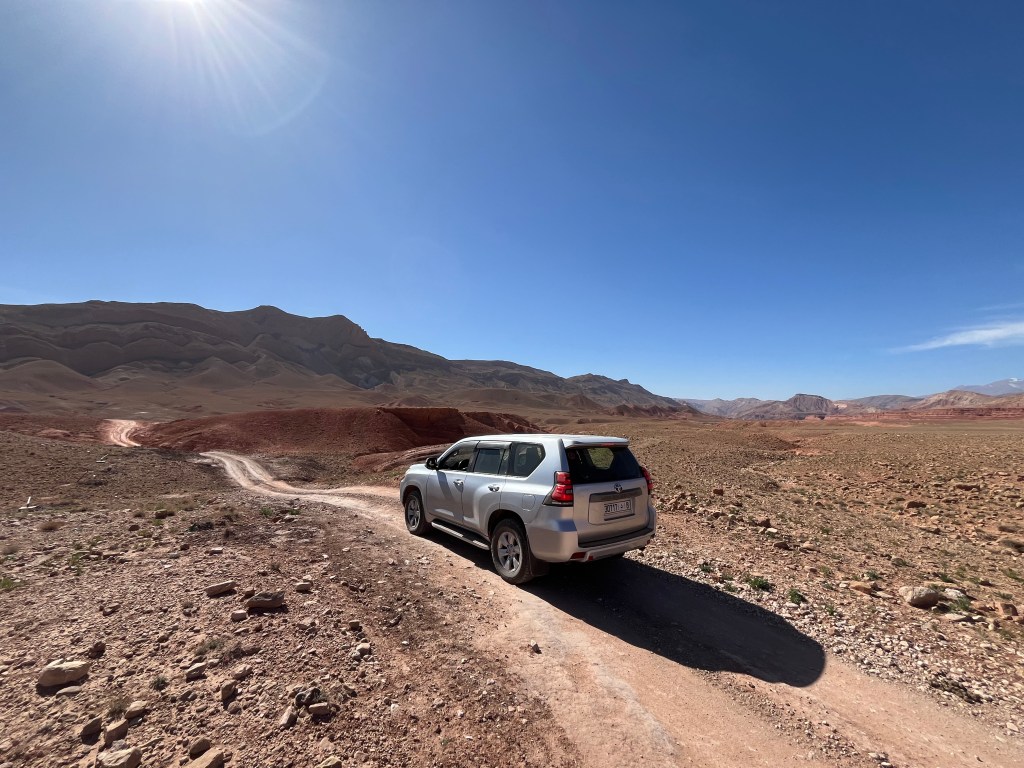
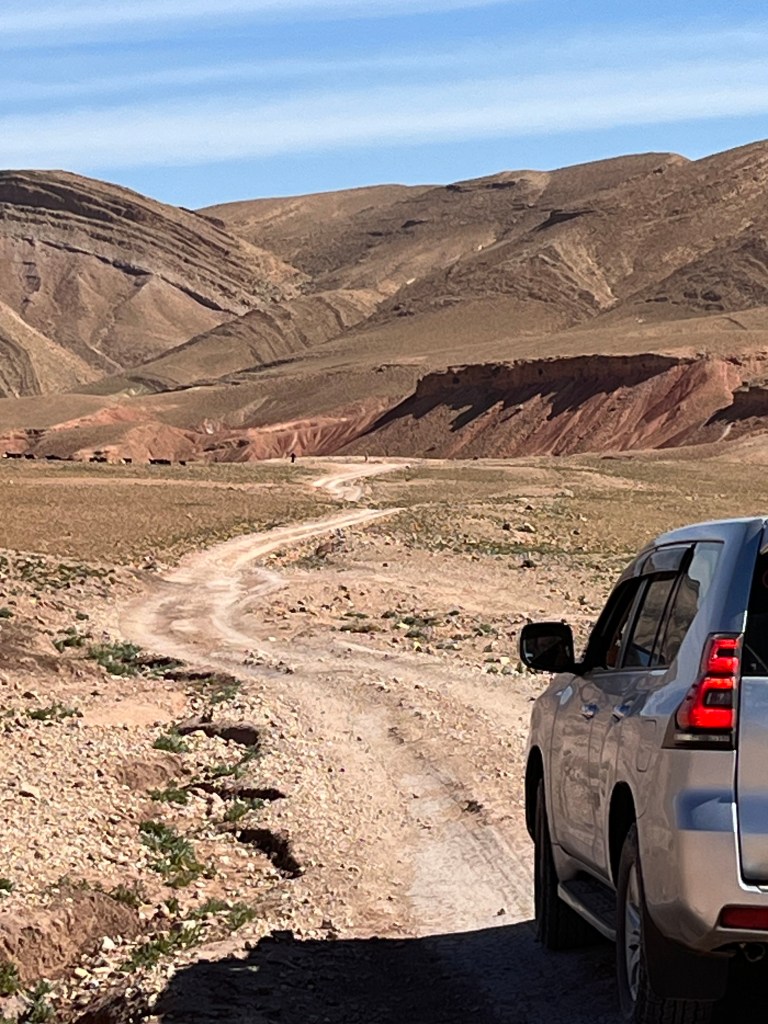
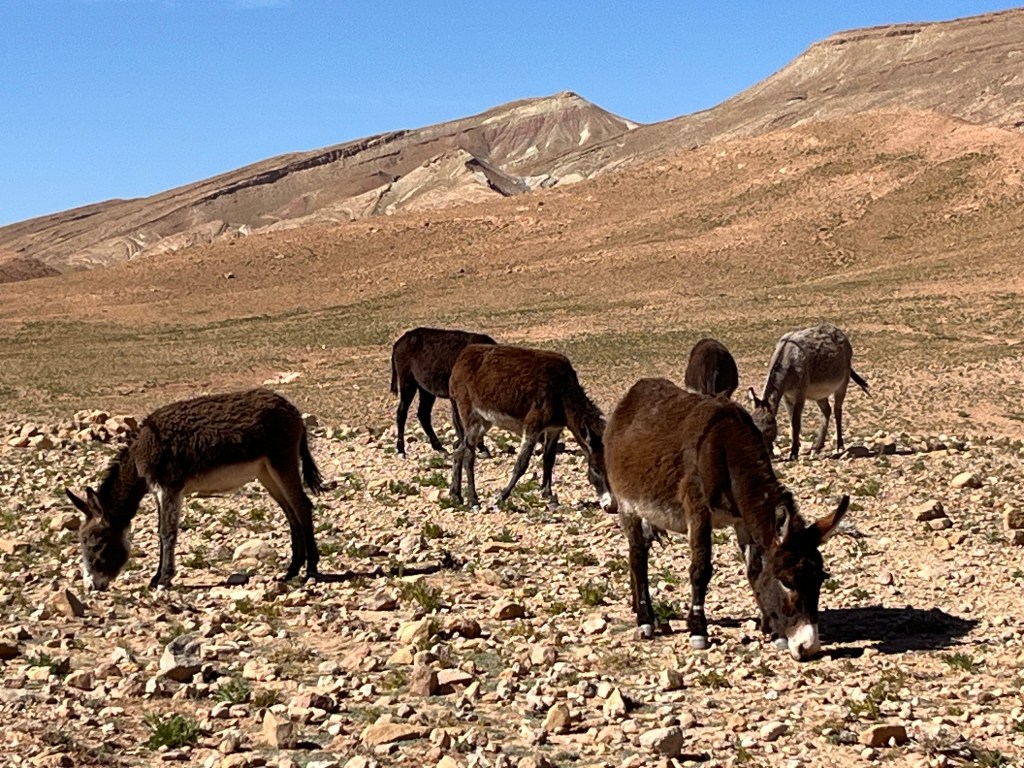
Heading further northeast, our local driver chose a remote 25 mile dirt road route. It had been several years since he had taken this path, and he called a couple of local contacts to insure that the road was indeed still drivable. It was a beautiful remote, high desert landscape that reminded us of the American southwest. We saw wild donkeys, sheep and goat herds, as well as some Berber nomads from a distance that are living out in these harsh conditions year round.
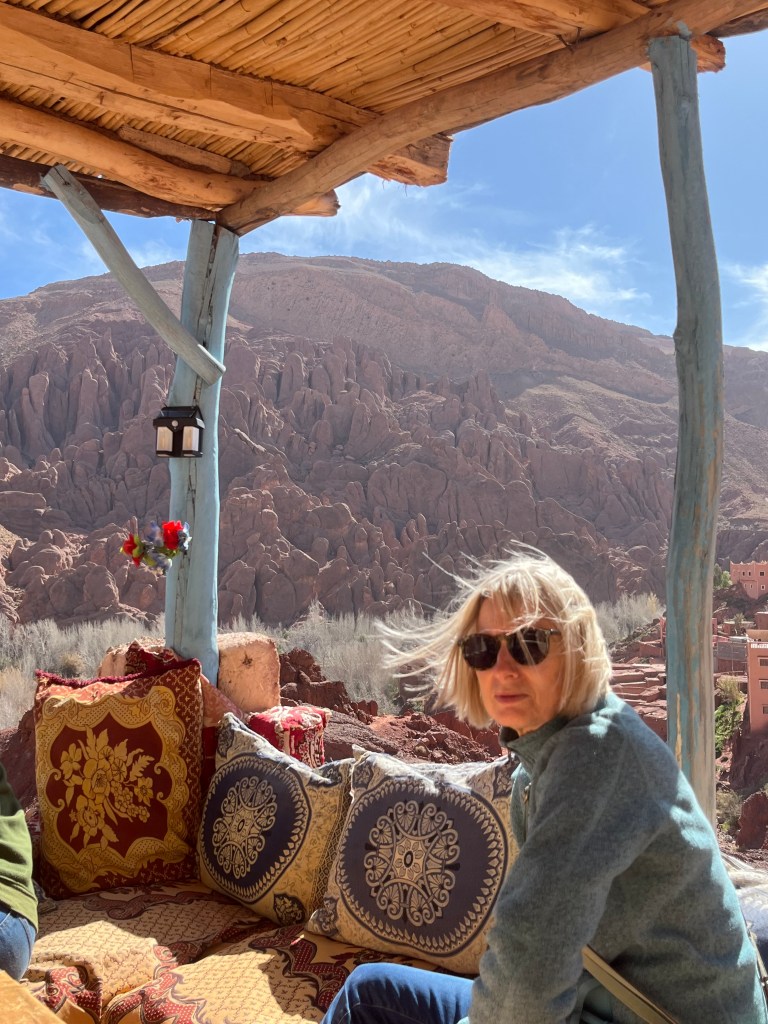
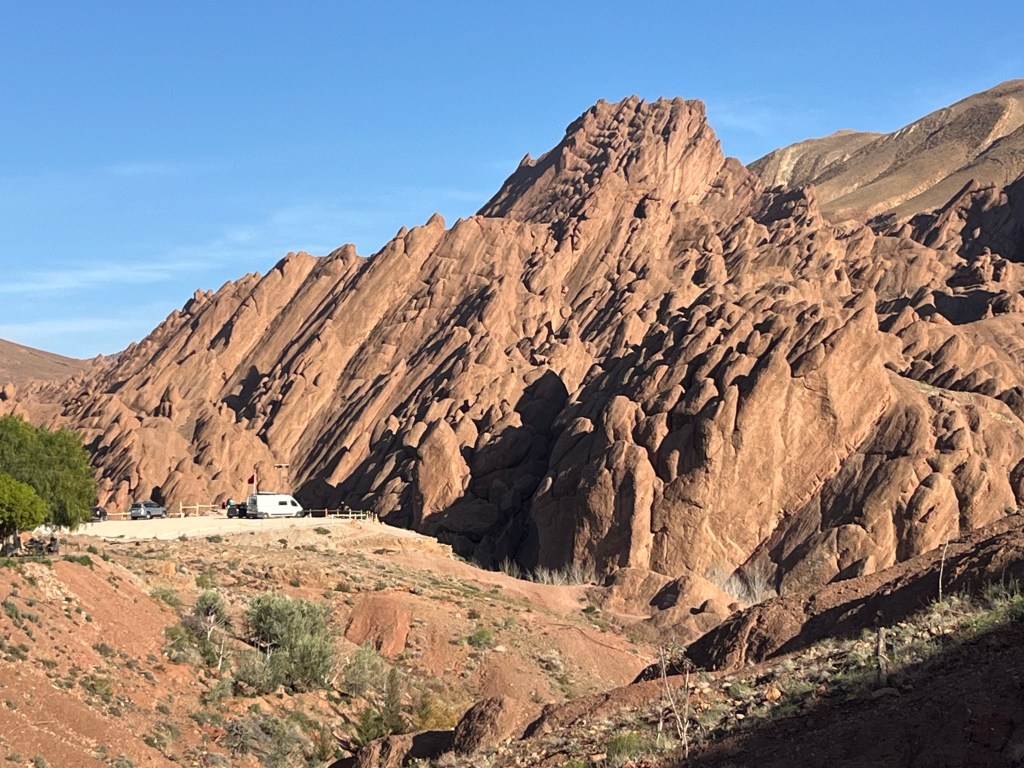
When we got back on pavement, we were in the upper Dades valley, where the steeper rocky cliffs were formed into what locals call a “Monkey Paw” formation.
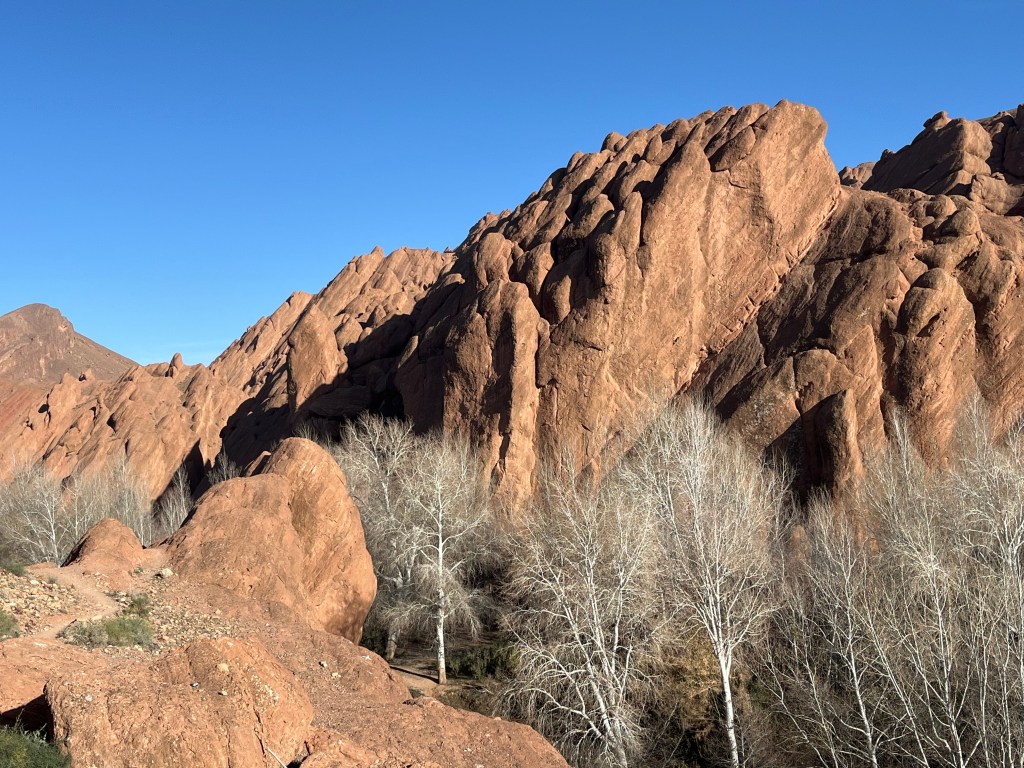
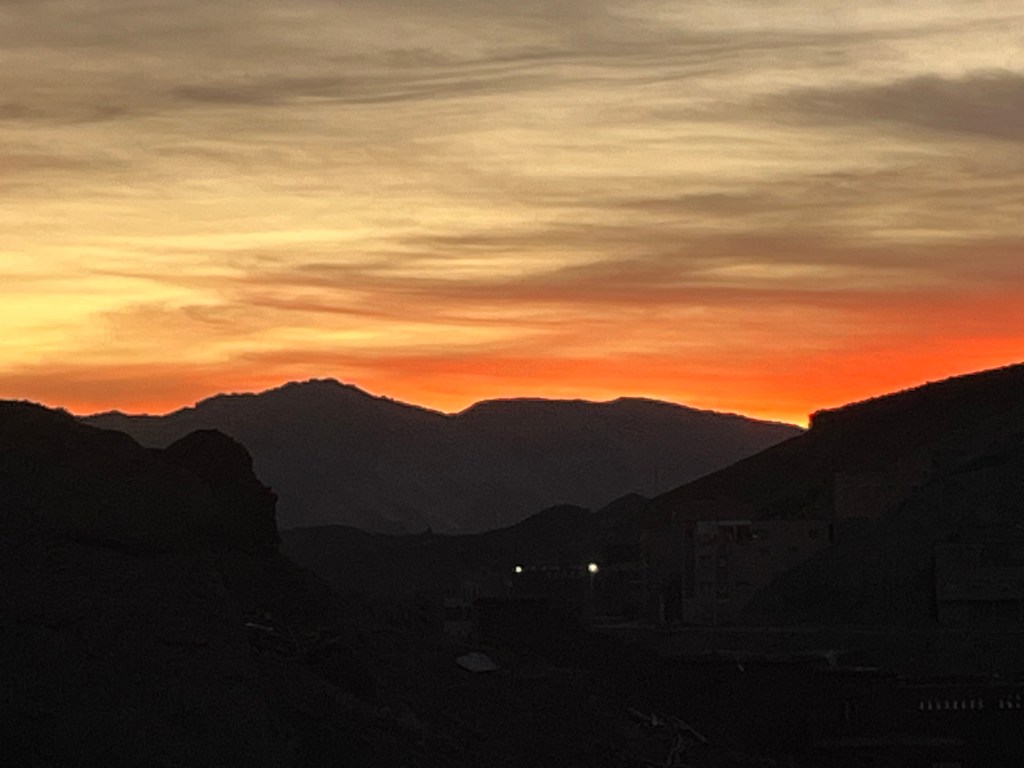
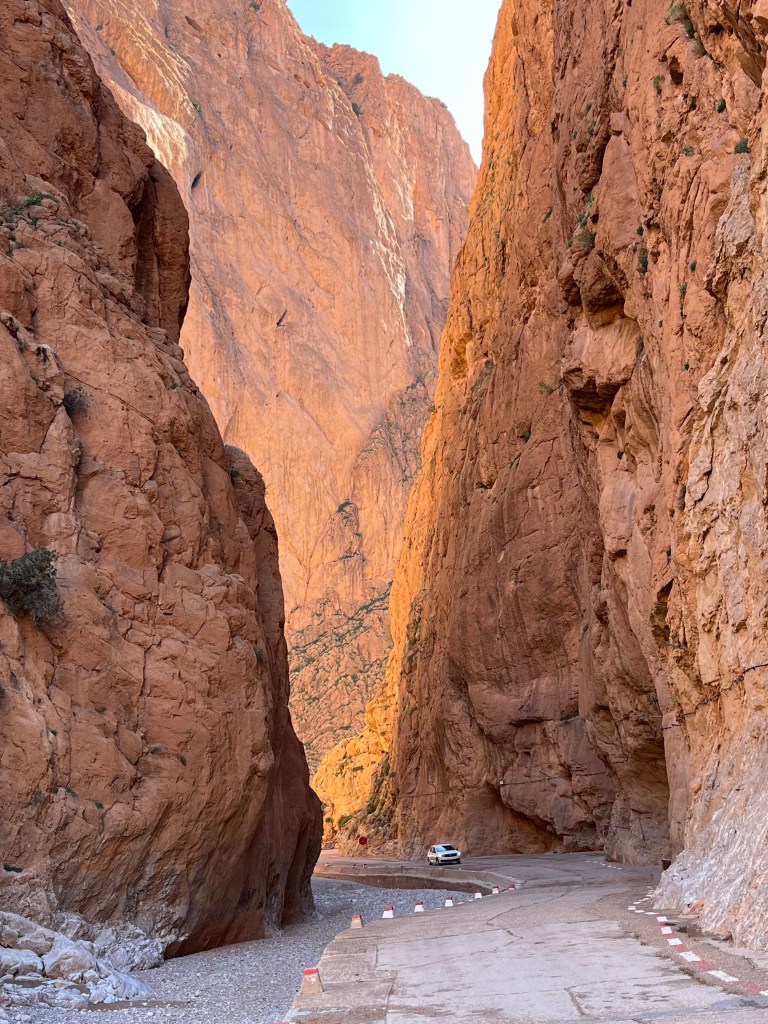
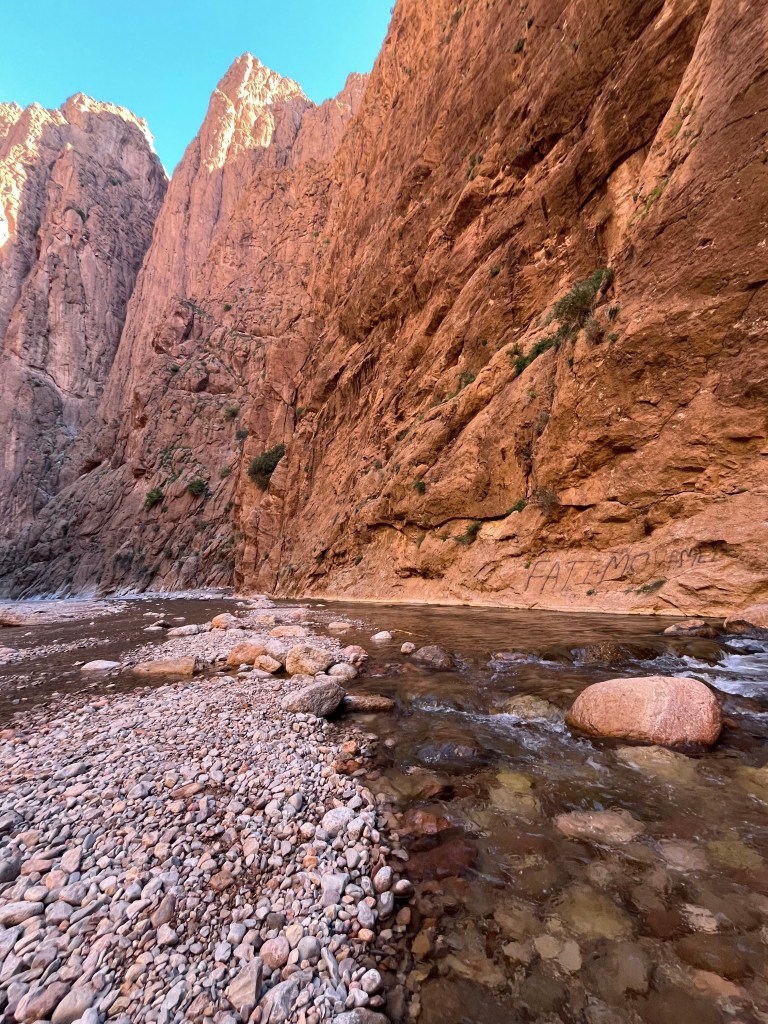
Further, we visited the spectacular Todra gorge, with up to 300 meter high cliffs. Here, as in a lot of places, we were glad that our driver managed to get us there early in the day, before the majority of the tourists and tour buses arrived. A forceful cold wind was howling through this canyon.
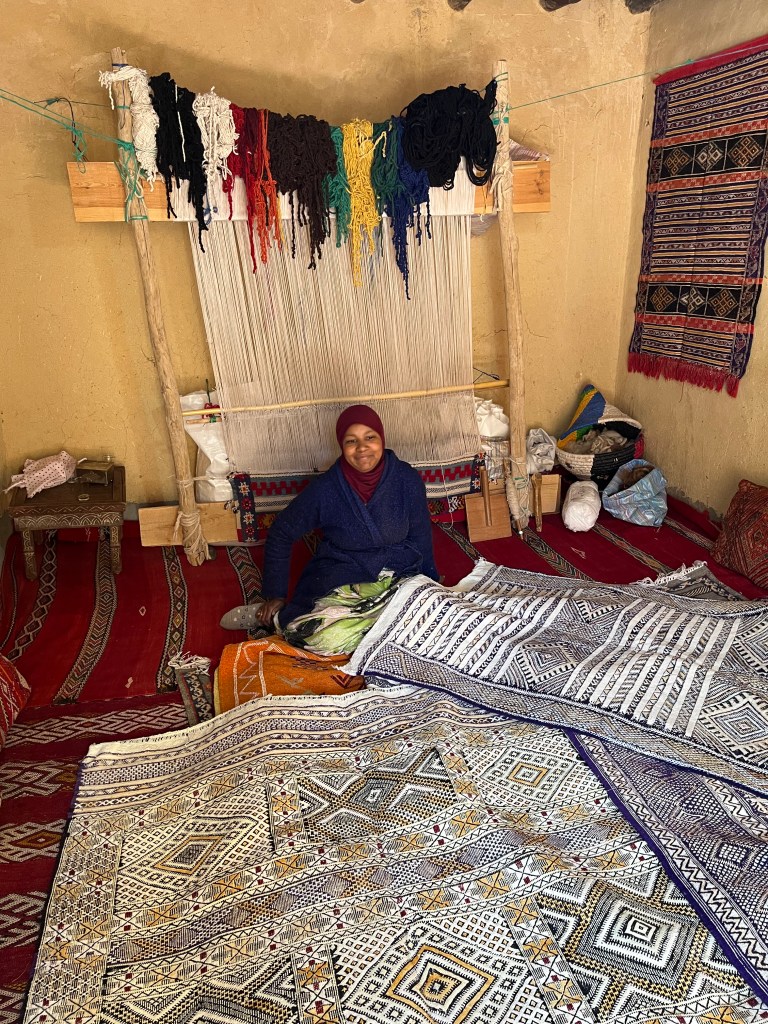
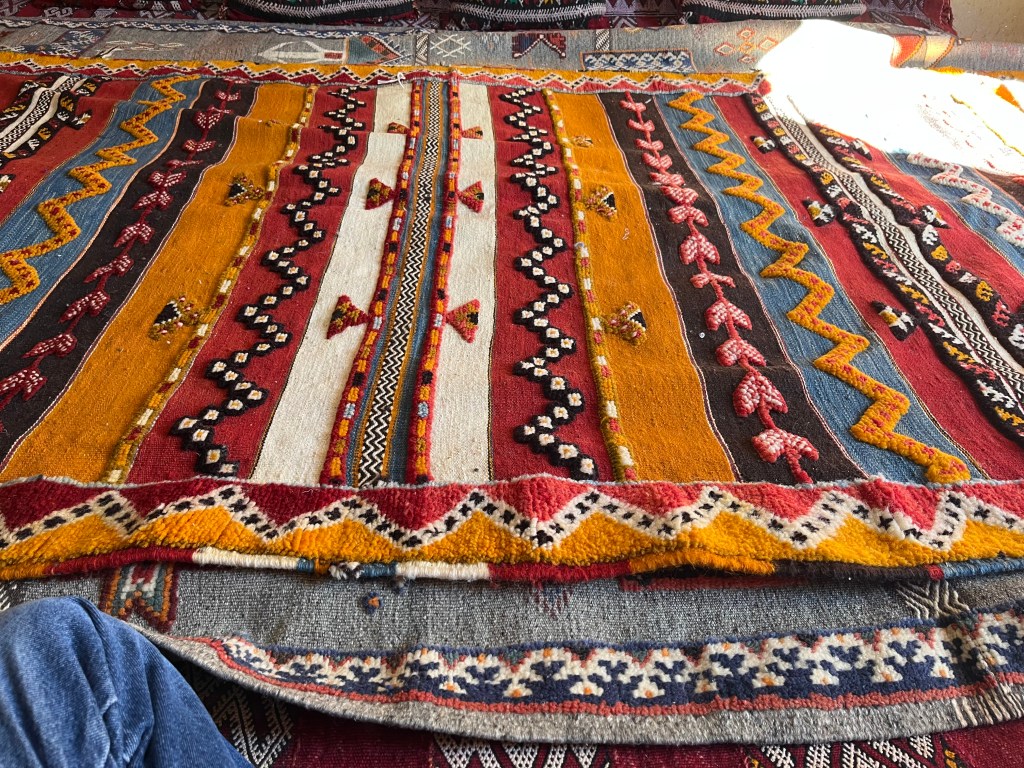
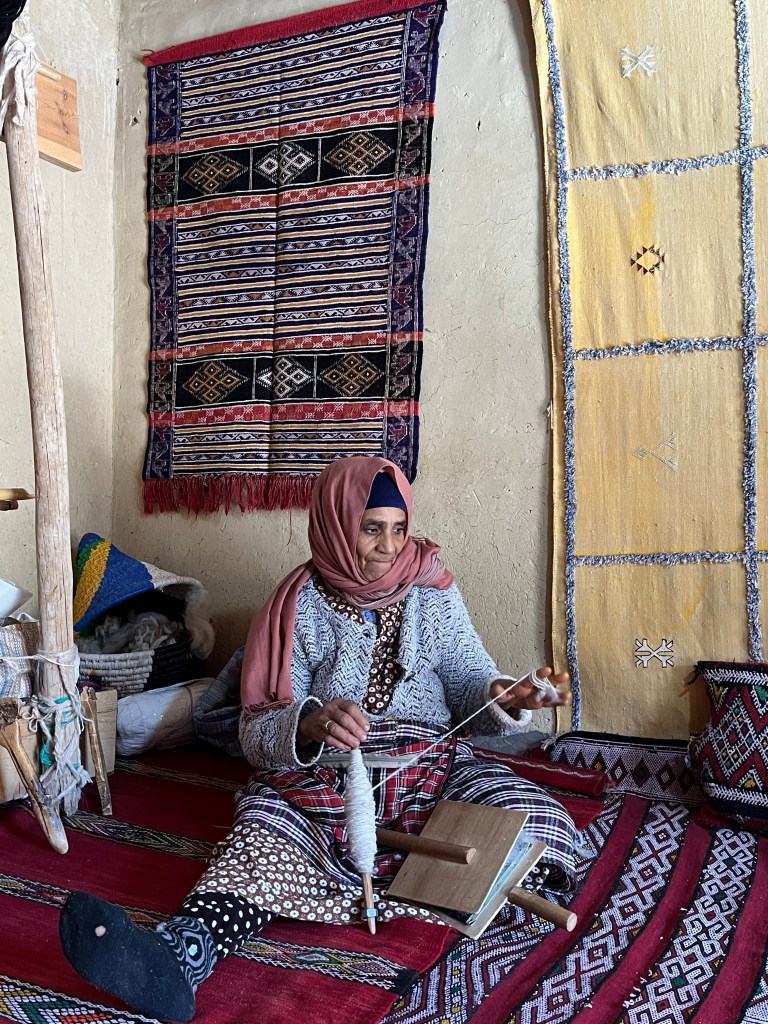
Since our entire travel schedule was not too tight, and we usually started the day relatively early by being on the road by 9 am, our driver asked whether we were interested in visiting a local Berber women’s cooperative where they make Berber rugs by hand. That sounded very interesting and he took us into a totally obscure and unassuming back alley. I had confirmed with Lauri that we just wanted to look and not buy. The pleasant and excellent English speaking Berber cooperative host talked about his large family, their semi-nomadic life, and the fabrication of their Berber rugs, that are produced solely with natural materials, like from sheep or camel hair wool or silk from the agave cactus, to the dyes used for the coloring. No patterns are used, so each rug is an individual piece of art.
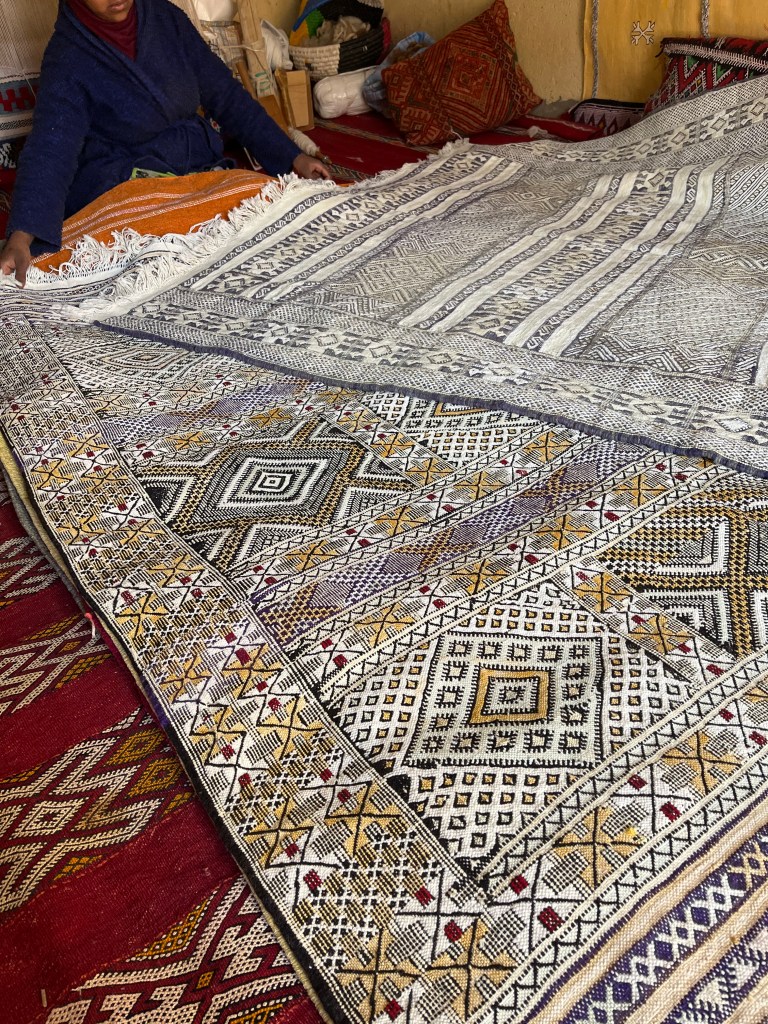
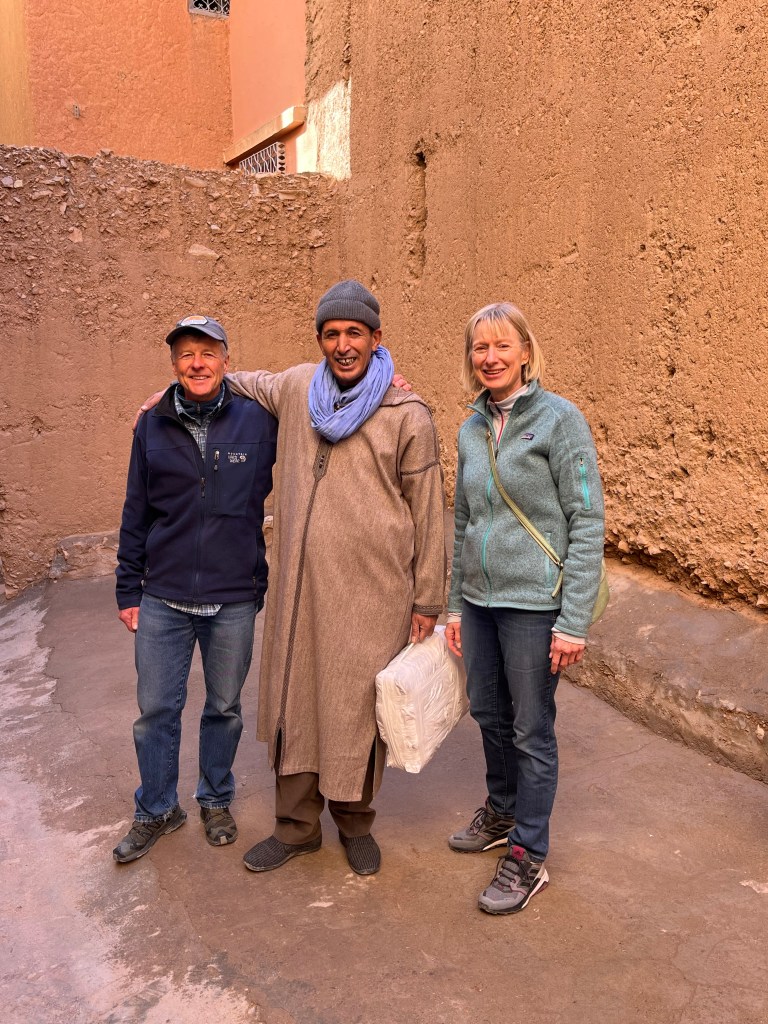
After a relaxing cup of the ever present Moroccan tea, and the showing of some sample rugs, it became clear to me that Lauri had forgotten about our agreement and that Lauri’s Berber rug purchase train had long left the station. And, I have to admit, that the vividly white, blue, yellow and red detailed rug you see in the two photos on the left below, looked mesmerizingly beautiful. So yes, that 2 x 1.5 meter carpet was the one both of us were interested in. It is made out of a combination of camel hair and silk, and the intricate designs have meanings from nature to family and more, which unfortunately we partially forgot. After some easy going back and forth negotiations, we agreed on a price and as you see in the last picture, we left there with a tightly wrapped white package containing our new magic carpet. The carpet now lays in our bedroom in Dijon and we are still very happy with our purchase and the purchase experience.
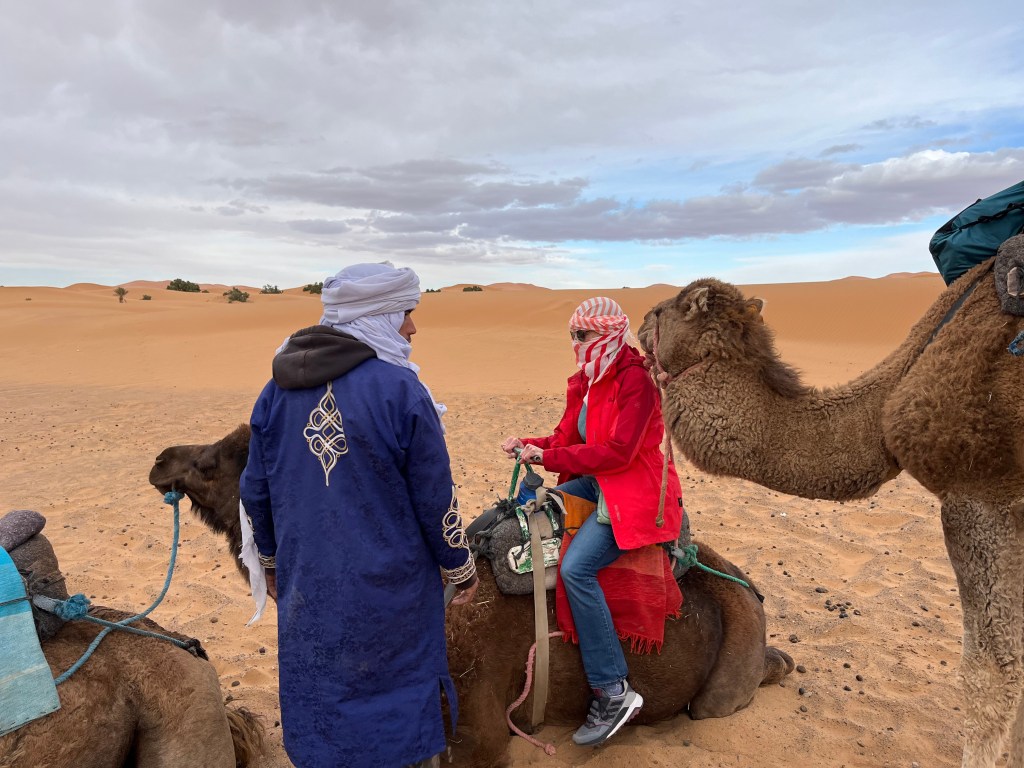
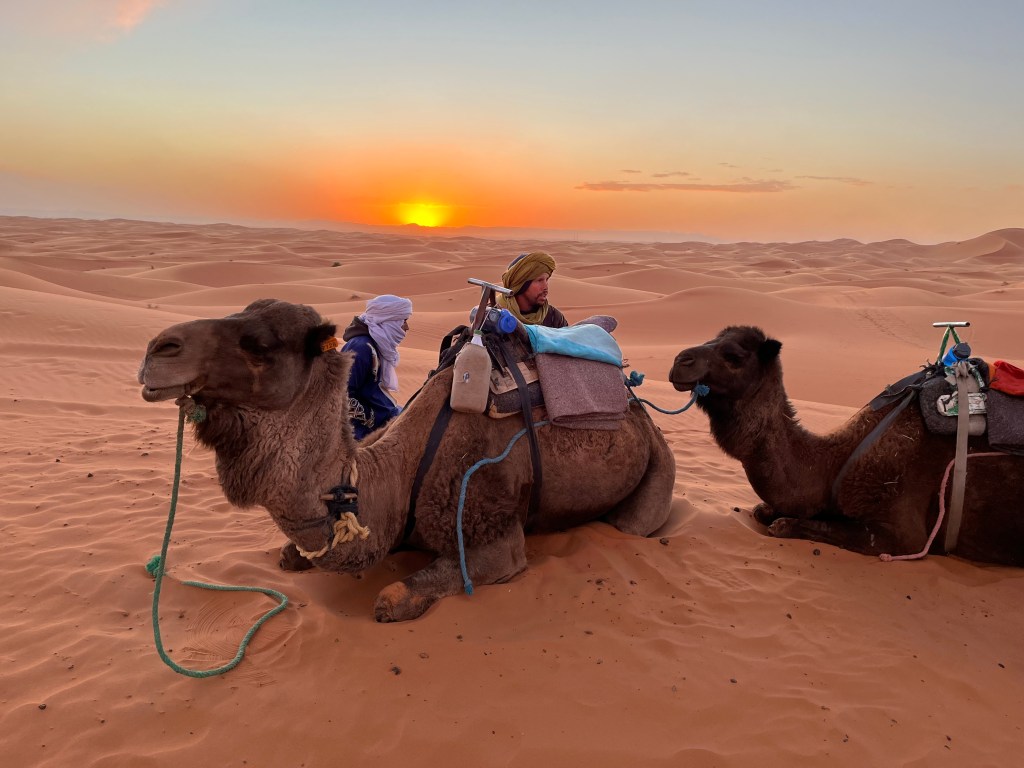
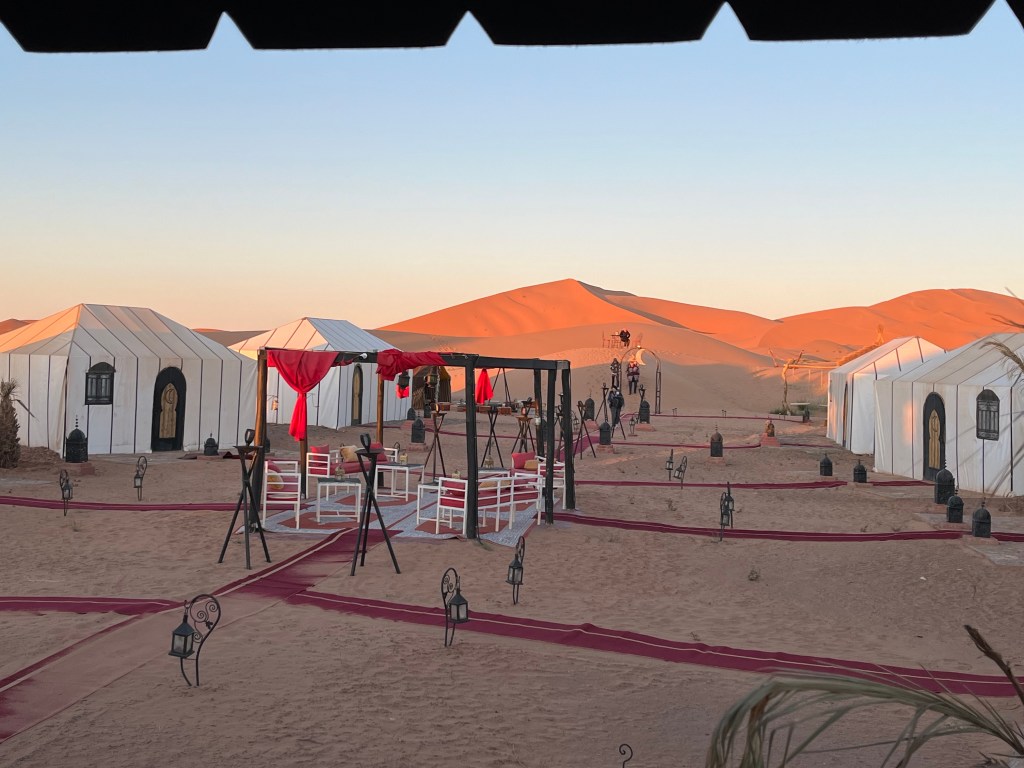
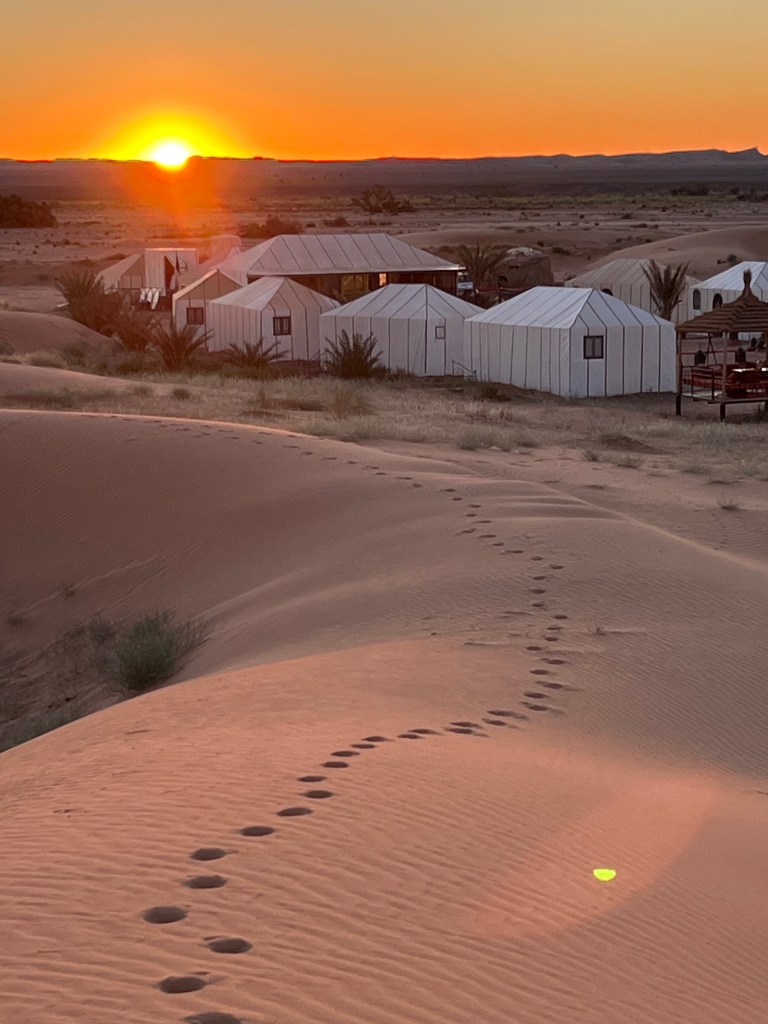
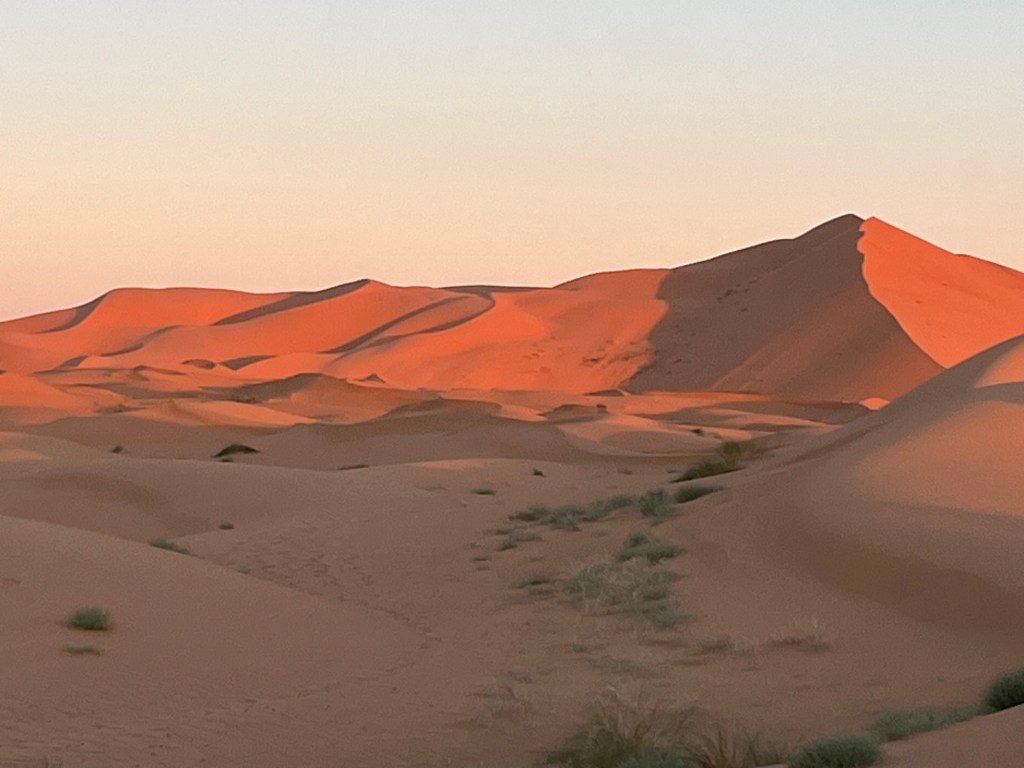
We headed further east to the city of Merzouga and the highlight of our trip, a camel ride through the Erg Chebbi Sahara sand dunes to our Berber camp close to the Algerian border. My excitement and anticipation about it did not disappoint! On the road to Merzouga we saw a couple of sand storms and it was a little windy when we mounted our camels, or dromedaries to be more precise, in late afternoon, the sky fortunately stayed clear for our ride and we were dressed warmly to protect against the cold wind.
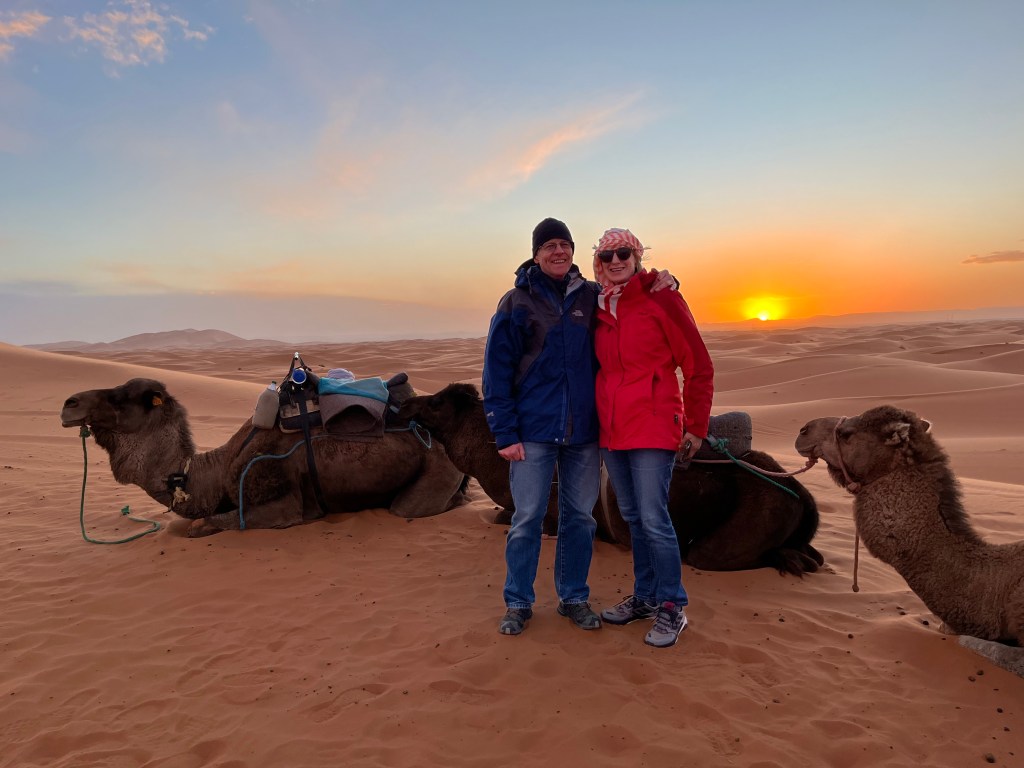
Our travel agent warned us that riding a camel might be uncomfortable and could cause you to feel sea sick. We didn’t experience any of that and our Berber guide for our group of five, smoothly and comfortably navigated us through the sand dunes. When we reached the highest point of our journey after a 45 minute ride, he had us dismount and wait for an hour to watch the setting sun. During our rest we learned that our dromedaries were six to fourteen years old and get to retire when they are about 25. They also are sheared about every 3 years and certainly do make some weird and loud sounds, which was especially evident for my fourteen year old oldie who was leading the string. The sunset was beautiful and the wind had died down when we set off for our remaining 45 minute ride. By the time we got to camp it was almost totally dark.
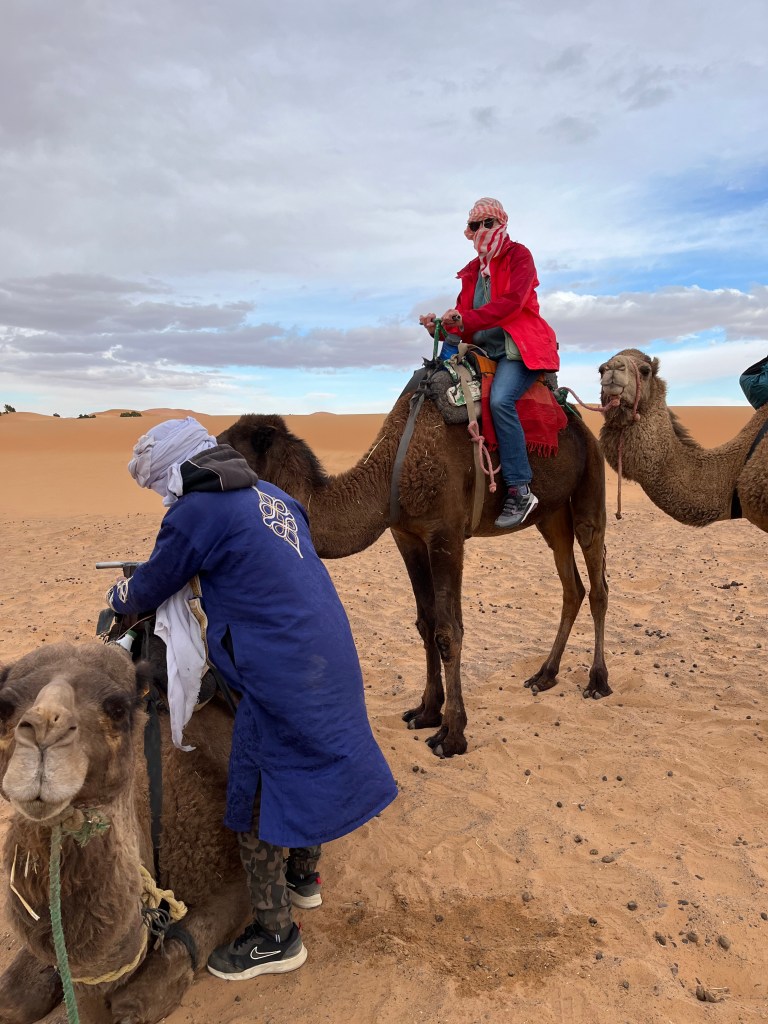
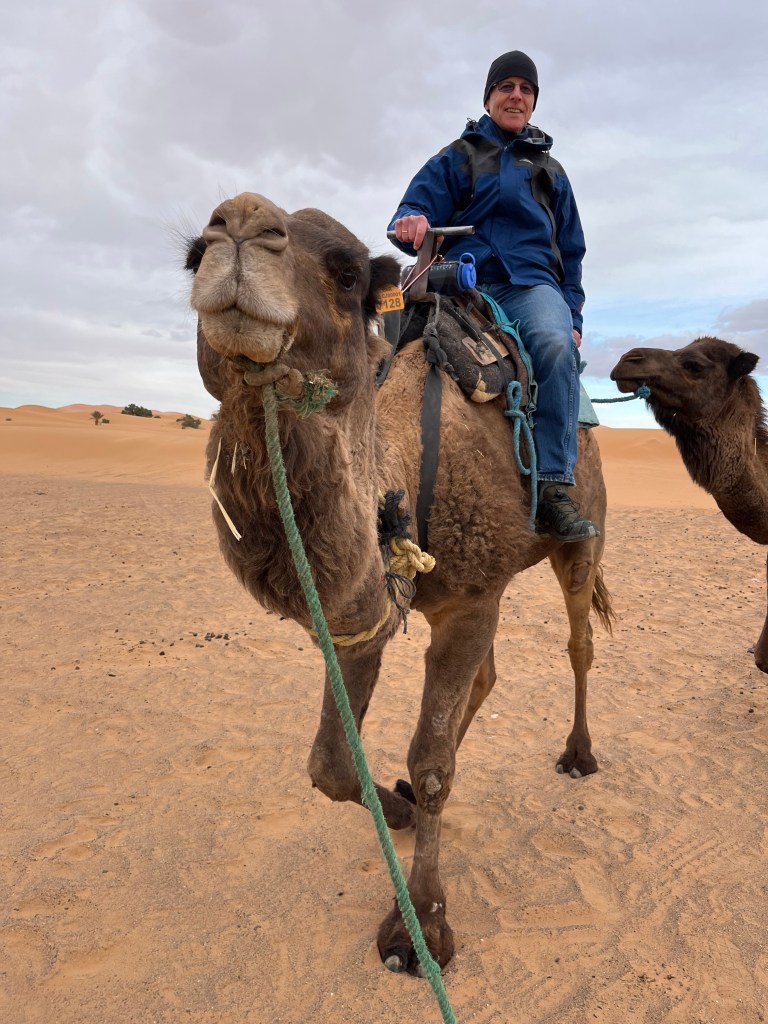
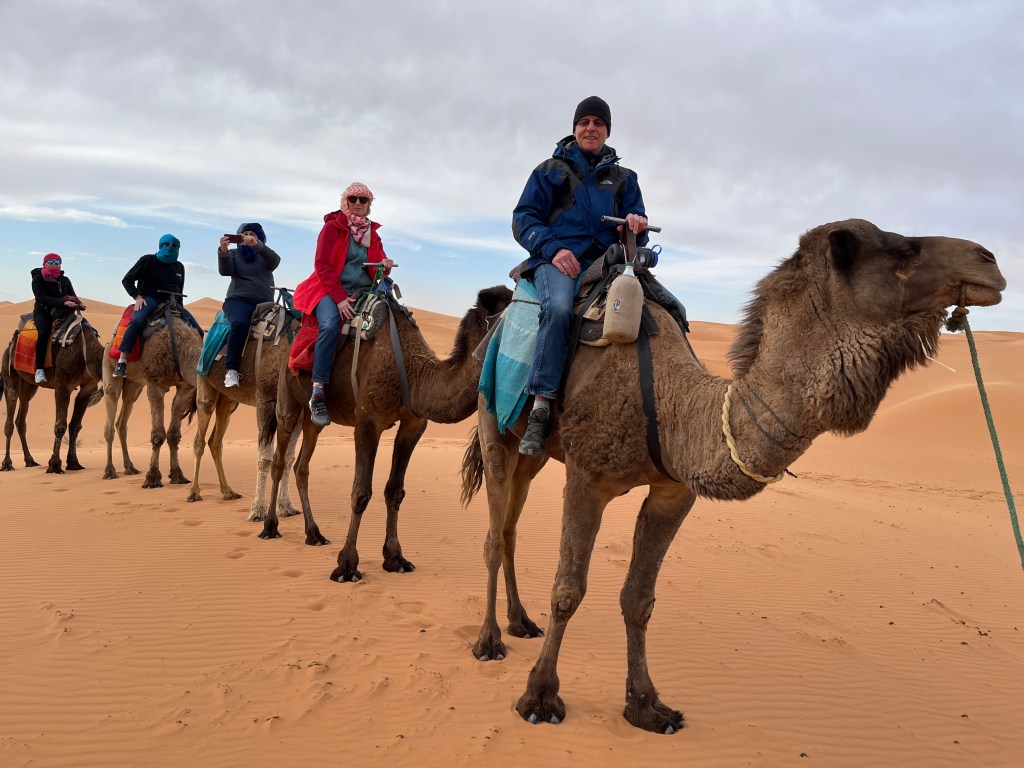
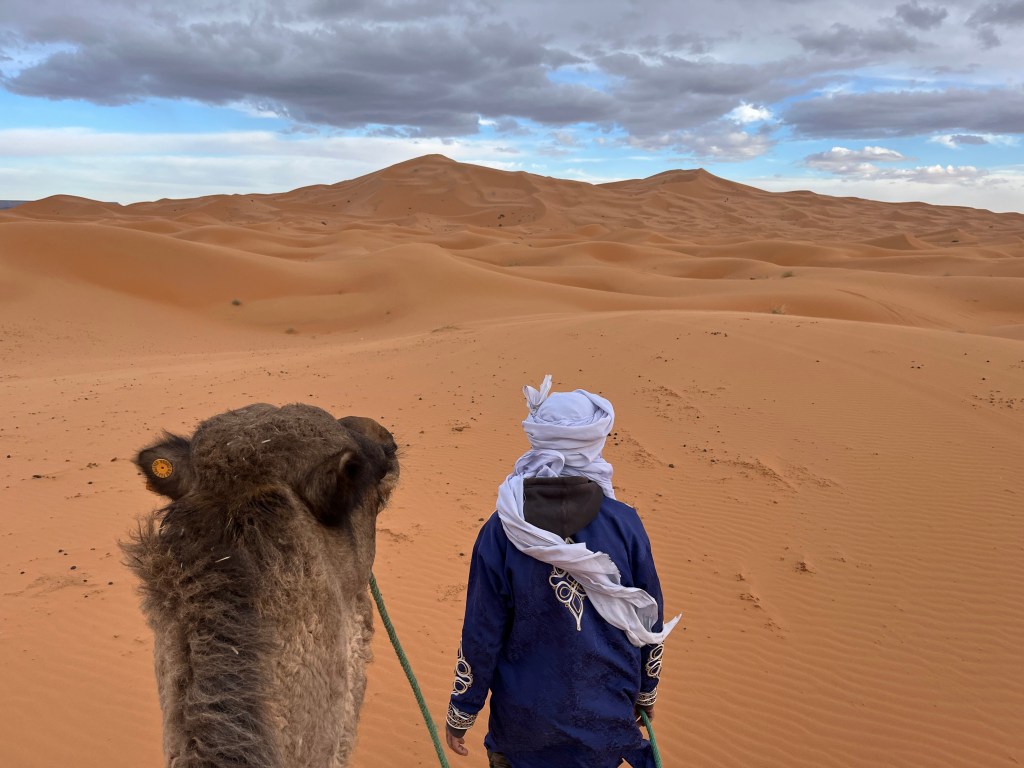
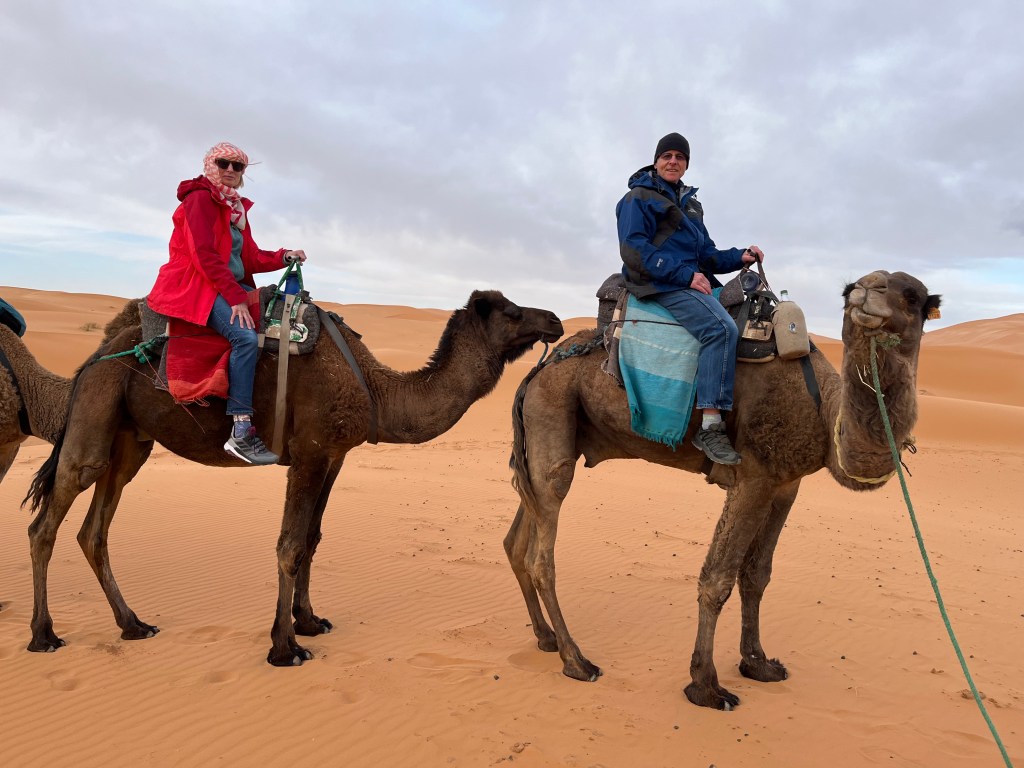
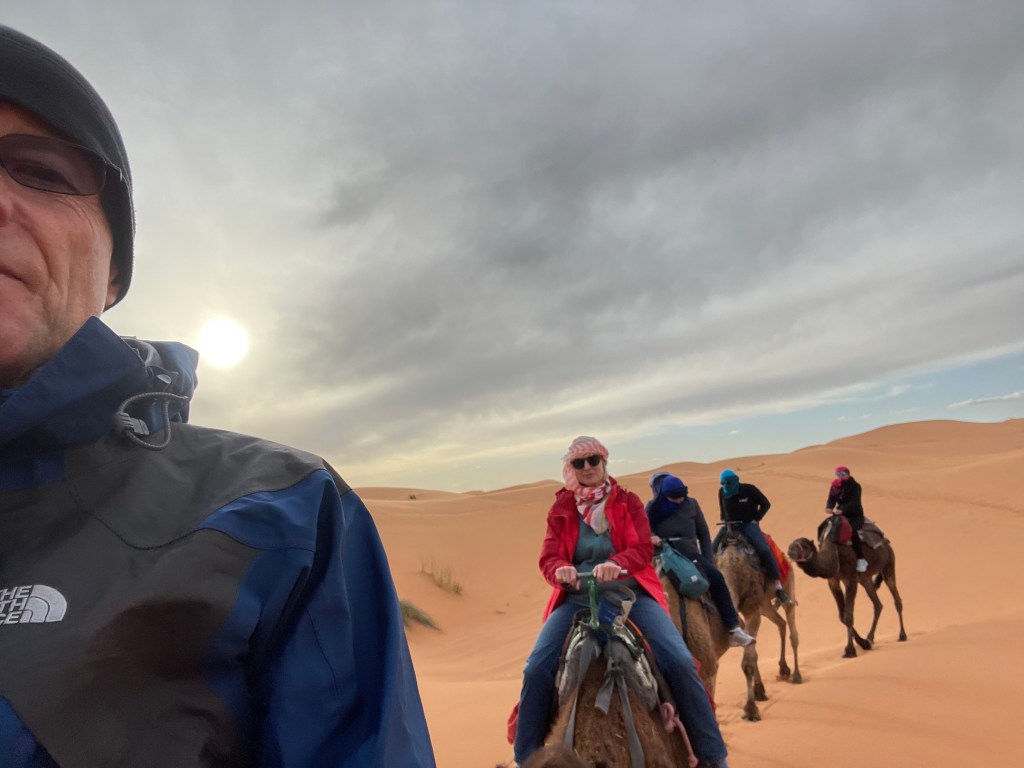
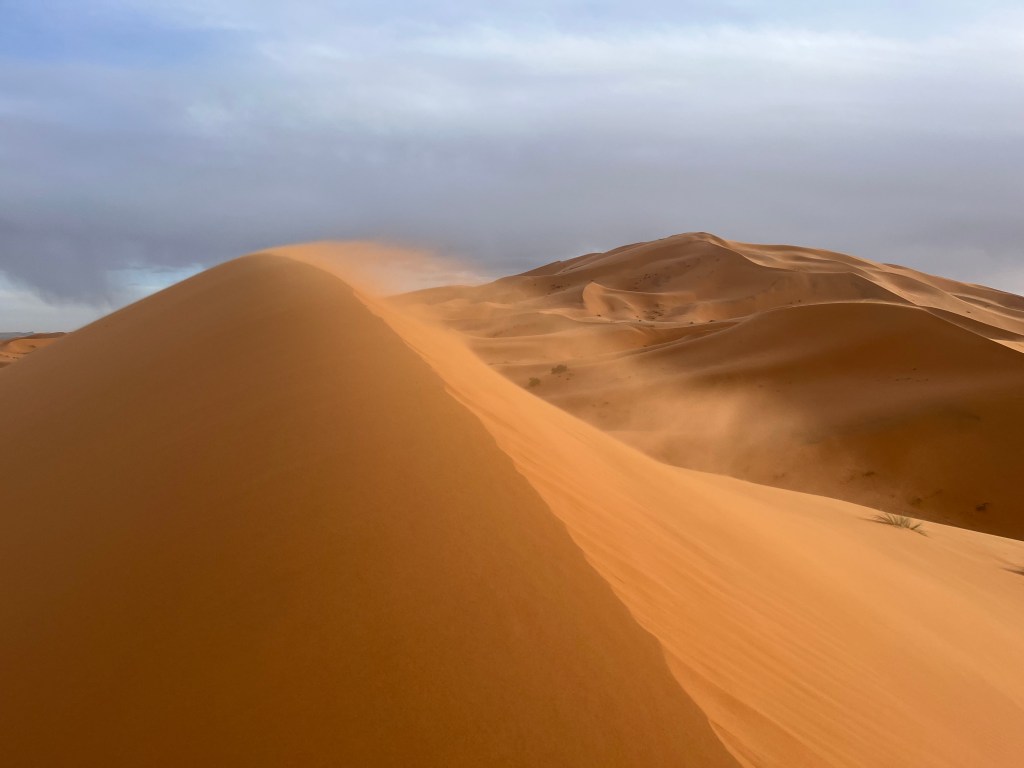
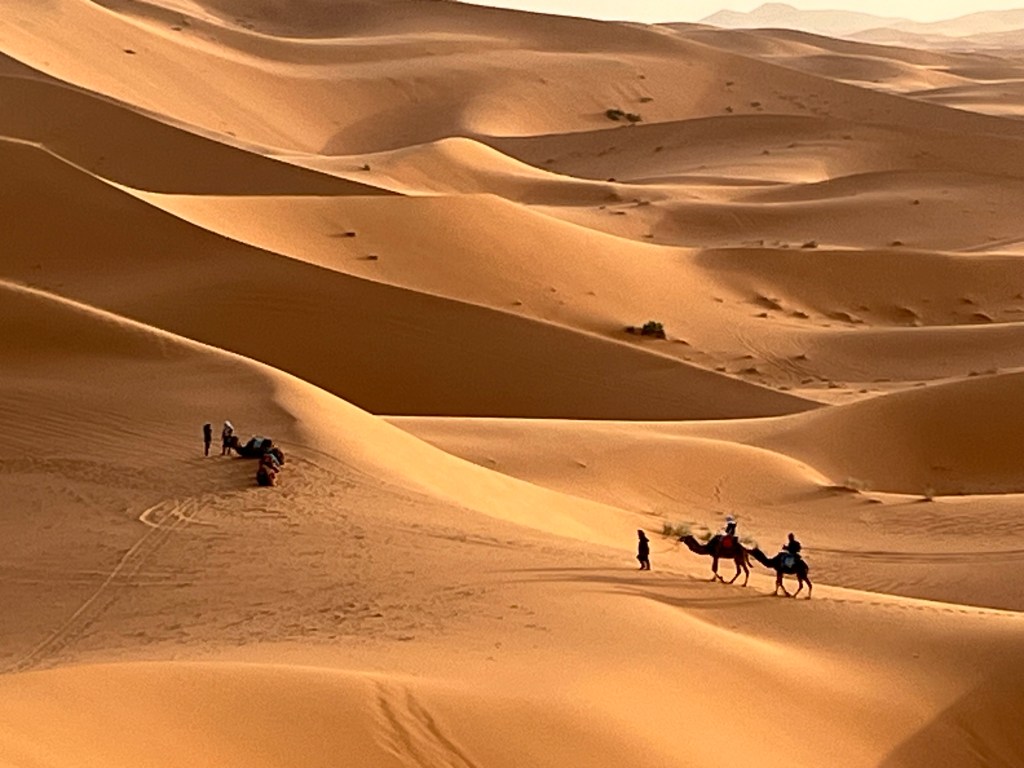
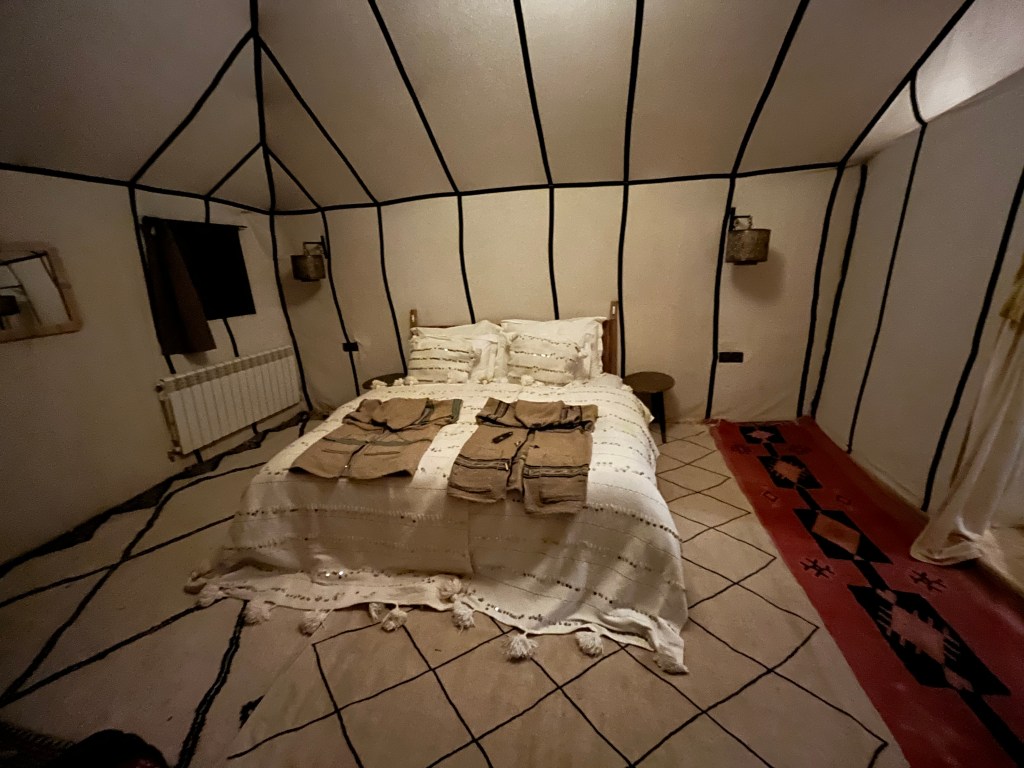
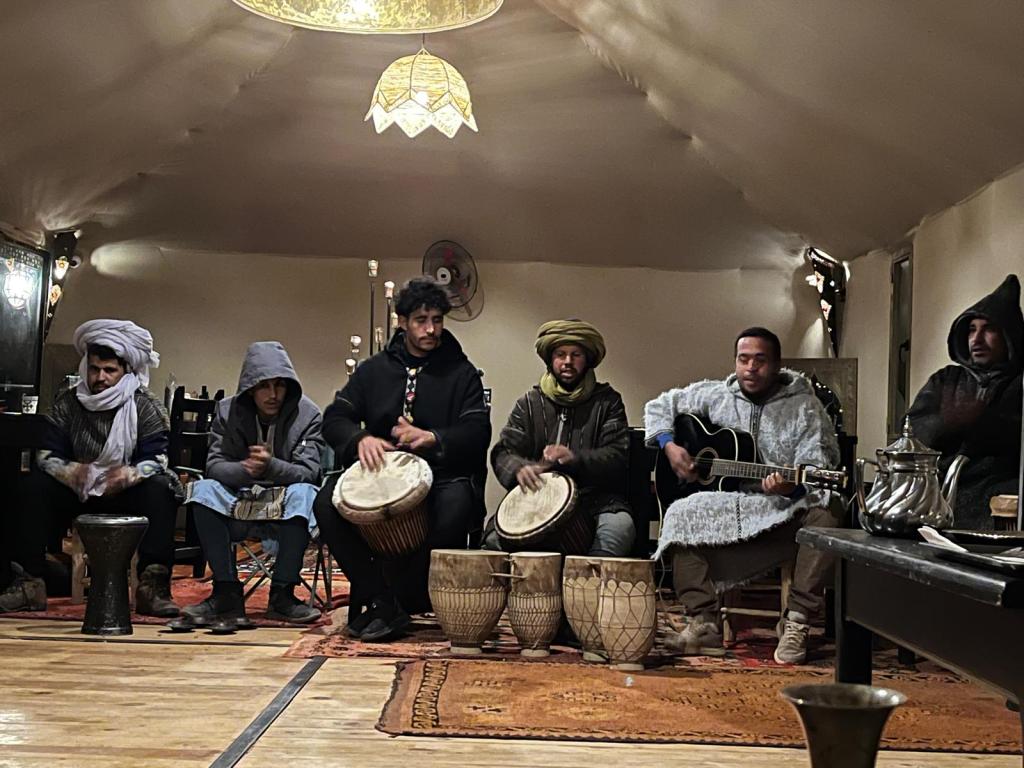
The camp and tents were beautiful and comfortable and one should rather call the luxurious experience “glamping” versus the camping we are used to. We were a total of nine guests at camp. The food was tasty and plentiful and after dinner we were treated to traditional, live Berber music by our hosting crew. Berbers are desert nomads of the Maghreb of North Africa. They are free men, as the meaning of their original name Amazigh suggests. The name Berber comes from the Romans, barbarian, or barbarous in Latin. Nowadays Berbers are proud and actively interested in keeping their tradition and culture alive. All our Berber hosts were very friendly, welcoming, and eager to share their Berber heritage with us.
During the night at camp, the sky provided a clear view of the Milky Way as I hadn’t seen in a long time. This unforgettable trip was the true highlight of our moroccan tour!
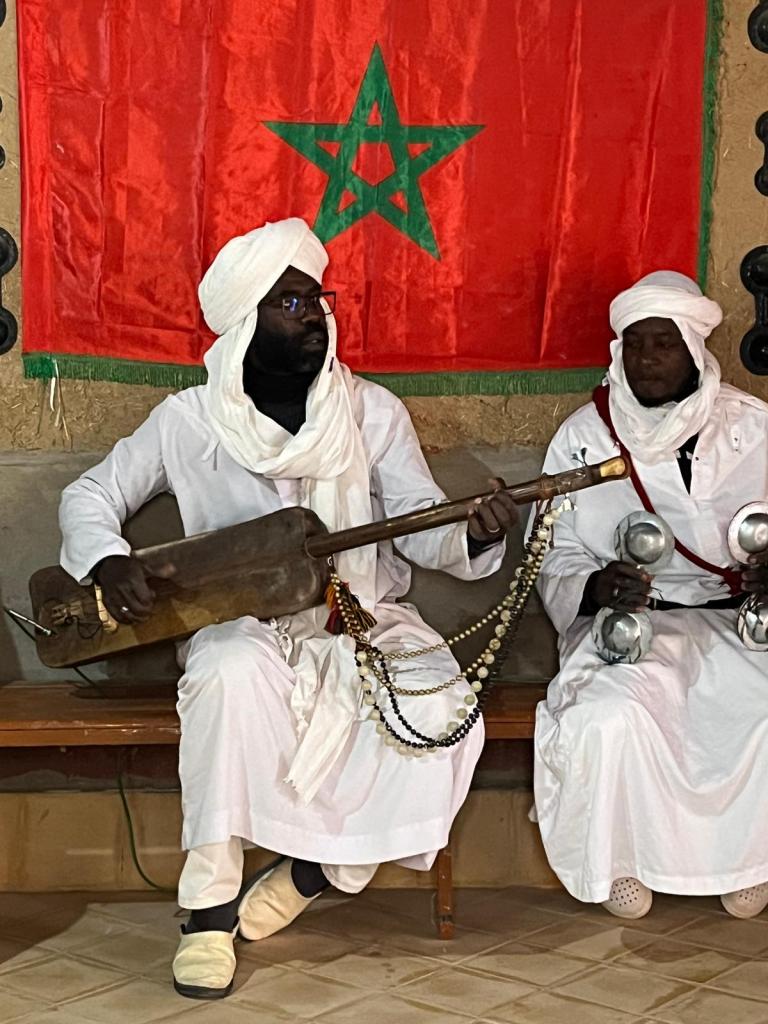
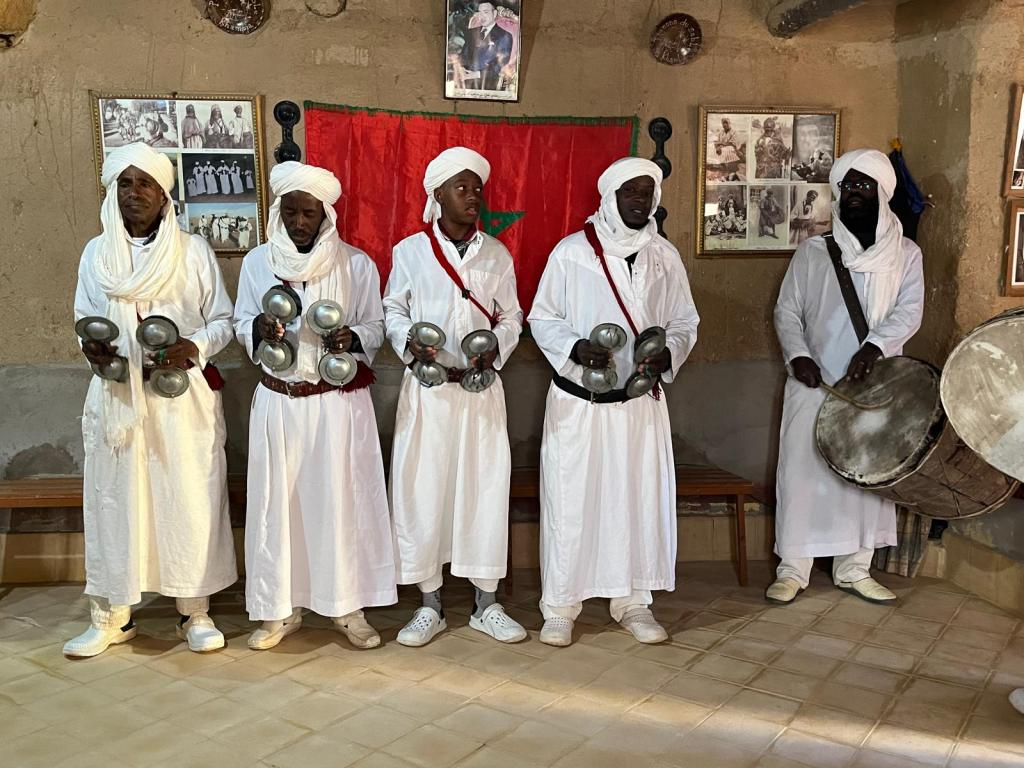
Compared to our trip east, our trip west towards Marrakesh was rather uneventful and mostly just a long two day drive. Our first stop was in a small village where African slave descendants played some Gnawa music for us, which gave us a small taste of Black Africa:
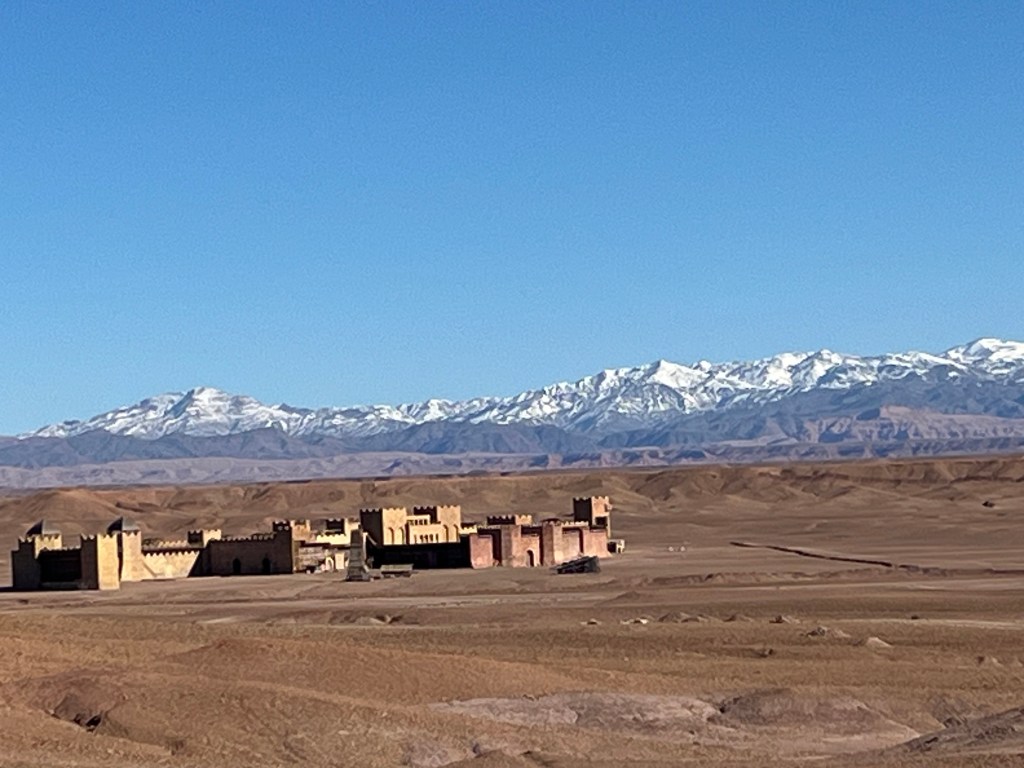
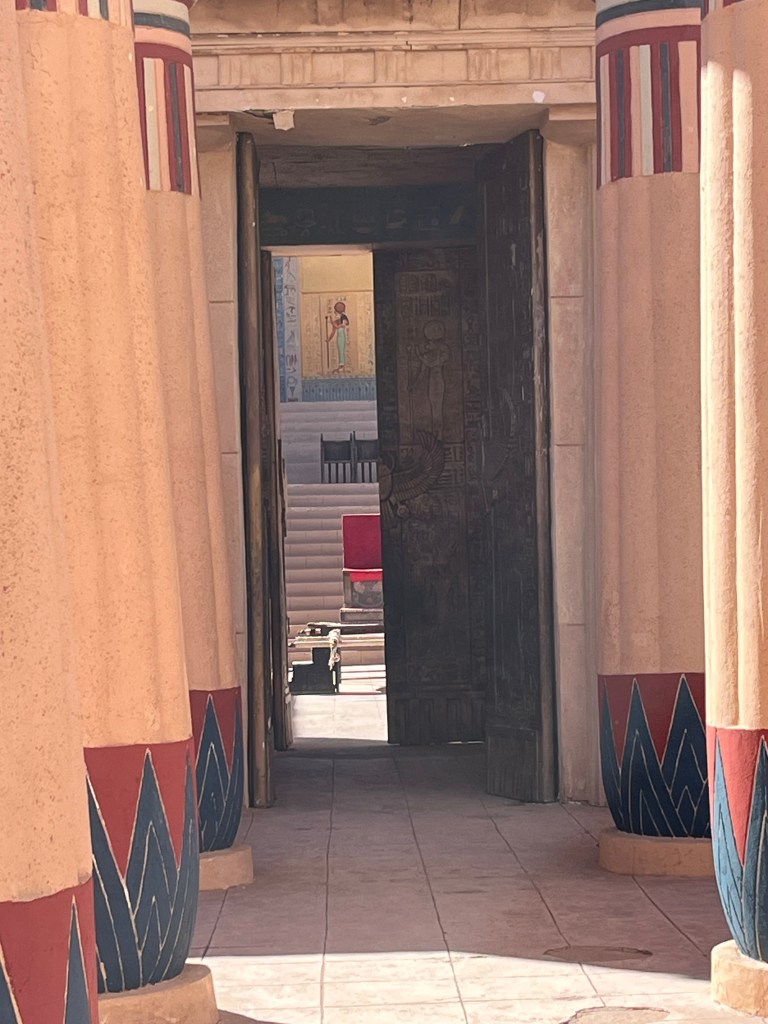
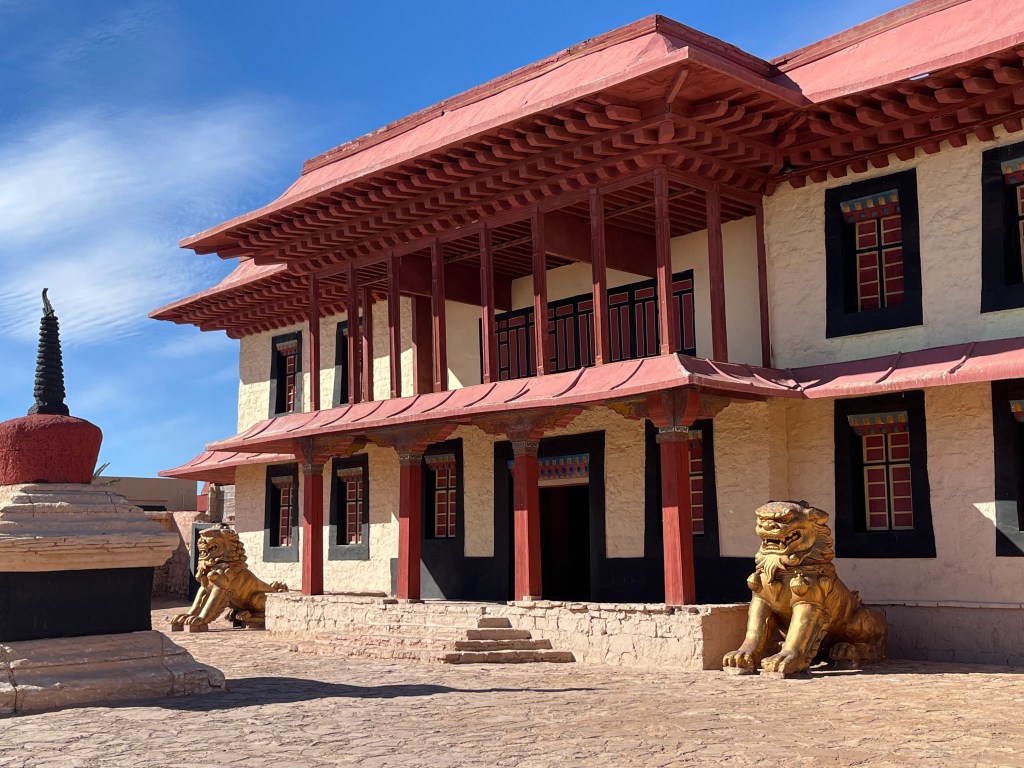
After a night spent at a very quiet Hara Oasis resort, we stopped at another famous filming location, the Atlas Studios also known as “Ouarzawood” outside the town of Ouarzazate. The landscape scene with the snow covered Atlas Mountains in the background could have been from Tibet. Inside the studios you see this Lewis County “Gladiator” looking up through his prison window, and Lauri “Cleopatra” posing in her temple or sitting on her throne. “Game of Thrones” and “The Last Emperor” were also filmed here, besides many famous other films.
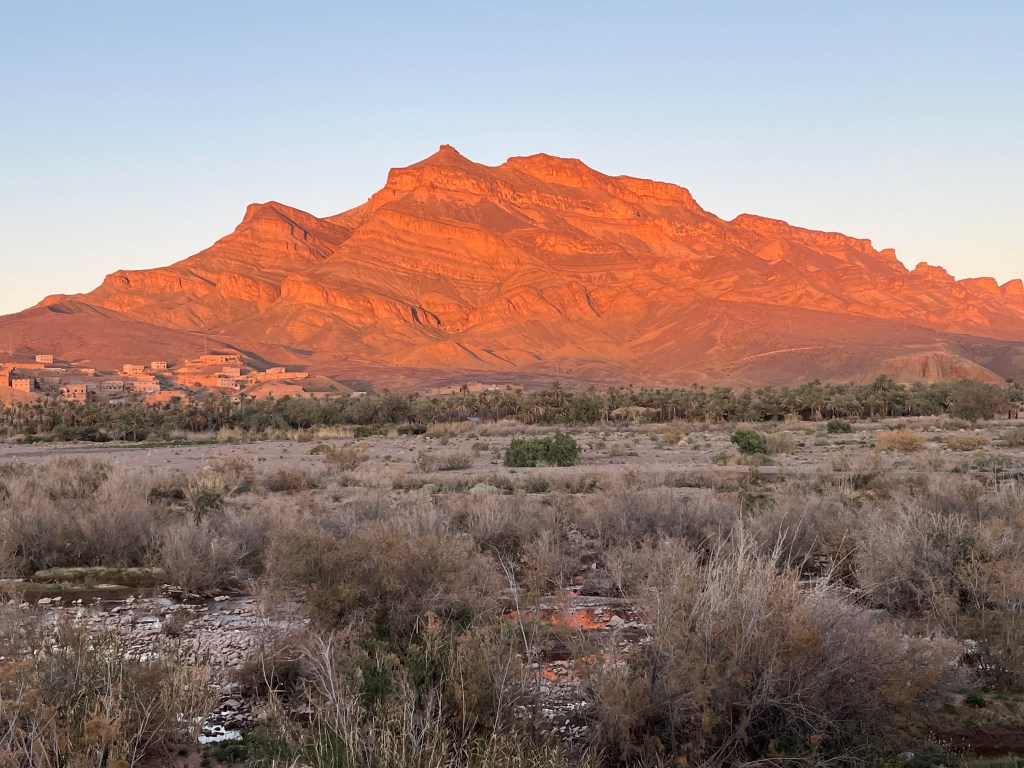
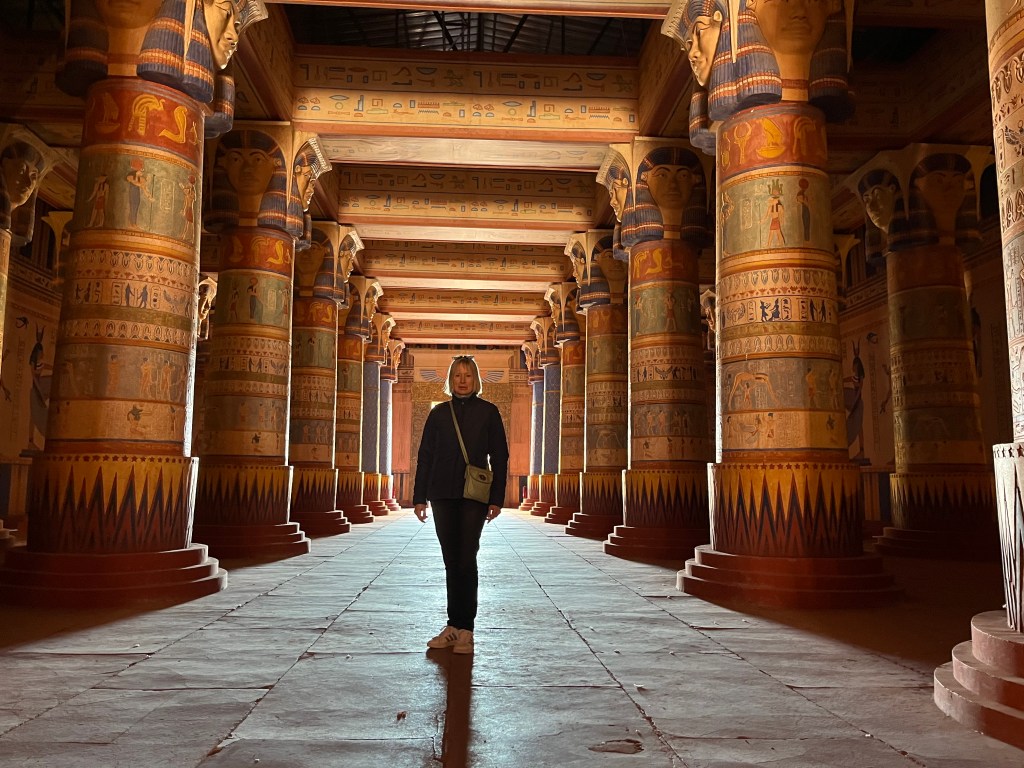
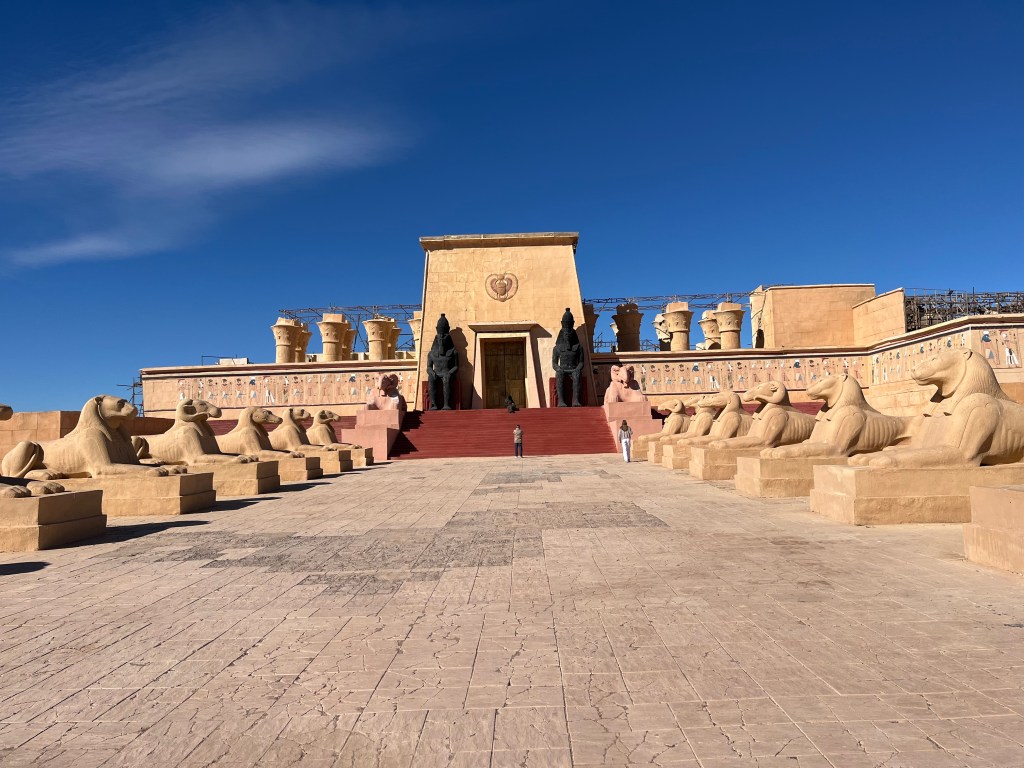
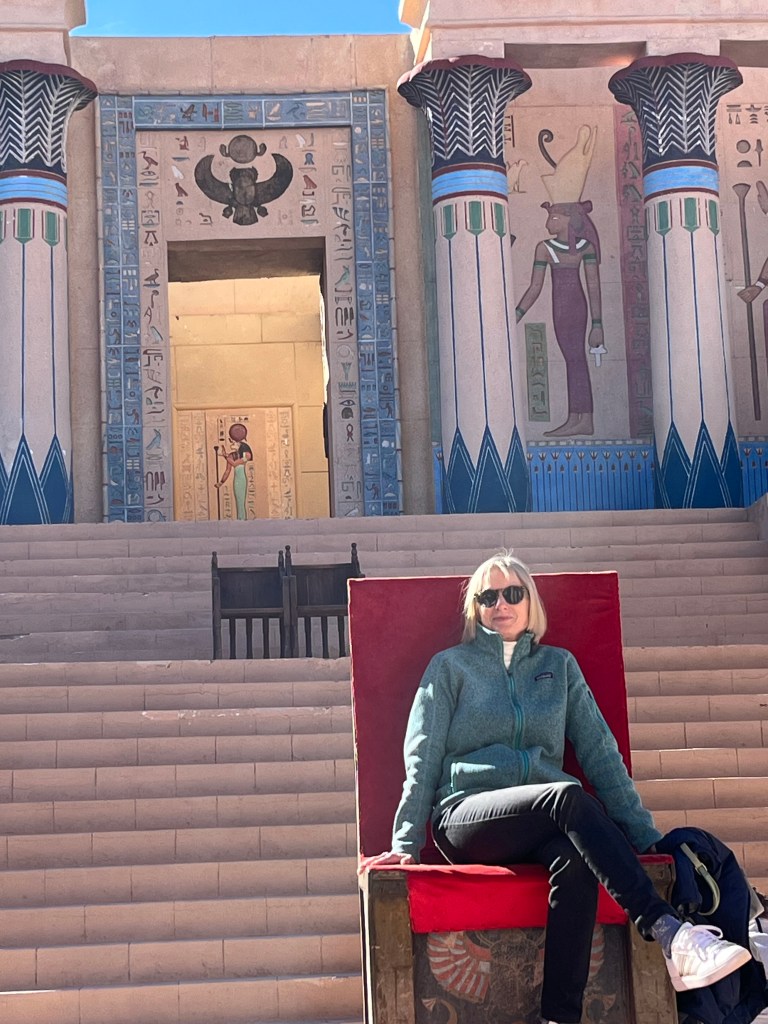
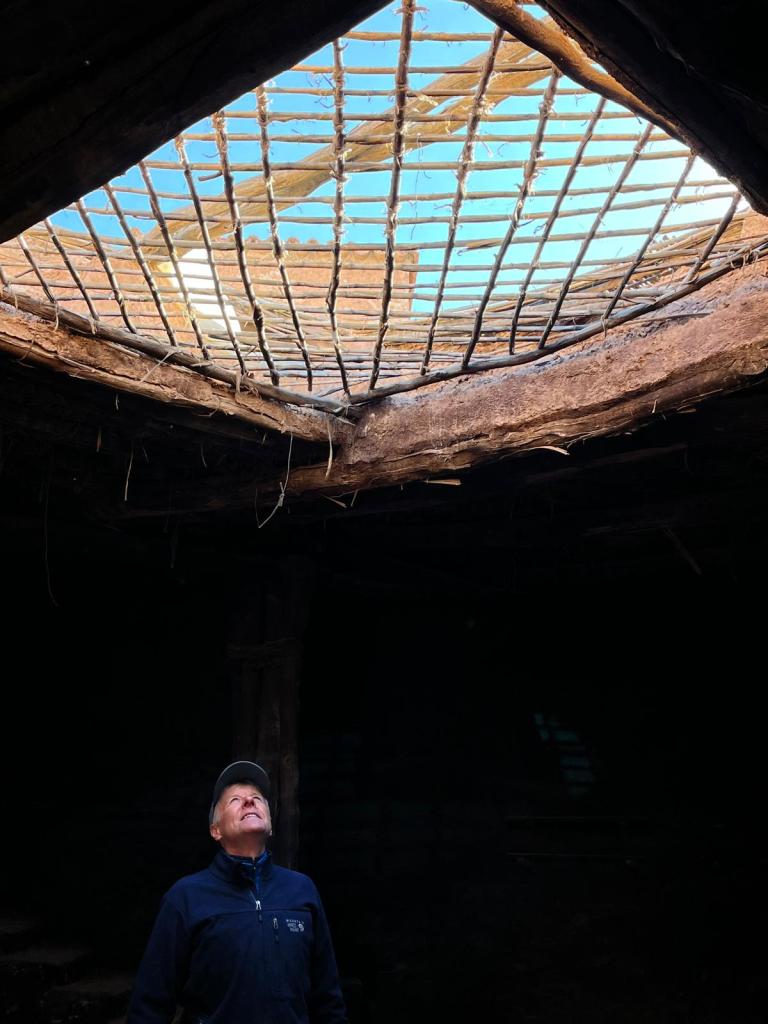
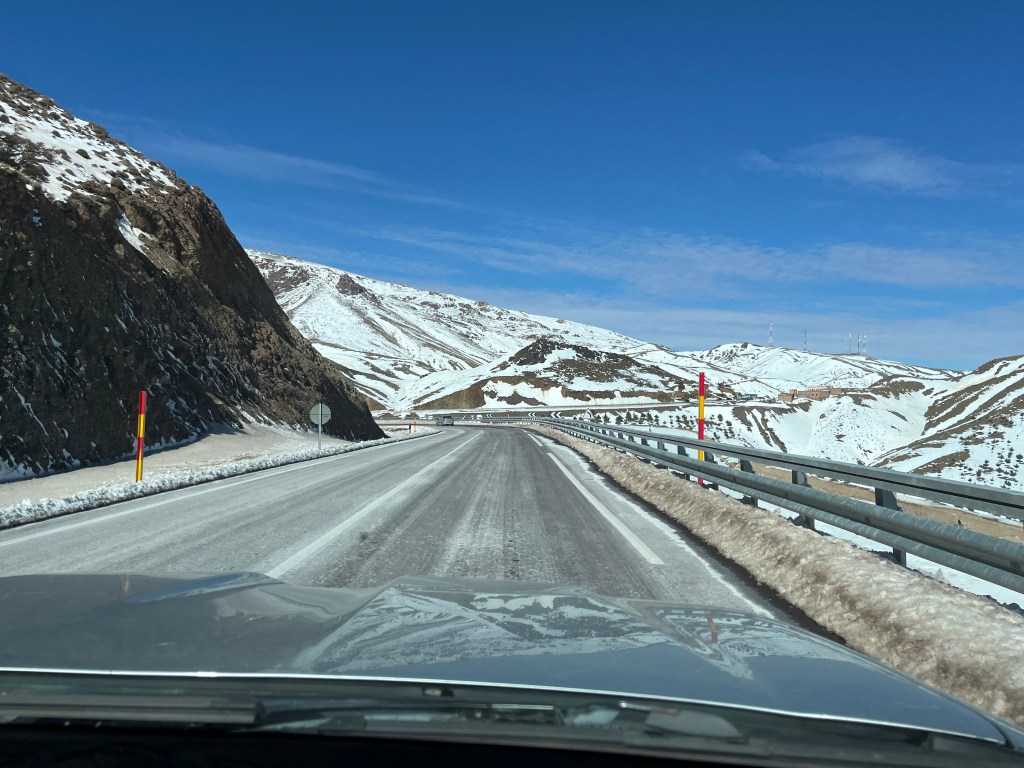
On our last lap to Marrakesh we lucked out that the Tizin’t Tichka pass was open and cleared from the heavy snow event of a couple days earlier. It was a Saturday and it was fun to watch lots of families with children playing in the snow. They must have all come up from Marrakesh to show their children the magic of snow.
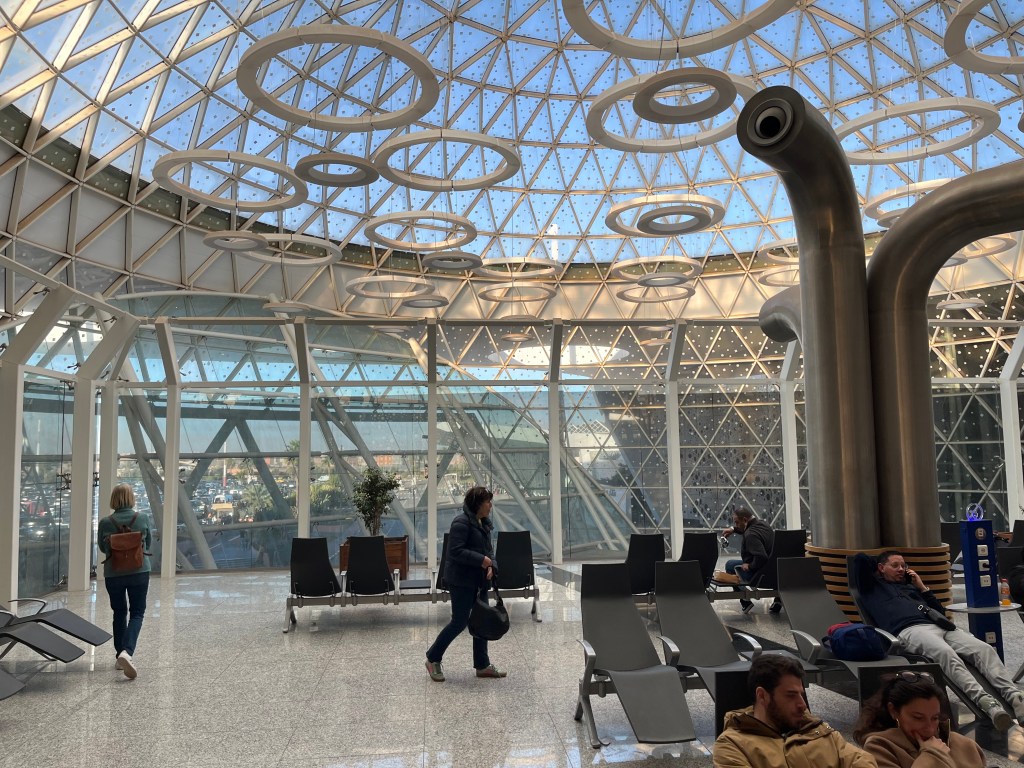
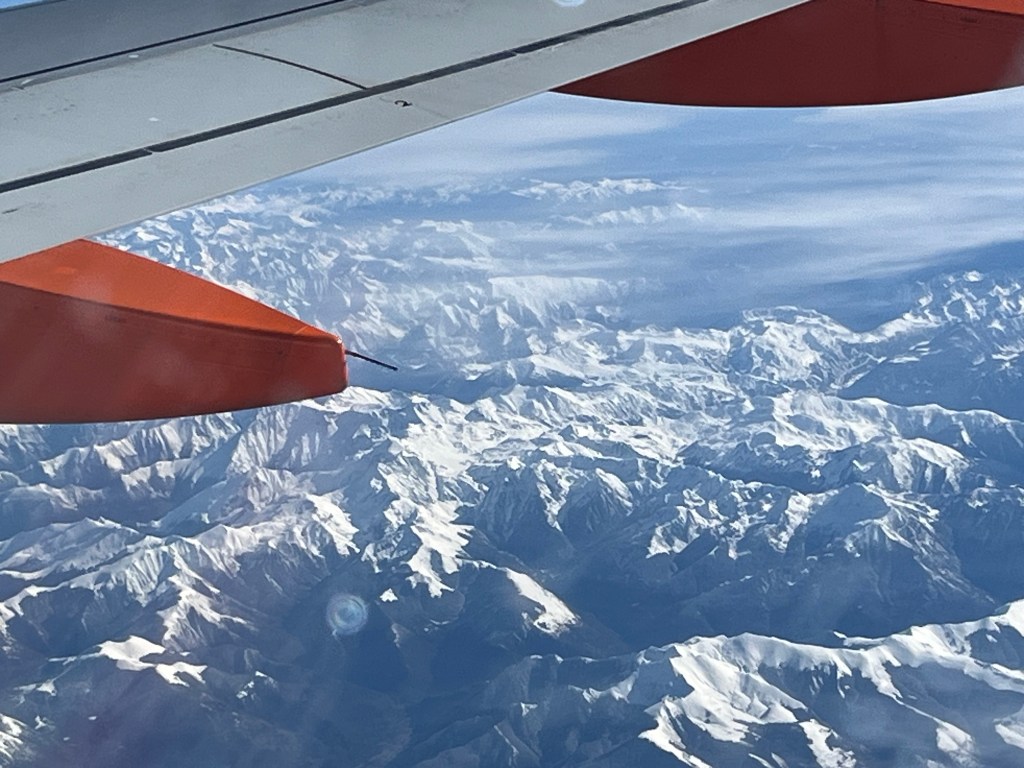
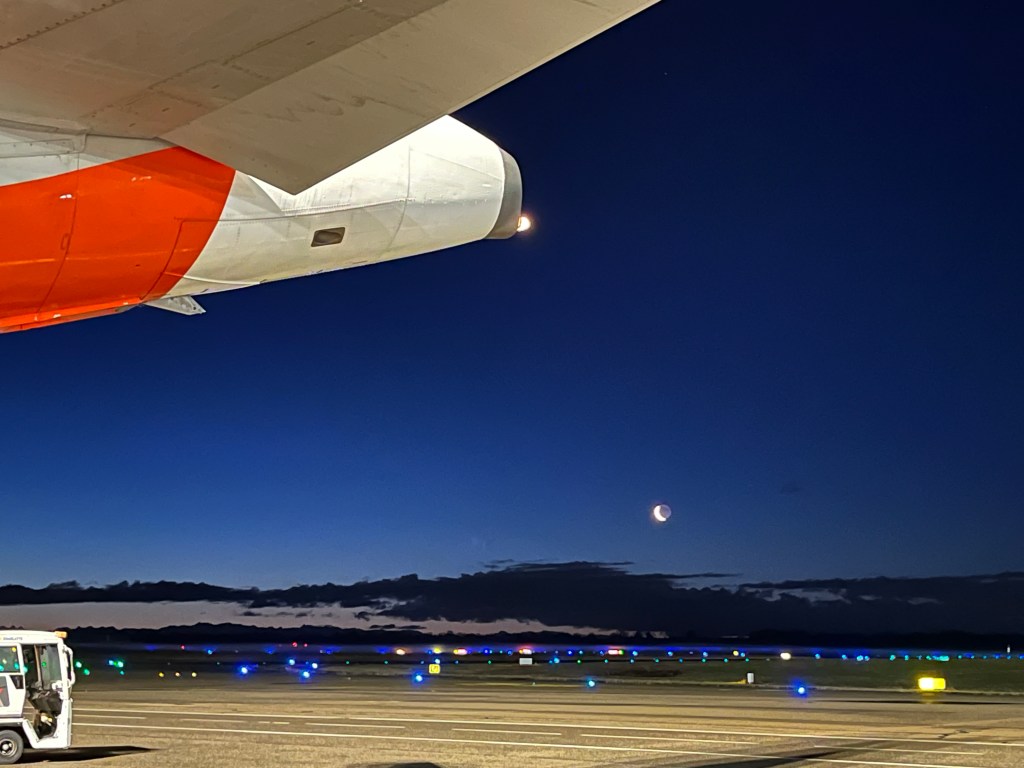
One quick sleep over in a big, conventional hotel, and a couple morning hours in the new wing of the Marrakesh airport, and off we went back to Lyon. Flying in, we were treated with a spectacular view of the snow covered French Alps.
From the exotic souk bazaars of Marrakesh to riding a camel through the Sahara in the footprints of the nomadic Berbers, Morocco makes for a great travel destination, where one can easily and safely experience travel in an African country.


 Barney & Lauri's Burgundy & Beyond Adventure
Leave a comment